US11092549B2 - Fluorescent probes for drug permeability in gram negative bacteria - Google Patents
Fluorescent probes for drug permeability in gram negative bacteria Download PDFInfo
- Publication number
- US11092549B2 US11092549B2 US16/419,492 US201916419492A US11092549B2 US 11092549 B2 US11092549 B2 US 11092549B2 US 201916419492 A US201916419492 A US 201916419492A US 11092549 B2 US11092549 B2 US 11092549B2
- Authority
- US
- United States
- Prior art keywords
- substituted
- alkyl
- hydrogen
- aryl
- cell
- Prior art date
- Legal status (The legal status is an assumption and is not a legal conclusion. Google has not performed a legal analysis and makes no representation as to the accuracy of the status listed.)
- Active, expires
Links
- 0 C.CC1=CC=C(C2=NCCN2)C=C1.[1*]C.[2*]C Chemical compound C.CC1=CC=C(C2=NCCN2)C=C1.[1*]C.[2*]C 0.000 description 29
- VLLVMFXDRGAOAD-IZZDOVSWSA-N O=C(/C=C/C1=CC=CC=C1)NC1=CC=C(C2=NCCN2)C=C1 Chemical compound O=C(/C=C/C1=CC=CC=C1)NC1=CC=C(C2=NCCN2)C=C1 VLLVMFXDRGAOAD-IZZDOVSWSA-N 0.000 description 3
- CXKARUGMFISLBH-LFYBBSHMSA-N CC(C)C1=CC=C(/C=C/C(=O)NC2=CC=C(C3=NCCN3)C=C2)C=C1 Chemical compound CC(C)C1=CC=C(/C=C/C(=O)NC2=CC=C(C3=NCCN3)C=C2)C=C1 CXKARUGMFISLBH-LFYBBSHMSA-N 0.000 description 2
- HEJWOWSUQUYLET-RUDMXATFSA-N CC1=NC2=C(C=C(NC(=O)/C=C/C3=CC=C(Cl)C=C3)C=C2)C(N)=C1 Chemical compound CC1=NC2=C(C=C(NC(=O)/C=C/C3=CC=C(Cl)C=C3)C=C2)C(N)=C1 HEJWOWSUQUYLET-RUDMXATFSA-N 0.000 description 2
- KYMSXWWVHFGGNX-UHFFFAOYSA-N CC1=NC2=C(C=C1)C=C(NC(=O)C1=C/C=C3/C=C(Br)C=C/C3=C\1)C=C2 Chemical compound CC1=NC2=C(C=C1)C=C(NC(=O)C1=C/C=C3/C=C(Br)C=C/C3=C\1)C=C2 KYMSXWWVHFGGNX-UHFFFAOYSA-N 0.000 description 2
- GUPGTNVSCYZLBE-VWGUEPCESA-N C.CC1=CC(/C=C/C(=O)NC2=CC3=C(C=C2)/N=C(C)\C=C/3N)=CC=C1.CC1=CC(C2=CC=C(C(=O)NC3=CC=C(C4=NCCN4)C=C3)S2)=CC(Cl)=C1.CC1=CC2=CC=C(C(=O)NC3=CC4=C(C=C3)/N=C(C)\C(C)=C/4)C=C2C=C1.CC1=CC=C(/C=C/C(=O)NC2=CC3=C(C=C2)/N=C(C)\C=C/3N)C=C1 Chemical compound C.CC1=CC(/C=C/C(=O)NC2=CC3=C(C=C2)/N=C(C)\C=C/3N)=CC=C1.CC1=CC(C2=CC=C(C(=O)NC3=CC=C(C4=NCCN4)C=C3)S2)=CC(Cl)=C1.CC1=CC2=CC=C(C(=O)NC3=CC4=C(C=C3)/N=C(C)\C(C)=C/4)C=C2C=C1.CC1=CC=C(/C=C/C(=O)NC2=CC3=C(C=C2)/N=C(C)\C=C/3N)C=C1 GUPGTNVSCYZLBE-VWGUEPCESA-N 0.000 description 1
- AWJYLZHOTQFSAO-UHFFFAOYSA-N C1=CC=CC=C1.C1=CCC=CC1.C1=CCCC=C1.C1=CCCCC1.C1CCCCC1 Chemical compound C1=CC=CC=C1.C1=CCC=CC1.C1=CCCC=C1.C1=CCCCC1.C1CCCCC1 AWJYLZHOTQFSAO-UHFFFAOYSA-N 0.000 description 1
- UVFBBRTYUDGDQB-UHFFFAOYSA-N CC(C)(C)C1=CC2=C(C=C1)C=CC(C(C)(C)C)=C2.CC(C)(C)C1=CC=C(C(C)(C)C)C=C1.CC(C)(C)C1=CC=C(C2=CC=C(C(C)(C)C)C=C2)C=C1.CC(C)(C)C1=CC=CC(C(C)(C)C)=C1.CC(C)(C)C1=CC=CC=C1C(C)(C)C.CC1=CC(C(C)(C)C)=CC=C1C(C)(C)C Chemical compound CC(C)(C)C1=CC2=C(C=C1)C=CC(C(C)(C)C)=C2.CC(C)(C)C1=CC=C(C(C)(C)C)C=C1.CC(C)(C)C1=CC=C(C2=CC=C(C(C)(C)C)C=C2)C=C1.CC(C)(C)C1=CC=CC(C(C)(C)C)=C1.CC(C)(C)C1=CC=CC=C1C(C)(C)C.CC1=CC(C(C)(C)C)=CC=C1C(C)(C)C UVFBBRTYUDGDQB-UHFFFAOYSA-N 0.000 description 1
- BVTBDCVSJGBXAW-UHFFFAOYSA-N CC(C)(C)C1=CC2=C(C=C1)NC(C(C)(C)C)=C2.CC(C)(C)C1=CC=C(C(C)(C)C)N=C1.CC(C)(C)C1=CNC=N1.CC(C)C Chemical compound CC(C)(C)C1=CC2=C(C=C1)NC(C(C)(C)C)=C2.CC(C)(C)C1=CC=C(C(C)(C)C)N=C1.CC(C)(C)C1=CNC=N1.CC(C)C BVTBDCVSJGBXAW-UHFFFAOYSA-N 0.000 description 1
- AVWBLDXFDHVFQP-AWNIVKPZSA-N CC(C)(C)C1=CC=C(/C=C/C(=O)NC2=CC=C(C3=NCCN3)C=C2)C=C1 Chemical compound CC(C)(C)C1=CC=C(/C=C/C(=O)NC2=CC=C(C3=NCCN3)C=C2)C=C1 AVWBLDXFDHVFQP-AWNIVKPZSA-N 0.000 description 1
- QBIJCTGLGATZOB-DDTPIGGYSA-N CC(C)(C)C1=CC=C(/C=C/C(=O)NC2=CC=C(C3=NCCN3)C=C2)C=C1.CC(C)C1=CC=C(/C=C/C(=O)NC2=CC=C(C3=NCCN3)C(C3=NCCN3)=C2)C=C1.CC(C)C1=CC=C(/C=C/C(=O)NC2=CC=C(C3=NCCN3)C=C2)C=C1.CC1=CC2=CC=C(/C=C/C(=O)NC3=CC=C(C4=NCCN4)C=C3)C=C2C=C1.CC1=CC=C(/C=C/C(=O)NC2=CC=C(C3=NCCN3)C=C2)C=C1.CC1=N/C2=CC=C(NC(=O)C3=CC=C4C(=C3)C(C)(C)CCC4(C)C)C=C2/C(N)=C\1 Chemical compound CC(C)(C)C1=CC=C(/C=C/C(=O)NC2=CC=C(C3=NCCN3)C=C2)C=C1.CC(C)C1=CC=C(/C=C/C(=O)NC2=CC=C(C3=NCCN3)C(C3=NCCN3)=C2)C=C1.CC(C)C1=CC=C(/C=C/C(=O)NC2=CC=C(C3=NCCN3)C=C2)C=C1.CC1=CC2=CC=C(/C=C/C(=O)NC3=CC=C(C4=NCCN4)C=C3)C=C2C=C1.CC1=CC=C(/C=C/C(=O)NC2=CC=C(C3=NCCN3)C=C2)C=C1.CC1=N/C2=CC=C(NC(=O)C3=CC=C4C(=C3)C(C)(C)CCC4(C)C)C=C2/C(N)=C\1 QBIJCTGLGATZOB-DDTPIGGYSA-N 0.000 description 1
- IBTCQHAOKZFUES-UHFFFAOYSA-N CC(C)(C)C1CCC(C(C)(C)C)CC1 Chemical compound CC(C)(C)C1CCC(C(C)(C)C)CC1 IBTCQHAOKZFUES-UHFFFAOYSA-N 0.000 description 1
- TUDNOKFOTLPCBO-UHFFFAOYSA-N CC(C)(C)C1CCC(C(C)(C)C)NC1.CC(C)(C)C1CN(C(C)(C)C)C=N1.CC(C)N1CCOC(C(C)(C)C)C1 Chemical compound CC(C)(C)C1CCC(C(C)(C)C)NC1.CC(C)(C)C1CN(C(C)(C)C)C=N1.CC(C)N1CCOC(C(C)(C)C)C1 TUDNOKFOTLPCBO-UHFFFAOYSA-N 0.000 description 1
- NNPPMTNAJDCUHE-UHFFFAOYSA-N CC(C)C Chemical compound CC(C)C NNPPMTNAJDCUHE-UHFFFAOYSA-N 0.000 description 1
- YYWIVVDWPKQVAD-BJMVGYQFSA-N CC(C)C1=CC=C(/C=C/C(=O)NC2=CC=C(C3=NCCN3)C(C3=NCCN3)=C2)C=C1 Chemical compound CC(C)C1=CC=C(/C=C/C(=O)NC2=CC=C(C3=NCCN3)C(C3=NCCN3)=C2)C=C1 YYWIVVDWPKQVAD-BJMVGYQFSA-N 0.000 description 1
- MUPLAPYUQISHTL-UHFFFAOYSA-N CC.CC(C)(C)C1=CC2=C(C=C1)NC=C2 Chemical compound CC.CC(C)(C)C1=CC2=C(C=C1)NC=C2 MUPLAPYUQISHTL-UHFFFAOYSA-N 0.000 description 1
- BXGOTZNDFBYMKF-VMPITWQZSA-N CC1=C/C(N)=C2/C=CC(NC(=O)/C=C/C3=CC=CC(Cl)=C3)=C/C2=N\1 Chemical compound CC1=C/C(N)=C2/C=CC(NC(=O)/C=C/C3=CC=CC(Cl)=C3)=C/C2=N\1 BXGOTZNDFBYMKF-VMPITWQZSA-N 0.000 description 1
- KFGHHVFKXAXFGP-VBUYDIPRSA-N CC1=CC(/C=C/C(=O)NC2=CC=C(C3=NCCN3)C=C2)=CC=C1.CC1=CC=C(/C=C/C(=O)NC2=CC=C(C3=NCCN3)C=C2)C=C1.CC1=CC=C(/C=C/C(=O)NC2=CC=C(C3=NCCN3)C=C2)C=C1.O=C(/C=C/C1=CC=CC=C1)NC1=CC=C(C2=NCCN2)C=C1.O=C(/C=C/C1=CC=CC=C1Br)NC1=CC=C(C2=NCCN2)C=C1.O=C(/C=C/C1=CC=CC=C1C(F)(F)F)NC1=CC=C(C2=NCCN2)C=C1.O=C(/C=C/C1=CC=CC=C1Cl)NC1=CC=C(C2=NCCN2)C=C1 Chemical compound CC1=CC(/C=C/C(=O)NC2=CC=C(C3=NCCN3)C=C2)=CC=C1.CC1=CC=C(/C=C/C(=O)NC2=CC=C(C3=NCCN3)C=C2)C=C1.CC1=CC=C(/C=C/C(=O)NC2=CC=C(C3=NCCN3)C=C2)C=C1.O=C(/C=C/C1=CC=CC=C1)NC1=CC=C(C2=NCCN2)C=C1.O=C(/C=C/C1=CC=CC=C1Br)NC1=CC=C(C2=NCCN2)C=C1.O=C(/C=C/C1=CC=CC=C1C(F)(F)F)NC1=CC=C(C2=NCCN2)C=C1.O=C(/C=C/C1=CC=CC=C1Cl)NC1=CC=C(C2=NCCN2)C=C1 KFGHHVFKXAXFGP-VBUYDIPRSA-N 0.000 description 1
- MTSWHNNDCYPXMK-KGQBYODKSA-N CC1=CC2=C(C=C1)OC(C(=O)NC1=CC=C(C3=NCCN3)C=C1)=C2.CC1=CC2=CC=C(C(=O)NC3=CC=C(C4=NCCN4)C(C4=NCCN4)=C3)C=C2C=C1.CC1=CC=C(C2=CC=C(C(=O)NC3=CC4=C(C=C3)N=C(C)C=C4N)S2)C=C1.CC1=CC=NC2=CC=C(C(=O)NC3=CC4=C(C=C3)N=CC(C)=C4N)C=C12.CC1=NC2=C(C=C(NC(=O)/C=C/C3=CC=C(C(C)C)C=C3)C=C2)C(N)=C1.CC1=NC2=CC=C(C(=O)NC3=CC=C4/N=C(C)\C=C(\N)C4=C3)C=C2C=C1 Chemical compound CC1=CC2=C(C=C1)OC(C(=O)NC1=CC=C(C3=NCCN3)C=C1)=C2.CC1=CC2=CC=C(C(=O)NC3=CC=C(C4=NCCN4)C(C4=NCCN4)=C3)C=C2C=C1.CC1=CC=C(C2=CC=C(C(=O)NC3=CC4=C(C=C3)N=C(C)C=C4N)S2)C=C1.CC1=CC=NC2=CC=C(C(=O)NC3=CC4=C(C=C3)N=CC(C)=C4N)C=C12.CC1=NC2=C(C=C(NC(=O)/C=C/C3=CC=C(C(C)C)C=C3)C=C2)C(N)=C1.CC1=NC2=CC=C(C(=O)NC3=CC=C4/N=C(C)\C=C(\N)C4=C3)C=C2C=C1 MTSWHNNDCYPXMK-KGQBYODKSA-N 0.000 description 1
- XNNIVRJZCGCURY-UHFFFAOYSA-N CC1=CC=NC2=CC=C(C(=O)NC3=CC4=C(C=C3)N=CC(C)=C4N)C=C12 Chemical compound CC1=CC=NC2=CC=C(C(=O)NC3=CC4=C(C=C3)N=CC(C)=C4N)C=C12 XNNIVRJZCGCURY-UHFFFAOYSA-N 0.000 description 1
- CMQJNYJKGMWZGP-UHFFFAOYSA-N CC1=N/C2=CC=C(NC(=O)C3=CC=C4C(=C3)C(C)(C)CCC4(C)C)C=C2/C(N)=C\1 Chemical compound CC1=N/C2=CC=C(NC(=O)C3=CC=C4C(=C3)C(C)(C)CCC4(C)C)C=C2/C(N)=C\1 CMQJNYJKGMWZGP-UHFFFAOYSA-N 0.000 description 1
- ASDIBZHTXFMLBJ-UHFFFAOYSA-N CC1=N/C2=CC=C(NC(=O)C3=CC=C4N=C(Cl)C=CC4=C3)C=C2/C(N)=C\1 Chemical compound CC1=N/C2=CC=C(NC(=O)C3=CC=C4N=C(Cl)C=CC4=C3)C=C2/C(N)=C\1 ASDIBZHTXFMLBJ-UHFFFAOYSA-N 0.000 description 1
- BOSGSBCISRQDQB-IZZDOVSWSA-N CC1=NC2=C(C=C(NC(=O)/C=C/C3=CC=C(C(C)C)C=C3)C=C2)C(N)=C1 Chemical compound CC1=NC2=C(C=C(NC(=O)/C=C/C3=CC=C(C(C)C)C=C3)C=C2)C(N)=C1 BOSGSBCISRQDQB-IZZDOVSWSA-N 0.000 description 1
- RDMRZPMGASPXDE-UHFFFAOYSA-N CC1=NC2=C(C=C(NC(=O)C3=CC=C(C4=CC=C(Cl)C=C4)S3)C=C2)C(N)=C1 Chemical compound CC1=NC2=C(C=C(NC(=O)C3=CC=C(C4=CC=C(Cl)C=C4)S3)C=C2)C(N)=C1 RDMRZPMGASPXDE-UHFFFAOYSA-N 0.000 description 1
- YCKTYGNPMCTBHM-NYYWCZLTSA-N COC1=CC=C(/C=C/C(=O)NC2=CC=C(C3=NCCN3)C=C2)C=C1 Chemical compound COC1=CC=C(/C=C/C(=O)NC2=CC=C(C3=NCCN3)C=C2)C=C1 YCKTYGNPMCTBHM-NYYWCZLTSA-N 0.000 description 1
- CPEGOFFPMLXVIL-UHFFFAOYSA-N NC1=CC(C2=NCCN2)=C(C2=NCCC2)C=C1 Chemical compound NC1=CC(C2=NCCN2)=C(C2=NCCC2)C=C1 CPEGOFFPMLXVIL-UHFFFAOYSA-N 0.000 description 1
- PRTISUHGTFJBIA-XCVCLJGOSA-N O=C(/C=C/C1=CC=C(Cl)C=C1)NC1=CC=C(C2=NCCN2)C=C1 Chemical compound O=C(/C=C/C1=CC=C(Cl)C=C1)NC1=CC=C(C2=NCCN2)C=C1 PRTISUHGTFJBIA-XCVCLJGOSA-N 0.000 description 1
- RPWSPZVSSBICGL-RUDMXATFSA-N O=C(/C=C/C1=CC=CC(Cl)=C1)NC1=CC=C(C2=NCCN2)C=C1 Chemical compound O=C(/C=C/C1=CC=CC(Cl)=C1)NC1=CC=C(C2=NCCN2)C=C1 RPWSPZVSSBICGL-RUDMXATFSA-N 0.000 description 1
- REIPNLKUBDSMGP-JXMROGBWSA-N O=C(/C=C/C1=CC=CC=C1Br)NC1=CC=C(C2=NCCN2)C=C1 Chemical compound O=C(/C=C/C1=CC=CC=C1Br)NC1=CC=C(C2=NCCN2)C=C1 REIPNLKUBDSMGP-JXMROGBWSA-N 0.000 description 1
- PDOGFYVGEADGIA-JXMROGBWSA-N O=C(/C=C/C1=CC=CC=C1C(F)(F)F)NC1=CC=C(C2=NCCN2)C=C1 Chemical compound O=C(/C=C/C1=CC=CC=C1C(F)(F)F)NC1=CC=C(C2=NCCN2)C=C1 PDOGFYVGEADGIA-JXMROGBWSA-N 0.000 description 1
- XXDLJQNMGHYILE-JXMROGBWSA-N O=C(/C=C/C1=CC=CC=C1Cl)NC1=CC=C(C2=NCCN2)C=C1 Chemical compound O=C(/C=C/C1=CC=CC=C1Cl)NC1=CC=C(C2=NCCN2)C=C1 XXDLJQNMGHYILE-JXMROGBWSA-N 0.000 description 1
- GEZIDALPMVNYKL-UHFFFAOYSA-N O=C(NC1=CC=C(C2=NCCN2)C(C2=NCCN2)=C1)C1=CC=C2C=C(Br)C=CC2=C1 Chemical compound O=C(NC1=CC=C(C2=NCCN2)C(C2=NCCN2)=C1)C1=CC=C2C=C(Br)C=CC2=C1 GEZIDALPMVNYKL-UHFFFAOYSA-N 0.000 description 1
- SQFBPLXZOCXJSD-UHFFFAOYSA-N O=C(NC1=CC=C(C2=NCCN2)C=C1)/C1=C/C2=C(C=CC(Cl)=C2)O1 Chemical compound O=C(NC1=CC=C(C2=NCCN2)C=C1)/C1=C/C2=C(C=CC(Cl)=C2)O1 SQFBPLXZOCXJSD-UHFFFAOYSA-N 0.000 description 1
- CVDUPILEBVOCNK-UHFFFAOYSA-N O=C(NC1=CC=C(C2=NCCN2)C=C1)C1=CC=C(C2=CC(Cl)=CC(Cl)=C2)S1 Chemical compound O=C(NC1=CC=C(C2=NCCN2)C=C1)C1=CC=C(C2=CC(Cl)=CC(Cl)=C2)S1 CVDUPILEBVOCNK-UHFFFAOYSA-N 0.000 description 1
- UHOVQNZJYSORNB-UHFFFAOYSA-N c1ccccc1 Chemical compound c1ccccc1 UHOVQNZJYSORNB-UHFFFAOYSA-N 0.000 description 1
Images


Classifications
-
- G—PHYSICS
- G01—MEASURING; TESTING
- G01N—INVESTIGATING OR ANALYSING MATERIALS BY DETERMINING THEIR CHEMICAL OR PHYSICAL PROPERTIES
- G01N21/00—Investigating or analysing materials by the use of optical means, i.e. using sub-millimetre waves, infrared, visible or ultraviolet light
- G01N21/62—Systems in which the material investigated is excited whereby it emits light or causes a change in wavelength of the incident light
- G01N21/63—Systems in which the material investigated is excited whereby it emits light or causes a change in wavelength of the incident light optically excited
- G01N21/64—Fluorescence; Phosphorescence
- G01N21/6486—Measuring fluorescence of biological material, e.g. DNA, RNA, cells
-
- C—CHEMISTRY; METALLURGY
- C07—ORGANIC CHEMISTRY
- C07D—HETEROCYCLIC COMPOUNDS
- C07D401/00—Heterocyclic compounds containing two or more hetero rings, having nitrogen atoms as the only ring hetero atoms, at least one ring being a six-membered ring with only one nitrogen atom
- C07D401/02—Heterocyclic compounds containing two or more hetero rings, having nitrogen atoms as the only ring hetero atoms, at least one ring being a six-membered ring with only one nitrogen atom containing two hetero rings
- C07D401/04—Heterocyclic compounds containing two or more hetero rings, having nitrogen atoms as the only ring hetero atoms, at least one ring being a six-membered ring with only one nitrogen atom containing two hetero rings directly linked by a ring-member-to-ring-member bond
-
- C—CHEMISTRY; METALLURGY
- C12—BIOCHEMISTRY; BEER; SPIRITS; WINE; VINEGAR; MICROBIOLOGY; ENZYMOLOGY; MUTATION OR GENETIC ENGINEERING
- C12Q—MEASURING OR TESTING PROCESSES INVOLVING ENZYMES, NUCLEIC ACIDS OR MICROORGANISMS; COMPOSITIONS OR TEST PAPERS THEREFOR; PROCESSES OF PREPARING SUCH COMPOSITIONS; CONDITION-RESPONSIVE CONTROL IN MICROBIOLOGICAL OR ENZYMOLOGICAL PROCESSES
- C12Q1/00—Measuring or testing processes involving enzymes, nucleic acids or microorganisms; Compositions therefor; Processes of preparing such compositions
- C12Q1/02—Measuring or testing processes involving enzymes, nucleic acids or microorganisms; Compositions therefor; Processes of preparing such compositions involving viable microorganisms
- C12Q1/04—Determining presence or kind of microorganism; Use of selective media for testing antibiotics or bacteriocides; Compositions containing a chemical indicator therefor
-
- G—PHYSICS
- G01—MEASURING; TESTING
- G01N—INVESTIGATING OR ANALYSING MATERIALS BY DETERMINING THEIR CHEMICAL OR PHYSICAL PROPERTIES
- G01N21/00—Investigating or analysing materials by the use of optical means, i.e. using sub-millimetre waves, infrared, visible or ultraviolet light
- G01N21/62—Systems in which the material investigated is excited whereby it emits light or causes a change in wavelength of the incident light
- G01N21/63—Systems in which the material investigated is excited whereby it emits light or causes a change in wavelength of the incident light optically excited
- G01N21/64—Fluorescence; Phosphorescence
- G01N21/6408—Fluorescence; Phosphorescence with measurement of decay time, time resolved fluorescence
-
- G—PHYSICS
- G01—MEASURING; TESTING
- G01N—INVESTIGATING OR ANALYSING MATERIALS BY DETERMINING THEIR CHEMICAL OR PHYSICAL PROPERTIES
- G01N21/00—Investigating or analysing materials by the use of optical means, i.e. using sub-millimetre waves, infrared, visible or ultraviolet light
- G01N21/62—Systems in which the material investigated is excited whereby it emits light or causes a change in wavelength of the incident light
- G01N21/63—Systems in which the material investigated is excited whereby it emits light or causes a change in wavelength of the incident light optically excited
- G01N21/64—Fluorescence; Phosphorescence
- G01N21/6428—Measuring fluorescence of fluorescent products of reactions or of fluorochrome labelled reactive substances, e.g. measuring quenching effects, using measuring "optrodes"
-
- G—PHYSICS
- G01—MEASURING; TESTING
- G01N—INVESTIGATING OR ANALYSING MATERIALS BY DETERMINING THEIR CHEMICAL OR PHYSICAL PROPERTIES
- G01N33/00—Investigating or analysing materials by specific methods not covered by groups G01N1/00 - G01N31/00
- G01N33/48—Biological material, e.g. blood, urine; Haemocytometers
- G01N33/50—Chemical analysis of biological material, e.g. blood, urine; Testing involving biospecific ligand binding methods; Immunological testing
- G01N33/58—Chemical analysis of biological material, e.g. blood, urine; Testing involving biospecific ligand binding methods; Immunological testing involving labelled substances
- G01N33/582—Chemical analysis of biological material, e.g. blood, urine; Testing involving biospecific ligand binding methods; Immunological testing involving labelled substances with fluorescent label
-
- G—PHYSICS
- G01—MEASURING; TESTING
- G01N—INVESTIGATING OR ANALYSING MATERIALS BY DETERMINING THEIR CHEMICAL OR PHYSICAL PROPERTIES
- G01N2500/00—Screening for compounds of potential therapeutic value
- G01N2500/10—Screening for compounds of potential therapeutic value involving cells
-
- G—PHYSICS
- G01—MEASURING; TESTING
- G01N—INVESTIGATING OR ANALYSING MATERIALS BY DETERMINING THEIR CHEMICAL OR PHYSICAL PROPERTIES
- G01N33/00—Investigating or analysing materials by specific methods not covered by groups G01N1/00 - G01N31/00
- G01N33/48—Biological material, e.g. blood, urine; Haemocytometers
- G01N33/50—Chemical analysis of biological material, e.g. blood, urine; Testing involving biospecific ligand binding methods; Immunological testing
- G01N33/53—Immunoassay; Biospecific binding assay; Materials therefor
- G01N33/569—Immunoassay; Biospecific binding assay; Materials therefor for microorganisms, e.g. protozoa, bacteria, viruses
-
- G—PHYSICS
- G01—MEASURING; TESTING
- G01N—INVESTIGATING OR ANALYSING MATERIALS BY DETERMINING THEIR CHEMICAL OR PHYSICAL PROPERTIES
- G01N33/00—Investigating or analysing materials by specific methods not covered by groups G01N1/00 - G01N31/00
- G01N33/48—Biological material, e.g. blood, urine; Haemocytometers
- G01N33/50—Chemical analysis of biological material, e.g. blood, urine; Testing involving biospecific ligand binding methods; Immunological testing
- G01N33/53—Immunoassay; Biospecific binding assay; Materials therefor
- G01N33/569—Immunoassay; Biospecific binding assay; Materials therefor for microorganisms, e.g. protozoa, bacteria, viruses
- G01N33/56911—Bacteria
-
- G—PHYSICS
- G01—MEASURING; TESTING
- G01N—INVESTIGATING OR ANALYSING MATERIALS BY DETERMINING THEIR CHEMICAL OR PHYSICAL PROPERTIES
- G01N33/00—Investigating or analysing materials by specific methods not covered by groups G01N1/00 - G01N31/00
- G01N33/48—Biological material, e.g. blood, urine; Haemocytometers
- G01N33/50—Chemical analysis of biological material, e.g. blood, urine; Testing involving biospecific ligand binding methods; Immunological testing
- G01N33/53—Immunoassay; Biospecific binding assay; Materials therefor
- G01N33/569—Immunoassay; Biospecific binding assay; Materials therefor for microorganisms, e.g. protozoa, bacteria, viruses
- G01N33/56961—Plant cells or fungi
Definitions
- the disclosure relates to the fields of microbiology, medicine and membrane biology.
- the disclosure relates to probes for use in assessing bacterial efflux pump activity in Gram negative bacteria.
- MDR Multiple drug resistance
- multidrug resistance or multiresistance is antimicrobial resistance shown by a species of microorganism to multiple antimicrobial drugs.
- the types most threatening to public health are MDR bacteria that resist multiple antibiotics; other types include MDR viruses, fungi, and parasites (resistant to multiple antifungal, antiviral, and antiparasitic drugs of a wide chemical variety). Recognizing different degrees of MDR, the terms extensively drug resistant (XDR) and pandrug-resistant (PDR) have been introduced.
- XDR extensively drug resistant
- PDR pandrug-resistant
- Microorganisms have survived for thousands of years by their ability to adapt to antimicrobial agents. They do so via spontaneous mutation or by DNA transfer. This process enables some bacteria to oppose the action of certain antibiotics, rendering the antibiotics ineffective. These microorganisms employ several mechanisms in attaining multi-drug resistance, including no longer relying on a glycoprotein cell wall, enzymatic deactivation of antibiotics, decreased cell wall permeability to antibiotics, altered target sites of antibiotic, increased mutation rate as a stress response, and efflux mechanisms to remove antibiotics
- Antibiotic resistant bacteria are able to transfer copies of DNA that code for a mechanism of resistance to other bacteria even distantly related to them, which then are also able to pass on the resistance genes such that generations of antibiotics resistant bacteria are produced. This process is called horizontal gene transfer and presents a major challenge to treatment of infectious disease. Assays to assess the bacterial function associated with multidrug resistance are therefore highly valuable.
- the present disclosure provides methods for using compounds as fluorescent reporters of active efflux or cell permeation.
- the present disclosure provides compounds that have intrinsic environment-sensitive fluorescence. These compounds may be almost non-fluorescent in water solution but the fluorescence is enhanced inside bacterial cells through binding to membranes or nucleic acids and proteins of these cells. These compounds may also be used as substrates for multidrug efflux pumps. Without wishing to be bound by any theory, it is believed that when active efflux pumps are inactivated either through genetic modifications or synthetic inhibitors, these compounds are able to accumulate inside the cell to higher concentrations and give a fluorescent signal.
- the compounds described herein may be used as chemical probes to assess the range of physicochemical properties that are affected by active efflux and help govern permeation across the membrane in a different degree.
- This set of compounds may be used to create a measuring tool of cell envelope permeabilities.
- a set of such compounds may be used to evaluate permeability barriers in different bacterial strains including clinical multidrug resistant isolates.
- These methods described herein may also be extended to other cellular systems, such as yeast or human cells that use efflux pumps to limit intracellular concentrations of exogenous toxins. Some potential benefits may include mechanism-based diagnostics and optimization of chemotherapeutic treatments.
- the present disclosure provides methods of determining permeability of a cellular membrane comprising:
- the compound is further defined as:
- said compound is further defined as:
- said compound is further defined as:
- R 2 is hydrogen. In some embodiments, R 3 is hydrogen. In some embodiments, the compound is further defined as:
- the methods further comprise quantitating the change in fluorescent signal.
- the fluorescent signal is quantitated by fluorescence microscopy. In other embodiments, the fluorescent signal is quantitated by fluorometer.
- said cell is a bacterial cell.
- said cell is a Gram-negative bacterial cell such as Escherichia coli, Pseudomonas aeruginosa, Acinetobacter baumannii, Klebsiella species, Burkholderia species, Enterobacter species or Stenotrophomonas maltophilia .
- said bacterial cell is multi-drug resistant.
- said cell is a fungal cell such as a Candida species, Saccharomyces species, or Aspergillus species.
- said cell is a cancer cell.
- the methods further comprise performing steps (b)-(c) in the presence of a candidate substance suspected of having membrane permeabilization activity.
- step (c) is performed at multiple time points following step (b).
- the present disclosure provides methods of determining efflux transport activity of a cellular membrane comprising:
- said compound is further defined as:
- R 2 is hydrogen. In some embodiments, R 3 is hydrogen. In some embodiments, the methods further comprise quantitating the change in fluorescent signal. In some embodiments, the fluorescent signal is quantitated by fluorescence microscopy. In other embodiments, the fluorescent signal is quantitated by fluorometer.
- said cell is a bacterial cell.
- said cell is a Gram-negative bacterial cell such as Escherichia coli, Pseudomonas aeruginosa, Acinetobacter baumannii, Klebsiella species, Burkholderia species, Enterobacter species or Stenotrophomonas maltophilia .
- said bacterial cell is multi-drug resistant.
- said cell is a fungal cell such as a Candida species, Saccharomyces species, or Aspergillus species.
- said cell is a cancer cell.
- the methods further comprise performing steps (b)-(d) in the presence of a candidate substance suspected of having membrane efflux transport inhibitory activity. In some embodiments, step (d) is performed at multiple time points following step (b).
- a 1 is —NR 3 C(O)CH ⁇ CH—.
- R 3 is hydrogen.
- R 2 is hydrogen.
- R 1 is aryl (C ⁇ 18) or substituted aryl (C ⁇ 18) .
- R 1 is substituted aryl (C ⁇ 18) .
- the compounds are further defined as:
- the present disclosure provides method of measuring cellular growth or inhibition of a cellular membrane comprising:
- said compound is further defined as:
- R 2 is hydrogen. In some embodiments, R 3 is hydrogen. In some embodiments, the methods further comprise quantitating the change in fluorescent signal. In some embodiments, the fluorescent signal is quantitated by fluorescence microscopy. In other embodiments, the fluorescent signal is quantitated by fluorometer.
- said cell is a bacterial cell.
- said cell is a Gram-negative bacterial cell such as Escherichia coli, Pseudomonas aeruginosa, Acinetobacter baumannii, Klebsiella species, Burkholderia species, Enterobacter species or Stenotrophomonas maltophilia .
- said bacterial cell is multi-drug resistant.
- said cell is a fungal cell such as a Candida species, Saccharomyces species, or Aspergillus species.
- said cell is a cancer cell.
- step (d) is performed at multiple time points following step (b).
- the terms “about” and “approximately” indicate that a value includes the inherent variation of error for the device, the method being employed to determine the value, or the variation that exists among the study subjects. In one non-limiting embodiment the terms are defined to be within 10%, preferably within 5%, more preferably within 1%, and most preferably within 0.5%.
- the words “comprising” (and any form of comprising, such as “comprise” and “comprises”), “having” (and any form of having, such as “have” and “has”), “including” (and any form of including, such as “includes” and “include”) or “containing” (and any form of containing, such as “contains” and “contain”) are inclusive or open-ended and do not exclude additional, unrecited elements or method steps.
- FIG. 1 Fluxes of antibiotics across Gram-negative cell envelope (Cyan arrows). Model of the major efflux pump of P. aeruginosa comprising the MFP MexA (Orange), the RND transporters MexB (Blue) and OprM (Red) is shown. The asymmetric OM bilayer is stabilized by Mg 2+ (magenta) and contains ⁇ 200,000 copies of a general porin OprF (yellow). Efflux across both IM and OM is present.
- FIGS. 2A-C Hyperporination and LC/MS analyses of compound uptake into four strains of P. aeruginosa .
- FIG. 2A A recombinant pore with an internal diameter of ⁇ 2.4 nm (Mohammad et al., 2011).
- FIG. 2B The pore is expressed in WT and ⁇ 3 ( ⁇ mexAB, ⁇ mexCD, ⁇ mexXY) strains and enables hypersusceptibility to vancomycin. Zones of inhibition with 10 ⁇ M discs of vancomycin and in the presence and absence of the inducer of pore expression are shown.
- FIG. 2C A recombinant pore with an internal diameter of ⁇ 2.4 nm (Mohammad et al., 2011).
- FIG. 2B The pore is expressed in WT and ⁇ 3 ( ⁇ mexAB, ⁇ mexCD, ⁇ mexXY) strains and enables hypersusceptibility to vancomycin. Zones of inhibition with
- FIG. 3 Structure (left), cell-dependent fluorescence emission spectra at excitation 335 nm (middle) and intracellular uptake (right) of SLU-417, SLU-446, SLU-448, SLU-843, SLU-453. Note that uptake of SLU-417, -446, -448 and -843 increases when the cell envelope is compromised.
- GNB Gram negative bacteria
- the inventors here describe a series of compounds with the same structural core that are essentially non-fluorescent in water but produce significant fluorescence once inside bacterial cells. They also lack potent antibacterial activity, thereby avoiding confounding results based on such activities.
- the intensity and rates of fluorescence changes in bacterial strains contacted with these compounds can permit assessment of bacterial cell membrane permeability as well as efflux pump activity, including specificity.
- Efflux pumps are transporters localized in the cytoplasmic membrane of all kinds of cells, including bacteria. They are active transporters, meaning that they require a source of chemical energy to perform their function. Some are primary active transporters utilizing adenosine triphosphate hydrolysis as a source of energy, whereas others are secondary active transporters (antiporters) in which transport is coupled to an electrochemical potential difference created by pumping hydrogen or sodium ions from or to the outside of the cell.
- Bacterial efflux transporters are classified into five major superfamilies, based on their amino acid sequence and the energy source used to export their substrates:
- MFS major facilitator superfamily
- ABSC ATP-binding cassette superfamily
- SMR small multidrug resistance family
- RTD resistance-nodulation-cell division superfamily
- MATE Multi antimicrobial extrusion protein family
- E. coli AcrAB efflux system which has a physiologic role of pumping out bile acids and fatty acids to lower their toxicity.
- the MFS family Ptr pump in Streptomyces pristinaespiralis appears to be an autoimmunity pump for this organism when it turns on production of pristinamycins I and II.
- the AcrAB-TolC system in E. coli is suspected to have a role in the transport of the calcium-channel components in the E. coli membrane.
- the MtrCDE system plays a protective role by providing resistance to fecal lipids in rectal isolates of Neisseria gonorrhoeae .
- the AcrAB efflux system of Erwinia amylovora is important for this organism's virulence, plant (host) colonization, and resistance to plant toxins.
- the MexXY component of the MexXY-OprM multidrug efflux system of P. aeruginosa is inducible by antibiotics that target ribosomes via the PA5471 gene product.
- efflux pump genes are important for survival in a hostile environment (for example in the presence of antibiotics) which allows for the selection of mutants that over-express these genes. Being located on transportable genetic elements as plasmids or transposons is also advantageous for the microorganisms as it allows for the easy spread of efflux genes between distant species.
- VRE Vancomycin-Resistant Enterococci
- MRSA Methicillin-Resistant Staphylococcus aureus
- ESBLs Extended-spectrum ⁇ -lactamase
- KPC Klebsiella pneumoniae carbapenemase
- MDR GNR Multi-Drug-Resistant GNB
- ESKAPE Enterococcus faecium, Staphylococcus aureus, Klebsiella pneumoniae, Acinetobacter baumannii, Pseudomonas aeruginosa and Enterobacter species.
- This membrane is an asymmetric bilayer of lipopolysaccharides (LPS) and phospholipids, into which non-specific porins and highly specific uptake channels are embedded (Nikaido, 2003).
- LPS lipopolysaccharides
- phospholipids into which non-specific porins and highly specific uptake channels are embedded.
- the LPS-containing bilayer reduces diffusion of hydrophobic compounds, whereas narrow pores limit by size the penetration of hydrophilic drugs (Zgurskaya et al., 2015).
- the compounds may be made using the synthetic methods outlined in the Examples section. These methods can be further modified and optimized using the principles and techniques of organic chemistry as applied by a person skilled in the art. Such principles and techniques are taught, for example, in Smith, March's Advanced Organic Chemistry: Reactions, Mechanisms, and Structure , (2013), which is incorporated by reference herein.
- the synthetic methods may be further modified and optimized for preparative, pilot- or large-scale production, either batch or continuous, using the principles and techniques of process chemistry as applied by a person skilled in the art. Such principles and techniques are taught, for example, in Anderson, Practical Process Research & Development—A Guide for Organic Chemists (2012), which is incorporated by reference herein.
- the compounds of the present disclosure have the advantage that they may be more efficacious than, be less toxic than, be longer acting than, be more potent than, produce fewer side effects than, be more easily absorbed than, and/or have a better pharmacokinetic profile (e.g., higher oral bioavailability and/or lower clearance) than, improved cell penetration/accumulation and/or have other useful pharmacological, physical, or chemical properties over, compounds known in the prior art, whether for use in the indications stated herein or otherwise.
- a better pharmacokinetic profile e.g., higher oral bioavailability and/or lower clearance
- Compounds of the present disclosure may contain one or more asymmetrically-substituted carbon or nitrogen atoms and may be isolated in optically active or racemic form. Thus, all chiral, diastereomeric, racemic form, epimeric form, and all geometric isomeric forms of a chemical formula are intended, unless the specific stereochemistry or isomeric form is specifically indicated. Compounds may occur as racemates and racemic mixtures, single enantiomers, diastereomeric mixtures and individual diastereomers. In some embodiments, a single diastereomer is obtained.
- the chiral centers of the compounds of the present invention can have the S or the R configuration.
- Chemical formulas used to represent compounds of the present disclosure will typically only show one of possibly several different tautomers. For example, many types of ketone groups are known to exist in equilibrium with corresponding enol groups. Similarly, many types of imine groups exist in equilibrium with enamine groups. Regardless of which tautomer is depicted for a given compound, and regardless of which one is most prevalent, all tautomers of a given chemical formula are intended.
- atoms making up the compounds of the present disclosure are intended to include all isotopic forms of such atoms.
- Isotopes include those atoms having the same atomic number but different mass numbers.
- isotopes of hydrogen include tritium and deuterium
- isotopes of carbon include 13 C and 14 C.
- hydroxo means —O
- carbonyl means —C( ⁇ O)—
- carboxy means —C( ⁇ O)OH (also written as —COOH or —CO 2 H);
- halo means independently —F, —Cl, —Br or —I;
- amino means —NH 2 ;
- hydroxyamino means —NHOH;
- nitro means —NO 2 ;
- cyano means —CN;
- isocyanate means —N ⁇ C ⁇ O;
- zido means —N 3 ; in a monovalent context “phosphate” means —OP(O)(OH) 2 or a deprotonated form thereof; in a divalent context “phosphate” means —OP(O)(OH)O— or a deprotonated form thereof, “mercapto” means independently —F, —Cl, —Br or —I;
- amino means —NH 2 ;
- the symbol “ ” means a single bond where the group attached to the thick end of the wedge is “out of the page.”
- the symbol “ ” means a single bond where the group attached to the thick end of the wedge is “into the page”.
- the symbol “ ” means a single bond where the geometry around a double bond (e.g., either E or Z) is undefined. Both options, as well as combinations thereof are therefore intended. Any undefined valency on an atom of a structure shown in this application implicitly represents a hydrogen atom bonded to that atom. A bold dot on a carbon atom indicates that the hydrogen attached to that carbon is oriented out of the plane of the paper.
- variable may replace any hydrogen atom attached to any of the ring atoms, including a depicted, implied, or expressly defined hydrogen, so long as a stable structure is formed.
- a variable is depicted as a “floating group” on a fused ring system, as for example the group “R” in the formula:
- variable may replace any hydrogen attached to any of the ring atoms of either of the fused rings unless specified otherwise.
- Replaceable hydrogens include depicted hydrogens (e.g., the hydrogen attached to the nitrogen in the formula above), implied hydrogens (e.g., a hydrogen of the formula above that is not shown but understood to be present), expressly defined hydrogens, and optional hydrogens whose presence depends on the identity of a ring atom (e.g., a hydrogen attached to group X, when X equals —CH—), so long as a stable structure is formed.
- R may reside on either the 5-membered or the 6-membered ring of the fused ring system.
- the subscript letter “y” immediately following the R enclosed in parentheses represents a numeric variable. Unless specified otherwise, this variable can be 0, 1, 2, or any integer greater than 2, only limited by the maximum number of replaceable hydrogen atoms of the ring or ring system.
- the number of carbon atoms in the group or class is as indicated as follows: “Cn” defines the exact number (n) of carbon atoms in the group/class. “C ⁇ n” defines the maximum number (n) of carbon atoms that can be in the group/class, with the minimum number as small as possible for the group/class in question, e.g., it is understood that the minimum number of carbon atoms in the group “alkenyl (C ⁇ 8) ” or the class “alkene (C ⁇ 8) ” is two. Compare with “alkoxy (C ⁇ 10) ”, which designates alkoxy groups having from 1 to 10 carbon atoms.
- Cn-n′ defines both the minimum (n) and maximum number (n′) of carbon atoms in the group.
- alkyl (C2-10) designates those alkyl groups having from 2 to 10 carbon atoms. These carbon number indicators may precede or follow the chemical groups or class it modifies and it may or may not be enclosed in parenthesis, without signifying any change in meaning.
- the terms “C5 olefin”, “C5-olefin”, “olefin (C5) ”, and “olefin C5 ” are all synonymous.
- methoxyhexyl which has a total of seven carbon atoms, is an example of a substituted alkyl (C1-6) .
- any chemical group or compound class listed in a claim set without a carbon atom limit has a carbon atom limit of less than or equal to twelve.
- saturated when used to modify a compound or chemical group means the compound or chemical group has no carbon-carbon double and no carbon-carbon triple bonds, except as noted below.
- the term when used to modify an atom, it means that the atom is not part of any double or triple bond.
- substituted versions of saturated groups one or more carbon oxygen double bond or a carbon nitrogen double bond may be present. And when such a bond is present, then carbon-carbon double bonds that may occur as part of keto-enol tautomerism or imine/enamine tautomerism are not precluded.
- saturated when used to modify a solution of a substance, it means that no more of that substance can dissolve in that solution.
- aliphatic when used without the “substituted” modifier signifies that the compound or chemical group so modified is an acyclic or cyclic, but non-aromatic hydrocarbon compound or group.
- the carbon atoms can be joined together in straight chains, branched chains, or non-aromatic rings (alicyclic).
- Aliphatic compounds/groups can be saturated, that is joined by single carbon-carbon bonds (alkanes/alkyl), or unsaturated, with one or more carbon-carbon double bonds (alkenes/alkenyl) or with one or more carbon-carbon triple bonds (alkynes/alkynyl).
- aromatic when used to modify a compound or a chemical group refers to a planar unsaturated ring of atoms with 4n+2 electrons in a fully conjugated cyclic it system.
- alkyl when used without the “substituted” modifier refers to a monovalent saturated aliphatic group with a carbon atom as the point of attachment, a linear or branched acyclic structure, and no atoms other than carbon and hydrogen.
- the groups —CH 3 (Me), —CH 2 CH 3 (Et), —CH 2 CH 2 CH 3 (n-Pr or propyl), —CH(CH 3 ) 2 (i-Pr, Pr or isopropyl), —CH 2 CH 2 CH 2 CH 3 (n-Bu), —CH(CH 3 )CH 2 CH 3 (sec-butyl), —CH 2 CH(CH 3 ) 2 (isobutyl), —C(CH 3 ) 3 (tert-butyl, t-butyl, t-Bu or t Bu), and —CH 2 C(CH 3 ) 3 (neo-pentyl) are non-limiting examples of alkyl groups.
- alkanediyl when used without the “substituted” modifier refers to a divalent saturated aliphatic group, with one or two saturated carbon atom(s) as the point(s) of attachment, a linear or branched acyclic structure, no carbon-carbon double or triple bonds, and no atoms other than carbon and hydrogen.
- the groups —CH 2 — (methylene), —CH 2 CH 2 —, —CH 2 C(CH 3 ) 2 CH 2 —, and —CH 2 CH 2 CH 2 — are non-limiting examples of alkanediyl groups.
- alkylidene when used without the “substituted” modifier refers to the divalent group ⁇ CRR′ in which R and R′ are independently hydrogen or alkyl.
- alkylidene groups include: ⁇ CH 2 , ⁇ CH(CH 2 CH 3 ), and ⁇ C(CH 3 ) 2 .
- An “alkane” refers to the class of compounds having the formula H—R, wherein R is alkyl as this term is defined above.
- haloalkyl is a subset of substituted alkyl, in which the hydrogen atom replacement is limited to halo (i.e.
- —F, —Cl, —Br, or —I) such that no other atoms aside from carbon, hydrogen and halogen are present.
- the group, —CH 2 Cl is a non-limiting example of a haloalkyl.
- fluoroalkyl is a subset of substituted alkyl, in which the hydrogen atom replacement is limited to fluoro such that no other atoms aside from carbon, hydrogen and fluorine are present.
- the groups —CH 2 F, —CF 3 , and —CH 2 CF 3 are non-limiting examples of fluoroalkyl groups.
- cycloalkyl when used without the “substituted” modifier refers to a monovalent saturated aliphatic group with a carbon atom as the point of attachment, said carbon atom forming part of one or more non-aromatic ring structures, no carbon-carbon double or triple bonds, and no atoms other than carbon and hydrogen.
- Non-limiting examples include: —CH(CH 2 ) 2 (cyclopropyl), cyclobutyl, cyclopentyl, or cyclohexyl (Cy).
- the term does not preclude the presence of one or more alkyl groups (carbon number limitation permitting) attached to a carbon atom of the non-aromatic ring structure.
- cycloalkanediyl when used without the “substituted” modifier refers to a divalent saturated aliphatic group with two carbon atoms as points of attachment, no carbon-carbon double or triple bonds, and no atoms other than carbon and hydrogen.
- cycloalkane refers to the class of compounds having the formula H—R, wherein R is cycloalkyl as this term is defined above.
- R is cycloalkyl as this term is defined above.
- substituted one or more hydrogen atom has been independently replaced by —OH, —F, —Cl, —Br, —I, —NH 2 , —NO 2 , —CO 2 H, —CO 2 CH 3 , —CN, —SH, —OCH 3 , —OCH 2 CH 3 , —C(O)CH 3 , —NHCH 3 , —NHCH 2 CH 3 , —N(CH 3 ) 2 , —C(O)NH 2 , —C(O)NHCH 3 , —C(O)N(CH 3 ) 2 , —OC(O)CH 3 , —NHC(O)CH 3 , —NHC(O)CH 3 , —NHC(O)CH
- alkenyl when used without the “substituted” modifier refers to a monovalent unsaturated aliphatic group with a carbon atom as the point of attachment, a linear or branched, acyclic structure, at least one nonaromatic carbon-carbon double bond, no carbon-carbon triple bonds, and no atoms other than carbon and hydrogen.
- Non-limiting examples include: —CH ⁇ CH 2 (vinyl), —CH ⁇ CHCH 3 , —CH ⁇ CHCH 2 CH 3 , —CH 2 CH ⁇ CH 2 (allyl), —CH 2 CH ⁇ CHCH 3 , and —CH ⁇ CHCH ⁇ CH 2 .
- alkenediyl when used without the “substituted” modifier refers to a divalent unsaturated aliphatic group, with two carbon atoms as points of attachment, a linear or branched, a linear or branched acyclic structure, at least one nonaromatic carbon-carbon double bond, no carbon-carbon triple bonds, and no atoms other than carbon and hydrogen.
- the groups —CH ⁇ CH—, —CH ⁇ C(CH 3 )CH 2 —, —CH ⁇ CHCH 2 —, and —CH 2 CH ⁇ CHCH 2 — are non-limiting examples of alkenediyl groups.
- alkenediyl group is aliphatic, once connected at both ends, this group is not precluded from forming part of an aromatic structure.
- alkene and olefin are synonymous and refer to the class of compounds having the formula H—R, wherein R is alkenyl as this term is defined above.
- terminal alkene and ⁇ -olefin are synonymous and refer to an alkene having just one carbon-carbon double bond, wherein that bond is part of a vinyl group at an end of the molecule.
- alkynyl when used without the “substituted” modifier refers to a monovalent unsaturated aliphatic group with a carbon atom as the point of attachment, a linear or branched acyclic structure, at least one carbon-carbon triple bond, and no atoms other than carbon and hydrogen. As used herein, the term alkynyl does not preclude the presence of one or more non-aromatic carbon-carbon double bonds.
- the groups —C ⁇ CH, —C ⁇ CCH 3 , and —CH 2 C ⁇ CCH 3 are non-limiting examples of alkynyl groups.
- An “alkyne” refers to the class of compounds having the formula H—R, wherein R is alkynyl.
- aryl when used without the “substituted” modifier refers to a monovalent unsaturated aromatic group with an aromatic carbon atom as the point of attachment, said carbon atom forming part of a one or more aromatic ring structure, wherein the ring atoms are all carbon, and wherein the group consists of no atoms other than carbon and hydrogen. If more than one ring is present, the rings may be fused or unfused. Unfused rings are connected with a covalent bond. As used herein, the term aryl does not preclude the presence of one or more alkyl or cycloalkyl groups (carbon number limitation permitting) attached to the first aromatic ring or any additional aromatic ring present.
- a cycloalkyl groups may be fused to one or more of the aromatic ring present.
- aryl groups include phenyl (Ph), methylphenyl, (dimethyl)phenyl, —C 6 H 4 CH 2 CH 3 (ethylphenyl), naphthyl, and a monovalent group derived from biphenyl (e.g., 4-phenylphenyl).
- arenediyl when used without the “substituted” modifier refers to a divalent aromatic group with two aromatic carbon atoms as points of attachment, said carbon atoms forming part of one or more six-membered aromatic ring structure(s) wherein the ring atoms are all carbon, and wherein the monovalent group consists of no atoms other than carbon and hydrogen.
- arenediyl does not preclude the presence of one or more alkyl groups (carbon number limitation permitting) attached to the first aromatic ring or any additional aromatic ring present. If more than one ring is present, the rings may be fused or unfused. Unfused rings are connected with a covalent bond.
- Non-limiting examples of arenediyl groups include:
- an “arene” refers to the class of compounds having the formula H—R, wherein R is aryl as that term is defined above. Benzene and toluene are non-limiting examples of arenes. When any of these terms are used with the “substituted” modifier one or more hydrogen atom has been independently replaced by —OH, —F, —Cl, —Br, —I, —NH 2 , —NO 2 , —CO 2 H, —CO 2 CH 3 , —CN, —SH, —OCH 3 , —OCH 2 CH 3 , —C(O)CH 3 , —NHCH 3 , —NHCH 2 CH 3 , —N(CH 3 ) 2 , —C(O)NH 2 , —C(O)NHCH 3 , —C(O)N(CH 3 ) 2 , —OC(O)CH 3 , —NHC(O)CH 3 , —S(O) 2
- aralkyl when used without the “substituted” modifier refers to the monovalent group -alkanediyl-aryl, in which the terms alkanediyl and aryl are each used in a manner consistent with the definitions provided above.
- Non-limiting examples are: phenylmethyl (benzyl, Bn) and 2-phenyl-ethyl.
- aralkyl When the term aralkyl is used with the “substituted” modifier one or more hydrogen atom from the alkanediyl and/or the aryl group has been independently replaced by —OH, —F, —Cl, —Br, —I, —NH 2 , —NO 2 , —CO 2 H, —CO 2 CH 3 , —CN, —SH, —OCH 3 , —OCH 2 CH 3 , —C(O)CH 3 , —NHCH 3 , —NHCH 2 CH 3 , —N(CH 3 ) 2 , —C(O)NH 2 , —C(O)NHCH 3 , —C(O)N(CH 3 ) 2 , —OC(O)CH 3 , —NHC(O)CH 3 , —S(O) 2 OH, or —S(O) 2 NH 2 .
- substituted aralkyls are:
- heteroaryl when used without the “substituted” modifier refers to a monovalent aromatic group with an aromatic carbon atom or nitrogen atom as the point of attachment, said carbon atom or nitrogen atom forming part of one or more aromatic ring structures wherein at least one of the ring atoms is nitrogen, oxygen or sulfur, the aromatic ring structures being one, two, three, or four ring structures each containing from three to nine ring atoms, and wherein the heteroaryl group consists of no atoms other than carbon, hydrogen, aromatic nitrogen, aromatic oxygen and aromatic sulfur. If more than one ring is present, the rings may be fused or unfused. Unfused rings are connected with a covalent bond.
- heteroaryl does not preclude the presence of one or more alkyl or aryl groups (carbon number limitation permitting) attached to the aromatic ring or aromatic ring system.
- heteroaryl groups include furanyl, imidazolyl, indolyl, indazolyl (Im), isoxazolyl, methylpyridinyl, oxazolyl, phenylpyridinyl, pyridinyl (pyridyl), pyrrolyl, pyrimidinyl, pyrazinyl, quinolyl, quinazolyl, quinoxalinyl, triazinyl, tetrazolyl, thiazolyl, thienyl, and triazolyl.
- heteroarenediyl when used without the “substituted” modifier refers to an divalent aromatic group, with two aromatic carbon atoms, two aromatic nitrogen atoms, or one aromatic carbon atom and one aromatic nitrogen atom as the two points of attachment, said atoms forming part of one or more aromatic ring structure(s) wherein at least one of the ring atoms is nitrogen, oxygen or sulfur, and wherein the divalent group consists of no atoms other than carbon, hydrogen, aromatic nitrogen, aromatic oxygen and aromatic sulfur. If more than one ring is present, the rings may be fused or unfused. Unfused rings are connected with a covalent bond.
- heteroarenediyl does not preclude the presence of one or more alkyl or aryl groups (carbon number limitation permitting) attached to the aromatic ring or aromatic ring system.
- Non-limiting examples of heteroarenediyl groups include:
- N-heteroaryl refers to a heteroaryl group with a nitrogen atom as the point of attachment.
- a “heteroarene” refers to the class of compounds having the formula H—R, wherein R is heteroaryl. Pyridine and quinoline are non-limiting examples of heteroarenes.
- one or more hydrogen atom has been independently replaced by —OH, —F, —Cl, —Br, —I, —NH 2 , —NO 2 , —CO 2 H, —CO 2 CH 3 , —CN, —SH, —OCH 3 , —OCH 2 CH 3 , —C(O)CH 3 , —NHCH 3 , —NHCH 2 CH 3 , —N(CH 3 ) 2 , —C(O)NH 2 , —C(O)NHCH 3 , —C(O)N(CH 3 ) 2 , —OC(O)CH 3 , —NHC(O)CH 3 , —S(O) 2 OH, or —S(O) 2 NH 2 .
- heterocycloalkyl when used without the “substituted” modifier refers to a monovalent non-aromatic group with a carbon atom or nitrogen atom as the point of attachment, said carbon atom or nitrogen atom forming part of one or more non-aromatic ring structures wherein at least one of the ring atoms is nitrogen, oxygen or sulfur, the non-aromatic ring structures being one, two, three, or four ring structures each containing from three to nine ring atoms, and wherein the heterocycloalkyl group consists of no atoms other than carbon, hydrogen, nitrogen, oxygen and sulfur. If more than one ring is present, the rings may be fused or unfused.
- the term does not preclude the presence of one or more alkyl groups (carbon number limitation permitting) attached to the ring or ring system. Also, the term does not preclude the presence of one or more double bonds in the ring or ring system, provided that the resulting group remains non-aromatic.
- Non-limiting examples of heterocycloalkyl groups include aziridinyl, azetidinyl, pyrrolidinyl, piperidinyl, piperazinyl, morpholinyl, thiomorpholinyl, tetrahydrofuranyl, tetrahydrothiofuranyl, tetrahydropyranyl, pyranyl, oxiranyl, and oxetanyl.
- N-heterocycloalkyl refers to a heterocycloalkyl group with a nitrogen atom as the point of attachment. N-pyrrolidinyl is an example of such a group.
- heterocycloalkanediyl when used without the “substituted” modifier refers to an divalent cyclic group, with two carbon atoms, two nitrogen atoms, or one carbon atom and one nitrogen atom as the two points of attachment, said atoms forming part of one or more ring structure(s) wherein at least one of the ring atoms is nitrogen, oxygen or sulfur, and wherein the divalent group consists of no atoms other than carbon, hydrogen, nitrogen, oxygen and sulfur.
- heterocycloalkanediyl does not preclude the presence of one or more alkyl groups (carbon number limitation permitting) attached to the ring or ring system. Also, the term does not preclude the presence of one or more double bonds in the ring or ring system, provided that the resulting group remains non-aromatic.
- heterocycloalkanediyl groups include:
- one or more hydrogen atom has been independently replaced by —OH, —F, —Cl, —Br, —I, —NH 2 , —NO 2 , —CO 2 H, —CO 2 CH 3 , —CN, —SH, —OCH 3 , —OCH 2 CH 3 , —C(O)CH 3 , —NHCH 3 , —NHCH 2 CH 3 , —N(CH 3 ) 2 , —C(O)NH 2 , —C(O)NHCH 3 , —C(O)N(CH 3 ) 2 , —OC(O)CH 3 , —NHC(O)CH 3 , —S(O) 2 OH, or —S(O) 2 NH 2 .
- acyl when used without the “substituted” modifier refers to the group —C(O)R, in which R is a hydrogen, alkyl, cycloalkyl, or aryl as those terms are defined above.
- the groups, —CHO, —C(O)CH 3 (acetyl, Ac), —C(O)CH 2 CH 3 , —C(O)CH(CH 3 ) 2 , —C(O)CH(CH 2 ) 2 , —C(O)C 6 H 5 , and —C(O)C 6 H 4 CH 3 are non-limiting examples of acyl groups.
- a “thioacyl” is defined in an analogous manner, except that the oxygen atom of the group —C(O)R has been replaced with a sulfur atom, —C(S)R.
- aldehyde corresponds to an alkyl group, as defined above, attached to a —CHO group.
- one or more hydrogen atom (including a hydrogen atom directly attached to the carbon atom of the carbonyl or thiocarbonyl group, if any) has been independently replaced by —OH, —F, —Cl, —Br, —I, —NH 2 , —NO 2 , —CO 2 H, —CO 2 CH 3 , —CN, —SH, —OCH 3 , —OCH 2 CH 3 , —C(O)CH 3 , —NHCH 3 , —NHCH 2 CH 3 , —N(CH 3 ) 2 , —C(O)NH 2 , —C(O)NHCH 3 , —C(O)N(CH 3 ) 2 , —OC(O)CH 3 , —NHC(O)CH 3 , —S(O) 2 OH, or —S(O) 2 NH 2 .
- the groups, —C(O)CH 2 CF 3 , —CO 2 H (carboxyl), —CO 2 CH 3 (methylcarboxyl), —CO 2 CH 2 CH 3 , —C(O)NH 2 (carbamoyl), and —CON(CH 3 ) 2 are non-limiting examples of substituted acyl groups.
- alkoxy when used without the “substituted” modifier refers to the group —OR, in which R is an alkyl, as that term is defined above.
- R is an alkyl
- Non-limiting examples include: —OCH 3 (methoxy), —OCH 2 CH 3 (ethoxy), —OCH 2 CH 2 CH 3 , —OCH(CH 3 ) 2 (isopropoxy), or —OC(CH 3 ) 3 (tert-butoxy).
- cycloalkoxy when used without the “substituted” modifier, refers to groups, defined as —OR, in which R is cycloalkyl, alkenyl, alkynyl, aryl, aralkyl, heteroaryl, heterocycloalkyl, and acyl, respectively.
- alkylthio and “acylthio” when used without the “substituted” modifier refers to the group —SR, in which R is an alkyl and acyl, respectively.
- alcohol corresponds to an alkane, as defined above, wherein at least one of the hydrogen atoms has been replaced with a hydroxy group.
- ether corresponds to an alkane, as defined above, wherein at least one of the hydrogen atoms has been replaced with an alkoxy group.
- alkylamino when used without the “substituted” modifier refers to the group —NHR, in which R is an alkyl, as that term is defined above. Non-limiting examples include: —NHCH 3 and —NHCH 2 CH 3 .
- dialkylamino when used without the “substituted” modifier refers to the group —NRR′, in which R and R′ can be the same or different alkyl groups, or R and R′ can be taken together to represent an alkanediyl.
- dialkylamino groups include: —N(CH 3 ) 2 and —N(CH 3 )(CH 2 CH 3 ).
- cycloalkylamino when used without the “substituted” modifier, refers to groups, defined as —NHR, in which R is cycloalkyl, alkenyl, alkynyl, aryl, aralkyl, heteroaryl, heterocycloalkyl, alkoxy, and alkylsulfonyl, respectively.
- a non-limiting example of an arylamino group is —NHC 6 H 5 .
- a non-limiting example of an amido group is —NHC(O)CH 3 .
- alkylimino when used without the “substituted” modifier refers to the divalent group ⁇ NR, in which R is an alkyl, as that term is defined above.
- LC-MS liquid chromatography-mass spectrometry
- MS mass spectrometry
- Coupled chromatography—MS systems are popular in chemical analysis because the individual capabilities of each technique are enhanced synergistically. While liquid chromatography separates mixtures with multiple components, mass spectrometry provides structural identity of the individual components with high molecular specificity and detection sensitivity.
- This tandem technique can be used to analyze biochemical, organic, and inorganic compounds commonly found in complex samples of environmental and biological origin. Therefore, LC-MS may be applied in a wide range of sectors including biotechnology, environment monitoring, food processing, and pharmaceutical, agrochemical, and cosmetic industries.
- an LC-MS system contains an interface that efficiently transfers the separated components from the LC column into the MS ion source.
- the interface is necessary because the LC and MS devices are fundamentally incompatible. While the mobile phase in a LC system is a pressurized liquid, the MS analyzers commonly operate under vacuum (around 10 ⁇ 6 torr). Thus, it is not possible to directly pump the eluate from the LC column into the MS source. Overall, the interface is a mechanically simple part of the LC-MS system that transfers the maximum amount of analyte, removes a significant portion of the mobile phase used in LC and preserves the chemical identity of the chromatography products (chemically inert).
- the interface should not interfere with the ionizing efficiency and vacuum conditions of the MS system.
- API atmospheric pressure ionization
- ESI electrospray ionization
- APCI atmospheric pressure chemical ionization
- APPI atmospheric pressure photo-ionization
- applicants will employ fluorescence of free Hoechst or compounds and their DNA- and lipid-bound forms to analyze the effect of inhibitors on efflux as described before in Westfall et al (Westfall et al., 2009).
- Hoechst and compound solutions will be mixed with different amounts of salmon sperm DNA (Invitrogen Inc.) in buffer containing 50 mM HEPES-KOH (pH 7.0), 1 mM MgSO4 and 0.4% glucose (HMG buffer). Both direct and serial dilutions will be prepared in a black F-bottom non-binding 96-well plate (Greiner Bio-One, Inc.). OD 600 1.0 of E. coli cells is assumed to contain 17 ⁇ g of DNA.
- the corresponding solutions of free Hoechst and compounds in HMG buffer will be prepared.
- the signal-response curve for the reader was found linear over the entire range of measurements.
- E. coli lipids a polar fraction, Avanti Lipids Inc.
- Dry lipids were reconstituted in HMG buffer and briefly sonicated in a water bath sonicator (Branson Inc.).
- the lipid suspension containing 27 ⁇ g, 13.5 ⁇ g and 2.7 ⁇ g of lipids, which correspond to lipid contents of E. coli cells at OD 600 of 1.0, 0.5, 0.1 will be mixed with Hoechst and other compound solutions as described for DNA calibrations.
- Cell lysates will be prepared by sonication and freeze-thawing of exponentially grown E.
- coli cells collected by centrifugation and resuspended in HMG buffer to OD 600 2.0. Lysates will be mixed with Hoechst solutions to obtain final amounts of lysed cells corresponding to OD 600 of 1.0, 0.5, 0.25 and 0.1.
- the inventors screened NCI Diversity sets in E. coli BW25113 and P. aeruginosa PAO1 for antibacterial and EPI activities. From ⁇ 2,000 compounds tested, the inventors identified 34 active compounds (Abdali et al., 2017). One of these actives was further profiled in detail to determine their mechanisms of actions and penetration properties: A phthalanilide compound NSC 60339 (CA798859A), which was found to have both antibacterial and anti-MFP (Membrane Fusion Protein, FIG. 1 ) activities and was a modest substrate of efflux pumps (Abdali et al., 2017). Preliminary work on NSC 60339 has produced 75 analogs with comparable anti-target activities but reduced efflux Abdali et al., 2017).
- MexB efflux Compounds affected by MexB efflux will be defined as the compounds whose MIC ratios WT/ ⁇ Efflux and WT-Pore/ ⁇ Efflux-Pore are greater than 4.
- Compounds affected largely by the OM barrier will be defined as compounds with the MIC ratios WT/WT-Pore and ⁇ Efflux/ ⁇ Efflux-Pore greater than 4.
- the inventors expect that at least 50% of the compounds in the library will have antibacterial activities in the hyperporinated efflux-deficient ⁇ Efflux-Pore.
- the -fold changes in MICs in the four strains will be used to guide selection of the compounds for detailed studies.
- the inventors developed an experimental approach to control the permeability properties of the OM in live cells without changing the structure of membranes (Krishnamoorthy et al., 2016) ( FIGS. 2A-B ).
- the hyperporination of the OM separates contributions of the OM barrier and active efflux to activities of antibiotics and for the first time allows separate analyses of SARs for efflux and the OM barrier, especially when combined with kinetic analysis (Westfall et al., 2009).
- the inventors will apply this methodology to establish relationships between properties of EPIs and antibacterial agents and active efflux and OM permeability in P. aeruginosa cells. All compounds will be analyzed for penetration into six strains of P. aeruginosa , and the inhibitory activities of EPIs in this set will be measured through their effect on accumulation of fluorescent reporters.
- the inventors will use a direct assay in which changes in the intracellular concentration of a compound with concentration and time are measured using LC/MS (Davis et al., 2014; Cai et al., 2009 and Richter et al., 2017). In preliminary studies, they have validated the LC/MS assay, which is sensitive (limit of detection ⁇ 1 ng/ml), reproducible and is optimized for a 96-well microplate format ( FIG. 2C ).
- the inventors will use the four strains of P. aeruginosa .
- Cells will be transferred into a defined medium containing increasing concentrations of compounds. They will first measure steady-state accumulation at six concentrations (8 ⁇ M to 128 ⁇ M) and two timepoints (1 min, 40 min). Cells will be filtered, dried and extracted by sonication with ice cold methanol and 1:1 methanol:water. The extracts will be analyzed on Agilent 6545 QTOF instrument (see Letters). Intracellular concentration will be plotted as a function of external concentration and time.
- the inventors will use a fluorescence-based assay in which a fluorescent probe, a substrate of efflux pumps, reports EPI activities. Exponentially grown cells will be transferred into a defined medium, dispensed into 96-well plates with increasing concentrations of EPIs, and incubated for a pre-determined time. The probe will be added to cells and fluorescence recorded at different time points. Compounds with efflux inhibiting activities will increase the uptake of the probe and as a result increase the probe fluorescence ( FIG. 3 ) (Abdali et al., 2017). The reverse kinetic curves, in which the concentration of the compound is fixed while the probe concentration varies, will be also collected.
- HT Hoechst 33342
- SLU-417 a DNA dye Hoechst 33342
- HT is a topoisomerase inhibitor with the MIC 2 ⁇ M in ⁇ 6-Pore cells.
- SLU-417 is relatively inert with MIC ⁇ 50 ⁇ M, which should reduce possible non-specific effect during drug uptake measurements.
- Preliminary data showed that both these probes perform well in 96-well format and that at least a three-fold difference in the fluorescence intensity of the probe is achievable in the efflux-proficient and -deficient cells ( FIG. 3 ).
- compositions described herein may be comprised in a kit.
- a compound according to the present disclosure is included in a kit.
- the kit may further include materials to run control reactions.
- the kit may also contain materials for the culture of bacteria, including appropriate media and supplements.
- the kit may further comprise instruction for performing reactions, including control reaction and measurements.
- kits may provide suitable container means, such as a solid support, such as a column matrix and/or well of a microtiter plate.
- the container means of the kits may also include at least one vial, test tube, flask, bottle, syringe, tray, plate or other container means, into which a component may be placed, and preferably, suitably aliquoted. Where there is more than one component in the kit, the kit also will generally contain a second, third or other additional container into which the additional components may be separately placed. However, various combinations of components may be comprised in a vial.
- kits of the present disclosure also will typically include a means close confinement of containers for commercial sale.
- Such containers may include injection or blow-molded plastic containers into which the desired vials are retained. Instructions may include variations that can be implemented.
- the liquid solution is an aqueous solution, with a sterile aqueous solution being particularly preferred.
- the active agent may be provided as dried powder(s).
- the powder can be reconstituted by the addition of a suitable solvent. It is envisioned that the solvent may also be provided in another container means.
- kits may also include components that preserve or maintain the active agent that protect against its degradation.
- dihydroimidazolines I
- diaminoquinolines II
- Compounds belonging to type (I) were synthesized from 4-(4,5-dihydro-1H-imidazol-2-yl)aniline (3).
- Aniline 3 was prepared from 4-aminobenzonitrile using the outlined literature procedure (Sun et al, 2008).
- the bis-substituted imidazoline 5 was prepared in an analogous manner. Coupling of either 3 or 5 with the requisite acid chlorides in acetic acid (Hagmann, 1998) following the known procedure gave rise to dihydroimidazolines of type (I).
- the quinolone structures of type (II) were prepared from coupling of 3-methylquinoline-4,7-diamine (8) with various acid chlorides in acetic acid.
- Quinoline 8 was prepared in two steps from acetone and 2-amino-5-nitrobenzonitrile (6). Condensation of 6 with acetone gave rise to the nitro-quinolone 7. Reduction of the nitro group with nickel/aluminum alloy at 60° C. gives rise to the diamine 8. Reaction of 8 with various acid chlorides using glacial acetic acid gives rise selectively to the desired substituted quinolones of type (II).
- 3-chlorocinnamic acid (0.25 mmol) was converted to the corresponding acid chloride via treatment with 2.0 M oxalyl chloride solution (0.3 mmol) in dichloromethane. A catalytic quantity of dimethylformamide was added and the reaction was judged complete in 4 hours on an ice bath. The solvent was removed leaving 3-chlorocinnamoyl chloride as a yellow solid.
- 2-methylquinoline-4,6-diamine (0.25 mmol) was dissolved in 1.5 mL glacial acetic acid before being added to the acid chloride. Solution was sonicated to mix before being allowed to react overnight at room temperature.
- compositions and methods disclosed and claimed herein can be made and executed without undue experimentation in light of the present disclosure. While the compositions and methods of this disclosure have been described in terms of preferred embodiments, it will be apparent to those of skill in the art that variations may be applied to the compositions and methods, and in the steps or in the sequence of steps of the methods described herein without departing from the concept, spirit and scope of the disclosure. More specifically, it will be apparent that certain agents which are both chemically and physiologically related may be substituted for the agents described herein while the same or similar results would be achieved. All such similar substitutes and modifications apparent to those skilled in the art are deemed to be within the spirit, scope and concept of the disclosure as defined by the appended claims.
Landscapes
- Chemical & Material Sciences (AREA)
- Health & Medical Sciences (AREA)
- Life Sciences & Earth Sciences (AREA)
- Organic Chemistry (AREA)
- Immunology (AREA)
- Physics & Mathematics (AREA)
- Engineering & Computer Science (AREA)
- General Health & Medical Sciences (AREA)
- Biochemistry (AREA)
- Analytical Chemistry (AREA)
- Pathology (AREA)
- General Physics & Mathematics (AREA)
- Nuclear Medicine, Radiotherapy & Molecular Imaging (AREA)
- Molecular Biology (AREA)
- Zoology (AREA)
- Biomedical Technology (AREA)
- Proteomics, Peptides & Aminoacids (AREA)
- Wood Science & Technology (AREA)
- Microbiology (AREA)
- Biotechnology (AREA)
- Optics & Photonics (AREA)
- General Engineering & Computer Science (AREA)
- Genetics & Genomics (AREA)
- Urology & Nephrology (AREA)
- Toxicology (AREA)
- Biophysics (AREA)
- Hematology (AREA)
- Chemical Kinetics & Catalysis (AREA)
- Bioinformatics & Cheminformatics (AREA)
- Food Science & Technology (AREA)
- Cell Biology (AREA)
- Medicinal Chemistry (AREA)
- Measuring Or Testing Involving Enzymes Or Micro-Organisms (AREA)
- Pharmaceuticals Containing Other Organic And Inorganic Compounds (AREA)
Abstract
Description
- (a) contacting a cell with a compound having the structure:

-
- wherein:
- A1 is arenediyl(C≤12), heteroarenediyl(C≤12), heterocycloalkanediyl(C≤12), or a substituted version of these groups, or —NR3C(O)Y1—; wherein:
- R3 is hydrogen, alkyl(C≤6), or substituted alkyl(C≤6);
- Y1 is a covalent bond, alkanediyl(C≤12), alkenediyl(C≤12), arenediyl(C≤12), heteroarenediyl(C≤12), or a substituted version of any of these groups;
- R1 is aryl(C≤18), substituted aryl(C≤18), heteroaryl(C≤18), or substituted heteroaryl(C≤18); and
- R2 is hydrogen, amino, cyano, halo, hydroxy, or alkyl(C≤8), aryl(C≤8), aralkyl(C≤8), acyl(C≤8), alkoxy(C≤8), heteroaryl(C≤12), heterocycloalkyl(C≤12), alkylamino(C≤8), dialkylamino(C≤8), or a substituted version of any of these groups; or
- A1 is arenediyl(C≤12), heteroarenediyl(C≤12), heterocycloalkanediyl(C≤12), or a substituted version of these groups, or —NR3C(O)Y1—; wherein:
- a compound of the formula:
- wherein:

-
- wherein:
- A2 is covalent bond, alkenediyl(C≤12), or substituted alkenediyl(C≤12);
- R4 and R5 are each independently hydrogen, alkyl(C≤8), or substituted alkyl(C≤8);
- R6 is hydrogen, hydroxy, or amino; or alkoxy(C≤8), acyloxy(C≤8), alkylamino(C≤8), dialkylamino(C≤8), or a substituted version of any of these groups;
- R7 is hydrogen, alkyl(C≤6), or substituted alkyl(C≤6); and
- R8 is aryl(C≤18), substituted aryl(C≤18), heteroaryl(C≤18), substituted heteroaryl(C≤18); or a pharmaceutically acceptable salt thereof.
- wherein:
- (b) incubating said cell for sufficient time to permit uptake of said compound by said cell;
- (c) measuring a change fluorescent signal as compared to said cell prior to step (a),
- wherein the change in fluorescent signal is a measure of membrane permeability.

- wherein:
- A1 is arenediyl(C≤12), heteroarenediyl(C≤12), heterocycloalkanediyl(C≤12), or a substituted version of these groups, or —NR3C(O)Y1—; wherein:
- R3 is hydrogen, alkyl(C≤6), or substituted alkyl(C≤6);
- Y1 is a covalent bond, alkanediyl(C≤12), alkenediyl(C≤12), arenediyl(C≤12), heteroarenediyl(C≤12), or a substituted version of any of these groups;
- R1 is aryl(C≤18), substituted aryl(C≤18), heteroaryl(C≤18), or substituted heteroaryl(C≤18); and
- R2 is hydrogen, amino, cyano, halo, hydroxy, or alkyl(C≤8), aryl(C≤8), aralkyl(C≤8), acyl(C≤8), alkoxy(C≤8), heteroaryl(C≤12), heterocycloalkyl(C≤12), alkylamino(C≤8), dialkylamino(C≤8), or a substituted version of any of these groups;
- A1 is arenediyl(C≤12), heteroarenediyl(C≤12), heterocycloalkanediyl(C≤12), or a substituted version of these groups, or —NR3C(O)Y1—; wherein:
- or a pharmaceutically acceptable salt thereof.

- wherein:
- A2 is covalent bond, alkenediyl(C≤12), or substituted alkenediyl(C≤12);
- R4 and R5 are each independently hydrogen, alkyl(C≤8), or substituted alkyl(C≤8);
- R6 is hydrogen, hydroxy, or amino; or alkoxy(C≤8), acyloxy(C≤8), alkylamino(C≤8), dialkylamino(C≤8), or a substituted version of any of these groups;
- R7 is hydrogen, alkyl(C≤6), or substituted alkyl(C≤6); and
- R8 is aryl(C≤18), substituted aryl(C≤18), heteroaryl(C≤18), substituted heteroaryl(C≤18);
- or a pharmaceutically acceptable salt thereof.

- wherein:
- R1 is aryl(C≤18), substituted aryl(C≤18), heteroaryl(C≤18), or substituted heteroaryl(C≤18);
- R2 is hydrogen, amino, cyano, halo, hydroxy, or alkyl(C≤8), aryl(C≤8), aralkyl(C≤8), acyl(C≤8), alkoxy(C≤8), alkylamino(C≤8), dialkylamino(C≤8), or a substituted version of any of these groups; and
- R3 is hydrogen, alkyl(C≤6), or substituted alkyl(C≤6);
- or a pharmaceutically acceptable salt thereof.

- wherein:
- A2 is covalent bond, alkenediyl(C≤12), or substituted alkenediyl(C≤12);
- R4 and R5 are each independently hydrogen, alkyl(C≤8), or substituted alkyl(C≤8);
- R7 is hydrogen, alkyl(C≤6), or substituted alkyl(C≤6); and
- R8 is aryl(C≤1), substituted aryl(C≤18), heteroaryl(C≤18), substituted heteroaryl(C≤18);
- or a pharmaceutically acceptable salt thereof.
- (a) contacting a cell with a compound of the formula:

-
- wherein:
- A is arenediyl(C≤12), heteroarenediyl(C≤12), heterocycloalkanediyl(C≤12), or a substituted version of these groups, or —NR3C(O)Y1—; wherein:
- R3 is hydrogen, alkyl(C≤6), or substituted alkyl(C≤6);
- Y1 is a covalent bond, alkanediyl(C≤12), alkenediyl(C≤12), arenediyl(C≤12), heteroarenediyl(C≤12), or a substituted version of any of these groups;
- R1 is aryl(C≤18), substituted aryl(C≤18), heteroaryl(C≤18), or substituted heteroaryl(C≤18); and
- R2 is hydrogen, amino, cyano, halo, hydroxy, or alkyl(C≤8), aryl(C≤8), aralkyl(C≤8), acyl(C≤8), alkoxy(C≤8), heteroaryl(C≤12), heterocycloalkyl(C≤12), alkylamino(C≤8), dialkylamino(C≤8), or a substituted version of any of these groups; or
- A is arenediyl(C≤12), heteroarenediyl(C≤12), heterocycloalkanediyl(C≤12), or a substituted version of these groups, or —NR3C(O)Y1—; wherein:
- a compound of the formula:
- wherein:

-
- wherein:
- A2 is covalent bond, alkenediyl(C≤12), or substituted alkenediyl(C≤12);
- R4 and R5 are each independently hydrogen, alkyl(C≤8), or substituted alkyl(C≤8);
- R6 is hydrogen, hydroxy, or amino; or alkoxy(C≤8), acyloxy(C≤8), alkylamino(C≤8), dialkylamino(C≤8), or a substituted version of any of these groups;
- R7 is hydrogen, alkyl(C≤6), or substituted alkyl(C≤6); and
- R8 is aryl(C≤18), substituted aryl(C≤18), heteroaryl(C≤18), substituted heteroaryl(C≤18);
- or a pharmaceutically acceptable salt thereof.
- wherein:
- (b) incubating said cell for sufficient time to permit uptake of said compound by said cell;
- (c) measuring a fluorescent signal in said cell; and
- (d) measuring a change fluorescent signal in said cell as compared to step (c),
- wherein the change in fluorescent signal is a measure of efflux transport activity.

- wherein:
- R1 is aryl(C≤18), substituted aryl(C≤18), heteroaryl(C≤18), or substituted heteroaryl(C≤18);
- R2 is hydrogen, amino, cyano, halo, hydroxy, and
- R3 is hydrogen, alkyl(C≤6), or substituted alkyl(C≤6);
- or a pharmaceutically acceptable salt thereof.

- wherein:
- A is arenediyl(C≤12), heteroarenediyl(C≤12), heterocycloalkanediyl(C≤12), or a substituted version of these groups, or —NR3C(O)Y1—; wherein:
- R3 is hydrogen, alkyl(C≤6), or substituted alkyl(C≤6);
- Y1 is a covalent bond, alkanediyl(C≤12), alkenediyl(C≤12), arenediyl(C≤12), heteroarenediyl(C≤12), or a substituted version of any of these groups;
- R1 is aryl(C≤18), substituted aryl(C≤18), heteroaryl(C≤18), or substituted heteroaryl(C≤18); and
- R2 is hydrogen, amino, cyano, halo, hydroxy, or alkyl(C≤8), aryl(C≤8), aralkyl(C≤8), acyl(C≤8), alkoxy(C≤8), heteroaryl(C≤12), heterocycloalkyl(C≤12), alkylamino(C≤8), dialkylamino(C≤8), or a substituted version of any of these groups; or
- a compound of the formula:
- A is arenediyl(C≤12), heteroarenediyl(C≤12), heterocycloalkanediyl(C≤12), or a substituted version of these groups, or —NR3C(O)Y1—; wherein:

- wherein:
- A2 is covalent bond, alkenediyl(C≤12), or substituted alkenediyl(C≤12);
- R4 and R5 are each independently hydrogen, alkyl(C≤8), or substituted alkyl(C≤8);
- R6 is hydrogen, hydroxy, or amino; or alkoxy(C≤8), acyloxy(C≤8), alkylamino(C≤8), dialkylamino(C≤8), or a substituted version of any of these groups;
- R7 is hydrogen, alkyl(C≤6), or substituted alkyl(C≤6); and
- R8 is aryl(C≤1), substituted aryl(C≤18), heteroaryl(C≤18), substituted heteroaryl(C≤18);
- or a pharmaceutically acceptable salt thereof.


-
- or a pharmaceutically acceptable salt thereof.
- (a) contacting a cell with a compound of the formula:

- wherein:
- A is arenediyl(C≤12), heteroarenediyl(C≤12), heterocycloalkanediyl(C≤12), or a substituted version of these groups, or —NR3C(O)Y1—; wherein:
- R3 is hydrogen, alkyl(C≤6), or substituted alkyl(C≤6);
- Y1 is a covalent bond, alkanediyl(C≤12), alkenediyl(C≤12), arenediyl(C≤12), heteroarenediyl(C≤12), or a substituted version of any of these groups;
- R1 is aryl(C≤18), substituted aryl(C≤18), heteroaryl(C≤18), or substituted heteroaryl(C≤18); and
- R2 is hydrogen, amino, cyano, halo, hydroxy, or alkyl(C≤8), aryl(C≤8), aralkyl(C≤8), acyl(C≤8), alkoxy(C≤8), heteroaryl(C≤12), heterocycloalkyl(C≤12), alkylamino(C≤8), dialkylamino(C≤8), or a substituted version of any of these groups; or
- a compound of the formula:
- A is arenediyl(C≤12), heteroarenediyl(C≤12), heterocycloalkanediyl(C≤12), or a substituted version of these groups, or —NR3C(O)Y1—; wherein:

-
- wherein:
- A2 is covalent bond, alkenediyl(C≤12), or substituted alkenediyl(C≤12);
- R4 and R5 are each independently hydrogen, alkyl(C≤8), or substituted alkyl(C≤8);
- R6 is hydrogen, hydroxy, or amino; or alkoxy(C≤8), acyloxy(C≤8), alkylamino(C≤8), dialkylamino(C≤8), or a substituted version of any of these groups;
- R7 is hydrogen, alkyl(C≤6), or substituted alkyl(C≤6); and
- R8 is aryl(C≤18), substituted aryl(C≤18), heteroaryl(C≤18), substituted heteroaryl(C≤18);
- or a pharmaceutically acceptable salt thereof.
- wherein:
- (b) incubating said cell for sufficient time to permit uptake of said compound by said cell;
- (c) measuring a fluorescent signal in said cell; and
- (d) measuring a change fluorescent signal in said cell as compared to step (c),
- wherein the change in fluorescent signal is a measure of cellular growth or inhibition.

- wherein:
- R1 is aryl(C≤18), substituted aryl(C≤18), heteroaryl(C≤18), or substituted heteroaryl(C≤18);
- R2 is hydrogen, amino, cyano, halo, hydroxy, and
- R3 is hydrogen, alkyl(C≤6), or substituted alkyl(C≤6);
- or a pharmaceutically acceptable salt thereof.


covers, for example,

And it is understood that no one such ring atom forms part of more than one double bond. Furthermore, it is noted that the covalent bond symbol “—”, when connecting one or two stereogenic atoms, does not indicate any preferred stereochemistry. Instead, it covers all stereoisomers as well as mixtures thereof. The symbol “


for methyl) indicates a point of attachment of the group. It is noted that the point of attachment is typically only identified in this manner for larger groups in order to assist the reader in unambiguously identifying a point of attachment. The symbol “


then the variable may replace any hydrogen atom attached to any of the ring atoms, including a depicted, implied, or expressly defined hydrogen, so long as a stable structure is formed. When a variable is depicted as a “floating group” on a fused ring system, as for example the group “R” in the formula:

then the variable may replace any hydrogen attached to any of the ring atoms of either of the fused rings unless specified otherwise. Replaceable hydrogens include depicted hydrogens (e.g., the hydrogen attached to the nitrogen in the formula above), implied hydrogens (e.g., a hydrogen of the formula above that is not shown but understood to be present), expressly defined hydrogens, and optional hydrogens whose presence depends on the identity of a ring atom (e.g., a hydrogen attached to group X, when X equals —CH—), so long as a stable structure is formed. In the example depicted, R may reside on either the 5-membered or the 6-membered ring of the fused ring system. In the formula above, the subscript letter “y” immediately following the R enclosed in parentheses, represents a numeric variable. Unless specified otherwise, this variable can be 0, 1, 2, or any integer greater than 2, only limited by the maximum number of replaceable hydrogen atoms of the ring or ring system.

is a non-limiting example of cycloalkanediyl group. A “cycloalkane” refers to the class of compounds having the formula H—R, wherein R is cycloalkyl as this term is defined above. When any of these terms is used with the “substituted” modifier one or more hydrogen atom has been independently replaced by —OH, —F, —Cl, —Br, —I, —NH2, —NO2, —CO2H, —CO2CH3, —CN, —SH, —OCH3, —OCH2CH3, —C(O)CH3, —NHCH3, —NHCH2CH3, —N(CH3)2, —C(O)NH2, —C(O)NHCH3, —C(O)N(CH3)2, —OC(O)CH3, —NHC(O)CH3, —S(O)2OH, or —S(O)2NH2.

An “arene” refers to the class of compounds having the formula H—R, wherein R is aryl as that term is defined above. Benzene and toluene are non-limiting examples of arenes. When any of these terms are used with the “substituted” modifier one or more hydrogen atom has been independently replaced by —OH, —F, —Cl, —Br, —I, —NH2, —NO2, —CO2H, —CO2CH3, —CN, —SH, —OCH3, —OCH2CH3, —C(O)CH3, —NHCH3, —NHCH2CH3, —N(CH3)2, —C(O)NH2, —C(O)NHCH3, —C(O)N(CH3)2, —OC(O)CH3, —NHC(O)CH3, —S(O)2OH, or —S(O)2NH2.

The term “N-heteroaryl” refers to a heteroaryl group with a nitrogen atom as the point of attachment. A “heteroarene” refers to the class of compounds having the formula H—R, wherein R is heteroaryl. Pyridine and quinoline are non-limiting examples of heteroarenes. When these terms are used with the “substituted” modifier one or more hydrogen atom has been independently replaced by —OH, —F, —Cl, —Br, —I, —NH2, —NO2, —CO2H, —CO2CH3, —CN, —SH, —OCH3, —OCH2CH3, —C(O)CH3, —NHCH3, —NHCH2CH3, —N(CH3)2, —C(O)NH2, —C(O)NHCH3, —C(O)N(CH3)2, —OC(O)CH3, —NHC(O)CH3, —S(O)2OH, or —S(O)2NH2.

When these terms are used with the “substituted” modifier one or more hydrogen atom has been independently replaced by —OH, —F, —Cl, —Br, —I, —NH2, —NO2, —CO2H, —CO2CH3, —CN, —SH, —OCH3, —OCH2CH3, —C(O)CH3, —NHCH3, —NHCH2CH3, —N(CH3)2, —C(O)NH2, —C(O)NHCH3, —C(O)N(CH3)2, —OC(O)CH3, —NHC(O)CH3, —S(O)2OH, or —S(O)2NH2.


| TABLE 1 |
| Compounds of the Present Disclosure |
| Compound | Observed | |
| Number | Structure | m/z |
| 885 |
 |
402.2 |
| 449 |
 |
360.1 |
| 448 |
 |
321.2 |
| 419 |
 |
360.1 |
| 417 |
 |
334.2 |
| 415 |
 |
292.1 |
| 365 |
 |
370.1 |
| 361 |
 |
326.1 |
| 360 |
 |
326.1 |
| 225 |
 |
326.1 |
| 998 |
 |
388.2 |
| 995 |
 |
343.1 |
| 986 |
 |
363 |
| 884 |
 |
230.1, 234.9 |
| 843 |
 |
340.1 |
| 452 |
 |
394 |
| 451 |
 |
346.2 |
| 450 |
 |
391.0, 393.0 |
| 446 |
 |
461 |
| 388 |
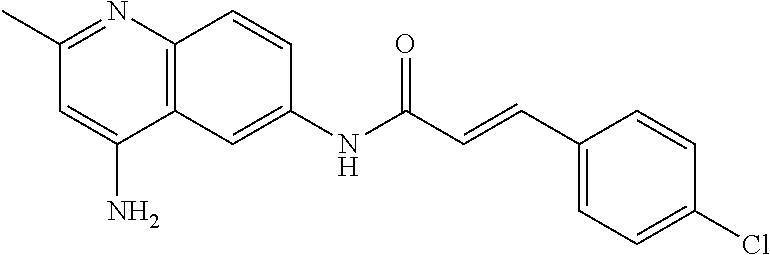 |
338 |
- Abdali et al., ACS Infect Dis, 3(1): p. 89-98, 2017.
- Awoonor-Williams et al., Biochim Biophys Acta, 1858(7 Pt B): p. 1672-87, 2016.
- Bush et al., Nat Rev Microbiol, 9(12): p. 894-6, 2011.
- CA798859A
- Cai et al., Anal Biochem, 385(2): p. 321-5, 2009.
- Davis et al., ACS Chemical Biology, 9(11): p. 2535-2544, 2014.
- Eicher et al., Proc Natl Acad Sci USA, 109(15): p. 5687-92, 2012.
- Fange et al., Proceedings of the National Academy of Sciences, 106(20): p. 8215-8220, 2009.
- Gamage et al., Bioorganic & Medicinal Chemistry, 21(11): p. 3147-3153, 2013.
- Haynes et al., J Med Chem, 60(14): p. 6205-6219, 2017.
- http://www.who.int/medicines/publications/WHO-PPL-Short_Summary_25Feb-ET_NM_WHO.pdf?ua=1.
- Krishnamoorthy et al., Antimicrob Agents Chemother, 60(12): p. 7372-7381, 2016.
- Krishnamoorthy et al., MBio, 8(5), 2017.
- Lewis, Nature, 485(7399): p. 439-440, 2012.
- Li et al., Antimicrob Agents Chemother, 47(1): p. 27-33, 2003.
- Li et al., Journal of Antimicrobial Chemotherapy, 45(4): p. 433-6, 2000.
- Livermore, Clin Microbiol Infect, 10 Suppl 4: p. 1-9, 2004.
- Lomovskaya et al., Antimicrob Agents Chemother, 43(6): p. 1340-6, 1999.
- Lomovskaya et al., Antimicrob Agents Chemother, 45(1): p. 105-16, 2001.
- Lomovskaya et al., Transporters as Drug Carriers, Wiley and Sons. p. in press, 2008.
- Lomovskaya, et al., Nat Rev Drug Discov, 6(1): p. 56-65, 2007.
- Lovmar et al., The EMBO Journal, 28(6): p. 736-744, 2009.
- Mohammad et al., J Biol Chem, 286(10): p. 8000-13, 2011.
- Nakashima et al., Nature, 480(7378): p. 565-9, 2011.
- Nikaido & Pages, FEMS Microbiol Rev, 36(2): p. 340-63, 2012.
- Nikaido, Microbiol Mol Biol Rev, 67(4): p. 593-656, 2003.
- Oethinger et al., Antimicrobial Agents & Chemotherapy, 44(1): p. 10-3, 2000.
- Richmond et al., Journal of Antimicrobial Chemotherapy, 10.1093/jac/dkt052, 2013.
- Richter et al., Nature, 10.1038/nature22308, 2017.
- Ruggerone et al., Curr Top Med Chem, 13(24): p. 3079-100, 2013.
- Silver, Bioorg Med Chem, 24(24): p. 6379-6389, 2016.
- Silver, Clin Microbiol Rev, 24(1): p. 71-109, 2011.
- Sjuts et al., Proc Natl Acad Sci USA, 113(13): p. 3509-14, 2016.
- Vargiu et al., Antimicrob Agents Chemother, 58(10): p. 6224-34, 2014.
- Westfall et al., PLoS One, 12(9): p. e0184671, 2009.
- Zgurskaya et al., ACS Infect Dis, 1(11): p. 512-522, 2015.
- Zgurskaya et al., Biochim Biophys Acta, 1794(5): p. 723-4, 2009.
- Zgurskaya, Future Microbiol, 4(7): p. 919-32, 2009.
Claims (21)


Priority Applications (1)
| Application Number | Priority Date | Filing Date | Title |
|---|---|---|---|
| US16/419,492 US11092549B2 (en) | 2018-05-23 | 2019-05-22 | Fluorescent probes for drug permeability in gram negative bacteria |
Applications Claiming Priority (2)
| Application Number | Priority Date | Filing Date | Title |
|---|---|---|---|
| US201862675482P | 2018-05-23 | 2018-05-23 | |
| US16/419,492 US11092549B2 (en) | 2018-05-23 | 2019-05-22 | Fluorescent probes for drug permeability in gram negative bacteria |
Publications (2)
| Publication Number | Publication Date |
|---|---|
| US20200018705A1 US20200018705A1 (en) | 2020-01-16 |
| US11092549B2 true US11092549B2 (en) | 2021-08-17 |
Family
ID=69139034
Family Applications (1)
| Application Number | Title | Priority Date | Filing Date |
|---|---|---|---|
| US16/419,492 Active 2040-01-17 US11092549B2 (en) | 2018-05-23 | 2019-05-22 | Fluorescent probes for drug permeability in gram negative bacteria |
Country Status (1)
| Country | Link |
|---|---|
| US (1) | US11092549B2 (en) |
-
2019
- 2019-05-22 US US16/419,492 patent/US11092549B2/en active Active
Non-Patent Citations (12)
Also Published As
| Publication number | Publication date |
|---|---|
| US20200018705A1 (en) | 2020-01-16 |
Similar Documents
| Publication | Publication Date | Title |
|---|---|---|
| Guo et al. | Amine-catalyzed synthesis of N2-sulfonyl 1, 2, 3-triazole in water and the tunable N2-H 1, 2, 3-triazole synthesis in DMSO via metal-free enamine annulation | |
| Yadav et al. | Synthesis and evaluation of antimicrobial, antitubercular and anticancer activities of benzimidazole derivatives | |
| Eswaran et al. | Design and synthesis of some new quinoline-3-carbohydrazone derivatives as potential antimycobacterial agents | |
| Desai et al. | Synthesis, antibacterial and antitubercular activities of benzimidazole bearing substituted 2-pyridone motifs | |
| US20090270423A1 (en) | Antibacterial small molecules and methods for their synthesis | |
| Bosc et al. | Kinetic target-guided synthesis in drug discovery and chemical biology: a comprehensive facts and figures survey | |
| Nakahata et al. | Sulfonamide-containing copper (II) metallonucleases: Correlations with in vitro antimycobacterial and antiproliferative activities | |
| Bhardwaj et al. | The role of ω‐subunit of Escherichia coli RNA polymerase in stress response | |
| Yeong et al. | Antituberculosis agents bearing the 1, 2-disubstituted benzimidazole scaffold | |
| Schulte et al. | A far‐red fluorescent DNA binder for interaction studies of live multidrug‐resistant pathogens and host cells | |
| Frolova et al. | Novel derivatives of quinoxaline-2-carboxylic acid 1, 4-dioxides as antimycobacterial agents: mechanistic studies and therapeutic potential | |
| Shukla et al. | Exploration of novel TOSMIC tethered imidazo [1, 2‐a] pyridine compounds for the development of potential antifungal drug candidate | |
| Boas Lichty et al. | NhaR, LeuO, and H-NS are part of an expanded regulatory network for ectoine biosynthesis expression | |
| Salake et al. | Design, synthesis, and evaluations of antifungal activity of novel phenyl (2 H-tetrazol-5-yl) methanamine derivatives | |
| An et al. | Synthesis and agricultural antimicrobial evaluation of new quinazoline derivatives containing both a piperazine linker and the N‐acetyl moiety | |
| US20200018705A1 (en) | Fluorescent probes for drug permeability in gram negative bacteria | |
| Poulsen et al. | Discovery of a Pseudomonas aeruginosa-specific small molecule targeting outer membrane protein OprH-LPS interaction by a multiplexed screen | |
| Malapati et al. | Lead identification and optimization of bacterial glutamate racemase inhibitors | |
| Yele et al. | Synthesis and evaluation of aryl/heteroaryl benzohydrazide and phenylacetamide derivatives as broad‐spectrum antibacterial agents | |
| Singh et al. | Dual‐Acting Small‐Molecule Inhibitors Targeting Mycobacterial DNA Replication | |
| Hart et al. | Nitrothiazole‐Thiazolidinone Hybrids: Synthesis and in Vitro Antimicrobial Evaluation | |
| Ivanenkov et al. | Tetrahydrocarbazoles as novel class of DNA biosynthesis inhibitors in bacteria | |
| Burke et al. | Development of a whole‐cell high‐throughput phenotypic screen to identify inhibitors of mycobacterial amino acid biosynthesis | |
| Harer et al. | In-silico docking based design and synthesis of [1H, 3H] imidazo [4, 5-b] pyridines as lumazine synthase inhibitors for their effective antimicrobial activity | |
| Hurley et al. | Targeting quinolone-and aminocoumarin-resistant bacteria with new gyramide analogs that inhibit DNA gyrase |
Legal Events
| Date | Code | Title | Description |
|---|---|---|---|
| FEPP | Fee payment procedure |
Free format text: ENTITY STATUS SET TO UNDISCOUNTED (ORIGINAL EVENT CODE: BIG.); ENTITY STATUS OF PATENT OWNER: SMALL ENTITY |
|
| FEPP | Fee payment procedure |
Free format text: ENTITY STATUS SET TO SMALL (ORIGINAL EVENT CODE: SMAL); ENTITY STATUS OF PATENT OWNER: SMALL ENTITY |
|
| STPP | Information on status: patent application and granting procedure in general |
Free format text: APPLICATION DISPATCHED FROM PREEXAM, NOT YET DOCKETED |
|
| AS | Assignment |
Owner name: SAINT LOUIS UNIVERSITY, MISSOURI Free format text: ASSIGNMENT OF ASSIGNORS INTEREST;ASSIGNORS:WALKER, JOHN K.;HAYNES, KEITH;SIGNING DATES FROM 20191007 TO 20191008;REEL/FRAME:050790/0452 Owner name: THE BOARD OF REGENTS OF THE UNIVERSITY OF OKLAHOMA Free format text: ASSIGNMENT OF ASSIGNORS INTEREST;ASSIGNORS:ABDALI, NARGES;RYBENKOV, VALENTIN V.;ZGURSKAYA, HELEN I.;SIGNING DATES FROM 20180614 TO 20180619;REEL/FRAME:050790/0766 Owner name: THE BOARD OF REGENTS OF THE UNIVERSITY OF OKLAHOMA, OKLAHOMA Free format text: ASSIGNMENT OF ASSIGNORS INTEREST;ASSIGNORS:ABDALI, NARGES;RYBENKOV, VALENTIN V.;ZGURSKAYA, HELEN I.;SIGNING DATES FROM 20180614 TO 20180619;REEL/FRAME:050790/0766 |
|
| STPP | Information on status: patent application and granting procedure in general |
Free format text: DOCKETED NEW CASE - READY FOR EXAMINATION |
|
| STPP | Information on status: patent application and granting procedure in general |
Free format text: NOTICE OF ALLOWANCE MAILED -- APPLICATION RECEIVED IN OFFICE OF PUBLICATIONS |
|
| STPP | Information on status: patent application and granting procedure in general |
Free format text: AWAITING TC RESP., ISSUE FEE NOT PAID |
|
| STPP | Information on status: patent application and granting procedure in general |
Free format text: NOTICE OF ALLOWANCE MAILED -- APPLICATION RECEIVED IN OFFICE OF PUBLICATIONS |
|
| STPP | Information on status: patent application and granting procedure in general |
Free format text: PUBLICATIONS -- ISSUE FEE PAYMENT RECEIVED |
|
| STPP | Information on status: patent application and granting procedure in general |
Free format text: PUBLICATIONS -- ISSUE FEE PAYMENT VERIFIED |
|
| STCF | Information on status: patent grant |
Free format text: PATENTED CASE |
|
| MAFP | Maintenance fee payment |
Free format text: PAYMENT OF MAINTENANCE FEE, 4TH YR, SMALL ENTITY (ORIGINAL EVENT CODE: M2551); ENTITY STATUS OF PATENT OWNER: SMALL ENTITY Year of fee payment: 4 |