US11080090B2 - Method and system for scalable job processing - Google Patents
Method and system for scalable job processing Download PDFInfo
- Publication number
- US11080090B2 US11080090B2 US15/503,889 US201515503889A US11080090B2 US 11080090 B2 US11080090 B2 US 11080090B2 US 201515503889 A US201515503889 A US 201515503889A US 11080090 B2 US11080090 B2 US 11080090B2
- Authority
- US
- United States
- Prior art keywords
- job
- node
- processing
- jobs
- queue
- Prior art date
- Legal status (The legal status is an assumption and is not a legal conclusion. Google has not performed a legal analysis and makes no representation as to the accuracy of the status listed.)
- Expired - Fee Related, expires
Links
Images




Classifications
-
- G—PHYSICS
- G06—COMPUTING OR CALCULATING; COUNTING
- G06F—ELECTRIC DIGITAL DATA PROCESSING
- G06F9/00—Arrangements for program control, e.g. control units
- G06F9/06—Arrangements for program control, e.g. control units using stored programs, i.e. using an internal store of processing equipment to receive or retain programs
- G06F9/46—Multiprogramming arrangements
- G06F9/50—Allocation of resources, e.g. of the central processing unit [CPU]
-
- G—PHYSICS
- G06—COMPUTING OR CALCULATING; COUNTING
- G06F—ELECTRIC DIGITAL DATA PROCESSING
- G06F9/00—Arrangements for program control, e.g. control units
- G06F9/06—Arrangements for program control, e.g. control units using stored programs, i.e. using an internal store of processing equipment to receive or retain programs
- G06F9/46—Multiprogramming arrangements
- G06F9/54—Interprogram communication
-
- G—PHYSICS
- G06—COMPUTING OR CALCULATING; COUNTING
- G06F—ELECTRIC DIGITAL DATA PROCESSING
- G06F9/00—Arrangements for program control, e.g. control units
- G06F9/06—Arrangements for program control, e.g. control units using stored programs, i.e. using an internal store of processing equipment to receive or retain programs
- G06F9/46—Multiprogramming arrangements
- G06F9/48—Program initiating; Program switching, e.g. by interrupt
- G06F9/4806—Task transfer initiation or dispatching
- G06F9/4843—Task transfer initiation or dispatching by program, e.g. task dispatcher, supervisor, operating system
- G06F9/4881—Scheduling strategies for dispatcher, e.g. round robin, multi-level priority queues
-
- G—PHYSICS
- G06—COMPUTING OR CALCULATING; COUNTING
- G06F—ELECTRIC DIGITAL DATA PROCESSING
- G06F9/00—Arrangements for program control, e.g. control units
- G06F9/06—Arrangements for program control, e.g. control units using stored programs, i.e. using an internal store of processing equipment to receive or retain programs
- G06F9/46—Multiprogramming arrangements
- G06F9/461—Saving or restoring of program or task context
-
- G—PHYSICS
- G06—COMPUTING OR CALCULATING; COUNTING
- G06F—ELECTRIC DIGITAL DATA PROCESSING
- G06F9/00—Arrangements for program control, e.g. control units
- G06F9/06—Arrangements for program control, e.g. control units using stored programs, i.e. using an internal store of processing equipment to receive or retain programs
- G06F9/46—Multiprogramming arrangements
- G06F9/48—Program initiating; Program switching, e.g. by interrupt
- G06F9/4806—Task transfer initiation or dispatching
- G06F9/4843—Task transfer initiation or dispatching by program, e.g. task dispatcher, supervisor, operating system
- G06F9/485—Task life-cycle, e.g. stopping, restarting, resuming execution
-
- G—PHYSICS
- G06—COMPUTING OR CALCULATING; COUNTING
- G06F—ELECTRIC DIGITAL DATA PROCESSING
- G06F9/00—Arrangements for program control, e.g. control units
- G06F9/06—Arrangements for program control, e.g. control units using stored programs, i.e. using an internal store of processing equipment to receive or retain programs
- G06F9/46—Multiprogramming arrangements
- G06F9/50—Allocation of resources, e.g. of the central processing unit [CPU]
- G06F9/5005—Allocation of resources, e.g. of the central processing unit [CPU] to service a request
-
- G—PHYSICS
- G06—COMPUTING OR CALCULATING; COUNTING
- G06F—ELECTRIC DIGITAL DATA PROCESSING
- G06F9/00—Arrangements for program control, e.g. control units
- G06F9/06—Arrangements for program control, e.g. control units using stored programs, i.e. using an internal store of processing equipment to receive or retain programs
- G06F9/46—Multiprogramming arrangements
- G06F9/50—Allocation of resources, e.g. of the central processing unit [CPU]
- G06F9/5083—Techniques for rebalancing the load in a distributed system
-
- G—PHYSICS
- G06—COMPUTING OR CALCULATING; COUNTING
- G06F—ELECTRIC DIGITAL DATA PROCESSING
- G06F9/00—Arrangements for program control, e.g. control units
- G06F9/06—Arrangements for program control, e.g. control units using stored programs, i.e. using an internal store of processing equipment to receive or retain programs
- G06F9/46—Multiprogramming arrangements
- G06F9/54—Interprogram communication
- G06F9/546—Message passing systems or structures, e.g. queues
-
- G—PHYSICS
- G06—COMPUTING OR CALCULATING; COUNTING
- G06F—ELECTRIC DIGITAL DATA PROCESSING
- G06F2209/00—Indexing scheme relating to G06F9/00
- G06F2209/50—Indexing scheme relating to G06F9/50
- G06F2209/503—Resource availability
-
- G—PHYSICS
- G06—COMPUTING OR CALCULATING; COUNTING
- G06F—ELECTRIC DIGITAL DATA PROCESSING
- G06F2209/00—Indexing scheme relating to G06F9/00
- G06F2209/50—Indexing scheme relating to G06F9/50
- G06F2209/509—Offload
Definitions
- the present invention is in the field of cluster processing. More particularly, but not exclusively, the present invention relates to processing jobs in a cluster architecture.
- the Internet currently faces a major challenge of supporting millions of users demanding access to concurrent, responsive, robust and always available services.
- Currently the underlying Internet resources are under immense pressure from ever increasing number of concurrent sessions and hits per day to Internet sites which translates itself into an ever increasing number of I/O and network requests.
- the peak load on an Internet service may be more than an order of magnitude greater than its average load; in this case over-provisioning of resources is generally infeasible.
- SEDA Staged Event Driven Architecture
- an “Enhanced Staged Event-Driven Architecture” which includes an event queue configured to enqueue events, an event handler programmed to process events in the process events in the event queue, and a thread pool coupled to the event handler.
- a resource manager further can be coupled to the thread pool and the event queue.
- the resource manager can be programmed to allocate additional threads to the thread pool where the number of events en-queued in the event queue exceeds a threshold value and where all threads in the thread Pool are busy.
- Reverse C10K Problem for Server-side Mashups describes the so called problem of reverse C10K problem, or RC10K, i.e. how to support tens of thousands of simultaneous outbound HTTP requests running on a web server.
- a method for processing jobs in a cluster architecture including:
- Each job may be deserialised from a job definition.
- the job definition may include task parameters and definition type.
- Continued jobs may be allocated to a local queue for the node.
- the external dependency may be a network input/output.
- the external dependency may be information requested from an external Internet service.
- the job may be received from another node of the plurality of nodes.
- the job may be received from an external client.
- a method for processing jobs in a cluster architecture including:
- Each job may include a UUID.
- a job may trigger creation of one or more child jobs.
- the one or more child jobs may transmit messages relating to the child jobs via the messaging channel to the client.
- the method may further including the step of storing a map of parent job-child jobs. The map may be replicated at all nodes processing the jobs.
- the job UUID and/or all child job UUIDs may be broadcast to all nodes. If a node receives broadcasted cancelled job UUIDs, interrupting and cancelling any of those jobs currently executing.
- Each job may include task parameters.
- Messages resulting from jobs to the client may be stored within a message registry.
- the message registry may be replicated at each node processing the job. Messages may be transmitted from the message registry to the client from the node to which the client is presently connected.
- the messaging channel may be persistent.
- the messages may include job status and results.
- Each job may include a message channel identifier.
- the messages stored within the message registry may be associated with a message channel identifier.
- Each child job may have the same message channel identifier as their parent. Messages may be transmitted back to the client via the messaging channel from a job using the job's message channel identifier.
- a method for processing jobs in a cluster architecture including:
- Each node may also include a local queue, and the node may processes jobs within the local queue before jobs in the cluster queue.
- the method may further including the step of the node determining capacity to process a job within the local queue and where capacity is not available pushing the job to the cluster queue.
- Jobs may be processed at the node from the local queue when the jobs are flagged for local execution only.
- the new jobs may be added to the local queue.
- Each node may comprise a plurality of worker threads, and wherein a job is allocated for processing by an available worker thread.
- the capacity of node may include determining CPU utilisation.
- the job may include task parameters.
- the node may serialise the job before adding the job to the cluster queue.
- the method may further include the step of another node of the plurality of nodes removing the cluster queued job, de-serialising the job definition, and processing the job.
- the job may include one or more thresholds.
- the thresholds may include one or more from the set of CPU time, memory usages, and total time.
- a job may cancel itself if a threshold is exceeded.
- the node may adaptively controls the number of worker threads and/or the speed of dequeuing jobs from the cluster queue based upon analysis of capacity at the node.
- the capacity of node may include projected utilisation/load of the node over time of processing jobs.
- FIG. 1 shows a block diagram illustrating a system in accordance with an embodiment of the invention
- FIG. 2 shows a block diagram illustrating a node in accordance with an embodiment of the invention
- FIG. 3 shows a block diagram illustrating a job structure in accordance with an embodiment of the invention
- FIG. 4 a shows a block diagram illustrating a local queue in accordance with an embodiment of the invention
- FIG. 4 b shows a block diagram illustrating a cluster queue in accordance with an embodiment of the invention
- FIG. 5 a shows a block diagram illustrating a job map in accordance with an embodiment of the invention
- FIG. 5 b shows a block diagram illustrating a message registry in accordance with an embodiment of the invention
- FIG. 6 shows a flow diagram illustrating a method in accordance with an embodiment of the invention
- FIG. 7 shows a flow diagram illustrating a job processing method in accordance with an embodiment of the invention
- FIG. 8 shows a flow diagram illustrating a messaging method in accordance with an embodiment of the invention
- FIG. 9 shows a flow diagram illustrating a job allocation method in accordance with an embodiment of the invention.
- FIG. 10 shows a block diagram illustrating a system in accordance with an embodiment of the invention.
- FIG. 11 shows a sequence diagram illustrating a job continuation method in accordance with an embodiment of the invention
- FIG. 12 shows a block diagram illustrating a job service in accordance with an embodiment of the invention
- FIG. 13 shows a flow diagram illustrating a job lifecycle in accordance with an embodiment of the invention
- FIG. 14 shows a flow diagram illustrating a job spawning method in accordance with an embodiment of the invention
- FIG. 15 shows a block diagram illustrating a messaging system in accordance with an embodiment of the invention
- FIG. 16 shows a block diagram illustrating a job processing system in accordance with an embodiment of the invention
- FIG. 17 a shows a flow diagram illustrating the first part of a job allocation method in accordance with an embodiment of the invention.
- FIG. 17 b shows a flow diagram illustrating the second part of a job allocation method in accordance with an embodiment of the invention.
- the present invention provides a method and system for processing jobs within a cluster architecture.
- the inventors have developed a scalable and efficient solution for a variant of the reverse C10K problem which progresses beyond existing solutions when the service involves processing large tasks by providing, in some embodiments, better scalable processing of jobs, better user/client experience, more efficient management of the Internet resources, lower degradation of services when demand for a service exceeds its capacity, and potential for better load conditioning.
- FIG. 1 a system 100 in accordance with an embodiment of the invention is shown.
- a plurality of processing nodes 101 within a cluster architecture 102 are shown. Within the cluster 102 , the nodes 101 may share resources via a networking protocol.
- the nodes 101 may be physical apparatus or virtual servers.
- a plurality of clients 103 are also shown.
- the clients 103 may be physical computing apparatus or virtual servers.
- the clients 103 may include a processor and communications module.
- the clients 103 and nodes 101 may be interconnected via a communications system 104 .
- the communications system 104 may be a network.
- the communications system 104 may include a load balancer.
- Each client 103 may be configured for making a request to process a job at the nodes 101 .
- the job may comprise tasks.
- the tasks may be comprised of a series of sub-tasks. One or more of the tasks or sub-tasks may require the resolution of external dependencies to conclude the job.
- Each client 103 may further configured to receive and transmit messages from and to the nodes 101 via a persistent message channel. The messages may comprise metadata about jobs being processed by the nodes 101 .
- the system 100 may be configured for creating a persistent messaging channel between a node 101 and a job requesting client 103 .
- Each node 101 may be configured for receiving requests to process jobs from clients 103 , for allocating the jobs for processing at the node 101 or across the plurality of nodes 101 , for processing the jobs, and for delivering messages back to the client 103 in relation to the jobs via the persistent messaging channel.
- the tasks may require the collection and/or collation of data from external data sources, such as Internet web servers, and the delivery of this collected and/or collate data back to the clients 103 .
- the data may be delivered back to the clients 103 via the persistent messaging channel.
- Each node 101 may comprise a plurality of workers or threads to enable simultaneous processing of jobs.
- the nodes 101 may be configured for receiving jobs for processing from any other of the plurality of nodes 101 .
- the nodes 101 may be configured for allocating jobs for processing across the plurality of nodes 101 by adding the job to a cluster queue accessible by all of the nodes 101 .
- the nodes 101 may be configured for determining whether to process a job at the node or allocating the job to the cluster queue based upon capacity at the node.
- a node 101 may be configured to generate new children jobs to perform those tasks.
- the children jobs may be allocated by the node 101 to a local queue or to a cluster queue accessible by all nodes 101 .
- the node 101 may be configured for pausing the job and then selecting a further job to process from the local or cluster queue.
- An application program interface may be provided by the cluster architecture 102 to the clients 103 to facilitate communication between the nodes 101 and the clients 103 .
- the API may provide a persistent message channel configured to receive and transmit a plurality of messages from/to the client to/from the cluster architecture, at least some of the messages comprising metadata about a job being processed.
- FIG. 2 one 200 of the plurality of nodes 101 in accordance with an embodiment of the invention is shown.
- the node 200 includes a processor 201 , such as a CPU, a memory 202 and a communications module 203 .
- the memory 202 may be configured for storing computer instructions, which, when executed on the node, perform the methods described in relation to FIGS. 6 to 9 .
- the node 200 may include more than one processor 201 .
- FIG. 3 the structure of a job 300 is shown.
- Each job may include parameters which define the tasks to be performed, a UUID (universally unique identifier), and a messaging identifier for the persistent messaging channel.
- UUID universalally unique identifier
- messaging identifier for the persistent messaging channel.
- FIG. 4 a a local queue 400 is shown.
- Each node 101 may be configured to access their own local queue 400 .
- the local queue 400 may be stored within the memory 202 at each node 101 .
- the local queue 400 may be configured to store serialised versions of the jobs 401 .
- a cluster queue 402 is shown in FIG. 4 b.
- the cluster queue 402 may be replicated or accessible across the plurality of the nodes 101 .
- the cluster queue 402 is configured to store serialised versions of the jobs 403 .
- FIG. 5 a a job map 500 is shown.
- the job map 500 comprises a plurality of entries 501 mapping parent jobs 502 to children jobs 503 .
- the job map 500 is a cluster data structure and the entries are replicated or accessible across the plurality of the nodes 101 .
- FIG. 5 b a message registry 504 is shown.
- the message registry 504 comprises a plurality of messages 505 generated during processing of jobs mapped to messaging identifiers 506 .
- the message register 504 may be cluster data structure such that it is replicated or accessible across the plurality of the nodes 101 .
- step 601 a job is received for processing at a node from a client.
- a messaging channel may be created for the job.
- the messaging channel may be constructed in accordance with the method described in relation to FIG. 8 .
- step 603 the job is allocated to be either processed locally at the node in step 604 or enqueued to a cluster queue in step 605 .
- the job may be allocated in accordance with an allocation method, for example, as described in relation to FIG. 9 .
- step 604 the job is processed locally at the node, for example, by one of the workers or threads at the node.
- the job may be processed in accordance with the method described in relation to FIG. 7 .
- step 605 another job may be retrieved from the local queue or the cluster queue (if the local queue is empty for example) for processing.
- step 701 the job is received for local processing at step 702 at the node.
- new jobs may be spawned to perform sub-tasks within the job definition.
- An entry may be created in the job map mapping the original job to the child jobs.
- the new jobs may be flagged for local execution (for example, if the require state of execution is too large to serialise and distributed around the cluster).
- the new jobs may be allocated for processing, for example, by the method described in relation to FIG. 9 .
- step 706 the original job is processed until external dependencies are detected.
- step 707 when external dependencies are detected the original job is paused.
- step 708 another job is retrieved from the local queue or the cluster queue and processed.
- step 709 the processing of the original job continues when the external dependencies are completed.
- Completion of the external dependencies may trigger queuing of the original job on the local queue, such that processing of the original job will continue when the node retrieves the job from the queue.
- the job may elect to cancel itself (for example, if it is taking longer than a defined time to complete its tasks).
- the job map can be used by the nodes to ensure that all child jobs are also cancelled.
- the client may also send a message (for example, via the messaging channel) to cancel the original job.
- the job map can be used by the nodes to cancel all child jobs.
- step 801 a unique messaging identifier for the job is created.
- step 802 a messaging channel associated with the identifier is created between the node and the client.
- step 803 messages from processing of the original job or children jobs are associated with this messaging identifier and stored in the message registry.
- step 804 the messages from the message registry are transmitted to the client.
- Messages may be transmitted by the node to the client, such that messages from across the cluster are forwarded by the node to the client.
- a new messaging channel is created and associated with the original identifier to ensure messages for the original and/or child jobs are forwarded to the client.
- step 901 the capacity of the node is determined.
- step 902 if the capacity is above a threshold, the job is allocated for processing at the node at step 903 .
- the job may also be allocated for processing at the node if it has been flagged for local execution.
- step 904 if the capacity is below a threshold, the job is to be enqueued to the cluster queue.
- the capacity of the node may be the current CPU utilisation.
- the capacity and/or threshold may be calculated based on the size of the cluster, an estimated memory and/or CPU cost to the job, and scaling limits.
- the node adaptively increases the numbers of workers/threads to process jobs and/or the rate at which jobs are dequeued from the cluster queue based upon statistics relating to the capacity of the node (such as projected load over time of processing jobs or current utilisation of the node.
- This embodiment provides a homogeneous cluster of networked server nodes 1000 all executing the job management system 1001 (JobFactory), and all of the platform services needed to perform the jobs.
- Each job has a definition and that definition is processed the same at each node 1000 . Therefore, any node 1000 can either accept jobs from a client 1002 , and process a job directly or process jobs received by other nodes 1000 .
- a client 1002 with a job to perform can therefore communicate with any node 1000 .
- the client 1002 begins communication by creating a single persistent messaging channel to a server node 1000 , and this is used by the server node 1000 to return metadata about the job as well as results to the client 1002 whilst the client 1002 can initiate or cancel job requests.
- This messaging system is described in more detail in relation to FIG. 15 .
- the receiving server node 1000 accepts the job requests and will either start processing the job or push the job into a clustered queue 1003 for processing by another node 1000 .
- the method for choosing whether to process locally or push to the cluster queue 1003 may be based on that node's current and/or projected CPU load.
- the method for determining capacity for job processing is described in more detail in relation to FIGS. 17 a to 17 b.
- Processing of the job once started, will continue until a subtask within the job cannot be completed until some external dependencies have completed. In this instance, the job will be paused, leaving the node 1000 free to process other jobs. When the external dependency is ready to be completed, the job is resumed (the state CONTINUING as shown in FIG. 13 ).
- a job may require further tasks to be performed, and therefore, if applicable to the job definition, new jobs may be spawned, the status and result messages of which will be sent through the persistent messaging channel. This spawning of jobs may permit the complete task to be broken down and the client 1002 to receive results streamed back sooner than the overall job takes to complete.
- the continuation process and new job spawning process is described in more detailed in relation to FIGS. 11 to 14 .
- Jobs are tasks to be performed by the job management system 1001 for the client 1002 , for example a job might be a query to an external web site (i.e. a web page) and for data to be extracted from it (a QueryJob).
- the QueryJob may involve a series of steps:
- fetching a page such that data can be extracted also involves progressively evaluating the DOM (Document Object Model) and script references, within the page, to fetch associated resources, for example, JavaScript files, and executing them, before any data can be extracted from the page.
- DOM Document Object Model
- a job can therefore be seen as a series of tasks to be performed for the client 1002 that are fulfilled by utilising server-side service components.
- this job definition contains the task parameters, a messaging reference ID, and the type of job definition.
- this serialised job definition is de-serialised by a JobFactory 1001 , and reconstituted with references to local services to perform the task.
- This serialisation of the job definition allows the implementation of the workers to be generic, i.e.:—one system may have multiple job definitions, for example, a QueryJob and PublishingJob.
- a job uses local services to complete its necessary subtasks, these tasks by their nature may not be possible to be completed immediately, and a mechanism is needed so the service can pause the current job and allow other jobs to be processed.
- a continuation mechanism allows for the task to be paused, and its state kept and resumed when the service is able to continue as shown in FIG. 11 .
- the job 1100 upon starting will create 1101 a new continuation 1102 from a JobFactory 1103 , which has also created a ContinuationService 1104 ; the job will start 1105 the continuation 1102 and this will interact 1106 with services 1107 passing 1108 the ContinuationService 1104 ; and the service 1107 , when it is has completed its task, can then use the ContinuationService 1104 to continue 1109 the continuation 1102 .
- the resolution of local services is implemented through the Java technology of OSGi (Open Service Gateway initiative), and the binding of the services to the jobs is done through the JobFactory.
- a JobService 1200 is a controller orchestrating jobs and there may be one or more instances of a JobService 1200 running on each node.
- the JobService 1200 handles the running, balancing, and distribution of jobs.
- Each instance of the JobService 1200 may have different configuration for local job queues 1201 , threadpool 1202 sizes, along with pluggable implementations for statistics generation.
- Statistics about a JobService 1200 can be used to drive automated scaling of nodes with the cluster, for example a count of the items in the cluster queue 1203 , or an estimate of their CPU cost and time to complete, can determine whether new nodes need to be started.
- JobService has the following function calls:
- JobService 1200 this includes the steps of:
- the decision to execute locally or in the cluster is decided by the following factors:
- the runnable contains an ID reference to the JobService 1200 and the JobDefinition. If the job is to be executed on the cluster then the JobDefinition is serialized and added to the cluster queue 1203 , and when the JobDefinition is pulled from the queue 1203 on another cluster node, the JobDefinition is deserialized into a runnable object with a reference to that node's local JobService instance and the JobDefinition.
- Each node on the platform has an instance of a ThreadPoolExecuter 1202 , which has a fixed pool of executors that poll the ProxyQueue 1206 for new runnable tasks to be executed; by design, these runnables have a reference to the JobService 1200 and the JobDefinition. Each executor, therefore, can call JobService.runJob(JobDefinition).
- the JobService 1200 keeps track of jobs and new spawned jobs in a cluster MultiMap 1205 that maps root job UUIDs to spawned job UUIDs. This means if a node receives a request to cancel a job, the job UUID is broadcast to all nodes along with all spawned child job UUIDs, interrupting and cancelling any of those jobs that are currently running.
- the lifecycle of a job is shown in FIG. 13 .
- Important status changes are from “STARTED” to “PAUSED” and “PAUSED” to “CONTINUING”, this reflects that a job can be paused while local tasks wait for completion.
- Job#startIt( ) method When a job is executed, the Job#startIt( ) method is called. Jobs must exit in either a FINISHED or PAUSED state (Job#getState( )).
- the job management system 1001 provides for jobs to spawn subsequent jobs to do related processing as shown in FIG. 14 .
- An example of this are: paged requests where the first job returns the first page of data and spawns a request for the next page of data to be retrieved, or a “federated search” returning results for the different sites in answer to the one initial query job.
- Spawned jobs can flagged to be executed locally, if the required state of execution is too large or expensive to serialize and distribute around the cluster of nodes.
- a job that is not spawned is called a root job 1400 .
- Jobs are stateless with the spawned jobs not sharing state with the parent. However spawned jobs share the reference to the messaging channel and therefore clients receive messages about the state of the job and all spawned jobs, including the results.
- JobService tracks metrics for each job, for example CPU time, memory usage, total time, and makes these metrics available via the ContinuationService. Based on this a job can make decisions, for example, a query job could cancel itself if CPU execution time exceeds a defined limit.
- the messaging system 1500 provides a stream of messages back to the client 1501 on the status and result of the job and spawned jobs.
- a messaging channel 1502 is created from the client 1501 to a receiving node 1503 This channel 1502 receives all messages received from this node 1503 and any node that has processed jobs for this client 1501 .
- a registry 1504 of collected clients is created in the cluster and shared to all nodes that process the job. Messages are then sent to the message registry 1504 and stored. Nodes 1503 that have the original connection are notified if a message is added for their connections.
- This cluster data structure 1504 that provides a registry of message channels means that any node that processes jobs for another node 1503 can send messages back to the connected client 1501 at the other node 1503 . This also means the client 1501 can disconnect and re-connect to another node in the cluster and receive any messages not yet sent. This enables load balancing, with jobs potentially being processed by other nodes and failover if the node holding the connection terminates.
- connection When the connection is disrupted, it can be resumed when the client reconnects to any node if they present the messaging ID they were originally served when the initial connection was made.
- One implementation for providing messaging is using an implementation of Cometd so a client sends messages over an HTTP long-poll or websockets channel.
- all nodes 1600 in the cluster are effectively the same, they can receive connections from clients submitting jobs to the queue and they can process jobs from the cluster if they have capacity.
- Each node has a worker as its own proxy for the cluster queue: a proxy queue 1601 .
- the proxy queue 1601 will block waiting for the jobs from the cluster queue 1602 , this wait is interrupted if there exist any local jobs added to the local queue 1603 .
- the proxy queue 1601 is defined as:
- nodes 1600 under high usage do not process jobs from the cluster. If the threshold is exceeded that node will only poll its local queue 1603 until a fixed period of time has passed.
- the configuration (CPU threshold, time settings) of the proxy queue 1601 is intrinsic to the definition of the JobService implementation and behaviour. This configuration allows a node 1600 to not exhaust processing capacity such that it cannot process the jobs it currently has started.
- processing decisions can be encapsulated in a pluggable Processing Decider with one implementation, as above, based on the CPU utilization of the local node. More sophisticated implementations may be aware of the cluster size, estimated existing job cost in memory and/or CPU, and scaling limits before deciding whether to push or process the job locally.
- the pluggable Processing Decider can adapt the size of the local thread pool and/or the rate of dequeuing jobs from the cluster queue based upon statistics relating to, for example, the projected load over time of the running jobs, or the current utilization of the node.
- Embodiment feature Potential advantages Continuation concept Regarding SEDA jobs that do not have a compared to SEDA deterministic path would require algorithm continually passing between stages, potentially with multiple returns to the same stage.
- Consider rendering of a web page might require many calls to the download stage as new JavaScript scripts are evaluated.
- Some embodiments of the present invention reduce the number of calls required.
- By using the concept of continuation there is no need for separate stages. Keeping the job states Regarding SEDA and jobs that require a within the program lot of state, again consider a web page stack and the state of evaluated scripts and the page DOM, would be problematic when serializing to the event queue. Some embodiments of the present invention avoid this problem by keeping the states within the program stack.
- Homogeneous network by Simple Infrastructure of some configuration of each embodiments of the present invention makes it easier-to- processing nodes scale compared to the existing technologies.
- Distributed processing of Some embodiments of the present potentially long running invention result in fair distribution of the jobs resources leading to greater efficiency and better fairness in terms of job delays for different clients and service users. Any node can receive jobs Better availability of resources leading to processing them locally more efficient load balancing and better or pushing to the server delay profile. for execution Jobs are serialised to a This means that any node can process “job definition” which without the context of the original user is added to the processing request leading to better utilization of queue nodes. Distributed processing is This provides the possibility of supported by cluster data processing outside the constraints of one structures node.
- Streaming of message This allows clients to receive information results partially as it is being extracted (this means more user convenience and better user experience) as user does not need to wait for all the results until seeing a result. Jobs spawning jobs (tree Splitting of a larger job into small jobs is of jobs) resemble of using “map-reduce” to solve the problem. This spawning of jobs enables the complete task to be broken down and the client to receive results streamed back sooner than the overall job takes to complete. Reduced calls from users, reduce context and caching for the service provider on the next job, i.e. saving time and resources on the service providers' servers.
- JobService control unit Results in better load balancing for the at each node for job jobs in hand, providing better orchestration and its orchestration and creating harmony related messaging flow between the tasks leading to improved user experience and improved processing resource management on the service provider's server side.
Landscapes
- Engineering & Computer Science (AREA)
- Software Systems (AREA)
- Theoretical Computer Science (AREA)
- Physics & Mathematics (AREA)
- General Engineering & Computer Science (AREA)
- General Physics & Mathematics (AREA)
- Computer And Data Communications (AREA)
- Multi Processors (AREA)
Abstract
Description
-
- jobs that do not have a deterministic path would require continually passing between stages, potentially with multiple returns to the same stage. Consider rendering of a web page might require many calls to the download stage as new JavaScript scripts are evaluated; and
- jobs that require a lot of state, again consider a web page and the state of evaluated scripts and the page DOM, would be problematic when serializing to the event queue.
-
- A plurality of processing nodes within a cluster architecture; and
- A communications system;
wherein the system is configured for performing the method of any one of the above aspects.
-
- 1. Using a local playback service to fetch the page within the query;
- 2. Using an extraction service to get data from the page;
- 3. Optionally spawning more QueryJobs for more pages if requested by client; and
- 4. Streaming messages back to the client 1002 on job status and results.
-
- Deciding if the job must be executed locally or can be executed by another node in the cluster.
- If locally, submitting the job UUID to a
local queue 1201. - If by another node, adding the job definition to a clustered
queue 1203. - Adding a timeout task to be executed, if the job time-outs before being taken off the queue, this is submitted to the
ScheduledExecutorService 1204 to be run after a given time limit. - Adding a
multi-map 1205 of parent job spawned child jobs.
-
- Is there capacity locally? This is definable, and, for example, can be based on a rolling average of CPU utilization such that if the utilization is below a configured threshold the job can be processed locally.
- Is the job flagged for local execution?
-
- If a job is cancelled it ends in a FINISHED state.
- If a job is completed, it is by definition in a FINISHED state.
- If a job is paused, it is waiting on network I/O or similar. It is up to another other thread to request that the job is continued via the JobContinuationService that is set by Job#setJobContinuationService( ) upon start of the Job by the Job Service. When it is continued, the Job#continueIt( ) method is called, and the process starts again.
| INIT | Message when a new job has been received by the server |
| from a client | |
| MESSAGE | Message containing the results of the job execution |
| STOP | Metadata indicating a job has finished |
| ERROR | Message indicating an error processing a job |
| START | Message sent when the server has started processing a |
| new job | |
| SPAWN | Message sent when a job spawns another child job |
| CANCEL | Message sent when a job has been cancelled. |
| Client | Server |
| sends query | QueryJob => | |
| job | ||
| (query input | ||
| “XYZ”, max | ||
| pages 2) | ||
| <= INIT | Server sends an INIT message | |
| acknowledging the job | ||
| . . . job is queued . . . | ||
| <= START | Job is ready for processing, server sends | |
| a START message | ||
| <= MESSAGE | Job results in data - one or more | |
| MESSAGE is sent containing the data | ||
| <= SPAWN | The Job then SPAWNs zero or more jobs | |
| . . . jobs are queued . . . | ||
| <= STOP | First job is finished, server sends STOP | |
| message | ||
| <= START | Second job is ready for processing, server | |
| sends a START message | ||
| <= MESSAGE | Second job results in query data, server | |
| sends a MESSAGE containing data. | ||
| <= STOP | Second job is finished, server sends a | |
| STOP message | ||
| . . . this message conversation will | ||
| continue for every job that is spawned, | ||
| and each job can spawn new jobs . . . | ||
-
- Using two queues internally: local 1603 and
cluster 1602; - poll( ) returns the local item if available, otherwise waits until there are resources available (e.g. below a CPU threshold) before calling the
cluster queue 1602, blocking (if appropriate); - If an item arrives on the local queue 1603 while the
proxy queue 1601 is waiting on thecluster queue 1602, the wait is interrupted and the item from the local queue 1603 is returned; - If resources are no longer available, blocking on the
cluster queue 1602 is interrupted and wait; - Therefore, the local queue 1603 is always prioritised; and
- Continuations are added only to the local queue 1603.
- Using two queues internally: local 1603 and
-
- 1. Does the node have capacity to process the job locally, or should the job be pushed to the cluster queue?
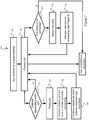
FIG. 17a illustrates how the decision is made under a threshold management mechanism. Firstly, does the job need processing locally instep 1700? If yes, then it is added to the local queue at 1701; if no, then a determination needs to be made if there is capacity to process the job locally instep 1702. If there is capacity, the job is added to the local queue at 1701 and, if no, the job is added to the cluster queue at 1703. - 2. Does the node have capacity to process jobs from the cluster or should it only process local jobs? As shown in
FIG. 17 b, if the node has local jobs to process at 1704, then the first local queue item is processed instep 1705. If not, does the node have capacity to process more at 1706; if yes, then the next cluster queue item is processed instep 1707 and, if no, then sleep and wait at 1708.
- 1. Does the node have capacity to process the job locally, or should the job be pushed to the cluster queue?
| Embodiment feature | Potential advantages |
| Continuation concept | Regarding SEDA, jobs that do not have a |
| compared to SEDA | deterministic path would require |
| algorithm | continually passing between stages, |
| potentially with multiple returns to the | |
| same stage. Consider rendering of a web | |
| page might require many calls to the | |
| download stage as new JavaScript | |
| scripts are evaluated. Some | |
| embodiments of the present invention | |
| reduce the number of calls required. By | |
| using the concept of continuation, there | |
| is no need for separate stages. | |
| Keeping the job states | Regarding SEDA and jobs that require a |
| within the program | lot of state, again consider a web page |
| stack | and the state of evaluated scripts and the |
| page DOM, would be problematic when | |
| serializing to the event queue. Some | |
| embodiments of the present invention | |
| avoid this problem by keeping the states | |
| within the program stack. | |
| Homogeneous network by | Simple Infrastructure of some |
| configuration of each | embodiments of the present invention (all |
| node provides clustered | nodes are the same) makes it easier-to- |
| processing nodes | scale compared to the existing |
| technologies. | |
| Distributed processing of | Some embodiments of the present |
| potentially long running | invention result in fair distribution of the |
| jobs | resources leading to greater efficiency |
| and better fairness in terms of job delays | |
| for different clients and service users. | |
| Any node can receive jobs | Better availability of resources leading to |
| processing them locally | more efficient load balancing and better |
| or pushing to the server | delay profile. |
| for execution | |
| Jobs are serialised to a | This means that any node can process |
| “job definition” which | without the context of the original user |
| is added to the processing | request leading to better utilization of |
| queue | nodes. |
| Distributed processing is | This provides the possibility of |
| supported by cluster data | processing outside the constraints of one |
| structures | node. |
| Pause/run jobs while | Providing for processing of other jobs |
| waiting for external | whilst waiting results in improved delay |
| dependencies | profile, improved load balancing and |
| improved scheduling of services. | |
| Streaming of message | This allows clients to receive information |
| results | partially as it is being extracted (this |
| means more user convenience and | |
| better user experience) as user does not | |
| need to wait for all the results until seeing | |
| a result. | |
| Jobs spawning jobs (tree | Splitting of a larger job into small jobs is |
| of jobs) | reminiscent of using “map-reduce” to |
| solve the problem. This spawning of jobs | |
| enables the complete task to be broken | |
| down and the client to receive results | |
| streamed back sooner than the overall | |
| job takes to complete. Reduced calls | |
| from users, reduce context and caching | |
| for the service provider on the next job, | |
| i.e. saving time and resources on the | |
| service providers' servers. | |
| Cancelling of jobs | Cancelling because clients disconnected |
| would save service providers' resources. | |
| JobService control unit | Results in better load balancing for the |
| at each node for job | jobs in hand, providing better |
| orchestration and its | orchestration and creating harmony |
| related messaging flow | between the tasks leading to improved |
| user experience and improved | |
| processing resource management on the | |
| service provider's server side. | |
| A “pluggable processing | Results in better load balancing for the |
| decider” to decide whether | jobs in hand, providing better |
| the node have capacity to | orchestration and creating harmony |
| process the job locally, or | between the tasks leading to improved |
| should the job be pushed to | user experience and improved |
| the cluster queue? Also | processing resource management on the |
| to decide whether the node | service provider's server side. |
| have capacity to process | |
| jobs from the cluster or | |
| should it only process | |
| local jobs? | |
| Utilising the continuation | Better utilization of the processing power, |
| concept and the messaging | better user experience under large |
| flow, where execution of | concurrent tasks. |
| a job can be paused whilst | |
| they await external | |
| operations to complete. | |
| When external operations | |
| complete the jobs are | |
| resumed from that point. | |
| A novel “configurable | Nodes that under high usage pressure do |
| CPU threshold” which is | not process jobs from the cluster. This |
| checked and jobs are only | would lead to a better utilization of the |
| pulled from the queue, if | processing power and better user |
| the threshold is met. If the | experience under large concurrent tasks. |
| CPU threshold is exceeded | |
| that node will only poll its | |
| local queue until a fixed | |
| period of time has passed. | |
Claims (19)
Applications Claiming Priority (4)
| Application Number | Priority Date | Filing Date | Title |
|---|---|---|---|
| GB1414463.8 | 2014-08-14 | ||
| GB201414463A GB2513779B (en) | 2014-08-14 | 2014-08-14 | A method and system for scalable job processing |
| GB1414463 | 2014-08-14 | ||
| PCT/GB2015/052349 WO2016024124A2 (en) | 2014-08-14 | 2015-08-14 | A method and system for scalable job processing |
Related Parent Applications (1)
| Application Number | Title | Priority Date | Filing Date |
|---|---|---|---|
| PCT/GB2015/052349 A-371-Of-International WO2016024124A2 (en) | 2014-08-14 | 2015-08-14 | A method and system for scalable job processing |
Related Child Applications (1)
| Application Number | Title | Priority Date | Filing Date |
|---|---|---|---|
| US17/350,788 Continuation US20210311781A1 (en) | 2014-08-14 | 2021-06-17 | Method and system for scalable job processing |
Publications (2)
| Publication Number | Publication Date |
|---|---|
| US20180349178A1 US20180349178A1 (en) | 2018-12-06 |
| US11080090B2 true US11080090B2 (en) | 2021-08-03 |
Family
ID=51662449
Family Applications (2)
| Application Number | Title | Priority Date | Filing Date |
|---|---|---|---|
| US15/503,889 Expired - Fee Related US11080090B2 (en) | 2014-08-14 | 2015-08-14 | Method and system for scalable job processing |
| US17/350,788 Abandoned US20210311781A1 (en) | 2014-08-14 | 2021-06-17 | Method and system for scalable job processing |
Family Applications After (1)
| Application Number | Title | Priority Date | Filing Date |
|---|---|---|---|
| US17/350,788 Abandoned US20210311781A1 (en) | 2014-08-14 | 2021-06-17 | Method and system for scalable job processing |
Country Status (3)
| Country | Link |
|---|---|
| US (2) | US11080090B2 (en) |
| GB (3) | GB2513779B (en) |
| WO (1) | WO2016024124A2 (en) |
Families Citing this family (19)
| Publication number | Priority date | Publication date | Assignee | Title |
|---|---|---|---|---|
| RU168274U1 (en) * | 2016-10-18 | 2017-01-25 | Федеральное Государственное унитарное предприятие Государственный научно-исследовательский институт гражданской авиации (ФГУП ГосНИИ ГА) | SYSTEM OF AVERAGE REDISTRIBUTION OF LABOR CAPACITIES OF CONTROLLED ORDERS BY THE STRUCTURAL DIVISIONS OF THE ENTERPRISE |
| CN107967549B (en) * | 2016-10-20 | 2022-02-01 | 南京途牛科技有限公司 | Multi-process task processing device and method |
| CN108021430B (en) * | 2016-10-31 | 2021-11-05 | 杭州海康威视数字技术股份有限公司 | Distributed task processing method and device |
| US10514993B2 (en) | 2017-02-14 | 2019-12-24 | Google Llc | Analyzing large-scale data processing jobs |
| US11010193B2 (en) * | 2017-04-17 | 2021-05-18 | Microsoft Technology Licensing, Llc | Efficient queue management for cluster scheduling |
| US10613904B2 (en) * | 2017-05-10 | 2020-04-07 | International Business Machines Corporation | Non-directional transmissible task |
| US10761765B2 (en) * | 2018-02-02 | 2020-09-01 | EMC IP Holding Company LLC | Distributed object replication architecture |
| CN108924844B (en) * | 2018-04-23 | 2023-09-08 | 中国卫通集团股份有限公司 | A method for transmitting carrier waves based on automatic task scheduling algorithm |
| US11132233B2 (en) * | 2018-05-07 | 2021-09-28 | Micron Technology, Inc. | Thread priority management in a multi-threaded, self-scheduling processor |
| US20200293977A1 (en) * | 2019-03-13 | 2020-09-17 | Genesys Telecommunications Laboratories, Inc. | System and method for concurrent processing of work items |
| US11520593B1 (en) * | 2019-12-18 | 2022-12-06 | Marklogic Corporation | Apparatus and method for distributed database query cancellation based upon single node query execution analysis |
| WO2021158737A1 (en) * | 2020-02-04 | 2021-08-12 | The Rocket Science Group Llc | Predicting outcomes via marketing asset analytics |
| US11258876B2 (en) * | 2020-04-17 | 2022-02-22 | Microsoft Technology Licensing, Llc | Distributed flow processing and flow cache |
| CN112612584A (en) * | 2020-12-16 | 2021-04-06 | 远光软件股份有限公司 | Task scheduling method and device, storage medium and electronic equipment |
| CN113220429B (en) * | 2021-04-26 | 2022-05-20 | 武汉联影医疗科技有限公司 | Method, device, equipment and medium for processing tasks of Java thread pool |
| CN114217954B (en) * | 2021-11-19 | 2024-12-20 | 建信金融科技有限责任公司 | Job scheduling method, device, computer equipment, and storage medium |
| US12248813B2 (en) * | 2022-02-16 | 2025-03-11 | Bank Of America Corporation | System and method for performing dynamic execution of data processes in distributed server systems |
| JP7553206B2 (en) * | 2023-02-28 | 2024-09-18 | 日立ヴァンタラ株式会社 | STORAGE SYSTEM AND I/O REQUEST PROCESSING METHOD THEREIN - Patent application |
| US12511424B2 (en) * | 2023-06-05 | 2025-12-30 | The Toronto-Dominion Bank | System and method for implementing a multi-attestation framework |
Citations (11)
| Publication number | Priority date | Publication date | Assignee | Title |
|---|---|---|---|---|
| US5530905A (en) * | 1988-05-26 | 1996-06-25 | Digital Equipment Corporation | Temporary state preservation for a distributed file service which purges virtual circuit control information after expiration of time limit of inactivity |
| US6389403B1 (en) * | 1998-08-13 | 2002-05-14 | International Business Machines Corporation | Method and apparatus for uniquely identifying a customer purchase in an electronic distribution system |
| US20050086030A1 (en) * | 2003-10-20 | 2005-04-21 | Zeidman Robert M. | Software tool for synthesizing a real-time operating system |
| US20070256058A1 (en) * | 2003-12-15 | 2007-11-01 | Evolveware, Inc. A Corporation | Apparatus for Migration and Conversion of Software Code from Any Source Platform to Any Target Platform |
| US7475002B1 (en) * | 2004-02-18 | 2009-01-06 | Vmware, Inc. | Method and apparatus for emulating multiple virtual timers in a virtual computer system when the virtual timers fall behind the real time of a physical computer system |
| US20100333091A1 (en) * | 2009-06-30 | 2010-12-30 | Sun Microsystems, Inc. | High performance implementation of the openmp tasking feature |
| US8539492B1 (en) | 2010-03-23 | 2013-09-17 | Amazon Technologies, Inc. | Managing data dependencies among multiple jobs using separate tables that store job results and dependency satisfaction |
| US20130305258A1 (en) | 2012-05-09 | 2013-11-14 | Luke Durant | Method and system for processing nested stream events |
| US8769537B1 (en) * | 2011-06-08 | 2014-07-01 | Workday, Inc. | System for partitioning batch processes |
| US20150154056A1 (en) * | 2013-12-03 | 2015-06-04 | International Business Machines Corporation | Migrating a running, preempted workload in a grid computing system |
| US20150314454A1 (en) * | 2013-03-15 | 2015-11-05 | JIBO, Inc. | Apparatus and methods for providing a persistent companion device |
Family Cites Families (12)
| Publication number | Priority date | Publication date | Assignee | Title |
|---|---|---|---|---|
| US5031089A (en) * | 1988-12-30 | 1991-07-09 | United States Of America As Represented By The Administrator, National Aeronautics And Space Administration | Dynamic resource allocation scheme for distributed heterogeneous computer systems |
| IL99923A0 (en) * | 1991-10-31 | 1992-08-18 | Ibm Israel | Method of operating a computer in a network |
| JP3045981B2 (en) * | 1997-08-26 | 2000-05-29 | インターナショナル・ビジネス・マシーンズ・コーポレイション | Computer and parameter setting method |
| US6026424A (en) * | 1998-02-23 | 2000-02-15 | Hewlett-Packard Company | Method and apparatus for switching long duration tasks from synchronous to asynchronous execution and for reporting task results |
| US7296269B2 (en) * | 2003-04-22 | 2007-11-13 | Lucent Technologies Inc. | Balancing loads among computing nodes where no task distributor servers all nodes and at least one node is served by two or more task distributors |
| US7757236B1 (en) * | 2004-06-28 | 2010-07-13 | Oracle America, Inc. | Load-balancing framework for a cluster |
| US7840969B2 (en) * | 2006-04-28 | 2010-11-23 | Netapp, Inc. | System and method for management of jobs in a cluster environment |
| US7730119B2 (en) * | 2006-07-21 | 2010-06-01 | Sony Computer Entertainment Inc. | Sub-task processor distribution scheduling |
| US7889651B2 (en) * | 2007-06-06 | 2011-02-15 | International Business Machines Corporation | Distributed joint admission control and dynamic resource allocation in stream processing networks |
| US8452888B2 (en) * | 2010-07-22 | 2013-05-28 | International Business Machines Corporation | Flow control for reliable message passing |
| US8561080B2 (en) * | 2011-04-26 | 2013-10-15 | Sap Ag | High-load business process scalability |
| US10185605B2 (en) * | 2012-08-31 | 2019-01-22 | Sap Se | In-order message processing with message-dependency handling |
-
2014
- 2014-08-14 GB GB201414463A patent/GB2513779B/en not_active Expired - Fee Related
-
2015
- 2015-08-14 GB GB1514446.2A patent/GB2532834B/en not_active Expired - Fee Related
- 2015-08-14 WO PCT/GB2015/052349 patent/WO2016024124A2/en not_active Ceased
- 2015-08-14 GB GB1514445.4A patent/GB2533017B/en not_active Expired - Fee Related
- 2015-08-14 US US15/503,889 patent/US11080090B2/en not_active Expired - Fee Related
-
2021
- 2021-06-17 US US17/350,788 patent/US20210311781A1/en not_active Abandoned
Patent Citations (11)
| Publication number | Priority date | Publication date | Assignee | Title |
|---|---|---|---|---|
| US5530905A (en) * | 1988-05-26 | 1996-06-25 | Digital Equipment Corporation | Temporary state preservation for a distributed file service which purges virtual circuit control information after expiration of time limit of inactivity |
| US6389403B1 (en) * | 1998-08-13 | 2002-05-14 | International Business Machines Corporation | Method and apparatus for uniquely identifying a customer purchase in an electronic distribution system |
| US20050086030A1 (en) * | 2003-10-20 | 2005-04-21 | Zeidman Robert M. | Software tool for synthesizing a real-time operating system |
| US20070256058A1 (en) * | 2003-12-15 | 2007-11-01 | Evolveware, Inc. A Corporation | Apparatus for Migration and Conversion of Software Code from Any Source Platform to Any Target Platform |
| US7475002B1 (en) * | 2004-02-18 | 2009-01-06 | Vmware, Inc. | Method and apparatus for emulating multiple virtual timers in a virtual computer system when the virtual timers fall behind the real time of a physical computer system |
| US20100333091A1 (en) * | 2009-06-30 | 2010-12-30 | Sun Microsystems, Inc. | High performance implementation of the openmp tasking feature |
| US8539492B1 (en) | 2010-03-23 | 2013-09-17 | Amazon Technologies, Inc. | Managing data dependencies among multiple jobs using separate tables that store job results and dependency satisfaction |
| US8769537B1 (en) * | 2011-06-08 | 2014-07-01 | Workday, Inc. | System for partitioning batch processes |
| US20130305258A1 (en) | 2012-05-09 | 2013-11-14 | Luke Durant | Method and system for processing nested stream events |
| US20150314454A1 (en) * | 2013-03-15 | 2015-11-05 | JIBO, Inc. | Apparatus and methods for providing a persistent companion device |
| US20150154056A1 (en) * | 2013-12-03 | 2015-06-04 | International Business Machines Corporation | Migrating a running, preempted workload in a grid computing system |
Non-Patent Citations (2)
| Title |
|---|
| International Search Report for PCT/GB2015/052349 dated Mar. 1, 2016, 6 pages. |
| Written Opinion of the ISA for PCT/GB2015/052349 dated Mar. 1, 2016, 12 pages. |
Also Published As
| Publication number | Publication date |
|---|---|
| GB2513779A (en) | 2014-11-05 |
| WO2016024124A2 (en) | 2016-02-18 |
| GB2532834A (en) | 2016-06-01 |
| GB201514445D0 (en) | 2015-09-30 |
| WO2016024124A3 (en) | 2016-04-14 |
| GB2533017A (en) | 2016-06-08 |
| GB2513779B (en) | 2015-05-13 |
| GB201414463D0 (en) | 2014-10-01 |
| GB2533017B (en) | 2018-03-28 |
| GB201514446D0 (en) | 2015-09-30 |
| US20210311781A1 (en) | 2021-10-07 |
| US20180349178A1 (en) | 2018-12-06 |
| GB2532834B (en) | 2018-03-28 |
Similar Documents
| Publication | Publication Date | Title |
|---|---|---|
| US20210311781A1 (en) | Method and system for scalable job processing | |
| CN103150213B (en) | Balancing method of loads and device | |
| CN102611735B (en) | A kind of load-balancing method of application service and system | |
| US9721219B2 (en) | High-load business process scalability | |
| CN106657379A (en) | Implementation method and system for NGINX server load balancing | |
| US10673969B2 (en) | Scalable data feed system | |
| US10944683B1 (en) | Hybrid queue system for request throttling | |
| CN109819021B (en) | Business backend and its method for asynchronously processing business requests | |
| CN112104679B (en) | Method, device, equipment and medium for processing hypertext transfer protocol request | |
| CN102281190A (en) | Networking method for load balancing apparatus, server and client access method | |
| US9104488B2 (en) | Support server for redirecting task results to a wake-up server | |
| CN108810170A (en) | resource allocation method and system | |
| CN109428926B (en) | A method and apparatus for scheduling task nodes | |
| US9741040B2 (en) | High-load business process scalability | |
| CN109388501B (en) | Communication matching method, device, equipment and medium based on face recognition request | |
| CN113259415A (en) | Network message processing method and device and network server | |
| CN111200606A (en) | Deep learning model task processing method, system, server and storage medium | |
| WO2013039796A2 (en) | Scale-out system to acquire event data | |
| CN106657195B (en) | Task processing method and relay device | |
| Li et al. | Load-balancing based cross-layer elastic resource allocation in mobile cloud | |
| Chunlin et al. | Elastic resource provisioning in hybrid mobile cloud for computationally intensive mobile applications | |
| JP2019526860A (en) | Scalable real-time messaging system | |
| JP2017033234A (en) | Request reception system, request reception method and program | |
| Nigam et al. | Adaptive load balancing for cluster using content awareness with traffic monitoring | |
| CN119718659A (en) | Resource allocation method and device, storage medium and electronic equipment |
Legal Events
| Date | Code | Title | Description |
|---|---|---|---|
| AS | Assignment |
Owner name: IMPORT.IO LIMITED, GREAT BRITAIN Free format text: ASSIGNMENT OF ASSIGNORS INTEREST;ASSIGNORS:PAINTER, MATTHEW JAMES GEORGE;CLARK, IAN ANDREW;SIGNING DATES FROM 20180202 TO 20180314;REEL/FRAME:045571/0047 |
|
| FEPP | Fee payment procedure |
Free format text: ENTITY STATUS SET TO SMALL (ORIGINAL EVENT CODE: SMAL); ENTITY STATUS OF PATENT OWNER: SMALL ENTITY |
|
| STPP | Information on status: patent application and granting procedure in general |
Free format text: NON FINAL ACTION MAILED |
|
| STPP | Information on status: patent application and granting procedure in general |
Free format text: RESPONSE TO NON-FINAL OFFICE ACTION ENTERED AND FORWARDED TO EXAMINER |
|
| STPP | Information on status: patent application and granting procedure in general |
Free format text: FINAL REJECTION MAILED |
|
| STPP | Information on status: patent application and granting procedure in general |
Free format text: DOCKETED NEW CASE - READY FOR EXAMINATION |
|
| STPP | Information on status: patent application and granting procedure in general |
Free format text: NON FINAL ACTION MAILED |
|
| STPP | Information on status: patent application and granting procedure in general |
Free format text: RESPONSE TO NON-FINAL OFFICE ACTION ENTERED AND FORWARDED TO EXAMINER |
|
| STPP | Information on status: patent application and granting procedure in general |
Free format text: RESPONSE AFTER FINAL ACTION FORWARDED TO EXAMINER |
|
| STPP | Information on status: patent application and granting procedure in general |
Free format text: NOTICE OF ALLOWANCE MAILED -- APPLICATION RECEIVED IN OFFICE OF PUBLICATIONS |
|
| STPP | Information on status: patent application and granting procedure in general |
Free format text: AWAITING TC RESP., ISSUE FEE NOT PAID |
|
| STPP | Information on status: patent application and granting procedure in general |
Free format text: NOTICE OF ALLOWANCE MAILED -- APPLICATION RECEIVED IN OFFICE OF PUBLICATIONS |
|
| STPP | Information on status: patent application and granting procedure in general |
Free format text: PUBLICATIONS -- ISSUE FEE PAYMENT RECEIVED |
|
| STPP | Information on status: patent application and granting procedure in general |
Free format text: PUBLICATIONS -- ISSUE FEE PAYMENT VERIFIED |
|
| STCF | Information on status: patent grant |
Free format text: PATENTED CASE |
|
| FEPP | Fee payment procedure |
Free format text: MAINTENANCE FEE REMINDER MAILED (ORIGINAL EVENT CODE: REM.); ENTITY STATUS OF PATENT OWNER: SMALL ENTITY |
|
| LAPS | Lapse for failure to pay maintenance fees |
Free format text: PATENT EXPIRED FOR FAILURE TO PAY MAINTENANCE FEES (ORIGINAL EVENT CODE: EXP.); ENTITY STATUS OF PATENT OWNER: SMALL ENTITY |
|
| STCH | Information on status: patent discontinuation |
Free format text: PATENT EXPIRED DUE TO NONPAYMENT OF MAINTENANCE FEES UNDER 37 CFR 1.362 |
|
| FP | Lapsed due to failure to pay maintenance fee |
Effective date: 20250803 |