US11078235B2 - Cyclic peptide conjugates and methods of use - Google Patents
Cyclic peptide conjugates and methods of use Download PDFInfo
- Publication number
- US11078235B2 US11078235B2 US16/025,382 US201816025382A US11078235B2 US 11078235 B2 US11078235 B2 US 11078235B2 US 201816025382 A US201816025382 A US 201816025382A US 11078235 B2 US11078235 B2 US 11078235B2
- Authority
- US
- United States
- Prior art keywords
- seq
- cancer
- cell
- peptide
- cells
- Prior art date
- Legal status (The legal status is an assumption and is not a legal conclusion. Google has not performed a legal analysis and makes no representation as to the accuracy of the status listed.)
- Active
Links
- 0 *S(=O)(=O)N(CCNC)CC(C)=O Chemical compound *S(=O)(=O)N(CCNC)CC(C)=O 0.000 description 20
- VNKYTQGIUYNRMY-UHFFFAOYSA-N CCCOC Chemical compound CCCOC VNKYTQGIUYNRMY-UHFFFAOYSA-N 0.000 description 6
- YWJVCAQBATWXKU-DLNCPOLCSA-N CCCC[C@H]1C2=O[H]N(C(=O)[C@H](CC(C)C)CC3=O[H]N(C(=O)[C@H](C(C)C)N2)[C@@H](C(C)C)C2=O[H]N(C(=O)[C@H](CC(C)C)CC4=O[H]N(C(=O)[C@H](C)N2)[C@@H](CC2=CNC5=C2C=CC=C5)C2=O[H]N(C(=O)COC[C@H]5CCCN25)[C@H]4CCCCN)[C@H]3CCCCN)[C@@H](CCCCN)C2=O[H]N1C(=O)CN(S(=O)(=O)CCC)CCC2 Chemical compound CCCC[C@H]1C2=O[H]N(C(=O)[C@H](CC(C)C)CC3=O[H]N(C(=O)[C@H](C(C)C)N2)[C@@H](C(C)C)C2=O[H]N(C(=O)[C@H](CC(C)C)CC4=O[H]N(C(=O)[C@H](C)N2)[C@@H](CC2=CNC5=C2C=CC=C5)C2=O[H]N(C(=O)COC[C@H]5CCCN25)[C@H]4CCCCN)[C@H]3CCCCN)[C@@H](CCCCN)C2=O[H]N1C(=O)CN(S(=O)(=O)CCC)CCC2 YWJVCAQBATWXKU-DLNCPOLCSA-N 0.000 description 4
- VLARMVFRUMLBJL-SECBINFHSA-N CC(=O)CSC[C@H]1CCCN1C Chemical compound CC(=O)CSC[C@H]1CCCN1C VLARMVFRUMLBJL-SECBINFHSA-N 0.000 description 3
- MCHDBLWWIJDONU-UHFFFAOYSA-N C.C.CCCC.CCCCC(=O)CI.CCCN1C=C(CCNC(=O)CC)N=N1 Chemical compound C.C.CCCC.CCCCC(=O)CI.CCCN1C=C(CCNC(=O)CC)N=N1 MCHDBLWWIJDONU-UHFFFAOYSA-N 0.000 description 2
- WGQIEOSFUBHRJM-SECBINFHSA-N CC(=O)COC[C@H]1CCCN1C Chemical compound CC(=O)COC[C@H]1CCCN1C WGQIEOSFUBHRJM-SECBINFHSA-N 0.000 description 2
- KAIGNHDHZJRIHT-WDEREUQCSA-N CC(=O)[C@@H]1CCCN1C(=O)[C@H]1CCCN1C Chemical compound CC(=O)[C@@H]1CCCN1C(=O)[C@H]1CCCN1C KAIGNHDHZJRIHT-WDEREUQCSA-N 0.000 description 2
- JHEWQGGJIHRXEB-UHFFFAOYSA-N CC.CC.CC.CC.CC.CC1=C2C=CC=CC2=CC=C1.CC1=CC=C(C)C=C1.CC1=CC=C(C2=CC=CC=C2)C=C1.CC1=CC=CC=C1.CC1=CC=CC=C1[N+](=O)[O-].CCC(C)C.CCC1=CC=CC=C1 Chemical compound CC.CC.CC.CC.CC.CC1=C2C=CC=CC2=CC=C1.CC1=CC=C(C)C=C1.CC1=CC=C(C2=CC=CC=C2)C=C1.CC1=CC=CC=C1.CC1=CC=CC=C1[N+](=O)[O-].CCC(C)C.CCC1=CC=CC=C1 JHEWQGGJIHRXEB-UHFFFAOYSA-N 0.000 description 2
- NWOAFAHJQAKAFJ-QEQYVDGTSA-N CCCC[C@H]1C2=O[H]N(C(=O)[C@H](CC(C)C)CC3=O[H]N(C(=O)[C@H](C(C)C)N2)[C@@H](C(C)C)C2=O[H]N(C(=O)[C@H](CC(C)C)CC4=O[H]N(C(=O)[C@H](C)N2)[C@@H](CC2=CNC5=C2C=CC=C5)C2=O[H]N(C(=O)COC[C@H]5CCCN25)[C@H]4CCCCN)[C@H]3CCCCN)[C@@H](CCCCN)C2=O[H]N1C(=O)CN(S(=O)(=O)CCCC(=O)CC)CCC2 Chemical compound CCCC[C@H]1C2=O[H]N(C(=O)[C@H](CC(C)C)CC3=O[H]N(C(=O)[C@H](C(C)C)N2)[C@@H](C(C)C)C2=O[H]N(C(=O)[C@H](CC(C)C)CC4=O[H]N(C(=O)[C@H](C)N2)[C@@H](CC2=CNC5=C2C=CC=C5)C2=O[H]N(C(=O)COC[C@H]5CCCN25)[C@H]4CCCCN)[C@H]3CCCCN)[C@@H](CCCCN)C2=O[H]N1C(=O)CN(S(=O)(=O)CCCC(=O)CC)CCC2 NWOAFAHJQAKAFJ-QEQYVDGTSA-N 0.000 description 2
- BPAZUVCWLHTBHK-QEQYVDGTSA-N CCCC[C@H]1C2=O[H]N(C(=O)[C@H](CC(C)C)CC3=O[H]N(C(=O)[C@H](C(C)C)N2)[C@@H](C(C)C)C2=O[H]N(C(=O)[C@H](CC(C)C)CC4=O[H]N(C(=O)[C@H](C)N2)[C@@H](CC2=CNC5=C2C=CC=C5)C2=O[H]N(C(=O)COC[C@H]5CCCN25)[C@H]4CCCCN)[C@H]3CCCCN)[C@@H](CCCCN)C2=O[H]N1C(=O)CN(S(=O)(=O)CCCC(=O)C[Se]C)CCC2 Chemical compound CCCC[C@H]1C2=O[H]N(C(=O)[C@H](CC(C)C)CC3=O[H]N(C(=O)[C@H](C(C)C)N2)[C@@H](C(C)C)C2=O[H]N(C(=O)[C@H](CC(C)C)CC4=O[H]N(C(=O)[C@H](C)N2)[C@@H](CC2=CNC5=C2C=CC=C5)C2=O[H]N(C(=O)COC[C@H]5CCCN25)[C@H]4CCCCN)[C@H]3CCCCN)[C@@H](CCCCN)C2=O[H]N1C(=O)CN(S(=O)(=O)CCCC(=O)C[Se]C)CCC2 BPAZUVCWLHTBHK-QEQYVDGTSA-N 0.000 description 2
- FAUJJFNNNPBBHP-XSLKFPGUSA-N CCCC[C@H]1C2=O[H]N(C(=O)[C@H](CC(C)C)CC3=O[H]N(C(=O)[C@H](C(C)C)N2)[C@@H](C(C)C)C2=O[H]N(C(=O)[C@H](CC(C)C)CC4=O[H]N(C(=O)[C@H](C)N2)[C@@H](CC2=CNC5=C2C=CC=C5)C2=O[H]N(C(=O)COC[C@H]5CCCN25)[C@H]4CCCCN)[C@H]3CCCCN)[C@@H](CCCCN)C2=O[H]N1C(=O)CN(S(=O)(=O)CCN1C=C(COCCNC(=O)CC)N=N1)CCC2 Chemical compound CCCC[C@H]1C2=O[H]N(C(=O)[C@H](CC(C)C)CC3=O[H]N(C(=O)[C@H](C(C)C)N2)[C@@H](C(C)C)C2=O[H]N(C(=O)[C@H](CC(C)C)CC4=O[H]N(C(=O)[C@H](C)N2)[C@@H](CC2=CNC5=C2C=CC=C5)C2=O[H]N(C(=O)COC[C@H]5CCCN25)[C@H]4CCCCN)[C@H]3CCCCN)[C@@H](CCCCN)C2=O[H]N1C(=O)CN(S(=O)(=O)CCN1C=C(COCCNC(=O)CC)N=N1)CCC2 FAUJJFNNNPBBHP-XSLKFPGUSA-N 0.000 description 2
- CALGTMUPNQMBIA-XSLKFPGUSA-N CCCC[C@H]1C2=O[H]N(C(=O)[C@H](CC(C)C)CC3=O[H]N(C(=O)[C@H](C(C)C)N2)[C@@H](C(C)C)C2=O[H]N(C(=O)[C@H](CC(C)C)CC4=O[H]N(C(=O)[C@H](C)N2)[C@@H](CC2=CNC5=C2C=CC=C5)C2=O[H]N(C(=O)COC[C@H]5CCCN25)[C@H]4CCCCN)[C@H]3CCCCN)[C@@H](CCCCN)C2=O[H]N1C(=O)CN(S(=O)(=O)CCN1C=C(COCCNC(=O)C[Se]C)N=N1)CCC2 Chemical compound CCCC[C@H]1C2=O[H]N(C(=O)[C@H](CC(C)C)CC3=O[H]N(C(=O)[C@H](C(C)C)N2)[C@@H](C(C)C)C2=O[H]N(C(=O)[C@H](CC(C)C)CC4=O[H]N(C(=O)[C@H](C)N2)[C@@H](CC2=CNC5=C2C=CC=C5)C2=O[H]N(C(=O)COC[C@H]5CCCN25)[C@H]4CCCCN)[C@H]3CCCCN)[C@@H](CCCCN)C2=O[H]N1C(=O)CN(S(=O)(=O)CCN1C=C(COCCNC(=O)C[Se]C)N=N1)CCC2 CALGTMUPNQMBIA-XSLKFPGUSA-N 0.000 description 2
- UUKZWGYKRWBBTQ-UHFFFAOYSA-N CNCCN(CC(C)=O)S(C)(=O)=O Chemical compound CNCCN(CC(C)=O)S(C)(=O)=O UUKZWGYKRWBBTQ-UHFFFAOYSA-N 0.000 description 2
- QDZRRAUXIGUFEN-UHFFFAOYSA-N C#CCCNC(=O)C[Se]C Chemical compound C#CCCNC(=O)C[Se]C QDZRRAUXIGUFEN-UHFFFAOYSA-N 0.000 description 1
- AENDEXMLMUMBRU-IKFGXXDLSA-N C.CCCC[C@H]1C2=O[H]N(C(=O)[C@H](CC(C)C)CC3=O[H]N(C(=O)[C@H](C(C)C)N2)[C@@H](C(C)C)C2=O[H]N(C(=O)[C@H](CC(C)C)CC4=O[H]N(C(=O)[C@H](C)N2)[C@@H](CC2=CNC5=C2C=CC=C5)C2=O[H]N(C(=O)COC[C@H]5CCCN25)[C@H]4CCCCN)[C@H]3CCCCN)[C@@H](CCCCN)C2=O[H]N1C(=O)CN(S(=O)(=O)CCCC(=O)CI)CCC2.CCCC[C@H]1C2=O[H]N(C(=O)[C@H](CC(C)C)CC3=O[H]N(C(=O)[C@H](C(C)C)N2)[C@@H](C(C)C)C2=O[H]N(C(=O)[C@H](CC(C)C)CC4=O[H]N(C(=O)[C@H](C)N2)[C@@H](CC2=CNC5=C2C=CC=C5)C2=O[H]N(C(=O)COC[C@H]5CCCN25)[C@H]4CCCCN)[C@H]3CCCCN)[C@@H](CCCCN)C2=O[H]N1C(=O)CN(S(=O)(=O)CCN1C=C(COCCNC(=O)CC)N=N1)CCC2 Chemical compound C.CCCC[C@H]1C2=O[H]N(C(=O)[C@H](CC(C)C)CC3=O[H]N(C(=O)[C@H](C(C)C)N2)[C@@H](C(C)C)C2=O[H]N(C(=O)[C@H](CC(C)C)CC4=O[H]N(C(=O)[C@H](C)N2)[C@@H](CC2=CNC5=C2C=CC=C5)C2=O[H]N(C(=O)COC[C@H]5CCCN25)[C@H]4CCCCN)[C@H]3CCCCN)[C@@H](CCCCN)C2=O[H]N1C(=O)CN(S(=O)(=O)CCCC(=O)CI)CCC2.CCCC[C@H]1C2=O[H]N(C(=O)[C@H](CC(C)C)CC3=O[H]N(C(=O)[C@H](C(C)C)N2)[C@@H](C(C)C)C2=O[H]N(C(=O)[C@H](CC(C)C)CC4=O[H]N(C(=O)[C@H](C)N2)[C@@H](CC2=CNC5=C2C=CC=C5)C2=O[H]N(C(=O)COC[C@H]5CCCN25)[C@H]4CCCCN)[C@H]3CCCCN)[C@@H](CCCCN)C2=O[H]N1C(=O)CN(S(=O)(=O)CCN1C=C(COCCNC(=O)CC)N=N1)CCC2 AENDEXMLMUMBRU-IKFGXXDLSA-N 0.000 description 1
- LUJZYVJZIBUSKQ-UHFFFAOYSA-N CCCC.CCCCC(=O)CI.CCCCC(=O)C[Se]C.CCCN1C=C(CCNC(=O)CC)N=N1.CCCN1C=C(CCNC(=O)C[Se]C)N=N1 Chemical compound CCCC.CCCCC(=O)CI.CCCCC(=O)C[Se]C.CCCN1C=C(CCNC(=O)CC)N=N1.CCCN1C=C(CCNC(=O)C[Se]C)N=N1 LUJZYVJZIBUSKQ-UHFFFAOYSA-N 0.000 description 1
- KCEDHJTVWCBRTL-UHFFFAOYSA-N CCCC.CCCCC(=O)CI.CCCN1C=C(CCNC(=O)CC)N=N1 Chemical compound CCCC.CCCCC(=O)CI.CCCN1C=C(CCNC(=O)CC)N=N1 KCEDHJTVWCBRTL-UHFFFAOYSA-N 0.000 description 1
- FEEGSGIPUHYPRJ-UHFFFAOYSA-N CCCCC(=O)CI.CCCCC(=O)C[Se]C.CCCN1C=C(CCNC(=O)CC)N=N1.CCCN1C=C(CCNC(=O)C[Se]C)N=N1.CCCN=[N+]=[N-] Chemical compound CCCCC(=O)CI.CCCCC(=O)C[Se]C.CCCN1C=C(CCNC(=O)CC)N=N1.CCCN1C=C(CCNC(=O)C[Se]C)N=N1.CCCN=[N+]=[N-] FEEGSGIPUHYPRJ-UHFFFAOYSA-N 0.000 description 1
- IQIOFUUBUIWGIJ-UHFFFAOYSA-N CCCCC(=O)CI.CCCN1C=C(CCNC(=O)CC)N=N1.CCCN=[N+]=[N-] Chemical compound CCCCC(=O)CI.CCCN1C=C(CCNC(=O)CC)N=N1.CCCN=[N+]=[N-] IQIOFUUBUIWGIJ-UHFFFAOYSA-N 0.000 description 1
- RTROURFKEPRQRW-LRILGAROSA-N CCCC[C@H]1C2=O[H]N(C(=O)[C@H](CC(C)C)CC3=O[H]N(C(=O)[C@H](C(C)C)N2)[C@@H](C(C)C)C2=O[H]N(C(=O)[C@H](CC(C)C)CC4=O[H]N(C(=O)[C@H](C)N2)[C@@H](CC2=CNC5=C2C=CC=C5)C2=O[H]N(C(=O)COC[C@H]5CCCN25)[C@H]4CCCCN)[C@H]3CCCCN)[C@@H](CCCCN)C2=O[H]N1C(=O)CN(C)CCC2.C[Se]CC(=O)NCCOCC1=CN(CCS(C)(=O)=O)N=N1 Chemical compound CCCC[C@H]1C2=O[H]N(C(=O)[C@H](CC(C)C)CC3=O[H]N(C(=O)[C@H](C(C)C)N2)[C@@H](C(C)C)C2=O[H]N(C(=O)[C@H](CC(C)C)CC4=O[H]N(C(=O)[C@H](C)N2)[C@@H](CC2=CNC5=C2C=CC=C5)C2=O[H]N(C(=O)COC[C@H]5CCCN25)[C@H]4CCCCN)[C@H]3CCCCN)[C@@H](CCCCN)C2=O[H]N1C(=O)CN(C)CCC2.C[Se]CC(=O)NCCOCC1=CN(CCS(C)(=O)=O)N=N1 RTROURFKEPRQRW-LRILGAROSA-N 0.000 description 1
- QUUBZZLASAMMIS-CXSZXFEKSA-N CCCC[C@H]1C2=O[H]N(C(=O)[C@H](CC(C)C)CC3=O[H]N(C(=O)[C@H](C(C)C)N2)[C@@H](C(C)C)C2=O[H]N(C(=O)[C@H](CC(C)C)CC4=O[H]N(C(=O)[C@H](C)N2)[C@@H](CC2=CNC5=C2C=CC=C5)C2=O[H]N(C(=O)COC[C@H]5CCCN25)[C@H]4CCCCN)[C@H]3CCCCN)[C@@H](CCCCN)C2=O[H]N1C(=O)CN(S(=O)(=O)CCCC(=O)CI)CCC2.CCCC[C@H]1C2=O[H]N(C(=O)[C@H](CC(C)C)CC3=O[H]N(C(=O)[C@H](C(C)C)N2)[C@@H](C(C)C)C2=O[H]N(C(=O)[C@H](CC(C)C)CC4=O[H]N(C(=O)[C@H](C)N2)[C@@H](CC2=CNC5=C2C=CC=C5)C2=O[H]N(C(=O)COC[C@H]5CCCN25)[C@H]4CCCCN)[C@H]3CCCCN)[C@@H](CCCCN)C2=O[H]N1C(=O)CN(S(=O)(=O)CCN1C=C(COCCNC(=O)CC)N=N1)CCC2 Chemical compound CCCC[C@H]1C2=O[H]N(C(=O)[C@H](CC(C)C)CC3=O[H]N(C(=O)[C@H](C(C)C)N2)[C@@H](C(C)C)C2=O[H]N(C(=O)[C@H](CC(C)C)CC4=O[H]N(C(=O)[C@H](C)N2)[C@@H](CC2=CNC5=C2C=CC=C5)C2=O[H]N(C(=O)COC[C@H]5CCCN25)[C@H]4CCCCN)[C@H]3CCCCN)[C@@H](CCCCN)C2=O[H]N1C(=O)CN(S(=O)(=O)CCCC(=O)CI)CCC2.CCCC[C@H]1C2=O[H]N(C(=O)[C@H](CC(C)C)CC3=O[H]N(C(=O)[C@H](C(C)C)N2)[C@@H](C(C)C)C2=O[H]N(C(=O)[C@H](CC(C)C)CC4=O[H]N(C(=O)[C@H](C)N2)[C@@H](CC2=CNC5=C2C=CC=C5)C2=O[H]N(C(=O)COC[C@H]5CCCN25)[C@H]4CCCCN)[C@H]3CCCCN)[C@@H](CCCCN)C2=O[H]N1C(=O)CN(S(=O)(=O)CCN1C=C(COCCNC(=O)CC)N=N1)CCC2 QUUBZZLASAMMIS-CXSZXFEKSA-N 0.000 description 1
- KOLWUZUWZSXKNU-UHFFFAOYSA-N [H]#CCCNC(=O)C[Se]C Chemical compound [H]#CCCNC(=O)C[Se]C KOLWUZUWZSXKNU-UHFFFAOYSA-N 0.000 description 1
Images


Classifications
-
- C—CHEMISTRY; METALLURGY
- C07—ORGANIC CHEMISTRY
- C07K—PEPTIDES
- C07K7/00—Peptides having 5 to 20 amino acids in a fully defined sequence; Derivatives thereof
- C07K7/04—Linear peptides containing only normal peptide links
- C07K7/06—Linear peptides containing only normal peptide links having 5 to 11 amino acids
-
- C—CHEMISTRY; METALLURGY
- C07—ORGANIC CHEMISTRY
- C07K—PEPTIDES
- C07K7/00—Peptides having 5 to 20 amino acids in a fully defined sequence; Derivatives thereof
- C07K7/04—Linear peptides containing only normal peptide links
- C07K7/08—Linear peptides containing only normal peptide links having 12 to 20 amino acids
-
- C—CHEMISTRY; METALLURGY
- C07—ORGANIC CHEMISTRY
- C07K—PEPTIDES
- C07K1/00—General methods for the preparation of peptides, i.e. processes for the organic chemical preparation of peptides or proteins of any length
-
- C—CHEMISTRY; METALLURGY
- C07—ORGANIC CHEMISTRY
- C07K—PEPTIDES
- C07K14/00—Peptides having more than 20 amino acids; Gastrins; Somatostatins; Melanotropins; Derivatives thereof
- C07K14/435—Peptides having more than 20 amino acids; Gastrins; Somatostatins; Melanotropins; Derivatives thereof from animals; from humans
- C07K14/705—Receptors; Cell surface antigens; Cell surface determinants
-
- C—CHEMISTRY; METALLURGY
- C07—ORGANIC CHEMISTRY
- C07K—PEPTIDES
- C07K14/00—Peptides having more than 20 amino acids; Gastrins; Somatostatins; Melanotropins; Derivatives thereof
- C07K14/435—Peptides having more than 20 amino acids; Gastrins; Somatostatins; Melanotropins; Derivatives thereof from animals; from humans
- C07K14/705—Receptors; Cell surface antigens; Cell surface determinants
- C07K14/70596—Molecules with a "CD"-designation not provided for elsewhere
-
- A—HUMAN NECESSITIES
- A61—MEDICAL OR VETERINARY SCIENCE; HYGIENE
- A61K—PREPARATIONS FOR MEDICAL, DENTAL OR TOILETRY PURPOSES
- A61K38/00—Medicinal preparations containing peptides
-
- C—CHEMISTRY; METALLURGY
- C07—ORGANIC CHEMISTRY
- C07K—PEPTIDES
- C07K2319/00—Fusion polypeptide
- C07K2319/20—Fusion polypeptide containing a tag with affinity for a non-protein ligand
- C07K2319/21—Fusion polypeptide containing a tag with affinity for a non-protein ligand containing a His-tag
-
- C—CHEMISTRY; METALLURGY
- C07—ORGANIC CHEMISTRY
- C07K—PEPTIDES
- C07K2319/00—Fusion polypeptide
- C07K2319/30—Non-immunoglobulin-derived peptide or protein having an immunoglobulin constant or Fc region, or a fragment thereof, attached thereto
Definitions
- MDR multidrug resistance
- the bone marrow microenvironment presents a rich source of extracellular matrices, cytokines and growth factors produced by constituents residing in the bone marrow stroma, including mesenchymal stem cells, fibroblast and mature osteoblasts, suggesting that the bone marrow microenvironment may contribute to the resistant phenotype and the failure of standard chemotherapy. It has been reported that adhesion of myeloma and leukemia cells to components of the extracellular matrix is sufficient to cause drug resistance. Targeting interactions between the microenvironment and myeloma cells may be an attractive strategy for increasing the efficacy of standard therapy.
- MM myeloma
- necrosis as an alternative cytotoxic pathway and blocking MM-induced bidirectional stromal cell signaling
- MTI-101 cyclic, peptidomimetic drug
- the inventors In combination with selenocysteine incorporation techniques, the inventors generated two mAb fragments, both IgG-derived Fc-Sec-His6 and scFv- ⁇ CD138-Fc-Sec-His6. Selective conjugation with MTI-101 then yielded ADCs with defined 1:1 drug:antibody ratios. Strong mono-affinity to targeted CD44 and bispecific CD44/CD138 binding with improved cytotoxic profiles in vitro were demonstrated, as well as improved survival in vivo. These results provide compelling data for the applicability of ADCs as therapeutics with the potential for even higher efficacy in vivo from additional effector mediation functions.
- FIG. 1 shows an MTI-101 iodoacetamide adduct of the invention.
- FIG. 2 shows a mechanism and strategy for selenocysteine incorporation.
- FIG. 3 shows results of Fc-Sec-His6 purification via recombinant Protein G column and IMAC HisTrap column. This demonstrates that the correct Fc-Sec-His6 mAb (with selenocysteine incorporation) was isolated with high fidelity.
- FIG. 4 shows scFv-Fc- ⁇ CD138-Sec-His6 purification via recombinant Protein G column and IMAC HisTrap column. This demonstrates that the correct scFv-Fc- ⁇ CD138-Sec-His6 mAb (with selenocysteine incorporation) was isolated with high fidelity.
- FIG. 5 shows SDS-PAGE analysis of reduced and non-reduced mAbs and mAb drug conjugates.
- the binding confirmation analysis also shows that the mAbs were correctly characterized.
- FIGS. 6A-6B show binding of Fc-Sec-His/MTI-101 to the MM cell surface (U266 cells in FIG. 6A ; H929 cells in FIG. 6B ). Dashed, unstained cells; dotted gray, Fc-Sec-His (0.3 ⁇ g); solid gray, Fc-Sec-His (3 ⁇ g); dotted black, Fc-Sec-His/MTI-101 (0.3 ⁇ g); solid black, Fc-Sec-His/MTI-101 (3 ⁇ g). APC-conjugated goat anti-human IgG (Fc ⁇ -specific) was used for detection.
- FIG. 7 shows ELISA binding to CD44 target.
- FIGS. 8A-8B show binding of scFv-Fc-Sec-His/MTI-101 to the MM cell surface (U266 cells in FIG. 8A ; H929 cells in FIG. 8B ). dashed, unstained cells; dotted, scFv-Fc-Sec-His (3 ⁇ g); solid, scFv-Fc-Sec-His/MTI-101 (3 ⁇ g). APC-conjugated goat anti-human IgG (Fc ⁇ -specific) was used for detection.
- FIG. 9 shows ELISA binding to CD138 target.
- FIG. 10 shows normalized viability of H929 multiple myeloma cells across antibody drug conjugates (ADCs) and drug titrations.
- FIG. 11 shows a comparison of H929 multiple myeloma cells under microscopy.
- FIG. 12A-12H show cytotoxicity of Fc-Sec-His/MTI-101 as revealed by flow cytometry.
- FSC/SSC scatter densities distinguished live cells (right population) and dead cells (left population). This was confirmed by PI staining.
- FIG. 13 shows concentration-dependent cytotoxicity of Fc-Sec-His/MTI-101 and anti-CD138-scFv-Fc-Sec-His/MTI-101 toward H929 cells.
- Blue columns (left bar at each concentration) show the cytotoxicity of the indicated MTI-101 conjugates; red columns (right bar at each concentration) show the corresponding stop proteins at the same concentrations.
- FIGS. 14A-14D show cytotoxicity of anti-CD138-scFv-Fc-Sec-His/MTI-101 as revealed by flow cytometry.
- FIG. 15 shows concentration-dependent cytotoxicity of Fc-Sec-His/MTI-101 and anti-CD138-scFv-Fc-Sec-His/MTI-101 toward U266 cells.
- Blue columns (left bar at each concentration) show the cytotoxicity of the indicated MTI-101 conjugates; red columns (right bar at each concentration) show the corresponding stop proteins at the same concentrations.
- FIG. 16 shows an example of a reaction scheme for producing conjugates of the invention. Specifically, FIG. 16 depicts site-selective conjugation of MTI-101-iodoacetamide to Fc fragments with an engineered C-terminal selenocysteine (Sec) residue using slightly reducing and acidic conditions.
- Sec C-terminal selenocysteine
- FIG. 17 shows an example of a reaction scheme for producing conjugates of the invention. Specifically, FIG. 17 depicts site-selective conjugation of MTI-101-iodoacetamide to an anti-CD138 mAb in scFv-Fc format with an engineered C-terminal selenocysteine (Sec) residue using slightly reducing and acidic conditions.
- Sec C-terminal selenocysteine
- FIGS. 18A-18B show cytotoxicity of Fc-Sec-His/MTI-101 in vivo and tumor burden over time.
- One million 5TGM1 cells were injected intravenously (i.v.) in C57BL6/KaLwRij mice. Mice injected i.v. were treated once weekly for 3 weeks with 10 mg/kg Fc-Sec-MTI-101, 10 mg/kg Fc-stop, or an equal payload of MTI-101 (0.3285 mg/kg). The mice were monitored daily and euthanized if they exhibited hind leg paralysis, lethargy, or tumor masses exceeding 2 cm long.
- MTI-101 is an anti-CD44 targeting circular peptide (Gebhard, A. W., et al., “MTI-101 (cyclized HYD1) binds a CD44 containing complex and induces necrotic cell death in multiple myeloma,” Mol Cancer Ther, 2013, 12, 2446-2458; cyclic peptide 16 in PCT Application No. PCT/US2011/000512, published as WO 2011/115688 (“Integrin Interaction Inhibitors for the Treatment of Cancer” on Sep. 22, 2011), which are each incorporated herein by reference its entirety.
- An iodoacetamide derivative of MTI-101 is shown in FIG. 1 .
- antibody fragments can be equipped with a C-terminal selenocysteine residue, the 21st natural amino acid, with unique chemical properties.
- DARs selenol pKa of about 5.2, which allows for selective conjugation in a 1:1 defined carrier:payload ratio.
- DARs drug:antibody ratios
- ADCs antibody-drug conjugates
- this methodology provides a strategy to adjoin small molecules to mAbs and antibody fragments, which should increase the circulatory half-life of the small molecule owing to both increased size and FcRn-mediated recycling (Roopenian D C, Akilesh S.
- FcRn The neonatal Fc receptor comes of age. Nat Rev Immunol 7:715725. (2007), which is incorporated herein by reference in its entirety), and augment the potency of the small molecule by equipping it with the cytotoxic effector functions of the antibody molecule.
- An aspect of the invention concerns a cyclic compound (a conjugate), comprising a recognition sequence and a non-recognition sequence, wherein the recognition sequence comprises at least four amino acids, wherein the non-recognition sequence comprises at least four amino acids, and wherein the recognition sequence is joined to the non-recognition sequence by a first linker and a second linker, wherein the first linker and the second linker are independently selected from the structures:
- R is a substituted or unsubstituted C 2 -C 30 alkyl, aryl, alkylaryl, or arylalky group; wherein at least one of the first linker and the second linker is, or
- z is 1 to 20, and X comprises a carrying agent.
- cyclic compound As used herein, the terms “cyclic compound”, “cyclic peptide conjugate”, “antibody drug conjugate”, “ADC”, “carrying agent:cyclic compound adduct” and “conjugate” refer to compounds of the invention.
- R is:
- R is H, C 1 -C 30 alkyl, C 2 -C 30 alkenyl, C 2 -C 30 alkynyl, C 6 -C 14 aryl, C 7 -C 30 arylalkyl, C 8 -C 30 arylalkenyl, C 8 -C 30 arylalkynyl, hydroxy, C 1 -C 30 alkoxy, C 6 -C 14 aryloxy, C 7 -C 30 arylalkyloxy, C 2 -C 30 alkenyloxy, C 2 -C 30 alkynyloxy, C 8 -C 30 arylalkenyloxy, C 8 -C 30 arylalkynyloxy, CO 2 H, C 2 -C 30 alkylester, C 7 -C 15 arylester, C 8 -C 30 alkylarylester, C 3 -C 30 alkenylester, C 3 -C 30 alkynyl, CO 2 H, C 2 -
- the carrying agent comprises an amino acid, oligo(amino acid), poly(amino acid) or protein.
- the carrying agent may comprise an antibody, or an Fc portion of an antibody, or an antigen-binding fragment of an antibody.
- the carrying agent is a monoclonal antibody (mAb), or an Fc portion of a mAb, or an antigen binding fragment of a mAb, comprising a selenocysteine residue.
- the carrying agent is a monoclonal antibody (mAb), or antigen binding fragment thereof, comprising a C-terminal selenocysteine residue.
- the carrying agent selected may be one that has the capacity to function as a targeting agent, targeting the cyclic compound to a desired site.
- a “targeting agent” as used herein refers to a moiety that recognizes, binds or adheres to a target moiety of a target molecule located for example in or on a cell, tissue (e.g., extracellular matrix), fluid, organism, or subset thereof.
- the term “carrying agent” is inclusive of targeting agents; therefore, every targeting agent is a carrying agent but a carrying agent is not necessarily a targeting agent.
- the carrying agent does not function as a targeting agent.
- the carrying agent is an Fc portion of an antibody (the Fc portion does not target any antigens). Selenocysteine-mediated site-specific and covalent linkage of the cyclic compound to the Fc-Sec-His protein prolongs the circulatory half-life of the cyclic compound, and, without wishing to be bound by theory, equips it with effector functions and bulkiness.
- a targeting agent and its target molecule represent a binding pair of molecules, which interact with each other through any of a variety of molecular forces including, for example, ionic, covalent, hydrophobic, van der Waals, and hydrogen bonding, so that the pair have the property of binding specifically to each other.
- Specific binding means that the binding pair exhibit binding with each other under conditions where they do not bind to another molecule.
- binding pairs are biotin-avidin, hormone-receptor, receptor-ligand, enzyme-substrate, IgG-protein A, antigen-antibody, and the like.
- the targeting agent and its cognate target molecule exhibit a significant association for each other. This association may be evaluated by determining an equilibrium association constant (or binding constant) according to methods well known in the art.
- the target molecule e.g., an antigen
- the target molecule is abundant in or on a target cell or tissue, relative to other cells or tissues.
- the target molecule may be an antigen that is overexpressed in or on one or more tumors.
- Carrying agents include, but are not limited to, small molecule organic compounds of 5,000 daltons or less such as drugs, proteins, peptides, peptidomimetics, glycoproteins, proteoglycans, lipids glycolipids, phospholipids, lipopolysaccharide, nucleic acids, proteoglycans, carbohydrates, and the like. Carrying agents may include well known therapeutic compounds including anti-neoplastic agents.
- Anti-neoplastic targeting agents may include targpaclitaxel, daunorubicin, doxorubicin, carminomycin, 4′-epiadriamycin, 4-demethoxy-daunomycin, 11-deoxydaunorubicin, 13-deoxydaunorubicin, adriamycin-14-benzoate, adriamycin-14-octanoate, adriamycin-14-naphthaleneacetate, vinblastine, vincristine, mitomycin C, N-methyl mitomycin C, bleomycin Az, dideazatetrahydrofolic acid, aminopterin, methotrexate, cholchicine and cisplatin, and the like.
- Anti-microbial agents include aminoglycosides including gentamicin, antiviral compounds such as rifampicin, 3′-azido-3′-deoxythymidine (AZT) and acylovir, antifungal agents such as azoles including fluconazole, plyre macrolides such as amphotericin B, and candicidin, anti-parasitic compounds such as antimonials, and the like.
- Hormone targeting agents include toxins such as diphtheria toxin, cytokines such as CSF, GSF, GMCSF, TNF, erythropoietin, immunomodulators or cytokines such as the interferons or interleukins, a neuropeptide, reproductive hormone such as HGH, FSH, or LH, thyroid hormone, neurotransmitters such as acetylcholine, and hormone receptors such as the estrogen receptor.
- the carrying agent is an Fc portion of an antibody (which does not target any antigen), which does not function as a targeting agent.
- the carrying agent is an antibody or antigen-binding fragment thereof, which functions as a targeting agent.
- the immunoglobulin may be a native immunoglobulin or modified immunoglobulin.
- the targeting agent is not an antibody or antigen-binding fragment.
- the targeting agent may be a small molecule.
- the carrying agent, including any linking moiety necessary for linking the carrying agent to an amino acid residue of the antibody combining site may be about 300 daltons in size, and preferably may be at least about 400, 500, 600, 700, 800, 900, 1,000, 1,100, 1,200, 1,300, 1,400, 1,500, 1,600, 1,700, 1,800, 1,900, 2,000, 2,500, 3,000, 3,500, 4,000, 4,500 or even 5,000 daltons in size, with even larger sizes possible.
- Suitable carrying agents in the invention can be a protein or peptide.
- Polypeptide”, “peptide,” and “protein” are used interchangeably to refer to a polymer of amino acid residues (oligo(amino acid) or poly(amino acid)). As used herein, these terms are inclusive of amino acid polymers in which one or more amino acid residue is an artificial chemical analogue of a corresponding naturally occurring amino acid. These terms are also inclusive of naturally occurring amino acid polymers.
- Amino acids can be in the L or D form as long as the binding function of the peptide is maintained.
- Peptides can be of variable length, but are generally between about 4 and 200 amino acids in length.
- Peptides may be cyclic, having an intramolecular bond between two non-adjacent amino acids within the peptide, e.g., backbone to backbone, side-chain to backbone and side-chain to side-chain cyclization.
- Cyclic peptides can be prepared by methods well known in the art. See e.g., U.S. Pat. No. 6,013,625.
- protein is also inclusive of antibodies and portions (i.e., fragments) of antibodies which or may not bind an antigen.
- the carrying agent comprises an antibody or antigen-binding portion thereof.
- the carrying agent comprises an Fc portion of an antibody.
- the antibodies are human antibodies.
- the antibodies are non-human animal antibodies.
- antibodies and antibody portions may be humanized.
- a targeting agent may be a viral peptide cell fusion inhibitor.
- This may include the T-20 HIV-1 gp41 fusion inhibitor which targets fusion receptors on HIV infected cells (for T-20, see U.S. Pat. Nos. 6,281,331 and 6,015,881 to Kang et al.; Nagashima et al. J. Infectious Diseases 183:1121, 2001; for other HIV inhibitors see U.S. Pat. No.
- Targeting agents also include peptide hormones or peptide hormone analogues such as LHRH, bombesin/gastrin releasing peptide, somatastatin (e.g., RC-121 octapeptide), and the like, which may be used to target any of a variety of cancers, such as ovarian, mammary, prostate small cell of the lung, colorectal, gastric, and pancreatic. See, e.g., Schally et al., Eur. J. Endocrinology, 141:1-14, 1999.
- Peptide targeting agents suitable for use in targeting compounds of the invention also may be identified using in vivo targeting of phage libraries that display a random library of peptide sequences (see, e.g., Arap et al., Nature Medicine, 2002 8(2):121-7; Arap et al., Proc. Natl. Acad. Sci. USA 2002 99(3):1527-1531; Trepel et al. Curr. Opin. Chem. Biol. 2002 6(3):399-404).
- the carrying agent specifically binds to a cell surface antigen, functioning as a targeting agent.
- the carrying agent specifically binds to a tumor associated antigen, functioning as a targeting agent.
- the targeting agent is specific for an integrin, such as alpha4 integrin, alpha3 integrin, and alpha6 integrin.
- suitable targeting agents for integrins include RGD peptides or peptidomimetics or non-RGD peptides or peptidomimetics.
- reference to “Arg-Gly-Asp peptide” or “RGD peptide” is intended to refer to a peptide having one or more Arg-Gly-Asp containing sequence which may function as a binding site for a receptor of the “Arg-Gly-Asp family of receptors”, e.g., an integrin.
- RGD peptide also includes amino acids that are functional equivalents (e.g., RLD or KGD) thereof provided they interact with the same RGD receptor.
- Peptides containing RGD sequences can be synthesized from amino acids by means well known in the art, using, for example, an automated peptide synthesizer, such as those manufactured by Applied Biosystems, Inc., Foster City, Calif.
- non-RGD refers to a peptide that is an antagonist or agonist of integrin binding to its ligand (e.g., fibronectin, vitronectin, laminin, collagen etc.) but does not involve an RGD binding site.
- Non-RGD integrin peptides are known (see, e.g., U.S. Pat. Nos. 5,767,071; 5,780,426; 6,365,619; Chang et al., Bioorganic & Medicinal Chem Lett, 12:159-163 (2002); Lin et al., Bioorganic & Medicinal Chem Lett, 12:133-136 (2002)), and the like.
- the carrying agent is a monoclonal antibody (mAb), or an Fc portion of a mAb, or an antigen binding fragment of a mAb, comprising a selenocycsteine residue.
- the carrying agent is a monoclonal antibody (mAb), or Fc portion of a mAb, or antigen binding fragment thereof, comprising a C-terminal selenocysteine residue.
- the targeting agent specifically binds to a cell surface antigen.
- the carrying agent is a polyclonal antibody, or an Fc portion thereof, or an antigen-binding fragment thereof.
- the carrying agent specifically binds (targets) molecules, the abundance of which is associated with the disorder to be treated.
- a carrying agent can (optionally) be selected to target a molecule associated with a disease state, such as cancer.
- a carrying agent that targets CD44 can be used for treatment of myeloma and other cancers.
- a carrying agent that targets alpha4 integrin can be used for treatment of hematopoietic cancers or metastatic solid tumors that home to bone.
- the targeting agent specifically binds to a tumor associated antigen.
- the tumor associated antigen that is the target of the targeting agent may be an antigen overexpressed in tumors, hematopoietic differentiation antigen, cell surface differentiation antigen, growth factor receptor, angiogenesis or stromal antigen, etc.
- antigens that may be targeted are disclosed in Carter P. et al., “Identification and validation of cell surface antigens for antibody targeting in oncology”, Endocrine - Related Cancer, 2004, 11:659-687; Alonso-Camino V.
- the targeting agent specifically binds to one or more antigens selected from among CD138, CD44, alpha4 integrin, alpha3 integrin, alpha6 integrin, EGFR, tumor suppressor cell antigen, cytotoxic T cell antigen, 17-1A, 707-AP, AFP, Annexin II, ART-4, BAGE, BAGE-1, ⁇ -catenin, BCG, bcr/abl, Bcr/abl e14a2 fusion junction, bcr-abl (b3a2), bcr-abl (b3a2), bcr-abl p190 (e1a2), bcr-abl p210 (b2a2), bcr-abl p210 (b3a2), bcr-abl p210 (b3a2), bullous pemphigoid antigen-1, CA19-9, CA125, CA215, CAG-3, CAMEL, Cancer-testis antigen, Caspase-8,
- the tumor associated antigen is identified by the SEREX (serological analysis of recombinant expression cloning) approach or based on the serological screening of cDNA expression library generated from tumor tissues of various origin or cancer cell lines, and identifying immunogenic tumor proteins based on their reactivity with autologous patient sera.
- SEREX serological analysis of recombinant expression cloning
- Cyclic peptides which may be used for making conjugates of the invention, and methods for making such cyclic peptides, are described in International Publication No. WO 2011/115688 (Hazlehurst et al., “Integrin Interaction Inhibitors for the Treatment of Cancer”, published Sep. 22, 2011), which is incorporated by reference herein in its entirety.
- the structure of the cyclic compound is:
- the structure of the cyclic compound is:
- the structure of the cyclic compound is:
- the structure of the cyclic compound is:
- the structure of the cyclic compound is:
- linker comprising:
- Another aspect of the invention is a method of preparing a carrying agent:cyclic compound adduct, comprising:
- a cyclic compound comprising a recognition sequence and a non-recognition sequence, wherein the recognition sequence comprises at least four amino acids, wherein the non-recognition sequence comprises at least four amino acids, and wherein the recognition sequence is joined to the non-recognition sequence by a first linker and a second linker, wherein at least one of the first linker and the second linker is:
- the aqueous solution comprises dithiothreitol (DTT) and the aqueous solution has an acidic pH.
- DTT dithiothreitol
- the cyclic compound comprises:
- the carrying agent comprises an oligo(amino acid), poly(amino acid) or protein comprising a selenocysteine residue.
- the carrying agent X is a monoclonal antibody (mAb) comprising a selenocysteine residue.
- the carrying agent X is the modified antibody Fc-Sec-His having the sequence: EPKSSDKTHTCPPCPAPELLGGPSVFLFPPKPKDTLMISRTPEVTCVVVDVSHEDP EVKFNWYVDGVEVHNAKTKPREEQYNSTYRVVSVLTVLHQDWLNGKEYKCKV SNKALPAPIEKTISKAKGQPREPQVYTLPPSRDELTKNQVSLTCLVKGFYPSDIAV EWESNGQPENNYKTTPPVLDSDGSFFLYSKLTVDKSRWQQGNVFSCSVMHEALH NHYTQKSLSLSPGA U HHHHHH (SEQ ID NO:228) where U is the single letter amino acid code for selenocysteine.
- the carrying agent X is a targeting agent that is the modified antibody Anti-CD138-scFv-Fc-Sec-His having the sequence: DIQMTQSTSSLSASLGDRVTISCSASQGINNYLNWYQQKPDGTVELLIYYTSTLQS GVPSRFSGSGSGTDYSLTISNLEPEDIGTYYCQQYSKLPRTFGGGTKLEIKGGGGS GGGGSGGGGSQVQLQQSGSELMMPGASVKISCKATGYTFSNYWIEWVKQRPGH GLEWIGEILPGTGRTIYNEKFKGKATFTADISSNTVQMQLSSLTSEDSAVYYCARR DYYGNFYYAMDYWGQGTSVTVSSEPKSSDKTHTCPPCPAPELLGGPSVFLFPPKP KDTLMISRTPEVTCVVVDVSHEDPEVKFNWYVDGVEVHNAKTKPREEQ
- This sequence lacks the signal peptide sequence of the anti-CD138 antibody (MDWTWRILFLVAAATGAHS (SEQ ID NO:230)), which is the first 19 amino acid sequence that will typically be cleaved off during antibody purification, prior to combining with the cyclic compound.
- the carrying agent X comprises a residue of selenocysteine having a
- Another aspect of the invention concerns a method for treating a disorder in a subject, comprising administering an effective amount of a cyclic compound (conjugate) disclosed herein to the subject.
- the subject is human.
- the subject is a non-human animal.
- the disorder is a proliferation disorder, bone deficiency, or autoimmune disease.
- the proliferation disorder is myeloma or another malignancy.
- the cyclic compound is administered in a composition further comprising a pharmaceutically acceptable carrier.
- Another aspect of the invention concerns a method of suppressing the growth of, or inducing apoptosis in, cells, comprising contacting the cells with an effective amount of a cyclic compound (conjugate) disclosed herein.
- the cyclic compound is in a composition further comprising a pharmaceutically acceptable carrier.
- the contacting is carried out in vivo. In other embodiments, the contacting is carried out in vitro.
- the cells are human cells. In other embodiments, the cells are non-human animal cells. In some embodiments, the cells are mammalian cells.
- the cells are myeloma cells or other malignant cells.
- compositions comprising a cyclic compound disclosed herein; and a pharmaceutically acceptable carrier.
- the composition may include additional agents, such as anti-cancer agent.
- the proliferation disorder to be treated is a cancer. In some embodiments, the proliferation disorder to be treated is a cancer producing a tumor characterized by ⁇ 1 integrin signaling or ⁇ 1 integrin mediated adhesion.
- the proliferation disorder to be treated is a cancer producing a tumor characterized by the CAM-DR phenotype.
- the proliferation disorder to be treated is a cancer that exhibits elevated levels of the cleaved form of a4 integrin.
- the proliferation disorder to be treated is a hematopoietic cancer.
- the proliferation disorder to be treated is a metastatic solid tumor that homes to bone.
- the treatment methods further include determining whether the proliferation disorder exhibits the aforementioned characteristics ⁇ 1 integrin signaling or ⁇ 1 integrin mediated adhesion; CAM-DR phenotype; elevated ⁇ 4 integrin level) prior to administration of the one or more compounds of the invention.
- the proliferation disorder to be treated is characterized by a proliferation of T-cells such as autoimmune disease, e.g., type 1 diabetes, lupus and multiple sclerosis, and pathological states such as graft rejection induced by the presentation of a foreign antigen such as a graft in response to a disease condition (e.g., kidney failure).
- T-cells such as autoimmune disease, e.g., type 1 diabetes, lupus and multiple sclerosis
- pathological states such as graft rejection induced by the presentation of a foreign antigen such as a graft in response to a disease condition (e.g., kidney failure).
- Other non-malignant diseases characterized by proliferation of cells include cirrhosis of the liver and restenosis.
- the methods of the present invention can be advantageously combined with at least one additional treatment method, including but not limited to, chemotherapy, radiation therapy, or any other therapy known to those of skill in the art for the treatment and management of proliferation disorders such as cancer.
- additional treatment method including but not limited to, chemotherapy, radiation therapy, or any other therapy known to those of skill in the art for the treatment and management of proliferation disorders such as cancer.
- compositions comprising a compound of the invention in association with at least one pharmaceutically acceptable carrier.
- the pharmaceutical composition can be adapted for various routes of administration, such as enteral, parenteral, intravenous, intramuscular, topical, subcutaneous, and so forth. Administration can be continuous or at distinct intervals, as can be determined by a person of ordinary skill in the art.
- the compounds of the invention can be formulated according to known methods for preparing pharmaceutically useful compositions.
- Formulations are described in a number of sources which are well known and readily available to those skilled in the art.
- Remington's Pharmaceutical Science (Martin, E. W., 1995, Easton Pa., Mack Publishing Company, 19 th ed.) describes formulations which can be used in connection with the subject invention.
- Formulations suitable for administration include, for example, aqueous sterile injection solutions, which may contain antioxidants, buffers, bacteriostats, and solutes that render the formulation isotonic with the blood of the intended recipient; and aqueous and nonaqueous sterile suspensions which may include suspending agents and thickening agents.
- compositions of the subject invention may be presented in unit-dose or multi-dose containers, for example sealed ampoules and vials, and may be stored in a freeze dried (lyophilized) condition requiring only the condition of the sterile liquid carrier, for example, water for injections, prior to use.
- sterile liquid carrier for example, water for injections, prior to use.
- Extemporaneous injection solutions and suspensions may be prepared from sterile powder, granules, tablets, etc. It should be understood that in addition to the ingredients particularly mentioned above, the compositions of the subject invention can include other agents conventional in the art having regard to the type of formulation in question.
- Examples of pharmaceutically acceptable salts are organic acid addition salts formed with acids that form a physiological acceptable anion, for example, tosylate, methanesulfonate, acetate, citrate, malonate, tartarate, succinate, benzoate, ascorbate, alpha-ketoglutarate, and alpha-glycerophosphate.
- Suitable inorganic salts may also be formed, including hydrochloride, sulfate, nitrate, bicarbonate, and carbonate salts.
- salts of compounds may be obtained using standard procedures well known in the art, for example, by reacting a sufficiently basic compound such as an amine with a suitable acid affording a physiologically acceptable anion.
- a sufficiently basic compound such as an amine
- a suitable acid affording a physiologically acceptable anion.
- Alkali metal (for example, sodium, potassium or lithium) or alkaline earth metal (for example calcium) salts of carboxylic acids can also be made.
- analogs refers to compounds which are substantially the same as another compound but which may have been modified by, for example, adding side groups, oxidation or reduction of the parent structure.
- Analogs of the specifically disclosed compounds, and other agents disclosed herein can be readily prepared using commonly known standard reactions. These standard reactions include, but are not limited to, hydrogenation, alkylation, acetylation, and acidification reactions. Chemical modifications can be accomplished by those skilled in the art by protecting all functional groups present in the molecule and deprotecting them after carrying out the desired reactions using standard procedures known in the scientific literature (Greene, T. W. and Wuts, P. G. M. “Protective Groups in Organic Synthesis” John Wiley & Sons, Inc. New York.
- Analogs, fragments, and variants of the compounds exhibiting the desired biological activity can be identified or confirmed using cellular assays or other in vitro or in vivo assays.
- the compounds of the invention are useful for various non-therapeutic and therapeutic purposes.
- the compounds may be used for reducing aberrant cell growth in animals and humans. Because of such anti-proliferative properties of the compounds, they are useful in reducing unwanted cell growth in a wide variety of settings including in vitro and in vivo.
- the compounds of the invention are useful as agents for investigating the role of integrin signaling and/or integrin mediated adhesion in cellular metabolism, and controlling integrin mediated malignant or non-malignant cell growth in vitro or in vivo.
- Therapeutic application of the compounds and compositions comprising them can be accomplished by any suitable therapeutic method and technique presently or prospectively known to those skilled in the art. Further, the compounds of the invention can be used as starting materials or intermediates for the preparation of other useful compounds and compositions.
- Compounds of the invention may be locally administered at one or more anatomical sites, such as sites of unwanted cell growth (such as a tumor site, e.g., injected or topically applied to the tumor), optionally in combination with a pharmaceutically acceptable carrier such as an inert diluent.
- a pharmaceutically acceptable carrier such as an inert diluent
- Compounds of the invention may be systemically administered, such as intravenously or orally, optionally in combination with a pharmaceutically acceptable carrier such as an inert diluent, or an assimilable edible carrier for oral delivery. They may be enclosed in hard or soft shell gelatin capsules, may be compressed into tablets, or may be incorporated directly with the food of the patient's diet.
- the compounds may be combined with one or more excipients and used in the form of ingestible tablets, buccal tablets, troches, capsules, elixirs, suspensions, syrups, wafers, aerosol sprays, and the like.
- the tablets, troches, pills, capsules, and the like may also contain the following: binders such as gum tragacanth, acacia, corn starch or gelatin; excipients such as dicalcium phosphate; a disintegrating agent such as corn starch, potato starch, alginic acid and the like; a lubricant such as magnesium stearate; and a sweetening agent such as sucrose, fructose, lactose or aspartame or a flavoring agent such as peppermint, oil of wintergreen, or cherry flavoring may be added.
- a liquid carrier such as a vegetable oil or a polyethylene glycol.
- any material used in preparing any unit dosage form should be pharmaceutically acceptable and substantially non-toxic in the amounts employed.
- the compounds may be incorporated into sustained-release preparations and devices.
- the active agent may also be administered intravenously or intraperitoneally by infusion or injection.
- Solutions of the active agent can be prepared in water, optionally mixed with a nontoxic surfactant.
- Dispersions can also be prepared in glycerol, liquid polyethylene glycols, triacetin, and mixtures thereof and in oils. Under ordinary conditions of storage and use, these preparations can contain a preservative to prevent the growth of microorganisms.
- the pharmaceutical dosage forms suitable for injection or infusion can include sterile aqueous solutions or dispersions or sterile powders comprising the compounds of the invention which are adapted for the extemporaneous preparation of sterile injectable or infusible solutions or dispersions, optionally encapsulated in liposomes.
- the ultimate dosage form should be sterile, fluid and stable under the conditions of manufacture and storage.
- the liquid carrier or vehicle can be a solvent or liquid dispersion medium comprising, for example, water, ethanol, a polyol (for example, glycerol, propylene glycol, liquid polyethylene glycols, and the like), vegetable oils, nontoxic glyceryl esters, and suitable mixtures thereof.
- the proper fluidity can be maintained, for example, by the formation of liposomes, by the maintenance of the required particle size in the case of dispersions or by the use of surfactants.
- the prevention of the action of microorganisms can be brought about by various antibacterial and antifungal agents, for example, parabens, chlorobutanol, phenol, sorbic acid, thimerosal, and the like.
- isotonic agents for example, sugars, buffers or sodium chloride.
- Prolonged absorption of the injectable compositions can be brought about by the inclusion of agents that delay absorption, for example, aluminum monostearate and gelatin.
- Sterile injectable solutions are prepared by incorporating the compounds of the invention in the required amount in the appropriate solvent with various other ingredients enumerated above, as required, followed by filter sterilization.
- the preferred methods of preparation are vacuum drying and the freeze drying techniques, which yield a powder of the active ingredient plus any additional desired ingredient present in the previously sterile-filtered solutions.
- the compounds may be applied in pure-form, i.e., when they are liquids. However, it will generally be desirable to administer them topically to the skin as compositions, in combination with a dermatologically acceptable carrier, which may be a solid or a liquid.
- a dermatologically acceptable carrier which may be a solid or a liquid.
- the compounds of the subject invention can be applied topically to a subject's skin to reduce the size (and may include complete removal) of malignant or benign growths.
- the compounds of the invention can be applied directly to the growth.
- the compound is applied to the growth in a formulation such as an ointment, cream, lotion, solution, tincture, or the like.
- Drug delivery systems for delivery of pharmacological substances to dermal lesions can also be used, such as that described in U.S. Pat. No. 5,167,649 (Zook).
- Useful solid carriers include finely divided solids such as talc, clay, microcrystalline cellulose, silica, alumina and the like.
- Useful liquid carriers include water, alcohols or glycols or water-alcohol/glycol blends, in which the peptide can be dissolved or dispersed at effective levels, optionally with the aid of non-toxic surfactants.
- Adjuvants such as fragrances and additional antimicrobial agents can be added to optimize the properties for a given use.
- the resultant liquid compositions can be applied from absorbent pads, used to impregnate bandages and other dressings, or sprayed onto the affected area using pump-type or aerosol sprayers, for example.
- Thickeners such as synthetic polymers, fatty acids, fatty acid salts and esters, fatty alcohols, modified celluloses or modified mineral materials can also be employed with liquid carriers to form spreadable pastes, gels, ointments, soaps, and the like, for application directly to the skin of the user.
- Examples of useful dermatological compositions which can be used to deliver the peptides to the skin are disclosed in Jacquet et al. (U.S. Pat. No. 4,608,392), Geria (U.S. Pat. No. 4,992,478), Smith et al. (U.S. Pat. No. 4,559,157) and Woltzman (U.S. Pat. No. 4,820,508).
- Useful dosages of the pharmaceutical compositions of the present invention can be determined by comparing their in vitro activity, and in vivo activity in animal models. Methods for the extrapolation of effective dosages in mice, and other animals, to humans are known to the art; for example, see U.S. Pat. No. 4,938,949.
- the present invention includes a pharmaceutical composition comprising compound of the invention in combination with a pharmaceutically acceptable carrier.
- Pharmaceutical compositions adapted for oral, topical or parenteral administration, comprising an amount of a compound of the invention constitute a preferred embodiment of the invention.
- the dose administered to a patient, particularly a human, in the context of the present invention should be sufficient to achieve a therapeutic response in the patient over a reasonable time frame, without lethal toxicity, and preferably causing no more than an acceptable level of side effects or morbidity.
- dosage will depend upon a variety of factors including the condition (health) of the subject, the body weight of the subject, kind of concurrent treatment, if any, frequency of treatment, therapeutic ratio, as well as the severity and stage of the pathological condition.
- administration of the compounds of the invention does not induce weight loss or overt signs of toxicity in the subject.
- a suitable dose(s) may be that amount that will reduce proliferation or growth of the target cell(s), or induce cell death.
- a suitable dose(s) is that which will result in a concentration of the active agent (one or more compounds of the invention) in cancer tissue, such as a malignant tumor, which is known to achieve the desired response.
- the preferred dosage is the amount which results in maximum inhibition of cancer cell growth, without unmanageable side effects.
- Administration of a compound of the invention can be continuous or at distinct intervals, as can be determined by a person of ordinary skill in the art.
- compositions of the invention can comprise between about 0.1% and 45%, and especially, 1 and 15%, by weight of the total of one or more of the compounds of the invention based on the weight of the total composition including carrier or diluents.
- dosage levels of the administered active ingredients can be: intravenous, 0.01 to about 20 mg/kg; intraperitoneal, 0.01 to about 100 mg/kg; subcutaneous, 0.01 to about 100 mg/kg; intramuscular, 0.01 to about 100 mg/kg; orally 0.01 to about 200 mg/kg, and preferably about 1 to 100 mg/kg; intranasal instillation, 0.01 to about 20 mg/kg; and aerosol, 0.01 to about 20 mg/kg of animal (body) weight.
- Mammalian species which benefit from the disclosed methods include, but are not limited to, primates, such as apes, chimpanzees, orangutans, humans, monkeys; domesticated animals (e.g., pets) such as dogs, cats, guinea pigs, hamsters, Vietnamese pot-bellied pigs, rabbits, and ferrets; domesticated farm animals such as cows, buffalo, bison, horses, donkey, swine, sheep, and goats; exotic animals typically found in zoos, such as bear, lions, tigers, panthers, elephants, hippopotamus, rhinoceros, giraffes, antelopes, sloth, gazelles, zebras, wildebeests, prairie dogs, koala bears, kangaroo, opossums, raccoons, pandas, hyena, seals, sea lions, elephant seals, otters, porpoises,
- Patients in need of treatment using the methods of the present invention can be identified using standard techniques known to those in the medical or veterinary professions, as appropriate.
- cancer and “malignancy” are used herein interchangeably to refer to or describe the physiological condition in mammals that is typically characterized by unregulated cell growth.
- the cancer may be multi-drug resistant (MDR) or drug-sensitive.
- MDR multi-drug resistant
- Examples of cancer include but are not limited to, carcinoma, lymphoma, blastoma, sarcoma, and leukemia. More particular examples of such cancers include breast cancer, prostate cancer, colon cancer, squamous cell cancer, small-cell lung cancer, non-small cell lung cancer, gastrointestinal cancer, pancreatic cancer, cervical cancer, ovarian cancer, peritoneal cancer, liver cancer, e.g., hepatic carcinoma, bladder cancer, colorectal cancer, endometrial carcinoma, kidney cancer, and thyroid cancer.
- the cancer is multiple myeloma or another hematologic malignancy.
- the cancer or malignancy is one that expresses CD44.
- the methods of the invention further comprise obtaining a sample of the cancer cells and determining whether the cells express one or more biomarkers, such as CD44, prior to administration of a peptide of the invention.
- the methods may further comprise administering the peptide if the cancer sample expresses CD44.
- cancers that may be treated are basal cell carcinoma, biliary tract cancer; bone cancer; brain and CNS cancer; choriocarcinoma; connective tissue cancer; esophageal cancer; eye cancer; cancer of the head and neck; gastric cancer; intra-epithelial neoplasm; larynx cancer; lymphoma including Hodgkin's and Non-Hodgkin's lymphoma; melanoma; myeloma; neuroblastoma; oral cavity cancer (e.g., lip, tongue, mouth, and pharynx); retinoblastoma; rhabdomyosarcoma; rectal cancer; cancer of the respiratory system; sarcoma; skin cancer; stomach cancer; testicular cancer; uterine cancer; cancer of the urinary system, as well as other carcinomas and sarcomas.
- Examples of cancer types that may potentially be treated using the compounds of the present invention are also listed in Table 1.
- tumor refers to all neoplastic cell growth and proliferation, whether malignant or benign, and all pre-cancerous and cancerous cells and tissues.
- a particular cancer may be characterized by a solid mass tumor or non-solid tumor.
- the solid tumor mass if present, may be a primary tumor mass.
- a primary tumor mass refers to a growth of cancer cells in a tissue resulting from the transformation of a normal cell of that tissue. In most cases, the primary tumor mass is identified by the presence of a cyst, which can be found through visual or palpation methods, or by irregularity in shape, texture or weight of the tissue.
- some primary tumors are not palpable and can be detected only through medical imaging techniques such as X-rays (e.g., mammography) or magnetic resonance imaging (MRI), or by needle aspirations. The use of these latter techniques is more common in early detection.
- X-rays e.g., mammography
- MRI magnetic resonance imaging
- Molecular and phenotypic analysis of cancer cells within a tissue can usually be used to confirm if the cancer is endogenous to the tissue or if the lesion is due to metastasis from another site.
- the treatment methods of the invention can be utilized for early, middle, or late stage disease, and acute or chronic disease.
- the tumor is characterized as one exhibiting the CAM-DR phenotype.
- the disorder to be treated is a proliferation disorder, bone deficiency, or autoimmune disease.
- the proliferation disorder may be a disorder involving an aberrant number of activated T-cells.
- administration of the compounds may be used to reduce the number of activated T-cells in a subject.
- the disorder to be treated is a bone deficiency or autoimmune disease
- the carrying agent is a non-targeting agent, such as an Fc portion of an antibody.
- the disorder to be treated is a bone deficiency caused by an osteopenic disorder, such as osteoporosis, Paget's disease, lytic bone metastases, periodontitis, rheumatoid arthritis, and bone loss due to immobilization.
- an osteopenic disorder such as osteoporosis, Paget's disease, lytic bone metastases, periodontitis, rheumatoid arthritis, and bone loss due to immobilization.
- the subject has a cancer that increases osteoclast activity and/or induces bone resorption.
- the subject does not have a proliferation disorder, such as cancer.
- the compounds of the invention may also be administered to treat an autoimmune disorder.
- the autoimmune disorder selected from among: AIDS-associated myopathy, AIDS-associated neuropathy, Acute disseminated encephalomyelitis, Addison's Disease, Alopecia Areata, Anaphylaxis Reactions, Ankylosing Spondylitis, Antibody-related Neuropathies, Antiphospholipid Syndrome, Arthritis (e.g., rheumatoid arthritis, psoriatic arthritis, juvenile idiopathic arthritis), Autism, Autoimmune Atherosclerosis, Autoimmune Diabetes Insipidus, Autoimmune Endometriosis, Autoimmune Eye Diseases, Autoimmune Gastritis, Autoimmune Hemolytic Anemia, Autoimmune Hemophilia, Auto immune Hepatitis, Auto immune Interstitial Cystitis, Auto immune Lymphoproliferative Syndrome, Autoimmune Myelopathy, Autoimmune Myocarditis,
- the subject has graft-versus-host disease (GVHD), and the compound is administered to treat the GVHD in the subject.
- the compound is administered before, during, and/or after a transplant to delay the onset of graft-versus-host disease (GVHD).
- the transplant comprises an allograft or xenograft.
- the transplant comprises an allogeneic stem cell, bone marrow, or organ transplant.
- a compound disclosed herein can be administered to a subject by itself, or co-administered with one or more other agents such as another compound of the invention (another conjugate), or a different agent or agents.
- the additional agent is one or more anti-cancer agents.
- Anti-cancer agents include but are not limited to the chemotherapeutic agents listed Table 3.
- Co-administration can be carried out simultaneously (in the same or separate formulations) or consecutively with the additional agent administered before and/or after one or more compounds disclosed herein.
- peptides of the invention can be administered to a subject as adjuvant therapy.
- peptides of the invention can be administered to a patient in conjunction with chemotherapy.
- the compounds of the invention can include various other components as additives.
- acceptable components or adjuncts which can be employed in relevant circumstances include antioxidants, free radical scavenging agents, peptides, growth factors, antibiotics, bacteriostatic agents, immunosuppressives, anticoagulants, buffering agents, anti-inflammatory agents, anti-angiogenics, anti-pyretics, time-release binders, anesthetics, steroids, and corticosteroids.
- Such components can provide additional therapeutic benefit, act to affect the therapeutic action of the compounds of the invention, or act towards preventing any potential side effects which may be posed as a result of administration of the compounds.
- the compounds of the subject invention can be further conjugated to a therapeutic agent, as well.
- Additional agents that can be co-administered to target cells in vitro or in vivo, such as in a subject, in the same or as a separate formulation, include those that modify a given biological response, such as immunomodulators.
- the additional agents may be, for example, small molecules, polypeptides (proteins, peptides, or antibodies or antibody fragments), or nucleic acids (encoding polypeptides or inhibitory nucleic acids such as antisense oligonucleotides or interfering RNA).
- proteins such as tumor necrosis factor (TNF), interferon (such as alpha-interferon and beta-interferon), nerve growth factor (NGF), platelet derived growth factor (PDGF), and tissue plasminogen activator can be administered.
- TNF tumor necrosis factor
- interferon such as alpha-interferon and beta-interferon
- NGF nerve growth factor
- PDGF platelet derived growth factor
- tissue plasminogen activator can be administered.
- Biological response modifiers such as lymphokines, interleukins (such as interleukin-1 (IL-1), interleukin-2 (IL-2), and interleukin-6 (IL-6)), granulocyte macrophage colony stimulating factor (GM-CSF), granulocyte colony stimulating factor (G-CSF), or other growth factors can be administered.
- the methods and compositions of the invention incorporate one or more anti-cancer agents, such as cytotoxic agents, chemotherapeutic agents, anti-signaling agents, and anti-angiogenic agents.
- compositions of the invention include at least one additional anti-cancer agent (e.g., a chemotherapeutic agent).
- at least one additional anti-cancer agent is administered with the compound of the invention.
- the anti-cancer agent is selected from among suberoylanilide hydroxamic acid (SAHA) or other histone deacetylase inhibitor, arsenic trioxide, doxorubicin or other anthracycline DNA intercalating agent, and etoposide or other topoisomerase II inhibitor.
- compositions of the invention include one or more proteasome inhibitors (e.g., bortezomib), inhibitors of autophagy (e.g., chloroquine), alkylating agents (e.g., melphalan, cyclophosphamide), MEK inhibitors (e.g., PD98509), FAK/PYK2 inhibitors (e.g., PF562271), or EGFR inhibitors (e.g., erlotinib, gefitinib, cetuximab, panitumumab, zalutumumab, nimotuzumab, matuzumab), or a combination of two or more of the foregoing.
- proteasome inhibitors e.g., bortezomib
- inhibitors of autophagy e.g., chloroquine
- alkylating agents e.g., melphalan, cyclophosphamide
- the methods of the invention include administration of one or more proteasome inhibitors, inhibitors of autophagy, alkylating agents, MEK inhibitors, FAK/PYK2 inhibitors, EGFR inhibitors, or a combination of two or more of the foregoing to cancer cells in vitro or to a subject before, during (in the same composition or separate compositions), or after administration of a compound (conjugate) disclosed herein.
- the compounds of the invention are administered before, during, or after:
- Compounds as described herein may include residues of L-amino acids, D-amino acids, or any combination thereof.
- all amino acids of the peptide are D-amino acids.
- Amino acids may be from natural or non-natural sources.
- the 20 L-amino acids commonly found in proteins are identified herein by the conventional one-letter abbreviations known in the art, and the corresponding D-amino acids are generally designated by a lower case one letter symbol.
- Compounds of the invention may also contain one or more rare amino acids (such as 4-hydroxyproline or hydroxylysine), organic acids or amides and/or derivatives of common amino acids, such as amino acids having the C-terminal carboxylate esterified (e.g., benzyl, methyl or ethyl ester) or amidated and/or having modifications of the N-terminal amino group (e.g., acetylation or alkoxycarbonylamino), with or without any of a wide variety of side chain modifications and/or substitutions (e.g., methylation, benzylation, t-butylation, tosylation, alkoxycarbonylamino, and the like).
- rare amino acids such as 4-hydroxyproline or hydroxylysine
- organic acids or amides and/or derivatives of common amino acids such as amino acids having the C-terminal carboxylate esterified (e.g., benzyl, methyl or ethyl ester) or amidated and
- variants include amino acids having an N-acetyl group (such that the amino group that represents the N-terminus of the peptide is acetylated) and/or a C-terminal amide group (i.e., the carboxy terminus of the peptide is amidated).
- Residues other than common amino acids include, but are not limited to, penicillamine, tetramethylene cysteine, pentamethylene cysteine, mercaptopropionic acid, pentamethylene-mercaptopropionic acid, 2-mercaptobenzene, 2-mercaptoaniline, 2-mercaptoproline, ornithine, diaminobutyric acid, aminoadipic acid, m-aminomethylbenzoic acid, and diaminopropionic acid.
- Functional fragments according to the subject invention can comprise a contiguous span of at least 4 consecutive amino acids of a recognition sequence (also referred to as the recognition portion) and/or a non-recognition sequence (also referred to as the non-recognition portion) of the compounds disclosed herein.
- Peptides fragments according to the subject invention can be any integer in length from at least 4 consecutive amino acids to 1 amino acid less than a full length peptide (e.g., 1 amino acid less than the full length peptide).
- functional fragments may be 4, 5, 6, 7, 8, or 9 amino acids in length (e.g., a span of 4, 5, 6, 7, 8, or 9 consecutive amino acids).
- Each fragment of the subject invention can also be described in terms of its N-terminal and C-terminal positions. For example, combinations of N-terminal to C-terminal fragments of 6 contiguous amino acids to 1 amino acid less than the full length peptide of are included in the present invention. Thus, a 6 consecutive amino acid fragment could occupy positions selected from the group consisting of 1-6, 2-7, 3-8, 4-9, 5-10, etc. It is noted that all ranges used to describe any embodiment of the present invention are inclusive unless specifically set forth otherwise and that fragments of a given peptide can be any integer in length, provided that the length of the peptide fragment is at least one amino acid shorter than the full-length peptide from which the fragment is derived.
- Fragments as described herein, can be obtained by cleaving the peptides of the invention with a proteolytic enzyme (such as trypsin, chymotrypsin, or collagenase) or with a chemical reagent, such as cyanogen bromide (CNBr).
- a proteolytic enzyme such as trypsin, chymotrypsin, or collagenase
- a chemical reagent such as cyanogen bromide (CNBr).
- peptide fragments can be generated in a highly acidic environment, for example at pH 2.5.
- Such peptide fragments may be equally well prepared by chemical synthesis or using hosts transformed with an expression vector according to the invention.
- fragments of the peptides disclosed herein retain at least one property or activity of the full-length peptide from which the fragments are derived.
- Various detectable moieties may be attached to the compounds of the invention, such as at a nitrogen atom on one or more linkers.
- Such moieties that may find use with the compounds of the present invention can include but not be limited to sugars, lectins, antigens, intercalators, chelators, biotin, digoxygenin and combinations thereof.
- the particular choice of a dye as a labeling agent or cell uptake facilitator may depend upon physical characteristics such as absorption maxima, emission maxima, quantum yields, chemical stability and solvent solubility. A large number of fluorescent and chemiluminescent compounds have been shown to be useful for labeling proteins and nucleic acids.
- Examples of compounds that may be used as the dye portion can include but not be limited to xanthene, anthracene, cyanine, porphyrin and coumarin dyes.
- xanthene dyes that may be coupled to the peptides of the present invention can include but not be limited to fluorescein, 6-carboxyfluorescein (6-FAM), 5-carboxyfluorescein (5-Fam), 5- or 6-carboxy-4,7,2′,7′-tetrachlorofluorescein (TET), 5- or 6-carboxy-4′5′2′4′5′7′ hexachlorofluorescein (HEX), 5′ or 6′-carboxy-4′,5′-dichloro-2′,7′-dimethoxyfluorescein (JOE), 5-carboxy-2′,4′,5′,7′-tetrachlorofluorescein (ZOE) rhodol, rhodamine, tetra
- cyanine dyes that may find use with the peptides of the present invention can include but not be limited to Cy 3, Cy 3.5, Cy 5, Cy 5.5, Cy 7 and Cy 7.5.
- Other dyes that may find use with the peptides of the present invention can include but not be limited to energy transfer dyes, composite dyes and other aromatic compounds that give fluorescent signals.
- Chemiluminescent compounds that may be used with the peptides of the present invention can include but not be limited to dioxetane and acridinium esters. It should also be understood that ligands and dyes are not mutually exclusive groups. For instance, fluorescein is a well known example of a moiety that has been used as a fluorescent label and also as an antigen for labeled antibodies. Detectable moieties may be detected using devices and methodologies appropriate for the label in question.
- the compounds expressly provided herein, as well as the fragments thereof, may further comprise linker elements that facilitate the attachment of the fragments to other molecules, amino acids, or polypeptide sequences.
- the linkers can also be used to attach the peptides, or fragments thereof, to solid support matrices for use in affinity purification protocols.
- Non-limiting examples of “linkers” suitable for the practice of the invention include chemical linkers (such as those sold by Pierce, Rockford, Ill.), or peptides that allow for the connection combinations of peptides (see, for example, linkers such as those disclosed in U.S. Pat. Nos. 6,121,424, 5,843,464, 5,750,352, and 5,990,275, hereby incorporated by reference in their entirety).
- the linker element can be an amino acid sequence (a peptide linker).
- the peptide linker has one or more of the following characteristics: a) it allows for the free rotation of the peptides that it links (relative to each other); b) it is resistant or susceptible to digestion (cleavage) by proteases; and c) it does not interact with the peptides it joins together.
- a multimeric construct according to the subject invention includes a peptide linker and the peptide linker is 5 to 60 amino acids in length. More preferably, the peptide linker is 10 to 30, amino acids in length; even more preferably, the peptide linker is 10 to 20 amino acids in length. In some embodiments, the peptide linker is 17 amino acids in length.
- a “variant” or “variant peptide” is to be understood to designate peptides exhibiting, in relation to the peptides disclosed herein, certain modifications. These modifications can include a deletion, addition, or substitution of at least one amino acid (e.g., one, two, three or more amino acids), a truncation, an extension, a chimeric fusion (fusion protein), a mutation, or polypeptides exhibiting post-translational modifications. These modifications can occur anywhere in the peptide, e.g., one or both ends and/or in the middle.
- homologous variant peptides are those comprising amino acid sequences exhibiting between at least (or at least about) 20.00% to 99.99% (inclusive) identity to the full length, native, or naturally occurring polypeptide are another aspect of the invention.
- the aforementioned range of percent identity is to be taken as including, and providing written description and support for, any fractional percentage, in intervals of 0.01%, between 20.00% and, up to, including 99.99%.
- variant peptides can have 20, 21, 22, 23, 24, 25, 26, 27, 28, 29, 30, 31, 32, 33, 34, 35, 36, 37, 38, 39, 40, 41, 42, 43, 44, 45, 46, 47, 48, 49, 50, 51, 52, 53, 54, 55, 56, 57, 58, 59, 60, 61, 62, 63, 64, 65, 66, 67, 68, 69, 70, 71, 72, 73, 74, 75, 76, 77, 78, 79, 80, 81, 82, 83, 84, 85, 86, 87, 88, 89, 90, 91, 92, 93, 94, 95, 96, 97, 98, or 99 percent identity with the peptide sequences of the instant invention.
- a variant or modified peptide exhibits at least 60, 61, 62, 63, 64, 65, 66, 67, 68, 69, 70, 71, 72, 73, 74, 75, 76, 77, 78, 79, 80, 81, 82, 83, 84, 85, 86, 87, 88, 89, 90, 91, 92, 93, 94, 95, 96, 97, 98, or 99 percent identity to the reference peptide.
- the percent identity is calculated with reference to the full-length polypeptide or the length of the fragment of a particular SEQ ID NO: that is identified.
- the variant peptides retain at least one of the biological activities associated with the reference peptide.
- amino acid residues within the sequence can be substituted by another amino acid of a similar polarity which acts as a functional equivalent, resulting in a silent alteration.
- conservative substitutions for an amino acid within the sequence may be selected from other members of the class to which the amino acid belongs (see Table 2).
- Conservative substitutions also include substitutions by amino acids having chemically modified side chains that do not eliminate the biological function of the resulting variant.
- Fusion proteins according to the subject invention comprise one or more heterologous peptide sequences (e.g., tags that facilitate purification of the peptides of the invention (see, for example, U.S. Pat. No. 6,342,362, hereby incorporated by reference in its entirety; Altendorf et al. [1999-WWW, 2000] “Structure and Function of the F o Complex of the ATP Synthase from Escherichia Coli,” J. of Experimental Biology 203:19-28, The Co. of Biologists, Ltd., G. B.; Baneyx [1999] “Recombinant Protein Expression in Escherichia coli ,” Biotechnology 10:411-21, Elsevier Science Ltd.; Eihauer et al.
- heterologous peptide sequences e.g., tags that facilitate purification of the peptides of the invention
- peptides of the subject invention can be fused to heterologous polypeptide sequences that have adjuvant activity (a polypeptide adjuvant).
- a polypeptide adjuvant include heat shock proteins (hsp) (see, for example, U.S. Pat. No. 6,524,825, the disclosure of which is hereby incorporated by reference in its entirety).
- Peptides as described herein may be synthesized by methods well known in the art, including recombinant DNA methods and chemical synthesis. Chemical synthesis may generally be performed using standard solution phase or solid phase peptide synthesis techniques, in which a peptide linkage occurs through the direct condensation of the amino group of one amino acid with the carboxy group of the other amino acid with the elimination of a water molecule. Peptide bond synthesis by direct condensation, as formulated above, requires suppression of the reactive character of the amino group of the first and of the carboxyl group of the second amino acid. The masking substituents must permit their ready removal, without inducing breakdown of the labile peptide molecule.
- Solid phase peptide synthesis uses an insoluble polymer for support during organic synthesis.
- the polymer-supported peptide chain permits the use of simple washing and filtration steps instead of laborious purifications at intermediate steps.
- Solid-phase peptide synthesis may generally be performed according to the method of Merrifield et al., J. Am. Chem. Soc., 1963, 85:2149, which involves assembling a linear peptide chain on a resin support using protected amino acids.
- Solid phase peptide synthesis typically utilizes either the Boc or Fmoc strategy, which are well known in the art.
- solid phase synthesis deprotection and coupling reactions must go to completion and the side-chain blocking groups must be stable throughout the synthesis.
- solid phase synthesis is generally most suitable when peptides are to be made on a small scale.
- Acetylation of the N-terminal can be accomplished by reacting the final peptide with acetic anhydride before cleavage from the resin. C-amidation is accomplished using an appropriate resin such as methylbenzhydrylamine resin using the Boc technology.
- the compounds disclosed herein may be modified by attachment of a second molecule that confers a desired property upon the peptide, such as increased half-life in the body, for example, pegylation. Such modifications also fall within the scope of the term “variant” as used herein.
- Covalent attachment of a molecule or solid support may generally be achieved by first reacting the support material with a bifunctional reagent that will also react with a functional group, such as a hydroxyl, thiol, carboxyl, ketone or amino group, on the modulating agent.
- a functional group such as a hydroxyl, thiol, carboxyl, ketone or amino group
- a preferred method of generating a linkage is via amino groups using glutaraldehyde.
- a peptide may be linked to cellulose via ester linkages.
- amide linkages may be suitable for linkage to other molecules such as keyhole limpet hemocyanin or other support materials.
- a pharmaceutical composition comprises one or more compounds of the invention in combination with one or more pharmaceutically or physiologically acceptable carriers, diluents or excipients.
- Such compositions may comprise buffers (e.g., neutral buffered saline or phosphate buffered saline), carbohydrates (e.g., glucose, mannose, sucrose or dextrans), mannitol, proteins, polypeptides or amino acids such as glycine, antioxidants, chelating agents such as EDTA or glutathione, adjuvants (e.g., aluminum hydroxide) and/or preservatives.
- compositions of the present invention may be formulated as a lyophilizate.
- a compound may, but need not, be encapsulated within liposomes using well known technology.
- Compositions of the present invention may be formulated for any appropriate manner of administration, including for example, topical, oral, nasal, intravenous, intracranial, intraperitoneal, subcutaneous, or intramuscular administration. For certain topical applications, formulation as a cream or lotion, using well known components, is preferred.
- Various techniques may be utilized to facilitate delivery of the compounds of the invention to the target cells in vitro (including ex vivo) and in vivo (Cellular Drug Delivery: Principles and Practice, edited by Lu, D. R. and Oie, S., Human Press, Totowa, N.J., 2004).
- it may be desirable to facilitate delivery of the compounds of the invention through the outer cell membrane.
- Various protein carrier molecules may be further coupled to the compounds of the invention to assist penetration through biological membranes.
- small regions e.g., 9-16 amino acids
- proteins called protein transduction domains (PTDs) cell penetrating peptides (CPP) possess the ability to traverse biological membranes through protein transduction (Barnett, E. M.
- Transduction can occur in a receptor- and transporter-independent fashion that appears to target the lipid bilayer directly.
- Proteins (peptides) and compounds that are linked to PTDs e.g., covalently
- the delivery peptide is a trans-activating transcriptional activator (TAT) peptide or an Antennapedia (ANT) peptide, or a derivative of either.
- TAT trans-activating transcriptional activator
- ANT Antennapedia
- PTDs can be linked to the peptides of the subject invention for transport across the cell membrane.
- One well characterized PTD is the human immunodeficient virus (HIV)-1 Tat peptide (see, for example, U.S. Pat. Nos.
- VP22 a tegument protein from Herpes simplex virus type 1 (HSV-1), also has the ability to transport proteins across a cell membrane, and may be coupled to the compounds of the invention.
- administering are defined as the introduction of a substance into cells in vitro or into the body of an individual in vivo by any route (for example, oral, nasal, ocular, rectal, vaginal and parenteral routes).
- Compounds of the invention may be administered individually or in combination with other agents via any route of administration, including but not limited to subcutaneous (SQ), intramuscular (IM), intravenous (IV), intraperitoneal (IP), intradermal (ID), via the nasal, ocular or oral mucosa (IN), or orally.
- the compounds can be administered by direct injection into or on a tumor, or systemically (e.g., into the circulatory system), to kill circulating tumor cells (CTC).
- oligopeptide in natural form, that is to say that they are not in their natural environment but that the peptide may have been isolated or obtained by purification from natural sources or obtained from host cells prepared by genetic manipulation (e.g., the peptides, or fragments thereof, are recombinantly produced by host cells, or by chemical synthesis).
- Compounds of the invention may also contain non-natural amino acids, as will be described below.
- oligopeptide “polypeptide”, “peptide” and “protein” are also used, in the instant specification, to designate a series of residues of any length, typically L-amino acids, connected one to the other, typically by peptide bonds between the ⁇ -amino and carboxyl groups of adjacent amino acids.
- Linker elements can be joined to the peptides of the subject invention, for example, through peptide bonds or via chemical bonds (e.g., heterobifunctional chemical linker elements) as set forth below.
- amino acid(s) and “residue(s)” can be used interchangeably.
- beneficial or desired clinical results include, but are not limited to, alleviation of symptoms, diminishment of extent of disease, stabilized (i.e., not worsening) state of disease, delay or slowing of disease progression, amelioration or palliation of the disease state, and remission (whether partial or total), whether detectable or undetectable.
- treatment with a compound of the invention may include reduction of undesirable cell proliferation, and/or induction of apoptosis and cytotoxicity.
- Treatment can also mean prolonging survival as compared to expected survival if not receiving treatment.
- Those in need of treatment include those already with the condition or disorder as well as those prone to have the condition or disorder or those in which the condition or disorder is to be prevented or onset delayed.
- the patient may be identified (e.g., diagnosed) as one suffering from the disease or condition (e.g., proliferation disorder) prior to administration of the compound of the invention.
- the term “(therapeutically) effective amount” refers to an amount of the compound of the invention or other agent (e.g., a drug) effective to treat a disease or disorder in a mammal.
- the therapeutically effective amount of the agent may reduce (i.e., slow to some extent and preferably stop) unwanted cellular proliferation; reduce the number of cancer cells; reduce the tumor size; inhibit (i.e., slow to some extent and preferably stop) cancer cell infiltration into peripheral organs; inhibit (i.e., slow to some extent and preferably stop) tumor metastasis; inhibit, to some extent, tumor growth; reduce (31 integrin signaling in the target cells, and/or relieve, to some extent, one or more of the symptoms associated with the cancer.
- the administered compound prevents growth of and/or kills existing cancer cells, it may be cytostatic and/or cytotoxic.
- efficacy can, for example, be measured by assessing the time to disease progression (TTP) and/or determining the response rate (RR).
- the term “growth inhibitory amount” of the compound of the invention refers to an amount which inhibits growth or proliferation of a target cell, such as a tumor cell, either in vitro or in vivo, irrespective of the mechanism by which cell growth is inhibited (e.g., by cytostatic properties, cytotoxic properties, etc.).
- the growth inhibitory amount inhibits (i.e., slows to some extent and preferably stops) proliferation or growth of the target cell in vivo or in cell culture by greater than about 20%, preferably greater than about 50%, most preferably greater than about 75% (e.g., from about 75% to about 100%).
- cell and “cells” are used interchangeably herein and are intended to include either a single cell or a plurality of cells, in vitro or in vivo, unless otherwise specified.
- a compound of the invention may be administered before, during, or after administration of one or more other agents, such as an anti-cancer compound. If administered simultaneously, they may be administered within the same composition or separate compositions.
- anti-cancer agent refers to a substance or treatment (e.g., radiation therapy) that inhibits the function of cancer cells, inhibits their formation, and/or causes their destruction in vitro or in vivo. Examples include, but are not limited to, cytotoxic agents (e.g., 5-fluorouracil, TAXOL), chemotherapeutic agents, and anti-signaling agents (e.g., the PI3K inhibitor LY).
- Anti-cancer agents include but are not limited to the chemotherapeutic agents listed Table 3.
- cytotoxic agent refers to a substance that inhibits or prevents the function of cells and/or causes destruction of cells in vitro and/or in vivo.
- the term is intended to include radioactive isotopes (e.g., At 211 , I 131 , I 125 , Y 90 , Re 186 , Re 188 , sm 153 , Bi 212 , P 32 , and radioactive isotopes of Lu), chemotherapeutic agents, toxins such as small molecule toxins or enzymatically active toxins of bacterial, fungal, plant or animal origin, and antibodies, including fragments and/or variants thereof.
- radioactive isotopes e.g., At 211 , I 131 , I 125 , Y 90 , Re 186 , Re 188 , sm 153 , Bi 212 , P 32 , and radioactive isotopes of Lu
- chemotherapeutic agents e.g., 211
- chemotherapeutic agent is a chemical compound useful in the treatment of cancer, such as, for example, taxanes, e.g., paclitaxel (TAXOL, BRISTOL-MYERS SQUIBB Oncology, Princeton, N.J.) and doxetaxel (TAXOTERE, Rhone-Poulenc Rorer, Antony, France), chlorambucil, vincristine, vinblastine, anti-estrogens including for example tamoxifen, raloxifene, aromatase inhibiting 4(5)-imidazoles, 4-hydroxytamoxifen, trioxifene, keoxifene, LY117018, onapristone, and toremifene (FARESTON, GTx, Memphis, Tenn.), and anti-androgens such as flutamide, nilutamide, bicalutamide, leuprolide, and goserelin, etc.
- taxanes e.g.,
- the chemotherapeutic agent is one or more anthracyclines.
- Anthracyclines are a family of chemotherapy drugs that are also antibiotics.
- the anthracyclines act to prevent cell division by disrupting the structure of the DNA and terminate its function by: (1) intercalating into the base pairs in the DNA minor grooves; and (2) causing free radical damage of the ribose in the DNA.
- the anthracyclines are frequently used in leukemia therapy.
- anthracyclines examples include daunorubicin (CERUBIDINE), doxorubicin (ADRIAMYCIN, RUBEX), epirubicin (ELLENCE, PHARMORUBICIN), and idarubicin (IDAMYCIN).
- tumor refers to all neoplastic cell growth and proliferation, whether malignant or benign, and all pre-cancerous and cancerous cells and tissues.
- a particular cancer may be characterized by a solid tumor mass.
- a primary tumor mass refers to a growth of cancer cells in a tissue resulting from the transformation of a normal cell of that tissue. In most cases, the primary tumor mass is identified by the presence of a cyst, which can be found through visual or palpation methods, or by irregularity in shape, texture, or weight of the tissue.
- some primary tumors are not palpable and can be detected only through medical imaging techniques such as X-rays (e.g., mammography), or by needle aspirations.
- the use of these latter techniques is more common in early detection.
- Molecular and phenotypic analysis of cancer cells within a tissue will usually confirm if the cancer is endogenous to the tissue or if the lesion is due to metastasis from another site.
- the compounds of the invention are capable of inducing apoptosis in tumor cells and reducing tumor cell growth.
- the compounds of the invention can be administered locally at the site of a tumor (e.g., by direct injection) or remotely.
- the compounds of the invention can induce cell death in circulating tumor cells (CTC) in a subject, e.g., by administering the compounds intravenously.
- CTC circulating tumor cells
- the compounds of the invention can prevent or reduce onset of metastasis to other tissues, e.g., to the bone.
- signaling and “signaling transduction” represents the biochemical process involving transmission of extracellular stimuli, via cell surface receptors through a specific and sequential series of molecules, to genes in the nucleus resulting in specific cellular responses to the stimuli.
- the term “pharmaceutically acceptable salt or prodrug” is intended to describe any pharmaceutically acceptable form (such as an ester, phosphate ester, salt of an ester or a related group) of a compound of the invention or other agent, which, upon administration to a subject, provides the mature or base compound.
- Pharmaceutically acceptable salts include those derived from pharmaceutically acceptable inorganic or organic bases and acids. Suitable salts include those derived from alkali metals such as potassium and sodium, alkaline earth metals such as calcium and magnesium, among numerous other acids well known in the pharmaceutical art.
- Pharmaceutically acceptable prodrugs refer to a compound that is metabolized, for example hydrolyzed or oxidized, in the host to form the compound of the present invention.
- prodrugs include compounds that have biologically labile protecting groups on a functional moiety of the active compound.
- Prodrugs include compounds that can be oxidized, reduced, aminated, deaminated, hydroxylated, dehydroxylated, hydrolyzed, dehydrolyzed, alkylated, dealkylated, acylated, deacylated, phosphorylated, dephosphorylated to produce the active compound.
- link refers to any method known in the art for functionally connecting peptides, including, without limitation, recombinant fusion, covalent bonding, disulfide bonding, ionic bonding, hydrogen bonding, and electrostatic bonding.
- isolated or “biologically pure” refer to material that is substantially or essentially free from components which normally accompany the material as it is found in its native state. Thus, compounds in accordance with the invention preferably do not contain materials normally associated with the peptides in their in situ environment.
- Experimental controls are considered fundamental in experiments designed in accordance with the scientific method. It is routine in the art to use experimental controls in scientific experiments to prevent factors other than those being studied from affecting the outcome.
- a cyclic compound comprising a recognition sequence and a non-recognition sequence, wherein said recognition sequence comprises at least four amino acids, wherein said non-recognition sequence comprises at least four amino acids, and wherein said recognition sequence is joined to said non-recognition sequence by a first linker and a second linker, wherein said first linker and said second linker are independently selected from the structures:
- R is a substituted or unsubstituted C 2 -C 30 alkyl, aryl, alkylaryl, or arylalky group; wherein at least one of said first linker and said second linker is,
- z is 1 to 20, and X comprises a carrying agent.
- the cyclic compound of embodiment 1, wherein said non-recognition sequence is five amino acids selected from KLQLK (SEQ ID NO:1), QLKLK (SEQ ID NO:2), KQKLK (SEQ ID NO:3), KXKXK (SEQ ID NO:4), or ELKLK (SEQ ID NO:5) wherein X sarcosine and the recognition sequence is five amino acids selected from WAVAW (SEQ ID NO:6), WAVAA (SEQ ID NO:7), WAVAM (SEQ ID NO:8), WAVAN* (SEQ ID NO:9), WAVVN* (SEQ ID NO:10), WAVSN* (SEQ ID NO:11), WAAAW (SEQ ID NO:12), WAAAA (SEQ ID NO:13), WAAAM (SEQ ID NO:14), WAAAN* (SEQ ID NO:15), WAAVW (SEQ ID NO:16), WAAVA (SEQ ID NO:17), WAAVM (SEQ ID NO:18), WAAVN*
- R is H, C 1 -C 30 alkyl, C 2 -C 30 alkenyl, C 2 -C 30 alkynyl, C 6 -C 14 aryl, C 7 -C 30 arylalkyl, C 8 -C 30 arylalkenyl, C 8 -C 30 arylalkynyl, hydroxy, C 1 -C 30 alkoxy, C 6 -C 14 aryloxy, C 7 -C 30 arylalkyloxy, C 2 -C 30 alkenyloxy, C 2 -C 30 alkynyloxy, C 8 -C 30 arylalkenyloxy, C 8 -C 30 arylalkynyloxy, CO 2 H, C 2 -C 30 alkylester, C 7 -C 15 arylester, C 8 -C 30 alkylarylester, C 3 -C 30 alkenylester, C 3 -C 30 alkynyle
- mAb monoclonal antibody
- Fc portion of a mAb or an antigen binding fragment of a mAb, comprising a selenocysteine residue.
- mAb monoclonal antibody
- Fc portion of a mAb or antigen binding fragment of a mAb, comprising a C-terminal selenocysteine residue.
- cyclic compound of any preceding embodiment wherein said carrying agent specifically binds to one or more antigens selected from among CD138, CD44, alpha4 integrin, alpha3 integrin, alpha6 integrin, EGFR, tumor suppressor cell antigen, cytotoxic T cell antigen, 17-1A, 707-AP, AFP, Annexin II, ART-4, BAGE, BAGE-1, ⁇ -catenin, BCG, bcr/abl, Bcr/abl e14a2 fusion junction, bcr-abl (b3a2), bcr-abl (b3a2), bcr-abl p190 (e1a2), bcr-abl p210 (b2a2), bcr-abl p210 (b3a2), bcr-abl p210 (b3a2), bullous pemphigoid antigen-1, CA19-9, CA125, CA215, CAG-3, CAMEL, Cancer-testis anti
- a linker comprising:
- a method of preparing a carrying agent:cyclic compound adduct comprising:
- a cyclic compound comprising a recognition sequence and a non-recognition sequence, wherein said recognition sequence comprises at least four amino acids, wherein said non-recognition sequence comprises at least four amino acids, and wherein said recognition sequence is joined to said non-recognition sequence by a first linker and a second linker, wherein at least one of said first linker and said second linker is:
- a method for treating a disorder in a subject comprising administering an effective amount of a cyclic compound of any one of embodiments 1 to 16 to the subject.
- the disorder is a proliferation disorder, bone deficiency, or autoimmune disease.
- a method of suppressing the growth of, or inducing apoptosis in, cells comprising contacting the cells with an effective amount of a cyclic compound of any one of embodiments 1 to 16.
- composition comprising a cyclic compound of any one of embodiments 1 to 16; and a pharmaceutically acceptable carrier.
- Conjugate (i) constitutes a chemically programmed antibody (Rader, C., “Chemically programmed antibodies,” Trends Biotechnol, 2014, 32, 186-197), in which the conventional antigen binding site is replaced with a synthetic component.
- Conjugate (ii) is a chemically programmed bispecific antibody with conventional (anti-CD138) and synthetic (anti-CD44) antigen binding sites.
- mAbs and antibody fragments can be equipped with a C-terminal selenocysteine residue, the 21st natural amino acid with unique chemical properties, and stably and site-selectively conjugated to iodoacetamide derivatives.
- Conditions for conjugation included a selenol pKa of about 5.2, which allows for selective conjugation in a 1:1 defined carrier:payload ratio.
- DARs drug-to-antibody ratios
- defined DARs increase therapeutic indices, as these ADCs lack large batch-to-batch variability and the potential for undesired toxicity.
- this methodology provides a strategy to adjoin small molecules to mAbs and antibody fragments, which should increase the circulatory half-life of the small molecule owing to both increased size and FcRn-mediated recycling (Roopenian, D. C. and Akilesh, S., “FcRn: the neonatal Fc receptor comes of age”, Nat Rev Immunol, 2007,7, 715-725), and augment the potency of the small molecule by equipping it with the cytotoxic effector functions of the antibody molecule.
- carrier protein Fc-Sec-His As described below, carrier protein Fc-Sec-His ( FIG. 16 ), was expressed and purified as described previously (Hofer, T., et al., “An engineered selenocysteine defines a unique class of antibody derivatives”, Proc Natl Acad Sci USA, 2008, 105, 12451-12456), and analyzed by SDS-PAGE.
- FIG. 3 shows the elution profile of Fc-Sec-His on a HisTrap column, which separates Fc-stop (without C-terminal selenocysteine) from Fc-Sec-His.
- FIGS. 6A-6B flow cytometry
- FCM flow cytometry
- human-CD44 ELISA were employed to confirm mono-affinity of Fc-Sec/MTI-101 to CD44.
- APC-FCM and human-CD138 ELISA data confirmed strong mono-affinity of the ⁇ CD138 ADC to CD138.
- FIG. 11 demonstrates cross-coupling and death of H929 cells analogously to MTI-101 but not the STOP mAb, strongly suggesting dual targeting in vitro. It is possible that the large relative size and mass of scFv-Fc- ⁇ CD138 against MTI-101 (110 vs. 1.7 kDa) induces steric hindrance from CD44 binding when plated in ELISA.
- the cells were incubated with the conjugates and negative and positive controls for 1 hour at 37° C. followed by propidium iodide (PI) staining and flow cytometry analysis using FSC/SSC scatter densities and fluorescence to distinguish live and dead cells.
- PI propidium iodide
- Fc-stop and anti-CD138-scFv-Fc-stop revealed no cytotoxicity when compared to medium alone (negative control)
- Fc-Sec-His/MTI-101, anti-CD138-scFv-Fc-Sec-His/MTI-101, and free MTI-101 clearly killed both U266 and H929 cells.
- Light microscopy confirmed the MTI-101-dependent cytotoxicity of both conjugates.
- the overall potency of the cyclic peptide conjugates showed an increase in cytotoxicity relative to the given MTI-101 iodoacetamide adduct ( FIG. 10 ).
- the ADCs Under microscopy (see FIG. 11 ), the ADCs showed cell cross-linking and coagulation, which is in agreement with the action of the drug alone. This confirms both proper conjugation and can serve as a visual indicator of previous and concurrent cell death. Furthermore, the ADCs showed very potent cytotoxicity with little STOP effects when cell viability was compared via flow cytometry, in FIGS. 12A-12H, 13, 14A-14D , and 15 .
- the inventors then tested the cytotoxicity of Fc-Sec-His/MTI-101 in vivo, utilizing the 5TGM1 murine model (Garrett, I. R., et al., “A murine model of human myeloma bone disease. Bone, 1997, 20, 515-520).
- This is an excellent immune competent MM model in which drug response is monitored in the confines of the bone marrow microenvironment.
- the model demonstrates tumor burden in the bone and bone lesions typical of the clinical course of the disease.
- 5TGM1 cells (1 ⁇ 10 6 in 100 ⁇ L of PBS) were injected intravenously (i.v.) into the tail vein of 6-week old C57 BL/KaLwRij mice (Harlen, Netherlands).
- Tumor was allowed to engraft for 10 days prior to the initiation of drug treatment.
- Four treatment groups were included: 1) Control animals; 2) MTI-101 (10 mg/kg) administered i.p. 3 ⁇ weekly for three weeks (maximum tolerated dose); 3) Fc-Sec-His/MTI-101 conjugate (10 mg/kg) administered i.v. lx weekly for three weeks; 4) Fc-stop (10 mg/kg) administered i.v. lx weekly for three weeks; 5) equal payload of MTI-101 (0.3285 mg/kg) administered i.v. lx weekly for three weeks. Results are shown in FIG. 18A .
- mice were monitored weekly by measuring 5TGM1 secreted IgG2b (paraprotein) in the serum by ELISA ( FIG. 18B ). Hind limb paralysis and hunching were considered as additional surrogate markers for morbidity.
Landscapes
- Chemical & Material Sciences (AREA)
- Health & Medical Sciences (AREA)
- Organic Chemistry (AREA)
- Life Sciences & Earth Sciences (AREA)
- General Health & Medical Sciences (AREA)
- Biophysics (AREA)
- Genetics & Genomics (AREA)
- Medicinal Chemistry (AREA)
- Molecular Biology (AREA)
- Proteomics, Peptides & Aminoacids (AREA)
- Biochemistry (AREA)
- Toxicology (AREA)
- Cell Biology (AREA)
- Immunology (AREA)
- Zoology (AREA)
- Gastroenterology & Hepatology (AREA)
- Analytical Chemistry (AREA)
- Peptides Or Proteins (AREA)
- Medicines That Contain Protein Lipid Enzymes And Other Medicines (AREA)
- Medicinal Preparation (AREA)
Abstract
Description

(D-Pro-L-Pro);

(methylsulfonamido aminoethylglycine);

((pyrrolidin-2-ylmethoxy)acetate),

((pyrrolidin-2-ylmeththiyl)acetate);

(substituted sulfonamide aminoethylglycine); or

wherein R is a substituted or unsubstituted C2-C30 alkyl, aryl, alkylaryl, or arylalky group; wherein at least one of the first linker and the second linker is, or


(N-(pyrrolidin-2-ylmethyl substituted sulfamido glycine), wherein at least one R is:

wherein x is 1-12, y is 1-12, R′ is

or absent, z is 1 to 20, and X comprises a carrying agent.


wherein R is

wherein x is 1-12, y is 1-12, R′ is

and z is 1 to 20.
Another aspect of the invention is a method of preparing a carrying agent:cyclic compound adduct, comprising:

wherein R is

wherein x is 1-12, y is 1-12, R′ is

and z is 1 to 20;

wherein x is 1-12, y is 1-12, and z is 1.

and wherein the cyclic compound comprises:

| TABLE 1 |
| Examples of Cancer Types |
| Acute Lymphoblastic Leukemia, Adult | Hairy Cell Leukemia |
| Acute Lymphoblastic Leukemia, | Head and Neck Cancer |
| Childhood | Hepatocellular (Liver) Cancer, Adult |
| Acute Myeloid Leukemia, Adult | (Primary) |
| Acute Myeloid Leukemia, Childhood | Hepatocellular (Liver) Cancer, Childhood |
| Adrenocortical Carcinoma | (Primary) |
| Adrenocortical Carcinoma, Childhood | Hodgkin's Lymphoma, Adult |
| AIDS-Related Cancers | Hodgkin's Lymphoma, Childhood |
| AIDS-Related Lymphoma | Hodgkin's Lymphoma During Pregnancy |
| Anal Cancer | Hypopharyngeal Cancer |
| Astrocytoma, Childhood Cerebellar | Hypothalamic and Visual Pathway Glioma, |
| Astrocytoma, Childhood Cerebral | Childhood |
| Basal Cell Carcinoma | Intraocular Melanoma |
| Bile Duct Cancer, Extrahepatic | Islet Cell Carcinoma (Endocrine Pancreas) |
| Bladder Cancer | Kaposi's Sarcoma |
| Bladder Cancer, Childhood | Kidney (Renal Cell) Cancer |
| Bone Cancer, Osteosarcoma/Malignant | Kidney Cancer, Childhood |
| Fibrous Histiocytoma | Laryngeal Cancer |
| Brain Stem Glioma, Childhood | Laryngeal Cancer, Childhood |
| Brain Tumor, Adult | Leukemia, Acute Lymphoblastic, Adult |
| Brain Tumor, Brain Stem Glioma, | Leukemia, Acute Lymphoblastic, Childhood |
| Childhood | Leukemia, Acute Myeloid, Adult |
| Brain Tumor, Cerebellar Astrocytoma, | Leukemia, Acute Myeloid, Childhood |
| Childhood | Leukemia, Chronic Lymphocytic |
| Brain Tumor, Cerebral | Leukemia, Chronic Myelogenous |
| Astrocytoma/Malignant Glioma, | Leukemia, Hairy Cell |
| Childhood | Lip and Oral Cavity Cancer |
| Brain Tumor, Ependymoma, Childhood | Liver Cancer, Adult (Primary) |
| Brain Tumor, Medulloblastoma, | Liver Cancer, Childhood (Primary) |
| Childhood | Lung Cancer, Non-Small Cell |
| Brain Tumor, Supratentorial Primitive | Lung Cancer, Small Cell |
| Neuroectodermal Tumors, Childhood | Lymphoma, AIDS-Related |
| Brain Tumor, Visual Pathway and | Lymphoma, Burkitt's |
| Hypothalamic Glioma, Childhood | Lymphoma, Cutaneous T-Cell, see Mycosis |
| Brain Tumor, Childhood | Fungoides and Sezary Syndrome |
| Breast Cancer | Lymphoma, Hodgkin's, Adult |
| Breast Cancer, Childhood | Lymphoma, Hodgkin's, Childhood |
| Breast Cancer, Male | Lymphoma, Hodgkin's During Pregnancy |
| Bronchial Adenomas/Carcinoids, | Lymphoma, Non-Hodgkin's, Adult |
| Childhood | Lymphoma, Non-Hodgkin's, Childhood |
| Burkitt's Lymphoma | Lymphoma, Non-Hodgkin's During |
| Carcinoid Tumor, Childhood | Pregnancy |
| Carcinoid Tumor, Gastrointestinal | Lymphoma, Primary Central Nervous System |
| Carcinoma of Unknown Primary | Macroglobulinemia, Waldenstrom's |
| Central Nervous System Lymphoma, | Malignant Fibrous Histiocytoma of |
| Primary | Bone/Osteosarcoma |
| Cerebellar Astrocytoma, Childhood | Medulloblastoma, Childhood |
| Cerebral Astrocytoma/Malignant | Melanoma |
| Glioma, Childhood | Melanoma, Intraocular (Eye) |
| Cervical Cancer | Merkel Cell Carcinoma |
| Childhood Cancers | Mesothelioma, Adult Malignant |
| Chronic Lymphocytic Leukemia | Mesothelioma, Childhood |
| Chronic Myelogenous Leukemia | Metastatic Squamous Neck Cancer with |
| Chronic Myeloproliferative Disorders | Occult Primary |
| Colon Cancer | Multiple Endocrine Neoplasia Syndrome, |
| Colorectal Cancer, Childhood | Childhood |
| Cutaneous T-Cell Lymphoma, see | Multiple Myeloma/Plasma Cell Neoplasm |
| Mycosis Fungoides and Sezary | Mycosis Fungoides |
| Syndrome | Myelodysplastic Syndromes |
| Endometrial Cancer | Myelodysplastic/Myeloproliferative Diseases |
| Ependymoma, Childhood | Myelogenous Leukemia, Chronic |
| Esophageal Cancer | Myeloid Leukemia, Adult Acute |
| Esophageal Cancer, Childhood | Myeloid Leukemia, Childhood Acute |
| Ewing's Family of Tumors | Myeloma, Multiple |
| Extracranial Germ Cell Tumor, | Myeloproliferative Disorders, Chronic |
| Childhood | Nasal Cavity and Paranasal Sinus Cancer |
| Extragonadal Germ Cell Tumor | Nasopharyngeal Cancer |
| Extrahepatic Bile Duct Cancer | Nasopharyngeal Cancer, Childhood |
| Eye Cancer, Intraocular Melanoma | Neuroblastoma |
| Eye Cancer, Retinoblastoma | Non-Hodgkin's Lymphoma, Adult |
| Gallbladder Cancer | Non-Hodgkin's Lymphoma, Childhood |
| Gastric (Stomach) Cancer | Non-Hodgkin's Lymphoma During Pregnancy |
| Gastric (Stomach) Cancer, Childhood | Non-Small Cell Lung Cancer |
| Gastrointestinal Carcinoid Tumor | Oral Cancer, Childhood |
| Germ Cell Tumor, Extracranial, | Oral Cavity Cancer, Lip and |
| Childhood | Oropharyngeal Cancer |
| Germ Cell Tumor, Extragonadal | Osteosarcoma/Malignant Fibrous |
| Germ Cell Tumor, Ovarian | Histiocytoma of Bone |
| Gestational Trophoblastic Tumor | Ovarian Cancer, Childhood |
| Glioma, Adult | Ovarian Epithelial Cancer |
| Glioma, Childhood Brain Stem | Ovarian Germ Cell Tumor |
| Glioma, Childhood Cerebral | Ovarian Low Malignant Potential Tumor |
| Astrocytoma | Pancreatic Cancer |
| Glioma, Childhood Visual Pathway and | Pancreatic Cancer, Childhood |
| Hypothalamic | Pancreatic Cancer, Islet Cell |
| Skin Cancer (Melanoma) | Paranasal Sinus and Nasal Cavity Cancer |
| Skin Carcinoma, Merkel Cell | Parathyroid Cancer |
| Small Cell Lung Cancer | Penile Cancer |
| Small Intestine Cancer | Pheochromocytoma |
| Soft Tissue Sarcoma, Adult | Pineoblastoma and Supratentorial Primitive |
| Soft Tissue Sarcoma, Childhood | Neuroectodermal Tumors, Childhood |
| Squamous Cell Carcinoma, see Skin | Pituitary Tumor |
| Cancer (non-Melanoma) | Plasma Cell Neoplasm/Multiple Myeloma |
| Squamous Neck Cancer with Occult | Pleuropulmonary Blastoma |
| Primary, Metastatic | Pregnancy and Breast Cancer |
| Stomach (Gastric) Cancer | Pregnancy and Hodgkin's Lymphoma |
| Stomach (Gastric) Cancer, Childhood | Pregnancy and Non-Hodgkin's Lymphoma |
| Supratentorial Primitive | Primary Central Nervous System Lymphoma |
| Neuroectodermal Tumors, Childhood | Prostate Cancer |
| T-Cell Lymphoma, Cutaneous, see | Rectal Cancer |
| Mycosis Fungoides and Sezary | Renal Cell (Kidney) Cancer |
| Syndrome | Renal Cell (Kidney) Cancer, Childhood |
| Testicular Cancer | Renal Pelvis and Ureter, Transitional Cell |
| Thymoma, Childhood | Cancer |
| Thymoma and Thymic Carcinoma | Retinoblastoma |
| Thyroid Cancer | Rhabdomyosarcoma, Childhood |
| Thyroid Cancer, Childhood | Salivary Gland Cancer |
| Transitional Cell Cancer of the Renal | Salivary Gland Cancer, Childhood |
| Pelvis and Ureter | Sarcoma, Ewing's Family of Tumors |
| Trophoblastic Tumor, Gestational | Sarcoma, Kaposi's |
| Unknown Primary Site, Carcinoma of, | Sarcoma, Soft Tissue, Adult |
| Adult | Sarcoma, Soft Tissue, Childhood |
| Unknown Primary Site, Cancer of, | Sarcoma, Uterine |
| Childhood | Sezary Syndrome |
| Unusual Cancers of Childhood | Skin Cancer (non-Melanoma) |
| Ureter and Renal Pelvis, Transitional | Skin Cancer, Childhood |
| Cell Cancer | |
| Urethral Cancer | |
| Uterine Cancer, Endometrial | |
| Uterine Sarcoma | |
| Vaginal Cancer | |
| Visual Pathway and Hypothalamic | |
| Glioma, Childhood | |
| Vulvar Cancer | |
| Waldenstrom's Macroglobulinemia | |
| Wilms' Tumor | |
-
- (a) an agent for treatment of a bone deficiency, selected from among bisphosphonate (e.g., alendronate, risedronate, ibandronate, zoledronic acid), teriparatide, denosumab, and calcitonin; or
- (b) an agent for treatment of an autoimmune disorder, selected from among a corticosteroid (such as prednisone), nonsteroid drug such as azathioprine, cyclophosphamide, methotrexate, mycophenolate, mofetil, sirolimus, rituximab, tacrolimus, cyclosporine, or other immunosuppressive agent. The agent may be administered in the same composition as the compound of the invention or separately.
| TABLE 2 | |||
| Class of Amino Acid | Examples of Amino Acids | ||
| Nonpolar | Ala, Val, Leu, Ile, Pro, Met, Phe, Trp | ||
| Uncharged Polar | Gly, Ser, Thr, Cys, Tyr, Asn, Gln | ||
| Acidic | Asp, Glu | ||
| Basic | Lys, Arg, His | ||
| TABLE 3 |
| Examples of Chemotherapeutic Agents |
| 13-cis-Retinoic Acid | Mylocel |
| 2-Amino-6- | Letrozole |
| Mercaptopurine | Neosar |
| 2-CdA | Neulasta |
| 2-Chlorodeoxyadenosine | Neumega |
| 5-fluorouracil | Neupogen |
| 5-FU | Nilandron |
| 6-TG | Nilutamide |
| 6-Thioguanine | Nitrogen Mustard |
| 6-Mercaptopurine | Novaldex |
| 6-MP | Novantrone |
| Accutane | Octreotide |
| Actinomycin-D | Octreotide acetate |
| Adriamycin | Oncospar |
| Adrucil | Oncovin |
| Agrylin | Ontak |
| Ala-Cort | Onxal |
| Aldesleukin | Oprevelkin |
| Alemtuzumab | Orapred |
| Alitretinoin | Orasone |
| Alkaban-AQ | Oxaliplatin |
| Alkeran | Paclitaxel |
| All-transretinoic acid | Pamidronate |
| Alpha interferon | Panretin |
| Altretamine | Paraplatin |
| Amethopterin | Pediapred |
| Amifostine | PEG Interferon |
| Aminoglutethimide | Pegaspargase |
| Anagrelide | Pegfilgrastim |
| Anandron | PEG-INTRON |
| Anastrozole | PEG-L-asparaginase |
| Arabinosylcytosine | Phenylalanine Mustard |
| Ara-C | Platinol |
| Aranesp | Platinol-AQ |
| Aredia | Prednisolone |
| Arimidex | Prednisone |
| Aromasin | Prelone |
| Arsenic trioxide | Procarbazine |
| Asparaginase | PROCRIT |
| ATRA | Proleukin |
| Avastin | Prolifeprospan 20 with Carmustine implant |
| BCG | Purinethol |
| BCNU | Raloxifene |
| Bevacizumab | Rheumatrex |
| Bexarotene | Rituxan |
| Bicalutamide | Rituximab |
| BiCNU | Roveron-A (interferon alfa-2a) |
| Blenoxane | Rubex |
| Bleomycin | Rubidomycin hydrochloride |
| Bortezomib | Sandostatin |
| Busulfan | Sandostatin LAR |
| Busulfex | Sargramostim |
| C225 | Solu-Cortef |
| Calcium Leucovorin | Solu-Medrol |
| Campath | STI-571 |
| Camptosar | Streptozocin |
| Camptothecin-11 | Tamoxifen |
| Capecitabine | Targretin |
| Carac | Taxol |
| Carboplatin | Taxotere |
| Carmustine | Temodar |
| Carmustine wafer | Temozolomide |
| Casodex | Teniposide |
| CCNU | TESPA |
| CDDP | Thalidomide |
| CeeNU | Thalomid |
| Cerubidine | TheraCys |
| cetuximab | Thioguanine |
| Chlorambucil | Thioguanine Tabloid |
| Cisplatin | Thiophosphoamide |
| Citrovorum Factor | Thioplex |
| Cladribine | Thiotepa |
| Cortisone | TICE |
| Cosmegen | Toposar |
| CPT-11 | Topotecan |
| Cyclophosphamide | Toremifene |
| Cytadren | Trastuzumab |
| Cytarabine | Tretinoin |
| Cytarabine liposomal | Trexall |
| Cytosar-U | Trisenox |
| Cytoxan | TSPA |
| Dacarbazine | VCR |
| Dactinomycin | Velban |
| Darbepoetin alfa | Velcade |
| Daunomycin | VePesid |
| Daunorubicin | Vesanoid |
| Daunorubicin | Viadur |
| hydrochloride | Vinblastine |
| Daunorubicin liposomal | Vinblastine Sulfate |
| DaunoXome | Vincasar Pfs |
| Decadron | Vincristine |
| Delta-Cortef | Vinorelbine |
| Deltasone | Vinorelbine tartrate |
| Denileukin diftitox | VLB |
| DepoCyt | VP-16 |
| Dexamethasone | Vumon |
| Dexamethasone acetate | Xeloda |
| dexamethasone sodium | Zanosar |
| phosphate | Zevalin |
| Dexasone | Zinecard |
| Dexrazoxane | Zoladex |
| DHAD | Zoledronic acid |
| DIC | Zometa |
| Diodex | Gliadel wafer |
| Docetaxel | Glivec |
| Doxil | GM-CSF |
| Doxorubicin | Goserelin |
| Doxorubicin liposomal | granulocyte - colony stimulating factor |
| Droxia | Granulocyte macrophage colony stimulating |
| DTIC | factor |
| DTIC-Dome | Halotestin |
| Duralone | Herceptin |
| Efudex | Hexadrol |
| Eligard | Hexalen |
| Ellence | Hexamethylmelamine |
| Eloxatin | HMM |
| Elspar | Hycamtin |
| Emcyt | Hydrea |
| Epirubicin | Hydrocort Acetate |
| Epoetin alfa | Hydrocortisone |
| Erbitux | Hydrocortisone sodium phosphate |
| Erwinia L-asparaginase | Hydrocortisone sodium succinate |
| Estramustine | Hydrocortone phosphate |
| Ethyol | Hydroxyurea |
| Etopophos | Ibritumomab |
| Etoposide | Ibritumomab Tiuxetan |
| Etoposide phosphate | Idamycin |
| Eulexin | Idarubicin |
| Evista | Ifex |
| Exemestane | IFN-alpha |
| Fareston | Ifosfamide |
| Faslodex | IL-2 |
| Femara | IL-11 |
| Filgrastim | Imatinib mesylate |
| Floxuridine | Imidazole Carboxamide |
| Fludara | Interferon alfa |
| Fludarabine | Interferon Alfa-2b (PEG conjugate) |
| Fluoroplex | Interleukin-2 |
| Fluorouracil | Interleukin-11 |
| Fluorouracil (cream) | Intron A (interferon alfa-2b) |
| Fluoxymesterone | Leucovorin |
| Flutamide | Leukeran |
| Folinic Acid | Leukine |
| FUDR | Leuprolide |
| Fulvestrant | Leurocristine |
| G-CSF | Leustatin |
| Gefitinib | Liposomal Ara-C |
| Gemcitabine | Liquid Pred |
| Gemtuzumab ozogamicin | Lomustine |
| Gemzar | L-PAM |
| Gleevec | L-Sarcolysin |
| Lupron | Meticorten |
| Lupron Depot | Mitomycin |
| Matulane | Mitomycin-C |
| Maxidex | Mitoxantrone |
| Mechlorethamine | M-Prednisol |
| Mechlorethamine | MTC |
| Hydrochlorine | MTX |
| Medralone | Mustargen |
| Medrol | Mustine |
| Megace | Mutamycin |
| Megestrol | Myleran |
| Megestrol Acetate | Iressa |
| Melphalan | Irinotecan |
| Mercaptopurine | Isotretinoin |
| Mesna | Kidrolase |
| Mesnex | Lanacort |
| Methotrexate | L-asparaginase |
| Methotrexate Sodium | LCR |
| Methylprednisolone | |

(D-Pro-L-Pro);

(methylsulfonamido aminoethylglycine);

((pyrrolidin-2-ylmethoxy)acetate),

((pyrrolidin-2-ylmeththiyl)acetate);

(substituted sulfonamide aminoethylglycine); or

wherein R is a substituted or unsubstituted C2-C30 alkyl, aryl, alkylaryl, or arylalky group; wherein at least one of said first linker and said second linker is,
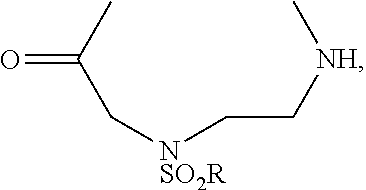
or

(N-(pyrrolidin-2-ylmethyl substituted sulfamido glycine), wherein at least one R is:

wherein x is 1-12, y is 1-12, R′ is

or absent, z is 1 to 20, and X comprises a carrying agent.


wherein R is

wherein x is 1-12, y is 1-12, R′ is

and z is 1 to 20.

wherein R is

wherein x is 1-12, y is 1-12, R′ is

and z is 1 to 20;
-
- providing a carrying agent X comprising a selenocycsteine residue; and
- combining said carrying agent and said cyclic compound in an aqueous solution.

wherein x is 1-12, y is 1-12, and z is 1.

and wherein said cyclic compound comprises:

Claims (3)

Priority Applications (1)
| Application Number | Priority Date | Filing Date | Title |
|---|---|---|---|
| US16/025,382 US11078235B2 (en) | 2013-09-27 | 2018-07-02 | Cyclic peptide conjugates and methods of use |
Applications Claiming Priority (4)
| Application Number | Priority Date | Filing Date | Title |
|---|---|---|---|
| US201361883910P | 2013-09-27 | 2013-09-27 | |
| PCT/US2014/057763 WO2015048477A1 (en) | 2013-09-27 | 2014-09-26 | Cyclic peptide conjugates and methods of use |
| US201615024928A | 2016-03-25 | 2016-03-25 | |
| US16/025,382 US11078235B2 (en) | 2013-09-27 | 2018-07-02 | Cyclic peptide conjugates and methods of use |
Related Parent Applications (2)
| Application Number | Title | Priority Date | Filing Date |
|---|---|---|---|
| US15/024,928 Continuation US10011635B2 (en) | 2013-09-27 | 2014-09-26 | Cyclic peptide conjugates and methods of use |
| PCT/US2014/057763 Continuation WO2015048477A1 (en) | 2013-09-27 | 2014-09-26 | Cyclic peptide conjugates and methods of use |
Publications (2)
| Publication Number | Publication Date |
|---|---|
| US20190092812A1 US20190092812A1 (en) | 2019-03-28 |
| US11078235B2 true US11078235B2 (en) | 2021-08-03 |
Family
ID=52744514
Family Applications (2)
| Application Number | Title | Priority Date | Filing Date |
|---|---|---|---|
| US15/024,928 Active US10011635B2 (en) | 2013-09-27 | 2014-09-26 | Cyclic peptide conjugates and methods of use |
| US16/025,382 Active US11078235B2 (en) | 2013-09-27 | 2018-07-02 | Cyclic peptide conjugates and methods of use |
Family Applications Before (1)
| Application Number | Title | Priority Date | Filing Date |
|---|---|---|---|
| US15/024,928 Active US10011635B2 (en) | 2013-09-27 | 2014-09-26 | Cyclic peptide conjugates and methods of use |
Country Status (2)
| Country | Link |
|---|---|
| US (2) | US10011635B2 (en) |
| WO (1) | WO2015048477A1 (en) |
Cited By (1)
| Publication number | Priority date | Publication date | Assignee | Title |
|---|---|---|---|---|
| US11215023B1 (en) * | 2020-08-25 | 2022-01-04 | Professional Rental Tools, LLC | Method and apparatus for positioning of injector heads and other intervention equipment |
Families Citing this family (11)
| Publication number | Priority date | Publication date | Assignee | Title |
|---|---|---|---|---|
| CA2793838C (en) | 2010-03-19 | 2019-09-17 | H. Lee Moffitt Cancer Center & Research Institute, Inc. | Integrin interaction inhibitors for the treatment of cancer |
| US10197575B2 (en) | 2014-03-31 | 2019-02-05 | H. Lee Moffitt Cancer Center And Research Institute, Inc. | Stabilized peptoid-peptide hybrids and uses thereof |
| KR101602876B1 (en) | 2014-07-22 | 2016-03-11 | 아주대학교산학협력단 | Method for inhibiting activated RAS using intact immunoglobulin antibody having Cell-penetrating ability and use thereof |
| KR101602870B1 (en) | 2014-07-22 | 2016-03-21 | 아주대학교산학협력단 | Method for Cell-penetrating and cytosol-localizing of intact immunoglobulin antibody, and use thereof |
| US20180126013A1 (en) | 2015-05-06 | 2018-05-10 | H.Lee Moffitt Cancer Center And Research Institute, Inc. | Radiotherapeutic and companion imaging agents to target mc1r |
| WO2017204606A1 (en) | 2016-05-27 | 2017-11-30 | 오름테라퓨틱 주식회사 | Cytosol-penetrating antibody and use thereof |
| JP2020529472A (en) | 2017-07-28 | 2020-10-08 | サークル ファーマ,インコーポレイティド | Cross-references to related applications for cyclization and release of peptide compounds |
| CA3086751A1 (en) * | 2018-01-08 | 2019-07-11 | Susavion Biosciences, Inc. | Compositions and methods of treating cancer with glycomimetic peptides |
| CA3102630A1 (en) * | 2018-06-05 | 2019-12-12 | Modulation Therapeutics, Inc. | Cyclic peptide compounds and methods of use thereof |
| WO2019244086A1 (en) * | 2018-06-21 | 2019-12-26 | Orum Therapeutics Inc. | Cell/tissue-specific cell-penetrating antibodies |
| SG11202102272UA (en) * | 2018-09-05 | 2021-04-29 | Univ Arizona State | Oncolytic virus platform to treat hematological cancer |
Citations (33)
| Publication number | Priority date | Publication date | Assignee | Title |
|---|---|---|---|---|
| US5595756A (en) | 1993-12-22 | 1997-01-21 | Inex Pharmaceuticals Corporation | Liposomal compositions for enhanced retention of bioactive agents |
| US5767071A (en) | 1995-06-07 | 1998-06-16 | Ixsys Incorporated | Sevenmer cyclic peptide inhibitors of diseases involving αv β3 |
| US5770565A (en) | 1994-04-13 | 1998-06-23 | La Jolla Cancer Research Center | Peptides for reducing or inhibiting bone resorption |
| US5817750A (en) | 1995-08-28 | 1998-10-06 | La Jolla Cancer Research Foundation | Structural mimics of RGD-binding sites |
| US5932217A (en) | 1991-05-03 | 1999-08-03 | The Rockefeller University | Peptides which inhibit adhesion between leukocytes and endothelial cells |
| US6034057A (en) | 1995-07-06 | 2000-03-07 | Zeneca Limited | Peptide inhibitors of fibronectine |
| US6034056A (en) | 1994-12-24 | 2000-03-07 | Zeneca Limited | Fibronectin adhesion inhibitors |
| US6096707A (en) | 1997-07-11 | 2000-08-01 | Biotie Therapies Ltd. | Integrin binding peptide and use thereof |
| US6107275A (en) | 1992-06-04 | 2000-08-22 | Merrell Pharmaceuticals Inc. | Cyclic Antiplatelet peptides with pseudo-bond |
| US6235711B1 (en) | 1996-06-21 | 2001-05-22 | Zeneca Limited | Cell adhesion ihibiting compounds |
| WO2001062776A1 (en) | 2000-02-23 | 2001-08-30 | Epimmune Inc. | Hla binding peptides and their uses |
| US20030125243A1 (en) | 2000-07-20 | 2003-07-03 | Jun Liu | Synthesis of cyclic peptides |
| US6713604B1 (en) | 1994-06-29 | 2004-03-30 | Texas Biotechnology Corporation | Process to inhibit binding of the integrin α4β1 , to VCAM-1 fibronectin and cyclic peptides thereof |
| US20040096906A1 (en) | 2001-10-26 | 2004-05-20 | Lam Kit S. | Method for screening combinatorial bead library; ligands for cancer cells |
| US20040126379A1 (en) | 2002-08-21 | 2004-07-01 | Boehringer Ingelheim International Gmbh | Compositions and methods for treating cancer using cytotoxic CD44 antibody immunoconjugates and chemotherapeutic agents |
| US6849712B1 (en) | 1998-01-22 | 2005-02-01 | Regents Of The University Of Minnesota | Peptides with β1 integrin subunit dependent cell adhesion modulating activity |
| WO2005045430A1 (en) | 2003-10-08 | 2005-05-19 | The Regents Of The University Of California | Screening combinatorial bead libraries for cancer ligands |
| US6933314B2 (en) | 2000-08-18 | 2005-08-23 | Genentech, Inc. | Integrin receptor inhibitors |
| US20060019900A1 (en) | 2004-05-27 | 2006-01-26 | The Regents Of The University Of California | Alpha-4 beta-1 integrin ligands for imaging and therapy |
| US20060041105A1 (en) | 2003-10-31 | 2006-02-23 | The Regents Of The University Of California | Peptides whose uptake by cells is controllable |
| US20070048325A1 (en) | 2005-08-24 | 2007-03-01 | Dennis Van Epps | Combination therapies for inhibiting integrin-extracellular matrix interactions |
| WO2007098575A1 (en) | 2006-02-28 | 2007-09-07 | Arius Research Inc. | Cytotoxicity mediation of cells evidencing surface expression of cd44 |
| WO2008031064A1 (en) | 2006-09-07 | 2008-03-13 | University Of South Florida | Hyd1 peptides as anti-cancer agents |
| US20090104116A1 (en) | 2006-01-31 | 2009-04-23 | Jerini Ag | Compounds for the inhibition of integrins and use thereof |
| US20090169570A1 (en) | 2007-12-26 | 2009-07-02 | Benjamin Daelken | Methods and agents for improving targeting of cd138 expressing tumor cells |
| US20090247549A1 (en) | 2005-11-04 | 2009-10-01 | Frankel Stanley R | Methods of using saha and bortezomib for treating cancer |
| US20100104510A1 (en) | 2007-04-02 | 2010-04-29 | The United States Of America, As Represented By The Secretary, Department Of Health And Human | Selenocysteine mediated hybrid antibody molecules |
| WO2011115688A2 (en) | 2010-03-19 | 2011-09-22 | H. Lee Moffitt Cancer Center & Research Institute | Integrin interaction inhibitors for the treatment of cancer |
| US8227434B1 (en) | 2003-11-04 | 2012-07-24 | H. Lee Moffitt Cancer Center & Research Institute, Inc. | Materials and methods for treating oncological disorders |
| WO2012129335A2 (en) | 2011-03-21 | 2012-09-27 | H. Lee Moffitt Cancer Center And Research Institute, Inc | Hyd1 peptides for relapsed cancer |
| US20130171074A1 (en) | 2001-10-22 | 2013-07-04 | The Scripps Research Institute | Targeting compounds |
| WO2013170066A1 (en) | 2012-05-09 | 2013-11-14 | H. Lee Moffitt Cancer Center & Research Institute, Inc. | Peptides for the treatment of cancer |
| US20140322227A1 (en) | 2013-04-26 | 2014-10-30 | H. Lee Moffitt Cancer Center & Research Institute, Inc. | Peptides for treatment of bone deficiency and autoimmune disorders |
-
2014
- 2014-09-26 WO PCT/US2014/057763 patent/WO2015048477A1/en not_active Ceased
- 2014-09-26 US US15/024,928 patent/US10011635B2/en active Active
-
2018
- 2018-07-02 US US16/025,382 patent/US11078235B2/en active Active
Patent Citations (38)
| Publication number | Priority date | Publication date | Assignee | Title |
|---|---|---|---|---|
| US5932217A (en) | 1991-05-03 | 1999-08-03 | The Rockefeller University | Peptides which inhibit adhesion between leukocytes and endothelial cells |
| US6107275A (en) | 1992-06-04 | 2000-08-22 | Merrell Pharmaceuticals Inc. | Cyclic Antiplatelet peptides with pseudo-bond |
| US5595756A (en) | 1993-12-22 | 1997-01-21 | Inex Pharmaceuticals Corporation | Liposomal compositions for enhanced retention of bioactive agents |
| US5770565A (en) | 1994-04-13 | 1998-06-23 | La Jolla Cancer Research Center | Peptides for reducing or inhibiting bone resorption |
| US6713604B1 (en) | 1994-06-29 | 2004-03-30 | Texas Biotechnology Corporation | Process to inhibit binding of the integrin α4β1 , to VCAM-1 fibronectin and cyclic peptides thereof |
| US6034056A (en) | 1994-12-24 | 2000-03-07 | Zeneca Limited | Fibronectin adhesion inhibitors |
| US5767071A (en) | 1995-06-07 | 1998-06-16 | Ixsys Incorporated | Sevenmer cyclic peptide inhibitors of diseases involving αv β3 |
| US6034057A (en) | 1995-07-06 | 2000-03-07 | Zeneca Limited | Peptide inhibitors of fibronectine |
| US5955572A (en) | 1995-08-28 | 1999-09-21 | La Jolla Cancer Research Foundation | Structural mimics of RGD-binding sites |
| US5817750A (en) | 1995-08-28 | 1998-10-06 | La Jolla Cancer Research Foundation | Structural mimics of RGD-binding sites |
| US6235711B1 (en) | 1996-06-21 | 2001-05-22 | Zeneca Limited | Cell adhesion ihibiting compounds |
| US6096707A (en) | 1997-07-11 | 2000-08-01 | Biotie Therapies Ltd. | Integrin binding peptide and use thereof |
| US6849712B1 (en) | 1998-01-22 | 2005-02-01 | Regents Of The University Of Minnesota | Peptides with β1 integrin subunit dependent cell adhesion modulating activity |
| WO2001062776A1 (en) | 2000-02-23 | 2001-08-30 | Epimmune Inc. | Hla binding peptides and their uses |
| US20030125243A1 (en) | 2000-07-20 | 2003-07-03 | Jun Liu | Synthesis of cyclic peptides |
| US6933314B2 (en) | 2000-08-18 | 2005-08-23 | Genentech, Inc. | Integrin receptor inhibitors |
| US20130171074A1 (en) | 2001-10-22 | 2013-07-04 | The Scripps Research Institute | Targeting compounds |
| US20040096906A1 (en) | 2001-10-26 | 2004-05-20 | Lam Kit S. | Method for screening combinatorial bead library; ligands for cancer cells |
| US20040126379A1 (en) | 2002-08-21 | 2004-07-01 | Boehringer Ingelheim International Gmbh | Compositions and methods for treating cancer using cytotoxic CD44 antibody immunoconjugates and chemotherapeutic agents |
| WO2005045430A1 (en) | 2003-10-08 | 2005-05-19 | The Regents Of The University Of California | Screening combinatorial bead libraries for cancer ligands |
| US20060041105A1 (en) | 2003-10-31 | 2006-02-23 | The Regents Of The University Of California | Peptides whose uptake by cells is controllable |
| US8227434B1 (en) | 2003-11-04 | 2012-07-24 | H. Lee Moffitt Cancer Center & Research Institute, Inc. | Materials and methods for treating oncological disorders |
| US20060019900A1 (en) | 2004-05-27 | 2006-01-26 | The Regents Of The University Of California | Alpha-4 beta-1 integrin ligands for imaging and therapy |
| US20070048325A1 (en) | 2005-08-24 | 2007-03-01 | Dennis Van Epps | Combination therapies for inhibiting integrin-extracellular matrix interactions |
| US20090247549A1 (en) | 2005-11-04 | 2009-10-01 | Frankel Stanley R | Methods of using saha and bortezomib for treating cancer |
| US20090104116A1 (en) | 2006-01-31 | 2009-04-23 | Jerini Ag | Compounds for the inhibition of integrins and use thereof |
| WO2007098575A1 (en) | 2006-02-28 | 2007-09-07 | Arius Research Inc. | Cytotoxicity mediation of cells evidencing surface expression of cd44 |
| US7632814B2 (en) | 2006-09-07 | 2009-12-15 | University Of South Florida | HYD1 peptides as anti-cancer agents |
| WO2008031064A1 (en) | 2006-09-07 | 2008-03-13 | University Of South Florida | Hyd1 peptides as anti-cancer agents |
| US20080108552A1 (en) | 2006-09-07 | 2008-05-08 | University Of South Florida | HYD1 Peptides as Anti-Cancer Agents |
| US20100104510A1 (en) | 2007-04-02 | 2010-04-29 | The United States Of America, As Represented By The Secretary, Department Of Health And Human | Selenocysteine mediated hybrid antibody molecules |
| US20090169570A1 (en) | 2007-12-26 | 2009-07-02 | Benjamin Daelken | Methods and agents for improving targeting of cd138 expressing tumor cells |
| WO2011115688A2 (en) | 2010-03-19 | 2011-09-22 | H. Lee Moffitt Cancer Center & Research Institute | Integrin interaction inhibitors for the treatment of cancer |
| US8853149B2 (en) | 2010-03-19 | 2014-10-07 | H. Lee Moffitt Cancer Center And Research Institute, Inc. | Integrin interaction inhibitors for the treatment of cancer |
| WO2012129335A2 (en) | 2011-03-21 | 2012-09-27 | H. Lee Moffitt Cancer Center And Research Institute, Inc | Hyd1 peptides for relapsed cancer |
| US20140080762A1 (en) | 2011-03-21 | 2014-03-20 | H. Lee Moffitt Cancer Center And Research Institute, Inc. | Hyd1 peptides for relapsed cancer |
| WO2013170066A1 (en) | 2012-05-09 | 2013-11-14 | H. Lee Moffitt Cancer Center & Research Institute, Inc. | Peptides for the treatment of cancer |
| US20140322227A1 (en) | 2013-04-26 | 2014-10-30 | H. Lee Moffitt Cancer Center & Research Institute, Inc. | Peptides for treatment of bone deficiency and autoimmune disorders |
Non-Patent Citations (106)
| Title |
|---|
| Abe M et al., "Vicious cycle between myeloma cell binding to bone marrow stromal cells via VLA-4-V CAM-1 adhesion and macrophage inflammatory protein-Iα and MIP-Iβ production" Journal of Bone and Mineral Metabolism, 2009, 27(1):16-23. |
| Abram CL and Lowell CA, "The ins and outs of leukocyte integrin signaling" Annual Review of Immunology, 2009, 27:339-362. |
| Anderson KC et al., "Multiple Myeloma: New Insights and Therapeutic Approaches" Hematology, 2000, 147-165. |
| Aoudjit F, and Vuori K. Integrin signaling inhibits paclitaxel-induced apoptosis in breast cancer cells. Oncogene. 2001;20:4995-5004. |
| Astier A et al. The related adhesion focal tyrosine kinase differentially phosphorylates p130Cas and the Cas-like protein, p105HEF1. J Biol Chem. 1997;272:19719-19724. |
| Azab AK et al., "CXCR4 inhibitor AMD3100 disrupts the interaction of multiple myeloma cells with the bone marrow microenvironment and enhances their sensitivity to therapy" Blood, 2009, 113(18):4341-4351. |
| Baker DE, "Natalizumab: Overview of Its Pharmacology and Safety" Reviews in Gastroenterological Disorders, 2007, 7(1):38-46. |
| Banerjee D et al., "Novel aspects of resistance to drugs targeted to dihydrofolate reductase and thymidylate synthase" Biochimica et Biophysica Acta, 2002, 1587:164-173. |
| Bednarczyk JL et al., "Post-translational Processing of the Leukocyte Integrin α4β1" Journal of Biological Chemistry, 1992, 267(35):25274-25281. |
| Bertrand, RD et al., "Unusual behavior of Hexafluorobenzene and Benzene in the Aromatic Nuclear Magnetic Resonance Shift Effect" Journal of the American Chemical Society, 1970, 92(9):2702-9. |
| Bissell MJ and Radisky D, "Putting tumours in context" Nature Review / Cancer, 2001, 1(1):46-54. |
| Chen Q, et al. Integrin-mediated activation of MEK and mitogen-activated protein kinase is independent of Ras [corrected]. J Biol Chem. 1996;271:18122-18127. |
| Chorev, M and Goodman, M, "A Dozen Years of Retro-Inverso peptidomimetics" American Chemical Society, 1993, 26(5):266-73. |
| Cox D et al. "Integrins as therapeutic targets: lessons and opportunities" Nature Rev. Drug Disc., 2010, 9:804-820. |
| Crimmins, MT and Zuercher, WJ, "Solid-Phase Synthesis of Carbocyclic Nucleosides" Organic letters, 2000, 2(8):1065-7. |
| Dalton WS. "The tumor microenvironment: focus on myeloma" Cancer Treat Rev., 2003, 29(Suppl 1):11-19. |
| Damiano JS et al. Cell adhesion mediated drug resistance (CAM-DR): role of integrins and resistance to apoptosis in human myeloma cell lines. Blood. 1999;93:1658-1667. |
| Damiano JS et al. Cell adhesion-mediated drug resistance (CAM-DR) protects the K562 chronic myelogenous leukemia cell line from apoptosis induced by BCR/ABL inhibition, cytotoxic drugs, and gamma-irradiation. Leukemia. 2001;15:1232-1239. |
| De Bruyn et al., "The small GTPase Rapl is Required for Mn2+- and Antibody-induced LFA-1- and VLA-4-mediated Cell Adhesion" Journal of Biological Chemistry, 2002, 277(33):29468-29476. |
| Deroock, IB et al., "Synthetic Peptides Inhibit Adhesion of Human Tumor Cells to Extracellular Matrix Proteins" Cancer Research, 2001, 61(8):3308-3313. |
| Dressman, BA et al., "Solid Phase Synthesis of Hydantoins Using a Carbamate Linker and a Novel Cyclization/Cleavage Step" Tetrahedron Letters, 1996, 37(7):937-40. |
| Epstein J and Yaccoby S, "Consequences of interactions between the bone marrow stroma and myeloma" The Hematology Journal, 2003, 4(5):310-314. |
| Favre, M et al., "Structural Mimicry of Canonical Conformations in Antibody Hypervariable Loops Using Cyclic Peptides Containing a Heterochiral Diproline Template" Journal of the American Chemical Society, 1999, 121(12):2679-2685. |
| Ficht, S et al., "Solid-Phase Synthesis of Peptide and Glycopeptide Thioesters through Side-Chain-Anchoring Strategies" Chemistry—A European Journal, 2008, 14(12):3620-3629. |
| Fletcher, MD and Campbell, MM, "Partially Modified Retro-Inverso Peptides: Development, Synthesis and Conformational Behavior" Chemical Reviews (Washington, D. C.), 1998, 98(2):763-795. |
| Gatenby RA et al., "Adaptive Therapy" Cancer Research, 2009, 69(11):4894-4903. |
| Gebhard A et al. "Validation of CD44 as a binding partner of the novel peptide HYD1 in multiple myeloma" presented at Moffitt Cancer Symposium in Tampa, FL on May 10, 2012, poster and abstract (Abstract No. B-68). |
| Gebhard, A. et al. "MTI-101 (Cyclized HYD1) Binds a CD44 Containing Complex and Induces Necrotic Cell Death in Multiple Myeloma" Mol. Cancer Ther., 2013, 12(11):2446-2458. |
| Gottesman MM and Ling V, "The molecular basis of multidrug resistance in cancer: The early years of P-glycoprotein research" FEBS Letters, 2006, 580(4):998-1009. |
| Gravanis, I. et al. "The changing world of cancer drug development: the regulatory bodies' perspective" Chin. Clin. Oncol., 2014, 3(2):1-5. |
| Gutman D et al., "Acquisition of a Multidrug Resistant Phenotype with a Proteasome Inhibitor in Multiple Myeloma" Leukemia, 2009, 23(11):2181-2183. |
| Hait, W. "Anticancer drug development: the grand challenges" Nature Reviews/Drug Discovery, 2010, 9:253-254. |
| Hannigan GE et al. Regulation of cell adhesion and anchorage-dependent growth by a new beta 1-integrin-linked protein kinase. Nature. 1996;379:91-96. |
| Hazlehurst L and Dalton WS "Mechanisms associated with cell adhesion mediated drug resistance (CAM-DR) in hematopoietic malignancies" Cancer Metastasis Rev., 2001, 20:43-50. |
| Hazlehurst L et al. "Comparison of aza-anthracenedione-induced DNA damage and cytotoxicity in experimental tumor cells" Biochem Pharmacol., 1995, 50(7):1087-1094. |
| Hazlehurst LA et al. Adhesion to fibronectin via beta1 integrins regulates p27kip1 levels and contributes to cell adhesion mediated drug resistance (CAM-DR). Oncogene. 2000;19:4319-4327. |
| Hazlehurst LA et al. Cell adhesion to fibronectin (CAM-DR) influences acquired mitoxantrone resistance in U937 cells. Cancer Res. 2006;66:2338-2345. |
| Hazlehurst LA et al. Genotypic and phenotypic comparisons of de novo and acquired melphalan resistance in an isogenic multiple myeloma cell line model. Cancer Res. 2003;63:7900-7906. |
| Hazlehurst LA et al. Reduction in drug-induced DNA double-strand breaks associated with beta1 integrin-mediated adhesion correlates with drug resistance in U937 cells. Blood. 2001;98:1897-1903. |
| Hazlehurst LA et al. β1 integrin adhesion increases Bim protein degradation and confers drug resistance in leukemia cells British Journal Haematology. 2006. |
| Hazlehurst LA et al., "Multiple Mechanisms Confer Drug Resistance to Mitoxantrone in the Human 8226 Myeloma Cell Line" Cancer Research, 1999, 59(5):1021-1028. |
| Hazlehurst LA et al., "Role of the tumor microenvironment in mediating de novo resistance to drugs and physiological mediators of cell death" Oncogene, 2003, 22(47):7396-7402. |
| Hazlehurst LA, Targeting beta1 Integrins in Multiple Myeloma. Presentation at Advancing Myeloma Therapy: Translating Laboratory Concepts into Clinical Reality Symposium held in conjunction with the XIth International Myeloma Symposium. Jun. 25, 2007. |
| His, S et al., "Solid phase synthesis of amides by the Beckmann rearrangement of ketoxime carbonates" Tetrahedron Letters, 2003, 44(47):8581-8584. |
| Hofer, T. et al. "An engineered selenocysteine defines a unique class of antibody derivatives" Proceedings of the National Academy of Sciences, 2008, 105(34):12451-12456. |
| Hofer, T. et al. "Molecularly Defined Antibody Conjugation through a Selenocysteine Interface" Biochemistry, 2009, 48:12047-12057. |
| Hughes, RM and Waters, ML, "Influence of N-Methylation on a Cation-pi Interaction Produces a Remarkably Stable beta-Hairpin Peptide" Journal of the American Chemical Society, 2005, 127(18):6518-6519. |
| Hutchinson, EG et al., "Determinants of strand register in antiparallel beta-sheets of proteins" Protein Science, 1998, 7(11):2287-2300. |
| Jain P. et al. "Cyclic β-hairpin peptidomimetics targeting protein-protein interactions" presented at Moffitt Cancer Symposium in Tampa, FL on May 10, 2012, poster and abstract (Abstract No. B-171). |
| Jemal A et al., "Cancer Statistics, 2010" CA: A Cancer Journal for Clinicians, 2010, 60(5):277-300. |
| Jin, L. and Harrison, S. "Crystal structure of human calcineurin complexed with cyclosporin A and human cyclophilin" PNAS, 2002, 99(21):13522-13526. |
| Khleif SN et al., "AACR-FDA-NCI Cancer Biomarkers Collaborative Consensus Report: Advancing the Use of Biomarkers in Cancer Drug Development" Clinical Cancer Research, 2010, 16(13):3299-3318. |
| Kim, J-H. et al. "Combined use of tamoxifen, cyclosporin A, and verapamil for modulating multidrug resistance in human hepatocellular carcinoma cell lines" Yonsei Medical Journal, 1993, 34(1):35-44. |
| King WG et al. Phosphatidylinositol 3-kinase is required for integrin-stimulated AKT and Raf-1/mitogen-activated protein kinase pathway activation. Mol Cell Biol. 1997;17:4406-4418. |
| Kuwahara, M et al., "Hybridization between Oxy-Peptide Nucleic Acids and DNAs: Dependence of Hybrid Stabilities on the Chain-Lengths, Types of Base Pairs, and the Chain Directions" Journal of the American Chemical Society, 2001, 123(20):4653-4658. |
| Kuwahara, M et al., "Synthesis of delta-Amino Acids with an Ether Linkage in the Main Chain and Nucleobases on the Side Chain as Monomer Units for Oxy-peptide Nucleic Acids" Tetrahedron, 1999, 55(33):10067-10078. |
| Kyle RA and Rajkumar SV, "Multiple Myeloma" New England Journal of Medicine, 2004, 351(18):1860-1873. |
| Li ZW, Dalton WS, "Tumor microenvironment and drug resistance in hematologic malignancies" Blood Rev. 2006, 20(6):333-342. |
| Li, X. et al., "Antibody conjugation via one and two C-terminal selenocysteines" Methods, 2014, 65:133-138. |
| Luo BH et al., "Structural basis of integrin regulation and signaling" Annual Review of Immunology, 2007, 25:619-647. |
| Lwin T et al. Cell adhesion induces p27Kip1-associated cell-cycle arrest through down-regulation of the SCFSkp2 ubiquitin ligase pathway in mantle cell and other non-Hodgkin's B-cell lymphomas. Blood. 2007. |
| Mahon FX, et al., "Selection and Characterization of BCR-ABL positive cell lines with differential sensitivity to the tyrosine kinase inhibitor STI571: diverse mechanisms of resistance" Blood, 2000, 96(3):1070-1079. |
| Matsunago T et al., "Interaction between leukemic-cell VLA-4 and stromal fibronectin is a decisive factor for minimal residual disease of acute myelogenous leukemia" Nature Medicine, 2003, 9(9):1158-1165. |
| McMillin DW et al., "Tumor cell-specific bioluminescence platform to identify stroma-induced changes to anticancer drug activity" Nature Medicine, 2010, 16(4):483-489. |
| Meester, WJN et al., "Synthesis of Homoallylic Amines via N-Acyliminium Ion Reactions on Solid Support" Tetrahedron Letters, 1999, 40(8):1601-1604. |
| Merck Manual, "Cellular and Molecular Basis of Cancer", Nov. 7, 2012, pp. 1-5. |
| Morgan SE et al., "Differences in mutant p53 protein stability and functional activity in teniposide-sensitive and -resistant human leukemic CEM cells" Oncogene, 2000, 19(43):5010-5019. |
| Mori Y et al., "Anti-α4 integrin antibody suppresses the development of multiple myeloma and associated osteoclastic osteolysis" Blood, 2004, 104(7):2149-2154. |
| Morin PJ, "Drug resistance and the microenvironment: nature and nurture" Drug Resistance Updates, 2003, 6(4):169-172. |
| Murray P "cHYD1 solution phase synthesis optimization and the development of a novel human growth hormone antagonist and agonist" Graduate School Theses and Dissertaions, University of South Florida, Apr. 4, 2012. |
| Nair RR et al., "HYD1-induced increase in ROS leads to autophagy and necrotic cell death in multiple myeloma cells" Molecular Cancer Therapeutics. 2009, 8(8):2441-51. |
| Nair RR et al., "The bone marrow microenvironment as a sanctuary for minimal residual disease in CML" Biochemical Pharmacology, 2010, 80(5):602-612. |
| Nair, DT et al., "Mimicry of Native Peptide Antigens by the Corresponding Retro-Inverso Analogs is Dependent on Their Intrinsic Structure and Interaction Propensities" The Journal of Immunology, 2003, 170(3):1362-1373. |
| Nefedova Y et al. Bone marrow stromal-derived soluble factors and direct cell contact contribute to de novo drug resistance of myeloma cells by distinct mechanisms. Leukemia. 2003;17:1175-1182. |
| Nefedova Y et al., "Inhibition of Notch signaling induces apoptosis of myeloma cells and enhances sensitivity to chemotherapy" Blood, 2008, 111(4):2220-2229. |
| Neidle, S. (Ed.) "Failure Modes in the Discovery Process" in Cancer Drug Design and Discovery, Elsevier/Academic Press, 2008, pp. 427-431. |
| Olson DL et al., "Anti-α4 integrin monoclonal antibody inhibits multiple myeloma growth in a murine model" Molecular Cancer Therapeutics, 2005, 4(1):91-99. |
| Palioura, S. et al. "The human SepSecS-tRNASec complex reveals the mechanism of selenocysteine formation" Science, 2009, 325(5938):321-325. |
| Park, KH and Cox, LJ, "Solid-phase synthesis of 1,2,4-triazolidine-3,5-diones" Tetrahedron Letters, 2002, 43(21):3899-3901. |
| Pennington, ME et al., "The use of a combinatorial library method to isolate human tumor cell adhesion peptides" Molecular Diversity, 1996, 2(1/2):19-28. |
| Rabinowitz, M et al., "Solid-Phase/ Solution-Phase Combinatorial Synthesis of Neuroimmunophilin Ligands" Bioorganic & Medicinal Chemistry Letters. 2000, 10(10):1007-1010. |
| Rader, C. "Chemically programmed antibodies" Trends Biotechnol., 2014, 32:186-197. |
| Robey RW et al., "ABCG2: determining its relevance in clinical drug resistance" Cancer and Metastasis Reviews, 2007, 26(1):39-57. |
| Roopenian, D.C. and Akilesh, S. "FcRn: The neonatal Fc receptor comes of age" Nat Rev Immunol., 2007, 7:715-725. |
| Schaller MD and Parsons JT. pp125FAK-dependent tyrosine phosphorylation of paxillin creates a high-affinity binding site for Crk. Mol Cell Biol. 1995;15:2635-2645. |
| Schlaepfer DD et al. Integrin-mediated signal transduction linked to Ras pathway by GRB2 binding to focal adhesion kinase. Nature. 1994;372:786-791. |
| Sethi T et al. Extracellular matrix proteins protect small cell lung cancer cells against apoptosis: a mechanism for small cell lung cancer growth and drug resistance in vivo. Nat Med. 1999;5:662-668. |
| Shibata, K et al., "G-CSF receptor-binding cyclic peptides designed with artificial amino-acid links" Biochemical and Biophysical Research Communications, 2006, 341(2):483-488. |
| Sporn, M. and Nanjoo, S. "Chemoprevention of cancer" Carcinogenesis, 2000, 21(3):525-530. |
| Sroka T et al., "Synthetic D-amino acid peptide inhibits tumor cell motility on laminin-5" Carcinogenesis, 2006, 27(9):1748-57. |
| Sroka T et al., "The Minimum Element of a Synthetic Peptide Required to Block Prostate Tumor Cell Migration" Cancer Biological Therapies, 2006, 5(11):1556-62. |
| Taylor, EM et al., "Retro-Inverso Prosaptide Peptides Retain Bioactivity, Are Stable In Vivo, and Are Blood-Brain Barrier Permeable" The Journal of Pharmacological and Experimental Therapeutics, 2000, 295(1):190-194. |
| Teixido J et al., "Functional and Structural Analysis of VLA-4 Integrin α4 Subunit Cleavage" Journal of Biological Chemistry, 1992, 267(3):1786-1791. |
| Thomson, SA et al., "Fmoc Mediated Synthesis of Peptide Nucleic Acids" Tetrahedron, 1995, 51(22):6179-94. |
| Tian E et al., "The Role of the Wnt-Signaling Antagonist DKKI in the Development of Osteolytic Lesions in Multiple Myeloma" New England Journal of Medicine, 2003, 349(26):2483-2494. |
| Tolentino JH et al. "HM-27 targets AML cells via cell death by necrosis" presented at Moffitt Cancer Symposium in Tampa, FL on May 10, 2012, Abstract No. B-159). |
| Van Riet I et al. Expression of cytoadhesion molecules (CD56, CD54, CD18 and CD29) by myeloma plasma cells. Br J Haematol. 1991;79:421-427. |
| Wang, C-C and Li, W-R, "Traceless Solid-Phase Synthesis of Substituted Benzimidazolones" Journal of Combinatorial Chemistry 2004, 6(6):899-902. |
| Wang, P and Miranda, LP, "Fmoc-Protein Synthesis: Preparation of Peptide Thioesters Using a Side-Chain Anchoring Strategy" International Journal of Peptide Research and Therapeutics, 2005, 11(2):117-123. |
| Wishart, DS et al., "Relationship Between Nuclear Magnetic Resonance Chemical Shift and Protein Secondary Structure" Journal of Molecular Biology, 1991, 222(2):311-33. |
| Wishart, DS et al., "The Chemical Shift Index: A Fast and Simple Method for the Assignment of Protein Secondary Structure Through NMR Spectroscopy" Biochemistry, 1992, 31(6):1647-51. |
| Yaccoby S et al. Primary myeloma cells growing in SCID-hu mice: a model for studying the biology and treatment of myeloma and its manifestations. Blood. 1998;92:2908-2913. |
| Yaccoby S et al., "Cancer and the Microenvironment: Myeloma-Osteoclast Interactions as a Model" Cancer Research, 2004, 64(6):2016-2023. |
| Yamamoto, Y et al. , "NMR study of Galeorhinus japonicus myoglobin: Proton-NMR study of molecular structure of the heme cavity" European Journal of Biochemistry, 1991, 198(2):299-306. |
| Zhou, P et al., "Geometric characteristics of hydrogen bonds involving sulfur atoms in proteins" Proteins, 2009, 76:151-163. |
| Zhu K et al. Farnesyltransferase inhibitor R115777 (Zarnestra, Tipifarnib) synergizes with paclitaxel to induce apoptosis and mitotic arrest and to inhibit tumor growth of multiple myeloma cells. Blood. 2005;105:4759-4766. |
Cited By (1)
| Publication number | Priority date | Publication date | Assignee | Title |
|---|---|---|---|---|
| US11215023B1 (en) * | 2020-08-25 | 2022-01-04 | Professional Rental Tools, LLC | Method and apparatus for positioning of injector heads and other intervention equipment |
Also Published As
| Publication number | Publication date |
|---|---|
| US10011635B2 (en) | 2018-07-03 |
| US20190092812A1 (en) | 2019-03-28 |
| WO2015048477A1 (en) | 2015-04-02 |
| US20160229892A1 (en) | 2016-08-11 |
Similar Documents
| Publication | Publication Date | Title |
|---|---|---|
| US10011635B2 (en) | Cyclic peptide conjugates and methods of use | |
| US7632814B2 (en) | HYD1 peptides as anti-cancer agents | |
| US20240174731A1 (en) | Single-chain trail-receptor agonist proteins | |
| US10501496B2 (en) | Chemical synthesis and screening of bicyclic peptide libraries | |
| US20150071918A1 (en) | Peptides for the treatment of cancer | |
| US10059740B2 (en) | Integrin interaction inhibitors for the treatment of cancer | |
| US10004809B2 (en) | Precise delivery of therapeutic agents to cell mitochondria for anti-cancer therapy | |
| US11859019B2 (en) | Bicyclic peptidyl inhibitor of tumor necrosis factor-alpha | |
| US20240368224A1 (en) | Bicyclic peptidyl pan-ras inhibitors | |
| WO2014201111A1 (en) | Treatment of mtor hyperactive related diseases and disorders | |
| US20150105328A1 (en) | Peptoid-peptide hybrids and their use | |
| US10556928B2 (en) | Stabilized peptoid-peptide hybrids and uses thereof | |
| US10316050B2 (en) | PT (IV) complexes containing 4,4′-disubstituted-2,2′-bipyridyl and their use in cancer therapy | |
| Hazlehurst et al. | Cyclic peptide conjugates and methods of use | |
| US7951924B2 (en) | RhoB variants and methods of use | |
| McLaughlin et al. | Integrin interaction inhibitors for the treatment of | |
| HK1260151A1 (en) | Single-chain trail-receptor agonist proteins |
Legal Events
| Date | Code | Title | Description |
|---|---|---|---|
| FEPP | Fee payment procedure |
Free format text: ENTITY STATUS SET TO UNDISCOUNTED (ORIGINAL EVENT CODE: BIG.); ENTITY STATUS OF PATENT OWNER: SMALL ENTITY |
|
| FEPP | Fee payment procedure |
Free format text: ENTITY STATUS SET TO SMALL (ORIGINAL EVENT CODE: SMAL); ENTITY STATUS OF PATENT OWNER: SMALL ENTITY |
|
| STPP | Information on status: patent application and granting procedure in general |
Free format text: DOCKETED NEW CASE - READY FOR EXAMINATION |
|
| AS | Assignment |
Owner name: THE SCRIPPS RESEARCH INSTITUTE, CALIFORNIA Free format text: ASSIGNMENT OF ASSIGNORS INTEREST;ASSIGNORS:RADER, CHRISTOPHER;LI, XIULING;REEL/FRAME:047932/0750 Effective date: 20141015 Owner name: MODULATION THERAPEUTICS, FLORIDA Free format text: ASSIGNMENT OF ASSIGNORS INTEREST;ASSIGNOR:HAZLEHURST, LORI;REEL/FRAME:047932/0757 Effective date: 20150116 Owner name: H. LEE MOFFITT CANCER CENTER AND RESEARCH INSTITUT Free format text: ASSIGNMENT OF ASSIGNORS INTEREST;ASSIGNOR:HAZLEHURST, LORI;REEL/FRAME:047932/0757 Effective date: 20150116 Owner name: UNIVERSITY OF SOUTH FLORIDA, FLORIDA Free format text: ASSIGNMENT OF ASSIGNORS INTEREST;ASSIGNOR:MCLAUGHLIN, MARK;REEL/FRAME:047933/0034 Effective date: 20150910 Owner name: MODULATION THERAPEUTICS, FLORIDA Free format text: ASSIGNMENT OF ASSIGNORS INTEREST;ASSIGNOR:MCLAUGHLIN, MARK;REEL/FRAME:047933/0034 Effective date: 20150910 Owner name: H. LEE MOFFITT CANCER CENTER AND RESEARCH INSTITUTE, INC., FLORIDA Free format text: ASSIGNMENT OF ASSIGNORS INTEREST;ASSIGNOR:HAZLEHURST, LORI;REEL/FRAME:047932/0757 Effective date: 20150116 |
|
| STPP | Information on status: patent application and granting procedure in general |
Free format text: NON FINAL ACTION MAILED |
|
| STPP | Information on status: patent application and granting procedure in general |
Free format text: RESPONSE TO NON-FINAL OFFICE ACTION ENTERED AND FORWARDED TO EXAMINER |
|
| STPP | Information on status: patent application and granting procedure in general |
Free format text: NON FINAL ACTION MAILED |
|
| STPP | Information on status: patent application and granting procedure in general |
Free format text: RESPONSE TO NON-FINAL OFFICE ACTION ENTERED AND FORWARDED TO EXAMINER |
|
| STPP | Information on status: patent application and granting procedure in general |
Free format text: NON FINAL ACTION MAILED |
|
| STPP | Information on status: patent application and granting procedure in general |
Free format text: RESPONSE TO NON-FINAL OFFICE ACTION ENTERED AND FORWARDED TO EXAMINER |
|
| STPP | Information on status: patent application and granting procedure in general |
Free format text: NOTICE OF ALLOWANCE MAILED -- APPLICATION RECEIVED IN OFFICE OF PUBLICATIONS |
|
| STPP | Information on status: patent application and granting procedure in general |
Free format text: PUBLICATIONS -- ISSUE FEE PAYMENT VERIFIED |
|
| STCF | Information on status: patent grant |
Free format text: PATENTED CASE |
|
| AS | Assignment |
Owner name: UNIVERSITY OF FLORIDA REASEARCH FOUNDATION INCORPORATED, FLORIDA Free format text: ASSIGNMENT OF ASSIGNORS INTEREST;ASSIGNOR:UNIVERSITY OF FLORIDA BOARD OF TRUSTEES;REEL/FRAME:066936/0031 Effective date: 20220401 Owner name: UNIVERSITY OF FLORIDA BOARD OF TRUSTEES, FLORIDA Free format text: ASSIGNMENT OF ASSIGNORS INTEREST;ASSIGNOR:THE SCRIPPS RESEARCH INSTITUTE;REEL/FRAME:066936/0018 Effective date: 20220401 |
|
| MAFP | Maintenance fee payment |
Free format text: PAYMENT OF MAINTENANCE FEE, 4TH YR, SMALL ENTITY (ORIGINAL EVENT CODE: M2551); ENTITY STATUS OF PATENT OWNER: SMALL ENTITY Year of fee payment: 4 |