US11077906B1 - Method and apparatus for heating and cooling a motorcycle seat - Google Patents
Method and apparatus for heating and cooling a motorcycle seat Download PDFInfo
- Publication number
- US11077906B1 US11077906B1 US16/990,718 US202016990718A US11077906B1 US 11077906 B1 US11077906 B1 US 11077906B1 US 202016990718 A US202016990718 A US 202016990718A US 11077906 B1 US11077906 B1 US 11077906B1
- Authority
- US
- United States
- Prior art keywords
- thermal
- cooling
- heating
- illustrates
- input
- Prior art date
- Legal status (The legal status is an assumption and is not a legal conclusion. Google has not performed a legal analysis and makes no representation as to the accuracy of the status listed.)
- Active
Links
Images


Classifications
-
- B—PERFORMING OPERATIONS; TRANSPORTING
- B62—LAND VEHICLES FOR TRAVELLING OTHERWISE THAN ON RAILS
- B62J—CYCLE SADDLES OR SEATS; AUXILIARY DEVICES OR ACCESSORIES SPECIALLY ADAPTED TO CYCLES AND NOT OTHERWISE PROVIDED FOR, e.g. ARTICLE CARRIERS OR CYCLE PROTECTORS
- B62J1/00—Saddles or other seats for cycles; Arrangement thereof; Component parts
- B62J1/12—Box-shaped seats; Bench-type seats, e.g. dual or twin seats
-
- B—PERFORMING OPERATIONS; TRANSPORTING
- B62—LAND VEHICLES FOR TRAVELLING OTHERWISE THAN ON RAILS
- B62J—CYCLE SADDLES OR SEATS; AUXILIARY DEVICES OR ACCESSORIES SPECIALLY ADAPTED TO CYCLES AND NOT OTHERWISE PROVIDED FOR, e.g. ARTICLE CARRIERS OR CYCLE PROTECTORS
- B62J1/00—Saddles or other seats for cycles; Arrangement thereof; Component parts
- B62J1/007—Saddles with specific anatomical adaptations
-
- B—PERFORMING OPERATIONS; TRANSPORTING
- B62—LAND VEHICLES FOR TRAVELLING OTHERWISE THAN ON RAILS
- B62J—CYCLE SADDLES OR SEATS; AUXILIARY DEVICES OR ACCESSORIES SPECIALLY ADAPTED TO CYCLES AND NOT OTHERWISE PROVIDED FOR, e.g. ARTICLE CARRIERS OR CYCLE PROTECTORS
- B62J1/00—Saddles or other seats for cycles; Arrangement thereof; Component parts
- B62J1/28—Other additional equipment, e.g. back-rests for children
-
- B—PERFORMING OPERATIONS; TRANSPORTING
- B62—LAND VEHICLES FOR TRAVELLING OTHERWISE THAN ON RAILS
- B62J—CYCLE SADDLES OR SEATS; AUXILIARY DEVICES OR ACCESSORIES SPECIALLY ADAPTED TO CYCLES AND NOT OTHERWISE PROVIDED FOR, e.g. ARTICLE CARRIERS OR CYCLE PROTECTORS
- B62J33/00—Arrangements for warming riders specially adapted for cycles
-
- B—PERFORMING OPERATIONS; TRANSPORTING
- B62—LAND VEHICLES FOR TRAVELLING OTHERWISE THAN ON RAILS
- B62J—CYCLE SADDLES OR SEATS; AUXILIARY DEVICES OR ACCESSORIES SPECIALLY ADAPTED TO CYCLES AND NOT OTHERWISE PROVIDED FOR, e.g. ARTICLE CARRIERS OR CYCLE PROTECTORS
- B62J50/00—Arrangements specially adapted for use on cycles not provided for in main groups B62J1/00 - B62J45/00
- B62J50/30—Means for ventilation within devices provided on the cycle, e.g. ventilation means in a battery container
-
- B—PERFORMING OPERATIONS; TRANSPORTING
- B62—LAND VEHICLES FOR TRAVELLING OTHERWISE THAN ON RAILS
- B62J—CYCLE SADDLES OR SEATS; AUXILIARY DEVICES OR ACCESSORIES SPECIALLY ADAPTED TO CYCLES AND NOT OTHERWISE PROVIDED FOR, e.g. ARTICLE CARRIERS OR CYCLE PROTECTORS
- B62J99/00—Subject matter not provided for in other groups of this subclass
-
- B—PERFORMING OPERATIONS; TRANSPORTING
- B62—LAND VEHICLES FOR TRAVELLING OTHERWISE THAN ON RAILS
- B62K—CYCLES; CYCLE FRAMES; CYCLE STEERING DEVICES; RIDER-OPERATED TERMINAL CONTROLS SPECIALLY ADAPTED FOR CYCLES; CYCLE AXLE SUSPENSIONS; CYCLE SIDECARS, FORECARS, OR THE LIKE
- B62K23/00—Rider-operated controls specially adapted for cycles, i.e. means for initiating control operations, e.g. levers, grips
- B62K23/02—Rider-operated controls specially adapted for cycles, i.e. means for initiating control operations, e.g. levers, grips hand actuated
-
- B—PERFORMING OPERATIONS; TRANSPORTING
- B60—VEHICLES IN GENERAL
- B60Y—INDEXING SCHEME RELATING TO ASPECTS CROSS-CUTTING VEHICLE TECHNOLOGY
- B60Y2306/00—Other features of vehicle sub-units
- B60Y2306/05—Cooling
-
- B—PERFORMING OPERATIONS; TRANSPORTING
- B62—LAND VEHICLES FOR TRAVELLING OTHERWISE THAN ON RAILS
- B62J—CYCLE SADDLES OR SEATS; AUXILIARY DEVICES OR ACCESSORIES SPECIALLY ADAPTED TO CYCLES AND NOT OTHERWISE PROVIDED FOR, e.g. ARTICLE CARRIERS OR CYCLE PROTECTORS
- B62J45/00—Electrical equipment arrangements specially adapted for use as accessories on cycles, not otherwise provided for
Definitions
- the present invention pertains to heating and cooling a seat. More particularly, the present invention relates to Method and Apparatus for Heating and Cooling a motorcycle Seat.
- Heating and particularly cooling a seat can be a challenge—particularly so when the seat is subject to, among other things, external forces and a varying load both physically and thermally and the heating and cooling system must be both compact and robust.
- FIG. 1 illustrates one embodiment showing a Corbin raw seat shape.
- FIG. 2 illustrates one embodiment showing a closer view of front seating position.
- FIG. 3 illustrates one embodiment showing a closer view of the rear seating position.
- FIG. 4 illustrates one embodiment showing a view of the front seating area looking towards the front of the seat.
- FIG. 6 illustrates one embodiment showing bottom view of a combination heating/cooling pad (combo pad) before installation.
- FIG. 7 illustrates one embodiment showing a top view of the combo pad before installation.
- FIG. 8 illustrates one embodiment showing one embodiment of a combination heating/cooling pad installed in the front seating position.
- FIG. 9 illustrates one embodiment showing one embodiment of a combination heating/cooling pad installed in a rear seating position.
- FIG. 10 illustrates one embodiment showing an overview of a saddle with two heating/cooling pads installed.
- FIG. 11 illustrates one embodiment showing a view of air exhaust ports at the front of the seat (also called a saddle).
- FIG. 12 illustrates one embodiment showing a closer view of an air exhaust port.
- FIG. 13 illustrates one embodiment showing an underside of a seat showing electrical wires ready for connection.
- FIG. 14 illustrates one embodiment showing a view of the combination heating/cooling pad and showing one embodiment showing the orientation of the air channels.
- FIG. 15 illustrates one embodiment showing installing a combo pad (heating/cooling pad) also denoted heating/cooling element (HCE).
- a combo pad heating/cooling pad
- HCE heating/cooling element
- FIG. 16 illustrates one embodiment showing passing wiring through built in wire channels.
- FIG. 17 illustrates one embodiment showing a control switch is located in a side of the seat.
- FIG. 18 illustrates one embodiment showing fans installed on the seat base to push air through the air channels built into the seat and combination pads (HCEs).
- HCEs seat and combination pads
- FIG. 19 illustrates one embodiment showing all components of the heating and cooling system are self-contained on or in the seat.
- FIG. 20 illustrates one embodiment showing wiring and components in place, and ducting added.
- FIG. 21 illustrates one embodiment showing a view of air exhaust ports at the front of the seat.
- FIG. 22 illustrates one embodiment showing a view of air exhaust ports at the rear of the seat.
- FIG. 23 illustrates one embodiment showing cooling fans installed and wired to a switch.
- FIG. 24 illustrates one embodiment showing a completed seat which a rider(s) sits on and the HCE's conform to the rider(s).
- FIG. 25 illustrates one embodiment showing a seat having a weather proof quick connector.
- FIG. 26 illustrates one embodiment showing a schematic diagram. Here 2 HCEs are in series controlled by a thermostat.
- FIG. 27 illustrates one embodiment showing a schematic diagram where HCEs are in series.
- FIG. 28 illustrates one embodiment showing a schematic for a 2 HCE system with a separate control for one of the HCE's.
- FIG. 29 illustrates one embodiment showing a closeup of a 3 position control switch.
- FIG. 30 illustrates one embodiment showing a physical and thermal stack up.
- FIG. 31 illustrates one embodiment showing a control system.
- the techniques support a heating and cooling apparatus that can be sculptured to fit an individual rider sitting on the seat.
- heating and cooling seat can in one mode of operation provide heat and in another mode of operation provide cooling this seat may be referred to at times as fireice.
- neither the heating mode of operation nor the cooling mode of operation is in effect but rather a third mode of operation is in effect, that of forcibly circulating ambient air.
- Corbin or similar terms refers to a brand of seats made by Corbin-Pacific Inc. headquartered at 2360 Technology Parkway, Hollister, Calif. 95023 USA. Website: http://corbin.com/
- the switch unit incorporates a 3 position switch—one position for off, another position for heating, and another position for cooling.
- the switch unit incorporates a 4 position switch—one position for off, another position for heating, another position for cooling, and another position for fan(s) on (e.g. forced circulation of ambient air).
- the switch unit or controller unit is remotely controlled, by, for example, Bluetooth or a smart phone.
- the switch unit or controller unit is remotely controlled, by, for example, a smart phone that can set mode of operation, timing, and remote temperature readings.
- a smart phone application can sense the seat temperature and be programmed to heat or cool the seat to a desired temperature on desired days.
- the application can also alert a user about an unauthorized body on the seat by, for example, sensing an increase in temperature within a given time period (e.g. temperature rate increase).
- a single heating/cooling element (HCE) is used in the seat.
- the HCE can also be considered to be part of a thermal engine.
- two or more heating/cooling elements may be used in a seat.
- the HCEs may be operated independently of each other.
- Table 1 below shows the possible modes of operation.
- Heating/Cooling Element #1 Heating/Cooling Element #2 (HCE #1) (HCE #2) OFF OFF OFF ON - Heating or Cooling ON - Heating or Cooling OFF ON - Heating or Cooling ON - Heating or Cooling
- one or more HCEs may be wired in parallel or series or series-parallel, or parallel-series or any such combination and may be operated in heating mode or cooling mode or off mode independently of each other. That is, for example, in a series mode having 2 HCEs in series, HCE #1 may be in cooling mode and HCE #2 in a heating mode. Or HCE #2 may be off by simply bypassing (shorting around) HCE #2. All other combinations are also possible, taking care of course to not short out the power supply.
- the HCE may be in one embodiment a thermoelectric device.
- a thermoelectric device can generate electricity, measure temperature, and heat or cool at a junction.
- the heating or cooling a junction is controlled by the polarity of the applied voltage. That is reversing a voltage (V) will change the direction of a direct current (DC) flowing into the junction and change the mode of operation from heating to cooling or vice versa (cooling to heating).
- V voltage
- DC direct current
- heating and cooling element may be separate mechanisms.
- cooling may be effected by a thermoelectric device and heating by an electrically resistive element, for example, nichrome.
- one or more fans may be operated independently of each other or in conjunction with each other. In one embodiment the activation of a fan for on or off or speed control may be effected by conditions at a HCE.
- one or more HCEs may be controlled by a device, such as, but not limited to a thermostat, over temperature switch, etc.
- the motorcycle seat is also known as a saddle.
- the saddle is referred to at times as the Corbin “Fire & Ice” saddle, or fireice.
- the heating and cooling pad is also known as the HCE and the combination heating and cooling pad, a combination heating/cooling pad (combo pad), or similar terms.
- one or more fans suck air from underneath a seat and force it past one or more HCEs to provide circulation.
- FIG. 1 illustrates, generally at 100 , one embodiment showing a Corbin raw seat shape. Note the void areas inset front 102 and back 104 to accept the combination heating and cooling pad.
- FIG. 2 illustrates, generally at 200 , one embodiment showing a closer view of front seating position 202 . Note the air intake port 204 at the back area.
- FIG. 3 illustrates, generally at 300 , one embodiment showing a closer view of the rear seating position 302 .
- An air intake port is on the left at 304
- two air exhaust ports are on the right at 306 .
- FIG. 4 illustrates, generally at 400 , one embodiment showing a view of the front seating area 402 looking towards the front of the seat 404 .
- An air intake port is visible at the lower right of the frame at 406 .
- Two air exhaust ports can be seen at the top at 408 .
- FIG. 5 illustrates, generally at 500 , one embodiment showing a view of the rear seating area 502 looking towards the front of the seat 504 .
- An air intake port is at the top at 506
- two air exhaust ports 508 are at the bottom.
- FIG. 6 illustrates, generally at 600 , one embodiment showing a combination heating/cooling pad (combo pad) 602 before installation. Shown is a bottom view. Note flexible channels 604 for forced air to travel across the pad area cooling off the conductors (example at 606 ). Note also the positive 608 and negative 610 electrical connections. While FIG. 6 illustrates one embodiment showing of conductors 606 which are multi-stranded, the invention is not so limited and a loop ribbon or similar structure may be used.
- FIG. 7 illustrates, generally at 700 , one embodiment showing a top view of the combo pad 702 before installation. Braided conductors (example at 704 ) can be seen spread out to evenly disperse the contact area. While FIG. 7 illustrates one embodiment showing of conductors 704 which are multi-stranded, the invention is not so limited and a flat flexible strip or ribbon or similar structure may be used.
- FIG. 8 illustrates, generally at 800 , one embodiment showing a combination heating/cooling pad 802 installed in the front seating position 804 (dashed line).
- FIG. 9 illustrates, generally at 900 , one embodiment showing a combination heating/cooling pad 902 installed in a rear seating position 904 (dashed line).
- FIG. 10 illustrates, generally at 1000 , one embodiment showing an overview of a saddle 1002 with two heating/cooling pads installed 1004 . Note that the electrical wiring passes through the seat to be wired on the bottom (not denoted). In one embodiment the saddle 1002 has flexibility to conform to a rider's shape when the rider is seated on the saddle.
- FIG. 11 illustrates, generally at 1100 , one embodiment showing a view of air exhaust ports 1102 at the front of the seat 1104 . You can see where cooling air passes through the channels 1106 of the combo heating and cooling pad.
- FIG. 12 illustrates, generally at 1200 , one embodiment showing a closer view of an air exhaust port 1202 (dashed lines).
- FIG. 13 illustrates, generally at 1300 , one embodiment showing an underside of a seat showing electrical wires ready for connection. Note how they pass to the underside of the seat.
- At 1302 is a rigid base.
- FIG. 14 illustrates, generally at 1400 , one embodiment showing a view of the combination heating/cooling pad 1402 showing the orientation of the air channels, for example as denoted at 1404 .
- These air channels are flexible in that they can flex with the saddle 1406 flexing.
- FIG. 15 illustrates, generally at 1500 , one embodiment showing installing a combo pad (HCE) 1502 .
- HCE combo pad
- FIG. 16 illustrates, generally at 1600 , one embodiment showing passing wiring 1602 through built in wire channels (not visible but below hand 1604 ).
- FIG. 17 illustrates, generally at 1700 , one embodiment showing a control switch is located in a side of the seat.
- the switch 1702 has three positions: Cool, Off, and Heat.
- At 1704 is a rigid base.
- FIG. 18 illustrates, generally at 1800 , one embodiment showing fans 1802 are installed on the seat base 1804 to push air through the air channels built into the seat and combination pads (HCEs). The air flow cools the conductors thereby making the surface of the pad feel cool to a rider.
- HCEs seat and combination pads
- At 1806 is a rigid base.
- FIG. 19 illustrates, generally at 1900 , one embodiment showing all components of the heating and cooling system are self contained on or in the seat. In this embodiment one needs to only supply 12 VDC power for the system to function.
- At 1902 are wires to the 12 VDC power supply.
- the 12 VDC is a battery.
- At 1904 is a rigid base.
- FIG. 20 illustrates, generally at 2000 , one embodiment showing that once all wiring and components are in place, ducting 2002 is added and the airways are sealed for maximum air flow through the seat 2004 (not through the seat cover material).
- FIG. 21 illustrates, generally at 2100 , one embodiment showing a finished view of the air exhaust ports 2102 (dashed white rectangles) at the front of the seat.
- FIG. 22 illustrates, generally at 2200 , one embodiment showing a finished view of the air exhaust ports 2202 (white dashed rectangles) at the rear of the seat 2204 .
- FIG. 23 illustrates, generally at 2300 , one embodiment showing cooling fans installed 2302 , wired to a switch 2304 , ducted and sealed (for example at 2306 ).
- FIG. 24 illustrates, generally at 2400 , one embodiment showing a completed seat 2402 . 100% self-contained, just add power.
- At 2404 is a control switch.
- FIG. 25 illustrates, generally at 2500 , one embodiment showing a bench top 12 VDC power supply (not visible) connected via cable 2502 for quality control testing. Note the weatherproof quick connector 2504 used.
- FIG. 26 illustrates, generally at 2600 , one embodiment showing a schematic diagram.
- 2 HCEs are in series controlled by a thermostat.
- 2 fans are in parallel.
- the DPDT (Double Pole Double Throw) Center Off switch controls the direction of current flow into the HCEs.
- FIG. 27 illustrates, generally at 2700 , one embodiment showing a schematic diagram.
- 2 HCEs are in series.
- the 2 fans are in parallel and the fans can be DC fans as +12V and ground (GND—the negative terminal of the 12V supply also called ⁇ 12V) are supplied to them.
- a 3PDT Center Off switch is used to control the voltage polarity to the HCEs and power to the fans.
- a diode bridge may be attached to the reversing voltage to provide a DC voltage to DC fans.
- FIG. 28 illustrates, generally at 2800 , one embodiment showing a schematic for a 2 HCE system.
- HCE #1 and HCE #2 are operated in parallel when the SPST switch is closed.
- This embodiment allows the HCE #2 and the DC Fan #2 combination to be selectively turned on/off when HCE #1 and Fan #1 are powered on.
- a user may decide HCE #2 is not needed and can turn it and Fan #2 off.
- a Fuse in line with HCE #1.
- full wave diode bridges so that DC fans can be utilized.
- FIG. 29 illustrates, generally at 2900 , one embodiment showing a closeup of a completed seat 2902 showing at 2904 a 3 position control switch.
- FIG. 30 illustrates, generally at 3000 , one embodiment showing a physical and thermal stack up.
- a flexible thermal target In one embodiment is a rider of the motorcycle.
- a flexible thermal target barrier In one embodiment the flexible thermal target barrier is a non-porous outer covering of a motorcycle seat.
- a flexible thermal engine can consist of one or more flexible thermal engines.
- the flexible thermal engine can have one or more flexible thermal channels. In one embodiment the flexible thermal channels are flexible air channels. In one embodiment the flexible thermal channels contain a liquid or liquid/gas combination.
- At 3008 is a rigid thermal transfer engine. Rigid meaning substantially firmer and inflexible compared to the flexible members in the embodiment (e.g.
- At 3010 is a rigid base.
- At 3012 is a rigid vehicle, for example the frame of a motorcycle.
- At 3030 is a stack up of 3004 and 3006 .
- At 3040 is a stack up of 3008 .
- At 3050 is a stack up of 3030 and 3040 .
- 3050 is a thermal transfer unit.
- the interface between 3030 and 3040 has flexible mechanical and electrical connections.
- ⁇ c denotes thermal resistance (impedance) to convective heat transfer
- ⁇ k denotes thermal resistance (impedance) to conductive heat transfer
- ⁇ r denotes thermal resistance (impedance) to radiative heat transfer.
- ⁇ c denotes thermal resistance (impedance) to convective heat transfer
- ⁇ k denotes thermal resistance (impedance) to conductive heat transfer
- ⁇ r denotes thermal resistance (impedance) to radiative heat transfer.
- 3008 can be an air transformer, such as but not limited to one or more, fans, peristaltic pump, ambient airflow, etc. or a combination of these and others.
- the flexible thermal engine has two sides and can present a cooler side to either 3004 or 3008 .
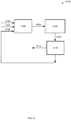
- FIG. 31 illustrates, generally at 3100 , one embodiment showing a control system.
- a thermal transfer unit The thermal transfer unit may be in thermal communication with a rider of a motorcycle.
- thermal transfer control unit having an output 3105 controlling the thermal transfer unit.
- the 3104 thermal transfer control unit receives inputs from 3106 , for example, a user or a local input.
- the 3104 thermal transfer control unit can also receive inputs from 3107 , for example, a remote input.
- the 3104 thermal transfer control unit also receives inputs from 3108 which comes from sensing unit 3110 .
- Thermal transfer unit 3102 provides inputs 3103 to sensing unit 3110 .
- Sensing unit 3110 also provide outputs 3112 .
- Outputs 3112 can be for remote detection, can be an interface to a wireless unit, or a cell phone interface.
- the present invention requires specialized hardware, for example, but not limited to, separate flexible channels for thermal conductivity.
- one embodiment or “an embodiment” or similar phrases means that the feature(s) being described are included in at least one embodiment of the invention. References to “one embodiment” in this description do not necessarily refer to the same embodiment; however, neither are such embodiments mutually exclusive. Nor does “one embodiment” imply that there is but a single embodiment of the invention. For example, a feature, structure, act, etc. described in “one embodiment” may also be included in other embodiments. Thus, the invention may include a variety of combinations and/or integrations of the embodiments described herein.
Landscapes
- Engineering & Computer Science (AREA)
- Mechanical Engineering (AREA)
- Chair Legs, Seat Parts, And Backrests (AREA)
- Air-Conditioning For Vehicles (AREA)
Abstract
A Method and Apparatus for Heating and Cooling a Motorcycle Seat have been disclosed. In one implementation a plurality of heating and cooling elements are used to affect heating and cooling a motorcycle seat.
Description
This patent application claims priority of pending U.S. application Ser. No. 15/913,886 filed Mar. 6, 2018 titled “Method and Apparatus for Heating and Cooling a Motorcycle Seat”, which is hereby incorporated herein by reference, and which claims priority to U.S. Provisional Application Ser. No. 62/467,612 filed Mar. 6, 2017 titled “Method and Apparatus for Heating and Cooling a Motorcycle Seat”, which is hereby incorporated herein by reference.
The present invention pertains to heating and cooling a seat. More particularly, the present invention relates to Method and Apparatus for Heating and Cooling a Motorcycle Seat.
Heating and particularly cooling a seat can be a challenge—particularly so when the seat is subject to, among other things, external forces and a varying load both physically and thermally and the heating and cooling system must be both compact and robust.
This presents a technical problem for which a technical solution using a technical means is needed.
The invention is illustrated by way of example and not limitation in the figures of the accompanying drawings.
While embodiments of the invention are illustrated for a motorcycle seat, the invention is not so limited and the techniques disclosed can be applied to other seats, for example, but not limited to seats for airplanes, boats, trains, busses, etc.
In one embodiment the techniques support a heating and cooling apparatus that can be sculptured to fit an individual rider sitting on the seat.
Since the heating and cooling seat can in one mode of operation provide heat and in another mode of operation provide cooling this seat may be referred to at times as fireice.
In one embodiment neither the heating mode of operation nor the cooling mode of operation is in effect but rather a third mode of operation is in effect, that of forcibly circulating ambient air.
As used in this description “Corbin” or similar terms refers to a brand of seats made by Corbin-Pacific Inc. headquartered at 2360 Technology Parkway, Hollister, Calif. 95023 USA. Website: http://corbin.com/
In one embodiment the switch unit incorporates a 3 position switch—one position for off, another position for heating, and another position for cooling.
In one embodiment the switch unit incorporates a 4 position switch—one position for off, another position for heating, another position for cooling, and another position for fan(s) on (e.g. forced circulation of ambient air).
In one embodiment the switch unit or controller unit is remotely controlled, by, for example, Bluetooth or a smart phone.
In one embodiment the switch unit or controller unit is remotely controlled, by, for example, a smart phone that can set mode of operation, timing, and remote temperature readings.
For example, in one embodiment a smart phone application can sense the seat temperature and be programmed to heat or cool the seat to a desired temperature on desired days. In one embodiment the application can also alert a user about an unauthorized body on the seat by, for example, sensing an increase in temperature within a given time period (e.g. temperature rate increase).
In one embodiment of the invention a single heating/cooling element (HCE) is used in the seat.
The HCE can also be considered to be part of a thermal engine.
In one embodiment of the invention two or more heating/cooling elements (HCEs) may be used in a seat. In one embodiment the HCEs may be operated independently of each other. For example, in an embodiment with 2 HCEs Table 1 below shows the possible modes of operation.
| TABLE 1 | |||
| Heating/ |
Heating/Cooling Element #2 | ||
| (HCE #1) | (HCE #2) | ||
| OFF | OFF | ||
| OFF | ON - Heating or Cooling | ||
| ON - Heating or Cooling | OFF | ||
| ON - Heating or Cooling | ON - Heating or Cooling | ||
In one embodiment one or more HCEs may be wired in parallel or series or series-parallel, or parallel-series or any such combination and may be operated in heating mode or cooling mode or off mode independently of each other. That is, for example, in a series mode having 2 HCEs in series, HCE # 1 may be in cooling mode and HCE # 2 in a heating mode. Or HCE # 2 may be off by simply bypassing (shorting around) HCE # 2. All other combinations are also possible, taking care of course to not short out the power supply.
The HCE may be in one embodiment a thermoelectric device. Such a thermoelectric device can generate electricity, measure temperature, and heat or cool at a junction. The heating or cooling a junction is controlled by the polarity of the applied voltage. That is reversing a voltage (V) will change the direction of a direct current (DC) flowing into the junction and change the mode of operation from heating to cooling or vice versa (cooling to heating).
In one embodiment the heating and cooling element may be separate mechanisms. For example, cooling may be effected by a thermoelectric device and heating by an electrically resistive element, for example, nichrome.
In one embodiment one or more fans may be operated independently of each other or in conjunction with each other. In one embodiment the activation of a fan for on or off or speed control may be effected by conditions at a HCE.
In one embodiment one or more HCEs may be controlled by a device, such as, but not limited to a thermostat, over temperature switch, etc.
The motorcycle seat is also known as a saddle. The saddle is referred to at times as the Corbin “Fire & Ice” saddle, or fireice. The heating and cooling pad is also known as the HCE and the combination heating and cooling pad, a combination heating/cooling pad (combo pad), or similar terms.
In one embodiment one or more fans suck air from underneath a seat and force it past one or more HCEs to provide circulation.
In one embodiment a diode bridge may be attached to the reversing voltage to provide a DC voltage to DC fans.
Thus Method and Apparatus for Heating and Cooling a Motorcycle Seat has been described.
Because of the thermal embodiments the present invention requires specialized hardware, for example, but not limited to, separate flexible channels for thermal conductivity.
As used in this description, “one embodiment” or “an embodiment” or similar phrases means that the feature(s) being described are included in at least one embodiment of the invention. References to “one embodiment” in this description do not necessarily refer to the same embodiment; however, neither are such embodiments mutually exclusive. Nor does “one embodiment” imply that there is but a single embodiment of the invention. For example, a feature, structure, act, etc. described in “one embodiment” may also be included in other embodiments. Thus, the invention may include a variety of combinations and/or integrations of the embodiments described herein.
As used in this description, “substantially” or “substantially equal” or similar phrases are used to indicate that the items are very close or similar. Since two physical entities can never be exactly equal, a phrase such as “substantially equal” is used to indicate that they are for all practical purposes equal.
It is to be understood that in any one or more embodiments of the invention where alternative approaches or techniques are discussed that any and all such combinations as may be possible are hereby disclosed. For example, if there are five techniques discussed that are all possible, then denoting each technique as follows: A, B, C, D, E, each technique may be either present or not present with every other technique, thus yielding 2{circumflex over ( )}5 or 32 combinations, in binary order ranging from not A and not B and not C and not D and not E to A and B and C and D and E. Applicant(s) hereby claims all such possible combinations. Applicant(s) hereby submit that the foregoing combinations comply with applicable EP (European Patent) standards. No preference is given any combination.
Thus a Method and Apparatus for Heating and Cooling a Motorcycle Seat have been described.
Claims (13)
1. An apparatus for heating or cooling a motorcycle seat comprising:
a flexible outer non-porous cover over at least a portion of the motorcycle seat where one or more riders of a motorcycle having the motorcycle seat can sit;
the flexible outer non-porous cover in mechanical thermal contact with a flexible thermal engine;
the flexible thermal engine in mechanical thermal contact with a rigid thermal transfer engine;
the rigid thermal transfer engine mechanically attached to a rigid base; and
the rigid base mechanically attached to a frame of the motorcycle.
2. The apparatus of claim 1 wherein the flexible outer non-porous cover and flexible thermal engine conform to the one or more riders of the motorcycle.
3. The apparatus of claim 1 further including a control for turning off the flexible thermal engine.
4. The apparatus of claim 1 further including a control for turning on the flexible thermal engine such that it produces a cooling of the flexible outer non-porous cover.
5. The apparatus of claim 1 further including a control for turning on the flexible thermal engine such that it produces a heating of the flexible outer non-porous cover.
6. The apparatus of claim 4 wherein the control is a three position switch.
7. The apparatus of claim 6 wherein the three position switch is mounted through the flexible outer non-porous on a side of the motorcycle seat.
8. The apparatus of claim 1 further including a control system for controlling cooling or heating of the motorcycle seat, the control system comprising:
a thermal transfer unit having a thermal output, an input, and an output;
a sensing unit having an input, and a first output, the input in communication with the thermal transfer unit output; and
a thermal transfer control unit having a first input, and an output, the thermal transfer control unit output in communication with the thermal transfer unit input.
9. The control system of claim 8 wherein the sensing unit has a second output, the second output for remote detection of conditions at the thermal transfer unit.
10. The control system of claim 8 wherein the thermal transfer control unit has a second input, the second input for receiving user or local input.
11. The control system of claim 10 wherein the thermal transfer control unit has a third input, the third input for receiving remote input.
12. The control system of claim 8 wherein the sensing unit can sense the thermal transfer unit thermal output.
13. The control system of claim 11 wherein receiving the remote input is receiving from a wireless source.
Priority Applications (2)
| Application Number | Priority Date | Filing Date | Title |
|---|---|---|---|
| US16/990,718 US11077906B1 (en) | 2017-03-06 | 2020-08-11 | Method and apparatus for heating and cooling a motorcycle seat |
| US17/361,012 US12252203B1 (en) | 2017-03-06 | 2021-06-28 | Method and apparatus for heating and cooling a motorcycle seat |
Applications Claiming Priority (3)
| Application Number | Priority Date | Filing Date | Title |
|---|---|---|---|
| US201762467612P | 2017-03-06 | 2017-03-06 | |
| US15/913,886 US10793218B1 (en) | 2017-03-06 | 2018-03-06 | Method and apparatus for heating and cooling a motorcycle seat |
| US16/990,718 US11077906B1 (en) | 2017-03-06 | 2020-08-11 | Method and apparatus for heating and cooling a motorcycle seat |
Related Parent Applications (1)
| Application Number | Title | Priority Date | Filing Date |
|---|---|---|---|
| US15/913,886 Division US10793218B1 (en) | 2017-03-06 | 2018-03-06 | Method and apparatus for heating and cooling a motorcycle seat |
Related Child Applications (1)
| Application Number | Title | Priority Date | Filing Date |
|---|---|---|---|
| US17/361,012 Continuation US12252203B1 (en) | 2017-03-06 | 2021-06-28 | Method and apparatus for heating and cooling a motorcycle seat |
Publications (1)
| Publication Number | Publication Date |
|---|---|
| US11077906B1 true US11077906B1 (en) | 2021-08-03 |
Family
ID=72664187
Family Applications (3)
| Application Number | Title | Priority Date | Filing Date |
|---|---|---|---|
| US15/913,886 Active 2038-10-19 US10793218B1 (en) | 2017-03-06 | 2018-03-06 | Method and apparatus for heating and cooling a motorcycle seat |
| US16/990,718 Active US11077906B1 (en) | 2017-03-06 | 2020-08-11 | Method and apparatus for heating and cooling a motorcycle seat |
| US17/361,012 Active 2039-03-24 US12252203B1 (en) | 2017-03-06 | 2021-06-28 | Method and apparatus for heating and cooling a motorcycle seat |
Family Applications Before (1)
| Application Number | Title | Priority Date | Filing Date |
|---|---|---|---|
| US15/913,886 Active 2038-10-19 US10793218B1 (en) | 2017-03-06 | 2018-03-06 | Method and apparatus for heating and cooling a motorcycle seat |
Family Applications After (1)
| Application Number | Title | Priority Date | Filing Date |
|---|---|---|---|
| US17/361,012 Active 2039-03-24 US12252203B1 (en) | 2017-03-06 | 2021-06-28 | Method and apparatus for heating and cooling a motorcycle seat |
Country Status (1)
| Country | Link |
|---|---|
| US (3) | US10793218B1 (en) |
Families Citing this family (4)
| Publication number | Priority date | Publication date | Assignee | Title |
|---|---|---|---|---|
| US12365410B2 (en) * | 2017-09-18 | 2025-07-22 | Reform Technologies Inc. | Moldable bicycle saddles, external saddle heaters, fitting procedures, and related technologies |
| DE102021121006A1 (en) * | 2021-08-12 | 2023-02-16 | Bayerische Motoren Werke Aktiengesellschaft | Motorcycle with seat arrangement |
| US20250222841A1 (en) * | 2021-10-28 | 2025-07-10 | Charles J Cauchy | Weather resistant air flow distribution system for seats |
| US20250089909A1 (en) * | 2023-09-19 | 2025-03-20 | Jonathon Mark Bryan | Cooling seat cover systems and methods |
Citations (7)
| Publication number | Priority date | Publication date | Assignee | Title |
|---|---|---|---|---|
| US20040183343A1 (en) | 2003-01-30 | 2004-09-23 | Probst Paul C. | Seat technology |
| US20050161193A1 (en) | 2004-01-23 | 2005-07-28 | Mckenzie Chris | Seat heating and cooling system |
| US20060279113A1 (en) | 2005-06-08 | 2006-12-14 | Pautz Rick F | Cooled air motorcycle seat system |
| US7178866B1 (en) | 2005-12-22 | 2007-02-20 | Scott Steven J | Open-air vehicle seats with embedded heating elements |
| US20100038067A1 (en) | 2005-12-16 | 2010-02-18 | Flynn James P | Climate control system |
| US20170274951A1 (en) | 2016-03-22 | 2017-09-28 | Nad, S.L. | Method For Assembling Heating Into Vehicle Seats and Heated Vehicle Seat |
| US20190061574A1 (en) | 2017-08-24 | 2019-02-28 | Indian Motorcycle International, LLC | Heated And Cooled Seat |
Family Cites Families (7)
| Publication number | Priority date | Publication date | Assignee | Title |
|---|---|---|---|---|
| US20080016981A1 (en) * | 2005-12-16 | 2008-01-24 | Flynn James P | Cycle Heat and Cool |
| US8556337B1 (en) * | 2009-07-02 | 2013-10-15 | Tammy L. Cornitius-Cary | Thermal cooling/heating seat/backrest cover |
| US20140152056A1 (en) * | 2011-05-12 | 2014-06-05 | Wrump Ab | Heating device for bicycle seats |
| JP6321184B2 (en) * | 2013-12-31 | 2018-05-09 | ジェンサーム オートモーティブ システムズ チャイナリミテッド | Ventilation system |
| WO2016025776A1 (en) * | 2014-08-13 | 2016-02-18 | Milsco Manufacturing Company, A Unit Of Jason Incorporated | Ventilated motorcycle seat |
| US10279719B2 (en) * | 2015-11-19 | 2019-05-07 | Ts Tech Co., Ltd. | Seat apparatus |
| US10363981B2 (en) * | 2017-04-20 | 2019-07-30 | Harold R. Ingram | Heat-reflecting and warming seat cover |
-
2018
- 2018-03-06 US US15/913,886 patent/US10793218B1/en active Active
-
2020
- 2020-08-11 US US16/990,718 patent/US11077906B1/en active Active
-
2021
- 2021-06-28 US US17/361,012 patent/US12252203B1/en active Active
Patent Citations (7)
| Publication number | Priority date | Publication date | Assignee | Title |
|---|---|---|---|---|
| US20040183343A1 (en) | 2003-01-30 | 2004-09-23 | Probst Paul C. | Seat technology |
| US20050161193A1 (en) | 2004-01-23 | 2005-07-28 | Mckenzie Chris | Seat heating and cooling system |
| US20060279113A1 (en) | 2005-06-08 | 2006-12-14 | Pautz Rick F | Cooled air motorcycle seat system |
| US20100038067A1 (en) | 2005-12-16 | 2010-02-18 | Flynn James P | Climate control system |
| US7178866B1 (en) | 2005-12-22 | 2007-02-20 | Scott Steven J | Open-air vehicle seats with embedded heating elements |
| US20170274951A1 (en) | 2016-03-22 | 2017-09-28 | Nad, S.L. | Method For Assembling Heating Into Vehicle Seats and Heated Vehicle Seat |
| US20190061574A1 (en) | 2017-08-24 | 2019-02-28 | Indian Motorcycle International, LLC | Heated And Cooled Seat |
Also Published As
| Publication number | Publication date |
|---|---|
| US12252203B1 (en) | 2025-03-18 |
| US10793218B1 (en) | 2020-10-06 |
Similar Documents
| Publication | Publication Date | Title |
|---|---|---|
| US12252203B1 (en) | Method and apparatus for heating and cooling a motorcycle seat | |
| US9105808B2 (en) | Thermoelectric device | |
| US3136577A (en) | Seat temperature regulator | |
| CN104369683B (en) | Seat atmosphere control system | |
| CN103129432B (en) | Blowing control apparatus for seat and vehicle seat provided therewith | |
| US20060289421A1 (en) | Portable heated seating | |
| US20160152167A1 (en) | Instant Hot/Cold Seat | |
| US20090199571A1 (en) | Body temperature control system | |
| CN104322141B (en) | Seat heater | |
| US11369205B2 (en) | Collapsible, portable chair with integrated temperature control | |
| JPH10248884A (en) | Thermoelectric mattress | |
| US11845368B2 (en) | Vehicle seat comprising a temperature-control system | |
| JP2009010138A (en) | Thermoelectric conversion element circuit | |
| US11970043B2 (en) | Air conditioning device for recliner seat, seat comprising said air conditioning device, and air conditioning system | |
| US12161591B2 (en) | Thermal comfort wheelchair backrest | |
| JP2003042590A (en) | Temperature control device | |
| US10363845B2 (en) | Conductive system | |
| US10674830B1 (en) | Self-regulating heated seat cushion | |
| CN107244272B (en) | Thin-film semiconductor device for car seat temperature adjustment | |
| JP2001147054A (en) | Thermoelectric module type heat exchanger | |
| US20050284152A1 (en) | Temperature controlled input device for computer | |
| JP2004079560A (en) | Methods of driving and controlling thermoelectric conversion element module | |
| US20170245325A1 (en) | Intelligently Powered Devices | |
| KR20040001385A (en) | The heater and cooler system of the vehicle seat | |
| JP2003042595A (en) | Temperature control device |
Legal Events
| Date | Code | Title | Description |
|---|---|---|---|
| FEPP | Fee payment procedure |
Free format text: ENTITY STATUS SET TO UNDISCOUNTED (ORIGINAL EVENT CODE: BIG.); ENTITY STATUS OF PATENT OWNER: SMALL ENTITY Free format text: ENTITY STATUS SET TO SMALL (ORIGINAL EVENT CODE: SMAL); ENTITY STATUS OF PATENT OWNER: SMALL ENTITY |
|
| STCF | Information on status: patent grant |
Free format text: PATENTED CASE |
|
| MAFP | Maintenance fee payment |
Free format text: PAYMENT OF MAINTENANCE FEE, 4TH YR, SMALL ENTITY (ORIGINAL EVENT CODE: M2551); ENTITY STATUS OF PATENT OWNER: SMALL ENTITY Year of fee payment: 4 |