US11077097B2 - Use of aromatic ring drug in inhibiting key transcription factor of malignant melanoma - Google Patents
Use of aromatic ring drug in inhibiting key transcription factor of malignant melanoma Download PDFInfo
- Publication number
- US11077097B2 US11077097B2 US16/627,144 US201816627144A US11077097B2 US 11077097 B2 US11077097 B2 US 11077097B2 US 201816627144 A US201816627144 A US 201816627144A US 11077097 B2 US11077097 B2 US 11077097B2
- Authority
- US
- United States
- Prior art keywords
- substituted
- alkyl
- group
- unsubstituted
- atom
- Prior art date
- Legal status (The legal status is an assumption and is not a legal conclusion. Google has not performed a legal analysis and makes no representation as to the accuracy of the status listed.)
- Active, expires
Links
- 0 [1*]C(=O)C[Ar]CC([2*])=O Chemical compound [1*]C(=O)C[Ar]CC([2*])=O 0.000 description 11
- YUFJMFXVUUMVCA-GFULKKFKSA-N O=C(/C=C/C1=CC=CO1)NC1=CC=CC(NC(=O)/C=C/C2=CC=CO2)=N1 Chemical compound O=C(/C=C/C1=CC=CO1)NC1=CC=CC(NC(=O)/C=C/C2=CC=CO2)=N1 YUFJMFXVUUMVCA-GFULKKFKSA-N 0.000 description 5
- UUADQMCJAVAUGN-CUTPBRJFSA-N C/C=C/C1=CC=CO1.C=CC1=CC=CO1.C=CC1=NC=CO1.C=CC1=NC=CS1.CCC1=CC=CO1 Chemical compound C/C=C/C1=CC=CO1.C=CC1=CC=CO1.C=CC1=NC=CO1.C=CC1=NC=CS1.CCC1=CC=CO1 UUADQMCJAVAUGN-CUTPBRJFSA-N 0.000 description 4
- ASVXKZWPFFUWHR-QWDXOWAMSA-N C/C=C/c1ccc(CCc2ccc(/C=C/c3ccc[o]3)[o]2)[o]1 Chemical compound C/C=C/c1ccc(CCc2ccc(/C=C/c3ccc[o]3)[o]2)[o]1 ASVXKZWPFFUWHR-QWDXOWAMSA-N 0.000 description 1
- PGMMQIGGQSIEGH-UHFFFAOYSA-N C=Cc1ncc[o]1 Chemical compound C=Cc1ncc[o]1 PGMMQIGGQSIEGH-UHFFFAOYSA-N 0.000 description 1
- JDCUKFVNOWJNBU-UHFFFAOYSA-N C=Cc1ncc[s]1 Chemical compound C=Cc1ncc[s]1 JDCUKFVNOWJNBU-UHFFFAOYSA-N 0.000 description 1
Images


Classifications
-
- A—HUMAN NECESSITIES
- A61—MEDICAL OR VETERINARY SCIENCE; HYGIENE
- A61K—PREPARATIONS FOR MEDICAL, DENTAL OR TOILETRY PURPOSES
- A61K31/00—Medicinal preparations containing organic active ingredients
- A61K31/33—Heterocyclic compounds
- A61K31/395—Heterocyclic compounds having nitrogen as a ring hetero atom, e.g. guanethidine or rifamycins
- A61K31/435—Heterocyclic compounds having nitrogen as a ring hetero atom, e.g. guanethidine or rifamycins having six-membered rings with one nitrogen as the only ring hetero atom
- A61K31/44—Non condensed pyridines; Hydrogenated derivatives thereof
- A61K31/4427—Non condensed pyridines; Hydrogenated derivatives thereof containing further heterocyclic ring systems
- A61K31/443—Non condensed pyridines; Hydrogenated derivatives thereof containing further heterocyclic ring systems containing a five-membered ring with oxygen as a ring hetero atom
-
- A—HUMAN NECESSITIES
- A61—MEDICAL OR VETERINARY SCIENCE; HYGIENE
- A61P—SPECIFIC THERAPEUTIC ACTIVITY OF CHEMICAL COMPOUNDS OR MEDICINAL PREPARATIONS
- A61P35/00—Antineoplastic agents
Definitions
- the present invention relates to the field of medicinal chemistry and specifically, relates to an aromatic ring drug and its use in inhibiting key transcription factor MITF of malignant melanoma.
- Malignant melanoma is a tumor that originates from melanocytes and is one of malignant tumors which is the most difficult to be treated.
- MITF is the most important lineage survival oncogene in malignant melanoma.
- Melanoma patients with a family genetic history often carry the mutation MITF E318K , which blocks the degradation of MITF mediated by SUMO, and activates expression of genes downstream to MITF, thereby causing a carrier with such mutation can be five times more likely to develop melanoma than normal human.
- MITF resistance to inhibitors in the MAPK signaling pathway (including VRT11E, AZD6224, PLK4720 and other melanoma treatment drugs) will develop due to overexpression of MITF, thereby promoting tumor recurrence.
- Inhibiting MITF can effectively inhibit the resistance of melanoma to other targeting drugs and enhance treatment efficiency, but it has no effect on other cells of the body.
- Inhibiting MITF protein expression can significantly inhibit tumor growth at the cellular level and in mouse models. Therefore, small molecules that specifically target MITF have the potential to inhibit the growth of malignant melanoma and reduce drug resistance. Whether MITF can be specifically and effectively targeted by small molecule compounds has been a hot issue in this field.
- MITF is a transcription factor containing a conserved bHLHLz domain, and the study of small molecule probes specifically targeting transcription factors has always been a very challenging hot research field. Because the function of transcription factors depends on protein-protein interface (PPI), the PPI interface is generally around 1500-3000 ⁇ 2, and relatively long, hydrophobic and rigid small molecule compounds are necessary for specifically targeting PPI interface, which poses great challenges to the solubility, transmembrane ability and stability of the compounds. Furthermore, most transcription factors lack substrate binding pockets that can be used for designing drug, and small molecule probes can not be screened by substrate analog methods. Because the targeting mechanism is not clear, the design of high-throughput screening models is also a difficulty in screening targeted transcription factor inhibitors. At present, there are no reports on small molecular compounds of clear mechanism that directly target MITF.
- the purpose of the present invention is to provide a small molecule compound directly targeting MITF, for treating MITF-related diseases, and regulating physiological activities in which MITF is involved.
- a use of a compound of formula A, or an optical isomer, a racemate, a solvateor a pharmaceutically acceptable salt thereof in the preparation of a pharmaceutical composition or preparation is provided, the compound of formula A is used for (a) inhibiting a key transcriptional regulatory factor of malignant melanoma (MITF, Microphthalmia-associated Transcription Factor); (b) treating MITF-related diseases; or (c) regulating physiological activities in which MITF is involved,
- MITF key transcriptional regulatory factor of malignant melanoma
- Ar is phenyl, pyridyl, pyrimidinyl, or aromatic ring without or containing nitrogen, sulfur, oxygen heteroatom;
- X 1 and X 2 are each independently selected from the group consisting of O atom, S atom, substituted or unsubstituted N atom, and C atom; wherein the term “substituted” refers to having one or more substituents selected from the group consisting of halogen, —OH, —NH 2 , —CN, —NH (C1-C3 alkyl), —N(C1-C3 alkyl) 2 , furan, and substituted or unsubstituted 5-7 membered heterocyclic ring containing O or S heteroatom, wherein the substituted heterocyclic ring contains 1-3 substituents selected from the group consisting of substituted or unsubstituted phenyl, C1-C3 alkyl, C1-C3 haloalkyl, —OH, —NH 2 , —CN, —NH (C1-C3 alkyl), —N(C1-C3 alkyl) 2 , halogen,
- R 1 and R 2 are each independently selected from the group consisting of halogen, substituted or unsubstituted C1-C8 alkyl, substituted or unsubstituted C1-C8 alkoxy, substituted or unsubstituted C2-C8 alkenyl, substituted or unsubstituted C2-C8 alkynyl, and substituted or unsubstituted C3-C8 cycloalkyl; wherein the “substituted” refers to having one or more substituents selected from the group consisting of halogen, —OH, —NH 2 , —CN, —NH (C1-C3 alkyl), —N(C1-C3 alkyl) 2 , furan, and substituted or unsubstituted 5-7 membered heterocyclic ring containing O or S heteroatom, wherein the substituted heterocyclic ring contains 1-3 substituents selected from the group consisting of substituted or unsubstituted pheny
- the compound of formula A has the following structure:
- Ar is pyridyl or benzene ring
- X 1 and X 2 are each independently selected from the group consisting of N atom, and O atom, S atom;
- R 1 and R 2 are each independently selected from the group consisting of
- the compound of formula A has the following structure:
- the MITF-related diseases are selected from the group consisting of malignant melanoma, pancreatic cancer, skin hypersensitivity, and asthma.
- the physiological activities in which MITF is involved include skin whitening.
- a pharmaceutical composition comprising (a) an active ingredient comprising a compound of formula A, or an optical isomer, a racemate, a solvate or a pharmaceutically acceptable salt thereof:
- the pharmaceutical composition or preparation further contain other pharmaceutically active ingredients or pharmaceutically acceptable carriers.
- the pharmaceutical composition contains 0.001-99 wt %, preferably 0.1-90 wt %, more preferably 1-80 wt % of compound of formula A, or an optical isomer, or a racemate, or a solvate or a pharmaceutically acceptable salt thereof, based on the total weight of the composition.
- a use of the pharmaceutical composition according to the second aspect of the present invention is provided, wherein the pharmaceutical composition is used for (a) inhibiting a key transcriptional regulatory factor of malignant melanoma (MITF, Microphthalmia-associated Transcription Factor); (b) treating MITF-related diseases; or (c) regulating physiological activities in which MITF is involved.
- MITF a key transcriptional regulatory factor of malignant melanoma
- MITF Microphthalmia-associated Transcription Factor
- kit comprises:
- a first container which contains a first pharmaceutical composition, wherein the first pharmaceutical composition comprises a first compound, or an optical isomer, or a racemate, or a solvate or a pharmaceutically acceptable salt thereof, and a pharmaceutically acceptable carrier;
- n th container which contains a n th pharmaceutical composition, wherein the n th pharmaceutical composition comprises a n th compound, or an optical isomer, or a racemate, or a solvate or a pharmaceutically acceptable salt thereof, and a pharmaceutically acceptable carrier; wherein n is any positive integer in 2-8;
- first compound and the n th compound is a compound selected from the group consisting of:
- a method for non-therapeutically inhibiting a key transcriptional regulatory factor of malignant melanoma MITF in vitro which comprises steps of: contacting MITF with a compound of formula A, or an optical isomer, or a racemate, or a solvate or a pharmaceutically acceptable salt thereof to inhibit activity of MITF, wherein the compound of formula A is defined as in the first aspect of the present invention.
- a method for treating malignant melanoma comprises steps of: administering the compound of formula A, or an optical isomer, or a racemate, or a solvate or a pharmaceutically acceptable salt thereof, or the pharmaceutical composition according to the second aspect of the present invention to a subject in need thereof, wherein the compound of formula A is defined as in the first aspect of the present invention.
- FIG. 1 Compound TT-012 effectively inhibits the formation of dimers of the key transcriptional regulatory factor MITF of malignant melanoma.
- FIG. 2 Compound TT-012 specifically inhibits transcription activity of MITF.
- FIG. 3 Compound TT-012 effectively and specifically inhibits the growth of MITF-dependent malignant melanoma cell B16F10.
- FIG. 4 Compound TT-012 significantly inhibits Forskolin-induced melanin production.
- the compound of formula A of the present invention can be used to treat malignant melanoma, pancreatic cancer, skin hypersensitivity, asthma and other diseases related to MITF target, and for skin whitening. The inventors have completed the present invention on this basis.
- C1-C8 alkyl refers to a linear or branched alkyl with 1-8 carbon atoms, such as methyl, ethyl, propyl, isopropyl, 1-butyl, 2-butyl, pentyl, hexyl, heptyl, octyl, or the like.
- C3-C8 cycloalkyl refers to a cycloalkyl with 3-8 carbon atoms, such as cyclopropyl, cyclobutyl, cyclopentyl, cycloheptyl, or the like.
- C1-C3 haloalkyl refers to a linear or branched alkyl with 1-3 carbon atoms substituted by 1-3 halogens.
- C1-C8 alkoxy refers to a linear or branched alkyl with 1-8 carbon atoms, such as methoxy, ethoxy, propoxy, isopropoxy, butoxy, isobutyloxy, sec-butoxy, t-butoxy, or the like.
- C2-C8 alkenyl refers to a linear or branched alkenyl with 2-8 carbon atoms, such as vinyl, propenyl, isopropenyl, 1-butenyl, 2-butenyl, pentenyl, hexenyl, heptenyl, octenyl, or the like.
- C2-C8 alkynyl refers to a linear or branched alkynyl with 2-8 carbon atoms, such as ethynyl, propynyl, isopropynyl, 1-butynyl, 2-butynyl, pentynyl, hexynyl, heptynyl, octynyl, or the like.
- 5-7 membered heterocyclic ring refers to a cyclic structure having one or more, preferably 1-3 heteroatoms, and the ring can be a saturated or unsaturated ring.
- halogen refers to F, Cl, Br, and I.
- the terms “containing” or “comprise (comprising)” can be open, semi-closed, and closed form. In other words, the term further contain “basically consist of” or “consist of”.
- the term “pharmaceutically acceptable” ingredient refers to a substance suitable for human and/or animals without excessive adverse side effects (such as toxicity, irritation and allergies), i.e., with reasonable benefit/risk ratio.
- Malignant melanoma is a tumor that originates from melanocytes and is one of the malignancies which are most difficult to be treated.
- MITF is the most important lineage survival oncogene of melanoma and one of the most breakthrough targets for treating malignant melanoma. 20% of patients with malignant skin cancer have MITF gene amplification. Overexpression of MITF will induce transformation of melanocytes into tumors, and promote tumor proliferation and differentiation.
- the key transcriptional regulatory factor of malignant melanoma is the main regulatory factor of epidermal melanocytes of skin, and its function is to regulate the transcription of melanin synthase, promote the production of melanin, and pass it to the surrounding skin keratinocytes to prevent cell damage caused by UV radiation, and form skin surface color at the same time.
- MITF function loss mutations are the main cause of hereditary albinism disease Waardenburg Syndrome type IIA, Tietz syndrome, and the main reason why people's hair will turn gray during the aging process.
- the compound of the present invention or “the compound of formula A” can be used interchangeably, and refers to a compound of formula A, or a racemate, or a enantiomer or a pharmaceutically acceptable salt thereof. It should be understood that the term also comprises mixtures of the above components.
- each group is defined as above.
- a pharmaceutically acceptable salt of compound of Formula A is also included.
- pharmaceutically acceptable salt refers to a salt suitable for use as a medicament formed by the compound of the present invention with an acid or base.
- the pharmaceutically acceptable salts include inorganic and organic salts.
- Preferred salts are salts formed by the compounds of the present invention and acid.
- Suitable salt-forming acids include, but are not limited to: inorganic acids such as hydrochloric acid, hydrobromic acid, hydrofluoric acid, sulfuric acid, nitric acid, phosphoric acid, etc; organic acids such as formic acid, acetic acid, propionic acid, oxalic acid, malonic acid, succinic acid, fumaric acid, maleic acid, lactic acid, malic acid, tartaric acid, citric acid, picric acid, methanesulfonic acid, toluenesulfonic acid, benzenesulfonic acid, etc; and acidic amino acids such as aspartic acid, glutamic acid.
- inorganic acids such as hydrochloric acid, hydrobromic acid, hydrofluoric acid, sulfuric acid, nitric acid, phosphoric acid, etc
- organic acids such as formic acid, acetic acid, propionic acid, oxalic acid, malonic acid, succinic acid, fumaric acid, maleic acid,
- the compound of formula A in the present invention can be prepared by methods well known to those skilled in the art in the prior art, and the reaction parameters of each step are not specially limited.
- typical compounds in the present invention can also be obtained in a commercially available manner.
- each chiral carbon atom can optionally be R-configuration or S-configuration, or a mixture of R-configuration and S-configuration.
- the compound of formula A in the present invention can be used to inhibit MITF, thereby preventing or treating MITF-related diseases.
- the present invention also provides a method for inhibiting MITF and a method for treating MITF-related diseases.
- examples of MITF-related diseases include, but are not limited to: malignant melanoma, pancreatic cancer, skin hypersensitivity, asthma and skin whitening, etc.
- a method for non-therapeutically inhibiting the key transcriptional regulatory factor of malignant melanoma MITF in vitro comprises steps: for example, combining the key transcriptional regulatory factor of malignant melanoma with the compound of formula A (or an optical isomer, or a racemate, or a solvate or a pharmaceutically acceptable salt thereof) to inhibit activity of the key transcriptional regulatory factor of malignant melanoma MITF.
- a method for inhibiting the key transcriptional regulatory factor of malignant melanoma MITF is further provided, and the method can be therapeutic or non-therapeutic.
- the method comprises the steps: administering the compound of formula A of the present invention to a subject in need thereof.
- the subject includes human and non-human mammals (rodents, rabbits, monkeys, livestock, dogs, cats, etc.).
- the compound of the present invention has excellent inhibiting activity on the key transcriptional regulatory factor of malignant melanoma (MITF, Microphthalmia-associated Transcription Factor), thus the compound, or an optical isomer, or a racemate, or a solvate or a pharmaceutically acceptable salt thereof of the present invention, and the pharmaceutical composition containing the compound of the present invention as main active ingredient can be used to treat, prevent, and alleviate MITF-related diseases.
- the compound of the present invention can be used for the prevention and treatment of MITF-related diseases such as malignant melanoma, pancreatic cancer, skin hypersensitivity, asthma, skin whitening, etc.
- the pharmaceutical composition of the present invention comprises the safe and effective amount of compound of the present invention or a pharmaceutically acceptable salt thereof, and a pharmaceutically acceptable excipient or carrier.
- safe and effective amount refers that the amount of the compound is sufficient to significantly improve the condition without serious side effects.
- “Pharmaceutically acceptable carrier” means one or more compatible solid or liquid fillers, or gelatinous materials which are suitable for human use and should be of sufficient purity and sufficiently low toxicity. “Compatibility” means that each component in the composition can be admixed with the compounds of the present invention and with each other without significantly reducing the efficacy of the compounds.
- Some examples of pharmaceutically acceptable carriers include cellulose and the derivatives thereof (such as sodium carboxymethyl cellulose, sodium ethyl cellulose, cellulose acetate, etc.), gelatin, talc, solid lubricants (such as stearic acid, magnesium stearate), calcium sulfate, vegetable oils (such as soybean oil, sesame oil, peanut oil, olive oil, etc.), polyols (such as propylene glycol, glycerol, mannitol, sorbitol, etc.), emulsifiers (such as Tween®), wetting agent (such as sodium dodecyl sulfate), coloring agents, flavoring agents, stabilizers, antioxidants, preservatives, pyrogen-free water, etc.
- cellulose and the derivatives thereof such as sodium carboxymethyl cellulose, sodium ethyl cellulose, cellulose acetate, etc.
- gelatin such as talc
- solid lubricants such as stearic acid, magnesium
- administration mode for the compound or pharmaceutical compositions of the present invention, and the representative administration mode includes, but is not limited to: oral, intratumoral, rectal, parenteral (intravenous, intramuscular or subcutaneous), and topical administration.
- Solid dosage forms for oral administration include capsules, tablets, pills, powders and granules.
- the active compounds are mixed with at least one conventional inert excipient (or carrier), such as sodium citrate or dicalcium phosphate, or mixed with any of the following components: (a) fillers or compatibilizers, for example, starch, lactose, sucrose, glucose, mannitol and silicic acid; (b) binders, for example, hydroxymethyl cellulose, alginates, gelatin, polyvinylpyrrolidone, sucrose and arabic gum; (c) humectants, such as, glycerol; (d) disintegrating agents such as agar, calcium carbonate, potato starch or tapioca starch, alginic acid, certain composite silicates, and sodium carbonate; (e) dissolution-retarding agents, such as paraffin; (f) absorption accelerators, for example, quaternary ammonium compounds; (g) wetting agents,
- the solid dosage forms such as tablets, sugar pills, capsules, pills and granules can be prepared by using coating and shell materials, such as enteric coatings and any other materials known in the art. They can contain an opaque agent.
- the release of the active compounds or compounds in the compositions can be released in a delayed mode in a given portion of the digestive tract.
- the embedding components include polymers and waxes. If necessary, the active compounds may also be in microencapsulated form with one or more of the above-mentioned excipients.
- Liquid dosage forms for oral administration include pharmaceutically acceptable emulsions, solutions, suspensions, syrups or tinctures.
- the liquid dosage forms may contain any conventional inert diluents known in the art such as water or other solvents, solubilizers and emulsifiers, for example, ethanol, isopropanol, ethyl carbonate, ethyl acetate, propylene glycol, 1,3-butanediol, dimethyl formamide, as well as oil, in particular, cottonseed oil, peanut oil, corn germ oil, olive oil, castor oil and sesame oil, and combinations thereof.
- composition may also contain additives such as wetting agents, emulsifiers, and suspending agent, sweetening agent, flavoring agents and perfume.
- additives such as wetting agents, emulsifiers, and suspending agent, sweetening agent, flavoring agents and perfume.
- the suspension may contain suspending agent, for example, ethoxylated isooctadecanol, polyoxyethylene sorbitol and sorbitan ester, microcrystalline cellulose, aluminum methoxide and agar, and combinations thereof.
- suspending agent for example, ethoxylated isooctadecanol, polyoxyethylene sorbitol and sorbitan ester, microcrystalline cellulose, aluminum methoxide and agar, and combinations thereof.
- compositions for parenteral injection may comprise physiologically acceptable sterile aqueous or anhydrous solutions, dispersions, suspensions or emulsions, and sterile powders which can be re-dissolved into sterile injectable solutions or dispersions.
- Suitable aqueous and non-aqueous carriers, diluents, solvents or excipients include water, ethanol, polyols and any suitable mixtures thereof.
- the dosage forms for topical administration of compounds of the invention include ointments, powders, patches, propellants, and inhalants.
- the active ingredients are mixed with physiologically acceptable carriers and any preservatives, buffers, or propellants if necessary, under sterile conditions.
- Compounds of the present invention can be administrated alone, or in combination with any other pharmaceutically acceptable compounds.
- a safe and effective amount of compound of the present invention is administered to a mammal (such as human) in need of treatment, wherein the dose of administration is a pharmaceutically effective dose, the particular dose should also depend on various factors, such as the route of administration, patient healthy status, which are within the skills of an experienced physician.
- the compound of formula A of the present invention has a significant inhibiting effect on MITF, and the IC 50 value of inhibiting MITF dimer reaches 10 nm.
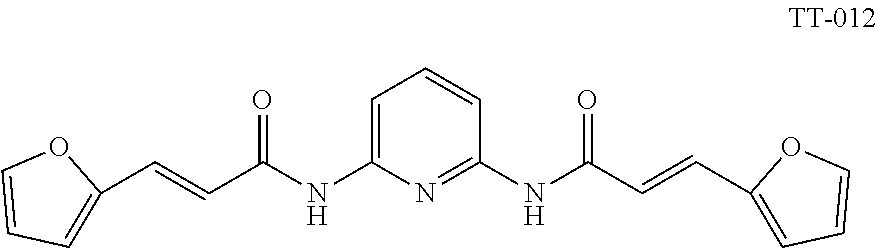
- the compound TT-012 is selected to better illustrate the content of the present invention.
- the compound of TT-012 has the following structural formula, which is one of the compounds of formula A of the present invention:
- MIDAS MITF Dependent Alpha-Screen
- TT-012 was incubated with melanoma cell B16F10 cell line, mRNA was extracted and reverse transcripted, and the transcription of MITF landmark downstream genes-TYR (tyrosinase) and TRPM1 (transient receptor potential cation channel M1) were detected by fluorescent quantitative PCR.
- FIG. 2 showed that active TT-012 could significantly inhibit the transcription of genes downstream to MITF.
- the active TT012 was incubated with MITF-dependent and highly expressed melanoma cell line B16F10, the melanoma cell line A375 with low expression of MITF, and control cell line Hela, respectively, and cell activity was detected by MTT experiment. As could be seen from FIG.
- MITF regulated the transcription and expression of melanin synthase TYR, TYRP1, and is the main regulatory factor of melanin formation.
- Foskolin a small molecule compound, could regulate pathway, promote the expression of MITF, and promote melanin production by activating MSH-cAMP-CREB.
- TT-012 could effectively inhibit the formation of melanin by inhibiting MITF, and had good potential to skin whitening.
Landscapes
- Health & Medical Sciences (AREA)
- General Health & Medical Sciences (AREA)
- Chemical & Material Sciences (AREA)
- Medicinal Chemistry (AREA)
- Veterinary Medicine (AREA)
- Public Health (AREA)
- Pharmacology & Pharmacy (AREA)
- Life Sciences & Earth Sciences (AREA)
- Animal Behavior & Ethology (AREA)
- Epidemiology (AREA)
- General Chemical & Material Sciences (AREA)
- Organic Chemistry (AREA)
- Nuclear Medicine, Radiotherapy & Molecular Imaging (AREA)
- Chemical Kinetics & Catalysis (AREA)
- Pharmaceuticals Containing Other Organic And Inorganic Compounds (AREA)
Abstract
Description


Claims (13)


Applications Claiming Priority (3)
| Application Number | Priority Date | Filing Date | Title |
|---|---|---|---|
| CN201710502015.1 | 2017-06-27 | ||
| CN201710502015.1A CN107233340B (en) | 2017-06-27 | 2017-06-27 | Application of aromatic ring medicine in inhibiting key transcription factor of malignant melanoma |
| PCT/CN2018/089792 WO2019001226A1 (en) | 2017-06-27 | 2018-06-04 | Use of aromatic ring drug in inhibiting key transcription factor of malignant melanoma |
Publications (2)
| Publication Number | Publication Date |
|---|---|
| US20200129490A1 US20200129490A1 (en) | 2020-04-30 |
| US11077097B2 true US11077097B2 (en) | 2021-08-03 |
Family
ID=59987334
Family Applications (1)
| Application Number | Title | Priority Date | Filing Date |
|---|---|---|---|
| US16/627,144 Active 2038-07-11 US11077097B2 (en) | 2017-06-27 | 2018-06-04 | Use of aromatic ring drug in inhibiting key transcription factor of malignant melanoma |
Country Status (3)
| Country | Link |
|---|---|
| US (1) | US11077097B2 (en) |
| CN (1) | CN107233340B (en) |
| WO (1) | WO2019001226A1 (en) |
Families Citing this family (2)
| Publication number | Priority date | Publication date | Assignee | Title |
|---|---|---|---|---|
| CN107233340B (en) * | 2017-06-27 | 2023-07-07 | 中国科学院上海有机化学研究所 | Application of aromatic ring medicine in inhibiting key transcription factor of malignant melanoma |
| CN110592141B (en) * | 2018-06-13 | 2023-07-07 | 中国科学院上海有机化学研究所 | Compounds for modulating gene editing efficiency and uses thereof |
Citations (2)
| Publication number | Priority date | Publication date | Assignee | Title |
|---|---|---|---|---|
| US20090163545A1 (en) | 2007-12-21 | 2009-06-25 | University Of Rochester | Method For Altering The Lifespan Of Eukaryotic Organisms |
| WO2016196591A1 (en) | 2015-06-01 | 2016-12-08 | Indiana University Research & Technology Corporation | Protein tyrosine phosphatases or shp2 inhibitors and uses thereof |
Family Cites Families (1)
| Publication number | Priority date | Publication date | Assignee | Title |
|---|---|---|---|---|
| CN107233340B (en) * | 2017-06-27 | 2023-07-07 | 中国科学院上海有机化学研究所 | Application of aromatic ring medicine in inhibiting key transcription factor of malignant melanoma |
-
2017
- 2017-06-27 CN CN201710502015.1A patent/CN107233340B/en active Active
-
2018
- 2018-06-04 US US16/627,144 patent/US11077097B2/en active Active
- 2018-06-04 WO PCT/CN2018/089792 patent/WO2019001226A1/en not_active Ceased
Patent Citations (2)
| Publication number | Priority date | Publication date | Assignee | Title |
|---|---|---|---|---|
| US20090163545A1 (en) | 2007-12-21 | 2009-06-25 | University Of Rochester | Method For Altering The Lifespan Of Eukaryotic Organisms |
| WO2016196591A1 (en) | 2015-06-01 | 2016-12-08 | Indiana University Research & Technology Corporation | Protein tyrosine phosphatases or shp2 inhibitors and uses thereof |
Also Published As
| Publication number | Publication date |
|---|---|
| CN107233340A (en) | 2017-10-10 |
| WO2019001226A1 (en) | 2019-01-03 |
| CN107233340B (en) | 2023-07-07 |
| US20200129490A1 (en) | 2020-04-30 |
Similar Documents
| Publication | Publication Date | Title |
|---|---|---|
| AU2016269491B2 (en) | Systems, methods, and formulations for treating cancer | |
| WO2010124283A4 (en) | Methods and compositions relating to hematologic malignancies | |
| GEP20105004B (en) | Substituted benzimidazoles as kinase inhibitors | |
| CN109689060A (en) | combination chemotherapy | |
| JP2019518048A (en) | Compounds, compositions and methods for preventing and / or treating cancer | |
| WO2016014390A1 (en) | Compositions and methods for mek inhibitor combination therapy in the treatment of cancer | |
| US20200129490A1 (en) | Use of aromatic ring drug in inhibiting key transcription factor of malignant melanoma | |
| NO20061319L (en) | 5-arylpyrimidines as anticancer drugs | |
| CN101990542A (en) | Cyclopamine tartrate salt and uses thereof | |
| Griffin et al. | Preferential action of arsenic trioxide in solid-tumor microenvironment enhances radiation therapy | |
| JP5289310B2 (en) | Microtubule disrupting agent and cancer cell growth inhibitor containing the same | |
| KR101901001B1 (en) | A Pharmaceutical composition comprising PPAR-β inhibitor for enhancing Anti-cancer effect | |
| WO2025157284A1 (en) | Pharmaceutical composition comprising prmt5 inhibitor and chemotherapeutic agent | |
| US20230129787A1 (en) | Methods for treating ovarian cancer | |
| EP2520294B1 (en) | Composition including a naphthoquinone derivative for treating and preventing hearing loss | |
| US10507228B2 (en) | Methods and compositions related to KRAS inhibitors | |
| CN104622874B (en) | Application of the CCR4 antagonists in cancer growth and transfer is suppressed | |
| CN107281171A (en) | Application of the aromatic rings class medicine in terms of malignant mela noma key transcription factor is suppressed | |
| US20240398788A1 (en) | Methods of treating cancer using hsf1 pathway inhibitors | |
| KR102212699B1 (en) | Composition for the prevention or treatment of breast cancer | |
| JP7146194B2 (en) | Carcinogenic inhibitor | |
| JP2024528570A (en) | Compositions and methods for reducing pigmentation | |
| WO2024213057A1 (en) | Use of combination of lsd1 inhibitor and drug to treat cancer | |
| CN105769859B (en) | It is a kind of to treat the pharmaceutical composition of skin injury and its application after radiotherapy patients with cervix carcinoma | |
| WO2023158702A1 (en) | Anticancer compounds, pharmaceutical compositions, and methods of treating cancers |
Legal Events
| Date | Code | Title | Description |
|---|---|---|---|
| AS | Assignment |
Owner name: SHANGHAI INSTITUTE OF ORGANIC CHEMISTRY, CHINESE ACADEMY OF SCIENCES, CHINA Free format text: ASSIGNMENT OF ASSIGNORS INTEREST;ASSIGNORS:WANG, JING;GUO, MIN;FANG, PENGFEI;AND OTHERS;REEL/FRAME:051378/0363 Effective date: 20191225 |
|
| FEPP | Fee payment procedure |
Free format text: ENTITY STATUS SET TO UNDISCOUNTED (ORIGINAL EVENT CODE: BIG.); ENTITY STATUS OF PATENT OWNER: SMALL ENTITY |
|
| FEPP | Fee payment procedure |
Free format text: ENTITY STATUS SET TO SMALL (ORIGINAL EVENT CODE: SMAL); ENTITY STATUS OF PATENT OWNER: SMALL ENTITY |
|
| STPP | Information on status: patent application and granting procedure in general |
Free format text: APPLICATION DISPATCHED FROM PREEXAM, NOT YET DOCKETED |
|
| STPP | Information on status: patent application and granting procedure in general |
Free format text: DOCKETED NEW CASE - READY FOR EXAMINATION |
|
| STPP | Information on status: patent application and granting procedure in general |
Free format text: NOTICE OF ALLOWANCE MAILED -- APPLICATION RECEIVED IN OFFICE OF PUBLICATIONS |
|
| STPP | Information on status: patent application and granting procedure in general |
Free format text: PUBLICATIONS -- ISSUE FEE PAYMENT RECEIVED |
|
| STPP | Information on status: patent application and granting procedure in general |
Free format text: PUBLICATIONS -- ISSUE FEE PAYMENT VERIFIED |
|
| STCF | Information on status: patent grant |
Free format text: PATENTED CASE |
|
| MAFP | Maintenance fee payment |
Free format text: PAYMENT OF MAINTENANCE FEE, 4TH YR, SMALL ENTITY (ORIGINAL EVENT CODE: M2551); ENTITY STATUS OF PATENT OWNER: SMALL ENTITY Year of fee payment: 4 |