US11076356B2 - Cellular modem with dynamic low battery voltage threshold control - Google Patents
Cellular modem with dynamic low battery voltage threshold control Download PDFInfo
- Publication number
- US11076356B2 US11076356B2 US16/750,073 US202016750073A US11076356B2 US 11076356 B2 US11076356 B2 US 11076356B2 US 202016750073 A US202016750073 A US 202016750073A US 11076356 B2 US11076356 B2 US 11076356B2
- Authority
- US
- United States
- Prior art keywords
- battery voltage
- clbvt
- cellular modem
- current
- industrial
- Prior art date
- Legal status (The legal status is an assumption and is not a legal conclusion. Google has not performed a legal analysis and makes no representation as to the accuracy of the status listed.)
- Active
Links
- 230000001413 cellular effect Effects 0.000 title claims abstract description 118
- 238000000034 method Methods 0.000 claims abstract description 29
- 238000004880 explosion Methods 0.000 claims description 6
- 230000003247 decreasing effect Effects 0.000 claims description 4
- 230000000977 initiatory effect Effects 0.000 claims description 3
- 238000005259 measurement Methods 0.000 claims 1
- 238000004891 communication Methods 0.000 description 12
- 239000007789 gas Substances 0.000 description 9
- 230000008901 benefit Effects 0.000 description 4
- 238000004519 manufacturing process Methods 0.000 description 3
- XLYOFNOQVPJJNP-UHFFFAOYSA-N water Substances O XLYOFNOQVPJJNP-UHFFFAOYSA-N 0.000 description 3
- 230000008859 change Effects 0.000 description 2
- 230000008878 coupling Effects 0.000 description 2
- 238000010168 coupling process Methods 0.000 description 2
- 238000005859 coupling reaction Methods 0.000 description 2
- 238000010586 diagram Methods 0.000 description 2
- 231100001261 hazardous Toxicity 0.000 description 2
- 230000008569 process Effects 0.000 description 2
- 230000010267 cellular communication Effects 0.000 description 1
- 238000007599 discharging Methods 0.000 description 1
- 239000000428 dust Substances 0.000 description 1
- 238000005516 engineering process Methods 0.000 description 1
- 239000000835 fiber Substances 0.000 description 1
- 230000007774 longterm Effects 0.000 description 1
- 238000010295 mobile communication Methods 0.000 description 1
- 238000012544 monitoring process Methods 0.000 description 1
- 230000006855 networking Effects 0.000 description 1
- 230000002093 peripheral effect Effects 0.000 description 1
- 238000010248 power generation Methods 0.000 description 1
- 230000009467 reduction Effects 0.000 description 1
- 238000007670 refining Methods 0.000 description 1
- 238000004065 wastewater treatment Methods 0.000 description 1
Images


Classifications
-
- H—ELECTRICITY
- H04—ELECTRIC COMMUNICATION TECHNIQUE
- H04W—WIRELESS COMMUNICATION NETWORKS
- H04W52/00—Power management, e.g. Transmission Power Control [TPC] or power classes
- H04W52/02—Power saving arrangements
- H04W52/0209—Power saving arrangements in terminal devices
- H04W52/0261—Power saving arrangements in terminal devices managing power supply demand, e.g. depending on battery level
- H04W52/0274—Power saving arrangements in terminal devices managing power supply demand, e.g. depending on battery level by switching on or off the equipment or parts thereof
- H04W52/0277—Power saving arrangements in terminal devices managing power supply demand, e.g. depending on battery level by switching on or off the equipment or parts thereof according to available power supply, e.g. switching off when a low battery condition is detected
-
- G—PHYSICS
- G01—MEASURING; TESTING
- G01R—MEASURING ELECTRIC VARIABLES; MEASURING MAGNETIC VARIABLES
- G01R19/00—Arrangements for measuring currents or voltages or for indicating presence or sign thereof
- G01R19/0038—Circuits for comparing several input signals and for indicating the result of this comparison, e.g. equal, different, greater, smaller (comparing pulses or pulse trains according to amplitude)
-
- G—PHYSICS
- G01—MEASURING; TESTING
- G01R—MEASURING ELECTRIC VARIABLES; MEASURING MAGNETIC VARIABLES
- G01R19/00—Arrangements for measuring currents or voltages or for indicating presence or sign thereof
- G01R19/165—Indicating that current or voltage is either above or below a predetermined value or within or outside a predetermined range of values
- G01R19/16533—Indicating that current or voltage is either above or below a predetermined value or within or outside a predetermined range of values characterised by the application
- G01R19/16538—Indicating that current or voltage is either above or below a predetermined value or within or outside a predetermined range of values characterised by the application in AC or DC supplies
- G01R19/16542—Indicating that current or voltage is either above or below a predetermined value or within or outside a predetermined range of values characterised by the application in AC or DC supplies for batteries
-
- G—PHYSICS
- G01—MEASURING; TESTING
- G01R—MEASURING ELECTRIC VARIABLES; MEASURING MAGNETIC VARIABLES
- G01R19/00—Arrangements for measuring currents or voltages or for indicating presence or sign thereof
- G01R19/165—Indicating that current or voltage is either above or below a predetermined value or within or outside a predetermined range of values
- G01R19/16566—Circuits and arrangements for comparing voltage or current with one or several thresholds and for indicating the result not covered by subgroups G01R19/16504, G01R19/16528, G01R19/16533
- G01R19/16576—Circuits and arrangements for comparing voltage or current with one or several thresholds and for indicating the result not covered by subgroups G01R19/16504, G01R19/16528, G01R19/16533 comparing DC or AC voltage with one threshold
-
- G—PHYSICS
- G01—MEASURING; TESTING
- G01R—MEASURING ELECTRIC VARIABLES; MEASURING MAGNETIC VARIABLES
- G01R31/00—Arrangements for testing electric properties; Arrangements for locating electric faults; Arrangements for electrical testing characterised by what is being tested not provided for elsewhere
- G01R31/36—Arrangements for testing, measuring or monitoring the electrical condition of accumulators or electric batteries, e.g. capacity or state of charge [SoC]
- G01R31/382—Arrangements for monitoring battery or accumulator variables, e.g. SoC
- G01R31/3835—Arrangements for monitoring battery or accumulator variables, e.g. SoC involving only voltage measurements
-
- Y—GENERAL TAGGING OF NEW TECHNOLOGICAL DEVELOPMENTS; GENERAL TAGGING OF CROSS-SECTIONAL TECHNOLOGIES SPANNING OVER SEVERAL SECTIONS OF THE IPC; TECHNICAL SUBJECTS COVERED BY FORMER USPC CROSS-REFERENCE ART COLLECTIONS [XRACs] AND DIGESTS
- Y02—TECHNOLOGIES OR APPLICATIONS FOR MITIGATION OR ADAPTATION AGAINST CLIMATE CHANGE
- Y02D—CLIMATE CHANGE MITIGATION TECHNOLOGIES IN INFORMATION AND COMMUNICATION TECHNOLOGIES [ICT], I.E. INFORMATION AND COMMUNICATION TECHNOLOGIES AIMING AT THE REDUCTION OF THEIR OWN ENERGY USE
- Y02D30/00—Reducing energy consumption in communication networks
- Y02D30/70—Reducing energy consumption in communication networks in wireless communication networks
Definitions
- Disclosed embodiments relate to a cellular modem, more particularly to low battery voltage monitoring of the battery of the cellular modem.
- SCADA supervisory control and data acquisition
- ICS industrial control systems
- the cellular modem is similar to a cellular phone, with the main difference being the cellular modem has no keypad or screen, or rechargeable batteries, and in operation the cellular modem is affixed and thus is not mobile, such as being enclosed inside a gas meter, or more generally any smart meter. In the case of application within a hazardous location, the cellular modem is generally placed inside an explosion proof casing.
- GSM Global System for Mobile communications
- CDMA Code Division Multiple Access
- LTE Long Term Evolution
- IP internet protocol
- cellular modems use an industrial intermediary device that is generally a central server, such as an inter-process communication (IPC) server, embedded computer, or programmable logic controller (PLC), in order for the cellular modem to wirelessly connect to serial data devices such as field devices (e.g., sensors, actuators, valves or gas regulators) to a cellular network.
- IPC inter-process communication
- PLC programmable logic controller
- low battery voltage threshold identification can be an important parameter. This is because below this low battery voltage threshold the modem stops communications with its host server, and does not come back up to service until its battery is generally replaced.
- the battery parameters can also vary significantly based on ambient weather conditions including principally the temperature.
- LBVT fixed low battery voltage threshold
- One disclosed arrangement comprises an industrial cellular modem, including a radio module powered by a battery that is coupled to an antenna, a processor having an associated memory, and a battery voltage sensor coupled for sensing a voltage across the terminals of the battery. There may also be two antennas, one for transmit and one for receive. There is also a transmitted power meter and a temperature sensor.
- the memory includes program instructions executable by the processor for executing a method of dynamic LBVT control. The method includes reading a current battery voltage for the battery, and comparing the current battery voltage to a current LBVT (CLBVT) to determine whether or not the current battery voltage is greater than the CLBVT.
- CLBVT current LBVT
- the industrial cellular modem is turned on and a current cellular data session with a host server is begun if the current battery voltage is greater than or equal to ( ⁇ ) the CLBVT, or the current battery voltage is less than ( ⁇ ) the CLBVT and a value of the CLBVT is the same as at least one previous cellular data session with the host server.
- the value of the CLBVT is increased or decreased based on at least one selected parameter.
- the selected parameters comprise (i) a current temperature sensed by the temperature sensor, (ii) a received signal strength for at least one recent successful data session with the host server, and (iii) a current transmit power of the radio module from the transmitted power meter.
- FIG. 1 is block diagram depiction of an example industrial cellular modem having an antenna that can benefit from disclosed aspects including a battery, a battery voltage sensor, and a processor implementing disclosed dynamic LBVT value setting, according to an example embodiment.
- FIG. 2 shows an industrial cellular modem in a SCADA application wirelessly communicating with a host server.
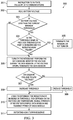
- FIG. 3 is a flow chart that shows steps in a method of dynamic LBVT value setting for an industrial cellular modem, according to an example embodiment.
- Disclosed aspects include a cellular industrial modem configured (e.g., having a memory associated with the processor programmed to implement an algorithm) to dynamically vary its LBVT value responsive to certain conditions, where in contrast conventional cellular industrial modems always use a fixed LBVT value.
- the LBVT value can be varied based on the call results from the cellular industrial modem to its host server, such as the success or failure of at least one call to its host server, or the amount of data that was transferred during a communication such as a call or a text from the cellular industrial modem to the host server.
- the LBVT value can be automatically reduced by some known value (e.g., an example known reduction value being 0.2V, thus from 2.8V to 2.6V). However, if the call to its host server failed, the LBVT value can be increased by some known value.
- the benefits of disclosed LBVT adjustment includes decreasing the call failure rate for the cellular industrial modem as compared to when operating the cellular industrial modem with a conventional fixed LBVT value.
- the CLBVT value will be applicable, meaning the algorithm will be active and the battery voltage will be monitored and the CLBVT value adjusted based on certain conditions by a disclosed algorithm, if at least one call to the host server (e.g., 2 or 3 calls) by the industrial cellular modem failed at the same CLBVT value. For example, if the previous three calls from the industrial cellular modem to the host server failed at the same CLBVT value, the algorithm will be activated and the fourth call will not be tried till the battery voltage increases above the LBVT value, that is generally accomplished by changing the battery.
- the industrial cellular modem's LBVT value thus adapts to the variation in battery parameters from ambient temperature conditions and in some cases some other condition (s) such as the humidity.
- FIG. 1 is block diagram depiction of an example industrial cellular modem 100 that can benefit from disclosed dynamic LBVT control.
- the industrial cellular modem 100 includes a radio module 105 (a transmitter and a receiver, or a transceiver) shown having a subscriber identification module (SIM) card 106 that is coupled to an antenna 112 , a battery 125 , a temperature sensor 108 , and a battery voltage sensor 109 coupled to terminals of the battery 125 (this coupling not shown).
- SIM subscriber identification module
- a transmitted power meter 114 measures to transmitted power currently being utilized by the radio module 105 .
- the industrial cellular modem 100 is shown including a processor shown as a microcontroller 120 having an associated memory shown as a flash memory 121 for implementing disclosed dynamic low battery voltage threshold value control.
- the industrial cellular modem 100 is also shown including a Universal Asynchronous Receiver/Transmitter (UART) engine 122 , Inter-Integrated Circuit (I2C) engine 123 , and Serial Peripheral Interface (SPI) engine 124 .
- UART Universal Asynchronous Receiver/Transmitter
- I2C Inter-Integrated Circuit
- SPI Serial Peripheral Interface
- the various interfaces used for communications shown in FIG. 1 are all only for example.
- External flash memory 127 is also provided by the industrial cellular modem 100 to store the modem configuration and historical sensor data.
- the industrial cellular modem 100 is shown also having a Bluetooth low energy (BLE) communications module 126 , where Bluetooth is an example of a known wireless technology standard for exchanging data over short distances (using short-wavelength UHF radio waves in the ISM band from 2.4 to 2.485 GHz) from fixed and mobile devices, and building personal area networks (PANs).
- BLE Bluetooth low energy
- the radio module 106 is shown communicating with the UART engine 122 over a UART interface.
- the SPI engine 124 is shown communicating over an SPI interface with the external flash memory 127 .
- the temperature sensor 108 is shown communicating with the IT engine 123 over an I2C interface.
- the UART engine 122 shown communicating with the BLE communications module 126 over and UART interface.
- the battery voltage sensor 109 shown coupled to the microcontroller 120 by coupling including an analog-to-digital converter (ADC) 116 .
- ADC analog-to-digital converter
- the industrial cellular modem 100 also includes a casing, shown as an explosion proof casing 130 .
- an explosion proof casing needs to contain any explosion originating within its housing and to prevent sparks from within its housing from igniting vapors, gases, dust, or fibers in the air surrounding it.
- Industrial cellular modem 100 can be seen to have no keypad or display screen which differentiates it from a conventional cellular modem that generally has both a keypad, a display screen, and no rechargeable batteries.
- the industrial cellular modem 100 is shown in a typical application wirelessly coupled to a host server 210 , where sensor data generally including at least a battery voltage reading is shown sent over the cellular interface between the industrial cellular modem 100 and the host server 210 generally in the form of packets.
- the industrial cellular modem 100 is also shown communicating configuration data using BLE with a wireless configuration tool 220 that can be used to configure the industrial cellular modem 100 .
- the configuration data can be the cellular network's access point name (APN), the industrial cellular modem's ID number, or the serial communications (e.g., RS232) baud rate.
- the industrial cellular modem 100 is also shown communicating with a sensor and data logger 230 over a serial interface cable utilizing RS232.
- the sensor and data logger 230 in the case of a sensor can generally be utilize any sensor, and the sensor and data logger 230 has the capability of sending its data over a serial connection.
- these sensors comprise electronic gas volume correctors, installed throughout the intercontinental or intracontinental gas pipelines.
- the gas volume correctors measure the amount (volume) of gas passing through the pipe, and using temperature and pressure information apply temperature and pressure correction factors, compute the corrected volume of gas passing.
- This data gets logged in the sensor and data logger 230 itself and at a pre-determined time that is configured in the sensor, and the sensor and data logger 230 sends this data to host server 210 through its radio module.
- a user may send a text message to the host server 210 using the industrial cellular modem 100 such as a request for information being “Water level in tank 10 .” Then, generally within a few seconds, the user of the industrial cellular modem 100 receives an acknowledgment packet to the application running on his or her industrial cellular modem 100 that may be “Water level tank 10 —12 feet.”
- Disclosed methods can use the battery 125 of the industrial cellular modem 100 more efficiently, such as by being responsive to changes in the ambient temperature. Disclosed methods will therefore allow industrial cellular modem customers to receive a higher number of calls from the same battery of a conventional industrial cellular modem by the disclosed adjusting of the CLBVT value down if the current battery voltage is at or below the CLBVT value, and when a call is successfully made from the cellular industrial modem 100 to its host server 210 .
- the number of calls from the industrial cellular modem 100 to the host server 210 can be increased by utilizing a configurable CLBVT value rather than relying on a conventional fixed CLBVT value.
- the dependency on dynamics of the battery 125 (such as charging and discharging times, battery sustenance and variation of battery voltage with respect to temperature) is avoided because the battery parameters change significantly from vendor to vendor.
- a prediction algorithm can also be used to predict and adapt the CLBVT values based on annual historical data, such as data trends. For example, a successful call history for a winter season with a particular LBVT value can enable a disclosed method to choose a LBVT value that is to be used for winter season.
- FIG. 3 is a flow chart that shows steps in a method 300 of dynamic LBVT value setting for reducing the power consumption of an industrial cellular modem having a battery, according to an example embodiment.
- the industrial cellular modem includes a radio module powered by a battery that is coupled to an antenna, the industrial cellular modem including a processor having a memory, a battery voltage sensor, a transmitted power meter, and a temperature sensor, such as the industrial cellular modem 100 shown in FIG. 1 described above.
- Step 301 comprises receiving an instruction to initiate cellular data communications. This instruction to initiate cellular communications is typically given by the connected sensor or data logger 230 shown in FIG. 2 , shown in FIG. 2 received over a RS-232 cable.
- Step 302 comprises reading a current battery voltage of the battery 125 .
- Step 303 comprises comparing the current battery voltage to a CLBVT to determine whether or not the current battery voltage is greater than the CLBVT. If the current battery voltage is less than the CLBVT, the method reaches step 306 . If the current battery voltage is greater than or equal to the CLBVT, the method reaches step 304 . Step 304 comprises whether the battery voltage threshold is the same as the previous battery voltage threshold for at least three sessions where the sessions were determined to be failed. If the current battery voltage is greater than the CLBVT, the method reaches step 305 where the session is terminated and it is not attempted to turn on the industrial cellular modem. If the current battery voltage is not greater than the CLBVT, the method reaches step 306 .
- Step 306 comprises turning the industrial cellular modem on and beginning a current cellular data session with its host server. Following the completion of step 306 , the method reaches step 307 which comprises checking whether the session failed due to low battery voltage. Step 308 or 309 is reached after the conclusion of step 307 , with the CLBVT value being reduced in step 309 if the session did not fail due to low battery voltage, and the CLBVT value being increased in step 308 if the session failed due to low battery voltage.
- step 310 logic on the industrial cellular modem 100 based on results of step 308 or 309 determines the magnitude of the increase or decrease in the CLBVT value based on at least one parameter selected from a current temperature around the industrial cellular modem 100 , a received signal strength for at least one recent successful data session with the host server, and a current transmit power of the radio module 105 .
- the increase/decrease in the CLBVT value is generally in integer multiples (1, 2, 3 . . . ) of a voltage step size that may be 0.01 volts, or some other cellular modem factory configured voltage step value.
- An increase/decrease in the CLBVT value having a magnitude of multiple (e.g., 3) voltage step sizes (e.g., 0.03 V) may be used in the case the parameters used being selected from a current temperature around the industrial cellular modem 100 , a received signal strength for at least one recent successful data session with the host server, and a current transmit power of the radio module 105 , indicate the need for a voltage change that is larger than the voltage step size.
- Step 311 comprises initiating a shutdown sequence.
- the radio module 105 is turned off.
- Shutdown of the radio module 105 is employed as soon as it is detected that the communication session failed due to too low a current battery voltage. This is implemented because it is recognized if communications with the industrial cellular modem 100 are attempted or continued, the battery 125 may deplete towards zero volts causing the entire industrial cellular modem 100 to shut off
Landscapes
- Physics & Mathematics (AREA)
- General Physics & Mathematics (AREA)
- Engineering & Computer Science (AREA)
- Power Engineering (AREA)
- Computer Networks & Wireless Communication (AREA)
- Signal Processing (AREA)
- Telephone Function (AREA)
- Mobile Radio Communication Systems (AREA)
Abstract
Description
Claims (14)
Priority Applications (2)
| Application Number | Priority Date | Filing Date | Title |
|---|---|---|---|
| US16/750,073 US11076356B2 (en) | 2019-02-25 | 2020-01-23 | Cellular modem with dynamic low battery voltage threshold control |
| CA3073433A CA3073433C (en) | 2019-02-25 | 2020-02-21 | Cellular modem with dynamic low battery voltage threshold control |
Applications Claiming Priority (2)
| Application Number | Priority Date | Filing Date | Title |
|---|---|---|---|
| US201962809784P | 2019-02-25 | 2019-02-25 | |
| US16/750,073 US11076356B2 (en) | 2019-02-25 | 2020-01-23 | Cellular modem with dynamic low battery voltage threshold control |
Publications (2)
| Publication Number | Publication Date |
|---|---|
| US20200275378A1 US20200275378A1 (en) | 2020-08-27 |
| US11076356B2 true US11076356B2 (en) | 2021-07-27 |
Family
ID=72142339
Family Applications (1)
| Application Number | Title | Priority Date | Filing Date |
|---|---|---|---|
| US16/750,073 Active US11076356B2 (en) | 2019-02-25 | 2020-01-23 | Cellular modem with dynamic low battery voltage threshold control |
Country Status (2)
| Country | Link |
|---|---|
| US (1) | US11076356B2 (en) |
| CA (1) | CA3073433C (en) |
Citations (5)
| Publication number | Priority date | Publication date | Assignee | Title |
|---|---|---|---|---|
| US7027773B1 (en) * | 1999-05-28 | 2006-04-11 | Afx Technology Group International, Inc. | On/off keying node-to-node messaging transceiver network with dynamic routing and configuring |
| US20110194353A1 (en) * | 2010-02-08 | 2011-08-11 | Samsung Electronics Co., Ltd | Method of programming memory cells for a non-volatile memory device |
| US8131316B2 (en) | 2003-10-09 | 2012-03-06 | Freescale Semiconductor, Inc. | Cellular modem processing |
| US20180134176A1 (en) * | 2016-11-15 | 2018-05-17 | Ford Global Technologies, Llc | Battery recharge notification and automatic recharge |
| US20190212997A1 (en) * | 2018-01-09 | 2019-07-11 | Ford Global Technologies, Llc | Vehicle update systems and methods |
-
2020
- 2020-01-23 US US16/750,073 patent/US11076356B2/en active Active
- 2020-02-21 CA CA3073433A patent/CA3073433C/en active Active
Patent Citations (5)
| Publication number | Priority date | Publication date | Assignee | Title |
|---|---|---|---|---|
| US7027773B1 (en) * | 1999-05-28 | 2006-04-11 | Afx Technology Group International, Inc. | On/off keying node-to-node messaging transceiver network with dynamic routing and configuring |
| US8131316B2 (en) | 2003-10-09 | 2012-03-06 | Freescale Semiconductor, Inc. | Cellular modem processing |
| US20110194353A1 (en) * | 2010-02-08 | 2011-08-11 | Samsung Electronics Co., Ltd | Method of programming memory cells for a non-volatile memory device |
| US20180134176A1 (en) * | 2016-11-15 | 2018-05-17 | Ford Global Technologies, Llc | Battery recharge notification and automatic recharge |
| US20190212997A1 (en) * | 2018-01-09 | 2019-07-11 | Ford Global Technologies, Llc | Vehicle update systems and methods |
Also Published As
| Publication number | Publication date |
|---|---|
| US20200275378A1 (en) | 2020-08-27 |
| CA3073433C (en) | 2023-03-14 |
| CA3073433A1 (en) | 2020-08-25 |
Similar Documents
| Publication | Publication Date | Title |
|---|---|---|
| US11122509B2 (en) | Extending an operational lifetime of an internet of things (IOT) device | |
| EP2803125B1 (en) | Methods, apparatuses and systems for monitoring for exposure of electronic devices to moisture and reacting to exposure of electronic devices to moisture | |
| JP7293770B2 (en) | wireless communication device | |
| KR101492528B1 (en) | Method for monitoring photovoltaic power generation by using rtu and wireless rtu device therefor | |
| CN103066570B (en) | Battery protecting apparatus, server and battery management system | |
| AU2014205484B2 (en) | Power delivery including out-of-band communication | |
| CN107787601B (en) | Method and apparatus for generating an indication of remaining battery life of a wireless device | |
| EP3827402B1 (en) | Well management system | |
| JP2015088807A (en) | Wireless communication apparatus and wireless information collecting system | |
| CA3073433C (en) | Cellular modem with dynamic low battery voltage threshold control | |
| EP2252118B1 (en) | Method and apparatus for power conservation for an electronic device | |
| US20250116276A1 (en) | Well management system | |
| KR101425113B1 (en) | System and method of cutting off stand-by power in smart electric device | |
| CN109041216A (en) | Equipment localization method, device, computer equipment and storage medium | |
| CN105470598A (en) | Wireless charging processing method, wireless charging processing apparatus and wireless charger | |
| CN204808560U (en) | Intelligence water sensor | |
| EP2839251A1 (en) | Static gas meter with improved electronics | |
| KR102804765B1 (en) | Low power remote communication system for reading digital water meters | |
| US11737027B2 (en) | Systems and methods for mobile backup | |
| JP2019121155A (en) | Sensor network system and center device | |
| US20240231462A1 (en) | Power management in industrial field device | |
| CA3107265C (en) | Well management system | |
| JP7659402B2 (en) | Communication terminal and communication system | |
| TWI890452B (en) | Meter reading device | |
| US20200028913A1 (en) | Cloud computing server interface |
Legal Events
| Date | Code | Title | Description |
|---|---|---|---|
| AS | Assignment |
Owner name: HONEYWELL INTERNATIONAL INC., NEW JERSEY Free format text: ASSIGNMENT OF ASSIGNORS INTEREST;ASSIGNORS:NEMA, PRIYESH;CHIPPADA, JAYAKAR;MENDI, KRISHNA KISHORE;REEL/FRAME:051593/0094 Effective date: 20200102 |
|
| FEPP | Fee payment procedure |
Free format text: ENTITY STATUS SET TO UNDISCOUNTED (ORIGINAL EVENT CODE: BIG.); ENTITY STATUS OF PATENT OWNER: LARGE ENTITY |
|
| STPP | Information on status: patent application and granting procedure in general |
Free format text: FINAL REJECTION MAILED |
|
| STPP | Information on status: patent application and granting procedure in general |
Free format text: RESPONSE AFTER FINAL ACTION FORWARDED TO EXAMINER |
|
| STPP | Information on status: patent application and granting procedure in general |
Free format text: NOTICE OF ALLOWANCE MAILED -- APPLICATION RECEIVED IN OFFICE OF PUBLICATIONS |
|
| STPP | Information on status: patent application and granting procedure in general |
Free format text: PUBLICATIONS -- ISSUE FEE PAYMENT VERIFIED |
|
| STCF | Information on status: patent grant |
Free format text: PATENTED CASE |
|
| MAFP | Maintenance fee payment |
Free format text: PAYMENT OF MAINTENANCE FEE, 4TH YEAR, LARGE ENTITY (ORIGINAL EVENT CODE: M1551); ENTITY STATUS OF PATENT OWNER: LARGE ENTITY Year of fee payment: 4 |