US11070491B2 - Control system and communication method - Google Patents
Control system and communication method Download PDFInfo
- Publication number
- US11070491B2 US11070491B2 US16/639,552 US201816639552A US11070491B2 US 11070491 B2 US11070491 B2 US 11070491B2 US 201816639552 A US201816639552 A US 201816639552A US 11070491 B2 US11070491 B2 US 11070491B2
- Authority
- US
- United States
- Prior art keywords
- data
- communication
- control
- information system
- control device
- Prior art date
- Legal status (The legal status is an assumption and is not a legal conclusion. Google has not performed a legal analysis and makes no representation as to the accuracy of the status listed.)
- Active
Links
Images




Classifications
-
- H—ELECTRICITY
- H04—ELECTRIC COMMUNICATION TECHNIQUE
- H04L—TRANSMISSION OF DIGITAL INFORMATION, e.g. TELEGRAPHIC COMMUNICATION
- H04L12/00—Data switching networks
- H04L12/28—Data switching networks characterised by path configuration, e.g. LAN [Local Area Networks] or WAN [Wide Area Networks]
- H04L12/40—Bus networks
- H04L12/407—Bus networks with decentralised control
-
- H—ELECTRICITY
- H04—ELECTRIC COMMUNICATION TECHNIQUE
- H04L—TRANSMISSION OF DIGITAL INFORMATION, e.g. TELEGRAPHIC COMMUNICATION
- H04L47/00—Traffic control in data switching networks
- H04L47/70—Admission control; Resource allocation
- H04L47/82—Miscellaneous aspects
-
- G—PHYSICS
- G05—CONTROLLING; REGULATING
- G05B—CONTROL OR REGULATING SYSTEMS IN GENERAL; FUNCTIONAL ELEMENTS OF SUCH SYSTEMS; MONITORING OR TESTING ARRANGEMENTS FOR SUCH SYSTEMS OR ELEMENTS
- G05B19/00—Program-control systems
- G05B19/02—Program-control systems electric
- G05B19/418—Total factory control, i.e. centrally controlling a plurality of machines, e.g. direct or distributed numerical control [DNC], flexible manufacturing systems [FMS], integrated manufacturing systems [IMS] or computer integrated manufacturing [CIM]
-
- G—PHYSICS
- G05—CONTROLLING; REGULATING
- G05B—CONTROL OR REGULATING SYSTEMS IN GENERAL; FUNCTIONAL ELEMENTS OF SUCH SYSTEMS; MONITORING OR TESTING ARRANGEMENTS FOR SUCH SYSTEMS OR ELEMENTS
- G05B19/00—Program-control systems
- G05B19/02—Program-control systems electric
- G05B19/418—Total factory control, i.e. centrally controlling a plurality of machines, e.g. direct or distributed numerical control [DNC], flexible manufacturing systems [FMS], integrated manufacturing systems [IMS] or computer integrated manufacturing [CIM]
- G05B19/4185—Total factory control, i.e. centrally controlling a plurality of machines, e.g. direct or distributed numerical control [DNC], flexible manufacturing systems [FMS], integrated manufacturing systems [IMS] or computer integrated manufacturing [CIM] characterised by the network communication
- G05B19/4186—Total factory control, i.e. centrally controlling a plurality of machines, e.g. direct or distributed numerical control [DNC], flexible manufacturing systems [FMS], integrated manufacturing systems [IMS] or computer integrated manufacturing [CIM] characterised by the network communication by protocol, e.g. MAP, TOP
-
- H—ELECTRICITY
- H04—ELECTRIC COMMUNICATION TECHNIQUE
- H04L—TRANSMISSION OF DIGITAL INFORMATION, e.g. TELEGRAPHIC COMMUNICATION
- H04L12/00—Data switching networks
- H04L12/28—Data switching networks characterised by path configuration, e.g. LAN [Local Area Networks] or WAN [Wide Area Networks]
-
- H—ELECTRICITY
- H04—ELECTRIC COMMUNICATION TECHNIQUE
- H04L—TRANSMISSION OF DIGITAL INFORMATION, e.g. TELEGRAPHIC COMMUNICATION
- H04L67/00—Network arrangements or protocols for supporting network services or applications
- H04L67/01—Protocols
- H04L67/12—Protocols specially adapted for proprietary or special-purpose networking environments, e.g. medical networks, sensor networks, networks in vehicles or remote metering networks
-
- G—PHYSICS
- G05—CONTROLLING; REGULATING
- G05B—CONTROL OR REGULATING SYSTEMS IN GENERAL; FUNCTIONAL ELEMENTS OF SUCH SYSTEMS; MONITORING OR TESTING ARRANGEMENTS FOR SUCH SYSTEMS OR ELEMENTS
- G05B2219/00—Program-control systems
- G05B2219/30—Nc systems
- G05B2219/31—From computer integrated manufacturing till monitoring
- G05B2219/31145—Ethernet
-
- G—PHYSICS
- G05—CONTROLLING; REGULATING
- G05B—CONTROL OR REGULATING SYSTEMS IN GENERAL; FUNCTIONAL ELEMENTS OF SUCH SYSTEMS; MONITORING OR TESTING ARRANGEMENTS FOR SUCH SYSTEMS OR ELEMENTS
- G05B2219/00—Program-control systems
- G05B2219/30—Nc systems
- G05B2219/33—Director till display
- G05B2219/33183—IEEE-488, hp interface, instrumentation
-
- H—ELECTRICITY
- H04—ELECTRIC COMMUNICATION TECHNIQUE
- H04L—TRANSMISSION OF DIGITAL INFORMATION, e.g. TELEGRAPHIC COMMUNICATION
- H04L12/00—Data switching networks
- H04L12/28—Data switching networks characterised by path configuration, e.g. LAN [Local Area Networks] or WAN [Wide Area Networks]
- H04L12/40—Bus networks
- H04L2012/4026—Bus for use in automation systems
-
- H—ELECTRICITY
- H04—ELECTRIC COMMUNICATION TECHNIQUE
- H04L—TRANSMISSION OF DIGITAL INFORMATION, e.g. TELEGRAPHIC COMMUNICATION
- H04L47/00—Traffic control in data switching networks
- H04L47/10—Flow control; Congestion control
- H04L47/28—Flow control; Congestion control in relation to timing considerations
-
- Y—GENERAL TAGGING OF NEW TECHNOLOGICAL DEVELOPMENTS; GENERAL TAGGING OF CROSS-SECTIONAL TECHNOLOGIES SPANNING OVER SEVERAL SECTIONS OF THE IPC; TECHNICAL SUBJECTS COVERED BY FORMER USPC CROSS-REFERENCE ART COLLECTIONS [XRACs] AND DIGESTS
- Y02—TECHNOLOGIES OR APPLICATIONS FOR MITIGATION OR ADAPTATION AGAINST CLIMATE CHANGE
- Y02P—CLIMATE CHANGE MITIGATION TECHNOLOGIES IN THE PRODUCTION OR PROCESSING OF GOODS
- Y02P90/00—Enabling technologies with a potential contribution to greenhouse gas [GHG] emissions mitigation
- Y02P90/02—Total factory control, e.g. smart factories, flexible manufacturing systems [FMS] or integrated manufacturing systems [IMS]
-
- Y—GENERAL TAGGING OF NEW TECHNOLOGICAL DEVELOPMENTS; GENERAL TAGGING OF CROSS-SECTIONAL TECHNOLOGIES SPANNING OVER SEVERAL SECTIONS OF THE IPC; TECHNICAL SUBJECTS COVERED BY FORMER USPC CROSS-REFERENCE ART COLLECTIONS [XRACs] AND DIGESTS
- Y02—TECHNOLOGIES OR APPLICATIONS FOR MITIGATION OR ADAPTATION AGAINST CLIMATE CHANGE
- Y02P—CLIMATE CHANGE MITIGATION TECHNOLOGIES IN THE PRODUCTION OR PROCESSING OF GOODS
- Y02P90/00—Enabling technologies with a potential contribution to greenhouse gas [GHG] emissions mitigation
- Y02P90/80—Management or planning
Definitions
- the present invention relates to a control system which controls a manufacturing device or a production facility and a communication method in the control system
- ICT Information and Communication Technology
- a system which includes at least one machine, at least one machine control device that controls the machine, a cell control device communicably connected to the machine control device, and a host computer communicably connected to the cell control device.
- the cell control device and the machine control device are connected via a network such as an intranet or the like, and the host computer is connected to the cell control device via a network such as the Internet or the like.
- the cell control device sends a command to the machine control device and acquires data (including preventive maintenance data) indicating an operation state of the machine from the machine control device.
- the cell control device further notifies a host controller of a grace time until machine parts reach the end of life, the grace time being calculated based on the preventive maintenance data received from the machine control device.
- the host controller creates or updates a maintenance plan including replacement work of the machine parts based on the received grace time.
- Patent literature 1 Japanese Patent Laid-Open No. 2017-120618
- the control device typically, PLC (programmable controller) that controls the manufacturing device or the production facility should transmit data (information system data) handled by the host management device in addition to data (control system data) used for controlling the manufacturing device, the production facility, or the like.
- data information system data
- control system data is required to be real-time although the data size thereof is not so large.
- the information system data should be transmitted with a relatively large size although real-time is not necessary. Therefore, a processing load is concentrated on the control device.
- the processing load of the control system data cannot be reduced. Therefore, the amount of the information system data that can be transmitted by the control device should be limited, and as a result, the data amount of the information system data that can be handled by the host management device is limited.
- the data amount of the information system data is limited as described above, there is a concern that the precision of predictive management for preventing the occurrence of an abnormality in the host management device is reduced.
- a new technology is required for transmitting control system data and information system data on the same network while satisfying each requirement.
- a control system which controls a manufacturing device or a production facility includes: a first control device connected to a network in which data is updated at every predetermined cycle, and a second control device connected to the network and time-synchronized with the first control device.
- the first control device transmits, at every predetermined cycle, first data used for controlling the manufacturing device or the production facility, using a first communication band among communication bands possessed by the network.
- the second control device transmits second data used for setting and managing the manufacturing device or the production facility, using a second communication band other than the first communication band among the communication bands possessed by the network.
- the communication band necessary for transmitting the first data (control system data) at every predetermined cycle and the communication band necessary for transmitting the second data (control information system data) are respectively assigned to the first control device and the second control device that are time-synchronized with each other.
- the control system for controlling a manufacturing device or a production facility information necessary for managing the manufacturing device or the production facility can be collected with high time precision while the manufacturing device or the production facility is controlled at a high speed and with high precision, and thus the predictive management of the manufacturing device or the production facility can be performed with high precision.
- the precision of failure prediction of the manufacturing device or the production facility can be improved, and thus high efficiency in troubleshooting can be achieved.
- the first control device cyclically transmits the first data using the first communication band, and transmits the second data using a part of the second communication band.
- the second control device transmits the second data using a communication band other than the part of the second communication band.
- the second data can be transmitted without increasing the processing load of each control device.
- the second control device further transmits third data using a communication band that is not set in either the first communication band or the second communication band among the communication bands possessed by the network.
- the second control device divides the second data into data sizes corresponding to communication bands available at every cycle, and then assigns the divided data to a plurality of cycles.
- control system data control system data
- second data control information system data
- control system further includes a third control device connected to the network and time-synchronized with the first and second control devices.
- the third control device transmits the third data using a communication band that is not set in either the first communication band or the second communication band among the communication bands possessed by the network.
- the first data control system data
- the second Data control information system data
- the third data information system data
- a communication method in a control system which controls a manufacturing device or a production facility includes a first control device connected to a network in which data is updated at every predetermined cycle, and a second control device connected to the network and time-synchronized with the first control device.
- the communication method includes: a step in which the first control device transmits, at every predetermined cycle, first data used for controlling the manufacturing device or the production facility, using a first communication band of communication bands possessed by the network; and a step in which the second control device transmits second data used for setting and managing the manufacturing device or the production facility, using a second communication band other than the first communication band among the communication bands possessed by the network.
- the communication method of the disclosure it is possible to transmit the first data (control system data) and the second data (control information system data) on the same network while satisfying each requirement, without increasing the processing load of each of the first control device and the second control device constituting the control system.
- the communication method further includes a step in which the second control device transmits third data using a communication band that is not set in either the first communication band or the second communication band among the communication bands possessed by the network.
- control system further includes a third control device connected to the network and time-synchronized with the first control device and the second control device.
- the communication method further include a step in which the third control device transmits third data using a communication band that is not set in either the first communication band or the second communication band among the communication bands possessed by the network.
- the first data control system data
- the second data control information system data
- the third data information system data
- control system for controlling the manufacturing device or the production facility it is possible to transmit the control system data and the information system data on the same network while satisfying each requirement.
- FIG. 1 is a schematic diagram showing a control system centering on control devices 100 and 300 of the embodiment.
- FIG. 2 is a diagram showing data types transmitted in the control system shown in FIG. 1 .
- FIG. 3 is a schematic diagram showing an example of a hardware configuration of the control system of the embodiment.
- FIG. 4 is a schematic diagram showing a more detailed configuration of a transmission circuit of a control system controller shown in FIG. 3 .
- FIG. 5 is a schematic diagram showing an example of a software configuration of the control system controller for implementing communication processing of the embodiment.
- FIG. 6 is a schematic diagram showing an example of a software configuration of an information system controller for implementing the communication processing of the embodiment.
- FIG. 7 is a schematic diagram showing a configuration example for implementing the communication processing of the embodiment.
- FIG. 8 is a schematic diagram for illustrating the communication processing of the embodiment.
- FIG. 9 is a schematic diagram for illustrating a procedure of the communication processing of the embodiment.
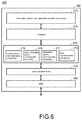
- FIG. 10 is a flow chart showing a processing procedure of the communication processing (scheduling) of the embodiment.
- FIG. 11 is a schematic diagram showing an overall configuration example of a control system of Modification example 1 of the embodiment.
- FIG. 12 is a schematic diagram showing an example of a software configuration of an information system controller in the control system of Modification example 1 of the embodiment.
- FIG. 13 is a schematic diagram showing an overall configuration example of a control system of Modification example 2 of the embodiment.
- FIG. 14 is a schematic diagram for illustrating communication processing of Modification example 2 of the embodiment.
- FIG. 15 is a schematic diagram showing an overall configuration example of a control system of Modification example 3 of the embodiment.
- FIG. 16 is a schematic diagram for illustrating communication processing of Modification example 3 of the embodiment.
- FIG. 1 is used to describe an example of a scene to which the present invention is applied.
- FIG. 1 schematically illustrates an example of an application scene of a control system 1 of the embodiment.
- the control system 1 of the embodiment is a control system that controls a manufacturing device or a production facility.
- the control system 1 includes a control device 100 and a control device 300 which are connected to a network 2 in which data is updated at every predetermined cycle.
- the control device 100 is embodied by a PLC
- the control device 300 is embodied by an IPC (industrial controller).
- the control device 100 corresponds to one example of a “first control device” of the present invention
- the control device 300 corresponds to one example of a “second control device” of the present invention.
- the control device 100 exchanges data (control system data) used for controlling a manufacturing device or a production facility with one or more field equipment 200 A- 200 D via the network 2 . That is, the control device 100 corresponds to a “control system controller” responsible for control system communication.
- the control device 300 transmits, for example, data (control information system data) related to equipment setting and management, which does not require to have high-speed real-time performance as control system data but requires a certain degree of punctuality, and/or data used in a host management device (information system data), on the network 2 . That is, the control device 300 corresponds to a “control information system controller” responsible for control information system communication (including information system communication).
- the control device 100 (control system controller), the control device 300 (control information system controller), and the field equipment 200 A- 200 D are time-synchronized with each other.
- a communication band necessary for updating control system data at every predetermined cycle and a communication band necessary for transmitting control information system data and information system data are respectively assigned to the control device 100 and the control device 300 . Thereby, it is possible to transmit the control system data, the control information system data, and the information system data on the same network while satisfying each requirement, without increasing the processing load of each of the control devices 100 and 300 .
- control device 100 can be responsible for not only transmission of the control system data but also transmission of the control information system data and the information system data. In this case, the transmission of the control information system data and the information system data are shared by the control device 100 and the control device 300 .
- the manufacturing device or the production facility in the control system 1 that controls the manufacturing device or the production facility, can be controlled at a high speed and with high precision, and information necessary for management of the manufacturing device or the production facility can be collected with high time precision, and thus predictive management of the manufacturing device or the production facility can be performed with high precision. Specifically, the precision of failure prediction of the manufacturing device or the production facility can be improved, and thus high efficiency in troubleshooting can be achieved.
- FIG. 1 is a schematic diagram showing the control system 1 centering on the control devices 100 and 300 of the embodiment.
- the control device 100 corresponds to an industrial controller that controls an object to be controlled such as various types of facilities or devices.
- the control device 100 is a type of computer that executes control computation, and may be typically embodied as a PLC (programmable controller).
- Various field equipment such as a sensors and an actuator are connected to the control device 100 . These field equipment may be directly connected via an input/output unit attached to the control device 100 , and may also be connected via a field network.
- a field network 2 is configured, and a plurality of field equipment 200 A- 200 D (hereinafter, also collectively referred to as “field equipment 200 ”) is connected to the field network 2 .
- Each of the plurality of field equipment 200 A- 200 D includes an input device that acquires a field signal, and an output device or an actuator that performs some action on the field according to a command from the control device 100 .
- the field network 2 is provided to have main functions of input and device control.
- the “field network” is also referred to as “field bus”, but for the sake of simplicity of description, in the following description, the “field network” is a concept that can contain the “field bus” in addition to the “field network” in a narrow sense.
- the control computation executed in the control device 100 includes processing (input processing) for collecting data (hereinafter also referred to as “input data”) collected or generated in the field equipment 200 , processing (computation processing) for generating data (hereinafter also referred to as “output data”) such as commands to the field equipment 200 , processing (output processing) for transmitting the generated output data to the target field equipment 200 , and the like.
- the field equipment 200 can be connected to the field network 2 .
- the field equipment 200 includes an actuator that gives some physical action to a manufacturing device, a production line or the like (hereinafter also referred to as “field”), an input/output device that exchanges information with the field, and the like.
- Data is exchanged between the control device 100 and the field equipment 200 via the field network 2 , and the exchanged data is updated at a very short cycle of several hundreds of microseconds to tens of milliseconds. Besides, this update processing of the exchanged data is also referred to as input/output refresh processing.
- control device 300 is connected to the field network 2 .
- the control device 300 corresponds to a management equipment that acquires information from the facility or the device being the object to be controlled to monitor and manage the object to be controlled.
- the control device 300 is a type of computer that acquires information from the facility or the device being the object to be controlled to perform macroscopic or microscopic analysis or the like, and may be typically embodied as an IPC (industrial computer).
- a management device such as the control device 300 is configured to be connected to the control device 100 via a host network of the field network 2 , and to exchange data with the control device 100 .
- the control device 300 is connected to the field network 2 and thus can acquire data directly from the field equipment 200 .
- control system data data for actually controlling the equipment
- information system data data that is required by devices included in the host network and that is used for monitoring, managing, and controlling production activities or the like of a production line/factory or the like
- control information system data data such as the control system data which does not require high-speed real-time performance but requires a certain degree of punctuality (for example, the data related to equipment setting and management) is also present.
- control information system data data which does not require high-speed real-time performance but requires a certain degree of punctuality (for example, the data related to equipment setting and management) is also present.
- control information system data data which does not require high-speed real-time performance but requires a certain degree of punctuality
- FIG. 2 is a diagram showing data types transmitted in the control system 1 shown in FIG. 1 .
- (1) control system data, (2) control information system data, and (3) information system data are mainly transmitted. Besides, transmission of the data not classified into any of the above types is not excluded, and other types of data may be further transmitted.
- the (1) control system data includes data for actually controlling the equipment as a gist thereof. That is, the control system data corresponds to data used for controlling the manufacturing device or the production facility. Examples of the control system data include servo command values, encoder values, sensor ON/OFF values, and the like. Basically, the control system data is transmitted cyclically. The communication cycle for this control system is preferably set to 10 msec or less. Then, it is necessary to reliably guarantee this communication cycle. On the other hand, since the content of the control system data transmitted on the network is set in advance, the data size is fixed and relatively small.
- the (2) control information system data is the data classified into information necessary for control among the data used in information system communication, and includes data related to equipment setting and management as a gist thereof. That is, the control information system data corresponds to data that needs to arrive at the destination at a specified time. Accordingly, the high-speed real-time performance of the control system data is not required, but a certain degree of punctuality is required.
- the data related to device setting and management includes data in which the status of each equipment is sensed, and requires the punctuality for arriving at the destination at a fixed cycle so as to monitor the equipment.
- control information system data examples include the setting of various parameter, such as threshold values for sensor device, collection of abnormality information (logs) stored in each equipment, firmware for updating each equipment, data that is statistical data indicating the status of each equipment and that requires punctuality, and the like.
- the content of the control information system data transmitted on the network is diverse, but is basically the data related to device setting and management, and thus the data size is assumed to be several kilobytes. Therefore, the communication cycle of the control information system data is preferably set to less than 100 msec. Although the communication cycle may be relatively long, the arrival time of data needs to be guaranteed. Besides, the arrival time may be specified arbitrarily by the user, or may be specified according to a rule predetermined by an application or a device that generates or requires data.
- the (3) information system data is the data classified into information necessary for a host management system among the data used in information system communication, and includes data utilized in the host management system as a gist thereof.
- Examples of the information system data include data not requiring punctuality which is statistical data such as information collection performed by a sensor over a certain period of time, monitoring images (still images/moving images) captured under some conditions, or the like.
- the content of the control system data transmitted on the network is diverse, and the data size is also diverse.
- the data size of the information system data is assumed to be larger than the data size of the control information system data.
- the information system data since the information system data has no direct relationship with the control of the equipment, the information system data is assumed to be transmitted by a best-effort method. In this case, importance is concentrated on the degree of the throughput, not on the real-time performance (that is, the arrival of data at a specified time).
- classification into the control system, the control information system, or the information system may be uniquely determined for each data, or classification into the control system, the control information system, or the information system may also be changed for the same data corresponding to the application thereof. In the latter case, typically, the type of the data is determined depending on how each data is used in the target layer. This classification may be set in advance for each data.
- control system data As described above, high-speed and high-precision communication is required for the control system data, and large-capacity communication is required for the information system data. Then, an intermediate characteristic between the control system data and the information system data is required for the control information system data.
- the communication processing of the embodiment provides a configuration and processing in which a plurality of control devices connected to networks at the same level cooperates to transmit data while satisfying three mutually different types of requirements of the control devices. Specifically, the plurality of control devices shares the communication band possessed by the network and performs data transmission. Thereby, communication in which three types of data having different required characteristics is integrated on a single network is implemented.
- a bus or a network for performing fixed-cycle communication in which the arrival time of the data is guaranteed.
- networks of well-known protocols such as EtherCAT® that is an example of a network for machine control, EtherNet/IP® that is an industrial open network in which a control protocol is mounted on a general-purpose Ethernet® or the like may be employed.
- the network of the control system 1 shown in FIG. 1 includes the control device 100 that controls a manufacturing device, a production facility or the like, and is configured to satisfy a so-called industrial network or the requirements conforming to the industrial network. As one of the requirements, the time when the data (control system data) sent from a transmission source arrives at the destination is guaranteed.
- the network of the control system 1 includes the control device 300 that monitors, sets, and manages a manufacturing device, a production facility or the like, and provides a scheduling function for cooperating with the control device 100 to maintain a predetermined system cycle and store the control system data, the control information system data, and the information system data in a packet as appropriate.
- a communication system in which a plurality of communication devices time-synchronized with each other is connected via a network is employed.
- each of the communication devices constituting the network of the communication system has a time-synchronized timer (or a counter that is synchronously incremented or decremented), and each communication device determines the timing of data transmission or data reception according to the time-synchronized timers or counters.
- the control device 100 has a timer 101
- the control device 300 has a timer 301
- the field equipment 200 A- 200 D respectively have timers 201 A- 201 D.
- the timer 101 of the control device 100 functions as a grand master
- the timers of the control device 300 and the field equipment 200 A- 200 D are time-synchronized based on this grand master. Due to the synchronization among the timers, the transmission timings of frames and the like can be matched with each other in the control system 1 .
- This time-synchronization between communication devices can be implemented by employing high-precision time-synchronization protocols such as IEEE (Institute of Electrical and Electronics Engineers) 1588, IEEE802. 1 AS, IEEE802. 1 AS-Rev, or the like.
- IEEE Institute of Electrical and Electronics Engineers
- control system 1 of the embodiment data is updated at every predetermined cycle in the field network 2 .
- the control device 100 and the control device 300 appropriately schedule each of the control system data, the control information system data, and the information system data.
- both the control device 100 and the control device 300 can be physically connected to one communication line through which the three types of data are transmitted.
- control device 100 is responsible for control system communication for exchanging control system data
- control device 300 is responsible for control information system communication for exchanging control information system data and is also responsible for information system communication for exchanging information system data.
- control system controller 100 the control device 100 is referred to as “control system controller 100 ”
- control device 300 responsible for control information system communication and information system communication is also referred to as “control information system controller 300 ”.
- FIG. 3 is a schematic diagram showing an example of a hardware configuration of the control system 1 of the embodiment.
- the control system controller 100 may be typically configured using a PLC as a base.
- the control information system controller 300 may be typically configured using an IPC as a base.
- control system controller 100 includes a processor 102 , a memory 104 , a storage 106 , and a network controller 110 as main components.
- the processor 102 reads out a system program 107 and a user application program 108 stored in the storage 106 to the memory 104 and executes the programs, thereby implementing various processing including processing described later.
- the memory 104 consists of a volatile storage device such as a DRAM (Dynamic Random Access Memory), a SRAM (Static Random Access Memory), or the like.
- the user application program 108 designed corresponding to the object to be controlled or the like is stored in the storage 106 .
- the network controller 110 provides an interface for the control system controller 100 to exchange data with various field equipment 200 via the field network 2 .
- the network controller 110 includes a reception circuit (Rx) 111 , a reception buffer 112 , a transmission/reception controller 113 , a transmission buffer 114 , a transmission circuit (Tx) 115 , and a timer 101 as main components.
- the reception circuit 111 receives packets transmitted on the network controller 110 at a fixed cycle, and writes the data stored in the received packets into the reception buffer 112 .
- the transmission/reception controller 113 sequentially reads out the received packets written into the reception buffer 112 , outputs only the data necessary for processing in the control system controller 100 among the readout data to the processor 102 .
- the transmission/reception controller 113 sequentially writes data or packets to be transmitted to another device into the transmission buffer 114 according to a command from the processor 102 .
- the transmission circuit 115 sequentially sent out the data stored in the transmission buffer 114 corresponding to the cycle at which the packets are transmitted on the network controller 110 .
- the timer 101 generates a pulse serving as a reference of timing for indicating transmission of communication frames from the transmission/reception controller 113 or the like.
- the timer 101 functions as a master clock (grand master clock) for managing time in the control system 1 .
- the control information system controller 300 includes a processor 302 , a memory 304 , a storage 306 storing a system program 307 and a user application program 308 , and a network controller 310 as main components.
- the network controller 310 uses an interface for the control information system controller 300 to exchange data with various field equipment 200 via the field network 2 .
- the network controller 310 provides an interface for the control information system controller 300 to exchange data with various field equipment 200 via the field network 2 .
- the network controller 310 includes, as main components, a reception circuit (Rx) 311 , a reception buffer 312 , a transmission/reception controller 313 , a transmission buffer 314 , a transmission circuit (Tx) 315 , and a timer 301 . Since the functions of these components are the same as the functions of corresponding components of the control system controller 100 , a detailed description is not repeated. However, the timer 301 synchronizes the timing with reference to the timer 101 that functions as a grand master clock.
- the field equipment 200 realizes various functions necessary for implementing the control performed by the control system 1 on various facilities and devices. Typically, each of the field equipment 200 is responsible for collecting field information from the facility and device to be controlled or outputting command signals to the facility and device to be controlled or the like. Each of the field equipment 200 includes, as main components, a processor 202 , a memory 204 , a storage 206 storing an application program 208 , and a communication circuit 210 .
- the communication circuit 210 processes communication frames sequentially transmitted through the field network 2 .
- the communication circuit 210 when the communication circuit 210 receives any communication frame via the field network 2 , the communication circuit 210 performs data write-in and/or data read-out for the received communication frame, and then transmits the communication frame to the next field equipment 200 on the field network 2 .
- the communication circuit 210 includes a reception circuit (Rx) 211 , a transmission/reception controller 212 , a transmission circuit (Tx) 213 , and a timer 201 .
- the reception circuit 211 and the transmission circuit 213 are parts physically connected to the field network 2 , and perform processing such as reception and reproduction of the communication frames transmitted on the field network 2 according to a command from the transmission/reception controller 212 to thereby implement sequential transmission of the communication frames.
- the transmission/reception controller 212 performs data write-in and/or data read-out for the communication frames transmitted on the field network 2 .
- the timer 201 generates a clock serving as a reference of timing of command output performed by the transmission/reception controller 212 , processing execution in the field equipment 200 , or the like.
- the timer 201 synchronizes the timing with reference to the timer 101 that functions as a grand master clock.
- FIG. 4 is a schematic diagram showing a more detailed configuration of the transmission circuit 115 of the control system controller 100 shown in FIG. 3 .
- Each of the transmission circuit 315 of the control information system controller 300 and the transmission circuit 213 of the field equipment 200 also has the same configuration as the transmission circuit 115 of the control system controller 100 .
- the transmission circuit 115 includes an input unit 121 , a plurality of queues 122 - 1 to 122 -M (hereinafter, also collectively referred to as “queue 122 ”), a plurality of output gates 123 - 1 to 123 -M (hereinafter, also collectively referred to as “output gate 123 ”), a timing control circuit 124 , and a transmission unit 126 .
- the input unit 121 sequentially reads out data or packets stored in the transmission buffer 114 ( FIG. 3 ) and to be transmitted to another device, and stores the data or packets in any one of the plurality of queues 122 - 1 to 112 -M.
- control system data is queued on the queue 122 - 1
- control information system data is queued on the queue 122 - 2
- information system data is queued on the remaining queues 122 - 3 to 122 -M.
- the timing control circuit 124 has a timing control table 125 . Timing information from the processor 102 is stored in the timing control table 125 .
- the timing control circuit 124 refers to the timing information stored in the timing control table 125 and selectively activates the output gates 123 - 1 to 123 -M. For example, when the control system data is transmitted, data read-out from the queue 122 - 1 is necessary, and thus the output gate 123 - 1 is activated. When the control information system data is transmitted, data read-out from the queue 122 - 2 is necessary, and thus the output gate 123 - 2 is activated.
- the timing control circuit 124 controls the timing for activating the output gates 123 - 1 to 123 -M based on the timing information of the timing control table 125 .
- FIG. 5 is a schematic diagram showing an example of the software configuration of the control system controller 100 for implementing the communication processing of the embodiment.
- a scheduler 170 is executed in the processor 102 of the control system controller 100 .
- the scheduler 170 determines the execution order or execution interruption of a plurality of processing or the like according to a predetermined system cycle. More specifically, the scheduler 170 assigns processing resources (processor time, memory, and the like), according to a predetermined priority, system cycle and the like, to control system user application execution processing 173 , peripheral processing 174 including various processing, and communication supervision processing 172 .
- the control system user application execution processing 173 includes processing related to the execution of the control system user application program.
- the communication supervision processing 172 includes control system communication processing 175 , control information system communication processing 176 , information system communication processing 177 , and time-synchronization processing 178 .
- the control system communication processing 175 includes processing related to the control system data, for example, data creation, encoding, decoding, extraction, editing, and the like.
- the control information system communication processing 176 includes processing related to the control information system data
- the information system communication processing 177 includes processing related to the information system data.
- the time-synchronization processing 178 includes processing related to time-synchronization. For example, when the timer 101 of the control system controller 100 is set as the grand master clock, the time-synchronization processing 178 includes processing for adjusting the timer of the control information system controller 300 and the timer of the field equipment 200 based on the timer 101 so as to time-synchronize the control information system controller 300 and the field equipment 200 . Alternatively, when the timer 301 of the control information system controller 300 is set as the grand master clock, the time-synchronization processing 178 includes processing for adjusting the timer 101 of the control system controller 100 based on the timer 301 of the control information system controller 300 .
- a communication driver 179 and a NIC (Network Interface Card) 180 are mounted on the processor 102 of the control system controller 100 , and the communication driver 179 controls the network controller 110 (see FIG. 3 ) and the like.
- the NIC 180 is connected to a communication port that is not shown and manages data transmission on the field network 2 .
- FIG. 6 is a schematic diagram showing an example of a software configuration of the control information system controller 300 for implementing the communication processing of the embodiment.
- the scheduler 370 is executed in the same manner as in the processor 102 of the control controller 100 shown in FIG. 5 .
- the scheduler 370 determines the execution order or execution interruption of a plurality of processing or the like according to a predetermined system cycle. More specifically, the schedule 370 assigns processing resources (processor time, memory, and the like), according to a predetermined priority, system cycle and the like, to information system user application execution processing 373 , and communication supervision processing 372 (control system communication processing 375 , control information system communication processing 376 , information system communication processing 377 , and time-synchronization processing 378 ).
- the information system user application execution processing 373 includes processing related to the execution of the information system user application program.
- the control system communication processing 375 includes processing related to the control system data
- the control information system communication processing 376 includes processing related to the control information system data
- the information system communication processing 377 includes processing related to the information system data.
- the time-synchronization processing 378 includes processing related to time-synchronization. For example, when the timer 101 of the control system controller 100 is set as the grand master clock, the time-synchronization processing 378 includes processing for adjusting the timer 301 of the control information system controller 300 based on the timer 101 of the control system controller 100 . Alternatively, when the timer 301 of the control information system controller 300 is set as the grand master clock, the time-synchronization processing 378 includes processing for adjusting the timer of the control system controller 100 and the timer of the field equipment 200 based on the timer 301 so as to time-synchronize the control information system controller 300 and the field equipment 200 .
- a communication driver 379 and a NIC 380 are mounted on the processor 302 of the control information system controller 300 .
- the communication driver 379 controls the network controller 110 ( FIG. 3 ) and the like.
- the NIC 380 is connected to a communication port that is not shown and manages data transmission on the field network 2 .
- the scheduler 170 (see FIG. 5 ) of the control system controller 100 and the scheduler 370 (see FIG. 6 ) of the control information system controller 300 perform scheduling on the three types of data (the control system data, the control information system data, and the information system data) so that mutually different required characteristics can be satisfied.
- the scheduling of the embodiment is applied to a network in which data is updated at every predetermined cycle; basically, priority is given to the control system communication, and the remaining communication bands are used to the fullest extent in other communications.
- the “communication band” refers to a resource for transmitting data on the network, and refers to a time width assigned for transmitting data when data is transmitted in a time division manner.
- the “communication band” may refer to a frequency or code sequence (logical channel) assigned for transmitting data.
- the scheduling of the embodiment is directed to the problem of how to assign a necessary communication band to each of the control system communication performed by the control system controller 100 and the control information system communication (including the information system communication) performed by the control information system controller 300 , under the restriction of the finite communication band possessed by the target network.
- the scheduling of the embodiment can be performed using a support device (see FIG. 7 ) connected to the control system controller 100 or the control information system controller 300 .
- FIG. 7 illustrates a configuration in which a support device 500 is connected to the control system controller 100 .
- the support device 500 is a device that supports the preparation necessary for the control system controller 100 and the control information system controller 300 to control the object to be controlled. More specifically, the support device 500 provides a development environment (program creation and edit tool, parser, compiler, and the like) of programs executed by the control system controller 100 and the control information system controller 300 , a setting environment for setting parameters (configurations) of the control system controller 100 , the control information system controller 300 , and various field equipment connected to them, a function for outputting the generated user programs to the control system controller 100 and the control information system controller 300 , a function for correcting and changing user programs executed on the control system controller 100 and the control information system controller 300 online, and the like.
- the support device 500 is configured by a PC (personal computer) on which setting tools are installed, and the like.
- control system controller 100 and the control information system controller 300 are configured separately from the support device 500 , but a configuration may be employed in which the function of the support device 500 is loaded on the control system controller 100 or the control information system controller 300 .
- FIG. 8 is a schematic diagram for illustrating the communication processing of the embodiment.
- transmission/reception of the control system data, the control information system data, and the information system data (respectively referred to as control system communication, control information system communication, and information system communication) are scheduled for a predetermined system cycle Ts.
- control system communication is assigned in priority. As shown in (A) of FIG. 8 , a processing time t 1 required for control system communication is assigned to the system cycle Ts first. The control system communication is performed between the control system controller 100 and the field equipment 200 via the field network 2 .
- the control information system communication is performed as necessary in an empty band where the control system communication is not performed. That is, a processing time t 2 required for the control information system communication is assigned to the remaining time excluding the processing time t 1 required for the control system communication within the system cycle Ts.
- the control information system communication is performed between the control information system controller 300 and the field equipment 200 via the field network 2 .
- a processing time t 3 required for information system communication may also be assigned to the remaining time excluding the processing time t 1 required for control system communication within the system cycle Ts. That is, the information system communication is performed in a communication band where neither the control system communication nor the control information system communication exists. The information system communication is performed between the control information system controller 300 and the field equipment 200 via the field network 2 .
- the processing time t 1 required for control system communication, the processing time t 2 required for control information system communication, and the processing time t 3 required for information system communication may be assigned to the system cycle Ts.
- FIG. 9 is a schematic diagram for illustrating a procedure of the communication processing of the embodiment.
- the control system data is transmitted/received between the control system controller 100 and the plurality of field equipment 200 connected to field network 2 .
- the timing at which the control system data is output from the transmission circuit (see FIG. 4 ) of the transmission/reception controller is controlled.
- the timing control circuit 124 selectively activates a plurality of output gates 123 so that the control system data is output from the queue 122 in which control system data is stored.
- the control system data is transmitted to other nodes according to the timing control table 125 , and then the control system data from other nodes can be received.
- the control system data is transmitted to other nodes after the node 1 has transmitted the control system data according to the timing control table 125 .
- the node 2 Before and after the timing of transmitting the control system data, the node 2 can receive the control system data from other nodes.
- the plurality of nodes connected to the field network 2 sequentially transmits the control system data according to the predetermined timing control table, and the control system data transmitted from other nodes is received, thereby implementing the control system communication.
- the control information system data is transmitted/received between the control information system controller 300 and the plurality of field equipment 200 via the field network 2 .
- the timing at which the control information system data is output from the transmission circuit (see FIG. 4 ) of the transmission/reception controller is controlled.
- the timing control circuit 124 selectively activates the plurality of output gates 123 so that the control information system data is output from the queue 122 in which control information system data is stored.
- the control information system data is transmitted to other nodes according to the timing control table 125 , and then the control information system data from other nodes can be received.
- the control information system data is transmitted to other nodes after the node 1 has transmitted the control information system data according to the timing control table 125 .
- the node 2 can receive the control information system data from other nodes.
- the plurality of nodes connected to the field network 2 sequentially transmits the control information system data according to the predetermined timing control table 125 , and the control information system data transmitted from other nodes is received, thereby implementing the control information system communication.
- FIG. 10 is a flowchart showing a processing procedure of the communication processing (scheduling) of the embodiment.
- the processing procedure shown in FIG. 10 is typically executed using the support device 500 (see FIG. 7 ).
- the user uses the setting tools installed on the support device 500 to indicate the length of the system cycle Ts, data exchanged between the control system controller 100 and each field equipment 200 , data exchanged between the control information system controller 300 and each field equipment 200 , and the like.
- the above information is information necessary for determining the size of data handled in each of the control system communication and the control information system communication at every system cycle Ts.
- the support device 500 calculates the processing time t 1 required for control system communication based on the above information (step S 100 ), and calculates a remaining time Tr 1 obtained by excluding the calculated processing time t 1 from the system cycle Ts (step S 102 ). Then, if the remaining time tr 1 is a negative value (in the case of NO in step S 104 ), it means that the time t 1 required for control system communication exceeds the system cycle Ts, and thus the support device 500 executes error processing (step S 106 ), and the processing ends.
- the processing in steps S 100 to S 106 corresponds to scheduling processing for securing a first communication band necessary for updating, at every predetermined cycle, the control system data (the first data) used for controlling the manufacturing device or the production facility. In other words, in these steps, time required for control system communication is secured.
- the support device 500 calculates the processing time t 2 required for control information system communication (step S 108 ), and calculates a remaining time Tr 2 obtained by excluding the processing time t 2 from the remaining time Tr 1 calculated in step S 102 (step S 110 ). Then, if the remaining time Tr 2 is a negative value (in the case of NO in step S 112 ), it means that the target control information system communication cannot be added within the system cycle Ts, and thus the support device 500 divides the control information system data to be communicated so that the remaining time Tr 2 becomes zero or more (step S 114 ). That is, in the scheduling related to the control information system data, the target control information system data is divided into data sizes corresponding to communication bands that are available at every system cycle, and then each divided data is assigned to a plurality of system cycles.
- step S 116 based on the number of data after the division of the control information system data to be communicated (that is, the number of necessary system cycles), determination is made on whether the target control information system data can arrive at the transmission destination within a specified time (step S 116 ). If the target control information system data can arrive at the transmission destination within the specified time (YES in step S 116 ), the processing in step S 108 and subsequent steps is repeated. The divided data is reassigned after the next system cycle.
- step S 118 if the target control information system data cannot arrive at the transmission destination within the specified time (NO in step S 116 ), communication abnormality is notified (step S 118 ).
- the arrival time related to the control information system data may be specified in advance by the user or an application.
- the communication abnormality may be notified using a method such as turning on a system flag, or a method such as turning on an indicator on the display surface of the management device.
- a method such as turning on a system flag, or a method such as turning on an indicator on the display surface of the management device.
- the communication abnormality may be notified by an appropriate method.
- the user can take measures such as relaxing the requirement for the specified time (arrival time) or reducing the application processing amount on the device side.
- steps S 116 and S 118 corresponds to the processing for performing the abnormality notification when the control information system data cannot arrive at the transmission destination within the specified time due to the division of the control information system data.
- steps S 108 to S 118 described above corresponds to scheduling processing for securing a communication band necessary for the control information system data (the second data) to arrive at the transmission destination within the specified time in a communication band other than the communication band directed to the control system data among the communication bands possessed by the network. In other words, in these steps, the time required for control information system communication is secured. Besides, when there is no control information system data to be communicated, steps S 108 to S 118 may be skipped.
- the management device calculates the processing time t 3 required for information system communication (step S 120 ), and calculates a remaining time Tr 3 obtained by excluding the processing time t 3 from the remaining time Tr 2 calculated in step S 110 (step S 122 ). Then, if the remaining time Tr 3 is a negative value (in the case of NO in step S 124 ), it means that the target information system communication cannot be added within the system cycle Ts, and thus the management device divides the information system data to be communicated so that the remaining time Tr 3 becomes zero or more (step S 126 ). The divided data is reassigned after the next system cycle.
- steps S 120 to S 126 corresponds to scheduling processing for securing a communication band for transmitting the information system data (the third data), in a communication band that is not set in either the communication band directed to the control system data or the communication band directed to the control information system data among the communication bands possessed by the network. In other words, these steps correspond to processing for securing the time required for information system communication. Besides, when there is no information system data to be communicated, steps S 120 to S 126 may be skipped.
- the support device 500 sends the first communication band set by the scheduling processing to the control system controller 100 , and sends the second communication band and the third communication band set by the scheduling processing to the control information system controller 300 .
- the information system communication there is room in the specified time (arrival time) of the control information system communication, and a state is assumed in which the information system communication is not performed for a fixed time or longer and the frames that cannot be transmitted are accumulated.
- the three types of data namely, the control system data, the control information system data, and the information system data can be transmitted or received at the same system cycle.
- the information system communication may not be performed. That is, the information system communication may be executed only in a period wherein there is room based on the line status or the like.
- an exception in which the information system data is given priority over the control information system data may be arranged. For example, when the state, in which the information system communication is not performed for a fixed time or longer and the frames that cannot be transmitted are accumulated, continues for a longer time, and there is room in the control information system communication, the information system communication may be prioritized as long as the arrival time of the control information system communication is guaranteed. In other words, a communication band necessary for information system communication may be assigned first.
- FIG. 11 is a schematic diagram showing an overall configuration example of the control system 1 of Modification example 1 of the embodiment.
- the control system 1 of the modification example has the same basic configuration as the control system 1 shown in FIG. 1 .
- the difference is that the control information system controller 300 includes a switch 300 A and a PC (personal computer) 300 B.
- the switch 300 A is a switch having a time-synchronization function and a scheduling function.
- the PC 300 B may be configured based on a general-purpose PC for example. In the modification example, the communication processing of the above-described embodiment is implemented by the switch 300 A and the PC 300 B.
- FIG. 12 is a schematic diagram showing an example of a software configuration of the control information system controller 300 in the control system 1 of Modification example 1 of the embodiment.
- FIG. 12 shows an example of the software configuration of the switch 300 A and the PC 300 B.
- a scheduler 370 A is executed in the same manner as in the processor 302 of the control information system controller 300 shown in FIG. 6 .
- the scheduler 370 A determines the execution order or execution interruption of a plurality of processing or the like according to a predetermined system cycle. More specifically, the scheduler 370 A assigns processing resources (processor time, memory, and the like) according to a predetermined priority, system cycle and the like to communication supervision processing 372 A (control system communication processing 375 A, control information system communication processing 376 A, information system communication processing 377 A, and time-synchronization processing 378 A). Since the processing is similar to the corresponding processing of the control information system controller 300 shown in FIG. 6 , a detailed description is not repeated.
- a plurality of communication drivers 379 - 1 to 379 - 3 . . . and a plurality of NICs 380 - 1 to 380 - 3 . . . are mounted on the processor 302 A of the switch 300 A.
- the NIC 380 - 1 is connected to a NIC 380 B mounted on the PC 300 B.
- the other NICs 380 - 2 , 380 - 3 . . . are connected to a plurality of communication ports not shown.
- the NIC 380 - 1 manages data exchange with the PC 300 B.
- the scheduler 370 B is executed in the processor 302 B of the PC 300 B.
- the scheduler 370 B determines the execution order or execution interruption of the plurality of processing or the like in a non-real-time operation system environment. More specifically, the scheduler 370 B assigns processing resources to information system user application execution processing 373 B and communication supervision processing 372 B (control information system communication processing 376 B and information system communication processing 377 B). Since the processing is similar to the corresponding processing of the control information system controller 300 shown in FIG. 6 , a detailed description is not repeated.
- a communication driver 379 B and the NIC 380 B are mounted on the processor 302 B of the PC 300 B.
- the communication driver 379 B and the NIC 380 B control data exchange with the communication driver 379 - 1 and the NIC 380 - 1 of the switch 300 A.
- the scheduler 170 (see FIG. 5 ) of the control system controller 100 and the scheduler 370 A of the switch 300 A perform scheduling so that mutually different required characteristics can be satisfied for the three types of data (the control system data, the control information system data, and the information system data).
- FIG. 13 is a schematic diagram showing an overall configuration example of the control system 1 of Modification example 2 of the embodiment.
- the control system 1 of the modification example has the same basic configuration as the control system 1 shown in FIG. 1 .
- the difference is that an information system terminal 400 is further connected to the field network 2 .
- the information system terminal 400 corresponds to a management equipment that acquires information from a facility or a device to be controlled, and monitors and manages production activities and the like in the production line/factory.
- a gateway 450 is connected to the field network 2 , and the gateway 450 mediates access from the information system terminal 400 .
- the information system terminal 400 is, for example, a remote maintenance terminal consisting of a tablet terminal, and can access the field equipment 200 connected to the field network 2 via the gateway 450 .
- the information system data is exchanged between the information system terminal 400 and the field equipment 200 .
- the information system terminal 400 has a timer 401 .
- the timer 401 is synchronized with the timer of the control system controller 100 , the timer of the control information system controller 300 , and the timers of the field equipment 200 A to 200 D.
- the control system controller 100 exchanges control system data with the field equipment 200 A to 200 D according to a predetermined system cycle.
- the control information system controller 300 exchanges control information system data with the field equipment 200 while guaranteeing the arrival time.
- the information system terminal 400 exchanges information system data with the field equipment 200 in a best-effort format. That is, the control system controller 100 is responsible for control system communication, the control information system controller 300 is responsible for control information system communication, and the information system terminal 400 is responsible for information system communication.
- the information system terminal 400 corresponds to an example of the “third control device” of the present invention.
- a necessary communication band is assigned to each of the control system communication of the control system controller 100 , the control information system communication of the control information system controller 300 , and the information system communication of the information system terminal 400 .
- control information system controller 300 and the information system terminal 400 are respectively responsible for control information system communication and information system communication, and thereby the processing load for each device can be further reduced. Accordingly, it is possible to suppress restriction on the data amount of the control information system data and the information system data transmitted on the network. Thereby, in the host management system, the information necessary for managing the manufacturing device or the production facility can be collected with high time precision, and thus the predictive management of the manufacturing device or the production facility can be performed with high precision.
- FIG. 14 is a schematic diagram for illustrating communication processing of Modification example 2 of the embodiment.
- the control system communication, the control information system communication, and the information system communication are scheduled for the predetermined system cycle Ts.
- control system communication is assigned in priority. As shown in (A) of FIG. 14 , the processing time t 1 required for control system communication is assigned to the system cycle Ts first. The control system communication is performed between the control system controller 100 and the field equipment 200 via the field network 2 .
- control information communication is performed as necessary in an empty band where the control system communication is not performed. That is, the processing time t 2 required for control information system communication is assigned to the remaining time obtained by excluding the processing time t 1 required for control system communication from the system cycle Ts.
- the control information system communication is performed between the control information system controller 300 and the field equipment 200 via the field network 2 .
- the processing time t 3 required for information system communication may also be assigned to the remaining time obtained by excluding the processing time t 1 required for control system communication from the system cycle Ts. That is, the information system communication is performed in a communication band where neither the control system communication nor the control information system communication exists. The information system communication is performed between the information system terminal 400 and the field equipment 200 via the field network 2 .
- control system data is exchanged between the control system controller 100 and the field equipment 200 A to 200 D according to the system cycle Ts.
- Control operations of the control system controller 100 and the field equipment 200 A to 200 D can be implemented by the exchange of the control system data.
- an image captured by a camera constituting the field equipment 200 C is transmitted as information system data to the information system terminal 400 via the gateway 450 .
- a user (maintenance staff) of the information system terminal 400 can remotely monitor the status by the image displayed on the information system terminal 400 .
- the field equipment 200 A transmits information indicating the abnormality content as control information system data to the control information system controller 300 via the field network 2 .
- the message is transmitted from the control information system controller 300 to the information system terminal 400 (remote maintenance terminal) via the gateway 450 .
- the image captured by the camera and the received abnormality information are presented to the user (maintenance staff) of the information system terminal 400 .
- the content of the abnormality information may be displayed in association with a site at which the abnormality on the actually captured image has occurred based on the received abnormality information.
- FIG. 15 is a schematic diagram showing an overall configuration example of the control system 1 of Modification example 3 of the embodiment.
- the control system 1 of the modification example has the same basic configuration as the control system 1 shown in FIG. 1 .
- the difference is that the control system controller 100 is responsible for control information system communication in addition to control system communication. That is, in the modification example, the control system controller 100 and the control information system controller 300 share the responsibility of control information system communication.
- control system controller 100 exchanges the control system data with the field equipment 200 A to 200 D according to a predetermined system cycle.
- the control system controller 100 further exchanges the control information system data with the field equipment 200 while guaranteeing the arrival time.
- the control information system controller 300 shares the control information system data with the control system controller 100 .
- the control information system controller 300 exchanges the to-be-shared control information system data with the field equipment 200 while guaranteeing the arrival time.
- the information system terminal 400 exchanges the information system information with the field equipment 200 in a best-effort format.
- a necessary communication band is assigned to each of the control system communication and the control information system communication of the control system controller 100 , the control information system communication of the control information system controller 300 , and the information system communication of the information system terminal 400 .
- a plurality of controllers sharing the responsibility of control information communication, and thereby the processing load for each controller can be reduced. Accordingly, it is possible to suppress restriction on the data amount of the control information system data and the information system data transmitted on the network.
- the information necessary for managing the manufacturing device or the production facility can be collected with high time precision, and thus the predictive management of the manufacturing device or the production facility can be performed with high precision.
- FIG. 16 is a schematic diagram for illustrating communication processing of Modification example 3 of the embodiment. Referring to FIG. 16 , in the communication processing of Modification example 3 of the embodiment, control system communication, control information system communication, and information system communication are scheduled for the predetermined system cycle Ts.
- control system communication is assigned in priority. As shown in (A) of FIG. 16 , the processing time t 1 required for control system communication is assigned to the system cycle Ts first. The control system communication is performed between the control system controller 100 and the field equipment 200 via the field network 2 .
- the control system communication is performed as necessary in an empty band where the control system communication is not performed. That is, the processing time t 2 required for control information system communication is assigned to the remaining time obtained by excluding the processing time t 1 required for control system communication from the system cycle Ts.
- the processing time t 2 required for control information system communication is divided into a processing time t 2 a and a processing time t 2 b , and are assigned to the control system controller 100 and the control information system controller 300 . Accordingly, at the processing time t 2 a , the control information system communication is performed between the control system controller 100 and the field equipment 200 via the field network 2 ; at the processing time t 2 b , the control information system communication is performed between the control information system controller 300 and the field equipment 200 via the field network 2 .
- the processing time t 3 required for information system communication may also be assigned to the remaining time obtained by excluding the processing time t 1 required for control system communication from the system cycle Ts. That is, the information system communication is performed in a communication band where neither the control system communication nor the control information system communication exists. The information system communication is performed between the information system terminal 400 and the field equipment 200 via the field network 2 .
- a communication band necessary for updating, at every predetermined cycle, data (control system data) used for controlling the manufacturing device or the production facility, and a communication band for transmitting data related to setting and management of the manufacturing device or the production facility (control information system data requiring punctuality which is the data indicating the status of the manufacturing equipment or the production facility) and information system data having a larger data size are respectively assigned to a plurality of control devices connected to the same network, and thereby it is possible to transmit the control system data, the control information system data, and the information system data on the same network while satisfying each requirement, without increasing the processing load of each of the plurality of control devices.
- control system for controlling the manufacturing device or the production facility information necessary for managing the manufacturing device or the production facility can be collected while the manufacturing device or the production facility is controlled at a high speed and with high precision, and thus the predictive management of the manufacturing device or the production facility can be performed with high precision.
- the precision of failure prediction of the manufacturing device or the production facility can be improved, and thus high efficiency in troubleshooting can be achieved.
- the embodiment includes the following disclosures.
- a control system ( 1 ) that controls a manufacturing device or a production facility.
- the control system ( 1 ) includes a first control device ( 100 ) connected to a network ( 2 ) in which data is updated at every predetermined cycle, and a second control device ( 300 ) connected to the network ( 2 ) and time-synchronized with the first control device ( 100 ).
- the first control device ( 100 ) transmits, at every predetermined cycle, first data used for controlling the manufacturing device or the production facility, using a first communication band among communication bands possessed by the network.
- the second control device transmits second data used for setting and managing the manufacturing device or the production facility, using a second communication band other than the first communication band among the communication bands possessed by the network.
- the first control device ( 100 ) cyclically transmits the first data using the first communication band, and transmits the second data using a part of the second communication band.
- the second control device ( 300 ) transmits the second data using a communication band other than the part of the second communication band.
- the second control device ( 300 ) further transmits third data using a communication band that is not set in either the first communication band or the second communication band among the communication bands possessed by the network.
- the second control device ( 300 ) divides the second data into data sizes corresponding to the communication bands available at every cycle, and then assigns the divided data to a plurality of cycles.
- a third control device ( 400 ) connected to the network and time-synchronized with the first control device ( 100 ) and the second control device ( 300 ) is further included.
- the third control device ( 300 ) transmits third data using a communication band that is not set in either the first communication band or the second communication band among the communication bands possessed by the network.
- a communication method in a control system ( 1 ) that controls a manufacturing device or a production facility includes a first control device ( 100 ) connected to the network ( 2 ) in which data is updated at every predetermined cycle, and a second control device ( 300 ) connected to the network ( 2 ) and time-synchronized with the first control device ( 100 ).
- the communication method includes: a step in which the first control device ( 100 ) transmits, at every predetermined cycle, first data used for controlling the manufacturing device or the production facility, using a first communication band among communication bands possessed by the network; and a step in which the second control device ( 300 ) transmits second data used for setting and managing the manufacturing device or the production facility, using a second communication band other than the first communication band among the communication bands possessed by the network.
- a step is further included in which the second control device ( 300 ) transmits third data using a communication band that is not set in either the first communication band or the second communication band among the communication bands possessed by the network ( 2 ).
- the control system ( 1 ) further includes a third control device ( 400 ) connected to the network ( 2 ) and time-synchronized the first control device ( 100 ) and the second control device ( 300 ).
- the communication method further includes a step in which the third control device ( 400 ) transmits third data using a communication band that is not set in either the first communication band or the second communication band among the communication bands possessed by the network ( 2 ).
Landscapes
- Engineering & Computer Science (AREA)
- Computer Networks & Wireless Communication (AREA)
- Signal Processing (AREA)
- General Engineering & Computer Science (AREA)
- Manufacturing & Machinery (AREA)
- Quality & Reliability (AREA)
- Physics & Mathematics (AREA)
- General Physics & Mathematics (AREA)
- Automation & Control Theory (AREA)
- Health & Medical Sciences (AREA)
- Computing Systems (AREA)
- General Health & Medical Sciences (AREA)
- Medical Informatics (AREA)
- Programmable Controllers (AREA)
- Small-Scale Networks (AREA)
Abstract
Description
Claims (7)
Applications Claiming Priority (4)
| Application Number | Priority Date | Filing Date | Title |
|---|---|---|---|
| JPJP2017-186932 | 2017-09-27 | ||
| JP2017186932A JP6897462B2 (en) | 2017-09-27 | 2017-09-27 | Control system and communication method |
| JP2017-186932 | 2017-09-27 | ||
| PCT/JP2018/031070 WO2019065015A1 (en) | 2017-09-27 | 2018-08-23 | Control system and communication method |
Publications (2)
| Publication Number | Publication Date |
|---|---|
| US20200244594A1 US20200244594A1 (en) | 2020-07-30 |
| US11070491B2 true US11070491B2 (en) | 2021-07-20 |
Family
ID=65902869
Family Applications (1)
| Application Number | Title | Priority Date | Filing Date |
|---|---|---|---|
| US16/639,552 Active US11070491B2 (en) | 2017-09-27 | 2018-08-23 | Control system and communication method |
Country Status (5)
| Country | Link |
|---|---|
| US (1) | US11070491B2 (en) |
| EP (1) | EP3691193B1 (en) |
| JP (1) | JP6897462B2 (en) |
| CN (1) | CN111034127B (en) |
| WO (1) | WO2019065015A1 (en) |
Families Citing this family (10)
| Publication number | Priority date | Publication date | Assignee | Title |
|---|---|---|---|---|
| CN108614460B (en) * | 2018-06-20 | 2020-11-06 | 东莞市李群自动化技术有限公司 | Distributed multi-node control system and method |
| JP7078575B2 (en) * | 2019-05-15 | 2022-05-31 | 横河電機株式会社 | Control systems, manufacturing systems, control methods and management programs |
| JP7484912B2 (en) * | 2019-07-04 | 2024-05-16 | オムロン株式会社 | Control System |
| US11750334B2 (en) | 2019-12-25 | 2023-09-05 | Mitsubishi Electric Corporation | Data collection management device and data collection system |
| JP7229957B2 (en) * | 2020-02-19 | 2023-02-28 | 株式会社安川電機 | Production system, communication method and program |
| JP7167072B2 (en) * | 2020-02-19 | 2022-11-08 | 株式会社安川電機 | Production system, communication method and program |
| CN115428405B (en) * | 2020-04-24 | 2024-07-19 | 三菱电机株式会社 | Communication device, communication system, communication method and recording medium |
| US11397427B2 (en) | 2020-08-04 | 2022-07-26 | Arch Systems Inc. | Methods and systems for predictive analysis and/or process control |
| CN117321969A (en) * | 2021-06-03 | 2023-12-29 | 三菱电机株式会社 | Programmable logic controller and operation method of programmable logic controller |
| JP7778272B2 (en) * | 2023-09-12 | 2025-12-01 | 株式会社安川電機 | Robot system, manufacturing method, and program |
Citations (10)
| Publication number | Priority date | Publication date | Assignee | Title |
|---|---|---|---|---|
| JP2006005646A (en) | 2004-06-17 | 2006-01-05 | Yaskawa Electric Corp | Network communication method |
| US7969985B1 (en) * | 2008-09-03 | 2011-06-28 | Motion Engineering, Inc. | Method and system for scheduling, transporting, and receiving inbound packets efficiently in networks with cyclic packet scheduling |
| US20120057479A1 (en) | 2010-09-06 | 2012-03-08 | Tatsuya Maruyama | Communication control unit and communication control system |
| CN102484607A (en) | 2009-09-29 | 2012-05-30 | 西门子公司 | Communication method in a profinet communication system |
| CN104126155A (en) | 2012-03-15 | 2014-10-29 | 欧姆龙株式会社 | Control device, information processing device, control method, computer-readable storage medium, and program |
| WO2016129205A1 (en) | 2015-02-13 | 2016-08-18 | Mitsubishi Electric Corporation | Method for traffic shaping of data frames in network and device and computer program product therefor |
| JP2017120618A (en) | 2016-08-16 | 2017-07-06 | ファナック株式会社 | Cell controller and preventive maintenance management method |
| US9819733B2 (en) * | 2005-09-30 | 2017-11-14 | Rockwell Automation Technologies, Inc. | Peer-to-peer exchange of data resources in a control system |
| US20180287666A1 (en) * | 2017-03-31 | 2018-10-04 | Diehl Aerospace Gmbh | Transmission arrangement for transmitting data within an aircraft, and aircraft |
| EP3528448A1 (en) | 2016-10-14 | 2019-08-21 | Omron Corporation | Communication device, control device, and communication method |
Family Cites Families (2)
| Publication number | Priority date | Publication date | Assignee | Title |
|---|---|---|---|---|
| JP5817785B2 (en) * | 2013-05-29 | 2015-11-18 | 株式会社安川電機 | Industrial device, controller, data transfer method and data transmission method |
| JP6477161B2 (en) * | 2015-03-31 | 2019-03-06 | オムロン株式会社 | INFORMATION PROCESSING APPARATUS, INFORMATION PROCESSING PROGRAM, AND INFORMATION PROCESSING METHOD |
-
2017
- 2017-09-27 JP JP2017186932A patent/JP6897462B2/en active Active
-
2018
- 2018-08-23 US US16/639,552 patent/US11070491B2/en active Active
- 2018-08-23 EP EP18861491.1A patent/EP3691193B1/en active Active
- 2018-08-23 CN CN201880053628.4A patent/CN111034127B/en active Active
- 2018-08-23 WO PCT/JP2018/031070 patent/WO2019065015A1/en not_active Ceased
Patent Citations (14)
| Publication number | Priority date | Publication date | Assignee | Title |
|---|---|---|---|---|
| JP2006005646A (en) | 2004-06-17 | 2006-01-05 | Yaskawa Electric Corp | Network communication method |
| US9819733B2 (en) * | 2005-09-30 | 2017-11-14 | Rockwell Automation Technologies, Inc. | Peer-to-peer exchange of data resources in a control system |
| US7969985B1 (en) * | 2008-09-03 | 2011-06-28 | Motion Engineering, Inc. | Method and system for scheduling, transporting, and receiving inbound packets efficiently in networks with cyclic packet scheduling |
| CN102484607A (en) | 2009-09-29 | 2012-05-30 | 西门子公司 | Communication method in a profinet communication system |
| EP2485436A1 (en) | 2009-09-29 | 2012-08-08 | Siemens Aktiengesellschaft | Communication method in a profinet communication system |
| US20120057479A1 (en) | 2010-09-06 | 2012-03-08 | Tatsuya Maruyama | Communication control unit and communication control system |
| JP2012060207A (en) | 2010-09-06 | 2012-03-22 | Hitachi Industrial Equipment Systems Co Ltd | Communication control device, and communication and control system |
| CN104126155A (en) | 2012-03-15 | 2014-10-29 | 欧姆龙株式会社 | Control device, information processing device, control method, computer-readable storage medium, and program |
| US20150058432A1 (en) * | 2012-03-15 | 2015-02-26 | Omron Corporation | Control device, image processing device, control method, computer-readable recording medium, and program |
| WO2016129205A1 (en) | 2015-02-13 | 2016-08-18 | Mitsubishi Electric Corporation | Method for traffic shaping of data frames in network and device and computer program product therefor |
| CN107113246A (en) | 2015-02-13 | 2017-08-29 | 三菱电机株式会社 | Method and its device and computer program product for the traffic shaping of data frame in network |
| JP2017120618A (en) | 2016-08-16 | 2017-07-06 | ファナック株式会社 | Cell controller and preventive maintenance management method |
| EP3528448A1 (en) | 2016-10-14 | 2019-08-21 | Omron Corporation | Communication device, control device, and communication method |
| US20180287666A1 (en) * | 2017-03-31 | 2018-10-04 | Diehl Aerospace Gmbh | Transmission arrangement for transmitting data within an aircraft, and aircraft |
Non-Patent Citations (8)
| Title |
|---|
| "International Search Report (Form PCT/ISA/210) of PCT/JP2018/031070," dated Nov. 6, 2018, with English translation thereof, pp. 1-4. |
| "Office Action of China Counterpart Application", dated Apr. 28, 2021, with English translation thereof, p. 1-p. 12. |
| "Office Action of Japan Counterpart Application", dated Feb. 24, 2021, with English translation thereof, p. 1-p. 7. |
| "Search Report of Europe Counterpart Application", dated Feb. 15, 2021, p. 1-p. 10. |
| "Written Opinion of the International Searching Authority (Form PCT/ISA/237) of PCT/JP2018/031070," dated Nov. 6, 2018, with English translation thereof, pp. 1-6. |
| Koichi Yoshinichi, "SCF 2005/INCHEM Tokyo 2005 Maintenance Techno show 2005 Special Layout," Instrumentation (and) Industrial technology, vol. 48, Dec. 1, 2005, pp. 1-6. |
| Seung Ho Hong, "Bandwidth Allocation Scheme for Cyclic-Service Fieldbus Networks," IEEE/ASME Transactions on Mechatronics, vol. 6, Jun. 2001, pp. 197-204. |
| Shinichi Motoyoshi, "SCF 2005/INCHEM Tokyo 2005/Maintenance-Techno Show 2005 Special event, The movement of industrial ethernet," Instrumentation Control Engineering, vol. 48, Dec. 2005, pp. 1-6. |
Also Published As
| Publication number | Publication date |
|---|---|
| CN111034127A (en) | 2020-04-17 |
| JP6897462B2 (en) | 2021-06-30 |
| EP3691193A4 (en) | 2021-03-17 |
| EP3691193B1 (en) | 2023-03-15 |
| US20200244594A1 (en) | 2020-07-30 |
| EP3691193A1 (en) | 2020-08-05 |
| WO2019065015A1 (en) | 2019-04-04 |
| CN111034127B (en) | 2021-10-29 |
| JP2019062467A (en) | 2019-04-18 |
Similar Documents
| Publication | Publication Date | Title |
|---|---|---|
| US11070491B2 (en) | Control system and communication method | |
| EP3582459B1 (en) | Communication system, communication device, and communication method | |
| JP6769230B2 (en) | Communication device, control device and communication method | |
| JP7396393B2 (en) | Control system, device and control method | |
| EP3691192B1 (en) | Control system and control device | |
| US20170099158A1 (en) | Control system, control apparatus and control method | |
| US12222708B2 (en) | Control system | |
| US11269313B2 (en) | Controller and control system that stores data in current control cycle for output in next control cycle | |
| US11323323B2 (en) | Communication system, communication apparatus, and communication method | |
| EP3471353B1 (en) | Method and apparatus for communication in a motor drive application | |
| EP3851925B1 (en) | A synchronised control system | |
| WO2015162763A1 (en) | Network system | |
| JP7014091B2 (en) | Communication systems, communication devices and communication methods |
Legal Events
| Date | Code | Title | Description |
|---|---|---|---|
| FEPP | Fee payment procedure |
Free format text: ENTITY STATUS SET TO UNDISCOUNTED (ORIGINAL EVENT CODE: BIG.); ENTITY STATUS OF PATENT OWNER: LARGE ENTITY |
|
| AS | Assignment |
Owner name: OMRON CORPORATION, JAPAN Free format text: ASSIGNMENT OF ASSIGNORS INTEREST;ASSIGNOR:YONEDA, MITSUHIRO;REEL/FRAME:051828/0221 Effective date: 20191219 |
|
| STPP | Information on status: patent application and granting procedure in general |
Free format text: NON FINAL ACTION MAILED |
|
| STPP | Information on status: patent application and granting procedure in general |
Free format text: RESPONSE TO NON-FINAL OFFICE ACTION ENTERED AND FORWARDED TO EXAMINER |
|
| STPP | Information on status: patent application and granting procedure in general |
Free format text: NOTICE OF ALLOWANCE MAILED -- APPLICATION RECEIVED IN OFFICE OF PUBLICATIONS |
|
| STPP | Information on status: patent application and granting procedure in general |
Free format text: PUBLICATIONS -- ISSUE FEE PAYMENT RECEIVED |
|
| STPP | Information on status: patent application and granting procedure in general |
Free format text: PUBLICATIONS -- ISSUE FEE PAYMENT VERIFIED |
|
| STCF | Information on status: patent grant |
Free format text: PATENTED CASE |
|
| MAFP | Maintenance fee payment |
Free format text: PAYMENT OF MAINTENANCE FEE, 4TH YEAR, LARGE ENTITY (ORIGINAL EVENT CODE: M1551); ENTITY STATUS OF PATENT OWNER: LARGE ENTITY Year of fee payment: 4 |