US11057431B2 - Methods and apparatus to provide resource security - Google Patents
Methods and apparatus to provide resource security Download PDFInfo
- Publication number
- US11057431B2 US11057431B2 US15/423,592 US201715423592A US11057431B2 US 11057431 B2 US11057431 B2 US 11057431B2 US 201715423592 A US201715423592 A US 201715423592A US 11057431 B2 US11057431 B2 US 11057431B2
- Authority
- US
- United States
- Prior art keywords
- benchmark
- computing resource
- resource
- rule
- profile
- Prior art date
- Legal status (The legal status is an assumption and is not a legal conclusion. Google has not performed a legal analysis and makes no representation as to the accuracy of the status listed.)
- Expired - Fee Related, expires
Links
Images




Classifications
-
- H—ELECTRICITY
- H04—ELECTRIC COMMUNICATION TECHNIQUE
- H04L—TRANSMISSION OF DIGITAL INFORMATION, e.g. TELEGRAPHIC COMMUNICATION
- H04L63/00—Network architectures or network communication protocols for network security
- H04L63/20—Network architectures or network communication protocols for network security for managing network security; network security policies in general
-
- H—ELECTRICITY
- H04—ELECTRIC COMMUNICATION TECHNIQUE
- H04L—TRANSMISSION OF DIGITAL INFORMATION, e.g. TELEGRAPHIC COMMUNICATION
- H04L63/00—Network architectures or network communication protocols for network security
- H04L63/10—Network architectures or network communication protocols for network security for controlling access to devices or network resources
Definitions
- This disclosure relates generally to the security of computing devices and, more particularly, to methods and apparatus to provide resource security.
- security vulnerabilities in products and/or services have caused data corruption; access to and/or the conversion of otherwise prohibited content, information, privileges, etc.; disclosure of private information; monetary loss; reputation damage, etc.
- security vulnerabilities affect both product/service providers and consumers of vulnerable products and/or services. Accordingly, providers and consumers are frequently concerned whether they are susceptible to security vulnerabilities of products and/or services.
- FIG. 1 is an illustration of a process flow for development of a resource and a security accessory.
- FIG. 2 is an illustration of an example environment including a plurality of resources and security accessories developed accordingly to FIG. 1 .
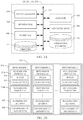
- FIG. 3A is a block diagram of an example implementation of a security accessory of FIG. 2 .
- FIG. 3B is a block diagram illustrating example components with an operations database of FIG. 3A .
- FIGS. 4-11 are flowcharts illustrative of machine-readable instructions that may be executed to implement the example security accessory of FIG. 3A .
- FIG. 12 is a block diagram of an example processor platform capable of executing the example machine-readable instructions of FIGS. 4-11 to implement the example security accessory of FIG. 3A .
- Computing resources are physical/virtual computing devices and/or software applications; any or all of which may be offered as a product and/or service.
- Example resources include, virtual machines (VMs); software appliances; management agents, such as a Common Information Management (CIM) agent, a Simple Network Management Protocol (SNMP) agent and/or a configuration management agent; cloud services; mobile agents (e.g., mobile software application code and a corresponding application state); and/or business services (e.g., Information Technology Infrastructure library services).
- CIM Common Information Management
- SNMP Simple Network Management Protocol
- cloud services e.g., mobile software application code and a corresponding application state
- business services e.g., Information Technology Infrastructure library services
- Computing resources are susceptible to security vulnerabilities.
- Security vulnerabilities are problematic as they may lead to unrestricted access to prohibited information.
- a vulnerability database such as, for example, the National Vulnerability Database.
- consumers of potentially affected devices and/or services may be unaware of whether such potentially affected devices and/or services are actually vulnerable.
- consumers of such devices and/or services may request verbal or textual assurances from the appropriate product and/or service providers.
- verbal or textual assurances may not be enough for consumers, especially where a consumer must prove to another party (e.g., to an auditor conducting an audit) that a product and/or service utilized by the consumer is not vulnerable.
- consumers have lacked (1) a way to determine whether a product and/or service is susceptible to particular vulnerability and, (2) if the product and/or service is susceptible to the particular vulnerability, a way to remediate the particular vulnerability.
- Resource policies place constraints on the state or behavior of computing devices. Some policies ensure computing devices are being used securely and in compliance with safety standards and/or government regulations (e.g., in connection with vulnerabilities or in the absence of vulnerabilities).
- Example policies include defense information systems agency (DNA) secure technical implementation guides (STIGS) and payment card industry data security standards (PCI-DSS).
- Resource policies may include a number of textual rules and/or regulations.
- a benchmark is defined to be a collection of resource policies to constrain the behavior of a resource.
- resource policies and/or benchmarks are implemented via machine-readable instructions for execution by a security accessory in computer-readable format (such as, for example, in an extensive markup language (XML) document).
- a security accessory may be implemented by a server, a virtual machine, and/or a container executing on a processor.
- Example benchmarks include SCAP/OVAL® documents. SCAP is a standard XML format for U.S. government security benchmarks. It is also an interoperable rule language used by several open source projects.
- OpenSCAP by Red Hat® is an open source tool that interprets SCAP and scans target systems for configuration issues.
- SCAP rules encapsulate assessment content as well as remediation content for systems capable of configuration specification and change such as, for example, Shell Script, Python, Perl, or Ansible by Red Hat® snippets.
- OVAL® is an international information security community standard for assessing vulnerabilities, configurations, patch states, etc., and reporting the results of this assessment.
- Benchmarks may be selected after development of a resource and according to business objectives. For example, a business utilizing a resource may select a benchmark that requires passwords to have a minimum length of four characters, even where a product and/or service provider intended the resource to have passwords with a minimum length of fifteen characters, if the lower password length would improve efficiency of the business.
- a policy that requires a secure ApacheTM web server configuration may contain rules that are not applicable to a PostgreSQLTM database server.
- some rules may be inapplicable to certain resources.
- an ApacheTM web server rule requiring Unix® file permissions is inapplicable to ApacheTM web server running on Microsoft Windows®.
- the testing of rules differs for different resources. For example, testing a Linux® resource includes running the “stat(1)” system call. However, Microsoft Windows® does not support “stat(1)”. As such, testing a Windows® resource includes running “GetFileAttributes.” in some circumstances, multiple tools are required to test and enforce policies.
- a policy rule may use an assessor such as, for example, OpenSCAP to evaluate policy rules against a target resource.
- the Security Content Automation Protocol (SCAP) rules can specify several different check systems such as, for example, the open vulnerability assessment language (OVAL®), script check engine (SCE), extensible computer language (ECL), or open checklist interactive language (OCIL).
- the SCAP rules may also specify several fix systems such as, for example, Shell Script, Python, Perl, Java, etc.
- Some benchmarks include many different types of rules, each requiring a different assessment engine for interpreting the rule and comparing the rule against the resource. Sometimes, a number of different responses may be invoked when a resource is in violation of a rule, such as, for example, generating, an alert, repairing the resource so that it conforms to the rule, disabling the resource or a portion thereof, etc.
- a resource manager e.g., an individual in charge of managing resources
- a resource manager is sometimes supposed to:
- Examples disclosed herein (1) determine whether a product and/or service is susceptible to a particular vulnerability and/or is in compliance with one or more resource policies and, (2) if the product and/or service is susceptible to the particular vulnerability and/or is not in compliance with the one or more resource policies, remediate the particular vulnerability or non-compliance.
- Some examples disclosed herein are implemented via containers in which benchmarks that are unique to a resource are executed. Such containers include rules appropriate for the resource type, the tools required to evaluate the resource against the appropriate rules of the benchmarks, the libraries required by the tools, authenticators to establish a secure channel between the container and the resource, the tools required to remediate any defects, and the best solutions for the remediation of defects for that resource.
- a profile is defined to be a structure that includes rules from one or more benchmarks and default or custom Title parameters.
- a profile is a SCAP XML document.
- target resources are assessed against benchmark profiles.
- tailoring is defined to be the action of customizing a benchmark by creating a profile that selects/excludes benchmark rules and/or specifies benchmark parameter values.
- remediation is defined to be the action of applying a repair (e.g., by executing a repair script) to a resource which (at least prior to the repair) is in non-compliance with a rule from a benchmark profile (e.g., a SCAP rule).
- hardening is defined to be the action of applying all repairs (e.g., by executing all repair scripts) in a tailored benchmark that are applicable to the target resource.
- Benchmarks may be developed in connection with the resource in which the benchmark is to be associated.
- FIG. 1 is an illustration of an example process flow 100 , which may be performed by one, or more example methods and apparatus disclosed herein. Contrary to developing benchmarks after a resource has been created, example methods and apparatus disclosed herein develop a resource (e.g., at block 102 ) simultaneously or substantially simultaneously with a resource security accessory, which implements one or more benchmarks (e.g., at block 104 ). In some examples, the resource security accessory is applied to the resource to prepare the resource for shipping. In some examples, for each resource, a corresponding resource security accessory is developed with content matched to (e.g., made specifically for) the resource.
- a resource security accessory is developed with content matched to (e.g., made specifically for) the resource.
- a product and/or service provider equips the resource security accessory with the benchmarks the product and/or service provider intends the resource to meet, along with specific remediation actions, remediators, and/or assessors to keep the resource in conformity with the benchmarks. For example, if a product and/or service provider intends that the resource be password-protected with at least a fifteen character password, the resource security accessory will include a benchmark requiring at least fifteen characters in passwords, a tool to verify that password creation setting is set to at least fifteen characters, and a remediation action to fix the setting if found non-compliant. As a result, the resource is held to a standardized benchmark.
- the resource and the resource security accessory are shipped/delivered together.
- shipping/delivering the resource and the resource accessory includes providing a downloadable virtual machine or executable container including both the resource and the resource security accessory. In some examples, shipping/delivering the resource and the resource accessory includes providing the resource to a user and storing the resource security accessory in a user-accessible repository, as further described with reference to FIG. 2 .
- FIG. 2 is a block diagram of an example environment 200 illustrating a developer 202 shipping/delivering a plurality of resources 204 , 206 , 208 , 210 to a plurality of users 212 , 214 , 216 , 218 , respectively.
- the example developer 202 stores a plurality of security accessories 220 , 222 , 224 , 226 in a repository 228 .
- the repository 228 is in a location remote from the plurality of resources 204 , 206 , 208 , 210 and/or the plurality of users 212 , 214 , 216 , 218 .
- the plurality of resources 204 , 206 , 208 , 210 connect to respective ones of the plurality of security accessories 220 , 222 , 224 , 226 in the repository 228 through a network 230 (e.g., the Internet). Additionally, the plurality of users access the plurality of resources 204 , 206 , 208 , 210 and/or the plurality of security accessories 220 , 222 , 224 , 226 through the example network 230 .
- the network connections are secure channels between respective ones of the plurality of resources 204 , 206 , 208 , 210 and respective ones of the plurality of security accessories 220 , 222 , 224 , 226 . In the illustrated example of FIG.
- the developer 202 may push new and/or updated content to the plurality of security accessories 220 , 222 , 224 , 226 .
- a resource e.g., resource 1 , 204
- its respective security accessory e.g., security accessory 1 , 220
- the security accessory updates are transparent to the resource and ensure that the resource is always assessed against the latest security requirements for that resource.
- FIG. 3A is a block diagram of an example implementation of any one (or all) of the security accessories 220 , 222 , 224 , 226 of FIG. 2 .
- the example implementation of the security accessory 220 , 222 , 224 , 226 includes an example policy manager 300 , an example assessor 302 , an example remediator 304 , an example communicator 306 , an example interface 308 , an example operations database 310 , and example libraries 311 .
- the policy manager 300 , the assessor 302 , the remediator 304 , the communicator 306 , the interface 308 , the operations database 310 , and the example libraries 311 are communicatively coupled via a bus 312 or other communication medium.
- the security accessories 220 , 220 , 224 , 226 are disposed in a remote repository 228 and in secure communication with one or more respective resources 204 , 206 , 208 , 210 over the network 230 ( FIG. 2 ).
- the example policy manager 300 of FIG. 3A manages benchmarks, rules within benchmarks, STIGS, hardening guides, and remediation actions targeted to a resource.
- the targeted resource may be one of a plurality of resources associated with the security accessory.
- security accessory 1 220 is developed in association with resource 1 204 .
- one or more instances of resource 1 204 may be sold, distributed, etc. to consumers.
- the example policy manager 300 receives an identifier corresponding to a target resource (e.g., an identification of one of the one or more instances of resource 1 204 ) from a user of the target resource (e.g., an internet protocol (IP) address of the resource).
- IP internet protocol
- the example policy manager 300 determines a type of the target resource.
- the resource type may include a type of operating system (OS) (e.g., Linux®, Windows®, etc.).
- OS operating system
- the example policy manager 300 enables rules applicable to the resource type and/or disables rules inapplicable to the resource type.
- one or more rules of a benchmark may be inapplicable to a Window® OS.
- the policy manager 300 retrieves, updates, and/or stores benchmark profiles and/or associated benchmark parameters within the operations database 310 .
- the policy manager 300 generates reports based on assessments from the example assessor 302 , remediations from the example remediator 304 , information received via the example communicator 306 , user instructions received via the example interface 308 , and/or data from the example operations database 310 .
- the example assessor 302 or FIG. 3A tests, evaluates, or otherwise assesses a target resource against one or more rules of one or more benchmarks for vulnerabilities, benchmark non-compliance, etc. (e.g., defects or insufficiencies).
- the example assessor 302 is developed specifically for a specific resource (e.g., resource 1 204 ), such that the example assessor 302 is specifically adapted to interpret and assess all benchmarks and/or rules for the corresponding resource.
- the assessor is implemented by an OpenSCAP assessment engine, in the illustrated example of FIG. 3A , the assessor 302 executes in the security accessory.
- the assessor 302 sends modules (e.g., including benchmark rules) to the target resource for execution via the communicator 306 .
- the modules e.g., benchmark rules
- the assessor 302 assesses the target resource against parameters of benchmark rules/benchmark profiles, such as when a benchmark profile has been tailored by a user.
- the example remediator 304 of FIG. 3A executes remediation actions for a target resource based on defects or insufficiencies identified by the example assessor 302 .
- the remediator 304 is implemented by an. Ansible action engine.
- the remediator 304 requires additional content (e.g., libraries) to perform remediation actions associated with rule(s) of benchmark(s) targeted to a resource.
- the remediator 304 retrieves the additional content from the operations database 310 .
- the example remediator 304 of FIG. 3A sends modules (e.g., snippets or scripts) containing remediation actions (e.g., machine executable remediation instructions) to a target resource.
- the remediation actions when executed at the target resource, cure, repair, and/or fix the defects or insufficiencies identified by the example assessor 302 .
- the modules are temporarily stored on the target resource during execution.
- the remediator 304 applies remediation action idempotently. In other words, the desired state of the resource is unchanged even if application of remediation actions are applied several times after initial application.
- the example remediator 304 is developed specifically for a specific resource (e.g., resource 1 204 ), such that one or more appropriate remediation actions are provided for each rule violation of that corresponding resource.
- the example communicator 306 of FIG. 3A communicates with resources to receive information with which the assessor 302 is to test or evaluate against, to send remediation actions, assessment results with which the resource is to execute or a user is to interpret.
- the data from the target resource checked by the assessor 302 contains confidential information (e.g., password policy settings).
- the remediation actions sent to the target resource contains sensitive values (e.g., certificates the target should trust).
- the example communicator 306 initiates a secure channel between the security accessory and the target resource.
- the communicator 306 initiates the secure channel using OpenSSH.
- the example communicator 306 is developed specifically for a specific resource such that the example communicator 306 and the resource include security protocols and libraries sufficient to protect communications corresponding to assessment by the assessor 302 and/or remediation by the remediator 304 .
- the example communicator 306 and the corresponding target resource include security credentials such as, for example, mutual secrets, certificates, keypairs, etc.
- the example interface 308 of FIG. 3A facilitates interaction between a user of the resource and the associated security accessory.
- the interface 308 is a web-based graphical user interface (GUI) accessible to users/developers over a network (e.g., the Internet).
- GUI graphical user interface
- the interface 308 is a command line user interface (CLI) accessible to users/developers of the resource to which the security accessory is targeted.
- CLI command line user interface
- the interface 308 is a representational state transfer (REST) application programming interface (API).
- REST representational state transfer
- the example interface 308 receives commands from a user/developer and display information (e.g., reports) to a user/developer.
- the interface is implemented by an open-source web server such as, for example. Apache TomcatTM.
- the example libraries 311 of FIG. 3A include content associated with the remediation actions and/or the assessor 302 modules such as, for example, configuration data, documentation, templates, subroutines, data sets, etc.
- the example operations database 310 of FIG. 3A includes rules (e.g., benchmarks, STIGS, hardening guides, etc.), remediation actions, profiles (e.g., SCAP profiles and tailoring), and/or vulnerability definitions.
- FIG. 3B is a block diagram illustrating an example implementation of the operations database 310 of FIG. 3A .
- the example operations database 310 of FIG. 3B includes benchmarks 314 (e.g., benchmark 1 , benchmark 2 . . . benchmark N), benchmark profiles (e.g., benchmark profile 1 A 316 a and benchmark profile 1 B 316 b ), rules 318 , parameters 320 , remediation actions 322 , and/or vulnerability definitions 324 .
- benchmarks 314 e.g., benchmark 1 , benchmark 2 .
- the benchmarks 314 includes a plurality of rules (e.g., 100).
- each benchmark profile include subsets of the plurality of rules.
- the benchmark profile 1 A 316 a may include a first subset of rules (e.g., rules 1-10), while the benchmark profile 1 B 316 b may include a second subset of rules (e.g., rules 56-65).
- any number of benchmark profiles may be created using any combination of the plurality of rules corresponding to a benchmark.
- the parameters 320 are associated with benchmark profiles and customizable based on user instructions.
- the vulnerability definitions 324 of FIG. 3B include definitions of known vulnerabilities recently publicized by, for example, the National Vulnerability Database.
- the example policy manager 300 , the example assessor 302 , the example remediator 304 , the example communicator 306 , the example interface 308 , and the example operations database 310 of the security accessory perform one or more functions based on user commands, such as, for example, describe, tailor, monitor, maintain, assess and repair, harden, and report.
- the describe function of the security accessory filters out rules that are inapplicable to the target resource and displays the applicable rules to a user, as further described with reference to FIG. 5 .
- the tailor function of the security accessory allows a user to enable, disable, or tailor specific policy rules by editing profile parameters, as further described with reference to FIG. 6 .
- the monitor function of the security accessory monitors the target resource for non-compliant configuration changes and reports them via the interface 308 as they occur, as further described with reference to FIG. 7 .
- the maintain function invokes remediation actions for any rule that fails after a configuration change to force the target resource to remain in compliance with the selected benchmark and/or benchmark profile, as further described with reference to FIG. 8 .
- the assess and repair function generates a report of rule compliance and invokes response actions of violated policy rules based on user instructions, as further described with reference to FIG. 9 .
- the harden function invokes all remediations of all enabled rules, as further described with reference to FIG. 10 .
- the report function generates a report of rule compliance history and presents the report to a user via the interface 308 , as further described with reference to FIG. 11 .
- FIG. 3A While art example manner of implementing the security accessories 220 , 222 , 224 , 226 of FIG. 2 is illustrated in FIG. 3A , one or more of the elements, processes and/or devices illustrated in FIG. 3A may be combined, divided, re-arranged, omitted, eliminated and/or implemented in any other way.
- the example policy manager 300 , the example assessor 302 , the example remediator 304 , the example communicator 306 , the example interface 308 , the example operations database 310 , and/or, more generally, the security accessory 220 , 222 , 224 , 226 of FIG. 3A may be implemented by hardware, software, firmware and/or any combination of hardware, software and/or firmware.
- any of the example policy manager 300 , the example assessor 302 , the example remediator 304 , the example communicator 306 , the example interface 308 , the example operations database 310 , and/or, more generally, the security accessory 220 , 222 , 224 , 226 of FIG. 3A could be implemented by one or more analog or digital circuit(s), logic circuits, programmable processor(s), application specific integrated circuit(s) (ASIC(s)), programmable logic device(s) (PLD(s)) and/or field programmable logic device(s) (FPLD(s)).
- ASIC application specific integrated circuit
- PLD programmable logic device
- FPLD field programmable logic device
- At least one of the example policy manager 300 , the example assessor 302 , the example remediator 304 , the example communicator 306 , the example interface 308 , and/or the example operations database 310 is/are hereby expressly defined to include a non-transitory computer readable storage device or storage disk such as a memory, a digital versatile disk (DVD), a compact disk (CD), a Blu-ray disk, etc. storing the software and/or firmware.
- the example security accessories 220 , 222 , 224 , 226 of FIG. 2 may include one or more elements, processes and/or devices in addition to, or instead of, those illustrated in FIG. 3A , and/or may include more than one of any or all of the illustrated elements, processes and devices.
- FIGS. 4-11 Flowcharts representative of example machine readable instructions for implementing the security accessories 220 , 222 , 224 , 226 of FIG. 3A are shown in FIGS. 4-11 .
- the machine readable instructions comprise programs for execution by a processor such as the processor 1212 shown in the example processor platform 1200 discussed below in connection with FIG. 12 .
- the program may be embodied in software stored on a tangible computer readable storage medium such as a CD-ROM, a floppy disk, a hard drive, a digital versatile disk (DVD), a Blu-ray disk, or a memory associated with the processor 1212 , but the entire program and/or parts thereof could alternatively be executed by a device other than the processor 1212 and/or embodied in firmware or dedicated hardware.
- example programs are described with reference to the flowcharts illustrated, in FIGS. 4-11 , many other methods of implementing the example security accessories 220 , 222 , 224 , 226 may alternatively be used.
- the order of execution of the blocks may be changed, and/or some of the blocks described may be changed, eliminated, or combined.
- FIGS. 4-11 may be implemented using coded instructions (e.g., computer and/or machine readable instructions) stored on a tangible computer readable storage medium such as a hard disk drive, a flash memory, a read-only memory (ROM), a compact disk (CD), a digital versatile disk (DVD), a cache, a random-access memory (RAM) and/or any other storage device or storage disk in which information is stored for any duration e.g., for extended time periods, permanently, for brief instances, for temporarily buffering, and/or for caching of the information).
- a tangible computer readable storage medium such as a hard disk drive, a flash memory, a read-only memory (ROM), a compact disk (CD), a digital versatile disk (DVD), a cache, a random-access memory (RAM) and/or any other storage device or storage disk in which information is stored for any duration e.g., for extended time periods, permanently, for brief instances, for temporarily buffering, and/or for caching of the information).
- tangible computer readable storage medium and “tangible machine readable storage medium” are used interchangeably. Additionally or alternatively, the example processes of FIGS. 4-11 may be implemented using coded instructions (e.g., computer and/or machine readable instructions) stored on a non-transitory computer and/or machine readable medium such as a hard disk drive, a flash memory, a read-only memory, a compact disk, a digital versatile disk, a cache, a random-access memory and/or any other storage device or storage disk in which information is stored for any duration (e.g., for extended time periods, permanently, for brief instances, for temporarily buffering, and/or for caching of the information).
- coded instructions e.g., computer and/or machine readable instructions
- a non-transitory computer and/or machine readable medium such as a hard disk drive, a flash memory, a read-only memory, a compact disk, a digital versatile disk, a cache, a random-access memory and/or any other storage device or storage disk in which
- non-transitory computer readable medium is expressly defined to include any type of computer readable storage device and/or storage disk and to exclude propagating signals and transmission media.
- phrase “at least” when used as the transition term in a preamble of a claim, it is open-ended in the same manner as the term “comprising” is open ended.
- Comprising and all other variants of “comprise” are expressly defined to be open-ended terms. Including and all other variants of “include” are also defined to be open-ended terms. In contrast, the term consisting and/or other forms of consist are defined to be close-ended terms.
- FIGS. 4-11 are flowcharts illustrative of machine-readable instructions that may be executed to implement an example security accessory (e.g., any one or all of the example security accessories 220 , 222 , 224 , 226 of FIG. 3A ).
- An example program 400 that may be executed to implement an example security accessory begins at block 402 of FIG. 4 .
- the example policy manager 300 of the example security accessory e.g., security accessory 1 220
- manages benchmarks targeted to a resource e.g., resource 1 204 ).
- the example policy manager 300 receives identifiers of resource(s); identifies types of the resource(s); locates, updates, and/or adds new benchmark(s) and/or benchmark profile(s) corresponding to the benchmark(s); enables/disables rule(s) within the benchmark(s) based on the resource type; and/or generates reports based on the resource(s), benchmark(s), benchmark profile(s), rule(s), etc.
- the example assessor 302 tests (e.g., evaluates) the one or inure benchmarks against a target resource. Accordingly, the example assessor 302 evaluates rules of the one or more benchmarks to the resource to determine resource insufficiencies (e.g., policy non-conformance and/or vulnerabilities). If the example assessor 302 identifies resource insufficiencies based on the output of block 404 (block 406 : YES), the control proceeds to block 408 . Otherwise (block 406 : NO), the example program 400 ceases operation.
- the example remediator 304 remediates and identified insufficiencies of the resource to comply with the enabled rules of the one or more benchmarks. Thereafter, the example program ceases operation.
- An example program 500 that may be executed to implement the “describe” command by an example security accessory begins at block 502 of FIG. 5 .
- the example policy manager 300 receives an identifier of a resource target (e.g., by a user identifying the resource).
- the resource target may be one of a plurality of resources associated with the security accessory (e.g., there may be an instance of resource 1 204 for every user such that there are multiple instances of resource 1 204 , but the multiple instances of resource 1 204 may be associated with the same security accessory 1 220 ).
- the example policy manager 300 receives a user selection of a benchmark profile for the tartlet resource.
- the example assessor 302 instantiates a benchmark based on the received user selection of the benchmark profile for the target resource (e.g., instantiated from the one or more benchmark profiles stored in the operations database 310 corresponding to the received user selection).
- the example policy manager 300 determines the type of the target resource at block 508 .
- the example policy manager 300 enables rules contained in the instantiated benchmark associated with the benchmark profile corresponding to the received user selection, which are applicable with the resource type and/or disables rules contained in the instantiated benchmark associated with the benchmark profile corresponding to the received user selection, which are inapplicable with the resource type.
- one or more rules of a benchmark may be inapplicable to a type of the resource (e.g., the benchmark includes rules for Linux® and Windows® operating systems (OS), while the resource only uses Window® OS).
- the example communicator 306 communicates the applicable rules in an XML report to the target resource (block 512 ).
- previous techniques failed to provide rules for different resources and/or failed to identify applicable rules for a resource amongst a plurality of benchmark rules.
- the communicator 306 identifies exactly the rules amongst a plurality of benchmark rules that are specifically applicable to the target resource.
- the communication is through a secure channel between the security accessory and the resource.
- the example interface 308 displays the XML report at block 514 for user interpretation as the applicable rules for the resource. In some examples, the interface 308 displays the XML report for user interpretation as a hardening guide. Thereafter, the example program 500 ceases operation.
- An example program 600 that may be executed to implement the “tailor” command by the example security accessory security accessory 1 220 ) begins at block 602 of FIG. 6 .
- the example policy manager 300 sends a benchmark to a resource based upon a user selection, such that the user may supply parameters for and/or add new profiles corresponding with the benchmark (e.g., tailor benchmark profiles).
- the example policy manager 300 receives a user instruction of whether to create a new benchmark profile or supply parameters for an existing benchmark profile. If a user decides to create a new benchmark profile (block 604 : YES), control proceeds to block 606 .
- the example policy manager 300 receives benchmark rules and/or parameters (e.g., from a user) corresponding to the benchmark.
- the received benchmark rules correspond to which rules (e.g., out of a plurality of benchmark rules) to include in a profile and the received parameters correspond to additional constraints beyond that included in the initial rules.
- a rule of the benchmark may require password length to be fifteen characters by default and a user may include a parameter to increase the required password length to be twenty characters (e.g., the user tailors the benchmark profile to fit his or her needs).
- a user can only tailor a benchmark profile to increase constraints rather than lower or remove them, thereby ensuring a resource is held to a minimum security standard.
- the example policy manager 300 creates a benchmark profile based on the parameters received at block 606 .
- the example policy manager 300 sends a user selected benchmark profile to the resource.
- a user provides parameters for the existing benchmark profile.
- the example policy manager 300 updates the benchmark profile based on the user supplied rules and/or parameters. After the example policy manager 300 updates the benchmark profile at block 612 or after the example policy manager 300 creates a benchmark profile at block 608 , control proceeds to block 614 .
- the example policy manager 300 stores the benchmark profile in the operations database 310 . Thereafter, the example program 600 ceases operation.
- An example program 700 that may be executed to implement the “monitor” command by the example security accessory begins at block 702 of FIG. 7 .
- the example policy manager 300 receives an identifier of a resource target (e.g., by a user identifying the resource).
- the example policy manager 300 receives a user selection of a benchmark profile for the target resource.
- the example assessor 302 instantiates a benchmark based on the received user selection of the benchmark profile for the target resource (e.g., instantiated from the one or more benchmark profiles stored in the operations database 310 corresponding to the received user selection).
- the example assessor 302 instructs the target resource to monitor for changes in configurations that could affect benchmark compliance.
- the target resource monitors for changes. For example, a user may install a new application, operating system, etc. If a change occurs (block 712 : YES), control proceeds to block 714 . Otherwise (block 712 : NO), control dwells at block 710 until an event causing the end of monitoring occurs.
- the example assessor 302 receives a notification from the target resource that a configuration change has occurred.
- the example assessor 302 assesses the target resource against the benchmark instantiated at block 706 for defects or insufficiencies such as, for example, vulnerabilities, benchmark non-compliance, etc. (block 716 ).
- the example communicator 306 sends an alert: for presentation to a user via the interface 308 .
- the alert notifies users of compliant status of the resource (e.g., compliance and/or non-compliance).
- the example assessor 302 determines whether assessment is complete and/or if monitoring is to terminate. If the example assessor 302 has not completed the assessment and/or monitoring is to continue (block 720 : NO), control returns to block 710 . Otherwise (block 720 : YES), the example program 700 ceases operation.
- An example program 800 that may be executed to implement the “maintain” command by the example security accessory (e.g., security accessory 1 220 ) begins at block 802 of FIG. 8 .
- the example policy manager 300 receives an identifier of a resource target (e.g., from a user identifying the resource).
- the example policy manager 300 receives a user selection of a benchmark profile for the target resource.
- the example assessor 302 instantiates a benchmark based on the received user selection of the benchmark profile for the target resource (e.g., instantiated from the one or more benchmark profiles stored in the operations database 310 corresponding to the received user selection).
- the example assessor 302 instructs the target resource to monitor for changes in configurations that could affect benchmark compliance.
- the target resource monitors for changes. If a change occurs (block 812 : YES), control proceeds to block 814 . Otherwise (block 812 : NO), control dwells at block 810 until an event causing the end of monitoring occurs.
- the example assessor 302 receives a notification from the target resource that a configuration change has occurred.
- the example assessor 302 assesses the target resource against the benchmark instantiated at block 806 for defects or insufficiencies such as, for example, vulnerabilities, benchmark non-compliance, etc. (block 816 ). If the example assessor 302 identifies a defect or insufficiency (block 818 : YES), control proceeds to block 820 .
- the example remediator 304 instructs the example communicator 306 to send remediation actions to the target resource. The remediation actions are then executed at the target resource to bring the target resource into compliance with the corresponding policy.
- the example assessor 302 determines whether the assessment is complete and/or if monitoring is to terminate. If the example assessor 302 has not completed the assessment and/or monitoring is to continue (block 822 : NO), control returns to block 810 . Otherwise (block 822 : YES), the example program 800 ceases operation.
- An example program 900 that may be executed to implement the “assess and repair” command by the example security accessory begins at block 902 of FIG. 9 .
- the example policy manager 300 receives a user selection of a benchmark profile for the target resource.
- the example assessor 302 instantiates a benchmark based on the received user selection of the benchmark profile for the target resource (e.g., instantiated from the one or more benchmark profiles stored in the operations database 310 corresponding to the received user selection).
- the example assessor 302 assesses the target resource against the benchmark instantiated at block 904 for defects or insufficiencies such as, for example, vulnerabilities, benchmark non-compliance, etc. For example, if four character length passwords are being utilized on a resource with a benchmark requiring fifteen character length passwords, the example assessor 302 identifies that the resource is not in compliance with such a benchmark (e.g., the resource has a defect, insufficiency, etc.). If the example assessor 302 identifies a defect or insufficiency (block 908 : YES), control proceeds to block 910 .
- defects or insufficiencies such as, for example, vulnerabilities, benchmark non-compliance, etc. For example, if four character length passwords are being utilized on a resource with a benchmark requiring fifteen character length passwords, the example assessor 302 identifies that the resource is not in compliance with such a benchmark (e.g., the resource has a defect, insufficiency, etc.).
- the example communicator 306 sends an alert for presentation to a user via the interface 308 identifying one or more defects or insufficiencies.
- the user selects one or more of the detects or insufficiencies for remediation.
- the example remediator 304 instructs the example communicator 306 to send remediation actions rules to the target resource based on the user selected defects or insufficiencies. The target resource will then execute the remediation actions to cure, repair, fix, or otherwise bring into compliance the selected defects or insufficiencies.
- the example program 900 ceases operation.
- An example program 1000 that may be executed to implement the “harden” command by the example security accessory begins at block 1002 of FIG. 10 .
- the example policy manager 300 receives an identifier of a resource target (e.g., by a user identifying the resource).
- the example policy manager 300 receives a user selection of a benchmark profile for the target resource.
- the example assessor 302 instantiates a benchmark based on the user selection of the benchmark profile for the target resource (e.g., instantiated from the one or more benchmark profiles stored in the operations database 310 corresponding to the user selection).
- the example policy manager 300 determines the type of the target resource at block 1008 .
- the example policy manager 300 enables rules contained in the instantiated benchmark associated with the benchmark profile corresponding to the received, user selection, which are applicable with the resource type and/or disables rules contained in the instantiated benchmark associated with the benchmark profile corresponding to the received user selection, which are inapplicable with the resource type.
- rules of a benchmark may be inapplicable to a type of the resource (e.g., the benchmark includes rules for Linux® and Windows® operating systems (OS), while the resource only uses Window® OS).
- the example remediator 304 instructs the example communicator 306 to send remediation actions of applicable rules to the target resource. Thereafter, the example program 1000 ceases operation.
- An example program 1100 that may be executed to implement the “report” command by the example security accessory begins at block 1102 of FIG. 11 .
- the example policy manager 300 receives a user selection of benchmark profile for the target resource.
- the example assessor 302 instantiates a benchmark based on the user selection of the benchmark profile for the target resource (e.g., instantiated from the one or more benchmark profiles stored in the operations database 310 corresponding to the received user selection).
- the example assessor 302 assesses the target resource against the benchmark instantiated at block 1104 for defects or insufficiencies such as, for example, vulnerabilities, benchmark non-compliance, etc.
- the example policy manager 300 generates a report highlighting the rules with which the target resource is not in compliance and/or the rules with which the target resource is in compliance.
- FIG. 12 is a block diagram of an example processor platform 1200 capable of executing the instructions of FIGS. 4-11 to implement the example security accessory 220 , 222 , 224 , 226 of FIG. 3A .
- the processor platform 1200 can be, for example, a server, a personal computer, a mobile device (e.g., a cell phone, a smart phone, a tablet such as an iPadTM), or any other type of computing device.
- the processor platform 1200 may execute one or more VMs and/or containers in which the security accessor(ies) are instantiated.
- the processor platform 1200 of the illustrated example includes a processor 1212 .
- the processor 1212 of the illustrated example is hardware.
- the processor 1212 can be implemented by one or more integrated circuits, logic circuits, microprocessors or controllers from any desired family or manufacturer.
- the processor 1212 implements the policy manager 300 , the assessor 302 , the remediator 304 , the communicator 306 , and/or the security accessory of FIG. 3A .
- the processor 1212 of the illustrated example includes a local memory 1213 (e.g., a cache).
- the processor 1212 of the illustrated example is in communication with a main memory including a volatile memory 1214 and a non-volatile memory 1214 via a bus 1218 .
- the volatile memory 1214 may be implemented by Synchronous Dynamic Random Access Memory (SDRAM), Dynamic Random Access Memory (DRAM), RAMBUS Dynamic Random Access Memory (RDRAM) and/or any other type of random access memory device.
- the non-volatile memory 1216 may be implemented by flash memory and/or any other desired type of memory device. Access to the main memory 1214 , 1216 is controlled by a memory controller.
- the processor platform 1200 of the illustrated example also includes an interface circuit 1220 .
- the interface circuit 1220 may be implemented by any type of interface standard, such as an Ethernet interface, a universal serial bus (USB), and/or a PCI express interface. In some examples, interface circuit 1220 implements the interface 308 of FIG. 3A .
- one or more input devices 1222 are connected to the interface circuit 1220 .
- the input device(s) 1222 permit(s) a user to enter data and commands into the processor 1212 .
- the input device(s) can be implemented by, for example, an audio sensor, a microphone, a camera (still or video), a keyboard, a button, a mouse, a touchscreen, a track-pad, a trackball, isopoint and/or a voice recognition system.
- One or more output devices 1224 are also connected to the interface circuit 1220 of the illustrated example.
- the output devices 1224 can be implemented, for example, by display devices (e.g., a light emitting diode (LED), an organic light emitting diode (OLED), a liquid crystal display, a cathode ray tube display (CRT), a touchscreen, a tactile output device, a light emitting diode (LED)).
- the interface circuit 1220 of the illustrated example thus, typically includes a graphics driver card, a graphics driver chip or a graphics driver processor.
- the interface circuit 1220 of the illustrated example also includes a communication device such as a transmitter, a receiver, a transceiver, a modem and/or network interface card to facilitate exchange of data with external machines (e.g., computing devices of any kind) via a network 1226 (e.g., an Ethernet connection, a digital subscriber line (DSL), a telephone line, coaxial cable, a cellular telephone system, etc.).
- a network 1226 e.g., an Ethernet connection, a digital subscriber line (DSL), a telephone line, coaxial cable, a cellular telephone system, etc.
- the interface circuit 1220 may, thus, implement the example communicator 306 of FIG. 3A .
- the processor platform 1200 of the illustrated example also includes one or more mass storage devices 1228 for storing software and/or data.
- mass storage devices 1228 include floppy disk drives, hard drive disks, compact disk drives, Blu-ray disk drives, RAID systems, and digital versatile disk (DVD) drives.
- the operations database 310 and the libraries 311 of FIG. 3A are located within the one or more mass storage devices 1228 .
- the coded instructions 1232 of FIGS. 4-11 may be stored in the mass storage device 1228 , in the volatile memory 1214 , in the non-volatile memory 1216 , and/or on a removable tangible computer readable storage medium such as a CD or DVD.
- STIGS operational assessment content
- vulnerability definitions remediation actions
- configuration re-baselining hardening
- scanning tools orchestration
- action frameworks security posture reporting, auditing evidence, etc.
- the security accessory enables rules specific to different types of the several instantiations of the particular resource (e.g., a first security accessory may be utilized by an instance of a first resource with a first OS and also an instance of the first resource with a second OS).
- the resource is provided specific benchmarks, definitions, and remediation actions customized for the resource.
- tools and software are common to all security accessories, but the operations databases including benchmarks, profiles, remediation actions, and tests available to a particular security accessory are unique to the resource serviced by the accessory.
- the security accessory may be disposed on a remote server such that each associated resource remotely runs instantiations provided by a corresponding security accessory. Additionally, as product and/or service providers update the security accessory on the remote server, resources are provided with the most updated benchmarks, definitions, and remediation actions far the resource. In other words, updates can be applied once to a security accessory and thereafter propagated automatically to multiple instances of the corresponding resource.
Landscapes
- Engineering & Computer Science (AREA)
- Computer Security & Cryptography (AREA)
- Computer Hardware Design (AREA)
- Computing Systems (AREA)
- General Engineering & Computer Science (AREA)
- Computer Networks & Wireless Communication (AREA)
- Signal Processing (AREA)
- Storage Device Security (AREA)
- Management, Administration, Business Operations System, And Electronic Commerce (AREA)
- Stored Programmes (AREA)
- Debugging And Monitoring (AREA)
Abstract
Description
-
- 1. Create for every resource, an execution environment (e.g., a host, a virtual machine, a container, etc.) in which appropriate assessment engines may run;
- 2. Identify which benchmark(s) are appropriate for a resource;
- 3. Instantiate the selected benchmark(s) in the virtual machine or container;
- 4. Identify which rule(s) of the selected benchmark(s) are appropriate for the resource type;
- 5. Identify which tool(s) are required to assess the resource against the selected rule(s) of the selected benchmark(s);
- 6. Install the tool(s) required to assess the resource against the selected rule(s) of the selected benchmark(s);
- 7. Identify which libraries are required for the tool(s) to run the test(s) against the selected rule(s) of the selected benchmark(s);
- 8. Establish a secure channel for acquiring libraries required for the tool(s) to run the test(s) against the selected rule(s) of the selected benchmark(s);
- 9. Update the selected benchmark(s) frequently to ensure the testing is not performed with an outdated benchmark;
- 10. Identify which tool(s) are required to remediate any defect(s); and/or
- 11. Install the tool(s) required to remediate defect(s). Additionally, there may be more than one way to remediate a defect, such that a resource manager must choose between many options on how remediate the defect. As a result, it is possible that the resource manager will make one or more incorrect decisions during implementation of the above procedure. Indeed, the resource manager may fail to complete the above procedure.
Claims (18)
Priority Applications (1)
| Application Number | Priority Date | Filing Date | Title |
|---|---|---|---|
| US17/368,713 US11743295B2 (en) | 2016-09-22 | 2021-07-06 | Methods and apparatus to provide resource security |
Applications Claiming Priority (2)
| Application Number | Priority Date | Filing Date | Title |
|---|---|---|---|
| IN201641032402 | 2016-09-22 | ||
| IN201641032402 | 2016-09-22 |
Related Child Applications (1)
| Application Number | Title | Priority Date | Filing Date |
|---|---|---|---|
| US17/368,713 Continuation US11743295B2 (en) | 2016-09-22 | 2021-07-06 | Methods and apparatus to provide resource security |
Publications (2)
| Publication Number | Publication Date |
|---|---|
| US20180084009A1 US20180084009A1 (en) | 2018-03-22 |
| US11057431B2 true US11057431B2 (en) | 2021-07-06 |
Family
ID=61620769
Family Applications (2)
| Application Number | Title | Priority Date | Filing Date |
|---|---|---|---|
| US15/423,592 Expired - Fee Related US11057431B2 (en) | 2016-09-22 | 2017-02-03 | Methods and apparatus to provide resource security |
| US17/368,713 Active US11743295B2 (en) | 2016-09-22 | 2021-07-06 | Methods and apparatus to provide resource security |
Family Applications After (1)
| Application Number | Title | Priority Date | Filing Date |
|---|---|---|---|
| US17/368,713 Active US11743295B2 (en) | 2016-09-22 | 2021-07-06 | Methods and apparatus to provide resource security |
Country Status (1)
| Country | Link |
|---|---|
| US (2) | US11057431B2 (en) |
Cited By (3)
| Publication number | Priority date | Publication date | Assignee | Title |
|---|---|---|---|---|
| US11303852B2 (en) * | 2019-03-08 | 2022-04-12 | Latona, Inc. | Sensor information processing system using container orchestration technique |
| US11743295B2 (en) | 2016-09-22 | 2023-08-29 | Vmware, Inc. | Methods and apparatus to provide resource security |
| US20250274453A1 (en) * | 2024-02-28 | 2025-08-28 | Oracle International Corporation | Dedicated Secure Entry Points For Accessing Target Resources |
Families Citing this family (3)
| Publication number | Priority date | Publication date | Assignee | Title |
|---|---|---|---|---|
| US11641378B2 (en) * | 2020-05-07 | 2023-05-02 | Steelcloud Llc | Automated compliance for security benchmark assurance |
| CN111859399B (en) * | 2020-07-29 | 2024-08-27 | 网宿科技股份有限公司 | A vulnerability detection method and device based on oval |
| US20230316184A1 (en) * | 2022-03-30 | 2023-10-05 | International Business Machines Corporation | Automated compliance benchmark management |
Citations (6)
| Publication number | Priority date | Publication date | Assignee | Title |
|---|---|---|---|---|
| US20030074580A1 (en) * | 2001-03-21 | 2003-04-17 | Knouse Charles W. | Access system interface |
| US20140201816A1 (en) * | 2013-09-23 | 2014-07-17 | Sky Socket, Llc | Securely Authorizing Access to Remote Resources |
| US20140331277A1 (en) * | 2013-05-03 | 2014-11-06 | Vmware, Inc. | Methods and apparatus to identify priorities of compliance assessment results of a virtual computing environment |
| US20140380405A1 (en) * | 2013-04-29 | 2014-12-25 | Sri International | Flexible policy arbitration control suite |
| US20160072815A1 (en) * | 2013-06-14 | 2016-03-10 | Catbird Networks, Inc. | Systems and methods for creating and modifying access control lists |
| US20170359370A1 (en) * | 2016-06-10 | 2017-12-14 | Sophos Limited | Key throttling to mitigate unauthorized file access |
Family Cites Families (1)
| Publication number | Priority date | Publication date | Assignee | Title |
|---|---|---|---|---|
| US11057431B2 (en) | 2016-09-22 | 2021-07-06 | Vmware, Inc. | Methods and apparatus to provide resource security |
-
2017
- 2017-02-03 US US15/423,592 patent/US11057431B2/en not_active Expired - Fee Related
-
2021
- 2021-07-06 US US17/368,713 patent/US11743295B2/en active Active
Patent Citations (6)
| Publication number | Priority date | Publication date | Assignee | Title |
|---|---|---|---|---|
| US20030074580A1 (en) * | 2001-03-21 | 2003-04-17 | Knouse Charles W. | Access system interface |
| US20140380405A1 (en) * | 2013-04-29 | 2014-12-25 | Sri International | Flexible policy arbitration control suite |
| US20140331277A1 (en) * | 2013-05-03 | 2014-11-06 | Vmware, Inc. | Methods and apparatus to identify priorities of compliance assessment results of a virtual computing environment |
| US20160072815A1 (en) * | 2013-06-14 | 2016-03-10 | Catbird Networks, Inc. | Systems and methods for creating and modifying access control lists |
| US20140201816A1 (en) * | 2013-09-23 | 2014-07-17 | Sky Socket, Llc | Securely Authorizing Access to Remote Resources |
| US20170359370A1 (en) * | 2016-06-10 | 2017-12-14 | Sophos Limited | Key throttling to mitigate unauthorized file access |
Cited By (3)
| Publication number | Priority date | Publication date | Assignee | Title |
|---|---|---|---|---|
| US11743295B2 (en) | 2016-09-22 | 2023-08-29 | Vmware, Inc. | Methods and apparatus to provide resource security |
| US11303852B2 (en) * | 2019-03-08 | 2022-04-12 | Latona, Inc. | Sensor information processing system using container orchestration technique |
| US20250274453A1 (en) * | 2024-02-28 | 2025-08-28 | Oracle International Corporation | Dedicated Secure Entry Points For Accessing Target Resources |
Also Published As
| Publication number | Publication date |
|---|---|
| US20210336995A1 (en) | 2021-10-28 |
| US20180084009A1 (en) | 2018-03-22 |
| US11743295B2 (en) | 2023-08-29 |
Similar Documents
| Publication | Publication Date | Title |
|---|---|---|
| US11743295B2 (en) | Methods and apparatus to provide resource security | |
| US11539748B2 (en) | Monitoring and reporting enterprise level cybersecurity remediation | |
| US20230085001A1 (en) | Testing and remediating compliance controls | |
| US11593492B2 (en) | Assessment and analysis of software security flaws | |
| US20200089893A1 (en) | Firmware Verification | |
| US10795709B2 (en) | Systems and method for deploying, securing, and maintaining computer-based analytic environments | |
| US11824900B2 (en) | Artificial intelligence security configuration engine | |
| US9525698B2 (en) | Risk prioritization and management | |
| Vakhula et al. | Research on Security Challenges in Cloud Environments and Solutions based on the" Security-as-Code" Approach. | |
| US20230161604A1 (en) | Automatic machine deployment and configuration | |
| Dodson et al. | Mitigating the risk of software vulnerabilities by adopting a secure software development framework (ssdf) | |
| US11716345B1 (en) | System and method for automating security configuration standards assessments and mitigations | |
| WO2022015772A1 (en) | Configuration files for multiple devices | |
| Jenkins et al. | “Anyone Else Seeing this Error?”: Community, System Administrators, and Patch Information | |
| Vourou | Enhancing application security through DevSecOps: a comprehensive study on vulnerability detection and management in continuous integration and continuous delivery pipelines | |
| US20250021681A1 (en) | Broker system for providing executable program code | |
| US20210044593A1 (en) | Method and system for synchronously generated security waiver interface | |
| Williams et al. | Proactive Software Supply Chain Risk Management Framework (P-SSCRM) | |
| Kuusela | Security testing in continuous integration processes | |
| WO2018134416A1 (en) | System and method for implementing and testing security protections in computer software | |
| Kenfack et al. | Strengthening the Security of Supervised Networks by Automating Hardening Mechanisms | |
| Ahmed | Security in cloud-native applications with a shift-left approach | |
| Hoang et al. | Creating A Security Baseline and Cybersecurity Framework for the Internet of Things Via Security Controls | |
| US20260030644A1 (en) | Network assessment across diverse management services | |
| Sapkota | A Framework of DevSecOps for Software Development Teams |
Legal Events
| Date | Code | Title | Description |
|---|---|---|---|
| AS | Assignment |
Owner name: VMWARE, INC., CALIFORNIA Free format text: ASSIGNMENT OF ASSIGNORS INTEREST;ASSIGNORS:GOYAL, PRAVIN;FRASCADORE, GREGORY A.;SIGNING DATES FROM 20161011 TO 20161026;REEL/FRAME:041163/0429 |
|
| STPP | Information on status: patent application and granting procedure in general |
Free format text: FINAL REJECTION MAILED |
|
| STPP | Information on status: patent application and granting procedure in general |
Free format text: RESPONSE AFTER FINAL ACTION FORWARDED TO EXAMINER |
|
| STPP | Information on status: patent application and granting procedure in general |
Free format text: ADVISORY ACTION MAILED |
|
| STPP | Information on status: patent application and granting procedure in general |
Free format text: NON FINAL ACTION MAILED |
|
| STPP | Information on status: patent application and granting procedure in general |
Free format text: RESPONSE TO NON-FINAL OFFICE ACTION ENTERED AND FORWARDED TO EXAMINER |
|
| STPP | Information on status: patent application and granting procedure in general |
Free format text: FINAL REJECTION MAILED |
|
| STPP | Information on status: patent application and granting procedure in general |
Free format text: RESPONSE AFTER FINAL ACTION FORWARDED TO EXAMINER |
|
| STPP | Information on status: patent application and granting procedure in general |
Free format text: NON FINAL ACTION MAILED |
|
| STPP | Information on status: patent application and granting procedure in general |
Free format text: NOTICE OF ALLOWANCE MAILED -- APPLICATION RECEIVED IN OFFICE OF PUBLICATIONS |
|
| STPP | Information on status: patent application and granting procedure in general |
Free format text: PUBLICATIONS -- ISSUE FEE PAYMENT VERIFIED |
|
| STCF | Information on status: patent grant |
Free format text: PATENTED CASE |
|
| AS | Assignment |
Owner name: VMWARE LLC, CALIFORNIA Free format text: CHANGE OF NAME;ASSIGNOR:VMWARE, INC.;REEL/FRAME:067102/0314 Effective date: 20231121 |
|
| FEPP | Fee payment procedure |
Free format text: MAINTENANCE FEE REMINDER MAILED (ORIGINAL EVENT CODE: REM.); ENTITY STATUS OF PATENT OWNER: LARGE ENTITY |
|
| LAPS | Lapse for failure to pay maintenance fees |
Free format text: PATENT EXPIRED FOR FAILURE TO PAY MAINTENANCE FEES (ORIGINAL EVENT CODE: EXP.); ENTITY STATUS OF PATENT OWNER: LARGE ENTITY |
|
| STCH | Information on status: patent discontinuation |
Free format text: PATENT EXPIRED DUE TO NONPAYMENT OF MAINTENANCE FEES UNDER 37 CFR 1.362 |
|
| FP | Lapsed due to failure to pay maintenance fee |
Effective date: 20250706 |