US11055645B2 - Method and system for optimizing distribution of incentive budget for additional time interval allocation in a multi-week work schedule - Google Patents
Method and system for optimizing distribution of incentive budget for additional time interval allocation in a multi-week work schedule Download PDFInfo
- Publication number
- US11055645B2 US11055645B2 US16/439,716 US201916439716A US11055645B2 US 11055645 B2 US11055645 B2 US 11055645B2 US 201916439716 A US201916439716 A US 201916439716A US 11055645 B2 US11055645 B2 US 11055645B2
- Authority
- US
- United States
- Prior art keywords
- incentive
- agents
- time interval
- work schedule
- tier
- Prior art date
- Legal status (The legal status is an assumption and is not a legal conclusion. Google has not performed a legal analysis and makes no representation as to the accuracy of the status listed.)
- Active, expires
Links
Images


Classifications
-
- G—PHYSICS
- G06—COMPUTING OR CALCULATING; COUNTING
- G06Q—INFORMATION AND COMMUNICATION TECHNOLOGY [ICT] SPECIALLY ADAPTED FOR ADMINISTRATIVE, COMMERCIAL, FINANCIAL, MANAGERIAL OR SUPERVISORY PURPOSES; SYSTEMS OR METHODS SPECIALLY ADAPTED FOR ADMINISTRATIVE, COMMERCIAL, FINANCIAL, MANAGERIAL OR SUPERVISORY PURPOSES, NOT OTHERWISE PROVIDED FOR
- G06Q10/00—Administration; Management
- G06Q10/06—Resources, workflows, human or project management; Enterprise or organisation planning; Enterprise or organisation modelling
- G06Q10/063—Operations research, analysis or management
- G06Q10/0631—Resource planning, allocation, distributing or scheduling for enterprises or organisations
- G06Q10/06311—Scheduling, planning or task assignment for a person or group
- G06Q10/063116—Schedule adjustment for a person or group
-
- G—PHYSICS
- G06—COMPUTING OR CALCULATING; COUNTING
- G06N—COMPUTING ARRANGEMENTS BASED ON SPECIFIC COMPUTATIONAL MODELS
- G06N20/00—Machine learning
-
- G—PHYSICS
- G06—COMPUTING OR CALCULATING; COUNTING
- G06Q—INFORMATION AND COMMUNICATION TECHNOLOGY [ICT] SPECIALLY ADAPTED FOR ADMINISTRATIVE, COMMERCIAL, FINANCIAL, MANAGERIAL OR SUPERVISORY PURPOSES; SYSTEMS OR METHODS SPECIALLY ADAPTED FOR ADMINISTRATIVE, COMMERCIAL, FINANCIAL, MANAGERIAL OR SUPERVISORY PURPOSES, NOT OTHERWISE PROVIDED FOR
- G06Q10/00—Administration; Management
- G06Q10/04—Forecasting or optimisation specially adapted for administrative or management purposes, e.g. linear programming or "cutting stock problem"
-
- G—PHYSICS
- G06—COMPUTING OR CALCULATING; COUNTING
- G06Q—INFORMATION AND COMMUNICATION TECHNOLOGY [ICT] SPECIALLY ADAPTED FOR ADMINISTRATIVE, COMMERCIAL, FINANCIAL, MANAGERIAL OR SUPERVISORY PURPOSES; SYSTEMS OR METHODS SPECIALLY ADAPTED FOR ADMINISTRATIVE, COMMERCIAL, FINANCIAL, MANAGERIAL OR SUPERVISORY PURPOSES, NOT OTHERWISE PROVIDED FOR
- G06Q10/00—Administration; Management
- G06Q10/06—Resources, workflows, human or project management; Enterprise or organisation planning; Enterprise or organisation modelling
- G06Q10/063—Operations research, analysis or management
- G06Q10/0631—Resource planning, allocation, distributing or scheduling for enterprises or organisations
- G06Q10/06315—Needs-based resource requirements planning or analysis
Definitions
- the present disclosure relates generally to computerized systems and methods for managing and scheduling staff in environments where workload fluctuates. To adequately staff time intervals of high workload, incentivizes might be offered to the employees for extra hours. More specifically, the present disclosure relates to a method and system for optimizing distribution of an incentive budget for time intervals in a work schedule which are forecasted to be understaffed.
- WFM Work Force Management
- agents are provided the option to trade shifts with other agents or add extra time intervals to their shift.
- the offered time intervals may be presented to agents in various authorization levels, according to their necessity, i.e., net staffing variance, as some time intervals may require more agents than other time intervals due to expected high customer-service volume.
- time intervals may be marked as pre-approved by a supervisor or administrator and even manually incentivized according to a predetermined multi-tier incentive budget.
- time intervals are incentivized based solely on current net staffing data.
- the incentive budget is not optimally distributed i.e., does not achieve the greatest change in expected forecast, because incentives might be wasted on time intervals that may have otherwise been accepted by agents without the incentive.
- time intervals with low agents demand might be incentivized and other time intervals with the same net staffing value and higher agents demand might not be incentivized.
- a computer-implemented method for optimizing distribution of incentive-budget for additional time interval allocation in a multi-week work schedule comprising: (i) using machine learning algorithm to train a model to forecast future net staffing based on historical data; (ii) generating a multi-week work schedule having a predetermined amount of time intervals; (iii) using the model to forecast for each time interval a net staffing value; (iv) classifying time intervals in the multi-week work schedule as understaffed based on the forecasted net staffing (v) displaying the time intervals that were classified as understaffed to suggest agents to take as additional time interval to their schedule via a display unit; (vi) providing a tier incentive structure and an incentive budget to be updated by a user via a user interface; (vii) using machine learning algorithm to train the model to forecast a degree of elasticity of agents demand for each time interval in the multi-week period of the work schedule
- the historical data comprises of monitored agents schedule changes over predetermined number of weeks or net staffing value.
- the method may include using the model to simulate various incentive combinations of incentives from each tier of the tier incentive structure in the incentive-budget to further train the model to determine degree of the elasticity of agents demand for a time interval in the multi-week period.
- the method may include using the model to simulate various incentive combinations of incentives from each tier of the tier incentive structure in the incentive-budget to select the combination of incentives of each tier of the tier incentive structure that will achieve the greatest change in expected forecast.
- the incentive-budget is not fully exploited or may not be utilized at all.
- the method may include offering to agents to elect incentivized time intervals according to the calculated combination of incentives via a user interface.
- the method may include adding the agents schedule changes due to the offered incentivized time interval to the historical data.
- FIG. 1 schematically illustrates a module for optimizing distribution of incentive budget for additional time interval allocation in a multi-week work schedule, in accordance with some embodiments of the present disclosure
- FIGS. 2A-2B illustrate a schematic flowchart depicting a method 200 for optimizing distribution of an incentive budget for additional time interval allocation in a multi-week work schedule, in accordance with some embodiments of the present invention
- FIG. 3 is a screenshot depicting a user interface or a web interface, in accordance with some embodiments oldie present disclosure
- FIG. 4 is a flowchart depicting a method 400 for optimizing distribution of incentive budget for additional time interval allocation in a multi-week work schedule, in accordance with some embodiments of the present invention.
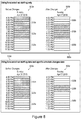
- FIG. 5 illustrates multiple snapshots depicting a user interlace or a web interface that is displaying marked time intervals in a work schedule to the agents, in accordance with some embodiments of the present disclosure.
- the terms “plurality” and “a plurality” as used herein may include, for example, “multiple” or “two or more”.
- the terms “plurality” or “a plurality” may be used throughout the specification to describe two or more components, devices, elements, units, parameters, or the like.
- the method embodiments described herein are not constrained to a particular order or sequence. Additionally, some of the described method embodiments or elements thereof can occur or be performed simultaneously, at the same point in time, or concurrently. Unless otherwise indicated, use of the conjunction “or” as used herein is to be understood as inclusive (any or all of the stated options).
- incentive budget might be wasted when time intervals are incentivized based on net staffing value only, because when one or more time intervals have the same forecasted understaffed net staffing value, i.e., these one or more time intervals are of low yet different agents demand, then time intervals with lower agents demand might be incentivized instead of time intervals with higher agents demand. That is, incentivizing time intervals with lower agents demand would be a waste, compared to incentivizing time intervals with higher demand, as these would be more easily staffed by offering the incentive.
- the system and method provided according to some embodiments of the present disclosure enable optimized distribution of incentive budget for extra time intervals in a work schedule by taking into account the net staffing: value and the predicted agents demand for each time interval in the work schedule.
- the provided system and method solves the problem of incentives waste. Incentives may be wasted on either time intervals that agents would have taken even without the incentive or time intervals with low elasticity where agents demand is not likely to change due to increase in the amount of the incentive.
- the problem is solved by calculating a combination of time intervals that get the most change out of the specified incentive budget with allotted incentives in a tier incentive structure. In other words, the problem is solved by calculating the combination of time intervals and their associated tier of incentive that would be the hardest to fill otherwise.
- the consequence of applying the solution to the problem is further having the incentive budget spent on solving the problem in a distributed manner instead of solving it in a concentrated or spotty manner.
- work schedule refers to the days and hours an employee works on a weekly basis.
- time interval refers to a specific period of time that can be scheduled in a work schedule.
- time horizon refers to the number of weeks from today.
- staffed refers to the number of people scheduled to work in a given time interval.
- the term “requirements” refers to the number of people needed to answer all expected inbound contacts for a call center in a given time interval.
- the expected inbound contacts may come in via calls, SMS, email, chat, video, etc.
- network staffing refers to the difference in the number of people staffed and the number of people needed in a certain time interval.
- WFM Workforce Management System
- EEM Electronic Engineering Task Force
- WFM Wired Fidelity
- a dashboard to monitor agent intraday performance to better manage performance.
- the term “incentive” refers to a reward to be allocated to an agent when adding a given time interval to a certain scheduled shift.
- the term “incentive budget” refers to the total number of rewards allotted for a predefined amount of time. In a non-limiting example, a couple of weeks.
- the term “elasticity” refers to how likely demand for something is to change given a change in supply.
- the term “elasticity of agents demand for a time interval” refers to how likely agents demand for a time interval change, given a change in the level of the incentive.
- model refers to a machine learning algorithm or technique that is generated through processing of historical data.
- model training refers to the process of providing a machine learning program with large-scale data for processing and to learn from so that the model will be able to perform a forecast.
- agent refers to an employee and vice versa.
- multiple-week refers to a portion of a week one week or more.
- FIG. 1 schematically illustrates a module for optimizing distribution of incentive budget for additional time interval allocation in a multi-week work schedule, in accordance with some embodiments of the present disclosure.
- a machine learning algorithm to train a model to forecast future net staffing 40 and the machine learning algorithm to train the model to forecast a degree of elasticity of agents demand for each time interval in the multi-week period of a work schedule 70 may operate on a computerized system or may operate on a different computer at a different location communicating with the computerized system over a communication network.
- the computerized system may communicate with a user interface or a web interface i.e., one or more web interfaces on a remote computer, for example, used by an agent or an administrator.
- a web interface i.e., one or more web interfaces on a remote computer, for example, used by an agent or an administrator.
- the computerized system may include a processor, a memory, a communication module and a user interface, an input device and an output device.
- the processor may include one or more processing units, i.e., of one or more computers.
- the processor may be configured to operate in accordance with programmed instructions which are stored in the memory.
- the processor may be capable of executing, the machine learning algorithm.
- the processor may communicate with an output device.
- the output device may include a computer monitor or screen.
- the processor may communicate with a screen of the output device to display, for example, a work schedule with suggested distributed tier incentive structure e.g., via EEM platform or application, and other suitable parameters which determine the incentive budget frame, the amount of incentive tiers and the value of each tier.
- the output device may include a printer, display panel speaker, or another device capable of producing visible, audible, or tactile output.
- the processor may communicate with an, input device.
- the input device may include one or more of a keyboard, keypad, or pointing device for enabling a user to inputting data or instructions for operation of the processor.
- the processor may communicate with the memory.
- the memory may include one or more volatile or nonvolatile memory devices.
- the memory may be utilized to store, for example, programmed instructions for operation of the processor, data or parameters for use by the processor during operation, or results of operation of the processor.
- the memory may include databases WFM 10 and EEM 30 stored thereon.
- the data stored in the databases 10 and 30 may include, in part, historical data such as monitored agents schedule changes over predetermined number of weeks or net staffing value, work schedule, templates of Employee Engagement Mariaer (EEM) application, contact preference, time off preference, time on preference, request absence input parameters (date, code, start time and end time) and the like.
- EEM Employee Engagement Mariaer
- the memory may include a computer readable medium for storing program instructions for operation of the processor.
- the programmed instructions may take the form of EEM application/module, the form of WFM application/module or the form of a model to predict net staffing value and agents demand for each time interval which is running on the processor.
- historical data stored on WFM database 10 may be used to forecast future net staffing value for each time interval in a work schedule.
- a time interval may be 30 minutes and the number of weeks in the work schedule may be four weeks.
- the model 100 may generate a multi-week work schedule having a predetermined amount of time intervals based on the forecasted future net staffing.
- the method may incentivize time intervals based on projected (forecasted) net staffing values 50 .
- the processor may execute a method for optimizing distribution of incentive budget for additional time interval allocation in a multi-week work schedule, initially based on the forecasted net staffing value of each time interval. After data related to agents schedule changes has been aggregated over a specified number of weeks 60 and has been stored in the WFM database 10 , using machine learning algorithm to train the model to forecast a degree of elasticity of agents demand for each time interval in the multi-week period of the work schedule 70 based on historical agents schedule changes.
- the method may use the aggregated data that is related to agents schedule changes to forecast the elasticity of each time interval in a multi-week work schedule.
- the method may use the forecasted time interval elasticity and the forecasted net staffing to calculate in real-time a combination of incentives of each tier of the tier incentive structure in the incentive budget to accommodate understaffed time intervals and maximize agents demand for time intervals based on forecasted degree of elasticity of the time interval.
- the method may include a model training phase.
- the mode may be provided with some additional scenarios, which will be a subset of the training data, to assess the level of accuracy.
- the results may be checked to determine the level of accuracy and if it is not sufficient, additional training data will be provided to the model.
- FIGS. 2A-2B illustrate a schematic flowchart depicting a method 200 for optimizing distribution of an incentive budget for additional time interval allocation in a multi-week work schedule, in accordance with some embodiments of the present invention.
- Method 200 may be executed by a processor of a computerized system.
- Method 200 may comprise operation 210 , which includes using machine learning algorithms to train a model to forecast future net staffing based on historical data.
- WFM module which is connected to WFM database 10 and operating on customer (call center) platforms may predict the net staffing value in the call center based on historical data.
- Method 200 may comprise operation 220 , which includes generating a multi-week work schedule having a predetermined amount of time intervals. For example, when each time interval equals 30 minutes, there would be 48 time intervals per day and 336 time intervals per week.
- Method 200 may comprise operation 230 , which includes using the model to forecast for each time interval a net staffing value.
- Method 200 may comprise operation 240 , which includes classifying time intervals in the multi-week work schedule as understaffed based on the forecasted net staffing value.
- tables in databases 10 and 30 may be used to store the historical data.
- the processor may be provided with information such as forecasting and staffing information across a multiple-week period (e.g. 4-weeks) and what that data equates to each day over a larger period of time months (e.g., 3 months). Additional data such as time horizon and date/time may be received to provide context to the model. E.g. predictions for future net staffing of January 28 th may be made by feeding the model data originally received on January 1 st , then January 2 nd , etc. until the 28 th . This would mimic each passing day and the changes to net staffing for the 28 th that would have occurred over those 4 weeks.
- the forecasted net staffing value (e.g., for the last three months, for example) may be relayed to the EEM module.
- WFM module may also relay schedule time intervals that were classified as understaffed to EEM module.
- Method 200 may comprise operation 250 , which includes displaying the time intervals that were classified as understaffed to suggest agents to take as additional time interval to their schedule in a display unit.
- the display unit may be an agent mobile device.
- the computerized system may communicate with an agent mobile interface i.e., one or more agent mobile interfaces, such as a cellular phone, smartphone, or tablet. As depicted in more detail in FIG. 5 below.
- agent mobile interface i.e., one or more agent mobile interfaces, such as a cellular phone, smartphone, or tablet.
- Method 200 may comprise operation 260 , which includes providing a tier incentive structure and an incentive budget to be updated by a user a user interface.
- the user e.g., an administrator or a manager
- the user may input data related to the frame of the incentive budget, the number of tiers in the tier incentive budget and the value of each tier in the tier incentive structure.
- the data may be inserted via a user interface or a web interface. As depicted in more detail in FIG. 3 below.
- Method 200 may comprise operation 270 , which includes using machine learning algorithms to train the model to forecast a degree of elasticity of agents demand for each time interval in the multi-week period of the work schedule based on historical agents schedule changes.
- the model will receive data related to the time interval such as the day in the week, the time in the day, the number of agents staffed, the number of agents that were required the incentive and the like.
- the model will further receive additional data such as time horizon and date/time to provide context to the model.
- the model 100 will work by using regression to find patterns across the variables. This will follow regression analysis models to calculate the relationship between each of the input variables and the output variable which will be net staffing (i.e., requirements—staffed). After the model is trained, the input will consist of the same variables as in the training stage and the output will consist of a net staffing; forecast.
- net staffing i.e., requirements—staffed
- the model 100 will simulate various incentive combinations in order to predict the elasticity of each time interval and prioritize the time intervals accordingly.
- Method 200 may include calculating 280 a combination of incentives of each tier of the tier incentive structure in the incentive budget to accommodate understaffed time intervals and maximize agents demand for time intervals based on forecasted degree of elasticity. The combination is calculated to achieve the greatest change in expected forecast with the incentive budget.
- the embodiments taught herein are a computer-based technology improvement for automatically optimizing the distribution of an incentive budget for a work schedule by the processor where the incentive budget is spent only on time intervals which are otherwise hard to fill i.e. to staff.
- the incentive budget is considered to be best used when it achieves the greatest change in expected forecast with the incentive budget.
- the embodiments taught herein provide an optimized distribution of the incentive budget for a work schedule and over time, after the model is trained, even decreasing its exploitment to a portion only or even not having it utilized at all and at the same time aligning business priorities with agents' priorities.
- FIG. 3 is a screenshot depicting a user interface or a web interface, in accordance with some embodiments of the present disclosure.
- the user interface 300 displays a work schedule of a predefined period, in a non-limiting example for the month of March 360 .
- a user commonly an administrator or a manager may input via the user interface or web interface 300 the incentive budget frame 340 which was determined for example to 500 USD and the number of tiers in the incentive budget (not shown).
- the user may also input the value of the first tier.
- the value of tier “1” was determined by the user to be 1 USD 310 b .
- the screenshot depicts three tier levels: “1” 310 a “2” 320 a and “3” 330 a there may be other numbers of tier levels.
- the value of the other tiers may be calculated based on the value of the first tier.
- the second tier may be two times the value of the first tier, etc.
- the processor may calculate in real-time a combination of incentives of each tier of the tier incentive structure within the incentive budget to accommodate understaffed time intervals and maximize agents demand for time intervals based on forecasted degree of elasticity of the time interval.
- the calculated combination of incentives is displayed on the user interface or web interface.
- the tier level that has been calculated by the processor e.g., 1” 310 a, “ 2” 320 a and “3” 330 a is presented.
- the calculated tier for the time interval on a specific Sunday between 00:00 AM to 00:30 AM is “1” 310 a
- the calculated tier for the time inter al on the specific Sunday between 01:00 AM to 01:30 AM is “2” 320 a
- the calculated tier for the time interval on the specific Sunday between 03:00 AM to 03:30 AM is “3” 330 a.
- the amount of each tier in the tier structure is also presented.
- tier “1” has been distributed by the processor to 100 time intervals 310 c in the work schedule
- tier “2” has been distributed to 62 time intervals 320 b
- tier “3” has been distributed to 18 time intervals 330 b .
- the processor may continue to train the model to accurately forecast a degree of elasticity of agents demand for each time interval in the multi-week period of the work schedule based on agents schedule changes with the addition of incentives.
- FIG. 4 is a flowchart depicting a method 400 for optimizing distribution of incentive budget for additional time interval allocation in a multi-week work schedule, in accordance with some embodiments of the present invention.
- the prioritized time intervals 430 and the customer incentive budget 440 may be used to distribute budget to highest priority intervals 450 and later to offer incentives to agents in multi-tier structure format 460 . e.g., vie EEM platform.
- FIG. 5 shows multiple snapshots depicting a user interface or a web interface that is displaying marked time intervals in a work schedule to the agents, in accordance with some embodiments of the present disclosure.
- the user interface or web, interface may be connected to the an EEM platform.
- Table 500 a shows the change in the marked time intervals of work schedule 505 a after distributing incentive budget based on current net staffing value only, to work schedule 505 b .
- the time intervals are classified to three levels of staffing.
- Staffing level 510 a designates time intervals which are pre-approved i.e. automatically allowed to select as additional time intervals by the administrator or manager for agents because WFM module forecasted them as highly understaffed.
- Staffing level 520 a designates time intervals which requires approval from the administrator or manager to select as additional time intervals for agents because WFM module forecasted them as understaffed.
- Staffing level 530 a designates time intervals which are not open for selection as additional time intervals for agents because WFM module forecasted them as adequately staffed or overstaffed.
- the outcome may be work schedule 505 b .
- staffing level 510 a has been eliminated and the amount of time intervals in staffing level 520 a has been changed to the amount of time intervals in staffing level 520 b .
- Staffing level 530 a which designates time intervals which are adequately staffed has been changed to the amount of time intervals in staffing level 530 b .
- Table 500 a shows time intervals that would have been selected by agents without incentive in 505 a being incentivized and resulting 505 b in a shift from very understaffed 510 a + 520 a in 505 a to moderately understaffed 520 b in 505 b.
- Table 500 b shows the outcome of the change in the marked time intervals of work schedule 505 a after distributing incentive budget based on net staffing value and agents demand to illustrate outcome work schedule 505 c.
- the outcome work schedule 505 a when taking into consideration net staffing value and schedule changes data may outcome work schedule 505 c .
- the amount of time intervals in staffing level 520 b has been shrunk and the amount of time intervals in staffing level 530 b has been increased.
- Table 500 b shows that when applying the method of the current disclosure, the resulting shift goes from very understaffed 505 a which includes 510 a + 520 a to only slightly understaffed in 505 c Which includes only 520 b.
Landscapes
- Business, Economics & Management (AREA)
- Human Resources & Organizations (AREA)
- Engineering & Computer Science (AREA)
- Strategic Management (AREA)
- Economics (AREA)
- Theoretical Computer Science (AREA)
- Entrepreneurship & Innovation (AREA)
- General Physics & Mathematics (AREA)
- Physics & Mathematics (AREA)
- Operations Research (AREA)
- Quality & Reliability (AREA)
- General Business, Economics & Management (AREA)
- Tourism & Hospitality (AREA)
- Marketing (AREA)
- Development Economics (AREA)
- Game Theory and Decision Science (AREA)
- Software Systems (AREA)
- Educational Administration (AREA)
- Data Mining & Analysis (AREA)
- Computer Vision & Pattern Recognition (AREA)
- Artificial Intelligence (AREA)
- Computing Systems (AREA)
- Evolutionary Computation (AREA)
- General Engineering & Computer Science (AREA)
- Medical Informatics (AREA)
- Mathematical Physics (AREA)
- Management, Administration, Business Operations System, And Electronic Commerce (AREA)
Abstract
Description
Claims (8)
Priority Applications (1)
| Application Number | Priority Date | Filing Date | Title |
|---|---|---|---|
| US16/439,716 US11055645B2 (en) | 2019-06-13 | 2019-06-13 | Method and system for optimizing distribution of incentive budget for additional time interval allocation in a multi-week work schedule |
Applications Claiming Priority (1)
| Application Number | Priority Date | Filing Date | Title |
|---|---|---|---|
| US16/439,716 US11055645B2 (en) | 2019-06-13 | 2019-06-13 | Method and system for optimizing distribution of incentive budget for additional time interval allocation in a multi-week work schedule |
Publications (2)
| Publication Number | Publication Date |
|---|---|
| US20200394594A1 US20200394594A1 (en) | 2020-12-17 |
| US11055645B2 true US11055645B2 (en) | 2021-07-06 |
Family
ID=73744653
Family Applications (1)
| Application Number | Title | Priority Date | Filing Date |
|---|---|---|---|
| US16/439,716 Active 2039-10-22 US11055645B2 (en) | 2019-06-13 | 2019-06-13 | Method and system for optimizing distribution of incentive budget for additional time interval allocation in a multi-week work schedule |
Country Status (1)
| Country | Link |
|---|---|
| US (1) | US11055645B2 (en) |
Families Citing this family (5)
| Publication number | Priority date | Publication date | Assignee | Title |
|---|---|---|---|---|
| US11328313B2 (en) * | 2019-05-08 | 2022-05-10 | Retailmenot, Inc. | Predictive bounding of combinatorial optimizations that are based on data sets acquired post-prediction through high-latency, heterogenous interfaces |
| WO2022020796A1 (en) * | 2020-07-24 | 2022-01-27 | Genesys Telecommunications Laboratories, Inc. | Method and system for scalable contact center agent scheduling utilizing automated ai modeling and multi-objective optimization |
| US12210989B2 (en) * | 2022-01-18 | 2025-01-28 | State Farm Mutual Automobile Insurance Company | Exporting workforce management service records and non-iteratively revising task assignments |
| US20240020756A1 (en) * | 2022-07-15 | 2024-01-18 | Ukg Inc. | Apparatus and methods for enabling workers to compete for currently upcoming shifts |
| US20250148385A1 (en) * | 2023-11-08 | 2025-05-08 | Genesys Cloud Services, Inc. | Automated incentivizing tool for contact center agents |
Citations (5)
| Publication number | Priority date | Publication date | Assignee | Title |
|---|---|---|---|---|
| US20090119126A1 (en) * | 2005-11-15 | 2009-05-07 | General Electric Company | Method to view schedule interdependencies and provide proactive clinical process decision support in day view form |
| US20110054972A1 (en) * | 2009-08-28 | 2011-03-03 | Oracle International Corporation | Calculation/determination of budget and employee allocation targets using a model |
| US8401884B1 (en) * | 2005-11-07 | 2013-03-19 | Avantas L.L.C. | Electronic scheduling for work shifts |
| US20180261319A1 (en) * | 2017-03-08 | 2018-09-13 | Danielle Erin Bowie | Nurse scheduling forecasts using empirical regression modeling |
| US20190304595A1 (en) * | 2018-04-02 | 2019-10-03 | General Electric Company | Methods and apparatus for healthcare team performance optimization and management |
-
2019
- 2019-06-13 US US16/439,716 patent/US11055645B2/en active Active
Patent Citations (5)
| Publication number | Priority date | Publication date | Assignee | Title |
|---|---|---|---|---|
| US8401884B1 (en) * | 2005-11-07 | 2013-03-19 | Avantas L.L.C. | Electronic scheduling for work shifts |
| US20090119126A1 (en) * | 2005-11-15 | 2009-05-07 | General Electric Company | Method to view schedule interdependencies and provide proactive clinical process decision support in day view form |
| US20110054972A1 (en) * | 2009-08-28 | 2011-03-03 | Oracle International Corporation | Calculation/determination of budget and employee allocation targets using a model |
| US20180261319A1 (en) * | 2017-03-08 | 2018-09-13 | Danielle Erin Bowie | Nurse scheduling forecasts using empirical regression modeling |
| US20190304595A1 (en) * | 2018-04-02 | 2019-10-03 | General Electric Company | Methods and apparatus for healthcare team performance optimization and management |
Non-Patent Citations (2)
| Title |
|---|
| Ashiru O, Polak JW, Noland RB. Utility of Schedules: Theoretical Model of Departure-Time Choice and Activity-Time Allocation with Application to Individual Activity Schedules. Transportation Research Record. 2004;1894(1):84-98. doi:10.3141/1894-10 (Year: 2004). * |
| Broos Maenhout, Mario Vanhoucke, An integrated nurse staffing and scheduling analysis for longer-term nursing staff allocation problems, Omega,vol. 41, Issue 2 (Year: 2013). * |
Also Published As
| Publication number | Publication date |
|---|---|
| US20200394594A1 (en) | 2020-12-17 |
Similar Documents
| Publication | Publication Date | Title |
|---|---|---|
| US20200394594A1 (en) | Method and system for optimizing distribution of incentive budget for additional time interval allocation in a multi-week work schedule | |
| US20260046358A1 (en) | System and Method for Behavior Tracking and Corrective Actions in Sales and Marketing | |
| US8209209B2 (en) | Providing work, training, and incentives to company representatives in contact handling systems | |
| US9679265B1 (en) | Method and apparatus for real time automated intelligent self-scheduling | |
| US8260649B2 (en) | Resource planning to handle contact volume across a plurality of contact channels | |
| US8396204B2 (en) | Call center resource allocation | |
| CA2447096C (en) | System and method for generating forecasts and analysis of contact center behavior for planning purposes | |
| US20060256953A1 (en) | Method and system for improving workforce performance in a contact center | |
| US8799049B2 (en) | System and method for forecasting contact volume | |
| US9589244B2 (en) | Request process optimization and management | |
| Koole et al. | A practice-oriented overview of call center workforce planning | |
| US12470656B2 (en) | System and method for improved remote collaboration during a call | |
| US10037500B2 (en) | System and method for automatic shrinkage forecasting | |
| US20200202282A1 (en) | System and method for calculating availability points for workforce scheduling | |
| Robbins | Managing service capacity under uncertainty | |
| US20250285050A1 (en) | System and method for predicting a shrinkage percentage in a time-slot during a future staffing plan in a contact center | |
| US11144856B1 (en) | Bidding system for skill-based routing system | |
| Cleveland | Contact center management on fast forward: succeeding in the new era of customer experience | |
| US20250307736A1 (en) | System and method for optimizing staffing of a working-shift during a date range by predicting adherence parameter of the working-shift based on a scheduling unit | |
| US20250094895A1 (en) | Systems and methods for trading shift of unavailable preference using trade queues | |
| US20260089262A1 (en) | System and method for altering interaction distribution settings | |
| US20250358368A1 (en) | System and method for re-skilling agents skills in an automatic call distributor (acd) application due to a request of change to a scheduled-shift of an agent | |
| US20250124369A1 (en) | System and method for optimizing a number of sessions of a multi-session meeting based on agents skill requirement during a time-range of schedueled work-shifts in a cloud-based contact center | |
| WO2025019936A1 (en) | Workforce optimization systems and methods | |
| CN121481207A (en) | Agent-based Project Management System and Method |
Legal Events
| Date | Code | Title | Description |
|---|---|---|---|
| FEPP | Fee payment procedure |
Free format text: ENTITY STATUS SET TO UNDISCOUNTED (ORIGINAL EVENT CODE: BIG.); ENTITY STATUS OF PATENT OWNER: LARGE ENTITY |
|
| AS | Assignment |
Owner name: NICE LTD., ISRAEL Free format text: ASSIGNMENT OF ASSIGNORS INTEREST;ASSIGNORS:DVORSCAK, ROBERT MICHAEL, JR.;GULLEDGE, CHARLES WILLIAM;DUPLANTIS, ROB HARRIS;SIGNING DATES FROM 20190617 TO 20190618;REEL/FRAME:049572/0392 |
|
| STPP | Information on status: patent application and granting procedure in general |
Free format text: NON FINAL ACTION MAILED |
|
| STPP | Information on status: patent application and granting procedure in general |
Free format text: RESPONSE TO NON-FINAL OFFICE ACTION ENTERED AND FORWARDED TO EXAMINER |
|
| STPP | Information on status: patent application and granting procedure in general |
Free format text: FINAL REJECTION MAILED |
|
| STPP | Information on status: patent application and granting procedure in general |
Free format text: DOCKETED NEW CASE - READY FOR EXAMINATION |
|
| STPP | Information on status: patent application and granting procedure in general |
Free format text: NOTICE OF ALLOWANCE MAILED -- APPLICATION RECEIVED IN OFFICE OF PUBLICATIONS |
|
| STPP | Information on status: patent application and granting procedure in general |
Free format text: PUBLICATIONS -- ISSUE FEE PAYMENT RECEIVED |
|
| STPP | Information on status: patent application and granting procedure in general |
Free format text: PUBLICATIONS -- ISSUE FEE PAYMENT VERIFIED |
|
| STCF | Information on status: patent grant |
Free format text: PATENTED CASE |
|
| MAFP | Maintenance fee payment |
Free format text: PAYMENT OF MAINTENANCE FEE, 4TH YEAR, LARGE ENTITY (ORIGINAL EVENT CODE: M1551); ENTITY STATUS OF PATENT OWNER: LARGE ENTITY Year of fee payment: 4 |