US11055101B2 - Processing apparatus and controlling method for processing apparatus - Google Patents
Processing apparatus and controlling method for processing apparatus Download PDFInfo
- Publication number
- US11055101B2 US11055101B2 US16/423,898 US201916423898A US11055101B2 US 11055101 B2 US11055101 B2 US 11055101B2 US 201916423898 A US201916423898 A US 201916423898A US 11055101 B2 US11055101 B2 US 11055101B2
- Authority
- US
- United States
- Prior art keywords
- instruction
- instruction code
- circuit
- processing
- memory access
- Prior art date
- Legal status (The legal status is an assumption and is not a legal conclusion. Google has not performed a legal analysis and makes no representation as to the accuracy of the status listed.)
- Active, expires
Links
Images




Classifications
-
- G—PHYSICS
- G06—COMPUTING OR CALCULATING; COUNTING
- G06F—ELECTRIC DIGITAL DATA PROCESSING
- G06F9/00—Arrangements for program control, e.g. control units
- G06F9/06—Arrangements for program control, e.g. control units using stored programs, i.e. using an internal store of processing equipment to receive or retain programs
- G06F9/30—Arrangements for executing machine instructions, e.g. instruction decode
- G06F9/38—Concurrent instruction execution, e.g. pipeline or look ahead
- G06F9/3836—Instruction issuing, e.g. dynamic instruction scheduling or out of order instruction execution
- G06F9/3842—Speculative instruction execution
-
- G—PHYSICS
- G06—COMPUTING OR CALCULATING; COUNTING
- G06F—ELECTRIC DIGITAL DATA PROCESSING
- G06F21/00—Security arrangements for protecting computers, components thereof, programs or data against unauthorised activity
- G06F21/50—Monitoring users, programs or devices to maintain the integrity of platforms, e.g. of processors, firmware or operating systems
- G06F21/52—Monitoring users, programs or devices to maintain the integrity of platforms, e.g. of processors, firmware or operating systems during program execution, e.g. stack integrity ; Preventing unwanted data erasure; Buffer overflow
-
- G—PHYSICS
- G06—COMPUTING OR CALCULATING; COUNTING
- G06F—ELECTRIC DIGITAL DATA PROCESSING
- G06F21/00—Security arrangements for protecting computers, components thereof, programs or data against unauthorised activity
- G06F21/50—Monitoring users, programs or devices to maintain the integrity of platforms, e.g. of processors, firmware or operating systems
- G06F21/55—Detecting local intrusion or implementing counter-measures
- G06F21/554—Detecting local intrusion or implementing counter-measures involving event detection and direct action
-
- G—PHYSICS
- G06—COMPUTING OR CALCULATING; COUNTING
- G06F—ELECTRIC DIGITAL DATA PROCESSING
- G06F9/00—Arrangements for program control, e.g. control units
- G06F9/06—Arrangements for program control, e.g. control units using stored programs, i.e. using an internal store of processing equipment to receive or retain programs
- G06F9/30—Arrangements for executing machine instructions, e.g. instruction decode
- G06F9/30098—Register arrangements
-
- G—PHYSICS
- G06—COMPUTING OR CALCULATING; COUNTING
- G06F—ELECTRIC DIGITAL DATA PROCESSING
- G06F9/00—Arrangements for program control, e.g. control units
- G06F9/06—Arrangements for program control, e.g. control units using stored programs, i.e. using an internal store of processing equipment to receive or retain programs
- G06F9/30—Arrangements for executing machine instructions, e.g. instruction decode
- G06F9/30145—Instruction analysis, e.g. decoding, instruction word fields
-
- G—PHYSICS
- G06—COMPUTING OR CALCULATING; COUNTING
- G06F—ELECTRIC DIGITAL DATA PROCESSING
- G06F9/00—Arrangements for program control, e.g. control units
- G06F9/06—Arrangements for program control, e.g. control units using stored programs, i.e. using an internal store of processing equipment to receive or retain programs
- G06F9/30—Arrangements for executing machine instructions, e.g. instruction decode
- G06F9/30145—Instruction analysis, e.g. decoding, instruction word fields
- G06F9/3016—Decoding the operand specifier, e.g. specifier format
-
- G—PHYSICS
- G06—COMPUTING OR CALCULATING; COUNTING
- G06F—ELECTRIC DIGITAL DATA PROCESSING
- G06F9/00—Arrangements for program control, e.g. control units
- G06F9/06—Arrangements for program control, e.g. control units using stored programs, i.e. using an internal store of processing equipment to receive or retain programs
- G06F9/30—Arrangements for executing machine instructions, e.g. instruction decode
- G06F9/30181—Instruction operation extension or modification
- G06F9/30196—Instruction operation extension or modification using decoder, e.g. decoder per instruction set, adaptable or programmable decoders
-
- G—PHYSICS
- G06—COMPUTING OR CALCULATING; COUNTING
- G06F—ELECTRIC DIGITAL DATA PROCESSING
- G06F9/00—Arrangements for program control, e.g. control units
- G06F9/06—Arrangements for program control, e.g. control units using stored programs, i.e. using an internal store of processing equipment to receive or retain programs
- G06F9/30—Arrangements for executing machine instructions, e.g. instruction decode
- G06F9/38—Concurrent instruction execution, e.g. pipeline or look ahead
- G06F9/3836—Instruction issuing, e.g. dynamic instruction scheduling or out of order instruction execution
-
- G—PHYSICS
- G06—COMPUTING OR CALCULATING; COUNTING
- G06F—ELECTRIC DIGITAL DATA PROCESSING
- G06F9/00—Arrangements for program control, e.g. control units
- G06F9/06—Arrangements for program control, e.g. control units using stored programs, i.e. using an internal store of processing equipment to receive or retain programs
- G06F9/30—Arrangements for executing machine instructions, e.g. instruction decode
- G06F9/38—Concurrent instruction execution, e.g. pipeline or look ahead
- G06F9/3836—Instruction issuing, e.g. dynamic instruction scheduling or out of order instruction execution
- G06F9/3838—Dependency mechanisms, e.g. register scoreboarding
- G06F9/384—Register renaming
-
- G—PHYSICS
- G06—COMPUTING OR CALCULATING; COUNTING
- G06F—ELECTRIC DIGITAL DATA PROCESSING
- G06F9/00—Arrangements for program control, e.g. control units
- G06F9/06—Arrangements for program control, e.g. control units using stored programs, i.e. using an internal store of processing equipment to receive or retain programs
- G06F9/30—Arrangements for executing machine instructions, e.g. instruction decode
- G06F9/38—Concurrent instruction execution, e.g. pipeline or look ahead
- G06F9/3854—Instruction completion, e.g. retiring, committing or graduating
- G06F9/3858—Result writeback, i.e. updating the architectural state or memory
- G06F9/38585—Result writeback, i.e. updating the architectural state or memory with result invalidation, e.g. nullification
-
- G—PHYSICS
- G06—COMPUTING OR CALCULATING; COUNTING
- G06F—ELECTRIC DIGITAL DATA PROCESSING
- G06F9/00—Arrangements for program control, e.g. control units
- G06F9/06—Arrangements for program control, e.g. control units using stored programs, i.e. using an internal store of processing equipment to receive or retain programs
- G06F9/46—Multiprogramming arrangements
- G06F9/54—Interprogram communication
- G06F9/544—Buffers; Shared memory; Pipes
Definitions
- the embodiments discussed herein are related to a processing apparatus and a controlling method for a processing apparatus.
- an attack called Spectre has the following processes: (1) causing a processing apparatus to execute a program at a wrong branch destination to cause the hardware to speculatively perform memory access to an address of an access prohibited area protected by the operation of the program to read the data; and (2) converting the read data into an address and performing memory access.
- the processes (1) and (2) are speculative execution to a wrong path caused by branch misprediction and will be canceled in the end; however, the trace of the memory access in the process (2) will remain in the cache. If the trace of the memory access remains in the data cache, the content of the data that has been read by the process (1) can be guessed from the memory access execution time.
- the attacks such as the above-mentioned Spectre can be blocked by restricting the hardware operation of a speculative execution. If the speculative execution is restricted as measures against attacks such as Spectre, however, the performance of the processing apparatus may significantly deteriorate.
- a processing apparatus includes a processor.
- the processor stores a plurality of instruction codes, each of the plurality of instruction codes is a result of decoding of an instruction, selects an instruction code that is ready to be input from the stored instruction codes, when the selected instruction code is an operation instruction, uses for the processing, a register for processing corresponding to a write destination of the operation instruction, after detecting that operands to be used for the processing are ready, in the next cycle, issues a subsequent instruction, and when the selected instruction code is a memory access instruction, uses for the address calculation, the register, writes a processing result and load data that have been temporarily written in a buffer for register update from the buffer to the register at the time of instruction completion, after the completion of the memory access instruction, issues a subsequent instruction.
- FIG. 1 is a block diagram illustrating an example of a configuration of components around a reservation station in a processing apparatus
- FIG. 2 is a block diagram illustrating an example configuration of a processing apparatus according to an embodiment
- FIG. 3 illustrates an example reorder buffer and instruction completion
- FIG. 4 is a flowchart illustrating processing of selecting an entry
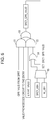
- FIG. 5 illustrates an example of a circuit that generates a GUB_READY signal
- FIG. 6 illustrates an example of a circuit that generates a GPR_VALID signal
- FIG. 7 illustrates an example of a circuit that generates a READY signal
- FIG. 8 illustrates an example of a reservation station
- FIG. 9 is a flowchart illustrating the processing of generating a READY signal.
- FIG. 1 is a block diagram illustrating an example of a configuration of components around a reservation station (RS) in a processing apparatus.
- the reservation station 11 may include a queue that stores instruction codes. When the instruction code stored in the queue is ready to be issued, the reservation station 11 may issue the instruction code to at least any of a fixed-point arithmetic circuit 12 , an address calculation circuit 13 , and a data cache 14 .
- An attack called Spectre includes the following processes:
- the speculative execution of the memory access in the process (2) is restricted in the reservation station 11 . Specifically, whether the load instruction in the process (1) has been completed, that is, whether or not the instruction is a speculative memory access and has been canceled is determined. If the speculative memory access has not been canceled, the process (1) and the process (2) are to be executed for the load instruction.
- the speculative execution is canceled before the execution of the memory access in the process (2), and thus the trace of the memory access does not remain in the data cache 14 . Accordingly, the content of the data that has been read by the process (1) is not guessed from the memory access execution time by using the trace of the memory access.
- the reservation station 11 is able to distinguish whether an instruction code is a memory access instruction or an operation instruction, select only the memory access instruction as a target to be restricted, and speculatively execute instructions such as operation instructions other than memory access instructions. Furthermore, the reservation station 11 determines whether a memory access instruction is speculative or not based on the state of a preceding instruction. When a preceding instruction has been completed (hereinafter, may be referred to as “instruction completion”), there is no time for waiting for the determination of whether or not the memory access instruction is speculative. Accordingly, while measures against security vulnerabilities are taken, the performance deterioration of the processing apparatus is reduced. In other words, when some speculative executions are restricted as measures against attacks targeting security vulnerabilities, the performance deterioration of the processing apparatus may be reduced.
- the instruction completion will be described below.
- FIG. 2 is a block diagram illustrating an example of a processing apparatus according to the embodiment.
- FIG. 2 illustrates a processor core of a processor 1 that is an example processing apparatus.
- the processor 1 includes the reservation station 11 , the data cache 14 , an instruction cache 15 , an instruction buffer 16 , a decode circuit 17 , a register management circuit 18 , a reorder buffer 19 , and an execution circuit 20 .
- the execution circuit 20 includes the fixed-point arithmetic circuit 12 , the address calculation circuit 13 , and a register 21 .
- the instruction cache 15 stores an instruction and the instruction buffer 16 stores the instruction stored in the instruction cache 15 .
- the decode circuit 17 interprets the instruction stored in the instruction buffer 16 (that is, performs instruction interpretation), and inputs the instruction code to the reservation station 11 . Accordingly, the decode circuit 17 outputs an instruction code that is a result of the decoding of an instruction.
- the reservation station 11 stores an interpreted instruction code that is a result of an instruction interpretation.
- the reservation station 11 determines whether to input an instruction code to the fixed-point arithmetic circuit 12 or the address calculation circuit 13 in the execution circuit 20 .
- the reservation station 11 is able to select an instruction code from instruction codes that are ready to be input to the execution circuit 20 and input the selected instruction to the fixed-point arithmetic circuit 12 or the address calculation circuit 13 in the execution circuit 20 in out-of-order execution not according to the original instruction order of the program (in-order execution).
- the reservation station 11 sends a general-purpose register (GPR) number and a GPR update buffer (GUB) number, which will be described below, to the register 21 in the execution circuit 20 .
- GPR general-purpose register
- GUIB GPR update buffer
- the register 21 in the execution circuit 20 includes a GPR 211 and a GUB 212 .
- the GPR 211 is a general-purpose register for fixed-point arithmetic
- the GUB 212 is a buffer for general-purpose register update and is provided to increase processing speed.
- an instruction code that is selected and input by the reservation station 11 is an operation instruction (may be referred to as “calculation instruction”
- the execution circuit 20 uses the GPR 211 for the processing and when the instruction code is a memory access instruction, uses the GPR 211 for the address calculation.
- the GPR 211 may include the GUB 212 .
- the calculation result and load data are temporarily written in the GUB 212 and, when the instruction is completed, written from the GUB 212 to the GPR 211 .
- the GUB 212 is used for the processing of an operation instruction; however, the GUB 212 is not used for the address calculation of a memory access instruction.
- data in the GUB 212 or GPR 211 is read and used for the processing in the fixed-point arithmetic circuit 12 .
- data in the GPR 211 is read and used for the address calculation in the address calculation circuit 13 , the calculated memory address is input to the data cache 14 , and the data is read.
- the data read from the data cache 14 is temporarily written in the GUB 212 , and when the instruction is completed, written from the GUB 212 to the GPR 211 . Note that if a cache miss occurs after pipeline processing, as long as the data in the GPR 211 can be read, speculative execution of the instruction can be performed.
- the fixed-point write data is sent from the fixed-point arithmetic circuit 12 to the register 21 .
- the fixed-point read data is sent from the register 21 to the fixed-point arithmetic circuit 12 and also to the address calculation circuit 13 .
- the load data from the data cache 14 is sent to the register 21 .
- the decode circuit 17 allocates the GUB 212 to the GPR 211 that is a write destination of an operation instruction.
- the register management circuit 18 includes a GPR pending register table (GPRT) that records an update buffer address (UBA) of the GUB 212 that is allocated by the decode circuit 17 .
- the UBA of the GUB 212 is an example GUB number.
- the instruction code When an instruction code is issued from the decode circuit 17 to the reservation station 11 , the instruction code registers a UBA in an entry of the GPRT that corresponds to the GPR 211 that is the write destination specified by the GPR number in the register management circuit 18 , and reads the UBA (that is, the GUB number) registered in the entry of the GPRT that corresponds to the GPR 211 of the GPR number used for the processing.
- the instruction code refers to the GUB 212 corresponding to the GUB number
- the instruction code refers to the GPR 211 specified by the GPR number and the instruction is executed.
- the reservation station 11 discards the stored GUB number and the execution circuit 20 refers to the GPR 211 corresponding to the GPR number and executes the instruction code.
- a pipeline stage in executing a load instruction includes cycles described below.
- a decode (D: Decode) cycle an instruction is decoded and sent to the reservation station 11 .
- a priority (P: Priority) cycle an instruction to be input from the reservation station 11 to the address calculation circuit 13 is determined.
- P Priority
- a buffer (B: Buffer) cycle data for the processing is determined.
- B cycle reading of the GPR 211 is also performed.
- address calculation is executed and a generated address is sent to the data cache 14 .
- T Tag read
- a tag match (M: tag Match) cycle tag matching of the data cache 14 is performed, and a cache hit determination or a cache miss determination is performed.
- a determination result is a cache miss
- the stage returns to the A cycle.
- a determination result is a cache miss
- the stage may return to the D cycle.
- C commit
- instruction completion is determined. Since the instruction completion is performed in accordance with the original instruction order, if a preceding instruction has not been completed (committed), the stage is not shifted to the C cycle.
- a reference result of the GUB 212 or a reference result of the GPR 211 is selected.
- the processing is performed in the B cycle.
- the data in the GUB 212 is written to the GPR 211 in the W cycle for performing instruction completion processing.
- the free entry in the GUB 212 is to be allocated to a succeeding instruction, and accordingly, the entry in the GUB 212 is not referred to from the time the instruction has been completed. Accordingly, the reservation station 11 holds in each entry a GPR_VALID signal that indicates whether or not the GPR 211 is to be referred to.
- the GPR_VALID signal is “1”, in the B cycle, the data read from the GPR 211 is selected.
- the GPR_VALID signal is “0”, the bypass data or the data in the the GUB 212 is selected.
- the GPR_VALID signal is held together with the UBA in the GPRT, and “0” is set when the UBA is allocated and “1” is set when the instruction is completed.
- the registration to the reservation station 11 is performed together with the UBA in referring to the GPRT.
- the setting of the GPR_VALID in the reservation station 11 is performed when the instruction is completed similarly to the GPRT.
- the processor 1 may execute processing in the out-of-order execution and the instruction execution may be different from the original instruction order of the program; however, the processor 1 executes the instruction completion in the in-order execution in accordance with the original instruction order. Accordingly, the processing from the instruction execution to the instruction completion may be immediately performed or may be performed after waiting for the execution of a preceding instruction.
- the reorder buffer 19 may input an instruction code in the out-of-order execution; however, the reorder buffer 19 completes the instruction code in the in-order execution in accordance with the original instruction order.
- the reorder buffer 19 receives the GPR number from the decode circuit 17 and receives the GUB number from the register management circuit 18 .
- the reorder buffer 19 sends the GPR number and the GUB number to the execution circuit 20 at the time of instruction completion.
- the reorder buffer 19 sends a W_UBA that is a write destination UBA of a completed instruction to the reservation station 11 .
- the execution circuit 20 writes the data of the GUB 212 that corresponds to the GUB number in the GPR 211 that corresponds to the GPR number.
- FIG. 3 illustrates an example reorder buffer and instruction completion.
- the reorder buffer 19 has four entries and reference is made to FIG. 2 .
- a determination whether or not to complete an instruction is made by using a completion notification such as a processing completion notification from the fixed-point arithmetic circuit 12 or a memory access completion notification from the data cache 14 .
- the reorder buffer 19 completes entries which have received completion notifications in order from the head. In FIG. 3 , an entry that has received a completion notification is indicated by “END”.
- the reorder buffer 19 may be, for example, a first-in-first-out (FIFO) queue that perform completion processing from the head.
- FIFO first-in-first-out
- an instruction I 2 can be simultaneously completed.
- E ⁇ B in an upper part in FIG. 3
- the instruction I 2 has received the completion notification
- the instruction I 1 has not yet been completed, and accordingly, the instruction I 2 has not been completed.
- E ⁇ C in an upper part in FIG. 3
- the instruction I 1 has completed and is at the head, and accordingly, the instruction I 1 can be completed.
- an instruction I 2 has not received the completion notification, and thus the instruction I 3 has not been completed even though the instruction I 3 has received the completion.
- the next states of the examples E ⁇ A, E ⁇ B, and E ⁇ C are illustrated in a lower part in FIG. 3 .
- the completed instructions are dequeued and the other instructions are moved, and instructions at the head positions are changed.
- the instruction has not been completed, and thus the state of the example E ⁇ B and the next state of the example E ⁇ B are the same.
- the reservation station 11 restricts issuance of a memory access instruction by using the GPR_VALID signal that is held by the reservation station 11 for each entry.
- the reservation station 11 stores a memory access instruction and also an operation instruction.
- the reservation station 11 holds a MEM_INST flag for each entry.
- the MEM_INST flag for each entry is a flag used such that even if a GUB_READY signal for a corresponding entry is set to “1”, for example, a READY signal for the corresponding entry is avoided from becoming valid, that is, in this example, avoided from being set to “1”.
- the GUB_READY signal for each entry indicates whether the data can be read from the corresponding entry in the GUB 212 .
- the decode circuit 17 determines, when interpreting the instruction, whether to set the MEM_INST flag, that is, whether to set the flag to “1” or reset to “0”. Specifically, to the reservation station 11 , the decode circuit 17 sets the MEM_INST flag that is example information for distinguishing whether the instruction is a memory access instruction or an operation instruction.
- the number of the GPR_VALID signals and the GUB_READY signals held by each entry in the reservation station 11 is the same number of source operands used for the processing.
- each of the two source operands SRC 1 and SRC 2 holds a UBA and a GPR_VALID signal.
- the first source operand SRC 1 holds a SRC 1 _UBA and a SRC 1 _GPR_VALID signal
- the second source operand SRC 2 holds a SRC 2 _UBA and a SRC 2 _GPR_VALID signal.
- To each of the UBA and GPR_VALID signal a value obtained by referring to the GPRT of the register management circuit 18 at the time of instruction decoding is registered.
- the setting of the GPRT and the GPR_VALID signal held by the reservation station 11 is performed at the time of the instruction completion.
- the source operand SRC 1 holds a SRC 1 _GUB_READY signal that indicates whether or not the data in the GUB 212 can be read.
- the source operand SRC 2 holds a SRC 2 _GUB_READY signal that indicates whether or not the data in the GUB 212 can be read. For example, when the SRC 1 _GUB_READY signal is set to “1”, it indicates that the corresponding source operand SRC 1 can be read from the GUB 212 , that is, a preceding instruction has executed the processing.
- the reservation station 11 sets the READY signal that indicates that an instruction code can be issued to “1”, and in the next cycle, the reservation station 11 is able to issue the instruction code to the fixed-point arithmetic circuit 12 or the address calculation circuit 13 .
- FIG. 4 is a flowchart illustrating processing of selecting an entry in a reservation station.
- FIG. 4 illustrates that the number of entries is five.
- a method of selecting an entry is not limited to a specific method, in this example, the description will be made by employing a bubble-up queue configuration and with reference to FIG. 2 .
- an entry 0 in the reservation station 11 is the oldest entry and an entry 4 is the newest entry. Accordingly, the entry 0 has the highest priority in selecting an entry.
- an entry 1 and all entries after the entry 1 move by one entry. Since an entry can be speculatively selected, an entry after the entry 1 may be selected. For example, when the entry 1 is selected, the entry 2 and the entries after the entry 2 move. In accordance with the rule, the entry selection is performs as illustrated in FIG. 4 .
- step S 1 whether the READY signal for the entry 0 is “1” or not is determined. If the determination result in step S 1 is YES, the entry 0 is input to the fixed-point arithmetic circuit 12 or the address calculation circuit 13 (step S 2 ). If the determination result in step S 1 is NO, whether the READY signal for the entry 1 is “1” or not is determined (step S 3 ). If the determination result in step S 3 is YES, the entry 1 is input to the fixed-point arithmetic circuit 12 or the address calculation circuit 13 (step S 4 ). If the determination result in step S 3 is NO, whether the READY signal for the entry 2 is “1” or not is determined (step S 5 ).
- step S 5 If the determination result in step S 5 is YES, the entry 2 is input to the fixed-point arithmetic circuit 12 or the address calculation circuit 13 (step S 6 ). If the determination result in step S 5 is NO, whether the READY signal for the entry 3 is “1” or not is determined (step S 7 ). If the determination result in step S 7 is YES, the entry 3 is input to the fixed-point arithmetic circuit 12 or the address calculation circuit 13 (step S 8 ). If the determination result in step S 7 is NO, whether the READY signal for the entry 4 is “1” or not is determined (step S 9 ).
- step S 9 If the determination result in step S 9 is YES, the entry 4 is input to the fixed-point arithmetic circuit 12 or the address calculation circuit 13 (step S 10 ). If the determination result in step S 9 is NO, all READY signals for the entries are not set to “1”, and no instruction is input to the fixed-point arithmetic circuit 12 or the address calculation circuit 13 (step S 11 ). After one of the steps S 2 , S 4 , S 6 , S 8 , S 10 , and S 11 , the processing ends.
- the READY signal for a memory access instruction when the READY signal for a memory access instruction is set to “1”, not only relying on only the GUB_READY signal, but also the GPR_VALID signal is set to “1”, and then, the READY signal is set to “1”.
- the memory access instruction executes the processing by referring to the GPR 211 without referring to the GUB 212 .
- Writing from the GUB 212 to the GPR 211 is performed after completion of the instruction, that is, after it is confirmed that the instruction for updating the GPR 211 is not speculative and is not canceled.
- the GPR_VALID signal is set to “0”, and a memory access instruction in the process (2) by an attack such as Spectre is canceled without being issued from the reservation station 11 . Accordingly, the memory access instruction does not speculatively access the data cache 14 and no trace remains in the data cache 14 .
- an operation instruction uses the GUB_READY signal to set the READY signal for the operation instruction to “1”, and thus speculatively executes the instruction without being directly affected by the control.
- FIG. 5 illustrates an example of a circuit that generates a GUB_READY signal for a reservation station.
- FIG. 5 illustrates circuits for one entry for the source operand SRC 1 . Circuits for the source operand SRC 2 have a similar configuration. Accordingly, for each source operand, similar circuits are configured for each entry in the reservation station 11 .
- the circuits in FIG. 5 include AND circuits 51 and 52 , OR circuits 53 and 54 , and a match detection circuit 55 . To the AND circuit 51 , a GUB_READY signal from the GPRT in the register management circuit 18 and a VALID signal from the decode circuit 17 to the entry are input.
- an ENTRY_VALID signal and an output from the OR circuit 54 are input.
- an OR circuit 53 outputs from the AND circuits 51 and 52 are input.
- an SRC 1 _UBA and a T_UBA are input.
- the SRC 1 _UBA contains a write destination UBA of a preceding dependent instruction.
- the T_UBA from the data cache 14 is a write destination UBA of a load instruction, and is a signal of the T cycle.
- a SET_SRC 1 _GUB_READY signal which is an output from the match detection circuit 55
- a SRC 1 _GUB_READY signal which is an output from the OR circuit 53
- the VALID signal from the decode circuit 17 to the entry is set to “1”.
- the instruction code is registered in a free entry, and thus the ENTRY_VALID signal that indicates whether the entry in the reservation station 11 is occupied and valid is set to “0”. Accordingly, the output from the AND circuit 52 is “0” and whether “0” is set or “1” is set to the SRC 1 _GUB_READY signal is determined by a GUB_READY signal from the GPRT.
- the ENTRY_VALID signal is “1”, the entry is not free, and it is ensured that the VALID signal from the decode circuit 17 to the entry is not “1”, and the output by the AND circuit 51 becomes “0”.
- the value to be set to the SRC 1 _GPR_VALID signal is determined by an output from the OR circuit 54 .
- One of the inputs to the OR circuit 54 is input by looping back the value of the SRC 1 _GPR_VALID signal that is output from the OR circuit 53 .
- the SRC 1 _GPR_VALID signal is reset to “0” while the SRC 1 _GUB_READY signal holds the state “1”
- the ENTRY_VALID signal becomes “0”, that is, the instruction code is input from the reservation station 11 to the fixed-point arithmetic circuit 12 or the address calculation circuit 13 .
- the SRC 1 _UBA contains a write destination UBA of a preceding dependent instruction.
- the T_UBA is a write destination UBA of a load instruction, and is a signal of the T cycle. The signal of the T cycle is used in order to minimize the timing from writing to the GUB 212 to reading of a subsequent instruction from the GUB 212 .
- FIG. 6 illustrates an example of a circuit that generates a GPR_VALID signal for a reservation station.
- FIG. 6 illustrates, with reference to FIG. 2 , circuits for one entry for the source operand SRC 1 . Circuits for the source operand SRC 2 have a similar configuration. Accordingly, for each source operand, similar circuits are configured for each entry in the reservation station 11 .
- the circuits in FIG. 6 include AND circuits 61 and 62 , OR circuits 63 and 64 , and a match detection circuit 65 . To the AND circuit 61 , a GPR_VALID signal from the GPRT in the register management circuit 18 and a VALID signal from the decode circuit 17 to the entry are input.
- an ENTRY_VALID signal and an output from the OR circuit 64 are input.
- outputs from the AND circuits 61 and 62 are input.
- a SRC 1 _UBA and a W_UBA which is a write destination UBA of a completed instruction and output from the reorder buffer 19 , are input.
- a SET_SRC 1 _GPR_VALID signal which is an output from the match detection circuit 65
- a SRC 1 _GPR_VALID signal which is an output from the OR circuit 63 , are input.
- the VALID signal from the decode circuit 17 to the entry is set to “1”.
- the instruction code is registered in a free entry, and thus the ENTRY_VALID signal that indicates whether the entry in the reservation station 11 is occupied and valid is set to “0”. Accordingly, the output from the AND circuit 62 is “0” and whether “0” is set or “1” is set to the SRC 1 _GPR_VALID signal is determined by a GPR_VALID signal from the GPRT.
- the entry is not free, and it is ensured that the VALID signal from the decode circuit 17 to the entry is not “1” and the output from the AND circuit 61 becomes “0”.
- the ENTRY_VALID signal is “1”
- the value to be set to the SRC 1 _GPR_VALID signal is determined by an output from the OR circuit 64 .
- One of the inputs to the OR circuit 64 is input by looping back the value of the SRC 1 _GPR_VALID signal that is output by the OR circuit 63 .
- the SRC 1 _GPR_VALID signal When the SRC 1 _GPR_VALID signal is reset to “0” while the SRC 1 _GPR_VALID signal holds the state “1”, the ENTRY_VALID signal becomes “0”, that is, the instruction code is input from the reservation station 11 to the fixed-point arithmetic circuit 12 or the address calculation circuit 13 .
- the output from the match detection circuit 65 is to be “1”.
- the SRC 1 _UBA contains a write destination UBA of a preceding dependent instruction.
- FIG. 7 illustrates an example of a circuit that generates a READY signal for a reservation station.
- the circuits in FIG. 7 are provided for one entry, and include an inverter circuit 71 , AND circuits 72 , 73 and 76 , and OR circuits 74 and 75 .
- a MEM_INST flag is input to the AND circuits 72 and 73 via the inverter circuit 71 .
- a SRC 1 _GUB_READY signal is also input.
- a SRC 2 _GUB_READY signal is also input.
- an output from the AND circuit 72 and a SRC 1 _GPR_VALID signal are input.
- an output from the AND circuit 73 and a SRC 2 _GPR_VALID signal are input.
- the SRC 1 _GPR_VALID signal indicates whether or not the processing refers to the GPR 211 of the GPR number that stores the source operand SRC 1 of the entry.
- the SRC 2 _GPR_VALID signal indicates whether or not the processing refers to the GPR 211 of the GPR number that stores the source operand SRC 2 of the entry.
- outputs from the OR circuits 74 and 75 are input.
- the AND circuit 76 outputs a READY signal.
- the READY signal is not set “1” when the GPR 211 and the GUB 212 are not able to be read.
- the SRC 1 _GUB_READY signal and the SRC 2 _GUB_READY signal indicate whether or not processing results of dependent instructions of the source operand SRC 1 and the source operand SRC 2 are stored in the GUB 212 and can be read respectively.
- the SRC 1 _GUB_READY signal indicates whether or not the data can be read from the GUB 212 of the GUB number that stores the source operand SRC 1 of the entry.
- the SRC 2 _GUB_READY signal indicates whether or not the data can be read from the GUB 212 of the GUB number that stores the source operand SRC 2 of the entry.
- the SRC 1 _GUB_READY signal and the SRC 2 _GUB_READY signal are set by match detection of UBAs when a preceding instruction is issued to the fixed-point arithmetic circuit 12 , the address calculation circuit 13 , or the data cache 14 .
- the MEM_INST flag indicates that the instruction to the entry is an operation instruction when a signal generated by instruction interpretation performed by the decode circuit 17 is registered in the reservation station 11 and the MEM_INST flag is “0”.
- the MEM_INST flag is inverted in polarity by the inverter circuit 71 and “1” is input to the AND circuits 72 and 73 .
- the SRC 1 _GUB_READY signal and the SRC 2 _GUB_READY signal that are the other inputs of the AND circuits 72 and 73 are output as the results of the AND circuits 72 and 73 .
- the MEM_INST flag is “1”, it indicates that the instruction of the entry is a memory access instruction.
- one of the inputs of the AND circuits 72 and 73 become “0”, and thus the outputs are “0”.
- the OR circuit 74 the output of the AND circuit 72 and the value of the SRC 1 _GPR_VALID signal are ORed, that is, the output of the OR circuit 74 indicates that the data of the source operand SRC 1 is in the GUB or the GPR and can be read.
- the output of the OR circuit 75 indicates that the data of the source operand SRC 2 is in the GUB or the GPR and can be read.
- the AND circuit 76 when both the source operand SRC 1 and the SRC 2 can be read, the output becomes “1” and the READY signal is set to “1”.
- the signal obtained by inverting the polarity of the MEM_INST flag and the GUB_READY signal are ANDed by the AND circuits 72 and 73 .
- the outputs of the AND circuits 72 and 73 are “0”, and thus the READY signal does not become “1” until the GPR_VALID signal becomes “1”.
- FIG. 8 illustrates an example of a configuration of a reservation station, and illustrates the connection relationships in FIG. 5 , FIG. 6 , and FIG. 7 .
- FIG. 8 illustrates circuit sections for ten entries; however, the number of entries may be set in accordance with the usage.
- Circuits 85 - 0 to 85 - 9 are provided for ten entries 0 to 9 respectively and each circuit has the configuration illustrated in FIG. 5 .
- a circuit 81 includes storage cells that store the GUB_READY signals for the entries, such as flop-flops. For example, for the entry 0 , the circuit 81 stores a RS_ 0 _SRC 1 / 2 _GUB_READY signal for the source operands SRC 1 and SRC 2 from the circuit 85 - 0 .
- Circuits 86 - 0 to 86 - 9 are provided for the ten entries 0 to 9 respectively and each circuit has the configuration illustrated in FIG. 6 .
- a circuit 82 includes storage cells that store the GPR_VALID signals for the entries, such as flop-flops.
- the circuit 82 stores a RS_ 0 _SRC 1 / 2 _GPR_VALID signal for the source operands SRC 1 and SRC 2 from the circuit 86 - 0 .
- Circuits 87 - 0 to 87 - 9 are provided for the ten entries 0 to 9 respectively and each circuit has the configuration illustrated in FIG. 7 .
- a circuit 83 includes storage cells that store the READY signals for the entries, such as flop-flops. For example, for the entry 0 , the circuit 83 stores a RS_ 0 _READY signal from the circuit 87 - 0 .
- a selector circuit 84 selects, from a RS_ 0 _READY signal to a RS_ 9 _READY signal for the entries 0 to 9 that are stored in the circuit 83 , signals that become “1” from an oldest signal as READY signals to the execution circuit 20 .
- FIG. 9 is a flowchart illustrating the processing of generating a READY signal.
- the processing illustrated in FIG. 9 corresponds to the operation of the selector circuit 84 in FIG. 8 .
- step S 21 whether an instruction is a memory access instruction or not is determined.
- step S 22 whether a GPR_VALID signal for the source operand SRC 1 has been set or not is determined.
- step S 22 whether a GPR_VALID signal for the source operand SRC 1 has been set or not is determined.
- step S 23 determines whether a GPR_VALID signal for the source operand SRC 2 has been set or not.
- the speculative execution of the memory access in the process (2) is restricted by the reservation station 11 . Specifically, whether the load instruction in the process (1) has been completed, that is, whether or not the instruction is a speculative access and has been canceled is determined. When the speculative access has been canceled, the execution is canceled before the execution of the memory access in the process (2), and thus the trace of the memory access does not remain in the data cache 14 .
- the operation according to the embodiment is implemented by using the existing GPR_VALID signal.
- a signal that corresponds to the GPR_VALID signal capable of indicating an instruction completion state for example, a signal that is capable of indicating a completion state of a dependent instruction with respect to a source operand may be added to implement the operation.
- the reservation station focuses on the memory access instruction as the target to be restricted, and after a memory access instruction is issued, the reservation station waits for the completion of the memory access instruction to issue a subsequent instruction to the execution circuit. Furthermore, when the reservation station issues an operation instruction to the execution circuit, after detecting that all operands to be used for the processing are ready, in the next cycle, issues a subsequent instruction to the execution circuit, and thus enabling the speculative execution of the operation instruction. Since the reservation station waits for the completion of an instruction of an address generation dependent source and issues a memory access instruction to the execution circuit, the performance deterioration of the processor may be reduced. Furthermore, the reservation station restricts some of the speculative execution and thus the security strength against the security vulnerabilities of the processor may be increased.
Landscapes
- Engineering & Computer Science (AREA)
- Software Systems (AREA)
- Theoretical Computer Science (AREA)
- Physics & Mathematics (AREA)
- General Engineering & Computer Science (AREA)
- General Physics & Mathematics (AREA)
- Computer Security & Cryptography (AREA)
- Computer Hardware Design (AREA)
- Advance Control (AREA)
- Storage Device Security (AREA)
Abstract
Description
- (1) causing a processing apparatus to execute a program at a wrong branch destination to cause the hardware to speculatively perform memory access to an address of an access prohibited area protected by the operation of the program to read the data; and
- (2) converting the read data into an address and perform memory access. The access prohibited area is set, for example, by an operating system (OS). The speculative memory access is speculatively executed by the hardware and is an instruction not executed in the original operation. Accordingly, the processes (1) and (2) will be canceled in the end, however, the trace of the memory access in the process (2) will remain in the cache. If the trace of the memory access remains in the data cache, the content of the data that has been read by the process (1) can be guessed from the memory access execution time.
Claims (10)
Applications Claiming Priority (3)
| Application Number | Priority Date | Filing Date | Title |
|---|---|---|---|
| JP2018109332A JP7020304B2 (en) | 2018-06-07 | 2018-06-07 | Arithmetic processing unit and control method of arithmetic processing unit |
| JPJP2018-109332 | 2018-06-07 | ||
| JP2018-109332 | 2018-06-07 |
Publications (2)
| Publication Number | Publication Date |
|---|---|
| US20190377581A1 US20190377581A1 (en) | 2019-12-12 |
| US11055101B2 true US11055101B2 (en) | 2021-07-06 |
Family
ID=68764616
Family Applications (1)
| Application Number | Title | Priority Date | Filing Date |
|---|---|---|---|
| US16/423,898 Active 2039-09-20 US11055101B2 (en) | 2018-06-07 | 2019-05-28 | Processing apparatus and controlling method for processing apparatus |
Country Status (2)
| Country | Link |
|---|---|
| US (1) | US11055101B2 (en) |
| JP (1) | JP7020304B2 (en) |
Families Citing this family (3)
| Publication number | Priority date | Publication date | Assignee | Title |
|---|---|---|---|---|
| JP6941972B2 (en) | 2017-05-16 | 2021-09-29 | Tdk株式会社 | Magnetic sensor |
| US11119784B2 (en) | 2018-06-29 | 2021-09-14 | Intel Corporation | Efficient mitigation of side-channel based attacks against speculative execution processing architectures |
| CN114003289B (en) * | 2021-11-02 | 2024-09-10 | 武汉深之度科技有限公司 | Application program running method, computing device and storage medium |
Citations (8)
| Publication number | Priority date | Publication date | Assignee | Title |
|---|---|---|---|---|
| JPH03240131A (en) | 1990-02-16 | 1991-10-25 | Nec Corp | Information processor |
| US5553256A (en) * | 1994-02-28 | 1996-09-03 | Intel Corporation | Apparatus for pipeline streamlining where resources are immediate or certainly retired |
| US6339821B1 (en) * | 1998-10-06 | 2002-01-15 | Mitsubishi Denki Kabushiki Kaisha | Data processor capable of handling an increased number of operation codes |
| US6553484B1 (en) * | 1998-11-30 | 2003-04-22 | Nec Corporation | Instruction-issuing circuit that sets reference dependency information in a preceding instruction when a succeeding instruction is stored in an instruction out-of-order buffer |
| US20040006684A1 (en) * | 2002-07-05 | 2004-01-08 | Fujitsu Limited | Instruction execution apparatus |
| US20080109614A1 (en) * | 2006-11-06 | 2008-05-08 | Arm Limited | Speculative data value usage |
| US20100095092A1 (en) * | 2007-06-20 | 2010-04-15 | Fujitsu Limited | Instruction execution control device and instruction execution control method |
| US20160357552A1 (en) * | 2015-06-02 | 2016-12-08 | Fujitsu Limited | Arithmetic processing device and processing method of arithmetic processing device |
Family Cites Families (1)
| Publication number | Priority date | Publication date | Assignee | Title |
|---|---|---|---|---|
| JP6819166B2 (en) | 2016-09-13 | 2021-01-27 | 富士通株式会社 | Arithmetic processing unit and control method of arithmetic processing unit |
-
2018
- 2018-06-07 JP JP2018109332A patent/JP7020304B2/en active Active
-
2019
- 2019-05-28 US US16/423,898 patent/US11055101B2/en active Active
Patent Citations (8)
| Publication number | Priority date | Publication date | Assignee | Title |
|---|---|---|---|---|
| JPH03240131A (en) | 1990-02-16 | 1991-10-25 | Nec Corp | Information processor |
| US5553256A (en) * | 1994-02-28 | 1996-09-03 | Intel Corporation | Apparatus for pipeline streamlining where resources are immediate or certainly retired |
| US6339821B1 (en) * | 1998-10-06 | 2002-01-15 | Mitsubishi Denki Kabushiki Kaisha | Data processor capable of handling an increased number of operation codes |
| US6553484B1 (en) * | 1998-11-30 | 2003-04-22 | Nec Corporation | Instruction-issuing circuit that sets reference dependency information in a preceding instruction when a succeeding instruction is stored in an instruction out-of-order buffer |
| US20040006684A1 (en) * | 2002-07-05 | 2004-01-08 | Fujitsu Limited | Instruction execution apparatus |
| US20080109614A1 (en) * | 2006-11-06 | 2008-05-08 | Arm Limited | Speculative data value usage |
| US20100095092A1 (en) * | 2007-06-20 | 2010-04-15 | Fujitsu Limited | Instruction execution control device and instruction execution control method |
| US20160357552A1 (en) * | 2015-06-02 | 2016-12-08 | Fujitsu Limited | Arithmetic processing device and processing method of arithmetic processing device |
Non-Patent Citations (1)
| Title |
|---|
| Jann Horn, "Reading privileged memory with a side-channel", [online], [searched on May 9, 2018], Project Zero, internet <https://googleprojectzero.blogspot.com/2018/01/reading-privileged-memory-with-side.html?m=1> (51 pages). |
Also Published As
| Publication number | Publication date |
|---|---|
| US20190377581A1 (en) | 2019-12-12 |
| JP7020304B2 (en) | 2022-02-16 |
| JP2019212152A (en) | 2019-12-12 |
Similar Documents
| Publication | Publication Date | Title |
|---|---|---|
| US8285947B2 (en) | Store hit load predictor | |
| US6185676B1 (en) | Method and apparatus for performing early branch prediction in a microprocessor | |
| US8074060B2 (en) | Out-of-order execution microprocessor that selectively initiates instruction retirement early | |
| JPH0619707A (en) | Information processor | |
| US20180349144A1 (en) | Method and apparatus for branch prediction utilizing primary and secondary branch predictors | |
| US10853072B2 (en) | Arithmetic processing apparatus and method of controlling arithmetic processing apparatus | |
| US10048969B2 (en) | Dynamic branch predictor indexing a plurality of weight tables by instruction address fetch history and making a prediction based on a product sum calculation of global history register values and outputted weight table value | |
| US11055101B2 (en) | Processing apparatus and controlling method for processing apparatus | |
| CN117806706B (en) | Storage order violation processing method, storage order violation processing device, electronic equipment and medium | |
| US10853081B2 (en) | Processor and pipelining method | |
| US11567767B2 (en) | Method and apparatus for front end gather/scatter memory coalescing | |
| US9841974B2 (en) | Renaming with generation numbers | |
| US20220035633A1 (en) | Method and Apparatus for Back End Gather/Scatter Memory Coalescing | |
| US10977040B2 (en) | Heuristic invalidation of non-useful entries in an array | |
| JP3683439B2 (en) | Information processing apparatus and method for suppressing branch prediction | |
| US20100306513A1 (en) | Processor Core and Method for Managing Program Counter Redirection in an Out-of-Order Processor Pipeline | |
| US10929137B2 (en) | Arithmetic processing device and control method for arithmetic processing device | |
| US8683181B2 (en) | Processor and method for distributing load among plural pipeline units | |
| US11720366B2 (en) | Arithmetic processing apparatus using either simple or complex instruction decoder | |
| US9710389B2 (en) | Method and apparatus for memory aliasing detection in an out-of-order instruction execution platform | |
| JP2020027533A (en) | Arithmetic processing unit and control method of arithmetic processing unit | |
| US11314505B2 (en) | Arithmetic processing device | |
| RU2816092C1 (en) | Vliw processor with improved performance at operand update delay | |
| US12190115B2 (en) | Processing call and return information due to a branch prediction error | |
| JP6340887B2 (en) | Arithmetic processing device and control method of arithmetic processing device |
Legal Events
| Date | Code | Title | Description |
|---|---|---|---|
| FEPP | Fee payment procedure |
Free format text: ENTITY STATUS SET TO UNDISCOUNTED (ORIGINAL EVENT CODE: BIG.); ENTITY STATUS OF PATENT OWNER: LARGE ENTITY |
|
| AS | Assignment |
Owner name: FUJITSU LIMITED, JAPAN Free format text: ASSIGNMENT OF ASSIGNORS INTEREST;ASSIGNORS:SAKASHITA, SOTA;GOMYO, NORIHITO;REEL/FRAME:049301/0754 Effective date: 20190426 |
|
| STPP | Information on status: patent application and granting procedure in general |
Free format text: DOCKETED NEW CASE - READY FOR EXAMINATION |
|
| STPP | Information on status: patent application and granting procedure in general |
Free format text: NON FINAL ACTION MAILED |
|
| STPP | Information on status: patent application and granting procedure in general |
Free format text: RESPONSE TO NON-FINAL OFFICE ACTION ENTERED AND FORWARDED TO EXAMINER |
|
| STPP | Information on status: patent application and granting procedure in general |
Free format text: NOTICE OF ALLOWANCE MAILED -- APPLICATION RECEIVED IN OFFICE OF PUBLICATIONS |
|
| STPP | Information on status: patent application and granting procedure in general |
Free format text: PUBLICATIONS -- ISSUE FEE PAYMENT RECEIVED |
|
| STPP | Information on status: patent application and granting procedure in general |
Free format text: PUBLICATIONS -- ISSUE FEE PAYMENT VERIFIED |
|
| STCF | Information on status: patent grant |
Free format text: PATENTED CASE |
|
| MAFP | Maintenance fee payment |
Free format text: PAYMENT OF MAINTENANCE FEE, 4TH YEAR, LARGE ENTITY (ORIGINAL EVENT CODE: M1551); ENTITY STATUS OF PATENT OWNER: LARGE ENTITY Year of fee payment: 4 |