US11046889B2 - Polymerizable compound and optically anisotropic body - Google Patents
Polymerizable compound and optically anisotropic body Download PDFInfo
- Publication number
- US11046889B2 US11046889B2 US16/060,265 US201616060265A US11046889B2 US 11046889 B2 US11046889 B2 US 11046889B2 US 201616060265 A US201616060265 A US 201616060265A US 11046889 B2 US11046889 B2 US 11046889B2
- Authority
- US
- United States
- Prior art keywords
- group
- oco
- coo
- formula
- carbon atoms
- Prior art date
- Legal status (The legal status is an assumption and is not a legal conclusion. Google has not performed a legal analysis and makes no representation as to the accuracy of the status listed.)
- Active, expires
Links
- 0 C.C.C*OC Chemical compound C.C.C*OC 0.000 description 56
- XTWNAXBUUTYLHA-UHFFFAOYSA-N CC1=CC(C)=C(C)C=C1.CC1=CC(C)=C(C)C=C1.CC1=CC(C)=C2C=CC=CC2=C1C.CC1=CC(C)=C2C=CC=CC2=C1C.CC1=CC2=CC=C(C)C(C)=C2C=C1.CC1=CC=C2C(=C1)C=CC(C)=C2C.CC1CCC(C)C(C)C1.CC1CCC(C)C(C)C1 Chemical compound CC1=CC(C)=C(C)C=C1.CC1=CC(C)=C(C)C=C1.CC1=CC(C)=C2C=CC=CC2=C1C.CC1=CC(C)=C2C=CC=CC2=C1C.CC1=CC2=CC=C(C)C(C)=C2C=C1.CC1=CC=C2C(=C1)C=CC(C)=C2C.CC1CCC(C)C(C)C1.CC1CCC(C)C(C)C1 XTWNAXBUUTYLHA-UHFFFAOYSA-N 0.000 description 3
- NHDZESQHWMKRPE-UHFFFAOYSA-N C.C.CCC Chemical compound C.C.CCC NHDZESQHWMKRPE-UHFFFAOYSA-N 0.000 description 2
- YJOFEEDRGKIACD-DTIUSNCKSA-N C/C([Y])=N/N(C)C.CC(C)=N/N=C(/C)[Y] Chemical compound C/C([Y])=N/N(C)C.CC(C)=N/N=C(/C)[Y] YJOFEEDRGKIACD-DTIUSNCKSA-N 0.000 description 2
- ICMRLODBPLUOBP-UHFFFAOYSA-N C1=CC2=C(C1)CC=C2.C1=CC2=C(C=C1)CC=C2.C1=CC2=C(C=CC2)C1.C1=CC=C2/C=C\C=C/C2=C1.C1=CC=CC=C1.C1=CCC=C1 Chemical compound C1=CC2=C(C1)CC=C2.C1=CC2=C(C=C1)CC=C2.C1=CC2=C(C=CC2)C1.C1=CC=C2/C=C\C=C/C2=C1.C1=CC=CC=C1.C1=CCC=C1 ICMRLODBPLUOBP-UHFFFAOYSA-N 0.000 description 2
- XGWCREQGNYLILW-UHFFFAOYSA-N C1=CC=C2C=CC=CC2=C1.C1=CC=C2C=NC=CC2=C1.C1=CC=C2C=NN=CC2=C1.C1=CC=C2N=CC=CC2=C1.C1=CC=C2N=CC=NC2=C1.C1=CC=C2N=CN=CC2=C1.C1=CC=C2N=NC=CC2=C1 Chemical compound C1=CC=C2C=CC=CC2=C1.C1=CC=C2C=NC=CC2=C1.C1=CC=C2C=NN=CC2=C1.C1=CC=C2N=CC=CC2=C1.C1=CC=C2N=CC=NC2=C1.C1=CC=C2N=CN=CC2=C1.C1=CC=C2N=NC=CC2=C1 XGWCREQGNYLILW-UHFFFAOYSA-N 0.000 description 2
- RGOBAGYAICWZHI-MNYXATJNSA-N *.C=C1C2=C(C=CC=C2)CCC2=C1C=CC=C2.C=C1C2=C(C=CC=C2)COC2=C1C=CC=C2.C=C1C2=C(C=CC=C2)CSC2=C1C=CC=C2.[3H]N1CC2=C(C=CC=C2)C(=C)C2=C1C=CC=C2 Chemical compound *.C=C1C2=C(C=CC=C2)CCC2=C1C=CC=C2.C=C1C2=C(C=CC=C2)COC2=C1C=CC=C2.C=C1C2=C(C=CC=C2)CSC2=C1C=CC=C2.[3H]N1CC2=C(C=CC=C2)C(=C)C2=C1C=CC=C2 RGOBAGYAICWZHI-MNYXATJNSA-N 0.000 description 1
- YBHQHTAOFQLZCQ-MNYXATJNSA-O *.C=C1C=CC2=C1C=CC=C2.C=C1C=NC2=C1C=CC=C2.[3H][N+]1=CC(=C)C2=C1C=CC=C2 Chemical compound *.C=C1C=CC2=C1C=CC=C2.C=C1C=NC2=C1C=CC=C2.[3H][N+]1=CC(=C)C2=C1C=CC=C2 YBHQHTAOFQLZCQ-MNYXATJNSA-O 0.000 description 1
- YDFMNJYZYJDFNL-MNYXATJNSA-N *.C=C1CC2=C(/C=C\C=C/2)CC2=C1C=CC=C2.C=C1CC2=C(/C=C\C=C/2)OC2=C1C=CC=C2.C=C1CC2=C(/C=C\C=C/2)SC2=C1C=CC=C2.[3H]N1C2=C(C=CC=C2)C(=C)CC2=C1/C=C\C=C/2 Chemical compound *.C=C1CC2=C(/C=C\C=C/2)CC2=C1C=CC=C2.C=C1CC2=C(/C=C\C=C/2)OC2=C1C=CC=C2.C=C1CC2=C(/C=C\C=C/2)SC2=C1C=CC=C2.[3H]N1C2=C(C=CC=C2)C(=C)CC2=C1/C=C\C=C/2 YDFMNJYZYJDFNL-MNYXATJNSA-N 0.000 description 1
- LGLYKUUZFYDOQG-MNYXATJNSA-N *.C=C1CCC2=C1C=CC=C2.C=C1COC2=C1C=CC=C2.C=C1CSC2=C1C=CC=C2.[3H]N1CC(=C)C2=C1C=CC=C2 Chemical compound *.C=C1CCC2=C1C=CC=C2.C=C1COC2=C1C=CC=C2.C=C1CSC2=C1C=CC=C2.[3H]N1CC(=C)C2=C1C=CC=C2 LGLYKUUZFYDOQG-MNYXATJNSA-N 0.000 description 1
- JRKYCZKODVJWRR-MNYXATJNSA-N *.CN1C2=C(C=CC=C2)CCC2=C1C=CC=C2.CN1C2=C(C=CC=C2)COC2=C1C=CC=C2.CN1C2=C(C=CC=C2)CSC2=C1C=CC=C2.[3H]N1CC2=C(C=CC=C2)N(C)C2=C1C=CC=C2 Chemical compound *.CN1C2=C(C=CC=C2)CCC2=C1C=CC=C2.CN1C2=C(C=CC=C2)COC2=C1C=CC=C2.CN1C2=C(C=CC=C2)CSC2=C1C=CC=C2.[3H]N1CC2=C(C=CC=C2)N(C)C2=C1C=CC=C2 JRKYCZKODVJWRR-MNYXATJNSA-N 0.000 description 1
- JBTARQIPBMLWJU-MNYXATJNSA-O *.CN1C=CC2=C1/C=C\C=C/2.CN1C=NC2=C1/C=C\C=C/2.[3H][N+]1=CN(C)C2=C1/C=C\C=C/2 Chemical compound *.CN1C=CC2=C1/C=C\C=C/2.CN1C=NC2=C1/C=C\C=C/2.[3H][N+]1=CN(C)C2=C1/C=C\C=C/2 JBTARQIPBMLWJU-MNYXATJNSA-O 0.000 description 1
- RAUXRHXZQKGAOL-MNYXATJNSA-N *.CN1CCC2=C1/C=C\C=C/2.CN1COC2=C1/C=C\C=C/2.CN1CSC2=C1/C=C\C=C/2.[3H]N1CN(C)C2=C1/C=C\C=C/2 Chemical compound *.CN1CCC2=C1/C=C\C=C/2.CN1COC2=C1/C=C\C=C/2.CN1CSC2=C1/C=C\C=C/2.[3H]N1CN(C)C2=C1/C=C\C=C/2 RAUXRHXZQKGAOL-MNYXATJNSA-N 0.000 description 1
- NYWRJUQAYOUILC-SUSXHXAKSA-M B.C.C1CCOC1.C=CC(=O)OCCCCCCOC1=CC=C(O)C=C1.C=CC(=O)OCCCCCCOC1=CC=C(OC(=O)C2CCC(COC3=CC=C(OCC4CCC(C(=O)OC5=CC=C(OCCCCCCOC(=O)C=C)C=C5)CC4)C(OC)=C3)CC2)C=C1.CO.COC(=O)C1CCC(C(=O)O)CC1.COC(=O)C1CCC(CO)CC1.COC(=O)C1CCC(COC2=CC=C(OCC3CCC(C(=O)OC)CC3)C(C=O)=C2)CC1.COCC1CCC(C(=O)OC)CC1.COCCOCCBr.COCCOCCN(N)C1=NC2=CC=CC=C2S1.COCCOCCN(N)C1=NC2=CC=CC=C2S1.COCCOCCNN.ClC1=NC2=CC=CC=C2S1.ClCCl.ClCCl.NN.O.O=CC1=CC(O)=CC=C1O.O=CC1=CC(OCC2CCC(C(=O)O)CC2)=CC=C1OCC1CCC(C(=O)O)CC1.O=COO[K].[2H]CF.[KH] Chemical compound B.C.C1CCOC1.C=CC(=O)OCCCCCCOC1=CC=C(O)C=C1.C=CC(=O)OCCCCCCOC1=CC=C(OC(=O)C2CCC(COC3=CC=C(OCC4CCC(C(=O)OC5=CC=C(OCCCCCCOC(=O)C=C)C=C5)CC4)C(OC)=C3)CC2)C=C1.CO.COC(=O)C1CCC(C(=O)O)CC1.COC(=O)C1CCC(CO)CC1.COC(=O)C1CCC(COC2=CC=C(OCC3CCC(C(=O)OC)CC3)C(C=O)=C2)CC1.COCC1CCC(C(=O)OC)CC1.COCCOCCBr.COCCOCCN(N)C1=NC2=CC=CC=C2S1.COCCOCCN(N)C1=NC2=CC=CC=C2S1.COCCOCCNN.ClC1=NC2=CC=CC=C2S1.ClCCl.ClCCl.NN.O.O=CC1=CC(O)=CC=C1O.O=CC1=CC(OCC2CCC(C(=O)O)CC2)=CC=C1OCC1CCC(C(=O)O)CC1.O=COO[K].[2H]CF.[KH] NYWRJUQAYOUILC-SUSXHXAKSA-M 0.000 description 1
- GRUGGNRLICKINM-AHFCKRAXSA-M B.C1CCOC1.C1CCOC1.C=CC(=O)OCCOCCOCCOC1=CC=C(O)C=C1.C=CC(=O)OCCOCCOCCOC1=CC=C(OC(=O)C2CCC(COC3=CC=C(OCC4CCC(C(=O)OC5=CC=C(OCCOCCOCCOC(=O)C=C)C=C5)CC4)C(/C=N/N(CCCCCC)/C4=N/C5=C(C=CC=C5)S4)=C3)CC2)C=C1.C=CC(=O)OCCOCCOCCOC1=CC=C(OC(=O)C2CCC(COC3=CC=C(OCC4CCC(C(=O)OC5=CC=C(OCCOCCOCCOC(=O)C=C)C=C5)CC4)C(C=O)=C3)CC2)C=C1.CCCCCCN(N)C1=NC2=CC=CC=C2S1.CO.COC(=O)C1CCC(C(=O)O)CC1.COC(=O)C1CCC(CO)CC1.COC(=O)C1CCC(COC2=CC=C(OCC3CCC(C(=O)OC)CC3)C(C=O)=C2)CC1.COC(=O)C1CCC(COS(C)(=O)=O)CC1.ClCCl.ClCCl.O=CC1=CC(O)=CC=C1O.O=CC1=CC(OCC2CCC(C(=O)O)CC2)=CC=C1OCC1CCC(C(=O)O)CC1.O=COO[K].[2H]CF.[I-5].[KH] Chemical compound B.C1CCOC1.C1CCOC1.C=CC(=O)OCCOCCOCCOC1=CC=C(O)C=C1.C=CC(=O)OCCOCCOCCOC1=CC=C(OC(=O)C2CCC(COC3=CC=C(OCC4CCC(C(=O)OC5=CC=C(OCCOCCOCCOC(=O)C=C)C=C5)CC4)C(/C=N/N(CCCCCC)/C4=N/C5=C(C=CC=C5)S4)=C3)CC2)C=C1.C=CC(=O)OCCOCCOCCOC1=CC=C(OC(=O)C2CCC(COC3=CC=C(OCC4CCC(C(=O)OC5=CC=C(OCCOCCOCCOC(=O)C=C)C=C5)CC4)C(C=O)=C3)CC2)C=C1.CCCCCCN(N)C1=NC2=CC=CC=C2S1.CO.COC(=O)C1CCC(C(=O)O)CC1.COC(=O)C1CCC(CO)CC1.COC(=O)C1CCC(COC2=CC=C(OCC3CCC(C(=O)OC)CC3)C(C=O)=C2)CC1.COC(=O)C1CCC(COS(C)(=O)=O)CC1.ClCCl.ClCCl.O=CC1=CC(O)=CC=C1O.O=CC1=CC(OCC2CCC(C(=O)O)CC2)=CC=C1OCC1CCC(C(=O)O)CC1.O=COO[K].[2H]CF.[I-5].[KH] GRUGGNRLICKINM-AHFCKRAXSA-M 0.000 description 1
- ABHNESVPONLXSQ-SRCHAWAHSA-N BrB(Br)Br.C.C/C=C/COC1=CC=C(C2CCC(C3CCC(CCC)CC3)CC2)C=C1.C1CCOC1.C=CC(=O)OCCOCCOCCOC1=CC=C(OC(=O)C2CCC(C(=O)O)CC2)C=C1.C=CC(=O)OCCOCCOCCOC1=CC=C(OC(=O)C2CCC(C(=O)OC3=CC=C(C4CCC(C5CCC(CCC)CC5)CC4)C=C3/C=N/N(CCCCCC)/C3=N/C4=C(C=CC=C4)S3)CC2)C=C1.C=CC(=O)OCCOCCOCCOC1=CC=C(OC(=O)C2CCC(C(=O)OC3=CC=C(C4CCC(C5CCC(CCC)CC5)CC4)C=C3C=O)CC2)C=C1.CCCC1CCC(C2CCC(C3=CC=C(O)C(C=O)=C3)CC2)CC1.CCCC1CCC(C2CCC(C3=CC=C(O)C(C=O)=C3)CC2)CC1.CCCC1CCC(C2CCC(C3=CC=C(O)C=C3)CC2)CC1.CCCCCCN(N)C1=NC2=CC=CC=C2S1.ClCCl.ClCCl.ClCCl.[IH-4] Chemical compound BrB(Br)Br.C.C/C=C/COC1=CC=C(C2CCC(C3CCC(CCC)CC3)CC2)C=C1.C1CCOC1.C=CC(=O)OCCOCCOCCOC1=CC=C(OC(=O)C2CCC(C(=O)O)CC2)C=C1.C=CC(=O)OCCOCCOCCOC1=CC=C(OC(=O)C2CCC(C(=O)OC3=CC=C(C4CCC(C5CCC(CCC)CC5)CC4)C=C3/C=N/N(CCCCCC)/C3=N/C4=C(C=CC=C4)S3)CC2)C=C1.C=CC(=O)OCCOCCOCCOC1=CC=C(OC(=O)C2CCC(C(=O)OC3=CC=C(C4CCC(C5CCC(CCC)CC5)CC4)C=C3C=O)CC2)C=C1.CCCC1CCC(C2CCC(C3=CC=C(O)C(C=O)=C3)CC2)CC1.CCCC1CCC(C2CCC(C3=CC=C(O)C(C=O)=C3)CC2)CC1.CCCC1CCC(C2CCC(C3=CC=C(O)C=C3)CC2)CC1.CCCCCCN(N)C1=NC2=CC=CC=C2S1.ClCCl.ClCCl.ClCCl.[IH-4] ABHNESVPONLXSQ-SRCHAWAHSA-N 0.000 description 1
- JSXQGENXYVWALU-UHFFFAOYSA-N C#CC(=O)OC.C=C(F)C(=O)OC.C=C1CC(C)OC1=O.CN1C(=O)C=CC1=O.COC(=O)C1(C)CC2C=CC1C2.COC(=O)C1CC2C=CC1C2 Chemical compound C#CC(=O)OC.C=C(F)C(=O)OC.C=C1CC(C)OC1=O.CN1C(=O)C=CC1=O.COC(=O)C1(C)CC2C=CC1C2.COC(=O)C1CC2C=CC1C2 JSXQGENXYVWALU-UHFFFAOYSA-N 0.000 description 1
- IQEVIKRAGNWEFO-UHFFFAOYSA-N C#CC(=O)OC.C=C(F)C(=O)OC.C=C1CC(C)OC1=O.COC(=O)C1(C)CC2C=CC1C2.COC(=O)C1CC2C=CC1C2.CS Chemical compound C#CC(=O)OC.C=C(F)C(=O)OC.C=C1CC(C)OC1=O.COC(=O)C1(C)CC2C=CC1C2.COC(=O)C1CC2C=CC1C2.CS IQEVIKRAGNWEFO-UHFFFAOYSA-N 0.000 description 1
- INQSYJBZSIVHJP-UHFFFAOYSA-N C.C.C.C.C.C.CC(C)(C)C1=CC(C(C)(C)C)=C(O)C(C(C)(C)C)=C1.CC(C)(C)C1=CC(C(C)(C)C)=C(O)C(N2N=C3C=CC(Cl)=CC3=N2)=C1.CC(C)(C)C1=CC(CC2=CC(C(C)(C)C)=C(O)C(C(C)(C)C)=C2)=CC(C(C)(C)C)=C1O.CC(C)(C)CC(C)(C)C1=CC(CN2N=C3C=CC=CC3=N2)=C(O)C=C1.CC1=C(C(C2=C(C)C=C(O)C(C(C)(C)C)=C2)C(C)C)C=C(C(C)(C)C)C(O)=C1.CC1=C(CC2=C(C)C=C(O)C(C(C)(C)C)=C2)C=C(C(C)(C)C)C(O)=C1.CC1=C(SC2=C(C)C=C(O)C(C(C)(C)C)=C2)C=C(C(C)(C)C)C(O)=C1.CC1=CC=C(O)C(N2N=C3C=CC=CC3=N2)=C1.CCC1=CC(C(C)(C)C)=C(O)C(C(C)(C)C)=C1.CCC1CCC(C2=CC(C(C)(C)C)=C(O)C(C(C)(C)C)=C2)CC1 Chemical compound C.C.C.C.C.C.CC(C)(C)C1=CC(C(C)(C)C)=C(O)C(C(C)(C)C)=C1.CC(C)(C)C1=CC(C(C)(C)C)=C(O)C(N2N=C3C=CC(Cl)=CC3=N2)=C1.CC(C)(C)C1=CC(CC2=CC(C(C)(C)C)=C(O)C(C(C)(C)C)=C2)=CC(C(C)(C)C)=C1O.CC(C)(C)CC(C)(C)C1=CC(CN2N=C3C=CC=CC3=N2)=C(O)C=C1.CC1=C(C(C2=C(C)C=C(O)C(C(C)(C)C)=C2)C(C)C)C=C(C(C)(C)C)C(O)=C1.CC1=C(CC2=C(C)C=C(O)C(C(C)(C)C)=C2)C=C(C(C)(C)C)C(O)=C1.CC1=C(SC2=C(C)C=C(O)C(C(C)(C)C)=C2)C=C(C(C)(C)C)C(O)=C1.CC1=CC=C(O)C(N2N=C3C=CC=CC3=N2)=C1.CCC1=CC(C(C)(C)C)=C(O)C(C(C)(C)C)=C1.CCC1CCC(C2=CC(C(C)(C)C)=C(O)C(C(C)(C)C)=C2)CC1 INQSYJBZSIVHJP-UHFFFAOYSA-N 0.000 description 1
- BCKMOYUAZWPFCQ-DPAVTRANSA-N C.C.C.C.C=CC(=O)OCCCCCCOC1=CC=C(C#CC2=CC=C(C#CC3=CC=C(OCCCCCCOC(=O)C=C)C=C3)C(/C=N/N(CCOCCOC)/C3=N/C4=C(C=CC=C4)S3)=C2)C=C1.C=CC(=O)OCCCCCCOC1=CC=C(C(=O)OCCC2=CC=C(OC(=O)C3=CC=C(OCCCCCCOC(=O)C=C)C=C3)C(/C=N/N(CCOCCOC)/C3=N/C4=C(C=CC=C4)S3)=C2)C=C1.C=CC(=O)OCCCCCCOC1=CC=C(OC(=O)C2CCC(C(=O)OCCC3=CC=C(CCOC(=O)C4CCC(C(=O)OC5=CC=C(OCCCCCCOC(=O)C=C)C=C5)CC4)C(/C=N/N(CCOCCOC)/C4=N/C5=C(C=CC=C5)S4)=C3)CC2)C=C1.C=CC(=O)OCCCCCCOC1=CC=C(OC(=O)C2CCC(OC(=O)/C=C/C3=CC=C(OC(=O)C4CCC(C(=O)OC5=CC=C(OCCCCCCOC(=O)C=C)C=C5)CC4)C(/C=N/N(CCOCCOC)/C4=N/C5=C(C=CC=C5)S4)=C3)CC2)C=C1.C=CC(=O)OCCOCCOCCOC1=CC(CO)=C(OC(=O)C2CCC(COC3=CC=C(OCC4CCC(C(=O)OC5=C(OC)C=C(OCCOCCOCCOC(=O)C=C)C=C5)CC4)C(/C=N/N(CCCCCC)/C4=N/C5=C(C=CC=C5)S4)=C3)CC2)C=C1 Chemical compound C.C.C.C.C=CC(=O)OCCCCCCOC1=CC=C(C#CC2=CC=C(C#CC3=CC=C(OCCCCCCOC(=O)C=C)C=C3)C(/C=N/N(CCOCCOC)/C3=N/C4=C(C=CC=C4)S3)=C2)C=C1.C=CC(=O)OCCCCCCOC1=CC=C(C(=O)OCCC2=CC=C(OC(=O)C3=CC=C(OCCCCCCOC(=O)C=C)C=C3)C(/C=N/N(CCOCCOC)/C3=N/C4=C(C=CC=C4)S3)=C2)C=C1.C=CC(=O)OCCCCCCOC1=CC=C(OC(=O)C2CCC(C(=O)OCCC3=CC=C(CCOC(=O)C4CCC(C(=O)OC5=CC=C(OCCCCCCOC(=O)C=C)C=C5)CC4)C(/C=N/N(CCOCCOC)/C4=N/C5=C(C=CC=C5)S4)=C3)CC2)C=C1.C=CC(=O)OCCCCCCOC1=CC=C(OC(=O)C2CCC(OC(=O)/C=C/C3=CC=C(OC(=O)C4CCC(C(=O)OC5=CC=C(OCCCCCCOC(=O)C=C)C=C5)CC4)C(/C=N/N(CCOCCOC)/C4=N/C5=C(C=CC=C5)S4)=C3)CC2)C=C1.C=CC(=O)OCCOCCOCCOC1=CC(CO)=C(OC(=O)C2CCC(COC3=CC=C(OCC4CCC(C(=O)OC5=C(OC)C=C(OCCOCCOCCOC(=O)C=C)C=C5)CC4)C(/C=N/N(CCCCCC)/C4=N/C5=C(C=CC=C5)S4)=C3)CC2)C=C1 BCKMOYUAZWPFCQ-DPAVTRANSA-N 0.000 description 1
- KCAPNUPMMRPLRT-JMFIQZJJSA-N C.C.C=CC(=O)OC1=CC=C(OC(=O)C2CCC(COC3=CC=C(OCC4CCC(C(=O)OC5=CC=C(OC(=O)C=C)C=C5)CC4)C(/C=N/N(CCOCCOC)/C4=N/C5=C(C=CC=C5)S4)=C3)CC2)C=C1.C=CC(=O)OCCCCCCCCOC1=CC=C(C(=O)OC2=CC=C(C3CCC(OC(=O)C4=CC=C(OCCCCCCCCOC(=O)C=C)C=C4)CC3)C=C2/C=N/N(CCOCCOC)/C2=N/C3=C(C=CC=C3)S2)C=C1.C=CC(=O)OCCCCCCOC1=CC(F)=C(OC(=O)C2CCC(COC3=CC=C(OCC4CCC(C(=O)OC5=C(F)C=C(OCCCCCCOC(=O)C=C)C=C5)CC4)C(/C=N/N(CCOCCOC)/C4=N/C5=C(C=CC=C5)S4)=C3)CC2)C=C1.C=CC(=O)OCCCCCCOC1=CC=C(C(=O)OC2=CC=C(C3CCC(OC(=O)C4=CC=C(OCCCCCCOC(=O)C=C)C(OCCCCCCOC(=O)C=C)=C4)CC3)C=C2/C=N/N(CCOCCOC)/C2=N/C3=C(C=CC=C3)S2)C=C1OCCCCCCOC(=O)C=C.C=CC(=O)OCCOCCOCCOC1=CC=C(OC(=O)C2CCC(COC3=CC=C(OCC4CCC(C(=O)OC5=CC=C(OCCOCCOCCOC(=O)C=C)C=C5)CC4)C(/C=N/N=C4C5=C(C=CC=C5)C5=C4C=CC=C5)=C3)CC2)C=C1 Chemical compound C.C.C=CC(=O)OC1=CC=C(OC(=O)C2CCC(COC3=CC=C(OCC4CCC(C(=O)OC5=CC=C(OC(=O)C=C)C=C5)CC4)C(/C=N/N(CCOCCOC)/C4=N/C5=C(C=CC=C5)S4)=C3)CC2)C=C1.C=CC(=O)OCCCCCCCCOC1=CC=C(C(=O)OC2=CC=C(C3CCC(OC(=O)C4=CC=C(OCCCCCCCCOC(=O)C=C)C=C4)CC3)C=C2/C=N/N(CCOCCOC)/C2=N/C3=C(C=CC=C3)S2)C=C1.C=CC(=O)OCCCCCCOC1=CC(F)=C(OC(=O)C2CCC(COC3=CC=C(OCC4CCC(C(=O)OC5=C(F)C=C(OCCCCCCOC(=O)C=C)C=C5)CC4)C(/C=N/N(CCOCCOC)/C4=N/C5=C(C=CC=C5)S4)=C3)CC2)C=C1.C=CC(=O)OCCCCCCOC1=CC=C(C(=O)OC2=CC=C(C3CCC(OC(=O)C4=CC=C(OCCCCCCOC(=O)C=C)C(OCCCCCCOC(=O)C=C)=C4)CC3)C=C2/C=N/N(CCOCCOC)/C2=N/C3=C(C=CC=C3)S2)C=C1OCCCCCCOC(=O)C=C.C=CC(=O)OCCOCCOCCOC1=CC=C(OC(=O)C2CCC(COC3=CC=C(OCC4CCC(C(=O)OC5=CC=C(OCCOCCOCCOC(=O)C=C)C=C5)CC4)C(/C=N/N=C4C5=C(C=CC=C5)C5=C4C=CC=C5)=C3)CC2)C=C1 KCAPNUPMMRPLRT-JMFIQZJJSA-N 0.000 description 1
- PCYORNXZKHPCBQ-UHFFFAOYSA-N C.C.CC(C)(C)C1=CC(C(C)(C)C)=C(O)C(N2N=C3C=CC=CC3=N2)=C1.CC(C)(C)C1=CC(C2=CC(C(C)(C)C)=C(O)C(C(C)(C)C)=C2)=CC(C(C)(C)C)=C1O.CC(C)(C)C1=CC(CC2=CC(C(C)(C)C)=C(O)C(C(C)(C)C)=C2)=CC(C(C)(C)C)=C1O.CC(C)(C1=CC=CC=C1)C1=CC(C(C)(C)C2=CC=CC=C2)=C(O)C(N2N=C3C=CC=CC3=N2)=C1.CC1=CC(C(C)(C)C)=C(O)C(N2N=C3C=CC(Cl)=CC3=N2)=C1.CCCCCCCCOC(=O)CCC1=CC(C(C)(C)C)=C(O)C(N2N=C3C=CC=CC3=N2)=C1.CCOC1=CC(C(C)(C)C)=C(O)C(C(C)(C)C)=C1.COC(=O)C1=CC(C(C)(C)C)=C(O)C(C(C)(C)C)=C1.COC(=O)CCC1=CC(C(C)(C)C)=C(O)C(N2N=C3C=CC=CC3=N2)=C1 Chemical compound C.C.CC(C)(C)C1=CC(C(C)(C)C)=C(O)C(N2N=C3C=CC=CC3=N2)=C1.CC(C)(C)C1=CC(C2=CC(C(C)(C)C)=C(O)C(C(C)(C)C)=C2)=CC(C(C)(C)C)=C1O.CC(C)(C)C1=CC(CC2=CC(C(C)(C)C)=C(O)C(C(C)(C)C)=C2)=CC(C(C)(C)C)=C1O.CC(C)(C1=CC=CC=C1)C1=CC(C(C)(C)C2=CC=CC=C2)=C(O)C(N2N=C3C=CC=CC3=N2)=C1.CC1=CC(C(C)(C)C)=C(O)C(N2N=C3C=CC(Cl)=CC3=N2)=C1.CCCCCCCCOC(=O)CCC1=CC(C(C)(C)C)=C(O)C(N2N=C3C=CC=CC3=N2)=C1.CCOC1=CC(C(C)(C)C)=C(O)C(C(C)(C)C)=C1.COC(=O)C1=CC(C(C)(C)C)=C(O)C(C(C)(C)C)=C1.COC(=O)CCC1=CC(C(C)(C)C)=C(O)C(N2N=C3C=CC=CC3=N2)=C1 PCYORNXZKHPCBQ-UHFFFAOYSA-N 0.000 description 1
- GPKZVJGFSSYBOO-UHFFFAOYSA-N C.C.CC(C)(C)C1=CC(CCC(=O)OCCCCCCOC(=O)CCC2=CC(C(C)(C)C)=C(O)C(C(C)(C)C)=C2)=CC(C(C)(C)C)=C1O.CC(C)(C)C1=CC(CN2CN(CC3=CC(C(C)(C)C)=C(O)C(C(C)(C)C)=C3)C(=O)N(CC3=CC(C(C)(C)C)=C(O)C(C(C)(C)C)=C3)C2=O)=CC(C(C)(C)C)=C1O.CCCC1CCC(C2=CC(C(C)(C)C)=C(O)C(C(C)(C)C)=C2)CC1.CCCCCCCC1=CC(C(C)(C)C)=C(O)C(C(C)(C)C)=C1.CCOC(=O)CCC1=CC(C(C)(C)C)=C(O)C(C(C)(C)C)=C1.COC(=O)CCC1=CC(C(C)(C)C)=C(O)C(C(C)(C)C)=C1.[C-]#[N+]C1=C(F)C=C(C2CCC(CC)CC2)C=C1O Chemical compound C.C.CC(C)(C)C1=CC(CCC(=O)OCCCCCCOC(=O)CCC2=CC(C(C)(C)C)=C(O)C(C(C)(C)C)=C2)=CC(C(C)(C)C)=C1O.CC(C)(C)C1=CC(CN2CN(CC3=CC(C(C)(C)C)=C(O)C(C(C)(C)C)=C3)C(=O)N(CC3=CC(C(C)(C)C)=C(O)C(C(C)(C)C)=C3)C2=O)=CC(C(C)(C)C)=C1O.CCCC1CCC(C2=CC(C(C)(C)C)=C(O)C(C(C)(C)C)=C2)CC1.CCCCCCCC1=CC(C(C)(C)C)=C(O)C(C(C)(C)C)=C1.CCOC(=O)CCC1=CC(C(C)(C)C)=C(O)C(C(C)(C)C)=C1.COC(=O)CCC1=CC(C(C)(C)C)=C(O)C(C(C)(C)C)=C1.[C-]#[N+]C1=C(F)C=C(C2CCC(CC)CC2)C=C1O GPKZVJGFSSYBOO-UHFFFAOYSA-N 0.000 description 1
- YAQYHTMQJKJCEJ-VMQVXOFFSA-M C.C1=CC=C(P(C2=CC=CC=C2)C2=CC=CC=C2)C=C1.C1=CC=C(P(C2=CC=CC=C2)C2=CC=CC=C2)C=C1.C1=CC=C(P(C2=CC=CC=C2)C2=CC=CC=C2)C=C1.C=CC(=O)OCCCCCCOC1=CC=C(O)C=C1.C=CC(=O)OCCCCCCOC1=CC=C(OC(=O)C2CCC(COC3=CC=C(C4=CC=C(CCC)C=C4)C(/C=N/N(CCOCCOC)/C4=N/C5=C(C=CC=C5)S4)=C3)CC2)C=C1.CC(=O)C1CCC(COS(C)(=O)=O)CC1.CCCC1=CC=C(OBO)C=C1.COCCOCCN(N)C1=NC2=CC=CC=C2S1.ClCCl.O=C(OOP([K])(C1=CC=CC=C1)(C1=CC=CC=C1)C1=CC=CC=C1)[Pd][K].O[Na].[2H]CF.[H]C(=O)C1=CC(O)=CC=C1Br.[H]C(=O)C1=CC(O)=CC=C1C1=CC=C(CCC)C=C1.[H]C(=O)C1=CC(OCC2CCC(C(=O)O)CC2)=CC=C1C1=CC=C(CCC)C=C1.[H]C(=O)C1=CC(OCC2CCC(C(=O)OC3=CC=C(OCCCCCCOC(=O)C=C)C=C3)CC2)=CC=C1C1=CC=C(CCC)C=C1.[H]C(=O)C1=CC(OCC2CCC(C(C)=O)CC2)=CC=C1C1=CC=C(CCC)C=C1.[I-11] Chemical compound C.C1=CC=C(P(C2=CC=CC=C2)C2=CC=CC=C2)C=C1.C1=CC=C(P(C2=CC=CC=C2)C2=CC=CC=C2)C=C1.C1=CC=C(P(C2=CC=CC=C2)C2=CC=CC=C2)C=C1.C=CC(=O)OCCCCCCOC1=CC=C(O)C=C1.C=CC(=O)OCCCCCCOC1=CC=C(OC(=O)C2CCC(COC3=CC=C(C4=CC=C(CCC)C=C4)C(/C=N/N(CCOCCOC)/C4=N/C5=C(C=CC=C5)S4)=C3)CC2)C=C1.CC(=O)C1CCC(COS(C)(=O)=O)CC1.CCCC1=CC=C(OBO)C=C1.COCCOCCN(N)C1=NC2=CC=CC=C2S1.ClCCl.O=C(OOP([K])(C1=CC=CC=C1)(C1=CC=CC=C1)C1=CC=CC=C1)[Pd][K].O[Na].[2H]CF.[H]C(=O)C1=CC(O)=CC=C1Br.[H]C(=O)C1=CC(O)=CC=C1C1=CC=C(CCC)C=C1.[H]C(=O)C1=CC(OCC2CCC(C(=O)O)CC2)=CC=C1C1=CC=C(CCC)C=C1.[H]C(=O)C1=CC(OCC2CCC(C(=O)OC3=CC=C(OCCCCCCOC(=O)C=C)C=C3)CC2)=CC=C1C1=CC=C(CCC)C=C1.[H]C(=O)C1=CC(OCC2CCC(C(C)=O)CC2)=CC=C1C1=CC=C(CCC)C=C1.[I-11] YAQYHTMQJKJCEJ-VMQVXOFFSA-M 0.000 description 1
- VLUYUFHFKDCULM-OJERJMMDSA-N C.C1CCOC1.C=C(C)C(=O)OCCCCCCOC1=CC=C(O)C=C1.C=C(C)C(=O)OCCCCCCOC1=CC=C(OC(=O)C2CCC(COC3=CC=C(OCC4CCC(C(=O)OC5=CC=C(OCCCCCCOC(=O)C(=C)C)C=C5)CC4)C(/C=N/N(CCOCCOC)/C4=N/C5=C(C=CC=C5)S4)=C3)CC2)C=C1.C=C(C)C(=O)OCCCCCCOC1=CC=C(OC(=O)C2CCC(COC3=CC=C(OCC4CCC(C(=O)OC5=CC=C(OCCCCCCOC(=O)C(=C)C)C=C5)CC4)C(OC)=C3)CC2)C=C1.COCCOCCN(N)C1=NC2=CC=CC=C2S1.ClCCl.O=CC1=CC(OCC2CCC(C(=O)O)CC2)=CC=C1OCC1CCC(C(=O)O)CC1.[I-16] Chemical compound C.C1CCOC1.C=C(C)C(=O)OCCCCCCOC1=CC=C(O)C=C1.C=C(C)C(=O)OCCCCCCOC1=CC=C(OC(=O)C2CCC(COC3=CC=C(OCC4CCC(C(=O)OC5=CC=C(OCCCCCCOC(=O)C(=C)C)C=C5)CC4)C(/C=N/N(CCOCCOC)/C4=N/C5=C(C=CC=C5)S4)=C3)CC2)C=C1.C=C(C)C(=O)OCCCCCCOC1=CC=C(OC(=O)C2CCC(COC3=CC=C(OCC4CCC(C(=O)OC5=CC=C(OCCCCCCOC(=O)C(=C)C)C=C5)CC4)C(OC)=C3)CC2)C=C1.COCCOCCN(N)C1=NC2=CC=CC=C2S1.ClCCl.O=CC1=CC(OCC2CCC(C(=O)O)CC2)=CC=C1OCC1CCC(C(=O)O)CC1.[I-16] VLUYUFHFKDCULM-OJERJMMDSA-N 0.000 description 1
- SHCKIYMKEBDPLD-BXQRGNGUSA-N C.C1CCOC1.C=CC(=O)OCCCCCCOC1=CC=C(O)C=C1.C=CC(=O)OCCCCCCOC1=CC=C(OC(=O)C2CCC(COC3=CC=C(OCC4CCC(C(=O)OC5=CC=C(OCCCCCCOC(=O)C=C)C=C5)CC4)C(/C=N/N(CCOCCOC)/C4=N/C5=C(C=CC=C5)S4)=C3)CC2)C=C1.C=CC(=O)OCCCCCCOC1=CC=C(OC(=O)C2CCC(COC3=CC=C(OCC4CCC(C(=O)OC5=CC=C(OCCCCCCOC(=O)C=C)C=C5)CC4)C(OC)=C3)CC2)C=C1.CCO.COCCOCCBr.COCCOCCN(N)C1=NC2=CC=CC=C2S1.COCCOCCN(N)C1=NC2=CC=CC=C2S1.COCCOCCNN.ClC1=NC2=CC=CC=C2S1.ClCCl.NN.O.O=CC1=CC(OCC2CCC(C(=O)O)CC2)=CC=C1OCC1CCC(C(=O)O)CC1.[I-6] Chemical compound C.C1CCOC1.C=CC(=O)OCCCCCCOC1=CC=C(O)C=C1.C=CC(=O)OCCCCCCOC1=CC=C(OC(=O)C2CCC(COC3=CC=C(OCC4CCC(C(=O)OC5=CC=C(OCCCCCCOC(=O)C=C)C=C5)CC4)C(/C=N/N(CCOCCOC)/C4=N/C5=C(C=CC=C5)S4)=C3)CC2)C=C1.C=CC(=O)OCCCCCCOC1=CC=C(OC(=O)C2CCC(COC3=CC=C(OCC4CCC(C(=O)OC5=CC=C(OCCCCCCOC(=O)C=C)C=C5)CC4)C(OC)=C3)CC2)C=C1.CCO.COCCOCCBr.COCCOCCN(N)C1=NC2=CC=CC=C2S1.COCCOCCN(N)C1=NC2=CC=CC=C2S1.COCCOCCNN.ClC1=NC2=CC=CC=C2S1.ClCCl.NN.O.O=CC1=CC(OCC2CCC(C(=O)O)CC2)=CC=C1OCC1CCC(C(=O)O)CC1.[I-6] SHCKIYMKEBDPLD-BXQRGNGUSA-N 0.000 description 1
- ARGHQTDCNHVYBL-KIVBTRHBSA-M C.C=CC(=O)OCCCCCCOC1=CC=C(O)C=C1.C=CC(=O)OCCCCCCOC1=CC=C(OC(=O)C2CCC(C(=O)OC3=CC=C(C4CCC(CCC)CC4)C=C3/C=N/N(CCOCCOC)/C3=N/C4=C(C=CC=C4)S3)CC2)C=C1.CO.COCCOCCN(N)C1=NC2=CC=CC=C2S1.ClCCl.ClCCl.ClCCl.ClCCl.O=CO.O[Na].[H]C1(C(=O)O)CCC(C(=O)OC)CC1.[H]C1(C(=O)O)CCC(C(=O)OC2=CC=C(OCCCCCCOC(=O)C=C)C=C2)CC1.[H]C1(C(=O)OC(C)(C)C)CCC(C(=O)O)CC1.[H]C1(C(=O)OC(C)(C)C)CCC(C(=O)OC)CC1.[H]C1(C(=O)OC(C)(C)C)CCC(C(=O)OC2=CC=C(OCCCCCCOC(=O)C=C)C=C2)CC1.[H]C1(C(=O)OC2=CC=C(C3CCC(CCC)CC3)C=C2OC)CCC(C(=O)OC2=CC=C(OCCCCCCOC(=O)C=C)C=C2)CC1.[H]C1(CCC)CCC(C2=CC=C(O)C(OC)=C2)CC1.[I-7] Chemical compound C.C=CC(=O)OCCCCCCOC1=CC=C(O)C=C1.C=CC(=O)OCCCCCCOC1=CC=C(OC(=O)C2CCC(C(=O)OC3=CC=C(C4CCC(CCC)CC4)C=C3/C=N/N(CCOCCOC)/C3=N/C4=C(C=CC=C4)S3)CC2)C=C1.CO.COCCOCCN(N)C1=NC2=CC=CC=C2S1.ClCCl.ClCCl.ClCCl.ClCCl.O=CO.O[Na].[H]C1(C(=O)O)CCC(C(=O)OC)CC1.[H]C1(C(=O)O)CCC(C(=O)OC2=CC=C(OCCCCCCOC(=O)C=C)C=C2)CC1.[H]C1(C(=O)OC(C)(C)C)CCC(C(=O)O)CC1.[H]C1(C(=O)OC(C)(C)C)CCC(C(=O)OC)CC1.[H]C1(C(=O)OC(C)(C)C)CCC(C(=O)OC2=CC=C(OCCCCCCOC(=O)C=C)C=C2)CC1.[H]C1(C(=O)OC2=CC=C(C3CCC(CCC)CC3)C=C2OC)CCC(C(=O)OC2=CC=C(OCCCCCCOC(=O)C=C)C=C2)CC1.[H]C1(CCC)CCC(C2=CC=C(O)C(OC)=C2)CC1.[I-7] ARGHQTDCNHVYBL-KIVBTRHBSA-M 0.000 description 1
- KUXRQSHPGAQDRK-HWZYRBOXSA-M C.C=CC(=O)OCCCCCCOC1=CC=C(O)C=C1.C=CC(=O)OCCCCCCOC1=CC=C(OC(=O)C2CCC(COC3=CC=C(C4CCC(CCC)CC4)C=C3/C=N/N(CCOCCOC)/C3=N/C4=C(C=CC=C4)S3)CC2)C=C1.CC(=O)C1CCC(COS(C)(=O)=O)CC1.COCCOCCN(N)C1=NC2=CC=CC=C2S1.ClCCl.O[Na].[2H]CF.[H]C(=O)C1=CC(C2CCC(CCC)CC2)=CC=C1O.[H]C(=O)C1=CC(C2CCC(CCC)CC2)=CC=C1OCC1CCC(C(=O)O)CC1.[H]C(=O)C1=CC(C2CCC(CCC)CC2)=CC=C1OCC1CCC(C(=O)OC2=CC=C(OCCCCCCOC(=O)C=C)C=C2)CC1.[H]C(=O)C1=CC(C2CCC(CCC)CC2)=CC=C1OCC1CCC(C(C)=O)CC1.[I-10] Chemical compound C.C=CC(=O)OCCCCCCOC1=CC=C(O)C=C1.C=CC(=O)OCCCCCCOC1=CC=C(OC(=O)C2CCC(COC3=CC=C(C4CCC(CCC)CC4)C=C3/C=N/N(CCOCCOC)/C3=N/C4=C(C=CC=C4)S3)CC2)C=C1.CC(=O)C1CCC(COS(C)(=O)=O)CC1.COCCOCCN(N)C1=NC2=CC=CC=C2S1.ClCCl.O[Na].[2H]CF.[H]C(=O)C1=CC(C2CCC(CCC)CC2)=CC=C1O.[H]C(=O)C1=CC(C2CCC(CCC)CC2)=CC=C1OCC1CCC(C(=O)O)CC1.[H]C(=O)C1=CC(C2CCC(CCC)CC2)=CC=C1OCC1CCC(C(=O)OC2=CC=C(OCCCCCCOC(=O)C=C)C=C2)CC1.[H]C(=O)C1=CC(C2CCC(CCC)CC2)=CC=C1OCC1CCC(C(C)=O)CC1.[I-10] KUXRQSHPGAQDRK-HWZYRBOXSA-M 0.000 description 1
- MBHMWGWRUJSYSN-IRLPCNKLSA-N C.C=CC(=O)OCCCCl.C=CC(=O)OCCCOC1=CC=C(O)C=C1.C=CC(=O)OCCCOC1=CC=C(OC2CCCCO2)C=C1.COCCOCCN(N)C1=NC2=CC=CC=C2S1.Cl.ClCCl.O=CC1=CC(OCC2CCC(C(=O)O)CC2)=CC=C1OCC1CCC(C(=O)O)CC1.OC1=CC=C(OC2CCCCO2)C=C1.[2H]C(=O)OOC(F)([Cs])[Cs].[H]C1(COC2=CC(/C=N/N(CCOCCOC)C3=NC4=C(C=CC=C4)S3)=C(OCC3([H])CCC(C(=O)OC4=CC=C(OCCCOC(=O)C=C)C=C4)CC3)C=C2)CCC(C(=O)OC2=CC=C(OCCCOC(=O)C=C)C=C2)CC1.[H]C1(COC2=CC(OC)=C(OCC3([H])CCC(C(=O)OC4=CC=C(OCCCOC(=O)C=C)C=C4)CC3)C=C2)CCC(C(=O)OC2=CC=C(OCCCOC(=O)C=C)C=C2)CC1.[I-8] Chemical compound C.C=CC(=O)OCCCCl.C=CC(=O)OCCCOC1=CC=C(O)C=C1.C=CC(=O)OCCCOC1=CC=C(OC2CCCCO2)C=C1.COCCOCCN(N)C1=NC2=CC=CC=C2S1.Cl.ClCCl.O=CC1=CC(OCC2CCC(C(=O)O)CC2)=CC=C1OCC1CCC(C(=O)O)CC1.OC1=CC=C(OC2CCCCO2)C=C1.[2H]C(=O)OOC(F)([Cs])[Cs].[H]C1(COC2=CC(/C=N/N(CCOCCOC)C3=NC4=C(C=CC=C4)S3)=C(OCC3([H])CCC(C(=O)OC4=CC=C(OCCCOC(=O)C=C)C=C4)CC3)C=C2)CCC(C(=O)OC2=CC=C(OCCCOC(=O)C=C)C=C2)CC1.[H]C1(COC2=CC(OC)=C(OCC3([H])CCC(C(=O)OC4=CC=C(OCCCOC(=O)C=C)C=C4)CC3)C=C2)CCC(C(=O)OC2=CC=C(OCCCOC(=O)C=C)C=C2)CC1.[I-8] MBHMWGWRUJSYSN-IRLPCNKLSA-N 0.000 description 1
- KHAUSNCWUTWYKE-SPSIWEDPSA-N C/C=C/C1=CC2=C(C1)C(C)=CC=C2C.C/C=C/N1CC2=C(C1)C(C)=CC=C2C.CC#CC1=CC2=C(C1)C(C)=CC=C2C.CC#CN1CC2=C(C1)C(C)=CC=C2C.CC1=CC2=C(C1)C(C)=CC=C2C.CC1=CC=C(C)C2=C1CN(C)C2 Chemical compound C/C=C/C1=CC2=C(C1)C(C)=CC=C2C.C/C=C/N1CC2=C(C1)C(C)=CC=C2C.CC#CC1=CC2=C(C1)C(C)=CC=C2C.CC#CN1CC2=C(C1)C(C)=CC=C2C.CC1=CC2=C(C1)C(C)=CC=C2C.CC1=CC=C(C)C2=C1CN(C)C2 KHAUSNCWUTWYKE-SPSIWEDPSA-N 0.000 description 1
- IZGDDFUVHQLWMG-VZOKCOGFSA-N C/C=C/C1=CC2=C(C1)C(C)=CC=C2C.C/C=C/N1CC2=C(C1)C(C)=CC=C2C.CC#CC1=CC2=C(C1)C(C)=CC=C2C.CC1=CC2=C(C1)C(C)=CC=C2C.CC1=CC=C(C)C2=C1CN(C)C2 Chemical compound C/C=C/C1=CC2=C(C1)C(C)=CC=C2C.C/C=C/N1CC2=C(C1)C(C)=CC=C2C.CC#CC1=CC2=C(C1)C(C)=CC=C2C.CC1=CC2=C(C1)C(C)=CC=C2C.CC1=CC=C(C)C2=C1CN(C)C2 IZGDDFUVHQLWMG-VZOKCOGFSA-N 0.000 description 1
- BGVVFXFPNDYFOQ-FQQDPEEDSA-N C/C=C/OC.C=C(C(=O)OC)C(F)(F)F.C=C(C)C(=O)OC.C=CC(=O)OC.C=CCOC.C=COC.CC1CO1.CC1OC1(C)C.CCC1(COC)COC1.CN1C(=O)C=CC1=O.COCC1(C)CO1.COCC1(C)COC1.COCC1CCC2OC2C1.COCC1CO1 Chemical compound C/C=C/OC.C=C(C(=O)OC)C(F)(F)F.C=C(C)C(=O)OC.C=CC(=O)OC.C=CCOC.C=COC.CC1CO1.CC1OC1(C)C.CCC1(COC)COC1.CN1C(=O)C=CC1=O.COCC1(C)CO1.COCC1(C)COC1.COCC1CCC2OC2C1.COCC1CO1 BGVVFXFPNDYFOQ-FQQDPEEDSA-N 0.000 description 1
- NNACMOFCUIHQMU-LYGWXQJUSA-N C/C=C/OC.C=C(C(=O)OC)C(F)(F)F.C=C(C)C(=O)OC.C=CC(=O)OC.C=CCOC.C=COC.CC1CO1.CC1OC1(C)C.CCC1(COC)COC1.COCC1(C)CO1.COCC1(C)COC1.COCC1CCC2OC2C1.COCC1CO1 Chemical compound C/C=C/OC.C=C(C(=O)OC)C(F)(F)F.C=C(C)C(=O)OC.C=CC(=O)OC.C=CCOC.C=COC.CC1CO1.CC1OC1(C)C.CCC1(COC)COC1.COCC1(C)CO1.COCC1(C)COC1.COCC1CCC2OC2C1.COCC1CO1 NNACMOFCUIHQMU-LYGWXQJUSA-N 0.000 description 1
- FYNAEQCAQBNTIR-UHFFFAOYSA-N C1=C2CCCC2=CC2=C1CCC2.C1=CC2=C(C1)CC=C2.C1=CC2=C(C=C1)C1=C(/C=C\C=C/1)C2.C1=CC2=C(C=C1)CC1=C(C=CC=C1)C2.C1=CC2=C(C=C1)CC=C2.C1=CC2=C(C=C1)CCC2.C1=CC2=C(C=C1)CCCC2.C1=CC2=C(C=CC2)C1.C1=CC2=CC3=C(C=CC3)C=C2C1.C1=CC2C=CCC2=C1.C1=CC=C2C=CC=CC2=C1.C1=CC=CC=C1.C1=CCC=C1 Chemical compound C1=C2CCCC2=CC2=C1CCC2.C1=CC2=C(C1)CC=C2.C1=CC2=C(C=C1)C1=C(/C=C\C=C/1)C2.C1=CC2=C(C=C1)CC1=C(C=CC=C1)C2.C1=CC2=C(C=C1)CC=C2.C1=CC2=C(C=C1)CCC2.C1=CC2=C(C=C1)CCCC2.C1=CC2=C(C=CC2)C1.C1=CC2=CC3=C(C=CC3)C=C2C1.C1=CC2C=CCC2=C1.C1=CC=C2C=CC=CC2=C1.C1=CC=CC=C1.C1=CCC=C1 FYNAEQCAQBNTIR-UHFFFAOYSA-N 0.000 description 1
- HGEXSKXMJHQOOU-UHFFFAOYSA-N C1=CC2=C(C=C1)C1=C(/C=C\C=C/1)CC2.C1=CC2=C(C=C1)CC1=C(C=CC=C1)C=C2.C1=CC2=C(C=C1)CC1=C(C=CC=C1)CC2.C1=CC2=CC=C3/C=C\C=C/C3=C2C=C1.C1=CC=C2C=C3C=CC=CC3=CC2=C1 Chemical compound C1=CC2=C(C=C1)C1=C(/C=C\C=C/1)CC2.C1=CC2=C(C=C1)CC1=C(C=CC=C1)C=C2.C1=CC2=C(C=C1)CC1=C(C=CC=C1)CC2.C1=CC2=CC=C3/C=C\C=C/C3=C2C=C1.C1=CC=C2C=C3C=CC=CC3=CC2=C1 HGEXSKXMJHQOOU-UHFFFAOYSA-N 0.000 description 1
- DKIYTAYTMLSEFK-UHFFFAOYSA-N C1=CC=CC=C1.C1=CC=NC=C1.C1=CC=NN=C1.C1=CN=CC=N1.C1=CN=CN=C1.C1=CN=NN=C1.C1=NC=NC=N1.C1=NC=NN=C1 Chemical compound C1=CC=CC=C1.C1=CC=NC=C1.C1=CC=NN=C1.C1=CN=CC=N1.C1=CN=CN=C1.C1=CN=NN=C1.C1=NC=NC=N1.C1=NC=NN=C1 DKIYTAYTMLSEFK-UHFFFAOYSA-N 0.000 description 1
- MNNQMNFEAIQIIQ-XNJSHMBCSA-N C1=CC=CC=C1.C1=CC=NC=C1.C1=CC=NN=C1.C1=CN=CC=N1.C1=CN=CN=C1.C1=NC=NC=N1.C1=NC=NN=C1.N.N=C/C=C\N Chemical compound C1=CC=CC=C1.C1=CC=NC=C1.C1=CC=NN=C1.C1=CN=CC=N1.C1=CN=CN=C1.C1=NC=NC=N1.C1=NC=NN=C1.N.N=C/C=C\N MNNQMNFEAIQIIQ-XNJSHMBCSA-N 0.000 description 1
- PEVJJRSBRUHTLD-JJWHZXEISA-M C1=COCCC1.C=CC(=O)Cl.C=CC(=O)OCCOCCOCCOC1=CC=C(O)C=C1.CC#N.CC1=CC=C(O)C=C1.CC1=CC=C(OC2CCCCO2)C=C1.Cl.ClCCl.ClCCl.NNC1=NC2=C(C=CC=C2)S1.O=CO.O=COO[Cs].OC1=CC=C(OC2CCCCO2)C=C1.OCCOCCOCCCl.OCCOCCOCCOC1=CC=C(OC2CCCCO2)C=C1.[2H]CF.[CsH].[H]C1(C(=O)O)CCC(C(=O)OC2=CC=C(OCCOCCOCCOC(=O)C=C)C=C2)CC1.[H]C1(C(=O)OC(C)(C)C)CCC(C(=O)O)CC1.[H]C1(C(=O)OC(C)(C)C)CCC(C(=O)OC2=CC=C(OCCOCCOCCOC(=O)C=C)C=C2)CC1.[H]C1(CCC)CCC(C2=CC=C(O)C(OC)=C2)CC1.[H]C1(CCC)CCC(C2=CC=C(O)C(OC)=C2)CC1.[H]C1(CCC)CCC(C2=CC=C(O)C=C2)CC1.[H]C1(CCC)CCC(C2=CC=C(OC(=O)C3([H])CCC(C(=O)OC4=CC=C(OCCOCCOCCOC(=O)C=C)C=C4)CC3)C(OC)=C2)CC1 Chemical compound C1=COCCC1.C=CC(=O)Cl.C=CC(=O)OCCOCCOCCOC1=CC=C(O)C=C1.CC#N.CC1=CC=C(O)C=C1.CC1=CC=C(OC2CCCCO2)C=C1.Cl.ClCCl.ClCCl.NNC1=NC2=C(C=CC=C2)S1.O=CO.O=COO[Cs].OC1=CC=C(OC2CCCCO2)C=C1.OCCOCCOCCCl.OCCOCCOCCOC1=CC=C(OC2CCCCO2)C=C1.[2H]CF.[CsH].[H]C1(C(=O)O)CCC(C(=O)OC2=CC=C(OCCOCCOCCOC(=O)C=C)C=C2)CC1.[H]C1(C(=O)OC(C)(C)C)CCC(C(=O)O)CC1.[H]C1(C(=O)OC(C)(C)C)CCC(C(=O)OC2=CC=C(OCCOCCOCCOC(=O)C=C)C=C2)CC1.[H]C1(CCC)CCC(C2=CC=C(O)C(OC)=C2)CC1.[H]C1(CCC)CCC(C2=CC=C(O)C(OC)=C2)CC1.[H]C1(CCC)CCC(C2=CC=C(O)C=C2)CC1.[H]C1(CCC)CCC(C2=CC=C(OC(=O)C3([H])CCC(C(=O)OC4=CC=C(OCCOCCOCCOC(=O)C=C)C=C4)CC3)C(OC)=C2)CC1 PEVJJRSBRUHTLD-JJWHZXEISA-M 0.000 description 1
- SSLVYYPYEWVJMB-YCAPYTSJSA-M C1=COCCC1.C=CC(=O)OCCOCCOCCOC1=CC=C(O)C=C1.CC1=CC=C(O)C=C1.CC1=CC=C(OC2CCCCO2)C=C1.Cl.ClCCl.ClCCl.NNC1=NC2=C(C=CC=C2)S1.O=CO.O=COO[Cs].OC1=CC=C(OC2CCCCO2)C=C1.OCCOCCOCCCl.OCCOCCOCCOC1=CC=C(OC2CCCCO2)C=C1.[2H]CF.[CsH].[H]C1(C(=O)O)CCC(C(=O)OC2=CC=C(OCCOCCOCCOC(=O)C=C)C=C2)CC1.[H]C1(C(=O)OC(C)(C)C)CCC(C(=O)O)CC1.[H]C1(C(=O)OC(C)(C)C)CCC(C(=O)OC2=CC=C(OCCOCCOCCOC(=O)C=C)C=C2)CC1.[H]C1(CCC)CCC(C2=CC=C(O)C(OC)=C2)CC1.[H]C1(CCC)CCC(C2=CC=C(OC(=O)C3([H])CCC(C(=O)OC4=CC=C(OCCOCCOCCOC(=O)C=C)C=C4)CC3)C(/C=N/NC3=NC4=C(C=CC=C4)S3)=C2)CC1.[H]C1(CCC)CCC(C2=CC=C(OC(=O)C3([H])CCC(C(=O)OC4=CC=C(OCCOCCOCCOC(=O)C=C)C=C4)CC3)C(OC)=C2)CC1.[IH-2] Chemical compound C1=COCCC1.C=CC(=O)OCCOCCOCCOC1=CC=C(O)C=C1.CC1=CC=C(O)C=C1.CC1=CC=C(OC2CCCCO2)C=C1.Cl.ClCCl.ClCCl.NNC1=NC2=C(C=CC=C2)S1.O=CO.O=COO[Cs].OC1=CC=C(OC2CCCCO2)C=C1.OCCOCCOCCCl.OCCOCCOCCOC1=CC=C(OC2CCCCO2)C=C1.[2H]CF.[CsH].[H]C1(C(=O)O)CCC(C(=O)OC2=CC=C(OCCOCCOCCOC(=O)C=C)C=C2)CC1.[H]C1(C(=O)OC(C)(C)C)CCC(C(=O)O)CC1.[H]C1(C(=O)OC(C)(C)C)CCC(C(=O)OC2=CC=C(OCCOCCOCCOC(=O)C=C)C=C2)CC1.[H]C1(CCC)CCC(C2=CC=C(O)C(OC)=C2)CC1.[H]C1(CCC)CCC(C2=CC=C(OC(=O)C3([H])CCC(C(=O)OC4=CC=C(OCCOCCOCCOC(=O)C=C)C=C4)CC3)C(/C=N/NC3=NC4=C(C=CC=C4)S3)=C2)CC1.[H]C1(CCC)CCC(C2=CC=C(OC(=O)C3([H])CCC(C(=O)OC4=CC=C(OCCOCCOCCOC(=O)C=C)C=C4)CC3)C(OC)=C2)CC1.[IH-2] SSLVYYPYEWVJMB-YCAPYTSJSA-M 0.000 description 1
- RTTSTOKHNISZQO-DQEWNSPRSA-N C1CCOC1.C=CC(=O)OCCCCCCOC1=CC=C(OC(=O)C2CCC(C(=O)O)CC2)C=C1.C=CC(=O)OCCCCCCOC1=CC=C(OC(=O)C2CCC(C(=O)OC3=CC=C(C4CCC(C5CCC(CCC)CC5)CC4)C=C3/C=N/N(CCOCCOC)/C3=N/C4=C(C=CC=C4)S3)CC2)C=C1.C=CC(=O)OCCCCCCOC1=CC=C(OC(=O)C2CCC(C(=O)OC3=CC=C(C4CCC(C5CCC(CCC)CC5)CC4)C=C3C=O)CC2)C=C1.CCCC1CCC(C2CCC(C3=CC=C(O)C(C=O)=C3)CC2)CC1.COCCOCCN(N)C1=NC2=CC=CC=C2S1.ClCCl.[I-17] Chemical compound C1CCOC1.C=CC(=O)OCCCCCCOC1=CC=C(OC(=O)C2CCC(C(=O)O)CC2)C=C1.C=CC(=O)OCCCCCCOC1=CC=C(OC(=O)C2CCC(C(=O)OC3=CC=C(C4CCC(C5CCC(CCC)CC5)CC4)C=C3/C=N/N(CCOCCOC)/C3=N/C4=C(C=CC=C4)S3)CC2)C=C1.C=CC(=O)OCCCCCCOC1=CC=C(OC(=O)C2CCC(C(=O)OC3=CC=C(C4CCC(C5CCC(CCC)CC5)CC4)C=C3C=O)CC2)C=C1.CCCC1CCC(C2CCC(C3=CC=C(O)C(C=O)=C3)CC2)CC1.COCCOCCN(N)C1=NC2=CC=CC=C2S1.ClCCl.[I-17] RTTSTOKHNISZQO-DQEWNSPRSA-N 0.000 description 1
- NYLVBERZLWFORK-UHFFFAOYSA-N C=C(C)C(=O)OCCCCCCCCCCCOC(=O)C(=C)C Chemical compound C=C(C)C(=O)OCCCCCCCCCCCOC(=O)C(=C)C NYLVBERZLWFORK-UHFFFAOYSA-N 0.000 description 1
- ANIGRHUXKFHEJV-NZVFKLGXSA-N C=C(C)C(=O)OCCCCCCOC(=O)C1CCC(C(=O)OC2=CC=C(C3CCC(C4CCC(CCC)CC4)CC3)C=C2/C=N/N(CCOCCOC)C2=NC3=C(C=CC=C3)S2)CC1.C=CC(=O)OCCCCCCOC1=CC=C(OC(=O)C2CCC(C(=O)OC3=CC=C(C4CCC(C5CCC(CCC)CC5)CC4)C=C3/C=N/N(CCOCCOC)C3=NC4=C(C=CC=C4)S3)CC2)C=C1.C=CC(=O)OCCCCCCOC1=CC=C(OC(=O)C2CCC(COC3=CC=C(C4CCC(OCCOCCOC)CC4)C=C3/C=N/N=C3C4=C(C=CC=C4)C4=C3C=CC=C4)CC2)C=C1.C=CC(=O)OCCOCCOC1=CC=C(C(=O)OC2=CC=C(C3CCC(CC)CC3)C=C2/C=N/N(CCCCCC)C2=NC3=C(C=CC=C3)S2)C=C1.C=CC(=O)OCCOCCOCCOC1=CC=C(OC(=O)C2CCC(C(=O)OC3=CC=C(C4=CC=C(CCC)C=C4)C=C3/C=N/N(CCCCCC)C3=NC4=C(C=CC=C4)S3)CC2)C=C1 Chemical compound C=C(C)C(=O)OCCCCCCOC(=O)C1CCC(C(=O)OC2=CC=C(C3CCC(C4CCC(CCC)CC4)CC3)C=C2/C=N/N(CCOCCOC)C2=NC3=C(C=CC=C3)S2)CC1.C=CC(=O)OCCCCCCOC1=CC=C(OC(=O)C2CCC(C(=O)OC3=CC=C(C4CCC(C5CCC(CCC)CC5)CC4)C=C3/C=N/N(CCOCCOC)C3=NC4=C(C=CC=C4)S3)CC2)C=C1.C=CC(=O)OCCCCCCOC1=CC=C(OC(=O)C2CCC(COC3=CC=C(C4CCC(OCCOCCOC)CC4)C=C3/C=N/N=C3C4=C(C=CC=C4)C4=C3C=CC=C4)CC2)C=C1.C=CC(=O)OCCOCCOC1=CC=C(C(=O)OC2=CC=C(C3CCC(CC)CC3)C=C2/C=N/N(CCCCCC)C2=NC3=C(C=CC=C3)S2)C=C1.C=CC(=O)OCCOCCOCCOC1=CC=C(OC(=O)C2CCC(C(=O)OC3=CC=C(C4=CC=C(CCC)C=C4)C=C3/C=N/N(CCCCCC)C3=NC4=C(C=CC=C4)S3)CC2)C=C1 ANIGRHUXKFHEJV-NZVFKLGXSA-N 0.000 description 1
- XTIJCYBAQLOCRT-JFFYSPBRSA-N C=C(C)C(=O)OCCCCCCOC(=O)C1CCC(COC2=CC=C(OCC3CCC(C(=O)OCCCCCCOC(=O)C(=C)C)CC3)C(/C=N/N(CCOCCOC)/C3=N/C4=C(C=CC=C4)S3)=C2)CC1.C=CC(=O)OCCCCCCOC(=O)C1CCC(C(=O)OC2=CC=C(OC(=O)C3CCC(COC4=CC=C(OCCCCCCOC(=O)C=C)C=C4)CC3)C(/C=N/N(CCOCCOC)/C3=N/C4=C(C=CC=C4)S3)=C2)CC1.C=CC(=O)OCCCOC(=O)C1CCC(COC2=CC=C(OCC3CCC(C(=O)OC4=CC=C(OCCCOC(=O)C=C)C=C4)CC3)C(/C=N/N(CCOCCOC)/C3=N/C4=C(C=CC=C4)S3)=C2)CC1.C=CC(=O)OCCOCCOCCOC(=O)C1CCC(C(=O)OC2=CC=C(OC(=O)C3CCC(C(=O)OC4=CC=C(OCCOCCOCCOC(=O)C=C)C=C4)CC3)C(/C=N/N(CCCCCC)/C3=N/C4=C(C=CC=C4)S3)=C2)CC1.C=CC(=O)OCCOCCOCCOC(=O)C1CCC(C(=O)OC2=CC=C(OC(=O)C3CCC(C(=O)OC4=CC=C(OCCOCCOCCOC(=O)C=C)C=C4)CC3)C(/C=N/N/C3=N/C4=C(C=CC=C4)S3)=C2)CC1 Chemical compound C=C(C)C(=O)OCCCCCCOC(=O)C1CCC(COC2=CC=C(OCC3CCC(C(=O)OCCCCCCOC(=O)C(=C)C)CC3)C(/C=N/N(CCOCCOC)/C3=N/C4=C(C=CC=C4)S3)=C2)CC1.C=CC(=O)OCCCCCCOC(=O)C1CCC(C(=O)OC2=CC=C(OC(=O)C3CCC(COC4=CC=C(OCCCCCCOC(=O)C=C)C=C4)CC3)C(/C=N/N(CCOCCOC)/C3=N/C4=C(C=CC=C4)S3)=C2)CC1.C=CC(=O)OCCCOC(=O)C1CCC(COC2=CC=C(OCC3CCC(C(=O)OC4=CC=C(OCCCOC(=O)C=C)C=C4)CC3)C(/C=N/N(CCOCCOC)/C3=N/C4=C(C=CC=C4)S3)=C2)CC1.C=CC(=O)OCCOCCOCCOC(=O)C1CCC(C(=O)OC2=CC=C(OC(=O)C3CCC(C(=O)OC4=CC=C(OCCOCCOCCOC(=O)C=C)C=C4)CC3)C(/C=N/N(CCCCCC)/C3=N/C4=C(C=CC=C4)S3)=C2)CC1.C=CC(=O)OCCOCCOCCOC(=O)C1CCC(C(=O)OC2=CC=C(OC(=O)C3CCC(C(=O)OC4=CC=C(OCCOCCOCCOC(=O)C=C)C=C4)CC3)C(/C=N/N/C3=N/C4=C(C=CC=C4)S3)=C2)CC1 XTIJCYBAQLOCRT-JFFYSPBRSA-N 0.000 description 1
- PFODBLYTZNQOCF-IBPVMLHVSA-N C=C(C)C(=O)OCCCCCCOC1=CC=C(OC(=O)C2CCC(COC3=CC=C(OCC4CCC(C(=O)OC5=CC=C(OCCCCCCOC(=O)C(=C)C)C=C5)CC4)C(/C=N/N(CCOCCOC)C4=NC5=C(C=CC=C5)S4)=C3)CC2)C=C1.C=CC(=O)OCCCCCCOC(=O)C1CCC(C(=O)OC2=CC=C(C3CCC(CCOCCOC)CC3)C=C2/C=N/N(CCCCCC)C2=NC3=C(C=CC=C3)S2)CC1.C=CC(=O)OCCCCCCOC(=O)C1CCC(COC2=CC=C(C3CCC(CCCC)CC3)C=C2/C=N/N(CCOCCOC)C2=NC3=C(C=CC=C3)S2)CC1.C=CC(=O)OCCCCCCOC1=CC=C(OC(=O)C2CCC(C(=O)OC3=C(/C=N/N(CCOCCOC)C4=NC5=CC=CC=C5S4)C=C(C4CCC(C5CCC(CCC)CC5)CC4)C=C3)CC2)C=C1.C=CC(=O)OCCOCCOCCOC1CCC(C(=O)OC2CCC(C(=O)OC3=CC=C(C4CCC(CCC)CC4)C=C3/C=N/NC3=NC4=C(C=CC=C4)S3)CC2)CC1 Chemical compound C=C(C)C(=O)OCCCCCCOC1=CC=C(OC(=O)C2CCC(COC3=CC=C(OCC4CCC(C(=O)OC5=CC=C(OCCCCCCOC(=O)C(=C)C)C=C5)CC4)C(/C=N/N(CCOCCOC)C4=NC5=C(C=CC=C5)S4)=C3)CC2)C=C1.C=CC(=O)OCCCCCCOC(=O)C1CCC(C(=O)OC2=CC=C(C3CCC(CCOCCOC)CC3)C=C2/C=N/N(CCCCCC)C2=NC3=C(C=CC=C3)S2)CC1.C=CC(=O)OCCCCCCOC(=O)C1CCC(COC2=CC=C(C3CCC(CCCC)CC3)C=C2/C=N/N(CCOCCOC)C2=NC3=C(C=CC=C3)S2)CC1.C=CC(=O)OCCCCCCOC1=CC=C(OC(=O)C2CCC(C(=O)OC3=C(/C=N/N(CCOCCOC)C4=NC5=CC=CC=C5S4)C=C(C4CCC(C5CCC(CCC)CC5)CC4)C=C3)CC2)C=C1.C=CC(=O)OCCOCCOCCOC1CCC(C(=O)OC2CCC(C(=O)OC3=CC=C(C4CCC(CCC)CC4)C=C3/C=N/NC3=NC4=C(C=CC=C4)S3)CC2)CC1 PFODBLYTZNQOCF-IBPVMLHVSA-N 0.000 description 1
- OJVLFHXXNHESID-HJXCGOEESA-N C=C(C)C(=O)OCCCOC1=CC=C(OC(=O)C2CCC(COC3=CC=C(C4CCC(CCCC)CC4)C=C3/C=N/N(CCOCCOC)C3=NC4=C(C=CC=C4)S3)CC2)C=C1.C=CC(=O)OCCCCCCOC1=CC=C(OC(=O)C2CCC(C(=O)OC3=CC=C(C4CCC(CCC)CC4)C=C3/C=N/N(CCOCCOC)C3=NC4=C(C=CC=C4)S3)CC2)C=C1.C=CC(=O)OCCCCOC(=O)C1CCC(C(=O)OC2=CC=C(C3CCC(C4CCC(CCC)CC4)CC3)C=C2/C=N/N(CCOCCOC)C2=NC3=C(C=CC=C3)S2)CC1.C=CC(=O)OCCOCCOC1=CC=C(OC(=O)C2CCC(C(=O)OC3=CC=C(C4CCC(CCC)CC4)C=C3/C=N/N(CCCCCC)C3=NC4=C(C=CC=C4)S3)CC2)C=C1.C=CC(=O)OCCOCCOCCOC(=O)C1CCC(COC2=CC=C(OCC3CCC(C(=O)OC4=CC=C(OCCCC)C=C4)CC3)C=C2/C=N/N(CCCCCC)C2=NC3=C(C=CC=C3)S2)CC1 Chemical compound C=C(C)C(=O)OCCCOC1=CC=C(OC(=O)C2CCC(COC3=CC=C(C4CCC(CCCC)CC4)C=C3/C=N/N(CCOCCOC)C3=NC4=C(C=CC=C4)S3)CC2)C=C1.C=CC(=O)OCCCCCCOC1=CC=C(OC(=O)C2CCC(C(=O)OC3=CC=C(C4CCC(CCC)CC4)C=C3/C=N/N(CCOCCOC)C3=NC4=C(C=CC=C4)S3)CC2)C=C1.C=CC(=O)OCCCCOC(=O)C1CCC(C(=O)OC2=CC=C(C3CCC(C4CCC(CCC)CC4)CC3)C=C2/C=N/N(CCOCCOC)C2=NC3=C(C=CC=C3)S2)CC1.C=CC(=O)OCCOCCOC1=CC=C(OC(=O)C2CCC(C(=O)OC3=CC=C(C4CCC(CCC)CC4)C=C3/C=N/N(CCCCCC)C3=NC4=C(C=CC=C4)S3)CC2)C=C1.C=CC(=O)OCCOCCOCCOC(=O)C1CCC(COC2=CC=C(OCC3CCC(C(=O)OC4=CC=C(OCCCC)C=C4)CC3)C=C2/C=N/N(CCCCCC)C2=NC3=C(C=CC=C3)S2)CC1 OJVLFHXXNHESID-HJXCGOEESA-N 0.000 description 1
- UGDLJUJSJIFZQL-BKCGHHRSSA-N C=C(C)C(=O)OCCOCCOC1=CC=C(OC(=O)C2CCC(COC3=CC=C(OC(=O)C4CCC(C(=O)OC5=CC=C(OCCOCCOC(=O)C(=C)C)C=C5)CC4)C(/C=N/N(CCOCCOC)/C4=N/C5=C(C=CC=C5)S4)=C3)CC2)C=C1.C=C(C)C(=O)OCCOCCOC1=CC=C(OC(=O)C2CCC(COC3=CC=C(OCC4CCC(C(=O)OC5=CC=C(OCCOCCOC(=O)C(=C)C)C=C5)CC4)C(/C=N/N(CCCCCC)/C4=N/C5=C(C=CC=C5)S4)=C3)CC2)C=C1.C=CC(=C)OCCOCCOCCOC1=CC=C(OC(=O)C2CCC(C(=O)OC3=CC=C(OC(=O)C4CCC(C(=O)OC5=CC=C(OCCOCCOCCOC(=O)C=C)C=C5)CC4)C(/C=N/N/C4=N/C5=C(C=CC=C5)S4)=C3)CC2)C=C1.C=CC(=C)OCCOCCOCCOC1=CC=C(OC(=O)C2CCC(COC3=CC=C(OCC4CCC(C(=O)OC5=CC=C(OCCOCCOCCOC(=O)C=C)C=C5)CC4)C(/C=N/N(CCOCCOC)/C4=N/C5=C(C=CC=C5)S4)=C3)CC2)C=C1.C=CC(=O)OCCCOC1=CC=C(OC(=O)C2CCC(COC3=CC=C(OCC4CCC(C(=O)OC5=CC=C(OCCCOC(=O)C=C)C=C5)CC4)C(/C=N/N(CCOCCOCCOC(=O)C=C)/C4=N/C5=C(C=CC=C5)S4)=C3)CC2)C=C1 Chemical compound C=C(C)C(=O)OCCOCCOC1=CC=C(OC(=O)C2CCC(COC3=CC=C(OC(=O)C4CCC(C(=O)OC5=CC=C(OCCOCCOC(=O)C(=C)C)C=C5)CC4)C(/C=N/N(CCOCCOC)/C4=N/C5=C(C=CC=C5)S4)=C3)CC2)C=C1.C=C(C)C(=O)OCCOCCOC1=CC=C(OC(=O)C2CCC(COC3=CC=C(OCC4CCC(C(=O)OC5=CC=C(OCCOCCOC(=O)C(=C)C)C=C5)CC4)C(/C=N/N(CCCCCC)/C4=N/C5=C(C=CC=C5)S4)=C3)CC2)C=C1.C=CC(=C)OCCOCCOCCOC1=CC=C(OC(=O)C2CCC(C(=O)OC3=CC=C(OC(=O)C4CCC(C(=O)OC5=CC=C(OCCOCCOCCOC(=O)C=C)C=C5)CC4)C(/C=N/N/C4=N/C5=C(C=CC=C5)S4)=C3)CC2)C=C1.C=CC(=C)OCCOCCOCCOC1=CC=C(OC(=O)C2CCC(COC3=CC=C(OCC4CCC(C(=O)OC5=CC=C(OCCOCCOCCOC(=O)C=C)C=C5)CC4)C(/C=N/N(CCOCCOC)/C4=N/C5=C(C=CC=C5)S4)=C3)CC2)C=C1.C=CC(=O)OCCCOC1=CC=C(OC(=O)C2CCC(COC3=CC=C(OCC4CCC(C(=O)OC5=CC=C(OCCCOC(=O)C=C)C=C5)CC4)C(/C=N/N(CCOCCOCCOC(=O)C=C)/C4=N/C5=C(C=CC=C5)S4)=C3)CC2)C=C1 UGDLJUJSJIFZQL-BKCGHHRSSA-N 0.000 description 1
- NUUPUEFXQQGDLP-MBIOBQKXSA-N C=C(C)C(=O)OCCOCCOCCOC1=CC=C(OC(=O)C2CCC(C(=O)OC3=CC=C(OC(=O)C4CCC(C(=O)OC5=CC=C(OCCOCCOCCOC(=O)C(=C)C)C=C5)CC4)C4=C3C(=O)N(C3=NC5=C(C=C(OC)C=C5)S3)C4=O)CC2)C=C1.C=CC(=O)OCCCCCN(/N=C/C1=CC(OCC2CCC(C(=O)OC3=CC=C(OCCOCCOCCOC(=O)C=C)C=C3)CC2)=CC=C1OCC1CCC(C(=O)OC2=CC=C(OCCOCCOCCOC(=O)C=C)C=C2)CC1)/C1=N/C2=C(C=CC=C2)S1.C=CC(=O)OCCOCCOCCOC1=CC=C(OC(=O)C2CCC(C(=O)OC3=CC=C(OC(=O)C4CCC(C(=O)OC5=CC=C(OCCOCCOCCOC(=O)C=C)C=C5)CC4)C(/C=N/N(CCO)/C4=N/C5=C(C=CC=C5)S4)=C3)CC2)C=C1.C=CC(=O)OCCOCCOCCOC1=CC=C(OC(=O)C2CCC(COC3=CC=C(OCC4CCC(C(=O)OC5=CC=C(OCCOCCOCCOC(=O)C=C)C=C5)CC4)C(/C=N/N(CCCC)/C4=N/C5=C(C=CC=C5)S4)=C3)CC2)C=C1.[C-]#[N+]CCCCN(/N=C/C1=CC(C2CCC(OC(=O)C3=CC=C(OCCOCCOCCOC(=O)C=C)C=C3)CC2)=CC=C1OC(=O)C1=CC=C(OCCOCCOCCOC(=O)C=C)C=C1)/C1=N/C2=C(C=CC=C2)S1 Chemical compound C=C(C)C(=O)OCCOCCOCCOC1=CC=C(OC(=O)C2CCC(C(=O)OC3=CC=C(OC(=O)C4CCC(C(=O)OC5=CC=C(OCCOCCOCCOC(=O)C(=C)C)C=C5)CC4)C4=C3C(=O)N(C3=NC5=C(C=C(OC)C=C5)S3)C4=O)CC2)C=C1.C=CC(=O)OCCCCCN(/N=C/C1=CC(OCC2CCC(C(=O)OC3=CC=C(OCCOCCOCCOC(=O)C=C)C=C3)CC2)=CC=C1OCC1CCC(C(=O)OC2=CC=C(OCCOCCOCCOC(=O)C=C)C=C2)CC1)/C1=N/C2=C(C=CC=C2)S1.C=CC(=O)OCCOCCOCCOC1=CC=C(OC(=O)C2CCC(C(=O)OC3=CC=C(OC(=O)C4CCC(C(=O)OC5=CC=C(OCCOCCOCCOC(=O)C=C)C=C5)CC4)C(/C=N/N(CCO)/C4=N/C5=C(C=CC=C5)S4)=C3)CC2)C=C1.C=CC(=O)OCCOCCOCCOC1=CC=C(OC(=O)C2CCC(COC3=CC=C(OCC4CCC(C(=O)OC5=CC=C(OCCOCCOCCOC(=O)C=C)C=C5)CC4)C(/C=N/N(CCCC)/C4=N/C5=C(C=CC=C5)S4)=C3)CC2)C=C1.[C-]#[N+]CCCCN(/N=C/C1=CC(C2CCC(OC(=O)C3=CC=C(OCCOCCOCCOC(=O)C=C)C=C3)CC2)=CC=C1OC(=O)C1=CC=C(OCCOCCOCCOC(=O)C=C)C=C1)/C1=N/C2=C(C=CC=C2)S1 NUUPUEFXQQGDLP-MBIOBQKXSA-N 0.000 description 1
- JLIWYSMFCANDCA-UHFFFAOYSA-N C=C(C)C(=O)OCOC1=CC=C(C(=O)OC2=CC=C(OC(=O)C3=CC=C(OCOC(=O)C(=C)C)C=C3)C(C)=C2)C=C1.C=C(C)C(=O)OCOC1=CC=C(C(=O)OC2=CC=C(OC(=O)C3=CC=C(OCOC(=O)C(=C)C)C=C3)C=C2)C=C1.C=C(C)C(=O)OCOC1=CC=C(OC(=O)C2=CC=C(OCOC(=O)C(=C)C)C=C2)C=C1 Chemical compound C=C(C)C(=O)OCOC1=CC=C(C(=O)OC2=CC=C(OC(=O)C3=CC=C(OCOC(=O)C(=C)C)C=C3)C(C)=C2)C=C1.C=C(C)C(=O)OCOC1=CC=C(C(=O)OC2=CC=C(OC(=O)C3=CC=C(OCOC(=O)C(=C)C)C=C3)C=C2)C=C1.C=C(C)C(=O)OCOC1=CC=C(OC(=O)C2=CC=C(OCOC(=O)C(=C)C)C=C2)C=C1 JLIWYSMFCANDCA-UHFFFAOYSA-N 0.000 description 1
- UEANCVRBUOFROX-UHFFFAOYSA-N C=C(C)C(=O)OCOC1=CC=C(C(=O)OCCC2=CC=C(OC(=O)C3=CC=C(OCOC(=O)C(=C)C)C=C3)C(C)=C2)C=C1.C=C(C)C(=O)OCOC1=CC=C(C(=O)OCCC2=CC=C(OC(=O)C3=CC=C(OCOC(=O)C(=C)C)C=C3)C(Cl)=C2)C=C1.C=C(C)C(=O)OCOC1=CC=C(C(=O)OCCC2=CC=C(OC(=O)C3=CC=C(OCOC(=O)C(=C)C)C=C3)C(F)=C2)C=C1.C=C(C)C(=O)OCOC1=CC=C(C(=O)OCCC2=CC=C(OC(=O)C3=CC=C(OCOC(=O)C(=C)C)C=C3)C=C2)C=C1 Chemical compound C=C(C)C(=O)OCOC1=CC=C(C(=O)OCCC2=CC=C(OC(=O)C3=CC=C(OCOC(=O)C(=C)C)C=C3)C(C)=C2)C=C1.C=C(C)C(=O)OCOC1=CC=C(C(=O)OCCC2=CC=C(OC(=O)C3=CC=C(OCOC(=O)C(=C)C)C=C3)C(Cl)=C2)C=C1.C=C(C)C(=O)OCOC1=CC=C(C(=O)OCCC2=CC=C(OC(=O)C3=CC=C(OCOC(=O)C(=C)C)C=C3)C(F)=C2)C=C1.C=C(C)C(=O)OCOC1=CC=C(C(=O)OCCC2=CC=C(OC(=O)C3=CC=C(OCOC(=O)C(=C)C)C=C3)C=C2)C=C1 UEANCVRBUOFROX-UHFFFAOYSA-N 0.000 description 1
- RTRVXISXTWAPKU-UHFFFAOYSA-N C=C1C(=O)C2=C(C=CC=C2)C2=C1C=CC=C2.C=C1C(=S)C2=C(C=CC=C2)C2=C1C=CC=C2.C=C1CC2=C(C=CC=C2)C2=C1C=CC=C2 Chemical compound C=C1C(=O)C2=C(C=CC=C2)C2=C1C=CC=C2.C=C1C(=S)C2=C(C=CC=C2)C2=C1C=CC=C2.C=C1CC2=C(C=CC=C2)C2=C1C=CC=C2 RTRVXISXTWAPKU-UHFFFAOYSA-N 0.000 description 1
- GYMAPPWAYIGBAU-UHFFFAOYSA-N C=C1C(=O)C=CC2=C1C=CC=C2.C=C1C(=S)C=CC2=C1C=CC=C2.C=C1CC=CC2=C1C=CC=C2 Chemical compound C=C1C(=O)C=CC2=C1C=CC=C2.C=C1C(=S)C=CC2=C1C=CC=C2.C=C1CC=CC2=C1C=CC=C2 GYMAPPWAYIGBAU-UHFFFAOYSA-N 0.000 description 1
- ZYASLTYCYTYKFC-UHFFFAOYSA-N C=C1C2=C(C=CC=C2)C2=C1/C=C\C=C/2 Chemical compound C=C1C2=C(C=CC=C2)C2=C1/C=C\C=C/2 ZYASLTYCYTYKFC-UHFFFAOYSA-N 0.000 description 1
- NCFLICSZPWATEU-UHFFFAOYSA-N C=C1C2=C(C=CC=C2)C2=C1/C=C\C=C/2.C=C1C=CC2=C(C=CC=C2)C1.C=C1C=CC2=C1/C=C1/C=CC/C1=C/2.C=C1C=CC2=C1/C=C1/CCC/C1=C/2.C=C1C=CCC2=C1C=CC=C2.C=C1CC2=C(C=C3CCCC3=C2)C1.C=C1CC=CC2=C1C=CC=C2.C=C1CCC2=C1/C=C1/CCC/C1=C/2 Chemical compound C=C1C2=C(C=CC=C2)C2=C1/C=C\C=C/2.C=C1C=CC2=C(C=CC=C2)C1.C=C1C=CC2=C1/C=C1/C=CC/C1=C/2.C=C1C=CC2=C1/C=C1/CCC/C1=C/2.C=C1C=CCC2=C1C=CC=C2.C=C1CC2=C(C=C3CCCC3=C2)C1.C=C1CC=CC2=C1C=CC=C2.C=C1CCC2=C1/C=C1/CCC/C1=C/2 NCFLICSZPWATEU-UHFFFAOYSA-N 0.000 description 1
- CPXIITGGFGEJPB-UHFFFAOYSA-N C=C1C2=C(C=CC=C2)C=CC2=C1C=CC=C2 Chemical compound C=C1C2=C(C=CC=C2)C=CC2=C1C=CC=C2 CPXIITGGFGEJPB-UHFFFAOYSA-N 0.000 description 1
- RTCARXFAWSDCOV-UHFFFAOYSA-N C=C1C2=C(C=CC=C2)C=CC2=C1C=CC=C2.C=C1C2=C(C=CC=C2)CC2=C1C=CC=C2.C=C1C2=C(C=CC=C2)CCC2=C1C=CC=C2.C=C1CC2=C(/C=C\C=C/2)CC2=C1C=CC=C2.C=C1CC2=C(C=CC=C2)C2=C1C=CC=C2 Chemical compound C=C1C2=C(C=CC=C2)C=CC2=C1C=CC=C2.C=C1C2=C(C=CC=C2)CC2=C1C=CC=C2.C=C1C2=C(C=CC=C2)CCC2=C1C=CC=C2.C=C1CC2=C(/C=C\C=C/2)CC2=C1C=CC=C2.C=C1CC2=C(C=CC=C2)C2=C1C=CC=C2 RTCARXFAWSDCOV-UHFFFAOYSA-N 0.000 description 1
- LAVKMPCTAXZJKP-UHFFFAOYSA-N C=C1C=CC2/C=C\C=C\12.C=C1C=CC2=C1/C=C\C2.C=C1C=CC2=C1C/C=C\2.C=C1C=CC2=C1C=CC=C2.C=C1C=CC=C1.C=C1CC2=C(C=CC=C2)C1.C=C1CCC2=C(C=CC=C2)C1.C=C1CCC2=C1C=CC=C2.C=C1CCCC2=C1C=CC=C2 Chemical compound C=C1C=CC2/C=C\C=C\12.C=C1C=CC2=C1/C=C\C2.C=C1C=CC2=C1C/C=C\2.C=C1C=CC2=C1C=CC=C2.C=C1C=CC=C1.C=C1CC2=C(C=CC=C2)C1.C=C1CCC2=C(C=CC=C2)C1.C=C1CCC2=C1C=CC=C2.C=C1CCCC2=C1C=CC=C2 LAVKMPCTAXZJKP-UHFFFAOYSA-N 0.000 description 1
- QCPIETQHACFMEC-UHFFFAOYSA-N C=C1C=CC2/C=C\C=C\12.C=C1C=NC2/C=C\C=C\12.C=C1C=NN2/C=C\C=C\12.C=C1C=NN2/C=C\N=C\12 Chemical compound C=C1C=CC2/C=C\C=C\12.C=C1C=NC2/C=C\C=C\12.C=C1C=NN2/C=C\C=C\12.C=C1C=NN2/C=C\N=C\12 QCPIETQHACFMEC-UHFFFAOYSA-N 0.000 description 1
- LIXYGYSJFBHLMN-UHFFFAOYSA-N C=C1C=CC2=C(C=CC=C2)C1.C=C1C=CC2=C(C=CC=C2)C1=O.C=C1C=CC2=C(C=CC=C2)C1=S Chemical compound C=C1C=CC2=C(C=CC=C2)C1.C=C1C=CC2=C(C=CC=C2)C1=O.C=C1C=CC2=C(C=CC=C2)C1=S LIXYGYSJFBHLMN-UHFFFAOYSA-N 0.000 description 1
- YJVGCALEHUHNHO-UHFFFAOYSA-N C=C1C=CC2=C1/C=C1/CCC/C1=C/2.C=C1C=CC2=C1/C=C1/OCO/C1=C/2.C=C1C=CC2=C1/C=C1/SCS/C1=C/2 Chemical compound C=C1C=CC2=C1/C=C1/CCC/C1=C/2.C=C1C=CC2=C1/C=C1/OCO/C1=C/2.C=C1C=CC2=C1/C=C1/SCS/C1=C/2 YJVGCALEHUHNHO-UHFFFAOYSA-N 0.000 description 1
- WUVPGYSYVYHJMD-UHFFFAOYSA-N C=C1C=CC=C1.C=C1C=CN=C1.C=C1C=CN=N1 Chemical compound C=C1C=CC=C1.C=C1C=CN=C1.C=C1C=CN=N1 WUVPGYSYVYHJMD-UHFFFAOYSA-N 0.000 description 1
- CGQQBLCZMUDQBY-UHFFFAOYSA-M C=CC(=O)Cl.C=CC(=O)OCCOCCO.CC#N.CC(=O)[O-].ClCCl.ClCCl.ClCCl.O=C(CCCl)OCCCCOC(=O)C1CCC(C(=O)OC2CCC(C(=O)O)CC2)CC1.OC1=CC=C(O)C2=C1SC(=N1CCCC1)S2.OCCOCCO.[C-]#[N+]C(C(=O)OCCOCCOC(=O)C=C)=C1SC2=C(S1)C(O)=CC=C2O.[C-]#[N+]C(C(=O)OCCOCCOC(=O)C=C)=C1SC2=C(S1)C(OC(=O)C1CCC(OC(=O)C3CCC(C(=O)OCCCCOC(=O)C=C)CC3)CC1)=CC=C2OC(=O)C1CCC(OC(=O)C2CCC(C(=O)OCCCCOC(=O)C=C)CC2)CC1.[C-]#[N+]C(C(=O)OCCOCCOC(=O)C=C)=C1SC2=C(S1)C(OC(=O)C1CCC(OC(=O)C3CCC(C(=O)OCCCCOC(=O)CCCl)CC3)CC1)=CC=C2OC(=O)C1CCC(OC(=O)C2CCC(C(=O)OCCCCOC(=O)CCCl)CC2)CC1.[C-]#[N+]CC(=O)O.[C-]#[N+]CC(=O)OCCOCCOC(=O)C=C.[I-15] Chemical compound C=CC(=O)Cl.C=CC(=O)OCCOCCO.CC#N.CC(=O)[O-].ClCCl.ClCCl.ClCCl.O=C(CCCl)OCCCCOC(=O)C1CCC(C(=O)OC2CCC(C(=O)O)CC2)CC1.OC1=CC=C(O)C2=C1SC(=N1CCCC1)S2.OCCOCCO.[C-]#[N+]C(C(=O)OCCOCCOC(=O)C=C)=C1SC2=C(S1)C(O)=CC=C2O.[C-]#[N+]C(C(=O)OCCOCCOC(=O)C=C)=C1SC2=C(S1)C(OC(=O)C1CCC(OC(=O)C3CCC(C(=O)OCCCCOC(=O)C=C)CC3)CC1)=CC=C2OC(=O)C1CCC(OC(=O)C2CCC(C(=O)OCCCCOC(=O)C=C)CC2)CC1.[C-]#[N+]C(C(=O)OCCOCCOC(=O)C=C)=C1SC2=C(S1)C(OC(=O)C1CCC(OC(=O)C3CCC(C(=O)OCCCCOC(=O)CCCl)CC3)CC1)=CC=C2OC(=O)C1CCC(OC(=O)C2CCC(C(=O)OCCCCOC(=O)CCCl)CC2)CC1.[C-]#[N+]CC(=O)O.[C-]#[N+]CC(=O)OCCOCCOC(=O)C=C.[I-15] CGQQBLCZMUDQBY-UHFFFAOYSA-M 0.000 description 1
- MEARLCSCIXYOGO-MLHBTVIGSA-N C=CC(=O)N(/N=C/C1=CC(C)=CC=C1C)/C1=N/C2=C(C=CC=C2)S1.C=CC(=O)OCCCCCN(/N=C/C1=CC(C)=CC=C1C)/C1=N/C2=C(C=CC=C2)S1.C=CC(=O)OCCN(/N=C/C1=CC(C)=CC=C1C)/C1=N/C2=C(C=CC=C2)S1.C=CCN(/N=C/C1=C(C)C=CC(C)=C1)/C1=N/C2=C(C=CC=C2)S1 Chemical compound C=CC(=O)N(/N=C/C1=CC(C)=CC=C1C)/C1=N/C2=C(C=CC=C2)S1.C=CC(=O)OCCCCCN(/N=C/C1=CC(C)=CC=C1C)/C1=N/C2=C(C=CC=C2)S1.C=CC(=O)OCCN(/N=C/C1=CC(C)=CC=C1C)/C1=N/C2=C(C=CC=C2)S1.C=CCN(/N=C/C1=C(C)C=CC(C)=C1)/C1=N/C2=C(C=CC=C2)S1 MEARLCSCIXYOGO-MLHBTVIGSA-N 0.000 description 1
- JHGPEENWIDVGOF-UHFFFAOYSA-N C=CC(=O)O.C=CC(=O)OCCOCCCl.CC(C)(C)OC(=O)C1CCC(C(=O)O)CC1.CC(C)(C)OC(=O)C1CCC(C(=O)OC2CCC(C(=O)O)CC2)CC1.CC(C)(C)OC(=O)C1CCC(C(=O)OC2CCC(C(=O)OCC3=CC=CC=C3)CC2)CC1.CCOC(=O)C1=NN(C2=CC=CC=C2)C(=O)C1=C1SC2=C(S1)C(O)=CC=C2O.CCOC(=O)C1=NN(C2=CC=CC=C2)C(=O)C1=C1SC2=C(S1)C(OC(=O)C1CCC(OC(=O)C3CCC(C(=O)OC(C)(C)C)CC3)CC1)=CC=C2OC(=O)C1CCC(OC(=O)C2CCC(C(=O)OC(C)(C)C)CC2)CC1.ClCCl.ClCCl.ClCCl.O=C(O)C(F)(F)F.O=C(OCC1=CC=CC=C1)C1CCC(O)CC1.OCCOCCCl Chemical compound C=CC(=O)O.C=CC(=O)OCCOCCCl.CC(C)(C)OC(=O)C1CCC(C(=O)O)CC1.CC(C)(C)OC(=O)C1CCC(C(=O)OC2CCC(C(=O)O)CC2)CC1.CC(C)(C)OC(=O)C1CCC(C(=O)OC2CCC(C(=O)OCC3=CC=CC=C3)CC2)CC1.CCOC(=O)C1=NN(C2=CC=CC=C2)C(=O)C1=C1SC2=C(S1)C(O)=CC=C2O.CCOC(=O)C1=NN(C2=CC=CC=C2)C(=O)C1=C1SC2=C(S1)C(OC(=O)C1CCC(OC(=O)C3CCC(C(=O)OC(C)(C)C)CC3)CC1)=CC=C2OC(=O)C1CCC(OC(=O)C2CCC(C(=O)OC(C)(C)C)CC2)CC1.ClCCl.ClCCl.ClCCl.O=C(O)C(F)(F)F.O=C(OCC1=CC=CC=C1)C1CCC(O)CC1.OCCOCCCl JHGPEENWIDVGOF-UHFFFAOYSA-N 0.000 description 1
- ZLDGBGJEUQYTNG-KUMRPLJKSA-N C=CC(=O)OCCCCCCN(/N=C/C1=C(C)C=CC(C)=C1)/C1=N/C2=C(C=CC=C2)S1.CC1=CC(/C=N/N(/C2=N/C3=C(C=CC=C3)S2)C(C)C)=C(C)C=C1.CCCCCCCC(=O)N(/N=C/C1=C(C)C=CC(C)=C1)/C1=N/C2=C(C=CC=C2)S1.COCCOCN(/N=C/C1=C(C)C=CC(C)=C1)/C1=N/C2=C(C=CC=C2)S1 Chemical compound C=CC(=O)OCCCCCCN(/N=C/C1=C(C)C=CC(C)=C1)/C1=N/C2=C(C=CC=C2)S1.CC1=CC(/C=N/N(/C2=N/C3=C(C=CC=C3)S2)C(C)C)=C(C)C=C1.CCCCCCCC(=O)N(/N=C/C1=C(C)C=CC(C)=C1)/C1=N/C2=C(C=CC=C2)S1.COCCOCN(/N=C/C1=C(C)C=CC(C)=C1)/C1=N/C2=C(C=CC=C2)S1 ZLDGBGJEUQYTNG-KUMRPLJKSA-N 0.000 description 1
- IRWHZHBDLWKNQO-AGQFACHZSA-N C=CC(=O)OCCCCCCN(/N=C/C1=CC(C2CCC(CCC)CC2)=CC=C1OCC1CCC(C(=O)OC2=CC=C(OCCOCCOCCOC(=O)C=C)C=C2)CC1)C1=NC2=C(C=CC=C2)S1.C=CC(=O)OCCCCCCOC1=CC=C(OC(=O)C2CCC(C(=O)OC3=CC=C(C4CCC(OCCOCCOC)CC4)C=C3/C=N/N=C3C4=C(C=CC=C4)C4=C3C=CC=C4)CC2)C=C1.C=CC(=O)OCCOCCOCCOC1=CC=C(OC(=O)C2CCC(C(=O)OC3=CC=C(OC(=O)C4CCC(C(=O)OC5=CC=C(OCCCC)C=C5)CC4)C=C3/C=N/N(CCCCCC)C3=NC4=C(C=CC=C4)S3)CC2)C=C1.C=CC(=O)OCCOCCOCCOC1=CC=C(OC(=O)C2CCC(COC3=CC=C(OCC4CCC(C(=O)OC5=CC=C(OCCCC)C=C5)CC4)C=C3/C=N/N(CCCCCC)C3=NC4=C(C=CC=C4)S3)CC2)C=C1.[C-]#[N+]CCCCN(/N=C/C1=CC(C2CCC(CCC)CC2)=CC=C1OC(=O)C1CCC(C(=O)OC2=CC=C(OCCOCCOCCOC(=O)C=C)C=C2)CC1)C1=NC2=C(C=CC=C2)S1 Chemical compound C=CC(=O)OCCCCCCN(/N=C/C1=CC(C2CCC(CCC)CC2)=CC=C1OCC1CCC(C(=O)OC2=CC=C(OCCOCCOCCOC(=O)C=C)C=C2)CC1)C1=NC2=C(C=CC=C2)S1.C=CC(=O)OCCCCCCOC1=CC=C(OC(=O)C2CCC(C(=O)OC3=CC=C(C4CCC(OCCOCCOC)CC4)C=C3/C=N/N=C3C4=C(C=CC=C4)C4=C3C=CC=C4)CC2)C=C1.C=CC(=O)OCCOCCOCCOC1=CC=C(OC(=O)C2CCC(C(=O)OC3=CC=C(OC(=O)C4CCC(C(=O)OC5=CC=C(OCCCC)C=C5)CC4)C=C3/C=N/N(CCCCCC)C3=NC4=C(C=CC=C4)S3)CC2)C=C1.C=CC(=O)OCCOCCOCCOC1=CC=C(OC(=O)C2CCC(COC3=CC=C(OCC4CCC(C(=O)OC5=CC=C(OCCCC)C=C5)CC4)C=C3/C=N/N(CCCCCC)C3=NC4=C(C=CC=C4)S3)CC2)C=C1.[C-]#[N+]CCCCN(/N=C/C1=CC(C2CCC(CCC)CC2)=CC=C1OC(=O)C1CCC(C(=O)OC2=CC=C(OCCOCCOCCOC(=O)C=C)C=C2)CC1)C1=NC2=C(C=CC=C2)S1 IRWHZHBDLWKNQO-AGQFACHZSA-N 0.000 description 1
- VMNPHESEHMPXRL-QOCPHGNWSA-N C=CC(=O)OCCCCCCOC(=O)C1CCC(C(=O)OC2=CC=C(OC(=O)C3=CC=C(OCCCCCCOC(=O)C=C)C=C3)C=C2/C=N/N(CCOCCOC)/C2=N/C3=C(C=CC=C3)S2)CC1.C=CC(=O)OCCCCCCOC1=CC=C(C(=O)OC2=CC=C(OC(=O)C3=CC=C(OCCCCCCOC(=O)C=C)C(/C=N/N(CCOCCOC)/C4=N/C5=C(C=CC=C5)S4)=C3)C=C2)C=C1.C=CC(=O)OCCCCCCOC1=CC=C(C(=O)OC2=CC=C(OC(=O)C3=CC=C(OCCCCCCOC(=O)C=C)C=C3)C(/C=N/N(CCOCCOC)/C3=N/C4=C(C=CC=C4)S3)=C2)C=C1.C=CC(=O)OCCCCCCOC1=CC=C(C2CCC(COC3=CC=C(OCC4CCC(C5=CC=C(OCCCCCCOC(=O)C=C)C=C5)CC4)C(/C=N/N(CCOCCOC)/C4=N/C5=C(C=CC=C5)S4)=C3)CC2)C=C1.C=CC(=O)OCCOCCOCCOC1=CC=C(OC(=O)C2CCC(C(=O)OC3=CC=C(OCCOCCOCCOC(=O)C=C)C=C3/C=N/N(CCCCCC)/C3=N/C4=C(C=CC=C4)S3)CC2)C=C1 Chemical compound C=CC(=O)OCCCCCCOC(=O)C1CCC(C(=O)OC2=CC=C(OC(=O)C3=CC=C(OCCCCCCOC(=O)C=C)C=C3)C=C2/C=N/N(CCOCCOC)/C2=N/C3=C(C=CC=C3)S2)CC1.C=CC(=O)OCCCCCCOC1=CC=C(C(=O)OC2=CC=C(OC(=O)C3=CC=C(OCCCCCCOC(=O)C=C)C(/C=N/N(CCOCCOC)/C4=N/C5=C(C=CC=C5)S4)=C3)C=C2)C=C1.C=CC(=O)OCCCCCCOC1=CC=C(C(=O)OC2=CC=C(OC(=O)C3=CC=C(OCCCCCCOC(=O)C=C)C=C3)C(/C=N/N(CCOCCOC)/C3=N/C4=C(C=CC=C4)S3)=C2)C=C1.C=CC(=O)OCCCCCCOC1=CC=C(C2CCC(COC3=CC=C(OCC4CCC(C5=CC=C(OCCCCCCOC(=O)C=C)C=C5)CC4)C(/C=N/N(CCOCCOC)/C4=N/C5=C(C=CC=C5)S4)=C3)CC2)C=C1.C=CC(=O)OCCOCCOCCOC1=CC=C(OC(=O)C2CCC(C(=O)OC3=CC=C(OCCOCCOCCOC(=O)C=C)C=C3/C=N/N(CCCCCC)/C3=N/C4=C(C=CC=C4)S3)CC2)C=C1 VMNPHESEHMPXRL-QOCPHGNWSA-N 0.000 description 1
- YXJGUKTVJFIXRT-WLYFDDFESA-N C=CC(=O)OCCCCCCOC(=O)C1CCC(C(=O)OC2=CC=C(OC(=O)C3CCC(C(=O)OCCCCCCOC(=O)C=C)CC3)C(/C=N/N(CCOCCOC)/C3=N/C4=C(C=CC=C4)S3)=C2)CC1.C=CC(=O)OCCCCCCOC1=CC=C(OC(=O)C2CCC(COC3=CC=C(C4CCC(CCC)CC4)C(/C=N/N(CCOCCOC)/C4=N/C5=C(C=CC=C5)S4)=C3)CC2)C=C1.C=CC(=O)OCCOCCOC(=O)C1CCC(COC2=CC=C(OC(=O)C3CCC(C(=O)OCCOCCOC(=O)C=C)CC3)C=C2/C=N/N(CCCCCC)/C2=N/C3=C(C=CC=C3)S2)CC1.C=CC(=O)OCCOCCOCCOC(=O)C1CCC(C(=O)OC2=CC=C(OC(=O)C3CCC(C(=O)OCCOCCOCCOC(=O)C=C)CC3)C(/C=N/N(CCCCCC)/C3=N/C4=C(C=CC=C4)S3)=C2)CC1.C=CC(=O)OCCOCCOCCOC(=O)C1CCC(C(=O)OC2=CC=C(OC(=O)C3CCC(C(=O)OCCOCCOCCOC(=O)C=C)CC3)C(/C=N/N/C3=N/C4=C(C=CC=C4)S3)=C2)CC1 Chemical compound C=CC(=O)OCCCCCCOC(=O)C1CCC(C(=O)OC2=CC=C(OC(=O)C3CCC(C(=O)OCCCCCCOC(=O)C=C)CC3)C(/C=N/N(CCOCCOC)/C3=N/C4=C(C=CC=C4)S3)=C2)CC1.C=CC(=O)OCCCCCCOC1=CC=C(OC(=O)C2CCC(COC3=CC=C(C4CCC(CCC)CC4)C(/C=N/N(CCOCCOC)/C4=N/C5=C(C=CC=C5)S4)=C3)CC2)C=C1.C=CC(=O)OCCOCCOC(=O)C1CCC(COC2=CC=C(OC(=O)C3CCC(C(=O)OCCOCCOC(=O)C=C)CC3)C=C2/C=N/N(CCCCCC)/C2=N/C3=C(C=CC=C3)S2)CC1.C=CC(=O)OCCOCCOCCOC(=O)C1CCC(C(=O)OC2=CC=C(OC(=O)C3CCC(C(=O)OCCOCCOCCOC(=O)C=C)CC3)C(/C=N/N(CCCCCC)/C3=N/C4=C(C=CC=C4)S3)=C2)CC1.C=CC(=O)OCCOCCOCCOC(=O)C1CCC(C(=O)OC2=CC=C(OC(=O)C3CCC(C(=O)OCCOCCOCCOC(=O)C=C)CC3)C(/C=N/N/C3=N/C4=C(C=CC=C4)S3)=C2)CC1 YXJGUKTVJFIXRT-WLYFDDFESA-N 0.000 description 1
- VZYUPCAQNUHZJX-HJNHSRGXSA-N C=CC(=O)OCCCCCCOC(=O)C1CCC(C(=O)OC2CCC(C(=O)OC3=CC=C(OC(=O)C4CCC(OC(=O)C5CCC(C(=O)OCCCCCCOC(=O)C=C)CC5)CC4)C(/C=N/N(CCOCCOCCOC(=O)C=C)/C4=N/C5=C(C=CC=C5)S4)=C3)CC2)CC1.C=CC(=O)OCCOCCOC1=CC=C(OC(=O)C2CCC(C(=O)OC3=C4SC(C5=CC=CS5)=NC4=C(OC(=O)C4CCC(C(=O)OC5CCC(OCCOCCOC(=O)C=C)CC5)CC4)C=C3)CC2)C=C1.C=CC(=O)OCCOCCOCCOC(=O)C1CCC(C(=O)OC2CCC(C(=O)OC3=C4N=C(C5=CC=C([N+](=O)[O-])C=C5)SC4=C(OC(=O)C4CCC(OC(=O)C5CCC(C(=O)OCCOCCOCCOC(=O)C=C)CC5)CC4)C=C3)CC2)CC1.C=CC(=O)OCCOCCOCCOC(=O)C1CCC(C(=O)OC2CCC(C(=O)OC3=CC=C(OC(=O)C4CCC(OC(=O)C5CCC(C(=O)OCCOCCOCCOC(=O)C=C)CC5)CC4)C(/C=N/N(CCCCCC)/C4=N/C5=C(C=CC=C5)S4)=C3)CC2)CC1.C=CC(=O)OCCOCCOCCOC1=CC=C(OC(=O)C2CCC(COC3=C4N=C(C5=CC=C(C#N)C=C5)SC4=C(OCC4CCC(C(=O)OC5=CC=C(OCCOCCOCCOC(=O)C=C)C=C5)CC4)C=C3)CC2)C=C1 Chemical compound C=CC(=O)OCCCCCCOC(=O)C1CCC(C(=O)OC2CCC(C(=O)OC3=CC=C(OC(=O)C4CCC(OC(=O)C5CCC(C(=O)OCCCCCCOC(=O)C=C)CC5)CC4)C(/C=N/N(CCOCCOCCOC(=O)C=C)/C4=N/C5=C(C=CC=C5)S4)=C3)CC2)CC1.C=CC(=O)OCCOCCOC1=CC=C(OC(=O)C2CCC(C(=O)OC3=C4SC(C5=CC=CS5)=NC4=C(OC(=O)C4CCC(C(=O)OC5CCC(OCCOCCOC(=O)C=C)CC5)CC4)C=C3)CC2)C=C1.C=CC(=O)OCCOCCOCCOC(=O)C1CCC(C(=O)OC2CCC(C(=O)OC3=C4N=C(C5=CC=C([N+](=O)[O-])C=C5)SC4=C(OC(=O)C4CCC(OC(=O)C5CCC(C(=O)OCCOCCOCCOC(=O)C=C)CC5)CC4)C=C3)CC2)CC1.C=CC(=O)OCCOCCOCCOC(=O)C1CCC(C(=O)OC2CCC(C(=O)OC3=CC=C(OC(=O)C4CCC(OC(=O)C5CCC(C(=O)OCCOCCOCCOC(=O)C=C)CC5)CC4)C(/C=N/N(CCCCCC)/C4=N/C5=C(C=CC=C5)S4)=C3)CC2)CC1.C=CC(=O)OCCOCCOCCOC1=CC=C(OC(=O)C2CCC(COC3=C4N=C(C5=CC=C(C#N)C=C5)SC4=C(OCC4CCC(C(=O)OC5=CC=C(OCCOCCOCCOC(=O)C=C)C=C5)CC4)C=C3)CC2)C=C1 VZYUPCAQNUHZJX-HJNHSRGXSA-N 0.000 description 1
- RLLZOQDRONCDNF-JAVGVTCFSA-N C=CC(=O)OCCCCCCOC1=C(/C=N/N(CCOCCOC)/C2=N/C3=C(C=CC=C3)S2)C=C(OC(=O)C2CCC(C(=O)OC3=CC=C(C4CCC(CCC)CC4)C=C3)CC2)C=C1.C=CC(=O)OCCCCCCOC1=CC=C(OC(=O)C2CCC(C(=O)OC3=C4C=CC=CC4=C(C4CCC(CCC)CC4)C=C3/C=N/N(CCOCCOC)/C3=N/C4=C(C=CC=C4)S3)CC2)C=C1.C=CC(=O)OCCCCCCOC1=CC=C(OC(=O)C2CCC(COC3=CC=C(C4CCC(OCCOCCOC)CC4)C4=C3C(=O)N(C3=NC5=C(C=C(OC)C=C5)S3)C4=O)CC2)C=C1.C=CC(=O)OCCOCCOCCOC1=CC=C(OC(=O)C2CCC(C(=O)OC3=C4SC(C5=CC=C([N+](=O)[O-])C=C5)=NC4=C(C4CCC(CCC)CC4)C=C3)CC2)C=C1.C=CC(=O)OCCOCCOCCOC1=CC=C(OC(=O)C2CCC(COC3=CC=C(C4CCC(CCC)CC4)C(/C=N/N(CCCCCC)C4=NC5=C(C=CC=C5)S4)=C3)CC2)C=C1 Chemical compound C=CC(=O)OCCCCCCOC1=C(/C=N/N(CCOCCOC)/C2=N/C3=C(C=CC=C3)S2)C=C(OC(=O)C2CCC(C(=O)OC3=CC=C(C4CCC(CCC)CC4)C=C3)CC2)C=C1.C=CC(=O)OCCCCCCOC1=CC=C(OC(=O)C2CCC(C(=O)OC3=C4C=CC=CC4=C(C4CCC(CCC)CC4)C=C3/C=N/N(CCOCCOC)/C3=N/C4=C(C=CC=C4)S3)CC2)C=C1.C=CC(=O)OCCCCCCOC1=CC=C(OC(=O)C2CCC(COC3=CC=C(C4CCC(OCCOCCOC)CC4)C4=C3C(=O)N(C3=NC5=C(C=C(OC)C=C5)S3)C4=O)CC2)C=C1.C=CC(=O)OCCOCCOCCOC1=CC=C(OC(=O)C2CCC(C(=O)OC3=C4SC(C5=CC=C([N+](=O)[O-])C=C5)=NC4=C(C4CCC(CCC)CC4)C=C3)CC2)C=C1.C=CC(=O)OCCOCCOCCOC1=CC=C(OC(=O)C2CCC(COC3=CC=C(C4CCC(CCC)CC4)C(/C=N/N(CCCCCC)C4=NC5=C(C=CC=C5)S4)=C3)CC2)C=C1 RLLZOQDRONCDNF-JAVGVTCFSA-N 0.000 description 1
- NFRCADTUDSCCTJ-MRBJPERBSA-N C=CC(=O)OCCCCCCOC1=CC(OC)=C(OC(=O)C2CCC(C(=O)OC3=CC=C(C4CCC(CCC)CC4)C=C3/C=N/N(CCOCCOC)C3=NC4=C(C=CC=C4)S3)CC2)C=C1.C=CC(=O)OCCCCCCOC1=CC=C(C(=O)OC2=CC=C(C#CC3=CC=C(C4=CC=C(OCCCC)C=C4)C=C3)C=C2/C=N/N(CCOCCOC)C2=NC3=C(C=CC=C3)S2)C=C1.C=CC(=O)OCCOCCOCCOC1=CC(F)=C(OC(=O)C2CCC(COC3=CC=C(C4CCC(CCC)CC4)C=C3/C=N/N(CCCCCC)C3=NC4=C(C=CC=C4)S3)CC2)C=C1.C=CC(=O)OCCOCCOCCOC1=CC2=CC=C(OC(=O)C3CCC(C(=O)OC4=CC=C(C5CCC(CCC)CC5)C=C4/C=N/NC4=NC5=C(C=CC=C5)S4)CC3)C=C2C=C1.C=CC(=O)OCCOCCOCCOC1=CC=C(OC(=O)C2CCC(C(=O)OC3=CC=C4/C=C(C5CCC(CCC)CC5)\C=C/C4=C3/C=N/N(CCCCCC)C3=NC4=C(C=CC=C4)S3)CC2)C=C1 Chemical compound C=CC(=O)OCCCCCCOC1=CC(OC)=C(OC(=O)C2CCC(C(=O)OC3=CC=C(C4CCC(CCC)CC4)C=C3/C=N/N(CCOCCOC)C3=NC4=C(C=CC=C4)S3)CC2)C=C1.C=CC(=O)OCCCCCCOC1=CC=C(C(=O)OC2=CC=C(C#CC3=CC=C(C4=CC=C(OCCCC)C=C4)C=C3)C=C2/C=N/N(CCOCCOC)C2=NC3=C(C=CC=C3)S2)C=C1.C=CC(=O)OCCOCCOCCOC1=CC(F)=C(OC(=O)C2CCC(COC3=CC=C(C4CCC(CCC)CC4)C=C3/C=N/N(CCCCCC)C3=NC4=C(C=CC=C4)S3)CC2)C=C1.C=CC(=O)OCCOCCOCCOC1=CC2=CC=C(OC(=O)C3CCC(C(=O)OC4=CC=C(C5CCC(CCC)CC5)C=C4/C=N/NC4=NC5=C(C=CC=C5)S4)CC3)C=C2C=C1.C=CC(=O)OCCOCCOCCOC1=CC=C(OC(=O)C2CCC(C(=O)OC3=CC=C4/C=C(C5CCC(CCC)CC5)\C=C/C4=C3/C=N/N(CCCCCC)C3=NC4=C(C=CC=C4)S3)CC2)C=C1 NFRCADTUDSCCTJ-MRBJPERBSA-N 0.000 description 1
- HSOVXCOFOLAYQU-AIZHQMSCSA-N C=CC(=O)OCCCCCCOC1=CC=C(OC(=O)C2CCC(C(=O)OC3=C4N=C(C5=CC=C([N+](=O)[O-])C=C5)SC4=C(OC(=O)C4CCC(C(=O)OC5=CC=C(OCCCCCCOC(=O)C=C)C=C5)CC4)C=C3)CC2)C=C1.C=CC(=O)OCCCCCCOC1=CC=C(OC(=O)C2CCC(C(=O)OC3=CC(/C=N/N(COCCOC)/C4=N/C5=C(C=CC=C5)S4)=C(OC(=O)C4CCC(C(=O)OC5=CC=C(OCCCCCCOC(=O)C=C)C=C5)CC4)C=C3)CC2)C=C1.C=CC(=O)OCCCOC(=O)C1CCC(C(=O)OC2CCC(C(=O)OC3=CC=C(OC(=O)C4CCC(OC(=O)C5CCC(C(=O)OCCCOC(=O)C=C)CC5)CC4)C4=C3SC(=C3C(=O)N(C5=CC=CC=C5)N=C3C(=O)OCC)S4)CC2)CC1 Chemical compound C=CC(=O)OCCCCCCOC1=CC=C(OC(=O)C2CCC(C(=O)OC3=C4N=C(C5=CC=C([N+](=O)[O-])C=C5)SC4=C(OC(=O)C4CCC(C(=O)OC5=CC=C(OCCCCCCOC(=O)C=C)C=C5)CC4)C=C3)CC2)C=C1.C=CC(=O)OCCCCCCOC1=CC=C(OC(=O)C2CCC(C(=O)OC3=CC(/C=N/N(COCCOC)/C4=N/C5=C(C=CC=C5)S4)=C(OC(=O)C4CCC(C(=O)OC5=CC=C(OCCCCCCOC(=O)C=C)C=C5)CC4)C=C3)CC2)C=C1.C=CC(=O)OCCCOC(=O)C1CCC(C(=O)OC2CCC(C(=O)OC3=CC=C(OC(=O)C4CCC(OC(=O)C5CCC(C(=O)OCCCOC(=O)C=C)CC5)CC4)C4=C3SC(=C3C(=O)N(C5=CC=CC=C5)N=C3C(=O)OCC)S4)CC2)CC1 HSOVXCOFOLAYQU-AIZHQMSCSA-N 0.000 description 1
- SINMWQCBQQIIKH-BWADBWINSA-N C=CC(=O)OCCCCCCOC1=CC=C(OC(=O)C2CCC(C(=O)OC3=CC=C(C4CCC(CCC)CC4)C=C3/C=N/N(CCOCCOC)/C3=N/C4=CC=CC=C4S3)CC2)C=C1.C=CC(=O)OCCCCCCOC1=CC=C(OC(=O)C2CCC(COC3=CC=C(C4CCC(CCC)CC4)C=C3/C=N/N(CCOCCOC)/C3=N/C4=C(C=CC=C4)S3)CC2)C=C1.C=CC(=O)OCCCCCCOC1=CC=C(OC(=O)C2CCC(COC3=CC=C(OCC4CCC(C(=O)OC5=CC=C(OCCCCCCOC(=O)C=C)C=C5)CC4)C(/C=N/N(CCOCCOC)/C4=N/C5=C(C=CC=C5)S4)=C3)CC2)C=C1.C=CC(=O)OCCCCCCOC1=CC=C(OC(=O)C2CCC(COC3=CC=C(OCC4CCC(C(=O)OC5=CC=C(OCCCCCCOC(=O)C=C)C=C5)CC4)C(/C=N/N(CCOCCOCCOC(=O)C=C)C4=NC5=C(C=CC=C5)S4)=C3)CC2)C=C1.[H]C1(COC2=CC(/C=N/N(CCOCCOC)C3=NC4=C(C=CC=C4)S3)=C(OCC3([H])CCC(C(=O)OC4=CC=C(OCCCOC(=O)C=C)C=C4)CC3)C=C2)CCC(C(=O)OC2=CC=C(OCCCOC(=O)C=C)C=C2)CC1 Chemical compound C=CC(=O)OCCCCCCOC1=CC=C(OC(=O)C2CCC(C(=O)OC3=CC=C(C4CCC(CCC)CC4)C=C3/C=N/N(CCOCCOC)/C3=N/C4=CC=CC=C4S3)CC2)C=C1.C=CC(=O)OCCCCCCOC1=CC=C(OC(=O)C2CCC(COC3=CC=C(C4CCC(CCC)CC4)C=C3/C=N/N(CCOCCOC)/C3=N/C4=C(C=CC=C4)S3)CC2)C=C1.C=CC(=O)OCCCCCCOC1=CC=C(OC(=O)C2CCC(COC3=CC=C(OCC4CCC(C(=O)OC5=CC=C(OCCCCCCOC(=O)C=C)C=C5)CC4)C(/C=N/N(CCOCCOC)/C4=N/C5=C(C=CC=C5)S4)=C3)CC2)C=C1.C=CC(=O)OCCCCCCOC1=CC=C(OC(=O)C2CCC(COC3=CC=C(OCC4CCC(C(=O)OC5=CC=C(OCCCCCCOC(=O)C=C)C=C5)CC4)C(/C=N/N(CCOCCOCCOC(=O)C=C)C4=NC5=C(C=CC=C5)S4)=C3)CC2)C=C1.[H]C1(COC2=CC(/C=N/N(CCOCCOC)C3=NC4=C(C=CC=C4)S3)=C(OCC3([H])CCC(C(=O)OC4=CC=C(OCCCOC(=O)C=C)C=C4)CC3)C=C2)CCC(C(=O)OC2=CC=C(OCCCOC(=O)C=C)C=C2)CC1 SINMWQCBQQIIKH-BWADBWINSA-N 0.000 description 1
- VPGMLKPNPWXQRP-ZGNAQHLASA-N C=CC(=O)OCCCCCCOC1=CC=C(OC(=O)C2CCC(COC3=CC=C(C4=CC=C(CCC)C=C4)C(/C=N/N(CCOCCOC)C4=NC5=C(C=CC=C5)S4)=C3)CC2)C=C1.C=CC(=O)OCCOCCOC(=O)C1CCC(C(=O)OC2CCC(C(=O)OC3=CC=C(OC(=O)C4CCC(OC(=O)C5CCC(C(=O)OCCOCCOC(=O)C=C)CC5)CC4)C4=C3NC(C3C(=O)N(C5=CC=CC=C5)N=C3C(=O)OCC)S4)CC2)CC1.C=CC(=O)OCCOCCOC1=CC=C(OC(=O)C2CCC(C(=O)OC3=C4N=C(C5=CC6=C(C=C(C)C=C6C)O5)SC4=C(OC(=O)C4CCC(C(=O)OC5=CC=C(OCCOCCOC(=O)C=C)C=C5)CC4)C=C3)CC2)C=C1.C=CC(=O)OCCOCCOCCOC1=CC=C(OC(=O)C2CCC(C(=O)OC3=C4N=C(C5=CC=C([N+](=O)[O-])C=C5)SC4=C(OC(=O)C4CCC(C(=O)OC5=CC=C(OCCOCCOCCOC(=O)C=C)C=C5)CC4)C=C3)CC2)C=C1.[C-]#[N+]/C(C(=O)OCCOCCOC(=O)C=C)=C1/NC2=C(S1)C(OC(=O)C1CCC(OC(=O)C3CCC(C(=O)OCCCCOC(=O)C=C)CC3)CC1)=CC=C2OC(=O)C1CCC(OC(=O)C2CCC(C(=O)OCCCCOC(=O)C=C)CC2)CC1 Chemical compound C=CC(=O)OCCCCCCOC1=CC=C(OC(=O)C2CCC(COC3=CC=C(C4=CC=C(CCC)C=C4)C(/C=N/N(CCOCCOC)C4=NC5=C(C=CC=C5)S4)=C3)CC2)C=C1.C=CC(=O)OCCOCCOC(=O)C1CCC(C(=O)OC2CCC(C(=O)OC3=CC=C(OC(=O)C4CCC(OC(=O)C5CCC(C(=O)OCCOCCOC(=O)C=C)CC5)CC4)C4=C3NC(C3C(=O)N(C5=CC=CC=C5)N=C3C(=O)OCC)S4)CC2)CC1.C=CC(=O)OCCOCCOC1=CC=C(OC(=O)C2CCC(C(=O)OC3=C4N=C(C5=CC6=C(C=C(C)C=C6C)O5)SC4=C(OC(=O)C4CCC(C(=O)OC5=CC=C(OCCOCCOC(=O)C=C)C=C5)CC4)C=C3)CC2)C=C1.C=CC(=O)OCCOCCOCCOC1=CC=C(OC(=O)C2CCC(C(=O)OC3=C4N=C(C5=CC=C([N+](=O)[O-])C=C5)SC4=C(OC(=O)C4CCC(C(=O)OC5=CC=C(OCCOCCOCCOC(=O)C=C)C=C5)CC4)C=C3)CC2)C=C1.[C-]#[N+]/C(C(=O)OCCOCCOC(=O)C=C)=C1/NC2=C(S1)C(OC(=O)C1CCC(OC(=O)C3CCC(C(=O)OCCCCOC(=O)C=C)CC3)CC1)=CC=C2OC(=O)C1CCC(OC(=O)C2CCC(C(=O)OCCCCOC(=O)C=C)CC2)CC1 VPGMLKPNPWXQRP-ZGNAQHLASA-N 0.000 description 1
- WOOFELNROIXMNI-UYKMJLLYSA-N C=CC(=O)OCCCCCCOC1=CC=C(OC(=O)C2CCC(COC3=CC=C(OCC4CCC(C(=O)OC5=CC=C(OCCCCCCOC(=O)C=C)C=C5)CC4)C(/C=N/N(CCOCCOC)/C4=N/C5=C(C=CC=C5)S4)=C3)CC2)C=C1.[I-6] Chemical compound C=CC(=O)OCCCCCCOC1=CC=C(OC(=O)C2CCC(COC3=CC=C(OCC4CCC(C(=O)OC5=CC=C(OCCCCCCOC(=O)C=C)C=C5)CC4)C(/C=N/N(CCOCCOC)/C4=N/C5=C(C=CC=C5)S4)=C3)CC2)C=C1.[I-6] WOOFELNROIXMNI-UYKMJLLYSA-N 0.000 description 1
- FESQYGKDNNQCCP-ACEHBDEYSA-N C=CC(=O)OCCCCCCOC1=CC=C(OC(=O)C2CCC(COC3=CC=C(OCC4CCC(C(=O)OC5=CC=C(OCCCCCCOC(=O)C=C)C=C5)CC4)C(/C=N/N(CCOCCOCCO)/C4=N/C5=C(C=CC=C5)S4)=C3)CC2)C=C1.C=CC(=O)OCCCCCCOC1=CC=C(OC(=O)C2CCC(COC3=CC=C(OCC4CCC(C(=O)OC5=CC=C(OCCCCCCOC(=O)C=C)C=C5)CC4)C(/C=N/N(CCOCCOCCOC(=O)C=C)/C4=N/C5=C(C=CC=C5)S4)=C3)CC2)C=C1.C=CC(=O)OCCCCCCOC1=CC=C(OC(=O)C2CCC(COC3=CC=C(OCC4CCC(C(=O)OC5=CC=C(OCCCCCCOC(=O)C=C)C=C5)CC4)C(OC)=C3)CC2)C=C1.C=COCl.CCO.CCO.ClC1=NC2=CC=CC=C2S1.ClCCl.NN.NN(CCOCCOCCO)C1=NC2=CC=CC=C2S1.NN(CCOCCOCCO)C1=NC2=CC=CC=C2S1.NNCCOCCOCCO.O.OCCOCCOCCCl.[I-9] Chemical compound C=CC(=O)OCCCCCCOC1=CC=C(OC(=O)C2CCC(COC3=CC=C(OCC4CCC(C(=O)OC5=CC=C(OCCCCCCOC(=O)C=C)C=C5)CC4)C(/C=N/N(CCOCCOCCO)/C4=N/C5=C(C=CC=C5)S4)=C3)CC2)C=C1.C=CC(=O)OCCCCCCOC1=CC=C(OC(=O)C2CCC(COC3=CC=C(OCC4CCC(C(=O)OC5=CC=C(OCCCCCCOC(=O)C=C)C=C5)CC4)C(/C=N/N(CCOCCOCCOC(=O)C=C)/C4=N/C5=C(C=CC=C5)S4)=C3)CC2)C=C1.C=CC(=O)OCCCCCCOC1=CC=C(OC(=O)C2CCC(COC3=CC=C(OCC4CCC(C(=O)OC5=CC=C(OCCCCCCOC(=O)C=C)C=C5)CC4)C(OC)=C3)CC2)C=C1.C=COCl.CCO.CCO.ClC1=NC2=CC=CC=C2S1.ClCCl.NN.NN(CCOCCOCCO)C1=NC2=CC=CC=C2S1.NN(CCOCCOCCO)C1=NC2=CC=CC=C2S1.NNCCOCCOCCO.O.OCCOCCOCCCl.[I-9] FESQYGKDNNQCCP-ACEHBDEYSA-N 0.000 description 1
- RJOAYTJJCMXVDN-RXPDQVBBSA-N C=CC(=O)OCCCCCCOC1=CC=C(OC(=O)C2CCC(COC3=CC=C(OCC4CCC(C(=O)OC5=CC=C(OCCCOC(=O)C=C)C=C5)CC4)C(/C=N/N(CCOCCOC)/C4=N/C5=C(C=CC=C5)S4)=C3)CC2)C=C1.C=CC(=O)OCCOCCOCCOC1=CC2=C(C=C1)/C=C(OC(=O)C1CCC(COC3=CC=C(OCC4CCC(C(=O)OC5=C/C6=C(C=C(OCCOCCOCCOC(=O)C=C)C=C6)/C=C\5)CC4)C(/C=N/N(CCCCCC)/C4=N/C5=C(C=CC=C5)S4)=C3)CC1)\C=C/2.C=CC(=O)OCCOCCOCCOC1=CC=C(C(=O)OC2=CC=C(C3CCC(OC(=O)C4=CC=C(OCCOCCOCCOC(=O)C=C)C=C4)CC3)C(/C=N/N(CCCCCC)/C3=N/C4=C(C=CC=C4)S3)=C2)C=C1.C=CC(=O)OCCOCCOCCOC1=CC=C(OC(=O)C2CCC(C(=O)OC3=C4C=CC=CC4=C(OC(=O)C4CCC(C(=O)OC5=CC=C(OCCOCCOCCOC(=O)C=C)C=C5)CC4)C(=NN/C4=N/C5=C(C=CC=C5)S4)=C3)CC2)C=C1 Chemical compound C=CC(=O)OCCCCCCOC1=CC=C(OC(=O)C2CCC(COC3=CC=C(OCC4CCC(C(=O)OC5=CC=C(OCCCOC(=O)C=C)C=C5)CC4)C(/C=N/N(CCOCCOC)/C4=N/C5=C(C=CC=C5)S4)=C3)CC2)C=C1.C=CC(=O)OCCOCCOCCOC1=CC2=C(C=C1)/C=C(OC(=O)C1CCC(COC3=CC=C(OCC4CCC(C(=O)OC5=C/C6=C(C=C(OCCOCCOCCOC(=O)C=C)C=C6)/C=C\5)CC4)C(/C=N/N(CCCCCC)/C4=N/C5=C(C=CC=C5)S4)=C3)CC1)\C=C/2.C=CC(=O)OCCOCCOCCOC1=CC=C(C(=O)OC2=CC=C(C3CCC(OC(=O)C4=CC=C(OCCOCCOCCOC(=O)C=C)C=C4)CC3)C(/C=N/N(CCCCCC)/C3=N/C4=C(C=CC=C4)S3)=C2)C=C1.C=CC(=O)OCCOCCOCCOC1=CC=C(OC(=O)C2CCC(C(=O)OC3=C4C=CC=CC4=C(OC(=O)C4CCC(C(=O)OC5=CC=C(OCCOCCOCCOC(=O)C=C)C=C5)CC4)C(=NN/C4=N/C5=C(C=CC=C5)S4)=C3)CC2)C=C1 RJOAYTJJCMXVDN-RXPDQVBBSA-N 0.000 description 1
- ACVNHTGNSQJAKS-CNYSBPRYSA-N C=CC(=O)OCCCCOC(=O)C1CCC(C(=O)OC2=CC=C(OC(=O)C3CCC(C4CCC(C(=O)OCCCCOC(=O)C=C)CC4)CC3)C=C2/C=N/N(CCOCCOC)/C2=N/C3=C(C=CC=C3)S2)CC1.C=CC(=O)OCCCCOC1=CC=C(OC(=O)C2CCC(C(=O)OC3=CC=C(OC(=O)C4CCC(C(=O)OC5=CC=C(OCCCCOC(=O)C=C)C=C5)CC4)C(/C=N/N(CCOCCOC)/C4=N/C5=C(C=CC=C5)S4)=C3)CC2)C=C1.C=CC(=O)OCCCCOC1=CC=C(OC(=O)C2CCC(COC3=CC=C(OCC4CCC(C(=O)OC5=CC=C(OCCCCOC(=O)C=C)C=C5)CC4)C(/C=N/N(CCOCCOC)/C4=N/C5=C(C=CC=C5)S4)=C3)CC2)C=C1.C=CC(=O)OCCCOC1=CC=C(OC(=O)C2CCC(C(=O)OC3=CC=C(OC(=O)C4CCC(C(=O)OC5=CC=C(OCCCOC(=O)C=C)C=C5)CC4)C(/C=N/N(CCOCCOCCOC(=O)C=C)/C4=N/C5=C(C=CC=C5)S4)=C3)CC2)C=C1.C=CC(=O)OCCOCCOC(=O)C1CCC(C(=O)OC2=CC=C(OC(=O)C3CCC(C4CCC(C(=O)OCCOCCOC(=O)C=C)CC4)CC3)C=C2/C=N/N(CCCCCC)/C2=N/C3=C(C=CC=C3)S2)CC1 Chemical compound C=CC(=O)OCCCCOC(=O)C1CCC(C(=O)OC2=CC=C(OC(=O)C3CCC(C4CCC(C(=O)OCCCCOC(=O)C=C)CC4)CC3)C=C2/C=N/N(CCOCCOC)/C2=N/C3=C(C=CC=C3)S2)CC1.C=CC(=O)OCCCCOC1=CC=C(OC(=O)C2CCC(C(=O)OC3=CC=C(OC(=O)C4CCC(C(=O)OC5=CC=C(OCCCCOC(=O)C=C)C=C5)CC4)C(/C=N/N(CCOCCOC)/C4=N/C5=C(C=CC=C5)S4)=C3)CC2)C=C1.C=CC(=O)OCCCCOC1=CC=C(OC(=O)C2CCC(COC3=CC=C(OCC4CCC(C(=O)OC5=CC=C(OCCCCOC(=O)C=C)C=C5)CC4)C(/C=N/N(CCOCCOC)/C4=N/C5=C(C=CC=C5)S4)=C3)CC2)C=C1.C=CC(=O)OCCCOC1=CC=C(OC(=O)C2CCC(C(=O)OC3=CC=C(OC(=O)C4CCC(C(=O)OC5=CC=C(OCCCOC(=O)C=C)C=C5)CC4)C(/C=N/N(CCOCCOCCOC(=O)C=C)/C4=N/C5=C(C=CC=C5)S4)=C3)CC2)C=C1.C=CC(=O)OCCOCCOC(=O)C1CCC(C(=O)OC2=CC=C(OC(=O)C3CCC(C4CCC(C(=O)OCCOCCOC(=O)C=C)CC4)CC3)C=C2/C=N/N(CCCCCC)/C2=N/C3=C(C=CC=C3)S2)CC1 ACVNHTGNSQJAKS-CNYSBPRYSA-N 0.000 description 1
- SSVQVAFNEXUNFC-UHFFFAOYSA-N C=CC(=O)OCCCCOC1=CC=C(C(=O)OC2=CC(C)=C(OC(=O)C3=CC=C(OCCCCOC(=O)C=C)C=C3)C=C2)C=C1.C=CC(=O)OCCCOC1=CC=C(C(=O)OC2=CC(C)=C(OC(=O)C3=CC=C(OCCCOC(=O)C=C)C=C3)C=C2)C=C1 Chemical compound C=CC(=O)OCCCCOC1=CC=C(C(=O)OC2=CC(C)=C(OC(=O)C3=CC=C(OCCCCOC(=O)C=C)C=C3)C=C2)C=C1.C=CC(=O)OCCCOC1=CC=C(C(=O)OC2=CC(C)=C(OC(=O)C3=CC=C(OCCCOC(=O)C=C)C=C3)C=C2)C=C1 SSVQVAFNEXUNFC-UHFFFAOYSA-N 0.000 description 1
- RXPALCPPMAONPF-UHFFFAOYSA-N C=CC(=O)OCCOCCCl.C=CC(=O)OCCOCCOC(=O)C1CCC(C(=O)OC2CCC(C(=O)OC3=CC=C(OC(=O)C4CCC(OC(=O)C5CCC(C(=O)OCCOCCOC(=O)C=C)CC5)CC4)C4=C3SC(=C3C(=O)N(C5=CC=CC=C5)N=C3C(=O)OCC)S4)CC2)CC1.CCOC(=O)C1=NN(C2=CC=CC=C2)C(=O)C1=C1SC2=C(S1)C(OC(=O)C1CCC(OC(=O)C3CCC(C(=O)O)CC3)CC1)=CC=C2OC(=O)C1CCC(OC(=O)C2CCC(C(=O)O)CC2)CC1.[I-14] Chemical compound C=CC(=O)OCCOCCCl.C=CC(=O)OCCOCCOC(=O)C1CCC(C(=O)OC2CCC(C(=O)OC3=CC=C(OC(=O)C4CCC(OC(=O)C5CCC(C(=O)OCCOCCOC(=O)C=C)CC5)CC4)C4=C3SC(=C3C(=O)N(C5=CC=CC=C5)N=C3C(=O)OCC)S4)CC2)CC1.CCOC(=O)C1=NN(C2=CC=CC=C2)C(=O)C1=C1SC2=C(S1)C(OC(=O)C1CCC(OC(=O)C3CCC(C(=O)O)CC3)CC1)=CC=C2OC(=O)C1CCC(OC(=O)C2CCC(C(=O)O)CC2)CC1.[I-14] RXPALCPPMAONPF-UHFFFAOYSA-N 0.000 description 1
- JALPKCPNUFPNJE-QRAPVDKOSA-N C=CC(=O)OCCOCCOC(=O)C1CCC(C(=O)OC2CCC(C(=O)OC3=CC=C(OC(=O)C4CCC(C(=O)OC5=CC=C(OCCOCCOC(=O)C=C)C=C5)CC4)C(/C=N/N/C4=N/C5=C(C=CC=C5)S4)=C3)CC2)CC1.C=CC(=O)OCCOCCOCCOC(=O)C1CCC(C(=O)OC2=CC=C(OC(=O)C3=CC=C(C4=CC=C(OCCOCCOCCOC(=O)C=C)C=C4)C=C3)C=C2/C=N/N/C2=N/C3=C(C=CC=C3)S2)CC1.C=CC(=O)OCCOCCOCCOC1=CC=C(OC(=O)C2=CC=C(C(=O)OC3=CC=C(C(=O)OC4=CC=C(OCCOCCOCCOC(=O)C=C)C=C4/C=N/N(CCCCCC)/C4=N/C5=C(C=CC=C5)S4)C=C3)C=C2)C=C1.C=CC(=O)OCCOCCOCCOC1=CC=C(OC(=O)C2CCC(C(=O)OC3=CC=C(C4=CC=C(OCCOCCOCCOC(=O)C=C)C=C4)C=C3/C=N/N(CCCCCC)/C3=N/C4=C(C=CC=C4)S3)CC2)C=C1.C=CC(=O)OCCOCCOCCOC1=CC=C(OCC2=CC=C(C(=O)OC3=CC=C(C4=CC=C(OCCOCCOCCOC(=O)C=C)C=C4)C=C3)C=C2/C=N/N(CCCCCC)/C2=N/C3=C(C=CC=C3)S2)C=C1 Chemical compound C=CC(=O)OCCOCCOC(=O)C1CCC(C(=O)OC2CCC(C(=O)OC3=CC=C(OC(=O)C4CCC(C(=O)OC5=CC=C(OCCOCCOC(=O)C=C)C=C5)CC4)C(/C=N/N/C4=N/C5=C(C=CC=C5)S4)=C3)CC2)CC1.C=CC(=O)OCCOCCOCCOC(=O)C1CCC(C(=O)OC2=CC=C(OC(=O)C3=CC=C(C4=CC=C(OCCOCCOCCOC(=O)C=C)C=C4)C=C3)C=C2/C=N/N/C2=N/C3=C(C=CC=C3)S2)CC1.C=CC(=O)OCCOCCOCCOC1=CC=C(OC(=O)C2=CC=C(C(=O)OC3=CC=C(C(=O)OC4=CC=C(OCCOCCOCCOC(=O)C=C)C=C4/C=N/N(CCCCCC)/C4=N/C5=C(C=CC=C5)S4)C=C3)C=C2)C=C1.C=CC(=O)OCCOCCOCCOC1=CC=C(OC(=O)C2CCC(C(=O)OC3=CC=C(C4=CC=C(OCCOCCOCCOC(=O)C=C)C=C4)C=C3/C=N/N(CCCCCC)/C3=N/C4=C(C=CC=C4)S3)CC2)C=C1.C=CC(=O)OCCOCCOCCOC1=CC=C(OCC2=CC=C(C(=O)OC3=CC=C(C4=CC=C(OCCOCCOCCOC(=O)C=C)C=C4)C=C3)C=C2/C=N/N(CCCCCC)/C2=N/C3=C(C=CC=C3)S2)C=C1 JALPKCPNUFPNJE-QRAPVDKOSA-N 0.000 description 1
- KCJBBGGYIIYGLU-UHFFFAOYSA-N C=CC(=O)OCCOCCOC1=CC=C(OC(=O)C2CCC(C(=O)O)CC2)C=C1.C=CC(=O)OCCOCCOC1=CC=C(OC(=O)C2CCC(C(=O)OC3=C4N=C(C5=CC6=C(C=C(C)C=C6C)O5)SC4=C(OC(=O)C4CCC(C(=O)OC5=CC=C(OCCOCCOC(=O)C=C)C=C5)CC4)C=C3)CC2)C=C1.CC1=CC2=C(C=C(C3=NC4=C(S3)C(O)=CC=C4O)O2)C(C)=C1.ClCCl.[I-13] Chemical compound C=CC(=O)OCCOCCOC1=CC=C(OC(=O)C2CCC(C(=O)O)CC2)C=C1.C=CC(=O)OCCOCCOC1=CC=C(OC(=O)C2CCC(C(=O)OC3=C4N=C(C5=CC6=C(C=C(C)C=C6C)O5)SC4=C(OC(=O)C4CCC(C(=O)OC5=CC=C(OCCOCCOC(=O)C=C)C=C5)CC4)C=C3)CC2)C=C1.CC1=CC2=C(C=C(C3=NC4=C(S3)C(O)=CC=C4O)O2)C(C)=C1.ClCCl.[I-13] KCJBBGGYIIYGLU-UHFFFAOYSA-N 0.000 description 1
- DESNBKOJBKFBBN-UPMKRJOWSA-N C=CC(=O)OCCOCCOCCN(/N=C/C1=CC(C)=CC=C1C)/C1=N/C2=C(C=CC=C2)S1.CC1=CC(/C=N/N(CCC(C)C)/C2=N/C3=CC=CC=C3S2)=C(C)C=C1.COCCOCCN(/N=C/C1=C(C)C=CC(C)=C1)/C1=N/C2=C(C=CC=C2)S1 Chemical compound C=CC(=O)OCCOCCOCCN(/N=C/C1=CC(C)=CC=C1C)/C1=N/C2=C(C=CC=C2)S1.CC1=CC(/C=N/N(CCC(C)C)/C2=N/C3=CC=CC=C3S2)=C(C)C=C1.COCCOCCN(/N=C/C1=C(C)C=CC(C)=C1)/C1=N/C2=C(C=CC=C2)S1 DESNBKOJBKFBBN-UPMKRJOWSA-N 0.000 description 1
- GVWAWMZICYYMAV-FXUUFEOGSA-N C=CC(=O)OCCOCCOCCOC1=CC=C(C(=O)OC2=CC=C(C3=CC=C(CCC)C=C3)C=C2/C=N/NC2=NC3=C(C=CC=C3)S2)C=C1.C=CC(=O)OCCOCCOCCOC1=CC=C(OC(=O)C2CCC(C(=O)OC3=CC=C(C4CCC(C5CCC(CCC)CC5)CC4)C=C3/C=N/N(CCCCCC)C3=NC4=C(C=CC=C4)S3)CC2)C=C1.C=CC(=O)OCCOCCOCCOC1=CC=C(OC(=O)C2CCC(C(=O)OC3=CC=C(C4CCC(CCC)CC4)C=C3/C=N/N(CCCCCC)C3=NC4=C(C=CC=C4)S3)CC2)C=C1.C=CC(=O)OCCOCCOCCOC1=CC=C(OC(=O)C2CCC(C(=O)OC3=CC=C(C4CCC(CCC)CC4)C=C3/C=N/NC3=NC4=C(C=CC=C4)S3)CC2)C=C1.C=CC(=O)OCCOCCOCCOC1=CC=C(OC(=O)C2CCC(COC3=CC=C(OCC4CCC(C(=O)OC5=CC=C(OCCOCCOCCOC(=O)C=C)C=C5)CC4)C(/C=N/N(CCCCCC)C4=NC5=C(C=CC=C5)S4)=C3)CC2)C=C1 Chemical compound C=CC(=O)OCCOCCOCCOC1=CC=C(C(=O)OC2=CC=C(C3=CC=C(CCC)C=C3)C=C2/C=N/NC2=NC3=C(C=CC=C3)S2)C=C1.C=CC(=O)OCCOCCOCCOC1=CC=C(OC(=O)C2CCC(C(=O)OC3=CC=C(C4CCC(C5CCC(CCC)CC5)CC4)C=C3/C=N/N(CCCCCC)C3=NC4=C(C=CC=C4)S3)CC2)C=C1.C=CC(=O)OCCOCCOCCOC1=CC=C(OC(=O)C2CCC(C(=O)OC3=CC=C(C4CCC(CCC)CC4)C=C3/C=N/N(CCCCCC)C3=NC4=C(C=CC=C4)S3)CC2)C=C1.C=CC(=O)OCCOCCOCCOC1=CC=C(OC(=O)C2CCC(C(=O)OC3=CC=C(C4CCC(CCC)CC4)C=C3/C=N/NC3=NC4=C(C=CC=C4)S3)CC2)C=C1.C=CC(=O)OCCOCCOCCOC1=CC=C(OC(=O)C2CCC(COC3=CC=C(OCC4CCC(C(=O)OC5=CC=C(OCCOCCOCCOC(=O)C=C)C=C5)CC4)C(/C=N/N(CCCCCC)C4=NC5=C(C=CC=C5)S4)=C3)CC2)C=C1 GVWAWMZICYYMAV-FXUUFEOGSA-N 0.000 description 1
- IGCFPUWRUBVQNA-MGHSGZPJSA-N C=CC(=O)OCCOCCOCCOC1=CC=C(OC(=O)C2CCC(C(=O)OC3=C4N=C(C5=CC=C([N+](=O)[O-])C=C5)SC4=C(OC(=O)C4CCC(C(=O)OC5=CC=C(OCCOCCOCCOC(=O)C=C)C=C5)CC4)C=C3)CC2)C=C1.ClCCl.O=[N+]([O-])C1=CC=C(C2=NC3=C(S2)C(O)=CC=C3O)C=C1.[H]C1(C(=O)O)CCC(C(=O)OC2=CC=C(OCCOCCOCCOC(=O)C=C)C=C2)CC1.[I-12] Chemical compound C=CC(=O)OCCOCCOCCOC1=CC=C(OC(=O)C2CCC(C(=O)OC3=C4N=C(C5=CC=C([N+](=O)[O-])C=C5)SC4=C(OC(=O)C4CCC(C(=O)OC5=CC=C(OCCOCCOCCOC(=O)C=C)C=C5)CC4)C=C3)CC2)C=C1.ClCCl.O=[N+]([O-])C1=CC=C(C2=NC3=C(S2)C(O)=CC=C3O)C=C1.[H]C1(C(=O)O)CCC(C(=O)OC2=CC=C(OCCOCCOCCOC(=O)C=C)C=C2)CC1.[I-12] IGCFPUWRUBVQNA-MGHSGZPJSA-N 0.000 description 1
- IURPSLGEALQDMY-SSEJXEPMSA-N C=CCCN(/N=C/C1=C(C)C=CC(C)=C1)/C1=N/C2=CC=CC=C2S1.CC1=CC=C(C)C(/C=N/N(CCO)/C2=N/C3=C(C=CC=C3)S2)=C1.CCN(/N=C/C1=C(C)C=CC(C)=C1)/C1=N/C2=CC=CC=C2S1.[C-]#[N+]CCCCN(/N=C/C1=C(C)C=CC(C)=C1)/C1=N/C2=CC=CC=C2S1 Chemical compound C=CCCN(/N=C/C1=C(C)C=CC(C)=C1)/C1=N/C2=CC=CC=C2S1.CC1=CC=C(C)C(/C=N/N(CCO)/C2=N/C3=C(C=CC=C3)S2)=C1.CCN(/N=C/C1=C(C)C=CC(C)=C1)/C1=N/C2=CC=CC=C2S1.[C-]#[N+]CCCCN(/N=C/C1=C(C)C=CC(C)=C1)/C1=N/C2=CC=CC=C2S1 IURPSLGEALQDMY-SSEJXEPMSA-N 0.000 description 1
- JWRMMOVASKJNKN-UHFFFAOYSA-N CC#CN1CC2=C(C1)C(C)=CC=C2C Chemical compound CC#CN1CC2=C(C1)C(C)=CC=C2C JWRMMOVASKJNKN-UHFFFAOYSA-N 0.000 description 1
- PHSJBIPJBJCDSS-UHFFFAOYSA-N CC(C)(C)C1=CC(CCC(=O)NCCCCCCNC(=O)CCC2=CC(C(C)(C)C)=C(O)C(C(C)(C)C)=C2)=CC(C(C)(C)C)=C1O.CC(C)(C)C1=CC(CCC(=O)NNC(=O)CCC2=CC(C(C)(C)C)=C(O)C(C(C)(C)C)=C2)=CC(C(C)(C)C)=C1O.CC(C)(C)C1=CC(CCC(=O)OCC(COC(=O)CCC2=CC(C(C)(C)C)=C(O)C(C(C)(C)C)=C2)(COC(=O)CCC2=CC(C(C)(C)C)=C(O)C(C(C)(C)C)=C2)COC(=O)CCC2=CC(C(C)(C)C)=C(O)C(C(C)(C)C)=C2)=CC(C(C)(C)C)=C1O.CC(C)(C)C1=CC(CCC(=O)OCCSCCOC(=O)CCC2=CC(C(C)(C)C)=C(O)C(C(C)(C)C)=C2)=CC(C(C)(C)C)=C1O.CCCCCCCCCCCCCCCCCCOC(=O)CCC1=CC(C(C)(C)C)=C(O)C(C(C)(C)C)=C1.CCCCCCCCSC1=NC(NC2=CC(C(C)(C)C)=C(O)C(C(C)(C)C)=C2)=NC(SCCCCCCCC)=N1 Chemical compound CC(C)(C)C1=CC(CCC(=O)NCCCCCCNC(=O)CCC2=CC(C(C)(C)C)=C(O)C(C(C)(C)C)=C2)=CC(C(C)(C)C)=C1O.CC(C)(C)C1=CC(CCC(=O)NNC(=O)CCC2=CC(C(C)(C)C)=C(O)C(C(C)(C)C)=C2)=CC(C(C)(C)C)=C1O.CC(C)(C)C1=CC(CCC(=O)OCC(COC(=O)CCC2=CC(C(C)(C)C)=C(O)C(C(C)(C)C)=C2)(COC(=O)CCC2=CC(C(C)(C)C)=C(O)C(C(C)(C)C)=C2)COC(=O)CCC2=CC(C(C)(C)C)=C(O)C(C(C)(C)C)=C2)=CC(C(C)(C)C)=C1O.CC(C)(C)C1=CC(CCC(=O)OCCSCCOC(=O)CCC2=CC(C(C)(C)C)=C(O)C(C(C)(C)C)=C2)=CC(C(C)(C)C)=C1O.CCCCCCCCCCCCCCCCCCOC(=O)CCC1=CC(C(C)(C)C)=C(O)C(C(C)(C)C)=C1.CCCCCCCCSC1=NC(NC2=CC(C(C)(C)C)=C(O)C(C(C)(C)C)=C2)=NC(SCCCCCCCC)=N1 PHSJBIPJBJCDSS-UHFFFAOYSA-N 0.000 description 1
- AMXPYICGJHYLAI-JTWHAGICSA-N CC.CC.CC.CC.CC.CC.CC.CC.CC.CC.CC.CC.CC1=CC(/C([Y])=N/N(C)/C2=N/C3=C4C=CC=CC4=CC=C3S2)=C(C)C=C1.CC1=CC(/C([Y])=N/N(C)/C2=N/C3=CC=C4C=CC=CC4=C3S2)=C(C)C=C1.CC1=CC(/C([Y])=N/N(C)C2C3=C(C=CC=C3)C3=C2C=CC=C3)=C(C)C=C1.CC1=CC(/C([Y])=N/N=C(C)/C2=C/C3=C(C=CC=C3)S2)=C(C)C=C1 Chemical compound CC.CC.CC.CC.CC.CC.CC.CC.CC.CC.CC.CC.CC1=CC(/C([Y])=N/N(C)/C2=N/C3=C4C=CC=CC4=CC=C3S2)=C(C)C=C1.CC1=CC(/C([Y])=N/N(C)/C2=N/C3=CC=C4C=CC=CC4=C3S2)=C(C)C=C1.CC1=CC(/C([Y])=N/N(C)C2C3=C(C=CC=C3)C3=C2C=CC=C3)=C(C)C=C1.CC1=CC(/C([Y])=N/N=C(C)/C2=C/C3=C(C=CC=C3)S2)=C(C)C=C1 AMXPYICGJHYLAI-JTWHAGICSA-N 0.000 description 1
- SQBUGNVAUGJJSR-PVRKRHFQSA-N CC.CC.CC.CC.CC.CC.CC.CC.CC.CC.CC.CC.CC1=CC=C(C)C(/C([Y])=N/N=C(\C)C2=CC3=C(C=CC=C3)C=C2)=C1.CC1=CC=C(C)C(/C([Y])=N/N=C2C3=C(C=CC=C3)C3=C2C=CC=C3)=C1.CC1=CC=C(C)C(/C([Y])=N/N=C2C3=C(C=CC=C3)C=CC3=C2C=CC=C3)=C1.CC1=CC=C(C)C(/C([Y])=N/N=C2\SC3=C(C=CC=C3)N2C)=C1 Chemical compound CC.CC.CC.CC.CC.CC.CC.CC.CC.CC.CC.CC.CC1=CC=C(C)C(/C([Y])=N/N=C(\C)C2=CC3=C(C=CC=C3)C=C2)=C1.CC1=CC=C(C)C(/C([Y])=N/N=C2C3=C(C=CC=C3)C3=C2C=CC=C3)=C1.CC1=CC=C(C)C(/C([Y])=N/N=C2C3=C(C=CC=C3)C=CC3=C2C=CC=C3)=C1.CC1=CC=C(C)C(/C([Y])=N/N=C2\SC3=C(C=CC=C3)N2C)=C1 SQBUGNVAUGJJSR-PVRKRHFQSA-N 0.000 description 1
- LECJIZFPAGFRQM-UYGAQPBZSA-N CC.CC.CC.CC.CC.CC.CC.CC.CC.CC.CC1=CC=C(C)C(/C([Y])=N/N(C)/C2=N/C3=C(C=CC=C3)O2)=C1.CC1=CC=C(C)C(/C([Y])=N/N(C)/C2=N/C3=C(C=CC=C3)S2)=C1.CC1=CC=C(C)C(/C([Y])=N/N(C)C2=CC3=C(C=CC=C3)C=C2)=C1.CC1=CC=C(C)C(/C([Y])=N/N(C)C2=CC=CC3=C2C=CC=C3)=C1 Chemical compound CC.CC.CC.CC.CC.CC.CC.CC.CC.CC.CC1=CC=C(C)C(/C([Y])=N/N(C)/C2=N/C3=C(C=CC=C3)O2)=C1.CC1=CC=C(C)C(/C([Y])=N/N(C)/C2=N/C3=C(C=CC=C3)S2)=C1.CC1=CC=C(C)C(/C([Y])=N/N(C)C2=CC3=C(C=CC=C3)C=C2)=C1.CC1=CC=C(C)C(/C([Y])=N/N(C)C2=CC=CC3=C2C=CC=C3)=C1 LECJIZFPAGFRQM-UYGAQPBZSA-N 0.000 description 1
- CTNWQUGIZOGIES-UHFFFAOYSA-N CC.CC.CC.CC.CC.CC.CC.CC.CC.CC.CC1=CC=C(C)C2=C1C(=O)N(C1=CC=CC=C1)C2=O.CC1=CC=C(C)C2=C1N=C(C1=CC3=C(C=CC=C3)O1)S2.CC1=CC=C(C)C2=C1N=C(C1=CC3=C(C=CC=C3)S1)S2.CC1=CC=C(C)C2=C1N=C(C1=CSC=C1)S2 Chemical compound CC.CC.CC.CC.CC.CC.CC.CC.CC.CC.CC1=CC=C(C)C2=C1C(=O)N(C1=CC=CC=C1)C2=O.CC1=CC=C(C)C2=C1N=C(C1=CC3=C(C=CC=C3)O1)S2.CC1=CC=C(C)C2=C1N=C(C1=CC3=C(C=CC=C3)S1)S2.CC1=CC=C(C)C2=C1N=C(C1=CSC=C1)S2 CTNWQUGIZOGIES-UHFFFAOYSA-N 0.000 description 1
- RSVFQDGOXTVZOR-UHFFFAOYSA-N CC.CC.CC.CC.CC.CC.CC.CC.CC1=CC=C(C)C2=C1N=C(C1=CC=CC=C1)O2.CC1=CC=C(C)C2=C1N=C(C1=CC=CC=C1)S2.CC1=CC=C(C)C2=C1N=C(C1=CC=CO1)S2.CC1=CC=C(C)C2=C1N=C(C1=CC=CS1)S2 Chemical compound CC.CC.CC.CC.CC.CC.CC.CC.CC1=CC=C(C)C2=C1N=C(C1=CC=CC=C1)O2.CC1=CC=C(C)C2=C1N=C(C1=CC=CC=C1)S2.CC1=CC=C(C)C2=C1N=C(C1=CC=CO1)S2.CC1=CC=C(C)C2=C1N=C(C1=CC=CS1)S2 RSVFQDGOXTVZOR-UHFFFAOYSA-N 0.000 description 1
- HVNXWYYRFDAFSW-UHFFFAOYSA-N CC.CC.CC.CC.CC1=CC=C(C)C2=C1C(=O)N(C1=NC3=C(C=CC=C3)S1)C2=O.CC1=CC=C(C)C2=C1N=C(C1=NC3=C(C=CC=C3)S1)S2 Chemical compound CC.CC.CC.CC.CC1=CC=C(C)C2=C1C(=O)N(C1=NC3=C(C=CC=C3)S1)C2=O.CC1=CC=C(C)C2=C1N=C(C1=NC3=C(C=CC=C3)S1)S2 HVNXWYYRFDAFSW-UHFFFAOYSA-N 0.000 description 1
- GXEGGHCBNXMIPG-UHFFFAOYSA-N CC1(C)CC(OC(=O)CCCCCCCCC(=O)OC2CC(C)(C)NC(C)(C)C2)CC(C)(C)N1.CCCCC(C1=CC(C(C)(C)C)=C(O)C(C(C)(C)C)=C1)C(C(=O)OC1CC(C)(C)N(C)C(C)(C)C1)C(=O)OC1CC(C)(C)N(C)C(C)(C)C1.CN1C(C)(C)CC(OC(=O)CCCCCCCCC(=O)OC2CC(C)(C)N(C)C(C)(C)C2)CC1(C)C Chemical compound CC1(C)CC(OC(=O)CCCCCCCCC(=O)OC2CC(C)(C)NC(C)(C)C2)CC(C)(C)N1.CCCCC(C1=CC(C(C)(C)C)=C(O)C(C(C)(C)C)=C1)C(C(=O)OC1CC(C)(C)N(C)C(C)(C)C1)C(=O)OC1CC(C)(C)N(C)C(C)(C)C1.CN1C(C)(C)CC(OC(=O)CCCCCCCCC(=O)OC2CC(C)(C)N(C)C(C)(C)C2)CC1(C)C GXEGGHCBNXMIPG-UHFFFAOYSA-N 0.000 description 1
- DCSDIWMNMQAPIA-HLKUWVNOSA-N CC1=CC(/C=N/N(/C2=N/C3=CC=CC=C3S2)C2CCCCC2)=C(C)C=C1.CC1=CC(/C=N/N(C(=O)C2=CC=CC=C2)/C2=N/C3=CC=CC=C3S2)=C(C)C=C1.CC1=CC(/C=N/N(CC2CCCCC2)/C2=N/C3=C(C=CC=C3)S2)=C(C)C=C1.CCCCCCCCCCCCN(/N=C/C1=C(C)C=CC(C)=C1)/C1=N/C2=C(C=CC=C2)S1 Chemical compound CC1=CC(/C=N/N(/C2=N/C3=CC=CC=C3S2)C2CCCCC2)=C(C)C=C1.CC1=CC(/C=N/N(C(=O)C2=CC=CC=C2)/C2=N/C3=CC=CC=C3S2)=C(C)C=C1.CC1=CC(/C=N/N(CC2CCCCC2)/C2=N/C3=C(C=CC=C3)S2)=C(C)C=C1.CCCCCCCCCCCCN(/N=C/C1=C(C)C=CC(C)=C1)/C1=N/C2=C(C=CC=C2)S1 DCSDIWMNMQAPIA-HLKUWVNOSA-N 0.000 description 1
- YLESTSSUWLRXAD-MDXPYGDSSA-N CC1=CC(/C=N/N(C2=NC3=C(C=CC=C3)S2)/C2=N/C3=CC=CC=C3S2)=C(C)C=C1.CCCC(=O)N(/N=C/C1=C(C)C=CC(C)=C1)/C1=N/C2=CC=CC=C2S1.CCCCC(C)N(/N=C/C1=C(C)C=CC(C)=C1)/C1=N/C2=C(C=CC=C2)S1.CCCCN(/N=C/C1=C(C)C=CC(C)=C1)/C1=N/C2=CC=CC=C2S1 Chemical compound CC1=CC(/C=N/N(C2=NC3=C(C=CC=C3)S2)/C2=N/C3=CC=CC=C3S2)=C(C)C=C1.CCCC(=O)N(/N=C/C1=C(C)C=CC(C)=C1)/C1=N/C2=CC=CC=C2S1.CCCCC(C)N(/N=C/C1=C(C)C=CC(C)=C1)/C1=N/C2=C(C=CC=C2)S1.CCCCN(/N=C/C1=C(C)C=CC(C)=C1)/C1=N/C2=CC=CC=C2S1 YLESTSSUWLRXAD-MDXPYGDSSA-N 0.000 description 1
- FKLBUMKCWODEEB-UVPCKMHVSA-N CC1=CC(/C=N/N/C2=N/C3=C4C=CC=CC4=CC=C3S2)=C(C)C=C1.CC1=CC(/C=N/NC2C3=C(C=CC=C3)C3=C2C=CC=C3)=C(C)C=C1.CC1=CC=C(C)C(/C=N/N=C2C3=C(C=CC=C3)C3=C2C=CC=C3)=C1.CCN(/N=C/C1=C(C)C=CC(C)=C1)/C1=N/C2=C\C=C3\C=CC=C/C3=C2\S1 Chemical compound CC1=CC(/C=N/N/C2=N/C3=C4C=CC=CC4=CC=C3S2)=C(C)C=C1.CC1=CC(/C=N/NC2C3=C(C=CC=C3)C3=C2C=CC=C3)=C(C)C=C1.CC1=CC=C(C)C(/C=N/N=C2C3=C(C=CC=C3)C3=C2C=CC=C3)=C1.CCN(/N=C/C1=C(C)C=CC(C)=C1)/C1=N/C2=C\C=C3\C=CC=C/C3=C2\S1 FKLBUMKCWODEEB-UVPCKMHVSA-N 0.000 description 1
- MTNJLDUEIRRJAL-UHFFFAOYSA-N CC1=CC(C2=NC3=C(S2)C(C)=CC=C3C)=CC=C1[N+](=O)[O-].CC1=CC=C(C)C2=C1N=C(C1=CC=C(C#N)C=C1)S2.CC1=CC=C(C)C2=C1N=C(C1=CC=C([N+](=O)[O-])C=C1)S2.CC1=CC=C(C)C2=C1N=C(C1=CC=CC=C1)S2.CC1=CC=C(C)C2=C1N=C(C1=CC=CS1)S2 Chemical compound CC1=CC(C2=NC3=C(S2)C(C)=CC=C3C)=CC=C1[N+](=O)[O-].CC1=CC=C(C)C2=C1N=C(C1=CC=C(C#N)C=C1)S2.CC1=CC=C(C)C2=C1N=C(C1=CC=C([N+](=O)[O-])C=C1)S2.CC1=CC=C(C)C2=C1N=C(C1=CC=CC=C1)S2.CC1=CC=C(C)C2=C1N=C(C1=CC=CS1)S2 MTNJLDUEIRRJAL-UHFFFAOYSA-N 0.000 description 1
- KTUHCDUUKYOHRE-UHFFFAOYSA-N CC1=CC2=C(C=C(C3=NC4=C(S3)C(C)=CC=C4C)O2)C(C)=C1.CCC(C)C1=CC2=C(C=C1)OC(C1=NC3=C(S1)C(C)=CC=C3C)=C2.CCCC1=CC2=C(C=C1)OC(C1=NC3=C(S1)C(C)=CC=C3C)=C2.COC1=CC2=C(C=C1)N=C(N1C(=O)C3=C(C1=O)C(C)=CC=C3C)S2 Chemical compound CC1=CC2=C(C=C(C3=NC4=C(S3)C(C)=CC=C4C)O2)C(C)=C1.CCC(C)C1=CC2=C(C=C1)OC(C1=NC3=C(S1)C(C)=CC=C3C)=C2.CCCC1=CC2=C(C=C1)OC(C1=NC3=C(S1)C(C)=CC=C3C)=C2.COC1=CC2=C(C=C1)N=C(N1C(=O)C3=C(C1=O)C(C)=CC=C3C)S2 KTUHCDUUKYOHRE-UHFFFAOYSA-N 0.000 description 1
- DQLRXWFDIIBMEX-UHFFFAOYSA-N CC1=CC2=C(C=C1)OC(C1=NC3=C(S1)C(C)=CC=C3C)=C2.CC1=CC=C(C)C2=C1C(=O)N(C1=CC=CC=C1)C2=O.CC1=CC=C(C)C2=C1N=C(C1=CC3=C(C=CC=C3)O1)S2.CC1=CC=C(C)C2=C1N=C(C1=CC3=C(C=CC=C3)S1)S2.CC1=CC=C(C)C2=C1N=C(C1=CSC=C1)S2 Chemical compound CC1=CC2=C(C=C1)OC(C1=NC3=C(S1)C(C)=CC=C3C)=C2.CC1=CC=C(C)C2=C1C(=O)N(C1=CC=CC=C1)C2=O.CC1=CC=C(C)C2=C1N=C(C1=CC3=C(C=CC=C3)O1)S2.CC1=CC=C(C)C2=C1N=C(C1=CC3=C(C=CC=C3)S1)S2.CC1=CC=C(C)C2=C1N=C(C1=CSC=C1)S2 DQLRXWFDIIBMEX-UHFFFAOYSA-N 0.000 description 1
- ZOVLPTDCKGBVOW-BCZIIEQLSA-N CC1=CC=C(C)C(/C=N/N/C2=N/C3=C(C=CC=C3)S2)=C1.CCCCCCN(/N=C/C1=CC(C)=CC=C1C)/C1=N/C2=C(C=CC=C2)S1.CCCCN(/N=C/C1=C(C)C=CC(C)=C1)/C1=N/C2=CC=CC=C2S1.CCN(/N=C/C1=C(C)C=CC(C)=C1)/C1=N/C2=C(C=CC=C2)S1 Chemical compound CC1=CC=C(C)C(/C=N/N/C2=N/C3=C(C=CC=C3)S2)=C1.CCCCCCN(/N=C/C1=CC(C)=CC=C1C)/C1=N/C2=C(C=CC=C2)S1.CCCCN(/N=C/C1=C(C)C=CC(C)=C1)/C1=N/C2=CC=CC=C2S1.CCN(/N=C/C1=C(C)C=CC(C)=C1)/C1=N/C2=C(C=CC=C2)S1 ZOVLPTDCKGBVOW-BCZIIEQLSA-N 0.000 description 1
- DXYYSGDWQCSKKO-UHFFFAOYSA-N CC1=NC2=C(C=CC=C2)S1 Chemical compound CC1=NC2=C(C=CC=C2)S1 DXYYSGDWQCSKKO-UHFFFAOYSA-N 0.000 description 1
- WDQCLUFNHKPYOX-WNKFDAFRSA-N CCCCCCBr.CCCCCCN(N)C1=NC2=CC=CC=C2S1.CCCCCCN(N)C1=NC2=CC=CC=C2S1.CCCCCCNN.CCO.ClC1=NC2=CC=CC=C2S1.NN.O.[H]C1(CCC)CCC(C2=CC=C(OC(=O)C3([H])CCC(C(=O)OC4=CC=C(OCCOCCOCCOC(=O)C=C)C=C4)CC3)C(/C=N/N(CCCCCC)C3=NC4=C(C=CC=C4)S3)=C2)CC1.[H]C1(CCC)CCC(C2=CC=C(OC(=O)C3([H])CCC(C(=O)OC4=CC=C(OCCOCCOCCOC(=O)C=C)C=C4)CC3)C(OC)=C2)CC1.[I-3] Chemical compound CCCCCCBr.CCCCCCN(N)C1=NC2=CC=CC=C2S1.CCCCCCN(N)C1=NC2=CC=CC=C2S1.CCCCCCNN.CCO.ClC1=NC2=CC=CC=C2S1.NN.O.[H]C1(CCC)CCC(C2=CC=C(OC(=O)C3([H])CCC(C(=O)OC4=CC=C(OCCOCCOCCOC(=O)C=C)C=C4)CC3)C(/C=N/N(CCCCCC)C3=NC4=C(C=CC=C4)S3)=C2)CC1.[H]C1(CCC)CCC(C2=CC=C(OC(=O)C3([H])CCC(C(=O)OC4=CC=C(OCCOCCOCCOC(=O)C=C)C=C4)CC3)C(OC)=C2)CC1.[I-3] WDQCLUFNHKPYOX-WNKFDAFRSA-N 0.000 description 1
- BKIMMITUMNQMOS-UHFFFAOYSA-N CCCCCCCCC Chemical compound CCCCCCCCC BKIMMITUMNQMOS-UHFFFAOYSA-N 0.000 description 1
- JQWJUURDHQKKRL-UHFFFAOYSA-N CN1C(=O)C2=C(C=CC=C2)C1=O.CN1C(=S)C2=C(C=CC=C2)C1=S.CN1CC2=C(C=CC=C2)C1 Chemical compound CN1C(=O)C2=C(C=CC=C2)C1=O.CN1C(=S)C2=C(C=CC=C2)C1=S.CN1CC2=C(C=CC=C2)C1 JQWJUURDHQKKRL-UHFFFAOYSA-N 0.000 description 1
- MUQQXPXXQSAYAP-UHFFFAOYSA-N CN1C(=O)C2=C(C=CC=C2)C2=C1C=CC=C2.CN1C(=S)C2=C(C=CC=C2)C2=C1C=CC=C2.CN1CC2=C(C=CC=C2)C2=C1C=CC=C2 Chemical compound CN1C(=O)C2=C(C=CC=C2)C2=C1C=CC=C2.CN1C(=S)C2=C(C=CC=C2)C2=C1C=CC=C2.CN1CC2=C(C=CC=C2)C2=C1C=CC=C2 MUQQXPXXQSAYAP-UHFFFAOYSA-N 0.000 description 1
- QZSAVCAPIDKTDW-UHFFFAOYSA-N CN1C(=O)C=CC2=C1C=CC=C2.CN1C(=S)C=CC2=C1C=CC=C2.CN1CC=CC2=C1C=CC=C2 Chemical compound CN1C(=O)C=CC2=C1C=CC=C2.CN1C(=S)C=CC2=C1C=CC=C2.CN1CC=CC2=C1C=CC=C2 QZSAVCAPIDKTDW-UHFFFAOYSA-N 0.000 description 1
- SDFLTYHTFPTIGX-UHFFFAOYSA-N CN1C2=C(C=CC=C2)C2=C1/C=C\C=C/2 Chemical compound CN1C2=C(C=CC=C2)C2=C1/C=C\C=C/2 SDFLTYHTFPTIGX-UHFFFAOYSA-N 0.000 description 1
- BSZLMWPPXFRLSK-UHFFFAOYSA-N CN1C2=C(C=CC=C2)C2=C1C=CC=C2.CN1C2=C(C=CC=C2)CC2=C1C=CC=C2.CN1C=CC2=C(C=CC=C2)C1.CN1C=CC2=C1/C=C1/C=CC/C1=C/2.CN1C=CC2=C1/C=C1/CCC/C1=C/2.CN1CC2=C(C=C3CCCC3=C2)C1.CN1CC2=C(C=CC=C2)C2=C1C=CC=C2.CN1CC=CC2=C1C=CC=C2.CN1CCC2=C1/C=C1/CCC/C1=C/2 Chemical compound CN1C2=C(C=CC=C2)C2=C1C=CC=C2.CN1C2=C(C=CC=C2)CC2=C1C=CC=C2.CN1C=CC2=C(C=CC=C2)C1.CN1C=CC2=C1/C=C1/C=CC/C1=C/2.CN1C=CC2=C1/C=C1/CCC/C1=C/2.CN1CC2=C(C=C3CCCC3=C2)C1.CN1CC2=C(C=CC=C2)C2=C1C=CC=C2.CN1CC=CC2=C1C=CC=C2.CN1CCC2=C1/C=C1/CCC/C1=C/2 BSZLMWPPXFRLSK-UHFFFAOYSA-N 0.000 description 1
- WKMPLZAFPNQAMR-UHFFFAOYSA-N CN1C2=C(C=CC=C2)C=CC2=C1C=CC=C2 Chemical compound CN1C2=C(C=CC=C2)C=CC2=C1C=CC=C2 WKMPLZAFPNQAMR-UHFFFAOYSA-N 0.000 description 1
- YUOUDMRGUKQCTJ-UHFFFAOYSA-N CN1C2=C(C=CC=C2)C=CC2=C1C=CC=C2.CN1C2=C(C=CC=C2)CCC2=C1C=CC=C2.CN1CC2=C(/C=C\C=C/2)CC2=C1C=CC=C2 Chemical compound CN1C2=C(C=CC=C2)C=CC2=C1C=CC=C2.CN1C2=C(C=CC=C2)CCC2=C1C=CC=C2.CN1CC2=C(/C=C\C=C/2)CC2=C1C=CC=C2 YUOUDMRGUKQCTJ-UHFFFAOYSA-N 0.000 description 1
- LKIAANWNUKMIOR-UHFFFAOYSA-N CN1C=CC2/C=C\C=C/21.CN1C=CC2=C1/C=C\C2.CN1C=CC2=C1/C=C\C=C/2.CN1C=CC2=C1C/C=C\2.CN1C=CC=C1.CN1C=CCC2=C1C=CC=C2.CN1CC2=C(C=CC=C2)C1.CN1CCC2=C(C=CC=C2)C1.CN1CCC2=C1/C=C\C=C/2.CN1CCCC2=C1C=CC=C2 Chemical compound CN1C=CC2/C=C\C=C/21.CN1C=CC2=C1/C=C\C2.CN1C=CC2=C1/C=C\C=C/2.CN1C=CC2=C1C/C=C\2.CN1C=CC=C1.CN1C=CCC2=C1C=CC=C2.CN1CC2=C(C=CC=C2)C1.CN1CCC2=C(C=CC=C2)C1.CN1CCC2=C1/C=C\C=C/2.CN1CCCC2=C1C=CC=C2 LKIAANWNUKMIOR-UHFFFAOYSA-N 0.000 description 1
- LNPQVBYZXSJEHT-UHFFFAOYSA-N CN1C=CC2/C=C\C=C/21.CN1C=NC2/C=C\C=C/21.CN1C=NN2/C=C\C=C\12.CN1C=NN2/C=C\N=C\12 Chemical compound CN1C=CC2/C=C\C=C/21.CN1C=NC2/C=C\C=C/21.CN1C=NN2/C=C\C=C\12.CN1C=NN2/C=C\N=C\12 LNPQVBYZXSJEHT-UHFFFAOYSA-N 0.000 description 1
- UCKIBQAWGKPFBF-UHFFFAOYSA-N CN1C=CC2=C(C=CC=C2)C1.CN1C=CC2=C(C=CC=C2)C1=O.CN1C=CC2=C(C=CC=C2)C1=S Chemical compound CN1C=CC2=C(C=CC=C2)C1.CN1C=CC2=C(C=CC=C2)C1=O.CN1C=CC2=C(C=CC=C2)C1=S UCKIBQAWGKPFBF-UHFFFAOYSA-N 0.000 description 1
- PDIMKQAQBBUKEA-UHFFFAOYSA-N CN1C=CC2=C1/C=C1/CCC/C1=C/2.CN1C=CC2=C1/C=C1/OCO/C1=C/2.CN1C=CC2=C1/C=C1/SCS/C1=C/2 Chemical compound CN1C=CC2=C1/C=C1/CCC/C1=C/2.CN1C=CC2=C1/C=C1/OCO/C1=C/2.CN1C=CC2=C1/C=C1/SCS/C1=C/2 PDIMKQAQBBUKEA-UHFFFAOYSA-N 0.000 description 1
- GHFUTWFLKHHLQN-UHFFFAOYSA-N CN1C=CC=C1.CN1C=CN=C1.CN1C=CN=N1 Chemical compound CN1C=CC=C1.CN1C=CN=C1.CN1C=CN=N1 GHFUTWFLKHHLQN-UHFFFAOYSA-N 0.000 description 1
- UPUMADOSELPFJM-UJVUWTAUSA-N [H]C1(CCC)CCC(C2=CC=C(OC(=O)C3([H])CCC(C(=O)OC4=CC=C(OCCOCCOCCOC(=O)C=C)C=C4)CC3)C(/C=N/NC3=NC4=C(C=CC=C4)S3)=C2)CC1.[IH-2] Chemical compound [H]C1(CCC)CCC(C2=CC=C(OC(=O)C3([H])CCC(C(=O)OC4=CC=C(OCCOCCOCCOC(=O)C=C)C=C4)CC3)C(/C=N/NC3=NC4=C(C=CC=C4)S3)=C2)CC1.[IH-2] UPUMADOSELPFJM-UJVUWTAUSA-N 0.000 description 1
Classifications
-
- C—CHEMISTRY; METALLURGY
- C09—DYES; PAINTS; POLISHES; NATURAL RESINS; ADHESIVES; COMPOSITIONS NOT OTHERWISE PROVIDED FOR; APPLICATIONS OF MATERIALS NOT OTHERWISE PROVIDED FOR
- C09K—MATERIALS FOR MISCELLANEOUS APPLICATIONS, NOT PROVIDED FOR ELSEWHERE
- C09K19/00—Liquid crystal materials
- C09K19/04—Liquid crystal materials characterised by the chemical structure of the liquid crystal components, e.g. by a specific unit
- C09K19/06—Non-steroidal liquid crystal compounds
- C09K19/34—Non-steroidal liquid crystal compounds containing at least one heterocyclic ring
- C09K19/3491—Non-steroidal liquid crystal compounds containing at least one heterocyclic ring having sulfur as hetero atom
- C09K19/3497—Non-steroidal liquid crystal compounds containing at least one heterocyclic ring having sulfur as hetero atom the heterocyclic ring containing sulfur and nitrogen atoms
-
- C—CHEMISTRY; METALLURGY
- C07—ORGANIC CHEMISTRY
- C07D—HETEROCYCLIC COMPOUNDS
- C07D277/00—Heterocyclic compounds containing 1,3-thiazole or hydrogenated 1,3-thiazole rings
- C07D277/60—Heterocyclic compounds containing 1,3-thiazole or hydrogenated 1,3-thiazole rings condensed with carbocyclic rings or ring systems
- C07D277/62—Benzothiazoles
- C07D277/64—Benzothiazoles with only hydrocarbon or substituted hydrocarbon radicals attached in position 2
-
- C—CHEMISTRY; METALLURGY
- C07—ORGANIC CHEMISTRY
- C07D—HETEROCYCLIC COMPOUNDS
- C07D277/00—Heterocyclic compounds containing 1,3-thiazole or hydrogenated 1,3-thiazole rings
- C07D277/60—Heterocyclic compounds containing 1,3-thiazole or hydrogenated 1,3-thiazole rings condensed with carbocyclic rings or ring systems
- C07D277/62—Benzothiazoles
- C07D277/64—Benzothiazoles with only hydrocarbon or substituted hydrocarbon radicals attached in position 2
- C07D277/66—Benzothiazoles with only hydrocarbon or substituted hydrocarbon radicals attached in position 2 with aromatic rings or ring systems directly attached in position 2
-
- C—CHEMISTRY; METALLURGY
- C07—ORGANIC CHEMISTRY
- C07D—HETEROCYCLIC COMPOUNDS
- C07D277/00—Heterocyclic compounds containing 1,3-thiazole or hydrogenated 1,3-thiazole rings
- C07D277/60—Heterocyclic compounds containing 1,3-thiazole or hydrogenated 1,3-thiazole rings condensed with carbocyclic rings or ring systems
- C07D277/62—Benzothiazoles
- C07D277/68—Benzothiazoles with hetero atoms or with carbon atoms having three bonds to hetero atoms with at the most one bond to halogen, e.g. ester or nitrile radicals, directly attached in position 2
- C07D277/82—Nitrogen atoms
-
- C—CHEMISTRY; METALLURGY
- C07—ORGANIC CHEMISTRY
- C07D—HETEROCYCLIC COMPOUNDS
- C07D277/00—Heterocyclic compounds containing 1,3-thiazole or hydrogenated 1,3-thiazole rings
- C07D277/60—Heterocyclic compounds containing 1,3-thiazole or hydrogenated 1,3-thiazole rings condensed with carbocyclic rings or ring systems
- C07D277/84—Naphthothiazoles
-
- C—CHEMISTRY; METALLURGY
- C07—ORGANIC CHEMISTRY
- C07D—HETEROCYCLIC COMPOUNDS
- C07D339/00—Heterocyclic compounds containing rings having two sulfur atoms as the only ring hetero atoms
- C07D339/02—Five-membered rings
- C07D339/06—Five-membered rings having the hetero atoms in positions 1 and 3, e.g. cyclic dithiocarbonates
-
- C—CHEMISTRY; METALLURGY
- C07—ORGANIC CHEMISTRY
- C07D—HETEROCYCLIC COMPOUNDS
- C07D409/00—Heterocyclic compounds containing two or more hetero rings, at least one ring having sulfur atoms as the only ring hetero atoms
- C07D409/02—Heterocyclic compounds containing two or more hetero rings, at least one ring having sulfur atoms as the only ring hetero atoms containing two hetero rings
- C07D409/04—Heterocyclic compounds containing two or more hetero rings, at least one ring having sulfur atoms as the only ring hetero atoms containing two hetero rings directly linked by a ring-member-to-ring-member bond
-
- C—CHEMISTRY; METALLURGY
- C07—ORGANIC CHEMISTRY
- C07D—HETEROCYCLIC COMPOUNDS
- C07D417/00—Heterocyclic compounds containing two or more hetero rings, at least one ring having nitrogen and sulfur atoms as the only ring hetero atoms, not provided for by group C07D415/00
- C07D417/02—Heterocyclic compounds containing two or more hetero rings, at least one ring having nitrogen and sulfur atoms as the only ring hetero atoms, not provided for by group C07D415/00 containing two hetero rings
- C07D417/04—Heterocyclic compounds containing two or more hetero rings, at least one ring having nitrogen and sulfur atoms as the only ring hetero atoms, not provided for by group C07D415/00 containing two hetero rings directly linked by a ring-member-to-ring-member bond
-
- C—CHEMISTRY; METALLURGY
- C08—ORGANIC MACROMOLECULAR COMPOUNDS; THEIR PREPARATION OR CHEMICAL WORKING-UP; COMPOSITIONS BASED THEREON
- C08F—MACROMOLECULAR COMPOUNDS OBTAINED BY REACTIONS ONLY INVOLVING CARBON-TO-CARBON UNSATURATED BONDS
- C08F20/00—Homopolymers and copolymers of compounds having one or more unsaturated aliphatic radicals, each having only one carbon-to-carbon double bond, and only one being terminated by only one carboxyl radical or a salt, anhydride, ester, amide, imide or nitrile thereof
- C08F20/02—Monocarboxylic acids having less than ten carbon atoms, Derivatives thereof
- C08F20/10—Esters
- C08F20/26—Esters containing oxygen in addition to the carboxy oxygen
- C08F20/30—Esters containing oxygen in addition to the carboxy oxygen containing aromatic rings in the alcohol moiety
-
- C—CHEMISTRY; METALLURGY
- C08—ORGANIC MACROMOLECULAR COMPOUNDS; THEIR PREPARATION OR CHEMICAL WORKING-UP; COMPOSITIONS BASED THEREON
- C08F—MACROMOLECULAR COMPOUNDS OBTAINED BY REACTIONS ONLY INVOLVING CARBON-TO-CARBON UNSATURATED BONDS
- C08F20/00—Homopolymers and copolymers of compounds having one or more unsaturated aliphatic radicals, each having only one carbon-to-carbon double bond, and only one being terminated by only one carboxyl radical or a salt, anhydride, ester, amide, imide or nitrile thereof
- C08F20/02—Monocarboxylic acids having less than ten carbon atoms, Derivatives thereof
- C08F20/10—Esters
- C08F20/34—Esters containing nitrogen, e.g. N,N-dimethylaminoethyl (meth)acrylate
- C08F20/36—Esters containing nitrogen, e.g. N,N-dimethylaminoethyl (meth)acrylate containing oxygen in addition to the carboxy oxygen, e.g. 2-N-morpholinoethyl (meth)acrylate or 2-isocyanatoethyl (meth)acrylate
-
- C—CHEMISTRY; METALLURGY
- C08—ORGANIC MACROMOLECULAR COMPOUNDS; THEIR PREPARATION OR CHEMICAL WORKING-UP; COMPOSITIONS BASED THEREON
- C08F—MACROMOLECULAR COMPOUNDS OBTAINED BY REACTIONS ONLY INVOLVING CARBON-TO-CARBON UNSATURATED BONDS
- C08F22/00—Homopolymers and copolymers of compounds having one or more unsaturated aliphatic radicals each having only one carbon-to-carbon double bond, and at least one being terminated by a carboxyl radical and containing at least one other carboxyl radical in the molecule; Salts, anhydrides, esters, amides, imides or nitriles thereof
- C08F22/10—Esters
- C08F22/12—Esters of phenols or saturated alcohols
- C08F22/24—Esters containing sulfur
-
- C—CHEMISTRY; METALLURGY
- C08—ORGANIC MACROMOLECULAR COMPOUNDS; THEIR PREPARATION OR CHEMICAL WORKING-UP; COMPOSITIONS BASED THEREON
- C08F—MACROMOLECULAR COMPOUNDS OBTAINED BY REACTIONS ONLY INVOLVING CARBON-TO-CARBON UNSATURATED BONDS
- C08F222/00—Copolymers of compounds having one or more unsaturated aliphatic radicals, each having only one carbon-to-carbon double bond, and at least one being terminated by a carboxyl radical and containing at least one other carboxyl radical in the molecule; Salts, anhydrides, esters, amides, imides, or nitriles thereof
- C08F222/10—Esters
- C08F222/1006—Esters of polyhydric alcohols or polyhydric phenols
-
- C—CHEMISTRY; METALLURGY
- C08—ORGANIC MACROMOLECULAR COMPOUNDS; THEIR PREPARATION OR CHEMICAL WORKING-UP; COMPOSITIONS BASED THEREON
- C08F—MACROMOLECULAR COMPOUNDS OBTAINED BY REACTIONS ONLY INVOLVING CARBON-TO-CARBON UNSATURATED BONDS
- C08F222/00—Copolymers of compounds having one or more unsaturated aliphatic radicals, each having only one carbon-to-carbon double bond, and at least one being terminated by a carboxyl radical and containing at least one other carboxyl radical in the molecule; Salts, anhydrides, esters, amides, imides, or nitriles thereof
- C08F222/10—Esters
- C08F222/1006—Esters of polyhydric alcohols or polyhydric phenols
- C08F222/102—Esters of polyhydric alcohols or polyhydric phenols of dialcohols, e.g. ethylene glycol di(meth)acrylate or 1,4-butanediol dimethacrylate
- C08F222/1025—Esters of polyhydric alcohols or polyhydric phenols of dialcohols, e.g. ethylene glycol di(meth)acrylate or 1,4-butanediol dimethacrylate of aromatic dialcohols
-
- C—CHEMISTRY; METALLURGY
- C08—ORGANIC MACROMOLECULAR COMPOUNDS; THEIR PREPARATION OR CHEMICAL WORKING-UP; COMPOSITIONS BASED THEREON
- C08F—MACROMOLECULAR COMPOUNDS OBTAINED BY REACTIONS ONLY INVOLVING CARBON-TO-CARBON UNSATURATED BONDS
- C08F222/00—Copolymers of compounds having one or more unsaturated aliphatic radicals, each having only one carbon-to-carbon double bond, and at least one being terminated by a carboxyl radical and containing at least one other carboxyl radical in the molecule; Salts, anhydrides, esters, amides, imides, or nitriles thereof
- C08F222/10—Esters
- C08F222/1006—Esters of polyhydric alcohols or polyhydric phenols
- C08F222/103—Esters of polyhydric alcohols or polyhydric phenols of trialcohols, e.g. trimethylolpropane tri(meth)acrylate
- C08F222/1035—Esters of polyhydric alcohols or polyhydric phenols of trialcohols, e.g. trimethylolpropane tri(meth)acrylate of aromatic trialcohols
-
- C—CHEMISTRY; METALLURGY
- C09—DYES; PAINTS; POLISHES; NATURAL RESINS; ADHESIVES; COMPOSITIONS NOT OTHERWISE PROVIDED FOR; APPLICATIONS OF MATERIALS NOT OTHERWISE PROVIDED FOR
- C09K—MATERIALS FOR MISCELLANEOUS APPLICATIONS, NOT PROVIDED FOR ELSEWHERE
- C09K19/00—Liquid crystal materials
- C09K19/04—Liquid crystal materials characterised by the chemical structure of the liquid crystal components, e.g. by a specific unit
- C09K19/06—Non-steroidal liquid crystal compounds
- C09K19/34—Non-steroidal liquid crystal compounds containing at least one heterocyclic ring
- C09K19/3491—Non-steroidal liquid crystal compounds containing at least one heterocyclic ring having sulfur as hetero atom
-
- C—CHEMISTRY; METALLURGY
- C09—DYES; PAINTS; POLISHES; NATURAL RESINS; ADHESIVES; COMPOSITIONS NOT OTHERWISE PROVIDED FOR; APPLICATIONS OF MATERIALS NOT OTHERWISE PROVIDED FOR
- C09K—MATERIALS FOR MISCELLANEOUS APPLICATIONS, NOT PROVIDED FOR ELSEWHERE
- C09K19/00—Liquid crystal materials
- C09K19/04—Liquid crystal materials characterised by the chemical structure of the liquid crystal components, e.g. by a specific unit
- C09K19/38—Polymers
- C09K19/3804—Polymers with mesogenic groups in the main chain
- C09K19/3814—Polyethers
-
- C—CHEMISTRY; METALLURGY
- C09—DYES; PAINTS; POLISHES; NATURAL RESINS; ADHESIVES; COMPOSITIONS NOT OTHERWISE PROVIDED FOR; APPLICATIONS OF MATERIALS NOT OTHERWISE PROVIDED FOR
- C09K—MATERIALS FOR MISCELLANEOUS APPLICATIONS, NOT PROVIDED FOR ELSEWHERE
- C09K19/00—Liquid crystal materials
- C09K19/04—Liquid crystal materials characterised by the chemical structure of the liquid crystal components, e.g. by a specific unit
- C09K2019/0444—Liquid crystal materials characterised by the chemical structure of the liquid crystal components, e.g. by a specific unit characterized by a linking chain between rings or ring systems, a bridging chain between extensive mesogenic moieties or an end chain group
- C09K2019/0448—Liquid crystal materials characterised by the chemical structure of the liquid crystal components, e.g. by a specific unit characterized by a linking chain between rings or ring systems, a bridging chain between extensive mesogenic moieties or an end chain group the end chain group being a polymerizable end group, e.g. -Sp-P or acrylate
-
- C—CHEMISTRY; METALLURGY
- C09—DYES; PAINTS; POLISHES; NATURAL RESINS; ADHESIVES; COMPOSITIONS NOT OTHERWISE PROVIDED FOR; APPLICATIONS OF MATERIALS NOT OTHERWISE PROVIDED FOR
- C09K—MATERIALS FOR MISCELLANEOUS APPLICATIONS, NOT PROVIDED FOR ELSEWHERE
- C09K19/00—Liquid crystal materials
- C09K19/04—Liquid crystal materials characterised by the chemical structure of the liquid crystal components, e.g. by a specific unit
- C09K19/06—Non-steroidal liquid crystal compounds
- C09K19/08—Non-steroidal liquid crystal compounds containing at least two non-condensed rings
- C09K19/10—Non-steroidal liquid crystal compounds containing at least two non-condensed rings containing at least two benzene rings
- C09K19/12—Non-steroidal liquid crystal compounds containing at least two non-condensed rings containing at least two benzene rings at least two benzene rings directly linked, e.g. biphenyls
- C09K2019/121—Compounds containing phenylene-1,4-diyl (-Ph-)
- C09K2019/122—Ph-Ph
-
- C—CHEMISTRY; METALLURGY
- C09—DYES; PAINTS; POLISHES; NATURAL RESINS; ADHESIVES; COMPOSITIONS NOT OTHERWISE PROVIDED FOR; APPLICATIONS OF MATERIALS NOT OTHERWISE PROVIDED FOR
- C09K—MATERIALS FOR MISCELLANEOUS APPLICATIONS, NOT PROVIDED FOR ELSEWHERE
- C09K19/00—Liquid crystal materials
- C09K19/04—Liquid crystal materials characterised by the chemical structure of the liquid crystal components, e.g. by a specific unit
- C09K19/06—Non-steroidal liquid crystal compounds
- C09K19/08—Non-steroidal liquid crystal compounds containing at least two non-condensed rings
- C09K19/10—Non-steroidal liquid crystal compounds containing at least two non-condensed rings containing at least two benzene rings
- C09K19/20—Non-steroidal liquid crystal compounds containing at least two non-condensed rings containing at least two benzene rings linked by a chain containing carbon and oxygen atoms as chain links, e.g. esters or ethers
- C09K19/2007—Non-steroidal liquid crystal compounds containing at least two non-condensed rings containing at least two benzene rings linked by a chain containing carbon and oxygen atoms as chain links, e.g. esters or ethers the chain containing -COO- or -OCO- groups
- C09K2019/2035—Ph-COO-Ph
-
- C—CHEMISTRY; METALLURGY
- C09—DYES; PAINTS; POLISHES; NATURAL RESINS; ADHESIVES; COMPOSITIONS NOT OTHERWISE PROVIDED FOR; APPLICATIONS OF MATERIALS NOT OTHERWISE PROVIDED FOR
- C09K—MATERIALS FOR MISCELLANEOUS APPLICATIONS, NOT PROVIDED FOR ELSEWHERE
- C09K19/00—Liquid crystal materials
- C09K19/04—Liquid crystal materials characterised by the chemical structure of the liquid crystal components, e.g. by a specific unit
- C09K19/06—Non-steroidal liquid crystal compounds
- C09K19/08—Non-steroidal liquid crystal compounds containing at least two non-condensed rings
- C09K19/30—Non-steroidal liquid crystal compounds containing at least two non-condensed rings containing saturated or unsaturated non-aromatic rings, e.g. cyclohexane rings
- C09K19/3001—Cyclohexane rings
- C09K19/3003—Compounds containing at least two rings in which the different rings are directly linked (covalent bond)
- C09K2019/3004—Cy-Cy
-
- C—CHEMISTRY; METALLURGY
- C09—DYES; PAINTS; POLISHES; NATURAL RESINS; ADHESIVES; COMPOSITIONS NOT OTHERWISE PROVIDED FOR; APPLICATIONS OF MATERIALS NOT OTHERWISE PROVIDED FOR
- C09K—MATERIALS FOR MISCELLANEOUS APPLICATIONS, NOT PROVIDED FOR ELSEWHERE
- C09K19/00—Liquid crystal materials
- C09K19/52—Liquid crystal materials characterised by components which are not liquid crystals, e.g. additives with special physical aspect: solvents, solid particles
- C09K19/54—Additives having no specific mesophase characterised by their chemical composition
- C09K19/542—Macromolecular compounds
- C09K2019/548—Macromolecular compounds stabilizing the alignment; Polymer stabilized alignment
-
- C—CHEMISTRY; METALLURGY
- C09—DYES; PAINTS; POLISHES; NATURAL RESINS; ADHESIVES; COMPOSITIONS NOT OTHERWISE PROVIDED FOR; APPLICATIONS OF MATERIALS NOT OTHERWISE PROVIDED FOR
- C09K—MATERIALS FOR MISCELLANEOUS APPLICATIONS, NOT PROVIDED FOR ELSEWHERE
- C09K2219/00—Aspects relating to the form of the liquid crystal [LC] material, or by the technical area in which LC material are used
- C09K2219/03—Aspects relating to the form of the liquid crystal [LC] material, or by the technical area in which LC material are used in the form of films, e.g. films after polymerisation of LC precursor
-
- G—PHYSICS
- G02—OPTICS
- G02F—OPTICAL DEVICES OR ARRANGEMENTS FOR THE CONTROL OF LIGHT BY MODIFICATION OF THE OPTICAL PROPERTIES OF THE MEDIA OF THE ELEMENTS INVOLVED THEREIN; NON-LINEAR OPTICS; FREQUENCY-CHANGING OF LIGHT; OPTICAL LOGIC ELEMENTS; OPTICAL ANALOGUE/DIGITAL CONVERTERS
- G02F1/00—Devices or arrangements for the control of the intensity, colour, phase, polarisation or direction of light arriving from an independent light source, e.g. switching, gating or modulating; Non-linear optics
- G02F1/01—Devices or arrangements for the control of the intensity, colour, phase, polarisation or direction of light arriving from an independent light source, e.g. switching, gating or modulating; Non-linear optics for the control of the intensity, phase, polarisation or colour
- G02F1/13—Devices or arrangements for the control of the intensity, colour, phase, polarisation or direction of light arriving from an independent light source, e.g. switching, gating or modulating; Non-linear optics for the control of the intensity, phase, polarisation or colour based on liquid crystals, e.g. single liquid crystal display cells
- G02F1/133—Constructional arrangements; Operation of liquid crystal cells; Circuit arrangements
- G02F1/1333—Constructional arrangements; Manufacturing methods
- G02F1/1335—Structural association of cells with optical devices, e.g. polarisers or reflectors
- G02F1/13363—Birefringent elements, e.g. for optical compensation
- G02F1/133633—Birefringent elements, e.g. for optical compensation using mesogenic materials
Definitions
- the present invention relates to a compound having a polymerizable groups a polymerizable composition and a polymerizable liquid crystal composition containing the compound, and an optically anisotropic body using the polymerizable liquid crystal composition.
- a compound having a polymerizable group is used in various optical materials.
- a polymerizable composition containing at polymerizable compound, which is in a liquid crystal state is subjected to alignment, and then subjected to polymerization, thereby making it possible to produce a polymer having a uniform alignment.
- Such a polymer can be used for polarization plates, retardation plates and the like which are necessary for displays.
- a polymerizable, composition containing two or more kinds of polymerizable compounds is used for satisfying necessary optical characteristics.
- the polymerizable compound to be used is required to impart good properties to the polymerizable composition without imposing any negative influence on the other characteristics thereof.
- the wavelength dispersion in terms of birefringence of a retardation film is required to be lowered or reversed.
- various polymerizable liquid crystal compounds having low wavelength dispersion or reverse wavelength dispersion have been developed.
- Such polymerizable compounds have low solubility in various types of solvents, and thus have a limitation in the solvent to be used in production of an optically anisotropic body, resulting in poor versatility.
- precipitations are generated therein after drying, which leads to problems when the optically anisotropic body is used in a display, such as unevenness in lightness of a screen, unnatural hue, or unsatisfactory optical characteristics, resulting in significantly reduced quality of display products.
- Such optically anisotropic bodies also have low adhesiveness to glass, plastics, or various other substrates (or alignment films), leading to a problem of poor durability of itself.
- a problem to be solved by the present invention is to provide a polymerizable liquid crystal compound having reverse wavelength dispersion or low wavelength dispersion and having high solubility in various solvents. Another problem is to provide a polymerizable liquid crystal compound having reverse wavelength dispersion or low wavelength dispersion and providing an optically anisotropic body having high adhesiveness to substrates (or alignment films), by adding the polymerizable liquid crystal, compound to a polymerizable composition and polymerizing the polymerizable, composition using ultraviolet light. Still another problem is to provide a polymerizable composition that contains the polymerizable liquid crystal compound having reverse wavelength dispersion or low wavelength dispersion, a polymer produced by polymerizing the polymerizable composition, and an optically anisotropic body using the polymer.
- the present inventors have reached development of a low wavelength dispersion and/or reverse wavelength dispersion compound having a partial structure represented by the formula (AO-1) in the molecule.
- the present invention provides a polymerizable low wavelength dispersion or polymerizable reverse wavelength dispersion compound having, in the molecule, a partial structure represented by the following formula (AO-1):
- n 0 represents an integer of 2 or more; R 0 represents a linear or branched alkylene group having 2 to 20 carbon atoms, arbitrary hydrogen atoms in the alkylene group may be substituted with a fluorine atom or a chlorine atom, and the plural R 0 's may be the same or different), and
- polymerizable composition containing the compound, as well as resins, resin additives, oils, filters, adhesives, pressure-sensitive adhesives, oils and fats, inks, medicines, cosmetics, detergents, building materials, wrapping materials, liquid crystal materials, organic EL materials, organic semiconductor materials, electronic materials, display elements, electronic devices, communication devices, automotive parts, aircraft parts, machine parts, agricultural chemicals and foods using the compound, and products using these, and provides a polymerizable liquid crystal composition, a polymer obtained through polymerization of the polymerizable liquid crystal composition, and an optically anisotropic body using the polymer.
- the compound of the present invention has high solubility in various solvents and is unlikely to generate precipitations in production of an optically anisotropic body.
- the optically anisotropic body has high adhesiveness to glass, plastics, and various other substrates (or alignment films), and thus is useful in applications for optical materials such as retardation films.
- the present invention provides a reverse dispersion compound having a specific structure in the molecule, and also provides not only a polymerizable composition containing the compound, but also resins, resin additives, oils, filters, adhesives, pressure-sensitive adhesives, oils and fats, inks, medicines, cosmetics, detergents, building materials, wrapping materials, liquid crystal materials, organic EL materials, organic semiconductor materials, electronic materials, display elements, electronic devices, communication devices, automotive parts, aircraft parts, machine parts, agricultural chemicals and foods each using the compound, products using these, a polymerizable liquid crystal composition, a polymer obtained through polymerization of the polymerizable liquid crystal composition, and an optically anisotropic body using the polymer.
- a compound which constitutes a retardation film having a Re(450)/Re(550) of 0.95 or less which is the value calculated by dividing the in-plane phase difference thereof at a wavelength of 450 nm (Re(450)) by the in-plane phase difference thereof at a wavelength of 550 nm (Re(550)), is referred to as a reverse wavelength dispersion compound, and a compound which constitutes a retardation film having a Re(450)/Re(550) of more than 0.95 or less and 1.05 or less is referred to as a low wavelength dispersion compound.
- the measurement method for phase difference is as described below.
- a polyimide solution for an alignment film is applied onto a glass substrate having a thickness of 0.7 mm according to a spin coating method, then dried at 100° C. for 10 minutes, and thereafter baked at 200° C. for 60 minutes to form a coating film.
- the resultant coating film is rubbed using a commercially available rubbing device.
- a cyclopentanone solution containing 20% by mass of a target compound to be evaluated is applied onto the rubbed substrate by a spin coating method, and dried at 100° C. for 2 minutes.
- the resultant coating film is cooled down to room temperature, and then, using a high-pressure mercury lamp, this is irradiated with UV rays at an intensity of 30 mW/cm 2 for 30 seconds to give a target film to be evaluated.
- the phase difference of the resultant film is measured using a retardation film/optical material inspection apparatus RETS-100 (manufactured by Otsuka Electronics Co., Ltd.).
- phase difference of the compound is determined by extrapolation.
- R 0 represents a linear or branched alkylene group having 2 to 20 carbon atoms, arbitrary hydrogen atoms in the alkylene group may be substituted with a fluorine atom or a chlorine atom, and the plural R 0 's represent groups which may be the same or different.
- R 0 preferably represents a linear or branched alkylene group having 2 to 6 carbon atoms in which arbitrary hydrogen atoms may be substituted with a fluorine atom or a chlorine atom, more preferably represents a linear or branched alkylene group having 2 to 6 carbon atoms, and further preferably represents a linear alkylene group having 2 or 3 carbon atoms.
- n 0 represents an integer of 2 or more, and plural n 0 's, if any, may be the same or different.
- n 0 preferably represents an integer of 2 or more and 6 or less, and more preferably represents 2 or 3.
- the compound preferably has in the molecule at least one group represented by the following general formula (I-0-R):
- P 0 represents a polymerizable group
- k 0 represents an integer of 0 to 10
- Sp 0 represents a linear or branched alkylene group having 1 to 30 carbon atoms or a single bond, one —CH 2 — or two or more (—CH 2 —)'s not adjacent, to each other in the alkylene group
- P 0 represents a polymerizable group
- k 0 represents an integer of 0 to 10
- Sp 0 represents a linear or branched alkylene group having 1 to 30 carbon atoms or a single bond, one —CH 2 — or two or more (—CH 2 —)'s not adjacent, to each other in the alkylene group
- P 0 represents a polymerizable group, and preferably represents a group selected from the following formulae (P-1) to (P-20):
- the formula (P-1), (P-2), (P-3), (P-4), (P-5), (P-7), (P-11), (P-13), (P-15), or (P-18) is preferred, the formula (P-1), (P-2), (P-7), (P-11), or (P-13) is more preferred, the formula (P-1), (P-2), or (P-3) is further preferred, and the formula (P-1) or (P-2) is particularly preferred.
- Sp 0 represents a linear or branched alkylene group having 1 to 30 carbon atoms or a single bond, one —CH 2 — or two or more (—CH 2 —)'s not adjacent to each other in the alkylene group may be each independently substituted with —O—, —S—, —CO—, —COO—, —OCO—, —CO—S—, —S—CO—, —O—CO—O—, —CO—NH—, —NH—CO—, —CF 2 O—, —OCF 2 —, —CF 2 S—, —SCF 2 —, —CH ⁇ CH—COO—, —CH ⁇ CH—OCO—, —COO—CH ⁇ CH—, —OCO—CH ⁇ CH—, —CH ⁇ CH—, —N ⁇ K—, —CH ⁇ N—N ⁇ CH—, —CF ⁇ CF—, or —C ⁇ C, and plural Sp 0 '
- Sp 0 preferably represents a linear or branched alkylene group having 1 to 20 carbon atoms in which one —CH 2 — or two or more (—CH 2 —)'s not adjacent to each other may be each independently substituted with —O—, —S—, —COO—, —OCO—, —CO—S—, —S—CO—, —O—CO—O—, —CO—NH—, —NH—CO—, —CH ⁇ CH—, or —C ⁇ C or a single bond, more preferably represents a linear or branched alkylene group having 1 to 20 carbon atoms in which one —CH 2 — or two or more (—CH 2 —)'s not adjacent to each other may be each independently substituted with —O—, —COO—, —OCO—, —O—CO—O—, —CO—NH—, —NH—CO—
- k 0 represents an integer of 0 to 10, preferably represents an integer of 0 to 5, more preferably represents an integer of 0 to 3, and particularly preferably represents an integer of 1 to 3.
- the (Sp 0 ) k0 group moiety preferably includes a partial structure represented by the general formula (AO-1), and the general formula (I-0-R) is more preferably a group represented by P 0 —((CH 2 ) k01 — where P 0 represents the aforementioned polymerizable group, the polymerizable group is preferably the same group as defined above for P 0 , m0 represents an integer of 2 to 10, k01 represents an integer of 2 to 3, and plural m0's, if any, may be the same or different.
- the low wavelength dispersion and/or reverse wavelength dispersion compound in the present invention is preferably a compound represented by the general formula (I):
- R 1 A 1 -Z 1 m1 G 1 Z 2 -A 2 m2 R 2 (I) (wherein R 1 and R 2 each independently represent a hydrogen atom or a hydrocarbon group having 1 to 80 carbon atoms, the group may have a substituent, and arbitrary carbon atoms may be substituted with a hetero atom, provided that at least one of R 1 and R 2 represents a group represented by the general formula (I-0-R);
- a 1 and A 2 each independently represent a 1,4-phenylene group, a 1,4-cyclohexylene group, a pyridine-2,5-diyl group, a pyrimidine-2,5-diyl group, a naphthalene-2,6-diyl group, a naphthalene-1,4-diyl group, a tetrahydronaphthalene-2,6-diyl group, a decahydronaphthalene-2,6-diyl group, or a 1,3-dioxane-2,5-diyl group, these groups may be unsubstituted or substituted with one or more substituents L's, L represents a fluorine atom, a chlorine atom, a bromine atom, an iodine atom, a pentafluorosulfuranyl group, a nitro group, a cyano group, an isocyano group, an amino
- G 1 represents a divalent group having at least one aromatic ring selected from the group consisting of aromatic hydrocarbon rings and aromatic hetero rings, the number of ⁇ electrons contained in the aromatic ring(s) in the group represented by is 12 or more, the group represented by G 1 may be unsubstituted or substituted with one or more substituents L G 's, the substituent L G represents a fluorine atom, a chlorine atom, a bromine atom, an iodine atom, a pentafluorosulfuranyl group, a nitro group, a cyano group, an isocyano group, an amino group, a hydroxyl group, a mercapto group, a methylamino group, a dimethylamino group, a diethylamino group, a diisopropylamino group, a trimethylsilyl group, a dimethylsilyl group, a thioisocyano group, or a linear or branched al
- R 1 and R 2 each independently represent a hydrogen atom or a hydrocarbon group having 1 to 80 carbon atoms, the hydrocarbon group may have a substituent, and arbitrary carbon atoms may be substituted with a hetero atom, provided that at least one of R 1 and R 2 and represents the group represented by the general; formula (I-0-R).
- R 1 or R 2 represents a group other than the group represented by the general formula (I-0-R), from the viewpoints of liquid crystallinity and easy synthesis, R 1 or R 2 preferably each independently represents a hydrogen atom, a fluorine atom, a chlorine atom, a bromine atom, an iodine atom, a pentafluorosulfuranyl group, a cyano group, a nitro group, an isocyano group, a thioisocyano group, or a linear or branched alkyl group having 1 to 20 carbon atoms in which arbitrary hydrogen atoms in the group may be substituted with a fluorine atom and one —CH 2 — or two or more (—CH 2 —)'s not adjacent to each other may be each independently substituted with —O—, —S—, —OCH 2 —, —CH 2 O—, —CO—, —COO—, —OCO—, —CO—S—
- a 1 and A 2 each independently represent a 1,4-phenylene group, a 1,4-cyclohexylene group, a pyridine-2,5-diyl group, a pyrimidine-2,5-diyl group, a naphthalene-2,6-diyl group, a naphthalene-1,4-diyl group, a tetrahydronaphthalene-2,6-diyl group, a decahydronaphthalene-2,6-diyl group, or a 1,3-dioxane-2,5-diyl group, and these groups may be unsubstituted or substituted with one or more substituents L's as described above.
- a 1 and A 2 preferably each independently represent a 1,4-phenylene group, a 1,4-cyclohexylene group, or a naphthalene-2,6-diyl group which may be unsubstituted or substituted with one or more substituents L's, more preferably each independently represent a group selected from the following formulae (A-1) to (A-11):
- the group represented by A 1 bound to the group represented by Z 1 adjacent to the group represented by G 1 and the group represented by A 2 bound to the group represented by Z 2 adjacent to the group represented by G 1 preferably each independently represent a 1,4-cyclohexylene group which may be unsubstituted or substituted with one or more substituents L's as described above, and more preferably represent the group represented by the formulae (A-2).
- the groups represented by A 1 and A 2 other than the aforementioned A 1 and A 2 preferably each independently represent a 1,4-phenylene group or a naphthalene-2,6-diyl group which may be unsubstituted or substituted with one or more substituents L's, more preferably each independently represent a group selected from the formulae (A-1) and (A-3) to (A-11), further preferably each independently represent a group selected from the formulae (A-1) and (A-3) to (A-8), and particularly preferably each independently represent a group selected from the formulae (A-1), (A-3), and (A-4).
- Z 1 and Z 2 each independently represent a group represented by —O—, —S—, —OCH 2 —, —CH 2 O—, —CH 2 CH 2 —, —CO—, —COO—, —OCO—, —CO—S—, —S—CO—, —O—CO—O—, —CO—NH—, —NH—CO—, —OCO—NH—, —NH—COO—, —NH—CO—NH—, —NH—O—, —O—NH—, —SCH 2 —, —CH 2 S—, —CF 2 O—, —OCF 2 —, —CF 2 S—, —SCF 2 —, —CH ⁇ CH—COO—, —CH ⁇ CH—OCO—, —COO—CH ⁇ CH—, —OCO—CH ⁇ CH—, —COO—CH 2 CH 2 —, —OCO—CH 2 CH 2 —, —,
- Z 1 and Z 2 preferably represent —OCH 2 —, —CH 2 O—, —COO—, —OCO—, —CF 2 O—, —OCF 2 —, —CH 2 CH 2 —, —CF 2 CF 2 —, —CH ⁇ CH—COO—, —CH ⁇ CH—OCO—, —COO—CH ⁇ CH—, —OCO—CH ⁇ CH—, —COO—CH 2 CH 2 —, —OCO—CH 2 CH 2 —, —CH 2 CH 2 —COO—, —CH 2 CH 2 —OCO—, —CH ⁇ CH—, —CF ⁇ CF—, —C ⁇ C—, or a single bond, more preferably represent —OCH 2 —, —CH 2 O—, —COO—, —OCO—, —CF 2 O—, —OCF 2 —, —CHCH 2 CH 2 —, —CF 2 CF 2 —, —CH ⁇
- m1 and m2 each independently represent, an integer of 0 to 6, provided that m1+m2 is an integer of 0 to 6. From the viewpoints of solubility in solvents, liquid crystallinity, and adhesiveness to various substrates (or alignment, films), m1 and m2 each independently represent an integer of 1 to 3, and particularly preferably each independently represent 1 or 2. From the viewpoint of easy synthesis, m1 and m2 are more preferably the same.
- G 1 represents a divalent group having at least one aromatic ring selected from aromatic hydrocarbon rings and aromatic hetero rings, the number or ⁇ electrons contained in the aromatic ring(s) in the group represented by G 1 is 12 or more, and the group represented by G 1 may be unsubstituted or substituted with one or more substituents L G 's as described above.
- G 1 is preferably a group having the maximum absorptivity within 300 nm to 900 nm, and more preferably a group having the maximum absorptivity within 310 nm to 500 nm.
- G 1 more preferably represents a group selected from the following general formulae (M-1) to (M-6):
- T 1 represents a group selected from the following formulae (T1-1) to (T1-6):
- W 1 represents a group containing an aromatic group and/or nonaromatic group having 1 to 40 carbon atoms which may be substituted, the aromatic group may be a hydrocarbon ring or a hetero ring, the nonaromatic group may be a hydrocarbon group or a hydrocarbon group in which arbitrary carbon atoms therein are substituted with a heteroatom (provided that any oxygen atoms do not directly bind to each other);
- W 2 represents a hydrogen atom or a linear or branched alkyl group having 1 to 20 carbon atoms in which one —CH 2 — or two or more (—CH 2 —)'s not adjacent to each other may be each independently substituted with —O—, —S—, —CO—, —COO—, —OCO—, —CO—S—, —S—CO—, —O—CO—O—, —CO—NH—, —NH—CO—, —CH ⁇ CH—COO—, —CH ⁇ CH—OCO—,
- the substituent L W represents a fluorine atom, a chlorine atom, a bromine atom, an iodine atom, a pentafluorosulfuranyl group, a nitro group, a cyano group, an isocyano group, an amino group, a hydroxyl group, a mercapto group, a methylamino group, a dimethylamino group, a diethylamino group, a diisopropylamino group, a trimethylsilyl group, a dimethylsilyl group, a thioisocyano group, or a linear or branched alkyl group having 1 to 20 carbon atoms in which one —CH 2 — or two or more (—CH 2 —)'s not adjacent to each other may be each independently substituted with —O—, —S—, —CO—, —COO—, —OCO—, —CO—S—, —S—CO—,
- G 1 further preferably represents a group selected from the formulae (M-1), (M-3), (M-4), (M-7), and (M-8), furthermore preferably represents a group selected from the formulae (M-1), (M-7), and (M-8), and particularly preferably a group selected from the formulae (M-7) and (M-8).
- the group represented by the formula (M-1) preferably represents a group selected from the following formulae (M-1-1) to (M-1-6):
- T 1 represents the same meaning as described above, and R T preferably represents a hydrogen atom or an alkyl group having 1 to 20 carbon atoms
- R T preferably represents a hydrogen atom or an alkyl group having 1 to 20 carbon atoms
- M-1-4 a group selected from the formulae (M-1-4) and (M-1-5)
- M-1-5 a group represented by the formulae (M-1-5)
- the group represented by the formula (M-3) preferably represents a group selected from the following formulae (M-3-1) to (M-3-6):
- T 1 represents the same meaning as described above, and R T represents a hydrogen atom or an alkyl group having 1 to 20 carbon atoms
- R T represents a hydrogen atom or an alkyl group having 1 to 20 carbon atoms
- M-3-4 represents a group selected from the formulae (M-3-4) and (M-3-5), and particularly preferably a group represented, by the formula (M-3-5).
- the group represented by the formulae (M-4) preferably represents a group selected from the following formulae (M-4-1) to (M-4-6):
- T 1 represents the same meaning as described above, and R T represents a hydrogen atom or an alkyl group having 1 to 20 carbon atoms
- R T represents a hydrogen atom or an alkyl group having 1 to 20 carbon atoms
- T 1 preferably represents a group selected from the formulae (T1-1), (T1-2), (T1-3), and (T1-6), more preferably represents a group selected from the formulae (T1-3) and (T1-5), and particularly preferably represents: the formula. (T1-3). More specifically, the group, represented by the formula (T1-1) preferably represents a group selected from the following formulae (T1-1-1) to (T1-1-7):
- R T represents a hydrogen atom or an alkyl group having 1 to 20 carbon atoms, and these groups may be unsubstituted or substituted with one or more substituents L G 's as described above
- R T represents a hydrogen atom or an alkyl group having 1 to 20 carbon atoms, and these groups may be unsubstituted or substituted with one or more substituents L G 's as described above
- T1-1-2 preferably represents a group selected from the formulae (T1-1-2), (T1-1-4), (T1-1-5), (T1-1-6), and (T1-1-7).
- the group represented by the formulae (T1-2) preferably represents a group selected from the following formulae (T1-2-1) to (T1-2-8):
- the group represented by the formula (T1-3) preferably represents a group selected from the following formulae (T1-3-1) to (T1-3-8):
- R T represents a hydrogen atom or an alkyl group having 1 to 20 carbon atoms, and these groups may be unsubstituted or substituted with one or more substituents L G 's as described above
- R T represents a hydrogen atom or an alkyl group having 1 to 20 carbon atoms, and these groups may be unsubstituted or substituted with one or more substituents L G 's as described above
- T1-3-2 preferably represents a group represented by the formulae (T1-3-2), (T1-3-3), (T1-3-6), or (T1-3-7).
- the group represented by the formula (T1-4) preferably represents a group selected from the following formulae (T1-4-1) to (T1-4-6):
- R T represents a hydrogen atom or an alkyl group having 1 to 20 carbon atoms, and these groups may be unsubstituted or substituted with one or more substituents L G 's as described above).
- the group represented by the formulae (T1-5) preferably represents a group selected from the following formulae (T1-5-1) to (T1-5-9):
- R T represents a hydrogen atom or an alkyl group having 1 to 20 carbon atoms, and these groups may be unsubstituted or substituted with one or more substituents L G 's as described above.
- the group represented by the formulae (T1-6) preferably represents a group selected from the following formulae (T1-6-1) to (T1-6-7):
- the substituent L G preferably represents a fluorine atom, a chlorine atom, a pentafluorosulfuranyl group, a nitro group, a methylamino group, a dimethylamino group, a diethylamino group, a diisopropylamino group, or a linear or branched alkyl group having 1 to 20 carbon atoms in which arbitrary hydrogen atoms may be substituted with a fluorine atom and one —CH 2 — or two or more (—CH 2 —)'s not adjacent to each other may be each independently substituted with a group selected from —O—, —S—, —CO—, —COO—, —OCO—, —O—CO—O—, —CH ⁇ CH—, —CF ⁇ CF—, and —C ⁇ C—, more preferably represents a fluorine atom, a
- the group represented by the formulae (M-7) to (M-14) preferably represents a group represented by the following formulae (M-7-1) to (M-14-1):
- T 2 has the same meaning as described above
- Y preferably represents a hydrogen atom, a fluorine atom, a chlorine atom, a nitro group, a cyano group, or a linear or branched alkyl group having 1 to 20 carbon atoms in which arbitrary hydrogen atoms in the group may be substituted with a fluorine atom and one —CH 2 — or two or more (—CH 2 —)'s not adjacent to each other may be each independently substituted with —O—, —S—, —CO—, —COO—, —OCO—, —CO—S—, —S—CO—, —O—CO—O—, —CO—NH—, —NH—CO—, —CH ⁇ CH—COO—, —CH ⁇ CH—OCO—, —COO—CH ⁇ CH—, —OCO—CH ⁇ CH—, —OCO—CH ⁇ CH—, —CH ⁇ CH—, —CF
- W 1 represents a group having 1 to 80 carbon atoms and containing an aromatic and/or a nonaromatic carbon ring or hetero ring which may be substituted, arbitrary carbon atoms in the carbon ring or hetero ring may be substituted with a hetero atom.
- the aromatic group contained in W 1 preferably represents a group selected from the following formulae (W-1) to (W-18) which may fee unsubstituted or substituted with one or more substituents L W 's:
- the ring structures may have a bonding at an arbitrary position, and may form a group in which two or more aromatic groups selected from the groups are linked via a single bond, arbitrary (—CH ⁇ )'s may be each independently substituted with —N ⁇ , (—CH 2 —)'s each independently substituted with —O—, —S—, —NR T — (wherein R T represents a hydrogen atom or an alkyl group having 1 to 20 carbon atoms), —CS—, or —CO—, provided that no —O—O— bond is contained, and these groups may be unsubstituted or substituted with one or more substituents L W 's as described above).
- the group represented by the formula (W-1) preferably represent a group selected from the following formulae (W-1-1) to (W-1-7) which may be unsubstituted or substituted with one of more substituents L W 's as described above:
- the group represented by the above-mentioned formula (W-2) is a group selected from the following formulae (W-2-1) to (W-2-8), which may be unsubstituted or substituted with one or more of the above-mentioned substituents L W 's:
- the group represented by the above-mentioned formula (W-3) is a group selected from the following formulae (W-3-1) to (W-3-6), which may be unsubstituted or substituted with one or more of the above-mentioned substituents L W 's:
- the group represented by the above-mentioned formula (W-4) is a group selected from the following formulae (W-4-1) to (W-4-9), which may be unsubstituted or substituted with one or more of the above-mentioned substituents if L W 's:
- the group represented by the above-mentioned formula (W-5) is a group selected from the following formulae (W-5-1) to (W-5-13), which may be unsubstituted or substituted with one or more of the above-mentioned substituents L W 's:
- the group represented by the above-mentioned formula (W-6) is a group selected from the following formulae (W-6-1) to (W-6-12), which may be unsubstituted or substituted with one or more of the above-mentioned substituents L W 's:
- the group represented by the above-mentioned formula (W-7) is a group selected from the following formulae (W-7-1) to (W-7-8), which may be unsubstituted or substituted with one or more of the above-mentioned substituents L W 's:
- the group represented by the above-mentioned formula (W-8) is a group selected from the following formulae (W-8-1) to (W-8-19), which may be unsubstituted or substituted with one or more of the above-mentioned substituents L W 's:
- the group represented by the above-mentioned formula (W-9) is a group selected from the following formulae (W-9-1) to (W-9-7), which may be unsubstituted or substituted with one or more of the above-mentioned substituents L W 's:
- the group represented by the above-mentioned formula (W-10) is a group selected from the following formulae (W-10-1) to (W-10-16), which may be unsubstituted or substituted with one or more of the above-mentioned substituents L W 's:
- the group represented by the above-mentioned formula (W-11) is at group selected from the following formulae (W-11-1) to (W-11-10), which may be unsubstituted or substituted with one or more of the above-mentioned substituents L W 's:
- the group represented by the above-mentioned formula (W-12) is a group selected from the following formulae (W-12-1) to (W-12-4), which may be unsubstituted or substituted with one or more of the above-mentioned substituents L W 's:
- the group represented by the above-mentioned formula (W-13) is a group selected from the following formulae (W-13-1) to (W-13-10), which may be unsubstituted or substituted with one or more of the above-mentioned substituents L W 's:
- the group represented by the above-mentioned formula (W-17) is a group selected from the following formulae (W-17-1) to (W-17-16), which may be unsubstituted or substituted with one or more of the above-mentioned substituents L W 's:
- the group represented by the above-mentioned formula (W-18) is a group selected from the following formulae (W-18-1) to (W-18-4), which may be unsubstituted or substituted, with one or more of the above-mentioned substituents L W 's:
- R T represents a hydrogen atom or an alkyl group having 1 to 8 carbon atoms.
- the group containing a carbon, ring or hetero ring contained in W 1 preferably represents a group selected from the formulae (W-1-1), (W-1-2), (W-1-3), (W-1-4), (W-1-5), (W-1-6), (W-2-1), (W-6-9), (W-6-11), (W-6-12), (W-7-2), (W-7-3), (W-7-4), (W-7-6), (W-7-7), (W-7-8), (W-9-1), (W-12-1), (W-12-2), (W-12-3), (W-12-4), (W-13-7), (W-13-9), (W-13-10), (W-14), (W-18-1), and (W-18-4) which may be unsubstituted or substituted with one or more substituents L W 's as described above, more preferably represents a group selected from the formulae (W-2-1), (W-7-3), (W-7-7), and (W-14) which may be unsubstituted or substituted with one or more substituents L W 's as described above, further
- W 2 more preferably represents a hydrogen atom or a linear or branched alkyl group having 1 to 20 carbon atoms in which arbitrary hydrogen atoms in the group may be substituted with a fluorine atom and one —CH 2 — or two or more (—CH 2 —)'s not adjacent to each other may be each independently substituted with —O—, —CO—, —COO—, —OCO—, —O—CO—O—, —CH ⁇ CH—COO—, —CH ⁇ CH—OCO—, —COO—CH ⁇ CH—, —OCO—CH ⁇ CH—, —CH ⁇ CH—, —CF ⁇ CF—, or —C ⁇ C—, or a group represented by P W —(Sp W —X W ) kW —, W 2 further preferably represents a hydrogen atom or a linear or branched alkyl
- P W represents a polymerizable group
- the polymerizable group preferably represents the same group as defined above for P 0
- Sp W represents a linear or branched alkylene group having 1 to 30 carbon atoms or a single bond, one —CH 2 — or two or more (—CH 2 —)'s not adjacent to each other in the alkylene group may be each independently substituted with —O—, —S—, —CO—, —COO—, —OCO—, —CO—S—, —S—CO—, —O—CO—O—, —CO—NH—, —NH—CO—, —CF 2 O—, —OCF 2 —, —CF 2 S—, —SCF 2 —, —CH ⁇ CH—COO—, —CH ⁇ CH—OCO—, —COO—CH ⁇ CH—, —OCO—CH ⁇ CH—, —OCO—CH ⁇ CH—, —CH ⁇ CH—, —N ⁇
- P W is preferably a group selected from the formulae (P-1), (P-2), (P-7), (P-11), and (P-13) as defined for P 0 , more preferably the formulae (P-1), (P-2), or (P-3), and particularly preferably the formulae (P-1) or (P-2), Sp W preferably an alkylene group having 1 to 10 carbon atoms or a single bond, more preferably an alkylene group having 1 to 8 carbon atoms or a single bond, particularly preferably an alkylene group having 1 to 6 carbon atoms or a single bond, and plural Sp W , if any, may be the same or different, X W is preferably —O— or a single bond, kW is preferably an integer of 0 to 5, more preferably an integer of 0 to 3, and kW is particularly preferably an integer of 1 to 3.
- W 2 preferably contains a partial structure represented by the general formula (AO-1), specifically, is more preferably the group represented by P W —(Sp W —X W ) kW — containing a partial structure represented by the general formula (AO-1), or more preferably a group represented by H—((CH 2 ) m2 —O) k2 —(CH 2 ) m3 — where k2 represents an integer of 2 to 10, m2 represents an integer of 1 to 10, plural m2 may be the same or different integer, and m3 represents an integer of 0 to 10, and when m3 is 0, —(CH 2 ) m3 — represents a single bond.
- m2 is more preferably an integer of 1 to 6
- k2 is more preferably an integer of 2 to 4
- m3 is
- W 1 and W 2 may be linked together to form a ring structure, and in this case, a cyclic group represented by —NW 1 W 2 preferably represents a group selected from the following formulae (W-19) to (W-40) which may be unsubstituted or substituted with one or more substituents L W 's as described above:
- (wherein arbitrary (—CH ⁇ )'s may be each independently substituted with —N ⁇ , (—CH 2 —)'s may be each independently substituted with —O—, —S—, —NR T — (wherein R T represents a hydrogen atom or an alkyl group having 1 to 20 carbon atoms), —CS—, or —CO—, provided that no —O—O— is contained, and these groups may be unsubstituted or substituted with one or more substituents L W 's as described above).
- the group represented by the formula (W-19) preferably represents a group selected from the following formulae (W-19-1) to (W-19-3) which may be unsubstituted or substituted with one or more substituents L W 's as described above:
- the group represented by the formula (W-20) preferably represents a group selected from the following formulae (W-20-1) to (W-20-4) which may be unsubstituted or substituted with one or more substituents L W 's as described above:
- R T represents a hydrogen atom or an alkyl group having 1 to 8 carbon atoms
- the group represented by the formula (W-21) preferably represents a group selected from the following formulae (W-21-1) to (W-21-4) which may be unsubstituted or substituted with one or more substituents L W 's as described above:
- the group represented by the formula (W-22) preferably represents a group selected from the following formulae (W-22-1) to (W-22-4) which may be unsubstituted or substituted with one or more substituents L W 's as described above:
- the group represented by the formula (W-23) preferably represents a group selected from the following formulae (W-23-1) to (W-23-3) which may be unsubstituted or substituted with one or more substituents L W 's as described above:
- the group represented by the formula (W-24) preferably represents a group selected from the following formulae (W-24-1) to (W-24-4) which may be unsubstituted or substituted with one or more substituents L W 's as described above:
- the group represented by the formula (W-25) preferably represents a group selected from the following formulae (W-25-1) to (W-25-3) which may be unsubstituted or substituted with one or more substituents L W 's as described above:
- the group represented by the formula (W-26) preferably represents a group selected from the following formulae (W-26-1) to (W-26-7) which may be unsubstituted or substituted with one or more substituents L W 's as described above:
- the group represented by the formula (W-27) preferably represents a group selected from, the following formulae (W-27-1) to (W-27-4) which may be unsubstituted or substituted with one or more substituents L W 's as described above:
- the group represented by the formula (W-28) preferably represents a group selected from the following formulae (W-28-1) to (W-28-6) which may be unsubstituted or substituted with one or more substituents L W 's as described above:
- the group represented by the formula (W-29) preferably represents a group selected from the following formulae (W-29-1) to (W-29-3) which may be unsubstituted or substituted with one or more substituents L W 's as described above:
- the group represented by the formula (W-30) preferably represents a group selected from the following formulae (W-30-1) to (W-30-3) which may be unsubstituted or substituted with one or more substituents L W 's as described above:
- the group represented by the formula (W-31) preferably represents a group selected from the following formulae (W-31-1) to (W-31-4) which may be unsubstituted or substituted with one or more substituents L W 's as described above:
- the group represented by the formula (W-32) preferably represents a group selected from the following formulae (W-32-1) to (W-32-5) which may be unsubstituted or substituted with one or more substituents L W 's as described above:
- the group represented by the formula (W-33) preferably represents a group selected from the following formulae (W-33-1) to (W-33-3) which may be unsubstituted or substituted with one or more substituents L W 's as described above:
- the group represented by the formula (W-34) preferably represents a group selected from the following formulae (W-34-1) to (W-34-5) which may be unsubstituted or substituted with one or more substituents L W 's as described above:
- the group represented by the formula (W-35) preferably represents the following formula (W-35-1) which may be unsubstituted or substituted with one or more substituents L W 's as described above:
- the group represented by the formula (W-36) preferably represents a group selected from the following formulae (W-36-1) to (W-36-6) which may be unsubstituted or substituted with one or more substituents L W 's as described above:
- the group represented by the formula (W-37) preferably represents a group selected from the following formulae (W-37-1) to (W-37-3) which may be unsubstituted or substituted with one or more substituents L W 's as described above:
- the group represented by the formula (W-38) preferably represents a group selected from the following: formulae (W-38-1) to (W-38-4) which may be unsubstituted or substituted with one or more substituents L W 's as described above:
- the group represented by the formula (W-39) preferably represents a group selected from the following formulae (W-39-1) to (W-39-4) which may be unsubstituted or substituted with one or more substituents L W 's as described above:
- a cyclic group represented by preferably represents a group selected from the formulae (W-19-1), (W-21-2), (W-21-3), (W-21-4), (W-23-2), (W-23-3), (W-25-1), (W-25-2), (W-25-3), (W-30-2), (W-30-3), (W-35-1), (W-36-2), (W-36-3), (W-36-4), and (W-40-1) which may be unsubstituted or substituted with one or more substituents L W 's as described above.
- W 1 and W 2 may be linked together to form a ring structure, and in this case, a cyclic group represented by ⁇ CW 1 W 2 preferably represents a group selected from the following formulae (W-41) to (W-62) which may be unsubstituted or substituted with one or more substituents L W 's as described above:
- the group represented by the formula (W-41) preferably represents a group selected from the following formulae (W-41-1) to (W-41-3) which may be unsubstituted or substituted with one or more substituents L W 's as described above:
- the group represented by the formula (W-42) preferably represents a group selected from the following formulae (W-42-1) to (W-42-4) which may be unsubstituted or substituted with one or more substituents ifs as described above:
- the group represented by the formula (W-43) preferably represents a group selected from the following formulae (W-43-1) to (W-43-4) which may be unsubstituted or substituted with one or more substituents L W 's as described above:
- the group represented by the formula (W-44) preferably represents a group selected from the following formulae (W-44-1) to (W-44-4) which may be unsubstituted or substituted with one or more substituents L W 's as described above:
- the group represented by the formula (W-45) preferably represents a group selected from the following formulae (W-45-1) to (W-45-4) which may be unsubstituted or substituted with one or more substituents L W 's as described above:
- the group represented by the formula (W-46) preferably represents a group selected from the following formulae (W-46-1) to (W-46-4) which may be unsubstituted or substituted with one or more substituents L W 's as described above:
- R T represents a hydrogen atom or an alkyl group having 1 to 8 carbon atoms
- the group represented by the formula (W-47) Preferably represents a group selected from the following formulae (W-47-1) to (W-47-3) which may be unsubstituted or substituted with one or more substituents L W 's as described above:
- the group represented by the formula (W-48) preferably represents a group selected from the following formulae (W-48-1) to (W-48-7) which may be unsubstituted or substituted with one or more substituents L W 's as described above:
- the group represented by the formula (W-49) preferably represents a group selected from the following formulae (W-49-1) to (W-49-4) which may be unsubstituted or substituted with one or more substituents L W 's as described above:
- the group represented by the formula (W-50) preferably represents a group selected from the following formulae (W-50-1) to (W-50-6) which may be unsubstituted or substituted with one or more substituents L W 's as described above:
- the group represented by the formula (W-51) preferably represents a group selected from the following formulae (W-51-1) to (W-51-3) which may be unsubstituted or substituted with one or more substituents L W 's as described above:
- the group represented by the formula (W-52) preferably represents a group selected from the following formulae (W-52-1) to (W-52-3) which may be unsubstituted or substituted with one or more substituents L W 's as described above:
- the group represented by the formula (W-53) preferably represents a group selected from the following formulae (W-53-1) to (W-53-8) which may be unsubstituted or substituted with one or more substituents L W 's as described above:
- the group represented by the formula (W-54) preferably represents a group selected from the following formulae (W-54-1) to (W-54-5) which may be unsubstituted or substituted with one or more substituents L W 's as described above:
- the group represented by the formula (W-55) preferably represents a group selected from the following formulae (W-55-1) to (W-55-3) which may be unsubstituted or substituted with one or more substituents L W 's as described above:
- the group represented by the formula (W-56) preferably represents a group selected from the following formulae (W-56-1) to (W-56-5) which may be unsubstituted or substituted with one or more substituents: L W 's as described above:
- the group represented by the formula (W-57) preferably represents the formula (W-57-1) which may be unsubstituted or substituted with one or more substituents L W 's as described above:
- the group represented by the formula (W-58) preferably represents a group selected from the following formulae (W-58-1) to (W-58-6) which may be unsubstituted or substituted with one or more substituents L W 's as described above:
- the group represented by the formula (W-59) preferably represents a group selected front the following formulae (W-59-1) to (W-59-3) which may be unsubstituted or substituted with one or more substituents L W 's as described above:
- the group represented by the formula (W-60) preferably represents a group selected from the following formulae (W-60-1) to (W-60-4) which may be unsubstituted or substituted with one or more substituents L W 's as described above:
- the group represented by the formula (W-61) preferably represents a group selected from the following formulae (W-61-1) to (W-61-4) which may be unsubstituted or substituted with one or more substituents L W 's as described above;
- R T represents a hydrogen atom or an alkyl group having 1 to 8 carbon atoms
- the group represented by the formula (W-62) preferably represents the formula (W-62-1):
- a cyclic group represented by ⁇ CW 1 W 2 more preferably represents a group selected from the formulae (W-42-2), (W-42-3), (W-43-2), (W-43-3), (W-45-3), (W-45-4), (W-57-1), (W-58-2), (W-58-3), (W-58-4), and (W-62-1) which may be unsubstituted or substituted with one or more substituents L W 's as described above, further preferably represents a group selected from the formulae (W-57-1) and (W-62-1) which may be unsubstituted or substituted with one or more substituents L W 's as described above, and furthermore preferably represents a group represented by the formula (W-57-1) which may be unsubstituted or substituted with one or more substituents L W 's as described above.
- the total number of ⁇ electrons contained in W 1 and W 2 is preferably 4 to 24.
- the substituent if preferably represents a fluorine atom, a chlorine atom, a pentafluorosulfuranyl group, a nitro group, a methylamino group, a dimethylamino group, a diethylamino group, a diisopropylamino group, or a linear or branched alkyl group having 1 to 20 carbon, atoms in which arbitrary hydrogen atoms may be substituted with a fluorine atom and one —CH 2 — or two or more (—CH 2 —)'s not adjacent to each other may be each independently substituted with a group selected from —O—, —S—, —CO—, —COO—, —OCO—, —O—CO—O—, —CH ⁇ CH—, —CF ⁇ CF—, and —C ⁇ C—, more preferably represents a fluorine atom, a chlorine atom, or a
- G 1 more preferably represents a group selected from the following formulae (G-1) to (G-22):
- the compound represented by the general formula (I) can be produced by appropriately combining known organic synthesis reactions (for example, a condensation reaction, an esterification reaction, the Williamson reaction, the Wittig reaction, the Sonogashira reaction, the Suzuki-Miyaura reaction, the Friedel-Crafts reaction, the Heck reaction, the Aldol reaction, etc.) described in Organic Reactions, Organic Synthesis, Shin Jikken Kagaku Koza, and the like according to the structure.
- a compound represented, by the formula (I-2) can be produced, according to the following scheme:
- the hydroxy group in benzyloxyphenol is protected by a tetrahydropyranyl group to obtain a compound represented by the formula (I-2-2).
- the benzyl, group as a protecting group of the compound represented by the formula (I-2-2) is eliminated to obtain a compound represented by the formula (I-2-3).
- the compound represented by the formula (I-2-3) and 2-[2-(2-chloroethoxy)ethoxy]ethanol are etherified to obtain a compound represented by the formula (I-2-4).
- An acrylic group is added to the compound represented by the formula (I-2-4) and the tetrahydropyranyl group as a protecting group is eliminated to obtain a compound represented by the formula (I-2-5).
- the compound represented by the formula (I-2-5) and a compound represented by the formula (I-7-2) are fused to obtain a compound represented by the formula (I-2-6).
- the t-butyl group as a protecting group of the compound represented by the formula (I-2-6) is eliminated to obtain a compound represented by the formula (I-2-7).
- the compound represented by the formula (I-2-7) and a compound represented by the formula (I-2-1) are fused to obtain a compound represented by the formula (I-2-8).
- the compound represented by the formula (I-2-8) and 2-hydrazinobenzothiazole are fused to obtain the compound represented by the formula (I-2).
- the compound represented by the formula (I-5-3) is hydrolyzed to obtain a compound represented by the formula (I-5-4).
- the compound represented by the formula (I-5-4) and a compound represented by the formula (I-6-3) are fused to obtain a compound represented by the formula (I-6-4).
- the compound represented by the formula (I-6-4) and the compound represented by the formula (I-6-2) are fused to obtain the compound represented by the formula (I-6).
- the compound of the present invention is preferably used in a nematic liquid crystal composition, a smectic liquid crystal composition, a chiral smectic liquid crystal composition and a cholesteric liquid crystal composition. Any other compound than the compound of the present invention may be added to the liquid crystal composition containing the reactive compound of the present invention.
- P 11 , P 12 and P 13 each independently represent a polymerizable group
- Sp 11 , Sp 12 and Sp 13 each independently represent a single bond or an alkylene group having 1 to 20 carbon atoms in which one —CH 2 — or two or more (—CH 2 —)'s not adjacent to each other may be each independently substituted with —O—, —COO—, —OCO— or —OCOO—
- X 11 , X 12 and X 13 each independently represent —O—, —S—, —OCH 2 —, —CH 2 O—, —CO—, —COO—, —OCO—, —CO—S—, —S—CO—, —O—CO—O—, —CO—NH—, —NH—CO—, —SCH 2 —, —CH 2 S—, —CF 2 O—, —OCF 2 —, —CF 2 S—, —SCF 2 —, —CH ⁇ CH—C
- W 11 and W 12 each independently represent, a hydrogen atom or a methyl group
- Sp 14 and Sp 15 each independently represent an alkylene group having 2 to 18 carbon atoms
- X 14 and X 15 each independently represent —O—, —COO—, —OCO— or a single bond
- Z 13 and Z 14 each independently represent.
- a 15 , A 16 and A 17 each independently represent, a 1,4-phenylene group which is unsubstituted or optionally substituted with a fluorine atom, a chlorine atom, a linear or branched alkyl group having 1 to 4 carbon atoms, or a linear or branched alkoxy group having 1 to 4 carbon atoms); and those represented by the following formulae (X-11a-1) to (X-11a-4):
- the compounds represented by the general formula (X-12) include compounds represented by the following general formulae (X-12-1) to (X-12-7):
- P 14 represents a polymerizable group
- Sp 18 represents a single bond or an alkylene group having 1 to 20 carbon atoms, in which one —CH 2 — or two or more (—CH 2 —)'s not adjacent to each other may be substituted with —O—, —COO—, —OCO— or —O—CO—O—
- X 16 represents a single bond, —O—, —COO—, or —OCO—
- Z 15 represents a single bond, —COO— or —OCO—
- L 11 represents a fluorine atom, a chlorine atom, or a linear or branched alkyl group having 1 to 10 carbon atoms in which one —CH 2 — or two or more (—CH 2 —)'s not adjacent to each other may be each independently substituted with —O—, —COO— or —OCO—
- s11 represents an integer of 0 to 4
- R 12 represents a hydrogen atom,
- a polymerizable: compound not showing liquid crystallinity may be added to the polymerizable liquid crystal composition containing the compound of the present invention within a range not significantly detracting the liquid crystallinity of the composition.
- a compound that can be recognized as a polymer-forming monomer or a polymer-forming oligomer in this technical field can be used with no specific limitation.
- the compound of the present invention may be polymerized even though not using a photopolymerization initiator, but depending on the intended purpose, a photopolymerization initiator may be added.
- the concentration of the photopolymerization initiator is preferably 0.1% by mass to 15% by mass relative to the compound of the present invention, more preferably 0.2% by weight to 10% by weight, even more preferably 0.4% by weight to 8% by weight.
- the photopolymerization initiator includes benzoin ethers, benzophenones, acetophenones, benzyl ketals, acylphosphine oxides, etc.
- photopolymerization initiator examples include 2-methyl-1-(4-methylthiophenyl)-2-morpholinopropan-1-one (IRGACURE 907), [1-[4-(phenylthio)benzoyl]heptylidene]amino-benzoate (IRGACURE OXE 01), etc.
- a thermal polymerization initiator includes azo compounds, peroxides, etc.
- Specific examples of the thermal polymerization initiator include 2,2′-azobis(4-methoxy-2,4-dimethylvaleronitrile), 2,2′-azobis(isobutyronitrile), etc.
- One kind of polymerization initiator may be used, or two or more kinds of polymerization initiators may be used in combination.
- a stabilizer may be added to the liquid crystal composition of the present invention for improving the storage stability thereof.
- Usable stabilizers include, for example, hydroquinones, hydroquinone monoalkyl ethers, tert-butyl catechols, pyrogallols, thiophenols, nitro compounds, ⁇ -naphthylamines, ⁇ -naphthols, nitroso compounds, etc. in the case where a stabilizer is used, the amount thereof to be added is preferably within a range of 0.005% by mass to 1% by mass relative, to the composition, more preferably 0.02% by mass to 0.8% by mass, even more preferably 0.03% by mass to 0.5% by mass.
- One kind of stabilizer may be used or two or more kinds of stabilizers may be used in combination.
- the stabilizer specifically, compounds represented by formulae (X-13-1) to (X-13-35) are preferred.
- n represents an integer of 0 to 20.
- the polymerizable liquid crystal composition containing the compound of the present invention is used for films, optical elements, functional pigments, medicines, cosmetics, coating agents, synthetic resins and others, a metal, a metal complex, a dye, a pigment, a colorant, a fluorescent material, a phosphorescent material, a surfactant, a leveling agent, a thixotropic agent, a gelling agent, a polysaccharide, a UV absorbent, an IR absorbent, an antioxidant, an ion-exchange resin, a metal oxide such as titanium oxide or the like may be added thereto in accordance with the intended purpose.
- Polymers to be obtained through polymerization of the polymerizable liquid crystal composition containing the compound of the present invention can be used in various use applications.
- polymers obtained through polymerization with no alignment of the polymerizable liquid crystal composition containing the compound of the present invention can be used as light scattering plates, depolarization plates, or more fringe inhibitor plates.
- Polymers obtained through polymerization after alignment have optical anisotropy and are useful.
- Such optically anisotropic bodies can be produced, for example, by applying the polymerizable liquid crystal composition containing the compound of the present invention onto a substrate previously rubbed with cloth or the like, a substrate having an organic thin film formed thereon, or a substrate having, as obliquely deposited thereon, an SiO 2 alignment film to thereby make the composition supported by the substrate, or by sandwiching the composition between the substrates, and thereafter polymerizing the polymerizable liquid crystal composition.
- an organic solvent may be added to the polymerizable liquid crystal composition.
- the organic solvent usable here include hydrocarbon solvents, halogenohydrocarbon solvents, ether solvents, alcohol solvents, ketone solvents, ester solvents, aprotic solvents, etc.
- hydrocarbon solvents include toluene and hexane; halogenohydrocarbon solvents include methylene chloride; ether solvents include tetrahydrofuran, acetoxy-2-ethoxyethane and propylene glycol monomethyl ether acetate; alcohol solvents include methanol, ethanol and isopropanol; ketone solvents include acetone, methyl ethyl ketone, cyclohexanone, ⁇ -butyrolactone and N-methylpyrrolidinones; ester solvents include ethyl acetate and cellosoive; and aprotic solvents include dimethylformamide and acetonitrile.
- the solvents may be appropriately selected.
- a method of volatilizing the added organic solvent atmospheric drying, drying under heat, drying under reduced pressure, or drying under heat and reduced pressure may be employed.
- an interlayer such as a polyimide thin film or the like on a substrate or to add a leveling agent to the polymerizable liquid crystal material.
- the method of providing an interlayer such as a polyimide thin film or the like on a substrate is effective for improving the adhesiveness between the polymer obtained through polymerization of the polymerizable liquid crystal material and a substrate.
- the substrate may have, a curved face as a constituent, part in addition, to a tabular plate.
- an organic material and an inorganic material may be employed with no limitation.
- the organic material to constitute the substrate includes, for example, polyethylene terephthalate, polycarbonate, polyimide, polyamide, polymethyl methacrylate, polystyrene, polyvinyl chloride, polytetrafluoroethylene, polychlorotrifluoroethylene, polyarylate, polysulfone, triacetyl cellulose, cellulose, polyether ether ketone, etc.
- the inorganic material includes, for example, silicon, glass, calcite, etc.
- the polymerization runs on rapidly, and therefore, a method of polymerizing the composition through irradiation with active energy rays such as UV rays, electron beams or the like is preferred.
- active energy rays such as UV rays, electron beams or the like
- a polarized light source may be used, or a non-polarized light source may also be used.
- the liquid crystal composition is polymerized while kept sandwiched between two substrates, at least the substrate on the irradiation face side must have suitable transparency for the active energy rays.
- a method of polymerizing only a specific part of the composition via a mask during photo irradiation, then changing the conditions of electric field, magnetic field, temperature and the like to thereby change the alignment state of the unpolymerized part, and further polymerizing the part through irradiation with active energy rays may be employed.
- the temperature during irradiation is preferably within a temperature range within which the polymerizable liquid crystal composition of the present invention can maintain the liquid crystal state thereof.
- the polymerization is carried out at a temperature as near as possible to room temperature, typically at a temperature of 25° C.
- the intensity of the active energy rays is preferably 0.1 mW/cm 2 to 2 mW/cm 2 .
- the intensity is less than 0.1 mW/cm 2 , much time is taken for completing photopolymerization to worsen productivity, and when more than 2 mW/cm 2 , there is a risk of degradation of the polymerizable liquid crystal compound or the polymerizable liquid crystal composition.
- the optically anisotropic body obtained through polymerization may be heat-treated for reducing change in characteristics in the initial stage and for attaining stable characteristics expression.
- the temperature for the heat treatment is preferably within a range, of 50 to 250° C.
- the heat-treatment time is preferably within a range of 30 seconds to 12 hours.
- optically anisotropic body thus produced according to the method may be used as a simple body after peeled from a substrate, or may be used without peeled. Alternatively, the resultant optically anisotropic body may be laminated or may be stuck to any other substrate.
- % for the compositions means “% by mass”.
- an inert gas such as nitrogen gas, argon gas, etc.
- reaction solution was washed with a saturated aqueous sodium hydrogen carbonate solution, water, and a saline solution in this order, and the solvent was evaporated. Purification was performed by column chromatography (silica gel) to yield 116.8 g of the compound represented by the formula (I-2-5).
- Transition temperature (temperature increase: 5° C./min): C 75-108 N 180 I
- reaction solution 5.0 g of the compound, represented by the formula (I-6-4), 1.5 g of the compound represented by the formula (I-6-2), 60 mg of ( ⁇ )-10-camphorsulfonic acid, and 100 mL of tetrahydrofuran were added, and stirred at room temperature for 8 hours.
- the reaction solution was purified by column chromatography (silica gel) and recrystallization (dichloromethane/hexane) to yield 6.4 g of the compound represented by the formula (I-6).
- reaction solution was filtered, and the filtrate was washed with hydrochloric acid, water, and a saline solution in this order. Purification was performed by column chromatography (silica gel) to yield 416.6 g of a compound represented by the formula (I-7-1).
- a compound represented by the formula (I-12-1) was produced according to a method, disclosed, in PTL2.
- To a reaction vessel 47.8 g of the compound represented by the formula (I-2-7), 15.3 g of the compound represented by the formula (I-12-1), 1.3 g of N,N-dimethylaminopyridine, and 300 mL of dichloromethane were added 14.7 g of diisopropylcarbodiimide was added dropwise under cooling with ice and the mixture was stirred at room temperature for 6 hours.
- the reaction solution was filtered, and the filtrate was washed with hydrochloric acid, water, and a saline solution in this order. Purification was performed by column, chromatography (silica gel) and recrystallization (dichloromethane/methanol) to yield 37.9 g of a compound represented by the formula (I-12).
- a compound represented by the formula (I-13-1) was produced in the same manner as in the Example 2 except of using 2-(2-chloroethoxy)ethanol in place of 2-[2-(2-chloroethoxy)ethoxy]ethanol.
- a compound represented by the formula (I-13-2) was produced according to a method disclosed in JP-A-2011-207765.
- a compound represented by the formula (I-15-3) was produced according to a method described in Journal of Chemical, Crystallography (1997), 27(9), p. 515-526, and a compound represented by the formula (I-15-5) was produced according to a method disclosed in JP-A-2009-179563.
- the table shows that the compounds (I-1) to (I-17) of the present invention have equal, or higher solubilities in various solvents than the comparative compounds (R-1) to (R-3).
- a polyimide solution for alignment film was applied on a cycloolefin polymer substrate using a spin coating process, and dried at 60° C. for 10 minutes and baked at 100° C. for 60 minutes to produce a coating film.
- the obtained coating film was subjected to a rubbing treatment.
- the rubbing treatment was performed using a commercially available rubbing apparatus.
- An application solution was prepared so as to have a composition of 18.9% of each of the compounds to be evaluated, 1% of a photoinitiator Irgacure 907 (manufactured by BASF), 0.1% of 4-methoxyphenol, and 80% of chloroform.
- the application solution was applied on the rubbed cycloolefin polymer substrate by a spin coating process.
- the resulting coating was dried at 60° C. for 2 minutes, and then irradiated with ultraviolet light at an intensity of 40 mW/cm 2 for 25 seconds using a high pressure mercury lamp, thereby producing a coating film to be evaluated.
- the coating film was cut in a 2 mm-square grid pattern with a cutter by a cross cutting method in accordance with JIS K5600-5-6, and the adhesiveness of the coating film was measured.
- the results are shown in the following table.
- the meanings of the terms in the table was as follows.
- Class 1 a little peeling of the coating film is found at intersections of the cutting (less than 5%).
- Class 2 the coating film is peeled along the cutting line at intersections (5% or more and less than 15%).
- Class 3 the coating film is peeled partially or entirely along the cutting line (15% or more and less than 35%).
- Class 4 the coating film is largely peeled partially or entirely along the cutting line (35% or more and less than 65%).
- Class 5 more than Class 4 (65% or more).
- the table shows that the compounds (I-1) to (I-17) of the present invention have an equal or lower likelihood of peeling than the comparative compounds (R-1) to (R-3).
- the compound of the present invention is useful as a constituent of a polymerizable composition.
- an optically anisotropic body using a polymerizable liquid crystal composition containing the compound of the present invention is useful for applications such as optical film.
Landscapes
- Chemical & Material Sciences (AREA)
- Organic Chemistry (AREA)
- Health & Medical Sciences (AREA)
- Chemical Kinetics & Catalysis (AREA)
- Medicinal Chemistry (AREA)
- Polymers & Plastics (AREA)
- Materials Engineering (AREA)
- Engineering & Computer Science (AREA)
- Crystallography & Structural Chemistry (AREA)
- Addition Polymer Or Copolymer, Post-Treatments, Or Chemical Modifications (AREA)
- Heterocyclic Compounds Containing Sulfur Atoms (AREA)
- Thiazole And Isothizaole Compounds (AREA)
- Plural Heterocyclic Compounds (AREA)
- Organic Low-Molecular-Weight Compounds And Preparation Thereof (AREA)
- Polarising Elements (AREA)
- Cosmetics (AREA)
- Liquid Crystal Substances (AREA)
- Polymerisation Methods In General (AREA)
Abstract
Description

(wherein n0 represents an integer of 2 or more; R0 represents a linear or branched alkylene group having 2 to 20 carbon atoms, arbitrary hydrogen atoms in the alkylene group may be substituted with a fluorine atom or a chlorine atom, and the plural R0's may be the same or different), and

and the phase difference of the compound is determined by extrapolation.

(wherein P0 represents a polymerizable group; k0 represents an integer of 0 to 10; Sp0 represents a linear or branched alkylene group having 1 to 30 carbon atoms or a single bond, one —CH2— or two or more (—CH2—)'s not adjacent, to each other in the alkylene group may be each independently substituted with —O—, —S—, —CO—, —COO—, —OCO—, —CO—S—, —S—CO—, —O—CO—O—, —CO—NH—, —NH—CO—, —CF2O—, —OCF2—, —CF2S—, —SCF2—, —CH═CH—COO—, —CH═CH—OCO—, —COO—CH═CH—, —OCO—CH═CH—, —CH═CH—, —N═N—, —CH═N—N═CH—, —CF═CF—, or —C≡C, and plural Sp0's, if any, may be the same or different; and (Sp0)k0 may be a group having a partial structure represented by the general formula (AO-1), provided that P0—(Sp0)k0— contains no —O—O— bond).


and these polymerizable groups polymerize through radical polymerization, radical addition polymerization, cationic polymerization, and anionic polymerization. Particularly in the case of using UV polymerization as the polymerization process, the formula (P-1), (P-2), (P-3), (P-4), (P-5), (P-7), (P-11), (P-13), (P-15), or (P-18) is preferred, the formula (P-1), (P-2), (P-7), (P-11), or (P-13) is more preferred, the formula (P-1), (P-2), or (P-3) is further preferred, and the formula (P-1) or (P-2) is particularly preferred.
R1


(wherein R1 and R2 each independently represent a hydrogen atom or a hydrocarbon group having 1 to 80 carbon atoms, the group may have a substituent, and arbitrary carbon atoms may be substituted with a hetero atom, provided that at least one of R1 and R2 represents a group represented by the general formula (I-0-R);


further preferably each independently represent a group selected from the formulae (A-1) to (A-8), and particularly preferably each independently represent a group selected from the formulae (A1) to (A-4). From the viewpoint of reverse dispersion, the group represented by A1 bound to the group represented by Z1 adjacent to the group represented by G1 and the group represented by A2 bound to the group represented by Z2 adjacent to the group represented by G1 preferably each independently represent a 1,4-cyclohexylene group which may be unsubstituted or substituted with one or more substituents L's as described above, and more preferably represent the group represented by the formulae (A-2). If any plural groups represented by A1 and A2 are present, from the viewpoints of refractive index anisotropy, easy synthesis, and solubility in solvents, the groups represented by A1 and A2 other than the aforementioned A1 and A2 preferably each independently represent a 1,4-phenylene group or a naphthalene-2,6-diyl group which may be unsubstituted or substituted with one or more substituents L's, more preferably each independently represent a group selected from the formulae (A-1) and (A-3) to (A-11), further preferably each independently represent a group selected from the formulae (A-1) and (A-3) to (A-8), and particularly preferably each independently represent a group selected from the formulae (A-1), (A-3), and (A-4).


(wherein these groups may be unsubstituted or substituted with one or more substituents LG's as described above, arbitrary (—CH═)'s may be each independently substituted with —N═, —CH2— may be each independently substituted with —O—, —S—, —NRT— (where in RT represents a hydrogen atom or an alkyl group having 1 to 20 carbon atoms), —CS—, or —CO—, and T1 represents a group selected from the following formulae (T1-1) to (T1-6):

(wherein these groups may have a bonding at an arbitrary position, arbitrary (—CH═)'s may be each independently substituted with —N═, (—CH2—)'s each independently substituted with —O—, —S—, —NRT— (wherein RT represents a hydrogen atom or an alkyl group having 1 to 20 carbon atoms), —CS—, or —CO— (“may have a bonding at an arbitrary position”, as used herein, means that, when, for example, the formula (T1-1) is bound to T1 in the formulae (M-1) to (M-6), the formula (T1-1) has one bonding at an arbitrary position (hereinafter, “may have a bonding at an arbitrary position” in the present invention has the same meaning)), and these groups may be unsubstituted or substituted with one or more substituents as described above)), or a group selected from the following general formulae (M-7) to (M-14):

(wherein these groups may be unsubstituted or substituted with one or more substituents L+s as described above, arbitrary (—CH═)'s may be each independently substituted with —N═, (—CH2—) s each independently represent —O—, —S—, —NRT— (wherein RT represents a hydrogen atom or an alkyl group having 1 to 20 carbon atoms), —CS—, or —CO—, and T2 represents a group selected from the general formulae (T2-1) and (T2-2):

(wherein W1 represents a group containing an aromatic group and/or nonaromatic group having 1 to 40 carbon atoms which may be substituted, the aromatic group may be a hydrocarbon ring or a hetero ring, the nonaromatic group may be a hydrocarbon group or a hydrocarbon group in which arbitrary carbon atoms therein are substituted with a heteroatom (provided that any oxygen atoms do not directly bind to each other); W2 represents a hydrogen atom or a linear or branched alkyl group having 1 to 20 carbon atoms in which one —CH2— or two or more (—CH2—)'s not adjacent to each other may be each independently substituted with —O—, —S—, —CO—, —COO—, —OCO—, —CO—S—, —S—CO—, —O—CO—O—, —CO—NH—, —NH—CO—, —CH═CH—COO—, —CH═CH—OCO—, —COO—CH═CH—, —OCO—CH═CH—, —CH═CH—, —CF═CF—, or —C≡C—, and arbitrary hydrogen atoms in the alkyl group may be substituted with a fluorine atom, or W2 may represent a group having 2 to 30 carbon atoms and having at least one aromatic group, and the group may be unsubstituted or substituted with one or more substituents LW's, or may represent a group represented by PW—(SpW—XW)kw— where PW represents a polymerizable group, SpW represents a spacer group or a single bond, plural SpW's, if any, may be the same or different, XW represents —O—, —S—, —OCH2—, —CH2O—, —CO—, —COO—, —OCO—, —CO—S—, —S—CO—, —O—CO—O—, —CO—NH—, —NH—CO—, —SCH2—, —CH2S—, —CF2O—, —OCF2—, —CF2S—, —SCF2—, —CH═CH—COO—, —CH═CH—OCO—, —COO—CH═CH—, —OCO—CH═CH—, —COO—CH2CH2—, —OCO—CH2CH2—, —CH2CH2—COO—, —CH2CH2—OCO—, —COO—CH2—, —OCO—CH2—, —CH2—COO—, —CH2—OCO—, —CH═CH—, —N═N—, —CH═N—N═CH—, —CF═CF—, —C≡C—, or a single bond, plural XW's, if any, may be the same or different (provided that PW—(SpW—XW)kW— contains no —O—O— bond), and kW represents an integer of 0 to 10,

(wherein T1 represents the same meaning as described above, and RT preferably represents a hydrogen atom or an alkyl group having 1 to 20 carbon atoms), more preferably represents a group selected from the formulae (M-1-4) and (M-1-5), and particularly preferably represents a group represented by the formulae (M-1-5). The group represented by the formula (M-3) preferably represents a group selected from the following formulae (M-3-1) to (M-3-6):


(wherein T1 represents the same meaning as described above, and RT represents a hydrogen atom or an alkyl group having 1 to 20 carbon atoms), more preferably represents a group selected from the formulae (M-3-4) and (M-3-5), and particularly preferably a group represented, by the formula (M-3-5).


(wherein T1 represents the same meaning as described above, and RT represents a hydrogen atom or an alkyl group having 1 to 20 carbon atoms), more preferably represents a group selected from the formulae (M-4-4) and (M-4-5), and particularly preferably represents a group represented by the formula (M-4-5).

(wherein these groups may have a bonding at an arbitrary position, RT represents a hydrogen atom or an alkyl group having 1 to 20 carbon atoms, and these groups may be unsubstituted or substituted with one or more substituents LG's as described above), and more preferably represents a group selected from the formulae (T1-1-2), (T1-1-4), (T1-1-5), (T1-1-6), and (T1-1-7). The group represented by the formulae (T1-2) preferably represents a group selected from the following formulae (T1-2-1) to (T1-2-8):

(wherein these groups may have a bonding at an arbitrary position, and these groups may be unsubstituted or substituted with one or more substituents LG's as described above), and more preferably a group represented, by the formula (T1-2-1). The group represented by the formula (T1-3) preferably represents a group selected from the following formulae (T1-3-1) to (T1-3-8):

(wherein these groups may have a bonding at an arbitrary position, RT represents a hydrogen atom or an alkyl group having 1 to 20 carbon atoms, and these groups may be unsubstituted or substituted with one or more substituents LG's as described above), and more preferably represents a group represented by the formulae (T1-3-2), (T1-3-3), (T1-3-6), or (T1-3-7). The group represented by the formula (T1-4) preferably represents a group selected from the following formulae (T1-4-1) to (T1-4-6):

(wherein these groups may have a bonding at an arbitrary position, RT represents a hydrogen atom or an alkyl group having 1 to 20 carbon atoms, and these groups may be unsubstituted or substituted with one or more substituents LG's as described above). The group represented by the formulae (T1-5) preferably represents a group selected from the following formulae (T1-5-1) to (T1-5-9):

(wherein these groups may have a bonding at an arbitrary position, RT represents a hydrogen atom or an alkyl group having 1 to 20 carbon atoms, and these groups may be unsubstituted or substituted with one or more substituents LG's as described above.). The group represented by the formulae (T1-6) preferably represents a group selected from the following formulae (T1-6-1) to (T1-6-7):

(wherein these groups may have a bonding at an arbitrary position, and these groups may be unsubstituted or substituted with one or more substituents LG's as described above).

(wherein T2 has the same meaning as described above), more preferably represents a group selected from the formulae (M-7-1) to (M-12-1), and particularly preferably represents a group represented by the formula (M-7-1) or (M-8-1).


(wherein the ring structures may have a bonding at an arbitrary position, and may form a group in which two or more aromatic groups selected from the groups are linked via a single bond, arbitrary (—CH═)'s may be each independently substituted with —N═, (—CH2—)'s each independently substituted with —O—, —S—, —NRT— (wherein RT represents a hydrogen atom or an alkyl group having 1 to 20 carbon atoms), —CS—, or —CO—, provided that no —O—O— bond is contained, and these groups may be unsubstituted or substituted with one or more substituents LW's as described above). The group represented by the formula (W-1) preferably represent a group selected from the following formulae (W-1-1) to (W-1-7) which may be unsubstituted or substituted with one of more substituents LW's as described above:

(wherein these groups may have a bond at any posit ion, and RT represents a hydrogen atom or an alkyl group having 1 to 8 carbon atoms.) Preferably, the group represented by the above-mentioned formula (W-2) is a group selected from the following formulae (W-2-1) to (W-2-8), which may be unsubstituted or substituted with one or more of the above-mentioned substituents LW's:

(wherein these groups may have a bond at any position.) Preferably, the group represented by the above-mentioned formula (W-3) is a group selected from the following formulae (W-3-1) to (W-3-6), which may be unsubstituted or substituted with one or more of the above-mentioned substituents LW's:

(wherein these groups may have a bond at any position, and RT represents a hydrogen atom or an alkyl group having 1 to 8 carbon atoms.) Preferably, the group represented by the above-mentioned formula (W-4) is a group selected from the following formulae (W-4-1) to (W-4-9), which may be unsubstituted or substituted with one or more of the above-mentioned substituents if LW's:

(wherein these groups may have a bond at any position, and RT represents a hydrogen atom or an alkyl group having 1 to 8 carbon atoms.) Preferably, the group represented by the above-mentioned formula (W-5) is a group selected from the following formulae (W-5-1) to (W-5-13), which may be unsubstituted or substituted with one or more of the above-mentioned substituents LW's:


(wherein these groups may have a bond at any position, and RT represents a hydrogen atom or an alkyl group having 1 to 8 carbon atoms.) Preferably, the group represented by the above-mentioned formula (W-6) is a group selected from the following formulae (W-6-1) to (W-6-12), which may be unsubstituted or substituted with one or more of the above-mentioned substituents LW's:

(wherein these groups may have a bond at any position, and RT represents a hydrogen atom or an alkyl group having 1 to 8 carbon atoms.) Preferably, the group represented by the above-mentioned formula (W-7) is a group selected from the following formulae (W-7-1) to (W-7-8), which may be unsubstituted or substituted with one or more of the above-mentioned substituents LW's:

(wherein these groups may have a bond at any position, and RT represents a hydrogen atom or an alkyl group having 1 to 8 carbon atoms.) Preferably, the group represented by the above-mentioned formula (W-8) is a group selected from the following formulae (W-8-1) to (W-8-19), which may be unsubstituted or substituted with one or more of the above-mentioned substituents LW's:


(wherein these groups may have a bond at any position, and RT represents a hydrogen atom or an alkyl group having 1 to 8 carbon atoms.) Preferably, the group represented by the above-mentioned formula (W-9) is a group selected from the following formulae (W-9-1) to (W-9-7), which may be unsubstituted or substituted with one or more of the above-mentioned substituents LW's:

(wherein these groups may have a bond at any position.) Preferably, the group represented by the above-mentioned formula (W-10) is a group selected from the following formulae (W-10-1) to (W-10-16), which may be unsubstituted or substituted with one or more of the above-mentioned substituents LW's:


(wherein these groups may have a bond at any position, and RT represents a hydrogen atom or an alkyl group having 1 to 8 carbon atoms.) Preferably, the group represented by the above-mentioned formula (W-11) is at group selected from the following formulae (W-11-1) to (W-11-10), which may be unsubstituted or substituted with one or more of the above-mentioned substituents LW's:

(wherein these groups may have a bond at any position, and RT represents a hydrogen atom or an alkyl group having 1 to 8 carbon atoms.) Preferably, the group represented by the above-mentioned formula (W-12) is a group selected from the following formulae (W-12-1) to (W-12-4), which may be unsubstituted or substituted with one or more of the above-mentioned substituents LW's:

(wherein these groups may have a bond at any position, and RT represents a hydrogen atom or an alkyl group having 1 to 8 carbon atoms.) Preferably, the group represented by the above-mentioned formula (W-13) is a group selected from the following formulae (W-13-1) to (W-13-10), which may be unsubstituted or substituted with one or more of the above-mentioned substituents LW's:

(wherein these groups may have a bond at any position, and RT represents a hydrogen atom or an alkyl group having 1 to 8 carbon atoms.) Preferably, the group represented by the above-mentioned formula (W-17) is a group selected from the following formulae (W-17-1) to (W-17-16), which may be unsubstituted or substituted with one or more of the above-mentioned substituents LW's:


(wherein these groups may have a band at any position, and RT represents a hydrogen atom or an alkyl group having 1 to 8 carbon atoms.) Preferably, the group represented by the above-mentioned formula (W-18) is a group selected from the following formulae (W-18-1) to (W-18-4), which may be unsubstituted or substituted, with one or more of the above-mentioned substituents LW's:

(wherein these groups may have a bond, at any position, and RT represents a hydrogen atom or an alkyl group having 1 to 8 carbon atoms.)

which may be unsubstituted or substituted with one or more substituents LW's as described above.
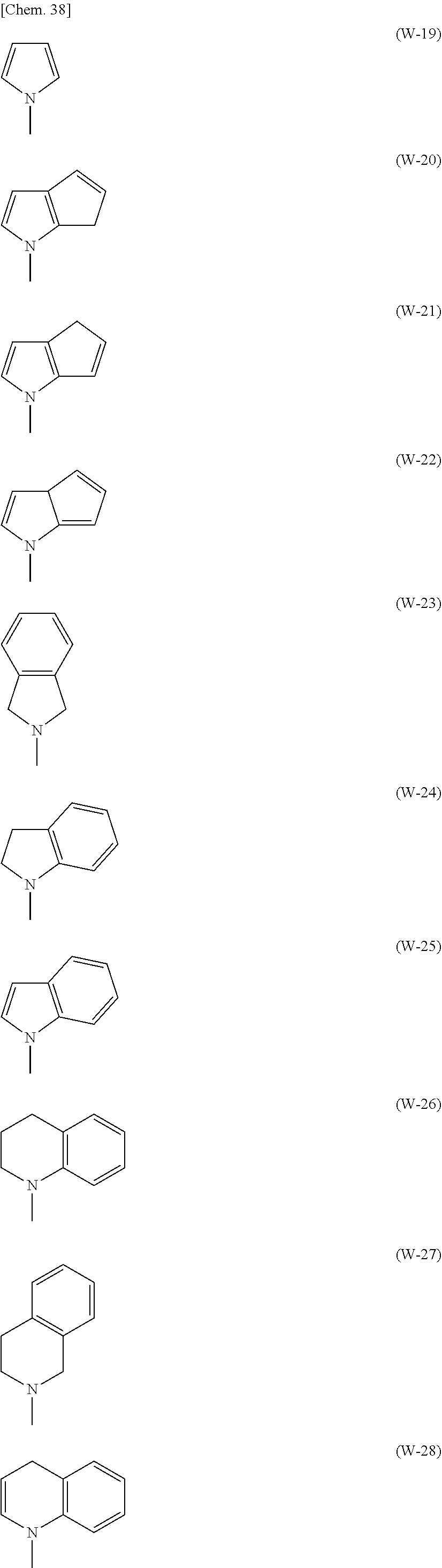


(wherein arbitrary (—CH═)'s may be each independently substituted with —N═, (—CH2—)'s may be each independently substituted with —O—, —S—, —NRT— (wherein RT represents a hydrogen atom or an alkyl group having 1 to 20 carbon atoms), —CS—, or —CO—, provided that no —O—O— is contained, and these groups may be unsubstituted or substituted with one or more substituents LW's as described above). The group represented by the formula (W-19) preferably represents a group selected from the following formulae (W-19-1) to (W-19-3) which may be unsubstituted or substituted with one or more substituents LW's as described above:

the group represented by the formula (W-20) preferably represents a group selected from the following formulae (W-20-1) to (W-20-4) which may be unsubstituted or substituted with one or more substituents LW's as described above:

(wherein RT represents a hydrogen atom or an alkyl group having 1 to 8 carbon atoms), and the group represented by the formula (W-21) preferably represents a group selected from the following formulae (W-21-1) to (W-21-4) which may be unsubstituted or substituted with one or more substituents LW's as described above:

(wherein RT represents a hydrogen atom or an alkyl group having 1 to 8 carbon atoms), the group represented by the formula (W-22) preferably represents a group selected from the following formulae (W-22-1) to (W-22-4) which may be unsubstituted or substituted with one or more substituents LW's as described above:

the group represented by the formula (W-23) preferably represents a group selected from the following formulae (W-23-1) to (W-23-3) which may be unsubstituted or substituted with one or more substituents LW's as described above:

the group represented by the formula (W-24) preferably represents a group selected from the following formulae (W-24-1) to (W-24-4) which may be unsubstituted or substituted with one or more substituents LW's as described above:

(wherein RT represents a hydrogen atom or an alkyl group having 1 to 8 carbon atoms), the group represented by the formula (W-25) preferably represents a group selected from the following formulae (W-25-1) to (W-25-3) which may be unsubstituted or substituted with one or more substituents LW's as described above:

(wherein RT represents a hydrogen atom or an alkyl group having 1 to 8 carbon atoms), the group represented by the formula (W-26) preferably represents a group selected from the following formulae (W-26-1) to (W-26-7) which may be unsubstituted or substituted with one or more substituents LW's as described above:

(wherein RT represents a hydrogen atom or an alkyl group having 1 to 8 carbon atoms), the group represented by the formula (W-27) preferably represents a group selected from, the following formulae (W-27-1) to (W-27-4) which may be unsubstituted or substituted with one or more substituents LW's as described above:

(wherein RT represents a hydrogen atom or an alkyl group having 1 to 8 carbon atoms), the group represented by the formula (W-28) preferably represents a group selected from the following formulae (W-28-1) to (W-28-6) which may be unsubstituted or substituted with one or more substituents LW's as described above:

(wherein RT represents a hydrogen atom or an alkyl group having 1 to 8 carbon atoms), the group represented by the formula (W-29) preferably represents a group selected from the following formulae (W-29-1) to (W-29-3) which may be unsubstituted or substituted with one or more substituents LW's as described above:

the group represented by the formula (W-30) preferably represents a group selected from the following formulae (W-30-1) to (W-30-3) which may be unsubstituted or substituted with one or more substituents LW's as described above:

the group represented by the formula (W-31) preferably represents a group selected from the following formulae (W-31-1) to (W-31-4) which may be unsubstituted or substituted with one or more substituents LW's as described above:

(wherein RT represents a hydrogen atom or an alkyl group having 1 to 8 carbon atoms), the group represented by the formula (W-32) preferably represents a group selected from the following formulae (W-32-1) to (W-32-5) which may be unsubstituted or substituted with one or more substituents LW's as described above:

(wherein RT represents a hydrogen atom or an alkyl group having 1 to 8 carbon atoms), the group represented by the formula (W-33) preferably represents a group selected from the following formulae (W-33-1) to (W-33-3) which may be unsubstituted or substituted with one or more substituents LW's as described above:

the group represented by the formula (W-34) preferably represents a group selected from the following formulae (W-34-1) to (W-34-5) which may be unsubstituted or substituted with one or more substituents LW's as described above:

(wherein RT represents a hydrogen atom or an alkyl group having 1 to 8 carbon atoms), the group represented by the formula (W-35) preferably represents the following formula (W-35-1) which may be unsubstituted or substituted with one or more substituents LW's as described above:

the group represented by the formula (W-36) preferably represents a group selected from the following formulae (W-36-1) to (W-36-6) which may be unsubstituted or substituted with one or more substituents LW's as described above:

(wherein RT represents a hydrogen atom or an alkyl group having 1 to 8 carbon atoms), the group represented by the formula (W-37) preferably represents a group selected from the following formulae (W-37-1) to (W-37-3) which may be unsubstituted or substituted with one or more substituents LW's as described above:

the group represented by the formula (W-38) preferably represents a group selected from the following: formulae (W-38-1) to (W-38-4) which may be unsubstituted or substituted with one or more substituents LW's as described above:

(wherein RT represents a hydrogen atom or an alkyl group having 1 to 8 carbon atoms), the group represented by the formula (W-39) preferably represents a group selected from the following formulae (W-39-1) to (W-39-4) which may be unsubstituted or substituted with one or more substituents LW's as described above:

(wherein RT represents a hydrogen atom or an alkyl group having 1 to 8 carbon atoms), the group represented by the formula (W-40) preferably represents the following formula (W-40-1):

which may be unsubstituted or substituted with one or more substituents LW's as described above.


(wherein arbitrary (—CH═)'s may be each independently substituted with —N═, (—CH2—)'s each independently substituted with —O—, —S—, —NRT— (wherein RT represents a hydrogen atom or an alkyl group having 1 to 20 carbon, atoms), —CS—, or —CO—, provided that no —O—O— bond is contained, and these groups may be unsubstituted or substituted with one or more substituents LW's as described above). The group represented by the formula (W-41) preferably represents a group selected from the following formulae (W-41-1) to (W-41-3) which may be unsubstituted or substituted with one or more substituents LW's as described above:

the group represented by the formula (W-42) preferably represents a group selected from the following formulae (W-42-1) to (W-42-4) which may be unsubstituted or substituted with one or more substituents ifs as described above:

(wherein RT represents a hydrogen atom or an alkyl group having 1 to 8 carbon atoms), the group represented by the formula (W-43) preferably represents a group selected from the following formulae (W-43-1) to (W-43-4) which may be unsubstituted or substituted with one or more substituents LW's as described above:

(wherein RT represents a hydrogen atom or an alkyl group having 1 to 8 carbon atoms), the group represented by the formula (W-44) preferably represents a group selected from the following formulae (W-44-1) to (W-44-4) which may be unsubstituted or substituted with one or more substituents LW's as described above:

the group represented by the formula (W-45) preferably represents a group selected from the following formulae (W-45-1) to (W-45-4) which may be unsubstituted or substituted with one or more substituents LW's as described above:

(wherein RT represents a hydrogen atom or an alkyl group having 1 to 8 carbon atoms), the group represented by the formula (W-46) preferably represents a group selected from the following formulae (W-46-1) to (W-46-4) which may be unsubstituted or substituted with one or more substituents LW's as described above:

(wherein RT represents a hydrogen atom or an alkyl group having 1 to 8 carbon atoms), the group represented by the formula (W-47). Preferably represents a group selected from the following formulae (W-47-1) to (W-47-3) which may be unsubstituted or substituted with one or more substituents LW's as described above:

(wherein RT represents a hydrogen atom or an alkyl group having 1 to 8 carbon atoms), the group represented by the formula (W-48) preferably represents a group selected from the following formulae (W-48-1) to (W-48-7) which may be unsubstituted or substituted with one or more substituents LW's as described above:

(wherein RT represents a hydrogen atom or an alkyl group having 1 to 8 carbon atoms), the group represented by the formula (W-49) preferably represents a group selected from the following formulae (W-49-1) to (W-49-4) which may be unsubstituted or substituted with one or more substituents LW's as described above:

(wherein RT represents a hydrogen atom or an alkyl group having 1 to 8 carbon atoms), the group represented by the formula (W-50) preferably represents a group selected from the following formulae (W-50-1) to (W-50-6) which may be unsubstituted or substituted with one or more substituents LW's as described above:

(wherein RT represents a hydrogen atom or an alkyl group having 1 to 8 carbon atoms), the group represented by the formula (W-51) preferably represents a group selected from the following formulae (W-51-1) to (W-51-3) which may be unsubstituted or substituted with one or more substituents LW's as described above:

the group represented by the formula (W-52) preferably represents a group selected from the following formulae (W-52-1) to (W-52-3) which may be unsubstituted or substituted with one or more substituents LW's as described above:

the group represented by the formula (W-53) preferably represents a group selected from the following formulae (W-53-1) to (W-53-8) which may be unsubstituted or substituted with one or more substituents LW's as described above:


(wherein RT represents a hydrogen atom or an alkyl group having 1 to 8 carbon atoms), the group represented by the formula (W-54) preferably represents a group selected from the following formulae (W-54-1) to (W-54-5) which may be unsubstituted or substituted with one or more substituents LW's as described above:

(wherein RT represents a hydrogen atom or an alkyl group having 1 to 8 carbon atoms), the group represented by the formula (W-55) preferably represents a group selected from the following formulae (W-55-1) to (W-55-3) which may be unsubstituted or substituted with one or more substituents LW's as described above:

the group represented by the formula (W-56) preferably represents a group selected from the following formulae (W-56-1) to (W-56-5) which may be unsubstituted or substituted with one or more substituents: LW's as described above:

(wherein RT represents a hydrogen atom or an alkyl group having 1 to 8 carbon atoms), the group represented by the formula (W-57) preferably represents the formula (W-57-1) which may be unsubstituted or substituted with one or more substituents LW's as described above:

the group represented by the formula (W-58) preferably represents a group selected from the following formulae (W-58-1) to (W-58-6) which may be unsubstituted or substituted with one or more substituents LW's as described above:

(wherein RT represents a hydrogen atom or an alkyl group having 1 to 8 carbon atoms), the group represented by the formula (W-59) preferably represents a group selected front the following formulae (W-59-1) to (W-59-3) which may be unsubstituted or substituted with one or more substituents LW's as described above:

the group represented by the formula (W-60) preferably represents a group selected from the following formulae (W-60-1) to (W-60-4) which may be unsubstituted or substituted with one or more substituents LW's as described above:

(wherein RT represents a hydrogen atom or an alkyl group having 1 to 8 carbon atoms), the group represented by the formula (W-61) preferably represents a group selected from the following formulae (W-61-1) to (W-61-4) which may be unsubstituted or substituted with one or more substituents LW's as described above;

(wherein RT represents a hydrogen atom or an alkyl group having 1 to 8 carbon atoms), the group represented by the formula (W-62) preferably represents the formula (W-62-1):

which may be unsubstituted or substituted with one or more substituents LW's as described above.


(wherein LG, LW, Y, and W2 have the same meanings as described above, r represents an integer of 0 to 5, s represents an integer of 0 to 4, t represents an integer of 0 to 3, u represents an integer of 0 to 2, v represents 0 or 1, and the right side and the left side of these groups may be reversed). Among the formulae (G-1) to (G-10), a group selected from the formulae (G-1), (G-3), (G-5), (G-6), (G-7), (G-8), and (G-10) is more preferred, those in which u is 0 are further preferred, and a group selected from the following formulae (G-1-1) to (G-10-1) is particularly preferred:


(wherein the right side and the left side of these groups may be reversed).


and/or compounds represented by a general formula (X-12):

(wherein P11, P12 and P13 each independently represent a polymerizable group, Sp11, Sp12 and Sp13 each independently represent a single bond or an alkylene group having 1 to 20 carbon atoms in which one —CH2— or two or more (—CH2—)'s not adjacent to each other may be each independently substituted with —O—, —COO—, —OCO— or —OCOO—, X11, X12 and X13 each independently represent —O—, —S—, —OCH2—, —CH2O—, —CO—, —COO—, —OCO—, —CO—S—, —S—CO—, —O—CO—O—, —CO—NH—, —NH—CO—, —SCH2—, —CH2S—, —CF2O—, —OCF2—, —CF2S—, —SCF2—, —CH═CH—COO—, —CH═CH—OCO—, —COO—CH═CH—, —OCO—CH═CH—, —COO—CH2CH2—, —OCO—CH2CH2—, —CH2CH2—COO—, —CH2CH2—OCO—, —COO—CH2—, —OCO—CH2—, —CH2—COO—, —CH2—OCO—, —CH═CH—, —CF═CF—, —C≡C— or a single bond, Z11 and Z12 each independently represent —O—, —S—, —OCH2—, —CH2O—, —COO—, —OCO—, —CO—, —CO—S—, —S—CO—, —O—CO—O—, —CO—NH—, —NH—CO—, —SCH2—, —CH2S—, —CF2O—, —OCF2—, —CF2S—, —SCF2—, —CH2CH2—, —CH2CF2—, —CF2CH2—, —CF2CF2—, —CH═CH—COO—, —CH═CH—OCO—, —COO—CH═CH—, —OCO—CH═CH—, —COO—CH2CH2—, —OCO—CH2CH2—, —CH2CH2—COO—, —CH2CH2—OCO—, —COO—CH2—, —OCO—CH2—, —CH2—COO—, —CH2—OCO—, —CH═CH—, —CF═CF—, —C≡C— or a single bond, A11, A12, A13 and A14 each independently represent a 1,4-phenylene group, a 1,4-cyclohexylene group, a bicyclo[2.2.2]octane-1,4-diyl group, a pyridine-2,5-diyl group, a pyrimidine-2,5-diyl group, a naphthalene-2,6-diyl group, a naphthalene-1,4-diyl group, a tetrahydronaphthalene-2,6-diyl group or a 1,3-dioxane-2,5-diyl group, and A11, A12, A13 and A14 may be each independently unsubstituted or substituted with an alkyl group, a halogenoalkyl group, an alkoxy group, a halogenoalkoxy group, a halogen atom, a cyano group or a nitro group, R11 represents a hydrogen atom, a fluorine atom, a chlorine atom, a bromine atom, an iodine atom, a pentafluorosulfuranyl group, a cyano group, a nitro group, an isocyano group, a thioisocyano group, or a linear or branched alkyl group having 1 to 20 carbon atoms in which one —CH2— or two or more (—CH2—)'s not adjacent to each other may be each independently substituted with —O—, —S—, —CO—, —COO—, —OCO—, —CO—S—, —S—CO—, —O—CO—O—, —CO—NH—, —NH—CO—, —CH═CH—COO—, —CH═CH—OCO—, —COO—CH═CH—, —OCO—CH═CH—, —CH═CH—, —CF═CF— or —C≡C—, m11 and m12 each represent 0, 1, 2 or 3, and in the case where m11 and/or m12 each are 2 or 3, two or three existing groups with respect to each of A11, A12, Z11 and Z12 may be the same or different) are preferred; and those where P11, P12 and P13 each are an acrylic group or a methacrylic group are especially preferred. Specifically, the compounds represented by the general formula (X-11) are preferably those represented by a general formula (X-11a):

(wherein W11 and W12 each independently represent, a hydrogen atom or a methyl group, Sp14 and Sp15 each independently represent an alkylene group having 2 to 18 carbon atoms, X14 and X15 each independently represent —O—, —COO—, —OCO— or a single bond, Z13 and Z14 each independently represent. —COO— or —OCO—, A15, A16 and A17 each independently represent, a 1,4-phenylene group which is unsubstituted or optionally substituted with a fluorine atom, a chlorine atom, a linear or branched alkyl group having 1 to 4 carbon atoms, or a linear or branched alkoxy group having 1 to 4 carbon atoms); and those represented by the following formulae (X-11a-1) to (X-11a-4):

(wherein W11, W12, Sp14 and Sp15 each have the same meaning as in the general formula (X-11a) are especially preferred. Compounds of the above formulae (X-11a-1) to (X-11a-4) where Sp14 and Sp15 each are an alkylene group having 2 to 8 carbon atoms are especially preferred. In addition, as preferred bifunctional polymerizable compounds, there are mentioned compounds represented by the following general formulae (X-11b-1) to (X-11b-3):

(wherein W13 and W14 each independently represent a hydrogen atom or a methyl group, Sp16 and Sp17 each independently represent an alkylene group having 2 to 18 carbon atom). Compounds of the above formulae (X-11b-1) to (X-11b-3) where Sp16 and Sp17 each are an alkylene group having 2 to 8 carbon atoms are especially preferred.

(wherein P14 represents a polymerizable group, Sp18 represents a single bond or an alkylene group having 1 to 20 carbon atoms, in which one —CH2— or two or more (—CH2—)'s not adjacent to each other may be substituted with —O—, —COO—, —OCO— or —O—CO—O—, X16 represents a single bond, —O—, —COO—, or —OCO—, Z15 represents a single bond, —COO— or —OCO—, L11 represents a fluorine atom, a chlorine atom, or a linear or branched alkyl group having 1 to 10 carbon atoms in which one —CH2— or two or more (—CH2—)'s not adjacent to each other may be each independently substituted with —O—, —COO— or —OCO—, s11 represents an integer of 0 to 4, R12 represents a hydrogen atom, a fluorine atom, a chlorine atom, a cyano group, a nitro group, or a linear or branched alkyl group having 1 to 20 carbon atoms in which one —CH2— or two or more (—CH2—)'s not adjacent to each other may be each independently substituted with —O—, —S—, —CO—, —COO—, —OCO—, —CO—S—, —S—CO—, —O—CO—O—, —CO—NH—, —NH—CO—, —CH═CH—COO—, —CH═CH—OCO—, —COO—CH═CH—, —OCO—CH═CH—, —CH═CH—, —CF═CF— or —C≡C—.)


(wherein n represents an integer of 0 to 20).


| TABLE 1 | |||
| Compound to be | Results of Solubility | ||
| Evaluated | Chloroform | Trichloroethane | Cyclopentanone | MEK | MIBK | Toluene | ||
| Example 18 | Compound (I-1) of the | A | A | A | A | A | A |
| Invention | |||||||
| Example 19 | Compound (I-2) of the | A | A | A | A | B | A |
| Invention | |||||||
| Example 20 | Compound (I-3) of the | A | A | A | C | C | B |
| Invention | |||||||
| Example 21 | Compound (I-4) of the | A | B | B | C | C | B |
| Invention | |||||||
| Example 22 | Compound (I-5) of the | A | A | A | B | B | A |
| Invention | |||||||
| Example 23 | Compound (I-6) of the | A | A | A | B | B | B |
| Invention | |||||||
| Example 24 | Compound (I-7) of the | A | A | A | A | B | A |
| Invention | |||||||
| Example 25 | Compound (I-8) of the | A | A | A | B | B | A |
| Invention | |||||||
| Example 26 | Compound (I-9) of the | A | A | A | A | B | A |
| Invention | |||||||
| Example 27 | Compound (I-10) of the | A | A | A | B | B | A |
| Invention | |||||||
| Example 28 | Compound (I-11) of the | A | A | A | B | B | A |
| Invention | |||||||
| Example 29 | Compound (I-12) of the | A | A | B | B | C | B |
| Invention | |||||||
| Example 30 | Compound (I-13) of the | A | A | B | C | C | B |
| Invention | |||||||
| Example 31 | Compound (I-14) of the | A | A | B | B | C | B |
| Invention | |||||||
| Example 32 | Compound (I-15) of the | A | A | B | B | C | B |
| Invention | |||||||
| Example 33 | Compound (I-16) of the | A | A | A | B | B | A |
| Invention | |||||||
| Example 34 | Compound (I-17) of the | A | B | B | C | C | B |
| Invention | |||||||
| Comparative | Comparative Compound | A | B | B | C | C | B |
| Example 1 | (R-1) | ||||||
| Comparative | Comparative Compound | B | B | C | C | C | B |
| Example 2 | (R-2) | ||||||
| Comparative | Comparative Compound | A | B | C | C | C | B |
| Example 3 | (R-3) | ||||||
| TABLE 2 | |||
| Results of | |||
| Compound to be Evaluated | adhesiveness | ||
| Example 35 | Compound (I-1) of the Invention | Class 2 |
| Example 36 | Compound (I-2) of the Invention | Class 2 |
| Example 37 | Compound (I-3) of the Invention | Class 2 |
| Example 38 | Compound (I-4) of the Invention | Class 2 |
| Example 39 | Compound (I-5) of the Invention | Class 2 |
| Example 40 | Compound (I-6) of the Invention | Class 2 |
| Example 41 | Compound (I-7) of the Invention | Class 2 |
| Example 42 | Compound (I-8) of the Invention | Class 2 |
| Example 43 | Compound (I-9) of the Invention | Class 1 |
| Example 44 | Compound (I-10) of the Invention | Class 2 |
| Example 45 | Compound (I-11) of the Invention | Class 2 |
| Example 46 | Compound (I-12) of the Invention | Class 2 |
| Example 47 | Compound (I-13) of the Invention | Class 3 |
| Example 48 | Compound (I-14) of the Invention | Class 3 |
| Example 49 | Compound (I-15) of the Invention | Class 3 |
| Example 50 | Compound (I-16) of the Invention | Class 2 |
| Example 51 | Compound (I-17) of the Invention | Class 2 |
| Comparative | Comparative Compound (R-1) | Class 3 |
| Example 4 | ||
| Comparative | Comparative Compound (R-2) | Class 4 |
| Example 5 | ||
| Comparative | Comparative Compound (R-3) | Class 4 |
| Example 6 | ||
Claims (9)


Applications Claiming Priority (4)
| Application Number | Priority Date | Filing Date | Title |
|---|---|---|---|
| JP2015-239359 | 2015-12-08 | ||
| JP2015239359 | 2015-12-08 | ||
| JPJP2015-239359 | 2015-12-08 | ||
| PCT/JP2016/085717 WO2017098988A1 (en) | 2015-12-08 | 2016-12-01 | Polymerizable compound and optically anisotropic body |
Publications (2)
| Publication Number | Publication Date |
|---|---|
| US20180362847A1 US20180362847A1 (en) | 2018-12-20 |
| US11046889B2 true US11046889B2 (en) | 2021-06-29 |
Family
ID=59014099
Family Applications (1)
| Application Number | Title | Priority Date | Filing Date |
|---|---|---|---|
| US16/060,265 Active 2037-05-01 US11046889B2 (en) | 2015-12-08 | 2016-12-01 | Polymerizable compound and optically anisotropic body |
Country Status (5)
| Country | Link |
|---|---|
| US (1) | US11046889B2 (en) |
| JP (2) | JP6624696B2 (en) |
| KR (1) | KR102614432B1 (en) |
| CN (1) | CN108368070B (en) |
| WO (1) | WO2017098988A1 (en) |
Cited By (1)
| Publication number | Priority date | Publication date | Assignee | Title |
|---|---|---|---|---|
| US12031079B2 (en) | 2017-08-15 | 2024-07-09 | Merck Patent Gmbh | Polymerisable LC medium and polymer film with flat optical dispersion |
Families Citing this family (19)
| Publication number | Priority date | Publication date | Assignee | Title |
|---|---|---|---|---|
| CN108368070B (en) * | 2015-12-08 | 2023-04-28 | Dic株式会社 | Polymeric compounds and optically anisotropic substances |
| KR20190078591A (en) * | 2016-11-22 | 2019-07-04 | 니폰 제온 가부시키가이샤 | Polymerizable compound, polymerizable composition, polymer, optical film, optically anisotropic, polarizer, flat panel display, organic electroluminescence display, antireflection film, and compound |
| WO2019044863A1 (en) * | 2017-08-30 | 2019-03-07 | 富士フイルム株式会社 | Cured product, optical member, lens, compound and curable composition |
| WO2019124154A1 (en) * | 2017-12-22 | 2019-06-27 | Dic株式会社 | Polymerizable liquid-crystal composition, optically anisotropic object, and production method therefor |
| JP6955581B2 (en) * | 2017-12-26 | 2021-10-27 | 富士フイルム株式会社 | Lens Adhesives, Bonded Lenses, and Imaging Modules |
| KR102426523B1 (en) * | 2018-02-14 | 2022-07-27 | 후지필름 가부시키가이샤 | Polymerizable liquid crystal composition, optically anisotropic film, optical film, polarizing plate and image display device |
| JP6910527B2 (en) * | 2018-02-14 | 2021-07-28 | 富士フイルム株式会社 | Polymerizable liquid crystal composition, optically anisotropic film, optical film, polarizing plate and image display device |
| CN111727390B (en) * | 2018-02-14 | 2021-11-02 | 富士胶片株式会社 | Polymerizable liquid crystal composition, optical film, polarizer, and image display device |
| CN111989317B (en) * | 2018-04-27 | 2023-12-01 | 日本瑞翁株式会社 | Polymerizable liquid crystal compound, polymerizable liquid crystal composition, polymer, optical film, optically anisotropic body, and polarizing plate |
| KR102195455B1 (en) | 2018-05-03 | 2020-12-28 | 주식회사 엘지화학 | Polymerizable liquid crystal compound, liquid crystal composition for optical element, polymer, optically anisotropic body, and optical element for display device |
| JP6970828B2 (en) * | 2018-07-25 | 2021-11-24 | 富士フイルム株式会社 | Liquid crystal composition, optically anisotropic film, optical film, polarizing plate and image display device |
| TW202035380A (en) * | 2018-12-11 | 2020-10-01 | 日商Dic股份有限公司 | Liquid crystal composition, display element and compound |
| CN113474415B (en) | 2019-02-22 | 2023-03-28 | 富士胶片株式会社 | Resin composition, cured product, diffractive optical element, multilayer diffractive optical element |
| CN112480027B (en) * | 2019-09-12 | 2023-08-29 | 石家庄诚志永华显示材料有限公司 | Polymerizable compound, polymerizable composition, polymer, optically anisotropic body, and liquid crystal display device |
| JP7274040B2 (en) * | 2020-02-28 | 2023-05-15 | 富士フイルム株式会社 | Cured product, curable resin composition, optical member, lens, diffractive optical element, multilayer diffractive optical element, and compound |
| CN113861128B (en) * | 2021-10-28 | 2023-08-01 | 江苏创拓新材料有限公司 | Polymerizable compounds and optically anisotropic bodies |
| CN114560828B (en) * | 2022-03-25 | 2024-01-26 | 江苏创拓新材料有限公司 | Polymerizable compounds and optically anisotropic bodies formed therefrom |
| CN114805328B (en) * | 2022-04-29 | 2023-08-08 | 石家庄诚志永华显示材料有限公司 | Polymerizable compound, polymerizable composition, polymer, optically anisotropic body, liquid crystal display device |
| CN120682166B (en) * | 2025-08-22 | 2025-12-05 | 成都瑞波科材料科技有限公司 | A liquid crystal compound, a liquid crystal composition, and a phase reversal film |
Citations (56)
| Publication number | Priority date | Publication date | Assignee | Title |
|---|---|---|---|---|
| GB1016964A (en) | 1962-07-24 | 1966-01-12 | Cassella Farbwerke Mainkur Ag | Water-insoluble azo dyestuffs containing nitrophenyl-hydrazone residues |
| JPS6355543A (en) | 1986-08-26 | 1988-03-10 | Konica Corp | Silver halide photographic sensitive material preventing sweating phenomenon and formation of static mark |
| US5445854A (en) | 1993-11-29 | 1995-08-29 | The Dow Chemical Company | Nonlinear optical epoxy-containing compositions and crosslinked nonlinear optical polymeric composition therefrom |
| JP2005289980A (en) | 2004-03-08 | 2005-10-20 | Fuji Photo Film Co Ltd | Liquid crystal compound, liquid crystyal composition, polymer, retardation plate, and elliptical polarization plate |
| WO2005112540A2 (en) | 2004-05-21 | 2005-12-01 | Merck Patent Gmbh | Liquid crystal compounds, liquid crystal medium and liquid crystal display |
| US20070111199A1 (en) | 2005-05-23 | 2007-05-17 | Housey Gerard M | Compounds and method of identifying, synthesizing, optimizing and profiling protein modulators |
| JP2007328053A (en) | 2006-06-06 | 2007-12-20 | Dainippon Printing Co Ltd | Retardation film and method for producing retardation film |
| JP2008107767A (en) | 2006-02-07 | 2008-05-08 | Fujifilm Corp | Optical film, retardation plate, and liquid crystal compound |
| JP2008127336A (en) | 2006-11-21 | 2008-06-05 | Fujifilm Corp | Polymerizable liquid crystal compound, retardation film using the same, and liquid crystal display device |
| CN101279901A (en) | 2007-12-25 | 2008-10-08 | 四川大学 | Honokiol series derivatives, preparation method and application thereof |
| JP2008239873A (en) | 2007-03-28 | 2008-10-09 | Dic Corp | Biphenyl and terphenyl compounds and polymerizable liquid crystal compositions containing the compounds |
| JP2008273925A (en) | 2006-12-15 | 2008-11-13 | Fujifilm Corp | Optical film, retardation plate, and liquid crystal compound |
| JP2009506125A (en) | 2005-08-29 | 2009-02-12 | ジェラルド・エム・ハウシー | Theramutein modulator |
| JP2009029795A (en) | 2007-06-29 | 2009-02-12 | Sumitomo Chemical Co Ltd | Polymerizable compound and optical film |
| JP2009062508A (en) | 2007-08-14 | 2009-03-26 | Fujifilm Corp | Liquid crystal composition and optically anisotropic film |
| US20090189120A1 (en) | 2008-01-29 | 2009-07-30 | Fujifilm Corporation | Compound, liquid crystal composition, and anisotropic material |
| JP2010031223A (en) | 2007-12-28 | 2010-02-12 | Sumitomo Chemical Co Ltd | Compound, optical film, and method for producing optical film |
| US20100072422A1 (en) | 2007-03-30 | 2010-03-25 | Owain Llyr Parri | Birefringent Layer with Negative Optical Dispersion |
| JP2010100541A (en) | 2008-10-21 | 2010-05-06 | Asahi Glass Co Ltd | Acrylic acid derivative compound, liquid crystalline composition, polymer liquid crystal, optical element and optical head device |
| JP2011006361A (en) | 2009-06-26 | 2011-01-13 | Sumitomo Chemical Co Ltd | Compound, optical film and method for producing optical film |
| US20110240918A1 (en) * | 2010-04-02 | 2011-10-06 | Chisso Corporation | Optically active compound having polymerizable group and its polymer |
| JP2011207765A (en) | 2009-03-16 | 2011-10-20 | Sumitomo Chemical Co Ltd | Compound, optical film and method for producing optical film |
| JP2011246381A (en) | 2010-05-26 | 2011-12-08 | Sumitomo Chemical Co Ltd | Compound, optical film, and method for producing optical film |
| JP2012008525A (en) | 2010-02-18 | 2012-01-12 | Sumitomo Chemical Co Ltd | 3d display system |
| JP2012077055A (en) | 2010-10-06 | 2012-04-19 | Sumitomo Chemical Co Ltd | Compound, optical film, and method for producing optical film |
| US20120224245A1 (en) | 2009-10-30 | 2012-09-06 | Merck Patent Gesellschaft mit bescrankter Haftung | Polymerisable lc material and polymer film with negative optical dispersion |
| WO2012141245A1 (en) | 2011-04-15 | 2012-10-18 | 日本ゼオン株式会社 | Polymerizable compound, polymerizable composition, polymer, and optically anisotropic body |
| WO2012147904A1 (en) | 2011-04-27 | 2012-11-01 | 日本ゼオン株式会社 | Polymerizable compound, polymerizable composition, polymer, and optically anisotropic material |
| WO2012176679A1 (en) | 2011-06-24 | 2012-12-27 | 日本ゼオン株式会社 | Polymerizable compounds, polymerizable composition, polymer, and optically anisotropic body |
| WO2013157888A1 (en) | 2012-04-20 | 2013-10-24 | 주식회사 엘지화학 | Polymerizable liquid crystal compound, polymerizable liquid crystal composition, and optical anisotropic body |
| WO2013180217A1 (en) | 2012-05-30 | 2013-12-05 | 日本ゼオン株式会社 | Polymerizable compound, polymerizable composition, polymer, and optically anisotropic material |
| WO2014010325A1 (en) | 2012-07-09 | 2014-01-16 | 日本ゼオン株式会社 | Polymerizable compound, polymerizable composition, polymer, optically anisotropic body, and method for producing polymerizable compound |
| WO2014061709A1 (en) | 2012-10-19 | 2014-04-24 | 日本ゼオン株式会社 | Polymerizable compound, polymerizable composition, polymer, and optically anisotropic substance |
| WO2014065176A1 (en) | 2012-10-23 | 2014-05-01 | 日本ゼオン株式会社 | Polymerizable compound, polymerizable composition, polymer, and optical anistropic body |
| WO2014065243A1 (en) | 2012-10-22 | 2014-05-01 | 日本ゼオン株式会社 | Retarder, circularly polarising plate, and image display device |
| WO2014069515A1 (en) | 2012-10-30 | 2014-05-08 | 日本ゼオン株式会社 | Liquid crystal composition, retardation plate, image display device, and method for controlling wavelength dispersion in optically anisotropic layer |
| US20140200320A1 (en) | 2011-06-10 | 2014-07-17 | Zeon Corporation | Polymerizable compound, polymerizable composition, polymer, and optically anisotropic body |
| WO2014126113A1 (en) | 2013-02-15 | 2014-08-21 | 日本ゼオン株式会社 | Polymerizable compound, polymerizable composition, polymer, and optically anisotropic body |
| WO2014132978A1 (en) | 2013-02-28 | 2014-09-04 | 富士フイルム株式会社 | Phase difference plate, anti-reflection plate, image display device, and method for producing phase difference plate |
| WO2015025793A1 (en) | 2013-08-22 | 2015-02-26 | 日本ゼオン株式会社 | Polymerizable compound, polymerizable composition, polymer, and optical anisotropic body |
| WO2015064698A1 (en) | 2013-10-31 | 2015-05-07 | 日本ゼオン株式会社 | Polymerizable compound, polymerizable composition, polymer, and optical isomer |
| JP2015110531A (en) | 2013-12-06 | 2015-06-18 | Dic株式会社 | Polymerizable compound and optical anisotropic body |
| JP2015110532A (en) | 2013-12-06 | 2015-06-18 | Dic株式会社 | Polymerizable compound and optical anisotropic body |
| WO2015098702A1 (en) | 2013-12-25 | 2015-07-02 | Dic株式会社 | Compound containing mesogenic group, and mixture, composition, and optically anisotropic body using said compound |
| WO2015122385A1 (en) | 2014-02-12 | 2015-08-20 | 日本ゼオン株式会社 | Polymerizable compound, polymerizable composition, polymer, and optical isomer |
| WO2015122384A1 (en) | 2014-02-14 | 2015-08-20 | 日本ゼオン株式会社 | Polymerizable compound, polymerizable composition, polymer, and optically anisotropic body |
| JP2015151383A (en) | 2014-02-18 | 2015-08-24 | Dic株式会社 | Polymerizable compound and optical anisotropic material |
| US20150277006A1 (en) * | 2014-03-31 | 2015-10-01 | Fujifilm Corporation | Optical film, polarizing plate, and method for producing optical film |
| US20150277007A1 (en) | 2014-03-31 | 2015-10-01 | Fujifilm Corporation | Liquid crystal compound, optical film, and method for producing optical film |
| WO2016056542A1 (en) | 2014-10-09 | 2016-04-14 | Dic株式会社 | Polymerizable compound and optically anisotropic object |
| WO2016088749A1 (en) | 2014-12-04 | 2016-06-09 | Dic株式会社 | Polymerizable compound, composition, polymer, optically anisotropic body, liquid crystal display device and organic el element |
| JP2016113583A (en) | 2014-12-17 | 2016-06-23 | Dic株式会社 | Polymerizable compound and optical anisotropic medium |
| WO2016104317A1 (en) * | 2014-12-25 | 2016-06-30 | Dic株式会社 | Polymerizable compound and optically anisotropic object |
| WO2016136533A1 (en) * | 2015-02-24 | 2016-09-01 | Dic株式会社 | Polymerizable compound and optical isomer |
| WO2017068860A1 (en) | 2015-10-23 | 2017-04-27 | Dic株式会社 | Polymerizable compound and optically anisotropic body |
| JP2017088591A (en) | 2015-11-09 | 2017-05-25 | Dic株式会社 | Polymerizable compound and optical anisotropic body |
Family Cites Families (11)
| Publication number | Priority date | Publication date | Assignee | Title |
|---|---|---|---|---|
| JP5209181B2 (en) | 2005-03-15 | 2013-06-12 | 富士フイルム株式会社 | Compound, composition, retardation plate, elliptically polarizing plate, and liquid crystal display device |
| JP5103981B2 (en) | 2007-03-28 | 2012-12-19 | Dic株式会社 | Polymerizable compound having 5, 6 and 7 rings, and polymerizable liquid crystal composition containing the compound |
| JP2009210688A (en) | 2008-03-03 | 2009-09-17 | Fujifilm Corp | Colored curable composition, color filter, manufacturing method for color filter, and liquid crystal display |
| JP5384950B2 (en) | 2009-01-06 | 2014-01-08 | 株式会社Adeka | Polymerizable liquid crystal composition containing polymerizable liquid crystal compound and optical anisotropic film containing polymer of polymerizable liquid crystal composition |
| JP5556069B2 (en) | 2009-07-03 | 2014-07-23 | Jnc株式会社 | Polymerizable liquid crystal compound, composition and polymer |
| JP5566160B2 (en) | 2010-03-31 | 2014-08-06 | 富士フイルム株式会社 | Liquid crystal compound, liquid crystal composition, light absorption anisotropic film, and liquid crystal display device |
| JP5772529B2 (en) * | 2011-11-15 | 2015-09-02 | コニカミノルタ株式会社 | Optical film, polarizing plate, and liquid crystal display device |
| JP6427340B2 (en) | 2013-09-11 | 2018-11-21 | 富士フイルム株式会社 | Optically anisotropic layer and method of manufacturing the same, laminate and method of manufacturing the same, polarizing plate, liquid crystal display device and organic EL display device |
| JP6363566B2 (en) * | 2014-10-21 | 2018-07-25 | 富士フイルム株式会社 | Optically anisotropic layer and manufacturing method thereof, laminate, polarizing plate, display device, liquid crystal compound and manufacturing method thereof, carboxylic acid compound |
| JP6066252B2 (en) * | 2015-01-16 | 2017-01-25 | Dic株式会社 | Polymerizable compound and optical anisotropic body |
| CN108368070B (en) | 2015-12-08 | 2023-04-28 | Dic株式会社 | Polymeric compounds and optically anisotropic substances |
-
2016
- 2016-12-01 CN CN201680070778.7A patent/CN108368070B/en active Active
- 2016-12-01 WO PCT/JP2016/085717 patent/WO2017098988A1/en not_active Ceased
- 2016-12-01 JP JP2017549348A patent/JP6624696B2/en active Active
- 2016-12-01 US US16/060,265 patent/US11046889B2/en active Active
- 2016-12-01 KR KR1020187016825A patent/KR102614432B1/en active Active
-
2018
- 2018-06-19 JP JP2018116098A patent/JP7067302B2/en active Active
Patent Citations (86)
| Publication number | Priority date | Publication date | Assignee | Title |
|---|---|---|---|---|
| GB1016964A (en) | 1962-07-24 | 1966-01-12 | Cassella Farbwerke Mainkur Ag | Water-insoluble azo dyestuffs containing nitrophenyl-hydrazone residues |
| JPS6355543A (en) | 1986-08-26 | 1988-03-10 | Konica Corp | Silver halide photographic sensitive material preventing sweating phenomenon and formation of static mark |
| US5445854A (en) | 1993-11-29 | 1995-08-29 | The Dow Chemical Company | Nonlinear optical epoxy-containing compositions and crosslinked nonlinear optical polymeric composition therefrom |
| JP2005289980A (en) | 2004-03-08 | 2005-10-20 | Fuji Photo Film Co Ltd | Liquid crystal compound, liquid crystyal composition, polymer, retardation plate, and elliptical polarization plate |
| US20070176145A1 (en) | 2004-03-08 | 2007-08-02 | Fuji Photo Film Co., Ltd. | Liquid crystal compound comprising two condensed and substituted rings |
| WO2005112540A2 (en) | 2004-05-21 | 2005-12-01 | Merck Patent Gmbh | Liquid crystal compounds, liquid crystal medium and liquid crystal display |
| US20070111199A1 (en) | 2005-05-23 | 2007-05-17 | Housey Gerard M | Compounds and method of identifying, synthesizing, optimizing and profiling protein modulators |
| JP2009506125A (en) | 2005-08-29 | 2009-02-12 | ジェラルド・エム・ハウシー | Theramutein modulator |
| JP2008107767A (en) | 2006-02-07 | 2008-05-08 | Fujifilm Corp | Optical film, retardation plate, and liquid crystal compound |
| JP2007328053A (en) | 2006-06-06 | 2007-12-20 | Dainippon Printing Co Ltd | Retardation film and method for producing retardation film |
| JP2008127336A (en) | 2006-11-21 | 2008-06-05 | Fujifilm Corp | Polymerizable liquid crystal compound, retardation film using the same, and liquid crystal display device |
| US20100047478A1 (en) | 2006-11-21 | 2010-02-25 | Fujifilm Corporation | Polymerizable liquid crystal compound, phase difference film and liquid crystal display using the same |
| JP2008273925A (en) | 2006-12-15 | 2008-11-13 | Fujifilm Corp | Optical film, retardation plate, and liquid crystal compound |
| US20100045901A1 (en) | 2006-12-15 | 2010-02-25 | Fujifilm Corporation | Optical film and retardation sheet, and liquid crystal compound |
| JP2008239873A (en) | 2007-03-28 | 2008-10-09 | Dic Corp | Biphenyl and terphenyl compounds and polymerizable liquid crystal compositions containing the compounds |
| US20100072422A1 (en) | 2007-03-30 | 2010-03-25 | Owain Llyr Parri | Birefringent Layer with Negative Optical Dispersion |
| JP2010522892A (en) | 2007-03-30 | 2010-07-08 | メルク パテント ゲゼルシャフト ミット ベシュレンクテル ハフツング | Birefringent layer with negative optical dispersion |
| JP2009029795A (en) | 2007-06-29 | 2009-02-12 | Sumitomo Chemical Co Ltd | Polymerizable compound and optical film |
| JP2009062508A (en) | 2007-08-14 | 2009-03-26 | Fujifilm Corp | Liquid crystal composition and optically anisotropic film |
| CN101279901A (en) | 2007-12-25 | 2008-10-08 | 四川大学 | Honokiol series derivatives, preparation method and application thereof |
| JP2010031223A (en) | 2007-12-28 | 2010-02-12 | Sumitomo Chemical Co Ltd | Compound, optical film, and method for producing optical film |
| US20090189120A1 (en) | 2008-01-29 | 2009-07-30 | Fujifilm Corporation | Compound, liquid crystal composition, and anisotropic material |
| JP2009179563A (en) | 2008-01-29 | 2009-08-13 | Fujifilm Corp | Compound, liquid crystal composition and anisotropic material |
| JP2010100541A (en) | 2008-10-21 | 2010-05-06 | Asahi Glass Co Ltd | Acrylic acid derivative compound, liquid crystalline composition, polymer liquid crystal, optical element and optical head device |
| JP2011207765A (en) | 2009-03-16 | 2011-10-20 | Sumitomo Chemical Co Ltd | Compound, optical film and method for producing optical film |
| JP2011006361A (en) | 2009-06-26 | 2011-01-13 | Sumitomo Chemical Co Ltd | Compound, optical film and method for producing optical film |
| US20120224245A1 (en) | 2009-10-30 | 2012-09-06 | Merck Patent Gesellschaft mit bescrankter Haftung | Polymerisable lc material and polymer film with negative optical dispersion |
| JP2013509458A (en) | 2009-10-30 | 2013-03-14 | メルク パテント ゲゼルシャフト ミット ベシュレンクテル ハフツング | Polymerizable LC material and polymer film with negative optical dispersion |
| JP2012008525A (en) | 2010-02-18 | 2012-01-12 | Sumitomo Chemical Co Ltd | 3d display system |
| JP2011225520A (en) | 2010-04-02 | 2011-11-10 | Jnc Corp | Photoactive compound having polymerizable group and polymer thereof |
| US20110240918A1 (en) * | 2010-04-02 | 2011-10-06 | Chisso Corporation | Optically active compound having polymerizable group and its polymer |
| JP2011246381A (en) | 2010-05-26 | 2011-12-08 | Sumitomo Chemical Co Ltd | Compound, optical film, and method for producing optical film |
| JP2012077055A (en) | 2010-10-06 | 2012-04-19 | Sumitomo Chemical Co Ltd | Compound, optical film, and method for producing optical film |
| US20140107247A1 (en) | 2011-04-15 | 2014-04-17 | Zeon Corporation | Polymerizable compound, polymerizable composition, polymer, and optically anisotropic body |
| WO2012141245A1 (en) | 2011-04-15 | 2012-10-18 | 日本ゼオン株式会社 | Polymerizable compound, polymerizable composition, polymer, and optically anisotropic body |
| WO2012147904A1 (en) | 2011-04-27 | 2012-11-01 | 日本ゼオン株式会社 | Polymerizable compound, polymerizable composition, polymer, and optically anisotropic material |
| US20140142266A1 (en) * | 2011-04-27 | 2014-05-22 | Zeon Corporation | Polymerizable compound, polymerizable composition, polymer, and optically anisotropic body |
| US20140200320A1 (en) | 2011-06-10 | 2014-07-17 | Zeon Corporation | Polymerizable compound, polymerizable composition, polymer, and optically anisotropic body |
| US20140309396A1 (en) | 2011-06-24 | 2014-10-16 | Zeon Corporation | Polymerizable compounds, polymerizable composition, polymer, and optically anisotropic body |
| WO2012176679A1 (en) | 2011-06-24 | 2012-12-27 | 日本ゼオン株式会社 | Polymerizable compounds, polymerizable composition, polymer, and optically anisotropic body |
| WO2013157888A1 (en) | 2012-04-20 | 2013-10-24 | 주식회사 엘지화학 | Polymerizable liquid crystal compound, polymerizable liquid crystal composition, and optical anisotropic body |
| US20150115199A1 (en) | 2012-04-20 | 2015-04-30 | Lg Chem, Ltd. | Polymerizable liquid crystal compound, polymerizable liquid crystal composition, and optically anisotropic body |
| WO2013180217A1 (en) | 2012-05-30 | 2013-12-05 | 日本ゼオン株式会社 | Polymerizable compound, polymerizable composition, polymer, and optically anisotropic material |
| US20150183902A1 (en) | 2012-05-30 | 2015-07-02 | Zeon Corporation | Polymerizable compound, polymerizable composition, polymer, and optically anisotropic material |
| WO2014010325A1 (en) | 2012-07-09 | 2014-01-16 | 日本ゼオン株式会社 | Polymerizable compound, polymerizable composition, polymer, optically anisotropic body, and method for producing polymerizable compound |
| US20150175564A1 (en) | 2012-07-09 | 2015-06-25 | Zeon Corporation | Polymerizable compound, polymerizable composition, polymer, optically anisotropic body, and method for producing polymerizable compound |
| WO2014061709A1 (en) | 2012-10-19 | 2014-04-24 | 日本ゼオン株式会社 | Polymerizable compound, polymerizable composition, polymer, and optically anisotropic substance |
| US20150274647A1 (en) | 2012-10-19 | 2015-10-01 | Zeon Corporation | Polymerizable compound, polymerizable composition, polymer, and optically anisotropic substance |
| US20150277010A1 (en) | 2012-10-22 | 2015-10-01 | Zeon Corporation | Phase difference plate, circularly polarizing plate, and image display device |
| WO2014065243A1 (en) | 2012-10-22 | 2014-05-01 | 日本ゼオン株式会社 | Retarder, circularly polarising plate, and image display device |
| WO2014065176A1 (en) | 2012-10-23 | 2014-05-01 | 日本ゼオン株式会社 | Polymerizable compound, polymerizable composition, polymer, and optical anistropic body |
| US20150274872A1 (en) | 2012-10-23 | 2015-10-01 | Zeon Corporation | Polymerizable compound, polymerizable composition, polymer, and optical anisotropic body |
| US20150285979A1 (en) | 2012-10-30 | 2015-10-08 | Zeon Corporation | Liquid crystal composition, phase difference plate, image display device, and method for controlling wavelength dispersion in optically anisotropic layer |
| WO2014069515A1 (en) | 2012-10-30 | 2014-05-08 | 日本ゼオン株式会社 | Liquid crystal composition, retardation plate, image display device, and method for controlling wavelength dispersion in optically anisotropic layer |
| US20160002374A1 (en) | 2013-02-15 | 2016-01-07 | Zeon Corporation | Polymerizable compound, polymerizable composition, polymer, and optically anisotropic body |
| WO2014126113A1 (en) | 2013-02-15 | 2014-08-21 | 日本ゼオン株式会社 | Polymerizable compound, polymerizable composition, polymer, and optically anisotropic body |
| WO2014132978A1 (en) | 2013-02-28 | 2014-09-04 | 富士フイルム株式会社 | Phase difference plate, anti-reflection plate, image display device, and method for producing phase difference plate |
| WO2015025793A1 (en) | 2013-08-22 | 2015-02-26 | 日本ゼオン株式会社 | Polymerizable compound, polymerizable composition, polymer, and optical anisotropic body |
| US20160200841A1 (en) | 2013-08-22 | 2016-07-14 | Zeon Corporation | Polymerizable compound, polymerizable composition, polymer, and optical anisotropic body |
| US20160257659A1 (en) | 2013-10-31 | 2016-09-08 | Zeon Corporation | Polymerizable compound, polymerizable composition, polymer, and optically anisotropic product |
| WO2015064698A1 (en) | 2013-10-31 | 2015-05-07 | 日本ゼオン株式会社 | Polymerizable compound, polymerizable composition, polymer, and optical isomer |
| JP2015110532A (en) | 2013-12-06 | 2015-06-18 | Dic株式会社 | Polymerizable compound and optical anisotropic body |
| JP2015110531A (en) | 2013-12-06 | 2015-06-18 | Dic株式会社 | Polymerizable compound and optical anisotropic body |
| US20170003418A1 (en) | 2013-12-25 | 2017-01-05 | Dic Corporation | Compound containing mesogenic group, and mixture, composition, and optically anisotropic body using said compound |
| WO2015098702A1 (en) | 2013-12-25 | 2015-07-02 | Dic株式会社 | Compound containing mesogenic group, and mixture, composition, and optically anisotropic body using said compound |
| US20170008833A1 (en) | 2014-02-12 | 2017-01-12 | Zeon Corporation | Polymerizable compound, polymerizable composition, polymer, and optically anisotropic product |
| WO2015122385A1 (en) | 2014-02-12 | 2015-08-20 | 日本ゼオン株式会社 | Polymerizable compound, polymerizable composition, polymer, and optical isomer |
| US20170166815A1 (en) | 2014-02-14 | 2017-06-15 | Zeon Corporation | Polymerizable compound, polymerizable composition, polymer, and optically anisotropic product |
| WO2015122384A1 (en) | 2014-02-14 | 2015-08-20 | 日本ゼオン株式会社 | Polymerizable compound, polymerizable composition, polymer, and optically anisotropic body |
| JP2015151383A (en) | 2014-02-18 | 2015-08-24 | Dic株式会社 | Polymerizable compound and optical anisotropic material |
| US20150277007A1 (en) | 2014-03-31 | 2015-10-01 | Fujifilm Corporation | Liquid crystal compound, optical film, and method for producing optical film |
| JP2015200877A (en) | 2014-03-31 | 2015-11-12 | 富士フイルム株式会社 | Liquid crystalline compound and optical film, and production method of optical film |
| US20150277006A1 (en) * | 2014-03-31 | 2015-10-01 | Fujifilm Corporation | Optical film, polarizing plate, and method for producing optical film |
| WO2016056542A1 (en) | 2014-10-09 | 2016-04-14 | Dic株式会社 | Polymerizable compound and optically anisotropic object |
| US20170306233A1 (en) | 2014-10-09 | 2017-10-26 | Dic Corporation | Polymerizable compound and optically anisotropic body |
| JP6217999B2 (en) | 2014-10-09 | 2017-10-25 | Dic株式会社 | Polymerizable compound and optical anisotropic body |
| US20170260150A1 (en) | 2014-12-04 | 2017-09-14 | Dic Corporation | Polymerizable compound, composition, polymer, optically anisotropic body, liquid crystal display element, and organic el device |
| WO2016088749A1 (en) | 2014-12-04 | 2016-06-09 | Dic株式会社 | Polymerizable compound, composition, polymer, optically anisotropic body, liquid crystal display device and organic el element |
| JP2016113583A (en) | 2014-12-17 | 2016-06-23 | Dic株式会社 | Polymerizable compound and optical anisotropic medium |
| WO2016104317A1 (en) * | 2014-12-25 | 2016-06-30 | Dic株式会社 | Polymerizable compound and optically anisotropic object |
| US20170369783A1 (en) * | 2014-12-25 | 2017-12-28 | Dic Corporation | Polymerizable compound and optically anisotropic object |
| WO2016136533A1 (en) * | 2015-02-24 | 2016-09-01 | Dic株式会社 | Polymerizable compound and optical isomer |
| JP6164509B2 (en) | 2015-02-24 | 2017-07-19 | Dic株式会社 | Polymerizable compound and optical anisotropic body |
| US20180022716A1 (en) * | 2015-02-24 | 2018-01-25 | Dic Corporation | Polymerizable compound and optical isomer |
| WO2017068860A1 (en) | 2015-10-23 | 2017-04-27 | Dic株式会社 | Polymerizable compound and optically anisotropic body |
| JP2017088591A (en) | 2015-11-09 | 2017-05-25 | Dic株式会社 | Polymerizable compound and optical anisotropic body |
Non-Patent Citations (17)
| Title |
|---|
| Benbow, John W. et al., "An Approach to Dibenzofuran Heterocycles. 1. Electron-Transfer Processes en Route to Dibenzofuran-1, 4-diones", J. Org. Chem, Jul. 1, 1997, vol. 62, No. 26, pp. 9345-9347, (counterpart to U.S. Appl. No. 15/517,441). (3 pages). |
| Benbow, John W. et al., "Biaryl Formation Using the Suzuki Protocol: Considerations of Base, Halide, and Protecting Group", Pergamon, Tetrahedron Letters, 1996, vol. 37, No. 49, pp. 8829-8832, (counterpart to U.S. Appl. No. 15/517,441). (4 pages). |
| Calvin, Joel et al., "Rhodium-Catalyzed and Zinc(II)-Triflate-Promoted Asymmetric Hydrogenation of Tetrasubstituted a, b-Unsaturated Ketones", Oranic Letters, 2012, vol. 14, No. 4, pp. 1038-1041, (counterpart to U.S. Appl. No. 15/517,441). (4 pages). |
| Decision of Refusal dated Mar. 20, 2018, issued in counterpart Japanese Patent Application No. 2017-549348, w/English translation (4 pages). |
| Decision to Grant a Patent dated May 25, 2017, issued in JP Application No. 2016-567448 (counterpart to U.S. Appl. No. 15/517,441), with English translation. (6 pages). |
| International Search Report dated Dec. 22, 2015, issued in Application No. PCT/JP2015/078322 (counterpart to U.S. Appl. No. 15/517,441). (3 pages). |
| International Search Report dated Feb. 16, 2016, issued in Application No. PCT/JP2015/085342 (counterpart to U.S. Appl. No. 15/517,441), with English translation (17 pages). |
| International Search Report dated Jan. 31, 2017, issued in counterpart International Application No. PCT/JP2016/085717 (3 pages). |
| International Search Report dated May 17, 2016, issued in Application No. PCT/JP2016/054399 (counterpart to U.S. Appl. No. 15/517,441). (2 pages). |
| International Search Report dated Nov. 8, 2016, issued in Application No. PCT/JP2016/077247(counterpart to U.S. Appl. No. 15/764,755). (2 pages). |
| Kallitsis, J.K. et al., "Soluble Polymers with Laterally Attached Oligophenyl Units for Potential Use as Blue Luminescent Materials", Macromolecules, 1997, vol. 30, No. 10, pp. 2989-2996, (counterpart to U.S. Appl. No. 15/517,441). (8 pages). |
| MacDonald, Dwight et al., "Substituted 2, 2-bisaryl-bicycloheptanes as novel and potent inhibitors of 5-lipoxygenase activating protein", Elsevier, Bioorganic & Medicinal Chemistry Letters, Jan. 29, 2008, pp. 2023-2027, (counterpart to U.S. Appl. No. 15/517,441). (5 pages). |
| Non-Final Office Action dated Jun. 15, 2018, issued in U.S. Appl. No. 15/517,441. (13 pages). |
| Notification of Reasons for Refusal dated Jan. 24, 2017, issued in JP Application No. 2016-567448 (counterpalt to U.S. Appl. No. 15/517,441), with English translation. (8 pages). |
| Notification of Reasons for Refusal dated Oct. 26, 2017, issued in counterpart Japanese Patent Application No. 2017-549348, w/English translation (6 pages). |
| Szelinski, Helga et al., "Porphyrins Linked to High Acceptor Strength Cyano Quinones as Models for the Photosynthetic Reaction Center", Pergamon, Tetrahedron, vol. 52, No. 25, pp. 8497-8516, (counterpart to U.S. Appl. No. 15/517,441). (20 pages). |
| Yu, Sze-Chit et al., "Self-Assembled Electroluminescent Polymers Derived from Terpyridine-Based Moieties", Advanced Materials, Oct. 2, 2003, vol. 15, No. 19, pp. 1643-1647, (counterpart to U.S. Appl. No. 15/517,441). (5 pages). |
Cited By (1)
| Publication number | Priority date | Publication date | Assignee | Title |
|---|---|---|---|---|
| US12031079B2 (en) | 2017-08-15 | 2024-07-09 | Merck Patent Gmbh | Polymerisable LC medium and polymer film with flat optical dispersion |
Also Published As
| Publication number | Publication date |
|---|---|
| US20180362847A1 (en) | 2018-12-20 |
| JP6624696B2 (en) | 2019-12-25 |
| WO2017098988A1 (en) | 2017-06-15 |
| CN108368070A (en) | 2018-08-03 |
| CN108368070B (en) | 2023-04-28 |
| KR102614432B1 (en) | 2023-12-15 |
| JP2018154658A (en) | 2018-10-04 |
| JP7067302B2 (en) | 2022-05-16 |
| KR20180090286A (en) | 2018-08-10 |
| JPWO2017098988A1 (en) | 2018-01-25 |
Similar Documents
| Publication | Publication Date | Title |
|---|---|---|
| US20180362847A1 (en) | Polymerizable compound and optically anisotropic body | |
| US10919870B2 (en) | Polymerizable compound and optically anisotropic body | |
| US10428032B2 (en) | Polymerizable compound and optically anisotropic body | |
| US10597371B2 (en) | Polymerizable compound and optical isomer | |
| US10633353B2 (en) | Polymerizable compound, composition, polymer, optically anisotropic body, liquid crystal display element, and organic EL display | |
| JP6402976B2 (en) | Polymerizable compound and optical anisotropic body | |
| US10647662B2 (en) | Polymerizable compound and optically anisotropic body | |
| US9120883B2 (en) | Polymerizable compound having lateral substituent in terminal ring structure | |
| JP6323144B2 (en) | Polymerizable compound and optical anisotropic body | |
| JP6634692B2 (en) | Polymerizable compound and optically anisotropic substance | |
| US20170362508A1 (en) | Polymerizable compound and optically anisotropic body | |
| US20170306233A1 (en) | Polymerizable compound and optically anisotropic body | |
| JP6337497B2 (en) | Polymerizable compound and optical anisotropic body | |
| JPWO2018128084A1 (en) | Polymerizable compound and optical anisotropic body |
Legal Events
| Date | Code | Title | Description |
|---|---|---|---|
| AS | Assignment |
Owner name: DIC CORPORATION, JAPAN Free format text: ASSIGNMENT OF ASSIGNORS INTEREST;ASSIGNORS:SAITO, YOSHITAKA;YAMAZAKI, TATSUFUMI;HORIGUCHI, MASAHIRO;AND OTHERS;SIGNING DATES FROM 20180522 TO 20180529;REEL/FRAME:046018/0471 |
|
| FEPP | Fee payment procedure |
Free format text: ENTITY STATUS SET TO UNDISCOUNTED (ORIGINAL EVENT CODE: BIG.); ENTITY STATUS OF PATENT OWNER: LARGE ENTITY |
|
| STPP | Information on status: patent application and granting procedure in general |
Free format text: DOCKETED NEW CASE - READY FOR EXAMINATION |
|
| STPP | Information on status: patent application and granting procedure in general |
Free format text: NON FINAL ACTION MAILED |
|
| STPP | Information on status: patent application and granting procedure in general |
Free format text: FINAL REJECTION MAILED |
|
| STPP | Information on status: patent application and granting procedure in general |
Free format text: RESPONSE AFTER FINAL ACTION FORWARDED TO EXAMINER |
|
| STPP | Information on status: patent application and granting procedure in general |
Free format text: ADVISORY ACTION MAILED |
|
| STPP | Information on status: patent application and granting procedure in general |
Free format text: DOCKETED NEW CASE - READY FOR EXAMINATION |
|
| STPP | Information on status: patent application and granting procedure in general |
Free format text: NON FINAL ACTION MAILED |
|
| STPP | Information on status: patent application and granting procedure in general |
Free format text: RESPONSE TO NON-FINAL OFFICE ACTION ENTERED AND FORWARDED TO EXAMINER |
|
| STPP | Information on status: patent application and granting procedure in general |
Free format text: RESPONSE AFTER FINAL ACTION FORWARDED TO EXAMINER |
|
| STPP | Information on status: patent application and granting procedure in general |
Free format text: ADVISORY ACTION MAILED |
|
| STPP | Information on status: patent application and granting procedure in general |
Free format text: RESPONSE AFTER FINAL ACTION FORWARDED TO EXAMINER |
|
| STPP | Information on status: patent application and granting procedure in general |
Free format text: NOTICE OF ALLOWANCE MAILED -- APPLICATION RECEIVED IN OFFICE OF PUBLICATIONS |
|
| STPP | Information on status: patent application and granting procedure in general |
Free format text: PUBLICATIONS -- ISSUE FEE PAYMENT RECEIVED |
|
| STPP | Information on status: patent application and granting procedure in general |
Free format text: PUBLICATIONS -- ISSUE FEE PAYMENT VERIFIED |
|
| STCF | Information on status: patent grant |
Free format text: PATENTED CASE |
|
| AS | Assignment |
Owner name: SHIJIAZHUANG CHENGZHI YONGHUA DISPLAY MATERIAL CO., LTD., CHINA Free format text: ASSIGNMENT OF ASSIGNORS INTEREST;ASSIGNOR:DIC CORPORATION;REEL/FRAME:067528/0688 Effective date: 20240426 |
|
| MAFP | Maintenance fee payment |
Free format text: PAYMENT OF MAINTENANCE FEE, 4TH YEAR, LARGE ENTITY (ORIGINAL EVENT CODE: M1551); ENTITY STATUS OF PATENT OWNER: LARGE ENTITY Year of fee payment: 4 |