US11045349B2 - Device for measuring and improving adherence of eye drops - Google Patents
Device for measuring and improving adherence of eye drops Download PDFInfo
- Publication number
- US11045349B2 US11045349B2 US15/547,058 US201615547058A US11045349B2 US 11045349 B2 US11045349 B2 US 11045349B2 US 201615547058 A US201615547058 A US 201615547058A US 11045349 B2 US11045349 B2 US 11045349B2
- Authority
- US
- United States
- Prior art keywords
- eye
- bottle
- bottle cap
- fda
- drop
- Prior art date
- Legal status (The legal status is an assumption and is not a legal conclusion. Google has not performed a legal analysis and makes no representation as to the accuracy of the status listed.)
- Active, expires
Links
Images



Classifications
-
- A—HUMAN NECESSITIES
- A61—MEDICAL OR VETERINARY SCIENCE; HYGIENE
- A61F—FILTERS IMPLANTABLE INTO BLOOD VESSELS; PROSTHESES; DEVICES PROVIDING PATENCY TO, OR PREVENTING COLLAPSING OF, TUBULAR STRUCTURES OF THE BODY, e.g. STENTS; ORTHOPAEDIC, NURSING OR CONTRACEPTIVE DEVICES; FOMENTATION; TREATMENT OR PROTECTION OF EYES OR EARS; BANDAGES, DRESSINGS OR ABSORBENT PADS; FIRST-AID KITS
- A61F9/00—Methods or devices for treatment of the eyes; Devices for putting in contact-lenses; Devices to correct squinting; Apparatus to guide the blind; Protective devices for the eyes, carried on the body or in the hand
- A61F9/0008—Introducing ophthalmic products into the ocular cavity or retaining products therein
-
- A—HUMAN NECESSITIES
- A61—MEDICAL OR VETERINARY SCIENCE; HYGIENE
- A61F—FILTERS IMPLANTABLE INTO BLOOD VESSELS; PROSTHESES; DEVICES PROVIDING PATENCY TO, OR PREVENTING COLLAPSING OF, TUBULAR STRUCTURES OF THE BODY, e.g. STENTS; ORTHOPAEDIC, NURSING OR CONTRACEPTIVE DEVICES; FOMENTATION; TREATMENT OR PROTECTION OF EYES OR EARS; BANDAGES, DRESSINGS OR ABSORBENT PADS; FIRST-AID KITS
- A61F9/00—Methods or devices for treatment of the eyes; Devices for putting in contact-lenses; Devices to correct squinting; Apparatus to guide the blind; Protective devices for the eyes, carried on the body or in the hand
-
- A—HUMAN NECESSITIES
- A61—MEDICAL OR VETERINARY SCIENCE; HYGIENE
- A61M—DEVICES FOR INTRODUCING MEDIA INTO, OR ONTO, THE BODY; DEVICES FOR TRANSDUCING BODY MEDIA OR FOR TAKING MEDIA FROM THE BODY; DEVICES FOR PRODUCING OR ENDING SLEEP OR STUPOR
- A61M5/00—Devices for bringing media into the body in a subcutaneous, intra-vascular or intramuscular way; Accessories therefor, e.g. filling or cleaning devices, arm rests
- A61M5/14—Infusion devices, e.g. infusing by gravity; Blood infusion; Accessories therefor
- A61M5/168—Means for controlling media flow to the body or for metering media to the body, e.g. drip meters, counters
- A61M5/16886—Means for controlling media flow to the body or for metering media to the body, e.g. drip meters, counters for measuring fluid flow rate, i.e. flowmeters
- A61M5/1689—Drip counters
-
- B—PERFORMING OPERATIONS; TRANSPORTING
- B65—CONVEYING; PACKING; STORING; HANDLING THIN OR FILAMENTARY MATERIAL
- B65D—CONTAINERS FOR STORAGE OR TRANSPORT OF ARTICLES OR MATERIALS, e.g. BAGS, BARRELS, BOTTLES, BOXES, CANS, CARTONS, CRATES, DRUMS, JARS, TANKS, HOPPERS, FORWARDING CONTAINERS; ACCESSORIES, CLOSURES, OR FITTINGS THEREFOR; PACKAGING ELEMENTS; PACKAGES
- B65D47/00—Closures with filling and discharging, or with discharging, devices
- B65D47/04—Closures with discharging devices other than pumps
- B65D47/06—Closures with discharging devices other than pumps with pouring spouts or tubes; with discharge nozzles or passages
Definitions
- the present disclosure relates generally to medical devices for monitoring medication adherence, and more particularly to devices for measuring and improving the adherence of eye drop medications.
- Glaucoma is a chronic ocular disease in which the optic nerve is progressively damaged due to elevated intraocular pressure. Physicians routinely prescribe glaucoma eye drops to lower intraocular pressure and thus prevent the disease from worsening. However, glaucoma eye drops must be taken every day to be effective. Thus, adherence to ocular medications is critical to preventing visual impairment from glaucoma.
- Glaucoma is the second leading cause of blindness, affecting over 48 million people in the U.S. and worldwide. In the U.S. alone, glaucoma care costs more than $8.1 billion. Poor adherence to treatment (defined as using less than 75% of prescribed eye drop doses) is prevalent; approximately 50% of glaucoma patients do not adhere to therapy. Poor adherence creates greater visual loss and a higher risk of blindness, and non-adherence is a leading cause of blindness in those with glaucoma. Currently, researchers and eye care providers do not have a suitable device to measure and improve the eye drop taking behavior of glaucoma patients.
- FIG. 1A shows a schematic vertical mid-cut view of an example of an adherence device, in accordance with various embodiments
- FIG. 1B shows a schematic vertical mid-cut view of an example of an adherence device, in accordance with various embodiments
- FIG. 1C shows a schematic vertical mid-cut view of an example of an adherence device, in accordance with various embodiments
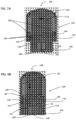
- FIG. 2A shows a schematic exploded view of an example of an adherence device, in accordance with various embodiments
- FIG. 2B shows a schematic exploded view of an example of an adherence device, in accordance with various embodiments
- FIG. 3 is an example of a network for collecting and distributing adherence data, in accordance with various embodiments
- FIG. 4 is a block flow diagram depicting a method for collecting and distributing adherence data, in accordance with various embodiments.
- FIG. 5 shows a circuit diagram, in accordance with various embodiments.
- Coupled may mean that two or more elements are in direct physical contact, or electronic contact. However, “coupled” may also mean that two or more elements are not in direct contact with each other, but yet still cooperate or interact with each other.
- a phrase in the form “A/B” or in the form “A and/or B” means (A), (B), or (A and B).
- a phrase in the form “at least one of A, B, and C” means (A), (B), (C), (A and B), (A and C), (B and C), or (A, B and C).
- a phrase in the form “(A)B” means (B) or (AB) that is, A is an optional element.
- the description may use the terms “embodiment” or “embodiments,” which may each refer to one or more of the same or different embodiments.
- the terms “comprising,” “including,” “having,” and the like, as used with respect to embodiments are synonymous, and are generally intended as “open” terms (e.g., the term “including” should be interpreted as “including but not limited to,” the term “having” should be interpreted as “having at least,” the term “includes” should be interpreted as “includes but is not limited to,” etc.).
- Eye drops present unique problems for measuring adherence when compared to devices to measure the usage of oral pills, such as tablets for systemic hypertension.
- the Federal Drug Administration (FDA) approves an eye drop medication based not only on the efficacy of the medication, but also on the specific characteristics of the container holding the medication.
- the FDA will not allow the use of bottles that have not been approved for that specific medication because of concerns regarding sterility, drop quantity, and drop volume. Therefore, any dose monitor for eye drops must be able to utilize the water-tight bottle that the FDA has approved for that medication.
- the bottle shapes and sizes vary widely for the more than 25 different types of ocular hypotensive medications available for treating glaucoma.
- MEMSCapTM Another design for measuring adherence is called the MEMSCapTM.
- This device employs an electronic bottle and cap that measures pill counts, and can also accommodate some small eye drop bottles.
- This “bottle within a bottle” mechanism for eye drop compliance requires that the patient remove the MEMSCapTM, remove the eye drop bottle, remove the eye drop bottle's cap, dispense the eye drop, replace the bottle's cap, replace the bottle in the MEMSCapTM container, and replace the MEMSCapTM. This cumbersome process deviates from the usual process of administering eye drops, thereby limiting the objectivity of the device for measuring true drop-taking behaviors.
- the GlowCaps® pillbox and e-Pill Multi-Alarm Time-Cap are additional examples of the “bottle within a bottle” mechanism, and they share the same disadvantages, including poor accuracy, as patients often forget to place the eye drops bottle back in the pill bottle.
- an adherence device that allows for the accurate measurement and improvement of adherence for multiple different bottle shapes.
- This device must permit water-tight closure of each FDA-approved bottle.
- the device may be detachable so that it may be transferred and reused on refills of subsequent eye drop bottles.
- An adherence device that addresses all of the above-mentioned drawbacks would provide more accurate measurement and improvement of eye drop adherence leading to preserved vision in millions of individuals and, potentially, save billions of dollars.
- adherence devices for monitoring and/or recording adherence to eye drop medication usage that is particularly suited to monitoring a subject's adherence to glaucoma treatment using eye drops.
- the disclosed device has been designed to “universally” fit and removably attach securely to various bottle types, solving both the problem of variable bottle type and reusability.
- the device has been designed to passively (for example without additional user input beyond removing and/or replacing the top) and accurately measure when an eye drop is administered, by simply measuring when the eye drop bottle top is removed from the eye drop bottle and/or replaced on the bottle (for example to avoid spillage or evaporation).
- information may be collected about adherence, such as the date and time that the eye drop bottle was opened and/or closed.
- This information may be stored on the device and/or communicated to a secondary device, such as a computer and/or hand held device (such as a tablet, a phone, or the like), for example wirelessly.
- the data may be distributed through a network, for example to contacts (e.g., patients, family, physicians, and/or pharmacy) or social media, for example to provide motivational feedback.
- adherence data may be wirelessly transferred with Bluetooth, Wi-Fi, and/or other local or non-local communication.
- the data may be shared with contacts (e.g., patients, friends, family, physicians, and/or pharmacy) and may provide instant adherence feedback.
- adherence data may be compared with peers to provide additional social motivation.
- the device may include programmable alerts, for example to alert the patient when an eye drop is due. Such alerts may be from the device itself, for example as a chime or flashing light, or through a secondary device, such as a hand held device or computer, for example as a text message or other notification.
- the adherence device may include an attachable component, for example an eye drop bottle cap grip, and a monitoring component.
- the monitoring component may include a sensor for sensing when the eye drop bottle cap is removed from and/or replaced onto the bottle.
- information about the time and date when the eye drop bottle cap is removed and/or replaced may be collected, for example by electronics connected to the sensor, and may be stored, for example in memory within the device, and/or transmitted from the device to a secondary device, such as a hand held device (for example a phone, a PDA, or specific monitoring device), or a computer, such as a desktop or laptop computer, where the information can be stored for later use, viewing, analysis, etc.
- the monitoring component may include a sensor that is capable of determining when an eye drop bottle cap is removed and/or replaced on an eye drop bottle.
- the monitoring component may include a sensor, such as a gyroscopic sensor (for example sensing twisting of the eye drop bottle top), an electromagnetic sensor, a pressure sensor, a mechanical sensor, a light/laser sensor, or a combination thereof.
- the senor may be a magnetic sensor, and it may detect a change in the position of a ferromagnetic material or magnet, such as a ferromagnetic material or magnet coupled to or incorporated into the eye drop bottle, and the device may be rotated with respect to the ferromagnetic material or magnet when the eye drop bottle cap is twisted or otherwise removed and/or replaced.
- the ferromagnetic material or magnet may take the form of a magnetic tape, which may be placed on the bottle prior to use.
- a light or laser sensor may be used to detect changes in a reflective material disposed on the eye drop bottle as the device is rotated with the eye drop bottle cap.
- a reflective or light-emitting material may be placed on the eye drop bottle.
- a mechanical and/or pressure sensor may likewise be used, for example to physically detect the presence of the cap on the bottle.
- the sensor and/or accompanying electronics may be programmed to limit false positive and false negative eye drop administration readings.
- the monitoring component may include a circuit coupled to associated electronics, for example for detecting, storing, and transmitting adherence information.
- the monitoring component may include a microprocessor coupled to the circuit.
- the monitoring component may include a real-time clock, for example to date and/or time stamp adherence information.
- the monitoring component may include a transmitter and/or a receiver, such as a Wi-Fi and/or Bluetooth transmitter and/or receiver coupled to the circuit.
- the Wi-Fi and/or Bluetooth transmitter and/or receiver may be coupled to an antenna.
- the monitoring component may include a power source coupled to the circuit, such as a battery, to power the device.
- the monitoring component may include an alert, such as a visual or audio alert, coupled to the circuit, for example to alert the user that they are due for their next dose of eye drops.
- the circuit may include a storage medium, such as memory, for storing information about the removal and/or replacement of the cap from the bottle.
- the information may be transmitted passively, that is without user input.
- the information may be transmitted through an action of use, for example by tripping a switch or button that has been coupled to the circuit.
- circuits may be in the form or circuit board, either designed or adapted for use in the monitoring component.
- circuit boards are available through various vendors, for example the TinyDuino circuits available from TinyCircuits (world wide web at tiny-circuits.com).
- the adherence monitoring device may include an attachable component, which, in some embodiments, may be mechanically coupled to the monitoring component.
- the attachable component may be a “universal eye drop cap on a cap” that is capable of attaching and detaching from an eye drop bottle cap design.
- the device may be configured to secure onto multiple different eye drop bottle caps, so when turning the device, the bottle cap would simultaneous turn in its naturally designed threads, preserving the FDA-approved water tight fit.
- the attachable component may secure at the base of the bottle or clasp securely around the neck or body of the bottle.
- the attachable component may be a universal cap capable of attaching onto any or many eye drop bottle cap designs.
- the attachable component may include a resilient material to fit in a “hand-in-glove” approach so the attachable component plugs firmly onto the bottle cap.
- the device may attach to the bottle cap using mechanical tightening, such as with gears and clasps.
- the attachable component may include an eye drop bottle cap grip, which may effectively hold the eye drop bottle cap securely, such that the cap rotates when the device is rotated.
- the eye drop bottle cap grip may include an inner grip section that fits over an eye drop bottle cap, for example an inner grip section that includes an inner surface that follows the general contours of an eye drop bottle cap.
- the eye drop bottle cap grip may likewise include a vertical walled portion to contact the vertical wall portion on the cap and a tapered portion to contact the tapered portion of the cap.
- the inner grip section may include a vertically convex section and a substantially straight vertical section, which may slightly taper as it extends upward.
- the vertically convex section may taper from a larger diameter to a smaller diameter, and the larger diameter may be substantially the same diameter as the top end of the substantially straight vertical section. In alternate embodiments, the tapered portion may be excluded.
- the inner grip section has a substantial smooth gripping surface.
- the inner grip section may include at least a portion with a variable gripping surface, for example ribs and/or fingers.
- the eye drop bottle cap grip may include a lip at the bottom that fits over the bottom of the cap to help secure the cap in place.
- the inner grip section may be fashioned from a pliable and/or resilient material that may conform to the shape of the eye dropper bottle cap. Moldable elastomeric polymeric materials are particularly suited for this purpose.
- the inner grip section may include a polymer.
- the polymer may be a silicone polymer.
- the device may include a housing, for example to house the monitoring component, or portions thereof, and/or the attachable component, such as the eye drop bottle cap grip.
- the housing may include a hard shell covering one or more of the eye drop bottle grip and the monitoring component, although it is understood that portions of the monitoring component, such as the sensor may be exposed.
- the housing may be contiguous with the eye drop bottle grip, for example made from the same material.
- the housing may be composed of plastic or a similar durable and water-resistant material.
- FIG. 1A is a schematic drawing showing an embodiment of an adherence device 100 in accordance with various embodiments.
- adherence device 100 includes monitoring component 110 , housing 120 , and eye drop bottle cap grip 150 .
- monitoring component 110 may include a circuit and at least one sensor for sensing removal of the eye drop bottle cap, and associated electronics, such as a processor, memory, a battery, a transmitter (such as a WiFi or Bluetooth transmitter), and/or receiver.
- housing 120 is a hard casing composed of three parts, top 125 , base 130 , and bottom 140 .
- top 125 is coupled, in some cases reversibly, to base 130 .
- top 125 is reversibly coupled to base 130 through threads 126 .
- the reversible coupling of top 125 and base 130 allows for the top to be removed, for example to access and/or service monitoring component 110 , for example to replace the battery.
- aperture 132 in base 130 which may be included to allow wires to pass through to connect to a sensor and/or transmission button (not shown).
- Bottom 140 includes aperture 142 , which fits over the top of an eye drop bottle top.
- bottom 140 is reversibly coupled to base 130 with threads 144 .
- eye drop bottle top grip 150 includes inner surfaces 152 , 154 , which enclose cap volume 160 .
- Cap volume 160 is generally shaped to follow the contours of an eye drop bottle cap, and is sized appropriately to fit a vast array of such tops from various vendors.
- FIG. 1B is a schematic drawing showing an embodiment of an adherence device 100 , in accordance with various embodiments.
- adherence device 100 includes monitoring component 110 , housing 120 , and eye drop bottle cap grip 150 .
- monitoring component 110 may include a circuit and at least one sensor for sensing removal of the eye drop bottle cap, and associated electronics, such as a processor, memory, a battery, a transmitter (such as a WiFi or Bluetooth transmitter), and/or receiver.
- housing 120 is a hard casing composed of three parts, top 125 , base 130 , and bottom 140 .
- top 125 is coupled, in some cases reversibly, to bottom 140 , rather than base 130 , as in the embodiment shown in FIG.
- top 125 is reversibly coupled to bottom 140 through threads 128 and base 130 is held in place by inner flanges 129 , 134 .
- the reversible coupling of top 125 and bottom 140 may allow for the top to be removed, for example to access and/or service monitoring component 110 , for example to replace the battery.
- aperture 132 in base 130 which allow wires to pass through to connect to a sensor and or transmission button 170 .
- Bottom 140 includes aperture 142 , which fits over the top of an eye drop bottle top.
- Eye drop bottle top grip 150 includes inner surfaces 152 , 154 , which enclose cap volume 160 .
- Cap volume 160 is generally shaped to follow the contours of an eye drop bottle cap, and is sized appropriately to fit a vast array of such tops from various vendors.
- FIG. 1C is a schematic drawing showing an embodiment of an adherence device 100 .
- adherence device 100 includes monitoring component 110 , housing 120 , and eye drop bottle cap grip 150 .
- monitoring component 110 may include a circuit and at least one sensor for sensing removal of the eye drop bottle cap, and associated electronics, such as a processor, memory, a battery, a transmitter (such as a WiFi or Bluetooth transmitter), and/or receiver.
- housing 120 is a soft casing that is contiguous with eye drop bottle cap grip 150 .
- monitoring component 110 is contained within compartment 115 , and may be accessible through door 118 , for example to access and/or service the monitoring component 110 , for example to replace the battery.
- Bottom 140 includes aperture 142 which fits over the top of an eye drop bottle top.
- Eye drop bottle top grip 150 includes inner surfaces 152 , 154 , which enclose cap volume 160 .
- Cap volume 160 is generally shaped to follow the contours of an eye drop bottle cap, and is sized appropriately to fit a vast array of such tops from various vendors.
- FIGS. 2A and 2B illustrate exemplary exploded views of a disclosed adherence device, in accordance with various embodiments.
- adherence device 100 includes monitoring component 110 , top 125 , base 130 , bottom 140 , and eye drop bottle top grip 150 .
- FIG. 3 is a block diagram depicting a system 300 for monitoring, collecting and distributing eye drop bottle use compliance information, in accordance with certain exemplary embodiments.
- the adherence monitoring device 100 distributes information to one or more networked devices 320 through one or more of network 330 .
- Each network 330 includes a wired or wireless telecommunication means by which network systems (including systems adherence monitoring device 100 and networked devices 320 ) may communicate and exchange data.
- each network 330 may be implemented as, or may be a part of, a storage area network (SAN), personal area network (PAN), a metropolitan area network (MAN), a local area network (LAN), a wide area network (WAN), a wireless local area network (WLAN), a virtual private network (VPN), an intranet, an Internet, a mobile telephone network, a card network, Bluetooth, near field communication network (NFC), any form of standardized radio frequency, or any combination thereof, or any other appropriate architecture or system that facilitates the communication of signals, data, and/or messages (generally referred to as data).
- SAN storage area network
- PAN personal area network
- MAN metropolitan area network
- LAN local area network
- WAN wide area network
- WLAN wireless local area network
- VPN virtual private network
- intranet an Internet
- mobile telephone network a card network
- NFC near field communication network
- NFC near field communication network
- each network system includes a device having a communication component capable of transmitting and/or receiving data over the network 330 .
- each networked device may comprise a server, personal computer, mobile device (for example, notebook computer, tablet computer, netbook computer, personal digital assistant (PDA), video game device, GPS locator device, cellular telephone, Smartphone, or other mobile device), a television with one or more processors embedded therein and/or coupled thereto, or other appropriate technology that includes or is coupled to a web browser or other application for communicating via the network 330 .
- PDA personal digital assistant
- Adherence monitoring device 100 includes at least one monitoring component 110 that is capable of detecting eye drop bottle cap removal and/or replacement initiated by a user. Monitoring component 110 is also capable of applying a date/time stamp to the opening/closing event and transmit this information to another device, such as one or more of networked devices 320 , through network 330 . In certain examples, monitoring component 110 is also capable of receiving information from one or more networked devices 320 , through network 330 , for example from a doctor or pharmacy reprograming networked devices 320 , through network 330 .
- the monitoring component 110 of adherence device 100 has one or more processors embedded therein and/or coupled thereto, or other appropriate technology that can communicate via an electronic, magnetic, or radio frequency field between monitoring component 110 and another device.
- the monitoring component 110 has processing capabilities, such as storage capacity/memory and one or more applications (not illustrated) that can perform a particular function.
- monitoring component 110 includes a network controller, such as a Bluetooth controller. The controller may be capable of sending and receiving data, performing authentication and ciphering functions, and directing how monitoring component 110 will listen for and send transmissions from networked devices 320 or configure monitoring component 110 into various power-save modes, for example according to the Bluetooth-specified procedures.
- the controller is a Wi-Fi controller capable of performing similar functions.
- the monitoring component 110 may communicate with the networked devices 320 via an antenna.
- the controller is notified of the state of readiness of monitoring component for transmission.
- transmission may be triggered by activation of a switch, for example by the user to “download” one or multiple opening/closing events.
- monitoring component 110 may output a radio signal through the antenna. On establishing a communication channel between monitoring component 110 and networked device 320 , information may be transferred to the networked device.
- An example monitoring component 110 may comprise a memory element (not shown), which can exist within a removable smart chip or a secure digital (“SD”) card or which can be embedded within a fixed chip on monitoring component 110 .
- a memory element not shown
- SIM Subscriber Identity Identity Component
- the memory element may allow a software application resident on the monitoring component 110 .
- monitoring component 110 includes a processor.
- a processor can exist within a removable smart chip or can be embedded within a fixed chip on monitoring component 110 .
- the application host processor may comprise applications (not shown) running thereon that perform the functionality described herein.
- FIG. 4 is a block flow diagram depicting an example method 400 for distributing adherence information from adherence device 100 and system 300 , in accordance with example embodiments.
- monitoring component 110 detects the opening of the eye drop bottle top which initiates subsequent activity.
- the processor of monitoring component 110 associates a date and time with the event, for example using an internal clock to generate a date and time stamped event.
- the date and time stamped event is saved into memory of monitoring component 110 , for example for later retrieval.
- the time and date stamped event information, or multiple stored information is distributed to a secondary device, for example via WiFi or Bluetooth through an antenna of monitoring component 110 . Once the information is date stamped and stored and/or distributed the monitoring component is reset for the next round of eye drop administration monitoring.
- FIG. 5 is a circuit diagram, in accordance with embodiments herein.
Landscapes
- Health & Medical Sciences (AREA)
- Ophthalmology & Optometry (AREA)
- Engineering & Computer Science (AREA)
- Biomedical Technology (AREA)
- Heart & Thoracic Surgery (AREA)
- Vascular Medicine (AREA)
- Life Sciences & Earth Sciences (AREA)
- Animal Behavior & Ethology (AREA)
- General Health & Medical Sciences (AREA)
- Public Health (AREA)
- Veterinary Medicine (AREA)
- Medical Preparation Storing Or Oral Administration Devices (AREA)
Abstract
Description
Claims (17)
Priority Applications (1)
| Application Number | Priority Date | Filing Date | Title |
|---|---|---|---|
| US15/547,058 US11045349B2 (en) | 2015-01-31 | 2016-01-29 | Device for measuring and improving adherence of eye drops |
Applications Claiming Priority (3)
| Application Number | Priority Date | Filing Date | Title |
|---|---|---|---|
| US201562110498P | 2015-01-31 | 2015-01-31 | |
| US15/547,058 US11045349B2 (en) | 2015-01-31 | 2016-01-29 | Device for measuring and improving adherence of eye drops |
| PCT/US2016/015600 WO2016123456A1 (en) | 2015-01-31 | 2016-01-29 | Device for measuring and improving adherence of eye drops |
Publications (2)
| Publication Number | Publication Date |
|---|---|
| US20180008459A1 US20180008459A1 (en) | 2018-01-11 |
| US11045349B2 true US11045349B2 (en) | 2021-06-29 |
Family
ID=56544377
Family Applications (1)
| Application Number | Title | Priority Date | Filing Date |
|---|---|---|---|
| US15/547,058 Active 2038-07-02 US11045349B2 (en) | 2015-01-31 | 2016-01-29 | Device for measuring and improving adherence of eye drops |
Country Status (2)
| Country | Link |
|---|---|
| US (1) | US11045349B2 (en) |
| WO (1) | WO2016123456A1 (en) |
Families Citing this family (3)
| Publication number | Priority date | Publication date | Assignee | Title |
|---|---|---|---|---|
| US20180126273A1 (en) * | 2016-11-09 | 2018-05-10 | Agape Assets, LLC | Systems and methods for promoting medication adherence |
| US11536645B2 (en) | 2019-05-13 | 2022-12-27 | Verily Life Sciences Llc | Detecting backscatter from drops dispensed from a handheld dropper and associated systems, devices, and methods |
| KR102810377B1 (en) * | 2023-07-14 | 2025-05-20 | 가톨릭대학교 산학협력단 | Eye drop storage device for assisting users in using eye drops and operatoin method thereof |
Citations (23)
| Publication number | Priority date | Publication date | Assignee | Title |
|---|---|---|---|---|
| US5009338A (en) | 1989-02-03 | 1991-04-23 | Senetics Corporation | Indicator cap for a medicine bottle |
| US5012496A (en) | 1989-11-07 | 1991-04-30 | Acumetric, Inc. | Drop counting system |
| US5014798A (en) | 1989-12-26 | 1991-05-14 | Tenax-Glynn Corporation | Patient compliance medicine cap |
| US5417349A (en) | 1993-10-21 | 1995-05-23 | Stull; Gene | Liquid dispenser for eye drops |
| US5694882A (en) | 1995-01-30 | 1997-12-09 | Marshall; Forrest A. | Indicator |
| US5860387A (en) | 1997-05-30 | 1999-01-19 | Giveen; Samuel Charles | Automatic squeeze-bottle utilization cycle counting device |
| US20020104848A1 (en) | 2001-02-05 | 2002-08-08 | Burrows Mark D. | Pharmaceutical container having signaling means and associated method of use |
| US20030089733A1 (en) * | 2002-07-09 | 2003-05-15 | Cain Russell P | Medication monitoring device |
| US20040039355A1 (en) | 2002-08-26 | 2004-02-26 | Gonzalez Jose M. | Fluid dispensing devices and methods |
| US6877626B2 (en) | 2002-12-30 | 2005-04-12 | Joseph Sherrod | Spill proof cap for different sized bottle openings |
| US7081807B2 (en) | 2004-01-14 | 2006-07-25 | Joseph Lai | Automatic pill reminder bottles |
| US20090051560A1 (en) | 2007-07-24 | 2009-02-26 | William Manning | Drug dispenser/container display |
| US20100142330A1 (en) * | 2006-11-09 | 2010-06-10 | Generics (Uk) Limited | Attachable device for pill container |
| US20100270257A1 (en) | 2005-07-13 | 2010-10-28 | Vitality, Inc. | Medicine Bottle Cap With Electronic Embedded Curved Display |
| US20110119090A1 (en) * | 2009-02-09 | 2011-05-19 | Steven Lazar | Smart cap with communication function |
| US8026796B2 (en) | 2006-05-22 | 2011-09-27 | Kazim Kiran | Warning system for timely administration of drugs that have to be administered at certain times |
| US20120150132A1 (en) | 2010-12-13 | 2012-06-14 | Cress Jonathan H | Disposable dispenser drop diverter |
| US8269613B2 (en) | 2009-02-09 | 2012-09-18 | Lazar Steven S | Smart cap for a medicine container to dispense a medication while self-verifying medicine identity |
| US8279076B2 (en) | 2009-07-14 | 2012-10-02 | Sam Johnson | Motion or opening detector |
| WO2014106759A1 (en) | 2013-01-07 | 2014-07-10 | Clifford Cooper | A guide for an eye drop dispenser bottle for the self-administration of eye drops |
| US20140228783A1 (en) | 2011-09-19 | 2014-08-14 | Daniel L. Kraft | Eye drop dispenser |
| US8998861B2 (en) | 2012-10-23 | 2015-04-07 | Rxense, Inc. | Portable management and monitoring system for eye drop medication regiment |
| US9361780B2 (en) * | 2011-03-01 | 2016-06-07 | TimerCap, LLC | Device and method for recording and transmitting interval data from a container cap |
-
2016
- 2016-01-29 US US15/547,058 patent/US11045349B2/en active Active
- 2016-01-29 WO PCT/US2016/015600 patent/WO2016123456A1/en not_active Ceased
Patent Citations (26)
| Publication number | Priority date | Publication date | Assignee | Title |
|---|---|---|---|---|
| US5009338A (en) | 1989-02-03 | 1991-04-23 | Senetics Corporation | Indicator cap for a medicine bottle |
| US5012496A (en) | 1989-11-07 | 1991-04-30 | Acumetric, Inc. | Drop counting system |
| US5014798A (en) | 1989-12-26 | 1991-05-14 | Tenax-Glynn Corporation | Patient compliance medicine cap |
| US5417349A (en) | 1993-10-21 | 1995-05-23 | Stull; Gene | Liquid dispenser for eye drops |
| US5694882A (en) | 1995-01-30 | 1997-12-09 | Marshall; Forrest A. | Indicator |
| US6016764A (en) | 1997-05-30 | 2000-01-25 | Giveen; Samuel Charles | Removably attachable automatic squeeze bottle utilization cycle counting device |
| US5860387A (en) | 1997-05-30 | 1999-01-19 | Giveen; Samuel Charles | Automatic squeeze-bottle utilization cycle counting device |
| US20020104848A1 (en) | 2001-02-05 | 2002-08-08 | Burrows Mark D. | Pharmaceutical container having signaling means and associated method of use |
| US20030089733A1 (en) * | 2002-07-09 | 2003-05-15 | Cain Russell P | Medication monitoring device |
| US20040039355A1 (en) | 2002-08-26 | 2004-02-26 | Gonzalez Jose M. | Fluid dispensing devices and methods |
| US6877626B2 (en) | 2002-12-30 | 2005-04-12 | Joseph Sherrod | Spill proof cap for different sized bottle openings |
| US7081807B2 (en) | 2004-01-14 | 2006-07-25 | Joseph Lai | Automatic pill reminder bottles |
| US20100270257A1 (en) | 2005-07-13 | 2010-10-28 | Vitality, Inc. | Medicine Bottle Cap With Electronic Embedded Curved Display |
| US8026796B2 (en) | 2006-05-22 | 2011-09-27 | Kazim Kiran | Warning system for timely administration of drugs that have to be administered at certain times |
| US20100142330A1 (en) * | 2006-11-09 | 2010-06-10 | Generics (Uk) Limited | Attachable device for pill container |
| US20090051560A1 (en) | 2007-07-24 | 2009-02-26 | William Manning | Drug dispenser/container display |
| US20110119090A1 (en) * | 2009-02-09 | 2011-05-19 | Steven Lazar | Smart cap with communication function |
| US8269613B2 (en) | 2009-02-09 | 2012-09-18 | Lazar Steven S | Smart cap for a medicine container to dispense a medication while self-verifying medicine identity |
| US8319613B2 (en) | 2009-02-09 | 2012-11-27 | Steven Lazar | Smart cap with communication function |
| US8279076B2 (en) | 2009-07-14 | 2012-10-02 | Sam Johnson | Motion or opening detector |
| US20120150132A1 (en) | 2010-12-13 | 2012-06-14 | Cress Jonathan H | Disposable dispenser drop diverter |
| US9361780B2 (en) * | 2011-03-01 | 2016-06-07 | TimerCap, LLC | Device and method for recording and transmitting interval data from a container cap |
| US20140228783A1 (en) | 2011-09-19 | 2014-08-14 | Daniel L. Kraft | Eye drop dispenser |
| US8998861B2 (en) | 2012-10-23 | 2015-04-07 | Rxense, Inc. | Portable management and monitoring system for eye drop medication regiment |
| WO2014106759A1 (en) | 2013-01-07 | 2014-07-10 | Clifford Cooper | A guide for an eye drop dispenser bottle for the self-administration of eye drops |
| US20150351960A1 (en) * | 2013-01-07 | 2015-12-10 | Clifford Cooper | Guide for an Eye Drop Dispenser Bottle for the Self-Administration of Eye Drops |
Non-Patent Citations (4)
| Title |
|---|
| Friedman et al.; "The TRAVATAN Dosing Aid Accurately Records When Drops are Taken"; Brief Reports; vol. 143, No. 4; p. 699-701. |
| Hermann et al.; "Microprocessor controlled compliance monitor for eye drop medication", Br. J. Ophthalmol. 2006; 90; p. 830-832; 1996. |
| Kass et al.; "Compliance with Topical Pilocarpine Treatment"; American Journal of Ophthalmology; vol. 101, No. 5; p. 515-523; May 1986. |
| PCT Patent Application No. PCT/US16/15600; International Search Report and Written Opinion dated Apr. 14, 2016. |
Also Published As
| Publication number | Publication date |
|---|---|
| WO2016123456A1 (en) | 2016-08-04 |
| US20180008459A1 (en) | 2018-01-11 |
Similar Documents
| Publication | Publication Date | Title |
|---|---|---|
| US10314740B2 (en) | Eye drop dispenser | |
| KR102460386B1 (en) | Unobtrusive wireless electronic systems for monitoring and facilitating patient compliance | |
| US10445472B2 (en) | System and method for monitoring pill container activity | |
| US9014427B2 (en) | Medication storage device and method | |
| US8725291B2 (en) | Method and apparatus for remote monitoring of daily dispensing of medication | |
| US10265245B2 (en) | Portable drug dispenser | |
| US20180289591A1 (en) | Method and system for improving and assisting in medication compliance | |
| US9510999B2 (en) | Medication dispensing phone case | |
| US20150254427A1 (en) | Medication Adherence System for and Method of Monitoring a Patient Medication Adherence and Facilitating Dose Reminders | |
| US20200135321A1 (en) | System, methods, & device for managing a product | |
| JP7365331B2 (en) | eye drop aid | |
| TR201904116T4 (en) | Adherence monitoring devices and consumables dispenser usage monitoring devices. | |
| US20190392934A1 (en) | System and process for monitoring medication dosage | |
| US20180008459A1 (en) | Device for measuring and improving adherence of eye drops | |
| US20190183676A1 (en) | Fluid Dispensing System and Method of Use | |
| US11324665B2 (en) | Medication intelligent device | |
| KR20190067686A (en) | Method and device for taking medicine | |
| US11589807B2 (en) | Biosensor for monitoring eyedrop usage compliance | |
| CA3034001A1 (en) | Fluid dispensing system and method of use | |
| CN204766591U (en) | A medication monitoring and reminder system | |
| US20170076061A1 (en) | Monitoring system for medication compliance | |
| WO2019008296A1 (en) | Device for measuring physiological parameters of a human or animal individual | |
| HK40037992A (en) | Eye instillation assistance tool | |
| HK40036683A (en) | Instillation assistance tool |
Legal Events
| Date | Code | Title | Description |
|---|---|---|---|
| AS | Assignment |
Owner name: UNIVERSAL ADHERENCE LLC, OREGON Free format text: ASSIGNMENT OF ASSIGNORS INTEREST;ASSIGNORS:KINAST, ROBERT MICHAEL;MANSBERGER, STEVEN LARRY;REEL/FRAME:043176/0388 Effective date: 20170728 |
|
| FEPP | Fee payment procedure |
Free format text: ENTITY STATUS SET TO SMALL (ORIGINAL EVENT CODE: SMAL); ENTITY STATUS OF PATENT OWNER: SMALL ENTITY |
|
| STPP | Information on status: patent application and granting procedure in general |
Free format text: DOCKETED NEW CASE - READY FOR EXAMINATION |
|
| STPP | Information on status: patent application and granting procedure in general |
Free format text: RESPONSE TO NON-FINAL OFFICE ACTION ENTERED AND FORWARDED TO EXAMINER |
|
| STPP | Information on status: patent application and granting procedure in general |
Free format text: ADVISORY ACTION MAILED |
|
| STPP | Information on status: patent application and granting procedure in general |
Free format text: DOCKETED NEW CASE - READY FOR EXAMINATION |
|
| STPP | Information on status: patent application and granting procedure in general |
Free format text: NOTICE OF ALLOWANCE MAILED -- APPLICATION RECEIVED IN OFFICE OF PUBLICATIONS |
|
| STPP | Information on status: patent application and granting procedure in general |
Free format text: PUBLICATIONS -- ISSUE FEE PAYMENT RECEIVED |
|
| STPP | Information on status: patent application and granting procedure in general |
Free format text: PUBLICATIONS -- ISSUE FEE PAYMENT VERIFIED |
|
| STCF | Information on status: patent grant |
Free format text: PATENTED CASE |
|
| MAFP | Maintenance fee payment |
Free format text: PAYMENT OF MAINTENANCE FEE, 4TH YR, SMALL ENTITY (ORIGINAL EVENT CODE: M2551); ENTITY STATUS OF PATENT OWNER: SMALL ENTITY Year of fee payment: 4 |