US11044154B2 - Configuration and usage pattern of a cloud environment based on iterative learning - Google Patents
Configuration and usage pattern of a cloud environment based on iterative learning Download PDFInfo
- Publication number
- US11044154B2 US11044154B2 US16/395,528 US201916395528A US11044154B2 US 11044154 B2 US11044154 B2 US 11044154B2 US 201916395528 A US201916395528 A US 201916395528A US 11044154 B2 US11044154 B2 US 11044154B2
- Authority
- US
- United States
- Prior art keywords
- cloud
- cloud environment
- environment configuration
- value
- configuration parameters
- Prior art date
- Legal status (The legal status is an assumption and is not a legal conclusion. Google has not performed a legal analysis and makes no representation as to the accuracy of the status listed.)
- Expired - Fee Related, expires
Links
Images




Classifications
-
- H—ELECTRICITY
- H04—ELECTRIC COMMUNICATION TECHNIQUE
- H04L—TRANSMISSION OF DIGITAL INFORMATION, e.g. TELEGRAPHIC COMMUNICATION
- H04L41/00—Arrangements for maintenance, administration or management of data switching networks, e.g. of packet switching networks
- H04L41/08—Configuration management of networks or network elements
- H04L41/0803—Configuration setting
- H04L41/0813—Configuration setting characterised by the conditions triggering a change of settings
- H04L41/082—Configuration setting characterised by the conditions triggering a change of settings the condition being updates or upgrades of network functionality
-
- G—PHYSICS
- G06—COMPUTING OR CALCULATING; COUNTING
- G06N—COMPUTING ARRANGEMENTS BASED ON SPECIFIC COMPUTATIONAL MODELS
- G06N20/00—Machine learning
-
- G—PHYSICS
- G06—COMPUTING OR CALCULATING; COUNTING
- G06N—COMPUTING ARRANGEMENTS BASED ON SPECIFIC COMPUTATIONAL MODELS
- G06N5/00—Computing arrangements using knowledge-based models
- G06N5/04—Inference or reasoning models
-
- H—ELECTRICITY
- H04—ELECTRIC COMMUNICATION TECHNIQUE
- H04L—TRANSMISSION OF DIGITAL INFORMATION, e.g. TELEGRAPHIC COMMUNICATION
- H04L41/00—Arrangements for maintenance, administration or management of data switching networks, e.g. of packet switching networks
- H04L41/50—Network service management, e.g. ensuring proper service fulfilment according to agreements
- H04L41/5041—Network service management, e.g. ensuring proper service fulfilment according to agreements characterised by the time relationship between creation and deployment of a service
-
- H—ELECTRICITY
- H04—ELECTRIC COMMUNICATION TECHNIQUE
- H04L—TRANSMISSION OF DIGITAL INFORMATION, e.g. TELEGRAPHIC COMMUNICATION
- H04L67/00—Network arrangements or protocols for supporting network services or applications
- H04L67/01—Protocols
- H04L67/10—Protocols in which an application is distributed across nodes in the network
-
- H—ELECTRICITY
- H04—ELECTRIC COMMUNICATION TECHNIQUE
- H04L—TRANSMISSION OF DIGITAL INFORMATION, e.g. TELEGRAPHIC COMMUNICATION
- H04L67/00—Network arrangements or protocols for supporting network services or applications
- H04L67/2866—Architectures; Arrangements
- H04L67/30—Profiles
-
- H—ELECTRICITY
- H04—ELECTRIC COMMUNICATION TECHNIQUE
- H04L—TRANSMISSION OF DIGITAL INFORMATION, e.g. TELEGRAPHIC COMMUNICATION
- H04L41/00—Arrangements for maintenance, administration or management of data switching networks, e.g. of packet switching networks
- H04L41/14—Network analysis or design
-
- H—ELECTRICITY
- H04—ELECTRIC COMMUNICATION TECHNIQUE
- H04L—TRANSMISSION OF DIGITAL INFORMATION, e.g. TELEGRAPHIC COMMUNICATION
- H04L41/00—Arrangements for maintenance, administration or management of data switching networks, e.g. of packet switching networks
- H04L41/16—Arrangements for maintenance, administration or management of data switching networks, e.g. of packet switching networks using machine learning or artificial intelligence
-
- H—ELECTRICITY
- H04—ELECTRIC COMMUNICATION TECHNIQUE
- H04L—TRANSMISSION OF DIGITAL INFORMATION, e.g. TELEGRAPHIC COMMUNICATION
- H04L41/00—Arrangements for maintenance, administration or management of data switching networks, e.g. of packet switching networks
- H04L41/50—Network service management, e.g. ensuring proper service fulfilment according to agreements
- H04L41/508—Network service management, e.g. ensuring proper service fulfilment according to agreements based on type of value added network service under agreement
- H04L41/5096—Network service management, e.g. ensuring proper service fulfilment according to agreements based on type of value added network service under agreement wherein the managed service relates to distributed or central networked applications
-
- H—ELECTRICITY
- H04—ELECTRIC COMMUNICATION TECHNIQUE
- H04L—TRANSMISSION OF DIGITAL INFORMATION, e.g. TELEGRAPHIC COMMUNICATION
- H04L43/00—Arrangements for monitoring or testing data switching networks
- H04L43/08—Monitoring or testing based on specific metrics, e.g. QoS, energy consumption or environmental parameters
Definitions
- Cloud-computing providers offer various services according to different models, such as Infrastructure as a Service (IaaS), Platform as a Service (PaaS), and Software as a Service (SaaS). These models offer increasing abstraction and are typically portrayed as a layers in a stack, where IaaS is a bottom layer, PaaS is a middle layer, and SaaS is a top layer. The models may also be used independent of each other.
- IaaS Infrastructure as a Service
- PaaS Platform as a Service
- SaaS Software as a Service
- IaaS cloud providers supply resources on-demand from large pools of equipment installed in data centers and typically bill services on a utility computing basis where a customer's cost is based on the amount of resources allocated and consumed.
- Cloud management solutions are available to customers that include system management and pattern engine capabilities to enable workload deployments in an IaaS environment.
- Some cloud management solutions allow a system administrator to select their own hardware (network/storage/compute) and virtualization software (hypervisors, etc.) to create their own cloud environment. This presents a unique challenge for customers when they have a large selection of hardware and software from which to configure for executing their specific workloads and requirements.
- cloud environment encompasses hardware, software (including hardware and software configuration), networking, and executing workloads.
- a cloud environment may include software at all three levels discussed above (IaaS, PaaS, and SaaS), may include information associated with a public cloud provider account, and may include an entire “rack” or datacenter in an on-premise private cloud.
- the way in which a cloud environment operates is typically subject to a numerous set of configurable parameters that typically include the following: hardware selection (CPU, disk, network cards, memory, routers/switches, etc.), firmware level selection, BIOS configuration, operating system selection for each hardware component, operating system configuration, virtualization software selection and configuration, and pattern deployment software/configuration.
- configurable parameters are typically documented in a specific component's documentation.
- a typical software virtualization software product may have hundreds of cloud-related configuration options (sometimes herein referred to as a “cloud environment configuration parameters”).
- a cloud environment configuration parameter refers to a configurable setting of a cloud environment where the setting relates specifically to the fact that cloud is being used. For example, when an IT professional chooses a preference as far as which cloud is used to perform a given employee's computing work, then that is a cloud environment configuration parameter.
- configuration parameters when an IT professional chooses which login options (for example, normal user, power user, administrator) with which a given employee will be presented by her cloud environment at startup time, then this is not a cloud environment configuration parameter because it does not specifically relate to cloud usage (except in the trivial sense that the setting happens to be present in a cloud environment implementation end user application).
- Configurable parameters that do not specifically relate to cloud usage are herein referred to as non-cloud configuration parameters.
- Cloud environment configuration parameters and non-cloud configuration parameters are herein collectively referred to simply as “configuration parameters.”
- the configuration parameters of a cloud environment are manually configured for each component based on a system administrator's cloud requirements by those skilled in the specific component, which often requires multiple experts across various disciplines.
- the cloud requirements are created and manually maintained by the system administrator and only changed over time as the system administrator deliberately modifies the cloud requirements.
- the process of mapping the cloud requirements to specific configuration settings of components are contained within various components' reference documentation or derived from experts in the field.
- a system displays a user interface that includes cloud environment configuration parameters on a display.
- Each of the cloud environment configuration parameters is selectable by a user and corresponds to a new cloud environment.
- the system receives a set of user selections from the user that selects at least one of the cloud environment configuration parameters.
- the system generates a recommended cloud profile based, at least in part, on the set of user selections, and configures the new cloud environment based on the recommended cloud profile.
- a method, system and/or computer program product that performs the following operations (not necessarily in the following order): (i) displaying a user interface comprising a plurality of cloud environment configuration parameters on a display, wherein each of the plurality of cloud environment configuration parameters is selectable by a user and corresponds to a new cloud environment; (ii) receiving a set of user selections from the user that selects at least one of the plurality of cloud environment configuration parameters; (iii) generating a recommended cloud profile based, at least in part, on the set of user selections; and (iv) configuring the new cloud environment based on the recommended cloud profile.
- FIG. 1 is a block diagram of a data processing system in which the methods described herein can be implemented
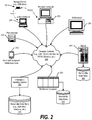
- FIG. 2 provides an extension of the information handling system environment shown in FIG. 1 to illustrate that the methods described herein can be performed on a wide variety of information handling systems which operate in a networked environment;
- FIG. 3 is a high-level diagram depicting an example of a recommendation engine providing optimized could profile recommendations based on iterative learning and implementing the optimized cloud profile recommendations;
- FIG. 4 is a flowchart depicting an example of steps taken to collect cloud profile data from cloud agents
- FIG. 5 is an exemplary diagram showing a cloud profile collected from a cloud agent
- FIG. 6 is diagram depicting an example of a user interface that allows a system administrator to enter system administrator requirements
- FIG. 7 is a flowchart depicting an example of steps taken to analyze system administrator requirements against cloud profiles and provide a recommended profile to a system administrator.
- FIG. 8 is a diagram depicting examples of configuration-to-impact mappings.
- the present invention may be a system, a method, and/or a computer program product.
- the computer program product may include a computer readable storage medium (or media) having computer readable program instructions thereon for causing a processor to carry out aspects of the present invention.
- the computer readable storage medium can be a tangible device that can retain and store instructions for use by an instruction execution device.
- the computer readable storage medium may be, for example, but is not limited to, an electronic storage device, a magnetic storage device, an optical storage device, an electromagnetic storage device, a semiconductor storage device, or any suitable combination of the foregoing.
- a non-exhaustive list of more specific examples of the computer readable storage medium includes the following: a portable computer diskette, a hard disk, a random access memory (RAM), a read-only memory (ROM), an erasable programmable read-only memory (EPROM or Flash memory), a static random access memory (SRAM), a portable compact disc read-only memory (CD-ROM), a digital versatile disk (DVD), a memory stick, a floppy disk, a mechanically encoded device such as punch-cards or raised structures in a groove having instructions recorded thereon, and any suitable combination of the foregoing.
- RAM random access memory
- ROM read-only memory
- EPROM or Flash memory erasable programmable read-only memory
- SRAM static random access memory
- CD-ROM compact disc read-only memory
- DVD digital versatile disk
- memory stick a floppy disk
- a mechanically encoded device such as punch-cards or raised structures in a groove having instructions recorded thereon
- a computer readable storage medium is not to be construed as being transitory signals per se, such as radio waves or other freely propagating electromagnetic waves, electromagnetic waves propagating through a waveguide or other transmission media (e.g., light pulses passing through a fiber-optic cable), or electrical signals transmitted through a wire.
- Computer readable program instructions described herein can be downloaded to respective computing/processing devices from a computer readable storage medium or to an external computer or external storage device via a network, for example, the Internet, a local area network, a wide area network and/or a wireless network.
- the network may comprise copper transmission cables, optical transmission fibers, wireless transmission, routers, firewalls, switches, gateway computers and/or edge servers.
- a network adapter card or network interface in each computing/processing device receives computer readable program instructions from the network and forwards the computer readable program instructions for storage in a computer readable storage medium within the respective computing/processing device.
- Computer readable program instructions for carrying out operations of the present invention may be assembler instructions, instruction-set-architecture (ISA) instructions, machine instructions, machine dependent instructions, microcode, firmware instructions, state-setting data, or either source code or object code written in any combination of one or more programming languages, including an object oriented programming language such as Smalltalk, C++ or the like, and conventional procedural programming languages, such as the “C” programming language or similar programming languages.
- the computer readable program instructions may execute entirely on the user's computer, partly on the user's computer, as a stand-alone software package, partly on the user's computer and partly on a remote computer or entirely on the remote computer or server.
- the remote computer may be connected to the user's computer through any type of network, including a local area network (LAN) or a wide area network (WAN), or the connection may be made to an external computer (for example, through the Internet using an Internet Service Provider).
- electronic circuitry including, for example, programmable logic circuitry, field-programmable gate arrays (FPGA), or programmable logic arrays (PLA) may execute the computer readable program instructions by utilizing state information of the computer readable program instructions to personalize the electronic circuitry, in order to perform aspects of the present invention.
- These computer readable program instructions may be provided to a processor of a general purpose computer, special purpose computer, or other programmable data processing apparatus to produce a machine, such that the instructions, which execute via the processor of the computer or other programmable data processing apparatus, create means for implementing the functions/acts specified in the flowchart and/or block diagram block or blocks.
- These computer readable program instructions may also be stored in a computer readable storage medium that can direct a computer, a programmable data processing apparatus, and/or other devices to function in a particular manner, such that the computer readable storage medium having instructions stored therein comprises an article of manufacture including instructions which implement aspects of the function/act specified in the flowchart and/or block diagram block or blocks.
- the computer readable program instructions may also be loaded onto a computer, other programmable data processing apparatus, or other device to cause a series of operational steps to be performed on the computer, other programmable apparatus or other device to produce a computer implemented process, such that the instructions which execute on the computer, other programmable apparatus, or other device implement the functions/acts specified in the flowchart and/or block diagram block or blocks.
- each block in the flowchart or block diagrams may represent a module, segment, or portion of instructions, which comprises one or more executable instructions for implementing the specified logical function(s).
- the functions noted in the block may occur out of the order noted in the figures.
- two blocks shown in succession may, in fact, be executed substantially concurrently, or the blocks may sometimes be executed in the reverse order, depending upon the functionality involved.
- FIG. 1 illustrates information handling system 100 , which is a simplified example of a computer system capable of performing the computing operations described herein.
- Information handling system 100 includes one or more processors 110 coupled to processor interface bus 112 .
- Processor interface bus 112 connects processors 110 to Northbridge 115 , which is also known as the Memory Controller Hub (MCH).
- Northbridge 115 connects to system memory 120 and provides a means for processor(s) 110 to access the system memory.
- Graphics controller 125 also connects to Northbridge 115 .
- Peripheral Component Interconnect (PCI) Express bus 118 connects Northbridge 115 to graphics controller 125 .
- Graphics controller 125 connects to display device 130 , such as a computer monitor.
- PCI Peripheral Component Interconnect
- Northbridge 115 and Southbridge 135 connect to each other using bus 119 .
- the bus is a Direct Media Interface (DMI) bus that transfers data at high speeds in each direction between Northbridge 115 and Southbridge 135 .
- a PCI bus connects the Northbridge and the Southbridge.
- Southbridge 135 also known as the Input/Output (I/O) Controller Hub (ICH) is a chip that generally implements capabilities that operate at slower speeds than the capabilities provided by the Northbridge.
- Southbridge 135 typically provides various busses used to connect various components. These busses include, for example, PCI and PCI Express busses, an ISA bus, a System Management Bus (SMBus or SMB), and/or a Low Pin Count (LPC) bus.
- PCI and PCI Express busses an ISA bus
- SMB System Management Bus
- LPC Low Pin Count
- the LPC bus often connects low-bandwidth devices, such as boot ROM 196 and “legacy” I/O devices (using a “super I/O” chip).
- the “legacy” I/O devices ( 198 ) can include, for example, serial and parallel ports, keyboard, mouse, and/or a floppy disk controller.
- Other components often included in Southbridge 135 include a Direct Memory Access (DMA) controller, a Programmable Interrupt Controller (PIC), and a storage device controller, which connects Southbridge 135 to nonvolatile storage device 185 , such as a hard disk drive, using bus 184 .
- DMA Direct Memory Access
- PIC Programmable Interrupt Controller
- storage device controller which connects Southbridge 135 to nonvolatile storage device 185 , such as a hard disk drive, using bus 184 .
- ExpressCard 155 is a slot that connects hot-pluggable devices to the information handling system.
- ExpressCard 155 supports both PCI Express and Universal Serial Bus (USB) connectivity as it connects to Southbridge 135 using both the USB and the PCI Express bus.
- Southbridge 135 includes USB Controller 140 that provides USB connectivity to devices that connect to the USB. These devices include webcam (camera) 150 , infrared (IR) receiver 148 , keyboard and trackpad 144 , and Bluetooth device 146 , which provides for wireless personal area networks (PANs).
- webcam camera
- IR infrared
- keyboard and trackpad 144 keyboard and trackpad 144
- Bluetooth device 146 which provides for wireless personal area networks (PANs).
- USB Controller 140 also provides USB connectivity to other miscellaneous USB connected devices 142 , such as a mouse, removable nonvolatile storage device 145 , modems, network cards, Integrated Services Digital Network (ISDN) connectors, fax, printers, USB hubs, and many other types of USB connected devices. While removable nonvolatile storage device 145 is shown as a USB-connected device, removable nonvolatile storage device 145 could be connected using a different interface, such as a Firewire interface, etcetera.
- other miscellaneous USB connected devices 142 such as a mouse, removable nonvolatile storage device 145 , modems, network cards, Integrated Services Digital Network (ISDN) connectors, fax, printers, USB hubs, and many other types of USB connected devices. While removable nonvolatile storage device 145 is shown as a USB-connected device, removable nonvolatile storage device 145 could be connected using a different interface, such as a Firewire interface, etcetera.
- ISDN Integrated Services Digital Network
- Wireless Local Area Network (LAN) device 175 connects to Southbridge 135 via the PCI or PCI Express bus 172 .
- LAN device 175 typically implements one of the Institute of Electrical and Electronic Engineers (IEEE) 802.11 standards of over-the-air modulation techniques that all use the same protocol to wireless communicate between information handling system 100 and another computer system or device.
- Optical storage device 190 connects to Southbridge 135 using Serial Analog Telephone Adapter (ATA) (SATA) bus 188 .
- Serial ATA adapters and devices communicate over a high-speed serial link.
- the Serial ATA bus also connects Southbridge 135 to other forms of storage devices, such as hard disk drives.
- Audio circuitry 160 such as a sound card, connects to Southbridge 135 via bus 158 .
- Audio circuitry 160 also provides functionality such as audio line-in and optical digital audio in port 162 , optical digital output and headphone jack 164 , internal speakers 166 , and internal microphone 168 .
- Ethernet controller 170 connects to Southbridge 135 using a bus, such as the PCI or PCI Express bus. Ethernet controller 170 connects information handling system 100 to a computer network, such as a Local Area Network (LAN), the Internet, and other public and private computer networks.
- LAN Local Area Network
- the Internet and other public and private computer networks.
- an information handling system may take many forms.
- an information handling system may take the form of a desktop, server, portable, laptop, notebook, or other form factor computer or data processing system.
- an information handling system may take other form factors such as a personal digital assistant (PDA), a gaming device, Automated Teller Machine (ATM), a portable telephone device, a communication device or other devices that include a processor and memory.
- PDA personal digital assistant
- ATM Automated Teller Machine
- ATM Automated Teller Machine
- communication device a communication device or other devices that include a processor and memory.
- FIG. 2 provides an extension of the information handling system environment shown in FIG. 1 to illustrate that the methods described herein can be performed on a wide variety of information handling systems that operate in a networked environment.
- Types of information handling systems range from small handheld devices, such as handheld computer/mobile telephone 210 to large mainframe systems, such as mainframe computer 270 .
- handheld computer 210 include personal digital assistants (PDAs), personal entertainment devices, such as Moving Picture Experts Group Layer-3 Audio (MP3) players, portable televisions, and compact disc players.
- PDAs personal digital assistants
- MP3 Audio Moving Picture Experts Group Layer-3 Audio
- Other examples of information handling systems include pen, or tablet, computer 220 , laptop, or notebook, computer 230 , workstation 240 , personal computer system 250 , and server 260 .
- Other types of information handling systems that are not individually shown in FIG.
- information handling system 280 are represented by information handling system 280 .
- the various information handling systems can be networked together using computer network 200 .
- Types of computer network that can be used to interconnect the various information handling systems include Local Area Networks (LANs), Wireless Local Area Networks (WLANs), the Internet, the Public Switched Telephone Network (PSTN), other wireless networks, and any other network topology that can be used to interconnect the information handling systems.
- LANs Local Area Networks
- WLANs Wireless Local Area Networks
- PSTN Public Switched Telephone Network
- Many of the information handling systems include nonvolatile data stores, such as hard drives and/or nonvolatile memory.
- nonvolatile data store 265 can be a component that is external to the various information handling systems or can be internal to one of the information handling systems.
- removable nonvolatile storage device 145 can be shared among two or more information handling systems using various techniques, such as connecting the removable nonvolatile storage device 145 to a USB port or other connector of the information handling systems.
- FIGS. 3 through 8 depict an approach that can be executed on an information handling system to provide optimal cloud configuration recommendations to a system administrator based analyzing a system administrator's requirements against verified crowd-sourced cloud performance metrics.
- system administrators may be faced with a challenge of configuring their cloud environment when they are faced with a large selection of hardware and software options and, in turn, may not configure their cloud environment optimally for their specific needs.
- the information handling system discussed herein determines an optimal cloud setup and usage by comparing the system administrator's cloud specific criteria against verified real-world performance data of existing cloud environments.
- the information handling system crowd-sources existing cloud configurations with cloud performance metrics and uses the crowd-sourced data to intelligently recommend new cloud configurations based on complex system administrator requirements.
- the information handling system then automatically implements the new configuration after system administrator authorization and allows cloud agents to measure the cloud performance metrics of the new cloud environment, which the information handling system adds to the pool of crowd-sourced data. This process allows the information handling system to continuously iterate and implement new cloud environment configurations and, over time, provide optimal matching cloud configuration recommendations for a given system administrator's requirements, even those configurations that were not previously modifiable with the prior art after an initial cloud configuration, such as selecting different hardware, storage, or cloud provider.
- Some embodiments of the present invention may include one, or more, of the following features, characteristics, operations and/or advantages: (i) helps a system administrator construct her own private cloud using a certain set of hardware and software options available to the system administrator (for example, three virtual machines (VMs) with 8 GB of Random Access Memory (RAM), four Central Processing Units (CPUs), and 200 GB of disk, etc.); (ii) the system administrator inputs a certain set of available hardware options that she has in her datacenter, available infrastructure software/hypervisors/firmware versions available, the desired workload to run and characteristics to achieve; (iii) based upon the system administrator input of hardware options, machine logic according to the present invention outputs an optimal configuration based on data collected from other “private” cloud system administrators; (iv) the system administrator then has the ability to vary the hardware and software inputs to see what the configured solution would look like based on crowd sourced data (and interpolating between the collected data); (v) the system administrator has the ability to vary the hardware specifications and software input and see projected output
- FIG. 3 is a high-level diagram depicting an example of a recommendation engine providing optimized cloud profile recommendations based on iterative learning and implementing the optimized could profile recommendations.
- Each of clouds 320 includes an agent 330 that measures cloud performance metrics corresponding to the performance of their particular cloud 320 .
- Recommendation engine 300 receives cloud profiles 340 from agents 330 , which includes the cloud performance metrics as wells as cloud hardware records, configuration records, and usage information.
- Recommendation engine 300 stores cloud profiles 340 in master crowd data repository 350 .
- System administrator 360 uses client 370 to provide cloud requirements 380 to recommendation engine 300 .
- system administrator 360 uses a user interface such as user interface 600 shown in FIG. 6 to enter the cloud requirements.
- Cloud requirements 380 may include (i) overall cost, (ii) quality of service (QoS), (iii) high availability (HA), (iv) disaster recovery (DR), (v) deploy time, (vi) hardware limitations, (vii) historical or anticipated volume of workload data communications/transactions, (viii) software applications that will be used in the cloud environment, (ix) cloud security clearance or rating, (x) encryption/decryption and/or secure transmission path requirements, and (xi) hardware location requirements, each of which is discussed below.
- Costs may include hardware purchase/lease, software purchase, licenses, usage (if licensing varies the cost is based on usage), and may also include cost of electricity (Watts/month).
- Quality of service includes performance metrics such as network throughput/latency, benchmark workload results, etc.
- High availability is a subset of QoS and may specify an uptime (e.g., 99.999%) and a failover recovery time (e.g., 30 minutes vs 2 seconds).
- Disaster recovery specifies a cross datacenter failover measured in downtime. For example, if a business experiences a total power failure at datacenter site A, then site B will be fully operational within 2 hours.
- Deploy time specifies an amount of time to create a new virtual machine (or set of VMs) and become fully operational. Deploy time may be measured differently for different workloads such as a simple VM bring up (ping the VM) may be measured differently from a full multi-VM product installation bring up (run a monitoring status call on the installed software).
- Hardware limitations may specify hardware reuse requirements. For example, if a system administrator has a datacenter with existing hardware that they must reuse, the system administrator may specify the datacenter as a hardware set requirement that identifies the amount of compute nodes with model numbers and specifications. In another example, the hardware limitations may specify a vendor lock-in contract requiring them to buy from a specific vendor.
- Historical or anticipated volume of workload data communications and transactions may include information of workloads that typically generate megabytes or petabytes of data, both network transmission rates and storage rates.
- Software applications that will be used in the cloud environment may indicate, for example, whether users have a history of working with high resolution video footage.
- the cloud's security clearance or rating may include, for example, compliance with specific security requirements or standards, requiring specific encryption algorithms, specific hardware based encryption modules, network firewall rules, etc.
- Encryption/decryption and/or secure transmission path requirements may indicate whether communications are needed through a virtual private network.
- Hardware location requirements may indicate, for example, that a workload must only run in a specific country, etc.
- System administrator requirements such as the foregoing may be: (i) selectively applied based on a given system administrator's circumstances; and/or (ii) weighted or ranged according to system administrator 360 's requirements.
- system administrator 360 's process of specifying requirements involves a trade-off matrix of dependent choices such as cost versus performance (see FIG. 6 and corresponding text for further details).
- Recommendation engine 300 receives system administrator requirements 380 and, in one embodiment, uses a rule-based engine to intelligently generate new recommended profiles 390 by evaluating subsets of existing cloud profiles 340 as well as intelligently predicting alternate options, such as by extrapolating from a known data set to best fit system administrator requirements 380 .
- Recommended profiles 390 may include recommendations of new or alternate hardware and software based on known data point interpolations and derived hardware statistics beyond what is present in system administrator 360 's current cloud environment.
- Recommendation engine 300 builds in intelligence to create recommended profiles 390 using mappings from configuration options to known results from cloud profiles 340 , such as hardware ‘X’ gives deploy time ‘Y’.
- recommendation engine 300 may suggest multiple recommended profiles 390 that include intelligent variations of parameters based on variances from cloud profiles 340 stored in master crowd data repository 350 .
- System administrator 360 evaluates recommended profiles 390 and sends authorization 392 to recommendation engine 300 that selects one or more of recommended profiles 390 .
- system administrator 360 ranks the recommended profiles 390 for recommendation engine 300 to implement in a particular order until an optimized cloud configuration is achieved.
- Recommendation engine 300 sends authorized profile 395 to one of agents 330 that correspond to system administrator 360 's cloud 320 .
- Agent 330 configures its cloud 320 accordingly, which includes hardware setup, software installation and configuration, workload deployments (benchmark and user defined), and other identified usage best practices.
- each output recommended cloud configuration profile includes everything needed to fully create a cloud and execute workloads.
- settings include hardware specifics (including cloud provider, if applicable), firmware levels, software prerequisite levels, software prerequisite configuration settings, cloud management configuration and setup settings, etc.
- agent 330 provides more cloud profiles 340 to recommendation engine 300 based on the new cloud profile and cloud performance metrics, which recommendation engine 300 adds to master crowd data repository 350 and utilizes for subsequent recommendation analysis.
- recommendation engine 300 updates its extrapolation algorithm based on the new cloud performance metrics.
- Recommendation engine 300 continues to intelligently iterate and refine recommendations to reach an optimal cloud configuration for a system administrator's given requirements. Over time, master crowd data repository 350 obtains best known cloud profiles for each system administrator requirement permutation.
- agents 330 implement a recommendation profile to generate new profiles, which include fully automated process such as hardware allocation, network configuration, storage allocation, software installation of cloud software, and software configuration of cloud software. Agents 330 may also run usage scenarios as described in the recommended profile, run benchmarks workloads, and generate run-time cloud performance metrics from the installation resulting in a new cloud profile, which is automatically exported and sent back to recommendation engine 300 .
- agents 330 generate “test case results” from the usage scenarios, which validates hardware and software combinations. If an invalid combination is found or if a usage scenario was generated that failed or is impossible, agents 330 mark the failure in the cloud profile. In yet another embodiment, agents 330 are able to modify an existing installation rather than reinstall the installation from scratch, which allows much faster iterations over similar cloud configuration profiles.
- FIG. 4 is a flowchart depicting an example of steps taken to collect cloud profile data from cloud agents.
- Cloud agent processing commences at 400 whereupon, at step 410 , agents store records of cloud hardware, configuration, usage, and cloud performance metrics of their respective cloud environment.
- an agent collects cloud metrics from a cloud manager virtual machine.
- the cloud manager virtual machine is generally a virtual machine that configures the cloud, deploys new virtual machines, migrates virtual machines, collects and manages metrics from other virtual machines and hypervisor, and performs other cloud related actions.
- the agent may also collect metrics from other agents running inside of workload virtual machines (or an additional cloud manager). For example, multiple agents may exist in a single cloud and send their data to a cloud manager virtual machine, which then sends the data to the data collection manager.
- the agents send the cloud profile data anonymously to recommendation engine 300 .
- decision 425 A determination is made as to whether to continue to collect and send cloud profile data (decision 425 ). If the agents should continue to collect and send cloud profile data, then decision 425 branches the ‘yes’ branch, which loops back to continue to collect and send cloud profile data. This looping continues until the agents should stop collecting and sending cloud profile data (e.g., termination), at which point decision 425 branches to the ‘no’ branch whereupon agent processing thereafter ends at 430 .
- Recommendation engine processing commences at 440 whereupon, at step 450 , the process receives the cloud profiles from the agents and stores the cloud profiles in master crowd data repository 350 .
- the process intelligently and dynamically calculates cost based on hardware specified in the cloud profile and adds the calculated cost to each cloud profile.
- recommendation engine 300 may add the cost to a cloud profile at the time of import when the agent sends the profile from the cloud into the repository as shown.
- recommendation engine 300 may also re-calculate the cost if the previously calculated cost is determined to be stale.
- the cost calculation may have a time stamp and include multiple costs from various vendors.
- the cost value may be determined to be stale when vendors update their prices, when new vendors are added/removed, or when the timestamp is older than a certain threshold.
- recommendation engine 300 may update any stale costs of existing cloud profiles based on current market rates, resulting in real-time and dynamic cost calculations over time.
- the open community may add metadata to each cloud profile.
- the metadata may include a general rating (e.g., 0 to 5-star overall rating); ratings in abstract categories (e.g., 5-star for cost, 2-star for performance); or include free-form text comments.
- the metadata may be tagged based on the privileged user level (experts say X, general users say Z). Community and expert feedback metadata may then be seen by other system administrators as well as used as input to recommendation engine 300 .
- FIG. 5 is an exemplary diagram showing a cloud profile collected from a cloud agent.
- Each of agents 300 creates a cloud profile similar to cloud profile 340 shown in FIG. 5 .
- As those skilled in the art can appreciate more, less, or different entries may be included in a cloud profile than what is shown in FIG. 5 .
- Cloud profile 340 includes a centralized collection and aggregation of cloud configuration, usage, and cloud performance metrics of verified and measured real-world data.
- the example shown in FIG. 5 shows that cloud profile 340 includes three sections.
- Cloud configuration section 510 includes cloud configuration information such as the cloud provider, the number of compute nodes in cloud groups (clusters of compute nodes), the cloud group high availability (HA) setup, the number and type of patterns loaded in the cloud, the virtual local area network (VLAN) and network setup, and software stacks, versions, and configurations (e.g., on premise, hybrid cloud, multi-rack setup, etc.).
- Workload section 520 includes workloads deployed such as the number, pattern type, deployment options (e.g., auto scaling enabled, etc.). Workload section 520 may also include specific product functions implemented such as snapshots, virtual machine storage, external disk usage, backups, restores, etc.
- Measurement statistics section 530 includes cloud performance metrics in the corresponding cloud based on the cloud configuration and workload shown in sections 510 and 520 , respectively.
- Section 530 includes compute nodes and management nodes hardware statistics such as memory, central processing unit (CPU), disk size and I/O rates.
- Section 530 also includes network component statistics and configuration such as network cards, speed, firmware levels, etc.
- Section 530 also includes virtualized components and statistics. For example, if bare-metal hardware is not used, then the virtualized hardware, VM, and/or virtualization host statistics are included.
- Section 530 includes a section on workload levels such as deployment time, image import time, backup and restore time, uptime vs downtime availability and reliability (both management and workload), speed of recovery from failures (both management and workload), density (number of deployments per hardware unit), and workload speed.
- workload levels such as deployment time, image import time, backup and restore time, uptime vs downtime availability and reliability (both management and workload), speed of recovery from failures (both management and workload), density (number of deployments per hardware unit), and workload speed.
- Recommendation engine 300 intelligently and dynamically calculates cost based on the information in cloud profile 340 and adds the calculated cost to cloud profile 340 as discussed herein.
- FIG. 6 is diagram depicting an example of a user interface that allows system administrator 360 to enter system administrator requirements. As those skilled in the art can appreciate, more, less, or different selections may be available to a system administrator other than those shown in FIG. 6 . Some requirements, such as software cost, provide a sliding bar for a system administrator to select (sliding bar 610 ) and a value displayed in box 620 , which may include a range. The system administrator may also specify whether the requirement is a fixed requirement (box 630 ) and/or a weighting (box 640 ).
- the system administrator when a system administrator adjusts one of the requirements, other requirements may automatically adjust. For example, if a system administrator selects less hardware, the system administrator's capacity requirement may automatically decrease.
- the system administrator enters requirements that include a weight or range for each configuration setting or usage scenario. For example, the system administrator may indicate that it is very important to set ‘X’ to a specific value; does not matter the value ‘Y’; and ‘Z’ can range from 1-10.
- Some complex requirements may have a “preferences” area for a system administrator to specify preferences and requirements, such as selection tools 650 , 660 , and 670 (e.g., drop-down menus, ability to add requirements, etc.).
- Selection tools 650 may allow a system administrator to add additional hardware limitations and allow the system administrator to indicate whether the limitations are fixed or weighted. For example, a system administrator may need to use particular host hardware but also has access to an available router, which the system administrator may indicate is not a fixed requirement or assigns a lower weighting.
- selection tools 660 and 670 may allow the system administrator to indicate preferences for pattern types/usages and public cloud provider restrictions.
- the user interface options presented in user interface 600 may be dynamic in nature based on known data included in cloud profiles 340 stored in master crowd data repository 350 combined with other external data, such as a manufacturers' hardware statistics.
- a system administrator may also select options in cloud preferences section 680 to select the type of cloud or physical location requirements of the cloud being created. For example, a system administrator may have requirements for a linked Disaster-Recovery site, or a completely On-Premise hardware vs Hybrid cloud (On-Premise linked to Public Cloud) solution.
- FIG. 7 is a flowchart depicting an example of steps taken to analyze system administrator requirements against cloud profiles and provide a recommended profile to a system administrator.
- FIG. 7 processing commences at 700 whereupon, at step 710 , the process receives system administrator requirements that include system administrator preference options.
- the process searches a community pool of known configurations paired with cloud performance metrics (cloud profiles 340 stored in master crowd data repository 350 ).
- the process uses machine logic based rules to map each individual cloud configuration setting option within the cloud profile to impacted system administrator preference options or cloud performance metrics through either extrapolation of community pool data or through pre-set expert rules.
- each “configuration-to-impact mapping” includes multiple parts and may have statistically significant weights that are increased for each diverse profile containing the setting (see FIG. 8 and corresponding text for further details).
- the process intelligently merges multiple similar cloud profile configurations and selects the best segments from each profile.
- the process intelligently generates new combinations of configurations or configuration settings based on extrapolation of known data points and ranks the new combinations/configurations based on the best match with the system administrator's requirements. For example, if the system administrator requirement is for fast VM deployment time, then the configuration settings that result in the fastest deployment time will be ranked highest.
- the process provides the ranked recommended profiles 390 to system administrator 360 and waits for system administrator selection at step 760 .
- the process receives a system administrator selection and, in one embodiment, implements the selected recommended profile onto the system administrator's cloud environment. In another embodiment, the system administrator may manually implement the recommendation.
- the process determines as to whether the system administrator accepts the implementation (decision 775 ). If the system administrator accepts the implementation, then decision 775 branches to the ‘yes’ branch whereupon FIG. 7 processing thereafter ends at 780 . On the other hand, if the system administrator does not accept the implementation, then decision 775 branches to the ‘no’ branch whereupon the process determines as to whether there are more recommended profiles that have not yet been selected by the system administrator (decision 790 ). If there are more recommended profiles to select, then decision 790 branches to the ‘yes’ branch, which loops back to wait for a system administrator selection and process the system administrator selection. In one embodiment, the system administrator ranked multiple recommendations and, in this embodiment, the process selects the next recommended profile based on the system administrator's rankings. On the other hand, if there are not any more recommended profiles to test, then decision 790 branches to the ‘no’ branch whereupon FIG. 7 processing thereafter ends at 795 .
- recommendation engine 300 may iterate (through implementation) over the multiple recommended profiles and incorporate direct feedback from the implementations to focus on system administrator requirements in addition to feeding the data back into the pool.
- the iterative looping may continue based on a system administrator's specifications such as a time limit; until specifications are reached; or until all recommendations are exhausted.
- a recommended profile is found to have a break (e.g., cannot be implemented due to a configuration error, or an option that is not possible due to a limitation)
- a rule may be added to indicate an impossible option (or combination of options) so the recommendation is not suggested in the future.
- FIG. 8 is a diagram depicting examples of configuration-to-impact mappings, which are not intended to be limiting or fixed.
- a configuration-to-impact mapping is a data structure that mathematically and/or logically describes how a change to one or more configuration variables will cause a change (impact) in one or more measurable metrics on a targeted cloud.
- the configuration-to-impact mappings may be continuously re-calculated as the dataset changes so that they always include the best-fitting mathematical model to the data.
- data-mining may be performed to identify trends in master crowd data repository 350 (e.g., a multi-variable data set) to programmatically define new configuration-to-impact mappings.
- the implementation or mathematical models of the configuration-to-impact mappings may be added to and improved upon over time as needed (manually or programmatically) or after further data analysis.
- Each “configuration-to-impact mapping” may include multiple sections and may have statistically significant weights that are increased for each diverse profile containing a setting.
- Mapping 810 is based on a cloud group High Availability (HA) requiring two or more compute nodes in a group based on an expert rule.
- Mapping 810 includes a configuration, an impact, relationships, and weightings.
- Mapping 820 maps a CPU increase to deploy speed.
- Example data from profiles that created the mapping may be:
- Mapping 830 maps hardware cost to storage capacity.
- Example data from profiles that created the mapping may be:
- each configuration-to-impact mapping has a “causality” weight that is increased based on the diversity (and similarity) of profiles that includes the setting. For example, if multiple similar profiles exist with minor differences, then recommendation engine 300 determines that the mappings are strong and notes causality of the differences in cloud performance metrics between the profiles.
- cloud environment configuration parameters include: (i) cloud scheduler related (for example, distributed resource scheduler (DRS): enable, disable, set automation level, set power management, set management threshold); (ii) cloud resource availability level related (for example, High Availability (HA): enable, disable, set failure rules and responses for each rule such as: host failure, host isolation, datastore loss, datastore path down); (iii) cloud-based virtual storage related (for example, Virtual storage area network (SAN) enable, disable, set deduplication and compression, define a stretched cluster, define a fault domain); (iv) cloud platform related (for example, Platform configuration: Edge virtual machine (VM) creation, number of Edge VMs, placement of Edge VMs, firewall settings, routing settings, network address translation (NAT) rules, Load Balancing settings); (v) cloud-based virtual
Landscapes
- Engineering & Computer Science (AREA)
- Computer Networks & Wireless Communication (AREA)
- Signal Processing (AREA)
- Theoretical Computer Science (AREA)
- Software Systems (AREA)
- Computing Systems (AREA)
- Evolutionary Computation (AREA)
- Physics & Mathematics (AREA)
- Data Mining & Analysis (AREA)
- General Engineering & Computer Science (AREA)
- General Physics & Mathematics (AREA)
- Mathematical Physics (AREA)
- Artificial Intelligence (AREA)
- Computational Linguistics (AREA)
- Computer Vision & Pattern Recognition (AREA)
- Medical Informatics (AREA)
- Stored Programmes (AREA)
- Environmental & Geological Engineering (AREA)
Abstract
Description
-
- Profile 1: CPU speed on host=10 Core @ 2 Ghz; deploy times=50 sec, 60 sec, 55 sec . . . .
- Profile 2: CPU speed on host=10 Core @ 3 Ghz; deploy times=40 sec, 50 sec, 35 sec . . . .
-
- Profile 1: storage size=3 TB; calculated cost=$800; SSD speed=3000 IOPS; vendor=Vendor A . . . .
- Profile 2: storage size=1 TB; calculated cost=$400; HDD speed=500 IOPS; vendor=Vendor B . . . .
Claims (14)
Priority Applications (1)
| Application Number | Priority Date | Filing Date | Title |
|---|---|---|---|
| US16/395,528 US11044154B2 (en) | 2017-04-04 | 2019-04-26 | Configuration and usage pattern of a cloud environment based on iterative learning |
Applications Claiming Priority (2)
| Application Number | Priority Date | Filing Date | Title |
|---|---|---|---|
| US15/478,762 US10389586B2 (en) | 2017-04-04 | 2017-04-04 | Configuration and usage pattern of a cloud environment based on iterative learning |
| US16/395,528 US11044154B2 (en) | 2017-04-04 | 2019-04-26 | Configuration and usage pattern of a cloud environment based on iterative learning |
Related Parent Applications (1)
| Application Number | Title | Priority Date | Filing Date |
|---|---|---|---|
| US15/478,762 Continuation US10389586B2 (en) | 2017-04-04 | 2017-04-04 | Configuration and usage pattern of a cloud environment based on iterative learning |
Publications (2)
| Publication Number | Publication Date |
|---|---|
| US20190253311A1 US20190253311A1 (en) | 2019-08-15 |
| US11044154B2 true US11044154B2 (en) | 2021-06-22 |
Family
ID=63671767
Family Applications (2)
| Application Number | Title | Priority Date | Filing Date |
|---|---|---|---|
| US15/478,762 Expired - Fee Related US10389586B2 (en) | 2017-04-04 | 2017-04-04 | Configuration and usage pattern of a cloud environment based on iterative learning |
| US16/395,528 Expired - Fee Related US11044154B2 (en) | 2017-04-04 | 2019-04-26 | Configuration and usage pattern of a cloud environment based on iterative learning |
Family Applications Before (1)
| Application Number | Title | Priority Date | Filing Date |
|---|---|---|---|
| US15/478,762 Expired - Fee Related US10389586B2 (en) | 2017-04-04 | 2017-04-04 | Configuration and usage pattern of a cloud environment based on iterative learning |
Country Status (1)
| Country | Link |
|---|---|
| US (2) | US10389586B2 (en) |
Cited By (2)
| Publication number | Priority date | Publication date | Assignee | Title |
|---|---|---|---|---|
| US12299091B2 (en) | 2022-09-29 | 2025-05-13 | Bank Of America Corporation | System and method for switching between public and private operations for conducting interactions in a metaverse |
| US12417312B2 (en) * | 2023-02-07 | 2025-09-16 | Cisco Technology, Inc. | Constraint-based training data generation |
Families Citing this family (41)
| Publication number | Priority date | Publication date | Assignee | Title |
|---|---|---|---|---|
| US10275326B1 (en) * | 2014-10-31 | 2019-04-30 | Amazon Technologies, Inc. | Distributed computing system failure detection |
| US20180077029A1 (en) * | 2015-04-08 | 2018-03-15 | Hewlett Packard Enterprise Development Lp | Managing cost related to usage of cloud resources |
| US10389586B2 (en) | 2017-04-04 | 2019-08-20 | International Business Machines Corporation | Configuration and usage pattern of a cloud environment based on iterative learning |
| US11003516B2 (en) * | 2017-07-24 | 2021-05-11 | At&T Intellectual Property I, L.P. | Geographical redundancy and dynamic scaling for virtual network functions |
| US10484242B2 (en) * | 2017-08-23 | 2019-11-19 | Bank Of America Corporation | Dynamic cloud stack configuration |
| US10719368B2 (en) * | 2017-08-23 | 2020-07-21 | Bank Of America Corporation | Dynamic cloud stack tuning system |
| US20190044809A1 (en) | 2017-08-30 | 2019-02-07 | Intel Corporation | Technologies for managing a flexible host interface of a network interface controller |
| US20190068458A1 (en) * | 2017-08-31 | 2019-02-28 | Vmware Inc. | Methods and apparatus to generate user interface virtual resource provisioning request forms |
| US11469953B2 (en) | 2017-09-27 | 2022-10-11 | Intel Corporation | Interworking of legacy appliances in virtualized networks |
| US10684881B2 (en) * | 2017-11-07 | 2020-06-16 | International Business Machines Corporation | Batch processing of computing elements to conditionally delete virtual machine(s) |
| US10979457B2 (en) * | 2017-12-20 | 2021-04-13 | Check Point Public Cloud Security Ltd | Cloud security assessment system using near-natural language compliance rules |
| US11249781B2 (en) * | 2018-06-11 | 2022-02-15 | Vmware, Inc. | Cloud agnostic blueprint |
| US11550606B2 (en) * | 2018-09-13 | 2023-01-10 | Intel Corporation | Technologies for deploying virtual machines in a virtual network function infrastructure |
| US10833933B2 (en) * | 2018-09-28 | 2020-11-10 | Intel Corporation | Systems and methods for optimizing a cloud deployed service based on performance metrics of the cloud service |
| US10833951B2 (en) * | 2018-11-06 | 2020-11-10 | Telefonaktiebolaget Lm Ericsson (Publ) | System and method for providing intelligent diagnostic support for cloud-based infrastructure |
| US11303544B2 (en) * | 2019-01-14 | 2022-04-12 | Intotoware Inc. | Automated infrastructure switch systems and methods |
| US10848379B2 (en) * | 2019-01-30 | 2020-11-24 | Hewlett Packard Enterprise Development Lp | Configuration options for cloud environments |
| US11444925B1 (en) | 2019-04-10 | 2022-09-13 | Ca, Inc. | Secure access to a corporate application in an SSH session using a transparent SSH proxy |
| TWI723410B (en) * | 2019-05-31 | 2021-04-01 | 伊雲谷數位科技股份有限公司 | Cloud resource management system, cloud resource management method, and non-transitory computer-readable storage medium |
| US10958521B2 (en) | 2019-07-19 | 2021-03-23 | Oracle International Corporation | Method and apparatus for configuring a cloud storage software appliance |
| US11334397B2 (en) * | 2019-07-22 | 2022-05-17 | Vmware, Inc. | Application demand-based migration of virtual machines in logical clusters |
| US11410107B2 (en) * | 2019-11-07 | 2022-08-09 | Salesforce.Com, Inc. | Systems and methods for real-time determination of cost-to-serve metrics and cost attribution for cloud applications in the public cloud |
| US11314628B2 (en) * | 2019-12-02 | 2022-04-26 | Bank Of America Corporation | System for intelligent unit performance testing of computer applications |
| EP3832464B1 (en) * | 2019-12-06 | 2024-07-10 | Tata Consultancy Services Limited | System and method for selection of cloud service providers in a multi-cloud |
| US12175268B2 (en) * | 2020-01-15 | 2024-12-24 | Purdue Research Foundation | System and methods for heterogeneous configuration optimization for distributed servers in the cloud |
| US11038752B1 (en) | 2020-06-16 | 2021-06-15 | Hewlett Packard Enterprise Development Lp | Creating a highly-available private cloud gateway based on a two-node hyperconverged infrastructure cluster with a self-hosted hypervisor management system |
| AU2021299262A1 (en) | 2020-06-29 | 2023-01-05 | Illumina, Inc. | Policy-based genomic data sharing for software-as-a-service tenants |
| JP7738586B2 (en) * | 2020-06-29 | 2025-09-12 | イルミナ インコーポレイテッド | Temporary Cloud Provider Credentials via a Secure Discovery Framework |
| US11509715B2 (en) * | 2020-10-08 | 2022-11-22 | Dell Products L.P. | Proactive replication of software containers using geographic location affinity to predicted clusters in a distributed computing environment |
| US11663048B2 (en) * | 2020-12-22 | 2023-05-30 | Dell Products L.P. | On-premises to cloud workload migration through cyclic deployment and evaluation |
| EP4364062A1 (en) * | 2021-07-01 | 2024-05-08 | Google LLC | Detecting inactive projects based on usage signals and machine learning |
| US12020009B2 (en) | 2021-07-29 | 2024-06-25 | Kyndryl, Inc. | Software application deployment |
| CN115701074B (en) * | 2021-07-30 | 2025-09-05 | 华为技术有限公司 | Method, device, equipment and medium for selecting a cloud platform |
| US20250023943A1 (en) * | 2021-11-19 | 2025-01-16 | Telefonaktiebolaget Lm Ericsson (Publ) | An architecture for self-adaptive computation management in edge cloud |
| US12095863B2 (en) * | 2022-02-04 | 2024-09-17 | Dell Products, L.P. | Workspace configuration recommender for hoteling environments |
| US20230385123A1 (en) * | 2022-05-26 | 2023-11-30 | Tata Consultancy Services Limited | System and method for recommending cost optimization options for a cloud resource |
| JP7826163B2 (en) * | 2022-09-27 | 2026-03-09 | 日立ヴァンタラ株式会社 | Computer system, system configuration candidate output method, and system configuration candidate output program |
| US20240231841A9 (en) * | 2022-10-19 | 2024-07-11 | Dell Products L.P. | Hardware-type-based multi-component personality configuration system |
| US12292860B2 (en) * | 2022-10-28 | 2025-05-06 | Sap Se | Optimal downtime suggestion for hybrid it landscapes |
| US12149419B1 (en) | 2023-06-23 | 2024-11-19 | International Business Machines Corporation | Benchmarking and prediction of cloud system performance |
| CN119402556B (en) * | 2024-09-24 | 2025-10-10 | 中国电信股份有限公司 | Cloud computing task scheduling method, device, electronic device and storage medium |
Citations (39)
| Publication number | Priority date | Publication date | Assignee | Title |
|---|---|---|---|---|
| US20060149608A1 (en) * | 2004-12-30 | 2006-07-06 | Mehdi Asgari | Method and apparatus for evaluating a proposed solution to a constraint problem |
| US20110295999A1 (en) * | 2010-05-28 | 2011-12-01 | James Michael Ferris | Methods and systems for cloud deployment analysis featuring relative cloud resource importance |
| US20120060142A1 (en) * | 2010-09-02 | 2012-03-08 | Code Value Ltd. | System and method of cost oriented software profiling |
| US20120147894A1 (en) * | 2010-12-08 | 2012-06-14 | Mulligan John T | Methods and apparatus to provision cloud computing network elements |
| US20130227089A1 (en) * | 2012-02-23 | 2013-08-29 | Red Hat Inc. | Building virtual machine disk images for different cloud configurations from a single generic virtual machine disk image |
| US20130304903A1 (en) * | 2012-05-09 | 2013-11-14 | Rackspace Us, Inc. | Market-Based Virtual Machine Allocation |
| US20140040656A1 (en) * | 2010-08-26 | 2014-02-06 | Adobe Systems Incorporated | System and method for managing cloud deployment configuration of an application |
| US20140047227A1 (en) * | 2012-08-07 | 2014-02-13 | Advanced Micro Devices, Inc. | System and method for configuring boot-time parameters of nodes of a cloud computing system |
| US20140173112A1 (en) * | 2012-12-13 | 2014-06-19 | Red Hat, Inc. | Method and system for pluggable infrastructure for cloud provider selection |
| US8832013B1 (en) * | 2009-07-24 | 2014-09-09 | Decision Lens, Inc. | Method and system for analytic network process (ANP) total influence analysis |
| US8832239B2 (en) | 2011-09-26 | 2014-09-09 | International Business Machines Corporation | System, method and program product for optimizing virtual machine placement and configuration |
| US20140280966A1 (en) * | 2013-03-15 | 2014-09-18 | Gravitant, Inc. | Integrated cloud service brokerage (csb) platform functionality modules |
| US20140280946A1 (en) * | 2013-03-12 | 2014-09-18 | Xerox Corporation | System and process to recommend cloud service cloud configuration based on service similarity |
| US20140365662A1 (en) * | 2013-03-15 | 2014-12-11 | Gravitant, Inc. | Configuring cloud resources |
| US8914515B2 (en) | 2011-10-28 | 2014-12-16 | International Business Machines Corporation | Cloud optimization using workload analysis |
| US8924539B2 (en) | 2010-11-24 | 2014-12-30 | Red Hat, Inc. | Combinatorial optimization of multiple resources across a set of cloud-based networks |
| US20150019301A1 (en) | 2013-07-12 | 2015-01-15 | Xerox Corporation | System and method for cloud capability estimation for user application in black-box environments using benchmark-based approximation |
| US20150067171A1 (en) * | 2013-08-30 | 2015-03-05 | Verizon Patent And Licensing Inc. | Cloud service brokering systems and methods |
| US20150156065A1 (en) * | 2013-03-15 | 2015-06-04 | Gravitant, Inc. | Policy management functionality within a cloud service brokerage platform |
| US20150172204A1 (en) * | 2013-12-13 | 2015-06-18 | International Business Machines Corporation | Dynamically Change Cloud Environment Configurations Based on Moving Workloads |
| US20150206207A1 (en) * | 2013-03-15 | 2015-07-23 | Gravitant, Inc | Pricing rules management functionality within a cloud service brokerage platform |
| US20150222723A1 (en) * | 2013-03-15 | 2015-08-06 | Gravitant, Inc | Budget management functionality within a cloud service brokerage platform |
| US20150341230A1 (en) * | 2013-03-15 | 2015-11-26 | Gravitant, Inc | Advanced discovery of cloud resources |
| US20160043906A1 (en) * | 2014-08-08 | 2016-02-11 | Telstra Corporation Limited | System and method for processing cloud platform characteristics |
| US20160070597A1 (en) * | 2014-09-10 | 2016-03-10 | Verizon Patent And Licensing Inc. | Dynamic zone-based cloud management |
| US9286586B2 (en) | 2012-04-13 | 2016-03-15 | International Business Machines Corporation | Information governance crowd sourcing |
| US20170024240A1 (en) * | 2010-08-23 | 2017-01-26 | Ca, Inc. | System and method for diagnosing information technology systems in multiple virtual parallel universes |
| US20170126703A1 (en) * | 2014-09-12 | 2017-05-04 | Panasonic Intellectual Property Corporation Of America | Vehicle communication apparatus, in-vehicle network system, and vehicle communication method |
| US20170142027A1 (en) * | 2015-11-13 | 2017-05-18 | Raytheon Company | Dynamic priority calculator for priority based scheduling |
| US20170279692A1 (en) * | 2016-03-24 | 2017-09-28 | Ca, Inc. | Deploying a service from a selected cloud service provider based on an evaluation of migration ability using graph analytics |
| US20170329330A1 (en) * | 2016-05-10 | 2017-11-16 | Honda Motor Co., Ltd. | Vehicle control system, vehicle control method, and vehicle control program |
| US20170353531A1 (en) * | 2016-06-06 | 2017-12-07 | Microsoft Technology Licensing, Llc | Data center profiling and cloud emulation |
| US20180032362A1 (en) * | 2015-02-12 | 2018-02-01 | Telefonaktiebolaget Lm Ericsson (Publ) | Method for Running a Virtual Machine |
| US20180115468A1 (en) * | 2016-10-25 | 2018-04-26 | International Business Machines Corporation | Hybrid cloud broker with static and dynamic capability matching |
| US20180260200A1 (en) * | 2017-03-09 | 2018-09-13 | Nec Europe Ltd. | System and method for deploying application components on distributed it resources |
| US20180266716A1 (en) * | 2017-03-20 | 2018-09-20 | International Business Machines Corporation | Cognitive climate control based on individual thermal-comfort-related data |
| US20180287864A1 (en) | 2017-04-04 | 2018-10-04 | International Business Machines Corporation | Configuration and Usage Pattern of a Cloud Environment Based on Iterative Learning |
| US20190370139A1 (en) * | 2018-05-31 | 2019-12-05 | Dell Products L. P. | Usage profile based recommendations |
| US20190386910A1 (en) * | 2017-01-25 | 2019-12-19 | New H3C Technologies Co., Ltd. | Establishing entry corresponding to equal cost paths |
-
2017
- 2017-04-04 US US15/478,762 patent/US10389586B2/en not_active Expired - Fee Related
-
2019
- 2019-04-26 US US16/395,528 patent/US11044154B2/en not_active Expired - Fee Related
Patent Citations (42)
| Publication number | Priority date | Publication date | Assignee | Title |
|---|---|---|---|---|
| US20060149608A1 (en) * | 2004-12-30 | 2006-07-06 | Mehdi Asgari | Method and apparatus for evaluating a proposed solution to a constraint problem |
| US8832013B1 (en) * | 2009-07-24 | 2014-09-09 | Decision Lens, Inc. | Method and system for analytic network process (ANP) total influence analysis |
| US20110295999A1 (en) * | 2010-05-28 | 2011-12-01 | James Michael Ferris | Methods and systems for cloud deployment analysis featuring relative cloud resource importance |
| US20170024240A1 (en) * | 2010-08-23 | 2017-01-26 | Ca, Inc. | System and method for diagnosing information technology systems in multiple virtual parallel universes |
| US8739157B2 (en) | 2010-08-26 | 2014-05-27 | Adobe Systems Incorporated | System and method for managing cloud deployment configuration of an application |
| US20140040656A1 (en) * | 2010-08-26 | 2014-02-06 | Adobe Systems Incorporated | System and method for managing cloud deployment configuration of an application |
| US20120060142A1 (en) * | 2010-09-02 | 2012-03-08 | Code Value Ltd. | System and method of cost oriented software profiling |
| US8924539B2 (en) | 2010-11-24 | 2014-12-30 | Red Hat, Inc. | Combinatorial optimization of multiple resources across a set of cloud-based networks |
| US20120147894A1 (en) * | 2010-12-08 | 2012-06-14 | Mulligan John T | Methods and apparatus to provision cloud computing network elements |
| US8832239B2 (en) | 2011-09-26 | 2014-09-09 | International Business Machines Corporation | System, method and program product for optimizing virtual machine placement and configuration |
| US8914515B2 (en) | 2011-10-28 | 2014-12-16 | International Business Machines Corporation | Cloud optimization using workload analysis |
| US20130227089A1 (en) * | 2012-02-23 | 2013-08-29 | Red Hat Inc. | Building virtual machine disk images for different cloud configurations from a single generic virtual machine disk image |
| US9286586B2 (en) | 2012-04-13 | 2016-03-15 | International Business Machines Corporation | Information governance crowd sourcing |
| US20130304903A1 (en) * | 2012-05-09 | 2013-11-14 | Rackspace Us, Inc. | Market-Based Virtual Machine Allocation |
| US20140047227A1 (en) * | 2012-08-07 | 2014-02-13 | Advanced Micro Devices, Inc. | System and method for configuring boot-time parameters of nodes of a cloud computing system |
| US20140173112A1 (en) * | 2012-12-13 | 2014-06-19 | Red Hat, Inc. | Method and system for pluggable infrastructure for cloud provider selection |
| US20140280946A1 (en) * | 2013-03-12 | 2014-09-18 | Xerox Corporation | System and process to recommend cloud service cloud configuration based on service similarity |
| US9552232B2 (en) | 2013-03-12 | 2017-01-24 | Xerox Corporation | System and process to recommend cloud service cloud configuration based on service similarity |
| US20150156065A1 (en) * | 2013-03-15 | 2015-06-04 | Gravitant, Inc. | Policy management functionality within a cloud service brokerage platform |
| US20140280966A1 (en) * | 2013-03-15 | 2014-09-18 | Gravitant, Inc. | Integrated cloud service brokerage (csb) platform functionality modules |
| US20140279201A1 (en) * | 2013-03-15 | 2014-09-18 | Gravitant, Inc. | Assessment of best fit cloud deployment infrastructures |
| US20140365662A1 (en) * | 2013-03-15 | 2014-12-11 | Gravitant, Inc. | Configuring cloud resources |
| US20150206207A1 (en) * | 2013-03-15 | 2015-07-23 | Gravitant, Inc | Pricing rules management functionality within a cloud service brokerage platform |
| US20150222723A1 (en) * | 2013-03-15 | 2015-08-06 | Gravitant, Inc | Budget management functionality within a cloud service brokerage platform |
| US20150341230A1 (en) * | 2013-03-15 | 2015-11-26 | Gravitant, Inc | Advanced discovery of cloud resources |
| US20150019301A1 (en) | 2013-07-12 | 2015-01-15 | Xerox Corporation | System and method for cloud capability estimation for user application in black-box environments using benchmark-based approximation |
| US20150067171A1 (en) * | 2013-08-30 | 2015-03-05 | Verizon Patent And Licensing Inc. | Cloud service brokering systems and methods |
| US20150172204A1 (en) * | 2013-12-13 | 2015-06-18 | International Business Machines Corporation | Dynamically Change Cloud Environment Configurations Based on Moving Workloads |
| US20160043906A1 (en) * | 2014-08-08 | 2016-02-11 | Telstra Corporation Limited | System and method for processing cloud platform characteristics |
| US20160070597A1 (en) * | 2014-09-10 | 2016-03-10 | Verizon Patent And Licensing Inc. | Dynamic zone-based cloud management |
| US20170126703A1 (en) * | 2014-09-12 | 2017-05-04 | Panasonic Intellectual Property Corporation Of America | Vehicle communication apparatus, in-vehicle network system, and vehicle communication method |
| US20180032362A1 (en) * | 2015-02-12 | 2018-02-01 | Telefonaktiebolaget Lm Ericsson (Publ) | Method for Running a Virtual Machine |
| US20170142027A1 (en) * | 2015-11-13 | 2017-05-18 | Raytheon Company | Dynamic priority calculator for priority based scheduling |
| US20170279692A1 (en) * | 2016-03-24 | 2017-09-28 | Ca, Inc. | Deploying a service from a selected cloud service provider based on an evaluation of migration ability using graph analytics |
| US20170329330A1 (en) * | 2016-05-10 | 2017-11-16 | Honda Motor Co., Ltd. | Vehicle control system, vehicle control method, and vehicle control program |
| US20170353531A1 (en) * | 2016-06-06 | 2017-12-07 | Microsoft Technology Licensing, Llc | Data center profiling and cloud emulation |
| US20180115468A1 (en) * | 2016-10-25 | 2018-04-26 | International Business Machines Corporation | Hybrid cloud broker with static and dynamic capability matching |
| US20190386910A1 (en) * | 2017-01-25 | 2019-12-19 | New H3C Technologies Co., Ltd. | Establishing entry corresponding to equal cost paths |
| US20180260200A1 (en) * | 2017-03-09 | 2018-09-13 | Nec Europe Ltd. | System and method for deploying application components on distributed it resources |
| US20180266716A1 (en) * | 2017-03-20 | 2018-09-20 | International Business Machines Corporation | Cognitive climate control based on individual thermal-comfort-related data |
| US20180287864A1 (en) | 2017-04-04 | 2018-10-04 | International Business Machines Corporation | Configuration and Usage Pattern of a Cloud Environment Based on Iterative Learning |
| US20190370139A1 (en) * | 2018-05-31 | 2019-12-05 | Dell Products L. P. | Usage profile based recommendations |
Non-Patent Citations (5)
| Title |
|---|
| "List of IBM Patents or Patent Applications Treated as Related," Letter from Leslie A. Van Leeuwen, Apr. 26, 2019, 1 page. |
| Abawajy et al, "Establishing trust in hybrid computer environments," in 2011 IEEE 10th International Conference on Trust, Security, and Privacy in Computing and Communications, Nov. 16, 2011 (pp. 118-125), IEEE (Year: 2011). |
| Anonymous, "A ‘Cloud Sourcing’ that Recommends the Optimal Resource Configuration Based on a Cloud Workload's Attributes," IP.com, IP.com No. IPCOM000236263D, Apr. 15, 2014, 6 pages. |
| Habib et al., "Cloud computing landscape and research challenges regarding trust and reputation," in 2010 7th International Conference on Ubiquitous Intelligence & Computing and 7th International Conference on Autonomic & Trusted Computing, Oct. 26, 2010 (pp. 410-415), IEEE (Year: 2010). |
| Pop et al., "Reputation guided genetic scheduling algorithm for independent tasks in inter-clouds environments," in 2013 27th International Conference on Advanced Information Networking and Applications Workshops, Mar. 25, 2013 (pp. 772-776), IEEE (Year: 2013). |
Cited By (2)
| Publication number | Priority date | Publication date | Assignee | Title |
|---|---|---|---|---|
| US12299091B2 (en) | 2022-09-29 | 2025-05-13 | Bank Of America Corporation | System and method for switching between public and private operations for conducting interactions in a metaverse |
| US12417312B2 (en) * | 2023-02-07 | 2025-09-16 | Cisco Technology, Inc. | Constraint-based training data generation |
Also Published As
| Publication number | Publication date |
|---|---|
| US20180287864A1 (en) | 2018-10-04 |
| US20190253311A1 (en) | 2019-08-15 |
| US10389586B2 (en) | 2019-08-20 |
Similar Documents
| Publication | Publication Date | Title |
|---|---|---|
| US10389586B2 (en) | Configuration and usage pattern of a cloud environment based on iterative learning | |
| US10261840B2 (en) | Controlling virtual machine density and placement distribution in a converged infrastructure resource pool | |
| US10540267B2 (en) | Test case definition and verification of logical resources in a computing environment | |
| US9921809B2 (en) | Scaling a cloud infrastructure | |
| US9311131B2 (en) | Monitoring and dynamically reconfiguring virtual machine patterns | |
| US11636386B2 (en) | Determining data representative of bias within a model | |
| US10243819B1 (en) | Template generation based on analysis | |
| US20210150383A1 (en) | Prediction of a data protection activity time for a backup environment | |
| US11934891B2 (en) | APIA configuration using auto-rationalization and modeling | |
| US12192067B2 (en) | Cloud architecture interpretation and recommendation engine for multi-cloud implementation | |
| US10360138B2 (en) | Run time automatic workload tuning using customer profiling workload comparison | |
| US20180067838A1 (en) | Using workload profiling and analytics to understand and score complexity of test environments and workloads | |
| JP7710816B2 (en) | Media capture device with power saving and encryption capabilities for partitioned neural networks | |
| US10657230B2 (en) | Analysis of output files | |
| US11176010B2 (en) | Circuit-cycle reproduction | |
| US10643168B2 (en) | Using customer and workload profiling and analytics to determine, score, and report portability of customer and test environments and workloads | |
| US10643228B2 (en) | Standardizing customer and test data and information collection for run time and historical profiling environments and workload comparisons | |
| US10621072B2 (en) | Using customer profiling and analytics to more accurately estimate and generate an agile bill of requirements and sprints for customer or test workload port | |
| US10394701B2 (en) | Using run time and historical customer profiling and analytics to iteratively design, develop, test, tune, and maintain a customer-like test workload | |
| US10592911B2 (en) | Determining if customer characteristics by customer geography, country, culture or industry may be further applicable to a wider customer set | |
| US9733972B1 (en) | Computer implemented system and method and computer program product for determining an optimal configuration for a computing system using root mean square normalization | |
| US11656933B2 (en) | System tuning across live partition migration | |
| US11409501B1 (en) | Detecting infrastructure as code compliance inconsistency in a multi-hybrid-cloud environment | |
| JP2024512323A (en) | Methods, systems and programs for training monitoring systems for anomaly detection | |
| Montgomery et al. | CCNA Cloud Complete Study Guide: Exam 210-451 and Exam 210-455 |
Legal Events
| Date | Code | Title | Description |
|---|---|---|---|
| AS | Assignment |
Owner name: INTERNATIONAL BUSINESS MACHINES CORPORATION, NEW Y Free format text: ASSIGNMENT OF ASSIGNORS INTEREST;ASSIGNORS:HOCKETT, HUGH E.;LAFFOON, CHRISTOPHER M.;PARAMKUSHAM, GIRIBABU V.;AND OTHERS;SIGNING DATES FROM 20170403 TO 20170404;REEL/FRAME:049004/0883 Owner name: INTERNATIONAL BUSINESS MACHINES CORPORATION, NEW YORK Free format text: ASSIGNMENT OF ASSIGNORS INTEREST;ASSIGNORS:HOCKETT, HUGH E.;LAFFOON, CHRISTOPHER M.;PARAMKUSHAM, GIRIBABU V.;AND OTHERS;SIGNING DATES FROM 20170403 TO 20170404;REEL/FRAME:049004/0883 |
|
| FEPP | Fee payment procedure |
Free format text: ENTITY STATUS SET TO UNDISCOUNTED (ORIGINAL EVENT CODE: BIG.); ENTITY STATUS OF PATENT OWNER: LARGE ENTITY |
|
| STPP | Information on status: patent application and granting procedure in general |
Free format text: NON FINAL ACTION MAILED |
|
| STPP | Information on status: patent application and granting procedure in general |
Free format text: FINAL REJECTION MAILED |
|
| STPP | Information on status: patent application and granting procedure in general |
Free format text: NOTICE OF ALLOWANCE MAILED -- APPLICATION RECEIVED IN OFFICE OF PUBLICATIONS |
|
| STPP | Information on status: patent application and granting procedure in general |
Free format text: AWAITING TC RESP., ISSUE FEE NOT PAID |
|
| STPP | Information on status: patent application and granting procedure in general |
Free format text: NOTICE OF ALLOWANCE MAILED -- APPLICATION RECEIVED IN OFFICE OF PUBLICATIONS |
|
| STPP | Information on status: patent application and granting procedure in general |
Free format text: PUBLICATIONS -- ISSUE FEE PAYMENT RECEIVED |
|
| STPP | Information on status: patent application and granting procedure in general |
Free format text: PUBLICATIONS -- ISSUE FEE PAYMENT VERIFIED |
|
| STCF | Information on status: patent grant |
Free format text: PATENTED CASE |
|
| FEPP | Fee payment procedure |
Free format text: MAINTENANCE FEE REMINDER MAILED (ORIGINAL EVENT CODE: REM.); ENTITY STATUS OF PATENT OWNER: LARGE ENTITY |
|
| LAPS | Lapse for failure to pay maintenance fees |
Free format text: PATENT EXPIRED FOR FAILURE TO PAY MAINTENANCE FEES (ORIGINAL EVENT CODE: EXP.); ENTITY STATUS OF PATENT OWNER: LARGE ENTITY |
|
| STCH | Information on status: patent discontinuation |
Free format text: PATENT EXPIRED DUE TO NONPAYMENT OF MAINTENANCE FEES UNDER 37 CFR 1.362 |
|
| FP | Lapsed due to failure to pay maintenance fee |
Effective date: 20250622 |