US11044055B2 - Methods of sharing HARQ process IDs between semi-persistent scheduling and dynamic grants - Google Patents
Methods of sharing HARQ process IDs between semi-persistent scheduling and dynamic grants Download PDFInfo
- Publication number
- US11044055B2 US11044055B2 US16/613,023 US201816613023A US11044055B2 US 11044055 B2 US11044055 B2 US 11044055B2 US 201816613023 A US201816613023 A US 201816613023A US 11044055 B2 US11044055 B2 US 11044055B2
- Authority
- US
- United States
- Prior art keywords
- harq process
- process ids
- sps
- network node
- ids
- Prior art date
- Legal status (The legal status is an assumption and is not a legal conclusion. Google has not performed a legal analysis and makes no representation as to the accuracy of the status listed.)
- Active, expires
Links
Images




Classifications
-
- H—ELECTRICITY
- H04—ELECTRIC COMMUNICATION TECHNIQUE
- H04L—TRANSMISSION OF DIGITAL INFORMATION, e.g. TELEGRAPHIC COMMUNICATION
- H04L1/00—Arrangements for detecting or preventing errors in the information received
- H04L1/12—Arrangements for detecting or preventing errors in the information received by using return channel
- H04L1/16—Arrangements for detecting or preventing errors in the information received by using return channel in which the return channel carries supervisory signals, e.g. repetition request signals
- H04L1/18—Automatic repetition systems, e.g. Van Duuren systems
- H04L1/1812—Hybrid protocols; Hybrid automatic repeat request [HARQ]
- H04L1/1819—Hybrid protocols; Hybrid automatic repeat request [HARQ] with retransmission of additional or different redundancy
-
- H—ELECTRICITY
- H04—ELECTRIC COMMUNICATION TECHNIQUE
- H04L—TRANSMISSION OF DIGITAL INFORMATION, e.g. TELEGRAPHIC COMMUNICATION
- H04L1/00—Arrangements for detecting or preventing errors in the information received
- H04L1/12—Arrangements for detecting or preventing errors in the information received by using return channel
- H04L1/16—Arrangements for detecting or preventing errors in the information received by using return channel in which the return channel carries supervisory signals, e.g. repetition request signals
- H04L1/18—Automatic repetition systems, e.g. Van Duuren systems
- H04L1/1822—Automatic repetition systems, e.g. Van Duuren systems involving configuration of automatic repeat request [ARQ] with parallel processes
-
- H—ELECTRICITY
- H04—ELECTRIC COMMUNICATION TECHNIQUE
- H04L—TRANSMISSION OF DIGITAL INFORMATION, e.g. TELEGRAPHIC COMMUNICATION
- H04L1/00—Arrangements for detecting or preventing errors in the information received
- H04L1/12—Arrangements for detecting or preventing errors in the information received by using return channel
- H04L1/16—Arrangements for detecting or preventing errors in the information received by using return channel in which the return channel carries supervisory signals, e.g. repetition request signals
- H04L1/18—Automatic repetition systems, e.g. Van Duuren systems
- H04L1/1867—Arrangements specially adapted for the transmitter end
- H04L1/1896—ARQ related signaling
-
- H04W72/042—
-
- H04W72/0493—
-
- H04W72/14—
-
- H—ELECTRICITY
- H04—ELECTRIC COMMUNICATION TECHNIQUE
- H04W—WIRELESS COMMUNICATION NETWORKS
- H04W72/00—Local resource management
- H04W72/20—Control channels or signalling for resource management
- H04W72/23—Control channels or signalling for resource management in the downlink direction of a wireless link, i.e. towards a terminal
-
- H—ELECTRICITY
- H04—ELECTRIC COMMUNICATION TECHNIQUE
- H04W—WIRELESS COMMUNICATION NETWORKS
- H04W72/00—Local resource management
- H04W72/50—Allocation or scheduling criteria for wireless resources
- H04W72/53—Allocation or scheduling criteria for wireless resources based on regulatory allocation policies
Definitions
- Certain embodiments of the present disclosure relate, in general, to wireless communications and more particularly to methods for reducing a probability of collision between Hybrid Automatic Repeat Request (HARQ) process IDs used for acknowledging transmissions between a network node and a user equipment (UE).
- HARQ Hybrid Automatic Repeat Request
- UL uplink
- eNB network node
- TTI transmission time interval
- SPS semi-persistent scheduling
- Configuration of SPS includes a periodicity of the grant, an allocation and the modulation and coding scheme (MCS) in subsequent SPS occasions.
- HARQ Hybrid Automatic Repeat Request
- LTE uses a synchronous HARQ concept where acknowledgement of correctly received data or negative acknowledgement of an erroneous detection (ACK/NACK) has to be sent by the receiver of data at a certain time in a Physical Hybrid-ARQ Indicator Channel (PHICH).
- ACK/NACK acknowledgement of correctly received data or negative acknowledgement of an erroneous detection
- PHICH Physical Hybrid-ARQ Indicator Channel
- the user equipment uses the same HARQ process number every 8 TTIs. Retransmission of the data, if needed, with the same HARQ happens every 8 TTIs. Since the UE uses a specific HARQ process identity (ID) at a specific subframe, the eNB knows exactly which HARQ process comes when.
- ID HARQ process identity
- the NR standard that is being specified in 3GPP is based on asynchronous HARQ transmission, which means that there is no certain time that is expected for ACK/NACK.
- a UE When a UE is configured with both semi-persistent scheduling (SPS is a type of configured grant) and dynamic grants of uplink resources, there are no rules for how to effectively handle HARQ process IDs.
- SPS semi-persistent scheduling
- the HARQ process ID for a dynamic grant is specified by the gNB in the uplink grant, while there is a formula for computing the SPS HARQ process IDs.
- a method at a network node for reducing a probability of collision between HARQ process IDs used for acknowledging transmissions between the network node and a UE includes determining HARQ process IDs associated with dynamic grants of uplink resources and HARQ process IDs associated with SPS, where the HARQ process IDs are determined so as to reduce the probability of collision of the HARQ process IDs. The method then includes indicating at least the HARQ process IDs associated with the dynamic grants to the UE.
- a more specific solution may include configuring separate pools of HARQ process IDs, such as a pool for HARQ process IDs to be used for dynamic grants and a separate pool for HARQ process IDs to be used for SPS.
- a method includes selecting the HARQ process IDs associated with the dynamic grants from a first pool of HARQ process IDs, where the first pool of HARQ process IDs is disjoint from a second pool of HARQ process IDs comprising the HARQ process IDs associated with SPS.
- the method may then include indicating a HARQ process ID associated with a first dynamic grant signaled in a downlink control information (DCI) using fewer bits than would be otherwise necessary to indicate one of the HARQ process IDs. For example, three DCI bits may be used (e.g., compact DCI) rather than four bits.
- DCI downlink control information
- a method at a UE for reducing a probability of collision between HARQ process ID used for acknowledging transmissions between a network node and the UE includes receiving HARQ process IDs associated with dynamic grants of uplink resources. The method also includes communicating HARQ messages using the HARQ process IDs associated with the dynamic grants and HARQ process IDs associated with SPS, where the HARQ process IDs are determined so as to reduce the probability of collision of the HARQ process IDs.
- a network node configured for reducing a probability of collision between HARQ process IDs used for acknowledging transmissions between the network node and a UE includes transceiver circuity configured for communicating with the UE.
- the network node also includes processing circuitry operatively associated with the transceiver circuity and configured to determine HARQ process IDs associated with dynamic grants of uplink resources and HARQ process IDs associated with SPS, where the HARQ process IDs are determined so as to reduce the probability of collision of the HARQ process IDs.
- the processing circuitry is also configured to indicate at least the HARQ process IDs associated with the dynamic grants to the UE.
- a UE configured for reducing a probability of collision between HARQ process ID used for acknowledging transmissions between a network node and the UE includes transceiver circuitry configured for communicating with the network node.
- the UE also include processing circuitry operatively associated with the transceiver circuitry and configured to receive HARQ process IDs associated with dynamic grants of uplink resources.
- the processing circuitry is also configured to communicate HARQ messages using the HARQ process IDs associated with the dynamic grants and HARQ process IDs associated with SPS, where the HARQ process IDs are determined so as to reduce the probability of collision of the HARQ process IDs.
- One technical advantage includes avoiding HARQ process ID collisions when both dynamic grants and SPS are scheduled. Note that SPS may be considered a type of configured grant in NR terminology. Another advantage is that more HARQ processes can be addressed.
- FIG. 1 may depict apparatuses, computer program products and non-transitory computer readable media that store instructions that, when executed by processing circuit, perform the operations of the embodiments describe above.
- a computer program product comprises program instructions for a processor ( 124 ) in a network node ( 120 ) of a wireless network, wherein said program instructions are configured so as to cause the network node ( 120 ) to carry out a method ( 700 ) as described herein when the program instructions are executed by the processor ( 124 ).
- a computer program product comprises program instructions for a processor ( 114 ) in a User Equipment, UE, ( 110 ) operating in a wireless network, wherein said program instructions are configured so as to cause the UE ( 110 ) to carry out a method ( 800 ) as described herein when the program instructions are executed by the processor ( 114 ).
- a non-transitory computer-readable medium ( 126 ) comprises stored thereupon, the computer program product of the above embodiments.
- Certain embodiments comprise a network node ( 120 ) adapted to perform a method ( 700 ) as described herein. Certain embodiments comprise a UE ( 110 ) adapted to perform a method ( 800 ) as described herein.
- a network node ( 120 ) is configured for reducing a probability of collision between Hybrid Automatic Repeat Request, HARQ, process identities, IDs, used for acknowledging transmissions between the network node ( 120 ) and a user equipment, UE, ( 110 ), wherein the network node ( 120 ) comprises a determining module ( 602 ) for determining HARQ process IDs associated with dynamic grants of uplink resources and HARQ process IDs associated with semi-persistent scheduling, SPS, wherein the HARQ process IDs are determined so as to reduce the probability of collision of the HARQ process IDs, and a communication module ( 604 ) for indicating at least the HARQ process IDs associated with the dynamic grants to the UE ( 110 ).
- UE, ( 110 ) is configured for reducing a probability of collision between Hybrid Automatic Repeat Request, HARQ, process identities, IDs, used for acknowledging transmissions between a network node ( 120 ) and the UE ( 110 ), wherein the UE ( 110 ) comprises a receiving module ( 406 ) for receiving HARQ process IDs associated with dynamic grants of uplink resources, and a communication module ( 404 ) for communicating HARQ messages using the HARQ process IDs associated with the dynamic grants and HARQ process IDs associated with semi-persistent scheduling, SPS, wherein the HARQ process IDs are determined so as to reduce the probability of collision of the HARQ process IDs.
- HARQ Hybrid Automatic Repeat Request
- FIG. 1 is a diagram illustrating a HARQ process ID collision.
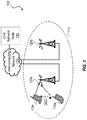
- FIG. 2 is a diagram illustrating a wireless network.
- FIG. 3 is a block diagram of a wireless device configured to carry out one or more of the techniques described herein, according to some embodiments.
- FIG. 4 is a block diagram of a functional implementation of a wireless device, according to some embodiments.
- FIG. 5 is a block diagram of a network node configured to carry out one or more of the techniques described herein, according to some embodiments.
- FIG. 6 is a block diagram of a functional implementation of a network node, according to some embodiments.
- FIG. 7 is a flowchart illustrating a method in the network node, according to some embodiments.
- FIG. 8 is a flowchart illustrating a method in the wireless device, according to some embodiments.
- FIGS. 9-12 are flowcharts illustrating additional methods in the network node, according to some embodiments.
- HARQ process IDs used for dynamic grants of uplink resources Collisions can occur between HARQ process IDs used for dynamic grants of uplink resources and HARQ process IDs used for semi-persistent scheduling (SPS).
- SPS semi-persistent scheduling
- a UE with a SPS grant is about to send process ID (PID) #4 and receives a dynamic grant with PID #5. Due to some processing time, the UE may still transmit the SPS grant with PID #5 while the gNB assumes that the UE has sent the dynamic grant with PID #5.
- PID process ID
- Embodiments described herein help to avoid such HARQ process ID collisions.
- Embodiments also include methods to share HARQ process IDs for dynamic grants and SPS with a reduced number of downlink control information (DCI) bits.
- DCI downlink control information
- the set of all HARQ process IDs is divided into two disjoint sets for the dynamic grants and for the SPS.
- the total number of the HARQ process IDs i.e., N
- N dynamic +N SPS N.
- the allocation of the two sets can be static or dynamic, and the allocation can be configurable by the network node (e.g., gNB).
- the two HARQ pools do not have to be of the same size.
- the gNB can configure HARQ process IDs ⁇ 0, 1, 2, . . . , 7 ⁇ for dynamic grant uplink transmission, and HARQ process IDs ⁇ 8, 9, . . . , 15 ⁇ for SPS transmission. That is, if N, or 16, is a sum of the number of the HARQ process IDs for dynamic grants and the number of the HARQ process ID for SPS, a HARQ process ID for a dynamic grant (or SPS) signaled in a DCI may be indicated using fewer bits than the number of bits needed to identify any one of 16 HARQ process IDs.
- a benefit of this approach is that the control signaling for a HARQ process ID can be kept low and the DCI only needs to select the HARQ process among the processes used for dynamic scheduling. For example, 0-7 (requiring an indication with three bits) can be used in the example above instead of 0-15 (requiring an indication with four bits), thereby saving one bit in the DCI.
- the same DCI of (e.g., three) bits, as in the example above, can be used to signal HARQ process IDs ⁇ 8, 9, . . . , 15 ⁇ .
- some other information bits in DCI can be used to indicate to the UE that the HARQ process number relates to the SPS pool and not the dynamic grant pool.
- certain embodiments can re-use the bits that are related with the signaling of the Transport Block size (TBS), as the TBS in the retransmission is always the same as the initial transmission.
- TBS Transport Block size
- FIG. 2 illustrates an example of a wireless network 100 that may utilize HARQ for wireless communications.
- Wireless network 100 includes a plurality of radio nodes. Examples of radio nodes include wireless devices 110 a - 110 b (such as a UE) and radio access network nodes 120 a - 120 b (such as a gNB, eNB, or base station). Radio access network nodes 120 connect to one or more core network nodes 130 via an interconnecting network 125 . Wireless devices 110 within coverage area 115 may each be capable of communicating directly with radio access network nodes 120 over a wireless interface. Wireless devices 110 may also be capable of communicating with each other via device-to-device (D2D) communication.
- D2D device-to-device
- wireless device 110 a may communicate with radio access network node 120 a over a wireless interface. That is, wireless device 110 a may transmit wireless signals and/or receive wireless signals from radio access network node 120 a.
- the wireless signals may contain voice traffic, data traffic, control signals, and/or any other suitable information.
- an area of wireless signal coverage associated with a radio access network node 120 may be referred to as a cell.
- wireless device 110 may be interchangeably referred to by the non-limiting term user equipment (UE).
- UE user equipment
- Wireless device 110 refers to any type of wireless device communicating with a network node and/or with another UE in a cellular or mobile communication system. Examples of UE are target device, device to device (D2D) UE, V2x UE, machine type UE or UE capable of machine to machine (M2M) communication, PDA, PAD, Tablet, mobile terminals, smart phone, laptop embedded equipped (LEE), laptop mounted equipment (LME), USB dongles, etc.
- D2D device to device
- V2x UE machine type UE or UE capable of machine to machine (M2M) communication
- PDA device to machine
- PAD machine to machine
- Tablet mobile terminals
- smart phone laptop embedded equipped (LEE), laptop mounted equipment (LME), USB dongles
- FIG. 2 illustrates wireless devices 110 as phones, other embodiments may use other types of wireless devices 110 .
- Example embodiments of wireless device 110
- radio access network node 120 may be interchangeably referred to by the non-limiting terms gNB, eNB, base station, network node, or wide area network (WAN) node.
- the WAN node can be a UE (e.g. D2D UE) or a network node (e.g., access point, base station, cellular node, etc.).
- Example embodiments of radio access network node 120 are described in more detail below with respect to FIGS. 5-6 .
- radio access network nodes 120 may interface with a radio network controller.
- the radio network controller may control radio access network nodes 120 and may provide certain radio resource management functions, mobility management functions, and/or other suitable functions.
- the functions of the radio network controller may be included in radio access network node 120 .
- the radio network controller may interface with core network node 130 .
- the radio network controller may interface with core network node 130 via an interconnecting network 125 .
- Interconnecting network 125 may refer to any interconnecting system capable of transmitting audio, video, signals, data, messages, or any combination of the preceding.
- Interconnecting network 125 may include all or a portion of a public switched telephone network (PSTN), a public or private data network, a local area network (LAN), a metropolitan area network (MAN), a WAN, a local, regional, or global communication or computer network such as the Internet, a wireline or wireless network, an enterprise intranet, or any other suitable communication link, including combinations thereof.
- PSTN public switched telephone network
- LAN local area network
- MAN metropolitan area network
- WAN wide area network
- local, regional, or global communication or computer network such as the Internet
- wireline or wireless network such as the Internet
- enterprise intranet an enterprise intranet, or any other suitable communication link, including combinations thereof.
- network 100 may include any suitable number of wireless devices 110 and radio access network nodes 120 , as well as any additional elements suitable to support communication between wireless devices or between a wireless device and another communication device (such as a landline telephone).
- the embodiments may be implemented in any appropriate type of telecommunication system supporting any suitable communication standards and using any suitable components, and are applicable to any radio access technology (RAT) or multi-RAT systems in which the wireless device receives and/or transmits signals (e.g., data). While the embodiments are described for NR, the embodiments may be utilized in any applicable RAT, including LTE or wireless local area network (WLAN).
- RAT radio access technology
- WLAN wireless local area network
- FIG. 3 is a block diagram of an exemplary wireless device 110 , in accordance with certain embodiments.
- Wireless device 110 includes a transceiver 112 , processing circuitry 114 (e.g., comprising one or more processors), and memory 116 .
- transceiver 112 facilitates transmitting wireless signals to and receiving wireless signals from network node/WAN node/radio access node 120 (e.g., via an antenna)
- processing circuitry 114 executes instructions to provide some or all of the functionality described herein as being provided by a wireless device (or UE), and memory 116 stores the instructions executed by processing circuitry 114 .
- Processing circuitry 114 may include any suitable combination of hardware and software implemented in one or more modules to execute instructions and manipulate data to perform some or all of the described functions of wireless device 110 , such as the function of communicating a HARQ ACK/NACK message to a network node according to a HARQ process ID.
- processing circuitry 114 may include, for example, one or more computers, one or more central processing units (CPUs), one or more microprocessors, one or more applications, one or more application specific integrated circuits (ASICs), one or more field programmable gate arrays (FPGAs) and/or other logic.
- the processor may comprise one or more of the modules discussed with respect to FIG. 4 .
- Memory 116 is generally operable to store instructions, such as a computer program, software, an application including one or more of logic, rules, algorithms, code, tables, etc. and/or other instructions capable of being executed by a processor.
- Examples of memory 116 include computer memory (for example, Random Access Memory (RAM) or Read Only Memory (ROM)), mass storage media (for example, a hard disk), removable storage media (for example, a Compact Disk (CD) or a Digital Video Disk (DVD)), and/or or any other volatile or non-volatile, non-transitory computer-readable and/or computer-executable memory devices that store information, data, and/or instructions that may be used by processing circuitry 114 of wireless device 110 .
- RAM Random Access Memory
- ROM Read Only Memory
- mass storage media for example, a hard disk
- removable storage media for example, a Compact Disk (CD) or a Digital Video Disk (DVD)
- CD Compact Disk
- DVD Digital Video Disk
- wireless device 110 may include additional components beyond those shown in FIG. 3 that may be responsible for providing certain aspects of the wireless device's functionality, including any of the functionality described herein and/or any additional functionality (including any functionality necessary to support the solution described herein).
- wireless device 110 may include input devices and circuits, output devices, and one or more synchronization units or circuits, which may be part of the processing circuitry.
- Input devices include mechanisms for entry of data into wireless device 110 .
- input devices may include input mechanisms, such as a microphone, input elements, a display, etc.
- Output devices may include mechanisms for outputting data in audio, video and/or hard copy format.
- output devices may include a speaker, a display, etc.
- processing circuitry 114 is configured to operate wireless device 110 (e.g., UE) to reduce a probability of collision between HARQ process IDs used for acknowledging transmissions between the network node 120 and the wireless device 110 .
- processing circuitry 114 is configured to receive HARQ process IDs associated with dynamic grants of uplink resources and communicate HARQ messages using the HARQ process IDs associated with the dynamic grants and HARQ process IDs associated with SPS, where the HARQ process IDs are determined so as to reduce the probability of collision of the HARQ process IDs.
- FIG. 4 illustrates examples of modules that can be included in wireless device 110 .
- wireless device 110 may include any one or more of determining module(s) 402 , communication module(s) 404 , receiving module(s) 406 , user input module(s) 408 , display module(s) 410 , and/or other suitable modules.
- the functionality of the modules may be integrated in a single component or separated among several components in any suitable manner.
- one or more of the modules may be implemented using processing circuitry 114 described with respect to FIG. 3 .
- Determining module 402 may perform the processing functions of wireless device 110 (including any of the UE functionality to support the above-described embodiments). As one example, determining module 402 may determine HARQ process IDs for SPS and dynamic grants. Determining module 402 may determine the HARQ process IDs in any suitable manner, such as based on a pre-configured rule or based on information received from a network node (such as a HARQ process ID assignment received from network node 120 and/or a rule received from network node 120 ). In certain embodiments, determining module 402 may determine the HARQ process IDs based on the techniques described herein.
- Determining module 402 may include or be included in one or more processors, such as processing circuitry 114 described above in relation to FIG. 3 .
- Determining module 402 may include analog and/or digital circuitry configured to perform any of the functions of determining module 402 and/or processing circuitry 114 described above.
- the functions of any of the modules described herein may, in certain embodiments, be performed in one or more distinct modules. Information may also pass between the modules and other components.
- Communication module 404 may perform the transmission functions of wireless device 110 .
- communication module 404 may communicate HARQ ACK/NACK messages.
- Communication module 404 may include a transmitter and/or a transceiver, such as transceiver 112 described above in relation to FIG. 3 .
- Communication module 404 may include circuitry configured to wirelessly transmit messages and/or signals.
- Receiving module 406 may perform the receiving functions of wireless device 110 .
- receiving module 406 may receive information from network node 120 .
- the information could include a HARQ process ID assignment or a rule for determining the HARQ process ID in order to reduce the probability of a collision between dynamic grant and SPS HARQ process IDs.
- Receiving module 406 may include a receiver and/or a transceiver, such as transceiver 112 described above in relation to FIG. 3 .
- Receiving module 406 may include circuitry configured to wirelessly receive messages and/or signals.
- receiving module 406 and communication module 404 may be part of a functional implementation, where receiving module 406 is for receiving HARQ process IDs associated with dynamic grants of uplink resources and communication module 404 is for communicating HARQ messages using the HARQ process IDs associated with the dynamic grants and HARQ process IDs associated with SPS, where the HARQ process IDs are determined so as to reduce the probability of collision of the HARQ process IDs.
- wireless device 110 may optionally include a user input module 408 that may receive user input intended for wireless device 110 .
- user input module 408 may receive key presses, button presses, touches, swipes, audio signals, video signals, and/or any other appropriate signals.
- User input module 408 may include one or more keys, buttons, levers, switches, touchscreens, microphones, and/or cameras.
- wireless device 110 may optionally include a display module 410 , which may present signals on a display of wireless device 110 .
- Display module 410 may include the display and/or any appropriate circuitry and hardware configured to present signals on the display.
- Wireless device 110 may include additional modules beyond those shown in FIG. 4 that may be responsible for providing any suitable functionality, including any of the functionality described above and/or any additional functionality (including any functionality necessary to support the various solutions described herein).
- some or all of the modules shown in FIG. 4 can be combined with one or more modules shown in FIG. 3 .
- certain embodiments may combine at least some of the functionality of the processing circuitry 114 ( FIG. 3 ) with the determining module 402 ( FIG. 4 ).
- certain embodiments may combine at least some of the functionality of the transceiver 112 ( FIG. 3 ) with the communication 404 and/or receiving modules 406 ( FIG. 4 ).
- FIG. 5 is a block diagram of an exemplary radio access node, such as network node 120 , in accordance with certain embodiments.
- Network node 120 may include one or more of a transceiver 122 , processing circuitry 124 (e.g., comprising one or more processors), memory 126 , and network interface 128 .
- transceiver 122 facilitates transmitting wireless signals to and receiving wireless signals from wireless device 110 (e.g., via an antenna), processing circuitry 124 executes instructions to provide some or all of the functionality described herein as being provided by network node 120 , memory 126 stores the instructions executed by processing circuitry 124 and network interface 128 communicates signals to backend network components, such as a gateway, switch, router, Internet, Public Switched Telephone Network (PSTN), core network nodes or radio network controllers, etc.
- PSTN Public Switched Telephone Network
- Processing circuitry 124 may include any suitable combination of hardware and software implemented in one or more modules to execute instructions and manipulate data to perform some or all of the described functions of network node 120 , such as the functions of specifying HARQ PID for dynamic grants and SPS in order to reduce the risk of HARQ process ID collision.
- processing circuitry 124 may include, for example, one or more computers, one or more central processing units (CPUs), one or more microprocessors, one or more applications, and/or other logic.
- processing circuitry 124 may comprise one or more of the modules discussed with respect to FIG. 6 .
- Memory 126 is generally operable to store instructions, such as a computer program, software, an application including one or more of logic, rules, algorithms, code, tables, etc. and/or other instructions capable of being executed by a processor.
- Examples of memory 126 include computer memory (for example, Random Access Memory (RAM) or Read Only Memory (ROM)), mass storage media (for example, a hard disk), removable storage media (for example, a Compact Disk (CD) or a Digital Video Disk (DVD)), and/or or any other volatile or non-volatile, non-transitory computer-readable and/or computer-executable memory devices that store information.
- RAM Random Access Memory
- ROM Read Only Memory
- mass storage media for example, a hard disk
- removable storage media for example, a Compact Disk (CD) or a Digital Video Disk (DVD)
- CD Compact Disk
- DVD Digital Video Disk
- network interface 128 is communicatively coupled to processing circuitry 124 , and network interface 128 may refer to any suitable device operable to receive input for network node 120 , send output from network node 120 , perform suitable processing of the input or output or both, communicate to other devices, or any combination of the preceding.
- Network interface 128 may include appropriate hardware (e.g., port, modem, network interface card, etc.) and software, including protocol conversion and data processing capabilities, to communicate through a network.
- network node 120 may include additional components beyond those shown in FIG. 5 that may be responsible for providing certain aspects of the network node 120 's functionality, including any of the functionality described herein and/or any additional functionality.
- Core network node 130 may have comprise similar components as those shown in FIG. 5 , however, a wireless interface (e.g., transceiver 122 ) is optional for core network node 130 .
- the various different types of network nodes may include components having the same physical hardware but configured (e.g., via programming) to support different radio access technologies, or may represent partly or entirely different physical components.
- processing circuitry 124 is configured to operate network node 120 to reduce a probability of collision between HARQ process IDs used for acknowledging transmissions between network node 120 and wireless device 110 .
- Processing circuitry 124 is configured to determine HARQ process IDs associated with dynamic grants of uplink resources and HARQ process IDs associated with SPS, where the HARQ process IDs are determined so as to reduce the probability of collision of the HARQ process IDs.
- Processing circuitry 124 is also configured to indicate at least the HARQ process IDs associated with the dynamic grants to wireless device 110 .
- FIG. 6 illustrates examples of modules that can be included in network node 120 .
- network node 120 may include any one or more of determining module(s) 602 , communication module(s) 604 , receiving module(s) 606 , and/or other suitable modules.
- the functionality of the modules may be integrated in a single component or separated among several components in any suitable manner.
- one or more of the modules may be implemented using processing circuitry 124 described with respect to FIG. 5 .
- Determining module 602 may perform the processing functions of network node 120 (including any of the radio access network node functionality to support the above-described embodiments). As one example, the determining module 602 may specify HARQ process IDs for dynamic grants and SPS in order to reduce the risk of collision, for example, according to one or more of the methods described herein.
- Determining module 602 may include analog and/or digital circuitry configured to perform any of the functions of the determining module 602 and/or processing circuitry 124 described above.
- the functions of modules of network node 120 can performed in one or more distinct modules, and the modules and components can pass information between them.
- Communication module 604 may perform the transmission functions of network node 120 . As one example, communication module 604 may transmit to wireless device 110 a selection of HARQ process IDs for dynamic grants and SPS and/or a rule that enables wireless device 110 to determine the HARQ process IDs. Communication module 604 may include a transmitter and/or a transceiver, such as transceiver 122 described above in relation to FIG. 5 . As another example, communication module 604 may send information to other network nodes. Communication module 604 may include a network interface, such as interface 128 described above in relation to FIG. 5 . Communication module 604 may include circuitry configured to transmit wireless and/or wired messages and/or signals.
- Receiving module 606 may perform the receiving functions of network node 120 .
- receiving module 606 may receive HARQ ACK/NACK messages from wireless device 110 .
- Receiving module 606 may include a receiver and/or a transceiver, such as transceiver 122 described above in relation to FIG. 5 .
- receiving module 606 may receive information from other network nodes.
- Receiving module 606 may include a network interface, such as interface 128 described in relation to FIG. 5 .
- some or all of the modules shown in FIG. 6 can be combined with one or more modules shown in FIG. 5 .
- certain embodiments may combine at least some of the functionality of processing circuitry 124 ( FIG. 5 ) with determining module 602 ( FIG. 6 ).
- processing circuitry 124 of network node 120 is configured to perform a method 700 , shown in FIG. 7 , for reducing a probability of collision between HARQ process IDs used for acknowledging transmissions between network node 120 and wireless device 110 .
- Method 700 includes determining HARQ process IDs associated with dynamic grants of uplink resources and HARQ process IDs associated with SPS, where the HARQ process IDs are determined so as to reduce the probability of collision of the HARQ process IDs (block 702 ) and indicating at least the HARQ process IDs associated with the dynamic grants to the wireless device 110 (block 704 ).
- Method 700 may further include performing a transmission function using one or more of the HARQ process IDs.
- Determining the HARQ process IDs may include selecting the HARQ process IDs associated with the dynamic grants from a first pool of HARQ process IDs, where the first pool of HARQ process IDs is disjoint from a second pool of HARQ process IDs comprising the HARQ process IDs associated with SPS.
- N is a sum of the number of the HARQ process IDs associated with the dynamic grants and the number of the HARQ process IDs associated with SPS, where a HARQ process ID associated with a first dynamic grant is indicated to wireless device 110 using fewer bits than a number of bits needed to identify any one of N HARQ process IDs.
- a HARQ process ID associated with a first dynamic grant signaled in a DCI may be indicated to wireless device 110 using only three DCI bits (as opposed to four bits). The three DCI bits, or less, may be used as a compact DCI.
- Method 700 may further include indicating, to wireless device 110 , that the HARQ process ID that is indicated pertains to a HARQ process ID associated with the first dynamic grant.
- the indication that the HARQ process ID pertains to a HARQ process ID associated with the first dynamic grant may be located in other bits, such as one or more DCI bits related to a TBS.
- wireless device 110 may know, or may have selected, the HARQ process IDs associated with SPS. In other cases, wireless device 110 does not know HARQ process IDs associated with SPS. Therefore, in further embodiments, method 700 at network node 120 may include selecting the HARQ process IDs associated with SPS from the second pool of HARQ process IDs. As mentioned above, the second pool of HARQ process IDs is disjoint or separate from the first pool of the HARQ process IDs associated with the dynamic grants.
- the selected HARQ process IDs associated with SPS may be indicated to wireless device 110 .
- N is a sum of the number of the HARQ process IDs associated with the dynamic grants and the number of the HARQ process IDs associated with SPS, where a HARQ process ID associated with a first SPS is indicated to wireless device 110 using fewer bits than a number of bits needed to identify any one of N HARQ process IDs.
- a HARQ process ID associated with the a first SPS signaled in a DCI is indicated to wireless device 110 using only three DCI bits.
- Method 700 may include indicating, to wireless device 110 , that the HARQ process ID that is indicated pertains to a HARQ process ID associated with the first SPS.
- the indication that the HARQ process ID pertains to a HARQ process ID associated with the first SPS may be located in other bits (e.g., DCI bits related to a TBS).
- an addressed HARQ process ID may be linked to a radio network temporary identifier (RNTI).
- RNTI radio network temporary identifier
- whenever wireless device 110 receives an uplink grant scrambled with a cell RTNI (C-RNTI) and a HARQ process ID field with x this means that this is addressed for the dynamic grant with HARQ process ID x+8.
- C-RNTI cell RTNI
- HARQ process ID x+8 As a follow up example, if the DCI bit for a HARQ process is even further reduced to two bits, then the sum of the number of HARQ processes for SPS (a type of configured grant) and dynamic grant can be smaller than N.
- Configured scheduling RNTI (CS-RNTI) may be used for configured grant type scheduling.
- processing circuitry 114 of wireless device 110 is configured to perform, according to some embodiments, a method 800 shown in FIG. 8 for reducing a probability of collision between HARQ process IDs.
- Method 800 includes receiving HARQ process IDs associated with dynamic grants of uplink resources (block 802 ) and communicating HARQ messages using the HARQ process IDs associated with the dynamic grants and HARQ process IDs associated with SPS (block 804 ).
- the HARQ process IDs are determined so as to reduce the probability of collision of the HARQ process IDs.
- the HARQ process IDs associated with the dynamic grants may be selected from a first pool of HARQ process IDs and the HARQ process IDs associated with SPS are selected from a second pool of HARQ process IDs.
- the first pool and second pool of HARQ process IDs are disjoint or separate.
- a HARQ process ID associated with a first dynamic grant is indicated using fewer bits than a number of bits needed to identify any one of N HARQ process IDs.
- a HARQ process ID associated with a first dynamic grant may be indicated using only three DCI bits (e.g., compact DCI).
- Method 800 may include receiving an indication that the HARQ process ID that is indicated pertains to a HARQ process ID associated with the first dynamic grant.
- the indication that the HARQ process ID pertains to a HARQ process ID associated with the first dynamic grant may be located in other bits or signaling, such as in DCI bits related to a TBS.
- wireless device 110 knows the HARQ process IDs associated with SPS.
- the method 800 includes receiving the selected HARQ process IDs associated with SPS from network node 120 .
- method 800 may include N being a sum of the number of the HARQ process IDs associated with the dynamic grants and the number of the HARQ process IDs associated with SPS, where a HARQ process ID associated with a first SPS is indicated using fewer bits than a number of bits needed to identify any one of N HARQ process IDs.
- a HARQ process ID associated with a first SPS may be received in only three DCI bits.
- method 800 includes receiving an indication that the HARQ process ID that is indicated pertains to a HARQ process ID associated with the first SPS.
- the indication that the HARQ process ID pertains to HARQ process ID associated with the first SPS may be located in DCI bits related to a TBS.
- Network node 120 may utilize additional techniques to avoid dynamic grant and SPS HARQ process ID collisions.
- processing circuitry 124 of network node 120 is configured to perform another method 900 , as shown in FIG. 9 .
- Method 900 includes selecting, from a first pool of HARQ process IDs, one or more HARQ process IDs associates with dynamic grants of uplink resources (block 902 ).
- Method 900 also includes selecting, from a second pool of HARQ process IDs, one or more HARQ process IDs associated with SPS of uplink resources, where the first pool is separate from the second pool (block 904 ).
- this method may more generally include selecting HARQ process IDs associated with dynamic grants of uplink resources and selecting HARQ process IDs associated with SPS.
- the selecting is performed according to a technique for minimizing a probability of a collision between the HARQ process IDs associated with the dynamic grants and the HARQ process IDs associated with SPS.
- While certain embodiments involve configuring separate pools of HARQ process IDs, such as a pool for HARQ process IDs to be used for dynamic grants and a separate pool for HARQ process IDs to be used in SPS, other embodiments may include configuring a common pool for HARQ process IDs, where rules are defined to minimize the probability of collision when both dynamic grant and SPS are scheduled.
- the rules can define a starting number for each process ID (PID) set or a buffer zone between the two PID sets.
- processing circuitry 124 of network node 120 is configured to perform a method 1000 shown in FIG. 10 that includes determining one or more rules for minimizing a probability of a collision when a shared pool of HARQ process IDs is used to select HARQ process IDs associated with dynamic grants of uplink resources and HARQ process IDs associated with SPS of uplink resources (block 1002 ).
- Method 1000 also includes selecting the HARQ process IDs according to the determined rules (block 1004 ).
- a reduced number of bits can be used for the embodiments involving the same pool of HARQ process IDs.
- a reduced number of DCI bits for HARQ process IDs can address any given subset of the HARQ process IDs.
- the DCI bits are always used for addressing the HARQ process IDs 0, 1, 2, 3, . . . 2 x ⁇ 1 where x is the number of the bits for HARQ processes.
- the HARQ process IDs for the dynamic grants and SPS start from the two ends of the range of HARQ process numbers, i.e., one method of scheduling uses HARQ process numbers in the order ⁇ 0, 1, 2, 3, . . . , N ⁇ 1 ⁇ , while the other scheduling method uses HARQ process numbers in the order ⁇ N ⁇ 1, N ⁇ 2, . . . , 0 ⁇ .
- the HARQ PID for new data is the first un-used number from the starting point. For example, if HARQ PIDs ⁇ 0, 2, 3 ⁇ are in-use, the HARQ PID for the next data is 1, instead of 4.
- a number n between and inclusive 0 and N ⁇ 1 is picked.
- One method of scheduling uses HARQ process numbers in the order ⁇ n, n+ 1, n+ 2 , . . . , n+N ⁇ 1 ⁇ mod N
- the other scheduling method uses HARQ process numbers in the order ⁇ n ⁇ 1, n ⁇ 2, n ⁇ 3 , . . . , n ⁇ N ⁇ mod N .
- PID dynamic can be chosen to be at 4+8 to have the maximum distance to 4 in modulo 16.
- processing circuitry 124 of network node 120 is configured to perform a method 1100 shown in FIG. 11 that includes determining one or more rules for minimizing a probability of a collision when a shared pool of HARQ process IDs is used to select HARQ process IDs associated with dynamic grants of uplink resources and HARQ process IDs associated with SPS (block 1102 ).
- Method 1100 also includes selecting the HARQ process IDs according to the determined rule(s), where the rules define a first order for selecting the HARQ process IDs associated with the dynamic grants and a second order for selecting the HARQ process IDs associated with the SPS (block 1104 ).
- the absolute value of k can be chosen such that it is larger than the processing time in wireless device 110 .
- the gNB can assign PID #6 (but cannot assign PID #4 or # 5 ) to the dynamic grant in order to avoid collision between the two grants or ambiguity at the gNB.
- the absolute value of k can be chosen such that an unused PID pool is considered.
- the gNB needs to schedule a dynamic grant to the UE while the latest SPS TTI from the UE used SPS PID #3 (assuming a processing time of 3 TTIs). If SPS PID #0 has been ACKed, the gNB can instead assign PID #5 to the dynamic grant since any two new data retransmissions for SPS will use PID #0, PID #4.
- the technique for minimizing the probability of the collision between the HARQ process IDs includes selecting the HARQ process IDs associated with the dynamic grants and the HARQ process IDs associated with SPS from a shared pool of HARQ process IDs according to rules defined to minimize the probability of the collision.
- the rules may define a first order for selecting the HARQ process IDs associated with the dynamic grants and a second order for selecting the HARQ process IDs associated with SPS.
- the shared pool may include a number (N) of HARQ process IDs.
- One of the first order and the second order may select the first unused HARQ ID determined beginning with a first starting value x and moving upward (e.g., ⁇ x, x+1, x+2, . . . , x+(N ⁇ 1) ⁇ mod N).
- the other of the first order and the second order selects the first unused HARQ ID determined beginning with a second starting number y and moving downward (e.g., ⁇ y ⁇ 1, y ⁇ 2, y ⁇ 3, . . . , y ⁇ N ⁇ mod N).
- the first starting number x and the second starting number y may each be selected from the shared pool of HARQ process IDs.
- the rules may define an offset between the HARQ process IDs associated with the dynamic grants and the HARQ process IDs associated with SPS.
- the absolute value of the offset is determined based on a processing time for wireless device 110 to process the dynamic grant of uplink resources or a processing time for wireless device 110 to process the SPS of uplink resources.
- the absolute value of the offset is determined based on a maximum distance in modulo N between the HARQ process IDs associated with the dynamic grant and the HARQ process IDs associated with the SPS, where N indicates the total number of HARQ process IDs in the shared pool.
- the absolute value of the offset may be determined based on a HARQ process ID allocation rule and the unused number of HARQ process IDs.
- network node 120 needs to schedule a dynamic grant to wireless device 110 and, for purposes of example, assume that the latest SPS TTI from wireless device 110 used SPS PID #3 (processing time of 3 TTIs). If SPS PID #0 has been ACKed, network node 120 can instead assign PID #5 to the dynamic grant since any two new data retransmissions for SPS will use PID #0, PID #4.
- processing circuitry 124 of network node 120 is configured to perform a method 1200 , as shown in FIG. 12 .
- Method 1200 includes determining one or more rules for minimizing a probability of a collision when a shared pool of HARQ process IDs is used to select HARQ process IDs associated with dynamic grants of uplink resources and HARQ process IDs associated with SPS (block 1202 ).
- Method 1200 also includes selecting the HARQ process IDs according to the determined rule(s), where the rules define an offset between the HARQ process IDs associated with the dynamic grants and the HARQ process IDs associated with SPS (block 1204 ).
Landscapes
- Engineering & Computer Science (AREA)
- Computer Networks & Wireless Communication (AREA)
- Signal Processing (AREA)
- Mobile Radio Communication Systems (AREA)
Abstract
Description
N dynamic +N SPS =N.
{n, n+1, n+2, . . . , n+N−1}mod N,
while the other scheduling method uses HARQ process numbers in the order
{n−1, n−2, n−3, . . . , n−N} mod N.
PIDdynamic=(PIDSPS +N/2)mod N
PIDSPS=(PIDdynamic +N/2)mod N
PIDdynamic=(PIDSPS +k)mod N
In other words, the process IDs for new data in both methods will not be within the offset.
Claims (25)
Priority Applications (1)
| Application Number | Priority Date | Filing Date | Title |
|---|---|---|---|
| US16/613,023 US11044055B2 (en) | 2017-05-15 | 2018-05-09 | Methods of sharing HARQ process IDs between semi-persistent scheduling and dynamic grants |
Applications Claiming Priority (3)
| Application Number | Priority Date | Filing Date | Title |
|---|---|---|---|
| US201762506142P | 2017-05-15 | 2017-05-15 | |
| PCT/IB2018/053232 WO2018211364A1 (en) | 2017-05-15 | 2018-05-09 | Methods of sharing harq process ids between semi-persistent scheduling and dynamic grants |
| US16/613,023 US11044055B2 (en) | 2017-05-15 | 2018-05-09 | Methods of sharing HARQ process IDs between semi-persistent scheduling and dynamic grants |
Publications (2)
| Publication Number | Publication Date |
|---|---|
| US20210083806A1 US20210083806A1 (en) | 2021-03-18 |
| US11044055B2 true US11044055B2 (en) | 2021-06-22 |
Family
ID=62495827
Family Applications (1)
| Application Number | Title | Priority Date | Filing Date |
|---|---|---|---|
| US16/613,023 Active 2038-06-18 US11044055B2 (en) | 2017-05-15 | 2018-05-09 | Methods of sharing HARQ process IDs between semi-persistent scheduling and dynamic grants |
Country Status (5)
| Country | Link |
|---|---|
| US (1) | US11044055B2 (en) |
| EP (1) | EP3625915A1 (en) |
| CN (1) | CN110637432B (en) |
| TW (1) | TWI681646B (en) |
| WO (1) | WO2018211364A1 (en) |
Cited By (1)
| Publication number | Priority date | Publication date | Assignee | Title |
|---|---|---|---|---|
| US11497042B2 (en) * | 2019-02-15 | 2022-11-08 | Qualcomm Incorporated | Resource scheduling techniques in wireless systems |
Families Citing this family (20)
| Publication number | Priority date | Publication date | Assignee | Title |
|---|---|---|---|---|
| WO2020133505A1 (en) * | 2018-12-29 | 2020-07-02 | 北京小米移动软件有限公司 | Data transmission method, apparatus, and system for direct communication, and device |
| US12101781B2 (en) * | 2019-01-03 | 2024-09-24 | Telefonaktiebolaget Lm Ericsson (Publ) | HARQ handling for single-DCI multi-slot scheduling |
| EP3925358A1 (en) * | 2019-02-14 | 2021-12-22 | Telefonaktiebolaget LM Ericsson (publ) | Multiple grant handling in mixed services scenarios |
| US11438795B2 (en) * | 2019-06-27 | 2022-09-06 | Qualcomm Incorporated | HARQ process identification |
| US12137447B2 (en) * | 2019-08-15 | 2024-11-05 | Sharp Kabushiki Kaisha | Method of performing hybrid automatic repeat request feedback for semi-persistent scheduling transmission and related device |
| US11277844B2 (en) * | 2019-08-16 | 2022-03-15 | Qualcomm Incorporated | Coordination of semi-persistent scheduling downlink transmissions and dynamic downlink transmissions |
| WO2021056209A1 (en) * | 2019-09-24 | 2021-04-01 | Oppo广东移动通信有限公司 | Method for wireless communication and device |
| US11728937B2 (en) * | 2019-09-26 | 2023-08-15 | Qualcomm Incorporated | HARQ process identifier determination |
| CN114303333B (en) * | 2019-11-07 | 2024-02-09 | Oppo广东移动通信有限公司 | Wireless communication method and device, terminal device and network device |
| CN115208520B (en) * | 2020-01-16 | 2024-03-05 | Oppo广东移动通信有限公司 | Methods, equipment and storage media for determining hybrid automatic retransmission request process information |
| US11595159B2 (en) * | 2020-02-13 | 2023-02-28 | Apple, Inc. | HARQ design for wireless communications |
| CN114731239B (en) * | 2020-02-14 | 2023-09-26 | Oppo广东移动通信有限公司 | Conflict handling methods and terminal equipment |
| CN115486002B (en) * | 2020-04-21 | 2024-10-01 | 高通股份有限公司 | Enhanced CG-UL transmission via PUSCH |
| US11844071B2 (en) * | 2020-05-29 | 2023-12-12 | Qualcomm Incorporated | Rule based hybrid automatic repeat request process identifier sharing for multiple semi persistently scheduled configurations |
| WO2022002145A1 (en) * | 2020-06-30 | 2022-01-06 | Mediatek Singapore Pte. Ltd. | Methods and apparatus for cross-carrier harq transmissions |
| WO2022082783A1 (en) * | 2020-10-23 | 2022-04-28 | Oppo广东移动通信有限公司 | Wireless communication method, terminal device and network device |
| EP4258787B1 (en) * | 2021-01-13 | 2025-10-15 | Guangdong Oppo Mobile Telecommunications Corp., Ltd. | Uplink transmission method and apparatus, and terminal and storage medium |
| US11870588B2 (en) * | 2021-05-18 | 2024-01-09 | Qualcomm Incorporated | Feedback process reuse in wireless communications |
| CN114026810B (en) * | 2021-09-29 | 2024-09-03 | 北京小米移动软件有限公司 | A method and device for determining a hybrid automatic repeat request process number |
| US12349157B2 (en) * | 2021-11-02 | 2025-07-01 | Qualcomm Incorporated | Transmission in configured grant and semi-persistent scheduling in non-terrestrial network |
Citations (5)
| Publication number | Priority date | Publication date | Assignee | Title |
|---|---|---|---|---|
| WO2008115134A2 (en) | 2007-03-19 | 2008-09-25 | Telefonaktiebolaget Lm Ericsson (Publ) | (h)arq for semi-persistent scheduling |
| US20100325503A1 (en) | 2008-08-18 | 2010-12-23 | Research In Motion Limited | System and Method for Determination of Reserved Hybrid Automatic Repeat Request Identifiers |
| DE102011085075A1 (en) | 2011-10-24 | 2013-04-25 | Rohde & Schwarz Gmbh & Co. Kg | Dynamic HARQ ID reservation |
| US8687568B2 (en) | 2008-03-14 | 2014-04-01 | Qualcomm Incorporated | Method and apparatus for scrambling for discrimination of semi persistent scheduling grants |
| US20150085796A1 (en) * | 2013-09-20 | 2015-03-26 | Qualcomm Incorporated | Flexible operation of enhanced tti-bundling modes in lte |
Family Cites Families (10)
| Publication number | Priority date | Publication date | Assignee | Title |
|---|---|---|---|---|
| US8724556B2 (en) * | 2007-03-19 | 2014-05-13 | Apple Inc. | Uplink control channel allocation in a communication system and communicating the allocation |
| TWI486017B (en) * | 2008-03-10 | 2015-05-21 | Interdigital Patent Holdings | Semi-continuous and dynamic transmission method and device for efficiently using HARQ program |
| CN102113266B (en) * | 2008-06-06 | 2015-03-18 | 黑莓有限公司 | Signaling reserved hybrid automatic repeat request information for downlink semi-persistent scheduling |
| CN101615985A (en) * | 2008-06-23 | 2009-12-30 | 华为技术有限公司 | Data processing method, device and system |
| CN101657017B (en) * | 2008-09-22 | 2012-09-05 | 华为技术有限公司 | Resource scheduling method, base station and communication system |
| CN101686116B (en) * | 2008-09-23 | 2012-10-31 | 电信科学技术研究院 | Method, system and device for indicating progress of reserved hybrid automatic repeat request |
| KR20110075445A (en) * | 2009-12-28 | 2011-07-06 | 삼성전자주식회사 | Apparatus and method for assigning compound automatic repeat request process identifiers in a communication system |
| CN101841403B (en) * | 2010-05-26 | 2013-05-08 | 新邮通信设备有限公司 | Data transmission method and system |
| US9444586B2 (en) * | 2013-10-07 | 2016-09-13 | Qualcomm Incorporated | TTI-bundling and SPS operation in LTE TDD |
| US9999039B2 (en) * | 2015-07-23 | 2018-06-12 | Qualcomm Incorporated | Semi-persistent scheduling for enhanced machine type communications |
-
2018
- 2018-05-09 US US16/613,023 patent/US11044055B2/en active Active
- 2018-05-09 EP EP18728964.0A patent/EP3625915A1/en not_active Withdrawn
- 2018-05-09 TW TW107115818A patent/TWI681646B/en active
- 2018-05-09 WO PCT/IB2018/053232 patent/WO2018211364A1/en not_active Ceased
- 2018-05-09 CN CN201880032440.1A patent/CN110637432B/en active Active
Patent Citations (7)
| Publication number | Priority date | Publication date | Assignee | Title |
|---|---|---|---|---|
| WO2008115134A2 (en) | 2007-03-19 | 2008-09-25 | Telefonaktiebolaget Lm Ericsson (Publ) | (h)arq for semi-persistent scheduling |
| US8687568B2 (en) | 2008-03-14 | 2014-04-01 | Qualcomm Incorporated | Method and apparatus for scrambling for discrimination of semi persistent scheduling grants |
| US20100325503A1 (en) | 2008-08-18 | 2010-12-23 | Research In Motion Limited | System and Method for Determination of Reserved Hybrid Automatic Repeat Request Identifiers |
| US8359509B2 (en) | 2008-08-18 | 2013-01-22 | Research In Motion Limited | System and method for determination of reserved hybrid automatic repeat request identifiers |
| DE102011085075A1 (en) | 2011-10-24 | 2013-04-25 | Rohde & Schwarz Gmbh & Co. Kg | Dynamic HARQ ID reservation |
| CN104012022A (en) | 2011-10-24 | 2014-08-27 | 罗德施瓦兹两合股份有限公司 | Dynamic HARQ-ID reservation |
| US20150085796A1 (en) * | 2013-09-20 | 2015-03-26 | Qualcomm Incorporated | Flexible operation of enhanced tti-bundling modes in lte |
Non-Patent Citations (1)
| Title |
|---|
| PCT Notification of Transmittal of the International Search Report and the Written Opinion of the International Searching Authority, or the Declaration for International application No. PCT/IB2018/053232—dated Aug. 28, 2018. |
Cited By (1)
| Publication number | Priority date | Publication date | Assignee | Title |
|---|---|---|---|---|
| US11497042B2 (en) * | 2019-02-15 | 2022-11-08 | Qualcomm Incorporated | Resource scheduling techniques in wireless systems |
Also Published As
| Publication number | Publication date |
|---|---|
| CN110637432A (en) | 2019-12-31 |
| EP3625915A1 (en) | 2020-03-25 |
| TW201902168A (en) | 2019-01-01 |
| WO2018211364A1 (en) | 2018-11-22 |
| CN110637432B (en) | 2023-04-04 |
| US20210083806A1 (en) | 2021-03-18 |
| TWI681646B (en) | 2020-01-01 |
Similar Documents
| Publication | Publication Date | Title |
|---|---|---|
| US11044055B2 (en) | Methods of sharing HARQ process IDs between semi-persistent scheduling and dynamic grants | |
| JP7508662B2 (en) | Communication device and wireless communication method | |
| US20210243841A1 (en) | Terminal, base station, system, and feedback method | |
| CN116647312B (en) | Terminal device, base station, and circuit and method for terminal device and base station | |
| US20240196397A1 (en) | Communication system | |
| US12309805B2 (en) | SPS with skipping transmissions and adaptive HARQ | |
| US11838923B2 (en) | Pre-emption indication message | |
| CN112970237B (en) | Resource allocation for feedback in multicast communications | |
| JP2019510386A (en) | Service transmission method and apparatus | |
| WO2015196460A1 (en) | Method and device for transmitting pusch | |
| CN107889268A (en) | Method, terminal device and the network equipment of descending scheduling resource | |
| CN115150925B (en) | Effective signaling of non-preferred transmission resources | |
| WO2020168577A1 (en) | Method for transmitting uplink feedback information, terminal device, and network device | |
| TW202121924A (en) | Method for processing multiple channels | |
| CN112398592B (en) | Feedback information transmission method and communication device | |
| CN113711667B (en) | Reference signal transmission method, device and communication system | |
| CN104272631A (en) | Method and apparatus for enhancing coverage | |
| US20160143032A1 (en) | Base station device, mobile station device, and communication method | |
| EP4120606A1 (en) | Harq information transmission method and apparatus | |
| JP2015503869A (en) | Communication resource allocation for control signals in uplink | |
| WO2020224924A1 (en) | Communications device, infrastructure equipment and methods | |
| CN116235440A (en) | Electronic device, communication method and storage medium | |
| EP3439402A1 (en) | Data transmission method and apparatus | |
| EP3487100B1 (en) | Harq response information transmission method | |
| JP7533482B2 (en) | COMMUNICATIONS DEVICES, INFRASTRUCTURE EQUIPMENT AND METHODS |
Legal Events
| Date | Code | Title | Description |
|---|---|---|---|
| AS | Assignment |
Owner name: TELEFONAKTIEBOLAGET LM ERICSSON (PUBL), SWEDEN Free format text: ASSIGNMENT OF ASSIGNORS INTEREST;ASSIGNORS:BEHRAVAN, ALI;PARKVALL, STEFAN;ZOU, ZHENHUA;SIGNING DATES FROM 20180514 TO 20180528;REEL/FRAME:050984/0754 |
|
| FEPP | Fee payment procedure |
Free format text: ENTITY STATUS SET TO UNDISCOUNTED (ORIGINAL EVENT CODE: BIG.); ENTITY STATUS OF PATENT OWNER: LARGE ENTITY |
|
| STPP | Information on status: patent application and granting procedure in general |
Free format text: PUBLICATIONS -- ISSUE FEE PAYMENT RECEIVED |
|
| STPP | Information on status: patent application and granting procedure in general |
Free format text: PUBLICATIONS -- ISSUE FEE PAYMENT VERIFIED |
|
| STCF | Information on status: patent grant |
Free format text: PATENTED CASE |
|
| CC | Certificate of correction | ||
| MAFP | Maintenance fee payment |
Free format text: PAYMENT OF MAINTENANCE FEE, 4TH YEAR, LARGE ENTITY (ORIGINAL EVENT CODE: M1551); ENTITY STATUS OF PATENT OWNER: LARGE ENTITY Year of fee payment: 4 |