US11034671B2 - Apoptosis signal-regulating kinase inhibitors and uses thereof - Google Patents
Apoptosis signal-regulating kinase inhibitors and uses thereof Download PDFInfo
- Publication number
- US11034671B2 US11034671B2 US16/645,411 US201816645411A US11034671B2 US 11034671 B2 US11034671 B2 US 11034671B2 US 201816645411 A US201816645411 A US 201816645411A US 11034671 B2 US11034671 B2 US 11034671B2
- Authority
- US
- United States
- Prior art keywords
- optionally substituted
- compound
- formula
- alkyl
- halogen
- Prior art date
- Legal status (The legal status is an assumption and is not a legal conclusion. Google has not performed a legal analysis and makes no representation as to the accuracy of the status listed.)
- Expired - Fee Related
Links
- 0 *.B.C*N1C=CC=C1C.CC.CC.[5*]N(C)C(C)=O Chemical compound *.B.C*N1C=CC=C1C.CC.CC.[5*]N(C)C(C)=O 0.000 description 40
- GWSTXPPWOHPDSA-UHFFFAOYSA-N CC(C)C[Y]CC(C)C Chemical compound CC(C)C[Y]CC(C)C GWSTXPPWOHPDSA-UHFFFAOYSA-N 0.000 description 3
- VSAAYXCXZVTBAJ-QGZVFWFLSA-N CC1=NC=C(C2=CC=C3COCC[C@@H](C)N4C=NN=C4C4=CC=CC(=N4)NC(=O)C3=C2)C=C1 Chemical compound CC1=NC=C(C2=CC=C3COCC[C@@H](C)N4C=NN=C4C4=CC=CC(=N4)NC(=O)C3=C2)C=C1 VSAAYXCXZVTBAJ-QGZVFWFLSA-N 0.000 description 3
- IEOXBWLQQFRQPY-UHFFFAOYSA-N CC1=NC=C(C2=CC=C3OCCCCN4C=NN=C4C4=CC=CC(=N4)NC(=O)C3=C2)C=C1 Chemical compound CC1=NC=C(C2=CC=C3OCCCCN4C=NN=C4C4=CC=CC(=N4)NC(=O)C3=C2)C=C1 IEOXBWLQQFRQPY-UHFFFAOYSA-N 0.000 description 3
- BZHMBWZPUJHVEE-UHFFFAOYSA-N CC(C)CC(C)C Chemical compound CC(C)CC(C)C BZHMBWZPUJHVEE-UHFFFAOYSA-N 0.000 description 2
- XCBLSBFLYSAJNU-UHFFFAOYSA-N CC(C)CCCOCC(C)C Chemical compound CC(C)CCCOCC(C)C XCBLSBFLYSAJNU-UHFFFAOYSA-N 0.000 description 2
- KZCRNCMETGYOQO-UHFFFAOYSA-N CC(C)C[Y]C(C)C Chemical compound CC(C)C[Y]C(C)C KZCRNCMETGYOQO-UHFFFAOYSA-N 0.000 description 2
- VSAAYXCXZVTBAJ-KRWDZBQOSA-N CC1=NC=C(C2=CC=C3COCC[C@H](C)N4C=NN=C4C4=CC=CC(=N4)NC(=O)C3=C2)C=C1 Chemical compound CC1=NC=C(C2=CC=C3COCC[C@H](C)N4C=NN=C4C4=CC=CC(=N4)NC(=O)C3=C2)C=C1 VSAAYXCXZVTBAJ-KRWDZBQOSA-N 0.000 description 2
- PCFLEMFORKQWJW-BDUNBXCCSA-N CC1=NC=C(C2=CC=C3OC/C=C/[C@H](C)N4C=NN=C4C4=NC(=CC=C4)NC(=O)C3=C2)C=C1 Chemical compound CC1=NC=C(C2=CC=C3OC/C=C/[C@H](C)N4C=NN=C4C4=NC(=CC=C4)NC(=O)C3=C2)C=C1 PCFLEMFORKQWJW-BDUNBXCCSA-N 0.000 description 2
- AKGHTJKDKNAJCS-UHFFFAOYSA-N CC1=NC=C(C2=CC=C3OCC4CC(C4)N4C=NN=C4C4=CC=CC(=N4)NC(=O)C3=C2)C=C1 Chemical compound CC1=NC=C(C2=CC=C3OCC4CC(C4)N4C=NN=C4C4=CC=CC(=N4)NC(=O)C3=C2)C=C1 AKGHTJKDKNAJCS-UHFFFAOYSA-N 0.000 description 2
- MEGZFXCBLQHOFV-UHFFFAOYSA-N CC1=NC=C(C2=CC=C3OCCCC(C)N4C=NN=C4C4=NC(=CC=C4)NC(=O)C3=C2)C=C1 Chemical compound CC1=NC=C(C2=CC=C3OCCCC(C)N4C=NN=C4C4=NC(=CC=C4)NC(=O)C3=C2)C=C1 MEGZFXCBLQHOFV-UHFFFAOYSA-N 0.000 description 2
- VYCVXMOLXJUETM-UHFFFAOYSA-N CC1=NC=C(C2=CC=C3OCCCCN4C=NN=C4C4=CC=CC(=N4)NC(=O)C3=C2)C=N1 Chemical compound CC1=NC=C(C2=CC=C3OCCCCN4C=NN=C4C4=CC=CC(=N4)NC(=O)C3=C2)C=N1 VYCVXMOLXJUETM-UHFFFAOYSA-N 0.000 description 2
- ZUYPJQQBFRFKNO-UHFFFAOYSA-N COC1=CC=C2OCCCCCN3C=NN=C3C3=NC(=CC=C3)NC(=O)C2=C1 Chemical compound COC1=CC=C2OCCCCCN3C=NN=C3C3=NC(=CC=C3)NC(=O)C2=C1 ZUYPJQQBFRFKNO-UHFFFAOYSA-N 0.000 description 2
- NBNTXIUGFZGUDZ-UHFFFAOYSA-N COCCNC1=NC=C(C2=CC=C3OCCCCN4C=NN=C4C4=CC=CC(=N4)NC(=O)C3=C2)C=C1 Chemical compound COCCNC1=NC=C(C2=CC=C3OCCCCN4C=NN=C4C4=CC=CC(=N4)NC(=O)C3=C2)C=C1 NBNTXIUGFZGUDZ-UHFFFAOYSA-N 0.000 description 2
- CLRSGJATNOSJDE-HNNXBMFYSA-N C[C@H]1CCOCC2=CC=C(C3=CN=C(C(F)F)C=C3)C=C2C(=O)NC2=NC(=CC=C2)C2=NN=CN21 Chemical compound C[C@H]1CCOCC2=CC=C(C3=CN=C(C(F)F)C=C3)C=C2C(=O)NC2=NC(=CC=C2)C2=NN=CN21 CLRSGJATNOSJDE-HNNXBMFYSA-N 0.000 description 2
- JDWYNCZPOZNYNS-UHFFFAOYSA-N N#CC1=CC=C2C(=O)NC3=NC(=CC=C3)C3=NN=CN3CCCCOC2=C1 Chemical compound N#CC1=CC=C2C(=O)NC3=NC(=CC=C3)C3=NN=CN3CCCCOC2=C1 JDWYNCZPOZNYNS-UHFFFAOYSA-N 0.000 description 2
- GPAFXKPFEULTGI-UHFFFAOYSA-N O=C1NC2=CC=CC(=N2)C2=NN=CN2CCCCOC2=C1C=C(C1=CN=C(C(F)F)C=C1)C=C2 Chemical compound O=C1NC2=CC=CC(=N2)C2=NN=CN2CCCCOC2=C1C=C(C1=CN=C(C(F)F)C=C1)C=C2 GPAFXKPFEULTGI-UHFFFAOYSA-N 0.000 description 2
- SBOMVSJCTOXXRC-UHFFFAOYSA-N O=C1NC2=CC=CC(=N2)C2=NN=CN2CCCOCC2=C1C=C(C1=CN=C(F)C(Cl)=C1)C=C2 Chemical compound O=C1NC2=CC=CC(=N2)C2=NN=CN2CCCOCC2=C1C=C(C1=CN=C(F)C(Cl)=C1)C=C2 SBOMVSJCTOXXRC-UHFFFAOYSA-N 0.000 description 2
- TXKJDTOHQJVIIO-UHFFFAOYSA-N O=C1NC2=NC(=CC=C2)C2=NN=CN2CCCCOC2=CC=C(C3=CN=C(F)C=C3)C=C12 Chemical compound O=C1NC2=NC(=CC=C2)C2=NN=CN2CCCCOC2=CC=C(C3=CN=C(F)C=C3)C=C12 TXKJDTOHQJVIIO-UHFFFAOYSA-N 0.000 description 2
- RFFDDMBGCWYHFP-UHFFFAOYSA-N O=C1NC2=NC(=CC=C2)C2=NN=CN2CCCOC2=CC=C(C3=CN=C(C(F)F)C=C3)C=C12 Chemical compound O=C1NC2=NC(=CC=C2)C2=NN=CN2CCCOC2=CC=C(C3=CN=C(C(F)F)C=C3)C=C12 RFFDDMBGCWYHFP-UHFFFAOYSA-N 0.000 description 2
- OVPLSWNBSPDVOB-GUXVHJASSA-N *.CC(C)(C)OC(=O)N[C@H]1CCC(CO)C1.CC(C)(C)OC(=O)N[C@H]1CC[C@@H](C(=O)O)C1.CC1=NC=C(B(O)O)C=C1.CC1=NC=C(C2=CC=C3OCC4CC[C@@H](C4)N4C=NN=C4C4=CC=CC(=N4)NC(=O)C3=C2)C=C1.CN(C)/C=N/C(=O)C1=CC=CC(/N=C/N(C)C)=N1.COC(=O)C1=CC(I)=CC=C1O.COC(=O)C1=CC(I)=CC=C1OCC1CC[C@H](N2C=NN=C2C2=CC=CC(N)=N2)C1.NC1=NC(C2=NN=CN2[C@H]2CCC(CO)C2)=CC=C1.NC1=NC(C2=NN=CN2[C@H]2CCC(COC3=CC=C(I)C=C3C(=O)O)C2)=CC=C1.N[C@H]1CCC(CO)C1.O.O=C1NC2=NC(=CC=C2)C2=NN=CN2[C@H]2CCC(COC3=CC=C(I)C=C13)C2.O=P(Cl)(Cl)Cl.S Chemical compound *.CC(C)(C)OC(=O)N[C@H]1CCC(CO)C1.CC(C)(C)OC(=O)N[C@H]1CC[C@@H](C(=O)O)C1.CC1=NC=C(B(O)O)C=C1.CC1=NC=C(C2=CC=C3OCC4CC[C@@H](C4)N4C=NN=C4C4=CC=CC(=N4)NC(=O)C3=C2)C=C1.CN(C)/C=N/C(=O)C1=CC=CC(/N=C/N(C)C)=N1.COC(=O)C1=CC(I)=CC=C1O.COC(=O)C1=CC(I)=CC=C1OCC1CC[C@H](N2C=NN=C2C2=CC=CC(N)=N2)C1.NC1=NC(C2=NN=CN2[C@H]2CCC(CO)C2)=CC=C1.NC1=NC(C2=NN=CN2[C@H]2CCC(COC3=CC=C(I)C=C3C(=O)O)C2)=CC=C1.N[C@H]1CCC(CO)C1.O.O=C1NC2=NC(=CC=C2)C2=NN=CN2[C@H]2CCC(COC3=CC=C(I)C=C13)C2.O=P(Cl)(Cl)Cl.S OVPLSWNBSPDVOB-GUXVHJASSA-N 0.000 description 1
- AIBHQQDJDXSBLS-CHLGXCFOSA-M *.CC1=NC=C(B(O)O)C=C1.CC1=NC=C(C2=CC=C3OC[C@H](C)CCN4C=NN=C4C4=CC=CC(=N4)NC(=O)C3=C2)C=C1.CN(C)/C=N/CC(=O)C1=NC(/N=C/N(C)C)=CC=C1.COC(=O)C1=CC(I)=CC=C1O.COC(=O)C1=CC(I)=CC=C1OC[C@H](C)CCN1C=NN=C1C1=CC=CC(N)=N1.C[C@@H](CO)CCN.C[C@@H](CO)CCN1C=NN=C1C1=NC(N)=CC=C1.C[C@@H]1CCN2C=NN=C2C2=CC=CC(=N2)NC(=O)C2=CC(I)=CC=C2OC1.C[C@H](CCN1C=NN=C1C1=CC=CC(N)=N1)COC1=CC=C(I)C=C1C(=O)O.O.O=P(Cl)(Cl)Cl.[Li]O Chemical compound *.CC1=NC=C(B(O)O)C=C1.CC1=NC=C(C2=CC=C3OC[C@H](C)CCN4C=NN=C4C4=CC=CC(=N4)NC(=O)C3=C2)C=C1.CN(C)/C=N/CC(=O)C1=NC(/N=C/N(C)C)=CC=C1.COC(=O)C1=CC(I)=CC=C1O.COC(=O)C1=CC(I)=CC=C1OC[C@H](C)CCN1C=NN=C1C1=CC=CC(N)=N1.C[C@@H](CO)CCN.C[C@@H](CO)CCN1C=NN=C1C1=NC(N)=CC=C1.C[C@@H]1CCN2C=NN=C2C2=CC=CC(=N2)NC(=O)C2=CC(I)=CC=C2OC1.C[C@H](CCN1C=NN=C1C1=CC=CC(N)=N1)COC1=CC=C(I)C=C1C(=O)O.O.O=P(Cl)(Cl)Cl.[Li]O AIBHQQDJDXSBLS-CHLGXCFOSA-M 0.000 description 1
- BGGRUYIMCLLKLJ-JHOQLLFISA-N *.CC1=NC=C(B(O)O)C=C1.CC1=NC=C(C2=CC=C3OC[C@H](C)C[C@H](C)N4C=NN=C4C4=NC(=CC=C4)NC(=O)C3=C2)C=C1.C[C@H]1CC(C)(C)COC2=CC=C(I)C=C2C(=O)NC2=NC(=CC=C2)C2=NN=CN21.S Chemical compound *.CC1=NC=C(B(O)O)C=C1.CC1=NC=C(C2=CC=C3OC[C@H](C)C[C@H](C)N4C=NN=C4C4=NC(=CC=C4)NC(=O)C3=C2)C=C1.C[C@H]1CC(C)(C)COC2=CC=C(I)C=C2C(=O)NC2=NC(=CC=C2)C2=NN=CN21.S BGGRUYIMCLLKLJ-JHOQLLFISA-N 0.000 description 1
- SAGRRWPMNISHCD-CLRXKPRGSA-N *.CC1=NC=C(C2=CC=C3OC[C@H](C)C[C@H](C)N4C=NN=C4C4=NC(=CC=C4)NC(=O)C3=C2)C=C1.S Chemical compound *.CC1=NC=C(C2=CC=C3OC[C@H](C)C[C@H](C)N4C=NN=C4C4=NC(=CC=C4)NC(=O)C3=C2)C=C1.S SAGRRWPMNISHCD-CLRXKPRGSA-N 0.000 description 1
- QZZBUYFXXROUFJ-GAOYUEOGSA-L B.C.C.CC1=NN=C(C2=CC=CC(N)=N2)N1[C@@H](C)CCCO.COC(=O)C1=CC(I)=CC=C1O.COC(=O)C1=CC(I)=CC=C1OCCC[C@H](C)N1C(C)=NN=C1C1=CC=CC(N)=N1.COC(=O)CC[C@H](C)NC(=O)OC(C)(C)C.C[C@@H](CCCO)NC(=O)OC(C)(C)C.C[C@H](N)CCCO.C[C@H]1CCC(=O)C1.C[C@H]1CCC(=O)N1C(=O)OC(C)(C)C.Cl.NCC(=O)C1=CC=CC(N)=N1.O.O=COO[K].S.S.S.S.S.S.S.[KH].[Li]O.[NaH] Chemical compound B.C.C.CC1=NN=C(C2=CC=CC(N)=N2)N1[C@@H](C)CCCO.COC(=O)C1=CC(I)=CC=C1O.COC(=O)C1=CC(I)=CC=C1OCCC[C@H](C)N1C(C)=NN=C1C1=CC=CC(N)=N1.COC(=O)CC[C@H](C)NC(=O)OC(C)(C)C.C[C@@H](CCCO)NC(=O)OC(C)(C)C.C[C@H](N)CCCO.C[C@H]1CCC(=O)C1.C[C@H]1CCC(=O)N1C(=O)OC(C)(C)C.Cl.NCC(=O)C1=CC=CC(N)=N1.O.O=COO[K].S.S.S.S.S.S.S.[KH].[Li]O.[NaH] QZZBUYFXXROUFJ-GAOYUEOGSA-L 0.000 description 1
- XFMUVMPQNYQXDE-UHFFFAOYSA-M B=NS.C.C=C(C)CC1=C(OCOC)C=C(C(=O)OC)C(OCOC)=C1.C=C(C)C[Sn](CCCC)(CCCC)CCCC.CC.CC1(C)CC2=C(C=C3C(=O)NC4=NC(=CC=C4)C4=NN=CN4CCCCOC3=C2)O1.CCCCOC1=CC=C(OCOC)C(C(=O)OC)=C1.COC(=O)C1=CC(O)=C(Br)C=C1O.COC(=O)C1=CC2=C(C=C1O)CC(C)(C)O2.COC(=O)C1=CC2=C(C=C1OCCCCN1C=NN=C1C1=CC=CC(N)=N1)CC(C)(C)O2.COC(=O)C1=CC2=C(C=C1OCCCCN1C=NN=C1C1=CC=CC(N)=N1)CC(C)(C)O2.COCOC1=CC(Br)=C(OCOC)C=C1C(=O)OC.COCOC1=CC=C(O)C=C1C(=O)OC.NC1=CC=CC(C2=NN=CN2CCCCO)=N1.O.O=P(Cl)(Cl)Cl.[Li]O Chemical compound B=NS.C.C=C(C)CC1=C(OCOC)C=C(C(=O)OC)C(OCOC)=C1.C=C(C)C[Sn](CCCC)(CCCC)CCCC.CC.CC1(C)CC2=C(C=C3C(=O)NC4=NC(=CC=C4)C4=NN=CN4CCCCOC3=C2)O1.CCCCOC1=CC=C(OCOC)C(C(=O)OC)=C1.COC(=O)C1=CC(O)=C(Br)C=C1O.COC(=O)C1=CC2=C(C=C1O)CC(C)(C)O2.COC(=O)C1=CC2=C(C=C1OCCCCN1C=NN=C1C1=CC=CC(N)=N1)CC(C)(C)O2.COC(=O)C1=CC2=C(C=C1OCCCCN1C=NN=C1C1=CC=CC(N)=N1)CC(C)(C)O2.COCOC1=CC(Br)=C(OCOC)C=C1C(=O)OC.COCOC1=CC=C(O)C=C1C(=O)OC.NC1=CC=CC(C2=NN=CN2CCCCO)=N1.O.O=P(Cl)(Cl)Cl.[Li]O XFMUVMPQNYQXDE-UHFFFAOYSA-M 0.000 description 1
- FLDACMWINAZJSU-UHFFFAOYSA-N BrB(Br)Br.C.CC1=CC=C2CCCCCN3C=NN=C3C3=NC(=CC=C3)NC(=O)C2=C1.COC1=CC=C2CCCCCN3C=NN=C3C3=NC(=CC=C3)NC(=O)C2=C1.O=C1NC2=CC=CC(=N2)C2=NN=CN2CCCCCC2=CC=C(C3=CN=C(C4CC4)C=C3)C=C12.O=C1NC2=CC=CC(=N2)C2=NN=CN2CCCCCC2=CC=C(O)C=C12.OB(O)C1=CN=C(C2CC2)C=C1 Chemical compound BrB(Br)Br.C.CC1=CC=C2CCCCCN3C=NN=C3C3=NC(=CC=C3)NC(=O)C2=C1.COC1=CC=C2CCCCCN3C=NN=C3C3=NC(=CC=C3)NC(=O)C2=C1.O=C1NC2=CC=CC(=N2)C2=NN=CN2CCCCCC2=CC=C(C3=CN=C(C4CC4)C=C3)C=C12.O=C1NC2=CC=CC(=N2)C2=NN=CN2CCCCCC2=CC=C(O)C=C12.OB(O)C1=CN=C(C2CC2)C=C1 FLDACMWINAZJSU-UHFFFAOYSA-N 0.000 description 1
- HSWWIKFPRPFZBO-JMMPZMCISA-M BrB(Br)Br.C=CCN1C=NN=C1C1=CC=CC(N)=N1.C=CCOC1=CC=C(OCCCC)C=C1C(=O)N(C(=O)OC(C)(C)C)C1=NC(C2=NN=CN2CC=C)=CC=C1.C=CCOC1=CC=C(OCCCC)C=C1C(=O)NC1=NC(C2=NN=CN2CC=C)CC=C1.C=CCOC1=CC=C(OCCCC)C=C1C(=O)O.C=CCOC1=CC=C(OCCCC)C=C1C(=O)OC.CC(C)(C)OC(=O)OC(=O)OC(C)(C)C.CCCCOC1=C/C=C2/OC/C=C/CN3C=NN=C3C3=CC=CC(=N3)N(C(=O)OC(C)(C)C)C(=O)/C2=C\1.CCCCOC1=C/C=C2/OCCCCN3C=NN=C3C3=CC=CC(=N3)N(C(=O)OC(C)(C)C)C(=O)/C2=C\1.COC(=O)C1=CC(C)=CC=C1O.COC(=O)C1=CC(O)=CC=C1O.CS(=O)(=O)OC1CCOC1.CS(=O)(=O)OC1CCOC1.O.O=C1NC2=NC(=CC=C2)C2=NN=CN2CCCCO/C2=C/C=C(O)/C=C\12.O=C1NC2=NC(=CC=C2)C2=NN=CN2CCCCO/C2=C/C=C(OC3CCOC3)/C=C\12.OC1CCOC1.[Li]O Chemical compound BrB(Br)Br.C=CCN1C=NN=C1C1=CC=CC(N)=N1.C=CCOC1=CC=C(OCCCC)C=C1C(=O)N(C(=O)OC(C)(C)C)C1=NC(C2=NN=CN2CC=C)=CC=C1.C=CCOC1=CC=C(OCCCC)C=C1C(=O)NC1=NC(C2=NN=CN2CC=C)CC=C1.C=CCOC1=CC=C(OCCCC)C=C1C(=O)O.C=CCOC1=CC=C(OCCCC)C=C1C(=O)OC.CC(C)(C)OC(=O)OC(=O)OC(C)(C)C.CCCCOC1=C/C=C2/OC/C=C/CN3C=NN=C3C3=CC=CC(=N3)N(C(=O)OC(C)(C)C)C(=O)/C2=C\1.CCCCOC1=C/C=C2/OCCCCN3C=NN=C3C3=CC=CC(=N3)N(C(=O)OC(C)(C)C)C(=O)/C2=C\1.COC(=O)C1=CC(C)=CC=C1O.COC(=O)C1=CC(O)=CC=C1O.CS(=O)(=O)OC1CCOC1.CS(=O)(=O)OC1CCOC1.O.O=C1NC2=NC(=CC=C2)C2=NN=CN2CCCCO/C2=C/C=C(O)/C=C\12.O=C1NC2=NC(=CC=C2)C2=NN=CN2CCCCO/C2=C/C=C(OC3CCOC3)/C=C\12.OC1CCOC1.[Li]O HSWWIKFPRPFZBO-JMMPZMCISA-M 0.000 description 1
- HELMQBDRTRZAQK-UHFFFAOYSA-N BrC1=CC=C(OC2CCOC2)N=C1.CC1(C)OB(C2=CC=C3OCCCCN4C=NN=C4C4=C/C=C\C(=N/4)NC(=O)C3=C2)OC1(C)C.FC1=CC=C(Br)C=N1.O=C1NC2=NC(=CC=C2)C2=NN=CN2CCCCO/C2=C/C=C(C3=CC=C(OC4CCOC4)N=C3)/C=C\12.OC1CCOC1 Chemical compound BrC1=CC=C(OC2CCOC2)N=C1.CC1(C)OB(C2=CC=C3OCCCCN4C=NN=C4C4=C/C=C\C(=N/4)NC(=O)C3=C2)OC1(C)C.FC1=CC=C(Br)C=N1.O=C1NC2=NC(=CC=C2)C2=NN=CN2CCCCO/C2=C/C=C(C3=CC=C(OC4CCOC4)N=C3)/C=C\12.OC1CCOC1 HELMQBDRTRZAQK-UHFFFAOYSA-N 0.000 description 1
- IQSNNECDNOOWBH-CLQKYCFASA-L BrCC1=CC=CC=C1.C.C.C.C=CCCO.C=CCCOCC1=CC=CC=C1.CC(=O)C1C[C@@H]1CCOCC1=CC=CC=C1.CC1=NC=C(B(O)O)C=C1.CC1C[C@@H]1CCOCC1=CC=CC=C1.CCOC(=O)C=[N+]=[N-].CN(C)/C=N/NC(=O)C1=NC(/N=C/N(C)C)=CC=C1.COC(=O)C1=C(OCC[C@@H]2CC2N2C=NN=C2C2=NC(N)=CC=C2)C=CC(I)=C1.COC(=O)C1=CC(I)=CC=C1O.NC1=CC=CC(C2=NN=CN2C2C[C@H]2CCO)=N1.NC1=CC=CC(C2=NN=CN2C2C[C@H]2CCOC2=C(C(=O)O)C=C(I)C=C2)=N1.NC1C[C@@H]1CCO.O.O.O=C(O)C1C[C@@H]1CCOCC1=CC=CC=C1.O=C1NC2=CC=CC(=N2)C2=NN=CN2C2C[C@H]2CCOC2=C1C=C(I)C=C2.O=P(Cl)(Cl)Cl.[Li]O.[Li]O Chemical compound BrCC1=CC=CC=C1.C.C.C.C=CCCO.C=CCCOCC1=CC=CC=C1.CC(=O)C1C[C@@H]1CCOCC1=CC=CC=C1.CC1=NC=C(B(O)O)C=C1.CC1C[C@@H]1CCOCC1=CC=CC=C1.CCOC(=O)C=[N+]=[N-].CN(C)/C=N/NC(=O)C1=NC(/N=C/N(C)C)=CC=C1.COC(=O)C1=C(OCC[C@@H]2CC2N2C=NN=C2C2=NC(N)=CC=C2)C=CC(I)=C1.COC(=O)C1=CC(I)=CC=C1O.NC1=CC=CC(C2=NN=CN2C2C[C@H]2CCO)=N1.NC1=CC=CC(C2=NN=CN2C2C[C@H]2CCOC2=C(C(=O)O)C=C(I)C=C2)=N1.NC1C[C@@H]1CCO.O.O.O=C(O)C1C[C@@H]1CCOCC1=CC=CC=C1.O=C1NC2=CC=CC(=N2)C2=NN=CN2C2C[C@H]2CCOC2=C1C=C(I)C=C2.O=P(Cl)(Cl)Cl.[Li]O.[Li]O IQSNNECDNOOWBH-CLQKYCFASA-L 0.000 description 1
- QCTIKIWAGOADPL-QRBJXECASA-K C.C.C.C.C.C.C.C=CCCCBr.C=CCCCN.C=CCCCN1C(=O)C2=CC=CC=C2C1=O.C=CCOC1=CC=C(OC)C=C1C(=O)O.C=CCOC1=CC=C(OC)C=C1C(=O)OC.CN(C)/C=N/CC(=O)C1=NC(/N=C/N(C)C)=CC=C1.COC(=O)C1=CC(OC)=CC=C1O.N=N.O.O.O=C1NC(=O)C2=CC=CC=C12.O=C1[N-]C(=O)C2=CC=CC=C12.O[K].[HH].[K+].[Li]O Chemical compound C.C.C.C.C.C.C.C=CCCCBr.C=CCCCN.C=CCCCN1C(=O)C2=CC=CC=C2C1=O.C=CCOC1=CC=C(OC)C=C1C(=O)O.C=CCOC1=CC=C(OC)C=C1C(=O)OC.CN(C)/C=N/CC(=O)C1=NC(/N=C/N(C)C)=CC=C1.COC(=O)C1=CC(OC)=CC=C1O.N=N.O.O.O=C1NC(=O)C2=CC=CC=C12.O=C1[N-]C(=O)C2=CC=CC=C12.O[K].[HH].[K+].[Li]O QCTIKIWAGOADPL-QRBJXECASA-K 0.000 description 1
- GNKXCRMFJKDJHK-AZOFNKPPSA-L C.C.C.C.C.C=CCCN1C=NN=C1C1=NC(N)=CC=C1.C=CCCN1C=NN=C1C1=NC(NC(=O)C2=CC(OC)=CC=C2OCC=C)=CC=C1.C=CCOC1=CC=C(OC)C=C1C(=O)O.C=CCOC1=CC=C(OC)C=C1C(=O)OC.COC(=O)C1=CC(OC)=CC=C1O.COC1=CC=C2OC/C=C/CCN3C=NN=C3C3=NC(=CC=C3)NC(=O)C2=C1.O.O=COO[K].[KH].[Li]O Chemical compound C.C.C.C.C.C=CCCN1C=NN=C1C1=NC(N)=CC=C1.C=CCCN1C=NN=C1C1=NC(NC(=O)C2=CC(OC)=CC=C2OCC=C)=CC=C1.C=CCOC1=CC=C(OC)C=C1C(=O)O.C=CCOC1=CC=C(OC)C=C1C(=O)OC.COC(=O)C1=CC(OC)=CC=C1O.COC1=CC=C2OC/C=C/CCN3C=NN=C3C3=NC(=CC=C3)NC(=O)C2=C1.O.O=COO[K].[KH].[Li]O GNKXCRMFJKDJHK-AZOFNKPPSA-L 0.000 description 1
- CVWXPFVDHJYJGF-USARXZCRSA-N C.C.C.C=CCCCN1C=NN=C1C1=NC(N)=CC=C1.C=CCCCN1C=NN=C1C1=NC(NC(=O)C2=CC(OC)=CC=C2OCC=C)=CC=C1.C=CCOC1=CC=C(OC)C=C1C(=O)O.COC1=CC=C2OC/C=C/CCCN3C=NN=C3C3=NC(=CC=C3)NC(=O)C2=C1 Chemical compound C.C.C.C=CCCCN1C=NN=C1C1=NC(N)=CC=C1.C=CCCCN1C=NN=C1C1=NC(NC(=O)C2=CC(OC)=CC=C2OCC=C)=CC=C1.C=CCOC1=CC=C(OC)C=C1C(=O)O.COC1=CC=C2OC/C=C/CCCN3C=NN=C3C3=NC(=CC=C3)NC(=O)C2=C1 CVWXPFVDHJYJGF-USARXZCRSA-N 0.000 description 1
- AYLDGAZNCBHQQO-UHFFFAOYSA-M C.C.COC(=O)C1=CC=C(Br)C=C1O.COC(=O)C1=CC=C(Br)C=C1OCCCCN1C=NN=C1C1=CC=CC(N)=N1.N#CC1=C/C=C2\C(=O)NC3=NC(=CC=C3)C3=NN=CN3CCCCO\C2=C\1.NC1=NC(C2=NN=CN2CCCCO)=CC=C1.NC1=NC(C2=NN=CN2CCCCOC2=CC(Br)=CC=C2C(=O)O)=CC=C1.O.O=C1NC2=NC(=CC=C2)C2=NN=CN2CCCCO/C2=C/C(Br)=C\C=C\12.[Li]O Chemical compound C.C.COC(=O)C1=CC=C(Br)C=C1O.COC(=O)C1=CC=C(Br)C=C1OCCCCN1C=NN=C1C1=CC=CC(N)=N1.N#CC1=C/C=C2\C(=O)NC3=NC(=CC=C3)C3=NN=CN3CCCCO\C2=C\1.NC1=NC(C2=NN=CN2CCCCO)=CC=C1.NC1=NC(C2=NN=CN2CCCCOC2=CC(Br)=CC=C2C(=O)O)=CC=C1.O.O=C1NC2=NC(=CC=C2)C2=NN=CN2CCCCO/C2=C/C(Br)=C\C=C\12.[Li]O AYLDGAZNCBHQQO-UHFFFAOYSA-M 0.000 description 1
- FYBVUFFYHJZILH-COTLNTOLSA-N C.C.COC1=CC=C2OC/C=C/CCN3C=NN=C3C3=NC(=CC=C3)NC(=O)C2=C1.COC1=CC=C2OCCCCCN3C=NN=C3C3=NC(=CC=C3)NC(=O)C2=C1 Chemical compound C.C.COC1=CC=C2OC/C=C/CCN3C=NN=C3C3=NC(=CC=C3)NC(=O)C2=C1.COC1=CC=C2OCCCCCN3C=NN=C3C3=NC(=CC=C3)NC(=O)C2=C1 FYBVUFFYHJZILH-COTLNTOLSA-N 0.000 description 1
- WXIVAYRLXMQELW-UHFFFAOYSA-M C.C/C1=N/N=C2/C3=CC=CC(=N3)NC(=O)C3=CC(I)=CC=C3OCCCCN12.CC1=NN=C(C2=CC=CC(N)=N2)N1CCCCOC1=CC=C(I)C=C1C(=O)O.CC1=NN=C(C2=NC(N)=CC=C2)N1CCCCO.CC1=NN=C2C3=CC=CC(=N3)NC(=O)C3=C/C(C4=CN=C(C(F)F)C=C4)=C/C=C\3OCCCCN12.COC(=O)C1=CC(I)=CC=C1O.COC(=O)C1=CC(I)=CC=C1OCCCCN1C(C)=NN=C1C1=CC=CC(N)=N1.NCCCCO.NNC(=O)C1=NC(N)=CC=C1.O.OB(O)C1=CN=C(C(F)F)C=C1.[Li]O Chemical compound C.C/C1=N/N=C2/C3=CC=CC(=N3)NC(=O)C3=CC(I)=CC=C3OCCCCN12.CC1=NN=C(C2=CC=CC(N)=N2)N1CCCCOC1=CC=C(I)C=C1C(=O)O.CC1=NN=C(C2=NC(N)=CC=C2)N1CCCCO.CC1=NN=C2C3=CC=CC(=N3)NC(=O)C3=C/C(C4=CN=C(C(F)F)C=C4)=C/C=C\3OCCCCN12.COC(=O)C1=CC(I)=CC=C1O.COC(=O)C1=CC(I)=CC=C1OCCCCN1C(C)=NN=C1C1=CC=CC(N)=N1.NCCCCO.NNC(=O)C1=NC(N)=CC=C1.O.OB(O)C1=CN=C(C(F)F)C=C1.[Li]O WXIVAYRLXMQELW-UHFFFAOYSA-M 0.000 description 1
- LZEHWYQSVOESGP-UHFFFAOYSA-M C.C1=CC=C(OC2=CC=CC=C2)C=C1.CN(C)C(=S)Cl.COC(=O)C1=CC(I)=CC=C1O.COC(=O)C1=CC(I)=CC=C1OC(=S)N(C)C.COC(=O)C1=CC(I)=CC=C1S.COC(=O)C1=CC(I)=CC=C1SC(=O)N(C)C.COC(=O)C1=CC(I)=CC=C1SCCCN1C=NN=C1C1=CC=CC(N)=N1.NC1=CC=CC(C2=NN=CN2CCCO)=N1.NC1=NC(C2=NN=CN2CCCSC2=CC=C(I)C=C2C(=O)O)=CC=C1.O=C(O)C1=CC(I)=CC=C1S.O=P(Cl)(Cl)Cl.O[K] Chemical compound C.C1=CC=C(OC2=CC=CC=C2)C=C1.CN(C)C(=S)Cl.COC(=O)C1=CC(I)=CC=C1O.COC(=O)C1=CC(I)=CC=C1OC(=S)N(C)C.COC(=O)C1=CC(I)=CC=C1S.COC(=O)C1=CC(I)=CC=C1SC(=O)N(C)C.COC(=O)C1=CC(I)=CC=C1SCCCN1C=NN=C1C1=CC=CC(N)=N1.NC1=CC=CC(C2=NN=CN2CCCO)=N1.NC1=NC(C2=NN=CN2CCCSC2=CC=C(I)C=C2C(=O)O)=CC=C1.O=C(O)C1=CC(I)=CC=C1S.O=P(Cl)(Cl)Cl.O[K] LZEHWYQSVOESGP-UHFFFAOYSA-M 0.000 description 1
- FUTUREHDNYXQFF-KOTYCILKSA-N C.C1=NC(C2CC2)=CN1.CC(=O)OCCC[C@H](C)N1C=NN=C1C1=CC=CC(N)=N1.COC(=O)C1=CC(I)=CC=C1O.COC(=O)C1=CC(I)=CC=C1OCCC[C@H](C)N1C=NN=C1C1=CC=CC(N)=N1.C[C@@H](CCCO)N1C=NN=C1C1=CC=CC(N)=N1.C[C@@H](CCCOC1=CC=C(I)C=C1C(=O)O)N1C=NN=C1C1=CC=CC(N)=N1.C[C@H]1CCCOC2=CC=C(I)C=C2C(=O)NC2=CC=CC(=N2)C2=NN=CN21.C[C@H]1CCCOC2=CC=C(N3C=NC(C4CC4)=C3)C=C2C(=O)NC2=CC=CC(=N2)C2=NC=CN21.O=P(Cl)(Cl)Cl.S.S.S.S.S.S Chemical compound C.C1=NC(C2CC2)=CN1.CC(=O)OCCC[C@H](C)N1C=NN=C1C1=CC=CC(N)=N1.COC(=O)C1=CC(I)=CC=C1O.COC(=O)C1=CC(I)=CC=C1OCCC[C@H](C)N1C=NN=C1C1=CC=CC(N)=N1.C[C@@H](CCCO)N1C=NN=C1C1=CC=CC(N)=N1.C[C@@H](CCCOC1=CC=C(I)C=C1C(=O)O)N1C=NN=C1C1=CC=CC(N)=N1.C[C@H]1CCCOC2=CC=C(I)C=C2C(=O)NC2=CC=CC(=N2)C2=NN=CN21.C[C@H]1CCCOC2=CC=C(N3C=NC(C4CC4)=C3)C=C2C(=O)NC2=CC=CC(=N2)C2=NC=CN21.O=P(Cl)(Cl)Cl.S.S.S.S.S.S FUTUREHDNYXQFF-KOTYCILKSA-N 0.000 description 1
- BJJYXZYIIVYYQH-YKHIUMRGSA-M C.CC(C)(C)OC(=O)N[C@H]1C[C@H](C)C1.CC1=CC=C(B(O)O)C=N1.CC1=NC=C(C2=CC=C3OC[C@H]4C[C@@H](C4)N4C=NN=C4C4=CC=CC(=N4)NC(=O)C3=C2)C=C1.CN(C)/C=N/C(=O)C1=CC=CC(/N=C/N(C)C)=N1.COC(=O)C1=CC(I)=CC=C1O.COC(=O)C1=CC(I)=CC=C1OC[C@H]1C[C@H](N2C=NN=C2C2=CC=CC(N)=N2)C1.COC(=O)[C@H]1C[C@H](N2C=NN=C2C2=CC=CC(N)=N2)C1.C[C@H]1C[C@@H](O)C1.C[C@H]1C[C@H](N=[N+]=[N-])C1.C[C@H]1C[C@H](NC(=O)C(F)(F)F)C1.NC1=NC(C2=NN=CN2[C@H]2C[C@H](CO)C2)=CC=C1.NC1=NC(C2=NN=CN2[C@H]2C[C@H](COC3=CC=C(I)C=C3C(=O)O)C2)=CC=C1.O.O=C1NC2=NC(=CC=C2)C2=NN=CN2[C@H]2C[C@H](COC3=CC=C(I)C=C13)C2.O=C=O.O=C=O.O=C=O.O=C=O.[Li]O Chemical compound C.CC(C)(C)OC(=O)N[C@H]1C[C@H](C)C1.CC1=CC=C(B(O)O)C=N1.CC1=NC=C(C2=CC=C3OC[C@H]4C[C@@H](C4)N4C=NN=C4C4=CC=CC(=N4)NC(=O)C3=C2)C=C1.CN(C)/C=N/C(=O)C1=CC=CC(/N=C/N(C)C)=N1.COC(=O)C1=CC(I)=CC=C1O.COC(=O)C1=CC(I)=CC=C1OC[C@H]1C[C@H](N2C=NN=C2C2=CC=CC(N)=N2)C1.COC(=O)[C@H]1C[C@H](N2C=NN=C2C2=CC=CC(N)=N2)C1.C[C@H]1C[C@@H](O)C1.C[C@H]1C[C@H](N=[N+]=[N-])C1.C[C@H]1C[C@H](NC(=O)C(F)(F)F)C1.NC1=NC(C2=NN=CN2[C@H]2C[C@H](CO)C2)=CC=C1.NC1=NC(C2=NN=CN2[C@H]2C[C@H](COC3=CC=C(I)C=C3C(=O)O)C2)=CC=C1.O.O=C1NC2=NC(=CC=C2)C2=NN=CN2[C@H]2C[C@H](COC3=CC=C(I)C=C13)C2.O=C=O.O=C=O.O=C=O.O=C=O.[Li]O BJJYXZYIIVYYQH-YKHIUMRGSA-M 0.000 description 1
- OYJKUQQWYBVQDE-FLVVYTNSSA-N C.CC(C)(C)OC(=O)OC(=O)OC(C)(C)C.CC1=CC=C(B(O)O)C=N1.CN(C)/C=N/NC(=O)C1=NC(/N=C/N(C)C)=CC=C1.C[C@@H](CCO)NC(=O)OC(C)(C)C.C[C@@H](CCOCC1=CC=C(Br)C=C1C#N)N1C=NN=C1C1=CC=CC(N)=N1.C[C@@H](CCOCC1=CC=C(Br)C=C1C#N)NC(=O)OC(C)(C)C.C[C@@H](CCOCC1=CC=C(Br)C=C1C(=O)O)N1C=NN=C1C1=CC=CC(N)=N1.C[C@H](N)CCO.C[C@H](N)CCOCC1=CC=C(Br)C=C1C#N.C[C@H]1CCOCC2=CC=C(Br)C=C2C(=O)NC2=NC(=CC=C2)C2=NN=CN21.N#CC1=CC(Br)=CC=C1CBr.O=P(Cl)(Cl)Cl Chemical compound C.CC(C)(C)OC(=O)OC(=O)OC(C)(C)C.CC1=CC=C(B(O)O)C=N1.CN(C)/C=N/NC(=O)C1=NC(/N=C/N(C)C)=CC=C1.C[C@@H](CCO)NC(=O)OC(C)(C)C.C[C@@H](CCOCC1=CC=C(Br)C=C1C#N)N1C=NN=C1C1=CC=CC(N)=N1.C[C@@H](CCOCC1=CC=C(Br)C=C1C#N)NC(=O)OC(C)(C)C.C[C@@H](CCOCC1=CC=C(Br)C=C1C(=O)O)N1C=NN=C1C1=CC=CC(N)=N1.C[C@H](N)CCO.C[C@H](N)CCOCC1=CC=C(Br)C=C1C#N.C[C@H]1CCOCC2=CC=C(Br)C=C2C(=O)NC2=NC(=CC=C2)C2=NN=CN21.N#CC1=CC(Br)=CC=C1CBr.O=P(Cl)(Cl)Cl OYJKUQQWYBVQDE-FLVVYTNSSA-N 0.000 description 1
- CRCAOIQJXNJWQY-UHFFFAOYSA-N C.CC(C)N1C=CN=C1C1=CC=CC(N2CC3=C(C=C4C(=C3)OC(C)(C)C3=CN=CN43)C2=O)=N1.CC(C)N1C=CN=C1C1=CC=CC(N2CC3=C(C=C4C(=C3)OC3(CC3)C3=CN=CN43)C2=O)=N1.CC1=C2CCC3=CC4=C(C=C3N2C=N1)C(=O)N(C1=NC(C2=NC=CN2C(C)C)=CC=C1)C4.CC1=C2N(C=N1)C1=CC3=C(C=C1OC2(C)C)CN(C1=NC(C2=NC=CN2C(C)C)=CC=C1)C3=O Chemical compound C.CC(C)N1C=CN=C1C1=CC=CC(N2CC3=C(C=C4C(=C3)OC(C)(C)C3=CN=CN43)C2=O)=N1.CC(C)N1C=CN=C1C1=CC=CC(N2CC3=C(C=C4C(=C3)OC3(CC3)C3=CN=CN43)C2=O)=N1.CC1=C2CCC3=CC4=C(C=C3N2C=N1)C(=O)N(C1=NC(C2=NC=CN2C(C)C)=CC=C1)C4.CC1=C2N(C=N1)C1=CC3=C(C=C1OC2(C)C)CN(C1=NC(C2=NC=CN2C(C)C)=CC=C1)C3=O CRCAOIQJXNJWQY-UHFFFAOYSA-N 0.000 description 1
- HYKNHOAUJZYPSO-IHXRPXHOSA-M C.CC1=C(N2C=NC(C3CC3)=C2)C=C(C(=O)O)C(O)=C1.CC1=C(N2C=NC(C3CC3)=C2)C=C(C(=O)O)C(OC[C@H](C)C[C@H](C)N2C=NN=C2C2=NC(N)=CC=C2)=C1.CC1=C(N2C=NC(C3CC3)=C2)C=C2C(=O)NC3=NC(=CC=C3)C3=NN=CN3[C@@H](C)C[C@@H](C)COC2=C1.CC[C@H](C)C[C@H](C)N1C=NN=C1C1=CC=CC(N)=N1.CC[C@H](C)C[C@H](C)N1C=NN=C1C1=CC=CC(N)=N1.COC(=O)C1=CC(N2C=NC(C3CC3)=C2)=C(C)C=C1O.COC(=O)C1=CC(N2C=NC(C3CC3)=C2)=C(C)C=C1OC[C@H](C)C[C@H](C)N1C=NN=C1C1=NC(N)=CC=C1.C[C@@H](C[C@@H](C)CO)N1C=NN=C1C1=CC=CC(N)=N1.O.O=S(Cl)Cl.[Li]O Chemical compound C.CC1=C(N2C=NC(C3CC3)=C2)C=C(C(=O)O)C(O)=C1.CC1=C(N2C=NC(C3CC3)=C2)C=C(C(=O)O)C(OC[C@H](C)C[C@H](C)N2C=NN=C2C2=NC(N)=CC=C2)=C1.CC1=C(N2C=NC(C3CC3)=C2)C=C2C(=O)NC3=NC(=CC=C3)C3=NN=CN3[C@@H](C)C[C@@H](C)COC2=C1.CC[C@H](C)C[C@H](C)N1C=NN=C1C1=CC=CC(N)=N1.CC[C@H](C)C[C@H](C)N1C=NN=C1C1=CC=CC(N)=N1.COC(=O)C1=CC(N2C=NC(C3CC3)=C2)=C(C)C=C1O.COC(=O)C1=CC(N2C=NC(C3CC3)=C2)=C(C)C=C1OC[C@H](C)C[C@H](C)N1C=NN=C1C1=NC(N)=CC=C1.C[C@@H](C[C@@H](C)CO)N1C=NN=C1C1=CC=CC(N)=N1.O.O=S(Cl)Cl.[Li]O HYKNHOAUJZYPSO-IHXRPXHOSA-M 0.000 description 1
- RGFXDKRKOCRKJW-IJDNCPKBSA-N C.CC1=NC=C(B(O)O)C=C1.CC1=NC=C(C2=CC=C3OC[C@@H](C)CCN4C=NN=C4C4=CC=CC(=N4)NC(=O)C3=C2)C=C1.C[C@H]1CCN2C=NN=C2C2=CC=CC(=N2)NC(=O)C2=CC(I)=CC=C2OC1 Chemical compound C.CC1=NC=C(B(O)O)C=C1.CC1=NC=C(C2=CC=C3OC[C@@H](C)CCN4C=NN=C4C4=CC=CC(=N4)NC(=O)C3=C2)C=C1.C[C@H]1CCN2C=NN=C2C2=CC=CC(=N2)NC(=O)C2=CC(I)=CC=C2OC1 RGFXDKRKOCRKJW-IJDNCPKBSA-N 0.000 description 1
- VSRYLGDPSHVCQY-VWQAFCHESA-M C.CC1=NC=C(B(O)O)C=C1.CC1=NC=C(C2=CC=C3OC[C@@H]4CC4CN4C=NN=C4C4=CC=CC(=N4)NC(=O)C3=C2)C=C1.COC(=O)C1=CC(I)=CC=C1O.COC(=O)C1=CC(I)=CC=C1OC[C@@H]1CC1CN1C=NN=C1C1=CC=CC(N)=N1.NC1=NC(C2=NN=CN2CC2C[C@H]2CO)=CC=C1.NC1=NC(C2=NN=CN2CC2C[C@H]2COC2=CC=C(I)C=C2C(=O)O)=CC=C1.O.O=C1NC2=NC(=CC=C2)C2=NN=CN2CC2C[C@H]2COC2=CC=C(I)C=C12.O=P(Cl)(Cl)Cl.[Li]O Chemical compound C.CC1=NC=C(B(O)O)C=C1.CC1=NC=C(C2=CC=C3OC[C@@H]4CC4CN4C=NN=C4C4=CC=CC(=N4)NC(=O)C3=C2)C=C1.COC(=O)C1=CC(I)=CC=C1O.COC(=O)C1=CC(I)=CC=C1OC[C@@H]1CC1CN1C=NN=C1C1=CC=CC(N)=N1.NC1=NC(C2=NN=CN2CC2C[C@H]2CO)=CC=C1.NC1=NC(C2=NN=CN2CC2C[C@H]2COC2=CC=C(I)C=C2C(=O)O)=CC=C1.O.O=C1NC2=NC(=CC=C2)C2=NN=CN2CC2C[C@H]2COC2=CC=C(I)C=C12.O=P(Cl)(Cl)Cl.[Li]O VSRYLGDPSHVCQY-VWQAFCHESA-M 0.000 description 1
- QVCVGUSEWKRUHP-OJHBXTDHSA-M C.CN(C)/C=N/NC(=O)C1=NC(/N=C/N(C)C)=CC=C1.COC(=O)C1=CC(I)=CC=C1O.COC(=O)C1=CC(I)=CC=C1OC[C@@H](C)CCN1C=NN=C1C1=CC=CC(N)=N1.C[C@@H](CCN1C=NN=C1C1=CC=CC(N)=N1)COC1=CC=C(I)C=C1C(=O)O.C[C@H](CO)CBr.C[C@H](CO)CC#N.C[C@H](CO)CCN.C[C@H](CO)CCN1C=NN=C1C1=NC(N)=CC=C1.N#C[Na].O.O=P(Cl)(Cl)Cl.[Li]O Chemical compound C.CN(C)/C=N/NC(=O)C1=NC(/N=C/N(C)C)=CC=C1.COC(=O)C1=CC(I)=CC=C1O.COC(=O)C1=CC(I)=CC=C1OC[C@@H](C)CCN1C=NN=C1C1=CC=CC(N)=N1.C[C@@H](CCN1C=NN=C1C1=CC=CC(N)=N1)COC1=CC=C(I)C=C1C(=O)O.C[C@H](CO)CBr.C[C@H](CO)CC#N.C[C@H](CO)CCN.C[C@H](CO)CCN1C=NN=C1C1=NC(N)=CC=C1.N#C[Na].O.O=P(Cl)(Cl)Cl.[Li]O QVCVGUSEWKRUHP-OJHBXTDHSA-M 0.000 description 1
- CLCCIRPXDBPUCP-UHFFFAOYSA-N C.COC(=O)C1=CC(OC)=C(OC)C=C1O.COC(=O)C1=CC(OC)=C(OC)C=C1OCCCCN1C=NN=C1C1=CC=CC(N)=N1.COC(=O)C1=CC(OC)=C(OC)C=C1OCCCCN1C=NN=C1C1=CC=CC(N)=N1.COC1=C(OC)C=C(C(=O)O)C(O)=C1.COC1=C(OC)C=C2C(=O)NC3=NC(=CC=C3)/C3=N/N=C\N3CCCCOC2=C1.NC1=CC=CC(C2=NN=CN2CCCCO)=N1.O=P(Cl)(Cl)Cl Chemical compound C.COC(=O)C1=CC(OC)=C(OC)C=C1O.COC(=O)C1=CC(OC)=C(OC)C=C1OCCCCN1C=NN=C1C1=CC=CC(N)=N1.COC(=O)C1=CC(OC)=C(OC)C=C1OCCCCN1C=NN=C1C1=CC=CC(N)=N1.COC1=C(OC)C=C(C(=O)O)C(O)=C1.COC1=C(OC)C=C2C(=O)NC3=NC(=CC=C3)/C3=N/N=C\N3CCCCOC2=C1.NC1=CC=CC(C2=NN=CN2CCCCO)=N1.O=P(Cl)(Cl)Cl CLCCIRPXDBPUCP-UHFFFAOYSA-N 0.000 description 1
- LRPFUIAYMKNNPA-UHFFFAOYSA-N C.O=C1NC2=NC(=CC=C2)C2=NN=C(Cl)N2CCCCO/C2=C/C=C(C3=CC=C(C(F)F)N=C3)/C=C\12.O=C1NC2=NC(=CC=C2)C2=NN=CN2CCCCO/C2=C/C=C(C3=CC=C(C(F)F)N=C3)/C=C\12 Chemical compound C.O=C1NC2=NC(=CC=C2)C2=NN=C(Cl)N2CCCCO/C2=C/C=C(C3=CC=C(C(F)F)N=C3)/C=C\12.O=C1NC2=NC(=CC=C2)C2=NN=CN2CCCCO/C2=C/C=C(C3=CC=C(C(F)F)N=C3)/C=C\12 LRPFUIAYMKNNPA-UHFFFAOYSA-N 0.000 description 1
- ZEPAZBLZENNKKA-FVMUWXSTSA-M C/C=C/C(=O)OC.CC(CCO)CN1C=NN=C1C1=NC(N)=CC=C1.CC(CCOC1=CC=C(I)C=C1C(=O)O)CN1C=NN=C1C1=NC(N)=CC=C1.CC(CN)CCO.CCN(Cl)(CC)CC1=CC=CC=C1.CN(C)/C=N/CC(=O)C1=NC(/N=C/N(C)C)=CC=C1.COC(=O)C1=CC(I)=CC=C1O.COC(=O)C1=CC(I)=CC=C1OCCC(C)CN1C=NN=C1C1=NC(N)=CC=C1.COC(=O)CC(C)C[N+](=O)[O-].O.O=P(Cl)(Cl)Cl.[Li]O Chemical compound C/C=C/C(=O)OC.CC(CCO)CN1C=NN=C1C1=NC(N)=CC=C1.CC(CCOC1=CC=C(I)C=C1C(=O)O)CN1C=NN=C1C1=NC(N)=CC=C1.CC(CN)CCO.CCN(Cl)(CC)CC1=CC=CC=C1.CN(C)/C=N/CC(=O)C1=NC(/N=C/N(C)C)=CC=C1.COC(=O)C1=CC(I)=CC=C1O.COC(=O)C1=CC(I)=CC=C1OCCC(C)CN1C=NN=C1C1=NC(N)=CC=C1.COC(=O)CC(C)C[N+](=O)[O-].O.O=P(Cl)(Cl)Cl.[Li]O ZEPAZBLZENNKKA-FVMUWXSTSA-M 0.000 description 1
- PACIRADCWWSURL-WJVBYSIWSA-M C1=CC=C(CCCC2=CC=CC=C2)C=C1.CN(C)/C=N/CC(=O)C1=NC(/N=C/N(C)C)=CC=C1.COC(=O)C1=CC(I)=CC=C1O.COC(=O)C1=CC(I)=CC=C1OCC1CC(N2C=NN=C2C2=CC=CC(N)=N2)C1.COC(=O)C1CC(=O)C1.COC(=O)[C@H]1C[C@@H](N(CC2=CC=CC=C2)CC2=CC=CC=C2)C1.NC1=CC=CC(C2=NN=CN2C2CC(CO)C2)=N1.NC1CC(CO)C1.N[C@H]1C[C@@H](CO)C1.O.OC[C@H]1C[C@@H](N(CC2=CC=CC=C2)CC2=CC=CC=C2)C1.[Li]O Chemical compound C1=CC=C(CCCC2=CC=CC=C2)C=C1.CN(C)/C=N/CC(=O)C1=NC(/N=C/N(C)C)=CC=C1.COC(=O)C1=CC(I)=CC=C1O.COC(=O)C1=CC(I)=CC=C1OCC1CC(N2C=NN=C2C2=CC=CC(N)=N2)C1.COC(=O)C1CC(=O)C1.COC(=O)[C@H]1C[C@@H](N(CC2=CC=CC=C2)CC2=CC=CC=C2)C1.NC1=CC=CC(C2=NN=CN2C2CC(CO)C2)=N1.NC1CC(CO)C1.N[C@H]1C[C@@H](CO)C1.O.OC[C@H]1C[C@@H](N(CC2=CC=CC=C2)CC2=CC=CC=C2)C1.[Li]O PACIRADCWWSURL-WJVBYSIWSA-M 0.000 description 1
- RZDICIZEEUDUCY-UHFFFAOYSA-N C1=NC(C2CC2)=CN1.C=CCBr.C=CCN1C=NN=C1C1=CC=CC(N)=N1.C=CCOC1=CC=C(I)C=C1C(=O)OC.C=CCOC1=CC=C(N2C=NC(C3CC3)=C2)C=C1C(=O)N(C(=O)OC(C)(C)C)C1=CC=CC(C2=NN=CN2CC=C)=N1.C=CCOC1=CC=C(N2C=NC(C3CC3)=C2)C=C1C(=O)NC1=CC=CC(C2=NN=CN2CC=C)=N1.C=CCOC1=CC=C(N2C=NC(C3CC3)=C2)C=C1C(=O)O.CC.CC(C)(C)OC(=O)N1C(=O)C2=C/C(N3C=NC(C4CC4)=C3)=C/C=C\2OCC=CCN2C=NN=C2C2=NC1=CC=C2.CC(C)(C)OC(=O)N1C(=O)C2=CC(N3C=NC(C4CC4)=C3)=CC=C2OCCCCN2/C=N\N=C/2C2=NC1=CC=C2.COC(=O)C1=CC(I)=CC=C1O.O=C1NC2=CC=CC(=N2)C2=NN=CN2CCCCOC2=CC=C(N3C=NC(C4CC4)=C3)C=C12.O=P(Cl)(Cl)Cl Chemical compound C1=NC(C2CC2)=CN1.C=CCBr.C=CCN1C=NN=C1C1=CC=CC(N)=N1.C=CCOC1=CC=C(I)C=C1C(=O)OC.C=CCOC1=CC=C(N2C=NC(C3CC3)=C2)C=C1C(=O)N(C(=O)OC(C)(C)C)C1=CC=CC(C2=NN=CN2CC=C)=N1.C=CCOC1=CC=C(N2C=NC(C3CC3)=C2)C=C1C(=O)NC1=CC=CC(C2=NN=CN2CC=C)=N1.C=CCOC1=CC=C(N2C=NC(C3CC3)=C2)C=C1C(=O)O.CC.CC(C)(C)OC(=O)N1C(=O)C2=C/C(N3C=NC(C4CC4)=C3)=C/C=C\2OCC=CCN2C=NN=C2C2=NC1=CC=C2.CC(C)(C)OC(=O)N1C(=O)C2=CC(N3C=NC(C4CC4)=C3)=CC=C2OCCCCN2/C=N\N=C/2C2=NC1=CC=C2.COC(=O)C1=CC(I)=CC=C1O.O=C1NC2=CC=CC(=N2)C2=NN=CN2CCCCOC2=CC=C(N3C=NC(C4CC4)=C3)C=C12.O=P(Cl)(Cl)Cl RZDICIZEEUDUCY-UHFFFAOYSA-N 0.000 description 1
- KVTIGPODVUUQEK-UHFFFAOYSA-N C1=NC(C2CC2)=CN1.CC1=C(I)C=C(C(=O)O)C(OCCCCN2C=NN=C2C2=CC=CC(N)=N2)=C1.CC1=C(I)C=C2C(=O)NC3=NC(=CC=C3)C3=NN=CN3CCCCOC2=C1.CC1=C(N2C=NC(C3CC3)=C2)C=C2C(=O)NC3=NC(=CC=C3)C3=NN=CN3CCCCOC2=C1.COC(=O)C1=CC(I)=C(C)C=C1O.COC(=O)C1=CC(I)=C(C)C=C1OCCCCN1C=NN=C1C1=CC=CC(N)=N1.COC(=O)C1=CC=C(C)C=C1O.NC1=NC(C2=NN=CN2CCCCO)=CC=C1 Chemical compound C1=NC(C2CC2)=CN1.CC1=C(I)C=C(C(=O)O)C(OCCCCN2C=NN=C2C2=CC=CC(N)=N2)=C1.CC1=C(I)C=C2C(=O)NC3=NC(=CC=C3)C3=NN=CN3CCCCOC2=C1.CC1=C(N2C=NC(C3CC3)=C2)C=C2C(=O)NC3=NC(=CC=C3)C3=NN=CN3CCCCOC2=C1.COC(=O)C1=CC(I)=C(C)C=C1O.COC(=O)C1=CC(I)=C(C)C=C1OCCCCN1C=NN=C1C1=CC=CC(N)=N1.COC(=O)C1=CC=C(C)C=C1O.NC1=NC(C2=NN=CN2CCCCO)=CC=C1 KVTIGPODVUUQEK-UHFFFAOYSA-N 0.000 description 1
- FLJOXLNOJXMNNP-DLCSEWCFSA-N C1=NC(C2CC2)=CN1.C[C@H]1CCOCC2=C(C=C(Br)C=C2)C(=O)NC2=CC=CC(=N2)C2=NN=CN21.C[C@H]1CCOCC2=C(C=C(N3C=NC(C4CC4)=C3)C=C2)C(=O)NC2=CC=CC(=N2)C2=NN=CN21 Chemical compound C1=NC(C2CC2)=CN1.C[C@H]1CCOCC2=C(C=C(Br)C=C2)C(=O)NC2=CC=CC(=N2)C2=NN=CN21.C[C@H]1CCOCC2=C(C=C(N3C=NC(C4CC4)=C3)C=C2)C(=O)NC2=CC=CC(=N2)C2=NN=CN21 FLJOXLNOJXMNNP-DLCSEWCFSA-N 0.000 description 1
- JNVUONFNBHPVEP-KDTXKRKOSA-N C1=NC(C2CC2)=CN1.C[C@H]1C[C@@H](C)COC2=CC=C(I)C=C2C(=O)NC2=NC(=CC=C2)C2=NN=CN21.C[C@H]1C[C@@H](C)COC2=CC=C(N3C=NC(C4CC4)=C3)C=C2C(=O)NC2=NC(=CC=C2)C2=NN=CN21 Chemical compound C1=NC(C2CC2)=CN1.C[C@H]1C[C@@H](C)COC2=CC=C(I)C=C2C(=O)NC2=NC(=CC=C2)C2=NN=CN21.C[C@H]1C[C@@H](C)COC2=CC=C(N3C=NC(C4CC4)=C3)C=C2C(=O)NC2=NC(=CC=C2)C2=NN=CN21 JNVUONFNBHPVEP-KDTXKRKOSA-N 0.000 description 1
- QPEAYHOSNHFIRE-UHFFFAOYSA-N C1=NC(C2CC2)=CN1.NC1=CC=CC(C2=NN=CN2C2CC(OCC3=C(C(=O)O)C=C(Br)C=C3)C2)=N1.O=C1NC2=CC=CC(=N2)C2=NN=CN2C2CC(C2)OCC2=C1C=C(Br)C=C2.O=C1NC2=CC=CC(=N2)C2=NN=CN2C2CC(C2)OCC2=C1C=C(N1C=NC(C3CC3)=C1)C=C2 Chemical compound C1=NC(C2CC2)=CN1.NC1=CC=CC(C2=NN=CN2C2CC(OCC3=C(C(=O)O)C=C(Br)C=C3)C2)=N1.O=C1NC2=CC=CC(=N2)C2=NN=CN2C2CC(C2)OCC2=C1C=C(Br)C=C2.O=C1NC2=CC=CC(=N2)C2=NN=CN2C2CC(C2)OCC2=C1C=C(N1C=NC(C3CC3)=C1)C=C2 QPEAYHOSNHFIRE-UHFFFAOYSA-N 0.000 description 1
- ITXKTQMOZGOEHG-UHFFFAOYSA-N C1=NC(C2CC2)=CN1.O=C1NC2=CC=CC(=N2)C2=NN=CN2CCCOC2=CC=C(I)C=C12.O=C1NC2=CC=CC(=N2)C2=NN=CN2CCCOC2=CC=C(N3C=NC(C4CC4)=C3)C=C12 Chemical compound C1=NC(C2CC2)=CN1.O=C1NC2=CC=CC(=N2)C2=NN=CN2CCCOC2=CC=C(I)C=C12.O=C1NC2=CC=CC(=N2)C2=NN=CN2CCCOC2=CC=C(N3C=NC(C4CC4)=C3)C=C12 ITXKTQMOZGOEHG-UHFFFAOYSA-N 0.000 description 1
- TWNNPIBLMFUKMK-UHFFFAOYSA-N C1=NC(C2CC2)=CN1.O=C1NC2=CC=CC(=N2)C2=NN=CN2CCCOCC2=C1C=C(N1C=NC(C3CC3)=C1)C=C2.O=C1NC2=NC(=CC=C2)C2=NN=CN2CCCOCC2=CC=C(Br)C=C12 Chemical compound C1=NC(C2CC2)=CN1.O=C1NC2=CC=CC(=N2)C2=NN=CN2CCCOCC2=C1C=C(N1C=NC(C3CC3)=C1)C=C2.O=C1NC2=NC(=CC=C2)C2=NN=CN2CCCOCC2=CC=C(Br)C=C12 TWNNPIBLMFUKMK-UHFFFAOYSA-N 0.000 description 1
- ASUZVXVZCYFBHK-UHFFFAOYSA-N C1COCCN1.O=C1NC2=NC(=CC=C2)C2=NN=CN2CCCCOC2=CC=C(I)C=C12.O=C1NC2=NC(=CC=C2)C2=NN=CN2CCCCOC2=CC=C(N3CCOCC3)C=C12 Chemical compound C1COCCN1.O=C1NC2=NC(=CC=C2)C2=NN=CN2CCCCOC2=CC=C(I)C=C12.O=C1NC2=NC(=CC=C2)C2=NN=CN2CCCCOC2=CC=C(N3CCOCC3)C=C12 ASUZVXVZCYFBHK-UHFFFAOYSA-N 0.000 description 1
- YCXNJEGGQBKCJB-ORPWGLNDSA-N C=C(OCC)C1=C/C=C2/C(=O)NC3=NC(=CC=C3)C3=NN=CN3CCCCO/C2=C\1.C=C(OCC)[Sn](CCCC)(CCCC)CCCC.C=C1C(=O)NC2=NC(=CC=C2)C2=NN=CN2CCCCO/C1=C/CBr.CC(=O)C1=C/C=C2/C(=O)NC3=NC(=CC=C3)C3=NN=CN3CCCCO/C2=C\1.CC(C)(O)C1=C/C=C2/C(=O)NC3=NC(=CC=C3)C3=NN=CN3CCCCO/C2=C\1 Chemical compound C=C(OCC)C1=C/C=C2/C(=O)NC3=NC(=CC=C3)C3=NN=CN3CCCCO/C2=C\1.C=C(OCC)[Sn](CCCC)(CCCC)CCCC.C=C1C(=O)NC2=NC(=CC=C2)C2=NN=CN2CCCCO/C1=C/CBr.CC(=O)C1=C/C=C2/C(=O)NC3=NC(=CC=C3)C3=NN=CN3CCCCO/C2=C\1.CC(C)(O)C1=C/C=C2/C(=O)NC3=NC(=CC=C3)C3=NN=CN3CCCCO/C2=C\1 YCXNJEGGQBKCJB-ORPWGLNDSA-N 0.000 description 1
- SRXYFYQCMPCERA-AXNDGXNRSA-M C=CC#N.CC1=NC=C(B(O)O)C=C1.CC1=NC=C(C2=CC=C3OCC4C[C@H]4CN4C=NN=C4C4=CC=CC(=N4)NC(=O)C3=C2)C=C1.CCOC(=O)C=[N+]=[N-].CC[C@@H]1C[C@H]1C#N.CN(C)/C=N/NC(=O)C1=NC(/N=C/N(C)C)=CC=C1.COC(=O)C1=CC(I)=CC=C1O.COC(=O)C1=CC(I)=CC=C1OCC1C[C@H]1CN1C=NN=C1C1=CC=CC(N)=N1.NC1=CC=CC(C2=NN=CN2CC2C[C@H]2CO)=N1.NC1=NC(C2=NN=CN2C[C@@H]2CC2COC2=CC=C(I)C=C2C(=O)O)=CC=C1.NC[C@@H]1C[C@H]1CO.O.O=C1NC2=NC(=CC=C2)C2=NN=CN2C[C@@H]2CC2COC2=CC=C(I)C=C12.O=C=O.O=P(Cl)(Cl)Cl.[Li]O Chemical compound C=CC#N.CC1=NC=C(B(O)O)C=C1.CC1=NC=C(C2=CC=C3OCC4C[C@H]4CN4C=NN=C4C4=CC=CC(=N4)NC(=O)C3=C2)C=C1.CCOC(=O)C=[N+]=[N-].CC[C@@H]1C[C@H]1C#N.CN(C)/C=N/NC(=O)C1=NC(/N=C/N(C)C)=CC=C1.COC(=O)C1=CC(I)=CC=C1O.COC(=O)C1=CC(I)=CC=C1OCC1C[C@H]1CN1C=NN=C1C1=CC=CC(N)=N1.NC1=CC=CC(C2=NN=CN2CC2C[C@H]2CO)=N1.NC1=NC(C2=NN=CN2C[C@@H]2CC2COC2=CC=C(I)C=C2C(=O)O)=CC=C1.NC[C@@H]1C[C@H]1CO.O.O=C1NC2=NC(=CC=C2)C2=NN=CN2C[C@@H]2CC2COC2=CC=C(I)C=C12.O=C=O.O=P(Cl)(Cl)Cl.[Li]O SRXYFYQCMPCERA-AXNDGXNRSA-M 0.000 description 1
- FGXJRNDGIQTNSW-QBVXJUPOSA-M C=CC(=O)OC.CC(CCCO)N1C=NN=C1C1=CC=CC(N)=N1.CC(CCCOC1=CC=C(I)C=C1C(=O)O)N1C=NN=C1C1=CC=CC(N)=N1.CC(N)CCCO.CC1CCCOC2=CC=C(C3=CN=C(C4CC4)C=C3)C=C2C(=O)NC2=CC=CC(=N2)C2=NN=CN21.CC1CCCOC2=CC=C(I)C=C2C(=O)NC2=NC(=CC=C2)C2=NN=CN21.CC[N+](=O)[O-].CN(C)/C=N/CC(=O)C1=CC=CC(/N=C/N(C)C)=N1.COC(=O)C1=CC(I)=CC=C1O.COC(=O)C1=CC(I)=CC=C1OCCCC(C)N1C=NN=C1C1=CC=CC(N)=N1.COC(=O)CCC(C)[N+](=O)[O-].O.O=P(Cl)(Cl)Cl.OB(O)C1=CN=C(C2CC2)C=C1.[AlH3].[LiH].[Li]O Chemical compound C=CC(=O)OC.CC(CCCO)N1C=NN=C1C1=CC=CC(N)=N1.CC(CCCOC1=CC=C(I)C=C1C(=O)O)N1C=NN=C1C1=CC=CC(N)=N1.CC(N)CCCO.CC1CCCOC2=CC=C(C3=CN=C(C4CC4)C=C3)C=C2C(=O)NC2=CC=CC(=N2)C2=NN=CN21.CC1CCCOC2=CC=C(I)C=C2C(=O)NC2=NC(=CC=C2)C2=NN=CN21.CC[N+](=O)[O-].CN(C)/C=N/CC(=O)C1=CC=CC(/N=C/N(C)C)=N1.COC(=O)C1=CC(I)=CC=C1O.COC(=O)C1=CC(I)=CC=C1OCCCC(C)N1C=NN=C1C1=CC=CC(N)=N1.COC(=O)CCC(C)[N+](=O)[O-].O.O=P(Cl)(Cl)Cl.OB(O)C1=CN=C(C2CC2)C=C1.[AlH3].[LiH].[Li]O FGXJRNDGIQTNSW-QBVXJUPOSA-M 0.000 description 1
- BRGXHEDPPSCCPE-WQHVXIGXSA-M C=CCBr.C=CCN.C=CCN1C=NN=C1C1=NC(N)=CC=C1.C=CCN1C=NN=C1C1=NC(N)=CC=C1.C=CCOC1=CC=C(OC)C=C1C(=O)NC1=CC=CC(C2=NN=CN2CC=C)=N1.C=CCOC1=CC=C(OC)C=C1C(=O)O.C=CCOC1=CC=C(OC)C=C1C(=O)OC.CN(C)/C=N/CC(=O)C1=NC(/N=C/N(C)C)=CC=C1.COC(=O)C1=CC(OC)=CC=C1O.O.[Li]O Chemical compound C=CCBr.C=CCN.C=CCN1C=NN=C1C1=NC(N)=CC=C1.C=CCN1C=NN=C1C1=NC(N)=CC=C1.C=CCOC1=CC=C(OC)C=C1C(=O)NC1=CC=CC(C2=NN=CN2CC=C)=N1.C=CCOC1=CC=C(OC)C=C1C(=O)O.C=CCOC1=CC=C(OC)C=C1C(=O)OC.CN(C)/C=N/CC(=O)C1=NC(/N=C/N(C)C)=CC=C1.COC(=O)C1=CC(OC)=CC=C1O.O.[Li]O BRGXHEDPPSCCPE-WQHVXIGXSA-M 0.000 description 1
- SYIXKCKBOGZHIR-RLAOSTTNSA-M C=CCBr.C=CCN1C=NN=C1C1=NC(N)=CC=C1.C=CCOC1=CC=C(Br)C=C1C(=O)N(C(=O)OC(C)(C)C)C1=CC=CC(C2=NN=CN2CC=C)=N1.C=CCOC1=CC=C(Br)C=C1C(=O)NC1=CC=CC(C2=NN=CN2CC=C)=N1.C=CCOC1=CC=C(Br)C=C1C(=O)O.C=CCOC1=CC=C(Br)C=C1C(=O)OC.CC(C)(C)OC(=O)N1C(=O)C2=CC(Br)=CC=C2OC/C=C\CN2C=NN=C2C2=CC=CC1=N2.COC(=O)C1=CC(Br)=CC=C1O.O.O=C(O)C1=CC(Br)=CC=C1O.O=C1NC2=NC(=CC=C2)C2=NN=CN2C/C=C\COC2=CC=C(Br)C=C12.[Li]O Chemical compound C=CCBr.C=CCN1C=NN=C1C1=NC(N)=CC=C1.C=CCOC1=CC=C(Br)C=C1C(=O)N(C(=O)OC(C)(C)C)C1=CC=CC(C2=NN=CN2CC=C)=N1.C=CCOC1=CC=C(Br)C=C1C(=O)NC1=CC=CC(C2=NN=CN2CC=C)=N1.C=CCOC1=CC=C(Br)C=C1C(=O)O.C=CCOC1=CC=C(Br)C=C1C(=O)OC.CC(C)(C)OC(=O)N1C(=O)C2=CC(Br)=CC=C2OC/C=C\CN2C=NN=C2C2=CC=CC1=N2.COC(=O)C1=CC(Br)=CC=C1O.O.O=C(O)C1=CC(Br)=CC=C1O.O=C1NC2=NC(=CC=C2)C2=NN=CN2C/C=C\COC2=CC=C(Br)C=C12.[Li]O SYIXKCKBOGZHIR-RLAOSTTNSA-M 0.000 description 1
- HSPUZADLEXGXEM-DKCLWIJOSA-L C=CCC1=CC=C(OC)C=C1C(=O)N(C(=O)OC(C)(C)C)C1=CC=CC(C2=NN=CN2CC=C)=N1.C=CCC1=CC=C(OC)C=C1C(=O)NC1=CC=CC(C2=NN=CN2CC=C)=N1.C=CCC1=CC=C(OC)C=C1C(=O)O.C=CCC1=CC=C(OC)C=C1C(=O)OC.C=CCN1C=NN=C1C1=NC(N)=CC=C1.C=CC[Sn](CCCC)(CCCC)CCCC.CC.COC(=O)C1=CC(OC)=CC=C1Br.COC1=C/C=C2/C/C=C/CN3C=NN=C3C3=NC(=CC=C3)NC(=O)/C2=C\1.COC1=CC=C2C/C=C/CN3C=NN=C3C3=NC(=CC=C3)N(C(=O)OC(C)(C)C)C(=O)C2=C1.COC1=CC=C2CCCCN3C=NN=C3C3=NC(=CC=C3)NC(=O)C2=C1.O[Li]O Chemical compound C=CCC1=CC=C(OC)C=C1C(=O)N(C(=O)OC(C)(C)C)C1=CC=CC(C2=NN=CN2CC=C)=N1.C=CCC1=CC=C(OC)C=C1C(=O)NC1=CC=CC(C2=NN=CN2CC=C)=N1.C=CCC1=CC=C(OC)C=C1C(=O)O.C=CCC1=CC=C(OC)C=C1C(=O)OC.C=CCN1C=NN=C1C1=NC(N)=CC=C1.C=CC[Sn](CCCC)(CCCC)CCCC.CC.COC(=O)C1=CC(OC)=CC=C1Br.COC1=C/C=C2/C/C=C/CN3C=NN=C3C3=NC(=CC=C3)NC(=O)/C2=C\1.COC1=CC=C2C/C=C/CN3C=NN=C3C3=NC(=CC=C3)N(C(=O)OC(C)(C)C)C(=O)C2=C1.COC1=CC=C2CCCCN3C=NN=C3C3=NC(=CC=C3)NC(=O)C2=C1.O[Li]O HSPUZADLEXGXEM-DKCLWIJOSA-L 0.000 description 1
- FGOZZMBGTBDIME-YYSMXWELSA-M C=CCC1=CC=C(OC)C=C1C(=O)O.C=CCC1=CC=C(OC)C=C1C(=O)OC.C=CCCN1C=NN=C1C1=NC(N(C(=O)OC(C)(C)C)C(=O)C2=CC(OC)=CC=C2CC=C)=CC=C1.C=CCCN1C=NN=C1C1=NC(N)=CC=C1.C=CCCN1C=NN=C1C1=NC(NC(=O)C2=CC(OC)=CC=C2CC=C)=CC=C1.C=CC[Sn](CCCC)(CCCC)CCCC.COC(=O)C1=CC(OC)=CC=C1Br.COC1=CC=C2C/C=C/CCN3C=NN=C3C3=NC(=CC=C3)N(C(=O)OC(C)(C)C)C(=O)C2=C1.COC1=CC=C2C/C=C/CCN3C=NN=C3C3=NC(=CC=C3)NC(=O)C2=C1.O.[Li]O Chemical compound C=CCC1=CC=C(OC)C=C1C(=O)O.C=CCC1=CC=C(OC)C=C1C(=O)OC.C=CCCN1C=NN=C1C1=NC(N(C(=O)OC(C)(C)C)C(=O)C2=CC(OC)=CC=C2CC=C)=CC=C1.C=CCCN1C=NN=C1C1=NC(N)=CC=C1.C=CCCN1C=NN=C1C1=NC(NC(=O)C2=CC(OC)=CC=C2CC=C)=CC=C1.C=CC[Sn](CCCC)(CCCC)CCCC.COC(=O)C1=CC(OC)=CC=C1Br.COC1=CC=C2C/C=C/CCN3C=NN=C3C3=NC(=CC=C3)N(C(=O)OC(C)(C)C)C(=O)C2=C1.COC1=CC=C2C/C=C/CCN3C=NN=C3C3=NC(=CC=C3)NC(=O)C2=C1.O.[Li]O FGOZZMBGTBDIME-YYSMXWELSA-M 0.000 description 1
- IDENGUNOFQNAQD-DTPURWMNSA-N C=CCCBr.C=CCCOC1=CC=C(OCCCC)C=C1C(=O)NC1=NC(C2=NN=CN2CC=C)=CC=C1.C=CCCOC1=CC=C(OCCCC)C=C1C(=O)O.C=CCCOC1=CC=C(OCCCC)C=C1C(=O)OC.C=CCN1C=NN=C1C1=NC(N)=CC=C1.CCCCOC1=C/C=C2/OCC/C=C/CN3C=NN=C3C3=CC=CC(=N3)NC(=O)/C2=C\1.COC(=O)C1=CC(C)=CC=C1O.COC(=O)C1=CC(O)=CC=C1O.O=C(O)C1=CC(O)=CC=C1O Chemical compound C=CCCBr.C=CCCOC1=CC=C(OCCCC)C=C1C(=O)NC1=NC(C2=NN=CN2CC=C)=CC=C1.C=CCCOC1=CC=C(OCCCC)C=C1C(=O)O.C=CCCOC1=CC=C(OCCCC)C=C1C(=O)OC.C=CCN1C=NN=C1C1=NC(N)=CC=C1.CCCCOC1=C/C=C2/OCC/C=C/CN3C=NN=C3C3=CC=CC(=N3)NC(=O)/C2=C\1.COC(=O)C1=CC(C)=CC=C1O.COC(=O)C1=CC(O)=CC=C1O.O=C(O)C1=CC(O)=CC=C1O IDENGUNOFQNAQD-DTPURWMNSA-N 0.000 description 1
- ULVZISINJMHRDT-UHFFFAOYSA-N C=CCCCOC1=CC=C(Br)C=C1C(=O)NC1=NC(C2=NN=CN2CC=C)=CC=C1.O=C1NC2=NC(=CC=C2)C2=NN=CN2CC=CCCCOC2=CC=C(Br)C=C12 Chemical compound C=CCCCOC1=CC=C(Br)C=C1C(=O)NC1=NC(C2=NN=CN2CC=C)=CC=C1.O=C1NC2=NC(=CC=C2)C2=NN=CN2CC=CCCCOC2=CC=C(Br)C=C12 ULVZISINJMHRDT-UHFFFAOYSA-N 0.000 description 1
- APYZFFGUJFDYEO-UHFFFAOYSA-N C=CCCCOC1=CC=C(Br)C=C1C(=O)NC1=NC(C2=NN=CN2CC=C)=CC=C1.O=C1NC2=NC(=CC=C2)C2=NN=CN2CC=CCCCOC2=CC=C(Br)C=C12.O=C1NC2=NC(=CC=C2)C2=NN=CN2CC=CCCCOC2=CC=C(C3=CN=C(C4CC4)C=C3)C=C12.OB(O)C1=CC=C(C2CC2)N=C1 Chemical compound C=CCCCOC1=CC=C(Br)C=C1C(=O)NC1=NC(C2=NN=CN2CC=C)=CC=C1.O=C1NC2=NC(=CC=C2)C2=NN=CN2CC=CCCCOC2=CC=C(Br)C=C12.O=C1NC2=NC(=CC=C2)C2=NN=CN2CC=CCCCOC2=CC=C(C3=CN=C(C4CC4)C=C3)C=C12.OB(O)C1=CC=C(C2CC2)N=C1 APYZFFGUJFDYEO-UHFFFAOYSA-N 0.000 description 1
- JCSBDKKAFQZLEV-UHFFFAOYSA-N C=CCCOC1=CC=C(Br)C=C1C(=O)NC1=CC=CC(C2=NN=CN2CC=C)=N1.O=C1NC2=CC=CC(=N2)C2=NN=CN2CC=CCCOC2=CC=C(Br)C=C12 Chemical compound C=CCCOC1=CC=C(Br)C=C1C(=O)NC1=CC=CC(C2=NN=CN2CC=C)=N1.O=C1NC2=CC=CC(=N2)C2=NN=CN2CC=CCCOC2=CC=C(Br)C=C12 JCSBDKKAFQZLEV-UHFFFAOYSA-N 0.000 description 1
- UQIOQYWKQJQEGT-HETXBQTFSA-N C=CCCOC1=CC=C(Br)C=C1C(=O)NC1=NC(C2=NN=CN2CC=C)=CC=C1.C=CCCOC1=CC=C(Br)C=C1C(=O)O.C=CCN.C=CCN1C=NN=C1C1=NC(N)=CC=C1.CN(C)/C=N/CC(=O)C1=NC(/N=C/N(C)C)=CC=C1.O=C1NC2=NC(=CC=C2)C2=NN=CN2CC=CCCOC2=CC=C(Br)C=C12.O=C1NC2=NC(=CC=C2)C2=NN=CN2CC=CCCOC2=CC=C(C3=CN=C(C4CC4)C=C3)C=C12.OB(O)C1=CC=C(C2CC2)N=C1 Chemical compound C=CCCOC1=CC=C(Br)C=C1C(=O)NC1=NC(C2=NN=CN2CC=C)=CC=C1.C=CCCOC1=CC=C(Br)C=C1C(=O)O.C=CCN.C=CCN1C=NN=C1C1=NC(N)=CC=C1.CN(C)/C=N/CC(=O)C1=NC(/N=C/N(C)C)=CC=C1.O=C1NC2=NC(=CC=C2)C2=NN=CN2CC=CCCOC2=CC=C(Br)C=C12.O=C1NC2=NC(=CC=C2)C2=NN=CN2CC=CCCOC2=CC=C(C3=CN=C(C4CC4)C=C3)C=C12.OB(O)C1=CC=C(C2CC2)N=C1 UQIOQYWKQJQEGT-HETXBQTFSA-N 0.000 description 1
- XQOIZHKVNKDDNJ-GQXHFKBCSA-M C=CCN1C=NN=C1C1=CC=CC(N)=N1.C=CCOC1=CC=C(OCCCC)C=C1C(=O)N(C(=O)OC(C)(C)C)C1=NC(C2=NN=CN2CC=C)=CC=C1.C=CCOC1=CC=C(OCCCC)C=C1C(=O)NC1=NC(C2=NN=CN2CC=C)=CC=C1.C=CCOC1=CC=C(OCCCC)C=C1C(=O)O.C=CCOC1=CC=C(OCCCC)C=C1C(=O)OC.CC(C)(C)OC(=O)OC(=O)OC(C)(C)C.CCCCOC1=C/C=C2/OC/C=C/CN3C=NN=C3C3=CC=CC(=N3)N(C(=O)OC(C)(C)C)C(=O)/C2=C\1.CCCCOC1=C/C=C2/OC/C=C/CN3C=NN=C3C3=CC=CC(=N3)NC(=O)/C2=C\1.COC(=O)C1=CC(C)=CC=C1O.O.O=C(O)C1=CC(O)=CC=C1O.[Li]O Chemical compound C=CCN1C=NN=C1C1=CC=CC(N)=N1.C=CCOC1=CC=C(OCCCC)C=C1C(=O)N(C(=O)OC(C)(C)C)C1=NC(C2=NN=CN2CC=C)=CC=C1.C=CCOC1=CC=C(OCCCC)C=C1C(=O)NC1=NC(C2=NN=CN2CC=C)=CC=C1.C=CCOC1=CC=C(OCCCC)C=C1C(=O)O.C=CCOC1=CC=C(OCCCC)C=C1C(=O)OC.CC(C)(C)OC(=O)OC(=O)OC(C)(C)C.CCCCOC1=C/C=C2/OC/C=C/CN3C=NN=C3C3=CC=CC(=N3)N(C(=O)OC(C)(C)C)C(=O)/C2=C\1.CCCCOC1=C/C=C2/OC/C=C/CN3C=NN=C3C3=CC=CC(=N3)NC(=O)/C2=C\1.COC(=O)C1=CC(C)=CC=C1O.O.O=C(O)C1=CC(O)=CC=C1O.[Li]O XQOIZHKVNKDDNJ-GQXHFKBCSA-M 0.000 description 1
- XWMZWUGEDVCLPI-UHFFFAOYSA-N C=CCOC1=CC=C(OC)C=C1C(=O)N(C(=O)OC(C)(C)C)C1=CC=CC(C2=NN=CN2CC=C)=N1.COC1=CC=C2OCC=CCN3C=NN=C3C3=CC=CC(=N3)CC(=O)C2=C1.COC1=CC=C2OCC=CCN3C=NN=C3C3=CC=CC(=N3)NC(=O)C2=C1 Chemical compound C=CCOC1=CC=C(OC)C=C1C(=O)N(C(=O)OC(C)(C)C)C1=CC=CC(C2=NN=CN2CC=C)=N1.COC1=CC=C2OCC=CCN3C=NN=C3C3=CC=CC(=N3)CC(=O)C2=C1.COC1=CC=C2OCC=CCN3C=NN=C3C3=CC=CC(=N3)NC(=O)C2=C1 XWMZWUGEDVCLPI-UHFFFAOYSA-N 0.000 description 1
- ZZYZRWHXZFIDKA-JMJWMWJKSA-N CC(C)(C)OC(=O)N[C@H]1C[C@@H](O)C1.CC(C)(C)OC(=O)N[C@H]1C[C@@H](OCC2=C(C#N)C=C(Br)C=C2)C1.CN(C)/C=N/CC(=O)C1=NC(/N=C/N(C)C)=CC=C1.N#CC1=C(CBr)C=CC(Br)=C1.N#CC1=C(CO[C@H]2C[C@@H](N)C2)C=CC(Br)=C1.N#CC1=C(CO[C@H]2C[C@@H](N3C=NN=C3C3=NC(N)=CC=C3)C2)C=CC(Br)=C1.NC1=CC=CC(C2=NN=CN2[C@H]2C[C@@H](OCC3=C(C(=O)O)C=C(Br)C=C3)C2)=N1.O=C1NC2=CC=CC(=N2)C2=NN=CN2[C@H]2C[C@H](C2)OCC2=C1C=C(Br)C=C2.O=C1NC2=CC=CC(=N2)C2=NN=CN2[C@H]2C[C@H](C2)OCC2=C1C=C(C1=CN=C(C(F)F)C=C1)C=C2.OB(O)C1=CN=C(C(F)F)C=C1 Chemical compound CC(C)(C)OC(=O)N[C@H]1C[C@@H](O)C1.CC(C)(C)OC(=O)N[C@H]1C[C@@H](OCC2=C(C#N)C=C(Br)C=C2)C1.CN(C)/C=N/CC(=O)C1=NC(/N=C/N(C)C)=CC=C1.N#CC1=C(CBr)C=CC(Br)=C1.N#CC1=C(CO[C@H]2C[C@@H](N)C2)C=CC(Br)=C1.N#CC1=C(CO[C@H]2C[C@@H](N3C=NN=C3C3=NC(N)=CC=C3)C2)C=CC(Br)=C1.NC1=CC=CC(C2=NN=CN2[C@H]2C[C@@H](OCC3=C(C(=O)O)C=C(Br)C=C3)C2)=N1.O=C1NC2=CC=CC(=N2)C2=NN=CN2[C@H]2C[C@H](C2)OCC2=C1C=C(Br)C=C2.O=C1NC2=CC=CC(=N2)C2=NN=CN2[C@H]2C[C@H](C2)OCC2=C1C=C(C1=CN=C(C(F)F)C=C1)C=C2.OB(O)C1=CN=C(C(F)F)C=C1 ZZYZRWHXZFIDKA-JMJWMWJKSA-N 0.000 description 1
- LFGIRNGZWNIXGU-QWVDJBHVSA-N CC(C)(C)OC(=O)OC(=O)OC(C)(C)C.CC1=CC=C(B(O)O)C=N1.CN(C)/C=N/NC(=O)C1=NC(/N=C/N(C)C)=CC=C1.C[C@@H](N)CCO.C[C@@H](N)CCOCC1=CC=C(Br)C=C1C#N.C[C@@H]1CCOCC2=CC=C(Br)C=C2C(=O)NC2=NC(=CC=C2)C2=NN=CN21.C[C@H](CCO)NC(=O)OC(C)(C)C.C[C@H](CCOCC1=CC=C(Br)C=C1C#N)N1C=NN=C1C1=CC=CC(N)=N1.C[C@H](CCOCC1=CC=C(Br)C=C1C#N)NC(=O)OC(C)(C)C.C[C@H](CCOCC1=CC=C(Br)C=C1C(=O)O)N1C=NN=C1C1=CC=CC(N)=N1.N#CC1=CC(Br)=CC=C1CBr.O=P(Cl)(Cl)Cl Chemical compound CC(C)(C)OC(=O)OC(=O)OC(C)(C)C.CC1=CC=C(B(O)O)C=N1.CN(C)/C=N/NC(=O)C1=NC(/N=C/N(C)C)=CC=C1.C[C@@H](N)CCO.C[C@@H](N)CCOCC1=CC=C(Br)C=C1C#N.C[C@@H]1CCOCC2=CC=C(Br)C=C2C(=O)NC2=NC(=CC=C2)C2=NN=CN21.C[C@H](CCO)NC(=O)OC(C)(C)C.C[C@H](CCOCC1=CC=C(Br)C=C1C#N)N1C=NN=C1C1=CC=CC(N)=N1.C[C@H](CCOCC1=CC=C(Br)C=C1C#N)NC(=O)OC(C)(C)C.C[C@H](CCOCC1=CC=C(Br)C=C1C(=O)O)N1C=NN=C1C1=CC=CC(N)=N1.N#CC1=CC(Br)=CC=C1CBr.O=P(Cl)(Cl)Cl LFGIRNGZWNIXGU-QWVDJBHVSA-N 0.000 description 1
- ALJWKJDPCXSBHI-UHFFFAOYSA-N CC(C)(O)C1=CC=C2C(=O)NC3=NC(=CC=C3)C3=NN=CN3CCCCOC2=C1 Chemical compound CC(C)(O)C1=CC=C2C(=O)NC3=NC(=CC=C3)C3=NN=CN3CCCCOC2=C1 ALJWKJDPCXSBHI-UHFFFAOYSA-N 0.000 description 1
- ZLSNAWHTCZDUKQ-UHFFFAOYSA-N CC(C)C1=CC(C(C)C)=NC=C1.CC(C)C1=CC=CC(C(C)C)=C1.CC(C)C1=CC=CC(C(C)C)=N1.CC(C)C1=CC=NC(C(C)C)=C1.CC(C)C1=CN=CC(C(C)C)=C1 Chemical compound CC(C)C1=CC(C(C)C)=NC=C1.CC(C)C1=CC=CC(C(C)C)=C1.CC(C)C1=CC=CC(C(C)C)=N1.CC(C)C1=CC=NC(C(C)C)=C1.CC(C)C1=CN=CC(C(C)C)=C1 ZLSNAWHTCZDUKQ-UHFFFAOYSA-N 0.000 description 1
- WIHTUINKPYLXGZ-UHFFFAOYSA-N CC(C)C1=CC(Cl)=C(F)N=C1.CC(C)C1=CC(F)=C(F)N=C1.CC(C)C1=CC=C(C(C)(F)F)N=C1.CC(C)C1=CC=C(C(F)(F)F)N=C1.CC(C)C1=CC=C(C(F)F)N=C1.CC(C)C1=CC=C(C2CC2)N=C1.CC(C)C1=CC=C(CCF)N=C1.CC(C)C1=CC=C(CF)N=C1.CC(C)C1=CC=C(F)N=C1.CC(C)C1=CC=C(N2CC(F)(F)C2)N=C1.CC(C)C1=CC=C(OC(F)F)N=C1.CC1=C(Cl)C=C(C(C)C)C=N1.CC1=C(F)C=C(C(C)C)C=N1.CC1=CC=C(C(C)C)C=N1.CCC1=CC=C(C(C)C)C=N1.COCCCC1=CC=C(C(C)C)C=N1.COCCOC1=CC=C(C(C)C)C=N1.[C-]#[N+]C1=CC=C(C(C)C)C=N1 Chemical compound CC(C)C1=CC(Cl)=C(F)N=C1.CC(C)C1=CC(F)=C(F)N=C1.CC(C)C1=CC=C(C(C)(F)F)N=C1.CC(C)C1=CC=C(C(F)(F)F)N=C1.CC(C)C1=CC=C(C(F)F)N=C1.CC(C)C1=CC=C(C2CC2)N=C1.CC(C)C1=CC=C(CCF)N=C1.CC(C)C1=CC=C(CF)N=C1.CC(C)C1=CC=C(F)N=C1.CC(C)C1=CC=C(N2CC(F)(F)C2)N=C1.CC(C)C1=CC=C(OC(F)F)N=C1.CC1=C(Cl)C=C(C(C)C)C=N1.CC1=C(F)C=C(C(C)C)C=N1.CC1=CC=C(C(C)C)C=N1.CCC1=CC=C(C(C)C)C=N1.COCCCC1=CC=C(C(C)C)C=N1.COCCOC1=CC=C(C(C)C)C=N1.[C-]#[N+]C1=CC=C(C(C)C)C=N1 WIHTUINKPYLXGZ-UHFFFAOYSA-N 0.000 description 1
- BRFDZZQRAXNFPU-UHFFFAOYSA-N CC(C)C1=CC=C(C2CC2)N=C1.CC1=CC=C(C(C)C)C=N1 Chemical compound CC(C)C1=CC=C(C2CC2)N=C1.CC1=CC=C(C(C)C)C=N1 BRFDZZQRAXNFPU-UHFFFAOYSA-N 0.000 description 1
- LFMMVPZBLJZNGE-UHFFFAOYSA-N CC(C)C1=CC=CC(C(C)C)=N1 Chemical compound CC(C)C1=CC=CC(C(C)C)=N1 LFMMVPZBLJZNGE-UHFFFAOYSA-N 0.000 description 1
- OKIRBHVFJGXOIS-UHFFFAOYSA-N CC(C)C1=CC=CC=C1C(C)C Chemical compound CC(C)C1=CC=CC=C1C(C)C OKIRBHVFJGXOIS-UHFFFAOYSA-N 0.000 description 1
- UWCHRGNOFYXKBB-UHFFFAOYSA-N CC(C)C1=CC=CC=C1C(C)C.CC(C)C1=CC=CN=C1C(C)C.CC(C)C1=CC=CN=C1C(C)C.CC(C)C1=CC=NC=C1C(C)C.CC(C)C1=CC=NC=C1C(C)C Chemical compound CC(C)C1=CC=CC=C1C(C)C.CC(C)C1=CC=CN=C1C(C)C.CC(C)C1=CC=CN=C1C(C)C.CC(C)C1=CC=NC=C1C(C)C.CC(C)C1=CC=NC=C1C(C)C UWCHRGNOFYXKBB-UHFFFAOYSA-N 0.000 description 1
- BEKCMBSNOOIDGX-UHFFFAOYSA-N CC(C)CC(C)C.CC(C)CC=CCC(C)C.CC(C)CC=CCC=CCC(C)C.CC(C)CC=CC[Y]CC(C)C.CC(C)CC=CC[Y]CC(C)C.CC(C)C[Y]CC(C)C.CC(C)C[Y]C[Y]CC(C)C Chemical compound CC(C)CC(C)C.CC(C)CC=CCC(C)C.CC(C)CC=CCC=CCC(C)C.CC(C)CC=CC[Y]CC(C)C.CC(C)CC=CC[Y]CC(C)C.CC(C)C[Y]CC(C)C.CC(C)C[Y]C[Y]CC(C)C BEKCMBSNOOIDGX-UHFFFAOYSA-N 0.000 description 1
- QWWVILPUQWYMRE-UHFFFAOYSA-N CC(C)CC(C)C.CC(C)CC=CCC(C)C.CC(C)CC=CC[Y]C(C)C.CC(C)C[Y]C(C)C.CC(C)C[Y]CC(C)C Chemical compound CC(C)CC(C)C.CC(C)CC=CCC(C)C.CC(C)CC=CC[Y]C(C)C.CC(C)C[Y]C(C)C.CC(C)C[Y]CC(C)C QWWVILPUQWYMRE-UHFFFAOYSA-N 0.000 description 1
- PCDLIUOTRNONDI-UHFFFAOYSA-N CC(C)CC(C)C.CC(C)CC=CCC(C)C.CC(C)CC=CC[Y]CC(C)C.CC(C)CC[Y]CC(C)C.CC(C)C[Y]CC(C)C Chemical compound CC(C)CC(C)C.CC(C)CC=CCC(C)C.CC(C)CC=CC[Y]CC(C)C.CC(C)CC[Y]CC(C)C.CC(C)C[Y]CC(C)C PCDLIUOTRNONDI-UHFFFAOYSA-N 0.000 description 1
- GVSUFLCMSIRCLM-UHFFFAOYSA-N CC(C)CC(C)CCOC(C)C.CC(C)CC1CC1COC(C)C.CC(C)CC=CCC(C)C.CC(C)CC=CCC(C)C(C)C.CC(C)CC=CCCC(C)C.CC(C)CC=CCCCOC(C)C.CC(C)CC=CCCOC(C)C.CC(C)CC=CCOC(C)C.CC(C)CCC(C)COC(C)C.CC(C)CCC=CCOC(C)C.CC(C)CCCC=CCOC(C)C.CC(C)CCCCC(C)C.CC(C)CCCCCC(C)C.CC(C)CCCCCCOC(C)C.CC(C)CCCCCOC(C)C.CC(C)CCCCOC(C)C.CC(C)CCCOC(C)C.CC(C)CCCOCC(C)C.CC(C)CCCSC(C)C.CC(C)CCOCC(C)C.CC(C)COCCC(C)C(C)C.CC(C)OCC1CC(C(C)C)C1.CC(C)OCCC(C)C(C)C.CC(C)OCCC1CC1C(C)C.CC(C)OCCCC(C)C(C)C.CC(COC(C)C)CC(C)C(C)C Chemical compound CC(C)CC(C)CCOC(C)C.CC(C)CC1CC1COC(C)C.CC(C)CC=CCC(C)C.CC(C)CC=CCC(C)C(C)C.CC(C)CC=CCCC(C)C.CC(C)CC=CCCCOC(C)C.CC(C)CC=CCCOC(C)C.CC(C)CC=CCOC(C)C.CC(C)CCC(C)COC(C)C.CC(C)CCC=CCOC(C)C.CC(C)CCCC=CCOC(C)C.CC(C)CCCCC(C)C.CC(C)CCCCCC(C)C.CC(C)CCCCCCOC(C)C.CC(C)CCCCCOC(C)C.CC(C)CCCCOC(C)C.CC(C)CCCOC(C)C.CC(C)CCCOCC(C)C.CC(C)CCCSC(C)C.CC(C)CCOCC(C)C.CC(C)COCCC(C)C(C)C.CC(C)OCC1CC(C(C)C)C1.CC(C)OCCC(C)C(C)C.CC(C)OCCC1CC1C(C)C.CC(C)OCCCC(C)C(C)C.CC(COC(C)C)CC(C)C(C)C GVSUFLCMSIRCLM-UHFFFAOYSA-N 0.000 description 1
- GQZIJIONXMMYGS-UHFFFAOYSA-N CC(C)CC1CC1COC(C)C.CC(C)COC1CC(C(C)C)C1.CC(C)OC1CC(C(C)C)C1.CC(C)OC1CCC(C(C)C)C1.CC(C)OC1CCC(C(C)C)CC1.CC(C)OCC1CC(C(C)C)C1.CC(C)OCC1CCC(C(C)C)C1.CC(C)OCCC1CC1C(C)C Chemical compound CC(C)CC1CC1COC(C)C.CC(C)COC1CC(C(C)C)C1.CC(C)OC1CC(C(C)C)C1.CC(C)OC1CCC(C(C)C)C1.CC(C)OC1CCC(C(C)C)CC1.CC(C)OCC1CC(C(C)C)C1.CC(C)OCC1CCC(C(C)C)C1.CC(C)OCCC1CC1C(C)C GQZIJIONXMMYGS-UHFFFAOYSA-N 0.000 description 1
- VXPYPHQAVBMVQT-UHFFFAOYSA-N CC(C)CCCCOC(C)C Chemical compound CC(C)CCCCOC(C)C VXPYPHQAVBMVQT-UHFFFAOYSA-N 0.000 description 1
- OEUOBGJTIXUBFD-UHFFFAOYSA-N CC(C)CCCOCC(C)C.CC(C)COCCC(C)C(C)C Chemical compound CC(C)CCCOCC(C)C.CC(C)COCCC(C)C(C)C OEUOBGJTIXUBFD-UHFFFAOYSA-N 0.000 description 1
- IPBPUGFHGATDGX-UHFFFAOYSA-N CC(C)CC[Y]CC(C)C Chemical compound CC(C)CC[Y]CC(C)C IPBPUGFHGATDGX-UHFFFAOYSA-N 0.000 description 1
- DUEUQZIVBCVQRF-UHFFFAOYSA-N CC(C)COC1CC(C(C)C)C1.CC(C)OC1CC(C(C)C)C1.CC(C)OC1CCC(C(C)C)C1.CC(C)OC1CCC(C(C)C)CC1.CC(C)OCC1CCC(C(C)C)C1 Chemical compound CC(C)COC1CC(C(C)C)C1.CC(C)OC1CC(C(C)C)C1.CC(C)OC1CCC(C(C)C)C1.CC(C)OC1CCC(C(C)C)CC1.CC(C)OCC1CCC(C(C)C)C1 DUEUQZIVBCVQRF-UHFFFAOYSA-N 0.000 description 1
- UJOPWEJGFUCOTF-UHFFFAOYSA-N CC(C)C[Y]C[Y]C(C)C Chemical compound CC(C)C[Y]C[Y]C(C)C UJOPWEJGFUCOTF-UHFFFAOYSA-N 0.000 description 1
- KONIXGLIDLZBOS-UHFFFAOYSA-N CC(C)N1C=CN=C1C1=CC=CC(N2CC3=C(/C=C4/OC(C)(C)C(O)\C4=C/3)C2=O)=N1.CC(C)N1C=CN=C1C1=CC=CC(N2CC3=C(/C=C4/OC(C)(C)C\C4=C/3)C2=O)=N1.CC(C)N1C=CN=C1C1=CC=CC(N2CC3=C(/C=C4/OC5(CC5)C\C4=C/3)C2=O)=N1.CC(C)N1C=CN=C1C1=CC=CC(N2CC3=C(C=C4OC(C)(C)COC4=C3)C2=O)=N1.CC(C)N1C=CN=C1C1=CC=CC(N2CC3=C(C=C4OC5(CC5)COC4=C3)C2=O)=N1.CC(C)N1C=CN=C1C1=CC=CC(N2CC3=C(C=C4OC5(CC5)COC4=C3)C2=O)=N1 Chemical compound CC(C)N1C=CN=C1C1=CC=CC(N2CC3=C(/C=C4/OC(C)(C)C(O)\C4=C/3)C2=O)=N1.CC(C)N1C=CN=C1C1=CC=CC(N2CC3=C(/C=C4/OC(C)(C)C\C4=C/3)C2=O)=N1.CC(C)N1C=CN=C1C1=CC=CC(N2CC3=C(/C=C4/OC5(CC5)C\C4=C/3)C2=O)=N1.CC(C)N1C=CN=C1C1=CC=CC(N2CC3=C(C=C4OC(C)(C)COC4=C3)C2=O)=N1.CC(C)N1C=CN=C1C1=CC=CC(N2CC3=C(C=C4OC5(CC5)COC4=C3)C2=O)=N1.CC(C)N1C=CN=C1C1=CC=CC(N2CC3=C(C=C4OC5(CC5)COC4=C3)C2=O)=N1 KONIXGLIDLZBOS-UHFFFAOYSA-N 0.000 description 1
- IXYHXWNVKDLIKN-UHFFFAOYSA-N CC(C)N1C=CN=C1C1=CC=CC(N2CC3=C(/C=C4/OC(C)(C)O\C4=C/3)C2=O)=N1.CC(C)N1C=CN=C1C1=CC=CC(N2CC3=C(/C=C4/OC(F)(F)C(O)\C4=C/3)C2=O)=N1.CC(C)N1C=CN=C1C1=CC=CC(N2CC3=C(/C=C4/OC5(CC5)O\C4=C/3)C2=O)=N1.CC(C)N1C=CN=C1C1=CC=CC(N2CC3=C(/C=C4/OC5(CCC5)C\C4=C/3)C2=O)=N1.CC(C)N1C=CN=C1C1=CC=CC(N2CC3=C(/C=C4/OC5(CCC5)O\C4=C/3)C2=O)=N1.CC(C)N1C=CN=C1C1=CC=CC(N2CC3=C(C=C4OC(F)(F)COC4=C3)C2=O)=N1 Chemical compound CC(C)N1C=CN=C1C1=CC=CC(N2CC3=C(/C=C4/OC(C)(C)O\C4=C/3)C2=O)=N1.CC(C)N1C=CN=C1C1=CC=CC(N2CC3=C(/C=C4/OC(F)(F)C(O)\C4=C/3)C2=O)=N1.CC(C)N1C=CN=C1C1=CC=CC(N2CC3=C(/C=C4/OC5(CC5)O\C4=C/3)C2=O)=N1.CC(C)N1C=CN=C1C1=CC=CC(N2CC3=C(/C=C4/OC5(CCC5)C\C4=C/3)C2=O)=N1.CC(C)N1C=CN=C1C1=CC=CC(N2CC3=C(/C=C4/OC5(CCC5)O\C4=C/3)C2=O)=N1.CC(C)N1C=CN=C1C1=CC=CC(N2CC3=C(C=C4OC(F)(F)COC4=C3)C2=O)=N1 IXYHXWNVKDLIKN-UHFFFAOYSA-N 0.000 description 1
- PYFTWGSPWKPKOY-UHFFFAOYSA-N CC(C)N1C=CN=C1C1=CC=CC(NC(=O)C2=CC3=C(C=C2)C(F)(F)C2=CN=CN23)=N1.CC(C)N1C=CN=C1C1=CC=CC(NC(=O)C2=CC3=C(C=C2)C2(CC2)C2=CN=CN23)=N1.CC(C)N1C=CN=C1C1=CC=CC(NC(=O)C2=CC3=C(C=C2)CC2=C(C4CC4)N=CN32)=N1.CC(C)N1C=CN=C1C1=CC=CC(NC(=O)C2=CC3=C(C=C2)CCC2=C(C4CC4)N=CN32)=N1.CC(C)N1C=CN=C1C1=CC=CC(NC(=O)C2=CC3=C(C=C2)OCC2=C(C4CC4)N=CN32)=N1.CC(C)N1C=CN=C1C1=NC(NC(=O)C2=C3CC4=NC(C5CC5)=CN4C3=CC=C2)=CC=C1.CC1=C2N(C=N1)C1=C(C=CC(C(=O)NC3=NC(C4=NC=CN4C(C)C)=CC=C3)=C1)C2(C)C Chemical compound CC(C)N1C=CN=C1C1=CC=CC(NC(=O)C2=CC3=C(C=C2)C(F)(F)C2=CN=CN23)=N1.CC(C)N1C=CN=C1C1=CC=CC(NC(=O)C2=CC3=C(C=C2)C2(CC2)C2=CN=CN23)=N1.CC(C)N1C=CN=C1C1=CC=CC(NC(=O)C2=CC3=C(C=C2)CC2=C(C4CC4)N=CN32)=N1.CC(C)N1C=CN=C1C1=CC=CC(NC(=O)C2=CC3=C(C=C2)CCC2=C(C4CC4)N=CN32)=N1.CC(C)N1C=CN=C1C1=CC=CC(NC(=O)C2=CC3=C(C=C2)OCC2=C(C4CC4)N=CN32)=N1.CC(C)N1C=CN=C1C1=NC(NC(=O)C2=C3CC4=NC(C5CC5)=CN4C3=CC=C2)=CC=C1.CC1=C2N(C=N1)C1=C(C=CC(C(=O)NC3=NC(C4=NC=CN4C(C)C)=CC=C3)=C1)C2(C)C PYFTWGSPWKPKOY-UHFFFAOYSA-N 0.000 description 1
- MKNHPJJZOZSPFP-UHFFFAOYSA-N CC(C)N1C=CN=C1C1=CC=CC(NC(=O)C2=CC3=C(C=C2F)CCC2=C(C4CC4)N=CN32)=N1.CC(C)N1C=CN=C1C1=CC=CC(NC(=O)C2=CC3=C(C=C2F)OCC2=C(C4CC4)N=CN32)=N1 Chemical compound CC(C)N1C=CN=C1C1=CC=CC(NC(=O)C2=CC3=C(C=C2F)CCC2=C(C4CC4)N=CN32)=N1.CC(C)N1C=CN=C1C1=CC=CC(NC(=O)C2=CC3=C(C=C2F)OCC2=C(C4CC4)N=CN32)=N1 MKNHPJJZOZSPFP-UHFFFAOYSA-N 0.000 description 1
- LGNUFWTUUMHVND-UHFFFAOYSA-N CC(C)N1N=CC=C1C1=CC=C2OCCCCN3C=NN=C3C3=CC=CC(=N3)NC(=O)C2=C1.CC(C)N1N=CC=C1OBO.O=C1NC2=NC(=CC=C2)C2=NN=CN2CCCCOC2=CC=C(I)C=C12 Chemical compound CC(C)N1N=CC=C1C1=CC=C2OCCCCN3C=NN=C3C3=CC=CC(=N3)NC(=O)C2=C1.CC(C)N1N=CC=C1OBO.O=C1NC2=NC(=CC=C2)C2=NN=CN2CCCCOC2=CC=C(I)C=C12 LGNUFWTUUMHVND-UHFFFAOYSA-N 0.000 description 1
- NOUGDNIEJIFDPK-YOJQKEKBSA-N CC(C)N1[Na]=CC=C1C1=CC=C2OCCCCN3C=NN=C3C3=CC=CC(=N3)NC(=O)C2=C1 Chemical compound CC(C)N1[Na]=CC=C1C1=CC=C2OCCCCN3C=NN=C3C3=CC=CC(=N3)NC(=O)C2=C1 NOUGDNIEJIFDPK-YOJQKEKBSA-N 0.000 description 1
- PLDXLTFKIUIQHY-DHJKLHKFSA-N CC(C)OC1=CC=C2CC=CCCCCN3C=CN=C3C3=[W]C(=CC=C3)NC(=O)C2=C1.CC(C)OC1=CC=C2COCCCCN3C=CN=C3C3=[W]C(=CC=C3)NC(=O)C2=C1.CC(C)OC1=CC=C2COCCCN3C=CN=C3C3=[W]C(=CC=C3)NC(=O)C2=C1.CC1CCCOC2=CC=C(OC3CCOC3)C=C2C(=O)NC2=CC=CC(=[W]2)C2=NC=CN21.O=C1NC2=CC=CC(=[W]2)C2=NC=CN2CC=CCOC2=CC=C(OC3CCOC3)C=C12.O=C1NC2=CC=CC(=[W]2)C2=NC=CN2CCC=CCOC2=CC=C(OC3CCOC3)C=C12.O=C1NC2=CC=CC(=[W]2)C2=NC=CN2CCCCCOC2=CC=C(OC3CCOC3)C=C12.O=C1NC2=CC=CC(=[W]2)C2=NC=CN2CCCCOC2=CC=C(OC3CCOC3)C=C12.O=C1NC2=CC=CC(=[W]2)C2=NC=CN2CCCOC2=CC=C(OC3CCOC3)C=C12 Chemical compound CC(C)OC1=CC=C2CC=CCCCCN3C=CN=C3C3=[W]C(=CC=C3)NC(=O)C2=C1.CC(C)OC1=CC=C2COCCCCN3C=CN=C3C3=[W]C(=CC=C3)NC(=O)C2=C1.CC(C)OC1=CC=C2COCCCN3C=CN=C3C3=[W]C(=CC=C3)NC(=O)C2=C1.CC1CCCOC2=CC=C(OC3CCOC3)C=C2C(=O)NC2=CC=CC(=[W]2)C2=NC=CN21.O=C1NC2=CC=CC(=[W]2)C2=NC=CN2CC=CCOC2=CC=C(OC3CCOC3)C=C12.O=C1NC2=CC=CC(=[W]2)C2=NC=CN2CCC=CCOC2=CC=C(OC3CCOC3)C=C12.O=C1NC2=CC=CC(=[W]2)C2=NC=CN2CCCCCOC2=CC=C(OC3CCOC3)C=C12.O=C1NC2=CC=CC(=[W]2)C2=NC=CN2CCCCOC2=CC=C(OC3CCOC3)C=C12.O=C1NC2=CC=CC(=[W]2)C2=NC=CN2CCCOC2=CC=C(OC3CCOC3)C=C12 PLDXLTFKIUIQHY-DHJKLHKFSA-N 0.000 description 1
- RKZJRQYDGOMIBV-ICYXMACOSA-N CC(C)OC1=CC=C2CC=CCCCN3C=CN=C3C3=[W]C(=CC=C3)NC(=O)C2=C1.CC(C)OC1=CC=C2CC=CCCN3C=CN=C3C3=[W]C(=CC=C3)NC(=O)C2=C1.CC(C)OC1=CC=C2CCCCCCCN3C=CN=C3C3=[W]C(=CC=C3)NC(=O)C2=C1.CC(C)OC1=CC=C2CCCCCCN3C=CN=C3C3=[W]C(=CC=C3)NC(=O)C2=C1.CC(C)OC1=CC=C2CCCCCN3C=CN=C3C3=[W]C(=CC=C3)NC(=O)C2=C1.CC(C)OC1=CC=C2OCCCC(C)N3C=CN=C3C3=[W]C(=CC=C3)NC(=O)C2=C1.CC(C)OC1=CC=C2OCCCCCCN3C=CN=C3C3=[W]C(=CC=C3)NC(=O)C2=C1.CC(C)OC1=CC=C2OCCCCCN3C=CN=C3C3=[W]C(=CC=C3)NC(=O)C2=C1.CC(C)OC1=CC=C2OCCOCCN3C=CN=C3C3=[W]C(=CC=C3)NC(=O)C2=C1 Chemical compound CC(C)OC1=CC=C2CC=CCCCN3C=CN=C3C3=[W]C(=CC=C3)NC(=O)C2=C1.CC(C)OC1=CC=C2CC=CCCN3C=CN=C3C3=[W]C(=CC=C3)NC(=O)C2=C1.CC(C)OC1=CC=C2CCCCCCCN3C=CN=C3C3=[W]C(=CC=C3)NC(=O)C2=C1.CC(C)OC1=CC=C2CCCCCCN3C=CN=C3C3=[W]C(=CC=C3)NC(=O)C2=C1.CC(C)OC1=CC=C2CCCCCN3C=CN=C3C3=[W]C(=CC=C3)NC(=O)C2=C1.CC(C)OC1=CC=C2OCCCC(C)N3C=CN=C3C3=[W]C(=CC=C3)NC(=O)C2=C1.CC(C)OC1=CC=C2OCCCCCCN3C=CN=C3C3=[W]C(=CC=C3)NC(=O)C2=C1.CC(C)OC1=CC=C2OCCCCCN3C=CN=C3C3=[W]C(=CC=C3)NC(=O)C2=C1.CC(C)OC1=CC=C2OCCOCCN3C=CN=C3C3=[W]C(=CC=C3)NC(=O)C2=C1 RKZJRQYDGOMIBV-ICYXMACOSA-N 0.000 description 1
- CFBJTGDCKMQMAY-QWHIUWLSSA-N CC(C)OC1=CC=C2OCC=CCCN3C=CN=C3C3=[W]C(=CC=C3)NC(=O)C2=C1.CC(C)OC1=CC=C2OCC=CCN3C=CN=C3C3=[W]C(=CC=C3)NC(=O)C2=C1.CC(C)OC1=CC=C2OCCCCN3C=CN=C3C3=[W]C(=CC=C3)NC(=O)C2=C1.CC(C)OC1=CC=C2OCCCN3C=CN=C3C3=[W]C(=CC=C3)NC(=O)C2=C1.CC1(C)CC2=C(C=C3C(=O)NC4=CC=CC(=[W]4)C4=NC=CN4CCC=CCC3=C2)O1.CC1(C)CC2=C(C=C3C(=O)NC4=CC=CC(=[W]4)C4=NC=CN4CCCC=CCC3=C2)O1.CC1(C)CC2=C(C=C3C(=O)NC4=CC=CC(=[W]4)C4=NC=CN4CCCCC=CCC3=C2)O1.CC1(C)CC2=C(C=C3C(=O)NC4=CC=CC(=[W]4)C4=NC=CN4CCCCOCC3=C2)O1.CC1(C)CC2=C(C=C3C(=O)NC4=CC=CC(=[W]4)C4=NC=CN4CCCOCC3=C2)O1 Chemical compound CC(C)OC1=CC=C2OCC=CCCN3C=CN=C3C3=[W]C(=CC=C3)NC(=O)C2=C1.CC(C)OC1=CC=C2OCC=CCN3C=CN=C3C3=[W]C(=CC=C3)NC(=O)C2=C1.CC(C)OC1=CC=C2OCCCCN3C=CN=C3C3=[W]C(=CC=C3)NC(=O)C2=C1.CC(C)OC1=CC=C2OCCCN3C=CN=C3C3=[W]C(=CC=C3)NC(=O)C2=C1.CC1(C)CC2=C(C=C3C(=O)NC4=CC=CC(=[W]4)C4=NC=CN4CCC=CCC3=C2)O1.CC1(C)CC2=C(C=C3C(=O)NC4=CC=CC(=[W]4)C4=NC=CN4CCCC=CCC3=C2)O1.CC1(C)CC2=C(C=C3C(=O)NC4=CC=CC(=[W]4)C4=NC=CN4CCCCC=CCC3=C2)O1.CC1(C)CC2=C(C=C3C(=O)NC4=CC=CC(=[W]4)C4=NC=CN4CCCCOCC3=C2)O1.CC1(C)CC2=C(C=C3C(=O)NC4=CC=CC(=[W]4)C4=NC=CN4CCCOCC3=C2)O1 CFBJTGDCKMQMAY-QWHIUWLSSA-N 0.000 description 1
- LGPOHDLWMOROTE-KJHOTZABSA-N CC(CCO)N1C=NN=C1C1=NC(N)=CC=C1.CC(CCOC1=CC=C(I)C=C1C(=O)O)N1C=NN=C1C1=NC(N)=CC=C1.CC(N)CCO.CC1=NC=C(B(O)O)C=C1.CC1=NC=C(C2=CC=C3OCCC(C)N4C=NN=C4C4=NC(=CC=C4)NC(=O)C3=C2)C=C1.CC1CCOC2=CC=C(I)C=C2C(=O)NC2=CC=CC(=N2)C2=NN=CN21.CN(C)/C=N/CC(=O)C1=NC(/N=C/N(C)C)=CC=C1.COC(=O)C1=CC(I)=CC=C1O.COC(=O)C1=CC(I)=CC=C1OCCC(C)N1C=NN=C1C1=NC(N)=CC=C1.O=P(Cl)(Cl)Cl Chemical compound CC(CCO)N1C=NN=C1C1=NC(N)=CC=C1.CC(CCOC1=CC=C(I)C=C1C(=O)O)N1C=NN=C1C1=NC(N)=CC=C1.CC(N)CCO.CC1=NC=C(B(O)O)C=C1.CC1=NC=C(C2=CC=C3OCCC(C)N4C=NN=C4C4=NC(=CC=C4)NC(=O)C3=C2)C=C1.CC1CCOC2=CC=C(I)C=C2C(=O)NC2=CC=CC(=N2)C2=NN=CN21.CN(C)/C=N/CC(=O)C1=NC(/N=C/N(C)C)=CC=C1.COC(=O)C1=CC(I)=CC=C1O.COC(=O)C1=CC(I)=CC=C1OCCC(C)N1C=NN=C1C1=NC(N)=CC=C1.O=P(Cl)(Cl)Cl LGPOHDLWMOROTE-KJHOTZABSA-N 0.000 description 1
- AXKMJPIPQOHOQA-UHFFFAOYSA-N CC(F)(F)C1=NC=C(C2=CC=C3OCCCCN4C=NN=C4C4=CC=CC(=N4)NC(=O)C3=C2)C=C1 Chemical compound CC(F)(F)C1=NC=C(C2=CC=C3OCCCCN4C=NN=C4C4=CC=CC(=N4)NC(=O)C3=C2)C=C1 AXKMJPIPQOHOQA-UHFFFAOYSA-N 0.000 description 1
- MGHPKGZDUHOQJX-UHFFFAOYSA-N CC(Nc1nc(-c2nnc[n]2OC)ccc1)=O Chemical compound CC(Nc1nc(-c2nnc[n]2OC)ccc1)=O MGHPKGZDUHOQJX-UHFFFAOYSA-N 0.000 description 1
- LZOKLOMMSXYPEV-IJPUQFFPSA-N CC.O=C1NC2=CC=CC(=N2)C2=NN=CN2CC/C=C/COC2=CC=C(C3=CN=C(C4CC4)C=C3)C=C12.O=C1NC2=CC=CC(=N2)C2=NN=CN2CCCCCOC2=CC=C(C3=CN=C(C4CC4)C=C3)C=C12 Chemical compound CC.O=C1NC2=CC=CC(=N2)C2=NN=CN2CC/C=C/COC2=CC=C(C3=CN=C(C4CC4)C=C3)C=C12.O=C1NC2=CC=CC(=N2)C2=NN=CN2CCCCCOC2=CC=C(C3=CN=C(C4CC4)C=C3)C=C12 LZOKLOMMSXYPEV-IJPUQFFPSA-N 0.000 description 1
- NEBVMIORAMQBMR-HKCXNUQPSA-N CC1(C)CC2=C(C=C3C(=O)NC4=CC=CC(=[W]4)C4=NC=CN4CC=CCOC3=C2)O1.CC1(C)CC2=C(C=C3C(=O)NC4=CC=CC(=[W]4)C4=NC=CN4CCC=COCC3=C2)O1.COC1=CC=C2CC=CCCCCN3C=CN=C3C3=[W]C(=CC=C3)NC(=O)C2=C1.COC1=CC=C2CC=CCCCN3C=CN=C3C3=[W]C(=CC=C3)NC(=O)C2=C1.COC1=CC=C2CC=CCCN3C=CN=C3C3=[W]C(=CC=C3)NC(=O)C2=C1.COC1=CC=C2CCCCCCCN3C=CN=C3C3=[W]C(=CC=C3)NC(=O)C2=C1.COC1=CC=C2CCCCCCN3C=CN=C3C3=[W]C(=CC=C3)NC(=O)C2=C1.COC1=CC=C2COCCCCN3C=CN=C3C3=[W]C(=CC=C3)NC(=O)C2=C1.COC1=CC=C2COCCCN3C=CN=C3C3=[W]C(=CC=C3)NC(=O)C2=C1 Chemical compound CC1(C)CC2=C(C=C3C(=O)NC4=CC=CC(=[W]4)C4=NC=CN4CC=CCOC3=C2)O1.CC1(C)CC2=C(C=C3C(=O)NC4=CC=CC(=[W]4)C4=NC=CN4CCC=COCC3=C2)O1.COC1=CC=C2CC=CCCCCN3C=CN=C3C3=[W]C(=CC=C3)NC(=O)C2=C1.COC1=CC=C2CC=CCCCN3C=CN=C3C3=[W]C(=CC=C3)NC(=O)C2=C1.COC1=CC=C2CC=CCCN3C=CN=C3C3=[W]C(=CC=C3)NC(=O)C2=C1.COC1=CC=C2CCCCCCCN3C=CN=C3C3=[W]C(=CC=C3)NC(=O)C2=C1.COC1=CC=C2CCCCCCN3C=CN=C3C3=[W]C(=CC=C3)NC(=O)C2=C1.COC1=CC=C2COCCCCN3C=CN=C3C3=[W]C(=CC=C3)NC(=O)C2=C1.COC1=CC=C2COCCCN3C=CN=C3C3=[W]C(=CC=C3)NC(=O)C2=C1 NEBVMIORAMQBMR-HKCXNUQPSA-N 0.000 description 1
- ZVZMPJGZTGNSSK-BGVFHYCQSA-N CC1(C)CC2=C(C=C3C(=O)NC4=CC=CC(=[W]4)C4=NC=CN4CCCCCC3=C2)O1.CC1(C)CC2=C(C=C3C(=O)NC4=CC=CC(=[W]4)C4=NC=CN4CCCCCCC3=C2)O1.CC1(C)CC2=C(C=C3C(=O)NC4=CC=CC(=[W]4)C4=NC=CN4CCCCCCCC3=C2)O1.CC1(C)CC2=C(C=C3C(=O)NC4=CC=CC(=[W]4)C4=NC=CN4CCCCCCOC3=C2)O1.CC1(C)CC2=C(C=C3C(=O)NC4=CC=CC(=[W]4)C4=NC=CN4CCCCCOC3=C2)O1.CC1(C)CC2=C(C=C3C(=O)NC4=CC=CC(=[W]4)C4=NC=CN4CCCCOC3=C2)O1.CC1(C)CC2=C(C=C3C(=O)NC4=CC=CC(=[W]4)C4=NC=CN4CCCOC3=C2)O1.CC1(C)CC2=C(C=C3C(=O)NC4=CC=CC(=[W]4)C4=NC=CN4CCOCCOC3=C2)O1.CC1CCCOC2=CC3=C(C=C2C(=O)NC2=CC=CC(=[W]2)C2=NC=CN21)OC(C)(C)C3 Chemical compound CC1(C)CC2=C(C=C3C(=O)NC4=CC=CC(=[W]4)C4=NC=CN4CCCCCC3=C2)O1.CC1(C)CC2=C(C=C3C(=O)NC4=CC=CC(=[W]4)C4=NC=CN4CCCCCCC3=C2)O1.CC1(C)CC2=C(C=C3C(=O)NC4=CC=CC(=[W]4)C4=NC=CN4CCCCCCCC3=C2)O1.CC1(C)CC2=C(C=C3C(=O)NC4=CC=CC(=[W]4)C4=NC=CN4CCCCCCOC3=C2)O1.CC1(C)CC2=C(C=C3C(=O)NC4=CC=CC(=[W]4)C4=NC=CN4CCCCCOC3=C2)O1.CC1(C)CC2=C(C=C3C(=O)NC4=CC=CC(=[W]4)C4=NC=CN4CCCCOC3=C2)O1.CC1(C)CC2=C(C=C3C(=O)NC4=CC=CC(=[W]4)C4=NC=CN4CCCOC3=C2)O1.CC1(C)CC2=C(C=C3C(=O)NC4=CC=CC(=[W]4)C4=NC=CN4CCOCCOC3=C2)O1.CC1CCCOC2=CC3=C(C=C2C(=O)NC2=CC=CC(=[W]2)C2=NC=CN21)OC(C)(C)C3 ZVZMPJGZTGNSSK-BGVFHYCQSA-N 0.000 description 1
- TYTGILQRTMPFGI-UHFFFAOYSA-N CC1(C)CC2=C(C=C3C(=O)NC4=NC(=CC=C4)C4=NN=CN4CCCCOC3=C2)O1 Chemical compound CC1(C)CC2=C(C=C3C(=O)NC4=NC(=CC=C4)C4=NN=CN4CCCCOC3=C2)O1 TYTGILQRTMPFGI-UHFFFAOYSA-N 0.000 description 1
- WOSJONJEXHKLHX-UHFFFAOYSA-N CC1(C)OB(B2OC(C)(C)C(C)(C)O2)OC1(C)C.CC1(C)OB(C2=CC3=C(C=C2)OCCCCN2C=NN=C2C2=NC(=CC=C2)NC3=O)OC1(C)C.FC(F)C1=CC=C(Br)C=N1.O=C1NC2=CC=CC(=N2)C2=NN=CN2CCCCOC2=C1C=C(C1=CN=C(C(F)F)C=C1)C=C2.O=C1NC2=CC=CC(=N2)C2=NN=CN2CCCCOC2=C1C=C(I)C=C2 Chemical compound CC1(C)OB(B2OC(C)(C)C(C)(C)O2)OC1(C)C.CC1(C)OB(C2=CC3=C(C=C2)OCCCCN2C=NN=C2C2=NC(=CC=C2)NC3=O)OC1(C)C.FC(F)C1=CC=C(Br)C=N1.O=C1NC2=CC=CC(=N2)C2=NN=CN2CCCCOC2=C1C=C(C1=CN=C(C(F)F)C=C1)C=C2.O=C1NC2=CC=CC(=N2)C2=NN=CN2CCCCOC2=C1C=C(I)C=C2 WOSJONJEXHKLHX-UHFFFAOYSA-N 0.000 description 1
- ZFPMABZGOFMVAG-UHFFFAOYSA-N CC1(C)OB(B2OC(C)(C)C(C)(C)O2)OC1(C)C.CC1(C)OB(C2=CN=C(C(F)F)C=C2)OC1(C)C.FC(F)C1=NC=C(Br)C=C1.O=C1NC2=NC(=CC=C2)C2=NN=CN2CCCOCC2=CC=C(Br)C=C12.O=C1NC2=NC(=CC=C2)C2=NN=CN2CCCOCC2=CC=C(C3=CN=C(C(F)F)C=C3)C=C12 Chemical compound CC1(C)OB(B2OC(C)(C)C(C)(C)O2)OC1(C)C.CC1(C)OB(C2=CN=C(C(F)F)C=C2)OC1(C)C.FC(F)C1=NC=C(Br)C=C1.O=C1NC2=NC(=CC=C2)C2=NN=CN2CCCOCC2=CC=C(Br)C=C12.O=C1NC2=NC(=CC=C2)C2=NN=CN2CCCOCC2=CC=C(C3=CN=C(C(F)F)C=C3)C=C12 ZFPMABZGOFMVAG-UHFFFAOYSA-N 0.000 description 1
- RHYUIUHZZMOSTA-JHUCOFSMSA-N CC1(C)OB(B2OC(C)(C)C(C)(C)O2)OC1(C)C.CCC1=NC=C(B(O)O)C=C1.CCC1=NC=C(Br)C=C1.CCC1=NC=C(C2=CC=C3OC[C@H](C)C[C@H](C)N4C=NN=C4C4=CC=CC(=N4)NC(=O)C3=C2)C=C1.C[C@H]1C[C@@H](C)COC2=CC=C(I)C=C2C(=O)NC2=NC(=CC=C2)C2=NN=CN21.S Chemical compound CC1(C)OB(B2OC(C)(C)C(C)(C)O2)OC1(C)C.CCC1=NC=C(B(O)O)C=C1.CCC1=NC=C(Br)C=C1.CCC1=NC=C(C2=CC=C3OC[C@H](C)C[C@H](C)N4C=NN=C4C4=CC=CC(=N4)NC(=O)C3=C2)C=C1.C[C@H]1C[C@@H](C)COC2=CC=C(I)C=C2C(=O)NC2=NC(=CC=C2)C2=NN=CN21.S RHYUIUHZZMOSTA-JHUCOFSMSA-N 0.000 description 1
- IXHRRLNOFPZPKT-UHFFFAOYSA-M CC1(C)OB(C2=C/C=C3\OCCCCN4C=NN=C4C4=CC=CC(=N4)NC(=O)\C3=C\2)OC1(C)C.FC(F)OC1=CC=C(Br)C=N1.O=C(O[Na])C(F)(F)I.O=C1NC2=NC(=CC=C2)C2=NN=CN2CCCCO/C2=C/C=C(C3=CN=C(OC(F)F)C=C3)\C=C\12.OC1=CC=C(Br)C=N1 Chemical compound CC1(C)OB(C2=C/C=C3\OCCCCN4C=NN=C4C4=CC=CC(=N4)NC(=O)\C3=C\2)OC1(C)C.FC(F)OC1=CC=C(Br)C=N1.O=C(O[Na])C(F)(F)I.O=C1NC2=NC(=CC=C2)C2=NN=CN2CCCCO/C2=C/C=C(C3=CN=C(OC(F)F)C=C3)\C=C\12.OC1=CC=C(Br)C=N1 IXHRRLNOFPZPKT-UHFFFAOYSA-M 0.000 description 1
- YHGZJBRPKSEFOJ-UHFFFAOYSA-N CC1(C)OB(C2=CC3=C(C=C2)COCCCN2C=NN=C2C2=NC(=CC=C2)NC3=O)OC1(C)C.CCC1=NC=C(Br)C=C1.CCC1=NC=C(C2=CC3=C(C=C2)COCCCN2C=NN=C2C2=NC(=CC=C2)NC3=O)C=C1.NC1=NC(C2=NN=CN2CCCOCC2=CC=C(Br)C=C2C(=O)O)=CC=C1.O=C1NC2=NC(=CC=C2)C2=NN=CN2CCCOCC2=CC=C(Br)C=C12 Chemical compound CC1(C)OB(C2=CC3=C(C=C2)COCCCN2C=NN=C2C2=NC(=CC=C2)NC3=O)OC1(C)C.CCC1=NC=C(Br)C=C1.CCC1=NC=C(C2=CC3=C(C=C2)COCCCN2C=NN=C2C2=NC(=CC=C2)NC3=O)C=C1.NC1=NC(C2=NN=CN2CCCOCC2=CC=C(Br)C=C2C(=O)O)=CC=C1.O=C1NC2=NC(=CC=C2)C2=NN=CN2CCCOCC2=CC=C(Br)C=C12 YHGZJBRPKSEFOJ-UHFFFAOYSA-N 0.000 description 1
- GFHDBSRKDOWHCV-UHFFFAOYSA-N CC1(C)OB(C2=CC3=C(C=C2)COCCCN2C=NN=C2C2=NC(=CC=C2)NC3=O)OC1(C)C.FC1=CC(Br)=CN=C1F.O=C1NC2=CC=CC(=N2)C2=NN=CN2CCCOCC2=C1C=C(C1=CN=C(F)C(F)=C1)C=C2.O=C1NC2=NC(=CC=C2)C2=NN=CN2CCCOCC2=CC=C(Br)C=C12 Chemical compound CC1(C)OB(C2=CC3=C(C=C2)COCCCN2C=NN=C2C2=NC(=CC=C2)NC3=O)OC1(C)C.FC1=CC(Br)=CN=C1F.O=C1NC2=CC=CC(=N2)C2=NN=CN2CCCOCC2=C1C=C(C1=CN=C(F)C(F)=C1)C=C2.O=C1NC2=NC(=CC=C2)C2=NN=CN2CCCOCC2=CC=C(Br)C=C12 GFHDBSRKDOWHCV-UHFFFAOYSA-N 0.000 description 1
- CBNKKFCIDLOSIU-UHFFFAOYSA-N CC1(C)OB(C2=CC3=C(C=C2)COCCCN2C=NN=C2C2=NC(=CC=C2)NC3=O)OC1(C)C.FC1=NC=C(Br)C=C1Cl.NC1=NC(C2=NN=CN2CCCOCC2=CC=C(Br)C=C2C(=O)O)=CC=C1.O=C1NC2=CC=CC(=N2)C2=NN=CN2CCCOCC2=C1C=C(C1=CN=C(F)C(Cl)=C1)C=C2.O=C1NC2=NC(=CC=C2)C2=NN=CN2CCCOCC2=CC=C(Br)C=C12 Chemical compound CC1(C)OB(C2=CC3=C(C=C2)COCCCN2C=NN=C2C2=NC(=CC=C2)NC3=O)OC1(C)C.FC1=NC=C(Br)C=C1Cl.NC1=NC(C2=NN=CN2CCCOCC2=CC=C(Br)C=C2C(=O)O)=CC=C1.O=C1NC2=CC=CC(=N2)C2=NN=CN2CCCOCC2=C1C=C(C1=CN=C(F)C(Cl)=C1)C=C2.O=C1NC2=NC(=CC=C2)C2=NN=CN2CCCOCC2=CC=C(Br)C=C12 CBNKKFCIDLOSIU-UHFFFAOYSA-N 0.000 description 1
- WRCMTSMXAUQXQI-UHFFFAOYSA-N CC1(C)OB(C2=CC=C3OCCCCN4C=NN=C4C4=CC=CC(=N4)NC(=O)C3=C2)OC1(C)C.CC1=NC=C(Br)C=C1Cl.CC1=NC=C(C2=CC=C3OCCCCN4C=NN=C4C4=CC=CC(=N4)NC(=O)C3=C2)C=C1Cl Chemical compound CC1(C)OB(C2=CC=C3OCCCCN4C=NN=C4C4=CC=CC(=N4)NC(=O)C3=C2)OC1(C)C.CC1=NC=C(Br)C=C1Cl.CC1=NC=C(C2=CC=C3OCCCCN4C=NN=C4C4=CC=CC(=N4)NC(=O)C3=C2)C=C1Cl WRCMTSMXAUQXQI-UHFFFAOYSA-N 0.000 description 1
- GCGOYHKDILYWEB-UHFFFAOYSA-N CC1(C)OB(C2=CC=C3OCCCCN4C=NN=C4C4=CC=CC(=N4)NC(=O)C3=C2)OC1(C)C.CC1=NC=C(Br)C=C1F.CC1=NC=C(C2=CC=C3OCCCCN4C=NN=C4C4=CC=CC(=N4)NC(=O)C3=C2)C=C1F.O=C1NC2=NC(=CC=C2)C2=NN=CN2CCCCOC2=CC=C(I)C=C12 Chemical compound CC1(C)OB(C2=CC=C3OCCCCN4C=NN=C4C4=CC=CC(=N4)NC(=O)C3=C2)OC1(C)C.CC1=NC=C(Br)C=C1F.CC1=NC=C(C2=CC=C3OCCCCN4C=NN=C4C4=CC=CC(=N4)NC(=O)C3=C2)C=C1F.O=C1NC2=NC(=CC=C2)C2=NN=CN2CCCCOC2=CC=C(I)C=C12 GCGOYHKDILYWEB-UHFFFAOYSA-N 0.000 description 1
- ZXVNLIZWHKPFOV-UHFFFAOYSA-N CC1(C)OB(C2=CC=C3OCCCCN4C=NN=C4C4=CC=CC(=N4)NC(=O)C3=C2)OC1(C)C.COCCO.COCCOC1=CC=C(Br)C=N1.COCCOC1=NC=C(C2=CC=C3OCCCCN4C=NN=C4C4=CC=CC(=N4)NC(=O)C3=C2)C=C1.FC1=CC=C(Br)C=N1 Chemical compound CC1(C)OB(C2=CC=C3OCCCCN4C=NN=C4C4=CC=CC(=N4)NC(=O)C3=C2)OC1(C)C.COCCO.COCCOC1=CC=C(Br)C=N1.COCCOC1=NC=C(C2=CC=C3OCCCCN4C=NN=C4C4=CC=CC(=N4)NC(=O)C3=C2)C=C1.FC1=CC=C(Br)C=N1 ZXVNLIZWHKPFOV-UHFFFAOYSA-N 0.000 description 1
- MTBJPJORHCWHBL-UHFFFAOYSA-N CC1(C)OB(C2=CC=C3OCCCCN4C=NN=C4C4=CC=CC(=N4)NC(=O)C3=C2)OC1(C)C.FC1=C(Cl)C=C(Br)C=N1.O=C1NC2=NC(=CC=C2)C2=NN=CN2CCCCOC2=CC=C(C3=CN=C(F)C(Cl)=C3)C=C12 Chemical compound CC1(C)OB(C2=CC=C3OCCCCN4C=NN=C4C4=CC=CC(=N4)NC(=O)C3=C2)OC1(C)C.FC1=C(Cl)C=C(Br)C=N1.O=C1NC2=NC(=CC=C2)C2=NN=CN2CCCCOC2=CC=C(C3=CN=C(F)C(Cl)=C3)C=C12 MTBJPJORHCWHBL-UHFFFAOYSA-N 0.000 description 1
- PVEAKSJIKNTRPJ-UHFFFAOYSA-N CC1(C)OB(C2=CC=C3OCCCCN4C=NN=C4C4=CC=CC(=N4)NC(=O)C3=C2)OC1(C)C.FC1=C(F)N=CC(Br)=C1.O=C1NC2=NC(=CC=C2)C2=NN=CN2CCCCOC2=CC=C(C3=CN=C(F)C(F)=C3)C=C12 Chemical compound CC1(C)OB(C2=CC=C3OCCCCN4C=NN=C4C4=CC=CC(=N4)NC(=O)C3=C2)OC1(C)C.FC1=C(F)N=CC(Br)=C1.O=C1NC2=NC(=CC=C2)C2=NN=CN2CCCCOC2=CC=C(C3=CN=C(F)C(F)=C3)C=C12 PVEAKSJIKNTRPJ-UHFFFAOYSA-N 0.000 description 1
- JYNKMTBYSYPZRX-UHFFFAOYSA-N CC1(C)OB(C2=CC=C3OCCCN4C=NN=C4C4=CC=CC(=N4)NC(=O)C3=C2)OC1(C)C.FC(F)C1=CC=C(Br)C=N1.O=C1NC2=NC(=CC=C2)C2=NN=CN2CCCOC2=CC=C(Br)C=C12.O=C1NC2=NC(=CC=C2)C2=NN=CN2CCCOC2=CC=C(C3=CN=C(C(F)F)C=C3)C=C12 Chemical compound CC1(C)OB(C2=CC=C3OCCCN4C=NN=C4C4=CC=CC(=N4)NC(=O)C3=C2)OC1(C)C.FC(F)C1=CC=C(Br)C=N1.O=C1NC2=NC(=CC=C2)C2=NN=CN2CCCOC2=CC=C(Br)C=C12.O=C1NC2=NC(=CC=C2)C2=NN=CN2CCCOC2=CC=C(C3=CN=C(C(F)F)C=C3)C=C12 JYNKMTBYSYPZRX-UHFFFAOYSA-N 0.000 description 1
- HRFJNZYFQXXQKB-UHFFFAOYSA-N CC1(C)OB(C2=CN3/C=C\N=C/3C=C2)OC1(C)C.O=C1NC2=CC=CC(=N2)C2=NN=CN2CCCCOC2=CC=C(C3=CN4C=CN=C4C=C3)C=C12.O=C1NC2=CC=CC(=N2)C2=NN=CN2CCCCOC2=CC=C(I)C=C12 Chemical compound CC1(C)OB(C2=CN3/C=C\N=C/3C=C2)OC1(C)C.O=C1NC2=CC=CC(=N2)C2=NN=CN2CCCCOC2=CC=C(C3=CN4C=CN=C4C=C3)C=C12.O=C1NC2=CC=CC(=N2)C2=NN=CN2CCCCOC2=CC=C(I)C=C12 HRFJNZYFQXXQKB-UHFFFAOYSA-N 0.000 description 1
- ZGTKNDIVUVILBB-UHFFFAOYSA-M CC1=C(Br)C=C(C(=O)O)C(OCCCCN2C=NN=C2C2=CC=CC(N)=N2)=C1.CC1=C(Br)C=C2C(=O)NC3=NC(=CC=C3)C3=NN=CN3CCCCOC2=C1.CC1=CC=C(B(O)O)C=N1.CC1=CC=C(C2=C(C)C=C3OCCCCN4C=NN=C4C4=CC=CC(=N4)NC(=O)C3=C2)C=N1.COC(=O)C1=CC(Br)=C(C)C=C1O.COC(=O)C1=CC(Br)=C(C)C=C1OCCCCN1C=NN=C1C1=CC=CC(N)=N1.COC(=O)C1=CC=C(C)C=C1O.NC1=NC(C2=NN=CN2CCCCO)=CC=C1.O.[Li]O Chemical compound CC1=C(Br)C=C(C(=O)O)C(OCCCCN2C=NN=C2C2=CC=CC(N)=N2)=C1.CC1=C(Br)C=C2C(=O)NC3=NC(=CC=C3)C3=NN=CN3CCCCOC2=C1.CC1=CC=C(B(O)O)C=N1.CC1=CC=C(C2=C(C)C=C3OCCCCN4C=NN=C4C4=CC=CC(=N4)NC(=O)C3=C2)C=N1.COC(=O)C1=CC(Br)=C(C)C=C1O.COC(=O)C1=CC(Br)=C(C)C=C1OCCCCN1C=NN=C1C1=CC=CC(N)=N1.COC(=O)C1=CC=C(C)C=C1O.NC1=NC(C2=NN=CN2CCCCO)=CC=C1.O.[Li]O ZGTKNDIVUVILBB-UHFFFAOYSA-M 0.000 description 1
- DRGIDZMAHPKBDL-UHFFFAOYSA-N CC1=C(C2=CC=C(C3CC3)N=C2)C=C2C(=O)NC3=NC(=CC=C3)C3=NN=CN3CCCCOC2=C1 Chemical compound CC1=C(C2=CC=C(C3CC3)N=C2)C=C2C(=O)NC3=NC(=CC=C3)C3=NN=CN3CCCCOC2=C1 DRGIDZMAHPKBDL-UHFFFAOYSA-N 0.000 description 1
- PQTIYCPYVCWCHT-UHFFFAOYSA-N CC1=C(C2=CC=C(C3CC3)N=C2)C=C2C(=O)NC3=NC(=CC=C3)C3=NN=CN3CCCCOC2=C1.CC1=C(I)C=C2C(=O)NC3=NC(=CC=C3)C3=NN=CN3CCCCOC2=C1.OB(O)C1=CC=C(C2CC2)N=C1 Chemical compound CC1=C(C2=CC=C(C3CC3)N=C2)C=C2C(=O)NC3=NC(=CC=C3)C3=NN=CN3CCCCOC2=C1.CC1=C(I)C=C2C(=O)NC3=NC(=CC=C3)C3=NN=CN3CCCCOC2=C1.OB(O)C1=CC=C(C2CC2)N=C1 PQTIYCPYVCWCHT-UHFFFAOYSA-N 0.000 description 1
- DODLLXPIZKYPRD-PVKMJYADSA-M CC1=C(N2C=NC(C3CC3)=C2)C=C(C(=O)O)C(OCCC[C@H](C)N2C=NN=C2C2=NC(N)=CC=C2)=C1.CC1=C(N2C=NC(C3CC3)=C2)C=C2C(=O)NC3=NC(=CC=C3)C3=NN=CN3[C@@H](C)CCCOC2=C1.COC(=O)C1=CC(N2C=NC(C3CC3)=C2)=C(C)C=C1O.COC(=O)C1=CC(N2C=NC(C3CC3)=C2)=C(C)C=C1OC[C@H](C)C[C@H](C)N1C=NN=C1C1=NC(N)=CC=C1.C[C@@H](CCCO)N1C=NN=C1C1=CC=CC(N)=N1.O.O=P(Cl)(Cl)Cl.[Li]O Chemical compound CC1=C(N2C=NC(C3CC3)=C2)C=C(C(=O)O)C(OCCC[C@H](C)N2C=NN=C2C2=NC(N)=CC=C2)=C1.CC1=C(N2C=NC(C3CC3)=C2)C=C2C(=O)NC3=NC(=CC=C3)C3=NN=CN3[C@@H](C)CCCOC2=C1.COC(=O)C1=CC(N2C=NC(C3CC3)=C2)=C(C)C=C1O.COC(=O)C1=CC(N2C=NC(C3CC3)=C2)=C(C)C=C1OC[C@H](C)C[C@H](C)N1C=NN=C1C1=NC(N)=CC=C1.C[C@@H](CCCO)N1C=NN=C1C1=CC=CC(N)=N1.O.O=P(Cl)(Cl)Cl.[Li]O DODLLXPIZKYPRD-PVKMJYADSA-M 0.000 description 1
- YTKFXWZXMYJCNC-UHFFFAOYSA-N CC1=C(N2C=NC(C3CC3)=C2)C=C2C(=O)NC3=NC(=CC=C3)C3=NN=CN3CCCCOC2=C1 Chemical compound CC1=C(N2C=NC(C3CC3)=C2)C=C2C(=O)NC3=NC(=CC=C3)C3=NN=CN3CCCCOC2=C1 YTKFXWZXMYJCNC-UHFFFAOYSA-N 0.000 description 1
- KULUDOCBZKTVIA-KRWDZBQOSA-N CC1=C(N2C=NC(C3CC3)=C2)C=C2C(=O)NC3=NC(=CC=C3)C3=NN=CN3[C@@H](C)CCCOC2=C1 Chemical compound CC1=C(N2C=NC(C3CC3)=C2)C=C2C(=O)NC3=NC(=CC=C3)C3=NN=CN3[C@@H](C)CCCOC2=C1 KULUDOCBZKTVIA-KRWDZBQOSA-N 0.000 description 1
- NCGJMLRMCJSFAF-AEFFLSMTSA-N CC1=C(N2C=NC(C3CC3)=C2)C=C2C(=O)NC3=NC(=CC=C3)C3=NN=CN3[C@@H](C)C[C@@H](C)COC2=C1 Chemical compound CC1=C(N2C=NC(C3CC3)=C2)C=C2C(=O)NC3=NC(=CC=C3)C3=NN=CN3[C@@H](C)C[C@@H](C)COC2=C1 NCGJMLRMCJSFAF-AEFFLSMTSA-N 0.000 description 1
- VARAJTFYIRTKBZ-UHFFFAOYSA-N CC1=CC2=C(C=C1)OCCCCN1C=NN=C1C1=NC(=CC=C1)NC2=O Chemical compound CC1=CC2=C(C=C1)OCCCCN1C=NN=C1C1=NC(=CC=C1)NC2=O VARAJTFYIRTKBZ-UHFFFAOYSA-N 0.000 description 1
- BBSLMRJGHMZHBW-UHFFFAOYSA-M CC1=CC2=C(C=C1)OCCCCN1C=NN=C1C1=NC(=CC=C1)NC2=O.CC1=CC=C(O)C(C(=O)O)=C1.CC1=CC=C(OCCCCN2C=NN=C2C2=CC=CC(N)=N2)C(C(=O)O)=C1.COC(=O)C1=CC(C)=CC=C1O.COC(=O)C1=CC(C)=CC=C1OCCCCN1C=NN=C1C1=CC=CC(N)=N1.NC1=CC=CC(C2=NN=CN2CCCCO)=N1.O.O=P(Cl)(Cl)Cl.[Li]O Chemical compound CC1=CC2=C(C=C1)OCCCCN1C=NN=C1C1=NC(=CC=C1)NC2=O.CC1=CC=C(O)C(C(=O)O)=C1.CC1=CC=C(OCCCCN2C=NN=C2C2=CC=CC(N)=N2)C(C(=O)O)=C1.COC(=O)C1=CC(C)=CC=C1O.COC(=O)C1=CC(C)=CC=C1OCCCCN1C=NN=C1C1=CC=CC(N)=N1.NC1=CC=CC(C2=NN=CN2CCCCO)=N1.O.O=P(Cl)(Cl)Cl.[Li]O BBSLMRJGHMZHBW-UHFFFAOYSA-M 0.000 description 1
- ZGIRLDMOGHRGGM-UHFFFAOYSA-N CC1=CC=C(B(O)O)C=N1.CC1=NC=C(C2=C(F)C=C3OCCCCN4C=NN=C4C4=CC=CC(=N4)NC(=O)C3=C2)C=C1.COC(=O)C1=CC(Br)=C(F)C=C1O.COC(=O)C1=CC(Br)=C(F)C=C1OCCCCN1C=NN=C1C1=CC=CC(N)=N1.NC1=NC(C2=NN=CN2CCCCO)=CC=C1.NC1=NC(C2=NN=CN2CCCCOC2=CC(F)=C(Br)C=C2C(=O)O)=CC=C1.O=C1NC2=NC(=CC=C2)C2=NN=CN2CCCCOC2=CC(F)=C(Br)C=C12 Chemical compound CC1=CC=C(B(O)O)C=N1.CC1=NC=C(C2=C(F)C=C3OCCCCN4C=NN=C4C4=CC=CC(=N4)NC(=O)C3=C2)C=C1.COC(=O)C1=CC(Br)=C(F)C=C1O.COC(=O)C1=CC(Br)=C(F)C=C1OCCCCN1C=NN=C1C1=CC=CC(N)=N1.NC1=NC(C2=NN=CN2CCCCO)=CC=C1.NC1=NC(C2=NN=CN2CCCCOC2=CC(F)=C(Br)C=C2C(=O)O)=CC=C1.O=C1NC2=NC(=CC=C2)C2=NN=CN2CCCCOC2=CC(F)=C(Br)C=C12 ZGIRLDMOGHRGGM-UHFFFAOYSA-N 0.000 description 1
- NWEWXGASBHGZOX-BMKWRFSRSA-N CC1=CC=C(Br)C=C1C#N.CC1=NC=C(B(O)O)C=C1.CC1=NC=C(C2=CC=C3COCCCN4C=NN=C4C4=CC=CC(=N4)NC(=O)C3=C2)C=C1.CN(C)/C=N/CC(=O)C1=NC(/N=C/N(C)C)=CC=C1.N#CC1=CC(Br)=CC=C1CBr.N#CC1=CC(Br)=CC=C1COCCCN.N#CC1=CC(Br)=CC=C1COCCCN1C(=O)C2=C(C=CC=C2)C1=O.N#CC1=CC(Br)=CC=C1COCCCN1C=NN=C1C1=CC=CC(N)=N1.N=N.NC1=NC(C2=NN=CN2CCCOCC2=CC=C(Br)C=C2C(=O)O)=CC=C1.O.O=C1C2=C(C=CC=C2)C(=O)N1CCCO.O=C1NC2=NC(=CC=C2)C2=NN=CN2CCCOCC2=CC=C(Br)C=C12.O=P(Cl)(Cl)Cl.[HH] Chemical compound CC1=CC=C(Br)C=C1C#N.CC1=NC=C(B(O)O)C=C1.CC1=NC=C(C2=CC=C3COCCCN4C=NN=C4C4=CC=CC(=N4)NC(=O)C3=C2)C=C1.CN(C)/C=N/CC(=O)C1=NC(/N=C/N(C)C)=CC=C1.N#CC1=CC(Br)=CC=C1CBr.N#CC1=CC(Br)=CC=C1COCCCN.N#CC1=CC(Br)=CC=C1COCCCN1C(=O)C2=C(C=CC=C2)C1=O.N#CC1=CC(Br)=CC=C1COCCCN1C=NN=C1C1=CC=CC(N)=N1.N=N.NC1=NC(C2=NN=CN2CCCOCC2=CC=C(Br)C=C2C(=O)O)=CC=C1.O.O=C1C2=C(C=CC=C2)C(=O)N1CCCO.O=C1NC2=NC(=CC=C2)C2=NN=CN2CCCOCC2=CC=C(Br)C=C12.O=P(Cl)(Cl)Cl.[HH] NWEWXGASBHGZOX-BMKWRFSRSA-N 0.000 description 1
- KAHJRNSXNSFFBZ-UHFFFAOYSA-N CC1=CC=C(C2=C(C)C=C3OCCCCN4C=NN=C4C4=CC=CC(=N4)NC(=O)C3=C2)C=N1 Chemical compound CC1=CC=C(C2=C(C)C=C3OCCCCN4C=NN=C4C4=CC=CC(=N4)NC(=O)C3=C2)C=N1 KAHJRNSXNSFFBZ-UHFFFAOYSA-N 0.000 description 1
- NJNYZCUYTVTNPP-NSCUHMNNSA-N CC1=CC=C2OC/C=C/CN3C=NN=C3C3=CC=CC(=N3)NC(=O)C2=C1 Chemical compound CC1=CC=C2OC/C=C/CN3C=NN=C3C3=CC=CC(=N3)NC(=O)C2=C1 NJNYZCUYTVTNPP-NSCUHMNNSA-N 0.000 description 1
- XRNMYJCCRUIHMY-NSCUHMNNSA-N CC1=CC=C2OCC/C=C/CN3C=NN=C3C3=CC=CC(=N3)NC(=O)C2=C1 Chemical compound CC1=CC=C2OCC/C=C/CN3C=NN=C3C3=CC=CC(=N3)NC(=O)C2=C1 XRNMYJCCRUIHMY-NSCUHMNNSA-N 0.000 description 1
- KDVGNMZWBQXLHL-UHFFFAOYSA-N CC1=CN(C2=CC=C3OCCCCN4C=NN=C4C4=CC=CC(=N4)NC(=O)C3=C2)C=N1 Chemical compound CC1=CN(C2=CC=C3OCCCCN4C=NN=C4C4=CC=CC(=N4)NC(=O)C3=C2)C=N1 KDVGNMZWBQXLHL-UHFFFAOYSA-N 0.000 description 1
- HDHFFZLOBYQBJT-UHFFFAOYSA-N CC1=CN(C2=CC=C3OCCCCN4C=NN=C4C4=CC=CC(=N4)NC(=O)C3=C2)C=N1.CC1=CNC=N1.O=C1NC2=NC(=CC=C2)C2=NN=CN2CCCCOC2=CC=C(I)C=C12 Chemical compound CC1=CN(C2=CC=C3OCCCCN4C=NN=C4C4=CC=CC(=N4)NC(=O)C3=C2)C=N1.CC1=CNC=N1.O=C1NC2=NC(=CC=C2)C2=NN=CN2CCCCOC2=CC=C(I)C=C12 HDHFFZLOBYQBJT-UHFFFAOYSA-N 0.000 description 1
- RQEMOEWYAXYKRT-UHFFFAOYSA-N CC1=NC=C(B(O)O)C=C1.CC1=NC=C(C2=C/C=C3/OCCC(C)CN4C=NN=C4C4=CC=CC(=N4)NC(=O)/C3=C\2)C=C1.CC1CCOC2=C/C=C(I)\C=C\2C(=O)NC2=NC(=CC=C2)C2=NN=CN2C1 Chemical compound CC1=NC=C(B(O)O)C=C1.CC1=NC=C(C2=C/C=C3/OCCC(C)CN4C=NN=C4C4=CC=CC(=N4)NC(=O)/C3=C\2)C=C1.CC1CCOC2=C/C=C(I)\C=C\2C(=O)NC2=NC(=CC=C2)C2=NN=CN2C1 RQEMOEWYAXYKRT-UHFFFAOYSA-N 0.000 description 1
- WTTFTXSKRLLFEI-GFSBBWMHSA-M CC1=NC=C(B(O)O)C=C1.CC1=NC=C(C2=CC=C3OC4CCC(CC4)N4C=NN=C4C4=CC=CC(=N4)NC(=O)C3=C2)C=C1.CN(C)/C=N/CC(=O)C1=NC(/N=C/N(C)C)=CC=C1.COC(=O)C1=CC(I)=CC=C1O.COC(=O)C1=CC(I)=CC=C1OC1CCC(N2C=NN=C2C2=CC=CC(N)=N2)CC1.NC1=NC(C2=NN=CN2C2CCC(O)CC2)=CC=C1.NC1=NC(C2=NN=CN2C2CCC(OC3=CC=C(I)C=C3C(=O)O)CC2)=CC=C1.N[C@H]1CC[C@H](O)CC1.O.O=C1NC2=NC(=CC=C2)C2=NN=CN2C2CCC(CC2)OC2=CC=C(I)C=C12.O=P(Cl)(Cl)Cl.[Li]O Chemical compound CC1=NC=C(B(O)O)C=C1.CC1=NC=C(C2=CC=C3OC4CCC(CC4)N4C=NN=C4C4=CC=CC(=N4)NC(=O)C3=C2)C=C1.CN(C)/C=N/CC(=O)C1=NC(/N=C/N(C)C)=CC=C1.COC(=O)C1=CC(I)=CC=C1O.COC(=O)C1=CC(I)=CC=C1OC1CCC(N2C=NN=C2C2=CC=CC(N)=N2)CC1.NC1=NC(C2=NN=CN2C2CCC(O)CC2)=CC=C1.NC1=NC(C2=NN=CN2C2CCC(OC3=CC=C(I)C=C3C(=O)O)CC2)=CC=C1.N[C@H]1CC[C@H](O)CC1.O.O=C1NC2=NC(=CC=C2)C2=NN=CN2C2CCC(CC2)OC2=CC=C(I)C=C12.O=P(Cl)(Cl)Cl.[Li]O WTTFTXSKRLLFEI-GFSBBWMHSA-M 0.000 description 1
- PUUXMRCYAXQDFS-UHFFFAOYSA-N CC1=NC=C(B(O)O)C=C1.CC1=NC=C(C2=CC=C3OCC4CC(C4)N4C=NN=C4C4=CC=CC(=N4)NC(=O)C3=C2)C=C1.NC1=NC(C2=NN=CN2C2CC(COC3=CC=C(I)C=C3C(=O)O)C2)=CC=C1.O=C1NC2=NC(=CC=C2)C2=NN=CN2C2CC(COC3=CC=C(I)C=C13)C2.O=P(Cl)(Cl)Cl Chemical compound CC1=NC=C(B(O)O)C=C1.CC1=NC=C(C2=CC=C3OCC4CC(C4)N4C=NN=C4C4=CC=CC(=N4)NC(=O)C3=C2)C=C1.NC1=NC(C2=NN=CN2C2CC(COC3=CC=C(I)C=C3C(=O)O)C2)=CC=C1.O=C1NC2=NC(=CC=C2)C2=NN=CN2C2CC(COC3=CC=C(I)C=C13)C2.O=P(Cl)(Cl)Cl PUUXMRCYAXQDFS-UHFFFAOYSA-N 0.000 description 1
- AMQWXFNKYPVIMQ-UHFFFAOYSA-N CC1=NC=C(B(O)O)C=C1.CC1=NC=C(C2=CC=C3OCCCC(C)N4C=NN=C4C4=NC(=CC=C4)NC(=O)C3=C2)C=C1.CC1CCCOC2=CC=C(I)C=C2C(=O)NC2=NC(=CC=C2)C2=NN=CN21 Chemical compound CC1=NC=C(B(O)O)C=C1.CC1=NC=C(C2=CC=C3OCCCC(C)N4C=NN=C4C4=NC(=CC=C4)NC(=O)C3=C2)C=C1.CC1CCCOC2=CC=C(I)C=C2C(=O)NC2=NC(=CC=C2)C2=NN=CN21 AMQWXFNKYPVIMQ-UHFFFAOYSA-N 0.000 description 1
- AHSDEKNXQFHAGN-UHFFFAOYSA-N CC1=NC=C(B(O)O)C=C1.CC1=NC=C(C2=CC=C3OCCCCN4C=NN=C4C4=CC=CC(=N4)NC(=O)C3=C2)C=C1.O=C1NC2=NC(=CC=C2)/C2=N/N=C\N2CCCCOC2=CC=C(Br)C=C12 Chemical compound CC1=NC=C(B(O)O)C=C1.CC1=NC=C(C2=CC=C3OCCCCN4C=NN=C4C4=CC=CC(=N4)NC(=O)C3=C2)C=C1.O=C1NC2=NC(=CC=C2)/C2=N/N=C\N2CCCCOC2=CC=C(Br)C=C12 AHSDEKNXQFHAGN-UHFFFAOYSA-N 0.000 description 1
- NKBPIWVQOUIWSC-UHFFFAOYSA-N CC1=NC=C(B(O)O)C=C1.CC1=NC=C(C2=CC=C3OCCCCN4C=NN=C4C4=CC=CC(=N4)NC(=O)C3=C2)C=C1.O=C1NC2=NC(=CC=C2)C2=NN=CN2CCCCOC2=CC=C(I)C=C12 Chemical compound CC1=NC=C(B(O)O)C=C1.CC1=NC=C(C2=CC=C3OCCCCN4C=NN=C4C4=CC=CC(=N4)NC(=O)C3=C2)C=C1.O=C1NC2=NC(=CC=C2)C2=NN=CN2CCCCOC2=CC=C(I)C=C12 NKBPIWVQOUIWSC-UHFFFAOYSA-N 0.000 description 1
- ITKWXRHKBJXTNK-UHFFFAOYSA-N CC1=NC=C(B(O)O)C=C1.CC1=NC=C(C2=CC=C3OCCCN4C=NN=C4C4=NC(=CC=C4)NC(=O)C3=C2)C=C1.O=C1NC2=CC=CC(=N2)C2=NN=CN2CCCOC2=CC=C(Br)C=C12 Chemical compound CC1=NC=C(B(O)O)C=C1.CC1=NC=C(C2=CC=C3OCCCN4C=NN=C4C4=NC(=CC=C4)NC(=O)C3=C2)C=C1.O=C1NC2=CC=CC(=N2)C2=NN=CN2CCCOC2=CC=C(Br)C=C12 ITKWXRHKBJXTNK-UHFFFAOYSA-N 0.000 description 1
- KDZIKQSOYQZEFN-HHUMUJPBSA-N CC1=NC=C(B(O)O)C=C1.CC1=NC=C(C2=CC=C3OCCC[C@H](C)N4C(C)=NN=C4C4=CC=CC(=N4)NC(=O)C3=C2)C=C1.CC1=NN=C(C2=CC=CC(N)=N2)N1[C@@H](C)CCCOC1=CC=C(I)C=C1C(=O)O.CC1=NN=C2C3=CC=CC(=N3)NC(=O)C3=CC(I)=CC=C3OCCC[C@H](C)N12.O=P(Cl)(Cl)Cl.S.S Chemical compound CC1=NC=C(B(O)O)C=C1.CC1=NC=C(C2=CC=C3OCCC[C@H](C)N4C(C)=NN=C4C4=CC=CC(=N4)NC(=O)C3=C2)C=C1.CC1=NN=C(C2=CC=CC(N)=N2)N1[C@@H](C)CCCOC1=CC=C(I)C=C1C(=O)O.CC1=NN=C2C3=CC=CC(=N3)NC(=O)C3=CC(I)=CC=C3OCCC[C@H](C)N12.O=P(Cl)(Cl)Cl.S.S KDZIKQSOYQZEFN-HHUMUJPBSA-N 0.000 description 1
- FQMXCSYNQNUIKT-KXHZDDSCSA-N CC1=NC=C(B(O)O)C=C1.CC1=NC=C(C2=CC=C3OCCC[C@H](C)N4C=NN=C4C4=NC(=CC=C4)NC(=O)C3=C2)C=C1.CN(C)/C=N/NC(=O)C1=CC=CC(/N=C/N(C)C)=N1.COC(=O)C1=CC(I)=CC=C1O.COC(=O)C1=CC(I)=CC=C1OCCC[C@H](C)N1C=NN=C1C1=CC=CC(N)=C1.C[C@@H](CCCO)N1C=NN=C1C1=CC=CC(N)=N1.C[C@@H](CCCOC1=CC=C(I)C=C1C(=O)O)N1C=NN=C1C1=CC=CC(N)=C1.C[C@H](N)CCC(=O)O.C[C@H](N)CCCO.C[C@H]1CCC(=O)N1.C[C@H]1CCCOC2=CC=C(I)C=C2C(=O)NC2=CC=CC(=N2)C2=NN=CN21.Cl.Cl.S.S.S.S.S.S.S.[AlH3].[LiH] Chemical compound CC1=NC=C(B(O)O)C=C1.CC1=NC=C(C2=CC=C3OCCC[C@H](C)N4C=NN=C4C4=NC(=CC=C4)NC(=O)C3=C2)C=C1.CN(C)/C=N/NC(=O)C1=CC=CC(/N=C/N(C)C)=N1.COC(=O)C1=CC(I)=CC=C1O.COC(=O)C1=CC(I)=CC=C1OCCC[C@H](C)N1C=NN=C1C1=CC=CC(N)=C1.C[C@@H](CCCO)N1C=NN=C1C1=CC=CC(N)=N1.C[C@@H](CCCOC1=CC=C(I)C=C1C(=O)O)N1C=NN=C1C1=CC=CC(N)=C1.C[C@H](N)CCC(=O)O.C[C@H](N)CCCO.C[C@H]1CCC(=O)N1.C[C@H]1CCCOC2=CC=C(I)C=C2C(=O)NC2=CC=CC(=N2)C2=NN=CN21.Cl.Cl.S.S.S.S.S.S.S.[AlH3].[LiH] FQMXCSYNQNUIKT-KXHZDDSCSA-N 0.000 description 1
- HLBXFBIAQLOBOQ-FUPASKSCSA-M CC1=NC=C(B(O)O)C=C1.CC1=NC=C(C2=CC=C3OCCN4C=NN=C4C4=CC=CC(=N4)NC(=O)C3=C2)C=C1.CN(C)/C=N/CC(=O)C1=NC(/N=C/N(C)C)=CC=C1.COC(=O)C1=CC(I)=CC=C1O.COC(=O)C1=CC(I)=CC=C1OCCN1C=NN=C1C1=CC=CC(N)=N1.NC1=NC(C2=NN=CN2CCO)=CC=C1.NC1=NC(C2=NN=CN2CCOC2=CC=C(I)C=C2C(=O)O)=CC=C1.NCCO.O.O=C1NC2=NC(=CC=C2)C2=NN=CN2CCOC2=CC=C(I)C=C12.O=P(Cl)(Cl)Cl.[Li]O Chemical compound CC1=NC=C(B(O)O)C=C1.CC1=NC=C(C2=CC=C3OCCN4C=NN=C4C4=CC=CC(=N4)NC(=O)C3=C2)C=C1.CN(C)/C=N/CC(=O)C1=NC(/N=C/N(C)C)=CC=C1.COC(=O)C1=CC(I)=CC=C1O.COC(=O)C1=CC(I)=CC=C1OCCN1C=NN=C1C1=CC=CC(N)=N1.NC1=NC(C2=NN=CN2CCO)=CC=C1.NC1=NC(C2=NN=CN2CCOC2=CC=C(I)C=C2C(=O)O)=CC=C1.NCCO.O.O=C1NC2=NC(=CC=C2)C2=NN=CN2CCOC2=CC=C(I)C=C12.O=P(Cl)(Cl)Cl.[Li]O HLBXFBIAQLOBOQ-FUPASKSCSA-M 0.000 description 1
- IDXLCMGFTBFBFP-UHFFFAOYSA-N CC1=NC=C(B(O)O)C=C1.CC1=NC=C(C2=CC=C3SCCCN4C=NN=C4C4=CC=CC(=N4)NC(=O)C3=C2)C=C1.O=C1NC2=NC(=CC=C2)C2=NN=CN2CCCSC2=CC=C(I)C=C12 Chemical compound CC1=NC=C(B(O)O)C=C1.CC1=NC=C(C2=CC=C3SCCCN4C=NN=C4C4=CC=CC(=N4)NC(=O)C3=C2)C=C1.O=C1NC2=NC(=CC=C2)C2=NN=CN2CCCSC2=CC=C(I)C=C12 IDXLCMGFTBFBFP-UHFFFAOYSA-N 0.000 description 1
- SLBPDCKQGRKVGF-UHFFFAOYSA-N CC1=NC=C(B(O)O)C=N1.CC1=NC=C(C2=CC=C3OCCCCN4C=NN=C4C4=CC=CC(=N4)NC(=O)C3=C2)C=N1.O=C1NC2=NC(=CC=C2)C2=NN=CN2CCCCOC2=CC=C(I)C=C12 Chemical compound CC1=NC=C(B(O)O)C=N1.CC1=NC=C(C2=CC=C3OCCCCN4C=NN=C4C4=CC=CC(=N4)NC(=O)C3=C2)C=N1.O=C1NC2=NC(=CC=C2)C2=NN=CN2CCCCOC2=CC=C(I)C=C12 SLBPDCKQGRKVGF-UHFFFAOYSA-N 0.000 description 1
- MVRJQPRBSFXRIN-UHFFFAOYSA-N CC1=NC=C(C2=C(F)C=C3OCCCCN4C=NN=C4C4=CC=CC(=N4)NC(=O)C3=C2)C=C1 Chemical compound CC1=NC=C(C2=C(F)C=C3OCCCCN4C=NN=C4C4=CC=CC(=N4)NC(=O)C3=C2)C=C1 MVRJQPRBSFXRIN-UHFFFAOYSA-N 0.000 description 1
- VUEUNBHQKVYMQD-FBLFFUNLSA-N CC1=NC=C(C2=CC3=C(C=C2)OCCC2C[C@H]2N2C=NN=C2C2=NC(=CC=C2)NC3=O)C=C1 Chemical compound CC1=NC=C(C2=CC3=C(C=C2)OCCC2C[C@H]2N2C=NN=C2C2=NC(=CC=C2)NC3=O)C=C1 VUEUNBHQKVYMQD-FBLFFUNLSA-N 0.000 description 1
- VUEUNBHQKVYMQD-OQHSHRKDSA-N CC1=NC=C(C2=CC3=C(C=C2)OCC[C@@H]2CC2N2C=NN=C2C2=NC(=CC=C2)NC3=O)C=C1 Chemical compound CC1=NC=C(C2=CC3=C(C=C2)OCC[C@@H]2CC2N2C=NN=C2C2=NC(=CC=C2)NC3=O)C=C1 VUEUNBHQKVYMQD-OQHSHRKDSA-N 0.000 description 1
- NGLWYBHUQMCMEW-TUPOCJTGSA-N CC1=NC=C(C2=CC=C(OC/C=C/[C@H](C)N3C=NN=C3C3=CC=CC(N)=N3)C(C(=O)O)=C2)C=C1.CC1=NC=C(C2=CC=C3OC/C=C/[C@H](C)N4C=NN=C4C4=CC=CC(=N4)NC(=O)C3=C2)C=C1 Chemical compound CC1=NC=C(C2=CC=C(OC/C=C/[C@H](C)N3C=NN=C3C3=CC=CC(N)=N3)C(C(=O)O)=C2)C=C1.CC1=NC=C(C2=CC=C3OC/C=C/[C@H](C)N4C=NN=C4C4=CC=CC(=N4)NC(=O)C3=C2)C=C1 NGLWYBHUQMCMEW-TUPOCJTGSA-N 0.000 description 1
- YUJAVXBKYGPUBR-UHFFFAOYSA-N CC1=NC=C(C2=CC=C3COCCCN4C=CN=C4C4=NC(=CC=C4)NC(=O)C3=C2)C=C1 Chemical compound CC1=NC=C(C2=CC=C3COCCCN4C=CN=C4C4=NC(=CC=C4)NC(=O)C3=C2)C=C1 YUJAVXBKYGPUBR-UHFFFAOYSA-N 0.000 description 1
- KETFAUPPRPTLGN-UHFFFAOYSA-N CC1=NC=C(C2=CC=C3COCCCN4C=NN=C4C4=NC(=CC=C4)NC(=O)C3=C2)C=C1 Chemical compound CC1=NC=C(C2=CC=C3COCCCN4C=NN=C4C4=NC(=CC=C4)NC(=O)C3=C2)C=C1 KETFAUPPRPTLGN-UHFFFAOYSA-N 0.000 description 1
- CAPOTTOEUAYFLX-RJGYNROOSA-N CC1=NC=C(C2=CC=C3COCC[C@@H](C)N4C=CN=C4C4=CC=CC(=N4)NC(=O)C3=C2)C=C1.CC1=NC=C(C2=CC=C3COCC[C@H](C)N4C=CN=C4C4=CC=CC(=N4)NC(=O)C3=C2)C=C1.C[C@H]1CCOCC2=C(C=C(N3C=NC(C4CC4)=C3)C=C2)C(=O)NC2=CC=CC(=N2)C2=NC=CN21.C[C@H]1CCOCC2=CC=C(C3=CN=C(C(F)F)C=C3)C=C2C(=O)NC2=NC(=CC=C2)C2=NC=CN21.O=C1NC2=CC=CC(=N2)C2=NC=CN2C2CC(C2)OCC2=C1C=C(C1=CN=C(C(F)F)C=C1)C=C2.O=C1NC2=CC=CC(=N2)C2=NC=CN2C2CC(C2)OCC2=C1C=C(N1C=NC(C3CC3)=C1)C=C2.O=C1NC2=CC=CC(=N2)C2=NC=CN2CCCOCC2=C1C=C(C1=CN=C(F)C(F)=C1)C=C2 Chemical compound CC1=NC=C(C2=CC=C3COCC[C@@H](C)N4C=CN=C4C4=CC=CC(=N4)NC(=O)C3=C2)C=C1.CC1=NC=C(C2=CC=C3COCC[C@H](C)N4C=CN=C4C4=CC=CC(=N4)NC(=O)C3=C2)C=C1.C[C@H]1CCOCC2=C(C=C(N3C=NC(C4CC4)=C3)C=C2)C(=O)NC2=CC=CC(=N2)C2=NC=CN21.C[C@H]1CCOCC2=CC=C(C3=CN=C(C(F)F)C=C3)C=C2C(=O)NC2=NC(=CC=C2)C2=NC=CN21.O=C1NC2=CC=CC(=N2)C2=NC=CN2C2CC(C2)OCC2=C1C=C(C1=CN=C(C(F)F)C=C1)C=C2.O=C1NC2=CC=CC(=N2)C2=NC=CN2C2CC(C2)OCC2=C1C=C(N1C=NC(C3CC3)=C1)C=C2.O=C1NC2=CC=CC(=N2)C2=NC=CN2CCCOCC2=C1C=C(C1=CN=C(F)C(F)=C1)C=C2 CAPOTTOEUAYFLX-RJGYNROOSA-N 0.000 description 1
- HQJMXNCPYLCZIS-UHFFFAOYSA-N CC1=NC=C(C2=CC=C3OC4CCC(CC4)N4C=NN=C4C4=CC=CC(=N4)NC(=O)C3=C2)C=C1 Chemical compound CC1=NC=C(C2=CC=C3OC4CCC(CC4)N4C=NN=C4C4=CC=CC(=N4)NC(=O)C3=C2)C=C1 HQJMXNCPYLCZIS-UHFFFAOYSA-N 0.000 description 1
- UGEIWBGWIUXZLG-OZBJMMHXSA-N CC1=NC=C(C2=CC=C3OCC4CC[C@@H](C4)N4C=NN=C4C4=CC=CC(=N4)NC(=O)C3=C2)C=C1 Chemical compound CC1=NC=C(C2=CC=C3OCC4CC[C@@H](C4)N4C=NN=C4C4=CC=CC(=N4)NC(=O)C3=C2)C=C1 UGEIWBGWIUXZLG-OZBJMMHXSA-N 0.000 description 1
- JZRKTFIORKQLLC-MRTLOADZSA-N CC1=NC=C(C2=CC=C3OCC4C[C@@H]4CN4C=NN=C4C4=CC=CC(=N4)NC(=O)C3=C2)C=C1 Chemical compound CC1=NC=C(C2=CC=C3OCC4C[C@@H]4CN4C=NN=C4C4=CC=CC(=N4)NC(=O)C3=C2)C=C1 JZRKTFIORKQLLC-MRTLOADZSA-N 0.000 description 1
- JZRKTFIORKQLLC-OYKVQYDMSA-N CC1=NC=C(C2=CC=C3OCC4C[C@H]4CN4C=NN=C4C4=CC=CC(=N4)NC(=O)C3=C2)C=C1 Chemical compound CC1=NC=C(C2=CC=C3OCC4C[C@H]4CN4C=NN=C4C4=CC=CC(=N4)NC(=O)C3=C2)C=C1 JZRKTFIORKQLLC-OYKVQYDMSA-N 0.000 description 1
- VDTNEUDMVYLXFG-UHFFFAOYSA-N CC1=NC=C(C2=CC=C3OCCC(C)CN4C=NN=C4C4=CC=CC(=N4)NC(=O)C3=C2)C=C1 Chemical compound CC1=NC=C(C2=CC=C3OCCC(C)CN4C=NN=C4C4=CC=CC(=N4)NC(=O)C3=C2)C=C1 VDTNEUDMVYLXFG-UHFFFAOYSA-N 0.000 description 1
- HQKLHIQJAZQJAN-UHFFFAOYSA-N CC1=NC=C(C2=CC=C3OCCC(C)N4C=NN=C4C4=NC(=CC=C4)NC(=O)C3=C2)C=C1 Chemical compound CC1=NC=C(C2=CC=C3OCCC(C)N4C=NN=C4C4=NC(=CC=C4)NC(=O)C3=C2)C=C1 HQKLHIQJAZQJAN-UHFFFAOYSA-N 0.000 description 1
- ZBYAHRZYFOATCS-PUTKXPNSSA-N CC1=NC=C(C2=CC=C3OCCCC(C)N4C=NN=C4C4=CC=CC(=N4)NC(=O)C3=C2)C=C1.CC1=NC=C(C2=CC=C3OCCC[C@@H](C)N4C=NN=C4C4=CC=CC(=N4)NC(=O)C3=C2)C=C1.CC1=NC=C(C2=CC=C3OCCC[C@H](C)N4C=NN=C4C4=CC=CC(=N4)NC(=O)C3=C2)C=C1 Chemical compound CC1=NC=C(C2=CC=C3OCCCC(C)N4C=NN=C4C4=CC=CC(=N4)NC(=O)C3=C2)C=C1.CC1=NC=C(C2=CC=C3OCCC[C@@H](C)N4C=NN=C4C4=CC=CC(=N4)NC(=O)C3=C2)C=C1.CC1=NC=C(C2=CC=C3OCCC[C@H](C)N4C=NN=C4C4=CC=CC(=N4)NC(=O)C3=C2)C=C1 ZBYAHRZYFOATCS-PUTKXPNSSA-N 0.000 description 1
- HFAKOFZFMMKYGF-UHFFFAOYSA-N CC1=NC=C(C2=CC=C3OCCCCN4C=NN=C4C4=CC=CC(=N4)NC(=O)C3=C2)C=C1.CC1=NC=C(C2=CC=C3OCCCCN4C=NN=C4C4=CC=CC(=N4)NC(=O)C3=C2)C=C1.Cl Chemical compound CC1=NC=C(C2=CC=C3OCCCCN4C=NN=C4C4=CC=CC(=N4)NC(=O)C3=C2)C=C1.CC1=NC=C(C2=CC=C3OCCCCN4C=NN=C4C4=CC=CC(=N4)NC(=O)C3=C2)C=C1.Cl HFAKOFZFMMKYGF-UHFFFAOYSA-N 0.000 description 1
- VNVFPVGLARYGOG-UHFFFAOYSA-N CC1=NC=C(C2=CC=C3OCCCCN4C=NN=C4C4=CC=CC(=N4)NC(=O)C3=C2)C=C1Cl Chemical compound CC1=NC=C(C2=CC=C3OCCCCN4C=NN=C4C4=CC=CC(=N4)NC(=O)C3=C2)C=C1Cl VNVFPVGLARYGOG-UHFFFAOYSA-N 0.000 description 1
- HSLXQQVBBMSTAN-UHFFFAOYSA-N CC1=NC=C(C2=CC=C3OCCCCN4C=NN=C4C4=CC=CC(=N4)NC(=O)C3=C2)C=C1F Chemical compound CC1=NC=C(C2=CC=C3OCCCCN4C=NN=C4C4=CC=CC(=N4)NC(=O)C3=C2)C=C1F HSLXQQVBBMSTAN-UHFFFAOYSA-N 0.000 description 1
- QZDISCQUWJKBGR-UHFFFAOYSA-N CC1=NC=C(C2=CC=C3OCCCN4C=NN=C4C4=NC(=CC=C4)NC(=O)C3=C2)C=C1 Chemical compound CC1=NC=C(C2=CC=C3OCCCN4C=NN=C4C4=NC(=CC=C4)NC(=O)C3=C2)C=C1 QZDISCQUWJKBGR-UHFFFAOYSA-N 0.000 description 1
- MEGZFXCBLQHOFV-QGZVFWFLSA-N CC1=NC=C(C2=CC=C3OCCC[C@@H](C)N4C=NN=C4C4=NC(=CC=C4)NC(=O)C3=C2)C=C1 Chemical compound CC1=NC=C(C2=CC=C3OCCC[C@@H](C)N4C=NN=C4C4=NC(=CC=C4)NC(=O)C3=C2)C=C1 MEGZFXCBLQHOFV-QGZVFWFLSA-N 0.000 description 1
- SPFOWXGLDQKSJD-LMOVPXPDSA-N CC1=NC=C(C2=CC=C3OCCC[C@H](C)N4C(C)=NN=C4C4=NC(=CC=C4)NC(=O)C3=C2)C=C1.S Chemical compound CC1=NC=C(C2=CC=C3OCCC[C@H](C)N4C(C)=NN=C4C4=NC(=CC=C4)NC(=O)C3=C2)C=C1.S SPFOWXGLDQKSJD-LMOVPXPDSA-N 0.000 description 1
- MEGZFXCBLQHOFV-KRWDZBQOSA-N CC1=NC=C(C2=CC=C3OCCC[C@H](C)N4C=NN=C4C4=NC(=CC=C4)NC(=O)C3=C2)C=C1 Chemical compound CC1=NC=C(C2=CC=C3OCCC[C@H](C)N4C=NN=C4C4=NC(=CC=C4)NC(=O)C3=C2)C=C1 MEGZFXCBLQHOFV-KRWDZBQOSA-N 0.000 description 1
- LMIGRCZYHCAEST-UHFFFAOYSA-N CC1=NC=C(C2=CC=C3OCCN4C=NN=C4C4=CC=CC(=N4)NC(=O)C3=C2)C=C1 Chemical compound CC1=NC=C(C2=CC=C3OCCN4C=NN=C4C4=CC=CC(=N4)NC(=O)C3=C2)C=C1 LMIGRCZYHCAEST-UHFFFAOYSA-N 0.000 description 1
- XFLUBYXJEYSWQO-INIZCTEOSA-N CC1=NC=C(C2=CC=C3OC[C@@H](C)CCN4C=NN=C4C4=CC=CC(=N4)NC(=O)C3=C2)C=C1 Chemical compound CC1=NC=C(C2=CC=C3OC[C@@H](C)CCN4C=NN=C4C4=CC=CC(=N4)NC(=O)C3=C2)C=C1 XFLUBYXJEYSWQO-INIZCTEOSA-N 0.000 description 1
- XFLUBYXJEYSWQO-MRXNPFEDSA-N CC1=NC=C(C2=CC=C3OC[C@H](C)CCN4C=NN=C4C4=CC=CC(=N4)NC(=O)C3=C2)C=C1 Chemical compound CC1=NC=C(C2=CC=C3OC[C@H](C)CCN4C=NN=C4C4=CC=CC(=N4)NC(=O)C3=C2)C=C1 XFLUBYXJEYSWQO-MRXNPFEDSA-N 0.000 description 1
- NHXFEUDLAZETQY-UHFFFAOYSA-N CC1=NC=C(C2=CC=C3SCCCN4C=NN=C4C4=CC=CC(=N4)NC(=O)C3=C2)C=C1 Chemical compound CC1=NC=C(C2=CC=C3SCCCN4C=NN=C4C4=CC=CC(=N4)NC(=O)C3=C2)C=C1 NHXFEUDLAZETQY-UHFFFAOYSA-N 0.000 description 1
- KFTZVFUOEXQLRZ-UHFFFAOYSA-N CC1=NN=C2C3=CC=CC(=N3)NC(=O)C3=CC(C4=CN=C(C(F)F)C=C4)=CC=C3OCCCCN12 Chemical compound CC1=NN=C2C3=CC=CC(=N3)NC(=O)C3=CC(C4=CN=C(C(F)F)C=C4)=CC=C3OCCCCN12 KFTZVFUOEXQLRZ-UHFFFAOYSA-N 0.000 description 1
- OWVSCQLLHLYSEB-BOUZZAOZSA-N CC1=NN=C2C3=CC=CC(=N3)NC(=O)C3=CC(C4=CN=C(C(F)F)C=C4)=CC=C3OCCC[C@H](C)N12.C[C@H]1CCCOC2=CC=C(I)C=C2C(=O)NC2=NC(=CC=C2)C2=NN=CN21.OB(O)C1=CN=C(C(F)F)C=C1.S Chemical compound CC1=NN=C2C3=CC=CC(=N3)NC(=O)C3=CC(C4=CN=C(C(F)F)C=C4)=CC=C3OCCC[C@H](C)N12.C[C@H]1CCCOC2=CC=C(I)C=C2C(=O)NC2=NC(=CC=C2)C2=NN=CN21.OB(O)C1=CN=C(C(F)F)C=C1.S OWVSCQLLHLYSEB-BOUZZAOZSA-N 0.000 description 1
- LGHWJSZEHBUFER-RSAXXLAASA-N CC1=NN=C2C3=CC=CC(=N3)NC(=O)C3=CC(C4=CN=C(C(F)F)C=C4)=CC=C3OCCC[C@H](C)N12.S Chemical compound CC1=NN=C2C3=CC=CC(=N3)NC(=O)C3=CC(C4=CN=C(C(F)F)C=C4)=CC=C3OCCC[C@H](C)N12.S LGHWJSZEHBUFER-RSAXXLAASA-N 0.000 description 1
- CNEINLCQIUEDBM-UHFFFAOYSA-N CC1CCCOC2=CC=C(C3=CN=C(C4CC4)C=C3)C=C2C(=O)NC2=CC=CC(=N2)C2=NN=CN21 Chemical compound CC1CCCOC2=CC=C(C3=CN=C(C4CC4)C=C3)C=C2C(=O)NC2=CC=CC(=N2)C2=NN=CN21 CNEINLCQIUEDBM-UHFFFAOYSA-N 0.000 description 1
- JQRHAZPDRYBYHN-YGAVUUHLSA-N CC1CCCOC2=CC=C(C3=CN=C(C4CC4)C=C3)C=C2C(=O)NC2=CC=CC(=[W]2)C2=NC=CN21.O=C1NC2=CC=CC(=[W]2)C2=NC=CN2CC=CCOC2=CC=C(C3=CN=C(C4CC4)C=C3)C=C12.O=C1NC2=CC=CC(=[W]2)C2=NC=CN2CCC=CCOC2=CC=C(C3=CN=C(C4CC4)C=C3)C=C12.O=C1NC2=CC=CC(=[W]2)C2=NC=CN2CCCCCCOC2=CC=C(C3=CN=C(C4CC4)C=C3)C=C12.O=C1NC2=CC=CC(=[W]2)C2=NC=CN2CCCCCOC2=CC=C(C3=CN=C(C4CC4)C=C3)C=C12.O=C1NC2=CC=CC(=[W]2)C2=NC=CN2CCCCOC2=CC=C(C3=CN=C(C4CC4)C=C3)C=C12.O=C1NC2=CC=CC(=[W]2)C2=NC=CN2CCCCOCC2=CC=C(OC3CCOC3)C=C12.O=C1NC2=CC=CC(=[W]2)C2=NC=CN2CCCOC2=CC=C(C3=CN=C(C4CC4)C=C3)C=C12 Chemical compound CC1CCCOC2=CC=C(C3=CN=C(C4CC4)C=C3)C=C2C(=O)NC2=CC=CC(=[W]2)C2=NC=CN21.O=C1NC2=CC=CC(=[W]2)C2=NC=CN2CC=CCOC2=CC=C(C3=CN=C(C4CC4)C=C3)C=C12.O=C1NC2=CC=CC(=[W]2)C2=NC=CN2CCC=CCOC2=CC=C(C3=CN=C(C4CC4)C=C3)C=C12.O=C1NC2=CC=CC(=[W]2)C2=NC=CN2CCCCCCOC2=CC=C(C3=CN=C(C4CC4)C=C3)C=C12.O=C1NC2=CC=CC(=[W]2)C2=NC=CN2CCCCCOC2=CC=C(C3=CN=C(C4CC4)C=C3)C=C12.O=C1NC2=CC=CC(=[W]2)C2=NC=CN2CCCCOC2=CC=C(C3=CN=C(C4CC4)C=C3)C=C12.O=C1NC2=CC=CC(=[W]2)C2=NC=CN2CCCCOCC2=CC=C(OC3CCOC3)C=C12.O=C1NC2=CC=CC(=[W]2)C2=NC=CN2CCCOC2=CC=C(C3=CN=C(C4CC4)C=C3)C=C12 JQRHAZPDRYBYHN-YGAVUUHLSA-N 0.000 description 1
- UOHFMKGQFBTKGU-HJTIKRLJSA-N CC1CCCOC2=CC=C(N3C=NC(C4CC4)=C3)C=C2C(=O)NC2=CC=CC(=[W]2)C2=NC=CN21.O=C1NC2=CC=CC(=[W]2)C2=NC=CN2CC=CCOC2=CC=C(N3C=NC(C4CC4)=C3)C=C12.O=C1NC2=CC=CC(=[W]2)C2=NC=CN2CCC=CCOC2=CC=C(N3C=NC(C4CC4)=C3)C=C12.O=C1NC2=CC=CC(=[W]2)C2=NC=CN2CCCCCCOC2=CC=C(N3C=NC(C4CC4)=C3)C=C12.O=C1NC2=CC=CC(=[W]2)C2=NC=CN2CCCCCOC2=CC=C(N3C=NC(C4CC4)=C3)C=C12.O=C1NC2=CC=CC(=[W]2)C2=NC=CN2CCCCOC2=CC=C(N3C=NC(C4CC4)=C3)C=C12.O=C1NC2=CC=CC(=[W]2)C2=NC=CN2CCCCOCC2=CC=C(C3=CN=C(C4CC4)C=C3)C=C12.O=C1NC2=CC=CC(=[W]2)C2=NC=CN2CCCOC2=CC=C(N3C=NC(C4CC4)=C3)C=C12.O=C1NC2=CC=CC(=[W]2)C2=NC=CN2CCOCCOC2=CC=C(N3C=NC(C4CC4)=C3)C=C12 Chemical compound CC1CCCOC2=CC=C(N3C=NC(C4CC4)=C3)C=C2C(=O)NC2=CC=CC(=[W]2)C2=NC=CN21.O=C1NC2=CC=CC(=[W]2)C2=NC=CN2CC=CCOC2=CC=C(N3C=NC(C4CC4)=C3)C=C12.O=C1NC2=CC=CC(=[W]2)C2=NC=CN2CCC=CCOC2=CC=C(N3C=NC(C4CC4)=C3)C=C12.O=C1NC2=CC=CC(=[W]2)C2=NC=CN2CCCCCCOC2=CC=C(N3C=NC(C4CC4)=C3)C=C12.O=C1NC2=CC=CC(=[W]2)C2=NC=CN2CCCCCOC2=CC=C(N3C=NC(C4CC4)=C3)C=C12.O=C1NC2=CC=CC(=[W]2)C2=NC=CN2CCCCOC2=CC=C(N3C=NC(C4CC4)=C3)C=C12.O=C1NC2=CC=CC(=[W]2)C2=NC=CN2CCCCOCC2=CC=C(C3=CN=C(C4CC4)C=C3)C=C12.O=C1NC2=CC=CC(=[W]2)C2=NC=CN2CCCOC2=CC=C(N3C=NC(C4CC4)=C3)C=C12.O=C1NC2=CC=CC(=[W]2)C2=NC=CN2CCOCCOC2=CC=C(N3C=NC(C4CC4)=C3)C=C12 UOHFMKGQFBTKGU-HJTIKRLJSA-N 0.000 description 1
- ZJKJEKYSVYWEMX-UHFFFAOYSA-N CC1CCOC2=CC=C(B3OC(C)(C)C(C)(C)O3)C=C2C(=O)NC2=NC(=CC=C2)C2=NN=CN21.CC1CCOC2=CC=C(C3=CN=C(C(F)F)C=C3)C=C2C(=O)NC2=NC(=CC=C2)C2=NN=CN21.CC1CCOC2=CC=C(I)C=C2C(=O)NC2=NC(=CC=C2)C2=NN=CN21.FC(F)C1=NC=C(Br)C=C1 Chemical compound CC1CCOC2=CC=C(B3OC(C)(C)C(C)(C)O3)C=C2C(=O)NC2=NC(=CC=C2)C2=NN=CN21.CC1CCOC2=CC=C(C3=CN=C(C(F)F)C=C3)C=C2C(=O)NC2=NC(=CC=C2)C2=NN=CN21.CC1CCOC2=CC=C(I)C=C2C(=O)NC2=NC(=CC=C2)C2=NN=CN21.FC(F)C1=NC=C(Br)C=C1 ZJKJEKYSVYWEMX-UHFFFAOYSA-N 0.000 description 1
- AMUWYWZLEKWONW-UHFFFAOYSA-N CC1CCOC2=CC=C(C3=CN=C(C(F)F)C=C3)C=C2C(=O)NC2=NC(=CC=C2)C2=NN=CN21 Chemical compound CC1CCOC2=CC=C(C3=CN=C(C(F)F)C=C3)C=C2C(=O)NC2=NC(=CC=C2)C2=NN=CN21 AMUWYWZLEKWONW-UHFFFAOYSA-N 0.000 description 1
- NMVFFCNNYDUVJX-SEAZJEIFSA-N CCC1=CC=C(B(O)O)C=N1.CCC1=CC=C(Br)C=N1.CCC1=NC=C(C2=CC=C3OC[C@H](C)CCN4C=NN=C4C4=CC=CC(=N4)NC(=O)C3=C2)C=C1.C[C@@H]1CCN2C=NN=C2C2=CC=CC(=N2)NC(=O)C2=CC(I)=CC=C2OC1 Chemical compound CCC1=CC=C(B(O)O)C=N1.CCC1=CC=C(Br)C=N1.CCC1=NC=C(C2=CC=C3OC[C@H](C)CCN4C=NN=C4C4=CC=CC(=N4)NC(=O)C3=C2)C=C1.C[C@@H]1CCN2C=NN=C2C2=CC=CC(=N2)NC(=O)C2=CC(I)=CC=C2OC1 NMVFFCNNYDUVJX-SEAZJEIFSA-N 0.000 description 1
- UZWCDJPGUXFTKQ-UHFFFAOYSA-N CCC1=NC=C(Br)C=C1.CCC1=NC=C(C2=CC=C3OCCCCN4C=NN=C4C4=CC=CC(=N4)NC(=O)C3=C2)C=C1.O=C1NC2=NC(=CC=C2)C2=NN=CN2CCCCOC2=CC=C(B(O)O)C=C12 Chemical compound CCC1=NC=C(Br)C=C1.CCC1=NC=C(C2=CC=C3OCCCCN4C=NN=C4C4=CC=CC(=N4)NC(=O)C3=C2)C=C1.O=C1NC2=NC(=CC=C2)C2=NN=CN2CCCCOC2=CC=C(B(O)O)C=C12 UZWCDJPGUXFTKQ-UHFFFAOYSA-N 0.000 description 1
- SDAYONHGQMMUEZ-UHFFFAOYSA-N CCC1=NC=C(C2=CC3=C(C=C2)COCCCN2C=CN=C2C2=NC(=CC=C2)NC3=O)C=C1.O=C1CC2=CC=CC(=N2)C2=NC=CN2CCCOCC2=CC=C(C3=CN=C(C4CC4)C=C3)C=C12.O=C1NC2=CC=CC(=N2)C2=NC=CN2CCCOCC2=C1C=C(C1=CN=C(C(F)(F)F)C=C1)C=C2.O=C1NC2=CC=CC(=N2)C2=NC=CN2CCCOCC2=C1C=C(C1=CN=C(CF)C=C1)C=C2.O=C1NC2=CC=CC(=N2)C2=NC=CN2CCCOCC2=C1C=C(C1=CN=C(F)C(Cl)=C1)C=C2.O=C1NC2=CC=CC(=N2)C2=NC=CN2CCCOCC2=C1C=C(N1C=NC(C3CC3)=C1)C=C2.O=C1NC2=CC=CC(=N2)C2=NC=CN2CCCOCC2=CC=C(C3=CN=C(C(F)F)C=C3)C=C12.O=C1NC2=CC=CC(=N2)C2=NC=CN2CCOCC2=C1C=C(C1=CN=C(C(F)F)C=C1)C=C2 Chemical compound CCC1=NC=C(C2=CC3=C(C=C2)COCCCN2C=CN=C2C2=NC(=CC=C2)NC3=O)C=C1.O=C1CC2=CC=CC(=N2)C2=NC=CN2CCCOCC2=CC=C(C3=CN=C(C4CC4)C=C3)C=C12.O=C1NC2=CC=CC(=N2)C2=NC=CN2CCCOCC2=C1C=C(C1=CN=C(C(F)(F)F)C=C1)C=C2.O=C1NC2=CC=CC(=N2)C2=NC=CN2CCCOCC2=C1C=C(C1=CN=C(CF)C=C1)C=C2.O=C1NC2=CC=CC(=N2)C2=NC=CN2CCCOCC2=C1C=C(C1=CN=C(F)C(Cl)=C1)C=C2.O=C1NC2=CC=CC(=N2)C2=NC=CN2CCCOCC2=C1C=C(N1C=NC(C3CC3)=C1)C=C2.O=C1NC2=CC=CC(=N2)C2=NC=CN2CCCOCC2=CC=C(C3=CN=C(C(F)F)C=C3)C=C12.O=C1NC2=CC=CC(=N2)C2=NC=CN2CCOCC2=C1C=C(C1=CN=C(C(F)F)C=C1)C=C2 SDAYONHGQMMUEZ-UHFFFAOYSA-N 0.000 description 1
- BFAMKCJFTSRPRH-UHFFFAOYSA-N CCC1=NC=C(C2=CC3=C(C=C2)COCCCN2C=NN=C2C2=NC(=CC=C2)NC3=O)C=C1 Chemical compound CCC1=NC=C(C2=CC3=C(C=C2)COCCCN2C=NN=C2C2=NC(=CC=C2)NC3=O)C=C1 BFAMKCJFTSRPRH-UHFFFAOYSA-N 0.000 description 1
- PFASIAGBBPAZGN-UHFFFAOYSA-N CCC1=NC=C(C2=CC=C3OCCCCN4C=NN=C4C4=CC=CC(=N4)NC(=O)C3=C2)C=C1 Chemical compound CCC1=NC=C(C2=CC=C3OCCCCN4C=NN=C4C4=CC=CC(=N4)NC(=O)C3=C2)C=C1 PFASIAGBBPAZGN-UHFFFAOYSA-N 0.000 description 1
- YDTQFYBOFXFLHT-QGZVFWFLSA-N CCC1=NC=C(C2=CC=C3OC[C@H](C)CCN4C=NN=C4C4=CC=CC(=N4)NC(=O)C3=C2)C=C1 Chemical compound CCC1=NC=C(C2=CC=C3OC[C@H](C)CCN4C=NN=C4C4=CC=CC(=N4)NC(=O)C3=C2)C=C1 YDTQFYBOFXFLHT-QGZVFWFLSA-N 0.000 description 1
- CCKDQZTWFFAKBW-URBRKQAFSA-N CCC1=NC=C(C2=CC=C3OC[C@H](C)C[C@H](C)N4C=NN=C4C4=CC=CC(=N4)NC(=O)C3=C2)C=C1.S Chemical compound CCC1=NC=C(C2=CC=C3OC[C@H](C)C[C@H](C)N4C=NN=C4C4=CC=CC(=N4)NC(=O)C3=C2)C=C1.S CCKDQZTWFFAKBW-URBRKQAFSA-N 0.000 description 1
- FCZDJUHGNPDNHS-MSOLQXFVSA-N CCc(nc1)ccc1-c(cc1C(Nc2cccc-3n2)=O)ccc1OC[C@H](C)C[C@H](C)[n]1c-3nnc1 Chemical compound CCc(nc1)ccc1-c(cc1C(Nc2cccc-3n2)=O)ccc1OC[C@H](C)C[C@H](C)[n]1c-3nnc1 FCZDJUHGNPDNHS-MSOLQXFVSA-N 0.000 description 1
- MJTJOGJNLCJQMX-YSDVVEHUSA-M CN(C)/C=N/CC(=O)C1=CC=CC(/N=C/N(C)C)=N1.COC(=O)C1=CC(I)=CC=C1O.COC(=O)C1=CC(I)=CC=C1OC[C@H](C)C[C@H](C)N1C=NN=C1C1=CC=CC(N)=N1.COC(=O)CC[C@H](C)CC(=O)OC(C)(C)C.COC(=O)[C@H](C)C[C@H](C)CC(=O)OC(C)(C)C.C[C@@H](C[C@@H](C)CO)N1C=NN=C1C1=CC=CC(N)=N1.C[C@@H](C[C@@H](C)COC1=CC=C(I)C=C1C(=O)O)N1C=NN=C1C1=CC=CC(N)=N1.C[C@H](CC(=O)OC(C)(C)C)C[C@@H](C)CO.C[C@H](N)C[C@@H](C)CO.Cl.O.O=P(Cl)(Cl)Cl.[Li]O Chemical compound CN(C)/C=N/CC(=O)C1=CC=CC(/N=C/N(C)C)=N1.COC(=O)C1=CC(I)=CC=C1O.COC(=O)C1=CC(I)=CC=C1OC[C@H](C)C[C@H](C)N1C=NN=C1C1=CC=CC(N)=N1.COC(=O)CC[C@H](C)CC(=O)OC(C)(C)C.COC(=O)[C@H](C)C[C@H](C)CC(=O)OC(C)(C)C.C[C@@H](C[C@@H](C)CO)N1C=NN=C1C1=CC=CC(N)=N1.C[C@@H](C[C@@H](C)COC1=CC=C(I)C=C1C(=O)O)N1C=NN=C1C1=CC=CC(N)=N1.C[C@H](CC(=O)OC(C)(C)C)C[C@@H](C)CO.C[C@H](N)C[C@@H](C)CO.Cl.O.O=P(Cl)(Cl)Cl.[Li]O MJTJOGJNLCJQMX-YSDVVEHUSA-M 0.000 description 1
- HBCVORHVBLQMIP-UGZUKQQGSA-M CN(C)/C=N/CC(=O)C1=NC(/N=C/N(C)C)=CC=C1.COC(=O)C1=CC(Br)=CC=C1O.COC(=O)C1=CC(Br)=CC=C1O.COC(=O)C1=CC(Br)=CC=C1OCCCCN1C=NN=C1C1=CC=CC(N)=N1.NC1=CC=CC(C2=NN=CN2CCCO)=N1.NC1=NC(C2=NN=CN2CCCCOC2=CC=C(Br)C=C2C(=O)O)=CC=C1.NCCCO.O.O=C(O)C1=CC(Br)=CC=C1O.O=C1NC2=NC(=CC=C2)C2=NN=CN2CCCOC2=CC=C(Br)C=C12.O=P(Cl)(Cl)Cl.[Li]O Chemical compound CN(C)/C=N/CC(=O)C1=NC(/N=C/N(C)C)=CC=C1.COC(=O)C1=CC(Br)=CC=C1O.COC(=O)C1=CC(Br)=CC=C1O.COC(=O)C1=CC(Br)=CC=C1OCCCCN1C=NN=C1C1=CC=CC(N)=N1.NC1=CC=CC(C2=NN=CN2CCCO)=N1.NC1=NC(C2=NN=CN2CCCCOC2=CC=C(Br)C=C2C(=O)O)=CC=C1.NCCCO.O.O=C(O)C1=CC(Br)=CC=C1O.O=C1NC2=NC(=CC=C2)C2=NN=CN2CCCOC2=CC=C(Br)C=C12.O=P(Cl)(Cl)Cl.[Li]O HBCVORHVBLQMIP-UGZUKQQGSA-M 0.000 description 1
- LANGSUSJMQQHJK-QMUHMYIJSA-N CN(C)/C=N/NC(=O)C1=CC=CC(/N=C/N(C)C)=N1.N#CC1=C(COCCN2C=NN=C2C2=NC(N)=CC=C2)C=CC(Br)=C1.N#CC1=CC(Br)=CC=C1CBr.N#CC1=CC(Br)=CC=C1COCCN.N#CC1=CC(Br)=CC=C1COCCN1C(=O)C2=C(C=CC=C2)C1=O.N=N.NC1=CC=CC(C2=NN=CN2CCOCC2=C(OC=O)C=C(Br)C=C2)=N1.O.O=C1C2=C(C=CC=C2)C(=O)N1CCO.O=C1NC2=CC=CC(=N2)C2=NN=CN2CCOCC2=C1C=C(Br)C=C2.O=C1NC2=CC=CC(=N2)C2=NN=CN2CCOCC2=C1C=C(C1=CN=C(C(F)F)C=C1)C=C2.O=P(Cl)(Cl)Cl.OB(O)C1=CN=C(C(F)F)C=C1.[HH] Chemical compound CN(C)/C=N/NC(=O)C1=CC=CC(/N=C/N(C)C)=N1.N#CC1=C(COCCN2C=NN=C2C2=NC(N)=CC=C2)C=CC(Br)=C1.N#CC1=CC(Br)=CC=C1CBr.N#CC1=CC(Br)=CC=C1COCCN.N#CC1=CC(Br)=CC=C1COCCN1C(=O)C2=C(C=CC=C2)C1=O.N=N.NC1=CC=CC(C2=NN=CN2CCOCC2=C(OC=O)C=C(Br)C=C2)=N1.O.O=C1C2=C(C=CC=C2)C(=O)N1CCO.O=C1NC2=CC=CC(=N2)C2=NN=CN2CCOCC2=C1C=C(Br)C=C2.O=C1NC2=CC=CC(=N2)C2=NN=CN2CCOCC2=C1C=C(C1=CN=C(C(F)F)C=C1)C=C2.O=P(Cl)(Cl)Cl.OB(O)C1=CN=C(C(F)F)C=C1.[HH] LANGSUSJMQQHJK-QMUHMYIJSA-N 0.000 description 1
- KHQISHMPZNUFER-MPRIJHHTSA-M CN(C)/C=N/NC(=O)C1=NC(/N=C/N(C)C)=CC=C1.COC(=O)C1=CC(I)=CC=C1O.COC(=O)C1=CC(I)=CC=C1OC1CC(N2C=NN=C2C2=CC=CC(N)=N2)C1.Cl.NC1=NC(C2=NN=CN2C2CC(O)C2)=CC=C1.NC1=NC(C2=NN=CN2C2CC(OC3=CC=C(I)C=C3C(=O)O)C2)=CC=C1.N[C@H]1C[C@H](O)C1.O.O=C1NC2=NC(=CC=C2)C2=NN=CN2C2CC(C2)OC2=CC=C(C3=CN=C(C(F)F)C=C3)C=C12.O=C1NC2=NC(=CC=C2)C2=NN=CN2C2CC(C2)OC2=CC=C(I)C=C12.O=P(Cl)(Cl)Cl.OB(O)C1=CN=C(C(F)F)C=C1.[Li]O Chemical compound CN(C)/C=N/NC(=O)C1=NC(/N=C/N(C)C)=CC=C1.COC(=O)C1=CC(I)=CC=C1O.COC(=O)C1=CC(I)=CC=C1OC1CC(N2C=NN=C2C2=CC=CC(N)=N2)C1.Cl.NC1=NC(C2=NN=CN2C2CC(O)C2)=CC=C1.NC1=NC(C2=NN=CN2C2CC(OC3=CC=C(I)C=C3C(=O)O)C2)=CC=C1.N[C@H]1C[C@H](O)C1.O.O=C1NC2=NC(=CC=C2)C2=NN=CN2C2CC(C2)OC2=CC=C(C3=CN=C(C(F)F)C=C3)C=C12.O=C1NC2=NC(=CC=C2)C2=NN=CN2C2CC(C2)OC2=CC=C(I)C=C12.O=P(Cl)(Cl)Cl.OB(O)C1=CN=C(C(F)F)C=C1.[Li]O KHQISHMPZNUFER-MPRIJHHTSA-M 0.000 description 1
- RMBCZRXRGOXWBT-RSVBNXQRSA-M CN(C)/C=N/NC(=O)C1=NC(/N=C/N(C)C)=CC=C1.COC(=O)C1=CC(I)=CC=C1O.COC(=O)C1=CC(I)=CC=C1O[C@@H]1CC[C@H](N2C=NN=C2C2=CC=CC(N)=N2)C1.Cl.NC1=NC(C2=NN=CN2[C@H]2CC[C@@H](OC3=CC=C(I)C=C3C(=O)O)C2)=CC=C1.NC1=NC(C2=NN=CN2[C@H]2CC[C@H](O)C2)=CC=C1.N[C@H]1CC[C@H](O)C1.O.O=C1NC2=CC=CC(=N2)C2=NN=CN2[C@H]2CCC(C2)OC2=C1C=C(C1=CN=C(C(F)F)C=C1)C=C2.O=C1NC2=NC(=CC=C2)C2=NN=CN2[C@H]2CC[C@H](C2)OC2=CC=C(I)C=C12.O=P(Cl)(Cl)Cl.OB(O)C1=CN=C(C(F)F)C=C1.[Li]O Chemical compound CN(C)/C=N/NC(=O)C1=NC(/N=C/N(C)C)=CC=C1.COC(=O)C1=CC(I)=CC=C1O.COC(=O)C1=CC(I)=CC=C1O[C@@H]1CC[C@H](N2C=NN=C2C2=CC=CC(N)=N2)C1.Cl.NC1=NC(C2=NN=CN2[C@H]2CC[C@@H](OC3=CC=C(I)C=C3C(=O)O)C2)=CC=C1.NC1=NC(C2=NN=CN2[C@H]2CC[C@H](O)C2)=CC=C1.N[C@H]1CC[C@H](O)C1.O.O=C1NC2=CC=CC(=N2)C2=NN=CN2[C@H]2CCC(C2)OC2=C1C=C(C1=CN=C(C(F)F)C=C1)C=C2.O=C1NC2=NC(=CC=C2)C2=NN=CN2[C@H]2CC[C@H](C2)OC2=CC=C(I)C=C12.O=P(Cl)(Cl)Cl.OB(O)C1=CN=C(C(F)F)C=C1.[Li]O RMBCZRXRGOXWBT-RSVBNXQRSA-M 0.000 description 1
- DPAJWWJOANYAEC-UHFFFAOYSA-N CN1C=C(B(O)O)C=N1.CN1C=C(C2=CC=C3OCCCCN4C=NN=C4C4=CC=CC(=N4)NC(=O)C3=C2)C=N1.O=C1NC2=NC(=CC=C2)C2=NN=CN2CCCCOC2=CC=C(I)C=C12 Chemical compound CN1C=C(B(O)O)C=N1.CN1C=C(C2=CC=C3OCCCCN4C=NN=C4C4=CC=CC(=N4)NC(=O)C3=C2)C=N1.O=C1NC2=NC(=CC=C2)C2=NN=CN2CCCCOC2=CC=C(I)C=C12 DPAJWWJOANYAEC-UHFFFAOYSA-N 0.000 description 1
- OQSJGBSQFMXXBF-UHFFFAOYSA-N CN1C=C(C2=CC=C3OCCCCN4C=NN=C4C4=CC=CC(=N4)NC(=O)C3=C2)C=N1 Chemical compound CN1C=C(C2=CC=C3OCCCCN4C=NN=C4C4=CC=CC(=N4)NC(=O)C3=C2)C=N1 OQSJGBSQFMXXBF-UHFFFAOYSA-N 0.000 description 1
- GTERXBNNBHKCCO-UHFFFAOYSA-N CN1N=CC2=CC(B(O)O)=CC=C21.CN1N=CC2=CC(C3=CC=C4OCCCCN5C=NN=C5C5=NC(=CC=C5)NC(=O)C4=C3)=CC=C21.O=C1NC2=CC=CC(=N2)C2=NN=CN2CCCCOC2=CC=C(I)C=C12 Chemical compound CN1N=CC2=CC(B(O)O)=CC=C21.CN1N=CC2=CC(C3=CC=C4OCCCCN5C=NN=C5C5=NC(=CC=C5)NC(=O)C4=C3)=CC=C21.O=C1NC2=CC=CC(=N2)C2=NN=CN2CCCCOC2=CC=C(I)C=C12 GTERXBNNBHKCCO-UHFFFAOYSA-N 0.000 description 1
- RMHBHIFLGRYYER-UHFFFAOYSA-N CN1N=CC2=CC(C3=CC=C4OCCCCN5C=NN=C5C5=NC(=CC=C5)NC(=O)C4=C3)=CC=C21 Chemical compound CN1N=CC2=CC(C3=CC=C4OCCCCN5C=NN=C5C5=NC(=CC=C5)NC(=O)C4=C3)=CC=C21 RMHBHIFLGRYYER-UHFFFAOYSA-N 0.000 description 1
- SQOZGSZYUIWSMO-UHFFFAOYSA-N CNCCOC.COCCN(C)C1=CC=C(B(O)O)C=N1.COCCN(C)C1=CC=C(B(O)O)C=N1.COCCN(C)C1=CC=C(Br)C=N1.COCCN(C)C1=NC=C(C2=C/C=C3/OCCCCN4C=NN=C4C4=CC=CC(=N4)NC(=O)/C3=C\2)C=C1.FC1=CC=C(Br)C=N1.O=C1NC2=NC(=CC=C2)C2=NN=CN2CCCCO/C2=C/C=C(C3=CN=C(I)C=C3)\C=C\12 Chemical compound CNCCOC.COCCN(C)C1=CC=C(B(O)O)C=N1.COCCN(C)C1=CC=C(B(O)O)C=N1.COCCN(C)C1=CC=C(Br)C=N1.COCCN(C)C1=NC=C(C2=C/C=C3/OCCCCN4C=NN=C4C4=CC=CC(=N4)NC(=O)/C3=C\2)C=C1.FC1=CC=C(Br)C=N1.O=C1NC2=NC(=CC=C2)C2=NN=CN2CCCCO/C2=C/C=C(C3=CN=C(I)C=C3)\C=C\12 SQOZGSZYUIWSMO-UHFFFAOYSA-N 0.000 description 1
- BDTLLIMWZOHRSI-UHFFFAOYSA-N COC(=O)C1=C(OCCCCN2C=NN=C2C2=NC(N)=CC=C2)C=C(Br)C(OC)=C1.COC(=O)C1=CC(O)=C(Br)C=C1O.COC(=O)C1=CC(OC)=C(Br)C=C1O.COC1=CC(C(=O)O)=C(OCCCCN2C=NN=C2C2=NC(N)=CC=C2)C=C1Br.COC1=CC2=C(C=C1Br)OCCCCN1C=NN=C1C1=NC(=CC=C1)NC2=O.NC1=CC=CC(C2=NN=CN2CCCCO)=N1 Chemical compound COC(=O)C1=C(OCCCCN2C=NN=C2C2=NC(N)=CC=C2)C=C(Br)C(OC)=C1.COC(=O)C1=CC(O)=C(Br)C=C1O.COC(=O)C1=CC(OC)=C(Br)C=C1O.COC1=CC(C(=O)O)=C(OCCCCN2C=NN=C2C2=NC(N)=CC=C2)C=C1Br.COC1=CC2=C(C=C1Br)OCCCCN1C=NN=C1C1=NC(=CC=C1)NC2=O.NC1=CC=CC(C2=NN=CN2CCCCO)=N1 BDTLLIMWZOHRSI-UHFFFAOYSA-N 0.000 description 1
- VGRUTNZJUBLAHB-UHFFFAOYSA-M COC(=O)C1=CC(Br)=C(F)C=C1O.COC(=O)C1=CC(Br)=C(F)C=C1OCCCCN1C=NN=C1C1=CC=CC(N)=N1.Cl.NC1=CC=CC(C2=NN=CN2CCCCO)=N1.NC1=NC(C2=NN=CN2CCCCOC2=CC(F)=C(Br)C=C2C(=O)O)=CC=C1.O.O=C(O)C1=CC(Br)=C(F)C=C1O.O=C(O)C1=CC=C(F)C=C1O.O=C1NC2=NC(=CC=C2)/C2=N/N=C\N2CCCCOC2=CC(F)=C(Br)C=C12.O=P(Cl)(Cl)Cl.O=S(=O)(O)O.[Li]O Chemical compound COC(=O)C1=CC(Br)=C(F)C=C1O.COC(=O)C1=CC(Br)=C(F)C=C1OCCCCN1C=NN=C1C1=CC=CC(N)=N1.Cl.NC1=CC=CC(C2=NN=CN2CCCCO)=N1.NC1=NC(C2=NN=CN2CCCCOC2=CC(F)=C(Br)C=C2C(=O)O)=CC=C1.O.O=C(O)C1=CC(Br)=C(F)C=C1O.O=C(O)C1=CC=C(F)C=C1O.O=C1NC2=NC(=CC=C2)/C2=N/N=C\N2CCCCOC2=CC(F)=C(Br)C=C12.O=P(Cl)(Cl)Cl.O=S(=O)(O)O.[Li]O VGRUTNZJUBLAHB-UHFFFAOYSA-M 0.000 description 1
- DXPRSZSDZFLGKQ-UHFFFAOYSA-N COC(=O)C1=CC(Br)=CC=C1O.COC(=O)C1=CC(Br)=CC=C1OCCCCN1C=NN=C1C1=NC(N)=CC=C1.NC1=CC=CC(C2=NN=CN2CCCCO)=N1.NC1=CC=CC(C2=NN=CN2CCCCOC2=CC=C(Br)C=C2C(=O)O)=N1.O=C1NC2=NC(=CC=C2)/C2=N/N=C\N2CCCCOC2=CC=C(Br)C=C12.O=C1NC2=NC(=CC=C2)C2=NN=CN2CCCCOC2=CC=C(C3=CN=C(C4CC4)C=C3)C=C12.O=P(Cl)(Cl)Cl.OB(O)C1=CN=C(C2CC2)C=C1 Chemical compound COC(=O)C1=CC(Br)=CC=C1O.COC(=O)C1=CC(Br)=CC=C1OCCCCN1C=NN=C1C1=NC(N)=CC=C1.NC1=CC=CC(C2=NN=CN2CCCCO)=N1.NC1=CC=CC(C2=NN=CN2CCCCOC2=CC=C(Br)C=C2C(=O)O)=N1.O=C1NC2=NC(=CC=C2)/C2=N/N=C\N2CCCCOC2=CC=C(Br)C=C12.O=C1NC2=NC(=CC=C2)C2=NN=CN2CCCCOC2=CC=C(C3=CN=C(C4CC4)C=C3)C=C12.O=P(Cl)(Cl)Cl.OB(O)C1=CN=C(C2CC2)C=C1 DXPRSZSDZFLGKQ-UHFFFAOYSA-N 0.000 description 1
- VAZPTSRMJVYIBW-UHFFFAOYSA-N COC(=O)C1=CC(Br)=CC=C1O.NC1=CC=CC(C2=NN=CN2CCCO)=C1.NC1=CC=CC(C2=NN=CN2CCCOC2=CC=C(Br)C=C2C(=O)O)=C1.NC1=CC=CC(C2=NN=CN2CCCOC2=CC=C(Br)C=C2C(=O)O)=C1.O=C1NC2=CC(=CC=C2)C2=NN=CN2CCCO/C2=C/C=C(Br)/C=C\12.O=C1NC2=CC(=CC=C2)C2=NN=CN2CCCO/C2=C/C=C(C3CC3)/C=C\12.OB(O)C1=CN=C(C2CC2)C=C1 Chemical compound COC(=O)C1=CC(Br)=CC=C1O.NC1=CC=CC(C2=NN=CN2CCCO)=C1.NC1=CC=CC(C2=NN=CN2CCCOC2=CC=C(Br)C=C2C(=O)O)=C1.NC1=CC=CC(C2=NN=CN2CCCOC2=CC=C(Br)C=C2C(=O)O)=C1.O=C1NC2=CC(=CC=C2)C2=NN=CN2CCCO/C2=C/C=C(Br)/C=C\12.O=C1NC2=CC(=CC=C2)C2=NN=CN2CCCO/C2=C/C=C(C3CC3)/C=C\12.OB(O)C1=CN=C(C2CC2)C=C1 VAZPTSRMJVYIBW-UHFFFAOYSA-N 0.000 description 1
- ZKUAGWCAZSPHCX-UHFFFAOYSA-M COC(=O)C1=CC(Cl)=CC=C1O.COC(=O)C1=CC(Cl)=CC=C1OCCCCN1C=NN=C1C1=NC(N)=CC=C1.NC1=CC=CC(C2=NN=CN2CCCCO)=C1.NC1=CC=CC(C2=NN=CN2CCCCOC2=CC=C(Cl)C=C2C(=O)O)=N1.O.O=C1NC2=CC=CC(=N2)C2=NN=CN2CCCCOC2=CC=C(Cl)C=C12.O=P(Cl)(Cl)Cl.[Li]O Chemical compound COC(=O)C1=CC(Cl)=CC=C1O.COC(=O)C1=CC(Cl)=CC=C1OCCCCN1C=NN=C1C1=NC(N)=CC=C1.NC1=CC=CC(C2=NN=CN2CCCCO)=C1.NC1=CC=CC(C2=NN=CN2CCCCOC2=CC=C(Cl)C=C2C(=O)O)=N1.O.O=C1NC2=CC=CC(=N2)C2=NN=CN2CCCCOC2=CC=C(Cl)C=C12.O=P(Cl)(Cl)Cl.[Li]O ZKUAGWCAZSPHCX-UHFFFAOYSA-M 0.000 description 1
- FIGBENFEENXPLE-UHFFFAOYSA-M COC(=O)C1=CC(F)=C(F)C=C1O.COC(=O)C1=CC(F)=C(F)C=C1OCCCCN1C=NN=C1C1=CC=CC(N)=N1.NC1=CC=CC(C2=NN=CN2CCCCO)=N1.NC1=NC(C2=NN=CN2CCCCOC2=CC(F)=C(F)C=C2C(=O)O)=CC=C1.O.O=C(O)C1=CC(F)=C(F)C=C1F.O=C(O)C1=CC(F)=C(F)C=C1O.O=C1NC2=NC(=CC=C2)/C2=N/N=C\N2CCCCOC2=CC(F)=C(F)C=C12.O=P(Cl)(Cl)Cl.[Li]O Chemical compound COC(=O)C1=CC(F)=C(F)C=C1O.COC(=O)C1=CC(F)=C(F)C=C1OCCCCN1C=NN=C1C1=CC=CC(N)=N1.NC1=CC=CC(C2=NN=CN2CCCCO)=N1.NC1=NC(C2=NN=CN2CCCCOC2=CC(F)=C(F)C=C2C(=O)O)=CC=C1.O.O=C(O)C1=CC(F)=C(F)C=C1F.O=C(O)C1=CC(F)=C(F)C=C1O.O=C1NC2=NC(=CC=C2)/C2=N/N=C\N2CCCCOC2=CC(F)=C(F)C=C12.O=P(Cl)(Cl)Cl.[Li]O FIGBENFEENXPLE-UHFFFAOYSA-M 0.000 description 1
- OQZSMENFSYLPQS-UHFFFAOYSA-M COC(=O)C1=CC(F)=CC=C1O.COC(=O)C1=CC(F)=CC=C1OCCCCN1C=NN=C1C1=NC(N)=CC=C1.NC1=CC=CC(C2=NN=CN2CCCCO)=C1.NC1=CC=CC(C2=NN=CN2CCCCOC2=CC=C(F)C=C2C(=O)O)=N1.O.O=C1NC2=CC=CC(=N2)C2=NN=CN2CCCCOC2=CC=C(F)C=C12.O=P(Cl)(Cl)Cl.[Li]O Chemical compound COC(=O)C1=CC(F)=CC=C1O.COC(=O)C1=CC(F)=CC=C1OCCCCN1C=NN=C1C1=NC(N)=CC=C1.NC1=CC=CC(C2=NN=CN2CCCCO)=C1.NC1=CC=CC(C2=NN=CN2CCCCOC2=CC=C(F)C=C2C(=O)O)=N1.O.O=C1NC2=CC=CC(=N2)C2=NN=CN2CCCCOC2=CC=C(F)C=C12.O=P(Cl)(Cl)Cl.[Li]O OQZSMENFSYLPQS-UHFFFAOYSA-M 0.000 description 1
- DQIYFFUXDUQTAD-UHFFFAOYSA-N COC1=C(OC)C=C2C(=O)NC3=NC(=CC=C3)C3=NN=CN3CCCCOC2=C1 Chemical compound COC1=C(OC)C=C2C(=O)NC3=NC(=CC=C3)C3=NN=CN3CCCCOC2=C1 DQIYFFUXDUQTAD-UHFFFAOYSA-N 0.000 description 1
- YULCLHHVLMKZJY-UHFFFAOYSA-N COC1=CC2=C(C=C1Br)OCCCCN1C=NN=C1C1=NC(=CC=C1)NC2=O Chemical compound COC1=CC2=C(C=C1Br)OCCCCN1C=NN=C1C1=NC(=CC=C1)NC2=O YULCLHHVLMKZJY-UHFFFAOYSA-N 0.000 description 1
- MTTBEGWWCRGOSG-AUNBPGBOSA-N COC1=CC=C2C/C=C/CCN3C=NN=C3C3=NC(=CC=C3)N(C(=O)OC(C)(C)C)C(=O)C2=C1.COC1=CC=C2CCCCCN3C=NN=C3C3=NC(=CC=C3)N(C(=O)OC(C)(C)C)C(=O)C2=C1.COC1=CC=C2CCCCCN3C=NN=C3C3=NC(=CC=C3)NC(=O)C2=C1 Chemical compound COC1=CC=C2C/C=C/CCN3C=NN=C3C3=NC(=CC=C3)N(C(=O)OC(C)(C)C)C(=O)C2=C1.COC1=CC=C2CCCCCN3C=NN=C3C3=NC(=CC=C3)N(C(=O)OC(C)(C)C)C(=O)C2=C1.COC1=CC=C2CCCCCN3C=NN=C3C3=NC(=CC=C3)NC(=O)C2=C1 MTTBEGWWCRGOSG-AUNBPGBOSA-N 0.000 description 1
- SARLQRMWFGPVDS-NSCUHMNNSA-N COC1=CC=C2C/C=C/CCN3C=NN=C3C3=NC(=CC=C3)NC(=O)C2=C1 Chemical compound COC1=CC=C2C/C=C/CCN3C=NN=C3C3=NC(=CC=C3)NC(=O)C2=C1 SARLQRMWFGPVDS-NSCUHMNNSA-N 0.000 description 1
- VJMRCFXCQYJTPB-UHFFFAOYSA-N COC1=CC=C2CC=CCN3C=NN=C3C3=NC(=CC=C3)N(C(=O)OC(C)(C)C)C(=O)C2=C1.COC1=CC=C2CC=CCN3C=NN=C3C3=NC(=CC=C3)NC(=O)C2=C1 Chemical compound COC1=CC=C2CC=CCN3C=NN=C3C3=NC(=CC=C3)N(C(=O)OC(C)(C)C)C(=O)C2=C1.COC1=CC=C2CC=CCN3C=NN=C3C3=NC(=CC=C3)NC(=O)C2=C1 VJMRCFXCQYJTPB-UHFFFAOYSA-N 0.000 description 1
- NTUJRXWAQFWUHT-UHFFFAOYSA-N COC1=CC=C2CC=CCN3C=NN=C3C3=NC(=CC=C3)NC(=O)C2=C1 Chemical compound COC1=CC=C2CC=CCN3C=NN=C3C3=NC(=CC=C3)NC(=O)C2=C1 NTUJRXWAQFWUHT-UHFFFAOYSA-N 0.000 description 1
- JZICXPUUYXXDKA-ZYYIJOIUSA-N COC1=CC=C2CCCCCN3C=CN=C3C3=[W]C(=CC=C3)NC(=O)C2=C1.COC1=CC=C2OCC=CCCN3C=CN=C3C3=[W]C(=CC=C3)NC(=O)C2=C1.COC1=CC=C2OCC=CCN3C=CN=C3C3=[W]C(=CC=C3)NC(=O)C2=C1.COC1=CC=C2OCCCC(C)N3C=CN=C3C3=[W]C(=CC=C3)NC(=O)C2=C1.COC1=CC=C2OCCCCCCN3C=CN=C3C3=[W]C(=CC=C3)NC(=O)C2=C1.COC1=CC=C2OCCCCCN3C=CN=C3C3=[W]C(=CC=C3)NC(=O)C2=C1.COC1=CC=C2OCCCCN3C=CN=C3C3=[W]C(=CC=C3)NC(=O)C2=C1.COC1=CC=C2OCCCN3C=CN=C3C3=[W]C(=CC=C3)NC(=O)C2=C1.COC1=CC=C2OCCOCCN3C=CN=C3C3=[W]C(=CC=C3)NC(=O)C2=C1 Chemical compound COC1=CC=C2CCCCCN3C=CN=C3C3=[W]C(=CC=C3)NC(=O)C2=C1.COC1=CC=C2OCC=CCCN3C=CN=C3C3=[W]C(=CC=C3)NC(=O)C2=C1.COC1=CC=C2OCC=CCN3C=CN=C3C3=[W]C(=CC=C3)NC(=O)C2=C1.COC1=CC=C2OCCCC(C)N3C=CN=C3C3=[W]C(=CC=C3)NC(=O)C2=C1.COC1=CC=C2OCCCCCCN3C=CN=C3C3=[W]C(=CC=C3)NC(=O)C2=C1.COC1=CC=C2OCCCCCN3C=CN=C3C3=[W]C(=CC=C3)NC(=O)C2=C1.COC1=CC=C2OCCCCN3C=CN=C3C3=[W]C(=CC=C3)NC(=O)C2=C1.COC1=CC=C2OCCCN3C=CN=C3C3=[W]C(=CC=C3)NC(=O)C2=C1.COC1=CC=C2OCCOCCN3C=CN=C3C3=[W]C(=CC=C3)NC(=O)C2=C1 JZICXPUUYXXDKA-ZYYIJOIUSA-N 0.000 description 1
- HLZDSYYGTOFZHZ-UHFFFAOYSA-N COC1=CC=C2CCCCCN3C=NN=C3C3=NC(=CC=C3)NC(=O)C2=C1 Chemical compound COC1=CC=C2CCCCCN3C=NN=C3C3=NC(=CC=C3)NC(=O)C2=C1 HLZDSYYGTOFZHZ-UHFFFAOYSA-N 0.000 description 1
- AGLGQQWYCZCPDM-UHFFFAOYSA-N COC1=CC=C2CCCCN3C=NN=C3C3=NC(=CC=C3)NC(=O)C2=C1 Chemical compound COC1=CC=C2CCCCN3C=NN=C3C3=NC(=CC=C3)NC(=O)C2=C1 AGLGQQWYCZCPDM-UHFFFAOYSA-N 0.000 description 1
- VQZHTSBVPVZQOY-HWKANZROSA-N COC1=CC=C2OC/C=C/CCCN3C=NN=C3C3=NC(=CC=C3)NC(=O)C2=C1 Chemical compound COC1=CC=C2OC/C=C/CCCN3C=NN=C3C3=NC(=CC=C3)NC(=O)C2=C1 VQZHTSBVPVZQOY-HWKANZROSA-N 0.000 description 1
- UGZLQRTXVISWQX-GWDXERMASA-N COC1=CC=C2OC/C=C/CCCN3C=NN=C3C3=NC(=CC=C3)NC(=O)C2=C1.COC1=CC=C2OCCCCCCN3C=NN=C3C3=NC(=CC=C3)NC(=O)C2=C1 Chemical compound COC1=CC=C2OC/C=C/CCCN3C=NN=C3C3=NC(=CC=C3)NC(=O)C2=C1.COC1=CC=C2OCCCCCCN3C=NN=C3C3=NC(=CC=C3)NC(=O)C2=C1 UGZLQRTXVISWQX-GWDXERMASA-N 0.000 description 1
- AHXXXUMMSHGBTA-DUXPYHPUSA-N COC1=CC=C2OC/C=C/CCN3C=NN=C3C3=NC(=CC=C3)NC(=O)C2=C1 Chemical compound COC1=CC=C2OC/C=C/CCN3C=NN=C3C3=NC(=CC=C3)NC(=O)C2=C1 AHXXXUMMSHGBTA-DUXPYHPUSA-N 0.000 description 1
- CSIJUUKTHDVAQO-PMOSZIESSA-N COC1=CC=C2OC/C=C\CN3C=NN=C3C3=CC=CC(=N3)CC(=O)C2=C1.COC1=CC=C2OCCCCN3C=NN=C3C3=CC=CC(=N3)CC(=O)C2=C1.COC1=CC=C2OCCCCN3C=NN=C3C3=CC=CC(=N3)NC(=O)C2=C1 Chemical compound COC1=CC=C2OC/C=C\CN3C=NN=C3C3=CC=CC(=N3)CC(=O)C2=C1.COC1=CC=C2OCCCCN3C=NN=C3C3=CC=CC(=N3)CC(=O)C2=C1.COC1=CC=C2OCCCCN3C=NN=C3C3=CC=CC(=N3)NC(=O)C2=C1 CSIJUUKTHDVAQO-PMOSZIESSA-N 0.000 description 1
- LTYBXAGPLCOWJF-UHFFFAOYSA-N COC1=CC=C2OCC=CCN3C=NN=C3C3=CC=CC(=N3)NC(=O)C2=C1 Chemical compound COC1=CC=C2OCC=CCN3C=NN=C3C3=CC=CC(=N3)NC(=O)C2=C1 LTYBXAGPLCOWJF-UHFFFAOYSA-N 0.000 description 1
- YFHGDWGWMDKEGQ-UHFFFAOYSA-N COC1=CC=C2OCCCCCCN3C=NN=C3C3=NC(=CC=C3)NC(=O)C2=C1 Chemical compound COC1=CC=C2OCCCCCCN3C=NN=C3C3=NC(=CC=C3)NC(=O)C2=C1 YFHGDWGWMDKEGQ-UHFFFAOYSA-N 0.000 description 1
- RLOFCZNVANZILQ-UHFFFAOYSA-N COC1=CC=C2OCCCCN3C=NN=C3C3=CC=CC(=N3)NC(=O)C2=C1 Chemical compound COC1=CC=C2OCCCCN3C=NN=C3C3=CC=CC(=N3)NC(=O)C2=C1 RLOFCZNVANZILQ-UHFFFAOYSA-N 0.000 description 1
- IUBXJQMWUSJFLE-UHFFFAOYSA-N COCCCC1=CC=C(B(O)O)C=N1.COCCCC1=CC=C(B(O)O)C=N1.COCCCC1=CC=C(Br)C=N1.COCCCC1=NC=C(C2=C/C=C3/OCCCCN4C=NN=C4C4=CC=CC(=N4)NC(=O)/C3=C\2)C=C1.COCCN.FC1=CC=C(Br)C=N1.O=C1NC2=NC(=CC=C2)C2=NN=CN2CCCCO/C2=C/C=C(C3=CN=C(I)C=C3)\C=C\12 Chemical compound COCCCC1=CC=C(B(O)O)C=N1.COCCCC1=CC=C(B(O)O)C=N1.COCCCC1=CC=C(Br)C=N1.COCCCC1=NC=C(C2=C/C=C3/OCCCCN4C=NN=C4C4=CC=CC(=N4)NC(=O)/C3=C\2)C=C1.COCCN.FC1=CC=C(Br)C=N1.O=C1NC2=NC(=CC=C2)C2=NN=CN2CCCCO/C2=C/C=C(C3=CN=C(I)C=C3)\C=C\12 IUBXJQMWUSJFLE-UHFFFAOYSA-N 0.000 description 1
- FMZOXBBAAMMTIM-UHFFFAOYSA-N COCCOC1=NC=C(C2=CC=C3OCCCCN4C=NN=C4C4=CC=CC(=N4)NC(=O)C3=C2)C=C1 Chemical compound COCCOC1=NC=C(C2=CC=C3OCCCCN4C=NN=C4C4=CC=CC(=N4)NC(=O)C3=C2)C=C1 FMZOXBBAAMMTIM-UHFFFAOYSA-N 0.000 description 1
- PVMQVVUSFDFYOA-UHFFFAOYSA-N COc(c(C(Nc1nc(-c2nnc[nH]2)ccc1)=O)c1)ccc1I Chemical compound COc(c(C(Nc1nc(-c2nnc[nH]2)ccc1)=O)c1)ccc1I PVMQVVUSFDFYOA-UHFFFAOYSA-N 0.000 description 1
- DQXMPTLIXZTAEM-SEAZJEIFSA-N C[C@@H]1CCN2C=NN=C2C2=CC=CC(=N2)NC(=O)C2=C/C(I)=C/C=C\2OC1.C[C@@H]1CCN2C=NN=C2C2=CC=CC(=N2)NC(=O)C2=CC(C3=CN=C(CCF)C=C3)=CC=C2OC1.FCCC1=CC=C(Br)C=N1.OB(O)C1=CC=C(CCF)N=C1 Chemical compound C[C@@H]1CCN2C=NN=C2C2=CC=CC(=N2)NC(=O)C2=C/C(I)=C/C=C\2OC1.C[C@@H]1CCN2C=NN=C2C2=CC=CC(=N2)NC(=O)C2=CC(C3=CN=C(CCF)C=C3)=CC=C2OC1.FCCC1=CC=C(Br)C=N1.OB(O)C1=CC=C(CCF)N=C1 DQXMPTLIXZTAEM-SEAZJEIFSA-N 0.000 description 1
- RMGDVNOWRQYFBY-OAHLLOKOSA-N C[C@@H]1CCN2C=NN=C2C2=CC=CC(=N2)NC(=O)C2=CC(C3=CN=C(C(F)F)C=C3)=CC=C2OC1 Chemical compound C[C@@H]1CCN2C=NN=C2C2=CC=CC(=N2)NC(=O)C2=CC(C3=CN=C(C(F)F)C=C3)=CC=C2OC1 RMGDVNOWRQYFBY-OAHLLOKOSA-N 0.000 description 1
- DGPPUYCOPZRFBD-QGZVFWFLSA-N C[C@@H]1CCN2C=NN=C2C2=CC=CC(=N2)NC(=O)C2=CC(C3=CN=C(C4CC4)C=C3)=CC=C2OC1 Chemical compound C[C@@H]1CCN2C=NN=C2C2=CC=CC(=N2)NC(=O)C2=CC(C3=CN=C(C4CC4)C=C3)=CC=C2OC1 DGPPUYCOPZRFBD-QGZVFWFLSA-N 0.000 description 1
- LBZUVFAMUNGLIS-QGZVFWFLSA-N C[C@@H]1CCN2C=NN=C2C2=CC=CC(=N2)NC(=O)C2=CC(C3=CN=C(CCF)C=C3)=CC=C2OC1 Chemical compound C[C@@H]1CCN2C=NN=C2C2=CC=CC(=N2)NC(=O)C2=CC(C3=CN=C(CCF)C=C3)=CC=C2OC1 LBZUVFAMUNGLIS-QGZVFWFLSA-N 0.000 description 1
- ZCSKBHXHISCHTN-BXQSFLCVSA-N C[C@@H]1CCN2C=NN=C2C2=CC=CC(=N2)NC(=O)C2=CC(I)=CC=C2OC1.C[C@@H]1CCN2C=NN=C2C2=CC=CC(=N2)NC(=O)C2=C\C(C3=CN=C(C(F)F)C=C3)=C/C=C\2OC1.OB(O)C1=CC=C(C(F)F)N=C1 Chemical compound C[C@@H]1CCN2C=NN=C2C2=CC=CC(=N2)NC(=O)C2=CC(I)=CC=C2OC1.C[C@@H]1CCN2C=NN=C2C2=CC=CC(=N2)NC(=O)C2=C\C(C3=CN=C(C(F)F)C=C3)=C/C=C\2OC1.OB(O)C1=CC=C(C(F)F)N=C1 ZCSKBHXHISCHTN-BXQSFLCVSA-N 0.000 description 1
- PFOWRTJKSJUIIH-VHVFSJPRSA-N C[C@@H]1CCN2C=NN=C2C2=CC=CC(=N2)NC(=O)C2=CC(I)=CC=C2OC1.C[C@@H]1CCN2C=NN=C2C2=CC=CC(=N2)NC(=O)C2=C\C(C3=CN=C(C4CC4)C=C3)=C/C=C\2OC1.OB(O)C1=CC=C(C2CC2)N=C1 Chemical compound C[C@@H]1CCN2C=NN=C2C2=CC=CC(=N2)NC(=O)C2=CC(I)=CC=C2OC1.C[C@@H]1CCN2C=NN=C2C2=CC=CC(=N2)NC(=O)C2=C\C(C3=CN=C(C4CC4)C=C3)=C/C=C\2OC1.OB(O)C1=CC=C(C2CC2)N=C1 PFOWRTJKSJUIIH-VHVFSJPRSA-N 0.000 description 1
- XOQOTONGAKTBLS-AEFFLSMTSA-N C[C@H](C[C@H](C)[n]1c(-c2cccc(N3)n2)nnc1)COc(ccc(-c1ccc(C)nc1)c1)c1C3=O Chemical compound C[C@H](C[C@H](C)[n]1c(-c2cccc(N3)n2)nnc1)COc(ccc(-c1ccc(C)nc1)c1)c1C3=O XOQOTONGAKTBLS-AEFFLSMTSA-N 0.000 description 1
- LSVHKYZLXNXMII-SPCJFHGQSA-N C[C@H]1CCCOC2=CC=C(C3=CN=C(C(F)F)C=C3)C=C2C(=O)NC2=CC=CC(=N2)C2=NN=CN21.C[C@H]1CCCOC2=CC=C(I)C=C2C(=O)NC2=CC=CC(=N2)C2=NN=CN21.OB(O)C1=CN=C(C(F)F)C=C1.S.S Chemical compound C[C@H]1CCCOC2=CC=C(C3=CN=C(C(F)F)C=C3)C=C2C(=O)NC2=CC=CC(=N2)C2=NN=CN21.C[C@H]1CCCOC2=CC=C(I)C=C2C(=O)NC2=CC=CC(=N2)C2=NN=CN21.OB(O)C1=CN=C(C(F)F)C=C1.S.S LSVHKYZLXNXMII-SPCJFHGQSA-N 0.000 description 1
- GFTGWRAKXXFQOI-RSAXXLAASA-N C[C@H]1CCCOC2=CC=C(C3=CN=C(C(F)F)C=C3)C=C2C(=O)NC2=CC=CC(=N2)C2=NN=CN21.S Chemical compound C[C@H]1CCCOC2=CC=C(C3=CN=C(C(F)F)C=C3)C=C2C(=O)NC2=CC=CC(=N2)C2=NN=CN21.S GFTGWRAKXXFQOI-RSAXXLAASA-N 0.000 description 1
- NGUYYKBRJSGTSO-INIZCTEOSA-N C[C@H]1CCCOC2=CC=C(N3C=NC(C4CC4)=C3)C=C2C(=O)NC2=CC=CC(=N2)C2=NN=CN21 Chemical compound C[C@H]1CCCOC2=CC=C(N3C=NC(C4CC4)=C3)C=C2C(=O)NC2=CC=CC(=N2)C2=NN=CN21 NGUYYKBRJSGTSO-INIZCTEOSA-N 0.000 description 1
- ITKKWMFCBKBZGX-INIZCTEOSA-N C[C@H]1CCOCC2=C(C=C(N3C=NC(C4CC4)=C3)C=C2)C(=O)NC2=CC=CC(=N2)C2=NN=CN21 Chemical compound C[C@H]1CCOCC2=C(C=C(N3C=NC(C4CC4)=C3)C=C2)C(=O)NC2=CC=CC(=N2)C2=NN=CN21 ITKKWMFCBKBZGX-INIZCTEOSA-N 0.000 description 1
- OTBOEBFLSSYGHU-MNHBYHHDSA-N C[C@H]1CCOCC2=CC=C(Br)C=C2C(=O)NC2=NC(=CC=C2)C2=NN=CN21.C[C@H]1CCOCC2=CC=C(C3=CN=C(C(F)F)C=C3)C=C2C(=O)NC2=NC(=CC=C2)C2=NN=CN21.OB(O)C1=CC=C(C(F)F)N=C1 Chemical compound C[C@H]1CCOCC2=CC=C(Br)C=C2C(=O)NC2=NC(=CC=C2)C2=NN=CN21.C[C@H]1CCOCC2=CC=C(C3=CN=C(C(F)F)C=C3)C=C2C(=O)NC2=NC(=CC=C2)C2=NN=CN21.OB(O)C1=CC=C(C(F)F)N=C1 OTBOEBFLSSYGHU-MNHBYHHDSA-N 0.000 description 1
- PRONXWNYSAXIDI-PGNJRFBCSA-N C[C@H]1C[C@@H](C)COC2=CC=C(C3=CN=C(C(F)F)C=C3)C=C2C(=O)NC2=NC(=CC=C2)C2=NN=CN21.C[C@H]1C[C@@H](C)COC2=CC=C(I)C=C2C(=O)NC2=NC(=CC=C2)C2=NN=CN21.OB(O)C1=CN=C(C(F)F)C=C1.S Chemical compound C[C@H]1C[C@@H](C)COC2=CC=C(C3=CN=C(C(F)F)C=C3)C=C2C(=O)NC2=NC(=CC=C2)C2=NN=CN21.C[C@H]1C[C@@H](C)COC2=CC=C(I)C=C2C(=O)NC2=NC(=CC=C2)C2=NN=CN21.OB(O)C1=CN=C(C(F)F)C=C1.S PRONXWNYSAXIDI-PGNJRFBCSA-N 0.000 description 1
- CLYXWEHIFZTONR-RCPFAERMSA-N C[C@H]1C[C@@H](C)COC2=CC=C(C3=CN=C(C(F)F)C=C3)C=C2C(=O)NC2=NC(=CC=C2)C2=NN=CN21.S Chemical compound C[C@H]1C[C@@H](C)COC2=CC=C(C3=CN=C(C(F)F)C=C3)C=C2C(=O)NC2=NC(=CC=C2)C2=NN=CN21.S CLYXWEHIFZTONR-RCPFAERMSA-N 0.000 description 1
- ARDJAZYNHPFHON-SJORKVTESA-N C[C@H]1C[C@@H](C)COC2=CC=C(N3C=NC(C4CC4)=C3)C=C2C(=O)NC2=NC(=CC=C2)C2=NN=CN21 Chemical compound C[C@H]1C[C@@H](C)COC2=CC=C(N3C=NC(C4CC4)=C3)C=C2C(=O)NC2=NC(=CC=C2)C2=NN=CN21 ARDJAZYNHPFHON-SJORKVTESA-N 0.000 description 1
- VUEUNBHQKVYMQD-DYESRHJHSA-N Cc(nc1)ccc1-c(cc1)cc(C(Nc2nc-3ccc2)=O)c1OCC[C@H](C1)[C@@H]1[n]1c-3nnc1 Chemical compound Cc(nc1)ccc1-c(cc1)cc(C(Nc2nc-3ccc2)=O)c1OCC[C@H](C1)[C@@H]1[n]1c-3nnc1 VUEUNBHQKVYMQD-DYESRHJHSA-N 0.000 description 1
- JZRKTFIORKQLLC-GGYWPGCISA-N Cc(nc1)ccc1-c(cc1)cc(C(Nc2nc-3ccc2)=O)c1OC[C@H](C1)C1C[n]1c-3nnc1 Chemical compound Cc(nc1)ccc1-c(cc1)cc(C(Nc2nc-3ccc2)=O)c1OC[C@H](C1)C1C[n]1c-3nnc1 JZRKTFIORKQLLC-GGYWPGCISA-N 0.000 description 1
- XQAAECDJLQSISP-UHFFFAOYSA-N Cl.FC1(F)CNC1.O=C1NC2=NC(=CC=C2)C2=NN=CN2CCCCO/C2=C/C=C(C3=CN=C(N4CC(F)(F)C4)C=C3)/C=C\12.O=C1NC2=NC(=CC=C2)C2=NN=CN2CCCCOC2=CC=C(C3=CN=C(F)C=C3)C=C12 Chemical compound Cl.FC1(F)CNC1.O=C1NC2=NC(=CC=C2)C2=NN=CN2CCCCO/C2=C/C=C(C3=CN=C(N4CC(F)(F)C4)C=C3)/C=C\12.O=C1NC2=NC(=CC=C2)C2=NN=CN2CCCCOC2=CC=C(C3=CN=C(F)C=C3)C=C12 XQAAECDJLQSISP-UHFFFAOYSA-N 0.000 description 1
- PDDFZCZNLXZLOA-UHFFFAOYSA-N Cl.O=C1NC2=NC(=CC=C2)C2=NN=CN2CCCCO/C2=C/C=C(C3=CN=C(C(F)F)C=C3)/C=C\12.O=C1NC2=NC(=CC=C2)C2=NN=CN2CCCCO/C2=C/C=C(C3=CN=C(C(F)F)C=C3)/C=C\12 Chemical compound Cl.O=C1NC2=NC(=CC=C2)C2=NN=CN2CCCCO/C2=C/C=C(C3=CN=C(C(F)F)C=C3)/C=C\12.O=C1NC2=NC(=CC=C2)C2=NN=CN2CCCCO/C2=C/C=C(C3=CN=C(C(F)F)C=C3)/C=C\12 PDDFZCZNLXZLOA-UHFFFAOYSA-N 0.000 description 1
- SYJYXQYUROJRGT-UHFFFAOYSA-N N#CC1=CC=C2OCCCCN3C=NN=C3C3=C/C=C/C(=N/3)NC(=O)C2=C1.O=C1NC2=NC(=CC=C2)C2=NN=CN2CCCCOC2=CC=C(I)C=C12 Chemical compound N#CC1=CC=C2OCCCCN3C=NN=C3C3=C/C=C/C(=N/3)NC(=O)C2=C1.O=C1NC2=NC(=CC=C2)C2=NN=CN2CCCCOC2=CC=C(I)C=C12 SYJYXQYUROJRGT-UHFFFAOYSA-N 0.000 description 1
- PSMAUKOAJVJGMW-UHFFFAOYSA-N N#CC1=CC=C2OCCCCN3C=NN=C3C3=CC=CC(=N3)NC(=O)C2=C1 Chemical compound N#CC1=CC=C2OCCCCN3C=NN=C3C3=CC=CC(=N3)NC(=O)C2=C1 PSMAUKOAJVJGMW-UHFFFAOYSA-N 0.000 description 1
- CDXOYUWTLPKIJV-UHFFFAOYSA-N N#C[Zn]C#N.O=C1NC2=NC(=CC=C2)C2=NN=CN2CCCCOC2=CC(F)=C(Br)C=C12.[C-]#[N+]C1=C(F)C=C2OCCCCN3C=NN=C3C3=CC=CC(=N3)NC(=O)C2=C1 Chemical compound N#C[Zn]C#N.O=C1NC2=NC(=CC=C2)C2=NN=CN2CCCCOC2=CC(F)=C(Br)C=C12.[C-]#[N+]C1=C(F)C=C2OCCCCN3C=NN=C3C3=CC=CC(=N3)NC(=O)C2=C1 CDXOYUWTLPKIJV-UHFFFAOYSA-N 0.000 description 1
- NZIDCLYTXMEIAE-UHFFFAOYSA-N NC1=NC(C2=NN=CN2CCCOCC2=CC=C(Br)C=C2C(=O)O)=CC=C1.O=C1CC2=CC=CC(=N2)C2=NN=CN2CCCOCC2=CC=C(C3=CN=C(C4CC4)C=C3)C=C12.O=C1NC2=NC(=CC=C2)C2=NN=CN2CCCOCC2=CC=C(Br)C=C12.OB(O)C1=CN=C(C2CC2)C=C1 Chemical compound NC1=NC(C2=NN=CN2CCCOCC2=CC=C(Br)C=C2C(=O)O)=CC=C1.O=C1CC2=CC=CC(=N2)C2=NN=CN2CCCOCC2=CC=C(C3=CN=C(C4CC4)C=C3)C=C12.O=C1NC2=NC(=CC=C2)C2=NN=CN2CCCOCC2=CC=C(Br)C=C12.OB(O)C1=CN=C(C2CC2)C=C1 NZIDCLYTXMEIAE-UHFFFAOYSA-N 0.000 description 1
- ITJJTIDXWWZQHA-UHFFFAOYSA-N NC1=NC(C2=NN=CN2CCCOCC2=CC=C(Br)C=C2C(=O)O)=CC=C1.O=C1NC2=CC=CC(=N2)C2=NN=CN2CCCOCC2=CC=C(C3=CN=C(C(F)(F)F)C=C3)C=C12.O=C1NC2=NC(=CC=C2)C2=NN=CN2CCCOCC2=CC=C(Br)C=C12.OB(O)C1=CN=C(C(F)(F)F)C=C1 Chemical compound NC1=NC(C2=NN=CN2CCCOCC2=CC=C(Br)C=C2C(=O)O)=CC=C1.O=C1NC2=CC=CC(=N2)C2=NN=CN2CCCOCC2=CC=C(C3=CN=C(C(F)(F)F)C=C3)C=C12.O=C1NC2=NC(=CC=C2)C2=NN=CN2CCCOCC2=CC=C(Br)C=C12.OB(O)C1=CN=C(C(F)(F)F)C=C1 ITJJTIDXWWZQHA-UHFFFAOYSA-N 0.000 description 1
- IZMLQDKNMBXPPL-RVIPULAWSA-N NC1=NC(C2=NN=CN2[C@H]2CC[C@@H](OC3=CC=C(I)C=C3C(=O)O)CC2)=CC=C1.O=C1NC2=N/C(=C/C=C/2)C2=NN=CN2[C@H]2CC[C@H](CC2)OC2=CC=C(C3=CN=C(C(F)F)C=C3)C=C12.O=C1NC2=N/C(=C/C=C/2)C2=NN=CN2[C@H]2CC[C@H](CC2)OC2=CC=C(I)C=C12.O=P(Cl)(Cl)Cl.OB(O)C1=CN=C(C(F)F)C=C1 Chemical compound NC1=NC(C2=NN=CN2[C@H]2CC[C@@H](OC3=CC=C(I)C=C3C(=O)O)CC2)=CC=C1.O=C1NC2=N/C(=C/C=C/2)C2=NN=CN2[C@H]2CC[C@H](CC2)OC2=CC=C(C3=CN=C(C(F)F)C=C3)C=C12.O=C1NC2=N/C(=C/C=C/2)C2=NN=CN2[C@H]2CC[C@H](CC2)OC2=CC=C(I)C=C12.O=P(Cl)(Cl)Cl.OB(O)C1=CN=C(C(F)F)C=C1 IZMLQDKNMBXPPL-RVIPULAWSA-N 0.000 description 1
- PTIMSTRNGMAMBR-UHFFFAOYSA-N O=C1CC2=CC=CC(=N2)C2=NN=CN2CCCOCC2=CC=C(C3=CN=C(C4CC4)C=C3)C=C12 Chemical compound O=C1CC2=CC=CC(=N2)C2=NN=CN2CCCOCC2=CC=C(C3=CN=C(C4CC4)C=C3)C=C12 PTIMSTRNGMAMBR-UHFFFAOYSA-N 0.000 description 1
- FJPWECCKTZYWQR-UHFFFAOYSA-N O=C1NC2=CC(=CC=C2)C2=NN=CN2CCCOC2=CC=C(C3=CN=C(C4CC4)C=C3)C=C12 Chemical compound O=C1NC2=CC(=CC=C2)C2=NN=CN2CCCOC2=CC=C(C3=CN=C(C4CC4)C=C3)C=C12 FJPWECCKTZYWQR-UHFFFAOYSA-N 0.000 description 1
- WOHFARVDTKJNMT-UHFFFAOYSA-N O=C1NC2=CC=CC(=N2)C2=NN=CN2C2CC(C2)OCC2=C1C=C(C1=CN=C(C(F)F)C=C1)C=C2 Chemical compound O=C1NC2=CC=CC(=N2)C2=NN=CN2C2CC(C2)OCC2=C1C=C(C1=CN=C(C(F)F)C=C1)C=C2 WOHFARVDTKJNMT-UHFFFAOYSA-N 0.000 description 1
- VYGYEGNGOMAYBM-UHFFFAOYSA-N O=C1NC2=CC=CC(=N2)C2=NN=CN2C2CC(C2)OCC2=CC=C(N3C=NC(C4CC4)=C3)C=C12 Chemical compound O=C1NC2=CC=CC(=N2)C2=NN=CN2C2CC(C2)OCC2=CC=C(N3C=NC(C4CC4)=C3)C=C12 VYGYEGNGOMAYBM-UHFFFAOYSA-N 0.000 description 1
- ZMSJSUQMVXJSDZ-UHFFFAOYSA-N O=C1NC2=CC=CC(=N2)C2=NN=CN2CC=CCCOC2=CC=C(Br)C=C12 Chemical compound O=C1NC2=CC=CC(=N2)C2=NN=CN2CC=CCCOC2=CC=C(Br)C=C12 ZMSJSUQMVXJSDZ-UHFFFAOYSA-N 0.000 description 1
- QWNDNFKBNMDTMR-UHFFFAOYSA-N O=C1NC2=CC=CC(=N2)C2=NN=CN2CCCCCC2=CC=C(C3=CN=C(C4CC4)C=C3)C=C12 Chemical compound O=C1NC2=CC=CC(=N2)C2=NN=CN2CCCCCC2=CC=C(C3=CN=C(C4CC4)C=C3)C=C12 QWNDNFKBNMDTMR-UHFFFAOYSA-N 0.000 description 1
- IBQLFDWYOADFME-UHFFFAOYSA-N O=C1NC2=CC=CC(=N2)C2=NN=CN2CCCCCOC2=CC=C(C3=CN=C(C4CC4)C=C3)C=C12 Chemical compound O=C1NC2=CC=CC(=N2)C2=NN=CN2CCCCCOC2=CC=C(C3=CN=C(C4CC4)C=C3)C=C12 IBQLFDWYOADFME-UHFFFAOYSA-N 0.000 description 1
- FOFTWITXZNOOGB-UHFFFAOYSA-N O=C1NC2=CC=CC(=N2)C2=NN=CN2CCCCOC2=CC(F)=C(I)C=C12.O=C1NC2=NC(=CC=C2)C2=NN=CN2CCCCOC2=CC(F)=C(C3=CC=C(C4CC4)N=C3)C=C12.OB(O)C1=CN=C(C2CC2)C=C1 Chemical compound O=C1NC2=CC=CC(=N2)C2=NN=CN2CCCCOC2=CC(F)=C(I)C=C12.O=C1NC2=NC(=CC=C2)C2=NN=CN2CCCCOC2=CC(F)=C(C3=CC=C(C4CC4)N=C3)C=C12.OB(O)C1=CN=C(C2CC2)C=C1 FOFTWITXZNOOGB-UHFFFAOYSA-N 0.000 description 1
- PBARUEAIJQTGNS-UHFFFAOYSA-N O=C1NC2=CC=CC(=N2)C2=NN=CN2CCCCOC2=CC=C(C3=CN4C=CN=C4C=C3)C=C12 Chemical compound O=C1NC2=CC=CC(=N2)C2=NN=CN2CCCCOC2=CC=C(C3=CN4C=CN=C4C=C3)C=C12 PBARUEAIJQTGNS-UHFFFAOYSA-N 0.000 description 1
- FUJIETKLYKSMKB-UHFFFAOYSA-N O=C1NC2=CC=CC(=N2)C2=NN=CN2CCCCOC2=CC=C(C3=CN=C(CF)C=C3)C=C12 Chemical compound O=C1NC2=CC=CC(=N2)C2=NN=CN2CCCCOC2=CC=C(C3=CN=C(CF)C=C3)C=C12 FUJIETKLYKSMKB-UHFFFAOYSA-N 0.000 description 1
- GGFSOHPCAATQTH-UHFFFAOYSA-N O=C1NC2=CC=CC(=N2)C2=NN=CN2CCCCOC2=CC=C(Cl)C=C12 Chemical compound O=C1NC2=CC=CC(=N2)C2=NN=CN2CCCCOC2=CC=C(Cl)C=C12 GGFSOHPCAATQTH-UHFFFAOYSA-N 0.000 description 1
- WZAVJOVXKFCADI-UHFFFAOYSA-N O=C1NC2=CC=CC(=N2)C2=NN=CN2CCCCOC2=CC=C(F)C=C12 Chemical compound O=C1NC2=CC=CC(=N2)C2=NN=CN2CCCCOC2=CC=C(F)C=C12 WZAVJOVXKFCADI-UHFFFAOYSA-N 0.000 description 1
- TYMHPGOGCHMDQX-UHFFFAOYSA-N O=C1NC2=CC=CC(=N2)C2=NN=CN2CCCCOC2=CC=C(N3C=NC(C4CC4)=C3)C=C12 Chemical compound O=C1NC2=CC=CC(=N2)C2=NN=CN2CCCCOC2=CC=C(N3C=NC(C4CC4)=C3)C=C12 TYMHPGOGCHMDQX-UHFFFAOYSA-N 0.000 description 1
- QKYJHDYFJHVECA-UHFFFAOYSA-N O=C1NC2=CC=CC(=N2)C2=NN=CN2CCCOC2=CC=C(Br)C=C12.O=C1NC2=CC=CC(=N2)C2=NN=CN2CCCOC2=CC=C(C3=CC=CC=C3)C=C12.OB(O)C1=CC=CC=C1 Chemical compound O=C1NC2=CC=CC(=N2)C2=NN=CN2CCCOC2=CC=C(Br)C=C12.O=C1NC2=CC=CC(=N2)C2=NN=CN2CCCOC2=CC=C(C3=CC=CC=C3)C=C12.OB(O)C1=CC=CC=C1 QKYJHDYFJHVECA-UHFFFAOYSA-N 0.000 description 1
- MYTMTFUYFUQXDP-UHFFFAOYSA-N O=C1NC2=CC=CC(=N2)C2=NN=CN2CCCOC2=CC=C(Br)C=C12.O=C1NC2=CC=CC(=N2)C2=NN=CN2CCCOC2=CC=C(C3=CN=C(C4CC4)C=C3)C=C12.OB(O)C1=CN=C(C2CC2)C=C1 Chemical compound O=C1NC2=CC=CC(=N2)C2=NN=CN2CCCOC2=CC=C(Br)C=C12.O=C1NC2=CC=CC(=N2)C2=NN=CN2CCCOC2=CC=C(C3=CN=C(C4CC4)C=C3)C=C12.OB(O)C1=CN=C(C2CC2)C=C1 MYTMTFUYFUQXDP-UHFFFAOYSA-N 0.000 description 1
- YMNNKSQNLLLDPL-UHFFFAOYSA-N O=C1NC2=CC=CC(=N2)C2=NN=CN2CCCOC2=CC=C(C3=CC=CC=C3)C=C12 Chemical compound O=C1NC2=CC=CC(=N2)C2=NN=CN2CCCOC2=CC=C(C3=CC=CC=C3)C=C12 YMNNKSQNLLLDPL-UHFFFAOYSA-N 0.000 description 1
- MLSJZRBUAYPGCB-UHFFFAOYSA-N O=C1NC2=CC=CC(=N2)C2=NN=CN2CCCOC2=CC=C(C3=CN=C(C4CC4)C=C3)C=C12 Chemical compound O=C1NC2=CC=CC(=N2)C2=NN=CN2CCCOC2=CC=C(C3=CN=C(C4CC4)C=C3)C=C12 MLSJZRBUAYPGCB-UHFFFAOYSA-N 0.000 description 1
- BVJYYZPPRNVPRJ-UHFFFAOYSA-N O=C1NC2=CC=CC(=N2)C2=NN=CN2CCCOC2=CC=C(N3C=NC(C4CC4)=C3)C=C12 Chemical compound O=C1NC2=CC=CC(=N2)C2=NN=CN2CCCOC2=CC=C(N3C=NC(C4CC4)=C3)C=C12 BVJYYZPPRNVPRJ-UHFFFAOYSA-N 0.000 description 1
- CFSJGUQRCFFLBE-UHFFFAOYSA-N O=C1NC2=CC=CC(=N2)C2=NN=CN2CCCOCC2=C1C=C(C1=CN=C(C(F)(F)F)C=C1)C=C2 Chemical compound O=C1NC2=CC=CC(=N2)C2=NN=CN2CCCOCC2=C1C=C(C1=CN=C(C(F)(F)F)C=C1)C=C2 CFSJGUQRCFFLBE-UHFFFAOYSA-N 0.000 description 1
- FVFWSXPHSUBTNZ-UHFFFAOYSA-N O=C1NC2=CC=CC(=N2)C2=NN=CN2CCCOCC2=C1C=C(C1=CN=C(CF)C=C1)C=C2 Chemical compound O=C1NC2=CC=CC(=N2)C2=NN=CN2CCCOCC2=C1C=C(C1=CN=C(CF)C=C1)C=C2 FVFWSXPHSUBTNZ-UHFFFAOYSA-N 0.000 description 1
- QYHHGQIUEUPJCX-UHFFFAOYSA-N O=C1NC2=CC=CC(=N2)C2=NN=CN2CCCOCC2=C1C=C(C1=CN=C(F)C(F)=C1)C=C2 Chemical compound O=C1NC2=CC=CC(=N2)C2=NN=CN2CCCOCC2=C1C=C(C1=CN=C(F)C(F)=C1)C=C2 QYHHGQIUEUPJCX-UHFFFAOYSA-N 0.000 description 1
- BZPMXVWKCZHOKD-UHFFFAOYSA-N O=C1NC2=CC=CC(=N2)C2=NN=CN2CCCOCC2=C1C=C(N1C=NC(C3CC3)=C1)C=C2 Chemical compound O=C1NC2=CC=CC(=N2)C2=NN=CN2CCCOCC2=C1C=C(N1C=NC(C3CC3)=C1)C=C2 BZPMXVWKCZHOKD-UHFFFAOYSA-N 0.000 description 1
- RUBQITLGSZYXIH-UHFFFAOYSA-N O=C1NC2=CC=CC(=N2)C2=NN=CN2CCCOCC2=CC=C(C3=CN=C(C(F)F)C=C3)C=C12 Chemical compound O=C1NC2=CC=CC(=N2)C2=NN=CN2CCCOCC2=CC=C(C3=CN=C(C(F)F)C=C3)C=C12 RUBQITLGSZYXIH-UHFFFAOYSA-N 0.000 description 1
- LITXYSYNJCKNEV-OISIMZJYSA-N O=C1NC2=CC=CC(=[W]2)C2=NC=CN2CCC=CCC2=CC=C(C3=CN=C(C4CC4)C=C3)C=C12.O=C1NC2=CC=CC(=[W]2)C2=NC=CN2CCCC=CCC2=CC=C(C3=CN=C(C4CC4)C=C3)C=C12.O=C1NC2=CC=CC(=[W]2)C2=NC=CN2CCCCC=CCC2=CC=C(C3=CN=C(C4CC4)C=C3)C=C12.O=C1NC2=CC=CC(=[W]2)C2=NC=CN2CCCCCC2=CC=C(C3=CN=C(C4CC4)C=C3)C=C12.O=C1NC2=CC=CC(=[W]2)C2=NC=CN2CCCCCCC2=CC=C(C3=CN=C(C4CC4)C=C3)C=C12.O=C1NC2=CC=CC(=[W]2)C2=NC=CN2CCCCCCCC2=CC=C(C3=CN=C(C4CC4)C=C3)C=C12.O=C1NC2=CC=CC(=[W]2)C2=NC=CN2CCCOCC2=CC=C(C3=CN=C(C4CC4)C=C3)C=C12.O=C1NC2=CC=CC(=[W]2)C2=NC=CN2CCOCCOC2=CC=C(C3=CN=C(C4CC4)C=C3)C=C12 Chemical compound O=C1NC2=CC=CC(=[W]2)C2=NC=CN2CCC=CCC2=CC=C(C3=CN=C(C4CC4)C=C3)C=C12.O=C1NC2=CC=CC(=[W]2)C2=NC=CN2CCCC=CCC2=CC=C(C3=CN=C(C4CC4)C=C3)C=C12.O=C1NC2=CC=CC(=[W]2)C2=NC=CN2CCCCC=CCC2=CC=C(C3=CN=C(C4CC4)C=C3)C=C12.O=C1NC2=CC=CC(=[W]2)C2=NC=CN2CCCCCC2=CC=C(C3=CN=C(C4CC4)C=C3)C=C12.O=C1NC2=CC=CC(=[W]2)C2=NC=CN2CCCCCCC2=CC=C(C3=CN=C(C4CC4)C=C3)C=C12.O=C1NC2=CC=CC(=[W]2)C2=NC=CN2CCCCCCCC2=CC=C(C3=CN=C(C4CC4)C=C3)C=C12.O=C1NC2=CC=CC(=[W]2)C2=NC=CN2CCCOCC2=CC=C(C3=CN=C(C4CC4)C=C3)C=C12.O=C1NC2=CC=CC(=[W]2)C2=NC=CN2CCOCCOC2=CC=C(C3=CN=C(C4CC4)C=C3)C=C12 LITXYSYNJCKNEV-OISIMZJYSA-N 0.000 description 1
- POGRLJFAVVUDQE-INXZUBFOSA-N O=C1NC2=CC=CC(=[W]2)C2=NC=CN2CCC=CCC2=CC=C(N3C=NC(C4CC4)=C3)C=C12.O=C1NC2=CC=CC(=[W]2)C2=NC=CN2CCCC=CCC2=CC=C(N3C=NC(C4CC4)=C3)C=C12.O=C1NC2=CC=CC(=[W]2)C2=NC=CN2CCCCC=CCC2=CC=C(N3C=NC(C4CC4)=C3)C=C12.O=C1NC2=CC=CC(=[W]2)C2=NC=CN2CCCCCC2=CC=C(N3C=NC(C4CC4)=C3)C=C12.O=C1NC2=CC=CC(=[W]2)C2=NC=CN2CCCCCCC2=CC=C(N3C=NC(C4CC4)=C3)C=C12.O=C1NC2=CC=CC(=[W]2)C2=NC=CN2CCCCCCCC2=CC=C(N3C=NC(C4CC4)=C3)C=C12.O=C1NC2=CC=CC(=[W]2)C2=NC=CN2CCCCOCC2=CC=C(N3C=NC(C4CC4)=C3)C=C12.O=C1NC2=CC=CC(=[W]2)C2=NC=CN2CCCOCC2=CC=C(N3C=NC(C4CC4)=C3)C=C12 Chemical compound O=C1NC2=CC=CC(=[W]2)C2=NC=CN2CCC=CCC2=CC=C(N3C=NC(C4CC4)=C3)C=C12.O=C1NC2=CC=CC(=[W]2)C2=NC=CN2CCCC=CCC2=CC=C(N3C=NC(C4CC4)=C3)C=C12.O=C1NC2=CC=CC(=[W]2)C2=NC=CN2CCCCC=CCC2=CC=C(N3C=NC(C4CC4)=C3)C=C12.O=C1NC2=CC=CC(=[W]2)C2=NC=CN2CCCCCC2=CC=C(N3C=NC(C4CC4)=C3)C=C12.O=C1NC2=CC=CC(=[W]2)C2=NC=CN2CCCCCCC2=CC=C(N3C=NC(C4CC4)=C3)C=C12.O=C1NC2=CC=CC(=[W]2)C2=NC=CN2CCCCCCCC2=CC=C(N3C=NC(C4CC4)=C3)C=C12.O=C1NC2=CC=CC(=[W]2)C2=NC=CN2CCCCOCC2=CC=C(N3C=NC(C4CC4)=C3)C=C12.O=C1NC2=CC=CC(=[W]2)C2=NC=CN2CCCOCC2=CC=C(N3C=NC(C4CC4)=C3)C=C12 POGRLJFAVVUDQE-INXZUBFOSA-N 0.000 description 1
- UXIJSAWJDZFZTP-DBVCZJTASA-N O=C1NC2=CC=CC(=[W]2)C2=NC=CN2CCC=CCC2=CC=C(OC3CCOC3)C=C12.O=C1NC2=CC=CC(=[W]2)C2=NC=CN2CCCC=CCC2=CC=C(OC3CCOC3)C=C12.O=C1NC2=CC=CC(=[W]2)C2=NC=CN2CCCCC=CCC2=CC=C(OC3CCOC3)C=C12.O=C1NC2=CC=CC(=[W]2)C2=NC=CN2CCCCCC2=CC=C(OC3CCOC3)C=C12.O=C1NC2=CC=CC(=[W]2)C2=NC=CN2CCCCCCC2=CC=C(OC3CCOC3)C=C12.O=C1NC2=CC=CC(=[W]2)C2=NC=CN2CCCCCCCC2=CC=C(OC3CCOC3)C=C12.O=C1NC2=CC=CC(=[W]2)C2=NC=CN2CCCCCCOC2=CC=C(OC3CCOC3)C=C12.O=C1NC2=CC=CC(=[W]2)C2=NC=CN2CCCOCC2=CC=C(OC3CCOC3)C=C12.O=C1NC2=CC=CC(=[W]2)C2=NC=CN2CCOCCOC2=CC=C(OC3CCOC3)C=C12 Chemical compound O=C1NC2=CC=CC(=[W]2)C2=NC=CN2CCC=CCC2=CC=C(OC3CCOC3)C=C12.O=C1NC2=CC=CC(=[W]2)C2=NC=CN2CCCC=CCC2=CC=C(OC3CCOC3)C=C12.O=C1NC2=CC=CC(=[W]2)C2=NC=CN2CCCCC=CCC2=CC=C(OC3CCOC3)C=C12.O=C1NC2=CC=CC(=[W]2)C2=NC=CN2CCCCCC2=CC=C(OC3CCOC3)C=C12.O=C1NC2=CC=CC(=[W]2)C2=NC=CN2CCCCCCC2=CC=C(OC3CCOC3)C=C12.O=C1NC2=CC=CC(=[W]2)C2=NC=CN2CCCCCCCC2=CC=C(OC3CCOC3)C=C12.O=C1NC2=CC=CC(=[W]2)C2=NC=CN2CCCCCCOC2=CC=C(OC3CCOC3)C=C12.O=C1NC2=CC=CC(=[W]2)C2=NC=CN2CCCOCC2=CC=C(OC3CCOC3)C=C12.O=C1NC2=CC=CC(=[W]2)C2=NC=CN2CCOCCOC2=CC=C(OC3CCOC3)C=C12 UXIJSAWJDZFZTP-DBVCZJTASA-N 0.000 description 1
- VXGXGJKOZVYZBW-UHFFFAOYSA-N O=C1NC2=NC(=CC=C2)C2=NN=C(Cl)N2CCCCOC2=CC=C(C3=CC=C(C(F)F)N=C3)C=C12 Chemical compound O=C1NC2=NC(=CC=C2)C2=NN=C(Cl)N2CCCCOC2=CC=C(C3=CC=C(C(F)F)N=C3)C=C12 VXGXGJKOZVYZBW-UHFFFAOYSA-N 0.000 description 1
- KZOHYBZCEVFLMK-FYXLOELLSA-N O=C1NC2=NC(=CC=C2)C2=NN=CN2C/C=C\CCCOC2=CC=C(Br)C=C12.O=C1NC2=NC(=CC=C2)C2=NN=CN2C/C=C\CCCOC2=CC=C(C3=CN=C(C4CC4)C=C3)C=C12.O=C1NC2=NC(=CC=C2)C2=NN=CN2CCCCCCOC2=CC=C(C3=CN=C(C4CC4)C=C3)C=C12.OB(O)C1=CC=C(C2CC2)N=C1 Chemical compound O=C1NC2=NC(=CC=C2)C2=NN=CN2C/C=C\CCCOC2=CC=C(Br)C=C12.O=C1NC2=NC(=CC=C2)C2=NN=CN2C/C=C\CCCOC2=CC=C(C3=CN=C(C4CC4)C=C3)C=C12.O=C1NC2=NC(=CC=C2)C2=NN=CN2CCCCCCOC2=CC=C(C3=CN=C(C4CC4)C=C3)C=C12.OB(O)C1=CC=C(C2CC2)N=C1 KZOHYBZCEVFLMK-FYXLOELLSA-N 0.000 description 1
- PMMQWSQMAGJREC-UPHRSURJSA-N O=C1NC2=NC(=CC=C2)C2=NN=CN2C/C=C\COC2=CC=C(Br)C=C12 Chemical compound O=C1NC2=NC(=CC=C2)C2=NN=CN2C/C=C\COC2=CC=C(Br)C=C12 PMMQWSQMAGJREC-UPHRSURJSA-N 0.000 description 1
- FHSNITLTXMDMCY-UHFFFAOYSA-N O=C1NC2=NC(=CC=C2)C2=NN=CN2C2CCC(CC2)OC2=CC=C(C3=CN=C(C(F)F)C=C3)C=C12 Chemical compound O=C1NC2=NC(=CC=C2)C2=NN=CN2C2CCC(CC2)OC2=CC=C(C3=CN=C(C(F)F)C=C3)C=C12 FHSNITLTXMDMCY-UHFFFAOYSA-N 0.000 description 1
- WOEUTCJXOUXZSP-UHFFFAOYSA-N O=C1NC2=NC(=CC=C2)C2=NN=CN2CC=CCCCOC2=CC=C(Br)C=C12 Chemical compound O=C1NC2=NC(=CC=C2)C2=NN=CN2CC=CCCCOC2=CC=C(Br)C=C12 WOEUTCJXOUXZSP-UHFFFAOYSA-N 0.000 description 1
- AQOPZBQOADLCGE-UHFFFAOYSA-N O=C1NC2=NC(=CC=C2)C2=NN=CN2CC=CCCCOC2=CC=C(C3=CN=C(C4CC4)C=C3)C=C12 Chemical compound O=C1NC2=NC(=CC=C2)C2=NN=CN2CC=CCCCOC2=CC=C(C3=CN=C(C4CC4)C=C3)C=C12 AQOPZBQOADLCGE-UHFFFAOYSA-N 0.000 description 1
- NZZRIYPKKKXHNA-UHFFFAOYSA-N O=C1NC2=NC(=CC=C2)C2=NN=CN2CC=CCCOC2=CC=C(C3=CN=C(C4CC4)C=C3)C=C12 Chemical compound O=C1NC2=NC(=CC=C2)C2=NN=CN2CC=CCCOC2=CC=C(C3=CN=C(C4CC4)C=C3)C=C12 NZZRIYPKKKXHNA-UHFFFAOYSA-N 0.000 description 1
- BYLAAVDJOJSPOF-UHFFFAOYSA-N O=C1NC2=NC(=CC=C2)C2=NN=CN2CCCCCCOC2=CC=C(C3=CN=C(C4CC4)C=C3)C=C12 Chemical compound O=C1NC2=NC(=CC=C2)C2=NN=CN2CCCCCCOC2=CC=C(C3=CN=C(C4CC4)C=C3)C=C12 BYLAAVDJOJSPOF-UHFFFAOYSA-N 0.000 description 1
- LBDNNHQGRDBVKF-UHFFFAOYSA-N O=C1NC2=NC(=CC=C2)C2=NN=CN2CCCCOC2=CC(F)=C(Br)C=C12 Chemical compound O=C1NC2=NC(=CC=C2)C2=NN=CN2CCCCOC2=CC(F)=C(Br)C=C12 LBDNNHQGRDBVKF-UHFFFAOYSA-N 0.000 description 1
- QHQIQBLBMNJCQC-UHFFFAOYSA-N O=C1NC2=NC(=CC=C2)C2=NN=CN2CCCCOC2=CC(F)=C(C3=CC=C(C4CC4)N=C3)C=C12 Chemical compound O=C1NC2=NC(=CC=C2)C2=NN=CN2CCCCOC2=CC(F)=C(C3=CC=C(C4CC4)N=C3)C=C12 QHQIQBLBMNJCQC-UHFFFAOYSA-N 0.000 description 1
- HOIATHARZXBNTP-UHFFFAOYSA-N O=C1NC2=NC(=CC=C2)C2=NN=CN2CCCCOC2=CC(F)=C(F)C=C12 Chemical compound O=C1NC2=NC(=CC=C2)C2=NN=CN2CCCCOC2=CC(F)=C(F)C=C12 HOIATHARZXBNTP-UHFFFAOYSA-N 0.000 description 1
- LAPURHMGMUQASF-UHFFFAOYSA-N O=C1NC2=NC(=CC=C2)C2=NN=CN2CCCCOC2=CC=C(C3=CC=C(OC4CCOC4)N=C3)C=C12 Chemical compound O=C1NC2=NC(=CC=C2)C2=NN=CN2CCCCOC2=CC=C(C3=CC=C(OC4CCOC4)N=C3)C=C12 LAPURHMGMUQASF-UHFFFAOYSA-N 0.000 description 1
- BFLHUJSTQOYFFG-UHFFFAOYSA-N O=C1NC2=NC(=CC=C2)C2=NN=CN2CCCCOC2=CC=C(C3=CC=CC=C3)C=C12 Chemical compound O=C1NC2=NC(=CC=C2)C2=NN=CN2CCCCOC2=CC=C(C3=CC=CC=C3)C=C12 BFLHUJSTQOYFFG-UHFFFAOYSA-N 0.000 description 1
- OZFUMTBYDLMFNC-UHFFFAOYSA-N O=C1NC2=NC(=CC=C2)C2=NN=CN2CCCCOC2=CC=C(C3=CC=CC=C3)C=C12.O=C1NC2=NC(=CC=C2)C2=NN=CN2CCCCOC2=CC=C(I)C=C12.OB(O)C1=CC=CC=C1 Chemical compound O=C1NC2=NC(=CC=C2)C2=NN=CN2CCCCOC2=CC=C(C3=CC=CC=C3)C=C12.O=C1NC2=NC(=CC=C2)C2=NN=CN2CCCCOC2=CC=C(I)C=C12.OB(O)C1=CC=CC=C1 OZFUMTBYDLMFNC-UHFFFAOYSA-N 0.000 description 1
- XBGZFOHQMYONHW-UHFFFAOYSA-N O=C1NC2=NC(=CC=C2)C2=NN=CN2CCCCOC2=CC=C(C3=CN=C(C4CC4)C=C3)C=C12 Chemical compound O=C1NC2=NC(=CC=C2)C2=NN=CN2CCCCOC2=CC=C(C3=CN=C(C4CC4)C=C3)C=C12 XBGZFOHQMYONHW-UHFFFAOYSA-N 0.000 description 1
- VFDSCWFLOHFDMP-UHFFFAOYSA-N O=C1NC2=NC(=CC=C2)C2=NN=CN2CCCCOC2=CC=C(C3=CN=C(CCF)C=C3)C=C12 Chemical compound O=C1NC2=NC(=CC=C2)C2=NN=CN2CCCCOC2=CC=C(C3=CN=C(CCF)C=C3)C=C12 VFDSCWFLOHFDMP-UHFFFAOYSA-N 0.000 description 1
- HWBHHKBZYKXQFD-UHFFFAOYSA-N O=C1NC2=NC(=CC=C2)C2=NN=CN2CCCCOC2=CC=C(C3=CN=C(Cl)C=C3)C=C12 Chemical compound O=C1NC2=NC(=CC=C2)C2=NN=CN2CCCCOC2=CC=C(C3=CN=C(Cl)C=C3)C=C12 HWBHHKBZYKXQFD-UHFFFAOYSA-N 0.000 description 1
- IWVWKODECJYZNW-UHFFFAOYSA-N O=C1NC2=NC(=CC=C2)C2=NN=CN2CCCCOC2=CC=C(C3=CN=C(Cl)C=C3)C=C12.O=C1NC2=NC(=CC=C2)C2=NN=CN2CCCCOC2=CC=C(I)C=C12.OB(O)C1=CN=C(Cl)C=C1 Chemical compound O=C1NC2=NC(=CC=C2)C2=NN=CN2CCCCOC2=CC=C(C3=CN=C(Cl)C=C3)C=C12.O=C1NC2=NC(=CC=C2)C2=NN=CN2CCCCOC2=CC=C(I)C=C12.OB(O)C1=CN=C(Cl)C=C1 IWVWKODECJYZNW-UHFFFAOYSA-N 0.000 description 1
- CAGXVXNFROQUBK-UHFFFAOYSA-N O=C1NC2=NC(=CC=C2)C2=NN=CN2CCCCOC2=CC=C(C3=CN=C(F)C(Cl)=C3)C=C12 Chemical compound O=C1NC2=NC(=CC=C2)C2=NN=CN2CCCCOC2=CC=C(C3=CN=C(F)C(Cl)=C3)C=C12 CAGXVXNFROQUBK-UHFFFAOYSA-N 0.000 description 1
- XVARPQWZSDONSU-UHFFFAOYSA-N O=C1NC2=NC(=CC=C2)C2=NN=CN2CCCCOC2=CC=C(C3=CN=C(F)C(F)=C3)C=C12 Chemical compound O=C1NC2=NC(=CC=C2)C2=NN=CN2CCCCOC2=CC=C(C3=CN=C(F)C(F)=C3)C=C12 XVARPQWZSDONSU-UHFFFAOYSA-N 0.000 description 1
- FQYAMUHTSPROLG-UHFFFAOYSA-N O=C1NC2=NC(=CC=C2)C2=NN=CN2CCCCOC2=CC=C(C3=CN=C(F)C=C3)C=C12.O=C1NC2=NC(=CC=C2)C2=NN=CN2CCCCOC2=CC=C(I)C=C12.OB(O)C1=CN=C(F)C=C1 Chemical compound O=C1NC2=NC(=CC=C2)C2=NN=CN2CCCCOC2=CC=C(C3=CN=C(F)C=C3)C=C12.O=C1NC2=NC(=CC=C2)C2=NN=CN2CCCCOC2=CC=C(I)C=C12.OB(O)C1=CN=C(F)C=C1 FQYAMUHTSPROLG-UHFFFAOYSA-N 0.000 description 1
- WKFWWNBDIKQTNW-UHFFFAOYSA-N O=C1NC2=NC(=CC=C2)C2=NN=CN2CCCCOC2=CC=C(C3=CN=C(N4CC(F)(F)C4)C=C3)C=C12 Chemical compound O=C1NC2=NC(=CC=C2)C2=NN=CN2CCCCOC2=CC=C(C3=CN=C(N4CC(F)(F)C4)C=C3)C=C12 WKFWWNBDIKQTNW-UHFFFAOYSA-N 0.000 description 1
- QUWLJSCWRLMSBJ-UHFFFAOYSA-N O=C1NC2=NC(=CC=C2)C2=NN=CN2CCCCOC2=CC=C(C3=CN=C(OC(F)F)C=C3)C=C12 Chemical compound O=C1NC2=NC(=CC=C2)C2=NN=CN2CCCCOC2=CC=C(C3=CN=C(OC(F)F)C=C3)C=C12 QUWLJSCWRLMSBJ-UHFFFAOYSA-N 0.000 description 1
- LHVXLSMVBWYJPM-UHFFFAOYSA-N O=C1NC2=NC(=CC=C2)C2=NN=CN2CCCCOC2=CC=C(C3=CSC=C3)C=C12 Chemical compound O=C1NC2=NC(=CC=C2)C2=NN=CN2CCCCOC2=CC=C(C3=CSC=C3)C=C12 LHVXLSMVBWYJPM-UHFFFAOYSA-N 0.000 description 1
- UPJVYHOLUYLPEL-UHFFFAOYSA-N O=C1NC2=NC(=CC=C2)C2=NN=CN2CCCCOC2=CC=C(C3=CSC=C3)C=C12.O=C1NC2=NC(=CC=C2)C2=NN=CN2CCCCOC2=CC=C(I)C=C12.OB(O)C1=CSC=C1 Chemical compound O=C1NC2=NC(=CC=C2)C2=NN=CN2CCCCOC2=CC=C(C3=CSC=C3)C=C12.O=C1NC2=NC(=CC=C2)C2=NN=CN2CCCCOC2=CC=C(I)C=C12.OB(O)C1=CSC=C1 UPJVYHOLUYLPEL-UHFFFAOYSA-N 0.000 description 1
- SQFSGRJPDLKINR-UHFFFAOYSA-N O=C1NC2=NC(=CC=C2)C2=NN=CN2CCCCOC2=CC=C(C3CC3)C=C12 Chemical compound O=C1NC2=NC(=CC=C2)C2=NN=CN2CCCCOC2=CC=C(C3CC3)C=C12 SQFSGRJPDLKINR-UHFFFAOYSA-N 0.000 description 1
- YZBDMRWYTKFFHU-UHFFFAOYSA-N O=C1NC2=NC(=CC=C2)C2=NN=CN2CCCCOC2=CC=C(C3CC3)C=C12.O=C1NC2=NC(=CC=C2)C2=NN=CN2CCCCOC2=CC=C(I)C=C12.OB(O)C1CC1 Chemical compound O=C1NC2=NC(=CC=C2)C2=NN=CN2CCCCOC2=CC=C(C3CC3)C=C12.O=C1NC2=NC(=CC=C2)C2=NN=CN2CCCCOC2=CC=C(I)C=C12.OB(O)C1CC1 YZBDMRWYTKFFHU-UHFFFAOYSA-N 0.000 description 1
- ULOMGKIBYJTFOQ-UHFFFAOYSA-N O=C1NC2=NC(=CC=C2)C2=NN=CN2CCCCOC2=CC=C(I)C=C12.[C-]#[N+]C1=NC=C(B2OC(C)(C)C(C)(C)O2)C=C1.[C-]#[N+]C1=NC=C(C2=CC=C3OCCCCN4C=NN=C4C4=CC=CC(=N4)NC(=O)C3=C2)C=C1 Chemical compound O=C1NC2=NC(=CC=C2)C2=NN=CN2CCCCOC2=CC=C(I)C=C12.[C-]#[N+]C1=NC=C(B2OC(C)(C)C(C)(C)O2)C=C1.[C-]#[N+]C1=NC=C(C2=CC=C3OCCCCN4C=NN=C4C4=CC=CC(=N4)NC(=O)C3=C2)C=C1 ULOMGKIBYJTFOQ-UHFFFAOYSA-N 0.000 description 1
- CLYLOFYPUGPSDI-UHFFFAOYSA-N O=C1NC2=NC(=CC=C2)C2=NN=CN2CCCCOC2=CC=C(N3CCOCC3)C=C12 Chemical compound O=C1NC2=NC(=CC=C2)C2=NN=CN2CCCCOC2=CC=C(N3CCOCC3)C=C12 CLYLOFYPUGPSDI-UHFFFAOYSA-N 0.000 description 1
- QBPBCEWEUPXAQB-UHFFFAOYSA-N O=C1NC2=NC(=CC=C2)C2=NN=CN2CCCCOC2=CC=C(OC3CCOC3)C=C12 Chemical compound O=C1NC2=NC(=CC=C2)C2=NN=CN2CCCCOC2=CC=C(OC3CCOC3)C=C12 QBPBCEWEUPXAQB-UHFFFAOYSA-N 0.000 description 1
- JMXXBZQLMRMRIT-UHFFFAOYSA-N O=C1NC2=NC(=CC=C2)C2=NN=CN2CCCOC2=CC=C(Br)C=C12 Chemical compound O=C1NC2=NC(=CC=C2)C2=NN=CN2CCCOC2=CC=C(Br)C=C12 JMXXBZQLMRMRIT-UHFFFAOYSA-N 0.000 description 1
- SFTGGLIWIYMKQK-BHWOMJMDSA-N O=C1NC2=NC(=CC=C2)C2=NN=CN2[C@H]2CCC(C2)OC2=C1C=C(C1=CN=C(C(F)F)C=C1)C=C2 Chemical compound O=C1NC2=NC(=CC=C2)C2=NN=CN2[C@H]2CCC(C2)OC2=C1C=C(C1=CN=C(C(F)F)C=C1)C=C2 SFTGGLIWIYMKQK-BHWOMJMDSA-N 0.000 description 1
- SQJBKCWAFVVLDQ-UHFFFAOYSA-N O=C1NC2=NC(=CC=C2)C2=NN=C[N@@]2C2CC(C2)OC2=CC=C(C3=CN=C(C(F)F)C=C3)C=C12 Chemical compound O=C1NC2=NC(=CC=C2)C2=NN=C[N@@]2C2CC(C2)OC2=CC=C(C3=CN=C(C(F)F)C=C3)C=C12 SQJBKCWAFVVLDQ-UHFFFAOYSA-N 0.000 description 1
- QNMBSXGYAQZCTN-UHFFFAOYSA-N OB(c1c[s]cc1)O Chemical compound OB(c1c[s]cc1)O QNMBSXGYAQZCTN-UHFFFAOYSA-N 0.000 description 1
- PGJGQTJXIWFCPS-UHFFFAOYSA-N [C-]#[N+]C1=C(F)C=C2OCCCCN3C=NN=C3C3=CC=CC(=N3)NC(=O)C2=C1 Chemical compound [C-]#[N+]C1=C(F)C=C2OCCCCN3C=NN=C3C3=CC=CC(=N3)NC(=O)C2=C1 PGJGQTJXIWFCPS-UHFFFAOYSA-N 0.000 description 1
- BGQDJVCHKIPBQZ-UHFFFAOYSA-N [C-]#[N+]C1=NC=C(C2=CC=C3OCCCCN4C=NN=C4C4=CC=CC(=N4)NC(=O)C3=C2)C=C1 Chemical compound [C-]#[N+]C1=NC=C(C2=CC=C3OCCCCN4C=NN=C4C4=CC=CC(=N4)NC(=O)C3=C2)C=C1 BGQDJVCHKIPBQZ-UHFFFAOYSA-N 0.000 description 1
Classifications
-
- C—CHEMISTRY; METALLURGY
- C07—ORGANIC CHEMISTRY
- C07D—HETEROCYCLIC COMPOUNDS
- C07D498/00—Heterocyclic compounds containing in the condensed system at least one hetero ring having nitrogen and oxygen atoms as the only ring hetero atoms
- C07D498/12—Heterocyclic compounds containing in the condensed system at least one hetero ring having nitrogen and oxygen atoms as the only ring hetero atoms in which the condensed system contains three hetero rings
- C07D498/18—Bridged systems
-
- C—CHEMISTRY; METALLURGY
- C07—ORGANIC CHEMISTRY
- C07D—HETEROCYCLIC COMPOUNDS
- C07D401/00—Heterocyclic compounds containing two or more hetero rings, having nitrogen atoms as the only ring hetero atoms, at least one ring being a six-membered ring with only one nitrogen atom
- C07D401/14—Heterocyclic compounds containing two or more hetero rings, having nitrogen atoms as the only ring hetero atoms, at least one ring being a six-membered ring with only one nitrogen atom containing three or more hetero rings
-
- A—HUMAN NECESSITIES
- A61—MEDICAL OR VETERINARY SCIENCE; HYGIENE
- A61K—PREPARATIONS FOR MEDICAL, DENTAL OR TOILETRY PURPOSES
- A61K9/00—Medicinal preparations characterised by special physical form
- A61K9/0012—Galenical forms characterised by the site of application
- A61K9/0014—Skin, i.e. galenical aspects of topical compositions
-
- A—HUMAN NECESSITIES
- A61—MEDICAL OR VETERINARY SCIENCE; HYGIENE
- A61K—PREPARATIONS FOR MEDICAL, DENTAL OR TOILETRY PURPOSES
- A61K9/00—Medicinal preparations characterised by special physical form
- A61K9/0012—Galenical forms characterised by the site of application
- A61K9/0019—Injectable compositions; Intramuscular, intravenous, arterial, subcutaneous administration; Compositions to be administered through the skin in an invasive manner
-
- A—HUMAN NECESSITIES
- A61—MEDICAL OR VETERINARY SCIENCE; HYGIENE
- A61K—PREPARATIONS FOR MEDICAL, DENTAL OR TOILETRY PURPOSES
- A61K9/00—Medicinal preparations characterised by special physical form
- A61K9/0012—Galenical forms characterised by the site of application
- A61K9/0043—Nose
-
- A—HUMAN NECESSITIES
- A61—MEDICAL OR VETERINARY SCIENCE; HYGIENE
- A61K—PREPARATIONS FOR MEDICAL, DENTAL OR TOILETRY PURPOSES
- A61K9/00—Medicinal preparations characterised by special physical form
- A61K9/0012—Galenical forms characterised by the site of application
- A61K9/0048—Eye, e.g. artificial tears
-
- A—HUMAN NECESSITIES
- A61—MEDICAL OR VETERINARY SCIENCE; HYGIENE
- A61K—PREPARATIONS FOR MEDICAL, DENTAL OR TOILETRY PURPOSES
- A61K9/00—Medicinal preparations characterised by special physical form
- A61K9/0012—Galenical forms characterised by the site of application
- A61K9/0053—Mouth and digestive tract, i.e. intraoral and peroral administration
-
- A—HUMAN NECESSITIES
- A61—MEDICAL OR VETERINARY SCIENCE; HYGIENE
- A61P—SPECIFIC THERAPEUTIC ACTIVITY OF CHEMICAL COMPOUNDS OR MEDICINAL PREPARATIONS
- A61P11/00—Drugs for disorders of the respiratory system
-
- A—HUMAN NECESSITIES
- A61—MEDICAL OR VETERINARY SCIENCE; HYGIENE
- A61P—SPECIFIC THERAPEUTIC ACTIVITY OF CHEMICAL COMPOUNDS OR MEDICINAL PREPARATIONS
- A61P25/00—Drugs for disorders of the nervous system
-
- A—HUMAN NECESSITIES
- A61—MEDICAL OR VETERINARY SCIENCE; HYGIENE
- A61P—SPECIFIC THERAPEUTIC ACTIVITY OF CHEMICAL COMPOUNDS OR MEDICINAL PREPARATIONS
- A61P29/00—Non-central analgesic, antipyretic or antiinflammatory agents, e.g. antirheumatic agents; Non-steroidal antiinflammatory drugs [NSAID]
-
- A—HUMAN NECESSITIES
- A61—MEDICAL OR VETERINARY SCIENCE; HYGIENE
- A61P—SPECIFIC THERAPEUTIC ACTIVITY OF CHEMICAL COMPOUNDS OR MEDICINAL PREPARATIONS
- A61P3/00—Drugs for disorders of the metabolism
-
- A—HUMAN NECESSITIES
- A61—MEDICAL OR VETERINARY SCIENCE; HYGIENE
- A61P—SPECIFIC THERAPEUTIC ACTIVITY OF CHEMICAL COMPOUNDS OR MEDICINAL PREPARATIONS
- A61P37/00—Drugs for immunological or allergic disorders
-
- A—HUMAN NECESSITIES
- A61—MEDICAL OR VETERINARY SCIENCE; HYGIENE
- A61P—SPECIFIC THERAPEUTIC ACTIVITY OF CHEMICAL COMPOUNDS OR MEDICINAL PREPARATIONS
- A61P7/00—Drugs for disorders of the blood or the extracellular fluid
-
- A—HUMAN NECESSITIES
- A61—MEDICAL OR VETERINARY SCIENCE; HYGIENE
- A61P—SPECIFIC THERAPEUTIC ACTIVITY OF CHEMICAL COMPOUNDS OR MEDICINAL PREPARATIONS
- A61P9/00—Drugs for disorders of the cardiovascular system
-
- C—CHEMISTRY; METALLURGY
- C07—ORGANIC CHEMISTRY
- C07D—HETEROCYCLIC COMPOUNDS
- C07D401/00—Heterocyclic compounds containing two or more hetero rings, having nitrogen atoms as the only ring hetero atoms, at least one ring being a six-membered ring with only one nitrogen atom
- C07D401/02—Heterocyclic compounds containing two or more hetero rings, having nitrogen atoms as the only ring hetero atoms, at least one ring being a six-membered ring with only one nitrogen atom containing two hetero rings
- C07D401/04—Heterocyclic compounds containing two or more hetero rings, having nitrogen atoms as the only ring hetero atoms, at least one ring being a six-membered ring with only one nitrogen atom containing two hetero rings directly linked by a ring-member-to-ring-member bond
Definitions
- Described herein are compounds, methods of making such compounds, pharmaceutical compositions and medicaments comprising such compounds, and methods of using such compounds to treat, prevent or diagnose diseases, disorders or conditions associated with apoptosis signal-regulating kinase 1 such as blood diseases, autoimmune disorders, pulmonary disorders, hypertension, inflammatory diseases, fibrotic diseases (such as idiosyncratic pulmonary fibrosis, chronic kidney disease/kidney fibrosis, irritable bowel disease, scleroderma, and liver fibrosis), diabetes, diabetic nephropathy, renal diseases, respiratory diseases, cardiovascular diseases, acute lung injuries, acute or chronic liver diseases, and neurodegenerative diseases.
- diseases disorders or conditions associated with apoptosis signal-regulating kinase 1
- diseases such as blood diseases, autoimmune disorders, pulmonary disorders, hypertension, inflammatory diseases, fibrotic diseases (such as idiosyncratic pulmonary fibrosis, chronic kidney disease/kidney fibrosis, irritable bowel disease,
- Apoptosis signal-regulating kinase 1 (ASK1) activation and signaling have been reported to play an important role in a broad range of diseases including neurodegenerative, cardiovascular, inflammatory, autoimmune, and metabolic disorders.
- ASK1 has been implicated in mediating organ damage following ischemia and reperfusion of the heart, brain, and kidney.
- ASK1 has also been identified as an important signaling pathway in non-alcoholic steatohepatitis (NASH), a type of non-alcoholic fatty liver disease (NAFLD), chronic obstructive pulmonary disease (COPD), hypertension, multiple sclerosis, Alzheimer's disease, Parkinson's disease, platelet activation, sickle cell disease, kidney disease, and oxidative stress. Therefore, therapeutic agents that function as inhibitors of ASK1 have potential to remedy or improve the lives of patients suffering from such conditions.
- NASH non-alcoholic steatohepatitis
- NAFLD non-alcoholic fatty liver disease
- COPD chronic obstructive pulmonary disease
- composition comprising a therapeutically effective amount of a compound disclosed herein, and a pharmaceutically acceptable excipient.
- Also disclosed herein is a method for treating a disease in a mammal comprising administering to the mammal a therapeutically effective amount of a compound or a pharmaceutical composition disclosed herein.
- “Aliphatic chain” refers to a linear chemical moiety that is composed of only carbons and hydrogens.
- the aliphatic chain is saturated.
- the aliphatic chain is unsaturated.
- the unsaturated aliphatic chain contains one unsaturation.
- the unsaturated aliphatic chain contains more than one unsaturation.
- the unsaturated aliphatic chain contains two unsaturations.
- the unsaturated aliphatic chain contains one double bond. In some embodiments, the unsaturated aliphatic chain contains two double bonds.
- Alkyl refers to an optionally substituted straight-chain, or optionally substituted branched-chain saturated hydrocarbon monoradical having from one to about ten carbon atoms, or from one to six carbon atoms, wherein a sp3-hybridized carbon of the alkyl residue is attached to the rest of the molecule by a single bond.
- Examples include, but are not limited to, methyl, ethyl, n-propyl, isopropyl, 2-methyl-1-propyl, 2-methyl-2-propyl, 2-methyl-1-butyl, 3-methyl-1-butyl, 2-methyl-3-butyl, 2,2-dimethyl-1-propyl, 2-methyl-1-pentyl, 3-methyl-1-pentyl, 4-methyl-1-pentyl, 2-methyl-2-pentyl, 3-methyl-2-pentyl, 4-methyl-2-pentyl, 2,2-dimethyl-1-butyl, 3,3-dimethyl-1-butyl, 2-ethyl-1-butyl, n-butyl, isobutyl, sec-butyl, t-butyl, n-pentyl, isopentyl, neopentyl, tert-amyl and hexyl, and longer alkyl groups, such as heptyl, octyl,
- C 1 -C 6 alkyl means that the alkyl group consists of 1 carbon atom, 2 carbon atoms, 3 carbon atoms, 4 carbon atoms, 5 carbon atoms or 6 carbon atoms, although the present definition also covers the occurrence of the term “alkyl” where no numerical range is designated.
- the alkyl is a C 1 -C 10 alkyl, a C 1 -C 9 alkyl, a C 1 -C 8 alkyl, a C 1 -C 7 alkyl, a C 1 -C 6 alkyl, a C 1 -C 5 alkyl, a C 1 -C 4 alkyl, a C 1 -C 3 alkyl, a C 1 -C 2 alkyl, or a C 1 alkyl.
- an alkyl group is optionally substituted, for example, with oxo, halogen, amino, nitrile, nitro, hydroxyl, haloalkyl, alkoxy, aryl, cycloalkyl, heterocycloalkyl, heteroaryl, and the like.
- the alkyl is optionally substituted with oxo, halogen, —CN, —CF 3 , —OH, —OMe, —NH 2 , or —NO 2 .
- the alkyl is optionally substituted with oxo, halogen, —CN, —CF 3 , —OH, or OMe.
- the alkyl is optionally substituted with halogen.
- Alkenyl refers to an optionally substituted straight-chain, or optionally substituted branched-chain hydrocarbon monoradical having one or more carbon-carbon double-bonds and having from two to about ten carbon atoms, more preferably two to about six carbon atoms, wherein a sp2-hybridized carbon of the alkenyl residue is attached to the rest of the molecule by a single bond.
- the group may be in either the cis or trans conformation about the double bond(s), and should be understood to include both isomers.
- Examples include, but are not limited to ethenyl (—CH ⁇ CH 2 ), 1-propenyl (—CH 2 CH ⁇ CH 2 ), isopropenyl [—C(CH 3 ) ⁇ CH 2 ], butenyl, 1,3-butadienyl and the like.
- a numerical range such as “C 2 -C 6 alkenyl” means that the alkenyl group may consist of 2 carbon atoms, 3 carbon atoms, 4 carbon atoms, 5 carbon atoms or 6 carbon atoms, although the present definition also covers the occurrence of the term “alkenyl” where no numerical range is designated.
- the alkenyl is a C 2 -C 10 alkenyl, a C 2 -C 9 alkenyl, a C 2 -C 8 alkenyl, a C 2 -C 7 alkenyl, a C 2 -C 6 alkenyl, a C 2 -C 5 alkenyl, a C 2 -C 4 alkenyl, a C 2 -C 3 alkenyl, or a C 2 alkenyl.
- an alkenyl group is optionally substituted, for example, with oxo, halogen, amino, nitrile, nitro, hydroxyl, haloalkyl, alkoxy, aryl, cycloalkyl, heterocycloalkyl, heteroaryl, and the like.
- an alkenyl is optionally substituted with oxo, halogen, —CN, —CF 3 , —OH, —OMe, —NH 2 , or —NO 2 .
- an alkenyl is optionally substituted with oxo, halogen, —CN, —CF 3 , —OH, or OMe.
- the alkenyl is optionally substituted with halogen.
- Alkynyl refers to an optionally substituted straight-chain or optionally substituted branched-chain hydrocarbon monoradical having one or more carbon-carbon triple-bonds and having from two to about ten carbon atoms, more preferably from two to about six carbon atoms. Examples include, but are not limited to ethynyl, 2-propynyl, 2-butynyl, 1,3-butadiynyl and the like.
- C 2 -C 6 alkynyl means that the alkynyl group may consist of 2 carbon atoms, 3 carbon atoms, 4 carbon atoms, 5 carbon atoms or 6 carbon atoms, although the present definition also covers the occurrence of the term “alkynyl” where no numerical range is designated.
- the alkynyl is a C 2 -C 10 alkynyl, a C 2 -C 9 alkynyl, a C 2 -C 8 alkynyl, a C 2 -C 7 alkynyl, a C 2 -C 6 alkynyl, a C 2 -C 5 alkynyl, a C 2 -C 4 alkynyl, a C 2 -C 3 alkynyl, or a C 2 alkynyl.
- an alkynyl group is optionally substituted, for example, with oxo, halogen, amino, nitrile, nitro, hydroxyl, haloalkyl, alkoxy, aryl, cycloalkyl, heterocycloalkyl, heteroaryl, and the like.
- an alkynyl is optionally substituted with oxo, halogen, —CN, —CF 3 , —OH, —OMe, —NH 2 , or —NO 2 .
- an alkynyl is optionally substituted with oxo, halogen, —CN, —CF 3 , —OH, or OMe.
- the alkynyl is optionally substituted with halogen.
- Alkylene refers to a straight or branched divalent hydrocarbon chain. Unless stated otherwise specifically in the specification, an alkylene group may be optionally substituted, for example, with oxo, halogen, amino, nitrile, nitro, hydroxyl, haloalkyl, alkoxy, aryl, cycloalkyl, heterocycloalkyl, heteroaryl, and the like. In some embodiments, an alkylene is optionally substituted with oxo, halogen, —CN, —CF 3 , —OH, —OMe, —NH 2 , or —NO 2 . In some embodiments, an alkylene is optionally substituted with oxo, halogen, —CN, —CF 3 , —OH, or OMe. In some embodiments, the alkylene is optionally substituted with halogen.
- Alkoxy refers to a radical of the formula —OR a where R a is an alkyl radical as defined. Unless stated otherwise specifically in the specification, an alkoxy group may be optionally substituted, for example, with oxo, halogen, amino, nitrile, nitro, hydroxyl, haloalkyl, alkoxy, aryl, cycloalkyl, heterocycloalkyl, heteroaryl, and the like. In some embodiments, an alkoxy is optionally substituted with oxo, halogen, —CN, —CF 3 , —OH, —OMe, —NH 2 , or —NO 2 . In some embodiments, an alkoxy is optionally substituted with oxo, halogen, —CN, —CF 3 , —OH, or OMe. In some embodiments, the alkoxy is optionally substituted with halogen.
- Aryl refers to a radical derived from a hydrocarbon ring system comprising hydrogen, 6 to 30 carbon atoms and at least one aromatic ring.
- the aryl radical may be a monocyclic, bicyclic, tricyclic or tetracyclic ring system, which may include fused (when fused with a cycloalkyl or heterocycloalkyl ring, the aryl is bonded through an aromatic ring atom) or bridged ring systems.
- the aryl is a 6- to 10-membered aryl.
- the aryl is a 6-membered aryl.
- Aryl radicals include, but are not limited to, aryl radicals derived from the hydrocarbon ring systems of anthrylene, naphthylene, phenanthrylene, anthracene, azulene, benzene, chrysene, fluoranthene, fluorene, as-indacene, s-indacene, indane, indene, naphthalene, phenalene, phenanthrene, pleiadene, pyrene, and triphenylene.
- the aryl is phenyl.
- an aryl may be optionally substituted, for example, with halogen, amino, nitrile, nitro, hydroxyl, alkyl, alkenyl, alkynyl, haloalkyl, alkoxy, aryl, cycloalkyl, heterocycloalkyl, heteroaryl, and the like.
- an aryl is optionally substituted with halogen, methyl, ethyl, —CN, —CF 3 , —OH, —OMe, —NH 2 , or —NO 2 .
- an aryl is optionally substituted with halogen, methyl, ethyl, —CN, —CF 3 , —OH, or —OMe. In some embodiments, the aryl is optionally substituted with halogen.
- Cycloalkyl refers to a stable, partially or fully saturated, monocyclic or polycyclic carbocyclic ring, which may include fused (when fused with an aryl or a heteroaryl ring, the cycloalkyl is bonded through a non-aromatic ring atom) or bridged ring systems.
- Representative cycloalkyls include, but are not limited to, cycloalkyls having from three to fifteen carbon atoms (C 3 -C 15 cycloalkyl), from three to ten carbon atoms (C 3 -C 10 cycloalkyl), from three to eight carbon atoms (C 3 -C 8 cycloalkyl), from three to six carbon atoms (C 3 -C 6 cycloalkyl), from three to five carbon atoms (C 3 -C 5 cycloalkyl), or three to four carbon atoms (C 3 -C 4 cycloalkyl).
- the cycloalkyl is a 3- to 6-membered cycloalkyl.
- the cycloalkyl is a 5- to 6-membered cycloalkyl.
- Monocyclic cycloalkyls include, for example, cyclopropyl, cyclobutyl, cyclopentyl, cyclohexyl, cycloheptyl, and cyclooctyl.
- Polycyclic cycloalkyls or carbocycles include, for example, adamantyl, norbornyl, decalinyl, bicyclo[3.3.0]octane, bicyclo[4.3.0]nonane, cis-decalin, trans-decalin, bicyclo[2.1.1]hexane, bicyclo[2.2.1]heptane, bicyclo[2.2.2]octane, bicyclo[3.2.2]nonane, and bicyclo[3.3.2]decane, and 7,7-dimethyl-bicyclo[2.2.1]heptanyl.
- Partially saturated cycloalkyls include, for example cyclopentenyl, cyclohexenyl, cycloheptenyl, and cyclooctenyl.
- a cycloalkyl is optionally substituted, for example, with oxo, halogen, amino, nitrile, nitro, hydroxyl, alkyl, alkenyl, alkynyl, haloalkyl, alkoxy, aryl, cycloalkyl, heterocycloalkyl, heteroaryl, and the like.
- a cycloalkyl is optionally substituted with oxo, halogen, methyl, ethyl, —CN, —CF 3 , —OH, —OMe, —NH 2 , or —NO 2 .
- a cycloalkyl is optionally substituted with oxo, halogen, methyl, ethyl, —CN, —CF 3 , —OH, or —OMe.
- the cycloalkyl is optionally substituted with halogen.
- Halo or “halogen” refers to bromo, chloro, fluoro or iodo. In some embodiments, halogen is fluoro or chloro. In some embodiments, halogen is fluoro.
- Haloalkyl refers to an alkyl radical, as defined above, that is substituted by one or more halo radicals, as defined above, e.g., trifluoromethyl, difluoromethyl, fluoromethyl, trichloromethyl, 2,2,2-trifluoroethyl, 1,2-difluoroethyl, 3-bromo-2-fluoropropyl, 1,2-dibromoethyl, and the like.
- Heterocycloalkyl refers to a stable 3- to 24-membered partially or fully saturated ring radical comprising 2 to 23 carbon atoms and from 1 to 8 heteroatoms selected from the group consisting of nitrogen, oxygen, phosphorous and sulfur.
- the heterocycloalkyl radical may be a monocyclic, bicyclic, tricyclic or tetracyclic ring system, which may include fused (when fused with an aryl or a heteroaryl ring, the heterocycloalkyl is bonded through a non-aromatic ring atom) or bridged ring systems; and the nitrogen, carbon or sulfur atoms in the heterocycloalkyl radical may be optionally oxidized; the nitrogen atom may be optionally quaternized.
- the heterocycloalkyl is a 3- to 6-membered heterocycloalkyl. In some embodiments, the heterocycloalkyl is a 5- to 6-membered heterocycloalkyl.
- heterocycloalkyl radicals include, but are not limited to, aziridinyl, azetidinyl, dioxolanyl, thienyl[1,3]dithianyl, decahydroisoquinolyl, imidazolinyl, imidazolidinyl, isothiazolidinyl, isoxazolidinyl, morpholinyl, octahydroindolyl, octahydroisoindolyl, 2-oxopiperazinyl, 2-oxopiperidinyl, 2-oxopyrrolidinyl, oxazolidinyl, piperidinyl, piperazinyl, 4-piperidonyl, pyrrolidiny
- heterocycloalkyl also includes all ring forms of the carbohydrates, including but not limited to the monosaccharides, the disaccharides and the oligosaccharides. Unless otherwise noted, heterocycloalkyls have from 2 to 10 carbons in the ring. It is understood that when referring to the number of carbon atoms in a heterocycloalkyl, the number of carbon atoms in the heterocycloalkyl is not the same as the total number of atoms (including the heteroatoms) that make up the heterocycloalkyl (i.e. skeletal atoms of the heterocycloalkyl ring).
- a heterocycloalkyl is optionally substituted, for example, with oxo, halogen, amino, nitrile, nitro, hydroxyl, alkyl, alkenyl, alkynyl, haloalkyl, alkoxy, aryl, cycloalkyl, heterocycloalkyl, heteroaryl, and the like.
- a heterocycloalkyl is optionally substituted with oxo, halogen, methyl, ethyl, —CN, —CF 3 , —OH, —OMe, —NH 2 , or —NO 2 .
- a heterocycloalkyl is optionally substituted with oxo, halogen, methyl, ethyl, —CN, —CF 3 , —OH, or —OMe. In some embodiments, the heterocycloalkyl is optionally substituted with halogen.
- Heteroalkyl refers to an alkyl group in which one or more skeletal atoms of the alkyl are selected from an atom other than carbon, e.g., oxygen, nitrogen (e.g. NH—, —N(alkyl)-), sulfur, or combinations thereof.
- a heteroalkyl is attached to the rest of the molecule at a carbon atom of the heteroalkyl.
- a heteroalkyl is a C 1 -C 6 heteroalkyl.
- a Heteroalkyl is optionally substituted, for example, with oxo, halogen, amino, nitrile, nitro, hydroxyl, alkyl, alkenyl, alkynyl, haloalkyl, alkoxy, aryl, cycloalkyl, heterocycloalkyl, heteroaryl, and the like.
- a heteroalkyl is optionally substituted with oxo, halogen, methyl, ethyl, —CN, —CF 3 , —OH, —OMe, —NH 2 , or —NO 2 .
- a heteroalkyl is optionally substituted with oxo, halogen, methyl, ethyl, —CN, —CF 3 , —OH, or —OMe. In some embodiments, the heteroalkyl is optionally substituted with halogen.
- Heteroaryl refers to a 5- to 14-membered ring system radical comprising hydrogen atoms, one to thirteen carbon atoms, one to six heteroatoms selected from the group consisting of nitrogen, oxygen, phosphorous and sulfur, and at least one aromatic ring.
- the heteroaryl radical may be a monocyclic, bicyclic, tricyclic or tetracyclic ring system, which may include fused (when fused with a cycloalkyl or heterocycloalkyl ring, the heteroaryl is bonded through an aromatic ring atom) or bridged ring systems; and the nitrogen, carbon or sulfur atoms in the heteroaryl radical may be optionally oxidized; the nitrogen atom may be optionally quaternized.
- the heteroaryl is a 5- to 10-membered heteroaryl. In some embodiments, the heteroaryl is a 5- to 6-membered heteroaryl. Examples include, but are not limited to, azepinyl, acridinyl, benzimidazolyl, benzothiazolyl, benzindolyl, benzodioxolyl, benzofuranyl, benzooxazolyl, benzothiazolyl, benzothiadiazolyl, benzo[b][1,4]dioxepinyl, 1,4-benzodioxanyl, benzonaphthofuranyl, benzoxazolyl, benzodioxolyl, benzodioxinyl, benzopyranyl, benzopyranonyl, benzofuranyl, benzofuranonyl, benzothienyl (benzothiophenyl), benzotriazolyl, benzo[4,6]imid
- a heteroaryl is optionally substituted, for example, with halogen, amino, nitrile, nitro, hydroxyl, alkyl, alkenyl, alkynyl, haloalkyl, alkoxy, aryl, cycloalkyl, heterocycloalkyl, heteroaryl, and the like.
- a heteroaryl is optionally substituted with halogen, methyl, ethyl, —CN, —CF 3 , —OH, —OMe, —NH 2 , or —NO 2 .
- a heteroaryl is optionally substituted with halogen, methyl, ethyl, —CN, —CF 3 , —OH, or —OMe. In some embodiments, the heteroaryl is optionally substituted with halogen.
- treat do not necessarily imply 100% or complete treatment, prevention, amelioration, or inhibition. Rather, there are varying degrees of treatment, prevention, amelioration, and inhibition of which one of ordinary skill in the art recognizes as having a potential benefit or therapeutic effect.
- the disclosed methods can provide any amount of any level of treatment, prevention, amelioration, or inhibition of the disorder in a mammal.
- a disorder, including symptoms or conditions thereof may be reduced by, for example, about 100%, about 90%, about 80%, about 70%, about 60%, about 50%, about 40%, about 30%, about 20%, or about 10%.
- treatment, prevention, amelioration, or inhibition provided by the methods disclosed herein can include treatment, prevention, amelioration, or inhibition of one or more conditions or symptoms of the disorder, e.g., cancer or an inflammatory disease.
- treatment,” “prevention,” “amelioration,” or “inhibition” encompass delaying the onset of the disorder, or a symptom or condition thereof.
- an “effective amount” or “therapeutically effective amount,” as used herein, refer to a sufficient amount of a compound disclosed herein being administered which will relieve to some extent one or more of the symptoms of the disease or condition being treated, e.g., cancer or an inflammatory disease. In some embodiments, the result is a reduction and/or alleviation of the signs, symptoms, or causes of a disease, or any other desired alteration of a biological system.
- an “effective amount” for therapeutic uses is the amount of the composition comprising a compound disclosed herein required to provide a clinically significant decrease in disease symptoms.
- an appropriate “effective” amount in any individual case is determined using techniques, such as a dose escalation study.
- Described herein are compounds that are ASK1 inhibitors. These compounds, and compositions comprising these compounds, are useful for the treatment of blood diseases, autoimmune disorders, pulmonary disorders, hypertension, inflammatory diseases, fibrotic diseases (such as idiosyncratic pulmonary fibrosis, chronic kidney disease/kidney fibrosis, irritable bowel disease, scleroderma, and liver fibrosis), diabetes, diabetic nephropathy, renal diseases, respiratory diseases, cardiovascular diseases, acute lung injuries, acute or chronic liver diseases, and neurodegenerative diseases.
- fibrotic diseases such as idiosyncratic pulmonary fibrosis, chronic kidney disease/kidney fibrosis, irritable bowel disease, scleroderma, and liver fibrosis
- diabetes diabetic nephropathy
- renal diseases respiratory diseases
- cardiovascular diseases acute lung injuries
- acute or chronic liver diseases and neurodegenerative diseases.
- Ring A is aryl. In some embodiments of a compound of Formula (I), Ring A is phenyl. In some embodiments of a compound of Formula (I), Ring A is heteroaryl. In some embodiments of a compound of Formula (I), Ring A is a 6-membered heteroaryl. In some embodiments of a compound of Formula (I), Ring A is pyridinyl, pyrimidinyl, pyrazinyl, or pyridazinyl. In some embodiments of a compound of Formula (I), Ring A is pyridinyl. In some embodiments of a compound of Formula (I), Ring A is a 5-membered heteroaryl.
- Ring A is thienyl, furyl, pyrrolyl, thiazolyl, oxazolyl, isothiazolyl, isoxazolyl, imidazolyl, pyrazolyl, or triazolyl.
- Ring A is phenyl or pyridyl.
- Ring A is selected from
- Ring A is
- Ring B is aryl. In some embodiments of a compound of Formula (I), Ring B is phenyl. In some embodiments of a compound of Formula (I), Ring B is heteroaryl. In some embodiments of a compound of Formula (I), Ring B is a 6-membered heteroaryl. In some embodiments of a compound of Formula (I), Ring B is pyridinyl, pyrimidinyl, pyrazinyl, or pyridazinyl. In some embodiments of a compound of Formula (I), Ring B is pyridinyl. In some embodiments of a compound of Formula (I), Ring B is a 5-membered heteroaryl.
- Ring B is thienyl, furyl, pyrrolyl, thiazolyl, oxazolyl, isothiazolyl, isoxazolyl, imidazolyl, pyrazolyl, or triazolyl.
- Ring B is phenyl or pyridyl.
- Ring B is selected from
- Ring B is,
- the compound of Formula (I) is of Formula (Ia):
- X 1 is N. In some embodiments of a compound of Formula (I) or (Ia), X 1 is CR 1 .
- R 1 is hydrogen, halogen, —OR a , —NR c R d , —CO 2 R a , —C( ⁇ O)NR c R d , optionally substituted C 1 -C 6 alkyl, or optionally substituted C 1 -C 6 heteroalkyl.
- R 1 is hydrogen, halogen, or optionally substituted C 1 -C 6 alkyl.
- R 1 is hydrogen, halogen, C 1 -C 6 alkyl, or C 1 -C 6 haloalkyl.
- R 1 is hydrogen or halogen.
- R 1 is hydrogen.
- X 2 is N. In some embodiments of a compound of Formula (I) or (Ia), X 2 is CR 2 .
- R 2 is hydrogen, halogen, —OR a , —NR c R d , —CO 2 R a , —C( ⁇ O)NR c R d , optionally substituted C 1 -C 6 alkyl, or optionally substituted C 1 -C 6 heteroalkyl.
- R 2 is hydrogen, halogen, or optionally substituted C 1 -C 6 alkyl.
- R 2 is hydrogen, halogen, C 1 -C 6 alkyl, or C 1 -C 6 haloalkyl.
- R 2 is hydrogen or halogen.
- R 2 is hydrogen.
- X 3 is N. In some embodiments of a compound of Formula (I) or (Ia), X 3 is CR 3 .
- the compound of Formula (I) or (Ia) is of Formula (Ia′):
- R 3 is hydrogen, halogen, —OR a , —NR c R d , —CO 2 R a , —C( ⁇ O)NR c R d , optionally substituted C 1 -C 6 alkyl, or optionally substituted C 1 -C 6 heteroalkyl.
- R 3 is hydrogen, halogen, or optionally substituted C 1 -C 6 alkyl.
- R 3 is halogen or optionally substituted C 1 -C 6 alkyl. In some embodiments of a compound of Formula (I), (Ia), or (Ia′), R 3 is hydrogen, halogen, C 1 -C 6 alkyl, or C 1 -C 6 haloalkyl. In some embodiments of a compound of Formula (I), (Ia), or (Ia′), R 3 is halogen, C 1 -C 6 alkyl, or C 1 -C 6 haloalkyl.
- R 3 is halogen or C 1 -C 6 alkyl. In some embodiments of a compound of Formula (I), (Ia), or (Ia′), R 3 is hydrogen or halogen. In some embodiments of a compound of Formula (I), (Ia), or (Ia′), R 3 is hydrogen. In some embodiments of a compound of Formula (I), (Ia), or (Ia′), R 3 is not hydrogen.
- the compound of Formula (I), (Ia), or (Ia′) is of Formula (Ib):
- each R 4 is independently hydrogen, halogen, —CN, —OR a , —NR c R d , —CO 2 R a , —C( ⁇ O)NR c R d , optionally substituted C 1 -C 6 alkyl, optionally substituted C 2 -C 6 alkynyl, optionally substituted C 1 -C 6 heteroalkyl, optionally substituted cycloalkyl, optionally substituted heterocycloalkyl, optionally substituted aryl, or optionally substituted heteroaryl.
- each R 4 is independently hydrogen, halogen, —CN, —OR a , optionally substituted C 1 -C 6 alkyl, optionally substituted cycloalkyl, optionally substituted heterocycloalkyl, optionally substituted aryl, or optionally substituted heteroaryl.
- each R 4 is independently hydrogen, —OR a , or optionally substituted heteroaryl.
- each R 4 is independently hydrogen or —OR a . In some embodiments of a compound of Formula (I), (Ia), (Ia′), or (Ib), each R 4 is independently hydrogen or optionally substituted heteroaryl. In some embodiments of a compound of Formula (I), (Ia), (Ia′), or (Ib), each R 4 is independently hydrogen or optionally substituted 6-membered heteroaryl selected from pyridinyl, pyrimidinyl, pyrazinyl, and pyridazinyl.
- each R 4 is independently hydrogen or optionally substituted: pyridinyl, pyrimidinyl, pyrazinyl, or pyridazinyl. In some embodiments of a compound of Formula (I), (Ia), (Ia′), or (Ib), each R 4 is hydrogen. In some embodiments of a compound of Formula (I), (Ia), (Ia′), or (Ib), each R 4 is independently optionally substituted pyridinyl. In some embodiments of a compound of Formula (I), (Ia), (Ia′), or (Ib), each R 4 is independently optionally substituted 3-pyridinyl. In some embodiments of a compound of Formula (I), (Ia), (Ia′), or (Ib), each R 4 is independently substituted 3-pyridinyl.
- the compound is of Formula (Ic):
- R 4 is halogen, —CN, —OR a , —NR c R d , —CO 2 R a , —C( ⁇ O)NR c R d , optionally substituted C 1 -C 6 alkyl, optionally substituted C 2 -C 6 alkynyl, optionally substituted C 1 -C 6 heteroalkyl, optionally substituted cycloalkyl, optionally substituted heterocycloalkyl, optionally substituted aryl, or optionally substituted heteroaryl.
- R 4 is halogen, —CN, —OR a , optionally substituted C 1 -C 6 alkyl, optionally substituted cycloalkyl, optionally substituted heterocycloalkyl, optionally substituted aryl, or optionally substituted heteroaryl. In some embodiments of a compound of Formula (Ic), R 4 is —OR a or optionally substituted heteroaryl. In some embodiments of a compound of Formula (Ic), R 4 is —OR a . In some embodiments of a compound of Formula (Ic), R 4 is optionally substituted heteroaryl. In some embodiments of a compound of Formula (Ic), R 4 is substituted heteroaryl.
- R 4 is optionally substituted 6-membered heteroaryl selected from pyridinyl, pyrimidinyl, pyrazinyl, and pyridazinyl. In some embodiments of a compound of Formula (Ic), R 4 is optionally substituted pyridinyl. In some embodiments of a compound of Formula (Ic), R 4 is optionally substituted 3-pyridinyl. In some embodiments of a compound of Formula (Ic), R 4 is substituted 3-pyridinyl.
- each optional substituent on R 4 is independently halogen, —CN, —OR a , —SR a , —S( ⁇ O)R b , —NO 2 , —NR c R d , —S( ⁇ O) 2 R d , —NR a S( ⁇ O) 2 R d , —S( ⁇ O) 2 NR c R d , —C( ⁇ O)R b , —OC( ⁇ O)R b , —CO 2 R a , —OCO 2 R a , —C( ⁇ O)NR c R d , —OC( ⁇ O)NR c R d , —NR a C( ⁇ O)NR c R d , —NR a C( ⁇ O)R c R d , —NR a C( ⁇ O)R b , —NR a C( ⁇ O)OR a
- each optional substituent on R 4 is independently halogen, —CN, —OR a , —NR c R d , —CO 2 R a , —C( ⁇ O)NR c R d , optionally substituted C 1 -C 6 alkyl, optionally substituted C 1 -C 6 heteroalkyl, optionally substituted cycloalkyl, or optionally substituted heterocycloalkyl.
- each optional substituent on R 4 is independently halogen, optionally substituted C 1 -C 6 alkyl, or optionally substituted cycloalkyl. In some embodiments of a compound of Formula (I), (Ia), (Ia′), (Ib), or (Ic), each optional substituent on R 4 is independently halogen, C 1 -C 6 alkyl, C 1 -C 6 haloalkyl, or cycloalkyl.
- each optional substituent on R 4 is independently halogen, —OR a , —NR c R d , C 1 -C 6 alkyl, C 1 -C 6 haloalkyl, optionally substituted cycloalkyl, or optionally substituted heterocycloalkyl.
- two R 4 are taken together to form a cycloalkyl, heterocycloalkyl, aryl, or heteroaryl; each optionally substituted with halogen, —CN, —OR a , —SR a , —S( ⁇ O)R b , —NO 2 , —NR c R d , —S( ⁇ O) 2 R d , —NR a S( ⁇ O) 2 R d , —S( ⁇ O) 2 NR c R d , —C( ⁇ O)R b , —OC( ⁇ O)R b , —CO 2 R a , —OCO 2 R a , —C( ⁇ O)NR c R d , —OC( ⁇ O)NR c R d , —NR a C( ⁇ O)NR c R d , —NR a C( ⁇ O)NR c R d , —CO 2 R a ,
- two R 4 are taken together to form a cycloalkyl, heterocycloalkyl, aryl, or heteroaryl; each optionally substituted with halogen, —CN, —OR a , —NR c R d , —CO 2 R a , —C( ⁇ O)NR c R d , optionally substituted C 1 -C 6 alkyl, optionally substituted C 1 -C 6 heteroalkyl, optionally substituted cycloalkyl, or optionally substituted heterocycloalkyl.
- two R 4 are taken together to form a cycloalkyl, heterocycloalkyl, aryl, or heteroaryl; each optionally substituted with halogen, —CN, —OR a , —NR c R d , optionally substituted C 1 -C 6 alkyl, or optionally substituted cycloalkyl.
- two R 4 are taken together to form a cycloalkyl, heterocycloalkyl, aryl, or heteroaryl; each optionally substituted with halogen, —OR a , C 1 -C 6 alkyl, C 1 -C 6 haloalkyl, or cycloalkyl.
- two R 4 are taken together to form a cycloalkyl, heterocycloalkyl, aryl, or heteroaryl; each optionally substituted with —OR a , C 1 -C 6 alkyl, or cycloalkyl.
- two R 4 are taken together to form a cycloalkyl or heterocycloalkyl; each optionally substituted with halogen, —CN, —OR a , —SR a , —S( ⁇ O)R b , —NO 2 , —NR c R d , —S( ⁇ O) 2 R d , —NR a S( ⁇ O) 2 R d , —S( ⁇ O) 2 NR c R d , —C( ⁇ O)R b , —OC( ⁇ O)R b , —CO 2 R a , —OCO 2 R a , —C( ⁇ O)NR c R d , —OC( ⁇ O)NR c R d , —NR a C( ⁇ O)NR c R d , —NR a C( ⁇ O)R c R d , —NR a C( ⁇ O)R c R d ,
- two R 4 are taken together to form a cycloalkyl or heterocycloalkyl; each optionally substituted with halogen, —CN, —OR a , —NR c R d , —CO 2 R a , —C( ⁇ O)NR c R d , optionally substituted C 1 -C 6 alkyl, optionally substituted C 1 -C 6 heteroalkyl, optionally substituted cycloalkyl, or optionally substituted heterocycloalkyl.
- two R 4 are taken together to form a cycloalkyl or heterocycloalkyl; each optionally substituted with halogen, —CN, —OR a , —NR c R d , optionally substituted C 1 -C 6 alkyl, or optionally substituted cycloalkyl.
- two R 4 are taken together to form a cycloalkyl or heterocycloalkyl; each optionally substituted with halogen, —OR a , C 1 -C 6 alkyl, C 1 -C 6 haloalkyl, or cycloalkyl.
- two R 4 are taken together to form a cycloalkyl or heterocycloalkyl; each optionally substituted with —OR a , C 1 -C 6 alkyl, or cycloalkyl.
- two R 4 are taken together to form a heterocycloalkyl; each optionally substituted with halogen, —CN, —OR a , —SR a , —S( ⁇ O)R b , —NO 2 , —NR c R d , —S( ⁇ O) 2 R d , —NR a S( ⁇ O) 2 R d , —S( ⁇ O) 2 NR c R d , —C( ⁇ O)R b , —OC( ⁇ O)R b , —CO 2 R a , —OCO 2 R a , —C( ⁇ O)NR c R d , —OC( ⁇ O)NR c R d , —NR a C( ⁇ O)NR c R d , —NR a C( ⁇ O)R b , —NR a C( ⁇ O)R b , —NR
- two R 4 are taken together to form a heterocycloalkyl; each optionally substituted with halogen, —CN, —OR a , —NR c R d , —CO 2 R a , —C( ⁇ O)NR c R d , optionally substituted C 1 -C 6 alkyl, optionally substituted C 1 -C 6 heteroalkyl, optionally substituted cycloalkyl, or optionally substituted heterocycloalkyl.
- two R 4 are taken together to form a heterocycloalkyl; each optionally substituted with halogen, —CN, —OR a , —NR c R d , optionally substituted C 1 -C 6 alkyl, or optionally substituted cycloalkyl.
- two R 4 are taken together to form a heterocycloalkyl; each optionally substituted with halogen, —OR a , C 1 -C 6 alkyl, C 1 -C 6 haloalkyl, or cycloalkyl.
- two R 4 are taken together to form a heterocycloalkyl; each optionally substituted with —OR a , C 1 -C 6 alkyl, or cycloalkyl.
- two R 4 are taken together to form an aryl or heteroaryl; each optionally substituted with halogen, —CN, —OR a , —SR a , —S( ⁇ O)R b , —NO 2 , —NR c R d , —S( ⁇ O) 2 R d , —NR a S( ⁇ O) 2 R d , —S( ⁇ O) 2 NR c R d , —C( ⁇ O)R b , —OC( ⁇ O)R b , —CO 2 R a , —OCO 2 R a , —C( ⁇ O)NR c R d , —OC( ⁇ O)NR c R d , —NR a C( ⁇ O)NR c R d , —NR a C( ⁇ O)R b , —NR a C( ⁇ O)R b , —NR
- two R 4 are taken together to form an aryl or heteroaryl; each optionally substituted with halogen, —CN, —OR a , —NR c R d , —CO 2 R a , —C( ⁇ O)NR c R d , optionally substituted C 1 -C 6 alkyl, optionally substituted C 1 -C 6 heteroalkyl, optionally substituted cycloalkyl, or optionally substituted heterocycloalkyl.
- two R 4 are taken together to form an aryl or heteroaryl; each optionally substituted with halogen, —CN, —OR a , —NR c R d , optionally substituted C 1 -C 6 alkyl, or optionally substituted cycloalkyl.
- two R 4 are taken together to form an aryl or heteroaryl; each optionally substituted with halogen, —OR a , C 1 -C 6 alkyl, C 1 -C 6 haloalkyl, or cycloalkyl.
- two R 4 are taken together to form an aryl or heteroaryl; each optionally substituted with —OR a , C 1 -C 6 alkyl, or cycloalkyl.
- s is 1 and R 4 is
- s is 1 and R 4 is
- s is 1 or 2. In some embodiments of a compound of Formula (I), (Ia), (Ia′), or (Ib), s is 3. In some embodiments of a compound of Formula (I), (Ia), (Ia′), or (Ib), s is 2. In some embodiments of a compound of Formula (I), (Ia), (Ia′), or (Ib), s is 1.
- each R 6 is independently hydrogen, halogen, —CN, —OR a , —NR c R d , —CO 2 R a , —C( ⁇ O)NR c R d , optionally substituted C 1 -C 6 alkyl, optionally substituted C 1 -C 6 heteroalkyl, optionally substituted cycloalkyl, optionally substituted heterocycloalkyl, optionally substituted aryl, or optionally substituted heteroaryl.
- each R 6 is independently hydrogen, halogen, —CN, —OR a , —NR c R d , —CO 2 R a , —C( ⁇ O)NR c R d , optionally substituted C 1 -C 6 alkyl, or optionally substituted C 1 -C 6 heteroalkyl.
- each R 6 is independently hydrogen, halogen, —CN, —OR a , or optionally substituted C 1 -C 6 alkyl.
- each R 6 is independently hydrogen, halogen, optionally substituted C 1 -C 6 alkyl, or optionally substituted C 1 -C 6 heteroalkyl. In some embodiments of a compound of Formula (I), (Ia), (Ia′), (Ib), or (Ic), each R 6 is independently hydrogen, halogen, or optionally substituted C 1 -C 6 alkyl.
- each R 6 is independently hydrogen, halogen, C 1 -C 6 alkyl, or C 1 -C 6 haloalkyl. In some embodiments of a compound of Formula (I), (Ia), (Ia′), (Ib), or (Ic), each R 6 is independently hydrogen or halogen. In some embodiments of a compound of Formula (I), (Ia), (Ia′), (Ib), or (Ic), each R 6 is hydrogen.
- each optional substituent on R 6 is independently halogen, —CN, —OR a , —SR a , —S( ⁇ O)R b , —NO 2 , —NR c R d , —S( ⁇ O) 2 R d , —NR a S( ⁇ O) 2 R d , —S( ⁇ O) 2 NR c R d , —C( ⁇ O)R b , —OC( ⁇ O)R b , —CO 2 R a , —OCO 2 R a , —C( ⁇ O)NR c R d , —OC( ⁇ O)NR c R d , —NR a C( ⁇ O)NR c R d , —NR a C( ⁇ O)R c R d , —NR a C( ⁇ O)R b , —NR a C( ⁇ O)OR a
- each optional substituent on R 6 is independently halogen, —CN, —OR a , —NR c R d , —CO 2 R a , —C( ⁇ O)NR c R d , optionally substituted C 1 -C 6 alkyl, optionally substituted C 1 -C 6 heteroalkyl, optionally substituted cycloalkyl, or optionally substituted heterocycloalkyl.
- each optional substituent on R 6 is independently halogen, optionally substituted C 1 -C 6 alkyl, or optionally substituted cycloalkyl. In some embodiments of a compound of Formula (I), (Ia), (Ia′), (Ib), or (Ic), each optional substituent on R 6 is independently halogen, C 1 -C 6 alkyl, C 1 -C 6 haloalkyl, or cycloalkyl.
- t is 1 or 2. In some embodiments of a compound of Formula (I), (Ia), (Ia′), (Ib), or (Ic), t is 3. In some embodiments of a compound of Formula (I), (Ia), (Ia′), (Ib), or (Ic), t is 2. In some embodiments of a compound of Formula (I), (Ia), (Ia′), (Ib), or (Ic), t is 1.
- R 5 is hydrogen or optionally substituted C 1 -C 6 alkyl. In some embodiments of a compound of Formula (I), (Ia), (Ia′), (Ib), or (Ic), R 5 is hydrogen, C 1 -C 6 alkyl, or C 1 -C 6 haloalkyl. In some embodiments of a compound of Formula (I), (Ia), (Ia′), (Ib), or (Ic), R 5 is hydrogen or C 1 -C 6 alkyl. In some embodiments of a compound of Formula (I), (Ia), (Ia′), (Ib), or (Ic), R 5 is hydrogen.
- L is a saturated or unsaturated linear aliphatic chain having 4-10 carbon atoms optionally substituted with 1-4 R 7 , wherein 1, 2, or 3 carbon atoms are optionally replaced with —NR 7 —, —O—, —S—, —S( ⁇ O)—, or —S( ⁇ O) 2 —.
- L is a saturated or unsaturated linear aliphatic chain having 4-10 carbon atoms optionally substituted with 1-4 R 7 , wherein 1 or 2 carbon atoms are optionally replaced with —NR 7 —, —O—, —S—, —S( ⁇ O)—, or —S( ⁇ O) 2 —.
- L is a saturated or unsaturated linear aliphatic chain having 4-10 carbon atoms optionally substituted with 1-4 R 7 , wherein 1 or 2 carbon atoms are optionally replaced with —NR 7 — or —O—.
- L is a saturated or unsaturated linear aliphatic chain having 4-10 carbon atoms optionally substituted with 1-4 R 7 , wherein 1 carbon atom is optionally replaced with —NR 7 — or —O—.
- L is a saturated or unsaturated linear aliphatic chain having 4-10 carbon atoms optionally substituted with 1-4 R 7 , wherein 1 carbon atom is optionally replaced with —O—.
- L is a saturated or unsaturated linear aliphatic chain having 4-10 carbon atoms optionally substituted with 1 or 2 R 7 , wherein 1, 2, or 3 carbon atoms are optionally replaced with —NR 7 —, —O—, —S—, —S( ⁇ O)—, or —S( ⁇ O) 2 —.
- L is a saturated or unsaturated linear aliphatic chain having 4-10 carbon atoms optionally substituted with 1 or 2 R 7 , wherein 1 or 2 carbon atoms are optionally replaced with —NR 7 —, —O—, —S—, —S( ⁇ O)—, or —S( ⁇ O) 2 —.
- L is a saturated or unsaturated linear aliphatic chain having 4-10 carbon atoms optionally substituted with 1 or 2 R 7 , wherein 1 or 2 carbon atoms are optionally replaced with —NR 7 — or —O—.
- L is a saturated or unsaturated linear aliphatic chain having 4-10 carbon atoms optionally substituted with 1 or 2 R 7 , wherein 1 carbon atom is optionally replaced with —NR 7 — or —O—.
- L is a saturated or unsaturated linear aliphatic chain having 4-10 carbon atoms optionally substituted with 1 or 2 R 7 , wherein 1 carbon atom is optionally replaced with —O—.
- L is a saturated linear aliphatic chain having 4-10 carbon atoms optionally substituted with 1 or 2 R 7 .
- L is a saturated linear aliphatic chain having 4-8 carbon atoms optionally substituted with 1 or 2 R 7 . In some embodiments of a compound of Formula (I), (Ia), (Ia′), (Ib), or (Ic), L is a saturated linear aliphatic chain having 5-7 carbon atoms optionally substituted with 1 or 2 R 7 .
- L is a saturated linear aliphatic chain having 4-10 carbon atoms optionally substituted with 1 or 2 R 7 , wherein 1 carbon atom is replaced with NR 7 , O, or S.
- L is a saturated linear aliphatic chain having 4-8 carbon atoms optionally substituted with 1 or 2 R 7 , wherein 1 carbon atom is replaced with NR 7 , O, or S.
- L is a saturated linear aliphatic chain having 5-7 carbon atoms optionally substituted with 1 or 2 R 7 , wherein 1 carbon atom is replaced with NR 7 , O, or S.
- L is a saturated linear aliphatic chain having 4-10 carbon atoms optionally substituted with 1 or 2 R 7 , wherein 1 carbon atom is replaced with NR 7 or O.
- L is a saturated linear aliphatic chain having 4-8 carbon atoms optionally substituted with 1 or 2 R 7 , wherein 1 carbon atom is replaced with NR 7 or O.
- L is a saturated linear aliphatic chain having 5-7 carbon atoms optionally substituted with 1 or 2 R 7 , wherein 1 carbon atom is replaced with NR 7 or O.
- L is a saturated linear aliphatic chain having 4-10 carbon atoms optionally substituted with 1 or 2 R 7 , wherein 1 carbon atom is replaced with O.
- L is a saturated linear aliphatic chain having 4-8 carbon atoms optionally substituted with 1 or 2 R 7 , wherein 1 carbon atom is replaced with O.
- L is a saturated linear aliphatic chain having 5-7 carbon atoms optionally substituted with 1 or 2 R 7 , wherein 1 carbon atom is replaced with O.
- L is an unsaturated linear aliphatic chain having 4-10 carbon atoms optionally substituted with 1 or 2 R 7 .
- L is an unsaturated linear aliphatic chain having 4-8 carbon atoms optionally substituted with 1 or 2 R 7 .
- L is an unsaturated linear aliphatic chain having 5-7 carbon atoms optionally substituted with 1 or 2 R 7 .
- L is an unsaturated linear aliphatic chain having 4-10 carbon atoms optionally substituted with 1 or 2 R 7 , wherein 1 carbon atom is replaced with NR 7 , O, or S.
- L is an unsaturated linear aliphatic chain having 4-8 carbon atoms optionally substituted with 1 or 2 R 7 , wherein 1 carbon atom is replaced with NR 7 , O, or S.
- L is an unsaturated linear aliphatic chain having 5-7 carbon atoms optionally substituted with 1 or 2 R 7 , wherein 1 carbon atom is replaced with NR 7 , O, or S.
- L is an unsaturated linear aliphatic chain having 4-10 carbon atoms optionally substituted with 1 or 2 R 7 , wherein 1 carbon atom is replaced with NR 7 or O.
- L is an unsaturated linear aliphatic chain having 4-8 carbon atoms optionally substituted with 1 or 2 R 7 , wherein 1 carbon atom is replaced with NR 7 or O.
- L is an unsaturated linear aliphatic chain having 5-7 carbon atoms optionally substituted with 1 or 2 R 7 , wherein 1 carbon atom is replaced with NR 7 or O.
- L is an unsaturated linear aliphatic chain having 4-10 carbon atoms optionally substituted with 1 or 2 R 7 , wherein 1 carbon atom is replaced with O.
- L is an unsaturated linear aliphatic chain having 4-8 carbon atoms optionally substituted with 1 or 2 R 7 , wherein 1 carbon atom is replaced with O.
- L is an unsaturated linear aliphatic chain having 5-7 carbon atoms optionally substituted with 1 or 2 R 7 , wherein 1 carbon atom is replaced with O.
- L is an unsaturated linear aliphatic chain comprising one double bond. In some embodiments of a compound of Formula (I), (Ia), (Ia′), (Ib), or (Ic), L is an unsaturated linear aliphatic chain comprising two double bonds. In some embodiments of a compound of Formula (I), (Ia), (Ia′), (Ib), or (Ic), L is an unsaturated linear aliphatic chain comprising one triple bond.
- L is an unsaturated linear aliphatic chain comprising two triple bonds. In some embodiments of a compound of Formula (I), (Ia), (Ia′), (Ib), or (Ic), L is an unsaturated linear aliphatic chain comprising one double bond and one triple bond.
- each R 7 is independently hydrogen, halogen, —CN, —OR a , —NR c R d , —CO 2 R a , —C( ⁇ O)NR c R d , optionally substituted C 1 -C 6 alkyl, optionally substituted C 2 -C 6 alkynyl, optionally substituted C 1 -C 6 heteroalkyl, optionally substituted cycloalkyl, optionally substituted heterocycloalkyl, optionally substituted aryl, or optionally substituted heteroaryl.
- each R 7 is independently hydrogen, halogen, —CN, —OR a , optionally substituted C 1 -C 6 alkyl, optionally substituted cycloalkyl, or optionally substituted heterocycloalkyl. In some embodiments of a compound of Formula (I), (Ia), (Ia′), (Ib), or (Ic), each R 7 is independently hydrogen, halogen, or optionally substituted C 1 -C 6 alkyl.
- each R 7 is independently hydrogen, halogen, C 1 -C 6 alkyl, or C 1 -C 6 haloalkyl. In some embodiments of a compound of Formula (I), (Ia), (Ia′), (Ib), or (Ic), each R 7 is independently hydrogen or halogen. In some embodiments of a compound of Formula (I), (Ia), (Ia′), (Ib), or (Ic), each R 7 is hydrogen.
- two R 7 on the same carbon atom are taken together to form an oxo.
- two R 7 are taken together to form an optionally substituted cycloalkyl.
- two R 7 are taken together to form a cycloalkyl.
- the cycloalkyl is cyclopropyl, cyclobutyl, cyclopentyl, or cyclobutyl.
- the two R 7 are on the same carbon. In some embodiments of a compound of Formula (I), (Ia), (Ia′), (Ib), or (Ic), the two R 7 are on adjacent carbons. In some embodiments of a compound of Formula (I), (Ia), (Ia′), (Ib), or (Ic), the two R 7 are on adjacent carbons +1. In some embodiments of a compound of Formula (I), (Ia), (Ia′), (Ib), or (Ic), the two R 7 are on adjacent carbons +2.
- L is selected from:
- L is selected from:
- L is
- L is
- L is
- Y is —NR 7c —, —O—, or —S—. In some embodiments of a compound of Formula (I), (Ia), (Ia′), (Ib), or (Ic), each Y is independently —NR 7c — or —O—. In some embodiments of a compound of Formula (I), (Ia), (Ia′), (Ib), or (Ic), Y is —O—.
- a is 4-8. In some embodiments of a compound of Formula (I), (Ia), (Ia′), (Ib), or (Ic), a is 5-7. In some embodiments of a compound of Formula (I), (Ia), (Ia′), (Ib), or (Ic), a is 4. In some embodiments of a compound of Formula (I), (Ia), (Ia′), (Ib), or (Ic), a is 5. In some embodiments of a compound of Formula (I), (Ia), (Ia′), (Ib), or (Ic), a is 6.
- a is 7. In some embodiments of a compound of Formula (I), (Ia), (Ia′), (Ib), or (Ic), a is 8. In some embodiments of a compound of Formula (I), (Ia), (Ia′), (Ib), or (Ic), a is 9. In some embodiments of a compound of Formula (I), (Ia), (Ia′), (Ib), or (Ic), a is 10.
- b is 0-5. In some embodiments of a compound of Formula (I), (Ia), (Ia′), (Ib), or (Ic), b is 0-4. In some embodiments of a compound of Formula (I), (Ia), (Ia′), (Ib), or (Ic), b is 0-3. In some embodiments of a compound of Formula (I), (Ia), (Ia′), (Ib), or (Ic), b is 0-2. In some embodiments of a compound of Formula (I), (Ia), (Ia′), (Ib), or (Ic), b is 5-9.
- b is 5-8. In some embodiments of a compound of Formula (I), (Ia), (Ia′), (Ib), or (Ic), b is 5-7. In some embodiments of a compound of Formula (I), (Ia), (Ia′), (Ib), or (Ic), b is 0. In some embodiments of a compound of Formula (I), (Ia), (Ia′), (Ib), or (Ic), b is 1. In some embodiments of a compound of Formula (I), (Ia), (Ia′), (Ib), or (Ic), b is 2.
- b is 3. In some embodiments of a compound of Formula (I), (Ia), (Ia′), (Ib), or (Ic), b is 4. In some embodiments of a compound of Formula (I), (Ia), (Ia′), (Ib), or (Ic), b is 5. In some embodiments of a compound of Formula (I), (Ia), (Ia′), (Ib), or (Ic), b is 6. In some embodiments of a compound of Formula (I), (Ia), (Ia′), (Ib), or (Ic), b is 7.
- b is 8. In some embodiments of a compound of Formula (I), (Ia), (Ia′), (Ib), or (Ic), b is 9.
- a compound of Formula (I), (Ia), (Ia′), (Ib), or (Ic), c is 4-9. In some embodiments of a compound of Formula (I), (Ia), (Ia′), (Ib), or (Ic), c is 4-8. In some embodiments of a compound of Formula (I), (Ia), (Ia′), (Ib), or (Ic), c is 4-7. In some embodiments of a compound of Formula (I), (Ia), (Ia′), (Ib), or (Ic), c is 0-4. In some embodiments of a compound of Formula (I), (Ia), (Ia′), (Ib), or (Ic), c is 0-3.
- c is 0-2. In some embodiments of a compound of Formula (I), (Ia), (Ia′), (Ib), or (Ic), c is 0. In some embodiments of a compound of Formula (I), (Ia), (Ia′), (Ib), or (Ic), c is 1. In some embodiments of a compound of Formula (I), (Ia), (Ia′), (Ib), or (Ic), c is 2. In some embodiments of a compound of Formula (I), (Ia), (Ia′), (Ib), or (Ic), c is 3.
- a compound of Formula (I), (Ia), (Ia′), (Ib), or (Ic), c is 4. In some embodiments of a compound of Formula (I), (Ia), (Ia′), (Ib), or (Ic), c is 5. In some embodiments of a compound of Formula (I), (Ia), (Ia′), (Ib), or (Ic), c is 6. In some embodiments of a compound of Formula (I), (Ia), (Ia′), (Ib), or (Ic), c is 7. In some embodiments of a compound of Formula (I), (Ia), (Ia′), (Ib), or (Ic), c is 8. In some embodiments of a compound of Formula (I), (Ia), (Ia′), (Ib), or (Ic), c is 9.
- d is 0-5. In some embodiments of a compound of Formula (I), (Ia), (Ia′), (Ib), or (Ic), d is 0-4. In some embodiments of a compound of Formula (I), (Ia), (Ia′), (Ib), or (Ic), d is 0-3. In some embodiments of a compound of Formula (I), (Ia), (Ia′), (Ib), or (Ic), d is 0-2. In some embodiments of a compound of Formula (I), (Ia), (Ia′), (Ib), or (Ic), d is 5-8.
- d is 5-7. In some embodiments of a compound of Formula (I), (Ia), (Ia′), (Ib), or (Ic), d is 0. In some embodiments of a compound of Formula (I), (Ia), (Ia′), (Ib), or (Ic), d is 1. In some embodiments of a compound of Formula (I), (Ia), (Ia′), (Ib), or (Ic), d is 2. In some embodiments of a compound of Formula (I), (Ia), (Ia′), (Ib), or (Ic), d is 3.
- d is 4. In some embodiments of a compound of Formula (I), (Ia), (Ia′), (Ib), or (Ic), d is 5. In some embodiments of a compound of Formula (I), (Ia), (Ia′), (Ib), or (Ic), d is 6. In some embodiments of a compound of Formula (I), (Ia), (Ia′), (Ib), or (Ic), d is 7. In some embodiments of a compound of Formula (I), (Ia), (Ia′), (Ib), or (Ic), d is 8.
- e is 2-5. In some embodiments of a compound of Formula (I), (Ia), (Ia′), (Ib), or (Ic), e is 2-4. In some embodiments of a compound of Formula (I), (Ia), (Ia′), (Ib), or (Ic), e is 2 or 3. In some embodiments of a compound of Formula (I), (Ia), (Ia′), (Ib), or (Ic), e is 5-8. In some embodiments of a compound of Formula (I), (Ia), (Ia′), (Ib), or (Ic), e is 5-7.
- e is 5 or 6. In some embodiments of a compound of Formula (I), (Ia), (Ia′), (Ib), or (Ic), e is 2. In some embodiments of a compound of Formula (I), (Ia), (Ia′), (Ib), or (Ic), e is 3. In some embodiments of a compound of Formula (I), (Ia), (Ia′), (Ib), or (Ic), e is 4. In some embodiments of a compound of Formula (I), (Ia), (Ia′), (Ib), or (Ic), e is 5.
- e is 6. In some embodiments of a compound of Formula (I), (Ia), (Ia′), (Ib), or (Ic), e is 7. In some embodiments of a compound of Formula (I), (Ia), (Ia′), (Ib), or (Ic), e is 8.
- f is 0-5. In some embodiments of a compound of Formula (I), (Ia), (Ia′), (Ib), or (Ic), f is 0-4. In some embodiments of a compound of Formula (I), (Ia), (Ia′), (Ib), or (Ic), f is 0-3. In some embodiments of a compound of Formula (I), (Ia), (Ia′), (Ib), or (Ic), f is 0-2. In some embodiments of a compound of Formula (I), (Ia), (Ia′), (Ib), or (Ic), f is 5-8.
- f is 5-7. In some embodiments of a compound of Formula (I), (Ia), (Ia′), (Ib), or (Ic), f is 0. In some embodiments of a compound of Formula (I), (Ia), (Ia′), (Ib), or (Ic), f is 1. In some embodiments of a compound of Formula (I), (Ia), (Ia′), (Ib), or (Ic), f is 2. In some embodiments of a compound of Formula (I), (Ia), (Ia′), (Ib), or (Ic), f is 3.
- f is 4. In some embodiments of a compound of Formula (I), (Ia), (Ia′), (Ib), or (Ic), f is 5. In some embodiments of a compound of Formula (I), (Ia), (Ia′), (Ib), or (Ic), f is 6. In some embodiments of a compound of Formula (I), (Ia), (Ia′), (Ib), or (Ic), f is 7. In some embodiments of a compound of Formula (I), (Ia), (Ia′), (Ib), or (Ic), f is 8.
- g is 0-5. In some embodiments of a compound of Formula (I), (Ia), (Ia′), (Ib), or (Ic), g is 0-4. In some embodiments of a compound of Formula (I), (Ia), (Ia′), (Ib), or (Ic), g is 0-3. In some embodiments of a compound of Formula (I), (Ia), (Ia′), (Ib), or (Ic), g is 0-2. In some embodiments of a compound of Formula (I), (Ia), (Ia′), (Ib), or (Ic), g is 5-8.
- g is 5-7. In some embodiments of a compound of Formula (I), (Ia), (Ia′), (Ib), or (Ic), g is 0. In some embodiments of a compound of Formula (I), (Ia), (Ia′), (Ib), or (Ic), g is 1. In some embodiments of a compound of Formula (I), (Ia), (Ia′), (Ib), or (Ic), g is 2. In some embodiments of a compound of Formula (I), (Ia), (Ia′), (Ib), or (Ic), g is 3.
- g is 4. In some embodiments of a compound of Formula (I), (Ia), (Ia′), (Ib), or (Ic), g is 5. In some embodiments of a compound of Formula (I), (Ia), (Ia′), (Ib), or (Ic), g is 6. In some embodiments of a compound of Formula (I), (Ia), (Ia′), (Ib), or (Ic), g is 7. In some embodiments of a compound of Formula (I), (Ia), (Ia′), (Ib), or (Ic), g is 8.
- h is 0-5. In some embodiments of a compound of Formula (I), (Ia), (Ia′), (Ib), or (Ic), h is 0-4. In some embodiments of a compound of Formula (I), (Ia), (Ia′), (Ib), or (Ic), h is 0-3. In some embodiments of a compound of Formula (I), (Ia), (Ia′), (Ib), or (Ic), h is 0-2. In some embodiments of a compound of Formula (I), (Ia), (Ia′), (Ib), or (Ic), h is 5-8.
- h is 5-7. In some embodiments of a compound of Formula (I), (Ia), (Ia′), (Ib), or (Ic), h is 0. In some embodiments of a compound of Formula (I), (Ia), (Ia′), (Ib), or (Ic), h is 1. In some embodiments of a compound of Formula (I), (Ia), (Ia′), (Ib), or (Ic), h is 2. In some embodiments of a compound of Formula (I), (Ia), (Ia′), (Ib), or (Ic), h is 3.
- h is 4. In some embodiments of a compound of Formula (I), (Ia), (Ia′), (Ib), or (Ic), h is 5. In some embodiments of a compound of Formula (I), (Ia), (Ia′), (Ib), or (Ic), h is 6. In some embodiments of a compound of Formula (I), (Ia), (Ia′), (Ib), or (Ic), h is 7. In some embodiments of a compound of Formula (I), (Ia), (Ia′), (Ib), or (Ic), h is 8.
- i is 0-5. In some embodiments of a compound of Formula (I), (Ia), (Ia′), (Ib), or (Ic), i is 0-4. In some embodiments of a compound of Formula (I), (Ia), (Ia′), (Ib), or (Ic), i is 0-3. In some embodiments of a compound of Formula (I), (Ia), (Ia′), (Ib), or (Ic), i is 0-2. In some embodiments of a compound of Formula (I), (Ia), (Ia′), (Ib), or (Ic), i is 5-7.
- i is 0. In some embodiments of a compound of Formula (I), (Ia), (Ia′), (Ib), or (Ic), i is 0. In some embodiments of a compound of Formula (I), (Ia), (Ia′), (Ib), or (Ic), i is 1. In some embodiments of a compound of Formula (I), (Ia), (Ia′), (Ib), or (Ic), i is 2. In some embodiments of a compound of Formula (I), (Ia), (Ia′), (Ib), or (Ic), i is 3. In some embodiments of a compound of Formula (I), (Ia), (Ia′), (Ib), or (Ic), i is 4.
- i is 5. In some embodiments of a compound of Formula (I), (Ia), (Ia′), (Ib), or (Ic), i is 6. In some embodiments of a compound of Formula (I), (Ia), (Ia′), (Ib), or (Ic), i is 7.
- j is 0-5. In some embodiments of a compound of Formula (I), (Ia), (Ia′), (Ib), or (Ic), j is 0-4. In some embodiments of a compound of Formula (I), (Ia), (Ia′), (Ib), or (Ic), j is 0-3. In some embodiments of a compound of Formula (I), (Ia), (Ia′), (Ib), or (Ic), j is 0-2. In some embodiments of a compound of Formula (I), (Ia), (Ia′), (Ib), or (Ic), j is 5-7.
- j is 0. In some embodiments of a compound of Formula (I), (Ia), (Ia′), (Ib), or (Ic), j is 1. In some embodiments of a compound of Formula (I), (Ia), (Ia′), (Ib), or (Ic), j is 2. In some embodiments of a compound of Formula (I), (Ia), (Ia′), (Ib), or (Ic), j is 3. In some embodiments of a compound of Formula (I), (Ia), (Ia′), (Ib), or (Ic), j is 4.
- j is 5. In some embodiments of a compound of Formula (I), (Ia), (Ia′), (Ib), or (Ic), j is 6. In some embodiments of a compound of Formula (I), (Ia), (Ia′), (Ib), or (Ic), j is 7.
- k is 0-5. In some embodiments of a compound of Formula (I), (Ia), (Ia′), (Ib), or (Ic), k is 0-4. In some embodiments of a compound of Formula (I), (Ia), (Ia′), (Ib), or (Ic), k is 0-3. In some embodiments of a compound of Formula (I), (Ia), (Ia′), (Ib), or (Ic), k is 0-2. In some embodiments of a compound of Formula (I), (Ia), (Ia′), (Ib), or (Ic), k is 5-7.
- k is 0. In some embodiments of a compound of Formula (I), (Ia), (Ia′), (Ib), or (Ic), k is 1. In some embodiments of a compound of Formula (I), (Ia), (Ia′), (Ib), or (Ic), k is 2. In some embodiments of a compound of Formula (I), (Ia), (Ia′), (Ib), or (Ic), k is 3. In some embodiments of a compound of Formula (I), (Ia), (Ia′), (Ib), or (Ic), k is 4.
- k is 5. In some embodiments of a compound of Formula (I), (Ia), (Ia′), (Ib), or (Ic), k is 6. In some embodiments of a compound of Formula (I), (Ia), (Ia′), (Ib), or (Ic), k is 7.
- a compound of Formula (I), (Ia), (Ia′), (Ib), or (Ic) is 0-5. In some embodiments of a compound of Formula (I), (Ia), (Ia′), (Ib), or (Ic), 1 is 0-4. In some embodiments of a compound of Formula (I), (Ia), (Ia′), (Ib), or (Ic), 1 is 0-3. In some embodiments of a compound of Formula (I), (Ia), (Ia′), (Ib), or (Ic), 1 is 0-2. In some embodiments of a compound of Formula (I), (Ia), (Ia′), (Ib), or (Ic), 1 is 5-6.
- a compound of Formula (I), (Ia), (Ia′), (Ib), or (Ic), 1 is 0. In some embodiments of a compound of Formula (I), (Ia), (Ia′), (Ib), or (Ic), 1 is 1. In some embodiments of a compound of Formula (I), (Ia), (Ia′), (Ib), or (Ic), 1 is 2. In some embodiments of a compound of Formula (I), (Ia), (Ia′), (Ib), or (Ic), 1 is 3. In some embodiments of a compound of Formula (I), (Ia), (Ia′), (Ib), or (Ic), 1 is 4.
- 1 is 5. In some embodiments of a compound of Formula (I), (Ia), (Ia′), (Ib), or (Ic), 1 is 6.
- m is 0-5. In some embodiments of a compound of Formula (I), (Ia), (Ia′), (Ib), or (Ic), m is 0-4. In some embodiments of a compound of Formula (I), (Ia), (Ia′), (Ib), or (Ic), m is 0-3. In some embodiments of a compound of Formula (I), (Ia), (Ia′), (Ib), or (Ic), m is 0-2. In some embodiments of a compound of Formula (I), (Ia), (Ia′), (Ib), or (Ic), m is 5-6.
- m is 0. In some embodiments of a compound of Formula (I), (Ia), (Ia′), (Ib), or (Ic), m is 1. In some embodiments of a compound of Formula (I), (Ia), (Ia′), (Ib), or (Ic), m is 2. In some embodiments of a compound of Formula (I), (Ia), (Ia′), (Ib), or (Ic), m is 3. In some embodiments of a compound of Formula (I), (Ia), (Ia′), (Ib), or (Ic), m is 4.
- m is 5. In some embodiments of a compound of Formula (I), (Ia), (Ia′), (Ib), or (Ic), m is 6.
- n is 0-5. In some embodiments of a compound of Formula (I), (Ia), (Ia′), (Ib), or (Ic), n is 0-4. In some embodiments of a compound of Formula (I), (Ia), (Ia′), (Ib), or (Ic), n is 0-3. In some embodiments of a compound of Formula (I), (Ia), (Ia′), (Ib), or (Ic), n is 0-2. In some embodiments of a compound of Formula (I), (Ia), (Ia′), (Ib), or (Ic), n is 5-6.
- n is 0. In some embodiments of a compound of Formula (I), (Ia), (Ia′), (Ib), or (Ic), n is 1. In some embodiments of a compound of Formula (I), (Ia), (Ia′), (Ib), or (Ic), n is 2. In some embodiments of a compound of Formula (I), (Ia), (Ia′), (Ib), or (Ic), n is 3. In some embodiments of a compound of Formula (I), (Ia), (Ia′), (Ib), or (Ic), n is 4.
- n is 5. In some embodiments of a compound of Formula (I), (Ia), (Ia′), (Ib), or (Ic), n is 6.
- each R 7a and R 7b is independently hydrogen, halogen, —CN, —OR a , —NR c R d , —CO 2 R a , —C( ⁇ O)NR c R d , optionally substituted C 1 -C 6 alkyl, optionally substituted C 1 -C 6 heteroalkyl, optionally substituted cycloalkyl, optionally substituted heterocycloalkyl, optionally substituted aryl, or optionally substituted heteroaryl.
- each R 7a and R 7b is independently hydrogen, halogen, —CN, —OR a , —NR c R d , —CO 2 R a , —C( ⁇ O)NR c R d , optionally substituted C 1 -C 6 alkyl, or optionally substituted C 1 -C 6 heteroalkyl.
- each R 7a and R 7b is independently hydrogen, halogen, —CN, —OR a , —NR c R d , optionally substituted C 1 -C 6 alkyl, or optionally substituted C 1 -C 6 heteroalkyl.
- each R 7a and R 7b is independently hydrogen, halogen, or optionally substituted C 1 -C 6 alkyl.
- each R 7a and R 7b is independently hydrogen, halogen, C 1 -C 6 alkyl, or C 1 -C 6 haloalkyl. In some embodiments of a compound of Formula (I), (Ia), (Ia′), (Ib), or (Ic), each R 7a and R 7b is independently hydrogen or halogen. In some embodiments of a compound of Formula (I), (Ia), (Ia′), (Ib), or (Ic), each R 7a and R 7b is hydrogen.
- R 7a and R 7b on the same carbon atom are taken together to form an oxo.
- two R 7a are taken together to form a cycloalkyl.
- the cycloalkyl is cyclopropyl, cyclobutyl, cyclopentyl, or cyclobutyl.
- the two R 7a are on the same carbon.
- the two R 7a are on adjacent carbons. In some embodiments of a compound of Formula (I), (Ia), (Ib), or (Ic), the two R 7a are on adjacent carbons +1. In some embodiments of a compound of Formula (I), (Ia), (Ia′), (Ib), or (Ic), the two R 7a are on adjacent carbons +2.
- each R 7c is independently hydrogen or optionally substituted C 1 -C 6 alkyl. In some embodiments of a compound of Formula (I), (Ia), (Ia′), (Ib), or (Ic), each R 7c is independently hydrogen, C 1 -C 6 alkyl, or C 1 -C 6 haloalkyl. In some embodiments of a compound of Formula (I), (Ia), (Ia′), (Ib), or (Ic), each R 7c is independently hydrogen or C 1 -C 6 alkyl. In some embodiments of a compound of Formula (I), (Ia), (Ia′), (Ib), or (Ic), each R 7c is hydrogen.
- L is selected from:
- L is
- L is
- L is
- L is
- L is
- L is selected from:
- L is selected from:
- L is
- L is
- L is
- R 7a are taken together to form a cycloalkyl selected from cyclopropyl, cyclobutyl, cyclopentyl and cyclohexyl.
- L is selected from:
- R a is hydrogen, optionally substituted C 1 -C 6 alkyl, optionally substituted C 1 -C 6 heteroalkyl, optionally substituted cycloalkyl, or optionally substituted heterocycloalkyl. In some embodiments of a compound of Formula (I), (Ia), (Ia′), (Ib), or (Ic), R a is hydrogen or optionally substituted C 1 -C 6 alkyl.
- R a is hydrogen, C 1 -C 6 alkyl, or C 1 -C 6 haloalkyl. In some embodiments of a compound of Formula (I), (Ia), (Ia′), (Ib), or (Ic), R a is hydrogen or C 1 -C 6 alkyl. In some embodiments of a compound of Formula (I), (Ia), (Ia′), (Ib), or (Ic), R a is hydrogen. In some embodiments of a compound of Formula (I), (Ia), (Ia′), (Ib), or (Ic), R a is C 1 -C 6 alkyl. In some embodiments of a compound of Formula (I), (Ia), (Ia′), (Ib), or (Ic), R a is heterocycloalkyl.
- R b is optionally substituted C 1 -C 6 alkyl or optionally substituted C 1 -C 6 heteroalkyl. In some embodiments of a compound of Formula (I), (Ia), (Ia′), (Ib), or (Ic), R b is optionally substituted C 1 -C 6 alkyl. In some embodiments of a compound of Formula (I), (Ia), (Ia′), (Ib), or (Ic), R b is C 1 -C 6 alkyl or C 1 -C 6 haloalkyl. In some embodiments of a compound of Formula (I), (Ia), (Ia′), (Ib), or (Ic), R b is C 1 -C 6 alkyl.
- each R c and R d is independently hydrogen, optionally substituted C 1 -C 6 alkyl, optionally substituted C 1 -C 6 heteroalkyl, optionally substituted cycloalkyl, or optionally substituted heterocycloalkyl.
- each R c and R d is independently hydrogen or optionally substituted C 1 -C 6 alkyl.
- each and R d is independently hydrogen, C 1 -C 6 alkyl, or C 1 -C 6 haloalkyl. In some embodiments of a compound of Formula (I), (Ia), (Ia′), (Ib), or (Ic), each R c and R d is independently hydrogen or C 1 -C 6 alkyl. In some embodiments of a compound of Formula (I), (Ia), (Ia′), (Ib), or (Ic), each R c and R d is hydrogen.
- R c and R d together with the nitrogen atom to which they are attached, form an optionally substituted heterocycloalkyl or optionally substituted heteroaryl.
- R c and R d together with the nitrogen atom to which they are attached, form an optionally substituted heterocycloalkyl.
- W is CH or N.
- R 13 and R 14 are taken together with the atom to which they are attached to form an optionally substituted 5- or 6-membered heterocycloalkyl.
- R 13 and R 14 are taken together with the atom to which they are attached to form a 5- or 6-membered heterocycloalkyl, each optionally substituted with oxo, halogen, —CN, —OR a , —SR a , —S( ⁇ O)R b , —NO 2 , —NR c R d , —S( ⁇ O) 2 R d , —NR a S( ⁇ O) 2 R d , —S( ⁇ O) 2 NR c R d , —C( ⁇ O)R b , —OC( ⁇ O)R b , —CO 2 R a , —OCO 2 R a , —C( ⁇ O)NR c R d , —OC( ⁇ O)NR c R d , —NR a C( ⁇ O)NR c R d , —NR a C( ⁇ O)NR c R d , —NR
- R 13 and R 14 are taken together with the atom to which they are attached to form a 5-membered heterocycloalkyl, each optionally substituted with oxo, halogen, —CN, —OR a , —SR a , —S( ⁇ O)R b , —NO 2 , —NR c R d , —S( ⁇ O) 2 R d , —NR a S( ⁇ O) 2 R d , —S( ⁇ O) 2 NR c R d , —C( ⁇ O)R b , —OC( ⁇ O)R b , —CO 2 R a , —OCO 2 R a , —C( ⁇ O)NR c R d , —OC( ⁇ O)NR c R d , —NR a C( ⁇ O)NR c R d , —NR a C( ⁇ O)R c R d , —NR a C
- R 13 and R 14 are taken together with the atom to which they are attached to form a 5-membered heterocycloalkyl optionally substituted with oxo, halogen, —CN, —OR a , —NR c R d , —CO 2 R a , optionally substituted C 1 -C 6 alkyl, or optionally substituted C 1 -C 6 heteroalkyl.
- R 13 and R 14 are taken together with the atom to which they are attached to form a 5-membered heterocycloalkyl optionally substituted with oxo, halogen, —OR a , or optionally substituted C 1 -C 6 alkyl. In some embodiments of a compound of Formula (II), R 13 and R 14 are taken together with the atom to which they are attached to form a 5-membered heterocycloalkyl optionally substituted with oxo. In some embodiments of a compound of Formula (II), R 13 and R 14 are taken together with the atom to which they are attached to form a 5-membered heterocycloalkyl.
- R 13 and R 14 are taken together with the atom to which they are attached to form a 6-membered heterocycloalkyl, each optionally substituted with oxo, halogen, —CN, —OR a , —SR a , —S( ⁇ O)R b , —NO 2 , —NR c R d , —S( ⁇ O) 2 R d , —NR a S( ⁇ O) 2 R d , —S( ⁇ O) 2 NR c R d , —C( ⁇ O)R b , —OC( ⁇ O)R b , —CO 2 R a , —OCO 2 R a , —C( ⁇ O)NR c R d , —OC( ⁇ O)NR c R d , —NR a C( ⁇ O)NR c R d , —NR a C( ⁇ O)R c R d , —NR a C
- R 13 and R 14 are taken together with the atom to which they are attached to form a 6-membered heterocycloalkyl optionally substituted with oxo, halogen, —CN, —OR a , —NR c R d , —CO 2 R a , optionally substituted C 1 -C 6 alkyl, or optionally substituted C 1 -C 6 heteroalkyl.
- R 13 and R 14 are taken together with the atom to which they are attached to form a 6-membered heterocycloalkyl optionally substituted with oxo, halogen, —OR a , or optionally substituted C 1 -C 6 alkyl. In some embodiments of a compound of Formula (II), R 13 and R 14 are taken together with the atom to which they are attached to form a 6-membered heterocycloalkyl optionally substituted with oxo. In some embodiments of a compound of Formula (II), R 13 and R 14 are taken together with the atom to which they are attached to form a 6-membered heterocycloalkyl.
- R 13 and R 14 are taken together with the atom to which they are attached to form an optionally substituted 6-membered heteroaryl. In some embodiments of a compound of Formula (II), R 13 and R 14 are taken together with the atom to which they are attached to form a 6-membered heteroaryl optionally substituted with halogen, —CN, —OR a , —SR a , —S( ⁇ O)R b , —NO 2 , —NR c R d , —S( ⁇ O) 2 R d , —NR a S( ⁇ O) 2 R d , —S( ⁇ O) 2 NR c R d , —C( ⁇ O)R b , —OC( ⁇ O)R b , —CO 2 R a , —OCO 2 R a , —C( ⁇ O)NR c R d , —OC( ⁇ O)NR b , —CO 2 R a ,
- R 13 and R 14 are taken together with the atom to which they are attached to form a 6-membered heteroaryl optionally substituted with halogen, —CN, —OR a , —NR c R d , —CO 2 R a , optionally substituted C 1 -C 6 alkyl, or optionally substituted C 1 -C 6 heteroalkyl.
- R 13 and R 14 are taken together with the atom to which they are attached to form a 6-membered heteroaryl optionally substituted with halogen, —OR a , or optionally substituted C 1 -C 6 alkyl.
- R 13 and R 14 are taken together with the atom to which they are attached to form a 6-membered heteroaryl optionally substituted with halogen. In some embodiments of a compound of Formula (II), R 13 and R 14 are taken together with the atom to which they are attached to form a 6-membered heteroaryl.
- the compound of Formula (II) is of Formula (IIa):
- the compound of Formula (II) is of Formula (IIb):
- each R 17 and R 18 are independently hydrogen, halogen, —CN, —OR a , —NR c R d , —CO 2 R a , —C( ⁇ O)NR c R d , optionally substituted C 1 -C 6 alkyl, or optionally substituted C 1 -C 6 heteroalkyl.
- each R 17 and R 18 are independently hydrogen, halogen, —OR a , or optionally substituted C 1 -C 6 alkyl.
- each R 17 and R 18 are independently hydrogen, halogen, —OR a , or C 1 -C 6 alkyl. In some embodiments of a compound of Formula (IIa) and (IIb), R 17 and R 18 are hydrogen. In some embodiments of a compound of Formula (IIa) and (IIb), R 17 and R 18 on the same carbon are taken together with the atom to which they are attached to form an oxo.
- the compound of Formula (II) is of Formula (IIc):
- X 1 is N. In some embodiments of a compound of Formula (IIc), X 1 is CR 19 .
- each R 19 is independently hydrogen, halogen, —CN, —OR a , —NR c R d , —CO 2 R a , —C( ⁇ O)NR c R d , optionally substituted C 1 -C 6 alkyl, optionally substituted C 1 -C 6 heteroalkyl.
- each R 19 is independently hydrogen, halogen, —OR a , or optionally substituted C 1 -C 6 alkyl.
- each R 19 is independently hydrogen or optionally substituted C 1 -C 6 alkyl.
- each R 19 is independently hydrogen or C 1 -C 6 alkyl.
- each R 19 are hydrogen.
- R 15 is an optionally substituted heteroaryl.
- R 15 is an optionally substituted 5-membered heteroaryl selected from imidazole, pyrazole, pyrrole, triazole, tetrazole, thiophene, furan, thiazole, isothiazole, oxazole, and isoxazole.
- R 15 is optionally substituted 5-membered heteroaryl selected from triazole, tetrazole, and isoxazole.
- R 15 is an optionally substituted triazole. In some embodiments of a compound of Formula (II), (IIa), (IIb), (IIc), R 15 is an optionally substituted tetrazole. In some embodiments of a compound of Formula (II), (IIa), (IIb), (IIc), R 15 is an optionally substituted pyrazole.
- R 15 is an optionally substituted 6-membered heteroaryl selected from pyridine, pyrimidine, pyrazine, and pyridazine. In some embodiments of a compound of Formula (II), (IIa), (IIb), (IIc), R 15 is optionally substituted pyridine.
- R 15 is optionally substituted with halogen, —CN, —OR a , —SR a , —S( ⁇ O)R b , —NO 2 , —NR c R d , —S( ⁇ O) 2 R d , —NR a S( ⁇ O) 2 R d , —S( ⁇ O) 2 NR c R d , —C( ⁇ O)R b , —OC( ⁇ O)R b , —CO 2 R a , —OCO 2 R a , —C( ⁇ O)NR c R d , —OC( ⁇ O)NR c R d , —NR a C( ⁇ O)NR c R d , —NR a C( ⁇ O)R b , —NR a C( ⁇ O)OR a , optional
- R 15 is optionally substituted with halogen, —CN, —OR a , —NR c R d , optionally substituted C 1 -C 6 alkyl, optionally substituted cycloalkyl, or optionally substituted heterocycloalkyl.
- R 15 is optionally substituted with halogen, —CN, —OH, —NH 2 , C 1 -C 6 alkyl, C 1 -C 6 haloalkyl, C 1 -C 6 hydroxyalkyl, or cycloalkyl.
- R 15 is optionally substituted with C 1 -C 6 alkyl.
- X is N. In some embodiments of a compound of Formula (II), (IIa), (IIb), (IIc), X is CR X and R X is hydrogen, halogen, or optionally substituted C 1 -C 6 alkyl. In some embodiments of a compound of Formula (II), (IIa), (IIb), (IIc), X is CR X and R X is hydrogen, halogen, or C 1 -C 6 alkyl. In some embodiments of a compound of Formula (II), (IIa), (IIb), (IIc), R X is hydrogen.
- R 10 is hydrogen, halogen, —CN, —OR a , —NR c R d , —CO 2 R a , —C( ⁇ O)NR c R d , optionally substituted C 1 -C 6 alkyl, optionally substituted C 1 -C 6 heteroalkyl, optionally substituted cycloalkyl.
- R 10 is hydrogen, halogen, —OR a , or optionally substituted C 1 -C 6 alkyl.
- R 10 is hydrogen, halogen, or optionally substituted C 1 -C 6 alkyl. In some embodiments of a compound of Formula (II), (IIa), (IIb), (IIc), R 10 is hydrogen, halogen, or C 1 -C 6 alkyl. In some embodiments of a compound of Formula (II), (IIa), (IIb), (IIc), R 10 is hydrogen.
- R 16 is hydrogen, halogen, —CN, —OR a , —NR c R d , —CO 2 R a , —C( ⁇ O)NR c R d , optionally substituted C 1 -C 6 alkyl, optionally substituted C 1 -C 6 heteroalkyl, optionally substituted cycloalkyl.
- R 16 is hydrogen, halogen, —OR a , or optionally substituted C 1 -C 6 alkyl.
- R 16 is hydrogen, halogen, or optionally substituted C 1 -C 6 alkyl. In some embodiments of a compound of Formula (II), (IIa), (IIb), (IIc), R 16 is hydrogen, halogen, or C 1 -C 6 alkyl. In some embodiments of a compound of Formula (II), (IIa), (IIb), (IIc), R 16 is hydrogen.
- t1 is 1 or 2. In some embodiments of a compound of Formula (II), (IIa), (IIb), (IIc), t1 is 1. In some embodiments of a compound of Formula (II), (IIa), (IIb), (IIc), t1 is 2. In some embodiments of a compound of Formula (II), (IIa), (IIb), (IIc), t1 is 3.
- R 11 and R 12 are taken together with the atoms to which they are attached to form an optionally substituted 5-membered heterocycloalkyl. In some embodiments of a compound of Formula (II), (IIa), (IIb), (IIc), R 11 and R 12 are taken together with the atoms to which they are attached to form an optionally substituted 6-membered heterocycloalkyl.
- R 11 and R 12 are taken together with the atoms to which they are attached to form an optionally substituted bicyclic heterocycloalkyl.
- the optional substituent on the ring formed when R 11 and R 12 are taken together with the atoms to which they are attached is halogen, —CN, —OR a , —SR a , —S( ⁇ O)R b , —NO 2 , —NR c R d , —S( ⁇ O) 2 R d , —NR a S( ⁇ O) 2 R d , —S( ⁇ O) 2 NR c R d , —C( ⁇ O)R b , —OC( ⁇ O)R b , —CO 2 R a , —OCO 2 R a , —C( ⁇ O)NR c R d , —OC( ⁇ O)NR c R d , —NR a C( ⁇ O)NR c R d , —NR a C( ⁇ O)NR c R d , —NR a C( ⁇ O)NR c R d , —
- the optional substituent on the ring formed when R 11 and R 12 are taken together with the atoms to which they are attached is halogen, —CN, —OR a , —NR c R d , —CO 2 R a , —C( ⁇ O)NR c R d , optionally substituted C 1 -C 6 alkyl, optionally substituted C 1 -C 6 heteroalkyl, optionally substituted cycloalkyl, or optionally substituted heterocycloalkyl.
- the optional substituent on the ring formed when R 11 and R 12 are taken together with the atoms to which they are attached is halogen, —OR a , optionally substituted C 1 -C 6 alkyl, or optionally substituted cycloalkyl.
- the optional substituent on the ring formed when R 11 and R 12 are taken together with the atoms to which they are attached is halogen, optionally substituted C 1 -C 6 alkyl, or optionally substituted cycloalkyl.
- the optional substituent on the ring formed when R 11 and R 12 are taken together with the atoms to which they are attached is halogen, C 1 -C 6 alkyl, or cycloalkyl.
- L 1 is C 1 -C 4 alkylene.
- L 1 is C 1 -C 2 alkylene.
- L 1 is C 1 -C 4 heteroalkylene.
- L 1 is C 1 -C 2 heteroalkylene.
- each R 20 is independently hydrogen, halogen, —CN, —OR a , —SR a , —S( ⁇ O)R b , —NO 2 , —NR c R d , —S( ⁇ O) 2 R d , —NR a S( ⁇ O) 2 R d , —S( ⁇ O) 2 NR c R d , —C( ⁇ O)R b , —OC( ⁇ O)R b , —CO 2 R a , —OCO 2 R a , —C( ⁇ O)NR c R d , —OC( ⁇ O)NR c R d , —NR a C( ⁇ O)NR c R d , —NR a C( ⁇ O)R b , —NR a C( ⁇ O)OR a , optionally
- each R 20 is independently hydrogen, halogen, —CN, —OR a , —NR c R d , —CO 2 R a , —C( ⁇ O)NR c R d , optionally substituted C 1 -C 6 alkyl, optionally substituted C 1 -C 6 heteroalkyl, optionally substituted cycloalkyl, or optionally substituted heterocycloalkyl.
- each R 20 is independently hydrogen, halogen, —OR a , optionally substituted C 1 -C 6 alkyl, or optionally substituted cycloalkyl.
- each R 20 is independently hydrogen, halogen, —OR a , C 1 -C 6 alkyl, or cycloalkyl.
- each R 20 is independently hydrogen, —OR a , optionally substituted C 1 -C 6 alkyl, or optionally substituted cycloalkyl. In some embodiments of a compound of Formula (II), (IIa), (IIb), (IIc), each R 20 is independently hydrogen, —OH, optionally substituted C 1 -C 6 alkyl, or optionally substituted cycloalkyl.
- each R 20 is independently hydrogen, —OH, C 1 -C 6 alkyl, or cycloalkyl.
- two R 20 on the same carbon atom are taken together to form an optionally substituted cycloalkyl selected from cyclopropyl, cyclobutyl, cyclopentyl, or cyclohexyl.
- two R 20 on the same carbon atom are taken together to form an optionally substituted cycloalkyl selected from cyclopropyl or cyclobutyl.
- the optional substituent on the cycloalkyl formed by two R 20 on the same carbon atom is halogen or C 1 -C 6 alkyl.
- p is 1 or 2. In some embodiments of a compound of Formula (II), (IIa), (IIb), (IIc), p is 1. In some embodiments of a compound of Formula (II), (IIa), (IIb), (IIc), p is 2. In some embodiments of a compound of Formula (II), (IIa), (IIb), (IIc), p is 3. In some embodiments of a compound of Formula (II), (IIa), (IIb), (IIc), p is 4.
- p′ is 1. In some embodiments of a compound of Formula (II), (IIa), (IIb), (IIc), p′ is 2.
- each R 20 is independently hydrogen, halogen, —OR a , optionally substituted C 1 -C 6 alkyl, or optionally substituted cycloalkyl; or two R 20 on the same carbon atom are taken together to form an optionally substituted cycloalkyl; and p is 1-3.
- R a is hydrogen, optionally substituted C 1 -C 6 alkyl, optionally substituted C 1 -C 6 heteroalkyl, optionally substituted cycloalkyl, or optionally substituted heterocycloalkyl. In some embodiments of a compound of Formula (II), (IIa), (IIb), or (IIc), R a is hydrogen or optionally substituted C 1 -C 6 alkyl.
- R a is hydrogen, C 1 -C 6 alkyl, or C 1 -C 6 haloalkyl. In some embodiments of a compound of Formula (II), (IIa), (IIb), or (IIc), R a is hydrogen or C 1 -C 6 alkyl. In some embodiments of a compound of Formula (II), (IIa), (IIb), or (IIc), R a is hydrogen. In some embodiments of a compound of Formula (II), (IIa), (IIb), or (ITC), R a is C 1 -C 6 alkyl. In some embodiments of a compound of Formula (II), (IIa), (IIb), or (IIc), R a is heterocycloalkyl.
- R b is optionally substituted C 1 -C 6 alkyl or optionally substituted C 1 -C 6 heteroalkyl. In some embodiments of a compound of Formula (II), (IIa), (IIb), or (IIc), R b is optionally substituted C 1 -C 6 alkyl. In some embodiments of a compound of Formula (II), (IIa), (IIb), or (IIc), R b is C 1 -C 6 alkyl or C 1 -C 6 haloalkyl. In some embodiments of a compound of Formula (II), (IIa), (IIb), or (IIc), R b is C 1 -C 6 alkyl.
- each R c and R d is independently hydrogen, optionally substituted C 1 -C 6 alkyl, optionally substituted C 1 -C 6 heteroalkyl, optionally substituted cycloalkyl, or optionally substituted heterocycloalkyl.
- each R c and R d is independently hydrogen or optionally substituted C 1 -C 6 alkyl.
- each and R d is independently hydrogen, C 1 -C 6 alkyl, or C 1 -C 6 haloalkyl. In some embodiments of a compound of Formula (II), (IIa), (IIb), or (IIc), each R c and R d is independently hydrogen or C 1 -C 6 alkyl. In some embodiments of a compound of Formula (II), (IIa), (IIb), or (IIc), each R c and R d is hydrogen.
- R c and R d together with the nitrogen atom to which they are attached, form an optionally substituted heterocycloalkyl or optionally substituted heteroaryl.
- R c and R d together with the nitrogen atom to which they are attached, form an optionally substituted heterocycloalkyl.
- the compound of Formula (III) is of Formula (IIIa):
- X 1 is N. In some embodiments of a compound of Formula (IIIa), X 1 is CR X1 and R X1 is hydrogen, halogen, or optionally substituted C 1 -C 6 alkyl. In some embodiments of a compound of Formula (IIIa), X 1 is CR X1 and R X1 is hydrogen, halogen, or C 1 -C 6 alkyl. In some embodiments is a compound of Formula (IIIa), X 1 is CR X1 ; and CR X1 is hydrogen.
- R 33 is hydrogen, halogen, —CN, —OR a , —NR c R d , —CO 2 R a , —C( ⁇ O)NR c R d , optionally substituted C 1 -C 6 alkyl, optionally substituted C 1 -C 6 heteroalkyl, optionally substituted cycloalkyl.
- R 33 is hydrogen, halogen, —OR a , or optionally substituted C 1 -C 6 alkyl.
- R 33 is hydrogen, halogen, or optionally substituted C 1 -C 6 alkyl.
- R 33 is hydrogen, halogen, or C 1 -C 6 alkyl. In some embodiments of a compound of Formula (IIIa), R 33 is hydrogen. In some embodiments is a compound of Formula (IIIa), R 33 is hydrogen or halogen. In some embodiments is a compound of Formula (IIIa), R 33 is halogen.
- the compound of Formula (III) is of Formula (IIIb):
- R N is hydrogen, optionally substituted C 1 -C 6 alkyl, optionally substituted C 1 -C 6 heteroalkyl, or optionally substituted cycloalkyl. In some embodiments is a compound of Formula (IIIb), R N is hydrogen or optionally substituted C 1 -C 6 alkyl. In some embodiments is a compound of Formula (IIIb), R N is hydrogen or C 1 -C 6 alkyl. In some embodiments is a compound of Formula (IIIb), R N is C 1 -C 6 alkyl. In some embodiments is a compound of Formula (IIIb), R N is hydrogen.
- R 35 is an optionally substituted heteroaryl.
- R 35 is an optionally substituted 5-membered heteroaryl selected from imidazole, pyrazole, pyrrole, triazole, tetrazole, thiophene, furan, thiazole, isothiazole, oxazole, and isoxazole.
- R 35 is optionally substituted 5-membered heteroaryl selected from triazole, tetrazole, and isoxazole.
- R 35 is an optionally substituted triazole.
- R 35 is an optionally substituted tetrazole. In some embodiments of a compound of Formula (III), (IIIa), or (IIIb), R 35 is an optionally substituted pyrazole.
- R 35 is an optionally substituted 6-membered heteroaryl selected from pyridine, pyrimidine, pyrazine, and pyridazine. In some embodiments of a compound of Formula (III), (IIIa), or (IIIb), R 35 is optionally substituted pyridine.
- R 35 is optionally substituted with halogen, —CN, —OR a , —SR a , —S( ⁇ O)R b , —NO 2 , —NR c R d , —S( ⁇ O) 2 R d , —NR a S( ⁇ O) 2 R d , —S( ⁇ O) 2 NR c R d , —C( ⁇ O)R b , —OC( ⁇ O)R b , —CO 2 R a , —OCO 2 R a , —C( ⁇ O)NR c R d , —OC( ⁇ O)NR c R d , —NR a C( ⁇ O)NR c R d , —NR a C( ⁇ O)R c R d , —NR a C( ⁇ O)R b , —NR a C( ⁇ O)OR a , optionally substituted C 1 -
- R 35 is optionally substituted with halogen, —CN, —OR a , —NR c R d , optionally substituted C 1 -C 6 alkyl, optionally substituted cycloalkyl, or optionally substituted heterocycloalkyl.
- R 35 is optionally substituted with halogen, —CN, —OH, —NH 2 , C 1 -C 6 alkyl, C 1 -C 6 haloalkyl, C 1 -C 6 hydroxyalkyl, or cycloalkyl.
- R 35 is optionally substituted with C 1 -C 6 alkyl.
- R 36 is hydrogen, halogen, —CN, —OR a , —NR c R d , —CO 2 R a , —C( ⁇ O)NR c R d , optionally substituted C 1 -C 6 alkyl, optionally substituted C 1 -C 6 heteroalkyl, optionally substituted cycloalkyl.
- R 36 is hydrogen, halogen, —OR a , or optionally substituted C 1 -C 6 alkyl.
- R 36 is hydrogen, halogen, or optionally substituted C 1 -C 6 alkyl. In some embodiments of a compound of Formula (III), (IIIa), or (IIIb), R 36 is hydrogen, halogen, or C 1 -C 6 alkyl. In some embodiments of a compound of Formula (III), (IIIa), or (IIIb), R 36 is hydrogen.
- t2 is 1 or 2. In some embodiments of a compound of Formula (III), (IIIa), or (IIIb), t2 is 1. In some embodiments of a compound of Formula (III), (IIIa), or (IIIb), t2 is 2. In some embodiments of a compound of Formula (III), (IIIa), or (IIIb), t2 is 3.
- R 34 is hydrogen, optionally substituted C 1 -C 6 alkyl, optionally substituted C 1 -C 6 heteroalkyl, or optionally substituted cycloalkyl. In some embodiments is a compound of Formula (III), (IIIa), or (IIIb), R 34 is hydrogen or optionally substituted C 1 -C 6 alkyl. In some embodiments is a compound of Formula (IIIb), R 34 is hydrogen or C 1 -C 6 alkyl. In some embodiments is a compound of Formula (III), (IIIa), or (IIIb), R 34 is C 1 -C 6 alkyl. In some embodiments is a compound of Formula (III), (IIIa), or (IIIb), R 34 is hydrogen.
- R 30 is hydrogen, halogen, —CN, —OR a , —CO 2 R a , —C( ⁇ O)NR c R d , optionally substituted C 1 -C 6 alkyl, optionally substituted C r C 6 heteroalkyl, optionally substituted cycloalkyl.
- R 30 is hydrogen, halogen, —OR a , or optionally substituted C 1 -C 6 alkyl.
- R 30 is hydrogen, halogen, or optionally substituted C 1 -C 6 alkyl. In some embodiments of a compound of Formula (IIIa) or (IIIb), R 30 is hydrogen, halogen, or C 1 -C 6 alkyl. In some embodiments of a compound of Formula (IIIa) or (IIIb), R 30 is hydrogen.
- R 32 is hydrogen, halogen, —CN, —OR a , —NR c R d , —CO 2 R a , —C( ⁇ O)NR c R d , optionally substituted C 1 -C 6 alkyl, optionally substituted C 1 -C 6 heteroalkyl, optionally substituted cycloalkyl.
- R 32 is hydrogen, halogen, —OR a , or optionally substituted C 1 -C 6 alkyl.
- R 32 is hydrogen, halogen, or optionally substituted C 1 -C 6 alkyl. In some embodiments of a compound of Formula (IIIa) or (IIIb), R 32 is hydrogen, halogen, or C 1 -C 6 alkyl. In some embodiments of a compound of Formula (IIIa) or (IIIb), R 32 is hydrogen.
- L 2 is C 1 -C 4 alkylene.
- L 2 is C 1 -C 2 alkylene.
- L 2 is C 1 -C 4 heteroalkylene.
- L 2 is C 1 -C 2 heteroalkylene.
- L 3 is C 1 -C 4 alkylene.
- L 3 is C 1 -C 2 alkylene.
- L 3 is C 1 -C 4 heteroalkylene.
- L 3 is C 1 -C 2 heteroalkylene.
- each R 37 is independently hydrogen, halogen, —CN, —OR a , —SR a , —S( ⁇ O)R b , —NO 2 , —NR c R d , —S( ⁇ O) 2 R d , —NR a S( ⁇ O) 2 R d , —S( ⁇ O) 2 NR c R d , —C( ⁇ O)R b , —OC( ⁇ O)R b , —CO 2 R a , —OCO 2 R a , —C( ⁇ O)NR c R d , —OC( ⁇ O)NR c R d , —NR a C( ⁇ O)NR c R d , —NR a C( ⁇ O)R c R d , —NR a C( ⁇ O)R b , —NR a C( ⁇ O)OR a , optionally substituted C 1 -C 6 alky
- each R 37 is independently hydrogen, halogen, —CN, —OR a , —NR c R d , —CO 2 R a , —C( ⁇ O)NR c R d , optionally substituted C 1 -C 6 alkyl, optionally substituted C 1 -C 6 heteroalkyl, optionally substituted cycloalkyl, or optionally substituted heterocycloalkyl.
- each R 37 is independently hydrogen, halogen, —OR a , optionally substituted C 1 -C 6 alkyl, or optionally substituted cycloalkyl.
- each R 37 is independently hydrogen, halogen, —OR a , C 1 -C 6 alkyl, or cycloalkyl. In some embodiments of a compound of Formula (IIIa) or (IIIb), each R 37 is independently hydrogen, —OR a , optionally substituted C 1 -C 6 alkyl, or optionally substituted cycloalkyl. In some embodiments of a compound of Formula (IIIa) or (IIIb), each R 37 is independently hydrogen, —OH, optionally substituted C 1 -C 6 alkyl, or optionally substituted cycloalkyl.
- each R 37 is independently hydrogen, —OH, C 1 -C 6 alkyl, or cycloalkyl.
- two R 37 on the same carbon atom are taken together to form an optionally substituted cycloalkyl selected from cyclopropyl, cyclobutyl, cyclopentyl, or cyclohexyl.
- two R 37 on the same carbon atom are taken together to form an optionally substituted cycloalkyl selected from cyclopropyl or cyclobutyl.
- the optional substituent on the cycloalkyl formed by two R 37 on the same carbon atom is halogen or C 1 -C 6 alkyl.
- p1 is 1 or 2. In some embodiments of a compound of Formula (IIIa) or (IIIb), p is 1. In some embodiments of a compound of Formula (IIIa) or (IIIb), p1 is 2. In some embodiments of a compound of Formula (IIIa) or (IIIb), p1 is 3. In some embodiments of a compound of Formula (IIIa) or (IIIb), p1 is 4.
- each R 37 is independently hydrogen, halogen, —OR a , optionally substituted C 1 -C 6 alkyl, or optionally substituted cycloalkyl; or two R 37 on the same carbon atom are taken together to form an optionally substituted cycloalkyl; and p1 is 1-3.
- R a is hydrogen, optionally substituted C 1 -C 6 alkyl, optionally substituted C 1 -C 6 heteroalkyl, optionally substituted cycloalkyl, or optionally substituted heterocycloalkyl. In some embodiments of a compound of Formula (III), (IIIa), or (IIIb), R a is hydrogen or optionally substituted C 1 -C 6 alkyl. In some embodiments of a compound of Formula (III), (IIIa), or (IIIb), R a is hydrogen, C 1 -C 6 alkyl, or C 1 -C 6 haloalkyl.
- R a is hydrogen or C 1 -C 6 alkyl. In some embodiments of a compound of Formula (III), (IIIa), or (IIIb), R a is hydrogen. In some embodiments of a compound of Formula (III), (IIIa), or (IIIb), R a is C 1 -C 6 alkyl. In some embodiments of a compound of Formula (III), (IIIa), or (IIIb), R a is heterocycloalkyl.
- R b is optionally substituted C 1 -C 6 alkyl or optionally substituted C 1 -C 6 heteroalkyl. In some embodiments of a compound of Formula (III), (IIIa), or (IIIb), R b is optionally substituted C 1 -C 6 alkyl. In some embodiments of a compound of Formula (III), (IIIa), or (IIIb), R b is C 1 -C 6 alkyl or C 1 -C 6 haloalkyl. In some embodiments of a compound of Formula (III), (IIIa), or (IIIb), R b is C 1 -C 6 alkyl.
- each R c and R d is independently hydrogen, optionally substituted C 1 -C 6 alkyl, optionally substituted C 1 -C 6 heteroalkyl, optionally substituted cycloalkyl, or optionally substituted heterocycloalkyl.
- each R c and R d is independently hydrogen or optionally substituted C 1 -C 6 alkyl.
- each R c and R d is independently hydrogen, C 1 -C 6 alkyl, or C 1 -C 6 haloalkyl.
- each R c and R d is independently hydrogen or C 1 -C 6 alkyl. In some embodiments of a compound of Formula (III), (IIIa), or (IIIb), each R c and R d is hydrogen.
- R c and R d together with the nitrogen atom to which they are attached, form an optionally substituted heterocycloalkyl or optionally substituted heteroaryl.
- R d together with the nitrogen atom to which they are attached, form an optionally substituted heterocycloalkyl.
- the compounds described herein exist as geometric isomers. In some embodiments, the compounds described herein possess one or more double bonds. The compounds presented herein include all cis, trans, syn, anti,
- Z isomers as well as the corresponding mixtures thereof. In some situations, the compounds described herein possess one or more chiral centers and each center exists in the R configuration or S configuration. The compounds described herein include all diastereomeric, enantiomeric, and epimeric forms as well as the corresponding mixtures thereof. In additional embodiments of the compounds and methods provided herein, mixtures of enantiomers and/or diastereoisomers, resulting from a single preparative step, combination, or interconversion are useful for the applications described herein.
- the compounds described herein are prepared as their individual stereoisomers by reacting a racemic mixture of the compound with an optically active resolving agent to form a pair of diastereoisomeric compounds, separating the diastereomers and recovering the optically pure enantiomers.
- dissociable complexes are preferred.
- the diastereomers have distinct physical properties (e.g., melting points, boiling points, solubilities, reactivity, etc.) and are separated by taking advantage of these dissimilarities.
- the diastereomers are separated by chiral chromatography, or preferably, by separation/resolution techniques based upon differences in solubility.
- the optically pure enantiomer is then recovered, along with the resolving agent.
- the compounds described herein exist in their isotopically-labeled forms.
- the methods disclosed herein include methods of treating diseases by administering such isotopically-labeled compounds.
- the methods disclosed herein include methods of treating diseases by administering such isotopically-labeled compounds as pharmaceutical compositions.
- the compounds disclosed herein include isotopically-labeled compounds, which are identical to those recited herein, but for the fact that one or more atoms are replaced by an atom having an atomic mass or mass number different from the atomic mass or mass number usually found in nature.
- isotopes that can be incorporated into compounds described herein, or a solvate, or stereoisomer thereof, include isotopes of hydrogen, carbon, nitrogen, oxygen, phosphorous, sulfur, fluorine, and chloride, such as 2 H, 3 H, 13 C, 14 C, 15 N, 18 O, 17 O, 31 P, 32 P, 35 S, 18 F, and 36 Cl, respectively.
- Compounds described herein, and the metabolites, pharmaceutically acceptable salts, esters, prodrugs, solvate, hydrates or derivatives thereof which contain the aforementioned isotopes and/or other isotopes of other atoms are within the scope of this invention.
- isotopically-labeled compounds for example those into which radioactive isotopes such as 3 H and 14 C are incorporated, are useful in drug and/or substrate tissue distribution assays. Tritiated, i.e., 3 H and carbon-14, i.e., 14 C isotopes are particularly preferred for their ease of preparation and detectability. Further, substitution with heavy isotopes such as deuterium, i.e., 2 H, produces certain therapeutic advantages resulting from greater metabolic stability, for example increased in vivo half-life or reduced dosage requirements.
- the isotopically labeled compound or a pharmaceutically acceptable salt, solvate, or stereoisomer thereof is prepared by any suitable method.
- the compounds described herein are labeled by other means, including, but not limited to, the use of chromophores or fluorescent moieties, bioluminescent labels, or chemiluminescent labels.
- the compounds described herein exist as their pharmaceutically acceptable salts.
- the methods disclosed herein include methods of treating diseases by administering such pharmaceutically acceptable salts.
- the methods disclosed herein include methods of treating diseases by administering such pharmaceutically acceptable salts as pharmaceutical compositions.
- the compounds described herein possess acidic or basic groups and therefore react with any of a number of inorganic or organic bases, and inorganic and organic acids, to form a pharmaceutically acceptable salt.
- these salts are prepared in situ during the final isolation and purification of the compounds disclosed herein, or by separately reacting a purified compound in its free form with a suitable acid or base, and isolating the salt thus formed.
- Examples of pharmaceutically acceptable salts include those salts prepared by reaction of the compounds described herein with a mineral, organic acid, or inorganic base, such salts including acetate, acrylate, adipate, alginate, aspartate, benzoate, benzenesulfonate, bisulfate, bisulfate, bromide, butyrate, butyn-1,4-dioate, camphorate, camphorsulfonate, caproate, caprylate, chlorobenzoate, chloride, citrate, cyclopentanepropionate, decanoate, digluconate, dihydrogenphosphate, dinitrobenzoate, dodecylsulfate, ethanesulfonate, formate, fumarate, glucoheptanoate, glycerophosphate, glycolate, hemisulfate, heptanoate, hexanoate, hexyne-1,6-dioate, hydroxybenzo
- the compounds described herein can be prepared as pharmaceutically acceptable salts formed by reacting the free base form of the compound with a pharmaceutically acceptable inorganic or organic acid, including, but not limited to, inorganic acids such as hydrochloric acid, hydrobromic acid, sulfuric acid, nitric acid, phosphoric acid metaphosphoric acid, and the like; and organic acids such as acetic acid, propionic acid, hexanoic acid, cyclopentanepropionic acid, glycolic acid, pyruvic acid, lactic acid, malonic acid, succinic acid, malic acid, maleic acid, fumaric acid, p-toluenesulfonic acid, tartaric acid, trifluoroacetic acid, citric acid, benzoic acid, 3-(4-hydroxybenzoyl)benzoic acid, cinnamic acid, mandelic acid, arylsulfonic acid, methanesulfonic acid, ethanesulfonic acid, 1,2-ethaned
- those compounds described herein which comprise a free acid group react with a suitable base, such as the hydroxide, carbonate, bicarbonate, or sulfate, of a pharmaceutically acceptable metal cation, with ammonia, or with a pharmaceutically acceptable organic primary, secondary, tertiary, or quaternary amine.
- a suitable base such as the hydroxide, carbonate, bicarbonate, or sulfate, of a pharmaceutically acceptable metal cation, with ammonia, or with a pharmaceutically acceptable organic primary, secondary, tertiary, or quaternary amine.
- Representative salts include the alkali or alkaline earth salts, like lithium, sodium, potassium, calcium, and magnesium, and aluminum salts, and the like.
- bases include sodium hydroxide, potassium hydroxide, choline hydroxide, sodium carbonate, N + (C 1-4 alkyl) 4 , and the like.
- Organic amines useful for the formation of base addition salts include ethylamine, diethylamine, ethylenediamine, ethanolamine, diethanolamine, piperazine, and the like. It should be understood that the compounds described herein also include the quaternization of any basic nitrogen-containing groups they contain. In some embodiments, water or oil-soluble or dispersible products are obtained by such quaternization.
- the compounds described herein exist as solvates.
- the invention provides for methods of treating diseases by administering such solvates.
- the invention further provides for methods of treating diseases by administering such solvates as pharmaceutical compositions.
- Solvates contain either stoichiometric or non-stoichiometric amounts of a solvent, and, in some embodiments, are formed during the process of crystallization with pharmaceutically acceptable solvents such as water, ethanol, and the like. Hydrates are formed when the solvent is water, or alcoholates are formed when the solvent is alcohol. Solvates of the compounds described herein can be conveniently prepared or formed during the processes described herein. In addition, the compounds provided herein can exist in unsolvated as well as solvated forms. In general, the solvated forms are considered equivalent to the unsolvated forms for the purposes of the compounds and methods provided herein.
- Tautomers are compounds that are interconvertible by migration of a hydrogen atom, accompanied by a switch of a single bond and adjacent double bond. In bonding arrangements where tautomerization is possible, a chemical equilibrium of the tautomers will exist. All tautomeric forms of the compounds disclosed herein are contemplated. The exact ratio of the tautomers depends on several factors, including temperature, solvent, and pH.
- Suitable reference books and treatises that detail the synthesis of reactants useful in the preparation of compounds described herein, or provide references to articles that describe the preparation include for example, “Synthetic Organic Chemistry”, John Wiley & Sons, Inc., New York; S. R. Sandler et al., “Organic Functional Group Preparations,” 2nd Ed., Academic Press, New York, 1983; H. O. House, “Modern Synthetic Reactions”, 2nd Ed., W. A. Benjamin, Inc. Menlo Park, Calif. 1972; T. L. Gilchrist, “Heterocyclic Chemistry”, 2nd Ed., John Wiley & Sons, New York, 1992; J.
- the compound described herein is administered as a pure chemical.
- the compound described herein is combined with a pharmaceutically suitable or acceptable carrier (also referred to herein as a pharmaceutically suitable (or acceptable) excipient, physiologically suitable (or acceptable) excipient, or physiologically suitable (or acceptable) carrier) selected on the basis of a chosen route of administration and standard pharmaceutical practice as described, for example, in Remington: The Science and Practice of Pharmacy (Gennaro, 21 st Ed. Mack Pub. Co., Easton, Pa. (2005)).
- a pharmaceutical composition comprising a compound described herein, or a pharmaceutically acceptable salt, solvate, tautomer, or stereoisomer thereof, and a pharmaceutically acceptable excipient.
- the compound provided herein is substantially pure, in that it contains less than about 5%, or less than about 1%, or less than about 0.1%, of other organic small molecules, such as unreacted intermediates or synthesis by-products that are created, for example, in one or more of the steps of a synthesis method.
- compositions are administered in a manner appropriate to the disease to be treated (or prevented).
- An appropriate dose and a suitable duration and frequency of administration will be determined by such factors as the condition of the patient, the type and severity of the patient's disease, the particular form of the active ingredient, and the method of administration.
- an appropriate dose and treatment regimen provides the composition(s) in an amount sufficient to provide therapeutic and/or prophylactic benefit (e.g., an improved clinical outcome, such as more frequent complete or partial remissions, or longer disease-free and/or overall survival, or a lessening of symptom severity.
- Optimal doses are generally determined using experimental models and/or clinical trials. The optimal dose depends upon the body mass, weight, or blood volume of the patient.
- the pharmaceutical composition is formulated for oral, topical (including buccal and sublingual), rectal, vaginal, transdermal, parenteral, intrapulmonary, intradermal, intrathecal and epidural and intranasal administration.
- Parenteral administration includes intramuscular, intravenous, intraarterial, intraperitoneal, or subcutaneous administration.
- the pharmaceutical composition is formulated for intravenous injection, oral administration, inhalation, nasal administration, topical administration, or ophthalmic administration.
- the pharmaceutical composition is formulated for oral administration.
- the pharmaceutical composition is formulated for intravenous injection.
- the pharmaceutical composition is formulated as a tablet, a pill, a capsule, a liquid, an inhalant, a nasal spray solution, a suppository, a suspension, a gel, a colloid, a dispersion, a suspension, a solution, an emulsion, an ointment, a lotion, eye drop, or an ear drop.
- the pharmaceutical composition is formulated as a tablet.
- Suitable doses and dosage regimens are determined by conventional range-finding techniques known to those of ordinary skill in the art. Generally, treatment is initiated with smaller dosages that are less than the optimum dose of the compound disclosed herein. Thereafter, the dosage is increased by small increments until the optimum effect under the circumstances is reached. In some embodiments, the present method involve the administration of about 0.1 ⁇ g to about 50 mg of at least one compound of the invention per kg body weight of the subject. For a 70 kg patient, dosages of from about 10 ⁇ g to about 200 mg of the compound disclosed herein would be more commonly used, depending on a subject's physiological response.
- the dose of the compound described herein for methods of treating a disease as described herein is about 0.001 to about 1 mg/kg body weight of the subject per day, for example, about 0.001 mg, about 0.002 mg, about 0.005 mg, about 0.010 mg, 0.015 mg, about 0.020 mg, about 0.025 mg, about 0.050 mg, about 0.075 mg, about 0.1 mg, about 0.15 mg, about 0.2 mg, about 0.25 mg, about 0.5 mg, about 0.75 mg, or about 1 mg/kg body weight per day.
- the dose of compound described herein for the described methods is about 1 to about 1000 mg/kg body weight of the subject being treated per day, for example, about 1 mg, about 2 mg, about 5 mg, about 10 mg, about 15 mg, about 20 mg, about 25 mg, about 50 mg, about 75 mg, about 100 mg, about 150 mg, about 200 mg, about 250 mg, about 500 mg, about 750 mg, or about 1000 mg per day.
- the compounds disclosed herein, or a pharmaceutically acceptable salt, solvate, tautomer, or stereoisomer thereof, are useful as inhibitors of ASK1 and, therefore, useful in the treatment of diseases or disorders in which it is believed ASK1 activity plays a role.
- Disclosed herein are methods of treating an ASK1 associated disease or disorder in a subject in need thereof comprising the step of administering to the subject an effective amount of a compound disclosed herein, or a pharmaceutically acceptable salt, solvate, or stereoisomer thereof.
- described herein is a method for treating a disease in a mammal comprising administering to the mammal a therapeutically effective amount of a compound described herein, or a pharmaceutically acceptable salt, solvate, tautomer, or stereoisomer thereof.
- the disease is selected from the group consisting of a blood disease, an autoimmune disorder, a pulmonary disorder, hypertension, an inflammatory disease, a fibrotic disease (such as idiosyncratic pulmonary fibrosis, chronic kidney disease/kidney fibrosis, irritable bowel disease, scleroderma, and liver fibrosis), diabetes, diabetic nephropathy, a renal disease, a respiratory disease, a cardiovascular disease, acute lung injury, acute or chronic liver disease, and a neurodegenerative disease.
- a blood disease an autoimmune disorder, a pulmonary disorder, hypertension, an inflammatory disease, a fibrotic disease (such as idiosyncratic pulmonary fibrosis, chronic kidney disease/kidney fibrosis, irritable bowel disease, scleroderma, and liver fibrosis), diabetes, diabetic nephropathy, a renal disease, a respiratory disease, a cardiovascular disease, acute lung injury, acute or chronic liver disease, and a neurode
- the liver disease is selected from the group consisting of fascioliasis, hepatitis, non-alcoholic steatohepatitis (NASH) with or without fibrosis, hepatic steatosis, fatty liver disease (FLD), non-alcoholic fatty liver disease (NAFLD), alcoholic liver disease, Alagille syndrome, biliary atresia, galactosemia, gallstones, hemochromatosis, liver cancer, lysosomal acid lipase deficiency (LALD), porphyria, acetaminophen hepatotoxicity, Reye's syndrome, sarcoidosis, tyrosinemia, Wilson disease, Gilbert's syndrome, cirrhosis, and primary sclerosing cholangitis.
- fascioliasis hepatitis
- NASH non-alcoholic steatohepatitis
- NASH non-alcoholic steatohepatitis
- fatty liver disease FLD
- the liver disease is non-alcoholic steatohepatitis (NASH).
- NASH non-alcoholic steatohepatitis
- the liver disease is acute liver injury.
- the liver disease is hepatic steatosis.
- the pulmonary disorder is selected from the group consisting of chronic obstructive pulmonary disease (COPD), idiopathic pulmonary fibrosis (IPF), asthma, bronchitis, emphysema, lung cancer, pneumonia, cystic fibrosis, pulmonary embolism, pulmonary arterial hypertension, pulmonary edema, and pulmonary hemorrhage.
- COPD chronic obstructive pulmonary disease
- IPF idiopathic pulmonary fibrosis
- asthma bronchitis
- emphysema emphysema
- lung cancer pneumonia
- cystic fibrosis pulmonary embolism
- pulmonary arterial hypertension pulmonary edema
- pulmonary hemorrhage
- the autoimmune disorder is selected from the group consisting of alopecia areata, autoimmune hemolytic anemia, autoimmune hepatitis, dermatomyositis, diabetes (type 1), idiopathic arthritis, glomerulonephritis, Graves' disease, Guillain-Barré syndrome, idiopathic thrombocytopenic purpura, myasthenia gravis, myocarditis, multiple sclerosis, pemphigus/pemphigoid, pernicious anemia, polyarteritis nodosa, polymyositis, primary biliary cirrhosis, psoriasis, rheumatoid arthritis, scleroderma/systemic sclerosis, Sjögren's syndrome, systemic lupus erythematosus, thyroiditis, uveitis, vitiligo, and granulomatosis with polyangiitis (Wegener's).
- the inflammatory disease is selected from the group consisting of Alzheimer's, ankylosing spondylitis, arthritis (osteoarthritis, rheumatoid arthritis (RA), psoriatic arthritis), atherosclerosis, arteriosclerosis, cholestasis, Crohn's disease, colitis, dermatitis, diverticulitis, fibromyalgia, irritable bowel syndrome (IBS), systemic lupus erythematous (SLE), nephritis, Parkinson's disease, cardiac inflammation, and ulcerative colitis.
- arthritis osteoarthritis, rheumatoid arthritis (RA), psoriatic arthritis
- atherosclerosis arteriosclerosis
- cholestasis cholestasis
- Crohn's disease colitis
- dermatitis diverticulitis
- fibromyalgia irritable bowel syndrome
- SLE systemic lupus erythematous
- nephritis Parkinson
- the renal disease is selected from the group consisting of Alport syndrome, renal fibrosis, kidney disease, diabetic nephropathy, fabry disease, diabetic kidney disease, diabetic nephropathy, renal inflammation, renal fibrosis focal segmental glomerulosclerosis, glomerulonephritis, IgA nephropathy (Berger's disease), kidney stones, minimal change disease, nephrotic syndrome, and polycystic kidney disease (PKD).
- Alport syndrome renal fibrosis
- kidney disease diabetic nephropathy
- fabry disease diabetic kidney disease
- diabetic nephropathy diabetic nephropathy
- renal inflammation renal fibrosis focal segmental glomerulosclerosis
- glomerulonephritis IgA nephropathy (Berger's disease)
- kidney stones minimal change disease
- nephrotic syndrome nephrotic syndrome
- PPD polycystic kidney disease
- the neurodegenerative disease is selected from the group consisting of Alzheimer's disease, dementia, multiple sclerosis, optical neuritis, amyotrophic lateral sclerosis, Friedreich's ataxia, amyotrophic lateral sclerosis (ALS), Huntington's disease, Lewy body disease, Parkinson's disease, and spinal muscular atrophy.
- the neurodegenerative disease is multiple sclerosis.
- the neurodegenerative disease is amyotrophic lateral sclerosis.
- the neurodegenerative disease is Alzheimer's disease.
- the neurodegenerative disease is Parkinson's disease.
- the cardiovascular disease is selected from the group consisting of endothelial dysfunction, metabolic syndrome, atherosclerosis, coronary artery disease, heart failure, peripheral artery disease, cardiac inflammation, cardiac fibrosis, cerebrovascular disease, and coronary syndrome.
- the blood disease is sickle cell disease.
- described herein is a method for reducing neuronal cell death following ischemic injury in a mammal comprising administering to the mammal a therapeutically effective amount of a compound described herein, or a pharmaceutically acceptable salt, solvate, tautomer, or stereoisomer thereof.
- described herein is a method for modulating platelets in a mammal comprising administering to the mammal a therapeutically effective amount of a compound described herein, or a pharmaceutically acceptable salt, solvate, tautomer, or stereoisomer thereof.
- the compound modulates platelet activation, platelet granule secretion, thromboxane A2 generation, or thrombosis modulation.
- described herein is a method for modulating the level of a reactive oxidative species in a mammal comprising administering to the mammal a therapeutically effective amount of a compound described herein, or a pharmaceutically acceptable salt, solvate, tautomer, or stereoisomer thereof.
- the reactive oxidative species is a reactive oxygen species.
- the reactive oxidative species contains a radical on the oxygen atom.
- the disease is a cancer. In one embodiment, the disease is Sickle cell disease. In one embodiment, the disease is renal fibrosis. In one embodiment, the disease is a kidney disease. In one embodiment, the disease is a function of oxidative stress. In one embodiment, the disease is liver ischemia.
- the compound described herein, or a pharmaceutically acceptable salt, solvate, tautomer, or stereoisomer thereof, is administered in combination with a second therapeutic agent.
- the benefit experienced by a patient is increased by administering one of the compounds described herein with a second therapeutic agent (which also includes a therapeutic regimen) that also has therapeutic benefit.
- a compound described herein, or a pharmaceutically acceptable salt, solvate, tautomer, or stereoisomer thereof is co-administered with a second therapeutic agent, wherein the compound described herein, or a pharmaceutically acceptable salt, solvate, tautomer, or stereoisomer thereof, and the second therapeutic agent modulate different aspects of the disease, disorder or condition being treated, thereby providing a greater overall benefit than administration of either therapeutic agent alone.
- the overall benefit experienced by the patient is simply additive of the two therapeutic agents or the patient experiences a synergistic benefit.
- different therapeutically-effective dosages of the compounds disclosed herein will be utilized in formulating a pharmaceutical composition and/or in treatment regimens when the compounds disclosed herein are administered in combination with a second therapeutic agent.
- Therapeutically-effective dosages of drugs and other agents for use in combination treatment regimens are optionally determined by means similar to those set forth hereinabove for the actives themselves.
- the methods of prevention/treatment described herein encompasses the use of metronomic dosing, i.e., providing more frequent, lower doses in order to minimize toxic side effects.
- a combination treatment regimen encompasses treatment regimens in which administration of a compound described herein, or a pharmaceutically acceptable salt, solvate, tautomer, or stereoisomer thereof, is initiated prior to, during, or after treatment with a second agent described herein, and continues until any time during treatment with the second agent or after termination of treatment with the second agent. It also includes treatments in which a compound described herein, or a pharmaceutically acceptable salt, solvate, tautomer, or stereoisomer thereof, and the second agent being used in combination are administered simultaneously or at different times and/or at decreasing or increasing intervals during the treatment period. Combination treatment further includes periodic treatments that start and stop at various times to assist with the clinical management of the patient.
- the dosage regimen to treat, prevent, or ameliorate the condition(s) for which relief is sought is modified in accordance with a variety of factors (e.g. the disease, disorder or condition from which the subject suffers; the age, weight, sex, diet, and medical condition of the subject).
- factors e.g. the disease, disorder or condition from which the subject suffers; the age, weight, sex, diet, and medical condition of the subject.
- the dosage regimen actually employed varies and, in some embodiments, deviates from the dosage regimens set forth herein.
- dosages of the co-administered compounds vary depending on the type of co-drug employed, on the specific drug employed, on the disease or condition being treated, and so forth.
- the compound provided herein when co-administered with a second therapeutic agent, is administered either simultaneously with the second therapeutic agent, or sequentially.
- the multiple therapeutic agents are administered in any order or even simultaneously. If administration is simultaneous, the multiple therapeutic agents are, by way of example only, provided in a single, unified form, or in multiple forms (e.g., as a single pill or as two separate pills).
- the compounds described herein, or a pharmaceutically acceptable salt, solvate, tautomer, or stereoisomer thereof, as well as combination therapies, are administered before, during or after the occurrence of a disease or condition, and the timing of administering the composition containing a compound varies.
- the compounds described herein are used as a prophylactic and are administered continuously to subjects with a propensity to develop conditions or diseases in order to prevent the occurrence of the disease or condition.
- the compounds and compositions are administered to a subject during or as soon as possible after the onset of the symptoms.
- a compound described herein is administered as soon as is practicable after the onset of a disease or condition is detected or suspected, and for a length of time necessary for the treatment of the disease.
- the length required for treatment varies, and the treatment length is adjusted to suit the specific needs of each subject.
- a compound described herein or a formulation containing the compound is administered for at least 2 weeks, about 1 month to about 5 years.
- the compound of described herein, or a pharmaceutically acceptable salt, solvate, tautomer, or stereoisomer thereof is administered in combination with an adjuvant.
- the therapeutic effectiveness of one of the compounds described herein is enhanced by administration of an adjuvant (i.e., by itself the adjuvant has minimal therapeutic benefit, but in combination with another therapeutic agent, the overall therapeutic benefit to the patient is enhanced).
- Example 1a To a solution of Example 1a (1 g, 5.5 mmol) and allyl bromide (811 mg, 6.6 mmol) in DMF (5 mL) was added K 2 CO 3 (910 mg, 6.6 mmol). The mixture was stirred at r.t. overnight. After stirred for 20 h, the mixture was washed with H 2 O (10 mL), extracted with EtOAc (10 mL*2). The combined organic phase was washed with brine, dried over Na 2 SO 4 , filtrated and the filtrate was concentrated under reduced pressure to obtain the desired product (Example 1b, 1.2 g, yield 98%) as a yellow oil.
- LCMS [M+1] + 223.0.
- Example 1b 600 mg, 2.7 mmol
- LiO.H 2 O 125 mg, 3.0 mmol
- THF 9 mL
- MeOH 3 mL
- H 2 O 3 mL
- the resulting mixture was washed with EtOAc (10 mL), then adjusted with aqueous HCl solution to a pH of 2.
- EtOAc 10 mL*2
- combined organic layer was dried over anhydrous magnesium sulfate and concentrated under reduced pressure to give desired product (Example 1C, 500 mg, yield 89%) as a yellow solid.
- LCMS [M+1] + 209.0.
- Example 1e 110 mg, 0.27 mmol
- Grubbs II 17 mg, 0.1 mmol
- toluene 30 mL
- the resulting mixture was concentrated under reduced pressure.
- the residue was purified by silica gel chromatography (100% EtOAc) to give Example 1 (9 mg, yield 9%) as a white solid.
- LCMS [M+1] + 378.0.
- Example 2 10 mg, yield 10% as a white solid.
- LCMS [M+1] + 380.0.
- Example 3a To a solution of Example 3a (10.0 g, 55 mmol) and allyl bromide (8.1 g, 66 mmol) in DMF (30 mL) was added K 2 CO 3 (9.1 g, 66 mmol). After stirred at r.t. for 20 h, there action mixture was diluted with H 2 O (100 mL), and extracted with EtOAc (50 mL*2). The combined organic phase was washed with brine, dried over Na 2 SO 4 , filtrated and the filtrate was concentrated under reduced pressure to give the desired product Example 3b (12.0 g, yield 98%) as yellow oil.
- LCMS [M+1] + 223.0
- Example 3b A mixture of Example 3b (14.4 g, 65 mmol) and LiO.H 2 O (4.1 g, 97 mmol) in THF/MeOH/H 2 O (40 mL/15 mL/15 mL) was stirred at room temperature overnight. The resulting mixture was washed with EtOAc (30 mL), and then adjusted with aqueous HCl solution to a pH of 2. After extraction with EtOAc (50 mL*2), the combined organic layer was dried over anhydrous magnesium sulfate and concentrated under reduced pressure to give the desired product Example 3c (13.0 g, yield 96%) as a yellow solid.
- LCMS [M+1] + 209.0.
- Example 3d (20.0 g, 136 mmol) in MeOH (400 mL) was heated to slightly boiling. Then, the supernatant was poured into a solution of KOH (7.6 g, 136 mmol) in water (7.5 mL)/MeOH (23 mL). The solution was rapid cooling to r.t., and the precipitate was collected by filtration. The filter cake was washed with MeOH (20 mL) twice, dried under Vacuum to obtain the desired product Example 3e (14.4 g, yield 57%) as a white solid.
- LCMS [M+1] + 216.0.
- Example 3g (12.1 g, 56 mmol) in dry EtOH (300 mL) at 50° C. was added N 2 H 4 .H 2 O (6.2 g, 124 mmol). Then the solution was refluxed for 1 h. The mixture was quenched with concentrated HCl (20 mL) and stirred for 10 min. The white solid was filtered off and washed with EtOH (30 mL*2). The filtrate was concentrated under reduced pressure and remaining aqueous solution was adjusted to basic by 30% NaOH. After extraction with Et 2 O (30 mL*2), the combined organic layer was dried over anhydrous magnesium sulfate and concentrated under reduced pressure to give the desired product Example 3h (6 g, yield 88%) as yellow oil.
- Example 3k (416 mg, 2.0 mmol) and Example 3j (458 mg, 2.0 mmol) in pyridine (10 mL) was stirred at 0° C. for 10 min, then POCl 3 (1.5 g, 10 mmol) was added into the reaction dropwise. The reaction mixture was stirred at 0° C. for 10 min. The resulting mixture was quenched with water (15 mL). After extraction with DCM (10 mL*2), the combined organic layer was dried over anhydrous magnesium sulfate and concentrated under reduced pressure. The residue was purified by silica gel chromatography (100% EtOAc) to give the desired product Example 3l (170 mg, yield 20%) as a white solid.
- Example 3l 43 mg, 0.1 mmol
- Grubbs II 13 mg, 0.02 mmol
- DCE 10 mL
- the resulting mixture was concentrated under reduced pressure.
- the residue was purified by silica gel chromatography (100% EtOAc) to give the desired product Example 3 (3 mg, yield 9%) as a white solid.
- LCMS [M+1] + 392.0.
- Example 4a 5.0 g, 20.4 mmol
- Example 4b 8.1 g, 24.5 mmol
- LiCl 1.7 g, 40.8 mmol
- DMF 100 mL
- Pd(PPh 3 ) 2 Cl 2 2.14 g, 3.0 mmol
- the mixture was concentrated under reduced pressure and the residue was extracted with EtOAc (100 mL*3).
- the combined organic layer was dried over anhydrous magnesium sulfate and concentrated under reduced pressure.
- Example 4d 500 mg, 2.60 mmol
- Example 4e 840 mg, 3.91 mmol
- pyridine 10 mL
- POCl 3 1.99 g, 13.00 mmol
- the mixture was stirred at 0° C. for 1 h.
- water 50 mL
- EtOAc 50 mL*3
- the combined organic layer was dried over anhydrous magnesium sulfate and concentrated under reduced pressure.
- LCMS [M+1] + 390.0
- Example 4f 300 mg, 0.77 mmol
- DMAP 47 mg, 0.39 mmol
- Boc 2 O 840 mg, 3.85 mmol
- the mixture was stirred at r.t. overnight.
- water 50 mL
- EtOAc 30 mL*3
- the combined organic layer was dried over anhydrous magnesium sulfate and concentrated under reduced pressure.
- LCMS [M+1] + 490.0
- Example 4g 100 mg, 0.20 mmol
- Grubbs II 25.6 mg, 0.04 mmol
- DCE 10 mL
- the mixture was stirred at 120° C. for 1 h under microwave.
- LCMS [M+1] + 462.0
- Example 4h 50 mg, 0.11 mmol
- the mixture was concentrated under reduced pressure and the residue was purified by Prep-HPLC to give the desired product Example 4 (3.0 mg, yield 8%) as a white solid.
- LCMS [M+1] + 362.0
- Example 5a A slurry of Example 5a (30 mg, 0.07 mmol) and Pd/C (10 mg, 5%) in MeOH (5 mL) was degassed with H 2 for 3 times. The mixture was stirred at r.t. for 30 min. The mixture was filtered and concentrated under reduced pressure to give a crude product Example 5b (30 mg, crude yield 100%) as a white solid, which was used for the next step directly without further purification.
- LCMS [M+1] + 464.0
- Example 6d (12.0 g, 65.9 mmol) in DMF (35 mL) were added K 2 CO 3 (10.9 g, 79.1 mmol), followed by Example 6e (9.6 g, 79.1 mmol) dropwise. at r.t. The brown solution was stirred at r.t. for overnight. EtOAc (200 mL) was added into the reaction mixture, which was filtered. The filtrate was extracted with water (400 mL*2). The organic layers were combined, dried over sodium sulfate, filtered and concentrated to afford the crude product Example 6f (12.0 g, crude yield 82%) as brown oil, which was used in the next step without further purification.
- LCMS [M+1] + 222.9
- Example 6g (2.58 g, 12.4 mmol) and Example 6c (2.50 g, 12.4 mmol) in pyridine (30 mL) at 0° C. was slowly added POCl 3 (5.8 mL, 62.0 mmol). After 15 min, yellow solid was precipitated out, which was filtered and washed with water. The cake was slurried in MeCN/MTBE to give the desired product Example 6h (1.65 g, yield 35%) as an off-white solid.
- LCMS [M+1] + 392.0
- Example 6h To a suspension of Example 6h (1.65 g, 4.22 mmol) in ACN (25 mL) were added DMAP (0.26 g, 2.11 mmol) and Boc 2 O (3.67 g, 16.80 mmol) at r.t. The white suspension turned into a pale green solution. After being stirred at r.t. for 1 h, the reaction mixture was partitioned between EtOAc and water. The combined organic layer was saturated with brine, dried over sodium sulfate, filtered and concentrated. The residue was purified by silica gel chromatography (pure EtOAc) to give the desired product Example 6i (2.00 g, yield 97%) as a white solid.
- LCMS [M+1] + 492.1
- Example 6i 450 mg, 0.92 mmol
- DCE DCE
- Grubbs' II catalyst 115 mg, 0.18 mmol
- the resulting mixture was degassed with N2 and heated under 90° C. for 4 h.
- the mixture was cooled to r.t., filtered and concentrated.
- the residue was purified by Prep-TLC to give the desired product Example 6j (100 mg, yield 24%) as red oil.
- LCMS [M+1] + 464.0
- Example 6j 50 mg, 0.11 mmol
- DCM/TFA 1 mL/0.5 mL
- the reaction mixture was concentrated and the residue was purified by Prep-HPLC to give the desired product Example 6 (8 mg, yield 20%) as a yellow solid.
- LCMS [M+1] + 364.0.
- Example 7a 50 mg, 0.11 mmol
- MeOH MeOH
- Pd/C 10 mg
- the mixture was stirred at r.t. for 1.5 h under 1 atm hydrogen atmosphere.
- the mixture was filtered and the filtrate was concentrated to give Example 7b (60 mg, crude) as yellow oil.
- LCMS [M+1] + 466.0
- Example 8a 100 mg, crude
- DCM DCM
- BBr 3 108 mg, 0.44 mmol
- the mixture was warmed to 0° C. and stirred for 1 h.
- the mixture was adjusted pH to 7.0 and extracted with EtOAc (30 mL*3).
- the combined organic layer was dried over anhydrous magnesium sulfate and concentrated under reduced pressure to give the desired product (Example 8b, 100 mg, crude) as a white solid.
- the crude product was used for next step directly.
- LCMS [M+1] + 350.0
- Example 8c 60 mg, 0.12 mmol
- Example 8d 39.12 mg, 0.18 mmol
- K 3 PO 4 76.32 mg, 0.36 mmol
- Pd(dppf)Cl 2 10 mg
- the mixture was degassed with N 2 for 3 times. Then the mixture was heated at 100° C. for 1.5 h under microwave. After then, the mixture was purified by Prep-HPLC to give product (Example 8, 1.3 mg, yield 2.3%) as a white solid.
- LCMS [M+1] + 451.0.
- Example 9c 63 mg, 0.13 mmol
- 5% Pd/C (10 mg) in EtOAc 3 mL
- EtOAc 3 mL
- Example 11a 100 mg, 0.26 mmol
- 5% Pd/C (10 mg) in MeOH (6 mL) was stirred at r.t. for 20 min.
- the resulting mixture was concentrated under reduced pressure.
- the residue was purified by Prep-HPLC to give Example 11 (3.2 mg, yield 3%) as a yellow solid.
- LCMS [M+1] + 394.0.
- LCMS [M+1] + 439.9
- LCMS [M+1] + 479.0.
- Example 14c 1.4 g, 7 mmol
- Example 14d 1.9 g, 7 mmol
- POCl 3 5.4 g, 35 mmol
- the reaction was stirred at 0° C. for 10 min.
- the resulting mixture was quenched with water (20 mL).
- DCM 20 mL*2
- combined organic layer was dried over anhydrous magnesium sulfate and concentrated under reduced pressure.
- the residue was purified by silica gel chromatography (100% EtOAc) to give the desired product (Example 14e, 1.6 g, yield 50%) as a white solid.
- Example 14f 120 mg, 0.3 mmol
- Example 14g 46 mg, 0.3 mmol
- Pd(dppf)Cl 2 22 mg, 0.03 mmol
- Cs 2 CO 3 0.3 g, 0.9 mmol
- Dioxane/H 2 O 12 mL/1 mL
- LCMS [M+1] + 465.0.
- Example 15a To a solution of Example 15a (3.0 g, 12.24 mmol) and 15b (4.5 g, 13.47 mmol) in MeCN (30 mL) were added Pd(PPh 3 ) 4 (674 mg, 1.22 mmol) and LiCl (1.0 g, 24.48 mmol). The mixture was stirred at 90° C. for 3 h. H 2 O (50 mL) and KF (3.0 g) were added into the mixture and the mixture was stirred at r.t. for 1 h. The mixture was extracted with EtOAc (30 mL*3). The combined organic phase was washed with brine, dried over Na 2 SO 4 , filtrated and the filtrate was concentrated under reduced pressure.
- Pd(PPh 3 ) 4 674 mg, 1.22 mmol
- LiCl 1.0 g, 24.48 mmol
- Example 15c (2.2 g, 10.68 mmol) and LiO.H 2 O (1.8 g, 42.72 mmol) in THF/MeOH/H 2 O (40 mL/15 mL/15 mL) was stirred at room temperature overnight. The resulting mixture was washed with EtOAc (30 mL), and the pH was then adjusted with aqueous HCl solution to 2. After extraction with EtOAc (50 mL*2), the combined organic layer was dried over anhydrous magnesium sulfate and concentrated under reduced pressure to give the desired product Example 15d (2.1 g, crude yield 100%) as yellow oil.
- LCMS [M+1] + 193.0
- Example 15d (2.10 g, 10.93 mmol) and Example 15e (2.42 g, 12.03 mmol) in pyridine (20 mL) was stirred at 0° C. for 10 min. Then POCl 3 (5.01 g, 32.79 mmol) was slowly dropped into the reaction. The reaction was stirred at 0° C. for 10 min. The resulting mixture was quenched with water (150 mL). After extraction with DCM (30 mL*4), the combined organic layer was dried over anhydrous magnesium sulfate and concentrated under reduced pressure. The residue was purified by silica gel chromatography (100% EtOAc) to give the desired product Example 15f (2.50 g, yield 61%) as yellow oil.
- Example 15f (1.50 g, 3.99 mmol) and DMAP (244 mg, 1.99 mmol) in MeCN (20 mL) was added (Boc) 2 O (3.45 g, 15.96 mmol), and the mixture was stirred at 25° C. for 3 h. The mixture was concentrated under reduced pressure. The residue was purified by silica gel chromatography (100% EtOAc) to give the desired product Example 15g (1.45 g, yield 76%) as yellow oil.
- Example 15g (1.45 g, 3.05 mmol) and Grubbs II (382 mg, 0.61 mmol) in DCE (150 mL) was refluxed overnight. The resulting mixture was concentrated under reduced pressure. The residue was purified by silica gel chromatography (100% EtOAc) to give the desired product Example 15h (200 mg, crude yield 14%) as yellow oil.
- LCMS [M+1] + 448.0
- Example 150h 200 mg, crude
- DCM DCM
- TFA 1 mL
- the mixture was concentrated under reduced pressure and the residue was purified by prep-TLC (100% EtOAc) to give the crude product Example 151 (100 mg, crude) as yellow oil.
- Example 15i 100 mg, crude
- MeOH MeOH
- Pd/C 20 mg, 5%
- the mixture was stirred at 25° C. for 2 h under H 2 .
- the mixture was filtered and concentrated under reduced pressure and the residue was purified by prep-TLC (100% EtOAc) to give the desired product Example 15 (2.2 mg, yield 2%) as a white solid.
- LCMS [M+1] + 350.0.
- Example 16a 10 g, 46 mmol
- SOCl 2 13.7 g, 115 mmol
- the mixture was heated at 80° C. for 4 h.
- the resulting mixture was concentrated under reduced pressure to obtain crude product.
- 40 mL of MeOH was added and stirred at 50° C. for 16 h.
- the resulting mixture was concentrated under reduced pressure.
- the mixture was washed with NaHCO 3 (50 mL), extracted with EA (15 mL*3).
- the combined organic phase was washed with brine, dried over Na 2 SO 4 , filtrated and the filtrate was concentrated under reduced pressure to give crude product (Example 16b, 10 g, yield 92%) as a white solid.
- Example 16c A mixture of Example 16c (11.2 g, 41.3 mmol) and LiO.H 2 O (8.3 g, 207 mmol) in MeOH (100 mL) and H 2 O (50 mL) was stirred at room temperature for 3 h. The resulting mixture was washed with EtOAc (50 mL), then adjusted with aqueous HCl solution to a pH of 2, After extraction with EtOAc (50 mL*3), combined organic layer was dried over anhydrous magnesium sulfate and concentrated under reduced pressure to give desired product (Example 16d, 9.9 g, yield 93%) as a white solid.
- LCMS [M+1] + 258.9.
- Example 16d (4 g, 15.6 mmol) and Example 16e (3.1 g, 15.6 mmol) in pyridine (40 mL) was stirred at 0° C. for 10 min, then POCl 3 (7.1 g, 46.7 mmol) was slowly dropped into the reaction. The reaction was stirred at 0° C. for 30 min. The resulting mixture was quenched with water (40 mL). After extraction with DCM (20 mL*3), combined organic layer was dried over anhydrous magnesium sulfate and concentrated under reduced pressure to give crude product.
- Example 16f To a solution of Example 16f (3.8 g, 8.6 mmol), DMAP (527 mg, 4.3 mmol), Et 3 N (1.3 g, 13 mmol), Boc 2 O (5.6 g, 26 mmol) in DCM (50 mL) was stirred at rt for 2 h. The resulting mixture was concentrated under reduced pressure. The residue was purified by silica gel chromatography to give product (crude). The mixture was washed with NH 4 Cl (30 mL), extracted with EtOAc (15 mL*3).
- Example 16g 800 mg, 1.5 mmol
- Grubbs II cas: 246047-72-3, 255 mg, 0.3 mmol
- DCE 250 mL
- the resulting mixture was concentrated under reduced pressure.
- LCMS [M+1] + 513.9.
- Example 16h 100 mg, 0.2 mmol
- TFA 0.5 mL
- DCM 2 mL
- the resulting mixture was concentrated under reduced pressure, then adjusted with NaHCO 3 to a pH of 7. Collected by filtration, washed with H 2 O and dried in vacuum to give Example 16 (80 mg, yield 99%) as a white solid.
- LCMS [M+1] + 411.9.
- Example 17a (20.0 g, 130 mmol) in MeOH (200 mL) was added H 2 SO 4 (8.5 mL). The mixture was heated at reflux for 50 h. The resulting mixture was concentrated under reduced pressure. The residue was washed with sat. NaHCO 3 (50 mL*2), and then extracted with EtOAc (50 mL*3). The combined organic phase was washed with brine, dried over Na 2 SO 4 , filtrated and the filtrate was concentrated under reduced pressure to give the crude product Example 17b (20.5 g, yield 94%) as a white solid.
- LCMS [M+1] + 259.0
- Example 17e (4.5 g, 14.4 mmol) and LiO.H 2 O (2.9 g, 72.0 mmol) in MeOH (50 mL) and H 2 O (25 mL) was stirred at room temperature for 4 h. The resulting mixture was washed with EtOAc (50 mL), and then adjusted pH to 2 with aqueous HCl solution. After extraction with EtOAc (20 mL*3), the combined organic layer was dried over anhydrous magnesium sulfate and concentrated under reduced pressure to give the desired product Example 17f (4.1 g, yield 97%) as a white solid.
- LCMS [M+1] + 299.0
- Example 17h 1.2 g, 2.5 mmol
- Grubbs II 240 mg, 0.5 mmol
- DCE 300 mL
- LCMS [M+1] + 454.0.
- Example 18d A mixture of Example 18d (5.68 g, 20 mmol) and Example 18e (4.20 g, 22 mmol) in pyridine (40 mL) was stirred at 0° C. for 10 min, then POCl 3 (9.18 g, 60 mmol) was slowly dropped into the reaction. The reaction was stirred at 0° C. for 30 min. The resulting mixture was quenched with water (250 mL). Brown solid was formed. The suspension was filtered to give the desired product Example 18f (4.80 g, yield 51%) as a white solid.
- LCMS [M+1] + 468.0
- Example 18f (4.80 g, 10.27 mmol) and DMAP (626 mg, 5.14 mmol) in MeCN (80 mL) was added (Boc) 2 O (4.48 g, 20.54 mmol) and the mixture was stirred at 25° C. for 3 h. The mixture was concentrated under reduced pressure and the residue was purified by silica gel chromatography (100% EtOAc) to give the desired product Example 18g (2.81 g, yield 50%) as a yellow gum.
- Example 18g (2810 mg, 4.955 mmol) and Grubbs II (622 mg, 0.91 mmol) in DCE (500 mL) was refluxed overnight. The resulting mixture was concentrated under reduced pressure and the residue was purified by silica gel chromatography (100% EtOAc) to give the desired product Example 18h (500 mg, crude,) as yellow oil.
- LCMS [M+1] + 540.0
- Example 19a 50 mg, 0.11 mmol
- Pd/C 5 mg, 5%
- MeOH MeOH
- the resulting mixture was filtered, and the filtrate was concentrated under reduced pressure.
- the residue was purified by Prep-HPLC to give the desired product Example 19 (1.8 mg, yield 4%) as a white solid.
- LCMS [M+1] + 467.0.
- Example 20d A mixture of Example 20d (5.68 mg, 20 mmol) and Example 20e (4.20 g, 22 mmol) in pyridine (40 mL) was stirred at 0° C. for 10 min, then POCl 3 (9180 mg, 60 mmol) was added dropwise into the reaction. The reaction was stirred at 0° C. for 30 min. The resulting mixture was quenched with water (250 mL). Brown solid was separated out. The suspension was filtered to give the desired product Example 20f (4.8 g, yield 51%) as a white solid.
- LCMS [M+1] + 468.0
- Example 20f (4.80 g, 10.27 mmol) and DMAP (626 mg, 5.14 mmol) in MeCN (80 mL) was added (Boc) 2 O (4.48 g, 20.54 mmol) and the mixture was stirred at 25° C. for 3 h. The mixture was concentrated under reduced pressure to give crude product. The residue was purified by silica gel chromatography (100% EtOAc) to give the desired product Example 20g (2.81 g, yield 50%) as a yellow gum.
- Example 20g (2.81 g, 4.96 mmol) and Grubbs II (622 mg, 0.91 mmol) in DCE (500 mL) was refluxed overnight. The resulting mixture was concentrated under reduced pressure to obtain crude product. The residue was purified by silica gel chromatography (100% EtOAc) to give the desired product Example 20h (500 mg, crude yield 18%) as yellow oil.
- LCMS [M+1] + 540.0
- Example 20h 500 mg, crude
- DMF DMF
- benzenesulfonohydrazide 478 mg, 2.78 mmol
- the mixture was washed with H 2 O (100 mL), and extracted with EtOAc (30 mL*4).
- the combined organic phase was washed with brine, dried over Na 2 SO 4 , filtrated and the filtrate was concentrated under reduced pressure.
- the residue was purified by prep-TLC (100% EtOAc) to give the crude product Example 20i (300 mg, crude yield 60%) as yellow oil.
- LCMS [M+1] + 542.0
- Example 20i 300 mg, crude
- DCM DCM
- MeOH 50 mL
- LCMS [M+1] + 352.0
- Example 20k 500 mg, 4.90 mmol
- DCM DCM
- Et 3 N 980 mg, 9.80 mmol
- MsCl 670 mg, 5.88 mmol
- the mixture was stirred at 0° C. for 2 h.
- Water 50 mL was added into the mixture, which was extracted with DCM (15 mL*3).
- the combined organic layer was concentrated under reduced pressure to afford the crude product Example 201 (950 mg, crude yield 100%) as yellow oil, which was used in the next step without further purification.
- Example 21a 110 mg, 0.50 mmol
- Example 21b 174 mg, 24.5 mmol
- PPh 3 199 mg 0.76 mmol
- dry DMF 4 mL
- DIAD 202 mg, 1.00 mmol
- EtOAc 30 mL*3
- the combined organic layer was dried over anhydrous magnesium sulfate and concentrated under reduced pressure.
- LCMS [M+1] + 430.9, 432.9
- Example 21c 120 mg, 0.28 mmol
- LiOH 4 mL, 1N
- the mixture was stirred at r.t. for 30 min.
- the mixture was adjusted pH to 7.0 and lyophilized to give the desired product Example 21d (260 mg, crude) as a white solid, which was used in the next step without further purification.
- LCMS [M+1] + 416.9, 418.9
- Example 22a 5.0 g, 18.0 mmol
- Example 22b 3.2 g, 27.0 mmol
- K 2 CO 3 3.7 g, 27.0 mmol
- DMF 40 mL
- the reaction was diluted with water, and extracted with EtOAc (50 mL*3).
- the combined organic layer washed with brine (50 mL), dried over Na 2 SO 4 and concentrated to give the desired product Example 22c (6.0 g, yield>100%) as yellow oil.
- LCMS [M+1] + 318.9
- Example 22c 5.5 g, 17.3 mmol
- Example 22d 2.8 g, 25.9 mmol
- PEG-3350 4.3 g
- 8-quinolinol 376 mg, 2.6 mmol
- Cu 2 O 243 mg, 1.7 mmol
- Cs 2 CO 3 11.2 g, 34.6 mmol
- the mixture was sealed, degassed by nitrogen for three times and heated at 120° C. for 16 h.
- the reaction mixture was filtered, and washed by EtOAc.
- LCMS [M+1] + 285.0
- Example 22i 15 mg, 0.028 mmol
- MeOH MeOH
- Pd/C 20 mg
- the reaction was filtered, and concentrated to give the desired product Example 22j (15 mg, yield 99%) as a yellow solid.
- LCMS [M+1-100] + 442.0
- Example 22i 15 mg, 0.028 mmol
- DCM dimethylethyl sulfoxide
- 4M HCl/dioxane 0.5 mL
- the reaction was stirred at this temperature for 15 min.
- LCMS [M+1] + 442.0.
- Example 23a 400 mg, 1.72 mmol
- Example 23b 596 mg, 2.58 mmol
- PPh 3 676 mg, 2.58 mmol
- DIAD 695 mg, 3.44 mmol
- the combined organic layer was dried over anhydrous magnesium sulfate and concentrated under reduced pressure.
- LCMS [M+1] + 445.9, 447.9
- Example 23c 600 mg, 1.35 mmol
- LiOH 4 mL, 1N
- the mixture was stirred at r.t. for 30 min.
- the mixture was adjusted pH to 7.0, and then lyophilized to give the desired product Example 23d (1.0 g, crude yield 100%) as a white solid.
- LCMS [M+1] + 431.9, 433.9
- Example 23d 250 mg, crude
- pyridine 60 mL
- POCl 3 105 mg, 0.69 mmol
- To the mixture was added water (30 mL), which was then extracted with EtOAc (50 mL*3).
- the combined organic layer was saturated with brine, dried over anhydrous magnesium sulfate and concentrated under reduced pressure.
- the residue was washed by MeOH (5 mL) to give the crude product Example 23e (250 mg, crude yield 100%) as a pink solid.
- LCMS [M+1] + 413.9, 415.9
- Example 23e 100 mg, 0.24 mmol
- Example 23f 47 mg, 0.29 mmol
- K 3 PO 4 153 mg, 0.72 mmol
- Pd(dppf)Cl 2 18 mg, 0.024 mmol
- the mixture was degassed by bubbling N 2 through the solution for 2 min using a syringe needle. After that, the mixture was heated at 100° C. for 1 h by microwave.
- Example 24a 60 mg, 0.24 mmol
- Example 24b 20 mg, 0.24 mmol
- K 3 PO 4 92 mg, 0.72 mmol
- Pd(dppf)Cl 2 20 mg, 0.024 mmol
- the mixture was degassed by bubbling N 2 through the solution for 2 min using a syringe needle. After that, the mixture was heated at 100° C. for 1 h by microwave.
- LCMS [M+1] + 427.0.
- Example 25b 7.5 g, 43.1 mmol
- MeOH 150 mL
- con.H 2 SO 4 5 mL
- the mixture was refluxed at 70° C. for 48 h.
- the mixture was concentrated, diluted with EtOAc, washed by sat.NaHCO 3 (twice) and brine.
- the organic layer was separated, dried over Na 2 SO 4 and filtered.
- the solvent was removed in vacuo to give the desired product Example 25c (4.5 g, yield 56%) as a yellow solid.
- LCMS [M+1] + 189.0
- LCMS [M+1] + 404.0
- Example 25e 260 mg, 0.65 mmol
- THF/MeOH/H 2 O 3 mL/2 mL/1 mL
- LiO.H 2 O 136 mg, 3.23 mmol
- the solution was purified by Prep-HPLC to give the desired product Example 25f (75 mg, yield 30%) as a light yellow solid.
- LCMS [M+1] + 390.0
- Example 25f 60 mg, 0.15 mmol
- pyridine 5 mL
- POCl 3 30 mg, 0.19 mmol
- the reaction was quenched by adding water slowly at 0° C., concentrated and purified by Prep-HPLC to give the desired product Example 25 (5 mg, yield 9%) as an off-white solid.
- LCMS [M+1] + 372.0.
- Example 28f 1.7 g, 3.8 mmol
- pyridine 20 mL
- POCl 3 1.74 g
- LCMS [M+1]+ 433.9.
- LCMS [M+1] + 213.0
- Example 29b (1 g, 5 mmol), Example 29c (1.1 g, 5 mmol), and PPh 3 (2.6 g, 10 mmol) was added DIAD (2 g, 10 mmol) at 0° C.
- DIAD 2 g, 10 mmol
- the mixture was stirred from 0° C. to r.t. for 16 h.
- the mixture was diluted with water and extracted by EtOAc (200 mL*2).
- the combined organic phase was washed with brine, dried over Na 2 SO 4 , filtrated and concentrated under reduced pressure.
- LCMS [M+1] + 428.0
- Example 29e 207 mg, 0.5 mmol
- pyridine 10 mL
- POCl 3 230 mg, 1.5 mmol
- the mixture was diluted with water and concentrated.
- the residue was purified by Prep-HPLC to give Example 29 (21 mg, yield 10%) as a white solid.
- LCMS [M+1] + 396.1.
- Example 30a To a solution of Example 30a (1 g, 3.31 mmol) in THF/MeOH (10 mL/5 mL) was added 5% Pd/C (200 mg). The mixture was stirred at r.t. for 6 h under 1 atm hydrogen atmosphere. The mixture was filtrated and the filtrate was concentrated to give the desired product Example 30b (670 mg, yield 96%) as yellow oil.
- LCMS [M+1] + 213.0
- Example 30f 210 mg, 0.68 mmol
- TFA/DCM 3 mL/3 mL
- DCM 20 mL*2
- the combined organic phase was washed with brine, dried over Na 2 SO 4 , filtrated and the filtrate was concentrated under reduced pressure.
- LCMS [M+1] + 223.0
- Example 30g 800 mg, 3.6 mmol
- THF 10 mL
- Example 30h 1.26 g, 5.4 mmol
- PPh 3 1.9 g, 7.2 mmol
- the mixture was cooled to 0° C. and added DIAD (1.8 g, 9.0 mmol) under N 2 .
- the resulting mixture was stirred at r.t. for 1 h under N 2 .
- the mixture was extracted with EtOAc (30 mL*2).
- the combined organic phase was washed with brine, dried over Na 2 SO 4 , filtrated and the filtrate was concentrated under reduced pressure.
- LCMS [M+1] + 438.1
- Example 30j To a solution of Example 30j (700 mg, crude, 1.53 mmol) in pyridine (20 mL) was added POCl 3 (1.17 g, 7.65 mmol) at 0° C. The mixture was stirred at 0° C. for 0.5 h. The mixture was poured onto the H 2 O (50 mL) and extracted with EtOAc (50 mL*2). The combined organic phase was washed with brine, dried over Na 2 SO 4 , filtrated and the filtrate was concentrated under reduced pressure. The residue was suspended in MeCN/MeOH/DMSO (2 mL/2 mL/0.5 mL) and stirred at r.t. for 0.5 h, and then the suspension was filtrated.
- MeCN/MeOH/DMSO 2 mL/2 mL/0.5 mL
- Example 30 (23 mg, yield 4%) as a white solid.
- LCMS [M+1] + 406.0.
- Example 32a 900 mg, 4.37 mmol
- MeOH MeOH (20 mL)
- SOCl 2 1 mL
- the residue was purified by silica gel chromatography (pure petroleum ether) to give the desired product Example 32b (780 mg, yield 81%) as colorless liquid.
- Example 32d To the solution of Example 32d (260 mg, 0.6 mmol) in MeOH/H 2 O (2 mL/1 mL) was added LiO.H 2 O (75 mg, 1.8 mmol) at r.t., and the mixture was stirred at r.t. for 3 h. Then, the pH was adjusted to 3 by HCl (2 M), and the mixture was concentrated under reduced pressure to give the crude product Example 32e (300 mg, crude yield 100%) as colorless oil.
- LCMS [M+1] + 422.0
- Example 33c 10 g, 38.2 mmol
- MeCN 120 mL
- AcOH 30 mL
- Example 33d 5.7 g, 76.3 mmol
- the mixture was stirred at 90° C. for 16 h.
- the mixture was cooled to r.t. and concentrated.
- LCMS [M+1] + 220.1
- LCMS [M+1] + 432.1/434.0
- Example 33f 700 mg, 1.62 mmol
- THF/MeOH/H 2 O 15 mL/10 mL/5 mL
- LiO.H 2 O 340 mg, 8.12 mmol
- the solid was collected and dried to give the desired product
- Example 33g 540 mg, yield: 79.8%) as a white solid.
- LCMS [M+1] + 417.9/419.9
- Example 33g 100 mg, 0.24 mmol
- pyridine 24 mL
- POCl 3 110 mg, 0.72 mmol
- the reaction was quenched with water slowly at 0° C., concentrated and purified by Prep-HPLC to give the desired product Example 33 (14 mg, yield 15%) as a yellow solid.
- LCMS [M+1] + 401.9.
- Example 35a 1.1 g, 4.72 mmol
- Example 35b 1.2 g, 7.08 mmol
- PPh 3 2.47 g, 9.44 mmol
- DMF 22 mL
- DIAD 1.43 g, 7.08 mmol
- the reaction mixture was poured into water (30 mL) and extracted with EtOAc (20 mL*5).
- EtOAc 20 mL*5
- the combined organic layers were washed with brine (30 mL*2), dried over Na 2 SO 4 , filtered and concentrated under reduced pressure.
- Example 37a 60 mg, 0.15 mmol
- Example 37b 30 mg, 0.18 mmol
- 1,4-dioxane/H 2 O 2 mL/0.5 mL
- Pd(dppf)Cl 2 11 mg, 0.015 mmol
- Na 2 CO 3 32 mg, 0.30 mmol
- the mixture was degassed by nitrogen for three times and heated at 100° C. for 2 h.
- the reaction mixture was filtered, washed with EtOAc and concentrated. The residue was purified by Prep-HPLC to give the desired product Example 37 (28 mg, yield 43%) as a yellow solid.
- Example 38a 150 mg, 0.33 mmol
- Example 38b 52 mg, 0.42 mg
- Na 2 CO 3 69 mg, 0.65 mmol
- dioxane/H 2 O 3.0 mL/0.5 mL
- Pd(dppf)Cl 2 20 mg, 0.024 mmol
- the mixture was degassed by bubbling N 2 through the solution for 2 min using a syringe needle. After that, the mixture was heated at 100° C. for 1 h by microwave.
- Example 39a 150 mg, 0.33 mmol
- Example 39b 51 mg, 0.36 mmol
- Na 2 CO 3 102 mg, 1.0 mmol
- H 2 O 1.5 mL
- Pd(dppf)Cl 2 24 mg, 0.03 mmol
- Example 40a 150 mg, 0.33 mmol
- Example 40b 46 mg, 0.36 mmol
- Na 2 CO 3 102 mg, 1.0 mmol
- H 2 O 1.5 mL
- Pd(dppf)Cl 2 24 mg, 0.03 mmol
- Example 41a 1.0 g, 4.29 mmol
- Example 41b 1.2 g, 6.43 mmol
- PPh 3 2.25 g, 8.58 mmol
- DIAD 1.3 g, 6.43 mmol
- Example 41c 1.1 g, 2.74 mmol
- THF THF
- a solution of LiO.H 2 O (4.61 mg, 10.97 mmol) in H 2 O (3 mL) H 2 O (3 mL)
- the reaction mixture was concentrated and extracted with EtOAc (20 mL*3).
- the aqueous layer was adjusted to pH 5 with 1N HCl (aq.) and concentrated to afford the desired product Example 41d (1.6 g, yield 100%) as a white solid including salt.
- Example 41d 800 mg, 2.06 mmol
- pyridine/DCM 1/1, 200 mL
- POCl 3 3.16 g, 20.6 mmol
- the mixture was quenched with water (10 mL) carefully and concentrated under reduced pressure.
- the residue was purified by Prep-HPLC to afford the desired product Example 41 (12.7 mg, yield 2%) as a yellow solid.
- LCMS [M+1] + 370.0, 372.0.
- Example 42a 150 mg, 0.33 mmol
- Example 42b 84 mg, 0.65 mmol
- Na 2 CO 3 69 mg, 0.65 mmol
- dioxane/H 2 O 3.0 mL/0.5 mL
- Pd(dppf)Cl 2 20 mg, 0.024 mmol
- the mixture was degassed by bubbling N 2 through the solution for 2 min using a syringe needle. After that, the mixture was heated at 100° C. for 1 h by microwave.
- Example 43a (30 mg, 0.065 mmol), Example 43b (47 mg, 0.195 mmol) and K 3 CO 3 (36 mg, 0.260 mmol) in DMSO (3 mL) was added CuI (2.5 mg, 0.013 mmol) and L-Proline (3.0 mg, 0.026 mmol). Then the mixture was degassed by bubbling N 2 through the solution for 2 min using a syringe needle. After that, the mixture was heated at 60° C. for 6 h. The mixture was directly purified by Prep-HPLC to give the desired product Example 43 (2.8 mg, yield 10%) as an off-white solid.
- LCMS [M+1] + 421.1.
- Example 46a 200 mg, 0.43 mmol
- Example 46b 93 mg, 1.10 mmol
- K 3 PO 4 322 mg, 1.5 mmol
- PCy 3 12 mg, 0.04 mmol
- Pd(OAc) 2 10 mg, 0.04 mmol
- Example 47a 200 mg, crude
- Example 47b 80 mg, 0.43 mmol
- Na 2 CO 3 92 mg, 0.87 mmol
- dioxane/H 2 O 3.0 mL/0.5 mL
- Pd(dppf)Cl 2 32 mg, 0.043 mmol
- the mixture was degassed by bubbling N 2 through the solution for 2 min using a syringe needle. After that, the mixture was heated at 100° C. for 1 h by microwave.
- Example 48a 200 mg, 0.43 mmol
- Example 48b 60 mg, 0.48 mmol
- Na 2 CO 3 138 mg, 1.30 mmol
- H 2 O 2 mL
- Pd(dppf)Cl 2 32 mg, 0.04 mmol
- Example 50f 202 mg, 0.73 mmol
- THF 4 mL
- Example 50e 180 mg, 0.73 mmol
- PPh 3 382 mg, 1.46 mmol
- DIAD 368 mg, 1.82 mmol
- the resulting mixture was stirred at this temperature for 10 min and warmed to r.t. for 0.5 h.
- the mixture was extracted with EtOAc (20 mL*2).
- the combined organic phase was washed with brine, dried over Na 2 SO 4 , filtrated and the filtrate was concentrated under reduced pressure.
- LCMS [M+1] + 507.9
- Example 50g 260 mg, 0.51 mmol
- THF/MeOH/H 2 O 2 mL/2 mL/1 mL
- LiO.H 2 O 65 mg, 1.54 mmol
- the reaction mixture was stirred at r.t. overnight.
- the solvent was evaporated to give the desired product Example 50h (280 mg, crude yield 100%) as a white solid, which was used in next step without purification.
- LCMS [M+1] + 493.9
- Example 50i 65 mg, 0.14 mmol
- Example 50j 45 mg, 0.27 mmol
- Na 2 CO 3 44 mg, 0.41 mmol
- Pd(dppf)Cl 2 10 mg, 0.014 mol
- the mixture was stirred at 80° C. for 2 h under N 2 .
- the mixture was filtrated and the filtrate was concentrated under reduced pressure.
- the residue was purified by Prep-HPLC to give Example 50 (17 mg, yield 26%) as a white solid.
- LCMS [M/2+1] + 234.1.
- Example 51a 500 mg, 3 mmol
- CHCl 3 15 mL
- Br 2 480 mg, 3 mmol
- the reaction was quenched by saturated Na 2 SO 3 (20 mL).
- DCM 20 mL
- the organic layer was dried over Na 2 SO 4 , and concentrated under reduced pressure.
- the residue was purified by silica gel chromatography (pure petroleum ether) to give the desired product Example 51b (360 mg, yield 49%) as colorless oil, which turned into a white solid after staying at room temperature.
- LCMS [M+1] + 244.9/246.9
- Example 51b 360 mg, 1.5 mmol
- Example 51c 350 mg, 1.5 mmol
- PPh 3 590 mg, 2.25 mmol
- dry DMF 6 mL
- DIAD 606 mg, 3 mmol
- water 50 mL
- EtOAc 20 mL
- Example 51e 700 mg, crude, 1.4 mmol
- pyridine 6 mL
- POCl 3 940 mg, 6.2 mmol
- water 10 mL
- the filtrate was washed by water for several times to give the crude desired product
- Example 51f 100 mg, 50% purity, yield 8%
- Example 51f 100 mg, 0.23 mmol
- Example 51g 35 mg, 0.26 mmol
- K 2 CO 3 65 mg, 0.46 mmol
- Pd(dppf)Cl 2 17 mg, 0.02 mmol
- dioxane/H 2 O 2 mL/1 mL
- Example 52a To a mixture of Example 52a (461 mg, 1.00 mmol) in dioxane (5 mL) were added Example 52b (305 mg, 1.29 mmol), Pd 2 (dba) 3 (73 mg, 0.10 mmol), X-phos (45 mg, 0.10 mmol) and KOAc (294 mg, 3.00 mmol). The mixture was stirred at 100° C. for overnight under N 2 protection. The crude mixture was used in the next step directly without workup.
- Example 53a 100 mg, 0.23 mmol
- Example 53b 106 mg, 1.2 mmol
- Pd(PPh 3 ) 4 27 mg, 0.024 mmol
- CsF 56 mg, 0.36 mmol
- CH 3 CN 10 mL
- the mixture was diluted with H 2 O (20 mL) and then extracted with EtOAc (40 mL).
- the organic layer was dried over Na 2 SO 4 , filtered and concentrated under reduced pressure.
- LCMS [M+1] + 406.0
- Example 53c 80 mg, 0.19 mmol
- HCl aq. 10 mL, 3 mol/L
- EtOAc 40 mL
- the organic layer was dried over Na 2 SO 4 , filtered and concentrated under reduced pressure to give the crude product Example 53d (80 mg, crude yield 113%) as a white solid, which was used in the next step without further purification.
- LCMS [M+1] + 378.0.
- Example 53d To a solution of Example 53d (80 mg, 0.21 mmol) in THF (3 mL) was added MeMgBr (0.5 mL, 3 mol/L in THF) with stirring at 0° C. After 1 h, water (2 mL) was added to quench the reaction, and the mixture was purified by Prep-HPLC to give the desired product Example 53 (12.0 mg, yield 15%) as a white solid.
- LCMS [M+1] + 394.0.
- Example 54a 200 mg, 0.43 mmol
- Example 54b 75 mg, 0.48 mmol
- Na 2 CO 3 138 mg, 1.3 mmol
- H 2 O 2 mL
- Pd(dppf)Cl 2 32 mg, 0.04 mmol
- Example 55a 100 mg, 0.22 mmol
- Example 55b 46 mg, 0.26 mmol
- 1,4-dioxane/H 2 O 2 mL/0.5 mL
- Pd(dppf)Cl 2 16 mg, 0.022 mmol
- Na 2 CO 3 46 mg, 0.43 mmol
- the reaction mixture was degassed by nitrogen for three times and heated at 90° C. for 2 h.
- the reaction mixture was filtered, washed with EtOAc and concentrated.
- the residue was purified by prep-TLC to afford the crude product which was triturated in MeOH, filtered and dried to give the desired product Example 55 (8 mg, yield 8%) as a white solid.
- LCMS [M+1] + 466.0.
- Example 57a 100 mg, 0.25 mmol
- Example 57b 37 mg, 0.30 mmol
- 1,4-dioxane/H 2 O 2 mL/0.5 mL
- Pd(dppf)Cl 2 18 mg, 0.025 mmol
- Na 2 CO 3 53 mg, 0.50 mmol
- Example 58a 113 mg, 0.27 mmol
- Example 58b 80 mg, 0.33 mmol
- 1,4-dioxane/H 2 O 2 mL/0.5 mL
- Pd(dppf)Cl 2 20 mg, 0.027 mmol
- Na 2 CO 3 58 mg, 0.55 mmol
- the mixture was degassed by nitrogen for three times and heated at 90° C. for 2 h.
- the reaction mixture was filtered, washed with EtOAc and concentrated.
- the residue was purified by prep-TLC to afford the crude product which was triturated in MeOH, filtered and dried to give the desired product Example 58 (2 mg, yield 2%) as a white solid.
- Example 59a To a solution of Example 59a (4.90 g crude, 19.8 mmol) in DMF (100 mL) was added K 2 CO 3 (4.12 g, 29.8 mmol) at r.t. After stirred for about 10 min at 0° C., MeI (1.97 g, 13.9 mmol) was added to the mixture, which was stirred overnight. Water (200 mL) was added into the reaction solution, which was then extracted with EtOAc (100 mL). The organic layer was dried over Na 2 SO 4 , and concentrated under reduced pressure.
- Example 59b (1.21 g, 4.6 mmol), Example 59c (1.08 g, 4.6 mmol), and PPh 3 (1.82 g, 7.0 mmol) in dry DMF (25 mL) was stirred at 0° C. under N 2 atmosphere.
- DIAD 1.87 g, 9.3 mmol
- water 50 mL was added to the reaction solution.
- EtOAc 20 mL
- the organic layer was dried over Na 2 SO 4 , and concentrated under reduced pressure.
- LCMS [M+1] + 475.9, 477.9
- Example 59e To a solution of Example 59e (300 mg, 0.65 mmol) in pyridine (4 mL) was added POCl 3 (497 mg, 3.25 mmol) with stirring at 0° C. After 1 h, water (10 mL) was added to quench the reaction, and the mixture was purified by Prep-TLC to give the desired product Example 59 (14 mg, yield 5%) as a pink solid.
- LCMS [M+1] + 444.0.
- Example 60a 100 mg, 0.25 mmol
- Example 60b 52 mg, 0.38 mmol
- Na 2 CO 3 80 mg, 0.75 mmol
- Pd(dppf)Cl 2 18 mg, 0.025 mmol
- the mixture was degassed by bubbling N 2 through the solution for 2 min using a syringe needle. After that, the mixture was heated at 100° C. for 4 h.
- Example 61d To a solution of Example 61d (6.60 g, 13.02 mmol) in MeOH/H 2 O (40 mL/10 mL) was added LiO.H 2 O (3.12 g, 78.10 mmol) at r.t. After 3 h, the pH of the reaction solution was adjusted to nearly 4 by HCl (aq.). The precipitate was filtered and dried to give desired product Example 61e (5.50 g, yield 83%) as a white solid.
- LCMS [M+1] + 493.9
- Example 61e (1.00 g, 2.03 mmol) in pyridine/DCM (10 mL/100 mL) was added POCl 3 (3.10 g, 20.28 mmol) with stirring at 0° C. After 2 h, water (50 mL) was added to quench the reaction, and the mixture was concentrated. The residue was triturated with MeOH (10 mL) twice to give the crude desired product Example 61f (400 mg, yield 40%) as a yellow solid.
- LCMS [M+1] + 475.8
- Example 61f 300 mg, 0.63 mmol
- Example 61g 204 mg, 1.89 mmol
- 8-quinoline 36 mg, 0.25 mmol
- Cs 2 CO 3 411 mg, 1.26 mmol
- Cu 2 O 36 mg, 0.25 mmol
- BuCN 5 mL
- LCMS [M+1] + 456.0.
- Example 62a 230 mg, 0.5 mmol
- Example 62b 62 mg, 0.75 mmol
- 8-quinolinol 11 mg, 0.075 mmol
- Cs 2 CO 3 326 mg, 1 mmol
- PEG-3350 180 mg
- Cu 2 O 12 mg, 0.0785 mmol
- Example 63a 200 mg, 0.43 mmol
- Example 63b 110 mg, 0.48 mmol
- Na 2 CO 3 138 mg, 1.3 mmol
- H 2 O 2 mL
- Pd(dppf)Cl 2 32 mg, 0.04 mmol
- Example 64a (1.2 g, 5.0 mmol), Example 64b (1.25 g, 5.0 mmol) and PPh 3 (1.3 g, 5.0 mmol) in dry DMF (40 mL) was cooled to 0° C., and DIAD (1.0 g, 5.0 mmol) was injected in portions via a syringe. Then the mixture was stirred for 4 h at 0-5° C. Water (400 mL) was added and the mixture was extracted with EtOAc (200 mL*3).
- Example 64e 200 mg, 0.46 mmol
- Example 64f 60 mg, 0.48 mmol
- Na 2 CO 3 138 mg, 1.30 mmol
- Pd(dppf)Cl 2 32 mg, 0.04 mmol
- the resulting mixture was degassed by bubbling N 2 through the solution for 2 min, which was then heated at 95° C. for 16 h.
- LCMS [M+1] + 445.0.
- Example 65a 200 mg, 0.42 mmol
- Example 65b 76 mg, 0.46 mmol
- K 2 CO 3 116 mg, 0.84 mmol
- Pd(dppf)Cl 2 31 mg, 0.04 mmol
- Example 66a 100 mg, 0.22 mmol
- Example 66b 37 mg, 0.34 mmol
- Cu 2 O 6 mg, 0.04 mmol
- 8-quinolinol 6 mg, 0.04 mmol
- PEG-400 100 mg
- BuCN 5 mL
- the mixture was heated to 120° C. for 16 h.
- LCMS [M+1] + 428.0.
Landscapes
- Health & Medical Sciences (AREA)
- Chemical & Material Sciences (AREA)
- Organic Chemistry (AREA)
- Animal Behavior & Ethology (AREA)
- Pharmacology & Pharmacy (AREA)
- Veterinary Medicine (AREA)
- Public Health (AREA)
- Medicinal Chemistry (AREA)
- General Health & Medical Sciences (AREA)
- Life Sciences & Earth Sciences (AREA)
- Nuclear Medicine, Radiotherapy & Molecular Imaging (AREA)
- General Chemical & Material Sciences (AREA)
- Chemical Kinetics & Catalysis (AREA)
- Epidemiology (AREA)
- Bioinformatics & Cheminformatics (AREA)
- Engineering & Computer Science (AREA)
- Dermatology (AREA)
- Diabetes (AREA)
- Hematology (AREA)
- Nutrition Science (AREA)
- Otolaryngology (AREA)
- Ophthalmology & Optometry (AREA)
- Physiology (AREA)
- Obesity (AREA)
- Biomedical Technology (AREA)
- Neurology (AREA)
- Neurosurgery (AREA)
- Rheumatology (AREA)
- Pulmonology (AREA)
- Pain & Pain Management (AREA)
- Cardiology (AREA)
- Immunology (AREA)
- Heart & Thoracic Surgery (AREA)
- Pharmaceuticals Containing Other Organic And Inorganic Compounds (AREA)
- Nitrogen Condensed Heterocyclic Rings (AREA)
- Nitrogen And Oxygen Or Sulfur-Condensed Heterocyclic Ring Systems (AREA)
Abstract
Description

wherein:
- Ring A is aryl or heteroaryl;
- Ring B is aryl or heteroaryl;
- L is a saturated or unsaturated linear aliphatic chain having 4-10 carbon atoms optionally substituted with 1-6 R7, wherein 1, 2, or 3 carbon atoms are optionally replaced with —NR7—, —O—, —S—, —S(═O)—, or —S(═O)2—;
- X1 is N or CR1;
- X2 is N or CR2;
- X3 is N or CR3;
- each R1, R2, and R3 is independently hydrogen, halogen, —CN, —ORa, —SRa, —S(═O)Rb, —NO2, —NRcRd, —S(═O)2Rd, —NRaS(═O)2Rd, —S(═O)2NRcRd, —C(═O)Rb, —OC(═O)Rb, —CO2Ra, —OCO2Ra, —C(═O)NRcRd, —OC(═O)NRcRd, —NRaC(═O)NRcRd, —NRaC(═O)Rb, —NRaC(═O)ORa, optionally substituted C1-C6 alkyl, optionally substituted C2-C6 alkenyl, optionally substituted C2-C6 alkynyl, optionally substituted C1-C6 heteroalkyl, optionally substituted cycloalkyl, optionally substituted heterocycloalkyl, optionally substituted aryl, or optionally substituted heteroaryl;
- each R4 is independently hydrogen, halogen, —CN, —ORa, —SRa, —S(═O)Rb, —NO2, —NRcRd, —S(═O)2Rd, —NRaS(═O)2Rd, —S(═O)2NRcRd, —C(═O)Rb, —OC(═O)Rb, —CO2Ra, —OCO2Ra, —C(═O)NRcRd, —OC(═O)NRcRd, —NRaC(═O)NRcRd, —NRaC(═O)Rb, —NRaC(═O)ORa, optionally substituted C1-C6 alkyl, optionally substituted C2-C6 alkenyl, optionally substituted C2-C6 alkynyl, optionally substituted C1-C6 heteroalkyl, optionally substituted cycloalkyl, optionally substituted heterocycloalkyl, optionally substituted aryl, or optionally substituted heteroaryl;
- or two R4 are taken together to form an optionally substituted cycloalkyl, optionally substituted heterocycloalkyl, optionally substituted aryl, or optionally substituted heteroaryl;
- R5 is hydrogen, —S(═O)Rb, —S(═O)2Rd, —S(═O)2NRcRd, —C(═O)Rb, —OCO2Ra, —C(═O)NRcRd, optionally substituted C1-C6 alkyl, optionally substituted C2-C6 alkenyl, optionally substituted C2-C6 alkynyl, optionally substituted C1-C6 heteroalkyl, optionally substituted cycloalkyl, optionally substituted heterocycloalkyl, optionally substituted aryl, or optionally substituted heteroaryl;
- each R6 is independently hydrogen, halogen, —CN, —ORa, —SRa, —S(═O)Rb, —NO2, —NRcRd, —S(═O)2Rd, —NRaS(═O)2Rd, —S(═O)2NRcRd, —C(═O)Rb, —OC(═O)Rb, —CO2Ra, —OCO2Ra, —C(═O)NRcRd, —OC(═O)NRcRd, —NRaC(═O)NRcRd, —NRaC(═O)Rb, —NRaC(═O)ORa, optionally substituted C1-C6 alkyl, optionally substituted C2-C6 alkenyl, optionally substituted C2-C6 alkynyl, optionally substituted C1-C6 heteroalkyl, optionally substituted cycloalkyl, optionally substituted heterocycloalkyl, optionally substituted aryl, or optionally substituted heteroaryl;
- each R7 is independently hydrogen, halogen, —CN, —ORa, —SRa, —S(═O)Rb, —NO2, —NRcRd, —S(═O)2Rd, —NRaS(═O)2Rd, —S(═O)2NRcRd, —C(═O)Rb, —OC(═O)Rb, —CO2Ra, —OCO2Ra, —C(═O)NRcRd, —OC(═O)NRcRd, —NRaC(═O)NRcRd, —NRaC(═O)Rb, —NRaC(═O)ORa, optionally substituted C1-C6 alkyl, optionally substituted C2-C6 alkenyl, optionally substituted C2-C6 alkynyl, optionally substituted C1-C6 heteroalkyl, optionally substituted cycloalkyl, optionally substituted heterocycloalkyl, optionally substituted aryl, or optionally substituted heteroaryl;
- or two R7 on the same carbon atom are taken together to form an oxo;
- or two R7 are taken together to form an optionally substituted cycloalkyl;
- Ra is hydrogen, optionally substituted C1-C6 alkyl, optionally substituted C2-C6 alkenyl, optionally substituted C2-C6 alkynyl, optionally substituted C1-C6 heteroalkyl, optionally substituted cycloalkyl, optionally substituted heterocycloalkyl, optionally substituted aryl, or optionally substituted heteroaryl;
- Rb is optionally substituted C1-C6 alkyl, optionally substituted C2-C6 alkenyl, optionally substituted C2-C6 alkynyl, optionally substituted C1-C6 heteroalkyl, optionally substituted cycloalkyl, optionally substituted heterocycloalkyl, optionally substituted aryl, or optionally substituted heteroaryl;
- each Rc and Rd is independently hydrogen, optionally substituted C1-C6 alkyl, optionally substituted C2-C6 alkenyl, optionally substituted C2-C6 alkynyl, optionally substituted C1-C6 heteroalkyl, optionally substituted cycloalkyl, optionally substituted heterocycloalkyl, optionally substituted aryl, or optionally substituted heteroaryl;
- or Rc and Rd, together with the nitrogen atom to which they are attached, form an optionally substituted heterocycloalkyl or optionally substituted heteroaryl;
- s is 1-3; and
- t is 1-3.

wherein:
- Ring A is aryl or heteroaryl;
- Ring B is aryl or heteroaryl;
- L is a saturated or unsaturated linear aliphatic chain having 4-10 carbon atoms optionally substituted with 1-6 R7, wherein 1, 2, or 3 carbon atoms are optionally replaced with —NR7—, —O—, —S—, —S(═O)—, or —S(═O)2—;
- X1 is N or CR1;
- X2 is N or CR2;
- X3 is N or CR3;
- each R1, R2, and R3 is independently hydrogen, halogen, —CN, —ORa, —SRa, —S(═O)Rb, —NO2, —NRcRd, —S(═O)2Rd, —NRaS(═O)2Rd, —S(═O)2NRcRd, —C(═O)Rb, —OC(═O)Rb, —CO2Ra, —OCO2Ra, —C(═O)NRcRd, —OC(═O)NRcRd, —NRaC(═O)NRcRd, —NRaC(═O)Rb, —NRaC(═O)ORa, optionally substituted C1-C6 alkyl, optionally substituted C2-C6 alkenyl, optionally substituted C2-C6 alkynyl, optionally substituted C1-C6 heteroalkyl, optionally substituted cycloalkyl, optionally substituted heterocycloalkyl, optionally substituted aryl, or optionally substituted heteroaryl;
- each R4 is independently hydrogen, halogen, —CN, —ORa, —SRa, —S(═O)Rb, —NO2, —NRcRd, —S(═O)2Rd, —NRaS(═O)2Rd, —S(═O)2NRcRd, —C(═O)Rb, —OC(═O)Rb, —CO2Ra, —OCO2Ra, —C(═O)NRcRd, —OC(═O)NRcRd, —NRaC(═O)NRcRd, —NRaC(═O)Rb, —NRaC(═O)ORa, optionally substituted C1-C6 alkyl, optionally substituted C2-C6 alkenyl, optionally substituted C2-C6 alkynyl, optionally substituted C1-C6 heteroalkyl, optionally substituted cycloalkyl, optionally substituted heterocycloalkyl, optionally substituted aryl, or optionally substituted heteroaryl;
- or two R4 are taken together to form an optionally substituted cycloalkyl, optionally substituted heterocycloalkyl, optionally substituted aryl, or optionally substituted heteroaryl;
- R5 is hydrogen, —S(═O)Rb, —S(═O)2Rd, —S(═O)2NRcRd, —C(═O)Rb, —OCO2Ra, —C(═O)NRcRd, optionally substituted C1-C6 alkyl, optionally substituted C2-C6 alkenyl, optionally substituted C2-C6 alkynyl, optionally substituted C1-C6 heteroalkyl, optionally substituted cycloalkyl, optionally substituted heterocycloalkyl, optionally substituted aryl, or optionally substituted heteroaryl;
- each R6 is independently hydrogen, halogen, —CN, —ORa, —SRa, —S(═O)Rb, —NO2, —NRcRd, —S(═O)2Rd, —NRaS(═O)2Rd, —S(═O)2NRcRd, —C(═O)Rb, —OC(═O)Rb, —CO2Ra, —OCO2Ra, —C(═O)NRcRd, —OC(═O)NRcRd, —NRaC(═O)NRcRd, —NRaC(═O)Rb, —NRaC(═O)ORa, optionally substituted C1-C6 alkyl, optionally substituted C2-C6 alkenyl, optionally substituted C2-C6 alkynyl, optionally substituted C1-C6 heteroalkyl, optionally substituted cycloalkyl, optionally substituted heterocycloalkyl, optionally substituted aryl, or optionally substituted heteroaryl;
- each R7 is independently hydrogen, halogen, —CN, —ORa, —SRa, —S(═O)Rb, —NO2, —NRcRd, —S(═O)2Rd, —NRaS(═O)2Rd, —S(═O)2NRcRd, —C(═O)Rb, —OC(═O)Rb, —CO2Ra, —OCO2Ra, —C(═O)NRcRd, —OC(═O)NRcRd, —NRaC(═O)NRcRd, —NRaC(═O)Rb, —NRaC(═O)ORa, optionally substituted C1-C6 alkyl, optionally substituted C2-C6 alkenyl, optionally substituted C2-C6 alkynyl, optionally substituted C1-C6 heteroalkyl, optionally substituted cycloalkyl, optionally substituted heterocycloalkyl, optionally substituted aryl, or optionally substituted heteroaryl;
- or two R7 on the same carbon atom are taken together to form an oxo;
- or two R7 are taken together to form an optionally substituted cycloalkyl;
- Ra is hydrogen, optionally substituted C1-C6 alkyl, optionally substituted C2-C6 alkenyl, optionally substituted C2-C6 alkynyl, optionally substituted C1-C6 heteroalkyl, optionally substituted cycloalkyl, optionally substituted heterocycloalkyl, optionally substituted aryl, or optionally substituted heteroaryl;
- Rb is optionally substituted C1-C6 alkyl, optionally substituted C2-C6 alkenyl, optionally substituted C2-C6 alkynyl, optionally substituted C1-C6 heteroalkyl, optionally substituted cycloalkyl, optionally substituted heterocycloalkyl, optionally substituted aryl, or optionally substituted heteroaryl;
- each Rc and Rd is independently hydrogen, optionally substituted C1-C6 alkyl, optionally substituted C2-C6 alkenyl, optionally substituted C2-C6 alkynyl, optionally substituted C1-C6 heteroalkyl, optionally substituted cycloalkyl, optionally substituted heterocycloalkyl, optionally substituted aryl, or optionally substituted heteroaryl;
- or Rc and Rd, together with the nitrogen atom to which they are attached, form an optionally substituted heterocycloalkyl or optionally substituted heteroaryl;
- s is 1-3; and
- t is 1-3.

In some embodiments of a compound of Formula (I), Ring A is

In some embodiments of a compound of Formula (I), Ring B is aryl. In some embodiments of a compound of Formula (I), Ring B is phenyl. In some embodiments of a compound of Formula (I), Ring B is heteroaryl. In some embodiments of a compound of Formula (I), Ring B is a 6-membered heteroaryl. In some embodiments of a compound of Formula (I), Ring B is pyridinyl, pyrimidinyl, pyrazinyl, or pyridazinyl. In some embodiments of a compound of Formula (I), Ring B is pyridinyl. In some embodiments of a compound of Formula (I), Ring B is a 5-membered heteroaryl. In some embodiments of a compound of Formula (I), Ring B is thienyl, furyl, pyrrolyl, thiazolyl, oxazolyl, isothiazolyl, isoxazolyl, imidazolyl, pyrazolyl, or triazolyl. In some embodiments of a compound of Formula (I), Ring B is phenyl or pyridyl. In some embodiments of a compound of Formula (I), Ring B is selected from

In some embodiments of a compound of Formula (I), Ring B is,


In some embodiments of a compound of Formula (I), (Ia), (Ia′), (Ib), or (Ic), s is 1 and R4 is


wherein:
- each R7a and R7b is independently hydrogen, halogen, —CN, —ORa, —SRa, —S(═O)Rb, —NO2, —NRcRd, —S(═O)2Rd, —NRaS(═O)2Rd, —S(═O)2NRcRd, —C(═O)Rb, —OC(═O)Rb, —CO2Ra, —OCO2Ra, —C(═O)NRcRd, —OC(═O)NRcRd, —NRaC(═O)NRcRd, —NRaC(═O)Rb, —NRaC(═O)ORa, optionally substituted C1-C6 alkyl, optionally substituted C2-C6 alkenyl, optionally substituted C2-C6 alkynyl, optionally substituted C1-C6 heteroalkyl, optionally substituted cycloalkyl, optionally substituted heterocycloalkyl, optionally substituted aryl, or optionally substituted heteroaryl;
- or R7a and R7b on the same carbon atom are taken together to form an oxo;
- or two R7a are taken together to form an optionally substituted cycloalkyl;
- each Y is independently —NR7c—, —O—, —S—, —S(═O)—, or —S(═O)2—;
- each R7c is independently hydrogen, —S(═O)Rb, —S(═O)2Rd, —S(═O)2NRcRd, —C(═O)Rb, —CO2Ra, —C(═O)NRcRd, optionally substituted C1-C6 alkyl, optionally substituted C2-C6 alkenyl, optionally substituted C2-C6 alkynyl, optionally substituted C1-C6 heteroalkyl, optionally substituted cycloalkyl, optionally substituted heterocycloalkyl, optionally substituted aryl, or optionally substituted heteroaryl;
- a is 4-10;
- b is 0-9 and c is 0-9; provided that 3≤b+c≤9;
- d is 0-8; e is 2-8; and f is 0-8; provided that 2≤d+e+f≤8;
- g is 0-8 and h is 0-8; provided that 2≤g+h≤8;
- i is 0-7; j is 0-7; and k is 0-7; provided that 1≤i+j+k≤7;
- l is 0-6; m is 0-6; and n is 0-6; provided that 0≤1+m+n≤6.


In some embodiments of a compound of Formula (I), (Ia), (Ia′), (Ib), or (Ic), L is

In some embodiments of a compound of Formula (I), (Ia), (Ia′), (Ib), or (Ic), L is

In some embodiments of a compound of Formula (I), (Ia), (Ia′), (Ib), or (Ic), L is

In some embodiments of a compound of Formula (I), (Ia), (Ia′), (Ib), or (Ic), L is

and 2 R7a are taken together to form a cycloalkyl. In some embodiments of a compound of Formula (I), (Ia), (Ia′), (Ib), or (Ic), L is

and 2 R7a are taken together to form a cycloalkyl.


In some embodiments of a compound of Formula (I), (Ia), (Ia′), (Ib), or (Ic), L is

In some embodiments of a compound of Formula (I), (Ia), (Ia′), (Ib), or (Ic), L is

In some embodiments of a compound of Formula (I), (Ia), (Ia′), (Ib), or (Ic), L is

and 2 R7a are taken together to form a cycloalkyl selected from cyclopropyl, cyclobutyl, cyclopentyl and cyclohexyl.

| Ex. | Structure |
| 1 |
 |
| 2 |
 |
| 3 |
 |
| 4 |
 |
| 5 |
 |
| 6 |
 |
| 7 |
 |
| 8 |
 |
| 9 |
 |
| 10 |
 |
| 11 |
 |
| 12 |
 |
| 13 |
 |
| 14 |
 |
| 15 |
 |
| 16 |
 |
| 17 |
 |
| 18 |
 |
| 19 |
 |
| 20 |
 |
| 21 |
 |
| 22 |
 |
| 23 |
 |
| 24 |
 |
| 25 |
 |
| 28 |
 |
| 29 |
 |
| 30 |
 |
| 31 |
 |
| 32 |
 |
| 33 |
 |
| 35 |
 |
| 37 |
 |
| 38 |
 |
| 39 |
 |
| 40 |
 |
| 41 |
 |
| 42 |
 |
| 43 |
 |
| 44 |
 |
| 45 |
 |
| 46 |
 |
| 47 |
 |
| 48 |
 |
| 50 |
 |
| 51 |
 |
| 52 |
 |
| 53 |
 |
| 54 |
 |
| 55 |
 |
| 56 |
 |
| 57 |
 |
| 58 |
 |
| 59 |
 |
| 60 |
 |
| 61 |
 |
| 62 |
 |
| 63 |
 |
| 64 |
 |
| 65 |
 |
| 66 |
 |
| 67 |
 |
| 68 |
 |
| 69 |
 |
| 70 |
 |
| 71 |
 |
| 72 |
 |
| 73 |
 |
| 74 |
 |
| 75 |
 |
| 77 |
 |
| 78 |
 |
| 79 |
 |
| 80 |
 |
| 81 |
 |
| 82 |
 |
| 83 |
 |
| 84 |
 |
| 86 |
 |
| 87 |
 |
| 88 |
 |
| 89 |
 |
| 90 |
 |
| 91 |
 |
| 93 |
 |
| 94 |
 |
| 95 |
 |
| 96 |
 |
| 97 |
 |
| 98 |
 |
| 99 |
 |
| 100 |
 |
| 101 |
 |
| 102 |
 |
| 103 |
 |
| 104 |
 |
| 105 |
 |
| 106 |
 |
| 107 |
 |
| 108 |
 |
| 109 |
 |
| 110 |
 |
| 111 |
 |
| 112 |
 |
| 113 |
 |
| 114 |
 |
| 115 |
 |
| 116 |
 |
| 117 |
 |
| 118 |
 |
| 119 |
 |
| 120 |
 |
| 121 |
 |
| 122 |
 |
| 123 |
 |
| 124 |
 |
| 125 |
 |
| 126 |
 |
| 127 |
 |
| 128 |
 |
| 129 |
 |
| 130 |
 |
| 131 |
 |
| 132 |
 |
| 133 |
 |
| 134 |
 |
| 135 |
 |
| 136 |
 |
| 137 |
 |
| 138 |
 |
| 139 |
 |
| 140 |
 |
| 141 |
 |


wherein W is CH or N.

wherein:
- X is N or CRX;
- R13 and R14 are taken together with the atoms to which they are attached to form an optionally substituted heterocycloalkyl or an optionally substituted heteroaryl;
- R10 and RX are independently hydrogen, halogen, —CN, —ORa, —SRa, —S(═O)Rb, —NO2, —NRcRd, —S(═O)2Rd, —NRaS(═O)2Rd, —S(═O)2NRcRd, —C(═O)Rb, —OC(═O)Rb, —CO2Ra, —OCO2Ra, —C(═O)NRcRd, —OC(═O)NRcRd, —NRaC(═O)NRcRd, —NRaC(═O)Rb, —NRaC(═O)ORa, optionally substituted C1-C6 alkyl, optionally substituted C2-C6 alkenyl, optionally substituted C2-C6 alkynyl, optionally substituted C1-C6 heteroalkyl, optionally substituted cycloalkyl, optionally substituted heterocycloalkyl, optionally substituted aryl, or optionally substituted heteroaryl;
- R11 and R12 are taken together with the atoms to which they are attached to form an optionally substituted cycloalkyl, optionally substituted heterocycloalkyl, optionally substituted aryl, or optionally substituted heteroaryl;
- R15 is optionally substituted heterocycloalkyl or optionally substituted heteroaryl;
- each R16 is independently hydrogen, halogen, —CN, —ORa, —SRa, —S(═O)Rb, —NO2, —NRcRd, —S(═O)2Rd, —NRaS(═O)2Rd, —S(═O)2NRcRd, —C(═O)Rb, —OC(═O)Rb, —CO2Ra, —OCO2Ra, —C(═O)NRcRd, —OC(═O)NRcRd, —NRaC(═O)NRcRd, —NRaC(═O)Rb, —NRaC(═O)ORa, optionally substituted C1-C6 alkyl, optionally substituted C2-C6 alkenyl, optionally substituted C2-C6 alkynyl, optionally substituted C1-C6 heteroalkyl, optionally substituted cycloalkyl, optionally substituted heterocycloalkyl, optionally substituted aryl, or optionally substituted heteroaryl;
- Ra is hydrogen, optionally substituted C1-C6 alkyl, optionally substituted C2-C6 alkenyl, optionally substituted C2-C6 alkynyl, optionally substituted C1-C6 heteroalkyl, optionally substituted cycloalkyl, optionally substituted heterocycloalkyl, optionally substituted aryl, or optionally substituted heteroaryl;
- Rb is optionally substituted C1-C6 alkyl, optionally substituted C2-C6 alkenyl, optionally substituted C2-C6 alkynyl, optionally substituted C1-C6 heteroalkyl, optionally substituted cycloalkyl, optionally substituted heterocycloalkyl, optionally substituted aryl, or optionally substituted heteroaryl;
- each Rc and Rd is independently hydrogen, optionally substituted C1-C6 alkyl, optionally substituted C2-C6 alkenyl, optionally substituted C2-C6 alkynyl, optionally substituted C1-C6 heteroalkyl, optionally substituted cycloalkyl, optionally substituted heterocycloalkyl, optionally substituted aryl, or optionally substituted heteroaryl;
- or Rc and Rd, together with the nitrogen atom to which they are attached, form an optionally substituted heterocycloalkyl or optionally substituted heteroaryl; and
- t1 is 1-3.

wherein
- R17 and R18 are independently hydrogen, halogen, —CN, —ORa, —SRa, —S(═O)Rb, —NO2, —NRcRd, —S(═O)2Rd, —NRaS(═O)2Rd, —S(═O)2NRcRd, —C(═O)Rb, —OC(═O)Rb, —CO2Ra, —OCO2Ra, —C(═O)NRcRd, —OC(═O)NRcRd, —NRaC(═O)NRcRd, —NRaC(═O)Rb, —NRaC(═O)ORa, optionally substituted C1-C6 alkyl, optionally substituted C2-C6 alkenyl, optionally substituted C2-C6 alkynyl, optionally substituted C1-C6 heteroalkyl, optionally substituted cycloalkyl, optionally substituted heterocycloalkyl, optionally substituted aryl, or optionally substituted heteroaryl;
- or R17 and R18 are taken together with the atom to which they are attached to form an oxo.

wherein
- each R17 and R18 are independently hydrogen, halogen, —CN, —ORa, —SRa, —S(═O)Rb, —NO2, —NRcRd, —S(═O)2Rd, —NRaS(═O)2Rd, —S(═O)2NRcRd, —C(═O)Rb, —OC(═O)Rb, —CO2Ra, —OCO2Ra, —C(═O)NRcRd, —OC(═O)NRcRd, —NRaC(═O)NRcRd, —NRaC(═O)Rb, —NRaC(═O)ORa, optionally substituted C1-C6 alkyl, optionally substituted C2-C6 alkenyl, optionally substituted C2-C6 alkynyl, optionally substituted C1-C6 heteroalkyl, optionally substituted cycloalkyl, optionally substituted heterocycloalkyl, optionally substituted aryl, or optionally substituted heteroaryl;
- or R17 and R18 on the same carbon are taken together with the atom to which they are attached to form an oxo.

wherein
- X1 is N or CR19; and
- each R19 is independently hydrogen, halogen, —CN, —ORa, —SRa, —S(═O)Rb, —NO2, —NRcRd, —S(═O)2Rd, —NRaS(═O)2Rd, —S(═O)2NRcRd, —C(═O)Rb, —OC(═O)Rb, —CO2Ra, —OCO2Ra, —C(═O)NRcRd, —OC(═O)NRcRd, —NRaC(═O)NRcRd, —NRaC(═O)Rb, —NRaC(═O)ORa, optionally substituted C1-C6 alkyl, optionally substituted C2-C6 alkenyl, optionally substituted C2-C6 alkynyl, optionally substituted C1-C6 heteroalkyl, optionally substituted cycloalkyl, optionally substituted heterocycloalkyl, optionally substituted aryl, or optionally substituted heteroaryl.

-
- wherein
- each R20 is independently hydrogen, halogen, —CN, —ORa, —SRa, —S(═O)Rb, —NO2, —NRcRd, —S(═O)2Rd, —NRaS(═O)2Rd, —S(═O)2NRcRd, —C(═O)Rb, —OC(═O)Rb, —CO2Ra, —OCO2Ra, —C(═O)NRcRd, —OC(═O)NRcRd, —NRaC(═O)NRcRd, —NRaC(═O)Rb, —NRaC(═O)ORa, optionally substituted C1-C6 alkyl, optionally substituted C2-C6 alkenyl, optionally substituted C2-C6 alkynyl, optionally substituted C1-C6 heteroalkyl, optionally substituted cycloalkyl, optionally substituted heterocycloalkyl, optionally substituted aryl, or optionally substituted heteroaryl;
- or two R20 on the same carbon atom are taken together to form an oxo;
- or two R20 on the same carbon atom are taken together to form an optionally substituted cycloalkyl or optionally substituted heterocycloalkyl;
- or two R20 on the different carbon atom are taken together to form an optionally substituted cycloalkyl or optionally substituted heterocycloalkyl; p is 1-4, and p′ is 1 or 2.


-
- wherein
- L1 is C1-C4 alkylene or C1-C4 heteroalkylene;
- each R20 is independently hydrogen, halogen, —CN, —ORa, —SRa, —S(═O)Rb, —NO2, —NRcRd, —S(═O)2Rd, —NRaS(═O)2Rd, —S(═O)2NRcRd, —C(═O)Rb, —OC(═O)Rb, —CO2Ra, —OCO2Ra, —C(═O)NRcRd, —OC(═O)NRcRd, —NRaC(═O)NRcRd, —NRaC(═O)Rb, —NRaC(═O)ORa, optionally substituted C1-C6 alkyl, optionally substituted C2-C6 alkenyl, optionally substituted C2-C6 alkynyl, optionally substituted C1-C6 heteroalkyl, optionally substituted cycloalkyl, optionally substituted heterocycloalkyl, optionally substituted aryl, or optionally substituted heteroaryl;
- or two R20 on the same carbon atom are taken together to form an oxo;
- or two R20 on the same carbon atom are taken together to form an optionally substituted cycloalkyl or optionally substituted heterocycloalkyl;
- or two R20 on the different carbon atom are taken together to form an optionally substituted cycloalkyl or optionally substituted heterocycloalkyl; and
- p is 1-4.

and L1 is C1-C4 alkylene. In some embodiments of a compound of Formula (II), (IIa), (IIb), (IIc),

and L1 is C1-C2 alkylene. In some embodiments of a compound of Formula (II), (IIa), (IIb), (IIc),

and L1 is C1-C4 heteroalkylene. In some embodiments of a compound of Formula (II), (IIa), (IIb), (IIc),

and L1 is C1-C2 heteroalkylene.


wherein:
- Ring C is an optionally substituted tricyclic ring;
- R34 is hydrogen, —S(═O)Rb, —S(═O)2Rd, —S(═O)2NRcRd, —C(═O)Rb, —OCO2Ra, —C(═O)NRcRd, optionally substituted C1-C6 alkyl, optionally substituted C2-C6 alkenyl, optionally substituted C2-C6 alkynyl, optionally substituted C1-C6 heteroalkyl, optionally substituted cycloalkyl, optionally substituted heterocycloalkyl, optionally substituted aryl, or optionally substituted heteroaryl;
- R35 is optionally substituted heterocycloalkyl or optionally substituted heteroaryl;
- each R36 is independently hydrogen, halogen, —CN, —ORa, —SRa, —S(═O)Rb, —NO2, —NRcRd, —S(═O)2Rd, —NRaS(═O)2Rd, —S(═O)2NRcRd, —C(═O)Rb, —OC(═O)Rb, —CO2Ra, —OCO2Ra, —C(═O)NRcRd, —OC(═O)NRcRd, —NRaC(═O)NRcRd, —NRaC(═O)Rb, —NRaC(═O)ORa, optionally substituted C1-C6 alkyl, optionally substituted C2-C6 alkenyl, optionally substituted C2-C6 alkynyl, optionally substituted C1-C6 heteroalkyl, optionally substituted cycloalkyl, optionally substituted heterocycloalkyl, optionally substituted aryl, or optionally substituted heteroaryl;
- Ra is hydrogen, optionally substituted C1-C6 alkyl, optionally substituted C2-C6 alkenyl, optionally substituted C2-C6 alkynyl, optionally substituted C1-C6 heteroalkyl, optionally substituted cycloalkyl, optionally substituted heterocycloalkyl, optionally substituted aryl, or optionally substituted heteroaryl;
- Rb is optionally substituted C1-C6 alkyl, optionally substituted C2-C6 alkenyl, optionally substituted C2-C6 alkynyl, optionally substituted C1-C6 heteroalkyl, optionally substituted cycloalkyl, optionally substituted heterocycloalkyl, optionally substituted aryl, or optionally substituted heteroaryl;
- each Rc and Rd is independently hydrogen, optionally substituted C1-C6 alkyl, optionally substituted C2-C6 alkenyl, optionally substituted C2-C6 alkynyl, optionally substituted C1-C6 heteroalkyl, optionally substituted cycloalkyl, optionally substituted heterocycloalkyl, optionally substituted aryl, or optionally substituted heteroaryl;
- or Rc and Rd, together with the nitrogen atom to which they are attached, form an optionally substituted heterocycloalkyl or optionally substituted heteroaryl; and
- t2 is 1-3.

wherein:
- X1 is N or CRX1;
- R30, R32, R33, and RX1 are independently hydrogen, halogen, —CN, —ORa, —SRa, —S(═O)Rb, —NO2, —NRcRd, —S(═O)2Rd, —NRaS(═O)2Rd, —S(═O)2NRcRd, —C(═O)Rb, —OC(═O)Rb, —CO2Ra, —OCO2Ra, —C(═O)NRcRd, —OC(═O)NRcRd, —NRaC(═O)NRcRd, —NRaC(═O)Rb, —NRaC(═O)ORa, optionally substituted C1-C6 alkyl, optionally substituted C2-C6 alkenyl, optionally substituted C2-C6 alkynyl, optionally substituted C1-C6 heteroalkyl, optionally substituted cycloalkyl, optionally substituted heterocycloalkyl, optionally substituted aryl, or optionally substituted heteroaryl;
provided that: - R31 and R32 are taken together with the atoms to which they are attached to form an optionally substituted bicyclic ring;
- or R30 and R31 are taken together with the atoms to which they are attached to form an optionally substituted bicyclic ring.

wherein:
- RN is hydrogen, —S(═O)Rb, —S(═O)2Rd, —S(═O)2NRcRd, —C(═O)Rb, —OCO2Ra, —C(═O)NRcRd, optionally substituted C1-C6 alkyl, optionally substituted C2-C6 alkenyl, optionally substituted C2-C6 alkynyl, optionally substituted C1-C6 heteroalkyl, optionally substituted cycloalkyl, optionally substituted heterocycloalkyl, optionally substituted aryl, or optionally substituted heteroaryl; and
- R30, R32, and R33 are independently hydrogen, halogen, —CN, —ORa, —SRa, —S(═O)Rb, —NO2, —NRcRd, —S(═O)2Rd, —NRaS(═O)2Rd, —S(═O)2NRcRd, —C(═O)Rb, —OC(═O)Rb, —CO2Ra, —OCO2Ra, —C(═O)NRcRd, —OC(═O)NRcRd, —NRaC(═O)NRcRd, —NRaC(═O)Rb, —NRaC(═O)ORa, optionally substituted C1-C6 alkyl, optionally substituted C2-C6 alkenyl, optionally substituted C2-C6 alkynyl, optionally substituted C1-C6 heteroalkyl, optionally substituted cycloalkyl, optionally substituted heterocycloalkyl, optionally substituted aryl, or optionally substituted heteroaryl;
provided that: - R31 and R32 are taken together with the atoms to which they are attached to form an optionally substituted bicyclic ring;
- or R30 and R31 are taken together with the atoms to which they are attached to form an optionally substituted bicyclic ring.

-
- wherein:
- L2 is C1-C4 alkylene or C1-C4 heteroalkylene;
- each R37 is independently hydrogen, halogen, —CN, —ORa, —SRa, —S(═O)Rb, —NO2, —NRcRd, —S(═O)2Rd, —NRaS(═O)2Rd, —S(═O)2NRcRd, —C(═O)Rb, —OC(═O)Rb, —CO2Ra, —OCO2Ra, —C(═O)NRcRd, —OC(═O)NRcRd, —NRaC(═O)NRcRd, —NRaC(═O)Rb, —NRaC(═O)ORa, optionally substituted C1-C6 alkyl, optionally substituted C2-C6 alkenyl, optionally substituted C2-C6 alkynyl, optionally substituted C1-C6 heteroalkyl, optionally substituted cycloalkyl, optionally substituted heterocycloalkyl, optionally substituted aryl, or optionally substituted heteroaryl;
- or two R37 on the same carbon atom are taken together to form an oxo;
- or two R37 on the same carbon atom are taken together to form an optionally substituted cycloalkyl or optionally substituted heterocycloalkyl;
- or two R37 on the different carbon atom are taken together to form an optionally substituted cycloalkyl or optionally substituted heterocycloalkyl; and
- p1 is 1-4.

and L2 is C1-C4 alkylene. In some embodiments of a compound of Formula (IIIa) or (IIIb),

and L2 is C1-C2 alkylene. In some embodiments of a compound of Formula (IIIa) or (IIIb),

and L2 is C1-C4 heteroalkylene. In some embodiments of a compound of Formula (IIIa) or (IIIb),

and L2 is C1-C2 heteroalkylene.


-
- wherein:
- L3 is C1-C4 alkylene or C1-C4 heteroalkylene;
- each R37 is independently hydrogen, halogen, —CN, —ORa, —SRa, —S(═O)Rb, —NO2, —NRcRd, —S(═O)2Rd, —NRaS(═O)2Rd, —S(═O)2NRcRd, —C(═O)Rb, —OC(═O)Rb, —CO2Ra, —OCO2Ra, —C(═O)NRcRd, —OC(═O)NRcRd, —NRaC(═O)NRcRd, —NRaC(═O)Rb, —NRaC(═O)ORa, optionally substituted C1-C6 alkyl, optionally substituted C2-C6 alkenyl, optionally substituted C2-C6 alkynyl, optionally substituted C1-C6 heteroalkyl, optionally substituted cycloalkyl, optionally substituted heterocycloalkyl, optionally substituted aryl, or optionally substituted heteroaryl;
- or two R37 on the same carbon atom are taken together to form an oxo;
- or two R37 on the same carbon atom are taken together to form an optionally substituted cycloalkyl or optionally substituted heterocycloalkyl;
- or two R37 on the different carbon atom are taken together to form an optionally substituted cycloalkyl or optionally substituted heterocycloalkyl; and
- p1 is 1-4.

and L3 is C1-C4 alkylene. In some embodiments of a compound of Formula (IIIa) or (IIIb),

and L3 is C1-C2 alkylene. In some embodiments of a compound of Formula (IIIa) or (IIIb),

and L3 is C1-C4 heteroalkylene. In some embodiments of a compound of Formula (IIIa) or (IIIb),

and L3 is C1-C2 heteroalkylene.


Further Forms of Compounds Disclosed Herein
Isomers/Stereoisomers


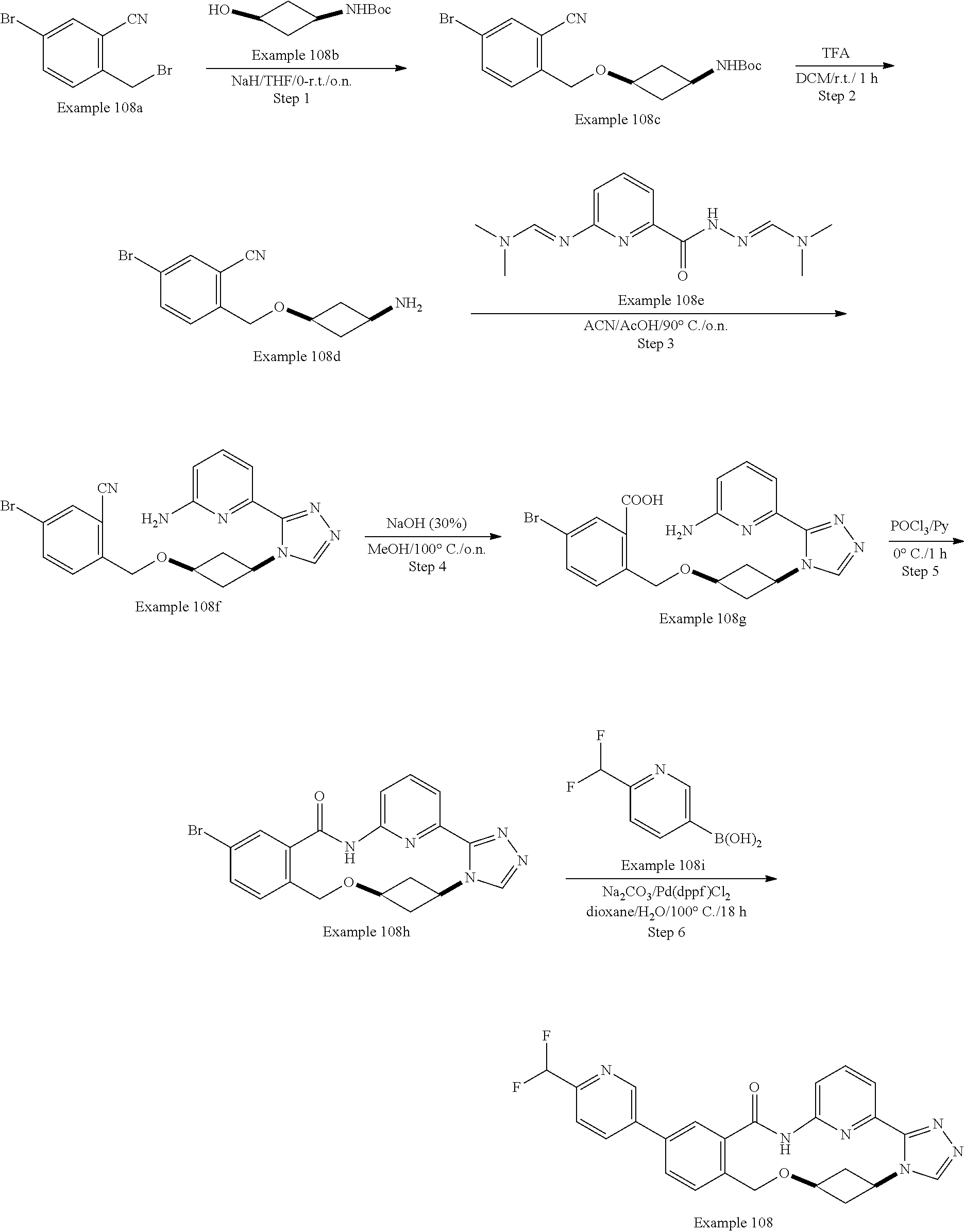


| Ex. | ASK1, Kd (nM) | ||
| 1 | A | ||
| 2 | A | ||
| 3 | B | ||
| 4 | D | ||
| 5 | C | ||
| 6 | B | ||
| 7 | A | ||
| 8 | B | ||
| 9 | C | ||
| 10 | A | ||
| 11 | A | ||
| 12 | B | ||
| 13 | D | ||
| 14 | B | ||
| 15 | D | ||
| 16 | B | ||
| 17 | B | ||
| 18 | A | ||
| 19 | B | ||
| 20 | B | ||
| 21 | D | ||
| 22 | A | ||
| 23 | A | ||
| 24 | A | ||
| 25 | C | ||
| 26 | C | ||
| 28 | C | ||
| 29 | C | ||
| 30 | A | ||
| 31 | A | ||
| 32 | B | ||
| 33 | C | ||
| 35 | B | ||
| 37 | A | ||
| 38 | A | ||
| 39 | A | ||
| 40 | A | ||
| 41 | B | ||
| 42 | A | ||
| 43 | A | ||
| 44 | B | ||
| 45 | C | ||
| 46 | A | ||
| 47 | A | ||
| 48 | A | ||
| 50 | A | ||
| 51 | A | ||
| 52 | A | ||
| 53 | A | ||
| 54 | A | ||
| 55 | A | ||
| 56 | A | ||
| 57 | B | ||
| 58 | A | ||
| 59 | C | ||
| 60 | A | ||
| 61 | A | ||
| 63 | A | ||
| 64 | C | ||
| 65 | A | ||
| 66 | A | ||
| 67 | A | ||
| 68 | A | ||
| 69 | A | ||
| 70 | A | ||
| 71 | A | ||
| 72 | D | ||
| 73 | A | ||
| 74 | A | ||
| 75 | B | ||
| 77 | A | ||
| 78 | A | ||
| 79 | B | ||
| 80 | A | ||
| 81 | A | ||
| 82 | A | ||
| 83 | D | ||
| 84 | A | ||
| 86 | A | ||
| 87 | A | ||
| 88 | A | ||
| 89 | A | ||
| 90 | D | ||
| 91 | D | ||
| 92 | A | ||
| 93 | C | ||
| 94 | D | ||
| 95 | A | ||
| 96 | B | ||
| 97 | A | ||
| 98 | A | ||
| 99 | A | ||
| 100 | A | ||
| 101 | B | ||
| 102 | A | ||
| 103 | A | ||
| 104 | A | ||
| 105 | A | ||
| 106 | B | ||
| 107 | B | ||
| A: <10 nM | |||
| 10 nM ≤ B < 100 nM | |||
| 100 nM ≤ C < 1 μM | |||
| D ≥1 μM | |||
| Ex. | IC50 (nM) | ||
| 2 | C | ||
| 19 | B | ||
| 22 | A | ||
| 23 | B | ||
| 24 | A | ||
| 30 | A | ||
| 37 | A | ||
| 38 | A | ||
| 39 | A | ||
| 40 | A | ||
| 42 | B | ||
| 43 | A | ||
| 46 | B | ||
| 47 | A | ||
| 48 | A | ||
| 50 | A | ||
| 52 | A | ||
| 53 | C | ||
| 54 | A | ||
| 55 | C | ||
| 56 | A | ||
| 61 | A | ||
| 63 | B | ||
| 66 | B | ||
| 67 | A | ||
| 69 | A | ||
| 70 | A | ||
| 71 | A | ||
| A: <100 nM | |||
| 100 nM ≤ B < 1 μM | |||
| D ≥1 μM | |||
-
- The safety and tolerability of multiple doses of a compound described herein;
- The effects of 2 dose levels (25 mg and 50 mg) of a compound described herein on insulin resistance and glucose homeostasis; and
- Effects of a compound described herein on hepatocellular function as measured by assessment of liver enzymes and biochemical markers of hepatic and metabolic function and inflammation.
-
- Institutional Review Board (IRB approved written Informed Consent and privacy language as per national regulation (eg, Health Insurance Portability and Accountability Act [HIPAA] Authorization for US sites) must be obtained from the subject or legally authorized representative prior to any study related procedures, including screening evaluations and tests
- Subject is ≥18 years of age and <76 years old at the time of consent
- Subject has had a percutaneous liver biopsy within 12 months from Screening that shows a definitive diagnosis of NASH with advanced (Brunt stage 3) hepatic fibrosis
Exclusion Criteria: - Subject is a pregnant or lactating female
- Subject with current, significant alcohol consumption or a history of significant alcohol consumption for a period of more than 3 consecutive months any time within 1 year prior to screening. Significant alcohol consumption is defined as more than 20 gram per day in females and more than 30 grams per day in males, on average (a standard drink in the US is considered to be 14 grams of alcohol).
- Subject is unable to reliably quantify alcohol consumption based upon local study physician judgment.
- Subject uses drugs historically associated with nonalcoholic fatty liver disease (NAFLD) (amiodarone, methotrexate, systemic glucocorticoids, tetracyclines, tamoxifen, estrogens at doses greater than those used for hormone replacement, anabolic steroids, valproic acid, and other known hepatotoxins) for more than 2 weeks in the year prior to Screening.
- Subject requires use of drugs with a narrow therapeutic window metabolized by CYP3A4 such as fast acting opioids (alfentanil and fentanyl), immunosuppressive drugs (cyclosporine, sirolimus, and tacrolimus), some cardiovascular agents (ergotamine, quinidine and dihydroergotamine), and select psychotropic agents (pimozide).
- Subject has prior or has planned (during the study period) bariatric surgery (eg, gastroplasty, Roux-en-Y gastric bypass).
- Subject has concurrent infection including diagnoses of fever of unknown origin and evidence of possible central line sepsis (subjects must be afebrile at the start of therapy).
- Subject with a platelet count below 100,000/mm3 at Screening.
- Subject with clinical evidence of hepatic decompensation as defined by the presence of any of the following abnormalities at Screening:
- Serum albumin less than 3.5 grams/deciliter (g/dL).
- An INR greater than 1.1.
- Direct bilirubin greater than 1.3 milligrams per deciliter (mg/dL).
- Subject has a history of bleeding esophageal varices, ascites, or hepatic encephalopathy
- Subject has a history of hepatitis C. Patients found on screening to have hepatitis C antibody, even if PCR negative for HCV RNA, are excluded from this study.
- Subject has evidence of other forms of chronic liver disease:
- Hepatitis B as defined by presence of hepatitis B surface antigen.
- Evidence of ongoing autoimmune liver disease as defined by compatible liver histology.
- Primary biliary cirrhosis as defined by the presence of at least 2 of these criteria (i) Biochemical evidence of cholestasis based mainly on alkaline phosphatase elevation (ii) Presence of anti-mitochondrial antibody (iii) Histologic evidence of nonsuppurative destructive cholangitis and destruction of interlobular bile ducts.
- Primary sclerosing cholangitis.
- Wilson's disease as defined by ceruloplasmin below the limits of normal and compatible liver histology.
- Alpha-1-antitrypsin deficiency as defined by diagnostic features in liver histology (confirmed by alpha-1 antitrypsin level less than normal; exclusion at the discretion of the study physician).
- History of hemochromatosis or iron overload as defined by presence of 3+ or 4+ stainable iron on liver biopsy.
- Drug-induced liver disease as defined on the basis of typical exposure and history.
- Known bile duct obstruction.
- Suspected or proven liver cancer.
- Any other type of liver disease other than NASH.
- Subject with serum ALT greater than 300 units per liter (U/L) at Screening.
- Subject with serum creatinine of 1.5 mg/dL or greater at Screening.
- Subject using of any prescription or over-the-counter medication or herbal remedy that are believed to improve or treat NASH or liver disease or obesity during the period beginning 30 days prior to randomization. Subjects who are using Vitamin E or omega-3 fatty acids may continue their use.
- Subject with a history of biliary diversion.
- Subject with known positivity for Human Immunodeficiency Virus infection.
- Subject with an active, serious medical disease with likely life expectancy of less than 5 years.
- Subject with active substance abuse, including inhaled or injection drugs, in the year prior to Screening.
- Subject with known allergies to the study drug or any of its excipients.
- Subject with malignant disease (other than basal and squamous cell carcinoma of the skin and in situ.
-
- Allocation: Randomized
- Endpoint Classification: Safety/Efficacy Study
- Intervention Model: Parallel Assignment
- Masking: Double Blind (Subject, Investigator)
- Primary Purpose: Treatment
-
- A secondary objective is to characterize the first-dose PK profile of compound described herein. The PK profile is assessed by the AUC (area under the plasma concentration versus time curve) and Cmax (peak plasma concentration) of a compound described herein.
- A secondary objective for the study is to characterize the PK profile and serum level accumulation of a compound described herein following administration of daily oral doses beginning 3 days after the first dose.
- A secondary objective is to evaluate change in serum alanine aminotransferase (ALT), aspartate aminotransferase (AST), ratio of AST:ALT, alkaline phosphatase, and gamma glutamyl transpeptidase (GGTP); change in AST/platelet ratio index. [Time Frame: Baseline; Week 7 (End of Study)] [Designated as safety issue: No]
- A secondary objective for this study is to evaluate change in serum alanine aminotransferase (ALT), aspartate aminotransferase (AST), ratio of AST:ALT, alkaline phosphatase, and gamma glutamyl transpeptidase (GGTP) levels; and change in AST/platelet ratio index.
- Hepatocellular function as measured by assessment of liver enzymes and biochemical markers of hepatic and metabolic function.
| Arms | Assigned Interventions |
| Active Comparator: Cohort 1 | Drug: Compound described herein |
| Patient receives dose of compound | Drug: Placebo |
| described herein or placebo | |
| Active Comparator: Cohort 2 | Drug: Compound described herein |
| Patient receives dose of described | Drug: Placebo |
| herein or Placebo | |
| Active Comparator: Cohort 3 | Drug: Compound described herein |
| Patient receives dose of compound | Drug: Placebo |
| described herein or placebo | |
Claims (16)


Priority Applications (1)
| Application Number | Priority Date | Filing Date | Title |
|---|---|---|---|
| US16/645,411 US11034671B2 (en) | 2017-09-08 | 2018-09-07 | Apoptosis signal-regulating kinase inhibitors and uses thereof |
Applications Claiming Priority (3)
| Application Number | Priority Date | Filing Date | Title |
|---|---|---|---|
| US201762555961P | 2017-09-08 | 2017-09-08 | |
| US16/645,411 US11034671B2 (en) | 2017-09-08 | 2018-09-07 | Apoptosis signal-regulating kinase inhibitors and uses thereof |
| PCT/US2018/050013 WO2019051265A1 (en) | 2017-09-08 | 2018-09-07 | Apoptosis signal-regulating kinase inhibitors and uses thereof |
Publications (2)
| Publication Number | Publication Date |
|---|---|
| US20200283404A1 US20200283404A1 (en) | 2020-09-10 |
| US11034671B2 true US11034671B2 (en) | 2021-06-15 |
Family
ID=65635243
Family Applications (1)
| Application Number | Title | Priority Date | Filing Date |
|---|---|---|---|
| US16/645,411 Expired - Fee Related US11034671B2 (en) | 2017-09-08 | 2018-09-07 | Apoptosis signal-regulating kinase inhibitors and uses thereof |
Country Status (5)
| Country | Link |
|---|---|
| US (1) | US11034671B2 (en) |
| EP (1) | EP3678662A4 (en) |
| JP (1) | JP2020533335A (en) |
| CN (1) | CN111315380A (en) |
| WO (1) | WO2019051265A1 (en) |
Families Citing this family (8)
| Publication number | Priority date | Publication date | Assignee | Title |
|---|---|---|---|---|
| EP3580224B1 (en) * | 2017-02-07 | 2022-07-13 | Biogen MA Inc. | Ask1 inhibiting agents |
| AU2018266911C1 (en) | 2017-05-12 | 2022-10-20 | Enanta Pharmaceuticals, Inc. | Apoptosis signal-regulating kinase 1 inhibitors and methods of use thereof |
| EP3678662A4 (en) | 2017-09-08 | 2021-09-01 | Fronthera U.S. Pharmaceuticals LLC | Apoptosis signal-regulating kinase inhibitors and uses thereof |
| ES3004523T3 (en) | 2018-05-02 | 2025-03-12 | Enanta Pharm Inc | Tetrazole containing apoptosis signal-regulating kinase 1 inhibitors and methods of use thereof |
| WO2020041417A1 (en) | 2018-08-22 | 2020-02-27 | Enanta Pharmaceuticals, Inc. | Cycloalkyl-containing apoptosis signal-regulating kinase 1 inhibitors and methods of use thereof |
| WO2020106707A1 (en) | 2018-11-19 | 2020-05-28 | Enanta Pharmaceuticals, Inc. | Apoptosis signal-regulating kinase 1 inhibitors and methods of use thereof |
| US11466033B2 (en) | 2019-03-25 | 2022-10-11 | Enanta Pharmaceuticals, Inc. | Substituted pyridines as apoptosis signal-regulating kinase 1 inhibitors |
| CN112608243A (en) * | 2020-12-15 | 2021-04-06 | 深圳市华先医药科技有限公司 | Synthesis method of trans-3-aminobutanol |
Citations (6)
| Publication number | Priority date | Publication date | Assignee | Title |
|---|---|---|---|---|
| US20110009410A1 (en) | 2009-07-13 | 2011-01-13 | Gilead Sciences, Inc. | Apoptosis signal-regulating kinase inhibitors |
| US8742126B2 (en) | 2012-01-27 | 2014-06-03 | Gilead Sciences, Inc. | Apoptosis signal-regulating kinase inhibitor |
| US20170174671A1 (en) | 2015-12-17 | 2017-06-22 | Incyte Corporation | Heterocyclic compounds as immunomodulators |
| US20170204116A1 (en) | 2014-07-21 | 2017-07-20 | Dana-Farber Cancer Institute, Inc. | Macrocyclic kinase inhibitors and uses thereof |
| WO2018148204A1 (en) | 2017-02-07 | 2018-08-16 | Biogen Ma Inc. | Ask1 inhibiting agents |
| WO2019051265A1 (en) | 2017-09-08 | 2019-03-14 | Fronthera U.S. Pharmaceuticals Llc | Apoptosis signal-regulating kinase inhibitors and uses thereof |
Family Cites Families (2)
| Publication number | Priority date | Publication date | Assignee | Title |
|---|---|---|---|---|
| NZ604831A (en) * | 2010-07-02 | 2014-12-24 | Gilead Sciences Inc | Apoptosis signal-regulating kinase inhibitors |
| CN112225699B (en) * | 2014-12-23 | 2023-11-14 | 吉利德科学公司 | Process for preparing ASK1 inhibitors |
-
2018
- 2018-09-07 EP EP18854830.9A patent/EP3678662A4/en not_active Withdrawn
- 2018-09-07 CN CN201880072296.4A patent/CN111315380A/en active Pending
- 2018-09-07 US US16/645,411 patent/US11034671B2/en not_active Expired - Fee Related
- 2018-09-07 WO PCT/US2018/050013 patent/WO2019051265A1/en not_active Ceased
- 2018-09-07 JP JP2020514266A patent/JP2020533335A/en active Pending
Patent Citations (7)
| Publication number | Priority date | Publication date | Assignee | Title |
|---|---|---|---|---|
| US20110009410A1 (en) | 2009-07-13 | 2011-01-13 | Gilead Sciences, Inc. | Apoptosis signal-regulating kinase inhibitors |
| WO2011008709A1 (en) | 2009-07-13 | 2011-01-20 | Gilead Sciences, Inc. | Apoptosis signal-regulating kinase inhibitors |
| US8742126B2 (en) | 2012-01-27 | 2014-06-03 | Gilead Sciences, Inc. | Apoptosis signal-regulating kinase inhibitor |
| US20170204116A1 (en) | 2014-07-21 | 2017-07-20 | Dana-Farber Cancer Institute, Inc. | Macrocyclic kinase inhibitors and uses thereof |
| US20170174671A1 (en) | 2015-12-17 | 2017-06-22 | Incyte Corporation | Heterocyclic compounds as immunomodulators |
| WO2018148204A1 (en) | 2017-02-07 | 2018-08-16 | Biogen Ma Inc. | Ask1 inhibiting agents |
| WO2019051265A1 (en) | 2017-09-08 | 2019-03-14 | Fronthera U.S. Pharmaceuticals Llc | Apoptosis signal-regulating kinase inhibitors and uses thereof |
Non-Patent Citations (1)
| Title |
|---|
| PCT/US2018/050013 International Search Report and Written Opinion dated Oct. 29, 2018. |
Also Published As
| Publication number | Publication date |
|---|---|
| JP2020533335A (en) | 2020-11-19 |
| CN111315380A (en) | 2020-06-19 |
| US20200283404A1 (en) | 2020-09-10 |
| EP3678662A1 (en) | 2020-07-15 |
| EP3678662A4 (en) | 2021-09-01 |
| WO2019051265A1 (en) | 2019-03-14 |
Similar Documents
| Publication | Publication Date | Title |
|---|---|---|
| US11034671B2 (en) | Apoptosis signal-regulating kinase inhibitors and uses thereof | |
| US11731956B2 (en) | Substituted 1,2,4-triazoles as intermediates in the synthesis of TYK2 inhibitors | |
| US12091406B2 (en) | Lysine acetyltransferase 6A (KAT6A) inhibitors and uses thereof | |
| US11390618B2 (en) | Inhibitors of cyclin-dependent kinases | |
| US11780854B2 (en) | Prolyl hydroxylase domain-containing protein (PHD) inhibitors and uses thereof | |
| US11802128B2 (en) | Azetidine and pyrrolidine PARP1 inhibitors and uses thereof | |
| US11999713B2 (en) | Methionine adenosyltransferase 2a (MAT2A) inhibitors and uses thereof | |
| CN104024241B (en) | Uracil derivatives and their use for medical purposes | |
| WO2018151830A1 (en) | Pyridinyl based apoptosis signal-regulation kinase inhibitors | |
| JP7824938B2 (en) | TYK2 inhibitors and uses thereof | |
| US20250145624A1 (en) | Membrane-associated tyrosine- and threonine-specific cdc2-inhibitory kinase (pkmyt1) inhibitors and uses thereof | |
| US11731944B2 (en) | SARS-CoV-2 inhibitors for treating coronavirus infections | |
| US20250188094A1 (en) | Pyrazole membrane-associated tyrosine-and threonine-specific cdc2-inhibitory kinase (pkmyt1) inhibitors and uses thereof | |
| JP2024529508A (en) | Pyrrolo[2,3-b]pyridine PGDH inhibitors and methods of making and using | |
| US20220017566A1 (en) | Terpinoid derivatives and uses thereof | |
| US11999715B2 (en) | ASK1 inhibiting agents | |
| US20260125361A1 (en) | Tyk2 inhibitors and uses thereof |
Legal Events
| Date | Code | Title | Description |
|---|---|---|---|
| FEPP | Fee payment procedure |
Free format text: ENTITY STATUS SET TO UNDISCOUNTED (ORIGINAL EVENT CODE: BIG.); ENTITY STATUS OF PATENT OWNER: LARGE ENTITY |
|
| AS | Assignment |
Owner name: HAISCO PHARMACEUTICAL CO., LIMITED, CHINA Free format text: SECURITY INTEREST;ASSIGNORS:FRONTHERA U.S. PHARMACEUTICALS LLC;FRONTHERA INTERNATIONAL GROUP LIMITED;REEL/FRAME:052618/0226 Effective date: 20200429 |
|
| AS | Assignment |
Owner name: FRONTHERA U.S. PHARMACEUTICALS LLC, CALIFORNIA Free format text: ASSIGNMENT OF ASSIGNORS INTEREST;ASSIGNORS:JIN, BOHAN;DONG, QING;HUNG, GENE;REEL/FRAME:052940/0014 Effective date: 20190402 |
|
| STPP | Information on status: patent application and granting procedure in general |
Free format text: NOTICE OF ALLOWANCE MAILED -- APPLICATION RECEIVED IN OFFICE OF PUBLICATIONS |
|
| AS | Assignment |
Owner name: FRONTHERA U.S. PHARMACEUTICALS LLC, CALIFORNIA Free format text: RELEASE BY SECURED PARTY;ASSIGNOR:HAISCO PHARMACEUTICAL CO., LIMITED;REEL/FRAME:055528/0734 Effective date: 20210308 Owner name: FRONTHERA INTERNATIONAL GROUP LIMITED, CALIFORNIA Free format text: RELEASE BY SECURED PARTY;ASSIGNOR:HAISCO PHARMACEUTICAL CO., LIMITED;REEL/FRAME:055528/0734 Effective date: 20210308 |
|
| AS | Assignment |
Owner name: SICHUAN HAISCO PHARMACEUTICAL CO., LTD., CHINA Free format text: ASSIGNMENT OF ASSIGNORS INTEREST;ASSIGNOR:FRONTHERA U.S. PHARMACEUTICALS LLC;REEL/FRAME:055811/0988 Effective date: 20210322 |
|
| STPP | Information on status: patent application and granting procedure in general |
Free format text: PUBLICATIONS -- ISSUE FEE PAYMENT RECEIVED |
|
| STPP | Information on status: patent application and granting procedure in general |
Free format text: PUBLICATIONS -- ISSUE FEE PAYMENT VERIFIED |
|
| STCF | Information on status: patent grant |
Free format text: PATENTED CASE |
|
| FEPP | Fee payment procedure |
Free format text: MAINTENANCE FEE REMINDER MAILED (ORIGINAL EVENT CODE: REM.); ENTITY STATUS OF PATENT OWNER: LARGE ENTITY |
|
| LAPS | Lapse for failure to pay maintenance fees |
Free format text: PATENT EXPIRED FOR FAILURE TO PAY MAINTENANCE FEES (ORIGINAL EVENT CODE: EXP.); ENTITY STATUS OF PATENT OWNER: LARGE ENTITY |
|
| STCH | Information on status: patent discontinuation |
Free format text: PATENT EXPIRED DUE TO NONPAYMENT OF MAINTENANCE FEES UNDER 37 CFR 1.362 |
|
| FP | Lapsed due to failure to pay maintenance fee |
Effective date: 20250615 |