US11023527B2 - Using observable data object to unmarshal graph data - Google Patents
Using observable data object to unmarshal graph data Download PDFInfo
- Publication number
- US11023527B2 US11023527B2 US15/902,297 US201815902297A US11023527B2 US 11023527 B2 US11023527 B2 US 11023527B2 US 201815902297 A US201815902297 A US 201815902297A US 11023527 B2 US11023527 B2 US 11023527B2
- Authority
- US
- United States
- Prior art keywords
- data object
- data
- graph
- copy
- observable
- Prior art date
- Legal status (The legal status is an assumption and is not a legal conclusion. Google has not performed a legal analysis and makes no representation as to the accuracy of the status listed.)
- Active, expires
Links
Images




Classifications
-
- G—PHYSICS
- G06—COMPUTING OR CALCULATING; COUNTING
- G06F—ELECTRIC DIGITAL DATA PROCESSING
- G06F16/00—Information retrieval; Database structures therefor; File system structures therefor
- G06F16/90—Details of database functions independent of the retrieved data types
- G06F16/901—Indexing; Data structures therefor; Storage structures
- G06F16/9024—Graphs; Linked lists
-
- G—PHYSICS
- G06—COMPUTING OR CALCULATING; COUNTING
- G06F—ELECTRIC DIGITAL DATA PROCESSING
- G06F16/00—Information retrieval; Database structures therefor; File system structures therefor
- G06F16/90—Details of database functions independent of the retrieved data types
- G06F16/903—Querying
- G06F16/9038—Presentation of query results
Definitions
- the implementations of the disclosure relate generally to computing infrastructures and, more specifically, relate to transparent asynchronous on-demand unmarshalling of graph data.
- Computing systems and devices may access, store, process, or communicate with a database.
- a database may store data or information in various formats, models, structures, or systems using different types of database structures. Users or processes may access or query the databases to fetch or retrieve data in a database, or to transfer or otherwise share information between varying database systems as well as the computing systems and devices the databases support.
- FIG. 1 is a block diagram of a computer system to support graph database backed object unmarshalling according to an implementation of the disclosure.
- FIG. 2 illustrates related entities according to an implementation of the presentation.
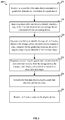
- FIG. 3 depicts a flow diagram of one implementation of a method in accordance with one or more aspects of the disclosure.
- FIG. 4 is a system for unmarshalling of graph data according to an implementation of the present disclosure.
- FIG. 5 illustrates a block diagram illustrating a machine in which implementations of the disclosure may be used.
- a graph database uses graphs to represent information by one or more “graph” structures comprising nodes and edges contenting related nodes.
- a “graph” is a type of data structure (such as a directed acyclic graph) comprising nodes (also referred to as vertices), edges and attributes (also referred to as properties) to organize and store data.
- a “node” (also referred to as a node data structure) may represent, for example, stored data for an entity such as a person, business, account, artifact, etc.
- An “edge” may represent a relationship between a pair of entities.
- “Attributes” are stored information that relates to the nodes or edges. The nodes in the graphs may be connected together by one or more edges.
- an edge may be formed between the nodes representing the commonality.
- the nodes are configured to perform certain services associated with the graph, and such services can include sorting, querying and retrieving certain attributes for a particular entity of the graph.
- the graph databases can store attributes as data values associated with the nodes and edges in a key-value pair.
- a “key” is generally a unique identifier that identifies a node or edge in a graph or a set of nodes or edges in a graph.
- the graph database information may be sent and received from the graph database as key-value information.
- a back-end server machine sends both a key and an attribute value to the graph database.
- the server machine sends only a key to the graph database to retrieve the corresponding value for the node or edge stored in the graphs.
- An object-oriented application can utilize the graph databases.
- Object-oriented applications organize data and routines together into encapsulated units referred to as objects.
- An “object” is a set of data and functional services or capabilities (e.g., routines) encapsulated into a single logical entity stored in memory.
- One type of object-oriented application referred to herein as an object-graph mapper (OGM), maps nodes and the relationships between the nodes in the graph database to objects in an “authoritative model” of a system.
- the authoritative model describes what properties such as available object functionally or services an object of a given type may include, but does not include actual data for the object (e.g., identifiers, values, etc.).
- the authoritative model may represent native JavaTM objects.
- the OGM provides a way for the authoritative model of the objects to be persisted in the underlying graph database servers.
- a user may use a graphical tool associated with the OGM to design a framework for classes that represent the authoritative model of an object.
- the OGM maps nodes and the relationships between the nodes in the graph to the authoritative models.
- the authoritative models are then stored on the and g graph database servers and can be used to query the graph data of the graph database.
- an application interface may be used to transfer the “raw” graph data elements in the key-value pairs associated with the nodes and edges of the graph to a client device. During this transfer, however, the graph structure associated with the authoritative models is not maintained. As such, on the client side, it is necessary to recreate these graph structures using the “raw” graph data elements.
- Implementations of the disclosure may provide a graphs manager for “unmarshalling” objects from the graph database.
- the object after unmarshalling is returned the clients as if the clients had them available in local memory or storage.
- unmarshalling refers to the process of transforming a representation of an object that was used for storage or transmission to a representation of the object that is consumable by a processing device on a certain platform.
- the graphs manager may be installed at back-end server machine for performing the techniques disclosed herein.
- the graphs manager may inspect an authoritative model in order to generate client side object models that mimic the services provided by the authoritative model for an existing object.
- the graphs manager uses “reflection” to inspect the authoritative model in order to generate a similar client side object model of a particular platform for a client device. For example, if an original authoritative model is for a first programming platform, such as native Java®, then a client side object model may be generated that is suitable for a second programming platform, such as TypeScript® or Python®. Reflection is a programming technique with the ability to identify what information the model contains and dynamically modify this information that may include the methods, attributes, etc. of classes associated with the models. Then, on a target programming platform, such as a programming platform of the client device, a processing device may use these generated client side object models to reconstruct the graphs back from the data retrieved from the graph database.
- a target programming platform such as a programming platform of the client device
- the generated client side object models may include metadata.
- the processing device may execute a client-application at the client device using the metadata to reconstruct the objects from raw graph data elements, such as the key-value pair data.
- This metadata may include information that describes the object associated with the inspected authoritative model, for example, this may include an object-type discriminator (e.g., object class type) for the object as well as other information associated with the object.
- the object-type discriminator describes what model is to be used to reconstruct the object.
- the graph manager includes a service provider interface (SPI) that serves the raw graph data elements associated with the client side object models to the client device.
- SPI service provider interface
- the client device via the client-application may provide graph queries to the SPI to get the raw graph data elements that represent an object stored in the graph database.
- the client-application determines the object types based on their object-type discriminators in the metadata, and instantiates the objects at the client device which are then filled in with the raw graph data elements.
- the client device via the client application may execute methods of a particular object of the client side object models.
- this call is intercepted by an object handler component of the graphs manager.
- the object handler component uses the certain data from that particular service to determine which nodes and data for those nodes to retrieve from the graph database.
- this data may include an identifier for each of the nodes such as an uniform resource identifier (URI) that is a unique identifier for data in the graph database that is linked to the node, a numeric identifier corresponding to an internal graph database identifier, an identifier of a starting node and a set of matching criteria that can be applied to determine which related nodes to retrieve data from the graph database as well as other types of identifiers.
- URI uniform resource identifier
- the object handler retrieves the raw graph data elements (e.g., key-value pair data) stored in the graph database for the nodes.
- the object handler via the SPI returns the retrieved raw graph data elements to the client-application at the client device.
- the client-application may instantiate a related object using this data in local memory or storage of the client device.
- the client application can retrieve graphs from the back-end graph database in the form of client platform specific objects mimicking the server side objects, and in a way that is transparent to the client device.
- the client application that may instantiate the related object is a background process.
- a data object corresponding to a node representing an entity may already reside on the client.
- An application may need to access data objects of a related entity (e.g., “Account” of the Customer).
- the client device may initiate a request for the data object to a server in communication with a graph database storing the graph data elements of the data object.
- the client device may run a reconstruction application to generate the data object using graph data elements and the metadata associated with a graph model.
- the server may include the graph manager to call a service specified for a graph model of the data object to retrieve these graph data elements from the graph database.
- the client device may use the graph data elements and metadata to reconstruct the data object.
- This approach does not take into consideration whether the requested data object already exists on the client side. Thus, this approach may be inefficient if the requested set of accounts is already on the client side (e.g., stored in a storage device accessible by the client device).
- implementations of the president disclosure provide mechanism for the client device to determine whether a copy of the data object already exists on the client side.
- One implementation may provide an observable data object that may contain a metadata field for storing a reference to the metadata and a pre-fetched data field for storing a reference to a copy of the data object on the client side.
- An observable is a class of data objects that allow an observer to subscribe the data object and receive an item emitted from the data object in an asynchronous manner using a method associated with the data object.
- An observer is the receiving entity of the item emitted from the observer data object.
- a client application is the observer to receive an item from the observer data object.
- the client application may receive the copy of the data object if it exists on the client side or metadata associated with a graph model for generating the data object if the data object does not exist on the client side.
- a user of the client application may create, without invoking, the observable data object that defines methods to emit items (either the data object or the metadata). The client may subscribe to the observable data object.
- the subscription by the client application may initiate methods associated with the observable data object.
- the client can then perform other tasks without waiting for the items from the observable data object.
- the observable data object may call the pre-specified method to inform the client.
- the client can receive the item from the observable data object in an asynchronous manner.
- the user may have created the observable data object including a first reference to a metadata associate with a graph model and a second reference pointing to the location to store a pre-fetched data object.
- the client Responsive to receiving a request from a user for the data object, the client may subscribe to the observable data object to receive a data item emitted from the observable data object.
- the observable data object executing on a processing device of the client device, may inspect whether the second reference to the data object exists in the observable data object to determine whether the data object is already on the client side. If the data object is on the client side, the observable data object may emit, to the client, the data object on the client side without further assistance from the server.
- the client device may send an HTTP request to the server for the graph data elements of the data object, and reconstruct the data objects using the metadata already on the client side and the graph data elements of the data object retrieved from the server.
- FIG. 1 is a computer system 100 according to implementations of the disclosure.
- “Computer system” 100 herein shall refer to a system comprising one or more computing devices, one or more memory devices, and one or more communication interfaces.
- the computer system 100 may include a client computer (e.g., client 107 ), and a server computing device (referred to later in this disclosure as server 110 ) coupled to a network (not shown) and including one or more processing devices (e.g., processor 120 ) communicatively coupled to memory (e.g., memory 130 ) and one or more input/output (I/O) devices (e.g., I/O devices 140 ).
- processing devices e.g., processor 120
- memory e.g., memory 130
- I/O input/output
- the network may include a public network (e.g., the Internet), a private network (e.g., a local area network (LAN) or wide area network (WAN)), a wired network (e.g., Ethernet network), a wireless network (e.g., an 802.11 network or a Wi-Fi network), a cellular network (e.g., a Long Term Evolution (LTE) network), routers, hubs, switches, server computers, and/or a combination thereof.
- a public network e.g., the Internet
- a private network e.g., a local area network (LAN) or wide area network (WAN)
- a wired network e.g., Ethernet network
- a wireless network e.g., an 802.11 network or a Wi-Fi network
- a cellular network e.g., a Long Term Evolution (LTE) network
- processor 120 may include logic circuits for executing instructions encoding arithmetic, logical, or I/O operations.
- a processor may include an arithmetic logic unit (ALU), a control unit, and a plurality of registers.
- ALU arithmetic logic unit
- a processor may be a single core processor which is typically capable of executing one instruction at a time (or process a single pipeline of instructions), or a multi-core processor which may simultaneously execute multiple instructions.
- processor 120 may be implemented as a single integrated circuit, two or more integrated circuits, or may be a component of a multi-chip module (e.g., in which individual microprocessor dies are included in a single integrated circuit package and hence share a single socket).
- a processor 120 may also be referred to as a central processing unit (CPU).
- CPU central processing unit
- Memory 130 herein refers to a volatile or non-volatile memory device, such as RAM, ROM, EEPROM, or any other device capable of storing data.
- I/O device 140 herein refers to a device capable of providing an interface between a processor and an external device capable of inputting and/or outputting binary data.
- a single processor 120 is depicted in FIG. 1
- the computing devices of computer system 100 may comprise a plurality of processors.
- the computing devices of computer system 100 may comprise a plurality of I/O devices, rather than a single I/O device 140 .
- the server 110 may be a server, a mainframe, a workstation, a personal computer (PC), a mobile phone, a palm-sized computing device, etc.
- the server 110 may run “host” software, such host operating system 150 to manage the hardware and other types of system resources that may include processors 120 , memory 130 , I/O device 140 to provide functions such as inter-process communication, scheduling, memory and data management, and so forth.
- the host operating system 150 of server 110 may include a virtualization manager (not shown), such as a hypervisor.
- the hypervisor may a “bare metal” hypervisor that runs on hardware of computer system 110 without an intervening operating system.
- the hypervisor 150 may abstract the physical layer of server 110 , including processor 120 , memory 130 , and I/O device 140 , and present this abstraction to a client application, such as a virtual machine.
- System 100 may include one or more graph databases 160 .
- the graph databases 160 may be a separate component from server 110 .
- the graph databases 160 may part of the server 110 .
- all or part of the graph databases 160 may be in the memory 130 of server 110 .
- the graph databases 160 can be divided into multiple databases with components that can be geographically dispersed and accessible, for example, via a network.
- Graph database 160 may use graph data structures including nodes 162 (also referred to as a node data structure), edges 164 and attributes 166 to store data.
- nodes 162 a - c for object 169 a may represent an entity such as people, businesses, accounts, artifacts, etc.
- Edge 164 may represent relationships between pairs of entities, such as the oriented edge between nodes 162 b and 162 c .
- the nodes 162 a - c in a particulate graph may be connected together by one or more edges 164 .
- an edge 164 may be formed between these two nodes to represent the commonality.
- the nodes 162 a - c may be associated with certain services associated with the graph, and such services can include sorting, querying and retrieving certain attributes for a particular entity of the node.
- Attributes 166 a - c may represent information, such as a key/value map of properties 168 , which relates to the nodes 162 a - c or edges 164 .
- the graph database 160 can store attributes 166 as data values associated with the nodes 162 a - c and edges 164 in a key-value pair 168 .
- a “key” is generally a unique identifier that identifies a node 162 a - c or edge 164 in a graph or a set of nodes 162 a - c or edges 164 in a graph. In that regard, the information may be sent and received from the graph database 160 as key-value information.
- server 110 When information is stored to the the graph database 160 , server 110 sends both a key and a value to the graph database 160 . When the information is retrieved from the graph database 160 , the server 110 sends only a key to the graph database 160 to retrieve the corresponding attribute value for the node 162 or edge 164 stored in the graphs.
- Nodes 162 and the edges 164 representing the relationships between the nodes 162 in the graph database 160 can be mapped to objects 169 .
- a user such as an administrator
- OGM object-graph mapper
- the objects 169 may be represented as native JavaTM objects.
- the graph models 180 - 182 describe what properties such as available object functionally or services 181 for the corresponding object 169 of a given type may include, but does not include actual data for that object.
- the services 181 may include identifier data 183 to determine which nodes 162 to retrieve data from the graph database 160 .
- Identifier data 183 may include a unique identifier for each of the nodes.
- the identifier data 183 may be a uniform resource identifier (URI) pointing to the location of the node.
- Identifier data 183 may be a numeric value corresponding to an internal graph database identifier.
- an identifier data 183 may include an identifier of a starting node and a set of matching criteria that can be applied to determine which related nodes to retrieve data from the graph database as well as other types of identifiers.
- the OGM abstracts the structure of the nodes 162 and their edges 164 and ensures the objects 169 to be persisted in the graph database 160 .
- the user may use a graphical tool associated with the OGM to design a framework for classes that represent the objects 169 .
- the OGM may generate objects 169 (e.g., JavaTM objects) representing the classes.
- System 100 may provide for unmarshalling these objects 169 returned from the graph database 160 to a client 107 in a way as if the client 107 had them available in local memory or local storage.
- unmarshalling refers to the process of transforming a representation of an object that was used for storage or transmission to a representation of the object that is executable by a processing device on client 107 .
- server 10 includes a graph manager 170 .
- the functionality of the graph manager 170 can exist in a fewer or greater number of components than what is shown, with such components residing at one or more computing devices of system 100 that may be geographically dispersed.
- the components may be operable in conjunction with client 107 and server 110 from which it may receive requests to query the objects 169 and provide relevant information regarding those objects 169 from the graph databases 160 .
- the graph manager 170 on server 110 may generate client-side models 184 for clients (e.g., client 107 ) that mimic services 181 provided by the graph models 180 - 182 for objects 169 of the graph database 160 , and manage the distribution of metadata 185 for these client-side models 184 to the client 107 .
- This metadata 185 is a data object that may contain code and data that may cause the objects 160 to be reconstructed locally at the client 107 .
- this metadata 185 may instruct a client-application (not shown) at the client device 107 on how to reconstruct the objects 169 using raw graph data elements, such as the key/value pairs 168 , from the graph database 160 .
- the graph manager 170 may use the reflection to inspect the graph models 180 - 182 associated with the objects 169 .
- Reflection is a programming tool used to inspect and dynamically call and identify classes, methods, attributes, etc. of objects, without knowing the names of the classes and methods of the objects beforehand.
- the graph manager 170 is able to determine which services 181 are associated with the objects 169 .
- the services 181 represents the classes and the functionally (e.g., methods) available to the objects 169 associated with the classes.
- the graph manager 170 generates metadata 185 for the client-side model 184 that includes information to describe the object associated with the inspected model.
- the metadata 185 may include an object-type descriptor (e.g., object class type) 186 for the object as well as fields 188 to store other relevant data associated with the object.
- This metadata 185 may instruct a client-application 109 at the client device 107 on how to unmarshal the objects 169 using raw graph data elements, such as the key/value pairs 168 , from the graph database 160 .
- the graph manager 170 includes an interface 172 also referred to herein in as service provider interface (SPI 172 ) that serves raw graph data elements, such as the key/values pairs 168 ) associated with nodes 162 of the graph models 180 , to the client device 107 , and an object handler 174 that uses the metadata 185 of the graph models 180 to determine which nodes 162 and related the key/value pairs data 168 for the raw graph data elements to retrieve or otherwise retrieve from the graph database 160 .
- SPI 172 service provider interface
- object handler 174 uses the metadata 185 of the graph models 180 to determine which nodes 162 and related the key/value pairs data 168 for the raw graph data elements to retrieve or otherwise retrieve from the graph database 160 .
- client-side model 184 may include an observable data object 190 that contains a reference to metadata 185 and a second reference to a pre-fetched data object 192 .
- Pre-fetched data object 192 is an object that had been generated and stored in a storage device on the client device.
- client device 107 may have previously retrieved and/or construct their corresponding data objects using retrieved graph data elements and the metadata. Client device may make data objects corresponding to these entities available on client device 107 as pre-fetched data object 192 .
- client device 107 may receive a request for information about all accounts of a customer.
- graph manager 170 may also retrieve data objects (such as transactions for each account) related to the accounts.
- FIG. 2 illustrates related entities 200 according to an implementation of the presentation.
- a customer entity 202 may be related to multiple accounts 204 A-B (e.g., accounts owned by a customer).
- Each account 204 A-B may be related to one or more transaction entities 206 A-F representing the transactions associated with the corresponding account.
- graph manager 170 may retrieve all account information including the related transaction entities 206 A-F and provide the retrieved account entities 204 A-C and transaction entities 206 A-F to client application 109 running on client device 107 .
- Client application 109 may store the retrieved account entities 204 A-C and transaction entities 206 A-F as pre-fetched data object 192 (as shown in FIG. 1 ) in a storage device (not shown).
- client application 109 may store, in a field of observable data object 190 , a reference to pre-fetched data object 192 stored in the storage device, where the reference may be a link (e.g., a hyperlink) to the pre-fetched data object 192 .
- the reference indicates that the existence of the pre-fetched data object 192 is available on the client side.
- client-application 109 may determine that the requested transaction entities are in pre-fetched data object 192 that can be retrieved locally using the reference stored in observable data object 190 , and retrieve the local copy rather than retrieve from graph database 160 , thus improving the efficiencies of unmarshalling of graph data.
- client-application 109 may provide graph queries 115 to the SPI 172 to get the data comprising the raw graph data elements to instantiate objects 169 based on the client-side model 184 .
- the client-application 109 determines the object type of the nodes 162 of a particular object based on its object-type discriminator 186 in the metadata 185 to instantiate the objects 169 at the client device 107 and fills in the object with the data.
- the client device 107 via the client-application 109 may execute a method of a particular object as in typical object oriented programming.
- this call is intercepted by an object handler component 174 of the graph manager 170 .
- the object handler component 174 uses identifier data 183 of the services to determine which nodes and data for those nodes to retrieve from the graph database 160 . For example, the object handler component 174 may use the identifier data 183 to identify nodes for the related object 169 .
- the object handler component 174 then retrieves the raw graph data elements (e.g., key-value pair data 168 ) stored in the graph database 160 for the nodes.
- references to specific graph data elements in the graph database 160 such as for the key-value pair data 168 .
- the identifier data 183 is used to identify the node of set of nodes in the object 169 .
- the graph manager 170 may determine identifiers for the nodes 162 in several ways. For example, the graph manager 170 may use the identifier data 183 to identify numeric identifiers representing internal graph database identifiers for one or more nodes 162 in a given object 169 . In some implementations, the graph manager 170 may use the identifier data 183 to identify an identifier of a starting node 162 in the object 169 and criteria information to determine which nodes other nodes 162 are related to that node 162 .
- the graph manager 170 may traverse the object 169 and use the criteria information to identify the related nodes that match criteria information.
- other techniques may be used to determine identifiers for nodes 162 in the objects 169 to be unmarshaled at the client device 107 .
- the object handler component 174 returns the client-side model 184 along with a portion of all of the metadata 185 to the client-application 109 at the client device 107 , which it uses as instructions to compose the object 169 at the client 107 .
- this causes the client-application 109 to instantiate related objects using this metadata 185 in local memory or storage of the client device 107 , and fill in the instantiated objects with data values (e.g., key/value pairs) from the graph database 160 .
- the client-application 109 can retrieve objects from the back-end graph database 160 in the form of client platform specific objects mimicking the server side objects, and in a way that is transparent to the client device 107 .
- the client device 107 may display the client platform specific objects on a display device (e.g., a screen) for the user to view.
- FIG. 3 depicts a flow diagram of one implementation of a method 300 in accordance with one or more aspects of the disclosure.
- client device 017 may include a processing device to perform method 300 for supporting graph database backed object unmarshalling.
- the method 300 may be performed by processing logic that may comprise hardware (circuitry, dedicated logic, etc.), software (such as is run on a general purpose computer system or a dedicated machine), or a combination of both.
- one or more processors of the computer device executing the method may perform routines, subroutines, or operations may perform method 300 and each of its individual functions.
- a single processing thread may perform method 300 .
- two or more processing threads with each thread executing one or more individual functions, routines, subroutines, or operations may perform method 300 . It should be noted that blocks of method 300 depicted in FIG. 3 can be performed simultaneously or in a different order than that depicted.
- the processing device may receive a request for a first data object associated with graph data elements and a metadata of a graph model.
- the processing device may inspect an observable data object to identify whether a copy of the first data object exists on a storage device associated with the processing device.
- the processing device may transmit a service request to a host computer for the graph data elements, the service request comprising an identifier of the first data object.
- the processing device may retrieve, from the storage device, the metadata identified by a first reference stored in the observable data object.
- the processing device may generate the first data object using the graph data elements and the metadata.
- the processing device may present the first data object on a display device.
- FIG. 4 is a system 400 for unmarshalling of graph data according to an implementation of the present disclosure.
- System 400 may include a memory 402 , a display device 408 , and a processing device 404 communicatively coupled to memory 402 and display device 408 .
- the processing device 404 may execute unmarshalling application 406 to receive a request for a first data object associated with graph data elements and a metadata of a graph model, inspect an observable data object to identify whether a copy of the first data object exists on a storage device associated with the processing device, responsive to failing to identify the copy of the first data object on the storage device, transmit a service request to a host computer for the graph data elements, the service request comprising an identifier of the first data object, responsive to receiving the graph data elements from the host computer, retrieve, from the storage device, the metadata identified by a first reference stored in an observable data object, generate the first data object using the graph data elements and the metadata, and present the first data object on the display device.
- FIG. 5 depicts a block diagram of a computer system operating in accordance with one or more aspects of the present disclosure.
- computer system 400 may correspond to a computing device within system architecture 100 of FIG. 1 .
- computer system 500 may be connected (e.g., via a network, such as a Local Area Network (LAN), an intranet, an extranet, or the Internet) to other computer systems.
- Computer system 500 may operate in the capacity of a server or a client computer in a client-server environment, or as a peer computer in a peer-to-peer or distributed network environment.
- Computer system 500 may be provided by a personal computer (PC), a tablet PC, a set-top box (STB), a Personal Digital Assistant (PDA), a cellular telephone, a web appliance, a server, a network router, switch or bridge, or any device capable of executing a set of instructions (sequential or otherwise) that specify actions to be taken by that device.
- PC personal computer
- PDA Personal Digital Assistant
- STB set-top box
- server a network router, switch or bridge, or any device capable of executing a set of instructions (sequential or otherwise) that specify actions to be taken by that device.
- the term “computer”
- the computer system 500 may include a processing device 502 , a volatile memory 504 (e.g., random access memory (RAM)), a non-volatile memory 506 (e.g., read-only memory (ROM) or electrically-erasable programmable ROM (EEPROM)), and a data storage device 516 , which may communicate with each other via a bus 508 .
- a volatile memory 504 e.g., random access memory (RAM)
- non-volatile memory 506 e.g., read-only memory (ROM) or electrically-erasable programmable ROM (EEPROM)
- EEPROM electrically-erasable programmable ROM
- Processing device 502 may be provided by one or more processors such as a general purpose processor (such as, for example, a complex instruction set computing (CISC) microprocessor, a reduced instruction set computing (RISC) microprocessor, a very long instruction word (VLIW) microprocessor, a microprocessor implementing other types of instruction sets, or a microprocessor implementing a combination of types of instruction sets) or a specialized processor (such as, for example, an application specific integrated circuit (ASIC), a field programmable gate array (FPGA), a digital signal processor (DSP), or a network processor).
- CISC complex instruction set computing
- RISC reduced instruction set computing
- VLIW very long instruction word
- ASIC application specific integrated circuit
- FPGA field programmable gate array
- DSP digital signal processor
- Computer system 500 may further include a network interface device 522 .
- Computer system 500 also may include a video display unit 510 (e.g., an LCD), an alphanumeric input device 512 (e.g., a keyboard), a cursor control device 514 (e.g., a mouse), and a signal generation device 520 .
- a video display unit 510 e.g., an LCD
- an alphanumeric input device 512 e.g., a keyboard
- a cursor control device 514 e.g., a mouse
- signal generation device 520 e.g., a signal generation device 520 .
- Data storage device 516 may include a non-transitory computer-readable storage medium 524 on which may store instructions 526 encoding any one or more of the methods or functions described herein, including instructions encoding the graph manager 170 of FIG. 1 for implementing method 300 of FIG. 3 or method 400 of FIG. 4 for supporting graph database backed object unmarshalling.
- Instructions 526 may also reside, completely or partially, within volatile memory 504 and/or within processing device 502 during execution thereof by computer system 500 , hence, volatile memory 504 and processing device 502 may also constitute machine-readable storage media.
- non-transitory computer-readable storage medium 524 is shown in the illustrative examples as a single medium, the term “computer-readable storage medium” shall include a single medium or multiple media (e.g., a centralized or distributed database, and/or associated caches and servers) that store the one or more sets of executable instructions.
- the term “computer-readable storage medium” shall also include any tangible medium that is capable of storing or encoding a set of instructions for execution by a computer that cause the computer to perform any one or more of the methods described herein.
- the term “computer-readable storage medium” shall include, but not be limited to, solid-state memories, optical media, and magnetic media.
- the methods, components, and features described herein may be implemented by discrete hardware components or may be integrated in the functionality of other hardware components such as ASICS, FPGAs, DSPs or similar devices.
- the methods, components, and features may be implemented by firmware modules or functional circuitry within hardware devices.
- the methods, components, and features may be implemented in any combination of hardware devices and computer program components, or in computer programs.
- terms such as “identifying,” “determining,” “intercepting,” “updating,” “retrieving,” “generating,” “inspecting,” “causing” or the like refer to actions and processes performed or implemented by computer systems that manipulates and transforms data represented as physical (electronic) quantities within the computer system registers and memories into other data similarly represented as physical quantities within the computer system memories or registers or other such information storage, transmission or display devices.
- the terms “first,” “second,” “third,” “fourth,” etc. as used herein are meant as labels to distinguish among different elements and may not have an ordinal meaning according to their numerical designation.
- the disclosure also relates to an apparatus for performing the operations herein.
- This apparatus may be specially constructed for the required purposes, or it may comprise a general purpose computer selectively activated or reconfigured by a computer program stored in the computer.
- a computer program may be stored in a computer readable storage medium, such as, but not limited to, any type of disk including floppy disks, optical disks, CD-ROMs, and magnetic-optical disks, read-only memories (ROMs), random access memories (RAMs), EPROMs, EEPROMs, magnetic or optical cards, or any type of media suitable for storing electronic instructions, each coupled to a computer system bus.
- the disclosure may be provided as a computer program product, or software, that may include a machine-readable medium having stored thereon instructions, which may be used to program a computer system (or other electronic devices) to perform a process according to the disclosure.
- a machine-readable medium includes any mechanism for storing or transmitting information in a form readable by a machine (e.g., a computer).
- a machine-readable (e.g., computer-readable) medium includes a machine (e.g., a computer) readable storage medium (e.g., read only memory (“ROM”), random access memory (“RAM”), magnetic disk storage media, optical storage media, flash memory devices, etc.), a machine (e.g., computer) readable transmission medium (electrical, optical, acoustical or other form of propagated signals (e.g., carrier waves, infrared signals, digital signals, etc.)), etc.
Landscapes
- Engineering & Computer Science (AREA)
- Databases & Information Systems (AREA)
- Theoretical Computer Science (AREA)
- Data Mining & Analysis (AREA)
- Physics & Mathematics (AREA)
- General Engineering & Computer Science (AREA)
- General Physics & Mathematics (AREA)
- Computational Linguistics (AREA)
- Software Systems (AREA)
- Information Retrieval, Db Structures And Fs Structures Therefor (AREA)
Abstract
Description
Claims (17)
Priority Applications (1)
| Application Number | Priority Date | Filing Date | Title |
|---|---|---|---|
| US15/902,297 US11023527B2 (en) | 2018-02-22 | 2018-02-22 | Using observable data object to unmarshal graph data |
Applications Claiming Priority (1)
| Application Number | Priority Date | Filing Date | Title |
|---|---|---|---|
| US15/902,297 US11023527B2 (en) | 2018-02-22 | 2018-02-22 | Using observable data object to unmarshal graph data |
Publications (2)
| Publication Number | Publication Date |
|---|---|
| US20190258746A1 US20190258746A1 (en) | 2019-08-22 |
| US11023527B2 true US11023527B2 (en) | 2021-06-01 |
Family
ID=67617867
Family Applications (1)
| Application Number | Title | Priority Date | Filing Date |
|---|---|---|---|
| US15/902,297 Active 2038-06-02 US11023527B2 (en) | 2018-02-22 | 2018-02-22 | Using observable data object to unmarshal graph data |
Country Status (1)
| Country | Link |
|---|---|
| US (1) | US11023527B2 (en) |
Families Citing this family (3)
| Publication number | Priority date | Publication date | Assignee | Title |
|---|---|---|---|---|
| JP7047562B2 (en) * | 2018-04-17 | 2022-04-05 | カシオ計算機株式会社 | Programs, information processing methods, information terminals and information processing systems |
| CN111639202B (en) * | 2020-05-18 | 2023-08-04 | 北京山维科技股份有限公司 | Same-layer storage method, device, medium and equipment for geographic information data |
| US11720631B2 (en) * | 2021-04-21 | 2023-08-08 | Neo4J Sweden Ab | Tool to build and store a data model and queries for a graph database |
Citations (20)
| Publication number | Priority date | Publication date | Assignee | Title |
|---|---|---|---|---|
| US6424991B1 (en) * | 1996-07-01 | 2002-07-23 | Sun Microsystems, Inc. | Object-oriented system, method and article of manufacture for a client-server communication framework |
| US20060200438A1 (en) | 2005-03-02 | 2006-09-07 | Red Hat, Inc. | System and method for retrieving data from a relational database management system |
| US20110082879A1 (en) * | 2009-10-07 | 2011-04-07 | International Business Machines Corporation | Proxy Support For Special Subtree Entries In A Directory Information Tree Using Attribute Rules |
| US7962565B2 (en) | 2001-09-29 | 2011-06-14 | Siebel Systems, Inc. | Method, apparatus and system for a mobile web client |
| US20120096070A1 (en) | 2010-10-15 | 2012-04-19 | Shane Bryzak | Web application framework remoting model api |
| US20130117326A1 (en) | 2011-11-08 | 2013-05-09 | Microsoft Corporation | External serialization and deserialization |
| US20130268583A1 (en) | 2012-04-04 | 2013-10-10 | Tangentix Ltd. | Hybrid Client-Server Graphical Content Delivery Method and Apparatus |
| US9110711B2 (en) | 2000-05-09 | 2015-08-18 | Oracle International Corporation | Dynamic displays in a distributed computing environment |
| US9135145B2 (en) | 2013-01-28 | 2015-09-15 | Rackspace Us, Inc. | Methods and systems of distributed tracing |
| US9183613B2 (en) | 2013-08-01 | 2015-11-10 | Intel Corporation | Adaptive remote computing |
| US20160156631A1 (en) * | 2013-01-29 | 2016-06-02 | Kapaleeswaran VISWANATHAN | Methods and systems for shared file storage |
| US20160275583A1 (en) | 2015-03-16 | 2016-09-22 | Bayerische Motoren Werke Aktiengesellschaft | System and Method for Product Customization and Production |
| US9501334B2 (en) | 2006-01-06 | 2016-11-22 | International Business Machines Corporation | Protocol for communication of data structures |
| WO2016198346A1 (en) | 2015-06-08 | 2016-12-15 | Hans-Henry Sandbaek | Running remote java applications through a local, plugin-free web browser |
| US9576071B2 (en) | 2013-09-12 | 2017-02-21 | Dropbox, Inc. | Graph-based data models for partitioned data |
| US9864528B2 (en) * | 2014-10-16 | 2018-01-09 | Microsoft Technology Licensing, Llc | Data object observation among domain-restricted containers |
| US20180197128A1 (en) * | 2016-12-06 | 2018-07-12 | Thomson Reuters Global Resources Unlimited Company | Risk identification engine and supply chain graph generator |
| US20190065620A1 (en) * | 2017-08-30 | 2019-02-28 | Pearson Education, Inc. | System and method for automated hybrid sequencing database generation |
| US10423390B1 (en) | 2015-06-04 | 2019-09-24 | The Mathworks, Inc. | Systems and methods for generating code for models having messaging semantics |
| US10437885B2 (en) * | 2018-01-03 | 2019-10-08 | Red Hat, Inc. | Graph modeling of applications for detection of duplicate modules |
-
2018
- 2018-02-22 US US15/902,297 patent/US11023527B2/en active Active
Patent Citations (20)
| Publication number | Priority date | Publication date | Assignee | Title |
|---|---|---|---|---|
| US6424991B1 (en) * | 1996-07-01 | 2002-07-23 | Sun Microsystems, Inc. | Object-oriented system, method and article of manufacture for a client-server communication framework |
| US9110711B2 (en) | 2000-05-09 | 2015-08-18 | Oracle International Corporation | Dynamic displays in a distributed computing environment |
| US7962565B2 (en) | 2001-09-29 | 2011-06-14 | Siebel Systems, Inc. | Method, apparatus and system for a mobile web client |
| US20060200438A1 (en) | 2005-03-02 | 2006-09-07 | Red Hat, Inc. | System and method for retrieving data from a relational database management system |
| US9501334B2 (en) | 2006-01-06 | 2016-11-22 | International Business Machines Corporation | Protocol for communication of data structures |
| US20110082879A1 (en) * | 2009-10-07 | 2011-04-07 | International Business Machines Corporation | Proxy Support For Special Subtree Entries In A Directory Information Tree Using Attribute Rules |
| US20120096070A1 (en) | 2010-10-15 | 2012-04-19 | Shane Bryzak | Web application framework remoting model api |
| US20130117326A1 (en) | 2011-11-08 | 2013-05-09 | Microsoft Corporation | External serialization and deserialization |
| US20130268583A1 (en) | 2012-04-04 | 2013-10-10 | Tangentix Ltd. | Hybrid Client-Server Graphical Content Delivery Method and Apparatus |
| US9135145B2 (en) | 2013-01-28 | 2015-09-15 | Rackspace Us, Inc. | Methods and systems of distributed tracing |
| US20160156631A1 (en) * | 2013-01-29 | 2016-06-02 | Kapaleeswaran VISWANATHAN | Methods and systems for shared file storage |
| US9183613B2 (en) | 2013-08-01 | 2015-11-10 | Intel Corporation | Adaptive remote computing |
| US9576071B2 (en) | 2013-09-12 | 2017-02-21 | Dropbox, Inc. | Graph-based data models for partitioned data |
| US9864528B2 (en) * | 2014-10-16 | 2018-01-09 | Microsoft Technology Licensing, Llc | Data object observation among domain-restricted containers |
| US20160275583A1 (en) | 2015-03-16 | 2016-09-22 | Bayerische Motoren Werke Aktiengesellschaft | System and Method for Product Customization and Production |
| US10423390B1 (en) | 2015-06-04 | 2019-09-24 | The Mathworks, Inc. | Systems and methods for generating code for models having messaging semantics |
| WO2016198346A1 (en) | 2015-06-08 | 2016-12-15 | Hans-Henry Sandbaek | Running remote java applications through a local, plugin-free web browser |
| US20180197128A1 (en) * | 2016-12-06 | 2018-07-12 | Thomson Reuters Global Resources Unlimited Company | Risk identification engine and supply chain graph generator |
| US20190065620A1 (en) * | 2017-08-30 | 2019-02-28 | Pearson Education, Inc. | System and method for automated hybrid sequencing database generation |
| US10437885B2 (en) * | 2018-01-03 | 2019-10-08 | Red Hat, Inc. | Graph modeling of applications for detection of duplicate modules |
Non-Patent Citations (11)
| Title |
|---|
| Anat Bhardwaj et al., "DataHub: Collaborative Data Science & Dataset Version Management at Scale", MIT; U. Maryland (UMD); U. Illinois (UIUC), Sep. 2, 2014, 7 pages. |
| Graph Visualization for Neo4j, NEO4J, accessed Aug. 18, 2017, 8 pages https://neo4j.com/developer/guide-data-visualization/. |
| Michael Hunger et al., "Spring Data Neo4j—Reference Documentation", 2010-2017 Graph Aware Ltd—Neo Technology, Inc.—Pivotal Software, Inc., 114 pages. |
| Nguyen et al, "Building Call Graphs for Embedded Client-Side Code in Dynamic Web Applications", ECpE Department Iowa State University, USA; School of Computer Science Carnegie Mellon University, USA, Nov. 16-22, 2014, 12 pages https://www.cs.cmu.edu/˜ckaestne/pdf/fse14.pdf. |
| Oracle, "Oracle Fusion Middleware Understanding Oracle TopLink", Oracle Help Center, Copyright 2015, 22 pages. |
| Shiraguppi et al, "Graph Based Model for Object Access Analysis at OSD Client", Indian Institute of Technology, Kanpur, accessed Aug. 18, 2017, 12 pages https://www.cse.iitk.ac.in/users/moona/papers/hipc07.pdf/. |
| USPTO, Advisory Action for U.S. Appl. No. 15/681,014, dated Jan. 14, 2020. |
| USPTO, Final Office Action for U.S. Appl. No. 15/681,014, dated Oct. 19, 2020. |
| USPTO, Final Office Action for U.S. Appl. No. 15/681,014, dated Oct. 28, 2019. |
| USPTO, Office Action for U.S. Appl. No. 15/681,014, dated Apr. 15, 2020. |
| USPTO, Office Action for U.S. Appl. No. 15/681,014, dated May 9, 2019. |
Also Published As
| Publication number | Publication date |
|---|---|
| US20190258746A1 (en) | 2019-08-22 |
Similar Documents
| Publication | Publication Date | Title |
|---|---|---|
| US11106641B2 (en) | Supporting graph database backed object unmarshalling | |
| US11050820B2 (en) | Cloud sharing system | |
| US11614932B2 (en) | Method and system for machine learning framework and model versioning in a machine learning serving infrastructure | |
| US10936659B2 (en) | Parallel graph events processing | |
| US8584136B2 (en) | Context-aware request dispatching in clustered environments | |
| US11533538B2 (en) | Streaming event content based filtering | |
| US11601495B2 (en) | Mechanism for a work node scan process to facilitate cluster scaling | |
| US11385945B2 (en) | Method and system for event consumer management in an aggregated event platform | |
| US10740322B2 (en) | Collapsing multiple changes in a database for generating a reduced number of messages for an external system | |
| US10776186B2 (en) | Method and system for detection and handling of discontinuities in event delivery systems | |
| JP7285945B2 (en) | Method, apparatus and computer program for cloud services | |
| US20220414547A1 (en) | Machine learning inferencing based on directed acyclic graphs | |
| US11620345B2 (en) | Method and apparatus for a mechanism for event replay when a reroute of recordation of the event occurred in a multiplexed event recordation system | |
| US20220414548A1 (en) | Multi-model scoring in a multi-tenant system | |
| US11023527B2 (en) | Using observable data object to unmarshal graph data | |
| US10445157B2 (en) | Concurrent services caching | |
| US11775584B1 (en) | Dynamically scaling query plan operations for query processing | |
| US11182144B2 (en) | Preventing database package updates to fail customer requests and cause data corruptions | |
| US11714694B2 (en) | Error notification mechanism for streaming events | |
| CN109947861B (en) | Method, apparatus and computer readable medium for data warehouse generation target table | |
| US11716380B2 (en) | Secure self-contained mechanism for managing interactions between distributed computing components | |
| CN116186022A (en) | Form processing method, form processing device, distributed form system and computer storage medium | |
| US11115302B1 (en) | Self-service metric publication in a computer network | |
| US11968278B2 (en) | Method and system for decentralized message handling for distributed computing environments | |
| US20180260468A1 (en) | Query usage based organization for very large databases |
Legal Events
| Date | Code | Title | Description |
|---|---|---|---|
| FEPP | Fee payment procedure |
Free format text: ENTITY STATUS SET TO UNDISCOUNTED (ORIGINAL EVENT CODE: BIG.); ENTITY STATUS OF PATENT OWNER: LARGE ENTITY |
|
| AS | Assignment |
Owner name: RED HAT, INC., NORTH CAROLINA Free format text: ASSIGNMENT OF ASSIGNORS INTEREST;ASSIGNORS:ZIZKA, ONDREJ;SIGHTLER, JESSE DANIEL;SIGNING DATES FROM 20180213 TO 20180215;REEL/FRAME:045014/0761 |
|
| STPP | Information on status: patent application and granting procedure in general |
Free format text: NON FINAL ACTION MAILED |
|
| STPP | Information on status: patent application and granting procedure in general |
Free format text: RESPONSE TO NON-FINAL OFFICE ACTION ENTERED AND FORWARDED TO EXAMINER |
|
| STPP | Information on status: patent application and granting procedure in general |
Free format text: NOTICE OF ALLOWANCE MAILED -- APPLICATION RECEIVED IN OFFICE OF PUBLICATIONS |
|
| STPP | Information on status: patent application and granting procedure in general |
Free format text: NOTICE OF ALLOWANCE MAILED -- APPLICATION RECEIVED IN OFFICE OF PUBLICATIONS |
|
| STPP | Information on status: patent application and granting procedure in general |
Free format text: AWAITING TC RESP., ISSUE FEE NOT PAID |
|
| STPP | Information on status: patent application and granting procedure in general |
Free format text: NOTICE OF ALLOWANCE MAILED -- APPLICATION RECEIVED IN OFFICE OF PUBLICATIONS |
|
| STPP | Information on status: patent application and granting procedure in general |
Free format text: PUBLICATIONS -- ISSUE FEE PAYMENT RECEIVED |
|
| STPP | Information on status: patent application and granting procedure in general |
Free format text: PUBLICATIONS -- ISSUE FEE PAYMENT VERIFIED |
|
| STCF | Information on status: patent grant |
Free format text: PATENTED CASE |
|
| MAFP | Maintenance fee payment |
Free format text: PAYMENT OF MAINTENANCE FEE, 4TH YEAR, LARGE ENTITY (ORIGINAL EVENT CODE: M1551); ENTITY STATUS OF PATENT OWNER: LARGE ENTITY Year of fee payment: 4 |