US11023263B2 - Hybrid server-side and client-side portal aggregation and rendering - Google Patents
Hybrid server-side and client-side portal aggregation and rendering Download PDFInfo
- Publication number
- US11023263B2 US11023263B2 US16/443,785 US201916443785A US11023263B2 US 11023263 B2 US11023263 B2 US 11023263B2 US 201916443785 A US201916443785 A US 201916443785A US 11023263 B2 US11023263 B2 US 11023263B2
- Authority
- US
- United States
- Prior art keywords
- portal
- server
- rendering
- portal page
- client
- Prior art date
- Legal status (The legal status is an assumption and is not a legal conclusion. Google has not performed a legal analysis and makes no representation as to the accuracy of the status listed.)
- Expired - Fee Related
Links
Images




Classifications
-
- G—PHYSICS
- G06—COMPUTING OR CALCULATING; COUNTING
- G06F—ELECTRIC DIGITAL DATA PROCESSING
- G06F9/00—Arrangements for program control, e.g. control units
- G06F9/06—Arrangements for program control, e.g. control units using stored programs, i.e. using an internal store of processing equipment to receive or retain programs
- G06F9/44—Arrangements for executing specific programs
- G06F9/451—Execution arrangements for user interfaces
-
- G—PHYSICS
- G06—COMPUTING OR CALCULATING; COUNTING
- G06F—ELECTRIC DIGITAL DATA PROCESSING
- G06F11/00—Error detection; Error correction; Monitoring
- G06F11/36—Prevention of errors by analysis, debugging or testing of software
- G06F11/3604—Analysis of software for verifying properties of programs
- G06F11/3612—Analysis of software for verifying properties of programs by runtime analysis
-
- G—PHYSICS
- G06—COMPUTING OR CALCULATING; COUNTING
- G06F—ELECTRIC DIGITAL DATA PROCESSING
- G06F16/00—Information retrieval; Database structures therefor; File system structures therefor
- G06F16/90—Details of database functions independent of the retrieved data types
- G06F16/95—Retrieval from the web
- G06F16/958—Organisation or management of web site content, e.g. publishing, maintaining pages or automatic linking
-
- G—PHYSICS
- G06—COMPUTING OR CALCULATING; COUNTING
- G06F—ELECTRIC DIGITAL DATA PROCESSING
- G06F40/00—Handling natural language data
- G06F40/10—Text processing
- G06F40/12—Use of codes for handling textual entities
- G06F40/14—Tree-structured documents
-
- G—PHYSICS
- G06—COMPUTING OR CALCULATING; COUNTING
- G06F—ELECTRIC DIGITAL DATA PROCESSING
- G06F40/00—Handling natural language data
- G06F40/10—Text processing
- G06F40/12—Use of codes for handling textual entities
- G06F40/14—Tree-structured documents
- G06F40/143—Markup, e.g. Standard Generalized Markup Language [SGML] or Document Type Definition [DTD]
-
- G—PHYSICS
- G06—COMPUTING OR CALCULATING; COUNTING
- G06F—ELECTRIC DIGITAL DATA PROCESSING
- G06F9/00—Arrangements for program control, e.g. control units
- G06F9/06—Arrangements for program control, e.g. control units using stored programs, i.e. using an internal store of processing equipment to receive or retain programs
- G06F9/44—Arrangements for executing specific programs
- G06F9/4401—Bootstrapping
-
- G—PHYSICS
- G06—COMPUTING OR CALCULATING; COUNTING
- G06F—ELECTRIC DIGITAL DATA PROCESSING
- G06F2201/00—Indexing scheme relating to error detection, to error correction, and to monitoring
- G06F2201/875—Monitoring of systems including the internet
Definitions
- Portals in particular web portals, are a common way to access information in the age of the Internet and cloud computing.
- Portals can provide access to information networks and/or sets of services through the World Wide Web and other computer networks.
- portals provide a single point of access to data and applications.
- a portal can present a unified and personalized view of information to users.
- portal applications can include web application views designed as a portal.
- Portals are capable of presenting data of multiple sources like web applications in a single web interface or browser.
- portals provide the ability to display portlets (self-contained applications or content) in the browser user interface.
- Portals can also support multiple pages with menu-based or custom navigation for accessing the individualized content and portlets for each page.
- the portal configuration can include a portal definition such as a file including Extensible Markup Language (XML), portlet definition files for any portlets associated with the portal, java server pages (JSPs), web application descriptors, images such as graphics interchange format files (GIFs), deployment descriptors, configuration files, the Java archive (JAR) files that contain logic and formatting instructions for the portal application, and any other files necessary for a desired portal application.
- a portal definition such as a file including Extensible Markup Language (XML), portlet definition files for any portlets associated with the portal, java server pages (JSPs), web application descriptors, images such as graphics interchange format files (GIFs), deployment descriptors, configuration files, the Java archive (JAR) files that contain logic and formatting instructions for the portal application, and any other files necessary for a desired portal application.
- XML Extensible Markup Language
- JSPs java server pages
- GIFs graphics interchange format files
- deployment descriptors configuration files
- configuration files
- SLA Service-level agreements
- an SLA can set a performance target for web portals.
- an SLA can refer to the mean delivery time of pages or parts thereof of a web portal.
- Web portal servers usually operate in one of two distinct rendering modes:
- Server-side aggregation (SSA) mode The server performs the aggregation of all mark-up fragments that amount to a web portal page. Afterwards, the complete page is sent to the client in response to a previous request.
- SSA Server-side aggregation
- Client-side aggregation (CSA) mode The client performs the aggregation of all mark-up fragments that amount to a web portal page.
- the server delivers mark-up that enables the client to load the mark-up fragments that are necessary to complete the web portal page.
- each of the above modes has advantages but also brings along certain disadvantages.
- the number of requests required to render a web portal page in SSA mode is reduced to a minimum, whereas the CSA mode can result in a large number of single requests because of reloading mark-up fragments one by one.
- the SSA mode can cause higher initial response times than the CSA mode, because the page aggregation must be completed on the server before it responds to a client request.
- FIG. 2 shows rendering and aggregation in a client (CSA) according to the state of the art.
- a web client 202 and a web portal server are in communicative contact to each other.
- a web portal 206 enabled by a client-side aggregator 208 , enables displaying of information.
- a web portal engine 210 provides access to the information.
- the information may come from a widget 1 application 224 , a portlet 1 application 226 , or a portlet 2 application 228 .
- a page navigation application 222 may be implemented for accessing ordinary web-pages and navigating through them.
- references numerals 230 , 232 , 234 , 236 refer each to an information request from the client-side aggregator 208 to the web portal engine 210 and a response of the web portal engine 210 to the client-side aggregator 208 .
- the information elements are shown as small boxes with different filling patterns.
- the client-side aggregator 208 aggregates all these information elements and renders them for display in the web portal 206 of the web client 202 .
- a similar diagram may be drawn for SSA. In that case, a combined already aggregated portal page combining all information elements would be sent over from the web portal engine 210 to the web portal 206 .
- a client-side aggregator 208 would not be necessary because not any client side aggregation would be required.
- a method for a rendering of a portal page wherein the portal page is displayable on a client system includes receiving a request for a portal page by a web portal engine, monitoring server-side aggregation and rendering performance by the web portal engine, and comparing, using a processor, a measured performance parameter value of the server-side aggregation and rendering against a pre-defined threshold value.
- the method further includes interrupting, based on the comparison, the server-side aggregation and rendering once the threshold value is exceeded and preparing an intermediate result of the portal page based on the server-side aggregation and rendering for sending, such that a client-side processing completes the interrupted aggregation and rendering of the portal page.
- a system for a rendering of a portal page wherein the portal page is displayable on a client system includes a processor programmed to initiate executable operations.
- the executable operations include receiving a request for a portal page by a web portal engine, monitoring server-side aggregation and rendering performance by the web portal engine, and comparing a measured performance parameter value of the server-side aggregation and rendering against a pre-defined threshold value.
- the executable operations further include interrupting, based on the comparison, the server-side aggregation and rendering once the threshold value is exceeded and preparing an intermediate result of the portal page based on the server-side aggregation and rendering for sending, such that a client-side processing completes the interrupted aggregation and rendering of the portal page.
- a computer program product for a rendering of a portal page wherein the portal page is displayable on a client system includes a computer readable storage medium having program code stored thereon.
- the program code is executable by a processor to perform a method including receiving, using the processor, a request for a portal page by a web portal engine, monitoring, using the processor, server-side aggregation and rendering performance by the web portal engine, and comparing, using the processor, a measured performance parameter value of the server-side aggregation and rendering against a pre-defined threshold value.
- the method further may include interrupting, based on the comparison and using the processor, the server-side aggregation and rendering once the threshold value is exceeded and preparing, using the processor, an intermediate result of the portal page based on the server-side aggregation and rendering for sending, such that a client-side processing completes the interrupted aggregation and rendering of the portal page.
- FIG. 1 shows a block diagram of an embodiment of the inventive method for rendering a portal page.
- FIG. 2 shows a block diagram a state of the art client-side aggregation and rendering.
- FIG. 3 shows an exemplary block diagram of systems for performing the method for rendering a portal page.
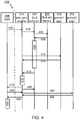
- FIG. 4 shows a state diagram of elements involved in performing the method for rendering a portal page.
- FIG. 5 shows an embodiment of a system for a rendering of a portal page.
- FIG. 6 shows an embodiment of a computing system including elements for performing the method for rendering a portal page.
- This disclosure relates generally to a rendering of a portal page.
- the disclosure further relates to a system for rendering of a portal page, a computing system, a data processing program, and a computer program product.
- the threshold value may be defined according to time-based values, SLA policies, individually definable rules, etc.
- SLAs may be definable per accessed web-page, widget, portlet, or any other information object identifiable by a key, e.g., an URL (universal resource locator).
- URL universal resource locator
- a ‘web portal page’ or simply ‘portal page’ may denote an access tool to access different kind of information and applications via a client system from network resources.
- a tool to display a portal page may be a web browser.
- a portal may also be embedded into other applications.
- request may denote a request for information, typically identified by a ‘link’ on a portal page.
- a request may be initiated by a ‘click’ on a displayed symbol associated with the ‘link’.
- web portal engine may denote a server-side application adapted for aggregation and potentially also rendering information collected or aggregated from different sources according to an incoming request from a web client.
- aggregation and rendering may denote a process of collecting information from network resources as well as organizing the information objects and/or fragments according to a configuration reflecting display screen characteristics.
- performance parameter may denote a parameter that may be instrumental in controlling SLAs. If a measured value of a value corresponding to the performance parameter may reach or exceed a certain pre-defined value, it may be concluded that a rule may have been broken or violated.
- intermediate result may denote an aggregation and rendering result that may not be complete according to an earlier request.
- the result may be seen as incomplete, but may be completed at a later point in time and/or at a different place.
- client-side activities may denote activities that may be performed on a client in a client server network environment.
- server-side may denote activities that may be performed on a server in a client server network environment.
- placeholder may denote a symbol in a mark-up language that may be replaced by the mark-up language code at a later point in time or at a different computing unit.
- microformat may denote a language construct of a mark-up language, e.g., XML (Extensible Mark-up Language).
- a microformat may be implemented as an extension to XML to convey metadata and displayable data from a server to a client system.
- XML Extensible Mark-up Language
- a microformat may bridge this gap by attaching semantics.
- the use, adoption and processing of microformats may enable, e.g., data items to be indexed, searched for, saved, cross-referenced or structured, so that information can be reused or combined.
- class of portal pages may denote a group of portal pages that have a common element, e.g., have the same origin or have parts of a URL, e.g., the beginning in common.
- web portal theme may denote a design of the web-page. It may be in such a way to coordinate all the elements that go into making the web-page so that they complement one another and reinforce a site's subject matter.
- a web-page theme works well, it may present a consistent aesthetic view to a viewer, keeping his interest and may give him a clear impression about the website's contents.
- downloading a web site template it may usually be built around a certain theme or web site purpose.
- portlet may denote pluggable user interface software components that are managed and displayed in a web portal. Portlets may produce fragments of mark-up code that are aggregated into a portal. Typically, following a desktop metaphor, a portal page is displayed as a collection of non-overlapping portlet windows, where each portlet window displays a portlet. Hence, a portlet (or collection of portlets) resembles a web-based application that is hosted in a portal.
- widget or ‘software widget’ may denote a generic type of software application comprising portable code intended for one or more different software platforms.
- the term often implies that either the application, user interface, or both, are ‘light-weight’, meaning relatively simple and easy to use, as exemplified by a desk accessory or applet, as opposed to a more complete software package such as a spreadsheet or word processor.
- the proposed method(s) of rendering of a portal page may offer a couple of advantages:
- portal administrators no longer have to decide upfront for CSA or SSA. Both, aggregation and rendering modes may be performed in parallel in the interest of an optimized performance of information and service delivery in a web portal.
- the method for rendering a portal page may operate according to pre-defined SLA and performance target.
- the server based on a request by the client, the server begins composing a web portal page in response. The server may continue until a violation of a rule may be imminent. Once the server may determine a potential violation, the processing of the request is interrupted on the server-side.
- the response mark-up that may have been created thus far may still lack the output of applications such as the web portal theme, portlets, widgets, and so forth.
- the server may augment the response mark-up with client-side code, e.g., JavaScript code to reload the missing pieces.
- client-side code e.g., JavaScript code
- the preliminary or incomplete response may be delivered to the client.
- the client may start rendering the web portal page and the user may perceive the web portal as one that operates according to the performance targets or SLAs. While the user may view the page and may process the displayed information, the client-side aggregator may continue to complement the page with the mark-up fragments that the server had to skip from the server-side aggregation process. Overall, this may shorten the time between a ‘click’ for information request on the client side and the perceived displaying of the web portal page as requested.
- page based SLA rules free the portal administrator to care about time consuming details but concentrate on the important tasks such as overall performance goals.
- the combination of SLA policies and the proposed hybrid aggregation and rendering mode may reduce the number of requests to the web portal server and ensuring overall performance targets.
- the measured performance parameter value and the threshold value may be time-based values.
- Alternative implementations may imply alternative parameters.
- having a time-based value may be a feasible way to control SLAs and performance targets relatively easy.
- the intermediate result may comprise already aggregated and rendered portions of the portal page.
- the intermediate result may also comprise at least one placeholder for non-aggregated and/or non-rendered elements of the portal page, wherein the placeholder is interpretable by a client-side aggregator and rendering engine. This may enable a partial processing of aggregation and rendering at different places, e.g., server-side and client-side processing for a complete aggregation and rendering in response to a request.
- the placeholder may be based on mark-up language elements representing a microformat or microformats comprising at least an information object out of the group consisting of: a location of missing mark-up fragments in the portal page, and an identification of an application that needs to contribute its content for aggregation and rendering on the client side.
- mark-up language elements representing a microformat or microformats comprising at least an information object out of the group consisting of: a location of missing mark-up fragments in the portal page, and an identification of an application that needs to contribute its content for aggregation and rendering on the client side.
- all information required for a final aggregation and rendering of a requested portal page may be available.
- the remaining client-side aggregation may relate to not only one missing information object but to a plurality.
- the interrupting may additionally be based on a pre-defined transmission parameter value such that the interrupting occurs already after a value equivalent to the threshold value minus the pre-defined transmission parameter value, wherein a performance parameter value count starts with a beginning of the server-side aggregation and rendering of the requested portal page.
- This procedure and calculation method may imply that seen from a client perspective, time-based performance target in displaying a portal page may be met, even if a transmission time has to be reflected.
- the transmission parameter value may also be calculated dynamically, such that for a low transmission time the server-side web portal engine may have more time for aggregation and rendering compared to a long transmission time. This way, differences for different client network connections may be neutralized and the maximum time may be used on the server-side for aggregation and rendering using a typically higher computing performance of a server compared to a client.
- the threshold value may be retrievable from a policy repository using an identifier of a portal page as access key. This means that the threshold value may be definable per URL. Certain URL may be given priority in displaying in the portal page compared to information related to another URL. Thus, performance targets and SLAs may be defined based on the origin, the type of information provided etc., of the requested information.
- several threshold values may belong to a class of portal pages.
- a class of portal pages may have a common characteristic.
- One characteristic may be an identical part of the URL, e.g., the beginning of the URL. This may, e.g., be a top level domain name representative of a company name. For an administrator this opens a wide range of performance optimization and management options.
- the several threshold values may be identical in value such hat only one value per class is required.
- the server-side aggregation and rendering may include at least one out of the group consisting of a web portal theme, a portlet, and a widget.
- all other information objects and metadata may also be aggregated and rendered on the server-side.
- this architecture element allows also a complete aggregation and rendering on the server-side if the threshold may not be reached and all aggregation and rendering may be performed on the server-side.
- embodiments may take the form of a computer program product, accessible from a computer-usable or computer-readable medium providing program code for use, by or in connection with a computer or any instruction execution system.
- a computer-usable or computer-readable medium may be any apparatus that may contain means for storing, communicating, propagating or transporting the program for use, by or in a connection with the instruction execution system, apparatus, or device.
- the medium may be an electronic, magnetic, optical, electromagnetic, infrared or a semi-conductor system for a propagation medium.
- Examples of a computer-readable medium may include a semi-conductor or solid state memory, magnetic tape, a removable computer diskette, a random access memory (RAM), a read-only memory (ROM), a rigid magnetic disk and an optical disk.
- Current examples of optical disks include compact disk-read only memory (CD-ROM), compact disk-read/write (CD-R/W), DVD and Blu-Ray-Disk.
- FIG. 1 shows a block diagram of an embodiment of the inventive method 100 for rendering a portal page.
- the portal page may be displayable on a client system.
- the method may comprise receiving, 102 , a request for a portal page by a web portal engine and monitoring, 104 , server-side aggregation and rendering performance by the web portal engine.
- the method may further comprise comparing, 106 , a measured performance parameter value of the server-side aggregation and rendering against a pre-defined threshold value and interrupting, 108 , based on the comparison, the server-side aggregation and rendering once the threshold value is exceeded.
- the method may comprise preparing, 110 , an intermediate result of the portal page based on the server-side aggregation and rendering for sending, such that a client-side processing may complete, 112 , the interrupted aggregation and rendering of the portal page.
- a SSA and CSA can be operated in a hybrid mode.
- FIG. 2 shows a block diagram of a state-of-the-art client-side aggregation and rendering.
- a client-side aggregator 208 collaborates with a web portal engine 210 on the portal server-side, 204 .
- Each element to be displayed in the web portal 206 will be transferred individually from the web portal engine 210 to the web client-side aggregator 208 as indicated by reference numerals 230 , 232 , 234 , 238 .
- Each element to be displayed in the web portal 206 is shown with a different pattern.
- FIG. 3 shows an exemplary block diagram 300 of systems for performing the method for rendering a portal page. Only those figurative elements different to those figurative elements of FIG. 2 have different or new reference numerals. Because of a much lower amount of information request from the client-side aggregator and delivery of the number of information objects from the web portal engine 210 , much less arrows are shown between the client-side aggregator 208 and the web portal engine 210 . An almost complete aggregated and rendered part of a portal page 302 may be sent from the web portal engine 210 to the client-side aggregator 208 . In this case, it may comprise mark-up elements from web-page navigator 202 (two elements), widget 1 application 224 and portlet 1 application 226 , which may deliver information services.
- Only information object from portlet 2 application 228 may not be included in the partial complete portal page 302 .
- This partially completed web-page 302 may have been aggregated and rendered by the web portal engine 210 . Because of a defined SLA and after exceeding a threshold according to this SLA, the incomplete web-page 302 may be transferred to the client-side aggregator 208 to be displayed immediately. However, one or more information objects may still be missing. In this case, it is one information object or fragment 304 from portlet 2 application 228 .
- the client-side aggregator 208 may detect the missing information in the incomplete portal page 302 and may request the missing information object or mark-up from the web portal engine 210 as indicated by an arrow related to reference numeral 304 . In response to this request, the web portal engine may transmit the missing information from portlet 2 application 228 to the client-side aggregator 208 for rendering and displaying in the web portal 206 .
- FIG. 3 shows a policy enforcement engine 231 connected to the web portal engine 210 , and an SLA policy repository 233 connected to the policy enforcement engine 231 .
- An example of rules stored in the SLA policy repository 233 it may, e.g., be required that ‘page1’ identifiable by a specific address should be delivered in less than 1 second, ‘page2’ with the least possible delay, enforcing pure client-side rendering, and ‘page5’ should be delivered and displayed in less than 5 seconds. These times may also include transmission parameter value.
- FIG. 4 shows a state diagram 400 of elements involved in performing the method for rendering a portal page.
- the client side may be represented by a client-side aggregator 208 .
- Elements on the server-side comprise the web portal engine 210 , the SLA enforcement engine 230 , the SLA policy repository 233 , the portlet 1 application 226 and the portlet 2 application 228 .
- the web portal engine 210 the SLA enforcement engine 230 , the SLA policy repository 233 , the portlet 1 application 226 and the portlet 2 application 228 .
- the client-side aggregator 208 may request, 402 , e.g., web-page2 from the web portal engine 210 .
- This request may also be passed, 404 , to the SLA policy enforcement engine 231 .
- the SLA policy enforcement engine 231 requests, 406 , one or more policies or SLA rules from the SLA policy repository 233 .
- the SLA policy repository 233 responds, 408 , to this request 404 by providing a delivery time policy to the SLA policy enforcement engine 231 .
- the SLA policy enforcement engine 231 identifies one or more rules for requested web-page2 and may start monitoring, 410 , in particular monitoring of one or more threshold parameters and related threshold values that may have been delivered together with or as part of a delivery time policy from the SLA policy repository 233 .
- the web portal engine 210 may request, 412 , application mark-up information from portlet 1 application 226 .
- Portlet 1 application 226 may respond with a requested mark-up of portlet 1 application 226 .
- an imminent violation of a timing rule e.g., exceeding a time threshold may be detected by the SLA policy enforcement engine 231 . This may trigger, 414 , an interrupt to the web portal engine 210 .
- the web portal engine 210 may assemble, 416 , already aggregated information objects for requested web-page2.
- the web portal engine 210 may render the already received information from portlet 1 application and may prepare it for sending, 418 , to the client-side aggregator 208 for further client-side aggregation and rendering.
- This pre-aggregated and pre-rendered portal page may not include the also requested information of portlet 2 application 228 . Instead, a placeholder may be included in web-page2. This placeholder may make use of microformats as indicated above.
- the client-side aggregator 208 may detect this placeholder while sending the received incomplete web-page2 for displaying. While displaying the incomplete web-page2, the client-side aggregator 208 may request, 422 , the missing information objects via the web portal engine 210 from portlet 2 application 228 as indicated by arrow 424 .
- Portlet 2 application 228 may respond, 426 , with the required mark-ups and information objects, respectively to the web portal engine 210 .
- the web portal engine 210 may inform, 420 , in parallel in the usual way the SLA enforcement engine 231 .
- the web portal engine 210 may forward the received information and mark-up from portlet 2 application 228 and forward it, 428 , to the client-side aggregator 208 .
- the client-side aggregator 208 may then inject, 430 , the received information objects and mark-ups of portlet 2 application 228 into web-page2 for a complete displaying of the requested web-page2.
- fragment demonstrating an interrupted server-side aggregations the reader may be referred to following:
- FIG. 5 shows an embodiment of a system 500 for a rendering of a portal page.
- the portal page may be displayable on a client system.
- the system may comprise a web portal engine 210 adapted for receiving a request 402 for a portal page.
- the system may as well comprise a policy enforcement engine 231 which may comprise a monitoring unit 502 adapted for monitoring a server-side aggregation and rendering performance, a comparison unit 504 adapted for comparing a measured performance parameter value of the server-side aggregation and rendering against a pre-defined threshold value, and an interrupt unit 506 adapted for interrupting, based on a result of the comparison unit 504 , the server-side aggregation and rendering once the threshold value may be exceeded.
- a policy enforcement engine 231 which may comprise a monitoring unit 502 adapted for monitoring a server-side aggregation and rendering performance, a comparison unit 504 adapted for comparing a measured performance parameter value of the server-side aggregation and rendering against a pre-
- the enforcement engine 230 may comprise a preparation unit 508 adapted for preparing an intermediate result of the portal page based on the server-side aggregation and rendering for sending, in particular to the client-side aggregator (not shown) such that a client-side processing may complete the interrupted aggregation and rendering of the portal page. It may be noted that the preparation unit 508 or the complete enforcement engine 230 may be implemented as part of the web portal engine 210 .
- a computing system 600 may include one or more processor(s) 602 with one or more cores per processor, associated memory elements 604 , an internal storage device 606 (e.g., a hard disk, an optical drive such as a compact disk drive or digital video disk (DVD) drive, a flash memory stick, a solid-state disk, etc.), and numerous other elements and functionalities, typical of today's computers (not shown).
- processor(s) 602 with one or more cores per processor
- associated memory elements 604 e.g., a hard disk, an optical drive such as a compact disk drive or digital video disk (DVD) drive, a flash memory stick, a solid-state disk, etc.
- an internal storage device 606 e.g., a hard disk, an optical drive such as a compact disk drive or digital video disk (DVD) drive, a flash memory stick, a solid-state disk, etc.
- numerous other elements and functionalities typical of today's computers (not shown).
- the memory elements 604 may include a main memory, e.g., a random access memory (RAM), employed during actual execution of the program code, and a cache memory, which may provide temporary storage of at least some program code and/or data in order to reduce the number of times, code and/or data must be retrieved from a long-term storage medium or external bulk storage 616 for an execution.
- Elements inside the computer 600 may be linked together by means of a bus system 618 with corresponding adapters.
- system for rendering of a portal page comprising the web portal engine 210 , the policy enforcement engine 231 and the policy repository 233 may be attached to the bus system 618 . This may apply to a portal server.
- a similar hardware design may be implemented for the client. In this case, elements 210 , 230 , 232 may be replaced by the web client-side aggregator.
- the computing system 600 may also include input means, such as a keyboard 608 , a pointing device such as a mouse 610 , or a microphone (not shown). Alternatively, the computing system may be equipped with a touch sensitive screen as main input device. Furthermore, the computer 600 , may include output means, such as a monitor or screen 612 [e.g., a liquid crystal display (LCD), a plasma display, a light emitting diode display (LED), or cathode ray tube (CRT) monitor].
- the computer system 600 may be connected to a network (e.g., a local area network (LAN), a wide area network (WAN), such as the Internet or any other similar type of network, including wireless networks via a network interface connection 614 .
- LAN local area network
- WAN wide area network
- the Internet any other similar type of network, including wireless networks via a network interface connection 614 .
- the computer system 600 may include at least the minimal processing, input and/or output means, necessary to practice embodiments of the invention.
- aspects of the present disclosure may be embodied as a system, method or computer program product. Accordingly, aspects of the present disclosure may take the form of an entirely hardware embodiment, an entirely software embodiment (including firmware, resident software, micro-code, etc.) or an embodiment combining software and hardware aspects that may all generally be referred to herein as a ‘circuit,’ ‘module’ or ‘system.’ Furthermore, aspects of the present disclosure may take the form of a computer program product embodied in one or more computer readable medium(s) having computer readable program code embodied thereon.
- the computer readable medium may be a computer readable signal medium or a computer readable storage medium.
- a computer readable storage medium may be, for example, but not limited to, an electronic, magnetic, optical, electromagnetic, infrared, or semiconductor system, apparatus, or device, or any suitable combination of the foregoing.
- a computer readable storage medium may be any tangible medium that may contain, or store a program for use by or in connection with an instruction execution system, apparatus, or device.
- a computer readable signal medium may include a propagated data signal with computer readable program code embodied therein, for example, in baseband or as part of a carrier wave. Such a propagated signal may take any of a variety of forms, including, but not limited to, electro-magnetic, optical, or any suitable combination thereof.
- a computer readable signal medium may be any computer readable medium that is not a computer readable storage medium and that may communicate, propagate, or transport a program for use by or in connection with an instruction execution system, apparatus, or device.
- Program code embodied on a computer readable medium may be transmitted using any appropriate medium, including but not limited to wireless, wireline, optical fiber cable, RF, etc., or any suitable combination of the foregoing.
- Computer program code for carrying out operations for aspects of the present invention may be written in any combination of one or more programming languages, including an object oriented programming language such as Java, Smalltalk, C++ or the like and conventional procedural programming languages, such as the ‘C’ programming language or similar programming languages.
- the program code may execute entirely on the user's computer, partly on the user's computer, as a stand-alone software package, partly on the user's computer and partly on a remote computer or entirely on the remote computer or server.
- the remote computer may be connected to the user's computer through any type of network, including a local area network (LAN) or a wide area network (WAN), or the connection may be made to an external computer (for example, through the Internet using an Internet Service Provider).
- LAN local area network
- WAN wide area network
- Internet Service Provider for example, AT&T, MCI, Sprint, EarthLink, MSN, GTE, etc.
- These computer program instructions may also be stored in a computer readable medium that may direct a computer, other programmable data processing apparatus, or other devices to function in a particular manner, such that the instructions stored in the computer readable medium produce an article of manufacture including instructions, which implement the function/act specified in the flowchart and/or block diagram block or blocks.
- the computer program instructions may also be loaded onto a computer, other programmable data processing apparatus, or other devices to cause a series of operational steps to be performed on the computer, other programmable apparatus or other devices to produce a computer implemented process such that the instructions, which execute on the computer or other programmable apparatus provide processes for implementing the functions/acts specified in the flowchart and/or block diagram block or blocks.
- each block in the block diagrams may represent a module, segment, or portion of code, which comprises one or more executable instructions for implementing the specified logical function(s).
- the functions discussed hereinabove may occur out of the disclosed order. For example, two functions taught in succession may, in fact, be executed substantially concurrently, or the functions may sometimes be executed in the reverse order, depending upon the functionality involved.
- each block of the block diagrams, and combinations of blocks in the block diagrams may be implemented by special purpose hardware-based systems that perform the specified functions or acts, or combinations of special purpose hardware and computer instructions.
Landscapes
- Engineering & Computer Science (AREA)
- Theoretical Computer Science (AREA)
- Software Systems (AREA)
- General Engineering & Computer Science (AREA)
- General Physics & Mathematics (AREA)
- Physics & Mathematics (AREA)
- Databases & Information Systems (AREA)
- Health & Medical Sciences (AREA)
- General Health & Medical Sciences (AREA)
- Computational Linguistics (AREA)
- Audiology, Speech & Language Pathology (AREA)
- Artificial Intelligence (AREA)
- Human Computer Interaction (AREA)
- Data Mining & Analysis (AREA)
- Computer Security & Cryptography (AREA)
- Quality & Reliability (AREA)
- Computer Hardware Design (AREA)
- Information Transfer Between Computers (AREA)
Abstract
Description
| <html> |
| <body> |
| <div class=″application-container″ id=”container_one”> |
| <!-- microformat identifying a portlet application in the page |
| markup --> |
| <div class=″portlet-instance″ id=″Portlet1″> |
| <!-- markup that the portlet application “Portlet1” |
| contributes to the page --> |
| <p>This markup is generated by Portlet1</p> |
| </div> |
| </div> |
| <div class=″application-container″ id=”container_two”> |
| <!-- microformat signaling the client-side aggregator |
| that the portlet application “Portlet2” has to |
| be reloaded --> <div class=″portlet-instance- |
| deferred″ id=″Portlet2″/> |
| </div> |
| </body> |
| </html> |
Claims (20)
Priority Applications (1)
| Application Number | Priority Date | Filing Date | Title |
|---|---|---|---|
| US16/443,785 US11023263B2 (en) | 2012-10-30 | 2019-06-17 | Hybrid server-side and client-side portal aggregation and rendering |
Applications Claiming Priority (6)
| Application Number | Priority Date | Filing Date | Title |
|---|---|---|---|
| GB1219441 | 2012-10-30 | ||
| GB1219441.1A GB2507483A (en) | 2012-10-30 | 2012-10-30 | Hybrid server side and client side portal aggregation and rendering |
| GB1219441.1 | 2012-10-30 | ||
| US14/064,469 US9811351B2 (en) | 2012-10-30 | 2013-10-28 | Hybrid server-side and client-side portal aggregation and rendering |
| US15/803,856 US10324737B2 (en) | 2012-10-30 | 2017-11-06 | Hybrid server-side and client-side portal aggregation and rendering |
| US16/443,785 US11023263B2 (en) | 2012-10-30 | 2019-06-17 | Hybrid server-side and client-side portal aggregation and rendering |
Related Parent Applications (1)
| Application Number | Title | Priority Date | Filing Date |
|---|---|---|---|
| US15/803,856 Continuation US10324737B2 (en) | 2012-10-30 | 2017-11-06 | Hybrid server-side and client-side portal aggregation and rendering |
Publications (2)
| Publication Number | Publication Date |
|---|---|
| US20190303179A1 US20190303179A1 (en) | 2019-10-03 |
| US11023263B2 true US11023263B2 (en) | 2021-06-01 |
Family
ID=47358820
Family Applications (3)
| Application Number | Title | Priority Date | Filing Date |
|---|---|---|---|
| US14/064,469 Expired - Fee Related US9811351B2 (en) | 2012-10-30 | 2013-10-28 | Hybrid server-side and client-side portal aggregation and rendering |
| US15/803,856 Active US10324737B2 (en) | 2012-10-30 | 2017-11-06 | Hybrid server-side and client-side portal aggregation and rendering |
| US16/443,785 Expired - Fee Related US11023263B2 (en) | 2012-10-30 | 2019-06-17 | Hybrid server-side and client-side portal aggregation and rendering |
Family Applications Before (2)
| Application Number | Title | Priority Date | Filing Date |
|---|---|---|---|
| US14/064,469 Expired - Fee Related US9811351B2 (en) | 2012-10-30 | 2013-10-28 | Hybrid server-side and client-side portal aggregation and rendering |
| US15/803,856 Active US10324737B2 (en) | 2012-10-30 | 2017-11-06 | Hybrid server-side and client-side portal aggregation and rendering |
Country Status (2)
| Country | Link |
|---|---|
| US (3) | US9811351B2 (en) |
| GB (1) | GB2507483A (en) |
Families Citing this family (10)
| Publication number | Priority date | Publication date | Assignee | Title |
|---|---|---|---|---|
| GB2507483A (en) | 2012-10-30 | 2014-05-07 | Ibm | Hybrid server side and client side portal aggregation and rendering |
| US11907496B2 (en) * | 2013-02-08 | 2024-02-20 | cloudRIA, Inc. | Browser-based application management |
| US20150271044A1 (en) * | 2014-03-24 | 2015-09-24 | International Business Machines Corporation | Browser response optimization |
| US11188353B2 (en) * | 2018-07-12 | 2021-11-30 | Vmware, Inc. | Runtime extension system for bundled web application |
| CN110688282B (en) * | 2019-09-25 | 2023-01-24 | 北京博睿宏远数据科技股份有限公司 | Webpage performance data monitoring and monitoring task distribution method and device |
| CN111310088B (en) * | 2020-02-12 | 2023-07-04 | 北京字节跳动网络技术有限公司 | Page rendering method and device |
| CN111708600B (en) * | 2020-08-20 | 2021-06-11 | 腾讯科技(深圳)有限公司 | Page display method, device, equipment and computer readable storage medium |
| US11836212B2 (en) * | 2021-12-03 | 2023-12-05 | Atlassian Pty Ltd. | Systems and methods for rendering interactive web pages |
| CN114968528B (en) * | 2022-05-30 | 2024-11-22 | 淘宝(中国)软件有限公司 | Policy-based information processing method, electronic device, and storage medium |
| CN115801746B (en) * | 2022-12-05 | 2023-09-22 | 广州南方智能技术有限公司 | Distributed server rendering device and method |
Citations (20)
| Publication number | Priority date | Publication date | Assignee | Title |
|---|---|---|---|---|
| US20020038456A1 (en) | 2000-09-22 | 2002-03-28 | Hansen Michael W. | Method and system for the automatic production and distribution of media content using the internet |
| US20030187982A1 (en) | 2002-03-27 | 2003-10-02 | Patrick Petit | System and method for resource load balancing in a portal server |
| US20050015718A1 (en) | 2003-07-16 | 2005-01-20 | Sambhus Mihir Y. | Method and system for client aware content aggregation and rendering in a portal server |
| US20050187978A1 (en) | 2001-10-24 | 2005-08-25 | Bea Systems, Inc. | System and method for portal rendering |
| US20070061700A1 (en) | 2005-09-12 | 2007-03-15 | Microsoft Corporation | Initial server-side content rendering for client-script web pages |
| US20070083793A1 (en) | 2005-09-27 | 2007-04-12 | Bea Systems, Inc. | System and method for optimizing explorer for performance test |
| US20070192701A1 (en) | 2006-01-17 | 2007-08-16 | International Business Machines Corporation | Managing portal response times |
| US20080002677A1 (en) * | 2006-06-30 | 2008-01-03 | Bugenhagen Michael K | System and method for collecting network performance information |
| US20080049630A1 (en) * | 2006-08-22 | 2008-02-28 | Kozisek Steven E | System and method for monitoring and optimizing network performance to a wireless device |
| US20090265199A1 (en) | 2008-04-21 | 2009-10-22 | Computer Associates Think, Inc. | System and Method for Governance, Risk, and Compliance Management |
| US7624160B2 (en) | 2004-05-04 | 2009-11-24 | International Business Machines Corporation | Methods, systems, and computer program products for client side prefetching and caching of portlets |
| US20090298473A1 (en) | 2005-11-03 | 2009-12-03 | Kt Corporation | Open interface device and method |
| US20100070984A1 (en) | 2008-09-18 | 2010-03-18 | Philips & Lite-On Digital Solutions Corporation | Optical Disk Drive |
| WO2010141465A1 (en) | 2009-06-03 | 2010-12-09 | Codekko Software, Inc. | Web page optimization |
| US20110282905A1 (en) | 2006-06-27 | 2011-11-17 | Confluence Commons, Inc. | Aggregation of an aggregation |
| US8131706B2 (en) | 2006-11-20 | 2012-03-06 | International Business Machines Corporation | Dynamic binding of portlets |
| US8181112B2 (en) | 2004-05-21 | 2012-05-15 | Oracle International Corporation | Independent portlet rendering |
| US20120143942A1 (en) | 2010-12-07 | 2012-06-07 | Cisco Technology, Inc. | Delivering A Webpage To A Client |
| US8271949B2 (en) | 2008-07-31 | 2012-09-18 | International Business Machines Corporation | Self-healing factory processes in a software factory |
| US20140122999A1 (en) | 2012-10-30 | 2014-05-01 | International Business Machines Corporation | Hybrid server-side and client-side portal aggregation and rendering |
Family Cites Families (1)
| Publication number | Priority date | Publication date | Assignee | Title |
|---|---|---|---|---|
| US20100070981A1 (en) * | 2008-09-16 | 2010-03-18 | Computer Associates Think, Inc. | System and Method for Performing Complex Event Processing |
-
2012
- 2012-10-30 GB GB1219441.1A patent/GB2507483A/en not_active Withdrawn
-
2013
- 2013-10-28 US US14/064,469 patent/US9811351B2/en not_active Expired - Fee Related
-
2017
- 2017-11-06 US US15/803,856 patent/US10324737B2/en active Active
-
2019
- 2019-06-17 US US16/443,785 patent/US11023263B2/en not_active Expired - Fee Related
Patent Citations (24)
| Publication number | Priority date | Publication date | Assignee | Title |
|---|---|---|---|---|
| US20020038456A1 (en) | 2000-09-22 | 2002-03-28 | Hansen Michael W. | Method and system for the automatic production and distribution of media content using the internet |
| US20050187978A1 (en) | 2001-10-24 | 2005-08-25 | Bea Systems, Inc. | System and method for portal rendering |
| US20030187982A1 (en) | 2002-03-27 | 2003-10-02 | Patrick Petit | System and method for resource load balancing in a portal server |
| US20050015718A1 (en) | 2003-07-16 | 2005-01-20 | Sambhus Mihir Y. | Method and system for client aware content aggregation and rendering in a portal server |
| US7624160B2 (en) | 2004-05-04 | 2009-11-24 | International Business Machines Corporation | Methods, systems, and computer program products for client side prefetching and caching of portlets |
| US8181112B2 (en) | 2004-05-21 | 2012-05-15 | Oracle International Corporation | Independent portlet rendering |
| US20070061700A1 (en) | 2005-09-12 | 2007-03-15 | Microsoft Corporation | Initial server-side content rendering for client-script web pages |
| US20070083793A1 (en) | 2005-09-27 | 2007-04-12 | Bea Systems, Inc. | System and method for optimizing explorer for performance test |
| US20090298473A1 (en) | 2005-11-03 | 2009-12-03 | Kt Corporation | Open interface device and method |
| US20070192701A1 (en) | 2006-01-17 | 2007-08-16 | International Business Machines Corporation | Managing portal response times |
| US20110282905A1 (en) | 2006-06-27 | 2011-11-17 | Confluence Commons, Inc. | Aggregation of an aggregation |
| US20080002677A1 (en) * | 2006-06-30 | 2008-01-03 | Bugenhagen Michael K | System and method for collecting network performance information |
| US20080049630A1 (en) * | 2006-08-22 | 2008-02-28 | Kozisek Steven E | System and method for monitoring and optimizing network performance to a wireless device |
| US8131706B2 (en) | 2006-11-20 | 2012-03-06 | International Business Machines Corporation | Dynamic binding of portlets |
| US20090265199A1 (en) | 2008-04-21 | 2009-10-22 | Computer Associates Think, Inc. | System and Method for Governance, Risk, and Compliance Management |
| US8271949B2 (en) | 2008-07-31 | 2012-09-18 | International Business Machines Corporation | Self-healing factory processes in a software factory |
| US20100070984A1 (en) | 2008-09-18 | 2010-03-18 | Philips & Lite-On Digital Solutions Corporation | Optical Disk Drive |
| WO2010141465A1 (en) | 2009-06-03 | 2010-12-09 | Codekko Software, Inc. | Web page optimization |
| US20120143942A1 (en) | 2010-12-07 | 2012-06-07 | Cisco Technology, Inc. | Delivering A Webpage To A Client |
| US20140122999A1 (en) | 2012-10-30 | 2014-05-01 | International Business Machines Corporation | Hybrid server-side and client-side portal aggregation and rendering |
| GB2507483A (en) | 2012-10-30 | 2014-05-07 | Ibm | Hybrid server side and client side portal aggregation and rendering |
| US9811351B2 (en) | 2012-10-30 | 2017-11-07 | International Business Machines Corporation | Hybrid server-side and client-side portal aggregation and rendering |
| US20180060090A1 (en) | 2012-10-30 | 2018-03-01 | International Business Machines Corporation | Hybrid server-side and client-side portal aggregation and rendering |
| US10324737B2 (en) | 2012-10-30 | 2019-06-18 | International Business Machines Corporation | Hybrid server-side and client-side portal aggregation and rendering |
Non-Patent Citations (8)
| Title |
|---|
| GB Appl. No. 1219441.1, Search Report, dated Mar. 13, 2013, 1 pg. |
| U.S. Appl. No. 14/064,469, Final Office Action, dated Feb. 26, 2016, 12 pg. |
| U.S. Appl. No. 14/064,469, Final Office Action, dated Feb. 7, 2017, 14 pg. |
| U.S. Appl. No. 14/064,469, Non-Final Office Action, dated Dec. 1, 2016, 12 pg. |
| U.S. Appl. No. 14/064,469, Non-Final Office Action, dated Sep. 11, 2015, 10 pg. |
| U.S. Appl. No. 14/064,469, Notice of Allowance, dated Jun. 30, 2017, 9 pg. |
| U.S. Appl. No. 15/803,856, Non-Final Office Action, dated Jul. 25, 2018, 31 pg. |
| U.S. Appl. No. 15/803,856, Notice of Allowance, dated Feb. 6, 2019, 8 pg. |
Also Published As
| Publication number | Publication date |
|---|---|
| GB2507483A (en) | 2014-05-07 |
| US20180060090A1 (en) | 2018-03-01 |
| US20140122999A1 (en) | 2014-05-01 |
| US20190303179A1 (en) | 2019-10-03 |
| GB201219441D0 (en) | 2012-12-12 |
| US10324737B2 (en) | 2019-06-18 |
| US9811351B2 (en) | 2017-11-07 |
Similar Documents
| Publication | Publication Date | Title |
|---|---|---|
| US11023263B2 (en) | Hybrid server-side and client-side portal aggregation and rendering | |
| US8935755B1 (en) | Managing permissions and capabilities of web applications and browser extensions based on install location | |
| US11615161B2 (en) | System and method for dynamically enabling customized web content and applications | |
| CN103034517B (en) | Browser controls tool loads method and apparatus | |
| US10282399B2 (en) | System and method for web content presentation management | |
| US9436772B2 (en) | Appending a uniform resource identifier (URI) fragment identifier to a uniform resource locator (URL) | |
| US20150012815A1 (en) | Optimization schemes for controlling user interfaces through gesture or touch | |
| US9639626B2 (en) | Web-browser based state repository | |
| CN108334562A (en) | A kind of page display method and device | |
| US20210110101A1 (en) | Techniques for web framework detection | |
| US20150095840A1 (en) | Smart open popup window | |
| US20150195329A1 (en) | Access to network content | |
| US11113455B2 (en) | Web page rendering on wireless devices | |
| US20150205767A1 (en) | Link appearance formatting based on target content | |
| US20120216132A1 (en) | Embedding User Selected Content In A Web Browser Display | |
| US9979774B2 (en) | Debugging and formatting feeds for presentation based on elements and content items | |
| US9696887B2 (en) | Integrated user interface using linked data | |
| CN110622135A (en) | System and method for providing content items in situations involving sub-optimal network conditions | |
| AU2015231829A1 (en) | Asset collection service through capture of content | |
| US9940311B2 (en) | Optimized read/write access to a document object model | |
| US9811323B2 (en) | Methods, apparatus, systems and computer readable media for use in association with partitioning and/or rendering | |
| US20140181103A1 (en) | Modifying a user profile |
Legal Events
| Date | Code | Title | Description |
|---|---|---|---|
| AS | Assignment |
Owner name: INTERNATIONAL BUSINESS MACHINES CORPORATION, NEW Y Free format text: ASSIGNMENT OF ASSIGNORS INTEREST;ASSIGNOR:FALKENBERG, MATTHIAS;REEL/FRAME:049493/0426 Effective date: 20131028 Owner name: INTERNATIONAL BUSINESS MACHINES CORPORATION, NEW YORK Free format text: ASSIGNMENT OF ASSIGNORS INTEREST;ASSIGNOR:FALKENBERG, MATTHIAS;REEL/FRAME:049493/0426 Effective date: 20131028 |
|
| FEPP | Fee payment procedure |
Free format text: ENTITY STATUS SET TO UNDISCOUNTED (ORIGINAL EVENT CODE: BIG.); ENTITY STATUS OF PATENT OWNER: LARGE ENTITY |
|
| STPP | Information on status: patent application and granting procedure in general |
Free format text: DOCKETED NEW CASE - READY FOR EXAMINATION |
|
| STPP | Information on status: patent application and granting procedure in general |
Free format text: NOTICE OF ALLOWANCE MAILED -- APPLICATION RECEIVED IN OFFICE OF PUBLICATIONS |
|
| STPP | Information on status: patent application and granting procedure in general |
Free format text: PUBLICATIONS -- ISSUE FEE PAYMENT RECEIVED |
|
| STPP | Information on status: patent application and granting procedure in general |
Free format text: PUBLICATIONS -- ISSUE FEE PAYMENT VERIFIED |
|
| STCF | Information on status: patent grant |
Free format text: PATENTED CASE |
|
| FEPP | Fee payment procedure |
Free format text: MAINTENANCE FEE REMINDER MAILED (ORIGINAL EVENT CODE: REM.); ENTITY STATUS OF PATENT OWNER: LARGE ENTITY |
|
| LAPS | Lapse for failure to pay maintenance fees |
Free format text: PATENT EXPIRED FOR FAILURE TO PAY MAINTENANCE FEES (ORIGINAL EVENT CODE: EXP.); ENTITY STATUS OF PATENT OWNER: LARGE ENTITY |
|
| STCH | Information on status: patent discontinuation |
Free format text: PATENT EXPIRED DUE TO NONPAYMENT OF MAINTENANCE FEES UNDER 37 CFR 1.362 |
|
| FP | Lapsed due to failure to pay maintenance fee |
Effective date: 20250601 |