US11021501B2 - Creatine phosphate analog prodrugs, compositions and methods of use thereof - Google Patents
Creatine phosphate analog prodrugs, compositions and methods of use thereof Download PDFInfo
- Publication number
- US11021501B2 US11021501B2 US15/084,732 US201615084732A US11021501B2 US 11021501 B2 US11021501 B2 US 11021501B2 US 201615084732 A US201615084732 A US 201615084732A US 11021501 B2 US11021501 B2 US 11021501B2
- Authority
- US
- United States
- Prior art keywords
- substituted
- compound
- formula
- alkyl
- isopropyl
- Prior art date
- Legal status (The legal status is an assumption and is not a legal conclusion. Google has not performed a legal analysis and makes no representation as to the accuracy of the status listed.)
- Active
Links
- 0 *N1/C=C(/O)OP(=O)([Y])C/N=C\1N[1*].*N1/C=C(/O)OP(=O)([Y])CN/C1=N/[1*].*N1CC(=O)OP(=O)([Y])C/N=C\1N[1*].*N1CC(=O)OP(=O)([Y])CN/C1=N/[1*] Chemical compound *N1/C=C(/O)OP(=O)([Y])C/N=C\1N[1*].*N1/C=C(/O)OP(=O)([Y])CN/C1=N/[1*].*N1CC(=O)OP(=O)([Y])C/N=C\1N[1*].*N1CC(=O)OP(=O)([Y])CN/C1=N/[1*] 0.000 description 113
- ACOQMKXEOPGMHA-LAXDFTFDSA-N CC(C)(C)CO.O=P(Cl)(Cl)OC1=CC=CC=C1.[2H]C([2H])([2H])N(CC(=O)OC)C(=O)OC(C)(C)C.[2H]C([2H])([2H])N(CC(=O)OCC(C)(C)C)/C(N)=N/O.[2H]C([2H])([2H])N(CC(=O)OCC(C)(C)C)C1=NOP(=O)(OC2=CC=CC=C2)N1.[2H]C([2H])([2H])N(CC(=O)OCC(C)(C)C)[N+]#[C-].[2H]C([2H])([2H])NCC(=O)OCC(C)(C)C Chemical compound CC(C)(C)CO.O=P(Cl)(Cl)OC1=CC=CC=C1.[2H]C([2H])([2H])N(CC(=O)OC)C(=O)OC(C)(C)C.[2H]C([2H])([2H])N(CC(=O)OCC(C)(C)C)/C(N)=N/O.[2H]C([2H])([2H])N(CC(=O)OCC(C)(C)C)C1=NOP(=O)(OC2=CC=CC=C2)N1.[2H]C([2H])([2H])N(CC(=O)OCC(C)(C)C)[N+]#[C-].[2H]C([2H])([2H])NCC(=O)OCC(C)(C)C ACOQMKXEOPGMHA-LAXDFTFDSA-N 0.000 description 1
- XLIAYJIDNBQWON-UHFFFAOYSA-N CC1=NC=NC1.CC1=NN=CN1.CC1=NNC=N1 Chemical compound CC1=NC=NC1.CC1=NN=CN1.CC1=NNC=N1 XLIAYJIDNBQWON-UHFFFAOYSA-N 0.000 description 1
- HQOODOFTMHGEPV-UHFFFAOYSA-N CN(CC(=O)O)C(=N)CP(=O)(O)O Chemical compound CN(CC(=O)O)C(=N)CP(=O)(O)O HQOODOFTMHGEPV-UHFFFAOYSA-N 0.000 description 1
- CVSVTCORWBXHQV-UHFFFAOYSA-N CN(CC(=O)O)C(=N)N Chemical compound CN(CC(=O)O)C(=N)N CVSVTCORWBXHQV-UHFFFAOYSA-N 0.000 description 1
- PSYOMNXJDHMGLK-GBBUMBGJSA-N CS/C(C)=N/C(=O)OC(C)(C)C.O=P(Cl)(Cl)OC1=CC=CC=C1.[2H]C([2H])([2H])N(CC(=O)OCC(C)(C)C)/C(C)=N/C(=O)OC(C)(C)C.[2H]C([2H])([2H])N(CC(=O)OCC(C)(C)C)C(=N)N.[2H]C([2H])([2H])N(CC(=O)OCC(C)(C)C)C(=N)NP(=O)(NC(=N)N(CC(=O)OCC(C)(C)C)C([2H])([2H])[2H])OC1=CC=CC=C1.[2H]C([2H])([2H])NCC(=O)OCC(C)(C)C Chemical compound CS/C(C)=N/C(=O)OC(C)(C)C.O=P(Cl)(Cl)OC1=CC=CC=C1.[2H]C([2H])([2H])N(CC(=O)OCC(C)(C)C)/C(C)=N/C(=O)OC(C)(C)C.[2H]C([2H])([2H])N(CC(=O)OCC(C)(C)C)C(=N)N.[2H]C([2H])([2H])N(CC(=O)OCC(C)(C)C)C(=N)NP(=O)(NC(=N)N(CC(=O)OCC(C)(C)C)C([2H])([2H])[2H])OC1=CC=CC=C1.[2H]C([2H])([2H])NCC(=O)OCC(C)(C)C PSYOMNXJDHMGLK-GBBUMBGJSA-N 0.000 description 1
Images

Classifications
-
- C—CHEMISTRY; METALLURGY
- C07—ORGANIC CHEMISTRY
- C07F—ACYCLIC, CARBOCYCLIC OR HETEROCYCLIC COMPOUNDS CONTAINING ELEMENTS OTHER THAN CARBON, HYDROGEN, HALOGEN, OXYGEN, NITROGEN, SULFUR, SELENIUM OR TELLURIUM
- C07F9/00—Compounds containing elements of Groups 5 or 15 of the Periodic Table
- C07F9/02—Phosphorus compounds
- C07F9/547—Heterocyclic compounds, e.g. containing phosphorus as a ring hetero atom
- C07F9/6564—Heterocyclic compounds, e.g. containing phosphorus as a ring hetero atom having phosphorus atoms, with or without nitrogen, oxygen, sulfur, selenium or tellurium atoms, as ring hetero atoms
- C07F9/6581—Heterocyclic compounds, e.g. containing phosphorus as a ring hetero atom having phosphorus atoms, with or without nitrogen, oxygen, sulfur, selenium or tellurium atoms, as ring hetero atoms having phosphorus and nitrogen atoms with or without oxygen or sulfur atoms, as ring hetero atoms
- C07F9/6584—Heterocyclic compounds, e.g. containing phosphorus as a ring hetero atom having phosphorus atoms, with or without nitrogen, oxygen, sulfur, selenium or tellurium atoms, as ring hetero atoms having phosphorus and nitrogen atoms with or without oxygen or sulfur atoms, as ring hetero atoms having one phosphorus atom as ring hetero atom
- C07F9/65842—Cyclic amide derivatives of acids of phosphorus, in which one nitrogen atom belongs to the ring
- C07F9/65844—Cyclic amide derivatives of acids of phosphorus, in which one nitrogen atom belongs to the ring the phosphorus atom being part of a five-membered ring which may be condensed with another ring system
-
- C—CHEMISTRY; METALLURGY
- C07—ORGANIC CHEMISTRY
- C07F—ACYCLIC, CARBOCYCLIC OR HETEROCYCLIC COMPOUNDS CONTAINING ELEMENTS OTHER THAN CARBON, HYDROGEN, HALOGEN, OXYGEN, NITROGEN, SULFUR, SELENIUM OR TELLURIUM
- C07F9/00—Compounds containing elements of Groups 5 or 15 of the Periodic Table
- C07F9/02—Phosphorus compounds
- C07F9/06—Phosphorus compounds without P—C bonds
- C07F9/22—Amides of acids of phosphorus
- C07F9/222—Amides of phosphoric acids
-
- A—HUMAN NECESSITIES
- A61—MEDICAL OR VETERINARY SCIENCE; HYGIENE
- A61P—SPECIFIC THERAPEUTIC ACTIVITY OF CHEMICAL COMPOUNDS OR MEDICINAL PREPARATIONS
- A61P21/00—Drugs for disorders of the muscular or neuromuscular system
-
- A—HUMAN NECESSITIES
- A61—MEDICAL OR VETERINARY SCIENCE; HYGIENE
- A61P—SPECIFIC THERAPEUTIC ACTIVITY OF CHEMICAL COMPOUNDS OR MEDICINAL PREPARATIONS
- A61P25/00—Drugs for disorders of the nervous system
-
- C—CHEMISTRY; METALLURGY
- C07—ORGANIC CHEMISTRY
- C07B—GENERAL METHODS OF ORGANIC CHEMISTRY; APPARATUS THEREFOR
- C07B59/00—Introduction of isotopes of elements into organic compounds ; Labelled organic compounds per se
- C07B59/004—Acyclic, carbocyclic or heterocyclic compounds containing elements other than carbon, hydrogen, halogen, oxygen, nitrogen, sulfur, selenium or tellurium
-
- C—CHEMISTRY; METALLURGY
- C07—ORGANIC CHEMISTRY
- C07F—ACYCLIC, CARBOCYCLIC OR HETEROCYCLIC COMPOUNDS CONTAINING ELEMENTS OTHER THAN CARBON, HYDROGEN, HALOGEN, OXYGEN, NITROGEN, SULFUR, SELENIUM OR TELLURIUM
- C07F9/00—Compounds containing elements of Groups 5 or 15 of the Periodic Table
- C07F9/02—Phosphorus compounds
- C07F9/06—Phosphorus compounds without P—C bonds
- C07F9/22—Amides of acids of phosphorus
- C07F9/24—Esteramides
- C07F9/2454—Esteramides the amide moiety containing a substituent or a structure which is considered as characteristic
-
- C—CHEMISTRY; METALLURGY
- C07—ORGANIC CHEMISTRY
- C07F—ACYCLIC, CARBOCYCLIC OR HETEROCYCLIC COMPOUNDS CONTAINING ELEMENTS OTHER THAN CARBON, HYDROGEN, HALOGEN, OXYGEN, NITROGEN, SULFUR, SELENIUM OR TELLURIUM
- C07F9/00—Compounds containing elements of Groups 5 or 15 of the Periodic Table
- C07F9/02—Phosphorus compounds
- C07F9/547—Heterocyclic compounds, e.g. containing phosphorus as a ring hetero atom
- C07F9/6564—Heterocyclic compounds, e.g. containing phosphorus as a ring hetero atom having phosphorus atoms, with or without nitrogen, oxygen, sulfur, selenium or tellurium atoms, as ring hetero atoms
- C07F9/6581—Heterocyclic compounds, e.g. containing phosphorus as a ring hetero atom having phosphorus atoms, with or without nitrogen, oxygen, sulfur, selenium or tellurium atoms, as ring hetero atoms having phosphorus and nitrogen atoms with or without oxygen or sulfur atoms, as ring hetero atoms
- C07F9/6584—Heterocyclic compounds, e.g. containing phosphorus as a ring hetero atom having phosphorus atoms, with or without nitrogen, oxygen, sulfur, selenium or tellurium atoms, as ring hetero atoms having phosphorus and nitrogen atoms with or without oxygen or sulfur atoms, as ring hetero atoms having one phosphorus atom as ring hetero atom
- C07F9/65842—Cyclic amide derivatives of acids of phosphorus, in which one nitrogen atom belongs to the ring
-
- C—CHEMISTRY; METALLURGY
- C07—ORGANIC CHEMISTRY
- C07F—ACYCLIC, CARBOCYCLIC OR HETEROCYCLIC COMPOUNDS CONTAINING ELEMENTS OTHER THAN CARBON, HYDROGEN, HALOGEN, OXYGEN, NITROGEN, SULFUR, SELENIUM OR TELLURIUM
- C07F9/00—Compounds containing elements of Groups 5 or 15 of the Periodic Table
- C07F9/02—Phosphorus compounds
- C07F9/547—Heterocyclic compounds, e.g. containing phosphorus as a ring hetero atom
- C07F9/6564—Heterocyclic compounds, e.g. containing phosphorus as a ring hetero atom having phosphorus atoms, with or without nitrogen, oxygen, sulfur, selenium or tellurium atoms, as ring hetero atoms
- C07F9/6581—Heterocyclic compounds, e.g. containing phosphorus as a ring hetero atom having phosphorus atoms, with or without nitrogen, oxygen, sulfur, selenium or tellurium atoms, as ring hetero atoms having phosphorus and nitrogen atoms with or without oxygen or sulfur atoms, as ring hetero atoms
- C07F9/6584—Heterocyclic compounds, e.g. containing phosphorus as a ring hetero atom having phosphorus atoms, with or without nitrogen, oxygen, sulfur, selenium or tellurium atoms, as ring hetero atoms having phosphorus and nitrogen atoms with or without oxygen or sulfur atoms, as ring hetero atoms having one phosphorus atom as ring hetero atom
- C07F9/65848—Cyclic amide derivatives of acids of phosphorus, in which two nitrogen atoms belong to the ring
-
- C—CHEMISTRY; METALLURGY
- C07—ORGANIC CHEMISTRY
- C07B—GENERAL METHODS OF ORGANIC CHEMISTRY; APPARATUS THEREFOR
- C07B2200/00—Indexing scheme relating to specific properties of organic compounds
- C07B2200/05—Isotopically modified compounds, e.g. labelled
Definitions
- the invention describes membrane permeable creatine phosphate analog prodrugs, pharmaceutical compositions comprising membrane permeable creatine phosphate analog prodrugs, and methods of treating diseases, such as, for example, ischemia, heart failure, neurodegenerative disorders and genetic disorders affecting the creatine kinase system comprising administering creatine phosphate analog prodrugs or pharmaceutical compositions thereof.
- diseases such as, for example, ischemia, heart failure, neurodegenerative disorders and genetic disorders affecting the creatine kinase system comprising administering creatine phosphate analog prodrugs or pharmaceutical compositions thereof.
- the invention describes treating a genetic disease affecting the creatine kinase system, such as, for example, a creatine transporter disorder or a creatine synthesis disorder comprising administering creatine phosphate analog prodrugs or pharmaceutical compositions thereof.
- Creatine plays an important part in cellular energy metabolism, constituting as high-energy phosphocreatine a significant muscular energy reserve in addition to adenosine triphosphate (ATP).
- ATP adenosine triphosphate
- Creatine plays an important part in cellular energy metabolism, constituting as high-energy phosphocreatine a significant muscular energy reserve in addition to adenosine triphosphate (ATP).
- ATP can transfer a phosphate group onto creatine, so forming phosphocreatine, which is then in direct equilibrium with ATP.
- Phosphocreatine is available for this purpose during the first seconds of maximum muscle load; this substance is capable in a very rapid reaction of transferring a phosphate group onto adenosine diphosphate by the enzyme creatine kinase, so reforming ATP.
- the creatine kinase system has a dual role in intracellular energy metabolism-functioning as an energy buffer to restore depleted ATP levels at sites of high ATP hydrolysis, and to transferring energy in the form of phosphocreatine from the mitochondria to other parts of the cell by a process involving intermediate energy carriers, several enzymatic reactions, and diffusion through various intracellular structures.
- Neurodegenerative diseases such as Parkinson's disease, Alzheimer's disease, and Huntington's disease are associated with impaired energy metabolism, and strategies for improving ATP metabolism could potentially minimize loss of neurons and thereby improve the prognosis of patients with these diseases.
- impaired energy metabolism is an important factor in muscle fatigue and limits physical endurance. Therefore, a method of preventing or reversing ATP depletion in ischemic or metabolically active tissues is likely to have broad clinical utility in a wide range of indications.
- creatine phosphate sources that can regenerate ATP when intracellular levels of ATP fall.
- the level of creatine phosphate in a cell is an important predictor of resistance to ischemic insult, and remaining stores of creatine phosphate are correlated with the extent of tissue damage.
- Studies have documented the importance of creatine phosphate levels in cardiac and brain ischemia, neuronal degeneration, organ transplant viability, and muscle fatigue (see, e.g., Wyss and Kaddurah-Daouk, Physiological Reviews 2000, 80(3), 1107-1213, which is incorporated by reference herein in its entirety).
- 2004/0054006 transmissible spongiform encephalopathies
- Kaddurah-Daouk et al. U.S. Application Publication Nos. 2004/0102419, 2004/0106680, and 2002/0161049, and U.S. Pat. No. 6,706,764 (diseases of the central nervous system)
- Lambert et al. Adv Phys Med Rehab, 2003, 84(8), 1206-1210 (multiple sclerosis).
- Creatine phosphate (2 gm/day) given to athletes during strenuous endurance training has allowed the athletes to train longer with less muscle stiffness. Because creatine phosphate is readily metabolized when administered orally it must be administered intramuscularly or intravenously to be effective. Creatine easily crosses the blood-brain barrier and brain creatine levels can be increased via oral administration (Dechent et al., Am J Physiol 1999, 277, R698-704). Prolonged creatine supplementation can elevate the cellular pools of creatine phosphate and increase resistance to tissue ischemia and muscle fatigue.
- creatine supplementation typically takes weeks to increase creatine phosphate levels, and the overall increase is generally fairly small ( ⁇ 50%).
- human studies show that in healthy volunteers cerebral creatine phosphate can be increased only by about 10% by oral creatine administration (Dechent et al., Am J Physiol 1999, 277, R698-R704).
- increases in tissue creatine phosphate levels following oral creatine supplementation are long-lasting (>14 days), suggesting that strategies that increase creatine phosphate could have long lasting beneficial effects and would be effective with infrequent dosing.
- acute application of creatine is not effective in restoring tissue ATP levels, and therefore may have limited value in emergency care situations.
- creatine transporter due to genetic mutation of the SLC6A8 gene have extremely low brain creatine-phosphocreatine levels, as well as low levels in muscle, resulting in severe neurological and developmental deficits as well as muscle hypotonia.
- Administration of creatine or creatine phosphate is ineffective in treating patients with creatine transporter deficiency, as these highly charged molecules cannot penetrate cell membranes and in particular the tight junctions of the blood-brain barrier by passive diffusion.
- Application of creatine phosphate to cells does not raise intracellular creatine phosphate, since due to its high polarity (hydrophilicity), creatine phosphate is not taken up into cells and does not readily cross barrier tissues such as the blood-brain-barrier.
- Creatine phosphate is also rapidly metabolized in biological fluids. Conjugating creatine phosphate with a protein moiety has been proposed as a strategy for enhancing translocation through barrier tissue (see, e.g., Kaddurah-Daouk et al., U.S. Application Publication No. 2004-0126366). Thus, although administration of creatine phosphate may have some therapeutic usefulness, a modified creatine phosphate molecule that is more stable and is more permeable to barrier tissues and cellular membranes would have enhanced therapeutic value
- Creatine phosphate analog prodrugs of the invention are designed to be stable in biological fluids, to enter cells by either passive diffusion or active transport, and to release creatine into the cellular cytoplasm. Such prodrugs can also cross important barrier tissues such as the intestinal mucosa, the blood-brain barrier, and the blood-placental barrier. Because of the ability to pass through biological membranes, creatine phosphate analog prodrugs can restore and maintain energy homeostasis in ATP depleted cells via the creatine kinase system, and rapidly restore ATP levels to protect tissues from further ischemic stress.
- Creatine phosphate analog prodrugs having a higher free energy or lower affinity for creatine kinase, and which can regenerate ATP under more severe conditions of energy depletion are also disclosed. Creatine phosphate analog prodrugs of the invention can also be used to deliver sustained systemic concentrations of creatine. The invention is directed to these, as well as other, important ends.
- the present invention relates to membrane permeable creatine phosphate analog prodrugs, pharmaceutical compositions comprising the membrane permeable creatine phosphate analog prodrugs, and methods of using membrane permeable creatine phosphate analog prodrugs, and pharmaceutical compositions thereof.
- the invention describes treating a genetic disease affecting the creatine kinase system, such as, for example, a creatine transporter disorder or a creatine synthesis disorder comprising administering creatine phosphate analog prodrugs or pharmaceutical compositions thereof.
- the invention describes compounds of Formula (I) or a pharmaceutically acceptable salt, solvate, tautomer or stereoisomer thereof:
- R is —CH 3 or —CD 3 ;
- R 1 is hydrogen, —OR 2 , —C(O)OR 2 , —C(O)R 2 , —C(O)OCH(CH 3 )OC(O)(CH 2 ) m CH(R 11 )NH 2 , —C(O)OCH(CH 3 )OC(O)(CH 2 ) m CH(R 11 )N(H)C(O)(CH 2 ) m CH(R 11 )NH 2 , —CH(CH 3 )O—C(O)(CH 2 ) m CH(R 11 )N(H)C(O)(CH 2 ) m CH(R 12 )N(H)C(O)(CH 2 ) m CH(R 13 )NH 2 , —COC(CH 3 ) 2 CH 2 R 19 , —COCH 2 CH 2 R 19 ,
- n is an integer from 1 to 2;
- n is an integer from 0 to 1;
- each R 11 , R 12 and R 13 is independently an amino acid side chain
- R 19 is hydrogen, —C 1-8 alkyl, or —C 1-6 alkyl substituted with a hydroxyl, carboxyl, or primary amine group;
- each R 2 is independently hydrogen, C 1-12 alkyl, substituted C 1-12 alkyl, C 1-12 heteroalkyl, substituted C 1-12 heteroalkyl, C 3-12 cycloalkyl, substituted C 3-12 cycloalkyl, C 4-20 cycloalkylalkyl, substituted C 4-20 cycloalkylalkyl, C 4-20 heterocycloalkylalkyl, substituted C 4-20 heterocycloalkylalkyl, C 5-12 aryl, substituted C 5-12 aryl, C 5-12 heteroaryl, substituted C 5-12 heteroaryl, C 6-20 arylalkyl, substituted C 6-20 arylalkyl, C 6-20 heteroarylalkyl or substituted C 6-20 heteroarylalkyl;
- each R 3 and R 4 is independently hydrogen, C 1-12 alkyl or substituted C 1-12 alkyl;
- R 23 is hydrogen, C 1-12 alkyl, substituted C 1-12 alkyl, C 5-12 cycloalkyl, substituted C 5-12 cycloalkyl, C 5-12 aryl, and C 5-12 substituted aryl, —C(O)—OR 22 or —C(O)—R 22 ;
- R 22 is C 1-12 alkyl, substituted C 1-12 alkyl, C 1-12 heteroalkyl, substituted C 1-12 heteroalkyl, C 3-12 cycloalkyl, substituted C 3-12 cycloalkyl, C 4-20 cycloalkylalkyl, substituted C 4-20 cycloalkylalkyl, C 4-20 heterocycloalkylalkyl, substituted C 4-20 heterocycloalkylalkyl, C 5-12 aryl, substituted C 5-12 aryl, C 5-12 heteroaryl, substituted C 5-12 heteroaryl, C 6-20 arylalkyl, substituted C 6-20 arylalkyl, C 6-20 heteroarylalkyl or substituted C 6-20 heteroarylalkyl;
- R 48 is hydrogen, C 1-12 alkyl, substituted C 1-12 alkyl, C 5-12 aryl, substituted C 5-12 aryl, C 3-12 cycloalkyl or substituted C 3-12 cycloalkyl;
- Y is —NHCH(R 11 )C(O)OR 20 , —OR 25 ,
- X is O or S
- each R 5 and R 6 is independently hydrogen, C 1-12 alkyl, substituted C 1-12 alkyl, C 1-12 heteroalkyl, substituted C 1-12 heteroalkyl, C 3-12 cycloalkyl, substituted C 3-12 cycloalkyl, C 4-20 cycloalkylalkyl, substituted C 4-20 cycloalkylalkyl, C 4-20 heterocycloalkylalkyl, substituted C 4-20 heterocycloalkylalkyl, C 5-12 aryl, substituted C 5-12 aryl, C 5-12 heteroaryl, substituted C 5-12 heteroaryl, C 6-20 arylalkyl, substituted C 6-20 arylalkyl, C 6-20 heteroarylalkyl or substituted C 6-20 heteroarylalkyl;
- R 9 is hydrogen, C 1-12 alkyl, substituted C 1-12 alkyl, C 1-12 heteroalkyl, substituted C 1-12 heteroalkyl, C 3-12 cycloalkyl, substituted C 3-12 cycloalkyl, C 4-20 cycloalkylalkyl, substituted C 4-20 cycloalkylalkyl, C 4-20 heterocycloalkylalkyl, substituted C 4-20 heterocycloalkylalkyl, C 5-12 aryl, substituted C 5-12 aryl, C 5-12 heteroaryl, substituted C 5-12 heteroaryl, C 6-20 arylalkyl, substituted C 6-20 arylalkyl, C 6-20 heteroarylalkyl, substituted C 6-20 heteroarylalkyl, —C(O)R 5 , C(O)OR 5 , C(O)(NR 3 R 4 ), —C(R 3 R 4 )—C(O)OR 22 , C(R 3 R 4 )—(O)C
- R 25 is C 1-12 alkyl, substituted C 1-12 alkyl, C 1-12 heteroalkyl, substituted C 1-12 heteroalkyl, C 3-12 cycloalkyl, substituted C 3-12 cycloalkyl, C 4-20 cycloalkylalkyl, substituted C 4-20 cycloalkylalkyl, C 4-20 heterocycloalkylalkyl, substituted C 4-20 heterocycloalkylalkyl, C 5-12 aryl, substituted C 5-12 aryl, C 5-12 heteroaryl, substituted C 5-12 heteroaryl, C 6-20 arylalkyl, substituted C 6-20 arylalkyl, C 6-20 heteroarylalkyl or substituted C 6-20 heteroarylalkyl.
- Another embodiment describes compounds of Formula (IA) or a pharmaceutically acceptable salt, solvate, tautomer or stereoisomer thereof:
- R is —CH 3 or —CD 3 ;
- Y is —NHCH(R 11 )C(O)OR 20 , —OR 25 ,
- X is O or S
- each R 3 and R 4 is independently hydrogen, C 1-12 alkyl or substituted C 1-12 alkyl;
- each R 5 and R 6 is independently hydrogen, C 1-12 alkyl, substituted C 1-12 alkyl, C 1-12 heteroalkyl, substituted C 1-12 heteroalkyl, C 3-12 cycloalkyl, substituted C 3-12 cycloalkyl, C 4-20 cycloalkylalkyl, substituted C 4-20 cycloalkylalkyl, C 4-20 heterocycloalkylalkyl, substituted C 4-20 heterocycloalkylalkyl, C 5-12 aryl, substituted C 5-12 aryl, C 5-12 heteroaryl, substituted C 5-12 heteroaryl, C 6-20 arylalkyl, substituted C 6-20 arylalkyl, C 6-20 heteroarylalkyl or substituted C 6-20 heteroarylalkyl;
- R 25 is C 1-12 alkyl, substituted C 1-12 alkyl, C 1-12 heteroalkyl, substituted C 1-12 heteroalkyl, C 3-12 cycloalkyl, substituted C 3-12 cycloalkyl, C 4-20 cycloalkylalkyl, substituted C 4-20 cycloalkylalkyl, C 4-20 heterocycloalkylalkyl, substituted C 4-20 heterocycloalkylalkyl, C 5-12 aryl, substituted C 5-12 aryl, C 5-12 heteroaryl, substituted C 5-12 heteroaryl, C 6-20 arylalkyl, substituted C 6-20 arylalkyl, C 6-20 heteroarylalkyl or substituted C 6-20 heteroarylalkyl;
- R 9 is hydrogen, C 1-12 alkyl, substituted C 1-12 alkyl, C 1-12 heteroalkyl, substituted C 1-12 heteroalkyl, C 3-12 cycloalkyl, substituted C 3-12 cycloalkyl, C 4-20 cycloalkylalkyl, substituted C 4-20 cycloalkylalkyl, C 4-20 heterocycloalkylalkyl, substituted C 4-20 heterocycloalkylalkyl, C 5-12 aryl, substituted C 5-12 aryl, C 5-12 heteroaryl, substituted C 5-12 heteroaryl, C 6-20 arylalkyl, substituted C 6-20 arylalkyl, C 6-20 heteroarylalkyl, substituted C 6-20 heteroarylalkyl, —C(O)R 5 , C(O)OR 5 , C(O)(NR 3 R 4 ), —C(R 3 R 4 )—C(O)OR 22 , C(R 3 R 4 )—(O)C
- R 11 is an amino acid side chain
- R 20 is hydrogen, C 1-12 alkyl, substituted C 1-12 alkyl, C 5-12 aryl, substituted C 5-12 aryl, C 3-12 cycloalkyl, substituted C 3-12 cycloalkyl,
- R 23 is hydrogen, C 1-12 alkyl, substituted C 1-12 alkyl, C 5-12 cycloalkyl, substituted C 5-12 cycloalkyl, C 5-12 aryl, and C 5-12 substituted aryl, —C(O)—OR 22 or —C(O)—R 22 ;
- R 22 is C 1-12 alkyl, substituted C 1-12 alkyl, C 1-12 heteroalkyl, substituted C 1-12 heteroalkyl, C 3-12 cycloalkyl, substituted C 3-12 cycloalkyl, C 4-20 cycloalkylalkyl, substituted C 4-20 cycloalkylalkyl, C 4-20 heterocycloalkylalkyl, substituted C 4-20 heterocycloalkylalkyl, C 5-12 aryl, substituted C 5-12 aryl, C 5-12 heteroaryl, substituted C 5-12 heteroaryl, C 6-20 arylalkyl, substituted C 6-20 arylalkyl, C 6-20 heteroarylalkyl or substituted C 6-20 heteroarylalkyl;
- R 1 is hydrogen, —OR 2 , —C(O)OR 2 , —C(O)R 2 , —C(O)OCH(CH 3 )OC(O)(CH 2 ) m CH(R 11 )NH 2 , —C(O)OCH(CH 3 )OC(O)(CH 2 ) m CH(R 11 )N(H)C(O)(CH 2 ) m CH(R 11 )NH 2 , —CH(CH 3 )O—C(O)(CH 2 ) m CH(R 11 )N(H)C(O)(CH 2 ) m CH(R 12 )N(H)C(O)(CH 2 ) m CH(R 13 )NH 2 , —COC(CH 3 ) 2 CH 2 R 19 , —COCH 2 CH 2 R 19 ,
- n is an integer from 1 to 2;
- n is an integer from 0 to 1;
- each R 11 , R 12 and R 13 is independently an amino acid side chain
- R 19 is hydrogen, —C 1-8 alkyl, or —C 1-6 alkyl substituted with a hydroxyl, carboxyl, or primary amine group;
- each R 2 is independently hydrogen, C 1-12 alkyl, substituted C 1-12 alkyl, C 1-12 heteroalkyl, substituted C 1-12 heteroalkyl, C 3-12 cycloalkyl, substituted C 3-12 cycloalkyl, C 4-20 cycloalkylalkyl, substituted C 4-20 cycloalkylalkyl, C 4-20 heterocycloalkylalkyl, substituted C 4-20 heterocycloalkylalkyl, C 5-12 aryl, substituted C 5-12 aryl, C 5-12 heteroaryl, substituted C 5-12 heteroaryl, C 6-20 arylalkyl, substituted C 6-20 arylalkyl, C 6-20 heteroarylalkyl or substituted C 6-20 heteroarylalkyl; and
- R 48 is hydrogen, C 1-12 alkyl, substituted C 1-12 alkyl, C 5-12 aryl, substituted C 5-12 aryl, C 3-12 cycloalkyl or substituted C 3-12 cycloalkyl.
- Another embodiment describes compounds of Formula (II) or a pharmaceutically acceptable salt, solvate, tautomer or stereoisomer thereof:
- R is —CH 3 or —CD 3 ;
- Y and Z are each independently —NHCH(R 11 )C(O)OR 20 , —OR 25 ,
- X is O or S
- each R 3 and R 4 is independently hydrogen, C 1-12 alkyl or substituted C 1-12 alkyl;
- each R 5 and R 6 is independently hydrogen, C 1-12 alkyl, substituted C 1-12 alkyl, C 1-12 heteroalkyl, substituted C 1-12 heteroalkyl, C 3-12 cycloalkyl, substituted C 3-12 cycloalkyl, C 4-20 cycloalkylalkyl, substituted C 4-20 cycloalkylalkyl, C 4-20 heterocycloalkylalkyl, substituted C 4-20 heterocycloalkylalkyl, C 5-12 aryl, substituted C 5-12 aryl, C 5-12 heteroaryl, substituted C 5-12 heteroaryl, C 6-20 arylalkyl, substituted C 6-20 arylalkyl, C 6-20 heteroarylalkyl or substituted C 6-20 heteroarylalkyl;
- R 25 is C 1-12 alkyl, substituted C 1-12 alkyl, C 1-12 heteroalkyl, substituted C 1-12 heteroalkyl, C 3-12 cycloalkyl, substituted C 3-12 cycloalkyl, C 4-20 cycloalkylalkyl, substituted C 4-20 cycloalkylalkyl, C 4-20 heterocycloalkylalkyl, substituted C 4-20 heterocycloalkylalkyl, C 5-12 aryl, substituted C 5-12 aryl, C 5-12 heteroaryl, substituted C 5-12 heteroaryl, C 6-20 arylalkyl, substituted C 6-20 arylalkyl, C 6-20 heteroarylalkyl or substituted C 6-20 heteroarylalkyl;
- R 9 is hydrogen, C 1-12 alkyl, substituted C 1-12 alkyl, C 1-12 heteroalkyl, substituted C 1-12 heteroalkyl, C 3-12 cycloalkyl, substituted C 3-12 cycloalkyl, C 4-20 cycloalkylalkyl, substituted C 4-20 cycloalkylalkyl, C 4-20 heterocycloalkylalkyl, substituted C 4-20 heterocycloalkylalkyl, C 5-12 aryl, substituted C 5-12 aryl, C 5-12 heteroaryl, substituted C 5-12 heteroaryl, C 6-20 arylalkyl, substituted C 6-20 arylalkyl, C 6-20 heteroarylalkyl, substituted C 6-20 heteroarylalkyl, —C(O)R 5 , C(O)OR 5 , C(O)(NR 3 R 4 ), —C(R 3 R 4 )—C(O)OR 22 , C(R 3 R 4 )—(O)C
- R 11 is an amino acid side chain
- R 20 is hydrogen, C 1-12 alkyl, substituted C 1-12 alkyl, C 5-12 aryl, substituted C 5-12 aryl, C 3-12 cycloalkyl, substituted C 3-12 cycloalkyl,
- R 23 is hydrogen, C 1-12 alkyl, substituted C 1-12 alkyl, C 5-12 cycloalkyl, substituted C 5-12 cycloalkyl, C 5-12 aryl, and C 5-12 substituted aryl, —C(O)—OR 22 or —C(O)—R 22 ;
- R 22 is C 1-12 alkyl, substituted C 1-12 alkyl, C 1-12 heteroalkyl, substituted C 1-12 heteroalkyl, C 3-12 cycloalkyl, substituted C 3-12 cycloalkyl, C 4-20 cycloalkylalkyl, substituted C 4-20 cycloalkylalkyl, C 4-20 heterocycloalkylalkyl, substituted C 4-20 heterocycloalkylalkyl, C 5-12 aryl, substituted C 5-12 aryl, C 5-12 heteroaryl, substituted C 5-12 heteroaryl, C 6-20 arylalkyl, substituted C 6-20 arylalkyl, C 6-20 heteroarylalkyl or substituted C 6-20 heteroarylalkyl;
- R 1 is hydrogen, —OR 2 , —C(O)OR 2 , —C(O)R 2 , —C(O)OCH(CH 3 )OC(O)(CH 2 ) m CH(R 11 )NH 2 , —C(O)OCH(CH 3 )OC(O)(CH 2 ) m CH(R 11 )N(H)C(O)(CH 2 ) m CH(R 11 )NH 2 , —CH(CH 3 )O—C(O)(CH 2 ) m CH(R 11 )N(H)C(O)(CH 2 ) m CH(R 12 )N(H)C(O)(CH 2 ) m CH(R 13 )NH 2 , —COC(CH 3 ) 2 CH 2 R 19 , —COCH 2 CH 2 R 19 ,
- n is an integer from 1 to 2;
- n is an integer from 0 to 1;
- each R 11 , R 12 and R 13 is independently an amino acid side chain
- R 19 is hydrogen, —C 1-8 alkyl, or —C 1-6 alkyl substituted with a hydroxyl, carboxyl, or primary amine group;
- each R 2 is independently hydrogen, C 1-12 alkyl, substituted C 1-12 alkyl, C 1-12 heteroalkyl, substituted C 1-12 heteroalkyl, C 3-12 cycloalkyl, substituted C 3-12 cycloalkyl, C 4-20 cycloalkylalkyl, substituted C 4-20 cycloalkylalkyl, C 4-20 heterocycloalkylalkyl, substituted C 4-20 heterocycloalkylalkyl, C 5-12 aryl, substituted C 5-12 aryl, C 5-12 heteroaryl, substituted C 5-12 heteroaryl, C 6-20 arylalkyl, substituted C 6-20 arylalkyl, C 6-20 heteroarylalkyl or substituted C 6-20 heteroarylalkyl; and
- R 48 is hydrogen, C 1-12 alkyl, substituted C 1-12 alkyl, C 5-12 aryl, substituted C 5-12 aryl, C 3-12 cycloalkyl or substituted C 3-12 cycloalkyl.
- R 1 is hydrogen, —OR 2 , —C(O)OR 2 , —C(O)R 2 , —C(O)OCH(CH 3 )OC(O)(CH 2 ) m CH(R 11 )NH 2 , —C(O)OCH(CH 3 )OC(O)(CH 2 ) m CH(R 11 )N(H)C(O)(CH 2 ) m CH(R 11 )NH 2 , —CH(CH 3 )O—C(O)(CH 2 ) m CH(R 11 )N(H)C(O)(CH 2 ) m CH(R 12 )N(H)C(O)(CH 2 ) m CH(R 13 )NH 2 , —COC(CH 3 ) 2 CH 2 R 19 , —COCH 2 CH 2 R 19 ,
- n is an integer from 1 to 2;
- n is an integer from 0 to 1;
- each R 11 , R 12 and R 13 is independently an amino acid side chain
- R 19 is hydrogen, —C 1-8 alkyl, or —C 1-6 alkyl substituted with a hydroxyl, carboxyl, or primary amine group;
- each R 2 is independently hydrogen, C 1-12 alkyl, substituted C 1-12 alkyl, C 1-12 heteroalkyl, substituted C 1-12 heteroalkyl, C 3-12 cycloalkyl, substituted C 3-12 cycloalkyl, C 4-20 cycloalkylalkyl, substituted C 4-20 cycloalkylalkyl, C 4-20 heterocycloalkylalkyl, substituted C 4-20 heterocycloalkylalkyl, C 5-12 aryl, substituted C 5-12 aryl, C 5-12 heteroaryl, substituted C 5-12 heteroaryl, C 6-20 arylalkyl, substituted C 6-20 arylalkyl, C 6-20 heteroarylalkyl or substituted C 6-20 heteroarylalkyl;
- each R 3 and R 4 is independently hydrogen, C 1-12 alkyl or substituted C 1-12 alkyl;
- R 23 is hydrogen, C 1-12 alkyl, substituted C 1-12 alkyl, C 5-12 cycloalkyl, substituted C 5-12 cycloalkyl, C 5-12 aryl, and C 5-12 substituted aryl, —C(O)—OR 22 or —C(O)—R 22 ;
- R 22 is C 1-12 alkyl, substituted C 1-12 alkyl, C 1-12 heteroalkyl, substituted C 1-12 heteroalkyl, C 3-12 cycloalkyl, substituted C 3-12 cycloalkyl, C 4-20 cycloalkylalkyl, substituted C 4-20 cycloalkylalkyl, C 4-20 heterocycloalkylalkyl, substituted C 4-20 heterocycloalkylalkyl, C 5-12 aryl, substituted C 5-12 aryl, C 5-12 heteroaryl, substituted C 5-12 heteroaryl, C 6-20 arylalkyl, substituted C 6-20 arylalkyl, C 6-20 heteroarylalkyl or substituted C 6-20 heteroarylalkyl;
- R 48 is hydrogen, C 1-12 alkyl, substituted C 1-12 alkyl, C 5-12 aryl, substituted C 5-12 aryl, C 3-12 cycloalkyl or substituted C 3-12 cycloalkyl;
- Y 1 and Z 1 are each independently —NHCH(R 11 )C(O)OR 20 , —OR 25 ,
- X is O or S
- R 9 is hydrogen, C 1-12 alkyl, substituted C 1-12 alkyl, C 1-12 heteroalkyl, substituted C 1-12 heteroalkyl, C 3-12 cycloalkyl, substituted C 3-12 cycloalkyl, C 4-20 cycloalkylalkyl, substituted C 4-20 cycloalkylalkyl, C 4-20 heterocycloalkylalkyl, substituted C 4-20 heterocycloalkylalkyl, C 5-12 aryl, substituted C 5-12 aryl, C 5-12 heteroaryl, substituted C 5-12 heteroaryl, C 6-20 arylalkyl, substituted C 6-20 arylalkyl, C 6-20 heteroarylalkyl, substituted C 6-20 heteroarylalkyl, —C(O)R 5 , C(O)OR 5 , C(O)(NR 3 R 4 ), —C(R 3 R 4 )—C(O)OR 22 , C(R 3 R 4 )—(O)C
- R 20 is hydrogen, C 1-12 alkyl, substituted C 1-12 alkyl, C 5-12 aryl, substituted C 5-12 aryl, C 3-12 cycloalkyl, substituted C 3-12 cycloalkyl,
- R 25 is C 1-12 alkyl, substituted C 1-12 alkyl, C 1-12 heteroalkyl, substituted C 1-12 heteroalkyl, C 3-12 cycloalkyl, substituted C 3-12 cycloalkyl, C 4-20 cycloalkylalkyl, substituted C 4-20 cycloalkylalkyl, C 4-20 heterocycloalkylalkyl, substituted C 4-20 heterocycloalkylalkyl, C 5-12 aryl, substituted C 5-12 aryl, C 5-12 heteroaryl, substituted C 5-12 heteroaryl, C 6-20 arylalkyl, substituted C 6-20 arylalkyl, C 6-20 heteroarylalkyl or substituted C 6-20 heteroarylalkyl.
- the compounds of Formulae (I), (IA), (II) and (III), can include the following features:
- Each R is independently —CH 3 .
- Each R is independently —CD 3 .
- n is independently the integer 1.
- n is independently the integer 2.
- Each m is independently the integer 0.
- Each m is independently the integer 1.
- Each R 2 , R 5 , R 6 , R 9 , R 22 and R 25 is independently C 1-6 alkyl, substituted C 1-6 alkyl, C 3-7 cycloalkyl, substituted C 3-7 cycloalkyl, C 5-7 aryl or substituted C 5-7 aryl.
- Each R 2 , R 5 , R 6 , R 9 , R 22 and R 25 is independently hydrogen, methyl, ethyl, n-propyl, isopropyl, butyl, isobutyl, sec-butyl, tert-butyl, n-pentyl, isopentyl, sec-pentyl, neopentyl, dodecyl, 1,1-dimethoxyethyl, 1,1-diethoxyethyl, phenyl, 4-methoxyphenyl, benzyl, naphthyl, phenethyl, styryl, cyclopropyl, cyclobutyl, cyclopentyl, cyclohexyl, 2-pyridyl, 3-pyridyl or 4-pyridyl.
- Each R 2 , R 5 , R 6 , R 9 , R 22 and R 25 is independently hydrogen, methyl, ethyl, n-propyl, isopropyl, n-butyl, isobutyl, sec-butyl, tert-butyl, n-pentyl, isopentyl, sec-pentyl, neopentyl, dodecyl, 1,1-diethoxyethyl, phenyl, benzyl, naphthyl cyclohexyl or 3-pyridyl.
- Each R 2 , R 5 , R 6 , R 9 , R 22 and R 25 is independently hydrogen, methyl, ethyl, n-propyl, isopropyl, neopentyl, dodecyl, tert-butyl, phenyl, benzyl, naphthyl or cyclohexyl.
- Each R 2 , R 5 , R 6 , R 9 , R 22 and R 25 is independently hydrogen, methyl, ethyl, isopropyl, neopentyl, tert-butyl, phenyl, benzyl, naphthyl or dodecyl.
- Each R 9 and R 22 is independently hydrogen, methyl, ethyl, n-propyl, isopropyl, neopentyl, tert-butyl, dodecyl, benzyl, phenyl or cyclohexyl.
- Each R 5 is hydrogen, methyl, ethyl, isopropyl or neopentyl.
- Each R 9 is ethyl, isopropyl, neopentyl, benzyl, dodecyl or tert-butyl.
- Each R 23 is methyl.
- Each R 22 is methyl, ethyl, isopropyl, tert-butyl, neopentyl, dodecyl, phenyl, benzyl or naphthyl.
- Each R 25 is ethyl, isopropyl, dodecyl, benzyl, naphthyl or phenyl.
- Each R 3 and R 4 is independently hydrogen.
- Each R 1 is hydrogen, —OH or —OC 2 H 5 .
- Each R 11 , R 12 and R 13 is independently the side chain of the amino acid alanine, valine, leucine or glycine.
- Each Y and Z is independently —NHCH(R 11 )C(O)OR 20 , —OR 25 ,
- R is —CH 3 or —CD 3 ;
- R 1 is hydrogen, —OH or —OC 2 H 5 ;
- R 11 is the side chain of the amino acid alanine, valine, leucine, or glycine;
- R 20 is ethyl, isopropyl, 3,3-dimethyl butyl, phenyl, dodecyl,
- R 5 , R 6 , R 9 , R 22 and R 25 are each independently hydrogen, methyl, ethyl, n-propyl, isopropyl, neopentyl, dodecyl, tert-butyl, phenyl, benzyl, naphthyl or cyclohexyl.
- Each R 23 is methyl.
- Each R 22 is methyl, ethyl, isopropyl, tert-butyl, neopentyl, dodecyl, phenyl, benzyl or naphthyl.
- Each Y 1 and Z 1 is independently —NHCH(R 11 )C(O)OR 20 , —OR 25 ,
- R is —CH 3 or —CD 3 ;
- R 1 is hydrogen, —OH or —OC 2 H 5 ;
- R 11 is the side chain of the amino acid alanine, valine, leucine or glycine;
- R 20 is ethyl, isopropyl, 3,3-dimethyl butyl, phenyl, dodecyl,
- R 5 , R 6 , R 9 , R 22 and R 25 are each independently hydrogen, methyl, ethyl, n-propyl, isopropyl, neopentyl, dodecyl, tert-butyl, phenyl, benzyl, naphthyl or cyclohexyl;
- Each substituent group is independently halogen, —NO 2 , —OH, —NH 2 , —CN, —CF 3 , —OCF 3 , ⁇ O, C 1-12 alkyl, substituted C 1-12 alkyl, C 1-12 alkoxy or substituted C 1-12 alkoxy, —COOR 10′ wherein R 10′ is hydrogen, C 1-3 alkyl or —(NR 11′ ) 2 wherein each R 11′ is independently hydrogen or C 1-3 alkyl.
- the compound of Formula (I) is a compound of Formula (IV), Formula (V), Formula (VI), Formula (VII), Formula (VIII), Formula (IX) or Formula (X) or a pharmaceutically acceptable salt, solvate, tautomer or stereoisomer thereof:
- R is —CH 3 or —CD 3 ;
- R 1 is independently hydrogen, —OH or —OC 2 H 5 ;
- R 14 is ethyl, isopropyl, neopentyl, dodecyl, tert-butyl or benzyl;
- R 15 is ethyl, isopropyl, neopentyl, dodecyl, benzyl, naphthyl or phenyl;
- R 16 is hydrogen, methyl, ethyl, isopropyl or neopentyl
- R 17 is hydrogen, methyl, isopropyl or isobutyl.
- the compound of Formula (IA) is a compound of Formula (LI), Formula (LII), Formula (LIII), Formula (LIV), Formula (LV), Formula (LVI) or Formula (LVII) or a pharmaceutically acceptable salt, solvate, tautomer or stereoisomer thereof:
- R is —CH 3 or —CD 3 ;
- R 1 is independently hydrogen, —OH or —OC 2 H 5 ;
- R 14 is ethyl, isopropyl, neopentyl, dodecyl, tert-butyl or benzyl;
- R 15 is ethyl, isopropyl, neopentyl, dodecyl, benzyl, naphthyl or phenyl;
- R 16 is hydrogen, methyl, ethyl, isopropyl or neopentyl
- R 17 is hydrogen, methyl, isopropyl or isobutyl.
- the compound of Formula (II) is a compound of Formula (XI), Formula (XII), Formula (XIII), Formula (XIV) or Formula (XV) or a pharmaceutically acceptable salt, solvate, tautomer or stereoisomer thereof:
- R is —CH 3 or —CD 3 ;
- R 1 is hydrogen, —OH or —OC 2 H 5 ;
- R 14 is independently ethyl, isopropyl, neopentyl, dodecyl, tert-butyl or benzyl;
- R 15 is ethyl, isopropyl, neopentyl, dodecyl, benzyl, naphthyl or phenyl;
- R 16 is hydrogen, methyl, ethyl, isopropyl or neopentyl
- R 17 is hydrogen, methyl, isopropyl or isobutyl.
- the compound of Formula (III) is a compound of Formula (XVI), Formula (XVII), Formula (XVIII), Formula (XIX) or Formula (XX) or a pharmaceutically acceptable salt, solvate, tautomer or stereoisomer thereof:
- R is —CH 3 or —CD 3 ;
- R 1 is independently hydrogen, —OH or —OC 2 H 5 ;
- R 14 is independently ethyl, isopropyl, neopentyl, dodecyl, tert-butyl or benzyl;
- R 15 is ethyl, isopropyl, neopentyl, dodecyl, benzyl, naphthyl or phenyl;
- R 16 is hydrogen, methyl, ethyl, isopropyl or neopentyl
- R 17 is hydrogen, methyl, isopropyl or isobutyl.
- the invention describes methods for treating a disease in a patient associated with a dysfunction in energy metabolism such as ischemia, oxidative stress, a neurodegenerative disease, including amyotrophic lateral sclerosis (ALS), Huntington's disease, Parkinson's disease or Alzheimer's disease, ischemic reperfusion injury, a cardiovascular disease, multiple sclerosis (MS), a psychotic disorder, a genetic disease affecting the creatine kinase system or muscle fatigue in a patient comprising administering to a patient in need of such treatment a therapeutically effective amount of at least one compound of Formula (I) to Formula (XX), Formula (LI) to Formula (LVII) and any subgenera or species thereof, or a pharmaceutically acceptable salt, solvate, tautomer or stereoisomer thereof.
- a dysfunction in energy metabolism such as ischemia, oxidative stress, a neurodegenerative disease, including amyotrophic lateral sclerosis (ALS), Huntington's disease, Parkinson's disease or Alzheimer's disease, ischemic
- any one of the method described herein comprises administering to a patient in need thereof, a pharmaceutical composition comprising at least one compound of Formula (I) to Formula (XX) or Formula (LI) to Formula (LVII) and any subgenera or species thereof, or a pharmaceutically acceptable salt, solvate, tautomer or stereoisomer thereof.
- methods for treating a genetic disease affecting the creatine kinase system, such as, for example, a creatine transporter disorder or a creatine synthesis disorder in a patient comprising administering to a patient in need of such treatment a therapeutically effective amount of at least one compound of Formula (I) to Formula (XX), Formula (LI) to Formula (LVII) and any subgenera or species thereof, or a pharmaceutically acceptable salt, solvate, tautomer or stereoisomer thereof, or a pharmaceutical composition comprising at least one compound of Formula (I) to Formula (XX) or Formula (LI) to Formula (LVII) and any subgenera or species thereof, or a pharmaceutically acceptable salt, solvate, tautomer or stereoisomer thereof.
- a genetic disease affecting the creatine kinase system such as, for example, a creatine transporter disorder or a creatine synthesis disorder in a patient comprising administering to a patient in need of such treatment a therapeutically effective amount of at least one compound
- methods for enhancing muscle strength in a patient comprising administering to a patient in need of such enhancement a therapeutically effective amount of at least one compound of Formula (I) to Formula (XX), Formula (LI) to Formula (LVII) and any subgenera or species thereof, or a pharmaceutically acceptable salt, solvate, tautomer or stereoisomer thereof, or a pharmaceutical composition comprising at least one compound of Formula (I) to Formula (XX) or Formula (LI) to Formula (LVII) and any subgenera or species thereof, or a pharmaceutically acceptable salt, solvate, tautomer or stereoisomer thereof.
- methods for increasing the viability of a tissue or an organ comprising contacting the tissue or the organ with an effective amount of at least one compound of Formula (I) to Formula (XX), Formula (LI) to Formula (LVII) and any subgenera or species thereof, or a pharmaceutically acceptable salt, solvate, tautomer or stereoisomer thereof, or a pharmaceutical composition comprising at least one compound of Formula (I) to Formula (XX) or Formula (LI) to Formula (LVII) and any subgenera or species thereof, or a pharmaceutically acceptable salt, solvate, tautomer or stereoisomer thereof.
- methods for improving the viability of isolated cells comprising contacting the cells with an effective amount of at least one compound of Formula (I) to Formula (XX), Formula (LI) to Formula (LVII) and any subgenera or species thereof, or a pharmaceutically acceptable salt, solvate, tautomer or stereoisomer thereof or a pharmaceutical composition comprising at least one compound of Formula (I) to Formula (XX) or Formula (LI) to Formula (LVII) and any subgenera or species thereof, or a pharmaceutically acceptable salt, solvate, tautomer or stereoisomer thereof.
- methods for treating a disease associated with oxidative stress comprising administering to a patient in need of such treatment an effective amount of at least one compound of Formula (I) to Formula (XX), Formula (LI) to Formula (LVII) and any subgenera or species thereof, or a pharmaceutically acceptable salt, solvate, tautomer or stereoisomer thereof, or a pharmaceutical composition comprising at least one compound of Formula (I) to Formula (XX) or Formula (LI) to Formula (LVII) and any subgenera or species thereof, or a pharmaceutically acceptable salt, solvate, tautomer or stereoisomer thereof.
- methods for treating an oxidatively stressed tissue or organ comprising contacting at least one compound of Formula (I) to Formula (XX), Formula (LI) to Formula (LVII) and any subgenera or species thereof, or a pharmaceutically acceptable salt, solvate, tautomer or stereoisomer thereof, or a pharmaceutical composition comprising at least one compound of Formula (I) to Formula (XX) or Formula (LI) to Formula (LVII) and any subgenera or species thereof, or a pharmaceutically acceptable salt, solvate, tautomer or stereoisomer thereof, with the tissue or organ.
- FIG. 1 shows the calculated pKa and log D values of creatine phosphate and Compound 1 and Compound 2 that are examples of creatine phosphate prodrugs.
- a dash (“-”) that is not between two letters or symbols is used to indicate a point of attachment for a moiety or substituent. For example, —CONH 2 is attached through the carbon atom.
- Alkyl by itself or as part of another substituent refers to a saturated or unsaturated, branched or straight-chain, monovalent hydrocarbon radical derived by the removal of one hydrogen atom from a single carbon atom of a parent alkane, alkene or alkyne.
- alkyl groups include, but are not limited to, methyl; ethyls such as ethanyl, ethenyl, and ethynyl; propyls such as propan-1-yl, propan-2-yl, prop-1-en-1-yl, prop-1-en-2-yl, prop-2-en-1-yl (allyl), prop-1-yn-1-yl, prop-2-yn-1-yl, etc.; butyls such as butan-1-yl, butan-2-yl, 2-methyl-propan-1-yl, 2-methyl-propan-2-yl, but-1-en-1-yl, but-1-en-2-yl, 2-methyl-prop-1-en-1-yl, but-2-en-1-yl, but-2-en-2-yl, buta-1,3-dien-1-yl, buta-1,3-dien-2-yl, but-1-yn-1-yl, but-1-yn-3-yl, but
- alkyl is specifically intended to include groups having any degree or level of saturation, i.e., groups having exclusively single carbon-carbon bonds, groups having one or more double carbon-carbon bonds, groups having one or more triple carbon-carbon bonds, and groups having mixtures of single, double, and triple carbon-carbon bonds. Where a specific level of saturation is intended, the terms “alkanyl,” “alkenyl,” and “alkynyl” are used.
- an alkyl group can have from 1 to 20 carbon atoms, in certain embodiments, from 1 to 12 carbon atoms, in certain embodiments, from 1 to 10 carbon atoms, in certain embodiments, from 1 to 6 carbon atoms, and in certain embodiments, from 1 to 3 carbon atoms.
- Alkoxy by itself or as part of another substituent refers to a radical OR 31 where R 31 is chosen from alkyl, heteroalkyl, cycloalkyl, heterocycloalkyl, cycloalkylalkyl, heterocycloalkylalkyl, aryl, heteroaryl, arylalkyl, and heteroarylalkyl, as defined herein.
- alkoxy groups include, but are not limited to, methoxy, ethoxy, propoxy, butoxy, cyclohexyloxy, and the like.
- Amino acid refers to any “natural amino acid” or “unnatural amino acid”. Natural amino acid refers to any one of the common, naturally occurring L-amino acids found in naturally occurring proteins: glycine (Gly), alanine (Ala), valine (Val), leucine (Leu), isoleucine (Ile), lysine (Lys), arginine (Arg), histidine (His), proline (Pro), serine (Ser), threonine (Thr), phenylalanine (Phe), tyrosine (Tyr), tryptophan (Trp), aspartic acid (Asp), glutamic acid (Glu), asparagine (Asn), glutamine (Gln), cysteine (Cys) and methionine (Met).
- Unnatural amino acid refers to any amino acid which is not a natural amino acid. This includes, for example, amino acids that comprise ⁇ -, ⁇ -, ⁇ -, D-, L-amino acyl residues. More generally, the unnatural amino acid comprises a residue of the general formula
- side chain R is other than the amino acid side chains occurring in nature.
- exemplary unnatural amino acids include, but are not limited to, sarcosine (N-methylglycine), citrulline (cit), homocitrulline, ⁇ -ureidoalanine, thiocitrulline, hydroxyproline, allothreonine, pipecolic acid (homoproline), ⁇ -aminoisobutyric acid, tert-butylglycine, tert-butylalanine, allo-isoleucine, norleucine, ⁇ -methylleucine, cyclohexylglycine, ⁇ -cyclohexylalanine, ⁇ -cyclopentylalanine, ⁇ -methylproline, phenylglycine, ⁇ -methylphenylalanine and homophenylalanine.
- Aryl by itself or as part of another substituent refers to a monovalent aromatic hydrocarbon radical derived by the removal of one hydrogen atom from a single carbon atom of a parent aromatic ring system.
- Aryl encompasses 5- and 6-membered carbocyclic aromatic rings, for example, benzene; bicyclic ring systems wherein at least one ring is carbocyclic and aromatic, for example, naphthalene, indane, and tetralin; and tricyclic ring systems wherein at least one ring is carbocyclic and aromatic, for example, fluorene.
- Aryl encompasses multiple ring systems having at least one carbocyclic aromatic ring fused to at least one carbocyclic aromatic ring, cycloalkyl ring or heterocycloalkyl ring.
- aryl includes 5- and 6-membered carbocyclic aromatic rings fused to a 5- to 7-membered heterocycloalkyl ring containing one or more heteroatoms chosen from N, O, and S.
- bicyclic ring systems wherein only one of the rings is a carbocyclic aromatic ring, the point of attachment may be at the carbocyclic aromatic ring or the heterocycloalkyl ring.
- aryl groups include, but are not limited to, groups derived from aceanthrylene, acenaphthylene, acephenanthrylene, anthracene, azulene, benzene, chrysene, coronene, fluoranthene, fluorene, hexacene, hexaphene, hexylene, as-indacene, s-indacene, indane, indene, naphthalene, octacene, octaphene, octalene, ovalene, penta-2,4-diene, pentacene, pentalene, pentaphene, perylene, phenalene, phenanthrene, picene, pleiadene, pyrene, pyranthrene, rubicene, triphenylene, trinaphthalene, and the like.
- an aryl group can have from 6 to 20 carbon atoms, from 6 to 12 carbon atoms, and in certain embodiments, from 6 to 8 carbon atoms.
- Aryl does not encompass or overlap in any way with heteroaryl, separately defined herein.
- Arylalkyl by itself or as part of another substituent refers to an acyclic alkyl radical in which one of the hydrogen atoms bonded to a carbon atom, typically a terminal or sp 3 carbon atom, is replaced with an aryl group.
- arylalkyl groups include, but are not limited to, benzyl, 2-phenylethan-1-yl, 2-phenylethen-1-yl, naphthylmethyl, 2-naphthylethan-1-yl, 2-naphthylethen-1-yl, naphthobenzyl, 2-naphthophenylethan-1-yl and the like.
- an arylalkyl group is C 6-30 arylalkyl, e.g., the alkanyl, alkenyl or alkynyl moiety of the arylalkyl group is C.sub.1-10 and the aryl moiety is C 6-20 , in certain embodiments, an arylalkyl group is C 6-20 arylalkyl, e.g., the alkanyl, alkenyl or alkynyl moiety of the arylalkyl group is C 1-8 and the aryl moiety is C 6-12 .
- AUC is the area under a curve representing the concentration of a compound or metabolite thereof in a biological fluid in a patient as a function of time following administration of the compound to the patient.
- the compound can be a prodrug and the metabolite can be a drug.
- biological fluids include plasma and blood.
- the AUC may be determined by measuring the concentration of a compound or metabolite thereof in a biological fluid such as the plasma or blood using methods such as liquid chromatography-tandem mass spectrometry (LC/MS/MS), at various time intervals, and calculating the area under the plasma concentration-versus-time curve. Suitable methods for calculating the AUC from a drug concentration-versus-time curve are well known in the art.
- an AUC for a drug or metabolite thereof may be determined by measuring over time the concentration of the drug in the plasma, blood or other biological fluid or tissue of a patient following administration of a corresponding compound of the invention to the patient.
- Bioavailability refers to the rate and amount of a drug that reaches the systemic circulation of a patient following administration of the drug or prodrug thereof to the patient and can be determined by evaluating, for example, the plasma or blood concentration-versus-time profile for a drug.
- Parameters useful in characterizing a plasma or blood concentration-versus-time curve include the area under the curve (AUC), the time to maximum concentration (T max ), and the maximum drug concentration (C max ), where C max is the maximum concentration of a drug in the plasma or blood of a patient following administration of a dose of the drug or form of drug to the patient, and T max is the time to the maximum concentration (C max ) of a drug in the plasma or blood of a patient following administration of a dose of the drug or form of drug to the patient.
- C max is the maximum concentration of a drug in the plasma or blood of a patient following administration of a dose of the drug or prodrug to the patient.
- T max is the time to the maximum (peak) concentration (C max ) of a drug in the plasma or blood of a patient following administration of a dose of the drug or prodrug to the patient.
- Compounds of the invention include any specific compounds within these formulae.
- Compounds may be identified either by their chemical structure and/or chemical name. When the chemical structure and chemical name are conflicting, the chemical structure is determinative of the identity of the compound.
- the compounds described herein may comprise one or more chiral centers and/or double bonds and therefore may exist as stereoisomers such as double-bond isomers (i.e., geometric isomers), enantiomers or diastereomers.
- any chemical structures within the scope of the specification depicted, in whole or in part, with a relative configuration encompass all possible enantiomers and stereoisomers of the illustrated compounds including the stereoisomerically pure form (e.g., geometrically pure, enantiomerically pure or diastereomerically pure) and enantiomeric and stereoisomeric mixtures.
- Enantiomeric and stereoisomeric mixtures may be resolved into their component enantiomers or stereoisomers using separation techniques or chiral synthesis techniques well known to the skilled artisan.
- Compounds of the invention are also referred to as “prodrugs of creatine” or “prodrugs of the invention.”
- Compounds of invention include, but are not limited to, stereoisomers or optical isomers of compounds of the invention, racemates thereof, and other mixtures thereof.
- the single enantiomers or diastereomers, i.e., optically active forms can be obtained by asymmetric synthesis or by resolution of the racemates. Resolution of the racemates may be accomplished, for example, by conventional methods such as crystallization in the presence of a resolving agent or chromatography, using, for example a chiral high-pressure liquid chromatography (HPLC) column.
- compounds of the invention include Z- and E-forms (or cis- and trans-forms) of compounds with double bonds.
- the compounds of the invention include all tautomeric forms of the compound.
- stereoisomer refers to a compound made up of the same atoms bonded by the same bonds but having different three-dimensional structures, which are not interchangeable.
- the present invention contemplates various stereoisomers and mixtures thereof and includes “enantiomers”, which refers to two stereoisomers whose molecules are nonsuperimposable mirror images of one another.
- tautomer refers to isomers that change into one another with great ease so that they can exist together in equilibrium.
- ketone and enol are two tautomeric forms of one compound.
- a substituted 1,2,4-triazole derivative may exist in at least three tautomeric forms as shown below:
- R′ is an optionally substituted alkyl.
- Compounds of the invention also include isotopically labeled compounds where one or more atoms have an atomic mass different from the atomic mass conventionally found in nature.
- isotopes that may be incorporated into the compounds disclosed herein include, but are not limited to, 2 H, 3H, 11 C, 13 C, 14 C, 15 N, 18 O, 17 O etc.
- Compounds may exist in unsolvated forms as well as solvated forms, including hydrated forms and as N-oxides. In general, compounds may be hydrated, solvated or N-oxides. Certain compounds may exist in multiple crystalline or amorphous forms.
- Compounds of the invention include pharmaceutically acceptable salts thereof or pharmaceutically acceptable solvates of the free acid form of any of the foregoing, as well as crystalline forms of any of the foregoing.
- “Creatine kinase system” includes, but is not limited to the creatine transporter, creatine, creatine kinase, creatine phosphate, and the intracellular energy transport of creatine, creatine kinase, and/or creatine phosphate.
- the creatine kinase system includes mitochondrial and cytoplasmic creatine kinase systems. Affecting the creatine kinase system refers to the transport, synthesis, metabolism, translocation, and the like, of the compounds and proteins comprising the creatine kinase system.
- “Creatine phosphate analog” refers to a compound of Formula (I) to Formula (XX) and Formula (LI) to Formula (LVII).
- Cycloalkyl by itself or as part of another substituent refers to a saturated or partially unsaturated cyclic alkyl radical. Where a specific level of saturation is intended, the nomenclature “cycloalkanyl” or “cycloalkenyl” is used. Examples of cycloalkyl groups include, but are not limited to, groups derived from cyclopropane, cyclobutane, cyclopentane, cyclohexane, and the like. In certain embodiments, a cycloalkyl group is C 3-15 cycloalkyl, C 5-12 cycloalkyl, and in certain embodiments, C 3-7 cycloalkyl.
- Cycloalkylalkyl by itself or as part of another substituent refers to an acyclic alkyl radical in which one of the hydrogen atoms bonded to a carbon atom, typically a terminal or sp 3 carbon atom, is replaced with a cycloalkyl group. Where specific alkyl moieties are intended, the nomenclature cycloalkylalkanyl, cycloalkylalkenyl or cycloalkylalkynyl is used.
- a cycloalkylalkyl group is C 7-30 cycloalkylalkyl, e.g., the alkanyl, alkenyl or alkynyl moiety of the cycloalkylalkyl group is C 1-10 and the cycloalkyl moiety is C 6-20 , and in certain embodiments, a cycloalkylalkyl group is C 7-20 cycloalkylalkyl, e.g., the alkanyl, alkenyl or alkynyl moiety of the cycloalkylalkyl group is C 1-8 and the cycloalkyl moiety is C 4-20 or C 6-12 .
- Disease refers to a disease, disorder, condition, symptom or indication.
- Halogen refers to a fluoro, chloro, bromo or iodo group.
- Heteroalkyl by itself or as part of another substituent refer to an alkyl group in which one or more of the carbon atoms (and any associated hydrogen atoms) are each independently replaced with the same or different heteroatomic groups.
- heteroatomic groups include, but are not limited to —O—, —S—, —O—O—, —S—S—, —O—S—, —NR 57 R 58 —, ⁇ N—N ⁇ , —N ⁇ N—, —N ⁇ N—NR 59 R 60 , —PR 61 —, —P(O) 2 —, —POR 62 —, —O—P(O) 2 —, —SO—, —SO 2 —, —SnR 63 R 64 —, and the like, where R 57 , R 58 , R 59 , R 60 , R 61 , R 62 , R 63 , and R 64 are each independently chosen from hydrogen, C 1-12 alky
- R 57 , R 58 , R 59 are each independently chosen from hydrogen and C 1-3 alkyl.
- Heteroaryl by itself or as part of another substituent refers to a monovalent heteroaromatic radical derived by the removal of one hydrogen atom from a single atom of a parent heteroaromatic ring system. Heteroaryl encompasses multiple ring systems having at least one heteroaromatic ring fused to at least one other ring, which can be aromatic or non-aromatic.
- Heteroaryl encompasses 5- to 7-membered aromatic, monocyclic rings containing one or more, for example, from 1 to 4 or in certain embodiments, from 1 to 3, heteroatoms chosen from N, O, and S, with the remaining ring atoms being carbon; and bicyclic heterocycloalkyl rings containing one or more, for example, from 1 to 4 or in certain embodiments, from 1 to 3, heteroatoms chosen from N, O, and S, with the remaining ring atoms being carbon and wherein at least one heteroatom is present in an aromatic ring.
- heteroaryl includes a 5- to 7-membered heteroaromatic ring fused to a 5- to 7-membered cycloalkyl ring.
- the point of attachment may be at the heteroaromatic ring or the cycloalkyl ring.
- the heteroatoms when the total number of N, S, and O atoms in the heteroaryl group exceeds one, the heteroatoms are not adjacent to one another.
- the total number of N, S, and O atoms in the heteroaryl group is not more than two.
- the total number of N, S, and O atoms in the aromatic heterocycle is not more than one.
- Heteroaryl does not encompass or overlap with aryl as defined herein.
- heteroaryl groups include, but are not limited to, groups derived from acridine, arsindole, carbazole, ⁇ -carboline, chromane, chromene, cinnoline, furan, imidazole, indazole, indole, indoline, indolizine, isobenzofuran, isochromene, isoindole, isoindoline, isoquinoline, isothiazole, isoxazole, naphthyridine, oxadiazole, oxazole, perimidine, phenanthridine, phenanthroline, phenazine, phthalazine, pteridine, purine, pyran, pyrazine, pyrazole, pyridazine, pyridine, pyrimidine, pyrrole, pyrrolizine, quinazoline, quinoline, quinolizine, quinoxaline, tetra
- a heteroaryl group is from 5- to 20-membered heteroaryl, in certain embodiments from 5- to 10-membered heteroaryl, and in certain embodiments from 6- to 8-heteroaryl.
- heteroaryl groups are those derived from thiophene, pyrrole, benzothiophene, benzofuran, indole, pyridine, quinoline, imidazole, oxazole or pyrazine.
- Heteroarylalkyl by itself or as part of another substituent refers to an acyclic alkyl radical in which one of the hydrogen atoms bonded to a carbon atom, is replaced with a heteroaryl group. Typically a terminal or sp 3 carbon atom is the atom replaced with the heteroaryl group.
- the nomenclature “heteroarylalkanyl,” “heteroarylalkenyl,” and “heterorylalkynyl” is used.
- a heteroarylalkyl group is a 6- to 30-membered heteroarylalkyl, e.g., the alkanyl, alkenyl or alkynyl moiety of the heteroarylalkyl is 1- to 10-membered and the heteroaryl moiety is a 5- to 20-membered heteroaryl, and in certain embodiments, 6- to 20-membered heteroarylalkyl, e.g., the alkanyl, alkenyl or alkynyl moiety of the heteroarylalkyl is 1- to 8-membered and the heteroaryl moiety is a 5- to 12-membered heteroaryl.
- Heterocycloalkyl by itself or as part of another substituent refers to a partially saturated or unsaturated cyclic alkyl radical in which one or more carbon atoms (and any associated hydrogen atoms) are each independently replaced with the same or different heteroatom.
- heteroatoms to replace the carbon atom(s) include, but are not limited to, N, P, O, S, Si, etc. Where a specific level of saturation is intended, the nomenclature “heterocycloalkanyl” or “heterocycloalkenyl” is used.
- heterocycloalkyl groups include, but are not limited to, groups derived from epoxides, azirines, thiiranes, imidazolidine, morpholine, piperazine, piperidine, pyrazolidine, pyrrolidine, quinuclidine, and the like.
- Heterocycloalkylalkyl by itself or as part of another substituent refers to an acyclic alkyl radical in which one of the hydrogen atoms bonded to a carbon atom, typically a terminal or sp 3 carbon atom, is replaced with a heterocycloalkyl group. Where specific alkyl moieties are intended, the nomenclature heterocycloalkylalkanyl, heterocycloalkylalkenyl or heterocycloalkylalkynyl is used.
- a heterocycloalkylalkyl group is a 6- to 30-membered heterocycloalkylalkyl, e.g., the alkanyl, alkenyl or alkynyl moiety of the heterocycloalkylalkyl is 1- to 10-membered and the heterocycloalkyl moiety is a 5- to 20-membered heterocycloalkyl, and in certain embodiments, 6- to 20-membered heterocycloalkylalkyl, e.g., the alkanyl, alkenyl or alkynyl moiety of the heterocycloalkylalkyl is 1- to 8-membered and the heterocycloalkyl moiety is a 5- to 12-membered heterocycloalkyl.
- Leaving group refers to an atom or a group capable of being displaced by a nucleophile and includes halogen, such as chloro, bromo, fluoro, and iodo, alkoxycarbonyl (e.g., acetoxy), aryloxycarbonyl, mesyloxy, tosyloxy, trifluoromethanesulfonyloxy, aryloxy (e.g., 2,4-dinitrophenoxy), methoxy, N,O-dimethylhydroxylamino, and the like.
- halogen such as chloro, bromo, fluoro, and iodo
- alkoxycarbonyl e.g., acetoxy
- aryloxycarbonyl mesyloxy, tosyloxy
- trifluoromethanesulfonyloxy aryloxy (e.g., 2,4-dinitrophenoxy), methoxy, N,O-dimethylhydroxylamino, and
- Parent aromatic ring system refers to an unsaturated cyclic or polycyclic ring system having a conjugated ⁇ electron system. Included within the definition of “parent aromatic ring system” are fused ring systems in which one or more of the rings are aromatic and one or more of the rings are saturated or unsaturated, such as, for example, fluorene, indane, indene, phenalene, etc.
- parent aromatic ring systems include, but are not limited to, aceanthrylene, acenaphthylene, acephenanthrylene, anthracene, azulene, benzene, chrysene, coronene, fluoranthene, fluorene, hexacene, hexaphene, hexylene, as-indacene, s-indacene, indane, indene, naphthalene, octacene, octaphene, octalene, ovalene, penta-2,4-diene, pentacene, pentalene, pentaphene, perylene, phenalene, phenanthrene, picene, pleiadene, pyrene, pyranthrene, rubicene, triphenylene, trinaphthalene, and the like.
- Parent heteroaromatic ring system refers to an aromatic ring system in which one or more carbon atoms (and any associated hydrogen atoms) are each independently replaced with the same or different heteroatom.
- heteroatoms to replace the carbon atoms include, but are not limited to, N, P, O, S, and Si, etc.
- fused ring systems in which one or more of the rings are aromatic and one or more of the rings are saturated or unsaturated, such as, for example, arsindole, benzodioxan, benzofuran, chromane, chromene, indole, indoline, xanthene, etc.
- parent heteroaromatic ring systems include, but are not limited to, arsindole, carbazole, ⁇ -carboline, chromane, chromene, cinnoline, furan, imidazole, indazole, indole, indoline, indolizine, isobenzofuran, isochromene, isoindole, isoindoline, isoquinoline, isothiazole, isoxazole, naphthyridine, oxadiazole, oxazole, perimidine, phenanthridine, phenanthroline, phenazine, phthalazine, pteridine, purine, pyran, pyrazine, pyrazole, pyridazine, pyridine, pyrimidine, pyrrole, pyrrolizine, quinazoline, quinoline, quinolizine, quinoxaline, tetrazole, thiadia
- “Patient” refers to animals, preferably mammals, most preferably humans, and includes males and females, and children and adults.
- “Pharmaceutical composition” refers to at least one compound of the invention and at least one pharmaceutically acceptable vehicle, with which the at least one compound of the invention is administered to a patient, contacted with a tissue or organ or contacted with a cell. “Pharmaceutically acceptable” refers to approved or approvable by a regulatory agency of the Federal or a state government or listed in the U.S. Pharmacopoeia or other generally recognized pharmacopoeia for use in animals, and more particularly in humans.
- “Pharmaceutically acceptable salt” refers to a salt of a compound, which possesses the desired pharmacological activity of the parent compound.
- Such salts include: (1) acid addition salts, formed with inorganic acids such as hydrochloric acid, hydrobromic acid, sulfuric acid, nitric acid, phosphoric acid, and the like; or formed with organic acids such as acetic acid, propionic acid, hexanoic acid, cyclopentanepropionic acid, glycolic acid, pyruvic acid, lactic acid, malonic acid, succinic acid, malic acid, maleic acid, fumaric acid, tartaric acid, citric acid, benzoic acid, 3-(4-hydroxybenzoyl)benzoic acid, cinnamic acid, mandelic acid, methanesulfonic acid, ethanesulfonic acid, 1,2-ethane-disulfonic acid, 2-hydroxyethanesulfonic acid, benzenesulfonic acid, 4-
- “Pharmaceutically acceptable vehicle” refers to a pharmaceutically acceptable diluent, a pharmaceutically acceptable adjuvant, a pharmaceutically acceptable excipient, a pharmaceutically acceptable carrier or a combination of any of the foregoing with which a compound of the invention may be administered to a patient and which does not destroy the pharmacological activity thereof and which is non-toxic when administered in doses sufficient to provide a therapeutically effective amount of the compound.
- Prodrug refers to a derivative of a drug molecule that requires a transformation within the body to release the active drug. Prodrugs are frequently, although not necessarily, pharmacologically inactive until converted to the parent drug.
- Compounds of Formula (I) to Formula (XX) and Formula (LI) to Formula (LVII), and any subgenera or species thereof are prodrugs of creatine phosphate analogs that can be metabolized within a patient's body to release creatine.
- “Promoiety” refers to a group bonded to a drug, typically to a functional group of the drug, via bond(s) that are cleavable under specified conditions of use.
- the bond(s) between the drug and promoiety may be cleaved by enzymatic or non-enzymatic means. Under the conditions of use, for example following administration to a patient, the bond(s) between the drug and promoiety may be cleaved to release the parent drug.
- the cleavage of the promoiety may proceed spontaneously, such as via a hydrolysis reaction or it may be catalyzed or induced by another agent, such as by an enzyme, by light, by acid or by a change of or exposure to a physical or environmental parameter, such as a change of temperature, pH, etc.
- the agent may be endogenous to the conditions of use, such as an enzyme present in the systemic circulation of a patient to which the prodrug is administered or the acidic conditions of the stomach or the agent may be supplied exogenously.
- Protecting group refers to a grouping of atoms, which when attached to a reactive group in a molecule masks, reduces or prevents that reactivity. Examples of protecting groups can be found in Wuts and Greene, “Protective Groups in Organic Synthesis,” John Wiley & Sons, 4th ed. 2006; Harrison et al., “Compendium of Organic Synthetic Methods,” Vols. 1-11, John Wiley & Sons 1971-2003; Larock “Comprehensive Organic Transformations,” John Wiley & Sons, 2nd ed. 2000; and Paquette, “Encyclopedia of Reagents for Organic Synthesis,” John Wiley & Sons, 11th ed. 2003.
- amino protecting groups include, but are not limited to, formyl, acetyl, trifluoroacetyl, benzyl, benzyloxycarbonyl (CBZ), tert-butoxycarbonyl (Boc), trimethylsilyl (TMS), 2-trimethylsilyl-ethanesulfonyl (SES), trityl and substituted trityl groups, allyloxycarbonyl, 9-fluorenylmethyloxycarbonyl (FMOC), nitro-veratryloxycarbonyl (NVOC), and the like.
- hydroxy protecting groups include, but are not limited to, those in which the hydroxy group is either acylated or alkylated such as benzyl, and trityl ethers as well as alkyl ethers, tetrahydropyranyl ethers, trialkylsilyl ethers, and allyl ethers.
- solvent molecules refers to a molecular complex of a compound with one or more solvent molecules in a stoichiometric or non-stoichiometric amount.
- solvent molecules are those commonly used in the pharmaceutical art, which are known to be innocuous to recipient, e.g., water, ethanol, and the like.
- a molecular complex of a compound or moiety of a compound and a solvent can be stabilized by non-covalent intra-molecular forces such as, for example, electrostatic forces, van der Waals forces or hydrogen bonds.
- hydrate refers to a complex in which the one or more solvent molecules are water including monohydrates and hemi-hydrates.
- substantially one diastereomer refers to a compound containing two or more stereogenic centers such that the diastereomeric excess (d.e.) of the compound is greater than or about at least 90%.
- the d.e. is, for example, greater than or at least about 91%, about 92%, about 93%, about 94%, about 95%, about 96%, about 97%, about 98% or about 99%.
- “Substituted” refers to a group in which one or more hydrogen atoms are each independently replaced with the same or different substituent(s).
- substituents include, but are not limited to, -M, —R 70 , —O—, ⁇ O, —OR 70 , —SR 70 , —S ⁇ —, ⁇ S, —NR 70 R 71 , ⁇ NR 70 , —CF 3 , —CN, —OCN, —SCN, —NO, —NO 2 , ⁇ N 2 , —N3, —S(O) 2 O ⁇ , —S(O) 2 OH, —S(O) 2 R 70 , —OS(O 2 )O ⁇ , —OS(O) 2 R 70 , —P(O)(O ⁇ ) 2 , —P(O)(OR 70 )(O ⁇ ), —OP(O)(OR 70 )(OR 71 ),
- R 70 , R 71 , R 72 , and R 73 are each independently chosen from hydrogen, C 1-6 alkyl, C 1-6 alkoxy, C 3-12 cycloalkyl, C 3-12 heterocycloalkyl, C 6-12 aryl, and C 6-12 heteroaryl.
- each substituent is independently selected from halogen, —OH, —CN, —CF 3 , ⁇ O, —NO 2 , C 1-3 alkoxy, C 1-3 alkyl, —COOR 80 wherein R 80 is selected from hydrogen, C 1-3 alkyl and (NR 74 ) 2 wherein each R 74 is independently hydrogen or C 1-3 alkyl.
- substituted aryl and substituted heteroaryl include one or more of the following substitute groups: F, Cl, Br, C 1-3 alkyl, substituted alkyl, C 1-3 alkoxy, —S(O) 2 NR 50 R 51 , —NR 50 R 51 , —CF 3 , —OCF 3 , —CN, —NR 50 S(O) 2 R 51 , —NR 50 C(O)R 51 , C 5-10 aryl, substituted C 5-10 aryl, C 5-10 heteroaryl, substituted C 5-10 heteroaryl, —C(O)OR 50 , —NO 2 , —C(O)R 50 , —C(O)NR 50 R 51 , —OCHF 2 , C 1-3 acyl, —SR 50 , —S(O) 2 OH, —S(O) 2 R 50 , —S(O)R 50 , —C(S)R 50 , —C(O)OO , —
- a substituent group can be selected from halogen, —NO 2 , —OH, —COOH, —NH 2 , —CN, —CF 3 , —OCF 3 , C 1-8 alkyl, substituted C 1-8 alkyl, C 1-8 alkoxy, and substituted C 1-8 alkoxy, wherein the each substituent of the substituted C 1-8 alkyl and C 1-8 alkoxy is independently selected from halogen, —NO 2 , —OH, —COOH, —NH 2 , —CN, —CF 3 , —OCF 3 .
- each substituent is independently selected from halogen, —OH, —CN, —CF 3 , ⁇ O, —NO 2 , C 1-3 alkoxy, C 1-3 alkyl, —COOR 80 wherein R 80 is selected from hydrogen, C 1-3 alkyl and (NR 74 ) 2 wherein each R 74 is independently hydrogen or C 1-3 alkyl.
- “Therapeutically effective amount” refers to the amount of a compound that, when administered to a subject for treating a disease or disorder or at least one of the clinical symptoms of a disease or disorder, is sufficient to affect such treatment of the disease, disorder or symptom.
- the “therapeutically effective amount” can vary depending, for example, on the compound, the disease, disorder, and/or symptoms of the disease or disorder, severity of the disease, disorder, and/or symptoms of the disease or disorder, the age, weight, and/or health of the patient to be treated, and the judgment of the prescribing physician. An appropriate amount in any given instance can be readily ascertained by those skilled in the art or capable of determination by routine experimentation.
- “Therapeutically effective dose” refers to a dose that provides effective treatment of a disease or disorder in a patient.
- a therapeutically effective dose may vary from compound to compound, and from patient to patient, and may depend upon factors such as the condition of the patient and the route of delivery.
- a therapeutically effective dose may be determined in accordance with routine pharmacological procedures known to those skilled in the art.
- Treating” or “treatment” of any disease or disorder refers to arresting or ameliorating a disease, disorder or at least one of the clinical symptoms of a disease or disorder, reducing the risk of acquiring a disease, disorder or at least one of the clinical symptoms of a disease or disorder, reducing the development of a disease, disorder or at least one of the clinical symptoms of the disease or disorder or reducing the risk of developing a disease or disorder or at least one of the clinical symptoms of a disease or disorder.
- Treating” or “treatment” also refers to inhibiting the disease or disorder, either physically, (e.g., stabilization of a discernible symptom), physiologically, (e.g., stabilization of a physical parameter) or both, and to inhibiting at least one physical parameter that may or may not be discernible to the patient.
- “treating” or “treatment” refers to delaying the onset of the disease or disorder or at least one or more symptoms thereof in a patient which may be exposed to or predisposed to a disease or disorder even though that patient does not yet experience or display symptoms of the disease or disorder.
- a creatine phosphate analog prodrug is a compound of Formula (I) or a pharmaceutically acceptable salt, solvate, tautomer or stereoisomer thereof:
- R is —CH 3 or —CD 3 ;
- R 1 is hydrogen, —OR 2 , —C(O)OR 2 , —C(O)R 2 , —C(O)OCH(CH 3 )OC(O)(CH 2 ) m CH(R 11 )NH 2 , —C(O)OCH(CH 3 )OC(O)(CH 2 ) m CH(R 11 )N(H)C(O)(CH 2 ) m CH(R 11 )NH 2 , —CH(CH 3 )O—C(O)(CH 2 ) m CH(R 11 )N(H)C(O)(CH 2 ) m CH(R 12 )N(H)C(O)(CH 2 ) m CH(R 13 )NH 2 , —COC(CH 3 ) 2 CH 2 R 19 , —COCH 2 CH 2 R 19 ,
- n is an integer from 1 to 2;
- n is an integer from 0 to 1;
- each R 11 , R 12 and R 13 is independently an amino acid side chain
- R 19 is hydrogen, —C 1-8 alkyl, or —C 1-6 alkyl substituted with a hydroxyl, carboxyl, or primary amine group;
- each R 2 is independently hydrogen, C 1-12 alkyl, substituted C 1-12 alkyl, C 1-12 heteroalkyl, substituted C 1-12 heteroalkyl, C 3-12 cycloalkyl, substituted C 3-12 cycloalkyl, C 4-20 cycloalkylalkyl, substituted C 4-20 cycloalkylalkyl, C 4-20 heterocycloalkylalkyl, substituted C 4-20 heterocycloalkylalkyl, C 5-12 aryl, substituted C 5-12 aryl, C 5-12 heteroaryl, substituted C 5-12 heteroaryl, C 6-20 arylalkyl, substituted C 6-20 arylalkyl, C 6-20 heteroarylalkyl or substituted C 6-20 heteroarylalkyl;
- each R 3 and R 4 is independently hydrogen, C 1-12 alkyl or substituted C 1-12 alkyl;
- R 23 is hydrogen, C 1-12 alkyl, substituted C 1-12 alkyl, C 5-12 cycloalkyl, substituted C 5-12 cycloalkyl, C 5-12 aryl, and C 5-12 substituted aryl, —C(O)—OR 22 or —C(O)—R 22 ;
- R 22 is C 1-12 alkyl, substituted C 1-12 alkyl, C 1-12 heteroalkyl, substituted C 1-12 heteroalkyl, C 3-12 cycloalkyl, substituted C 3-12 cycloalkyl, C 4-20 cycloalkylalkyl, substituted C 4-20 cycloalkylalkyl, C 4-20 heterocycloalkylalkyl, substituted C 4-20 heterocycloalkylalkyl, C 5-12 aryl, substituted C 5-12 aryl, C 5-12 heteroaryl, substituted C 5-12 heteroaryl, C 6-20 arylalkyl, substituted C 6-20 arylalkyl, C 6-20 heteroarylalkyl or substituted C 6-20 heteroarylalkyl;
- R 48 is hydrogen, C 1-12 alkyl, substituted C 1-12 alkyl, C 5-12 aryl, substituted C 5-12 aryl, C 3-12 cycloalkyl or substituted C 3-12 cycloalkyl;
- Y is —NHCH(R 11 )C(O)OR 20 , —OR 25 ,
- X is O or S
- each R 5 and R 6 is independently hydrogen, C 1-12 alkyl, substituted C 1-12 alkyl, C 1-12 heteroalkyl, substituted C 1-12 heteroalkyl, C 3-12 cycloalkyl, substituted C 3-12 cycloalkyl, C 4-20 cycloalkylalkyl, substituted C 4-20 cycloalkylalkyl, C 4-20 heterocycloalkylalkyl, substituted C 4-20 heterocycloalkylalkyl, C 5-12 aryl, substituted C 5-12 aryl, C 5-12 heteroaryl, substituted C 5-12 heteroaryl, C 6-20 arylalkyl, substituted C 6-20 arylalkyl, C 6-20 heteroarylalkyl or substituted C 6-20 heteroarylalkyl;
- R 9 is hydrogen, C 1-12 alkyl, substituted C 1-12 alkyl, C 1-12 heteroalkyl, substituted C 1-12 heteroalkyl, C 3-12 cycloalkyl, substituted C 3-12 cycloalkyl, C 4-20 cycloalkylalkyl, substituted C 4-20 cycloalkylalkyl, C 4-20 heterocycloalkylalkyl, substituted C 4-20 heterocycloalkylalkyl, C 5-12 aryl, substituted C 5-12 aryl, C 5-12 heteroaryl, substituted C 5-12 heteroaryl, C 6-20 arylalkyl, substituted C 6-20 arylalkyl, C 6-20 heteroarylalkyl, substituted C 6-20 heteroarylalkyl, —C(O)R 5 , C(O)OR 5 , C(O)(NR 3 R 4 ), —C(R 3 R 4 )—C(O)OR 22 , —C(R 3 R 4 )—(O
- R 20 is hydrogen, C 1-12 alkyl, substituted C 1-12 alkyl, C 5-12 aryl, substituted C 5-12 aryl, C 3-12 cycloalkyl, substituted C 3-12 cycloalkyl,
- R 25 is C 1-12 alkyl, substituted C 1-12 alkyl, C 1-12 heteroalkyl, substituted C 1-12 heteroalkyl, C 3-12 cycloalkyl, substituted C 3-12 cycloalkyl, C 4-20 cycloalkylalkyl, substituted C 4-20 cycloalkylalkyl, C 4-20 heterocycloalkylalkyl, substituted C 4-20 heterocycloalkylalkyl, C 5-12 aryl, substituted C 5-12 aryl, C 5-12 heteroaryl, substituted C 5-12 heteroaryl, C 6-20 arylalkyl, substituted C 6-20 arylalkyl, C 6-20 heteroarylalkyl or substituted C 6-20 heteroarylalkyl.
- R is —CH 3 .
- At least one occurrence of R is —CD 3 .
- n is the integer 1.
- n is the integer 2.
- m is independently the integer 0.
- m is independently the integer 1.
- each R 2 , R 5 , R 6 , R 9 , R 22 and R 25 is independently C 1-6 alkyl, substituted C 1-6 alkyl, C 3-7 cycloalkyl, substituted C 3-7 cycloalkyl, C 5-7 aryl or substituted C 5-7 aryl.
- each R 2 , R 5 , R 6 , R 9 , R 22 and R 25 is independently hydrogen, methyl, ethyl, n-propyl, isopropyl, butyl, isobutyl, sec-butyl, tert-butyl, n-pentyl, isopentyl, sec-pentyl, neopentyl, dodecyl, 1,1-dimethoxyethyl, 1,1-diethoxyethyl, phenyl, 4-methoxyphenyl, benzyl, naphthyl, phenethyl, styryl, cyclopropyl, cyclobutyl, cyclopentyl, cyclohexyl, 2-pyridyl, 3-pyridyl or 4-pyridyl.
- each R 2 , R 5 , R 6 , R 9 , R 22 and R 25 is independently hydrogen, methyl, ethyl, n-propyl, isopropyl, n-butyl, isobutyl, sec-butyl, tert-butyl, n-pentyl, isopentyl, sec-pentyl, neopentyl, dodecyl, 1,1-diethoxyethyl, phenyl, benzyl, naphthyl cyclohexyl or 3-pyridyl.
- each R 2 , R 5 , R 6 , R 9 , R 22 and R 25 is independently hydrogen, methyl, ethyl, n-propyl, isopropyl, neopentyl, dodecyl, tert-butyl, phenyl, benzyl, naphthyl or cyclohexyl.
- each R 2 , R 5 , R 6 , R 9 , R 22 and R 25 is independently hydrogen, methyl, ethyl, isopropyl, tert-butyl, neopentyl, phenyl, benzyl, naphthyl or dodecyl.
- each R 5 is hydrogen, methyl, ethyl, isopropyl or neopentyl.
- each R 9 and R 22 is independently hydrogen, methyl, ethyl, n-propyl, isopropyl, tert-butyl, neopentyl, dodecyl, benzyl, phenyl or cyclohexyl.
- each occurrence of R 9 is independently ethyl, isopropyl, neopentyl, dodecyl, tert-butyl or benzyl.
- each occurrence of R 9 is ethyl, isopropyl, neopentyl, dodecyl, tert-butyl or benzyl.
- each R 25 is ethyl, isopropyl, dodecyl, benzyl, naphthyl or phenyl.
- R 23 is methyl
- R 22 is methyl, ethyl, isopropyl, tert-butyl, neopentyl, dodecyl, phenyl, benzyl or naphthyl.
- each occurrence of R 22 is independently ethyl, isopropyl, neopentyl, dodecyl, tert-butyl or benzyl.
- each R 3 and R 4 is independently hydrogen.
- R 1 is hydrogen, —OH or —OC 2 H 5 .
- each R 11 , R 12 and R 13 is independently the side chain of the amino acid L-alanine, L-valine, L-leucine or L-glycine.
- each R 11 , R 12 and R 13 is independently the side chain of the amino acid D-alanine, D-valine, D-leucine or D-glycine.
- Y is NHCH(R 11 )C(O)OR 20 , —OR 25 ,
- R is —CH 3 or —CD 3 ;
- X is O or S
- R 1 is hydrogen, —OH or —OC 2 H 5 ;
- R 25 is methyl, ethyl, n-propyl, isopropyl, neopentyl, dodecyl, tert-butyl, phenyl, benzyl, naphthyl or cyclohexyl;
- R 11 is the side chain of the amino acid L-alanine, L-valine, L-leucine, L-glycine, D-alanine, D-valine, D-leucine or D-glycine;
- R 20 is ethyl, isopropyl, 3,3-dimethyl butyl, phenyl, dodecyl,
- R 5 , R 6 , R 9 , R 22 and R 25 are each independently hydrogen, methyl, ethyl, n-propyl, isopropyl, neopentyl, dodecyl, tert-butyl, phenyl, benzyl, naphthyl or cyclohexyl.
- the compound of Formula (I) is a compound of Formula (IV), Formula (V), Formula (VI), Formula (VII), Formula (VIII), Formula (IX) or Formula (X) or a pharmaceutically acceptable salt, solvate, tautomer or stereoisomer thereof:
- R is —CH 3 or —CD 3 ;
- R 1 is independently hydrogen, —OH or —OC 2 H 5 ;
- R 14 is ethyl, isopropyl, neopentyl, dodecyl, tert-butyl or benzyl;
- R 15 is ethyl, isopropyl, neopentyl, dodecyl, benzyl, naphthyl or phenyl;
- R 16 is hydrogen, methyl, ethyl, isopropyl or neopentyl
- R 17 is hydrogen, methyl, isopropyl or isobutyl.
- a creatine phosphate analog prodrug is a compound of Formula (IA) or a pharmaceutically acceptable salt, solvate, tautomer or stereoisomer thereof:
- Y is —NHCH(R 11 )C(O)OR 20 , —OR 25 ,
- X is O or S
- each R 3 and R 4 is independently hydrogen, C 1-12 alkyl or substituted C 1-12 alkyl;
- each R 5 and R 6 is independently hydrogen, C 1-12 alkyl, substituted C 1-12 alkyl, C 1-12 heteroalkyl, substituted C 1-12 heteroalkyl, C 3-12 cycloalkyl, substituted C 3-12 cycloalkyl, C 4-20 cycloalkylalkyl, substituted C 4-20 cycloalkylalkyl, C 4-20 heterocycloalkylalkyl, substituted C 4-20 heterocycloalkylalkyl, C 5-12 aryl, substituted C 5-12 aryl, C 5-12 heteroaryl, substituted C 5-12 heteroaryl, C 6-20 arylalkyl, substituted C 6-20 arylalkyl, C 6-20 heteroarylalkyl or substituted C 6-20 heteroarylalkyl;
- R 25 is C 1-12 alkyl, substituted C 1-12 alkyl, C 1-12 heteroalkyl, substituted C 1-12 heteroalkyl, C 3-12 cycloalkyl, substituted C 3-12 cycloalkyl, C 4-20 cycloalkylalkyl, substituted C 4-20 cycloalkylalkyl, C 4-20 heterocycloalkylalkyl, substituted C 4-20 heterocycloalkylalkyl, C 5-12 aryl, substituted C 5-12 aryl, C 5-12 heteroaryl, substituted C 5-12 heteroaryl, C 6-20 arylalkyl, substituted C 6-20 arylalkyl, C 6-20 heteroarylalkyl or substituted C 6-20 heteroarylalkyl;
- R 9 is hydrogen, C 1-12 alkyl, substituted C 1-12 alkyl, C 1-12 heteroalkyl, substituted C 1-12 heteroalkyl, C 3-12 cycloalkyl, substituted C 3-12 cycloalkyl, C 4-20 cycloalkylalkyl, substituted C 4-20 cycloalkylalkyl, C 4-20 heterocycloalkylalkyl, substituted C 4-20 heterocycloalkylalkyl, C 5-12 aryl, substituted C 5-12 aryl, C 5-12 heteroaryl, substituted C 5-12 heteroaryl, C 6-20 arylalkyl, substituted C 6-20 arylalkyl, C 6-20 heteroarylalkyl, substituted C 6-20 heteroarylalkyl, —C(O)R 5 , C(O)OR 5 , C(O)(NR 3 R 4 ), —C(R 3 R 4 )—C(O)OR 22 , C(R 3 R 4 )—(O)C
- R 11 is an amino acid side chain
- R 20 is hydrogen, C 1-12 alkyl, substituted C 1-12 alkyl, C 5-12 aryl, substituted C 5-12 aryl, C 3-12 cycloalkyl, substituted C 3-12 cycloalkyl,
- R 23 is hydrogen, C 1-12 alkyl, substituted C 1-12 alkyl, C 5-12 cycloalkyl, substituted C 5-12 cycloalkyl, C 5-12 aryl, and C 5-12 substituted aryl, —C(O)—OR 22 or —C(O)—R 22 ;
- R 22 is C 1-12 alkyl, substituted C 1-12 alkyl, C 1-12 heteroalkyl, substituted C 1-12 heteroalkyl, C 3-12 cycloalkyl, substituted C 3-12 cycloalkyl, C 4-20 cycloalkylalkyl, substituted C 4-20 cycloalkylalkyl, C 4-20 heterocycloalkylalkyl, substituted C 4-20 heterocycloalkylalkyl, C 5-12 aryl, substituted C 5-12 aryl, C 5-12 heteroaryl, substituted C 5-12 heteroaryl, C 6-20 arylalkyl, substituted C 6-20 arylalkyl, C 6-20 heteroarylalkyl or substituted C 6-20 heteroarylalkyl;
- R 1 is hydrogen, —OR 2 , —C(O)OR 2 , —C(O)R 2 , —C(O)OCH(CH 3 )OC(O)(CH 2 ) m CH(R 11 )NH 2 , —C(O)OCH(CH 3 )OC(O)(CH 2 ) m CH(R 11 )N(H)C(O)(CH 2 ) m CH(R 11 )NH 2 , —CH(CH 3 )O—C(O)(CH 2 ) m CH(R 11 )N(H)C(O)(CH 2 ) m CH(R 12 )N(H)C(O)(CH 2 ) m CH(R 13 )NH 2 , —COC(CH 3 ) 2 CH 2 R 19 , —COCH 2 CH 2 R 19 ,
- n is an integer from 1 to 2;
- n is an integer from 0 to 1;
- each R 11 , R 12 and R 13 is independently an amino acid side chain
- R 19 is hydrogen, —C 1-8 alkyl, or —C 1-6 alkyl substituted with a hydroxyl, carboxyl, or primary amine group;
- each R 2 is independently hydrogen, C 1-12 alkyl, substituted C 1-12 alkyl, C 1-12 heteroalkyl, substituted C 1-12 heteroalkyl, C 3-12 cycloalkyl, substituted C 3-12 cycloalkyl, C 4-20 cycloalkylalkyl, substituted C 4-20 cycloalkylalkyl, C 4-20 heterocycloalkylalkyl, substituted C 4-20 heterocycloalkylalkyl, C 5-12 aryl, substituted C 5-12 aryl, C 5-12 heteroaryl, substituted C 5-12 heteroaryl, C 6-20 arylalkyl, substituted C 6-20 arylalkyl, C 6-20 heteroarylalkyl or substituted C 6-20 heteroarylalkyl; and
- R 48 is hydrogen, C 1-12 alkyl, substituted C 1-12 alkyl, C 5-12 aryl, substituted C 5-12 aryl, C 3-12 cycloalkyl or substituted C 3-12 cycloalkyl.
- Y is NHCH(R 11 )C(O)OR 20 , —OR 25 ,
- X is O or S
- R 1 is hydrogen, —OH or —OC 2 H 5 ;
- R 11 is the side chain of the amino acid L-alanine, L-valine, L-leucine, L-glycine, D-alanine, D-valine, D-leucine or D-glycine;
- R 20 is ethyl, isopropyl, 3,3-dimethyl butyl, phenyl, dodecyl,
- R 5 , R 6 , R 9 , R 22 and R 25 are each independently hydrogen, methyl, ethyl, n-propyl, isopropyl, neopentyl, dodecyl, tert-butyl, phenyl, benzyl, naphthyl or cyclohexyl.
- R is —CH 3 .
- At least one occurrence of R is —CD 3 .
- n is the integer 1.
- n is the integer 2.
- m is independently the integer 0.
- m is independently the integer 1.
- each R 2 , R 5 , R 6 , R 9 , R 22 and R 25 is independently C 1-6 alkyl, substituted C 1-6 alkyl, C 3-7 cycloalkyl, substituted C 3-7 cycloalkyl, C 5-7 aryl or substituted C 5-7 aryl.
- each R 2 , R 5 , R 6 , R 9 , R 22 and R 25 is independently hydrogen, methyl, ethyl, n-propyl, isopropyl, butyl, isobutyl, sec-butyl, tert-butyl, n-pentyl, isopentyl, sec-pentyl, neopentyl, dodecyl, 1,1-dimethoxyethyl, 1,1-diethoxyethyl, phenyl, 4-methoxyphenyl, benzyl, naphthyl, phenethyl, styryl, cyclopropyl, cyclobutyl, cyclopentyl, cyclohexyl, 2-pyridyl, 3-pyridyl or 4-pyridyl.
- each R 2 , R 5 , R 6 , R 9 , R 22 and R 25 is independently hydrogen, methyl, ethyl, n-propyl, isopropyl, n-butyl, isobutyl, sec-butyl, tert-butyl, n-pentyl, isopentyl, sec-pentyl, neopentyl, dodecyl, 1,1-diethoxyethyl, phenyl, benzyl, naphthyl cyclohexyl or 3-pyridyl.
- each R 2 , R 5 , R 6 , R 9 , R 22 and R 25 is independently hydrogen, methyl, ethyl, n-propyl, isopropyl, neopentyl, dodecyl, tert-butyl, phenyl, benzyl, naphthyl or cyclohexyl.
- each R 2 , R 5 , R 6 , R 9 , R 22 and R 25 is independently hydrogen, methyl, ethyl, isopropyl, tert-butyl, neopentyl, phenyl, benzyl, naphthyl or dodecyl.
- each R 5 is hydrogen, methyl, ethyl, isopropyl or neopentyl.
- each R 9 and R 22 is independently hydrogen, methyl, ethyl, n-propyl, isopropyl, tert-butyl, neopentyl, dodecyl, benzyl, phenyl or cyclohexyl.
- each occurrence of R 9 is independently ethyl, isopropyl, dodecyl, neopentyl, tert-butyl or benzyl.
- each R 25 is ethyl, isopropyl, dodecyl, benzyl, naphthyl or phenyl.
- R 23 is methyl
- R 22 is methyl, ethyl, isopropyl, tert-butyl, neopentyl, dodecyl, phenyl, benzyl or naphthyl.
- each occurrence of R 22 is independently ethyl, isopropyl, neopentyl, dodecyl, tert-butyl or benzyl.
- each R 3 and R 4 is independently hydrogen.
- R 1 is hydrogen, —OH or —OC 2 H 5 .
- each R 11 , R 12 and R 13 is independently the side chain of the amino acid L-alanine, L-valine, L-leucine or L-glycine.
- each R 11 , R 12 and R 13 is independently the side chain of the amino acid D-alanine, D-valine, D-leucine or D-glycine.
- the compound of Formula (IA) is a compound of Formula (LI), Formula (LII), Formula (LIII), Formula (LIV), Formula (LV), Formula (LVI) or Formula (LVII) or a pharmaceutically acceptable salt, solvate, tautomer or stereoisomer thereof:
- R is —CH 3 or —CD 3 ;
- R 1 is independently hydrogen, —OH or —OC 2 H 5 ;
- R 14 is ethyl, isopropyl, neopentyl, dodecyl, tert-butyl or benzyl;
- R 15 is ethyl, isopropyl, neopentyl, dodecyl, benzyl, naphthyl or phenyl;
- R 16 is hydrogen, methyl, ethyl, isopropyl or neopentyl
- R 17 is hydrogen, methyl, isopropyl or isobutyl.
- a creatine phosphate analog prodrug is a compound of Formula (II) or a pharmaceutically acceptable salt, solvate, tautomer or stereoisomer thereof:
- R is —CH 3 or —CD 3 ;
- Y and Z are each independently —NHCH(R 11 )C(O)OR 20 , —OR 25 ,
- X is O or S
- each R 3 and R 4 is independently hydrogen, C 1-12 alkyl or substituted C 1-12 alkyl;
- each R 5 and R 6 is independently hydrogen, C 1-12 alkyl, substituted C 1-12 alkyl, C 1-12 heteroalkyl, substituted C 1-12 heteroalkyl, C 3-12 cycloalkyl, substituted C 3-12 cycloalkyl, C 4-20 cycloalkylalkyl, substituted C 4-20 cycloalkylalkyl, C 4-20 heterocycloalkylalkyl, substituted C 4-20 heterocycloalkylalkyl, C 5-12 aryl, substituted C 5-12 aryl, C 5-12 heteroaryl, substituted C 5-12 heteroaryl, C 6-20 arylalkyl, substituted C 6-20 arylalkyl, C 6-20 heteroarylalkyl or substituted C 6-20 heteroarylalkyl;
- R 25 is C 1-12 alkyl, substituted C 1-12 alkyl, C 1-12 heteroalkyl, substituted C 1-12 heteroalkyl, C 3-12 cycloalkyl, substituted C 3-12 cycloalkyl, C 4-20 cycloalkylalkyl, substituted C 4-20 cycloalkylalkyl, C 4-20 heterocycloalkylalkyl, substituted C 4-20 heterocycloalkylalkyl, C 5-12 aryl, substituted C 5-12 aryl, C 5-12 heteroaryl, substituted C 5-12 heteroaryl, C 6-20 arylalkyl, substituted C 6-20 arylalkyl, C 6-20 heteroarylalkyl or substituted C 6-20 heteroarylalkyl;
- R 9 is hydrogen, C 1-12 alkyl, substituted C 1-12 alkyl, C 1-12 heteroalkyl, substituted C 1-12 heteroalkyl, C 3-12 cycloalkyl, substituted C 3-12 cycloalkyl, C 4-20 cycloalkylalkyl, substituted C 4-20 cycloalkylalkyl, C 4-20 heterocycloalkylalkyl, substituted C 4-20 heterocycloalkylalkyl, C 5-12 aryl, substituted C 5-12 aryl, C 5-12 heteroaryl, substituted C 5-12 heteroaryl, C 6-20 arylalkyl, substituted C 6-20 arylalkyl, C 6-20 heteroarylalkyl, substituted C 6-20 heteroarylalkyl, —C(O)R 5 , C(O)OR 5 , C(O)(NR 3 R 4 ), —C(R 3 R 4 )—C(O)OR 22 , C(R 3 R 4 )—(O)C
- R 11 is an amino acid side chain
- R 20 is hydrogen, C 1-12 alkyl, substituted C 1-12 alkyl, C 5-12 aryl, substituted C 5-12 aryl, C 3-12 cycloalkyl, substituted C 3-12 cycloalkyl,
- R 23 is hydrogen, C 1-12 alkyl, substituted C 1-12 alkyl, C 5-12 cycloalkyl, substituted C 5-12 cycloalkyl, C 5-12 aryl, and C 5-12 substituted aryl, —C(O)—OR 22 or —C(O)—R 22 ;
- R 22 is C 1-12 alkyl, substituted C 1-12 alkyl, C 1-12 heteroalkyl, substituted C 1-12 heteroalkyl, C 3-12 cycloalkyl, substituted C 3-12 cycloalkyl, C 4-20 cycloalkylalkyl, substituted C 4-20 cycloalkylalkyl, C 4-20 heterocycloalkylalkyl, substituted C 4-20 heterocycloalkylalkyl, C 5-12 aryl, substituted C 5-12 aryl, C 5-12 heteroaryl, substituted C 5-12 heteroaryl, C 6-20 arylalkyl, substituted C 6-20 arylalkyl, C 6-20 heteroarylalkyl or substituted C 6-20 heteroarylalkyl;
- R 1 is hydrogen, —OR 2 , —C(O)OR 2 , —C(O)R 2 , —C(O)OCH(CH 3 )OC(O)(CH 2 ) m CH(R 11 )NH 2 , —C(O)OCH(CH 3 )OC(O)(CH 2 ) m CH(R 11 )N(H)C(O)(CH 2 ) m CH(R 11 )NH 2 , —CH(CH 3 )O—C(O)(CH 2 ) m CH(R 11 )N(H)C(O)(CH 2 ) m CH(R 12 )N(H)C(O)(CH 2 ) m CH(R 11 )NH 2 , —COC(CH 3 ) 2 CH 2 R 19 , —COCH 2 CH 2 R 19 ,
- n is an integer from 1 to 2;
- n is an integer from 0 to 1;
- each R 11 , R 12 and R 13 is independently an amino acid side chain
- R 19 is hydrogen, —C 1-8 alkyl, or —C 1-6 alkyl substituted with a hydroxyl, carboxyl, or primary amine group;
- each R 2 is independently hydrogen, C 1-12 alkyl, substituted C 1-12 alkyl, C 1-12 heteroalkyl, substituted C 1-12 heteroalkyl, C 3-12 cycloalkyl, substituted C 3-12 cycloalkyl, C 4-20 cycloalkylalkyl, substituted C 4-20 cycloalkylalkyl, C 4-20 heterocycloalkylalkyl, substituted C 4-20 heterocycloalkylalkyl, C 5-12 aryl, substituted C 5-12 aryl, C 5-12 heteroaryl, substituted C 5-12 heteroaryl, C 6-20 arylalkyl, substituted C 6-20 arylalkyl, C 6-20 heteroarylalkyl or substituted C 6-20 heteroarylalkyl; and
- R 48 is hydrogen, C 1-12 alkyl, substituted C 1-12 alkyl, C 5-12 aryl, substituted C 5-12 aryl, C 3-12 cycloalkyl or substituted C 3-12 cycloalkyl.
- Y and Z are each independently NHCH(R 11 )C(O)OR 20 , —OR 25 ,
- R is —CH 3 or —CD 3 ;
- X is O or S
- R 1 is hydrogen, —OH or —OC 2 H 5 ;
- R 11 is the side chain of the amino acid L-alanine, L-valine, L-leucine, L-glycine, D-alanine, D-valine, D-leucine or D-glycine;
- R 20 is ethyl, isopropyl, 3,3-dimethyl butyl, phenyl, dodecyl,
- R 5 , R 6 , R 9 , R 22 and R 25 are each independently hydrogen, methyl, ethyl, n-propyl, isopropyl, neopentyl, dodecyl, tert-butyl, phenyl, benzyl, naphthyl or cyclohexyl.
- R is —CH 3 .
- At least one occurrence of R is —CD 3 .
- n is the integer 1.
- n is the integer 2.
- m is independently the integer 0.
- m is independently the integer 1.
- each R 2 , R 5 , R 6 , R 9 , R 22 and R 25 is independently C 1-6 alkyl, substituted C 1-6 alkyl, C 3-7 cycloalkyl, substituted C 3-7 cycloalkyl, C 5-7 aryl or substituted C 5-7 aryl.
- each R 2 , R 5 , R 6 , R 9 , R 22 and R 25 is independently hydrogen, methyl, ethyl, n-propyl, isopropyl, butyl, isobutyl, sec-butyl, tert-butyl, n-pentyl, isopentyl, sec-pentyl, neopentyl, dodecyl, 1,1-dimethoxyethyl, 1,1-diethoxyethyl, phenyl, 4-methoxyphenyl, benzyl, naphthyl, phenethyl, styryl, cyclopropyl, cyclobutyl, cyclopentyl, cyclohexyl, 2-pyridyl, 3-pyridyl or 4-pyridyl.
- each R 2 , R 5 , R 6 , R 9 , R 22 and R 25 is independently hydrogen, methyl, ethyl, n-propyl, isopropyl, n-butyl, isobutyl, sec-butyl, tert-butyl, n-pentyl, isopentyl, sec-pentyl, neopentyl, dodecyl, 1,1-diethoxyethyl, phenyl, benzyl, naphthyl cyclohexyl or 3-pyridyl.
- each R 2 , R 5 , R 6 , R 9 , R 22 and R 25 is independently hydrogen, methyl, ethyl, n-propyl, isopropyl, neopentyl, dodecyl, tert-butyl, phenyl, benzyl, naphthyl or cyclohexyl.
- each R 2 , R 5 , R 6 , R 9 , R 22 and R 25 is independently hydrogen, methyl, ethyl, isopropyl, tert-butyl, neopentyl, phenyl, benzyl, naphthyl or dodecyl.
- each R 5 is hydrogen, methyl, ethyl, isopropyl or neopentyl.
- each R 9 and R 22 is independently hydrogen, methyl, ethyl, n-propyl, isopropyl, tert-butyl, neopentyl, dodecyl, benzyl, phenyl or cyclohexyl.
- each occurrence of R 9 is independently ethyl, isopropyl, dodecyl, neopentyl, tert-butyl or benzyl.
- each R 25 is ethyl, isopropyl, dodecyl, benzyl, naphthyl or phenyl.
- R 23 is methyl
- R 22 is methyl, ethyl, isopropyl, tert-butyl, neopentyl, dodecyl, phenyl, benzyl or naphthyl.
- each occurrence of R 22 is independently ethyl, isopropyl, neopentyl, dodecyl, tert-butyl or benzyl.
- each R 3 and R 4 is independently hydrogen.
- R 1 is hydrogen, —OH or —OC 2 H 5 .
- each R 11 , R 12 and R 13 is independently the side chain of the amino acid L-alanine, L-valine, L-leucine or L-glycine.
- each R 11 , R 12 and R 13 is independently the side chain of the amino acid D-alanine, D-valine, D-leucine or D-glycine.
- the compound of Formula (II) is a compound of Formula (XI), Formula (XII), Formula (XIII), Formula (XIV) or Formula (XV) or a pharmaceutically acceptable salt, solvate, tautomer or stereoisomer thereof:
- R is —CH 3 or —CD 3 ;
- R 1 is hydrogen, —OH or —OC 2 H 5 ;
- each occurrence of R 14 is independently ethyl, isopropyl, neopentyl, dodecyl, tert-butyl or benzyl;
- R 15 is ethyl, isopropyl, neopentyl, dodecyl, benzyl, naphthyl or phenyl;
- R 16 is hydrogen, methyl, ethyl, isopropyl or neopentyl
- R 17 is hydrogen, methyl, isopropyl or isobutyl.
- a creatine phosphate analog prodrug is a compound of Formula (III) or a pharmaceutically acceptable salt, solvate, tautomer or stereoisomer thereof:
- R is —CH 3 or —CD 3 ;
- R 1 is hydrogen, —OR 2 , —C(O)OR 2 , —C(O)R 2 , —C(O)OCH(CH 3 )OC(O)(CH 2 ) m CH(R 11 )NH 2 , —C(O)OCH(CH 3 )OC(O)(CH 2 ) m CH(R 11 )N(H)C(O)(CH 2 ) m CH(R 11 )NH 2 , —CH(CH 3 )O—C(O)(CH 2 ) m CH(R 11 )N(H)C(O)(CH 2 ) m CH(R 12 )N(H)C(O)(CH 2 ) m CH(R 13 )NH 2 , —COC(CH 3 ) 2 CH 2 R 19 , —COCH 2 CH 2 R 19 ,
- n is an integer from 1 to 2;
- n is an integer from 0 to 1;
- each R 11 , R 12 and R 13 is independently an amino acid side chain;
- R 19 is hydrogen, —C 1-8 alkyl or —C 1-6 alkyl substituted with a hydroxyl, carboxyl, or primary amine group;
- each R 2 is independently hydrogen, C 1-12 alkyl, substituted C 1-12 alkyl, C 1-12 heteroalkyl, substituted C 1-12 heteroalkyl, C 3-12 cycloalkyl, substituted C 3-12 cycloalkyl, C 4-20 cycloalkylalkyl, substituted C 4-20 cycloalkylalkyl, C 4-20 heterocycloalkylalkyl, substituted C 4-20 heterocycloalkylalkyl, C 5-12 aryl, substituted C 5-12 aryl, C 5-12 heteroaryl, substituted C 5-12 heteroaryl, C 6-20 arylalkyl, substituted C 6-20 arylalkyl, C 6-20 heteroarylalkyl or substituted C 6-20 heteroarylalkyl;
- each R 3 and R 4 is independently hydrogen, C 1-12 alkyl or substituted C 1-12 alkyl;
- R 23 is hydrogen, C 1-12 alkyl, substituted C 1-12 alkyl, C 5-12 cycloalkyl, substituted C 5-12 cycloalkyl, C 5-12 aryl, and C 5-12 substituted aryl, —C(O)—OR 22 or —C(O)—R 22 ;
- R 22 is C 1-12 alkyl, substituted C 1-12 alkyl, C 1-12 heteroalkyl, substituted C 1-12 heteroalkyl, C 3-12 cycloalkyl, substituted C 3-12 cycloalkyl, C 4-20 cycloalkylalkyl, substituted C 4-20 cycloalkylalkyl, C 4-20 heterocycloalkylalkyl, substituted C 4-20 heterocycloalkylalkyl, C 5-12 aryl, substituted C 5-12 aryl, C 5-12 heteroaryl, substituted C 5-12 heteroaryl, C 6-20 arylalkyl, substituted C 6-20 arylalkyl, C 6-20 heteroarylalkyl or substituted C 6-20 heteroarylalkyl;
- R 48 is hydrogen, C 1-12 alkyl, substituted C 1-12 alkyl, C 5-12 aryl, substituted C 5-12 aryl, C 3-12 cycloalkyl or substituted C 3-12 cycloalkyl;
- Y 1 and Z 1 are each independently —NHCH(R 11 )C(O)OR 20 , —OR 25 ,
- X is O or S
- each R 5 and R 6 is independently hydrogen, C 1-12 alkyl, substituted C 1-12 alkyl, C 1-12 heteroalkyl, substituted C 1-12 heteroalkyl, C 3-12 cycloalkyl, substituted C 3-12 cycloalkyl, C 4-20 cycloalkylalkyl, substituted C 4-20 cycloalkylalkyl, C 4-20 heterocycloalkylalkyl, substituted C 4-20 heterocycloalkylalkyl, C 5-12 aryl, substituted C 5-12 aryl, C 5-12 heteroaryl, substituted C 5-12 heteroaryl, C 6-20 arylalkyl, substituted C 6-20 arylalkyl, C 6-20 heteroarylalkyl or substituted C 6-20 heteroarylalkyl;
- R 9 is hydrogen, C 1-12 alkyl, substituted C 1-12 alkyl, C 1-12 heteroalkyl, substituted C 1-12 heteroalkyl, C 3-12 cycloalkyl, substituted C 3-12 cycloalkyl, C 4-20 cycloalkylalkyl, substituted C 4-20 cycloalkylalkyl, C 4-20 heterocycloalkylalkyl, substituted C 4-20 heterocycloalkylalkyl, C 5-12 aryl, substituted C 5-12 aryl, C 5-12 heteroaryl, substituted C 5-12 heteroaryl, C 6-20 arylalkyl, substituted C 6-20 arylalkyl, C 6-20 heteroarylalkyl, substituted C 6-20 heteroarylalkyl, —C(O)R 5 , C(O)OR 5 , C(O)(NR 3 R 4 ), —C(R 3 R 4 )—C(O)OR 22 , C(R 3 R 4 )—(O)C
- R 20 is hydrogen, C 1-12 alkyl, substituted C 1-12 alkyl, C 5-12 aryl, substituted C 5-12 aryl, C 3-12 cycloalkyl, substituted C 3-12 cycloalkyl,
- R 25 is C 1-12 alkyl, substituted C 1-12 alkyl, C 1-12 heteroalkyl, substituted C 1-12 heteroalkyl, C 3-12 cycloalkyl, substituted C 3-12 cycloalkyl, C 4-20 cycloalkylalkyl, substituted C 4-20 cycloalkylalkyl, C 4-20 heterocycloalkylalkyl, substituted C 4-20 heterocycloalkylalkyl, C 5-12 aryl, substituted C 5-12 aryl, C 5-12 heteroaryl, substituted C 5-12 heteroaryl, C 6-20 arylalkyl, substituted C 6-20 arylalkyl, C 6-20 heteroarylalkyl or substituted C 6-20 heteroarylalkyl.
- R is —CH 3 .
- At least one occurrence of R is —CD 3 .
- n is the integer 1.
- n is the integer 2.
- m is independently the integer 0.
- m is independently the integer 1.
- each R 2 , R 5 , R 6 , R 9 , R 22 and R 25 is independently C 1-6 alkyl, substituted C 1-6 alkyl, C 3-7 cycloalkyl, substituted C 3-7 cycloalkyl, C 5-7 aryl or substituted C 5-7 aryl.
- R 2 , R 5 , R 6 , R 9 , R 22 and R 25 is independently hydrogen, methyl, ethyl, n-propyl, isopropyl, butyl, isobutyl, sec-butyl, tert-butyl, n-pentyl, isopentyl, sec-pentyl, neopentyl, dodecyl, 1,1-dimethoxyethyl, 1,1-diethoxyethyl, phenyl, 4-methoxyphenyl, benzyl, naphthyl, phenethyl, styryl, cyclopropyl, cyclobutyl, cyclopentyl, cyclohexyl, 2-pyridyl, 3-pyridyl or 4-pyridyl.
- each R 2 , R 5 , R 6 , R 9 , R 22 and R 25 is independently hydrogen, methyl, ethyl, n-propyl, isopropyl, n-butyl, isobutyl, sec-butyl, tert-butyl, n-pentyl, isopentyl, sec-pentyl, neopentyl, dodecyl, 1,1-diethoxyethyl, phenyl, benzyl, naphthyl cyclohexyl or 3-pyridyl.
- R 2 , R 5 , R 6 , R 9 , R 22 and R 25 is independently hydrogen, methyl, ethyl, n-propyl, isopropyl, neopentyl, dodecyl, tert-butyl, phenyl, benzyl, naphthyl or cyclohexyl.
- each R 2 , R 5 , R 6 , R 9 , R 22 and R 25 is independently hydrogen, methyl, ethyl, isopropyl, tert-butyl, neopentyl, phenyl, benzyl, naphthyl or dodecyl.
- each R 5 is hydrogen, methyl, ethyl, isopropyl or neopentyl.
- each R 9 and R 22 is independently hydrogen, methyl, ethyl, n-propyl, isopropyl, tert-butyl, neopentyl, benzyl, dodecyl, phenyl or cyclohexyl.
- each occurrence of R 9 is independently ethyl, isopropyl, neopentyl, dodecyl, tert-butyl or benzyl.
- each R 25 is ethyl, isopropyl, neopentyl, dodecyl, benzyl, naphthyl or phenyl.
- R 23 is methyl
- R 22 is methyl, ethyl, isopropyl, tert-butyl, neopentyl, dodecyl, phenyl, benzyl or naphthyl.
- each occurrence of R 22 is independently ethyl, isopropyl, neopentyl, dodecyl, tert-butyl or benzyl.
- each R 3 and R 4 is independently hydrogen.
- R 1 is hydrogen, —OH or —OC 2 H 5 .
- each R 11 , R 12 and R 13 is independently the side chain of the amino acid L-alanine, L-valine, L-leucine or L-glycine.
- each R 11 , R 12 and R 13 is independently the side chain of the amino acid D-alanine, D-valine, D-leucine or D-glycine.
- Y 1 and Z 1 are each independently —NHCH(R 11 )C(O)OR 20 , —OR 25 ,
- R is —CH 3 or —CD 3 ;
- X is O or S
- R 1 is hydrogen, —OH or —OC 2 H 5 ;
- R 11 is the side chain of the amino acid L-alanine, L-valine, L-leucine, L-glycine, D-alanine, D-valine, D-leucine or D-glycine;
- R 20 is ethyl, isopropyl, 3,3-dimethyl butyl, phenyl, dodecyl,
- R 5 , R 6 , R 9 , R 22 and R 25 are each independently hydrogen, methyl, ethyl, n-propyl, isopropyl, dodecyl, tert-butyl, neopentyl, phenyl, benzyl, naphthyl or cyclohexyl.
- the compound of Formula (III) is a compound of Formula (XVI), Formula (XVII), Formula (XVIII), Formula (XIX) or Formula (XX) or a pharmaceutically acceptable salt, solvate, tautomer or stereoisomer thereof:
- R is —CH 3 or —CD 3 ;
- R 1 is independently hydrogen, —OH or —OC 2 H 5 ;
- R 14 is independently ethyl, isopropyl, neopentyl, dodecyl, tert-butyl or benzyl;
- R 15 is ethyl, isopropyl, neopentyl, dodecyl, benzyl, naphthyl or phenyl;
- R 16 is hydrogen, methyl, ethyl, isopropyl or neopentyl;
- R 17 is hydrogen, methyl, isopropyl or isobutyl.
- membrane permeable creatine phosphate analog prodrugs can include compounds in which the four charged groups of creatine phosphate or analog thereof are masked. Masking the charged groups with a cleavable moiety can provide a creatine phosphate analog prodrug with greater stability in biological fluids and with enhanced permeability through biological membranes than the corresponding parent compound, e.g., a creatine phosphate analog.
- Creatine phosphate contains three charged acidic groups with pKa values of 3.2, 4.0, and ⁇ 1.1 as well as the basic guanidine nitrogen with a pKa of 13.6.
- the most acidic phosphate oxygen atom and the basic nitrogen are expected to be more than 99.99% charged at physiological pH, and therefore have very poor membrane permeability.
- addition of cleavable moieties to the phosphate oxygen atoms not only masks the acidic oxygen atoms but is also predicted to dramatically shift the basic nitrogen pKa from 13.6 to 4.3 (Compound 1) and 3.0 (Compound 2).
- creatine has been cyclized to the phosphate atom, eliminating one acidic phosphate hydroxyl while the other is masked with an ester.
- Both the molecular weight (351 amu) and log D (0.93) are in a favorable range for membrane permaeability, and the molecule is predicted to be ⁇ 20% ionized across a pH range (5.0-7.3) suitable for physiological absorption and distribution.
- the acidic phosphate hydroxyls have been masked as an amino acid ester and aryl ester.
- the basic imino group has been masked as an oxime. This results in a predicted lowering of the basic guanidino nitrogen pKa from 13.6 to 3.05, and increases the calculated log D.
- Optimal creatine phosphate analog prodrugs can contain cleavable moieties having groups that result in a combination of chemical stability, enzymatic cleavability, low toxicity of breakdown products, and high membrane permeability.
- Creatine phosphate compounds can also be synthesized chemically or enzymatically (see e.g., Annesley et al., Biochem. Biophys. Res. Commun. 1977, 74, 185-190; Cramer et al., A. Chem. Ber., 1962, 95, 1670-1682; and Anatol, French Patent No. 75327, each of which is incorporated by reference herein in its entirety). Methods of synthesizing creatine esters are described in Miller et al., PCT International Application No. WO 2004/07146; Vennerstrom U.S. Pat. No. 6,897,334 and U.S. Published Application No. 2005/049428; Mold et al., J. Am. Chem.
- the compounds of Formula (I) can be synthesized as depicted in Scheme 1:
- R, R 1 , R 5 , R 9 , R 11 , R 20 , R 22 and R 25 are as defined herein.
- the chlorophosphoramidate of Formula (XXII) can be reacted individually with the appropriate amino acid esters, creatine analog esters, alkyl and aryl alcohols to generate the creatine phosphate analog prodrugs of Formula (XXIII), (XXIV), (XXV) or (XXVI).
- the chlorophosphoramidate of Formula (XXII) is prepared by the reaction of a creatine analog of Formula (XXI) with phosphorous oxychloride (POCl 3 ) in the presence of a non-nucleophilic base, such as, for example, triethylamine (TEA).
- a non-nucleophilic base such as, for example, triethylamine (TEA).
- this reaction can be conducted in an aprotic solvent, such as, for example, dichloromethane (DCM), diethyl ether, triethyl phosphate, methyl tert-butyl ether (MTBE), or tetrahydrofuran (THF) at low temperatures, such as, for example, at 0° C.
- DCM dichloromethane
- MTBE triethyl phosphate
- THF tetrahydrofuran
- the creatine phosphate analog prodrug phosphorodiamidates of Formula (XXIV) and (XXV) can be prepared from the creatine analog esters and amino acid esters, respectively, by generally similar reaction conditions as those described herein.
- a solution of the compound of Formula (XXII) (1.0 mol equiv) in an aprotic solvent, as listed herein, is diluted with anhydrous DCM and cooled to from about ⁇ 100 OC to 0° C. and preferably about ⁇ 78 OC.
- the creatine phosphate analog prodrug phosphoramidates of the Formulas (XXIII) and (XXVI) can be prepared by reaction of chlorophophoramidates of the Formula (XXII) with the appropriate alcohols. Coupling of the compound of Formula (XXII) with selected alcohols can be achieved by use of a strong non-nucleophilic base, such as, for example, tert-butyl magnesium chloride (t-BuMgCl) in an aprotic solvent, such as, as example, THF.
- a strong non-nucleophilic base such as, for example, tert-butyl magnesium chloride (t-BuMgCl)
- aprotic solvent such as, as example, THF.
- n-butyl lithium, potassium tert-butoxide, DBU, or 2,4,6-collidine can also be used.
- aprotic solvents such as, for example, DCM, diethyl ether or MBE
- t-BuMgCl To a stirring solution of an appropriate alcohol (1.0 mol equiv) in anhydrous THF (or other aprotic solvent, t-BuMgCl (2.0 mol equiv) is added the chlorophophoramidates of the Formula (XXII) drop wise under an argon atmosphere.
- the reaction can be performed at ⁇ 78° C. to 40° C. and preferably at about 0 to 25° C.
- the reaction mixture can be stirred from 0 to 2 h and preferably 0.5 h prior to the addition of the chlorophophoramidates of the Formula (XXII) (1.0-2.0 mol equiv, preferably 1.2 mol equiv) in anhydrous THF or other aprotic solvents.
- the reaction mixture is stirred for 1 h to 24 h and preferably for 6 h to 8 h.
- the reaction can be monitored by 31 P NMR for completion.
- coupling of the chlorophophoramidates of the Formula (XXII) with selected alcohols to give the compounds of Formula (XXIII) can be achieved by use of a nucleophilic catalyst, such as, for example, N-methyl imidazole (NMI) in an aprotic solvent such as those described herein.
- a nucleophilic catalyst such as, for example, N-methyl imidazole (NMI)
- NMI N-methyl imidazole
- Other nucleophilic catalysts such as DMAP, TMA, pyridine, or 4-(pyrrolidin-1-yl)pyridine can also be used.
- the reactions can be performed at from 0 OC to 50° C. and preferably at 25° C.
- the appropriate alcohol (1.0 mol equiv) is stirred in anhydrous THF (or other aprotic solvent) containing a catalytic concentration of N-methyl imidazole (NMI) (or other nucleophilic catalyst) under an argon atmosphere.
- this reaction can be performed at 0° C. to 50° C. and preferably at 15 to 25° C.
- the reaction mixture can be stirred from 0 to 1 h and preferably 0.5 h prior to addition of the chlorophophoramidates of the Formula (XXII) (1.0-2.0 mol equiv, preferably 1.2 mol equiv) in anhydrous THF or other aprotic solvent.
- the reaction mixture is stirred for 1 h to 24 h and preferably for 6 h to 8 h.
- the reaction can be monitored by 31 P NMR for completion.
- the compounds of Formula (IA) can be synthesized as depicted in Scheme 2:
- R, R 1 , R 5 , R 9 , R 11 , R 20 , R 22 and R 25 are as defined herein.
- the chlorophosphoramidate of Formula (XLVI) can be reacted individually with the appropriate amino acid esters, creatine analog esters, alkyl and aryl alcohols to generate the creatine phosphate analog prodrugs of Formula (XLVII), (XLVIII), (XLIX) or (L).
- the chlorophosphoramidate of Formula (XLVI) is prepared by the reaction of a creatine analog of Formula (XLV) with phosphorous oxychloride (POCl 3 ) in the presence of a non-nucleophilic base, such as, for example, triethylamine (TEA).
- a non-nucleophilic base such as, for example, triethylamine (TEA).
- this reaction can be conducted in an aprotic solvent, such as, for example, dichloromethane (DCM), diethyl ether, triethyl phosphate, methyl tert-butyl ether (MTBE), or tetrahydrofuran (THF) at low temperatures, such as, for example, at 0° C.
- DCM dichloromethane
- MTBE triethyl phosphate
- THF tetrahydrofuran
- the creatine phosphate analog prodrug phosphorodiamidates of Formula (XLVIII) and (XLIX) can be prepared from the creatine analog esters and amino acid esters, respectively, by generally similar reaction conditions as those described herein.
- a solution of the compound of Formula (XLVI) (1.0 mol equiv) in an aprotic solvent, as listed herein, is diluted with anhydrous DCM and cooled to from about ⁇ 100 OC to 0° C. and preferably about ⁇ 78 OC.
- the creatine phosphate analog prodrug phosphoramidates of the Formulas (XLVII) and (L) can be prepared by reaction of chlorophophoramidates of the Formula (XLVI) with the appropriate alcohols. Coupling of the compound of Formula (XLVI) with selected alcohols can be achieved by use of a strong non-nucleophilic base, such as, for example, tert-butyl magnesium chloride (t-BuMgCl) in an aprotic solvent, such as, as example, THF.
- a strong non-nucleophilic base such as, for example, tert-butyl magnesium chloride (t-BuMgCl)
- aprotic solvent such as, as example, THF.
- the reaction mixture can be stirred from 0 to 2 h and preferably 0.5 h prior to the addition of the chlorophophoramidates of the Formula (XLVI) (1.0-2.0 mol equiv, preferably 1.2 mol equiv) in anhydrous THF or other aprotic solvents.
- the reaction mixture is stirred for 1 h to 24 h and preferably for 6 h to 8 h.
- the reaction can be monitored by 31 P NMR for completion.
- coupling of the chlorophophoramidates of the Formula (XLVI) with selected alcohols to give the compounds of Formula (XLVII) and (L) can be achieved by use of a nucleophilic catalyst, such as, for example, N-methyl imidazole (NMI) in an aprotic solvent such as those described herein.
- a nucleophilic catalyst such as, for example, N-methyl imidazole (NMI)
- N-methyl imidazole (NMI) in an aprotic solvent such as those described herein.
- Other nucleophilic catalysts such as DMAP, TMA, pyridine, or 4-(pyrrolidin-1-yl)pyridine can also be used.
- the reactions can be performed at from 0 OC to 50° C. and preferably at 25° C.
- the appropriate alcohol (1.0 mol equiv) is stirred in anhydrous THF (or other aprotic solvent) containing a catalytic concentration of N-methyl imidazole (NMI) (or other nucleophilic catalyst) under an argon atmosphere.
- this reaction can be performed at 0° C. to 50° C. and preferably at 15 to 25° C.
- the reaction mixture can be stirred from 0 to 1 h and preferably 0.5 h prior to addition of the chlorophophoramidates of the Formula (XXII) (1.0-2.0 mol equiv, preferably 1.2 mol equiv) in anhydrous THF or other aprotic solvent.
- the reaction mixture is stirred for 1 h to 24 h and preferably for 6 h to 8 h.
- the reaction can be monitored by 31 P NMR for completion.
- the compounds of Formula (II) can be synthesized as depicted in Scheme 3:
- R, R 1 , R 5 , R 9 , R 11 , R 20 , R 22 and R 25 are as defined herein.
- the phosphoramidic dichloride of Formula (XXVIII) can be reacted individually with the appropriate amino acid esters, creatine analog esters, alkyl and aryl alcohols to generate the creatine phosphate analog prodrugs of Formulas (XXIX), (XXX), (XXXI), (XXXII), (XXXIV), (XXXV) or (XXXVI).
- the phosphoramidic dichloride (XXVIII) is prepared by the reaction of 3-amino-4-methyl-4,5-dihydro-6H-1,2,4-oxadiazin-6-one of Formula (XXVII), (prepared as described in U.S. Application No. 62/034,733, filed Aug. 7, 2014), with phosphorous oxychloride in the presence of a non-nucleophilic base, such as, for example, triethylamine (TEA).
- a non-nucleophilic base such as, for example, triethylamine (TEA).
- TAA triethylamine
- This reaction can be conducted in an aprotic solvent, such as, for example, DCM, diethyl ether, triethyl phosphate, MTBE, or THF and at low temperatures, such as, 0° C.
- the creatine phosphate analog prodrug phosphoramidates of the Formula (XXIX) can be prepared by reaction of the compound of Formula (XXVIII) with appropriate alcohols. Coupling of the compound of Formula (XXVIII) with selected alcohols can be achieved by using strong non-nucleophilic base, such as, for example, tertiary butyl magnesium chloride (t-BuMgCl) in an aprotic solvent, such as, for example, THF.
- strong non-nucleophilic base such as, for example, tertiary butyl magnesium chloride (t-BuMgCl)
- aprotic solvent such as, for example, THF.
- t-BuMgCl 2.0 mol equiv
- t-BuMgCl 2.0 mol equiv
- the reaction mixture can be stirred from 0 to 2 h and preferably 0.5 h prior to the addition of the compound of Formula (XXVIII) (1.0-2.0 mol equiv, preferably 1.2 mol equiv) in anhydrous THF or other aprotic solvents as described herein.
- reaction mixture is stirred for 1 h to 24 h and preferably for 6 h to 8 h.
- the reaction can be monitored by 31 P NMR for completion.
- a second alcohol can be added by repeating the procedure described above without isolation of the intermediary phosphoramidochloridate to generate the phosphoramidates of the Formula (XXIX).
- the coupling of the compound of Formula (XXVIII) with selected alcohols can be achieved by use of a nucleophilic catalyst, such as, for example, N-methyl imidazole (NMI) in an aprotic solvent as described herein.
- a nucleophilic catalyst such as, for example, N-methyl imidazole (NMI)
- Other nucleophilic catalysts such as, for example, DMAP, TMA, pyridine, or 4-(pyrrolidin-1-yl)pyridine can also be used.
- the reactions can be performed at from 0 OC to 50° C. and preferably at 25° C.
- the selected alcohol (1.0 mol equiv) is stirred in anhydrous THF, or other aprotic solvents as described herein, containing a catalytic concentration of NMI, or other nucleophilic catalyst, under an argon atmosphere.
- This reaction can be performed at 0° C. to 50° C. and preferably at 15 to 25° C.
- the reaction mixture can be stirred from 0 to 1 h and preferably 0.5 h prior to addition of the compound of Formula (XXVIII) (1.0-2.0 mol equiv, preferably 1.2 mol equiv) in anhydrous THF or other aprotic solvents as described herein.
- the reaction mixture is stirred for 1 h to 24 h and preferably for 6 h to 8 h.
- the reaction can be monitored by 31 P NMR for completion.
- a second alcohol can be added by repeating the procedure described above without isolation of the intermediary phosphoramidochloridate to generate the creatine phosphate analog prodrug phosphoramidates of the Formula (XXIX).
- the creatine phosphate analog prodrug phosphorodiamidates of the Formula (XXXIII) or (XXXV) can be prepared by the reaction of the compound of Formula (XXVIII) with appropriate alcohols to yield the intermediary phosphoramidochloridates, such as, for example, the compounds of Formulas (XXX) or (XXXII) respectively, followed by reaction with an amino acid ester or creatine analog ester to yield the desired products of Formula (XXXIII) or (XXXV) respectively.
- t-BuMgCl 2.0 mol equiv
- t-BuMgCl 2.0 mol equiv
- the reaction mixture can be stirred from 0 to 2 h and preferably 0.5 h prior to addition of the compound of Formula (XXVIII) (1.0-2.0 mol equiv, preferably 1.2 mol equiv) in anhydrous THF or other aprotic solvents as described herein.
- the reaction mixture is stirred for 1 h to 24 h and preferably for 6 h to 8 h.
- the reaction can be monitored by 31 P NMR for completion.
- a selected amino acid ester or creatine analog ester (5.0 mol equiv) is added followed by addition of TEA (5.0-10.0 mol equiv, preferably 10.0 mol equiv) at ⁇ 78 OC.
- TEA 5.0-10.0 mol equiv, preferably 10.0 mol equiv
- the creatine phosphate analog prodrug phosphoric triamides of the Formula (XXXIV) can be prepared by reaction of the compound of formula (XXVIII) with creatine analog esters and amino acid esters, by generally similar reaction conditions as described above.
- a solution of the compound of Formula (XXVIII) (1.0 mol equiv) in an aprotic solvent, as described herein, is diluted with anhydrous DCM and cooled to from about ⁇ 100 OC to 0° C. (preferably about ⁇ 78° C.).
- the compounds of Formula (III) can be synthesized as depicted in Scheme 4:
- R, R 1 , R 5 , R 9 , R 11 , R 20 , R 22 and R 25 are as defined herein.
- the phosphoramidic dichloride of Formula (XXXVII) can be reacted individually with appropriate amino acid esters, creatine analog esters, alkyl and aryl alcohols to yield the compound of Formulas (XXXVIII), (XXXIX), (XL), (XLI), (XLII), (XLIII) or (XLIV).
- the phosphoramidic dichloride of Formula (XXXVII) is prepared by the reaction of a selected creatine ester of Formula (XXXVI) with phosphorous oxychloride in the presence of a non-nucleophilic base, such as, for example, triethylamine (TEA).
- a non-nucleophilic base such as, for example, triethylamine (TEA).
- TAA triethylamine
- This reaction can be run in an aprotic solvent, such as, for example, DCM, diethyl ether, triethyl phosphate, MTBE, or THF and at low temperatures, preferably 0 OC to ⁇ 78 OC and preferably at ⁇ 25 OC.
- non-nucleophilic bases such as, for example, DIEA or DBU can be used.
- Solvents used should be of high quality and anhydrous, and the reaction should be protected from moisture. The reaction can be monitored for disappearance of POCl 3 via 31 P NMR.
- the product of Formula (XXXVII) can be used directly in subsequent reactions as shown in Scheme 4.
- the creatine phosphate analog prodrug phosphoramidates of the Formula (XXXVIII) can be prepared by reaction of the compound of Formula (XXXVII) with appropriate alcohols. Coupling of the compound of Formula (XXXVII) with selected alcohols can be achieved by use of a strong non-nucleophilic base, such as, for example, tertiary butyl magnesium chloride (t-BuMgCl) in an aprotic solvent, such as, for example, THF.
- a strong non-nucleophilic base such as, for example, tertiary butyl magnesium chloride (t-BuMgCl)
- aprotic solvent such as, for example, THF.
- the reaction mixture can be stirred from 0 to 2 h and preferably 0.5 h prior to addition of the compound of Formula (XXXVII) (1.0-2.0 mol equiv, preferably 1.2 mol equiv) in anhydrous THF or other aprotic solvent as described herein.
- the reaction mixture is stirred for 1 h to 24 h and preferably for 6 h to 8 h.
- the reaction can be monitored by 31 P NMR for completion.
- a second alcohol can be added by repeating the procedure described above without isolation of the intermediary phosphoramidochloridate to generate the creatine phosphate analog prodrug phosphoramidates of the Formula (XXXVIII).
- the coupling of the compound of Formula (XXXVII) with selected alcohols can be achieved by use of a nucleophilic catalyst, such as, for example, N-methyl imidazole (NMI) in an aprotic solvent such as those described herein.
- a nucleophilic catalyst such as, for example, N-methyl imidazole (NMI)
- NMI N-methyl imidazole
- Other nucleophilic catalysts such as, for example, DMAP, TMA, pyridine, or 4-(pyrrolidin-1-yl)pyridine can also be used.
- the reactions can be performed at from 0 OC to 50° C. and preferably at 25° C.
- the selected alcohol (1.0 mol equiv) is stirred in anhydrous THF, or other aprotic solvents as described herein, containing a catalytic concentration of NMI, or other nucleophilic catalyst as described herein, under an argon atmosphere.
- This reaction can be performed at 0° C. to 50° C. and preferably at 15 to 25° C.
- the reaction mixture can be stirred from 0 to 1 h and preferably 0.5 h prior to addition of the compound of Formula (XXXVII) (1.0-2.0 mol equiv, preferably 1.2 mol equiv) in anhydrous THF or other aprotic solvent.
- the reaction mixture is stirred for 1 h to 24 h and preferably for 6 h to 8 h.
- reaction can be monitored by 31 P NMR for completion.
- a second alcohol can be added by repeating the procedure described above without isolation of the intermediary phosphoramidochloridate to generate the compound of Formula (XXXVIII).
- the creatine phosphate analog prodrug phosphorodiamidates of the Formula (XLII) or (XLIV) can be prepared by the reaction of the compound of Formula (XXXVII) with appropriate alcohols to yield the intermediary phosphoramidochloridates, such as, for example, the compounds of Formula (XXXIX) or (XLI), followed by reaction with an amino acid ester or creatine analog ester to yield the products of Formula (XLII) or (XLIV) respectively.
- t-BuMgCl 2.0 mol equiv
- t-BuMgCl 2.0 mol equiv
- the reaction mixture can be stirred from 0 to 2 h and preferably 0.5 h prior to addition of the compound of Formula (XXXVII) (1.0-2.0 mol equiv, preferably 1.2 mol equiv) in anhydrous THF, or other aprotic solvents as described herein.
- the reaction mixture is stirred for 1 h to 24 h and preferably for 6 h to 8 h.
- the reaction can be monitored by 31 P NMR for completion.
- a selected amino acid ester or creatine analog ester (5.0 mol equiv) is added followed by addition of TEA (5.0-10.0 mol equiv, preferably 10.0 mol equiv) at ⁇ 78 OC.
- TEA 5.0-10.0 mol equiv, preferably 10.0 mol equiv
- the creatine phosphate analog prodrug phosphoric triamides of the Formulas (XLIII) can be prepared by reaction of the compound of Formula (XXXVII) with creatine analog esters and amino acid esters, by generally similar reaction conditions as described above.
- Solution of the compound of Formula (XXXVII) (1.0 mol equiv) in an aprotic solvent, such as those described herein, is diluted with anhydrous DCM and cooled to from about ⁇ 100 OC to 0° C., preferably about ⁇ 78 OC.
- compositions of the invention can comprise a compound of the invention and a pharmaceutically acceptable vehicle.
- a pharmaceutical composition can comprise a therapeutically effective amount of compound of the invention and a pharmaceutically acceptable vehicle.
- a pharmaceutical composition can include more than one compound of the invention.
- Pharmaceutically acceptable vehicles include diluents, adjuvants, excipients, and carriers.
- compositions can be produced using standard procedures (see, e.g., “Remington's The Science and Practice of Pharmacy,” 21st edition, Lippincott, Williams & Wilcox, 2005).
- Pharmaceutical compositions may be manufactured by means of conventional mixing, dissolving, granulating, dragee-making, levigating, emulsifying, encapsulating, entrapping or lyophilizing processes.
- Pharmaceutical compositions may be formulated in a conventional manner using one or more physiologically acceptable carriers, diluents, excipients or auxiliaries, which facilitate processing of compounds disclosed herein into preparations, which can be used pharmaceutically. Proper formulation can depend, in part, on the route of administration
- compositions of the invention can provide therapeutic plasma concentrations of a creatine upon administration to a patient.
- the promoiety of a creatine phosphate analog prodrug can be cleaved in vivo either chemically and/or enzymatically to release creatine.
- One or more enzymes present in the intestinal lumen, intestinal tissue, blood, liver, brain or any other suitable tissue of a mammal can enzymatically cleave the promoiety of the administered prodrugs.
- the promoiety can be cleaved after absorption by the gastrointestinal tract (e.g., in intestinal tissue, blood, liver or other suitable tissue of a mammal).
- a creatine remains conjugated to the promoiety during transit across the intestinal mucosal barrier to provide protection from presystemic metabolism.
- a creatine phosphate analog prodrug is essentially not metabolized to release the corresponding creatine within enterocytes, but is metabolized to the parent drug within the systemic circulation. Cleavage of the promoiety of a creatine phosphate analog prodrug after absorption by the gastrointestinal tract may allow the prodrug to be absorbed into the systemic circulation either by active transport, passive diffusion or by a combination of both active and passive processes.
- Creatine phosphate analog prodrugs can remain intact until after passage of the prodrug through a biological barrier, such as the blood-brain barrier.
- prodrugs of the invention can be partially cleaved, e.g., one or more, but not all, of the promoieties can be cleaved before passage through a biological barrier or prior to being taken up by a cell, tissue or organ.
- Creatine phosphate analog prodrugs can remain intact in the systemic circulation and be absorbed by cells of an organ, either passively or by active transport mechanisms.
- a creatine phosphate analog prodrug will be lipophilic and can passively translocate through cellular membranes. Following cellular uptake, the prodrug can be cleaved chemically and/or enzymatically to release the corresponding creatine into the cellular cytoplasm, resulting in an increase in the intracellular concentration of the creatine.
- a prodrug can be permeable to intracellular membranes such as the mitochondrial membrane, and thereby facilitate delivery of a prodrug, and following cleavage of the promoiety or promoieties, a creatine, to an intracellular organelle such as mitochondria.
- a pharmaceutical composition can include an adjuvant that facilitates absorption of a compound of the invention through the gastrointestinal epithelia.
- enhancers can, for example, open the tight-junctions in the gastrointestinal tract or modify the effect of cellular components, such as p-glycoprotein and the like.
- Suitable enhancers can include alkali metal salts of salicylic acid, such as sodium salicylate, caprylic or capric acid, such as sodium caprylate or sodium caprate, and the like.
- Enhancers can include, for example, bile salts, such as sodium deoxycholate.
- Various p-glycoprotein modulators are described in U.S. Pat. Nos. 5,112,817 and 5,643,909.
- a pharmaceutical composition can include an adjuvant that reduces enzymatic degradation of a compound of the invention.
- Microencapsulation using protenoid microspheres, liposomes or polysaccharides can also be effective in reducing enzymatic degradation of administered compounds.
- a pharmaceutical composition can also include one or more pharmaceutically acceptable vehicles, including excipients, adjuvants, carriers, diluents, binders, lubricants, disintegrants, colorants, stabilizers, surfactants, fillers, buffers, thickeners, emulsifiers, wetting agents, and the like.
- Vehicles can be selected to alter the porosity and permeability of a pharmaceutical composition, alter hydration and disintegration properties, control hydration, enhance manufacturability, etc.
- a pharmaceutical composition can be formulated for oral administration.
- Pharmaceutical compositions formulated for oral administration can provide for uptake of a compound of the invention throughout the gastrointestinal tract or in a particular region or regions of the gastrointestinal tract.
- a pharmaceutical composition can be formulated to enhance uptake a compound of the invention from the upper gastrointestinal tract, and in certain embodiments, from the small intestine.
- Such compositions can be prepared in a manner known in the pharmaceutical art and can further comprise, in addition to a compound of the invention, one or more pharmaceutically acceptable vehicles, permeability enhancers, and/or a second therapeutic agent.
- a pharmaceutical composition can further comprise a substance to enhance, modulate and/or control release, bioavailability, therapeutic efficacy, therapeutic potency, stability, and the like.
- a compound of the invention can be co-administered with one or more active agents to increase the absorption or diffusion of the drug from the gastrointestinal tract or to inhibit degradation of the drug in the systemic circulation.
- a compound of the invention can be co-administered with active agents having pharmacological effects that enhance the therapeutic efficacy of the compound of the invention.
- a pharmaceutical composition can further comprise substances to enhance, modulate and/or control release, bioavailability, therapeutic efficacy, therapeutic potency, stability, and the like.
- a compound of the invention can be co-administered with one or more active agents to increase the absorption or diffusion of a compound of the invention from the gastrointestinal tract or to inhibit degradation of the drug in the systemic circulation.
- a compound of the invention can be co-administered with active agents having pharmacological effects that enhance the therapeutic efficacy of a compound of the invention.
- compositions can take the form of solutions, suspensions, emulsions, tablets, pills, pellets, capsules, capsules containing liquids, powders, sustained-release formulations, suppositories, emulsions, aerosols, sprays, suspensions or any other form suitable for use.
- Pharmaceutical compositions for oral delivery may be in the form of tablets, lozenges, aqueous or oily suspensions, granules, powders, emulsions, capsules, syrups or elixirs, for example.
- Orally administered compositions may contain one or more optional agents, for example, sweetening agents such as fructose, aspartame or saccharin, flavoring agents such as peppermint, oil of wintergreen or cherry coloring agents and preserving agents, to provide a pharmaceutically palatable preparation.
- sweetening agents such as fructose, aspartame or saccharin
- flavoring agents such as peppermint, oil of wintergreen or cherry coloring agents and preserving agents
- the compositions may be coated to delay disintegration and absorption in the gastrointestinal tract, thereby providing a sustained action over an extended period of time.
- Oral compositions can include standard vehicles such as mannitol, lactose, starch, magnesium stearate, sodium saccharine, cellulose, magnesium carbonate, etc. Such vehicles can be of pharmaceutical grade.
- suitable carriers, excipients or diluents include water, saline, alkyleneglycols (e.g., propylene glycol), polyalkylene glycols (e.g., polyethylene glycol) oils, alcohols, slightly acidic buffers between pH 4 and pH 6 (e.g., acetate, citrate, ascorbate at between about 5 mM to about 50 mM), etc.
- alkyleneglycols e.g., propylene glycol
- polyalkylene glycols e.g., polyethylene glycol
- slightly acidic buffers between pH 4 and pH 6 e.g., acetate, citrate, ascorbate at between about 5 mM to about 50 mM
- flavoring agents, preservatives, coloring agents, bile salts, acylcarnitines, and the like may be added.
- a compound of the invention when it is acidic, it may be included in any of the above-described formulations as the free acid, a pharmaceutically acceptable salt, a solvate or a hydrate.
- Pharmaceutically acceptable salts substantially retain the activity of the free acid, may be prepared by reaction with bases, and tend to be more soluble in aqueous and other protic solvents than the corresponding free acid form.
- sodium salts of a compound of the invention are used in the above-described formulations.
- compositions of the invention can formulated for parenteral administration including administration by injection, for example, into a vein (intravenously), an artery (intraarterially), a muscle (intramuscularly), under the skin (subcutaneously or in a depot formulation), to the pericardium, to the coronary arteries or used as a solution for delivery to a tissue or organ, for example, use in a cardiopulmonary bypass machine or to bathe transplant tissues or organs.
- injectable compositions can be pharmaceutical compositions for any route of injectable administration, including, but not limited to, intravenous, intrarterial, intracoronary, pericardial, perivascular, intramuscular, subcutaneous, intradermal, intraperitoneal, and intraarticular.
- an injectable pharmaceutical composition can be a pharmaceutically appropriate composition for administration directly into the heart, pericardium or coronary arteries.
- compositions of the invention suitable for parenteral administration can comprise one or more compounds of the invention in combination with one or more pharmaceutically acceptable sterile isotonic aqueous, water-miscible or non-aqueous vehicles.
- Pharmaceutical compositions for parenteral use may include substances that increase and maintain drug solubility such as complexing agents and surface acting agents, compounds that make the solution isotonic or near physiological pH such as sodium chloride, dextrose, and glycerin, substances that enhance the chemical stability of a solution such as antioxidants, inert gases, chelating agents, and buffers, substances that enhance the chemical and physical stability, substances that minimize self-aggregation or interfacial induced aggregation, substances that minimize protein interaction with interfaces, preservatives including antimicrobial agents, suspending agents, emulsifying agents, and combinations of any of the foregoing.
- compositions for parenteral administration can be formulated as solutions, suspensions, emulsions, liposomes, microspheres, nanosystems, and powder to be reconstituted as solutions.
- Parenteral preparations are described in “Remington, The Science and Practice of Pharmacy,” 21st edition, Lippincott, Williams & Wilkins, Chapter 41-42, pages 802-849, 2005.
- a pharmaceutical composition can be formulated for bathing transplantation tissue or organs before, during or after transit to an intended recipient. Such compositions can be used before or during preparation of a tissue or organ for transplant.
- a pharmaceutical composition can be a cardioplegic solution administered during cardiac surgery.
- a pharmaceutical composition can be used, for example, in conjunction with a cardiopulmonary bypass machine to provide the pharmaceutical composition to the heart.
- Such pharmaceutical compositions can be used during the induction, maintenance or reperfusion stages of cardiac surgery (see e.g., Chang et al., Masui 2003, 52(4), 356-62; Ibrahim et al., Eur. J.
- a pharmaceutical composition can be delivered via a mechanical device such as a pump or perfuser (see e.g., Hou and March, J Invasive Cardiol 2003, 15(1), 13-7; Maisch et al., Am. J Cardiol 2001, 88(11), 1323-6; and Macris and Igo, Clin Cardiol 1999, 22 (1, Suppl 1), 136-9).
- a mechanical device such as a pump or perfuser
- a pharmaceutical composition can be provided as a depot preparation, for administration by implantation, e.g., subcutaneous, intradermal or intramuscular injection.
- a pharmaceutical composition can be formulated with suitable polymeric or hydrophobic materials, e.g., as an emulsion in a pharmaceutically acceptable oil, ion exchange resins or as a sparingly soluble derivative, e.g., as a sparingly soluble salt form of a compound of the invention.
- compositions of the invention can be formulated so as to provide immediate, sustained or delayed release of a compound of Formula (I), Formula (IA), Formula (II) and/or Formula (III) after administration to the patient by employing procedures known in the art (see, e.g., Allen et al., “Ansel's Pharmaceutical Dosage Forms and Drug Delivery Systems,” 8th ed., Lippincott, Williams & Wilkins, August 2004).
- compositions of the invention can be formulated in a unit dosage form.
- Unit dosage form refers to a physically discrete unit suitable as a unitary dose for patients undergoing treatment, with each unit containing a predetermined quantity of a compound of the invention calculated to produce an intended therapeutic effect.
- a unit dosage form can be for a single daily dose or one of multiple daily doses, e.g., 2 to 4 times per day. When multiple daily doses are used, the unit dosage can be the same or different for each dose.
- One or more dosage forms can comprise a dose, which may be administered to a patient at a single point in time or during a time interval.
- compositions of the invention can be used in dosage forms that provide immediate release and/or controlled release of a compound of the invention.
- the appropriate type of dosage form can depend on the disease, disorder or condition being treated, and on the method of administration. For example, for the treatment of acute ischemic conditions such as cardiac failure or stroke the use of an immediate release pharmaceutical composition or dosage form administered parenterally may be appropriate. For treatment of chronic neurodegenerative disorders, controlled release pharmaceutical composition or dosage form administered orally may be appropriate.
- a dosage form can be adapted to be administered to a patient no more than twice per day, and in certain embodiments, only once per day. Dosing may be provided alone or in combination with other drugs and may continue as long as required for effective treatment of the disease, disorder or condition.
- compositions comprising a compound of the invention can be formulated for immediate release for parenteral administration oral administration or by any other appropriate route of administration.
- Controlled drug delivery systems can be designed to deliver a drug in such a way that the drug level is maintained within the therapeutic windows and effective and safe blood levels are maintained for a period as long as the system continues to deliver the drug at a particular rate.
- Controlled drug delivery can produce substantially constant blood levels of a drug as compared to fluctuations observed with immediate release dosage forms. For some drugs, maintaining a constant bloodstream and tissue concentration throughout the course of therapy is the most desirable mode of treatment. Immediate release of these drugs can cause blood levels to peak above the level required to elicit the desired response, which wastes the drug and may cause or exacerbate toxic side effects. Controlled drug delivery can result in optimum therapy, and not only can reduce the frequency of dosing, and may also reduce the severity of side effects. Examples of controlled release dosage forms include dissolution controlled systems, diffusion controlled systems, ion exchange resins, osmotically controlled systems, erodable matrix systems, pH independent formulations, gastric retention systems, and the like.
- an oral dosage form of the invention can be a controlled release dosage form.
- Controlled delivery technologies can improve the absorption of a drug in a particular region or regions of the gastrointestinal tract.
- the appropriate oral dosage form for a particular pharmaceutical composition of the invention can depend, at least in part, on the gastrointestinal absorption properties of the compound of the invention, the stability of the compound of the invention in the gastrointestinal tract, the pharmacokinetics of the compound of the invention, and the intended therapeutic profile.
- An appropriate controlled release oral dosage form can be selected for a particular the compound of the invention.
- gastric retention oral dosage forms can be appropriate for compounds absorbed primarily from the upper gastrointestinal tract
- sustained release oral dosage forms can be appropriate for compounds absorbed primarily form the lower gastrointestinal tract.
- Certain compounds are absorbed primarily from the small intestine. In general, compounds traverse the length of the small intestine in about 3 to 5 hours. For compounds that are not easily absorbed by the small intestine or that do not dissolve readily, the window for active agent absorption in the small intestine may be too short to provide a desired therapeutic effect.
- Gastric retention dosage forms i.e., dosage forms that are designed to be retained in the stomach for a prolonged period of time, can increase the bioavailability of drugs that are most readily absorbed by the upper gastrointestinal tract.
- the residence time of a conventional dosage form in the stomach is 1 to 3 hours. After transiting the stomach, there is approximately a 3 to 5 hour window of bioavailability before the dosage form reaches the colon.
- gastric retention dosage forms are to improve the bioavailability of a drug that is unstable to the basic conditions of the intestine (see, e.g., Hwang et al., Critical Reviews in Therapeutic Drug Carrier Systems, 1998, 15, 243-284).
- gastric retention dosage forms include, hydrogels (see, e.g., U.S. Application No. 2003/0008007), buoyant matrices (see, e.g., U.S. Application No.
- Bioadhesive polymers can also provide a vehicle for controlled delivery of drugs to a number of mucosal surfaces in addition to the gastric mucosa (see, e.g., U.S. Pat. Nos. 6,235,313; 6,207,197; U.S. Application No. 2006/0045865 and U.S. Application No. 2005/0064027). Ion exchange resins have been shown to prolong gastric retention, potentially by adhesion.
- dosage forms that swell and change density in relation to the surrounding gastric content can be retained in the stomach for longer than a conventional dosage form.
- a dosage form can absorb water and swell to form a gelatinous outside surface and float on the surface of gastric content surface while maintaining integrity before releasing a drug.
- Fatty materials can be added to impede wetting and enhance flotation when hydration and swelling alone are insufficient. Materials that release gases may also be incorporated to reduce the density of a gastric retention dosage form.
- Swelling also can significantly increase the size of a dosage form and thereby impede discharge of the non-disintegrated swollen solid dosage form through the pylorus into the small intestine.
- Swellable dosage forms can be formed by encapsulating a core containing drug and a swelling agent or by combining a drug, swelling agent, and one or more erodible polymers.
- Gastric retention dosage forms can also be in the form of a folded thin sheet containing a drug and water-insoluble diffusible polymer that opens in the stomach to its original size and shape, which is sufficiently large to prevent or inhibit passage of the expanded dosage from through the pyloric sphincter.
- Floating and buoyancy gastric retention dosage forms can be designed to trap gases within sealed encapsulated cores that can float on the gastric contents, and thereby be retained in the stomach for a longer time, e.g., 9 to 12 hours. Due to the buoyancy effect, these systems can provide a protective layer preventing the reflux of gastric content into the esophageal region and can also be used for controlled release devices.
- a floating system can, for example, contain hollow cores containing drug coated with a protective membrane. The trapped air in the cores floats the dosage from on the gastric content until the soluble ingredients are released and the system collapses. In other floating systems, cores contain drug and chemical substances capable of generating gases when activated.
- coated cores, containing carbonate and/or bicarbonate can generate carbon dioxide in the reaction with hydrochloric acid in the stomach or incorporated organic acid in the system.
- the gas generated by the reaction is retained to float the dosage form.
- the inflated dosage form later collapses and clears form the stomach when the generated gas permeates slowly through the protective coating.
- Bioadhesive polymers can also provide a vehicle for controlled delivery of drugs to a number of mucosal surfaces in addition to the gastric mucosa (see, e.g., U.S. Pat. Nos. 6,235,313; and 6,207,197).
- a bioadhesive system can be designed by incorporation of a drug and other excipients within a bioadhesive polymer. On ingestion, the polymer hydrates and adheres to the mucus membrane of the gastrointestinal tract.
- Bioadhesive polymers can be selected that adhere to a desired region or regions of the gastrointestinal tract. Bioadhesive polymers can be selected to optimized delivery to targeted regions of the gastrointestinal tract including the stomach and small intestine.
- Ion exchange resins have been shown to prolong gastric retention, potentially by adhesion.
- Gastric retention oral dosage forms can be appropriately used for delivery of drugs that are absorbed mainly from the upper gastrointestinal tract.
- certain compounds of the invention may exhibit limited colonic absorption, and be absorbed primarily from the upper gastrointestinal tract.
- dosage forms that release the compound of the invention in the upper gastrointestinal tract and/or retard transit of the dosage form through the upper gastrointestinal tract will tend to enhance the oral bioavailability of the compound of the invention.
- Other forms of creatine phosphate analog prodrugs disclosed herein can be appropriately used with gastric retention dosage forms.
- Polymer matrices have also been used to achieve controlled release of the drug over a prolonged period of time. Such sustained or controlled release can be achieved by limiting the rate by which the surrounding gastric fluid can diffuse through the matrix and reach the drug, dissolve the drug and diffuse out again with the dissolved drug or by using a matrix that slowly erodes, continuously exposing fresh drug to the surrounding fluid. Disclosures of polymer matrices that function by these methods are found, for example, in Skinner, U.S. Pat. Nos. 6,210,710 and 6,217,903; 5,451,409; 5,945,125; PCT International Publication No. WO 96/26718; U.S. Pat. Nos. 4,915,952; 5,328,942; 5,783,212; 6,120,803; and 6,090,411.
- Other drug delivery devices that remain in the stomach for extended periods of time include, for example, hydrogel reservoirs containing particles (U.S. Pat. No. 4,871,548); swellable hydroxypropylmethylcellulose polymers (U.S. Pat. No. 4,871,548); planar bioerodible polymers (U.S. Pat. No. 4,767,627); plurality of compressible retention arms (U.S. Pat. No. 5,443,843); hydrophilic water-swellable, cross-linked polymer particles (U.S. Pat. No. 5,007,790); and albumin-cross-linked polyvinylpyrrolidone hydrogels (Park et al., J. Controlled Release 1992, 19, 131-134).
- compositions of the invention can be practiced with a number of different dosage forms, which can be adapted to provide sustained release of the compound of the invention upon oral administration.
- Sustained release oral dosage forms can be used to release drugs over a prolonged time period and are useful when it is desired that a drug or drug form be delivered to the lower gastrointestinal tract.
- Sustained release oral dosage forms include diffusion-controlled systems such as reservoir devices and matrix devices, dissolution-controlled systems, osmotic systems, and erosion-controlled systems.
- Sustained release oral dosage forms and methods of preparing the same are well known in the art (see, for example, “Remington's Pharmaceutical Sciences,” Lippincott, Williams & Wilkins, 21st edition, 2005, Chapters 46 and 47; Langer, Science 1990, 249, 1527-1533; and Rosoff, “Controlled Release of Drugs,” 1989, Chapter 2).
- Sustained release oral dosage forms include any oral dosage form that maintains therapeutic concentrations of a drug in a biological fluid such as the plasma, blood, cerebrospinal fluid or in a tissue or organ for a prolonged time period.
- Sustained release oral dosage forms include diffusion-controlled systems such as reservoir devices and matrix devices, dissolution-controlled systems, osmotic systems, and erosion-controlled systems.
- Sustained release oral dosage forms and methods of preparing the same are well known in the art (see, for example, “Remington's: The Science and Practice of Pharmacy,” Lippincott, Williams & Wilkins, 21st edition, 2005, Chapters 46 and 47; Langer, Science 1990, 249, 1527-1533; and Rosoff, “Controlled Release of Drugs,” 1989, Chapter 2).
- a water-insoluble polymer controls the flow of fluid and the subsequent egress of dissolved drug from the dosage form. Both diffusional and dissolution processes are involved in release of drug from the dosage form.
- a core comprising a drug is coated with the polymer, and in matrix systems, the drug is dispersed throughout the matrix.
- Cellulose polymers such as ethylcellulose or cellulose acetate can be used in reservoir devices. Examples of materials useful in matrix systems include methacrylates, acrylates, polyethylene, acrylic acid copolymers, polyvinylchloride, high molecular weight polyvinylalcohols, cellulose derivates, and fatty compounds such as fatty acids, glycerides, and carnauba wax.
- dissolution-controlled systems the rate of dissolution of the drug is controlled by slowly soluble polymers or by microencapsulation. Once the coating is dissolved, the drug becomes available for dissolution. By varying the thickness and/or the composition of the coating or coatings, the rate of drug release can be controlled. In some dissolution-controlled systems, a fraction of the total dose can comprise an immediate-release component.
- Dissolution-controlled systems include encapsulated/reservoir dissolution systems and matrix dissolution systems. Encapsulated dissolution systems can be prepared by coating particles or granules of drug with slowly soluble polymers of different thickness or by microencapsulation.
- coating materials useful in dissolution-controlled systems include gelatin, carnauba wax, shellac, cellulose acetate phthalate, and cellulose acetate butyrate.
- Matrix dissolution devices can be prepared, for example, by compressing a drug with a slowly soluble polymer carrier into a tablet form.
- the rate of release of drug from osmotic pump systems is determined by the inflow of fluid across a semipermeable membrane into a reservoir, which contains an osmotic agent.
- the drug is either mixed with the agent or is located in a reservoir.
- the dosage form contains one or more small orifices from which dissolved drug is pumped at a rate determined by the rate of entrance of water due to osmotic pressure. As osmotic pressure within the dosage form increases, the drug is released through the orifice(s).
- the rate of release is constant and can be controlled within tight limits yielding relatively constant plasma and/or blood concentrations of the drug.
- Osmotic pump systems can provide a constant release of drug independent of the environment of the gastrointestinal tract. The rate of drug release can be modified by altering the osmotic agent and the sizes of the one or more orifices.
- the release of drug from erosion-controlled systems is determined by the erosion rate of a carrier matrix. Drug is dispersed throughout the polymer and the rate of drug release depends on the erosion rate of the polymer.
- the drug-containing polymer can degrade from the bulk and/or from the surface of the dosage form.
- Sustained release oral dosage forms can be in any appropriate form for oral administration, such as, for example, in the form of tablets, pills or granules. Granules can be filled into capsules, compressed into tablets or included in a liquid suspension. Sustained release oral dosage forms can additionally include an exterior coating to provide, for example, acid protection, ease of swallowing, flavor, identification, and the like.
- sustained release oral dosage forms can comprise a therapeutically effective amount of a compound of the invention and a pharmaceutically acceptable vehicle. In certain embodiments, a sustained release oral dosage form can comprise less than a therapeutically effective amount of a compound of the invention and a pharmaceutically effective vehicle.
- each dosage form comprising less than a therapeutically effective amount of a compound of the invention, can be administered at a single time or over a period of time to provide a therapeutically effective dose or regimen for treating a disease in a patient associated with a dysfunction in energy metabolism such as, for example, ischemia, oxidative stress, a neurodegenerative disease, including amyotrophic lateral sclerosis (ALS), Huntington's disease, Parkinson's disease or Alzheimer's disease, ischemic reperfusion injury, a cardiovascular disease, multiple sclerosis (MS), a psychotic disorder, a genetic disease affecting the creatine kinase system or muscle fatigue.
- a dysfunction in energy metabolism such as, for example, ischemia, oxidative stress, a neurodegenerative disease, including amyotrophic lateral sclerosis (ALS), Huntington's disease, Parkinson's disease or Alzheimer's disease, ischemic reperfusion injury, a cardiovascular disease, multiple sclerosis (MS), a psychotic disorder, a genetic disease affecting the creat
- Sustained release oral dosage forms of the invention can release a compound of the invention from the dosage form to facilitate the ability of the compound of the invention to be absorbed from an appropriate region of the gastrointestinal tract, for example, in the small intestine or in the colon.
- a sustained release oral dosage from can release a compound of the invention from the dosage form over a period of at least about 4 hours, at least about 8 hours, at least about 12 hours, at least about 16 hours, at least about 20 hours, and in certain embodiments, at least about 24 hours.
- a sustained release oral dosage form can release a compound of the invention from the dosage form in a delivery pattern of from about 0 wt % to about 20 wt % in about 0 to about 4 hours, about 20 wt % to about 50 wt % in about 0 to about 8 hours, about 55 wt % to about 85 wt % in about 0 to about 14 hours, and about 80 wt % to about 100 wt % in about 0 to about 24 hours.
- a sustained release oral dosage form can release a compound of Formula (I), Formula (IA), Formula (II) and/or Formula (III) from the dosage form in a delivery pattern of from about 0 wt % to about 20 wt % in about 0 to about 4 hours, about 20 wt % to about 50 wt % in about 0 to about 8 hours, about 55 wt % to about 85 wt % in about 0 to about 14 hours, and about 80 wt % to about 100 wt % in about 0 to about 20 hours.
- a sustained release oral dosage form can release a compound of the invention from the dosage form in a delivery pattern of from about 0 wt % to about 20 wt % in about 0 to about 2 hours, about 20 wt % to about 50 wt % in about 0 to about 4 hours, about 55 wt % to about 85 wt % in about 0 to about 7 hours, and about 80 wt % to about 100 wt % in about 0 to about 8 hours.
- Sustained release oral dosage forms comprising a creatine phosphate analog prodrug compound of the invention can provide a concentration of creatine in the plasma, blood or tissue of a patient over time, following oral administration to the patient.
- the concentration profile of creatine can exhibit an AUC that is proportional to the dose of the corresponding compound of the invention.
- a compound of the invention can be released from an orally administered dosage form over a sufficient period of time to provide prolonged therapeutic concentrations of the compound of the invention in the plasma and/or blood of a patient.
- a dosage form comprising a compound of the invention can provide a therapeutically effective concentration of creatine in the plasma and/or blood of a patient for a continuous time period of at least about 4 hours, of at least about 8 hours, for at least about 12 hours, for at least about 16 hours, and in certain embodiments, for at least about 20 hours following oral administration of the dosage form to the patient.
- the continuous time periods during which a therapeutically effective concentration of creatine is maintained can be the same or different.
- the continuous period of time during which a therapeutically effective plasma concentration of creatine is maintained can begin shortly after oral administration or after a time interval.
- an oral dosage for treating a disease, disorder or condition in a patient can comprise a compound of the invention wherein the oral dosage form is adapted to provide, after a single administration of the oral dosage form to the patient, a therapeutically effective concentration of creatine in the plasma of the patient for a first continuous time period selected from at least about 4 hours, at least about 8 hours, at least about 12 hours, and at least about 16 hours, and at least about 20 hours.
- the creatine kinase (creatine-creatine phosphate) system serves a number of functions in maintaining intracellular energy homeostasis (see e.g., Walsh et al., J Physiol, 2001, 537, 971-978).
- Phosphocreatine acts as a temporal energy buffer at intracellular sites of high energy translocation which operates when the rate of ATP utilization is greater than the rate of ATP production by mitochondrial respiration.
- Mitochondrial creatine kinase allows the high energy phosphate bond of newly synthesized ATP to be transferred to creatine, thus generating phosphocreatine, which is much more stable than ATP.
- Phosphocreatine can diffuse throughout a cell and its high energy phosphate bond can be used to regenerate ATP from ADP at heavy energy utilization sites where other creatine kinase enzymes are strategically positioned. These sites include membranes that engage in ion transport, axonal regions involved in transporting material along microtubules to and from presynaptic endings, and presynaptic endings where energy is required for neurotransmission. Neurons synthesize creatine, however the amount of creatine can be severely depleted during injury. As with skeletal and heart muscle, neuronal creatine stores can to some extent be increased by oral supplementation of creatine. The creatine kinase system also serves as an intracellular spatial energy transport mechanism.
- ATP-ADP energy generated by the ATP-ADP system within mitochondria is coupled to the creatine-creatine phosphate system in the cytosol, which in turn is coupled to extra-mitochondrial ATP-ADP systems at sites of high intracellular energy transduction.
- the creatine-creatine phosphate system is also believed to act as a low threshold ADP sensor that maintains ATP-ADP concentration ratios in subcellular locations wherein creatine kinase is functionally coupled to ATP-consuming and ATP-producing pathways.
- creatine can react with ATP derived from mitochondrial respiration in a reaction catalyzed by mitochondrial creatine kinase and functionally coupled to adenine nucleotide translocase, thereby resulting in an increase in local ADP concentration and the stimulation of mitochondrial respiration.
- the creatine kinase system is therefore particularly important in maintaining energy homeostasis, including ATP homeostasis, in cells, tissues, and organs with high-energy consumption requirements such as neurons and muscles.
- the dysfunction in energy metabolism comprises depletion in intracellular ATP concentration, a decreased intracellular creatine phosphate concentration, a decreased intracellular creatine phosphate to ATP concentration ratio, and/or a dysfunction in the creatine kinase system in a tissue or organ affected by the disease.
- a dysfunction in energy metabolism comprises a decreased intracellular ATP concentration in a tissue or organ affected by the disease.
- a dysfunction in energy metabolism comprises a decreased intracellular creatine phosphate concentration in a tissue or organ affected by the disease.
- the dysfunction in energy metabolism comprises a dysfunction in the creatine kinase system and/or other intracellular energy pathway in a tissue or organ affected by the disease.
- a disease associated with a dysfunction in energy metabolism is selected from ischemia, oxidative stress, a neurodegenerative disease, ischemic reperfusion injury, a cardiovascular disease, multiple sclerosis, a psychotic disease, and muscle fatigue.
- treating a disease comprises effecting energy homeostasis in a tissue or organ affected by the disease.
- Compounds of the invention and pharmaceutical compositions thereof can be used to treat a disease in a patient associated with oxidative stress by administering to a patient in need of such treatment a therapeutically effective amount of a compound of the invention or a pharmaceutical composition thereof.
- the oxidative stress is associated with ischemia or a neurodegenerative disorder.
- Methods of the invention include treating an oxidatively stressed tissue or organ by contacting the tissue or organ with a compound of the invention or a pharmaceutical composition thereof.
- Compounds and pharmaceutical compositions of the invention can be useful in treating diseases, disorders or conditions in which a rapid increase in intracellular creatine levels has a therapeutic effect.
- Ischemia is an imbalance of oxygen supply and demand in a cell, tissue or organ. Ischemia is characterized by hypoxia, including anoxia, insufficiency of metabolic substrates for normal cellular bioenergetics, and accumulation of metabolic waste. Ischemia in a tissue or organ may be caused by a vascular insufficiency such as arteriosclerosis, thrombosis, embolism, torsion or compression, hypotension such as shock or hemorrhage, increased tissue mass (hypertrophy), increased workload (tachycardia, exercise), and/or by decreased tissue stress such as cardiac dilation. Ischemia can also result from trauma or surgical procedures.
- ischemia can lead to a reversible loss of cellular function or to irreversible cell death.
- Different cell types have different thresholds to ischemic injury depending, at least in part, on the cellular energy requirements of the tissue(s) or organ(s) affected. Parenchymal cells such as neurons (3-4 minutes), cardiac muscles, hepatocytes, renal tubular cells, gastrointestinal epithelium (20-80 minutes) and fibroblasts, epidermis, and skeletal muscle (hours) are more susceptible to ischemic injury than are stromal cells.
- Compounds and pharmaceutical compositions of the invention can be used to treat acute or chronic ischemia.
- a compound or composition can be particularly useful in acute or emergency treatment of ischemia in tissue or organs characterized by high energy demand such as the brain, neurons, heart, lung, kidney or the intestine.
- the brain constitutes only a small fraction of total body weight (about 2%), it accounts for a disproportionately large percentage of O 2 consumption (about 20%).
- O 2 consumption about 20%.
- enhanced demand for O 2 is rapidly and adequately compensated for by an increase in cerebral blood flow.
- the areas most vulnerable to ischemic damage are the brainstem, hippocampus, and cerebral cortex. Injury progresses and eventually becomes irreversible except if oxygenation is not restored. Acute cell death occurs mainly through necrosis but hypoxia also causes delayed apoptosis.
- glutamate release from presynaptic neurons can further enhance Ca 2+ influx and result in catastrophic collapse in postsynaptic cells.
- ischemia is not too severe, cells can suppress some functions, i.e., protein synthesis and spontaneous electrical activity, in a process called penumbra, which can be reversed provided that O 2 supply is resumed.
- penumbra a process called penumbra
- the process of restoring oxygen levels to ischemically stressed tissue, e.g., reperfusion can also induce irreversible cell death, mainly through the generation of reactive oxygen species and inflammatory cell infiltration.
- the neuron is limited by its availability of energy-generating substrates, being limited to using primarily glucose, ketone bodies or lactate.
- the neuron does not produce or store glucose or ketone bodies and cannot survive for any significant period of time without a substrate, which is absorbed and used directly or indirectly from the bloodstream.
- a constant supply of an energy-generating substrate must be present in the blood at all times in an amount sufficient to supply the entire brain and the rest of the body with energy-generating substrates.
- Brain cells require a concentration of about 5 mM glucose (or its equivalent) in order to maintain its optimal rate of oxidative phosphorylation to produce ATP. Nutrients enter cells by passing through the cell membrane.
- Nutrient delivery frequently relies upon mechanisms outside the cell membranes such as oral intake, absorption, circulatory transport and interstitial flux. Once localized in the vicinity of the cell, membrane-specific processes play a role in nutrient transport sequentially across the blood-brain barrier and then into the interior of the cell and into various subcellular organelles. Nutrient transport is made possible by the breakdown of ATP by ATPases. Na + gradients created by Na + /K + ATPases can be used by cells to transport nutrient molecules across cell membranes.
- Creatine kinase catalyses the synthesis of phosphocreatine from creatine in normal brain tissue. Under conditions of ATP depletion, phosphocreatine can donate its phosphate group to ADP to resynthesize ATP. However, neuronal phosphocreatine content is limited following complete anoxia or ischemia phosphocreatine is also rapidly depleted. ATP depletion is believed to block Na + /K + ATPases causing neurons to depolarize and lose membrane potential.
- Depleted oxygen levels have several other consequences on cellular bioenergetics and function that can ultimately lead to cell death.
- dysfunctional bioenergetics also involves impaired calcium homeostasis.
- the regulation of calcium plays a central role in the proper functioning and survival of neurons.
- Calcium pumps located on cell membranes, use ATP to transport calcium ions out of the neuron. Proper activity of the calcium pump is essential in the maintenance of neuronal, mitochondrial, and endoplasmic reticulum homeostasis. Alterations in calcium pump function modulate enzyme activity within a cell and also play a critical role in triggering the mitochondrial permeability transition, which may lead to cell death. For example, intracellular Ca 2+ metabolism is believed to contribute to cell death in Alzheimer's disease.
- oxidative stress under conditions of oxidative stress, the production of oxygen free radicals exceeds endogenous free radical protective mechanisms. This impairs neuronal metabolism and function by direct free radical damage to important cellular biomolecules including membrane lipids, nucleic acids, and functional proteins; and by modulation of critical signal transduction pathways. Neural function is dependent upon transmission of electrical impulses between cells. This activity relies upon the precise actions of multiple membrane proteins each suspended in a phospholipid bilayer. The optimal activity of this dynamic membrane microenvironment depends upon the exact status and chemical composition of the lipid constituents. Lacking the appropriate phospholipid environment, cell channel proteins, enzymes, and receptors are not able to achieve sustained levels of optimal function. In addition, oxidative stress and/or abnormal methyl metabolism can reduce the fluidity of the membranous lipid bilayer with subsequent adverse effects upon embedded functional proteins. Dysfunctional bioenergetics may also adversely affect passage of high-energy electrons along the respiratory chain.
- Apoptosis refers to the energy-requiring process of programmed cell death whereupon an individual nerve cell under appropriate circumstances initiates a process leading to cell death. Certain of the mechanisms discussed above may initiate apoptotic pathways including oxidative stress, calcium overload, cellular energy deficiency, trophic factor withdrawal, and abnormal amyloid precursor protein processing.
- ischemia neurons in the brain tissue region that are most severely affected by hypoxic injury die rapidly by necrosis, whereas neurons exposed to lesser degrees of hypoxia die by apoptosis. The shift from necrotic cell death to apoptotic cell death is associated with increasing levels of intra cellular ATP.
- creatine supplementation can result in a greater ability to buffer ATP levels and reduce cell death and thereby provide protection from anoxic and ischemic damage (Balestrino et al., Amino Acids, 2002, 23, 221-229; and Zhu et al., J Neurosci 2004, 24(26), 5909-5912, each of which is incorporated by reference herein in its entirety).
- compounds and pharmaceutical compositions of the invention can be used to treat a cardiovascular disease, including cerebral ischemia (stroke) and myocardial ischemia (heart infarction).
- Ischemic heart disease as the underlying cause of many cases of acute myocardial infarction, congestive heart failure, arrhythmias, and sudden cardiac death, is a leading cause of morbidity and mortality in all industrialized nations.
- ischemic heart disease causes nearly 20% of all deaths (.about.600,000 deaths each year) with many of these deaths occurring before the patient arrives at the hospital.
- An estimated 1.1 million Americans will have a new or recurrent acute myocardial infarction each year, and many survivors will experience lasting morbidity, with progression to heart failure and death.
- the public health burden caused by ischemic heart disease is likely to increase.
- Optimal cellular bioenergetics rely on: (1) adequate delivery of oxygen and substrates to the mitochondria; (2) the oxidative capacity of mitochondria; (3) adequate amounts of high-energy phosphate and the creatine phosphate/ATP ratio; (4) efficient energy transfer from mitochondria to sites of energy utilization; (5) adequate local regulation of ATP/ADP ratios near ATPases; and (6) efficient feedback signaling from utilization sites to maintain energetic homeostasis in the cell.
- Creatine, creatine transporter, creatine phosphate, and ATP are significantly reduced and the decrease in the creatine phosphate/ATP ratio is a predictor of mortality in congenital heart failures. Also, a down-regulation of creatine transporter protein expression has been shown in experimental animal models of heart disease, as well as in failing human myocardium, indicating that the generally lowered creatine phosphate and creatine levels measured in failing hearts are related to down-regulated creatine transporter capacity.
- Cardiovascular disease includes hypertension, heart failure such as congestive heart failure or heart failure following myocardial infarction, arrhythmia, diastolic dysfunction such as left ventricular diastolic dysfunction, diastolic heart failure or impaired diastolic filling, systolic dysfunction, ischemia such as myocardial ischemia, cardiomyopathy such as hypertrophic cardiomyopathy and dilated cardiomyopathy, sudden cardiac death, myocardial fibrosis, vascular fibrosis, impaired arterial compliance, myocardial necrotic lesions, vascular damage in the heart, vascular inflammation in the heart, myocardial infarction including both acute post-myocardial infarction and chronic post-myocardial infarction conditions, coronary angioplasty, left ventricular hypertrophy, decreased ejection fraction, coronary thrombosis, cardiac lesions, vascular wall hypertrophy in the heart, endothelial thickening, myocarditis, and coronary artery disease such as
- Ventricular hypertrophy due to systemic hypertension in association with coronary ischemic heart disease is recognized as a major risk factor for sudden death, post infarction heart failure, and cardiac rupture. Patients with severe left ventricular hypertrophy are particularly susceptible to hypoxia or ischemia.
- Neuroprotective effects of compounds of the invention can be determined using animal models of cerebral ischemia such as those described, for example, in Cimino et al., Neurotoxicol 2005, 26(5), 9929-33; Konstas et al., Neurocrit Care 2006, 4(2), 168-78; Wasterlain et al., Neurology 1993, 43(11), 2303-10; and Zhu et al., J Neuroscience 2004, 24(26), 5909-5912.
- Reperfusion injury is damage to tissue when blood supply returns to the tissue after a period of ischemia.
- the absence in a tissue or organ of oxygen and nutrients from blood creates a condition in which the restoration of circulation results in inflammation and oxidative damage from the oxygen, rather than restoration of normal function.
- the damage of ischemic reperfusion injury is due in part to the inflammatory response of damaged tissue. Reperfusion contributes to the ischemic cascade in the brain, which is involved in stroke and brain trauma.
- the methods and compositions of the disclosure can protect the muscle and organs such as, for example, the heart, liver, kidney, brain, lung, spleen and steroidogenic organs, e.g. thyroid, adrenal glands, and gonads, from damage as a result of ischemia reperfusion injury.
- Ischemia followed by reperfusion is a major cause of skeletal and cardiac muscle damage in mammals.
- Ischemia is caused by a reduction in oxygen supplied to tissues or organs as a result of reduced blood flow and can lead to organ dysfunction.
- Reduced blood supply can result from occlusion or blood diversion due to vessel thrombosis, such as myocardial infarction, stenosis, accidental vessel injury or surgical procedures.
- Subsequent reestablishment of an adequate supply of oxygenated blood to the tissue or organ can result in increased damage, a process known as ischemia reperfusion injury or occlusion reperfusion injury.
- Complications arising from ischemia reperfusion injury include stroke, fatal or non-fatal myocardial infarction, myocardial remodeling, aneurysms, peripheral vascular disease, tissue necrosis, kidney failure, and post-surgical loss of muscle tone.
- Adherence of leukocytes to postischemic endothelial cells can clog capillaries and release inflammatory mediators.
- the influx of activated complement, catecholamines, and other signaling molecules contained in plasma or elaborated locally within the myocardial wall may also influence the course of events within cells of the myocardium.
- reperfusion injury is an important feature of acute coronary syndromes. Such injury occurs both spontaneously, as a result of fibrinolysis of coronary thromboses, and as a consequence of fibrinolytic drugs of acute angioplasty, treatments that are now commonly used to open occluded vessels.
- compounds of the invention and compositions thereof can be used to treat a condition associated with ischemic reperfusion injury or reduce ischemic reperfusion injury.
- Ischemic reperfusion injury can be associated with oxygen deprivation, neutrophil activation, and/or myeloperoxidase production.
- Ischemic reperfusion injury can be the result of a number of disease states or can be iatrogenically induced, for example, by blood clots, stenosis or surgery.
- compounds of the invention and compositions thereof can be used to treat stroke, a fatal or non-fatal myocardial infarction, peripheral vascular disease, tissue necrosis, and kidney failure, and post-surgical loss of muscle tone resulting from ischemic reperfusion injury.
- the methods and compositions of the invention reduce or mitigate the extent of ischemic reperfusion injury.
- compounds of the invention and compositions thereof can be used to treat, reduce or prevent ischemic reperfusion injury associated with occlusion or blood diversion due to vessel stenosis, thrombosis, accidental vessel injury or surgical procedures.
- compounds of the invention and compositions thereof can also be used to treat any other condition associated with ischemic reperfusion such as myocardial infarction, stroke, intermittent claudication, peripheral arterial disease, acute coronary syndrome, cardiovascular disease and muscle damage as a result of occlusion of a blood vessel.
- ischemic reperfusion such as myocardial infarction, stroke, intermittent claudication, peripheral arterial disease, acute coronary syndrome, cardiovascular disease and muscle damage as a result of occlusion of a blood vessel.
- compounds of the invention and compositions thereof can be used to treat reperfusion injury associated with myocardial infarction, stenosis, at least one blood clot, stroke, intermittent claudication, peripheral arterial disease, acute coronary syndrome, cardiovascular disease or muscle damage as a result of occlusion of a blood vessel.
- compounds of the invention and compositions thereof can be used in conjunction with cardiac surgery, for example, in or with cardioplegic solutions to prevent or minimize ischemia or reperfusion injury to the myocardium.
- the methods and compositions can be used with a cardiopulmonary bypass machine during cardiac surgery to prevent or reduce ischemic reperfusion injury to the myocardium.
- the methods and compositions of the invention can protect muscle and organs such as, for example, the heart, liver, kidney, brain, lung, spleen and steroidogenic organs, e.g. thyroid, adrenal glands, and gonads, from damage as a result of ischemia reperfusion injury.
- muscle and organs such as, for example, the heart, liver, kidney, brain, lung, spleen and steroidogenic organs, e.g. thyroid, adrenal glands, and gonads
- Compounds and pharmaceutical compositions of the invention can be used to treat ischemic reperfusion injury in a tissue or organ by contacting the tissue or organ with an effective amount of the compound or pharmaceutical composition.
- the tissue or organ may be in a patient or outside of a patient, i.e., extracorporeal.
- the tissue or organ can be a transplant tissue or organ, and the compound or pharmaceutical composition can be contacted with the transplant tissue or organ before removal, during transit, during transplantation, and/or after the tissue or organ is transplanted in the recipient.
- compounds or pharmaceutical compositions of the invention can be used to treat ischemic perfusion injury caused by surgery, such as cardiac surgery.
- a compound or pharmaceutical composition can be administered before, during, and/or after surgery.
- a compound or pharmaceutical composition of the invention can be used to treat ischemic reperfusion injury to muscle, including cardiac muscle, skeletal muscle or smooth muscle, and in certain embodiments, to treat ischemic reperfusion injury to an organ such as the heart, lung, kidney, spleen, liver, neuron or brain.
- a compound of the invention or pharmaceutical composition thereof can be administered before, during, and/or after surgery.
- compounds of the invention or pharmaceutical compositions of the invention can be used to treat ischemic perfusion injury to a muscle, including cardiac muscle, skeletal muscle, and smooth muscle.
- the efficacy of a compound of the invention for treating ischemic reperfusion injury may be assessed using animal models and in clinical trials.
- Examples of useful methods for assessing efficacy in treating ischemic reperfusion injury are disclosed, for example, in Prass et al., J Cereb Blood Flow Metab 2007, 27(3), 452-459; Arya et al., Life Sci 2006, 79(1), 38-44; Lee et al., Eur. J. Pharmacol 2005, 523(1-3), 101-108; and U.S. Application No. 2004/0038891.
- Useful methods for evaluating transplant perfusion/reperfusion are described, for example, in Ross et al., Am J. Physiol-Lung Cellular Mol. Physiol. 2000, 279(3), L528-536.
- compounds of the invention or pharmaceutical compositions thereof can be used to increase the viability of organ transplants by perfusing the organs with a compound of the invention or pharmaceutical compositions thereof.
- Increased creatine phosphate levels are expected to prevent or minimize ischemic damage to an organ.
- Perfusing with a creatine phosphate analog prodrug during organ removal, following removal of a donor organ, during implantation, and/or following organ transplantation, can enhance the viability of the organ, especially a metabolically active organ, such as the heart or pancreas, and thereby reduce rejection rates, and/or increase the time window for organ transplants.
- compounds of the invention and compositions thereof can be used to treat, prevent or reduce ischemia reperfusion injury in extracorporeal tissue or organs.
- Extracorporeal tissue or organs are tissue or organs not in an individual (also termed ex vivo), such as in transplantation.
- donor tissue and organs removed are also susceptible to reperfusion injury during removal, while in transit, during implantation and following transplantation into a recipient.
- the methods and compositions can be used to increase the viability of a transplantable tissue or organ by, for example, supplementing solutions used to maintain or preserve transplantable tissues or organs.
- the methods and compositions can be used to bathe the transplantable tissue or organ during transport or can be placed in contact with the transplantable tissue or organ prior to, during or after transplantation.
- Neurodegenerative diseases featuring cell death can be categorized as acute, e.g., stroke, traumatic brain injury, spinal cord injury, and chronic, e.g., amyotrophic lateral sclerosis, Huntington's disease, Parkinson's disease, and Alzheimer's disease. Although these diseases have different causes and affect different neuronal populations, they share similar impairment in intracellular energy metabolism. For example, the intracellular concentration of ATP is decreased, resulting in cyostolic accumulation of Ca 2+ and stimulation of formation of readily oxygen species. Ca 2+ and reactive oxygen species, in turn, can trigger apoptotic cell death.
- Acute and chronic neurodegenerative diseases are illnesses associated with high morbidity and mortality and few options are available for their treatment.
- a characteristic of many neurodegenerative diseases, which include stroke, brain trauma, spinal cord injury, amyotrophic lateral sclerosis, Huntington's disease, Alzheimer's disease, and Parkinson's disease, is neuronal-cell death. Cell death occurs by necrosis or apoptosis.
- Necrotic cell death in the central nervous system follows acute ischemia or traumatic injury to the brain or spinal cord. It occurs in areas that are most severely affected by abrupt biochemical collapse, which leads to the generation of free radicals and excitotoxins. Mitochondrial and nuclear swelling, dissolution of organelles, and condensation of chromatin around the nucleus are followed by the rupture of nuclear and cytoplasmic membranes and the degradation of DNA by random enzymatic cuts. Apoptotic cell death can be a feature of both acute and chronic neurological diseases. Apoptosis occurs in areas that are not severely affected by an injury.
- apoptosis occurs in the penumbra, where collateral blood flow reduces the degree of hypoxia.
- Apoptotic cell death is also a component of the lesion that appears after brain or spinal cord injury.
- apoptosis is the predominant form of cell death.
- a biochemical cascade activates proteases that destroy molecules required for cell survival and others that mediate a program of cell death. Caspases directly and indirectly contribute to the morphologic changes of the cell during apoptosis (Friedlander, N Engl J Med 2003, 348(14), 1365-75).
- Creatine administration shows neuroprotective effects, particularly in animal models of Parkinson's disease, Huntington's disease, and ALS (Wyss and Schulze, Neuroscience 2002, 112(2), 243-260, which is incorporated by reference herein in its entirety) and it is recognized that the level of oxidative stress may be a determinant of metabolic determination in a variety of neurodegenerative diseases.
- Current hypotheses regarding the mechanisms of creatine-mediated neuroprotection include enhanced energy storage, as well as stabilization of the mitochondrial permeability transition pore by octomeric conformation of creatine kinase. It is therefore believed that higher levels of intracellular creatine improve the overall bioenergetic status of a cell, rendering the cell more resistant to injury.
- Parkinson's disease is a slowly progressive degenerative disorder of the nervous system characterized by tremor when muscles are at rest (resting tremor), slowness of voluntary movements, and increased muscle tone (rigidity).
- nerve cells in the basal ganglia e.g., substantia nigra, degenerate and thereby reduce the production of dopamine and the number of connections between nerve cells in the basal ganglia.
- the basal ganglia is unable to smooth muscle movement and coordinate changes in posture, leading to tremor, incoordination, and slowed, reduced movement (bradykinesia) (Blandini, et al., Mol. Neurobiol. 1996, 12, 73-94).
- oxidative stress may be a factor in the metabolic deterioration seen in Parkinson's disease tissue (Ebadi et al., Prog Neurobiol 1996, 48, 1-19; Jenner and Olanow, Ann Neurol 1998, 44 Suppl 1, S72-S84; and Sun and Chen, J Biomed Sci 1998, 5, 401-414, each of which is incorporated by reference herein in its entirety) and creatine supplementation has been shown to exhibit neuroprotective effects (Matthews et al., Exp Neurol, 1999, 157, 142-149, which is incorporated by reference herein in its entirety).
- the efficacy of administering a compound of the invention for treating Parkinson's disease may be assessed using animal and human models of Parkinson's disease and clinical studies.
- Animal and human models of Parkinson's disease are known (see, e.g., O'Neil et al., CNS Drug Rev. 2005, 11(1), 77-96; Faulkner et al., Ann. Pharmacother. 2003, 37(2), 282-6; Olson et al., Am. J. Med. 1997, 102(1), 60-6; Van Blercom et al., Clin Neuropharmacol. 2004, 27(3), 124-8; Cho et al., Biochem. Biophys. Res. Commun. 2006, 341, 6-12; Emborg, J. Neuro. Meth.
- Alzheimer's disease is a progressive loss of mental function characterized by degeneration of brain tissue, including loss of nerve cells and the development of senile plaques and neurofibrillary tangles.
- parts of the brain degenerate, destroying nerve cells and reducing the responsiveness of the maintaining neurons to neurotransmitters.
- Abnormalities in brain tissue consist of senile or neuritic plaques, e.g., clumps of dead nerve cells containing an abnormal, insoluble protein called amyloid, and neurofibrillary tangles, twisted strands of insoluble proteins in the nerve cell.
- oxidative stress may be a factor in the metabolic deterioration seen in Alzheimer's disease tissue with creatine kinase being one of the targets of oxidative damage (Pratico et al., FASEB J 1998, 12, 1777-1783; Smith et al., J Neurochem 1998, 70, 2212-2215; and Yatin et al., Neurochem Res 1999, 24, 427-435, each of which is incorporated by reference herein in its entirety) and studies have shown a correlation between intracellular levels of creatine phosphate and the progress of dementia (Pettegrew et al., Neurobiol Aging 1994, 15, 117-132, which is incorporated by reference herein in its entirety).
- the efficacy of administering a compound of the invention for treating Alzheimer's disease may be assessed using animal and human models of Alzheimer's disease and clinical studies.
- Useful animal models for assessing the efficacy of compounds for treating Alzheimer's disease are disclosed, for example, in Van Dam and De Dyn, Nature Revs Drug Disc 2006, 5, 956-970; Simpkins et al., Ann NY Acad Sci, 2005, 1052, 233-242; Higgins and Jacobsen, Behav Pharmacol 2003, 14(5-6), 419-38; Janus and Westaway, Physiol Behav 2001, 73(5), 873-86; and Conn, ed., “Handbook of Models in Human Aging,” 2006, Elsevier Science & Technology.
- Huntington's disease is an autosomal dominant neurodegenerative disorder in which specific cell death occurs in the neostriatum and cortex (Martin, N Engl J Med 1999, 340, 1970-80, which is incorporated by reference herein in its entirety). Onset usually occurs during the fourth or fifth decade of life, with a mean survival at age onset of 14 to 20 years.
- Huntington's disease is fatal, and there is no effective treatment. Symptoms include a characteristic movement disorder (Huntington's chorea), cognitive dysfunction, and psychiatric symptoms.
- the disease is caused by a mutation encoding an abnormal expansion of CAG-encoded polyglutamine repeats in the protein, huntingtin.
- a number of studies suggest that there is a progressive impairment of energy metabolism, possibly resulting from mitochondrial damage caused by oxidative stress as a consequence of free radical generation.
- Preclinical studies in animal models of Huntington's disease have documented neuroprotective effects of creatine administration.
- the efficacy of administering a compound of the invention for treating Huntington's disease may be assessed using animal and human models of Huntington's disease and clinical studies.
- Animal models of Huntington's disease are disclosed, for example, in Riess and Hoersten, U.S. Application No. 2007/0044162; Rubinsztein, Trends in Genetics, 2002, 18(4), 202-209; Matthews et al., J. Neuroscience 1998, 18(1), 156-63; Tadros et al., Pharmacol Biochem Behav 2005, 82(3), 574-82, and in U.S. Pat. No. 6,706,764, and U.S. Application Nos. 2002/0161049, 2004/0106680, and 2007/0044162.
- a placebo-controlled clinical trial evaluating the efficacy of creatine supplementation to treat Huntington's disease is disclosed in Verbessem et al., Neurology 2003, 61, 925-230.
- ALS Amyotrophic lateral sclerosis
- ALS is a progressive neurodegenerative disorder characterized by the progressive and specific loss of motor neurons in the brain, brain stem, and spinal cord (Rowland and Schneider, N Engl J Med 2001, 344, 1688-1700, which is incorporated by reference herein in its entirety).
- ALS begins with weakness, often in the hands and less frequently in the feet, that generally progresses up an arm or leg. Over time, weakness increases and spasticity develops characterized by muscle twitching and tightening, followed by muscle spasms and possibly tremors.
- the average age of onset is 55 years, and the average life expectancy after clinical onset is 4 years.
- the only recognized treatment for ALS is riluzole, which can extend survival by only about three months. Oral creatine has been shown to provide neuroprotective effects in a transgenic animal model of ALS (Klivenyi et al., Nat Med 1999, 5, 347-50, which is incorporated by reference herein in its
- the efficacy of administering a compound of the invention for treating ALS may be assessed using animal and human models of ALS and clinical studies.
- Natural disease models of ALS include mouse models (motor neuron degeneration, progressive motor neuropathy, and wobbler) and the hereditary canine spinal muscular atrophy canine model (Pioro and Mitsumoto, Clin Neurosci, 19954996, 3(6), 375-85).
- Experimentally produced and genetically engineered animal models of ALS can also useful in assessing therapeutic efficacy (see e.g., Doble and Kennelu, Amyotroph Lateral Scler Other Motor Neuron Disord. 2000, 1(5), 301-12; Grieb, Folia Neuropathol.
- the SOD1-G93A mouse model is a recognized model for ALS. Examples of clinical trial protocols useful in assessing treatment of ALS are described, for example, in Mitsumoto, Amyotroph Lateral Scler Other Motor Neuron Disord. 2001, 2 Suppl 1, S10-S14; Meininger, Neurodegener Dis 2005, 2, 208-14; and Ludolph and Sperfeld, Neurodegener Dis. 2005, 2(3-4), 215-9.
- MS Multiple sclerosis
- MS is typified pathologically by multiple inflammatory foci, plaques of demyelination, gliosis, and axonal pathology within the brain and spinal cord, all of which contribute to the clinical manifestations of neurological disability (see e.g., Wingerchuk, Lab Invest 2001, 81, 263-281; and Virley, NeruoRx 2005, 2(4), 638-649).
- Wingerchuk Lab Invest 2001, 81, 263-281
- MS Functional impairment, disability, and handicap are expressed as paralysis, sensory and octintive disturbances spasticity, tremor, a lack of coordination, and visual impairment, which impact on the quality of life of the individual.
- the clinical course of MS can vary from individual to individual, but invariably the disease can be categorized in three forms: relapsing-remitting, secondary progressive, and primary progressive.
- MS treatment efficacy in clinical trials can be accomplished using tools such as the Expanded Disability Status Scale (Kurtzke, Neurology 1983, 33, 1444-1452) and the MS Functional Composite (Fischer et al., Mult Scler, 1999, 5, 244-250) as well as magnetic resonance imaging lesion load, biomarkers, and self-reported quality of life (see e.g., Kapoor, Cur Opinion Neurol 2006, 19, 255-259).
- tools such as the Expanded Disability Status Scale (Kurtzke, Neurology 1983, 33, 1444-1452) and the MS Functional Composite (Fischer et al., Mult Scler, 1999, 5, 244-250) as well as magnetic resonance imaging lesion load, biomarkers, and self-reported quality of life (see e.g., Kapoor, Cur Opinion Neurol 2006, 19, 255-259).
- EAE autoimmune/allergic encephalomyelitis
- compounds of the invention or pharmaceutical compositions thereof can be used to treat psychotic disorders such as, for example, schizophrenia, bipolar disorder, and anxiety.
- Schizophrenia is a chronic, severe, and disabling brain disorder that affects about one percent of people worldwide, including 3.2 million Americans. Schizophrenia encompasses a group of neuropsychiatric disorders characterized by dysfunctions of the thinking process, such as delusions, hallucinations, and extensive withdrawal of the patient's interests from other people.
- Schizophrenia includes the subtypes of paranoid schizophrenia characterized by a preoccupation with delusions or auditory hallucinations, hebephrenic or disorganized schizophrenia characterized by disorganized speech, disorganized behavior, and flat or inappropriate emotions; catatonic schizophrenia dominated by physical symptoms such as immobility, excessive motor activity or the assumption of strange postures; undifferentiated schizophrenia characterized by a combination of symptoms characteristic of the other subtypes; and residual schizophrenia in which a person is not currently suffering from positive symptoms but manifests negative and/or cognitive symptoms of schizophrenia (see DSM-IV-TR classifications 295.30 (Paranoid Type), 295.10 (Disorganized Type), 295.20 (Catatonic Type), 295.90 (Undifferentiated Type), and 295.60 (Residual Type); Diagnostic and Statistical Manual of Mental Disorders, 4 th Edition, American Psychiatric Association, 297-319, 2005).
- Schizophrenia includes these and other closely associated psychotic disorders such as schizophreniform disorder, schizoaffective disorder, delusional disorder, brief psychotic disorder, shared psychotic disorder, psychotic disorder due to a general medical condition, substance-induced psychotic disorder, and unspecified psychotic disorders (DSM-IV-TR, 4 th Edition, pp. 297-344, American Psychiatric Association, 2005).
- Schizophrenia symptoms can be classified as positive, negative or cognitive.
- Positive symptoms of schizophrenia include delusion and hallucination, which can be measured using, for example, the Positive and Negative Syndrome Scale (PANSS) (Kay et al., Schizophrenia Bulletin 1987, 13, 261-276).
- Negative symptoms of schizophrenia include affect blunting, anergia, alogia and social withdrawal, which can be measured for example, using (the Scales for the Assessment of Negative Symptoms (SANS) (Andreasen, 1983, Scales for the Assessment of Negative Symptoms (SANS), Iowa City, Iowa).
- Cognitive symptoms of schizophrenia include impairment in obtaining organizing, and using intellectual knowledge which can be measured using the Positive and Negative Syndrome Scale-cognitive subscale (PANSS-cognitive subscale) (Lindenmayer et al., J Nerv Ment Dis 1994, 182, 631-638) or by assessing the ability to perform cognitive tasks such as, for example, using the Wisconsin Card Sorting Test (see, e.g., Green et al., Am J Psychiatry 1992, 149, 162-67; and Koren et al., Schizophr Bull 2006, 32(2), 310-26).
- PANSS-cognitive subscale Positive and Negative Syndrome Scale-cognitive subscale
- the efficacy of creatine phosphate analog prodrugs and pharmaceutical compositions thereof for treating schizophrenia may be determined by methods known to those skilled in the art.
- negative, positive, and/or cognitive symptom(s) of schizophrenia may be measured before and after treatment of the patient. Reduction in such symptom(s) indicates that a patient's condition has improved.
- SANS Scale for Assessment of Negative Symptoms
- PANSS Positive and Negative Symptoms Scale
- WST Wisconsin Card Sorting Test
- other measures of cognitive function see, e.g., Keshavan et al., Schizophr Res 2004, 70(2-3), 187-194; Rush, Handbook of Psychiatric Measures, American Psychiatric Publishing 2000; Sajatovic and Ramirez, Rating Scales in Mental Health, 2nd ed, Lexi-Comp, 2003, Keefe, et al., Schizophr Res. 2004, 68(2-3), 283-97; and Keefe et al., Neuropsych
- creatine phosphate analog prodrugs and pharmaceutical compositions thereof may be evaluated using animal models of schizophrenic disorders (see e.g., Geyer and Moghaddam, in “Neuropsychopharmacology,” Davis et al., Ed., Chapter 50, 689-701, American College of Neuropsychopharmacology, 2002). For example, conditioned avoidance response behavior (CAR) and catalepsy tests in rats are shown to be useful in predicting antipsychotic activity and EPS effect liability, respectively (Wadenberg et al., Neuropsychopharmacology, 2001, 25, 633-641).
- CAR conditioned avoidance response behavior
- EPS effect liability respectively
- Bipolar disorder is a psychiatric condition characterized by periods of extreme mood.
- the moods can occur on a spectrum ranging from depression (e.g., persistent feelings of sadness, anxiety, guilt, anger, isolation, and/or hopelessness, disturbances in sleep and appetite, fatigue and loss of interest in usually enjoyed activities, problems concentrating, loneliness, self-loathing, apathy or indifference, depersonalization, loss of interest in sexual activity, shyness or social anxiety, irritability, chronic pain, lack of motivation, and morbid/suicidal ideation) to mania (e.g., elation, euphoria, irritation, and/or suspiciousness).
- depression e.g., persistent feelings of sadness, anxiety, guilt, anger, isolation, and/or hopelessness, disturbances in sleep and appetite, fatigue and loss of interest in usually enjoyed activities, problems concentrating, loneliness, self-loathing, apathy or indifference, depersonalization, loss of interest in sexual activity, shyness or social anxiety, irri
- Bipolar disorder is defined and categorized in the Diagnostic and Statistical Manual of Mental Disorders, 4 th Ed., Text Revision (DSM-IV-TR), American Psychiatric Assoc., 200, pages 382-401. Bipolar disorder includes bipolar I disorder, bipolar II disorder, cyclothymia, and bipolar disorder not otherwise specified.
- Treatment of bipolar disorder can be assessed in clinical trials using rating scales such as the Montgomery-Asberg Depression Rating Scale, the Hamilton Depression Scale, the Raskin Depression Scale, Feighner criteria, and/or Clinical Global Impression Scale Score (Gijsman et al., Am J Psychiatry 2004, 161, 1537-1547).
- rating scales such as the Montgomery-Asberg Depression Rating Scale, the Hamilton Depression Scale, the Raskin Depression Scale, Feighner criteria, and/or Clinical Global Impression Scale Score (Gijsman et al., Am J Psychiatry 2004, 161, 1537-1547).
- Anxiety is defined and categorized in the Diagnostic and Statistical Manual of Mental Disorders, 4 th Ed., Text Revision (DSM-IV-TR), American Psychiatric Assoc., 200, pages 429-484.
- Anxiety disorders include panic attack, agoraphobia, panic disorder without agoraphobia, agoraphobia without history of panic disorder, specific phobia, social phobia, obsessive-compulsive disorder, posttraumatic stress disorder, acute stress disorder, generalized anxiety disorder, anxiety disorder due to a general medical condition, substance-induced anxiety disorder, and anxiety disorder not otherwise specified.
- Recent work has documented a correlation of decreased levels of creatine/phosphocreatine in centrum semiovale (a representative region of the cerebral white matter) with the severity of anxiety (Coplan et al., Neuroimaging, 2006, 147, 27-39).
- Useful animal models for assessing treatment of anxiety include fear-potentiated startle (Brown et al., J Experimental Psychol, 1951, 41, 317-327), elevated plus-maze (Pellow et al., J Neurosci. Methods 1985, 14, 149-167; and Hogg, Pharmacol Biochem Behavior 1996, 54(1), 21-20), and fear-potentiated behavior in the elevated plus-maze (Korte and De Boer, Eur J Pharmacol 2003, 463, 163-175). Genetic animal models of anxiety are known (Toh, Eur J Pharmacol 2003, 463, 177-184) as are other animal models sensitive to anti-anxiety agents (Martin, Acta Psychiatr Scand Suppl 1998, 393, 74-80).
- efficacy can be evaluated using psychological procedures for inducing experimental anxiety applied to healthy volunteers and patients with anxiety disorders (see e.g., Graeff, et al., Brazilian J Medical Biological Res 2003, 36, 421-32) or by selecting patients based on the Structured Clinical interview for DSM-IV Axis I Disorders as described by First et al., Structured Clinical Interview for DSM-IV Axis I Disorders, Patient Edition (SCIDIP), Version 2. Biometrics Research, New York State Psychiatric Institute, New York, 1995.
- any of a number of scales can be used to evaluate anxiety and the efficacy of treatment including, for example, the Penn State Worry Questionnaire (Behar et al., J Behav Ther Exp Psychiatr 2003, 34, 25-43), the Hamilton Anxiety and Depression Scales, the Spielberger State-Trait Anxiety Inventory, and the Liebowitz Social Anxiety Scale (Hamilton, J Clin Psychiatry 1980, 41, 21-24; Spielberger and Vagg, J Personality Assess 1984, 48, 95-97; and Liebowitz, J Clin Psychiatry 1993, 51, 31-35 (Suppl.)).
- the intracellular creatine pool is maintained by uptake of creatine from the diet and by endogenous creatine synthesis.
- Creatine biosynthesis involves the action of two enzymes: L-arginine:glycine amidinotransferase (AGAT) and guanidinoacetate transferase (GAMT).
- AGAT catalyses the transfer of the amidino group of arginine to glycine to generate ornithine and guanidinoacetate.
- Guanidino acetate is methylated at the amidino group by GAMT to give creatine (see e.g., Wyss and Kaddurah-Daouk, Phys Rev 2000, 80, 1107-213).
- Patients affected with GAMT deficiency can show developmental delay with absence of active speech, autism with self-injury, extra pyramidal symptoms, and epilepsy (Stromberger et al., J Inherit Metab Dis 2003, 26, 299-308).
- Patients with creatine transporter deficiency exhibit intracellular depletion of creatine and creatine phosphate.
- the gene encoding the creatine transporter is located on the X-chromosome, and affected male patients show mild to severe mental retardation with affected females having a milder presentation (Salomons et al., J. Inherit Metab Dis 2003, 26, 309-18; Rosenberg et al., Am J Hum Genet. 2004, 75, 97-105; deGrauw et al., Neuropediatrics 2002, 33(5), 232-238; Clark et al., Hum Genet, 2006, April).
- Creatine supplementation in dosages from about 350 mg to 2 g/kg body weight per day have been shown effective in resolving the clinical symptoms of AGAT or GAMT deficiencies (see e.g., Schulze, Cell Biochem, 2003, 244(1-2), 143-50).
- oral creatine supplementation does not result in an increase in brain creatine levels (see Stockler-Ipsiroglu et al., in Physician's Guide to the Treatment and Follow up of Metabolic Diseases, eds Blau et al., Springer Verlag, 2004).
- ATP hydrolysis is initially buffered by creatine phosphate via the creatine kinase reaction (Kongas and van Beek, 2 nd Int. Conf. Systems Biol 2001, Los Angeles Calif., Omnipress, Madison, Wis., 198-207; and Walsh et al., J Physiol 2001, 537.3, 971-78, each of which is incorporated by reference herein in its entirety).
- creatine phosphate is available instantaneously for ATP regeneration, glycolysis is induced with a delay of a few seconds, and stimulation of mitochondrial oxidative phosphorylation is delayed even further.
- creatine phosphate stores in muscle are limited, during high-intensity exercise, creatine phosphate is depleted within about 10 seconds. It has been proposed that muscle performance can be enhanced by increasing the muscle stores of creatine phosphate and thereby delay creatine phosphate depletion. Although creatine and/or creatine phosphate supplementation may improve muscle performance in intermittent, supramaximal exercise, there is no indication that supplementation enhances endurance performance. On the other hand, intravenous injection of creatine phosphate appears to improve exercise tolerance during prolonged submaximal exercise (Clark, J Athletic Train, 1997, 32, 45-51, which is incorporated by reference herein in its entirety).
- creatine supplementation can enhance overall muscle performance by increasing the muscle store of creatine phosphate, which is the most important energy source for immediate regeneration of ATP in the first few seconds of intense exercise, by accelerating restoration of the creatine phosphate pool during recovery periods, and by depressing the degradation of adenosine nucleotides and possibly also accumulation of lactate during exercise (see e.g., Wyss and Kaddurah-Daouk, Physiol Rev 2000, 80(3), 1107-1213).
- creatine phosphate analog prodrugs of the invention may be used to maintain, restore, and/or enhance muscle strength in a mammal, and in particular a human.
- the efficacy of administering a compound of the invention for maintaining, restoring, and/or enhancing muscle strength may be assessed using animal and human models and clinical studies.
- Animal models that can be used for evaluation of muscle strength are disclosed, for example, in Wirth et al., J Applied Physiol 2003, 95, 402-412 and Timson, J. Appl Physiol 1990, 69(6), 1935-1945.
- Muscle strength can be assessed in humans using methods disclosed, for example, in Oster, U.S. Application No. 2007/0032750, U.S. Application No. 2007/0012105, and/or using other methods known to those skilled in the art.
- the isolation of viable brain, muscle, pancreatic or other cell types for research or cellular transplant can be enhanced by perfusing cells and/or contacting cells with an isolation or growth media containing a creatine phosphate analog prodrug.
- the viability of a tissue organ or cell can be improved by contacting the tissue organ or, cell with an effective amount of a compound of the invention or pharmaceutical composition thereof.
- creatine phosphate reduces plasma glucose levels, and therefore can be useful in treating diseases related to glucose level regulation such as hyperglycemia, insulin dependent or independent diabetes, and related diseases secondary to diabetes (U.S. Application No 2005/0256134).
- the efficacy of administering a compound of the invention for treating diseases related to glucose level regulation may be assessed using animal and human models and clinical studies.
- Compounds can be administered to animals such as rats, rabbits or monkeys, and plasma glucose concentrations determined at various times (see e.g., U.S. Application No. 2003/0232793).
- the efficacy of compounds for treating insulin dependent or independent diabetes and related diseases secondary to diabetes can be evaluated using animal models of diabetes such as disclosed, for example, in Shafrir, “Animal Models of Diabetes,” Ed., 2007, CRC Press; Mordes et al., “Animal Models of Diabetes,” 2001, Harwood Academic Press; Mathe, Diabete Metab 1995, 21(2), 106-111; and Rees and Alcolado, Diabetic Med. 2005, 22, 359-370.
- Compounds of the invention or a pharmaceutically acceptable salt, solvate, tautomer or stereoisomer thereof of any of the foregoing can be administered to treat diseases or disorders associated with a dysfunction in energy metabolism.
- the amount of a compound of the invention that will be effective in the treatment of a particular disease, disorder or condition disclosed herein will depend on the nature of the disease, disorder or condition, and can be determined by standard clinical techniques known in the art. In addition, in vitro or in vivo assays may optionally be employed to help identify optimal dosage ranges.
- the amount of a compound administered can depend on, among other factors, the patient being treated, the weight of the patient, the health of the patient, the disease being treated, the severity of the affliction, the route of administration, the potency of the compound, and the judgment of the prescribing physician.
- a therapeutically effective dose can be estimated initially from in vitro assays.
- a dose can be formulated in animal models to achieve a beneficial circulating composition concentration range.
- Initial doses can also be estimated from in vivo data, e.g., animal models, using techniques that are known in the art. Such information can be used to more accurately determine useful doses in humans.
- One having ordinary skill in the art can optimize administration to humans based on animal data.
- Creatine occurs naturally in the human body and is partly synthesized by the kidney, pancreas, and liver (approximately 1-2 grams per day), and partly ingested with food (approximately 1-5 grams per day).
- Cells actively take up creatine via the creatine transporter.
- creatine kinase phosphorylates creatine to form a pool of creatine phosphate that can act as a temporal and spatial energy buffer.
- Creatine, creatine phosphate, and analogs thereof can be administered in a high dose without adverse side effects.
- creatine monohydrate has been administered to athletes and body builders in amounts ranging from 2-3 gm/day
- creatine phosphate has been administered to patients with cardiac diseases by intravenous injection up to 8 gm/day, without adverse side effects.
- Animals fed a diet containing up to 1% cyclocreatine also do not exhibit adverse effects (see, e.g., Griffiths and Walker, J. Biol. Chem.
- a therapeutically effective dose of a compound of the invention can comprise from about 1 mg-equivalents to about 20,000 mg-equivalents of a creatine phosphate analog per day, from about 100 mg-equivalents to about 12,000 mg-equivalents of creatine phosphate analog per day, from about 1,000 mg-equivalents to about 10,000 mg-equivalents of creatine phosphate analog per day, and in certain embodiments, from about 4,000 mg-equivalents to about 8,000 mg-equivalents of creatine phosphate analog per day.
- a dose can be administered in a single dosage form or in multiple dosage fowls. When multiple dosage forms are used the amount of compound contained within each dosage form can be the same or different. The amount of a compound of the invention contained in a dose can depend on the route of administration and whether the disease, disorder or condition in a patient is effectively treated by acute, chronic or a combination of acute and chronic administration.
- an administered dose is less than a toxic dose.
- Toxicity of the compositions described herein can be determined by standard pharmaceutical procedures in cell cultures or experimental animals, e.g., by determining the LD 50 (the dose lethal to 50% of the population) or the LD 100 (the dose lethal to 100% of the population). The dose ratio between toxic and therapeutic effect is the therapeutic index.
- a pharmaceutical composition can exhibit a high therapeutic index. The data obtained from these cell culture assays and animal studies can be used in formulating a dosage range that is not toxic for use in humans.
- a dose of a pharmaceutical composition of the invention can be within a range of circulating concentrations in for example the blood, plasma or central nervous system, that include the effective dose and that exhibits little or no toxicity. A dose may vary within this range depending upon the dosage form employed and the route of administration utilized.
- a dose and dosing schedule can provide sufficient or steady state levels of an effective amount of a creatine phosphate analog to treat a disease.
- an escalating dose can be administered.
- a compound of the invention, a pharmaceutically acceptable salt, solvate, tautomer or stereoisomer thereof of any of the foregoing or a pharmaceutical composition of any of the foregoing can be administered by any appropriate route.
- a compound of the invention can be administered intermittently or continuously.
- suitable routes of administration include, but are not limited to, intradermal, intramuscular, intraperitoneal, intravenous, subcutaneous, intranasal, epidural oral, sublingual, intranasal, intracerebral, intravaginal, transdermal, rectally, inhalation or topically.
- Administration can be systemic or local.
- Administration can be bolus injection, continuous infusion or by absorption through epithelial or mucocutaneous linings, e.g. oral mucosa, rectal, and intestinal mucosa, etc.
- a compound of the invention a pharmaceutically acceptable salt, solvate, tautomer or stereoisomer thereof of any of the foregoing or a pharmaceutical composition of any of the foregoing directly into the central nervous system by any suitable route, including intraventricular, intrathecal, and epidural injection.
- Intraventricular injection can be facilitated by the use of an intraventricular catheter, for example, attached to a reservoir, such as an Ommaya reservoir.
- a compound of the invention, a pharmaceutically acceptable salt, solvate, tautomer or stereoisomer thereof of any of the foregoing or a pharmaceutical composition of any of the foregoing can be administered parenterally, such as by injection, including, for example, intravenous, intramuscular, intraarterial, intrathecal, intracapsular, intraorbital, intracardiac, intradermal, intraperitoneal, transtracheal, subcutaneous, subcuticular, intraarticualr, subcapsular, subarachnoid, intraspinal, and intrasternal injection or infusion.
- a compound of the invention, a pharmaceutically acceptable salt, solvate, tautomer or stereoisomer thereof of any of the foregoing or a pharmaceutical composition of any of the foregoing can be administered systemically and/or locally to a specific organ.
- a compound of the invention or pharmaceutical composition thereof can be administered as a single, one time dose or chronically.
- chronic it is meant that the methods and compositions of the invention are practiced more than once to a given individual.
- chronic administration can be multiple doses of a pharmaceutical composition administered to an animal, including an individual, on a daily basis, twice daily basis or more or less frequently, as will be apparent to those of skill in the art.
- the methods and compositions are practiced acutely. By acute it is meant that the methods and compositions of the invention are practiced in a time period close to or contemporaneous with the ischemic or occlusive event.
- acute administration can be a single dose or multiple doses of a pharmaceutical composition administered at the onset of an ischemic or occlusive event such as acute myocardial infarction, upon the early manifestation of an ischemic or occlusive event such as, for example, a stroke or before, during or after a surgical procedure.
- a time period close to or contemporaneous with an ischemic or occlusive event will vary according to the ischemic event but can be, for example, within about 30 minutes of experiencing the symptoms of a myocardial infarction, stroke or intermittent claudication.
- acute administration is administration within about an hour of the ischemic event.
- acute administration is administration within about 2 hours, about 6 hours, about 10 hours, about 12 hours, about 15 hours or about 24 hours after an ischemic event.
- a compound of the invention or pharmaceutical composition thereof can be administered chronically.
- chronic administration can include several intravenous injections administered periodically during a single day.
- chronic administration can include one intravenous injection administered as a bolus or as a continuous infusion daily, about every other day, about every 3 to 15 days, about every 5 to 10 days, and in certain embodiments, about every 10 days.
- a compound of the invention in certain embodiments, can be used in combination therapy with at least one other therapeutic agent.
- a compound of the invention and other therapeutic agent(s) can act additively or, and in certain embodiments, synergistically.
- a compound of the invention can be administered concurrently with the administration of another therapeutic agent, such as for example, a compound for treating a disease associated with a dysfunction in energy metabolism; treating muscle fatigue; enhancing muscle strength and endurance; increasing the viability of organ transplants; and improving the viability of isolated cells.
- a compound of the invention, a pharmaceutically acceptable salt, solvate, tautomer or stereoisomer thereof of any of the foregoing can be administered prior to or subsequent to administration of another therapeutic agent, such as for example, a compound for treating a disease associated with a dysfunction in energy metabolism such as ischemia, ventricular hypertrophy, a neurodegenerative disease such as ALS, Huntington's disease, Parkinson's disease or Alzheimer's disease, surgery related ischemic tissue damage, and reperfusion tissue damage; treating multiple sclerosis (MS), treating a psychotic disorder such as schizophrenia, bipolar disorder or anxiety; treating muscle fatigue; enhancing muscle strength and endurance; increasing the viability of organ transplants; and improving the viability of isolated cells.
- a therapeutic agent such as for example, a compound for treating a disease associated with a dysfunction in energy metabolism such as ischemia, ventricular hypertrophy, a neurodegenerative disease such as ALS, Huntington's disease, Parkinson's disease or Alzheimer's disease, surgery related ischemic tissue damage, and reper
- compositions of the invention can include, in addition to one or more compounds of the invention, one or more therapeutic agents effective for treating the same or different disease, disorder or condition.
- Methods of the invention include administration of one or more compounds or pharmaceutical compositions of the invention and one or more other therapeutic agents provided that the combined administration does not inhibit the therapeutic efficacy of the one or more compounds of the invention and/or does not produce adverse combination effects.
- compositions of the invention can be administered concurrently with the administration of another therapeutic agent, which can be part of the same pharmaceutical composition or dosage form as or in a different composition or dosage form from, that containing the compounds of the invention.
- compounds of the invention can be administered prior or subsequent to administration of another therapeutic agent.
- the combination therapy comprises alternating between administering a composition of the invention and a composition comprising another therapeutic agent, e.g., to minimize adverse side effects associated with a particular drug.
- the therapeutic agent can advantageously be administered at a dose that falls below the threshold at which the adverse side effect is elicited.
- compounds or pharmaceutical compositions of the invention include or can be administered to a patient together with, another compound for treating Parkinson's disease such as amantadine, benztropine, bromocriptine, levodopa, pergolide, pramipexole, ropinirole, selegiline, trihexyphenidyl or a combination of any of the foregoing.
- Parkinson's disease such as amantadine, benztropine, bromocriptine, levodopa, pergolide, pramipexole, ropinirole, selegiline, trihexyphenidyl or a combination of any of the foregoing.
- compounds or pharmaceutical compositions of the invention include or can be administered to a patient together with, another compound for treating Alzheimer's disease such as donepezil, galantamine, memantine, rivastigmine, tacrine or a combination of any of the foregoing.
- compounds or pharmaceutical compositions of the invention include or can be administered to a patient together with, another compound for treating ALS such as riluzole.
- compounds or pharmaceutical compositions of the invention include or can be administered to a patient together with, another compound for treating ischemic stroke such as aspirin, nimodipine, clopidogrel, pravastatin, unfractionated heparin, eptifibatide, a ⁇ -blocker, an angiotensin-converting enzyme (ACE) inhibitor, enoxaparin or a combination of any of the foregoing.
- another compound for treating ischemic stroke such as aspirin, nimodipine, clopidogrel, pravastatin, unfractionated heparin, eptifibatide, a ⁇ -blocker, an angiotensin-converting enzyme (ACE) inhibitor, enoxaparin or a combination of any of the foregoing.
- ACE angiotensin-converting enzyme
- compounds or pharmaceutical compositions of the invention include or can be administered to a patient together with, another compound for treating ischemic cardiomyopathy or ischemic heart disease such as ACE inhibitors such as ramipril, captopril, and lisinopril; n-blockers such as acebutolol, atenolol, betaxolol, bisoprolol, carteolol, nadolol, penbutolol, propranolol, timolol, metoprolol, carvedilol, and aldosterone; diuretics; digitoxin or a combination of any of the foregoing.
- ACE inhibitors such as ramipril, captopril, and lisinopril
- n-blockers such as acebutolol, atenolol, betaxolol, bisoprolol, carteolol, nadolol, penbutolo
- compounds or pharmaceutical compositions of the invention include or can be administered to a patient together with, another compound for treating a cardiovascular disease such as, blood-thinners, cholesterol lowering agents, anti-platelet agents, vasodilators, ⁇ -blockers, angiotensin blockers, digitalis and is derivatives or combinations of any of the foregoing.
- a cardiovascular disease such as, blood-thinners, cholesterol lowering agents, anti-platelet agents, vasodilators, ⁇ -blockers, angiotensin blockers, digitalis and is derivatives or combinations of any of the foregoing.
- compounds or pharmaceutical compositions of the invention include or can be administered to a patient together with, another compound for treating MS.
- drugs useful for treating MS include corticosteroids such as methylprednisolone; IFN- ⁇ such as IFN- ⁇ 1a and IFN- ⁇ 1b; glatiramer acetate (Copaxone®); monoclonal antibodies that bind to the very late antigen-4 (VLA-4) integrin (Tysabri®) such as natalizumab; immunomodulatory agents such as FTY 720 sphinogosie-1 phosphate modulator and COX-2 inhibitors such as BW755c, piroxicam, and phenidone; and neuroprotective treatments including inhibitors of glutamate excitotoxicity and iNOS, free-radical scavengers, and cationic channel blockers; memantine; AMPA antagonists such as topiramate; and glycine-site NMDA antagonists (Virley, NeruoR
- compounds or pharmaceutical compositions of the invention include or can be administered to a patient together with, another compound for treating schizophrenia.
- antipsychotic agents useful in treating schizophrenia include, but are not limited to, acetophenazine, alseroxylon, amitriptyline, aripiprazole, astemizole, benzquinamide, carphenazine, chlormezanone, chlorpromazine, chlorprothixene, clozapine, desipramine, droperidol, aloperidol, fluphenazine, flupenthixol, glycine, oxapine, mesoridazine, molindone, olanzapine, ondansetron, perphenazine, pimozide, prochlorperazine, procyclidine, promazine, propiomazine, quetiapine, remoxipride, reserpine, risperidone, sertindole,
- antipsychotic agents useful for treating symptoms of schizophrenia include amisulpride, balaperidone, blonanserin, butaperazine, carphenazine, eplavanserin, iloperidone, lamictal, onsanetant, paliperidone, perospirone, piperacetazine, raclopride, remoxipride, sarizotan, sonepiprazole, sulpiride, ziprasidone, and zotepine; serotonin and dopamine (5HT/D2) agonists such as asenapine and bifeprunox; neurokinin 3 antagonists such as talnetant and osanetant; AMPAkines such as CX-516, galantamine, memantine, modafinil, ocaperidone, and tolcapone; and ⁇ -amino acids such as D-serine, D-alanine, D-cycloserine, and N-methylgly
- compounds or pharmaceutical compositions of the invention include or can be administered to a patient together with, another compound for treating bipolar disorder such as aripiprazole, carbamazepine, clonazepam, clonidine, lamotrigine, quetiapine, verapamil, and ziprasidone.
- bipolar disorder such as aripiprazole, carbamazepine, clonazepam, clonidine, lamotrigine, quetiapine, verapamil, and ziprasidone.
- compounds or pharmaceutical compositions of the invention include or can be administered to a patient together with, another compound for treating anxiety such as alprazolam, atenolol, busipirone, chlordiazepoxide, clonidine, clorazepate, diazepam, doxepin, escitalopram, halazepam, hydroxyzine, lorazepam, prochlorperazine, nadolol, oxazepam, paroxetine, prochlorperazine, trifluoperazine, and venlafaxine.
- another compound for treating anxiety such as alprazolam, atenolol, busipirone, chlordiazepoxide, clonidine, clorazepate, diazepam, doxepin, escitalopram, halazepam, hydroxyzine, lorazepam, prochlorperazine, nadolol, oxaze
- NMR spectra of compounds were acquired at 400 MHz ( 1 H) at 25° C. 1 H NMR spectra were processed with 0.3 Hz line broadening unless otherwise specified.
- neopentyl N-cyano-N-(methyl-d 3 )glycinate 5, 300 mg, 1.6 mmol
- the mixture was stirred at room for 1 hour at which time the solvent was evaporated under reduced pressure to give neopentyl N—(N′-hydroxycarbamimidoyl)-N-(methyl-d 3 )glycinate (6, 300 mg, 85% yield) as a white solid.
- N—(N′-hydroxycarbamimidoyl)-N-(methyl-d 3 )glycinate (6) is added with triethylamine.
- phenyl phosphorodichloridate is added and the mixture is heated to 40° C. for 1 hour.
- ethyl acetate (50 mL) and water (50 mL) are added.
- the phases are separated and the aqueous phase is extracted with ethyl acetate (2 ⁇ 50 mL).
- the combined organic phases are dried (Na 2 SO 4 ), filtered and the solvent is evaporated under reduced pressure.
- the crude product is purified by silica gel chromatography to obtain neopentyl N-(methyl-ds)-N-(5-oxido-5-phenoxy-4H-1,2,4,5-oxadiazaphosphol-3-yl)glycinate.
- neopentyl (methyl-d 3 )glycinate (4, 1.2 g, 7.41 mmol) which was obtained according to Example 1, N,N′-di(tert-butoxycarbonyl)carbamimidothioate (2.1 g, 7.41 mmol), HgCl 2 (2.0 g, 7.41 mmol) and TEA (2.2 g, 22.2 mmol).
- the mixture was stirred at room temperature for 2 hours at which time ethyl acetate (50 mL) and water (50 mL) were added.
- neopentyl N—(N,N′-di(tert-butoxycarbonyl)carbamimidoyl)-N-(methyl-d 3 )glycinate 7, 100 mg, 0.25 mmol
- TFA 3 ml
- DCM 10 ml
- the mixture was stirred at room temperature for 8 hours at which time the solvent was evaporated under reduced pressure to give neopentyl N-carbamimidoyl-N-(methyl-d 3 )glycinate TFA salt (8, 80 mg, 100% yield) as a white solid.
- ES LC-MS m/z 205.2 (M+H+).
- N—(N′-hydroxycarbamimidoyl)-N-(methyl-d 3 )glycinate (8) is added with triethylamine.
- phenyl phosphorodichloridate is added and the mixture is heated to 40° C. for 1 hour.
- ethyl acetate (50 mL) and water (50 mL) are added.
- the phases are separated and the aqueous phase is extracted with ethyl acetate (2 ⁇ 50 mL).
- the combined organic phases are dried (Na 2 SO 4 ), filtered and the solvent is evaporated under reduced pressure.
- the crude product is purified by silica gel chromatography to obtain dineopentyl 4,8-diimino-3,9-bis(methyl-d 3 )-6-oxo-6-phenoxy-3,5,7,9-tetraaza-6 ⁇ 5 -phosphaundecanedioate.
- the prodrug remains intact (i.e., uncleaved) while in the systemic circulation and be cleaved (i.e., to release the parent drug) in the target tissue.
- a useful level of stability can at least in part be determined by the mechanism and pharmacokinetics of the prodrug.
- a useful level of lability can at least in part also be determined by the pharmacokinetics of the prodrug and parent drug (e.g., creatine) in the systemic circulation and/or in the gastrointestinal tract, if orally administered.
- prodrugs that are more stable in the gastrointestinal tract (as may be assessed by stability in simulated gastric fluid, simulated intestinal fluid, intestinal S9, pancreatin or colonic wash assays) and are more labile in mouse plasma, rat plasma, human plasma, mouse, rat and/or human liver S9, liver microsomes, and/or hepatocyte preparations can be useful as an orally administered prodrug.
- prodrugs that are more stable in mouse plasma, rat plasma, human plasma, mouse, rat and/or human liver S9, liver microsomes, and/or hepatocyte preparations and which are more labile in target tissue cell homogenates or target tissue cell isolate preparations, such as brain, muscle, and Caco-2 S9 preparations, can be useful as systemically administered prodrugs and/or can be more effective in delivering a prodrug to a target tissue.
- prodrugs that are more stable in different pH physiological buffers can be more useful as prodrugs.
- prodrugs that are more labile in target tissue cell homogenates and/or target tissue cell isolate preparations can be intra-cellularly cleaved to release the parent drug to a target tissue.
- the results of tests, such as those described in this example, for determining the enzymatic or chemical cleavage of prodrugs in vitro can be used to select prodrugs for in vivo testing.
- the stabilities of prodrugs can be evaluated in one or more in vitro systems using a variety of preparations following methods known in the art. Tissues and preparations are obtained from commercial sources (e.g., Pel-Freez Biologicals, Rogers, Ark., or GenTest Corporation, Woburn, Mass.). Experimental conditions useful for the in vitro studies are described in Table 1. Prodrug is added to each preparation in triplicate.
- a phosphatase inhibitor cocktail Sigma
- Pancreatin stability studies are conducted by incubating prodrug (5 ⁇ M) with 1% (w/v) pancreatin (Sigma, P-1625, from porcine pancreas) in 0.025 M Tris buffer containing 0.5 M NaCl (pH 7.5) at 37° C. The reaction is stopped by addition of 3 volumes of 50% ethanol. After centrifugation at 14,000 rpm for 15 min, the supernatant is removed and analyzed by LC/MS/MS for prodrug, creatine, and creatinine.
- prodrug (5 ⁇ M) is incubated in SGF (0.2% NaCl w/v, 0.7% HCl v/v, pH1.2) with and without addition of pepsin (3.2 g of purified pepsin per liter with an activity of 800-2500 units per mg of protein) at 37° C.
- pepsin 3.2 g of purified pepsin per liter with an activity of 800-2500 units per mg of protein
- prodrug For determination of stability in simulated intestinal fluid (SIF), prodrug (5 ⁇ M) is incubated in SIF (0.68% KH2PO4 w/v, 0.86% NaOH v/v, pH 6.8) with and without addition of pancreatin (1% w/v) at 37° C. At selected time points (e.g., 0.25, 0.5, 0.75, 1 and 2 h aliquots are removed and quenched by 1:4 dilution in ice cold acetonitrile and stored at ⁇ 80 OC. Samples are thawed and centrifuged at 14,000 rpm for 15 min, and the supernatant is removed and analyzed for prodrug, creatine and creatinine concentrations by LC/MSMS.
- SIF 0.68% KH2PO4 w/v, 0.86% NaOH v/v, pH 6.8
- pancreatin 1% w/v
- Caco-2 cells are grown for 21 days prior to harvesting. Culture medium is removed and cell monolayers are rinsed and scraped off into ice-cold 10 mM sodium phosphate/0.15 M potassium chloride, pH 7.4. Cells are lysed by sonication at 4° C. using a probe sonicator. Lysed cells are then transferred into 1.5 mL centrifuge vials and centrifuged at 9,000 g for 20 min at 4° C. The resulting supernatant (Caco-2 cell homogenate S9 fraction) is aliquoted into 0.5 mL vials and stored at ⁇ 80 OC until used.
- prodrug stability in mouse rat, human or plasma from other species
- compound (5 ⁇ M) is incubated in undiluted rat plasma.
- Triplicate samples are quenched at each time point with 50% ethanol.
- Samples are subjected to LC/MS/MS analysis to determine concentrations of prodrug, creatine, and creatinine.
- prodrug or positive control is incubated (in triplicate) at 1 ⁇ M in hepatic or intestinal fractions from mouse, human, dog, monkey and/or rat. Incubations are conducted at 37° C. in the presence or absence of NADPH regenerating system to indicate whether metabolism proceeds via an NADPH requiring enzyme (i.e. P450s, FMOs, NADPH-P450 reductase or other oxidase enzymes). Incubations of the prodrugs in heat-inactivated fractions or buffer are conducted to differentiate enzymatic from non-enzymatic degradation.
- NADPH requiring enzyme i.e. P450s, FMOs, NADPH-P450 reductase or other oxidase enzymes.
- samples are taken and terminated with an equal volume of cold acetonitrile containing a suitable internal standard. Samples are centrifuged at 3000 rpm for 20 minutes and supernatants are removed for analysis. Samples are subjected to LC/MS/MS analysis to determine concentrations of prodrug, creatine and creatinine.
- NADPH requiring enzyme i.e. P450s, FMOs, NADPH-P450 reductase or other oxidas
- prodrug (5 ⁇ M) is incubated with plated hepatocytes (e.g., mouse, rat, human). Fresh hepatocytes are received (Life Technologies) plated in a 12-well format with overlay (except rat which has no overlay). Upon receipt, shipping media is removed immediately and replaced with 1 mL pre-warmed culture medium. Cells are acclimated overnight at 37° C. with 5% CO2 atmosphere. Media is aspirated from the plate and replaced with 1 mL fresh media containing prodrug (5 ⁇ M) or solvent control (0.0125% DMSO). Samples (triplicate) are incubated at 37° C.
- plated hepatocytes e.g., mouse, rat, human.
- Fresh hepatocytes are received (Life Technologies) plated in a 12-well format with overlay (except rat which has no overlay).
- shipping media is removed immediately and replaced with 1 mL pre-warmed culture medium. Cells are acclimated overnight at 37° C. with 5% CO2
- Three buffers are used to determine the chemical stability of prodrug: (1) 0.1M potassium phosphate, 0.5 M NaCl, pH 2.0, (2) 0.1 M Tris-HCl, 0.5 M NaCl, pH 7.4, and (3) 0.1 M Tris-HCl, 0.5 M NaCl, pH 8.0.
- the passive permeability of creatine phosphate analog prodrugs is assessed in vitro using standard methods well known in the art (see, e.g., Stewart, et al., Pharm. Res., 1995, 12, 693). For example, passive permeability can be evaluated by examining the flux of a prodrug across a cultured polarized cell monolayer (e.g., Caco-2 cells).
- a cultured polarized cell monolayer e.g., Caco-2 cells.
- Caco-2 cells obtained from continuous culture are seeded at high density onto Transwell polycarbonate filters.
- Cells are maintained with DMEM/10% fetal calf serum+0.1 mM nonessential amino acids+2 mM L-Gln, 5% CO 2 /95% O 2 , 37° C. until the day of the experiment.
- Permeability studies are conducted at pH 6.5 apically (in 50 mM MES buffer containing 1 mM CaCl 2 , 1 mM MgCl2, 150 mM NaCl, 3 mM KCl, 1 mM NaH 2 PO 4 , 5 mM glucose) and pH 7.4 basolaterally (in Hank's balanced salt solution containing 10 mM HEPES) in the presence of efflux pump inhibitors (250 ⁇ M MK-571, 250 ⁇ M verapamil, 1 mM Ofloxacin). Inserts are placed in 12 or 24 well plates containing buffer and incubated for 30 min at 37° C.
- Prodrug 100 ⁇ M, 250 ⁇ M, 300 ⁇ M or 500 ⁇ M is added to the apical or basolateral compartment (donor) and concentrations of prodrug and/or released parent drug (creatine) in the opposite compartment (receiver) are determined at intervals over 1 hour using LC/MS/MS.
- Values of apparent permeability are calculated using the equation: P app V r ( dC/dt )/( AC o ) where V r is the volume of the receiver compartment in mL; dC/dt is the total flux of prodrug and parent drug ( ⁇ M/s), determined from the slope of the plot of concentration in the receiver compartment versus time; C o is the initial concentration of prodrug in ⁇ M; and A is the surface area of the membrane in cm 2 .
- prodrugs with significant transcellular permeability exhibit a value of P app of ⁇ 1 ⁇ 10 ⁇ 6 cm/s, in certain embodiments, a value of P app of ⁇ 1 ⁇ 10 ⁇ 5 cm/s, and in certain embodiments a value of P app of ⁇ 5 ⁇ 10 ⁇ 5 cm/s.
- Caco-2 or HEK Peaks are seeded onto poly-lysine coated 24-well plastic cell culture plates at 250,000 and 500,000 cells/well, respectively. Cells are incubated overnight at 37° C. Prodrug is added to each well in 1 mL fresh media. Each concentration of prodrug is tested in triplicate. Media only is added to the control wells. At each time point, cells are washed four times in Hank's Balanced Salt Solution. Cells are lysed and compound is extracted by adding 200 ⁇ L 50% ethanol to each well for 20 minutes at room temperature. Aliquots of the ethanol solution are moved to a 96-well V-bottom plate and centrifuged at 5,700 rpm for 20 minutes at 4° C. Supernatant is analyzed by LC/MS/MS to determine the concentration of prodrug, creatine, and/or creatinine.
- SMVT Sodium dependent multivitamin transporter
- TREX plasmid tetracycline
- the SMVT expression plasmid was transfected into a human embryonic kidney (HEK) cell line and stable clones were isolated by G418 selection and flow activated cell sorting (FACS). Biotin uptake in a SMVT-HEK cell clone was used for validation.
- SMVT-HEK/TREX cells were plated in 96-well plates at 100,000 cells/well at 37° C.
- tetracycline (1 g/mL) was added to each well for an additional 24 hours to induce SMVT transporter expression.
- Radiolabeled 3 H-biotin (.about.100,000 cpm/well) was added to each well. Plates were incubated at room temperature for 10 min. Excess 3 H-biotin was removed and cells were washed three times with a 96-well plate washer with cold assay buffer. Scintillation fluid was added to each well, and the plates were sealed and counted in a 96-well plate-based scintillation counter.
- Similar methods can be used to prepare HEK cells expressing other transporters or other cell lines expressing SMVT or other transporters.
- GenBank accession number for human SMVT is NM.021095, which is incorporated by reference herein.
- Reference to the SMVT transporter includes the amino acid sequence described in or encoded by the GenBank reference number NM.021095, and, allelic, cognate and induced variants and fragments thereof retaining essentially the same transporter activity. Usually such variants show at least 90% sequence identity to the exemplary GenBank nucleic acid or amino acid sequence.
- Substrates for SMVT are compounds containing a free carboxylic acid and a short alkyl chain, e.g., C 1-6 alkyl, ending in a cyclic or branched group.
- Example of SMVT substrates include biotin, pantothenic acid, and 4-phenylbutyric acid.
- a competition binding assay measures how different concentrations of a test compound block the uptake of a radiolabeled substrate such as biotin or pantothenic acid.
- the half-maximal inhibitory concentration (IC 50 ) for inhibition of transport of a substrate by a test compound is an indication of the affinity of the test compound for the SMVT transporter. If the test compound binds SMVT competitively with the radiolabeled substrate, less of the radiolabeled substrate is transported into the HEK cells.
- SMVT-HEK/TREX cells are plated in 96-well plates at 100,000 cells/well at 37° C. for 24 hours and tetracycline (1 ⁇ g/mL) is added to each well for an additional 24 hours to induce SMVT transporter expression.
- Radiolabeled 3 H-biotin (.about.100,000 cpm/well) is added to each well in the presence and absence of various concentrations of unlabeled biotin or pantothenic acid in duplicate or triplicate. Plates are incubated at room temperature for 10 min. Excess 3 H-biotin is removed and cells are washed three times using a 96-well plate washer with cold assay buffer. Scintillation fluid is added to each well, and the plates are sealed and counted in a 96-well plate-based scintillation counter. Data is graphed and analyzed using non-linear regression analysis with Prism Software (GraphPad, Inc., San Diego, Calif.).
- Uptake of unlabeled creatine phosphate analog prodrugs is measured in HEK cells stably expressing SMVT.
- Cells are plated at a density of 250,000 cells/well in polylysine coated 24-well tissue culture plates. Twenty-four hours later cells are treated with tetracycline (1 ⁇ g/ml) to induce SMVT expression or left untreated. The following day (approximately 48 hours after seeding), the assay is performed.
- Creatine phosphate analog prodrugs (0.1 mM final concentration) are added to a buffered saline solution (HBSS), and 0.5 mL of each test solution is added to each well. Cells are allowed to take up the test compounds for 1 or 3 hours.
- Test solution is aspirated and cells washed 4 times with ice-cold HBSS. Cells are then lysed with a 50% ethanol solution (0.2 mL/well) at room temperature for 15 minutes. The lysate is centrifuged at 5477 ⁇ g for 15 minutes at 4° C. to remove cell debris. The concentration of creatine phosphate analog prodrugs and creatine in the cell is determined by analytical LC/MS/MS. Transporter specific uptake is determined by comparison with control cells lacking transporter expression.
- HEK cells expressing SMVT are treated with buffer, a creatine phosphate analog prodrug (100 ⁇ M), creatine (100 ⁇ M) or creatine analog (100 ⁇ M), for a specified time period according to the protocol of Example 6.
- a creatine phosphate analog prodrug 100 ⁇ M
- creatine 100 ⁇ M
- creatine analog 100 ⁇ M
- the intracellular concentrations of the creatine phosphate analog prodrug, creatine phosphate, ATP, and creatine and/or creatine analog are measured by analytical LC/MS/MS.
- the HEK TREX SMVT cell line is seeded at 250 k per well in a 24-well polylysine coated tissue culture plate. The next day, cells are treated with doxycycline (1 g/mL) to express the SMVT transporter, which is required for efficient uptake of the creatine phosphate analog prodrug, e.g., a compound of the invention, tested. The cells are incubated and assayed on the following day. Cells are washed twice with HBSS buffer lacking glucose. Cells are then incubated for 20 mM at 37° C. in a 5% CO 2 incubator in the same buffer with or without sodium azide. A typical range of sodium azide used in these experiments is from 1 mM to 9 mM.
- a prodrug of a creatine analog is added to the cells or the cells are left untreated.
- creatine is used as a comparison.
- the cells are incubated for an additional 20 min and then washed with buffer.
- Samples are extracted for 15 min with 50% ethanol and processed for LC/MS/MS to detect the creatine phosphate analog prodrug, creatine, and ATP levels.
- Increased creatine phosphate and ATP levels in sodium azide treated cells following exposure to a creatine phosphate analog prodrug indicates that the prodrug is capable of restoring cellular energy homeostasis.
- the rat cardiomyoblast cell line H9c2 is obtained from ATCC (#CRL-1446).
- a 20 mM stock solution of 3-nitropropionic acid (3-NP) is prepared immediately before use in normal media (DMEM/High glucose (4.5 g/L)/10% FBS/6 mM L-glutamine/PSF) and the pH is adjusted to 7.4 by dropwise addition of 1N sodium hydroxide.
- a 40 mM stock solution of a creatine phosphate analog prodrug, e.g. a compound of the invention, is prepared in DMSO, and creatine is dissolved directly in serum-free media at 10 mM.
- H9c2 cells are plated in 96-well clear-bottom black tissue culture plates at 10K cells per well in normal media and incubated overnight at 37° C. The following day the media is removed and replaced with serum-free media containing serial dilutions of a creatine phosphate analog prodrug or creatine. The plates are incubated at 37° C. for 2 hours. Media is then removed by aspiration and replaced with normal media containing various concentrations of 3-NP and the plates incubated at 37° C. for an additional 20 hours.
- Luminescence is measured by reading the plates in a luminometer. The luminescence produced in this assay is proportional to the amount of ATP present, and directly relates to the number of metabolically active cells.
- Sustained release oral dosage forms which release drug slowly over periods of about 6 to about 24 hours, generally release a significant proportion of the dose within the colon.
- drugs suitable for use in such dosage forms should be colonically absorbed.
- This experiment is performed to assess the uptake and resultant levels of a creatine phosphate analog prodrug and creatine in a biological fluid such as the plasma/blood or cerebrospinal fluid (CSF), following intracolonic administration of a corresponding creatine phosphate analog prodrug, such as a compound of the invention and thereby determine the suitability of a creatine phosphate analog prodrug for use in an oral sustained release dosage faun.
- Bioavailability of a creatine phosphate analog prodrug and creatine following co-administration of the creatine phosphate analog prodrug can be calculated relative to oral administration and/or to colonic administration of the creatine phosphate analog prodrug.
- Rats are obtained commercially and are pre-cannulated in both the ascending colon and the jugular vein. Animals are conscious at the time of the experiment. All animals are fasted overnight and until 4 hours post-dosing of a creatine phosphate analog prodrug.
- the creatine phosphate analog prodrug is administered as a solution (in water or other appropriate solvent and vehicles) directly into the colon via the cannula at a dose equivalent to about 1 mg to about 200 mg of the creatine phosphate analog prodrug per kg body weight.
- Blood samples (0.3 mL) are obtained from the jugular cannula at intervals over 8 hours and are immediately quenched with sodium metabisulfite or other appropriate antioxidant to prevent oxidation of the creatine phosphate analog prodrug. Blood samples can be further quenched with methanol/perchloric acid to prevent post-sampling hydrolysis of the creatine phosphate analog prodrug. Blood samples are analyzed as described below. Samples can also be taken from the CSF or other appropriate biological fluid.
- Step B Sample Preparation for Colonically Absorbed Prodrug
- Methanol/perchloric acid 300 ⁇ L is added to blank 1.5 mL Eppendorf tubes.
- Rat blood 300 ⁇ L is collected into EDTA tubes containing 75 ⁇ L of sodium metabisulfite at different times and vortexed to mix.
- a fixed volume of blood 100 ⁇ L is immediately added into the Eppendorf tube and vortexed to mix.
- Ten microliters of a standard stock solution of the creatine phosphate analog prodrug (0.04, 0.2, 1, 5, 25, and 100 ⁇ g/mL) and 10 ⁇ L of the 10% sodium metabisulfite solution are added to 80 ⁇ L of blank rat blood to make up a final calibration standard (0.004, 0.02, 0.1, 0.5, 2.5, and 10 ⁇ g/mL).
- Methanol/perchloric acid 300 ⁇ L of 50/50 is then added into each tube followed by the addition of 20 ⁇ L of p-chlorophenylalanine.
- the samples are vortexed and centrifuged at 14,000 rpm for 10 min. The supernatant is analyzed by LC/MS/MS.
- An API 4000 LC/MS/MS spectrometer equipped with Agilent 1100 binary pumps, a CTC HTS-PAL autosampler, and a Zorbax XDB C8 4.6 ⁇ 150 mm column is used during the analysis.
- Appropriate mobile phases can be used such as, for example, (A) 0.1% formic acid, and (B) acetonitrile with 0.1% formic acid.
- Appropriate gradient conditions can be used such as, for example: 5% B for 0.5 min, then to 98% B in 3 min, maintained at 98% B for 2.5 min, and then returned to 2% B for 2 min.
- a TurboIonSpray source is used on the API 4000.
Landscapes
- Chemical & Material Sciences (AREA)
- Organic Chemistry (AREA)
- Health & Medical Sciences (AREA)
- Life Sciences & Earth Sciences (AREA)
- General Health & Medical Sciences (AREA)
- Biochemistry (AREA)
- Molecular Biology (AREA)
- Neurology (AREA)
- Animal Behavior & Ethology (AREA)
- Veterinary Medicine (AREA)
- Engineering & Computer Science (AREA)
- Public Health (AREA)
- Chemical Kinetics & Catalysis (AREA)
- General Chemical & Material Sciences (AREA)
- Medicinal Chemistry (AREA)
- Nuclear Medicine, Radiotherapy & Molecular Imaging (AREA)
- Pharmacology & Pharmacy (AREA)
- Bioinformatics & Cheminformatics (AREA)
- Neurosurgery (AREA)
- Biomedical Technology (AREA)
- Orthopedic Medicine & Surgery (AREA)
- Physical Education & Sports Medicine (AREA)
- Pharmaceuticals Containing Other Organic And Inorganic Compounds (AREA)
Abstract
Description

are high-energy phosphate sources that can regenerate ATP when intracellular levels of ATP fall. The level of creatine phosphate in a cell is an important predictor of resistance to ischemic insult, and remaining stores of creatine phosphate are correlated with the extent of tissue damage. Studies have documented the importance of creatine phosphate levels in cardiac and brain ischemia, neuronal degeneration, organ transplant viability, and muscle fatigue (see, e.g., Wyss and Kaddurah-Daouk, Physiological Reviews 2000, 80(3), 1107-1213, which is incorporated by reference herein in its entirety). Accordingly, the administration of creatine or creatine phosphate for treating these and other diseases is being explored (see, e.g., Kaddurah-Daouk et al., U.S. Application Publication Nos. 2005/0256134, and 2003/0018082, and U.S. Pat. No. 6,075,031 (use of creatine kinase analogs for treating glucose metabolic disorders); Kaddurah-Daouk, U.S. Application Publication No. 2004/0116390, and U.S. Pat. No. 5,998,457 (obesity and related disorders), Kaddurah-Daouk, U.S. Application Publication No. 2004/0054006 (transmissible spongiform encephalopathies); Kaddurah-Daouk et al., U.S. Application Publication Nos. 2004/0102419, 2004/0106680, and 2002/0161049, and U.S. Pat. No. 6,706,764 (diseases of the central nervous system); and Lambert et al., Adv Phys Med Rehab, 2003, 84(8), 1206-1210 (multiple sclerosis).

supplementation increases intracellular creatine phosphate levels (Harris et al., Clinical Sci 1992, 83, 367-74). Creatine phosphate (2 gm/day) given to athletes during strenuous endurance training has allowed the athletes to train longer with less muscle stiffness. Because creatine phosphate is readily metabolized when administered orally it must be administered intramuscularly or intravenously to be effective. Creatine easily crosses the blood-brain barrier and brain creatine levels can be increased via oral administration (Dechent et al., Am J Physiol 1999, 277, R698-704). Prolonged creatine supplementation can elevate the cellular pools of creatine phosphate and increase resistance to tissue ischemia and muscle fatigue. However, creatine supplementation typically takes weeks to increase creatine phosphate levels, and the overall increase is generally fairly small (<50%). For example, human studies show that in healthy volunteers cerebral creatine phosphate can be increased only by about 10% by oral creatine administration (Dechent et al., Am J Physiol 1999, 277, R698-R704). Interestingly, increases in tissue creatine phosphate levels following oral creatine supplementation are long-lasting (>14 days), suggesting that strategies that increase creatine phosphate could have long lasting beneficial effects and would be effective with infrequent dosing. However, acute application of creatine is not effective in restoring tissue ATP levels, and therefore may have limited value in emergency care situations. In addition, individuals lacking a functional creatine transporter (CRT) due to genetic mutation of the SLC6A8 gene have extremely low brain creatine-phosphocreatine levels, as well as low levels in muscle, resulting in severe neurological and developmental deficits as well as muscle hypotonia. Administration of creatine or creatine phosphate is ineffective in treating patients with creatine transporter deficiency, as these highly charged molecules cannot penetrate cell membranes and in particular the tight junctions of the blood-brain barrier by passive diffusion. Application of creatine phosphate to cells does not raise intracellular creatine phosphate, since due to its high polarity (hydrophilicity), creatine phosphate is not taken up into cells and does not readily cross barrier tissues such as the blood-brain-barrier. Creatine phosphate is also rapidly metabolized in biological fluids. Conjugating creatine phosphate with a protein moiety has been proposed as a strategy for enhancing translocation through barrier tissue (see, e.g., Kaddurah-Daouk et al., U.S. Application Publication No. 2004-0126366). Thus, although administration of creatine phosphate may have some therapeutic usefulness, a modified creatine phosphate molecule that is more stable and is more permeable to barrier tissues and cellular membranes would have enhanced therapeutic value

wherein:


and

wherein:


-
- each R5 and R6 is independently hydrogen, C1-12 alkyl, substituted C1-12 alkyl, C1-12 heteroalkyl, substituted C1-12 heteroalkyl, C3-12 cycloalkyl, substituted C3-12 cycloalkyl, C4-20 cycloalkylalkyl, substituted C4-20 cycloalkylalkyl, C4-20 heterocycloalkylalkyl, substituted C4-20 heterocycloalkylalkyl, C5-12 aryl, substituted C5-12 aryl, C5-12 heteroaryl, substituted C5-12 heteroaryl, C6-20 arylalkyl, substituted C6-20 arylalkyl, C6-20 heteroarylalkyl or substituted C6-20 heteroarylalkyl;


wherein:

and

wherein:

and


wherein each occurrence of:


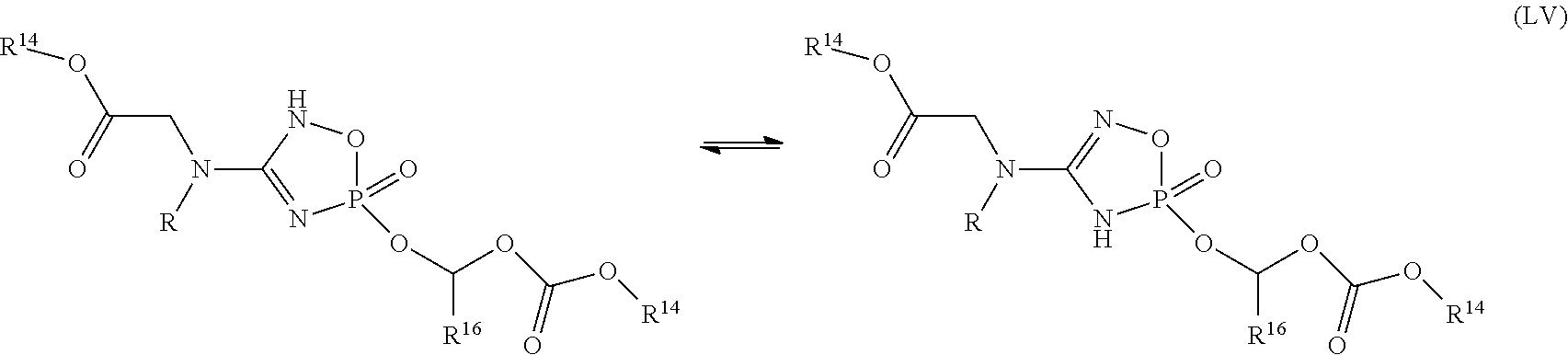


wherein each occurrence of:


wherein each occurrence of:


wherein each occurrence of:

wherein the side chain R is other than the amino acid side chains occurring in nature. Exemplary unnatural amino acids, include, but are not limited to, sarcosine (N-methylglycine), citrulline (cit), homocitrulline, β-ureidoalanine, thiocitrulline, hydroxyproline, allothreonine, pipecolic acid (homoproline), α-aminoisobutyric acid, tert-butylglycine, tert-butylalanine, allo-isoleucine, norleucine, α-methylleucine, cyclohexylglycine, β-cyclohexylalanine, β-cyclopentylalanine, α-methylproline, phenylglycine, α-methylphenylalanine and homophenylalanine.

R′ is an optionally substituted alkyl.

wherein:


wherein:

and


wherein each occurrence of:

wherein:


wherein:

and


wherein each occurrence of:

wherein:


wherein:

and


wherein each occurrence of:

wherein:


and


wherein:

and


wherein each occurrence of:

wherein:

wherein:

wherein:

wherein:


| TABLE 1 |
| Standarda Conditions for Prodrug In Vitro Stability and Metabolism Studies |
| Enzyme/Protein | Substrate | ||
| Assay | Concentration | Concentration (μM) | Cofactors |
| SGF | +/−0.1 mg/mL pepsin | 1-10 | NA |
| SIF | +/−1% w/v | 1-10 | NA |
| pancreatin | |||
| Plasma | NA | 1-10 | +/−DIFP, 10 mMd |
| Blood | NA | 1-10 | +/−DIFP, 10 mMd |
| Liver microsomes | 0.5 mg/mL | 1-10 | +/−NADPHb |
| Liver or |
1 mg/mL | 1-10 | +/−NADPHb |
| Hepatocytes | NA | 1-10 | NA |
| Tissue homogenatec | NA | 1-10 | NA |
| aTypical test range provided, range may be exceeded dependent upon intended clinical use of prodrug | |||
| bNADPH generating system, e.g., 1.3 mM NADP+, 3.3 mM glucose-6-phosphate, 0.4 U/mL glucose-6-phosphate dehydrogenase, 3.3 mM magnesium chloride and 0.95 mg/mL potassium phosphate, pH 7.4 | |||
| cExamples: brain tissue homogenate, muscle tissue homogenate | |||
| dAssay can be performed with and without addition of diisopropyl fluorophosphonate (DIFP, serine protease inhibitor) to determine if degradation is mediated by a serine protease, e.g., carboxylesterase (CES) | |||
P app V r(dC/dt)/(AC o)
where Vr is the volume of the receiver compartment in mL; dC/dt is the total flux of prodrug and parent drug (μM/s), determined from the slope of the plot of concentration in the receiver compartment versus time; Co is the initial concentration of prodrug in μM; and A is the surface area of the membrane in cm2. In certain embodiments, prodrugs with significant transcellular permeability exhibit a value of Papp of ≥1×10⁻⁶ cm/s, in certain embodiments, a value of Papp of ≥1×10⁻⁵ cm/s, and in certain embodiments a value of Papp of ≥5×10⁻⁵ cm/s.
Claims (22)


Priority Applications (1)
| Application Number | Priority Date | Filing Date | Title |
|---|---|---|---|
| US15/084,732 US11021501B2 (en) | 2015-03-30 | 2016-03-30 | Creatine phosphate analog prodrugs, compositions and methods of use thereof |
Applications Claiming Priority (2)
| Application Number | Priority Date | Filing Date | Title |
|---|---|---|---|
| US201562140441P | 2015-03-30 | 2015-03-30 | |
| US15/084,732 US11021501B2 (en) | 2015-03-30 | 2016-03-30 | Creatine phosphate analog prodrugs, compositions and methods of use thereof |
Publications (2)
| Publication Number | Publication Date |
|---|---|
| US20160289253A1 US20160289253A1 (en) | 2016-10-06 |
| US11021501B2 true US11021501B2 (en) | 2021-06-01 |
Family
ID=57006456
Family Applications (1)
| Application Number | Title | Priority Date | Filing Date |
|---|---|---|---|
| US15/084,732 Active US11021501B2 (en) | 2015-03-30 | 2016-03-30 | Creatine phosphate analog prodrugs, compositions and methods of use thereof |
Country Status (4)
| Country | Link |
|---|---|
| US (1) | US11021501B2 (en) |
| AR (1) | AR104144A1 (en) |
| TW (1) | TWI741979B (en) |
| WO (1) | WO2016160885A1 (en) |
Cited By (1)
| Publication number | Priority date | Publication date | Assignee | Title |
|---|---|---|---|---|
| US11332438B2 (en) | 2017-12-01 | 2022-05-17 | Ultragenyx Pharmaceutical Inc. | Creatine prodrugs, compositions and methods of use thereof |
Families Citing this family (2)
| Publication number | Priority date | Publication date | Assignee | Title |
|---|---|---|---|---|
| US9617230B2 (en) | 2014-12-22 | 2017-04-11 | Farmington Pharma Development | Creatine prodrugs, compositions and methods of use thereof |
| TWI741979B (en) | 2015-03-30 | 2021-10-11 | 美商法明頓製藥發展公司 | Creatine phosphate analog prodrugs, compositions and uses thereof |
Citations (19)
| Publication number | Priority date | Publication date | Assignee | Title |
|---|---|---|---|---|
| US6008252A (en) | 1996-07-26 | 1999-12-28 | Beale; Paxton K. | Method for increasing muscle mass in a mammal |
| US20030013767A1 (en) | 2001-07-13 | 2003-01-16 | Samuel Bessman | Method of treating weight loss using creatine |
| US20040120983A1 (en) | 2002-12-23 | 2004-06-24 | Philip Connolly | Nutritional supplement |
| WO2005108370A1 (en) | 2004-04-16 | 2005-11-17 | Ajinomoto Co., Inc. | Benzene compounds |
| US20070281909A1 (en) | 2006-06-06 | 2007-12-06 | Xenoport, Inc. | Creatine phosphate prodrugs, compositions and uses thereof |
| WO2007146086A1 (en) | 2006-06-06 | 2007-12-21 | Xenoport, Inc. | Creatine prodrugs, compositions and uses thereof |
| US20080051371A1 (en) | 2006-06-06 | 2008-02-28 | Xenoport, Inc. | Creatine phosphate analog prodrugs, compositions and uses thereof |
| WO2008101310A1 (en) | 2007-02-20 | 2008-08-28 | Multi Formulations Ltd. | Creatine-fatty acids |
| WO2009143630A1 (en) | 2008-05-30 | 2009-12-03 | Northern Innovations And Formulations Corp. | Creatine sugar amides and salts thereof |
| WO2010005692A2 (en) | 2008-06-16 | 2010-01-14 | E. I. Du Pont De Nemours And Company | Insecticidal cyclic carbonyl amidines |
| WO2013043580A2 (en) | 2011-09-19 | 2013-03-28 | Gencia Corporation | Modified creatine compounds |
| WO2014018570A1 (en) | 2012-07-25 | 2014-01-30 | Sova Pharmaceuticals, Inc. | Cystathionine-υ-lyase (cse) inhibitors |
| WO2014019855A1 (en) | 2012-07-30 | 2014-02-06 | Commissariat à l'énergie atomique et aux énergies alternatives | Method for preparing creatine fatty esters, creatine fatty esters thus prepared and uses thereof |
| WO2014097335A1 (en) | 2012-12-18 | 2014-06-26 | Universita' Degli Studi Di Genova | A method of synthesizing creatine derivatives |
| WO2015069699A1 (en) | 2013-11-05 | 2015-05-14 | Ultragenyx Pharmaceutical Inc. | Creatine analogs and the use thereof |
| WO2015097660A1 (en) | 2013-12-24 | 2015-07-02 | Universita' Degli Studi Di Genova | Therapeutic application of (boc)2-creatine |
| WO2016106284A2 (en) | 2014-12-22 | 2016-06-30 | Farmington Pharma Development | Creatine prodrugs, compositions and methods of use thereof |
| WO2016110822A1 (en) | 2015-01-09 | 2016-07-14 | Universita' Degli Studi Di Genova | Carboxylic biacyl creatine derivative, uses and method of synthesis thereof |
| WO2016160885A1 (en) | 2015-03-30 | 2016-10-06 | Farmington Pharma Development | Creatine phosphate analog prodrugs, compositions and uses thereof |
-
2016
- 2016-03-30 TW TW105110154A patent/TWI741979B/en active
- 2016-03-30 WO PCT/US2016/024845 patent/WO2016160885A1/en not_active Ceased
- 2016-03-30 AR ARP160100855A patent/AR104144A1/en active IP Right Grant
- 2016-03-30 US US15/084,732 patent/US11021501B2/en active Active
Patent Citations (23)
| Publication number | Priority date | Publication date | Assignee | Title |
|---|---|---|---|---|
| US6008252A (en) | 1996-07-26 | 1999-12-28 | Beale; Paxton K. | Method for increasing muscle mass in a mammal |
| US20030013767A1 (en) | 2001-07-13 | 2003-01-16 | Samuel Bessman | Method of treating weight loss using creatine |
| US20040120983A1 (en) | 2002-12-23 | 2004-06-24 | Philip Connolly | Nutritional supplement |
| WO2005108370A1 (en) | 2004-04-16 | 2005-11-17 | Ajinomoto Co., Inc. | Benzene compounds |
| US20070105899A1 (en) | 2004-04-16 | 2007-05-10 | Nobuyasu Suzuki | Benzene compounds |
| US20070281909A1 (en) | 2006-06-06 | 2007-12-06 | Xenoport, Inc. | Creatine phosphate prodrugs, compositions and uses thereof |
| WO2007146086A1 (en) | 2006-06-06 | 2007-12-21 | Xenoport, Inc. | Creatine prodrugs, compositions and uses thereof |
| US20080051371A1 (en) | 2006-06-06 | 2008-02-28 | Xenoport, Inc. | Creatine phosphate analog prodrugs, compositions and uses thereof |
| WO2008101310A1 (en) | 2007-02-20 | 2008-08-28 | Multi Formulations Ltd. | Creatine-fatty acids |
| WO2009143630A1 (en) | 2008-05-30 | 2009-12-03 | Northern Innovations And Formulations Corp. | Creatine sugar amides and salts thereof |
| WO2010005692A2 (en) | 2008-06-16 | 2010-01-14 | E. I. Du Pont De Nemours And Company | Insecticidal cyclic carbonyl amidines |
| WO2013043580A2 (en) | 2011-09-19 | 2013-03-28 | Gencia Corporation | Modified creatine compounds |
| WO2014018570A1 (en) | 2012-07-25 | 2014-01-30 | Sova Pharmaceuticals, Inc. | Cystathionine-υ-lyase (cse) inhibitors |
| WO2014019855A1 (en) | 2012-07-30 | 2014-02-06 | Commissariat à l'énergie atomique et aux énergies alternatives | Method for preparing creatine fatty esters, creatine fatty esters thus prepared and uses thereof |
| WO2014097335A1 (en) | 2012-12-18 | 2014-06-26 | Universita' Degli Studi Di Genova | A method of synthesizing creatine derivatives |
| WO2015069699A1 (en) | 2013-11-05 | 2015-05-14 | Ultragenyx Pharmaceutical Inc. | Creatine analogs and the use thereof |
| WO2015097660A1 (en) | 2013-12-24 | 2015-07-02 | Universita' Degli Studi Di Genova | Therapeutic application of (boc)2-creatine |
| WO2016106284A2 (en) | 2014-12-22 | 2016-06-30 | Farmington Pharma Development | Creatine prodrugs, compositions and methods of use thereof |
| US9617230B2 (en) | 2014-12-22 | 2017-04-11 | Farmington Pharma Development | Creatine prodrugs, compositions and methods of use thereof |
| US10344007B2 (en) | 2014-12-22 | 2019-07-09 | Farmington Pharma Development | Creatine prodrugs, compositions and methods of use thereof |
| US20190337909A1 (en) | 2014-12-22 | 2019-11-07 | Farmington Pharma Development | Creatine prodrugs, compositions and methods of use thereof |
| WO2016110822A1 (en) | 2015-01-09 | 2016-07-14 | Universita' Degli Studi Di Genova | Carboxylic biacyl creatine derivative, uses and method of synthesis thereof |
| WO2016160885A1 (en) | 2015-03-30 | 2016-10-06 | Farmington Pharma Development | Creatine phosphate analog prodrugs, compositions and uses thereof |
Non-Patent Citations (13)
| Title |
|---|
| Extended European Search Report for European Application No. 15874283.3, dated Sep. 5, 2018, 8 pages. |
| Extended European Search Report for European Application No. 20184803.3, dated Nov. 4, 2020, 10 pages. |
| Gavezzotti, Angelo et al., "Are Crystal Structures Predictable?" Acc. Chem. Res., Dipartimento di Chimica Fisica ed Elettrochimica, Univesita di Milano, Milano, Italy; May 16, 1994, 27, 309-314, 6 pages. |
| Hecker et al. J. Med. Chem. 2008, 51, 2328-2345. * |
| International Patent Application No. PCT/US2016/024845, International Search Report dated Jul. 26, 2016, 4 pages. |
| International Search Report and Written Opinion for International Patent Application No. PCT/US2015/067283, dated Aug. 19, 2016, 11 pages. |
| Partial Supplementary European Search Report and Opinion for European Application No. 15874283.3, dated Jun. 4, 2018, 9 pages. |
| Rautio et al. Nature Reviews Drug Discovery 2008, 7, 255-270. * |
| STN Registry RN 1002719-94-9, entered STN Feb. 11, 2008. * |
| STN Registry RN 1071430-27-7, entered STN Nov. 7, 2008. * |
| STN Registry RN 1071430-29-9, entered STN Nov. 7, 2008. * |
| STN Registry RN 1075221-05-4, entered STN Nov. 24, 2008. * |
| STN Registry RN 959586-42-6, entered STN Dec. 26, 2007. * |
Cited By (2)
| Publication number | Priority date | Publication date | Assignee | Title |
|---|---|---|---|---|
| US11332438B2 (en) | 2017-12-01 | 2022-05-17 | Ultragenyx Pharmaceutical Inc. | Creatine prodrugs, compositions and methods of use thereof |
| US11753369B2 (en) | 2017-12-01 | 2023-09-12 | Ultragenyx Pharmaceutical Inc. | Creatine prodrugs, compositions and methods of use thereof |
Also Published As
| Publication number | Publication date |
|---|---|
| WO2016160885A1 (en) | 2016-10-06 |
| TWI741979B (en) | 2021-10-11 |
| AR104144A1 (en) | 2017-06-28 |
| TW201702253A (en) | 2017-01-16 |
| US20160289253A1 (en) | 2016-10-06 |
Similar Documents
| Publication | Publication Date | Title |
|---|---|---|
| US8202852B2 (en) | Creatine phosphate analog prodrugs, compositions and uses thereof | |
| US20070281996A1 (en) | Creatine prodrugs, compositions and uses thereof | |
| US20070281909A1 (en) | Creatine phosphate prodrugs, compositions and uses thereof | |
| US11407722B2 (en) | Creatine prodrugs, compositions and methods of use thereof | |
| US11753369B2 (en) | Creatine prodrugs, compositions and methods of use thereof | |
| US20160289253A1 (en) | Creatine phosphate analog prodrugs, compositions and methods of use thereof | |
| US20070281910A1 (en) | Salicyl alcohol creatine phosphate prodrugs, compositions and uses thereof | |
| US20070281983A1 (en) | Creatine analog prodrugs, compositions and uses thereof |
Legal Events
| Date | Code | Title | Description |
|---|---|---|---|
| AS | Assignment |
Owner name: FARMINGTON PHARMA DEVELOPMENT, CONNECTICUT Free format text: ASSIGNMENT OF ASSIGNORS INTEREST;ASSIGNOR:BRUBAKER, WILLIAM F.;REEL/FRAME:044572/0127 Effective date: 20160512 |
|
| FEPP | Fee payment procedure |
Free format text: ENTITY STATUS SET TO UNDISCOUNTED (ORIGINAL EVENT CODE: BIG.); ENTITY STATUS OF PATENT OWNER: LARGE ENTITY |
|
| STPP | Information on status: patent application and granting procedure in general |
Free format text: DOCKETED NEW CASE - READY FOR EXAMINATION |
|
| STPP | Information on status: patent application and granting procedure in general |
Free format text: NON FINAL ACTION MAILED |
|
| STPP | Information on status: patent application and granting procedure in general |
Free format text: RESPONSE TO NON-FINAL OFFICE ACTION ENTERED AND FORWARDED TO EXAMINER |
|
| STPP | Information on status: patent application and granting procedure in general |
Free format text: FINAL REJECTION MAILED |
|
| STPP | Information on status: patent application and granting procedure in general |
Free format text: NOTICE OF ALLOWANCE MAILED -- APPLICATION RECEIVED IN OFFICE OF PUBLICATIONS |
|
| STPP | Information on status: patent application and granting procedure in general |
Free format text: PUBLICATIONS -- ISSUE FEE PAYMENT RECEIVED |
|
| STPP | Information on status: patent application and granting procedure in general |
Free format text: PUBLICATIONS -- ISSUE FEE PAYMENT VERIFIED |
|
| STCF | Information on status: patent grant |
Free format text: PATENTED CASE |
|
| FEPP | Fee payment procedure |
Free format text: ENTITY STATUS SET TO SMALL (ORIGINAL EVENT CODE: SMAL); ENTITY STATUS OF PATENT OWNER: SMALL ENTITY |
|
| FEPP | Fee payment procedure |
Free format text: MAINTENANCE FEE REMINDER MAILED (ORIGINAL EVENT CODE: REM.); ENTITY STATUS OF PATENT OWNER: SMALL ENTITY |
|
| FEPP | Fee payment procedure |
Free format text: SURCHARGE FOR LATE PAYMENT, SMALL ENTITY (ORIGINAL EVENT CODE: M2554); ENTITY STATUS OF PATENT OWNER: SMALL ENTITY |
|
| MAFP | Maintenance fee payment |
Free format text: PAYMENT OF MAINTENANCE FEE, 4TH YR, SMALL ENTITY (ORIGINAL EVENT CODE: M2551); ENTITY STATUS OF PATENT OWNER: SMALL ENTITY Year of fee payment: 4 |