US11005584B2 - Clock synchronization in a device - Google Patents
Clock synchronization in a device Download PDFInfo
- Publication number
- US11005584B2 US11005584B2 US16/831,024 US202016831024A US11005584B2 US 11005584 B2 US11005584 B2 US 11005584B2 US 202016831024 A US202016831024 A US 202016831024A US 11005584 B2 US11005584 B2 US 11005584B2
- Authority
- US
- United States
- Prior art keywords
- grandmaster
- information
- negotiated
- clock
- primary
- Prior art date
- Legal status (The legal status is an assumption and is not a legal conclusion. Google has not performed a legal analysis and makes no representation as to the accuracy of the status listed.)
- Active
Links
Images


Classifications
-
- H—ELECTRICITY
- H04—ELECTRIC COMMUNICATION TECHNIQUE
- H04J—MULTIPLEX COMMUNICATION
- H04J3/00—Time-division multiplex systems
- H04J3/02—Details
- H04J3/06—Synchronising arrangements
- H04J3/0635—Clock or time synchronisation in a network
- H04J3/0638—Clock or time synchronisation among nodes; Internode synchronisation
- H04J3/0641—Change of the master or reference, e.g. take-over or failure of the master
-
- H—ELECTRICITY
- H04—ELECTRIC COMMUNICATION TECHNIQUE
- H04J—MULTIPLEX COMMUNICATION
- H04J3/00—Time-division multiplex systems
- H04J3/02—Details
- H04J3/06—Synchronising arrangements
- H04J3/0635—Clock or time synchronisation in a network
- H04J3/0638—Clock or time synchronisation among nodes; Internode synchronisation
- H04J3/0658—Clock or time synchronisation among packet nodes
- H04J3/0661—Clock or time synchronisation among packet nodes using timestamps
- H04J3/0667—Bidirectional timestamps, e.g. NTP or PTP for compensation of clock drift and for compensation of propagation delays
Definitions
- the present invention is applicable to any device in any system, any network or any timing domain, that is configured, or configurable to support principles of the precision time protocol system, the principles including master-slave clock synchronization hierarchy and best master clock negotiations.
- master-slave clock synchronization hierarchy one clock, or a device providing the clock, is the master and others are slaves that use the time information from the master to synchronize.
- best master clock negotiations data describing clocks is compared to determine which data describes the best clock. Usually the comparison is made between two clocks.
- a non-limiting example of such a network is an Ethernet-network connecting different devices.
- FIG. 1 A highly general clock synchronization architecture of a system is illustrated in FIG. 1 .
- FIG. 1 shows only some devices/clocks within a timing domain and some functional entities within a device, all being logical units whose implementation and/or number may differ from what is shown.
- the connections shown in FIG. 1 are logical connections; the actual physical connections may be different. It is apparent to a person skilled in the art that the systems also comprise other devices and functional entities.
- the device 110 may be any computing device, apparatus, node or a clock that can at least synchronize to a grandmaster, i.e. be a slave. Examples of such a device include network connected appliances in home and industrial environments. For example, in the industrial environment the device may be a controlling apparatus, frequency converter, AC/DC module, DC/AC module, programmable logic controller, switch, motion controller or motion drive, servo motor, soft starter, robots, and heavy equipment, etc., just to list only some examples. The device may also be configured to be a grandmaster if it has the most accurate clock 113 in the time domain.
- the device 110 is configured to support an enhanced time supervision providing information on an accuracy level of the synchronization. For that purpose the device comprises an enhanced time supervision unit (e-t-s-u) 111 , and in its memory 112 grandmaster information 112 - 1 and accuracy values 112 - 2 .
- an enhanced time supervision unit e-t-s-u
- the grandmaster information 112 - 1 may be a list, as illustrated in the example of FIG. 1 . However, it should be appreciated that any other form to store corresponding information may be used.
- the grandmaster information 112 - 1 comprises at least information on a primary grandmaster. Further, the grandmaster information 112 - 1 may comprise information on one or more secondary grandmasters, or information based on which one may determine whether a master clock is a secondary grandmaster. For the latter purpose, the accuracy values 112 - 2 may be sufficient.
- Each grandmaster in the grandmaster information 112 - 1 is associated at least with corresponding clock identifier (ID).
- each grandmaster is associated with information indicating whether it is the primary or a secondary grandmaster. Further, the grandmaster information 112 - 1 may comprise for each grandmaster in the grandmaster information 112 - 1 attribute values for attributes that may be used in the device master-slave hierarchy negotiations to determine the best clock. In the illustrated example of FIG. 1 , the grandmaster information 112 - 1 is an ordered list in which the grandmasters are listed according to a best master order, starting from the primary grandmaster and then having the secondary grandmasters.
- An advantage having an ordered list and clock identifiers associated with one or more attribute values defining clock accuracy that it provides versatile possibilities to maintain a list (adaptive list) in an adaptive way, as will be described in more detail below.
- a further advantage is that it allows differentiation between different warnings, for example, if needed.
- step 203 If the negotiated master is in the grandmaster list (step 203 : yes), in the illustrated example, as a precautionary measure, alarm and warning are reset in step 204 , and it is determined in step 205 that the device is synchronized by the primary grandmaster. This means that in the example the synchronization status is set to be synchronized.
- alarm and warning ensures that in a monitoring system in the device, for example, there are no erroneous alarms or warnings. However, it should be appreciated that the resetting may be made conditionally, i.e. only if an alarm or warning has been set.
- step 208 If the negotiated master is not better than the primary grandmaster (step 206 : no), it is determined in step 208 that the device is synchronized by one of the secondary grandmasters, and a warning is set. This means that in the example the synchronization status is set to be synchronized with warning. Setting the warning preferably causes that the monitoring system in the device is informed (indicated) correspondingly.
- step 209 If the negotiated master is not within limits (step 202 : no), it is determined in step 209 that the device is not synchronized by a grandmaster, and an alarm is set. This means that in the example the synchronization status is set to be synchronized with alarm. Setting the alarm preferably causes that the monitoring system in the device is informed correspondingly
- a master-slave hierarchy is negotiated in step 302 between the device and the master clock in the timing domain of the device.
- the master clock has been negotiated (selected)
- it is checked in step 303 whether or not the master clock is within limits. The limits are determined by the accuracy requirements of the device.
- the device As long as the device is on, it monitors settings and environment. In other words, in the illustrated example it is monitored, whether the device or the list is reset (step 306 ), or accuracy settings are updated to require a more accurate grandmaster (step 307 ), or whether a change in the timing domain is detected (step 308 ). For example, a new device may start to run in the timing domain, or a device providing the grandmaster clock may upgraded, downgraded, be shut down, or be disconnected, or for some other reason disappear. In other words, the timing domain of the device may change.
- step 308 When a change in the timing domain is detected (step 308 : yes), the device master-slave hierarchy is negotiated, or more precisely renegotiated, in step 309 between the device and a master clock in the timing domain of the device.
- the master clock has been selected/negotiated, it is checked in step 310 whether or not the identifier of the negotiated master is in the grandmaster list of the device. In other words, it is checked whether the negotiated master is a new grandmaster for the device.
- step 311 If the negotiated master is not in the grandmaster list (step 310 : no), it is checked in step 311 whether or not the master clock is within limits. The limits are determined as described above with FIG. 2 .
- the one having the smaller value has the higher priority. If the clock qualities are the same, then values for priority 2 are compared, and the one having the smaller value has the higher priority. If the values are the same, the priority order is determined by comparing the identity values of the identifiers and the one having the smaller value has the higher priority.
- step 315 the process proceeds directly to step 317 to check whether or not the negotiated master is the first one in the grandmaster list.
- step 321 If the negotiated master is in the grandmaster list (step 310 : yes), in the illustrated example it is checked in step 321 , whether or not the attribute values used in the negotiations are the same as those in the grandmaster list. By this check the changes to clocks already in the list will be taken into account. For example, an antenna in a secondary grandmaster may be fixed during maintenance, or an antenna in the primary grandmaster may fail, both affecting to the attribute values. If the values are not the same (step 321 : no), the process proceeds to step 311 to check whether the changed values are still within the limits. If the values are the same (step 321 : yes), the process proceeds to step 315 to check whether an alarm or warning is set.
- step 307 If the accuracy requirements of the device are updated to be more accurate (step 307 : yes), the grandmaster list is updated in step 322 by removing from the list those grandmasters that do not fulfill the new accuracy requirements, i.e. are not within new limits. Then the process proceeds to step 310 to check whether the current master is still in the grandmaster list.
- step 306 the grandmaster list is emptied in step 323 and in the illustrated example it is assumed that the current grandmaster is the primary and the process proceeds to step 305 to determine that the device is synchronized by the primary grandmaster. However, if the device is reset, the process proceeds from step 323 to step 302 to negotiate the master-slave hierarchy (not illustrated in FIG. 3 ). Naturally in another implementation the list reset may also trigger master-slave hierarchy negotiations. It should be appreciated that resetting the list or device also reset warning and alarms if they have been previously set. By providing a user a possibility to reset the list enables the user to “force” the device to relearn clocks in the timing domain after maintenance, for example.
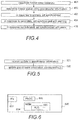
- FIG. 4 illustrates a further example of a functionality of the enhanced time supervision unit.
- the grandmaster information is predefined grandmaster information.
- implementing the functionality using an adaptive way to maintain the grandmaster information is a straightforward solution: one performs adding a new accurate enough grandmaster to the grandmaster information, using the principles described above.
- the master status is determined in step 402 using the grandmaster information. For example, using the clock identifier of the negotiated master clock, one can determine from the grandmaster information the grandmaster type of the negotiated clock.
- the device is set in step 403 to be synchronized.
- the device is set in step 404 to be synchronized with warning.
- the device is set in step 405 to synchronized with alarm.
- FIG. 5 illustrates a further example of a functionality of the enhanced time supervision unit according the grandmaster information is maintained in a non-adaptive way, i.e. is predefined.
- a mechanism enabling to detect that a primary time source reference is lost and a transition to a secondary time source reference has taken place, and to detect also a loss of the secondary time source reference is provided.
- supervision of timing will be improved by having the three types of grandmasters. That in turn reduces troubleshooting efforts for example in sub-station automation networks.
- the adaptive grandmaster information requires no additional configuration compared to the predefined grandmaster information. However, the configuration required by the predefined grandmaster information is rather easy to update.
- FIGS. 2, 3, 4 and/or 5 are in no absolute chronological order, and some of the steps may be performed simultaneously or in an order differing from the given one. Other functions can also be executed between the steps or within the steps, and other information may be sent. For example, each time it is detected that the change in the time domain is caused by the clock to which the device is synchronized disappearing from the timing domain, a warning may be set as a precaution before starting the negotiations. Another example is that before emptying an adaptive ordered list, a copy of it is sent to a history log. Some of the steps or part of the steps can also be left out or replaced by a corresponding step or part of the step.
- a device/an apparatus configured to support best master clock negotiations on at least partly on what is disclosed above with any of FIGS. 1 to 5 , including implementing one or more functions/operations of a corresponding device described above with an embodiment/example, for example by means of any of FIGS. 2 to 5 , comprises not only prior art means, but also means for implementing the one or more functions/operations of a corresponding functionality described with an embodiment/example, for example by means of any of FIGS. 2 to 5 , and the device may comprise separate means for each separate function/operation, or means may be configured to perform two or more functions/operations.
- one or more of the means and/or the enhanced time supervision unit described above may be implemented in hardware (one or more devices), firmware (one or more devices), software (one or more modules), or combinations thereof.
- the device (s) or apparatus(es) of embodiments may be implemented within one or more application-specific integrated circuits (ASICs), digital signal processors (DSPs), digital signal processing devices (DSPDs), programmable logic devices (PLDs), field programmable gate arrays (FPGAs), processors, controllers, micro-controllers, microprocessors, logic gates, other electronic units designed to perform the functions described herein by means of FIGS. 2 to 5 , or a combination thereof.
- ASICs application-specific integrated circuits
- DSPs digital signal processors
- DSPDs digital signal processing devices
- PLDs programmable logic devices
- FPGAs field programmable gate arrays
- processors controllers, micro-controllers, microprocessors, logic gates, other electronic units designed to perform the functions described herein by means of
- the implementation can be carried out through modules of at least one chipset (e.g. procedures, functions, and so on) that perform the functions described herein.
- the software codes may be stored in a memory unit and executed by processors.
- the memory unit may be implemented within the processor or externally to the processor. In the latter case, it can be communicatively coupled to the processor via various means, as is known in the art.
- the components described herein may be rearranged and/or complemented by additional components in order to facilitate the achievements of the various aspects, etc., described with regard thereto, and they are not limited to the precise configurations set forth in the given figures, as will be appreciated by one skilled in the art.
- FIG. 6 provides an apparatus according to some embodiments of the invention.
- FIG. 6 illustrates an apparatus configured to carry out the functions described above in connection with the device.
- Each apparatus 600 may comprise one or more communication control circuitry, such as at least one processor 602 , and at least one memory 604 , including one or more algorithms 603 , such as a computer program code (software) wherein the at least one memory and the computer program code (software) are configured, with the at least one processor, to cause the apparatus to carry out any one of the exemplified functionalities of the device.
- the apparatus may further comprise different communication interfaces 601 and one or more user interfaces (not separately illustrated).
- At least one of the communication control circuitries in the apparatus 600 is configured to provide the enhanced time supervision unit, or any corresponding sub-unit, and to carry out functionalities, described above by means of any of FIGS. 2 to 5 , by one or more circuitries.
- the memory 604 or part of it may be implemented using any suitable data storage technology, such as semiconductor based memory devices, flash memory, magnetic memory devices and systems, optical memory devices and systems, fixed memory and removable memory.
- the one or more communication interfaces 601 may comprise hardware and/or software for realizing communication connectivity according to one or more communication protocols.
- the communication interface may provide the apparatus with communication capabilities to communicate over a local connection and/or local connections and/or in a cellular communication system and/or in a fixed network, and enable communication between different apparatuses.
- the communication interface 601 may comprise standard well-known components.
- circuitry refers to all of the following: (a) hardware-only circuit implementations, such as implementations in only analog and/or digital circuitry, and (b) combinations of circuits and software (and/or firmware), such as (as applicable): (i) a combination of processor(s) or (ii) portions of processor(s)/software including digital signal processor(s), software, and memory(ies) that work together to cause an apparatus to perform various functions, and (c) circuits, such as a microprocessor(s) or a portion of a micro-processor(s), that require software or firmware for operation, even if the software or firmware is not physically present.
- This definition of ‘circuitry’ applies to all uses of this term in this application.
- the at least one processor, the memory, and the computer program code form processing means or comprises one or more computer program code portions for carrying out one or more operations according to any one of the embodiments of FIGS. 2 to 5 or operations thereof.
- Embodiments as described may also be carried out in the form of a computer process defined by a computer program or portions thereof. Embodiments of the methods described in connection with FIGS. 2 to 5 may be carried out by executing at least one portion of a computer program comprising corresponding instructions.
- the computer program may be stored on a computer program distribution medium readable by a computer or a processor.
- the computer program medium may be, for example but not limited to, a record medium, computer memory, read-only memory, electrical carrier signal, telecommunications signal, and software distribution package, for example.
- the computer program medium may be a non-transitory medium. Coding of software for carrying out the embodiments as shown and described is well within the scope of a person of ordinary skill in the art.
Landscapes
- Engineering & Computer Science (AREA)
- Computer Networks & Wireless Communication (AREA)
- Signal Processing (AREA)
- Synchronisation In Digital Transmission Systems (AREA)
- Mobile Radio Communication Systems (AREA)
- Telephonic Communication Services (AREA)
Abstract
Description
Claims (17)
Applications Claiming Priority (4)
| Application Number | Priority Date | Filing Date | Title |
|---|---|---|---|
| EP17193186 | 2017-09-26 | ||
| EP17193186.8A EP3461038B1 (en) | 2017-09-26 | 2017-09-26 | Clock synchronization in a device |
| EP17193186.8 | 2017-09-26 | ||
| PCT/EP2018/076119 WO2019063607A1 (en) | 2017-09-26 | 2018-09-26 | Clock synchronization in a device |
Related Parent Applications (1)
| Application Number | Title | Priority Date | Filing Date |
|---|---|---|---|
| PCT/EP2018/076119 Continuation WO2019063607A1 (en) | 2017-09-26 | 2018-09-26 | Clock synchronization in a device |
Publications (2)
| Publication Number | Publication Date |
|---|---|
| US20200228218A1 US20200228218A1 (en) | 2020-07-16 |
| US11005584B2 true US11005584B2 (en) | 2021-05-11 |
Family
ID=59974170
Family Applications (1)
| Application Number | Title | Priority Date | Filing Date |
|---|---|---|---|
| US16/831,024 Active US11005584B2 (en) | 2017-09-26 | 2020-03-26 | Clock synchronization in a device |
Country Status (4)
| Country | Link |
|---|---|
| US (1) | US11005584B2 (en) |
| EP (1) | EP3461038B1 (en) |
| CN (1) | CN111095827B (en) |
| WO (1) | WO2019063607A1 (en) |
Cited By (1)
| Publication number | Priority date | Publication date | Assignee | Title |
|---|---|---|---|---|
| US20220053310A1 (en) * | 2019-03-05 | 2022-02-17 | Samsung Electronics Co., Ltd. | Electronic device for transmitting response message in bluetooth network environment and method thereof |
Families Citing this family (4)
| Publication number | Priority date | Publication date | Assignee | Title |
|---|---|---|---|---|
| EP3997815B1 (en) * | 2019-07-08 | 2025-04-30 | ABB Schweiz AG | Industrial device supporting multiple time synchronization protocols |
| JP7251402B2 (en) | 2019-08-20 | 2023-04-04 | オムロン株式会社 | Control systems, controllers and programs |
| US11336687B2 (en) | 2020-01-03 | 2022-05-17 | Disney Enterprises, Inc. | System and method for providing security for master clocks |
| CN119563296A (en) | 2022-09-28 | 2025-03-04 | 中兴通讯股份有限公司 | Method, device and system for time synchronization |
Citations (6)
| Publication number | Priority date | Publication date | Assignee | Title |
|---|---|---|---|---|
| US6618455B1 (en) | 1998-08-26 | 2003-09-09 | Fujitsu Limited | Clock management method and transmission apparatus for synchronous network system |
| US20130227008A1 (en) * | 2012-02-27 | 2013-08-29 | Cisco Technology, Inc. | Clock synchronization based on predefined grandmaster |
| US20160149692A1 (en) | 2014-11-26 | 2016-05-26 | Hyundai Motor Company | Method and apparatus for providing time synchronization in in-vehicle ethernet communication network |
| US9690674B2 (en) * | 2012-03-30 | 2017-06-27 | Telefonaktiebolaget Lm Ericsson (Publ) | Method and system for robust precision time protocol synchronization |
| US20170359139A1 (en) * | 2016-06-10 | 2017-12-14 | Apple Inc. | Synchronization with Different Clock Transport Protocols |
| US10666372B2 (en) * | 2017-06-30 | 2020-05-26 | Qualcomm Incorporated | Precision time protocol over cellular |
Family Cites Families (2)
| Publication number | Priority date | Publication date | Assignee | Title |
|---|---|---|---|---|
| CN102195769A (en) * | 2011-06-02 | 2011-09-21 | 合肥工业大学 | Clock synchronization method for automobile CAN (Control Area Network) |
| CN102957488B (en) * | 2011-08-18 | 2016-09-28 | 中兴通讯股份有限公司 | A kind of time synchronized selects source method and device |
-
2017
- 2017-09-26 EP EP17193186.8A patent/EP3461038B1/en active Active
-
2018
- 2018-09-26 CN CN201880062726.4A patent/CN111095827B/en active Active
- 2018-09-26 WO PCT/EP2018/076119 patent/WO2019063607A1/en not_active Ceased
-
2020
- 2020-03-26 US US16/831,024 patent/US11005584B2/en active Active
Patent Citations (6)
| Publication number | Priority date | Publication date | Assignee | Title |
|---|---|---|---|---|
| US6618455B1 (en) | 1998-08-26 | 2003-09-09 | Fujitsu Limited | Clock management method and transmission apparatus for synchronous network system |
| US20130227008A1 (en) * | 2012-02-27 | 2013-08-29 | Cisco Technology, Inc. | Clock synchronization based on predefined grandmaster |
| US9690674B2 (en) * | 2012-03-30 | 2017-06-27 | Telefonaktiebolaget Lm Ericsson (Publ) | Method and system for robust precision time protocol synchronization |
| US20160149692A1 (en) | 2014-11-26 | 2016-05-26 | Hyundai Motor Company | Method and apparatus for providing time synchronization in in-vehicle ethernet communication network |
| US20170359139A1 (en) * | 2016-06-10 | 2017-12-14 | Apple Inc. | Synchronization with Different Clock Transport Protocols |
| US10666372B2 (en) * | 2017-06-30 | 2020-05-26 | Qualcomm Incorporated | Precision time protocol over cellular |
Non-Patent Citations (3)
| Title |
|---|
| European Patent Office, International Preliminary Report on Patentability issued in corresponding Application No. PCT/EP2018/076119, dated Aug. 14, 2019, 12 pp. |
| European Patent Office, International Search Report & Written Opinion issued in corresponding Application No. PCT/EP2018/076119, dated Dec. 10, 2018, 12 pp. |
| European Patent Office, Search Report issued in corresponding Application No. 17193186.8, completed Mar. 8, 2018, 2 pp. |
Cited By (2)
| Publication number | Priority date | Publication date | Assignee | Title |
|---|---|---|---|---|
| US20220053310A1 (en) * | 2019-03-05 | 2022-02-17 | Samsung Electronics Co., Ltd. | Electronic device for transmitting response message in bluetooth network environment and method thereof |
| US11751034B2 (en) * | 2019-03-05 | 2023-09-05 | Samsung Electronics Co., Ltd. | Electronic device for transmitting response message in bluetooth network environment and method thereof |
Also Published As
| Publication number | Publication date |
|---|---|
| CN111095827B (en) | 2022-04-29 |
| CN111095827A (en) | 2020-05-01 |
| EP3461038B1 (en) | 2020-04-15 |
| US20200228218A1 (en) | 2020-07-16 |
| WO2019063607A1 (en) | 2019-04-04 |
| EP3461038A1 (en) | 2019-03-27 |
Similar Documents
| Publication | Publication Date | Title |
|---|---|---|
| US11005584B2 (en) | Clock synchronization in a device | |
| US20170339005A1 (en) | Method and Device for Processing Failure in at Least One Distributed Cluster, and System | |
| US10162790B2 (en) | Method for clock synchronization of an industrial internet field broadband bus | |
| EP2341411A1 (en) | Time synchronization method and system for multicore system | |
| US9170569B2 (en) | Method for electing an active master device from two redundant master devices | |
| CN105515821B (en) | The device and method of analysis and Control network | |
| CN102611600B (en) | Method and device for locating short circuit position of CAN (Controller Area Network) network | |
| CN107957692B (en) | Controller redundancy method, device and system | |
| CN109361542A (en) | The fault handling method of client, device, system, terminal and server | |
| US20230033754A1 (en) | Data processing method for distributed storage system, apparatus, and electronic device | |
| CN109542983A (en) | A data synchronization method, apparatus, device and readable storage medium | |
| CN110162160B (en) | Method for monitoring, controlling and supervised shutdown of a control and/or computer unit | |
| WO2019185488A1 (en) | Node, network system and method of data synchronisation | |
| CN114500525B (en) | Method, device, computer equipment and medium for updating nodes in distributed system | |
| CN115328080B (en) | Fault detection method, device, vehicle and storage medium | |
| US20080010315A1 (en) | Platform management of high-availability computer systems | |
| US10263915B2 (en) | Method for processing event between controller and network device | |
| CN104216857B (en) | Multiplexing switching device and its switching method | |
| CN109086242B (en) | Communication system and method | |
| CN108616461B (en) | Policy switching method and device | |
| CN118590534B (en) | Proxy service restart method, device, equipment and storage medium | |
| CN107995022B (en) | Session synchronization method and device, storage medium and electronic equipment | |
| CN115543684A (en) | Dual-computer hot standby method and electronic equipment | |
| US10185602B2 (en) | Information processing apparatus, information processing method, and computer program product | |
| CN111831153A (en) | Capacitive touch screen control method and device and capacitive touch screen |
Legal Events
| Date | Code | Title | Description |
|---|---|---|---|
| FEPP | Fee payment procedure |
Free format text: ENTITY STATUS SET TO UNDISCOUNTED (ORIGINAL EVENT CODE: BIG.); ENTITY STATUS OF PATENT OWNER: LARGE ENTITY |
|
| AS | Assignment |
Owner name: ABB SCHWEIZ AG, SWITZERLAND Free format text: ASSIGNMENT OF ASSIGNORS INTEREST;ASSIGNORS:SYVAELUOMA, PETRI;YLINEN, JUHA;LAEHDESMAEKI, MIKKO;SIGNING DATES FROM 20200615 TO 20200703;REEL/FRAME:053160/0326 |
|
| STPP | Information on status: patent application and granting procedure in general |
Free format text: RESPONSE TO EX PARTE QUAYLE ACTION ENTERED AND FORWARDED TO EXAMINER |
|
| STPP | Information on status: patent application and granting procedure in general |
Free format text: NOTICE OF ALLOWANCE MAILED -- APPLICATION RECEIVED IN OFFICE OF PUBLICATIONS |
|
| STPP | Information on status: patent application and granting procedure in general |
Free format text: PUBLICATIONS -- ISSUE FEE PAYMENT VERIFIED |
|
| STCF | Information on status: patent grant |
Free format text: PATENTED CASE |
|
| AS | Assignment |
Owner name: ABB SCHWEIZ AG, SWITZERLAND Free format text: ASSIGNMENT OF ASSIGNORS INTEREST;ASSIGNOR:ABB SCHWEIZ AG;REEL/FRAME:062741/0403 Effective date: 20221220 Owner name: ABB POWER GRIDS SWITZERLAND AG, SWITZERLAND Free format text: ASSIGNMENT OF ASSIGNORS INTEREST;ASSIGNOR:ABB SCHWEIZ AG;REEL/FRAME:062741/0403 Effective date: 20221220 |
|
| AS | Assignment |
Owner name: HITACHI ENERGY SWITZERLAND AG, SWITZERLAND Free format text: CHANGE OF NAME;ASSIGNOR:ABB POWER GRIDS SWITZERLAND AG;REEL/FRAME:062865/0029 Effective date: 20190429 |
|
| AS | Assignment |
Owner name: HITACHI ENERGY LTD, SWITZERLAND Free format text: MERGER;ASSIGNOR:HITACHI ENERGY SWITZERLAND AG;REEL/FRAME:068905/0969 Effective date: 20230919 |
|
| MAFP | Maintenance fee payment |
Free format text: PAYMENT OF MAINTENANCE FEE, 4TH YEAR, LARGE ENTITY (ORIGINAL EVENT CODE: M1551); ENTITY STATUS OF PATENT OWNER: LARGE ENTITY Year of fee payment: 4 |