US11001576B2 - Compounds for optically active devices - Google Patents
Compounds for optically active devices Download PDFInfo
- Publication number
- US11001576B2 US11001576B2 US16/485,847 US201816485847A US11001576B2 US 11001576 B2 US11001576 B2 US 11001576B2 US 201816485847 A US201816485847 A US 201816485847A US 11001576 B2 US11001576 B2 US 11001576B2
- Authority
- US
- United States
- Prior art keywords
- choh
- atoms
- chcf
- group
- formula
- Prior art date
- Legal status (The legal status is an assumption and is not a legal conclusion. Google has not performed a legal analysis and makes no representation as to the accuracy of the status listed.)
- Active, expires
Links
- 0 C=C1CC2=CC=CC=C2C=C1C1=C(C)C(C)=C(C)C(C)=C1C.C=C1CC2=CC=CC=C2C=C1C1=C(C)C(C)=C(C)C(C)=C1C.[1*]B(C)C.[2*].[3*]C.[3*]C.[4*]C.[4*]C.[5*]C.[5*]C.[6*]C.[6*]C Chemical compound C=C1CC2=CC=CC=C2C=C1C1=C(C)C(C)=C(C)C(C)=C1C.C=C1CC2=CC=CC=C2C=C1C1=C(C)C(C)=C(C)C(C)=C1C.[1*]B(C)C.[2*].[3*]C.[3*]C.[4*]C.[4*]C.[5*]C.[5*]C.[6*]C.[6*]C 0.000 description 83
- WXRGABKACDFXMG-UHFFFAOYSA-N CB(C)C Chemical compound CB(C)C WXRGABKACDFXMG-UHFFFAOYSA-N 0.000 description 50
- IUNJCFABHJZSKB-UHFFFAOYSA-N O=CC1=CC=C(O)C=C1O Chemical compound O=CC1=CC=C(O)C=C1O IUNJCFABHJZSKB-UHFFFAOYSA-N 0.000 description 11
- ASIDMJNTHJYVQJ-UHFFFAOYSA-N OCCCCCCCCCCCCBr Chemical compound OCCCCCCCCCCCCBr ASIDMJNTHJYVQJ-UHFFFAOYSA-N 0.000 description 10
- ABWPXVJNCQKYDR-UHFFFAOYSA-N CCCCCB(O)O Chemical compound CCCCCB(O)O ABWPXVJNCQKYDR-UHFFFAOYSA-N 0.000 description 7
- PAVZHTXVORCEHP-UHFFFAOYSA-N CCB(O)O Chemical compound CCB(O)O PAVZHTXVORCEHP-UHFFFAOYSA-N 0.000 description 4
- SIRLHWTZBPQHFN-UHFFFAOYSA-N CCCCCC1=CC=C(C2=CC3=CC=C(OC(C)=O)C=C3OC2=O)C=C1 Chemical compound CCCCCC1=CC=C(C2=CC3=CC=C(OC(C)=O)C=C3OC2=O)C=C1 SIRLHWTZBPQHFN-UHFFFAOYSA-N 0.000 description 4
- KIHQZLPHVZKELA-UHFFFAOYSA-N OC(CBr)CBr Chemical compound OC(CBr)CBr KIHQZLPHVZKELA-UHFFFAOYSA-N 0.000 description 4
- YCAHJNJPTOUQLJ-UHFFFAOYSA-N CC(=O)OC1=CC2=C(C=C1)C=C(C1=C(OC(F)(F)F)C=C(Br)C=C1)C(=O)O2 Chemical compound CC(=O)OC1=CC2=C(C=C1)C=C(C1=C(OC(F)(F)F)C=C(Br)C=C1)C(=O)O2 YCAHJNJPTOUQLJ-UHFFFAOYSA-N 0.000 description 3
- KTFXIRNWUDDQKD-UHFFFAOYSA-N CC1=CC(C(F)(F)F)=C(CC(=O)O)C=C1 Chemical compound CC1=CC(C(F)(F)F)=C(CC(=O)O)C=C1 KTFXIRNWUDDQKD-UHFFFAOYSA-N 0.000 description 3
- HJBIQGBUJQIEJZ-UHFFFAOYSA-N COC1=C(C2=CC3=CC=C(OC(C)=O)C=C3OC2=O)C=C(Br)C=C1 Chemical compound COC1=C(C2=CC3=CC=C(OC(C)=O)C=C3OC2=O)C=C(Br)C=C1 HJBIQGBUJQIEJZ-UHFFFAOYSA-N 0.000 description 3
- YBQJBCDCPSUQDT-UHFFFAOYSA-N COC1=CC=C2C=C(C3=CC=C(Br)C=C3)C(=O)SC2=C1 Chemical compound COC1=CC=C2C=C(C3=CC=C(Br)C=C3)C(=O)SC2=C1 YBQJBCDCPSUQDT-UHFFFAOYSA-N 0.000 description 3
- RIPZCQZTVDNJHQ-UHFFFAOYSA-N O=C1OC2=C(C=CC(O)=C2)C=C1C1=CC=CC=C1 Chemical compound O=C1OC2=C(C=CC(O)=C2)C=C1C1=CC=CC=C1 RIPZCQZTVDNJHQ-UHFFFAOYSA-N 0.000 description 3
- IMYAJTPPXYSMNL-UHFFFAOYSA-N O=C1OC2=CC(O)=CC=C2C=C1C1=C(C(F)(F)C(F)(F)F)C=CC=C1 Chemical compound O=C1OC2=CC(O)=CC=C2C=C1C1=C(C(F)(F)C(F)(F)F)C=CC=C1 IMYAJTPPXYSMNL-UHFFFAOYSA-N 0.000 description 3
- HZHIDHQVDRVRKW-UHFFFAOYSA-N O=C1OC2=CC(OCC(O)COC3=CC=C4C=C(C5=C(C(F)(F)F)C=CC=C5)C(=O)OC4=C3)=CC=C2C=C1C1=C(C(F)(F)F)C=CC=C1 Chemical compound O=C1OC2=CC(OCC(O)COC3=CC=C4C=C(C5=C(C(F)(F)F)C=CC=C5)C(=O)OC4=C3)=CC=C2C=C1C1=C(C(F)(F)F)C=CC=C1 HZHIDHQVDRVRKW-UHFFFAOYSA-N 0.000 description 3
- ZTVMGUKSLFECHD-UHFFFAOYSA-N O=C1OC2=CC(OCC(O)COC3=CC=C4C=C(C5=CC=CC=C5)C(=O)OC4=C3)=CC=C2C=C1C1=CC=CC=C1 Chemical compound O=C1OC2=CC(OCC(O)COC3=CC=C4C=C(C5=CC=CC=C5)C(=O)OC4=C3)=CC=C2C=C1C1=CC=CC=C1 ZTVMGUKSLFECHD-UHFFFAOYSA-N 0.000 description 3
- LGUZADYPCPJSHG-UHFFFAOYSA-N [H]C(CCC)(CCC)OC.[H]C(COC)(COC)OC Chemical compound [H]C(CCC)(CCC)OC.[H]C(COC)(COC)OC LGUZADYPCPJSHG-UHFFFAOYSA-N 0.000 description 3
- BKDYPNZJRPEUEI-UHFFFAOYSA-N C#CC(O)C#C Chemical compound C#CC(O)C#C BKDYPNZJRPEUEI-UHFFFAOYSA-N 0.000 description 2
- RKOZOPULXMIYSE-UHFFFAOYSA-N C=C(C)C(=O)OCOC(CCCOC1=CC=C2C=C(C3=CC=CC=C3)C(=O)OC2=C1)CCCOC1=CC=C2C=C(C3=CC=CC=C3)C(=O)OC2=C1 Chemical compound C=C(C)C(=O)OCOC(CCCOC1=CC=C2C=C(C3=CC=CC=C3)C(=O)OC2=C1)CCCOC1=CC=C2C=C(C3=CC=CC=C3)C(=O)OC2=C1 RKOZOPULXMIYSE-UHFFFAOYSA-N 0.000 description 2
- LLACGZXUWGEZHO-UHFFFAOYSA-N C=C(C)C(=O)OCOC(CCOC1=CC=C2C=C(C3=CC=CC=C3)C(=O)OC2=C1)CCOC1=CC=C2C=C(C3=CC=CC=C3)C(=O)OC2=C1 Chemical compound C=C(C)C(=O)OCOC(CCOC1=CC=C2C=C(C3=CC=CC=C3)C(=O)OC2=C1)CCOC1=CC=C2C=C(C3=CC=CC=C3)C(=O)OC2=C1 LLACGZXUWGEZHO-UHFFFAOYSA-N 0.000 description 2
- WCEVXNOFPZHSIS-UHFFFAOYSA-N C=CC(=O)OCC(F)(F)C(F)(F)C(F)(F)COC(CCOC1=CC=C2C=C(C3=C(CC)C=C(CCCCC)C=C3)SC2=C1)CCOC1=CC2=C(C=C1)C=C(C1=CC=C(CCCCC)C=C1CC)S2 Chemical compound C=CC(=O)OCC(F)(F)C(F)(F)C(F)(F)COC(CCOC1=CC=C2C=C(C3=C(CC)C=C(CCCCC)C=C3)SC2=C1)CCOC1=CC2=C(C=C1)C=C(C1=CC=C(CCCCC)C=C1CC)S2 WCEVXNOFPZHSIS-UHFFFAOYSA-N 0.000 description 2
- YXPMFVIDUMGZLM-UHFFFAOYSA-N C=CC(=O)OCOC(CCC1=CC=C2C=C(C3=C(F)C=C(CCCCC)C=C3)C(=O)OC2=C1)CCC1=CC=C2C=C(C3=C(F)C=C(CCCCC)C=C3)C(=O)OC2=C1.CFF.CFF Chemical compound C=CC(=O)OCOC(CCC1=CC=C2C=C(C3=C(F)C=C(CCCCC)C=C3)C(=O)OC2=C1)CCC1=CC=C2C=C(C3=C(F)C=C(CCCCC)C=C3)C(=O)OC2=C1.CFF.CFF YXPMFVIDUMGZLM-UHFFFAOYSA-N 0.000 description 2
- FQDRXMWTCXMDTE-UHFFFAOYSA-N C=CC(=O)OCOC(CCC1=CC=C2C=C(C3=C(OC(F)(F)F)C=C(CCCCC)C=C3)C(=O)OC2=C1)CCC1=CC=C2C=C(C3=C(OC(F)(F)F)C=C(CCCCC)C=C3)C(=O)OC2=C1 Chemical compound C=CC(=O)OCOC(CCC1=CC=C2C=C(C3=C(OC(F)(F)F)C=C(CCCCC)C=C3)C(=O)OC2=C1)CCC1=CC=C2C=C(C3=C(OC(F)(F)F)C=C(CCCCC)C=C3)C(=O)OC2=C1 FQDRXMWTCXMDTE-UHFFFAOYSA-N 0.000 description 2
- WXWHBXCOJIANMZ-UHFFFAOYSA-N C=CC(=O)OCOC(CCC1=CC=C2C=C(C3=CC=C(CCCCC)C=C3)C(=O)OC2=C1)CCC1=CC=C2C=C(C3=CC=C(CCCCC)C=C3)C(=O)OC2=C1 Chemical compound C=CC(=O)OCOC(CCC1=CC=C2C=C(C3=CC=C(CCCCC)C=C3)C(=O)OC2=C1)CCC1=CC=C2C=C(C3=CC=C(CCCCC)C=C3)C(=O)OC2=C1 WXWHBXCOJIANMZ-UHFFFAOYSA-N 0.000 description 2
- XKVWMKFGCVFCKU-UHFFFAOYSA-N C=CC(=O)OCOC(CCCC1=CC=C2C=C(C3=CC=CC=C3)C(=O)OC2=C1)CCCC1=CC=C2C=C(C3=CC=CC=C3)C(=O)OC2=C1 Chemical compound C=CC(=O)OCOC(CCCC1=CC=C2C=C(C3=CC=CC=C3)C(=O)OC2=C1)CCCC1=CC=C2C=C(C3=CC=CC=C3)C(=O)OC2=C1 XKVWMKFGCVFCKU-UHFFFAOYSA-N 0.000 description 2
- VYZLNCZOMWPBCO-UHFFFAOYSA-N C=CC(=O)OCOC(COC1=CC=C2C=C(C3=C(C(F)(F)F)C=C(CCCCC)C=C3)C(=O)OC2=C1)COC1=CC=C2C=C(C3=C(C(F)(F)F)C=C(CCCCC)C=C3)C(=O)OC2=C1 Chemical compound C=CC(=O)OCOC(COC1=CC=C2C=C(C3=C(C(F)(F)F)C=C(CCCCC)C=C3)C(=O)OC2=C1)COC1=CC=C2C=C(C3=C(C(F)(F)F)C=C(CCCCC)C=C3)C(=O)OC2=C1 VYZLNCZOMWPBCO-UHFFFAOYSA-N 0.000 description 2
- NECLYEWHQGATFG-UHFFFAOYSA-N C=CC(=O)OCOC(COC1=CC=C2C=C(C3=CC=CC=C3)C(=O)OC2=C1)COC1=CC=C2C=C(C3=CC=CC=C3)C(=O)OC2=C1 Chemical compound C=CC(=O)OCOC(COC1=CC=C2C=C(C3=CC=CC=C3)C(=O)OC2=C1)COC1=CC=C2C=C(C3=CC=CC=C3)C(=O)OC2=C1 NECLYEWHQGATFG-UHFFFAOYSA-N 0.000 description 2
- ZAEQYODDNYBUDR-UHFFFAOYSA-N C=CC(=O)OCOC(COC1=CC=C2C=C(C3=CC=CC=C3)C(=O)SC2=C1)COC1=CC=C2C=C(C3=CC=CC=C3)C(=O)SC2=C1 Chemical compound C=CC(=O)OCOC(COC1=CC=C2C=C(C3=CC=CC=C3)C(=O)SC2=C1)COC1=CC=C2C=C(C3=CC=CC=C3)C(=O)SC2=C1 ZAEQYODDNYBUDR-UHFFFAOYSA-N 0.000 description 2
- MPRJIRGQPNMSSV-UHFFFAOYSA-N C=CC(=O)OCOC(COC1=CC=C2OC(=O)C(C3=CC=CC=C3)=CC2=C1)COC1=CC=C2OC(=O)C(C3=CC=CC=C3)=CC2=C1 Chemical compound C=CC(=O)OCOC(COC1=CC=C2OC(=O)C(C3=CC=CC=C3)=CC2=C1)COC1=CC=C2OC(=O)C(C3=CC=CC=C3)=CC2=C1 MPRJIRGQPNMSSV-UHFFFAOYSA-N 0.000 description 2
- DHJMJICWCWZRKK-UHFFFAOYSA-N CC(=O)OC1=CC2=C(C=C1)C=C(C1=C(OC(F)(F)F)C=CC=C1)C(=O)O2 Chemical compound CC(=O)OC1=CC2=C(C=C1)C=C(C1=C(OC(F)(F)F)C=CC=C1)C(=O)O2 DHJMJICWCWZRKK-UHFFFAOYSA-N 0.000 description 2
- IHWVQEWVRGBIIP-UHFFFAOYSA-N CC(=O)OC1=CC2=C(C=C1)C=C(C1=CC=C(OC(F)(F)F)C=C1)C(=O)O2 Chemical compound CC(=O)OC1=CC2=C(C=C1)C=C(C1=CC=C(OC(F)(F)F)C=C1)C(=O)O2 IHWVQEWVRGBIIP-UHFFFAOYSA-N 0.000 description 2
- XIZCOIIPSZOICS-UHFFFAOYSA-N CC(=O)OC1=CC=C2C=C(C3=C(C(F)(F)C(F)(F)F)C=CC=C3)C(=O)OC2=C1 Chemical compound CC(=O)OC1=CC=C2C=C(C3=C(C(F)(F)C(F)(F)F)C=CC=C3)C(=O)OC2=C1 XIZCOIIPSZOICS-UHFFFAOYSA-N 0.000 description 2
- DZGZFGWDRAZWMX-UHFFFAOYSA-N CC(=O)OC1=CC=C2C=C(C3=C(C(F)(F)F)C=C(Cl)C=C3)C(=O)OC2=C1 Chemical compound CC(=O)OC1=CC=C2C=C(C3=C(C(F)(F)F)C=C(Cl)C=C3)C(=O)OC2=C1 DZGZFGWDRAZWMX-UHFFFAOYSA-N 0.000 description 2
- OLLFYAALGGLXSI-UHFFFAOYSA-N CC(=O)SC1=CC=C2C=C(C3=C(C(F)(F)F)C=C(Cl)C=C3)C(=O)OC2=C1 Chemical compound CC(=O)SC1=CC=C2C=C(C3=C(C(F)(F)F)C=C(Cl)C=C3)C(=O)OC2=C1 OLLFYAALGGLXSI-UHFFFAOYSA-N 0.000 description 2
- SKSGDHJNEISTFN-UHFFFAOYSA-N CC(Oc1ccc(C=C(c(cc2)ccc2Br)C(O2)=O)c2c1)=O Chemical compound CC(Oc1ccc(C=C(c(cc2)ccc2Br)C(O2)=O)c2c1)=O SKSGDHJNEISTFN-UHFFFAOYSA-N 0.000 description 2
- SAPOBVLBLVBIBS-UHFFFAOYSA-N CC1=CC=C(CC(=O)O)C(Cl)=C1 Chemical compound CC1=CC=C(CC(=O)O)C(Cl)=C1 SAPOBVLBLVBIBS-UHFFFAOYSA-N 0.000 description 2
- KCFNUBQUTBIYBU-UHFFFAOYSA-N CC1CCC(C)C1(C)C(F)(F)F.CC1CCC(C)C1C(F)(F)F Chemical compound CC1CCC(C)C1(C)C(F)(F)F.CC1CCC(C)C1C(F)(F)F KCFNUBQUTBIYBU-UHFFFAOYSA-N 0.000 description 2
- BTVUSQARXSAGFX-UHFFFAOYSA-N CC1N(C)C(C)N1C.CC1N(C)C(C)N1C.CN1[Si](C)(C)N(C)[Si]1(C)C Chemical compound CC1N(C)C(C)N1C.CC1N(C)C(C)N1C.CN1[Si](C)(C)N(C)[Si]1(C)C BTVUSQARXSAGFX-UHFFFAOYSA-N 0.000 description 2
- IPURLTFHJREJRJ-UHFFFAOYSA-N CC1N(C)C(C)N1C.[H]C1N(C)C([H])N1C Chemical compound CC1N(C)C(C)N1C.[H]C1N(C)C([H])N1C IPURLTFHJREJRJ-UHFFFAOYSA-N 0.000 description 2
- QDULJDIFXPQWIZ-UHFFFAOYSA-N CCC1=C(C2=CC3=CC=C(OC)C=C3OC2=O)C=CC(C(F)(F)F)=C1 Chemical compound CCC1=C(C2=CC3=CC=C(OC)C=C3OC2=O)C=CC(C(F)(F)F)=C1 QDULJDIFXPQWIZ-UHFFFAOYSA-N 0.000 description 2
- CZUHTJMOIQGOTJ-UHFFFAOYSA-N CCC1=CC(CC)=C(C2=CC3=CC=C(OC)C=C3OC2=O)C=C1 Chemical compound CCC1=CC(CC)=C(C2=CC3=CC=C(OC)C=C3OC2=O)C=C1 CZUHTJMOIQGOTJ-UHFFFAOYSA-N 0.000 description 2
- WEICGWCCJWTYFK-UHFFFAOYSA-N CCCC(O)CCBr Chemical compound CCCC(O)CCBr WEICGWCCJWTYFK-UHFFFAOYSA-N 0.000 description 2
- WSBLQFRQJRYZNO-UHFFFAOYSA-N CCCCCC1=CC(C(F)(F)F)=C(C2=CC3=CC=C(O)C=C3OC2=O)C=C1 Chemical compound CCCCCC1=CC(C(F)(F)F)=C(C2=CC3=CC=C(O)C=C3OC2=O)C=C1 WSBLQFRQJRYZNO-UHFFFAOYSA-N 0.000 description 2
- YPQKWFZBKJZNNV-UHFFFAOYSA-N CCCCCC1=CC(C(F)(F)F)=C(C2=CC3=CC=C(OC(C)=O)C=C3OC2=O)C=C1 Chemical compound CCCCCC1=CC(C(F)(F)F)=C(C2=CC3=CC=C(OC(C)=O)C=C3OC2=O)C=C1 YPQKWFZBKJZNNV-UHFFFAOYSA-N 0.000 description 2
- PCPMHZLHBXUUNK-UHFFFAOYSA-N CCCCCC1=CC(C(F)(F)F)=C(C2=CC3=CC=C(OCC(COC4=CC=C5C=C(C6=C(C(F)(F)F)C=C(CCCCC)C=C6)C(=O)OC5=C4)OCO)C=C3OC2=O)C=C1 Chemical compound CCCCCC1=CC(C(F)(F)F)=C(C2=CC3=CC=C(OCC(COC4=CC=C5C=C(C6=C(C(F)(F)F)C=C(CCCCC)C=C6)C(=O)OC5=C4)OCO)C=C3OC2=O)C=C1 PCPMHZLHBXUUNK-UHFFFAOYSA-N 0.000 description 2
- XGELYMAXIOFYBP-UHFFFAOYSA-N CCCCCC1=CC(C(F)(F)F)=C(C2=CC3=CC=C(S)C=C3OC2=O)C=C1 Chemical compound CCCCCC1=CC(C(F)(F)F)=C(C2=CC3=CC=C(S)C=C3OC2=O)C=C1 XGELYMAXIOFYBP-UHFFFAOYSA-N 0.000 description 2
- STTATXCKXYQBNS-UHFFFAOYSA-N CCCCCC1=CC(F)=C(C2=CC3=CC=C(CCC(CCC4=CC=C5C=C(C6=C(F)C=C(CCCCC)C=C6)C(=O)OC5=C4)OCO)C=C3OC2=O)C=C1.CFF.CFF Chemical compound CCCCCC1=CC(F)=C(C2=CC3=CC=C(CCC(CCC4=CC=C5C=C(C6=C(F)C=C(CCCCC)C=C6)C(=O)OC5=C4)OCO)C=C3OC2=O)C=C1.CFF.CFF STTATXCKXYQBNS-UHFFFAOYSA-N 0.000 description 2
- DRLLWIUEEQKCSK-UHFFFAOYSA-N CCCCCC1=CC(OC(F)(F)F)=C(C2=CC3=C(C=C(OS(=O)(=O)C(F)(F)F)C=C3)OC2=O)C=C1 Chemical compound CCCCCC1=CC(OC(F)(F)F)=C(C2=CC3=C(C=C(OS(=O)(=O)C(F)(F)F)C=C3)OC2=O)C=C1 DRLLWIUEEQKCSK-UHFFFAOYSA-N 0.000 description 2
- UKPNBAKFJVLOOV-UHFFFAOYSA-N CCCCCC1=CC(OC(F)(F)F)=C(C2=CC3=CC=C(C#CC(O)C#CC4=CC=C5C=C(C6=C(OC(F)(F)F)C=C(CCCCC)C=C6)C(=O)OC5=C4)C=C3OC2=O)C=C1 Chemical compound CCCCCC1=CC(OC(F)(F)F)=C(C2=CC3=CC=C(C#CC(O)C#CC4=CC=C5C=C(C6=C(OC(F)(F)F)C=C(CCCCC)C=C6)C(=O)OC5=C4)C=C3OC2=O)C=C1 UKPNBAKFJVLOOV-UHFFFAOYSA-N 0.000 description 2
- ARTBANBTYABPQP-UHFFFAOYSA-N CCCCCC1=CC(OC(F)(F)F)=C(C2=CC3=CC=C(CCC(CCC4=CC=C5C=C(C6=C(OC(F)(F)F)C=C(CCCCC)C=C6)C(=O)OC5=C4)OCO)C=C3OC2=O)C=C1 Chemical compound CCCCCC1=CC(OC(F)(F)F)=C(C2=CC3=CC=C(CCC(CCC4=CC=C5C=C(C6=C(OC(F)(F)F)C=C(CCCCC)C=C6)C(=O)OC5=C4)OCO)C=C3OC2=O)C=C1 ARTBANBTYABPQP-UHFFFAOYSA-N 0.000 description 2
- NBDOLKRFXZCNLJ-UHFFFAOYSA-N CCCCCC1=CC(OC(F)(F)F)=C(C2=CC3=CC=C(CCC(O)CCC4=CC=C5C=C(C6=C(OC(F)(F)F)C=C(CCCCC)C=C6)C(=O)OC5=C4)C=C3OC2=O)C=C1 Chemical compound CCCCCC1=CC(OC(F)(F)F)=C(C2=CC3=CC=C(CCC(O)CCC4=CC=C5C=C(C6=C(OC(F)(F)F)C=C(CCCCC)C=C6)C(=O)OC5=C4)C=C3OC2=O)C=C1 NBDOLKRFXZCNLJ-UHFFFAOYSA-N 0.000 description 2
- BBYPGXJFKDCHQQ-UHFFFAOYSA-N CCCCCC1=CC(OC(F)(F)F)=C(C2=CC3=CC=C(O)C=C3OC2=O)C=C1 Chemical compound CCCCCC1=CC(OC(F)(F)F)=C(C2=CC3=CC=C(O)C=C3OC2=O)C=C1 BBYPGXJFKDCHQQ-UHFFFAOYSA-N 0.000 description 2
- PEGYRUMENOIZKQ-UHFFFAOYSA-N CCCCCC1=CC=C(C2=CC3=C(C=C(OCCC(CCOC4=CC=C5C=C(C6=C(CC)C=C(CCCCC)C=C6)SC5=C4)OCC(F)(F)C(F)(F)C(F)(F)CO)C=C3)S2)C(CC)=C1 Chemical compound CCCCCC1=CC=C(C2=CC3=C(C=C(OCCC(CCOC4=CC=C5C=C(C6=C(CC)C=C(CCCCC)C=C6)SC5=C4)OCC(F)(F)C(F)(F)C(F)(F)CO)C=C3)S2)C(CC)=C1 PEGYRUMENOIZKQ-UHFFFAOYSA-N 0.000 description 2
- MBZUNQONINNZCI-UHFFFAOYSA-N CCCCCC1=CC=C(C2=CC3=C(C=C(OCCC(O)CCOC4=CC=C5C=C(C6=C(CC)C=C(CCCCC)C=C6)SC5=C4)C=C3)S2)C(CC)=C1 Chemical compound CCCCCC1=CC=C(C2=CC3=C(C=C(OCCC(O)CCOC4=CC=C5C=C(C6=C(CC)C=C(CCCCC)C=C6)SC5=C4)C=C3)S2)C(CC)=C1 MBZUNQONINNZCI-UHFFFAOYSA-N 0.000 description 2
- BRSYCBZGSUOVGY-UHFFFAOYSA-N CCCCCC1=CC=C(C2=CC3=C(C=C(OS(=O)(=O)C(F)(F)F)C=C3)OC2=O)C=C1 Chemical compound CCCCCC1=CC=C(C2=CC3=C(C=C(OS(=O)(=O)C(F)(F)F)C=C3)OC2=O)C=C1 BRSYCBZGSUOVGY-UHFFFAOYSA-N 0.000 description 2
- CPLOLXSIKMEJRV-UHFFFAOYSA-N CCCCCC1=CC=C(C2=CC3=CC=C(C#CC(O)C#CC4=CC=C5C=C(C6=CC=C(CCCCC)C=C6)C(=O)OC5=C4)C=C3OC2=O)C=C1 Chemical compound CCCCCC1=CC=C(C2=CC3=CC=C(C#CC(O)C#CC4=CC=C5C=C(C6=CC=C(CCCCC)C=C6)C(=O)OC5=C4)C=C3OC2=O)C=C1 CPLOLXSIKMEJRV-UHFFFAOYSA-N 0.000 description 2
- WZFLRFRIZGIXRN-UHFFFAOYSA-N CCCCCC1=CC=C(C2=CC3=CC=C(CCC(CCC4=CC=C5C=C(C6=CC=C(CCCCC)C=C6)C(=O)OC5=C4)OCO)C=C3OC2=O)C=C1 Chemical compound CCCCCC1=CC=C(C2=CC3=CC=C(CCC(CCC4=CC=C5C=C(C6=CC=C(CCCCC)C=C6)C(=O)OC5=C4)OCO)C=C3OC2=O)C=C1 WZFLRFRIZGIXRN-UHFFFAOYSA-N 0.000 description 2
- KANKSNQLJXLDIA-UHFFFAOYSA-N CCCCCC1=CC=C(C2=CC3=CC=C(CCC(O)CCC4=CC=C5C=C(C6=CC=C(CCCCC)C=C6)C(=O)OC5=C4)C=C3OC2=O)C=C1 Chemical compound CCCCCC1=CC=C(C2=CC3=CC=C(CCC(O)CCC4=CC=C5C=C(C6=CC=C(CCCCC)C=C6)C(=O)OC5=C4)C=C3OC2=O)C=C1 KANKSNQLJXLDIA-UHFFFAOYSA-N 0.000 description 2
- XAOWZTLTCCCROF-UHFFFAOYSA-N CCCCCC1=CC=C(C2=CC3=CC=C(O)C=C3OC2=O)C=C1 Chemical compound CCCCCC1=CC=C(C2=CC3=CC=C(O)C=C3OC2=O)C=C1 XAOWZTLTCCCROF-UHFFFAOYSA-N 0.000 description 2
- DVJLTQXMTMCWSB-UHFFFAOYSA-N CCCCOC1=CC=C(C2=CC3=CC=C(OC(C)=O)C=C3OC2=O)C=C1 Chemical compound CCCCOC1=CC=C(C2=CC3=CC=C(OC(C)=O)C=C3OC2=O)C=C1 DVJLTQXMTMCWSB-UHFFFAOYSA-N 0.000 description 2
- WZUODJNEIXSNEU-UHFFFAOYSA-N COC1=CC=C(C=O)C(O)=C1 Chemical compound COC1=CC=C(C=O)C(O)=C1 WZUODJNEIXSNEU-UHFFFAOYSA-N 0.000 description 2
- ZMYYRVFXYRDTBW-UHFFFAOYSA-N COC1=CC=C2C=C(C3=C(Cl)C=C(Cl)C=C3)C(=O)OC2=C1 Chemical compound COC1=CC=C2C=C(C3=C(Cl)C=C(Cl)C=C3)C(=O)OC2=C1 ZMYYRVFXYRDTBW-UHFFFAOYSA-N 0.000 description 2
- QFLBBLZROQPTAI-UHFFFAOYSA-N O=C(O)CC1=C(OC(F)(F)F)C=CC=C1 Chemical compound O=C(O)CC1=C(OC(F)(F)F)C=CC=C1 QFLBBLZROQPTAI-UHFFFAOYSA-N 0.000 description 2
- JJTBXEUACUVLLX-UHFFFAOYSA-N O=C1OC2=C(C=CC(C#CCC(O)CC#CC3=CC4=C(C=C3)C=C(C3=CC=CC=C3)C(=O)O4)=C2)C=C1C1=CC=CC=C1 Chemical compound O=C1OC2=C(C=CC(C#CCC(O)CC#CC3=CC4=C(C=C3)C=C(C3=CC=CC=C3)C(=O)O4)=C2)C=C1C1=CC=CC=C1 JJTBXEUACUVLLX-UHFFFAOYSA-N 0.000 description 2
- PXCBPAIPEBUQAP-UHFFFAOYSA-N O=C1OC2=CC(CCCC(CCCC3=CC=C4C=C(C5=CC=CC=C5)C(=O)OC4=C3)OCO)=CC=C2C=C1C1=CC=CC=C1 Chemical compound O=C1OC2=CC(CCCC(CCCC3=CC=C4C=C(C5=CC=CC=C5)C(=O)OC4=C3)OCO)=CC=C2C=C1C1=CC=CC=C1 PXCBPAIPEBUQAP-UHFFFAOYSA-N 0.000 description 2
- VJDWDCAJBINPHX-UHFFFAOYSA-N O=C1OC2=CC(CCCC(O)CCCC3=CC=C4C=C(C5=CC=CC=C5)C(=O)OC4=C3)=CC=C2C=C1C1=CC=CC=C1 Chemical compound O=C1OC2=CC(CCCC(O)CCCC3=CC=C4C=C(C5=CC=CC=C5)C(=O)OC4=C3)=CC=C2C=C1C1=CC=CC=C1 VJDWDCAJBINPHX-UHFFFAOYSA-N 0.000 description 2
- RYAVXCBQPTVRNC-UHFFFAOYSA-N O=C1OC2=CC(OCC(COC3=CC=C4C=C(C5=CC=CC=C5)C(=O)OC4=C3)OCO)=CC=C2C=C1C1=CC=CC=C1 Chemical compound O=C1OC2=CC(OCC(COC3=CC=C4C=C(C5=CC=CC=C5)C(=O)OC4=C3)OCO)=CC=C2C=C1C1=CC=CC=C1 RYAVXCBQPTVRNC-UHFFFAOYSA-N 0.000 description 2
- FSMFDYJEPQREJA-UHFFFAOYSA-N O=C1OC2=CC(OCCC(CCOC3=CC=C4C=C(C5=CC=CC=C5)C(=O)OC4=C3)OCO)=CC=C2C=C1C1=CC=CC=C1 Chemical compound O=C1OC2=CC(OCCC(CCOC3=CC=C4C=C(C5=CC=CC=C5)C(=O)OC4=C3)OCO)=CC=C2C=C1C1=CC=CC=C1 FSMFDYJEPQREJA-UHFFFAOYSA-N 0.000 description 2
- QCNVOEWJVPZYTP-UHFFFAOYSA-N O=C1OC2=CC(OCCC(O)CCOC3=CC=C4C=C(C5=CC=CC=C5)C(=O)OC4=C3)=CC=C2C=C1C1=CC=CC=C1 Chemical compound O=C1OC2=CC(OCCC(O)CCOC3=CC=C4C=C(C5=CC=CC=C5)C(=O)OC4=C3)=CC=C2C=C1C1=CC=CC=C1 QCNVOEWJVPZYTP-UHFFFAOYSA-N 0.000 description 2
- INMMNYAIHODAHV-UHFFFAOYSA-N O=C1OC2=CC(OCCCC(CCCOC3=CC=C4C=C(C5=CC=CC=C5)C(=O)OC4=C3)OCO)=CC=C2C=C1C1=CC=CC=C1 Chemical compound O=C1OC2=CC(OCCCC(CCCOC3=CC=C4C=C(C5=CC=CC=C5)C(=O)OC4=C3)OCO)=CC=C2C=C1C1=CC=CC=C1 INMMNYAIHODAHV-UHFFFAOYSA-N 0.000 description 2
- GYHWRITUSBQSDA-UHFFFAOYSA-N O=C1OC2=CC(OCCCC(O)CCCOC3=CC=C4C=C(C5=CC=CC=C5)C(=O)OC4=C3)=CC=C2C=C1C1=CC=CC=C1 Chemical compound O=C1OC2=CC(OCCCC(O)CCCOC3=CC=C4C=C(C5=CC=CC=C5)C(=O)OC4=C3)=CC=C2C=C1C1=CC=CC=C1 GYHWRITUSBQSDA-UHFFFAOYSA-N 0.000 description 2
- CUDPVKBEJDBWJK-UHFFFAOYSA-N O=C1OC2=CC(S)=CC=C2C=C1C1=C(C(F)(F)F)C=C(Cl)C=C1 Chemical compound O=C1OC2=CC(S)=CC=C2C=C1C1=C(C(F)(F)F)C=C(Cl)C=C1 CUDPVKBEJDBWJK-UHFFFAOYSA-N 0.000 description 2
- BPXWOBLYEFXUMY-UHFFFAOYSA-N O=C1OC2=CC=C(OCC(COC3=CC=C4OC(=O)C(C5=CC=CC=C5)=CC4=C3)OCO)C=C2C=C1C1=CC=CC=C1 Chemical compound O=C1OC2=CC=C(OCC(COC3=CC=C4OC(=O)C(C5=CC=CC=C5)=CC4=C3)OCO)C=C2C=C1C1=CC=CC=C1 BPXWOBLYEFXUMY-UHFFFAOYSA-N 0.000 description 2
- XQZZDURNOMYAML-UHFFFAOYSA-N O=C1OC2=CC=C(OCC(O)COC3=CC=C4OC(=O)C(C5=CC=CC=C5)=CC4=C3)C=C2C=C1C1=CC=CC=C1 Chemical compound O=C1OC2=CC=C(OCC(O)COC3=CC=C4OC(=O)C(C5=CC=CC=C5)=CC4=C3)C=C2C=C1C1=CC=CC=C1 XQZZDURNOMYAML-UHFFFAOYSA-N 0.000 description 2
- JQSOWWQHVVDKDM-UHFFFAOYSA-N O=C1SC2=CC(OCC(COC3=CC=C4C=C(C5=CC=CC=C5)C(=O)SC4=C3)OCO)=CC=C2C=C1C1=CC=CC=C1 Chemical compound O=C1SC2=CC(OCC(COC3=CC=C4C=C(C5=CC=CC=C5)C(=O)SC4=C3)OCO)=CC=C2C=C1C1=CC=CC=C1 JQSOWWQHVVDKDM-UHFFFAOYSA-N 0.000 description 2
- UMUQZTZLBMDZBS-UHFFFAOYSA-N O=C1SC2=CC(OCC(O)COC3=CC=C4C=C(C5=CC=CC=C5)C(=O)SC4=C3)=CC=C2C=C1C1=CC=CC=C1 Chemical compound O=C1SC2=CC(OCC(O)COC3=CC=C4C=C(C5=CC=CC=C5)C(=O)SC4=C3)=CC=C2C=C1C1=CC=CC=C1 UMUQZTZLBMDZBS-UHFFFAOYSA-N 0.000 description 2
- CLFRCXCBWIQVRN-UHFFFAOYSA-N O=CC1=CC(O)=CC=C1O Chemical compound O=CC1=CC(O)=CC=C1O CLFRCXCBWIQVRN-UHFFFAOYSA-N 0.000 description 2
- CJQDHVJSWJGLKL-UHFFFAOYSA-N [H]C(CCC)(CCC)OC.[H]C(CCCCCOC)(CCCCCOC)OC.[H]C(CCCCOC)(CCCCOC)OC.[H]C(CCCOC)(CCCOC)OC.[H]C(CCOC)(CCOC)OC.[H]C(COC)(COC)OC Chemical compound [H]C(CCC)(CCC)OC.[H]C(CCCCCOC)(CCCCCOC)OC.[H]C(CCCCOC)(CCCCOC)OC.[H]C(CCCOC)(CCCOC)OC.[H]C(CCOC)(CCOC)OC.[H]C(COC)(COC)OC CJQDHVJSWJGLKL-UHFFFAOYSA-N 0.000 description 2
- WPEGCKTYJPFBKS-UHFFFAOYSA-N [H]C(CCCC)(CCCC)OC Chemical compound [H]C(CCCC)(CCCC)OC WPEGCKTYJPFBKS-UHFFFAOYSA-N 0.000 description 2
- CAYMIAFKNJGSOR-UHFFFAOYSA-N [H]C(COC)(COC)OC Chemical compound [H]C(COC)(COC)OC CAYMIAFKNJGSOR-UHFFFAOYSA-N 0.000 description 2
- TWLYTWOUXAUUOZ-UHFFFAOYSA-N C#CC(O)C#C.CCCCCC1=CC(C(F)(F)F)=C(C2=CC3=C(C=C(OS(=O)(=O)C(F)(F)F)C=C3)OC2=O)C=C1.CCCCCC1=CC(C(F)(F)F)=C(C2=CC3=CC=C(C#CC(O)C#CC4=CC=C5C=C(C6=C(C(F)(F)F)C=C(CCCCC)C=C6)C(=O)OC5=C4)C=C3OC2=O)C=C1 Chemical compound C#CC(O)C#C.CCCCCC1=CC(C(F)(F)F)=C(C2=CC3=C(C=C(OS(=O)(=O)C(F)(F)F)C=C3)OC2=O)C=C1.CCCCCC1=CC(C(F)(F)F)=C(C2=CC3=CC=C(C#CC(O)C#CC4=CC=C5C=C(C6=C(C(F)(F)F)C=C(CCCCC)C=C6)C(=O)OC5=C4)C=C3OC2=O)C=C1 TWLYTWOUXAUUOZ-UHFFFAOYSA-N 0.000 description 1
- JKOVZRZHWVBAIG-UHFFFAOYSA-N C#CCC(O)CC#C Chemical compound C#CCC(O)CC#C JKOVZRZHWVBAIG-UHFFFAOYSA-N 0.000 description 1
- WAIDQLPMLWSJGB-UHFFFAOYSA-N C.CCCCCC1=CC(CC)=C(C2=CC3=CC=C(O)C=C3OC2=O)C=C1.CCCCCC1=CC(CC)=C(C2=CC3=CC=C(OC)C=C3OC2=O)C=C1.ClB(Cl)Cl Chemical compound C.CCCCCC1=CC(CC)=C(C2=CC3=CC=C(O)C=C3OC2=O)C=C1.CCCCCC1=CC(CC)=C(C2=CC3=CC=C(OC)C=C3OC2=O)C=C1.ClB(Cl)Cl WAIDQLPMLWSJGB-UHFFFAOYSA-N 0.000 description 1
- UCXKXDBEMAKYHK-UHFFFAOYSA-N C.O=C(O)CC1=C(C(F)(F)F)C=CC=C1 Chemical compound C.O=C(O)CC1=C(C(F)(F)F)C=CC=C1 UCXKXDBEMAKYHK-UHFFFAOYSA-N 0.000 description 1
- RPSNCNKMTQZQRZ-UHFFFAOYSA-N C.O=C(O)CC1=C(Cl)C=CC=C1Cl Chemical compound C.O=C(O)CC1=C(Cl)C=CC=C1Cl RPSNCNKMTQZQRZ-UHFFFAOYSA-N 0.000 description 1
- BWBNZSKRERRRQC-UHFFFAOYSA-N C.O=C(O)CC1=CC=CC=C1C(F)(F)C(F)(F)F Chemical compound C.O=C(O)CC1=CC=CC=C1C(F)(F)C(F)(F)F BWBNZSKRERRRQC-UHFFFAOYSA-N 0.000 description 1
- KEAZVZDUAHCPJJ-UHFFFAOYSA-N C=C(C)C(=O)CC(=O)C(=C)C Chemical compound C=C(C)C(=O)CC(=O)C(=C)C KEAZVZDUAHCPJJ-UHFFFAOYSA-N 0.000 description 1
- OSDSLZRWVGAWJI-UHFFFAOYSA-N C=C(C)C(=O)OC1=CC(C(C)(C)C)=C(O)C(C(C)(C)C)=C1 Chemical compound C=C(C)C(=O)OC1=CC(C(C)(C)C)=C(O)C(C(C)(C)C)=C1 OSDSLZRWVGAWJI-UHFFFAOYSA-N 0.000 description 1
- FCJVVNWOJXUHFQ-UHFFFAOYSA-N C=C(C)C(=O)OC1CCC(OC(CCCOC2=CC=C3C=C(C4=C(OC(F)(F)F)C=C(CCCCC)C=C4)C(=O)OC3=C2)CCCOC2=CC=C3C=C(C4=C(OC(F)(F)F)C=C(CCCCC)C=C4)C(=O)OC3=C2)C1C(F)(F)F.C=COCC(COC(CCCOC1=CC=C2C=C(C3=C(OC(F)(F)F)C=C(CCCCC)C=C3)C(=O)OC2=C1)CCCOC1=CC=C2C=C(C3=C(OC(F)(F)F)C=C(CCCCC)C=C3)C(=O)OC2=C1)C(F)(F)F.C=COCCCC(F)(F)CCCOC(CCCOC1=CC=C2C=C(C3=C(C(F)(F)F)C=C(CCCCC)C=C3)C(=O)OC2=C1)CCCOC1=CC=C2C=C(C3=C(C(F)(F)F)C=C(CCCCC)C=C3)C(=O)OC2=C1 Chemical compound C=C(C)C(=O)OC1CCC(OC(CCCOC2=CC=C3C=C(C4=C(OC(F)(F)F)C=C(CCCCC)C=C4)C(=O)OC3=C2)CCCOC2=CC=C3C=C(C4=C(OC(F)(F)F)C=C(CCCCC)C=C4)C(=O)OC3=C2)C1C(F)(F)F.C=COCC(COC(CCCOC1=CC=C2C=C(C3=C(OC(F)(F)F)C=C(CCCCC)C=C3)C(=O)OC2=C1)CCCOC1=CC=C2C=C(C3=C(OC(F)(F)F)C=C(CCCCC)C=C3)C(=O)OC2=C1)C(F)(F)F.C=COCCCC(F)(F)CCCOC(CCCOC1=CC=C2C=C(C3=C(C(F)(F)F)C=C(CCCCC)C=C3)C(=O)OC2=C1)CCCOC1=CC=C2C=C(C3=C(C(F)(F)F)C=C(CCCCC)C=C3)C(=O)OC2=C1 FCJVVNWOJXUHFQ-UHFFFAOYSA-N 0.000 description 1
- BYSKFGWXSHHYIY-UHFFFAOYSA-N C=C(C)C(=O)OC1CCC(OC(CCOC2=CC=C3C=C(C4=C(OC(F)(F)F)C=C(CCCCC)C=C4)C(=O)OC3=C2)CCOC2=CC=C3C=C(C4=C(OC(F)(F)F)C=C(CCCCC)C=C4)C(=O)OC3=C2)C1C(F)(F)F.C=C(C)C(=O)OCC(F)(F)C(F)(F)C(F)(F)COC(CCOC1=CC=C2C=C(C3=C(CC)C=CC=C3)C(=O)OC2=C1)CCOC1=CC=C2C=C(C3=C(CC)C=CC=C3)C(=O)OC2=C1.C=CC(=O)OCCCC(F)(F)CCCOC(CCOC1=CC=C2C=C(C3=CC=C(CCCCC)C=C3)C(=O)OC2=C1)CCOC1=CC=C2C=C(C3=CC=C(CCCCC)C=C3)C(=O)OC2=C1.C=COCCCC(F)(F)CCCOC(CCOC1=CC=C2C=C(C3=C(C(F)(F)F)C=C(CCCCC)C=C3)C(=O)OC2=C1)CCOC1=CC=C2C=C(C3=C(C(F)(F)F)C=C(CCCCC)C=C3)C(=O)OC2=C1 Chemical compound C=C(C)C(=O)OC1CCC(OC(CCOC2=CC=C3C=C(C4=C(OC(F)(F)F)C=C(CCCCC)C=C4)C(=O)OC3=C2)CCOC2=CC=C3C=C(C4=C(OC(F)(F)F)C=C(CCCCC)C=C4)C(=O)OC3=C2)C1C(F)(F)F.C=C(C)C(=O)OCC(F)(F)C(F)(F)C(F)(F)COC(CCOC1=CC=C2C=C(C3=C(CC)C=CC=C3)C(=O)OC2=C1)CCOC1=CC=C2C=C(C3=C(CC)C=CC=C3)C(=O)OC2=C1.C=CC(=O)OCCCC(F)(F)CCCOC(CCOC1=CC=C2C=C(C3=CC=C(CCCCC)C=C3)C(=O)OC2=C1)CCOC1=CC=C2C=C(C3=CC=C(CCCCC)C=C3)C(=O)OC2=C1.C=COCCCC(F)(F)CCCOC(CCOC1=CC=C2C=C(C3=C(C(F)(F)F)C=C(CCCCC)C=C3)C(=O)OC2=C1)CCOC1=CC=C2C=C(C3=C(C(F)(F)F)C=C(CCCCC)C=C3)C(=O)OC2=C1 BYSKFGWXSHHYIY-UHFFFAOYSA-N 0.000 description 1
- DFFWCFBKBCZKRW-UHFFFAOYSA-N C=C(C)C(=O)OC1CCC(OC(COC2=CC=C3C=C(C4=C(OC(F)(F)F)C=C(CCCCC)C=C4)C(=O)OC3=C2)COC2=CC=C3C=C(C4=C(OC(F)(F)F)C=C(CCCCC)C=C4)C(=O)OC3=C2)C1C(F)(F)F.C=CC(=O)OCC(COC(COC1=CC=C2C=C(C3=C(OC(F)(F)F)C=C(CCCCC)C=C3)C(=O)OC2=C1)COC1=CC=C2C=C(C3=C(OC(F)(F)F)C=C(CCCCC)C=C3)C(=O)OC2=C1)CC(F)(F)F.C=COCC(COC(COC1=CC=C2C=C(C3=C(OC(F)(F)F)C=C(CCCCC)C=C3)C(=O)OC2=C1)COC1=CC=C2C=C(C3=C(OC(F)(F)F)C=C(CCCCC)C=C3)C(=O)OC2=C1)C(F)(F)F.C=COCCCC(F)(F)CCCOC(COC1=CC=C2C=C(C3=C(F)C=C(CCCCC)C=C3)C(=O)OC2=C1)COC1=CC=C2C=C(C3=C(C(F)(F)F)C=C(CCCCC)C=C3)C(=O)OC2=C1.CFF Chemical compound C=C(C)C(=O)OC1CCC(OC(COC2=CC=C3C=C(C4=C(OC(F)(F)F)C=C(CCCCC)C=C4)C(=O)OC3=C2)COC2=CC=C3C=C(C4=C(OC(F)(F)F)C=C(CCCCC)C=C4)C(=O)OC3=C2)C1C(F)(F)F.C=CC(=O)OCC(COC(COC1=CC=C2C=C(C3=C(OC(F)(F)F)C=C(CCCCC)C=C3)C(=O)OC2=C1)COC1=CC=C2C=C(C3=C(OC(F)(F)F)C=C(CCCCC)C=C3)C(=O)OC2=C1)CC(F)(F)F.C=COCC(COC(COC1=CC=C2C=C(C3=C(OC(F)(F)F)C=C(CCCCC)C=C3)C(=O)OC2=C1)COC1=CC=C2C=C(C3=C(OC(F)(F)F)C=C(CCCCC)C=C3)C(=O)OC2=C1)C(F)(F)F.C=COCCCC(F)(F)CCCOC(COC1=CC=C2C=C(C3=C(F)C=C(CCCCC)C=C3)C(=O)OC2=C1)COC1=CC=C2C=C(C3=C(C(F)(F)F)C=C(CCCCC)C=C3)C(=O)OC2=C1.CFF DFFWCFBKBCZKRW-UHFFFAOYSA-N 0.000 description 1
- RTEYUTMDESUUNE-UHFFFAOYSA-N C=C(C)C(=O)OCC(COC(CCCOC1=CC=C2C=C(C3=C(OC)C=CC=C3)C(=O)OC2=C1)CCCOC1=CC=C2C=C(C3=C(OC)C=CC=C3)C(=O)OC2=C1)CC(F)(F)F.C=CC(=O)OCC(O)CC(O)COC(CCCOC1=CC=C2C=C(C3=C(OC)C=C(CCCCC)C=C3)C(=O)OC2=C1)CCCOC1=CC=C2C=C(C3=C(OC)C=C(CCCCC)C=C3)C(=O)OC2=C1.C=COCCCCC(CO)COC(CCCOC1=CC=C2C=C(C3=CC=C(CCCCC)C=C3)C(=O)OC2=C1)CCCOC1=CC=C2C=C(C3=CC=C(CCCCC)C=C3)C(=O)OC2=C1.C=CSCCCCC(CO)COC(CCCOC1=CC=C2C=C(C3=CC=CC=C3)C(=O)OC2=C1)CCCOC1=CC=C2C=C(C3=CC=CC=C3)C(=O)OC2=C1 Chemical compound C=C(C)C(=O)OCC(COC(CCCOC1=CC=C2C=C(C3=C(OC)C=CC=C3)C(=O)OC2=C1)CCCOC1=CC=C2C=C(C3=C(OC)C=CC=C3)C(=O)OC2=C1)CC(F)(F)F.C=CC(=O)OCC(O)CC(O)COC(CCCOC1=CC=C2C=C(C3=C(OC)C=C(CCCCC)C=C3)C(=O)OC2=C1)CCCOC1=CC=C2C=C(C3=C(OC)C=C(CCCCC)C=C3)C(=O)OC2=C1.C=COCCCCC(CO)COC(CCCOC1=CC=C2C=C(C3=CC=C(CCCCC)C=C3)C(=O)OC2=C1)CCCOC1=CC=C2C=C(C3=CC=C(CCCCC)C=C3)C(=O)OC2=C1.C=CSCCCCC(CO)COC(CCCOC1=CC=C2C=C(C3=CC=CC=C3)C(=O)OC2=C1)CCCOC1=CC=C2C=C(C3=CC=CC=C3)C(=O)OC2=C1 RTEYUTMDESUUNE-UHFFFAOYSA-N 0.000 description 1
- PQKNGUJVVGLFNF-UHFFFAOYSA-N C=C(C)C(=O)OCC(COC(CCOC1=CC=C2C=C(C3=C(OC)C=CC=C3)C(=O)OC2=C1)CCOC1=CC=C2C=C(C3=C(OC)C=CC=C3)C(=O)OC2=C1)CC(F)(F)F.C=CC(=O)OCC(COC(CCOC1=CC=C2C=C(C3=C(OC(F)(F)F)C=C(CCCCC)C=C3)C(=O)OC2=C1)CCOC1=CC=C2C=C(C3=C(OC(F)(F)F)C=C(CCCCC)C=C3)C(=O)OC2=C1)CC(F)(F)F.C=COCC(COC(CCOC1=CC=C2C=C(C3=C(OC(F)(F)F)C=C(CCCCC)C=C3)C(=O)OC2=C1)CCOC1=CC=C2C=C(C3=C(OC(F)(F)F)C=C(CCCCC)C=C3)C(=O)OC2=C1)C(F)(F)F Chemical compound C=C(C)C(=O)OCC(COC(CCOC1=CC=C2C=C(C3=C(OC)C=CC=C3)C(=O)OC2=C1)CCOC1=CC=C2C=C(C3=C(OC)C=CC=C3)C(=O)OC2=C1)CC(F)(F)F.C=CC(=O)OCC(COC(CCOC1=CC=C2C=C(C3=C(OC(F)(F)F)C=C(CCCCC)C=C3)C(=O)OC2=C1)CCOC1=CC=C2C=C(C3=C(OC(F)(F)F)C=C(CCCCC)C=C3)C(=O)OC2=C1)CC(F)(F)F.C=COCC(COC(CCOC1=CC=C2C=C(C3=C(OC(F)(F)F)C=C(CCCCC)C=C3)C(=O)OC2=C1)CCOC1=CC=C2C=C(C3=C(OC(F)(F)F)C=C(CCCCC)C=C3)C(=O)OC2=C1)C(F)(F)F PQKNGUJVVGLFNF-UHFFFAOYSA-N 0.000 description 1
- TVFUNQBHIHGJBA-UHFFFAOYSA-N C=C(C)C(=O)OCC(COC(COC1=CC=C2C=C(C3=C(OC)C=CC=C3)C(=O)OC2=C1)COC1=CC=C2C=C(C3=C(OC)C=CC=C3)C(=O)OC2=C1)CC(F)(F)F.C=CC(=O)OCC(O)CC(O)COC(COC1=CC=C2C=C(C3=C(OC)C=C(CCCCC)C=C3)C(=O)OC2=C1)COC1=CC=C2C=C(C3=C(OC)C=C(CCCCC)C=C3)C(=O)OC2=C1.C=COCCCCC(CO)COC(COC1=CC=C2C=C(C3=CC=C(CCCCC)C=C3)C(=O)OC2=C1)COC1=CC=C2C=C(C3=CC=C(CCCCC)C=C3)C(=O)OC2=C1.C=CSCCCCC(CO)COC(COC1=CC=C2C=C(C3=CC=CC=C3)C(=O)OC2=C1)COC1=CC=C2C=C(C3=CC=CC=C3)C(=O)OC2=C1 Chemical compound C=C(C)C(=O)OCC(COC(COC1=CC=C2C=C(C3=C(OC)C=CC=C3)C(=O)OC2=C1)COC1=CC=C2C=C(C3=C(OC)C=CC=C3)C(=O)OC2=C1)CC(F)(F)F.C=CC(=O)OCC(O)CC(O)COC(COC1=CC=C2C=C(C3=C(OC)C=C(CCCCC)C=C3)C(=O)OC2=C1)COC1=CC=C2C=C(C3=C(OC)C=C(CCCCC)C=C3)C(=O)OC2=C1.C=COCCCCC(CO)COC(COC1=CC=C2C=C(C3=CC=C(CCCCC)C=C3)C(=O)OC2=C1)COC1=CC=C2C=C(C3=CC=C(CCCCC)C=C3)C(=O)OC2=C1.C=CSCCCCC(CO)COC(COC1=CC=C2C=C(C3=CC=CC=C3)C(=O)OC2=C1)COC1=CC=C2C=C(C3=CC=CC=C3)C(=O)OC2=C1 TVFUNQBHIHGJBA-UHFFFAOYSA-N 0.000 description 1
- YUQIGWVUEQTARF-UHFFFAOYSA-N C=C(C)C(=O)OCC(F)(F)C(F)(F)C(F)(F)COC(CCCOC1=CC=C2C=C(C3=C(CC)C=CC=C3)C(=O)OC2=C1)CCCOC1=CC=C2C=C(C3=C(CC)C=CC=C3)C(=O)OC2=C1.C=C(C)C(=O)OCCC(F)(F)OC(F)(F)OC(F)(F)CCOC(CCCOC1=CC=C2C=C(C3=C(CC)C=C(CCCCC)C=C3)C(=O)OC2=C1)CCCOC1=CC=C2C=C(C3=C(CC)C=C(CCCCC)C=C3)C(=O)OC2=C1.C=C(C)C(=O)OCCCC(F)(F)CCCOC(CCCOC1=CC=C2C=C(C3=C(CC)C=C(CCCCC)C=C3)C(=O)OC2=C1)CCCOC1=CC=C2C=C(C3=C(CC)C=C(CCCCC)C=C3)C(=O)OC2=C1.C=CC(=O)OCOC(CCCOC1=CC=C2C=C(C3=C(CC)C=C(CCCCC)C=C3)C(=O)SC2=C1)CCCOC1=CC=C2C=C(C3=C(CC)C=C(CCCCC)C=C3)C(=O)SC2=C1 Chemical compound C=C(C)C(=O)OCC(F)(F)C(F)(F)C(F)(F)COC(CCCOC1=CC=C2C=C(C3=C(CC)C=CC=C3)C(=O)OC2=C1)CCCOC1=CC=C2C=C(C3=C(CC)C=CC=C3)C(=O)OC2=C1.C=C(C)C(=O)OCCC(F)(F)OC(F)(F)OC(F)(F)CCOC(CCCOC1=CC=C2C=C(C3=C(CC)C=C(CCCCC)C=C3)C(=O)OC2=C1)CCCOC1=CC=C2C=C(C3=C(CC)C=C(CCCCC)C=C3)C(=O)OC2=C1.C=C(C)C(=O)OCCCC(F)(F)CCCOC(CCCOC1=CC=C2C=C(C3=C(CC)C=C(CCCCC)C=C3)C(=O)OC2=C1)CCCOC1=CC=C2C=C(C3=C(CC)C=C(CCCCC)C=C3)C(=O)OC2=C1.C=CC(=O)OCOC(CCCOC1=CC=C2C=C(C3=C(CC)C=C(CCCCC)C=C3)C(=O)SC2=C1)CCCOC1=CC=C2C=C(C3=C(CC)C=C(CCCCC)C=C3)C(=O)SC2=C1 YUQIGWVUEQTARF-UHFFFAOYSA-N 0.000 description 1
- WIHMYHMKOXHRET-UHFFFAOYSA-N C=C(C)C(=O)OCC(F)(F)C(F)(F)C(F)(F)COC(CCCOC1=CC=C2C=C(C3=C(OC)C=CC=C3)C(=O)SC2=C1)CCCOC1=CC=C2C=C(C3=C(OC)C=CC=C3)C(=O)SC2=C1.C=C(C)C(=O)OCCCCC(CO)OC(CCCOC1=CC=C2C=C(C3=CC=C(CCCCC)C=C3)OC2=C1)CCCOC1=CC2=C(C=C1)C=C(C1=CC=C(CCCCC)C=C1)O2.C=CC(=O)OCC(F)(F)C(F)(F)C(F)(F)COC(CCCOC1=CC=C2C=C(C3=C(CC)C=C(CCCCC)C=C3)SC2=C1)CCCOC1=CC2=C(C=C1)C=C(C1=CC=C(CCCCC)C=C1CC)S2.C=CC(=O)OCOC(CCCOC1=CC=C2C=C(C3=C(CC)C=C(CCCCC)C=C3)OC2=C1)CCCOC1=CC2=C(C=C1)C=C(C1=CC=C(CCCCC)C=C1CC)O2 Chemical compound C=C(C)C(=O)OCC(F)(F)C(F)(F)C(F)(F)COC(CCCOC1=CC=C2C=C(C3=C(OC)C=CC=C3)C(=O)SC2=C1)CCCOC1=CC=C2C=C(C3=C(OC)C=CC=C3)C(=O)SC2=C1.C=C(C)C(=O)OCCCCC(CO)OC(CCCOC1=CC=C2C=C(C3=CC=C(CCCCC)C=C3)OC2=C1)CCCOC1=CC2=C(C=C1)C=C(C1=CC=C(CCCCC)C=C1)O2.C=CC(=O)OCC(F)(F)C(F)(F)C(F)(F)COC(CCCOC1=CC=C2C=C(C3=C(CC)C=C(CCCCC)C=C3)SC2=C1)CCCOC1=CC2=C(C=C1)C=C(C1=CC=C(CCCCC)C=C1CC)S2.C=CC(=O)OCOC(CCCOC1=CC=C2C=C(C3=C(CC)C=C(CCCCC)C=C3)OC2=C1)CCCOC1=CC2=C(C=C1)C=C(C1=CC=C(CCCCC)C=C1CC)O2 WIHMYHMKOXHRET-UHFFFAOYSA-N 0.000 description 1
- FGBNAWCYEWONHO-UHFFFAOYSA-N C=C(C)C(=O)OCC(F)(F)C(F)(F)C(F)(F)COC(CCOC1=CC=C2C=C(C3=C(OC)C=CC=C3)C(=O)SC2=C1)CCOC1=CC=C2C=C(C3=C(OC)C=CC=C3)C(=O)SC2=C1.C=C(C)C(=O)OCOC(CCOC1=CC=C2C=C(C3=C(CC)C=C(CCCCC)C=C3)OC2=C1)CCOC1=CC2=C(C=C1)C=C(C1=CC=C(CCCCC)C=C1CC)O2.C=CC(=O)OCCCC(F)(F)CCCOC(CCOC1=CC=C2C=C(C3=C(OC)C=C(CCCCC)C=C3)C(=O)SC2=C1)CCOC1=CC=C2C=C(C3=C(OC)C=C(CCCCC)C=C3)C(=O)SC2=C1.C=CC(=O)OCOC(CCOC1=CC=C2C=C(C3=C(CC)C=C(CCCCC)C=C3)OC2=C1)CCOC1=CC2=C(C=C1)C=C(C1=CC=C(CCCCC)C=C1CC)O2 Chemical compound C=C(C)C(=O)OCC(F)(F)C(F)(F)C(F)(F)COC(CCOC1=CC=C2C=C(C3=C(OC)C=CC=C3)C(=O)SC2=C1)CCOC1=CC=C2C=C(C3=C(OC)C=CC=C3)C(=O)SC2=C1.C=C(C)C(=O)OCOC(CCOC1=CC=C2C=C(C3=C(CC)C=C(CCCCC)C=C3)OC2=C1)CCOC1=CC2=C(C=C1)C=C(C1=CC=C(CCCCC)C=C1CC)O2.C=CC(=O)OCCCC(F)(F)CCCOC(CCOC1=CC=C2C=C(C3=C(OC)C=C(CCCCC)C=C3)C(=O)SC2=C1)CCOC1=CC=C2C=C(C3=C(OC)C=C(CCCCC)C=C3)C(=O)SC2=C1.C=CC(=O)OCOC(CCOC1=CC=C2C=C(C3=C(CC)C=C(CCCCC)C=C3)OC2=C1)CCOC1=CC2=C(C=C1)C=C(C1=CC=C(CCCCC)C=C1CC)O2 FGBNAWCYEWONHO-UHFFFAOYSA-N 0.000 description 1
- PNITWBOBJPQAQA-UHFFFAOYSA-N C=C(C)C(=O)OCC(F)(F)C(F)(F)C(F)(F)COC(CCOC1=CC=C2C=C(C3=CC=C(CCCCC)C=C3)OC2=C1)CCOC1=CC2=C(C=C1)C=C(C1=CC=C(CCCCC)C=C1)O2.C=C(C)C(=O)OCCCC(O)COC(CCOC1=CC=C2C=C(C3=C(OC)C=C(CCCCC)C=C3)SC2=C1)CCOC1=CC2=C(C=C1)C=C(C1=CC=C(CCCCC)C=C1OC)S2.C=C(C)C(=O)OCCCCC(CO)OC(CCOC1=CC=C2C=C(C3=CC=C(CCCCC)C=C3)OC2=C1)CCOC1=CC2=C(C=C1)C=C(C1=CC=C(CCCCC)C=C1)O2.C=CC(=O)OCC(F)(F)C(F)(F)C(F)(F)COC(CCOC1=CC=C2C=C(C3=C(CC)C=C(CCCCC)C=C3)SC2=C1)CCOC1=CC2=C(C=C1)C=C(C1=CC=C(CCCCC)C=C1CC)S2 Chemical compound C=C(C)C(=O)OCC(F)(F)C(F)(F)C(F)(F)COC(CCOC1=CC=C2C=C(C3=CC=C(CCCCC)C=C3)OC2=C1)CCOC1=CC2=C(C=C1)C=C(C1=CC=C(CCCCC)C=C1)O2.C=C(C)C(=O)OCCCC(O)COC(CCOC1=CC=C2C=C(C3=C(OC)C=C(CCCCC)C=C3)SC2=C1)CCOC1=CC2=C(C=C1)C=C(C1=CC=C(CCCCC)C=C1OC)S2.C=C(C)C(=O)OCCCCC(CO)OC(CCOC1=CC=C2C=C(C3=CC=C(CCCCC)C=C3)OC2=C1)CCOC1=CC2=C(C=C1)C=C(C1=CC=C(CCCCC)C=C1)O2.C=CC(=O)OCC(F)(F)C(F)(F)C(F)(F)COC(CCOC1=CC=C2C=C(C3=C(CC)C=C(CCCCC)C=C3)SC2=C1)CCOC1=CC2=C(C=C1)C=C(C1=CC=C(CCCCC)C=C1CC)S2 PNITWBOBJPQAQA-UHFFFAOYSA-N 0.000 description 1
- JNLGTRWOEKZARV-UHFFFAOYSA-N C=C(C)C(=O)OCC(F)(F)C(F)(F)C(F)(F)COC(COC1=CC=C2C=C(C3=C(CC)C=CC=C3)C(=O)OC2=C1)COC1=CC=C2C=C(C3=C(CC)C=CC=C3)C(=O)OC2=C1.C=C(C)C(=O)OCCCC(F)(F)CCCOC(COC1=CC=C2C=C(C3=C(CC)C=C(CCCCC)C=C3)C(=O)OC2=C1)COC1=CC=C2C=C(C3=C(CC)C=C(CCCCC)C=C3)C(=O)OC2=C1.C=CC(=O)OCC(F)(F)C(F)(F)C(F)(F)COC(COC1=CC=C2C=C(C3=C(OC)C=CC=C3)C(=O)OC2=C1)COC1=CC=C2C=C(C3=C(OC)C=CC=C3)C(=O)OC2=C1.C=CC(=O)OCCCC(F)(F)CCCOC(COC1=CC=C2C=C(C3=CC=C(CCCCC)C=C3)C(=O)OC2=C1)COC1=CC=C2C=C(C3=CC=C(CCCCC)C=C3)C(=O)OC2=C1 Chemical compound C=C(C)C(=O)OCC(F)(F)C(F)(F)C(F)(F)COC(COC1=CC=C2C=C(C3=C(CC)C=CC=C3)C(=O)OC2=C1)COC1=CC=C2C=C(C3=C(CC)C=CC=C3)C(=O)OC2=C1.C=C(C)C(=O)OCCCC(F)(F)CCCOC(COC1=CC=C2C=C(C3=C(CC)C=C(CCCCC)C=C3)C(=O)OC2=C1)COC1=CC=C2C=C(C3=C(CC)C=C(CCCCC)C=C3)C(=O)OC2=C1.C=CC(=O)OCC(F)(F)C(F)(F)C(F)(F)COC(COC1=CC=C2C=C(C3=C(OC)C=CC=C3)C(=O)OC2=C1)COC1=CC=C2C=C(C3=C(OC)C=CC=C3)C(=O)OC2=C1.C=CC(=O)OCCCC(F)(F)CCCOC(COC1=CC=C2C=C(C3=CC=C(CCCCC)C=C3)C(=O)OC2=C1)COC1=CC=C2C=C(C3=CC=C(CCCCC)C=C3)C(=O)OC2=C1 JNLGTRWOEKZARV-UHFFFAOYSA-N 0.000 description 1
- LDGWQHJHELHKPS-UHFFFAOYSA-N C=C(C)C(=O)OCC(F)(F)C(F)(F)C(F)(F)COC(COC1=CC=C2C=C(C3=C(OC)C=CC=C3)C(=O)SC2=C1)COC1=CC=C2C=C(C3=C(OC)C=CC=C3)C(=O)SC2=C1.C=C(C)C(=O)OCC(O)CC(O)COC(COC1=CC=C2C=C(C3=C(OC)C=C(CCCCC)C=C3)C(=O)SC2=C1)COC1=CC=C2C=C(C3=C(OC)C=C(CCCCC)C=C3)C(=O)SC2=C1.C=CC(=O)OCCCC(F)(F)CCCOC(COC1=CC=C2C=C(C3=C(OC)C=C(CCCCC)C=C3)C(=O)SC2=C1)COC1=CC=C2C=C(C3=C(OC)C=C(CCCCC)C=C3)C(=O)SC2=C1.C=COCC(O)COC(COC1=CC=C2C=C(C3=CC=C(CCCCC)C=C3)C(=O)SC2=C1)COC1=CC=C2C=C(C3=CC=C(CCCCC)C=C3)C(=O)SC2=C1 Chemical compound C=C(C)C(=O)OCC(F)(F)C(F)(F)C(F)(F)COC(COC1=CC=C2C=C(C3=C(OC)C=CC=C3)C(=O)SC2=C1)COC1=CC=C2C=C(C3=C(OC)C=CC=C3)C(=O)SC2=C1.C=C(C)C(=O)OCC(O)CC(O)COC(COC1=CC=C2C=C(C3=C(OC)C=C(CCCCC)C=C3)C(=O)SC2=C1)COC1=CC=C2C=C(C3=C(OC)C=C(CCCCC)C=C3)C(=O)SC2=C1.C=CC(=O)OCCCC(F)(F)CCCOC(COC1=CC=C2C=C(C3=C(OC)C=C(CCCCC)C=C3)C(=O)SC2=C1)COC1=CC=C2C=C(C3=C(OC)C=C(CCCCC)C=C3)C(=O)SC2=C1.C=COCC(O)COC(COC1=CC=C2C=C(C3=CC=C(CCCCC)C=C3)C(=O)SC2=C1)COC1=CC=C2C=C(C3=CC=C(CCCCC)C=C3)C(=O)SC2=C1 LDGWQHJHELHKPS-UHFFFAOYSA-N 0.000 description 1
- LXXFDNVTJBCJQI-UHFFFAOYSA-N C=C(C)C(=O)OCC(F)(F)C(F)(F)C(F)(F)COC(COC1=CC=C2C=C(C3=CC=C(CCCCC)C=C3)OC2=C1)COC1=CC2=C(C=C1)C=C(C1=CC=C(CCCCC)C=C1)O2.C=C(C)C(=O)OCCCCC(CO)OC(COC1=CC=C2C=C(C3=CC=C(CCCCC)C=C3)OC2=C1)COC1=CC2=C(C=C1)C=C(C1=CC=C(CCCCC)C=C1)O2.C=C(C)C(=O)OCOC(COC1=CC=C2C=C(C3=C(CC)C=C(CCCCC)C=C3)OC2=C1)COC1=CC2=C(C=C1)C=C(C1=CC=C(CCCCC)C=C1CC)O2.C=CC(=O)OCOC(COC1=CC=C2C=C(C3=C(CC)C=C(CCCCC)C=C3)OC2=C1)COC1=CC2=C(C=C1)C=C(C1=CC=C(CCCCC)C=C1CC)O2.C=COCCCCC(CO)OC(COC1=CC=C2C=C(C3=C(OC)C=C(CCCCC)C=C3)OC2=C1)COC1=CC2=C(C=C1)C=C(C1=CC=C(CCCCC)C=C1OC)O2 Chemical compound C=C(C)C(=O)OCC(F)(F)C(F)(F)C(F)(F)COC(COC1=CC=C2C=C(C3=CC=C(CCCCC)C=C3)OC2=C1)COC1=CC2=C(C=C1)C=C(C1=CC=C(CCCCC)C=C1)O2.C=C(C)C(=O)OCCCCC(CO)OC(COC1=CC=C2C=C(C3=CC=C(CCCCC)C=C3)OC2=C1)COC1=CC2=C(C=C1)C=C(C1=CC=C(CCCCC)C=C1)O2.C=C(C)C(=O)OCOC(COC1=CC=C2C=C(C3=C(CC)C=C(CCCCC)C=C3)OC2=C1)COC1=CC2=C(C=C1)C=C(C1=CC=C(CCCCC)C=C1CC)O2.C=CC(=O)OCOC(COC1=CC=C2C=C(C3=C(CC)C=C(CCCCC)C=C3)OC2=C1)COC1=CC2=C(C=C1)C=C(C1=CC=C(CCCCC)C=C1CC)O2.C=COCCCCC(CO)OC(COC1=CC=C2C=C(C3=C(OC)C=C(CCCCC)C=C3)OC2=C1)COC1=CC2=C(C=C1)C=C(C1=CC=C(CCCCC)C=C1OC)O2 LXXFDNVTJBCJQI-UHFFFAOYSA-N 0.000 description 1
- BCBLKTAZLSDQTJ-UHFFFAOYSA-N C=C(C)C(=O)OCC(O)CC(O)COC(CCCOC1=CC=C2C=C(C3=C(OC)C=C(CCCCC)C=C3)C(=O)SC2=C1)CCCOC1=CC=C2C=C(C3=C(OC)C=C(CCCCC)C=C3)C(=O)SC2=C1.C=CC(=O)OCCCC(F)(F)CCCOC(CCCOC1=CC=C2C=C(C3=C(OC)C=C(CCCCC)C=C3)C(=O)SC2=C1)CCCOC1=CC=C2C=C(C3=C(OC)C=C(CCCCC)C=C3)C(=O)SC2=C1.C=COCC(O)COC(CCCOC1=CC=C2C=C(C3=CC=C(CCCCC)C=C3)C(=O)SC2=C1)CCCOC1=CC=C2C=C(C3=CC=C(CCCCC)C=C3)C(=O)SC2=C1 Chemical compound C=C(C)C(=O)OCC(O)CC(O)COC(CCCOC1=CC=C2C=C(C3=C(OC)C=C(CCCCC)C=C3)C(=O)SC2=C1)CCCOC1=CC=C2C=C(C3=C(OC)C=C(CCCCC)C=C3)C(=O)SC2=C1.C=CC(=O)OCCCC(F)(F)CCCOC(CCCOC1=CC=C2C=C(C3=C(OC)C=C(CCCCC)C=C3)C(=O)SC2=C1)CCCOC1=CC=C2C=C(C3=C(OC)C=C(CCCCC)C=C3)C(=O)SC2=C1.C=COCC(O)COC(CCCOC1=CC=C2C=C(C3=CC=C(CCCCC)C=C3)C(=O)SC2=C1)CCCOC1=CC=C2C=C(C3=CC=C(CCCCC)C=C3)C(=O)SC2=C1 BCBLKTAZLSDQTJ-UHFFFAOYSA-N 0.000 description 1
- DQQQFZPAZDEKBL-UHFFFAOYSA-N C=C(C)C(=O)OCC(O)CC(O)COC(CCOC1=CC=C2C=C(C3=C(OC)C=C(CCCCC)C=C3)C(=O)SC2=C1)CCOC1=CC=C2C=C(C3=C(OC)C=C(CCCCC)C=C3)C(=O)SC2=C1.C=C(C)C(=O)OCCC(F)(F)OC(F)(F)OC(F)(F)CCOC(CCOC1=CC=C2C=C(C3=C(CC)C=C(CCCCC)C=C3)C(=O)OC2=C1)CCOC1=CC=C2C=C(C3=C(CC)C=C(CCCCC)C=C3)C(=O)OC2=C1.C=CC(=O)OCOC(CCOC1=CC=C2C=C(C3=C(CC)C=C(CCCCC)C=C3)C(=O)SC2=C1)CCOC1=CC=C2C=C(C3=C(CC)C=C(CCCCC)C=C3)C(=O)SC2=C1.C=COCC(O)COC(CCOC1=CC=C2C=C(C3=CC=C(CCCCC)C=C3)C(=O)SC2=C1)CCOC1=CC=C2C=C(C3=CC=C(CCCCC)C=C3)C(=O)SC2=C1 Chemical compound C=C(C)C(=O)OCC(O)CC(O)COC(CCOC1=CC=C2C=C(C3=C(OC)C=C(CCCCC)C=C3)C(=O)SC2=C1)CCOC1=CC=C2C=C(C3=C(OC)C=C(CCCCC)C=C3)C(=O)SC2=C1.C=C(C)C(=O)OCCC(F)(F)OC(F)(F)OC(F)(F)CCOC(CCOC1=CC=C2C=C(C3=C(CC)C=C(CCCCC)C=C3)C(=O)OC2=C1)CCOC1=CC=C2C=C(C3=C(CC)C=C(CCCCC)C=C3)C(=O)OC2=C1.C=CC(=O)OCOC(CCOC1=CC=C2C=C(C3=C(CC)C=C(CCCCC)C=C3)C(=O)SC2=C1)CCOC1=CC=C2C=C(C3=C(CC)C=C(CCCCC)C=C3)C(=O)SC2=C1.C=COCC(O)COC(CCOC1=CC=C2C=C(C3=CC=C(CCCCC)C=C3)C(=O)SC2=C1)CCOC1=CC=C2C=C(C3=CC=C(CCCCC)C=C3)C(=O)SC2=C1 DQQQFZPAZDEKBL-UHFFFAOYSA-N 0.000 description 1
- RTOWJIHLNSDQAT-UHFFFAOYSA-N C=C(C)C(=O)OCC(O)COC(CCCOC1=CC=C2C=C(C3=C(OC)C=CC=C3)C(=O)OC2=C1)CCCOC1=CC=C2C=C(C3=C(OC)C=CC=C3)C(=O)OC2=C1.C=CC(=O)OCCCC(O)C(O)CCCOC(CCCOC1=CC=C2C=C(C3=C(C#FO(F)F)C=C(CCCCC)C=C3)C(=O)OC2=C1)CCCOC1=CC=C2C=C(C3=C(C#FO(F)F)C=C(CCCCC)C=C3)C(=O)OC2=C1.C=CC(=O)OCCCCC(O)COC(CCCOC1=CC=C2C=C(C3=C(CC)C=CC=C3)C(=O)OC2=C1)CCCOC1=CC=C2C=C(C3=C(CC)C=CC=C3)C(=O)OC2=C1 Chemical compound C=C(C)C(=O)OCC(O)COC(CCCOC1=CC=C2C=C(C3=C(OC)C=CC=C3)C(=O)OC2=C1)CCCOC1=CC=C2C=C(C3=C(OC)C=CC=C3)C(=O)OC2=C1.C=CC(=O)OCCCC(O)C(O)CCCOC(CCCOC1=CC=C2C=C(C3=C(C#FO(F)F)C=C(CCCCC)C=C3)C(=O)OC2=C1)CCCOC1=CC=C2C=C(C3=C(C#FO(F)F)C=C(CCCCC)C=C3)C(=O)OC2=C1.C=CC(=O)OCCCCC(O)COC(CCCOC1=CC=C2C=C(C3=C(CC)C=CC=C3)C(=O)OC2=C1)CCCOC1=CC=C2C=C(C3=C(CC)C=CC=C3)C(=O)OC2=C1 RTOWJIHLNSDQAT-UHFFFAOYSA-N 0.000 description 1
- OVVCLKOKAMDXPH-UHFFFAOYSA-N C=C(C)C(=O)OCC(O)COC(CCOC1=CC=C2C=C(C3=C(OC)C=CC=C3)C(=O)OC2=C1)CCOC1=CC=C2C=C(C3=C(OC)C=CC=C3)C(=O)OC2=C1.C=CC(=O)OCC(O)COC(CCOC1=CC=C2C=C(C3=C(OC)C=C(CCCCC)C=C3)C(=O)OC2=C1)CCOC1=CC=C2C=C(C3=C(OC)C=C(CCCCC)C=C3)C(=O)OC2=C1.C=COCC(O)COC(CCOC1=CC=C2C=C(C3=CC=C(CCCCC)C=C3)C(=O)OC2=C1)CCOC1=CC=C2C=C(C3=CC=C(CCCCC)C=C3)C(=O)OC2=C1.C=COCCCC(O)C(O)CCCOC(CCOC1=CC=C2C=C(C3=C(C(F)(F)F)C=C(CCCCC)C=C3)C(=O)OC2=C1)CCOC1=CC=C2C=C(C3=C(C(F)(F)F)C=C(CCCCC)C=C3)C(=O)OC2=C1 Chemical compound C=C(C)C(=O)OCC(O)COC(CCOC1=CC=C2C=C(C3=C(OC)C=CC=C3)C(=O)OC2=C1)CCOC1=CC=C2C=C(C3=C(OC)C=CC=C3)C(=O)OC2=C1.C=CC(=O)OCC(O)COC(CCOC1=CC=C2C=C(C3=C(OC)C=C(CCCCC)C=C3)C(=O)OC2=C1)CCOC1=CC=C2C=C(C3=C(OC)C=C(CCCCC)C=C3)C(=O)OC2=C1.C=COCC(O)COC(CCOC1=CC=C2C=C(C3=CC=C(CCCCC)C=C3)C(=O)OC2=C1)CCOC1=CC=C2C=C(C3=CC=C(CCCCC)C=C3)C(=O)OC2=C1.C=COCCCC(O)C(O)CCCOC(CCOC1=CC=C2C=C(C3=C(C(F)(F)F)C=C(CCCCC)C=C3)C(=O)OC2=C1)CCOC1=CC=C2C=C(C3=C(C(F)(F)F)C=C(CCCCC)C=C3)C(=O)OC2=C1 OVVCLKOKAMDXPH-UHFFFAOYSA-N 0.000 description 1
- KKBWCELJLIDOPT-UHFFFAOYSA-N C=C(C)C(=O)OCC(O)COC(COC1=CC=C2C=C(C3=C(OC)C=CC=C3)C(=O)OC2=C1)COC1=CC=C2C=C(C3=C(OC)C=CC=C3)C(=O)OC2=C1.C=C(C)C(=O)OCCCCC(O)COC(COC1=CC=C2C=C(C3=C(CC)C=CC=C3)C(=O)OC2=C1)COC1=CC=C2C=C(C3=C(CC)C=CC=C3)C(=O)OC2=C1.C=CC(=O)OCC(O)COC(COC1=CC=C2C=C(C3=C(OC)C=C(CCCCC)C=C3)C(=O)OC2=C1)COC1=CC=C2C=C(C3=C(OC)C=C(CCCCC)C=C3)C(=O)OC2=C1.C=COCC(O)COC(COC1=CC=C2C=C(C3=CC=C(CCCCC)C=C3)C(=O)OC2=C1)COC1=CC=C2C=C(C3=CC=C(CCCCC)C=C3)C(=O)OC2=C1 Chemical compound C=C(C)C(=O)OCC(O)COC(COC1=CC=C2C=C(C3=C(OC)C=CC=C3)C(=O)OC2=C1)COC1=CC=C2C=C(C3=C(OC)C=CC=C3)C(=O)OC2=C1.C=C(C)C(=O)OCCCCC(O)COC(COC1=CC=C2C=C(C3=C(CC)C=CC=C3)C(=O)OC2=C1)COC1=CC=C2C=C(C3=C(CC)C=CC=C3)C(=O)OC2=C1.C=CC(=O)OCC(O)COC(COC1=CC=C2C=C(C3=C(OC)C=C(CCCCC)C=C3)C(=O)OC2=C1)COC1=CC=C2C=C(C3=C(OC)C=C(CCCCC)C=C3)C(=O)OC2=C1.C=COCC(O)COC(COC1=CC=C2C=C(C3=CC=C(CCCCC)C=C3)C(=O)OC2=C1)COC1=CC=C2C=C(C3=CC=C(CCCCC)C=C3)C(=O)OC2=C1 KKBWCELJLIDOPT-UHFFFAOYSA-N 0.000 description 1
- VXAVXDUCVOVCML-UHFFFAOYSA-N C=C(C)C(=O)OCCC(F)(F)OC(F)(F)OC(F)(F)CCOC(COC1=CC=C2C=C(C3=C(CC)C=C(CCCCC)C=C3)C(=O)OC2=C1)COC1=CC=C2C=C(C3=C(CC)C=C(CCCCC)C=C3)C(=O)OC2=C1.C=CC(=O)OCCC(F)(F)OC(F)(F)OC(F)(F)CCOC(COC1=CC=C2C=C(C3=C(OC)C=C(CCCCC)C=C3)C(=O)OC2=C1)COC1=CC=C2C=C(C3=C(OC)C=C(CCCCC)C=C3)C(=O)OC2=C1.C=CC(=O)OCOC(COC1=CC=C2C=C(C3=C(CC)C=C(CCCCC)C=C3)C(=O)SC2=C1)COC1=CC=C2C=C(C3=C(CC)C=C(CCCCC)C=C3)C(=O)SC2=C1.C=CC(=O)OCOC(COC1=CC=C2C=C(C3=CC=CC=C3)C(=O)SC2=C1)COC1=CC=C2C=C(C3=CC=CC=C3)C(=O)SC2=C1 Chemical compound C=C(C)C(=O)OCCC(F)(F)OC(F)(F)OC(F)(F)CCOC(COC1=CC=C2C=C(C3=C(CC)C=C(CCCCC)C=C3)C(=O)OC2=C1)COC1=CC=C2C=C(C3=C(CC)C=C(CCCCC)C=C3)C(=O)OC2=C1.C=CC(=O)OCCC(F)(F)OC(F)(F)OC(F)(F)CCOC(COC1=CC=C2C=C(C3=C(OC)C=C(CCCCC)C=C3)C(=O)OC2=C1)COC1=CC=C2C=C(C3=C(OC)C=C(CCCCC)C=C3)C(=O)OC2=C1.C=CC(=O)OCOC(COC1=CC=C2C=C(C3=C(CC)C=C(CCCCC)C=C3)C(=O)SC2=C1)COC1=CC=C2C=C(C3=C(CC)C=C(CCCCC)C=C3)C(=O)SC2=C1.C=CC(=O)OCOC(COC1=CC=C2C=C(C3=CC=CC=C3)C(=O)SC2=C1)COC1=CC=C2C=C(C3=CC=CC=C3)C(=O)SC2=C1 VXAVXDUCVOVCML-UHFFFAOYSA-N 0.000 description 1
- VGWHBTQJVMGDMQ-UHFFFAOYSA-N C=C(C)C(=O)OCCCC(O)C(O)CCCOC(CCCOC1=CC=C2C=C(C3=C(CC)C=CC=C3)C(=O)OC2=C1)CCCOC1=CC=C2C=C(C3=C(CC)C=CC=C3)C(=O)OC2=C1.C=C(C)C(=O)OCOC(CCCOC1=CC=C2C=C(C3=C(C#FO(F)F)C=CC=C3)C(=O)OC2=C1)CCCOC1=CC=C2C=C(C3=C(C#FO(F)F)C=CC=C3)C(=O)OC2=C1.C=CC(=O)OCOC(CCCOC1=CC=C2C=C(C3=C(CC)C=C(CCCCC)C=C3)C(=O)OC2=C1)CCCOC1=CC=C2C=C(C3=C(CC)C=C(CCCCC)C=C3)C(=O)OC2=C1.C=COCOC(CCCOC1=CC=C2C=C(C3=C(CC)C=CC=C3)C(=O)OC2=C1)CCCOC1=CC=C2C=C(C3=C(CC)C=CC=C3)C(=O)OC2=C1.C=CSCOC(CCCOC1=CC=C2C=C(C3=CC=CC=C3)C(=O)OC2=C1)CCCOC1=CC=C2C=C(C3=CC=CC=C3)C(=O)OC2=C1 Chemical compound C=C(C)C(=O)OCCCC(O)C(O)CCCOC(CCCOC1=CC=C2C=C(C3=C(CC)C=CC=C3)C(=O)OC2=C1)CCCOC1=CC=C2C=C(C3=C(CC)C=CC=C3)C(=O)OC2=C1.C=C(C)C(=O)OCOC(CCCOC1=CC=C2C=C(C3=C(C#FO(F)F)C=CC=C3)C(=O)OC2=C1)CCCOC1=CC=C2C=C(C3=C(C#FO(F)F)C=CC=C3)C(=O)OC2=C1.C=CC(=O)OCOC(CCCOC1=CC=C2C=C(C3=C(CC)C=C(CCCCC)C=C3)C(=O)OC2=C1)CCCOC1=CC=C2C=C(C3=C(CC)C=C(CCCCC)C=C3)C(=O)OC2=C1.C=COCOC(CCCOC1=CC=C2C=C(C3=C(CC)C=CC=C3)C(=O)OC2=C1)CCCOC1=CC=C2C=C(C3=C(CC)C=CC=C3)C(=O)OC2=C1.C=CSCOC(CCCOC1=CC=C2C=C(C3=CC=CC=C3)C(=O)OC2=C1)CCCOC1=CC=C2C=C(C3=CC=CC=C3)C(=O)OC2=C1 VGWHBTQJVMGDMQ-UHFFFAOYSA-N 0.000 description 1
- HYXMTJGURICSGU-UHFFFAOYSA-N C=C(C)C(=O)OCCCC(O)C(O)CCCOC(CCOC1=CC=C2C=C(C3=C(CC)C=CC=C3)C(=O)OC2=C1)CCOC1=CC=C2C=C(C3=C(CC)C=CC=C3)C(=O)OC2=C1.C=CC(=O)OCCCC(O)C(O)CCCOC(CCOC1=CC=C2C=C(C3=C(C#FO(F)F)C=C(CCCCC)C=C3)C(=O)OC2=C1)CCOC1=CC=C2C=C(C3=C(C#FO(F)F)C=C(CCCCC)C=C3)C(=O)OC2=C1.C=CC(=O)OCOC(CCOC1=CC=C2C=C(C3=C(C#FO(F)F)C=C(OC)C=C3)C(=O)OC2=C1)CCOC1=CC=C2C=C(C3=C(C#FO(F)F)C=C(OC)C=C3)C(=O)OC2=C1.C=CSCOC(CCOC1=CC=C2C=C(C3=CC=CC=C3)C(=O)OC2=C1)CCOC1=CC=C2C=C(C3=CC=CC=C3)C(=O)OC2=C1 Chemical compound C=C(C)C(=O)OCCCC(O)C(O)CCCOC(CCOC1=CC=C2C=C(C3=C(CC)C=CC=C3)C(=O)OC2=C1)CCOC1=CC=C2C=C(C3=C(CC)C=CC=C3)C(=O)OC2=C1.C=CC(=O)OCCCC(O)C(O)CCCOC(CCOC1=CC=C2C=C(C3=C(C#FO(F)F)C=C(CCCCC)C=C3)C(=O)OC2=C1)CCOC1=CC=C2C=C(C3=C(C#FO(F)F)C=C(CCCCC)C=C3)C(=O)OC2=C1.C=CC(=O)OCOC(CCOC1=CC=C2C=C(C3=C(C#FO(F)F)C=C(OC)C=C3)C(=O)OC2=C1)CCOC1=CC=C2C=C(C3=C(C#FO(F)F)C=C(OC)C=C3)C(=O)OC2=C1.C=CSCOC(CCOC1=CC=C2C=C(C3=CC=CC=C3)C(=O)OC2=C1)CCOC1=CC=C2C=C(C3=CC=CC=C3)C(=O)OC2=C1 HYXMTJGURICSGU-UHFFFAOYSA-N 0.000 description 1
- YWFNBHNRJRWRPV-UHFFFAOYSA-N C=C(C)C(=O)OCCCC(O)C(O)CCCOC(COC1=CC=C2C=C(C3=C(CC)C=CC=C3)C(=O)OC2=C1)COC1=CC=C2C=C(C3=C(CC)C=CC=C3)C(=O)OC2=C1.C=CC(=O)OCCCC(O)C(O)CCCOC(COC1=CC=C2C=C(C3=C(C#FO(F)F)C=C(CCCCC)C=C3)C(=O)OC2=C1)COC1=CC=C2C=C(C3=C(C#FO(F)F)C=C(CCCCC)C=C3)C(=O)OC2=C1.C=COCCCC(O)C(O)CCCOC(COC1=CC=C2C=C(C3=C(C(F)(F)F)C=C(CCCCC)C=C3)C(=O)OC2=C1)COC1=CC=C2C=C(C3=C(C(F)(F)F)C=C(CCCCC)C=C3)C(=O)OC2=C1.C=CSCOC(COC1=CC=C2C=C(C3=CC=CC=C3)C(=O)OC2=C1)COC1=CC=C2C=C(C3=CC=CC=C3)C(=O)OC2=C1 Chemical compound C=C(C)C(=O)OCCCC(O)C(O)CCCOC(COC1=CC=C2C=C(C3=C(CC)C=CC=C3)C(=O)OC2=C1)COC1=CC=C2C=C(C3=C(CC)C=CC=C3)C(=O)OC2=C1.C=CC(=O)OCCCC(O)C(O)CCCOC(COC1=CC=C2C=C(C3=C(C#FO(F)F)C=C(CCCCC)C=C3)C(=O)OC2=C1)COC1=CC=C2C=C(C3=C(C#FO(F)F)C=C(CCCCC)C=C3)C(=O)OC2=C1.C=COCCCC(O)C(O)CCCOC(COC1=CC=C2C=C(C3=C(C(F)(F)F)C=C(CCCCC)C=C3)C(=O)OC2=C1)COC1=CC=C2C=C(C3=C(C(F)(F)F)C=C(CCCCC)C=C3)C(=O)OC2=C1.C=CSCOC(COC1=CC=C2C=C(C3=CC=CC=C3)C(=O)OC2=C1)COC1=CC=C2C=C(C3=CC=CC=C3)C(=O)OC2=C1 YWFNBHNRJRWRPV-UHFFFAOYSA-N 0.000 description 1
- REGZCSRCRXIKCC-UHFFFAOYSA-N C=C(C)C(=O)OCCCC(O)COC(CCCOC1=CC=C2C=C(C3=C(OC)C=C(CCCCC)C=C3)SC2=C1)CCCOC1=CC2=C(C=C1)C=C(C1=CC=C(CCCCC)C=C1OC)S2.C=CC(=O)OCCCC(F)(F)CCCOC(CCCOC1=CC=C2C=C(C3=C(OC)C=C(CCCCC)C=C3)N(C)C2=C1)CCCOC1=CC2=C(C=C1)C=C(C1=CC=C(CCCCC)C=C1OC)N2C.C=CC(=O)OCOC(CCCOC1=CC=C2C=C(C3=C(CC)C=C(CCCCC)C=C3)N(C)C2=C1)CCCOC1=CC2=C(C=C1)C=C(C1=CC=C(CCCCC)C=C1CC)N2C.C=CC(=O)OCOC(CCCOC1=CC=C2C=C(C3=C(CC)C=CC=C3)SC2=C1)CCCOC1=CC2=C(C=C1)C=C(C1=CC=CC=C1CC)S2 Chemical compound C=C(C)C(=O)OCCCC(O)COC(CCCOC1=CC=C2C=C(C3=C(OC)C=C(CCCCC)C=C3)SC2=C1)CCCOC1=CC2=C(C=C1)C=C(C1=CC=C(CCCCC)C=C1OC)S2.C=CC(=O)OCCCC(F)(F)CCCOC(CCCOC1=CC=C2C=C(C3=C(OC)C=C(CCCCC)C=C3)N(C)C2=C1)CCCOC1=CC2=C(C=C1)C=C(C1=CC=C(CCCCC)C=C1OC)N2C.C=CC(=O)OCOC(CCCOC1=CC=C2C=C(C3=C(CC)C=C(CCCCC)C=C3)N(C)C2=C1)CCCOC1=CC2=C(C=C1)C=C(C1=CC=C(CCCCC)C=C1CC)N2C.C=CC(=O)OCOC(CCCOC1=CC=C2C=C(C3=C(CC)C=CC=C3)SC2=C1)CCCOC1=CC2=C(C=C1)C=C(C1=CC=CC=C1CC)S2 REGZCSRCRXIKCC-UHFFFAOYSA-N 0.000 description 1
- UMRKCIXFOFORIW-UHFFFAOYSA-N C=C(C)C(=O)OCCCC(O)COC(COC1=CC=C2C=C(C3=C(CC)C=C(CCCCC)C=C3)SC2=C1)COC1=CC2=C(C=C1)C=C(C1=CC=C(CCCCC)C=C1CC)S2.C=CC(=O)OCC(F)(F)C(F)(F)C(F)(F)COC(COC1=CC=C2C=C(C3=C(CC)C=C(CCCCC)C=C3)SC2=C1)COC1=CC2=C(C=C1)C=C(C1=CC=C(CCCCC)C=C1CC)S2.C=CC(=O)OCCCC(F)(F)CCCOC(COC1=CC=C2C=C(C3=C(OC)C=C(CCCCC)C=C3)N(C)C2=C1)COC1=CC2=C(C=C1)C=C(C1=CC=C(CCCCC)C=C1OC)N2C.C=CC(=O)OCOC(COC1=CC=C2C=C(C3=C(CC)C=C(CCCCC)C=C3)N(C)C2=C1)COC1=CC2=C(C=C1)C=C(C1=CC=C(CCCCC)C=C1CC)N2C.C=CC(=O)OCOC(COC1=CC=C2C=C(C3=C(CC)C=CC=C3)SC2=C1)COC1=CC2=C(C=C1)C=C(C1=CC=CC=C1CC)S2 Chemical compound C=C(C)C(=O)OCCCC(O)COC(COC1=CC=C2C=C(C3=C(CC)C=C(CCCCC)C=C3)SC2=C1)COC1=CC2=C(C=C1)C=C(C1=CC=C(CCCCC)C=C1CC)S2.C=CC(=O)OCC(F)(F)C(F)(F)C(F)(F)COC(COC1=CC=C2C=C(C3=C(CC)C=C(CCCCC)C=C3)SC2=C1)COC1=CC2=C(C=C1)C=C(C1=CC=C(CCCCC)C=C1CC)S2.C=CC(=O)OCCCC(F)(F)CCCOC(COC1=CC=C2C=C(C3=C(OC)C=C(CCCCC)C=C3)N(C)C2=C1)COC1=CC2=C(C=C1)C=C(C1=CC=C(CCCCC)C=C1OC)N2C.C=CC(=O)OCOC(COC1=CC=C2C=C(C3=C(CC)C=C(CCCCC)C=C3)N(C)C2=C1)COC1=CC2=C(C=C1)C=C(C1=CC=C(CCCCC)C=C1CC)N2C.C=CC(=O)OCOC(COC1=CC=C2C=C(C3=C(CC)C=CC=C3)SC2=C1)COC1=CC2=C(C=C1)C=C(C1=CC=CC=C1CC)S2 UMRKCIXFOFORIW-UHFFFAOYSA-N 0.000 description 1
- OIQQUWVBKZUQMC-UHFFFAOYSA-N C=C(C)C(=O)OCCCCC(O)COC(CCOC1=CC=C2C=C(C3=C(CC)C=CC=C3)C(=O)OC2=C1)CCOC1=CC=C2C=C(C3=C(CC)C=CC=C3)C(=O)OC2=C1.C=CC(=O)OCC(O)CC(O)COC(CCOC1=CC=C2C=C(C3=C(OC)C=C(CCCCC)C=C3)C(=O)OC2=C1)CCOC1=CC=C2C=C(C3=C(OC)C=C(CCCCC)C=C3)C(=O)OC2=C1.C=COCCCCC(CO)COC(CCOC1=CC=C2C=C(C3=CC=C(CCCCC)C=C3)C(=O)OC2=C1)CCOC1=CC=C2C=C(C3=CC=C(CCCCC)C=C3)C(=O)OC2=C1.C=CSCCCCC(CO)COC(CCOC1=CC=C2C=C(C3=CC=CC=C3)C(=O)OC2=C1)CCOC1=CC=C2C=C(C3=CC=CC=C3)C(=O)OC2=C1 Chemical compound C=C(C)C(=O)OCCCCC(O)COC(CCOC1=CC=C2C=C(C3=C(CC)C=CC=C3)C(=O)OC2=C1)CCOC1=CC=C2C=C(C3=C(CC)C=CC=C3)C(=O)OC2=C1.C=CC(=O)OCC(O)CC(O)COC(CCOC1=CC=C2C=C(C3=C(OC)C=C(CCCCC)C=C3)C(=O)OC2=C1)CCOC1=CC=C2C=C(C3=C(OC)C=C(CCCCC)C=C3)C(=O)OC2=C1.C=COCCCCC(CO)COC(CCOC1=CC=C2C=C(C3=CC=C(CCCCC)C=C3)C(=O)OC2=C1)CCOC1=CC=C2C=C(C3=CC=C(CCCCC)C=C3)C(=O)OC2=C1.C=CSCCCCC(CO)COC(CCOC1=CC=C2C=C(C3=CC=CC=C3)C(=O)OC2=C1)CCOC1=CC=C2C=C(C3=CC=CC=C3)C(=O)OC2=C1 OIQQUWVBKZUQMC-UHFFFAOYSA-N 0.000 description 1
- RGJNOMMNDYUXES-UHFFFAOYSA-N C=C(C)C(=O)OCOC(CCCOC1=CC=C2C=C(C3=CC=CC=C3)C(=O)OC2=C1)CCCOC1=CC=C2C=C(C3=CC=CC=C3)C(=O)OC2=C1.C=CC(=O)OCCCC(F)(F)CCCOC(CCOC1=CC=C2C=C(C3=C(OC)C=C(CCCCC)C=C3)N(C)C2=C1)CCOC1=CC2=C(C=C1)C=C(C1=CC=C(CCCCC)C=C1OC)N2C.C=CC(=O)OCOC(CCCOC1=CC=C2C=C(C3=CC=CC=C3)C(=O)OC2=C1)CCCOC1=CC=C2C=C(C3=CC=CC=C3)C(=O)OC2=C1.C=CC(=O)OCOC(CCOC1=CC=C2C=C(C3=C(CC)C=C(CCCCC)C=C3)N(C)C2=C1)CCOC1=CC2=C(C=C1)C=C(C1=CC=C(CCCCC)C=C1CC)N2C.C=CC(=O)OCOC(CCOC1=CC=C2C=C(C3=C(CC)C=CC=C3)SC2=C1)CCOC1=CC2=C(C=C1)C=C(C1=CC=CC=C1CC)S2 Chemical compound C=C(C)C(=O)OCOC(CCCOC1=CC=C2C=C(C3=CC=CC=C3)C(=O)OC2=C1)CCCOC1=CC=C2C=C(C3=CC=CC=C3)C(=O)OC2=C1.C=CC(=O)OCCCC(F)(F)CCCOC(CCOC1=CC=C2C=C(C3=C(OC)C=C(CCCCC)C=C3)N(C)C2=C1)CCOC1=CC2=C(C=C1)C=C(C1=CC=C(CCCCC)C=C1OC)N2C.C=CC(=O)OCOC(CCCOC1=CC=C2C=C(C3=CC=CC=C3)C(=O)OC2=C1)CCCOC1=CC=C2C=C(C3=CC=CC=C3)C(=O)OC2=C1.C=CC(=O)OCOC(CCOC1=CC=C2C=C(C3=C(CC)C=C(CCCCC)C=C3)N(C)C2=C1)CCOC1=CC2=C(C=C1)C=C(C1=CC=C(CCCCC)C=C1CC)N2C.C=CC(=O)OCOC(CCOC1=CC=C2C=C(C3=C(CC)C=CC=C3)SC2=C1)CCOC1=CC2=C(C=C1)C=C(C1=CC=CC=C1CC)S2 RGJNOMMNDYUXES-UHFFFAOYSA-N 0.000 description 1
- COFWTMCIXKWTBR-UHFFFAOYSA-N C=C(C)C(=O)OCOC(CCOC1=CC=C2C=C(C3=C(C#FO(F)F)C=C(CCCCC)C=C3)C(=O)OC2=C1)CCOC1=CC=C2C=C(C3=C(C#FO(F)F)C=C(CCCCC)C=C3)C(=O)OC2=C1.C=C(C)C(=O)OCOC(CCOC1=CC=C2C=C(C3=C(C(F)(F)F)C=C(CCCCC)C=C3)C(=O)OC2=C1)CCOC1=CC=C2C=C(C3=C(C(F)(F)F)C=C(CCCCC)C=C3)C(=O)OC2=C1.C=C(C)C(=O)OCOC(CCOC1=CC=C2C=C(C3=C(C(F)(F)F)C=CC=C3)C(=O)OC2=C1)CCOC1=CC=C2C=C(C3=C(C(F)(F)F)C=CC=C3)C(=O)OC2=C1.C=C(C)C(=O)OCOC(CCOC1=CC=C2C=C(C3=CC=CC=C3)C(=O)OC2=C1)CCOC1=CC=C2C=C(C3=CC=CC=C3)C(=O)OC2=C1.C=CC(=O)OCOC(CCOC1=CC=C2C=C(C3=C(C(F)(F)F)C=C(CCCCC)C=C3)C(=O)OC2=C1)CCOC1=CC=C2C=C(C3=C(C(F)(F)F)C=C(CCCCC)C=C3)C(=O)OC2=C1.C=CC(=O)OCOC(CCOC1=CC=C2C=C(C3=C(C(F)(F)F)C=CC=C3)C(=O)OC2=C1)CCOC1=CC=C2C=C(C3=C(C(F)(F)F)C=CC=C3)C(=O)OC2=C1.C=CC(=O)OCOC(CCOC1=CC=C2C=C(C3=CC=CC=C3)C(=O)OC2=C1)CCOC1=CC=C2C=C(C3=CC=CC=C3)C(=O)OC2=C1.C=COCOC(CCOC1=CC=C2C=C(C3=CC=CC=C3)C(=O)OC2=C1)CCOC1=CC=C2C=C(C3=CC=CC=C3)C(=O)OC2=C1 Chemical compound C=C(C)C(=O)OCOC(CCOC1=CC=C2C=C(C3=C(C#FO(F)F)C=C(CCCCC)C=C3)C(=O)OC2=C1)CCOC1=CC=C2C=C(C3=C(C#FO(F)F)C=C(CCCCC)C=C3)C(=O)OC2=C1.C=C(C)C(=O)OCOC(CCOC1=CC=C2C=C(C3=C(C(F)(F)F)C=C(CCCCC)C=C3)C(=O)OC2=C1)CCOC1=CC=C2C=C(C3=C(C(F)(F)F)C=C(CCCCC)C=C3)C(=O)OC2=C1.C=C(C)C(=O)OCOC(CCOC1=CC=C2C=C(C3=C(C(F)(F)F)C=CC=C3)C(=O)OC2=C1)CCOC1=CC=C2C=C(C3=C(C(F)(F)F)C=CC=C3)C(=O)OC2=C1.C=C(C)C(=O)OCOC(CCOC1=CC=C2C=C(C3=CC=CC=C3)C(=O)OC2=C1)CCOC1=CC=C2C=C(C3=CC=CC=C3)C(=O)OC2=C1.C=CC(=O)OCOC(CCOC1=CC=C2C=C(C3=C(C(F)(F)F)C=C(CCCCC)C=C3)C(=O)OC2=C1)CCOC1=CC=C2C=C(C3=C(C(F)(F)F)C=C(CCCCC)C=C3)C(=O)OC2=C1.C=CC(=O)OCOC(CCOC1=CC=C2C=C(C3=C(C(F)(F)F)C=CC=C3)C(=O)OC2=C1)CCOC1=CC=C2C=C(C3=C(C(F)(F)F)C=CC=C3)C(=O)OC2=C1.C=CC(=O)OCOC(CCOC1=CC=C2C=C(C3=CC=CC=C3)C(=O)OC2=C1)CCOC1=CC=C2C=C(C3=CC=CC=C3)C(=O)OC2=C1.C=COCOC(CCOC1=CC=C2C=C(C3=CC=CC=C3)C(=O)OC2=C1)CCOC1=CC=C2C=C(C3=CC=CC=C3)C(=O)OC2=C1 COFWTMCIXKWTBR-UHFFFAOYSA-N 0.000 description 1
- LZHZJFLLJUBHOG-UHFFFAOYSA-N C=C(C)C(=O)OCOC(CCOC1=CC=C2C=C(C3=C(C#FO(F)F)C=CC=C3)C(=O)OC2=C1)CCOC1=CC=C2C=C(C3=C(C#FO(F)F)C=CC=C3)C(=O)OC2=C1.C=CC(=O)OCOC(CCOC1=CC=C2C=C(C3=C(CC)C=C(CCCCC)C=C3)C(=O)OC2=C1)CCOC1=CC=C2C=C(C3=C(CC)C=C(CCCCC)C=C3)C(=O)OC2=C1.C=COCOC(CCOC1=CC=C2C=C(C3=C(CC)C=CC=C3)C(=O)OC2=C1)CCOC1=CC=C2C=C(C3=C(CC)C=CC=C3)C(=O)OC2=C1.C=COCOC(CCOC1=CC=C2C=C(C3=C(OC)C=CC=C3)C(=O)OC2=C1)CCOC1=CC=C2C=C(C3=C(OC)C=CC=C3)C(=O)OC2=C1.C=COCOC(CCOC1=CC=C2C=C(C3=CC=CC=C3)C(=O)OC2=C1)CCOC1=CC=C2C=C(C3=CC=CC=C3)C(=O)OC2=C1 Chemical compound C=C(C)C(=O)OCOC(CCOC1=CC=C2C=C(C3=C(C#FO(F)F)C=CC=C3)C(=O)OC2=C1)CCOC1=CC=C2C=C(C3=C(C#FO(F)F)C=CC=C3)C(=O)OC2=C1.C=CC(=O)OCOC(CCOC1=CC=C2C=C(C3=C(CC)C=C(CCCCC)C=C3)C(=O)OC2=C1)CCOC1=CC=C2C=C(C3=C(CC)C=C(CCCCC)C=C3)C(=O)OC2=C1.C=COCOC(CCOC1=CC=C2C=C(C3=C(CC)C=CC=C3)C(=O)OC2=C1)CCOC1=CC=C2C=C(C3=C(CC)C=CC=C3)C(=O)OC2=C1.C=COCOC(CCOC1=CC=C2C=C(C3=C(OC)C=CC=C3)C(=O)OC2=C1)CCOC1=CC=C2C=C(C3=C(OC)C=CC=C3)C(=O)OC2=C1.C=COCOC(CCOC1=CC=C2C=C(C3=CC=CC=C3)C(=O)OC2=C1)CCOC1=CC=C2C=C(C3=CC=CC=C3)C(=O)OC2=C1 LZHZJFLLJUBHOG-UHFFFAOYSA-N 0.000 description 1
- BHZNHWINRJYEHA-UHFFFAOYSA-N C=C(C)C(=O)OCOC(COC1=CC=C2C=C(C3=C(C#FO(F)F)C=C(CCCCC)C=C3)C(=O)OC2=C1)COC1=CC=C2C=C(C3=C(C#FO(F)F)C=C(CCCCC)C=C3)C(=O)OC2=C1.C=C(C)C(=O)OCOC(COC1=CC=C2C=C(C3=C(C(F)(F)F)C=C(CCCCC)C=C3)C(=O)OC2=C1)COC1=CC=C2C=C(C3=C(C(F)(F)F)C=C(CCCCC)C=C3)C(=O)OC2=C1.C=C(C)C(=O)OCOC(COC1=CC=C2C=C(C3=C(C(F)(F)F)C=CC=C3)C(=O)OC2=C1)COC1=CC=C2C=C(C3=C(C(F)(F)F)C=CC=C3)C(=O)OC2=C1.C=C(C)C(=O)OCOC(COC1=CC=C2C=C(C3=CC=CC=C3)C(=O)OC2=C1)COC1=CC=C2C=C(C3=CC=CC=C3)C(=O)OC2=C1.C=CC(=O)OCOC(COC1=CC=C2C=C(C3=C(C#FO(F)F)C=C(CCCCC)C=C3)C(=O)OC2=C1)COC1=CC=C2C=C(C3=C(C#FO(F)F)C=C(CCCCC)C=C3)C(=O)OC2=C1.C=CC(=O)OCOC(COC1=CC=C2C=C(C3=C(C(F)(F)F)C=C(CCCCC)C=C3)C(=O)OC2=C1)COC1=CC=C2C=C(C3=C(C(F)(F)F)C=C(CCCCC)C=C3)C(=O)OC2=C1.C=CC(=O)OCOC(COC1=CC=C2C=C(C3=C(C(F)(F)F)C=CC=C3)C(=O)OC2=C1)COC1=CC=C2C=C(C3=C(C(F)(F)F)C=CC=C3)C(=O)OC2=C1.C=CC(=O)OCOC(COC1=CC=C2C=C(C3=CC=CC=C3)C(=O)OC2=C1)COC1=CC=C2C=C(C3=CC=CC=C3)C(=O)OC2=C1 Chemical compound C=C(C)C(=O)OCOC(COC1=CC=C2C=C(C3=C(C#FO(F)F)C=C(CCCCC)C=C3)C(=O)OC2=C1)COC1=CC=C2C=C(C3=C(C#FO(F)F)C=C(CCCCC)C=C3)C(=O)OC2=C1.C=C(C)C(=O)OCOC(COC1=CC=C2C=C(C3=C(C(F)(F)F)C=C(CCCCC)C=C3)C(=O)OC2=C1)COC1=CC=C2C=C(C3=C(C(F)(F)F)C=C(CCCCC)C=C3)C(=O)OC2=C1.C=C(C)C(=O)OCOC(COC1=CC=C2C=C(C3=C(C(F)(F)F)C=CC=C3)C(=O)OC2=C1)COC1=CC=C2C=C(C3=C(C(F)(F)F)C=CC=C3)C(=O)OC2=C1.C=C(C)C(=O)OCOC(COC1=CC=C2C=C(C3=CC=CC=C3)C(=O)OC2=C1)COC1=CC=C2C=C(C3=CC=CC=C3)C(=O)OC2=C1.C=CC(=O)OCOC(COC1=CC=C2C=C(C3=C(C#FO(F)F)C=C(CCCCC)C=C3)C(=O)OC2=C1)COC1=CC=C2C=C(C3=C(C#FO(F)F)C=C(CCCCC)C=C3)C(=O)OC2=C1.C=CC(=O)OCOC(COC1=CC=C2C=C(C3=C(C(F)(F)F)C=C(CCCCC)C=C3)C(=O)OC2=C1)COC1=CC=C2C=C(C3=C(C(F)(F)F)C=C(CCCCC)C=C3)C(=O)OC2=C1.C=CC(=O)OCOC(COC1=CC=C2C=C(C3=C(C(F)(F)F)C=CC=C3)C(=O)OC2=C1)COC1=CC=C2C=C(C3=C(C(F)(F)F)C=CC=C3)C(=O)OC2=C1.C=CC(=O)OCOC(COC1=CC=C2C=C(C3=CC=CC=C3)C(=O)OC2=C1)COC1=CC=C2C=C(C3=CC=CC=C3)C(=O)OC2=C1 BHZNHWINRJYEHA-UHFFFAOYSA-N 0.000 description 1
- PZXHTZKGRQNFMQ-UHFFFAOYSA-N C=C(C)C(=O)OCOC(COC1=CC=C2C=C(C3=C(C#FO(F)F)C=CC=C3)C(=O)OC2=C1)COC1=CC=C2C=C(C3=C(C#FO(F)F)C=CC=C3)C(=O)OC2=C1.C=CC(=O)OCOC(COC1=CC=C2C=C(C3=C(C#FO(F)F)C=C(OC)C=C3)C(=O)OC2=C1)COC1=CC=C2C=C(C3=C(C#FO(F)F)C=C(OC)C=C3)C(=O)OC2=C1.C=CC(=O)OCOC(COC1=CC=C2C=C(C3=C(CC)C=C(CCCCC)C=C3)C(=O)OC2=C1)COC1=CC=C2C=C(C3=C(CC)C=C(CCCCC)C=C3)C(=O)OC2=C1.C=COCOC(COC1=CC=C2C=C(C3=C(CC)C=CC=C3)C(=O)OC2=C1)COC1=CC=C2C=C(C3=C(CC)C=CC=C3)C(=O)OC2=C1.C=COCOC(COC1=CC=C2C=C(C3=C(OC)C=CC=C3)C(=O)OC2=C1)COC1=CC=C2C=C(C3=C(OC)C=CC=C3)C(=O)OC2=C1.C=COCOC(COC1=CC=C2C=C(C3=CC=CC=C3)C(=O)OC2=C1)COC1=CC=C2C=C(C3=CC=CC=C3)C(=O)OC2=C1 Chemical compound C=C(C)C(=O)OCOC(COC1=CC=C2C=C(C3=C(C#FO(F)F)C=CC=C3)C(=O)OC2=C1)COC1=CC=C2C=C(C3=C(C#FO(F)F)C=CC=C3)C(=O)OC2=C1.C=CC(=O)OCOC(COC1=CC=C2C=C(C3=C(C#FO(F)F)C=C(OC)C=C3)C(=O)OC2=C1)COC1=CC=C2C=C(C3=C(C#FO(F)F)C=C(OC)C=C3)C(=O)OC2=C1.C=CC(=O)OCOC(COC1=CC=C2C=C(C3=C(CC)C=C(CCCCC)C=C3)C(=O)OC2=C1)COC1=CC=C2C=C(C3=C(CC)C=C(CCCCC)C=C3)C(=O)OC2=C1.C=COCOC(COC1=CC=C2C=C(C3=C(CC)C=CC=C3)C(=O)OC2=C1)COC1=CC=C2C=C(C3=C(CC)C=CC=C3)C(=O)OC2=C1.C=COCOC(COC1=CC=C2C=C(C3=C(OC)C=CC=C3)C(=O)OC2=C1)COC1=CC=C2C=C(C3=C(OC)C=CC=C3)C(=O)OC2=C1.C=COCOC(COC1=CC=C2C=C(C3=CC=CC=C3)C(=O)OC2=C1)COC1=CC=C2C=C(C3=CC=CC=C3)C(=O)OC2=C1 PZXHTZKGRQNFMQ-UHFFFAOYSA-N 0.000 description 1
- SPMWDNRRZLJLBQ-UHFFFAOYSA-N C=C(C)C(=O)OCOC(COC1=CC=C2OC(=O)C(C3=C(C#FO(F)F)C=C(CCCCC)C=C3)=CC2=C1)COC1=CC=C2OC(=O)C(C3=C(C#FO(F)F)C=C(CCCCC)C=C3)=CC2=C1.C=C(C)C(=O)OCOC(COC1=CC=C2OC(=O)C(C3=C(C(F)(F)F)C=C(CCCCC)C=C3)=CC2=C1)COC1=CC=C2OC(=O)C(C3=C(C(F)(F)F)C=C(CCCCC)C=C3)=CC2=C1.C=CC(=O)OCOC(COC1=CC=C2OC(=O)C(C3=C(C(F)(F)F)C=C(CCCCC)C=C3)=CC2=C1)COC1=CC=C2OC(=O)C(C3=C(C(F)(F)F)C=C(CCCCC)C=C3)=CC2=C1.C=CC(=O)OCOC(COC1=CC=C2OC(=O)C(C3=CC=CC=C3)=CC2=C1)COC1=CC=C2OC(=O)C(C3=CC=CC=C3)=CC2=C1 Chemical compound C=C(C)C(=O)OCOC(COC1=CC=C2OC(=O)C(C3=C(C#FO(F)F)C=C(CCCCC)C=C3)=CC2=C1)COC1=CC=C2OC(=O)C(C3=C(C#FO(F)F)C=C(CCCCC)C=C3)=CC2=C1.C=C(C)C(=O)OCOC(COC1=CC=C2OC(=O)C(C3=C(C(F)(F)F)C=C(CCCCC)C=C3)=CC2=C1)COC1=CC=C2OC(=O)C(C3=C(C(F)(F)F)C=C(CCCCC)C=C3)=CC2=C1.C=CC(=O)OCOC(COC1=CC=C2OC(=O)C(C3=C(C(F)(F)F)C=C(CCCCC)C=C3)=CC2=C1)COC1=CC=C2OC(=O)C(C3=C(C(F)(F)F)C=C(CCCCC)C=C3)=CC2=C1.C=CC(=O)OCOC(COC1=CC=C2OC(=O)C(C3=CC=CC=C3)=CC2=C1)COC1=CC=C2OC(=O)C(C3=CC=CC=C3)=CC2=C1 SPMWDNRRZLJLBQ-UHFFFAOYSA-N 0.000 description 1
- XAYLNFHATZLAII-UHFFFAOYSA-N C=CC(=O)Cl.C=CC(=O)OCOC(COC1=C/C=C2/C=C(C3=C(C(F)(F)F)C=CC=C3)C(=O)O/C2=C\1)COC1=C/C=C2\C=C(C3=C(C(F)(F)F)C=CC=C3)C(=O)O\C2=C\1.O=C1OC2=C\C(OCC(COC3=C/C=C4\C=C(C5=C(C(F)(F)F)C=CC=C5)C(=O)O\C4=C\3)OCO)=C/C=C\2C=C1C1=C(C(F)(F)F)C=CC=C1 Chemical compound C=CC(=O)Cl.C=CC(=O)OCOC(COC1=C/C=C2/C=C(C3=C(C(F)(F)F)C=CC=C3)C(=O)O/C2=C\1)COC1=C/C=C2\C=C(C3=C(C(F)(F)F)C=CC=C3)C(=O)O\C2=C\1.O=C1OC2=C\C(OCC(COC3=C/C=C4\C=C(C5=C(C(F)(F)F)C=CC=C5)C(=O)O\C4=C\3)OCO)=C/C=C\2C=C1C1=C(C(F)(F)F)C=CC=C1 XAYLNFHATZLAII-UHFFFAOYSA-N 0.000 description 1
- FOWBBHUQDRULOH-UHFFFAOYSA-N C=CC(=O)Cl.C=CC(=O)OCOC(COC1=CC=C2C=C(C3=C(C(F)(F)F)C=CC=C3)C(=O)OC2=C1)COC1=CC=C2C=C(C3=C(C(F)(F)F)C=CC=C3)C(=O)OC2=C1.O=C1OC2=CC(OCC(COC3=CC=C4C=C(C5=C(C(F)(F)F)C=CC=C5)C(=O)OC4=C3)OCO)=CC=C2C=C1C1=C(C(F)(F)F)C=CC=C1.O=C1OC2=CC(OCC(COC3=CC=C4C=C(C5=C(C(F)(F)F)C=CC=C5)C(=O)OC4=C3)OCO)=CC=C2C=C1C1=C(C(F)(F)F)C=CC=C1.O=C1OC2=CC(OCC(O)COC3=CC=C4C=C(C5=C(C(F)(F)F)C=CC=C5)C(=O)OC4=C3)=CC=C2C=C1C1=C(C(F)(F)F)C=CC=C1.OCCCCCCCCCCCCBr.[NaH] Chemical compound C=CC(=O)Cl.C=CC(=O)OCOC(COC1=CC=C2C=C(C3=C(C(F)(F)F)C=CC=C3)C(=O)OC2=C1)COC1=CC=C2C=C(C3=C(C(F)(F)F)C=CC=C3)C(=O)OC2=C1.O=C1OC2=CC(OCC(COC3=CC=C4C=C(C5=C(C(F)(F)F)C=CC=C5)C(=O)OC4=C3)OCO)=CC=C2C=C1C1=C(C(F)(F)F)C=CC=C1.O=C1OC2=CC(OCC(COC3=CC=C4C=C(C5=C(C(F)(F)F)C=CC=C5)C(=O)OC4=C3)OCO)=CC=C2C=C1C1=C(C(F)(F)F)C=CC=C1.O=C1OC2=CC(OCC(O)COC3=CC=C4C=C(C5=C(C(F)(F)F)C=CC=C5)C(=O)OC4=C3)=CC=C2C=C1C1=C(C(F)(F)F)C=CC=C1.OCCCCCCCCCCCCBr.[NaH] FOWBBHUQDRULOH-UHFFFAOYSA-N 0.000 description 1
- WQOJSIPNHYGFQK-UHFFFAOYSA-N C=CC(=O)Cl.C=CC(=O)OCOC(COC1=CC=C2C=C(C3=CC=CC=C3)C(=O)SC2=C1)COC1=CC=C2C=C(C3=CC=CC=C3)C(=O)SC2=C1.O=C1SC2=CC(OCC(COC3=CC=C4C=C(C5=CC=CC=C5)C(=O)SC4=C3)OCO)=CC=C2C=C1C1=CC=CC=C1.O=C1SC2=CC(OCC(COC3=CC=C4C=C(C5=CC=CC=C5)C(=O)SC4=C3)OCO)=CC=C2C=C1C1=CC=CC=C1.O=C1SC2=CC(OCC(O)COC3=CC=C4C=C(C5=CC=CC=C5)C(=O)SC4=C3)=CC=C2C=C1C1=CC=CC=C1.OCCCCCCCCCCCCBr.[NaH] Chemical compound C=CC(=O)Cl.C=CC(=O)OCOC(COC1=CC=C2C=C(C3=CC=CC=C3)C(=O)SC2=C1)COC1=CC=C2C=C(C3=CC=CC=C3)C(=O)SC2=C1.O=C1SC2=CC(OCC(COC3=CC=C4C=C(C5=CC=CC=C5)C(=O)SC4=C3)OCO)=CC=C2C=C1C1=CC=CC=C1.O=C1SC2=CC(OCC(COC3=CC=C4C=C(C5=CC=CC=C5)C(=O)SC4=C3)OCO)=CC=C2C=C1C1=CC=CC=C1.O=C1SC2=CC(OCC(O)COC3=CC=C4C=C(C5=CC=CC=C5)C(=O)SC4=C3)=CC=C2C=C1C1=CC=CC=C1.OCCCCCCCCCCCCBr.[NaH] WQOJSIPNHYGFQK-UHFFFAOYSA-N 0.000 description 1
- ARENFUDGOAZVAH-UHFFFAOYSA-N C=CC(=O)OCC(F)(F)C(F)(F)C(F)(F)CO.CC1CCC(O)C1C(F)(F)F.CCC(CC)CO.CCC(CO)C(F)(F)F.CCCC(F)(F)OC(F)(F)OC(F)(F)CCO.CCCCC(F)(F)CCCO Chemical compound C=CC(=O)OCC(F)(F)C(F)(F)C(F)(F)CO.CC1CCC(O)C1C(F)(F)F.CCC(CC)CO.CCC(CO)C(F)(F)F.CCCC(F)(F)OC(F)(F)OC(F)(F)CCO.CCCCC(F)(F)CCCO ARENFUDGOAZVAH-UHFFFAOYSA-N 0.000 description 1
- LJOYSUYKMRIWEB-UHFFFAOYSA-N C=CC(=O)OCCCC(F)(F)CCCOC(CCC1=CC=C2C(=C1)C=C(C1=C(OC(F)(F)F)C=C(CCCCC)C=C1)N2C)CCC1=CC2=C(C=C1)N(C)C(C1=CC=C(C)C=C1OC(F)(F)F)=C2.C=CC(=O)OCCCC(F)(F)CCCOC(CCC1=CC=C2C=C(C3=C(OC(F)(F)F)C=C(CCCCC)C=C3)N(C)C2=C1)CCC1=CC2=C(C=C1)C=C(C1=CC=C(CCCCC)C=C1OC(F)(F)F)N2C.C=CC(=O)OCOC(CCC1=CC=C2SC(C3=CC=C(CCCCC)C=C3CC)=CC2=C1)CCC1=CC2=C(C=C1)SC(C1=CC=C(CCCCC)C=C1CC)=C2.C=CC(=O)OCOC(COC1=CC=C2SC(C3=CC=C(CCCCC)C=C3CC)=CC2=C1)COC1=CC2=C(C=C1)SC(C1=CC=C(CCCCC)C=C1CC)=C2 Chemical compound C=CC(=O)OCCCC(F)(F)CCCOC(CCC1=CC=C2C(=C1)C=C(C1=C(OC(F)(F)F)C=C(CCCCC)C=C1)N2C)CCC1=CC2=C(C=C1)N(C)C(C1=CC=C(C)C=C1OC(F)(F)F)=C2.C=CC(=O)OCCCC(F)(F)CCCOC(CCC1=CC=C2C=C(C3=C(OC(F)(F)F)C=C(CCCCC)C=C3)N(C)C2=C1)CCC1=CC2=C(C=C1)C=C(C1=CC=C(CCCCC)C=C1OC(F)(F)F)N2C.C=CC(=O)OCOC(CCC1=CC=C2SC(C3=CC=C(CCCCC)C=C3CC)=CC2=C1)CCC1=CC2=C(C=C1)SC(C1=CC=C(CCCCC)C=C1CC)=C2.C=CC(=O)OCOC(COC1=CC=C2SC(C3=CC=C(CCCCC)C=C3CC)=CC2=C1)COC1=CC2=C(C=C1)SC(C1=CC=C(CCCCC)C=C1CC)=C2 LJOYSUYKMRIWEB-UHFFFAOYSA-N 0.000 description 1
- BOWWQOHPFQUEFD-UHFFFAOYSA-N C=CC(=O)OCOC(CCC1=CC=C2C=C(C3=C(C(F)(F)F)C=C(CCCCC)C=C3)C(=O)OC2=C1)CCC1=CC=C2C=C(C3=C(C(F)(F)F)C=C(CCCCC)C=C3)C(=O)OC2=C1.C=CC(=O)OCOC(CCC1=CC=C2C=C(C3=C(OC(F)(F)F)C=C(CCCCC)C=C3)C(=O)OC2=C1)CCC1=CC=C2C=C(C3=C(OC(F)(F)F)C=C(CCCCC)C=C3)C(=O)OC2=C1.C=CC(=O)OCOC(CCC1=CC=C2C=C(C3=CC=C(CCCCC)C=C3)C(=O)OC2=C1)CCC1=CC=C2C=C(C3=CC=C(CCCCC)C=C3)C(=O)OC2=C1.C=CC(=O)OCOC(CCCC1=CC=C2C=C(C3=CC=CC=C3)C(=O)OC2=C1)CCCC1=CC=C2C=C(C3=CC=CC=C3)C(=O)OC2=C1 Chemical compound C=CC(=O)OCOC(CCC1=CC=C2C=C(C3=C(C(F)(F)F)C=C(CCCCC)C=C3)C(=O)OC2=C1)CCC1=CC=C2C=C(C3=C(C(F)(F)F)C=C(CCCCC)C=C3)C(=O)OC2=C1.C=CC(=O)OCOC(CCC1=CC=C2C=C(C3=C(OC(F)(F)F)C=C(CCCCC)C=C3)C(=O)OC2=C1)CCC1=CC=C2C=C(C3=C(OC(F)(F)F)C=C(CCCCC)C=C3)C(=O)OC2=C1.C=CC(=O)OCOC(CCC1=CC=C2C=C(C3=CC=C(CCCCC)C=C3)C(=O)OC2=C1)CCC1=CC=C2C=C(C3=CC=C(CCCCC)C=C3)C(=O)OC2=C1.C=CC(=O)OCOC(CCCC1=CC=C2C=C(C3=CC=CC=C3)C(=O)OC2=C1)CCCC1=CC=C2C=C(C3=CC=CC=C3)C(=O)OC2=C1 BOWWQOHPFQUEFD-UHFFFAOYSA-N 0.000 description 1
- OHVKKIUXJUXWKU-UHFFFAOYSA-N C=CC(=O)OCOC(CCC1=CC=C2C=C(C3=CC=C(CCCCC)C=C3CC)SC2=C1)CCC1=CC2=C(C=C1)C=C(C1=CC=C(CCCCC)C=C1CC)S2.C=CC(=O)OCOC(CCC1=CC=C2OC(=O)C(C3=C(OC(F)(F)F)C=C(CCCCC)C=C3)=CC2=C1)CCC1=CC=C2OC(=O)C(C3=C(OC(F)(F)F)C=C(CCCCC)C=C3)=CC2=C1.C=CC(=O)OCOC(COC1=CC=C2C=C(C3=CC=C(CCCCC)C=C3CC)SC2=C1)COC1=CC2=C(C=C1)C=C(C1=CC=C(CCCCC)C=C1CC)S2.C=CC(=O)OCOC(COC1=CC=C2OC(=O)C(C3=C(C#FO(F)F)C=C(CCCCC)C=C3)=CC2=C1)COC1=CC=C2OC(=O)C(C3=C(C#FO(F)F)C=C(CCCCC)C=C3)=CC2=C1 Chemical compound C=CC(=O)OCOC(CCC1=CC=C2C=C(C3=CC=C(CCCCC)C=C3CC)SC2=C1)CCC1=CC2=C(C=C1)C=C(C1=CC=C(CCCCC)C=C1CC)S2.C=CC(=O)OCOC(CCC1=CC=C2OC(=O)C(C3=C(OC(F)(F)F)C=C(CCCCC)C=C3)=CC2=C1)CCC1=CC=C2OC(=O)C(C3=C(OC(F)(F)F)C=C(CCCCC)C=C3)=CC2=C1.C=CC(=O)OCOC(COC1=CC=C2C=C(C3=CC=C(CCCCC)C=C3CC)SC2=C1)COC1=CC2=C(C=C1)C=C(C1=CC=C(CCCCC)C=C1CC)S2.C=CC(=O)OCOC(COC1=CC=C2OC(=O)C(C3=C(C#FO(F)F)C=C(CCCCC)C=C3)=CC2=C1)COC1=CC=C2OC(=O)C(C3=C(C#FO(F)F)C=C(CCCCC)C=C3)=CC2=C1 OHVKKIUXJUXWKU-UHFFFAOYSA-N 0.000 description 1
- KSZNOJLMWXKPLW-UHFFFAOYSA-N C=CC(OC(CC1)CC1OC(COc1ccc(C=C(c2ccccc2)C(N2)=O)c2c1)COc(cc1)cc(N2)c1C=C(c1ccccc1)C2=O)=O Chemical compound C=CC(OC(CC1)CC1OC(COc1ccc(C=C(c2ccccc2)C(N2)=O)c2c1)COc(cc1)cc(N2)c1C=C(c1ccccc1)C2=O)=O KSZNOJLMWXKPLW-UHFFFAOYSA-N 0.000 description 1
- JZTUVRBFJYOQKH-UHFFFAOYSA-M CC(=O)OC(C)=O.COC1=CC(S)=C(C=O)C=C1.COC1=CC2=C(C=C1)C=C(C1=CC=CC=C1)C(=O)S2.COC1=CC2=C(C=C1)C=C(C1=CC=CC=C1)C(=O)S2.O=C(O)CC1=CC=CC=C1.O=C1SC2=C(C=CC(O)=C2)C=C1C1=CC=CC=C1.O=C1SC2=C(C=CC(O)=C2)C=C1C1=CC=CC=C1.O=C1SC2=CC(OCC(O)COC3=CC=C4C=C(C5=CC=CC=C5)C(=O)SC4=C3)=CC=C2C=C1C1=CC=CC=C1.O=COO[K].OC(CBr)CBr.[KH] Chemical compound CC(=O)OC(C)=O.COC1=CC(S)=C(C=O)C=C1.COC1=CC2=C(C=C1)C=C(C1=CC=CC=C1)C(=O)S2.COC1=CC2=C(C=C1)C=C(C1=CC=CC=C1)C(=O)S2.O=C(O)CC1=CC=CC=C1.O=C1SC2=C(C=CC(O)=C2)C=C1C1=CC=CC=C1.O=C1SC2=C(C=CC(O)=C2)C=C1C1=CC=CC=C1.O=C1SC2=CC(OCC(O)COC3=CC=C4C=C(C5=CC=CC=C5)C(=O)SC4=C3)=CC=C2C=C1C1=CC=CC=C1.O=COO[K].OC(CBr)CBr.[KH] JZTUVRBFJYOQKH-UHFFFAOYSA-M 0.000 description 1
- VKNQLCYXXGOSLW-UHFFFAOYSA-M CC(=O)OC(C)=O.O=C(O)CC1=C(C(F)(F)F)C=CC=C1.O=C1OC2=C(C=CC(O)=C2)C=C1C1=C(C(F)(F)F)C=CC=C1.O=C1OC2=C(C=CC(O)=C2)C=C1C1=C(C(F)(F)F)C=CC=C1.O=C1OC2=CC(OCC(O)COC3=CC=C4C=C(C5=C(C(F)(F)F)C=CC=C5)C(=O)OC4=C3)=CC=C2C=C1C1=C(C(F)(F)F)C=CC=C1.O=CC1=C(O)C=C(O)C=C1.O=COO[K].OC(CBr)CBr.[KH] Chemical compound CC(=O)OC(C)=O.O=C(O)CC1=C(C(F)(F)F)C=CC=C1.O=C1OC2=C(C=CC(O)=C2)C=C1C1=C(C(F)(F)F)C=CC=C1.O=C1OC2=C(C=CC(O)=C2)C=C1C1=C(C(F)(F)F)C=CC=C1.O=C1OC2=CC(OCC(O)COC3=CC=C4C=C(C5=C(C(F)(F)F)C=CC=C5)C(=O)OC4=C3)=CC=C2C=C1C1=C(C(F)(F)F)C=CC=C1.O=CC1=C(O)C=C(O)C=C1.O=COO[K].OC(CBr)CBr.[KH] VKNQLCYXXGOSLW-UHFFFAOYSA-M 0.000 description 1
- LFPNSUWIISXTOM-UHFFFAOYSA-N CC(=O)OC1=CC=C(C2=CC3=C(C=C(OC(C)=O)C=C3)OC2=O)C=C1 Chemical compound CC(=O)OC1=CC=C(C2=CC3=C(C=C(OC(C)=O)C=C3)OC2=O)C=C1 LFPNSUWIISXTOM-UHFFFAOYSA-N 0.000 description 1
- QKMYAXHZYSJPQE-UHFFFAOYSA-N CC(=O)OC1=CC=C2C=C(C3=C(C(C)(F)F)C=CC=C3)C(=O)OC2=C1 Chemical compound CC(=O)OC1=CC=C2C=C(C3=C(C(C)(F)F)C=CC=C3)C(=O)OC2=C1 QKMYAXHZYSJPQE-UHFFFAOYSA-N 0.000 description 1
- OJQMZKCJHOYASX-UHFFFAOYSA-N CC(=O)OC1=CC=C2C=C(C3=C(C(F)(F)F)C=CC=C3)C(=O)OC2=C1 Chemical compound CC(=O)OC1=CC=C2C=C(C3=C(C(F)(F)F)C=CC=C3)C(=O)OC2=C1 OJQMZKCJHOYASX-UHFFFAOYSA-N 0.000 description 1
- FXHGCYFULDCYOP-UHFFFAOYSA-N CC(=O)OC1=CC=C2C=C(C3=CC=C(Br)C=C3)C(=O)OC2=C1.CCCCCB(O)O.CCCCCC1=CC=C(C2=CC3=CC=C(OC(C)=O)C=C3OC2=O)C=C1 Chemical compound CC(=O)OC1=CC=C2C=C(C3=CC=C(Br)C=C3)C(=O)OC2=C1.CCCCCB(O)O.CCCCCC1=CC=C(C2=CC3=CC=C(OC(C)=O)C=C3OC2=O)C=C1 FXHGCYFULDCYOP-UHFFFAOYSA-N 0.000 description 1
- HPLBTOAZKJAAQO-UHFFFAOYSA-N CC(=O)OC1=CC=C2C=C(C3=CC=C(Br)C=C3)C(=O)OC2=C1.O=C(O)CC1=CC=C(Br)C=C1.O=CC1=CC=C(O)C=C1O Chemical compound CC(=O)OC1=CC=C2C=C(C3=CC=C(Br)C=C3)C(=O)OC2=C1.O=C(O)CC1=CC=C(Br)C=C1.O=CC1=CC=C(O)C=C1O HPLBTOAZKJAAQO-UHFFFAOYSA-N 0.000 description 1
- YKIADUYSQCWHCB-UHFFFAOYSA-N CC(=O)OC1=CC=C2C=C(C3=CC=CC=C3)C(=O)OC2=C1.O=C1OC2=CC(O)=CC=C2C=C1C1=CC=CC=C1.O=S(=O)(O)O Chemical compound CC(=O)OC1=CC=C2C=C(C3=CC=CC=C3)C(=O)OC2=C1.O=C1OC2=CC(O)=CC=C2C=C1C1=CC=CC=C1.O=S(=O)(O)O YKIADUYSQCWHCB-UHFFFAOYSA-N 0.000 description 1
- IXZVZGCMWAEEMJ-UHFFFAOYSA-N CC(=O)OC1=CC=C2OC(=O)C(C3=C(Cl)C=CC=C3Cl)=CC2=C1 Chemical compound CC(=O)OC1=CC=C2OC(=O)C(C3=C(Cl)C=CC=C3Cl)=CC2=C1 IXZVZGCMWAEEMJ-UHFFFAOYSA-N 0.000 description 1
- QTNAPKGQPLIVJL-UHFFFAOYSA-N CC(F)(F)C1=C(C2=CC3=CC=C(O)C=C3OC2=O)C=CC=C1 Chemical compound CC(F)(F)C1=C(C2=CC3=CC=C(O)C=C3OC2=O)C=CC=C1 QTNAPKGQPLIVJL-UHFFFAOYSA-N 0.000 description 1
- ISDBGUGREIACLA-UHFFFAOYSA-N CC1(C)C(F)(F)C(F)(F)C(C)(F)C1(C)C(F)(F)F.CC1(F)C(F)(F)C(F)(F)C(C)(F)C1(F)C(F)(F)F.CC1C(C(F)(F)F)C(C)C(F)(F)C1(F)F.CC1C(F)(F)C(F)(F)C(C)C1(C)C(F)(F)F.CC1CCC(C)C1(C)C(F)(F)F.CC1CCC(C)C1C(F)(F)F Chemical compound CC1(C)C(F)(F)C(F)(F)C(C)(F)C1(C)C(F)(F)F.CC1(F)C(F)(F)C(F)(F)C(C)(F)C1(F)C(F)(F)F.CC1C(C(F)(F)F)C(C)C(F)(F)C1(F)F.CC1C(F)(F)C(F)(F)C(C)C1(C)C(F)(F)F.CC1CCC(C)C1(C)C(F)(F)F.CC1CCC(C)C1C(F)(F)F ISDBGUGREIACLA-UHFFFAOYSA-N 0.000 description 1
- CXCFOCOLRNHCEK-UHFFFAOYSA-N CC1=CC(SC(=O)N(C)C)=CC=C1C=O Chemical compound CC1=CC(SC(=O)N(C)C)=CC=C1C=O CXCFOCOLRNHCEK-UHFFFAOYSA-N 0.000 description 1
- GXXXUZIRGXYDFP-UHFFFAOYSA-N CC1=CC=C(CC(=O)O)C=C1 Chemical compound CC1=CC=C(CC(=O)O)C=C1 GXXXUZIRGXYDFP-UHFFFAOYSA-N 0.000 description 1
- AZSHOSZFRZAOFJ-UHFFFAOYSA-N CCC(C)C(=O)OCCCCCCCCCCCCOC(COC1=CC=C2C=C(C3=CC=CC=C3)C(=O)OC2=C1)COC1=CC=C2C=C(C3=CC=CC=C3)C(=O)OC2=C1 Chemical compound CCC(C)C(=O)OCCCCCCCCCCCCOC(COC1=CC=C2C=C(C3=CC=CC=C3)C(=O)OC2=C1)COC1=CC=C2C=C(C3=CC=CC=C3)C(=O)OC2=C1 AZSHOSZFRZAOFJ-UHFFFAOYSA-N 0.000 description 1
- PFIHPCMCMXFEKY-UHFFFAOYSA-N CCC(C)C(=O)OCOC(CCCC1=CC=C2C=C(C3=CC=CC=C3)C(=O)OC2=C1)CCCC1=CC=C2C=C(C3=CC=CC=C3)C(=O)OC2=C1 Chemical compound CCC(C)C(=O)OCOC(CCCC1=CC=C2C=C(C3=CC=CC=C3)C(=O)OC2=C1)CCCC1=CC=C2C=C(C3=CC=CC=C3)C(=O)OC2=C1 PFIHPCMCMXFEKY-UHFFFAOYSA-N 0.000 description 1
- JJLGNGYLMVJXAS-UHFFFAOYSA-N CCC(C)C(=O)OCOC(COC1=CC=C2OC(=O)C(C3=CC=CC=C3)=CC2=C1)COC1=CC=C2OC(=O)C(C3=CC=CC=C3)=CC2=C1 Chemical compound CCC(C)C(=O)OCOC(COC1=CC=C2OC(=O)C(C3=CC=CC=C3)=CC2=C1)COC1=CC=C2OC(=O)C(C3=CC=CC=C3)=CC2=C1 JJLGNGYLMVJXAS-UHFFFAOYSA-N 0.000 description 1
- RJEHCGXFPXRAPV-UHFFFAOYSA-N CCC(CC(C)(C)C(=O)OCCCCCCCCCCOC1=CC2=C(C=C1)C=C(C1=CC=CC=C1)OC2=O)C(=O)OCCCCCCCCCCOC1=CC2=C(C=C1)C=C(C1=CC=CC=C1)OC2=O Chemical compound CCC(CC(C)(C)C(=O)OCCCCCCCCCCOC1=CC2=C(C=C1)C=C(C1=CC=CC=C1)OC2=O)C(=O)OCCCCCCCCCCOC1=CC2=C(C=C1)C=C(C1=CC=CC=C1)OC2=O RJEHCGXFPXRAPV-UHFFFAOYSA-N 0.000 description 1
- BHNKGWICWMPHGN-UHFFFAOYSA-N CCC(CCc(cc1)cc(O2)c1C=C(c1ccccc1)C2=O)O Chemical compound CCC(CCc(cc1)cc(O2)c1C=C(c1ccccc1)C2=O)O BHNKGWICWMPHGN-UHFFFAOYSA-N 0.000 description 1
- LIFKWOGYWKTVKK-UHFFFAOYSA-N CCC.CCC(C)C(=O)OCOC(CCC1=CC=C2C=C(C3=CC=CC=C3)C(=O)OC2=C1)COC1=CC=C2C=C(C3=CC=CC=C3)C(=O)OC2=C1.CCCC.CCCCCC1=CC(C(F)(F)F)=C(C2=CC3=CC=C(CCC(CCC4=CC=C5C=C(C6=C(C(F)(F)F)C=C(CCCCC)C=C6)C(=O)OC5=C4)OCOC(=O)C(C)CC)C=C3OC2=O)C=C1.CCCCCC1=CC(OC(F)(F)F)=C(C2=CC3=CC=C(CCC(CCC4=CC=C5C=C(C6=C(OC(F)(F)F)C=C(CCCCC)C=C6)C(=O)OC5=C4)OCOC(=O)C(C)CC)C=C3OC2=O)C=C1.CCCCCC1=CC=C(C2=CC3=CC=C(CCC(CCC4=CC=C5C=C(C6=CC=C(CCCCC)C=C6)C(=O)OC5=C4)OCOC(=O)C(C)CC)C=C3OC2=O)C=C1 Chemical compound CCC.CCC(C)C(=O)OCOC(CCC1=CC=C2C=C(C3=CC=CC=C3)C(=O)OC2=C1)COC1=CC=C2C=C(C3=CC=CC=C3)C(=O)OC2=C1.CCCC.CCCCCC1=CC(C(F)(F)F)=C(C2=CC3=CC=C(CCC(CCC4=CC=C5C=C(C6=C(C(F)(F)F)C=C(CCCCC)C=C6)C(=O)OC5=C4)OCOC(=O)C(C)CC)C=C3OC2=O)C=C1.CCCCCC1=CC(OC(F)(F)F)=C(C2=CC3=CC=C(CCC(CCC4=CC=C5C=C(C6=C(OC(F)(F)F)C=C(CCCCC)C=C6)C(=O)OC5=C4)OCOC(=O)C(C)CC)C=C3OC2=O)C=C1.CCCCCC1=CC=C(C2=CC3=CC=C(CCC(CCC4=CC=C5C=C(C6=CC=C(CCCCC)C=C6)C(=O)OC5=C4)OCOC(=O)C(C)CC)C=C3OC2=O)C=C1 LIFKWOGYWKTVKK-UHFFFAOYSA-N 0.000 description 1
- PKTUQDPSEXSCOV-UHFFFAOYSA-N CCC.CCC(C)C(=O)OCOC(COC1=CC=C2OC(=O)C(C3=CC=CC=C3)=CC2=C1)COC1=CC=C2OC(=O)C(C3=CC=CC=C3)=CC2=C1.CCCCCC1=CC(C(F)(F)F)=C(C2=CC3=CC(OCC(COC4=CC=C5OC(=O)C(C6=C(C(F)(F)F)C=C(CCCCC)C=C6)=CC5=C4)OCOC(=O)C(C)(C)CC)=CC=C3OC2=O)C=C1.CCCCCC1=CC(C(F)(F)F)=C(C2=CC3=CC(OCC(COC4=CC=C5OC(=O)C(C6=C(C(F)(F)F)C=C(CCCCC)C=C6)=CC5=C4)OCOC(=O)C(C)(C)CC)=CC=C3OC2=O)C=C1.CCCCCC1=CC(C(F)(F)F)=C(C2=CC3=CC(OCC(COC4=CC=C5OC(=O)C(C6=C(C(F)(F)F)C=C(CCCCC)C=C6)=CC5=C4)OCOC(=O)C(C)CC)=CC=C3OC2=O)C=C1 Chemical compound CCC.CCC(C)C(=O)OCOC(COC1=CC=C2OC(=O)C(C3=CC=CC=C3)=CC2=C1)COC1=CC=C2OC(=O)C(C3=CC=CC=C3)=CC2=C1.CCCCCC1=CC(C(F)(F)F)=C(C2=CC3=CC(OCC(COC4=CC=C5OC(=O)C(C6=C(C(F)(F)F)C=C(CCCCC)C=C6)=CC5=C4)OCOC(=O)C(C)(C)CC)=CC=C3OC2=O)C=C1.CCCCCC1=CC(C(F)(F)F)=C(C2=CC3=CC(OCC(COC4=CC=C5OC(=O)C(C6=C(C(F)(F)F)C=C(CCCCC)C=C6)=CC5=C4)OCOC(=O)C(C)(C)CC)=CC=C3OC2=O)C=C1.CCCCCC1=CC(C(F)(F)F)=C(C2=CC3=CC(OCC(COC4=CC=C5OC(=O)C(C6=C(C(F)(F)F)C=C(CCCCC)C=C6)=CC5=C4)OCOC(=O)C(C)CC)=CC=C3OC2=O)C=C1 PKTUQDPSEXSCOV-UHFFFAOYSA-N 0.000 description 1
- QJUMBFROUBTGSV-UHFFFAOYSA-N CCC.CCCCCC1=CC(C#FO(F)F)=C(C2=CC3=CC(OCC(COC4=CC=C5OC(=O)C(C6=C(C#FO(F)F)C=C(CCCCC)C=C6)=CC5=C4)OCOC(=O)C(C)CC)=CC=C3OC2=O)C=C1.CCCCCC1=CC(OC(F)(F)F)=C(C2=CC3=CC(CCC(CCC4=CC=C5OC(=O)C(C6=C(OC(F)(F)F)C=C(CCCCC)C=C6)=CC5=C4)OCOC(=O)C(C)CC)=CC=C3OC2=O)C=C1 Chemical compound CCC.CCCCCC1=CC(C#FO(F)F)=C(C2=CC3=CC(OCC(COC4=CC=C5OC(=O)C(C6=C(C#FO(F)F)C=C(CCCCC)C=C6)=CC5=C4)OCOC(=O)C(C)CC)=CC=C3OC2=O)C=C1.CCCCCC1=CC(OC(F)(F)F)=C(C2=CC3=CC(CCC(CCC4=CC=C5OC(=O)C(C6=C(OC(F)(F)F)C=C(CCCCC)C=C6)=CC5=C4)OCOC(=O)C(C)CC)=CC=C3OC2=O)C=C1 QJUMBFROUBTGSV-UHFFFAOYSA-N 0.000 description 1
- DVEZEMAKDBEEDA-UHFFFAOYSA-N CCC1=C(C2=CC3=CC=C(O)C=C3OC2=O)C=CC(C(F)(F)F)=C1 Chemical compound CCC1=C(C2=CC3=CC=C(O)C=C3OC2=O)C=CC(C(F)(F)F)=C1 DVEZEMAKDBEEDA-UHFFFAOYSA-N 0.000 description 1
- YMDRBISCGAAPOO-UHFFFAOYSA-N CCC1=C(C2=CC3=CC=C(OC)C=C3OC2=O)C=CC(Br)=C1 Chemical compound CCC1=C(C2=CC3=CC=C(OC)C=C3OC2=O)C=CC(Br)=C1 YMDRBISCGAAPOO-UHFFFAOYSA-N 0.000 description 1
- KRDBTKRJFNBUJV-UHFFFAOYSA-N CCC1=CC(CC)=C(C2=CC3=CC=C(O)C=C3OC2=O)C=C1 Chemical compound CCC1=CC(CC)=C(C2=CC3=CC=C(O)C=C3OC2=O)C=C1 KRDBTKRJFNBUJV-UHFFFAOYSA-N 0.000 description 1
- AYYCWHFSPCSBMG-UHFFFAOYSA-N CCC1=CC(OC(F)(F)F)=C(C2=CC3=CC=C(O)C=C3OC2=O)C=C1 Chemical compound CCC1=CC(OC(F)(F)F)=C(C2=CC3=CC=C(O)C=C3OC2=O)C=C1 AYYCWHFSPCSBMG-UHFFFAOYSA-N 0.000 description 1
- OZPCNMVZSQRGDB-UHFFFAOYSA-N CCCCC(O)CCCBr Chemical compound CCCCC(O)CCCBr OZPCNMVZSQRGDB-UHFFFAOYSA-N 0.000 description 1
- CPLJQPAXSGAAKA-UHFFFAOYSA-N CCCCCC1=CC(C(F)(F)F)=C(C2=CC3=C(C=C(OS(=O)(=O)C(F)(F)F)C=C3)OC2=O)C=C1 Chemical compound CCCCCC1=CC(C(F)(F)F)=C(C2=CC3=C(C=C(OS(=O)(=O)C(F)(F)F)C=C3)OC2=O)C=C1 CPLJQPAXSGAAKA-UHFFFAOYSA-N 0.000 description 1
- AYBVMTMATXRTDS-UHFFFAOYSA-N CCCCCC1=CC(C(F)(F)F)=C(C2=CC3=C/C=C(OCC(O)COC4=C\C=C5\C=C(C6=C(C(F)(F)F)C=C(CCCCC)C=C6)C(=O)O\C5=C\4)/C=C\3OC2=O)C=C1.CCCCCC1=CC=C(C2=CC3=C(C=C(O)C=C3)OC2=O)C(C(F)(F)F)=C1.OC(CBr)CBr Chemical compound CCCCCC1=CC(C(F)(F)F)=C(C2=CC3=C/C=C(OCC(O)COC4=C\C=C5\C=C(C6=C(C(F)(F)F)C=C(CCCCC)C=C6)C(=O)O\C5=C\4)/C=C\3OC2=O)C=C1.CCCCCC1=CC=C(C2=CC3=C(C=C(O)C=C3)OC2=O)C(C(F)(F)F)=C1.OC(CBr)CBr AYBVMTMATXRTDS-UHFFFAOYSA-N 0.000 description 1
- NGSGATWGROHAJC-UHFFFAOYSA-N CCCCCC1=CC(C(F)(F)F)=C(C2=CC3=CC=C(C#CC(O)C#CC4=CC=C5C=C(C6=C(C(F)(F)F)C=C(CCCCC)C=C6)C(=O)OC5=C4)C=C3OC2=O)C=C1.CCCCCC1=CC(C(F)(F)F)=C(C2=CC3=CC=C(CCC(O)CCC4=CC=C5C=C(C6=C(C(F)(F)F)C=C(CCCCC)C=C6)C(=O)OC5=C4)C=C3OC2=O)C=C1 Chemical compound CCCCCC1=CC(C(F)(F)F)=C(C2=CC3=CC=C(C#CC(O)C#CC4=CC=C5C=C(C6=C(C(F)(F)F)C=C(CCCCC)C=C6)C(=O)OC5=C4)C=C3OC2=O)C=C1.CCCCCC1=CC(C(F)(F)F)=C(C2=CC3=CC=C(CCC(O)CCC4=CC=C5C=C(C6=C(C(F)(F)F)C=C(CCCCC)C=C6)C(=O)OC5=C4)C=C3OC2=O)C=C1 NGSGATWGROHAJC-UHFFFAOYSA-N 0.000 description 1
- DQEQBKUWGCKOLS-UHFFFAOYSA-N CCCCCC1=CC(C(F)(F)F)=C(C2=CC3=CC=C(CCC(O)CCC4=CC=C5C=C(C6=C(C(F)(F)F)C=C(CCCCC)C=C6)C(=O)OC5=C4)C=C3OC2=O)C=C1 Chemical compound CCCCCC1=CC(C(F)(F)F)=C(C2=CC3=CC=C(CCC(O)CCC4=CC=C5C=C(C6=C(C(F)(F)F)C=C(CCCCC)C=C6)C(=O)OC5=C4)C=C3OC2=O)C=C1 DQEQBKUWGCKOLS-UHFFFAOYSA-N 0.000 description 1
- FXJABWPEHRVZRP-UHFFFAOYSA-N CCCCCC1=CC(C(F)(F)F)=C(C2=CC3=CC=C(OCC(O)COC4=CC=C5C=C(C6=C(C(F)(F)F)C=C(CCCCC)C=C6)C(=O)OC5=C4)C=C3OC2=O)C=C1 Chemical compound CCCCCC1=CC(C(F)(F)F)=C(C2=CC3=CC=C(OCC(O)COC4=CC=C5C=C(C6=C(C(F)(F)F)C=C(CCCCC)C=C6)C(=O)OC5=C4)C=C3OC2=O)C=C1 FXJABWPEHRVZRP-UHFFFAOYSA-N 0.000 description 1
- RHVXIXTUTGOEBQ-UHFFFAOYSA-N CCCCCC1=CC(C2=CC3=CC=C(O)C=C3OC2=O)=C(OC)C=C1 Chemical compound CCCCCC1=CC(C2=CC3=CC=C(O)C=C3OC2=O)=C(OC)C=C1 RHVXIXTUTGOEBQ-UHFFFAOYSA-N 0.000 description 1
- VNBJPBXARZODLA-UHFFFAOYSA-N CCCCCC1=CC(CC)=C(C2=CC3=CC=C(O)C=C3S2)C=C1 Chemical compound CCCCCC1=CC(CC)=C(C2=CC3=CC=C(O)C=C3S2)C=C1 VNBJPBXARZODLA-UHFFFAOYSA-N 0.000 description 1
- OVZFWYVCUQTIMH-UHFFFAOYSA-N CCCCCC1=CC(CC)=C(C2=CC3=CC=C(OC)C=C3OC2=O)C=C1 Chemical compound CCCCCC1=CC(CC)=C(C2=CC3=CC=C(OC)C=C3OC2=O)C=C1 OVZFWYVCUQTIMH-UHFFFAOYSA-N 0.000 description 1
- QDOBUEDDVZXAOM-UHFFFAOYSA-N CCCCCC1=CC(F)=C(C2=CC3=CC=C(CCC(CCC4=CC=C5C=C(C6=C(F)C=C(CCCCC)C=C6)C(=O)OC5=C4)OCOC(=O)C(C)CC)C=C3OC2=O)C=C1.CFF.CFF Chemical compound CCCCCC1=CC(F)=C(C2=CC3=CC=C(CCC(CCC4=CC=C5C=C(C6=C(F)C=C(CCCCC)C=C6)C(=O)OC5=C4)OCOC(=O)C(C)CC)C=C3OC2=O)C=C1.CFF.CFF QDOBUEDDVZXAOM-UHFFFAOYSA-N 0.000 description 1
- YXOURQYJDHKCAF-UHFFFAOYSA-N CCCCCC1=CC(OC(F)(F)F)=C(C2=CC3=CC=C(CCC(CCC4=CC=C5C=C(C6=C(OC(F)(F)F)C=C(CCCCC)C=C6)C(=O)OC5=C4)OCOC(=O)C(C)CC)C=C3OC2=O)C=C1 Chemical compound CCCCCC1=CC(OC(F)(F)F)=C(C2=CC3=CC=C(CCC(CCC4=CC=C5C=C(C6=C(OC(F)(F)F)C=C(CCCCC)C=C6)C(=O)OC5=C4)OCOC(=O)C(C)CC)C=C3OC2=O)C=C1 YXOURQYJDHKCAF-UHFFFAOYSA-N 0.000 description 1
- MBYRWTOJEMYYDJ-UHFFFAOYSA-N CCCCCC1=CC(OC)=C(C2=CC3=CC=C(O)C=C3OC2=O)C=C1 Chemical compound CCCCCC1=CC(OC)=C(C2=CC3=CC=C(O)C=C3OC2=O)C=C1 MBYRWTOJEMYYDJ-UHFFFAOYSA-N 0.000 description 1
- GYSDVBGMWAUIAX-UHFFFAOYSA-N CCCCCC1=CC=C(C2=CC3=CC=C(CCC(CCC4=CC=C5C=C(C6=CC=C(CCCCC)C=C6)C(=O)OC5=C4)OCOC(=O)C(C)CC)C=C3OC2=O)C=C1 Chemical compound CCCCCC1=CC=C(C2=CC3=CC=C(CCC(CCC4=CC=C5C=C(C6=CC=C(CCCCC)C=C6)C(=O)OC5=C4)OCOC(=O)C(C)CC)C=C3OC2=O)C=C1 GYSDVBGMWAUIAX-UHFFFAOYSA-N 0.000 description 1
- FYZFBJYJSPAYRP-UHFFFAOYSA-N CCCCCC1=CC=C(C2=CC3=CC=C(OC)C=C3SC2=O)C=C1 Chemical compound CCCCCC1=CC=C(C2=CC3=CC=C(OC)C=C3SC2=O)C=C1 FYZFBJYJSPAYRP-UHFFFAOYSA-N 0.000 description 1
- DBNDKEOLJUPIAU-UHFFFAOYSA-N CCCCOC1=CC=C(C2=CC3=CC=C(O)C=C3OC2=O)C=C1 Chemical compound CCCCOC1=CC=C(C2=CC3=CC=C(O)C=C3OC2=O)C=C1 DBNDKEOLJUPIAU-UHFFFAOYSA-N 0.000 description 1
- KLJMYYFCWBVKEE-UHFFFAOYSA-N CCCCOC1=CC=C(CC(=O)O)C=C1 Chemical compound CCCCOC1=CC=C(CC(=O)O)C=C1 KLJMYYFCWBVKEE-UHFFFAOYSA-N 0.000 description 1
- TWSRXCHXMFOPAR-UHFFFAOYSA-N CCc(cc1)ccc1C1=Cc(ccc(CCC(CCc(cc2)cc(O3)c2C=C(c2ccc(C)cc2)C3=O)O)c2)c2OC1=O Chemical compound CCc(cc1)ccc1C1=Cc(ccc(CCC(CCc(cc2)cc(O3)c2C=C(c2ccc(C)cc2)C3=O)O)c2)c2OC1=O TWSRXCHXMFOPAR-UHFFFAOYSA-N 0.000 description 1
- WMNLITPKJACKMA-UHFFFAOYSA-N CN[Si](C)(C)N(C)[SiH](C)C.CN[Si](C)(C)N(C)[SiH](C)C.CN[Si](C)(C)N(C)[SiH](C)C Chemical compound CN[Si](C)(C)N(C)[SiH](C)C.CN[Si](C)(C)N(C)[SiH](C)C.CN[Si](C)(C)N(C)[SiH](C)C WMNLITPKJACKMA-UHFFFAOYSA-N 0.000 description 1
- AWYYDXNJKXIAFX-UHFFFAOYSA-N COC1=C(C2=CC3=CC=C(OC(C)=O)C=C3OC2=O)C=CC(Br)=C1 Chemical compound COC1=C(C2=CC3=CC=C(OC(C)=O)C=C3OC2=O)C=CC(Br)=C1 AWYYDXNJKXIAFX-UHFFFAOYSA-N 0.000 description 1
- BBHBUJQFVCMESB-UHFFFAOYSA-N COC1=C(CC(=O)O)C=C(Br)C=C1 Chemical compound COC1=C(CC(=O)O)C=C(Br)C=C1 BBHBUJQFVCMESB-UHFFFAOYSA-N 0.000 description 1
- RNRCAQYXOAHKGD-UHFFFAOYSA-N COC1=CC(Br)=CC=C1CC(=O)O Chemical compound COC1=CC(Br)=CC=C1CC(=O)O RNRCAQYXOAHKGD-UHFFFAOYSA-N 0.000 description 1
- WICYVKGMEJSDAO-UHFFFAOYSA-N COC1=CC=C(C=O)C(C)=C1 Chemical compound COC1=CC=C(C=O)C(C)=C1 WICYVKGMEJSDAO-UHFFFAOYSA-N 0.000 description 1
- WESJBCJEZBGYIZ-UHFFFAOYSA-N COC1=CC=C(C=O)C(S)=C1 Chemical compound COC1=CC=C(C=O)C(S)=C1 WESJBCJEZBGYIZ-UHFFFAOYSA-N 0.000 description 1
- PAYHPHJIRFMXMC-UHFFFAOYSA-N COC1=CC=C2C=C(C3=C(Br)C=C(C(F)(F)F)C=C3)C(=O)OC2=C1 Chemical compound COC1=CC=C2C=C(C3=C(Br)C=C(C(F)(F)F)C=C3)C(=O)OC2=C1 PAYHPHJIRFMXMC-UHFFFAOYSA-N 0.000 description 1
- AUBXJQUCZAYCKY-UHFFFAOYSA-N COC1=CC=C2C=C(C3=C(C(F)(F)C(F)(F)F)C=CC=C3)C(=O)OC2=C1 Chemical compound COC1=CC=C2C=C(C3=C(C(F)(F)C(F)(F)F)C=CC=C3)C(=O)OC2=C1 AUBXJQUCZAYCKY-UHFFFAOYSA-N 0.000 description 1
- QVFLVIVWKUOLNY-UHFFFAOYSA-N COC1=CC=C2C=C(C3=C(C(F)(F)F)C=C(Cl)C=C3)C(=O)SC2=C1 Chemical compound COC1=CC=C2C=C(C3=C(C(F)(F)F)C=C(Cl)C=C3)C(=O)SC2=C1 QVFLVIVWKUOLNY-UHFFFAOYSA-N 0.000 description 1
- SUCMYKTVYYACPF-UHFFFAOYSA-N COC1=CC=C2C=C(C3=C(Cl)C=C(Br)C=C3)C(=O)OC2=C1 Chemical compound COC1=CC=C2C=C(C3=C(Cl)C=C(Br)C=C3)C(=O)OC2=C1 SUCMYKTVYYACPF-UHFFFAOYSA-N 0.000 description 1
- CPFODNLZYOOLDX-UHFFFAOYSA-N Cc(cc1)ccc1C1=Cc2ccc(CCC(CCc3ccc(C=C(c4ccc(C)cc4)C(O4)=O)c4c3)OC(C3)(CC4)C34O)cc2OC1=O Chemical compound Cc(cc1)ccc1C1=Cc2ccc(CCC(CCc3ccc(C=C(c4ccc(C)cc4)C(O4)=O)c4c3)OC(C3)(CC4)C34O)cc2OC1=O CPFODNLZYOOLDX-UHFFFAOYSA-N 0.000 description 1
- SIOVOAFCFZEAOK-UHFFFAOYSA-N N=CCCCCB(O)O Chemical compound N=CCCCCB(O)O SIOVOAFCFZEAOK-UHFFFAOYSA-N 0.000 description 1
- LZCJHGIGLFQEDX-UHFFFAOYSA-N O=C(O)CC1=C(OC(F)(F)F)C=C(Br)C=C1 Chemical compound O=C(O)CC1=C(OC(F)(F)F)C=C(Br)C=C1 LZCJHGIGLFQEDX-UHFFFAOYSA-N 0.000 description 1
- QOWSWEBLNVACCL-UHFFFAOYSA-N O=C(O)CC1=CC=C(Br)C=C1 Chemical compound O=C(O)CC1=CC=C(Br)C=C1 QOWSWEBLNVACCL-UHFFFAOYSA-N 0.000 description 1
- XQXPVVBIMDBYFF-UHFFFAOYSA-N O=C(O)CC1=CC=C(O)C=C1 Chemical compound O=C(O)CC1=CC=C(O)C=C1 XQXPVVBIMDBYFF-UHFFFAOYSA-N 0.000 description 1
- CYKDIFJDBMRWNV-UHFFFAOYSA-N O=C1OC2=C(C=C(O)C=C2)C=C1C1=CC=CC=C1 Chemical compound O=C1OC2=C(C=C(O)C=C2)C=C1C1=CC=CC=C1 CYKDIFJDBMRWNV-UHFFFAOYSA-N 0.000 description 1
- VSAMMJZZFGTKRP-UHFFFAOYSA-N O=C1OC2=C(C=CC(O)=C2)C=C1C1=C(OC(F)(F)F)C=CC=C1 Chemical compound O=C1OC2=C(C=CC(O)=C2)C=C1C1=C(OC(F)(F)F)C=CC=C1 VSAMMJZZFGTKRP-UHFFFAOYSA-N 0.000 description 1
- REVYWRKLEWXJDD-UHFFFAOYSA-N O=C1OC2=C(C=CC(O)=C2)C=C1C1=CC=C(OC(F)(F)F)C=C1 Chemical compound O=C1OC2=C(C=CC(O)=C2)C=C1C1=CC=C(OC(F)(F)F)C=C1 REVYWRKLEWXJDD-UHFFFAOYSA-N 0.000 description 1
- DDSRWILTPGQJHL-UHFFFAOYSA-N O=C1OC2=C(C=CC(O)=C2)C=C1C1=CC=CC=C1.O=C1OC2=C(C=CC(OS(=O)(=O)C(F)(F)F)=C2)C=C1C1=CC=CC=C1.O=S(=O)(OS(=O)(=O)C(F)(F)F)C(F)(F)F Chemical compound O=C1OC2=C(C=CC(O)=C2)C=C1C1=CC=CC=C1.O=C1OC2=C(C=CC(OS(=O)(=O)C(F)(F)F)=C2)C=C1C1=CC=CC=C1.O=S(=O)(OS(=O)(=O)C(F)(F)F)C(F)(F)F DDSRWILTPGQJHL-UHFFFAOYSA-N 0.000 description 1
- SNTLZTHARACYMX-UHFFFAOYSA-N O=C1OC2=C(C=CC(O)=C2)C=C1C1=CC=CC=C1C(F)(F)F Chemical compound O=C1OC2=C(C=CC(O)=C2)C=C1C1=CC=CC=C1C(F)(F)F SNTLZTHARACYMX-UHFFFAOYSA-N 0.000 description 1
- LKUYZTKBZQCYIE-UHFFFAOYSA-N O=C1OC2=C(C=CC(OS(=O)(=O)C(F)(F)F)=C2)C=C1C1=CC=CC=C1 Chemical compound O=C1OC2=C(C=CC(OS(=O)(=O)C(F)(F)F)=C2)C=C1C1=CC=CC=C1 LKUYZTKBZQCYIE-UHFFFAOYSA-N 0.000 description 1
- WYFXJSIYRLCQAG-UHFFFAOYSA-N O=C1OC2=CC(OCC(COC3=CC=C4C=C(C5=C(C(F)(F)F)C=CC=C5)C(=O)OC4=C3)OCO)=CC=C2C=C1C1=C(C(F)(F)F)C=CC=C1.O=C1OC2=CC(OCC(O)COC3=CC=C4C=C(C5=C(C(F)(F)F)C=CC=C5)C(=O)OC4=C3)=CC=C2C=C1C1=C(C(F)(F)F)C=CC=C1.OCBr Chemical compound O=C1OC2=CC(OCC(COC3=CC=C4C=C(C5=C(C(F)(F)F)C=CC=C5)C(=O)OC4=C3)OCO)=CC=C2C=C1C1=C(C(F)(F)F)C=CC=C1.O=C1OC2=CC(OCC(O)COC3=CC=C4C=C(C5=C(C(F)(F)F)C=CC=C5)C(=O)OC4=C3)=CC=C2C=C1C1=C(C(F)(F)F)C=CC=C1.OCBr WYFXJSIYRLCQAG-UHFFFAOYSA-N 0.000 description 1
- VAMLQMDHKWIURY-UHFFFAOYSA-N O=C1SC2=C(C=CC(O)=C2)C=C1C1=CC=CC=C1 Chemical compound O=C1SC2=C(C=CC(O)=C2)C=C1C1=CC=CC=C1 VAMLQMDHKWIURY-UHFFFAOYSA-N 0.000 description 1
- SFAILOOQFZNOAU-UHFFFAOYSA-N OC(Cc(c(Cl)ccc1)c1Cl)=O Chemical compound OC(Cc(c(Cl)ccc1)c1Cl)=O SFAILOOQFZNOAU-UHFFFAOYSA-N 0.000 description 1
- UKSTVTZXWKFMHX-UHFFFAOYSA-N OC(Cc(cc1)c(C(F)(F)F)cc1Cl)=O Chemical compound OC(Cc(cc1)c(C(F)(F)F)cc1Cl)=O UKSTVTZXWKFMHX-UHFFFAOYSA-N 0.000 description 1
- IELVMUPSWDZWSD-UHFFFAOYSA-N OCC(F)(F)C(F)(F)C(F)(F)CO Chemical compound OCC(F)(F)C(F)(F)C(F)(F)CO IELVMUPSWDZWSD-UHFFFAOYSA-N 0.000 description 1
- WTBYXTNIRGMMFZ-UHFFFAOYSA-N [H]C(CCC)(CCC)OC.[H]C(CCCC)(CCCC)OC.[H]C(CCCCCOC)(CCCCCOC)OC.[H]C(CCCCCOC)(CCCCCOC)OC.[H]C(CCCCCOC)(COC)OC.[H]C(CCCCOC)(CCCCOC)OC.[H]C(CCCOC)(CCCOC)OC.[H]C(CCOC)(CCOC)OC Chemical compound [H]C(CCC)(CCC)OC.[H]C(CCCC)(CCCC)OC.[H]C(CCCCCOC)(CCCCCOC)OC.[H]C(CCCCCOC)(CCCCCOC)OC.[H]C(CCCCCOC)(COC)OC.[H]C(CCCCOC)(CCCCOC)OC.[H]C(CCCOC)(CCCOC)OC.[H]C(CCOC)(CCOC)OC WTBYXTNIRGMMFZ-UHFFFAOYSA-N 0.000 description 1
- MKMBWNUDSWFDPV-UHFFFAOYSA-N [H]C(CCC)(CCC)OC.[H]C(CCCOC)(CCCOC)OC.[H]C(CCOC)(CCOC)OC.[H]C(COC)(COC)OC Chemical compound [H]C(CCC)(CCC)OC.[H]C(CCCOC)(CCCOC)OC.[H]C(CCOC)(CCOC)OC.[H]C(COC)(COC)OC MKMBWNUDSWFDPV-UHFFFAOYSA-N 0.000 description 1
- XCDOFFLGZZJDMM-UHFFFAOYSA-N [H]C(CCCCCOC)(CCCCCOC)OC.[H]C(CCCCOC)(CCCCOC)OC.[H]C(CCCOC)(CCCOC)OC.[H]C(CCOC)(CCOC)OC.[H]C(COC)(COC)OC Chemical compound [H]C(CCCCCOC)(CCCCCOC)OC.[H]C(CCCCOC)(CCCCOC)OC.[H]C(CCCOC)(CCCOC)OC.[H]C(CCOC)(CCOC)OC.[H]C(COC)(COC)OC XCDOFFLGZZJDMM-UHFFFAOYSA-N 0.000 description 1
- BNIXFBBQHWWYNP-UHFFFAOYSA-N [H]C(CCCOC)(CCCOC)OC Chemical compound [H]C(CCCOC)(CCCOC)OC BNIXFBBQHWWYNP-UHFFFAOYSA-N 0.000 description 1
- QPTDZKDQSSEOBV-UHFFFAOYSA-N [H]C(CCOC)(CCOC)OC.[H]C(COC)(COC)OC Chemical compound [H]C(CCOC)(CCOC)OC.[H]C(COC)(COC)OC QPTDZKDQSSEOBV-UHFFFAOYSA-N 0.000 description 1
Images

Classifications
-
- C—CHEMISTRY; METALLURGY
- C07—ORGANIC CHEMISTRY
- C07D—HETEROCYCLIC COMPOUNDS
- C07D311/00—Heterocyclic compounds containing six-membered rings having one oxygen atom as the only hetero atom, condensed with other rings
- C07D311/02—Heterocyclic compounds containing six-membered rings having one oxygen atom as the only hetero atom, condensed with other rings ortho- or peri-condensed with carbocyclic rings or ring systems
- C07D311/04—Benzo[b]pyrans, not hydrogenated in the carbocyclic ring
- C07D311/06—Benzo[b]pyrans, not hydrogenated in the carbocyclic ring with oxygen or sulfur atoms directly attached in position 2
- C07D311/08—Benzo[b]pyrans, not hydrogenated in the carbocyclic ring with oxygen or sulfur atoms directly attached in position 2 not hydrogenated in the hetero ring
- C07D311/16—Benzo[b]pyrans, not hydrogenated in the carbocyclic ring with oxygen or sulfur atoms directly attached in position 2 not hydrogenated in the hetero ring substituted in position 7
-
- C—CHEMISTRY; METALLURGY
- C07—ORGANIC CHEMISTRY
- C07D—HETEROCYCLIC COMPOUNDS
- C07D407/00—Heterocyclic compounds containing two or more hetero rings, at least one ring having oxygen atoms as the only ring hetero atoms, not provided for by group C07D405/00
- C07D407/02—Heterocyclic compounds containing two or more hetero rings, at least one ring having oxygen atoms as the only ring hetero atoms, not provided for by group C07D405/00 containing two hetero rings
- C07D407/12—Heterocyclic compounds containing two or more hetero rings, at least one ring having oxygen atoms as the only ring hetero atoms, not provided for by group C07D405/00 containing two hetero rings linked by a chain containing hetero atoms as chain links
-
- A—HUMAN NECESSITIES
- A61—MEDICAL OR VETERINARY SCIENCE; HYGIENE
- A61F—FILTERS IMPLANTABLE INTO BLOOD VESSELS; PROSTHESES; DEVICES PROVIDING PATENCY TO, OR PREVENTING COLLAPSING OF, TUBULAR STRUCTURES OF THE BODY, e.g. STENTS; ORTHOPAEDIC, NURSING OR CONTRACEPTIVE DEVICES; FOMENTATION; TREATMENT OR PROTECTION OF EYES OR EARS; BANDAGES, DRESSINGS OR ABSORBENT PADS; FIRST-AID KITS
- A61F2/00—Filters implantable into blood vessels; Prostheses, i.e. artificial substitutes or replacements for parts of the body; Appliances for connecting them with the body; Devices providing patency to, or preventing collapsing of, tubular structures of the body, e.g. stents
- A61F2/02—Prostheses implantable into the body
- A61F2/14—Eye parts, e.g. lenses or corneal implants; Artificial eyes
- A61F2/16—Intraocular lenses
-
- C—CHEMISTRY; METALLURGY
- C07—ORGANIC CHEMISTRY
- C07D—HETEROCYCLIC COMPOUNDS
- C07D209/00—Heterocyclic compounds containing five-membered rings, condensed with other rings, with one nitrogen atom as the only ring hetero atom
- C07D209/02—Heterocyclic compounds containing five-membered rings, condensed with other rings, with one nitrogen atom as the only ring hetero atom condensed with one carbocyclic ring
- C07D209/04—Indoles; Hydrogenated indoles
- C07D209/08—Indoles; Hydrogenated indoles with only hydrogen atoms or radicals containing only hydrogen and carbon atoms, directly attached to carbon atoms of the hetero ring
-
- C—CHEMISTRY; METALLURGY
- C07—ORGANIC CHEMISTRY
- C07D—HETEROCYCLIC COMPOUNDS
- C07D209/00—Heterocyclic compounds containing five-membered rings, condensed with other rings, with one nitrogen atom as the only ring hetero atom
- C07D209/02—Heterocyclic compounds containing five-membered rings, condensed with other rings, with one nitrogen atom as the only ring hetero atom condensed with one carbocyclic ring
- C07D209/04—Indoles; Hydrogenated indoles
- C07D209/10—Indoles; Hydrogenated indoles with substituted hydrocarbon radicals attached to carbon atoms of the hetero ring
- C07D209/12—Radicals substituted by oxygen atoms
-
- C—CHEMISTRY; METALLURGY
- C07—ORGANIC CHEMISTRY
- C07D—HETEROCYCLIC COMPOUNDS
- C07D307/00—Heterocyclic compounds containing five-membered rings having one oxygen atom as the only ring hetero atom
- C07D307/77—Heterocyclic compounds containing five-membered rings having one oxygen atom as the only ring hetero atom ortho- or peri-condensed with carbocyclic rings or ring systems
- C07D307/78—Benzo [b] furans; Hydrogenated benzo [b] furans
- C07D307/79—Benzo [b] furans; Hydrogenated benzo [b] furans with only hydrogen atoms, hydrocarbon or substituted hydrocarbon radicals, directly attached to carbon atoms of the hetero ring
-
- C—CHEMISTRY; METALLURGY
- C07—ORGANIC CHEMISTRY
- C07D—HETEROCYCLIC COMPOUNDS
- C07D307/00—Heterocyclic compounds containing five-membered rings having one oxygen atom as the only ring hetero atom
- C07D307/77—Heterocyclic compounds containing five-membered rings having one oxygen atom as the only ring hetero atom ortho- or peri-condensed with carbocyclic rings or ring systems
- C07D307/78—Benzo [b] furans; Hydrogenated benzo [b] furans
- C07D307/79—Benzo [b] furans; Hydrogenated benzo [b] furans with only hydrogen atoms, hydrocarbon or substituted hydrocarbon radicals, directly attached to carbon atoms of the hetero ring
- C07D307/80—Radicals substituted by oxygen atoms
-
- C—CHEMISTRY; METALLURGY
- C07—ORGANIC CHEMISTRY
- C07D—HETEROCYCLIC COMPOUNDS
- C07D333/00—Heterocyclic compounds containing five-membered rings having one sulfur atom as the only ring hetero atom
- C07D333/50—Heterocyclic compounds containing five-membered rings having one sulfur atom as the only ring hetero atom condensed with carbocyclic rings or ring systems
- C07D333/52—Benzo[b]thiophenes; Hydrogenated benzo[b]thiophenes
- C07D333/54—Benzo[b]thiophenes; Hydrogenated benzo[b]thiophenes with only hydrogen atoms, hydrocarbon or substituted hydrocarbon radicals, directly attached to carbon atoms of the hetero ring
-
- C—CHEMISTRY; METALLURGY
- C07—ORGANIC CHEMISTRY
- C07D—HETEROCYCLIC COMPOUNDS
- C07D333/00—Heterocyclic compounds containing five-membered rings having one sulfur atom as the only ring hetero atom
- C07D333/50—Heterocyclic compounds containing five-membered rings having one sulfur atom as the only ring hetero atom condensed with carbocyclic rings or ring systems
- C07D333/52—Benzo[b]thiophenes; Hydrogenated benzo[b]thiophenes
- C07D333/54—Benzo[b]thiophenes; Hydrogenated benzo[b]thiophenes with only hydrogen atoms, hydrocarbon or substituted hydrocarbon radicals, directly attached to carbon atoms of the hetero ring
- C07D333/56—Radicals substituted by oxygen atoms
-
- C—CHEMISTRY; METALLURGY
- C07—ORGANIC CHEMISTRY
- C07D—HETEROCYCLIC COMPOUNDS
- C07D335/00—Heterocyclic compounds containing six-membered rings having one sulfur atom as the only ring hetero atom
- C07D335/04—Heterocyclic compounds containing six-membered rings having one sulfur atom as the only ring hetero atom condensed with carbocyclic rings or ring systems
- C07D335/06—Benzothiopyrans; Hydrogenated benzothiopyrans
-
- C—CHEMISTRY; METALLURGY
- C07—ORGANIC CHEMISTRY
- C07D—HETEROCYCLIC COMPOUNDS
- C07D401/00—Heterocyclic compounds containing two or more hetero rings, having nitrogen atoms as the only ring hetero atoms, at least one ring being a six-membered ring with only one nitrogen atom
- C07D401/02—Heterocyclic compounds containing two or more hetero rings, having nitrogen atoms as the only ring hetero atoms, at least one ring being a six-membered ring with only one nitrogen atom containing two hetero rings
- C07D401/12—Heterocyclic compounds containing two or more hetero rings, having nitrogen atoms as the only ring hetero atoms, at least one ring being a six-membered ring with only one nitrogen atom containing two hetero rings linked by a chain containing hetero atoms as chain links
-
- C—CHEMISTRY; METALLURGY
- C07—ORGANIC CHEMISTRY
- C07D—HETEROCYCLIC COMPOUNDS
- C07D409/00—Heterocyclic compounds containing two or more hetero rings, at least one ring having sulfur atoms as the only ring hetero atoms
- C07D409/02—Heterocyclic compounds containing two or more hetero rings, at least one ring having sulfur atoms as the only ring hetero atoms containing two hetero rings
- C07D409/12—Heterocyclic compounds containing two or more hetero rings, at least one ring having sulfur atoms as the only ring hetero atoms containing two hetero rings linked by a chain containing hetero atoms as chain links
-
- C—CHEMISTRY; METALLURGY
- C08—ORGANIC MACROMOLECULAR COMPOUNDS; THEIR PREPARATION OR CHEMICAL WORKING-UP; COMPOSITIONS BASED THEREON
- C08F—MACROMOLECULAR COMPOUNDS OBTAINED BY REACTIONS ONLY INVOLVING CARBON-TO-CARBON UNSATURATED BONDS
- C08F124/00—Homopolymers of compounds having one or more unsaturated aliphatic radicals, each having only one carbon-to-carbon double bond, and at least one being terminated by a heterocyclic ring containing oxygen
-
- C—CHEMISTRY; METALLURGY
- C08—ORGANIC MACROMOLECULAR COMPOUNDS; THEIR PREPARATION OR CHEMICAL WORKING-UP; COMPOSITIONS BASED THEREON
- C08F—MACROMOLECULAR COMPOUNDS OBTAINED BY REACTIONS ONLY INVOLVING CARBON-TO-CARBON UNSATURATED BONDS
- C08F126/00—Homopolymers of compounds having one or more unsaturated aliphatic radicals, each having only one carbon-to-carbon double bond, and at least one being terminated by a single or double bond to nitrogen or by a heterocyclic ring containing nitrogen
- C08F126/06—Homopolymers of compounds having one or more unsaturated aliphatic radicals, each having only one carbon-to-carbon double bond, and at least one being terminated by a single or double bond to nitrogen or by a heterocyclic ring containing nitrogen by a heterocyclic ring containing nitrogen
-
- C—CHEMISTRY; METALLURGY
- C08—ORGANIC MACROMOLECULAR COMPOUNDS; THEIR PREPARATION OR CHEMICAL WORKING-UP; COMPOSITIONS BASED THEREON
- C08F—MACROMOLECULAR COMPOUNDS OBTAINED BY REACTIONS ONLY INVOLVING CARBON-TO-CARBON UNSATURATED BONDS
- C08F128/00—Homopolymers of compounds having one or more unsaturated aliphatic radicals, each having only one carbon-to-carbon double bond, and at least one being terminated by a bond to sulfur or by a heterocyclic ring containing sulfur
- C08F128/06—Homopolymers of compounds having one or more unsaturated aliphatic radicals, each having only one carbon-to-carbon double bond, and at least one being terminated by a bond to sulfur or by a heterocyclic ring containing sulfur by a heterocyclic ring containing sulfur
Definitions
- the present invention relates to novel compounds, particularly to compounds comprising a photoactive unit, said novel compounds being particularly suitable for compositions and ophthalmic devices as well as to compositions and ophthalmic devices comprising such compounds.
- Cataract is a general term for an affection of the eye that leads to a loss of vision and in the extreme to blindness by clouding of the normally clear lens of the eye. It is the major cause of blindness in the world, affecting more than 100 million people. Due to the fact that its major cause is age and the population's average age is increasing, it is expected that the number of cataracts will continue to increase substantially in the future.
- cataract treatment is only possible by surgical intervention, whereby the natural lens of the eye is removed through an incision in the cornea and replaced with an artificial lens, often also referred to as “intraocular lens”.
- intraocular lens an artificial lens
- current state-of-the-art surgical methods employ eye mapping so as to approximate the refractive power best suited to the respective patient.
- cataract surgery is one of the most widely used and safest surgical procedures it is not without specific post-surgery problems.
- the refractive power of the implanted intraocular lens (IOL) is insufficient for restoring good vision.
- Such problems may, for example, be caused by changes in eye geometry as consequence of the surgery as well as irregular wound healing and positioning errors that result in the artificial lens not having the optimal optical properties.
- the patient will still require corrective vision aids, e.g. glasses, to be able to see correctly.
- the resulting refractive power of the implanted artificial lens is so far removed from the required refractive power that further surgery will be required. Particularly for aged persons this is not desirable because the body's capability for healing is reduced with increasing age.
- there is the risk of attracting endophthalmitis, an inflammation of the eye which can even lead to a complete loss of vision or worse, loss of the eye.
- the intraocular lens In order to change the optical properties and particularly the refractive power of the intraocular lens it is exposed to irradiation.
- the irradiation induces a photochemical reaction, converting unsaturated coumarin moieties to cyclobutane dimers as shown in FIG. 1 .
- the compounds disclosed so far suffer from having no optimized short-distance packing and/or being too stiff and too brittle so that they can't be rolled or folded and are thus not fit to be implanted by state of the art cataract surgical methods, particularly by state of the art micro-incision cataract surgical methods.
- the invention relates to compounds of formula (I)
- X is O, S or NR 0 ,
- X 0 is O or S
- d 0 or 1
- the invention relates further to compositions comprising at least one of said compounds of formula (I) and/or their polymerized forms as well as to articles comprising at least one polymerized compound of formula (I).
- the invention relates to a process for forming such article, said process comprising the steps of
- the invention relates to a process for changing the optical properties of an article according to the invention, said process comprising the steps of
- the compounds of formula (I) and all preferred embodiments of compounds of formula (I) according to the present invention include all stereoisomers or racemic mixtures.
- the coumarin groups in the dendritic arrangement of the compounds according to the invention show faster and/or more efficient photodimerization than those from coumarin derivatives on separate entities as shown in FIG. 2 .
- T g glass transition temperatures
- Polymers used in intraocular lens manufacturing have preferably relative high refractive indices, which enable the fabrication of thinner intraocular lenses.
- the polymer used in an intraocular lens will have a refractive index greater than about 1.5 and presently most preferably greater than about 1.55.
- an asterisk (“*”) is used within the description of the present invention, it denotes a linkage to an adjacent unit or group or, in case of a polymer, to an adjacent repeating unit or any other group.
- a linear or branched alkyl group having 1 to 10 C atoms denotes an alkyl group having 1, 2, 3, 4, 5, 6, 7, 8, 9 or 10 C atoms, for example methyl, ethyl, iso-propyl, n-propyl, iso-butyl, n-butyl, tert-butyl, n-pentyl, 1-, 2- or 3-methylbutyl, 1,1-, 1,2- or 2,2-dimethylpropyl, 1-ethylpropyl, n-hexyl, n-heptyl, n-octyl, ethylhexyl, n-nonyl or n-decyl.
- a linear or branched alkyl group having 1 to 20 C atoms include all examples for a linear or branched alkyl group having 1 to 10 C atoms including any alkyl group having 11, 12, 13, 14, 15, 16, 17, 18, 19 and 20 C atoms such as n-undecyl, n-dodecyl, n-tridecyl, n-tetradecyl, n-pentadecyl, n-hexadecyl, n-heptadecyl, n-octadecyl, n-nonadecyl and n-eicosyl.
- partially halogenated alkyl group denotes that at least one H atom of the alkyl group is replaced by F, Cl, Br or I.
- the alkyl group is partially fluorinated meaning that at least one H atom of the alkyl group is replaced by F.
- completely halogenated alkyl group denotes that all H atoms of the alkyl group are replaced by F, Cl, Br and/or I.
- the alkyl group is completely fluorinated meaning that all H atoms of the alkyl group are replaced by F.
- a preferred completely fluorinated alkyl group is trifluoromethyl.
- halogenated or preferably fluorinated corresponds additionally to other groups such as a halogenated cycloalkyl group, a halogenated alkoxy group or a halogenated thioalkyl group.
- a linear or branched hydroxyalkyl group having 1 to 20 C atoms denotes an alkyl group having 1, 2, 3, 4, 5, 6, 7, 8, 9, 10, 11, 12, 13, 14, 15, 16, 17, 18, 19 or 20 C atoms wherein at least one H atom is replaced by a hydroxyl group (—OH).
- the hydroxyl group is preferably replaced on the last C atom of the alkyl group, for example hydroxymethyl, 2-hydroxyethyl, 3-hydroxy-propyl, 4-hydroxy-butyl, 5-hydroxy-pentyl, 4-hydroxy-1-, -2- or -3-methylbutyl, 3-hydroxy-1,1-, -1,2- or -2,2-dimethylpropyl, 3-hydroxy-1-ethylpropyl, 6-hydroxy-hexyl, 7-hydroxy-heptyl, 8-hydroxy-octyl, 6-hydroxy-1-ethylhexyl, 9-hydroxy-nonyl, 10-hydroxy-decyl, 11-hydroxy-undecyl, 12-hydroxy-dodecyl, 13-hydroxy-tridecyl, 14-hydroxy-tetradecyl, 15-hydroxy-pentadecyl, 16-hydroxy-hexadecyl, 17-hydroxy-heptadecyl, 18-hydroxy-octadecy
- a cycloalkyl group having 3 to 6 C atoms includes cyclopropyl, cyclobutyl, cyclopentyl and cyclohexyl which may be partially or completely halogenated or fluorinated as explained before.
- a linear or branched alkoxy group having 1 to 20 C atoms denotes an O-alkyl group having 1, 2, 3, 4, 5, 6, 7, 8, 9, 10, 11, 12, 13, 14, 15, 16, 17, 18, 19 or 20 C atoms, for example methoxy, ethoxy, iso-propoxy, n-propoxy, iso-butoxy, n-butoxy, tert-butoxy, n-pentyloxy, 1-, 2- or 3-methylbutyloxy, 1,1-, 1,2- or 2,2-dimethylpropoxy, 1-ethylpropoxy, n-hexyloxy, n-heptyloxy, n-octyloxy, ethylhexyloxy, n-nonyloxy, n-decyloxy, n-undecyloxy, n-dodecyloxy, n-tridecyloxy, n-tetradecyloxy, n-pentadecyloxy, n-
- a linear or branched thioalkyl group having 1 to 20 C atoms denotes a S-alkyl group having 1, 2, 3, 4, 5, 6, 7, 8, 9, 10, 11, 12, 13, 14, 15, 16, 17, 18, 19 or 20 C atoms, for example thiomethyl, 1-thioethyl, 1-thio-iso-propyl, 1-thio-n-propoyl, 1-thio-iso-butyl, 1-thio-n-butyl, 1-thio-tert-butyl, 1-thio-n-pentyl, 1-thio-1-, -2- or -3-methylbutyl, 1-thio-1,1-, -1,2- or -2,2-dimethylpropyl, 1-thio-1-ethylpropyl, 1-thio-n-hexyl, 1-thio-n-heptyl, 1-thio-n-octyl, 1-thio-ethylhexyl, 1-thio-n-nonyl, 1-thi
- Preferred alkyl and alkoxy radicals have 1, 2, 3, 4, 5, 6, 7, 8, 9 or 10 C atoms.
- a polymerizable group is a group which can be subject to or can undergo polymerization thus forming an oligomer or a polymer.
- Polymerization is the process of taking individual monomers and chaining them together to make longer units. These longer units are called polymers.
- the compounds of formula (I) as described before and preferably described below are suitable monomers.
- the polymerizable group R 1 once oligomerized or polymerized thus forms or is part of the backbone of the oligomer or polymer comprising polymerized compounds of formula (I).
- Suitable polymerizable groups contain at least one double bond or at least one triple bond thus forming polymers where the linking is formed via carbon-carbon bonds.
- a suitable polymerizable group may contain silicon thus forming polysiloxanes or polysilazanes.
- the suitable polymerizable groups are selected from the group consisting of
- alkyl means at each occurrence independently of each other a linear or branched alkyl group having 1 to 6 C atoms and the asterisk “*” denotes at each occurrence independently of each other a linkage to the linker [—R 2 —] as described before or preferably described before.
- a preferred polymerizable group is selected from the group consisting of trimethoxysilyl, triethoxysilyl, diethoxymethylsilyl and the alkenyl group of formula (1) as described before and preferably described below.
- Aryl with 6 to 14 C atoms is an aryl group preferably selected from the group consisting of phenyl, naphthyl or anthryl, particularly preferably phenyl.
- the invention therefore relates additionally to compounds of formula (I) as described before wherein
- the invention therefore relates additionally to compounds of formula (I) as described before wherein
- the substituent [R 1 —R 2 ] is bonded to the O atom which is bonded to the CH group which can be visualized through formulae (5), (6), (7), (8), (9), (10) and (11):
- R 1 and R 2 have a meaning as described before or preferably described below.
- the invention therefore relates additionally to compounds of formula (I) as described before where [R 1 —R 2 ] is bonded to the O atom of the linker
- R 1 , —R 2 —, R 3 , R 4 , R 5 , R 6 and R′ have a meaning as described before or preferably described below.
- the linker
- R 1 , —R 2 —, R 3 , R 4 , R 5 , R 6 and R′ have a meaning as described before or preferably described below.
- the linker
- R 1 , —R 2 —, R 3 , R 4 , R 5 , R 6 and R′ have a meaning as described before or preferably described below.
- the linker
- R 1 , —R 2 —, R 3 , R 4 , R 5 , R 6 and R′ have a meaning as described before or preferably described below.
- the linker
- R 1 , —R 2 —, R 3 , R 4 , R 5 , R 6 , R 0 and R′ have a meaning as described before or preferably described below.
- the linker
- R 1 , —R 2 —, R 3 , R 4 , R 5 , R 6 , R 0 and R′ have a meaning as described before or preferably described below.
- the linker
- R 1 , —R 2 —, R 3 , R 4 , R 5 , R 6 and R′ have a meaning as described before or preferably described below.
- the linker
- R 1 , —R 2 —, R 3 , R 4 , R 5 , R 6 and R′ have a meaning as described before or preferably described below.
- the linker
- R 1 , —R 2 —, R 3 , R 4 , R 5 , R 6 , R 0 and R′ have a meaning as described before or preferably described below.
- the linker
- R 0 is at each occurrence independently preferably methyl, ethyl, iso-propyl, 2-methyl-propyl, n-butyl, n-pentyl, 4-methyl-pentyl or cyclopropyl.
- R 0 is particularly preferably ethyl, iso-propyl, 2-methyl-propyl, n-pentyl or 4-methyl-pentyl.
- the invention is therefore additionally directed to compounds of formula (I) wherein d is 1.
- the invention is therefore additionally directed to compounds of formula (I) wherein d is 1 and X and X 0 are O.
- R′ is at each occurrence independently selected from the group consisting of H, F, a linear or branched, non-halogenated, partially or completely halogenated alkyl group having 1 to 20 C atoms, a linear or branched hydroxyalkyl group having 1 to 20 C atoms, a non-halogenated, partially or completely halogenated cycloalkyl group having 3 to 6 C atoms, a linear or branched, non-halogenated, partially or completely halogenated alkoxy group having 1 to 20 C atoms, a linear or branched, non-halogenated, partially or completely halogenated thioalkyl group having 1 to 20 C atoms.
- At least one R′ in the compounds according to the invention as described before or preferably described before is different from H and is selected from the group consisting of F, a linear or branched, non-halogenated, partially or completely halogenated alkyl group having 1 to 20 C atoms, a non-halogenated, a linear or branched hydroxyalkyl group having 1 to 20 C atoms, partially or completely halogenated cycloalkyl group having 3 to 6 C atoms, a linear or branched, non-halogenated, partially or completely halogenated alkoxy group having 1 to 20 C atoms, a linear or branched, non-halogenated, partially or completely halogenated thioalkyl group having 1 to 20 C atoms.
- At least two or at least four R′ are different from H and are independently selected from the group consisting of F, a linear or branched, non-halogenated, partially or completely halogenated alkyl group having 1 to 20 C atoms, a linear or branched hydroxyalkyl group having 1 to 20 C atoms, a non-halogenated, partially or completely halogenated cycloalkyl group having 3 to 6 C atoms, a linear or branched, non-halogenated, partially or completely halogenated alkoxy group having 1 to 20 C atoms, a linear or branched, non-halogenated, partially or completely halogenated thioalkyl group having 1 to 20 C atoms
- R′ is at each occurrence independently preferably selected from the group consisting of H, F, a linear or branched, non-halogenated, partially or completely halogenated alkyl group having 1 to 10 C atoms, a linear or branched hydroxyalkyl group having 1 to 10 C atoms, a linear or branched, non-halogenated and a partially or completely halogenated alkoxy group having 1 to 10 C atoms.
- At least one R′ in the compounds according to the invention as described before or preferably described before is different from H and is selected from the group consisting of F, a linear or branched, non-halogenated, partially or completely halogenated alkyl group having 1 to 10 C atoms, a linear or branched, non-halogenated and a partially or completely halogenated alkoxy group having 1 to 10 C atoms.
- At least two or at least four R′ are different from H and are independently selected from the group consisting of F, a linear or branched, non-halogenated, partially or completely halogenated alkyl group having 1 to 10 C atoms, a linear or branched, non-halogenated and a partially or completely halogenated alkoxy group having 1 to 10 C atoms.
- R′ is at each occurrence independently particularly preferably selected from the group consisting of H, F, methyl, ethyl, n-propyl, n-butyl, n-pentyl, n-hexyl, n-heptyl, n-octyl, trifluormethyl, pentafluorethyl, heptafluorpropyl, methoxy, ethoxy, propoxy, trifluormethoxy, pentafluorethoxy, 2-hydroxy-ethyl, 3-hydroxy-propyl, 4-hydroxy-butyl and 5-hydroxy-pentyl.
- R′ is at each occurrence independently very particularly preferably selected from the group consisting of H, F, ethyl, n-pentyl, trifluoromethyl, methoxy and trifluoromethoxy.
- the invention is further directed to compounds of formula (I) as described before or preferably described before and wherein at least one R′ is not H.
- the invention is further directed to compounds of formula (I) as described before, or preferably described in formulae (I-1) to (I-9) before,
- the invention is further directed to compounds of formula (I) as described before or preferably described before wherein at least two R′ are not H.
- the invention is further directed to compounds of formula (I) as described before, or preferably described in formulae (I-1) to (I-9) before,
- the invention is further directed to compounds of formula (I) as described before or preferably described before wherein at least four R′ are not H.
- the invention is further directed to compounds of formula (I) as described before, or preferably described in formulae (I-1) to (I-9) before,
- R′ is preferably not H, it is selected from the preferred group consisting of F, methyl, ethyl, n-propyl, n-butyl, n-pentyl, n-hexyl, n-heptyl, n-octyl, trifluormethyl, pentafluorethyl, heptafluorpropyl, methoxy, ethoxy, propoxy, trifluoromethoxy, pentafluoroethoxy, 2-hydroxy-ethyl, 3-hydroxy-propyl, 4-hydroxy-butyl and 5-hydroxy-pentyl or from the particular preferred group consisting of F, ethyl, n-pentyl, trifluoromethyl, methoxy and trifluoromethoxy.
- substituents R 3 , R 4 , R 5 and R 6 are at each occurrence independently R′ where R′ has a meaning or a preferred or particularly preferred meaning as described before. It is preferred that the substituents R 3 , R 4 , R 5 and R 6 are at each occurrence identical.
- the invention is further directed to compounds of formula (I) as described before or preferably described in formulae (I-1) to (I-9) before, wherein the substituents R 3 , R 4 , R 5 and R 6 are at each occurrence identical.
- R 3 , R 4 , R 5 and R 6 are preferably H or F.
- R 3 , R 4 , R 5 and R 6 are particularly preferably H.
- substituents as described before or preferably described before have a polymerizable group as described before or preferably described before or below and have at least one linking element [—R 2 —].
- the linking element —R 2 — is selected from the group consisting of —(C(R) 2 ) o —, —(C(R) 2 ) p —X 1 —(C(R) 2 ) q —(X 2 ) s —(C(R) 2 ) r —(X 3 ) t —(C(R) 2 ) u — and or a cycloalkylene group having 5 or 6 C atoms which is substituted with at least one R which is different from H, wherein o is selected from the group consisting of 1 to 20, X 1 , X 2 and X 3 are at each occurrence O, S or NR 0 , s and t are 0 or 1, p and q are at each occurrence independently selected from the group consisting of 1 to 10, r and u are at each occurrence independently selected from the group consisting of 0 to 10, wherein the overall number of atoms for —(C(R) 2 )
- R is at each occurrence independently selected from the group consisting of H, F, OH, a linear or branched alkyl group having 1 to 4 C atoms, a linear or branched hydroxyalkyl group having 1 to 4 C atoms or a linear or branched partially or fully fluorinated alkyl group having 1 to 4 C atoms.
- R is preferably at each occurrence independently H, F, OH, methyl, ethyl, n-propyl, isopropyl, n-butyl, n-pentyl, isobutyl, ethylhexyl, hydroxymethyl, 2-hydroxy-ethyl, 3-hydroxypropyl and 4-hydroxybutyl, 2,2,2-trifluoroethyl, 3,3,3-trifluoropropyl, 2,2,3,3,3-pentafluoropropyl, trifluoromethyl, pentafluoroethyl, heptafluoropropyl and nonafluorobutyl.
- R is particularly preferably H, OH, hydroxymethyl, F, methyl, 2,2,2-trifluoroethyl or trifluoromethyl.
- R is very particularly preferably H.
- Suitable examples for —R 2 — are —(CH 2 )—, —(CH 2 ) 2 —, —(CH 2 ) 3 —, —(CH 2 ) 4 —, —(CH 2 ) 5 —, —(CH 2 ) 6 —, —(CH 2 ) 7 —, —(CH 2 ) 8 —, —(CH 2 ) 9 —, —(CH 2 ) 10 —, —(CH 2 ) 11 —, —(CH 2 ) 12 —, —(CH 2 ) 13 —, —(CH 2 ) 14 —, —(CH 2 ) 15 —, —(CH 2 ) 16 —, —(CH 2 ) 17 —, —(CH 2 ) 18 —, —(CH 2 ) 19 —, —(CH 2 ) 20 —, —(CHCH 3 )—, —(CHCH 3 ) 2 —, —(
- —R 2 — Preferred examples for —R 2 — are —(CH 2 ) 8 —, —(CH 2 ) 11 —, —(CH 2 ) 12 —, —(CH 2 ) 13 —. —(CH 2 )—(CHOH)—(CH 2 )—, —(CH 2 )—(CHOH)—(CH 2 ) 4 —, —(CH 2 ) 4 —(CHOH)—(CH 2 )—, —(CH 2 )—[CH(CH 2 OH)]—(CH 2 )—, —(CH 2 )—[CH(CH 2 OH)]—(CH 2 ) 4 —, —(CH 2 ) 2 —[CH(CH 2 OH)]—(CH 2 )—, —(CH 2 ) 2 —[CH(CH 2 OH)]—(CH 2 )—, —(CH 2 ) 2 —[CH(CH 2 OH)]—(CH 2
- —R 2 — are —(CH 2 ) 8 —, —(CH 2 ) 11 —, —(CH 2 ) 12 —, —(CH 2 ) 13 —, —(CH 2 )—(CHOH)—(CH 2 )—, —(CH 2 )—(CHOH)—(CH 2 ) 4 —, —(CH 2 ) 4 —(CHOH)—(CH 2 )—, —(CH 2 )—[CH(CH 2 OH)]—(CH 2 )—, —(CH 2 )—[CH(CH 2 OH)]—(CH 2 ) 4 —, —(CH 2 ) 2 —[CH(CH 2 OH)]—(CH 2 )—, —(CH 2 ) 2 —[CH(CH 2 OH)]—(CH 2 )—, —(CH 2 ) 3 —(CHOH)—(CHOH)—(CH 2 ) 3 —, —(CH
- —R 2 — Very particularly preferred examples for —R 2 — are —(CH 2 ) 8 —, —(CH 2 ) 11 —(CH 2 ) 12 —, —(CH 2 ) 13 —, especially —(CH 2 ) 12 —.
- substituents as described before or preferably described before having a polymerizable group as described before or preferably described before or below are preferred in case the substituent —R 2 — corresponds to —(C(R) 2 ) o — and R and o have a meaning as described before or preferably described before.
- the invention therefore relates to compounds of formula (I), (I-1), (I-2), (I-3), (I-4), (I-5), (I-6), (I-7), (I-8) and (I-9) as described before or preferably described before wherein —R 2 — is —(C(R) 2 ) o — and R and o have a meaning as described before.
- the substituent —R 2 —R 1 is particularly preferably selected when —R 2 — has a meaning as described before or preferably or particularly preferably described before and wherein R 1 is a polymerizable group selected from a trialkoxysilyl group, a dialkoxyalkylsilyl group, a silyl group of formula (2), (3) or (4) as described before where the alkyl and/or alkoxy groups are each independently linear or branched having 1 to 6 C atoms, or an alkenyl group of formula (1),
- R 8 and R 9 are H.
- R 7 is H, methyl, ethyl or phenyl.
- X 4 is C( ⁇ O) or C( ⁇ O)O.
- Preferred alkenyl groups of formula (1) are therefore represented by any one selected from the group consisting of formulae (1-1), (1-2), (1-3), (1-4) and (1-5):
- the alkenyl group represented by formula (1-1) is called methacrylate.
- the alkenyl group represented by formula (1-2) is called acrylate.
- the preferred groups R 1 are preferably combined with preferred groups of the linking element —R 2 —.
- the substituent [—R 2 —R 1 ] is therefore particularly preferably selected from the group consisting of
- R 1 is selected from the group consisting of triethoxysilyl, diethoxymethylsilyl or an alkenyl of formula (1-1), (1-2), (1-3), (1-4), (1-5), (1-6), (1-7), (1-8) or (1-9) or wherein R 1 is preferably selected from the group consisting of an alkenyl of formula (1-1), (1-2) or (1-3).
- the compounds of formula (I), (I-1), (I-2), (I-3), (I-4), (I-5), (I-6), (I-7), (I-8) and (I-9) as described before or preferably described before comprise a polymerizable group R 1 which is a methacryl or an acryl group represented by formula (I-1) and (1-2).
- the invention therefore relates further to compounds of formula (I), (I-1), (I-2), (I-3), (I-4), (I-5), (I-6), (I-7), (I-8) and (I-9) as described before or preferably described before wherein R 1 is an acryl or methacryl group.
- Examples for compounds of formula (I), (I-1), (I-2), (I-3), (I-4), (I-5), (I-6), (I-7), (I-8) and/or (I-9) are the following compounds M-001 to M-147:
- the compounds of the present application may be synthesized by methods well known to the skilled person. Preferably, all syntheses are carried out under an inert atmosphere using dried solvents.
- the first type of reaction is a Pechmann reaction.
- the second type of reaction is a Williamson ether synthesis.
- the third type of reaction is a Williamson ether synthesis.
- the fourth type of reaction is an esterification reaction.
- the first type of reaction is a Pechmann reaction.
- the second type of reaction is a Williamson ether synthesis.
- the third type of reaction is a Williamson ether synthesis.
- the fourth type of reaction is an esterification reaction.
- the compounds of formula (I), (I-1), (I-2), (I-3), (I-4), (I-5), (I-6), (I-7), (I-8) and/or (I-9) as described before or preferably described before contain a polymerizable group and are predestinated as monomers for an oligomerization or a polymerization.
- the invention is therefore further directed to an oligomer or polymer comprising polymerized compounds of formula (I), (I-1), (I-2), (I-3), (I-4), (I-5), (I-6), (I-7), (I-8) and/or (I-9) as described before or preferably described before.
- polymer generally means a molecule of high relative molecular mass, the structure of which essentially comprises the multiple repetition of units derived, actually or conceptually, from molecules of low relative molecular mass (PAC, 1996, 68, 2291).
- polymer includes homopolymers and co-polymers.
- oligomer generally means a molecule of intermediate relative molecular mass, the structure of which essentially comprises a small plurality of units derived, actually or conceptually, from molecules of lower relative molecular mass (PAC, 1996, 68, 2291).
- a polymer means a compound having ⁇ 30 repeating units, and an oligomer means a compound with >1 and ⁇ 30 repeating units.
- an asterisk (“*”) denotes a linkage to the adjacent repeating unit in the polymer chain or oligomer chain or to a terminal end group.
- Suitable terminal end groups are known to the skilled artisan and depend on the polymerization method used.
- repeating unit and “monomeric unit” mean the constitutional repeating unit (CRU), which is the smallest constitutional unit the repetition of which constitutes a regular macromolecule, a regular oligomer molecule, a regular block or a regular chain (PAC, 1996, 68, 2291).
- CRU constitutional repeating unit
- the molecular weight is given as the number average molecular weight Mn or weight average molecular weight Mw, which is determined by gel permeation chromatography (GPC) against polystyrene standards in eluent solvents such as tetrahydrofuran, trichloromethane (TCM, chloroform), chlorobenzene or 1,2,4-trichloro-benzene.
- GPC gel permeation chromatography
- the total number of repeating units n is preferably ⁇ 30, very preferably ⁇ 100, most preferably ⁇ 200, and preferably up to 5000, very preferably up to 3000, most preferably up to 2000, including any combination of the aforementioned lower and upper limits of n.
- the polymers of the present invention include homopolymers, statistical co-polymers, random co-polymers, alternating co-polymers and block co-polymers, and combinations of the aforementioned.
- the polymerizable group R 1 forms the regioregular, alternated, regiorandom, statistical, block or random homopolymer or co-polymer backbone or is part of the polymer backbone where R 1 has a meaning as described or preferably described before.
- such oligomer or polymer comprises a constitutional unit M 0 of formulae (1-p-1),
- X 4 and c have a meaning or a preferred meaning as described or preferably described before. Combinations are excluded where two O atoms or an O atom and a S atom are directly linked to each other as known for a skilled artisan in the field of organic chemistry.
- the co-polymer may be an oligomer or polymer comprising one or more polymerized compounds of formula (I), (I-1), (I-2), (I-3), (I-4), (I-5), (I-6), (I-7), (I-8) or (I-9) or a constitutional unit M 0 of formulae (1-p-1), which may be the same or different from one another, and one or more constitutional units M 2 , which may be the same or different from one another.
- Said one or more constitutional units M 2 are chemically different from the units M 0 .
- said one or more constitutional units M 2 are derived by polymerization of one or more monomers selected from the group consisting of styrene, ethoxyethyl methacrylate (EOEMA), methyl methacrylate (MMA), n-alkyl acrylates (the n-alkyl group comprising 2-20 C-atoms), n-alkyl methacrylates (the n-alkyl group comprising 2-20 C-atoms), ethoxyethoxy ethylacrylate (EEEA), 2-hydroxyethyl methacrylate (HEMA), tetrahydrofuryl methacrylate (THFMA), glycidylmethacrylate (GMA), 16-hydroxyhexadecyl acrylate, 16-hydroxyhexadecyl methacrylate, 18-hydroxyoctadecyl acrylate, 18-hydroxyocta
- alkyl and/or alkoxy groups are at each occurrence independently of each other linear or branched having 1 to 6 C atoms and where the alkenyl group is at each occurrence independently linear having 2 to 4 C atoms.
- said one or more constitutional units M 2 are derived by polymerization of one or more monomers selected from the group consisting of styrene, ethoxyethyl methacrylate (EOEMA), methyl methacrylate (MMA), n-alkyl acrylates (the n-alkyl group comprising 2-20 C-atoms), n-alkyl methacrylates (the n-alkyl group comprising 2-20 C-atoms), ethoxyethyl methacrylate (EOEMA), methyl methacrylate (MMA), ethoxyethoxy ethylacrylate (EEEA), 2-hydroxyethyl methacrylate (HEMA), tetrahydrofuryl methacrylate (THFMA), glycidylmethacrylate (GMA), 16-hydroxyhexadecyl acrylate, 16-hydroxyhexadecyl methacrylate, 18-hydroxyoctadecyl acrylate, 18-
- said one or more constitutional units M 2 are derived by polymerization of one or more monomers selected from the group consisting of trialkoxyalkenylsilane, dialkoxyalkylalkenylsilane or a silane of formula (10) and (11),
- alkyl and/or alkoxy groups are at each occurrence independently of each other linear or branched having 1 to 6 C atoms and where the alkenyl group is at each occurrence independently linear having 2 to 4 C atoms in combination with inventive monomers containing a polymerizable group containing at least one Si atom.
- the oligomer or polymer according to the invention is a homopolymer, i.e. an oligomer or polymer comprising one or more constitutional unit M 0 of formula (1-p-1), wherein all constitutional units M 0 are the same.
- Exemplary polymeric compounds may be selected from the following formulae (P-001) to (P-147):
- n gives the degree of polymerization as explained before.
- a co-polymer according to the invention as described before or preferably described before comprises the one or more constitutional units M 0 in a molar ratio m1 and the one or more constitutional units M 2 in a molar ratio m2, wherein the ratio m1:m2 is at least 0.01 and at most 100.
- oligomers or polymers according to the invention as described before or preferably described may be cross-linked.
- the oligomers and polymers of the present invention may be made by any suitable method. It is, however, preferred that the present oligomers and polymers are made by radical polymerization, wherein the polymerization reaction is started by means of a suitable radical polymerization initiator.
- a suitable radical polymerization initiator is not particularly limited and may be any suitable radical generating compound. Such compounds are well known to the skilled person.
- Suitable polymerization initiators may be selected from thermal initiators or photoinitiators, i.e. compounds that generate radicals by exposure to heat or irradiation with light of a suitable wavelength. Examples of suitable thermal polymerization initiators may be selected from the groups of compounds comprising one or more peroxide groups, i.e. compounds comprising a group —O—O—, and/or compounds comprising one or more azo groups, i.e. compounds comprising a group —N ⁇ N—.
- Suitable polymerization initiators comprising one or more peroxide groups may, for example, be selected from the groups consisting of t-butyl(peroxy-2-ethyl-hexanoate), di-(tert-butylcyclohexyl)peroxydicarbonate and benzoylperoxide.
- Suitable polymerization initiators comprising one or more azo groups may, for example, be selected from the group consisting of 1,1′-azobis(cyclohexancarbonitrile) and 2,2′azobis(cyclohexanecarbonitrile) (AIBN).
- a suitable example of a photoinitiator is dimethylaminobenzoate/camphorquinone.
- the wavelength required to decompose said photoinitiator is different from the wavelength needed to irradiate the compound of the present application so as to change its optical properties.
- the radical initiators are used in an amount of at least 0.0001 eq and of at most 0.1 eq of the main monomer.
- Such radical initiators could be thermal initiators, e.g. azobisisobutyronitrile (AIBN) or photochemical initiators like dimethylaminobenzoate/camphorquinone.
- the present invention is also directed to a composition
- a composition comprising at least one compound of formula (I), (I-1), (I-2), (I-3), (I-4), (I-5), (I-6), (I-7), (I-8) or (I-9) as described or preferably described before and/or an oligomer or polymer as described before or preferably described before.
- a composition comprising at least one compound of formula (I), (I-1), (I-2), (I-3), (I-4), (I-5), (I-6), (I-7), (I-8) or (I-9) as described or preferably described before and an oligomer or polymer as described before is primarily used for the synthesis of block co-polymers with the condition that the oligomer or polymer has at least one reactive group left which may react with the monomers.
- composition may comprise further different components.
- further components may, for example, be selected from the group consisting of UV absorbers, antioxidants and cross-linkers.
- compositions may include or comprise, essentially consist of or consist of the said requisite or optional constituents. All compounds or components which can be used in the compositions are either known and commercially available or can by synthesized by known processes.
- UV absorber that may be used in the present composition is not particularly limited and can easily be selected from those generally known to the skilled person.
- suitable UV absorbers are characterized by being unsaturated compounds, preferably compounds comprising one or more selected from group consisting of olefinic groups, aryl groups and heteroaryl groups; these groups may be present in any combination.
- Suitable UV-absorbers for use in the present composition may, for example, be selected from those comprising a group selected from benzotriazole, benzophenone and triazine.
- Suitable UV-absorbers are, for example, disclosed in U.S. Pat. Nos. 5,290,892; 5,331,073 and 5,693,095.
- Suitable cross-linkers may be used to impart elastomeric properties to the present composition and the articles produced therewith.
- any suitable di- or tri-functional monomer may be used as crosslinker.
- Preferred cross-linker may be selected from the following group of compounds
- Ethylene glycol dimethacrylate (EGDMA) is particularly preferred.
- Suitable antioxidants are phenyl acrylate derivatives bearing a hindered phenol moiety.
- a preferred antioxidant is
- the compounds of formula (I) according to the invention and their oligomers or polymers as described before or preferably described before are particularly well suited for use in optically active devices.
- the present invention is also directed to articles e.g. blanks which may be transformed into optically active devices comprising at least one compound of formula (I) as described before or preferably described before or at least one oligomer or polymer as described before or preferably described before.
- Preferred articles are blanks which may be transformed into optically active devices or the optically active devices as such.
- Preferred optically active devices are ophthalmic devices. Examples of such ophthalmic devices include lenses, keratoprostheses, and cornea inlays or rings. More preferably, said article is a blank which may be transformed into an eye-implant or the eye-implant as such. More preferably, said eye-implant is a lens. Most preferably, such article is a blank which may be transformed into an intraocular lens or the intraocular lens as such, which may, for example, be a posterior chamber intraocular lens or an anterior chamber intraocular lens.
- a blank of this invention may be produced as a step in the manufacturing process used to create an intraocular lens.
- a manufacturing process may include the steps of polymer synthesis, polymer sheet casting, blank cutting, optic lathe cutting, optic milling, haptic milling or attachment, polishing, solvent extraction, sterilization and packaging.
- present articles according to the invention as described before or preferably described before may be formed by a process comprising the steps of
- Intraocular lenses in accordance with the present invention are believed to show particularly advantageous properties in that they are flexible enough so as to be rolled or folded and consequently requiring a much smaller incision for them to be inserted into the eye. It is believed that this will allow for improved healing of the eye, particularly in respect to the time for the eye to heal.
- the type of intraocular lens is not limited in any way. It may, for example, comprise one or more optic and one or more haptic components, wherein the one or more optic components serve as lens and the one or more haptic components are attached to the one or more optic components and hold the one or more optic components in place in the eye.
- the present intraocular lens may be of a one-piece design or of multi-piece design, depending on whether the one or more optic components and the one or more haptic components are formed from a single piece of material (one-piece design) or are made separately and then combined (multi-piece design).
- the present intraocular lens is also designed in such a way that it allows to be, for example, rolled up or folded small enough so that it fits through an incision in the eye, said incision being as small as possible, for example, at most 3 mm in length.
- intraocular lenses in accordance with the present invention allow for the non-invasive adjustment of the optical properties, particularly the refractive power, after implantation of the lens into the eye, thus reducing the need for post-surgery vision aids or reducing or totally avoiding follow-up surgery.
- the present invention is also directed to a process of changing the optical properties of an article as defined or preferably defined herein, said process comprising the steps of
- said irradiation has a wavelength of at least 250 nm or 300 nm, more preferably of at least 350 nm, even more preferably of at least 400 nm, still even more preferably of at least 450 nm, and most preferably of at least 500 nm.
- said irradiation has a wavelength of at most 1400 nm or 1300 nm or 1200 nm or 1100 nm or 1000 nm, more preferably of at most 950 nm or 900 nm, even more preferably of at most 850 nm, still even more preferably of at most 800 nm and most preferably of at most 750 nm.
- DCM is used to denote dichloromethane.
- DMF is used to denote dimethylformamide.
- EE is used to denote ethyl acetate.
- THF is used to denote tetrahydrofuran.
- Co-polymer-properties can be investigated on blanks, prepared by bulk polymerization of the monomers. Co-monomers, cross-linkers and initiators therefore can be purchased from commercial sources. All chemicals are of highest purity available and can be used as received.
- GSP 1 General Remarks & General Synthetic Procedures (GSP 1) for the Synthesis of Acetic Acid 3-phenyl-coumarin-7-yl Ester:
- 7.0 mmol acetic acid 3-phenyl-coumarin-7-yl ester are suspended in a mixture of 14 ml ethanol and 10 ml sulfuric acid (20%, aq.) and refluxed for 2 h. The batch is then cooled to room temperature, and the precipitated solid is filtered off with suction and rinsed neutral with water. The yield is 6.8 mmol, 97% of theory.
- R1 means reactant 1
- R2 means reactant 2
- [P] means product
- the deprotection of the methylethers may be done in the presence of BBr 3 .
- R1 means reactant 1
- R2 means reactant 2
- [P] means product
- R1 means reactant 1
- [P] means product
- 3-(4-Pentyl-2-(trifluoromethyl)phenyl)coumarin-7-yl trifluoromethanesulfonate (20.00 g; 39.34 mmol) is dissolved in tetrahydrofuran (anhydrous) (79.67 ml; 983.42 mmol) and diisopropylamine (13.27 ml; 94.41 mmol), then argon is passed through the solution for 5 minutes. The solution is heated to 50° C.
- R1 means reactant 1
- R 2 means reactant 2
- [P] means product
- R1 means reactant 1
- [P] means product
- the corresponding aliphatic alcohol is dissolved in dry THF and the solution is cooled with an ice-bath. Triethylamine (4.00 equivs.) is added and the solution is stirred for a few minutes. Then acryloyl chloride or methacryloyl chloride (1.05-2.00 equivs.) is added at ice-bath temperature, while precipitating a colourless solid. The solution is stirred for several hours and is monitored via TLC. Upon completion of the reaction, the suspension is filtrated and washed with THF. The filtrate is evaporated under reduced pressure and purified via column chromatography using cyclohexane/ethyl acetate.
- the corresponding monomer is dissolved in dry N,N-dimethylformamide in a Schlenck-tube with a stirring bar.
- the solution is degassed performing three times freeze-evacuate-thaw cycles.
- azoisobutyronitrile AIBN, 0.05 equiv.
- AIBN azoisobutyronitrile
- the solution is cooled to room temperature and is then poured dropwise into cold methanol (100 ml methanol/100 mg monomer) while stirring.
- the precipitated polymer is collected on a frit or the solution is centrifuged several times to obtain the final polymer material.
- This polymer has no distinct face-to-face-arrangement.
- polymer P-003 is described in example 11a being a dendritic coumarin derivative with face-to-face arrangement of coumarin moieties.
- UV-Vis absorption spectra of the films are recorded again. As shown in FIG. 2 , a continuous decrease in absorbance at 340 nm is expected to be observed, indicating the increasing degree of photodimerization of coumarin moieties.
- the dendrimer based polymer P-003 is expected to exhibited a coumarin consumption in the range of 80% to 75% while the reference material Ref. 1 has a coumarin consumption of 70% according to M. ling et al., European Polymer Journal 51 (2014) 21-27. In FIG. 2 , a consumption of 79% of P-003 is used for the visualization. The expected higher coumarin consumption of the dendrimer based polymer P-003 is believed to be attributed to controlled arrangement and short-distance packing.
- Two glass plates are coated with a polyethylene sheet and a 0.5 mm thick cell is created between the polyethylene sheets using a silicone rubber gasket.
- the coated faces of the glass sheets are clipped together using spring clips with a syringe needle being placed between the gasket and the polyethylene sheets.
- the cavity is then filled with the above formulation through the needle using a gastight syringe. Once the cavity is filled the syringe needle is removed, a final clip is used to seal the mould and the assembly is placed in an oven at 60° C. for 24 hours before the oven is ramped to a temperature of 90° C. for a period of 3 hours.
- the moulds are allowed to cool to room temperature before the film is removed from the mould.
- phase transition temperatures are determined with a TA Instruments Q2000 differential scanning calorimeter during heating in the second heating run with 20 K/min from ⁇ 100° C. to 200° C. in a hermetic aluminum pans. Irradiations of the blanks are performed with a Coherent Avia 355-7000 UV-Laser. Common photoactive polymers that undergo refractive index change upon irradiation with UV-light exhibit glass transition temperatures as low as 34° C.
- Polymer films for refractive index measurements are prepared by spin coating or drop casting from 1-8 wt % solutions of the polymers in chloroform onto silicon wafers or quartz plates.
- the monomers are melted under vacuum.
- Appropriate amounts of a radical initiator and cross-linker are mixed in and quickly filled into a heated polymerization chamber.
- Cross-linked polymer plates are obtained.
- Refractive index change is induced by irradiation at 340-365 nm.
- the refractive indices (n) of the polymer films and blanks at 590 nm are measured on Schmidt+Haensch AR12 before and after irradiation.
- the following table shows the refractive indices before and after irradiation as well as the change in refractive index (max. ⁇ n).
- FIG. 1 shows a reversible photodimerization process of coumarin.
- FIG. 2 shows the expected normalized absorbance at 340 nm for the reference material Ref. 1 and P-003 as polymer with optimized short-distance arrangement versus irradiation time.
- the absorbance at 340 nm correlates to the conversion from monomer to dimer of coumarin groups.
Landscapes
- Chemical & Material Sciences (AREA)
- Organic Chemistry (AREA)
- Health & Medical Sciences (AREA)
- Chemical Kinetics & Catalysis (AREA)
- Medicinal Chemistry (AREA)
- Polymers & Plastics (AREA)
- Ophthalmology & Optometry (AREA)
- Heart & Thoracic Surgery (AREA)
- General Health & Medical Sciences (AREA)
- Transplantation (AREA)
- Engineering & Computer Science (AREA)
- Biomedical Technology (AREA)
- Cardiology (AREA)
- Vascular Medicine (AREA)
- Life Sciences & Earth Sciences (AREA)
- Animal Behavior & Ethology (AREA)
- Oral & Maxillofacial Surgery (AREA)
- Public Health (AREA)
- Veterinary Medicine (AREA)
- Pharmaceuticals Containing Other Organic And Inorganic Compounds (AREA)
- Addition Polymer Or Copolymer, Post-Treatments, Or Chemical Modifications (AREA)
- Nitrogen Condensed Heterocyclic Rings (AREA)
- Materials For Medical Uses (AREA)
- Pyrane Compounds (AREA)
- Prostheses (AREA)
- Plural Heterocyclic Compounds (AREA)
- Organic Low-Molecular-Weight Compounds And Preparation Thereof (AREA)
Abstract
Description


is selected from the group consisting of

and

and the asterisk “*” denotes a linkage to the linker [—R2—R1],
- R is at each occurrence independently selected from the group consisting of H, F, OH, a linear or branched alkyl group having 1 to 4 C atoms, a linear or branched hydroxyalkyl group having 1 to 4 C atoms or a linear or branched partially or fully fluorinated alkyl group having 1 to 4 C atoms,
- R′ is at each occurrence independently selected from the group consisting of H, F, a linear or branched, non-halogenated, partially or completely halogenated alkyl group having 1 to 20 C atoms, a linear or branched hydroxyalkyl group having 1 to 20 C atoms, a non-halogenated, partially or completely halogenated cycloalkyl group having 3 to 6 C atoms, a linear or branched, non-halogenated, partially or completely halogenated alkoxy group having 1 to 20 C atoms, a linear or branched, non-halogenated, partially or completely halogenated thioalkyl group having 1 to 20 C atoms,
- R0 is at each occurrence independently selected from the group consisting of a linear or branched alkyl group having 1 to 10 C atoms or a cycloalkyl group having 3 to 6 C atoms,
- R1 is a polymerizable group selected from the group consisting of
- an alkenyl group of formula (1),

-
- wherein
- X4 is selected from the group consisting of O, S, C(═O), C(═O)O,
- R7, R8, R9 are at each occurrence independently of each other selected from the group consisting of H, F, a linear or branched, non-fluorinated, partially or completely fluorinated alkyl having 1 to 20 C atoms or aryl with 6 to 14 C atoms,
- c is 0 or 1;
- trialkoxysilyl groups or dialkoxyalkylsilyl groups where the alkyl and/or alkoxy groups are each independently linear or branched having 1 to 6 C atoms; and silyl groups of formula (2), (3) or (4),

-
- where alkyl means at each occurrence independently of each other a linear or branched alkyl group having 1 to 6 C atoms and the asterisk “*” denotes at each occurrence independently of each other a linkage to the linker [—R2—],
- R2— is —(C(R)2)o—, —(C(R)2)p—X1—(C(R)2)q—(X2)s—(C(R)2)r—(X3)t—(C(R)2)u—, or a cycloalkylene group having 5 or 6 C atoms substituted with at least one R which is different from H,
- o is selected from the group consisting of 1 to 20,
- X1, X2, X3 are at each occurrence independently O, S or NR0,
- s, t is 0 or 1,
- p, q are at each occurrence independently selected from the group consisting of 1 to 10 and
- r, u are at each occurrence independently selected from the group consisting of 0 to 10, wherein the overall number of atoms for —(C(R)2)p—X1—(C(R)2)q—(X2)s—(C(R)2)r—(X3)t—(C(R)2)u— is up to 20 atoms,
- R3, R4, R5, R6 are at each occurrence independently R′.
-
- providing a composition comprising at least one compound of formula (I) and/or an oligomer or polymer as described before;
- subsequently forming the article of said composition.
- providing a composition comprising at least one compound of formula (I) and/or an oligomer or polymer as described before;
-
- providing an article comprising at least one polymerized compound of formula (I), and
- subsequently exposing said article to irradiation having a wavelength of at least 200 nm and at most 1500 nm.
-
- by having two chromophores within the compounds of formula (I) e.g. two coumarin chromophores they have an optimized short-distance packing and controlled arrangement thus showing a faster and more efficient photoreaction,
- by adding a linker —[R2]— and a specific substitution pattern represented by the substituents R′ their melting point or glass transition temperature will decrease, thus being better foldable or bendable.

- X4 is selected from the group consisting of O, S, C(═O), C(═O)O,
- R7, R8, R9 are at each occurrence independently of each other selected from the group consisting of H, F, a linear or branched, non-fluorinated, partially or completely fluorinated alkyl having 1 to 20 C atoms or aryl with 6 to 14 C atoms,
- c is 0 or 1;


is selected from the group of

and

where the asterisk “*” denotes a linkage to the linker [—R2—R1] as described before or preferably described below.

is alternatively selected from the group of

where the asterisk “*” denotes a linkage to the linker [—R2—R1] as described before or preferably described below.

is preferably selected from the group of

where the asterisk “*” denotes a linkage to the linker [—R2—R1] as described before or preferably described below.

is preferably selected from the group of


where the asterisk “*” denotes a linkage to the linker [—R2—R1] as described before or preferably described below.

is particularly preferably

where the asterisk “*” denotes a linkage to the linker [—R2—R1] as described before or preferably described below.

is particularly preferably

where the asterisk “*” denotes a linkage to the linker [—R2—R1] as described before or preferably described below.

corresponds to.

where the asterisk “*” denotes a linkage to the linker [—R2—R1] as described before or preferably described below.

corresponds to.

where the asterisk “*” denotes a linkage to the linker [—R2—R1] as described before or preferably described below.


which is bonded to the CH group corresponding to formulae (5), (6), (7), and (10) as described before.

which is bonded to the CH group corresponding to formulae (5), (6), and (7) as described before.

which is bonded to the CH group corresponding to formulae (5), (6), (7) and (10) as described before.

as defined before or preferably defined before are based on a 1-benzopyran-2-one ring system (coumarin or chromene-2-one) in case both X and X0 are O and d is 1 as represented through formula (I-1),

where R1, —R2—, R3, R4, R5, R6 and R′ have a meaning as described before or preferably described below. Preferably, the linker

is bonded in position 7 or 6 of the 1-benzopyran-2-one ring systems.

is bonded in position 7 of the 1-benzopyran-2-one ring systems.

as defined before or preferably defined before are based on a 1-benzopyran-2-thione ring system (thiocoumarin or chromene-2-thione) in case X is O, X0 is S and d is 1 as represented through formula (I-2),

where R1, —R2—, R3, R4, R5, R6 and R′ have a meaning as described before or preferably described below. Preferably, the linker

is bonded in position 7 or 6 of the 1-benzopyran-2-thione ring systems.

is bonded in position 7 of the 1-benzopyran-2-thione ring systems.

as defined before or preferably defined before are based on a thiochromene-2-one ring system in case X is S, X0 is O and d is 1 as represented through formula (I-3),


is bonded in position 7 or 6 of the thiochromene-2-one ring systems.

is bonded in position 7 of the thiochromene-2-one ring systems.

as defined before or preferably defined before are based on a thiochromene-2-thione ring system in case both X and X0 are S and d is 1 as represented through formula (I-4),


is bonded in position 7 or 6 of the thiochromene-2-thione ring systems.

is bonded in position 7 of the thiochromene-2-thione ring systems.

as defined before or preferably defined before are based on a quinoline-2-one ring system in case X is NR0, X0 is O and d is 1 as represented through formula (I-5),


is bonded in position 7 or 6 of the quinoline-2-one ring systems.

is bonded in position 7 of the quinoline-2-one ring systems.

as defined before or preferably defined before are based on a quinoline-2-thione ring system in case X is NR0, X0 is S and d is 1 as represented through formula (I-6),


is bonded in position 7 or 6 of the quinoline-2-thione ring systems.

is bonded in position 7 of the quinoline-2-thione ring systems.

as defined before or preferably defined before are based on a benzo[b]furan ring system in case X is O and d is 0 as represented through formula (I-7)


is bonded in

is bonded in position 6 of the benzo[b]furan ring systems.

as defined before or preferably defined before are based on a benzo[b]thiophene ring system in case X is S and d is 0 as represented through formula (I-8)


is bonded in

is bonded in position 6 of the benzo[b]thiophene ring systems.

as defined before or preferably defined before are based on a benzo[b]pyrrol ring system in case d is 0 and X is NR0 as represented through formula (I-9)


is bonded in

is bonded in position 6 of the benzo[b]pyrrol ring systems.

as defined before or preferably defined before are preferred when d is 1 resulting in compounds of formulae (I-1), (I-2), (I-3), (I-4), (I-5) and (I-6), where R1, —R2—, R3, R4, R5, R6, R0 and R′ have a meaning as described before or preferably described below.

as defined before or preferably defined before are particularly preferred when d is 1 and X and X0 are O as represented through formula (I-1), where R1, —R2—, R3, R4, R5, R6 and R′ have a meaning as described before or preferably described below.

as defined before or preferably defined before are further preferred through their substitution pattern built through the selection of the substituents R′ which are independent at each occurrence.


which is bonded to the CH group corresponding to formulae (5) to (11) as described before, wherein at least two R′ are not H.

which is bonded to the CH group corresponding to formulae (5) to (11) as described before, wherein at least four R′ are not H.

and substituents as described before or preferably described before have a polymerizable group as described before or preferably described before or below and have at least one linking element [—R2—].


and substituents as described before or preferably described before having a polymerizable group as described before or preferably described before or below are preferred in case the substituent —R2— corresponds to —(C(R)2)o— and R and o have a meaning as described before or preferably described before.

- X4 is selected from the group consisting of O, S, C(═O), C(═O)O,
- R7, R8, R9 are at each occurrence independently of each other selected from the group consisting of H, F, a linear or branched, non-fluorinated, partially or completely fluorinated alkyl having 1 to 20 C atoms or aryl with 6 to 14 C atoms and
- c is 0 or 1.


wherein R1 is selected from the group consisting of triethoxysilyl, diethoxymethylsilyl or an alkenyl of formula (1-1), (1-2), (1-3), (1-4), (1-5), (1-6), (1-7), (1-8) or (1-9) or wherein R1 is preferably selected from the group consisting of an alkenyl of formula (1-1), (1-2) or (1-3).


X4 and c have a meaning or a preferred meaning as described or preferably described before. Combinations are excluded where two O atoms or an O atom and a S atom are directly linked to each other as known for a skilled artisan in the field of organic chemistry.


-
- providing a composition comprising at least one compound of formula (I) as defined herein and/or an oligomer or polymer as defined herein; and
- subsequently forming the article of said composition.
-
- providing an article as defined herein; and
- subsequently exposing said article to irradiation having a wavelength of at least 200 nm and at most 1500 nm.

| Yield | |||
| No. | [%] | ||
| 1a | R1 |
 |
|
| R2 |
 |
||
| [P] |
 |
68 | |
| 1b | R1 |
 |
|
| R2 |
 |
||
| [P] |
 |
89 | |
| 1c | R1 |
 |
|
| R2 |
 |
||
| [P] |
 |
57 | |
| 1d | R1 |
 |
|
| R2 |
 |
||
| [P] |
 |
73 | |
| 1e | R1 |
 |
|
| R2 |
 |
||
| [P] |
 |
99 | |
| 1f | R1 |
 |
|
| R2 |
 |
||
| [P] |
 |
64 | |
| 1g | R1 |
 |
|
| R2 |
 |
||
| [P] |
 |
69 | |
| 1h | R1 |
 |
|
| R2 |
 |
||
| [P] |
 |
60 | |
| 1i | R1 |
 |
|
| R2 |
 |
||
| [P] |
 |
65 | |
| 1j | R1 |
 |
|
| R2 |
 |
||
| [P] |
 |
69 | |
| 1k | R1 |
 |
|
| R2 |
 |
||
| [P] |
 |
75 | |
| 1l | R1 |
 |
|
| R2 |
 |
||
| [P] |
 |
91 | |
| 1m | R1 |
 |
|
| R2 |
 |
||
| [P] |
 |
69 | |
| 1n | R1 |
 |
|
| R2 |
 |
||
| [P] |
 |
67 | |
| 1o | R1 |
 |
|
| R2 |
 |
||
| [P] |
 |
58 | |
| 1p | R1 |
 |
|
| R2 |
 |
||
| [P] |
 |
62 | |

| Yield | |||
| No. | Reactant | Product | [%] |
| 2a |
 |
 |
99 |
| 2b |
 |
 |
90 |
| 2c |
 |
 |
89 |
| 2d |
 |
 |
99 |
| 2e |
 |
 |
80 |
| 2f |
 |
 |
59 |
| 2g |
 |
 |
75 |
| 2h |
 |
 |
89 |

| Yield | |||
| No. | [%] | ||
| 3a | R1 |
 |
|
| R2 |
 |
||
| [P] |
 |
85 | |
| 3b | R1 |
 |
|
| R2 |
 |
||
| [P] |
 |
94 | |
| 3c | R1 |
 |
|
| R2 |
 |
||
| [P] |
 |
92 | |
| 3d | R1 |
 |
|
| R2 |
 |
||
| [P] |
 |
90 | |
| 3e | R1 |
 |
|
| R2 |
 |
||
| [P] |
 |
90 | |
| 3f | R1 |
 |
|
| R2 |
 |
||
| [P] |
 |
95 | |
| 3g | R1 |
 |
|
| R2 |
 |
||
| [P] |
 |
84 | |
| 3h | R1 |
 |
|
| R2 |
 |
||
| [P] |
 |
95 | |
| 3i | R1 |
 |
|
| R2 |
 |
||
| [P] |
 |
28 | |
| 3j | R1 |
 |
|
| R2 |
 |
||
| [P] |
 |
79 | |
| 3k | R1 |
 |
|
| R2 |
 |
||
| [P] |
 |
62 | |

| No. | |
Product | Yield [%] |
| 4a |
 |
 |
Quant. |
| 4b |
 |
 |
83 |
| 4c |
 |
 |
75 |

| No. | Yield [%] | ||
| 5a | R1 |
 |
|
| R2 |
 |
||
| [P] |
 |
69 | |
| 5b | R1 |
 |
|
| R2 |
 |
||
| [P] |
 |
65 | |
| 5c | R1 |
 |
|
| R2 |
 |
||
| [P] |
 |
52 | |
| 5d | R1 |
 |
|
| R2 |
 |
||
| [P] |
 |
55 | |
| 5e | R1 |
 |
|
| R2 |
 |
||
| [P] |
 |
71 | |
| 5f | R1 |
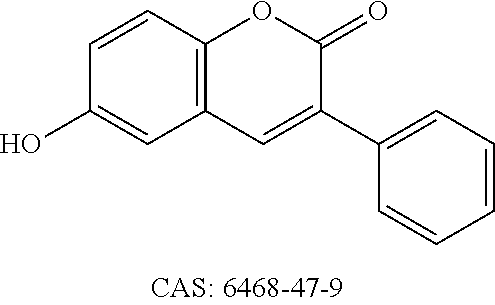 |
|
| R2 |
 |
||
| [P] |
 |
52 | |
| 5g | R1 |
 |
|
| R2 |
 |
||
| [P] |
 |
43 | |


| No. | Yield [%] | ||
| 6a | R1 |
 |
|
| [P] |
 |
84 | |
| 6b | R1 |
 |
|
| [P] |
 |
91 | |
| 6c | R1 |
 |
|
| [P] |
 |
93 | |

| No. | Yield [%] | ||
| 7a | R1 |
 |
|
| R2 |
 |
||
| [P] |
 |
64 | |
| 7b | R1 |
 |
|
| R2 |
 |
||
| [P] |
 |
91 | |
| 7c | R1 |
 |
|
| R2 |
 |
||
| [P] |
 |
86 | |

| No. | Yield [%] | ||
| 8a | R1 |
 |
|
| [P] |
 |
95 | |
| 8b | R1 |
 |
|
| [P] |
 |
93 | |
| 8c | R1 |
 |
|
| [P] |
 |
95 | |

| No. | Yield [%] | ||
| 9a | R1 |
 |
|
| R2 |
 |
||
| [P] |
 |
46 | |
| 9b | R1 |
 |
|
| R2 |
 |
||
| [P] |
 |
59 | |
| 9c | R1 |
 |
|
| R2 |
 |
||
| [P] |
 |
37 | |
| 9d | R1 |
 |
|
| R2 |
 |
||
| [P] |
 |
65 | |
| 9e | R1 |
 |
|
| R2 |
 |
||
| [P] |
 |
24 | |
| 9f | R1 |
 |
|
| R2 |
 |
||
| [P] |
 |
63 | |
| 9g | R1 |
 |
|
| R2 |
 |
||
| [P] |
 |
54 | |
| 9h | R1 |
 |
|
| R2 |
 |
||
| [P] |
 |
77 | |
| 9i | R1 |
 |
|
| R2 |
 |
||
| [P] |
 |
71 | |
| 9k | R1 |
 |
|
| R2 |
 |
||
| [P] |
 |
59 | |
| 9l | R1 |
 |
|
| R2 |
 |
||
| [P] |
 |
2 | |


| No. | Yield [%] | ||
| 10a | R |
 |
|
| [P] |
 |
||
| 10b | R |
 |
|
| [P] |
 |
||
| 10c | R |
 |
|
| [P] |
 |
||
| 10d | R |
 |
|
| [P] |
 |
||
| 10e | R |
 |
|
| [P] |
 |
||
| 10f | R |
 |
|
| [P] |
 |
84 | |
| 10g | R |
 |
54 |
| [P] |
 |
||
| 10h | R |
 |
77 |
| [P] |
 |
||
| 10i | R |
 |
|
| [P] |
 |
82 | |
| 10k | R |
 |
|
| [P] |
 |
93 | |
| 10l | R |
 |
|
| [P] |
 |
89 | |
| No. | ||
| 11a |
 |
M-003 |
 |
P-003 | |
| 11b |
 |
M-053 |
 |
P-053 | |
| 11c |
 |
M-100 |
 |
P-100 | |
| 11d |
 |
M-005 |
 |
P-005 | |
| 11e |
 |
M-037 |
 |
P-037 | |
| 11f |
 |
M-132 |
 |
P-132 | |
| 11g |
 |
M-133 |
 |
P-133 | |
| 11h |
 |
M-134 |
 |
P-134 | |
| 11i |
 |
M135 |
 |
P-135 | |
| 11k |
 |
M-136 |
 |
P-136 | |
| 11l |
 |
M-095 |
 |
P-095 | |


| Polymer No | Tg [° C.] | n | Δn | ||
| P-002 | 15.3 | 1.603 | 0.047 | ||
| P-003 | -4.2 | 1.594 | 0.044 | ||
Claims (17)


Applications Claiming Priority (4)
| Application Number | Priority Date | Filing Date | Title |
|---|---|---|---|
| EP17156327 | 2017-02-15 | ||
| EP17156327.3A EP3363794A1 (en) | 2017-02-15 | 2017-02-15 | Bis-compounds for optically active devices |
| EP17156327.3 | 2017-02-15 | ||
| PCT/EP2018/053621 WO2018149850A1 (en) | 2017-02-15 | 2018-02-14 | Bis-compounds for optically active devices |
Publications (2)
| Publication Number | Publication Date |
|---|---|
| US20200062739A1 US20200062739A1 (en) | 2020-02-27 |
| US11001576B2 true US11001576B2 (en) | 2021-05-11 |
Family
ID=58046588
Family Applications (1)
| Application Number | Title | Priority Date | Filing Date |
|---|---|---|---|
| US16/485,847 Active 2038-02-28 US11001576B2 (en) | 2017-02-15 | 2018-02-14 | Compounds for optically active devices |
Country Status (13)
| Country | Link |
|---|---|
| US (1) | US11001576B2 (en) |
| EP (2) | EP3363794A1 (en) |
| JP (2) | JP7150737B2 (en) |
| CN (1) | CN110300747B (en) |
| AU (1) | AU2018222556B2 (en) |
| BR (1) | BR112019014963A8 (en) |
| CA (1) | CA3053434A1 (en) |
| ES (1) | ES2848058T3 (en) |
| HU (1) | HUE053267T2 (en) |
| MX (1) | MX393092B (en) |
| PL (1) | PL3583101T3 (en) |
| PT (1) | PT3583101T (en) |
| WO (1) | WO2018149850A1 (en) |
Cited By (4)
| Publication number | Priority date | Publication date | Assignee | Title |
|---|---|---|---|---|
| US11702396B2 (en) * | 2017-02-15 | 2023-07-18 | Johnson & Johnson Surgical Vision, Inc. | Hydrophobic compounds for optically active devices |
| US11753387B2 (en) | 2017-02-15 | 2023-09-12 | Johnson & Johnson Surgical Vision, Inc. | Compounds for optically active devices |
| US11958819B2 (en) | 2015-08-21 | 2024-04-16 | Johnson & Johnson Surgical Vision, Inc. | Compounds for optically active devices |
| WO2026083314A1 (en) | 2024-10-17 | 2026-04-23 | Johnson & Johnson Surgical Vision, Inc. | Materials and methods for light adjustable ophthalmic devices |
Families Citing this family (6)
| Publication number | Priority date | Publication date | Assignee | Title |
|---|---|---|---|---|
| MX2021011159A (en) | 2019-04-18 | 2021-10-22 | Johnson & Johnson Surgical Vision Inc | Compounds for optically active devices. |
| US20220202566A1 (en) | 2019-04-26 | 2022-06-30 | Merck Patent Gmbh | System and method |
| US20230203214A1 (en) | 2020-05-20 | 2023-06-29 | Merck Patent Gmbh | Azacoumarin and azathiocoumarin derivatives for use in optically active devices |
| WO2022012798A1 (en) | 2020-07-15 | 2022-01-20 | Merck Patent Gmbh | Optically active devices |
| EP4015512A1 (en) | 2020-12-16 | 2022-06-22 | AMO Ireland | Optically active devices |
| EP4036085A1 (en) | 2021-01-27 | 2022-08-03 | AMO Ireland | Compounds for optically active ophthalmic devices |
Citations (10)
| Publication number | Priority date | Publication date | Assignee | Title |
|---|---|---|---|---|
| US5290892A (en) | 1990-11-07 | 1994-03-01 | Nestle S.A. | Flexible intraocular lenses made from high refractive index polymers |
| US5331073A (en) | 1992-11-09 | 1994-07-19 | Allergan, Inc. | Polymeric compositions and intraocular lenses made from same |
| US5693095A (en) | 1995-06-07 | 1997-12-02 | Alcon Laboratories, Inc. | High refractive index ophthalmic lens materials |
| US6887269B1 (en) * | 1999-11-19 | 2005-05-03 | Norbert Hampp | Ophthalmologic implant |
| WO2007033831A1 (en) | 2005-09-23 | 2007-03-29 | Schmidt Intraocularlinsen Gmbh | Intraocular lens |
| WO2009074520A2 (en) | 2007-12-11 | 2009-06-18 | *Acri.Tec Gmbh | Copolymer and ophthalmological composition |
| WO2009074521A1 (en) | 2007-12-11 | 2009-06-18 | *Acri.Tec Gmbh | Ophthalmologic composition and use thereof |
| US20100160482A1 (en) * | 2008-12-18 | 2010-06-24 | Juergen Nachbaur | Ophthalmologic Composition And Ophthalmologic Lens |
| US20110092612A1 (en) | 2008-06-10 | 2011-04-21 | Mitsubishi Chemical Corporation | Photoreactive composition, optical material, composition for forming holographic recording layer, holographic recording material, and holographic recording medium |
| US10457658B2 (en) | 2015-08-21 | 2019-10-29 | Merck Patent Gmbh | Compounds for optically active devices |
Family Cites Families (6)
| Publication number | Priority date | Publication date | Assignee | Title |
|---|---|---|---|---|
| IT1247476B (en) * | 1991-06-14 | 1994-12-17 | Fidia Spa | DERIVATIVES OF CUMARINA. |
| US6852793B2 (en) * | 2002-06-19 | 2005-02-08 | Bausch & Lomb Incorporated | Low water content, high refractive index, flexible, polymeric compositions |
| WO2009070172A1 (en) | 2007-11-30 | 2009-06-04 | Henkel Ag & Co. Kgaa | Curable resins containing acetal, ketal, acetal ester, or ketal ester linkages |
| CN102197109B (en) * | 2008-10-29 | 2014-05-14 | 默克专利股份有限公司 | Liquid crystal display |
| TWI583673B (en) * | 2010-04-02 | 2017-05-21 | 艾爾康股份有限公司 | Adjustable chromophore compounds and materials incorporating such compounds |
| TWI473823B (en) * | 2010-06-21 | 2015-02-21 | Novartis Ag | High refractive index, acrylic ophthalmic device material with reduced flash |
-
2017
- 2017-02-15 EP EP17156327.3A patent/EP3363794A1/en not_active Ceased
-
2018
- 2018-02-14 AU AU2018222556A patent/AU2018222556B2/en active Active
- 2018-02-14 MX MX2019009606A patent/MX393092B/en unknown
- 2018-02-14 CA CA3053434A patent/CA3053434A1/en active Pending
- 2018-02-14 PL PL18705880T patent/PL3583101T3/en unknown
- 2018-02-14 US US16/485,847 patent/US11001576B2/en active Active
- 2018-02-14 HU HUE18705880A patent/HUE053267T2/en unknown
- 2018-02-14 ES ES18705880T patent/ES2848058T3/en active Active
- 2018-02-14 EP EP18705880.5A patent/EP3583101B1/en active Active
- 2018-02-14 CN CN201880011909.3A patent/CN110300747B/en active Active
- 2018-02-14 WO PCT/EP2018/053621 patent/WO2018149850A1/en not_active Ceased
- 2018-02-14 JP JP2019543965A patent/JP7150737B2/en active Active
- 2018-02-14 PT PT187058805T patent/PT3583101T/en unknown
- 2018-02-14 BR BR112019014963A patent/BR112019014963A8/en active Search and Examination
-
2022
- 2022-09-28 JP JP2022154662A patent/JP7528170B2/en active Active
Patent Citations (12)
| Publication number | Priority date | Publication date | Assignee | Title |
|---|---|---|---|---|
| US5290892A (en) | 1990-11-07 | 1994-03-01 | Nestle S.A. | Flexible intraocular lenses made from high refractive index polymers |
| US5331073A (en) | 1992-11-09 | 1994-07-19 | Allergan, Inc. | Polymeric compositions and intraocular lenses made from same |
| US5693095A (en) | 1995-06-07 | 1997-12-02 | Alcon Laboratories, Inc. | High refractive index ophthalmic lens materials |
| US6887269B1 (en) * | 1999-11-19 | 2005-05-03 | Norbert Hampp | Ophthalmologic implant |
| WO2007033831A1 (en) | 2005-09-23 | 2007-03-29 | Schmidt Intraocularlinsen Gmbh | Intraocular lens |
| US8109999B2 (en) | 2005-09-23 | 2012-02-07 | Norbert Hampp | Intraocular lens |
| WO2009074520A2 (en) | 2007-12-11 | 2009-06-18 | *Acri.Tec Gmbh | Copolymer and ophthalmological composition |
| WO2009074521A1 (en) | 2007-12-11 | 2009-06-18 | *Acri.Tec Gmbh | Ophthalmologic composition and use thereof |
| US20100324165A1 (en) * | 2007-12-11 | 2010-12-23 | Helmut Ritter | Ophthalmological Composition And Use Thereof |
| US20110092612A1 (en) | 2008-06-10 | 2011-04-21 | Mitsubishi Chemical Corporation | Photoreactive composition, optical material, composition for forming holographic recording layer, holographic recording material, and holographic recording medium |
| US20100160482A1 (en) * | 2008-12-18 | 2010-06-24 | Juergen Nachbaur | Ophthalmologic Composition And Ophthalmologic Lens |
| US10457658B2 (en) | 2015-08-21 | 2019-10-29 | Merck Patent Gmbh | Compounds for optically active devices |
Non-Patent Citations (9)
| Title |
|---|
| A. Bouquet et al., Tetrahedron, vol. 37, 1981, pp. 75-81. |
| C.H. Krauch et al., Chemische Berichte Jahrg, vol. 99, 1966, pp. 1723. |
| David L. Oldroyd et al., Tetrahedron Letters, vol. 34, No. 7, 1993, pp. 1087-1090. |
| International Search Report PCT/EP2018/053621 dated Apr. 12, 2018.(pp. 1-3). |
| M. Schraub et al., European Polymer Journal, vol. 51, 2014, pp. 21-27. |
| N. K. Sangwan et al., Indian Journal of Chemistry, 1990, vol. 29B, pp. 294-296. |
| Nasu et al.; J. Mater. Chem., 2010, 20, 6688-6695. |
| Schmidt et al., Pure Appl. Chem. 1971, 27, 647-678. |
| Search report in corresponding Indian application Application No. 201937036658 dated Mar. 23, 2021 (pp. 1-5). |
Cited By (5)
| Publication number | Priority date | Publication date | Assignee | Title |
|---|---|---|---|---|
| US11958819B2 (en) | 2015-08-21 | 2024-04-16 | Johnson & Johnson Surgical Vision, Inc. | Compounds for optically active devices |
| US11702396B2 (en) * | 2017-02-15 | 2023-07-18 | Johnson & Johnson Surgical Vision, Inc. | Hydrophobic compounds for optically active devices |
| US11753387B2 (en) | 2017-02-15 | 2023-09-12 | Johnson & Johnson Surgical Vision, Inc. | Compounds for optically active devices |
| WO2026083314A1 (en) | 2024-10-17 | 2026-04-23 | Johnson & Johnson Surgical Vision, Inc. | Materials and methods for light adjustable ophthalmic devices |
| WO2026083315A1 (en) | 2024-10-17 | 2026-04-23 | Johnson & Johnson Surgical Vision, Inc. | Materials and methods for light adjustable ophthalmic devices |
Also Published As
| Publication number | Publication date |
|---|---|
| EP3583101B1 (en) | 2020-10-28 |
| BR112019014963A8 (en) | 2023-01-10 |
| BR112019014963A2 (en) | 2020-04-07 |
| EP3583101A1 (en) | 2019-12-25 |
| MX393092B (en) | 2025-03-24 |
| AU2018222556A1 (en) | 2019-10-03 |
| ES2848058T3 (en) | 2021-08-05 |
| AU2018222556B2 (en) | 2022-03-03 |
| JP2022173419A (en) | 2022-11-18 |
| PT3583101T (en) | 2021-01-29 |
| CN110300747A (en) | 2019-10-01 |
| WO2018149850A1 (en) | 2018-08-23 |
| MX2019009606A (en) | 2019-11-08 |
| JP2020508986A (en) | 2020-03-26 |
| HUE053267T2 (en) | 2021-06-28 |
| CA3053434A1 (en) | 2018-08-23 |
| EP3363794A1 (en) | 2018-08-22 |
| CN110300747B (en) | 2023-03-28 |
| JP7150737B2 (en) | 2022-10-11 |
| US20200062739A1 (en) | 2020-02-27 |
| PL3583101T3 (en) | 2021-04-06 |
| JP7528170B2 (en) | 2024-08-05 |
Similar Documents
| Publication | Publication Date | Title |
|---|---|---|
| US11001576B2 (en) | Compounds for optically active devices | |
| US11014900B2 (en) | Hydrophilic compounds for optically active devices | |
| US11702396B2 (en) | Hydrophobic compounds for optically active devices | |
| US11753387B2 (en) | Compounds for optically active devices | |
| US11014901B2 (en) | Hydrophobic compounds for optically active devices | |
| US11040990B2 (en) | Compounds containing Si atoms for optically active devices |
Legal Events
| Date | Code | Title | Description |
|---|---|---|---|
| FEPP | Fee payment procedure |
Free format text: ENTITY STATUS SET TO UNDISCOUNTED (ORIGINAL EVENT CODE: BIG.); ENTITY STATUS OF PATENT OWNER: LARGE ENTITY |
|
| AS | Assignment |
Owner name: MERCK PATENT GMBH, GERMANY Free format text: ASSIGNMENT OF ASSIGNORS INTEREST;ASSIGNORS:DOBELMANN-MARA, LARS;RIEDMUELLER, STEFAN;SCHRAUB, MARTIN;SIGNING DATES FROM 20190619 TO 20191002;REEL/FRAME:050840/0795 |
|
| STPP | Information on status: patent application and granting procedure in general |
Free format text: DOCKETED NEW CASE - READY FOR EXAMINATION |
|
| STPP | Information on status: patent application and granting procedure in general |
Free format text: NON FINAL ACTION MAILED |
|
| STPP | Information on status: patent application and granting procedure in general |
Free format text: NOTICE OF ALLOWANCE MAILED -- APPLICATION RECEIVED IN OFFICE OF PUBLICATIONS |
|
| STPP | Information on status: patent application and granting procedure in general |
Free format text: PUBLICATIONS -- ISSUE FEE PAYMENT VERIFIED |
|
| STPP | Information on status: patent application and granting procedure in general |
Free format text: WITHDRAW FROM ISSUE AWAITING ACTION |
|
| STPP | Information on status: patent application and granting procedure in general |
Free format text: AWAITING TC RESP., ISSUE FEE NOT PAID Free format text: NOTICE OF ALLOWANCE MAILED -- APPLICATION RECEIVED IN OFFICE OF PUBLICATIONS |
|
| STPP | Information on status: patent application and granting procedure in general |
Free format text: PUBLICATIONS -- ISSUE FEE PAYMENT VERIFIED |
|
| STCF | Information on status: patent grant |
Free format text: PATENTED CASE |
|
| AS | Assignment |
Owner name: JOHNSON & JOHNSON SURGICAL VISION, INC., CALIFORNIA Free format text: ASSIGNMENT OF ASSIGNORS INTEREST;ASSIGNOR:MERCK PATENT GMBH;REEL/FRAME:059590/0805 Effective date: 20220225 |
|
| MAFP | Maintenance fee payment |
Free format text: PAYMENT OF MAINTENANCE FEE, 4TH YEAR, LARGE ENTITY (ORIGINAL EVENT CODE: M1551); ENTITY STATUS OF PATENT OWNER: LARGE ENTITY Year of fee payment: 4 |