US10998097B2 - Customization of population management - Google Patents
Customization of population management Download PDFInfo
- Publication number
- US10998097B2 US10998097B2 US14/983,845 US201514983845A US10998097B2 US 10998097 B2 US10998097 B2 US 10998097B2 US 201514983845 A US201514983845 A US 201514983845A US 10998097 B2 US10998097 B2 US 10998097B2
- Authority
- US
- United States
- Prior art keywords
- population
- tracking
- algorithms
- builder application
- receiving
- Prior art date
- Legal status (The legal status is an assumption and is not a legal conclusion. Google has not performed a legal analysis and makes no representation as to the accuracy of the status listed.)
- Active, expires
Links
Images




Classifications
-
- G—PHYSICS
- G16—INFORMATION AND COMMUNICATION TECHNOLOGY [ICT] SPECIALLY ADAPTED FOR SPECIFIC APPLICATION FIELDS
- G16H—HEALTHCARE INFORMATICS, i.e. INFORMATION AND COMMUNICATION TECHNOLOGY [ICT] SPECIALLY ADAPTED FOR THE HANDLING OR PROCESSING OF MEDICAL OR HEALTHCARE DATA
- G16H40/00—ICT specially adapted for the management or administration of healthcare resources or facilities; ICT specially adapted for the management or operation of medical equipment or devices
- G16H40/20—ICT specially adapted for the management or administration of healthcare resources or facilities; ICT specially adapted for the management or operation of medical equipment or devices for the management or administration of healthcare resources or facilities, e.g. managing hospital staff or surgery rooms
Definitions
- Population health is an important aspect of patient care. Healthcare providers are interested in outcomes of groups of individuals in order to constantly improve care provided to those groups and the individuals therein. Population health management is a field that monitors the outcomes of populations and utilizes various workflows to improve the outcomes. Various techniques are suggested for effective population health management including establishing precise patient registries, monitoring and measuring several clinical and cost variables, etc. However, there is currently not a completely integrated solution that offers users (e.g., healthcare providers) the ability to customize and edit programs to manage populations in a way that is tailored for their unique use. Such an integrated solution would allow users to break free from the one-size-fits-all population management model existing today and customize their population management strategies on a real-time basis.
- a system or platform for managing population health includes components that build, maintain, and update data stores that include information about healthcare organizations, healthcare providers, and information concerning contractual provisions between healthcare organizations and payers (e.g., insurance companies).
- the components also include a single program builder that dynamically builds condition-specific and/or objective-specific program templates based on client real-time edits.
- the customized program templates may then be used to generate population data for a population.
- the population data may be used to, among other things, identify patient segments based on a condition or for a specific purpose, stratify patients within the segment by degree of risk (or other factors), generate interventions/recommendations, measure intervention outcomes, and the like.
- FIG. 1 is a block diagram of an exemplary computing environment suitable to implement embodiments of the present invention
- FIG. 2 is a block diagram of an exemplary system for customizing population health management suitable to implement embodiments of the present invention
- FIGS. 3-8 exemplary graphical user interfaces suitable to dynamically build a customizable program template in a population tracking builder application in accordance with an embodiment of the present invention
- FIG. 9 is a flow diagram of an exemplary method of customizing population health management in accordance with an embodiment of the present invention.
- FIG. 10 is a flow diagram of an exemplary method of customizing population health management in accordance with an embodiment of the present invention.
- a system or platform for managing population health includes components that build, maintain, and update data stores that include information about healthcare organizations, healthcare providers, and information concerning contractual provisions between healthcare organizations and payers (e.g., insurance companies).
- the components also include a single program builder that dynamically builds condition-specific and/or objective-specific program templates based on client real-time edits.
- the customized program templates may then be used to generate population data for a population.
- the population data may be used to, among other things, identify patient segments based on a condition or for a specific purpose, stratify patients within the segment by degree of risk (or other factors), generate interventions/recommendations, measure intervention outcomes, and the like.
- Embodiments of the present invention relates to a system, method, etc., for supporting healthcare information systems. More specifically, the present invention relates to a system and method for customization of population health management systems on a client-side. The system may make real-time modifications to the programs based on instructions received by a client-side component.
- the claimed solution is necessarily rooted in computerized healthcare technology in order to overcome a problem specifically arising in the realm of computer healthcare information networks, and the claims address the problem of population health management templates not being customizable for various entities (e.g., different healthcare organizations). If adhering to the routine, conventional function of population health tracking, one-size-fits-all templates are offered by population management systems and important population data may be missed due to lack of customization for a particular entity.
- the claimed invention overcomes the limitations of current computer healthcare technology and provides other benefits that will become clear to those skilled in the art from the foregoing description.
- the claimed solution represents a new paradigm of population health management in a computer-based system. Not only does the claimed invention provide the ability for real-time customizations to be added from a client-side but it also provides modifications to programs such that monitoring and recommendations are updated for the customized programs. Users of the claimed invention will notice improved performance of a population management system as the information provided (e.g., population outcomes, recommendations based on population outcomes, etc.) is relevant and unique to the user (e.g., healthcare organization system).
- FIG. 1 is an exemplary computing environment (e.g., medical-information computing-system environment) with which embodiments of the present invention may be implemented.
- the computing environment is illustrated and designated generally as reference numeral 100 .
- the computing environment 100 is merely an example of one suitable computing environment and is not intended to suggest any limitation as to the scope of use or functionality of the invention. Neither should the computing environment 100 be interpreted as having any dependency or requirement relating to any single component or combination of components illustrated therein.
- the present invention is a special computing system that can leverage well-known computing system environments or configurations.
- Examples of well-known computing systems, environments, and/or configurations that might be suitable for use with the present invention include personal computers, server computers, hand-held or laptop devices, multiprocessor systems, microprocessor-based systems, set top boxes, programmable consumer electronics, network PCs, minicomputers, mainframe computers, distributed computing environments that include any of the above-mentioned systems or devices, and the like.
- the present invention might be described in the general context of computer-executable instructions, such as program modules, being executed by a computer.
- Exemplary program modules comprise routines, programs, objects, components, and data structures that perform particular tasks or implement particular abstract data types.
- the present invention might be practiced in distributed computing environments where tasks are performed by remote processing devices that are linked through a communications network.
- program modules might be located in association with local and/or remote computer storage media (e.g., memory storage devices).
- the computing environment 100 comprises a computing device in the form of a control server 102 .
- Exemplary components of the control server 102 comprise a processing unit, internal system memory, and a suitable system bus for coupling various system components, including data store 104 , with the control server 102 .
- the system bus might be any of several types of bus structures, including a memory bus or memory controller, a peripheral bus, and a local bus, using any of a variety of bus architectures.
- Exemplary architectures comprise Industry Standard Architecture (ISA) bus, Micro Channel Architecture (MCA) bus, Enhanced ISA (EISA) bus, Video Electronic Standards Association (VESA) local bus, and Peripheral Component Interconnect (PCI) bus, also known as Mezzanine bus.
- ISA Industry Standard Architecture
- MCA Micro Channel Architecture
- EISA Enhanced ISA
- VESA Video Electronic Standards Association
- PCI Peripheral Component Interconnect
- the control server 102 typically includes therein, or has access to, a variety of non-transitory computer-readable media.
- Computer-readable media can be any available media that might be accessed by control server 102 , and includes volatile and nonvolatile media, as well as, removable and nonremovable media.
- Computer-readable media may comprise computer storage media and communication media.
- Computer storage media includes both volatile and nonvolatile, removable and non-removable media implemented in any method or technology for storage of information such as computer-readable instructions, data structures, program modules or other data.
- Computer storage media includes, but is not limited to, RAM, ROM, EEPROM, flash memory or other memory technology, CD-ROM, digital versatile disks (DVD) or other optical disk storage, magnetic cassettes, magnetic tape, magnetic disk storage or other magnetic storage devices, or any other medium which can be used to store the desired information and which can be accessed by control server 102 .
- Communication media typically embodies computer-readable instructions, data structures, program modules or other data in a modulated data signal such as a carrier wave or other transport mechanism and includes any information delivery media.
- modulated data signal means a signal that has one or more of its characteristics set or changed in such a manner as to encode information in the signal.
- communication media includes wired media such as a wired network or direct-wired connection, and wireless media such as acoustic, RF, infrared and other wireless media. Combinations of any of the above should also be included within the scope of computer-readable media.
- the control server 102 might operate in a computer network 106 using logical connections to one or more remote computers 108 .
- Remote computers 108 might be located at a variety of locations in a medical or research environment, including clinical laboratories (e.g., molecular diagnostic laboratories), hospitals and other inpatient settings, veterinary environments, ambulatory settings, medical billing and financial offices, hospital administration settings, home healthcare environments, and clinicians' offices.
- Clinicians may comprise a treating physician or physicians; specialists such as surgeons, radiologists, cardiologists, and oncologists; emergency medical technicians; physicians' assistants; nurse practitioners; nurses; nurses' aides; pharmacists; dieticians; microbiologists; laboratory experts; laboratory technologists; genetic counselors; researchers; veterinarians; students; and the like.
- the remote computers 108 might also be physically located in nontraditional medical care environments so that the entire healthcare community might be capable of integration on the network.
- the remote computers 108 might be personal computers, servers, routers, network PCs, peer devices, other common network nodes, or the like and might comprise some or all of the elements described above in relation to the control server 102 .
- the devices can be personal digital assistants or other like devices.
- Computer networks 106 comprise local area networks (LANs) and/or wide area networks (WANs). Such networking environments are commonplace in offices, enterprise-wide computer networks, intranets, and the Internet.
- the control server 102 When utilized in a WAN networking environment, the control server 102 might comprise a modem or other means for establishing communications over the WAN, such as the Internet.
- program modules or portions thereof might be stored in association with the control server 102 , the data store 104 , or any of the remote computers 108 .
- various application programs may reside on the memory associated with any one or more of the remote computers 108 . It will be appreciated by those of ordinary skill in the art that the network connections shown are exemplary and other means of establishing a communications link between the computers (e.g., control server 102 and remote computers 108 ) might be utilized.
- an organization might enter commands and information into the control server 102 or convey the commands and information to the control server 102 via one or more of the remote computers 108 through input devices, such as a keyboard, a microphone (e.g., voice inputs), a touch screen, a pointing device (commonly referred to as a mouse), a trackball, or a touch pad.
- input devices such as a keyboard, a microphone (e.g., voice inputs), a touch screen, a pointing device (commonly referred to as a mouse), a trackball, or a touch pad.
- Other input devices comprise satellite dishes, scanners, or the like. Commands and information might also be sent directly from a remote healthcare device to the control server 102 .
- the control server 102 and/or remote computers 108 might comprise other peripheral output devices, such as speakers and a printer.
- control server 102 and the remote computers 108 are not shown, such components and their interconnection are well known. Accordingly, additional details concerning the internal construction of the control server 102 and the remote computers 108 are not further disclosed herein.
- FIG. 2 a block diagram 200 is illustrated, in accordance with an embodiment of the present invention, showing an exemplary system for customization of a population management program.
- the computing system shown in FIG. 2 is merely an example of one suitable computing system environment and is not intended to suggest any limitation as to the scope of the user or functionality of embodiments of the present invention. Neither should the computing system be interpreted as having any dependency or requirement related to any single component or combination of components illustrated therein.
- the various block of FIG. 2 are shown with lines for the sake of clarity, in reality, delineating various components is not so clear, and metaphorically, the lines would more accurately be grey and fuzzy.
- any number of physical machines such as computing devices or portions of computing devices shown in FIG. 1
- virtual machines data centers, endpoints, or combinations thereof may be employed to achieve the desired functionality within the scope of embodiments of the present invention.
- the components of FIG. 2 are capable of communicating with a number of different entities or data sources such as healthcare data sources 204 for the collection of data (e.g., population data, patient data, financial data, etc.).
- This communication may utilize, without limitation, one or more local area networks (LANs) and/or wide area networks (WANs).
- LANs local area networks
- WANs wide area networks
- Such networking environments are commonplace in offices, enterprise-wide computer networks, intranets, and the Internet. Accordingly, the network 201 is not further described herein.
- the term “healthcare data” is meant to be broad and encompass any type of healthcare information.
- the healthcare data may be specific to a single patient or a group of patients.
- the healthcare data may also be directed to a clinician or group of clinicians. For example, healthcare data as it relates to a clinician may include patients that the clinician treats.
- the healthcare data source 204 may include, for example, a hospital, a physician's office, a health information exchange, an urgent care clinic, and the like. Healthcare data received from these different sources 204 may include, but is not limited to, information that describes various aspects of the patient state, including patient vitals, lab results, medication orders, diagnosis codes, condition codes, clinical orders, indexed values from clinical notes or other text documents, patient demographic information, patient history, patient images, and a variety of other patient information.
- the healthcare data sources 204 shown as communicating with various components of the system 200 are provided by way of example only and are not intended to limit the scope of the present invention in any way.
- the healthcare data source 204 may have one or more computing devices such as computing device 108 of FIG. 1 , for communicating with components of the system 200 .
- Each healthcare data source may maintain its own native electronic medical record (EMR) system.
- EMR electronic medical record
- the healthcare data sources 204 may be disparate from each other such that the data sources 204 are not directly connected with one another.
- the healthcare data sources 204 send information to the population tracking manager 206 and not typically directly between one another.
- the population tracking manager 206 facilitates customization of population programs. The customization may occur, for instance, and the user device 202 .
- the population tracking manager 206 provides, within a single application (e.g., a population tracking builder application), a program builder that allows a user to customize program templates for population tracking.
- clients e.g., healthcare organizations
- the request would have to be approved and then an engineer would manually modify an algorithm (e.g., make changes to the algorithm itself, disable the algorithm, add a new algorithm, etc.) for the client.
- Clients were not able to manage their own population tracking as most are likely not sophisticated enough to code for changes in the population tracking programs.
- the present invention provides a tool, the single application (population tracking builder application), that allows users to easily input changes into a centralized tool and have those changes incorporated into the program templates.
- FIG. 3 is an exemplary graphical interface 300 of the tool provided to users.
- the interface 300 includes one or more populations (e.g., congestive heart failure population 302 , diabetes population 304 , readmission prevention population 306 , and sepsis population 308 ).
- each population is selectable such that a user can select an individual population/program to edit.
- a user has the ability to enable or disable the population tracking for any population by selecting an option under the enable area 310 .
- Area 312 indicates those programs that have been enabled or disabled. Additional programs/populations may be added via the add indication 314 .
- the changes may be saved utilizing the save indicator 316 or a user may proceed to make additional changes by selecting a next indicator 318 .
- Each population therefore, is editable within the single application by a user (e.g., a client).
- Client-side edits are then incorporated into the population data on the server-side (e.g., the service provider).
- the population data e.g., edits
- the server-side e.g., the service provider
- the population data may be cached on both the client-side and the server-side.
- FIG. 4 includes a selected program 402 and one or more algorithms therein such as algorithm 404 and algorithm 406 .
- Algorithms 408 are merely provided to illustrate that the number of algorithms for each population is editable within the client-side single application.
- FIG. 4 provides an enabled indicator 412 to illustrate whether each algorithm is enabled.
- Area 414 indicates elections for each algorithm indicating whether each is enabled or disabled. Algorithms may be added via the add algorithm indicator 410 .
- Selection of the add algorithm indicator 410 may navigate a user to a pop-up window (or any other alternative display means) that lists a plurality of algorithms clinically relevant to the selected population.
- the selected population in FIG. 4 is the congestive heart failure (CHF) population previously illustrated in FIG. 3 .
- Algorithms clinically relevant to the CHF population include, but are not limited to, an abnormal weight trending algorithm (i.e., algorithm 404 ) and a beta block therapy algorithm (i.e., algorithm 406 ).
- algorithm 404 an abnormal weight trending algorithm
- algorithm 406 beta block therapy algorithm
- the tool In addition to customizing which algorithms are applied to a population, the tool also provides, within the same single application, the ability to customize particular variables within the algorithm. Put simply, a user can choose which algorithms to apply and how to apply the algorithm.
- This feature is illustrated in the exemplary interface 500 of FIG. 5 .
- a weight trending algorithm 510 is displayed as a result of a selection of algorithm 404 of FIG. 4 .
- a plurality of algorithm values is provided in algorithm value area 512 . There could be one or more algorithm values. The four illustrated in FIG. 5 are merely for exemplary purposes and should not be considered limiting.
- Each algorithm value is associated with measurable criteria. For instance, the first value in the algorithm value area 512 is for a weight trending timeframe. Here, a user may designate a time interval to apply the algorithm. As is also shown, additional values for threshold weight trends, when to apply warnings, etc., are shown in the algorithm value area 512 .
- FIG. 6 illustrates an exemplary interface 600 for customizing notifications of an algorithm.
- a weight trending algorithm 602 is provided (e.g., this may be the same algorithm 404 shown in FIG. 4 ).
- a notification option area 604 is provided including one or more notification options for the selected algorithm 602 .
- the weight trending algorithm 602 includes options to notify, among others, an attending physician, a proxy, or any other roles you would like to add.
- the notification option area 604 includes features to customize how the roles are notified (e.g., text messages, emails, etc.). The notifications may be customized for each algorithm of a population. It is worth noting that each customization described herein is provided via a single tool/application.
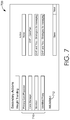
- FIG. 7 an exemplary interface 700 for secondary actions is provided. This interface 700 is also provided with respect to the weight trending example discussed thus far.
- a secondary actions area 710 is provided to organize what secondary actions may be provided and to whom they are provided. For instance, a care plan may be provided to a care manager, specific literature may be provided to a proxy, etc. Additional secondary actions (and recipients of those actions) may be added via the add action indicator 712 .
- FIG. 8 provides an exemplary interface 800 where measures of a population are provided within the same tool where the tracking mechanisms were customized.
- a population measure area 802 provides one or more measures to track for a population using the customized algorithms.
- a measure enabling area 806 identifies which measures are enabled and which are disabled. Additional measures may be added via the add measure indicator 804 .
- the interface 800 illustrates measures that provide data analysis for the population. For instance, the tool may identify that for a diabetic population, a client is only 42% compliant for providing foot exams. Measures may be identified to track compliance to ensure a client is improving. This is all customizable within the single population tracking builder application.
- the population builder application may utilize regulatory databases to ensure compliance with various measures. Additionally, the population tracking builder application may utilize clinical databases (including internal and external data libraries). The population tracking builder application allows for customization of population tracking and also provides analysis for identifying trends and providing alerts based on the analysis of the customized tracking mechanisms. Thus, the tool (i.e., population tracking builder application) may provide suggestive measures for how to be in compliance with a measure and, upon receiving modifications to the algorithms or values thereof, immediately begin identifying updated trends for a population.
- FIG. 9 a flow diagram illustrating an exemplary method 900 is provided.
- a request to access the population tracking manager via a population tracking builder application is received.
- a population tracking interface is generated that includes one or more populations to manage at block 904 .
- the population tracking interface is provided at block 906 with the one or more populations to manage where each population is editable within the single population tracking builder application.
- a flow diagram illustrating an exemplary method 1000 is provided.
- a request to access the population tracking manager via a population tracking builder application is received.
- a population tracking interface including one or more populations to manage is generated.
- the population tracking interface is provided at block 1006 with the one or more populations to manage where each population is editable within the single population tracking builder application.
- a selection of a first population is identified at block 1008 .
- One or more algorithms relevant to the first population are provided at block 1010 , where the one or more algorithms are editable with the population tracking builder application.
- one or more edits to the one or more algorithms are received within the population tracking builder application.
- the one or more algorithms are modified in accordance with the one or more edits made within the population tracking builder application.
- the population data is analyzed at block 1016 to provide one or more recommendations (e.g., suggestions, secondary actions, etc.) regarding management of a population.
Landscapes
- Business, Economics & Management (AREA)
- General Business, Economics & Management (AREA)
- Health & Medical Sciences (AREA)
- Engineering & Computer Science (AREA)
- Biomedical Technology (AREA)
- Epidemiology (AREA)
- General Health & Medical Sciences (AREA)
- Medical Informatics (AREA)
- Primary Health Care (AREA)
- Public Health (AREA)
- Medical Treatment And Welfare Office Work (AREA)
- Measuring And Recording Apparatus For Diagnosis (AREA)
Abstract
Description
Claims (20)
Priority Applications (2)
| Application Number | Priority Date | Filing Date | Title |
|---|---|---|---|
| US14/983,845 US10998097B2 (en) | 2015-12-30 | 2015-12-30 | Customization of population management |
| US17/204,084 US11810665B2 (en) | 2015-12-30 | 2021-03-17 | Customization of population management |
Applications Claiming Priority (1)
| Application Number | Priority Date | Filing Date | Title |
|---|---|---|---|
| US14/983,845 US10998097B2 (en) | 2015-12-30 | 2015-12-30 | Customization of population management |
Related Child Applications (1)
| Application Number | Title | Priority Date | Filing Date |
|---|---|---|---|
| US17/204,084 Continuation US11810665B2 (en) | 2015-12-30 | 2021-03-17 | Customization of population management |
Publications (2)
| Publication Number | Publication Date |
|---|---|
| US20170193170A1 US20170193170A1 (en) | 2017-07-06 |
| US10998097B2 true US10998097B2 (en) | 2021-05-04 |
Family
ID=59235691
Family Applications (2)
| Application Number | Title | Priority Date | Filing Date |
|---|---|---|---|
| US14/983,845 Active 2039-11-01 US10998097B2 (en) | 2015-12-30 | 2015-12-30 | Customization of population management |
| US17/204,084 Active 2036-08-06 US11810665B2 (en) | 2015-12-30 | 2021-03-17 | Customization of population management |
Family Applications After (1)
| Application Number | Title | Priority Date | Filing Date |
|---|---|---|---|
| US17/204,084 Active 2036-08-06 US11810665B2 (en) | 2015-12-30 | 2021-03-17 | Customization of population management |
Country Status (1)
| Country | Link |
|---|---|
| US (2) | US10998097B2 (en) |
Families Citing this family (2)
| Publication number | Priority date | Publication date | Assignee | Title |
|---|---|---|---|---|
| US10998097B2 (en) | 2015-12-30 | 2021-05-04 | Cerner Innovation, Inc. | Customization of population management |
| US20200349652A1 (en) * | 2019-05-03 | 2020-11-05 | Koninklijke Philips N.V. | System to simulate outcomes of a new contract with a financier of care |
Citations (9)
| Publication number | Priority date | Publication date | Assignee | Title |
|---|---|---|---|---|
| US20040044272A1 (en) * | 2001-02-08 | 2004-03-04 | Piet Moerman | Personal condition management system |
| US20070021977A1 (en) * | 2005-07-19 | 2007-01-25 | Witt Biomedical Corporation | Automated system for capturing and archiving information to verify medical necessity of performing medical procedure |
| US20080275729A1 (en) * | 2007-04-09 | 2008-11-06 | Nina Mithi Taggart | System and method for population health management |
| US20120029304A1 (en) * | 2010-07-29 | 2012-02-02 | Nellcor Puritan Bennett Llc | Configurable patient monitoring system |
| US20120173475A1 (en) * | 2010-12-30 | 2012-07-05 | Cerner Innovation, Inc. | Health Information Transformation System |
| US20130304506A1 (en) * | 2012-05-08 | 2013-11-14 | Healthenic Inc. | System and method for managing health risks |
| US20140278481A1 (en) * | 2013-03-14 | 2014-09-18 | Cerner Innovation, Inc. | Large scale identification and analysis of population health risks |
| US20160147946A1 (en) * | 2014-11-26 | 2016-05-26 | General Electric Company | Patient library interface combining comparison information with feedback |
| US20170169173A1 (en) * | 2015-12-09 | 2017-06-15 | Cedar Gate Partners, LLC | System for adapting healthcare data and performance management analytics |
Family Cites Families (6)
| Publication number | Priority date | Publication date | Assignee | Title |
|---|---|---|---|---|
| US6942618B2 (en) * | 2003-06-19 | 2005-09-13 | Siemens Medical Solutions U.S.A., Inc. | Change detection for optimized medical imaging |
| GB2413082A (en) * | 2004-04-14 | 2005-10-19 | Patrick Schauerte | Implantable cardioverter-defibrillator for treating tachycardia |
| WO2012149444A1 (en) * | 2011-04-29 | 2012-11-01 | Wellness & Prevention, Inc. | Method and system for message delivery employing third party influences |
| US20140100884A1 (en) * | 2012-10-08 | 2014-04-10 | Cerner Innovation, Inc. | Outreach program |
| US20160267223A1 (en) * | 2015-03-10 | 2016-09-15 | Practice Fusion, Inc. | Integrated health data analysis system |
| US10998097B2 (en) | 2015-12-30 | 2021-05-04 | Cerner Innovation, Inc. | Customization of population management |
-
2015
- 2015-12-30 US US14/983,845 patent/US10998097B2/en active Active
-
2021
- 2021-03-17 US US17/204,084 patent/US11810665B2/en active Active
Patent Citations (9)
| Publication number | Priority date | Publication date | Assignee | Title |
|---|---|---|---|---|
| US20040044272A1 (en) * | 2001-02-08 | 2004-03-04 | Piet Moerman | Personal condition management system |
| US20070021977A1 (en) * | 2005-07-19 | 2007-01-25 | Witt Biomedical Corporation | Automated system for capturing and archiving information to verify medical necessity of performing medical procedure |
| US20080275729A1 (en) * | 2007-04-09 | 2008-11-06 | Nina Mithi Taggart | System and method for population health management |
| US20120029304A1 (en) * | 2010-07-29 | 2012-02-02 | Nellcor Puritan Bennett Llc | Configurable patient monitoring system |
| US20120173475A1 (en) * | 2010-12-30 | 2012-07-05 | Cerner Innovation, Inc. | Health Information Transformation System |
| US20130304506A1 (en) * | 2012-05-08 | 2013-11-14 | Healthenic Inc. | System and method for managing health risks |
| US20140278481A1 (en) * | 2013-03-14 | 2014-09-18 | Cerner Innovation, Inc. | Large scale identification and analysis of population health risks |
| US20160147946A1 (en) * | 2014-11-26 | 2016-05-26 | General Electric Company | Patient library interface combining comparison information with feedback |
| US20170169173A1 (en) * | 2015-12-09 | 2017-06-15 | Cedar Gate Partners, LLC | System for adapting healthcare data and performance management analytics |
Also Published As
| Publication number | Publication date |
|---|---|
| US11810665B2 (en) | 2023-11-07 |
| US20210202081A1 (en) | 2021-07-01 |
| US20170193170A1 (en) | 2017-07-06 |
Similar Documents
| Publication | Publication Date | Title |
|---|---|---|
| US11551792B2 (en) | Identification, stratification, and prioritization of patients who qualify for care management services | |
| US20240363217A1 (en) | Integrated Coordination Of Care | |
| US11783265B2 (en) | Score cards | |
| US20190294318A1 (en) | Multi-action button for mobile devices | |
| US20200265362A1 (en) | Score cards | |
| US10922774B2 (en) | Comprehensive medication advisor | |
| US9111018B2 (en) | Patient care cards | |
| US8631352B2 (en) | Provider care cards | |
| US20120173475A1 (en) | Health Information Transformation System | |
| US20140278524A1 (en) | Associating patients and medical devices with a mobile device via bluetooth | |
| US10475540B2 (en) | Impactability scoring | |
| US20260106005A1 (en) | Universal medical charting | |
| US10460266B2 (en) | Optimizing workflows | |
| US20190279311A1 (en) | Time data analysis | |
| US11810665B2 (en) | Customization of population management | |
| US11776695B2 (en) | Indicator for probable inheritance of genetic disease | |
| US20140278523A1 (en) | Dynamically associating and disassociating patients and medical devices | |
| US20150186616A1 (en) | Plans of care across a life continuum | |
| US10489553B2 (en) | Clinical document quality review |
Legal Events
| Date | Code | Title | Description |
|---|---|---|---|
| AS | Assignment |
Owner name: CERNER INNOVATION, INC., KANSAS Free format text: ASSIGNMENT OF ASSIGNORS INTEREST;ASSIGNOR:AZZARO, FRANK;REEL/FRAME:037706/0567 Effective date: 20160209 |
|
| STPP | Information on status: patent application and granting procedure in general |
Free format text: PRE-INTERVIEW COMMUNICATION MAILED |
|
| STPP | Information on status: patent application and granting procedure in general |
Free format text: RESPONSE TO NON-FINAL OFFICE ACTION ENTERED AND FORWARDED TO EXAMINER |
|
| STPP | Information on status: patent application and granting procedure in general |
Free format text: NON FINAL ACTION MAILED |
|
| STPP | Information on status: patent application and granting procedure in general |
Free format text: RESPONSE TO NON-FINAL OFFICE ACTION ENTERED AND FORWARDED TO EXAMINER |
|
| STPP | Information on status: patent application and granting procedure in general |
Free format text: FINAL REJECTION MAILED |
|
| STPP | Information on status: patent application and granting procedure in general |
Free format text: DOCKETED NEW CASE - READY FOR EXAMINATION |
|
| STPP | Information on status: patent application and granting procedure in general |
Free format text: NOTICE OF ALLOWANCE MAILED -- APPLICATION RECEIVED IN OFFICE OF PUBLICATIONS |
|
| STPP | Information on status: patent application and granting procedure in general |
Free format text: PUBLICATIONS -- ISSUE FEE PAYMENT RECEIVED |
|
| STPP | Information on status: patent application and granting procedure in general |
Free format text: PUBLICATIONS -- ISSUE FEE PAYMENT VERIFIED |
|
| STCF | Information on status: patent grant |
Free format text: PATENTED CASE |
|
| MAFP | Maintenance fee payment |
Free format text: PAYMENT OF MAINTENANCE FEE, 4TH YEAR, LARGE ENTITY (ORIGINAL EVENT CODE: M1551); ENTITY STATUS OF PATENT OWNER: LARGE ENTITY Year of fee payment: 4 |