US10997252B2 - Methods, apparatuses, and computer storage media for data searching - Google Patents
Methods, apparatuses, and computer storage media for data searching Download PDFInfo
- Publication number
- US10997252B2 US10997252B2 US16/146,857 US201816146857A US10997252B2 US 10997252 B2 US10997252 B2 US 10997252B2 US 201816146857 A US201816146857 A US 201816146857A US 10997252 B2 US10997252 B2 US 10997252B2
- Authority
- US
- United States
- Prior art keywords
- user
- predefined filter
- candidate
- search results
- filter
- Prior art date
- Legal status (The legal status is an assumption and is not a legal conclusion. Google has not performed a legal analysis and makes no representation as to the accuracy of the status listed.)
- Active, expires
Links
Images



Classifications
-
- G—PHYSICS
- G06—COMPUTING OR CALCULATING; COUNTING
- G06F—ELECTRIC DIGITAL DATA PROCESSING
- G06F16/00—Information retrieval; Database structures therefor; File system structures therefor
- G06F16/20—Information retrieval; Database structures therefor; File system structures therefor of structured data, e.g. relational data
- G06F16/24—Querying
- G06F16/248—Presentation of query results
-
- G—PHYSICS
- G06—COMPUTING OR CALCULATING; COUNTING
- G06F—ELECTRIC DIGITAL DATA PROCESSING
- G06F16/00—Information retrieval; Database structures therefor; File system structures therefor
- G06F16/90—Details of database functions independent of the retrieved data types
- G06F16/903—Querying
- G06F16/9035—Filtering based on additional data, e.g. user or group profiles
-
- G—PHYSICS
- G06—COMPUTING OR CALCULATING; COUNTING
- G06F—ELECTRIC DIGITAL DATA PROCESSING
- G06F16/00—Information retrieval; Database structures therefor; File system structures therefor
- G06F16/90—Details of database functions independent of the retrieved data types
- G06F16/901—Indexing; Data structures therefor; Storage structures
-
- G—PHYSICS
- G06—COMPUTING OR CALCULATING; COUNTING
- G06F—ELECTRIC DIGITAL DATA PROCESSING
- G06F16/00—Information retrieval; Database structures therefor; File system structures therefor
- G06F16/90—Details of database functions independent of the retrieved data types
- G06F16/903—Querying
- G06F16/90335—Query processing
-
- G—PHYSICS
- G06—COMPUTING OR CALCULATING; COUNTING
- G06F—ELECTRIC DIGITAL DATA PROCESSING
- G06F16/00—Information retrieval; Database structures therefor; File system structures therefor
- G06F16/90—Details of database functions independent of the retrieved data types
- G06F16/903—Querying
- G06F16/9038—Presentation of query results
-
- G—PHYSICS
- G06—COMPUTING OR CALCULATING; COUNTING
- G06F—ELECTRIC DIGITAL DATA PROCESSING
- G06F17/00—Digital computing or data processing equipment or methods, specially adapted for specific functions
- G06F17/10—Complex mathematical operations
- G06F17/11—Complex mathematical operations for solving equations, e.g. nonlinear equations, general mathematical optimization problems
Definitions
- Embodiments of the present disclosure generally relate to the field of data searching, and more specifically, to a method, an apparatus and a computer storage media for data searching in a computer state.
- One of the present disclosure provides a method of data searching.
- the method comprises: in response to receiving a search request from a user, acquiring search results matching the search request; determining a matching status between a predefined filter and the search results, the predefined filter being used for filtering search results; and controlling, based on the determined matching status, displaying of the predefined filter to the user.
- determining the number of candidate options hit by the search results in the candidate options of the predefined filter may comprise: bucketing the search results, such that a search result matching a candidate option of the predefined filter is allocated to a bucket associated with the candidate option; determining the number of search results allocated to each bucket; and determining the number of buckets containing at least one search results as the number of candidate options hit by the search results.
- determining the priority of the predefined filter may comprise: determining the priority of the predefined filter based on the number of candidate options hit by the search results and a historical choice of the user for the candidate options of the predefined filter. In a further embodiment, determining the priority of the predefined filter may comprise determining a priority value of the predefined filter as:
- the actions of the user for candidate options of the filter may comprise displaying or clicking.
- controlling the displaying of the predefined filter to the user may comprise: in response to the priority of the predefined filter being greater than or equal to a first threshold, displaying the predefined filter to the user for further searching of the search result; or in response to the priority of the predefined filter being less than the first threshold, not displaying the predefined filter to the user.
- controlling the displaying of the predefined filter to the user may comprise: determining, based on the priority of the predefined filter, a display sequence of the predefined filter when being displayed to the user; and displaying the predefined filter to the user in accordance with the determined display sequence.
- determining the matching status between the predefined filter and the search results may comprise: determining the number of search results hitting a candidate option of the predefined filter; and wherein controlling the displaying of the predefined filter to the user may comprise: determining, based on the number of search results hitting the candidate option, a priority of the candidate option; controlling, based on the priority of the candidate option, the displaying of the candidate option of the predefined filter to the user.
- determining the priority of the candidate option may comprise: in response to the number of search results hitting a candidate option being greater than zero and less than a second threshold, determining a priority value of the candidate option as one of: 1, x, and
- determining priority of the candidate option may comprise in response to the number of search results hitting the candidate option being equal to zero or being greater than or equal to the second threshold, determining the priority value h of the candidate option as 0.
- determining the priority of the candidate option may further comprise: adjusting, based on historical choice behaviors of the user for the candidate option of the predefined filter, the priority value of the candidate option.
- M represents a length of a time window for making statistics of the historical choice behaviors
- m represents the number of actions of the user for candidate options of the filter within the time window
- “′′” represents an index of the actions within the time window
- a is a positive constant
- T(i) represents a latency from an i-th action within the time window to the time when the priority of the predefined filter is determined.
- controlling the displaying of the candidate option to the user may comprise: in response to the priority of the candidate option being greater than or equal to a third threshold, displaying the candidate option to the user for further searching of the search results; or in response to the priority of the candidate option being less than the third threshold, determining to avoid displaying the candidate option to the user.
- displaying of the candidate option to the user may comprise: determining, based on the priority of the candidate option, a display sequence of the candidate option when being displayed to the user; and displaying the candidate option to the user in accordance with the display sequence determined.
- controlling the displaying of the predefined filter to the user may comprise: in response to the number of the search results acquired being greater than a fourth threshold, controlling, based on the determined matching status, the displaying of the predefined filter to the user; or in response to the number of the search results acquired being less than or equal to a fourth threshold, not displaying the predefined filter to the user.
- the electronic device comprises at least one processor; and at least one memory.
- the memory is coupled to the at least one processor and includes computer program codes stored therein.
- the computer program when executed by the at least one processor, causes the electronic device to perform any portion of the method(s) of the present disclosure.
- One aspect of the present disclosure provides a computer storage medium including computer program codes stored thereon.
- the computer program codes when executed in a processor, enable the processor to perform any portion of the method(s) of the present disclosure.
- FIG. 1 illustrates a schematic structure diagram of an example computer system in which embodiments of the present disclosure can be implemented
- FIG. 2 illustrates a flow of data searching in a conventional solution
- FIG. 3 illustrates an example of a static filter
- FIG. 4 illustrates a flowchart of a method of data searching according to embodiments of the present disclosure
- FIG. 5 illustrates an example operation of determining the number of filter options hit by a search result according to embodiments of the present disclosure
- FIGS. 6-7 illustrate an example operation of bucketing search results according to embodiments of the present disclosure
- FIG. 8 illustrates an example operation of controlling displaying of filters to a user according to embodiments of the present disclosure
- FIG. 9 illustrates an example operation of controlling displaying of candidate options of filter to a user according to embodiments of the present disclosure
- FIG. 10 illustrates an example model of adjustment factors for adjusting priority of the filter according to embodiments of the present disclosure
- FIG. 11 illustrates a flow of a further method of data searching according to embodiments of the present disclosure
- FIG. 12 illustrates an example of displaying filters to a user according to embodiments of the present disclosure.
- FIG. 13 illustrates a schematic structure diagram of an electronic device according to embodiments of the present disclosure.
- FIG. 1 illustrates a schematic diagram of an example computer system 100 in which embodiments of the present disclosure can be implemented. However, it should be noted that a particular architecture of the computer system shown in FIG. 1 is not required in some embodiments.
- the example computer system 100 in FIG. 1 includes therein a user host 110 , a search server 120 and a storage server 130 .
- the search server 120 can receive a query/search request, which is sent by the user host 110 from the user, search data in the storage server 130 , and return search results to the user.
- the user usually starts the query/search by providing some keywords, and the user can optionally narrow down a search scope using a search filter.
- the search scope is usually limited by using a plurality of preset static search filters.
- Table 1 shows an example of a data set from which data can be searched.
- each column has been indexed, for example, the first column is identity (ID), the second column is file name, the third column is city and the fourth column is operating system (OS) etc.
- the last column is contents in a record (dummy text). It is assumed that the ID of each record in Table 1 is unique and the index (ID, file name, city etc.) of each column, apart from the last column, can serve as a filter in the search to constrain/filter the search results. Further, Table 1 supports a full-text search, such as searching the dummy text column with keywords. In order to simplify, the example data sets in Table 1 only contains 16 records. However, it should be noted that a larger data sets might be involved in an actual search.
- teaching young people of school age may be carried out in an informal setting, such as within IT 12 System-file-12 Shanghai Win 23 word Tongji Since the early days of University Google, people throughout the company have questioned the value of managers. That skepticism stems from a highly technocratic culture. As one software engineer, Eric Flatt, puts it, “We are a company built by engineers for engineers.” And most engineers, not just those at Google, want to spend 13 System-file-13 Beijing Linux 45 PDF Peking Search or browse RateMDs University for trusted reviews & ratings on doctors in Salt Lake City. We're the originaldoctor ratings site with over 2 million reviews.
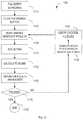
- FIG. 2 illustrates an example flowchart of a traditional searching method.
- a user will search data from the data sets shown in Table 1.
- the user inputs query keywords in a search box. For example, if the user wants to find a file related to information technology (IT) industry, and then he may input “IT” as the keyword, such that a search engine can conduct a query with full-text using “IT”.
- IT information technology
- FIG. 3 illustrates an example of a user interface of a traditional filter.
- the traditional filter set is predefined, that is, there are a fixed number of filters in the set and each filter includes all possible filter options. Therefore, the user needs to decide which filter options to use prior to the query.
- the user for example, starts the query by clicking a search button.
- a backend e.g., in the search server
- a (ID) ⁇ 1, 2, 6, 11, 14, 15 ⁇
- B (ID) ⁇ 1,2,3,4,5,6,7,8,9,10,11,12,13,14,15,16 ⁇
- C (ID) ⁇ 1, 4, 14 ⁇
- the search server returns the query result to the user.
- the query result dependent on its number, can be displayed in a single page or in a paged manner.
- the flow ends at block 270 ; otherwise, if the user find there are too many records to read (which is often the case) and wants to narrow down the scope of the search result, the flow returns to block 210 or 220 in order to refine the query keyword and/or change the filters for further search.
- the user can modify the value of the city filter to acquire a set with fewer results.
- the returned search results may specify a significant number of records, so it might be required that the cycle is repeated again and again to adjust the filter and search until the returned search result set is small enough for the user.
- a user-friendly search function user interface will assist users to complete the searching efficiently.
- some predefined static filters e.g., shown by FIG. 3
- predefining the static search filters for users is not an efficient approach to enable a user to query large data sets. Specifically, backup data becomes large and has varied content, which makes it difficult to specify the appropriate set of predefine the filters (for both keywords and values). Further, the full-text search has become more common and users have no idea on how to select a reasonable filter at the beginning in most cases. Meanwhile, improving user experience has become more important at the present. However, the predefined filters cannot provide a satisfactory user experience.
- predefined filter is static, so it cannot change in accordance with user's behavior.
- predefined filers for example, including ID, file name, city, operating system, file size, file type and node position
- each pre-defined filter always contains all possible values (candidate options), this is not optimal for an improved user experience.
- the user may have no idea on how to select a correct filter at the first query. Most of the time, the user may just input some keywords for query within an entire scope. Further, some filters might have so many options that it is difficult for the user to select the appropriate options. For example, the filter of city may have thousands of values (candidate options). Although cities can be further classified into respective provinces, the number of the candidate options is still very large.
- some filters (such as city and school) may be implicitly related. For example, once a city is assigned, all possible schools will be delimited.
- the present disclosure proposes a new method, an apparatus and a computer readable storage medium for data searching.
- a new method for creating a filter, guiding users to narrow down the search result and assisting them to find the file to recover the system is provided according to some embodiments.
- a method for dynamically controlling the filters and/or filter options presented to users for further search based on the analysis of the search result is provided.
- the search results are grouped (e.g., bucketing) and the score for each filter (and its options) is calculated; and it is determined whether the filter or the option is to be displayed to the user based on the score; and/or the sequence of the filter or the option during displaying is determined.
- the filter and/or its options can be intelligently displayed based on the analysis to the research result, where “intelligent” can be demonstrated as hiding useless filters (and/or options) which might make little contribution on narrowing down the search results, and/or sorting the filters (and/or options) by priority.
- AI artificial intelligence
- ML machine learning
- FIG. 4 illustrates a method 400 of data searching according to embodiments of the present disclosure.
- the method can be implemented by a search engine or a search server, such as the search server 120 in FIG. 1 .
- a search engine such as the search server 120 in FIG. 1 .
- embodiments of the method 400 are described with reference to the search server 120 and the computer system 100 in FIG. 1 .
- the method 400 is not limited to be implemented in the particular example structure.
- the search server 120 acquires search results matching the search request.
- the search results can, for example, come from the user host 110 in FIG. 1 .
- the search request can include, for example, keywords used for searching, or both keywords and filters.
- the filters can be one or more of the predefined filter set, where each predefined filter is used for filtering/constraining the search result.
- the search request does not necessarily include a filter.
- the search server 120 analyzes, at block 420 , the search result to determine the matching status between the predefined filters and the search result, and controls, at block 430 , displaying of the predefined filters to the user based on the determined matching status.
- the filters and/or other candidate options which are beneficial to further narrowing down the search scope can be determined in the operations at blocks 420 and 430 , and favorable filters and/or other candidate options can be displayed to the user, thereby simplifying user's operations, and improving user experience.
- the search server 120 can determine, at block 420 , the number of candidate options hit by the acquired search results in the candidate options of the predefined filters.
- the predefined filters can come from a predefined filter set.
- the predefined filter set can include ID, file name, city, operating system, size, file type and node position. The operation at block 430 will be explained by taking the predefined filter “city” as an example.
- “city” filter has five candidate options which are Shanghai, Beijing, Guangzhou, Hangzhou and Hainan. Therefore, the search server can determine, at block 420 , the number of candidate options hit by the search results A (ID) in this five candidate options. As an example instead of a limitation, the search server 120 can determine, at block 420 , the number of candidate options hit by the search results A (ID) based on the operation 500 of FIG. 5 .
- the search server 120 buckets the search result, such that the search result matching the candidate options (such as Shanghai, Beijing, Guangzhou, Hangzhou and Hainan) of the predefined filter (e.g., “city”) is divided into a bucket associated with each candidate option.
- each bucket represents an option of the filter (or value of the filter) and a group of buckets denote the filter.
- the bucketing result is shown in FIG. 6 , where each bucket may contain a different number of search results. For example, the search results with ID being 1 and 15 are allocated to the bucket associated with “Shanghai” while the search results with ID being 2 are allocated to the bucket associated with “Beijing.”
- the search server 120 determines the number of search results allocated to each bucket. It should be noted that because the search result A is one subset obtained after the entire data set in Table 1 has been filtered by the keyword (or filter options), some buckets may be empty, which means the buckets are not hit by the search results. In this example, the bucket associated with the candidate option “Guangzhou” is empty while the other 4 buckets contain at least one search result.
- the search server 120 determines the number of buckets containing at least one search result as the number of candidate options hit by the search results.
- the number of candidate options hit by the search results for the filter “city” is determined as 4.
- FIG. 7 also illustrates a grouping operation by taking the filter “file type” as an example.
- the search result A (AD) is allocated to the buckets, respectively associated with candidate options “exe,” “word,” “pdf” and “txt.”
- the search server 120 can determine, at block 530 , the number of candidate options hit by the search results for the filter “file type” as 3.
- the search server 120 can control, based on the matching statistics determined by the operation of FIG. 5 , at block 430 , the displaying of the predefined filters to the user in various manners.
- FIG. 8 illustrates an operation 800 which can be implemented in the block 430 .
- g ⁇ ( x ) ⁇ 1 ( x > 0 ) 0 ( x ⁇ 0 ) ( 2 ) x represents the number of search results hitting the candidate option. Therefore, the priority of the “city” can be determined as 4 in the above example because
- the priority of “file type” filter can be determined as 3.
- the artificial intelligence (AI) technology can be adopted when the priority of the filter is determined.
- the historical choices (such as displaying and clicking) of the users for the filter are taken in to consideration, thus the priority value of the filter is adjusted based on the historical behaviors.
- the historical behaviors of users can be acquired by logs. For example, clicks of a user for each filter option and/or the statistic of the number of displaying for each option can be recorded by the logs. That is, if one candidate option of the filter is displayed to the user, it is recorded in the log once as the statistic of the number of displaying of the candidate option. Likewise, if the user clicks a certain candidate option (for use in query), it is recorded in the log once as the statistic of the number of clicking of the user.
- the log can have the following attributes: (timestamp, keyword, type, object, 1), where the type field can indicate the type (such as displaying/clicking) of behavior targeted by the statistic; the object field indicates the ID of the candidate option targeted by the log.
- the timestamp field can denote the time recorded by the log, that is, the time when the user behavior occurs.
- log (1521707530, “IT,” display, city: Shanghai, 1) can represent at 03/22/2018 @ 8:32 am (UTC), the candidate option “Shanghai” of the filter “city” is displayed to the user once when the user queries the keyword “IT.”
- log (1521707530, “IT,” click, city: Shanghai, 1) can represent that at 03/22/2018 @ 8:32 am (UTC), the candidate option “Shanghai” of the filter “city” is clicked by the user (for reducing the search results) when the user queries the keyword “IT.”
- the search server 120 can determine, based on the historical behaviors of the user, the priority value of the predefined filter as:
- F_Score represents the priority value of the predefined filter
- the values “1” and “0” of g(N i ) indicate that the i-th candidate option of the predefined filter is hit and miss, respectively
- n represents the number of candidate options of the predefined filter
- ⁇ represents an adjustment factor determined by the above historical behaviors of the user for the candidate options of the predefined filter.
- ⁇ can be determined as:
- M represents a length of a time window for making statistics of the historical behaviors of users
- m represents the number of actions of the user for the candidate options of the filter within the time window
- i represents an index of the i-th action within the time window.
- the actions of the user for the candidate options of the filter can include displaying or clicking.
- a is a positive constant, for example (but not limited to), 1 in the above equation (5), while T(i) represents a latency from the i-th action of the user for the candidate options of the filter within the time window to the time when the priority of the predefined filter is determined.
- the search server 120 can display the predefined filter to the user for further searching of the search results; otherwise, the search server 120 can determine to avoid displaying the predefined filter to the user.
- the search server 120 can determine, based on the priority of the predefined filter, a display sequence of the predefined filters when being displayed to the user, and display the predefined filters to the user according to the determined display sequence. For example, if the priority of “city” filter is determined as 4 and the priority of “file type” is determined as 3, “city” filter can be displayed before the “file type” filter.
- the search server 120 can determine, at block 420 of FIG. 2 , the matching status between each candidate option of the predefined filter and the search results.
- the search server 120 can determine, by the bucketing operation, the numbers of search results hitting candidate options of the filter “city”, that is, Shanghai, Beijing, Guangzhou, Hangzhou, and Hainan, are 2, 1, 0, 2 and 1, respectively.
- the search server 120 can determine, by the bucketing operation, the numbers of search results hitting candidate options of the filter “city”, that is, Shanghai, Beijing, Guangzhou, Hangzhou, and Hainan, are 2, 1, 0, 2 and 1, respectively.
- the search server 120 can control, at block 430 , the displaying of the candidate option of the predefined filter to the user.
- FIG. 9 illustrates an operation 900 which can be implemented at block 430 .
- x represents the number of search results hitting the candidate option and h represents the priority of the candidate option.
- Max represents a hit number threshold used for determining the priority.
- the threshold for example, can be set to 100000. It should be noted that the threshold can be specifically configured in accordance with different scenarios and should not be limited to any particular value.
- the priority of the candidate option “Shanghai” of “city” filter can be determined as 1 by the above equation (7) and the priority value of candidate option “Guangzhou” is 0.
- the priority of the candidate option also can be determined using other algorithms.
- the priority of the candidate option of the filter can be alternatively determined by (8) or (9).
- Equation (9) is a general Gaussian model.
- the Gaussian model of the equation (9) is of the form as shown by FIG. 10 .
- Different algorithms have different characteristics, so a suitable algorithm can be selected in accordance with specific requirements of the application to determine the priority of the candidate option in a specific implementation.
- the search server 120 can display the candidate option to the user for further searching of the search results; otherwise, if the priority value of the candidate option is less than the predetermined threshold, the search server 120 can determine to avoid displaying the candidate option to the user.
- the search server 120 can determine, based on the priority of the candidate option, a display sequence of the candidate option when being displayed to the user, and display the candidate option to the user in accordance with the determined display sequence. For example, the search server 120 can display the candidate option with high priority closer to front.
- the search server 120 can, for example at the block 430 of FIG. 4 , control at least one of: whether to display the predefined filter, a display sequence of the predefined filter, whether to display the candidate option of the predefined filter and the display sequence of the candidate option of the predefined filter. Due to the display control of the filters and/or their candidate options, only the filters and/or candidate options which are beneficial to narrowing down the search scope and reducing the search results are provided to the users, so as to change the traditional predefined filters into filters which are dynamic and adaptive to the search results, thus making the data search of the user more efficient and improving user experience.
- FIG. 11 illustrates a flow of another method 110 of data searching according to some embodiments of the present disclosure.
- a user inputs, at block 1110 , the query keyword (such as “IT”).
- the query keyword such as “IT”.
- the user does not have to choose a filter, such that the search server searches within the entire search scope based on the keyword alone.
- the user also can select one or more filters in the predefined filter set at block 1110 .
- An example of a computer program code for implementing the search request is shown below:
- the search server scans the data set to generate search results.
- the search server buckets the set search results.
- the bucketing operation can be performed using the operation described above with reference to method 400 .
- the search server can implement the bucketing operation by, for example but not limited to, applying ElasticSearch V5.0.
- bucketing can be performed via the following computer program code:
- the search server calculates a score for each bucket, that is, priority of each filter and/or its candidate options.
- the calculated score will be used for determining whether the filter and/or its candidate options, and/or importance of the filter and/or its candidate options (that is, display priority) should be displayed to the user. For example, the calculation can be implemented by one or more of equations (1)-(10).
- the search server returns search results to the user.
- the search server can determine, based on the calculated score (priority), the filter and/or its candidate options available for further search to be displayed to the user at block 1190 . For example, the filter and/or its candidate options with a score lower than a threshold can be hidden and not displayed to the user.
- FIG. 12 illustrates an example of filters displayed to the user.
- the search server also can display the determined filter and/or its candidate options together with the search result to the user at block 1160 . That is, the operation of block 1190 can be completed in the block 1160 .
- the search server can display to the user the number of search results hitting each filter and/or its candidate options.
- the user selects a filter from dynamic filters provided by the search server to perform further search, thereby reducing the search results. As useless filters and candidate options are not displayed to the user, user's selection becomes more efficient and meaningful.
- the cycle of 1130 - 1191 in FIG. 11 can be repeated many times to reduce the search results.
- the dynamic filter and its options provided by the search server also provide some clues to the user regarding distribution of search results, which will guide the user to find the desired data more efficiently.
- the method proposed in the present disclosure can, for example but not limited to, generate a search filter for data protection products.
- the method according to some embodiments can reduce the amount of filters and options thereof, such that the user can efficiently select them to reduce the query results.
- some embodiments also define how to analyze user's behaviors and consider them as feedback values to improve the determination of score/priority of a filter and/or options, and to determine the display sequence of the filter based on the score/priority.
- some embodiments of the present disclosure are used for reducing useless filters and/or their options. Therefore, in some implementations, if a user is fully aware of how to make a choice, the predefined filters (and their complete options) still can be provided before the first query.
- the method for reducing the displaying options proposed in the present disclosure can be used in a subsequent further query/search, to facilitate reducing the search results.
- the filter may not be used in an initial search; instead, after the search result is acquired, the result is analyzed using the method proposed in the present disclosure and the filter is generated based on the analysis.
- the method of embodiments of the present disclosure can be provided as a search function, for example (but not limited to), in desktop applications, mobile applications or websites, to improve user experience.
- FIG. 13 illustrates a schematic block diagram of an electronic device 1300 for implementing the embodiments of the present disclosure.
- the electronic device 1300 includes a controller or known as a processing unit (e.g., CPU) 1301 , which can execute various suitable actions and processing based on the programs stored in a read-only memory (ROM) 1302 and/or a random-access memory (RAM) 1303 .
- the ROM 1302 and/or RAM 1303 can store all kinds of programs and data required by the operations of the device 1300 .
- the controller 1301 , ROM 1302 and RAM 1303 are connected to each other via a bus 1304 .
- the electronic device 1300 also includes one or more dedicated processing units (not shown), which also can be connected to the bus 1304 .
- the input/output (I/O) interface 1305 is also connected to the bus 1304 .
- a plurality of components in the electronic device 1300 is connected to the I/O interface 1305 , including: an input unit 1306 , such as a keyboard, a mouse and the like; an output unit 1307 , such as various kinds of displays and loudspeakers etc.; a storage unit 1308 , such as a magnetic disk and an optical disk etc.; and a communication unit 1309 , such as a network card, a modem, a wireless transceiver and the like.
- the communication unit 1309 allows the electronic device 1300 to exchange information/data with other devices via a computer network, such as Internet, and/or various telecommunication networks.
- the controller 1301 can be configured to execute each procedure and processing described above, such as method 400 , 500 , 800 or 1100 .
- the method 400 , 500 , 800 or 1100 can be implemented as a computer software program tangibly included in a machine-readable medium, e.g., storage unit 1308 .
- the computer program can be partially or fully loaded and/or mounted to the electronic device 1300 via the ROM 1302 and/or the communication unit 1309 .
- the controller 1301 also can be configured in any other suitable manners to implement the above procedure/method in other embodiments.
- the above described method and device with reference to FIGS. 2-13 can be implemented as computer program products, which are tangibly stored on a non-transient computer-readable storage medium and include machine-executable instructions.
- the instructions when executed, can enable the machine to fulfill each aspect according to the present disclosure.
- the computer-readable storage medium can be a tangible apparatus that stores instructions utilized by the instruction executing apparatuses.
- the computer-readable storage medium can include, but not limited to, an electrical storage device, a magnetic storage device, an optical storage device, an electromagnetic storage device, a semiconductor storage device or any appropriate combinations of the above.
- the computer-readable storage medium include: a portable computer disk, a hard disk, a random-access memory (RAM), a read-only memory (ROM), an erasable programmable read-only memory (EPROM or flash), a static random-access memory (SRAM), a portable compact disk read-only memory (CD-ROM), a digital disk (DVD), a memory stick, a floppy disk, a mechanical coding devices, a punched card stored with instructions thereon, or a projection in a slot, and any appropriate combinations of the above.
- RAM random-access memory
- ROM read-only memory
- EPROM or flash erasable programmable read-only memory
- SRAM static random-access memory
- CD-ROM compact disk read-only memory
- DVD digital disk
- memory stick a floppy disk
- mechanical coding devices a punched card stored with instructions thereon, or a projection in a slot, and any appropriate combinations of the above.
- Computer readable program instructions for carrying out operations of the present disclosure may be assembly instructions, instruction-set-architecture (ISA) instructions, machine instructions, machine dependent instructions, microcode, firmware instructions, state-setting data, or either source code or object code written in any combination of one or more programming languages, including an object oriented programming language such as Smalltalk, C++ or the like, and conventional procedural programming languages, such as the “C” programming language or similar programming languages.
- the computer readable program instructions may execute entirely on the user's computer, partly on the user's computer, as a stand-alone software package, partly on the user's computer and partly on a remote computer or entirely on the remote computer or server.
- the remote computer may be connected to the user's computer through any type of network, including a local area network (LAN) or a wide area network (WAN), or the connection may be made to an external computer (for example, through the Internet using an Internet Service Provider).
- LAN local area network
- WAN wide area network
- an Internet Service Provider for example, AT&T, MCI, Sprint, MCI, or MCI.
- an electronic circuitry including, for example, programmable logic circuitry, field-programmable gate arrays (FPGA), or programmable logic arrays (PLA) can be personalized to execute the computer readable program instructions, thereby implementing various aspects of the present disclosure.
- FPGA field-programmable gate arrays
- PLA programmable logic arrays
Landscapes
- Engineering & Computer Science (AREA)
- Theoretical Computer Science (AREA)
- Databases & Information Systems (AREA)
- Physics & Mathematics (AREA)
- General Physics & Mathematics (AREA)
- Data Mining & Analysis (AREA)
- General Engineering & Computer Science (AREA)
- Computational Linguistics (AREA)
- Mathematical Physics (AREA)
- Computational Mathematics (AREA)
- Mathematical Optimization (AREA)
- Mathematical Analysis (AREA)
- Pure & Applied Mathematics (AREA)
- Software Systems (AREA)
- Operations Research (AREA)
- Algebra (AREA)
- Information Retrieval, Db Structures And Fs Structures Therefor (AREA)
Abstract
Description
where F_Score represents the priority value of the predefined filter, values “1” and “0” of g(Ni) indicate that an i-th candidate option of the predefined filter is hit and missed, respectively, n represents the number of candidate options of the predefined filter and δ represents an adjustment factor determined by the historical choice of the user for candidate options of the predefined filter.
M represents a length of a time window for making statistics of the historical choice of the user, m represents the number of actions of the user for candidate options of the filter within the time window, and “″” represents an index of the i-th action within the time window; “a” is a positive constant and T(i) represents a latency from the i-th action within the time window to the time when the priority of the predefined filter is determined. In some embodiments, the actions of the user for candidate options of the filter may comprise displaying or clicking.
where x represents the number of search results hitting the candidate option, e( ) represents an exponent operation, and a1, b1 and c1 are all configurable factors. Alternatively, determining priority of the candidate option may comprise in response to the number of search results hitting the candidate option being equal to zero or being greater than or equal to the second threshold, determining the priority value h of the candidate option as 0.
M represents a length of a time window for making statistics of the historical choice behaviors, m represents the number of actions of the user for candidate options of the filter within the time window, and “″” represents an index of the actions within the time window; “a” is a positive constant and T(i) represents a latency from an i-th action within the time window to the time when the priority of the predefined filter is determined.
| TABLE 1 |
| Example of Data Sets |
| City | ||||||||
| (where backup | Operating | Size | File | Origin | ||||
| Identity | File Name | comes from) | System | (M) | Type | | Dummy Text | |
| 1 | System-file-1 | Shanghai | Win | 18 | exe | Fudan | A student (IT) is a learner | |
| University | or someone who attends an | |||||||
| educational institution. In | ||||||||
| the United Kingdom, those | ||||||||
| attending university are | ||||||||
| termed “students” while | ||||||||
| “pupil” refers to an attendee | ||||||||
| of a lower | ||||||||
| institute | ||||||||
| 2 | System-file-2 | Beijing | Linux | 34 | word | Peking | IT Engineers, as | |
| University | practitioners | |||||||
| of engineering, are people | ||||||||
| who invent, design, | ||||||||
| analyse, build and test | ||||||||
| machines, systems, | ||||||||
| structures and materials to | ||||||||
| fulfill objectives and | ||||||||
| requirements while | ||||||||
| considering the limitations | ||||||||
| imposed by practicality, | ||||||||
| regulation, safety, and cost | ||||||||
| 3 | System-file-3 | Shanghai | Win | 67 | Tongji | who holds an advanced | ||
| University | degree and is licensed to | |||||||
| practice. See your doctor if | ||||||||
| the condition worsens. | ||||||||
| 4 | System-file-4 | Guangzhou | Win | 13 | exe | Guangzhou | Current Semester | |
| University | Information • My Class | |||||||
| Tools • Classroom Testing | ||||||||
| Center • Transfer | ||||||||
| Information • Academic | ||||||||
| Information | ||||||||
| 5 | System-file-5 | Beijing | Linux | 45 | word | Peking | ohn Smeaton was the first | |
| University | self-proclaimed | |||||||
| civil engineer and is often | ||||||||
| regarded as the “father” of | ||||||||
| |
||||||||
| 6 | System-file-6 | Hangzhou | M | 46 | word | China | Do you want to be | |
| Academy | an engineer? Learn about | |||||||
| of Arts | the branches | |||||||
| of engineering. Get IT | ||||||||
| information about earnings, | ||||||||
| educational requirements, | ||||||||
| and job outlook. | ||||||||
| 7 | System-file-7 | Hangzhou | Win | 63 | China | Health-care consumers | ||
| Academy | considering a physician at | |||||||
| of Arts | U of U Health are able to | |||||||
| make informed choices | ||||||||
| thanks to this |
||||||||
| 8 | System-file-8 | Beijing | Linux | 23 | word | Peking | Engineering information | |
| University | and connections for the | |||||||
| global community | ||||||||
| of engineers. | ||||||||
| Find engineeringgames, | ||||||||
| videos, jobs, disciplines, | ||||||||
| calculators and articles | ||||||||
| 9 | System-file-9 | Shanghai | Win | 26 | txt | Fudan | The world's first and largest | |
| University | educational marketplace | |||||||
| with more than two million | ||||||||
| original teacher-created | ||||||||
| resources available for use | ||||||||
| today. | ||||||||
| 10 | System-file-10 | Guangzhou | Linux | 41 | word | Guangzhou | The term is probably a | |
| University | shortening of | |||||||
| “software engineer,” but its | ||||||||
| use betrays a secret: | ||||||||
| “Engineer” is an | ||||||||
| aspirational title in | ||||||||
| development | ||||||||
| 11 | System-file-11 | Hainan | Linux | 53 | txt | Hainan | A teacher is a person who | |
| University | helps others to acquire | |||||||
| knowledge, competences or | ||||||||
| values. Informally the role | ||||||||
| of teacher may be taken on | ||||||||
| by anyone (e.g. when | ||||||||
| showing a colleague how to | ||||||||
| perform a specific task). In | ||||||||
| some | ||||||||
| countries, teaching young | ||||||||
| people of school age may | ||||||||
| be carried out in an | ||||||||
| informal setting, such as | ||||||||
| within IT | ||||||||
| 12 | System-file-12 | Shanghai | Win | 23 | word | Tongji | Since the early days of | |
| University | Google, people throughout | |||||||
| the company have | ||||||||
| questioned the value of | ||||||||
| managers. That skepticism | ||||||||
| stems from a highly | ||||||||
| technocratic culture. As one | ||||||||
| software engineer, Eric | ||||||||
| Flatt, puts it, “We are a | ||||||||
| company built | ||||||||
| by engineers for engineers.” | ||||||||
| And most engineers, not | ||||||||
| just those at Google, want | ||||||||
| to spend | ||||||||
| 13 | System-file-13 | Beijing | Linux | 45 | Peking | Search or browse RateMDs | ||
| University | for trusted reviews & | |||||||
| ratings on doctors in Salt | ||||||||
| Lake City. We're the | ||||||||
| originaldoctor ratings site | ||||||||
| with over 2 million | ||||||||
| reviews. | ||||||||
| 14 | System-file-14 | Hangzhou | Win | 18 | | China | 6 days ago - Define student: | |
| Academy | scholar, learner; especially: | |||||||
| of Arts | one who attends a school—IT | |||||||
| student in a |
||||||||
| 15 | System-file-15 | Shanghai | Linux | 23 | word | Fudan | Scientists are developing | |
| University | ways to edit the DNA of | |||||||
| tomorrow's children. | ||||||||
| Should they stop before it's | ||||||||
| too late? | ||||||||
| 16 | System-file-16 | Beijing | Linux | 45 | Peking | A physician, medical | ||
| University | practitioner, medical doctor, | |||||||
| or simply doctor is a | ||||||||
| professional who practises | ||||||||
| medicine, which is | ||||||||
| concerned with promoting, | ||||||||
| maintaining, or restoring | ||||||||
| health through the study, | ||||||||
| diagnosis, and treatment of | ||||||||
| disease, injury, and other | ||||||||
| physical and mental | ||||||||
| impairments. | ||||||||
F_Score represents a priority value of the predefined filter, n indicates the number of candidate options of the predefined filter, the values “1” and “0” of g(Ni) indicate that the i-th candidate option of the predefined filter is hit and missed, respectively, that is,
x represents the number of search results hitting the candidate option. Therefore, the priority of the “city” can be determined as 4 in the above example because
Likewise, the priority of “file type” filter can be determined as 3.
Where F_Score represents the priority value of the predefined filter, the values “1” and “0” of g(Ni) indicate that the i-th candidate option of the predefined filter is hit and miss, respectively, n represents the number of candidate options of the predefined filter and δ represents an adjustment factor determined by the above historical behaviors of the user for the candidate options of the predefined filter.
M represents a length of a time window for making statistics of the historical behaviors of users, m represents the number of actions of the user for the candidate options of the filter within the time window, and i represents an index of the i-th action within the time window. As an example instead of a limitation, the actions of the user for the candidate options of the filter can include displaying or clicking. Besides, a is a positive constant, for example (but not limited to), 1 in the above equation (5), while T(i) represents a latency from the i-th action of the user for the candidate options of the filter within the time window to the time when the priority of the predefined filter is determined. T(i) can be denoted as T(i)=t1−t2(i), where t1 represents the time when the priority of the predefined filter is determined whereas t2(i) represents the time of the i-th action of the user for the candidate options of the filter, the time being acquired, for example, from the timestamp in the log.
| TABLE 2 |
| Statistics about occurrence time of clicking |
| on candidate option “Shanghai” |
| T(i) (Day) | 1/T(i) | |
| 1 | 1 | |
| 1 | 1 | |
| 2 | 0.5 | |
| 3 | 0.333333333 | |
| 4 | 0.25 | |
| 4 | 0.25 | |
| 6 | 0.166666667 | |
| 8 | 0.125 | |
| 8 | 0.125 | |
| 10 | 0.1 | |
| Total | 3.85 | |
x represents the number of search results hitting the candidate option and h represents the priority of the candidate option. Max represents a hit number threshold used for determining the priority. The threshold, for example, can be set to 100000. It should be noted that the threshold can be specifically configured in accordance with different scenarios and should not be limited to any particular value.
x represents the number of search results hitting the candidate option, e( ) represents an exponent operation, and a1, b1 and c1 are all configurable factors; where equation (8) is a linear function, which means that the more the search results hitting the candidate option, the higher the priority of the candidate option is. Equation (9) is a general Gaussian model. By using the equation (9), if the number of search results hitting the candidate option falls within a central region of X-axis, it means that the priority of the candidate option is high; instead, if the number of search results hitting the candidate option falls at both ends of the X-axis, it indicates the priority of the candidate option is low. The range and the center point of the Gaussian model can be tuned via the factors a1, b1 and c1. For example, if it is set that a1=0.9984, b1=3658 and c1=5821, the Gaussian model of the equation (9) is of the form as shown by
O Score=(1+δ)·h (10)
δ represents an adjustment factor determined by the historical choice behaviors of the user for the candidate option of the predefined filter. In some embodiments, δ can be determined for example by the equation (5).
| GET /*~001/_search | ||
| {“query”: {“match”: {“dummytext”:“IT”}}, | ||
| “aggs”:{ | ||
| “city”:{“terms”:{“field” : “city”}}, | ||
| “occupation”:{“terms”:{“field” : “occupation”}} | ||
| } | ||
| } | ||
| { | ||
| “took”: 26, | |
| “timed_out”: false, | |
| “_shards”: { |
| “total”: 428, | |
| “successful”: 428, | |
| “failed”: 0 |
| }, | |
| “hits”: { |
| “total”: 201998, | |
| “max_score”: 8.589889, | |
| “hits”: [ |
| . . . results here . . . |
| ] |
| }, | |
| “aggregations”: { |
| “city”: { |
| “doc_count_error_upper_bound”: 0, | |
| “sum_other_doc_count”: 0, | |
| “buckets”: [ |
| { |
| “key”: “shanghai”, | |
| “doc_count”: 124843 |
| }, | |
| { |
| “key”: “beijing”, | |
| “doc_count”: 77155 |
| } |
| ] |
| }, | |
| “occupation”: { |
| “doc_count_error_upper_bound”: 148, | |
| “sum_other_doc_count”: 15378, | |
| “buckets”: [ |
| { |
| “key”: “student”, | |
| “doc_count”: 73511 |
| }, | |
| { |
| “key”: “doctor”, | |
| “doc_count”: 55150 |
| }, | |
| { |
| “key”: “engineer”, | |
| “doc_count”: 22577 |
| ... |
| ] |
| } |
| } |
| } | ||
Claims (17)
O Score=(1+δ)·h
Applications Claiming Priority (2)
| Application Number | Priority Date | Filing Date | Title |
|---|---|---|---|
| CN201810618540.4A CN110674387B (en) | 2018-06-15 | 2018-06-15 | Method, apparatus and computer storage medium for data search |
| CN2018106185404 | 2018-06-15 |
Publications (2)
| Publication Number | Publication Date |
|---|---|
| US20190384793A1 US20190384793A1 (en) | 2019-12-19 |
| US10997252B2 true US10997252B2 (en) | 2021-05-04 |
Family
ID=68840027
Family Applications (1)
| Application Number | Title | Priority Date | Filing Date |
|---|---|---|---|
| US16/146,857 Active 2038-12-28 US10997252B2 (en) | 2018-06-15 | 2018-09-28 | Methods, apparatuses, and computer storage media for data searching |
Country Status (2)
| Country | Link |
|---|---|
| US (1) | US10997252B2 (en) |
| CN (1) | CN110674387B (en) |
Families Citing this family (4)
| Publication number | Priority date | Publication date | Assignee | Title |
|---|---|---|---|---|
| CN109086394B (en) * | 2018-07-27 | 2020-07-14 | 北京字节跳动网络技术有限公司 | Search ranking method and device, computer equipment and storage medium |
| CN113032436B (en) * | 2021-04-16 | 2022-05-31 | 苏州臻璇数据信息技术有限公司 | Searching method and device based on article content and title |
| CN114943091B (en) * | 2022-07-27 | 2022-10-11 | 成都中科合迅科技有限公司 | Elastic search encryption searching method based on linux kernel block device encryption function |
| CN116303892B (en) * | 2023-02-07 | 2026-05-01 | 招联消费金融股份有限公司 | Method, device, computer equipment and storage medium for processing bundle searching |
Citations (7)
| Publication number | Priority date | Publication date | Assignee | Title |
|---|---|---|---|---|
| US6005565A (en) * | 1997-03-25 | 1999-12-21 | Sony Corporation | Integrated search of electronic program guide, internet and other information resources |
| US20020087535A1 (en) * | 2000-10-27 | 2002-07-04 | Aaron Kotcheff | Apparatus and a method for facilitating searching |
| US7792821B2 (en) * | 2006-06-29 | 2010-09-07 | Microsoft Corporation | Presentation of structured search results |
| US20130104063A1 (en) * | 2011-10-19 | 2013-04-25 | New Commerce Solutions Inc. | User interface for product comparison |
| US20140089290A1 (en) * | 2012-09-24 | 2014-03-27 | Sean Jackson | Systems and methods for keyword research and content analysis |
| US9852228B2 (en) * | 2013-07-19 | 2017-12-26 | Paypal, Inc. | Methods, systems, and apparatus for generating search results |
| US9881066B1 (en) * | 2016-08-31 | 2018-01-30 | Palantir Technologies, Inc. | Systems, methods, user interfaces and algorithms for performing database analysis and search of information involving structured and/or semi-structured data |
Family Cites Families (21)
| Publication number | Priority date | Publication date | Assignee | Title |
|---|---|---|---|---|
| US6701311B2 (en) * | 2001-02-07 | 2004-03-02 | International Business Machines Corporation | Customer self service system for resource search and selection |
| US7149983B1 (en) * | 2002-05-08 | 2006-12-12 | Microsoft Corporation | User interface and method to facilitate hierarchical specification of queries using an information taxonomy |
| US7409707B2 (en) * | 2003-06-06 | 2008-08-05 | Microsoft Corporation | Method for managing network filter based policies |
| WO2006011819A1 (en) * | 2004-07-30 | 2006-02-02 | Eurekster, Inc. | Adaptive search engine |
| US20110218864A1 (en) * | 2005-07-28 | 2011-09-08 | Mary Ellen Pentz | System and methods for searching based on a response to a plurality of both stimuli source types, and initiating stimuli types, without the need for a keyboard |
| CN101145153B (en) * | 2006-09-13 | 2011-03-30 | 阿里巴巴集团控股有限公司 | Method and system for searching information |
| US8055653B2 (en) * | 2007-08-09 | 2011-11-08 | International Business Machines Corporation | Processing overlapping continuous queries |
| WO2010028279A1 (en) * | 2008-09-05 | 2010-03-11 | Arcsight, Inc. | Storing log data efficiently while supporting querying |
| CN101686146B (en) * | 2008-09-28 | 2013-01-30 | 华为技术有限公司 | Method and equipment for fuzzy query, query result processing and filtering condition processing |
| KR101028470B1 (en) * | 2009-05-07 | 2011-04-14 | 이화여자대학교 산학협력단 | Apparatus and method for searching IP address |
| US8219565B2 (en) * | 2009-06-15 | 2012-07-10 | International Business Machines Corporation | Filter range bound paged search |
| JP2014522012A (en) * | 2011-05-26 | 2014-08-28 | トムソン ライセンシング | Visual search and recommended user interface and equipment |
| CN104021125B (en) * | 2013-02-28 | 2018-04-06 | 阿里巴巴集团控股有限公司 | A kind of method, system and a kind of search engine of search engine sequence |
| WO2014187897A1 (en) * | 2013-05-22 | 2014-11-27 | Global Videoconferencing Network Nv | A system and method for booking a videoconference meeting |
| US9251221B1 (en) * | 2014-07-21 | 2016-02-02 | Splunk Inc. | Assigning scores to objects based on search query results |
| CN104113554B (en) * | 2014-07-30 | 2017-06-16 | 中国联合网络通信集团有限公司 | A kind of processing method and processing device of filter |
| US10242112B2 (en) * | 2015-07-15 | 2019-03-26 | Google Llc | Search result filters from resource content |
| US10459993B2 (en) * | 2015-12-09 | 2019-10-29 | Siemens Product Lifecycle Management Software Inc. | Guided progressive search system and method |
| US9602127B1 (en) * | 2016-02-11 | 2017-03-21 | Intel Corporation | Devices and methods for pyramid stream encoding |
| CA2920825C (en) * | 2016-02-12 | 2020-07-14 | Costar Realty Information, Inc. | Uniform resource identifier encoding |
| CN107623666A (en) * | 2016-07-15 | 2018-01-23 | 阿里巴巴集团控股有限公司 | The methods, devices and systems of information search |
-
2018
- 2018-06-15 CN CN201810618540.4A patent/CN110674387B/en active Active
- 2018-09-28 US US16/146,857 patent/US10997252B2/en active Active
Patent Citations (7)
| Publication number | Priority date | Publication date | Assignee | Title |
|---|---|---|---|---|
| US6005565A (en) * | 1997-03-25 | 1999-12-21 | Sony Corporation | Integrated search of electronic program guide, internet and other information resources |
| US20020087535A1 (en) * | 2000-10-27 | 2002-07-04 | Aaron Kotcheff | Apparatus and a method for facilitating searching |
| US7792821B2 (en) * | 2006-06-29 | 2010-09-07 | Microsoft Corporation | Presentation of structured search results |
| US20130104063A1 (en) * | 2011-10-19 | 2013-04-25 | New Commerce Solutions Inc. | User interface for product comparison |
| US20140089290A1 (en) * | 2012-09-24 | 2014-03-27 | Sean Jackson | Systems and methods for keyword research and content analysis |
| US9852228B2 (en) * | 2013-07-19 | 2017-12-26 | Paypal, Inc. | Methods, systems, and apparatus for generating search results |
| US9881066B1 (en) * | 2016-08-31 | 2018-01-30 | Palantir Technologies, Inc. | Systems, methods, user interfaces and algorithms for performing database analysis and search of information involving structured and/or semi-structured data |
Non-Patent Citations (2)
| Title |
|---|
| Christopher Peery et al., Multi-Dimensional Search for Personal Information Management Systems. In Proceedings of the 11th International Conference on Extending Database Technology: Advances in Database Technology (EDBT '08). Association for Computing Machiner, 464-475, March (Year: 2008). * |
| Kay-Uwe Schmidt et al. Socially Filtered Web Search: an Approach Using Social Bookmarking Tags to Personalize Web Search. In Proceedings of the 2009 ACM symposium on Applied Computing (SAC '09). Association for Computing Machinery, 670-674, March (Year: 2009). * |
Also Published As
| Publication number | Publication date |
|---|---|
| US20190384793A1 (en) | 2019-12-19 |
| CN110674387A (en) | 2020-01-10 |
| CN110674387B (en) | 2023-09-22 |
Similar Documents
| Publication | Publication Date | Title |
|---|---|---|
| US10289618B2 (en) | Third party search applications for a search system | |
| US9558264B2 (en) | Identifying and displaying relationships between candidate answers | |
| Oude Wolcherink et al. | Can artificial intelligence separate the wheat from the chaff in systematic reviews of health economic articles? | |
| CN103886054B (en) | Personalization recommendation system and method of network teaching resources | |
| US20160026378A1 (en) | Answer Confidence Output Mechanism for Question and Answer Systems | |
| KR20190070911A (en) | How to recommend an instructor in an online lecture system | |
| US20160098737A1 (en) | Corpus Management Based on Question Affinity | |
| KR20120030389A (en) | Merging search results | |
| CN113590792B (en) | User problem processing method, device and server | |
| US20190384793A1 (en) | Methods, apparatuses, and computer storage media for data searching | |
| CN103744889A (en) | Method and device for clustering problems | |
| CN108228808B (en) | Method and device for determining hot event, storage medium and electronic equipment | |
| Mustelin et al. | Climate adaptation research for the next generation | |
| US20140114982A1 (en) | Automatic taxonomy merge | |
| JP2017021796A (en) | Ranking of learning material segments | |
| US20240134914A1 (en) | Content based related view recommendations | |
| Boa et al. | Goal setting in palliative care: A structured review | |
| US12288038B2 (en) | Matching service requester with service providers | |
| RU2643466C1 (en) | Method and system for generating search results | |
| JP6779047B2 (en) | Query analyzer, query analysis method, and program | |
| KR102434880B1 (en) | System for providing knowledge sharing service based on multimedia platform | |
| O’Neill et al. | Using authorities to improve subject searches | |
| Featherstone et al. | Artificial Intelligence Search Tools for Evidence Synthesis: Comparative Analysis and Implementation Recommendations | |
| US20210209186A1 (en) | Learning Interpretable Strategies in the Presence of Existing Domain Knowledge | |
| Shivani et al. | Analysing search engine optimization techniques for a full stack web application |
Legal Events
| Date | Code | Title | Description |
|---|---|---|---|
| FEPP | Fee payment procedure |
Free format text: ENTITY STATUS SET TO UNDISCOUNTED (ORIGINAL EVENT CODE: BIG.); ENTITY STATUS OF PATENT OWNER: LARGE ENTITY |
|
| AS | Assignment |
Owner name: EMC IP HOLDING COMPANY LLC, MASSACHUSETTS Free format text: ASSIGNMENT OF ASSIGNORS INTEREST;ASSIGNORS:WANG, REN;HUANG, YIFAN;WANG, XIAOLAN;REEL/FRAME:047014/0253 Effective date: 20180704 |
|
| AS | Assignment |
Owner name: THE BANK OF NEW YORK MELLON TRUST COMPANY, N.A., T Free format text: SECURITY AGREEMENT;ASSIGNORS:CREDANT TECHNOLOGIES, INC.;DELL INTERNATIONAL L.L.C.;DELL MARKETING L.P.;AND OTHERS;REEL/FRAME:049452/0223 Effective date: 20190320 Owner name: THE BANK OF NEW YORK MELLON TRUST COMPANY, N.A., TEXAS Free format text: SECURITY AGREEMENT;ASSIGNORS:CREDANT TECHNOLOGIES, INC.;DELL INTERNATIONAL L.L.C.;DELL MARKETING L.P.;AND OTHERS;REEL/FRAME:049452/0223 Effective date: 20190320 |
|
| AS | Assignment |
Owner name: THE BANK OF NEW YORK MELLON TRUST COMPANY, N.A., TEXAS Free format text: SECURITY AGREEMENT;ASSIGNORS:CREDANT TECHNOLOGIES INC.;DELL INTERNATIONAL L.L.C.;DELL MARKETING L.P.;AND OTHERS;REEL/FRAME:053546/0001 Effective date: 20200409 |
|
| STPP | Information on status: patent application and granting procedure in general |
Free format text: RESPONSE TO NON-FINAL OFFICE ACTION ENTERED AND FORWARDED TO EXAMINER |
|
| STPP | Information on status: patent application and granting procedure in general |
Free format text: NOTICE OF ALLOWANCE MAILED -- APPLICATION RECEIVED IN OFFICE OF PUBLICATIONS |
|
| STPP | Information on status: patent application and granting procedure in general |
Free format text: PUBLICATIONS -- ISSUE FEE PAYMENT RECEIVED |
|
| STPP | Information on status: patent application and granting procedure in general |
Free format text: PUBLICATIONS -- ISSUE FEE PAYMENT VERIFIED |
|
| STCF | Information on status: patent grant |
Free format text: PATENTED CASE |
|
| AS | Assignment |
Owner name: DELL MARKETING L.P. (ON BEHALF OF ITSELF AND AS SUCCESSOR-IN-INTEREST TO CREDANT TECHNOLOGIES, INC.), TEXAS Free format text: RELEASE OF SECURITY INTEREST IN PATENTS PREVIOUSLY RECORDED AT REEL/FRAME (053546/0001);ASSIGNOR:THE BANK OF NEW YORK MELLON TRUST COMPANY, N.A., AS NOTES COLLATERAL AGENT;REEL/FRAME:071642/0001 Effective date: 20220329 Owner name: DELL INTERNATIONAL L.L.C., TEXAS Free format text: RELEASE OF SECURITY INTEREST IN PATENTS PREVIOUSLY RECORDED AT REEL/FRAME (053546/0001);ASSIGNOR:THE BANK OF NEW YORK MELLON TRUST COMPANY, N.A., AS NOTES COLLATERAL AGENT;REEL/FRAME:071642/0001 Effective date: 20220329 Owner name: DELL PRODUCTS L.P., TEXAS Free format text: RELEASE OF SECURITY INTEREST IN PATENTS PREVIOUSLY RECORDED AT REEL/FRAME (053546/0001);ASSIGNOR:THE BANK OF NEW YORK MELLON TRUST COMPANY, N.A., AS NOTES COLLATERAL AGENT;REEL/FRAME:071642/0001 Effective date: 20220329 Owner name: DELL USA L.P., TEXAS Free format text: RELEASE OF SECURITY INTEREST IN PATENTS PREVIOUSLY RECORDED AT REEL/FRAME (053546/0001);ASSIGNOR:THE BANK OF NEW YORK MELLON TRUST COMPANY, N.A., AS NOTES COLLATERAL AGENT;REEL/FRAME:071642/0001 Effective date: 20220329 Owner name: EMC CORPORATION, MASSACHUSETTS Free format text: RELEASE OF SECURITY INTEREST IN PATENTS PREVIOUSLY RECORDED AT REEL/FRAME (053546/0001);ASSIGNOR:THE BANK OF NEW YORK MELLON TRUST COMPANY, N.A., AS NOTES COLLATERAL AGENT;REEL/FRAME:071642/0001 Effective date: 20220329 Owner name: DELL MARKETING CORPORATION (SUCCESSOR-IN-INTEREST TO FORCE10 NETWORKS, INC. AND WYSE TECHNOLOGY L.L.C.), TEXAS Free format text: RELEASE OF SECURITY INTEREST IN PATENTS PREVIOUSLY RECORDED AT REEL/FRAME (053546/0001);ASSIGNOR:THE BANK OF NEW YORK MELLON TRUST COMPANY, N.A., AS NOTES COLLATERAL AGENT;REEL/FRAME:071642/0001 Effective date: 20220329 Owner name: EMC IP HOLDING COMPANY LLC, TEXAS Free format text: RELEASE OF SECURITY INTEREST IN PATENTS PREVIOUSLY RECORDED AT REEL/FRAME (053546/0001);ASSIGNOR:THE BANK OF NEW YORK MELLON TRUST COMPANY, N.A., AS NOTES COLLATERAL AGENT;REEL/FRAME:071642/0001 Effective date: 20220329 |
|
| MAFP | Maintenance fee payment |
Free format text: PAYMENT OF MAINTENANCE FEE, 4TH YEAR, LARGE ENTITY (ORIGINAL EVENT CODE: M1551); ENTITY STATUS OF PATENT OWNER: LARGE ENTITY Year of fee payment: 4 |