US10967095B2 - Wound dressings and preparation thereof - Google Patents
Wound dressings and preparation thereof Download PDFInfo
- Publication number
- US10967095B2 US10967095B2 US15/860,686 US201815860686A US10967095B2 US 10967095 B2 US10967095 B2 US 10967095B2 US 201815860686 A US201815860686 A US 201815860686A US 10967095 B2 US10967095 B2 US 10967095B2
- Authority
- US
- United States
- Prior art keywords
- solution
- substrate
- forming
- ammoniacum
- microemulsion
- Prior art date
- Legal status (The legal status is an assumption and is not a legal conclusion. Google has not performed a legal analysis and makes no representation as to the accuracy of the status listed.)
- Expired - Fee Related, expires
Links
Images




Classifications
-
- A—HUMAN NECESSITIES
- A61—MEDICAL OR VETERINARY SCIENCE; HYGIENE
- A61L—METHODS OR APPARATUS FOR STERILISING MATERIALS OR OBJECTS IN GENERAL; DISINFECTION, STERILISATION OR DEODORISATION OF AIR; CHEMICAL ASPECTS OF BANDAGES, DRESSINGS, ABSORBENT PADS OR SURGICAL ARTICLES; MATERIALS FOR BANDAGES, DRESSINGS, ABSORBENT PADS OR SURGICAL ARTICLES
- A61L15/00—Chemical aspects of, or use of materials for, bandages, dressings or absorbent pads
- A61L15/16—Bandages, dressings or absorbent pads for physiological fluids such as urine or blood, e.g. sanitary towels, tampons
- A61L15/42—Use of materials characterised by their function or physical properties
- A61L15/44—Medicaments
-
- A—HUMAN NECESSITIES
- A61—MEDICAL OR VETERINARY SCIENCE; HYGIENE
- A61L—METHODS OR APPARATUS FOR STERILISING MATERIALS OR OBJECTS IN GENERAL; DISINFECTION, STERILISATION OR DEODORISATION OF AIR; CHEMICAL ASPECTS OF BANDAGES, DRESSINGS, ABSORBENT PADS OR SURGICAL ARTICLES; MATERIALS FOR BANDAGES, DRESSINGS, ABSORBENT PADS OR SURGICAL ARTICLES
- A61L15/00—Chemical aspects of, or use of materials for, bandages, dressings or absorbent pads
- A61L15/16—Bandages, dressings or absorbent pads for physiological fluids such as urine or blood, e.g. sanitary towels, tampons
- A61L15/18—Bandages, dressings or absorbent pads for physiological fluids such as urine or blood, e.g. sanitary towels, tampons containing inorganic materials
-
- A—HUMAN NECESSITIES
- A61—MEDICAL OR VETERINARY SCIENCE; HYGIENE
- A61L—METHODS OR APPARATUS FOR STERILISING MATERIALS OR OBJECTS IN GENERAL; DISINFECTION, STERILISATION OR DEODORISATION OF AIR; CHEMICAL ASPECTS OF BANDAGES, DRESSINGS, ABSORBENT PADS OR SURGICAL ARTICLES; MATERIALS FOR BANDAGES, DRESSINGS, ABSORBENT PADS OR SURGICAL ARTICLES
- A61L15/00—Chemical aspects of, or use of materials for, bandages, dressings or absorbent pads
- A61L15/16—Bandages, dressings or absorbent pads for physiological fluids such as urine or blood, e.g. sanitary towels, tampons
- A61L15/40—Bandages, dressings or absorbent pads for physiological fluids such as urine or blood, e.g. sanitary towels, tampons containing ingredients of undetermined constitution or reaction products thereof, e.g. plant or animal extracts
-
- A—HUMAN NECESSITIES
- A61—MEDICAL OR VETERINARY SCIENCE; HYGIENE
- A61L—METHODS OR APPARATUS FOR STERILISING MATERIALS OR OBJECTS IN GENERAL; DISINFECTION, STERILISATION OR DEODORISATION OF AIR; CHEMICAL ASPECTS OF BANDAGES, DRESSINGS, ABSORBENT PADS OR SURGICAL ARTICLES; MATERIALS FOR BANDAGES, DRESSINGS, ABSORBENT PADS OR SURGICAL ARTICLES
- A61L2300/00—Biologically active materials used in bandages, wound dressings, absorbent pads or medical devices
- A61L2300/40—Biologically active materials used in bandages, wound dressings, absorbent pads or medical devices characterised by a specific therapeutic activity or mode of action
- A61L2300/404—Biocides, antimicrobial agents, antiseptic agents
-
- A—HUMAN NECESSITIES
- A61—MEDICAL OR VETERINARY SCIENCE; HYGIENE
- A61L—METHODS OR APPARATUS FOR STERILISING MATERIALS OR OBJECTS IN GENERAL; DISINFECTION, STERILISATION OR DEODORISATION OF AIR; CHEMICAL ASPECTS OF BANDAGES, DRESSINGS, ABSORBENT PADS OR SURGICAL ARTICLES; MATERIALS FOR BANDAGES, DRESSINGS, ABSORBENT PADS OR SURGICAL ARTICLES
- A61L2300/00—Biologically active materials used in bandages, wound dressings, absorbent pads or medical devices
- A61L2300/60—Biologically active materials used in bandages, wound dressings, absorbent pads or medical devices characterised by a special physical form
- A61L2300/62—Encapsulated active agents, e.g. emulsified droplets
- A61L2300/624—Nanocapsules
Definitions
- the present disclosure generally relates to a method for preparing a wound dressing, particularly to a method for preparing a wound dressing including a plurality of Ammoniacum nanocapsules and a plurality of zinc oxide nanoparticles.
- the present disclosure further relates to a wound dressing with antibacterial and wound healing activities.
- the wound is a physical injury of living tissues which is caused by a break in the epithelial integrity of the skin.
- the skin protects internal organs from the external environment and prevents body dehydration. Therefore, the presence of a wound may compromise the health of the patient in numerous ways. Accordingly, the healing of wounds is of great importance and using wound dressings may aid in speeding up the wound healing process.
- One of the methods for incorporating essential oils and plant extract to the wound dressings is an encapsulation of the herbal products in a matrix which can control their release and increase the durability of the herbal products in the wound dressings.
- Natural polysaccharides such as alginate, chitin, and chitosan can speed up wound healing process and can be used as the matrix for encapsulation of herbal products.
- using herbal products individually in wound dressings may cause some side effects on the physical properties of the wound dressing substrates. The side effects may include changing the stiffness and the softness of the wound dressing substrates.
- the present disclosure describes an exemplary method for preparing a wound dressing.
- the exemplary method may include forming a first solution by mixing a zinc solution with a Tragacanth solution, immersing a substrate in the first solution, forming a second solution by adjusting pH of the first solution containing the substrate, forming a modified substrate by synthesizing a plurality of ZnO nanoparticles on the substrate by applying ultrasound radiation to the second solution, and forming a plurality of Ammoniacum nanocapsules on the modified substrate.
- the zinc solution may have zinc (Zn) with a concentration between about 0.05 M and about 0.2 M.
- the Tragacanth solution may have Tragacanth with a concentration between about 0.5 and about 1.5 weight percent.
- the substrate may include a cellulosic-based substrate.
- forming the second solution by adjusting pH of the first solution containing the substrate may include adding an alkaline solution dropwise to the first solution containing the substrate to adjust pH between about 7 and about 8.
- forming the modified substrate by synthesizing the plurality of ZnO nanoparticles on the substrate may include applying the ultrasound radiation with a cycle between about 0.4 and about 1 and with an amplitude between about 30% and about 100% to the second solution.
- the plurality of ZnO nanoparticles may have a particle size between about 55 nm and about 70 nm.
- forming the plurality of Ammoniacum nanocapsules on the modified substrate may include forming a first microemulsion by adding an emulsifier to a mixture of Ammoniacum extract and oil, forming a second microemulsion by adding the Tragacanth solution to the first microemulsion, immersing the modified substrate in the second microemulsion, adding a cross-linking agent to the second microemulsion containing the modified substrate, and applying ultrasound radiation to the second microemulsion containing the modified substrate and the cross-linking agent.
- forming the first microemulsion may include adding a solution of the emulsifier with a concentration between 0.05 M and 0.2 M to the mixture of the Ammoniacum extract and the oil.
- the emulsifier may include a hydrophilic-lipophilic balance of more than about 10.
- the oil may include one of almond oil, sesame oil, coconut oil, or combinations thereof.
- the Tragacanth solution may have Tragacanth with a concentration between about 0.5 and about 1.5 weight percent.
- the cross-linking agent may include aluminum chloride or calcium chloride.
- adding the cross-linking agent to the second microemulsion containing the modified substrate may include adding a solution of the cross-linking agent to the second microemulsion containing the modified substrate with a concentration between about 1.5 and about 3 weight percent.
- applying ultrasound radiation to the second microemulsion containing the modified substrate may include applying the ultrasound radiation with a cycle between about 0.4 and about 1 and an amplitude between about 30% and about 100% for a time period between about 4 minutes and about 10 minutes.
- the plurality of Ammoniacum nanocapsules may have a particle size between about 20 nm and about 80 nm.
- the present disclosure describes an exemplary wound dressing.
- the wound dressing may include a plurality of Ammoniacum nanocapsules which may be stabilized on a modified substrate.
- the modified substrate may include a substrate and a plurality of ZnO nanoparticles stabilized on the substrate.
- each Ammoniacum nanocapsule of the plurality of Ammoniacum nanocapsules may include Ammoniacum extract encapsulated within a polymeric matrix of Tragacanth.
- each Ammoniacum nanocapsule may further include a plurality of oil particles.
- the plurality of ZnO nanoparticles may have a particle size between about 55 nm and about 70 nm.
- Each Ammoniacum nanocapsule of the plurality of Ammoniacum nanocapsules may have a particle size between about 20 nm and about 80 nm.
- the wound dressing may have a pH level between about 5.5 and about 6.5.
- FIG. 1A illustrates a method for preparing a wound dressing, consistent with an exemplary embodiment of the present disclosure.
- FIG. 1B illustrates a method for forming a plurality of Ammoniacum nanocapsules on the modified substrate, consistent with an exemplary embodiment of the present disclosure.
- FIG. 2A illustrates a schematic view of a substrate for a wound dressing, consistent with an exemplary embodiment of the present disclosure.
- FIG. 2B illustrates a schematic view of the modified substrate, consistent with an exemplary embodiment of the present disclosure.
- FIG. 2C illustrates a schematic view of an exemplary wound dressing, consistent with an exemplary embodiment of the present disclosure.
- FIG. 2D illustrates a schematic view of an Ammoniacum nanocapsule, consistent with an exemplary embodiment of the present disclosure.
- FIG. 2E illustrates a schematic view of a portion of the wound dressing, consistent with an exemplary embodiment of the present disclosure.
- FIG. 3A illustrates a field emission scanning electron microscope (FESEM) image of an exemplary wound dressing, consistent with an exemplary embodiment of the present disclosure.
- FESEM field emission scanning electron microscope
- FIG. 3B illustrates a magnified FESEM image of an exemplary wound dressing, consistent with an exemplary embodiment of the present disclosure.
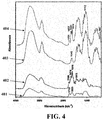
- FIG. 4 illustrates Fourier-transform infrared (FT-IR) spectra of Tragacanth, Ammoniacum extract, cellulosic substrate, and an exemplary wound dressing, consistent with an exemplary embodiment of the present disclosure.
- FT-IR Fourier-transform infrared
- FIG. 5 illustrates cytotoxicity assay of an exemplary wound dressing, consistent with an exemplary embodiment of the present disclosure.
- FIG. 6A illustrates a monolayer of human fibroblast cells with a scratch, consistent with an exemplary embodiment of the present disclosure.
- FIG. 6B illustrates the monolayer of human fibroblast cells twenty-four hours after creating the scratch, consistent with an exemplary embodiment of the present disclosure.
- FIG. 6C illustrates the monolayer of human fibroblast cells forty-eight hours after creating the scratch, consistent with an exemplary embodiment of the present disclosure.
- Metal nanoparticles such as zinc oxide (ZnO) nanoparticles or natural products such as plant extracts are used as antibacterial active agents in conventional wound dressings.
- ZnO zinc oxide
- natural products such as plant extracts
- use of conventional wound dressings utilizing ZnO nanoparticles or natural products is rather limited due to the cytotoxicity, uncontrolled release of the active agents, inappropriate permeability to water and air, low durability, and high-cost manufacturing processes.
- a hydrogel-based wound dressing including Ammoniacum extract as an antibacterial wound healing agent and a plurality of ZnO nanoparticles as an antibacterial agent.
- the Ammoniacum extract may be encapsulated within a polymeric matrix of Tragacanth which may control the release of the Ammoniacum extract from the wound dressing to the wound site.
- FIG. 1A shows an exemplary method 100 for preparing the wound dressing, consistent with an exemplary embodiment of the present disclosure.
- Method 100 may include forming a first solution by mixing a zinc solution with a Tragacanth solution (step 102 ), immersing a substrate in the first solution (step 104 ), forming a second solution by adjusting pH of the first solution containing the substrate (step 106 ), forming a modified substrate by synthesizing a plurality of ZnO nanoparticles on the substrate by applying ultrasound radiation to the second solution (step 108 ), and forming the plurality of Ammoniacum nanocapsules on the modified substrate (step 110 ).
- Step 102 may include forming the first solution by mixing the zinc solution with the Tragacanth solution.
- mixing the zinc solution with the Tragacanth solution may be done using one of a magnetic stirrer, a mechanical stirrer, or an ultrasonic homogenizer.
- Mixing the zinc solution with the Tragacanth solution may be done for a time period between about 2 minutes and about 10 minutes at room temperature of about 20° C. to 30° C.
- the zinc solution may be prepared by dissolving a zinc-containing compound in water.
- the zinc-containing compound may include zinc nitrate or zinc acetate.
- the zinc solution may include zinc (Zn) with a concentration between about 0.05 M and about 0.2 M.
- the Tragacanth solution may be prepared by dissolving Tragacanth gum in water.
- the Tragacanth solution may include an aqueous solution of Tragacanth with a concentration between about 0.5 and about 1.5 weight percent of the solution.
- Step 104 may include immersing the substrate in the first solution.
- immersing the substrate in the first solution may include using a weight ratio of the substrate to the first solution between about 0.1 and about 0.2.
- FIG. 2A shows a schematic view of an exemplary substrate 200 for the wound dressing, consistent with an exemplary embodiment of the present disclosure.
- substrate 200 may include a cellulosic-based substrate, for example, a cotton fabric.
- Step 106 may include forming the second solution by adjusting pH of the first solution containing the substrate.
- adjusting pH of the first solution containing the substrate may be done by adding an alkaline solution dropwise to the first solution containing the substrate to adjust the pH between about 7 and about 8.
- the alkaline solution may include a sodium hydroxide solution, or ammonia, or combinations thereof.
- the alkaline solution may have a concentration between about 0.5 and about 2 M.
- Step 108 may include forming the modified substrate by synthesizing the plurality of ZnO nanoparticles on the substrate by applying ultrasound radiation to the second solution.
- the ultrasound radiation may have a cycle between about 0.4 and about 1 and amplitude between about 30% and about 100%.
- the ultrasound radiation may be applied to the second solution for a time period between about 4 minutes and about 10 minutes.
- FIG. 2B shows a schematic view of an exemplary modified substrate 202 including the plurality of ZnO nanoparticles 204 , consistent with an exemplary embodiment of the present disclosure.
- the plurality of ZnO nanoparticles 204 may have a star-like shape with a particle size between about 55 nm and about 70 nm.
- the plurality of ZnO nanoparticles 204 may be uniformly stabilized on the substrate 200 .
- stabilizing the plurality of ZnO nanoparticles 204 on the substrate 200 may include spreading out the plurality of ZnO nanoparticles 204 over the substrate 200 through performing chemical interactions, for example, hydrogen bonds.
- stabilization of the plurality of ZnO nanoparticles 204 on substrate 200 may be done through forming hydrogen bonds between hydroxyl groups of the Tragacanth and the cellulose molecules of the substrate 200 .
- the plurality of ZnO nanoparticles 204 may be further stabilized on substrate 200 due to the interactions between carboxyl groups of the Tragacanth and the cellulose molecules of substrate 200 .
- Step 110 may include forming the plurality of Ammoniacum nanocapsules on the modified substrate.
- FIG. 1B shows an exemplary implementation of step 110 for forming the plurality of Ammoniacum nanocapsules on the modified substrate, consistent with an exemplary embodiment of the present disclosure.
- Forming the plurality of Ammoniacum nanocapsules on the modified substrate may include forming a first microemulsion by adding an emulsifier to a mixture of Ammoniacum extract and oil (step 112 ), forming a second microemulsion by adding the Tragacanth solution to the first microemulsion (step 114 ), immersing the modified substrate in the second microemulsion (step 116 ), adding a cross-linking agent to the second microemulsion containing the modified substrate (step 118 ), applying ultrasound radiation to the second microemulsion containing the modified substrate and the cross-linking agent (step 120 ).
- Step 112 may include forming the first microemulsion by adding the emulsifier to the mixture of the Ammoniacum extract and the oil.
- the mixture of the Ammoniacum extract and the oil may be prepared by mixing the Ammoniacum extract and oil using one of a magnetic stirrer, a mechanical stirrer, or an ultrasonic homogenizer.
- mixing the Ammoniacum extract and oil may be done during a time period between about 2 minutes and about 10 minutes at room temperature.
- the mixture of the Ammoniacum extract and the oil may include a weight ratio of the Ammoniacum extract to the oil between about 2 and about 3.
- the first microemulsion may include a water in oil (W/O) microemulsion including a plurality of micelles with a hydrophilic center of the Ammoniacum extract and a hydrophobic surface of oil particles.
- the Ammoniacum extract in the hydrophilic center may be trapped with the plurality of oil particles such as almond oil, sesame oil, coconut oil, or combinations thereof.
- the emulsifier may include ionic emulsifiers with a hydrophilic-lipophilic balance (HLB) more than about 10 such as Triton X-100, Polysorbate 80, or Polysorbate 20.
- HLB hydrophilic-lipophilic balance
- the emulsifier may be present in the first microemulsion with a concentration between about 0.05 M and about 0.2 M.
- Step 114 may include forming the second microemulsion by adding the Tragacanth solution to the first microemulsion.
- the Tragacanth solution may be added to the first microemulsion dropwise while stirring the first microemulsion using one of a homogenizer, a stirrer, an agitator, or combinations thereof.
- the Tragacanth solution may include a concentration of Tragacanth between about 0.5 and about 1.5 weight percent.
- the second microemulsion may include a water in oil in water (W/O/W) microemulsion.
- adding the Tragacanth to the first microemulsion may create a new outer layer to the W/O micelles of the first microemulsion, and may convert the W/O micelles to the W/O/W micelles.
- the Tragacanth may surround almond oil and Ammoniacum extract and may form two-layer W/O/W micelles.
- Step 116 may include immersing the modified substrate in the second microemulsion.
- immersing the modified substrate in the second microemulsion may include using a weight ratio of the modified substrate to the second microemulsion between about 0.1 and about 0.2.
- Step 118 may include adding a cross-linking agent to the second microemulsion containing the modified substrate.
- adding a cross-linking agent to the second microemulsion containing the modified substrate may include adding a solution of the cross-linking agent to the second microemulsion containing the modified substrate with a concentration between about 1.5 and about 3 weight percent.
- the cross-linking agent may include aluminum chloride or calcium chloride.
- Step 120 may include applying ultrasound radiation to the second microemulsion containing the modified substrate and the cross-linking agent.
- the ultrasound radiation may have a cycle between about 0.4 and about 1, and an amplitude between about 30% and about 100%.
- the ultrasound radiation may be applied to the second microemulsion containing the modified substrate for a time period between about 4 minutes and about 10 minutes.
- using the ultrasound radiation for forming and stabilizing the plurality of Ammoniacum nanocapsules on the modified substrate may lead to reduce the time required for preparing the wound dressing and high encapsulation efficiency of the Ammoniacum extract in the polymeric matrix of Tragacanth without any side effect on the structural and physical properties of the modified substrate such as stiffness and softness.
- forming the plurality of Ammoniacum nanocapsules on the modified substrate may include encapsulating the Ammoniacum extract in the polymeric matrix of Tragacanth to form the plurality of Ammoniacum nanocapsules, and stabilizing the plurality of Ammoniacum nanocapsules on the modified substrate with the plurality of ZnO nanoparticles.
- the plurality of Ammoniacum nanocapsules on the modified substrate may include spreading out the plurality of Ammoniacum nanocapsules over the modified substrate through forming chemical interactions, for example, hydrogen bonds.
- encapsulating the Ammoniacum extract in the polymeric matrix of Tragacanth to form the plurality of Ammoniacum nanocapsules, and stabilizing the plurality of Ammoniacum nanocapsules on the modified substrate may be carried out simultaneously.
- FIG. 2C shows a schematic view of wound dressing 206 , consistent with an exemplary embodiment of the present disclosure.
- wound dressing 206 may include the plurality of Ammoniacum nanocapsules 208 which may be formed and stabilized on modified substrate 202 , which may include ZnO nanoparticles 204 on substrate 200 .
- FIG. 2D shows a schematic view of an example of the plurality of Ammoniacum nanocapsules 208 , consistent with an exemplary embodiment of the present disclosure.
- the exemplary Ammoniacum nanocapsules 208 may include Ammoniacum extract 212 and oil particles 214 encapsulated within the Tragacanth 216 .
- the plurality of Ammoniacum nanocapsules 208 may have a particle size between about 20 nm and about 80 nm.
- encapsulating the Ammoniacum extract 212 and oil particles 214 in the polymeric matrix of Tragacanth 216 may be done through creating chemical interactions, for example, hydrogen bonds between aluminum (Al) ions 218 of the cross-linking agent and carboxyl groups of the Tragacanth 216 .
- FIG. 2E shows a schematic view of an exemplary portion 210 of the exemplary wound dressing 206 shown in FIG. 2C , consistent with an exemplary embodiment of the present disclosure.
- the exemplary portion 210 shows that the Ammoniacum nanocapsule 208 may be stabilized on the modified substrate 202 including the plurality of ZnO nanoparticles 204 .
- the plurality of Ammoniacum nanocapsules 208 on the modified substrate 202 may include spreading out the plurality of Ammoniacum nanocapsules 208 over the modified substrate 202 through forming chemical interactions, for example, hydrogen bonds.
- stabilizing the plurality of Ammoniacum nanocapsules 208 on the modified substrate 202 may be done through forming intermolecular hydrogen bonds and interactions between aluminum ions 218 of the cross-linking agent and the plurality of ZnO nanoparticles 204 of modified substrate 202 as shown in FIG. 2D .
- the wound dressing 206 may be washed and dried after forming the plurality of Ammoniacum nanocapsules on the modified substrate (step 110 ).
- washing the wound dressing 206 may include rinsing the wound dressing 206 with water up to three times for removing the excess amount of material that may remain in the wound dressing 206 .
- drying the washed wound dressing 206 may be done at room temperature between about 20° C. and 30° C.
- the wound dressing 206 may include a hydrogel-based wound dressing due to the presence of the Tragacanth which creates a moist environment for keeping water in the wound dressing 206 for a long time, for example, about twenty-four (24) hours.
- the wound dressing 206 may have a pH level between about 5.5 and about 6.5.
- the wound dressing 206 may have a high permeability to water and air which may accelerate a wound healing process.
- FIG. 3A shows a field emission scanning electron microscopy (FESEM) image of the wound dressing, consistent with an exemplary embodiment of the present disclosure.
- FIG. 3B shows a magnified FESEM image of the wound dressing, consistent with an exemplary embodiment of the present disclosure.
- FESEM field emission scanning electron microscopy
- the FESEM images show that exemplary ZnO nanoparticles 302 and Ammoniacum nanocapsules 304 are homogenously stabilized on the surface of the exemplary cotton fabric 306 of the wound dressing through forming hydrogen bonds between the Tragacanth molecules and the cellulose molecules of the cotton fabric 306 .
- ZnO nanoparticles 302 are star-like particles
- Ammoniacum nanocapsules 304 have spherical shapes.
- FIG. 4 shows FT-IR spectra of Tragacanth 401 , Ammoniacum extract 402 , the cellulosic substrate 403 , and the exemplary wound dressing 404 , consistent with an exemplary embodiment of the present disclosure.
- the spectrum of Tragacanth 401 shows a wide peak at a wavelength about 3420 cm ⁇ 1 due to the presence of hydroxyl groups, and a peak at a wavelength about 2927 cm ⁇ 1 due to the presence of methylene groups.
- two more peaks appeared in the spectrum of Tragacanth 401 at the wavelengths of about 1743 cm ⁇ 1 and about 1629 cm ⁇ 1 due to the presence of carbonyl and carboxyl groups of Tragacanth.
- the spectrum of Ammoniacum extract 402 includes two peaks at wavelengths of about 1515 cm ⁇ 1 and about 1615 cm ⁇ 1 for the aromatic double bond, which are appeared due to the presence of aromatic compounds such as ⁇ -Bisabolol, and aromatic compounds with carboxylic groups such as ⁇ -Cyclocitral, ⁇ -Ionone, and benzyl benzoate. Furthermore, a peak related to the carboxylate groups at a wavelength of about 1674 cm ⁇ 1 and a peak of the carbonyl groups at a wavelength of about 1756 cm ⁇ 1 appeared in the spectrum of Ammoniacum extract 402 .
- peaks for stretching vibrations of different groups in the spectrum of the cellulosic substrate 403 there are several peaks for stretching vibrations of different groups in the spectrum of the cellulosic substrate 403 .
- a peak for O—H groups at a wavelength of about 3347 cm ⁇ 1 a peak for aliphatic C—H groups at a wavelength of about 2900 cm ⁇ 1
- a peak for C—O—C groups at a wavelength of about 1058 cm ⁇ 1 may be observed.
- the spectrum of the exemplary wound dressing 404 includes a peak at a wavelength about 449 cm ⁇ 1 for stretching vibrations of Zn—O bonds, which confirms the in-situ synthesis of ZnO nanoparticles on the surface of the substrate, for example, the cotton fabric. Moreover, the formation of Ammoniacum nanocapsules on the substrate is proved with the appearance of the peak related to Al—O—C bond at a wavelength about 1112 cm ⁇ 1 .
- the Al—O—C bond is between aluminum (Al) of AlCl 3 cross-linking agent, oxygen (O) of the ZnO nanoparticles, and the carbon (C) of the Tragacanth which creates the outer layer of the Ammoniacum nanocapsules.
- cytotoxicity of the exemplary wound dressing which was prepared as described in exemplary embodiments of the present disclosure, was studied using 3-(4,5-dimethylthiazol-2-yl)-2,5 diphenyltetrazolium bromide (MTT) assay on human fibroblast cells.
- MTT 3-(4,5-dimethylthiazol-2-yl)-2,5 diphenyltetrazolium bromide
- the live cells have the ability to absorb and reduce the yellow Tetrasol dye to violet Formazan dye, while the dead cells can not react with the Tetrasol dye.
- FIG. 5 shows human fibroblast cells after performing cytotoxicity assay of the wound dressing, consistent with an exemplary embodiment of the present disclosure. It may be seen that the fibroblast cells have an acceptable growth and proliferation in the culture medium, and they still have a spindle-shaped appearance. According to the formed violet color in the plate containing the human fibroblast cells, the majority of the cells are survived. Also, the cell viability which is a percentage of the live cells is about 93% after exposing the cells to the wound dressing. Therefore, the wound dressing shows very low cytotoxicity which can be attributed to the presence of the safe materials in the wound dressing such as Tragacanth gum as the natural polymer and Ammoniacum extract as the wound healing agent.
- the safe materials in the wound dressing such as Tragacanth gum as the natural polymer and Ammoniacum extract as the wound healing agent.
- the antibacterial activity of the wound dressing which was prepared as described in exemplary embodiments of the present disclosure, was studied using the colony counting method and the agar diffusion method.
- TABLE. 1 represents the results of the antibacterial activity of the exemplary wound dressing.
- results of both methods indicate high antibacterial activity of the wound dressing against different bacteria such as Escherichia coli, Staphylococcus aureus , and Pseudomonas aeruginosa .
- the high antibacterial activity of the wound dressing may be attributed to the presence of ZnO nanoparticles which has a positive effect on the antimicrobial activity of the wound dressing.
- wound healing activity of the wound dressing which was prepared as described in exemplary embodiments of the present disclosure, was investigated through creating a scratch on the monolayer of human primary fibroblast cells and considering the restoration stages of the scratch.
- FIG. 6A shows the human primary fibroblast cells at the baseline of the wound healing assay of the wound dressing, consistent with an exemplary embodiment of the present disclosure.
- FIG. 6B shows the human primary fibroblast cells about 24 hours after performing the wound healing assay of the wound dressing, consistent with an exemplary embodiment of the present disclosure.
- FIG. 6C shows the human primary fibroblast cells about 48 hours after performing the wound healing assay of the wound dressing, consistent with an exemplary embodiment of the present disclosure.
- cells 604 moved from two sides of scratch 602 towards each other and filled the distance between the scratch 602 .
- the cell migration rate was about 91% after about 24 hours, which is an acceptable result that can be attributed to the presence of the Tragacanth, ZnO nanoparticles, and the Ammoniacum nanocapsules on the wound dressing which improves the wound healing process.
- the controlled release of the Ammoniacum extract from the polymeric matrix of the Tragacanth leads to higher cell migration rate on the second day. Therefore, the created scratch 602 was disappeared after about 48 hours and the cell migration rate reached 100%.
- skin sensitivity and irritation of wound dressings can lead to clinical problems for patients. Therefore, evaluation of the skin sensitivity of the exemplary wound dressing is necessary.
- skin sensitivity of the wound dressing which was prepared as described in exemplary embodiments of the present disclosure, was investigated through hypodermic injection of a solution containing different components of the exemplary wound dressing to rats.
- the injected solution included Tragacanth, ZnO nanoparticles synthesized in presence of Tragacanth gum, and Ammoniacum nanocapsules.
- skin erythema and edema as the signs of skin sensitivity were studied before and about 72 hours after the injection. The result of this study shows that the injected solution does not induce any edema or erythema on the rat skin. Therefore, the composition of the wound dressing is safe and does not cause any local irritation or skin sensitivity.
- an exemplary wound dressing which was prepared as described in exemplary embodiments of the present disclosure, was immersed in an aqueous medium and stirred for different periods of time.
- UV-Vis ultraviolet-visible
- the absorbance intensity of the aqueous medium increased from about 0.51 to about 1.45 at the wavelength of about 235 nm, and from about 0.39 to about 1.36 at the wavelength of about 295 nm.
- the results do not show any immediate release, and the Ammoniacum extract has a controlled and prolonged release from the Ammoniacum nanocapsules which were stabilized on the wound dressing. Therefore, the exemplary wound dressing has a high durability and does not need to be replaced for a long time.
- Water absorption is one of the most important properties of wound dressings that lead to create and maintain a moist environment on the wound site. Presence of the moist environment on the wound site provides a suitable condition for accelerating the wound healing process. In this example, swelling behavior of an exemplary wound dressing, which was prepared as described in the present disclosure, was investigated.
Landscapes
- Health & Medical Sciences (AREA)
- Chemical & Material Sciences (AREA)
- Life Sciences & Earth Sciences (AREA)
- Public Health (AREA)
- Hematology (AREA)
- Engineering & Computer Science (AREA)
- Materials Engineering (AREA)
- Epidemiology (AREA)
- Animal Behavior & Ethology (AREA)
- General Health & Medical Sciences (AREA)
- Veterinary Medicine (AREA)
- Zoology (AREA)
- Chemical Kinetics & Catalysis (AREA)
- Botany (AREA)
- Inorganic Chemistry (AREA)
- Materials For Medical Uses (AREA)
Abstract
Description
| TABLE 1 |
| Antibacterial activity assay results for the exemplary wound dressing |
| conducted by colony counting and Agar diffusion method |
| Method | Colony counting method | Agar diffusion method |
| Parameter | Microbial reduction (%) | Zone of inhibition (mm) |
| Escherichia coli | 100 | 3.3 ± 0.1 |
|
|
100 | 3.3 ± 0.1 |
|
| ||
| Pseudomonas | ||
| 100 | 3.4 ± 0.1 | |
| aeruginosa | ||
| TABLE 2 |
| Results of the UV-Vis spectroscopy of the aqueous |
| medium after immersing the wound dressing |
| Absorbance intensity |
| Time | Wavelength | Wavelength |
| (hour) | of 235 nm | of 295 nm |
| 2 | 0.51 | 0.39 |
| 4 | 0.70 | 0.58 |
| 6 | 0.89 | 0.79 |
| 8 | 1.05 | 0.97 |
| 12 | 1.18 | 1.10 |
| 18 | 1.32 | 1.24 |
| 24 | 1.45 | 1.36 |
Claims (13)
Priority Applications (1)
| Application Number | Priority Date | Filing Date | Title |
|---|---|---|---|
| US15/860,686 US10967095B2 (en) | 2017-03-13 | 2018-01-03 | Wound dressings and preparation thereof |
Applications Claiming Priority (2)
| Application Number | Priority Date | Filing Date | Title |
|---|---|---|---|
| US201762470356P | 2017-03-13 | 2017-03-13 | |
| US15/860,686 US10967095B2 (en) | 2017-03-13 | 2018-01-03 | Wound dressings and preparation thereof |
Publications (2)
| Publication Number | Publication Date |
|---|---|
| US20180140738A1 US20180140738A1 (en) | 2018-05-24 |
| US10967095B2 true US10967095B2 (en) | 2021-04-06 |
Family
ID=62143985
Family Applications (1)
| Application Number | Title | Priority Date | Filing Date |
|---|---|---|---|
| US15/860,686 Expired - Fee Related US10967095B2 (en) | 2017-03-13 | 2018-01-03 | Wound dressings and preparation thereof |
Country Status (1)
| Country | Link |
|---|---|
| US (1) | US10967095B2 (en) |
Families Citing this family (1)
| Publication number | Priority date | Publication date | Assignee | Title |
|---|---|---|---|---|
| CN114748689B (en) * | 2022-04-14 | 2023-09-15 | 华南理工大学 | A breast reconstruction implant prosthesis hydrogel material and its preparation method and application |
-
2018
- 2018-01-03 US US15/860,686 patent/US10967095B2/en not_active Expired - Fee Related
Also Published As
| Publication number | Publication date |
|---|---|
| US20180140738A1 (en) | 2018-05-24 |
Similar Documents
| Publication | Publication Date | Title |
|---|---|---|
| Chen et al. | Photothermal-promoted multi-functional dual network polysaccharide hydrogel adhesive for infected and susceptible wound healing | |
| Wang et al. | Intelligent hybrid hydrogels for rapid in situ detection and photothermal therapy of bacterial infection | |
| Lin et al. | Polyphenol-driving assembly for constructing chitin-polyphenol-metal hydrogel as wound dressing | |
| Rao et al. | Hemostatic, biocompatible, and antibacterial non-animal fungal mushroom-based carboxymethyl chitosan-ZnO nanocomposite for wound-healing applications | |
| Hanafy et al. | Biological applications study of bio‐nanocomposites based on chitosan/TiO2 nanoparticles polymeric films modified by oleic acid | |
| Hassiba et al. | Review of recent research on biomedical applications of electrospun polymer nanofibers for improved wound healing | |
| Xie et al. | A “sense-and-treat” hydrogel for rapid diagnose and photothermal therapy of bacterial infection | |
| Kanaujiya et al. | Resveratrol-ampicillin dual-drug loaded polyvinylpyrrolidone/polyvinyl alcohol biomimic electrospun nanofiber enriched with collagen for efficient burn wound repair | |
| Kong et al. | Riclin-capped silver nanoparticles as an antibacterial and anti-inflammatory wound dressing | |
| Sulastri et al. | Ulvan/Silver nanoparticle hydrogel films for burn wound dressing | |
| KR20180104386A (en) | Mutifunctional bionanocomposite hydrogel, method of manufacturing thereof and use thereof | |
| Tang et al. | Development of an antioxidant and UV-shielding composite hydrogel using mussel-inspired cellulose nanocrystals, polydopamine, and poly (vinyl alcohol) for application in sunscreens | |
| Lee et al. | Light-stimulated carbon dot hydrogel: Targeting and clearing infectious bacteria in vivo | |
| Uttayarat et al. | Radiolytic synthesis of colloidal silver nanoparticles for antibacterial wound dressings | |
| Rezaei et al. | Fabrication, characterization, and drug release study of vitamin C–loaded alginate/polyethylene oxide nanofibers for the treatment of a skin disorder | |
| CN108030774B (en) | Carboxymethyl chitosan nano-microspheres loaded with photodynamic bactericidal drugs and synthesis method thereof | |
| López-López et al. | Photodynamic inactivation of staphylococcus aureus biofilms using a hexanuclear molybdenum complex embedded in transparent polyhema hydrogels | |
| Ounkaew et al. | Fabrication of hydrogel-nano silver based on aloe vera/carboxymethyl cellulose/tannic acid for antibacterial and ph-responsive applications | |
| Verma et al. | Bioactive khadi cotton fabric by functional designing and immobilization of nanosilver nanogels | |
| Heydari et al. | Chitosan Schiff-base hydrogel sunscreen: a multifunctional hybrid network with antioxidant, ultraviolet-shielding, and self-healing properties | |
| Hao et al. | Antibacterial microfibrillated cellulose as stimuli-responsive carriers with enhanced UV stability for sustained release of essential oils and pesticides | |
| Lin et al. | Alginate-based cryogels for combined chemo/photothermal antibacterial therapy and rapid hemostasis | |
| Zhao et al. | Injectable silver nanoparticle-based hydrogel dressings with rapid shape adaptability and antimicrobial activity | |
| US10967095B2 (en) | Wound dressings and preparation thereof | |
| Ahmed et al. | UV protection and antimicrobial properties of textiles using nanotechnology |
Legal Events
| Date | Code | Title | Description |
|---|---|---|---|
| FEPP | Fee payment procedure |
Free format text: ENTITY STATUS SET TO UNDISCOUNTED (ORIGINAL EVENT CODE: BIG.); ENTITY STATUS OF PATENT OWNER: SMALL ENTITY |
|
| FEPP | Fee payment procedure |
Free format text: ENTITY STATUS SET TO SMALL (ORIGINAL EVENT CODE: SMAL); ENTITY STATUS OF PATENT OWNER: SMALL ENTITY |
|
| STPP | Information on status: patent application and granting procedure in general |
Free format text: DOCKETED NEW CASE - READY FOR EXAMINATION |
|
| STPP | Information on status: patent application and granting procedure in general |
Free format text: NON FINAL ACTION MAILED |
|
| STPP | Information on status: patent application and granting procedure in general |
Free format text: RESPONSE TO NON-FINAL OFFICE ACTION ENTERED AND FORWARDED TO EXAMINER |
|
| STPP | Information on status: patent application and granting procedure in general |
Free format text: RESPONSE TO NON-FINAL OFFICE ACTION ENTERED AND FORWARDED TO EXAMINER |
|
| STPP | Information on status: patent application and granting procedure in general |
Free format text: FINAL REJECTION MAILED |
|
| AS | Assignment |
Owner name: GHAYEMPOUR, SORAYA, IRAN, ISLAMIC REPUBLIC OF Free format text: ASSIGNMENT OF ASSIGNORS INTEREST;ASSIGNORS:GHAYEMPOUR, SORAYA;MONTAZER, MAJID;MAHMOUDI RAD, MAHNAZ;REEL/FRAME:054867/0544 Effective date: 20210103 Owner name: AMIRKABIR UNIVERSITY OF TECHNOLOGY, IRAN, ISLAMIC REPUBLIC OF Free format text: ASSIGNMENT OF ASSIGNORS INTEREST;ASSIGNORS:GHAYEMPOUR, SORAYA;MONTAZER, MAJID;MAHMOUDI RAD, MAHNAZ;REEL/FRAME:054867/0544 Effective date: 20210103 Owner name: MONTAZER, MAJID, IRAN, ISLAMIC REPUBLIC OF Free format text: ASSIGNMENT OF ASSIGNORS INTEREST;ASSIGNORS:GHAYEMPOUR, SORAYA;MONTAZER, MAJID;MAHMOUDI RAD, MAHNAZ;REEL/FRAME:054867/0544 Effective date: 20210103 |
|
| STPP | Information on status: patent application and granting procedure in general |
Free format text: PUBLICATIONS -- ISSUE FEE PAYMENT RECEIVED |
|
| STPP | Information on status: patent application and granting procedure in general |
Free format text: PUBLICATIONS -- ISSUE FEE PAYMENT VERIFIED |
|
| STCF | Information on status: patent grant |
Free format text: PATENTED CASE |
|
| FEPP | Fee payment procedure |
Free format text: MAINTENANCE FEE REMINDER MAILED (ORIGINAL EVENT CODE: REM.); ENTITY STATUS OF PATENT OWNER: SMALL ENTITY |
|
| LAPS | Lapse for failure to pay maintenance fees |
Free format text: PATENT EXPIRED FOR FAILURE TO PAY MAINTENANCE FEES (ORIGINAL EVENT CODE: EXP.); ENTITY STATUS OF PATENT OWNER: SMALL ENTITY |
|
| STCH | Information on status: patent discontinuation |
Free format text: PATENT EXPIRED DUE TO NONPAYMENT OF MAINTENANCE FEES UNDER 37 CFR 1.362 |
|
| FP | Lapsed due to failure to pay maintenance fee |
Effective date: 20250406 |