US10965739B2 - Time-based congestion discounting for I/O fairness control - Google Patents
Time-based congestion discounting for I/O fairness control Download PDFInfo
- Publication number
- US10965739B2 US10965739B2 US15/947,313 US201815947313A US10965739B2 US 10965739 B2 US10965739 B2 US 10965739B2 US 201815947313 A US201815947313 A US 201815947313A US 10965739 B2 US10965739 B2 US 10965739B2
- Authority
- US
- United States
- Prior art keywords
- storage
- class
- ratio
- requests
- congestion
- Prior art date
- Legal status (The legal status is an assumption and is not a legal conclusion. Google has not performed a legal analysis and makes no representation as to the accuracy of the status listed.)
- Expired - Fee Related, expires
Links
Images




Classifications
-
- H—ELECTRICITY
- H04—ELECTRIC COMMUNICATION TECHNIQUE
- H04L—TRANSMISSION OF DIGITAL INFORMATION, e.g. TELEGRAPHIC COMMUNICATION
- H04L67/00—Network arrangements or protocols for supporting network services or applications
- H04L67/01—Protocols
- H04L67/10—Protocols in which an application is distributed across nodes in the network
- H04L67/1001—Protocols in which an application is distributed across nodes in the network for accessing one among a plurality of replicated servers
- H04L67/1004—Server selection for load balancing
- H04L67/101—Server selection for load balancing based on network conditions
-
- H—ELECTRICITY
- H04—ELECTRIC COMMUNICATION TECHNIQUE
- H04L—TRANSMISSION OF DIGITAL INFORMATION, e.g. TELEGRAPHIC COMMUNICATION
- H04L43/00—Arrangements for monitoring or testing data switching networks
- H04L43/08—Monitoring or testing based on specific metrics, e.g. QoS, energy consumption or environmental parameters
- H04L43/0876—Network utilisation, e.g. volume of load or congestion level
-
- G—PHYSICS
- G06—COMPUTING OR CALCULATING; COUNTING
- G06F—ELECTRIC DIGITAL DATA PROCESSING
- G06F3/00—Input arrangements for transferring data to be processed into a form capable of being handled by the computer; Output arrangements for transferring data from processing unit to output unit, e.g. interface arrangements
- G06F3/06—Digital input from, or digital output to, record carriers, e.g. RAID, emulated record carriers or networked record carriers
- G06F3/0601—Interfaces specially adapted for storage systems
- G06F3/0602—Interfaces specially adapted for storage systems specifically adapted to achieve a particular effect
- G06F3/0604—Improving or facilitating administration, e.g. storage management
-
- G—PHYSICS
- G06—COMPUTING OR CALCULATING; COUNTING
- G06F—ELECTRIC DIGITAL DATA PROCESSING
- G06F3/00—Input arrangements for transferring data to be processed into a form capable of being handled by the computer; Output arrangements for transferring data from processing unit to output unit, e.g. interface arrangements
- G06F3/06—Digital input from, or digital output to, record carriers, e.g. RAID, emulated record carriers or networked record carriers
- G06F3/0601—Interfaces specially adapted for storage systems
- G06F3/0602—Interfaces specially adapted for storage systems specifically adapted to achieve a particular effect
- G06F3/061—Improving I/O performance
-
- G—PHYSICS
- G06—COMPUTING OR CALCULATING; COUNTING
- G06F—ELECTRIC DIGITAL DATA PROCESSING
- G06F3/00—Input arrangements for transferring data to be processed into a form capable of being handled by the computer; Output arrangements for transferring data from processing unit to output unit, e.g. interface arrangements
- G06F3/06—Digital input from, or digital output to, record carriers, e.g. RAID, emulated record carriers or networked record carriers
- G06F3/0601—Interfaces specially adapted for storage systems
- G06F3/0628—Interfaces specially adapted for storage systems making use of a particular technique
- G06F3/0629—Configuration or reconfiguration of storage systems
- G06F3/0635—Configuration or reconfiguration of storage systems by changing the path, e.g. traffic rerouting, path reconfiguration
-
- G—PHYSICS
- G06—COMPUTING OR CALCULATING; COUNTING
- G06F—ELECTRIC DIGITAL DATA PROCESSING
- G06F3/00—Input arrangements for transferring data to be processed into a form capable of being handled by the computer; Output arrangements for transferring data from processing unit to output unit, e.g. interface arrangements
- G06F3/06—Digital input from, or digital output to, record carriers, e.g. RAID, emulated record carriers or networked record carriers
- G06F3/0601—Interfaces specially adapted for storage systems
- G06F3/0628—Interfaces specially adapted for storage systems making use of a particular technique
- G06F3/0653—Monitoring storage devices or systems
-
- G—PHYSICS
- G06—COMPUTING OR CALCULATING; COUNTING
- G06F—ELECTRIC DIGITAL DATA PROCESSING
- G06F3/00—Input arrangements for transferring data to be processed into a form capable of being handled by the computer; Output arrangements for transferring data from processing unit to output unit, e.g. interface arrangements
- G06F3/06—Digital input from, or digital output to, record carriers, e.g. RAID, emulated record carriers or networked record carriers
- G06F3/0601—Interfaces specially adapted for storage systems
- G06F3/0628—Interfaces specially adapted for storage systems making use of a particular technique
- G06F3/0662—Virtualisation aspects
- G06F3/0664—Virtualisation aspects at device level, e.g. emulation of a storage device or system
-
- G—PHYSICS
- G06—COMPUTING OR CALCULATING; COUNTING
- G06F—ELECTRIC DIGITAL DATA PROCESSING
- G06F3/00—Input arrangements for transferring data to be processed into a form capable of being handled by the computer; Output arrangements for transferring data from processing unit to output unit, e.g. interface arrangements
- G06F3/06—Digital input from, or digital output to, record carriers, e.g. RAID, emulated record carriers or networked record carriers
- G06F3/0601—Interfaces specially adapted for storage systems
- G06F3/0668—Interfaces specially adapted for storage systems adopting a particular infrastructure
- G06F3/067—Distributed or networked storage systems, e.g. storage area networks [SAN], network attached storage [NAS]
-
- G—PHYSICS
- G06—COMPUTING OR CALCULATING; COUNTING
- G06F—ELECTRIC DIGITAL DATA PROCESSING
- G06F9/00—Arrangements for program control, e.g. control units
- G06F9/06—Arrangements for program control, e.g. control units using stored programs, i.e. using an internal store of processing equipment to receive or retain programs
- G06F9/44—Arrangements for executing specific programs
- G06F9/455—Emulation; Interpretation; Software simulation, e.g. virtualisation or emulation of application or operating system execution engines
- G06F9/45533—Hypervisors; Virtual machine monitors
- G06F9/45558—Hypervisor-specific management and integration aspects
-
- H—ELECTRICITY
- H04—ELECTRIC COMMUNICATION TECHNIQUE
- H04L—TRANSMISSION OF DIGITAL INFORMATION, e.g. TELEGRAPHIC COMMUNICATION
- H04L43/00—Arrangements for monitoring or testing data switching networks
- H04L43/08—Monitoring or testing based on specific metrics, e.g. QoS, energy consumption or environmental parameters
- H04L43/0876—Network utilisation, e.g. volume of load or congestion level
- H04L43/0882—Utilisation of link capacity
-
- H—ELECTRICITY
- H04—ELECTRIC COMMUNICATION TECHNIQUE
- H04L—TRANSMISSION OF DIGITAL INFORMATION, e.g. TELEGRAPHIC COMMUNICATION
- H04L43/00—Arrangements for monitoring or testing data switching networks
- H04L43/10—Active monitoring, e.g. heartbeat, ping or trace-route
-
- H—ELECTRICITY
- H04—ELECTRIC COMMUNICATION TECHNIQUE
- H04L—TRANSMISSION OF DIGITAL INFORMATION, e.g. TELEGRAPHIC COMMUNICATION
- H04L43/00—Arrangements for monitoring or testing data switching networks
- H04L43/16—Threshold monitoring
-
- H—ELECTRICITY
- H04—ELECTRIC COMMUNICATION TECHNIQUE
- H04L—TRANSMISSION OF DIGITAL INFORMATION, e.g. TELEGRAPHIC COMMUNICATION
- H04L43/00—Arrangements for monitoring or testing data switching networks
- H04L43/20—Arrangements for monitoring or testing data switching networks the monitoring system or the monitored elements being virtualised, abstracted or software-defined entities, e.g. SDN or NFV
-
- H—ELECTRICITY
- H04—ELECTRIC COMMUNICATION TECHNIQUE
- H04L—TRANSMISSION OF DIGITAL INFORMATION, e.g. TELEGRAPHIC COMMUNICATION
- H04L67/00—Network arrangements or protocols for supporting network services or applications
- H04L67/01—Protocols
- H04L67/10—Protocols in which an application is distributed across nodes in the network
- H04L67/1001—Protocols in which an application is distributed across nodes in the network for accessing one among a plurality of replicated servers
- H04L67/1004—Server selection for load balancing
- H04L67/1008—Server selection for load balancing based on parameters of servers, e.g. available memory or workload
-
- H—ELECTRICITY
- H04—ELECTRIC COMMUNICATION TECHNIQUE
- H04L—TRANSMISSION OF DIGITAL INFORMATION, e.g. TELEGRAPHIC COMMUNICATION
- H04L67/00—Network arrangements or protocols for supporting network services or applications
- H04L67/01—Protocols
- H04L67/10—Protocols in which an application is distributed across nodes in the network
- H04L67/1097—Protocols in which an application is distributed across nodes in the network for distributed storage of data in networks, e.g. transport arrangements for network file system [NFS], storage area networks [SAN] or network attached storage [NAS]
-
- H—ELECTRICITY
- H04—ELECTRIC COMMUNICATION TECHNIQUE
- H04L—TRANSMISSION OF DIGITAL INFORMATION, e.g. TELEGRAPHIC COMMUNICATION
- H04L67/00—Network arrangements or protocols for supporting network services or applications
- H04L67/01—Protocols
- H04L67/131—Protocols for games, networked simulations or virtual reality
-
- H04L67/322—
-
- H—ELECTRICITY
- H04—ELECTRIC COMMUNICATION TECHNIQUE
- H04L—TRANSMISSION OF DIGITAL INFORMATION, e.g. TELEGRAPHIC COMMUNICATION
- H04L67/00—Network arrangements or protocols for supporting network services or applications
- H04L67/50—Network services
- H04L67/60—Scheduling or organising the servicing of application requests, e.g. requests for application data transmissions using the analysis and optimisation of the required network resources
- H04L67/61—Scheduling or organising the servicing of application requests, e.g. requests for application data transmissions using the analysis and optimisation of the required network resources taking into account QoS or priority requirements
-
- G—PHYSICS
- G06—COMPUTING OR CALCULATING; COUNTING
- G06F—ELECTRIC DIGITAL DATA PROCESSING
- G06F2206/00—Indexing scheme related to dedicated interfaces for computers
- G06F2206/10—Indexing scheme related to storage interfaces for computers, indexing schema related to group G06F3/06
- G06F2206/1012—Load balancing
-
- H—ELECTRICITY
- H04—ELECTRIC COMMUNICATION TECHNIQUE
- H04L—TRANSMISSION OF DIGITAL INFORMATION, e.g. TELEGRAPHIC COMMUNICATION
- H04L69/00—Network arrangements, protocols or services independent of the application payload and not provided for in the other groups of this subclass
- H04L69/22—Parsing or analysis of headers
Definitions
- a distributed storage system allows a cluster of host computers to aggregate local storage devices, which may be located in or attached to each host computer, to create a single and shared pool of storage. This pool of storage is accessible by all host computers in the cluster, including any virtualized instances running on the host computers, such as virtual machines. Because the shared local storage devices that make up the pool of storage may have different performance characteristics, such as capacity, input/output per second (IOPS) capabilities, etc.), usage of such shared local storage devices to store data may be distributed among the virtual machines based on the needs of each given virtual machine.
- IOPS input/output per second
- This approach provides enterprises with cost-effective performance. For instance, distributed storage using pooled local storage devices is inexpensive, highly scalable, and relatively simple to manage. Because such distributed storage can use commodity storage devices, e.g., disk drives, in the cluster, enterprises do not need to invest in additional storage infrastructure. However, one issue that arises with this approach relates to contention between multiple clients, such as virtual machines on different host computers, accessing the shared storage resources. In particular, reduced overall performance and higher latency occur when multiple clients and/or other software processes need to simultaneously access the same local storage devices.
- FIG. 1 is a block diagram of a distributed storage system in accordance with an embodiment of the invention.
- FIG. 2 is a block diagram of a virtual storage array network (VSAN) module in each host computer of the distributed storage system in accordance with an embodiment of the invention.
- VSAN virtual storage array network
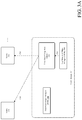
- FIG. 3A illustrates a congestion signal for a non-resync I/O request being generated and transmitted to sources of storage I/O requests in accordance with an embodiment of the invention.
- FIG. 3B illustrates a congestion signal for a resync I/O request being generated, adjusted and transmitted to the sources of storage I/O requests in accordance with an embodiment of the invention.
- FIG. 4 is a process flow diagram of a storage request management operation executed in each host computer of the cluster in the distributed data storage system in accordance with an embodiment of the invention.
- FIG. 5 is a process flow diagram of a storage request management operation executed in each host computer of the cluster in the distributed data storage system in accordance with an embodiment of the invention.
- FIG. 6 is a flow diagram of a method of managing storage requests in a distributed storage system in accordance with an embodiment of the invention.
- FIG. 1 illustrates a distributed storage system 100 in accordance with an embodiment of the invention.
- the distributed storage system 100 provides a software-based “virtual storage area network” (VSAN) 102 that leverages local storage resources of host computers 104 , which are part of a logically defined cluster 106 of host computers that is managed by a cluster management server 108 .
- VSAN virtual storage area network
- the VSAN 102 allows local storage resources of the host computers 104 to be aggregated to form a shared pool of storage resources, which allows the host computers 104 , including any software entities running on the host computers, to use the shared storage resources.
- the cluster management server 108 operates to manage and monitor the cluster 106 of host computers.
- the cluster management server may be configured to allow an administrator to create the cluster 106 , add host computers to the cluster and delete host computers from the cluster.
- the cluster management server may also be configured to allow an administrator to change settings or parameters of the host computers in the cluster regarding the VSAN 102 , which is formed using the local storage resources of the host computers in the cluster.
- the cluster management server may further be configured to monitor the current configurations of the host computers and any virtual instances running on the host computers, for example, virtual machines (VMs).
- the monitored configurations may include hardware configuration of each of the host computers and software configurations of each of the host computers.
- the monitored configurations may also include virtual instance hosting information, i.e., which virtual instances (e.g., VMs) are hosted or running on which host computers.
- the monitored configurations may also include information regarding the virtual instances running on the different host computers in the cluster.
- the cluster management server 108 may also perform operations to manage the virtual instances and the host computers 104 in the cluster 106 .
- the cluster management server may be configured to perform various resource management operations for the cluster, including virtual instance placement operations for either initial placement of virtual instances and/or load balancing.
- the process for initial placement of virtual instances, such as VMs may involve selecting suitable host computers for placement of the virtual instances based on, for example, memory and CPU requirements of the virtual instances, the current memory and CPU loads on all the host computers in the cluster and the memory and CPU capacity of all the host computers in the cluster.
- the cluster management server 108 may be a physical computer. In other embodiments, the cluster management server may be implemented as one or more software programs running on one or more physical computers, such as the host computers 104 in the cluster 106 , or running on one or more virtual machines, which may be hosted on any host computers. In an implementation, the cluster management server is a VMware vCenter® server with at least some of the features available for such a server.
- each host computer 104 in the cluster 106 includes hardware 110 , a hypervisor 112 , and a VSAN module 114 .
- the hardware 110 of each host computer includes hardware components commonly found in a physical computer system, such as one or more processors 116 , one or more system memories 118 , one or more network interfaces 120 and one or more local storage devices 122 (collectively referred to herein as “local storage”).
- Each processor 116 can be any type of a processor, such as a central processing unit (CPU) commonly found in a server.
- each processor may be a multi-core processor, and thus, includes multiple independent processing units or cores.
- Each system memory 118 which may be random access memory (RAM), is the volatile memory of the host computer 104 .
- the network interface 120 is an interface that allows the host computer to communicate with a network, such as the Internet.
- the network interface may be a network adapter.
- Each local storage device 122 is a nonvolatile storage, which may be, for example, a solid-state drive (SSD) or a magnetic disk.
- the hypervisor 112 of each host computer 104 which is a software interface layer that, using virtualization technology, enables sharing of the hardware resources of the host computer by virtual instances 124 , such as VMs, running on the host computer. With the support of the hypervisor, the VMs provide isolated execution spaces for guest software.
- the VSAN module 114 of each host computer 104 provides access to the local storage resources of that host computer (e.g., handle storage input/output (I/O) operations to data objects stored in the local storage resources as part of the VSAN 102 ) by other host computers 104 in the cluster 106 or any software entities, such as VMs 124 , running on the host computers in the cluster.
- the VSAN module of each host computer allows any VM running on any of the host computers in the cluster to access data stored in the local storage resources of that host computer, which may include virtual disks (or portions thereof) of VMs running on any of the host computers and other related files of those VMs.
- the VSAN module may handle other types of storage I/Os, such as namespace I/Os, resync I/Os, and internal metadata I/O.
- Namespace I/Os are writes and read operations for configuration files for VMs, such as vmx files, log files, digest files and memory snapshots.
- Resync I/Os are writes and read operations for data related to failed disks, host computers, racks or clusters.
- Internal metadata I/Os writes and read operations that are performed on internal data structures other than actual data, such as operations to read from logs, bitmaps, or policies.
- the VSAN module is designed to provide fairness among these different classes of storage I/O requests, which may have different I/O patterns due to their different workloads.
- the resync I/O traffic is one type of internal I/O traffic that needs to get it's fair share compared to VM I/Os, but not too much as to significantly affect the throughput of the VM I/Os, which may be detectable by the VM users.
- VSAN systems there are two typical I/O workloads.
- the first is the external guest VM I/O workload, which can have very high OIO (outstanding IO).
- the second is system internal inter-component data resynchronization IO workload, which is sequential from the perspective of the resynchronization job and always only has one OM from the perspective of one VSAN object.
- OIO outstanding IO
- system internal inter-component data resynchronization IO workload which is sequential from the perspective of the resynchronization job and always only has one OM from the perspective of one VSAN object.
- For each I/O workload there are different kinds of resource constraint in different layers in a VSAN system.
- resource constraints For the lowest data persistent layer, generally speaking, there are two kinds of resource constraints, one is the shared resource constraint (e.g., the constraint is shared among all components within one disk group or a host computer), and the other is non-shared constraint exclusively and individually operated on a data unit (e.g., VSAN object or VSAN data component), which has no impact on other data components in the same disk group or host computer.
- a data unit e.g., VSAN object or VSAN data component
- a conventional VSAN system may have a congestion-based flow control mechanism to propagate resource constraint notification from the lowest data persistent layer to upper data path layers, which is used especially when the data persistent layer is close to or reaches its maximum resource constraint.
- the congestion-based flow control mechanism will ultimately translate the resource constraint into a delay time, and the incoming I/O requests will be delayed at the VSAN I/O distributed coordinator (distributed object manager (DOM) Owner) or at VSAN I/O interface layer (DOM client).
- VSAN I/O distributed coordinator distributed object manager (DOM) Owner
- DOM client VSAN I/O interface layer
- each I/O workload will be totally determined by its OIO, which will cause I/O unfairness between guest VM I/Os and VSAN resynchronization I/Os, as well as other type of storage I/Os.
- the VSAN module 114 of each host computer 104 in the distributed storage system 100 addresses the I/O fairness issue when the congestion or delay is caused by the per-component resource constraint.
- the VSAN module 114 is designed to fairly process non-shared resource fullness, also known as component congestions, as opposed to diskgroup congestion. This is a challenging problem because when only a small number of components receive large amounts of storage I/O requests, a component could be under heavy VM I/O workload along with a resync I/O workload. In this scenario, component congestion will be more significant than diskgroup congestion, dominating per I/O latency delay.
- the VSAN module 114 uses the ratio of resync/non-resync I/O bandwidth to drive a subsequent throttling action, which adjusts resync I/O discount since resync I/O's are susceptible to using low (e.g., down to 1) OIOs during the straggler phase.
- the resync discounting process is a feedback control loop to minimize resync I/O's unfairness, which is more likely to happen than VM I/O unfairness because VM I/O workload can always use more OIO more easily, but resync OIO is controlled to be fixed (e.g., 1) for each component.
- VM I/O throughput is determined by the latency of each resync I/O, which includes the delay converted from component congestion.
- the VSAN module includes a cluster level object manager (CLOM) 202 , a distributed object manager (DOM) 204 , a local log structured object management (LSOM) 206 , a reliable datagram transport (RDT) manager 208 , a time-based congestion adjuster 210 and a cluster monitoring, membership and directory service (CMMDS) 212 .
- CLOM cluster level object manager
- DOM distributed object manager
- LSOM local log structured object management
- RDT reliable datagram transport
- CMMDS cluster monitoring, membership and directory service
- the CLOM 202 operates to validate storage resource availability, and DOM 204 operates to create components and apply configuration locally through the LSOM 206 .
- the DOM also operates to coordinate with counterparts for component creation on other host computers 104 in the cluster 106 . All subsequent reads and writes to storage objects funnel through the DOM 204 , which will take them to the appropriate components.
- the LSOM operates to monitor the flow of storage I/O operations to the local storage 122 , for example, to report whether a storage resource is congested.
- the LSOM generates a congestion signal that indicates current storage usage, such as the current tier-1 device resource fullness, which indicates the current congestion at the local storage 122 .
- the RDT manager 208 is the communication mechanism for storage I/Os in a VSAN network, and thus, can communicate with the VSAN modules in other host computers in the cluster.
- the RDT manager uses transmission control protocol (TCP) at the transport layer and it is responsible for creating and destroying TCP connections (sockets) on demand.
- TCP transmission control protocol
- the time-based congestion adjuster 210 operates to selectively adjust or modify congestion signals from the LSOM 206 using time-based rolling average bandwidths of different classes of storage I/O requests, which is computed by the DOM 204 , to ensure fairness between the different classes of storage I/O requests, e.g., between resync storage I/O requests and non-resync storage I/O requests, with respect to management of the storage I/O requests, as described in detail below.
- the CMMDS 212 is responsible for monitoring the VSAN cluster's membership, checking heartbeats between the host computers in the cluster, and publishing updates to the cluster directory. Other software components use the cluster directory to learn of changes in cluster topology and object configuration. For example, the DOM uses the contents of the cluster directory to determine the host computers in the cluster storing the components of a storage object and the paths by which those host computers are reachable.
- the components of the VSAN module 114 of a host computer operate to generate and transmit congestion signals to sources 330 of storage I/O requests.
- the sources 330 of storage I/O requests may include the host computers 104 of the cluster 106 , the VMs 124 running on the host computers 104 and software processes or routines (not shown) operating in the host computers 104 .
- Each congestion signal transmitted from the VSAN module 114 of the host computer 104 to the sources 330 provides information on the current fullness of the local storage 122 of that host computer for one or more classes of storage I/O requests.
- Each host computer that receives a congestion signal from the VSAN module 114 may implement a delay based on the received congestion signal, which may be a time-averaged latency-based delay. Since each congestion signal is associated with one or more classes of storage I/O requests, the congestion signals from the VSAN module 114 may be used to selectively control the issuance of different classes of storage I/O requests. Thus, if one class of storage I/O requests is indicated as being heavily congested by the received congestion signals, the host computers in the cluster may use that information to apply more backpressure on that class of storage I/O requests. However, less backpressure may be applied to other less backlogged classes of storage I/O requests so that the different classes of storage I/O requests may be processed in a fair manner.
- congestions signals for different classes of storage I/O requests are processed differently by the components of the VSAN 114 .
- resync storage I/O requests and non-resync storage I/O requests are handled differently with respect to the congestion signals.
- congestion signals generated by the LSOM 206 for resync storage I/O requests may be adjusted by the time-based congestion adjuster 210 .
- congestion signals generated by the LSOM 206 for non- resync storage I/O requests e.g., VM I/O requests, namespace I/O requests and internal metadata I/O requests, are not adjusted by the time-based congestion adjuster 210 .
- Each congestion signal for resync storage I/O requests may be adjusted or discounted depending on the current time-based rolling average bandwidth for resync storage I/O requests and the current time-based rolling average bandwidth for storage I/O requests of another class, such as VM storage I/O requests, which are calculated by the DOM 204 , as described in detail below.
- congestion signals for resync storage I/O requests may be discounted so that more resync storage I/O requests are processed than other non-resync storage I/O requests, such as VM storage requests, when storage constraint conditions warrant such action.
- a congestion signal CS 1 when conditions in the local storage 122 warrants that such congestion signal be issued.
- a congestion signal may be generated by the LSOM 206 when write requests in a write buffer (not shown) exceeds certain threshold.
- the value of a congestion signal may vary depending on how much that threshold is exceeded by the write requests in the write buffer. For example, the value of a congestion signal may be from zero (0) to two hundred fifty-five (255), where 0 indicates the minimal congestion for the local storage and 255 indicates the maximum congestion for the local storage.
- the congestion signal CS 1 is transmitted from the LSOM 206 to the time-based congestion adjuster 210 with a returned storage I/O request. Because the congestion signal CS 1 is associated with a non-resync storage I/O request, the congestion signal CS 1 is transmitted to the sources 330 without being adjusted by the time-based congestion adjuster 210 so that delay may be applied to non-resync storage I/O requests.
- the LSOM 206 For a resync storage I/O request, the LSOM 206 generates a congestion signal CS 2 when conditions in the local storage 122 warrants that such congestion signal be issued.
- the congestion signal CS 2 is transmitted from the LSOM 206 to the time-based congestion adjuster 210 with a returned storage I/O request. Because the congestion signal CS 2 is associated with a resync storage I/O request, the congestion signal CS 2 may be first adjusted or discounted before being transmitted to the sources 330 .
- the amount or percentage that the congestion signal C 2 is discounted depends on the current time-based rolling average bandwidth for resync storage I/O requests (resyncAB) and the current time-based rolling average bandwidth for storage I/O requests of another class (non-resyncAB), which are computed and provided to the time-based congestion adjuster 210 , and the desired ratio between these two average bandwidths, as described in more detail below. If discount is applied to the congestion signal CS 2 by the time-based congestion adjuster 210 , the resulting discounted congestion signal D-CS 2 is then transmitted to the sources 330 so that less delay may be applied to resync storage I/O requests so that different classes of storage I/O requests may be processed in a more fair manner.
- the operation executed by the DOM 204 of the VSAN module 114 in each host computer 104 of the distributed storage system 100 to compute time-based rolling average bandwidths in accordance with an embodiment of the invention is now described with reference to a process flow diagram of FIG. 4 .
- This operation is performed after the processing of each storage I/O request by the DOM 204 has been completed, i.e., the storage I/O request has been processed by the DOM and passed to the LSOM 206 .
- rolling average bandwidths are computed based on the elapsed time between consecutive storage I/O requests. As the elapsed time between consecutive storage I/O requests increases, the rolling average bandwidth is reduced further.
- the rolling average bandwidth is reset to zero.
- the elapse of time between storage I/O requests is measured using a slot gap mechanism, which determines the elapse of time using the gap between time slots for the two consecutive storage I/O requests.
- the timestamp at the moment when the processing of a current storage I/O request by the DOM has completed is recorded.
- the timestamp may be a numerical value that corresponds to the time when the timestamp is recorded.
- the timestamp for the current storage I/O request and the timestamp for the previous storage I/O request of the same class of storage I/O requests are normalized using the duration or size of predefined fixed-sized time slots, e.g., 200 milliseconds, which may be configurable. In an embodiment, each timestamp is normalized by dividing the timestamp value by the duration value of the time slots.
- a slot index gap between the slot index of the current storage I/O request and the slot index of the previous storage I/O request is calculated.
- the slot index of the previous storage I/O request is set to zero.
- the slot index of the current storage I/O request is computed by taking the difference between the normalized timestamp value for the current storage I/O request and the normalized timestamp value for the previous storage I/O request. This difference is then divided by the duration value of the time slots. The resulting value is the time slot index (sometimes referred to herein simply as “slot index”) of the current storage I/O request.
- the slot indexes of the current and previous storage I/O requests will be the same slot index, i.e., both the current and previous storage I/O requests are in the same time slot.
- the slot indexes of the current and previous storage I/O requests will be different slot indexes. In such a case, the slot index gap will be larger for greater difference between the normalized timestamp value for the current storage I/O request and the normalized timestamp value for the previous storage I/O request.
- the operation proceeds to block 412 , where the time-based rolling average bandwidth for the class of storage I/O requests of the current storage I/O request is updated according to the slot index gap.
- the time-based rolling average bandwidth is updated by multiplying the previous time-based rolling average bandwidth for the class of storage I/O requests of the current storage I/O request with the decay weight value for the slot index of the current storage I/O request.
- the decay weight value may be determined using a predefined decay rate for each unit time slot. As an example, the predefined decay rate may have a default setting of 95% decay for each subsequent time slot, which may be changed by the user.
- the decay weight for the first five (5) time slots are 95.0%, 90.3%, 85.7%, 81.5% and 77.4%, respectively.
- the decay weight value for the first five (5) time slots are 0.950, 0.903, 0.857, 0.815 and 0.774, respectively. The operation then proceeds to block 416 .
- the operation proceeds to block 414 , where the time-based rolling average bandwidth for the class of storage I/O request of the current storage I/O request is set to zero. It is noted here that setting the time-based rolling average bandwidth to zero is similar to multiplying the previous time-based rolling average bandwidth for the class of storage I/O request of the current storage I/O request with the decay weight value for the slot index of the current storage I/O request because the decay weight value for the 128th time slot is 0.001 or 0.1%. The operation then proceeds to block 416 .
- the size of the current storage I/O request is added to the time-based rolling average bandwidth for the class of storage I/O request of the current storage I/O request to derive the current time-based rolling average bandwidth for the I/O class.
- the size of a storage I/O request can be any size, for example, 1024 bytes.
- the current time-based rolling average bandwidth for the class of storage I/O requests of the current storage I/O request is recorded.
- the recorded time-based rolling average bandwidths for different classes of storage I/O requests are used by the time-based congestion adjuster 210 of the VSAN module 114 for time-based congestion discount operation, as described in detail below.
- the time-based congestion discount operation executed by the time-based congestion adjuster 210 of the VSAN module 114 in each host computer 104 of the distributed storage system 100 in accordance with an embodiment of the invention is now described with reference to a process flow diagram of FIG. 5 .
- This operation is performed when a storage I/O request, e.g., a write request, is returned from the LSOM 206 of the VSAN module 114 due to congestion at the local storage 122 .
- a returned storage I/O request and a congestion signal from the LSOM 206 are received at the time-based congestion adjuster 210 .
- the congestion signal indicates the amount of congestion at the persistent layer of the host computer, i.e., the local storage devices of the host computer.
- the congestion signal includes a value from zero (0) to two hundred fifty-five (255), where 0 indicates no storage resource constraint and 255 indicates the maximum storage resource constraint.
- the different classes of storage I/O requests may be differentiated by examining at one or more flags that are set in the headers of the storage I/O requests. These flags may be set by DOM client (that handles regular I/Os) and DOM owner (that handles internally initiated I/Os, such as resync I/Os).
- the class of a storage I/O request may be identified by looking at an OperationType flag in the header of the storage I/O request, which may indicate that the storage I/O request is, but not limited to, a VM I/O request, a namespace I/O request, an internal metadata I/O request or a resync I/O request.
- the OperationType flag of a storage I/O request can indicate whether that storage I/O request belongs to the class of resync storage I/O requests or not. If the returned storage I/O request is not a resync storage I/O request, the operation proceeds to block 522 .
- the operation proceeds to block 506 , where the ratio of the time-based rolling average bandwidth for resync storage I/O requests to the time-based rolling average bandwidth for VM storage I/O requests is calculated.
- This average bandwidth ratio will be referred to herein as the actual ratio of the time-based rolling average bandwidth for resync storage I/O requests to the time-based rolling average bandwidth for VM storage I/O requests or the actual average bandwidth ratio.
- returned storage I/O requests are differentiated between the one class of storage I/O requests, e.g., resync storage I/O requests, and other classes of storage I/O requests, e.g., VM I/O requests, namespace I/O requests and internal metadata I/O requests.
- one class of storage I/O requests e.g., resync storage I/O requests
- other classes of storage I/O requests e.g., VM I/O requests, namespace I/O requests and internal metadata I/O requests.
- the actual average bandwidth ratio is divided and normalized against an expected I/O fairness ratio of the average bandwidth for resync storage I/O requests to the average bandwidth for VM storage I/O requests to derive a normalized discounting ratio.
- the expected average bandwidth ratio which may be simply referred to herein as the expected ratio, be configurable by the user. In this fashion, the actual average bandwidth ratio is compared with the expected average bandwidth ratio.
- the default setting for the expected average bandwidth ratio may be a ratio of 4:1 for the average bandwidth for resync storage I/O requests to the average bandwidth for VM storage I/O requests.
- the normalized discounting ratio may be expressed as a percent or a decimal.
- the operation proceeds to block 516 , where the congestion discount is set as 100% or its equivalent. The operation then proceeds to block 520 . However, if the normalized discounting ratio is less than the second threshold, i.e., less than the second threshold and greater than the first threshold, the operation proceeds to block 518 , where the congestion discount is calculated using the normalized discounting ratio.
- the value of the congestion discount which can be between 0% and 100%, is determined linearly by the position of the normalized discounting ratio on a straight linear line from the first threshold to the second threshold, e.g., a straight line from 150% to 500%. Thus, for example, if the normalized discounting ratio is 325% (midpoint on a line from 150% to 500%), then the congestion discount will be 50% (midpoint on a line from 0% and 100%).
- the congestion signal for the returned storage I/O request which is a resync storage I/O request, is updated or adjusted using the congestion discount.
- the adjusted congestion signal is transmitted to sources of storage I/O requests so that discounted delay can be applied to new storage I/O requests issued from the sources.
- the adjusted or discounted congestion signal will help resync I/O requests delay less, balance off the single OM limit of the resync I/O pattern, increase its I/O bandwidth and reach the expected I/O fairness ratio for the different classes of storage I/O requests.
- the approach described herein always rebalances more bandwidth to the low OM resync I/O once its bandwidth is squelched too much by high OM guest VM I/O, caused by the resource constraint congestion, and guarantees IO fairness under the per-component resource constraint conditions.
- a method for managing storage I/O requests in a distributed storage system in accordance with an embodiment of the invention is described with reference to a flow diagram of FIG. 6 .
- congestion signals associated with storage requests at a host computer of the distributed storage system are generate based on congestion at local storage of the host computer that supports a virtual storage area network.
- the storage requests are differentiated between a first class of storage requests and at least one other class of storage requests.
- an actual ratio of a current average bandwidth of the first class of storage requests to a current average bandwidth of a second class of storage requests is calculated.
- the actual ratio of a current average bandwidth of the first class of storage requests to a current average bandwidth of a second class of storage requests is compared with an expected ratio.
- a congestion signal associated with the first class of storage requests is adjusted based on comparison of the actual ratio to the expected ratio to produce an adjusted congestion signal.
- the adjusted congestion signal is transmitted to at least one source of storage requests, the adjusted congestion signal being used for storage request fairness control.
- an embodiment of a computer program product includes a computer useable storage medium to store a computer readable program that, when executed on a computer, causes the computer to perform operations, as described herein.
- embodiments of at least portions of the invention can take the form of a computer program product accessible from a computer-usable or computer-readable medium providing program code for use by or in connection with a computer or any instruction execution system.
- a computer-usable or computer readable medium can be any apparatus that can contain, store, communicate, propagate, or transport the program for use by or in connection with the instruction execution system, apparatus, or device.
- the computer-useable or computer-readable medium can be an electronic, magnetic, optical, electromagnetic, infrared, or semiconductor system (or apparatus or device), or a propagation medium.
- Examples of a computer-readable medium include a semiconductor or solid state memory, non-volatile memory, NVMe device, persistent memory, magnetic tape, a removable computer diskette, a random access memory (RAM), a read-only memory (ROM), a rigid magnetic disc, and an optical disc.
- Current examples of optical discs include a compact disc with read only memory (CD-ROM), a compact disc with read/write (CD-R/W), a digital video disc (DVD), and a Blu-ray Disc® optical disc.
Landscapes
- Engineering & Computer Science (AREA)
- Theoretical Computer Science (AREA)
- Computer Networks & Wireless Communication (AREA)
- Signal Processing (AREA)
- General Engineering & Computer Science (AREA)
- Physics & Mathematics (AREA)
- General Physics & Mathematics (AREA)
- Human Computer Interaction (AREA)
- Software Systems (AREA)
- Computer Hardware Design (AREA)
- Environmental & Geological Engineering (AREA)
- Cardiology (AREA)
- General Health & Medical Sciences (AREA)
- Health & Medical Sciences (AREA)
- Information Retrieval, Db Structures And Fs Structures Therefor (AREA)
Abstract
Description
Claims (19)
Priority Applications (1)
| Application Number | Priority Date | Filing Date | Title |
|---|---|---|---|
| US15/947,313 US10965739B2 (en) | 2018-04-06 | 2018-04-06 | Time-based congestion discounting for I/O fairness control |
Applications Claiming Priority (1)
| Application Number | Priority Date | Filing Date | Title |
|---|---|---|---|
| US15/947,313 US10965739B2 (en) | 2018-04-06 | 2018-04-06 | Time-based congestion discounting for I/O fairness control |
Publications (2)
| Publication Number | Publication Date |
|---|---|
| US20190312925A1 US20190312925A1 (en) | 2019-10-10 |
| US10965739B2 true US10965739B2 (en) | 2021-03-30 |
Family
ID=68096176
Family Applications (1)
| Application Number | Title | Priority Date | Filing Date |
|---|---|---|---|
| US15/947,313 Expired - Fee Related US10965739B2 (en) | 2018-04-06 | 2018-04-06 | Time-based congestion discounting for I/O fairness control |
Country Status (1)
| Country | Link |
|---|---|
| US (1) | US10965739B2 (en) |
Families Citing this family (2)
| Publication number | Priority date | Publication date | Assignee | Title |
|---|---|---|---|---|
| US11403143B2 (en) * | 2020-12-04 | 2022-08-02 | Vmware, Inc. | DRR-based two stages IO scheduling algorithm for storage system with dynamic bandwidth regulation |
| US20250030637A1 (en) * | 2023-07-21 | 2025-01-23 | VMware LLC | Network scheduler in a distributed storage system |
Citations (18)
| Publication number | Priority date | Publication date | Assignee | Title |
|---|---|---|---|---|
| US6240446B1 (en) * | 1998-10-14 | 2001-05-29 | International Business Machines Corporation | Multiplexing of multiple data packets for multiple input/output operations between multiple input/output devices and a channel subsystem having multiple channels |
| US6289383B1 (en) * | 1998-11-30 | 2001-09-11 | Hewlett-Packard Company | System and method for managing data retrieval bandwidth |
| US20030154282A1 (en) * | 2001-03-29 | 2003-08-14 | Microsoft Corporation | Methods and apparatus for downloading and/or distributing information and/or software resources based on expected utility |
| US20040003087A1 (en) * | 2002-06-28 | 2004-01-01 | Chambliss David Darden | Method for improving performance in a computer storage system by regulating resource requests from clients |
| US7739470B1 (en) * | 2006-10-20 | 2010-06-15 | Emc Corporation | Limit algorithm using queue depth to control application performance |
| US20120057478A1 (en) * | 2010-09-03 | 2012-03-08 | Braennstroem Nils | Dynamic Bandwidth Allocation Control in a Multi-Access Radio Communication System |
| US20140082616A1 (en) * | 2012-09-20 | 2014-03-20 | Fujitsu Limited | Information processing method, information processing apparatus, recording medium, and system |
| US20140126585A1 (en) * | 2010-04-26 | 2014-05-08 | Cleversafe, Inc. | Dispersed storage network frame protocol header |
| US20140344440A1 (en) * | 2013-05-16 | 2014-11-20 | International Business Machines Corporation | Managing Network Utility of Applications on Cloud Data Centers |
| US20150095489A1 (en) * | 2013-09-27 | 2015-04-02 | Fujitsu Limited | Storage management device and control method |
| US20150281357A1 (en) * | 2014-03-27 | 2015-10-01 | Fujitsu Limited | Storage management device, and performance tuning method |
| US20160072691A1 (en) * | 2014-09-08 | 2016-03-10 | Hughes Network Systems, Llc | Bandwidth management across logical groupings of access points in a shared access broadband network |
| US20160094328A1 (en) * | 2014-09-30 | 2016-03-31 | Nicira, Inc. | Methods and systems for controller-based datacenter network sharing |
| US20160156538A1 (en) * | 2013-07-23 | 2016-06-02 | Hewlett-Packard Development Company, L.P. | Work conserving bandwidth guarantees using priority |
| US20160182376A1 (en) * | 2013-08-02 | 2016-06-23 | Alcatel Lucent | Intermediate node, an end node, and method for avoiding latency in a packet-switched network |
| US20160359973A1 (en) * | 2015-06-04 | 2016-12-08 | Advanced Micro Devices, Inc. | Source-Side Resource Request Network Admission Control |
| US20170070443A1 (en) * | 2011-08-24 | 2017-03-09 | Guest Tek Interactive Entertainment Ltd. | Allocating bandwidth between bandwidth zones according to user load |
| US20180131613A1 (en) * | 2016-08-23 | 2018-05-10 | Iain Kibet Fraser | Congestion control |
-
2018
- 2018-04-06 US US15/947,313 patent/US10965739B2/en not_active Expired - Fee Related
Patent Citations (18)
| Publication number | Priority date | Publication date | Assignee | Title |
|---|---|---|---|---|
| US6240446B1 (en) * | 1998-10-14 | 2001-05-29 | International Business Machines Corporation | Multiplexing of multiple data packets for multiple input/output operations between multiple input/output devices and a channel subsystem having multiple channels |
| US6289383B1 (en) * | 1998-11-30 | 2001-09-11 | Hewlett-Packard Company | System and method for managing data retrieval bandwidth |
| US20030154282A1 (en) * | 2001-03-29 | 2003-08-14 | Microsoft Corporation | Methods and apparatus for downloading and/or distributing information and/or software resources based on expected utility |
| US20040003087A1 (en) * | 2002-06-28 | 2004-01-01 | Chambliss David Darden | Method for improving performance in a computer storage system by regulating resource requests from clients |
| US7739470B1 (en) * | 2006-10-20 | 2010-06-15 | Emc Corporation | Limit algorithm using queue depth to control application performance |
| US20140126585A1 (en) * | 2010-04-26 | 2014-05-08 | Cleversafe, Inc. | Dispersed storage network frame protocol header |
| US20120057478A1 (en) * | 2010-09-03 | 2012-03-08 | Braennstroem Nils | Dynamic Bandwidth Allocation Control in a Multi-Access Radio Communication System |
| US20170070443A1 (en) * | 2011-08-24 | 2017-03-09 | Guest Tek Interactive Entertainment Ltd. | Allocating bandwidth between bandwidth zones according to user load |
| US20140082616A1 (en) * | 2012-09-20 | 2014-03-20 | Fujitsu Limited | Information processing method, information processing apparatus, recording medium, and system |
| US20140344440A1 (en) * | 2013-05-16 | 2014-11-20 | International Business Machines Corporation | Managing Network Utility of Applications on Cloud Data Centers |
| US20160156538A1 (en) * | 2013-07-23 | 2016-06-02 | Hewlett-Packard Development Company, L.P. | Work conserving bandwidth guarantees using priority |
| US20160182376A1 (en) * | 2013-08-02 | 2016-06-23 | Alcatel Lucent | Intermediate node, an end node, and method for avoiding latency in a packet-switched network |
| US20150095489A1 (en) * | 2013-09-27 | 2015-04-02 | Fujitsu Limited | Storage management device and control method |
| US20150281357A1 (en) * | 2014-03-27 | 2015-10-01 | Fujitsu Limited | Storage management device, and performance tuning method |
| US20160072691A1 (en) * | 2014-09-08 | 2016-03-10 | Hughes Network Systems, Llc | Bandwidth management across logical groupings of access points in a shared access broadband network |
| US20160094328A1 (en) * | 2014-09-30 | 2016-03-31 | Nicira, Inc. | Methods and systems for controller-based datacenter network sharing |
| US20160359973A1 (en) * | 2015-06-04 | 2016-12-08 | Advanced Micro Devices, Inc. | Source-Side Resource Request Network Admission Control |
| US20180131613A1 (en) * | 2016-08-23 | 2018-05-10 | Iain Kibet Fraser | Congestion control |
Non-Patent Citations (1)
| Title |
|---|
| Haghdoost, et al. (2017). On the accuracy and scalability of intensive I/O workload replay. In 15th USENIX Conference on File and Storage Technologies (FAST 17) (pp. 315-328). Retrieved from https://www.usenix.org/conference/fast17/technical-sessions/presentation/haghdoost (Year: 2017). * |
Also Published As
| Publication number | Publication date |
|---|---|
| US20190312925A1 (en) | 2019-10-10 |
Similar Documents
| Publication | Publication Date | Title |
|---|---|---|
| US12126536B2 (en) | Distributed policy-based provisioning and enforcement for quality of service | |
| US10810143B2 (en) | Distributed storage system and method for managing storage access bandwidth for multiple clients | |
| US10254991B2 (en) | Storage area network based extended I/O metrics computation for deep insight into application performance | |
| JP6290462B2 (en) | Coordinated admission control for network accessible block storage | |
| EP2972746B1 (en) | Storage unit selection for virtualized storage units | |
| WO2021126295A1 (en) | Request throttling in distributed storage systems | |
| US9509621B2 (en) | Decentralized input/output resource management | |
| US9807014B2 (en) | Reactive throttling of heterogeneous migration sessions in a virtualized cloud environment | |
| US10460254B2 (en) | System and method for reducing state space in reinforced learning by using decision tree classification | |
| CN107967164A (en) | A kind of method and system of live migration of virtual machine | |
| CN110018781A (en) | Disk flow control method, device and electronic equipment | |
| US10761726B2 (en) | Resource fairness control in distributed storage systems using congestion data | |
| US10965739B2 (en) | Time-based congestion discounting for I/O fairness control | |
| US12367185B1 (en) | Replication system for data migration | |
| US12164505B2 (en) | Two-phase commit using reserved log sequence values | |
| US10721181B1 (en) | Network locality-based throttling for automated resource migration | |
| KR102937719B1 (en) | Storage server and input and output processing method of storage server | |
| CN116781707A (en) | Load balancing method, device, electronic equipment and storage medium | |
| Wen | Improving Data Access Performance of Applications in IT Infrastructure | |
| HK40010968B (en) | Disk flow control method and device and electronic device | |
| HK40010968A (en) | Disk flow control method and device and electronic device | |
| Zheng et al. | CLIBE: Precise Cluster-Level I/O Bandwidth Enforcement in Distributed File System |
Legal Events
| Date | Code | Title | Description |
|---|---|---|---|
| FEPP | Fee payment procedure |
Free format text: ENTITY STATUS SET TO UNDISCOUNTED (ORIGINAL EVENT CODE: BIG.); ENTITY STATUS OF PATENT OWNER: LARGE ENTITY |
|
| STPP | Information on status: patent application and granting procedure in general |
Free format text: DOCKETED NEW CASE - READY FOR EXAMINATION |
|
| AS | Assignment |
Owner name: VMWARE, INC., CALIFORNIA Free format text: ASSIGNMENT OF ASSIGNORS INTEREST;ASSIGNORS:XIANG, ENNING;KNAUFT, ERIC;XU, YIQI;AND OTHERS;SIGNING DATES FROM 20180925 TO 20180926;REEL/FRAME:047345/0185 |
|
| STPP | Information on status: patent application and granting procedure in general |
Free format text: RESPONSE TO NON-FINAL OFFICE ACTION ENTERED AND FORWARDED TO EXAMINER |
|
| STPP | Information on status: patent application and granting procedure in general |
Free format text: NOTICE OF ALLOWANCE MAILED -- APPLICATION RECEIVED IN OFFICE OF PUBLICATIONS |
|
| STPP | Information on status: patent application and granting procedure in general |
Free format text: PUBLICATIONS -- ISSUE FEE PAYMENT VERIFIED |
|
| STCF | Information on status: patent grant |
Free format text: PATENTED CASE |
|
| AS | Assignment |
Owner name: VMWARE LLC, CALIFORNIA Free format text: CHANGE OF NAME;ASSIGNOR:VMWARE, INC.;REEL/FRAME:067102/0314 Effective date: 20231121 |
|
| FEPP | Fee payment procedure |
Free format text: MAINTENANCE FEE REMINDER MAILED (ORIGINAL EVENT CODE: REM.); ENTITY STATUS OF PATENT OWNER: LARGE ENTITY |
|
| LAPS | Lapse for failure to pay maintenance fees |
Free format text: PATENT EXPIRED FOR FAILURE TO PAY MAINTENANCE FEES (ORIGINAL EVENT CODE: EXP.); ENTITY STATUS OF PATENT OWNER: LARGE ENTITY |
|
| STCH | Information on status: patent discontinuation |
Free format text: PATENT EXPIRED DUE TO NONPAYMENT OF MAINTENANCE FEES UNDER 37 CFR 1.362 |
|
| FP | Lapsed due to failure to pay maintenance fee |
Effective date: 20250330 |