US10963161B2 - Storage apparatus and its control method - Google Patents
Storage apparatus and its control method Download PDFInfo
- Publication number
- US10963161B2 US10963161B2 US16/294,451 US201916294451A US10963161B2 US 10963161 B2 US10963161 B2 US 10963161B2 US 201916294451 A US201916294451 A US 201916294451A US 10963161 B2 US10963161 B2 US 10963161B2
- Authority
- US
- United States
- Prior art keywords
- storage
- administrator
- management
- role
- performance information
- Prior art date
- Legal status (The legal status is an assumption and is not a legal conclusion. Google has not performed a legal analysis and makes no representation as to the accuracy of the status listed.)
- Active, expires
Links
Images




Classifications
-
- G—PHYSICS
- G06—COMPUTING OR CALCULATING; COUNTING
- G06F—ELECTRIC DIGITAL DATA PROCESSING
- G06F3/00—Input arrangements for transferring data to be processed into a form capable of being handled by the computer; Output arrangements for transferring data from processing unit to output unit, e.g. interface arrangements
- G06F3/06—Digital input from, or digital output to, record carriers, e.g. RAID, emulated record carriers or networked record carriers
- G06F3/0601—Interfaces specially adapted for storage systems
- G06F3/0602—Interfaces specially adapted for storage systems specifically adapted to achieve a particular effect
- G06F3/0604—Improving or facilitating administration, e.g. storage management
- G06F3/0605—Improving or facilitating administration, e.g. storage management by facilitating the interaction with a user or administrator
-
- G—PHYSICS
- G06—COMPUTING OR CALCULATING; COUNTING
- G06F—ELECTRIC DIGITAL DATA PROCESSING
- G06F11/00—Error detection; Error correction; Monitoring
- G06F11/30—Monitoring
- G06F11/3003—Monitoring arrangements specially adapted to the computing system or computing system component being monitored
- G06F11/3034—Monitoring arrangements specially adapted to the computing system or computing system component being monitored where the computing system component is a storage system, e.g. DASD based or network based
-
- G—PHYSICS
- G06—COMPUTING OR CALCULATING; COUNTING
- G06F—ELECTRIC DIGITAL DATA PROCESSING
- G06F11/00—Error detection; Error correction; Monitoring
- G06F11/30—Monitoring
- G06F11/34—Recording or statistical evaluation of computer activity, e.g. of down time, of input/output operation ; Recording or statistical evaluation of user activity, e.g. usability assessment
- G06F11/3409—Recording or statistical evaluation of computer activity, e.g. of down time, of input/output operation ; Recording or statistical evaluation of user activity, e.g. usability assessment for performance assessment
-
- G—PHYSICS
- G06—COMPUTING OR CALCULATING; COUNTING
- G06F—ELECTRIC DIGITAL DATA PROCESSING
- G06F3/00—Input arrangements for transferring data to be processed into a form capable of being handled by the computer; Output arrangements for transferring data from processing unit to output unit, e.g. interface arrangements
- G06F3/06—Digital input from, or digital output to, record carriers, e.g. RAID, emulated record carriers or networked record carriers
- G06F3/0601—Interfaces specially adapted for storage systems
- G06F3/0628—Interfaces specially adapted for storage systems making use of a particular technique
- G06F3/0653—Monitoring storage devices or systems
-
- H—ELECTRICITY
- H04—ELECTRIC COMMUNICATION TECHNIQUE
- H04L—TRANSMISSION OF DIGITAL INFORMATION, e.g. TELEGRAPHIC COMMUNICATION
- H04L67/00—Network arrangements or protocols for supporting network services or applications
- H04L67/01—Protocols
- H04L67/10—Protocols in which an application is distributed across nodes in the network
- H04L67/1001—Protocols in which an application is distributed across nodes in the network for accessing one among a plurality of replicated servers
- H04L67/1031—Controlling of the operation of servers by a load balancer, e.g. adding or removing servers that serve requests
-
- H04L67/26—
-
- H—ELECTRICITY
- H04—ELECTRIC COMMUNICATION TECHNIQUE
- H04L—TRANSMISSION OF DIGITAL INFORMATION, e.g. TELEGRAPHIC COMMUNICATION
- H04L67/00—Network arrangements or protocols for supporting network services or applications
- H04L67/50—Network services
- H04L67/55—Push-based network services
Definitions
- the present invention relates to a storage apparatus and its control method and is suited for use in, for example, a storage apparatus managed by a plurality of storage administrators.
- the storage apparatus may be managed by an administrator team composed of a plurality of sites and a plurality of persons and a storage resource(s) (hereinafter referred as the management object resource(s)) which is/are an object(s) to be managed by each storage administrator may sometimes be duplicate or independent depending on the relevant storage administrator's role.
- the management object resource(s) which is/are an object(s) to be managed by each storage administrator may sometimes be duplicate or independent depending on the relevant storage administrator's role.
- the management software manages both the current performance information of management object resources of each storage administrator and the past performance information of each management object resource, which is required to analyze the usage status of the storage resources, respectively by using the database, combines the data stored in that database, and reports the usage status of the management object resource(s) of the relevant storage administrator to each storage administrator.
- PTL 1 discloses an invention relating to polling and capable of continuing acquiring and processing data acquired by polling in a distributed environment where a plurality of data acquisition means for acquiring the data by means of polling, even if some communication failures occurs with one data acquisition means.
- the management software which cannot retain such a database, it is necessary to collect the performance information of necessary storage resource(s) from the storage apparatus in response to requests from the plurality of storage administrators at timing when each request is accepted. So, there is also a problem of an increase in load on the storage apparatus according to the number of the storage resources and the number of the storage administrators.
- the present invention was devised in consideration of the above-described circumstances and aims at proposing a storage apparatus and its control method capable of reducing the load and memory capacity on the side of the apparatus which is required for management.
- a storage apparatus for transmitting performance information of each of storage resources that are management objects of a storage administrator who uses a management terminal in response to a first request transmitted from each of management terminals used by each of a plurality of storage administrators, wherein each of the management terminals executes periodic polling processing for periodically transmitting the first request to the storage apparatus
- the storage apparatus includes: a role determination unit that determines a role of each storage administrator based on an inclusion relation between sets of the storage resources which are management objects between the storage administrators; a performance information collection unit that collects the performance information of the storage resources; and a data distribution control unit that distributes the performance information of each of the storage resources which are the management objects of the storage administrator who uses the management terminal, in response to the first request from that management terminal, wherein the role determination unit sets the role of the storage administrator, whose set of the storage resources which are the management objects is included in a set of the storage resources which are the management objects of one of the storage administrators or
- the storage apparatus includes: a role determination unit that determines a role of each storage administrator based on an inclusion relation between sets of the storage resources which are management objects between the storage administrators; a performance information collection unit that collects the performance information of the storage resources; and a data distribution control unit that distributes the performance information of each of the storage resources which are the management objects of the storage administrator who uses the management terminal, in response to the first request from that management terminal; and wherein the storage apparatus control method includes: a first step executed by the role determination unit setting the role of the storage administrator, whose set of the storage resources which are the management objects is included in a set of the storage resources which are
- the periodic polling of the management terminal(s) used by the storage administrator(s), whose set of the management object storage resources is included in a set of storage resources that are one storage administrator's management objects or is included in a union of sets of storage resources that are the plurality of storage administrators' management objects, is suppressed; and accordingly, the load on the storage apparatus can be reduced.
- the performance information of each storage resource, which is the management object of the relevant storage administrator is push-distributed from the storage apparatus to the management terminal used by the storage administrator whose role is set as the first role.
- the storage apparatus and its control method capable of reducing the load on the side of the apparatus which is required for management can be implemented according to the present invention.
- FIG. 1 is a block diagram illustrating an overall configuration of an information processing system according to this embodiment
- FIG. 2 is a Venn diagram for explaining an inclusion relation between sets of management object resources
- FIG. 3 is a chart for explaining the inclusion relation between sets of management object resources
- FIG. 4 is a chart illustrating a structure example of a performance information management table
- FIG. 5 is a chart illustrating a structure example of an administrator table
- FIG. 6 is a chart illustrating a structure example of an administrator access management table
- FIG. 7 is a flowchart illustrating a processing sequence for data distribution control processing
- FIG. 8 is a flowchart illustrating a processing sequence for administrator access management table update processing
- FIG. 9 is a flowchart illustrating a processing sequence for first performance information distribution processing
- FIG. 10 is a flowchart illustrating a processing sequence for second performance information distribution processing
- FIG. 11 is a flowchart illustrating a processing sequence for push distribution processing
- FIG. 12 is a flowchart illustrating a processing sequence for third performance information distribution processing
- FIG. 13 is a flowchart illustrating a processing sequence for administrator role determination/update processing
- FIG. 14 is a flowchart illustrating a processing sequence for data reception and periodic polling necessity judgment processing
- FIG. 15 is a flowchart illustrating a processing sequence for role resetting processing upon suspension of use
- FIG. 16 is a flowchart illustrating a processing sequence for administrator role resetting processing
- FIG. 17 is a flowchart illustrating a processing sequence for system assignment and role setting processing
- FIG. 18 is a flowchart illustrating a processing sequence for periodic polling resumption instruction processing
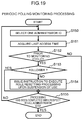
- FIG. 19 is a flowchart illustrating a processing sequence for periodic polling monitoring processing
- FIG. 20 is a flowchart illustrating a processing sequence for accumulated data transmission request processing
- FIG. 21 is a flowchart illustrating a processing sequence for accumulated data collection transfer processing
- FIG. 22 is a flowchart illustrating a processing sequence for accumulated data transmission processing.
- the reference numeral 1 represents an information processing system according to this embodiment as a whole.
- This information processing system 1 is configured by including one or more management terminals 2 , one or more business terminals 3 , and a storage apparatus 4 . Then, each management terminal 2 and the storage apparatus 4 are coupled to each other via a first network 5 such as a LAN (Local Area Network) and each business terminal 3 and the storage apparatus 4 are coupled to each other via a second network 6 such as a LAN or SAN (Storage Area Network).
- a first network 5 such as a LAN (Local Area Network)
- a second network 6 such as a LAN or SAN (Storage Area Network).
- the management terminal 2 is a computer device used by an administrator (storage administrator) of the storage apparatus 4 and is configured by including information processing resources such as an input device 10 , a display device 11 , a CPU (Central Processing Unit) 12 , a memory 13 , and an interface 14 .
- information processing resources such as an input device 10 , a display device 11 , a CPU (Central Processing Unit) 12 , a memory 13 , and an interface 14 .
- the input device 10 is composed of, for example, a keyboard, a mouse, and/or a touchpad and is used by a storage administrator to enter an operation to the storage apparatus 4 .
- the display device 11 is composed of, for example, a liquid crystal display or an organic EL (Electro-Luminescence) display and is used to display necessary screens and information, etc.
- the CPU 12 is a processor that controls the entire operation of the management terminal 2 .
- the memory 13 is composed of, for example, a nonvolatile semiconductor memory and is used as a work memory for the CPU 12 .
- the memory 13 stores and retains a web browser 15 , a data reception and periodic polling necessity judgment unit 16 , an accumulated data transmission unit 17 , and an accumulated data collection unit 18 which are read from, for example, hard disk drives which are not illustrated in the drawing, at the time of activation or when necessary.
- the web browser 15 is a program for acquiring information from the storage apparatus 4 via the first network 5 and causing the display device 11 to display a specified screen based on the acquired information.
- the web browser 15 acquires performance information of management object resources of a storage administrator who uses the relevant management terminal 2 from the storage apparatus 4 and retains the acquired performance information in a session storage (which is not illustrated in the drawing), and displays a screen of a specified format on the display device 11 based on the retained performance information.
- the details of the data reception and periodic polling necessity judgment unit 16 , the accumulated data transmission unit 17 , and the accumulated data collection unit 18 will be described later.
- the interface 14 is composed of, for example, an NIC (Network Interface Card) and performs protocol control upon communication with the storage apparatus 4 via the first network 5 .
- NIC Network Interface Card
- the business terminal 3 is a business-use computer device to use the storage apparatus 4 and is composed of, for example, a personal computer, a workstation, or a mainframe.
- the business terminal 3 reads/writes necessary data from/to the storage apparatus 4 by transmitting an I/O (Input/Output) request(s) in response to a request(s) from implemented software and a user(s).
- I/O Input/Output
- the storage apparatus 4 is configured by including: a storage unit 20 that provides storage areas for reading/writing data from/to the business terminal 3 ; and a controller 21 that controls reading/writing of data from/to the storage unit 20 .
- the storage unit 20 is composed of large-capacity, nonvolatile storage devices 22 such as a plurality of hard disk drives and/or SSDs (Solid State Drives). Storage areas provided by one or more storage devices 22 are gathered and managed as a pool PL and one or more logical volumes VOL are created in the pool PL. Then, data from the business terminal 3 are recorded in this/these logical volume(s) VOL in units of blocks (hereinafter referred as the logical blocks).
- nonvolatile storage devices 22 such as a plurality of hard disk drives and/or SSDs (Solid State Drives).
- Storage areas provided by one or more storage devices 22 are gathered and managed as a pool PL and one or more logical volumes VOL are created in the pool PL. Then, data from the business terminal 3 are recorded in this/these logical volume(s) VOL in units of blocks (hereinafter referred as the logical blocks).
- Each logical volume VOL is assigned its unique identifier (hereinafter referred as the volume number).
- the business terminal 3 writes/reads data to/from the storage apparatus 4 by designating an address which is a combination of this volume number and a unique number of a logical block which is assigned to each logical block (LBA: Logical Block Address).
- the controller 21 is configured by including a CPU 30 , a memory 31 , a first interface 32 , and a second interface 33 .
- the CPU 30 is a processor that controls the entire operation of the storage apparatus 4 .
- the memory 31 is composed of, for example, a semiconductor memory and is used as a work memory for the CPU 30 .
- a storage management program 34 , a resource control program 35 , a performance information management table 36 , an administrator table 37 , and an administrator access management table 38 which will be described later are also stored and managed in this memory 31 .
- the first interface 32 is hardware for performing protocol control upon communication with each management terminal 2 via the first network 5 ; and the second interface 33 is hardware for performing protocol control upon communication with each business terminal 3 via the second network 6 .
- the first and second interfaces 32 , 33 are composed of, for example, NIC's.
- the storage administrator can display a report of the usage status of each management object resource of that storage administrator (hereinafter referred as the usage status report) on the display device 11 of that management terminal 2 by performing a specified operation of their own management terminal 2 .
- the storage administrator can design a management plan regarding load balancing and capacity extension about their own management object resources by referring to this usage status report.
- the “usage status” of the management object resources herein means, for example: changes in IOPS (Input/Output Per Second), average response time, and a data transfer speed when the management object resources are ports and logical volumes; and changes in usage rates of the logical volumes and the pool when the management object resources are the logical volumes and the pool. Therefore, accumulated data of the performance information (such as the IOPS, the average response time, the data transfer speed, and/or the usage rates of the logical volumes, etc.) for a certain amount of time or more for each management object resource are required in order for the management terminal 2 to display the above-described usage status report.
- IOPS Input/Output Per Second
- the management terminal 2 acquires the accumulated data of these pieces of performance information by executing periodic polling processing for transmitting a request to the storage apparatus 4 for transmission of the current performance information of these management object resources (hereinafter referred as the resource performance information transmission request) on a specified time cycle (for example, on a 5-second cycle basis).
- the storage apparatus 4 is equipped with a periodic polling suppressing function that stops the period polling processing on the basis of an inclusion relation between sets of management object resources between the storage administrators, with respect to a management terminal 2 of a storage administrator whose set of their management object resources is included in a set of management object resources of another storage administrator or is included in a union of sets of management object resources of a plurality of other storage administrators.
- the storage apparatus 4 retains the performance information of each storage resource acquired at the time of the periodic polling processing of the management terminal(s) of one or more other storage administrators on the “including” side; and performs push distribution of these pieces of performance information to the management terminal 2 , regarding which the periodic polling processing was stopped, at the stage where the performance information of all the management object resources of the storage administrator on the “included” side has been successfully acquired.
- FIG. 2 “A” is a storage administrator who manages all the storage resources (set a) of the storage apparatus 4 (hereinafter referred to as the general administrator as appropriate) and each of “B” to “F” is a storage administrator who manages storage resources of set b to set f, respectively, which are partial sets of set a (hereinafter referred to as the partial administrator as appropriate).
- inclusion relation patterns of the management object resources between the storage administrators are classified into four types of patterns illustrated in FIG. 3 .
- “ ⁇ ” means a state where the management terminal 2 of the storage administrator corresponding to the relevant row is executing the periodic polling processing; and “ ⁇ ” means a state where the management terminal 2 of the storage administrator corresponding to the relevant row is not executing the periodic polling processing.
- the first type is a pattern for which the management terminal 2 of the general administrator “A” is executing the periodic polling processing.
- all the set b to set f of the management object resources of each partial administrator are respectively included in set a of the management object resources of “A.”
- “A” is set to be assigned a role called a “master” and each of other “B” to “F” is set to be assigned a role called a “follower.”
- the second type is a pattern for which a set of management object resources of a partial administrator whose management terminal 2 is executing the periodic polling processing is included in a set of management object resources of another partial administrator whose management terminal 2 is executing the periodic polling processing.
- the relation between “E” and “B” corresponds to this pattern.
- “B” who is the partial administrator to include the set of the management object resources is set as the “master”
- “E” who is the partial administrator whose set of the management object resources is included is set as the “follower.”
- the third type is a pattern for which management object resources of a plurality of partial administrators whose management terminals 2 are executing the periodic polling processing are completely independent.
- the relation between “B” and “F” corresponds to this pattern.
- both “B” and “F” are set as “masters.”
- the fourth type is a pattern for which a union of management object resources of some partial administrators, whose respective management terminals 2 are executing the periodic polling processing, includes management object resources of other partial administrators.
- the relation between “B” to “E” corresponds to this pattern.
- set d of the management object resources of “D” and set e of the management object resources of “E” are included in the union of set b of the management object resources of “B” and set c of the management object resources of “C.”
- the inclusion relation between the sets of management object resources of the storage administrators is classified into either one of the above-described four types.
- the storage apparatus 4 when the storage apparatus 4 receives a resource performance information transmission request from the management terminal 2 of the storage administrator who is set as a “master,” the storage apparatus 4 acquires the latest performance information of all the management object resources of that storage administrator and transmits the acquired performance information to that management terminal 2 , and also registers and manages the then-acquired performance information in the performance information management table 36 described later with reference to FIG. 4 .
- the storage apparatus 4 when the storage apparatus 4 receives the resource performance information transmission request from a management terminal 2 of a storage administrator who is set as a “submaster,” the storage apparatus 4 acquires the latest performance information of each of the management object resources of that storage administrator, which are not duplicate with the management objects of the storage administrator who is set as the “master”; merges the acquired performance information with the latest performance information, which is registered in the performance information management table 36 , of the management object resources which are duplicate with those of the storage administrator who is set as the “master”; and transmits the merged result to that management terminal 2 .
- the storage apparatus 4 causes the management terminal 2 to stop the periodic polling processing so that the relevant management terminal 2 will not transmit the resource performance information transmission request. Then, at the stage where the storage apparatus 4 has acquired the latest performance information of all the management object resources of the storage administrator who is set as the “follower,” the storage apparatus 4 distributes these pieces of performance information by a push method to the management terminal 2 of that storage administrator.
- this information processing system 1 when the storage administrator who is set as the “master” or the “submaster” enters an operation to their own management terminal 2 to stop displaying the aforementioned usage status report, then that management terminal 2 will no longer execute the periodic polling processing (in other words, that management terminal 2 will no longer transmit the resource performance information transmission request to the storage apparatus 4 ).
- This problem also occurs when the management terminal used by the storage administrator who is set as the “master” or the “submaster” becomes no longer capable of transmitting the resource performance information transmission request to the storage apparatus 4 due to a failure or the like.
- the storage apparatus 4 is also equipped with a function that resets the role(s) of other storage administrators of the same system as a system to which the relevant storage administrator belongs, as necessary, when any one of the storage administrators enters the operation to their own management terminal 2 to stop displaying the aforementioned usage status report, or when no resource performance information transmission request has been transmitted from the management terminal 2 used by the storage administrator who is set as the “master” or the “submaster” for a certain period of time.
- the details of the above-mentioned “system” will be explained later.
- performance information which can be acquired by that management terminal 2 by transmitting the resource performance information transmission request to the storage apparatus 4 is only the latest performance information of the management object resources of the storage administrator who uses that management terminal 2 .
- the storage apparatus 4 when the new management terminal 2 and the new storage administrator are added to, and registered in, this storage apparatus 4 and if some or all of the management object resources of that storage administrator are duplicate with the management object resources of the existing storage administrator(s), the storage apparatus 4 is also equipped with an accumulated data sharing function that collects the past performance information of the duplicate management object resources from the management terminal(s) 2 used by the existing storage administrator(s) and provides it to the new management terminal.
- the memory 31 ( FIG. 1 ) for the storage apparatus 4 stores a storage management program 34 , a resource control program 35 , a performance information management table 36 , an administrator table 37 , and an administrator access management table 38 as illustrated in FIG. 1 as a means for implementing the polling suppressing function and the accumulated data sharing function described above.
- the resource control program 35 is a program having a function that identifies the relevant storage administrator's management object resources and executes necessary processing when the storage administrator performs a specified operation on their own administrator terminal 2 ( FIG. 1 ) and thereby implements various kinds of management functions represented by the usage status report on each management object resource of that storage administrator.
- the resource control program 35 includes, as subprograms, a resource access control unit 43 for managing the management object resources of each storage administrator by using an administrator table 37 described later and a performance information collection unit 44 for collecting the performance information of necessary storage resources within the storage apparatus 4 .
- the storage management program 34 is a program having a function that controls the operation of the entire storage apparatus 4 .
- the storage management program 34 is configured by including an administrator role determination/update unit 40 , a data distribution control unit 41 , and a periodic polling monitoring unit 42 .
- the administrator role determination/update unit 40 is a subprogram having a function that determines/updates the role (“master, “submaster,” or “follower”) of each storage administrator in accordance with the inclusion relation between sets of management object resources on the basis of information about the management object resources of each storage administrator managed by the resource access control unit 43 for the resource control program 35 .
- the data distribution control unit 41 is a subprogram having a function that: requests the performance information collection unit 44 of the resource control program 35 for collection of current performance information of each requested storage resource in response to a resource performance information transmission request from the management terminal 2 ; and transmits these pieces of thus-acquired performance information to a sender of that resource performance information transmission request.
- the data distribution control unit 41 is also equipped with a function that: collects past performance information of management object storage resources of a storage administrator, who uses a new management terminal 2 , from the corresponding existing management terminal 2 in response to a request from the new management terminal 2 ; and transmits the collected performance information to the new management terminal 2 .
- the periodic polling monitoring unit 42 is a subprogram having a function that monitors a resource performance information transmission request from the management terminal 2 used by the storage administrator who is set as the “master” or the “submaster.”
- the periodic polling monitoring unit 42 recognizes that the management terminal 2 stopped using the storage management program 34 ; and requests that the administrator role determination/update unit 40 should reset the roles of other storage administrators belonging to a system to which the storage administrator who uses the relevant management terminal 2 belongs.
- the performance information management table 36 is a table that stores the latest performance information of each storage resource collected by the performance information collection unit 44 for the resource control program 35 and includes a resource ID column 36 A and a plurality of performance information columns 36 B as illustrated in FIG. 4 . With the performance information management table 36 , one row corresponds to one storage resource.
- the resource ID column 36 A stores a unique identifier of the relevant storage resource (resource ID) assigned to that storage resource.
- resource ID a unique identifier of the relevant storage resource assigned to that storage resource.
- a serial number starting from “0” is used as the resource ID.
- each performance information column 36 B stores the performance information of the relevant storage resource which was acquired lastly with respect to the relevant storage resource.
- the last acquired IOPS is “Xxxx1” (the performance information column 36 B of “Performance Information 1”) and the last acquired average response time is “Yyyy1” (the performance information column 36 B of “Performance Information 2”).
- the administrator table 37 is a table used to manage each administrator (storage administrator) of the storage apparatus 4 and includes an administrator ID column 37 A, a role column 37 B, a submaster identifier column 37 C, a system column 37 D, and a management resource bit set column 37 E as illustrated in FIG. 5 .
- the administrator table 37 one row corresponds to one storage administrator.
- the administrator ID column 37 A stores a unique identifier of the relevant storage administrator which is assigned to that storage administrator (administrator ID); and the role column 37 B stores the role (“master, “submaster,” or “follower”) of the relevant storage administrator which is set to that storage administrator.
- system column 37 D stores an identifier assigned to a system to which the relevant storage administrator belongs (hereinafter referred as the system number).
- the “system” herein used means an aggregate of storage administrators regarding whom some or all of their management object resources are duplicate with management object resources of other storage administrators. For example, in the case of the example in FIG. 2 , regarding “B” to “E,” some or all of the management object resources of “B” to “E” are duplicate with each other in consideration of only the relation between “B” to “F,” so that an aggregate of the storage administrators who are “B” to “E” is managed as one system. Furthermore, regarding “F,” its management object resources are not duplicate with any one of the management object resources of “B” to “E,” so that “F” is managed as another system separate from the aggregate of the storage administrators who are “B” to “E.”
- the submaster identifier column 37 C stores the order among other storage administrators who are set as “submasters” in the same system. The meaning and determination method of this order will be described later.
- the management resource bit set column 37 E stores a bit set regarding the management object resources of the relevant storage administrator (hereinafter referred as the management resource bit set).
- This management resource bit set is a bit set in which bits respectively associated with the respective storage resources in the storage apparatus 4 are sequentially arranged in an ascending order of the resource ID's of the storage resources as described earlier with reference FIG. 4 ; and a bit value corresponding to a storage resource which is the management object resource of the relevant storage administrator is “1” and other bit values are set to “0.”
- a storage administrator with the administrator ID “xxx” is set as a “Master” of system “1”; and storage resources with the resource ID's 3 to 7, 11 to 18, and so on are management object resources.
- the administrator access management table 38 is a table used to manage the access status from each storage administrator and includes an administrator ID column 38 A, an administrator terminal column 38 B, a first access date and time column 38 C, and a last access date and time column 38 D as illustrated in FIG. 6 . With the administrator access management table 38 , one row corresponds to one storage administrator.
- the administrator ID column 38 A stores an administrator ID of the relevant storage administrator; and the administrator terminal column 38 B stores a network address of the management terminal 2 used by that storage administrator over the first network 5 ( FIG. 1 ).
- the first access date and time column 38 C stores a date and time of a first access from the relevant management terminal 2 ; and the last access date and time column 38 D stores a date and time of a last access from that management terminal 2 .
- the network address of a management terminal 2 used by a storage administrator who is assigned the administrator ID “XXX” is “11.2.33.44”
- the date and time of the first access from that management terminal 2 is “2018/01/02 10:00:01”
- the date and time of the last access is “2018/7/31 06:03:01.”
- the memory 13 for each management terminal 2 stores, in addition to the aforementioned web browser 15 , the data reception and periodic polling necessity judgment unit 16 , the accumulated data transmission unit 17 , and the accumulated data collection unit 18 as illustrated in FIG. 1 as a means for implementing the polling suppressing function and the accumulated data sharing function as described above.
- the data reception and periodic polling necessity judgment unit 16 is a program having a function that receives, for example, the relevant performance information transmitted from the storage apparatus 4 in response to a resource performance information transmission request, while judging whether the periodic polling processing should be executed or not, based on the role of the storage administrator who uses their own terminal, which is transmitted together with this performance information from the storage apparatus 4 as described later.
- the data reception and periodic polling necessity judgment unit 16 executes internal control to stop the periodic polling processing when the role of the storage administrator who uses their own terminal as reported from the storage apparatus 4 is a “follower.”
- the accumulated data transmission unit 17 is a program having a function that transmits such performance information to the storage apparatus 4 .
- the accumulated data collection unit 18 is a program having a function that requests the storage apparatus 4 for transfer of the past performance information of management object resources of the storage administrator who uses their own terminal when their own terminal is newly added to this information processing system 1 .
- FIG. 7 illustrates a flow of a sequence of processing executed by the storage apparatus 4 which has received a resource performance information transmission request from the management terminal 2 (hereinafter referred as the data distribution control processing).
- the resource performance information transmission request includes the network address of a management terminal 2 , which is a sender, in the first network 5 and the administrator ID of a storage administrator who uses that management terminal 2 .
- the data distribution control unit 41 ( FIG. 1 ) for the storage apparatus 4 starts the data distribution control processing illustrated in this FIG. 7 and firstly registers the date and time at that time in the administrator access management table 38 ( FIG. 6 ) by associating the date and time with the storage administrator (hereinafter referred as the first request sender storage administrator) who uses the movement terminal 2 which is the sender of that resource performance information transmission request (hereinafter referred as the first request sender management terminal 2 ) (S 1 ).
- the storage administrator hereinafter referred as the first request sender storage administrator
- the first request sender management terminal 2 the storage administrator who uses the movement terminal 2 which is the sender of that resource performance information transmission request
- the data distribution control unit 41 refers to the administrator table 37 ( FIG. 5 ) and judges whether the administrator ID of the first request sender storage administrator included in the then-received resource performance information transmission request is already registered in the administrator table 37 or not (S 2 ).
- the data distribution control unit 41 then issues an instruction to the administrator role determination/update unit 40 ( FIG. 1 ) to execute administrator role determination/update processing described later with reference to FIG. 13 (S 3 ). Then, after receiving this instruction, the administrator role determination/update unit 40 determines the role (“master, “submaster,” or “follower”) of the first request sender storage administrator who uses the first request sender management terminal 2 , and registers necessary information about the first request sender storage administrator including the determined result in the administrator table 37 in accordance with the processing sequence illustrated in FIG. 13 .
- step S 2 to obtain an affirmative result in the judgment of step S 2 means that the above-described resource performance information transmission request is a second or subsequent access from the first request sender management terminal 2 and, therefore, the role of the first request sender storage administrator who uses the first request sender management terminal 2 is already determined and registered in the administrator table 37 .
- the data distribution control unit 41 then reads the role of the first request sender storage administrator from the administrator table 37 and judges which one of the “master,” “submaster,” and “follower” the relevant role is (S 4 ).
- the data distribution control unit 41 determines that the role which is set to the first request sender storage administrator is the “master,” the data distribution control unit 41 acquires the performance information of each management object resource of the first request sender storage administrator and stores these pieces of acquired performance information in the performance information management table 36 ( FIG. 4 ) (S 5 ).
- the data distribution control unit 41 firstly acquires a management resource bit set which is stored in a row corresponding to the first request sender storage administrator in the management resource bit set column 37 E ( FIG. 5 ) of the administrator table 37 ( FIG. 5 ) in this step S 5 .
- Storage resources corresponding to the respective bits whose values in this management resource bit set are set as “1” are management object resources of the first request sender storage administrator.
- the data distribution control unit 41 requests the performance information collection unit 44 ( FIG. 1 ) of the resource control program 35 ( FIG. 1 ) for collection of the performance information of these storage resources and stores the performance information of these storage resources (respective management object resources), which is acquired as a result of this request, in the corresponding performance information column 36 B of the performance information management table 36 , respectively.
- the data distribution control unit 41 transmits the role of the first request sender storage administrator which was identified in step S 4 , and the performance information of each storage resource (each management object resource) which was acquired in step S 5 , to the first request sender management terminal 2 (S 6 ).
- the data distribution control unit 41 refers to the administrator table 37 and judges whether any storage administrator who belongs to the same system as that of the first request sender storage administrator and whose role is set as a “follower” exists or not (S 7 ). Then, if the data distribution control unit 41 obtains a negative result in this judgment, it terminates this data distribution control.
- step S 7 the data distribution control unit 41 : executes first performance information distribution processing for performing push distribution of necessary performance information to the management terminal 2 of each storage administrator whose then-detected role is set as the “follower” (S 8 ); and then terminates this data distribution control processing.
- the data distribution control unit 41 determines in step S 4 that the role which is set to the first request sender storage administrator is a “submaster,” the data distribution control unit 41 : executes second performance information distribution processing for transmitting necessary performance information and the role of the relevant storage administrator to each of the management terminal 2 used by the first request sender storage administrator (the first request sender management terminal 2 ) and the management terminal 2 used by the storage administrator who belongs to the same system as that of the first request sender storage administrator and whose role is set as the “follower” (S 9 ); and then terminates this data distribution control processing.
- the data distribution control unit 41 determines in step S 4 that the role which is set to the first request sender storage administrator is a “follower,” the data distribution control unit 41 : executes third performance information distribution processing for transmitting the performance information of each storage resource (each management object resource) managed by the first request sender storage administrator to the management terminal 2 used by the first request sender storage administrator (the first request sender management terminal 2 ) (S 10 ); and then terminates this data distribution control processing.
- FIG. 8 illustrates specific processing content of the administrator access management table update processing executed by the data distribution control unit 41 in step S 1 of the data distribution control processing described above with reference to FIG. 7 .
- the data distribution control unit 41 starts the administrator access management table update processing illustrated in this FIG. 8 and firstly refers to the administrator access management table 38 ( FIG. 6 ) and judges whether the administrator ID of the first request sender storage administrator included in the then-received resource performance information transmission request is already registered in the administrator access management table 38 or not (S 20 ).
- the data distribution control unit 41 obtains an affirmative result in this judgment, it updates the date and time which are stored in a row corresponding to the first request sender storage administrator in the last access date and time column 38 D of the administrator access management table 38 (the row where the administrator ID of the first request sender storage administrator is stored in the administrator ID column 38 A) to the current date and time (S 21 ). Subsequently, the data distribution control unit 41 terminates this administrator access management table update processing and returns to the data distribution control processing ( FIG. 7 ).
- step S 20 if the data distribution control unit 41 obtains a negative result in the judgment of step S 20 , it newly registers necessary information about the first request sender storage administrator at that time in the administrator access management table 38 (S 22 ).
- the data distribution control unit 41 secures an unused row of the administrator access management table 38 and stores the administrator ID of the first request sender storage administrator included in the then-received resource performance information transmission request in the administrator ID column 38 A of that row. Moreover, the data distribution control unit 41 stores the network address of the first request sender management terminal 2 in the first network 5 , which was acquired at the time of reception of the resource performance information transmission request, in the administrator terminal column 38 B of that row and also stores the current date and time in both the first access date and time column 38 C and the last access date and time column 38 D of that row.
- the data distribution control unit 41 terminates this administrator access management table update processing and returns to the data distribution control processing ( FIG. 7 ).
- FIG. 9 illustrates specific processing content of the first performance information distribution processing executed by the data distribution control unit 41 in step S 8 of the data distribution control processing described earlier with reference to FIG. 7 .
- the data distribution control unit 41 starts the first performance information distribution processing illustrated in this FIG. 9 and firstly refers to the administrator table 37 ( FIG. 5 ) and generates a list of storage administrators who belong to the same system as that of the “master” first request sender storage administrator and whose roles are set as “followers” (S 30 ).
- the data distribution control unit 41 extracts information of a row(s), in which the same value as a value stored in the system column 37 D ( FIG. 5 ) of a row corresponding to the first request sender storage administrator in the administrator table 37 and the role stored in the role column 37 B ( FIG. 5 ) is the “follower,” from the administrator table 37 and generates a list of such rows (hereinafter referred as the same system follower list).
- the data distribution control unit 41 selects one “follower” from among the “followers” registered in the same system follower list (S 31 ) and acquires a management resource bit set of the selected “follower” (hereinafter referred as the selected “follower”) and a management resource bit set of the first request sender storage administrator who is the “master,” respectively, from the administrator table 37 (S 32 ).
- the data distribution control unit 41 executes a bit operation to perform an AND operation for each relevant bit between the management resource bit set of the selected “follower” obtained in step S 32 and the management resource bit set of the first request sender storage administrator (hereinafter referred as the bitwise AND operation) and judges whether the operation result matches the management resource bit set of the selected “follower” or not (S 33 ).
- a negative result in this judgment means that, for example, like the relation between “B” and “D” in FIG. 2 , a set of management object resources of the selected “follower” is not completely included in a set of management object resources of the first request sender storage administrator who is the “master” and the latest performance information of all the management object resources of the selected “follower” cannot be completed with only the performance information of the management object resources of the first request sender storage administrator which was acquired in step S 5 of the immediately preceding data distribution control processing ( FIG. 7 ). Thus, the data distribution control unit 41 then terminates this first performance information distribution processing and returns to the data distribution control processing.
- the latest performance information of all the management object resources of the selected “follower” will be completed when the performance information of the management object resources of the “submaster” (for example, “C” in FIG. 2 ) in which each storage resource that is not included in the set of management object resources of the first request sender storage administrator is included as their management object resource is acquired, so that at this stage, the latest performance information of each management object resource of the selected “follower” will be push-disturbed to the management terminal 2 of the selected “follower” (see step S 55 to step S 57 in FIG. 11 ).
- step S 33 to obtain an affirmative result in the judgment of step S 33 means that, for example, like the relation between “B” and “E” in FIG. 2 , the set of the management object resources of the selected “follower” is completely included in the set of the management object resources of the first request sender storage administrator who is the “master” and the latest performance information of all the management object resources of the selected “follower” will be completed with only the performance information of the management object resources of the first request sender storage administrator which was acquired in step S 5 of the data distribution control processing.
- the data distribution control unit 41 then acquires the performance information of each storage resource corresponding to each bit, whose value in the management resource bit set of the selected “follower” which was acquired in step S 32 is set to “1,” from the performance information management table 36 ( FIG. 4 ) (S 34 ).
- the data distribution control unit 41 acquires the administrator ID of the selected “follower” from the same system follower list generated in step S 30 , identifies the network address of the management terminal 2 used by the selected “follower” by searching the administrator access management table 38 ( FIG. 6 ) by using this administrator ID as a key, and transmits all the pieces of performance information acquired in step S 34 to that network address as a destination (S 35 ).
- the data distribution control unit 41 judges whether or not the execution of the processing of step S 31 to step S 35 has been completed or not with respect to all the storage administrators (“followers”) whose information is listed in the same system follower list generated in step S 30 (S 36 ).
- step S 31 If the data distribution control unit 41 obtains a negative result in this judgment, it returns to step S 31 and then repeats the processing from step S 31 to step S 36 by sequentially switching the “follower” to be selected in step S 31 to another unprocessed “follower” whose information is listed in the same system follower list generated in step S 30 .
- step S 36 when the data distribution control unit 41 eventually obtains an affirmative result in step S 36 by finishing transmitting the performance information of the management object resources of the “followers” to all the “followers” whose information is listed in the same system follower list generated in step S 30 , it terminates this first performance information distribution processing and returns to the data distribution control processing.
- FIG. 10 illustrates specific processing content of the second performance information distribution processing executed by the data distribution control unit 41 in step S 9 of the data distribution control processing described earlier with reference to FIG. 7 .
- the data distribution control unit 41 starts the second performance information distribution processing illustrated in this FIG. 10 and firstly acquires a management resource bit set of the first request sender storage administrator who is the “submaster” from the administrator table 37 ( FIG. 5 ) (S 40 ).
- the data distribution control unit 41 acquires a management resource bit set of the “master” belonging to the same system as that of the first request sender storage administrator and management resource bit sets of all “submasters,” who belong to the same system as that of the first request sender storage administrator and whose submaster identifiers are smaller than that of the first request sender storage administrator, respectively from the administrator table 37 and executes a bit operation to perform an OR operation of these acquired management resource bit sets with respect to each bit (hereinafter referred as the bitwise OR operation) (S 41 ).
- the “master” belonging to the same system as that of the first request sender storage administrator and all the “submasters” who belong to the system as that of the first request sender storage administrator and whose submaster identifiers are smaller than that of the first request sender storage administrator will be hereinafter collectively referred to as “superior role holders” of the first request sender storage administrator and the operation result of the bitwise OR operation in step S 41 will be hereinafter referred to as the “superior role holders' management resource bit sets.”
- the “superior role holders' management resource bit sets” represent a union of management object resources of the superior role holders of the first request sender storage administrator.
- the data distribution control unit 41 identifies storage resources which are not the management object resources of the superior role holders from among the management object resources of the first request sender storage administrator; acquires the latest performance information of these storage resources; and stores the acquired performance information in the performance information management table 36 ( FIG. 4 ) (S 42 ).
- the data distribution control unit 41 executes a bit operation to perform an XOR operation between the management resource bit set of the first request sender storage administrator which was acquired in step S 40 and the superior role holders' management resource bit sets acquired in step S 41 with respect to each corresponding bit (a bitwise XOR operation); and executes the bitwise AND operation between the above-described operation result and the management resource bit set of the first request sender storage administrator.
- storage resources whose relevant bit value is “1” are management object resources which are not the superior role holders' management objects among the management object resources of the first request sender storage administrator.
- the data distribution control unit 41 acquires the performance information of these storage resources via the performance information collection unit 44 ( FIG. 1 ) of the resource control program 35 ( FIG. 1 ) and stores these pieces of acquired performance information in the relevant performance information column 36 B ( FIG. 4 ) of the performance information management table 36 .
- the data distribution control unit 41 acquires the performance information of all the storage resources, regarding which the corresponding bit value in the management resource bit set of the first request sender storage administrator that was acquired in step S 40 is set to “1,” from the performance information management table 36 (S 43 ); and transmits these pieces of acquired performance information and the role (“submaster”) of the first request sender storage administrator to the first request sender management terminal 2 (S 44 ).
- the data distribution control unit 41 refers to the administrator table 37 ( FIG. 5 ) and judges whether any storage administrator who belongs to the same system as that of the first request sender storage administrator and whose role is set as a “follower” exists or not (S 45 ). Then, if the data distribution control unit 41 obtains a negative result in this judgment, it terminates this second performance information distribution processing and returns to the data distribution control processing ( FIG. 7 ).
- step S 45 the data distribution control unit 41 : executes push distribution processing for performing push distribution of the performance information of the management object resources to the “followers” whose management objects are the management object resources which are not the superior role holders' management objects among the management object resources of the first request sender storage administrator (S 46 ); and then terminates this second performance information distribution processing and returns to the data distribution control processing.
- FIG. 11 illustrates specific processing content of the push distribution processing executed in step S 46 of the above-described second performance information distribution processing.
- the data distribution control unit 41 starts the push distribution processing illustrated in this FIG. 11 and firstly executes the bitwise OR operation between the superior role holders' management resource bit sets of the first request sender storage administrator (“submaster”), which were calculated in step S 41 , and the management resource bit set of the first request sender storage administrator which was acquired in step S 40 (S 50 ).
- the operation result of this bitwise OR operation represents a union of a set of management object resources of the first request sender storage administrator and sets of management object resources of the superior role holders. Therefore, a set of management object resources of the storage administrator who belongs to the same system as that of the first request sender storage administrator and whose role is set as a “follower” is included in this union.
- the operation result of step S 50 will be hereinafter referred to as the base bit set.
- the data distribution control unit 41 generates a list of storage administrators who belong to the same system as that of the first request sender storage administrator and whose roles are set as “followers” (the same system follower list), by referring to the administrator table 37 in the same manner as in step S 30 in FIG. 9 (S 51 ).
- the data distribution control unit 41 selects one “follower” from the “followers” registered in the same system follower list (S 52 ) and acquires a management resource bit set of the selected “follower” (the selected “follower”) from the administrator table 37 (S 53 ).
- the data distribution control unit 41 executes the bitwise AND operation between the superior role holders' management resource bit sets calculated in step S 41 of the second performance information distribution processing ( FIG. 10 ) and the management resource bit set of the selected “follower” which was acquired in step S 53 ; and judges whether the operation result matches the management resource bit set of the selected “follower” or not (S 54 ).
- the set of the management object resources of the selected “follower” is included in sets of management object resources of the superior role holders of the first request sender storage administrator and the performance information of the relevant management object resources is push-distributed to the selected “follower” during the first or second performance information distribution processing executed with respect to the above-described superior role holders.
- the data distribution control unit 41 then proceeds to step S 58 without transmitting the performance information of the management object resources of the selected “follower” to the management terminal 2 of the selected “follower.”
- step S 54 executes the bitwise AND operation between the base bit set calculated in step S 50 and the management resource bit set of the selected “follower” acquired in step S 53 and judges whether the operation result matches the management resource bit set of the selected “follower” or not (S 55 ).
- the set of the management object resources of the selected “follower” is not included in the union of the set of the management object resources of the first request sender storage administrator and the sets of the management object resources of their superior role holders; and the latest performance information of all the management object resources of the selected “follower” may possibly not be stored in the performance information management table 36 ( FIG. 4 ).
- the data distribution control unit 41 then proceeds to step S 58 without transmitting the performance information of the management object resources of the selected “follower” to the management terminal 2 of the selected “follower.”
- step S 55 to obtain an affirmative result in the judgment of step S 55 means that the set of the management object resources of the selected “follower” is included in the union of the set of the management object resources of the first request sender storage administrator and the sets of the management object resources of their superior role holders and the latest performance information of all the management object resources of the selected “follower” is stored in the performance information management table 36 .
- the data distribution control unit 41 acquires the performance information of all storage resources whose corresponding bit value in the management resource bit set of the selected “follower” is set to “1” (the management object resources), from the performance information management table 36 (S 56 ).
- the data distribution control unit 41 identifies the network address of the management terminal 2 used by the selected “follower” and transmits all pieces of the performance information acquired in step S 56 to the network address as a destination in the same manner as in step S 35 in FIG. 9 (S 57 ).
- step S 53 to step S 57 judges whether or not the execution of the processing of step S 53 to step S 57 has been completed with respect to all the storage administrators (“followers”) whose relevant information is listed in the same system follower list generated in step S 51 (S 58 ).
- step S 52 If the data distribution control unit 41 obtains a negative result in this judgment, it returns to step S 52 and then repeats the processing from step S 52 to step S 58 by sequentially switching the “follower” to be selected in step S 52 to another unprocessed “follower” whose information is listed in the same system follower list generated in step S 51 .
- step S 58 when the data distribution control unit 41 eventually obtains an affirmative result in step S 58 by finishing transmitting the performance information of the relevant management object resources to all the “followers” whose information is listed in the same system follower list generated in step S 51 , it terminates this push distribution processing and returns to the second performance information distribution processing.
- FIG. 12 illustrates specific processing content of the third performance information distribution processing executed by the data distribution control unit 41 in step S 10 of the data distribution control processing described earlier with reference to FIG. 7 .
- the data distribution control unit 41 starts the third performance information distribution processing illustrated in this FIG. 12 and firstly acquires the management resource bit set of the first request sender storage administrator, who is the “follower,” from the administrator table 37 ( FIG. 5 ) (S 60 ).
- the data distribution control unit 41 acquires the latest performance information of all storage resources, whose corresponding bit value in the management resource bit set of the first request sender storage administrator is set to “1” (the management object resources), from the performance information management table 36 (S 61 ).
- the data distribution control unit 41 transmits the performance information of each management object resource of the first request sender storage administrator, which was acquired in step S 61 , and the role (“follower”) of that first request sender storage administrator to the management terminal 2 which is the sender of the resource performance information transmission request at that time (S 62 ).
- the data distribution control unit 41 terminates this third performance information distribution processing and returns to the data distribution control processing.
- FIG. 13 illustrates specific processing content of the administrator role determination/update processing executed by the administrator role determination/update unit 40 ( FIG. 1 ) of the storage management program 34 ( FIG. 1 ) which has received the instruction from the data distribution control unit 41 to execute the administrator role determination/update processing in step S 3 of the data distribution control processing ( FIG. 7 ).
- the administrator role determination/update unit 40 After receiving the above-described instruction from the data distribution control unit, the administrator role determination/update unit 40 starts the administrator role determination/update processing illustrated in this FIG. 13 and firstly sends an inquiry to the resource access control unit 43 ( FIG. 1 ) of the resource control program 35 ( FIG. 1 ) about the management object resources of the first request sender storage administrator (S 70 ).
- the resource access control unit 43 Having received this inquiry, the resource access control unit 43 : generates a list in which all previously-registered management object resources of the first request sender storage administrator are listed (hereinafter referred as the management object resource list); and transmits the generated management object resource list to the administrator role determination/update unit 40 .
- the administrator role determination/update unit 40 generates a management resource bit set of the first request sender storage administrator based on the management object resource list acquired in step S 70 (S 71 ). Specifically speaking, the administrator role determination/update unit 40 : generates a bit string in which bits respectively corresponding to all the storage resources in the storage apparatus 4 are aligned (all the bit values are “0” at the beginning); and then generates the above-described management resource bit set by setting the bit values corresponding to the storage resources listed in the management object resource list acquired in step S 70 , among the bit string, to “1.”
- the administrator role determination/update unit 40 judges whether the current administrator table 37 is empty or not, by referring to the administrator table 37 ( FIG. 5 ) (S 72 ).
- the administrator role determination/update unit 40 registers that first request sender storage administrator in the administrator table 37 by setting their role as the “master” (S 73 ) and then terminates this administrator role determination/update processing.
- step S 72 to obtain a negative result in the judgment of step S 72 means that the first request sender storage administrator at that time is not the first storage administrator who has sent the resource performance information transmission request to the storage apparatus 4 and a storage administrator(s) whose role is already set and registered in the administrator table 37 exists.
- the administrator role determination/update unit 40 then generates a list in which all the storage administrators belonging to the same system as that of the first request sender storage administrator at that time are listed (hereinafter referred as the storage administrator list), among the storage administrators already registered in the administrator table 37 (S 74 ).
- the administrator role determination/update unit 40 sequentially executes the bitwise AND operation between the management resource bit set of each storage administrator, who is already registered in the administrator table 37 , and the management resource bit set of the then first request sender storage administrator which was generated in step S 71 ; and generates a storage administrator list that lists the administrator ID's of storage administrators corresponding to the management resource bit sets regarding which all the bits of the operation result are not “0,” and the management resource bit sets of the relevant storage administrators.
- the administrator role determination/update unit 40 aligns the storage administrators listed in the storage administrator list generated in step S 74 in descending order of the number of bits which are set to “1” in their management resource bit sets (S 75 ); and determines the first storage administrator in the sequential order as a “master” (S 76 ).
- the administrator role determination/update unit 40 selects one storage administrator, regarding whom the processing of step S 78 and subsequent steps has not been processed yet, and who is aligned as the earliest one in the sequential order of alignment among storage administrators listed in the storage administrator list generated in step S 74 and other than the storage administrator who was set as the “master” in step S 76 (S 77 ).
- the administrator role determination/update unit 40 executes the bitwise OR operation between the management resource bit set of the storage administrator selected in step S 77 (hereinafter referred as the selected storage administrator) and the management resource bit set of the storage administrator determined as the “master” in step S 76 . Furthermore, the administrator role determination/update unit 40 executes the bitwise AND operation between this operation result and the management resource bit set of the selected storage administrator and judges whether the operation result matches the management resource bit set of the selected storage administrator or not (S 78 ).
- step S 78 to obtain a negative result in the judgment of step S 78 means that the set of management object resources of the selected storage administrator is not included in the set of management object resources of the storage administrator determined as the “master” in step S 76 .
- the administrator role determination/update unit 40 determines the selected storage administrator as a “submaster” and assigns an integer equal to or more than “0”, which has not been used yet in the same system, as the submaster identifier to that selected storage administrator (S 80 ).
- the administrator role determination/update unit 40 judges whether the execution of the processing of step S 78 to step S 80 has been completed or not with respect to all the storage administrators other than the storage administrator determined as the “master” in step S 76 among the storage administrators listed in the storage administrator list generated in step S 74 (S 81 ).
- the administrator role determination/update unit 40 If the administrator role determination/update unit 40 obtains a negative result in this judgment, it returns to step S 77 and then repeats the processing from step S 77 to step S 81 by sequentially switching the storage administrator to be selected in step S 77 to another relevant unprocessed storage administrator.
- step S 81 when the administrator role determination/update unit 40 eventually obtains an affirmative result in step S 81 by finishing executing the processing of step S 78 to step S 80 with respect to the storage administrators other than the “master” and listed in the storage administrator list generated in step S 74 , it terminates this administrator role determination/update processing.
- FIG. 14 illustrates the details of a sequence of processing executed by the data reception and periodic polling necessity judgment unit 16 ( FIG. 1 ) of the management terminal 2 which has received a response (the role and the performance information of each management object resource) for a resource performance information transmission request after transmitting the resource performance information transmission request to the storage apparatus 4 (hereinafter referred as the data reception and periodic polling necessity judgment processing).
- the data reception and periodic polling necessity judgment unit 16 After receiving the above-described response, the data reception and periodic polling necessity judgment unit 16 starts the data reception and periodic polling necessity judgment processing illustrated in this FIG. 14 and firstly stores the performance information of each management object resource, which is included in the above-described response, in the session storage of the web browser 15 ( FIG. 1 ) by using the resource ID of each management object resource as a key (S 90 ).
- the data reception and periodic polling necessity judgment unit 16 controls the web browser 15 so as to cause the display device 11 ( FIG. 1 ) to display the usage status report based on the performance information of the management object resources stored in the session storage in step S 90 (S 91 ).
- the data reception and periodic polling necessity judgment unit 16 acquires the role included in the above-described response and judges whether the acquired role is the “follower” or not (S 92 ). Then, if the data reception and periodic polling necessity judgment unit 16 obtains a negative result in this judgment, it terminates this data reception and periodic polling necessity judgment.
- the data reception and periodic polling necessity judgment unit 16 obtains an affirmative result in the judgment of step S 92 , it changes the internal settings of its own terminal so as to stop the periodic polling (S 93 ) and terminates this data reception and periodic polling necessity judgment.
- FIG. 15 illustrates specific processing content of a sequence of processing executed by the administrator role determination/update unit 40 when any one of the storage administrators enters the operation to their own management terminal 2 so as to stop displaying the usage status report (hereinafter referred as the role resetting processing upon suspension of use).
- the management terminal 2 transmits a request to the storage apparatus 4 to stop using the storage management program 34 (hereinafter referred as the storage management program use suspension request) in response to the above-described operation.
- the storage management program use suspension request includes the administrator ID of the storage administrator who uses the management terminal 2 which is the sender.
- the administrator role determination/update unit 40 of the storage apparatus 4 which has received this storage management program use suspension request resets the roles of other storage administrators belonging to the same system as that of the relevant storage administrator in accordance with the processing sequence illustrated in FIG. 15 .
- the administrator role determination/update unit 40 After receiving the above-described storage management program use suspension request, the administrator role determination/update unit 40 starts the role resetting processing upon suspension of use as illustrated in FIG. 15 and firstly acquires the role of the storage administrator to whom the administrator ID included in that storage management program use suspension request is assigned (hereinafter referred as the target storage administrator) and the system number of the system to which that target storage administrator belongs, from the administrator table 37 (S 100 ).
- the target storage administrator the role of the storage administrator to whom the administrator ID included in that storage management program use suspension request is assigned
- S 100 system number of the system to which that target storage administrator belongs
- the administrator role determination/update unit 40 judges whether the role of the target storage administrator which was acquired in step S 100 is a “follower” or not (S 101 ).
- step S 101 to obtain a negative result in the judgment of step S 101 means that when the management terminal 2 of the target storage administrator stops using the storage management program, this will influence the “follower” storage administrator regarding whom a part or whole of the set of their management object resources is included in the set of management object resources of the target storage administrator.
- the administrator role determination/update unit 40 then executes administrator role resetting processing for resetting the roles of any other storage administrators who will be influenced by the suspension of the use of the storage management program 34 by the management terminal 2 of the target storage administrator (that is, the suspension of the periodic polling processing) (for example, resetting from “follower” to “submaster”) (S 102 ).
- the administrator role determination/update unit 40 deletes data of records (rows) corresponding to the target storage administrator from the administrator table 37 ( FIG. 5 ) and the administrator access management table 38 ( FIG. 6 ) (S 103 ) and then terminates this role resetting processing upon suspension of use.
- FIG. 16 illustrates specific processing content of the administrator role resetting processing executed by the administrator role determination/update unit 40 in step S 102 of the role resetting processing upon suspension of use as described above with reference to FIG. 15 .
- the administrator role determination/update unit 40 starts the administrator role resetting processing illustrated in this FIG. 16 and firstly resets a system list and a role upgrade list which will be explained later (S 110 ).
- the administrator role determination/update unit 40 acquires the management resource bit sets of all other storage administrators belonging to the same system as that of the target storage administrator, respectively, from the administrator table 37 ( FIG. 5 ) (S 111 ).
- the administrator role determination/update unit 40 sorts the respective management resource bit sets acquired in step S 111 in the order of the roles “master,” “submaster,” and “follower” of the corresponding storage administrators (S 112 ). When this happens and if there are a plurality of management resource bit sets for which the roles of the corresponding storage administrators are “submasters,” the administrator role determination/update unit 40 sorts them in ascending order of their submaster identifier values. Furthermore, if there are a plurality of management resource bits regarding which the roles of the corresponding storage administrators are “followers,” the administrator role determination/update unit 40 sorts them in descending order of the number of bits which are set to “1.”
- the administrator role determination/update unit 40 selects one management resource bit set on which the processing of step S 114 and subsequent steps has not been executed yet and which is aligned as the earliest bit set in the sequential order of alignment from among the management resource bit sets sorted in step S 112 (S 113 ).
- the administrator role determination/update unit 40 judges whether or not the management resource bit set selected in step S 113 (hereinafter referred as the selected management resource bit set) is the top management resource bit set among the management resource bit sets sorted in step S 112 (S 114 ).
- the administrator role determination/update unit 40 detects the smallest system number, which has not been used yet, by referring to the administrator table 37 ( FIG. 5 ) and updates the administrator table 37 so as to set the storage administrator corresponding to the then selected management resource bit set as the “master” of a new system which is assigned that system number (S 115 ). Incidentally, if the previous role of the storage administrator which is then set as the “master” of the new system was a “follower,” the administrator role determination/update unit 40 issues an instruction to the management terminal 2 used by that storage administrator to resume the periodic polling processing.
- the administrator role determination/update unit 40 obtains a negative result in the judgment of step S 114 , it assigns the storage administrator corresponding to the selected management resource bit set to the new system and further executes system assignment and role setting processing for setting the role of the storage administrator within that system (S 116 ).
- the administrator role determination/update unit 40 judges whether or not the management terminal 2 of the resource administrator corresponding to the selected management resource bit set is a management terminal 2 which should resume the periodic polling processing (S 117 ). Specifically speaking, the administrator role determination/update unit 40 judges whether the previous role of the resource administrator corresponding to the selected management resource bit set in their previous system was a “follower” and their role in the new system is a role other than the “follower” (that is, “master” or “submaster”).
- step S 119 if the administrator role determination/update unit 40 obtains a negative result in this judgment, it proceeds to step S 119 .
- the administrator role determination/update unit 40 obtains an affirmative result in the judgment of step S 117 , it registers the administrator ID of that storage administrator in the role upgrade list so as to cause the management terminal 2 used by the storage administrator corresponding to the selected management resource bit set to resume the periodic polling processing (S 118 ).
- the administrator role determination/update unit 40 judges whether the execution of step S 113 and subsequent steps has been completed or not with respect to all the management resource bit sets sorted in step S 112 (S 119 ). Then, if the administrator role determination/update unit 40 obtains a negative result in this judgment, it returns to step S 113 and then repeats the processing from step S 113 to step S 119 by sequentially switching the management resource bit set to be selected in step S 113 to a management resource bit set on which the processing of step S 113 and subsequent steps has not been executed yet and which is the smallest in the sequential order of alignment, from among the management resource bit sets sorted in step S 112 .
- the administrator role determination/update unit 40 executes periodic polling resumption instruction processing for issuing an instruction to the management terminal 2 of each storage administrator whose administrator ID is registered in the aforementioned role upgrade list to resume the periodic polling (S 120 ), and then the administrator role determination/update unit 40 terminates this administrator role resetting processing and returns to the role resetting processing upon suspension of use.
- FIG. 17 illustrates specific processing content of the system assignment and role setting processing executed by the administrator role determination/update unit 40 in step S 116 of the aforementioned role resetting processing upon suspension of use ( FIG. 16 ).
- the administrator role determination/update unit 40 starts the system assignment and role setting processing illustrated in this FIG. 17 and selects one system from systems listed in the system list at that time (S 130 ).
- the administrator role determination/update unit 40 executes the bitwise OR operation of the management resource bit sets of all the storage administrators belonging to the system selected in step S 130 (hereinafter referred as the selected system). Furthermore, the administrator role determination/update unit 40 executes the bitwise AND operation between the operation result and the selected management resource bit set and judges whether all the respective values of the operation result are “0” or not (S 131 ).
- the administrator role determination/update unit 40 judges whether it has finished selecting all the systems registered in the system list in step S 130 (S 132 ).
- step S 130 the administrator role determination/update unit 40 obtains a negative result in this judgment, it returns to step S 130 and then repeats the processing of step S 130 to step S 132 until it obtains an affirmative result in step S 132 . Furthermore, when the administrator role determination/update unit 40 eventually obtains the affirmative result in step S 132 by finishing executing the processing of step S 131 with respect to all the systems listed in the system list, it proceeds to step S 137 .
- step S 131 to obtain a negative result in the judgment of step S 131 means that the set of management object resources of the storage administrator corresponding to the selected management resource bit set is duplicate with a set of management object resources of a storage administrator corresponding to at least one management resource bit set belonging to the system selected in step S 130 (the selected system) (that is, the storage administrator corresponding to the selected management resource bit set should belong to the selected system).
- the administrator role determination/update unit 40 judges whether or not the set of management object resources of the storage administrator corresponding to the selected management resource bit set is included in a union of sets of management object resources of the respective storage administrators who then belong to the selected system (S 133 ).
- the administrator role determination/update unit 40 executes the bitwise OR operation of the management resource bit sets of the respective storage administrators then belonging to the selected system and executes the bitwise AND operation between the operation result and the selected management resource bit set. Then, the administrator role determination/update unit 40 judges whether this operation result matches the selected management resource bit set or not.
- the administrator role determination/update unit 40 determines the role of the storage administrator corresponding to the target management resource bit set in the selected system to be a “follower” (S 134 ). Furthermore, if the administrator role determination/update unit 40 obtains a negative result in the judgment of step S 133 , it determines the role of the storage administrator corresponding to the target management resource bit set in the selected system to be a “submaster” and further assigns a submaster identifier, which is equal to or more than 0 and which is unused and the smallest, to that storage administrator (S 135 ). Incidentally, if the previous role of the storage administrator who is then determined as the “submaster” was a “follower,” the administrator role determination/update unit 40 issues an instruction to the management terminal 2 used by that storage administrator to resume the periodic polling processing.
- the administrator role determination/update unit 40 updates the information of the target storage administrator which is registered in the administrator table 37 ( FIG. 5 ) in accordance with the determined result in step S 134 or step S 135 (S 136 ) and then proceeds to step S 137 .
- the administrator role determination/update unit 40 judges whether or not a new system to which the resource administrator corresponding to the selected management resource bit set should belong has been determined by the processing from step S 130 to step S 136 (S 137 ). Then, if the administrator role determination/update unit 40 obtains an affirmative result in this judgment, it terminates this system assignment and role setting processing.
- the administrator role determination/update unit 40 obtains a negative result in the judgment of step S 137 , it detects the smallest system number, which has not been used yet, by referring to the administrator table 37 and updates the administrator table 37 so as to set the storage administrator corresponding to the selected management resource bit set as the “master” of a new system which is assigned that system number.
- the administrator role determination/update unit 40 also adds that new system to the system list (S 138 ). Subsequently, the administrator role determination/update unit 40 terminates this system assignment and role setting processing.
- FIG. 18 illustrates specific processing content of the periodic polling resumption instruction processing executed by the administrator role determination/update unit 40 in step S 120 of the administrator role resetting processing described earlier with reference to FIG. 16 .
- the administrator role determination/update unit 40 starts the periodic polling resumption instruction processing illustrated in this FIG. 18 and firstly selects one administrator ID from among the administrator ID's listed in the aforementioned role upgrade list (S 140 ).
- the administrator role determination/update unit 40 issues an instruction to the management terminal 2 used by the storage administrator to whom the administrator ID selected in step S 140 is assigned (hereinafter referred as the selected administrator ID) to resume the periodic polling processing (S 141 ). Specifically speaking, the administrator role determination/update unit 40 acquires the network address, in the first network 5 , of the management terminal 2 used by the storage administrator to whom the selected administrator ID is assigned by referring to the administrator table 37 ( FIG. 5 ) and transmits a command to that network address so as to dictate that the periodic polling processing should be resumed.
- the administrator role determination/update unit 40 judges whether the execution of the processing of step S 141 has been completed or not with respect to all the administrator ID's listed in the role upgrade list (S 142 ). Then, if the administrator role determination/update unit 40 obtains a negative result in this judgment, it returns to step S 140 and then repeats the processing of step S 140 to step S 142 by sequentially switching the administrator ID to be selected in step S 140 to another unprocessed administrator ID.
- step S 141 when the administrator role determination/update unit 40 eventually finishes executing the processing of step S 141 with respect to all the administrator ID's listed in the role upgrade list, it terminates this periodic polling resumption instruction processing.
- the periodic polling monitoring unit 42 ( FIG. 1 ) for the storage management program 34 ( FIG. 1 ) periodically executes the periodic polling monitoring processing for monitoring whether the management terminal 2 of the storage administrator who is set as the “master” or the “submaster” is executing the periodic polling processing or not, in accordance with the processing sequence in FIG. 19 on an arbitrary cycle longer the cycle of transmission of the resource performance information transmission request to the storage apparatus by the management terminal 2 (which is an execution cycle of the periodic polling processing, for example, on a 5-second cycle) (for example, on a 15-second cycle and hereinafter referred to as the monitoring cycle).
- the periodic polling monitoring unit 42 firstly selects one unprocessed administrator ID, on which the processing of step S 151 and subsequent steps has not been executed yet, from the administrator ID's registered in the administrator table 37 ( FIG. 5 ) (S 150 ) and acquires the last access date and time of a storage administrator, to whom the selected administrator ID is assigned, from the administrator table 37 (S 151 ).
- the periodic polling monitoring unit 42 judges whether or not the last access date and time acquired in step S 151 is time of day before the time of day obtained by subtracting the time of the above-mentioned monitoring cycle from the current time of day (S 152 ). Then, if the periodic polling monitoring unit 42 obtains a negative result in this judgment, it proceeds to step S 155 .
- step S 152 judges whether the role of the storage administrator with the administrator ID selected in step S 150 is a “follower” or not by referring to the administrator table 37 (S 153 ). Then, if the periodic polling monitoring unit 42 obtains an affirmative result in this judgment, it proceeds to step S 155 .
- the periodic polling monitoring unit 42 obtains a negative result in the judgment of step S 153 , it issues an instruction to the administrator role determination/update unit 40 ( FIG. 1 ) to execute the role resetting processing upon suspension of use as described earlier with reference to FIG. 15 (S 154 ).
- the above-described role resetting processing upon suspension of use is executed by the administrator role determination/update unit 40 and the roles of other storage administrators belonging to the same system as that of the storage administrator to whom the administrator ID selected in step S 150 is assigned are reset.
- the periodic polling monitoring unit 42 judges whether the execution of the processing of step S 151 and subsequent steps has been completed or not with respect to all the administrator ID's registered in the administrator table 37 (S 155 ). Then, if the periodic polling monitoring unit 42 obtains a negative result in this judgment, it returns to step S 150 and then repeats the processing from step S 150 to step S 155 by sequentially switching the administrator ID to be selected in step S 150 to another unprocessed administrator ID.
- step S 155 when the periodic polling monitoring unit 42 eventually obtains an affirmative result in step S 155 by finishing executing the processing of step S 151 and subsequent steps with respect to all the administrator ID's registered in the administrator table 37 , it terminates this periodic polling monitoring processing.
- FIG. 20 illustrates processing content of accumulated data transmission request processing executed by the accumulated data collection unit 18 ( FIG. 1 ) of the management terminal 2 when the management terminal 2 receives the performance information of the management object resources of the storage administrator, who uses their own terminal, first time after being activated.
- the accumulated data collection unit 18 requests that the storage apparatus 4 should collect and transmit the past performance information of these management object resources accumulated in other management terminals 2 (hereinafter referred as the accumulated data) in accordance with the processing sequence illustrated in this FIG. 20 .
- the accumulated data collection unit 18 receives the performance information of the management object resources of the relevant storage administrator first time after the activation, it starts the accumulated data transmission request processing illustrated in this FIG. 20 and firstly transmits a request to the storage apparatus 4 that the storage apparatus 4 should collect and transfer the accumulated data which are accumulated in the other management terminals 2 (hereinafter referred as the accumulated data transmission request) (S 160 ).
- this accumulated data transmission request includes the administrator ID of the storage administrator who uses their own terminal.
- the accumulated data collection unit 18 waits for the above-described accumulated data to be transmitted from the storage apparatus 4 (S 161 ); and when the above-described accumulated data is eventually transmitted from the storage apparatus 4 , the accumulated data collection unit 18 displays a performance information report which uses the accumulated data on the display device 11 ( FIG. 1 ) (S 162 ). Subsequently, the accumulated data collection unit 18 terminates this accumulated data transmission request processing.
- FIG. 21 illustrates a flow of a sequence of processing executed by the data distribution control unit 41 ( FIG. 1 ) of the storage management program 34 ( FIG. 1 ) for the storage apparatus 4 which has received the accumulated data transmission request from the accumulated data collection unit 18 of the management terminal 2 in step S 160 of FIG. 20 (hereinafter referred as the accumulated data collection transfer processing).
- the data distribution control unit 41 After receiving the above-described accumulated data transmission request, the data distribution control unit 41 starts the accumulated data transmission processing illustrated in this FIG. 21 and firstly acquires a system to which the storage administrator to whom the administrator ID included in the accumulated data transmission request is assigned, and a management resource bit set of that storage administrator from the administrator table 37 ( FIG. 5 ) (S 170 ).
- this management resource bit set will be referred to as the accumulated data acquisition object resource bit set.
- the data distribution control unit 41 acquires administrator ID's of all other storage administrators belonging to the same system as the system acquired in step S 170 from the administrator table 37 and generates an administrator ID list in which these acquired administrator ID's are listed (S 171 ).
- the data distribution control unit 41 sorts: the respective administrator ID's listed in the administrator ID list generated in step S 171 in chronological order of the first access dates and times registered in the administrator access management table 38 ( FIG. 6 ) (S 172 ); and then selects an unprocessed administrator ID on which the processing of step S 174 and subsequent steps has not been executed yet and which is the smallest in the sorting order, from among the administrator ID's listed in the administrator ID list (S 173 ).
- the data distribution control unit 41 identifies a storage resource(s) which is redundantly managed by the storage administrator who uses the management terminal 2 which is the sender of the above-described accumulated data collection request (hereinafter referred as the second request sender management terminal 2 ) (hereinafter referred as the second request sender storage administrator), and the storage administrator to whom the administrator ID selected in step S 173 (hereinafter referred as the selected administrator ID) is assigned (hereinafter referred as the redundantly-managed object resource(s)); and acquires its resource ID (S 174 ).
- the data distribution control unit 41 acquires the management resource bit set of the storage administrator, to whom the administrator ID selected in step S 173 is assigned, from the administrator table 37 and executes the bitwise AND operation between the acquired management resource bit set and the accumulated data acquisition object resource bit set acquired in step S 170 .
- the storage resources corresponding to the respective bits whose values in the bit set of this operation result become “1” are the redundantly-managed object resources described above.
- the data distribution control unit 41 acquires the resource ID of each redundantly-managed object resource, which has been thus identified, from the performance information management table 36 ( FIG. 4 ).
- the data distribution control unit 41 selects one resource ID from among the resource ID's acquired in step S 174 (S 175 ). Furthermore, the data distribution control unit 41 acquires the network address, in the first network 5 , of the management terminal used by the storage administrator to whom the selected administrator ID is assigned from the administrator access management table 38 ( FIG. 6 ) (S 176 ). Subsequently, the data distribution control unit 41 transmits an accumulated data transmission request to the network address acquired in step S 176 as a destination to request that the past performance information of the storage resource to which the resource ID selected in step S 175 is assigned should be transmitted (S 177 ).
- the data distribution control unit 41 waits for the past performance information of the storage resource, to which the resource ID selected in step S 175 is assigned, to be transmitted as the accumulated data from the corresponding management terminal 2 in response to the above-described accumulated data transmission request (S 178 ). Then, when the data distribution control unit 41 eventually receives the transmission of the above-described accumulated data, it transfers this accumulated data to the second request sender management terminal 2 (S 179 ).
- the data distribution control unit 41 acquires the accumulated data with respect to all the redundantly-managed object resources with the resource ID's acquired in step S 174 and judges whether the transmission of the acquired accumulated data to the second request sender management terminal 2 has been finished or not (S 180 ). Then, if the data distribution control unit 41 obtains a negative result in this judgment, it returns to step S 175 and then repeats the processing from step S 175 to step S 180 by sequentially switching the resource ID to be selected in step S 175 to another unprocessed resource ID.
- step S 180 when the data distribution control unit 41 eventually obtains an affirmative result in step S 180 by finishing transmitting the accumulated data to the second request sender management terminal 2 with respect to all the redundantly-managed object resources with the resource ID's acquired in step S 174 , it judges whether the execution of the processing from step S 174 to step S 180 has been completed or not with respect to all the storage administrators with the administrator ID's listed in the administrator ID list generated in step S 171 (S 181 ).
- step S 173 If the data distribution control unit 41 obtains a negative result in this judgment, it returns to step S 173 and then repeats the processing from step S 173 to step S 181 by sequentially switching the administrator ID to be selected in step S 173 to another unprocessed administrator ID.
- step S 181 when the data distribution control unit 41 obtains an affirmative result in step S 181 by finishing executing the processing of step S 174 to step S 180 with respect to all the storage administrators with the administrator ID's listed in the administrator ID list, it terminates this accumulated data collection transfer processing.
- FIG. 22 illustrates a flow of the accumulated data transmission processing executed by the accumulated data transmission unit 17 ( FIG. 1 ) of the management terminal 2 which has received the accumulated data transmission request transmitted from the data distribution control unit 41 of the storage apparatus 4 in step S 177 of the accumulated data collection transfer processing described above with reference to FIG. 21 .
- the accumulated data transmission unit 17 transmits the requested accumulated data to the storage apparatus 4 in accordance with the processing sequence illustrated in this FIG. 22 .
- the accumulated data transmission unit 17 starts the accumulated data transmission processing illustrated in this FIG. 22 and firstly acquires all pieces of performance information of the storage resource to which the resource ID designated in the accumulated data transmission request is assigned, by using the designated resource ID as a key from the session storage of the web browser 15 ( FIG. 1 ) (S 190 ).
- the accumulated data transmission unit 17 transmits the performance information acquired in step S 190 together with the resource ID designated in the accumulated data transmission request to the storage apparatus 4 (S 191 ). Subsequently, the accumulated data transmission unit 17 terminates this accumulated data transmission processing.
- the information processing system 1 causes the management terminal 2 of the storage administrator who is set as the “follower” to stop the periodic polling; and at the stage where the performance information of each management object resource of that storage administrator is completed in the performance information management table 36 , the information processing system 1 reads these pieces of performance information from the performance information management table 36 and performs push distribution of such performance information. Therefore, when this information processing system 1 is employed, the processing of the storage apparatus 4 with respect to the periodic polling of the management terminal 2 of the storage administrator(s) who is/are set as the “follower(s)” can be omitted and, therefore, it is possible to reduce the load and necessary memory capacity on the side of the storage apparatus 4 which are required to manage the storage apparatus 4 .
- the storage apparatus 4 collects the latest performance information of all the management object resources of that storage administrator and transmit the collected latest performance information to the relevant management terminal 2 ; and regarding the resource performance information transmission request from the management terminal 2 used by the storage administrator who is set as the “submaster,” the storage apparatus 4 collects only the latest performance information of the management object resources of that storage administrator, which are not duplicate with the management object resources of the storage administrator who is set as the “master,” reads the performance information of the remaining management object resources from the performance information management table 36 , and merges these pieces of the performance information and transmits the merged performance information to the relevant management terminal 2 .
- the storage apparatus 4 can omit the processing for collecting the performance information of the storage resources, which are duplicate with the management object resources of the storage administrator who is set as the “master,” among the management object resources of the storage administrator who is set as the “submaster”; and, therefore, it is possible to further reduce the load and necessary memory capacity on the side of the storage apparatus 4 which are required to manage the storage apparatus 4 .
- the aforementioned embodiment has described the case where the present invention is applied to the storage apparatus 4 for the information processing system 1 configured as illustrated in FIG. 1 ; however, the present invention is not limited to this example and, basically, the invention can be applied to a wide variety of storage apparatuses as long as each of such storage apparatuses transmits the performance information of each storage resource which is a management object of a storage administrator who uses the relevant management terminal, in response to a resource performance information transmission request transmitted from each management terminal used by each of a plurality of storage administrators.
- the aforementioned embodiment has described the case where the three roles which are the “master,” “submaster,” and “follower” are set as the roles of the storage administrators; however, the present invention is not limited to this example and only the two types of roles, the “follower” and “master,” may be used.
- a storage administrator whose set of management object resources is included in a set of management object resources of another one storage administrator or a union of sets of management object resources of a plurality of other storage administrators may be set as the “follower”; and all storage administrators, regarding each of whom their set of management object resources includes a part or whole of the set of management object resources of the storage administrator who is set as the “follower,” may be set as “masters.”
- the present invention can be applied to a wide variety of storage apparatuses which transmit performance information of each storage resource that is a management object of a storage administrator who uses the relevant management terminal in response to a resource performance information transmission request transmitted from each management terminal used by each of a plurality of storage administrators.
Landscapes
- Engineering & Computer Science (AREA)
- Theoretical Computer Science (AREA)
- Physics & Mathematics (AREA)
- General Engineering & Computer Science (AREA)
- General Physics & Mathematics (AREA)
- Human Computer Interaction (AREA)
- Computing Systems (AREA)
- Quality & Reliability (AREA)
- Signal Processing (AREA)
- Computer Networks & Wireless Communication (AREA)
- Computer Hardware Design (AREA)
- Mathematical Physics (AREA)
- Debugging And Monitoring (AREA)
Abstract
Description
- 1: information processing system
- 2: management terminal
- 3: business terminal
- 4: storage apparatus
- 11: display device
- 12, 30: CPU
- 13, 31: memory
- 15: web browser
- 16: data reception and periodic polling necessity judgment unit
- 17: accumulated data transmission unit
- 18: accumulated data collection unit
- 34: storage management program
- 35: resource control program
- 36: performance information management table
- 37: administrator table
- 38: administrator access management table
- 40: administrator role determination/update unit
- 41: data distribution control unit
- 42: periodic polling monitoring unit
- 43: resource access control unit
- 44: performance information collection unit
Claims (12)
Applications Claiming Priority (3)
| Application Number | Priority Date | Filing Date | Title |
|---|---|---|---|
| JP2018158955A JP2020035037A (en) | 2018-08-28 | 2018-08-28 | Storage apparatus and control method thereof |
| JPJP2018-158955 | 2018-08-28 | ||
| JP2018-158955 | 2018-08-28 |
Publications (2)
| Publication Number | Publication Date |
|---|---|
| US20200073578A1 US20200073578A1 (en) | 2020-03-05 |
| US10963161B2 true US10963161B2 (en) | 2021-03-30 |
Family
ID=69641138
Family Applications (1)
| Application Number | Title | Priority Date | Filing Date |
|---|---|---|---|
| US16/294,451 Active 2039-07-04 US10963161B2 (en) | 2018-08-28 | 2019-03-06 | Storage apparatus and its control method |
Country Status (2)
| Country | Link |
|---|---|
| US (1) | US10963161B2 (en) |
| JP (1) | JP2020035037A (en) |
Families Citing this family (1)
| Publication number | Priority date | Publication date | Assignee | Title |
|---|---|---|---|---|
| JP2020009202A (en) * | 2018-07-09 | 2020-01-16 | 株式会社日立製作所 | Storage device, storage system, and performance evaluation method |
Citations (4)
| Publication number | Priority date | Publication date | Assignee | Title |
|---|---|---|---|---|
| US20040250113A1 (en) * | 2003-04-16 | 2004-12-09 | Silicon Graphics, Inc. | Clustered filesystem for mix of trusted and untrusted nodes |
| JP2010079581A (en) | 2008-09-25 | 2010-04-08 | Fuji Xerox Co Ltd | Data acquisition management apparatus, data acquisition management system and program |
| US20150302008A1 (en) * | 2014-04-21 | 2015-10-22 | Hitachi, Ltd. | Control apparatus, management system, and control method |
| US20160188898A1 (en) * | 2014-12-31 | 2016-06-30 | Netapp, Inc. | Methods and systems for role based access control in networked storage environment |
-
2018
- 2018-08-28 JP JP2018158955A patent/JP2020035037A/en active Pending
-
2019
- 2019-03-06 US US16/294,451 patent/US10963161B2/en active Active
Patent Citations (4)
| Publication number | Priority date | Publication date | Assignee | Title |
|---|---|---|---|---|
| US20040250113A1 (en) * | 2003-04-16 | 2004-12-09 | Silicon Graphics, Inc. | Clustered filesystem for mix of trusted and untrusted nodes |
| JP2010079581A (en) | 2008-09-25 | 2010-04-08 | Fuji Xerox Co Ltd | Data acquisition management apparatus, data acquisition management system and program |
| US20150302008A1 (en) * | 2014-04-21 | 2015-10-22 | Hitachi, Ltd. | Control apparatus, management system, and control method |
| US20160188898A1 (en) * | 2014-12-31 | 2016-06-30 | Netapp, Inc. | Methods and systems for role based access control in networked storage environment |
Also Published As
| Publication number | Publication date |
|---|---|
| US20200073578A1 (en) | 2020-03-05 |
| JP2020035037A (en) | 2020-03-05 |
Similar Documents
| Publication | Publication Date | Title |
|---|---|---|
| CN111897638B (en) | Distributed task scheduling method and system | |
| US7305462B2 (en) | Data storage system and control method thereof | |
| CN101799797B (en) | Dynamic allocation method of user disk quota in distributed storage system | |
| US10298715B2 (en) | Distributed processing system, task processing method, and storage medium | |
| US20050071842A1 (en) | Method and system for managing data using parallel processing in a clustered network | |
| CN103677752B (en) | Distributed data based concurrent processing method and system | |
| JP2005275829A (en) | Storage system | |
| CN101815095B (en) | A kind of SAN stored resource unified management and distribution method | |
| US9766822B2 (en) | Computer system and its renewal method | |
| CN104202424B (en) | A kind of method using software architecture to expand buffer memory | |
| US12028269B2 (en) | Method for optimal resource selection based on available GPU resource analysis in large-scale container platform | |
| CN109597674B (en) | Shared virtual resource pool share scheduling method and system | |
| CN102591778B (en) | Evaluation system of extendable program competition based on service | |
| CN108897876A (en) | A kind of data cut-in method and device | |
| CN108696571B (en) | Cloud storage service system, method, cloud service smart device and electronic device | |
| CN118193479A (en) | A storage space allocation method and server | |
| CN109542841A (en) | The method and terminal device of data snapshot are created in cluster | |
| US10963161B2 (en) | Storage apparatus and its control method | |
| US10019182B2 (en) | Management system and management method of computer system | |
| EP3709173B1 (en) | Distributed information memory system, method, and program | |
| JP4994128B2 (en) | Storage system and management method in storage system | |
| CN115756727A (en) | Kubernetes optimal scheduling method and system based on virtual machine running in container | |
| CN115348185A (en) | Control method and control device of distributed query engine | |
| CN102541656B (en) | Method and system for generating multidimensional analysis Cubes | |
| CN114090201A (en) | Resource scheduling method, apparatus, device and storage medium |
Legal Events
| Date | Code | Title | Description |
|---|---|---|---|
| FEPP | Fee payment procedure |
Free format text: ENTITY STATUS SET TO UNDISCOUNTED (ORIGINAL EVENT CODE: BIG.); ENTITY STATUS OF PATENT OWNER: LARGE ENTITY |
|
| AS | Assignment |
Owner name: HITACHI, LTD., JAPAN Free format text: ASSIGNMENT OF ASSIGNORS INTEREST;ASSIGNOR:MAITA, TETSUYA;REEL/FRAME:048554/0023 Effective date: 20190212 |
|
| STPP | Information on status: patent application and granting procedure in general |
Free format text: NON FINAL ACTION MAILED |
|
| STPP | Information on status: patent application and granting procedure in general |
Free format text: RESPONSE TO NON-FINAL OFFICE ACTION ENTERED AND FORWARDED TO EXAMINER |
|
| STPP | Information on status: patent application and granting procedure in general |
Free format text: PUBLICATIONS -- ISSUE FEE PAYMENT VERIFIED |
|
| STCF | Information on status: patent grant |
Free format text: PATENTED CASE |
|
| AS | Assignment |
Owner name: HITACHI VANTARA, LTD., JAPAN Free format text: COMPANY SPLIT;ASSIGNOR:HITACHI, LTD.;REEL/FRAME:069518/0761 Effective date: 20240401 |
|
| MAFP | Maintenance fee payment |
Free format text: PAYMENT OF MAINTENANCE FEE, 4TH YEAR, LARGE ENTITY (ORIGINAL EVENT CODE: M1551); ENTITY STATUS OF PATENT OWNER: LARGE ENTITY Year of fee payment: 4 |