US10947236B2 - Pyrrolo-dipyridine compounds - Google Patents
Pyrrolo-dipyridine compounds Download PDFInfo
- Publication number
- US10947236B2 US10947236B2 US16/539,915 US201916539915A US10947236B2 US 10947236 B2 US10947236 B2 US 10947236B2 US 201916539915 A US201916539915 A US 201916539915A US 10947236 B2 US10947236 B2 US 10947236B2
- Authority
- US
- United States
- Prior art keywords
- compound
- bone
- formula
- present
- alkyl
- Prior art date
- Legal status (The legal status is an assumption and is not a legal conclusion. Google has not performed a legal analysis and makes no representation as to the accuracy of the status listed.)
- Active
Links
- 0 *N1C2=C(C=C[Y]=C2)C2=C1/C([2*])=N\C=C/2 Chemical compound *N1C2=C(C=C[Y]=C2)C2=C1/C([2*])=N\C=C/2 0.000 description 17
- KXIXHISTUVHOCY-UHFFFAOYSA-N CC(C)N1CCCCC1 Chemical compound CC(C)N1CCCCC1 KXIXHISTUVHOCY-UHFFFAOYSA-N 0.000 description 10
- AFABGHUZZDYHJO-UHFFFAOYSA-N CCCC(C)C Chemical compound CCCC(C)C AFABGHUZZDYHJO-UHFFFAOYSA-N 0.000 description 9
- INYGJUVWPCMHTN-UHFFFAOYSA-N CC1=C(F)C=C2C(=N1)N(CCN1CCOCC1)/C1=C(C(F)(F)F)/N=C/C=C\21.Cl Chemical compound CC1=C(F)C=C2C(=N1)N(CCN1CCOCC1)/C1=C(C(F)(F)F)/N=C/C=C\21.Cl INYGJUVWPCMHTN-UHFFFAOYSA-N 0.000 description 2
- UEDRYPTUJKHGDF-UHFFFAOYSA-N CC1=CC=C2C(=N1)N(CCN1CCOCC1)/C1=C(C(F)(F)F)/N=C/C=C\21.Cl Chemical compound CC1=CC=C2C(=N1)N(CCN1CCOCC1)/C1=C(C(F)(F)F)/N=C/C=C\21.Cl UEDRYPTUJKHGDF-UHFFFAOYSA-N 0.000 description 2
- NGDSBUPSQCSCNZ-UHFFFAOYSA-N COc(cc1)nc2c1c1ccnc(C(F)(F)F)c1[n]2CCN1CCOCC1 Chemical compound COc(cc1)nc2c1c1ccnc(C(F)(F)F)c1[n]2CCN1CCOCC1 NGDSBUPSQCSCNZ-UHFFFAOYSA-N 0.000 description 2
- COIYTNNJDLAZTN-UHFFFAOYSA-N C.CC1=C(F)C=C2C(=N1)N(CCN1CCOCC1)/C1=C(C)/N=C/C=C\21.CC1=C2C(=C/C=N/1)/C1=CC=NC=C1N/2CCN1CCOCC1.CC1=CC=C2C(=N1)N(CCN1CCOCC1)/C1=C(C)/N=C/C=C\21.CC1=NC=C2C(=C1)N(CCN1CCOCC1)/C1=C(C)/N=C/C=C\21.CC1=NC=C2C(=N1)N(CCN1CCOCC1)/C1=C(C)/N=C/C=C\21.Cl.O[N+]1=CC=C2C(=C1)N(CCN1CCOCC1)/C1=C(C(F)(F)F)/N=C/C=C\21 Chemical compound C.CC1=C(F)C=C2C(=N1)N(CCN1CCOCC1)/C1=C(C)/N=C/C=C\21.CC1=C2C(=C/C=N/1)/C1=CC=NC=C1N/2CCN1CCOCC1.CC1=CC=C2C(=N1)N(CCN1CCOCC1)/C1=C(C)/N=C/C=C\21.CC1=NC=C2C(=C1)N(CCN1CCOCC1)/C1=C(C)/N=C/C=C\21.CC1=NC=C2C(=N1)N(CCN1CCOCC1)/C1=C(C)/N=C/C=C\21.Cl.O[N+]1=CC=C2C(=C1)N(CCN1CCOCC1)/C1=C(C(F)(F)F)/N=C/C=C\21 COIYTNNJDLAZTN-UHFFFAOYSA-N 0.000 description 1
- YKMCVKWDTUGVAY-UHFFFAOYSA-N C.CC1=C(F)C=C2C(=N1)N(CCN1CCOCC1)/C1=C(C)/N=C/C=C\21.CC1=CC=C2C(=N1)N(CCN1CCOCC1)/C1=C(C)/N=C/C=C\21 Chemical compound C.CC1=C(F)C=C2C(=N1)N(CCN1CCOCC1)/C1=C(C)/N=C/C=C\21.CC1=CC=C2C(=N1)N(CCN1CCOCC1)/C1=C(C)/N=C/C=C\21 YKMCVKWDTUGVAY-UHFFFAOYSA-N 0.000 description 1
- SSAOWBFFPGHCHG-UHFFFAOYSA-N C.ON1=CC=C2C(=N1)N(CCN1CCOCC1)/C1=C(C(F)(F)F)/N=C/C=C\21 Chemical compound C.ON1=CC=C2C(=N1)N(CCN1CCOCC1)/C1=C(C(F)(F)F)/N=C/C=C\21 SSAOWBFFPGHCHG-UHFFFAOYSA-N 0.000 description 1
- PFLBUVISGLEZRW-UHFFFAOYSA-N CC(C)C1=C(C(C)C)C=N(C)C=C1.CC(C)N1(O)CCCCC1 Chemical compound CC(C)C1=C(C(C)C)C=N(C)C=C1.CC(C)N1(O)CCCCC1 PFLBUVISGLEZRW-UHFFFAOYSA-N 0.000 description 1
- FKEYLVBZOQMOOV-UHFFFAOYSA-N CC(C)C1CCCNC1 Chemical compound CC(C)C1CCCNC1 FKEYLVBZOQMOOV-UHFFFAOYSA-N 0.000 description 1
- BVRBMMBFDKPKIJ-UHFFFAOYSA-N CC1=C(F)C=C2C(=N1)N(CCN1CCOCC1)/C1=C(C)/N=C/C=C\21.CC1=C2C(=C/C=N/1)/C1=CC=NC=C1N/2CCN1CCOCC1.CC1=CC=C2C(=N1)N(CCN1CCOCC1)/C1=C(C)/N=C/C=C\21.CC1=NC=C2C(=C1)N(CCN1CCOCC1)/C1=C(C)/N=C/C=C\21.CC1=NC=C2C(=N1)N(CCN1CCOCC1)/C1=C(C)/N=C/C=C\21 Chemical compound CC1=C(F)C=C2C(=N1)N(CCN1CCOCC1)/C1=C(C)/N=C/C=C\21.CC1=C2C(=C/C=N/1)/C1=CC=NC=C1N/2CCN1CCOCC1.CC1=CC=C2C(=N1)N(CCN1CCOCC1)/C1=C(C)/N=C/C=C\21.CC1=NC=C2C(=C1)N(CCN1CCOCC1)/C1=C(C)/N=C/C=C\21.CC1=NC=C2C(=N1)N(CCN1CCOCC1)/C1=C(C)/N=C/C=C\21 BVRBMMBFDKPKIJ-UHFFFAOYSA-N 0.000 description 1
- NZUZPUFLVQWBQG-UHFFFAOYSA-N CC1=C(F)C=C2C3=CC=CC(C(F)(F)F)=C3N(CCN3CCOCC3)C2=N1 Chemical compound CC1=C(F)C=C2C3=CC=CC(C(F)(F)F)=C3N(CCN3CCOCC3)C2=N1 NZUZPUFLVQWBQG-UHFFFAOYSA-N 0.000 description 1
- ZGDAMRUQQNBDKU-UHFFFAOYSA-N CC1=CC=C2C3=CC=CC(C(F)(F)F)=C3N(CCN3CCOCC3)C2=N1 Chemical compound CC1=CC=C2C3=CC=CC(C(F)(F)F)=C3N(CCN3CCOCC3)C2=N1 ZGDAMRUQQNBDKU-UHFFFAOYSA-N 0.000 description 1
- RKRNFJKZUICOQX-UHFFFAOYSA-N CC1=NC=C2C(=C1)N(CCN1CCOCC1)/C1=C(C(F)(F)F)/N=C/C=C\21.Cl Chemical compound CC1=NC=C2C(=C1)N(CCN1CCOCC1)/C1=C(C(F)(F)F)/N=C/C=C\21.Cl RKRNFJKZUICOQX-UHFFFAOYSA-N 0.000 description 1
- VQBUWAWFQPSVNY-UHFFFAOYSA-N CC1=NC=C2C(=N1)N(CCN1CCOCC1)/C1=C(C(F)(F)F)/N=C/C=C\21 Chemical compound CC1=NC=C2C(=N1)N(CCN1CCOCC1)/C1=C(C(F)(F)F)/N=C/C=C\21 VQBUWAWFQPSVNY-UHFFFAOYSA-N 0.000 description 1
- HVCNXQOWACZAFN-UHFFFAOYSA-N CCN1CCOCC1 Chemical compound CCN1CCOCC1 HVCNXQOWACZAFN-UHFFFAOYSA-N 0.000 description 1
- HPPNVRKDTGJJPY-UHFFFAOYSA-N Cl.FC(F)(F)C1=C2C(=C/C=N/1)/C1=CC=NC=C1N/2CCN1CCOCC1 Chemical compound Cl.FC(F)(F)C1=C2C(=C/C=N/1)/C1=CC=NC=C1N/2CCN1CCOCC1 HPPNVRKDTGJJPY-UHFFFAOYSA-N 0.000 description 1
- TZIUJQIQQQTECR-UHFFFAOYSA-N Cl.O[N+]1=CC=C2C(=C1)N(CCN1CCOCC1)/C1=C(C(F)(F)F)/N=C/C=C\21 Chemical compound Cl.O[N+]1=CC=C2C(=C1)N(CCN1CCOCC1)/C1=C(C(F)(F)F)/N=C/C=C\21 TZIUJQIQQQTECR-UHFFFAOYSA-N 0.000 description 1
Images

Classifications
-
- C—CHEMISTRY; METALLURGY
- C07—ORGANIC CHEMISTRY
- C07D—HETEROCYCLIC COMPOUNDS
- C07D471/00—Heterocyclic compounds containing nitrogen atoms as the only ring hetero atoms in the condensed system, at least one ring being a six-membered ring with one nitrogen atom, not provided for by groups C07D451/00 - C07D463/00
- C07D471/12—Heterocyclic compounds containing nitrogen atoms as the only ring hetero atoms in the condensed system, at least one ring being a six-membered ring with one nitrogen atom, not provided for by groups C07D451/00 - C07D463/00 in which the condensed system contains three hetero rings
- C07D471/14—Ortho-condensed systems
-
- A—HUMAN NECESSITIES
- A61—MEDICAL OR VETERINARY SCIENCE; HYGIENE
- A61K—PREPARATIONS FOR MEDICAL, DENTAL OR TOILETRY PURPOSES
- A61K31/00—Medicinal preparations containing organic active ingredients
- A61K31/33—Heterocyclic compounds
- A61K31/395—Heterocyclic compounds having nitrogen as a ring hetero atom, e.g. guanethidine or rifamycins
- A61K31/435—Heterocyclic compounds having nitrogen as a ring hetero atom, e.g. guanethidine or rifamycins having six-membered rings with one nitrogen as the only ring hetero atom
- A61K31/4353—Heterocyclic compounds having nitrogen as a ring hetero atom, e.g. guanethidine or rifamycins having six-membered rings with one nitrogen as the only ring hetero atom ortho- or peri-condensed with heterocyclic ring systems
- A61K31/4375—Heterocyclic compounds having nitrogen as a ring hetero atom, e.g. guanethidine or rifamycins having six-membered rings with one nitrogen as the only ring hetero atom ortho- or peri-condensed with heterocyclic ring systems the heterocyclic ring system containing a six-membered ring having nitrogen as a ring heteroatom, e.g. quinolizines, naphthyridines, berberine, vincamine
-
- A—HUMAN NECESSITIES
- A61—MEDICAL OR VETERINARY SCIENCE; HYGIENE
- A61K—PREPARATIONS FOR MEDICAL, DENTAL OR TOILETRY PURPOSES
- A61K31/00—Medicinal preparations containing organic active ingredients
- A61K31/33—Heterocyclic compounds
- A61K31/395—Heterocyclic compounds having nitrogen as a ring hetero atom, e.g. guanethidine or rifamycins
- A61K31/535—Heterocyclic compounds having nitrogen as a ring hetero atom, e.g. guanethidine or rifamycins having six-membered rings with at least one nitrogen and one oxygen as the ring hetero atoms, e.g. 1,2-oxazines
- A61K31/5375—1,4-Oxazines, e.g. morpholine
- A61K31/5377—1,4-Oxazines, e.g. morpholine not condensed and containing further heterocyclic rings, e.g. timolol
-
- A—HUMAN NECESSITIES
- A61—MEDICAL OR VETERINARY SCIENCE; HYGIENE
- A61K—PREPARATIONS FOR MEDICAL, DENTAL OR TOILETRY PURPOSES
- A61K45/00—Medicinal preparations containing active ingredients not provided for in groups A61K31/00 - A61K41/00
- A61K45/06—Mixtures of active ingredients without chemical characterisation, e.g. antiphlogistics and cardiaca
-
- A—HUMAN NECESSITIES
- A61—MEDICAL OR VETERINARY SCIENCE; HYGIENE
- A61L—METHODS OR APPARATUS FOR STERILISING MATERIALS OR OBJECTS IN GENERAL; DISINFECTION, STERILISATION OR DEODORISATION OF AIR; CHEMICAL ASPECTS OF BANDAGES, DRESSINGS, ABSORBENT PADS OR SURGICAL ARTICLES; MATERIALS FOR BANDAGES, DRESSINGS, ABSORBENT PADS OR SURGICAL ARTICLES
- A61L27/00—Materials for grafts or prostheses or for coating grafts or prostheses
- A61L27/28—Materials for coating prostheses
-
- A—HUMAN NECESSITIES
- A61—MEDICAL OR VETERINARY SCIENCE; HYGIENE
- A61L—METHODS OR APPARATUS FOR STERILISING MATERIALS OR OBJECTS IN GENERAL; DISINFECTION, STERILISATION OR DEODORISATION OF AIR; CHEMICAL ASPECTS OF BANDAGES, DRESSINGS, ABSORBENT PADS OR SURGICAL ARTICLES; MATERIALS FOR BANDAGES, DRESSINGS, ABSORBENT PADS OR SURGICAL ARTICLES
- A61L27/00—Materials for grafts or prostheses or for coating grafts or prostheses
- A61L27/36—Materials for grafts or prostheses or for coating grafts or prostheses containing ingredients of undetermined constitution or reaction products thereof, e.g. transplant tissue, natural bone, extracellular matrix
- A61L27/3604—Materials for grafts or prostheses or for coating grafts or prostheses containing ingredients of undetermined constitution or reaction products thereof, e.g. transplant tissue, natural bone, extracellular matrix characterised by the human or animal origin of the biological material, e.g. hair, fascia, fish scales, silk, shellac, pericardium, pleura, renal tissue, amniotic membrane, parenchymal tissue, fetal tissue, muscle tissue, fat tissue, enamel
- A61L27/3608—Bone, e.g. demineralised bone matrix [DBM], bone powder
-
- A—HUMAN NECESSITIES
- A61—MEDICAL OR VETERINARY SCIENCE; HYGIENE
- A61L—METHODS OR APPARATUS FOR STERILISING MATERIALS OR OBJECTS IN GENERAL; DISINFECTION, STERILISATION OR DEODORISATION OF AIR; CHEMICAL ASPECTS OF BANDAGES, DRESSINGS, ABSORBENT PADS OR SURGICAL ARTICLES; MATERIALS FOR BANDAGES, DRESSINGS, ABSORBENT PADS OR SURGICAL ARTICLES
- A61L27/00—Materials for grafts or prostheses or for coating grafts or prostheses
- A61L27/36—Materials for grafts or prostheses or for coating grafts or prostheses containing ingredients of undetermined constitution or reaction products thereof, e.g. transplant tissue, natural bone, extracellular matrix
- A61L27/3641—Materials for grafts or prostheses or for coating grafts or prostheses containing ingredients of undetermined constitution or reaction products thereof, e.g. transplant tissue, natural bone, extracellular matrix characterised by the site of application in the body
- A61L27/3645—Connective tissue
- A61L27/365—Bones
-
- A—HUMAN NECESSITIES
- A61—MEDICAL OR VETERINARY SCIENCE; HYGIENE
- A61L—METHODS OR APPARATUS FOR STERILISING MATERIALS OR OBJECTS IN GENERAL; DISINFECTION, STERILISATION OR DEODORISATION OF AIR; CHEMICAL ASPECTS OF BANDAGES, DRESSINGS, ABSORBENT PADS OR SURGICAL ARTICLES; MATERIALS FOR BANDAGES, DRESSINGS, ABSORBENT PADS OR SURGICAL ARTICLES
- A61L27/00—Materials for grafts or prostheses or for coating grafts or prostheses
- A61L27/40—Composite materials, i.e. containing one material dispersed in a matrix of the same or different material
-
- A—HUMAN NECESSITIES
- A61—MEDICAL OR VETERINARY SCIENCE; HYGIENE
- A61L—METHODS OR APPARATUS FOR STERILISING MATERIALS OR OBJECTS IN GENERAL; DISINFECTION, STERILISATION OR DEODORISATION OF AIR; CHEMICAL ASPECTS OF BANDAGES, DRESSINGS, ABSORBENT PADS OR SURGICAL ARTICLES; MATERIALS FOR BANDAGES, DRESSINGS, ABSORBENT PADS OR SURGICAL ARTICLES
- A61L27/00—Materials for grafts or prostheses or for coating grafts or prostheses
- A61L27/50—Materials characterised by their function or physical properties, e.g. injectable or lubricating compositions, shape-memory materials, surface modified materials
- A61L27/54—Biologically active materials, e.g. therapeutic substances
-
- A—HUMAN NECESSITIES
- A61—MEDICAL OR VETERINARY SCIENCE; HYGIENE
- A61P—SPECIFIC THERAPEUTIC ACTIVITY OF CHEMICAL COMPOUNDS OR MEDICINAL PREPARATIONS
- A61P19/00—Drugs for skeletal disorders
- A61P19/08—Drugs for skeletal disorders for bone diseases, e.g. rachitism, Paget's disease
-
- A—HUMAN NECESSITIES
- A61—MEDICAL OR VETERINARY SCIENCE; HYGIENE
- A61P—SPECIFIC THERAPEUTIC ACTIVITY OF CHEMICAL COMPOUNDS OR MEDICINAL PREPARATIONS
- A61P19/00—Drugs for skeletal disorders
- A61P19/08—Drugs for skeletal disorders for bone diseases, e.g. rachitism, Paget's disease
- A61P19/10—Drugs for skeletal disorders for bone diseases, e.g. rachitism, Paget's disease for osteoporosis
-
- A—HUMAN NECESSITIES
- A61—MEDICAL OR VETERINARY SCIENCE; HYGIENE
- A61K—PREPARATIONS FOR MEDICAL, DENTAL OR TOILETRY PURPOSES
- A61K2300/00—Mixtures or combinations of active ingredients, wherein at least one active ingredient is fully defined in groups A61K31/00 - A61K41/00
-
- A—HUMAN NECESSITIES
- A61—MEDICAL OR VETERINARY SCIENCE; HYGIENE
- A61L—METHODS OR APPARATUS FOR STERILISING MATERIALS OR OBJECTS IN GENERAL; DISINFECTION, STERILISATION OR DEODORISATION OF AIR; CHEMICAL ASPECTS OF BANDAGES, DRESSINGS, ABSORBENT PADS OR SURGICAL ARTICLES; MATERIALS FOR BANDAGES, DRESSINGS, ABSORBENT PADS OR SURGICAL ARTICLES
- A61L2430/00—Materials or treatment for tissue regeneration
- A61L2430/02—Materials or treatment for tissue regeneration for reconstruction of bones; weight-bearing implants
Definitions
- Bone homeostasis involves the counterbalancing processes of bone formation and bone resorption. Increased bone resorption and loss of bone homeostasis is associated with a number of diseases and disorders, such as osteoporosis and Paget's disease. All FDA approved therapeutics for treating low bone density, except Teriparatide, do so by stopping bone resorption, hence antiresoptives. Antiresorptives act on the osteoclast cell by stopping them from resorbing the bone.
- bone can be formed by two processes; one of which is mediated though a chondrocyte cartilage intermediate, (endochondral) and the other is a direct process that stimulates the osteoblast cells (intramembranous).
- the endochondral process involves chondrocytes/cartilage cells which die and leave a void space which become occupied by osteoblast cells that calcified on the surface of the chondrocyte cartilage calcification. During the resorption process the osteoclasts resorb this cartilage calcification leaving a clean non-cartilage bone mineral behind.
- the endochondral process is present during the rudimentary formation and growth of long bones, and during the cartilage callus process of bone fractures.
- Endochondral process begins when mesenchymal stem cells differentiate into chondrocytes creating cartilage. Whereas the intramembranous process occurs during new bone growth stage of bone fractures and formation of bones of the head. Intramembranous process occurs when mesenchymal stem cells differentiate into an osteoblast cell. Unlike cartilage, which is an elastic tissue, bone is hard and rigid. Two very different cellular processes (osteoblasts vs chondrocytes) involving different molecular (WNT vs BMP) and cellular mechanisms (osteoblasts vs chondrocytes).
- osteoblast cells are responsible for secreting the bone mineral that causes increases in bone density.
- teriparatide was known to stimulate the osteoblast cell to increase mineral deposit, albeit indirectly through the Wnt pathway.
- osteoblast mineral deposition bone formation
- various medical orthopedic and periodontal implants such as screws, rods, titanium cage for spinal fusion, hip joints, knee joint, ankle joints, shoulder joints, dental implants, bone grafts, plates and rods, etc.
- antiresorptives such as, but not limited to; Cathepsin K inhibitors, Rank Ligand inhibitor, Denosumab, Prolia, an osteoprotegerin (OPG) inhibitor, alendronate, selective estrogen receptor modulators (SERMs), bisphosphonates, and the like for treating a subject with low bone density conditions has resulted, at least in part, with a very small initial increased bone mineral deposition of less than 6% in the first yearfollowed by smaller gains in subsequent years.
- the overall gain in bone density from an antiresorptive therapy has been reported at 9.4% over three years.
- Such treatable conditions may include osteopenia, osteoporosis, arthritis, tumor metastases, osteogenesis imperfecta, Paget's disease, secondary low bone density disorders/diseases and other metabolic bone disorders.
- Parathyroid hormone and analogs, Prostaglandin agonists, PDGE2, PDGE, Forteo, osteoprotegerin (OPG) inhibitor, teriparatide, BMP2, BMP7, BMP4, EP4 agonist and the like may be used for causing a desirable increase bone mineral in a subject with low bone density conditions.
- Such conditions may include osteopenia, osteoporosis, arthritis, tumor metastases, osteogenesis imperfecta, Paget's disease, secondary low bone density disorders, bone fusion, spinal fusion, arthrodesis and other metabolic bone disorders.
- BMP agonists for treating systemic disease has not been pursued past an FDA Phase I Clinical Trial.
- Demineralized bone matrix is also known to be able to be partially conducive to small amount of new bone growth, due the endogenous growth factors (TGF ⁇ binding proteins (BMPs)) surviving the sterilization procedure of the cadaver bone.
- BMPs endogenous growth factors
- demineralized bone matrix is generally sourced from donor cadaver banks and carries certain risks such as disease transmission or bacterial contamination.
- demineralized bone matrix is more heavily processed and carry less disease risk.
- a current unmet medical need using current approved therapies in the field of non-union fractures is the desire to improve the poor healing observed in long bone large defects consisting of large voids between bone fracture ends.
- the use of demineralized bone or similar osteoconductive material, which is known in the art, has not resulted in the desired effects of fusing long bones.
- the present invention provides compounds and compositions, as well as methods of using such compounds and compositions.
- the present invention provides compounds of Formula I:
- X is selected from CR 3b and N, wherein N is optionally oxidized to the corresponding N-oxide;
- Y is selected from CR 3c and N, wherein N is optionally oxidized to the corresponding N-oxide;
- Z is selected from CR 3d and N, wherein N is optionally oxidized to the corresponding N-oxide,
- R N is selected from the group consisting of heterocyclyl and heteroaryl, wherein
- the heterocyclyl moiety is selected from monocyclic, fused bicyclic, and bridged cyclic, the monocyclic heterocyclyl comprising from 4 to 7 ring members, the fused bicyclic and bridged bicyclic heterocyclyl comprising from 7 to 10 ring members, each heterocyclyl moiety having from 1 to 3 heteroatoms as ring members selected from N, O, and S, wherein each heterocyclyl moiety comprises at least one nitrogen atom as a ring member and is optionally substituted with from 1 to 3 R 6 moieties,
- the heteroaryl moiety comprises from 5 to 10 ring members, wherein at least one ring member is a nitrogen atom and is optionally substituted with from 1 to 3 R 6 moieties,
- each R 2 , R 3b , R 3c and R 3d is independently selected from the group consisting of H, halogen, C 1-6 alkyl, C 1-6 haloalkyl, C 2-6 alkenyl, C 2-6 alkynyl, C 1-6 alkoxy, C 1-6 haloalkoxy, C 1-6 alkyl-OH, —O—C 1-6 alkyl-OH, C 3-6 cycloalkyl-C 1-4 alkoxy, and —OH; and
- R 6 is selected from the group consisting of —OH, C 1-3 alkyl, C 1-3 alkyl-OH, —O—C 1-3 alkyl, C 3-4 heteroalkyl, C 1-3 haloalkyl, —O—C 1-3 haloalkyl, halogen, and oxo.
- the present invention provides a method of promoting bone formation and fusion in a subject in need thereof.
- the method includes administering to the subject a therapeutically effective amount of a compound of Formula I, Formula Ia, Formula Ib, Formula Ic, or Formula Id as described herein, thereby promoting bone formation in the subject.
- Bone formation can be systemic or local.
- the compound may be administered with an osteoconductive agent, e.g., an osteoconductive matrix.
- the present invention provides a method of treating renal damage.
- the method includes administering to a subject in need thereof, a therapeutically effective amount of a compound of Formula I, Formula Ia, Formula Ib, Formula Ic, or Formula Id.
- the present invention provides a method of treating diabetes.
- the method includes administering to a subject in need thereof, a therapeutically effective amount of a compound of Formula I, Formula Ia, Formula Ib, Formula Ic, or Formula Id.
- the present invention provides a method of treating cancer.
- the method includes administering to a subject in need thereof, a therapeutically effective amount of a compound of Formula I, Formula Ia, Formula Ib, Formula Ic, or Formula Id.
- the present invention provides a medical device, e.g., an orthopedic or periodontal medical device.
- the device includes a structural support, wherein an implantable portion of the structural support is adapted to be permanently implanted within a subject.
- the implantable portion is attached to a bone, and the structural support bears at least a partial external coating including a compound of Formula I, Formula Ia, Formula Ib, Formula Ic, or Formula Id.
- the present invention provides compounds or compositions as described herein (e.g., a compound or composition of Formula I, Formula Ia, or Formula Ib, Formula Ic, or Formula Id) for use in the preparation of a medicament for the treatment of a disease or condition as described herein.
- the disease or condition is injured bone, bone fracture, weakened bone, osteogenesis imperfecta, hypophosphatasia (HPP), osteopenia, osteoporosis, arthrodesis or a condition characterized by low bone mass or density.
- HPP hypophosphatasia
- osteopenia osteoporosis
- arthrodesis arthrodesis
- a condition characterized by low bone mass or density is also contemplated herein.
- Orthopedic implants include screws, rods, as well as titanium cages for us in, for example, spinal fusion.
- the present invention provides a orthobiologic, e.g., a bone formation inducer for surgical implantation with or without a bone graft device.
- the device includes a structural support, wherein an implantable portion of the structural support is adapted to be permanently implanted within a subject.
- the implantable portion is attached to a bone, and the structural support bears at least a partial external coating including a compound of Formula I, Formula Ia, Formula Ib, Formula Ic, or Formula Id.
- the present invention provides a method of treating bone loss.
- the method includes administering to a subject in need thereof, a therapeutically effective amount of a compound of Formula I, Formula Ia, Formula Ib, Formula Ic, or Formula Id in series or in combination with an antiresorptive agent.
- FIG. 1 Bone mass homeostasis is regulated by the coupled process of bone formation (increasing the amount of bone mineral deposit) and the process of bone resorption (decreasing the amount of bone mineral deposit). Bone formation can be positively promoted by activities and agents that act on the osteoblast bone-forming cell, such as exercise, and indirectly by PTH (teriparatide), or by sclerostin inhibitors such as the compounds of the present invention.
- PTH teriparatide
- Bone resorption can be inhibited by antiresorptive agents such as RankL inhibitor, selective estrogen receptor modulator (SERM), calcium, estrogen, alendronate, fosamax, denosumab, prolia, cathepsin K modulators, bisphosphonates, calcitonin, and other agents acting to stop the activity of the osteoclast cell.
- antiresorptive agents such as RankL inhibitor, selective estrogen receptor modulator (SERM), calcium, estrogen, alendronate, fosamax, denosumab, prolia, cathepsin K modulators, bisphosphonates, calcitonin, and other agents acting to stop the activity of the osteoclast cell.
- SERM selective estrogen receptor modulator
- Bone mass homeostasis and bone remodeling involve the counterbalancing processes of bone formation (osteoblast cell depositing mineral, an anabolic process) and bone resorption (osteoclast cell resorbing mineral, bone loss, a catabolic process). These two processes are coupled in a healthy bone. See, FIG. 1 .
- osteoblasts synthesize bone matrix and regulate mineralization, and then terminally differentiate into osteocytes or bone lining cells.
- osteoclasts remove mineralized bone matrix and break up the organic bone to release calcium in the serum. See, e.g., Kular et al., Clinical Biochemistry 45:863-873 (2012).
- osteoblasts bone formation cells
- osteoclasts bone resorption cells
- Osteoclast cell differentiation is regulated or controlled by the osteoblast (Glass et al., Dev Cell 8:751-764 (2005)) or other hormones like PTH, calcitonin, or IL6.
- osteoblast cell differentiation or activity is not regulated or controlled by osteoclast cells, but rather are controlled by different signals, like CPFA, hedgehog, WNT/LRP, and sclerostin. Bone formation can occur via endochondral ossificiation or intramembranous ossification (sclerostin).
- endochondral ossification bone formation occurs by way of a cartilage template, which increases the amount of time that it takes bone to form.
- BMP signaling is implicated in endochondral ossification, whereas Wnt signaling has been shown to be involved in both endochondral and intramembranous ossification.
- bone remodeling involves the degradation of old bone (via osteoclast cells) and the repair or replacement of the old bone with new bone (via osteoblast cells).
- this homeostasis is disrupted and bone resorption exceeds bone formation, i.e. diseased bone state, the results uncouple bone resorption from bone formation.
- Increased bone resorption leads to decreased bone mass (loss of trabecular bone) and greater bone fragility (less bone strength).
- a number of diseases and conditions are associated with increased bone resorption, including osteoporosis, osteogenesis imperfecta, Paget's disease of bone, metabolic bone disease, bone changes secondary to cancer, and other diseases characterized or associated with low bone density.
- anabolic bone formation does not promote the formation of new bone by the osteoblast cell (i.e., anabolic bone formation); in contrast, administration of one dose of an anabolic agent normally results in the an annual cumulative increase of >8% from baseline in bone formation in lumbar vertebra of humans).
- Administration of an antiresorptive does result in a modest increase in bone density the first year of ⁇ 7% but thereafter the increase in bone density is ⁇ 3.5% with an annual cumulative increase of ⁇ 10%. Therefore, although a fragile osteoporotic bone that is treated with an antiresorptive agent will result in the fragile bone not getting more fragile, the fragile bone will not be stronger or have increased strength because the antiresorptive agent does not promote new bone growth by depositing more bone mineral to increase bone density.
- an agent that promotes anabolic bone growth for example, by stimulating the activity of osteoblasts, promotes the deposition of more bone matrix, or if proliferation were stimulated, the agent would result in more osteoblast cells, thus resulting in more bone cells to bridge a gap to fuse two bones.
- a fragile osteoporotic bone treated with an anabolic bone formation agent will allow the bone not to get more fragile, and also will allow the bone to have more strength due to increased bone formation.
- the drain is reminiscent of bone loss or resorption and the faucet reminiscent of the bone being added or bone formation.
- Both the faucet and drain are adding and removing at the same rate (coupled) until one ages or a disease strikes causing either the faucet to be turned down or the drain to be increased in size. Perturbations such as these result in an imbalance (uncoupling) of formation/resorption causing bone density to become lowered.
- a sponge that has an outer core and on the inside is made of fibers stretching from one end to the other.
- antiresorptive agents such as Cathepsin K inhibitors, Rank Ligand inhibitor, Denosumab, Prolia, Fosamax, Evista, Premarin, osteoprotegerin (OPG) inhibitors, alendronate, selective estrogen receptor modulators (SERMs), bisphosphonates, and other agents acting to stop the activity of the osteoclast cell.
- OPG osteoprotegerin
- SERMs selective estrogen receptor modulators
- Intermittent teriparatide administration increases bone density systemically by activation of PKA which then phosphorylates LRP and activates the WNT pathway (Wan et al., Genes Dev. 22(21): 2968-2979 (2008)).
- This increase in bone density occurs along already laid down trabeculae within the bone matrix.
- the osteoblast cells lining the trabeculae secrete mineral unto the existing trabecular bone thus increasing the amount of mineral and density of the trabeculae.
- compounds of the present invention are SOST (Sclerostin) and/or WISE antagonists that function by modulating the Wnt/LRP and/or BMP signaling pathways.
- SOST and WISE are proteins that are believed to modulate bone formation by either binding to the Wnt co-receptor LRP, thereby inhibiting the Wnt signaling pathway, or by binding to BMP and inhibiting BMP activity, via different amino acid sequences or domains.
- the present invention provides compounds, compositions, and methods for promoting bone formation in a subject.
- the bone formation can be systemic or local.
- the compounds and compositions of the present invention can be administered locally and/or systemically and optionally can be administered sequentially or in combination with one or more other therapeutic agents.
- the present invention provides implantable devices as structural scaffolds for allowing osteoblast/osteocytes to migrate into the scaffold and deposit bone mineral and also for delivering the compounds and compositions of the present invention, e.g., for promoting bone formation at the site of implantation.
- the compounds and compositions of the present invention can be used to treat renal damage, diabetes, bone loss, and cancer.
- the term “pharmaceutically acceptable excipient” refers to a substance that aids the administration of an active agent to and absorption by a subject.
- Pharmaceutically acceptable excipients useful in the present invention include, but are not limited to, binders, fillers, disintegrants, lubricants, coatings, sweeteners, flavors and colors.
- binders include, but are not limited to, binders, fillers, disintegrants, lubricants, coatings, sweeteners, flavors and colors.
- alkyl refers to a straight or branched, saturated, aliphatic radical having the number of carbon atoms indicated.
- C 1 -C 6 alkyl includes, but is not limited to, methyl, ethyl, propyl, butyl, pentyl, hexyl, iso-propyl, iso-butyl, sec-butyl, tert-butyl, etc.
- Alkylene represents either straight chain or branched alkylene of 1 to 7 carbon atoms, i.e. a divalent hydrocarbon radical of 1 to 7 carbon atoms; for instance, straight chain alkylene being the bivalent radical of Formula —(CH 2 ) n —, where n is 1, 2, 3, 4, 5, 6 or 7.
- alkylene represents straight chain alkylene of 1 to 4 carbon atoms, e.g.
- a methylene, ethylene, propylene or butylene chain or the methylene, ethylene, propylene or butylene chain mono-substituted by C 1 -C 3 -alkyl (preferably methyl) or disubstituted on the same or different carbon atoms by C 1 -C 3 -alkyl (preferably methyl), the total number of carbon atoms being up to and including 7.
- C 1 -C 3 -alkyl preferably methyl
- alkoxy or “—O-alkyl” refers to alkyl with the inclusion of an oxygen atom, for example, methoxy, ethoxy, etc.
- Haloalkoxy is as defined for alkoxy where some or all of the hydrogen atoms are substituted with halogen atoms. For example, halo-substituted-alkoxy includes trifluoromethoxy, etc.
- hydroxyalkyl or “alkyl-OH” refers to an alkyl group, as defined above, where at least one of the hydrogen atoms is replaced with a hydroxy group.
- hydroxyalkyl groups can have any suitable number of carbon atoms, such as C 1-6 .
- Exemplary hydroxyalkyl groups include, but are not limited to, hydroxy-methyl, hydroxyethyl (where the hydroxy is in the 1- or 2-position), hydroxypropyl (where the hydroxy is in the 1-, 2- or 3-position), etc.
- alkenyl refers to either a straight chain or branched hydrocarbon of 2 to 6 carbon atoms, having at least one double bond.
- alkenyl groups include, but are not limited to, vinyl, propenyl, isopropenyl, butenyl, isobutenyl, butadienyl, pentenyl or hexadienyl.
- alkynyl refers to either a straight chain or branched hydrocarbon of 2 to 6 carbon atoms, having at least one triple bond.
- alkynyl groups include, but are not limited to, acetylenyl, propynyl or butynyl.
- halogen refers to fluorine, chlorine, bromine and iodine.
- haloalkyl refers to alkyl as defined above where some or all of the hydrogen atoms are substituted with halogen atoms.
- Halogen (halo) preferably represents chloro or fluoro, but may also be bromo or iodo.
- haloalkyl includes trifluoromethyl, fluoromethyl, etc.
- perfluoro defines a compound or radical which has at least two available hydrogens substituted with fluorine.
- perfluoromethane refers to 1,1,1-trifluoromethyl
- perfluoromethoxy refers to 1,1,1-trifluoromethoxy.
- heteroalkyl refers to an alkyl group having from 1 to 3 heteroatoms such as N, O and S. Heteroalkyl groups have the indicated number of carbon atoms where at least one non-terminal carbon is replaced with a heteroatom. Additional heteroatoms can also be useful, including, but not limited to, B, Al, Si and P. The heteroatoms can also be oxidized, such as, but not limited to, —S(O)— and —S(O) 2 —.
- heteroalkyl can include ethers, thioethers and alkyl-amines. Heteroalkyl groups do not include peroxides (—O—O—) or other consecutively linked heteroatoms.
- oxo refers to a double bonded oxygen ( ⁇ O).
- cycloalkyl refers to a saturated or partially unsaturated, monocyclic, fused bicyclic or bridged polycyclic ring assembly containing from 3 to 12 ring atoms, 3 to 8, 3 to 6, or the number of atoms indicated.
- C 3-8 cycloalkyl includes cyclopropyl, cyclobutyl, cyclopentyl, cyclohexyl, and up to cyclooctyl.
- the cycloalkyl groups of the present invention are optionally substituted as defined below.
- heterocycle refers to a ring system having from 3 ring members to about 20 ring members and from 1 to about 5 heteroatoms such as N, O and S. Additional heteroatoms can also be useful, including, but not limited to, B, Al, Si and P. The heteroatoms can also be oxidized, such as, but not limited to, —S(O)— and —S(O) 2 —.
- heterocycle includes monocyclic, fused bicyclic, and bridged cyclic moieties.
- heterocycle includes, but is not limited to, tetrahydrofuranyl, tetrahydrothiophenyl, morpholino, pyrrolidinyl, pyrrolinyl, imidazolidinyl, imidazolinyl, pyrazolidinyl, pyrazolinyl, piperazinyl, piperidinyl, indolinyl, quinuclidinyl hexahydro-1H-furo[3,4-c]pyrrolyl and 1,4-dioxa-8-aza-spiro[4.5]dec-8-yl.
- the heterocycloalkyl groups of the present invention are optionally substituted as defined below.
- Substituents for the cycloalkyl and heterocyclyl groups are varied and are independently selected from: -halogen, C 1-8 alkyl, —OR′, —OC(O)R′, —NR′R′′, —SR′, —R′, —CN, —NO 2 , —CO 2 R′, —CONR′R′′, —C(O)R′, —OC(O)NR′R′′, —NR′′C(O)R′, —NR′′C(O) 2 R′, —NR′—C(O)N R′′R′′′, —S(O)R′, —S(O) 2 R′, —S(O) 2 NR′R′′, perfluoro(C 1 -C 4 )alkoxy, and perfluoro(C 1 -C 4 )alkyl, in a number ranging from zero to the total number of open valences on the ring system; and where R′, R′′ and
- a group “linked via a carbon atom” refers to a linkage between a carbon atom of the referenced group and the rest of the molecule.
- a group “linked via a nitrogen atom” refers to a linkage between a nitrogen atom of the referenced group and the rest of the molecule.
- a heterocyclyl group linked via a carbon atom may be:
- a heterocyclyl group linked via a nitrogen atom may be:
- N-oxide As used herein, where a referenced compound is an N-oxide, it comprises an N—O bond with three additional bonds to the nitrogen, i.e., an N-oxide refers to a group R 3 N + —O ⁇ .
- N-oxides may include:
- aryl refers to a monocyclic or fused bicyclic, tricyclic or greater, aromatic ring assembly containing 6 to 16 ring carbon atoms.
- aryl may be phenyl, benzyl or naphthyl, preferably phenyl.
- Arylene means a divalent radical derived from an aryl group.
- Aryl groups can be mono-, di- or tri-substituted by one, two or three radicals as described below.
- Substituents for the aryl groups are varied and are selected from: -halogen, —OR′, —OC(O)R′, —NR′R′′, —SR′, —R′, —CN, —NO 2 , —CO 2 R′, —CONR′R′′, —C(O)R′, —OC(O)NR′R′′, —NR′′C(O)R′, —NR′′C(O) 2 R′, —NR′—C(O)NR′′R′′′, —NH—C(NH 2 ) ⁇ NH, —NR′C(NH 2 ) ⁇ NH, —NH—C(NH 2 ) ⁇ NR′, —S(O)R′, —S(O) 2 R′, —S(O) 2 NR′R′′, alkylenedioxy, heteroaryl, —C 1-2 alkylene-heteroaryl, heterocyclyl, C 1-2 alkylene-heterocyclyl
- Alkylenedioxy is a divalent substitute attached to two adjacent carbon atoms of phenyl, e.g. methylenedioxy or ethylenedioxy.
- Oxy-C 2 -C 3 -alkylene is also a divalent substituent attached to two adjacent carbon atoms of phenyl, e.g. oxyethylene or oxypropylene.
- substituted phenyl groups include, but are not limited to 4-chlorophen-1-yl, 3,4-dichlorophen-1-yl, 4-methoxyphen-1-yl, 4-methylphen-1-yl, 4-aminomethylphen-1-yl, 4-methoxyethylaminomethylphen-1-yl, 4-hydroxyethylaminomethylphen-1-yl, 4-hydroxyethyl-(methyl)-aminomethylphen-1-yl, 3-aminomethylphen-1-yl, 4-N-acetylaminomethylphen-1-yl, 4-aminophen-1-yl, 3-aminophen-1-yl, 2-aminophen-1-yl, 4-phenyl-phen-1-yl, 4-(imidazol-1-yl)-phen-yl, 4-(imidazol-1-ylmethyl)-phen-1-yl, 4-(morpholin-1-yl)-phen-1-yl, 4-(morpholin-1-ylmethyl)-phen-1-y
- heteroaryl refers to a monocyclic or fused bicyclic or tricyclic aromatic ring assembly containing 5 to 16 ring atoms, where from 1 to 4 of the ring atoms are a heteroatom each N, O or S.
- heteroaryl includes pyridyl, indolyl, indazolyl, quinoxalinyl, quinolinyl, isoquinolinyl, benzothienyl, benzofuranyl, furanyl, pyrrolyl, thiazolyl, benzothiazolyl, oxazolyl, isoxazolyl, triazolyl, tetrazolyl, pyrazolyl, imidazolyl, thienyl, or any other radicals substituted, especially mono- or di-substituted, by e.g. alkyl, nitro or halogen.
- Pyridyl represents 2-, 3- or 4-pyridyl.
- Thienyl represents 2- or 3-thienyl.
- Quinolinyl represents preferably 2-, 3- or 4-quinolinyl.
- Isoquinolinyl represents preferably 1-, 3- or 4-isoquinolinyl.
- Benzopyranyl, benzothiopyranyl represents preferably 3-benzopyranyl or 3-benzothiopyranyl, respectively.
- Thiazolyl represents preferably 2- or 4-thiazolyl, and most preferred, 4-thiazolyl.
- Triazolyl is preferably 1-, 2- or 5-(1,2,4-triazolyl).
- Tetrazolyl is preferably 5-tetrazolyl.
- Heteroaryl moieties can be optionally substituted, as defined below.
- heteroaryl is pyridyl, indolyl, quinolinyl, pyrrolyl, thiazolyl, isoxazolyl, triazolyl, tetrazolyl, pyrazolyl, imidazolyl, thienyl, furanyl, benzothiazolyl, benzofuranyl, isoquinolinyl, benzothienyl, oxazolyl, indazolyl, or any of the radicals substituted, especially mono- or di-substituted.
- Substituents for the heteroaryl groups are varied and are selected from: -halogen, —OR′, —OC(O)R′, —NR′R′′, —SR′, —R′, —CN, —NO 2 , —CO 2 R′, —CONR′R′′, —C(O)R′, —OC(O)NR′R′′, —NR′′C(O)R′, —NR′′C(O) 2 R′, —NR′—C(O)NR′′R′′′, —NH—C(NH 2 ) ⁇ NH, —NR′C(NH 2 ) ⁇ NH, —NH—C(NH 2 ) ⁇ NR′, —S(O)R′, —S(O) 2 R′, —S(O) 2 NR′R′′, —N 3 , —CH(Ph) 2 , perfluoro(C 1 -C 4 )alkoxy, and perfluoro(C 1 -C
- ring members and “ring vertices” are intended to have the same meaning. For example, a six membered ring has six ring vertices.
- salt refers to acid or base salts of the compounds used in the methods of the present invention.
- pharmaceutically acceptable salts are mineral acid (hydrochloric acid, hydrobromic acid, sulfuric acid, phosphoric acid, and the like) salts, organic acid (acetic acid, propionic acid, glutamic acid, citric acid and the like) salts, quaternary ammonium (methyl iodide, ethyl iodide, and the like) salts. It is understood that the pharmaceutically acceptable salts are non-toxic. Additional information on suitable pharmaceutically acceptable salts can be found in Remington's Pharmaceutical Sciences, 17th ed., Mack Publishing Company, Easton, Pa., 1985, which is incorporated herein by reference.
- salts of the acidic compounds of the present invention are salts formed with bases, namely cationic salts such as alkali and alkaline earth metal salts, such as sodium, lithium, potassium, calcium, magnesium, as well as ammonium salts, such as ammonium, trimethyl-ammonium, diethylammonium, and tris-(hydroxymethyl)-methyl-ammonium salts.
- bases namely cationic salts such as alkali and alkaline earth metal salts, such as sodium, lithium, potassium, calcium, magnesium, as well as ammonium salts, such as ammonium, trimethyl-ammonium, diethylammonium, and tris-(hydroxymethyl)-methyl-ammonium salts.
- acid addition salts such as of mineral acids, organic carboxylic and organic sulfonic acids, e.g., hydrochloric acid, methanesulfonic acid, maleic acid, are also possible provided a basic group, such as pyridyl, constitutes part of the structure.
- the neutral forms of the compounds can be regenerated by contacting the salt with a base or acid and isolating the parent compound in the conventional manner.
- the parent form of the compound differs from the various salt forms in certain physical properties, such as solubility in polar solvents, but otherwise the salts are equivalent to the parent form of the compound for the purposes of the present invention.
- calcium salt refers to salts containing calcium.
- Examples of calcium salts include, but are not limited to, calcium acetate, calcium aluminates, calcium aluminosilicate, calcium arsenate, calcium borate, calcium bromide, calcium carbide, calcium carbonate, calcium chlorate, calcium chloride, calcium citrate, calcium citrate malate, calcium cyanamide, calcium dihydrogen phosphate, calcium fluoride, calcium formate, calcium glubionate, calcium glucoheptonate, calcium gluconate, calcium glycerylphosphate, calcium hexaboride, calcium hydride, calcium hydroxide, calcium hypochlorite, calcium inosinate, calcium iodate, calcium iodide, calcium lactate, calcium lactate gluconate, calcium magnesium acetate, calcium malate, calcium nitrate, calcium nitride, calcium oxalate, calcium oxide, calcium pangamate, calcium peroxide, calcium phosphate, calcium phos
- hydrate refers to a compound that is complexed to at least one water molecule.
- the compounds of the present invention can be complexed with from 1 to 10 water molecules.
- the term “hydrate” also includes hemi-hydrates, where there are two compounds for every water molecules in the complex.
- Certain compounds of the present invention possess asymmetric carbon atoms (optical centers) or double bonds; the racemates, diastereomers, geometric isomers and individual isomers are all intended to be encompassed within the scope of the present invention.
- the term “subject” refers to animals such as mammals, including, but not limited to, primates (e.g., humans), cows, sheep, goats, horses, dogs, cats, rabbits, rats, mice and the like. In certain embodiments, the subject is a human.
- the terms “therapeutically effective amount or dose” or “therapeutically sufficient amount or dose” or “effective or sufficient amount or dose” refer to a dose that produces therapeutic effects for which it is administered.
- the exact dose will depend on the purpose of the treatment, and will be ascertainable by one skilled in the art using known techniques (see, e.g., Lieberman, Pharmaceutical Dosage Forms (vols. 1-3, 1992); Lloyd, The Art, Science and Technology of Pharmaceutical Compounding (1999); Pickar, Dosage Calculations (1999); and Remington: The Science and Practice of Pharmacy, 20th Edition, 2003, Gennaro, Ed., Lippincott, Williams & Wilkins). In sensitized cells, the therapeutically effective dose can often be lower than the conventional therapeutically effective dose for non-sensitized cells.
- the term “site of injury or localized condition” refers to a specific location in the subject's body that is in need of treatment by the method of the present invention.
- the injury can be a fracture and the localized condition can be a disease state (such as osteoporosis, etc.) that is limited to a particular location in the subject's body, such as a particular bone, joint, digit, hand, foot, limb, spine, head, torso, etc.
- the site of injury or localized condition is a surgical implantation site.
- promoting bone formation refers to stimulating new bone formation, growing bone across a joint or gap, enhancing or hastening bone formation, and/or increasing bone density or bone mineral content.
- a compound promotes bone formation if it increases the amount of bone in a sample by at least 3%, 4%, 5%, 6%, 7%, 8%, 9%, 10%, 11%, 12%, 13%, 14%, 15%, 16%, 17%, 18%, 19%, 20%, or more relative to a control sample (e.g., a sample that has not been contacted with the compound).
- arthrodesis refers to the artificial induction of joint ossification between two bones and/or across a joint, often via surgery. Arthrodesis can be accomplished via bone graft, metal implants or the use of synthetic bone substitutes, among others.
- bone autograft refers to the grafting of a subject's own bone.
- bone allograft refers to the grafting of bone from one person to another person.
- antiresorptive drug refers to drugs that slow or block the resorption of bone and/or that act on the osteoclast cell.
- bone related disease characterized by low bone mass refers to bone having a T-score less than ⁇ 0.5. Other methods of determining low bone mass are known by one of skill in the art.
- bone fracture refers to bone that has been cracked, fractured, or broken in one or several locations along the bone. In some embodiments, the term “bone fracture” also includes a segment of the bond missing.
- spinal fusion refers to a surgical technique for combining or fusing two or more vertebrae.
- structural support refers to a segment of a device that can be implanted in a subject (implantable portion).
- the structural support can be prepared from a variety of different materials, including metals, ceramics, polymers and inorganic materials, such as described below.
- the structural support can be coated with a variety of materials that promote bone growth.
- the entire device comprises an implantable structural support.
- an entire device as described herein can be implanted at a surgical site and the surgical site can be closed over the device.
- the term “external coating” refers to a coating of the structural support that can cover only a portion of the structural support (partial external coating) or cover the entire structural support.
- the partial external coating can completely cover only the implantable portion of the structural support.
- weakened bone As used herein, the term “weakened bone,” “low bone density,” or “low bone mass” refers to bone that has a T score of less than ⁇ 0.5 (less than 0.9 g/cm2).
- the term “demineralized bone” refers to bone from which the inorganic mineral have been removed.
- the remaining organic collagen material may contain the osteoinductive growth factors.
- These growth factors include bone morphogenetic proteins that induce cartilage which then ossify via endochondral ossification to generate new bone formation.
- Demineralized bone often comes in the form of “demineralized bone matrix (DBM).”
- DBM can be made by fresh frozen or freeze dried bulk bone allograft, or can be made from mild acid extraction of cadaveric bone that removes the mineral phase, leaving collagen, growth factors, and noncollagenous proteins that offer the intrinsic properties of osteoconduction.
- DBM can also be processed in a variety of ways, ultimately resulting in a powder that is mixed with a carrier to provide the optimum handling characteristics desired by a surgeon.
- DBM is clinically available in gels, pastes, putty, and fabrics that have been tailored to meet the needs of the surgical procedure. Some DBM are mixed with antibiotics prior to the surgical procedure.
- Renal damage refers to the inability of the kidneys to excrete waste and to help maintain the electrolyte balance of the body. Renal damage is characterized by some of the following: high blood pressure, accumulation of urea and formation of uremic frost, accumulation of potassium in the blood, decrease in erythropoietin synthesis, increase in fluid volume, hyperphosphatemia, and metabolic acidosis, among others.
- diabetes refers to a condition primarily characterized by a body's inability to produce sufficient amounts of insulin, a hormone produced in the pancreas. When released in the blood steam, insulin induces cellular glucose uptake. As such, insufficient amounts of insulin result in elevated blood glucose levels in affected individuals. A person of skill in the art will recognize that the body's inability to produce sufficient amounts of insulin can be a characteristic of both Type 1 and Type 2 Diabetes.
- osteoconductive matrix refers to a material that can act as an osteoconductive substrate (i.e., permits bone growth) and has a scaffolding structure on which infiltrating cells can attach, proliferate, and participate in the process of producing osteoid, the organic phase of bone, culminating in osteoneogenesis, or new bone formation.
- matrix and “scaffold” interchangeably refer to a structural component or substrate intrinsically having a 3 dimensional form upon which the specific cellular events involved in bone formation will occur.
- the osteoconductive matrix allows for the ingrowth of host capillaries, perivascular tissue and osteoprogenitor cells.
- an osteoconductive matrix includes an “osteoinductive agent” for providing osteogenic potential.
- An osteoinductive agent is an agent that stimulates the host to multiply bone cells, thus producing more bone osteoid.
- the terms “treat,” “treating,” and “treatment” refers to any indicia of success in the treatment or amelioration of an injury, pathology, condition, or symptom (e.g., pain), including any objective or subjective parameter such as abatement; remission; diminishing of symptoms or making the symptom, injury, pathology or condition more tolerable to the patient; decreasing the frequency or duration of the symptom or condition; or, in some situations, preventing the onset of the symptom or condition.
- the treatment or amelioration of symptoms can be based on any objective or subjective parameter; including, e.g., the result of a physical examination.
- RankL inhibitor refers to compounds or agents that inhibit the activity of RankL.
- RankL Receptor Activator for Nuclear Factor ⁇ B Ligand
- RankL inhibitors include, but are not limited to, the human monoclonal antibody denosumab.
- parathyroid hormone refers to compounds or agents that act on the PTH receptor to activate the pathway. PTH is important in bone metabolism by activating osteoblasts. PTH include, but are not limited to, Teriparatide, Forteo, and abaloparatide-SC. One of skill in the art will appreciate that other PTH are useful in the present invention.
- combination therapy is the use of the present invention in combination either together, or serially before or after the administration of compounds of this invention.
- Certain compounds of the present invention possess asymmetric carbon atoms (optical centers) or double bonds; the racemates, diastereomers, geometric isomers, regioisomers and individual isomers (e.g., separate enantiomers) are all intended to be encompassed within the scope of the present invention.
- the compounds of the present invention are a particular enantiomer or diastereomer substantially free of other forms.
- the compounds of the present invention may also contain unnatural proportions of atomic isotopes at one or more of the atoms that constitute such compounds.
- the compounds may be radiolabeled with radioactive or non-radioactive isotopes, such as for example deuterium ( 2 H), tritium ( 3 H), iodine-125 ( 125 I) or carbon-14 ( 14 C). All isotopic variations of the compounds of the present invention, whether radioactive or not, are intended to be encompassed within the scope of the present invention.
- the present invention provides a compound according to Formula I:
- X is selected from CR 3b and N, wherein N is optionally oxidized to the corresponding N-oxide;
- Y is selected from CR 3c and N, wherein N is optionally oxidized to the corresponding N-oxide;
- Z is selected from CR 3d and N, wherein N is optionally oxidized to the corresponding N-oxide,
- R N is selected from the group consisting of heterocyclyl and heteroaryl, wherein
- the heterocyclyl moiety is selected from monocyclic, fused bicyclic, and bridged cyclic, the monocyclic heterocyclyl comprising from 4 to 7 ring members, the fused bicyclic and bridged bicyclic heterocyclyl comprising from 7 to 10 ring members, each heterocyclyl moiety having from 1 to 3 heteroatoms as ring members selected from N, O, and S, wherein each heterocyclyl moiety comprises at least one nitrogen atom as a ring member and is optionally substituted with from 1 to 3 R 6 moieties,
- the heteroaryl moiety comprises from 5 to 10 ring members, wherein at least one ring member is a nitrogen atom and is optionally substituted with from 1 to 3 R 6 moieties,
- each R 2 , R 3b , R 3c and R 3d is independently selected from the group consisting of H, halogen, C 1-6 alkyl, C 1-6 haloalkyl, C 2-6 alkenyl, C 2-6 alkynyl, C 1-6 alkoxy, C 1-6 haloalkoxy, C 1-6 alkyl-OH, —O—C 1-6 alkyl-OH, C 3-6 cycloalkyl-C 1-4 alkoxy, and —OH;
- R 6 is selected from the group consisting of —OH, C 1-3 alkyl, C 1-3 alkyl-OH, —O—C 1-3 alkyl, C 3-4 heteroalkyl, C 1-3 haloalkyl, —O—C 1-3 haloalkyl, halogen, and oxo.
- the present invention provides a compound according to Formula Ia:
- the present invention provides a compound according to Formula Ib:
- the present invention provides a compound according to Formula Ic:
- the present invention provides a compound according to Formula Id:
- each R 2 in Formulas I, Ia, Ib, Ic, or Id is independently selected from the group consisting of halogen, C 1-6 alkyl, C 1-6 haloalkyl, and C 1-6 alkoxy.
- R 2 in Formulas I, Ia, Ib, Ic, or Id is C 1-6 alkyl or C 1-6 haloalkyl.
- R 2 in Formulas I, Ia, Ib, Ic, or Id is CH 3 or CF 3 .
- R 2 in Formulas I, Ia, Ib, Ic, or Id is CF 3 .
- each R 3b , R 3c and R 3d when present in Formulas I, Ia, Ib, Ic, or Id is independently selected from the group consisting of H, halogen, C 1-6 alkyl, C 1-6 haloalkyl, C 1-6 alkoxy, C 1-6 haloalkoxy. In some embodiments, each R 3b , R 3c and R 3d , when present in Formulas I, Ia, Ib, Ic, or Id is H, halogen, and C 1-6 alkoxy. In some embodiments, each R 3b , R 3c and R 3d , when present in Formulas I, Ia, Ib, Ic, or Id is H, F, and methoxy.
- At least one of R 3b , R 3c and R 3d when present in Formulas I, Ia, Ib, Ic, or Id is F. In some embodiments, at least one of R 3b , R 3c and R 3d when present in Formulas I, Ia, Ib, Ic, or Id is methoxy. In some embodiments, at least one of R 3b , R 3c and R 3d when present in Formulas I, Ia, Ib, Ic, or Id is F and at least one of R 3b , R 3c and R 3d is methoxy.
- R N of Formulas I, Ia, Ib, Ic, or Id is a heteroaryl.
- the heteroaryl moiety comprises from 4 to 8 ring members, wherein at least one ring member is a nitrogen atom and is optionally substituted with from 1 to 3 R 6 moieties
- R N of Formulas I, Ia, Ib, Ic, or Id is a monocyclic heterocyclyl.
- R N in Formulas I, Ia, Ib, Ic, or Id is
- R 6 in Formulas I, Ia, Ib, Ic, or Id is selected form the group consisting of —OH, C 1-3 alkyl, C 1-3 alkyl-OH, —O—C 1-3 alkyl, C 1-3 haloalkyl, haloalkyl, halogen, and oxo.
- R 6 in Formulas I, Ia, Ib, Ic, or Id is selected form the group consisting of C 1-3 alkyl, —O—C 1-3 alkyl, C 1-3 haloalkyl, —O—C 1-3 haloalkyl, and halogen.
- R 5 is —OH, C 1-3 alkyl, or —O—C 1-3 alkyl.
- the present invention provides a compound Formula I, wherein,
- R 2 is selected from the group consisting of H, C 1-6 alkyl, and C 1-6 haloalkyl,
- R 3c if present, is H or C 1-6 alkoxy
- R 3b or R 3d if present, is H or halogen
- R N is heterocyclyl or heteroaryl, and wherein
- X, Y, and Z, and A are as defined in Formula I as well as the subembodiments described herein.
- the present invention provides a compound Formula I, wherein
- R 2 is H, C 1-6 haloalkyl, or C 1-6 alkyl
- R 3c if present, is C 1-6 alkoxy
- R 3b or R 3d if present, is H or halogen
- R 2 is C 1-6 alkyl or C 1-6 haloalkyl
- R 3b if present, is H or halogen
- R 3c is C 1-6 alkoxy
- R N is heterocyclyl or heteroaryl.
- R 2 is C 1-6 haloalkyl
- R 3b if present, is H or halogen
- R 3c is C 1-6 alkoxy
- R 2 is CF 3 ;
- R 3b if present, is H or halogen
- R 3c is methoxy
- R N is as defined in Formula I as well as the subembodiments described herein.
- the invention provides a formate salt of a compound according to any of the compounds described above. In some embodiments, the invention provides a citrate salt of a compound according to any of the compounds described above. In some embodiments, the invention provides a hydrochloride salt of a compound according to any of the compounds described above.
- the compounds and compositions of the present invention can also include hydrates, solvates, and prodrug forms.
- the compounds and compositions of the present invention can also include the isomers and metabolites of compounds of Formula I, Ia, Ib, Ic, or Id.
- the invention provides a pharmaceutical composition comprising a compound according to Formula I, Ia, Ib, Ic, or Id and a pharmaceutically acceptable excipient.
- the compounds of the present invention can be in the salt form.
- Salts include, but are not limited, to sulfate, citrate, acetate, oxalate, chloride, bromide, iodide, nitrate, bisulfate, phosphate, acid phosphate, phosphonic acid, isonicotinate, lactate, salicylate, citrate, tartrate, oleate, tannate, pantothenate, bitartrate, ascorbate, succinate, maleate, gentisinate, fumarate, gluconate, glucaronate, saccharate, formate, benzoate, glutamate, methanesulfonate, ethanesulfonate, benzenesulfonate, p-toluenesulfonate, and pamoate (i.e., 1,1′-methylene-bis-(2-hydroxy-3-naphthoate)) salts.
- salts with inorganic bases include alkali metal salts such as sodium salts, and potassium salts; alkaline earth metal salts such as calcium salts, and magnesium salts; aluminum salts; and ammonium salts.
- alkali metal salts such as sodium salts, and potassium salts
- alkaline earth metal salts such as calcium salts, and magnesium salts
- aluminum salts aluminum salts
- ammonium salts Other salts with organic bases include salts with diethylamine, diethanolamine, meglumine, and N,N′-dibenzylethylenediamine.
- the present invention provides the hydrochloride salt.
- the compounds of the present invention comprise nitrogen atoms which are optionally further oxidized, i.e., the compounds are N-oxides.
- the compounds are N-oxides.
- a nitrogen atom in a pyrido-indolyl ring system in a compound of Formula I, Ia, Ib, Ic, or Id is oxidized to the corresponding N-oxide.
- the compounds described herein are delivered and/or formulated as prodrugs.
- any compound described herein is an ester prodrug.
- any compound described herein is an amide prodrug.
- the prodrug moieties comprise conjugated groups which allow selective targeting at a bone structure. Examples of such motifs are described in Erez et al., Bioorg. Med. Chem. Lett. 2008, 18, 816-820 and Neale et al., Bioorg. Med. Chem. Lett. 2009, 19, 680-683 and are incorporated herein by reference. Accordingly, contemplated within the scope of embodiments presented herein are estradiol conjugates and/or bisphosphonate conjugates of compounds of Formula I.
- the compounds of the present invention can be made by a variety of methods known to one of skill in the art (see Comprehensive Organic Transformations Richard C. Larock, 1989). One of skill in the art will appreciate that other methods of making the compounds are useful in the present invention. Exemplary methods for the synthesis of compounds of Formula I, are described in the Examples section and in Scheme 1 below.
- reaction with a compound 2 comprising a leaving group provides compounds of Formula I.
- Various leaving groups are suitable including and not limited to halo, activated esters, mesylates, triflates or any other suitable leaving groups which allow for the attachment of the group
- R 3c is a methoxy
- R 3c can be converted to a hydroxy group by demethylation using procedures described, for example, HBr in acetic acid, or boron tribromide, or any other suitable procedure.
- compounds of Formula I comprise N-oxides which are prepared by oxidation using, for example, chloroperbenzoic acid.
- the present invention provides a method of promoting bone formation and fusion in a subject in need thereof, by administering to the subject a therapeutically effective amount of a compound of the present invention (e.g., a compound or composition of Formula I, Formula Ia, Formula Ib, Formula Ic, or Formula Id as described in Section III above).
- a compound of the present invention e.g., a compound or composition of Formula I, Formula Ia, Formula Ib, Formula Ic, or Formula Id as described in Section III above.
- the present invention provides a method of promoting bone formation in a subject in need thereof, comprising administering to the subject a therapeutically effective amount of a compound of Formula I:
- X is selected from CR 3b and N, wherein N is optionally oxidized to the corresponding N-oxide;
- Y is selected from CR 3c and N, wherein N is optionally oxidized to the corresponding N-oxide;
- Z is selected from CR 3d and N, wherein N is optionally oxidized to the corresponding N-oxide,
- R N is selected from the group consisting of heterocyclyl and heteroaryl, wherein
- the heterocyclyl moiety is selected from monocyclic, fused bicyclic, and bridged cyclic, the monocyclic heterocyclyl comprising from 4 to 7 ring members, the fused bicyclic and bridged bicyclic heterocyclyl comprising from 7 to 10 ring members, each heterocyclyl moiety having from 1 to 3 heteroatoms as ring members selected from N, O, and S, wherein each heterocyclyl moiety comprises at least one nitrogen atom as a ring member and is optionally substituted with from 1 to 3 R 6 moieties,
- the heteroaryl moiety comprises from 5 to 10 ring members, wherein at least one ring member is a nitrogen atom and is optionally substituted with from 1 to 3 R 6 moieties,
- each R 2 , R 3b , R 3c and R 3d is independently selected from the group consisting of H, halogen, C 1-6 alkyl, C 1-6 haloalkyl, C 2-6 alkenyl, C 2-6 alkynyl, C 1-6 alkoxy, C 1-6 haloalkoxy, C 1-6 alkyl-OH, —O—C 1-6 alkyl-OH, C 3-6 cycloalkyl-C 1-4 alkoxy, and —OH;
- R 6 is selected from the group consisting of —OH, C 1-3 alkyl, C 1-3 alkyl-OH, —O—C 1-3 alkyl, C 3-4 heteroalkyl, C 1-3 haloalkyl, —O—C 1-3 haloalkyl, halogen, and oxo.
- the method comprises administering to the subject a therapeutically effective amount of hydrochloride salt, sulfate salt, formate salt or a citrate salt of a compound of Formula I, Formula Ia, Formula Ib, Formula Ic, or Formula Id.
- osteoblast mineral deposit can be achieved by local, systemic, or both local and systemic administration.
- bone formation is local.
- a subject in need of local bone formation may have any of a variety of ailments or disease states (including but not limited to, weakened bone, fractured bone, or a disease or condition characterized by low bone mass or poor mineralization as described herein).
- the subject is in need of a spinal fusion, bone fusion, arthrodesis, or an orthopedic, dental, or periodontal synthetic bone graft or implant.
- the present invention provides a method of promoting bone formation at a site of injury or localized condition.
- the present invention comprises a method of fusing bones (e.g., at a site of injury).
- the site of injury is a surgical site.
- the injury is a fracture or weakened bone or periodontal disease.
- bone formation is systemic.
- Systemic bone formation refers to the formation of bone throughout the subject, and can affect all the bones in the subject's body.
- a subject in need of systemic bone formation can suffer from any of a variety of ailments or disease states.
- the subject suffers from a low bone mass/density condition/disease (either primary or secondary), a bone fracture, a periodontal disease/condition, or a disease/condition causing poor bone mineralization (e.g., ostoegenesis imperfect or HPP).
- Low bone mass can be determined by a variety of methods known to one of skill in the art. For example, low bone mass/density can be characterized by a T-score less than about ⁇ 0.5.
- Low bone mass/density diseases/conditions include, but are not limited to, osteoporosis, osteopenia, and osteoporosispseudoglioma syndrome (OPPG), glucocorticoid induced low bone mass/density, Osteogenesis imperfecta.
- the low bone mass condition/disease can be osteopenia or osteoporosispseudoglioma syndrome (OPPG), HPP, or glycocorticoid induced low bone mass/density or other diseases which result in secondary low bone density conditions.
- Local and/or systemic bone formation using a compound or composition of the present invention can be achieved according to any of a variety of methods. Methods of formulating and administering the compounds and compositions of the present invention (e.g., a compound or composition of Formula I) are described in Section VII below.
- the method of promoting bone formation comprises implanting a medical device as described herein (e.g., in Section VIII below) to subject in need thereof.
- the methods of promoting osteoblast mineral deposits, ultimately increasing bone mineralization or density can be used to treat diseases characterized by secondary induced osteoporosis (low bone mass) including, but not limited to, osteomalacia, Polyostotic fibrous dysplasia, osteogenesis imperfecta, Paget's disease, rheumatoid arthritis, zero gravity, osteoarthritis, Prolonged inactivity or immobility, arthrodesis, osteomyelitis, Celiac disease, Crohn's Disease, Ulcerative Colitis, inflammatory bowel disease, gastrectomy, secondary induced osteoporosis, Amennorhea, Cushing's Disease, Cushing's syndrome, Diabetes Mellitus, Diabetes, Eating Disorders, Hyperparathyroidism, Hyperthyroidism, Hyperphosphatasia (HPP), Hyperprolactinemia, Kleinefelter Syndrome, Thyroid Disease, Turner Syndrome, steroid induced osteoporosis, seizure or depression induced osteoporosis, immobility, arthritis, cancer induced secondary osteopo
- Bone formation can be measured according to any of a variety of ways known to one of skill in the art.
- Methods of measuring bone formation include, but are not limited to, uCT (micro CT), Dual X-ray absorption (Bone density), ultrasound, QCT, SPA, DPA, DXR, SEXA, QUS, X-ray, using the human eye during surgically manipulation, Alizarin red S, serum osteocalcin, serum alkaline phosphatase, Serum bone Gla-protein (BGP), bone mineral content, bone ash weight, serum calcium, serum phosphorus, tantalum markers, and serum IGF-1.
- bone formation can be demonstrated by an increase of 0.1% in bone density.
- bone growth can be demonstrated by an increase of 0.2%, 0.3%, 0.4%, 0.5%, 0.6%, 0.7%, 0.8%, 0.9%, 1%, 2%, 3%, 4%, 5%, 6%, 7%, 8%, 9%, 10%, 12%, 14%, 16%, 18%, 20%, 30%, 40%, 50%, 60%, 70%, 80%, 90%, 100%, 200%, 300%, 400%, 500%, 600%, 700%, 800%, 900% or 1000% or greater, in bone density.
- Bone density can be measured by a variety of different methods, including the T-score and Z-score.
- the Z-score is the number of standard deviations above or below the mean for the patient's age and sex.
- the T-score is the number of standard deviations above or below the mean for a healthy 30 year old adult of the same sex as the patient.
- Low bone mass is characterized by a T-score of ⁇ 1 to ⁇ 2.5.
- Osteoporosis is characterized by a T-score less than ⁇ 2.5. Improvement in the T-score or Z-score indicate bone growth.
- Bone density can be measured in a variety of places of the skeleton, such the spine or the hip. One of skill in the art will appreciate that other methods of determining bone density are useful in the present invention.
- the present invention provides a method of treating renal damage by administering to a subject suffering from renal damage, a therapeutically effective amount of a compound of the present invention (e.g., a compound or composition of Formula I, as described in Section III above).
- a compound of the present invention e.g., a compound or composition of Formula I, as described in Section III above.
- Renal damage can be caused by a variety of ailments known to one of skill in the art.
- renal damage is caused by infection, radiation, toxin, dehydration or trauma.
- Toxins causing renal damage include, but are not limited to, chemicals, poisons, and chemotherapeutic agents.
- One of skill in the art will appreciate that other causes of renal damage can be treated by the methods of the present invention.
- Renal damage treatable by the compounds of the present invention includes acute renal failure.
- Acute renal failure is also known as acute kidney failure or acute kidney injury.
- Acute renal failure results in retention of nitrogenous (urea and creatinine) and non-nitrogenous waste products that are normally excreted by the kidney.
- this accumulation is accompanied by metabolic disturbances, such as metabolic acidosis (acidification of the blood) and hyperkalaemia (elevated potassium levels), changes in body fluid balance, and effects on other organ systems.
- Acute renal failure can be characterized by oliguria or anuria (decrease or cessation of urine production), although nonliguric acute renal failure can also occur.
- a subject can be characterized as being at (1) a risk for acute damage; (2) kidney damage resulting in injury; (3) acute renal failure; and (4) loss of kidney function.
- Risk for acute kidney damage is characterized by serum creatinine increased 1.5 times or urine production of ⁇ 0.5 ml/kg body weight over 6 hours.
- Injury is reached when serum creatinine increased 2.0 times or urine production ⁇ 0.5 ml/kg over 12 hours.
- Failure is reached when serum creatinine increased 3.0 times or creatinine>355 ⁇ M (with a rise of >44) or urine output below 0.3 ml/kg over 24 hours.
- Loss of kidney function is reached when a subject suffers from persistent acute renal failure or more than four weeks of complete loss of kidney function.
- Kidney biopsy can be performed in the setting of acute renal failure, to provide a definitive diagnosis and sometimes an idea of the prognosis, unless the cause is clear and appropriate screening investigations are reassuringly negative.
- Renal therapeutic agents of the invention can be used in subjects that have received renal injury, or those at risk of chronic renal failure.
- a subject is said to be in, or at risk for, chronic renal failure, or at risk of the need for renal replacement therapy (i.e., chronic hemodialysis, continuous peritoneal dialysis, or kidney transplantation), if the subject is reasonably expected to suffer a progressive loss of renal function associated with progressive loss of functioning nephron units.
- renal replacement therapy i.e., chronic hemodialysis, continuous peritoneal dialysis, or kidney transplantation
- Subjects in, or at risk of, chronic renal failure, or at risk of the need for renal replacement therapy include but are not limited to the following: subjects which can be regarded as afflicted with chronic renal failure, end-stage renal disease, chronic diabetic nephropathy, hypertensive nephrosclerosis, chronic glomerulonephritis, hereditary nephritis, and/or renal dysplasia; subjects having a biopsy indicating glomerular hypertrophy, tubular hypertrophy, chronic glomerulosclerosis, renal cell carcinoma, and/or chronic tubulointerstitial sclerosis; subjects having an ultrasound, MRI, CAT scan, or other non-invasive examination indicating renal fibrosis; subjects having an unusual number of broad casts present in urinary sediment; subjects having a GFR which is chronically less than about 50%, and more particularly less than about 40%, 30% or 20%, of the expected GFR for the subject; human male subjects weighing at least about 50 kg and having a GFR which is chronically less than about 50 ml
- the compounds and compositions of the present invention are also useful in the treatment of diabetes. Accordingly, some embodiments of the invention provide a method of treating diabetes. The method includes administering to a subject in need thereof a therapeutically effective amount of a compound of the present invention (e.g., a compound or composition of Formula I, Formula Ia, Formula Ib, Formula Ic, or Formula Id as described in Section III above).
- a compound of the present invention e.g., a compound or composition of Formula I, Formula Ia, Formula Ib, Formula Ic, or Formula Id as described in Section III above.
- Diabetes is a disease where the body is unable to produce any or enough insulin causing elevated blood glucose levels in afflicted individuals. Without being bound to any particular theory, it is believed that the compounds and compositions of the present invention help to treat diabetes by regenerating pancreatic cells. In some embodiments, the compounds of the present invention are believed to induce regeneration of beta cells in the pancreas. See, for example, Wang P. et al., Nat Med., 21(4):383-388 (2015).
- Diabetic therapeutic agents of the invention can be used in subjects that have received a pancreatic injury, are in a pre-diabetic state or are diabetic.
- a subject that is said to have received pancreatic injury is one that has reduced, compromised, or no native production of insulin. Whether a subject is considered pre-diabetic or diabetic depends on a number of factors including the subjects fasting blood glucose level. A subject is considered pre-diabetic with a fasting blood glucose level is above 100 mg/dL. A subject is considered diabetic if the subjects fasting blood glucose level is above 125 mg/dL.
- pancreatic injury can be caused by a variety of ailments known to one of skill in the art.
- pancreatic damage is caused by infection, autoimmune disease, radiation, toxin, or trauma.
- Toxins causing pancreatic include, but are not limited to, chemicals, poisons, and chemotherapeutic agents.
- One of skill in the art will appreciate that other causes of pancreatic damage can be treated by the methods of the present invention.
- the disease being treated is Type 1 Diabetes. In some embodiments, the disease being treated is Type 2 Diabetes.
- the compounds of the present invention may be administered in series or in combination with other therapeutic agents useful in treating diabetes.
- the other therapeutic agents are antidiabetic agents.
- Diabetic agents include, but are not limited to, lipid-lowering/lipid-modulating agents, agents for treating diabetic complications, anti-obesity agents, antihypertensive agents, SGLT1 inhibitors, SGLT2 inhibitors, antihyperuricemic agents, and agents for treating chronic heart failure, atherosclerosis or related disorders.
- the present invention provides a method of treating bone loss by administering to a subject suffering from bone loss, a therapeutically effective amount of a compound of the present invention (e.g., a compound or composition of Formula I, Formula Ia, Formula Ib, Formula Ic, or Formula Id as described in Section III above).
- a compound of the present invention e.g., a compound or composition of Formula I, Formula Ia, Formula Ib, Formula Ic, or Formula Id as described in Section III above.
- bone density in an individual can be described by the net loss (bone resorption) and gain (bone formation) of bone mass.
- the net bone resorption is greater than the bone formation causing a decrease in bone loss.
- bone loss may be treated by inhibiting or reducing bone resorption while stimulating or encouraging bone formation.
- Antiresorptive agents are compounds which slow the process of bone resorption.
- Antiresorptive agents include, but are not limited to, RankL inhibitors, Denosumab, Prolia, Cathepsin-K modulators, Alendronate, Fosamax, selective estrogen receptor modulators (SERMS), Calcium, Estrogen, Bisphosphonates, and Calcitonin.
- the compounds and compositions of the present invention treat bone loss by promoting bone formation.
- the compounds of the present invention are administered sequentially or combination with one or more antiresorptive agents, both the rate of bone resorption is inhibited or reduced and the rate of bone formation is stimulated.
- compositions of the present invention and the antiresorptive agents described herein may be administered sequentially or in combination. Further details of combination therapy are discussed in section IX. C., below.
- the compounds and compositions of the present invention treat bone loss by promoting bone formation.
- the compounds of the present invention are administered sequentially with one or more antiresorptive agents, the rate of bone resorption is inhibited or reduced and the amount of bone formation is maintained.
- the compounds and compositions of the present invention may be administered to patients who have been treated with an antiresorptive, thus serilally, or patients may be administered sequentially with one or more antiresorptive agents, whereby the rate of bone resorption is inhibited or reduced and the amount of bone formation is maintained.
- the compounds and compositions of the present invention are also useful in the treatment of cancer. Accordingly, some embodiments of the invention provide a method of treating cancer. The method includes administering to a subject in need thereof a therapeutically effective amount of a a compound of the present invention (e.g., a compound or composition of Formula I, Formula Ia, Formula Ib, Formula Ic, or Formula Id as described in Section III above).
- a a compound of the present invention e.g., a compound or composition of Formula I, Formula Ia, Formula Ib, Formula Ic, or Formula Id as described in Section III above.
- the compounds of the present invention are useful in the treatment of proliferative disorders such as cancers, leukaemias and other disorders associated with uncontrolled cellular proliferation such as psoriasis and restenosis.
- proliferative disorders such as cancers, leukaemias and other disorders associated with uncontrolled cellular proliferation such as psoriasis and restenosis.
- an anti-proliferative effect within the scope of the present invention may be demonstrated by the ability to inhibit cell proliferation in an in vitro whole cell assay, for example using any of the cell lines A549, HT29, Saos-2, HeLa or MCF-7, or by showing inhibition of a CDK enzyme (such as CDK2 or CDK4), MTT or BRDU in an appropriate assay.
- CDK enzyme such as CDK2 or CDK4
- cancer includes, but is not limited to the following cancers: breast, ovary, cervix, prostate, testis, genitourinary tract, esophagus, larynx, glioblastoma, neuroblastoma, stomach, skin, keratoacanthoma, lung, epidermoid carcinoma, large cell carcinoma, small cell carcinoma, lung adenocarcinoma, bone, colon, adenoma, pancreas, adenocarcinoma, thyroid, follicular carcinoma, undifferentiated carcinoma, papillary carcinoma, seminoma, melanoma, sarcoma, bladder carcinoma, liver carcinoma and biliary passages, kidney carcinoma, myeloid disorders, lymphoid disorders, Hodgkin's, hairy cells, buccal cavity and pharynx (oral), lip, tongue, mouth, pharynx, small intestine, colon-rectum, large intestine, rectum, brain and
- the cancer is bone cancer, colon cancer, multiple myeloma, gastric cancer, colorectal cancer, prostate cancer, cervical cancer, lung cancer, pancreatic cancer, medulloblastoma, liver cancer, parathyroid cancer, endometrial cancer, or breast cancer.
- the cancer is bone cancer.
- the cancer is a cancer that is characterized by secondary low bone mass, including but not limited to, breast cancer and prostate cancer.
- the cancer is a cancer that has metastasized to bone.
- the present invention provides a pharmaceutical composition including a compound as described herein (e.g., a compound or composition of Formula I, as described in Section III above) and a pharmaceutically acceptable excipient.
- the composition further comprises an osteoconductive matrix.
- compositions of the present invention can be in the form of a pharmaceutical composition containing the antagonist and a pharmaceutically acceptable carrier.
- Pharmaceutically acceptable carriers are well known in the art and include aqueous solutions such as physiologically buffered saline or other buffers or solvents or vehicles such as glycols, glycerol, oils such as olive oil or injectable organic esters.
- a pharmaceutically acceptable carrier will depend, in part, on the chemical nature of the compound.
- the compounds of the present invention can be formulated in a variety of different manners known to one of skill in the art.
- Pharmaceutically acceptable carriers are determined in part by the particular composition being administered, as well as by the particular method used to administer the composition. Accordingly, there are a wide variety of suitable formulations of pharmaceutical compositions of the present invention (see, e.g., Remington's Pharmaceutical Sciences, 20 th ed., 2003, supra).
- a pharmaceutically acceptable carrier may include physiologically acceptable compounds that act, for example, to stabilize the composition or increase its absorption, or other excipients as desired.
- Physiologically acceptable compounds include, for example, carbohydrates, such as glucose, sucrose, dextrans, dextrins, cyclodextrins, or captisol, antioxidants, such as ascorbic acid or glutathione, chelating agents, low molecular weight proteins or other stabilizers or excipients.
- carbohydrates such as glucose, sucrose, dextrans, dextrins, cyclodextrins, or captisol
- antioxidants such as ascorbic acid or glutathione
- chelating agents such ascorbic acid or glutathione
- such carriers should be nontoxic to recipients at the dosages and concentrations employed.
- the preparation of such compositions entails combining the therapeutic agent with buffers, antioxidants such as ascorbic acid, low molecular weight (less than about 10 residues) polypeptides, proteins, amino acids, carbohydrates including glucose, maltose, sucrose dextrans, dextrins, cyclodextrins, or captisol, chelating agents such as EDTA, glutathione and other stabilizers and excipients.
- Neutral buffered saline or saline mixed with nonspecific serum albumin are exemplary appropriate diluents.
- a compound or composition of the present invention e.g., a compound or composition of Formula I, as described herein
- the amount of a compound or composition of the present invention will depend, in part, on the disease and/or extent of injury.
- Methods for determining an effective amount of an agent to administer for a diagnostic or a therapeutic procedure are well known in the art and include phase I, phase II and phase III clinical trials, or the Pilot and Pivotal trials (FDA device approval pathway).
- an agent is administered in a dose of about 0.0001 to 500 mg/kg body weight when administered systemically, and at a concentration of approximately 0.1 nM to 1000 ⁇ M when administered directly to a wound site.
- the total amount of the compound or composition can be administered to a subject as a single dose, either as a bolus or by infusion over a relatively short period of time, or can be administered using a fractionated treatment protocol, in which the multiple doses are administered over a more prolonged period of time.
- concentration of a particular compound or composition that is needed to provide an effective amount to a region or regions of injury depends on many factors, including the age and general health of the subject as well as the route of administration, the number of treatments to be administered, and the nature of the compound. In view of these factors, the skilled artisan would adjust the particular dose so as to obtain an effective amount for efficaciously promoting bone formation for therapeutic purposes.
- the pharmaceutical preparation is preferably in unit dosage form.
- the preparation is subdivided into unit doses containing appropriate quantities of the active component.
- the unit dosage form can be a packaged preparation, the package containing discrete quantities of preparation, such as packeted tablets, capsules, transdermal patches, ampoules, and powders in vials, ampoules, or on an osteoconductive matrix.
- the unit dosage form can be a capsule, tablet, cachet, or lozenge itself, or it can be the appropriate number of any of these in packaged form.
- the composition can, if desired, also contain other compatible therapeutic agents.
- Preferred pharmaceutical preparations can deliver the compounds of the invention in a sustained release formulation.
- the methods of the present invention include application of the compounds as described herein in cocktails including other medicaments, for example, antibiotics, fungicides, anabolic bone agents, antiresoptive agents, and/or anti-inflammatory agents.
- the methods may comprise sequential dosing of an afflicted individual with a compound as described herein and one or more additional medicaments to optimize a treatment regime.
- the medicaments, including the compounds of this invention can be applied in any sequence and in any combination.
- Individuals to be treated with the compounds and compositions of the present invention can be any mammal, for example, a human or a non-human mammal, e.g., a primate, dog, cat, horse, cow, goat, sheep, pig, mouse, or rat, or any commercially important animal or domesticated animal.
- a human or a non-human mammal e.g., a primate, dog, cat, horse, cow, goat, sheep, pig, mouse, or rat, or any commercially important animal or domesticated animal.
- an individual to be treated according to the methods of the present invention is an individual who has received or is receiving an antiresorptive therapeutic agent.
- antiresorptive therapy may be administered concurrently with a compound or composition of the present invention.
- antiresorptive therapy and therapy with a compound or composition of the present invention are administered sequentially (either antiresorptive therapy preceding therapy with a compound or composition of the present invention, or therapy with a compound or composition of the present invention preceding antiresorptive therapy).
- the individual may have been previously treated with an antiresorptive agent.
- an individual may be concurrently treated with an antiresorptive agent during a first portion of the treatment course for the compound or composition of the present invention but may discontinue treatment with the antiresorptive agent during a second portion of the treatment course.
- an individual to be treated according to the methods of the present invention has not been treated with an antiresorptive agent.
- an individual is treated with an antiresorptive agent after being treated with a compound or composition of the present invention.
- an individual to be treated according to the methods of the present invention is an individual who has received or is receiving a combination of antiresorptive and/or bone anabolic therapeutic agents.
- antiresorptive and/or bone anabolic therapy may be administered concurrently with a compound or composition of the present invention.
- antiresorptive and/or bone anabolic therapy and therapy with a compound or composition of the present invention are administered sequentially (either antiresorptive therapy preceding therapy with a compound or composition of the present invention, or therapy with a compound or composition of the present invention preceding antiresorptive therapy).
- the individual may have been previously treated with an antiresorptive and/or bone anabolic agent.
- an individual may be concurrently treated with an antiresorptive and/or bone anabolic agent during a first portion of the treatment course for the compound or composition of the present invention but may discontinue treatment with the antiresorptive and/or bone anabolic agent during a second portion of the treatment course.
- an individual to be treated according to the methods of the present invention has not been treated with an antiresorptive agent and/or bone anabolic.
- an individual is treated with an antiresorptive and/or bone anabolic agent after being treated with a compound or composition of the present invention.
- the compounds and compositions of the present invention are administered systemically. In some embodiments, the compounds and compositions of the present invention are administered locally.
- the compounds and compositions of the present invention are administered systemically.
- Systemic administration of the compounds and compositions of the present invention can be used, for example, for the treatment of a systemic disease or condition characterized by whole body effects, i.e., low bone mass (e.g., osteoporosis), diabetes, cancer, or kidney disease.
- compositions of the present invention can be prepared for administration by a variety of different routes.
- the type of carrier is selected based on the mode of administration.
- Pharmaceutical compositions can be formulated for any appropriate manner of administration, including, for example, topical, oral, nasal, intrathecal, rectal, vaginal, sublingual or parenteral administration, including subcutaneous, intravenous, intramuscular, intrasternal, transdermal, intracavernous, intrameatal, or intraurethral injection or infusion.
- a pharmaceutical composition e.g., for oral administration or delivery by injection
- a liquid pharmaceutical composition may include, for example, one or more of the following: sterile diluents such as water for injection, saline solution, preferably physiological saline, Ringer's solution, isotonic sodium chloride, fixed oils that may serve as the solvent or suspending medium, polyethylene glycols, glycerin, propylene glycol or other solvents; antibacterial agents; antioxidants; chelating agents; buffers such as acetates, citrates or phosphates and agents for the adjustment of tonicity such as sodium chloride or dextrose.
- a parenteral preparation can be enclosed in ampoules, disposable syringes or multiple dose vials made of glass or plastic. The use of physiological saline is preferred, and an injectable pharmaceutical composition is preferably sterile.
- the formulations of the invention are also suitable for administration in all body spaces/cavities, including but not limited to pleura, peritoneum, cranium, mediastinum, pericardium, bursae or bursal, epidural, intrathecal, intraocular, intra-articular, intra-discal, intra-medullary, perispinal, etc.
- Formulations suitable for oral administration can consist of (a) liquid solutions, such as an effective amount of a compound of the present invention suspended in diluents, such as water, saline or PEG 400; (b) capsules, sachets, depots or tablets, each containing a predetermined amount of the active ingredient, as liquids, solids, granules or gelatin; (c) suspensions in an appropriate liquid; (d) suitable emulsions; and (e) patches.
- liquid solutions such as an effective amount of a compound of the present invention suspended in diluents, such as water, saline or PEG 400
- capsules, sachets, depots or tablets each containing a predetermined amount of the active ingredient, as liquids, solids, granules or gelatin
- suspensions in an appropriate liquid such as suitable emulsions; and (e) patches.
- Lozenge forms can comprise the active ingredient in a flavor, e.g., sucrose, as well as pastilles comprising the active ingredient in an inert base, such as gelatin and glycerin or sucrose and acacia emulsions, gels, and the like containing, in addition to the active ingredient, carriers known in the art.
- a flavor e.g., sucrose
- an inert base such as gelatin and glycerin or sucrose and acacia emulsions, gels, and the like containing, in addition to the active ingredient, carriers known in the art.
- Particular oral formulations suitable for the present invention include, but are not limited to, buffered aqueous solutions from pH 4 to 10; unbuffered aqueous systems from pH 2 to 10; cosolvent aqueous solutions comprising propylene glycol, glycerol, ethanol, or combinations thereof; aqueous solutions comprising one or more emulsifying agents such as one or more saturated polyglycolysed glycerides (e.g.
- safflower oil soybean oil, oleic acid, etc.
- non-aqueous solutions with or without emulsifying agents such as PEG400 or 600, soybean oil/polysorbate 80/sorbitan fatty acid ester (Span 80), mono/diglyceride or capric/caprilic acid (IMWITOR 742)/polysorbate 80 (70:30), polyethoxylated palm kernel oil/polyethylene glycol (PEG) 400 or 600/water; an aqueous surfactant solution comprising polysorbate 80 and SDS or SLS; oil suspensions comprising soybean oil and safflower oil; and preparing a compound or composition of the present invention in nanoparticles.
- emulsifying agents such as PEG400 or 600, soybean oil/polysorbate 80/sorbitan fatty acid ester (Span 80), mono/diglyceride or capric/caprilic acid (IMWITOR 742)/polysorbate 80 (70:30), polyethoxylated palm kernel oil/
- Formulations suitable for intramuscular, subcutaneous, or intraperitoneal administration include, but are not limited to, solutions in oil comprising soybean oil, peanut oil, sesame oil, ethyl oleate, isopropyl myristate, polysorbate 80, or sorbitan fatty acid ester; aqueous suspensions comprising water, buffered or unbuffered saline, or dextrose (in water); or any of the above listed formulations for intravenous bolus injection.
- Topical/transdermal formulations of the present disclosure comprise propylene glycol, isopropyl mystate, PEG 300, PEG 400, petroaltum or mixtures thereof, optionally ethanol or isopropanol may also be included.
- the compounds of the present invention may also be included in slow release formulations for prolonged treatment following a single dose.
- the formulation is prepared in the form of microspheres.
- the nanoparticle/microspheres can be prepared as a homogenous matrix of a compound with a biodegradable controlled release material, with optional additional medicaments as the treatment requires.
- the nanoparticle/microspheres are preferably prepared in sizes suitable for infiltration and/or injection, and injected systemically, or directly at the site of treatment.
- Slow release agents of the invention may also include adjuvants such as starch, pregelled starch, calcium phosphate mannitol, lactose, saccharose, glucose, sorbitol, microcrystalline cellulose, gelatin, polyvinylpyrrolidone. methylcellulose, starch solution, ethylcellulose, arabic gum, tragacanth gum, magnesium stearate, stearic acid, colloidal silica, glyceryl monostearate, hydrogenated castor oil, waxes, and mono-, bi-, and trisubstituted glycerides.
- Slow release agents may also be prepared as generally described in WO94/06416.
- the compounds and compositions of the present invention are administered locally.
- Local administration of the compounds and compositions of the present invention can be used, for example, for fracture healing, fusion (e.g., arthrodesis), orthopedic reconstruction, and periodontal repair.
- local administration comprises administering a compound or composition in conjunction with a suitable carrier material capable of maintaining the compound at an in vivo site of application or capable of providing structural load.
- the carrier is biocompatible, a matrix, in vivo biodegradable or resorbable, and/or porous enough to allow cell infiltration.
- a compound or composition of the present invention e.g., a compound or composition of Formula I
- the pore size of the matrix is at least 5 ⁇ m, e.g., at least 5, 10, 15, 20, 25, 30, 40, 50, 60, 70, 80, 90, 100, 125, 150, 175, 200, 250, 300, 400, 450, 500, 550, 600, 650, 700, 750, 800, 850, 900, 950, 1000, 1200, 1500, 1700, or 2000 ⁇ m.
- the matrix can be fabricated by close packing particulate material into a shape spanning the bone defect, or by otherwise structuring as desired a material that is biocompatible, and preferably biodegradable or resorbable in vivo to serve as a “temporary scaffold” and substratum for recruitment of migratory progenitor cells, and as a base for their subsequent anchoring and proliferation.
- the scaffold or matrix comprises a mesh structure, a foam structure, a sponge structure, or a fiber structure.
- Bioceramics and bioglasses include, but are not limited to, HAP, TCP, CP ceramics, BCP, and TCP.
- the scaffold or matrix is a hydrogel scaffold, a fibrous scaffold, a microsphere scaffold, a polymer-bioceramic composite scaffold, or an acellular scaffold.
- matrices useful in the present invention include, but are not limited to, biocomposite bone grafts, Kryptonite bone cement (Doctors Research Group, Oxford, Conn.), Vitoss, Vitoss BA, Orthoblend, Grafton, Arthrex, Allograft, Cadaverbone, Ostoset, Novabone, Augmatrix, Mastergraft, Hydroset, Pro-dense, Pro-stim, hydroset, (porous) tantalum bone graft, titanium mesh, titanium bone graft, and Genex bone graft. Combinations of these matrix materials also can be useful.
- the osteoconductive matrix can also include a structural support such as a calcium salt, calcium sulfate, calcium phosphate, a calcium phosphate cement, hydroxyapatite, coralline based hydroyxapatite (HA), dicalcium phosphate, tricalcium phosphate (TCP), calcium carbonate, collagen, plaster of Paris, phosphophoryn, a borosilicate, a bioactive glass, a biocompatible ceramic, a calcium phosphate ceramic, polytetrafluoroethylene, sulfate salt, collagen, homopolymers or copolymers of glycolic acid, lactic acid, and butyric acid, including derivatives thereof and ceramics, hydroxyapatite, tricalcium phosphate, biphasic calcium phosphate and other calcium phosphates, and calcium sulphates.
- a structural support such as a calcium salt, calcium sulfate, calcium phosphate, a calcium phosphate cement, hydroxyapatite, coralline based hydroyx
- matrices useful in the present invention include, but are not limited to, biocomposite bone grafts, Kryptonite bone cement (Doctors Research Group, Oxford, Conn.), Vitoss, Vitoss BA, Orthoblend, Grafton, Arthrex, Allograft, Cadaverbone, Ostoset, Novabone, Augmatrix, Mastergraft, Hydroset, Pro-dense, Pro-stim, hydroset, (porous) tantalum bone graft, titanium mesh, titanium bone graft, Genex bone graftor hydrogel.
- the osteoconductive matrix comprises an osteoinductive agent and, optionally, a structural support.
- the osteoinductive agent can be any agent that promotes bone formation.
- the osteoinductive agent is bone allograft, bone autograft, demineralized bone, or periodontal ligament cells.
- the pharmaceutical compositions can be used alone, or in combination with other therapeutic or diagnostic agents.
- the medical devices described herein include the use of the compound of Formula I alone or in combination with an other therapeutic or diagnostic agents.
- the additional drugs used in the combination protocols of the present invention can be administered separately or one or more of the drugs used in the combination protocols can be administered together, such as in an admixture. Where one or more drugs are administered separately, the timing and schedule of administration of each drug can vary.
- the other therapeutic or diagnostic agents can be administered at the same time as the compounds of the present invention, separately or at different times.
- a compound or composition as described herein is administered in combination with one or more other therapeutic agents.
- the two can be co-administered or administered separately.
- Co-administration includes administering the other agent within 0.5, 1, 2, 4, 6, 8, 10, 12, 16, 20, or 24 hours, as well as within 1 to 7 days (e.g., 1, 2, 3, 4, 5, 6, or, 7 days), 1 to 4 weeks (e.g., 1, 2, 3, or 4 weeks), or 1 or 18 months (e.g., 1, 2, 3, 4, 5, 6, 7, 8, 9, 10, 11, 12, 13, 14, 15, 16, 17, or 18 months) of administering the compound of the present invention.
- the one or more other therapeutic agents can be delivered by any suitable means.
- the pharmaceutical preparation is preferably in unit dosage form. In such form the preparation is subdivided into unit doses containing appropriate quantities of the antiresorptive agent and/or the compound of the present invention.
- the unit dosage form can be a packaged preparation, the package containing discrete quantities of preparation, such as packeted tablets, capsules, and powders in vials or ampoules. Also, the unit dosage form can be a capsule, tablet, cachet, patch, or lozenge itself, or it can be the appropriate number of any of these in packaged form.
- the one or more other therapeutic agents can be present in any suitable amount, and can depend on various factors including, but not limited to, weight and age of the subject, state of the disease, etc.
- Suitable dosage ranges for the one or more other therapeutic agents in combination with the a compound or composition of the present invention include from about about 0.0001 ug to about 10,000 mg, or about 0.0001 ug to about 1000 mg, or about 0.0001 ug to about 500 mg, or about 0.0001 ug to about 1000 ug, 0.1 ug to about 10,000 mg, or about 0.1 ug to about 1000 mg, or about 0.1 ug to about 500 mg, or about 0.1 ug to about 1000 ug or about 1 ug to about 1000 mg, or about 1 ug to about 500 mg, or about 1 ug to about 50 mg, or about 1 ug to about 1000 ug, or about 10 ug to about 1000 mg, or about 10 ug to about 500 mg, or about 10 ug to about 50 mg, or about
- Suitable dosages for the one or more other therapeutic agents in combination with a compound or composition of the present invention include about 0.01, 0.1, 1, 5, 10, 20, 30, 40, 50, 60, 70, 80, 90, 100, 200, 300, 400, 500, 600, 700, 800, 900, 1000, 1250, 1500, 1750 or 2000 mg.
- the one or more other therapeutic agents and the compound or composition of the present invention can be present in the compositions of the present invention in any suitable weight ratio, such as from about 1:100 to about 100:1 (w/w), or about 1:50 to about 50:1, or about 1:25 to about 25:1, or about 1:10 to about 10:1, or about 1:5 to about 5:1 (w/w) or about 1:1 (w/w).
- Other dosages and dosage ratios of the antiresorptive agent and the compound of the present invention are suitable in the compositions and methods of the present invention.
- an individual to be treated according to a method of the present invention is administered a compound or composition as described herein (e.g., a compound or composition of Formula I, Formula Ia, Formula Ib, Formula Ic, or Formula Id as described herein) in combination or sequentially with an antiresorptive drug.
- Antiresorptive drugs include those that slow or block the resorption of bone.
- Administration of a compound or composition as described herein and an antiresorptive drug can promote local bone growth and/or systemic bone growth.
- the administration of a compound compound or composition as described herein and an antiresorptive drug promotes systemic bone growth. Bone growth can be achieved by increasing bone mineral content, increasing bone density and/or growth of new bone.
- local application of the compound or composition as described herein and an antiresorptive drug achieves systemic bone growth.
- the antiresorptive drug is denosumab.
- SERMs useful in the methods of the present invention can be any suitable SERM.
- the SERM can be clomifene, raloxifene, tamoxifen, toremifene, apeledoxifene, lasofoxifene or ormeloxifene.
- SERMs are useful in the present invention.
- Vitamin D analogs useful in the methods of the present invention can be any suitable Vitamin D analog.
- Vitamin D analogs useful in the methods of the present invention include, but are not limited to, Vitamin D1 (molecular compound of ergocalciferol with lumisterol, 1:1), Vitamin D2 (ergocalciferol or calciferol), Vitamin D3 (cholecalciferol), Vitamin D4 (22-dihydroergocalciferol) and Vitamin D5 (sitocalciferol).
- an individual to be treated according to a method of the present invention is administered a compound or composition as described herein (e.g., a compound or composition of Formula I, Formula Ia, Formula Ib, Formula Ic, or Formula Id as described herein) in combination or sequentially with an anabolic agent.
- Anabolic agents include, but are not limited to, parathyroid hormone (PTH) or an analog thereof, sclerostin inhibitors, bone morphogenic protein (BMP) or a BMP agonist, a population of bone marrow stem cells, or a population of mesenchymal stem cells.
- Medical devices such as bone implants feature implantable portions bearing a compound or composition of present invention (e.g., a compound or composition of Formula I) foster quicker and more complete bone formation in situ.
- the implantable portion of the medical device can be desirable at least partially or totally covered or impregnated with a compound or composition of the present invention.
- the medical device is externally coated with a compound or composition as described herein.
- the external coating completely coats the implantable portion of the structural support.
- the structural support e.g., matrix or scaffold
- the structural support comprises a compound or composition as described herein within the support, i.e., internally.
- the structural support e.g., matrix or scaffold
- Medical devices of the present invention include pins, rods, screws, plates, and orthopedic or dental implants.
- the medical devices are made from material comprising metal, polymer, or ceramic, or from combinations thereof.
- Metals useful for making medical devices of the present invention include, but are not limited to cobalt, chrome, chromium, stainless steel, titanium, titanium alloys, tantalum, trabecular metal.
- Polymers useful for making medical devices of the present invention include, but are not limited to ultra high molecular weight polyethylene or high density polyethylene. In some embodiments, carbon fiber is combined with polyethylene. Additional useful polymers are described below.
- Ceramics useful for making medical devices of the present invention include, but are not limited to aluminum oxide, calcium phosphates, hydroxyapatite, zirconium oxide, silicon oxide.
- the matrix comprises particles of porous materials.
- the pores are preferred to be of a dimension to permit progenitor cell migration into the matrix and subsequent differentiation and proliferation.
- the pore size of the matrix is at least 5 ⁇ m, e.g., at least 5, 10, 15, 20, 25, 30, 40, 50, 60, 70, 80, 90, 100, 110, 115, 120, 125, 150, 175, 200, 250, 300, 400, 450, 500, 550, 600, 650, 700, 750, 800, 850, 900, 950, 1000, 1250, 1500, 1750 or 2000 ⁇ m.
- the scaffold or matrix comprises a mesh structure, a foam structure, a sponge structure, or a fiber structure.
- Natural polymers include, but are not limited to, proteins (e.g., silk, collagen, gelatin, fibrinogen, elastin, keratin, actin, and myosin), polysaccharides (e.g., cellulose, amylose, dextran, chitin, chitosan, and glycosaminoglycans), and polynucleotides (e.g., DNA and RNA).
- Synthetic polymers include, but are not limited to, PLA, PGA, PLLA, PLGA, PCL, PLDLA, PDS, PGCL, PEA, PCA, PDLLA, PEU, and PBT.
- Bioceramics and bioglasses include, but are not limited to, HAP, TCP, CP ceramics, BCP, and TCP.
- the scaffold or matrix is a hydrogel scaffold, a fibrous scaffold, a microsphere scaffold, a polymer-bioceramic composite scaffold, or an acellular scaffold.
- the matrix is an osteoconductive matrix.
- the osteoconductive matrix includes an osteoinductive agent such as bone allograft, bone autograft, demineralized bone or periodontal ligament cells or combinations thereof.
- the osteoconductive matrix can be a calcium salt, calcium sulfate, biphasic calcium phosphate, calcium phosphate, a calcium phosphate cement, hydroxyapatite, coralline based hydroyxapatite (HA), dicalcium phosphate, tricalcium phosphate (TCP), calcium carbonate, collagen, plaster of Paris, phosphophoryn, a borosilicate, a biocompatible ceramic, a calcium phosphate ceramic, polytetrafluoroethylene, sulfate salt, borosilicate, bioactive glass, Mastergraft variant, Vitoss variant, cement hydrogel, or combinations thereof.
- osteoinductive agent such as bone allograft, bone autograft, demineralized bone or periodontal ligament cells or combinations thereof.
- the osteoconductive matrix can be
- the medical devices described herein include both a Compound of Formula I and an additional therapeutic agent. Suitable additional therapeutic agents include the combinations discussed in Section IX. C., above.
- the medical devices can Include a compound of Formula I in combination with an anabolic agent.
- a medical device described herein include a compound of Formula I in combination with a bone morphogenic protein (BMP) or a BMP agonist.
- BMP bone morphogenic protein
- the BMP is selected from the group consisting of BMP2, BMP7, BMP4.
- the BMP agonist is a compound described in Vrijens K, et al. PLoS One. 2013; 8(3):e59045, the contents of which is incorporated by reference for all purposes.
- a candidate compound is identified as suitable for use in promoting bone formation if the amount of bone formation in the test bone(s) of the test animal is at least 0.5%, 1, 3, 5, 6, 7, 8, 9, 10, 11, 12, 13, 14, 15, 16, 17, 18, 19, 20, 22, 24, 26, 28, 30, 40, 50, 60, 70, 80, 90, 100, 200, 300, 400, 500, 600, 700, 800, 900 or 1000% or more as compared to the comparable bone(s) of the control animal.
- bone formation is increased by at least 3%, at least 5%, at least 7%, at least 10%, at least 12%, at least 14%, at least 16%, at least 18%, at least 20%, at least 30%, at least 40%, at least 50% or more as compared to the control animal.
- levels of bone formation can be calculated by determining the volume of bone formation present in each animal. Calculations can be performed by constructing a 3dimensional image of the bone formation and calculating the volume from the image with the aid of e.g., histomorphometry.
- Compounds may also be identified using a process known as computer, or molecular modeling, which allows visualization of the three-dimensional atomic structure of a selected molecule and the rational design of new compounds that will interact with the molecule.
- the three-dimensional construct typically depends on data from x-ray crystallographic analyses or NMR imaging of the selected molecule.
- the molecular dynamics require force field data.
- the computer graphics systems enable prediction of how a new compound will link to the target molecule and allow experimental manipulation of the structures of the compound and target molecule to perfect binding specificity. Prediction of what the molecule-compound interaction will be when small changes are made in one or both requires molecular mechanics software and computationally intensive computers, usually coupled with user friendly, menu driven interfaces between the molecular design program and the user.
- Y is selected from CR 3c and N, wherein N is optionally oxidized to the corresponding N-oxide;
- Z is selected from CR 3d and N, wherein N is optionally oxidized to the corresponding N-oxide,
- R N is selected from the group consisting of heterocyclyl and heteroaryl, wherein
- the heterocyclyl moiety is selected from monocyclic, fused bicyclic, and bridged cyclic, the monocyclic heterocyclyl comprising from 4 to 7 ring members, the fused bicyclic and bridged bicyclic heterocyclyl comprising from 7 to 10 ring members, each heterocyclyl moiety having from 1 to 3 heteroatoms as ring members selected from N, O, and S, wherein each heterocyclyl moiety comprises at least one nitrogen atom as a ring member and is optionally substituted with from 1 to 3 R 6 moieties,
- the heteroaryl moiety comprises from 5 to 10 ring members, wherein at least one ring member is a nitrogen atom and is optionally substituted with from 1 to 3 R 6 moieties,
- each R 2 , R 3b , R 3c and R 3d is independently selected from the group consisting of H, halogen, C 1-6 alkyl, C 1-6 haloalkyl, C 2-6 alkenyl, C 2-6 alkynyl, C 1-6 alkoxy, C 1-6 haloalkoxy, C 1-6 alkyl-OH, —O—C 1-6 alkyl-OH, C 3-6 cycloalkyl-C 1-4 alkoxy, and —OH;
- R 6 is selected from the group consisting of —OH, C 1-3 alkyl, C 1-3 alkyl-OH, —O—C 1-3 alkyl, C 3-4 heteroalkyl, C 1-3 haloalkyl, —O—C 1-3 haloalkyl, halogen, and oxo.
- Embodiment 2 The compound according to embodiment 1, having the Formula Ia, Ib, Ic, or Id:
- Embodiment 3 The compound of embodiment 1 or 2, wherein R 2 is selected from the group consisting of H, halogen, C 1-6 alkyl, C 1-6 haloalkyl, C 1-6 alkoxy, and C 1-6 haloalkoxy.
- Embodiment 4 The compound of embodiment 1 or 2, wherein R 2 is selected from the group consisting of halogen, C 1-6 alkyl, C 1-6 haloalkyl, and C 1-6 alkoxy.
- Embodiment 5 The compound of embodiment 4, wherein R 2 is C 1-6 alkyl or C 1-6 haloalkyl.
- Embodiment 6 The compound of embodiment 5, wherein R 2 is CH 3 or CF 3 .
- Embodiment 7 The compound of embodiment 6, wherein R 2 is CH 3 .
- Embodiment 8 The compound of embodiment 6, wherein R 2 is CF 3 .
- Embodiment 9 The compound of any one of embodiments 1 to 8, wherein
- each R 3b , R 3c and R 3d when present, is independently selected from the group consisting of H, halogen, C 1-6 alkyl, C 1-6 haloalkyl, C 1-6 alkoxy, C 1-6 haloalkoxy.
- Embodiment 10 The compound of embodiment 9, wherein
- each R 3b , R 3c and R 3d when present, is independently selected from the group consisting of H, halogen, and C 1-6 alkoxy.
- Embodiment 11 The compound of embodiment 10, wherein
- each R 3b , R 3c and R 3d when present, is independently selected from the group consisting of H, F, and methoxy.
- Embodiment 12 The compound of any one of embodiments 1 to 8, wherein
- R 3c when present, is methoxy.
- Embodiment 13 The compound of any of embodiments 1 to 11, wherein
- R N is heterocyclyl or heteroaryl.
- Embodiment 14 The compound of embodiment 13, wherein R N is heterocyclyl.
- Embodiment 15 The compound of embodiment 14, wherein R N is a monocyclic heterocyclyl.
- Embodiment 16 The compound of embodiment 13, wherein R N is
- Embodiment 17 The compound of embodiment 1, wherein
- R 2 is selected from the group consisting of H, C 1-6 alkyl, and C 1-6 haloalkyl,
- R 3c if present, is H or C 1-6 alkoxy
- R 3b or R 3d if present, is H or halogen
- R N is heterocyclyl or heteroaryl.
- Embodiment 18 The compound of embodiment 17, wherein
- R 2 is H or C 1-6 haloalkyl
- R 3c if present, is C 1-6 alkoxy
- R 3b or R 3d if present, is H or halogen
- Embodiment 19 The compound of embodiment 2, wherein
- R 2 is C 1-6 alkyl or C 1-6 haloalkyl
- R 3b if present, is H or halogen
- R 3c is C 1-6 alkoxy
- R N is heterocyclyl or heteroaryl.
- Embodiment 20 The compound of embodiment 19, wherein
- R 2 is C 1-6 haloalkyl
- R 3b if present, is H or halogen
- R 3c is C 1-6 alkoxy
- Embodiment 21 The compound of embodiment 20, wherein
- R 2 is CF 3 ;
- R 3c is methoxy
- Embodiment 22 The compound of embodiment 1, selected from the group consisting of
- Embodiment 23 A formate salt of a compound of any one of embodiments 1 to 22.
- Embodiment 24 A sulfate salt of a compound of any of embodiments 1 to 22.
- Embodiment 25 A citrate salt of a compound of any one of embodiments 1 to 22.
- Embodiment 26 A hydrochloride salt of a compound of any one of embodiments 1 to 22.
- Embodiment 27 A prodrug of a compound of any one of embodiments 1 to 22.
- Embodiment 28 A pharmaceutical composition comprising a compound of any of embodiments 1 to 27 and a pharmaceutically acceptable excipient.
- Embodiment 29 A method of promoting bone formation a subject in need thereof, comprising administering to the subject a therapeutically effective of a compound of any one of embodiments 1 to 28, thereby promoting bone formation in the subject.
- Embodiment 30 The method of embodiment 29, wherein the bone formation is promoted at a surgical site of injury or localized condition.
- Embodiment 31 The method of embodiment 30, wherein the bone formation is promoted at a surgical site selected from the group consisting of a bone fracture and weakened bone.
- Embodiment 32 The method of embodiment 30, wherein the subject is in need of a spinal fusion, arthrodesis or an orthopedic or periodontal synthetic bone graft or implant.
- Embodiment 33 The method of embodiment 29, wherein the bone formation is systemic.
- Embodiment 34 The method of any of embodiments 29-33, wherein the subject has a low bone mass/density condition, a bone fracture, or periodontal disease.
- Embodiment 35 The method of embodiment 34, wherein the low bone mass condition is selected from osteoporosis, osteopenia, osteogenesis imperfecta (OI), osteoporosis-pseudoglioma syndrome (OPPG), and secondary low bone condition.
- the low bone mass condition is selected from osteoporosis, osteopenia, osteogenesis imperfecta (OI), osteoporosis-pseudoglioma syndrome (OPPG), and secondary low bone condition.
- Embodiment 36 The method of embodiment 35, wherein the low bone mass condition is selected from the group consisting of osteoporosis, osteopenia, and osteoporosis-pseudoglioma syndrome (OPPG).
- the low bone mass condition is selected from the group consisting of osteoporosis, osteopenia, and osteoporosis-pseudoglioma syndrome (OPPG).
- OPPG osteoporosis-pseudoglioma syndrome
- Embodiment 37 The method of any of embodiments 29-36, further comprising administering to the subject an osteoconductive matrix.
- Embodiment 38 The method of embodiment 37, wherein the osteoconductive matrix comprises an osteoinductive agent selected from the group consisting of bone allograft, bone autograft, and periodontal ligament cells.
- Embodiment 39 The method of embodiment 37, wherein the osteoconductive matrix comprises a calcium salt, calcium sulfate, calcium phosphate, a calcium phosphate cement, hydroxyapatite, coralline based hydroyxapatite (HA), dicalcium phosphate, tricalcium phosphate (TCP), calcium carbonate, collagen, plaster of Paris, phosphophoryn, a borosilicate, a biocompatible ceramic, a calcium phosphate ceramic, demineralized bone matrix, biphasic calcium phosphate, biocomposite, tantalum, titanium, polytetrafluoroethylene, sulfate salt, hydrogel, bioglass, or combinations thereof.
- the osteoconductive matrix comprises a calcium salt, calcium sulfate, calcium phosphate, a calcium phosphate cement, hydroxyapatite, coralline based hydroyxapatite (HA), dicalcium phosphate, tricalcium phosphate (TCP), calcium carbonate, collagen, plaster of Paris, phospho
- Embodiment 40 The method of embodiment 37, wherein the osteoconductive matrix comprises a calcium salt, calcium sulfate, calcium phosphate, a calcium phosphate cement, hydroxyapatite, coralline based hydroyxapatite (HA), dicalcium phosphate, tricalcium phosphate (TCP), calcium carbonate, collagen, plaster of Paris, phosphophoryn, a borosilicate, a biocompatible ceramic, a calcium phosphate ceramic, demineralized bone matrix, biphasic calcium phosphate, biocomposite, tantalum, titanium, polytetrafluoroethylene, sulfate salt, or hydrogel.
- the osteoconductive matrix comprises a calcium salt, calcium sulfate, calcium phosphate, a calcium phosphate cement, hydroxyapatite, coralline based hydroyxapatite (HA), dicalcium phosphate, tricalcium phosphate (TCP), calcium carbonate, collagen, plaster of Paris, phosphophoryn, a
- Embodiment 41 The method of any of embodiments 29-40, wherein the compound is administered sequentially or in combination with an antiresorptive drug.
- Embodiment 42 The method of embodiment 41, wherein the compound is administered to a patient who is being treated with the antiresorptive drug or has previously been treated with the antiresorptive drug.
- Embodiment 43 The method of embodiment 41, wherein the antiresorptive drug is selected from the group consisting of denosumab, prolia, a RankL inhibitor, a bisphosphonate, a selective estrogen receptor modulator (SERM), calcitonin, a calcitonin analog, Vitamin D, a Vitamin D analog, and a cathepsin K inhibitor.
- the antiresorptive drug is selected from the group consisting of denosumab, prolia, a RankL inhibitor, a bisphosphonate, a selective estrogen receptor modulator (SERM), calcitonin, a calcitonin analog, Vitamin D, a Vitamin D analog, and a cathepsin K inhibitor.
- SERM selective estrogen receptor modulator
- Embodiment 44 The method of embodiment 41, wherein the antiresorptive drug is denosumab.
- Embodiment 45 The method of embodiment 41, wherein the antiresorptive drug is administered systemically.
- Embodiment 46 The method of embodiment 41, wherein the antiresorptive drug is administered locally.
- Embodiment 47 The method of any of embodiments 29-46, further comprising administering an anabolic agent.
- Embodiment 48 A medical device comprising a structural support, wherein an implantable portion of the structural support is adapted to be permanently implanted within a subject, wherein the implantable portion is attached to a bone, the structural support bearing at least a partial external coating comprising a compound of any one of embodiments 1 to 28.
- Embodiment 49 A method of treating bone loss in a subject in need thereof, comprising administering to the subject a therapeutically effective of a compound of any one of embodiments 1 to 28 in series or in combination with an antiresorptive agent, thereby treating bone loss in a subject
- the product was purified by silica chromatography using a 85% hexanes/15% EtOAc to 50% hexanes/50% EtOAc gradient.
- the product was repurified by reverse phase chromatography on C 18 column using a 50% ACN/50% water (0.1% FA) to 90% ACN/10% water (0.1% FA) gradient.
- the product was again repurified by HPLC C 18 column using a 10% ACN/90% water (0.1% FA) to 90% ACN/10% water (0.1% FA) gradient to give 2-methoxy-8-(trifluoromethyl)-9H-pyrrolo[2,3-b:5,4-c′]dipyridine (47 mg, 9%).
- the product was purified by silica chromatography using a 70% hexanes/30% EtOAc to 100% EtOAc gradient to give 4-(2-(2-Methoxy-8-(trifluoromethyl)-9H-pyrrolo[2,3-b:5,4-c′]dipyridin-9-yl)ethyl)morpholine (42 mg, 63%).
- This product was then diluted with CH 2 Cl 2 and 1 ml of 4M HCl in dioxane was added and stirred 10 min then evaporated to dryness.
- a microwave flask was charged with t-Bu 3 P-HBF 4 (59 mg, 0.20 mmol), K 2 CO 3 (0.35 g, 2.5 mmol), Pd(OAc) 2 (34 mg, 0.15 mmol), and PivOH (21 mg, 0.20 mmol).
- the flask was capped, flushed with Ar, and N-(5-chloro-2-methoxypyridin-4-yl)-2-(trifluoromethyl)pyridin-3-amine (0.3069 g, 1.011 mmol) in DMA (4 mL) was added via syringe.
- Ar was bubbled through the solution for 5 min, with stirring, before heating in the microwave at 164° C. for 2 h, with stirring.
- MeONa (25% in MeOH, 3.3 mL, 14.6 mmol) was added to a stirred solution of 2,5-dichloropyrimidin-4-amine (2 g, 12.2 mmol) in methanol (40 mL). The mixture was stirred at 50° C. for 4 h with protection from moisture. The mixture was then allowed to cool to room temperature and quenched by addition of saturated NH 4 Cl (aq) . EtOAc was added and the organic was washed once with NaHCO 3(aq) , once with brine, and dried (MgSO 4 ). Evaporation of the solvent provided 6-amino-5-chloro-2-methoxypyrimidine without further purification.
- a microwave flask was charged with 6-amino-5-chloro-2-methoxypyrimidine (404 mg, 2.53 mmol) and 3-bromo-2-trifluoromethylpyridine (500 mg, 2.21 mmol).
- the flask was flushed with Ar and DMF (3 mL) was added via syringe.
- Cs 2 CO 3 (866 mg, 2.66 mmol) followed by X-Phos ligand (80 mg, 0.16 mmol) were added.
- the solution was degassed, then Pd(OAc) 2 (25 mg, 0.11 mmol) was added and the flask was re-flushed with Ar. The mixture was heated at 160° C.
Landscapes
- Health & Medical Sciences (AREA)
- Chemical & Material Sciences (AREA)
- Life Sciences & Earth Sciences (AREA)
- Medicinal Chemistry (AREA)
- Animal Behavior & Ethology (AREA)
- Veterinary Medicine (AREA)
- Public Health (AREA)
- General Health & Medical Sciences (AREA)
- Engineering & Computer Science (AREA)
- Epidemiology (AREA)
- Biomedical Technology (AREA)
- Organic Chemistry (AREA)
- Orthopedic Medicine & Surgery (AREA)
- Oral & Maxillofacial Surgery (AREA)
- Transplantation (AREA)
- Dermatology (AREA)
- Physical Education & Sports Medicine (AREA)
- Pharmacology & Pharmacy (AREA)
- Chemical Kinetics & Catalysis (AREA)
- Rheumatology (AREA)
- Molecular Biology (AREA)
- Botany (AREA)
- General Chemical & Material Sciences (AREA)
- Nuclear Medicine, Radiotherapy & Molecular Imaging (AREA)
- Bioinformatics & Cheminformatics (AREA)
- Vascular Medicine (AREA)
- Urology & Nephrology (AREA)
- Zoology (AREA)
- Composite Materials (AREA)
- Materials Engineering (AREA)
- Pharmaceuticals Containing Other Organic And Inorganic Compounds (AREA)
- Medicines That Contain Protein Lipid Enzymes And Other Medicines (AREA)
- Nitrogen Condensed Heterocyclic Rings (AREA)
- Medicines Containing Antibodies Or Antigens For Use As Internal Diagnostic Agents (AREA)
Abstract

Description


where the wavy line indicates the point of attachment to the rest of the molecule. By way of example only, a heterocyclyl group linked via a nitrogen atom may be:

where the wavy line indicates the point of attachment to the rest of the molecule.

and the like.


wherein each variable position is as defined in Formula I.

wherein each variable position is as defined in Formula I.

wherein each variable position is as defined in Formula I.

wherein each variable position is as defined in Formula I.


and

and

and


and


at the 9-position of the core ring system. Optionally, where R3c is a methoxy, it can be converted to a hydroxy group by demethylation using procedures described, for example, HBr in acetic acid, or boron tribromide, or any other suitable procedure. Optionally, compounds of Formula I comprise N-oxides which are prepared by oxidation using, for example, chloroperbenzoic acid.


| TABLE 1 |
| Compound activity on modulating sclerostin/Wnt activity, sclerostin |
| inhibition of mineralization, and metabolic stability. |
| Sclerostin Inhibition | Sclerostin Inhibition | ||
| Assay; | of Mineralization; | ||
| improvement over | improvement over | Metabolic | |
| Example | sclerostin alone | sclerostin alone | Stability |
| Sclerostin | − | − | − |
| protein | |||
| 1 | + | + | ++ |
| 2 | − | − | ++ |
| 3 | ++ | ++ | ++ |
| 4 | ++ | ++ | ++ |
| 5 | ++ | ++ | ++ |
| 6 | ++ | ++ | ++ |
| − indicates no improvement over sclerostin protein alone | |||
| + indicates an IC100 > 10 μM | |||
| ++ indicates an IC100 < 10 μM | |||
| + indicates a stability of < 1x | |||
| ++ indicates a stability > 1x | |||
Claims (28)


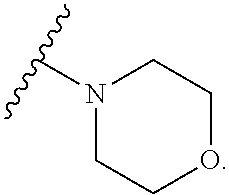


Priority Applications (4)
| Application Number | Priority Date | Filing Date | Title |
|---|---|---|---|
| US16/539,915 US10947236B2 (en) | 2018-08-14 | 2019-08-13 | Pyrrolo-dipyridine compounds |
| US17/186,796 US11655250B2 (en) | 2018-08-14 | 2021-02-26 | Pyrrolo-dipyridine compounds |
| US18/179,818 US12195461B2 (en) | 2018-08-14 | 2023-03-07 | Pyrrolo-dipyridine compounds |
| US18/941,150 US20250304584A1 (en) | 2018-08-14 | 2024-11-08 | Pyrrolo - dipyridine compounds |
Applications Claiming Priority (2)
| Application Number | Priority Date | Filing Date | Title |
|---|---|---|---|
| US201862718612P | 2018-08-14 | 2018-08-14 | |
| US16/539,915 US10947236B2 (en) | 2018-08-14 | 2019-08-13 | Pyrrolo-dipyridine compounds |
Related Child Applications (2)
| Application Number | Title | Priority Date | Filing Date |
|---|---|---|---|
| US17/186,796 Division US11655250B2 (en) | 2018-08-14 | 2021-02-26 | Pyrrolo-dipyridine compounds |
| US17/186,796 Continuation US11655250B2 (en) | 2018-08-14 | 2021-02-26 | Pyrrolo-dipyridine compounds |
Publications (2)
| Publication Number | Publication Date |
|---|---|
| US20200055853A1 US20200055853A1 (en) | 2020-02-20 |
| US10947236B2 true US10947236B2 (en) | 2021-03-16 |
Family
ID=69523081
Family Applications (4)
| Application Number | Title | Priority Date | Filing Date |
|---|---|---|---|
| US16/539,915 Active US10947236B2 (en) | 2018-08-14 | 2019-08-13 | Pyrrolo-dipyridine compounds |
| US17/186,796 Active 2039-08-27 US11655250B2 (en) | 2018-08-14 | 2021-02-26 | Pyrrolo-dipyridine compounds |
| US18/179,818 Active US12195461B2 (en) | 2018-08-14 | 2023-03-07 | Pyrrolo-dipyridine compounds |
| US18/941,150 Pending US20250304584A1 (en) | 2018-08-14 | 2024-11-08 | Pyrrolo - dipyridine compounds |
Family Applications After (3)
| Application Number | Title | Priority Date | Filing Date |
|---|---|---|---|
| US17/186,796 Active 2039-08-27 US11655250B2 (en) | 2018-08-14 | 2021-02-26 | Pyrrolo-dipyridine compounds |
| US18/179,818 Active US12195461B2 (en) | 2018-08-14 | 2023-03-07 | Pyrrolo-dipyridine compounds |
| US18/941,150 Pending US20250304584A1 (en) | 2018-08-14 | 2024-11-08 | Pyrrolo - dipyridine compounds |
Country Status (13)
| Country | Link |
|---|---|
| US (4) | US10947236B2 (en) |
| EP (1) | EP3836923B1 (en) |
| JP (1) | JP7695497B2 (en) |
| KR (1) | KR20210075071A (en) |
| CN (1) | CN112996506B (en) |
| AU (1) | AU2019321434B2 (en) |
| BR (1) | BR112021002614A2 (en) |
| CA (1) | CA3108714A1 (en) |
| ES (1) | ES3004565T3 (en) |
| IL (1) | IL280609A (en) |
| MX (1) | MX2021001752A (en) |
| SG (1) | SG11202101151SA (en) |
| WO (1) | WO2020037004A1 (en) |
Cited By (2)
| Publication number | Priority date | Publication date | Assignee | Title |
|---|---|---|---|---|
| US11655250B2 (en) | 2018-08-14 | 2023-05-23 | Osteoqc Inc. | Pyrrolo-dipyridine compounds |
| US11903949B2 (en) | 2018-08-14 | 2024-02-20 | Ossifi Therapeutics Llc | Fluoro beta-carboline compounds |
Families Citing this family (23)
| Publication number | Priority date | Publication date | Assignee | Title |
|---|---|---|---|---|
| US9579273B2 (en) * | 2011-12-14 | 2017-02-28 | The Kitasato Institute | Delivery of therapeutic agents by a collagen binding protein |
| CA2876689C (en) | 2012-06-13 | 2022-04-26 | Incyte Corporation | Substituted tricyclic compounds as fgfr inhibitors |
| PH12015502383B1 (en) | 2013-04-19 | 2023-02-03 | Incyte Holdings Corp | Bicyclic heterocycles as fgfr inhibitors |
| MA41551A (en) | 2015-02-20 | 2017-12-26 | Incyte Corp | BICYCLIC HETEROCYCLES USED AS FGFR4 INHIBITORS |
| CA2976790C (en) | 2015-02-20 | 2024-02-27 | Incyte Corporation | Bicyclic heterocycles as fgfr inhibitors |
| AR111960A1 (en) | 2017-05-26 | 2019-09-04 | Incyte Corp | CRYSTALLINE FORMS OF A FGFR INHIBITOR AND PROCESSES FOR ITS PREPARATION |
| KR102956194B1 (en) | 2018-05-04 | 2026-04-23 | 인사이트 코포레이션 | Salt of FGFR inhibitors |
| RS66310B1 (en) | 2018-05-04 | 2025-01-31 | Incyte Corp | Solid forms of an fgfr inhibitor and processes for preparing the same |
| US11090412B2 (en) | 2018-12-21 | 2021-08-17 | Zavation Medical Products Llc | Bone repair composition and kit |
| WO2020185532A1 (en) | 2019-03-08 | 2020-09-17 | Incyte Corporation | Methods of treating cancer with an fgfr inhibitor |
| WO2021007269A1 (en) | 2019-07-09 | 2021-01-14 | Incyte Corporation | Bicyclic heterocycles as fgfr inhibitors |
| US12122767B2 (en) | 2019-10-01 | 2024-10-22 | Incyte Corporation | Bicyclic heterocycles as FGFR inhibitors |
| GEP20247679B (en) | 2019-10-14 | 2024-10-10 | Incyte Corp | Bicyclic heterocycles as fgfr inhibitors |
| US11566028B2 (en) | 2019-10-16 | 2023-01-31 | Incyte Corporation | Bicyclic heterocycles as FGFR inhibitors |
| WO2021113479A1 (en) | 2019-12-04 | 2021-06-10 | Incyte Corporation | Tricyclic heterocycles as fgfr inhibitors |
| MX2022006691A (en) | 2019-12-04 | 2022-09-19 | Incyte Corp | DERIVATIVES OF A FIBROBLAST GROWTH FACTOR RECEPTOR (FGFR) INHIBITOR. |
| US12012409B2 (en) | 2020-01-15 | 2024-06-18 | Incyte Corporation | Bicyclic heterocycles as FGFR inhibitors |
| US12129265B2 (en) | 2020-07-21 | 2024-10-29 | Ankh Life Sciences Limited | Therapeutic agents and uses thereof |
| EP4323405A1 (en) | 2021-04-12 | 2024-02-21 | Incyte Corporation | Combination therapy comprising an fgfr inhibitor and a nectin-4 targeting agent |
| CA3220274A1 (en) | 2021-06-09 | 2022-12-15 | Incyte Corporation | Tricyclic heterocycles as fgfr inhibitors |
| TW202313610A (en) | 2021-06-09 | 2023-04-01 | 美商英塞特公司 | Tricyclic heterocycles as fgfr inhibitors |
| EP4392030A4 (en) * | 2021-08-23 | 2025-07-16 | Oxygen Biotech LLC | TREATMENT OF COVID-19 |
| JP2024542250A (en) * | 2021-11-23 | 2024-11-13 | オシフィ セラピューティクス リミティド ライアビリティ カンパニー | Composition for localized bone formation |
Citations (62)
| Publication number | Priority date | Publication date | Assignee | Title |
|---|---|---|---|---|
| US2688022A (en) | 1953-04-13 | 1954-08-31 | Searle & Co | 1-aminoalkyl-3-carbolines |
| US2767179A (en) | 1954-02-12 | 1956-10-16 | Irwin Neisler And Company | Quaternary ammonium salts of carboline derivatives |
| US2800474A (en) | 1956-03-26 | 1957-07-23 | Searle & Co | 9-(piperazinoalkyl) norharman derivatives |
| FR2003999A1 (en) | 1968-03-15 | 1969-11-14 | Glaxo Lab Ltd | |
| EP0548553A1 (en) | 1991-11-25 | 1993-06-30 | Takeda Chemical Industries, Ltd. | Optically active azole compounds, their production and use |
| US5298852A (en) | 1988-12-22 | 1994-03-29 | Robert Bosch Gmbh | Arrangement for and method of controlling a three-phase-generator in a vehicle |
| WO1994006416A1 (en) | 1992-09-24 | 1994-03-31 | Jagotec Ag | Pharmaceutical tablet capable of liberating one or more drugs at different release rates |
| US5324819A (en) | 1988-04-08 | 1994-06-28 | Stryker Corporation | Osteogenic proteins |
| US5344654A (en) | 1988-04-08 | 1994-09-06 | Stryker Corporation | Prosthetic devices having enhanced osteogenic properties |
| US5468845A (en) | 1988-04-08 | 1995-11-21 | Stryker Corporation | Antibodies to osteogenic proteins |
| US5494928A (en) | 1993-01-22 | 1996-02-27 | Hoffmann-La Roche Inc. | Indole derivatives |
| EP0705831A2 (en) | 1994-10-04 | 1996-04-10 | Bayer Ag | Cycloalkano-indole- and -azaindole derivatives |
| DE4436190A1 (en) | 1994-10-10 | 1996-04-11 | Gerhard Prof Dr Bringmann | Halogenated β-carboline derivatives, process for their preparation and use of these substances for inhibiting the respiratory chain |
| US5656593A (en) | 1991-03-11 | 1997-08-12 | Creative Biomolecules, Inc. | Morphogen induced periodontal tissue regeneration |
| EP0799829A1 (en) | 1996-04-04 | 1997-10-08 | Bayer Ag | Process for the preparation of enantiomerically pure cycloalkanoindole-, azaindole- and pyrimido [1,2a] indole carboxylic acids and their activated derivatives |
| US5939039A (en) | 1997-01-16 | 1999-08-17 | Orthovita, Inc. | Methods for production of calcium phosphate |
| WO2000002878A1 (en) | 1998-07-11 | 2000-01-20 | University Of Bristol | Compounds having activity at imidazoline receptors |
| WO2000053180A1 (en) | 1999-03-10 | 2000-09-14 | Merck & Co., Inc. | 6-azaindole compounds as antagonists of gonadotropin releasing hormone |
| US6190880B1 (en) | 1991-11-04 | 2001-02-20 | Genetics Institute | Recombinant bone morphogenetic protein heterodimers, compositions and methods of use |
| EP1134221A1 (en) | 2000-03-15 | 2001-09-19 | Aventis Pharma Deutschland GmbH | Substituted beta-carbolines as lkB kinase inhibitors |
| EP1209158A1 (en) | 2000-11-18 | 2002-05-29 | Aventis Pharma Deutschland GmbH | Substituted beta-carbolines |
| US6426332B1 (en) | 1997-02-07 | 2002-07-30 | Stryker Corporation | Matrix-free osteogenic devices, implants and methods of use thereof |
| US20020169122A1 (en) | 2001-02-23 | 2002-11-14 | Wyeth | Chondrogenic potential of human bone marrow-derived CD105+ cells by BMP |
| US20020187104A1 (en) | 2001-06-08 | 2002-12-12 | Wyeth | Calcuim phosphate delivery vehicles for osteoinductive proteins |
| US6627637B2 (en) | 2000-03-15 | 2003-09-30 | Aventis Pharma Deutschland Gmbh | Substituted beta carbolines |
| WO2003099814A1 (en) | 2002-05-23 | 2003-12-04 | Amgen, Inc. | Calcium receptor modulating agents |
| US20050085554A1 (en) | 2003-06-26 | 2005-04-21 | Hamann Mark T. | Methods of treating disease through the administration of a manzamine analog or derivative |
| US6949251B2 (en) | 2001-03-02 | 2005-09-27 | Stryker Corporation | Porous β-tricalcium phosphate granules for regeneration of bone tissue |
| US20060178752A1 (en) | 1998-11-20 | 2006-08-10 | Yaccarino Joseph A Iii | Compound bone structure of allograft tissue with threaded fasteners |
| US20060177475A1 (en) | 1997-03-20 | 2006-08-10 | Rueger David C | Osteogenic devices and methods of use thereof for repair of endochondral bone and osteochondral defects |
| US20060188544A1 (en) | 2002-02-19 | 2006-08-24 | Takashi Saito | Periodontal tissue regeneration using composite materials comprising phosphophoryn |
| US20060188542A1 (en) | 2005-02-22 | 2006-08-24 | Bobyn John D | Implant improving local bone formation |
| US20060204542A1 (en) | 2001-10-12 | 2006-09-14 | Zongtao Zhang | Coatings, Coated articles and methods of manufacture thereof |
| US20060252724A1 (en) | 2000-12-01 | 2006-11-09 | Wyeth | Method and composition for modulating bone growth |
| US20070054151A1 (en) | 2005-09-08 | 2007-03-08 | Idemitsu Kosan Co., Ltd. | Organic electroluminescence device |
| US7189263B2 (en) | 2004-02-03 | 2007-03-13 | Vita Special Purpose Corporation | Biocompatible bone graft material |
| US20070060606A1 (en) | 1999-10-07 | 2007-03-15 | Robertson Harold A | Compounds and methods for modulating phosphodiesterase 10A |
| US20070172479A1 (en) | 2005-12-21 | 2007-07-26 | Wyeth | Protein formulations with reduced viscosity and uses thereof |
| US20070191851A1 (en) | 2003-07-31 | 2007-08-16 | Nureddin Ashammakhi | Multifunctional implant device |
| WO2007091707A1 (en) | 2006-02-10 | 2007-08-16 | Erina Co., Inc. | Pharmaceutical composition for preventing and/or treating bone disease, functional food, health food, pharmaceutical preparation and tooth root-periodontal tissue formation promoting agent containing the composition |
| WO2009029625A1 (en) | 2007-08-27 | 2009-03-05 | Kalypsys, Inc. | 4- [heterocyclyl-methyl] -8-fluoro-quinolin-2-ones useful as nitric oxide synthase inhibitors |
| WO2009073620A2 (en) | 2007-11-30 | 2009-06-11 | Newlink Genetics | Ido inhibitors |
| WO2010015636A1 (en) | 2008-08-06 | 2010-02-11 | Julius-Maximilians-Universität Würzburg | Beta-carbolin-derivates as substrates for an enzyme |
| US20100063085A1 (en) | 2008-09-11 | 2010-03-11 | University Court Of The University Of Dundee | Method of treating learning impairment in down's syndrome subjects |
| US20100074939A1 (en) | 2008-09-25 | 2010-03-25 | Osteogenex Inc. | Harmine compounds for promoting bone growth |
| US20100173931A1 (en) | 2009-01-06 | 2010-07-08 | Osteogenex Inc. | Harmine derivatives for reducing body weight |
| US7812018B2 (en) | 2006-02-16 | 2010-10-12 | Millennium Pharmaceuticals, Inc. | Alpha carbolines and uses thereof |
| WO2010123583A2 (en) | 2009-04-24 | 2010-10-28 | University Of Tennessee Research Foundation | 1-aryl or 1-heteroaryl-pyrido[b]indoles and uses thereof |
| WO2011079841A1 (en) | 2009-12-28 | 2011-07-07 | Hans Rommelspacher | Beta-carbolines for use in the treatment of hearing loss and vertigo |
| WO2011133795A2 (en) | 2010-04-22 | 2011-10-27 | The Brigham And Women's Hospital, Inc. | Beta-carbolines as inhibitors of haspin and dyrk kinases |
| WO2011161256A1 (en) | 2010-06-25 | 2011-12-29 | Facultes Universitaires Notre Dame De La Paix | Beta carboline derivatives useful in the treatment of proliferative disorders |
| US8119655B2 (en) * | 2005-10-07 | 2012-02-21 | Takeda Pharmaceutical Company Limited | Kinase inhibitors |
| WO2012024433A2 (en) | 2010-08-17 | 2012-02-23 | Translational Genomics Research Institute | Compounds that inhibit tau phosphorylation |
| US20120208809A1 (en) | 2009-03-24 | 2012-08-16 | Sanofi | 9h-pyrrolo[2,3-b: 5,4-c'] dipyridine azacarboline derivatives, preparation thereof, and therapeutic use thereof |
| CN102796124A (en) | 2011-05-26 | 2012-11-28 | 新疆华世丹药物研究有限责任公司 | Di-beta-carboline alkali compound and preparation method, medicinal composition and application thereof |
| US20120302755A1 (en) | 2008-02-14 | 2012-11-29 | Siemens Medical Solutions Usa, Inc. | Imaging Agents for Detecting Neurological Dysfunction |
| US20130131070A1 (en) | 2009-04-24 | 2013-05-23 | John K. Buolamwini | 1-Aryl or 1- Heteroaryl-Pyrido(B)indoles and Uses Thereof |
| US20130315965A1 (en) | 2012-05-15 | 2013-11-28 | OssiFi, Inc. | Harmine derivatives for promoting bone growth |
| WO2014153203A2 (en) | 2013-03-14 | 2014-09-25 | Ossifi Inc. | Alkyl-amine harmine derivatives for promoting bone growth |
| US20160326162A1 (en) | 2015-04-08 | 2016-11-10 | Plexxikon Inc. | Compounds and methods for kinase modulation, and indications therefor |
| WO2018024643A1 (en) | 2016-08-02 | 2018-02-08 | Ucb Biopharma Sprl | 9h-pyrrolo-dipyridine derivatives |
| US20180127427A1 (en) | 2008-10-22 | 2018-05-10 | Array Biopharma, Inc. | Method of treatment using substituted pyrazolo[1,5-a] pyrimidine compounds |
Family Cites Families (7)
| Publication number | Priority date | Publication date | Assignee | Title |
|---|---|---|---|---|
| IL164355A0 (en) | 2002-03-29 | 2005-12-18 | Neurogen Corp | New aryl imidazoles and related compounds as cra receptor modulators |
| AU2008343932B2 (en) * | 2007-12-19 | 2013-08-15 | Amgen Inc. | Fused pyridine, pyrimidine and triazine compounds as cell cycle inhibitors |
| KR20110005819A (en) | 2008-03-28 | 2011-01-19 | 알티리스 쎄라퓨틱스 | Chemokine receptor modulators |
| NZ728724A (en) | 2012-05-11 | 2018-03-23 | Reset Therapeutics Inc | Carbazole-containing sulfonamides as cryptochrome modulators |
| US20140023653A1 (en) * | 2012-07-16 | 2014-01-23 | Osteogenex, Inc. | Boldine derivatives for promoting bone growth |
| EP3836923B1 (en) | 2018-08-14 | 2024-10-16 | OssiFi Therapeutics LLC | Pyrrolo - dipyridine compounds for the treatment of bone loss |
| JP7695496B2 (en) | 2018-08-14 | 2025-06-19 | オシフィ セラピューティクス リミティド ライアビリティ カンパニー | Fluoro-β-carboline compounds |
-
2019
- 2019-08-13 EP EP19849312.4A patent/EP3836923B1/en active Active
- 2019-08-13 CA CA3108714A patent/CA3108714A1/en active Pending
- 2019-08-13 CN CN201980054520.1A patent/CN112996506B/en active Active
- 2019-08-13 SG SG11202101151SA patent/SG11202101151SA/en unknown
- 2019-08-13 MX MX2021001752A patent/MX2021001752A/en unknown
- 2019-08-13 ES ES19849312T patent/ES3004565T3/en active Active
- 2019-08-13 BR BR112021002614-2A patent/BR112021002614A2/en not_active Application Discontinuation
- 2019-08-13 US US16/539,915 patent/US10947236B2/en active Active
- 2019-08-13 WO PCT/US2019/046421 patent/WO2020037004A1/en not_active Ceased
- 2019-08-13 JP JP2021507505A patent/JP7695497B2/en active Active
- 2019-08-13 AU AU2019321434A patent/AU2019321434B2/en active Active
- 2019-08-13 KR KR1020217007351A patent/KR20210075071A/en not_active Withdrawn
-
2021
- 2021-02-03 IL IL280609A patent/IL280609A/en unknown
- 2021-02-26 US US17/186,796 patent/US11655250B2/en active Active
-
2023
- 2023-03-07 US US18/179,818 patent/US12195461B2/en active Active
-
2024
- 2024-11-08 US US18/941,150 patent/US20250304584A1/en active Pending
Patent Citations (69)
| Publication number | Priority date | Publication date | Assignee | Title |
|---|---|---|---|---|
| US2688022A (en) | 1953-04-13 | 1954-08-31 | Searle & Co | 1-aminoalkyl-3-carbolines |
| US2767179A (en) | 1954-02-12 | 1956-10-16 | Irwin Neisler And Company | Quaternary ammonium salts of carboline derivatives |
| US2800474A (en) | 1956-03-26 | 1957-07-23 | Searle & Co | 9-(piperazinoalkyl) norharman derivatives |
| FR2003999A1 (en) | 1968-03-15 | 1969-11-14 | Glaxo Lab Ltd | |
| GB1268772A (en) | 1968-03-15 | 1972-03-29 | Glaxo Lab Ltd | NOVEL alpha-CARBOLINE DERIVATIVES, THE PREPARATION THEREOF AND COMPOSITIONS CONTAINING THE SAME |
| US5344654A (en) | 1988-04-08 | 1994-09-06 | Stryker Corporation | Prosthetic devices having enhanced osteogenic properties |
| US5324819A (en) | 1988-04-08 | 1994-06-28 | Stryker Corporation | Osteogenic proteins |
| US5468845A (en) | 1988-04-08 | 1995-11-21 | Stryker Corporation | Antibodies to osteogenic proteins |
| US5298852A (en) | 1988-12-22 | 1994-03-29 | Robert Bosch Gmbh | Arrangement for and method of controlling a three-phase-generator in a vehicle |
| US5656593A (en) | 1991-03-11 | 1997-08-12 | Creative Biomolecules, Inc. | Morphogen induced periodontal tissue regeneration |
| US6190880B1 (en) | 1991-11-04 | 2001-02-20 | Genetics Institute | Recombinant bone morphogenetic protein heterodimers, compositions and methods of use |
| EP0548553A1 (en) | 1991-11-25 | 1993-06-30 | Takeda Chemical Industries, Ltd. | Optically active azole compounds, their production and use |
| WO1994006416A1 (en) | 1992-09-24 | 1994-03-31 | Jagotec Ag | Pharmaceutical tablet capable of liberating one or more drugs at different release rates |
| US5494928A (en) | 1993-01-22 | 1996-02-27 | Hoffmann-La Roche Inc. | Indole derivatives |
| EP0705831A2 (en) | 1994-10-04 | 1996-04-10 | Bayer Ag | Cycloalkano-indole- and -azaindole derivatives |
| EP0815110A1 (en) | 1994-10-10 | 1998-01-07 | Gerhard Bringmann | HALOGENATED $g(b)-CARBOLINE DERIVATIVES, PROCESS FOR THEIR PREPARATION AND USE OF THESE SUBSTANCES FOR INHIBITING THE RESPIRATORY CHAIN |
| DE4436190A1 (en) | 1994-10-10 | 1996-04-11 | Gerhard Prof Dr Bringmann | Halogenated β-carboline derivatives, process for their preparation and use of these substances for inhibiting the respiratory chain |
| EP0799829A1 (en) | 1996-04-04 | 1997-10-08 | Bayer Ag | Process for the preparation of enantiomerically pure cycloalkanoindole-, azaindole- and pyrimido [1,2a] indole carboxylic acids and their activated derivatives |
| US5939039A (en) | 1997-01-16 | 1999-08-17 | Orthovita, Inc. | Methods for production of calcium phosphate |
| US6426332B1 (en) | 1997-02-07 | 2002-07-30 | Stryker Corporation | Matrix-free osteogenic devices, implants and methods of use thereof |
| US20060177475A1 (en) | 1997-03-20 | 2006-08-10 | Rueger David C | Osteogenic devices and methods of use thereof for repair of endochondral bone and osteochondral defects |
| WO2000002878A1 (en) | 1998-07-11 | 2000-01-20 | University Of Bristol | Compounds having activity at imidazoline receptors |
| US20060178752A1 (en) | 1998-11-20 | 2006-08-10 | Yaccarino Joseph A Iii | Compound bone structure of allograft tissue with threaded fasteners |
| WO2000053180A1 (en) | 1999-03-10 | 2000-09-14 | Merck & Co., Inc. | 6-azaindole compounds as antagonists of gonadotropin releasing hormone |
| US20070060606A1 (en) | 1999-10-07 | 2007-03-15 | Robertson Harold A | Compounds and methods for modulating phosphodiesterase 10A |
| EP1134221A1 (en) | 2000-03-15 | 2001-09-19 | Aventis Pharma Deutschland GmbH | Substituted beta-carbolines as lkB kinase inhibitors |
| US6627637B2 (en) | 2000-03-15 | 2003-09-30 | Aventis Pharma Deutschland Gmbh | Substituted beta carbolines |
| EP1209158A1 (en) | 2000-11-18 | 2002-05-29 | Aventis Pharma Deutschland GmbH | Substituted beta-carbolines |
| US20060252724A1 (en) | 2000-12-01 | 2006-11-09 | Wyeth | Method and composition for modulating bone growth |
| US20020169122A1 (en) | 2001-02-23 | 2002-11-14 | Wyeth | Chondrogenic potential of human bone marrow-derived CD105+ cells by BMP |
| US6949251B2 (en) | 2001-03-02 | 2005-09-27 | Stryker Corporation | Porous β-tricalcium phosphate granules for regeneration of bone tissue |
| US20020187104A1 (en) | 2001-06-08 | 2002-12-12 | Wyeth | Calcuim phosphate delivery vehicles for osteoinductive proteins |
| US20060204542A1 (en) | 2001-10-12 | 2006-09-14 | Zongtao Zhang | Coatings, Coated articles and methods of manufacture thereof |
| US20060188544A1 (en) | 2002-02-19 | 2006-08-24 | Takashi Saito | Periodontal tissue regeneration using composite materials comprising phosphophoryn |
| JP2005530811A (en) | 2002-05-23 | 2005-10-13 | アムジエン・インコーポレーテツド | Calcium receptor modifier |
| WO2003099814A1 (en) | 2002-05-23 | 2003-12-04 | Amgen, Inc. | Calcium receptor modulating agents |
| US20050085554A1 (en) | 2003-06-26 | 2005-04-21 | Hamann Mark T. | Methods of treating disease through the administration of a manzamine analog or derivative |
| US20070191851A1 (en) | 2003-07-31 | 2007-08-16 | Nureddin Ashammakhi | Multifunctional implant device |
| US7189263B2 (en) | 2004-02-03 | 2007-03-13 | Vita Special Purpose Corporation | Biocompatible bone graft material |
| US20060188542A1 (en) | 2005-02-22 | 2006-08-24 | Bobyn John D | Implant improving local bone formation |
| US20070054151A1 (en) | 2005-09-08 | 2007-03-08 | Idemitsu Kosan Co., Ltd. | Organic electroluminescence device |
| US8119655B2 (en) * | 2005-10-07 | 2012-02-21 | Takeda Pharmaceutical Company Limited | Kinase inhibitors |
| US20070172479A1 (en) | 2005-12-21 | 2007-07-26 | Wyeth | Protein formulations with reduced viscosity and uses thereof |
| WO2007091707A1 (en) | 2006-02-10 | 2007-08-16 | Erina Co., Inc. | Pharmaceutical composition for preventing and/or treating bone disease, functional food, health food, pharmaceutical preparation and tooth root-periodontal tissue formation promoting agent containing the composition |
| US7812018B2 (en) | 2006-02-16 | 2010-10-12 | Millennium Pharmaceuticals, Inc. | Alpha carbolines and uses thereof |
| WO2009029625A1 (en) | 2007-08-27 | 2009-03-05 | Kalypsys, Inc. | 4- [heterocyclyl-methyl] -8-fluoro-quinolin-2-ones useful as nitric oxide synthase inhibitors |
| WO2009073620A2 (en) | 2007-11-30 | 2009-06-11 | Newlink Genetics | Ido inhibitors |
| JP2011505379A (en) | 2007-11-30 | 2011-02-24 | ニューリンク ジェネティクス, インコーポレイテッド | IDO inhibitor |
| US20120302755A1 (en) | 2008-02-14 | 2012-11-29 | Siemens Medical Solutions Usa, Inc. | Imaging Agents for Detecting Neurological Dysfunction |
| WO2010015636A1 (en) | 2008-08-06 | 2010-02-11 | Julius-Maximilians-Universität Würzburg | Beta-carbolin-derivates as substrates for an enzyme |
| US20100063085A1 (en) | 2008-09-11 | 2010-03-11 | University Court Of The University Of Dundee | Method of treating learning impairment in down's syndrome subjects |
| US20100074939A1 (en) | 2008-09-25 | 2010-03-25 | Osteogenex Inc. | Harmine compounds for promoting bone growth |
| US20180127427A1 (en) | 2008-10-22 | 2018-05-10 | Array Biopharma, Inc. | Method of treatment using substituted pyrazolo[1,5-a] pyrimidine compounds |
| US20100173931A1 (en) | 2009-01-06 | 2010-07-08 | Osteogenex Inc. | Harmine derivatives for reducing body weight |
| US20120208809A1 (en) | 2009-03-24 | 2012-08-16 | Sanofi | 9h-pyrrolo[2,3-b: 5,4-c'] dipyridine azacarboline derivatives, preparation thereof, and therapeutic use thereof |
| WO2010123583A2 (en) | 2009-04-24 | 2010-10-28 | University Of Tennessee Research Foundation | 1-aryl or 1-heteroaryl-pyrido[b]indoles and uses thereof |
| US20130131070A1 (en) | 2009-04-24 | 2013-05-23 | John K. Buolamwini | 1-Aryl or 1- Heteroaryl-Pyrido(B)indoles and Uses Thereof |
| WO2011079841A1 (en) | 2009-12-28 | 2011-07-07 | Hans Rommelspacher | Beta-carbolines for use in the treatment of hearing loss and vertigo |
| US20130028958A1 (en) | 2009-12-28 | 2013-01-31 | Hans Rommelspacher | Beta-carbolines for use in the treatment of hearing loss and vertigo |
| WO2011133795A2 (en) | 2010-04-22 | 2011-10-27 | The Brigham And Women's Hospital, Inc. | Beta-carbolines as inhibitors of haspin and dyrk kinases |
| WO2011161256A1 (en) | 2010-06-25 | 2011-12-29 | Facultes Universitaires Notre Dame De La Paix | Beta carboline derivatives useful in the treatment of proliferative disorders |
| WO2012024433A2 (en) | 2010-08-17 | 2012-02-23 | Translational Genomics Research Institute | Compounds that inhibit tau phosphorylation |
| CN102796124A (en) | 2011-05-26 | 2012-11-28 | 新疆华世丹药物研究有限责任公司 | Di-beta-carboline alkali compound and preparation method, medicinal composition and application thereof |
| US20130315965A1 (en) | 2012-05-15 | 2013-11-28 | OssiFi, Inc. | Harmine derivatives for promoting bone growth |
| US9540365B2 (en) | 2013-03-14 | 2017-01-10 | Osteoqc Inc. | Compounds for bone growth |
| US20170298059A1 (en) | 2013-03-14 | 2017-10-19 | OsteoQC, Inc | Compounds for bone growth |
| WO2014153203A2 (en) | 2013-03-14 | 2014-09-25 | Ossifi Inc. | Alkyl-amine harmine derivatives for promoting bone growth |
| US20160326162A1 (en) | 2015-04-08 | 2016-11-10 | Plexxikon Inc. | Compounds and methods for kinase modulation, and indications therefor |
| WO2018024643A1 (en) | 2016-08-02 | 2018-02-08 | Ucb Biopharma Sprl | 9h-pyrrolo-dipyridine derivatives |
Non-Patent Citations (31)
| Title |
|---|
| Banker and Rhodes, ed., "Modern Pharmaceutics," Third Edition, Revised and Expanded, Marcel Dekker, Inc., pp. 451 and 596 (1996). |
| CAPLUS, English Abstract, DN 155;674252, Francik Renata et al. 2011. |
| CAS Registry 475632-16-7, published on Dec. 11, 2002, 1 page. |
| CAS Registry No. 1026011-30-2, entered STN on Jun. 6, 2008, 1 page. |
| CAS Registry No. 1028272-52-7, entered STN on Jun. 15, 2018, 1 page. |
| Cuny et al., "Structure-activity relationship study of beta-carboline derivatives as haspin kinase inhibitors," Bioorganic Medicinal Chemistry Letters, vol. 22, Issue 5, pp. 2015-2019 (2012). |
| Dai et al., "The IκB Kinase (IKK) Inhibitor, NEMO-binding Domain Peptide, Blocks Osteoclastogenesis and Bone Erosion in Inflammatory Arthritis," The Journal of Biochemical Chemistry, 279(36), pp. 37219-37222 (2004). |
| Dhandayuthapani et al., "Polymeric Scaffolds in Tissue Engineering Application: A Review," International Journal of Polymer Science, vol. 2011, Article ID 290602, 19 pages (2011). |
| Ellies et al., "Bone Density Ligand, Sclerostin, Directly Interacts with LRP5 but Not LRP5G171v to Modulate Wnt Acitivity," Journal of Bone and Mineral Res., vol. 21(11), pp. 1738-1749 (2006). |
| Francik et al., "Antioxidant activity of β-carboline derivatives," Acta Poloniae Pharmaceutica, 68(2), pp. 185-189 (2011). |
| Galarreta et al., "The use of natural product scaffolds as leads in the search for trypanothione reductase inhibitors," Bioorganic & Medicinal Chemistry, vol. 16, Issue 14, pp. 6689-6695 (2008). |
| Guan et al., "Design of β-carboline Derivatives as DNA-targeting antitumor agents," European Journal of Medicinal Chemistry, 41, pp. 1167-1179 (2006). |
| Ishida et al., "Antitumor Agents 201.1 Cytotoxicity of Harmine and β-Carboline Analogs," Bioorganic & Medicinal Chemistry Letters, 9, pp. 3319-3324 (1999). |
| Jeffcoat, "Safety of oral bisphosphonates: controlled studies on alveolar bone," Journal of Oral and Maxillofacial Implants, vol. 21, pp. 349-353 (2006). |
| Kelly et al., "Maxonine: Structure correction and synthesis," Tetrahedron Letters, 34(39), pp. 6173-6176 (Sep. 24, 1993). |
| Koretskaya et al., "Synthesis of harmine derivatives," Zhurnal Obshchei Khimii, vol. 27, pp. 542-545 (1957) (English translation "Synthesis of harmine derivatives," The Journal of General Chemistry of the U.S.S.R., Feb. 1957, vol. 27 (2), pp. 611-614). |
| Kular et al., "An overview of the regulation of bone remodeling at the cellular level," Clinical Biochemistry, vol. 45, pp. 863-873 (2012). |
| Li et al., "Sclerostin Antibody Treatment Increases Bone Formation, Bone Mass, and Bone Strength in a Rat Model of Postmenopausal Osteoporosis," J. Bone Miner Res., vol. 24(4), pp. 578-588 (2009). |
| Obach, "Prediction of human clearance of twenty-nine drugs from hepatic microsomal intrinsic clearance data: An examination of in vitro half-life approach and nonspecific binding to microsomes," Drug Metab. Dispos., 27(11), pp. 1350-1359 (1999). |
| Schumacher and Davidson, "Didemnolines A-D, New N9-Substituted β-Carbolines from the Marine Ascidian Didemnum sp," Tetrahedron 51(37), pp. 10125-10130 (1995). |
| Schumacher et al., "Synthesis of Didemnolines A-D, N9-Substituted β-Carboline Alkaloids from Marine Ascidian Didemnum sp.," Tetrahedron, vol. 55, Issue 4, pp. 935-942 (Jan. 22, 1999). |
| Vaccaro, "The role of the osteoconductive scaffold in synthetic bone graft," Orthopedics, vol. 25(5 Suppl.), pp. s571-s578 (May 2002). |
| Vrijens et al. "Identification of small molecule activators of BMP signaling," PLoS One, 8(3), e59045, pp. 1-10 (2013). |
| Wan et al., "Parathyroid hormone signaling through low-density lipoprotein-related protein 6," Genes Dev., 22(21), pp. 2968-2979 (2008). |
| Wang et al., "A high-throughput chemical screen reveals that harmine-mediated inhibition of DYRK1A increases human pancreatic beta cell replication," Author manuscript, published in final edited form as: Nat Med., 21(4), pp. 383-388 (2015). |
| Williams et al., "Medical Progress-Periodontal Disease," New England Journal of Medicine, vol. 322(6), pp. 373-382 (Feb. 1990). |
| Wolff, ed., "Burger's Medicinal Chemistry and Drug Discovery," Fifth Edition, vol. I: Principles and Practice, Immunopharmaceutics, Inc., pp. 975-977 (1995). |
| Yaffe et al., "Local Delivery of an Amino Bisphosphonate Prevents the Resorptive Phase of Alveolar Bone Following Mucoperiosteal Flap Surgery in Rats," Journal of Periodontology, vol. 68, pp. 884-889 (1997). |
| Youssef, "Alkaloids of the flowers of Hippeastrum vittatum," J. Nat. Prod., 64(6):839-841 (Jun. 2001). |
| Zhang et al., "Design and pharmacology of a highly specific dual FMS and KIT kinase inhibitor," PNAS, 110(14), pp. 5689-5694 (Apr. 2, 2013). |
| Zhelyazkov et al., "Synthesis from harmine," Farmatsiya (Sofia, Bulgaria) 7(1), pp. 29-33 (1957). |
Cited By (4)
| Publication number | Priority date | Publication date | Assignee | Title |
|---|---|---|---|---|
| US11655250B2 (en) | 2018-08-14 | 2023-05-23 | Osteoqc Inc. | Pyrrolo-dipyridine compounds |
| US11903949B2 (en) | 2018-08-14 | 2024-02-20 | Ossifi Therapeutics Llc | Fluoro beta-carboline compounds |
| US12195461B2 (en) * | 2018-08-14 | 2025-01-14 | Ossifi Therapeutics Llc | Pyrrolo-dipyridine compounds |
| US12324809B2 (en) | 2018-08-14 | 2025-06-10 | Ossifi Therapeutics Llc | Fluoro beta-carboline compounds |
Also Published As
| Publication number | Publication date |
|---|---|
| MX2021001752A (en) | 2021-06-23 |
| JP2022504011A (en) | 2022-01-13 |
| US20200055853A1 (en) | 2020-02-20 |
| BR112021002614A2 (en) | 2021-05-04 |
| KR20210075071A (en) | 2021-06-22 |
| CN112996506A (en) | 2021-06-18 |
| EP3836923A1 (en) | 2021-06-23 |
| US20250304584A1 (en) | 2025-10-02 |
| AU2019321434A1 (en) | 2021-03-04 |
| CN112996506B (en) | 2026-06-30 |
| EP3836923A4 (en) | 2022-05-18 |
| WO2020037004A1 (en) | 2020-02-20 |
| US11655250B2 (en) | 2023-05-23 |
| US12195461B2 (en) | 2025-01-14 |
| IL280609A (en) | 2021-03-25 |
| SG11202101151SA (en) | 2021-03-30 |
| CA3108714A1 (en) | 2020-02-20 |
| EP3836923B1 (en) | 2024-10-16 |
| AU2019321434B2 (en) | 2025-05-08 |
| US20230203036A1 (en) | 2023-06-29 |
| JP7695497B2 (en) | 2025-06-19 |
| US20220024922A1 (en) | 2022-01-27 |
| ES3004565T3 (en) | 2025-03-12 |
Similar Documents
| Publication | Publication Date | Title |
|---|---|---|
| US12195461B2 (en) | Pyrrolo-dipyridine compounds | |
| US11267814B2 (en) | Compounds for bone growth | |
| US12324809B2 (en) | Fluoro beta-carboline compounds | |
| HK40055103B (en) | Pyrrolo - dipyridine compounds for the treatment of bone loss | |
| HK40055103A (en) | Pyrrolo - dipyridine compounds for the treatment of bone loss |
Legal Events
| Date | Code | Title | Description |
|---|---|---|---|
| FEPP | Fee payment procedure |
Free format text: ENTITY STATUS SET TO UNDISCOUNTED (ORIGINAL EVENT CODE: BIG.); ENTITY STATUS OF PATENT OWNER: SMALL ENTITY |
|
| FEPP | Fee payment procedure |
Free format text: ENTITY STATUS SET TO SMALL (ORIGINAL EVENT CODE: SMAL); ENTITY STATUS OF PATENT OWNER: SMALL ENTITY |
|
| AS | Assignment |
Owner name: OSTEOQC INC., CANADA Free format text: ASSIGNMENT OF ASSIGNORS INTEREST;ASSIGNORS:ELLIES, DEBRA;KIMBALL, F. SCOTT;YOUNG, ROBERT N.;SIGNING DATES FROM 20190920 TO 20191022;REEL/FRAME:051525/0965 |
|
| STPP | Information on status: patent application and granting procedure in general |
Free format text: APPLICATION DISPATCHED FROM PREEXAM, NOT YET DOCKETED |
|
| STPP | Information on status: patent application and granting procedure in general |
Free format text: DOCKETED NEW CASE - READY FOR EXAMINATION |
|
| STPP | Information on status: patent application and granting procedure in general |
Free format text: NON FINAL ACTION MAILED |
|
| STPP | Information on status: patent application and granting procedure in general |
Free format text: RESPONSE TO NON-FINAL OFFICE ACTION ENTERED AND FORWARDED TO EXAMINER |
|
| STCF | Information on status: patent grant |
Free format text: PATENTED CASE |
|
| AS | Assignment |
Owner name: OSSIFI-ML, INC., KANSAS Free format text: LICENSE;ASSIGNOR:OSTEOQC, INC.;REEL/FRAME:059459/0082 Effective date: 20201110 |
|
| AS | Assignment |
Owner name: OSSIFI THERAPEUTICS LLC, KANSAS Free format text: ASSIGNMENT OF ASSIGNORS INTEREST;ASSIGNOR:OSTEOQC INC.;REEL/FRAME:066755/0234 Effective date: 20231230 |
|
| MAFP | Maintenance fee payment |
Free format text: PAYMENT OF MAINTENANCE FEE, 4TH YR, SMALL ENTITY (ORIGINAL EVENT CODE: M2551); ENTITY STATUS OF PATENT OWNER: SMALL ENTITY Year of fee payment: 4 |