US10934593B2 - Compositions and methods for predicting response and resistance to CDK4/6 inhibition - Google Patents
Compositions and methods for predicting response and resistance to CDK4/6 inhibition Download PDFInfo
- Publication number
- US10934593B2 US10934593B2 US16/047,810 US201816047810A US10934593B2 US 10934593 B2 US10934593 B2 US 10934593B2 US 201816047810 A US201816047810 A US 201816047810A US 10934593 B2 US10934593 B2 US 10934593B2
- Authority
- US
- United States
- Prior art keywords
- cells
- cdk4
- carcinoma
- cancer
- mirna
- Prior art date
- Legal status (The legal status is an assumption and is not a legal conclusion. Google has not performed a legal analysis and makes no representation as to the accuracy of the status listed.)
- Active, expires
Links
- NPLYXBHNAMJRHN-UHFFFAOYSA-N CC(=O)C1=C(C)C2=C(N=C(CC3=CC=C(N4CCNCC4)C=N3)N=C2)N(C2CCCC2)C1=O Chemical compound CC(=O)C1=C(C)C2=C(N=C(CC3=CC=C(N4CCNCC4)C=N3)N=C2)N(C2CCCC2)C1=O NPLYXBHNAMJRHN-UHFFFAOYSA-N 0.000 description 1
Images




Classifications
-
- C—CHEMISTRY; METALLURGY
- C12—BIOCHEMISTRY; BEER; SPIRITS; WINE; VINEGAR; MICROBIOLOGY; ENZYMOLOGY; MUTATION OR GENETIC ENGINEERING
- C12Q—MEASURING OR TESTING PROCESSES INVOLVING ENZYMES, NUCLEIC ACIDS OR MICROORGANISMS; COMPOSITIONS OR TEST PAPERS THEREFOR; PROCESSES OF PREPARING SUCH COMPOSITIONS; CONDITION-RESPONSIVE CONTROL IN MICROBIOLOGICAL OR ENZYMOLOGICAL PROCESSES
- C12Q1/00—Measuring or testing processes involving enzymes, nucleic acids or microorganisms; Compositions therefor; Processes of preparing such compositions
- C12Q1/68—Measuring or testing processes involving enzymes, nucleic acids or microorganisms; Compositions therefor; Processes of preparing such compositions involving nucleic acids
- C12Q1/6876—Nucleic acid products used in the analysis of nucleic acids, e.g. primers or probes
- C12Q1/6883—Nucleic acid products used in the analysis of nucleic acids, e.g. primers or probes for diseases caused by alterations of genetic material
- C12Q1/6886—Nucleic acid products used in the analysis of nucleic acids, e.g. primers or probes for diseases caused by alterations of genetic material for cancer
-
- A—HUMAN NECESSITIES
- A61—MEDICAL OR VETERINARY SCIENCE; HYGIENE
- A61K—PREPARATIONS FOR MEDICAL, DENTAL OR TOILETRY PURPOSES
- A61K31/00—Medicinal preparations containing organic active ingredients
- A61K31/33—Heterocyclic compounds
- A61K31/395—Heterocyclic compounds having nitrogen as a ring hetero atom, e.g. guanethidine or rifamycins
- A61K31/495—Heterocyclic compounds having nitrogen as a ring hetero atom, e.g. guanethidine or rifamycins having six-membered rings with two or more nitrogen atoms as the only ring heteroatoms, e.g. piperazine or tetrazines
- A61K31/505—Pyrimidines; Hydrogenated pyrimidines, e.g. trimethoprim
- A61K31/506—Pyrimidines; Hydrogenated pyrimidines, e.g. trimethoprim not condensed and containing further heterocyclic rings
-
- A—HUMAN NECESSITIES
- A61—MEDICAL OR VETERINARY SCIENCE; HYGIENE
- A61K—PREPARATIONS FOR MEDICAL, DENTAL OR TOILETRY PURPOSES
- A61K31/00—Medicinal preparations containing organic active ingredients
- A61K31/33—Heterocyclic compounds
- A61K31/395—Heterocyclic compounds having nitrogen as a ring hetero atom, e.g. guanethidine or rifamycins
- A61K31/495—Heterocyclic compounds having nitrogen as a ring hetero atom, e.g. guanethidine or rifamycins having six-membered rings with two or more nitrogen atoms as the only ring heteroatoms, e.g. piperazine or tetrazines
- A61K31/505—Pyrimidines; Hydrogenated pyrimidines, e.g. trimethoprim
- A61K31/519—Pyrimidines; Hydrogenated pyrimidines, e.g. trimethoprim ortho- or peri-condensed with heterocyclic rings
-
- C—CHEMISTRY; METALLURGY
- C12—BIOCHEMISTRY; BEER; SPIRITS; WINE; VINEGAR; MICROBIOLOGY; ENZYMOLOGY; MUTATION OR GENETIC ENGINEERING
- C12Q—MEASURING OR TESTING PROCESSES INVOLVING ENZYMES, NUCLEIC ACIDS OR MICROORGANISMS; COMPOSITIONS OR TEST PAPERS THEREFOR; PROCESSES OF PREPARING SUCH COMPOSITIONS; CONDITION-RESPONSIVE CONTROL IN MICROBIOLOGICAL OR ENZYMOLOGICAL PROCESSES
- C12Q1/00—Measuring or testing processes involving enzymes, nucleic acids or microorganisms; Compositions therefor; Processes of preparing such compositions
- C12Q1/68—Measuring or testing processes involving enzymes, nucleic acids or microorganisms; Compositions therefor; Processes of preparing such compositions involving nucleic acids
- C12Q1/6809—Methods for determination or identification of nucleic acids involving differential detection
-
- G—PHYSICS
- G16—INFORMATION AND COMMUNICATION TECHNOLOGY [ICT] SPECIALLY ADAPTED FOR SPECIFIC APPLICATION FIELDS
- G16B—BIOINFORMATICS, i.e. INFORMATION AND COMMUNICATION TECHNOLOGY [ICT] SPECIALLY ADAPTED FOR GENETIC OR PROTEIN-RELATED DATA PROCESSING IN COMPUTATIONAL MOLECULAR BIOLOGY
- G16B25/00—ICT specially adapted for hybridisation; ICT specially adapted for gene or protein expression
- G16B25/10—Gene or protein expression profiling; Expression-ratio estimation or normalisation
-
- G—PHYSICS
- G16—INFORMATION AND COMMUNICATION TECHNOLOGY [ICT] SPECIALLY ADAPTED FOR SPECIFIC APPLICATION FIELDS
- G16B—BIOINFORMATICS, i.e. INFORMATION AND COMMUNICATION TECHNOLOGY [ICT] SPECIALLY ADAPTED FOR GENETIC OR PROTEIN-RELATED DATA PROCESSING IN COMPUTATIONAL MOLECULAR BIOLOGY
- G16B30/00—ICT specially adapted for sequence analysis involving nucleotides or amino acids
-
- G—PHYSICS
- G16—INFORMATION AND COMMUNICATION TECHNOLOGY [ICT] SPECIALLY ADAPTED FOR SPECIFIC APPLICATION FIELDS
- G16H—HEALTHCARE INFORMATICS, i.e. INFORMATION AND COMMUNICATION TECHNOLOGY [ICT] SPECIALLY ADAPTED FOR THE HANDLING OR PROCESSING OF MEDICAL OR HEALTHCARE DATA
- G16H20/00—ICT specially adapted for therapies or health-improving plans, e.g. for handling prescriptions, for steering therapy or for monitoring patient compliance
- G16H20/10—ICT specially adapted for therapies or health-improving plans, e.g. for handling prescriptions, for steering therapy or for monitoring patient compliance relating to drugs or medications, e.g. for ensuring correct administration to patients
-
- G—PHYSICS
- G16—INFORMATION AND COMMUNICATION TECHNOLOGY [ICT] SPECIALLY ADAPTED FOR SPECIFIC APPLICATION FIELDS
- G16H—HEALTHCARE INFORMATICS, i.e. INFORMATION AND COMMUNICATION TECHNOLOGY [ICT] SPECIALLY ADAPTED FOR THE HANDLING OR PROCESSING OF MEDICAL OR HEALTHCARE DATA
- G16H50/00—ICT specially adapted for medical diagnosis, medical simulation or medical data mining; ICT specially adapted for detecting, monitoring or modelling epidemics or pandemics
- G16H50/20—ICT specially adapted for medical diagnosis, medical simulation or medical data mining; ICT specially adapted for detecting, monitoring or modelling epidemics or pandemics for computer-aided diagnosis, e.g. based on medical expert systems
-
- C—CHEMISTRY; METALLURGY
- C12—BIOCHEMISTRY; BEER; SPIRITS; WINE; VINEGAR; MICROBIOLOGY; ENZYMOLOGY; MUTATION OR GENETIC ENGINEERING
- C12N—MICROORGANISMS OR ENZYMES; COMPOSITIONS THEREOF; PROPAGATING, PRESERVING, OR MAINTAINING MICROORGANISMS; MUTATION OR GENETIC ENGINEERING; CULTURE MEDIA
- C12N15/00—Mutation or genetic engineering; DNA or RNA concerning genetic engineering, vectors, e.g. plasmids, or their isolation, preparation or purification; Use of hosts therefor
- C12N15/09—Recombinant DNA-technology
- C12N15/11—DNA or RNA fragments; Modified forms thereof; Non-coding nucleic acids having a biological activity
- C12N15/113—Non-coding nucleic acids modulating the expression of genes, e.g. antisense oligonucleotides; Antisense DNA or RNA; Triplex- forming oligonucleotides; Catalytic nucleic acids, e.g. ribozymes; Nucleic acids used in co-suppression or gene silencing
- C12N15/1137—Non-coding nucleic acids modulating the expression of genes, e.g. antisense oligonucleotides; Antisense DNA or RNA; Triplex- forming oligonucleotides; Catalytic nucleic acids, e.g. ribozymes; Nucleic acids used in co-suppression or gene silencing against enzymes
-
- C—CHEMISTRY; METALLURGY
- C12—BIOCHEMISTRY; BEER; SPIRITS; WINE; VINEGAR; MICROBIOLOGY; ENZYMOLOGY; MUTATION OR GENETIC ENGINEERING
- C12N—MICROORGANISMS OR ENZYMES; COMPOSITIONS THEREOF; PROPAGATING, PRESERVING, OR MAINTAINING MICROORGANISMS; MUTATION OR GENETIC ENGINEERING; CULTURE MEDIA
- C12N2310/00—Structure or type of the nucleic acid
- C12N2310/10—Type of nucleic acid
- C12N2310/14—Type of nucleic acid interfering nucleic acids [NA]
-
- C—CHEMISTRY; METALLURGY
- C12—BIOCHEMISTRY; BEER; SPIRITS; WINE; VINEGAR; MICROBIOLOGY; ENZYMOLOGY; MUTATION OR GENETIC ENGINEERING
- C12N—MICROORGANISMS OR ENZYMES; COMPOSITIONS THEREOF; PROPAGATING, PRESERVING, OR MAINTAINING MICROORGANISMS; MUTATION OR GENETIC ENGINEERING; CULTURE MEDIA
- C12N2310/00—Structure or type of the nucleic acid
- C12N2310/50—Physical structure
- C12N2310/53—Physical structure partially self-complementary or closed
- C12N2310/531—Stem-loop; Hairpin
-
- C—CHEMISTRY; METALLURGY
- C12—BIOCHEMISTRY; BEER; SPIRITS; WINE; VINEGAR; MICROBIOLOGY; ENZYMOLOGY; MUTATION OR GENETIC ENGINEERING
- C12Q—MEASURING OR TESTING PROCESSES INVOLVING ENZYMES, NUCLEIC ACIDS OR MICROORGANISMS; COMPOSITIONS OR TEST PAPERS THEREFOR; PROCESSES OF PREPARING SUCH COMPOSITIONS; CONDITION-RESPONSIVE CONTROL IN MICROBIOLOGICAL OR ENZYMOLOGICAL PROCESSES
- C12Q2600/00—Oligonucleotides characterized by their use
- C12Q2600/106—Pharmacogenomics, i.e. genetic variability in individual responses to drugs and drug metabolism
-
- C—CHEMISTRY; METALLURGY
- C12—BIOCHEMISTRY; BEER; SPIRITS; WINE; VINEGAR; MICROBIOLOGY; ENZYMOLOGY; MUTATION OR GENETIC ENGINEERING
- C12Q—MEASURING OR TESTING PROCESSES INVOLVING ENZYMES, NUCLEIC ACIDS OR MICROORGANISMS; COMPOSITIONS OR TEST PAPERS THEREFOR; PROCESSES OF PREPARING SUCH COMPOSITIONS; CONDITION-RESPONSIVE CONTROL IN MICROBIOLOGICAL OR ENZYMOLOGICAL PROCESSES
- C12Q2600/00—Oligonucleotides characterized by their use
- C12Q2600/112—Disease subtyping, staging or classification
-
- C—CHEMISTRY; METALLURGY
- C12—BIOCHEMISTRY; BEER; SPIRITS; WINE; VINEGAR; MICROBIOLOGY; ENZYMOLOGY; MUTATION OR GENETIC ENGINEERING
- C12Q—MEASURING OR TESTING PROCESSES INVOLVING ENZYMES, NUCLEIC ACIDS OR MICROORGANISMS; COMPOSITIONS OR TEST PAPERS THEREFOR; PROCESSES OF PREPARING SUCH COMPOSITIONS; CONDITION-RESPONSIVE CONTROL IN MICROBIOLOGICAL OR ENZYMOLOGICAL PROCESSES
- C12Q2600/00—Oligonucleotides characterized by their use
- C12Q2600/118—Prognosis of disease development
-
- C—CHEMISTRY; METALLURGY
- C12—BIOCHEMISTRY; BEER; SPIRITS; WINE; VINEGAR; MICROBIOLOGY; ENZYMOLOGY; MUTATION OR GENETIC ENGINEERING
- C12Q—MEASURING OR TESTING PROCESSES INVOLVING ENZYMES, NUCLEIC ACIDS OR MICROORGANISMS; COMPOSITIONS OR TEST PAPERS THEREFOR; PROCESSES OF PREPARING SUCH COMPOSITIONS; CONDITION-RESPONSIVE CONTROL IN MICROBIOLOGICAL OR ENZYMOLOGICAL PROCESSES
- C12Q2600/00—Oligonucleotides characterized by their use
- C12Q2600/166—Oligonucleotides used as internal standards, controls or normalisation probes
-
- C—CHEMISTRY; METALLURGY
- C12—BIOCHEMISTRY; BEER; SPIRITS; WINE; VINEGAR; MICROBIOLOGY; ENZYMOLOGY; MUTATION OR GENETIC ENGINEERING
- C12Q—MEASURING OR TESTING PROCESSES INVOLVING ENZYMES, NUCLEIC ACIDS OR MICROORGANISMS; COMPOSITIONS OR TEST PAPERS THEREFOR; PROCESSES OF PREPARING SUCH COMPOSITIONS; CONDITION-RESPONSIVE CONTROL IN MICROBIOLOGICAL OR ENZYMOLOGICAL PROCESSES
- C12Q2600/00—Oligonucleotides characterized by their use
- C12Q2600/178—Oligonucleotides characterized by their use miRNA, siRNA or ncRNA
-
- C—CHEMISTRY; METALLURGY
- C12—BIOCHEMISTRY; BEER; SPIRITS; WINE; VINEGAR; MICROBIOLOGY; ENZYMOLOGY; MUTATION OR GENETIC ENGINEERING
- C12Y—ENZYMES
- C12Y207/00—Transferases transferring phosphorus-containing groups (2.7)
- C12Y207/11—Protein-serine/threonine kinases (2.7.11)
- C12Y207/11022—Cyclin-dependent kinase (2.7.11.22)
-
- G—PHYSICS
- G16—INFORMATION AND COMMUNICATION TECHNOLOGY [ICT] SPECIALLY ADAPTED FOR SPECIFIC APPLICATION FIELDS
- G16B—BIOINFORMATICS, i.e. INFORMATION AND COMMUNICATION TECHNOLOGY [ICT] SPECIALLY ADAPTED FOR GENETIC OR PROTEIN-RELATED DATA PROCESSING IN COMPUTATIONAL MOLECULAR BIOLOGY
- G16B40/00—ICT specially adapted for biostatistics; ICT specially adapted for bioinformatics-related machine learning or data mining, e.g. knowledge discovery or pattern finding
Definitions
- Cyclin D-dependent kinase activity is a driving factor for carcinogenesis in more than 80% of hormone receptor-positive breast cancers. Additionally, CCND1 amplification or overexpression portends poor survival.
- cyclin dependent kinase 4 and 6 (CDK 4/6) inhibitor-based treatment is complicated by the development of acquired resistance. Prior to the invention described herein, the process by which resistance to CDK 4/6 inhibitor treatment arises was unknown. As such, there is a pressing need to identify biomarkers of resistance of CDK4/6 inhibitor treatment.
- the present invention is based upon the surprising discovery of a biomarker for CDK4/6 inhibitor response and resistance in cancer.
- a micro ribonucleic acid miR-432-5p
- miRNA is excreted in exosomes from resistant cells and transmits resistance to CDK4/6 inhibition.
- this miRNA is detected via real-time polymerase chain reaction (PCR) analysis of RNA.
- PCR polymerase chain reaction
- microRNA-mediated suppression of the transforming growth factor beta (TGF- ⁇ ) pathway confers transmissible and reversible CDK4/6 inhibitor resistance.
- a test sample is obtained from a subject having or at risk of developing neoplasia.
- the expression level of a micro ribonucleic acid (miRNA) in the test sample is determined.
- the expression level of the miRNA in the test sample is compared with the expression level of the miRNA in a reference sample, and finally, it is determined whether CDK4/6 will inhibit neoplasia in the subject if the expression level of the miRNA in the test sample is differentially expressed as compared to the level of the miRNA in the reference sample.
- the subject is a human.
- Suitable neoplasias include breast cancer and parotid cancer.
- Other exemplary neoplasias include pancreatic cancer, leukemias (e.g., acute leukemia, acute lymphocytic leukemia, acute myelocytic leukemia, acute myeloblastic leukemia, acute promyelocytic leukemia, acute myelomonocytic leukemia, acute monocytic leukemia, acute erythroleukemia, chronic leukemia, chronic myelocytic leukemia, chronic lymphocytic leukemia), polycythemia vera, lymphoma (Hodgkin's disease, non-Hodgkin's disease), Waldenstrom's macroglobulinemia, heavy chain disease, and solid tumors such as sarcomas and carcinomas (e.g., fibrosarcoma, myxosarcoma, liposarcoma, chondrosarcoma, osteogenic sar
- the CDK4/6 inhibitor comprises palbociclib, abemacyclib, or ribociclib. In one aspect, the CDK4/6 inhibitor has been administered to the subject.
- the test sample is obtained from the neoplasia or from blood in the subject.
- exemplary samples include a plasma sample, a serum sample, or a blood sample.
- the test sample comprises circulating blood exosomes or circulating tumor cells.
- the reference sample is obtained from healthy normal tissue, neoplasia that received a clinical benefit from CDK4/6 inhibition, or neoplasia that did not receive a clinical benefit from CDK4/6 inhibition.
- the reference sample is obtained from healthy normal tissue from the same individual as the test sample or one or more healthy normal tissues from different individuals.
- the miRNA comprises an exosomal miRNA selected from the group consisting of miR-1973, miR-432-5p, miR-874-3p, miR-4695-3p, and miR-186-5p.
- the method comprises determining that inhibition of CDK4/6 in the subject will not result in clinical benefit in the subject if the expression level of miR-432-5p in the test sample is higher than the level of miR-432-5p in the reference sample, e.g., at least 1%, at least 5%, at least 10%, at least 15%, at least 20%, at least 25%, at least 30%, at least 35%, at least 40%, at least 45%, at least 50%, at least 55%, at least 60%, at least 65%, at least 70%, at least 75%, at least 80%, at least 85%, at least 90%, at least 95%, or at least 100% higher than the level of miR-432-5p in the reference sample.
- the expression level of miR-432-5p in the test sample is upregulated (i.e., increased) by at least 2 fold, at least 3 fold, at least 4 fold, at least 5 fold, at least 6 fold, at least 7 fold, at least 8 fold, at least 9 fold, at least 10 fold, at least 15 fold, at least 20 fold, at least 25 fold, at least 30 fold, at least 35 fold, at least 40 fold, at least 45 fold, at least 50 fold, at least 60 fold, at least 70 fold, at least 80 fold, at least 90 fold, at least 100 fold, at least 125 fold, at least 150 fold, at least 175 fold, at least 200 fold, at least 250 fold, at least 300 fold, at least 350 fold, at least 400 fold or at least 500 fold as compared to the level of the miR-432-5p in the reference sample.
- the level of CDK6 protein in the test sample is increased as compared to the level of CDK6 protein in the reference sample.
- the method comprises determining that inhibition of CDK4/6 in the subject will not result in clinical benefit in the subject if the expression level of mothers against decapentaplegic homolog 4 (SMAD4) protein in the test sample is decreased as compared to the level of SMAD4 protein in the reference sample.
- the method further comprises administering to the subject a SMAD4 agonist, along with the CDK4/6 inhibitor, thereby treating the neoplasia, wherein the SMAD4 agonist comprises a SMAD4 polypeptide.
- the expression level of the miRNA is detected via quantitative real-time reverse transcriptase polymerase chain reaction (real time RT-PCR).
- the expression level of the miRNA is detected via an Affymetrix Gene Array hybridization, next generation sequencing, ribonucleic acid sequencing (RNA-seq), or nanoString nCounter expression panels.
- the method further comprises treating the subject with a chemotherapeutic agent, radiation therapy, cryotherapy, hormone therapy, or immunotherapy.
- the method further comprises administering to the subject an inhibitor of miR-432-5p along with the CDK4/6 inhibitor, thereby treating the cancer.
- the inhibitor comprises a small molecule inhibitor, RNA interference (RNAi), or an antibody.
- RNAi RNA interference
- exemplary miR-432-5p inhibitors include those provided by Sigma-Aldrich® (e.g., catalogue number HSTUD0572; Sigma-Aldrich®: St. Louis, Mo.), SwitchGear Genomics (e.g., product number INH0392; SwitchGear Genomics; Carlsbad, Calif.), and Active Motif® (e.g., product ID INH0392; Active Motif®: Carlsbad, Calif.).
- the method further comprises administering to the subject a CDK4/6 inhibitor at least 6 weeks after cessation of CDK4/6 inhibitor treatment, thereby treating the neoplasia.
- the method further comprises administering to the subject a CDK4/6 inhibitor at least 7 weeks, at least 8 weeks, at least 9 weeks, at least 10 weeks, at least 11 weeks, at least 12 weeks, at least 13 weeks, at least 14 weeks, at least 15 weeks, at least 16 weeks, at least 17 weeks, at least 18 weeks, at least 19 weeks, at least 20 weeks, at least 6 months, or at least one year after cessation of CDK4/6 inhibitor treatment, thereby treating the neoplasia.
- the method further comprises administering to the subject a CDK4/6 inhibitor at least 1 week after cessation of CDK4/6 inhibitor treatment, thereby treating the neoplasia.
- clinical benefit in the subject comprises complete or partial response as defined by response evaluation criteria in solid tumors (RECIST) or stable disease as defined by RECIST.
- RECIST solid tumors
- Also provided are methods of re-sensitizing a cancer cell to CDK4/6 inhibition comprising administering a miR-432-5p inhibitor to the cancer cell.
- Methods of treating neoplasia in a subject are carried out by administering a CDK4/6 inhibitor to the subject and administering an inhibitor of miR-432-5p to the subject, thereby treating neoplasia in the subject.
- the inhibitor is administered at a dose of 1-1000 nM, e.g., about 1 nM, about 5 nM, about 10 nM, about 25 nM, about 50 nM, about 75 nM, about 100 nM, about 200 nM, about 300 nM, about 400 nM, about 500 nM, about 600 nM, about 700 nM, about 800 nM, about 900 nM, or about 1000 nM.
- the inhibitor is administered at least one time per month, e.g., twice per month, once per week, twice per week, once per day, twice per day, every 8 hours, every 4 hours, every 2 hours, or every hour
- kits comprising reagents for assaying a biological sample from a subject with neoplasia for aberrant expression of miR-432-5p.
- Methods of monitoring therapeutic efficacy of inhibition of CDK4/6 in a subject with neoplasia are carried out by administering an effective amount of a CDK4/6 inhibitor to the subject; obtaining a first test sample from the subject; determining the expression level of a micro ribonucleic acid (miRNA) in the test sample; comparing the expression level of the miRNA in the first test sample with the expression level of the miRNA in a reference sample; and determining whether CDK4/6 will inhibit neoplasia in the subject if the expression level of the miRNA in the first test sample is differentially expressed as compared to the level of the miRNA in the reference sample.
- miRNA micro ribonucleic acid
- the test sample is obtained from the neoplasia or from blood in the subject.
- the miRNA comprises an exosomal miRNA selected from the group consisting of miR-1973, miR-432-5p, miR-874-3p, miR-4695-3p, and miR-186-5p.
- the method comprises determining that inhibition of CDK4/6 in the subject will not result in clinical benefit in the subject if the expression level of miR-432-5p in the test sample is higher than the level of miR-432-5p in the reference sample. If the expression level of miR-432-5p in the test sample is higher than the level of miR-432-5p in the reference sample, administration of the CDK4/6 inhibitor is ceased.
- the method further comprises obtaining a second test sample from the subject; determining the expression level of a micro ribonucleic acid (miRNA) in the second test sample; comparing the expression level of the miRNA in the second test sample with the expression level of the miRNA in a first test sample; and administering the CDK4/6 inhibitor to the subject if the expression level of the miRNA in the second test sample is lower than the level of the miRNA in the first test sample.
- miRNA micro ribonucleic acid
- a suitable distinguishing biomarker includes miR-432-5p.
- An exemplary miR-432-5p nucleic acid sequence is set forth below (SEQ ID NO: 5):
- exemplary primer used to detect mature miRNA (miR-432-5P) is set forth below (SEQ ID NO: 1; see, FIG. 6C ):
- SMAD4 nucleic acid molecule a polynucleotide encoding a SMAD4 polypeptide.
- An exemplary SMAD4 nucleic acid molecule is provided at NCBI Accession No. NM_005359, version NM_005359.5, incorporated herein by reference, and reproduced below (SEQ ID NO: 8):
- SMAD4 polypeptide a polypeptide or fragment thereof having at least about 85% amino acid identity to NCBI Accession No. NP_005350, version NP_005350.1, incorporated herein by reference, as reproduced below (SEQ ID NO: 9):
- the term “about” is understood as within a range of normal tolerance in the art, for example within 2 standard deviations of the mean. “About” can be understood as within 10%, 9%, 8%, 7%, 6%, 5%, 4%, 3%, 2%, 1%, 0.5%, 0.1%, 0.05%, or 0.01% of the stated value. Unless otherwise clear from context, all numerical values provided herein are modified by the term “about.”
- allerant expression is used to refer to an expression level that deviates from (i.e., an increased or decreased expression level) the normal reference expression level of the gene.
- agent any small compound, antibody, nucleic acid molecule, or polypeptide, or fragments thereof.
- an alteration is meant a change (increase or decrease) in the expression levels or activity of a gene or polypeptide as detected by standard art-known methods such as those described herein.
- an alteration includes at least a 1% change in expression levels, e.g., at least a 2%, 3%, 4%, 5%, 6%, 7%, 8%, 9%, 10%, 20%, 30%, 40%, 50%, 60%, 70%, 80%, 90%, or 100% change in expression levels.
- an alteration includes at least a 5%-10% change in expression levels, preferably a 25% change, more preferably a 40% change, and most preferably a 50% or greater change in expression levels.
- ameliorate is meant decrease, suppress, attenuate, diminish, arrest, or stabilize the development or progression of a disease.
- antibody as used herein includes monoclonal antibodies, polyclonal antibodies, multispecific antibodies (e.g., bispecific antibodies), and antibody fragments, so long as they exhibit the desired biological activity.
- immunoglobulin Ig is used interchangeably with “antibody” herein.
- binding to a molecule is meant having a physicochemical affinity for that molecule.
- control or “reference” is meant a standard of comparison.
- “changed as compared to a control” sample or subject is understood as having a level that is statistically different than a sample from a normal, untreated, or control sample.
- Control samples include, for example, cells in culture, one or more laboratory test animals, or one or more human subjects. Methods to select and test control samples are within the ability of those in the art.
- An analyte can be a naturally occurring substance that is characteristically expressed or produced by the cell or organism (e.g., an antibody, a protein) or a substance produced by a reporter construct (e.g., ⁇ -galactosidase or luciferase). Depending on the method used for detection, the amount and measurement of the change can vary. Determination of statistical significance is within the ability of those skilled in the art, e.g., the number of standard deviations from the mean that constitute a positive result.
- Detect refers to identifying the presence, absence, or amount of the agent (e.g., a nucleic acid molecule, for example deoxyribonucleic acid (DNA) or ribonucleic acid (RNA)) to be detected.
- the agent e.g., a nucleic acid molecule, for example deoxyribonucleic acid (DNA) or ribonucleic acid (RNA)
- detectable label is meant a composition that when linked (e.g., joined—directly or indirectly) to a molecule of interest renders the latter detectable, via, for example, spectroscopic, photochemical, biochemical, immunochemical, or chemical means.
- Direct labeling can occur through bonds or interactions that link the label to the molecule, and indirect labeling can occur through the use of a linker or bridging moiety which is either directly or indirectly labeled.
- Bridging moieties may amplify a detectable signal.
- useful labels may include radioactive isotopes, magnetic beads, metallic beads, colloidal particles, fluorescent labeling compounds, electron-dense reagents, enzymes (for example, as commonly used in an enzyme-linked immunosorbent assay (ELISA)), biotin, digoxigenin, or haptens.
- fluorescent labeling compounds include fluorescein isothiocyanate, rhodamine, phycoerythrin, phycocyanin, allophycocyanin, p-phthaldehyde and fluorescamine.
- the molecule can also be detectably labeled using fluorescence emitting metals such as 152 Eu, or others of the lanthanide series. These metals can be attached to the molecule using such metal chelating groups as diethylenetriaminepentacetic acid (DTPA) or ethylenediaminetetraacetic acid (EDTA).
- DTPA diethylenetriaminepentacetic acid
- EDTA ethylenediaminetetraacetic acid
- the molecule also can be detectably labeled by coupling it to a chemiluminescent compound. The presence of the chemiluminescent-tagged molecule is then determined by detecting the presence of luminescence that arises during the course of chemical reaction. Examples of particularly useful chemiluminescent labeling compounds are luminol, isoluminol, theromatic acridinium ester, imidazole, acridinium salt and oxalate ester.
- a “detection step” may use any of a variety of known methods to detect the presence of nucleic acid (e.g., methylated DNA) or polypeptide.
- the types of detection methods in which probes can be used include Western blots, Southern blots, dot or slot blots, and Northern blots.
- an effective amount is meant an amount of a compound, alone or in a combination, required to ameliorate the symptoms of a disease, e.g., neoplasia, relative to an untreated patient.
- the effective amount of active compound(s) used to practice the present invention for therapeutic treatment of a disease varies depending upon the manner of administration, the age, body weight, and general health of the subject. Ultimately, the attending physician or veterinarian will decide the appropriate amount and dosage regimen. Such amount is referred to as an “effective” amount.
- fragment is meant a portion of a polypeptide or nucleic acid molecule. This portion contains, preferably, at least 10%, 20%, 30%, 40%, 50%, 60%, 70%, 80%, or 90% of the entire length of the reference nucleic acid molecule or polypeptide.
- a fragment may contain 10, 20, 30, 40, 50, 60, 70, 80, 90, or 100, 200, 300, 400, 500, 600, 700, 800, 900, or 1000 nucleotides or amino acids.
- the invention also comprises polypeptides and nucleic acid fragments, so long as they exhibit the desired biological activity of the full length polypeptides and nucleic acid, respectively. A nucleic acid fragment of almost any length is employed.
- illustrative polynucleotide segments with total lengths of about 10,000, about 5000, about 3000, about 2,000, about 1,000, about 500, about 200, about 100, about 50 base pairs in length (including all intermediate lengths) are included in many implementations of this invention.
- a polypeptide fragment of almost any length is employed.
- illustrative polypeptide segments with total lengths of about 10,000, about 5,000, about 3,000, about 2,000, about 1,000, about 5,000, about 1,000, about 500, about 200, about 100, or about 50 amino acids in length (including all intermediate lengths) are included in many implementations of this invention.
- isolated refers to material that is free to varying degrees from components which normally accompany it as found in its native state.
- Isolate denotes a degree of separation from original source or surroundings.
- Purify denotes a degree of separation that is higher than isolation.
- a “purified” or “biologically pure” protein is sufficiently free of other materials such that any impurities do not materially affect the biological properties of the protein or cause other adverse consequences. That is, a nucleic acid or peptide of this invention is purified if it is substantially free of cellular material, viral material, or culture medium when produced by recombinant DNA techniques, or chemical precursors or other chemicals when chemically synthesized. Purity and homogeneity are typically determined using analytical chemistry techniques, for example, polyacrylamide gel electrophoresis or high performance liquid chromatography. The term “purified” can denote that a nucleic acid or protein gives rise to essentially one band in an electrophoretic gel. For a protein that can be subjected to modifications, for example, phosphorylation or glycosylation, different modifications may give rise to different isolated proteins, which can be separately purified.
- substantially pure is meant a nucleotide or polypeptide that has been separated from the components that naturally accompany it.
- the nucleotides and polypeptides are substantially pure when they are at least 60%, 70%, 80%, 90%, 95%, or even 99%, by weight, free from the proteins and naturally-occurring organic molecules with they are naturally associated.
- isolated nucleic acid is meant a nucleic acid that is free of the genes which flank it in the naturally-occurring genome of the organism from which the nucleic acid is derived.
- the term covers, for example: (a) a DNA which is part of a naturally occurring genomic DNA molecule, but is not flanked by both of the nucleic acid sequences that flank that part of the molecule in the genome of the organism in which it naturally occurs; (b) a nucleic acid incorporated into a vector or into the genomic DNA of a prokaryote or eukaryote in a manner, such that the resulting molecule is not identical to any naturally occurring vector or genomic DNA; (c) a separate molecule such as a synthetic cDNA, a genomic fragment, a fragment produced by polymerase chain reaction (PCR), or a restriction fragment; and (d) a recombinant nucleotide sequence that is part of a hybrid gene, i.e., a gene encoding a fusion
- Isolated nucleic acid molecules according to the present invention further include molecules produced synthetically, as well as any nucleic acids that have been altered chemically and/or that have modified backbones.
- the isolated nucleic acid is a purified cDNA or RNA polynucleotide.
- Isolated nucleic acid molecules also include messenger ribonucleic acid (mRNA) molecules.
- an “isolated polypeptide” is meant a polypeptide of the invention that has been separated from components that naturally accompany it.
- the polypeptide is isolated when it is at least 60%, by weight, free from the proteins and naturally-occurring organic molecules with which it is naturally associated.
- the preparation is at least 75%, more preferably at least 90%, and most preferably at least 99%, by weight, a polypeptide of the invention.
- An isolated polypeptide of the invention may be obtained, for example, by extraction from a natural source, by expression of a recombinant nucleic acid encoding such a polypeptide; or by chemically synthesizing the protein. Purity can be measured by any appropriate method, for example, column chromatography, polyacrylamide gel electrophoresis, or by HPLC analysis.
- immobilized refers to a probe (e.g., nucleic acid or protein) and a solid support in which the binding between the probe and the solid support is sufficient to be stable under conditions of binding, washing, analysis, and removal.
- the binding may be covalent or non-covalent. Covalent bonds may be formed directly between the probe and the solid support or may be formed by a cross linker or by inclusion of a specific reactive group on either the solid support or the probe or both molecules.
- Non-covalent binding may be one or more of electrostatic, hydrophilic, and hydrophobic interactions. Included in non-covalent binding is the covalent attachment of a molecule to the support and the non-covalent binding of a biotinylated probe to the molecule. Immobilization may also involve a combination of covalent and non-covalent interactions.
- marker any protein or polynucleotide having an alteration in expression level or activity that is associated with a disease or disorder, e.g., neoplasia.
- module alter (increase or decrease). Such alterations are detected by standard art-known methods such as those described herein.
- normal amount refers to a normal amount of a complex in an individual known not to be diagnosed with cancer.
- the amount of the molecule can be measured in a test sample and compared to the “normal control level,” utilizing techniques such as reference limits, discrimination limits, or risk defining thresholds to define cutoff points and abnormal values (e.g., for neoplasia).
- the “normal control level” means the level of one or more proteins (or nucleic acids) or combined protein indices (or combined nucleic acid indices) typically found in a subject known not to be suffering from cancer. Such normal control levels and cutoff points may vary based on whether a molecule is used alone or in a formula combining other proteins into an index.
- the normal control level can be a database of protein patterns from previously tested subjects who did not convert to cancer over a clinically relevant time horizon.
- the normal control level can be a level relative to a housekeeping gene.
- the level that is determined may be the same as a control level or a cut off level or a threshold level, or may be increased or decreased relative to a control level or a cut off level or a threshold level.
- the control subject is a matched control of the same species, gender, ethnicity, age group, smoking status, body mass index (BMI), current therapeutic regimen status, medical history, or a combination thereof, but differs from the subject being diagnosed in that the control does not suffer from the disease in question or is not at risk for the disease.
- the level that is determined may be an increased level.
- the term “increased” with respect to level refers to any % increase above a control level.
- the increased level may be at least or about a 1% increase, at least or about a 5% increase, at least or about a 10% increase, at least or about a 15% increase, at least or about a 20% increase, at least or about a 25% increase, at least or about a 30% increase, at least or about a 35% increase, at least or about a 40% increase, at least or about a 45% increase, at least or about a 50% increase, at least or about a 55% increase, at least or about a 60% increase, at least or about a 65% increase, at least or about a 70% increase, at least or about a 75% increase, at least or about a 80% increase, at least or about a 85% increase, at least or about a 90% increase, or at least or about a 95% increase, relative to a control level.
- the level that is determined may be a decreased level.
- the term “decreased” with respect to level refers to any % decrease below a control level.
- the decreased level may be at least or about a 1% decrease, at least or about a 5% decrease, at least or about a 10% decrease, at least or about a 15% decrease, at least or about a 20% decrease, at least or about a 25% decrease, at least or about a 30% decrease, at least or about a 35% decrease, at least or about a 40% decrease, at least or about a 45% decrease, at least or about a 50% decrease, at least or about a 55% decrease, at least or about a 60% decrease, at least or about a 65% decrease, at least or about a 70% decrease, at least or about a 75% decrease, at least or about a 80% decrease, at least or about a 85% decrease, at least or about a 90% decrease, or at least or about a 95% decrease, relative to a control level.
- Nucleic acid molecules useful in the methods of the invention include any nucleic acid molecule that encodes a polypeptide of the invention or a fragment thereof. Such nucleic acid molecules need not be 100% identical with an endogenous nucleic acid sequence, but will typically exhibit substantial identity, e.g., at least 80%, at least 85%, at least 90%, at least 95%, or at least 99% identity. Polynucleotides having “substantial identity” to an endogenous sequence are typically capable of hybridizing with at least one strand of a double-stranded nucleic acid molecule.
- stringent salt concentration will ordinarily be less than about 750 mM NaCl and 75 mM trisodium citrate, preferably less than about 500 mM NaCl and 50 mM trisodium citrate, and more preferably less than about 250 mM NaCl and 25 mM trisodium citrate.
- Low stringency hybridization can be obtained in the absence of organic solvent, e.g., formamide, while high stringency hybridization can be obtained in the presence of at least about 35% formamide, and more preferably at least about 50% formamide.
- Stringent temperature conditions will ordinarily include temperatures of at least about 30° C., more preferably of at least about 37° C., and most preferably of at least about 42° C.
- Varying additional parameters, such as hybridization time, the concentration of detergent, e.g., sodium dodecyl sulfate (SDS), and the inclusion or exclusion of carrier DNA, are well known to those skilled in the art.
- concentration of detergent e.g., sodium dodecyl sulfate (SDS)
- SDS sodium dodecyl sulfate
- Various levels of stringency are accomplished by combining these various conditions as needed.
- hybridization will occur at 30° C. in 750 mM NaCl, 75 mM trisodium citrate, and 1% SDS.
- hybridization will occur at 37° C. in 500 mM NaCl, 50 mM trisodium citrate, 1% SDS, 35% formamide, and 100 ⁇ g/ml denatured salmon sperm DNA (ssDNA).
- hybridization will occur at 42° C. in 250 mM NaCl, 25 mM trisodium citrate, 1% SDS, 50% formamide, and 200 ⁇ g/ml ssDNA. Useful variations on these conditions will be readily apparent to those skilled in the art.
- wash stringency conditions can be defined by salt concentration and by temperature. As above, wash stringency can be increased by decreasing salt concentration or by increasing temperature.
- stringent salt concentration for the wash steps will preferably be less than about 30 mM NaCl and 3 mM trisodium citrate, and most preferably less than about 15 mM NaCl and 1.5 mM trisodium citrate.
- Stringent temperature conditions for the wash steps will ordinarily include a temperature of at least about 25° C., more preferably of at least about 42° C., and even more preferably of at least about 68° C. In a preferred embodiment, wash steps will occur at 25° C.
- wash steps will occur at 42 C in 15 mM NaCl, 1.5 mM trisodium citrate, and 0.1% SDS.
- wash steps will occur at 68° C. in 15 mM NaCl, 1.5 mM trisodium citrate, and 0.1% SDS. Additional variations on these conditions will be readily apparent to those skilled in the art. Hybridization techniques are well known to those skilled in the art and are described, for example, in Benton and Davis (Science 196:180, 1977); Grunstein and Hogness (Proc. Natl. Acad.
- neoplasia is meant a disease or disorder characterized by excess proliferation or reduced apoptosis.
- Illustrative neoplasms for which the invention can be used include, but are not limited to pancreatic cancer, leukemias (e.g., acute leukemia, acute lymphocytic leukemia, acute myelocytic leukemia, acute myeloblastic leukemia, acute promyelocytic leukemia, acute myelomonocytic leukemia, acute monocytic leukemia, acute erythroleukemia, chronic leukemia, chronic myelocytic leukemia, chronic lymphocytic leukemia), polycythemia vera, lymphoma (Hodgkin's disease, non-Hodgkin's disease), Waldenstrom's macroglobulinemia, heavy chain disease, and solid tumors such as sarcomas and carcinomas (e.g., fibrosarcoma, myxosarcoma, lip
- obtaining as in “obtaining an agent” includes synthesizing, purchasing, or otherwise acquiring the agent.
- phrases “pharmaceutically acceptable carrier” is art recognized and includes a pharmaceutically acceptable material, composition or vehicle, suitable for administering compounds of the present invention to mammals.
- the carriers include liquid or solid filler, diluent, excipient, solvent or encapsulating material, involved in carrying or transporting the subject agent from one organ, or portion of the body, to another organ, or portion of the body.
- Each carrier must be “acceptable” in the sense of being compatible with the other ingredients of the formulation and not injurious to the patient.
- materials which can serve as pharmaceutically acceptable carriers include: sugars, such as lactose, glucose and sucrose; starches, such as corn starch and potato starch; cellulose, and its derivatives, such as sodium carboxymethyl cellulose, ethyl cellulose and cellulose acetate; powdered tragacanth; malt; gelatin; talc; excipients, such as cocoa butter and suppository waxes; oils, such as peanut oil, cottonseed oil, safflower oil, sesame oil, olive oil, corn oil and soybean oil; glycols, such as propylene glycol; polyols, such as glycerin, sorbitol, mannitol and polyethylene glycol; esters, such as ethyl oleate and ethyl laurate; agar; buffering agents, such as magnesium hydroxide and aluminum hydroxide; alginic acid; pyrogen-free water; isotonic saline; Ringer'
- protein or “polypeptide” or “peptide” is meant any chain of more than two natural or unnatural amino acids, regardless of post-translational modification (e.g., glycosylation or phosphorylation), constituting all or part of a naturally-occurring or non-naturally occurring polypeptide or peptide, as is described herein.
- post-translational modification e.g., glycosylation or phosphorylation
- Primer set means a set of oligonucleotides that may be used, for example, for PCR.
- a primer set would consist of at least 2, 4, 6, 8, 10, 12, 14, 16, 18, 20, 30, 40, 50, 60, 80, 100, 200, 250, 300, 400, 500, 600, or more primers.
- preventing and “prevention” refer to the administration of an agent or composition to a clinically asymptomatic individual who is at risk of developing, susceptible, or predisposed to a particular adverse condition, disorder, or disease, and thus relates to the prevention of the occurrence of symptoms and/or their underlying cause.
- Ranges can be expressed herein as from “about” one particular value, and/or to “about” another particular value. When such a range is expressed, another aspect includes from the one particular value and/or to the other particular value. Similarly, when values are expressed as approximations, by use of the antecedent “about,” it is understood that the particular value forms another aspect. It is further understood that the endpoints of each of the ranges are significant both in relation to the other endpoint, and independently of the other endpoint. It is also understood that there are a number of values disclosed herein, and that each value is also herein disclosed as “about” that particular value in addition to the value itself.
- data are provided in a number of different formats and that this data represent endpoints and starting points and ranges for any combination of the data points. For example, if a particular data point “10” and a particular data point “15” are disclosed, it is understood that greater than, greater than or equal to, less than, less than or equal to, and equal to 10 and 15 are considered disclosed as well as between 10 and 15. It is also understood that each unit between two particular units are also disclosed. For example, if 10 and 15 are disclosed, then 11, 12, 13, and 14 are also disclosed.
- Ranges provided herein are understood to be shorthand for all of the values within the range.
- a range of 1 to 50 is understood to include any number, combination of numbers, or sub-range from the group consisting 1, 2, 3, 4, 5, 6, 7, 8, 9, 10, 11, 12, 13, 14, 15, 16, 17, 18, 19, 20, 21, 22, 23, 24, 25, 26, 27, 28, 29, 30, 31, 32, 33, 34, 35, 36, 37, 38, 39, 40, 41, 42, 43, 44, 45, 46, 47, 48, 49, or 50 as well as all intervening decimal values between the aforementioned integers such as, for example, 1.1, 1.2, 1.3, 1.4, 1.5, 1.6, 1.7, 1.8, and 1.9.
- a nested sub-range of an exemplary range of 1 to 50 may comprise 1 to 10, 1 to 20, 1 to 30, and 1 to 40 in one direction, or 50 to 40, 50 to 30, 50 to 20, and 50 to 10 in the other direction.
- reduces is meant a negative alteration of at least 10%, 25%, 50%, 75%, or 100%.
- a “reference sequence” is a defined sequence used as a basis for sequence comparison or a gene expression comparison.
- a reference sequence may be a subset of or the entirety of a specified sequence; for example, a segment of a full-length cDNA or gene sequence, or the complete cDNA or gene sequence.
- the length of the reference polypeptide sequence will generally be at least about 16 amino acids, preferably at least about 20 amino acids, more preferably at least about 25 amino acids, and even more preferably about 35 amino acids, about 50 amino acids, or about 100 amino acids.
- the length of the reference nucleic acid sequence will generally be at least about 40 nucleotides, preferably at least about 60 nucleotides, more preferably at least about 75 nucleotides, and even more preferably about 100 nucleotides or about 300 or about 500 nucleotides or any integer thereabout or there between.
- sample refers to a biological sample obtained for the purpose of evaluation in vitro.
- tissue samples for the methods described herein include tissue samples from neoplasias or circulating exosomes.
- the sample or patient sample preferably may comprise any body fluid or tissue.
- the bodily fluid includes, but is not limited to, blood, plasma, serum, lymph, breast milk, saliva, mucous, semen, vaginal secretions, cellular extracts, inflammatory fluids, cerebrospinal fluid, feces, vitreous humor, or urine obtained from the subject.
- the sample is a composite panel of at least two of a blood sample, a plasma sample, a serum sample, and a urine sample.
- the sample comprises blood or a fraction thereof (e.g., plasma, serum, fraction obtained via leukopheresis).
- Preferred samples are whole blood, serum, plasma, or urine.
- a sample can also be a partially purified fraction of a tissue or bodily fluid.
- a reference sample can be a “normal” sample, from a donor not having the disease or condition fluid, or from a normal tissue in a subject having the disease or condition.
- a reference sample can also be from an untreated donor or cell culture not treated with an active agent (e.g., no treatment or administration of vehicle only).
- a reference sample can also be taken at a “zero time point” prior to contacting the cell or subject with the agent or therapeutic intervention to be tested or at the start of a prospective study.
- a “solid support” describes a strip, a polymer, a bead, or a nanoparticle.
- the strip may be a nucleic acid-probe (or protein) coated porous or non-porous solid support strip comprising linking a nucleic acid probe to a carrier to prepare a conjugate and immobilizing the conjugate on a porous solid support.
- Well-known supports or carriers include glass, polystyrene, polypropylene, polyethylene, dextran, nylon, amylases, natural and modified celluloses, polyacrylamides, gabbros, and magnetite.
- the nature of the carrier can be either soluble to some extent or insoluble for the purposes of the present invention.
- the support material may have virtually any possible structural configuration so long as the coupled molecule is capable of binding to a binding agent (e.g., an antibody or nucleic acid molecule).
- a binding agent e.g., an antibody or nucleic acid molecule
- the support configuration may be spherical, as in a bead, or cylindrical, as in the inside surface of a test tube, or the external surface of a rod.
- the surface may be flat such as a sheet, or test strip, etc.
- the supports include polystyrene beads. Those skilled in the art will know many other suitable carriers for binding antibody or antigen, or will be able to ascertain the same by use of routine experimentation.
- the solid support comprises a polymer, to which an agent is chemically bound, immobilized, dispersed, or associated.
- a polymer support may be a network of polymers, and may be prepared in bead form (e.g., by suspension polymerization).
- the location of active sites introduced into a polymer support depends on the type of polymer support. For example, in a swollen-gel-bead polymer support the active sites are distributed uniformly throughout the beads, whereas in a macroporous-bead polymer support they are predominantly on the internal surfaces of the macropores.
- the solid support e.g., a device contains a binding agent alone or together with a binding agent for at least one, two, three or more other molecules.
- telomere binding By “specifically binds” is meant a compound or antibody that recognizes and binds a polypeptide of the invention, but which does not substantially recognize and bind other molecules in a sample, for example, a biological sample, which naturally includes a polypeptide of the invention.
- substantially identical is meant a polypeptide or nucleic acid molecule exhibiting at least 50% identity to a reference amino acid sequence (for example, any one of the amino acid sequences described herein) or nucleic acid sequence (for example, any one of the nucleic acid sequences described herein).
- a reference amino acid sequence for example, any one of the amino acid sequences described herein
- nucleic acid sequence for example, any one of the nucleic acid sequences described herein.
- such a sequence is at least 60%, at least 70%, at least 80%, at least 85%, at least 90%, at least 95%, or at least 99% identical at the amino acid level or nucleic acid to the sequence used for comparison.
- subject as used herein includes all members of the animal kingdom prone to suffering from the indicated disorder.
- the subject is a mammal, and in some aspects, the subject is a human.
- the methods are also applicable to companion animals such as dogs and cats as well as livestock such as cows, horses, sheep, goats, pigs, and other domesticated and wild animals.
- a subject “suffering from or suspected of suffering from” a specific disease, condition, or syndrome has a sufficient number of risk factors or presents with a sufficient number or combination of signs or symptoms of the disease, condition, or syndrome such that a competent individual would diagnose or suspect that the subject was suffering from the disease, condition, or syndrome.
- Methods for identification of subjects suffering from or suspected of suffering from conditions associated with cancer is within the ability of those in the art.
- Subjects suffering from, and suspected of suffering from, a specific disease, condition, or syndrome are not necessarily two distinct groups.
- “susceptible to” or “prone to” or “predisposed to” or “at risk of developing” a specific disease or condition refers to an individual who based on genetic, environmental, health, and/or other risk factors is more likely to develop a disease or condition than the general population.
- An increase in likelihood of developing a disease may be an increase of about 10%, 20%, 50%, 100%, 150%, 200%, or more.
- treating and “treatment” as used herein refer to the administration of an agent or formulation to a clinically symptomatic individual afflicted with an adverse condition, disorder, or disease, so as to effect a reduction in severity and/or frequency of symptoms, eliminate the symptoms and/or their underlying cause, and/or facilitate improvement or remediation of damage. It will be appreciated that, although not precluded, treating a disorder or condition does not require that the disorder, condition or symptoms associated therewith be completely eliminated.
- compositions of the invention are administered orally or systemically.
- Other modes of administration include rectal, topical, intraocular, buccal, intravaginal, intracisternal, intracerebroventricular, intratracheal, nasal, transdermal, within/on implants, or parenteral routes.
- parenteral includes subcutaneous, intrathecal, intravenous, intramuscular, intraperitoneal, or infusion. Intravenous or intramuscular routes are not particularly suitable for long-term therapy and prophylaxis. They could, however, be preferred in emergency situations.
- Compositions comprising a composition of the invention can be added to a physiological fluid, such as blood.
- Oral administration can be preferred for prophylactic treatment because of the convenience to the patient as well as the dosing schedule.
- Parenteral modalities subcutaneous or intravenous
- Inhaled therapy may be most appropriate for pulmonary vascular diseases (e.g., pulmonary hypertension).
- Kits or pharmaceutical systems may be assembled into kits or pharmaceutical systems for use in arresting cell cycle in rapidly dividing cells, e.g., cancer cells.
- Kits or pharmaceutical systems according to this aspect of the invention comprise a carrier means, such as a box, carton, tube, having in close confinement therein one or more container means, such as vials, tubes, ampoules, bottles, syringes, or bags.
- the kits or pharmaceutical systems of the invention may also comprise associated instructions for using the kit.
- compositions or methods provided herein can be combined with one or more of any of the other compositions and methods provided herein.
- compositions or methods provided herein can be combined with one or more of any of the other compositions and methods provided herein.
- transitional term “comprising,” which is synonymous with “including,” “containing,” or “characterized by,” is inclusive or open-ended and does not exclude additional, unrecited elements or method steps.
- the transitional phrase “consisting of” excludes any element, step, or ingredient not specified in the claim.
- the transitional phrase “consisting essentially of” limits the scope of a claim to the specified materials or steps “and those that do not materially affect the basic and novel characteristic(s)” of the claimed invention.
- FIG. 1A - FIG. 1F show a series of graphs that display generated CDK4/6 inhibitor resistant cell lines have dramatically increased CDK6 protein expression.
- FIG. 1A is a graph that displays flow cytometry analysis of the cell cycle profile in T47D cells after prolonged treatment (up to 12 weeks) with 100 nM palbociclib to establish resistance. Once resistant, palbociclib dose was gradually increased from 100 nM (R100) to 500 nM (R500) and cells monitored until resistance was confirmed by cell cycle profile.
- FIG. 1B is a plot of growth rate of resistant T47D cells compared to parental cells.
- FIG. 1A is a graph that displays flow cytometry analysis of the cell cycle profile in T47D cells after prolonged treatment (up to 12 weeks) with 100 nM palbociclib to establish resistance. Once resistant, palbociclib dose was gradually increased from 100 nM (R100) to 500 nM (R500) and cells monitored until resistance was confirmed by cell cycle profile.
- FIG. 1B is a plot of growth
- FIG. 1E is an image of western blot analysis of both T47D and MCF7 resistant cells.
- FIG. 1F is a graph displaying progression-free survival in palbociclib-letrozole and letrozole patient groups.
- FIG. 2A - FIG. 2E shows a series of graphs displaying resistance to CDK4/6 inhibition is mediated by high CDK6 expression.
- FIG. 2B is an image of western blot analysis of CDK4/6 over expression in parental cells.
- FIG. 2C is an image of western blot analysis of CDK6 knockdown in resistant T47D cells.
- FIG. 2D is a graph of cell cycle analysis of resistant T47D cells+/ ⁇ depletion.
- FIG. 2E is a series of line graphs of cell cycle analysis of parental, ⁇ CDK4 and ⁇ CDK6 T47D cells over a 14-day time period in the present or absence of palbociclib treatment. Data presented as combined percentage of cells in S+G2 phase of the cell cycle (see also, FIG. 11A and FIG. 11B ).
- FIG. 3A - FIG. 3F show a series of graphs depicting CDK6 expression and activity contributes to cell survival after palbociclib exposure.
- FIG. 3A is an image of western blot analysis of shRNA mediated knockdown T47D cells.
- 3D is a western blot image and line plot of T47D cells with CRISPR/cas9 knockout of CDK6 using an sgRNA targeting the 5′UTR followed by ectopic expression of CDK6 mutants. Shown is a clonogenic survival assay of CRISPR/cas9 knockout CDK6, and mutant add back lines treated with escalating dose of palbociclib.
- 3F is a histogram showing the results of an annexin V apoptosis assay using shSCR, shCDK6 and sgCDK6 T47D cells treated with escalating doses of palbociclib for 48 hours, n+2.
- FIG. 4C is an image of western blot analysis of CDK6 protein expression.
- Panel 1 Parental GFP cells were co-cultured with either parental or resistant cells, then FACS sorted by GFP expression.
- Panel 2 T47D cells were treated with palbociclib for up to 6 days.
- Panel 3 Parental T47D cells were incubated with conditioned medium from resistant cells, medium contain 100 nM palbociclib and was replaced daily.
- Panel 4 Exosomes from resistant T47D cell medium were harvested then added to parental cells daily, for a period of 6 days.
- FIG. 5A - FIG. 5I shows a series of images depicting resistance is conferred to neighboring cells and mediated by exosomal miR-432-5p.
- FIG. 5A is a graph of hierarchal clustering of 30 miRNAs that display large-magnitude changes that are also statistically significant from miRNA expression profiling of parental, resistant, and parental T47D cells treated for 48 hours with resistant cell medium.
- FIG. 5B is a table of significantly changed miRNAs grouped by expression in resistant relative to parental cells, sorted by significance. Highlighted miRNAs are significantly predicted to target CDK6 mRNA.
- FIG. 5C is a graph of exosomes that were harvested from the media of parental and resistant T47D cells.
- FIG. 5D is an image of western blot analysis of CDK6 protein in resistant and parental T47D and MCF7 cells overexpressing selected miRNAs.
- FIG. 5E is a graph of cell cycle analysis of parental and miR-432-5p overexpressing T47D cells+/ ⁇ 100 nM palbociclib.
- FIG. 5F is a graph of GFP+ parental T47D cells were co-cultured with either parental, or miR-432-5p overexpressing cells and the cell cycle profile analyzed.
- FIG. 5D is an image of western blot analysis of CDK6 protein in resistant and parental T47D and MCF7 cells overexpressing selected miRNAs.
- FIG. 5E is a graph of cell cycle analysis of parental and miR-432-5p overexpressing T47D cells+/ ⁇ 100 nM palbociclib.
- FIG. 5F is a graph of GFP+ parental T47D cells were co-cultured with either parental, or miR-432-5p overexpressing cells and the cell cycle profile analyzed.
- FIG. 5G is an image of resistant (R100) cells that were transfected with a miR-432-5p inhibitor then incubated for 48 hours before being analyzed by western blot, to determine CDK6 protein levels, or
- FIG. 5H is a graph of flow cytometry, to determine the cell cycle distribution.
- FIG. 5I is a graph of overexpression of miRNAs that was detected by qPCR.
- FIG. 6A - FIG. 6H are a series of graphs depicting miR-432-5p expression is significantly higher in a post-CDK4/6 inhibitor treated biopsy, and reduces TGF ⁇ pathway signaling via downregulation of SMAD4.
- FIG. 6B is a graph wherein Mir-432-5p expression was analyzed by miRNAseq in tumor biopsy samples from 44 patients who received CDK4/6 inhibitors.
- FIG. 6C is a schematic of predicted miRNA (miR-432-5p (SEQ ID NO: 1) binding of SMAD4 (SEQ ID NO: 3) and TGFBR3 (SEQ ID NO: 4) 3′UTR.
- FIG. 6F is an image of a western blot showing protein levels of TGF ⁇ pathway components in parental, resistant, miR-scramble and miR-432-5p expressing cells T47D and MFC7 cells.
- FIG. 6G is an image showing confirmation of SMAD4 overexpression in resistant T47D cells by western blot.
- FIG. 7A - FIG. 7F are a series of graphs depicting that resistance is reversible by prolonged drug absence.
- FIG. 7A is a graph of cell cycle analysis of control, palbociclib treated cells, and cells grown in the absence of drug for up to 7 weeks before being re-challenged with 100 nM for 24 hours (T47D).
- FIG. 7B is an image of western blot analysis of CDK6 protein expression in T47D and MCF7 cells which have been removed from palbociclib-containing media for up to 7 weeks.
- FIG. 7C is a graph of gene expression analysis by qPCR of parental, resistant and ex-resistant T47D cells. Ex-resistant cells are resistant cells that have had palbociclib exposure removed for a minimum of 7 weeks.
- FIG. 7E is a line graph wherein xenografts were established in the presence of palbociclib treatment using palbociclib resistant (R100) MCF7 cells. 100 mg/kg/day palbociclib treatment was maintained until day 36, then removed for 28 days before being re-introduced. Data is RTV of each individual animal as well as the overall average RTV over the course of 90 days.
- FIG. 7E is a line graph wherein xenografts were established in the presence of palbociclib treatment using palbociclib resistant (R100) MCF7 cells. 100 mg/kg/day palbociclib treatment was maintained until day 36, then removed for 28 days before being re-introduced. Data is RTV of each individual animal as well as the overall average R
- 7F is a bar chart showing gene expression analysis by qPCR in tumors taken from mice at day 36 and day 64. Data are presented as mean ⁇ SEM 2 ⁇ CT normalized to day 36 tumor gene expression (n ⁇ 3), * p ⁇ 0.05, ** p ⁇ 0.01.
- FIG. 8A - FIG. 8F shows a series of graphs showing that generated CDK4/6 inhibitor resistant cells lines have dramatically increased CDK6 protein expression.
- FIG. 8A is a bar graph showing a graph of flow cytometry analysis of the cell cycle profile of palbociclib resistant MCF7 cells. Cells were initially made resistant to 100 nM (R100) which was then escalated culminating in cells resistant to 500 nM (R500).
- FIG. 8B is a graph of the growth rate of resistant cells compared to parental cells.
- FIG. 8C is a bar graph showing flow cytometry analysis of the cell cycle profile of parental and resistant ZR-75-1, SKBR3 and BT-20 cells.
- FIG. 8D is a bar graph showing quantitative real-time qPCR analysis of CDK6 expression in parental and resistant ZR-75-1, SKBR3 and BT-20 cells.
- FIG. 8E is a bar graph showing quantitative real-time qPCR analysis of miR-432 expression in parental and resistant ZR-75-1, SKBR3 and BT-20 cells.
- FIG. 8F is a graph showing the growth rate of ZR-75-1, SKBR3 and BT-20 cells cultured to palbociclib resistance.
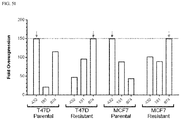
- FIG. 9 is a series of bar charts showing copy number variation analysis in parental and palbociclib resistant T47D cells. Copy number variation was analyzed using nanoString nCounter v2 Cancer CNV Assay. Copy number estimations are expressed as resistant cell/parental cell. Copy number gains were taken as a ratio of >2.5, copy number loss was taken as a ration of ⁇ 1.5, as per manufactures instructions. Dark grey bars are highlighted as they have been previously implicated in CDK4/6 inhibitor resistance.
- FIG. 10A - FIG. 10B is a series of line graphs showing that palbociclib resistant cells are significantly more resistant to ribociclib, and moderately more resistant to abemaciclib.
- FIG. 10A (T47D cells) and FIG. 10B (MCF7 cells) were treated with either DMSO, palbociclib, ribociclib or abemaciclib for 5 days. Subsequently, cell growth was quantified and normalized to DMSO treated control. Cells were either parental, palbociclib resistant (100 nM), CDK6 overexpressing, miR-432-5p overexpressing, ex-resistant or CDK6 knockdown. Data are mean ⁇ SEM (n>3), * p ⁇ 0.05, ** p ⁇ 0.01, *** p ⁇ 0.001, **** p ⁇ 0.0001.
- FIG. 11A - FIG. 11B is a series of bar graphs showing that inhibition of exosome production reduces efficacy of resistance transmission from resistance to parental cells.
- FIG. 11A is a bar graph, wherein cells were treated with either DMSO, 10 ⁇ M GW4869 or 10 ⁇ M manumycin A for 72 hours prior to exosome harvest and quantification.
- FIG. 11B is a bar graph, wherein palbociclib resistant GFP ⁇ cells were cocultured with GFP parental cells in the presence of either DMSO, GW4869, manymycin A or miR-432-5p inhibitor for 72 hours. Subsequently, cells were harvested and analyzed by flow cytometry for GFP expression and cell cycle profile.
- FIG. 12A - FIG. 12D is a series of graphs showing that combined galunisertib and palbociclib is antagonistic.
- FIG. 12A T47D parental cells
- FIG. 12B T47D resistant cells
- FIG. 12C is a graph, wherein T47D parental and resistant cells were treated with escalating dose of galunisertib for 5 days. Subsequently, cell growth was quantified and normalized to DMSO treated control.
- FIG. 12D is a bar graph showing cell cycle analysis of T47D cells treated with galunisertib and/or palbociclib for 24 hours.
- FIG. 13 is a graph showing that gene expression in ex-resistant cells is more closely related to resistant than parental cells. Shown is hierarchal clustering performed using 100 of the most significantly changed genes across parental, resistant and ex-resistant T47D cells, determined by gene expression analysis.
- the invention is based, at least in part, upon the identification of increased CDK6 expression as a key determinant of acquired resistance after exposure to palbociclib in estrogen receptor (ER)-positive breast cancer cells, reversible after removal of drug for prolonged periods.
- Increased CDK6 in resistant cells is dependent on TGF- ⁇ pathway suppression via miR-432-5p expression.
- Exosomal miR-432-5p expression mediates transfer of the resistance phenotype between neighboring cell populations, causing previously sensitive cells to acquire CDK4/6 inhibitor resistance.
- both palbociclib and ribociclib have demonstrated increased progression-free survival in combination with hormonal therapy, leading to approvals of both palbociclib and ribociclib in this disease.
- the success of these agents now highlights the critical importance of understanding mechanisms of acquired resistance in order to ultimately develop follow-up treatment strategies.
- Described herein is a mechanism of exosomal-mediated drug resistance. As described in detail below, an acquired drug resistance phenotype is transmitted from one population of cells to another via exosomal-miRNA signaling. Prior to the invention described herein, there were no examples demonstrating the transfer of an acquired resistance phenotype via this mechanism.
- the results presented herein demonstrate a mechanism of acquired kinase inhibitor resistance that is independent of inherent genetic mutations, does not involve clonal selection, is reversible in vivo, and can be conferred through exosomal-miRNA signaling.
- This miRNA-mediated mechanism resulted in the transfer of resistance to CDK4/6 inhibition among estrogen receptor-positive breast cancer cell populations and was reversible after drug withdrawal.
- the findings presented herein were confirmed in paired patient biopsies obtained pre- and post CDK4/6 inhibitor treatment, and ultimately impact clinical management of disease. Specifically, the findings presented herein have implications for the assessment of paired treatment tumor or liquid biopsies in efforts to understand CDK4/6 inhibitor resistance.
- CDK4/6 inhibitor resistance is mediated by increased CDK6 expression; CDK6 resistance is reversible by prolonged drug removal; CDK6 resistance is conferred between cell populations via extracellular signaling; increased exosomal miR-432-5p suppresses the TGF- ⁇ pathway, thereby increasing CDK6 levels; and resistance is reversible by prolonged drug removal in vivo.
- CDK4/6 inhibitor resistant cell lines Through the generation of CDK4/6 inhibitor resistant cell lines, a resistance mechanism by which increased expression and exosomal excretion of miR-432-5p caused TGF ⁇ pathway repression was characterized, and an increase in CDK6 expression driving cell cycle progression.
- analysis of pre-treatment and post-progression biopsies from a patient with parotid cancer harboring CDKN2A/B loss, who had achieved a partial response to the CDK4/6 inhibitor ribociclib demonstrates that the CDK4/6 inhibitor resistance mechanism is clinically relevant.
- This analysis confirmed overexpression of miR-432, decreased TGF ⁇ signaling (via decreased SMAD4), and increased CDK6 in the post-progression biopsy, demonstrating the clinical relevance of this acquired resistance mechanism.
- Breast cancer develops from cells within the inner lining of milk ducts and cells from breast lobules. Signs of breast cancer include a lump in the breast, a change in breast shape, or dimpling of the skin. Outcomes for breast cancer depend on a variety of factors including cancer type, extent of disease, and a person's age. Worldwide, breast cancer is the primary type of cancer in women, accounting for 25% of all cases.
- estrogen receptor ER
- PR progesterone receptor
- HER2 human epidermal receptor protein-2
- SERMs selective estrogen receptor modulators
- tamoxifen is a first-line hormonal treatment of ER-positive metastatic breast cancer.
- HER2 determination is important in the treatment of patients diagnosed with invasive breast carcinoma. Untreated, HER2+ breast cancers are more aggressive than HER2 ⁇ breast cancers.
- HER2+ cancer cells respond to drugs such as the monoclonal antibody trastuzumab (in combination with conventional chemotherapy). Cells that do not have any estrogen receptors, progesterone receptors, or HER2 are termed triple-negative. Triple-negative cells frequently express receptors for other hormones, such as androgen receptor and prolactin receptor.
- CDKs are a driving force in cancer.
- the CDK4/6-cyclin D-RB pathway is estimated to be modified in ⁇ 80% of all cancers.
- CCND1 amplification has also been observed in a variety of cancers, including breast cancer. Up-regulation of cyclin D causes increased cyclin D-CDK4/6 activity promoting cell cycle progression.
- Cyclin D-dependent kinase activity is a driving factor for ER+ breast carcinogenesis, irrespective of CCND1 amplification, making CDK4/6 inhibition a promising approach to restore cell cycle regulation and for this breast cancer subset.
- resistance was a major issue limiting the efficacy of this approach. Accordingly, understanding mechanisms or resistance to CDK4/6 inhibition is a pressing clinical issue.
- palbociclib (PD-0332991)
- ER+ estrogen receptor positive
- HER2 human epidermal growth factor receptor 2
- the molecular formula for palbociclib is C 24 H 29 N 7 O 2 and the chemical structure for palbociclib is represented below.
- Palbociclib targets and half maximal inhibitory concentration (IC50) values for those targets are CDK4 (11 nM), CDK6 (15 nM), CDK2/CyclinE2 (>10 ⁇ M), CDK2/CyclinA (>10 ⁇ M), CDK1/CyclinB (>10 ⁇ M), CDK5/p25 (>10 ⁇ M), respectively.
- IC50 half maximal inhibitory concentration
- methods of gene expression profiling can be divided into two large groups: methods based on hybridization analysis of polynucleotides, and methods based on sequencing of polynucleotides.
- Methods known in the art for the quantification of messenger RNA (mRNA) expression in a sample include northern blotting and in situ hybridization, Ribonuclease (RNAse) protection assays, RNA Sequencing (RNA-seq), and reverse transcription polymerase chain reaction (RT-PCR).
- RNAse Ribonuclease
- RNA-seq RNA Sequencing
- RT-PCR reverse transcription polymerase chain reaction
- antibodies are employed that recognize specific duplexes, including DNA duplexes, RNA duplexes, and DNA-RNA hybrid duplexes or DNA-protein duplexes.
- RNA sequencing-based gene expression analysis includes Serial Analysis of Gene Expression (SAGE), and gene expression analysis by massively parallel signature sequencing (MPSS).
- SAGE Serial Analysis of Gene Expression
- MPSS massively parallel signature sequencing
- RT-PCR is used to compare mRNA levels in different sample populations, in normal and tumor tissues, with or without drug treatment, to characterize patterns of gene expression, to discriminate between closely related mRNAs, and/or to analyze RNA structure.
- a first step in gene expression profiling by RT-PCR is the reverse transcription of the RNA template into complementary DNA (cDNA), followed by amplification in a PCR reaction.
- cDNA complementary DNA
- extracted RNA is reverse-transcribed using a GeneAmp RNA PCR kit (Perkin Elmer, Calif., USA), following the manufacturer's instructions.
- the cDNA is then used as template in a subsequent PCR amplification and quantitative analysis using, for example, a TaqMan® (Life Technologies, Inc., Grand Island, N.Y.) assay.
- Differential gene expression can also be identified, or confirmed using a microarray technique.
- polynucleotide sequences of interest including cDNAs and oligonucleotides
- the arrayed sequences are then hybridized with specific DNA probes from cells or tissues of interest.
- the source of mRNA typically is total RNA isolated from human tumors or tumor cell lines and corresponding normal tissues or cell lines. Thus, RNA is isolated from a variety of primary tumors or tumor cell lines. If the source of mRNA is a primary tumor, mRNA is extracted from frozen or archived tissue samples.
- PCR-amplified inserts of cDNA clones are applied to a substrate in a dense array.
- the microarrayed genes, immobilized on the microchip, are suitable for hybridization under stringent conditions.
- fluorescently labeled cDNA probes are generated through incorporation of fluorescent nucleotides by reverse transcription of RNA extracted from tissues of interest. Labeled cDNA probes applied to the chip hybridize with specificity to loci of DNA on the array. After washing to remove non-specifically bound probes, the chip is scanned by confocal laser microscopy or by another detection method, such as a charge-coupled device (CCD) camera. Quantification of hybridization of each arrayed element allows for assessment of corresponding mRNA abundance.
- CCD charge-coupled device
- dual color fluorescence is used. With dual color fluorescence, separately labeled cDNA probes generated from two sources of RNA are hybridized pairwise to the array. The relative abundance of the transcripts from the two sources corresponding to each specified gene is thus determined simultaneously.
- the miniaturized scale of the hybridization can afford a convenient and rapid evaluation of the expression pattern for large numbers of genes.
- such methods can have sensitivity required to detect rare transcripts, which are expressed at fewer than 1000, fewer than 100, or fewer than 10 copies per cell.
- such methods can detect at least approximately two-fold differences in expression levels (Schena et al., Proc. Natl. Acad. Sci. USA 93(2): 106-149 (1996)).
- microarray analysis is performed by commercially available equipment, following manufacturer's protocols, such as by using the Affymetrix GenChip technology, or Incyte's microarray technology.
- RNA sequencing also called whole transcriptome shotgun sequencing (WTSS)
- WTSS whole transcriptome shotgun sequencing
- NGS next-generation sequencing
- RNA-Seq is used to analyze the continually changing cellular transcriptome. See, e.g., Wang et al., Nat. Rev. Genet. 10(1): 57-63 (2009), incorporated herein by reference. Specifically, RNA-Seq facilitates the ability to look at alternative gene spliced transcripts, post-transcriptional modifications, gene fusion, mutations/SNPs and changes in gene expression. In addition to mRNA transcripts, RNA-Seq can look at different populations of RNA to include total RNA, small RNA, such as miRNA, tRNA, and ribosomal profiling. RNA-Seq can also be used to determine exon/intron boundaries and verify or amend previously annotated 5′ and 3′ gene boundaries.
- RNA-Seq Prior to RNA-Seq, gene expression experiments were done with hybridization-based microarrays. Issues with microarrays include cross-hybridization artifacts, poor quantification of lowly and highly expressed genes, and needing to know the sequence of interest. Because of these technical issues, transcriptomics transitioned to sequencing-based methods. These progressed from Sanger sequencing of Expressed Sequence Tag libraries, to chemical tag-based methods (e.g., serial analysis of gene expression), and finally to the current technology, NGS of cDNA (notably RNA-Seq).
- cyclin D-dependent kinase activity is a driving factor for carcinogenesis in more than 80% of hormone receptor-positive breast cancers (Massague, 2004). Additionally, CCND1 amplification or overexpression portends poor survival, making inhibition of the cell cycle kinases CDK4 and CDK6 a promising approach for this breast cancer subset (Arnold, A., et al., J Clin. Oncol. 23: 4215-4224 (2005); Elsheikh, S. et al., Breast Cancer Res. Treat. 109: 325-335 (2008); Perou, C. M. et al., Nature 406: 747-752 (2000); Roy, P. G. et al., Int. J.
- CDK4/6 inhibitor abemaciclib
- abemaciclib has been approved as monotherapy for patients with advanced ER+ breast cancer who have progressed on prior endocrine therapy and chemotherapy
- CDK4/6 inhibition may also have activity in HER2-driven breast cancer, as well as in triple-negative breast cancers that retain expression of the retinoblastoma (RB) protein
- RB retinoblastoma
- CDK4/6 inhibitor-based treatment was complicated by the development of acquired resistance.
- reduced p27Kip1 expression and elevated CDK2 activity can overcome palbociclib-mediated G1 arrest (Wang, L. et al., Blood 110: 2075-2083 (2007)).
- RB loss, amplification of CCNE1 Herrera-Abreu, M. T. et al., Cancer Res 76: 2301-2313 (2016)
- CDK6 Yang, C.
- RNA microRNA
- CDK4/6 Inhibition of CDK4/6 is utilized as treatment for ER+ breast cancer. Described herein are mechanisms of intrinsic and acquired resistance. Here, through the generation of cell lines with acquired palbociclib resistance, CDK6 is highlighted as a key protein mediating cell cycle progression in the presence of the inhibitor.
- CDK6 not only governs resistance, but also the initial response to CDK4/6 inhibition.
- shRNA-mediated depletion of the small amount of CDK6 in parental cells converted the response to palbociclib from cytostatic to cytotoxic.
- CDK6 kinase activity was required for cell survival in the presence of CDK4/6 inhibition.
- palbociclib having almost equal potency against CDK4 and CDK6, with IC 50 's of 11 nM and 16 nM, respectively (Fry, D. W. et al., Mol. Cancer. Ther. 3: 1427-1438 (2004)), there was no effect on survival after treatment when CDK4 was depleted from parental cells.
- CDK6 activity in parental cells is required for survival in response to palbociclib, and when enhanced in expression, caused resistance to cell cycle arrest and reduced growth inhibition.
- the resistance phenotype required the presence of an active kinase domain. Described herein is an evaluation of whether CDK6 activity in ER-positive breast cancer cells is a general “survival factor” protecting from other stressors, such as disruption of the hormonal axis or DNA damage.
- miR-432-5p one of the significantly upregulated miRNAs in resistant cells
- miR-432-5p expression was assessed for the following clinically.
- 44 biopsy samples from metastatic breast cancer patients treated with CDK4/6 inhibitors were utilized.
- a higher level of miR-432-5p expression was identified in tumor biopsies from patients with intrinsic or acquired CDK4/6 inhibitor resistance, compared to those from patients with sensitive disease.
- differences in miR-432-5p expression between the resistant and sensitive populations only trended toward significance, the small sample size and variable timing of post-progression biopsies could have affected results from patients with acquired resistance.
- paired pre- and post-progression biopsies would rigorously show increased miRNA expression as a determinant of acquired resistance.
- TGF- ⁇ pathway was a significantly enriched target.
- Many mRNAs of the TGF- ⁇ pathway were significantly enriched.
- these data were correlated with gene expression data.
- miRNAs lead to increased degradation of mRNA (Valencia-Sanchez, M. A. et al., Genes Dev. 20: 515-524 (2006))
- genes that were both significantly enriched by miRNA pulldown, and downregulated in resistant cells were assessed, which lead to SMAD4 and TGFBR3.
- TGFBR3 was only decreased in T47D cells, and not in MCF7 cells or the post-progression biopsy.
- TGF- ⁇ pathway inhibition would be antagonistic with CDK4/6 inhibition in T47D and MCF7 cells. This was confirmed in combinatorial experiments in T47D cells using a TGF- ⁇ R1 inhibitor with palbociclib.
- palbociclib can induce TGF- ⁇ pathway-mediated epithelial-mesenchymal transition (EMT) that is prevented by TGF- ⁇ R1 inhibition, so that combined CDK4/6 and TGF- ⁇ R1 inhibition may be beneficial (Liu, F. et al., Mol. Cancer Ther. 11: 2138-2148 (2012)).
- EMT epithelial-mesenchymal transition
- evidence of palbociclib-induced EMT in the breast cancer cell lines was not observed. Taken together, these results demonstrate the complexity of the TGF- ⁇ pathway and its interface with CDK4/6 inhibition, which may be context dependent.
- CDK4/6 inhibitors are driven by increased expression of CDK6.
- CDK6 resistance can be reversed, prolonged removal of drug causes CDK6 levels to decline, and cells become re-sensitized to palbociclib mediated G1 arrest.
- CDK6 resistance is not mediated via permanent genetic event.
- CDK4/6 inhibitor resistance is mediated via extracellular signaling, specifically exosomes.
- Overexpression of miR-432-5p infers CDK4/6 inhibitor-resistance phenotype and exosomal miR-432-5p confers resistance to neighboring cells.
- miR-432-5p targets SMAD4, causing decreased TGF- ⁇ signaling, and increased CDK6 protein.
- miR-432-5p is highly expressed in a post-progression biopsy from a patient treated with CDK4/6 inhibition.
- the data presented here demonstrate a clinically relevant mechanism of CDK4/6 inhibitor resistance whereby increased exosomal expression of miR-432-5p causes a downregulation of TGF- ⁇ pathway signaling, via SMAD4 knockdown, which in turn results in an increase in CDK6 expression allowing cells to overcome G1 arrest. While multiple studies have focused on the regulatory properties of exosomal miRNA, the data presented here represent the first mechanism of acquired drug resistance that is wholly dependent on excreted miRNA, and that can be reversed by miRNA-inhibition.
- RECIST is a set of published rules that define when tumors in cancer patients improve (“respond”), stay the same (“stabilize”), or worsen (“progress”) during treatment (Eisenhauer et al., European Journal of Cancer 45: 228-247 (2009), incorporated herein by reference). Only patients with measureable disease at baseline should be included in protocols where objective tumor response is the primary endpoint.
- the response criteria for evaluation of target lesions are as follows:
- the response criteria for evaluation of best overall response are as follows.
- the best overall response is the best response recorded from the start of the treatment until disease progression/recurrence (taking as reference for PD the smallest measurements recorded since the treatment started).
- the patient's best response assignment will depend on the achievement of both measurement and confirmation criteria.
- compositions or agents described herein may be administered systemically, for example, formulated in a pharmaceutically-acceptable buffer such as physiological saline.
- a pharmaceutically-acceptable buffer such as physiological saline.
- routes of administration include, for example, subcutaneous, intravenous, interperitoneally, intramuscular, or intradermal injections that provide continuous, sustained levels of the drug in the patient.
- Treatment of human patients or other animals will be carried out using a therapeutically effective amount of a therapeutic identified herein in a physiologically-acceptable carrier. Suitable carriers and their formulation are described, for example, in Remington's Pharmaceutical Sciences by E. W. Martin.
- the amount of the therapeutic agent to be administered varies depending upon the manner of administration, the age and body weight of the patient, and with the clinical symptoms of the neoplasia, i.e., the melanoma. Generally, amounts will be in the range of those used for other agents used in the treatment of other diseases associated with neoplasia, although in certain instances lower amounts will be needed because of the increased specificity of the compound.
- a therapeutic compound is administered at a dosage that is cytotoxic to a neoplastic cell.
- the administration of a compound or a combination of compounds for the treatment of a neoplasia may be by any suitable means that results in a concentration of the therapeutic that, combined with other components, is effective in ameliorating, reducing, or stabilizing a neoplasia.
- the compound may be contained in any appropriate amount in any suitable carrier substance, and is generally present in an amount of 1-95% by weight of the total weight of the composition.
- the composition may be provided in a dosage form that is suitable for parenteral (e.g., subcutaneously, intravenously, intramuscularly, or intraperitoneally) administration route.
- the pharmaceutical compositions may be formulated according to conventional pharmaceutical practice (see, e.g., Remington: The Science and Practice of Pharmacy (20th ed.), ed. A. R. Gennaro, Lippincott Williams & Wilkins, 2000 and Encyclopedia of Pharmaceutical Technology, eds. J. Swarbrick and J. C. Boylan, 1988-1999, Marcel Dekker, New York).
- Human dosage amounts can initially be determined by extrapolating from the amount of compound used in mice, as a skilled artisan recognizes it is routine in the art to modify the dosage for humans compared to animal models.
- the dosage may vary from between about 1 ⁇ g compound/Kg body weight to about 5000 mg compound/Kg body weight; or from about 5 mg/Kg body weight to about 4000 mg/Kg body weight or from about 10 mg/Kg body weight to about 3000 mg/Kg body weight; or from about 50 mg/Kg body weight to about 2000 mg/Kg body weight; or from about 100 mg/Kg body weight to about 1000 mg/Kg body weight; or from about 150 mg/Kg body weight to about 500 mg/Kg body weight.
- this dose may be about 1, 5, 10, 25, 50, 75, 100, 150, 200, 250, 300, 350, 400, 450, 500, 550, 600, 650, 700, 750, 800, 850, 900, 950, 1000, 1050, 1100, 1150, 1200, 1250, 1300, 1350, 1400, 1450, 1500, 1600, 1700, 1800, 1900, 2000, 2500, 3000, 3500, 4000, 4500, or 5000 mg/Kg body weight.
- doses may be in the range of about 5 mg compound/Kg body to about 20 mg compound/Kg body.
- the doses may be about 8, 10, 12, 14, 16 or 18 mg/Kg body weight.
- this dosage amount may be adjusted upward or downward, as is routinely done in such treatment protocols, depending on the results of the initial clinical trials and the needs of a particular patient.
- compositions according to the invention may be formulated to release the active compound substantially immediately upon administration or at any predetermined time or time period after administration.
- controlled release formulations which include (i) formulations that create a substantially constant concentration of the drug within the body over an extended period of time; (ii) formulations that after a predetermined lag time create a substantially constant concentration of the drug within the body over an extended period of time; (iii) formulations that sustain action during a predetermined time period by maintaining a relatively, constant, effective level in the body with concomitant minimization of undesirable side effects associated with fluctuations in the plasma level of the active substance (sawtooth kinetic pattern); (iv) formulations that localize action by, e.g., spatial placement of a controlled release composition adjacent to or in contact with the thymus; (v) formulations that allow for convenient dosing, such that doses are administered, for example, once every one or two weeks; and (vi) formulations that target a neoplasia by using
- controlled release is obtained by appropriate selection of various formulation parameters and ingredients, including, e.g., various types of controlled release compositions and coatings.
- the therapeutic is formulated with appropriate excipients into a pharmaceutical composition that, upon administration, releases the therapeutic in a controlled manner. Examples include single or multiple unit tablet or capsule compositions, oil solutions, suspensions, emulsions, microcapsules, microspheres, molecular complexes, nanoparticles, patches, and liposomes.
- the pharmaceutical composition may be administered parenterally by injection, infusion or implantation (subcutaneous, intravenous, intramuscular, intraperitoneal, or the like) in dosage forms, formulations, or via suitable delivery devices or implants containing conventional, non-toxic pharmaceutically acceptable carriers and adjuvants.
- injection, infusion or implantation subcutaneous, intravenous, intramuscular, intraperitoneal, or the like
- suitable delivery devices or implants containing conventional, non-toxic pharmaceutically acceptable carriers and adjuvants.
- compositions for parenteral use may be provided in unit dosage forms (e.g., in single-dose ampoules), or in vials containing several doses and in which a suitable preservative may be added (see below).
- the composition may be in the form of a solution, a suspension, an emulsion, an infusion device, or a delivery device for implantation, or it may be presented as a dry powder to be reconstituted with water or another suitable vehicle before use.
- the composition may include suitable parenterally acceptable carriers and/or excipients.
- the active therapeutic agent(s) may be incorporated into microspheres, microcapsules, nanoparticles, liposomes, or the like for controlled release.
- the composition may include suspending, solubilizing, stabilizing, pH-adjusting agents, tonicity adjusting agents, and/or dispersing, agents.
- the pharmaceutical compositions according to the invention may be in the form suitable for sterile injection.
- the suitable active antineoplastic therapeutic(s) are dissolved or suspended in a parenterally acceptable liquid vehicle.
- acceptable vehicles and solvents that may be employed are water, water adjusted to a suitable pH by addition of an appropriate amount of hydrochloric acid, sodium hydroxide or a suitable buffer, 1,3-butanediol, Ringer's solution, and isotonic sodium chloride solution and dextrose solution.
- the aqueous formulation may also contain one or more preservatives (e.g., methyl, ethyl or n-propyl p-hydroxybenzoate).
- a dissolution enhancing or solubilizing agent can be added, or the solvent may include 10-60% w/w of propylene glycol.
- kits or pharmaceutical systems for use in ameliorating a neoplasia.
- Kits or pharmaceutical systems according to this aspect of the invention comprise a carrier means, such as a box, carton, tube or the like, having in close confinement therein one or more container means, such as vials, tubes, ampoules, or bottles.
- the kits or pharmaceutical systems of the invention may also comprise associated instructions for using the agents of the invention.
- CDK4/6 inhibition is now part of the standard armamentarium for patients with estrogen receptor (ER)-positive breast cancer, so that defining mechanisms of resistance is a pressing issue.
- ER estrogen receptor
- CDK6 expression was identified as a key determinant of acquired resistance after exposure to palbociclib in ER-positive breast cancer cells, reversible after removal of drug for prolonged periods.
- Increased CDK6 in resistant cells was dependent on TGF- ⁇ pathway suppression via miR-432-5p expression.
- exosomal miR-432-5p expression mediated transfer of the resistance phenotype between neighboring cell populations, causing previously sensitive cells to acquire CDK4/6 inhibitor resistance.
- T47D and MCF7 cells were maintained as monolayers in Dulbecco's modified Eagles medium supplemented with 10% fetal bovine serum, 2 mM L-glutamine, 2 mM penicillium:streptomycin solution and 0.2 Units/ml bovine insulin.
- Cells were maintained at 37° C., 5% CO 2 , in a humidified incubator. Cells were free of Mycoplasma contamination (MycoAlert Assay, Lonza).
- Palbociclib was provided by Pfizer, Inc.
- Cells (1 ⁇ 10 5 ) were seeded in 6-well plates and incubated for 24 hours and exposed to DMSO or palbociclib for 24 hours and then re-seeded in 90 cm dishes in drug-free medium. Cells were incubated for 14 to 21 days to allow colony formation. Colonies were fixed and permeabilised using Carnoy's fixative (75% methanol, 25% Acetic acid) and stained with 1% crystal violet and counted.
- R31C Human, M. G. et al., Blood 117: 6120-6131 (2011)
- R31C Human, M. G. et al., Blood 117: 6120-6131 (2011)
- ⁇ 500 bp of DNA encompassing each miRNA sequence was PCR purified and cloned into the pLEX-307 backbone, miRNA mimics were purchased and transfected into cells as a positive control for miRNA detection. Protein expression/miRNA expression/knockdown was confirmed after 5 days of selection in puromycin (1 ⁇ g/ml for both T47D and MCF7).
- CDK6 by CRIPSR/Cas9 was performed as previously described (Sanjana, N. E. et al., Nat. Meth 11: 783-784 (2014)).
- the following sgRNA sequence was cloned into the LentiCRIPSR v2 vector—sgCDK6-7 (targeting the 5′UTR): CCGCTCCACCCGCTCATCGT (SEQ ID NO: 2).
- Cells were selected using 1 ⁇ g/ml puromycin and protein knockout confirmed after ⁇ 12 days.
- Exosomes were purified from tissue culture medium using Total Exosome Isolation Reagent as per manufacturer's instructions (Thermo Fisher Scientific). Exosomes were quantified using EXOCET quantification assay as per manufacturer's instructions (StemBio).
- Tumor biopsy specimens were obtained from 44 receiving care for metastatic hormone-receptor positive (HR+) HER2 negative breast cancer at the Dana-Farber Cancer Institute as part of voluntary research protocol 05-246. Informed consent was obtained in accordance with institutional review board (IRB) approval and the Declaration of Helsinki. Extra tissue was donated when available for miRNA extraction and quantification. All patients received CDK4/6 inhibitors in the metastatic setting. Clinical records were reviewed to determine the duration on therapy, radiographic response, and reason for discontinuation.
- HR+ metastatic hormone-receptor positive
- HER2 negative breast cancer at the Dana-Farber Cancer Institute as part of voluntary research protocol 05-246. Informed consent was obtained in accordance with institutional review board (IRB) approval and the Declaration of Helsinki. Extra tissue was donated when available for miRNA extraction and quantification. All patients received CDK4/6 inhibitors in the metastatic setting. Clinical records were reviewed to determine the duration on therapy, radiographic response, and reason for discontinuation.
- biopsy samples were phenotypically described as follows: sensitive—any biopsy obtained within 32 days of starting therapy or any time prior to therapy initiation in patients who had a response (via radiographic assessment on any intervening staging CT study) or achieved stable disease for at least six months; acquired resistant—any biopsy obtained within 32 days of drug discontinuation or anytime thereafter in a patient who achieved a response via radiographic imaging or stability for at least six months; and intrinsic resistant—any biopsy obtained within 120 days of initiating therapy or anytime thereafter in a patient who had progression on their first interval re-staging study or achieved less than six months of stable disease. More information on this cohort (Wander et al., 2018; ASCO, abstract; Mao et al., 2017; SABCS, abstract, each of which is incorporated herein by reference).
- miRNA:mRNA pulldown and subsequent RNA seq was performed as previously described (Wani, S. et al., bioRxiv doi: http://dx.doi.org/10.1101/005439 (2014)). Briefly, biotin labelled miR-432-5p (Exiqon) was transfected into T47D cells and incubated for 24 hours at 37° C. Cell were then lysed, Biotin labelled miRNA:mRNA duplexes were captured using Dynabeads MyOne Streptavidin C1, which were washed and mRNA purified. mRNA was amplified using Illumina Total prep RNA Amplification kit and cRNA hybridized onto an Illumina Human HT-12 array.
- CDK6 expression in both resistant and parental T47D cells was manipulated. Neither overexpression of CDK4 or CDK6, nor depletion of CDK6 significantly influenced the cell cycle profile of parental T47D cells ( FIG. 2A ). Substantial overexpression of CDK4 ( ⁇ CDK4) and CDK6 ( ⁇ CDK6) was achieved in parental cells and confirmed by western blot ( FIG. 2B ). Additionally, robust knockdown of CDK6 was confirmed in resistant cells lines ( FIG. 2C ). Of note, depletion of CDK6 in resistant cells lines reduced CDK6 protein expression to a level approximating that seen in parental cells ( FIG. 2C ).
- Non-target (NT) shRNA had no effect on the cell cycle of resistant cells (R100-R500).
- shRNA-mediated depletion of CDK6 had no effect on the cell cycle in parental cells ( FIG. 2A ), but re-sensitized all resistant cells (which were maintained in palbociclib), evident by the significant increase in G1 population in these cells ( FIG. 2D ).
- CDK6 overexpression in parental T47D or MCG-7 cells significantly increased the GI 50 s of not only palbociclib, but also of ribociclib and abemaciclib in growth inhibition assays ( FIG. 10A and FIG. 10B ).
- CRISPR/cas9 mediated knockout was used with an sgRNA targeting the 5′UTR, and then overexpressed wild-type CDK6 or one of several mutant kinases ( FIG. 3D ).
- CDK6 knockdown alone had no effect on the cell cycle profile; however, CDK6-depleted cells treated with palbociclib had significantly more sub-G1 DNA content than control cells ( FIG. 3E ), likely due to a marked increase in apoptosis in both CDK6 knockdown and knockout cells. In contrast, palbociclib had no effect on the apoptotic fraction of shNT-expressing cells ( FIG. 3F ).
- exosome miRNAs are differentially expressed in resistant cells.
- CDK 6 resistance is mediated by extracellular signaling via miRNA regulated CDK 6 inhibitor resistance.
- overexpression of miR-432-5p confers aCDK4/6 inhibitor resistant phenotype.
- exosomal miR-432-5p mediates CDK4/6 inhibitor resistance.
- increased CDK6 and resistance is conferred by co-culture, and media or exosome transfer.
- exosomal miR-432-5p mediates CDK4/6 inhibitor resistance.
- miR-1973, 4695-3p and 186-5p was unsuccessful, so a decision to overexpress miR-181a-5p was made, as it was the most significantly increased miRNA in resistant cells ( FIG. 5B ), as well as mir-432-5p and miR-874-3p.
- miR-432-5p-overexpressing T47D and MCF7 cells both had markedly increased CDK6 protein expression.
- the overexpression of miR-874-3p produced inconsistent results, with a marked decrease in CDK6 protein in resistant T47D and parental MCF7 cells, and with no effect in resistant MCF7 cells ( FIG. 5D ).
- miR-432-5p was primarily focused upon.
- Parental cells overexpressing miR-432 behaved much like resistant cells, i.e. they did not arrest to 100 nM palbociclib ( FIG. 5E ) had a significantly increased palbociclib and ribociclib GI 50 ( FIG. 10A and FIG. 10B ) and could confer resistance in parental cells by co-culture ( FIG. 5F ).
- FIG. 5G and FIG. 5H shows inhibition of miR-432-5p resistant cells to CDK4/6 inhibition by reducing CDK6.
- Example 7 miR-432-5p is Highly Expressed in a Post-Progression Biopsy from a Patient Treated with CDK4/6 Inhibition
- pre-treatment and post-progression biopsies were analyzed from a patient with parotid cancer harboring CDKN2A/B loss who had achieved a partial response to the CDK4/6 inhibitor ribociclib (Infante, J. R. et al., Clin. Cancer Res 22: 5696-5705 (2016)).
- the post-progression biopsy had a significant increase in several of the previously investigated miRNAs. Most notably, miR-432-5p expression was significantly higher (p ⁇ 0.0001) with an 88-fold increase relative to the pre-treatment biopsy ( FIG. 6A ). This indicates miR-432-5p expression is significantly increased in post-treatment biopsy from a patient treated with CDK4/6 inhibition.
- miR-432-5p expression is higher in biopsies from ER+ breast cancer patients with intrinsic or acquired resistance compared to those from patients with sensitive disease.
- miRNAseq was utilized to analyze 44 tumor biopsies from patients who received CDK4/6 inhibitor treatment either with hormonal therapy or as monotherapy for metastatic ER+, HER2-negative breast cancer. Biopsies obtained prior to treatment were phenotypically stratified based on response to CDK4/6 inhibitor treatment as either sensitive or intrinsically resistant, while those obtained post-progression were defined as having acquired resistance (Wander, et al., 2018 ASCO abstract).
- miRNA:mRNA pulldown was performed. Pathway analysis of the pull-down mRNAs revealed numerous genes of the TGF- ⁇ pathway to be significantly enriched. Comparison between miRNA:mRNA pulldown and gene expression analysis revealed two genes, TGFBR3 and SMAD4, which were both enriched by pulldown and downregulated in resistant T47D cells ( FIG. 6D ). Using target prediction algorithms, miR-432-5p was significantly predicted to bind the 3′UTR of both TGFBR3 and SMAD4 ( FIG. 6C ).
- SMAD4 was overexpressed in resistant cells; this resulted in decreased CDK6 expression ( FIG. 6G ), and importantly, restored susceptibility to CDK4/6 inhibitor-mediated cell cycle arrest ( FIG. 6H ).
- miR-432-5p targets the TGF- ⁇ pathway via SMAD4 and mediates resistance via downregulation of TGF- ⁇ signaling.
- CDK6 is significantly increased while SMAD4 is decreased in resistant cells and post treatment biopsy.
- CDK6 protein level was reduced to a level comparable to that in parental T47D or MCF7 cells after 7 weeks in drug-free media ( FIG. 7B ).
- Palbociclib-resistant cells that had been cultured in drug-free media for 7 weeks or more were labelled as “ex-resistant.”
- the ex-resistant cells also had a significantly lower palbociclib GI50 compared to resistant cells, which was not significantly different from that of parental cells ( FIG. 10A and FIG. 10B ).
- palbociclib-resistant xenografts were established by implanting resistant MCF7 cells into mice followed by immediate palbociclib treatment. Once resistant tumors were established and growing (day 36), treatment was discontinued for the next 28 days. After this prolonged treatment holiday, treatment was re-introduced and caused a marked decrease in tumor burden in the previously palbociclib-resistant tumors ( FIG. 7E ). Tumor samples were collected on day 36, representative of resistant tumors on the final day of palbociclib treatment, and on day 64, representative of ex-resistant tumors prior to palbociclib reintroduction.
- Example 10 Analysis of Serum Exosomes from CDK4/6 Inhibitor Treated Patients for miR-432-5, a Potential Resistance Biomarker
- CDK4/6 inhibition is now part of the standard armamentarium for patients with estrogen receptor (ER)-positive breast cancer, so that understanding mechanisms of resistance is a pressing clinical issue.
- experiments identified increased CDK6 expression as a key determinant of acquired resistance after exposure to the CDK4/6 inhibitor palbociclib in ER-positive breast cancer cells.
- Overexpression of CDK6 in parental cells allows consistent Rb phosphorylation in the presence of palbociclib and promotes resistance.
- depletion of CDK6 in palbociclib resistant cells caused resensitizsation to palbociclib and mediated growth arrest.
- the experiments presented herein identified that the acquired increase of CDK6 in resistance cells is dependent on the increased expression of a specific miRNA, miR-432-5p. Overexpression of miR-432-5p in parental cells resulted in an increased CDK6 protein expression and palbociclib resistance.
- Exosomal miR-432-5p expression mediated the transfer of the resistance phenotype between neighbouring cell populations, causing previously sensitive cells to acquire CDK4/6 inhibitor resistance.
- Experiments confirmed these data in pre-treatment and post-progression biopsies from a patient with parotid cancer harboring CDKN2A/B loss who had achieved a partial response to the CDK4/6 inhibitor ribociclib, demonstrating that this mechanism of resistance is clinically relevant.
- Detection and analysis of patient serum miRNA is an emerging field with many useful applications.
- abemacyclib-treated patient exosomes are analyzed, preferably those from the MONARCH 1 trial where abemacyclib was used as a single agent and pre- and post-treatment samples are available.
- Analysis of pre-treatment and post-treatment samples allows confirmation of previous findings in a much larger subset of patients and establishes whether exosomal, serum-derived miR-432-5p expression is useful as a biomarker of CDK4/6 inhibitor resistance and response.
- comparative analysis of the pre- and post-CDK4/6 treatment exosomes allows direct determination of any increases in the miR-432-5p concentration in the blood of patients.
- RNA isolation is performed using a method which retains small RNAs. For example, experiments have previously used Total Exosome RNA & Protein Isolation Kit (ThermoFisher).
- microRNAs are detected from RNA (total or exosomal) using poly-A tailing PCR. Briefly, a specific polymerase is used for the reverse transcription reaction which adds numerous (>150) adenine molecules to the 3′ end of RNA transcripts. Using poly-A tailed cDNA, miRs are detected using one miR-sequence specific primer and one universal primer to the poly-A tail. This allows specific miR detection and quantification via classic SYBR green real-time qPCR. Many commercially available kits are available for detection of miRNAs, experiments have found exiqons miRCURY LNATM system to be the most sensitive.
- the concentration of miR-432-5p within the serum exosomes obtained from abemcyclib treated patients is measured with great sensitivity.
- miR-432-5p is a biomarker of emerging CDK4/6 inhibitor resistance.
- a CDK4/6 inhibitor e.g., palbociclib (PD0332991), ribociclib (LEE011), or abemaciclib (LY2835219).
- a CDK4/6 inhibitor e.g., palbociclib (PD0332991), ribociclib (LEE011), or abemaciclib (LY2835219).
- a blood sample is periodically obtained from the patient. For example, a blood sample is obtained every 24 hours, every 48 hours, every 72 hours, every 96 hours, every 5 days, every 6 days, once per week, once per month, every two months, every three months, every six months, or once per year.
- Exosomes are isolated from the blood sample, and the exosomes are analyzed for mIR-432-5p levels.
- the expression level of the miRNA is detected via quantitative real-time reverse transcriptase polymerase chain reaction (real time RT-PCR).
- the expression level of the miRNA is detected via an Affymetrix Gene Array hybridization, next generation sequencing, ribonucleic acid sequencing (RNA-seq), or nanoString nCounter expression panels.
- micro-RNA i.e., miR-432-5p
- miR-432-5p The appearance of the micro-RNA (i.e., miR-432-5p) is a harbinger of the development of CDK4/6 inhibitor resistance in the patient.
- administration of the CDK4/6 inhibitor is stopped.
- a tumor biopsy is performed to assess expression of mIR-432-5p, as well as CDK6, in the tumor cells.
- a second tumor biopsy is performed to document reduction of levels of the micro-RNA and CDK6 in the tumor tissue.
- the CDK4/6 inhibitor is re-introduced (i.e., administration of the CDK4/6 inhibitor is resumed), with the expectation that the patient's tumor may undergo response or stabilization once again.
Landscapes
- Health & Medical Sciences (AREA)
- Chemical & Material Sciences (AREA)
- Life Sciences & Earth Sciences (AREA)
- Engineering & Computer Science (AREA)
- General Health & Medical Sciences (AREA)
- Physics & Mathematics (AREA)
- Proteomics, Peptides & Aminoacids (AREA)
- Organic Chemistry (AREA)
- Public Health (AREA)
- Medical Informatics (AREA)
- Genetics & Genomics (AREA)
- Bioinformatics & Cheminformatics (AREA)
- Analytical Chemistry (AREA)
- Epidemiology (AREA)
- Biophysics (AREA)
- Biotechnology (AREA)
- Zoology (AREA)
- Wood Science & Technology (AREA)
- Pathology (AREA)
- Medicinal Chemistry (AREA)
- Immunology (AREA)
- Molecular Biology (AREA)
- Primary Health Care (AREA)
- Evolutionary Biology (AREA)
- Animal Behavior & Ethology (AREA)
- Biomedical Technology (AREA)
- Veterinary Medicine (AREA)
- Pharmacology & Pharmacy (AREA)
- Bioinformatics & Computational Biology (AREA)
- Theoretical Computer Science (AREA)
- Spectroscopy & Molecular Physics (AREA)
- Microbiology (AREA)
- Biochemistry (AREA)
- General Engineering & Computer Science (AREA)
- Oncology (AREA)
- Hospice & Palliative Care (AREA)
- Data Mining & Analysis (AREA)
- Databases & Information Systems (AREA)
- Measuring Or Testing Involving Enzymes Or Micro-Organisms (AREA)
Abstract
Description
| ucuuggagua ggucauuggg ugg |
| tcttggagta ggtcattggg tgg |
| 1 | tgactcctcc aggtcttgga gtaggtcatt gggtggatcc tctatttcct tacgtgggcc | |
| 61 | actggatggc tcctccatgt cttggagtag atca |
| ggtgggttac tggatgaggt tot |
| 1 | atgctcagtg gcttctcgac aagttggcag caacaacacg gccctggtcg tcgtcgccgc | |
| 61 | tgcggtaacg gagcggtttg ggtggcggag cctgcgttcg cgccttcccg ctctcctcgg | |
| 121 | gaggcccttc ctgctctccc ctaggctccg cggccgccca gggggtggga gcgggtgagg | |
| 181 | ggagccaggc gcccagcgag agaggccccc cgccgcaggg cggcccggga gctcgaggcg | |
| 241 | gtccggcccg cgcgggcagc ggcgcggcgc tgaggagggg cggcctggcc gggacgcctc | |
| 301 | ggggcggggg ccgaggagct ctccgggccg ccggggaaag ctacgggccc ggtgcgtccg | |
| 361 | cggaccagca gcgcgggaga gcggactccc ctcgccaccg cccgagccca ggttatcctg | |
| 421 | aatacatgtc taacaatttt ccttgcaacg ttagctgttg tttttcactg tttccaaagg | |
| 481 | atcaaaattg cttcagaaat tggagacata tttgatttaa aaggaaaaac ttgaacaaat | |
| 541 | ggacaatatg tctattacga atacaccaac aagtaatgat gcctgtctga gcattgtgca | |
| 601 | tagtttgatg tgccatagac aaggtggaga gagtgaaaca tttgcaaaaa gagcaattga | |
| 661 | aagtttggta aagaagctga aggagaaaaa agatgaattg gattctttaa taacagctat | |
| 721 | aactacaaat ggagctcatc ctagtaaatg tgttaccata cagagaacat tggatgggag | |
| 781 | gcttcaggtg gctggtcgga aaggatttcc tcatgtgatc tatgcccgtc tctggaggtg | |
| 841 | gcctgatctt cacaaaaatg aactaaaaca tgttaaatat tgtcagtatg cgtttgactt | |
| 901 | aaaatgtgat agtgtctgtg tgaatccata tcactacgaa cgagttgtat cacctggaat | |
| 961 | tgatctctca ggattaacac tgcagagtaa tgctccatca agtatgatgg tgaaggatga | |
| 1021 | atatgtgcat gactttgagg gacagccatc gttgtccact gaaggacatt caattcaaac | |
| 1081 | catccagcat ccaccaagta atcgtgcatc gacagagaca tacagcaccc cagctctgtt | |
| 1141 | agccccatct gagtctaatg ctaccagcac tgccaacttt cccaacattc ctgtggcttc | |
| 1201 | cacaagtcag cctgccagta tactgggggg cagccatagt gaaggactgt tgcagatagc | |
| 1261 | atcagggcct cagccaggac agcagcagaa tggatttact ggtcagccag ctacttacca | |
| 1321 | tcataacagc actaccacct ggactggaag taggactgca ccatacacac ctaatttgcc | |
| 1381 | tcaccaccaa aacggccatc ttcagcacca cccgcctatg ccgccccatc ccggacatta | |
| 1441 | ctggcctgtt cacaatgagc ttgcattcca gcctcccatt tccaatcatc ctgctcctga | |
| 1501 | gtattggtgt tccattgctt actttgaaat ggatgttcag gtaggagaga catttaaggt | |
| 1561 | tccttcaagc tgccctattg ttactgttga tggatacgtg gacccttctg gaggagatcg | |
| 1621 | cttttgtttg ggtcaactct ccaatgtcca caggacagaa gccattgaga gagcaaggtt | |
| 1681 | gcacataggc aaaggtgtgc agttggaatg taaaggtgaa ggtgatgttt gggtcaggtg | |
| 1741 | ccttagtgac cacgcggtct ttgtacagag ttactactta gacagagaag ctgggcgtgc | |
| 1801 | acctggagat gctgttcata agatctaccc aagtgcatat ataaaggtct ttgatttgcg | |
| 1861 | tcagtgtcat cgacagatgc agcagcaggc ggctactgca caagctgcag cagctgccca | |
| 1921 | ggcagcagcc gtggcaggaa acatccctgg cccaggatca gtaggtggaa tagctccagc | |
| 1981 | tatcagtctg tcagctgctg ctggaattgg tgttgatgac cttcgtcgct tatgcatact | |
| 2041 | caggatgagt tttgtgaaag gctggggacc ggattaccca agacagagca tcaaagaaac | |
| 2101 | accttgctgg attgaaattc acttacaccg ggccctccag ctcctagacg aagtacttca | |
| 2161 | taccatgccg attgcagacc cacaaccttt agactgaggt cttttaccgt tggggccctt | |
| 2221 | aaccttatca ggatggtgga ctacaaaata caatcctgtt tataatctga agatatattt | |
| 2281 | cacttttgtt ctgctttatc ttttcataaa gggttgaaaa tgtgtttgct gccttgctcc | |
| 2341 | tagcagacag aaactggatt aaaacaattt tttttttcct cttcagaact tgtcaggcat | |
| 2401 | ggctcagagc ttgaagatta ggagaaacac attcttatta attcttcacc tgttatgtat | |
| 2461 | gaaggaatca ttccagtgct agaaaattta gccctttaaa acgtcttaga gccttttatc | |
| 2521 | tgcagaacat cgatatgtat atcattctac agaataatcc agtattgctg attttaaagg | |
| 2581 | cagagaagtt ctcaaagtta attcacctat gttattttgt gtacaagttg ttattgttga | |
| 2641 | acatacttca aaaataatgt gccatgtggg tgagttaatt ttaccaagag taactttact | |
| 2701 | ctgtgtttaa aaagtaagtt aataatgtat tgtaatcttt catccaaaat attttttgca | |
| 2761 | agttatatta gtgaagatgg tttcaattca gattgtcttg caacttcagt tttatttttg | |
| 2821 | ccaaggcaaa aaactcttaa tctgtgtgta tattgagaat cccttaaaat taccagacaa | |
| 2881 | aaaaatttaa aattacgttt gttattccta gtggatgact gttgatgaag tatacttttc | |
| 2941 | ccctgttaaa cagtagttgt attcttctgt atttctaggc acaaggttgg ttgctaagaa | |
| 3001 | gcctataaga ggaatttctt ttccttcatt catagggaaa ggttttgtat tttttaaaac | |
| 3061 | actaaaagca gcgtcactct acctaatgtc tcactgttct gcaaaggtgg caatgcttaa | |
| 3121 | actaaataat gaataaactg aatattttgg aaactgctaa attctatgtt aaatactgtg | |
| 3181 | cagaataatg gaaacattac agttcataat aggtagtttg gatatttttg tacttgattt | |
| 3241 | gatgtgactt tttttggtat aatgtttaaa tcatgtatgt tatgatattg tttaaaattc | |
| 3301 | agtttttgta tcttggggca agactgcaaa cttttttata tcttttggtt attctaagcc | |
| 3361 | ctttgccatc aatgatcata tcaattggca gtgactttgt atagagaatt taagtagaaa | |
| 3421 | agttgcagat gtattgactg taccacagac acaatatgta tgctttttac ctagctggta | |
| 3481 | gcataaataa aactgaatct caacatacaa agttgaattc taggtttgat ttttaagatt | |
| 3541 | ttttttttct tttgcacttt tgagtccaat ctcagtgatg aggtaccttc tactaaatga | |
| 3601 | caggcaacag ccagttctat tgggcagctt tgtttttttc cctcacactc taccgggact | |
| 3661 | tccccatgga cattgtgtat catgtgtaga gttggttttt ttttttttta atttttattt | |
| 3721 | tactatagca gaaatagacc tgattatcta caagatgata aatagattgt ctacaggata | |
| 3781 | aatagtatga aataaaatca aggattatct ttcagatgtg tttacttttg cctggagaac | |
| 3841 | ttttagctat agaaacactt gtgtgatgat agtcctcctt atatcacctg gaatgaacac | |
| 3901 | agcttctact gccttgctca gaaggtcttt taaatagacc atcctagaaa ccactgagtt | |
| 3961 | tgcttatttc tgtgatttaa acatagatct tgatccaagc tacatgactt ttgtctttaa | |
| 4021 | ataacttatc taccacctca tttgtactct tgattactta caaattcttt cagtaaacac | |
| 4081 | ctaattttct tctgtaaaag tttggtgatt taagttttat tggcagtttt ataaaaagac | |
| 4141 | atcttctcta gaaattgcta actttaggtc cattttactg tgaatgagga ataggagtga | |
| 4201 | gttttagaat aacagatttt taaaaatcca gatgatttga ttaaaacctt aatcatacat | |
| 4261 | tgacataatt cattgcttct tttttttgag atatggagtc ttgctgtgtt gcccaggcag | |
| 4321 | gagtgcagtg gtatgatctc agctcactgc aacctctgcc tcccgggttc aactgattct | |
| 4381 | cctgcctcag cctccctggt agctaggatt acaggtgccc gccaccatgc ctggctaact | |
| 4441 | tttgtagttt tagtagagac ggggttttgc ctgttggcca ggctggtctt gaactcctga | |
| 4501 | cctcaagtga tccatccacc ttggcctccc aaagtgctgg gattacgggc gtgagccact | |
| 4561 | gtccctggcc tcattgttcc cttttctact ttaaggaaag ttttcatgtt taatcatctg | |
| 4621 | gggaaagtat gtgaaaaata tttgttaaga agtatctctt tggagccaag ccacctgtct | |
| 4681 | tggtttcttt ctactaagag ccataaagta tagaaatact tctagttgtt aagtgcttat | |
| 4741 | atttgtacct agatttagtc acacgctttt gagaaaacat ctagtatgtt atgatcagct | |
| 4801 | attcctgaga gcttggttgt taatctatat ttctatttct tagtggtagt catctttgat | |
| 4861 | gaataagact aaagattctc acaggtttaa aattttatgt ctactttaag ggtaaaatta | |
| 4921 | tgaggttatg gttctgggtg ggttttctct agctaattca tatctcaaag agtctcaaaa | |
| 4981 | tgttgaattt cagtgcaagc tgaatgagag atgagccatg tacacccacc gtaagacctc | |
| 5041 | attccatgtt tgtccagtgc ctttcagtgc attatcaaag ggaatccttc atggtgttgc | |
| 5101 | ctttattttc cggggagtag atcgtgggat atagtctatc tcatttttaa tagtttaccg | |
| 5161 | cccctggtat acaaagataa tgacaataaa tcactgccat ataaccttgc tttttccaga | |
| 5221 | aacatggctg ttttgtattg ctgtaaccac taaataggtt gcctatacca ttcctcctgt | |
| 5281 | gaacagtgca gatttacagg ttgcatggtc tggcttaagg agagccatac ttgagacatg | |
| 5341 | tgagtaaact gaactcatat tagctgtgct gcatttcaga cttaaaatcc atttttgtgg | |
| 5401 | ggcagggtgt ggtgtgtaaa ggggggtgtt tgtaatacaa gttgaaggca aaataaaatg | |
| 5461 | tcctgtctcc cagatgatat acatcttatt atttttaaag tttattgcta attgtaggaa | |
| 5521 | ggtgagttgc aggtatcttt gactatggtc atctggggaa ggaaaatttt acattttact | |
| 5581 | attaatgctc cttaagtgtc tatggaggtt aaagaataaa atggtaaatg tttctgtgcc | |
| 5641 | tggtttgatg gtaactggtt aatagttact caccatttta tgcagagtca cattagttca | |
| 5701 | caccctttct gagagccttt tgggagaagc agttttattc tctgagtgga acagagttct | |
| 5761 | ttttgttgat aatttctagt ttgctccctt cgttattgcc aactttactg gcattttatt | |
| 5821 | taatgatagc agattgggaa aatggcaaat ttaggttacg gaggtaaatg agtatatgaa | |
| 5881 | agcaattacc tctaaagcca gttaacaatt attttgtagg tggggtacac tcagcttaaa | |
| 5941 | gtaatgcatt tttttttccc gtaaaggcag aatccatctt gttgcagata gctatctaaa | |
| 6001 | taatctcata tcctcttttg caaagactac agagaatagg ctatgacaat cttgttcaag | |
| 6061 | cctttccatt tttttccctg ataactaagt aatttctttg aacataccaa gaagtatgta | |
| 6121 | aaaagtccat ggccttattc atccacaaag tggcatccta ggcccagcct tatccctagc | |
| 6181 | agttgtccca gtgctgctag gttgcttatc ttgtttatct ggaatcactg tggagtgaaa | |
| 6241 | ttttccacat catccagaat tgccttattt aagaagtaaa acgttttaat ttttagcctt | |
| 6301 | tttttggtgg agttatttaa tatgtatatc agaggatata ctagatggta acatttcttt | |
| 6361 | ctgtgcttgg ctatctttgt ggacttcagg ggcttctaaa acagacagga ctgtgttgcc | |
| 6421 | tttactaaat ggtctgagac agctatggtt ttgaattttt agtttttttt ttttaaccca | |
| 6481 | cttcccctcc tggtctcttc cctctctgat aattaccatt catatgtgag tgttagtgtg | |
| 6541 | cctcctttta gcattttctt cttctctttc tgattcttca tttctgactg cctaggcaag | |
| 6601 | gaaaccagat aaccaaactt actagaacgt tctttaaaac acaagtacaa actctgggac | |
| 6661 | aggacccaag acactttcct gtgaagtgct gaaaaagacc tcattgtatt ggcatttgat | |
| 6721 | atcagtttga tgtagcttag agtgcttcct gattcttgct gagtttcagg tagttgagat | |
| 6781 | agagagaagt gagtcatatt catattttcc cccttagaat aatattttga aaggtttcat | |
| 6841 | tgcttccact tgaatgctgc tcttacaaaa actggggtta caagggttac taaattagca | |
| 6901 | tcagtagcca gaggcaatac cgttgtctgg aggacaccag caaacaacac acaacaaagc | |
| 6961 | aaaacaaacc ttgggaaact aaggccattt gttttgtttt ggtgtcccct ttgaagccct | |
| 7021 | gccttctggc cttactcctg tacagatatt tttgacctat aggtgccttt atgagaattg | |
| 7081 | agggtctgac atcctgcccc aaggagtagc taaagtaatt gctagtgttt tcagggattt | |
| 7141 | taacatcaga ctggaatgaa tgaatgaaac tttttgtcct ttttttttct gttttttttt | |
| 7201 | ttctaatgta gtaaggacta aggaaaacct ttggtgaaga caatcatttc tctctgttga | |
| 7261 | tgtggatact tttcacaccg tttatttaaa tgctttctca ataggtccag agccagtgtt | |
| 7321 | cttgttcaac ctgaaagtaa tggctctggg ttgggccaga cagttgcact ctctagtttg | |
| 7381 | ccctctgcca caaatttgat gtgtgacctt tgggcaagtc atttatcttc tctgggcctt | |
| 7441 | agttgcctca tctgtaaaat gagggagttg gagtagatta attattccag ctctgaaatt | |
| 7501 | ctaagtgacc ttggctacct tgcagcagtt ttggatttct tccttatctt tgttctgctg | |
| 7561 | tttgaggggg ctttttactt atttccatgt tattcaaagg agactaggct tgatatttta | |
| 7621 | ttactgttct tttatggaca aaaggttaca tagtatgccc ttaagactta attttaacca | |
| 7681 | aaggcctagc accaccttag gggctgcaat aaacacttaa cgcgcgtgcg cacgcgcgcg | |
| 7741 | cgcacacaca cacacacaca cacacacaca cacaggtcag agtttaaggc tttcgagtca | |
| 7801 | tgacattcta gcttttgaat tgcgtgcaca cacacacgca cgcacacact ctggtcagag | |
| 7861 | tttattaagg ctttcgagtc atgacattat agcttttgag ttggtgtgtg tgacaccacc | |
| 7921 | ctcctaagtg gtgtgtgctt gtaatttttt ttttcagtga aaatggattg aaaacctgtt | |
| 7981 | gttaatgctt agtgatatta tgctcaaaac aaggaaattc ccttgaaccg tgtcaattaa | |
| 8041 | actggtttat atgactcaag aaaacaatac cagtagatga ttattaactt tattcttggc | |
| 8101 | tctttttagg tccattttga ttaagtgact tttggctgga tcattcagag ctctcttcta | |
| 8161 | gcctaccctt ggatgagtac aattaatgaa attcatattt tcaaggacct gggagccttc | |
| 8221 | cttggggctg ggttgagggt ggggggttgg ggagtcctgg tagaggccag ctttgtggta | |
| 8281 | gctggagagg aagggatgaa accagctgct gttgcaaagg ctgcttgtca ttgatagaag | |
| 8341 | gactcacggg cttggattga ttaagactaa acatggagtt ggcaaacttt cttcaagtat | |
| 8401 | tgagttctgt tcaatgcatt ggacatgtga tttaagggaa aagtgtgaat gcttatagat | |
| 8461 | gatgaaaacc tggtgggctg cagagcccag tttagaagaa gtgagttggg ggttggggac | |
| 8521 | agatttggtg gtggtatttc ccaactgttt cctcccctaa attcagagga atgcagctat | |
| 8581 | gccagaagcc agagaagagc cactcgtagc ttctgctttg gggacaactg gtcagttgaa | |
| 8641 | agtcccagga gttcctttgt ggctttctgt atacttttgc ctggttaaag tctgtggcta | |
| 8701 | aaaaatagtc gaacctttct tgagaactct gtaacaaagt atgtttttga ttaaaagaga | |
| 8761 | aagccaacta aaaaaaaaaa aaaaaaaaa |
| 1 | mdnmsitntp tsndaclsiv hslmchrqgg esetfakrai eslvkklkek kdeldslita | |
| 61 | ittngahpsk cvtiqrtldg rlqvagrkgf phviyarlwr wpdlhknelk hvkycqyafd | |
| 121 | lkcdsvcvnp yhyervvspg idlsgltlqs napssmmvkd eyvhdfegqp slsteghsiq | |
| 181 | tiqhppsnra stetystpal lapsesnats tanfpnipva stsqpasilg gshsegllqi | |
| 241 | asgpqpgqqq ngftgqpaty hhnstttwtg srtapytpnl phhqnghlqh hppmpphpgh | |
| 301 | ywpvhnelaf qppisnhpap eywcsiayfe mdvqvgetfk vpsscpivtv dgyvdpsggd | |
| 361 | rfclgqlsnv hrteaierar lhigkgvqle ckgegdvwvr clsdhavfvq syyldreagr | |
| 421 | apgdavhkiy psayikvfdl rqchrqmqqg aataqaaaaa qaaavagnip gpgsvggiap | |
| 481 | aislsaaagi gvddlrrlci lrmsfvkgwg pdyprqsike tpcwieihlh ralqlldevl | |
| 541 | htmpiadpqp ld |

Palbociclib targets and half maximal inhibitory concentration (IC50) values for those targets are CDK4 (11 nM), CDK6 (15 nM), CDK2/CyclinE2 (>10 μM), CDK2/CyclinA (>10 μM), CDK1/CyclinB (>10 μM), CDK5/p25 (>10 μM), respectively. Previous results have shown that the addition of palbociclib to letrozole treatment extends progression free survival 24.8 months in the palbociclib-letrozole group and 14.5 months on letrozole only group. Prior to the invention described herein, mechanisms of palbociclib resistance were not extensively investigated.
Gene Expression Profiling
-
- Complete Response (CR): Disappearance of all target lesions.
- Partial Response (PR): At least a 30% decrease in the sum of the longest diameter (LD) of target lesions, taking as reference the baseline sum LD.
- Stable Disease (SD): Neither sufficient shrinkage to qualify for PR nor sufficient increase to qualify for PD, taking as reference the smallest sum LD since the treatment started.
- Progressive Disease (PD): At least a 20% increase in the sum of the LD of target lesions, taking as reference the smallest sum LD recorded since the treatment started or the appearance of one or more new lesions.
-
- Complete Response (CR): Disappearance of all non-target lesions and normalization of tumor marker level.
- Incomplete Response/Stable Disease (SD): Persistence of one or more non-target lesion(s) or/and maintenance of tumor marker level above the normal limits.
- Progressive Disease (PD): Appearance of one or more new lesions and/or unequivocal progression of existing non-target lesions.
-
- Patients with a global deterioration of health status requiring discontinuation of treatment without objective evidence of disease progression at that time should be classified as having “symptomatic deterioration”. Every effort should be made to document the objective progression even after discontinuation of treatment.
Claims (17)
Priority Applications (2)
| Application Number | Priority Date | Filing Date | Title |
|---|---|---|---|
| US16/047,810 US10934593B2 (en) | 2017-07-28 | 2018-07-27 | Compositions and methods for predicting response and resistance to CDK4/6 inhibition |
| US17/157,653 US11845992B2 (en) | 2017-07-28 | 2021-01-25 | Compositions and methods for predicting response and resistance to CDK4/6 inhibition |
Applications Claiming Priority (2)
| Application Number | Priority Date | Filing Date | Title |
|---|---|---|---|
| US201762538319P | 2017-07-28 | 2017-07-28 | |
| US16/047,810 US10934593B2 (en) | 2017-07-28 | 2018-07-27 | Compositions and methods for predicting response and resistance to CDK4/6 inhibition |
Related Child Applications (1)
| Application Number | Title | Priority Date | Filing Date |
|---|---|---|---|
| US17/157,653 Division US11845992B2 (en) | 2017-07-28 | 2021-01-25 | Compositions and methods for predicting response and resistance to CDK4/6 inhibition |
Publications (2)
| Publication Number | Publication Date |
|---|---|
| US20190032146A1 US20190032146A1 (en) | 2019-01-31 |
| US10934593B2 true US10934593B2 (en) | 2021-03-02 |
Family
ID=65138711
Family Applications (2)
| Application Number | Title | Priority Date | Filing Date |
|---|---|---|---|
| US16/047,810 Active 2038-10-01 US10934593B2 (en) | 2017-07-28 | 2018-07-27 | Compositions and methods for predicting response and resistance to CDK4/6 inhibition |
| US17/157,653 Active 2039-02-08 US11845992B2 (en) | 2017-07-28 | 2021-01-25 | Compositions and methods for predicting response and resistance to CDK4/6 inhibition |
Family Applications After (1)
| Application Number | Title | Priority Date | Filing Date |
|---|---|---|---|
| US17/157,653 Active 2039-02-08 US11845992B2 (en) | 2017-07-28 | 2021-01-25 | Compositions and methods for predicting response and resistance to CDK4/6 inhibition |
Country Status (1)
| Country | Link |
|---|---|
| US (2) | US10934593B2 (en) |
Families Citing this family (3)
| Publication number | Priority date | Publication date | Assignee | Title |
|---|---|---|---|---|
| JP7783022B2 (en) * | 2021-11-16 | 2025-12-09 | キヤノンメディカルシステムズ株式会社 | Diagnostic support device, program, and diagnostic support method |
| CN115369089A (en) * | 2022-08-11 | 2022-11-22 | 中山大学孙逸仙纪念医院 | Two CDK4/6 inhibitor-resistant strains of ER-positive HER-2-negative breast cancer and their construction methods and uses |
| US20240161301A1 (en) * | 2022-11-14 | 2024-05-16 | Case Western Reserve University | Predicting response and prognosis to cdk 4/6 inhibitors based on tumor vascularization and vessel shape |
Citations (1)
| Publication number | Priority date | Publication date | Assignee | Title |
|---|---|---|---|---|
| US20010051344A1 (en) * | 1994-06-17 | 2001-12-13 | Shalon Tidhar Dari | Methods for constructing subarrays and uses thereof |
-
2018
- 2018-07-27 US US16/047,810 patent/US10934593B2/en active Active
-
2021
- 2021-01-25 US US17/157,653 patent/US11845992B2/en active Active
Patent Citations (1)
| Publication number | Priority date | Publication date | Assignee | Title |
|---|---|---|---|---|
| US20010051344A1 (en) * | 1994-06-17 | 2001-12-13 | Shalon Tidhar Dari | Methods for constructing subarrays and uses thereof |
Non-Patent Citations (39)
Also Published As
| Publication number | Publication date |
|---|---|
| US20210172026A1 (en) | 2021-06-10 |
| US11845992B2 (en) | 2023-12-19 |
| US20190032146A1 (en) | 2019-01-31 |
Similar Documents
| Publication | Publication Date | Title |
|---|---|---|
| US20190203301A1 (en) | Cancer patient selection for administration of wnt signaling inhibitors using rnf43 mutation status | |
| CN105324491B (en) | Methods for diagnosis and treatment of cancer metastasis | |
| EP2906718B1 (en) | Method for the diagnosis, prognosis and treatment of prostate cancer metastasis using c-maf | |
| US20230042181A1 (en) | Methods of stratifying patients for treatment with retinoic acid receptor-alpha agonists | |
| CN105980576B (en) | Methods for prognosis and treatment of bone metastases derived from breast cancer | |
| EP3825692A1 (en) | Method for the prognosis and treatment of cancer metastasis | |
| RU2728674C2 (en) | Fgfr expression and sensitivity to fgfr inhibitor | |
| EP3467124A1 (en) | Method for the diagnosis, prognosis and treatment of lung cancer metastasis | |
| US11845992B2 (en) | Compositions and methods for predicting response and resistance to CDK4/6 inhibition | |
| JP2018504892A (en) | Methods for predicting response to breast cancer therapeutics and methods of treating breast cancer | |
| WO2014195032A1 (en) | Methods and devices for predicting treatment efficacy of fulvestrant in cancer patients | |
| US7919261B2 (en) | Methods for predicting treatment response based on the expression profiles of protein and transcription biomarkers | |
| US20210393597A1 (en) | Targeting the transcription factor nf-kb with harmine | |
| US20220364184A1 (en) | Compositions and methods for treatment of a poor prognosis subtype of colorectal cancer | |
| EP2262913A1 (en) | Systems and methods of cancer staging and treatment | |
| CN116457473A (en) | ER-modulating genome sleeve for use in endocrine therapy for monitoring breast cancer | |
| WO2025202871A1 (en) | Methods for identifying biomarkers of treatment response and use thereof with a cdk4 inhibitor | |
| TW201400810A (en) | Method of selecting chemotherapy for patients with gastric cancer | |
| CN119162311A (en) | Application of PIWIL2 and miR-146a-3p in the diagnosis and treatment of thyroid cancer | |
| HK1199744B (en) | Cancer patient selection for administration of wnt signaling inhibitors using rnf43 mutation status | |
| WO2015006543A1 (en) | Method for predicting and detecting tumor metastasis in kidney cancer |
Legal Events
| Date | Code | Title | Description |
|---|---|---|---|
| FEPP | Fee payment procedure |
Free format text: ENTITY STATUS SET TO UNDISCOUNTED (ORIGINAL EVENT CODE: BIG.); ENTITY STATUS OF PATENT OWNER: SMALL ENTITY |
|
| FEPP | Fee payment procedure |
Free format text: ENTITY STATUS SET TO SMALL (ORIGINAL EVENT CODE: SMAL); ENTITY STATUS OF PATENT OWNER: SMALL ENTITY |
|
| AS | Assignment |
Owner name: DANA-FARBER CANCER INSTITUTE, INC., MASSACHUSETTS Free format text: ASSIGNMENT OF ASSIGNORS INTEREST;ASSIGNORS:CORNELL, LIAM;SHAPIRO, GEOFFREY I.;REEL/FRAME:046862/0885 Effective date: 20180821 |
|
| STPP | Information on status: patent application and granting procedure in general |
Free format text: DOCKETED NEW CASE - READY FOR EXAMINATION |
|
| STPP | Information on status: patent application and granting procedure in general |
Free format text: NON FINAL ACTION MAILED |
|
| STPP | Information on status: patent application and granting procedure in general |
Free format text: RESPONSE TO NON-FINAL OFFICE ACTION ENTERED AND FORWARDED TO EXAMINER |
|
| STPP | Information on status: patent application and granting procedure in general |
Free format text: NON FINAL ACTION MAILED |
|
| STPP | Information on status: patent application and granting procedure in general |
Free format text: RESPONSE TO NON-FINAL OFFICE ACTION ENTERED AND FORWARDED TO EXAMINER |
|
| STPP | Information on status: patent application and granting procedure in general |
Free format text: NOTICE OF ALLOWANCE MAILED -- APPLICATION RECEIVED IN OFFICE OF PUBLICATIONS |
|
| STCF | Information on status: patent grant |
Free format text: PATENTED CASE |
|
| AS | Assignment |
Owner name: NATIONAL INSTITUTES OF HEALTH (NIH), U.S. DEPT. OF HEALTH AND HUMAN SERVICES (DHHS), U.S. GOVERNMENT, MARYLAND Free format text: CONFIRMATORY LICENSE;ASSIGNOR:DANA-FARBER CANCER INST;REEL/FRAME:057538/0444 Effective date: 20190208 |
|
| MAFP | Maintenance fee payment |
Free format text: PAYMENT OF MAINTENANCE FEE, 4TH YR, SMALL ENTITY (ORIGINAL EVENT CODE: M2551); ENTITY STATUS OF PATENT OWNER: SMALL ENTITY Year of fee payment: 4 |