US10932862B2 - Automatic brain probe guidance system - Google Patents
Automatic brain probe guidance system Download PDFInfo
- Publication number
- US10932862B2 US10932862B2 US15/572,799 US201615572799A US10932862B2 US 10932862 B2 US10932862 B2 US 10932862B2 US 201615572799 A US201615572799 A US 201615572799A US 10932862 B2 US10932862 B2 US 10932862B2
- Authority
- US
- United States
- Prior art keywords
- brain
- region
- stn
- probe
- brain probe
- Prior art date
- Legal status (The legal status is an assumption and is not a legal conclusion. Google has not performed a legal analysis and makes no representation as to the accuracy of the status listed.)
- Active, expires
Links
Images




Classifications
-
- A—HUMAN NECESSITIES
- A61—MEDICAL OR VETERINARY SCIENCE; HYGIENE
- A61N—ELECTROTHERAPY; MAGNETOTHERAPY; RADIATION THERAPY; ULTRASOUND THERAPY
- A61N1/00—Electrotherapy; Circuits therefor
- A61N1/02—Details
- A61N1/04—Electrodes
- A61N1/05—Electrodes for implantation or insertion into the body, e.g. heart electrode
- A61N1/0526—Head electrodes
- A61N1/0529—Electrodes for brain stimulation
- A61N1/0534—Electrodes for deep brain stimulation
-
- A—HUMAN NECESSITIES
- A61—MEDICAL OR VETERINARY SCIENCE; HYGIENE
- A61B—DIAGNOSIS; SURGERY; IDENTIFICATION
- A61B34/00—Computer-aided surgery; Manipulators or robots specially adapted for use in surgery
- A61B34/20—Surgical navigation systems; Devices for tracking or guiding surgical instruments, e.g. for frameless stereotaxis
-
- A—HUMAN NECESSITIES
- A61—MEDICAL OR VETERINARY SCIENCE; HYGIENE
- A61B—DIAGNOSIS; SURGERY; IDENTIFICATION
- A61B5/00—Measuring for diagnostic purposes; Identification of persons
- A61B5/24—Detecting, measuring or recording bioelectric or biomagnetic signals of the body or parts thereof
- A61B5/25—Bioelectric electrodes therefor
- A61B5/279—Bioelectric electrodes therefor specially adapted for particular uses
- A61B5/291—Bioelectric electrodes therefor specially adapted for particular uses for electroencephalography [EEG]
-
- A—HUMAN NECESSITIES
- A61—MEDICAL OR VETERINARY SCIENCE; HYGIENE
- A61B—DIAGNOSIS; SURGERY; IDENTIFICATION
- A61B5/00—Measuring for diagnostic purposes; Identification of persons
- A61B5/24—Detecting, measuring or recording bioelectric or biomagnetic signals of the body or parts thereof
- A61B5/25—Bioelectric electrodes therefor
- A61B5/279—Bioelectric electrodes therefor specially adapted for particular uses
- A61B5/291—Bioelectric electrodes therefor specially adapted for particular uses for electroencephalography [EEG]
- A61B5/293—Invasive
-
- A—HUMAN NECESSITIES
- A61—MEDICAL OR VETERINARY SCIENCE; HYGIENE
- A61B—DIAGNOSIS; SURGERY; IDENTIFICATION
- A61B5/00—Measuring for diagnostic purposes; Identification of persons
- A61B5/24—Detecting, measuring or recording bioelectric or biomagnetic signals of the body or parts thereof
- A61B5/316—Modalities, i.e. specific diagnostic methods
- A61B5/369—Electroencephalography [EEG]
- A61B5/375—Electroencephalography [EEG] using biofeedback
-
- A—HUMAN NECESSITIES
- A61—MEDICAL OR VETERINARY SCIENCE; HYGIENE
- A61B—DIAGNOSIS; SURGERY; IDENTIFICATION
- A61B90/00—Instruments, implements or accessories specially adapted for surgery or diagnosis and not covered by any of the groups A61B1/00 - A61B50/00, e.g. for luxation treatment or for protecting wound edges
- A61B90/10—Instruments, implements or accessories specially adapted for surgery or diagnosis and not covered by any of the groups A61B1/00 - A61B50/00, e.g. for luxation treatment or for protecting wound edges for stereotaxic surgery, e.g. frame-based stereotaxis
- A61B90/11—Instruments, implements or accessories specially adapted for surgery or diagnosis and not covered by any of the groups A61B1/00 - A61B50/00, e.g. for luxation treatment or for protecting wound edges for stereotaxic surgery, e.g. frame-based stereotaxis with guides for needles or instruments, e.g. arcuate slides or ball joints
-
- G—PHYSICS
- G06—COMPUTING OR CALCULATING; COUNTING
- G06F—ELECTRIC DIGITAL DATA PROCESSING
- G06F18/00—Pattern recognition
- G06F18/20—Analysing
- G06F18/29—Graphical models, e.g. Bayesian networks
- G06F18/295—Markov models or related models, e.g. semi-Markov models; Markov random fields; Networks embedding Markov models
-
- G06K9/6297—
-
- A—HUMAN NECESSITIES
- A61—MEDICAL OR VETERINARY SCIENCE; HYGIENE
- A61B—DIAGNOSIS; SURGERY; IDENTIFICATION
- A61B17/00—Surgical instruments, devices or methods
- A61B2017/00017—Electrical control of surgical instruments
- A61B2017/00022—Sensing or detecting at the treatment site
-
- A—HUMAN NECESSITIES
- A61—MEDICAL OR VETERINARY SCIENCE; HYGIENE
- A61B—DIAGNOSIS; SURGERY; IDENTIFICATION
- A61B17/00—Surgical instruments, devices or methods
- A61B17/34—Trocars; Puncturing needles
- A61B17/3403—Needle locating or guiding means
- A61B2017/3405—Needle locating or guiding means using mechanical guide means
- A61B2017/3409—Needle locating or guiding means using mechanical guide means including needle or instrument drives
Definitions
- the disclosure is directed to an automatic brain-probe guidance systems. Specifically, the disclosure is directed to a real-time method and system for guiding a probe to the dorsolateral oscillatory region of the subthalamic nucleus in the brain of a subject in need thereof using closed stochastic electrophysiological feed back.
- Deep brain stimulation is a surgical procedure involving the implantation of a medical device called a macroelectrode (also referred to as a “lead”, “brain pacemaker”, “electrode” or “chronic electrode”), which sends electrical impulses to specific parts of the brain.
- DBS in select brain regions has provided noticeable therapeutic benefits for otherwise treatment-resistant movement and affective disorders such as chronic pain, Parkinson's disease, tremor, dystonia and depression. At present, the procedure is used only for patients whose symptoms cannot be adequately controlled with medications.
- DBS directly changes brain activity in a controlled manner, and its effects are reversible (unlike those of lesioning techniques).
- DBS uses the surgically implanted, battery-operated medical neurostimulator to deliver electrical stimulation to targeted areas in the brain that control movement, blocking the abnormal nerve signals that cause tremor and PD symptoms.
- a neurosurgeon uses magnetic resonance imaging (MRI) or computed tomography (CT) scanning to identify and locate the exact target within the brain.
- MRI magnetic resonance imaging
- CT computed tomography
- these targets are areas that control 5 movement, such as the thalamus, subthalamic nucleus, and globus pallidus where electrical nerve signals generate the undesired symptoms.
- DBS systems typically consist of three components: the macroelectrode, the extension, and the neurostimulator.
- the macroelectrode a thin, insulated wire—is inserted through a small opening in the skull and implanted in the brain. The tip of the electrode is positioned within the targeted brain area.
- the extension is an insulated wire that can then be passed under the skin of the head, neck, and shoulder, connecting the lead to the neurostimulator.
- the neurostimulator (the “battery pack”) is the third component and is usually implanted under the skin near the collarbone. In some cases it may be implanted lower in the chest or under the skin over the abdomen.
- a method of automatically guiding a driver coupled brain probe to a region of interest in the brain of a subject in need thereof comprising: based on a predetermined insertion trajectory, positioning the brain probe toward the region of interest, the brain probe having a proximal end and a distal end coupled to a driver; using a predetermined step size, translating the brain probe toward the region of interest; recording a neurophysiological response by the brain probe along the predetermined insertion trajectory; based on the recorded neurophysiological response by the brain probe, calculating a plurality of predetermined observation elements; constructing a Bayesian Network for each observation element; combining the plurality of Bayesian Networks constructed for each observation element thereby creating a Dynamic Bayesian Network including the plurality of the predetermined observation elements; based on the Dynamic Bayesian Network, constructing a Factored Partially Observable Markov Decision Process, wherein the Partially Observable Markov Decision Process (POMDP) further comprises relations between the predetermined observation elements
- POMDP Partially
- an automatic brain-probe guidance system comprising: a brain probe having a proximal end and a distal end, the proximal end configured to record a neurophysiological response, and the distal end operably coupled to a driver; the driver, operably coupled to the brain probe; a processing module in communication with the brain probe and the driver; a controller operably coupled to the driver; and a display, in communication with the processing module.
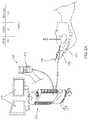
- FIG. 1 is a simplified block diagram illustrating the use of an embodiment of the automatic brain-probe guidance systems
- FIG. 2A is a simplified pictorial illustration of an embodiment of the automatic brain-probe guidance system showing the probe outside of the STN and includes Table 1, while a simplified pictorial illustration of an embodiment of the automatic brain-probe guidance system showing the tool in the beginning of advancement within the STN including Table 2 is illustrated in FIG. 2B , and a simplified pictorial illustration of an embodiment of the automatic brain-probe guidance systems, showing the probe further advanced into the STN including Table 3 is illustrated in FIG. 2C ; and
- FIG. 3 illustrates a simplified pictorial of the graphic user interface shown on a display while using an embodiment of the automatic brain-probe guidance systems.
- the disclosure relates in one embodiment to automatic brain-probe guidance systems.
- the disclosure provides for an automatic guidance system for piloting a probe (e.g. MER) to a target region in the brain in order to treat a Parkinson Disease.
- Surgical treatment for advanced Parkinson's disease (PD) includes deep brain stimulation (DBS) of the subthalamic nucleus (STN), which has proven to be safe and beneficial over time.
- DBS deep brain stimulation
- STN subthalamic nucleus
- MER microelectrode recording
- the STN can be divided into three (sensoridriver, limbic, and cognitive/associative) functional territories, each broadly involved in its respective basal ganglia-thalamocortical loop.
- the sensoridriver region of the STN is primarily located dorsolaterally, the same location that seems to provide optimal therapeutic benefit to patients undergoing STN DBS.
- beta oscillatory activity is generated largely within the dorsolateral portion of the STN. This was also established according to the description of Applicant's prior U.S. Pat. No.
- an automated guidance system for piloting a brain probe (e.g., MER) to a region of interest in the brain by identifying subterritories within the STN and thus aiding the neurosurgeon in implanting the DBS macroelectrode in the optimal location or simply be used to estimate the transitions of a MER trajectory.
- a brain probe e.g., MER
- a real-time method for guiding a probe such as MER within the brain and delimit the outer boundaries of the STN as well as an intra-STN (DLOR-ventral) boundary during surgery based on the beta range root mean square (RMS) and power spectral density (PSD) of the oscillatory neuronal activity recorded by the MERs, using a Hidden Markov Model (HMM) and Markov decision making models.
- a probe such as MER within the brain and delimit the outer boundaries of the STN as well as an intra-STN (DLOR-ventral) boundary during surgery based on the beta range root mean square (RMS) and power spectral density (PSD) of the oscillatory neuronal activity recorded by the MERs, using a Hidden Markov Model (HMM) and Markov decision making models.
- HMM Hidden Markov Model
- the HMM or factorial HMM can be used, for example, offline to automatically detect the trajectory state transitions, or semi-online at the end of a trajectory during STN DBS surgery to help refine demarcation of the sensoridriver STN for macroelectrode implantation. Localization of the DLOR-ventral transition can aid the neurosurgeon in deciding which MER track to implant, when multiple electrodes are used for MER, and in implanting the macroelectrode at the optimal depth.
- a method of automatically guiding a driver coupled brain probe to a region of interest in the brain of a subject in need thereof comprising: based on a predetermined insertion trajectory, positioning the brain probe toward the region of interest, the brain probe having a proximal end and a distal end coupled to a driver; using a predetermined step size, translating the brain probe toward the region of interest; recording a neurophysiological response by the brain probe along the predetermined insertion trajectory; based on the recorded neurophysiological response by the brain probe, calculating a plurality of predetermined observation elements; constructing a Bayesian Network for each observation element; combining the plurality of Bayesian Networks constructed for each observation element thereby creating a Dynamic Bayesian Network including the plurality of the predetermined observation elements; based on the Dynamic Bayesian Network, constructing a Factored Partially Observable Markov Decision Process, wherein the Partially Observable Markov Decision Process (POMDP) further comprises relations between the pre
- the number of steps to be taken and the size of each step can be determined by the signal processing module. In certain embodiments, the size of each step becomes smaller as the electrode approaches the estimated target region.
- the disclosure provides a real-time method and system for guiding a probe to, for example, the dorsolateral oscillatory region of the subthalamic nucleus in the brain of a subject in need thereof using closed stochastic electrophysiological feedback loop optimization.
- the term “stochastic electrophysiological feed back loop” refer to operation with an adequately formulated objective function (for example, the expert determined reference for the location of the estimated location of a dorsolateral oscillatory region (DLOR) of the STN along the selected insertion trajectory), which compares a current observation element value, with a predetermined and/or desired target value and then calculates the difference or the “fit” between the two.
- the return-value of this objective function drives the evolutionary optimization process that generates the list of steps (responsible for insertion depth along the trajectory) of translational and/or rotational movements of the brain probe coupled to the driver and display.
- EEG electrodes can be used, however it will be appreciated that any kind of medical electrodes comprising conducting and recording contacts, for obtaining various physiological (neurological and others) characteristics of a subject's brain may be used. These can be, for example, EMG, EKG, ERP, EP, VEP, SSEP medical electrodes or a combination comprising one or more of the foregoing electrodes.
- Other sensors may be similarly inserted, and used in conjunction with the systems and methods described herein, and can be for example; temperature sensors, (NIR e.g.,) oxygen sensors, current sensors, and the like.
- the systems for automatic brain-probe guidance described herein can further comprise a sensor array configured to provide additional information useful for surgical operation.
- the number and/or types of electrodes to be inserted remains to the discretion of the medical team in charge of the procedure. Adding more electrodes increases the chances a trajectory to go through the optimal target location, while at the same time also increases the chances causing damage along the trajectory, for example, going through a small blood vessel.
- the medical team chooses one to five electrodes to be inserted
- the region of interest for which the brain probe guidance systems and methods described herein are guided to can be a sub-territory of the subthalamic nucleus (STN), for example, dorsolateral oscillatory region (DLOR) of the STN.
- STN subthalamic nucleus
- DLOR dorsolateral oscillatory region
- STN target coordinates can be determined as a composite of indirect anterior commissure-posterior commissure atlas based location and/or using direct T2 magnetic resonance imaging (MRI), with the final STN position being verified using, for example, postoperative computerized tomography (CT) fused with the preoperative MRI and displayed using the display systems described and claimed.
- MRI magnetic resonance imaging
- CT computerized tomography
- the neurophysiological response elements, or activity described herein, can be acquired via, for example, polyimide coated tungsten microelectrodes.
- a single trajectory can be selected, starting, for example, at 10 mm above the calculated target (e.g., center of the lateral STN, or the dorsolateral oscillatory region (DLOR) of the STN).
- the electrodes or brain probe
- Step size can range, for example, from between about 50 ⁇ m and about 500 ⁇ m and be controlled to achieve optimal unit recording and identification of upper and lower borders of the STN.
- shorter steps e.g., ⁇ 100 ⁇ m
- the systems and methods described can be configured to provide, for example, a 2-second signal stabilization period after electrode movement cessation, with responses recorded for a minimum of, for example 5 seconds.
- the neurophysiological response recorded by the brain probe used in the methods and systems for automatically guiding a brain probe to a region of interest described herein can be neuronal firing rate, local field potential or a combination of neurophysiological responses comprising one or more of the foregoing, for example, by recording discharges from the advancing probe (or electrode) and analyzing the recording of the discharges within the beta frequency band range to determine an area of beta oscillatory activity.
- Beta (about 15-30 Hz) oscillatory activity in the subthalamic nucleus (STN) has been reported to greatly increase in Parkinson's Disease (PD) patients and may interfere with movement execution (Cassidy et al., 2002; Levy et al., 2002; Kuhn et al., 2004; 2005; Williams et al., 2003; 2005).
- Dopaminergic medications decrease beta activity (Levy et al., 2002) and deep brain stimulation (DBS) in the STN may alleviate PD symptoms by disrupting this oscillatory activity.
- Depth recordings in PD patients have demonstrated beta oscillatory local field potential (LFP) activity in STN (Levy et al., 2002; Kuhn et al., 2005). Beta oscillatory LFP activity in the STN has been shown to be coherent with cortical EEG and contralateral EMG (Williams et al., 2002; Marsden et al., 2001).
- the plurality of observation elements based on the recorded neurophysiological response used in the methods and systems for automatically guiding a brain probe to a region of interest described herein can be power spectral density (PSD) and/or root mean square (RMS) of the beta oscillatory activity values.
- PSD power spectral density
- RMS root mean square
- the raw signal can be rectified by the “absolute” operator and the mean subtracted, to expose the frequency band of interest (e.g, below about 70 Hz, for example, between about 15 Hz and about 30 Hz).
- the average PSD can be calculated in each location along the trajectory using, for example, Welch's method with about a 1 second Hamming window (with predetermined percentage overlap, e.g., 10%) and zero padding, resulting in a spectral resolution of 1 ⁇ 3 Hz.
- the PSD can be normalized by the total power of the signal between 2-200 Hz.
- PSD as a function of estimated distance to target (EDT) for the predetermined trajectory
- PSD can be used as a marker for the DLOR of the STN based on the increased beta oscillatory activity.
- NRMS normalized RMS
- EDT estimated distance to target
- the number of the minimal Root Mean Square (RMS) values may be selected and normalized, for example five minimal RMS values may be utilized. Alternatively, a particular number of the first measured RMS values maybe utilized for normalization purposes. Normalization based on minimal RMS values can substantially facilitate noise reduction.
- the synthesized Dynamic Bayesian Network or HMM can be configured to distinguish between two regions (inferred states) inside the target region or outside the target region. In many cases, the Dynamic Bayesian Network can be trained to distinguish between more than two inferred regions (states).
- Training the Dynamic Bayesian Network or HMM can involve entering a statistically significant number of trajectory data reference cases comprising for each point along the insertion trajectory power spectral analysis values, where a human expert assigns to each point in the insertion trajectory, the correct region it is in.
- the Dynamic Bayesian Network can then study the statistical relations in the data of the reference cases, so that given a new case (trajectory) with only power spectral analysis values (e.g., mean and max Beta PSD) for points along the insertion trajectory, the Dynamic Bayesian Network can build a trajectory model assigning to each point (observation value) along the insertion trajectory the (hidden) state with the highest probability. Assigning the (hidden) state can take into account not only the power spectral analysis values recorded at the incremental stochastic step, but also the power spectral analysis values of part or all the points along the insertion trajectory.
- the Dynamic Bayesian Network trajectory model serves in an embodiment, as a statistical reference based for analyzing new insertion trajectories and assigning the highest probability state to each location along the insertion trajectory.
- the state e.g., the DLOR of the STN, the region of the insertion trajectory immediately before the STN, the region inside the nonoscillatory STN, or the region of the STN immediately following the STN
- the electrode is in one of the of the electrode at each step (depth) across the trajectory based, for example, on the recorded and analyzed observation elements (e.g., NRMS and PSD), a Hidden Markov Model (HMM), or, in another embodiment, factored HMM can be used.
- the recorded and analyzed observation elements e.g., NRMS and PSD
- HMM Hidden Markov Model
- factored HMM factored HMM
- a typical trajectory state sequence could go through all four states consecutively. However, since not all trajectories produce recordable oscillatory observations in the presumed DLOR of the STN, a trajectory could skip that state. In addition, a trajectory could terminate end in in the nonoscillatory STN (a MER trajectory that was terminated before exiting the STN).
- the step of positioning the brain probe toward the region of interest used in the methods and systems for automatically guiding a brain probe to a region of interest described herein, can be preceded by providing reference values for each of the plurality of observation elements for a statistically-significant number of locations along the insertion trajectories.
- the methods provided can further comprise an initial step of training the (e.g., factorial) HMM by providing reference data of a statistically-significant number of insertion trajectories, whereby states along each insertion trajectory are assigned observation elements' values (e.g., mean beta PSD, max beta PSD and NRMS of the beta oscillatory activity) by an expert to one of the states disclosed herein, as well as the observation elements associated with at least another region, for example, the region in the insertion trajectory within the substantia nigra (SNR).
- observation elements' values e.g., mean beta PSD, max beta PSD and NRMS of the beta oscillatory activity
- Identification of the transition to SNR area can be advantageous, because this area in the brain also exhibits significant neurophysiological signals (or emissions) that may be used as target for neurostimulation in the treatment of, for example, Parkinson's disease (PD).
- PD Parkinson's disease
- the methods describe can further comprise assigning to each location (or hidden state) along the insertion trajectory a probability value illustrating the probability of each observation element per HMM state.
- the maximum likelihood estimate of the HMM state-transition and emission (the observation value) probability matrices can be estimated based, for example, on known (in other words, human expert defined) state sequences.
- the inferred HMM state sequence can be calculated as the most probable sequence beginning with the HMM in state 1 (before the STN) before the first observation (using for example, Viterbi algorithm).
- the methods and systems for automatically guiding a brain probe to a region of interest described herein can further comprise removing the inserted probe and inserting a macroelectrode into the region of interest, e.g., the DLOR of the STN, and proceeding to produce deep brain simulation (DBS) for treatment of a neurodegenerative disease and/or disorder, for example, a brain injury, a neurodegenerative disorder, stroke, epilepsy, or Parkinson's disease.
- DBS deep brain simulation
- an automatic brain-probe guidance system (or any collection of systems or sub-systems that individually or jointly execute a set, or multiple sets, of instructions to perform one or more steps of the methods described herein) comprising: a brain probe having a proximal end and a distal end, the proximal end configured to record a neurophysiological response, and the distal end operably coupled to a driver; the driver, operably coupled to the brain probe; a signal processing module in communication with the brain probe and the driver; a controller operably coupled to the driver; and a display, in communication with the signal processing module.
- Coupled refers to and comprises any direct or indirect, structural coupling, connection or attachment, or adaptation or capability for such a direct or indirect structural or operational coupling, connection or attachment, including integrally formed components and components which are coupled via or through another component or by the forming process (e.g., an electromagnetic field).
- Indirect coupling may involve coupling through an intermediary member or adhesive, or abutting and otherwise resting against, whether frictionally (e.g., against a housing) or by separate means without any physical connection.
- signal processor refers in an embodiment, to a power source, a pre-amplifier, an amplifier, an A/D and/or D/A converter, or a module or system comprising one or more of the foregoing.
- module is understood to encompass a tangible entity, be that an entity that is physically constructed, specifically configured (e.g., hardwired), or temporarily (e.g., transitorily) configured (e.g., programmed) to operate in a specified manner or to perform part or all of any operation described herein.
- each of the modules need not be instantiated at any one moment in time.
- the modules comprise a general-purpose hardware processor configured using software
- the general-purpose hardware processor may be configured as respective different modules at different times.
- Software may accordingly configure a hardware processor, for example, to constitute a particular module at one instance of time and to constitute a different module at a different instance of time.
- communicate and its derivatives e.g., a first component “communicates with” or “is in communication with” a second component
- grammatical variations thereof are used to indicate a structural, functional, mechanical, electrical, or optical relationship, or any combination thereof, between two or more components or elements.
- the fact that one component is said to communicate with a second component is not intended to exclude the possibility that additional components can be present between, and/or operatively associated or engaged with, the first and second components.
- electronic communication means that one or more components of the multi-mode optoelectronic observation and sighting system with cross-platform integration capability described herein are in wired or wireless communication or internet communication so that electronic signals and information can be exchanged between the components.
- the signal processing module used in the guidance systems described herein can further comprise a neurophysiological response processor in communication with the brain probe, the processor comprising a memory having a processor-readable media thereon with a set of executable instructions thereon configured to: record a plurality of neurophysiological responses; and based on the recorded neurophysiological response by the brain probe, calculate a plurality of predetermined observation elements.
- a neurophysiological response processor in communication with the brain probe, the processor comprising a memory having a processor-readable media thereon with a set of executable instructions thereon configured to: record a plurality of neurophysiological responses; and based on the recorded neurophysiological response by the brain probe, calculate a plurality of predetermined observation elements.
- the signal processing module can also comprise a step determining processor, in communication with the driver and neurophysiological response processor, the step determining processor comprising a memory having a processor-readable media thereon with a set of executable instructions configured to: construct a Bayesian Network for each observation element; combine the plurality of Bayesian Networks constructed for each observation element thereby creating a Dynamic Bayesian Network including the plurality of the predetermined observation elements; based on the Dynamic Bayesian Network, construct a Factored Partially Observable Markov Decision Process, wherein the Partially Observable Markov Decision Process (POMDP) further comprises relations between the predetermined observation elements; and based on the POMDP, determine a distance step to advance the brain probe along the insertion trajectory.
- POMDP Partially Observable Markov Decision Process
- processor-readable medium can be a single medium
- processor-readable media includes a single medium or multiple media, such as a centralized or distributed database, and/or associated caches and servers that store one or more sets of executable and other instructions.
- processor-readable medium may also include any medium that is capable of storing, encoding or carrying a set of instructions for execution by a processor or that cause a computer system or processor to perform any one or more of the methods or operations disclosed herein.
- the processor-readable medium can include a solid-state memory such as a memory card or other package that houses one or more non-volatile read-only memories.
- the processor-readable medium can be a random access memory or other volatile re-writable memory.
- the processor-readable medium can include a magneto-optical or optical medium, such as a disk or tapes or other storage device to capture neurophysiological response such as, for example, mean beta power spectral density (PSD) and/or maximum beta PSD and/or root mean square (RMS) of the beta oscillatory activity values, neuronal firing rate, local field potential or a combination of neurophysiological responses comprising one or more of the foregoing.
- PSD mean beta power spectral density
- RMS root mean square
- a digital file attachment to an e-mail or other self-contained information archive or set of archives may be considered a distribution medium that is equivalent to a tangible storage medium. Accordingly, the disclosure is considered to include any one or more of a processor-readable medium or a distribution medium and other equivalents and successor media, in which data or instructions may be stored.
- the set of executable instructions in the neurophysiological response processor can be further configured to: analyze the neurophysiological response within the beta frequency band range (e.g., between about 15 Hz to about 30 Hz) to determine a value of beta oscillatory activity (in other words, an observed value), wherein the plurality of observation element based on the recorded neurophysiological response is a mean beta power spectral density (PSD) and/or maximum beta PSD and/or root mean square (RMS) of the beta oscillatory activity values.
- PSD mean beta power spectral density
- RMS root mean square
- the set of executable instructions in the step-determining-processor used in the guidance systems described, as a part of the signal processing module can further be configured to assign to each of a plurality of locations (or hidden/partially observable states) along the insertion trajectory—a probability value.
- the locations or in other words, inferred/hidden or partially observable states can be the DLOR of the STN and/or the region of the insertion trajectory immediately before the STN and/or the region inside the nonoscillatory STN and/or the region of the STN immediately following the STN.
- the memory in the step-determining-processor (which in an embodiment, can be the same as the step-determining-processor) can further have stored thereon known reference (or inferred) values (or observed nodes for representation of HMM as DBN) for each of the plurality of observation elements for the locations (or hidden states) along the insertion trajectory, as well as, in an embodiment, for each of the plurality of observation elements for the region inside the substantia nigra (SNR).
- known reference (or inferred) values or observed nodes for representation of HMM as DBN
- the brain probe used in the guidance systems described herein can be, for example, a stimulating and or recording electrode.
- the guidance system can further comprise a macroelectrode, configured to provide deep brain stimulation.
- Stimulating electrophysiological response and/or recording electrophysiological evoked response in the systems and methods described herein can comprise stimulating, recording or both stimulating and recording signals differentially, single ended or both differentially and single ended.
- a differential sensing configuration can include a tip electrode used as the sensing electrode and a ring electrode used as a reference electrode. Typical tip-to-ring spacing can be approximately 10 mm but may be greater or less than 10 mm. Other differential sensing configurations using any type of available electrodes can be used.
- both the sensing electrode and the reference electrode can be positioned along a mapped site, such as within a brain region or along a nerve branch, such that both electrodes are subjected to change in electrical potential caused by an electrophysiological event in the brain, for example, that resulting from transitioning between various states along the insertion trajectory.
- single ended sensing electrode configurations can comprise a sensing electrode in contact with a region of interest, paired with a reference electrode placed away from the region of interest and is sought to be advanced to the region of interest, such that the reference electrode is not initially subjected to changes in electrical potential caused by electrophysiological events occurring at the site.
- Recording the observation elements described herein can be configured to be performed between two adjacent macro-contacts, for example a tip contact and a ring macro contact spaced between about 20 ⁇ m and about 500 ⁇ m from the tip contact (or electrode) by, for example, recording differential local field potential (LFP) between the two contacts, wherein one contact is a reference to the other.
- LFP differential local field potential
- FIG. are merely schematic representations (e.g., illustrations) based on convenience and the ease of demonstrating the present disclosure, and are, therefore, not intended to indicate relative size and dimensions of the devices or components thereof and/or to define or limit the scope of the exemplary embodiments.
- FIG. 1 illustrating a simplified block diagram depicting the use of an automatic guidance system for guiding a brain probe to region of interest in the brain of a subject in need thereof.
- the brain-probe can be, for example an electrode, such as a macroelectrode or a microelectrode.
- a plurality of electrode can be used simultaneously to record values of a plurality of insertion trajectories.
- remote control 100 is provided, which can include trigger button 102 that can be configured to be pressed in order to automatically guide the electrode.
- the trigger button enables a driver initiation 104 and thus provides for electrode translation along a predetermined insertion trajectory.
- the driver automatically moves the electrode through the various states (or locations) within the brain of a subject in need thereof, located along the predetermined insertion trajectory 106 .
- the automatic movement (in other words, without human intervention of the distance or timing of insertion) of the electrode by the driver can be achieved due to closed loop feedback provided in the signal processing module, using for example, Partially Observable Markov Decision Process (POMDP).
- POMDP Partially Observable Markov Decision Process
- the driver is stopped to provide time for the physician to verify accurate advancement of the electrode, and otherwise collect readings, thus utilizing the trigger button 102 as a safety mechanism.
- electrode advancement was not automatic and thus included the following steps: the electrode was advanced by discrete steps, the physician pressed on a button, thus initiated a single step movement of the electrode, waiting period for verifying the position of the electrode, re-definition of step size and further pressing on the button to advance the electrode by another single step. Therefore, using the methods described herein, implemented using the systems provided, surgery time can be reduced by at least 50%, since the electrode is automatically advanced using closed loop feedback and advancement step-size can automatically be re-defined and implemented. The different locations within the STN can be identified in real time, while advancing the electrode, obviating the need for performing a full scan of the area beforehand.
- RMS and PSD are calculated 108 and the observed values for HMM output as DBN can be received by the signal processing module.
- the signal processing module can be configured to calculate the subsequent step size using the closed loop feedback. Typically an inverse proportion is exhibited between the resulting NRMS values and determined step size, meaning the higher is the NRMS value, the lower is the step size, since higher resolution is required closer to the electrode's installation in the region of interest.
- step size as determined is to be updated, as illustrated in block 110
- the signal processing module being in electronic communication with the driver coupled to the electrode automatically updates following step size, as illustrated in block 112 .
- step size does not have to be updated, as illustrated in block 114
- plots, results and recommendations to the user are shown on a display as illustrated in block 116 and will be further described in detail (sere e.g., FIG. 3 ).
- 2 A- 2 C which are respectively a simplified pictorial illustration of the automatic guidance system for guiding a brain-probe to a region of interest (ROI) in the brain showing the brain-probe outside of the STN and including Table 1 ( 2 A), a simplified pictorial illustration of the automatic guidance system for guiding a brain-probe to a region of interest (ROI) in the brain showing the brain-probe in the beginning of advancement within the STN and including Table 2 ( 2 B) and a simplified pictorial illustration of the automatic guidance system for guiding a brain-probe to a region of interest (ROI) in the brain showing the brain-probe further advanced into the STN and including Table 3 ( 2 C).
- 2 A a simplified pictorial illustration of the automatic guidance system for guiding a brain-probe to a region of interest (ROI) in the brain showing the brain-probe outside of the STN and including Table 1
- 2 B a simplified pictorial illustration of the automatic guidance system for guiding a brain-probe to a
- the automatic guidance system for guiding a brain-probe to a target region in the brain can be utilized with NeuroOmega (AlphaOmega) or NeuroNav (Alphamega) system in the surgery room.
- the NeuroOmega or NeuroNav system is depicted by reference numeral 120 , display 122 and remote control 100 are operably coupled thereto.
- An electrode 128 or plurality of electrodes 128 can be operably coupled to a frame 124 , which can be configured to engage electrodes 126 relative to the skull of the patient and allow only longitudinal displacement of electrodes 126 .
- Electrodes 126 can be operably coupled to driver 128 , which automatically drives electrode 126 upon pressing of trigger button 102 on remote control 100 .
- the tip of electrode 126 is illustrated as positioned outside of the STN in this first operative orientation.
- the Estimate distance to target (EDT) at this first operative orientation of insertion trajectory is, for example 10 mm, with the HMM hidden or inferred state for the POMDM output being “0”, indicating that electrode 126 is not positioned within any of the sub-territories of the STN and the step-size is determined to be 0.4 mm for example. It is appreciated that any EDT value and step-size can be utilized and are within the scope of the disclosure provided.
- the automatic guidance system for guiding a brain-probe to a region of interest (ROI) in the brain is shown in a second orientation, where electrode 126 is positioned within the first region of the STN.
- the Estimate distance to target (EDT) at this second operative orientation is 8.4 mm for example, with the HMM output being “1”, indicating that the electrode 126 is positioned within the first sub-territory of the STN and the step-size can now be automatically reduced to, for example, 0.2 mm.
- the automatic guidance system for guiding a brain-probe to a region of interest (ROI) in the brain is shown in a third operative orientation, where electrode 126 is positioned within the second region of the STN.
- the Estimate distance to target (EDT) at this third operative orientation is, for example, 7 mm and the HMM hidden or inferred state output is “2”, indicating that electrode 126 is positioned within the second sub-territory of the STN causing the step-size to now be automatically reduced to 0.1 mm for example.
- Electrode 126 can be displaced along the insertion trajectory passing regions of interest such as 1. the DLOR of the STN; 2. the region in the insertion trajectory before the STN; 3.
- Electrodes 126 can be displaced through the above mentioned regions automatically following single pressing on trigger button 102 and the step size can also be automatically updated utilizing a closed loop feedback (e.g., factored Partially Observable Markov Decision Process (POMDP)).
- POMDP Partially Observable Markov Decision Process
- FIG. 3 illustrating the graphic user interface shown on a display while using the automatic guidance system for guiding a brain-probe to a region of interest (ROI) in the brain.
- Electrode 1 entered region “1” at 6 mm EDT, region “2” at 0 mm EDT and region “3” at about ⁇ 4 mm EDT (indicating the probe need to be retracted.
- Electrode 2 entered region “1” at 9 mm EDT, region “2” at 3 mm EDT and region “3” at about ⁇ 1 mm EDT.
- Electrode 3 entered region “1” at 8 mm EDT, region “2” at 4 mm EDT and region “3” at about ⁇ 3 mm EDT. The optimal trajectory can then be selected by the user and the macroelectrode can be implanted accordingly.
- directional or positional terms such as “top”, “bottom”, “upper,” “lower,” “side,” “front,” “frontal,” “forward,” “rear,” “rearward,” “back,” “trailing,” “above,” “below,” “left,” “right,” “horizontal,” “vertical,” “upward,” “downward,” “outer,” “inner,” “exterior,” “interior,” “intermediate,” etc., are merely used for convenience in describing the various embodiments of the present disclosure.
- One or more components may be referred to herein as “configured to,” “configured by,” “configurable to,” “operable/operative to,” “adapted/adaptable,” “able to,” “conformable/conformed to,” etc.
- the terms can generally encompass active-state components and/or inactive-state components and/or standby-state components, unless context requires otherwise.
Landscapes
- Health & Medical Sciences (AREA)
- Life Sciences & Earth Sciences (AREA)
- Engineering & Computer Science (AREA)
- Surgery (AREA)
- Heart & Thoracic Surgery (AREA)
- Public Health (AREA)
- Biomedical Technology (AREA)
- Veterinary Medicine (AREA)
- Animal Behavior & Ethology (AREA)
- General Health & Medical Sciences (AREA)
- Medical Informatics (AREA)
- Molecular Biology (AREA)
- Psychology (AREA)
- Nuclear Medicine, Radiotherapy & Molecular Imaging (AREA)
- Physics & Mathematics (AREA)
- Pathology (AREA)
- Neurosurgery (AREA)
- Neurology (AREA)
- Biophysics (AREA)
- Radiology & Medical Imaging (AREA)
- Cardiology (AREA)
- Data Mining & Analysis (AREA)
- Theoretical Computer Science (AREA)
- Robotics (AREA)
- Psychiatry (AREA)
- Evolutionary Biology (AREA)
- Evolutionary Computation (AREA)
- General Engineering & Computer Science (AREA)
- General Physics & Mathematics (AREA)
- Artificial Intelligence (AREA)
- Computer Vision & Pattern Recognition (AREA)
- Bioinformatics & Computational Biology (AREA)
- Bioinformatics & Cheminformatics (AREA)
- Oral & Maxillofacial Surgery (AREA)
- Measurement And Recording Of Electrical Phenomena And Electrical Characteristics Of The Living Body (AREA)
- Electrotherapy Devices (AREA)
Abstract
Description
Claims (30)
Priority Applications (1)
| Application Number | Priority Date | Filing Date | Title |
|---|---|---|---|
| US15/572,799 US10932862B2 (en) | 2015-05-10 | 2016-05-09 | Automatic brain probe guidance system |
Applications Claiming Priority (3)
| Application Number | Priority Date | Filing Date | Title |
|---|---|---|---|
| US201562159336P | 2015-05-10 | 2015-05-10 | |
| US15/572,799 US10932862B2 (en) | 2015-05-10 | 2016-05-09 | Automatic brain probe guidance system |
| PCT/US2016/031448 WO2016182997A2 (en) | 2015-05-10 | 2016-05-09 | Automatic brain probe guidance system |
Publications (2)
| Publication Number | Publication Date |
|---|---|
| US20180125585A1 US20180125585A1 (en) | 2018-05-10 |
| US10932862B2 true US10932862B2 (en) | 2021-03-02 |
Family
ID=57249083
Family Applications (1)
| Application Number | Title | Priority Date | Filing Date |
|---|---|---|---|
| US15/572,799 Active 2037-05-05 US10932862B2 (en) | 2015-05-10 | 2016-05-09 | Automatic brain probe guidance system |
Country Status (5)
| Country | Link |
|---|---|
| US (1) | US10932862B2 (en) |
| EP (1) | EP3294117B1 (en) |
| JP (1) | JP6908328B2 (en) |
| CN (1) | CN107847138B (en) |
| WO (1) | WO2016182997A2 (en) |
Families Citing this family (12)
| Publication number | Priority date | Publication date | Assignee | Title |
|---|---|---|---|---|
| US11234632B2 (en) | 2015-05-10 | 2022-02-01 | Alpha Omega Engineering Ltd. | Brain navigation lead |
| WO2017158604A1 (en) | 2016-03-14 | 2017-09-21 | Alpha Omega Neuro Technologies Ltd. | Brain navigation lead |
| EP3294117B1 (en) | 2015-05-10 | 2025-07-02 | Alpha Omega Engineering Ltd. | Automatic brain probe guidance system |
| US11051889B2 (en) | 2015-05-10 | 2021-07-06 | Alpha Omega Engineering Ltd. | Brain navigation methods and device |
| EP3481288A4 (en) | 2016-07-07 | 2020-04-08 | Alpha Omega Neuro Technologies Ltd. | METHODS AND DEVICE FOR BRAIN NAVIGATION |
| CN109106384B (en) * | 2018-07-24 | 2021-12-24 | 安庆师范大学 | Psychological stress condition prediction method and system |
| CN110338786B (en) * | 2019-06-28 | 2020-10-02 | 北京师范大学 | A method, system, device and medium for identifying and classifying epileptiform discharges |
| CN111569251B (en) * | 2020-04-29 | 2023-07-28 | 武汉联影智融医疗科技有限公司 | DBS surgical needle tract adjusting method, system and device |
| US11759629B2 (en) | 2021-02-26 | 2023-09-19 | Sensoria Therapeutics, Inc. | Unidirectional electrode and method for stimulation of the subthalamic nucleus of the brain |
| CN113797440B (en) * | 2021-09-27 | 2022-05-10 | 首都医科大学附属北京天坛医院 | Automatic implantation system of deep brain electrodes based on imaging and electrophysiological real-time positioning |
| CN116269828B (en) * | 2022-09-09 | 2026-01-23 | 杭州三坛医疗科技有限公司 | Automatic registration method, device, electronic equipment and medium |
| CN117389441B (en) * | 2023-11-23 | 2024-03-15 | 首都医科大学附属北京天坛医院 | Method and system for determining trajectory of imagined Chinese characters based on visual following assistance |
Citations (75)
| Publication number | Priority date | Publication date | Assignee | Title |
|---|---|---|---|---|
| US4603696A (en) | 1985-02-14 | 1986-08-05 | Medtronic, Inc. | Lead connector |
| US5097835A (en) | 1990-04-09 | 1992-03-24 | Ad-Tech Medical Instrument Corporation | Subdural electrode with improved lead connection |
| US5458629A (en) | 1994-02-18 | 1995-10-17 | Medtronic, Inc. | Implantable lead ring electrode and method of making |
| US5584873A (en) | 1995-05-08 | 1996-12-17 | Medtronic, Inc. | Medical lead with compression lumens |
| US5713922A (en) | 1996-04-25 | 1998-02-03 | Medtronic, Inc. | Techniques for adjusting the locus of excitation of neural tissue in the spinal cord or brain |
| EP0832667A2 (en) | 1996-09-27 | 1998-04-01 | Medtronic, Inc. | High resolution brain stimulation lead |
| US5833709A (en) | 1996-04-25 | 1998-11-10 | Medtronic, Inc. | Method of treating movement disorders by brain stimulation |
| WO1999036122A1 (en) | 1998-01-20 | 1999-07-22 | Medtronic, Inc. | Target localization lead for stereotactic brain surgery |
| US6253109B1 (en) | 1998-11-05 | 2001-06-26 | Medtronic Inc. | System for optimized brain stimulation |
| US20010014820A1 (en) | 1998-01-20 | 2001-08-16 | Medtronic, Inc. | Method of stimulating brain tissue using combined micro-macro brain stimulation lead |
| US6301492B1 (en) | 2000-01-20 | 2001-10-09 | Electrocore Technologies, Llc | Device for performing microelectrode recordings through the central channel of a deep-brain stimulation electrode |
| US20030212691A1 (en) | 2002-05-10 | 2003-11-13 | Pavani Kuntala | Data mining model building using attribute importance |
| JP2004261569A (en) | 2002-09-06 | 2004-09-24 | Biosense Inc | Alignment system for neural procedures in the brain |
| US20050065427A1 (en) | 2003-09-12 | 2005-03-24 | Magill Peter James | Methods of neural centre location and electrode placement in the central nervous system |
| US20050246004A1 (en) | 2004-04-28 | 2005-11-03 | Advanced Neuromodulation Systems, Inc. | Combination lead for electrical stimulation and sensing |
| US7033326B1 (en) | 2000-12-29 | 2006-04-25 | Advanced Bionics Corporation | Systems and methods of implanting a lead for brain stimulation |
| US7047084B2 (en) | 2002-11-20 | 2006-05-16 | Advanced Neuromodulation Systems, Inc. | Apparatus for directionally stimulating nerve tissue |
| US20060265039A1 (en) | 2005-05-20 | 2006-11-23 | Interuniversitair Microelektronica Centrum (Imec) | Probe device for electrical stimulation and recording of the activity of excitable cells |
| US7177701B1 (en) | 2000-12-29 | 2007-02-13 | Advanced Bionics Corporation | System for permanent electrode placement utilizing microelectrode recording methods |
| US20080039709A1 (en) | 2004-08-09 | 2008-02-14 | Karmarkar Parag V | Implantable Mri compatible Stimulation Leads And Antennas And Related Systems And Methods |
| US20080082109A1 (en) | 2006-09-08 | 2008-04-03 | Hansen Medical, Inc. | Robotic surgical system with forward-oriented field of view guide instrument navigation |
| US20080243214A1 (en) | 2007-03-26 | 2008-10-02 | Boston Scientific Scimed, Inc. | High resolution electrophysiology catheter |
| US20080243219A1 (en) | 2005-02-22 | 2008-10-02 | Boston Scientific Neuromodulation Corporation | Minimally invasive systems for locating an optimal location for deep brain stimulation |
| WO2008133615A1 (en) | 2007-04-25 | 2008-11-06 | Medtronic, Inc. | Method and apparatus for controlled insertion and withdrawal of electrodes |
| US20090054941A1 (en) | 2007-08-20 | 2009-02-26 | Medtronic, Inc. | Stimulation field management |
| CN101516436A (en) | 2006-07-31 | 2009-08-26 | 脑科医学设备股份有限公司 | Lead and method for brain monitoring and modulation |
| EP2144665A1 (en) | 2007-04-26 | 2010-01-20 | Medtronic, Inc. | Implantable medical lead with multiple electrode configurations |
| US7668601B2 (en) | 2007-04-26 | 2010-02-23 | Medtronic, Inc. | Implantable medical lead with multiple electrode configurations |
| US20100160771A1 (en) | 2007-04-24 | 2010-06-24 | Medtronic, Inc. | Method and Apparatus for Performing a Navigated Procedure |
| US7783359B2 (en) | 2005-01-05 | 2010-08-24 | Boston Scientific Neuromodulation Corporation | Devices and methods using an implantable pulse generator for brain stimulation |
| US20100241020A1 (en) * | 2009-02-05 | 2010-09-23 | Yissum Research Development Company Of The Hebrew University Of Jerusalem | Real-time methods and systems for mapping a target region in the brain during surgery |
| US7809446B2 (en) | 2005-01-05 | 2010-10-05 | Boston Scientific Neuromodulation Corporation | Devices and methods for brain stimulation |
| US20100292602A1 (en) | 2007-07-11 | 2010-11-18 | Mayo Foundation For Medical Education And Research | Seizure forecasting, microseizure precursor events, and related therapeutic methods and devices |
| WO2011001322A1 (en) | 2009-06-29 | 2011-01-06 | Koninklijke Philips Electronics N.V. | Visualizing surgical trajectories |
| US7877150B2 (en) | 2004-03-30 | 2011-01-25 | Medtronic, Inc. | Lead electrode for use in an MRI-safe implantable medical device |
| US7917231B2 (en) | 2006-08-07 | 2011-03-29 | Alpha Omega Neuro Technologies Ltd. | Directional stimulation of neural tissue |
| US7941202B2 (en) | 2005-10-07 | 2011-05-10 | Neuronexus Technologies | Modular multichannel microelectrode array and methods of making same |
| US20110160797A1 (en) | 2009-12-28 | 2011-06-30 | Boston Scientific Neuromodulation Corporation | Methods to concurrently stimulate different brain targets |
| US8000808B2 (en) | 2005-01-31 | 2011-08-16 | Medtronic, Inc. | Medical lead with segmented electrode |
| CN102245253A (en) | 2008-11-21 | 2011-11-16 | B·布罗克 | Mobile device for automated transcranial stimulation and method for controlling and regulating the device |
| US20110295350A1 (en) | 2008-07-30 | 2011-12-01 | Ecole Polytechnique Federale De Lausanne (Epfl) | Apparatus and method for optimized stimulation of a neurological target |
| US20110301665A1 (en) | 2008-11-12 | 2011-12-08 | Ecole Polytechnique Federale De Lausanne | Microfabricated neurostimulation device |
| US20120046715A1 (en) | 2010-08-18 | 2012-02-23 | Boston Scientific Neuromodulation Corporation | User interface for segmented neurostimulation leads |
| US20120046710A1 (en) | 2010-08-18 | 2012-02-23 | Boston Scientific Neuromodulation Corporation | Methods, systems, and devices for deep brain stimulation using helical movement of the centroid of stimulation |
| US20120053659A1 (en) | 2010-09-01 | 2012-03-01 | Medtronic, Inc. | Symmetrical physiological signal sensing with a medical device |
| US20120101537A1 (en) | 2010-10-21 | 2012-04-26 | Boston Scientific Neuromodulation Corporation | System and method for introducing tissue stimulation lead into patient using real-time coupling efficiency measurements |
| US20120101552A1 (en) | 2010-10-21 | 2012-04-26 | Medtronic, Inc. | Stereo data representation of biomedical signals along a lead |
| US20120184837A1 (en) | 2011-01-14 | 2012-07-19 | Sapiens Steering Brain Stimulation B.V. | Brain Mapping Probe |
| US8295944B2 (en) | 2009-11-30 | 2012-10-23 | Boston Scientific Neuromodulation Corporation | Electrode array with electrodes having cutout portions and methods of making the same |
| US20120296230A1 (en) | 2009-05-11 | 2012-11-22 | Timothy Taylor Davis | Neurologic monitoring system and method |
| US8364272B2 (en) | 2010-04-30 | 2013-01-29 | Medtronic, Inc. | Brain stimulation programming |
| US20130066331A1 (en) | 2011-09-14 | 2013-03-14 | Nevro Corporation | Tapered, curved stylets for inserting spinal cord modulation leads and associated systems and methods |
| US20130096642A1 (en) | 2008-11-04 | 2013-04-18 | Nevro Corporation | Modeling positions of implanted devices in a patient |
| US20130123600A1 (en) | 2011-11-10 | 2013-05-16 | Neuropace, Inc. | Multimodal Brain Sensing Lead |
| US8452415B2 (en) | 2006-02-24 | 2013-05-28 | Medtronic, Inc. | Electrical and activation field models for programming a stimulation lead with complex electrode array geometry |
| US8473061B2 (en) | 2009-04-16 | 2013-06-25 | Boston Scientific Neuromodulation Corporation | Deep brain stimulation current steering with split electrodes |
| US8532757B2 (en) | 2009-12-16 | 2013-09-10 | Medtronic, Inc. | Stimulation electrode selection |
| US8538513B2 (en) | 2009-12-16 | 2013-09-17 | Medtronic, Inc. | Stimulation electrode selection |
| US8548602B2 (en) | 2005-09-30 | 2013-10-01 | Boston Scientific Neuromodulation Corporation | Devices with cannula and electrode lead for brain stimulation and methods of use and manufacture |
| US8694127B2 (en) | 2010-09-21 | 2014-04-08 | Boston Scientific Neuromodulation Corporation | Systems and methods for making and using radially-aligned segmented electrodes for leads of electrical stimulation systems |
| US8874232B2 (en) | 2009-11-30 | 2014-10-28 | Boston Scientific Neuromodulation Corporation | Electrode array having concentric split ring electrodes and methods of making the same |
| US20150031982A1 (en) | 2012-07-19 | 2015-01-29 | MRI Interventions, Inc. | Surgical navigation devices and methods |
| US20150065839A1 (en) | 2013-08-31 | 2015-03-05 | Alpha Omega Neuro Technologies Ltd. | Surgical drape, evoked response probes and their methods of use |
| US20150066006A1 (en) | 2013-08-30 | 2015-03-05 | Medtronic Ardian Luxembourg S.A.R.L. | Neuromodulation systems having nerve monitoring assemblies and associated devices, systems, and methods |
| US8977367B2 (en) | 2012-12-13 | 2015-03-10 | Sapiens Steering Brain Stimulation B.V. | Stimulation probe |
| CN104622468A (en) | 2013-11-14 | 2015-05-20 | 先健科技(深圳)有限公司 | Deep brain stimulation system with predication function |
| US20150265180A1 (en) * | 2014-03-21 | 2015-09-24 | Pacesetter, Inc. | Systems and methods for performing deep brain stimulation |
| WO2015173787A1 (en) | 2014-05-16 | 2015-11-19 | Aleva Neurotherapeutics Sa | Device for interacting with neurological tissue and methods of making and using the same |
| US9199090B2 (en) | 2006-02-24 | 2015-12-01 | Medtronic, Inc. | Unwrapped 2D view of a stimulation lead with complex electrode array geometry |
| US20160045748A1 (en) | 2013-04-05 | 2016-02-18 | Sapiens Steering Brain Stimulation B.V. | System for planning and/or providing a therapy for neural applications |
| WO2016182997A2 (en) | 2015-05-10 | 2016-11-17 | Alpha Omega Neuro Technologies, Ltd. | Automatic brain probe guidance system |
| WO2017158604A1 (en) | 2016-03-14 | 2017-09-21 | Alpha Omega Neuro Technologies Ltd. | Brain navigation lead |
| WO2018000080A1 (en) | 2016-06-30 | 2018-01-04 | Fio Corporation | Cloud communication network system, device, method, and computer-readable medium |
| US20190069797A1 (en) | 2015-05-10 | 2019-03-07 | Alpha Omega Neuro Technologies Ltd. | Brain navigation lead |
| US20190321106A1 (en) | 2015-05-10 | 2019-10-24 | Alpha Omega Neuro Technologies Ltd. | Brain navigation methods and device |
-
2016
- 2016-05-09 EP EP16793310.0A patent/EP3294117B1/en active Active
- 2016-05-09 CN CN201680039601.0A patent/CN107847138B/en active Active
- 2016-05-09 WO PCT/US2016/031448 patent/WO2016182997A2/en not_active Ceased
- 2016-05-09 JP JP2017557984A patent/JP6908328B2/en active Active
- 2016-05-09 US US15/572,799 patent/US10932862B2/en active Active
Patent Citations (87)
| Publication number | Priority date | Publication date | Assignee | Title |
|---|---|---|---|---|
| US4603696A (en) | 1985-02-14 | 1986-08-05 | Medtronic, Inc. | Lead connector |
| US5097835A (en) | 1990-04-09 | 1992-03-24 | Ad-Tech Medical Instrument Corporation | Subdural electrode with improved lead connection |
| US5458629A (en) | 1994-02-18 | 1995-10-17 | Medtronic, Inc. | Implantable lead ring electrode and method of making |
| US5584873A (en) | 1995-05-08 | 1996-12-17 | Medtronic, Inc. | Medical lead with compression lumens |
| US5713922A (en) | 1996-04-25 | 1998-02-03 | Medtronic, Inc. | Techniques for adjusting the locus of excitation of neural tissue in the spinal cord or brain |
| US5833709A (en) | 1996-04-25 | 1998-11-10 | Medtronic, Inc. | Method of treating movement disorders by brain stimulation |
| EP0832667A2 (en) | 1996-09-27 | 1998-04-01 | Medtronic, Inc. | High resolution brain stimulation lead |
| US5843148A (en) | 1996-09-27 | 1998-12-01 | Medtronic, Inc. | High resolution brain stimulation lead and method of use |
| US20010014820A1 (en) | 1998-01-20 | 2001-08-16 | Medtronic, Inc. | Method of stimulating brain tissue using combined micro-macro brain stimulation lead |
| WO1999036122A1 (en) | 1998-01-20 | 1999-07-22 | Medtronic, Inc. | Target localization lead for stereotactic brain surgery |
| US6011996A (en) | 1998-01-20 | 2000-01-04 | Medtronic, Inc | Dual electrode lead and method for brain target localization in functional stereotactic brain surgery |
| US6253109B1 (en) | 1998-11-05 | 2001-06-26 | Medtronic Inc. | System for optimized brain stimulation |
| US6301492B1 (en) | 2000-01-20 | 2001-10-09 | Electrocore Technologies, Llc | Device for performing microelectrode recordings through the central channel of a deep-brain stimulation electrode |
| US7033326B1 (en) | 2000-12-29 | 2006-04-25 | Advanced Bionics Corporation | Systems and methods of implanting a lead for brain stimulation |
| US7177701B1 (en) | 2000-12-29 | 2007-02-13 | Advanced Bionics Corporation | System for permanent electrode placement utilizing microelectrode recording methods |
| US20030212691A1 (en) | 2002-05-10 | 2003-11-13 | Pavani Kuntala | Data mining model building using attribute importance |
| JP2004261569A (en) | 2002-09-06 | 2004-09-24 | Biosense Inc | Alignment system for neural procedures in the brain |
| US7047084B2 (en) | 2002-11-20 | 2006-05-16 | Advanced Neuromodulation Systems, Inc. | Apparatus for directionally stimulating nerve tissue |
| US20050065427A1 (en) | 2003-09-12 | 2005-03-24 | Magill Peter James | Methods of neural centre location and electrode placement in the central nervous system |
| US7877150B2 (en) | 2004-03-30 | 2011-01-25 | Medtronic, Inc. | Lead electrode for use in an MRI-safe implantable medical device |
| US20050246004A1 (en) | 2004-04-28 | 2005-11-03 | Advanced Neuromodulation Systems, Inc. | Combination lead for electrical stimulation and sensing |
| CN101829400A (en) | 2004-08-09 | 2010-09-15 | 约翰斯·霍普金斯大学 | Implantable MRI compatible stimulation leads and antennas and related systems and methods |
| US20080039709A1 (en) | 2004-08-09 | 2008-02-14 | Karmarkar Parag V | Implantable Mri compatible Stimulation Leads And Antennas And Related Systems And Methods |
| US8498718B2 (en) | 2005-01-05 | 2013-07-30 | Boston Scientific Neuromodulation Corporation | Devices and methods for brain stimulation |
| US7809446B2 (en) | 2005-01-05 | 2010-10-05 | Boston Scientific Neuromodulation Corporation | Devices and methods for brain stimulation |
| US8755905B2 (en) | 2005-01-05 | 2014-06-17 | Boston Scientific Neuromodulation Corporation | Devices and methods for brain stimulation |
| US8938308B2 (en) | 2005-01-05 | 2015-01-20 | Boston Scientific Neuromodulation Corporation | Devices and methods for brain stimulation |
| US7783359B2 (en) | 2005-01-05 | 2010-08-24 | Boston Scientific Neuromodulation Corporation | Devices and methods using an implantable pulse generator for brain stimulation |
| US8739403B2 (en) | 2005-01-31 | 2014-06-03 | Medtronic, Inc. | Method of manufacturing a medical lead |
| US8000808B2 (en) | 2005-01-31 | 2011-08-16 | Medtronic, Inc. | Medical lead with segmented electrode |
| US20080243219A1 (en) | 2005-02-22 | 2008-10-02 | Boston Scientific Neuromodulation Corporation | Minimally invasive systems for locating an optimal location for deep brain stimulation |
| US20060265039A1 (en) | 2005-05-20 | 2006-11-23 | Interuniversitair Microelektronica Centrum (Imec) | Probe device for electrical stimulation and recording of the activity of excitable cells |
| US8755906B2 (en) | 2005-09-30 | 2014-06-17 | Boston Scientific Neruomodulation Corporation | Devices with cannula and electrode lead for brain stimulation and methods of use and manufacture |
| US8548602B2 (en) | 2005-09-30 | 2013-10-01 | Boston Scientific Neuromodulation Corporation | Devices with cannula and electrode lead for brain stimulation and methods of use and manufacture |
| US7941202B2 (en) | 2005-10-07 | 2011-05-10 | Neuronexus Technologies | Modular multichannel microelectrode array and methods of making same |
| US9199090B2 (en) | 2006-02-24 | 2015-12-01 | Medtronic, Inc. | Unwrapped 2D view of a stimulation lead with complex electrode array geometry |
| US8452415B2 (en) | 2006-02-24 | 2013-05-28 | Medtronic, Inc. | Electrical and activation field models for programming a stimulation lead with complex electrode array geometry |
| CN101516436A (en) | 2006-07-31 | 2009-08-26 | 脑科医学设备股份有限公司 | Lead and method for brain monitoring and modulation |
| US7917231B2 (en) | 2006-08-07 | 2011-03-29 | Alpha Omega Neuro Technologies Ltd. | Directional stimulation of neural tissue |
| US20080082109A1 (en) | 2006-09-08 | 2008-04-03 | Hansen Medical, Inc. | Robotic surgical system with forward-oriented field of view guide instrument navigation |
| US20080243214A1 (en) | 2007-03-26 | 2008-10-02 | Boston Scientific Scimed, Inc. | High resolution electrophysiology catheter |
| US20100160771A1 (en) | 2007-04-24 | 2010-06-24 | Medtronic, Inc. | Method and Apparatus for Performing a Navigated Procedure |
| WO2008133615A1 (en) | 2007-04-25 | 2008-11-06 | Medtronic, Inc. | Method and apparatus for controlled insertion and withdrawal of electrodes |
| US7668601B2 (en) | 2007-04-26 | 2010-02-23 | Medtronic, Inc. | Implantable medical lead with multiple electrode configurations |
| EP2144665A1 (en) | 2007-04-26 | 2010-01-20 | Medtronic, Inc. | Implantable medical lead with multiple electrode configurations |
| US20100292602A1 (en) | 2007-07-11 | 2010-11-18 | Mayo Foundation For Medical Education And Research | Seizure forecasting, microseizure precursor events, and related therapeutic methods and devices |
| US20090054941A1 (en) | 2007-08-20 | 2009-02-26 | Medtronic, Inc. | Stimulation field management |
| US20110295350A1 (en) | 2008-07-30 | 2011-12-01 | Ecole Polytechnique Federale De Lausanne (Epfl) | Apparatus and method for optimized stimulation of a neurological target |
| US20140309714A1 (en) | 2008-07-30 | 2014-10-16 | Ecole Polytechnique Federale De Lausanne | Apparatus and method for optimized stimulation of a neurological target |
| US20130096642A1 (en) | 2008-11-04 | 2013-04-18 | Nevro Corporation | Modeling positions of implanted devices in a patient |
| US8788064B2 (en) | 2008-11-12 | 2014-07-22 | Ecole Polytechnique Federale De Lausanne | Microfabricated neurostimulation device |
| US20110301665A1 (en) | 2008-11-12 | 2011-12-08 | Ecole Polytechnique Federale De Lausanne | Microfabricated neurostimulation device |
| CN102245253A (en) | 2008-11-21 | 2011-11-16 | B·布罗克 | Mobile device for automated transcranial stimulation and method for controlling and regulating the device |
| US8792972B2 (en) | 2009-02-05 | 2014-07-29 | Alpha Omega Engineering Ltd. | Real-time methods and systems for mapping a target region in the brain during surgery |
| US20100241020A1 (en) * | 2009-02-05 | 2010-09-23 | Yissum Research Development Company Of The Hebrew University Of Jerusalem | Real-time methods and systems for mapping a target region in the brain during surgery |
| US8473061B2 (en) | 2009-04-16 | 2013-06-25 | Boston Scientific Neuromodulation Corporation | Deep brain stimulation current steering with split electrodes |
| US20120296230A1 (en) | 2009-05-11 | 2012-11-22 | Timothy Taylor Davis | Neurologic monitoring system and method |
| JP2012531936A (en) | 2009-06-29 | 2012-12-13 | コーニンクレッカ フィリップス エレクトロニクス エヌ ヴィ | Visualization of surgical trajectory |
| WO2011001322A1 (en) | 2009-06-29 | 2011-01-06 | Koninklijke Philips Electronics N.V. | Visualizing surgical trajectories |
| US8295944B2 (en) | 2009-11-30 | 2012-10-23 | Boston Scientific Neuromodulation Corporation | Electrode array with electrodes having cutout portions and methods of making the same |
| US8874232B2 (en) | 2009-11-30 | 2014-10-28 | Boston Scientific Neuromodulation Corporation | Electrode array having concentric split ring electrodes and methods of making the same |
| US8532757B2 (en) | 2009-12-16 | 2013-09-10 | Medtronic, Inc. | Stimulation electrode selection |
| US8538513B2 (en) | 2009-12-16 | 2013-09-17 | Medtronic, Inc. | Stimulation electrode selection |
| US20110160797A1 (en) | 2009-12-28 | 2011-06-30 | Boston Scientific Neuromodulation Corporation | Methods to concurrently stimulate different brain targets |
| US8364272B2 (en) | 2010-04-30 | 2013-01-29 | Medtronic, Inc. | Brain stimulation programming |
| US20120046715A1 (en) | 2010-08-18 | 2012-02-23 | Boston Scientific Neuromodulation Corporation | User interface for segmented neurostimulation leads |
| US20120046710A1 (en) | 2010-08-18 | 2012-02-23 | Boston Scientific Neuromodulation Corporation | Methods, systems, and devices for deep brain stimulation using helical movement of the centroid of stimulation |
| US20120053659A1 (en) | 2010-09-01 | 2012-03-01 | Medtronic, Inc. | Symmetrical physiological signal sensing with a medical device |
| US8694127B2 (en) | 2010-09-21 | 2014-04-08 | Boston Scientific Neuromodulation Corporation | Systems and methods for making and using radially-aligned segmented electrodes for leads of electrical stimulation systems |
| US20120101537A1 (en) | 2010-10-21 | 2012-04-26 | Boston Scientific Neuromodulation Corporation | System and method for introducing tissue stimulation lead into patient using real-time coupling efficiency measurements |
| US20120101552A1 (en) | 2010-10-21 | 2012-04-26 | Medtronic, Inc. | Stereo data representation of biomedical signals along a lead |
| US20120184837A1 (en) | 2011-01-14 | 2012-07-19 | Sapiens Steering Brain Stimulation B.V. | Brain Mapping Probe |
| US20130066331A1 (en) | 2011-09-14 | 2013-03-14 | Nevro Corporation | Tapered, curved stylets for inserting spinal cord modulation leads and associated systems and methods |
| US20130123600A1 (en) | 2011-11-10 | 2013-05-16 | Neuropace, Inc. | Multimodal Brain Sensing Lead |
| US20150031982A1 (en) | 2012-07-19 | 2015-01-29 | MRI Interventions, Inc. | Surgical navigation devices and methods |
| US8977367B2 (en) | 2012-12-13 | 2015-03-10 | Sapiens Steering Brain Stimulation B.V. | Stimulation probe |
| US20160045748A1 (en) | 2013-04-05 | 2016-02-18 | Sapiens Steering Brain Stimulation B.V. | System for planning and/or providing a therapy for neural applications |
| US20150066006A1 (en) | 2013-08-30 | 2015-03-05 | Medtronic Ardian Luxembourg S.A.R.L. | Neuromodulation systems having nerve monitoring assemblies and associated devices, systems, and methods |
| US20150065839A1 (en) | 2013-08-31 | 2015-03-05 | Alpha Omega Neuro Technologies Ltd. | Surgical drape, evoked response probes and their methods of use |
| CN104622468A (en) | 2013-11-14 | 2015-05-20 | 先健科技(深圳)有限公司 | Deep brain stimulation system with predication function |
| US20150265180A1 (en) * | 2014-03-21 | 2015-09-24 | Pacesetter, Inc. | Systems and methods for performing deep brain stimulation |
| WO2015173787A1 (en) | 2014-05-16 | 2015-11-19 | Aleva Neurotherapeutics Sa | Device for interacting with neurological tissue and methods of making and using the same |
| WO2016182997A2 (en) | 2015-05-10 | 2016-11-17 | Alpha Omega Neuro Technologies, Ltd. | Automatic brain probe guidance system |
| US20190069797A1 (en) | 2015-05-10 | 2019-03-07 | Alpha Omega Neuro Technologies Ltd. | Brain navigation lead |
| US20190321106A1 (en) | 2015-05-10 | 2019-10-24 | Alpha Omega Neuro Technologies Ltd. | Brain navigation methods and device |
| WO2017158604A1 (en) | 2016-03-14 | 2017-09-21 | Alpha Omega Neuro Technologies Ltd. | Brain navigation lead |
| WO2018000080A1 (en) | 2016-06-30 | 2018-01-04 | Fio Corporation | Cloud communication network system, device, method, and computer-readable medium |
Non-Patent Citations (43)
| Title |
|---|
| Chaturvedi et al. "Current Steering to Activate Targeted Neural Pathways During Deep Brain Stimulation of the Subthalamic Region", Brain Stimulation, 5(3): 369-377, Jul. 2015. |
| Chen et al. "Intra-Operative Recordings of Local Field Potentials Can Help Localize the Subthalamic Nucleus in Parkinson's Disease Surgery", Experimental Neurology, 198(1): 214-221, Available Online Jan. 5, 2006. |
| Chen et al. "Intra-Operative Recordings of Local Field Potentials Can Help Localize the Subthalamic Rucleus in Parkinson's Disease Surgery", Experimental Neurology 198: 214-221, 2006. |
| Connolly et al. "Spatial Resolution and Heterogeneity of Local Field Potentials in the Globus Pallidus", 6th Annual International IEEE EMBS Conference on Neural Engineering, San Diego, CA, USA, Nov. 6-8, 2013, p. 129-132, Nov. 6, 2013. |
| Corrected International Search Report and the Written Opinion dated Dec. 20, 2016 From the International Searching Authority Re. Application No. PCT/US2016/031448. (9 Pages). |
| Firat Ince et al. "Selection of Optimal Programming Contacts Based on Local Field Potential Recordings From Subthalamic Nucleus in Patients With Parkinson's Disease", Neurosurgery, 67(2): 390-397, Aug. 2010. |
| Hariz "Deep Brain Stimulation: New Techniques", Parkinsonism and Related Disorders 20(1): 192-196, Jan. 2014. |
| International Preliminary Report on Patentability dated Jan. 17, 2019 From the International Bureau of WIPO Re. Application No. PCT/IL2017/050763. (8 Pages). |
| International Preliminary Report on Patentability dated Nov. 23, 2017 From the international Bureau of WIPO Re. Application No. PCT/US2016/031448. (7 Pages). |
| International Preliminary Report on Patentability dated Sep. 27, 2018 From the International Bureau of WIPO Re. Application No. PCT/IL2017/050328. (8 Pages). |
| International Search Report and the Written Opinion dated Aug. 11, 2017 From the International Searching Authority Re. Application No. PCT/IL2017/050328. (18 Pages). |
| International Search Report and the Written Opinion dated Nov. 27, 2017 From the International Searching Authority Re. Application No. PCT/IL2017/050763. (15 Pages). |
| International Search Report and the Written Opinion dated Nov. 3, 2016 From the International Searching Authority Re. Application No. PCT/US2016/031448. (9 Pages). |
| Invitation to Pay Additional Fees dated Jun. 8, 2017 From the International Searching Authority Re. Application No. PCT/IL2017/050328. (2 Pages). |
| Invitation to Pay Additional Fees dated Sep. 13, 2017 From the International Searching Authority Re. Application No. PCT/IL2017/050763. (2 Pages). |
| Klostermann et al. "Identification of Target Areas for Deep Brain Stimulation in Human Basal Ganglia Substructures Based on Median Nerve Sensory Evoked Potential Criteria", Journal of Neurology, Neurosurgery and Psychiatry, 74(8): 1031-1035, Aug. 2003. |
| Lempka et al. "Theoretical Analysis of the Local Field Potential in Deep Brain Stimulation Applications", PLOS ONE, 8(3): e59839-1-e59839-12, Mar. 28, 2013. |
| Litvak et al. "Optimized Beamforming for Simultaneous MEG and Intracranial Local Field Potential Recordings in Deep Brain Stimulation Patients", Neurolmage, 50(4): 1578-1588, Available Online Jan. 4, 2010. |
| Marmor et al. "Local Vs. Volume Conductance Activity of Field Potentials in the Human Subthalamic Nucleus", Journal of Neurophysiology, 117(6): 2140-2151, Published Online Feb. 15, 2017. |
| Moran et al. "Real-Time Refinement of Subthalamic Nucleus Targeting Using Bayesian Decision-Making on the Root Mean Square Measure", Movement Disorders, 21(9): 1425-1431, Published Online Jun. 8, 2006. |
| Notice of Reasons for Rejection dated Feb. 18, 2020 From the Japan Patent Office Re. Application No. 2017-557984 and Its Translation Into English. (9 Pages). |
| Notice of Reasons for Rejection dated Oct. 6, 2020 From the Japan Patent Office Re. Application No. 2017-557984 and Its Translation Into English. (5 Pages). |
| Notification of Office Action and Search Report dated Mar. 31, 2020 From the State Intellectual Property Office of the People's Republic of China Re. Application No. 201680039601.0. (6 Pages). |
| Notification of Office Action and Search Report dated Sep. 21, 2020 From the State Intellectual Property Office of the People's Republic of China Re. Application No. 201780029771.5. (11 Pages). |
| Notification of Office Action dated Dec. 1, 2020 From the State Intellectual Property Office of the People's Republic of China Re. Application No. 201680039601.0 and Its Translation Into English. (6 Pages). |
| Official Action dated Oct. 27, 2020 From the U.S. Patent and Trademark Office Re. U.S. Appl. No. 16/084,664. (31 Pages). |
| Official Action dated Sep. 11, 2020 from the US Patent and Trademark Office Re. U.S. Appl. No. 16/315,714. (25 pages). |
| Rabiner "A Tutorial on Hidden Markov Models and Selected Applications in Speech Recognition", Proceedings of the IEEE, 77(2): 257-286, Feb. 1989. |
| Restriction Official Action dated Mar. 27, 2020 from the US Patent and Trademark Office Re. U.S. Appl. No. 16/084,664. (8 pages). |
| Supplementary European Search Report and the European Search Opinion dated Dec. 6, 2018 From the European Patent Office Re. Application No. 16793310.0. (7 Pages). |
| Supplementary European Search Report and the European Search Opinion dated Mar. 10, 2020 From the European Patent Office Re. Application No. 17823773.1. (8 Pages). |
| Supplementary European Search Report and the European Search Opinion dated Sep. 23, 2019 From the European Patent Office Re. Application No. 17765991.9. (8 Pages). |
| Telkes et al. "Localization of Subthalamic Nucleus Borders Using Macroelectrode Local Field Potential Recordings",36th Annual International Conference of the IEEE Engineering in Medicine and Biology Society: 2621-2624, Aug. 2014. |
| Telkes et al. "Localization of Subthalamic Nucleus Borders Using Nacroelectrode Local Field Potential Recordings", 2014 36th Annual International Conference of the IEEE Engineering in Medicine and Biology Society, EMBC, Chicago, IL, USA, Aug. 26-30, 2014, p. 2621-2624, Aug. 26, 2014. |
| Telkes et al. "Prediction of STN-DBS Electrode Implantation Track in Parkinson's Diseaseby Using Local Field Potentials", Frontiers in Neuroscience, 10(198): 1-16, May 9, 2016. |
| Translation Dated Apr. 20, 2020 of Notification of Office Action dated Mar. 31, 2020 From the State Intellectual Property Office of the People's Republic of China Re. Application No. 201680039601.0. (2 Pages). |
| Translation dated Oct. 22, 2020 of Notification of Office Action dated Sep. 21, 2020 From the State Intellectual Property Office of the People's Republic of China Re. Application No. 201780029771.5. (9 Pages). |
| Trottenberg et al. "Frequency-Dependent Distribution of Local Field Potential Activity Within the Subthalamic Nucleus in Parkinson's Disease", Experimental Neurology, 205(1): 287-291, Available Online Feb. 6, 2007. |
| Valsky et al. "Stop! Border Ahead: Automatic Detection of Subthalamic Exit During Deep Brain Stimulation Surgery", Movement Disorder, 32(1): 70-79, Published Online Oct. 6, 2016. |
| Winestone et al. "The Use of Macroelectrodes in Recording Cellular Spiking Activity", Journal of Neuroscience Methods, 266(1): 34-39, Apr. 30, 2012. |
| Yoshida et al. "Value of Subthalamic Nucleus Local Field Potentials Recordings in Predicting Stimulation Parameters for Deep Brain Stimulation in Parkinson's Disease", Journal of Neurology, Neurosurgery and Psychiatry, 81(8): 885-889, Published Online May 12, 2010. |
| Zaidel et al. "Delimiting Subterritories of the Human Subthalamic Nucleus by Means of Microelectrode Recordings and a Hidden Markov Model", Movement Disorders, 24(12): 1785-1793, Published Online Jun. 16, 2009. |
| Zaidel et al. "Subthalamic Span of Beta Oscillations Predicts Deep Brain Stimulation Efficacy for Patients With Parkinson's Disease", Brain, 133(Pt.7): 2007-2021, Advance Access Publication Jun. 9, 2010. |
Also Published As
| Publication number | Publication date |
|---|---|
| US20180125585A1 (en) | 2018-05-10 |
| CN107847138A (en) | 2018-03-27 |
| JP6908328B2 (en) | 2021-07-21 |
| JP2018519009A (en) | 2018-07-19 |
| EP3294117A2 (en) | 2018-03-21 |
| EP3294117B1 (en) | 2025-07-02 |
| WO2016182997A2 (en) | 2016-11-17 |
| EP3294117A4 (en) | 2019-01-09 |
| CN107847138B (en) | 2021-08-24 |
| WO2016182997A3 (en) | 2017-01-05 |
Similar Documents
| Publication | Publication Date | Title |
|---|---|---|
| US10932862B2 (en) | Automatic brain probe guidance system | |
| US11980427B2 (en) | Brain navigation methods and device | |
| CN109788903B (en) | Brain navigation method and apparatus | |
| EP3651849B1 (en) | Estimating clinical effects of electrical stimulation | |
| EP3280490B1 (en) | Systems for selecting stimulation parameters based on stimulation target region, effects, or side effects | |
| CN107921260B (en) | Methods and systems for improving stimulation of excitable tissue | |
| US20220240833A1 (en) | Neuromonitoring diagnostic systems | |
| EP4415809B1 (en) | Systems and methods for generating and using response maps for electrical stimulation | |
| US10039507B2 (en) | Advanced intraoperative neural targeting system and method | |
| US20190015660A1 (en) | Systems and methods for planning and programming electrical stimulation | |
| US20250050107A1 (en) | Methods and systems for control and modification of stimulation | |
| CN118925058A (en) | System and method for positioning brain navigation leads | |
| US20260077198A1 (en) | Systems, devices, and methods for determining treatment for a neurological disorder | |
| US20240359014A1 (en) | Systems and methods for sensed signal guidance | |
| US20250050109A1 (en) | Systems and methods for coordinating therapies | |
| US20250121193A1 (en) | Systems and methods for modulating brain activity | |
| WO2025029547A1 (en) | Neuromodulation therapy based on selective evoked responses |
Legal Events
| Date | Code | Title | Description |
|---|---|---|---|
| FEPP | Fee payment procedure |
Free format text: ENTITY STATUS SET TO UNDISCOUNTED (ORIGINAL EVENT CODE: BIG.); ENTITY STATUS OF PATENT OWNER: SMALL ENTITY |
|
| AS | Assignment |
Owner name: ALPHA OMEGA NEURO TECHNOLOGIES LTD., ISRAEL Free format text: ASSIGNMENT OF ASSIGNORS INTEREST;ASSIGNOR:LEVI, GUY;REEL/FRAME:044187/0218 Effective date: 20160626 Owner name: ALPHA OMEGA NEURO TECHNOLOGIES LTD., ISRAEL Free format text: ASSIGNMENT OF ASSIGNORS INTEREST;ASSIGNORS:MECHAEL, MAJID;VALSKY, DAN;BERGMAN, HAGAI;AND OTHERS;SIGNING DATES FROM 20171018 TO 20171106;REEL/FRAME:044187/0166 |
|
| FEPP | Fee payment procedure |
Free format text: ENTITY STATUS SET TO SMALL (ORIGINAL EVENT CODE: SMAL); ENTITY STATUS OF PATENT OWNER: SMALL ENTITY |
|
| STPP | Information on status: patent application and granting procedure in general |
Free format text: DOCKETED NEW CASE - READY FOR EXAMINATION |
|
| STPP | Information on status: patent application and granting procedure in general |
Free format text: NON FINAL ACTION MAILED |
|
| STPP | Information on status: patent application and granting procedure in general |
Free format text: NON FINAL ACTION MAILED |
|
| STPP | Information on status: patent application and granting procedure in general |
Free format text: NOTICE OF ALLOWANCE MAILED -- APPLICATION RECEIVED IN OFFICE OF PUBLICATIONS |
|
| STCF | Information on status: patent grant |
Free format text: PATENTED CASE |
|
| AS | Assignment |
Owner name: ALPHA OMEGA ENGINEERING LTD., ISRAEL Free format text: ASSIGNMENT OF ASSIGNORS INTEREST;ASSIGNOR:ALPHA OMEGA NEURO TECHNOLOGIES LTD.;REEL/FRAME:060092/0682 Effective date: 20220411 |
|
| MAFP | Maintenance fee payment |
Free format text: PAYMENT OF MAINTENANCE FEE, 4TH YR, SMALL ENTITY (ORIGINAL EVENT CODE: M2551); ENTITY STATUS OF PATENT OWNER: SMALL ENTITY Year of fee payment: 4 |