US10893012B2 - Context aware metadata-based chat wizard - Google Patents
Context aware metadata-based chat wizard Download PDFInfo
- Publication number
- US10893012B2 US10893012B2 US15/961,673 US201815961673A US10893012B2 US 10893012 B2 US10893012 B2 US 10893012B2 US 201815961673 A US201815961673 A US 201815961673A US 10893012 B2 US10893012 B2 US 10893012B2
- Authority
- US
- United States
- Prior art keywords
- human resources
- business rule
- mobile
- metadata objects
- chat
- Prior art date
- Legal status (The legal status is an assumption and is not a legal conclusion. Google has not performed a legal analysis and makes no representation as to the accuracy of the status listed.)
- Active, expires
Links
Images




Classifications
-
- G—PHYSICS
- G06—COMPUTING OR CALCULATING; COUNTING
- G06F—ELECTRIC DIGITAL DATA PROCESSING
- G06F8/00—Arrangements for software engineering
- G06F8/40—Transformation of program code
- G06F8/41—Compilation
- G06F8/42—Syntactic analysis
-
- G—PHYSICS
- G06—COMPUTING OR CALCULATING; COUNTING
- G06Q—INFORMATION AND COMMUNICATION TECHNOLOGY [ICT] SPECIALLY ADAPTED FOR ADMINISTRATIVE, COMMERCIAL, FINANCIAL, MANAGERIAL OR SUPERVISORY PURPOSES; SYSTEMS OR METHODS SPECIALLY ADAPTED FOR ADMINISTRATIVE, COMMERCIAL, FINANCIAL, MANAGERIAL OR SUPERVISORY PURPOSES, NOT OTHERWISE PROVIDED FOR
- G06Q10/00—Administration; Management
- G06Q10/06—Resources, workflows, human or project management; Enterprise or organisation planning; Enterprise or organisation modelling
- G06Q10/063—Operations research, analysis or management
- G06Q10/0631—Resource planning, allocation, distributing or scheduling for enterprises or organisations
-
- G—PHYSICS
- G06—COMPUTING OR CALCULATING; COUNTING
- G06Q—INFORMATION AND COMMUNICATION TECHNOLOGY [ICT] SPECIALLY ADAPTED FOR ADMINISTRATIVE, COMMERCIAL, FINANCIAL, MANAGERIAL OR SUPERVISORY PURPOSES; SYSTEMS OR METHODS SPECIALLY ADAPTED FOR ADMINISTRATIVE, COMMERCIAL, FINANCIAL, MANAGERIAL OR SUPERVISORY PURPOSES, NOT OTHERWISE PROVIDED FOR
- G06Q10/00—Administration; Management
- G06Q10/10—Office automation; Time management
- G06Q10/105—Human resources
-
- H—ELECTRICITY
- H04—ELECTRIC COMMUNICATION TECHNIQUE
- H04L—TRANSMISSION OF DIGITAL INFORMATION, e.g. TELEGRAPHIC COMMUNICATION
- H04L51/00—User-to-user messaging in packet-switching networks, transmitted according to store-and-forward or real-time protocols, e.g. e-mail
- H04L51/04—Real-time or near real-time messaging, e.g. instant messaging [IM]
- H04L51/046—Interoperability with other network applications or services
-
- H—ELECTRICITY
- H04—ELECTRIC COMMUNICATION TECHNIQUE
- H04L—TRANSMISSION OF DIGITAL INFORMATION, e.g. TELEGRAPHIC COMMUNICATION
- H04L51/00—User-to-user messaging in packet-switching networks, transmitted according to store-and-forward or real-time protocols, e.g. e-mail
- H04L51/07—User-to-user messaging in packet-switching networks, transmitted according to store-and-forward or real-time protocols, e.g. e-mail characterised by the inclusion of specific contents
- H04L51/18—Commands or executable codes
Definitions
- the present disclosure relates to improving the speed of operation of a computer by using a metadata-based human resources management system which avoids using a compiler to generate executable code.
- a first illustrative embodiment provides a computer system that identifies a mobile context of a chat message received from a mobile application executing on the mobile device.
- the computer system determines a human resources operation intended by the chat message. The determination is based in part on the mobile context.
- the computer system identifies a business rule corresponding to the human resources operation.
- the business rule comprises a plurality of linked metadata objects forming a syntax tree.
- the computer system interprets the plurality of metadata objects to implement the business rule within the mobile context.
- the computer system performs the human resources operation according to the business rule.
- the illustrative embodiments also contemplate a computer configured to execute program code which implements this method.
- the illustrative embodiments also contemplate a non-transitory computer-recordable storage medium storing program code, which, when executed, implements this method.
- FIG. 1 is an illustration of a block diagram of a human resources management environment depicted in accordance with an illustrative embodiment
- FIG. 2 is a block diagram of an architecture of a metadata-based human resources management system depicted in accordance with an illustrative embodiment
- FIG. 3 is a block diagram of a metadata mobile structure depicted in accordance with an illustrative embodiment
- FIG. 4 is an illustration of a graphical user interface in accordance with an illustrative embodiment
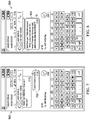
- FIGS. 5-16 are a sequential series of chat messages in a context of a vacation planning human resources operation in accordance with an illustrative embodiment
- FIG. 17 is a second illustration of a graphical user interface in accordance with an illustrative embodiment
- FIG. 18 is a flowchart of a process for digitally manipulating a human resources workflow on a mobile device in accordance with an illustrative embodiment.
- FIG. 19 is a block diagram of a data processing system depicted in accordance with an illustrative embodiment.
- a “business rule” is computer code executable only by a computer to produce a change in a computer, a server computer, at a remote client computer, or at a local client computer based on input from a server computer.
- business rule could be substituted for “business rule,” it is customary in the business world to refer to computer rules that are used to aid in electronic services used in support of the business as “business rules.”
- business rule should not be interpreted as a human-implemented procedure in a business environment, but rather strictly as an information technology implementation of hardware or software, as defined above.
- a “business rule interpreter” is hardware or software which is used to interpret or execute business rules in a business system.
- a “business rule interpreter” is software residing in a Web browser on the client computer.
- the illustrative embodiments are not necessarily limited to only client computers or Web browsers.
- the illustrative embodiments contemplate that many different business rule system architectures and business rule interpreters are possible.
- the illustrative embodiments provide for business rule systems which dramatically increase the speed of the operation of computers implementing business rules.
- the illustrative embodiments provide for a business rule interpreter designed for a domain-specific language entirely composed of metadata objects.
- the business rule interpreter of the illustrative embodiments may take the form of an abstract syntax tree interpreter having a structure composed of metadata itself.
- the abstract syntax tree interpreter requires no complier because the constructs from which a metadata object is composed of are well-defined when they are constructed. Thus, the compilation phase that precedes the execution of code under ordinary circumstances is non-existent and hence avoided.
- the tokenization and parsing that would occur become the translation of the user input into the well-defined metadata objects that result in the composition of the user-selected block types and properties. As a result, executable code is not necessary.
- the business rule interpreter of the illustrative embodiments may be defined as a set of composable executor functions, each of which defines a single, atomic code construct as defined by the behavior belonging to the business rule domain-specific language.
- the atomic code constructs may be blocks visually presented to a user on a browser, which the user combines in an input area of a display monitor.
- Combinations of these atomic code constructs generate combinations of executor functions, which the abstract syntax tree described above interprets and then implements in the browser. Hence compilation and executable code are entirely avoided, resulting in a dramatic increase in speed of the computer. The increase of speed has been measured to be ten times faster, or more, compared to prior business rule interpreters which rely on compilation, executable code, and runtime of that executable code.
- the executor functions of the business rule interpreter all operate inside of a context defined at a beginning of the business rule execution step, which is the target object for all symbols in the course of a business rule execution as well as for all input to and output from the business rule itself.
- the different permutations of the compositions of these functions, as well as differentiated input, are what enable the execution of different business rule behaviors at runtime.
- the business rules of the illustrative embodiments execute from the abstract syntax tree interpreter from the runtime metadata definition of the business rule alone.
- the illustrative embodiments also recognize and take into account that prior business rule systems were not as maintainable as desired and not as secure as desired, in addition to not being as fast as desired.
- the illustrative embodiments recognize and take into account that the illustrative embodiments increase security through the use of pre-defined executor functions defined by metadata.
- the illustrative embodiments also recognize and take into account that the illustrative embodiments are easily maintainable simply by defining additional executor functions, or by modifying the definitions of existing executor functions. Hence, the illustrative embodiments represent a highly significant improvement in the art of business system architectures.
- the business rule interpreter of the illustrative embodiments is a code interpreter designed for a domain-specific language entirely composed of metadata objects.
- This compiler takes the form of an abstract syntax tree (AST) interpreter with the exception that the abstract syntax tree (AST) structure is the composed metadata itself.
- AST abstract syntax tree
- This structure requires no compilation because the constructs from which the metadata object are composed of are well-defined when they are constructed. So, the compilation phase that precedes the execution of code in the business rule interpreter is non-existent.
- the tokenization and parsing that would occur would be the translation of user input into well-defined metadata objects which would result in the composition of the user-selected block types and properties.
- the business rule interpreter is a set of infinitely-composable executor functions, each of which defines a single, atomic code construct as defined by the behavior (and actual visual “blocks”) belonging to the business rule domain-specific language. These functions all operate inside of a context defined at the beginning of the business rule execution step which is the target object for all symbols defined in the course of the business rule execution, as well as for all input to and output from the business rule itself.
- the different permutations of the compositions of these functions, as well as differentiated input, are what enable the execution of the different business rule behaviors at runtime.
- the architecture described in this document assumes conditions about the environment in which it is run, as well as the business decisions driving the platform in which it is used.
- the metadata passed into the business rule interpreter is dynamic.
- the single source of truth associated with the metadata provided to the interpreter is the actual metadata provided by the metadata document store. No pre-compilation has occurred on the metadata documents before they have been passed to the interpreter, including contextual overrides.
- the executor function is the basic unit of structure and function in the business rule interpreter. It is a singular code point which correlates to business rule metadata objects created by the business rule designer, which in turn is manipulated by the user to create desired business rules.
- An executor can represent as little code as possible to allow rules to be composed. All of the executors in the business rule interpreter take the context of the business rule currently in execution as well as a business rule metadata object entity for a single block inclusive of its children and returns the same context updated with the behavior of the executor itself.
- helpers perform similar functionality to executors, executing JAVASCRIPT® against translated business rule metadata objects, with the exception that they do not necessarily take the same arguments or return the same values. All of the executors in the business rule interpreter take the context of the business rule currently in execution, as well as a business rule metadata object entity for a single block inclusive of its children and returns the same context updated with the behavior of the executor itself. Helpers always use a business rule execution context, as well as some other arguments, but not necessarily a business rule metadata object. They can return anything. The distinction between helpers and other utilities is that helpers use a business rule execution context or a business rule metadata object whereas the utility functions of executors are generic.
- all date types may be transferrable. This fact implies that no matter what type of date identifier is passed, it will be coerced into the same JAVASCRIPT® date type.
- the business rule interpreter accepts International Organization for Standardization (ISO) strings or epoch times as date-like type arguments.
- ISO International Organization for Standardization
- One way to create a date from a business rule is with a “date-manipulation” with type of “create” and this operation will create a UTC date regardless of the time zone of the created date.
- the only exception to UTC handling of JAVASCRIPT® dates is in the “string-manipulation” block with a “format” type. This block will localize a date before formatting it to the specified format. The reason this procedure is done is that the executor is predominately creating “display” values.
- Dates may be returned as International Organization for Standardization (ISO) strings.
- Output parameters that are of any of the date-like types or dates in notification messages will always be International Organization for Standardization (ISO) strings. If the value associated with an output parameter from a business rule of type “date,” “datetime,” or “time” happens to be an invalid date, it cannot be converted into an International Organization for Standardization (ISO) string and therefore will return a null value.
- human resources management environment 100 includes human resources management system 102 .
- Human resources management system 102 may take different forms.
- human resources management system 102 may be selected from one of an employee information system, a research information system, a sales information system, an accounting system, a payroll system, a human resources system, or some other type of information system that stores and provides access to information 104 .
- Information 104 can include information about organization 106 .
- Information 104 may include, for example, at least one of information about people, products, research, product analysis, business plans, financials, or other information relating to organization 106 and employees 108 . As depicted, information 104 is stored on database 110 .
- the phrase “at least one of,” when used with a list of items, means different combinations of one or more of the listed items may be used and only one of each item in the list may be needed. In other words, “at least one of” means any combination of items and number of items may be used from the list, but not all of the items in the list are required.
- the item may be a particular object, thing, or a category.
- “at least one of item A, item B, or item C” may include item A, item A and item B, or item B. This example also may include item A, item B, and item C or item B and item C. Of course, any combinations of these items may be present. In some illustrative examples, “at least one of” may be, for example, without limitation, two of item A; one of item B; and ten of item C; four of item B and seven of item C; or other suitable combinations.
- Organization 106 may be, for example, a corporation, a partnership, a charitable organization, a city, a government agency, or some other suitable type of organization. As depicted, organization 106 includes employees 108 .
- employees 108 are people who are employed by or associated with organization 106 .
- employees 108 can include at least one of employees, administrators, managers, supervisors, and third parties associated with organization 106 .
- Human resources management system 102 may be implemented in computer system 110 .
- Computer system 110 is a physical hardware system and includes one or more data processing systems. When more than one data processing system is present, those data processing systems may be in communication with each other using a communications medium.
- the communications medium may be a network, such as network 112 .
- the data processing systems may be selected from at least one of a computer, a server computer, a workstation, a tablet computer, a laptop computer, a mobile phone, or some other suitable data processing system.
- User 114 uses mobile device 116 to communicate with human resources management system 102 in order to perform one or more of human resource operations 118 .
- Mobile device 116 and human resources management system 102 are connected to one another via network 112 .
- Network 112 is a communications medium and may include one or more wireless or wired data networks.
- Network 112 may include one or more of a wireless cellular data network, a local area network, a wide area network, the Internet, an intranet, or other suitable types of networks.
- mobile device 116 may use a wireless cellular data network, such a code division multiple access (CDMA) or a global system for mobiles (GSM) to access the Internet.
- CDMA code division multiple access
- GSM global system for mobiles
- Human resources management system 102 may access the Internet via a wired link. In this manner, mobile device 116 is in communication with human resources management system 102 via network 112 .
- Mobile device 116 comprises physical hardware that is portable, such as a handheld device.
- mobile device 116 includes at least one of a laptop computer, a tablet, a mobile phone, such as a cellular or smart phone, or any other suitable type of portable data processing system that can access information 104 over a network, such as network 112 .
- the access may include at least one of reading, writing, modifying, or operating on information 104 .
- Mobile application 120 is configured to run on mobile device 116 .
- Mobile application 120 may include at least one of a browser, a mobile application, or some other suitable type of application that is configured to receive and display information 104 and interact with user 114 .
- User 114 may use mobile application 120 to perform one or more of human resource operations 118 .
- mobile application 120 uses context data of mobile device 116 to influence the interactions between user 116 and mobile application 120 .
- context data mobile application 120 may be referred to as a “context-aware” application.
- user 114 may perform one or more of human resource operations 118 by digitally manipulating a human resources workflow on mobile device 116 .
- Mobile device 116 includes mobile context 122 .
- Mobile context 122 is relevant data or information that influences the interaction of user 114 with mobile application 120 .
- mobile context 122 can include contextual data retrieved from user profiles stored on mobile device 116 .
- Mobile context 122 can include historical and behavioral information about the user's previous interactions with mobile application 120 .
- Mobile context 122 can include contextual data obtained through the various sensors of mobile device 116 , including one or more cameras, microphones, gyroscopes, and accelerometers, as well as other relevant sensors.
- Mobile context 122 can include contextual data obtained from a GPS receiver or clock in mobile device 116 .
- Human resources management system 102 receives selection 123 of human resources operation 124 from mobile application 120 executing on mobile device 116 .
- Human resources operation 124 is one of human resource operations 118 .
- human resources management system 102 identifies mobile context 122 based on one or more chat messages received from mobile device 116 .
- human resources management system 102 receives selection 123 based on interaction of user 114 with operations interface 126 , displayed on display system 128 in graphical user interface 130 .
- User 114 may interact with graphical user interface 130 through user input 132 generated by one or more user input device, such as, for example, a mouse, a keyboard, a trackball, a touchscreen, a stylus, or some other suitable type of input device.
- Human resources management system 102 identifies business rule 134 corresponding to human resources operation 124 .
- human resources management system 102 enables human resources operation 124 through a plurality of linked metadata objects 136 organized into metadata mobile structure 138 .
- Metadata mobile structure 138 is a tree representation of the abstract syntactic structure of source code, independent of any particular representation or encoding. Each node of the tree denotes a construct occurring in the source code.
- metadata mobile structure 138 can be “abstract” in that it does not represent every detail appearing in the real syntax.
- Human resource bot 140 interprets the plurality of linked metadata objects 136 to implement business rule 134 within mobile context 141 using mobile chat 134 .
- Human resource bot 140 provides design time orchestration and runtime interpretation of metadata mobile structure 138 to implement business rule 134 .
- human resource bot 140 includes logic for metadata retrieval, resolution, and interpretation, but not compilation.
- human resource bot 140 also includes flow designer 142 .
- Flow designer 142 allows a user to create and organize metadata objects into metadata mobile structure 138 .
- Metadata objects created by flow designer 142 are manipulated by the user to create business rule 134 .
- Metadata blocks, and the underlying executor functions, can represent as little code as possible to allow rules to be composed. All of linked metadata objects 136 take the context of business rule 134 currently in execution as well as mobile context 141 and returns the same context updated with the behavior of the executor itself.
- Human resources bot 140 may be implemented in software, hardware, firmware, or a combination thereof. When software is used, the operations performed by human resources bot 140 may be implemented in program code configured to run on hardware, such as a processor unit. When firmware is used, the operations performed by human resources bot 140 may be implemented in program code and data and stored in persistent memory to run on a processor unit. When hardware is employed, the hardware may include circuits that operate to perform the operations in human resources bot 140 .
- the hardware may take the form of a circuit system, an integrated circuit, an application-specific integrated circuit (ASIC), a programmable logic device, or some other suitable type of hardware configured to perform a number of operations.
- ASIC application-specific integrated circuit
- the device may be configured to perform the number of operations.
- the device may be reconfigured at a later time or may be permanently configured to perform the number of operations.
- Programmable logic devices include, for example, a programmable logic array, programmable array logic, a field programmable logic array, a field programmable gate array, and other suitable hardware devices.
- the processes may be implemented in organic components integrated with inorganic components and may be comprised entirely of organic components, excluding a human being. For example, the processes may be implemented as circuits in organic semiconductors.
- one or more of the plurality of linked metadata objects 136 may require user input 132 for implementing business rule 134 .
- human resources bot 140 when interpreting the plurality of linked metadata objects 136 , human resources bot 140 sends chat messages 144 to mobile device 116 .
- chat messages 144 are a first set of messages that request input needed by one or more of the plurality of linked metadata objects 136 to implement business rule 134 .
- chat messages 144 can take the form of at least one of an icon or graphic within a graphical user interface, an e-mail, a chat message, or a short messaging service (SMS) message. According to an illustrative embodiment, chat messages 144 can be displayed within chat interface 146 of graphical user interface 130 of mobile device 116 .
- SMS short messaging service
- human resources bot 140 generates a first set of chat messages 144 according to a chat flow of metadata mobile structure 138 that corresponds to business rule 134 .
- Human resources bot 140 interprets the plurality of linked metadata objects 136 to generate chat messages 144 according to metadata mobile structure 138 .
- human resources bot 140 interprets linked metadata objects 136 within mobile context 141 .
- Human resources bot 140 uses mobile chat 148 to directly generate chat messages 144 requesting input needed by one or more of the plurality of linked metadata objects 136 to implement business rule 134 .
- Mobile chat 148 is one or more metadata objects associated with at least one of linked metadata objects 136 .
- Mobile chat 148 indicates that one or more chat messages 144 should be generated to implement business rule 134 .
- User 114 may interact with graphical user interface 130 through user input 132 to generate a second set of chat messages 144 , providing user input 132 requested by human resources bot 140 using mobile chat 148 .
- Human resources bot 140 receives the second set of chat messages 144 from mobile device 116 , enabling the performance of human resources operation 124 according to business rule 134 .
- Human resources bot 140 interprets information received in chat messages 144 within mobile context 141 identified from mobile context 122 .
- FIG. 1 and the examples in the other subsequent figures provide one or more technical solutions to overcome a technical problem inherent in the time-consuming translation of metadata and compilation of executable code processes. By avoiding translation of metadata and compilation of executable code, the speed of both rule generation and rule execution is dramatically increased.
- human resources bot 140 has a technical effect of increasing the speed of both the generation and execution of business rule 134 within mobile context 141 .
- human resources operation 124 performed for organization 106 may be performed more efficiently as compared to currently used systems that do not include human resources bot 140 .
- business rules and chat flows supporting the performance of operations such as, but not limited to, at least one of hiring, benefits administration, payroll, performance reviews, forming teams for new products, assigning research projects, or other suitable operations for organization 106 , can be more quickly and accurately enabled when using human resources bot 140 .
- computer system 110 operates as a special purpose computer system in which human resources bot 140 in computer system 122 enables digitally performing human resources operation 124 on mobile device 116 .
- Human resources bot 140 identifies mobile context 122 of chat messages 144 received from mobile application 120 executing on mobile device 116 .
- Human resources bot 140 determines human resources operation 124 intended by chat message 144 . The determination is based in part on mobile context 122 .
- Human resources bot 140 identifies a logic flow for business rule 134 corresponding to human resources operation 124 .
- Business rule 134 is comprised in a plurality of linked metadata objects 136 forming a syntax tree.
- Human resources bot 140 interprets the plurality of linked metadata objects 136 to implement business rule 134 within mobile context 122 .
- Human resources bot 140 then performs human resources operation 124 within mobile context 122 according to business rule 134 .
- human resources bot 140 transforms computer system 110 into a special purpose computer system as compared to currently available general computer systems that do not have human resources bot 140 .
- Human resources bot 140 performs business rules based on linked metadata objects 148 organized into metadata mobile structure 138 to implement human resources operation 124 .
- Currently used general computer systems do not increase the speed of both rule generation and rule execution by avoiding translation of metadata and compilation of executable code.
- FIG. 2 is a block diagram of an architecture of a metadata-based human resources management system depicted in accordance with an illustrative embodiment.
- Human resources management system 200 is an example of human resources management system 102 described in human resources management environment 100 , and is presented as a network-based business system including both server computers and client computers.
- Human resources management system 200 includes human resources bot 202 .
- Human resources bot 202 is a server-side or node computer which presents flow designer 204 .
- Flow designer 204 is a user interface (UI) that allows a user to combine blocks, each representing an executor function that is a pre-defined atomic unit of code.
- Human resources bot 202 may be where the interpreter fetches metadata. It is not necessarily a restful request, but may be any methodology used to provision the metadata used by the business rule interpreter, which is the primary function of mobile remote stage 206 and business rule remote stage 208 .
- logic flow service 210 provides one or more context object identifications to mobile remote stage 206 and business rule remote stage 208 , which can be a server-side computer.
- the identifications are the identifications against which metadata documents can be resolved.
- Logic flow service 210 may be referred to as the engine inside the application.
- Human resources bot 202 may be a wrapper around the interpreter intended to separate the logic of metadata retrieval and resolution, not complication, but duplicating and caching, from the actual metadata interpretation.
- Logic flow service 210 interprets metadata blocks of metadata mobile structure 150 and generates chat output and business rule output therefrom.
- Mobile remote stage 206 can be implemented as part of mobile chat 148 of FIG. 1 .
- Mobile remote stage 206 is a program that allows communication between human resources bot 210 and mobile chat 148 .
- Mobile remote stage 206 “exposes” some internal functions of mobile chat 148 to logic flow service 210 in a limited fashion.
- Mobile remote stage 206 enables human resources bot 202 to share data with mobile chat 148 , and enables mobile chat 148 to take actions on behalf of human resources bot 202 .
- a user incorporates mobile metadata block 212 into metadata mobile structure 150 at design time.
- mobile metadata block 212 provides additional context for execution of related metadata blocks inclusive of its children, and returns the same context updated with the information received through chat messages 144 of FIG. 1 .
- mobile metadata block 212 may indicate chat flow 220 for requesting and receiving information required for execution of related blocks of metadata mobile structure 150 .
- a user incorporates mobile context block 214 into metadata mobile structure 150 at design time.
- mobile context block 214 provides additional context for execution of related metadata blocks inclusive of its children based on mobile context information retrieved from a mobile device, such as mobile context 122 of mobile device 116 of FIG. 1 .
- Mobile context block 214 returns the same context updated with the information received through chat messages 144 of FIG. 1 .
- mobile context block 214 may indicate that mobile metadata block 212 should be interpreted in light of mobile context information retrieved from an associated mobile device.
- Mobile remote stage 206 receives interpreted metadata provided from human resources bot 202 .
- Mobile remote stage 206 generates chat output from the interpreted metadata.
- Chat output is the output provided by mobile chat 148 of FIG. 1 corresponding to the metadata and input values passed into mobile remote stage 206 .
- Mobile chat 148 sends chat output to mobile device 116 as chat messages, such as chat messages 144 of FIG. 1 .
- Chat output is already executable because they are generated from the pre-determined atomic units of code specified by the executor functions selected client-side. Chat output is the output provided by human resources bot 202 to mobile remote stage 206 that corresponds to the interpreted metadata blocks of metadata mobile structure 150 as indicated by mobile metadata block 212 .
- Business rule remote stage 208 can be implemented as part of business rule 134 of FIG. 1 .
- Business rule remote stage 208 is a program that allows communication between human resources bot 202 and consuming service 216 .
- Business rule remote stage 208 “exposes” some internal functions of consuming service 216 to human resources bot 202 in a limited fashion.
- Business rule remote stage 208 enables human resources bot 202 to share data with consuming service 216 , and enables consuming service 216 to take actions on behalf of, and using data provided by human resources bot 202 .
- Business rule remote stage 208 receives interpreted metadata provided from human resources bot 202 .
- Business rule remote stage 208 generates business rule output from the interpreted metadata.
- Business rule output is the output provided by business rule 134 of FIG. 1 corresponding to the metadata and input values passed into business rule remote stage 208 .
- Business rule 134 sends business rule output to consuming service 216 , enabling consuming service 216 to perform human resources operation 124 of FIG. 1 .
- a user incorporates business rule metadata block 218 into metadata mobile structure 150 .
- business rule metadata block 218 provides additional context for execution of related metadata blocks inclusive of its children, and provides business rule output to consuming service 216 .
- Business rule output is already executable because they are generated from the pre-determined atomic units of code specified by the executor functions selected client-side.
- Business rule output is the output provided by human resources bot 202 to business rule remote stage 208 that corresponds to the interpreted metadata blocks of metadata mobile structure 150 as indicated by business rule metadata block 218 .
- business rule output is provided directly to one or more of consuming service 216 , which executes the output of business rule remote stage 208 .
- consuming service 216 executes the output of business rule remote stage 208 .
- Consuming service 216 represents a service for performing a human resource operation, such as human resource operation 124 of FIG. 1 .
- Consuming service 216 can be a service that either requested that a business rule be executed, require output there from, or combinations thereof.
- Consuming service 216 can be, but is not necessarily restricted to, a mobile application, such as mobile application 120 of FIG. 1 .
- consuming service 216 can be, but is not necessarily restricted to, a human resources application for performing a human resources operation, such as human resources operation 124 of FIG. 1 .
- consuming service 216 can be implemented as a webpage.
- Human resources management system 200 is a specific implementation of the illustrative embodiments. Thus, human resources management system 200 does not necessarily limit the claimed inventions, or other business rule systems described herein.
- Metadata mobile structure 300 is an example of metadata mobile structure 150 , shown in block form in FIG. 1 .
- Metadata mobile structure 300 includes metadata blocks 310 , 312 , and 314 .
- Metadata blocks 310 , 312 , and 314 are metadata objects that can be manipulated within flow designer 204 of FIG. 2 to create desired business rules.
- Each of metadata blocks 310 , 312 , and 314 correlate to one or more executor functions, which in turn can be interpreted by logic flow service 210 of FIG. 2 for implementing the corresponding business rule.
- These functions all operate inside of a context defined at the beginning of the business rule execution step which is the target object for all symbols defined in the course of the business rule execution, as well as for all input to and output from the business rule itself.
- the different permutations of the compositions of these functions, as well as differentiated input, are what enable the execution of the different business rule behaviors at runtime.
- Metadata mobile structure 300 further includes mobile context block 316 .
- Mobile context block 316 is an example of mobile context block 214 of FIG. 2 .
- Mobile context block 316 provides additional context for execution of related metadata block 310 .
- mobile context block 316 may indicate metadata block 310 , as well as child metadata blocks 312 and 314 thereof, should be interpreted within a mobile context retrieved from associated mobile device, such as mobile context 122 of mobile device 116 , both shown in block form in FIG. 1 .
- Metadata mobile structure 300 further includes mobile block 318 .
- Mobile block 318 is an example of mobile metadata block 212 of FIG. 2 .
- Mobile block 318 provides additional context for execution of related mobile metadata block 312 .
- mobile block 318 may indicate a chat flow, such as chat flow 220 of FIG. 2 , for requesting and receiving information required for execution of mobile metadata block 312 .
- Mobile block 318 requests and returns the same context updated with the information received through chat messages 144 of FIG. 1 , as provided through mobile remote stage 206 .
- Metadata mobile structure 300 further includes business rule block 320 .
- Business rule block 320 is an example of business rule metadata block 218 of FIG. 2 .
- Business rule block 318 provides additional context for execution of related metadata block 314 .
- business rule block 320 may indicate a consuming service for receipt of business rule output provided by related metadata block 314 .
- Business rule block 320 requests and returns information to a consuming service, such as consuming service 216 in FIG. 2 , as provided through business rule remote stage 208 .
- Graphical user interface 400 is an example of a graphical user interface 130 shown in block form in FIG. 1 .
- graphical user interface 400 displays operations interface 402 for mobile application 404 .
- Operations interface 402 is an example of operations interface 126 , shown in block form in FIG. 1 .
- Operations interface 402 allows a user to select or search for different human resources operations that are supported by and can be performed using a mobile application.
- a selection such as selection 122 of FIG. 1 , is generated when a user interacts with one of the various graphical elements in graphical user interface 400 , selecting commonly utilized or frequently accessed human resource operations.
- operations interface 402 includes a graphical element indicating annual leave 406 for an employee of an organization. As depicted, annual leave 406 indicates that the employee has 23 days remaining of 25 days of annual leave.
- Chat interface 500 is an example of chat interface 146 , shown in block form in FIG. 1 .
- chat message 502 is displayed in chat interface 500 .
- Chat message 502 is a chat message, such as chat messages 144 of FIG. 1 , sent from a user to a human resources bot, such as human resources bot 140 , shown in block form in FIG. 1 .
- chat message 502 begins an interaction with a human resources bot to perform the human resources operation.
- chat interface 500 further includes chat message 602 .
- a human resources bot generates and sends chat message 602 in response to receiving chat message 502 .
- chat interface 500 further includes chat message 702 .
- the user has entered chat message 702 , indicating an intent to “book a leave.”
- chat interface 500 additionally displays chat message 802 in response to receiving chat message 702 , wherein a human resources bot determines an intent of chat message 702 .
- the human resources bot identifies a corresponding business rule and flow design based in part on the identified intent and mobile context of information received with chat message 702 .
- the human resources bot returns chat message 802 .
- Chat message 802 can be interpreted from the identified flow design.
- a human resources bot interprets a metadata mobile structure within the mobile context identified from the received chat messages. Therefore, in generating chat message 802 , the human resources bot can apply various rules and formats within the identified mobile context to influence the presentation of the chat messages as well as the application of the corresponding business rule.
- chat message 802 requests information required for interpretation of an associated metadata block within the identified mobile context, such as metadata block 312 of FIG. 3 .
- chat interface 500 additionally displays chat message 902 .
- the user has entered chat message 902 in response to a prompt for information indicated in chat message 802 .
- chat interface 500 additionally displays chat message 1002 in response to receiving chat message 902 .
- the human resources bot continues with interpretation of the identified metadata mobile structure within the mobile context of information received with the chat messages.
- the human resources bot returns chat message 1002 .
- chat message 1002 requests information required for interpretation of an associated metadata block within the identified mobile context, such as metadata block 312 of FIG. 3 .
- chat interface 500 additionally displays chat message 1102 .
- the user has entered chat message 1102 in response to a prompt for information indicated in chat message 1002 .
- chat message 1102 provides information required for interpretation of an associated metadata block within the identified mobile context, such as metadata block 312 .
- chat interface 500 additionally displays chat message 1202 in response to receiving chat message 1102 .
- the human resources bot continues with interpretation of the identified metadata mobile structure within the mobile context of information received with the chat messages.
- the human resources bot returns chat message 1202 .
- chat message 1202 requests information required for interpretation of an associated metadata block within the identified mobile context, such as metadata block 312 .
- chat interface 500 additionally displays chat message 1302 .
- the user has entered chat message 1302 in response to a prompt for information indicated in chat message 1202 .
- chat message 1302 provides information required for interpretation of an associated metadata block within the identified mobile context, such as metadata block 312 .
- chat interface 500 additionally displays chat message 1402 in response to receiving chat message 1302 .
- the human resources bot has received all information required for interpretation of the identified metadata mobile structure within the mobile context of information received with the chat messages.
- the human resources bot returns chat message 1402 .
- chat message 1402 presents a summary of information that will be passed to a corresponding consuming service for the performance of the human resources operation.
- chat interface 500 additionally displays chat message 1502 .
- the user has entered chat message 1502 in response to the information summary indicated in chat message 1402 .
- chat message 1502 confirms the information summarized in chat message 1402 .
- chat interface 500 additionally displays chat message 1602 .
- the human resources bot passes the identified information into a corresponding consuming service, such as consuming service 216 of FIG. 2 .
- the human resources bot Upon performance of the human resources operation by the consuming service, the human resources bot generates chat message 1602 and forwards the message to the user.
- FIG. 17 a second illustration of a graphical user interface is depicted in accordance with an illustrative embodiment.
- graphical user interface 400 is illustrated after the performance of a human resources operation as performed by a human resources bot according to the chat flow illustrated in FIGS. 5-16 .
- operations interface 402 includes a graphical element indicating annual leave 406 for an employee of an organization.
- Annual leave 406 has been updated to reflect the human resource operation performed according to the chat flow illustrated in FIGS. 5-16 .
- annual leave 406 indicates that the employee now has 22 days remaining of 25 days of annual leave.
- Process 1800 may be implemented in computer system 110 of FIG. 1 .
- process 1800 may be implemented as operations performed by business rule client 138 , shown in block form in FIG. 1 .
- the process begins by receiving a selection of a human resources operation from a mobile application executing on a mobile device (step 1810 ).
- the selection can be, for example, selection 132 of human resources operations 118 selected from operations interface 126 , all shown in FIG. 1 .
- the process then identifies a logic flow with a mobile signature corresponding to the human resources operation (step 1820 ).
- the business rule comprises a plurality of linked metadata objects forming a syntax tree.
- the process then interprets the plurality of metadata objects to implement the logic flow (step 1830 ).
- Interpreting the plurality of metadata objects comprises sending, to the mobile device, a first set of chat messages that request input for the plurality of metadata objects.
- Interpreting the plurality of metadata objects further comprises receiving a second set of chat messages from the mobile device that provide the requested input.
- the first set of chat messages and the second set of chat messages can be, for example, chat messages 144 of FIG. 1 .
- the process then performs the human resources operation according to the logic flow (step 1840 ), with the process terminating thereafter.
- Performing the human resources operation comprises generating a workflow stage notification.
- Performing the human resources operation further comprises publishing the workflow stage notification to a set of mobile devices for display on a timeline of the mobile application.
- each block in the flowcharts or block diagrams may represent at least one of a module, a segment, a function, or a portion of an operation or step.
- one or more of the blocks may be implemented as program code.
- the function or functions noted in the blocks may occur out of the order noted in the figures.
- two blocks shown in succession may be performed substantially concurrently, or the blocks may sometimes be performed in the reverse order, depending upon the functionality involved.
- other blocks may be added in addition to the illustrated blocks in a flowchart or block diagram.
- Data processing system 1900 may be used to implement one or more computers and computer system 122 in FIG. 1 .
- data processing system 1900 includes communications framework 1902 , which provides communications between processor unit 1904 , memory 1914 , persistent storage 1916 , communications unit 1908 , input/output unit 1910 , and display 1912 .
- communications framework 1902 may take the form of a bus system.
- Processor unit 1904 serves to execute instructions for software that may be loaded into memory 1914 .
- Processor unit 1904 may be a number of processors, a multi-processor core, or some other type of processor, depending on the particular implementation.
- Memory 1914 and persistent storage 1916 are examples of storage devices 1906 .
- a storage device is any piece of hardware that is capable of storing information, such as, for example, without limitation, at least one of data, program code in functional form, or other suitable information either on a temporary basis, a permanent basis, or both on a temporary basis and a permanent basis.
- Storage devices 1906 may also be referred to as computer-readable storage devices in these illustrative examples.
- Memory 1914 in these examples, may be, for example, a random access memory or any other suitable volatile or non-volatile storage device.
- Persistent storage 1916 may take various forms, depending on the particular implementation.
- persistent storage 1916 may contain one or more components or devices.
- persistent storage 1916 may be a hard drive, a flash memory, a rewritable optical disk, a rewritable magnetic tape, or some combination of the above.
- the media used by persistent storage 1916 also may be removable.
- a removable hard drive may be used for persistent storage 1916 .
- Communications unit 1908 in these illustrative examples, provides for communications with other data processing systems or devices.
- communications unit 1908 is a network interface card.
- Input/output unit 1910 allows for input and output of data with other devices that may be connected to data processing system 1900 .
- input/output unit 1910 may provide a connection for user input through at least of a keyboard, a mouse, or some other suitable input device. Further, input/output unit 1910 may send output to a printer.
- Display 1912 provides a mechanism to display information to a user.
- Instructions for at least one of the operating system, applications, or programs may be located in storage devices 1906 , which are in communication with processor unit 1904 through communications framework 1902 .
- the processes of the different embodiments may be performed by processor unit 1904 using computer-implemented instructions, which may be located in a memory, such as memory 1914 .
- program code computer-usable program code, or computer-readable program code that may be read and executed by a processor in processor unit 1904 .
- the program code in the different embodiments may be embodied on different physical or computer-readable storage media, such as memory 1914 or persistent storage 1916 .
- Program code 1918 is located in a functional form on computer-readable media 1920 that is selectively removable and may be loaded onto or transferred to data processing system 1900 for execution by processor unit 1904 .
- Program code 1918 and computer-readable media 1920 form computer program product 1922 in these illustrative examples.
- computer-readable media 920 may be computer-readable storage media 1924 or computer-readable signal media 1926 .
- computer-readable storage media 1924 is a physical or tangible storage device used to store program code 1918 rather than a medium that propagates or transmits program code 1918 .
- program code 1918 may be transferred to data processing system 1900 using computer-readable signal media 1926 .
- Computer-readable signal media 1926 may be, for example, a propagated data signal containing program code 1918 .
- computer-readable signal media 1926 may be at least one of an electromagnetic signal, an optical signal, or any other suitable type of signal. These signals may be transmitted over at least one of communications links, such as wireless communications links, optical fiber cable, coaxial cable, a wire, or any other suitable type of communications link.
- the different components illustrated for data processing system 1900 are not meant to provide architectural limitations to the manner in which different embodiments may be implemented.
- the different illustrative embodiments may be implemented in a data processing system including components in addition to or in place of those illustrated for data processing system 1900 .
- Other components shown in FIG. 19 can be varied from the illustrative examples shown.
- the different embodiments may be implemented using any hardware device or system capable of running program code 1918 .
- a component may be configured to perform the action or operation described.
- the component may have a configuration or design for a structure that provides the component an ability to perform the action or operation that is described in the illustrative examples as being performed by the component.
Landscapes
- Engineering & Computer Science (AREA)
- Business, Economics & Management (AREA)
- Human Resources & Organizations (AREA)
- Entrepreneurship & Innovation (AREA)
- Strategic Management (AREA)
- Theoretical Computer Science (AREA)
- Economics (AREA)
- Physics & Mathematics (AREA)
- General Physics & Mathematics (AREA)
- Marketing (AREA)
- General Business, Economics & Management (AREA)
- Tourism & Hospitality (AREA)
- Operations Research (AREA)
- Quality & Reliability (AREA)
- Signal Processing (AREA)
- Computer Networks & Wireless Communication (AREA)
- General Engineering & Computer Science (AREA)
- Educational Administration (AREA)
- Development Economics (AREA)
- Game Theory and Decision Science (AREA)
- Data Mining & Analysis (AREA)
- Software Systems (AREA)
- Information Transfer Between Computers (AREA)
Abstract
Description
Claims (21)
Priority Applications (1)
| Application Number | Priority Date | Filing Date | Title |
|---|---|---|---|
| US15/961,673 US10893012B2 (en) | 2018-04-24 | 2018-04-24 | Context aware metadata-based chat wizard |
Applications Claiming Priority (1)
| Application Number | Priority Date | Filing Date | Title |
|---|---|---|---|
| US15/961,673 US10893012B2 (en) | 2018-04-24 | 2018-04-24 | Context aware metadata-based chat wizard |
Publications (2)
| Publication Number | Publication Date |
|---|---|
| US20190327199A1 US20190327199A1 (en) | 2019-10-24 |
| US10893012B2 true US10893012B2 (en) | 2021-01-12 |
Family
ID=68238291
Family Applications (1)
| Application Number | Title | Priority Date | Filing Date |
|---|---|---|---|
| US15/961,673 Active 2039-02-15 US10893012B2 (en) | 2018-04-24 | 2018-04-24 | Context aware metadata-based chat wizard |
Country Status (1)
| Country | Link |
|---|---|
| US (1) | US10893012B2 (en) |
Families Citing this family (3)
| Publication number | Priority date | Publication date | Assignee | Title |
|---|---|---|---|---|
| US20200160273A1 (en) * | 2018-11-16 | 2020-05-21 | Adp, Llc | Geolocation web page generation system |
| CN116127002A (en) * | 2022-08-12 | 2023-05-16 | 马上消费金融股份有限公司 | Data processing method, system, device, equipment and storage medium |
| US20240354708A1 (en) * | 2023-04-20 | 2024-10-24 | Matrix Absence Management, Inc. | Systems and methods for managing workforce data |
Citations (13)
| Publication number | Priority date | Publication date | Assignee | Title |
|---|---|---|---|---|
| US20070061266A1 (en) * | 2005-02-01 | 2007-03-15 | Moore James F | Security systems and methods for use with structured and unstructured data |
| US20090064280A1 (en) * | 2007-09-05 | 2009-03-05 | Oracle International Corporation | Framework for delegating roles in human resources erp systems |
| US8250192B2 (en) * | 2007-10-12 | 2012-08-21 | International Business Machines Corporation | Data server administration using a chatbot |
| US20140280370A1 (en) * | 2013-03-15 | 2014-09-18 | Sap Ag | Adjustable Transformations from Semantic Web Languages |
| US20140351352A1 (en) * | 2013-05-24 | 2014-11-27 | Instaplay, Inc. | System and method for facilitating transactions as conversations between participants |
| US20160062753A1 (en) * | 2013-03-27 | 2016-03-03 | Netfective Technology Sa | Method for transforming first code instructions in a first programming language into second code instructions in a second programming language |
| US9396232B1 (en) * | 2009-10-16 | 2016-07-19 | Iqor Holdings, Inc. | Apparatuses, methods and systems for a rule-integrated virtual punch clock |
| US20180157721A1 (en) * | 2016-12-06 | 2018-06-07 | Sap Se | Digital assistant query intent recommendation generation |
| US20190073197A1 (en) * | 2017-09-01 | 2019-03-07 | Nationwide Mutual Insurance Company | Chatbot development and deployment platform |
| US20190215283A1 (en) * | 2017-11-05 | 2019-07-11 | Walkme Ltd. | Chat-Based Application Interface for Automation |
| US20190236134A1 (en) * | 2018-01-30 | 2019-08-01 | Oracle International Corporation | Using communicative discourse trees to detect a request for an explanation |
| US20190268288A1 (en) * | 2018-02-28 | 2019-08-29 | Sap Se | Generating conversational nodes for a system function |
| US20190303873A1 (en) | 2018-03-29 | 2019-10-03 | Adp, Llc | Metadata-based chat wizard |
-
2018
- 2018-04-24 US US15/961,673 patent/US10893012B2/en active Active
Patent Citations (13)
| Publication number | Priority date | Publication date | Assignee | Title |
|---|---|---|---|---|
| US20070061266A1 (en) * | 2005-02-01 | 2007-03-15 | Moore James F | Security systems and methods for use with structured and unstructured data |
| US20090064280A1 (en) * | 2007-09-05 | 2009-03-05 | Oracle International Corporation | Framework for delegating roles in human resources erp systems |
| US8250192B2 (en) * | 2007-10-12 | 2012-08-21 | International Business Machines Corporation | Data server administration using a chatbot |
| US9396232B1 (en) * | 2009-10-16 | 2016-07-19 | Iqor Holdings, Inc. | Apparatuses, methods and systems for a rule-integrated virtual punch clock |
| US20140280370A1 (en) * | 2013-03-15 | 2014-09-18 | Sap Ag | Adjustable Transformations from Semantic Web Languages |
| US20160062753A1 (en) * | 2013-03-27 | 2016-03-03 | Netfective Technology Sa | Method for transforming first code instructions in a first programming language into second code instructions in a second programming language |
| US20140351352A1 (en) * | 2013-05-24 | 2014-11-27 | Instaplay, Inc. | System and method for facilitating transactions as conversations between participants |
| US20180157721A1 (en) * | 2016-12-06 | 2018-06-07 | Sap Se | Digital assistant query intent recommendation generation |
| US20190073197A1 (en) * | 2017-09-01 | 2019-03-07 | Nationwide Mutual Insurance Company | Chatbot development and deployment platform |
| US20190215283A1 (en) * | 2017-11-05 | 2019-07-11 | Walkme Ltd. | Chat-Based Application Interface for Automation |
| US20190236134A1 (en) * | 2018-01-30 | 2019-08-01 | Oracle International Corporation | Using communicative discourse trees to detect a request for an explanation |
| US20190268288A1 (en) * | 2018-02-28 | 2019-08-29 | Sap Se | Generating conversational nodes for a system function |
| US20190303873A1 (en) | 2018-03-29 | 2019-10-03 | Adp, Llc | Metadata-based chat wizard |
Non-Patent Citations (3)
| Title |
|---|
| Final Office Action, dated Sep. 14, 2020, regarding U.S. Appl. No. 15/940,836, 16 pages. |
| Office Action, dated Jul. 23, 2020, regarding U.S. Appl. No. 15/940,836, 16 pages. |
| Singh, Shelly, "How HR Tech Leaders can Use AI to Enhance Employee Experience," Business Word, Athena Information Solutions Pvt. Ltd., Oct. 13, 2017. (Year: 2017). * |
Also Published As
| Publication number | Publication date |
|---|---|
| US20190327199A1 (en) | 2019-10-24 |
Similar Documents
| Publication | Publication Date | Title |
|---|---|---|
| JP7387714B2 (en) | Techniques for building knowledge graphs within limited knowledge domains | |
| US10185930B1 (en) | Collaboration using shared documents for processing distributed data | |
| US8396827B2 (en) | Relation-based hierarchy evaluation of recursive nodes | |
| US9053445B2 (en) | Managing business objects | |
| US9043750B2 (en) | Automated generation of two-tier mobile applications | |
| US8863075B2 (en) | Automated support for distributed platform development | |
| US20150121401A1 (en) | Graph based data model for api ecosystem insights | |
| US9952835B2 (en) | Generation of hybrid enterprise mobile applications in cloud environment | |
| US9165087B2 (en) | Validity path node pattern for structure evaluation of time-dependent acyclic graphs | |
| US11194686B2 (en) | Data agnostic monitoring service | |
| US10936998B2 (en) | Metadata-based chat wizard | |
| US9063753B2 (en) | Scripting framework for business objects | |
| US20230229671A1 (en) | Web services having live data updates | |
| US11269603B2 (en) | Compiler for context-dependent code global data types | |
| US10893012B2 (en) | Context aware metadata-based chat wizard | |
| US20170255866A1 (en) | Architectures and mechanisms for providing analysis of complex object structures | |
| US20130239012A1 (en) | Common denominator filter for enterprise portal pages | |
| US20080162777A1 (en) | Graph abstraction pattern for generic graph evaluation | |
| CN119003912A (en) | Method and device for reporting buried data | |
| US20190332246A1 (en) | System for dynamically rendering a graphical user interface | |
| US10558624B2 (en) | System and method for datastore management framework | |
| US8650247B2 (en) | Four tier architecture for implementing thin clients | |
| US20230185644A1 (en) | Integrating access to multiple software applications | |
| Buck Woody et al. | Data Science with Microsoft SQL Server 2016 | |
| US12079882B2 (en) | Conversion from schemas to payroll policies |
Legal Events
| Date | Code | Title | Description |
|---|---|---|---|
| AS | Assignment |
Owner name: ADP, LLC, NEW JERSEY Free format text: ASSIGNMENT OF ASSIGNORS INTEREST;ASSIGNORS:HAVALDAR, SACHIN;SUNDAR, ARAVIND;SIGNING DATES FROM 20180413 TO 20180418;REEL/FRAME:046033/0386 |
|
| FEPP | Fee payment procedure |
Free format text: ENTITY STATUS SET TO UNDISCOUNTED (ORIGINAL EVENT CODE: BIG.); ENTITY STATUS OF PATENT OWNER: LARGE ENTITY |
|
| STPP | Information on status: patent application and granting procedure in general |
Free format text: NON FINAL ACTION MAILED |
|
| STPP | Information on status: patent application and granting procedure in general |
Free format text: FINAL REJECTION MAILED |
|
| STPP | Information on status: patent application and granting procedure in general |
Free format text: DOCKETED NEW CASE - READY FOR EXAMINATION |
|
| STPP | Information on status: patent application and granting procedure in general |
Free format text: PUBLICATIONS -- ISSUE FEE PAYMENT VERIFIED |
|
| STCF | Information on status: patent grant |
Free format text: PATENTED CASE |
|
| AS | Assignment |
Owner name: ADP, INC., NEW JERSEY Free format text: CHANGE OF NAME;ASSIGNOR:ADP, LLC;REEL/FRAME:058959/0729 Effective date: 20200630 |
|
| MAFP | Maintenance fee payment |
Free format text: PAYMENT OF MAINTENANCE FEE, 4TH YEAR, LARGE ENTITY (ORIGINAL EVENT CODE: M1551); ENTITY STATUS OF PATENT OWNER: LARGE ENTITY Year of fee payment: 4 |