US10875015B2 - Methods for making oxygen reduction reaction catalysts formed of platinum alloy nanoparticles embedded in porous carbon - Google Patents
Methods for making oxygen reduction reaction catalysts formed of platinum alloy nanoparticles embedded in porous carbon Download PDFInfo
- Publication number
- US10875015B2 US10875015B2 US16/139,936 US201816139936A US10875015B2 US 10875015 B2 US10875015 B2 US 10875015B2 US 201816139936 A US201816139936 A US 201816139936A US 10875015 B2 US10875015 B2 US 10875015B2
- Authority
- US
- United States
- Prior art keywords
- porous carbon
- carbon material
- chamber
- gas
- functional
- Prior art date
- Legal status (The legal status is an assumption and is not a legal conclusion. Google has not performed a legal analysis and makes no representation as to the accuracy of the status listed.)
- Active, expires
Links
Images



Classifications
-
- B—PERFORMING OPERATIONS; TRANSPORTING
- B01—PHYSICAL OR CHEMICAL PROCESSES OR APPARATUS IN GENERAL
- B01J—CHEMICAL OR PHYSICAL PROCESSES, e.g. CATALYSIS OR COLLOID CHEMISTRY; THEIR RELEVANT APPARATUS
- B01J37/00—Processes, in general, for preparing catalysts; Processes, in general, for activation of catalysts
- B01J37/02—Impregnation, coating or precipitation
- B01J37/0201—Impregnation
- B01J37/0207—Pretreatment of the support
-
- B—PERFORMING OPERATIONS; TRANSPORTING
- B01—PHYSICAL OR CHEMICAL PROCESSES OR APPARATUS IN GENERAL
- B01J—CHEMICAL OR PHYSICAL PROCESSES, e.g. CATALYSIS OR COLLOID CHEMISTRY; THEIR RELEVANT APPARATUS
- B01J21/00—Catalysts comprising the elements, oxides, or hydroxides of magnesium, boron, aluminium, carbon, silicon, titanium, zirconium, or hafnium
- B01J21/18—Carbon
-
- B—PERFORMING OPERATIONS; TRANSPORTING
- B01—PHYSICAL OR CHEMICAL PROCESSES OR APPARATUS IN GENERAL
- B01J—CHEMICAL OR PHYSICAL PROCESSES, e.g. CATALYSIS OR COLLOID CHEMISTRY; THEIR RELEVANT APPARATUS
- B01J23/00—Catalysts comprising metals or metal oxides or hydroxides, not provided for in group B01J21/00
- B01J23/38—Catalysts comprising metals or metal oxides or hydroxides, not provided for in group B01J21/00 of noble metals
- B01J23/40—Catalysts comprising metals or metal oxides or hydroxides, not provided for in group B01J21/00 of noble metals of the platinum group metals
- B01J23/42—Platinum
-
- B—PERFORMING OPERATIONS; TRANSPORTING
- B01—PHYSICAL OR CHEMICAL PROCESSES OR APPARATUS IN GENERAL
- B01J—CHEMICAL OR PHYSICAL PROCESSES, e.g. CATALYSIS OR COLLOID CHEMISTRY; THEIR RELEVANT APPARATUS
- B01J23/00—Catalysts comprising metals or metal oxides or hydroxides, not provided for in group B01J21/00
- B01J23/70—Catalysts comprising metals or metal oxides or hydroxides, not provided for in group B01J21/00 of the iron group metals or copper
- B01J23/89—Catalysts comprising metals or metal oxides or hydroxides, not provided for in group B01J21/00 of the iron group metals or copper combined with noble metals
- B01J23/8926—Copper and noble metals
-
- B01J35/0046—
-
- B01J35/04—
-
- B—PERFORMING OPERATIONS; TRANSPORTING
- B01—PHYSICAL OR CHEMICAL PROCESSES OR APPARATUS IN GENERAL
- B01J—CHEMICAL OR PHYSICAL PROCESSES, e.g. CATALYSIS OR COLLOID CHEMISTRY; THEIR RELEVANT APPARATUS
- B01J35/00—Catalysts, in general, characterised by their form or physical properties
- B01J35/40—Catalysts, in general, characterised by their form or physical properties characterised by dimensions, e.g. grain size
- B01J35/45—Nanoparticles
-
- B—PERFORMING OPERATIONS; TRANSPORTING
- B01—PHYSICAL OR CHEMICAL PROCESSES OR APPARATUS IN GENERAL
- B01J—CHEMICAL OR PHYSICAL PROCESSES, e.g. CATALYSIS OR COLLOID CHEMISTRY; THEIR RELEVANT APPARATUS
- B01J35/00—Catalysts, in general, characterised by their form or physical properties
- B01J35/70—Catalysts, in general, characterised by their form or physical properties characterised by their crystalline properties, e.g. semi-crystalline
-
- B—PERFORMING OPERATIONS; TRANSPORTING
- B01—PHYSICAL OR CHEMICAL PROCESSES OR APPARATUS IN GENERAL
- B01J—CHEMICAL OR PHYSICAL PROCESSES, e.g. CATALYSIS OR COLLOID CHEMISTRY; THEIR RELEVANT APPARATUS
- B01J37/00—Processes, in general, for preparing catalysts; Processes, in general, for activation of catalysts
- B01J37/02—Impregnation, coating or precipitation
- B01J37/0201—Impregnation
- B01J37/0203—Impregnation the impregnation liquid containing organic compounds
-
- B—PERFORMING OPERATIONS; TRANSPORTING
- B01—PHYSICAL OR CHEMICAL PROCESSES OR APPARATUS IN GENERAL
- B01J—CHEMICAL OR PHYSICAL PROCESSES, e.g. CATALYSIS OR COLLOID CHEMISTRY; THEIR RELEVANT APPARATUS
- B01J37/00—Processes, in general, for preparing catalysts; Processes, in general, for activation of catalysts
- B01J37/08—Heat treatment
-
- B—PERFORMING OPERATIONS; TRANSPORTING
- B01—PHYSICAL OR CHEMICAL PROCESSES OR APPARATUS IN GENERAL
- B01J—CHEMICAL OR PHYSICAL PROCESSES, e.g. CATALYSIS OR COLLOID CHEMISTRY; THEIR RELEVANT APPARATUS
- B01J37/00—Processes, in general, for preparing catalysts; Processes, in general, for activation of catalysts
- B01J37/16—Reducing
- B01J37/18—Reducing with gases containing free hydrogen
-
- B—PERFORMING OPERATIONS; TRANSPORTING
- B01—PHYSICAL OR CHEMICAL PROCESSES OR APPARATUS IN GENERAL
- B01J—CHEMICAL OR PHYSICAL PROCESSES, e.g. CATALYSIS OR COLLOID CHEMISTRY; THEIR RELEVANT APPARATUS
- B01J2235/00—Indexing scheme associated with group B01J35/00, related to the analysis techniques used to determine the catalysts form or properties
- B01J2235/15—X-ray diffraction
-
- B—PERFORMING OPERATIONS; TRANSPORTING
- B01—PHYSICAL OR CHEMICAL PROCESSES OR APPARATUS IN GENERAL
- B01J—CHEMICAL OR PHYSICAL PROCESSES, e.g. CATALYSIS OR COLLOID CHEMISTRY; THEIR RELEVANT APPARATUS
- B01J2235/00—Indexing scheme associated with group B01J35/00, related to the analysis techniques used to determine the catalysts form or properties
- B01J2235/30—Scanning electron microscopy; Transmission electron microscopy
-
- B—PERFORMING OPERATIONS; TRANSPORTING
- B01—PHYSICAL OR CHEMICAL PROCESSES OR APPARATUS IN GENERAL
- B01J—CHEMICAL OR PHYSICAL PROCESSES, e.g. CATALYSIS OR COLLOID CHEMISTRY; THEIR RELEVANT APPARATUS
- B01J35/00—Catalysts, in general, characterised by their form or physical properties
- B01J35/30—Catalysts, in general, characterised by their form or physical properties characterised by their physical properties
- B01J35/391—Physical properties of the active metal ingredient
Definitions
- the subject matter described herein generally relates to catalysts and, more particularly, to metal alloy catalysts.
- Metal and alloy nanoparticles can be deployed as part of a support material for their use as a catalyst.
- the use of a support material can provide separation and stabilization of the particles, to prevent agglomeration and sintering.
- the noble metals and their alloys can be involved in catalysis in one or more reactions. Primarily, only surface atoms are involved in catalysis. Therefore, the overall cost of catalysts can be largely related to the amount of precious metal incorporated therein.
- a method for forming platinum alloy nanoparticles into porous carbon can include heating a porous carbon material within a chamber, the porous carbon material having one or more pores.
- the method can further include applying a vacuum to the chamber.
- the method can further include delivering a platinum precursor solution and a metal precursor solution to the porous carbon material.
- the method can further include heating the precursor-loaded porous carbon material to a functional temperature.
- the method can further include delivering a functional gas to the platinum precursor and the metal precursor on the porous carbon material, the platinum precursor and the metal precursor reacting with the functional gas to produce platinum alloy nanoparticles within the one or more pores.
- a method for forming platinum alloy particles into porous carbon can include removing moisture from a porous carbon material within a chamber, the porous carbon having one or more pores.
- the method can further include applying a vacuum to the chamber.
- the method can further include delivering a precursor solution to the porous carbon material, the precursor solution comprising platinum, nickel, and copper.
- the method can further include purging the chamber using a purge gas.
- the method can further include heating the precursors-loaded porous carbon material to a functional temperature.
- the method can further include delivering a functional gas to the precursors-loaded porous carbon material, the precursors reacting with the functional gas to produce octahedral platinum alloy nanoparticles within the one or more pores of the porous carbon material.
- a method for forming platinum alloy particles into porous carbon can further include heating a porous carbon material in a chamber to a temperature of from 150° C. to 300° C., for a time period of from 1 hour to 24 hours, in an atmosphere comprising air, Ar, N 2 , O 2 , or combinations thereof, the porous carbon having one or more pores.
- the method can further include reducing pressure within the chamber to less than 500 millibars.
- the method can further include delivering a precursor solution to the porous carbon material, the precursor solution comprising platinum(acac) 2 , copper(acac) 2 , and nickel(acac) 2 , dissolved in a volatile solvent.
- the method can further include purging the chamber using a purge gas.
- the method can further include heating the precursors-loaded porous carbon material to a temperature from 150° C. to 300° C. for a period of from 1 hour to 5 hours.
- the method can further include delivering a functional gas to the precursors-loaded porous carbon material, the precursors reacting with the functional gas to form octahedral platinum alloy nanoparticles within the one or more pores.
- FIG. 1 is a block diagram of a method for synthesizing platinum-containing mesoporous carbon (MPC) materials, according to one or more implementations.
- MPC platinum-containing mesoporous carbon
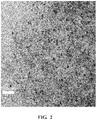
- FIG. 2 is a transmission electron microscopy (TEM) image of platinum-containing nanoparticles formed in a MPC material, according to one or more implementations.
- TEM transmission electron microscopy
- FIG. 3 is an X-ray diffraction (XRD) characterization pattern of PtNiCu nanoparticles, according to one or more implementations.
- XRD X-ray diffraction
- noble metal alloy nanoparticles such as platinum alloy nanoparticles
- FC advanced fuel cell
- Catalyst is a substance which alters the rate of a chemical reaction. Catalysts participate in a reaction in a cyclic fashion, such that the catalyst is not consumed by the reaction. Platinum alloys, such as octahedral platinum alloys, have surface facets that can provide for high activity.
- scale-up preparation of said platinum alloy catalysts remains challenging. Production difficulties for said catalysts include maintaining consistency in shape, consistency in size, and composition control.
- the durability of shape-controlled catalysts in vehicle applications is another challenge to overcome.
- the sharp edges of the nanoparticles are one of the main causes for instability of the shape-controlled platinum alloy.
- the sharp edges can lead to the easy detachment of the particles from carbon support during electrochemical cycling.
- Metal alloy nanoparticles with specific morphologies can exhibit improved catalytic properties, such as activity, selectivity, and durability, in many reactions.
- the catalytic properties of the catalyst can be improved.
- the amount of noble metal usage in some metal alloys can be decreased.
- a variety of methods have been explored for preparing noble metal alloy catalysts with specific morphologies.
- an active metal precursor is dissolved in an aqueous or organic solution. Then, the reactant solution is added to a catalyst support containing a pore volume equal to the volume of the reactant solution that is added. Capillary action can then draw the solution into the pores.
- Solution can be added in excess of the support pore volume, to cause the solution transport to change from a capillary action process to a diffusion process.
- the catalyst can then be dried to evaporate the volatile components within the porous material, depositing the metal on the catalyst surface.
- the method described herein allows for forming metal alloy nanoparticles, such as platinum-containing nanoparticles inside the pores of the porous carbon support, such as MPC, to prevent the nanoparticle migration and enhance durability.
- Embodiments described herein relate to a method for forming metal alloy nanoparticles, such as octahedral platinum-nickel-copper (PtNiCu) nanoparticles, into a porous material, such as porous carbon materials, for example, a MPC support.
- the implementations described herein can further be applied to forming a variety of other types of nanoparticles into a variety of porous structures.
- the implementations disclosed herein can include vacuum impregnation of the porous material.
- “Vacuum impregnation,” as used herein, refers to impregnating the porous material (e.g., the porous carbon material) using the metal precursors while under vacuum. Vacuum impregnation can provide the benefit of effectively loading the metal precursors into the MPC pores, speeding the absorption process, and avoiding surface wetting problems inherent in microporous or mesoporous structures.
- vacuum impregnation can allow for better surface interaction between the metal precursors and the porous material.
- the implementations disclosed herein can further include reducing the impregnated metal precursors into shaped alloy nanoparticles using a reducing gas atmosphere. The reduction in situ of the metal precursors can allow the nanoparticles to form and embed in the walls of the porous structure, reducing nanoparticle migration post-synthesis. The implementations disclosed herein are more clearly described with reference to the figures below.
- FIG. 1 is a block diagram of a method 100 for synthesizing platinum-containing MPC materials, according to one or more implementations.
- the methods described herein include vacuum impregnation of a porous carbon material with a plurality of metal precursors. Once impregnated with the metal precursors, the porous carbon material is heated, and the metal precursors are reduced with reducing gases to produce the metal alloy nanoparticles.
- the method 100 can include removing moisture from a porous carbon material within a chamber, at 102 .
- a vacuum can then be applied to the chamber, at 104 .
- a precursor solution can then be delivered to the porous carbon material, at 106 .
- the chamber can then be purged using a purge gas, at 108 .
- the MPC material can then be heated to a reducing temperature, at 110 .
- a reducing gas can be delivered to the MPC material, at 112 .
- the method 100 can include removing moisture from a porous material within a chamber, at 102 .
- the method 100 includes a designated amount of a porous material, such as a porous carbon material, being positioned within a chamber for formation of one or more metal alloy materials.
- a porous material refers to a material having pores, such as cavities, channels or interstices.
- Pore refers to an opening, depression, or a tunnel in a carbon material, such as, for example, in MPC material.
- a pore can be a single tunnel or connected to other tunnels in a continuous network throughout the structure.
- “Porosity” refers to the fraction of the volume of voids over the total volume of the surface.
- the porous material is a MPC material, a microporous carbon material, or others.
- the porous materials can have a pore structure capable of high surface area for metal catalyst exposure.
- Pore structure generally refers to the surface layout of the internal pores within a material, such as a MPC material. Components of the pore structure include pore size, pore volume, surface area, density, pore size distribution, and pore length.
- the pore structure of the porous carbon materials such as MPC or microporous carbon, comprise a combination of mesopores and micropores where the predominant pore type determines the material type.
- MPC Mesopore
- MPC materials can have greater than 50% of their total pore volume in mesopores, while microporous carbon materials comprise greater than 50% of their total pore volume in micropores.
- the porous material can include a mesoporous pore structure.
- the porous material is predominately microporous.
- the porous material can include a blend of micropores and mesopores, in positions, quantities, and organizations as desired.
- the pore structure can allow for incorporation of metal precursors (e.g., for metal alloy catalysts) while also allowing for desired exposure of reactants.
- the porous materials are ultrapure, which can provide enhanced elimination of side reactions associated with unwanted impurities.
- “Ultrapure” refers to a substance having an impurity content of less than 0.050%, such as a porous carbon material having an impurity content of less than 0.050% (i.e., 500 ppm). As such, the porous materials can provide an adequate structure for the formation of metal alloy nanoparticles.
- the chamber can be capable of removing moisture from the porous material.
- the chamber can be a furnace, a desiccator, a vacuum chamber, or others capable of removing moisture.
- the chamber can be sealed to an exterior environment. Further, the chamber can be multifunctional, such that one or more further steps can be performed in the same chamber. In further implementations, the chamber performs a single function. In implementations which use more than one chamber, the chamber can further include capability or configuration to transfer the porous material through a sealed environment, such as to prevent contamination during transfer between chambers.
- the porous material can be held in the chamber in a controlled atmosphere.
- the atmosphere can include argon (Ar), nitrogen (N 2 ), oxygen (O 2 ), carbon dioxide (CO 2 ), other atmospheric gases, other inert gases, or combinations thereof.
- the porous material can be maintained at a pretreatment dwell temperature. “Dwell temperature” refers to the relatively constant and stable temperature (i.e., neither increasing nor decreasing the temperature) of the chamber during a portion of a process.
- the pretreatment dwell temperature can be selected such that the porous material can be substantially dry within the time frame desired, without damaging the porous material, one or more components on the porous material, or one or more components of the chamber.
- the pretreatment dwell temperature can be in a range of from about 100° C. to about 300° C.
- the pretreatment dwell temperature can be set with respect to a ramping rate.
- “Ramping rate,” as used herein, describes the rate used to heat the catalyst precursor from room temperature to the designated dwell temperature.
- the ramping rate is provided as a function of temperature over a period of time.
- the pretreatment time frame can be long enough to substantially remove moisture from the porous carbon material.
- the dwell temperature can be maintained for a pretreatment time frame, such as in a range of from about 1 hour to about 24 hours.
- the pretreatment time frame can be longer or shorter, as suited to dwell temperature and the moisture of the porous carbon material.
- the term “substantially” includes exactly the term it modifies and slight variations therefrom.
- the term “substantially remove” means exactly remove and slight variations therefrom.
- slight variations therefrom can include within normal manufacturing or preparations tolerances, within about 10 degrees/percent or less, within about 5 degrees/percent or less, within about 4 degrees/percent or less, within about 3 degrees/percent or less, within about 2 degrees/percent or less, or within about 1 degrees/percent or less.
- the preparation of different metal alloy nanoparticles with different morphology, composition, and size can be controlled through different synthetic parameters, including the type of functional gas atmosphere, the total pressure/partial pressure of the gases, the ramping rate for heating the materials, the reduction temperature, and the reduction time.
- Each of these parameters can be controlled, respective to the parameter type, by adjusting one or more of the gas type or pressure using flow meters and/or valves or adjusting one or more of the dwell temperatures, time frames, or ramping rate using the reduction furnace.
- a vacuum can be applied to the chamber, at 104 .
- the vacuum can be delivered to the chamber using a vacuum supply source, such as a pump fluidly connected to the chamber.
- the vacuum supply source can reduce the atmospheric pressure within the chamber to a pressure which is in a range of less than about one (1) bar, such as a range of less than about 500 millibars.
- the pressure within the chamber can be in the range of from about 500 millibars to about 0.01 millibar.
- the temperature of the chamber can be in a range of from about 20° C. to about 100° C.
- the vacuum can be maintained or recreated during one or more elements of the method described herein.
- the vacuum applied between steps can vary, such as within the ranges described herein, in a continuous or non-continuous fashion.
- a precursor solution can be delivered to the porous material, at 106 .
- the addition of the precursor solution to the porous substrate under vacuum is referred to as a “vacuum impregnation.”
- “Vacuum impregnation,” as used herein, refers to the uniform distribution of the metal precursors onto and/or into the exposed surface of the substrate.
- the metal precursors can be dissolved into a solvent to create the precursor solution.
- the precursor solution can be used to impregnate the metal precursors onto the porous material.
- solvent refers to a substance which dissolves or suspends reactants (e.g., metal precursors) and provides a medium in which a reaction may occur.
- solvents which can be used in the preparation of metal precursors can include but are not limited, to organic compounds having a low solvent molar volume for active-species solubility, and a high Hansen polarity for conductivity.
- solvents usable with implementations described herein can include water, ethanol, acetone, acetonitrile, acetylacetone (acac), dimethylformamide, methanol, propanol, hexane, toluene, chloroform, dimethyl ether, tetrahydrofuran, dimethyl sulfoxide, and mixtures thereof. Suitable solvents will be apparent based on the chosen metal precursors. Solvents used herein can have limited or no reaction with either the metal precursors or the porous material. Further, the solvents can help to disperse the metal precursors onto the porous carbon materials.
- the precursor solution can include one or more metal precursors.
- the metal precursors can be first dissolved in a solvent, before vacuum impregnation onto support materials. The solvent and vacuum impregnation can result in a uniform distribution of metal precursor molecules on the surface of the porous carbon materials.
- the metal precursors can be selected in light of the desired constituents, such as platinum, copper, palladium, nickel, or others. In one implementation, the metal precursors include platinum, copper, and nickel. In one or more implementations, the precursor solution can be referred to as a function of the dissolved metal precursor (e.g., platinum precursor solution, copper precursor solution, metal precursor solution, etc.).
- the precursor solution can be delivered as components or mixed, where the metal precursor is dissolved in a solvent, such as chloroform, acetone, toluene.
- a solvent such as chloroform, acetone, toluene.
- the precursor solution can include platinum (II) acetylacetonate, (Pt(acac) 2 ), copper (II) acetylacetonate, (Cu(acac) 2 ), and nickel (II) acetylacetonate, (Ni(acac) 2 ) dissolved in a volatile solvent.
- the precursor solution is added to the porous material to distribute the metal precursor across the exposed surface of the porous material.
- the precursor solution can be delivered at a controlled speed and in the presence of agitation (e.g., vigorous stirring).
- the porous catalyst mixture can be maintained under vacuum and/or continuous stirring for a suitable period of time to ensure absorption and adsorption of the precursor solution into the porous material.
- the vacuum reduces pressure, allowing for both better surface wetting of the porous material and evacuation of volatile chemicals.
- the vacuum can create a dry low-pressure atmosphere around the porous material, thus allowing the solvent to evaporate more readily and leaving behind the metal precursors.
- the vacuum dries the saturated porous material, which includes the porous material and the metal precursor adsorbed thereon and/or absorbed therein.
- saturated porous material indicates some level of absorbance of a first substance into a second substance. Saturation can include partial saturation or complete saturation. In this example, the saturated porous material is the second substance, and the precursor solution is the first substance.
- the chamber including the saturated porous material, can be purged using a purge gas, at 108 .
- the purge gas can then be delivered to clear the chamber.
- the purge gas can include an inert gas.
- the inert gas can be a gas that is not reactive with the exposed elements within the chamber, such as the porous substrate, the precursor solutions, the surfaces of the chamber itself, and others.
- the inert gas usable with implementations described herein can include noble gases, such as Ar, He, Xe, and the like, or non-reactive gases, such as N 2 .
- the inert gas may be supplied to the chamber at a flow rate of from about one (1) sccm to about 1000 sccm. The end point can be determined based on clearance from the chamber of volatile chemicals, specific time frame or others as desired.
- the porous material can be heated to a functional temperature, at 110 .
- the reducing of the reactants can include heating the saturated porous material at the designated ramping rate to a functional dwell temperature.
- the chamber can be heated to functional dwell temperature.
- the functional dwell temperature can be a dwell temperature at which the metal precursor reaction can occur.
- the functional dwell temperature can be in a range of from about 150° C. to about 300° C.
- the designated ramping rate can be a ramping rate which achieves the desired reaction, including the morphology of the resulting particles, without damaging the porous material or the metal precursors.
- the designated ramping rate can be a range from about 1° C./min to about 20° C./min.
- the functional dwell temperature can be maintained in the chamber for the functional time frame, based at least on the desire, the metal precursor being reduced, specific particle shape and size, or others.
- the functional time frame can be a range from about one (1) hours to about five (5) h for metal precursor reduction.
- a functional gas can be delivered to the porous material, at 112 .
- the reactants on the porous material can then be reduced in the one or more functional gases.
- the designated dwell temperature can be maintained for the designated reaction time.
- the functional gases facilitate the transportation of metal precursors to their growing sites and the reduction of the metal precursors into their respective metal or alloys as the case may be based on the precursors employed.
- the functional gases preferentially adsorb to certain surfaces of growing metal and alloy nanoparticles, altering the surface plane growth rate and confining their growth into particular morphologies. For instance, if the functional gases adsorb preferentially to the (100) planes, then the grown particles have a cubic morphology. If the functional gases adsorb preferentially to the (111) planes, the grown particles have either a tetrahedral or an octahedral morphology.
- the many different synthetic parameters including the type of functional gas atmosphere, the total pressure/partial pressure of the gases, the ramping rate for heating the materials, the reduction temperature, and the reduction time can influence the reduction rate of the metal precursors and the nucleation rate of the reduced metals. These influences consequently affect the growth rate of metal alloy nanoparticles and thus their final particle size.
- Functional gases such as CO, NH 3 , NO, and C 2 H 2
- the functional gases they have preferential adsorption to metal planes which can be used to control the shape of the metal precursors.
- the functional gas atmosphere can be a pure gas, such as one listed above, or it can also be a mixture of one of those gases with hydrogen and/or inert gases. If multiple gases are used, partial pressures of each gas can be adjusted individually, or the total pressure of all the gases can be adjusted. The method described here be carried out using only functional gases. Functional gases can be easily removed from the produced materials once the process is complete.
- both CO and H 2 gases are used for the functional gases.
- CO and H 2 gases can be applied differentially to control the final morphology of the metal alloy nanoparticles.
- CO and H 2 gases can be used, in varying concentrations, to reduce the noble metal platinum.
- a gas mixture of H 2 and CO can be delivered at a partial pressure ratio being in range of greater than 1:100 (e.g., one (1) part H 2 to 100 parts CO) H 2 to CO gas, such as a range of greater than 1:50 H 2 to CO gas, where greater refers to increasing concentrations of H 2 as compared to CO gas.
- a gas mixture of H 2 and CO can be delivered at partial pressure ratio being in the range of from about 1:100 (i.e., one (1) part H 2 to 100 parts CO) to about 1:1 of H 2 to CO gas.
- the functional gases can be delivered at a volumetric flow rate in a range of from about ten (10) sccm to about 1000 sccm, such as in a range of from about 100 sccm to about 500 sccm.
- the flow rate, in sccm, of the functional gases can be based on the current temperature of the chamber or room temperature.
- the functional gas can further include a carrier gas.
- the career gas can be an inert gas, as described above, such that flow rate can be maintained while limiting the available reactants for reducing the metal precursors.
- Pure CO gas can form platinum particles that contain a mixture of polyhedral, irregular, and cubic shapes.
- Pure H 2 gas can form platinum particles that contain a mixture of spherical and irregular platinum particles, with large particles (e.g., larger than 20 nm) and small particles (e.g., smaller than 10 nm) coexisting together.
- H 2 gas can be used to facilitate reduction of the platinum precursors on the carbon support.
- CO gas can be used to confine growth of platinum nuclei into cubes, due to its preferential chemisorption to platinum surfaces.
- CO and H 2 gases can be used together to control platinum nanoparticle size and morphology as desired, for porous materials described herein.
- the parameters described above can be applied to produce platinum alloy nanoparticles, such as octahedral platinum alloy nanoparticles.
- the octahedral platinum alloy nanoparticles are octahedral PtNiCu nanoparticles.
- the precursors can react with the functional gas to produce octahedral platinum alloy nanoparticles within the pores of the MPC material.
- the method disclosed herein teaches the formation of octahedral platinum formed in a porous material network, such as MPC materials as described herein.
- a porous material network such as MPC materials as described herein.
- the precursors can be absorbed and adsorbed into the porous material.
- the porous material can securely embed and surround the metal alloy nanoparticles, preventing dislodgement or migration of the material.
- the formations described herein, such as octahedral platinum formed in a MPC material can provide catalytic activity with lower noble metal requirements.
- FIG. 2 shows a TEM image of PtNiCu nanoparticles formed in MPC material, prepared according to the method of FIG. 1 .
- the morphology of the PtNiCu/MPC materials i.e., MPC materials with PtNiCu nanoparticles embedded in the pores
- the PtNiCu nanoparticles are well sited in the pores of the MPC material.
- a significant portion of the PtNiCu nanoparticles is seen in a rhombic shape-octahedral structure with substantially uniform nanoparticle sizes of less than or equal to 5 nm.
- TEM imaging supports the formation and/or encapsulation of octahedral PtNiCu nanoparticles.
- FIG. 3 is an XRD characterization result for the PtNiCu/MPC materials, prepared according to the method described with reference to FIG. 1 .
- the plot shows diffraction peaks at 41.5° and 48.4°, which are assigned to the PtCuNi composition.
- the PtCuNi nanoparticles are understood to have had a substantially uniform particle composition.
- the associated peak positions have significant shifts (a shift of about 1.7° and about 2.1°, respectively) compared to reference Pt (39.76° for (111) peak and 46.24° for (200) peak), which is an indication of Pt alloy formation.
- XRD characterization supports the formation of substantially uniform PtNiCu alloy nanoparticles.
- MPC material 50 g was thermally treated in a first chamber, using an air atmosphere and a dwell temperature at 300° C. overnight, for removing moisture before use.
- the MPC material was then added into a second chamber which was evacuated using a vacuum device, to remove the air in the pores of the MPC material.
- a precursor solution was prepared, including Pt(acac) 2 , Ni(acac) 2 , and Cu(acac) 2 dissolved in chloroform.
- the precursor solution was then injected into the second chamber, to be absorbed by the MPC material under the vacuum condition and vigorous stirring.
- the support material rapidly absorbed the precursor solution, suggesting effective impregnation of the precursors into the material pores.
- the saturated MPC material was then purged by N 2 flow for 20 minutes.
- the saturated MPC material was reduced by being heated at a ramping rate of 15° C./min to a dwell temperature of about 200° C. The dwell temperature was maintained for a time period of 1 hour.
- a functional gas, including H 2 gas and CO gas, was delivered to the chamber at a flow rate of 5 cm 3 /min for the H 2 gas and a flow rate of 120 cm 3 /min for the CO gas (ratio of 1:24 H 2 gas to CO gas), to produce a PtNiCu/MPC material.
- the atmosphere was switched back to the inert gas, N 2 , to purge the chamber of reactants and volatile chemicals. The material was cooled down to room temperature after the reaction was complete.
- MPC material 50 g was thermally treated in a first chamber, using an inert gas atmosphere and a dwell temperature at 200° C. overnight.
- the chamber with the MPC material was then evacuated using a vacuum device.
- a precursor solution was prepared, including Pt(acac) 2 , Ni(acac) 2 , and Cu(acac) 2 dissolved in chloroform.
- the precursor solution was then injected into the chamber under the vacuum condition and vigorous stirring to impregnate the precursors into the material pores.
- the saturated MPC material was then purged by N 2 flow for 20 minutes.
- the saturated MPC material was reduced by being heated at a ramping rate of 10° C./min to a dwell temperature of about 200° C. The dwell temperature was maintained for a time period of 4 hours.
- a functional gas, including H 2 gas and CO gas, was delivered to the chamber at a flow rate of 30 cm 3 /min for the H 2 gas and a flow rate of 60 cm 3 /min for the CO gas (ratio of 1:2 H 2 gas to CO gas), to produce a PtNiCu/MPC material.
- the atmosphere was switched back to the inert gas, N 2 .
- the material was then cooled down to room temperature.
- the terms “a” and “an,” as used herein, are defined as one as or more than one.
- the term “plurality,” as used herein, is defined as two or more than two.
- the term “another,” as used herein, is defined as at least a second or more.
- the terms “including” and/or “having,” as used herein, are defined as including (i.e., open language).
- the phrase “at least one of . . . and . . . ” as used herein refers to and encompasses any and all possible combinations of one or more of the associated listed items.
- the phrase “at least one of A, B and C” includes A only, B only, C only, or any combination thereof (e.g., AB, AC, BC or ABC).
Landscapes
- Chemical & Material Sciences (AREA)
- Engineering & Computer Science (AREA)
- Materials Engineering (AREA)
- Organic Chemistry (AREA)
- Chemical Kinetics & Catalysis (AREA)
- Physics & Mathematics (AREA)
- Thermal Sciences (AREA)
- Catalysts (AREA)
Abstract
Description
Claims (19)
Priority Applications (1)
| Application Number | Priority Date | Filing Date | Title |
|---|---|---|---|
| US16/139,936 US10875015B2 (en) | 2018-09-24 | 2018-09-24 | Methods for making oxygen reduction reaction catalysts formed of platinum alloy nanoparticles embedded in porous carbon |
Applications Claiming Priority (1)
| Application Number | Priority Date | Filing Date | Title |
|---|---|---|---|
| US16/139,936 US10875015B2 (en) | 2018-09-24 | 2018-09-24 | Methods for making oxygen reduction reaction catalysts formed of platinum alloy nanoparticles embedded in porous carbon |
Publications (2)
| Publication Number | Publication Date |
|---|---|
| US20200094238A1 US20200094238A1 (en) | 2020-03-26 |
| US10875015B2 true US10875015B2 (en) | 2020-12-29 |
Family
ID=69884054
Family Applications (1)
| Application Number | Title | Priority Date | Filing Date |
|---|---|---|---|
| US16/139,936 Active 2038-10-19 US10875015B2 (en) | 2018-09-24 | 2018-09-24 | Methods for making oxygen reduction reaction catalysts formed of platinum alloy nanoparticles embedded in porous carbon |
Country Status (1)
| Country | Link |
|---|---|
| US (1) | US10875015B2 (en) |
Cited By (2)
| Publication number | Priority date | Publication date | Assignee | Title |
|---|---|---|---|---|
| US20210121855A1 (en) * | 2019-10-28 | 2021-04-29 | Zhejiang University | Preparation method of nitrogen-doped hierarchical-porous carbon-loaded nanometer pd catalyst and product and application thereof |
| US11715834B2 (en) | 2019-12-27 | 2023-08-01 | Toyota Motor Engineering And Manufacturing North America, Inc. | Fuel cell cathode catalyst |
Families Citing this family (3)
| Publication number | Priority date | Publication date | Assignee | Title |
|---|---|---|---|---|
| US10933402B2 (en) | 2019-05-17 | 2021-03-02 | James R. Cartiglia | Carbon foam-based catalyst support |
| US10960383B2 (en) | 2019-05-17 | 2021-03-30 | James R. Cartiglia | Emission control devices |
| US10835888B1 (en) | 2019-05-17 | 2020-11-17 | James R. Cartiglia | Foam-based substrate for catalytic converter |
Citations (9)
| Publication number | Priority date | Publication date | Assignee | Title |
|---|---|---|---|---|
| US7700521B2 (en) * | 2003-08-18 | 2010-04-20 | Symyx Solutions, Inc. | Platinum-copper fuel cell catalyst |
| US20120264598A1 (en) * | 2011-04-12 | 2012-10-18 | GM Global Technology Operations LLC | Synthesis of platinum-alloy nanoparticles and supported catalysts including the same |
| US20130045866A1 (en) * | 2011-07-21 | 2013-02-21 | Kemijski Institut | Electrocatalytic composite(s), associated composition(s), and associated process(es) |
| US20130053239A1 (en) * | 2011-04-12 | 2013-02-28 | GM Global Technology Operations LLC | Synthesis Of Platinum-Alloy Nanoparticles And Supported Catalysts Including The Same |
| US20130133483A1 (en) | 2010-03-08 | 2013-05-30 | University Of Rochester | Synthesis of Nanoparticles Using Reducing Gases |
| US20150017570A1 (en) * | 2013-07-15 | 2015-01-15 | The Board Of Trustees Of The University Of Illinois | Noble Metal-Based Electrocatalyst and Method of Treating a Noble Metal-Based Electrocatalyst |
| US20160158730A1 (en) | 2013-07-10 | 2016-06-09 | Zhenmeng Peng | Functional gas-assisted impregnation method for producing noble metal alloy catalysts with defined morphology |
| US20180214943A1 (en) * | 2015-06-09 | 2018-08-02 | Georgia Tech Research Corporation | Polyhedral metal nanocages with well-defined facets and ultrathin walls and methods of making and uses thereof |
| US20180316023A1 (en) * | 2016-12-22 | 2018-11-01 | The Research Foundation For The State University Of New York | Method of producing stable, active and mass-producible pt3ni catalysts through preferential co etching |
-
2018
- 2018-09-24 US US16/139,936 patent/US10875015B2/en active Active
Patent Citations (9)
| Publication number | Priority date | Publication date | Assignee | Title |
|---|---|---|---|---|
| US7700521B2 (en) * | 2003-08-18 | 2010-04-20 | Symyx Solutions, Inc. | Platinum-copper fuel cell catalyst |
| US20130133483A1 (en) | 2010-03-08 | 2013-05-30 | University Of Rochester | Synthesis of Nanoparticles Using Reducing Gases |
| US20120264598A1 (en) * | 2011-04-12 | 2012-10-18 | GM Global Technology Operations LLC | Synthesis of platinum-alloy nanoparticles and supported catalysts including the same |
| US20130053239A1 (en) * | 2011-04-12 | 2013-02-28 | GM Global Technology Operations LLC | Synthesis Of Platinum-Alloy Nanoparticles And Supported Catalysts Including The Same |
| US20130045866A1 (en) * | 2011-07-21 | 2013-02-21 | Kemijski Institut | Electrocatalytic composite(s), associated composition(s), and associated process(es) |
| US20160158730A1 (en) | 2013-07-10 | 2016-06-09 | Zhenmeng Peng | Functional gas-assisted impregnation method for producing noble metal alloy catalysts with defined morphology |
| US20150017570A1 (en) * | 2013-07-15 | 2015-01-15 | The Board Of Trustees Of The University Of Illinois | Noble Metal-Based Electrocatalyst and Method of Treating a Noble Metal-Based Electrocatalyst |
| US20180214943A1 (en) * | 2015-06-09 | 2018-08-02 | Georgia Tech Research Corporation | Polyhedral metal nanocages with well-defined facets and ultrathin walls and methods of making and uses thereof |
| US20180316023A1 (en) * | 2016-12-22 | 2018-11-01 | The Research Foundation For The State University Of New York | Method of producing stable, active and mass-producible pt3ni catalysts through preferential co etching |
Non-Patent Citations (15)
Cited By (4)
| Publication number | Priority date | Publication date | Assignee | Title |
|---|---|---|---|---|
| US20210121855A1 (en) * | 2019-10-28 | 2021-04-29 | Zhejiang University | Preparation method of nitrogen-doped hierarchical-porous carbon-loaded nanometer pd catalyst and product and application thereof |
| US11772076B2 (en) * | 2019-10-28 | 2023-10-03 | Zhejiang University | Preparation method of nitrogen-doped hierarchical-porous carbon-loaded nanometer Pd catalyst and product and application thereof |
| US11715834B2 (en) | 2019-12-27 | 2023-08-01 | Toyota Motor Engineering And Manufacturing North America, Inc. | Fuel cell cathode catalyst |
| US12113224B2 (en) | 2019-12-27 | 2024-10-08 | Toyota Motor Engineering & Manufacturing North America, Inc. | Fuel cell cathode catalyst |
Also Published As
| Publication number | Publication date |
|---|---|
| US20200094238A1 (en) | 2020-03-26 |
Similar Documents
| Publication | Publication Date | Title |
|---|---|---|
| US20200094238A1 (en) | Forming nanoparticles into porous structures | |
| US12113224B2 (en) | Fuel cell cathode catalyst | |
| KR101615570B1 (en) | Catalyst for oxygen reduction reaction, fuel cell including the catalyst and method for preparing the catalyst | |
| US9694346B2 (en) | Functional gas-assisted impregnation method for producing noble metal alloy catalysts with defined morphology | |
| Zhan et al. | MOF-derived porous Fe 2 O 3 with controllable shapes and improved catalytic activities in H 2 S selective oxidation | |
| Pan et al. | Self-growth-templating synthesis of 3D N, P, Co-doped mesoporous carbon frameworks for efficient bifunctional oxygen and carbon dioxide electroreduction | |
| EP2959970B1 (en) | Carbon material for catalyst support use | |
| CN105668548B (en) | The method that core shell structure customizes high dispersive codope porous carbon | |
| KR20130001876A (en) | Method for manufacturing catalyst for fuel cell | |
| Feng et al. | A mixed-ion strategy to construct CNT-decorated Co/N-doped hollow carbon for enhanced oxygen reduction | |
| Zhang et al. | Atomically dispersed iron cathode catalysts derived from binary ligand-based zeolitic imidazolate frameworks with enhanced stability for PEM fuel cells | |
| EP2305601B1 (en) | Nanotube-nanohorn composite and process for production thereof | |
| Huang et al. | Enhancing electroreduction activity and selectivity of N2-to-NH3 through proton-feeding adjustments in Ag@ AgP2@ Ni-CoP@ C core-shell nanowires | |
| WO2020042526A1 (en) | Composite catalyst, preparation method therefor and use thereof | |
| CN114899437B (en) | A method for preparing a nitrogen-doped mesoporous carbon-supported Pt fuel cell cathode catalyst | |
| CN112058296A (en) | Preparation method and application of carbonized wood-supported cobalt and nitrogen co-doped carbon nanotube composite material | |
| JP5412848B2 (en) | Manufacturing method of microstructure material | |
| CN114050280A (en) | Preparation method of high-load rare and noble metal loaded carbon-based material | |
| KR102722000B1 (en) | Supported Catalyst for Synthesizing Multi-walled Carbon Nanotube and Manufacturing Method thereof | |
| Hassan et al. | Mesoporous carbon/Co3O4 hybrid as efficient electrode for methanol electrooxidation in alkaline conditions | |
| KR102514609B1 (en) | Metal catalyst-porous carbon composite and method for manufacturing thereof | |
| US7169731B2 (en) | Method for the synthesis of a fuel cell electrocatalyst | |
| EP2719660B1 (en) | Method for synthesizing carbon nanowires on the surface of pores or gaps in a structure | |
| Zhu et al. | Fabrication of shish-kebab structure of MnO 2@ Co 3 O 4 with remarkably enhanced oxidase-mimicking activity for the detection of l-cysteine | |
| CN119481118A (en) | Supported catalyst, preparation method and application thereof |
Legal Events
| Date | Code | Title | Description |
|---|---|---|---|
| FEPP | Fee payment procedure |
Free format text: ENTITY STATUS SET TO UNDISCOUNTED (ORIGINAL EVENT CODE: BIG.); ENTITY STATUS OF PATENT OWNER: LARGE ENTITY |
|
| AS | Assignment |
Owner name: TOYOTA JIDOSHA KABUSHIKI KAISHA, JAPAN Free format text: ASSIGNMENT OF ASSIGNORS INTEREST;ASSIGNOR:KATO, HISAO;REEL/FRAME:047215/0575 Effective date: 20180917 Owner name: THE UNIVERSITY OF AKRON, OHIO Free format text: ASSIGNMENT OF ASSIGNORS INTEREST;ASSIGNORS:SHEN, XIAOCHEN;PENG, ZHENMENG;REEL/FRAME:047215/0518 Effective date: 20180914 Owner name: TOYOTA MOTOR ENGINEERING & MANUFACTURING NORTH AMERICA, INC., TEXAS Free format text: ASSIGNMENT OF ASSIGNORS INTEREST;ASSIGNORS:ZHOU, LIN QIN;HUANG, KAN;NAGAI, TOMOYUKI;AND OTHERS;SIGNING DATES FROM 20180914 TO 20180917;REEL/FRAME:047215/0526 |
|
| AS | Assignment |
Owner name: TOYOTA MOTOR ENGINEERING & MANUFACTURING NORTH AMERICA, INC., TEXAS Free format text: CORRECTIVE ASSIGNMENT TO CORRECT THE 1ST NAME OF THE 1ST INVENTOR PREVIOUSLY RECORDED AT REEL: 047215 FRAME: 0526. ASSIGNOR(S) HEREBY CONFIRMS THE ASSIGNMENT;ASSIGNORS:ZHOU, LI QIN;HUANG, KAN;NAGAI, TOMOYUKI;AND OTHERS;SIGNING DATES FROM 20180914 TO 20180917;REEL/FRAME:047377/0093 |
|
| STPP | Information on status: patent application and granting procedure in general |
Free format text: RESPONSE TO NON-FINAL OFFICE ACTION ENTERED AND FORWARDED TO EXAMINER |
|
| STPP | Information on status: patent application and granting procedure in general |
Free format text: NOTICE OF ALLOWANCE MAILED -- APPLICATION RECEIVED IN OFFICE OF PUBLICATIONS |
|
| STPP | Information on status: patent application and granting procedure in general |
Free format text: AWAITING TC RESP, ISSUE FEE PAYMENT VERIFIED |
|
| STCF | Information on status: patent grant |
Free format text: PATENTED CASE |
|
| AS | Assignment |
Owner name: TOYOTA JIDOSHA KABUSHIKI KAISHA, JAPAN Free format text: ASSIGNMENT OF ASSIGNORS INTEREST;ASSIGNOR:TOYOTA MOTOR ENGINEERING & MANUFACTURING NORTH AMERICA, INC.;REEL/FRAME:055552/0104 Effective date: 20201229 |
|
| CC | Certificate of correction | ||
| MAFP | Maintenance fee payment |
Free format text: PAYMENT OF MAINTENANCE FEE, 4TH YEAR, LARGE ENTITY (ORIGINAL EVENT CODE: M1551); ENTITY STATUS OF PATENT OWNER: LARGE ENTITY Year of fee payment: 4 |