US10874992B2 - Composite nanostructures having a crumpled graphene oxide shell - Google Patents
Composite nanostructures having a crumpled graphene oxide shell Download PDFInfo
- Publication number
- US10874992B2 US10874992B2 US16/125,949 US201816125949A US10874992B2 US 10874992 B2 US10874992 B2 US 10874992B2 US 201816125949 A US201816125949 A US 201816125949A US 10874992 B2 US10874992 B2 US 10874992B2
- Authority
- US
- United States
- Prior art keywords
- nanoparticle
- cgo
- nanostructure
- set forth
- tio
- Prior art date
- Legal status (The legal status is an assumption and is not a legal conclusion. Google has not performed a legal analysis and makes no representation as to the accuracy of the status listed.)
- Active, expires
Links
Images


Classifications
-
- B—PERFORMING OPERATIONS; TRANSPORTING
- B01—PHYSICAL OR CHEMICAL PROCESSES OR APPARATUS IN GENERAL
- B01D—SEPARATION
- B01D69/00—Semi-permeable membranes for separation processes or apparatus characterised by their form, structure or properties; Manufacturing processes specially adapted therefor
- B01D69/14—Dynamic membranes
- B01D69/141—Heterogeneous membranes, e.g. containing dispersed material; Mixed matrix membranes
-
- B—PERFORMING OPERATIONS; TRANSPORTING
- B01—PHYSICAL OR CHEMICAL PROCESSES OR APPARATUS IN GENERAL
- B01D—SEPARATION
- B01D71/00—Semi-permeable membranes for separation processes or apparatus characterised by the material; Manufacturing processes specially adapted therefor
- B01D71/02—Inorganic material
- B01D71/021—Carbon
- B01D71/0211—Graphene or derivates thereof
-
- B—PERFORMING OPERATIONS; TRANSPORTING
- B01—PHYSICAL OR CHEMICAL PROCESSES OR APPARATUS IN GENERAL
- B01D—SEPARATION
- B01D69/00—Semi-permeable membranes for separation processes or apparatus characterised by their form, structure or properties; Manufacturing processes specially adapted therefor
- B01D69/12—Composite membranes; Ultra-thin membranes
- B01D69/125—In situ manufacturing by polymerisation, polycondensation, cross-linking or chemical reaction
-
- B—PERFORMING OPERATIONS; TRANSPORTING
- B01—PHYSICAL OR CHEMICAL PROCESSES OR APPARATUS IN GENERAL
- B01D—SEPARATION
- B01D71/00—Semi-permeable membranes for separation processes or apparatus characterised by the material; Manufacturing processes specially adapted therefor
- B01D71/02—Inorganic material
- B01D71/021—Carbon
-
- B—PERFORMING OPERATIONS; TRANSPORTING
- B01—PHYSICAL OR CHEMICAL PROCESSES OR APPARATUS IN GENERAL
- B01D—SEPARATION
- B01D71/00—Semi-permeable membranes for separation processes or apparatus characterised by the material; Manufacturing processes specially adapted therefor
- B01D71/02—Inorganic material
- B01D71/021—Carbon
- B01D71/0212—Carbon nanotubes
-
- B—PERFORMING OPERATIONS; TRANSPORTING
- B82—NANOTECHNOLOGY
- B82Y—SPECIFIC USES OR APPLICATIONS OF NANOSTRUCTURES; MEASUREMENT OR ANALYSIS OF NANOSTRUCTURES; MANUFACTURE OR TREATMENT OF NANOSTRUCTURES
- B82Y30/00—Nanotechnology for materials or surface science, e.g. nanocomposites
-
- B—PERFORMING OPERATIONS; TRANSPORTING
- B82—NANOTECHNOLOGY
- B82Y—SPECIFIC USES OR APPLICATIONS OF NANOSTRUCTURES; MEASUREMENT OR ANALYSIS OF NANOSTRUCTURES; MANUFACTURE OR TREATMENT OF NANOSTRUCTURES
- B82Y40/00—Manufacture or treatment of nanostructures
-
- C—CHEMISTRY; METALLURGY
- C02—TREATMENT OF WATER, WASTE WATER, SEWAGE, OR SLUDGE
- C02F—TREATMENT OF WATER, WASTE WATER, SEWAGE, OR SLUDGE
- C02F1/00—Treatment of water, waste water, or sewage
- C02F1/44—Treatment of water, waste water, or sewage by dialysis, osmosis or reverse osmosis
-
- B—PERFORMING OPERATIONS; TRANSPORTING
- B01—PHYSICAL OR CHEMICAL PROCESSES OR APPARATUS IN GENERAL
- B01D—SEPARATION
- B01D2323/00—Details relating to membrane preparation
- B01D2323/30—Cross-linking
-
- C—CHEMISTRY; METALLURGY
- C02—TREATMENT OF WATER, WASTE WATER, SEWAGE, OR SLUDGE
- C02F—TREATMENT OF WATER, WASTE WATER, SEWAGE, OR SLUDGE
- C02F2305/00—Use of specific compounds during water treatment
- C02F2305/08—Nanoparticles or nanotubes
Definitions
- the field of the disclosure relates to composite nanostructures and, in particular, composite nanostructures having a crumpled graphene oxide shell and a nanoparticle selected from titanium dioxide and silver within the graphene shell structure.
- Such nanostructures may be incorporated into filtration membranes that are suitable for purifying water for targeted separations and for human consumption.
- One aspect of the present disclosure is directed to a composite nanostructure comprising a crumpled graphene oxide shell, a titanium dioxide nanoparticle within the shell, and a silver nanoparticle bonded to the nanostructure.
- the nanostructure has a diameter of less than about 500 nm.
- Another aspect of the present disclosure is directed to a composite nanostructure comprising a crumpled graphene oxide shell, a silver nanoparticle within the shell, and a silver nanoparticle bonded to the nanostructure.
- the nanostructure has a diameter of less than about 500 nm.
- Yet another aspect of the present disclosure is directed to a method for producing a composite nanostructure.
- the method comprises preparing a pre-mixture of graphene oxide and at least one nanoparticle, wherein the at least one nanoparticle is selected from the group consisting of titanium dioxide, silver, magnetite, and mixtures thereof.
- the method further comprises spraying the pre-mixture with micron-sized water droplets, and carrying the sprayed pre-mixture into a tube furnace with a carrier gas.
- the method also comprises collecting the composite nanostructure downstream of the tube furnace, wherein the composite nanostructure comprises a crumpled graphene oxide shell encapsulating the at least one nanoparticle.
- FIG. 1 is a schematic diagram of a furnace aerosol reactor for producing a composite nanostructure having a crumpled graphene oxide shell and a nanoparticle core;
- FIG. 2 is a graph showing the hydrodynamic diameter of CGO—TiO 2 and CG—Ag measures by DLS;
- FIG. 3 is a graph showing the FTIR spectrum of CGO—TiO 2 ;
- FIG. 4 is a SEM image of CGO—TiO 2 ;
- FIG. 5 is a SEM image of CGO—Ag
- FIG. 6 is a TEM image of CGO—TiO 2 ;
- FIG. 7 is a TEM image of CGO—Ag
- FIG. 8 is a schematic diagram showing the membrane and reaction mechanism between CGO (CGO—TiO 2 or CGO—Ag) and polyallylamine;
- FIG. 9 is a digital photo of a CGO—TiO 2 membrane
- FIG. 10 is a SEM cross-sectional view of a CGO—TiO 2 membrane
- FIG. 11 is a SEM top view of a CGO—TiO 2 membrane
- FIG. 12 is a 3D AFM surface image of a CGO—TiO 2 membrane
- FIG. 13 is a graph showing the Raman spectrum of a CGO—TiO 2 surface layer and PES support membrane
- FIG. 14 is a chart showing water flux with varied amounts of deposited CGO—TiO 2 ;
- FIG. 15 is a chart showing rejection of methyl orange (MO) and bovine serum albumin (BSA) with varied amounts of deposited CGO—TiO 2 ;
- FIG. 16 is a graph showing MO concentration change with time under UV light irradiation
- FIG. 17 is a graph showing Ag + released from CGO—Ag composite nanostructures at different pH
- FIG. 18 is a graph showing Ag + released from a membrane having CGO—Ag composite nanostructures attached thereto;
- FIG. 19 is a schematic of the photocatalytic degradation setup of Example 2.
- FIG. 20 is a graph showing the change in Ag + concentration under UV and solar light irradiation
- FIG. 21 is a SEM image of CGO—TiO 2 and formed silver nanoparticles after solar light irradiation;
- FIG. 22 is a SEM image of CGO—TiO 2 and formed silver nanoparticles after UV light irradiation;
- FIG. 23 is a TEM image of CGO—TiO 2 and formed silver nanoparticles
- FIG. 24 is as SEM image of CGO—TiO 2 ;
- FIG. 25 is a SEM image of CGO—TiO 2 with as-synthesized silver nanoparticles after 10 minutes of reaction;
- FIG. 26 is a SEM image of CGO—TiO 2 with as-synthesized silver nanoparticles after 30 minutes of reaction;
- FIG. 27 is a SEM image of CGO—TiO 2 with as-synthesized silver nanoparticles after 120 minutes of reaction;
- FIG. 28 is a graph showing the size distribution of silver nanoparticles at different reaction times
- FIG. 30 is a chart showing water flux with different membranes
- FIG. 31A is a SEM image of an unmodified CGO—TiO 2 membrane
- FIG. 31B is a SEM image of membranes formed with silver nanoparticles
- FIG. 31C is a SEM cross-sectional view of the surface at 20,000 ⁇ magnification
- FIG. 31D is a SEM cross-sectional view of the surface at 40,000 ⁇ magnification;
- FIG. 32 is a SEM image of silver nanoparticles formed with different morphologies.
- FIG. 33 is a chart showing surface attached live cells after contacting a membrane with B. Subtilis and E. Coli;
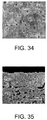
- FIG. 34 is a SEM top view of a blank PEM support
- FIG. 35 is a SEM cross-sectional view of a CGO—TiO 2 membrane
- Provisions of the present disclosure relate to composite nanostructures and filtration membranes incorporating such nanostructures.
- Filtration membranes may be used for filtering water to render water suitable for human consumption.
- Composite nanostructures prepared in accordance with the present disclosure include a graphene oxide shell and a nanoparticle selected from titanium dioxide and silver.
- the composite nanostructures may be prepared by an aerosol route in which graphene oxide encapsulates the nanoparticle within the shell.
- the resulting nanoparticles may have a three-dimensional structure (e.g., crumpled balls).
- Graphene oxide staring material may be produced by the so-called modified Hummers method as described by Hummers et al. in “Preparation of Graphitic Oxide”, J. Am. Chem. Soc., vol. 80 (6), pp. 1339 (1958) which is incorporated herein for all relevant and consistent purposes.
- the composite nanostructures may be produced from a graphene oxide and nanoparticle (i.e., titanium dioxide or silver) pre-mixture in the desired weight ratios.
- the pre-mixture is sprayed with micron-sized water droplets and carried by nitrogen into a tube furnace.
- Graphene oxide becomes crumpled under the evaporation-induced confinement force and encapsulates the nanoparticles.
- a suitable reactor system to produce such composite nanostructures is shown in FIG. 1 .
- the composite nanostructures may be collected downstream of the reactor using a membrane filter.
- Suitable aerosol methods include those set forth by Wang et al. in “Evaporation-induced Crumpling of Graphene Oxide Nanosheets in Aerosolized Droplets: Confinement Force Relationship”, J. Phys. Chem. Lett. Vol. 3(21), pp. 3228-3233 (2012) which is incorporated herein for all relevant and consistent purposes.
- the resulting composite nanostructure is generally crumpled.
- the resulting nanostructures may be combined in a nanostructure assembly wherein the assembly itself is crumpled.
- “crumpled” structures have a crumpled morphology in which the nanostructure is folded and/or wrinkled forming channels, pores or voids within the nanostructure.
- the structures may have a “crumpled ball” structure.
- Crumpled structures generally exclude nanostructure sheets and tubes unless stated otherwise. While the composite nanostructure is generally described as a crumpled nanostructure, flat or “two-dimensional” nanostructures may also be produced (e.g., as in a nanosheet).
- the resulting crumpled graphene oxide nanoparticles have a diameter of less than about 750 nm, less than about 500 nm or even less than about 300 nm (e.g., from about 50 nm to about 500 nm, from about 50 nm to about 300 nm or from about 100 nm to 300 nm or from about 150 nm to about 250 or about 200 nm).
- the composite nanostructures may include pores of a diameter of less than about 200 nm or even less than about 150 nm or less than about 100 nm (e.g., from about 25 nm to about 200 or from about 50 nm to about 150 nm).
- Suitable nanoparticles that may be encapsulated include titanium dioxide nanoparticles, silver nanoparticles, magnetite nanoparticles or mixtures thereof. Titanium dioxide may be relatively photo-reactive and silver may be relatively antibacterial which makes both materials useful in filtration membranes as described further below. Magnetite nanoparticles may impart magnetic properties on the nanoparticles.
- the crumpled nanoparticles are titanium oxide encapsulated by graphene oxide (CGO—TiO 2 ) with silver nanoparticles formed thereon (“formed silver nanoparticles”).
- CGO—TiO 2 graphene oxide
- Such structures may be produced by forming a crumpled GO—TiO 2 structure as described above followed by photocatalytic reduction of AG + on the CGO—TiO 2 nanostructures.
- Silver nanoparticles may be formed in-situ on the membrane surface (i.e., in the field as described below). Such silver nanoparticles that are formed in-situ are typically bonded to the CGO—TiO 2 structure but not encapsulated within the crumpled graphene oxide shell.
- the composite nanostructures described above may be incorporated into a filtration membrane for filtering fluids.
- the nanostructures e.g., CGO—TiO 2 and CGO—Ag
- the nanostructures may be attached to a support that provides the framework for the membrane.
- a cross-linking compound is used to attach the crumpled nanostructures to the membrane support.
- the cross-liking compound is bonded to the support and to the nanostructures.
- a suitable support is porous polyethersulfone and a suitable cross-linking compound is polyallylamine.
- suitable supports include: porous regenerated cellulose (hydrophilic), porous polycarbonate (hydrophilic), porous nitrocellulose (hydrophilic), porous polytetrafluoroethylene (PTFE) (hydrophobic), porous nylon (hydrophobic).
- suitable crosslinkers include: ethylene glycol, 1,3-propanedial, 1,4-butylene glycol, 1,4-cyclohexanedimethanol, 1,2,3,3,4,4,5,5-octolflurohexandiol, ethylenediamine (EDA), butylenediamine (BDA), and p-phenylenediamine (PPD).
- Cross-linkers such as polyallylamine may increase the stability of the crumpled graphene oxide nanostructures on the support and also act to fine-tune pore sizes of the composite membrane.
- the CGO membrane and cross-linking mechanism between CGO and PAA is shown in FIG. 8 .
- Cross-linkers may form polyelectrolyte multilayers via layer-by-layer (LbL) and membranes may have enhanced bacterial anti-adhesive properties compared to unmodified membranes.
- Reactive amine groups in the alkyl chain may react with oxygen functional groups on the graphene oxide creating new C—N bonds resulting in strong chemical cross-linking.
- the crumpled nanoparticles are titanium oxide encapsulated by graphene oxide (GO—TiO 2 ) with Ag nanoparticles formed thereon (“formed Ag nanoparticles”).
- GO—TiO 2 graphene oxide
- Such structures may be produced by forming a crumpled GO—TiO 2 structure as described above followed by photocatalytic reduction of AG + on the CGO—TiO 2 nanoparticles.
- Ag nanoparticles may be formed in-situ on the membrane surface (i.e., in the field as described below).
- the membrane may also include composite nanostructures having a crumpled graphene shell and a magnetite nanoparticle within the shell, the composite nanostructures being attached to the membrane. Such structures impart magnetic properties to the membrane.
- the filtration membrane may be a microfiltration, ultrafiltration, nanofiltration or reverse-osmosis-sized membrane.
- the membrane may have larger pore-sizes, between composites, of about 100-1000 kDa or less, pores within the composites themselves will be ⁇ 100 Da, with some below 10 Da.
- the membrane may be used to filter fluids (e.g., water to be made suitable for human consumption) by contacting a fluid under pressure with the filtration membrane to produce a purified permeate and a retentate including various impurities (e.g., microbes, sugars, proteins, salts).
- the filtration membrane includes crumpled GO—TiO 2 with formed silver nanoparticles.
- Such nanoparticles may be deposited in-situ on the membrane surface by photocatalytic reduction of Ag + to regenerate the silver nanoparticles and antibacterial activity.
- embodiments of the composite nanostructures having a crumpled graphene oxide shell encapsulating a nanoparticle have several advantages.
- the disclosed method of manufacture e.g., aerosol method
- the nanocomposites may be used in existing commercial methods of water filtration membrane manufacture or may be used to assemble new membrane structures.
- the materials may be tailored to be multi-functional (e.g., magnetic, photoactive and/or antimicrobial).
- the composite nanostructures may be designed to self-assemble into membranes.
- the self-assembled membranes may be cleaned by disassembling the composite membranes in-situ, cleaning the monomers and allowing the composites to reassemble into membrane structures.
- the membranes are photoactive (e.g., titanium dioxide nanoparticles)
- self-cleaning reactions may be catalyzed by UV light irradiation and appropriate water chemistries (e.g., the presence of oxygen).
- CG—TiO 2 crumpled graphene oxide encapsulated titanium dioxide
- CG—Ag crumpled graphene oxide encapsulating silver
- FTIR Fourier transform infrared spectrometer
- CG—TiO 2 and CG—Ag were 200 ⁇ 1 nm, and 207 ⁇ 1 nm respectively (see FIG. 2 ), which were also confirmed by SEM and TEM measurements.
- the TEM and SEM graphs of CGO—TiO 2 and CGO—Ag in FIGS. 4-7 show a clear core-shell nanostructure with crumpled graphene oxide as the outer shell and TiO 2 /Ag nanoparticles as the inner core (as indicated by the arrows in the Figures).
- FTIR was used to characterize CGO—TiO 2 nanocomposites.
- the FTIR spectrum of CGO—TiO 2 was shown in FIG. 3 which indicates the presence of C—O (alkoxy), C—O (epoxy), C—O (carboxy), C ⁇ C (aromatic), and also C ⁇ O (carboxy/carbonyl) stretches.
- Polyallylamine (PAA, Sigma Aldrich, Mw 12000) was used to cross-link the CGO—TiO 2 nanostructures to a polyethersulfone (PES) support membrane with a robust crumpled graphene oxide surface layer.
- Crumpled graphene oxide TiO 2 nanocomposites and a PAA mixture (6 mg CGO/150 ⁇ L PAA, 12 mg CGO/300 ⁇ L PAA, and 20 mg CGO/500 ⁇ L PAA) were sonicated for 3 h before being vacuum filtered onto a polyethersulfone (PES) support membrane (Sterlitech, 20 run) at a very low rate.
- PES polyethersulfone
- the PES membrane was also soaked in 1% PAA aqueous solution for 3 hours before the deposition. The obtained membrane was then air-dried and used in subsequent characterization and performance tests.
- Membrane surface morphology was investigated by FESEM (NOVA NanoSEM 230). Before imaging, membranes were spin-coated with gold for 60 seconds (Headway PWM32-PS-CB15PL). Membrane surface roughness was studied using an atomic force microscopy (AFM, Veeco NanoMan) in a tapping mode. The PES support membrane and CGO surface layer were also studied using Raman spectroscopy (Renishaw inVia).
- the deposited CGO—TiO 2 membrane ( FIG. 9 ) exhibited a black color, typical of CGO nanocomposites.
- a representative CGO—TiO 2 membrane with a deposited mass of 6 mg was subject to SEM ( FIGS. 10-11 and 35 ), AFM ( FIG. 12 ), and also Raman spectroscopy analysis ( FIG. 13 ).
- a functional layer consisting of cross-linked CGO—TiO 2 nanocomposites was observed being on top of the PES support ( FIG. 10 ).
- 6 mg deposited mass corresponds to 3.6 ⁇ m depth, which is a 3.4% increase in thickness compared to the unmodified PES support (106 ⁇ m in thickness as measured by SEM).
- FIG. 12 shows the Raman spectrum of the CGO—TiO 2 surface layer and PES support membrane.
- D band 1341 cm ⁇ 1
- G band 1586 cm ⁇ 1
- the D band is associated with the distortion from the hexagonal lattice (such as sp a type defect); while the G band corresponds to pure sp 2 hybridized graphitic carbon.
- the ratio between intensities of the G band and D band is 2.04 in this case, close to that of PAA-cross-linked carbon nanotubes.
- MO methyl orange
- BSA bovine serum albumin
- the concentrations of MO and BSA were analyzed using a UV-vis spectrophotometer (Varian Bio 50) at a wavelength of 463 and 220 nm, respectively.
- the PES support membrane was characterized by less than 10% rejection of both MO and BSA. With a CGO coating, the rejection rate increased dramatically. By coating the PES support with 6 mg CGO—TiO 2 , the rejection of MO and BSA has reached 26% and 83% respectively. When the deposition mass is further increased, rejection of both MO and BSA was increased accordingly but to a lesser degree.
- the photo-reactivity of the CGO—TiO 2 membrane was evaluated by degradation of MO in a batch mode.
- a quartz beaker was used as the reactor and the customized UV reactor was applied to provide UV light irradiation, which was centered at 351 nm and with an intensity of 900 pw/cm 2 ( FIG. 19 ).
- Methyl orange 70 mL, 7.5 mg/L was added into the beakers under three scenarios: with a CGO—TIO 2 membrane (20 mg CGO—TiO 2 deposited onto a PES support membrane), a blank PES membrane, and pure MO solution. In the first 30 min, the sets were kept in the dark to achieve adsorption equilibrium. The solution was sampled at each 30 minutes and measured by UV-Vis. The MO concentration was determined by the absorbance at 463 nm.
- the photocatalytic degradation results are shown in FIG. 16 .
- MO was photocatalytically degraded with CGO—TiO 2 membranes and no reaction took place with PES.
- MO was stable under UV light irradiation.
- the initial adsorption of MO by the CGO—TiO 2 membrane nearly approached 40% of the total MO in the solution.
- MO concentration with the CGO—TiO 2 membrane began to decrease gradually.
- MO After 3 hours of UV reaction, about 35% MO still remained in the solution.
- the concentration did not decrease.
- Light intensity had a significant impact on the photocatalytic degradation of MO.
- the pseudo first-order reaction rate constant also decreased from 0.0061 min ⁇ 1 to 0.0036 min ⁇ 1 .
- CGO—Ag nanocomposites 100 mL, 3 mg/L were adjusted by acetate buffer to reach pH of 4, 5, and 6. The solutions were sampled at different time intervals until 144 hours. Each sample was filtered by using a syringe filter (Millipore, PES 0.2 ⁇ m) and then acidified using HNO 3 before ICP-MS analysis.
- CGO—Ag membranes were placed in 25 mL water and mildly shaken at a rate of 60 min ⁇ 1 . Each 24 hours, the water was replaced by fresh MilliQ water. The replaced water was acidified by HNO 3 and analyzed by ICP-MS for Ag + concentration.
- the release as a percentage of the total Ag decreased with time, from >2.9% (day 2) to 1.7% (day 14).
- the measured day 1 release was smaller than that of day 2, most likely due to initial adsorption of released Ag+ onto the CGO surface (strong electrostatic interaction between Ag + and negatively charged functional groups), which significantly decreased the aqueous Ag + concentration.
- the Ag + release experiments demonstrated the potential application of CGO—Ag membrane surface for antibacterial purposes.
- the reactivity depends on the initial loading of the functional agent and the release rate which indicates should materials would benefit from regeneration.
- Example 3 In situ Ag Nanoparticle Formation on Crumpled GO—TiO 2 Surface
- CGO—TiO 2 nanocomposite membranes were synthesized by the method of Example 2 with 3 mg deposited CGO—TiO 2 were used to study in-situ formation of silver nanoparticles.
- An as-synthesized membrane was placed in 70 mL, 15 mg/L AgNO 3 solution initially to achieve adsorption equilibrium for 1 hour.
- the membrane coupon was then taken out of the solution and placed in the quartz beaker with another 70 mL, 15 mg/L AgNO 3 solution.
- the reaction was conducted in the customized UV reactor for 30 minutes and the membrane coupon was placed with the active (deposited) side towards the UV light direction.
- the concentrations of Ag + before and after adsorption and reaction were measured using ICP-MS.
- the Ag + released from the reacted membrane was monitored by measuring the Ag + concentration in the outflow. Pure water (50 ml) was passed through the holder and the Ag + concentration in the solution was measured by ICP-MS while the flow rate was monitored. The experiments were repeated for 5 times when Ag + concentration in the outflow was found to reach a steady state.
- the reduction of Ag + to Ag 0 was observed to happen quickly under UV light irradiation.
- the concentration reduction in the first 20 minutes was not as significant as that in the following time, possibly due to initial reaction with (the large amount of) pre-adsorbed Ag + .
- the total amount of silver being reduced was calculated to be 854 mg/g of CGO—TiO 2 .
- FIG. 21 shows that under simulated solar light, fewer silver nanoparticles may be observed after 60 minutes of reaction, and with small sizes (usually ⁇ 100 nm) (indicated by white arrow in the figure).
- FIG. 23 shows that under UV light irradiation, many more silver nanoparticles were formed and these nanoparticles have larger sizes ranging from dozens of nm to a few hundred nm.
- the formation of silver nanoparticles was also examined and confirmed by TEM-EELS ( FIG. 23 ).
- FIGS. 24-27 The size and morphology evolution of silver nanoparticles with irradiation time was shown in FIGS. 24-27 . Initially, only CGO—TiO 2 nanocomposites can be visualized ( FIG. 24 ), with a crumpled “paper-ball-like” morphology. After 10 minutes, large amounts of silver nanoparticles (shown as white dots indicated by the white arrow in FIG. 25 ) appeared, most of which are in polyhedron shapes. Such silver nanoparticles were observed with growth into larger sizes after 30 minutes reaction ( FIG. 26 ), and more shapes were found, which include pyramid, sphere, cylinder and flake ( FIG. 27 ).
- the sizes were identified as the longest dimension of each nanoparticle imaged by SEM ( FIGS. 24-27 ), and for each time, >150 nanoparticles were examined (total nanoparticles being 583). Size distribution analysis shows that most nanoparticles are between 40 and 120 nm regardless of the reaction time (the peaks in FIG. 28 ). While silver nanoparticles were rapidly formed in the first 10 minutes of the reaction, it was found that from 10 minutes to 30 minutes the fraction of small nanoparticles decreased (mostly 20-80 nm) and the number of large particles increased (largely 140-220 nm) ( FIG. 27 ); and the size distribution did not change significantly from 30 minutes to 120 minutes.
- particles with sizes between 40-80 nm account for 54% of the total number; while at 30 minute and 120 minute, the number has decreased to 45% and 44% respectively, due to the production of larger particles (e.g., 7% (10 minutes) to 14% (30 and 120 minutes) in the size range between 120-160 nm).
- larger particles e.g., 7% (10 minutes) to 14% (30 and 120 minutes
- the samples were also examined by TEM, which again confirmed the formation of silver nanoparticles with sizes mainly between 40 and 120 nm.
- the assembled membrane surface reveals peak-valley morphology ( FIG. 28 ), and maintained abundant surface hydrophilicity (oxygen functionality) even after cross-linking, as identified by both FTIR and Raman Spectroscopy.
- Three mg CGO—TiO 2 was deposited onto the PES support, resulting in a water flux of 509 ⁇ 136 L/(m 2 ⁇ h ⁇ bar), being decreased from >5800 L/(m 2 ⁇ h ⁇ bar) with only PES support ( FIG. 30 ).
- the adsorbed Ag + mass equals 53.5 ⁇ 8.0 ⁇ g (0.018 mg Ag + /mg of CGO—TiO 2 ), being much smaller compared to that of monodisperse CGO—TiO 2 nanocomposites. This may be attributed to reduction of adsorption sites and accessibility due to packing and cross-linking of CGOs.
- Photocatalytic reduction experiment shows an average of 160.4 ⁇ 44.7 ⁇ g further addition of silver nanoparticles onto the membrane within 30 minutes (0.053 mg Ag + /mg of CGO—TiO 2 ), which is almost 3 times that of adsorption.
- the functionalized membranes were examined by SEM, as shown in FIGS. 31A-D .
- FIG. 31A-D The functionalized membranes were examined by SEM, as shown in FIGS. 31A-D .
- FIG. 31A shows an unmodified CGO—TiO 2 membrane. After 30 minute UV irradiation, silver nanoparticles were observed spread all over the surface ( FIG. 31B ). Further close examination on the SEM images of the membrane surface shows that, unlike silver nanoparticles formed on monodisperse CGO—TiO 2 , which have multiple shapes ( FIG. 32 ), in-situ formed silver nanoparticles on the surface mostly have flake shapes ( FIG. 31B inset). Further, silver nanoparticles were found to be only formed within a certain depth below the surface, likely a few hundred nm (corresponding to the size of a CGO nanocomposite, FIG. 31C and FIG. 31D ).
- Silver nanoparticle formation leads to further reduction of pure water flux to 249 ⁇ 35 L/(m 2 ⁇ h ⁇ bar), largely due to blocking of pores ( FIG. 30 ). This may be expected as such assembled membranes are with pores smaller than 10 nm, which is relatively small compared to the size of formed silver nanoparticles.
- the leaching of Ag + from the loaded membranes was monitored by measuring its concentration in the permeated water. For the first 50 mL permeate (MilliQ water as feed water), the Ag + (bulk) concentration was 38.1 ⁇ 5.7 ⁇ g/L, while that would decrease to 18.9 ⁇ 3.7, 12.1 ⁇ 2.7, 9.0 ⁇ 0.1, and 8.6 ⁇ 0.7 ⁇ g/L for the following four tests (each with 50 mL MilliQ water) ( FIG.
- the high concentrations of Ag + at the beginning could be attributed to incompletely reduced Ag + , as not all of the adsorbed silver ions were expected to be transformed into silver nanoparticles limited by factors such as the penetration of light.
- the Ag + concentration in the permeate reaches constant gradually ( ⁇ 9 ⁇ g/L), which were considered to come from the dissolution of silver nanoparticles.
- the terms “about,” “substantially,” “essentially” and “approximately” when used in conjunction with ranges of dimensions, concentrations, temperatures or other physical or chemical properties or characteristics is meant to cover variations that may exist in the upper and/or lower limits of the ranges of the properties or characteristics, including, for example, variations resulting from rounding, measurement methodology or other statistical variation.
Landscapes
- Chemical & Material Sciences (AREA)
- Engineering & Computer Science (AREA)
- Nanotechnology (AREA)
- Chemical Kinetics & Catalysis (AREA)
- Inorganic Chemistry (AREA)
- General Physics & Mathematics (AREA)
- Condensed Matter Physics & Semiconductors (AREA)
- Crystallography & Structural Chemistry (AREA)
- Physics & Mathematics (AREA)
- Materials Engineering (AREA)
- Manufacturing & Machinery (AREA)
- Composite Materials (AREA)
- Organic Chemistry (AREA)
- Life Sciences & Earth Sciences (AREA)
- Hydrology & Water Resources (AREA)
- Environmental & Geological Engineering (AREA)
- Water Supply & Treatment (AREA)
- Separation Using Semi-Permeable Membranes (AREA)
- Dispersion Chemistry (AREA)
- General Life Sciences & Earth Sciences (AREA)
- Geology (AREA)
Abstract
Description
R=(1−C P /C F)×100% (Formula 1)
where CP and CF are the molecule concentrations in the permeate and water feed, respectively.
Claims (18)
Priority Applications (1)
| Application Number | Priority Date | Filing Date | Title |
|---|---|---|---|
| US16/125,949 US10874992B2 (en) | 2014-03-17 | 2018-09-10 | Composite nanostructures having a crumpled graphene oxide shell |
Applications Claiming Priority (4)
| Application Number | Priority Date | Filing Date | Title |
|---|---|---|---|
| US201461954221P | 2014-03-17 | 2014-03-17 | |
| PCT/US2015/021084 WO2015142938A1 (en) | 2014-03-17 | 2015-03-17 | Composite nanostructures having a crumpled graphene oxide shell |
| US201615126843A | 2016-09-16 | 2016-09-16 | |
| US16/125,949 US10874992B2 (en) | 2014-03-17 | 2018-09-10 | Composite nanostructures having a crumpled graphene oxide shell |
Related Parent Applications (2)
| Application Number | Title | Priority Date | Filing Date |
|---|---|---|---|
| US15/126,843 Continuation US10099184B2 (en) | 2014-03-17 | 2015-03-17 | Composite nanostructures having a crumpled graphene oxide shell |
| PCT/US2015/021084 Continuation WO2015142938A1 (en) | 2014-03-17 | 2015-03-17 | Composite nanostructures having a crumpled graphene oxide shell |
Publications (2)
| Publication Number | Publication Date |
|---|---|
| US20190060840A1 US20190060840A1 (en) | 2019-02-28 |
| US10874992B2 true US10874992B2 (en) | 2020-12-29 |
Family
ID=54145239
Family Applications (2)
| Application Number | Title | Priority Date | Filing Date |
|---|---|---|---|
| US15/126,843 Active US10099184B2 (en) | 2014-03-17 | 2015-03-17 | Composite nanostructures having a crumpled graphene oxide shell |
| US16/125,949 Active 2035-05-24 US10874992B2 (en) | 2014-03-17 | 2018-09-10 | Composite nanostructures having a crumpled graphene oxide shell |
Family Applications Before (1)
| Application Number | Title | Priority Date | Filing Date |
|---|---|---|---|
| US15/126,843 Active US10099184B2 (en) | 2014-03-17 | 2015-03-17 | Composite nanostructures having a crumpled graphene oxide shell |
Country Status (2)
| Country | Link |
|---|---|
| US (2) | US10099184B2 (en) |
| WO (1) | WO2015142938A1 (en) |
Families Citing this family (18)
| Publication number | Priority date | Publication date | Assignee | Title |
|---|---|---|---|---|
| SG10202008907TA (en) * | 2014-10-03 | 2020-10-29 | Univ Rice William M | Use of surface modified porous membranes for fluid distillation |
| US10442709B2 (en) | 2015-12-17 | 2019-10-15 | Nitto Denko Corporation | Selectively permeable graphene oxide membrane |
| US10143972B2 (en) * | 2016-01-22 | 2018-12-04 | Nanjing University Of Science And Technology | Ultrafiltration membrane and a preparation method thereof |
| CN109562933A (en) * | 2016-05-31 | 2019-04-02 | 新泽西鲁特格斯州立大学 | The hollow bead formed by two-dimensional material |
| US10566145B2 (en) * | 2017-03-18 | 2020-02-18 | King Abdulaziz City For Science And Technology—Kacst | TiO2-graphene-silver hybrid nanocomposite and a method of preparation thereof |
| CN107233803B (en) * | 2017-06-02 | 2020-05-19 | 青岛大学 | A kind of graphene/silver particle composite filter membrane and its preparation and application |
| CN107445387A (en) * | 2017-10-29 | 2017-12-08 | 蚌埠学院 | A kind of preparation method and applications of magnetic graphene nano titania compound wastewater inorganic agent |
| CN108383192A (en) * | 2018-01-18 | 2018-08-10 | 方大炭素新材料科技股份有限公司 | A kind of portable graphene oxide micro-filtration film wire water purifying bottle |
| CN108636133A (en) * | 2018-05-10 | 2018-10-12 | 重庆新康意安得达尔新材料有限公司 | A kind of graphene composite film and preparation method thereof |
| CN108802138A (en) * | 2018-08-06 | 2018-11-13 | 南京工业大学 | Membrane electrode, electrochemical gas sensor and application thereof |
| CN110882632B (en) * | 2018-09-10 | 2022-03-11 | 新奥科技发展有限公司 | A kind of reverse osmosis membrane and preparation method thereof |
| CN110280142A (en) * | 2019-06-24 | 2019-09-27 | 南京龙源环保有限公司 | Silver-colored graphene oxide polyvinylidene fluoride hollow fiber ultrafiltration membrane of a kind of load and preparation method thereof |
| CN110477012B (en) * | 2019-08-22 | 2021-05-18 | 河南省人民医院 | GO-PEG/Ag-SD composite material and preparation method and application thereof |
| CN110575757B (en) * | 2019-09-29 | 2021-12-10 | 哈工程先进技术研究院(招远)有限公司 | Preparation method of nanofiltration membrane for reducing sewage chromaticity |
| CN111545080A (en) * | 2020-04-09 | 2020-08-18 | 颇尔(河北)环保设备有限公司 | Preparation method of permanent hydrophilic nano graphene polytetrafluoroethylene hollow fiber nanofiltration membrane |
| CN112933984B (en) * | 2021-01-29 | 2022-05-10 | 三明学院 | GYSNs (gysan) -filled polyurethane hybrid film and preparation method thereof |
| CN115463556A (en) * | 2022-08-30 | 2022-12-13 | 石河子大学 | Mixed matrix membrane based on bifunctional modified GO nanosheets and its preparation method and application |
| CN117138602B (en) * | 2023-10-18 | 2025-10-31 | 东方电气(福建)创新研究院有限公司 | Hydrophilic-oleophobic polytetrafluoroethylene membrane and preparation method and application thereof |
Citations (10)
| Publication number | Priority date | Publication date | Assignee | Title |
|---|---|---|---|---|
| US20070128439A1 (en) | 2005-12-06 | 2007-06-07 | Kim Sang H | Core-shell type nanoparticles and method for preparing the same |
| RU2009138975A (en) | 2009-10-21 | 2011-04-27 | Объединенный Институт Ядерных Исследований (RU) | POROUS MEMBRANE AND METHOD FOR PRODUCING IT |
| US20120285889A1 (en) | 2007-03-23 | 2012-11-15 | Institute Of Process Engineering, Chinese Academy Of Sciences | Method, equipment and specific drawer for membrane separation utilizing concentration polarization |
| WO2012170086A1 (en) | 2011-02-25 | 2012-12-13 | William Marsh Rice University | Sorption and separation of various materials by graphene oxides |
| US20130004798A1 (en) | 2011-06-30 | 2013-01-03 | Northwestern University | Crumpled particles, methods of synthesizing same and applications using same |
| WO2013023006A2 (en) | 2011-08-08 | 2013-02-14 | California Institute Of Technology | Filtration membranes, and related nano and/or micro fibers, composites, methods and systems |
| CN103074619A (en) | 2013-02-06 | 2013-05-01 | 上海应用技术学院 | Graphene oxide-silver compound particle and preparation method thereof |
| US8563169B2 (en) | 2009-08-10 | 2013-10-22 | Battelle Memorial Institute | Self assembled multi-layer nanocomposite of graphene and metal oxide materials |
| US20130344392A1 (en) | 2011-06-30 | 2013-12-26 | Northwestern University | Crumpled graphene-encapsulated nanostructures and lithium ion battery anodes made therefrom |
| US20130344237A1 (en) | 2011-11-17 | 2013-12-26 | Lamar University | Graphene nanocomposites |
Family Cites Families (1)
| Publication number | Priority date | Publication date | Assignee | Title |
|---|---|---|---|---|
| WO2008118228A2 (en) * | 2006-12-05 | 2008-10-02 | Stonybrook Water Purification | Articles comprising a fibrous support |
-
2015
- 2015-03-17 WO PCT/US2015/021084 patent/WO2015142938A1/en not_active Ceased
- 2015-03-17 US US15/126,843 patent/US10099184B2/en active Active
-
2018
- 2018-09-10 US US16/125,949 patent/US10874992B2/en active Active
Patent Citations (10)
| Publication number | Priority date | Publication date | Assignee | Title |
|---|---|---|---|---|
| US20070128439A1 (en) | 2005-12-06 | 2007-06-07 | Kim Sang H | Core-shell type nanoparticles and method for preparing the same |
| US20120285889A1 (en) | 2007-03-23 | 2012-11-15 | Institute Of Process Engineering, Chinese Academy Of Sciences | Method, equipment and specific drawer for membrane separation utilizing concentration polarization |
| US8563169B2 (en) | 2009-08-10 | 2013-10-22 | Battelle Memorial Institute | Self assembled multi-layer nanocomposite of graphene and metal oxide materials |
| RU2009138975A (en) | 2009-10-21 | 2011-04-27 | Объединенный Институт Ядерных Исследований (RU) | POROUS MEMBRANE AND METHOD FOR PRODUCING IT |
| WO2012170086A1 (en) | 2011-02-25 | 2012-12-13 | William Marsh Rice University | Sorption and separation of various materials by graphene oxides |
| US20130004798A1 (en) | 2011-06-30 | 2013-01-03 | Northwestern University | Crumpled particles, methods of synthesizing same and applications using same |
| US20130344392A1 (en) | 2011-06-30 | 2013-12-26 | Northwestern University | Crumpled graphene-encapsulated nanostructures and lithium ion battery anodes made therefrom |
| WO2013023006A2 (en) | 2011-08-08 | 2013-02-14 | California Institute Of Technology | Filtration membranes, and related nano and/or micro fibers, composites, methods and systems |
| US20130344237A1 (en) | 2011-11-17 | 2013-12-26 | Lamar University | Graphene nanocomposites |
| CN103074619A (en) | 2013-02-06 | 2013-05-01 | 上海应用技术学院 | Graphene oxide-silver compound particle and preparation method thereof |
Non-Patent Citations (5)
| Title |
|---|
| International Search Report and Written Opinion for International Application No. PCT/US2015/021084, dated Jun. 25, 2015, 10 pages. |
| Le, C., "Crumpled Graphene Oxide Nanostructures for Advanced Water Treatment Technologies", NNIN REU Research Accomplishments, 2013, pp. 66-67. |
| Ma et al., "Crumpled Nanopaper from Graphene Oxide", Nano Letters, 2012, 12, pp. 486-489. |
| Ocsoy et al., "Nanotechnology in Plant Disease Management: DNA-Direct Silver Nanoparticles on Graphene Oxide as and Antibacterial Against Xanthomonas Perforans", ACSNANO, 2013, vol. 7, No. 10, pp. 8972-8980. |
| Wang et al., "Evaporation-Induced Crumpling of Graphene Oxide Nanosheets in Aerosolized Droplets: Confinement Force Relationship", J. Phys. Chem. Lett. 2012, vol. 3, pp. 3228-3233. |
Also Published As
| Publication number | Publication date |
|---|---|
| US20170087519A1 (en) | 2017-03-30 |
| WO2015142938A1 (en) | 2015-09-24 |
| US20190060840A1 (en) | 2019-02-28 |
| US10099184B2 (en) | 2018-10-16 |
Similar Documents
| Publication | Publication Date | Title |
|---|---|---|
| US20190060840A1 (en) | Composite nanostructures having a crumpled graphene oxide shell | |
| Zhao et al. | Applications of carbon quantum dots (CQDs) in membrane technologies: A review | |
| Zhao et al. | Smart integration of MOFs and CQDs to fabricate defect-free and self-cleaning TFN membranes for dye removal | |
| Feng et al. | A self-protected self-cleaning ultrafiltration membrane by using polydopamine as a free-radical scavenger | |
| Hussain | Handbook of functionalized nanomaterials for industrial applications | |
| Wen et al. | Polymeric nanocomposite membranes for water treatment: a review | |
| Huang et al. | Evaluation of self-cleaning and photocatalytic properties of modified g-C3N4 based PVDF membranes driven by visible light | |
| Li et al. | Systematic evaluation of TiO2-GO-modified ceramic membranes for water treatment: Retention properties and fouling mechanisms | |
| Kajau et al. | Leaching of CuO nanoparticles from PES ultrafiltration membranes | |
| Ma et al. | Ag–TiO2/HAP/Al2O3 bioceramic composite membrane: Fabrication, characterization and bactericidal activity | |
| Bai et al. | Multi-functional CNT/ZnO/TiO2 nanocomposite membrane for concurrent filtration and photocatalytic degradation | |
| Zheng et al. | Surface modification of PVDF membrane by CNC/Cu-MOF-74 for enhancing antifouling property | |
| Liang et al. | Highly active carbonaceous nanofibers: a versatile scaffold for constructing multifunctional free-standing membranes | |
| Dindorkar et al. | Adsorptive removal of methylene blue dye from aqueous streams using photocatalytic CuBTC/ZnO chitosan composites | |
| Cui et al. | Fabrication of silver vanadate quantum dots/reduced graphene oxide/graphitic carbon nitride Z-scheme heterostructure modified polyvinylidene fluoride self-cleaning membrane for enhancing photocatalysis and mechanism insight | |
| Zangeneh et al. | Preparation ultrafine L-Methionine (C, N, S triple doped)-TiO2-ZnO nanoparticles and their photocatalytic performance for fouling alleviation in PES nanocomposite membrane | |
| Esfahani et al. | A novel gold nanocomposite membrane with enhanced permeation, rejection and self-cleaning ability | |
| Meng et al. | A novel mixed matrix polysulfone membrane for enhanced ultrafiltration and photocatalytic self-cleaning performance | |
| Valizadeh et al. | Controlling interlayer spacing of graphene oxide membrane in aqueous media using a biocompatible heterobifunctional crosslinker for Penicillin-G Procaine removal | |
| Kotp | Removal of organic pollutants using polysulfone ultrafiltration membrane containing polystyrene silicomolybdate nanoparticles: Case study: Borg El Arab area | |
| Han et al. | Highly efficient purification of multicomponent wastewater by electrospinning kidney-bean-skin-like porous H-PPAN/rGO-g-PAO@ Ag+/Ag composite nanofibrous membranes | |
| WO2012177223A1 (en) | A nanocomposite, a filtration membrane comprising the nanocomposite, and methods to form the nanocomposite and the filtration membrane | |
| CN107233803B (en) | A kind of graphene/silver particle composite filter membrane and its preparation and application | |
| Jabbarvand Behrouz et al. | Surface bioengineering of Mo2Ga2C MAX phase to develop blended loose nanofiltration membranes for textile wastewater treatment | |
| Hazaraimi et al. | Silver doped titania nanotubes incorporated photocatalytic dual layer antibiofouling hollow fiber membrane for palm oil wastewater treatment |
Legal Events
| Date | Code | Title | Description |
|---|---|---|---|
| FEPP | Fee payment procedure |
Free format text: ENTITY STATUS SET TO UNDISCOUNTED (ORIGINAL EVENT CODE: BIG.); ENTITY STATUS OF PATENT OWNER: MICROENTITY |
|
| FEPP | Fee payment procedure |
Free format text: ENTITY STATUS SET TO MICRO (ORIGINAL EVENT CODE: MICR); ENTITY STATUS OF PATENT OWNER: MICROENTITY |
|
| AS | Assignment |
Owner name: WASHINGTON UNIVERSITY, MISSOURI Free format text: ASSIGNMENT OF ASSIGNORS INTEREST;ASSIGNORS:WANG, WEINING;JIANG, YI;FORTNER, JOHN DYER;AND OTHERS;SIGNING DATES FROM 20160922 TO 20161006;REEL/FRAME:047048/0471 |
|
| STPP | Information on status: patent application and granting procedure in general |
Free format text: DOCKETED NEW CASE - READY FOR EXAMINATION |
|
| STPP | Information on status: patent application and granting procedure in general |
Free format text: NON FINAL ACTION MAILED |
|
| STPP | Information on status: patent application and granting procedure in general |
Free format text: NON FINAL ACTION MAILED |
|
| STPP | Information on status: patent application and granting procedure in general |
Free format text: FINAL REJECTION MAILED |
|
| STPP | Information on status: patent application and granting procedure in general |
Free format text: ADVISORY ACTION MAILED |
|
| STPP | Information on status: patent application and granting procedure in general |
Free format text: NOTICE OF ALLOWANCE MAILED -- APPLICATION RECEIVED IN OFFICE OF PUBLICATIONS |
|
| STCF | Information on status: patent grant |
Free format text: PATENTED CASE |
|
| MAFP | Maintenance fee payment |
Free format text: PAYMENT OF MAINTENANCE FEE, 4TH YEAR, MICRO ENTITY (ORIGINAL EVENT CODE: M3551); ENTITY STATUS OF PATENT OWNER: MICROENTITY Year of fee payment: 4 |