US10874646B2 - Epothilone analogs, methods of synthesis, methods of treatment, and drug conjugates thereof - Google Patents
Epothilone analogs, methods of synthesis, methods of treatment, and drug conjugates thereof Download PDFInfo
- Publication number
- US10874646B2 US10874646B2 US15/768,800 US201615768800A US10874646B2 US 10874646 B2 US10874646 B2 US 10874646B2 US 201615768800 A US201615768800 A US 201615768800A US 10874646 B2 US10874646 B2 US 10874646B2
- Authority
- US
- United States
- Prior art keywords
- groups
- alkyl
- cycloalkyl
- substituted version
- mmol
- Prior art date
- Legal status (The legal status is an assumption and is not a legal conclusion. Google has not performed a legal analysis and makes no representation as to the accuracy of the status listed.)
- Active
Links
- 0 [1*]/C(=C\[2*])C1CC(=C)CC([Y])C([3*])([4*])C(=C)C([5*])C(C)C([6*])CCCc2([7*])c(C1)C2 Chemical compound [1*]/C(=C\[2*])C1CC(=C)CC([Y])C([3*])([4*])C(=C)C([5*])C(C)C([6*])CCCc2([7*])c(C1)C2 0.000 description 39
- LJYBNTGDGZKCMQ-CDHDMLEESA-N CC(=O)[C@@H]1C[C@@H]2N(CCO[Si](C)(C)C(C)(C)C)[C@]2(C)CCC[C@H](C)[C@H](C)[C@@H](C)C(=O)C(C)(C)[C@@H](C)CC(=O)O1 Chemical compound CC(=O)[C@@H]1C[C@@H]2N(CCO[Si](C)(C)C(C)(C)C)[C@]2(C)CCC[C@H](C)[C@H](C)[C@@H](C)C(=O)C(C)(C)[C@@H](C)CC(=O)O1 LJYBNTGDGZKCMQ-CDHDMLEESA-N 0.000 description 3
- XHZWFUVEKDDQPF-UHFFFAOYSA-N BrC1=NNC=C1 Chemical compound BrC1=NNC=C1 XHZWFUVEKDDQPF-UHFFFAOYSA-N 0.000 description 2
- FNXOTAVGBWIDRN-AIFYMTMESA-N C/C(=C\C1=NC=CC=C1)[C@@H]1C[C@@H]2N(CCO)[C@]2(C)CCC[C@H](C)[C@H](O)[C@@H](C)C(=O)C(C)(C)[C@@H](O)CC(=O)O1 Chemical compound C/C(=C\C1=NC=CC=C1)[C@@H]1C[C@@H]2N(CCO)[C@]2(C)CCC[C@H](C)[C@H](O)[C@@H](C)C(=O)C(C)(C)[C@@H](O)CC(=O)O1 FNXOTAVGBWIDRN-AIFYMTMESA-N 0.000 description 2
- LJMAUYVNVOQODD-VSIXJHRCSA-N CC1=NC(/C=C(\C)[C@@H]2C[C@@H]3N(CCO)[C@]3(C)CCC[C@H](C)[C@H](O)[C@@H](C)C(=O)C(C)(C)[C@@H](O)CC(=O)O2)=CS1 Chemical compound CC1=NC(/C=C(\C)[C@@H]2C[C@@H]3N(CCO)[C@]3(C)CCC[C@H](C)[C@H](O)[C@@H](C)C(=O)C(C)(C)[C@@H](O)CC(=O)O2)=CS1 LJMAUYVNVOQODD-VSIXJHRCSA-N 0.000 description 2
- GOVUBDVDZISPOL-UHFFFAOYSA-N CC1=NN(CCNC(=O)OC(C)(C)C)C=C1 Chemical compound CC1=NN(CCNC(=O)OC(C)(C)C)C=C1 GOVUBDVDZISPOL-UHFFFAOYSA-N 0.000 description 2
- TYVCQFFQPHZKCD-UHFFFAOYSA-N CCCC[Sn](CCCC)(CCCC)C1=CC(C)=NN1CCNC(=O)OC(C)(C)C Chemical compound CCCC[Sn](CCCC)(CCCC)C1=CC(C)=NN1CCNC(=O)OC(C)(C)C TYVCQFFQPHZKCD-UHFFFAOYSA-N 0.000 description 2
- WGFCQTPXKYVNRL-UHFFFAOYSA-N CSC1=CC(CO)=NN1C Chemical compound CSC1=CC(CO)=NN1C WGFCQTPXKYVNRL-UHFFFAOYSA-N 0.000 description 2
- SLCKHSDEPIDVNS-NSAKBYRJSA-N CSC1=NC(/C=C(\C)[C@@H]2C[C@@H]3N(CC4CC4)[C@]3(C)CCC[C@H](C)[C@H](O)[C@@H](C)C(=O)C(C)(C)[C@@H](O)CC(=O)O2)=CS1 Chemical compound CSC1=NC(/C=C(\C)[C@@H]2C[C@@H]3N(CC4CC4)[C@]3(C)CCC[C@H](C)[C@H](O)[C@@H](C)C(=O)C(C)(C)[C@@H](O)CC(=O)O2)=CS1 SLCKHSDEPIDVNS-NSAKBYRJSA-N 0.000 description 2
- YTSPEKOESCLJHB-UHFFFAOYSA-N NC1=C(N2C=CC(Br)=N2)C=CC=C1 Chemical compound NC1=C(N2C=CC(Br)=N2)C=CC=C1 YTSPEKOESCLJHB-UHFFFAOYSA-N 0.000 description 2
- WFLCAOGKZQTOIG-UHFFFAOYSA-N BrC/C1=N/C2=CC=CC=C2S1 Chemical compound BrC/C1=N/C2=CC=CC=C2S1 WFLCAOGKZQTOIG-UHFFFAOYSA-N 0.000 description 1
- CVHYIERLKZMAPH-UHFFFAOYSA-N BrC1=CC=NN1C1CCCCO1 Chemical compound BrC1=CC=NN1C1CCCCO1 CVHYIERLKZMAPH-UHFFFAOYSA-N 0.000 description 1
- QKRKZHHMMRJXOA-UHFFFAOYSA-N C.C.C.C.C.C.CC(C)(C)C1=CC2=C(C=C1)C=CC(C(C)(C)C)=C2.CC(C)(C)C1=CC=C(C(C)(C)C)C=C1.CC(C)(C)C1=CC=C(C2=CC=C(C(C)(C)C)C=C2)C=C1.CC(C)(C)C1=CC=C(CC2=CC=C(C(C)(C)C)C=C2)C=C1.CC(C)(C)C1=CC=CC(C(C)(C)C)=C1.CC(C)(C)C1=CC=CC=C1C(C)(C)C.CC1=CC(C(C)(C)C)=CC=C1C(C)(C)C Chemical compound C.C.C.C.C.C.CC(C)(C)C1=CC2=C(C=C1)C=CC(C(C)(C)C)=C2.CC(C)(C)C1=CC=C(C(C)(C)C)C=C1.CC(C)(C)C1=CC=C(C2=CC=C(C(C)(C)C)C=C2)C=C1.CC(C)(C)C1=CC=C(CC2=CC=C(C(C)(C)C)C=C2)C=C1.CC(C)(C)C1=CC=CC(C(C)(C)C)=C1.CC(C)(C)C1=CC=CC=C1C(C)(C)C.CC1=CC(C(C)(C)C)=CC=C1C(C)(C)C QKRKZHHMMRJXOA-UHFFFAOYSA-N 0.000 description 1
- CBWPUPGILJVKQV-UHFFFAOYSA-N C.C.C.C.C.C1=CC=CC=C1.C1=CCC=CC1.C1=CCCC=C1.C1=CCCCC1.C1CCCCC1 Chemical compound C.C.C.C.C.C1=CC=CC=C1.C1=CCC=CC1.C1=CCCC=C1.C1=CCCCC1.C1CCCCC1 CBWPUPGILJVKQV-UHFFFAOYSA-N 0.000 description 1
- VESLYJCWCUVLEP-UHFFFAOYSA-N C.C.C.C.C.CC(C)C1CC(C(C)(C)C)C(C(C)C)CC1C.CC(C)C1CC1C(C)C.CC(C)C1CCC(C(C)C)CC1.CC1CC(C)C12CCC2 Chemical compound C.C.C.C.C.CC(C)C1CC(C(C)(C)C)C(C(C)C)CC1C.CC(C)C1CC1C(C)C.CC(C)C1CCC(C(C)C)CC1.CC1CC(C)C12CCC2 VESLYJCWCUVLEP-UHFFFAOYSA-N 0.000 description 1
- HWPQOFXJJSSCIC-UHFFFAOYSA-N C.C.C.CC(C)(C)C1=CC2=C(C=C1)NC(C(C)(C)C)=C2.CC(C)(C)C1=CC=C(C(C)(C)C)N=C1.CC(C)(C)C1=CN(C(C)(C)C)C=N1 Chemical compound C.C.C.CC(C)(C)C1=CC2=C(C=C1)NC(C(C)(C)C)=C2.CC(C)(C)C1=CC=C(C(C)(C)C)N=C1.CC(C)(C)C1=CN(C(C)(C)C)C=N1 HWPQOFXJJSSCIC-UHFFFAOYSA-N 0.000 description 1
- FCIXFKMTXFZGJI-UHFFFAOYSA-N C.C.CC(C)C1CCC(C(N)=O)C1.CC1CCC(C(C)C)CC1 Chemical compound C.C.CC(C)C1CCC(C(N)=O)C1.CC1CCC(C(C)C)CC1 FCIXFKMTXFZGJI-UHFFFAOYSA-N 0.000 description 1
- PEFSLXUORVMUCF-UHFFFAOYSA-N C.CC.CC(C)(C)C1=CC2=C(C=C1)NC=C2 Chemical compound C.CC.CC(C)(C)C1=CC2=C(C=C1)NC=C2 PEFSLXUORVMUCF-UHFFFAOYSA-N 0.000 description 1
- ZPJNMJHSWLVKLA-HBCLBWFQSA-N C/C(=C\C1=CC(C(F)(F)F)=NN1CCNC(=O)OC(C)(C)C)[C@@H]1C[C@@H]2O[C@]2(C)CCC[C@H](C)[C@H](O)[C@@H](C)C(=O)C(C)(C)[C@@H](O)CC(=O)O1 Chemical compound C/C(=C\C1=CC(C(F)(F)F)=NN1CCNC(=O)OC(C)(C)C)[C@@H]1C[C@@H]2O[C@]2(C)CCC[C@H](C)[C@H](O)[C@@H](C)C(=O)C(C)(C)[C@@H](O)CC(=O)O1 ZPJNMJHSWLVKLA-HBCLBWFQSA-N 0.000 description 1
- YWSXBQYEFVGZLS-UBGLXIBGSA-N C/C(=C\C1=CC(C(F)(F)F)=NN1CCNC(=O)OCC[Si](C)(C)C)[C@@H]1C[C@@H]2O[C@]2(C)CCC[C@H](C)[C@H](O)[C@@H](C)C(=O)C(C)(C)[C@@H](O)CC(=O)O1 Chemical compound C/C(=C\C1=CC(C(F)(F)F)=NN1CCNC(=O)OCC[Si](C)(C)C)[C@@H]1C[C@@H]2O[C@]2(C)CCC[C@H](C)[C@H](O)[C@@H](C)C(=O)C(C)(C)[C@@H](O)CC(=O)O1 YWSXBQYEFVGZLS-UBGLXIBGSA-N 0.000 description 1
- HTHBNPHBVKGYAC-FYCYDKTPSA-N C/C(=C\C1=CSC(CCN(C(=O)OC(C)(C)C)C(=O)OC(C)(C)C)=N1)[C@@H]1C[C@@H]2N(CCO[Si](C)(C)C(C)(C)C)[C@]2(C)CCC[C@H](C)[C@H](C)[C@@H](C)C(=O)C(C)(C)[C@@H](C)CC(=O)O1 Chemical compound C/C(=C\C1=CSC(CCN(C(=O)OC(C)(C)C)C(=O)OC(C)(C)C)=N1)[C@@H]1C[C@@H]2N(CCO[Si](C)(C)C(C)(C)C)[C@]2(C)CCC[C@H](C)[C@H](C)[C@@H](C)C(=O)C(C)(C)[C@@H](C)CC(=O)O1 HTHBNPHBVKGYAC-FYCYDKTPSA-N 0.000 description 1
- UBUKBWKMTHRNAQ-RAZNOPLSSA-N C/C(=C\C1=CSC(CCN)=N1)[C@@H]1C[C@@H]2N(CCO)[C@]2(C)CCC[C@H](C)[C@H](O)[C@@H](C)C(=O)C(C)(C)[C@@H](O)CC(=O)O1 Chemical compound C/C(=C\C1=CSC(CCN)=N1)[C@@H]1C[C@@H]2N(CCO)[C@]2(C)CCC[C@H](C)[C@H](O)[C@@H](C)C(=O)C(C)(C)[C@@H](O)CC(=O)O1 UBUKBWKMTHRNAQ-RAZNOPLSSA-N 0.000 description 1
- QFOXUBJWQVSYIO-WOCFPHCGSA-N C/C(=C\C1=CSC(CCO[Si](C)(C)C(C)(C)C)=N1)[C@@H]1C[C@@H]2N(CCO[Si](C)(C)C(C)(C)C)[C@]2(C)CCC[C@H](C)[C@H](C)[C@@H](C)C(=O)C(C)(C)[C@@H](C)CC(=O)O1 Chemical compound C/C(=C\C1=CSC(CCO[Si](C)(C)C(C)(C)C)=N1)[C@@H]1C[C@@H]2N(CCO[Si](C)(C)C(C)(C)C)[C@]2(C)CCC[C@H](C)[C@H](C)[C@@H](C)C(=O)C(C)(C)[C@@H](C)CC(=O)O1 QFOXUBJWQVSYIO-WOCFPHCGSA-N 0.000 description 1
- OVIUFPQNQZQXMJ-ZVEYSHGMSA-N C/C(=C\C1=CSC(CN(C(=O)OC(C)(C)C)C(=O)OC(C)(C)C)=N1)[C@@H]1C[C@@H]2N(CCO[Si](C)(C)C(C)(C)C)[C@]2(C)CCC[C@H](C)[C@H](C)[C@@H](C)C(=O)C(C)(C)[C@@H](C)CC(=O)O1 Chemical compound C/C(=C\C1=CSC(CN(C(=O)OC(C)(C)C)C(=O)OC(C)(C)C)=N1)[C@@H]1C[C@@H]2N(CCO[Si](C)(C)C(C)(C)C)[C@]2(C)CCC[C@H](C)[C@H](C)[C@@H](C)C(=O)C(C)(C)[C@@H](C)CC(=O)O1 OVIUFPQNQZQXMJ-ZVEYSHGMSA-N 0.000 description 1
- DIDYSIVLSBTINV-ZEEZANOQSA-N C/C(=C\C1=CSC(CN)=N1)[C@@H]1C[C@@H]2N(CCO)[C@]2(C)CCC[C@H](C)[C@H](O)[C@@H](C)C(=O)C(C)(C)[C@@H](O)CC(=O)O1 Chemical compound C/C(=C\C1=CSC(CN)=N1)[C@@H]1C[C@@H]2N(CCO)[C@]2(C)CCC[C@H](C)[C@H](O)[C@@H](C)C(=O)C(C)(C)[C@@H](O)CC(=O)O1 DIDYSIVLSBTINV-ZEEZANOQSA-N 0.000 description 1
- INOSWSBFWGNMEI-GXXUFSQISA-N C/C(=C\C1=CSC(CO)=N1)[C@@H]1C[C@@H]2N(CCO)[C@]2(C)CCC[C@H](C)[C@H](O)[C@@H](C)C(=O)C(C)(C)[C@@H](O)CC(=O)O1.C/C(=C\C1=CSC(N(C)C)=N1)[C@@H]1C[C@@H]2N(CCO)[C@]2(C)CCC[C@H](C)[C@H](O)[C@@H](C)C(=O)C(C)(C)[C@@H](O)CC(=O)O1.C/C(=C\C1=NN(C2=CC(F)=C(N)C=C2)C=C1)[C@@H]1C[C@@H]2N(CCO)[C@]2(C)CCC[C@H](C)[C@H](O)[C@@H](C)C(=O)C(C)(C)[C@@H](O)CC(=O)O1.C/C(=C\C1=NN(C2=CC=C(N)C=C2)C=C1)[C@@H]1C[C@@H]2N(CCO)[C@]2(C)CCC[C@H](C)[C@H](O)[C@@H](C)C(=O)C(C)(C)[C@@H](O)CC(=O)O1 Chemical compound C/C(=C\C1=CSC(CO)=N1)[C@@H]1C[C@@H]2N(CCO)[C@]2(C)CCC[C@H](C)[C@H](O)[C@@H](C)C(=O)C(C)(C)[C@@H](O)CC(=O)O1.C/C(=C\C1=CSC(N(C)C)=N1)[C@@H]1C[C@@H]2N(CCO)[C@]2(C)CCC[C@H](C)[C@H](O)[C@@H](C)C(=O)C(C)(C)[C@@H](O)CC(=O)O1.C/C(=C\C1=NN(C2=CC(F)=C(N)C=C2)C=C1)[C@@H]1C[C@@H]2N(CCO)[C@]2(C)CCC[C@H](C)[C@H](O)[C@@H](C)C(=O)C(C)(C)[C@@H](O)CC(=O)O1.C/C(=C\C1=NN(C2=CC=C(N)C=C2)C=C1)[C@@H]1C[C@@H]2N(CCO)[C@]2(C)CCC[C@H](C)[C@H](O)[C@@H](C)C(=O)C(C)(C)[C@@H](O)CC(=O)O1 INOSWSBFWGNMEI-GXXUFSQISA-N 0.000 description 1
- PAAKBBOZCOYTHE-QMTNBRCYSA-N C/C(=C\C1=CSC(N(C(=O)OC(C)(C)C)C(=O)OC(C)(C)C)=N1)[C@@H]1C[C@@H]2N(CCO[Si](C)(C)C(C)(C)C)[C@]2(C)CCC[C@H](C)[C@H](C)[C@@H](C)C(=O)C(C)(C)[C@@H](C)CC(=O)O1 Chemical compound C/C(=C\C1=CSC(N(C(=O)OC(C)(C)C)C(=O)OC(C)(C)C)=N1)[C@@H]1C[C@@H]2N(CCO[Si](C)(C)C(C)(C)C)[C@]2(C)CCC[C@H](C)[C@H](C)[C@@H](C)C(=O)C(C)(C)[C@@H](C)CC(=O)O1 PAAKBBOZCOYTHE-QMTNBRCYSA-N 0.000 description 1
- JVIGVNYZBOXOTR-XVGVSBHNSA-N C/C(=C\C1=CSC(N)=N1)[C@@H]1C[C@@H]2N(CCO)[C@]2(C)CCC[C@H](C)[C@H](O)[C@@H](C)C(=O)C(C)(C)[C@@H](O)CC(=O)O1 Chemical compound C/C(=C\C1=CSC(N)=N1)[C@@H]1C[C@@H]2N(CCO)[C@]2(C)CCC[C@H](C)[C@H](O)[C@@H](C)C(=O)C(C)(C)[C@@H](O)CC(=O)O1 JVIGVNYZBOXOTR-XVGVSBHNSA-N 0.000 description 1
- SMNJVZIRFMGVBM-KUKZABPFSA-N C/C(=C\C1=NC2=C(C=CC=C2)S1)[C@@H]1C[C@@H]2N(CCO)[C@]2(C)CCC[C@H](C)[C@H](O)[C@@H](C)C(=O)C(C)(C)[C@@H](O)CC(=O)O1.C/C(=C\C1=NC=CC=C1)[C@@H]1C[C@@H]2N(CCO)[C@]2(C)CCC[C@H](C)[C@H](O)[C@@H](C)C(=O)C(C)(C)[C@@H](O)CC(=O)O1.CCC1=NC(/C=C(\C)[C@@H]2C[C@@H]3N(CCO)[C@]3(C)CCC[C@H](C)[C@H](O)[C@@H](C)C(=O)C(C)(C)[C@@H](O)CC(=O)O2)=CS1.CCCC1=NC(/C=C(\C)[C@@H]2C[C@@H]3N(CCO)[C@]3(C)CCC[C@H](C)[C@H](O)[C@@H](C)C(=O)C(C)(C)[C@@H](O)CC(=O)O2)=CS1.CCCC1=NC(/C=C(\C)[C@@H]2C[C@@H]3N(CCO)[C@]3(C)CCC[C@H](C)[C@H](O)[C@@H](C)C(=O)C(C)(C)[C@@H](O)CC(=O)O2)=CS1 Chemical compound C/C(=C\C1=NC2=C(C=CC=C2)S1)[C@@H]1C[C@@H]2N(CCO)[C@]2(C)CCC[C@H](C)[C@H](O)[C@@H](C)C(=O)C(C)(C)[C@@H](O)CC(=O)O1.C/C(=C\C1=NC=CC=C1)[C@@H]1C[C@@H]2N(CCO)[C@]2(C)CCC[C@H](C)[C@H](O)[C@@H](C)C(=O)C(C)(C)[C@@H](O)CC(=O)O1.CCC1=NC(/C=C(\C)[C@@H]2C[C@@H]3N(CCO)[C@]3(C)CCC[C@H](C)[C@H](O)[C@@H](C)C(=O)C(C)(C)[C@@H](O)CC(=O)O2)=CS1.CCCC1=NC(/C=C(\C)[C@@H]2C[C@@H]3N(CCO)[C@]3(C)CCC[C@H](C)[C@H](O)[C@@H](C)C(=O)C(C)(C)[C@@H](O)CC(=O)O2)=CS1.CCCC1=NC(/C=C(\C)[C@@H]2C[C@@H]3N(CCO)[C@]3(C)CCC[C@H](C)[C@H](O)[C@@H](C)C(=O)C(C)(C)[C@@H](O)CC(=O)O2)=CS1 SMNJVZIRFMGVBM-KUKZABPFSA-N 0.000 description 1
- GVFNNTPOIIRLJH-SSYVFMPSSA-N C/C(=C\C1=NC2=C(C=CC=C2)S1)[C@@H]1C[C@@H]2N(CCO)[C@]2(C)CCC[C@H](C)[C@H](O)[C@@H](C)C(=O)C(C)(C)[C@@H](O)CC(=O)O1.CC1=NC(/C=C(\C)[C@@H]2C[C@@H]3N(CCO)[C@]3(C)CCC[C@H](C)[C@H](O)[C@@H](C)C(=O)C(C)(C)[C@@H](O)CC(=O)O2)=CS1.CC1=NC(/C=C(\C)[C@@H]2C[C@@H]3N[C@]3(C)CCC[C@H](C)[C@H](O)[C@@H](C)C(=O)C(C)(C)[C@@H](O)CC(=O)O2)=CS1.CCC1=NC(/C=C(\C)[C@@H]2C[C@@H]3N(CCO)[C@]3(C)CCC[C@H](C)[C@H](O)[C@@H](C)C(=O)C(C)(C)[C@@H](O)CC(=O)O2)=CS1.CCCC1=NC(/C=C(\C)[C@@H]2C[C@@H]3N(CCO)[C@]3(C)CCC[C@H](C)[C@H](O)[C@@H](C)C(=O)C(C)(C)[C@@H](O)CC(=O)O2)=CS1 Chemical compound C/C(=C\C1=NC2=C(C=CC=C2)S1)[C@@H]1C[C@@H]2N(CCO)[C@]2(C)CCC[C@H](C)[C@H](O)[C@@H](C)C(=O)C(C)(C)[C@@H](O)CC(=O)O1.CC1=NC(/C=C(\C)[C@@H]2C[C@@H]3N(CCO)[C@]3(C)CCC[C@H](C)[C@H](O)[C@@H](C)C(=O)C(C)(C)[C@@H](O)CC(=O)O2)=CS1.CC1=NC(/C=C(\C)[C@@H]2C[C@@H]3N[C@]3(C)CCC[C@H](C)[C@H](O)[C@@H](C)C(=O)C(C)(C)[C@@H](O)CC(=O)O2)=CS1.CCC1=NC(/C=C(\C)[C@@H]2C[C@@H]3N(CCO)[C@]3(C)CCC[C@H](C)[C@H](O)[C@@H](C)C(=O)C(C)(C)[C@@H](O)CC(=O)O2)=CS1.CCCC1=NC(/C=C(\C)[C@@H]2C[C@@H]3N(CCO)[C@]3(C)CCC[C@H](C)[C@H](O)[C@@H](C)C(=O)C(C)(C)[C@@H](O)CC(=O)O2)=CS1 GVFNNTPOIIRLJH-SSYVFMPSSA-N 0.000 description 1
- RFKAOVMFOSIKAQ-YOLKAJTLSA-N C/C(=C\C1=NC=CC=C1)[C@@H]1C[C@@H]2N(CCO)[C@]2(C)CCC[C@H](C)[C@H](O)[C@@H](C)C(=O)C(C)(C)[C@@H](O)CC(=O)O1.CC1=C(C(F)(F)F)C=C(N2C=CC(/C=C(\C)[C@@H]3C[C@@H]4O[C@]4(C)CCC[C@H](C)[C@H](O)[C@@H](C)C(=O)C(C)(C)[C@@H](O)CC(=O)O3)=N2)C=C1.CC1=C(F)C=C(N2C=CC(/C=C(\C)[C@@H]3C[C@@H]4O[C@]4(C)CCC[C@H](C)[C@H](O)[C@@H](C)C(=O)C(C)(C)[C@@H](O)CC(=O)O3)=N2)C=C1.CC1=CC(C)=C(N2C=CC(/C=C(\C)[C@@H]3C[C@@H]4O[C@]4(C)CCC[C@H](C)[C@H](O)[C@@H](C)C(=O)C(C)(C)[C@@H](O)CC(=O)O3)=N2)C=C1.CC1=CC(F)=C(N2C=CC(/C=C(\C)[C@@H]3C[C@@H]4O[C@]4(C)CCC[C@H](C)[C@H](O)[C@@H](C)C(=O)C(C)(C)[C@@H](O)CC(=O)O3)=N2)C=C1.CCCC1=NC(/C=C(\C)[C@@H]2C[C@@H]3N(CCO)[C@]3(C)CCC[C@H](C)[C@H](O)[C@@H](C)C(=O)C(C)(C)[C@@H](O)CC(=O)O2)=CS1 Chemical compound C/C(=C\C1=NC=CC=C1)[C@@H]1C[C@@H]2N(CCO)[C@]2(C)CCC[C@H](C)[C@H](O)[C@@H](C)C(=O)C(C)(C)[C@@H](O)CC(=O)O1.CC1=C(C(F)(F)F)C=C(N2C=CC(/C=C(\C)[C@@H]3C[C@@H]4O[C@]4(C)CCC[C@H](C)[C@H](O)[C@@H](C)C(=O)C(C)(C)[C@@H](O)CC(=O)O3)=N2)C=C1.CC1=C(F)C=C(N2C=CC(/C=C(\C)[C@@H]3C[C@@H]4O[C@]4(C)CCC[C@H](C)[C@H](O)[C@@H](C)C(=O)C(C)(C)[C@@H](O)CC(=O)O3)=N2)C=C1.CC1=CC(C)=C(N2C=CC(/C=C(\C)[C@@H]3C[C@@H]4O[C@]4(C)CCC[C@H](C)[C@H](O)[C@@H](C)C(=O)C(C)(C)[C@@H](O)CC(=O)O3)=N2)C=C1.CC1=CC(F)=C(N2C=CC(/C=C(\C)[C@@H]3C[C@@H]4O[C@]4(C)CCC[C@H](C)[C@H](O)[C@@H](C)C(=O)C(C)(C)[C@@H](O)CC(=O)O3)=N2)C=C1.CCCC1=NC(/C=C(\C)[C@@H]2C[C@@H]3N(CCO)[C@]3(C)CCC[C@H](C)[C@H](O)[C@@H](C)C(=O)C(C)(C)[C@@H](O)CC(=O)O2)=CS1 RFKAOVMFOSIKAQ-YOLKAJTLSA-N 0.000 description 1
- GYKVKSKYQCDDFO-GZOPDNFBSA-N C/C(=C\C1=NC=CC=C1)[C@@H]1C[C@@H]2N(CCO[Si](C)(C)C(C)(C)C)[C@]2(C)CCC[C@H](C)[C@H](C)[C@@H](C)C(=O)C(C)(C)[C@@H](C)CC(=O)O1 Chemical compound C/C(=C\C1=NC=CC=C1)[C@@H]1C[C@@H]2N(CCO[Si](C)(C)C(C)(C)C)[C@]2(C)CCC[C@H](C)[C@H](C)[C@@H](C)C(=O)C(C)(C)[C@@H](C)CC(=O)O1 GYKVKSKYQCDDFO-GZOPDNFBSA-N 0.000 description 1
- DEJNWHMCGXZMCR-IIWZZNCKSA-N C/C(=C\C1=NN(C2=C(F)C=C(N)C=C2)C=C1)[C@@H]1C[C@@H]2O[C@]2(C)CCC[C@H](C)[C@H](O)[C@@H](C)C(=O)C(C)(C)[C@@H](O)CC(=O)O1 Chemical compound C/C(=C\C1=NN(C2=C(F)C=C(N)C=C2)C=C1)[C@@H]1C[C@@H]2O[C@]2(C)CCC[C@H](C)[C@H](O)[C@@H](C)C(=O)C(C)(C)[C@@H](O)CC(=O)O1 DEJNWHMCGXZMCR-IIWZZNCKSA-N 0.000 description 1
- CKJOMRSASMGWLL-BTYYGVTHSA-N C/C(=C\C1=NN(C2=C(N)C=CC=C2)C=C1)[C@@H]1C[C@@H]2O[C@]2(C)CCC[C@H](C)[C@H](O)[C@@H](C)C(=O)C(C)(C)[C@@H](O)CC(=O)O1 Chemical compound C/C(=C\C1=NN(C2=C(N)C=CC=C2)C=C1)[C@@H]1C[C@@H]2O[C@]2(C)CCC[C@H](C)[C@H](O)[C@@H](C)C(=O)C(C)(C)[C@@H](O)CC(=O)O1 CKJOMRSASMGWLL-BTYYGVTHSA-N 0.000 description 1
- UVFGZQDXIOZKDC-ODFDHUOCSA-N C/C(=C\C1=NN(C2=C(N)C=CC=C2)C=C1)[C@@H]1C[C@@H]2O[C@]2(C)CCC[C@H](C)[C@H](O)[C@@H](C)C(=O)C(C)(C)[C@@H](O)CC(=O)O1.CC1=C(C(F)(F)F)C=C(N2C=CC(/C=C(\C)[C@@H]3C[C@@H]4O[C@]4(C)CCC[C@H](C)[C@H](O)[C@@H](C)C(=O)C(C)(C)[C@@H](O)CC(=O)O3)=N2)C=C1.CC1=C(F)C=C(N2C=CC(/C=C(\C)[C@@H]3C[C@@H]4O[C@]4(C)CCC[C@H](C)[C@H](O)[C@@H](C)C(=O)C(C)(C)[C@@H](O)CC(=O)O3)=N2)C=C1.CC1=CC(C)=C(N2C=CC(/C=C(\C)[C@@H]3C[C@@H]4O[C@]4(C)CCC[C@H](C)[C@H](O)[C@@H](C)C(=O)C(C)(C)[C@@H](O)CC(=O)O3)=N2)C=C1.CC1=CC(F)=C(N2C=CC(/C=C(\C)[C@@H]3C[C@@H]4O[C@]4(C)CCC[C@H](C)[C@H](O)[C@@H](C)C(=O)C(C)(C)[C@@H](O)CC(=O)O3)=N2)C=C1.CC1=CC=C(N2C=CC(/C=C(\C)[C@@H]3C[C@@H]4O[C@]4(C)CCC[C@H](C)[C@H](O)[C@@H](C)C(=O)C(C)(C)[C@@H](O)CC(=O)O3)=N2)C=C1.CC1=CC=C(N2N=C(/C=C(\C)[C@@H]3C[C@@H]4O[C@]4(C)CCC[C@H](C)[C@H](O)[C@@H](C)C(=O)C(C)(C)[C@@H](O)CC(=O)O3)C=C2C(F)(F)F)C=C1 Chemical compound C/C(=C\C1=NN(C2=C(N)C=CC=C2)C=C1)[C@@H]1C[C@@H]2O[C@]2(C)CCC[C@H](C)[C@H](O)[C@@H](C)C(=O)C(C)(C)[C@@H](O)CC(=O)O1.CC1=C(C(F)(F)F)C=C(N2C=CC(/C=C(\C)[C@@H]3C[C@@H]4O[C@]4(C)CCC[C@H](C)[C@H](O)[C@@H](C)C(=O)C(C)(C)[C@@H](O)CC(=O)O3)=N2)C=C1.CC1=C(F)C=C(N2C=CC(/C=C(\C)[C@@H]3C[C@@H]4O[C@]4(C)CCC[C@H](C)[C@H](O)[C@@H](C)C(=O)C(C)(C)[C@@H](O)CC(=O)O3)=N2)C=C1.CC1=CC(C)=C(N2C=CC(/C=C(\C)[C@@H]3C[C@@H]4O[C@]4(C)CCC[C@H](C)[C@H](O)[C@@H](C)C(=O)C(C)(C)[C@@H](O)CC(=O)O3)=N2)C=C1.CC1=CC(F)=C(N2C=CC(/C=C(\C)[C@@H]3C[C@@H]4O[C@]4(C)CCC[C@H](C)[C@H](O)[C@@H](C)C(=O)C(C)(C)[C@@H](O)CC(=O)O3)=N2)C=C1.CC1=CC=C(N2C=CC(/C=C(\C)[C@@H]3C[C@@H]4O[C@]4(C)CCC[C@H](C)[C@H](O)[C@@H](C)C(=O)C(C)(C)[C@@H](O)CC(=O)O3)=N2)C=C1.CC1=CC=C(N2N=C(/C=C(\C)[C@@H]3C[C@@H]4O[C@]4(C)CCC[C@H](C)[C@H](O)[C@@H](C)C(=O)C(C)(C)[C@@H](O)CC(=O)O3)C=C2C(F)(F)F)C=C1 UVFGZQDXIOZKDC-ODFDHUOCSA-N 0.000 description 1
- BUQYPHFFOZVKCM-RPMPQWOBSA-N C/C(=C\C1=NN(C2=C(N)C=CC=C2)C=C1)[C@@H]1C[C@@H]2O[C@]2(C)CCC[C@H](C)[C@H](O)[C@@H](C)C(=O)C(C)(C)[C@@H](O)CC(=O)O1.CC1=CC=C(N2C=CC(/C=C(\C)[C@@H]3C[C@@H]4O[C@]4(C)CCC[C@H](C)[C@H](O)[C@@H](C)C(=O)C(C)(C)[C@@H](O)CC(=O)O3)=N2)C=C1.CC1=CC=C(N2N=C(/C=C(\C)[C@@H]3C[C@@H]4O[C@]4(C)CCC[C@H](C)[C@H](O)[C@@H](C)C(=O)C(C)(C)[C@@H](O)CC(=O)O3)C=C2C(F)(F)F)C=C1.CC1=NN(CCNC(=O)OC(C)(C)C)C(/C=C(\C)[C@@H]2C[C@@H]3O[C@]3(C)CCC[C@H](C)[C@H](O)[C@@H](C)C(=O)C(C)(C)[C@@H](O)CC(=O)O2)=C1.CC1=NN(CCNC(=O)OC(C)(C)C)C(/C=C(\C)[C@@H]2C[C@@H]3O[C@]3(C)CCC[C@H](C)[C@H](O)[C@@H](C)C(=O)C(C)(C)[C@@H](O)CC(=O)O2)=C1.CCCN1N=C(C)C=C1/C=C(\C)[C@@H]1C[C@@H]2O[C@]2(C)CCC[C@H](C)[C@H](O)[C@@H](C)C(=O)C(C)(C)[C@@H](O)CC(=O)O1 Chemical compound C/C(=C\C1=NN(C2=C(N)C=CC=C2)C=C1)[C@@H]1C[C@@H]2O[C@]2(C)CCC[C@H](C)[C@H](O)[C@@H](C)C(=O)C(C)(C)[C@@H](O)CC(=O)O1.CC1=CC=C(N2C=CC(/C=C(\C)[C@@H]3C[C@@H]4O[C@]4(C)CCC[C@H](C)[C@H](O)[C@@H](C)C(=O)C(C)(C)[C@@H](O)CC(=O)O3)=N2)C=C1.CC1=CC=C(N2N=C(/C=C(\C)[C@@H]3C[C@@H]4O[C@]4(C)CCC[C@H](C)[C@H](O)[C@@H](C)C(=O)C(C)(C)[C@@H](O)CC(=O)O3)C=C2C(F)(F)F)C=C1.CC1=NN(CCNC(=O)OC(C)(C)C)C(/C=C(\C)[C@@H]2C[C@@H]3O[C@]3(C)CCC[C@H](C)[C@H](O)[C@@H](C)C(=O)C(C)(C)[C@@H](O)CC(=O)O2)=C1.CC1=NN(CCNC(=O)OC(C)(C)C)C(/C=C(\C)[C@@H]2C[C@@H]3O[C@]3(C)CCC[C@H](C)[C@H](O)[C@@H](C)C(=O)C(C)(C)[C@@H](O)CC(=O)O2)=C1.CCCN1N=C(C)C=C1/C=C(\C)[C@@H]1C[C@@H]2O[C@]2(C)CCC[C@H](C)[C@H](O)[C@@H](C)C(=O)C(C)(C)[C@@H](O)CC(=O)O1 BUQYPHFFOZVKCM-RPMPQWOBSA-N 0.000 description 1
- XGBRDMOCPKLCNQ-NPSYPAFKSA-N C/C(=C\C1=NN(C2=CC(C(F)(F)F)=C(N)C=C2)C=C1)[C@@H]1C[C@@H]2N(CCO)[C@]2(C)CCC[C@H](C)[C@H](O)[C@@H](C)C(=O)C(C)(C)[C@@H](O)CC(=O)O1.CSC1=CC(/C=C(\C)[C@@H]2C[C@@H]3N(CCO)[C@]3(C)CCC[C@H](C)[C@H](O)[C@@H](C)C(=O)C(C)(C)[C@@H](O)CC(=O)O2)=NN1C1=CC(C(F)(F)F)=C(N)C=C1.CSC1=CC(/C=C(\C)[C@@H]2C[C@@H]3N(CCO)[C@]3(C)CCC[C@H](C)[C@H](O)[C@@H](C)C(=O)C(C)(C)[C@@H](O)CC(=O)O2)=NN1C1=CC(F)=C(N)C=C1.CSC1=CC(/C=C(\C)[C@@H]2C[C@@H]3N(CCO)[C@]3(C)CCC[C@H](C)[C@H](O)[C@@H](C)C(=O)C(C)(C)[C@@H](O)CC(=O)O2)=NN1C1=CC=C(N)C=C1 Chemical compound C/C(=C\C1=NN(C2=CC(C(F)(F)F)=C(N)C=C2)C=C1)[C@@H]1C[C@@H]2N(CCO)[C@]2(C)CCC[C@H](C)[C@H](O)[C@@H](C)C(=O)C(C)(C)[C@@H](O)CC(=O)O1.CSC1=CC(/C=C(\C)[C@@H]2C[C@@H]3N(CCO)[C@]3(C)CCC[C@H](C)[C@H](O)[C@@H](C)C(=O)C(C)(C)[C@@H](O)CC(=O)O2)=NN1C1=CC(C(F)(F)F)=C(N)C=C1.CSC1=CC(/C=C(\C)[C@@H]2C[C@@H]3N(CCO)[C@]3(C)CCC[C@H](C)[C@H](O)[C@@H](C)C(=O)C(C)(C)[C@@H](O)CC(=O)O2)=NN1C1=CC(F)=C(N)C=C1.CSC1=CC(/C=C(\C)[C@@H]2C[C@@H]3N(CCO)[C@]3(C)CCC[C@H](C)[C@H](O)[C@@H](C)C(=O)C(C)(C)[C@@H](O)CC(=O)O2)=NN1C1=CC=C(N)C=C1 XGBRDMOCPKLCNQ-NPSYPAFKSA-N 0.000 description 1
- CVSUJONFLKPZRI-IIWZZNCKSA-N C/C(=C\C1=NN(C2=CC(C(F)(F)F)=C(N)C=C2)C=C1)[C@@H]1C[C@@H]2O[C@]2(C)CCC[C@H](C)[C@H](O)[C@@H](C)C(=O)C(C)(C)[C@@H](O)CC(=O)O1 Chemical compound C/C(=C\C1=NN(C2=CC(C(F)(F)F)=C(N)C=C2)C=C1)[C@@H]1C[C@@H]2O[C@]2(C)CCC[C@H](C)[C@H](O)[C@@H](C)C(=O)C(C)(C)[C@@H](O)CC(=O)O1 CVSUJONFLKPZRI-IIWZZNCKSA-N 0.000 description 1
- GHEACUPMEITBCD-IIWZZNCKSA-N C/C(=C\C1=NN(C2=CC(F)=C(N)C=C2)C=C1)[C@@H]1C[C@@H]2O[C@]2(C)CCC[C@H](C)[C@H](O)[C@@H](C)C(=O)C(C)(C)[C@@H](O)CC(=O)O1 Chemical compound C/C(=C\C1=NN(C2=CC(F)=C(N)C=C2)C=C1)[C@@H]1C[C@@H]2O[C@]2(C)CCC[C@H](C)[C@H](O)[C@@H](C)C(=O)C(C)(C)[C@@H](O)CC(=O)O1 GHEACUPMEITBCD-IIWZZNCKSA-N 0.000 description 1
- FZYSVVRVZAMZSG-UZJCWIEUSA-N C/C(=C\C1=NN(C2=CC=C(N)C=C2)C(C(F)(F)F)=C1)[C@@H]1C[C@@H]2O[C@]2(C)CCC[C@H](C)[C@H](O)[C@@H](C)C(=O)C(C)(C)[C@@H](O)CC(=O)O1 Chemical compound C/C(=C\C1=NN(C2=CC=C(N)C=C2)C(C(F)(F)F)=C1)[C@@H]1C[C@@H]2O[C@]2(C)CCC[C@H](C)[C@H](O)[C@@H](C)C(=O)C(C)(C)[C@@H](O)CC(=O)O1 FZYSVVRVZAMZSG-UZJCWIEUSA-N 0.000 description 1
- GEICLPFKYPNBGR-BTYYGVTHSA-N C/C(=C\C1=NN(C2=CC=C(N)C=C2)C=C1)[C@@H]1C[C@@H]2O[C@]2(C)CCC[C@H](C)[C@H](O)[C@@H](C)C(=O)C(C)(C)[C@@H](O)CC(=O)O1 Chemical compound C/C(=C\C1=NN(C2=CC=C(N)C=C2)C=C1)[C@@H]1C[C@@H]2O[C@]2(C)CCC[C@H](C)[C@H](O)[C@@H](C)C(=O)C(C)(C)[C@@H](O)CC(=O)O1 GEICLPFKYPNBGR-BTYYGVTHSA-N 0.000 description 1
- UXQIDQIDIJHMIK-GZGVUWJBSA-N C/C(=C\C1=N\C2=C(C=CC=C2)S1)[C@@H]1C[C@@H]2N(CCO)[C@]2(C)CCC[C@H](C)[C@H](O)[C@@H](C)C(=O)C(C)(C)[C@@H](O)CC(=O)O1 Chemical compound C/C(=C\C1=N\C2=C(C=CC=C2)S1)[C@@H]1C[C@@H]2N(CCO)[C@]2(C)CCC[C@H](C)[C@H](O)[C@@H](C)C(=O)C(C)(C)[C@@H](O)CC(=O)O1 UXQIDQIDIJHMIK-GZGVUWJBSA-N 0.000 description 1
- MBGVLIMBIIHTHI-YHEGCFSXSA-N C/C(=C\C1=N\C2=C(C=CC=C2)S1)[C@@H]1C[C@@H]2N(CCO[Si](C)(C)C(C)(C)C)[C@]2(C)CCC[C@H](C)[C@H](C)[C@@H](C)C(=O)C(C)(C)[C@@H](C)CC(=O)O1 Chemical compound C/C(=C\C1=N\C2=C(C=CC=C2)S1)[C@@H]1C[C@@H]2N(CCO[Si](C)(C)C(C)(C)C)[C@]2(C)CCC[C@H](C)[C@H](C)[C@@H](C)C(=O)C(C)(C)[C@@H](C)CC(=O)O1 MBGVLIMBIIHTHI-YHEGCFSXSA-N 0.000 description 1
- XLXRHVZJLDCZJE-UHFFFAOYSA-N CC(=O)C1=CSC(NC(=O)OC(C)(C)C)=N1 Chemical compound CC(=O)C1=CSC(NC(=O)OC(C)(C)C)=N1 XLXRHVZJLDCZJE-UHFFFAOYSA-N 0.000 description 1
- PQYKCQMCAOPYCM-BWGNNEQRSA-N CC(=O)[C@@H]1C/C=C(/C)CCC[C@H](C)[C@H](C)[C@@H](C)C(=O)C(C)(C)[C@@H](C)CC(=O)O1 Chemical compound CC(=O)[C@@H]1C/C=C(/C)CCC[C@H](C)[C@H](C)[C@@H](C)C(=O)C(C)(C)[C@@H](C)CC(=O)O1 PQYKCQMCAOPYCM-BWGNNEQRSA-N 0.000 description 1
- WJZJYUAORHLRIG-RFOGSLSHSA-N CC(=O)[C@@H]1C[C@@H]2N(CC3CC3)[C@]2(C)CCC[C@H](C)[C@H](C)[C@@H](C)C(=O)C(C)(C)[C@@H](C)CC(=O)O1 Chemical compound CC(=O)[C@@H]1C[C@@H]2N(CC3CC3)[C@]2(C)CCC[C@H](C)[C@H](C)[C@@H](C)C(=O)C(C)(C)[C@@H](C)CC(=O)O1 WJZJYUAORHLRIG-RFOGSLSHSA-N 0.000 description 1
- MEYIWISTSPQGGX-XOYXLDFRSA-N CC(=O)[C@@H]1C[C@@H]2N[C@]2(C)CCC[C@H](C)[C@H](C)[C@@H](C)C(=O)C(C)(C)[C@@H](C)CC(=O)O1 Chemical compound CC(=O)[C@@H]1C[C@@H]2N[C@]2(C)CCC[C@H](C)[C@H](C)[C@@H](C)C(=O)C(C)(C)[C@@H](C)CC(=O)O1 MEYIWISTSPQGGX-XOYXLDFRSA-N 0.000 description 1
- SIOPBJOKPJPIIG-OXQKXUHESA-N CC(=O)[C@@H]1C[C@@H]2O[C@]2(C)CCCC(C)[C@H](O)[C@@H](C)C(=O)C(C)(C)[C@@H](O)CC(=O)O1 Chemical compound CC(=O)[C@@H]1C[C@@H]2O[C@]2(C)CCCC(C)[C@H](O)[C@@H](C)C(=O)C(C)(C)[C@@H](O)CC(=O)O1 SIOPBJOKPJPIIG-OXQKXUHESA-N 0.000 description 1
- IMESJAGZMBNJPG-XOYXLDFRSA-N CC(=O)[C@@H]1C[C@@H]2O[C@]2(C)CCC[C@H](C)[C@H](C)[C@@H](C)C(=O)C(C)(C)[C@@H](C)CC(=O)O1 Chemical compound CC(=O)[C@@H]1C[C@@H]2O[C@]2(C)CCC[C@H](C)[C@H](C)[C@@H](C)C(=O)C(C)(C)[C@@H](C)CC(=O)O1 IMESJAGZMBNJPG-XOYXLDFRSA-N 0.000 description 1
- FXCIZGQVCSXXOI-UHFFFAOYSA-N CC(C)(C)OC(=O)CCCBr.CC1=NN(CCNC(=O)OC(C)(C)C)C=C1.CC1=NN(CCNC(=O)OC(C)(C)C)C=C1.CC1=NNC=C1.CC1=NNC=C1.CCCCBr.CCCC[Sn](CCCC)(CCCC)C1=CC(C)=NN1CCNC.CCCC[Sn](CCCC)(CCCC)C1=CC(C)=NN1CCNC(=O)OC(C)(C)C.CCCC[Sn](CCCC)(CCCC)C1=CC(C)=NN1CCNC(=O)OC(C)(C)C.CNCCN1C=CC(C)=N1 Chemical compound CC(C)(C)OC(=O)CCCBr.CC1=NN(CCNC(=O)OC(C)(C)C)C=C1.CC1=NN(CCNC(=O)OC(C)(C)C)C=C1.CC1=NNC=C1.CC1=NNC=C1.CCCCBr.CCCC[Sn](CCCC)(CCCC)C1=CC(C)=NN1CCNC.CCCC[Sn](CCCC)(CCCC)C1=CC(C)=NN1CCNC(=O)OC(C)(C)C.CCCC[Sn](CCCC)(CCCC)C1=CC(C)=NN1CCNC(=O)OC(C)(C)C.CNCCN1C=CC(C)=N1 FXCIZGQVCSXXOI-UHFFFAOYSA-N 0.000 description 1
- CLURKRPEWHKERW-UHFFFAOYSA-N CC(C)(C)OC(=O)N(CCC1=NC(CP(C)(C)=O)=CS1)C(=O)OC(C)(C)C Chemical compound CC(C)(C)OC(=O)N(CCC1=NC(CP(C)(C)=O)=CS1)C(=O)OC(C)(C)C CLURKRPEWHKERW-UHFFFAOYSA-N 0.000 description 1
- KBGNMMALBRNKSH-UHFFFAOYSA-N CC(C)(C)OC(=O)NC1=NC(CBr)=CS1 Chemical compound CC(C)(C)OC(=O)NC1=NC(CBr)=CS1 KBGNMMALBRNKSH-UHFFFAOYSA-N 0.000 description 1
- OWLBQQTUOQLZST-UHFFFAOYSA-N CC(C)(C)OC(=O)NC1=NC(CO)=CS1 Chemical compound CC(C)(C)OC(=O)NC1=NC(CO)=CS1 OWLBQQTUOQLZST-UHFFFAOYSA-N 0.000 description 1
- VTVPUMAUEGWGJZ-UHFFFAOYSA-N CC(C)(C)[Si](C)(C)OCC1=NC(CBr)=CS1 Chemical compound CC(C)(C)[Si](C)(C)OCC1=NC(CBr)=CS1 VTVPUMAUEGWGJZ-UHFFFAOYSA-N 0.000 description 1
- DBMVJTDBGHYGCA-UHFFFAOYSA-N CC(C)(C)[Si](C)(C)OCCC1=NC(Br)=CS1 Chemical compound CC(C)(C)[Si](C)(C)OCCC1=NC(Br)=CS1 DBMVJTDBGHYGCA-UHFFFAOYSA-N 0.000 description 1
- CCPMNNHCXUBDOP-UHFFFAOYSA-N CC(C)(C)[Si](C)(C)OCCC1=NC(CBr)=CS1 Chemical compound CC(C)(C)[Si](C)(C)OCCC1=NC(CBr)=CS1 CCPMNNHCXUBDOP-UHFFFAOYSA-N 0.000 description 1
- XUDRSOGHSVHGOB-UHFFFAOYSA-N CC(C)(C)[Si](C)(C)OCCC1=NC(CO)=CS1 Chemical compound CC(C)(C)[Si](C)(C)OCCC1=NC(CO)=CS1 XUDRSOGHSVHGOB-UHFFFAOYSA-N 0.000 description 1
- NFHJCVKCCXGXFV-UHFFFAOYSA-N CC(C)(C)[Si](C)(C)OCCC1=NC(CP(C)(C)=O)=CS1 Chemical compound CC(C)(C)[Si](C)(C)OCCC1=NC(CP(C)(C)=O)=CS1 NFHJCVKCCXGXFV-UHFFFAOYSA-N 0.000 description 1
- NNPPMTNAJDCUHE-UHFFFAOYSA-N CC(C)C Chemical compound CC(C)C NNPPMTNAJDCUHE-UHFFFAOYSA-N 0.000 description 1
- KEUJUHZDZVDPGC-PEYWOIGCSA-N CC1=C(N2C=CC(/C=C(\C)[C@@H]3C[C@@H]4O[C@]4(C)CCC[C@H](C)[C@H](O)[C@@H](C)C(=O)C(C)(C)[C@@H](O)CC(=O)O3)=N2)C=CC(N)=C1 Chemical compound CC1=C(N2C=CC(/C=C(\C)[C@@H]3C[C@@H]4O[C@]4(C)CCC[C@H](C)[C@H](O)[C@@H](C)C(=O)C(C)(C)[C@@H](O)CC(=O)O3)=N2)C=CC(N)=C1 KEUJUHZDZVDPGC-PEYWOIGCSA-N 0.000 description 1
- MWALFDGMXZIUKA-UHFFFAOYSA-N CC1=C(N2C=CC(Br)=N2)C=CC(N)=C1 Chemical compound CC1=C(N2C=CC(Br)=N2)C=CC(N)=C1 MWALFDGMXZIUKA-UHFFFAOYSA-N 0.000 description 1
- XGKKMHNUVYEDLO-UHFFFAOYSA-N CC1=C(N2C=CC(Br)=N2)C=CC([N+](=O)[O-])=C1 Chemical compound CC1=C(N2C=CC(Br)=N2)C=CC([N+](=O)[O-])=C1 XGKKMHNUVYEDLO-UHFFFAOYSA-N 0.000 description 1
- RMSDMQBWHYYALP-MMXYXKLRSA-N CC1=NC(/C=C(\C)[C@@H]2C[C@@H]3N(CC4CC4)[C@]3(C)CCC[C@H](C)[C@H](O)[C@@H](C)C(=O)C(C)(C)[C@@H](O)CC(=O)O2)=CS1.CC1=NC(/C=C(\C)[C@@H]2C[C@@H]3N(CCN)[C@]3(C)CCC[C@H](C)[C@H](O)[C@@H](C)C(=O)C(C)(C)[C@@H](O)CC(=O)O2)=CS1.CC1=NC(/C=C(\C)[C@@H]2C[C@@H]3N(CCN=[N+]=[N-])[C@]3(C)CCC[C@H](C)[C@H](O)[C@@H](C)C(=O)C(C)(C)[C@@H](O)CC(=O)O2)=CS1.CC1=NC(/C=C(\C)[C@@H]2C[C@@H]3N(CCO)[C@]3(C)CCC[C@H](C)[C@H](O)[C@@H](C)C(=O)C(C)(C)[C@@H](O)CC(=O)O2)=CS1.CC1=NC(/C=C(\C)[C@@H]2C[C@@H]3N[C@]3(C)CCC[C@H](C)[C@H](O)[C@@H](C)C(=O)C(C)(C)[C@@H](O)CC(=O)O2)=CS1.CSC1=CC(/C=C(\C)[C@@H]2C[C@@H]3N(CCO)[C@]3(C)CCC[C@H](C)[C@H](O)[C@@H](C)C(=O)C(C)(C)[C@@H](O)CC(=O)O2)=NN1C Chemical compound CC1=NC(/C=C(\C)[C@@H]2C[C@@H]3N(CC4CC4)[C@]3(C)CCC[C@H](C)[C@H](O)[C@@H](C)C(=O)C(C)(C)[C@@H](O)CC(=O)O2)=CS1.CC1=NC(/C=C(\C)[C@@H]2C[C@@H]3N(CCN)[C@]3(C)CCC[C@H](C)[C@H](O)[C@@H](C)C(=O)C(C)(C)[C@@H](O)CC(=O)O2)=CS1.CC1=NC(/C=C(\C)[C@@H]2C[C@@H]3N(CCN=[N+]=[N-])[C@]3(C)CCC[C@H](C)[C@H](O)[C@@H](C)C(=O)C(C)(C)[C@@H](O)CC(=O)O2)=CS1.CC1=NC(/C=C(\C)[C@@H]2C[C@@H]3N(CCO)[C@]3(C)CCC[C@H](C)[C@H](O)[C@@H](C)C(=O)C(C)(C)[C@@H](O)CC(=O)O2)=CS1.CC1=NC(/C=C(\C)[C@@H]2C[C@@H]3N[C@]3(C)CCC[C@H](C)[C@H](O)[C@@H](C)C(=O)C(C)(C)[C@@H](O)CC(=O)O2)=CS1.CSC1=CC(/C=C(\C)[C@@H]2C[C@@H]3N(CCO)[C@]3(C)CCC[C@H](C)[C@H](O)[C@@H](C)C(=O)C(C)(C)[C@@H](O)CC(=O)O2)=NN1C RMSDMQBWHYYALP-MMXYXKLRSA-N 0.000 description 1
- GNBLBFBJKOEPCF-NRZFWXRQSA-N CC1=NC(/C=C(\C)[C@@H]2C[C@@H]3N(CC4CC4)[C@]3(C)CCC[C@H](C)[C@H](O)[C@@H](C)C(=O)C(C)(C)[C@@H](O)CC(=O)O2)=CS1.CC1=NC(/C=C(\C)[C@@H]2C[C@@H]3N(CCN)[C@]3(C)CCC[C@H](C)[C@H](O)[C@@H](C)C(=O)C(C)(C)[C@@H](O)CC(=O)O2)=CS1.CC1=NC(/C=C(\C)[C@@H]2C[C@@H]3N(CCN=[N+]=[N-])[C@]3(C)CCC[C@H](C)[C@H](O)[C@@H](C)C(=O)C(C)(C)[C@@H](O)CC(=O)O2)=CS1.CC1=NC(/C=C(\C)[C@@H]2C[C@@H]3N(CCO)[C@]3(C)CCC[C@H](C)[C@H](O)[C@@H](C)C(=O)C(C)(C)[C@@H](O)CC(=O)O2)=CS1.CSC1=CC(/C=C(\C)[C@@H]2C[C@@H]3N(CCO)[C@]3(C)CCC[C@H](C)[C@H](O)[C@@H](C)C(=O)C(C)(C)[C@@H](O)CC(=O)O2)=NN1C Chemical compound CC1=NC(/C=C(\C)[C@@H]2C[C@@H]3N(CC4CC4)[C@]3(C)CCC[C@H](C)[C@H](O)[C@@H](C)C(=O)C(C)(C)[C@@H](O)CC(=O)O2)=CS1.CC1=NC(/C=C(\C)[C@@H]2C[C@@H]3N(CCN)[C@]3(C)CCC[C@H](C)[C@H](O)[C@@H](C)C(=O)C(C)(C)[C@@H](O)CC(=O)O2)=CS1.CC1=NC(/C=C(\C)[C@@H]2C[C@@H]3N(CCN=[N+]=[N-])[C@]3(C)CCC[C@H](C)[C@H](O)[C@@H](C)C(=O)C(C)(C)[C@@H](O)CC(=O)O2)=CS1.CC1=NC(/C=C(\C)[C@@H]2C[C@@H]3N(CCO)[C@]3(C)CCC[C@H](C)[C@H](O)[C@@H](C)C(=O)C(C)(C)[C@@H](O)CC(=O)O2)=CS1.CSC1=CC(/C=C(\C)[C@@H]2C[C@@H]3N(CCO)[C@]3(C)CCC[C@H](C)[C@H](O)[C@@H](C)C(=O)C(C)(C)[C@@H](O)CC(=O)O2)=NN1C GNBLBFBJKOEPCF-NRZFWXRQSA-N 0.000 description 1
- RDLOUIPKKHUTHU-PVYNADRNSA-N CC1=NC(/C=C(\C)[C@@H]2C[C@@H]3N[C@]3(C)CCC[C@H](C)[C@H](O)[C@@H](C)C(=O)C(C)(C)[C@@H](O)CC(=O)O2)=CS1 Chemical compound CC1=NC(/C=C(\C)[C@@H]2C[C@@H]3N[C@]3(C)CCC[C@H](C)[C@H](O)[C@@H](C)C(=O)C(C)(C)[C@@H](O)CC(=O)O2)=CS1 RDLOUIPKKHUTHU-PVYNADRNSA-N 0.000 description 1
- VHASKSMTBLSOJX-UHFFFAOYSA-N CC1=NN(CCNC(=O)OCC[Si](C)(C)C)C=C1 Chemical compound CC1=NN(CCNC(=O)OCC[Si](C)(C)C)C=C1 VHASKSMTBLSOJX-UHFFFAOYSA-N 0.000 description 1
- RDZLOFOXLIZFHP-UHFFFAOYSA-N CCCC[Sn](CCCC)(CCCC)C1=CC(C)=NN1CCNC(=O)OCC[Si](C)(C)C Chemical compound CCCC[Sn](CCCC)(CCCC)C1=CC(C)=NN1CCNC(=O)OCC[Si](C)(C)C RDZLOFOXLIZFHP-UHFFFAOYSA-N 0.000 description 1
- JMRLCACVTOGISP-UHFFFAOYSA-N CCCC[Sn](CCCC)(CCCC)C1=NN(C2=C(C)C=C(N)C=C2)C=C1 Chemical compound CCCC[Sn](CCCC)(CCCC)C1=NN(C2=C(C)C=C(N)C=C2)C=C1 JMRLCACVTOGISP-UHFFFAOYSA-N 0.000 description 1
- WSLAEJMZZMKMQC-UHFFFAOYSA-N CCCC[Sn](CCCC)(CCCC)C1=NN(C2=C(F)C=C(N)C=C2)C=C1 Chemical compound CCCC[Sn](CCCC)(CCCC)C1=NN(C2=C(F)C=C(N)C=C2)C=C1 WSLAEJMZZMKMQC-UHFFFAOYSA-N 0.000 description 1
- GZCPCLNCNKDCQZ-UHFFFAOYSA-N CCCC[Sn](CCCC)(CCCC)C1=NN(C2=C(N)C=CC=C2)C=C1 Chemical compound CCCC[Sn](CCCC)(CCCC)C1=NN(C2=C(N)C=CC=C2)C=C1 GZCPCLNCNKDCQZ-UHFFFAOYSA-N 0.000 description 1
- GYFVPEBTEXXGPV-UHFFFAOYSA-N CCCC[Sn](CCCC)(CCCC)C1=NN(C2=CC(C(F)(F)F)=C(N)C=C2)C=C1 Chemical compound CCCC[Sn](CCCC)(CCCC)C1=NN(C2=CC(C(F)(F)F)=C(N)C=C2)C=C1 GYFVPEBTEXXGPV-UHFFFAOYSA-N 0.000 description 1
- HHYRNBDXXCANES-UHFFFAOYSA-N CCCC[Sn](CCCC)(CCCC)C1=NN(C2=CC(F)=C(N)C=C2)C=C1 Chemical compound CCCC[Sn](CCCC)(CCCC)C1=NN(C2=CC(F)=C(N)C=C2)C=C1 HHYRNBDXXCANES-UHFFFAOYSA-N 0.000 description 1
- NRDVKWSOPMCBHV-UHFFFAOYSA-N CCCC[Sn](CCCC)(CCCC)C1=NN(C2=CC=C(N)C=C2)C(C(F)(F)F)=C1 Chemical compound CCCC[Sn](CCCC)(CCCC)C1=NN(C2=CC=C(N)C=C2)C(C(F)(F)F)=C1 NRDVKWSOPMCBHV-UHFFFAOYSA-N 0.000 description 1
- LAZOIVOOHQQXPD-UHFFFAOYSA-N CCCC[Sn](CCCC)(CCCC)C1=NN(C2=CC=C(N)C=C2)C=C1 Chemical compound CCCC[Sn](CCCC)(CCCC)C1=NN(C2=CC=C(N)C=C2)C=C1 LAZOIVOOHQQXPD-UHFFFAOYSA-N 0.000 description 1
- NZZLXCAGSIDHJL-UHFFFAOYSA-N CCOP(=O)(CC1=NN(C)C(SC)=C1)OCC Chemical compound CCOP(=O)(CC1=NN(C)C(SC)=C1)OCC NZZLXCAGSIDHJL-UHFFFAOYSA-N 0.000 description 1
- ARVKDRLXEGZADY-UHFFFAOYSA-N CCOP(C)(=O)C/C1=N/C2=CC=CC=C2S1 Chemical compound CCOP(C)(=O)C/C1=N/C2=CC=CC=C2S1 ARVKDRLXEGZADY-UHFFFAOYSA-N 0.000 description 1
- HIESWGOYFGGSJJ-UHFFFAOYSA-N CCOP(C)(=O)CC1=CSC(CN(C(=O)OC(C)(C)C)C(=O)OC(C)(C)C)=N1 Chemical compound CCOP(C)(=O)CC1=CSC(CN(C(=O)OC(C)(C)C)C(=O)OC(C)(C)C)=N1 HIESWGOYFGGSJJ-UHFFFAOYSA-N 0.000 description 1
- RTSWERLTRDVRHI-UHFFFAOYSA-N CCOP(C)(=O)CC1=CSC(CN=[N+]=[N-])=N1 Chemical compound CCOP(C)(=O)CC1=CSC(CN=[N+]=[N-])=N1 RTSWERLTRDVRHI-UHFFFAOYSA-N 0.000 description 1
- UNFRTZKKPIPNRL-UHFFFAOYSA-N CCOP(C)(=O)CC1=CSC(CO)=N1 Chemical compound CCOP(C)(=O)CC1=CSC(CO)=N1 UNFRTZKKPIPNRL-UHFFFAOYSA-N 0.000 description 1
- ITVVDGZQOVMLMJ-UHFFFAOYSA-N CCOP(C)(=O)CC1=CSC(CO[Si](C)(C)C(C)(C)C)=N1 Chemical compound CCOP(C)(=O)CC1=CSC(CO[Si](C)(C)C(C)(C)C)=N1 ITVVDGZQOVMLMJ-UHFFFAOYSA-N 0.000 description 1
- ORUOIVONLSURDP-UHFFFAOYSA-N CCOP(C)(=O)CC1=CSC(N(C(=O)OC(C)(C)C)C(=O)OC(C)(C)C)=N1 Chemical compound CCOP(C)(=O)CC1=CSC(N(C(=O)OC(C)(C)C)C(=O)OC(C)(C)C)=N1 ORUOIVONLSURDP-UHFFFAOYSA-N 0.000 description 1
- ZPQYHIXVGCKGNQ-UHFFFAOYSA-N CCOP(C)(=O)CC1=CSC(SC)=N1 Chemical compound CCOP(C)(=O)CC1=CSC(SC)=N1 ZPQYHIXVGCKGNQ-UHFFFAOYSA-N 0.000 description 1
- FNXMAFXWJPYOQN-UHFFFAOYSA-N CCOP(C)(=O)CC1=NN(C)C(SC)=C1 Chemical compound CCOP(C)(=O)CC1=NN(C)C(SC)=C1 FNXMAFXWJPYOQN-UHFFFAOYSA-N 0.000 description 1
- WOQFVPNIEJBHEA-UHFFFAOYSA-N CCOP(Cc1c[s]c(CCO)n1)(OCC)=O Chemical compound CCOP(Cc1c[s]c(CCO)n1)(OCC)=O WOQFVPNIEJBHEA-UHFFFAOYSA-N 0.000 description 1
- CYWWUWYETYKGBK-UHFFFAOYSA-N CP(C)(=O)CC1=CSC(CCN=[N+]=[N-])=N1 Chemical compound CP(C)(=O)CC1=CSC(CCN=[N+]=[N-])=N1 CYWWUWYETYKGBK-UHFFFAOYSA-N 0.000 description 1
- OAAQWRKJZLCXOQ-UHFFFAOYSA-N CP(C)(=O)CC1=CSC(CCO)=N1 Chemical compound CP(C)(=O)CC1=CSC(CCO)=N1 OAAQWRKJZLCXOQ-UHFFFAOYSA-N 0.000 description 1
- XNGMGFSRRSXTBG-UHFFFAOYSA-N CP(C)(=O)CC1=NC=CC=C1 Chemical compound CP(C)(=O)CC1=NC=CC=C1 XNGMGFSRRSXTBG-UHFFFAOYSA-N 0.000 description 1
- TZHGNJKKJFDCST-RAZNOPLSSA-N CSC1=CC(/C=C(\C)[C@@H]2C[C@@H]3N(CCO)[C@]3(C)CCC[C@H](C)[C@H](O)[C@@H](C)C(=O)C(C)(C)[C@@H](O)CC(=O)O2)=NN1C Chemical compound CSC1=CC(/C=C(\C)[C@@H]2C[C@@H]3N(CCO)[C@]3(C)CCC[C@H](C)[C@H](O)[C@@H](C)C(=O)C(C)(C)[C@@H](O)CC(=O)O2)=NN1C TZHGNJKKJFDCST-RAZNOPLSSA-N 0.000 description 1
- QTDXWCJDMSMRHN-DGWRTAPCSA-N CSC1=CC(/C=C(\C)[C@@H]2C[C@@H]3N(CCO[Si](C)(C)C(C)(C)C)[C@]3(C)CCC[C@H](C)[C@H](C)[C@@H](C)C(=O)C(C)(C)[C@@H](C)CC(=O)O2)=NN1C Chemical compound CSC1=CC(/C=C(\C)[C@@H]2C[C@@H]3N(CCO[Si](C)(C)C(C)(C)C)[C@]3(C)CCC[C@H](C)[C@H](C)[C@@H](C)C(=O)C(C)(C)[C@@H](C)CC(=O)O2)=NN1C QTDXWCJDMSMRHN-DGWRTAPCSA-N 0.000 description 1
- WOYQYOWJCRKOPW-UHFFFAOYSA-N CSC1=CC(C(C)=O)=NN1C Chemical compound CSC1=CC(C(C)=O)=NN1C WOYQYOWJCRKOPW-UHFFFAOYSA-N 0.000 description 1
- PYJNOHPAPCFHFM-UHFFFAOYSA-N CSC1=CC(CBr)=NN1C Chemical compound CSC1=CC(CBr)=NN1C PYJNOHPAPCFHFM-UHFFFAOYSA-N 0.000 description 1
- RYQATNUMTBCPCR-JOXHYGBKSA-N CSC1=NC(/C=C(\C)[C@@H]2C[C@@H]3N(CC4CC4)[C@]3(C)CCC[C@H](C)[C@H](C)[C@@H](C)C(=O)C(C)(C)[C@@H](C)CC(=O)O2)=CS1 Chemical compound CSC1=NC(/C=C(\C)[C@@H]2C[C@@H]3N(CC4CC4)[C@]3(C)CCC[C@H](C)[C@H](C)[C@@H](C)C(=O)C(C)(C)[C@@H](C)CC(=O)O2)=CS1 RYQATNUMTBCPCR-JOXHYGBKSA-N 0.000 description 1
- JDECHTZATQYFLZ-DOLVBLBYSA-N CSC1=NC(/C=C(\C)[C@@H]2C[C@@H]3N(CCN)[C@]3(C)CCC[C@H](C)[C@H](O)[C@@H](C)C(=O)C(C)(C)[C@@H](O)CC(=O)O2)=CS1 Chemical compound CSC1=NC(/C=C(\C)[C@@H]2C[C@@H]3N(CCN)[C@]3(C)CCC[C@H](C)[C@H](O)[C@@H](C)C(=O)C(C)(C)[C@@H](O)CC(=O)O2)=CS1 JDECHTZATQYFLZ-DOLVBLBYSA-N 0.000 description 1
- RIWDKHJUGHDGKC-FHXLXNRESA-N CSC1=NC(/C=C(\C)[C@@H]2C[C@@H]3N(CCN=[N+]=[N-])[C@]3(C)CCC[C@H](C)[C@H](O)[C@@H](C)C(=O)C(C)(C)[C@@H](O)CC(=O)O2)=CS1 Chemical compound CSC1=NC(/C=C(\C)[C@@H]2C[C@@H]3N(CCN=[N+]=[N-])[C@]3(C)CCC[C@H](C)[C@H](O)[C@@H](C)C(=O)C(C)(C)[C@@H](O)CC(=O)O2)=CS1 RIWDKHJUGHDGKC-FHXLXNRESA-N 0.000 description 1
- AMEITOHOMJBDPW-BMVOPFAPSA-N CSC1=NC(/C=C(\C)[C@@H]2C[C@@H]3N(CCNC(=O)OC(C)(C)C)[C@]3(C)CCC[C@H](C)[C@H](C)[C@@H](C)C(=O)C(C)(C)[C@@H](C)CC(=O)O2)=CS1 Chemical compound CSC1=NC(/C=C(\C)[C@@H]2C[C@@H]3N(CCNC(=O)OC(C)(C)C)[C@]3(C)CCC[C@H](C)[C@H](C)[C@@H](C)C(=O)C(C)(C)[C@@H](C)CC(=O)O2)=CS1 AMEITOHOMJBDPW-BMVOPFAPSA-N 0.000 description 1
- PLAQBVGDLOOFOQ-IUKJABELSA-N CSC1=NC(/C=C(\C)[C@@H]2C[C@@H]3N(CCO)[C@]3(C)CCC[C@H](C)[C@H](O)[C@@H](C)C(=O)C(C)(C)[C@@H](O)CC(=O)O2)=CS1 Chemical compound CSC1=NC(/C=C(\C)[C@@H]2C[C@@H]3N(CCO)[C@]3(C)CCC[C@H](C)[C@H](O)[C@@H](C)C(=O)C(C)(C)[C@@H](O)CC(=O)O2)=CS1 PLAQBVGDLOOFOQ-IUKJABELSA-N 0.000 description 1
- IURCFNAGHGLIIP-WBWNEREGSA-N CSC1=NC(/C=C(\C)[C@@H]2C[C@@H]3N(CCO[Si](C)(C)C(C)(C)C)[C@]3(C)CCC[C@H](C)[C@H](C)[C@@H](C)C(=O)C(C)(C)[C@@H](C)CC(=O)O2)=CS1 Chemical compound CSC1=NC(/C=C(\C)[C@@H]2C[C@@H]3N(CCO[Si](C)(C)C(C)(C)C)[C@]3(C)CCC[C@H](C)[C@H](C)[C@@H](C)C(=O)C(C)(C)[C@@H](C)CC(=O)O2)=CS1 IURCFNAGHGLIIP-WBWNEREGSA-N 0.000 description 1
- WSOASCZAQKWXIP-SPJJZHTQSA-N CSC1=NC(/C=C(\C)[C@@H]2C[C@@H]3N[C@]3(C)CCC[C@H](C)[C@H](C)[C@@H](C)C(=O)C(C)(C)[C@@H](C)CC(=O)O2)=CS1 Chemical compound CSC1=NC(/C=C(\C)[C@@H]2C[C@@H]3N[C@]3(C)CCC[C@H](C)[C@H](C)[C@@H](C)C(=O)C(C)(C)[C@@H](C)CC(=O)O2)=CS1 WSOASCZAQKWXIP-SPJJZHTQSA-N 0.000 description 1
- ZOEGZLNBQZSWSX-AKXQMUJXSA-N CSC1=NC(/C=C(\C)[C@@H]2C[C@@H]3N[C@]3(C)CCC[C@H](C)[C@H](O)[C@@H](C)C(=O)C(C)(C)[C@@H](O)CC(=O)O2)=CS1 Chemical compound CSC1=NC(/C=C(\C)[C@@H]2C[C@@H]3N[C@]3(C)CCC[C@H](C)[C@H](O)[C@@H](C)C(=O)C(C)(C)[C@@H](O)CC(=O)O2)=CS1 ZOEGZLNBQZSWSX-AKXQMUJXSA-N 0.000 description 1
- GRSFFUMWJZUPTL-UHFFFAOYSA-N CSC1=NC(CBr)=CS1 Chemical compound CSC1=NC(CBr)=CS1 GRSFFUMWJZUPTL-UHFFFAOYSA-N 0.000 description 1
- FDKCIADDVWYHIA-UHFFFAOYSA-N CSC1=NC(CO)=CS1 Chemical compound CSC1=NC(CO)=CS1 FDKCIADDVWYHIA-UHFFFAOYSA-N 0.000 description 1
- IDRKZULFGILIBS-WGOXCBGQSA-N CSC1=NN(CCNC(=O)OC(C)(C)C)C(/C=C(\C)[C@@H]2C[C@@H]3O[C@]3(C)CCC[C@H](C)[C@H](O)[C@@H](C)C(=O)C(C)(C)[C@@H](O)CC(=O)O2)=C1 Chemical compound CSC1=NN(CCNC(=O)OC(C)(C)C)C(/C=C(\C)[C@@H]2C[C@@H]3O[C@]3(C)CCC[C@H](C)[C@H](O)[C@@H](C)C(=O)C(C)(C)[C@@H](O)CC(=O)O2)=C1 IDRKZULFGILIBS-WGOXCBGQSA-N 0.000 description 1
- ULONMXISWOZBAK-UHFFFAOYSA-N FC(F)(F)C1=CC(Br)=NN1 Chemical compound FC(F)(F)C1=CC(Br)=NN1 ULONMXISWOZBAK-UHFFFAOYSA-N 0.000 description 1
- YDTJTTFPDZPXCZ-UHFFFAOYSA-N FC(F)(F)C1=NN(C2CCCCO2)C(Br)=C1 Chemical compound FC(F)(F)C1=NN(C2CCCCO2)C(Br)=C1 YDTJTTFPDZPXCZ-UHFFFAOYSA-N 0.000 description 1
- FBYKDNXYOULKDQ-UHFFFAOYSA-N NC1=C(C(F)(F)F)C=C(N2C=CC(Br)=N2)C=C1 Chemical compound NC1=C(C(F)(F)F)C=C(N2C=CC(Br)=N2)C=C1 FBYKDNXYOULKDQ-UHFFFAOYSA-N 0.000 description 1
- YNCYQDRYSWCKRX-UHFFFAOYSA-N NC1=C(F)C=C(N2C=CC(Br)=N2)C=C1 Chemical compound NC1=C(F)C=C(N2C=CC(Br)=N2)C=C1 YNCYQDRYSWCKRX-UHFFFAOYSA-N 0.000 description 1
- WKIOCOTVUPIRAP-UHFFFAOYSA-N NC1=CC(F)=C(N2C=CC(Br)=N2)C=C1 Chemical compound NC1=CC(F)=C(N2C=CC(Br)=N2)C=C1 WKIOCOTVUPIRAP-UHFFFAOYSA-N 0.000 description 1
- PLGPANSAGYWJFV-UHFFFAOYSA-N NC1=CC=C(N2C=CC(Br)=N2)C=C1 Chemical compound NC1=CC=C(N2C=CC(Br)=N2)C=C1 PLGPANSAGYWJFV-UHFFFAOYSA-N 0.000 description 1
- KXMFUMRHWYUHRE-UHFFFAOYSA-N NC1=CC=C(N2N=C(Br)C=C2C(F)(F)F)C=C1 Chemical compound NC1=CC=C(N2N=C(Br)C=C2C(F)(F)F)C=C1 KXMFUMRHWYUHRE-UHFFFAOYSA-N 0.000 description 1
- FRHLHLKACNQLSL-UHFFFAOYSA-N O=[N+]([O-])C1=C(C(F)(F)F)C=C(N2C=CC(Br)=N2)C=C1 Chemical compound O=[N+]([O-])C1=C(C(F)(F)F)C=C(N2C=CC(Br)=N2)C=C1 FRHLHLKACNQLSL-UHFFFAOYSA-N 0.000 description 1
- UETVQQCVSAZZFN-UHFFFAOYSA-N O=[N+]([O-])C1=C(F)C=C(N2C=CC(Br)=N2)C=C1 Chemical compound O=[N+]([O-])C1=C(F)C=C(N2C=CC(Br)=N2)C=C1 UETVQQCVSAZZFN-UHFFFAOYSA-N 0.000 description 1
- SLHCLZZUUYBINZ-UHFFFAOYSA-N O=[N+]([O-])C1=C(N2C=CC(Br)=N2)C=CC=C1 Chemical compound O=[N+]([O-])C1=C(N2C=CC(Br)=N2)C=CC=C1 SLHCLZZUUYBINZ-UHFFFAOYSA-N 0.000 description 1
- GTBVPMPEBCDGHW-UHFFFAOYSA-N O=[N+]([O-])C1=CC(F)=C(N2C=CC(Br)=N2)C=C1 Chemical compound O=[N+]([O-])C1=CC(F)=C(N2C=CC(Br)=N2)C=C1 GTBVPMPEBCDGHW-UHFFFAOYSA-N 0.000 description 1
- DYAUUFCFGNKTHY-UHFFFAOYSA-N O=[N+]([O-])C1=CC=C(N2C=CC(Br)=N2)C=C1 Chemical compound O=[N+]([O-])C1=CC=C(N2C=CC(Br)=N2)C=C1 DYAUUFCFGNKTHY-UHFFFAOYSA-N 0.000 description 1
- XEBKIAXSPWZIAR-UHFFFAOYSA-N O=[N+]([O-])C1=CC=C(N2N=C(Br)C=C2C(F)(F)F)C=C1 Chemical compound O=[N+]([O-])C1=CC=C(N2N=C(Br)C=C2C(F)(F)F)C=C1 XEBKIAXSPWZIAR-UHFFFAOYSA-N 0.000 description 1
- VHXXZOBYLIVGDL-UHFFFAOYSA-N OCCC1=NC(Br)=CS1 Chemical compound OCCC1=NC(Br)=CS1 VHXXZOBYLIVGDL-UHFFFAOYSA-N 0.000 description 1
- UHOVQNZJYSORNB-UHFFFAOYSA-N c1ccccc1 Chemical compound c1ccccc1 UHOVQNZJYSORNB-UHFFFAOYSA-N 0.000 description 1
Images




Classifications
-
- A—HUMAN NECESSITIES
- A61—MEDICAL OR VETERINARY SCIENCE; HYGIENE
- A61K—PREPARATIONS FOR MEDICAL, DENTAL OR TOILETRY PURPOSES
- A61K31/00—Medicinal preparations containing organic active ingredients
- A61K31/33—Heterocyclic compounds
- A61K31/395—Heterocyclic compounds having nitrogen as a ring hetero atom, e.g. guanethidine or rifamycins
- A61K31/41—Heterocyclic compounds having nitrogen as a ring hetero atom, e.g. guanethidine or rifamycins having five-membered rings with two or more ring hetero atoms, at least one of which being nitrogen, e.g. tetrazole
- A61K31/425—Thiazoles
- A61K31/427—Thiazoles not condensed and containing further heterocyclic rings
-
- A—HUMAN NECESSITIES
- A61—MEDICAL OR VETERINARY SCIENCE; HYGIENE
- A61K—PREPARATIONS FOR MEDICAL, DENTAL OR TOILETRY PURPOSES
- A61K2300/00—Mixtures or combinations of active ingredients, wherein at least one active ingredient is fully defined in groups A61K31/00 - A61K41/00
-
- A—HUMAN NECESSITIES
- A61—MEDICAL OR VETERINARY SCIENCE; HYGIENE
- A61K—PREPARATIONS FOR MEDICAL, DENTAL OR TOILETRY PURPOSES
- A61K31/00—Medicinal preparations containing organic active ingredients
- A61K31/33—Heterocyclic compounds
- A61K31/395—Heterocyclic compounds having nitrogen as a ring hetero atom, e.g. guanethidine or rifamycins
- A61K31/41—Heterocyclic compounds having nitrogen as a ring hetero atom, e.g. guanethidine or rifamycins having five-membered rings with two or more ring hetero atoms, at least one of which being nitrogen, e.g. tetrazole
- A61K31/415—1,2-Diazoles
- A61K31/4155—1,2-Diazoles non condensed and containing further heterocyclic rings
-
- A—HUMAN NECESSITIES
- A61—MEDICAL OR VETERINARY SCIENCE; HYGIENE
- A61K—PREPARATIONS FOR MEDICAL, DENTAL OR TOILETRY PURPOSES
- A61K31/00—Medicinal preparations containing organic active ingredients
- A61K31/33—Heterocyclic compounds
- A61K31/395—Heterocyclic compounds having nitrogen as a ring hetero atom, e.g. guanethidine or rifamycins
- A61K31/41—Heterocyclic compounds having nitrogen as a ring hetero atom, e.g. guanethidine or rifamycins having five-membered rings with two or more ring hetero atoms, at least one of which being nitrogen, e.g. tetrazole
- A61K31/425—Thiazoles
- A61K31/428—Thiazoles condensed with carbocyclic rings
-
- A—HUMAN NECESSITIES
- A61—MEDICAL OR VETERINARY SCIENCE; HYGIENE
- A61K—PREPARATIONS FOR MEDICAL, DENTAL OR TOILETRY PURPOSES
- A61K31/00—Medicinal preparations containing organic active ingredients
- A61K31/33—Heterocyclic compounds
- A61K31/395—Heterocyclic compounds having nitrogen as a ring hetero atom, e.g. guanethidine or rifamycins
- A61K31/435—Heterocyclic compounds having nitrogen as a ring hetero atom, e.g. guanethidine or rifamycins having six-membered rings with one nitrogen as the only ring hetero atom
- A61K31/44—Non condensed pyridines; Hydrogenated derivatives thereof
- A61K31/4427—Non condensed pyridines; Hydrogenated derivatives thereof containing further heterocyclic ring systems
-
- A—HUMAN NECESSITIES
- A61—MEDICAL OR VETERINARY SCIENCE; HYGIENE
- A61K—PREPARATIONS FOR MEDICAL, DENTAL OR TOILETRY PURPOSES
- A61K39/00—Medicinal preparations containing antigens or antibodies
- A61K39/395—Antibodies; Immunoglobulins; Immune serum, e.g. antilymphocytic serum
-
- A—HUMAN NECESSITIES
- A61—MEDICAL OR VETERINARY SCIENCE; HYGIENE
- A61K—PREPARATIONS FOR MEDICAL, DENTAL OR TOILETRY PURPOSES
- A61K45/00—Medicinal preparations containing active ingredients not provided for in groups A61K31/00 - A61K41/00
- A61K45/06—Mixtures of active ingredients without chemical characterisation, e.g. antiphlogistics and cardiaca
-
- A—HUMAN NECESSITIES
- A61—MEDICAL OR VETERINARY SCIENCE; HYGIENE
- A61K—PREPARATIONS FOR MEDICAL, DENTAL OR TOILETRY PURPOSES
- A61K47/00—Medicinal preparations characterised by the non-active ingredients used, e.g. carriers or inert additives; Targeting or modifying agents chemically bound to the active ingredient
- A61K47/50—Medicinal preparations characterised by the non-active ingredients used, e.g. carriers or inert additives; Targeting or modifying agents chemically bound to the active ingredient the non-active ingredient being chemically bound to the active ingredient, e.g. polymer-drug conjugates
- A61K47/51—Medicinal preparations characterised by the non-active ingredients used, e.g. carriers or inert additives; Targeting or modifying agents chemically bound to the active ingredient the non-active ingredient being chemically bound to the active ingredient, e.g. polymer-drug conjugates the non-active ingredient being a modifying agent
- A61K47/68—Medicinal preparations characterised by the non-active ingredients used, e.g. carriers or inert additives; Targeting or modifying agents chemically bound to the active ingredient the non-active ingredient being chemically bound to the active ingredient, e.g. polymer-drug conjugates the non-active ingredient being a modifying agent the modifying agent being an antibody, an immunoglobulin or a fragment thereof, e.g. an Fc-fragment
- A61K47/6835—Medicinal preparations characterised by the non-active ingredients used, e.g. carriers or inert additives; Targeting or modifying agents chemically bound to the active ingredient the non-active ingredient being chemically bound to the active ingredient, e.g. polymer-drug conjugates the non-active ingredient being a modifying agent the modifying agent being an antibody, an immunoglobulin or a fragment thereof, e.g. an Fc-fragment the modifying agent being an antibody or an immunoglobulin bearing at least one antigen-binding site
- A61K47/6851—Medicinal preparations characterised by the non-active ingredients used, e.g. carriers or inert additives; Targeting or modifying agents chemically bound to the active ingredient the non-active ingredient being chemically bound to the active ingredient, e.g. polymer-drug conjugates the non-active ingredient being a modifying agent the modifying agent being an antibody, an immunoglobulin or a fragment thereof, e.g. an Fc-fragment the modifying agent being an antibody or an immunoglobulin bearing at least one antigen-binding site the antibody targeting a determinant of a tumour cell
- A61K47/6869—Medicinal preparations characterised by the non-active ingredients used, e.g. carriers or inert additives; Targeting or modifying agents chemically bound to the active ingredient the non-active ingredient being chemically bound to the active ingredient, e.g. polymer-drug conjugates the non-active ingredient being a modifying agent the modifying agent being an antibody, an immunoglobulin or a fragment thereof, e.g. an Fc-fragment the modifying agent being an antibody or an immunoglobulin bearing at least one antigen-binding site the antibody targeting a determinant of a tumour cell the tumour determinant being from a cell of the reproductive system: ovaria, uterus, testes, prostate
-
- A—HUMAN NECESSITIES
- A61—MEDICAL OR VETERINARY SCIENCE; HYGIENE
- A61P—SPECIFIC THERAPEUTIC ACTIVITY OF CHEMICAL COMPOUNDS OR MEDICINAL PREPARATIONS
- A61P35/00—Antineoplastic agents
- A61P35/02—Antineoplastic agents specific for leukemia
-
- C—CHEMISTRY; METALLURGY
- C07—ORGANIC CHEMISTRY
- C07D—HETEROCYCLIC COMPOUNDS
- C07D405/00—Heterocyclic compounds containing both one or more hetero rings having oxygen atoms as the only ring hetero atoms, and one or more rings having nitrogen as the only ring hetero atom
- C07D405/02—Heterocyclic compounds containing both one or more hetero rings having oxygen atoms as the only ring hetero atoms, and one or more rings having nitrogen as the only ring hetero atom containing two hetero rings
- C07D405/06—Heterocyclic compounds containing both one or more hetero rings having oxygen atoms as the only ring hetero atoms, and one or more rings having nitrogen as the only ring hetero atom containing two hetero rings linked by a carbon chain containing only aliphatic carbon atoms
-
- C—CHEMISTRY; METALLURGY
- C07—ORGANIC CHEMISTRY
- C07D—HETEROCYCLIC COMPOUNDS
- C07D407/00—Heterocyclic compounds containing two or more hetero rings, at least one ring having oxygen atoms as the only ring hetero atoms, not provided for by group C07D405/00
- C07D407/02—Heterocyclic compounds containing two or more hetero rings, at least one ring having oxygen atoms as the only ring hetero atoms, not provided for by group C07D405/00 containing two hetero rings
- C07D407/06—Heterocyclic compounds containing two or more hetero rings, at least one ring having oxygen atoms as the only ring hetero atoms, not provided for by group C07D405/00 containing two hetero rings linked by a carbon chain containing only aliphatic carbon atoms
-
- C—CHEMISTRY; METALLURGY
- C07—ORGANIC CHEMISTRY
- C07D—HETEROCYCLIC COMPOUNDS
- C07D491/00—Heterocyclic compounds containing in the condensed ring system both one or more rings having oxygen atoms as the only ring hetero atoms and one or more rings having nitrogen atoms as the only ring hetero atoms, not provided for by groups C07D451/00 - C07D459/00, C07D463/00, C07D477/00 or C07D489/00
- C07D491/02—Heterocyclic compounds containing in the condensed ring system both one or more rings having oxygen atoms as the only ring hetero atoms and one or more rings having nitrogen atoms as the only ring hetero atoms, not provided for by groups C07D451/00 - C07D459/00, C07D463/00, C07D477/00 or C07D489/00 in which the condensed system contains two hetero rings
- C07D491/08—Bridged systems
-
- C—CHEMISTRY; METALLURGY
- C07—ORGANIC CHEMISTRY
- C07D—HETEROCYCLIC COMPOUNDS
- C07D493/00—Heterocyclic compounds containing oxygen atoms as the only ring hetero atoms in the condensed system
- C07D493/02—Heterocyclic compounds containing oxygen atoms as the only ring hetero atoms in the condensed system in which the condensed system contains two hetero rings
- C07D493/08—Bridged systems
Definitions
- This disclosure relates to the fields of medicine, pharmacology, chemistry, and oncology.
- new compounds, compositions, methods of treatment, and methods of synthesis relating to analogs of epothilone are disclosed.
- the compounds are further defined as:
- the compounds are further defined as:
- R 1 is alkyl (C ⁇ 8) or substituted alkyl (C ⁇ 8) . In some embodiments, R 1 is alkyl (C ⁇ 8) , for example, R 1 is methyl. In some embodiments, R 3 is alkyl (C ⁇ 8) or substituted alkyl (C ⁇ 8) . In some embodiments, R 3 is alkyl (C ⁇ 8) , for example, R 3 is methyl. In some embodiments, R 4 is alkyl (C ⁇ 8) or substituted alkyl (C ⁇ 8) .
- R 4 is alkyl (C ⁇ 8) , for example, R 4 is methyl.
- R 5 is alkyl (C ⁇ 8) or substituted alkyl (C ⁇ 8) .
- R 5 is alkyl (C ⁇ 8) , for example, R 5 is methyl.
- R 6 is alkyl (C ⁇ 8) or substituted alkyl (C ⁇ 8) .
- R 6 is alkyl (C ⁇ 8) , for example, R 6 is methyl.
- R 7 is alkyl (C ⁇ 8) or substituted alkyl (C ⁇ 8) .
- R 7 is alkyl (C ⁇ 8) , for example, R 7 is methyl.
- Y 1 is hydroxy. In some embodiments, Y 2 is hydroxy. In some embodiments, X 3 is O. In some embodiments, X 4 is O. In some embodiments, X 2 is O. In other embodiments, X 2 is NR b , wherein R b is hydrogen, alkyl (C ⁇ 8) , or substituted alkyl (C ⁇ 8) . In some embodiments, R b is hydrogen.
- X 1 is O. In other embodiments, X 1 is NR a , wherein: R a is hydrogen or alkyl (C ⁇ 8) , cycloalkyl (C ⁇ 8) , -alkanediyl (C ⁇ 6) -cycloalkyl (C ⁇ 8) , or a substituted version of either of these groups. In some embodiments, R a is hydrogen. In other embodiments, R a is alkyl (C ⁇ 8) or substituted alkyl (C ⁇ 8) . In some embodiments, R a is alkyl (C ⁇ 8) , for example, R a is methyl or ethyl.
- R a is substituted alkyl (C ⁇ 8) , for example, R a is 2-hydroxyethyl, 2-aminoethyl, or 2-azidoethyl.
- R a is -alkanediyl (C ⁇ 6) -cycloalkyl (C ⁇ 8) or substituted-alkanediyl (C ⁇ 6) -cycloalkyl (C ⁇ 8) .
- R a is -alkanediyl (C ⁇ 6) -cycloalkyl (C ⁇ 8) , for example, R a is cyclopropylmethyl.
- R 2 is 2-methylthiazolyl, 2-(2-hydroxyethyl)thiazolyl, pyridinyl, benzothiazolyl, 2-(aminomethyl)-thiazolyl, 2-(2-aminoethyl)thiazolyl, 2-methylthiothiazolyl, or (3-methylthio)-pyrazolyl.
- R 2 is -heteroarenediyl (C ⁇ 8) -R d , or a substituted version thereof; wherein: R d is alkyl (C ⁇ 12) , aryl (C ⁇ 12) , aralkyl (C ⁇ 12) , heteroaryl (C ⁇ 12) , heteroaralkyl (C ⁇ 12) , or a substituted version of either of these groups In some embodiments, R d is alkyl (C ⁇ 12) , aryl (C ⁇ 12) , or a substituted version of either of these groups.
- the heteroarenediyl (C ⁇ 8) of R 2 is pyrazolyl, 3-trifluoromethylpyrazolyl, or 3-methylthiopyrazolyl.
- R d is alkyl (C ⁇ 12) or substituted alkyl (C ⁇ 12) .
- R d is substituted alkyl (C ⁇ 12) , for example, R d is 2-aminoethyl.
- R d is a substituted alkyl (C ⁇ 12) with a protected amine group, for example, the protected amine group is a tert-butyloxycarbonyl protected amine group or a 2-(trimethylsilyl)ethyl carbonate protected amine group.
- R d is —CH 2 CH 2 NHBoc or —CH 2 CH 2 NHTeoc.
- R d is aryl (C ⁇ 12) or substituted aryl (C ⁇ 12) .
- R d is substituted aryl (C ⁇ 12) , for example, R d is 2-aminophenyl, 4-aminophenyl, 4-amino-3-fluorophenyl, 4-amino-3-trifluoromethylphenyl, 4-amino-2-fluorophenyl, or 4-amino-2-trifluoromethylphenyl.
- the compound is further defined as:
- compositions comprising:
- antibody drug conjugates comprising:
- the present disclosure provides methods of preparing a compound of the formula:
- X 1 , X 2 , X 3 , X 4 , Y 1 , Y 2 , R 1 , R 3 , R 4 , R 5 , R 6 , and R 7 are as defined above; with a compound of the formula:
- the present disclosure provides methods of preparing a compound of the formula:
- transition metal catalyst comprises a palladium complex.
- the palladium complex is tris(dibenzylideneacetone)-bispalladium.
- the transition metal catalyst further comprises a triarylpnictogen compound (C ⁇ 24) .
- the transition metal catalyst comprises triarylarsenic compound.
- the transition metal catalyst comprises triphenylarsine.
- the transition metal catalyst further comprises a copper salt.
- the copper salt is a copper(I) salt. In some embodiments, the copper salt is CuI.
- the methods comprise adding a ratio of the compound of formula X to the compound of formula XII from about 1:1 to about 1:5. In some embodiments, the ratio is about 1:2.5. In some embodiments, the methods comprise adding a ratio of the components of the transition metal catalyst from about 1:1:1 to about 1:10:20 for the palladium complex to the triarylpnictogen (C ⁇ 24) to the copper salt. In some embodiments, the ratio is about 1:2:4. In some embodiments, the ratio of the palladium complex to the compound of formula X is about 0.01:1 to about 0.5:1. In some embodiments, the ratio is from about 0.05:1 to about 0.2:1. In some embodiments, the ratio is about 0.1:1.
- the present disclosure provides methods of preparing a compound of the formula:
- the Rh catalyst is a Rh(II) catalyst. In some embodiments, the Rh catalyst is bis[rhodium( ⁇ , ⁇ , ⁇ ′, ⁇ ′,-tetramethyl-1,3-benzenedipropionic acid)]. In some embodiments, the Rh catalyst is present at a mole percentage from about 0.25% to about 5%. In some embodiments, the mole percentage is about 2%. In some embodiments, the method comprises adding a ratio of the compound of formula XIV to the O-(2,4-dinitrophenyl)hydroxylamine from about 1:1 to about 1:5. In some embodiments, the ratio is about 1:1.5.
- any method or composition described herein can be implemented with respect to any other method or composition described herein.
- a compound synthesized by one method may be used in the preparation of a final compound according to a different method.
- FIG. 1 shows selected natural and designed epothilones (1-4).
- FIG. 2 shows the general strategy for the synthesis of epothilone B analogues (A) from vinyl iodide and pyrazole stannanes (B).
- FIG. 3 shows the designed and synthesized epothilone B analogues 5-14.
- FIG. 4 shows the structures of synthesized 12,13-aziridine epothilone B analogues (70-83).
- FIG. 5 shows 12,13-aziridine epothilone analogues (I) and general strategy for their synthesis from epothilone B (1) via key intermediates 28, 29 and II.
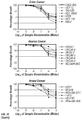
- FIGS. 6A-6G show the in vitro testing results of compound 8 ( FIG. 6A ), compound 9 ( FIG. 6B ), compound 10 ( FIG. 6C ), compound 11 ( FIG. 6D ), compound 12 ( FIG. 6E ), compound 13 ( FIG. 6F ), or compound 14 ( FIG. 6G ).
- FIGS. 7A-7G show dose response curves of compound 8 ( FIG. 7A ), compound 9 ( FIG. 7B ), compound 10 ( FIG. 7C ), compound 11 ( FIG. 7D ), compound 12 ( FIG. 7E ), compound 13 ( FIG. 7F ), or compound 14 ( FIG. 7G ).
- the present disclosure relates to new analogs of epothilone including 12,13-aziridine epothilone analogs which contains a handle capable of conjugating to a cell targeting moiety.
- the cell targeting moieties attached to the epothilone analogs allow for the targeting of the epothilone analogs to particular cells and thus focusing the cytotoxic activity to specific cells.
- the present disclosure provides methods of preparing the analogs of epothilone such as 12,13-aziridine epothilone analogs.
- the methods of preparing the aziridine analogs show improved reactivity and decrease the total number of synthetic steps.
- the epothilone analogs described herein may contain one or more asymmetrically-substituted carbon or nitrogen atoms, and may be isolated in optically active or racemic form.
- optically active or racemic form all chiral, diastereomeric, racemic form, epimeric form, and all geometric isomeric forms of a chemical formula are intended, unless the specific stereochemistry or isomeric form is specifically indicated.
- Compounds may occur as racemates and racemic mixtures, single enantiomers, diastereomeric mixtures and individual diastereomers. In some embodiments, a single diastereomer is obtained.
- the chiral centers of the compounds of the present disclosure can have the S or the R configuration.
- Chemical formulas used to represent the epothilone analogs described herein will typically only show one of possibly several different tautomers. For example, many types of ketone groups are known to exist in equilibrium with corresponding enol groups. Similarly, many types of imine groups exist in equilibrium with enamine groups. Regardless of which tautomer is depicted for a given compound, and regardless of which one is most prevalent, all tautomers of a given chemical formula are intended.
- epothilone analogs described herein may also have the advantage that they may be more efficacious than, be less toxic than, be longer acting than, be more potent than, produce fewer side effects than, be more easily absorbed than, and/or have a better pharmacokinetic profile (e.g., higher oral bioavailability and/or lower clearance) than, and/or have other useful pharmacological, physical, or chemical properties over, compounds known in the prior art, whether for use in the indications stated herein or otherwise.
- a better pharmacokinetic profile e.g., higher oral bioavailability and/or lower clearance
- atoms making up the epothilone analogs described herein are intended to include all isotopic forms of such atoms.
- Isotopes include those atoms having the same atomic number but different mass numbers.
- isotopes of hydrogen include tritium and deuterium
- isotopes of carbon include 13 C and 14 C.
- the epothilone analogs described herein may also exist in prodrug form. Since prodrugs are known to enhance numerous desirable qualities of pharmaceuticals (e.g., solubility, bioavailability, manufacturing, etc.), the compounds employed in some methods of the disclosure may, if desired, be delivered in prodrug form. Thus, the invention contemplates prodrugs of compounds of the present invention as well as methods of delivering prodrugs. Prodrugs of the epothilone analogs described herein may be prepared by modifying functional groups present in the compound in such a way that the modifications are cleaved, either in routine manipulation or in vivo, to the parent compound.
- prodrugs include, for example, compounds described herein in which a hydroxy, amino, or carboxy group is bonded to any group that, when the prodrug is administered to a subject, cleaves to form a hydroxy, amino, or carboxylic acid, respectively.
- the compounds are included a pharmaceutical formulation.
- Materials for use in the preparation of microspheres and/or microcapsules are, e.g., biodegradable/bioerodible polymers such as polygalactin, poly-(isobutyl cyanoacrylate), poly(2-hydroxyethyl-L-glutamine) and, poly(lactic acid).
- Biocompatible carriers that may be used when formulating a controlled release parenteral formulation are carbohydrates (e.g., dextrans), proteins (e.g., albumin), lipoproteins, or antibodies.
- Materials for use in implants can be non-biodegradable (e.g., polydimethyl siloxane) or biodegradable (e.g., poly(caprolactone), poly(lactic acid), poly(glycolic acid) or poly(ortho esters) or combinations thereof).
- biodegradable e.g., poly(caprolactone), poly(lactic acid), poly(glycolic acid) or poly(ortho esters) or combinations thereof.
- Formulations for oral use include tablets containing the active ingredient(s) (e.g., the epothilone analogs described herein) in a mixture with non-toxic pharmaceutically acceptable excipients.
- Excipients may be, for example, inert diluents or fillers (e.g., sucrose, sorbitol, sugar, mannitol, microcrystalline cellulose, starches including potato starch, calcium carbonate, sodium chloride, lactose, calcium phosphate, calcium sulfate, or sodium phosphate); granulating and disintegrating agents (e.g., cellulose derivatives including microcrystalline cellulose, starches including potato starch, croscarmellose sodium, alginates, or alginic acid); binding agents (e.g., sucrose, glucose, sorbitol, acacia, alginic acid, sodium alginate, gelatin, starch, pregelatinized starch, microcrystalline cellulose, magnesium aluminum si
- the tablets may be uncoated or they may be coated by known techniques, optionally to delay disintegration and absorption in the gastrointestinal tract and thereby providing a sustained action over a longer period.
- the coating may be adapted to release the active drug in a predetermined pattern (e.g., in order to achieve a controlled release formulation) or it may be adapted not to release the active drug until after passage of the stomach (enteric coating).
- the coating may be a sugar coating, a film coating (e.g., based on hydroxypropyl methylcellulose, methylcellulose, methyl hydroxyethylcellulose, hydroxypropylcellulose, carboxymethylcellulose, acrylate copolymers, polyethylene glycols and/or polyvinylpyrrolidone), or an enteric coating (e.g., based on methacrylic acid copolymer, cellulose acetate phthalate, hydroxypropyl methylcellulose phthalate, hydroxypropyl methylcellulose acetate succinate, polyvinyl acetate phthalate, shellac, and/or ethylcellulose).
- a time delay material such as, e.g., glyceryl monostearate or glyceryl distearate may be employed.
- the prototypical example is cancer.
- cancer One of the key elements of cancer is that the cell's normal apoptotic cycle is interrupted and thus agents that interrupt the growth of the cells are important as therapeutic agents for treating these diseases.
- the epothilone analogs described herein may be used to lead to decreased cell counts and as such can potentially be used to treat a variety of types of cancer lines. In some aspects, it is anticipated that the epothilone analogs described herein may be used to treat virtually any malignancy.
- Cancer cells that may be treated with the compounds of the present disclosure include but are not limited to cells from the bladder, blood, bone, bone marrow, brain, breast, colon, esophagus, gastrointestine, gum, head, kidney, liver, lung, nasopharynx, neck, ovary, prostate, skin, stomach, pancreas, testis, tongue, cervix, or uterus.
- the cancer may specifically be of the following histological type, though it is not limited to these: neoplasm, malignant; carcinoma; carcinoma, undifferentiated; giant and spindle cell carcinoma; small cell carcinoma; papillary carcinoma; squamous cell carcinoma; lymphoepithelial carcinoma; basal cell carcinoma; pilomatrix carcinoma; transitional cell carcinoma; papillary transitional cell carcinoma; adenocarcinoma; gastrinoma, malignant; cholangiocarcinoma; hepatocellular carcinoma; combined hepatocellular carcinoma and cholangiocarcinoma; trabecular adenocarcinoma; adenoid cystic carcinoma; adenocarcinoma in adenomatous polyp; adenocarcinoma, familial polyposis coli; solid carcinoma; carcinoid tumor, malignant; branchiolo-alveolar adenocarcinoma; papillary adenocarcinoma; chromophobe carcinoma; acid
- the tumor may comprise an osteosarcoma, angiosarcoma, rhabdosarcoma, leiomyosarcoma, Ewing sarcoma, glioblastoma, neuroblastoma, or leukemia.
- the present disclosure provides compounds conjugated directly or through linkers to a cell targeting moiety.
- the conjugation of the compound to a cell targeting moiety increases the efficacy of the compound in treating a disease or disorder.
- Cell targeting moieties according to the embodiments may be, for example, an antibody, a growth factor, a hormone, a peptide, an aptamer, a small molecule such as a hormone, an imaging agent, or cofactor, or a cytokine.
- a cell targeting moiety according the embodiments may bind to a liver cancer cell such as a Hep3B cell. It has been demonstrated that the gp240 antigen is expressed in a variety of melanomas but not in normal tissues.
- the compounds of the present disclosure may be used in conjugates with an antibody for a specific antigen that is expressed by a cancer cell but not in normal tissues.
- cancer cell targeting moieties bind to multiple types of cancer cells.
- the 8H9 monoclonal antibody and the single chain antibodies derived therefrom bind to a glycoprotein that is expressed on breast cancers, sarcomas and neuroblastomas (Onda et al., 2004).
- Another example is the cell targeting agents described in U.S. Patent Publication No. 2004/005647 and in Winthrop et al. (2003) that bind to MUC-1, an antigen that is expressed on a variety cancer types.
- cell targeting constructs according the embodiments may be targeted against a plurality of cancer or tumor types.
- certain cell surface molecules are highly expressed in tumor cells, including hormone receptors such as human chorionic gonadotropin receptor and gonadotropin releasing hormone receptor (Nechushtan et al., 1997). Therefore, the corresponding hormones may be used as the cell-specific targeting moieties in cancer therapy. Additionally, the cell targeting moiety that may be used include a cofactor, a sugar, a drug molecule, an imaging agent, or a fluorescent dye. Many cancerous cells are known to over express folate receptors and thus folic acid or other folate derivatives may be used as conjugates to trigger cell-specific interaction between the conjugates of the present disclosure and a cell (Campbell, et al., 1991; Weitman, et al., 1992).
- ligands or antibodies specific for these receptors may be used as cell-specific targeting moieties.
- IL-2 may also be used as a cell-specific targeting moiety in a chimeric protein to target IL-2R+ cells.
- other molecules such as B7-1, B7-2 and CD40 may be used to specifically target activated T cells (The Leucocyte Antigen Facts Book, 1993, Barclay et al. (eds.), Academic Press).
- B cells express CD19, CD40 and IL-4 receptor and may be targeted by moieties that bind these receptors, such as CD40 ligand, IL-4, IL-5, IL-6 and CD28.
- CD40 ligand such as CD40 ligand, IL-4, IL-5, IL-6 and CD28.
- the elimination of immune cells such as T cells and B cells is particularly useful in the treatment of lymphoid tumors.
- cytokines that may be used to target specific cell subsets include the interleukins (IL-1 through IL-15), granulocyte-colony stimulating factor, macrophage-colony stimulating factor, granulocyte-macrophage colony stimulating factor, leukemia inhibitory factor, tumor necrosis factor, transforming growth factor, epidermal growth factor, insulin-like growth factors, and/or fibroblast growth factor (Thompson (ed.), 1994, The Cytokine Handbook, Academic Press, San Diego).
- interleukins IL-1 through IL-15
- granulocyte-colony stimulating factor granulocyte-colony stimulating factor
- macrophage-colony stimulating factor granulocyte-macrophage colony stimulating factor
- leukemia inhibitory factor granulocyte-macrophage colony stimulating factor
- tumor necrosis factor transforming growth factor
- epidermal growth factor epidermal growth factor
- insulin-like growth factors insulin-like growth factors
- fibroblast growth factor Thi
- the targeting polypeptide is a cytokine that binds to the Fn14 receptor, such as TWEAK (see, e.g., Winkles, 2008; Zhou et al., 2011 and Burkly et al., 2007, incorporated herein by reference).
- cytokines including hematopoietins (four-helix bundles) (such as EPO (erythropoietin), IL-2 (T-cell growth factor), IL-3 (multicolony CSF), IL-4 (BCGF-1, BSF-1), IL-5 (BCGF-2), IL-6 IL-4 (IFN- ⁇ 2, BSF-2, BCDF), IL-7, IL-8, IL-9, IL-11, IL-13 (P600), G-CSF, IL-15 (T-cell growth factor), GM-CSF (granulocyte macrophage colony stimulating factor), OSM (OM, oncostatin M), and LIF (leukemia inhibitory factor)); interferons (such as IFN- ⁇ , IFN- ⁇ , and IFN- ⁇ ); immunoglobin superfamily (such as B7.1 (CD80), and B7.2 (B70, CD86)); TNF family (such as TNF- ⁇ (cachectin
- the cell-targeting moiety may be a peptide sequence or a cyclic peptide.
- cell- and tissue-targeting peptides that may be used according to the embodiments are provided, for instance, in U.S. Pat. Nos. 6,232,287; 6,528,481; 7,452,964; 7,671,010; 7,781,565; 8,507,445; and 8,450,278, each of which is incorporated herein by reference.
- cell targeting moieties are antibodies or avimers.
- Antibodies and avimers can be generated against virtually any cell surface marker thus, providing a method for targeted to delivery of GrB to virtually any cell population of interest.
- Methods for generating antibodies that may be used as cell targeting moieties are detailed below.
- Methods for generating avimers that bind to a given cell surface marker are detailed in U.S. Patent Publications Nos. 2006/0234299 and 2006/0223114, each incorporated herein by reference.
- nanoparticles include metal nanoparticles such as gold or silver nanoparticles or polymeric nanoparticles such as poly-L-lactic acid or poly(ethylene) glycol polymers.
- Nanoparticles and nanomaterials which may be conjugated to the instant compounds include those described in U.S. Patent Publications Nos. 2006/0034925, 2006/0115537, 2007/0148095, 2012/0141550, 2013/0138032, and 2014/0024610 and PCT Publication No. 2008/121949, 2011/053435, and 2014/087413, each incorporated herein by reference.
- compositions in a form appropriate for the intended application.
- such formulation with the compounds of the present disclosure is contemplated.
- this will entail preparing compositions that are essentially free of pyrogens, as well as other impurities that could be harmful to humans or animals.
- compositions of the present invention comprise an effective amount of the vector to cells, dissolved or dispersed in a pharmaceutically acceptable carrier or aqueous medium. Such compositions also are referred to as inocula.
- pharmaceutically or pharmacologically acceptable refers to molecular entities and compositions that do not produce adverse, allergic, or other untoward reactions when administered to an animal or a human.
- “pharmaceutically acceptable carrier” includes any and all solvents, dispersion media, coatings, antibacterial and antifungal agents, isotonic and absorption delaying agents and the like.
- the use of such media and agents for pharmaceutically active substances is well known in the art. Except insofar as any conventional media or agent is incompatible with the vectors or cells of the present invention, its use in therapeutic compositions is contemplated. Supplementary active ingredients also can be incorporated into the compositions.
- compositions of the present invention may include classic pharmaceutical preparations. Administration of these compositions according to the present invention will be via any common route so long as the target tissue is available via that route. Such routes include oral, nasal, buccal, rectal, vaginal or topical route. Alternatively, administration may be by orthotopic, intradermal, subcutaneous, intramuscular, intratumoral, intraperitoneal, or intravenous injection. Such compositions would normally be administered as pharmaceutically acceptable compositions, described supra.
- the active compounds may also be administered parenterally or intraperitoneally.
- Solutions of the active compounds as free base or pharmacologically acceptable salts can be prepared in water suitably mixed with a surfactant, such as hydroxypropylcellulose.
- Dispersions can also be prepared in glycerol, liquid polyethylene glycols, and mixtures thereof and in oils. Under ordinary conditions of storage and use, these preparations contain a preservative to prevent the growth of microorganisms.
- the pharmaceutical forms suitable for injectable use include sterile aqueous solutions or dispersions and sterile powders for the extemporaneous preparation of sterile injectable solutions or dispersions.
- the form must be sterile and must be fluid to the extent that easy syringability exists. It must be stable under the conditions of manufacture and storage and must be preserved against the contaminating action of microorganisms, such as bacteria and fungi.
- the carrier can be a solvent or dispersion medium containing, for example, water, ethanol, polyol (for example, glycerol, propylene glycol, and liquid polyethylene glycol, and the like), suitable mixtures thereof, and vegetable oils.
- the proper fluidity can be maintained, for example, by the use of a coating, such as lecithin, by the maintenance of the required particle size in the case of dispersion and by the use of surfactants.
- a coating such as lecithin
- surfactants for example, sodium sulfate, sodium sulfate, sodium sulfate, sodium sulfate, sodium sulfate, sodium sulfate, sodium sulfate, sodium sorbic acid, thimerosal, and the like.
- isotonic agents for example, sugars or sodium chloride.
- Prolonged absorption of the injectable compositions can be brought about by the use in the compositions of agents delaying absorption, for example, aluminum monostearate and gelatin.
- Sterile injectable solutions are prepared by incorporating the active compounds in the required amount in the appropriate solvent with various of the other ingredients enumerated above, as required, followed by filtered sterilization.
- dispersions are prepared by incorporating the various sterilized active ingredients into a sterile vehicle which contains the basic dispersion medium and the required other ingredients from those enumerated above.
- the preferred methods of preparation are vacuum-drying and freeze-drying techniques which yield a powder of the active ingredient plus any additional desired ingredient from a previously sterile-filtered solution thereof.
- “pharmaceutically acceptable carrier” includes any and all solvents, dispersion media, coatings, antibacterial and antifungal agents, isotonic and absorption delaying agents and the like. The use of such media and agents for pharmaceutical active substances is well known in the art. Except insofar as any conventional media or agent is incompatible with the active ingredient, its use in the therapeutic compositions is contemplated. Supplementary active ingredients can also be incorporated into the compositions.
- epothilone analogs described herein may be incorporated with excipients and used in the form of non-ingestible mouthwashes and dentifrices.
- a mouthwash may be prepared incorporating the active ingredient in the required amount in an appropriate solvent, such as a sodium borate solution (Dobell's Solution).
- the active ingredient may be incorporated into an antiseptic wash containing sodium borate, glycerin and potassium bicarbonate.
- the active ingredient may also be dispersed in dentifrices, including: gels, pastes, powders and slurries.
- the active ingredient may be added in a therapeutically effective amount to a paste dentifrice that may include water, binders, abrasives, flavoring agents, foaming agents, and humectants.
- compositions of the present disclosure may be formulated in a neutral or salt form.
- Pharmaceutically-acceptable salts include the acid addition salts (formed with the free amino groups of the protein) and which are formed with inorganic acids such as, for example, hydrochloric or phosphoric acids, or such organic acids as acetic, oxalic, tartaric, mandelic, and the like. Salts formed with the free carboxyl groups can also be derived from inorganic bases such as, for example, sodium, potassium, ammonium, calcium, or ferric hydroxides, and such organic bases as isopropylamine, trimethylamine, histidine, procaine and the like.
- solutions Upon formulation, solutions will be administered in a manner compatible with the dosage formulation and in such amount as is therapeutically effective.
- the formulations are easily administered in a variety of dosage forms such as injectable solutions, drug release capsules and the like.
- the solution For parenteral administration in an aqueous solution, for example, the solution should be suitably buffered if necessary and the liquid diluent first rendered isotonic with sufficient saline or glucose.
- aqueous solutions are especially suitable for intravenous, intramuscular, subcutaneous and intraperitoneal administration.
- sterile aqueous media which can be employed will be known to those of skill in the art in light of the present disclosure.
- one dosage could be dissolved in 1 ml of isotonic NaCl solution and either added to 1000 ml of hypodermoclysis fluid or injected at the proposed site of infusion, (see for example, “Remington's Pharmaceutical Sciences,” 15th Edition, pages 1035-1038 and 1570-1580). Some variation in dosage will necessarily occur depending on the condition of the subject being treated. The person responsible for administration will, in any event, determine the appropriate dose for the individual subject. Moreover, for human administration, preparations should meet sterility, pyrogenicity, general safety and purity standards as required by FDA Office of Biologics standards.
- compositions that may be used in treating microbial infections and cancer in a subject (e.g., a human subject) are disclosed herein.
- the compositions described above are preferably administered to a mammal (e.g., rodent, human, non-human primates, canine, bovine, ovine, equine, feline, etc.) in an effective amount, that is, an amount capable of producing a desirable result in a treated subject (e.g., causing apoptosis of cancerous cells or killing bacterial cells).
- Toxicity and therapeutic efficacy of the compositions utilized in methods of the invention can be determined by standard pharmaceutical procedures.
- dosage for any one animal depends on many factors, including the subject's size, body surface area, body weight, age, the particular composition to be administered, time and route of administration, general health, the clinical symptoms of the infection or cancer and other drugs being administered concurrently.
- a composition as described herein is typically administered at a dosage that inhibits the growth or proliferation of a bacterial cell, inhibits the growth of a biofilm, or induces death of cancerous cells (e.g., induces apoptosis of a cancer cell), as assayed by identifying a reduction in hematological parameters (complete blood count—CBC), or cancer cell growth or proliferation.
- CBC complete blood count
- amounts of the epothilone analogs used to inhibit bacterial growth or induce apoptosis of the cancer cells is calculated to be from about 0.01 mg to about 10,000 mg/day. In some embodiments, the amount is from about 1 mg to about 1,000 mg/day. In some embodiments, these dosings may be reduced or increased based upon the biological factors of a particular patient such as increased or decreased metabolic breakdown of the drug or decreased uptake by the digestive tract if administered orally. Additionally, the epothilone analogs may be more efficacious and thus a smaller dose is required to achieve a similar effect. Such a dose is typically administered once a day for a few weeks or until sufficient reducing in cancer cells has been achieved.
- the therapeutic methods of the invention in general include administration of a therapeutically effective amount of the compositions described herein to a subject in need thereof, including a mammal, particularly a human.
- Such treatment will be suitably administered to subjects, particularly humans, suffering from, having, susceptible to, or at risk for a disease, disorder, or symptom thereof. Determination of those subjects “at risk” can be made by any objective or subjective determination by a diagnostic test or opinion of a subject or health care provider (e.g., genetic test, enzyme or protein marker, marker (as defined herein), family history, and the like).
- the invention provides a method of monitoring treatment progress.
- the method includes the step of determining a level of changes in hematological parameters and/or cancer stem cell (CSC) analysis with cell surface proteins as diagnostic markers (which can include, for example, but are not limited to CD34, CD38, CD90, and CD117) or diagnostic measurement (e.g., screen, assay) in a subject suffering from or susceptible to a disorder or symptoms thereof associated with cancer (e.g., leukemia) in which the subject has been administered a therapeutic amount of a composition as described herein.
- CSC cancer stem cell
- diagnostic measurement e.g., screen, assay
- the level of marker determined in the method can be compared to known levels of marker in either healthy normal controls or in other afflicted patients to establish the subject's disease status.
- a second level of marker in the subject is determined at a time point later than the determination of the first level, and the two levels are compared to monitor the course of disease or the efficacy of the therapy.
- a pre-treatment level of marker in the subject is determined prior to beginning treatment according to the methods described herein; this pre-treatment level of marker can then be compared to the level of marker in the subject after the treatment commences, to determine the efficacy of the treatment.
- the epothilone analogs described herein may be used in combination therapies with one or more cancer therapies or a compound which mitigates one or more of the side effects experienced by the patient. It is common in the field of cancer therapy to combine therapeutic modalities. The following is a general discussion of therapies that may be used in conjunction with the therapies of the present disclosure.
- These therapies would be provided in a combined amount effective to achieve a reduction in one or more disease parameter.
- This process may involve contacting the cells/subjects with the both agents/therapies at the same time, e.g., using a single composition or pharmacological formulation that includes both agents, or by contacting the cell/subject with two distinct compositions or formulations, at the same time, wherein one composition includes the compound and the other includes the other agent.
- the epothilone analogs described herein may precede or follow the other treatment by intervals ranging from minutes to weeks.
- chemotherapeutic agent refers to the use of drugs to treat cancer.
- a “chemotherapeutic agent” is used to connote a compound or composition that is administered in the treatment of cancer. These agents or drugs are categorized by their mode of activity within a cell, for example, whether and at what stage they affect the cell cycle. Alternatively, an agent may be characterized based on its ability to directly cross-link DNA, to intercalate into DNA, or to induce chromosomal and mitotic aberrations by affecting nucleic acid synthesis. Most chemotherapeutic agents fall into the following categories: alkylating agents, antimetabolites, antitumor antibiotics, mitotic inhibitors, and nitrosoureas.
- chemotherapeutic agents include alkylating agents such as thiotepa and cyclosphosphamide; alkyl sulfonates such as busulfan, improsulfan and piposulfan; aziridines such as benzodopa, carboquone, meturedopa, and uredopa; ethylenimines and methylamelamines including altretamine, triethylenemelamine, trietylenephosphoramide, triethiylenethiophosphoramide and trimethylolomelamine; acetogenins (especially bullatacin and bullatacinone); a camptothecin (including the synthetic analogue topotecan); bryostatin; callystatin; CC-1065 (including its adozelesin, carzelesin and bizelesin synthetic analogues); cryptophycins (particularly cryptophycin 1 and cryptophycin 8); dolastatin; duocarmycin (including
- Radiotherapy also called radiation therapy, is the treatment of cancer and other diseases with ionizing radiation. Ionizing radiation deposits energy that injures or destroys cells in the area being treated by damaging their genetic material, making it impossible for these cells to continue to grow. Although radiation damages both cancer cells and normal cells, the latter are able to repair themselves and function properly.
- Radiation therapy used according to the present invention may include, but is not limited to, the use of ⁇ -rays, X-rays, and/or the directed delivery of radioisotopes to tumor cells.
- DNA damaging factors are also contemplated such as microwaves and UV-irradiation. It is most likely that all of these factors induce a broad range of damage on DNA, on the precursors of DNA, on the replication and repair of DNA, and on the assembly and maintenance of chromosomes.
- Dosage ranges for X-rays range from daily doses of 50 to 200 roentgens for prolonged periods of time (3 to 4 wk), to single doses of 2000 to 6000 roentgens.
- Dosage ranges for radioisotopes vary widely, and depend on the half-life of the isotope, the strength and type of radiation emitted, and the uptake by the neoplastic cells.
- Radiotherapy may comprise the use of radiolabeled antibodies to deliver doses of radiation directly to the cancer site (radioimmunotherapy).
- Antibodies are highly specific proteins that are made by the body in response to the presence of antigens (substances recognized as foreign by the immune system). Some tumor cells contain specific antigens that trigger the production of tumor-specific antibodies. Large quantities of these antibodies can be made in the laboratory and attached to radioactive substances (a process known as radiolabeling). Once injected into the body, the antibodies actively seek out the cancer cells, which are destroyed by the cell-killing (cytotoxic) action of the radiation. This approach can minimize the risk of radiation damage to healthy cells.
- Conformal radiotherapy uses the same radiotherapy machine, a linear accelerator, as the normal radiotherapy treatment but metal blocks are placed in the path of the x-ray beam to alter its shape to match that of the cancer. This ensures that a higher radiation dose is given to the tumor. Healthy surrounding cells and nearby structures receive a lower dose of radiation, so the possibility of side effects is reduced.
- a device called a multi-leaf collimator has been developed and may be used as an alternative to the metal blocks.
- the multi-leaf collimator consists of a number of metal sheets which are fixed to the linear accelerator. Each layer can be adjusted so that the radiotherapy beams can be shaped to the treatment area without the need for metal blocks. Precise positioning of the radiotherapy machine is very important for conformal radiotherapy treatment and a special scanning machine may be used to check the position of internal organs at the beginning of each treatment.
- High-resolution intensity modulated radiotherapy also uses a multi-leaf collimator. During this treatment the layers of the multi-leaf collimator are moved while the treatment is being given. This method is likely to achieve even more precise shaping of the treatment beams and allows the dose of radiotherapy to be constant over the whole treatment area.
- Radiosensitizers make the tumor cells more likely to be damaged, and radioprotectors protect normal tissues from the effects of radiation.
- Hyperthermia the use of heat, is also being studied for its effectiveness in sensitizing tissue to radiation.
- immunotherapeutics In the context of cancer treatment, immunotherapeutics, generally, rely on the use of immune effector cells and molecules to target and destroy cancer cells.
- Trastuzumab (HerceptinTM) is such an example.
- the immune effector may be, for example, an antibody specific for some marker on the surface of a tumor cell.
- the antibody alone may serve as an effector of therapy or it may recruit other cells to actually affect cell killing.
- the antibody also may be conjugated to a drug or toxin (chemotherapeutic, radionuclide, ricin A chain, cholera toxin, pertussis toxin, etc.) and serve merely as a targeting agent.
- toxin chemotherapeutic, radionuclide, ricin A chain, cholera toxin, pertussis toxin, etc.
- the effector may be a lymphocyte carrying a surface molecule that interacts, either directly or indirectly, with a tumor cell target.
- Various effector cells include cytotoxic T cells and NK cells. The combination of therapeutic modalities, i.e., direct cytotoxic activity and inhibition or reduction of ErbB2 would provide therapeutic benefit in the treatment of ErbB2 overexpressing cancers.
- the tumor cell must bear some marker that is amenable to targeting, i.e., is not present on the majority of other cells.
- Common tumor markers include carcinoembryonic antigen, prostate specific antigen, urinary tumor associated antigen, fetal antigen, tyrosinase (p97), gp68, TAG-72, HMFG, Sialyl Lewis Antigen, MucA, MucB, PLAP, estrogen receptor, laminin receptor, erb B and p155.
- An alternative aspect of immunotherapy is to combine anticancer effects with immune stimulatory effects.
- Immune stimulating molecules also exist including: cytokines such as IL-2, IL-4, IL-12, GM-CSF, ⁇ -IFN, chemokines such as MIP-1, MCP-1, IL-8 and growth factors such as FLT3 ligand.
- cytokines such as IL-2, IL-4, IL-12, GM-CSF, ⁇ -IFN
- chemokines such as MIP-1, MCP-1, IL-8
- growth factors such as FLT3 ligand.
- Combining immune stimulating molecules, either as proteins or using gene delivery in combination with a tumor suppressor has been shown to enhance anti-tumor effects (Ju et al., 2000).
- antibodies against any of these compounds may be used to target the anti-cancer agents discussed herein.
- immunotherapies currently under investigation or in use are immune adjuvants e.g., Mycobacterium bovis, Plasmodium falciparum , dinitrochlorobenzene and aromatic compounds (U.S. Pat. Nos. 5,801,005 and 5,739,169; Hui and Hashimoto, 1998; Christodoulides et al., 1998), cytokine therapy, e.g., interferons ⁇ , ⁇ , and ⁇ ; IL-1, GM-CSF and TNF (Bukowski et al., 1998; Davidson et al., 1998; Hellstrand et al., 1998) gene therapy, e.g., TNF, IL-1, IL-2, p53 (Qin et al., 1998; Austin-Ward and Villaseca, 1998; U.S.
- immune adjuvants e.g., Mycobacterium bovis, Plasmodium falciparum , dinitrochlorobenzene and aromatic compounds
- an antigenic peptide, polypeptide or protein, or an autologous or allogenic tumor cell composition or “vaccine” is administered, generally with a distinct bacterial adjuvant (Ravindranath and Morton, 1991; Morton et al., 1992; Mitchell et al., 1990; Mitchell et al., 1993).
- the patient's circulating lymphocytes, or tumor infiltrated lymphocytes are isolated in vitro, activated by lymphokines such as IL-2 or transduced with genes for tumor necrosis, and readministered (Rosenberg et al., 1988; 1989).
- Curative surgery is a cancer treatment that may be used in conjunction with other therapies, such as the treatment of the present invention, chemotherapy, radiotherapy, hormonal therapy, gene therapy, immunotherapy and/or alternative therapies.
- Curative surgery includes resection in which all or part of cancerous tissue is physically removed, excised, and/or destroyed.
- Tumor resection refers to physical removal of at least part of a tumor.
- treatment by surgery includes laser surgery, cryosurgery, electrosurgery, and microscopically controlled surgery (Mohs' surgery). It is further contemplated that the present invention may be used in conjunction with removal of superficial cancers, precancers, or incidental amounts of normal tissue.
- a cavity may be formed in the body.
- Treatment may be accomplished by perfusion, direct injection or local application of the area with an additional anti-cancer therapy.
- Such treatment may be repeated, for example, every 1, 2, 3, 4, 5, 6, or 7 days, or every 1, 2, 3, 4, and 5 weeks or every 1, 2, 3, 4, 5, 6, 7, 8, 9, 10, 11, or 12 months.
- These treatments may be of varying dosages as well.
- an adjuvant treatment with a compound of the present disclosure is believe to be particularly efficacious in reducing the reoccurrence of the tumor.
- the compounds of the present disclosure can also be used in a neoadjuvant setting.
- agents may be used with the present invention.
- additional agents include immunomodulatory agents, agents that affect the upregulation of cell surface receptors and GAP junctions, cytostatic and differentiation agents, inhibitors of cell adhesion, agents that increase the sensitivity of the hyperproliferative cells to apoptotic inducers, or other biological agents.
- Immunomodulatory agents include tumor necrosis factor; interferon alpha, beta, and gamma; IL-2 and other cytokines; F42K and other cytokine analogs; or MIP-1, MIP-1 ⁇ , MCP-1, RANTES, and other chemokines.
- cell surface receptors or their ligands such as Fas/Fas ligand, DR4 or DR5/TRAIL (Apo-2 ligand) would potentiate the apoptotic inducing abilities of the present invention by establishment of an autocrine or paracrine effect on hyperproliferative cells. Increases intercellular signaling by elevating the number of GAP junctions would increase the anti-hyperproliferative effects on the neighboring hyperproliferative cell population.
- cytostatic or differentiation agents may be used in combination with the present invention to improve the anti-hyperproliferative efficacy of the treatments.
- Inhibitors of cell adhesion are contemplated to improve the efficacy of the present invention.
- cell adhesion inhibitors are focal adhesion kinase (FAKs) inhibitors and Lovastatin. It is further contemplated that other agents that increase the sensitivity of a hyperproliferative cell to apoptosis, such as the antibody c225, could be used in combination with the present invention to improve the treatment efficacy.
- FAKs focal adhesion kinase
- Lovastatin Lovastatin
- hyperthermia is a procedure in which a patient's tissue is exposed to high temperatures (up to 106° F.).
- External or internal heating devices may be involved in the application of local, regional, or whole-body hyperthermia.
- Local hyperthermia involves the application of heat to a small area, such as a tumor. Heat may be generated externally with high-frequency waves targeting a tumor from a device outside the body. Internal heat may involve a sterile probe, including thin, heated wires or hollow tubes filled with warm water, implanted microwave antennae, or radiofrequency electrodes.
- a patient's organ or a limb is heated for regional therapy, which is accomplished using devices that produce high energy, such as magnets.
- some of the patient's blood may be removed and heated before being perfused into an area that will be internally heated.
- Whole-body heating may also be implemented in cases where cancer has spread throughout the body. Warm-water blankets, hot wax, inductive coils, and thermal chambers may be used for this purpose.
- the compounds of this invention can be synthesized using the methods of organic chemistry as described in this application. These methods can be further modified and optimized using the principles and techniques of organic chemistry as applied by a person skilled in the art. Such principles and techniques are taught, for example, in March's Advanced Organic Chemistry: Reactions, Mechanisms, and Structure (2007), which is incorporated by reference herein.
- the synthetic methods described herein can be further modified and optimized for preparative, pilot- or large-scale production, either batch of continuous, using the principles and techniques of process chemistry as applied by a person skilled in the art. Such principles and techniques are taught, for example, in Practical Process Research & Development (2000), which is incorporated by reference herein.
- the synthetic method described herein may be used to produce preparative scale amounts of the epothilone analogs described herein.
- hydroxo means —O
- carbonyl means —C( ⁇ O)—
- carboxy means —C( ⁇ O)OH (also written as —COOH or —CO 2 H);
- halo means independently —F, —Cl, —Br or —I;
- amino means —NH 2 ;
- hydroxyamino means —NHOH;
- nitro means —NO 2 ;
- imino means ⁇ NH;
- cyano means —CN;
- isocyanate means —N ⁇ C ⁇ O;
- azido means —N 3 ;
- hydroazine means —NHNH 2 ; in a monovalent context “phosphate” means —OP(O)(OH) 2 or a deprotonated form thereof; in a divalent context “phosphate” means —OP(O)(OH)O— or
- the symbol “ ” means a single bond where the group attached to the thick end of the wedge is “out of the page.”
- the symbol “ ” means a single bond where the group attached to the thick end of the wedge is “into the page”.
- the symbol “ ” means a single bond where the geometry around a double bond (e.g., either E or Z) is undefined. Both options, as well as combinations thereof are therefore intended. Any undefined valency on an atom of a structure shown in this application implicitly represents a hydrogen atom bonded to that atom. A bold dot on a carbon atom indicates that the hydrogen attached to that carbon is oriented out of the plane of the paper.
- R may replace any hydrogen atom attached to any of the ring atoms, including a depicted, implied, or expressly defined hydrogen, so long as a stable structure is formed.
- R may replace any hydrogen atom attached to any of the ring atoms, including a depicted, implied, or expressly defined hydrogen, so long as a stable structure is formed.
- R may replace any hydrogen attached to any of the ring atoms of either of the fused rings unless specified otherwise.
- Replaceable hydrogens include depicted hydrogens (e.g., the hydrogen attached to the nitrogen in the formula above), implied hydrogens (e.g., a hydrogen of the formula above that is not shown but understood to be present), expressly defined hydrogens, and optional hydrogens whose presence depends on the identity of a ring atom (e.g., a hydrogen attached to group X, when X equals —CH—), so long as a stable structure is formed.
- R may reside on either the 5-membered or the 6-membered ring of the fused ring system.
- the subscript letter “y” immediately following the group “R” enclosed in parentheses represents a numeric variable. Unless specified otherwise, this variable can be 0, 1, 2, or any integer greater than 2, only limited by the maximum number of replaceable hydrogen atoms of the ring or ring system.
- (Cn) defines the exact number (n) of carbon atoms in the group/class.
- (C ⁇ n) defines the maximum number (n) of carbon atoms that can be in the group/class, with the minimum number as small as possible for the group in question, e.g., it is understood that the minimum number of carbon atoms in the group “alkenyl (C ⁇ 8) ” or the class “alkene (C ⁇ 8) ” is two.
- alkoxy (C ⁇ 10) designates those alkoxy groups having from 1 to 10 carbon atoms.
- (Cn-n′) defines both the minimum (n) and maximum number (n′) of carbon atoms in the group.
- alkyl (C2-10) designates those alkyl groups having from 2 to 10 carbon atoms.
- saturated means the compound or group so modified has no carbon-carbon double and no carbon-carbon triple bonds, except as noted below.
- one or more carbon oxygen double bond or a carbon nitrogen double bond may be present. And when such a bond is present, then carbon-carbon double bonds that may occur as part of keto-enol tautomerism or imine/enamine tautomerism are not precluded.
- aliphatic when used without the “substituted” modifier signifies that the compound/group so modified is an acyclic or cyclic, but non-aromatic hydrocarbon compound or group.
- the carbon atoms can be joined together in straight chains, branched chains, or non-aromatic rings (alicyclic).
- Aliphatic compounds/groups can be saturated, that is joined by single bonds (alkanes/alkyl), or unsaturated, with one or more double bonds (alkenes/alkenyl) or with one or more triple bonds (alkynes/alkynyl).
- alkyl when used without the “substituted” modifier refers to a monovalent saturated aliphatic group with a carbon atom as the point of attachment, a linear or branched acyclic structure, and no atoms other than carbon and hydrogen.
- the groups —CH 3 (Me), —CH 2 CH 3 (Et), —CH 2 CH 2 CH 3 (n-Pr or propyl), —CH(CH 3 ) 2 (i-Pr, i Pr or isopropyl), —CH 2 CH 2 CH 2 CH 3 (n-Bu), —CH(CH 3 )CH 2 CH 3 (sec-butyl), —CH 2 CH(CH 3 ) 2 (isobutyl), —C(CH 3 ) 3 (tert-butyl, t-butyl, t-Bu or t Bu), and —CH 2 C(CH 3 ) 3 (neo-pentyl) are non-limiting examples of alkyl groups.
- alkanediyl when used without the “substituted” modifier refers to a divalent saturated aliphatic group, with one or two saturated carbon atom(s) as the point(s) of attachment, a linear or branched acyclic structure, no carbon-carbon double or triple bonds, and no atoms other than carbon and hydrogen.
- the groups, —CH 2 — (methylene), —CH 2 CH 2 —, —CH 2 C(CH 3 ) 2 CH 2 —, and —CH 2 CH 2 CH 2 —, are non-limiting examples of alkanediyl groups.
- alkylidene when used without the “substituted” modifier refers to the divalent group ⁇ CRR′ in which R and R′ are independently hydrogen or alkyl.
- alkylidene groups include: ⁇ CH 2 , ⁇ CH(CH 2 CH 3 ), and ⁇ C(CH 3 ) 2 .
- An “alkane” refers to the compound H—R, wherein R is alkyl as this term is defined above.
- the following groups are non-limiting examples of substituted alkyl groups: —CH 2 OH, —CH 2 Cl, —CF 3 , —CH 2 CN, —CH 2 C(O)OH, —CH 2 C(O)OCH 3 , —CH 2 C(O)NH 2 , —CH 2 C(O)CH 3 , —CH 2 OCH 3 , —CH 2 OC(O)CH 3 , —CH 2 NH 2 , —CH 2 N(CH 3 ) 2 , and —CH 2 CH 2 Cl.
- haloalkyl is a subset of substituted alkyl, in which one or more hydrogen atoms has been substituted with a halo group and no other atoms aside from carbon, hydrogen and halogen are present.
- the group, —CH 2 Cl is a non-limiting example of a haloalkyl.
- fluoroalkyl is a subset of substituted alkyl, in which one or more hydrogen has been substituted with a fluoro group and no other atoms aside from carbon, hydrogen and fluorine are present.
- the groups, —CH 2 F, —CF 3 , and —CH 2 CF 3 are non-limiting examples of fluoroalkyl groups.
- cycloalkyl when used without the “substituted” modifier refers to a monovalent saturated aliphatic group with a carbon atom as the point of attachment, said carbon atom forms part of one or more non-aromatic ring structures, a cyclo or cyclic structure, no carbon-carbon double or triple bonds, and no atoms other than carbon and hydrogen.
- Non-limiting examples of cycloalkyl groups include: —CH(CH 2 ) 2 (cyclopropyl), cyclobutyl, cyclopentyl, or cyclohexyl.
- cycloalkanediyl when used without the “substituted” modifier refers to a divalent saturated aliphatic group with one or two carbon atom as the point(s) of attachment, said carbon atom(s) forms part of one or more non-aromatic ring structures, a cyclo or cyclic structure, no carbon-carbon double or triple bonds, and no atoms other than carbon and hydrogen.
- cycloalkane refers to the compound H—R, wherein R is cycloalkyl as this term is defined above.
- R is cycloalkyl as this term is defined above.
- one or more hydrogen atom has been independently replaced by —OH, —F, —Cl, —Br, —I, —NH 2 , —NO 2 , —N 3 , —CO 2 H, —CO 2 CH 3 , —CN, —SH, —OCH 3 , —SCH 3 , —OCH 2 CH 3 , —C(O)CH 3 , —NHCH 3 , —NHCH 2 CH 3 , —N(CH 3 ) 2 , —C(O)NH 2 , —C(O)NHCH 3 , —C(O)N(CH 3 ) 2 , —OC(O)CH 3 , —NHC(O)
- alkenyl when used without the “substituted” modifier refers to a monovalent unsaturated aliphatic group with a carbon atom as the point of attachment, a linear or branched, acyclic structure, at least one nonaromatic carbon-carbon double bond, no carbon-carbon triple bonds, and no atoms other than carbon and hydrogen.
- alkenyl groups include: —CH ⁇ CH 2 (vinyl), —CH ⁇ CHCH 3 , —CH ⁇ CHCH 2 CH 3 , —CH 2 CH ⁇ CH 2 (allyl), —CH 2 CH ⁇ CHCH 3 , and —CH ⁇ CHCH ⁇ CH 2 .
- alkenediyl when used without the “substituted” modifier refers to a divalent unsaturated aliphatic group, with two carbon atoms as points of attachment, a linear or branched, cyclo, cyclic or acyclic structure, at least one nonaromatic carbon-carbon double bond, no carbon-carbon triple bonds, and no atoms other than carbon and hydrogen.
- the groups, —CH ⁇ CH—, —CH ⁇ C(CH 3 )CH 2 —, and —CH ⁇ CHCH 2 — are non-limiting examples of alkenediyl groups. It is noted that while the alkenediyl group is aliphatic, once connected at both ends, this group is not precluded from forming part of an aromatic structure.
- alkene and refer to a compound having the formula H—R, wherein R is alkenyl as this term is defined above.
- a “terminal alkene” refers to an alkene having just one carbon-carbon double bond, wherein that bond forms a vinyl group at one end of the molecule.
- alkynyl when used without the “substituted” modifier refers to a monovalent unsaturated aliphatic group with a carbon atom as the point of attachment, a linear or branched, acyclic structure, at least one carbon-carbon triple bond, and no atoms other than carbon and hydrogen. As used herein, the term alkynyl does not preclude the presence of one or more non-aromatic carbon-carbon double bonds.
- the groups, —C ⁇ CH, —C ⁇ CCH 3 , and —CH 2 C ⁇ CCH 3 are non-limiting examples of alkynyl groups.
- An “alkyne” refers to the compound H—R, wherein R is alkynyl.
- aryl when used without the “substituted” modifier refers to a monovalent unsaturated aromatic group with an aromatic carbon atom as the point of attachment, said carbon atom forming part of a one or more six-membered aromatic ring structure, wherein the ring atoms are all carbon, and wherein the group consists of no atoms other than carbon and hydrogen. If more than one ring is present, the rings may be fused or unfused. As used herein, the term does not preclude the presence of one or more alkyl or aralkyl groups (carbon number limitation permitting) attached to the first aromatic ring or any additional aromatic ring present.
- Non-limiting examples of aryl groups include phenyl (Ph), methylphenyl, (dimethyl)phenyl, —C 6 H 4 CH 2 CH 3 (ethylphenyl), naphthyl, and a monovalent group derived from biphenyl.
- the term “arenediyl” when used without the “substituted” modifier refers to a divalent aromatic group with two aromatic carbon atoms as points of attachment, said carbon atoms forming part of one or more six-membered aromatic ring structure(s) wherein the ring atoms are all carbon, and wherein the monovalent group consists of no atoms other than carbon and hydrogen.
- the term does not preclude the presence of one or more alkyl, aryl or aralkyl groups (carbon number limitation permitting) attached to the first aromatic ring or any additional aromatic ring present. If more than one ring is present, the rings may be fused or unfused. Unfused rings may be connected via one or more of the following: a covalent bond, alkanediyl, or alkenediyl groups (carbon number limitation permitting).
- arenediyl groups include:
- an “arene” refers to the compound H—R, wherein R is aryl as that term is defined above. Benzene and toluene are non-limiting examples of arenes. When any of these terms are used with the “substituted” modifier one or more hydrogen atom has been independently replaced by —OH, —F, —Cl, —Br, —I, —NH 2 , —NO 2 , —N 3 , —CO 2 H, —CO 2 CH 3 , —CN, —SH, —OCH 3 , —SCH 3 , —OCH 2 CH 3 , —C(O)CH 3 , —NHCH 3 , —NHCH 2 CH 3 , —N(CH 3 ) 2 , —C(O)NH 2 , —C(O)NHCH 3 , —C(O)N(CH 3 ) 2 , —OC(O)CH 3 , —NHC(O)CH 3 ,
- aralkyl when used without the “substituted” modifier refers to the monovalent group -alkanediyl-aryl, in which the terms alkanediyl and aryl are each used in a manner consistent with the definitions provided above.
- Non-limiting examples of aralkyls are: phenylmethyl (benzyl, Bn) and 2-phenyl-ethyl.
- aralkyl When the term aralkyl is used with the “substituted” modifier one or more hydrogen atom from the alkanediyl and/or the aryl group has been independently replaced by —OH, —F, —Cl, —Br, —I, —NH 2 , —NO 2 , —N 3 , —CO 2 H, —CO 2 CH 3 , —CN, —SH, —OCH 3 , —SCH 3 , —OCH 2 CH 3 , —C(O)CH 3 , —NHCH 3 , —NHCH 2 CH 3 , —N(CH 3 ) 2 , —C(O)NH 2 , —C(O)NHCH 3 , —C(O)N(CH 3 ) 2 , —OC(O)CH 3 , —NHC(O)CH 3 , —S(O) 2 OH, or —S(O) 2 NH 2 .
- heteroaryl when used without the “substituted” modifier refers to a monovalent aromatic group with an aromatic carbon atom or nitrogen atom as the point of attachment, said carbon atom or nitrogen atom forming part of one or more aromatic ring structures wherein at least one of the ring atoms is nitrogen, oxygen or sulfur, and wherein the heteroaryl group consists of no atoms other than carbon, hydrogen, aromatic nitrogen, aromatic oxygen and aromatic sulfur. If more than one ring is present, the rings may be fused or unfused. As used herein, the term does not preclude the presence of one or more alkyl, aryl, and/or aralkyl groups (carbon number limitation permitting) attached to the aromatic ring or aromatic ring system.
- heteroaryl groups include furanyl, imidazolyl, indolyl, indazolyl, isoxazolyl, methylpyridinyl, oxazolyl, phenylpyridinyl, pyridinyl, pyrrolyl, pyrimidinyl, pyrazinyl, quinolyl, quinazolyl, quinoxalinyl, triazinyl, tetrazolyl, thiazolyl, thienyl, and triazolyl.
- heteroaryl includes pyrimidine base and base analogs.
- N-heteroaryl refers to a heteroaryl group with a nitrogen atom as the point of attachment.
- heteroaryl when used without the “substituted” modifier refers to an divalent aromatic group, with two aromatic carbon atoms, two aromatic nitrogen atoms, or one aromatic carbon atom and one aromatic nitrogen atom as the two points of attachment, said atoms forming part of one or more aromatic ring structure(s) wherein at least one of the ring atoms is nitrogen, oxygen or sulfur, and wherein the divalent group consists of no atoms other than carbon, hydrogen, aromatic nitrogen, aromatic oxygen and aromatic sulfur. If more than one ring is present, the rings may be fused or unfused.
- Unfused rings may be connected via one or more of the following: a covalent bond, alkanediyl, or alkenediyl groups (carbon number limitation permitting).
- alkanediyl or alkenediyl groups (carbon number limitation permitting).
- the term does not preclude the presence of one or more alkyl, aryl, aralkyl, and/or heteroaralkyl groups (carbon number limitation permitting) attached to the aromatic ring or aromatic ring system.
- heteroarenediyl groups include:
- a “heteroarene” refers to the compound H—R, wherein R is heteroaryl. Pyridine and quinoline are non-limiting examples of heteroarenes. When these terms are used with the “substituted” modifier one or more hydrogen atom has been independently replaced by —OH, —F, —Cl, —Br, —I, —NH 2 , —NO 2 , —N 3 , —CO 2 H, —CO 2 CH 3 , —CN, —SH, —OCH 3 , —SCH 3 , —OCH 2 CH 3 , —C(O)CH 3 , —NHCH 3 , —NHCH 2 CH 3 , —N(CH 3 ) 2 , —C(O)NH 2 , —C(O)NHCH 3 , —C(O)N(CH 3 ) 2 , —OC(O)CH 3 , —NHC(O)CH 3 , —S(O) 2
- heteroaralkyl when used without the “substituted” modifier refers to the monovalent group -alkanediyl-heteroaryl, in which the terms alkanediyl and heteroaryl are each used in a manner consistent with the definitions provided above.
- Non-limiting examples of heteroaralkyls are: N-pyrazolylmethyl or quinolylmethyl.
- heteroaralkyl When the term heteroaralkyl is used with the “substituted” modifier one or more hydrogen atom from the alkanediyl and/or the heteroaryl group has been independently replaced by —OH, —F, —Cl, —Br, —I, —NH 2 , —NO 2 , —N 3 , —CO 2 H, —CO 2 CH 3 , —CN, —SH, —OCH 3 , —SCH 3 , —OCH 2 CH 3 , —C(O)CH 3 , —NHCH 3 , —NHCH 2 CH 3 , —N(CH 3 ) 2 , —C(O)NH 2 , —C(O)NHCH 3 , —C(O)N(CH 3 ) 2 , —OC(O)CH 3 , —NHC(O)CH 3 , —S(O) 2 OH, or —S(O) 2 NH 2 .
- acyl when used without the “substituted” modifier refers to the group —C(O)R, in which R is a hydrogen, alkyl, cycloalkyl, aryl, aralkyl or heteroaryl, as those terms are defined above.
- the groups, —CHO, —C(O)CH 3 (acetyl, Ac), —C(O)CH 2 CH 3 , —C(O)CH 2 CH 2 CH 3 , —C(O)CH(CH 3 ) 2 , —C(O)CH(CH 2 ) 2 , —C(O)C 6 H 5 , —C(O)C 6 H 4 CH 3 , —C(O)CH 2 C 6 H 5 , —C(O)(imidazolyl) are non-limiting examples of acyl groups.
- a “thioacyl” is defined in an analogous manner, except that the oxygen atom of the group —C(O)R has been replaced with a sulfur atom, —C(S)R.
- aldehyde corresponds to an alkane, as defined above, wherein at least one of the hydrogen atoms has been replaced with a —CHO group.
- An “anhydride” is a group of the formula ROR′, wherein R and R′ are acyl groups as defined above.
- one or more hydrogen atom (including a hydrogen atom directly attached the carbonyl or thiocarbonyl group, if any) has been independently replaced by —OH, —F, —Cl, —Br, —I, —NH 2 , —NO 2 , —N 3 , —CO 2 H, —CO 2 CH 3 , —CN, —SH, —OCH 3 , —SCH 3 , —OCH 2 CH 3 , —C(O)CH 3 , —NHCH 3 , —NHCH 2 CH 3 , —N(CH 3 ) 2 , —C(O)NH 2 , —C(O)NHCH 3 , —C(O)N(CH 3 ) 2 , —OC(O)CH 3 , —NHC(O)CH 3 , —S(O) 2 OH or —S(O) 2 NH 2 .
- the groups, —C(O)CH 2 CF 3 , —CO 2 H (carboxyl), —CO 2 CH 3 (methylcarboxyl), —CO 2 CH 2 CH 3 , —C(O)NH 2 (carbamoyl), and —CON(CH 3 ) 2 are non-limiting examples of substituted acyl groups.
- alkylamino when used without the “substituted” modifier refers to the group —NHR, in which R is an alkyl, as that term is defined above.
- alkylamino groups include: —NHCH 3 and —NHCH 2 CH 3 .
- dialkylamino when used without the “substituted” modifier refers to the group —NRR′, in which R and R′ can each independently be the same or different alkyl groups, or R and R′ can be taken together to represent an alkanediyl.
- Non-limiting examples of dialkylamino groups include: —N(CH 3 ) 2 , —N(CH 3 )(CH 2 CH 3 ), and N-pyrrolidinyl.
- a non-limiting example of an arylamino group is —NHC 6 H 5 .
- a non-limiting example of an amido group is —NHC(O)CH 3 .
- alkylimino when used without the “substituted” modifier refers to the divalent group ⁇ NR, in which R is an alkyl, as that term is defined above.
- alkylaminodiyl refers to the divalent group —NH-alkanediyl-, —NH-alkanediyl-NH—, or -alkanediyl-NH-alkanediyl-.
- alkoxy when used without the “substituted” modifier refers to the group —OR, in which R is an alkyl, as that term is defined above.
- R is an alkyl
- Non-limiting examples include: —OCH 3 (methoxy), —OCH 2 CH 3 (ethoxy), —OCH 2 CH 2 CH 3 , —OCH(CH 3 ) 2 (isopropoxy), and —OC(CH 3 ) 3 (tert-butoxy).
- cycloalkoxy when used without the “substituted” modifier, refers to groups, defined as —OR, in which R is cycloalkyl, alkenyl, alkynyl, aryl, aralkyl, heteroaryl, heterocycloalkyl, and acyl, respectively.
- alkoxydiyl refers to the divalent group —O-alkanediyl-, —O-alkanediyl-O—, or -alkanediyl-O-alkanediyl-.
- alkylthio and acylthio when used without the “substituted” modifier refers to the group —SR, in which R is an alkyl and acyl, respectively.
- alkylthiodiyl refers to the divalent group —S-alkanediyl-, —S-alkanediyl-S—, or -alkanediyl-S-alkanediyl-.
- alcohol corresponds to an alkane, as defined above, wherein at least one of the hydrogen atoms has been replaced with a hydroxy group.
- ether corresponds to an alkane or cycloalkane, as defined above, wherein at least one of the hydrogen atoms has been replaced with an alkoxy or cycloalkoxy group.
- alkylsilyl when used without the “substituted” modifier refers to the groups —SiR 3 , respectively, in which each R is an alkyl, as that term is defined above.
- alkenylsilyl “alkynylsilyl”, “arylsilyl”, “aralkylsilyl”, “heteroarylsilyl”, and “heterocycloalkylsilyl” are defined in an analogous manner.
- phosphine and “phosphane” are used synonymously herein. When used without the “substituted” modifier these terms refer to a compound of the formula PR 3 , wherein each R is independently hydrogen, alkyl, cycloalkyl, alkenyl, aryl, or aralkyl, as those terms are defined above. Non-limiting examples include PMe 3 , PPh 3 , and PCy 3 (tricyclohexylphosphine).
- the terms “trialkylphosphine” and “trialkylphosphane” are also synonymous. Such groups are a subset of phosphine, wherein each R is an alkyl group.
- diphosphine when used without the “substituted” modifier refers to a compound of the formula R 2 —P-L-P—R 2 , wherein each R is independently hydrogen, alkyl, cycloalkyl, alkenyl, aryl, or aralkyl, and wherein L is alkanediyl, cycloalkanediyl, alkenediyl, or arenediyl.
- the cell-targeting moiety is an antibody.
- antibody is intended to include immunoglobulins and fragments thereof which are specifically reactive to the designated protein or peptide, or fragments thereof. Suitable antibodies include, but are not limited to, human antibodies, primatized antibodies, de-immunized antibodies, chimeric antibodies, bi-specific antibodies, humanized antibodies, conjugated antibodies (i.e., antibodies conjugated or fused to other proteins, radiolabels, cytotoxins), Small Modular ImmunoPharmaceuticals (“SMIPsTM”), single chain antibodies, cameloid antibodies, antibody-like molecules (e.g., anticalins), and antibody fragments.
- SMIPsTM Small Modular ImmunoPharmaceuticals
- antibodies also includes intact monoclonal antibodies, polyclonal antibodies, single domain antibodies (e.g., shark single domain antibodies (e.g., IgNAR or fragments thereof)), multispecific antibodies (e.g., bi-specific antibodies) formed from at least two intact antibodies, and antibody fragments so long as they exhibit the desired biological activity.
- Antibody polypeptides for use herein may be of any type (e.g., IgG, IgM, IgA, IgD and IgE). Generally, IgG and/or IgM are preferred because they are the most common antibodies in the physiological situation and because they are most easily made in a laboratory setting.
- antibody also encompasses an antibody fragment such as a portion of an intact antibody, such as, for example, the antigen-binding or variable region of an antibody.
- antibody fragments include Fab, Fab′, F(ab′) 2 , Fc and Fv fragments; triabodies; tetrabodies; linear antibodies; single-chain antibody molecules; and multi specific antibodies formed from antibody fragments.
- antibody fragment also includes any synthetic or genetically engineered protein that acts like an antibody by binding to a specific antigen to form a complex.
- antibody fragments include isolated fragments, “Fv” fragments, consisting of the variable regions of the heavy and light chains, recombinant single chain polypeptide molecules in which light and heavy chain variable regions are connected by a peptide linker (“ScFv proteins”), and minimal recognition units consisting of the amino acid residues that mimic the hypervariable region.
- An oxygen linked antibody is an antibody which has a chemical function group such that the linkage between the antibody and the linker or compound is joined via an oxygen atom.
- a nitrogen linked antibody is an antibody which has a chemical function group such that the linkage between the antibody and the linker or compound is joined via an nitrogen atom.
- a “base” in the context of this application is a compound which has a lone pair of electron that can accept a proton.
- a base can include triethylamine, a metal hydroxide, a metal alkoxide, a metal hydride, or a metal alkane.
- An alkyllithium or organolithium is a compound of the formula alkyl (C ⁇ 12) -Li.
- a nitrogenous base is an alkylamine, dialkylamino, trialkylamine, nitrogen containing heterocycloalkane or heteroarene wherein the base can accept a proton to form a positively charged species.
- a nitrogenous base could be 4,4-dimethylpyridine, pyridine, 1,8-diazabicyclo[5.4.0]undec-7-ene, diisopropylethylamine, or triethylamine.
- a metal alkoxide is an alkoxy group wherein the oxygen atom, which was the point of connectivity, has an extra electron and thus a negative charge which is charged balanced by the metal ion.
- a metal alkoxide could be a sodium tert-butoxide or potassium methoxide.
- strong base indicates a base which has a pK a of greater than 20.
- a “metal” in the context of this application is a transition metal or a metal of groups I or II. It may also be an element of Group 13 such as, but not limited to, boron and aluminum.
- a “linker” in the context of this application is divalent chemical group which may be used to join one or more molecules to the compound of the instant disclosure.
- Linkers may also be an amino acid chain wherein the carboxy and amino terminus serve as the points of attachment for the linker.
- the linker contains a reactive functional group, such as a carboxyl, an amide, a amine, a hydroxy, a mercapto, an aldehyde, or a ketone on each end that be used to join one or more molecules to the compounds of the instant disclosure.
- —CH 2 CH 2 CH 2 CH 2 —, —C(O)CH 2 CH 2 CH 2 —, —OCH 2 CH 2 NH—, —NHCH 2 CH 2 NH—, and —(OCH 2 CH 2 ) n —, wherein n is between 1-1000, are linkers.
- An “amine protecting group” is well understood in the art.
- An amine protecting group is a group which prevents the reactivity of the amine group during a reaction which modifies some other portion of the molecule and can be easily removed to generate the desired amine.
- Amine protecting groups can be found at least in Greene and Wuts, 1999, which is incorporated herein by reference.
- amino protecting groups include formyl, acetyl, propionyl, pivaloyl, t-butylacetyl, 2-chloroacetyl, 2-bromoacetyl, trifluoroacetyl, trichloroacetyl, o-nitrophenoxyacetyl, ⁇ -chlorobutyryl, benzoyl, 4-chlorobenzoyl, 4-bromobenzoyl, 4-nitrobenzoyl, and the like; sulfonyl groups such as benzenesulfonyl, p-toluenesulfonyl and the like; alkoxy- or aryloxycarbonyl groups (which form urethanes with the protected amine) such as benzyloxycarbonyl (Cbz), p-chlorobenzyloxycarbonyl, p-methoxybenzyloxycarbonyl, p-nitrobenzyloxycarbonyl, 2-
- the “amine protecting group” can be a divalent protecting group such that both hydrogen atoms on a primary amine are replaced with a single protecting group.
- the amine protecting group can be phthalimide (phth) or a substituted derivative thereof wherein the term “substituted” is as defined above.
- the halogenated phthalimide derivative may be tetrachlorophthalimide (TCphth).
- a “protected amino group” is a group of the formula PG MA NH— or PG DA N— wherein PG MA is a monovalent amine protecting group, which may also be described as a “monvalently protected amino group” and PG DA is a divalent amine protecting group as described above, which may also be described as a “divalently protected amino group”.
- a “hydroxyl protecting group” is well understood in the art.
- a hydroxyl protecting group is a group which prevents the reactivity of the hydroxyl group during a reaction which modifies some other portion of the molecule and can be easily removed to generate the desired hydroxyl. Hydroxyl protecting groups can be found at least in Greene and Wuts, 1999, which is incorporated herein by reference.
- hydroxyl protecting groups include acyl groups such as formyl, acetyl, propionyl, pivaloyl, t-butylacetyl, 2-chloroacetyl, 2-bromoacetyl, trifluoroacetyl, trichloroacetyl, o-nitrophenoxyacetyl, ⁇ -chlorobutyryl, benzoyl, 4-chlorobenzoyl, 4-bromobenzoyl, 4-nitrobenzoyl, and the like; sulfonyl groups such as benzenesulfonyl, p-toluenesulfonyl and the like; acyloxy groups such as benzyloxycarbonyl (Cbz), p-chlorobenzyloxycarbonyl, p-methoxybenzyloxycarbonyl, p-nitrobenzyloxycarbonyl, 2-nitrobenzyloxycarbonyl, p-brom
- a “thiol protecting group” is well understood in the art.
- a thiol protecting group is a group which prevents the reactivity of the mercapto group during a reaction which modifies some other portion of the molecule and can be easily removed to generate the desired mercapto group.
- Thiol protecting groups can be found at least in Greene and Wuts, 1999, which is incorporated herein by reference.
- thiol protecting groups include acyl groups such as formyl, acetyl, propionyl, pivaloyl, t-butylacetyl, 2-chloroacetyl, 2-bromoacetyl, trifluoroacetyl, trichloroacetyl, o-nitrophenoxyacetyl, ⁇ -chlorobutyryl, benzoyl, 4-chlorobenzoyl, 4-bromobenzoyl, 4-nitrobenzoyl, and the like; sulfonyl groups such as benzenesulfonyl, p-toluenesulfonyl and the like; acyloxy groups such as benzyloxycarbonyl (Cbz), p-chlorobenzyloxycarbonyl, p-methoxybenzyloxycarbonyl, p-nitrobenzyloxycarbonyl, 2-nitrobenzyloxycarbonyl, p-bro
- a “stereoisomer” or “optical isomer” is an isomer of a given compound in which the same atoms are bonded to the same other atoms, but where the configuration of those atoms in three dimensions differs.
- “Enantiomers” are stereoisomers of a given compound that are mirror images of each other, like left and right hands.
- “Diastereomers” are stereoisomers of a given compound that are not enantiomers.
- Chiral molecules contain a chiral center, also referred to as a stereocenter or stereogenic center, which is any point, though not necessarily an atom, in a molecule bearing groups such that an interchanging of any two groups leads to a stereoisomer.
- the chiral center is typically a carbon, phosphorus or sulfur atom, though it is also possible for other atoms to be stereocenters in organic and inorganic compounds.
- a molecule can have multiple stereocenters, giving it many stereoisomers.
- the total number of hypothetically possible stereoisomers will not exceed 2 n , where n is the number of tetrahedral stereocenters.
- Molecules with symmetry frequently have fewer than the maximum possible number of stereoisomers.
- a 50:50 mixture of enantiomers is referred to as a racemic mixture.
- a mixture of enantiomers can be enantiomerically enriched so that one enantiomer is present in an amount greater than 50%.
- enantiomers and/or diastereomers can be resolved or separated using techniques known in the art. It is contemplated that that for any stereocenter or axis of chirality for which stereochemistry has not been defined, that stereocenter or axis of chirality can be present in its R form, S form, or as a mixture of the R and S forms, including racemic and non-racemic mixtures.
- the phrase “substantially free from other stereoisomers” means that the composition contains ⁇ 15%, more preferably ⁇ 10%, even more preferably ⁇ 5%, or most preferably ⁇ 1% of another stereoisomer(s).
- Scheme 1 summarizes the synthesis of Teoc-protected and Boc-protected aminoethyl pyrazole analogues 5 and 6 from the readily available building blocks 3-(methylthio)-1H-pyrazole (16a) (Schank et al., 1994) and commercially available 3-(trifluoromethyl)-1H-pyrazole (16b).
- Analogue 7 was prepared from commercially available trifluoromethyl pyrazole 16b and N-Teoc protected bromide 17b (WO 2012/003498A1) in a similar manner [42% yield for the last step (19c+15 ⁇ 7)] via intermediates 18c (96% yield) and 19c (54% yield). It is noteworthy that 17a-b, 18a-c, 19a-c, and especially 5, 6, and 7 exhibit signal splitting in their 1 H and 13 C NMR spectra, apparently due to hindered rotation around their bulky protecting groups (Boc and Teoc, respectively).
- Scheme 2 depicts the synthesis of bromopyrazoles 22a and 22b from commercially available pyrazoles 16b and 16c, respectively.
- protection of 16b or 16c with 3,4-dihydro-2H-pyran in the presence of TFA led to tetrahydropyran derivatives 20a or 20b in quantitative yield.
- These intermediates were regioselectively brominated via their lithioderivatives ( n BuLi; Br 2 ) to afford bromopyrazoles 21a (84% yield) and 21b (78% yield).
- Acid (MeSO 2 OH)-mediated deprotection of the latter led smoothly to the desired pyrazole building blocks 22a (95% yield) and 22b (91% yield), respectively.
- Scheme 3 summarizes the synthesis of epothilone analogues 8-10 from bromopyrazoles 22a and 22b.
- Reaction of 22a or 22b with commercially available 1-fluoro-4-nitrobenzene (22c) in the presence of NaH resulted in the formation of N-aryl bromopyrazole derivatives 23a (79% yield) or 23b (20% yield) through nucleophilic aromatic substitution.
- Reduction of the nitro group within 23a and 23b to the corresponding anilines was best realized with SnCl 2 in the presence of HCl (24a, 75% yield; 24b, 76% yield) (Xing and Ogata, 1982 and Bellamy and Ou, 1984).
- Epothilone analogues 11-14 were synthesized from bromopyrazole 22a and commercially available nitroaryl fluorides 22e-22h, respectively, employing analogous reactions to those described above for epothilones 8-10 (Scheme 3) and in similar yields, as shown in Scheme 4.
- the epothilone compound is transformed into an aziridine analog.
- the epoxide of epothilone B is transformed into an aziridine analog as shown in Scheme 5.
- the epothilone B was subjected to oxidatative cleavage of the extracyclic double bond to obtain a methyl ketone. After protection of the hydroxyl groups, the epoxide was reduced to the corresponding double bond. The double bond was then subjected to the Kürti-Falck aziridination reaction conditions to obtain the corresponding aziridine.
- Merck silica gel plates (60F-254) using UV light as visualizing agent and an ethanolic solution of phosphomolybdic acid, an aqueous solution of cerium sulfate, or a basic aqueous solution of potassium permanganate as developing agents.
- reaction mixture Upon cooling back down to 25° C., the reaction mixture was quenched with a saturated aqueous solution of ammonium chloride (25 mL), and the phases were separated. The aqueous layer was extracted with methylene chloride (3 ⁇ 15 mL), and the combined organic layers were dried with anhydrous magnesium sulfate and concentrated in vacuo. The obtained residue was purified by flash column chromatography (silica gel, 30% ethyl acetate in methylene chloride) to afford pure 18a (1.39 g, 5.4 mmol, 74%) as a white amorphous solid.
- n-Butyllithium (2.5 M hexanes, 6.1 mL, 15.3 mmol, 3.0 equiv) was added dropwise to a stirred solution of 18a (1.31 g, 5.1 mmol, 1.0 equiv) in THF (51 mL) at ⁇ 78° C. After stirring for 10 min, tributyltin chloride (1.5 mL, 5.6 mmol, 1.1 equiv) was added dropwise, and stirring was continued at ⁇ 78° C. for an additional 30 min. The reaction mixture was then quenched with a saturated aqueous solution of ammonium chloride (20 mL) and allowed to warm to 25° C.
- n-Butyllithium 2.5 M hexanes, 32.1 mL, 80.3 mmol, 1.3 equiv was added dropwise to a stirred solution of 20a (9.4 g, 61.8 mmol, 1.0 equiv) in THF (172 mL) at ⁇ 78° C. After stirring for 15 min, bromine (4.1 mL, 80.3 mmol. 1.3 equiv) was carefully added dropwise to the reaction mixture. The rate of addition was slow enough so as to allow complete decolorization of bromine prior to the next drop. After being allowed to warm to ⁇ 30° C.
- reaction mixture was quenched with a saturated solution of sodium bicarbonate (50 mL), and allowed to warm to 25° C. The two phases were separated, the aqueous layer was extracted with ethyl acetate (3 ⁇ 25 mL), and the combined organic layers were dried with anhydrous magnesium sulfate and concentrated in vacuo. Purification of the crude material by flash column chromatography (silica gel, 10% ethyl acetate in hexanes) afforded 21a (12.0 g, 51.9 mmol, 84%) as a white amorphous solid.
- N-arylpyrazole 23d (548 mg, 1.63 mmol, 80%) as a white amorphous solid.
- N-arylpyrazole 24d (132 mg, 0.43 mmol, 63%) as a pale yellow amorphous solid.
- N-arylpyrazole 24e (240 mg, 0.94 mmol, 72%) as a light brown oil.
- N-arylpyrazole 24g (320 mg, 1.25 mmol, 85%) as a white amorphous solid.
- reaction mixture was diluted with ethyl acetate (1 mL) and filtered through celite. The filtrate was then washed with H 2 O (2 ⁇ 2 mL) and brine (3 mL). Then the organic layer was dried with anhydrous magnesium sulfate and concentrated in vacuo to afford an oily residue which was purified by flash column chromatography (silica gel, 5% to 50% ethyl acetate in hexanes) and subsequent preparative TLC (silica gel, 50% ethyl acetate in hexanes) to provide 5 (19 mg, 0.029 mmol, 77%) as a white amorphous solid.
- Epothilone 8
- Epothilone 12
- reaction mixture was quenched with a saturated aqueous solution of ammonium chloride (10 mL) and warmed to 25° C.
- the two phases were separated, the aqueous layer was extracted with ethyl acetate (3 ⁇ 5 mL), and the combined organic layers were dried with anhydrous sodium sulfate and concentrated in vacuo.
- the obtained residue was purified by flash column chromatography (silica gel, 2.5 ⁇ 30% ethyl acetate in hexanes) to afford pure olefin 28 (335 mg, 0.536 mmol, 86%) as a colorless oil.
- Methylthio thiazole 33 was prepared from commercially available 2,4-dibromothiazole (32) as previously described (Nicolaou, et al., 1998). The physical and spectral data are consistent with those reported (Nicolaou, et al., 1998).
- Triethyl phosphite (5 mL, 29.2 mmol, 6.4 equiv.) was added to a flask containing bromomethyl thiazole 35 (1.02 g, 4.55 mmol, 1.0 equiv.) at 25° C.
- the stirred reaction mixture was heated to 160° C. for 2 h, and then the excess triethyl phosphite was removed under a steady flow of N 2 (g). The residue was allowed to cool to 25° C.
- Hydroxymethyl thiazole 37 was prepared from commercially available 2,4-dibromothiazole (32) as previously described (Nicolaou, et al., 1998). The physical and spectral data are consistent with those reported (Nicolaou, et al., 1998).
- Silyl Ether Thiazole 38 was Prepared from Hydroxymethyl Thiazole 37 as previously described (Nicolaou, et al., 1998). The physical and spectral data are consistent with those reported (Nicolaou, et al., 1998).
- Triethyl phosphite (2.2 mL, 12.8 mmol, 20 equiv.) was added to a flask containing bromomethyl thiazole 40 (202 mg, 0.63 mmol, 1.0 equiv.) at 25° C.
- the stirred reaction mixture was heated to 160° C. for 3 h, and then the excess triethyl phosphite was removed under a steady flow of N 2 (g). The residue was allowed to cool to 25° C. and purified by flash column chromatography (silica gel, 50 ⁇ 100% ethyl acetate in hexanes) to afford pure phosphonate 41 (192 mg, 0.51 mmol, 80%) as a colorless oil.
- reaction mixture was stirred for 20 min and then a solution of oxirane (2.5 M tetrahydrofuran, 16.8 mL, 42.0 mmol, 1.0 equiv.) was added, followed by dropwise addition of a solution of boron trifluoride diethyl etherate (5.18 mL, 42.0 mmol, 1.0 equiv.) in diethyl ether (30 mL). After 20 min, the reaction mixture was quenched with a saturated aqueous solution of ammonium chloride (50 mL) and allowed to warm to 25° C. The two phases were separated, and the aqueous layer was extracted with ethyl acetate (3 ⁇ 80 mL).
- oxirane 2.5 M tetrahydrofuran, 16.8 mL, 42.0 mmol, 1.0 equiv.
- Triethyl phosphite (5.0 mL, 29.2 mmol, 3.5 equiv.) was added to a flask containing bromomethyl thiazole 48 (2.83 g, 8.41 mmol, 1.0 equiv.) at 25° C.
- the stirred reaction mixture was heated to 160° C. for 2 h, and then the excess triethyl phosphite was removed under a steady flow of N 2 (g). The residue was allowed to cool to 25° C.
- the obtained residue was purified by flash column chromatography (silica gel, 5 ⁇ 30% ethyl acetate in hexanes) to afford pure pyrazole ester 55 (2.44 g, 13.1 mmol, 62%) as a colorless oil and its regioisomer 55a (0.943 g, 5.06 mmol, 24%) as a colorless oil.
- Triethyl phosphite (4 mL, 23.3 mmol, 2.6 equiv.) was added to a flask containing bromomethyl pyrazole 57 (2.03 g, 9.06 mmol, 1.0 equiv.) at 25° C.
- the stirred reaction mixture was then heated to 160° C. for 2 h, and then the excess triethyl phosphite was removed under a steady flow of N 2 (g). The residue was allowed to cool to 25° C.
- Triethyl phosphite (2.4 mL, 14.2 mmol, 20 equiv.) was added to a flask containing bromomethyl thiazole 63 (208 mg, 0.71 mmol, 1.0 equiv.) at 25° C.
- the stirred reaction mixture was heated to 160° C. for 3 h, and then the excess triethyl phosphite was removed under a steady flow of N 2 (g). The residue was allowed to cool to 25° C. and resuspended in tetrahydrofuran (2.4 mL).
- Triethyl phosphite (2.0 mL, 11.7 mmol, 3.4 equiv.) was added to a flask containing bromomethyl benzothiazole 66 (775 mg, 3.40 mmol, 1.0 equiv.) at 25° C.
- the stirred reaction mixture was heated to 160° C. for 2 h, and then the excess triethyl phosphite was removed under a steady flow of N 2 (g). The residue was allowed to cool to 25° C.
- Triethyl phosphite (1.5 mL, 8.75 mmol, 3.7 equiv.) was added to a flask containing bromomethyl pyridine 68 (410 mg, 2.38 mmol, 1.0 equiv.) at 25° C.
- the stirred reaction mixture was heated to 160° C. for 2.5 h, and then the triethyl phosphite was removed under a steady flow of N 2 (g). The residue was cooled to 25° C. and purified by flash column chromatography (silica gel, 50 ⁇ 80% ethyl acetate in hexanes) to afford pure phosphonate 69 (355 mg, 2.87 mmol, 65%) as a colorless oil.
- Epothilone 70
- Epothilone 71
- the reaction mixture was allowed to slowly warm to 0° C., stirred for an additional 2 h, and then quenched with a saturated aqueous solution of ammonium chloride (10 mL). The two phases were separated, and the aqueous layer was extracted with ethyl acetate (3 ⁇ 5 mL). The combined organic layers were dried with anhydrous sodium sulfate and concentrated in vacuo. The obtained residue was purified by flash column chromatography (silica gel, 5 ⁇ 15% ethyl acetate in hexanes) to afford pure protected epothilone 72a (21.8 mg, 0.021 mmol, 50%) as a colorless oil.
- Epothilone 72
- the reaction mixture was allowed to slowly warm to 25° C., stirred for an additional 1.5 h, and then quenched with a saturated aqueous solution of ammonium chloride (10 mL). The two phases were separated, and the aqueous layer was extracted with ethyl acetate (3 ⁇ 5 mL). The combined organic layers were dried with anhydrous sodium sulfate and concentrated in vacuo. The obtained residue was purified by flash column chromatography (silica gel, 10 ⁇ 40% ethyl acetate in hexanes) to afford pure protected epothilone 73a (41 mg, 0.047 mmol, 94%) as a colorless oil.
- Epothilone 73
- the reaction mixture was allowed to slowly warm to 10° C., stirred for an additional 1 h, and then quenched with a saturated aqueous solution of ammonium chloride (10 mL). The two phases were separated, and the aqueous layer was extracted with ethyl acetate (3 ⁇ 5 mL). The combined organic layers were dried with anhydrous sodium sulfate and concentrated in vacuo. The obtained residue was purified by flash column chromatography (silica gel, 5 ⁇ 30% ethyl acetate in hexanes) to afford pure protected epothilone 74a (22 mg, 0.027 mmol, 65%) as a colorless oil.
- Epothilone 74
- the reaction mixture was stirred for an additional 2 h at the same temperature, quenched with a saturated aqueous solution of ammonium chloride (10 mL), and allowed to warm to 25° C. The two phases were separated, and the aqueous layer was extracted with ethyl acetate (3 ⁇ 5 mL). The combined organic layers were dried with anhydrous sodium sulfate and concentrated in vacuo. The obtained residue was purified by flash column chromatography (silica gel, 5 ⁇ 20% ethyl acetate in hexanes) to afford pure protected epothilone 75a (18.8 mg, 0.017 mmol, 68%) as a colorless oil.
- Epothilone 75
- the aqueous layer was extracted with ethyl acetate (3 ⁇ 10 mL), and the combined organic layers were dried with anhydrous sodium sulfate and concentrated in vacuo.
- the crude material was resuspended in dichloromethane (2.0 mL) and cooled to 0° C.
- Trifluoroacetic acid (0.50 mL, 6.50 mmol, 224 equiv.) was added, the reaction mixture was stirred for 2.5 h, and then allowed to warm to 25° C. The solvent was removed in vacuo, and the resulting residue was redissolved in ethyl acetate (15 mL).
- a saturated aqueous solution of sodium bicarbonate (5 mL) was added with stirring.
- the reaction mixture was allowed to slowly warm to 0° C., stirred for an additional 2 h, and then quenched with a saturated aqueous solution of ammonium chloride (10 mL). The two phases were separated, and the aqueous layer was extracted with ethyl acetate (3 ⁇ 5 mL). The combined organic layers were dried with anhydrous sodium sulfate and concentrated in vacuo. The obtained residue was purified by flash column chromatography (silica gel, 5 ⁇ 20% ethyl acetate in hexanes) to afford pure protected epothilone 76a (28.2 mg, 0.025 mmol, 45%) as a colorless oil.
- Epothilone 76
- the aqueous layer was extracted with ethyl acetate (3 ⁇ 10 mL), and the combined organic layers were dried with anhydrous sodium sulfate and concentrated in vacuo.
- the crude material was resuspended in dichloromethane (1.0 mL) and cooled to 0° C. Trifluoroacetic acid (0.10 mL, 1.30 mmol, 100 equiv.) was added, the reaction mixture was stirred for 3 h, and then allowed to warm to 25° C. The solvent was removed in vacuo, and the resulting residue was redissolved in ethyl acetate (15 mL). A saturated aqueous solution of sodium bicarbonate (5 mL) was added with stirring.
- the reaction mixture was allowed to slowly warm to 25° C., stirred for an additional 1 h, and then quenched with a saturated aqueous solution of ammonium chloride (10 mL). The two phases were separated, and the aqueous layer was extracted with ethyl acetate (3 ⁇ 5 mL). The combined organic layers were dried with anhydrous sodium sulfate and concentrated in vacuo. The obtained residue was purified by flash column chromatography (silica gel, 30 ⁇ 100% ethyl acetate in hexanes) to afford pure protected epothilone 77a (32 mg, 0.042 mmol, 59%) as a colorless oil.
- Epothilone 77
- reaction mixture was quenched with a saturated aqueous solution of ammonium chloride (10 mL) and allowed to warm to 25° C. The two phases were separated, and the aqueous layer was extracted with ethyl acetate (3 ⁇ 5 mL). The combined organic layers were dried with anhydrous sodium sulfate and concentrated in vacuo. The obtained residue was purified by flash column chromatography (silica gel, 5 ⁇ 15% ethyl acetate in hexanes) to afford pure protected epothilone 78a (15.0 mg, 0.016 mmol, 60%) as a colorless oil.
- Epothilone 78
- Epothilone 79
- Epothilone 80
- the reaction mixture was quenched with methanol (0.5 mL) and water (10 mL). The two phases were separated, and the aqueous layer was extracted with ethyl acetate (3 ⁇ 5 mL). The combined organic layers were dried with anhydrous sodium sulfate and concentrated in vacuo. The obtained residue was filtered through silica gel, and washed with ethyl acetate. The filtrate was concentrated in vacuo. The crude tosylate was resuspended in dimethylformamide (0.5 mL) at 25° C., sodium azide (5.7 mg, 0.088 mmol, 4.0 equiv.) was added, and the reaction mixture was stirred for 17 h.
- the reaction mixture was allowed to slowly warm to 10° C., stirred for an additional 1 h, and quenched with a saturated aqueous solution of ammonium chloride (10 mL). The two phases were separated, and the aqueous layer was extracted with ethyl acetate (3 ⁇ 5 mL). The combined organic layers were dried with anhydrous sodium sulfate and concentrated in vacuo. The obtained residue was purified by flash column chromatography (silica gel, 5 ⁇ 30% ethyl acetate in hexanes) to afford pure protected epothilone 81a (22.1 mg, 0.027 mmol, 65%) as a colorless oil.
- Epothilone 81
- Epothilone 82
- Epothilone 83a
- the reaction mixture was allowed to slowly warm to 0° C., stirred for an additional 3.5 h, and quenched with a saturated aqueous solution of ammonium chloride (10 mL). The two phases were separated, and the aqueous layer was extracted with ethyl acetate (3 ⁇ 5 mL). The combined organic layers were dried with anhydrous sodium sulfate and concentrated in vacuo. The obtained residue was purified by flash column chromatography (silica gel, 5 ⁇ 20% ethyl acetate in hexanes) to afford protected epothilone 83a (14.2 mg, 0.013 mmol, 69%) as a colorless oil.
- Epothilone 83
- the aqueous layer was extracted with ethyl acetate (3 ⁇ 10 mL), and the combined organic layers were dried with anhydrous sodium sulfate and concentrated in vacuo.
- the crude material was resuspended in dichloromethane (1.0 mL) and cooled to 0° C. Trifluoroacetic acid (0.10 mL, 1.30 mmol, 144 equiv.) was added, the reaction mixture was stirred for 6 h, and then allowed to warm to 25° C. The solvent was removed in vacuo, and the resulting residue was redissolved in ethyl acetate (15 mL). A saturated aqueous solution of sodium bicarbonate (5 mL) was added with stirring.
- Epothilones A epoA
- B epoB
- C epoC
- D epoD
- Ixab ixabepilone
- PTX paclitaxel
- analogues 5-7 did not show significant activities in all three assays, whereas all other synthesized compounds (8-14) exhibited comparable or higher potencies to the naturally occurring epothilones, Ixab, and PTX.
- Analogues 11 and 12 were proven in this study as well to be highly potent, exhibiting stronger potencies than all the standard epothilones tested (epoA-D, Ixab) and PTX (see Table 2).
- each 100 ⁇ L reaction mixture contained 1.0 mg/mL (10 ⁇ M) tubulin, 0.4M monosodium glutamate (taken from 2.0M stock solution adjusted to pH 6.6 with HCl, 0.5 mM MgCl 2 , 2% (v/v) dimethyl sulfoxide, and varying compound concentrations. Incubation was for 30 min at room temperature (about 22° C.). Reaction mixtures were centrifuged for 10 min in an Eppendorf centrifuge at room temperature at 14,000 rpm. Protein was determined in 50 ⁇ L of the supernatant, using the Lowry assay. 2 Cell growth was evaluated using the standard NCI assay, with protein the parameter measured with sulforhodamine B.
- the IC 50 is the compound concentration that reduces cell growth by 50% after 96 h at 37° C.
- the NCI/ADR-RES cell line is an isogenic clone of OVCAR-8 that overexpresses P-glycoprotein, resulting in multidrug resistance. 3 A SD of 0 indicates that the same value was obtained in all assays. 4 Data not available.
- compositions and/or methods disclosed and claimed herein can be made and executed without undue experimentation in light of the present disclosure. While the compositions and methods of this invention have been described in terms of preferred embodiments, it will be apparent to those of skill in the art that variations may be applied to the compositions and/or methods and in the steps or in the sequence of steps of the method described herein without departing from the concept, spirit and scope of the invention. More specifically, it will be apparent that certain agents which are both chemically and physiologically related may be substituted for the agents described herein while the same or similar results would be achieved. All such similar substitutes and modifications apparent to those skilled in the art are deemed to be within the spirit, scope and concept of the invention as defined by the appended claims.
Landscapes
- Health & Medical Sciences (AREA)
- Chemical & Material Sciences (AREA)
- Organic Chemistry (AREA)
- Life Sciences & Earth Sciences (AREA)
- Medicinal Chemistry (AREA)
- Animal Behavior & Ethology (AREA)
- General Health & Medical Sciences (AREA)
- Public Health (AREA)
- Veterinary Medicine (AREA)
- Pharmacology & Pharmacy (AREA)
- Epidemiology (AREA)
- Bioinformatics & Cheminformatics (AREA)
- Engineering & Computer Science (AREA)
- Immunology (AREA)
- Cell Biology (AREA)
- General Chemical & Material Sciences (AREA)
- Hematology (AREA)
- Nuclear Medicine, Radiotherapy & Molecular Imaging (AREA)
- Chemical Kinetics & Catalysis (AREA)
- Oncology (AREA)
- Mycology (AREA)
- Microbiology (AREA)
- Reproductive Health (AREA)
- Pharmaceuticals Containing Other Organic And Inorganic Compounds (AREA)
- Medicinal Preparation (AREA)
- Nitrogen Condensed Heterocyclic Rings (AREA)
- Heterocyclic Carbon Compounds Containing A Hetero Ring Having Oxygen Or Sulfur (AREA)
- Medicines Containing Antibodies Or Antigens For Use As Internal Diagnostic Agents (AREA)
- Plural Heterocyclic Compounds (AREA)
Abstract

Description
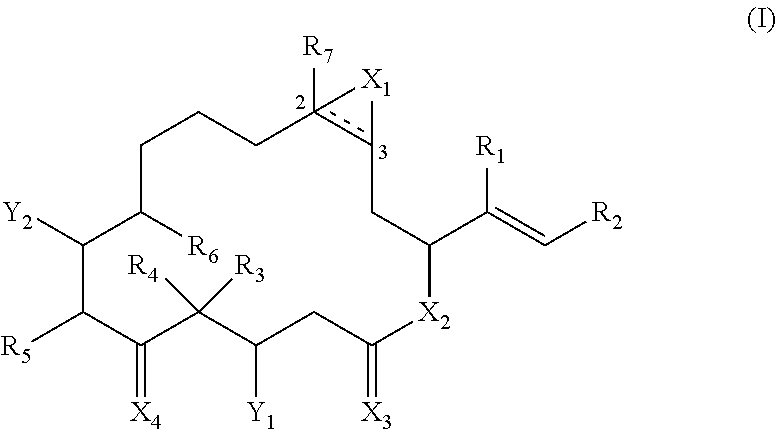
wherein:
-
- X1 is absent, —O— or —NRa—; wherein
- Ra is hydrogen or alkyl(C≤8), cycloalkyl(C≤8), -alkanediyl(C≤6)-cycloalkyl(C≤8), or a substituted version of either of these groups;
- provided that when X1 is absent, that the atoms to which it is attached are a part of a double bond; and provided that when the atoms to which it is attached are a part of a double bond, then X1 is absent;
- X2, X3, and X4 are each independently —O— or —NRb—; wherein
- Rb is hydrogen or alkyl(C≤8), cycloalkyl(C≤8), -alkanediyl(C≤6)-cycloalkyl(C≤8), aralkyl(C≤8), or a substituted version of either of these groups;
- Y1 and Y2 are each independently amino, hydroxy, or alkoxy(C≤8), aralkoxy(C≤8), acyloxy(C≤8), alkylamino(C≤8), dialkylamino(C≤8), amido(C≤8), or a substituted version of any of these groups, or —ORc, wherein:
- Rc is a hydroxy protecting group;
- R1, R3, R4, R5, R6 and R7 are each independently hydrogen or alkyl(C≤12), cycloalkyl(C≤12), alkenyl(C≤12), alkynyl(C≤12), aryl(C≤12), or a substituted version of any of these groups; and
- R2 is heteroaryl(C≤12), -heteroarenediyl(C≤8)-Rd, or a substituted version of either of these groups; wherein:
- Rd is alkyl(C≤12), aryl(C≤12), aralkyl(C≤12), heteroaryl(C≤12), heteroaralkyl(C≤12), or a substituted version of either of these groups;
- X1 is absent, —O— or —NRa—; wherein
- provided that R2 is not 2-methyl-thiazolyl, 2-hydroxymethyl-thiazolyl, N-2-methyl-3-methylthiopyrazolyl, or 2-methylthio-thiazolyl;
- or a pharmaceutically acceptable salt thereof.

wherein:
-
- X1 is absent, —O— or —NRa—; wherein
- Ra is hydrogen or alkyl(C≤8), cycloalkyl(C≤8), -alkanediyl(C≤6)-cycloalkyl(C≤8), or a substituted version of either of these groups;
- provided that when X1 is absent, that the atoms to which it is attached are a part of a double bond; and provided that when the atoms to which it is attached are a part of a double bond, then X1 is absent;
- X2, X3, and X4 are each independently —O— or —NRb—; wherein
- Rb is hydrogen or alkyl(C≤8), cycloalkyl(C≤8), -alkanediyl(C≤6)-cycloalkyl(C≤8), aralkyl(C≤8), or a substituted version of either of these groups;
- Y1 and Y2 are each independently amino, hydroxy, or alkoxy(C≤8), aralkoxy(C≤8), acyloxy(C≤8), alkylamino(C≤8), dialkylamino(C≤8), amido(C≤8), or a substituted version of any of these groups, or —ORc, wherein:
- Rc is a hydroxy protecting group;
- R1, R3, R4, R5, R6 and R7 are each independently hydrogen or alkyl(C≤12), cycloalkyl(C≤12), alkenyl(C≤12), alkynyl(C≤12), aryl(C≤12), or a substituted version of any of these groups; and
- R2 is heteroaryl(C≤12), -heteroarenediyl(C≤8)-Rd, or a substituted version of either of these groups; wherein:
- Rd is alkyl(C≤12), aryl(C≤12), aralkyl(C≤12), heteroaryl(C≤12), heteroaralkyl(C≤12), or a substituted version of either of these groups;
- X1 is absent, —O— or —NRa—; wherein
- provided that R2 is not 2-methyl-thiazolyl, 2-hydroxymethyl-thiazolyl, N-2-methyl-3-methylthiopyrazolyl, or 2-methylthio-thiazolyl;
- or a pharmaceutically acceptable salt thereof.

wherein:
-
- X1 is absent, —O— or —NRa—; wherein
- Ra is hydrogen or alkyl(C≤8), cycloalkyl(C≤8), -alkanediyl(C≤6)-cycloalkyl(C≤8), or a substituted version of either of these groups;
- provided that when X1 is absent, that the atoms to which it is attached are a part of a double bond; and provided that when the atoms to which it is attached are a part of a double bond, then X1 is absent;
- X2, X3, and X4 are each independently —O— or —NRb—; wherein
- Rb is hydrogen or alkyl(C≤8), cycloalkyl(C≤8), -alkanediyl(C≤6)-cycloalkyl(C≤8), aralkyl(C≤8), or a substituted version of either of these groups;
- Y1 and Y2 are each independently amino, hydroxy, or alkoxy(C≤8), aralkoxy(C≤8), acyloxy(C≤8), alkylamino(C≤8), dialkylamino(C≤8), amido(C≤8), or a substituted version of any of these groups, or —ORc, wherein:
- Rc is a hydroxy protecting group;
- R7 is hydrogen or alkyl(C≤12), cycloalkyl(C≤12), alkenyl(C≤12), alkynyl(C≤12), aryl(C≤12), or a substituted version of any of these groups; and
- R2 is heteroaryl(C≤12), -heteroarenediyl(C≤8)-Rd, or a substituted version of either of these groups; wherein:
- Rd is alkyl(C≤12), aryl(C≤12), aralkyl(C≤12), heteroaryl(C≤12), heteroaralkyl(C≤12), or a substituted version of either of these groups;
- X1 is absent, —O— or —NRa—; wherein
- provided that R2 is not 2-methyl-thiazolyl, 2-hydroxymethyl-thiazolyl, N-2-methyl-3-methylthiopyrazolyl, or 2-methylthio-thiazolyl;
- or a pharmaceutically acceptable salt thereof. In some embodiments, the compounds are further defined as:

wherein:
-
- X1 is absent, —O— or —NRa—; wherein
- Ra is hydrogen or alkyl(C≤8), cycloalkyl(C≤8), -alkanediyl(C≤6)-cycloalkyl(C≤8), or a substituted version of either of these groups;
- provided that when X1 is absent, that the atoms to which it is attached are a part of a double bond; and provided that when the atoms to which it is attached are a part of a double bond, then X1 is absent;
- X2, X3, and X4 are each independently —O— or —NRb—; wherein
- Rb is hydrogen or alkyl(C≤8), cycloalkyl(C≤8), -alkanediyl(C≤6)-cycloalkyl(C≤8), aralkyl(C≤8), or a substituted version of either of these groups;
- Y1 and Y2 are each independently amino, hydroxy, or alkoxy(C≤8), aralkoxy(C≤8), acyloxy(C≤8), alkylamino(C≤8), dialkylamino(C≤8), amido(C≤8), or a substituted version of any of these groups, or —ORc, wherein:
- Rc is a hydroxy protecting group; and
- R2 is heteroaryl(C≤12), -heteroarenediyl(C≤8)-Rd, or a substituted version of either of these groups; wherein:
- Rd is alkyl(C≤12), aryl(C≤12), aralkyl(C≤12), heteroaryl(C≤12), heteroaralkyl(C≤12), or a substituted version of either of these groups;
- X1 is absent, —O— or —NRa—; wherein
- provided that R2 is not 2-methyl-thiazolyl, 2-hydroxymethyl-thiazolyl, N-2-methyl-3-methylthiopyrazolyl, or 2-methylthio-thiazolyl;
- or a pharmaceutically acceptable salt thereof. In some embodiments, the compounds are further defined as:

wherein:
-
- X1 is absent, —O— or —NRa—; wherein
- Ra is hydrogen or alkyl(C≤8), cycloalkyl(C≤8), -alkanediyl(C≤6)-cycloalkyl(C≤8), or a substituted version of either of these groups;
- provided that when X1 is absent, that the atoms to which it is attached are a part of a double bond; and provided that when the atoms to which it is attached are a part of a double bond, then X1 is absent;
- X2 is —O— or —NRb—; wherein
- Rb is hydrogen or alkyl(C≤8), cycloalkyl(C≤8), -alkanediyl(C≤6)-cycloalkyl(C≤8), aralkyl(C≤8), or a substituted version of either of these groups;
- Y1 and Y2 are each independently amino, hydroxy, or alkoxy(C≤8), aralkoxy(C≤8), acyloxy(C≤8), alkylamino(C≤8), dialkylamino(C≤8), amido(C≤8), or a substituted version of any of these groups, or —ORc, wherein:
- Rc is a hydroxy protecting group; and
- R2 is heteroaryl(C≤12), -heteroarenediyl(C≤8)-Rd, or a substituted version of either of these groups; wherein:
- Rd is alkyl(C≤12), aryl(C≤12), aralkyl(C≤12), heteroaryl(C≤12), heteroaralkyl(C≤12), or a substituted version of either of these groups;
- X1 is absent, —O— or —NRa—; wherein
- provided that R2 is not 2-methyl-thiazolyl, 2-hydroxymethyl-thiazolyl, N-2-methyl-3-methylthiopyrazolyl, or 2-methylthio-thiazolyl;
- or a pharmaceutically acceptable salt thereof. In some embodiments, the compounds are further defined as:

wherein:
-
- X1 is absent, —O— or —NRa—; wherein
- Ra is hydrogen or alkyl(C≤8), cycloalkyl(C≤8), -alkanediyl(C≤6)-cycloalkyl(C≤8), or a substituted version of either of these groups;
- provided that when X1 is absent, that the atoms to which it is attached are a part of a double bond; and provided that when the atoms to which it is attached are a part of a double bond, then X1 is absent;
- X2 is —O— or —NRb—; wherein
- Rb is hydrogen or alkyl(C≤8), cycloalkyl(C≤8), -alkanediyl(C≤6)-cycloalkyl(C≤8), aralkyl(C≤8), or a substituted version of either of these groups; and
- R2 is heteroaryl(C≤12), -heteroarenediyl(C≤12)-Rd, or a substituted version of either of these groups; wherein:
- Rd is alkyl(C≤12), aryl(C≤12), aralkyl(C≤12), heteroaryl(C≤12), heteroaralkyl(C≤12), or a substituted version of either of these groups;
- X1 is absent, —O— or —NRa—; wherein
- provided that R2 is not 2-methyl-thiazolyl, 2-hydroxymethyl-thiazolyl, N-2-methyl-3-methylthiopyrazolyl, or 2-methylthio-thiazolyl;
- or a pharmaceutically acceptable salt thereof. In some embodiments, the compounds are further defined as:

wherein:
-
- X1 is absent, —O— or —NRa—; wherein
- Ra is hydrogen or alkyl(C≤8), cycloalkyl(C≤8), -alkanediyl(C≤6)-cycloalkyl(C≤8), or a substituted version of either of these groups;
- provided that when X1 is absent, that the atoms to which it is attached are a part of a double bond; and provided that when the atoms to which it is attached are a part of a double bond, then X1 is absent;
- R2 is heteroaryl(C≤12), -heteroarenediyl(C≤8)-Rd, or a substituted version of either of these groups; wherein:
- Rd is alkyl(C≤12), aryl(C≤12), aralkyl(C≤12), heteroaryl(C≤12), heteroaralkyl(C≤12), or a substituted version of either of these groups;
- X1 is absent, —O— or —NRa—; wherein
- provided that R2 is not 2-methyl-thiazolyl, 2-hydroxymethyl-thiazolyl, N-2-methyl-3-methylthiopyrazolyl, or 2-methylthio-thiazolyl;
- or a pharmaceutically acceptable salt thereof. In some embodiments, the compounds are further defined as:

wherein:
-
- X1 is —O— or —NRa—; wherein
- Ra is hydrogen or alkyl(C≤8), cycloalkyl(C≤8), -alkanediyl(C≤6)-cycloalkyl(C≤8), or a substituted version of either of these groups;
- R2 is heteroaryl(C≤12)-heteroarenediyl(C≤8)-Rd, or a substituted version of either of these groups; wherein:
- Rd is alkyl(C≤12), aryl(C≤12), or a substituted version of either of these groups;
- provided that R2 is not 2-methyl-thiazolyl, 2-hydroxymethyl-thiazolyl, N-2-methyl-3-methylthiopyrazolyl, or 2-methylthio-thiazolyl;
- or a pharmaceutically acceptable salt thereof.
- X1 is —O— or —NRa—; wherein


or a pharmaceutically acceptable salt thereof.
-
- (a) a compound of the present disclosure; and
- (b) a pharmaceutically acceptable carrier.
In some embodiments, the pharmaceutical compositions are formulated for administration: orally, intraadiposally, intraarterially, intraarticularly, intracranially, intradermally, intralesionally, intramuscularly, intranasally, intraocularly, intrapericardially, intraperitoneally, intrapleurally, intraprostatically, intrarectally, intrathecally, intratracheally, intratumorally, intraumbilically, intravaginally, intravenously, intravesicularly, intravitreally, liposomally, locally, mucosally, parenterally, rectally, subconjunctivally, subcutaneously, sublingually, topically, transbuccally, transdermally, vaginally, in cremes, in lipid compositions, via a catheter, via a lavage, via continuous infusion, via infusion, via inhalation, via injection, via local delivery, or via localized perfusion. In some embodiments, the pharmaceutical compositions are formulated as a unit dose.
In still yet another aspect, the present disclosure provides methods of treating a disease or disorder in a patient comprising administering to the patient in need thereof a therapeutically effective amount of a compound or composition described herein. In some embodiments, the disease or disorder is cancer. In some embodiments, the cancer is a carcinoma, sarcoma, lymphoma, leukemia, melanoma, mesothelioma, multiple myeloma, or seminoma. In some embodiments, the cancer is of the bladder, blood, bone, brain, breast, central nervous system, cervix, colon, endometrium, esophagus, gall bladder, gastrointestinal tract, genitalia, genitourinary tract, head, kidney, larynx, liver, lung, muscle tissue, neck, oral or nasal mucosa, ovary, pancreas, prostate, skin, spleen, small intestine, large intestine, stomach, testicle, or thyroid. In some embodiments, the cancer is breast cancer or ovarian cancer. In some embodiments, the breast cancer is ductal carcinoma. In other embodiments, the ovarian cancer is ovarian adenocarcinoma. In some embodiments, the methods further comprise a second cancer therapy. In some embodiments, the second cancer therapy is surgery, a second chemotherapeutic agent, a radiotherapy, or an immunotherapy. In some embodiments, the patient is a mammal, for example, a human. In some embodiments, the method comprises administering the compound once. In other embodiments, the method comprises administering the compound two or more times.
-
- (a) an antibody; and
- (b) a compound of the present disclosure.
In some embodiments, the antibody and the compound are connected through a linker. In some embodiments, the antibody comprises two or more compounds conjugated to the antibody. In some embodiments, the linker is an enzymatically degradable linker.

wherein:
-
- X1 is absent, —O— or —NRa—; wherein
- Ra is hydrogen, a monovalent amine protecting group, or alkyl(C≤8), cycloalkyl(C≤8), -alkanediyl(C≤6)-cycloalkyl(C≤8), or a substituted version of either of these groups;
- provided that when X1 is absent, that the atoms to which it is attached are a part of a double bond; and provided that when the atoms to which it is attached are a part of a double bond, then X1 is absent;
- X2, X3, and X4 are each independently —O— or —NRb—; wherein
- Rb is hydrogen, a monovalent amine protecting group, or alkyl(C≤8), cycloalkyl(C≤8), -alkanediyl(C≤6)-cycloalkyl(C≤8), aralkyl(C≤8), or a substituted version of either of these groups;
- Y1 and Y2 are each independently amino, hydroxy, or alkoxy(C≤8), aralkoxy(C≤8), acyloxy(C≤8), alkylamino(C≤8), dialkylamino(C≤8), amido(C≤8), or a substituted version of any of these groups, or —ORc, wherein:
- Rc is a hydroxy protecting group;
- R1, R3, R4, R5, R6 and R7 are each independently hydrogen or alkyl(C≤12), cycloalkyl(C≤12), alkenyl(C≤12), alkynyl(C≤12), aryl(C≤12), or a substituted version of any of these groups; and
- R2 is heteroaryl(C≤12), -heteroarenediyl(C≤8)-Rd, or a substituted version of either of these groups; wherein:
- Rd is alkyl(C≤12), aryl(C≤12), aralkyl(C≤12), heteroaryl(C≤12), heteroaralkyl(C≤12), or a substituted version of either of these groups;
comprising reacting a compound of the formula:
- Rd is alkyl(C≤12), aryl(C≤12), aralkyl(C≤12), heteroaryl(C≤12), heteroaralkyl(C≤12), or a substituted version of either of these groups;
- X1 is absent, —O— or —NRa—; wherein

wherein: X1, X2, X3, X4, Y1, Y2, R1, R3, R4, R5, R6, and R7 are as defined above; with a compound of the formula:

wherein:
-
- R2 is as defined above; and
- R′ and R″ are each independently alkyl(C≤8), cycloalkyl(C≤8), aryl(C≤8), aralkyl(C≤8), or a substituted version of any of these groups;
in the presence of a base.
In some embodiments, the base is a strong base. In some embodiments, the base is an organolithium(C≤12) reagent, for example, the base is n-butyllithium. In other embodiments, the base is a metal silylamide(C≤24). In some embodiments, the base is a metal hexaalkylsilylamide(C6-24), for example, the base is sodium bis(trimethylsilyl)amide. In some embodiments, the methods comprise adding a ratio of the base to the compound of formula IX from about 1:1 to about 1.5:1. In some embodiments, the ratio is about 1.2:1 to about 1.3:1. In some embodiments, the methods further comprise reacting the compounds under the conditions comprising a temperature from about −100° C. to about −50° C. In some embodiments, the methods further comprise allowing the reaction to warm to a temperature from about −30° C. to 30° C. In some embodiments, the methods further comprise reacting the compound for a time period from about 30 minutes to about 8 hours.

wherein:
-
- X1 is absent, —O— or —NRa—; wherein
- Ra is hydrogen, a monovalent amine protecting group, or alkyl(C≤8), cycloalkyl(C≤8), -alkanediyl(C≤6)-cycloalkyl(C≤8), or a substituted version of either of these groups;
- provided that when X1 is absent, that the atoms to which it is attached are a part of a double bond; and provided that when the atoms to which it is attached are a part of a double bond, then X1 is absent;
- X2, X3, and X4 are each independently —O— or —NRb—; wherein
- Rb is hydrogen, a monovalent amine protecting group, or alkyl(C≤8), cycloalkyl(C≤8), -alkanediyl(C≤6)-cycloalkyl(C≤8), aralkyl(C≤8), or a substituted version of either of these groups;
- Y1 and Y2 are each independently amino, hydroxy, or alkoxy(C≤8), aralkoxy(C≤8), acyloxy(C≤8), alkylamino(C≤8), dialkylamino(C≤8), amido(C≤8), or a substituted version of any of these groups, or —ORc, wherein:
- Rc is a hydroxy protecting group;
- R1, R3, R4, R5, R6 and R7 are each independently hydrogen or alkyl(C≤12), cycloalkyl(C≤12), alkenyl(C≤12), alkynyl(C≤12), aryl(C≤12), or a substituted version of any of these groups; and
- R2 is heteroaryl(C≤12), -heteroarenediyl(C≤8)-Rd, or a substituted version of either of these groups; wherein:
- Rd is alkyl(C≤12), aryl(C≤12), aralkyl(C≤12), heteroaryl(C≤12), heteroaralkyl(C≤12), or a substituted version of either of these groups;
comprising reacting a compound of the formula:
- Rd is alkyl(C≤12), aryl(C≤12), aralkyl(C≤12), heteroaryl(C≤12), heteroaralkyl(C≤12), or a substituted version of either of these groups;
- X1 is absent, —O— or —NRa—; wherein

wherein:
-
- X1, X2, X3, X4, Y1, Y2, R1, R3, R4, R5, R6, and R7 are as defined above; and
- R′ is halo;
with a compound of the formula:

wherein:
-
- R2 is as defined above; and
- R″, R′″, and R″″ are each independently alkyl(C≤12) or substituted alkyl(C≤12); in the presence of a transition metal catalyst.

wherein:
-
- X2, X3, and X4 are each independently —O— or —NRb—; wherein
- Rb is hydrogen, a monovalent amine protecting group, or alkyl(C≤8), cycloalkyl(C≤8), -alkanediyl(C≤6)-cycloalkyl(C≤8), aralkyl(C≤8), or a substituted version of either of these groups;
- Y1 and Y2 are each independently amino, hydroxy, or alkoxy(C≤8), aralkoxy(C≤8), acyloxy(C≤8), alkylamino(C≤8), dialkylamino(C≤8), amido(C≤8), or a substituted version of any of these groups, or —ORc, wherein:
- Rc is a hydroxy protecting group;
- R1, R3, R4, R5, R6 and R7 are each independently hydrogen or alkyl(C≤12), cycloalkyl(C≤12), alkenyl(C≤12), alkynyl(C≤12), aryl(C≤12), or a substituted version of any of these groups; and
- R2 is heteroaryl(C≤12), -heteroarenediyl(C≤8)-Rd, or a substituted version of either of these groups; wherein:
- Rd is alkyl(C≤12), aryl(C≤12), aralkyl(C≤12), heteroaryl(C≤12), heteroaralkyl(C≤12), or a substituted version of either of these groups;
comprising reacting a compound of the formula:
- Rd is alkyl(C≤12), aryl(C≤12), aralkyl(C≤12), heteroaryl(C≤12), heteroaralkyl(C≤12), or a substituted version of either of these groups;
- X2, X3, and X4 are each independently —O— or —NRb—; wherein

wherein:
-
- X1, X2, X3, X4, Y1, Y2, R1, R2, R3, R4, R5, R6, and R7 are as defined above;
| A/B/A | B/A/B | B/B/A | A/A/B | B/A/A | A/B/B |
| B/B/B/A | B/B/A/B | A/A/B/B | A/B/A/B | A/B/B/A | B/B/A/A |
| B/A/B/A | B/A/A/B | B/B/B/A | A/A/A/B | B/A/A/A | A/B/A/A |
| A/A/B/A | A/B/B/B | B/A/B/B | B/B/A/B | ||
Other combinations are also contemplated. The following is a general discussion of cancer therapies that may be used combination with the compounds of the present disclosure.


includes

And it is understood that no one such ring atom forms part of more than one double bond. Furthermore, it is noted that the covalent bond symbol “-”, when connecting one or two stereogenic atoms, does not indicate any preferred stereochemistry. Instead, it covers all stereoisomers as well as mixtures thereof. The symbol “


for methyl) indicates a point of attachment of the group. It is noted that the point of attachment is typically only identified in this manner for larger groups in order to assist the reader in unambiguously identifying a point of attachment. The symbol “


then R may replace any hydrogen atom attached to any of the ring atoms, including a depicted, implied, or expressly defined hydrogen, so long as a stable structure is formed. When a group “R” is depicted as a “floating group” on a fused ring system, as for example in the formula:

then R may replace any hydrogen attached to any of the ring atoms of either of the fused rings unless specified otherwise. Replaceable hydrogens include depicted hydrogens (e.g., the hydrogen attached to the nitrogen in the formula above), implied hydrogens (e.g., a hydrogen of the formula above that is not shown but understood to be present), expressly defined hydrogens, and optional hydrogens whose presence depends on the identity of a ring atom (e.g., a hydrogen attached to group X, when X equals —CH—), so long as a stable structure is formed. In the example depicted, R may reside on either the 5-membered or the 6-membered ring of the fused ring system. In the formula above, the subscript letter “y” immediately following the group “R” enclosed in parentheses, represents a numeric variable. Unless specified otherwise, this variable can be 0, 1, 2, or any integer greater than 2, only limited by the maximum number of replaceable hydrogen atoms of the ring or ring system.

or are non-limiting examples of cycloalkanediyl groups. A “cycloalkane” refers to the compound H—R, wherein R is cycloalkyl as this term is defined above. When any of these terms is used with the “substituted” modifier one or more hydrogen atom has been independently replaced by —OH, —F, —Cl, —Br, —I, —NH2, —NO2, —N3, —CO2H, —CO2CH3, —CN, —SH, —OCH3, —SCH3, —OCH2CH3, —C(O)CH3, —NHCH3, —NHCH2CH3, —N(CH3)2, —C(O)NH2, —C(O)NHCH3, —C(O)N(CH3)2, —OC(O)CH3, —NHC(O)CH3, —S(O)2OH, or —S(O)2NH2. The following groups are non-limiting examples of substituted cycloalkyl groups: —C(OH)(CH2)2,


An “arene” refers to the compound H—R, wherein R is aryl as that term is defined above. Benzene and toluene are non-limiting examples of arenes. When any of these terms are used with the “substituted” modifier one or more hydrogen atom has been independently replaced by —OH, —F, —Cl, —Br, —I, —NH2, —NO2, —N3, —CO2H, —CO2CH3, —CN, —SH, —OCH3, —SCH3, —OCH2CH3, —C(O)CH3, —NHCH3, —NHCH2CH3, —N(CH3)2, —C(O)NH2, —C(O)NHCH3, —C(O)N(CH3)2, —OC(O)CH3, —NHC(O)CH3, —S(O)2OH, or —S(O)2NH2.

A “heteroarene” refers to the compound H—R, wherein R is heteroaryl. Pyridine and quinoline are non-limiting examples of heteroarenes. When these terms are used with the “substituted” modifier one or more hydrogen atom has been independently replaced by —OH, —F, —Cl, —Br, —I, —NH2, —NO2, —N3, —CO2H, —CO2CH3, —CN, —SH, —OCH3, —SCH3, —OCH2CH3, —C(O)CH3, —NHCH3, —NHCH2CH3, —N(CH3)2, —C(O)NH2, —C(O)NHCH3, —C(O)N(CH3)2, —OC(O)CH3, —NHC(O)CH3, —S(O)2OH, or —S(O)2NH2.


Additional Aziridine Compounds


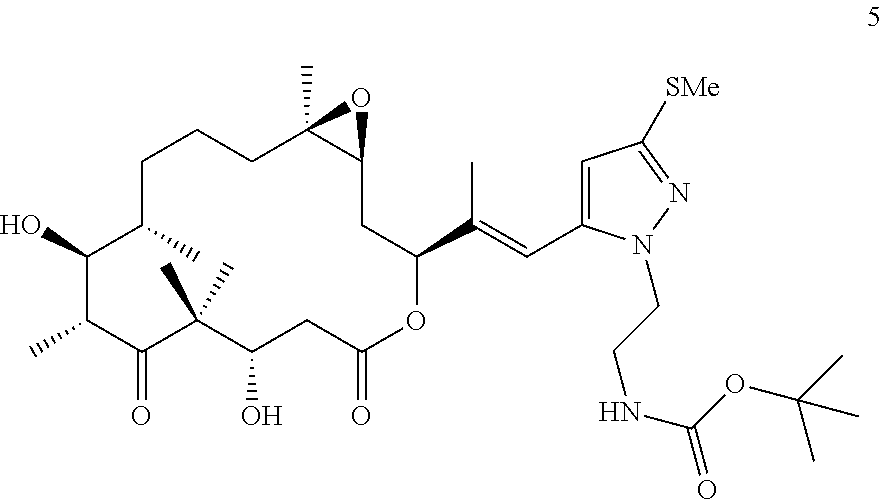


| TABLE 1 |
| Selected NCI-60 Cytotoxicity Data [(GI50, nM)a of 8-12, 14]b |
| Compound |
| Cell line | 8 | 9 | 10 | 11 | 12 | 14 |
| CCRF-CEM | 34.1 | 47.6 | 22.6 | 12.3 | 6.09 | 13.6 |
| HL-60(TB) | 15.8 | 7.88 | 17.2 | 7.36 | <5.00c | 14.1 |
| K-562 | 24.7 | 15.7 | 24.4 | 10.2 | <5.00 | 20.7 |
| MOLT-4 | 38.9 | 48.1 | 27.6 | 14.2 | <5.00 | 28.3 |
| RPMI-8226 | 21.3 | 11.1 | 17.8 | 9.98 | <5.00 | 19.6 |
| SR | 30.3 | NAd | 27.4 | 7.29 | <5.00 | 29.2 |
| A549/ATCC | 36.9 | 48.8 | 34.5 | 13.4 | 6.05 | 37.6 |
| HOP-92 | 146 | 183 | 80.7 | 16.1 | <5.00 | —e |
| NCI-H23 | 25.2 | 88.5 | 35.8 | 18.3 | 5.72 | 24.2 |
| NCI-H460 | 20.5 | 6.45 | 20.3 | 8.73 | <5.00 | 20.8 |
| COLO 205 | 18.6 | 14.7 | 20.4 | 8.48 | <5.00 | 18.2 |
| HCT-116 | 18.7 | 5.31 | 18.3 | 4.82 | <5.00 | 17.1 |
| HCT-15 | 26.7 | 22.0 | 32.5 | 11.0 | <5.00 | 22.6 |
| HT29 | 19.6 | 5.29 | 18.8 | 5.74 | <5.00 | 18.4 |
| KM12 | 19.2 | 5.25 | 20.6 | 9.16 | <5.00 | 17.7 |
| SW-620 | 25.0 | 5.40 | 24.5 | 6.23 | <5.00 | 23.6 |
| SF-539 | 19.0 | 24.8 | 15.8 | 9.55 | 9.41 | 26.2 |
| SNB-75 | 11.4 | NA | 16.4 | 5.75 | <5.00 | 11.7 |
| U251 | 35.6 | 38.1 | 30.8 | 14.6 | <5.00 | 36.2 |
| LOX IMVI | 23.6 | 25.0 | 31.3 | 10.3 | <5.00 | 23.1 |
| M14 | 19.2 | 13.7 | 18.0 | 4.88 | <5.00 | 18.7 |
| MDA-MB-435 | 8.09 | 2.08 | 9.56 | <3.25 | <5.00 | 8.35 |
| SK-MEL-5 | 20.0 | 22.1 | 21.9 | 10.1 | <5.00 | 18.0 |
| OVCAR-3 | 18.1 | 15.8 | 18.8 | 10.2 | <5.00 | 17.6 |
| A498 | 102 | 66.0 | 18.8 | 11.3 | <5.00 | 80.2 |
| RXF 393 | 38.4 | 40.7 | 39.6 | 14.0 | 9.39 | 30.6 |
| PC-3 | 30.4 | 32.2 | 34.3 | 12.7 | 9.75 | 25.8 |
| MCF7 | 15.2 | 3.65 | 17.7 | <3.25 | <5.00 | 14.0 |
| HS 578T | 44.0 | 36.4 | 31.6 | 7.10 | 5.51 | 37.2 |
| MDA-MB-468 | 39.2 | 23.1 | 23.4 | 10.6 | 7.22 | 20.9 |
| aGI50 = the concentration that inhibits growth by 50%; | ||||||
| bSee FIG. 7 for complete NCI-60 results; | ||||||
| cA less than (<) indicates the actual GI50 is below the sensitivity threshold of the screen; | ||||||
| NA = Results not available; | ||||||
| eA “—” indicates a GI50 >100 nM. | ||||||
| TABLE 2 |
| Cytotoxicity and Tubulin Assembly Assays. |
| induction of tubulin assemblya | cytotoxicity (GI50, nM ± SD)c |
| compound | (EC50, μM ± SD)b | MCF-7d | OVCAR-8e |
| |
16 ± 2 | 10 ± 2 | 11 ± 2 |
| EpoB | 3.5 ± 0.7 | 5.5 ± 0.7 | 3.5 ± 0.7 |
| EpoC | 18 ± 0.7 | 70 ± 10 | 110 ± 7 |
| |
18 ± 0 | 14 ± 1 | 13 ± 4 |
| Ixab | 4.5 ± 0.7 | 7.0 ± 1 | 35 ± 10 |
| PTX | — | 8.5 ± 0.7 | 6.5 ± 2 |
| 5 | >40 | 1,600 ± 500 | 900 ± 0 |
| 6 | >40 | 4,400 ± 900 | 1,200 ± 40 |
| 7 | >40 | 1,800 ± 700 | 1,300 ± 100 |
| 8 | 15 ± 4 | 10 ± 0 | 38 ± 10 |
| 9 | >40 | 900 ± 100 | 300 ± 03 |
| 10 | 8.0 ± 1 | 5.5 ± 0.7 | 23 ± 10 |
| 11 | 2.5 ± 0.5 | 3.0 ± 1 | 2.5 ± 0.4 |
| 12 | 7.8 ± 1 | 2.5 ± 0.7 | 1.8 ± 0.4 |
| 13 | >40 | 9.0 ± 1 | 35 ± 5 |
| 14 | 19 ± 1 | 14 ± 2 | 38 ± 10 |
| aIn these experiments each 100 μL reaction mixture contained 1.0 mg/mL (10 μM) tubulin, 0.4M monosodium glutamate (taken from 2.0M stock solution adjusted to pH 6.6 with HCl, 0.5 mM MgCl2, 2% (v/v) dimethyl sulfoxide, and varying compound concentrations. Incubation was for 30 min at room temperature (about 22° C.). Reaction mixtures were centrifuged for 10 min in an Eppendorf centrifuge at room temperature at 14,000 rpm. Protein was determined in 50 μL of the supernatant, using the Lowry assay, see Lin, et al., 1996; | |||
| bEC50 = drug concentration yielding an unbound |
|||
| cCell growth was evaluated using the standard NCI assay, the parameter measured with sulforhodamine B; | |||
| GI50 = compound concentration that reduces cell growth by 50% after 96 h at 37° C.; | |||
| SD = standard deviation, a SD of 0 indicates that the same value was obtained in all three assays; | |||
| dHuman breast cancer cell line; | |||
| eOvarian cancer cell line. | |||
| TABLE 3 |
| Cytotoxicity and tubulin binding assays of analogues 70-83. |
| Enhancement | Cytotoxicity (nM, ± SD)2 |
| of tubulin | NCI/ | MDA- | ||||
| assembly1 | ADR- | MB- | ||||
| Structures | (EC50, uM) | MCF-7 | OVCAR-8 | RES | 435 | SNB-75 |
| Epo A (1) | 14 ± 3 | 14 ± 4 | 20 ± 5 | 35 ± 5 | 15 ± 2 | 14 ± 3 |
| Epo B (2) | 3.8 ± 0.4 | 9.2 ± 2 | 11 ± 3 | 19 ± 4 | 5.3 ± 0.7 | 6.5 ± 2 |
| Paclitaxel | 5.0 ± 1 | 7.8 ± 2 | 10 ± 2 | 4,200 ± 1,000 | 4.0 ± 1 | 15 ± 03 |
| 70 | 19 | 2.0 ± 0 | 1.5 ± 0.7 | 35 ± 7 | —4 | — |
| 71 | 18.2 | 3.0 ± 1 | 4.5 ± 0.7 | 55 ± 20 | — | — |
| 77 | 5.0 ± 1 | 4.0 ± 1 | 16 ± 4 | 8.8 ± 1 | 4.5 ± 0.5 | 11 ± 3 |
| 78 | 14 ± 3 | 28 ± 6 | 75 ± 10 | 55 ± 7 | 42 ± 5 | 60 ± 10 |
| 80 | 5.4 ± 0.6 | 13 ± 3 | 15 ± 04 | 3.2 ± 0.8 | 7.3 ± 2 | 22 ± 3 |
| 79 | 6.1 ± 0.1 | 14 ± 2 | 63 ± 3 | 70 ± 10 | 15 ± 4 | 23 ± 6 |
| 81 | 5.1 ± 0.4 | 18 ± 3 | 15 ± 2 | 18 ± 4 | 9.5 ± 2 | 16 ± 3 |
| 72 | >60 | 40 ± 7 | 38 ± 2 | 4,800 ± 400 | 12 ± 2 | 36 ± 5 |
| 83 | 13 ± 0.4 | 330 ± 40 | 290 ± 10 | 3,800 ± 300 | 220 ± 30 | 280 ± 30 |
| 75 | >60 | 65 ± 7 | 93 ± 20 | 2,800 ± 400 | 20 ± 3 | 130 ± 20 |
| 76 | 9.1 ± 1 | 15 ± 3 | 8.6 ± 1 | 45 ± 6 | 3.8 ± 0.7 | 50 ± 10 |
| 73 | >60 | 250 ± 40 | 170 ± 20 | 4,000 ± 1,000 | 30 ± 4 | 98 ± 10 |
| 74 | 7.9 ± 1 | 11 ± 1 | 23 ± 7 | 630 ± 80 | 3.5 ± 0.3 | 12 ± 3 |
| 82 | 4.6 ± 0.9 | 10 ± 1 | 78 ± 4 | 7.5 ± 2 | 12 ± 2 | 10 ± 2 |
| 1Assay as described in Lin, et al., 1996. In these experiments each 100 μL reaction mixture contained 1.0 mg/mL (10 μM) tubulin, 0.4M monosodium glutamate (taken from 2.0M stock solution adjusted to pH 6.6 with HCl, 0.5 mM MgCl2, 2% (v/v) dimethyl sulfoxide, and varying compound concentrations. Incubation was for 30 min at room temperature (about 22° C.). Reaction mixtures were centrifuged for 10 min in an Eppendorf centrifuge at room temperature at 14,000 rpm. Protein was determined in 50 μL of the supernatant, using the Lowry assay. | ||||||
| 2Cell growth was evaluated using the standard NCI assay, with protein the parameter measured with sulforhodamine B. The IC50 is the compound concentration that reduces cell growth by 50% after 96 h at 37° C. The NCI/ADR-RES cell line is an isogenic clone of OVCAR-8 that overexpresses P-glycoprotein, resulting in multidrug resistance. | ||||||
| 3A SD of 0 indicates that the same value was obtained in all assays. | ||||||
| 4Data not available. | ||||||
- Alhamadsheh et al., Chem. Eur. J., 14: 570-581, 2008.
- Altmann et al., Bioorg. Med. Chem. Lett., 10: 2765-2768, 2000.
- Altmann, et al., “The Epothilones: An Outstanding Family of Anti-Tumor Agents,” In Progess in the Chemistry of Organic Natural Products, Eds. Kinghorn, Falk, and Kobayashi, Springer, New York, 2004.
- Anderson, N. G., Practical Process Research & Development—A Guide For Organic Chemists, 2nd ed., Academic Press, New York, 2012.
- Austin-Ward and Villaseca, Rev. Med Chil., 126(7):838-45, 1998.
- Barclay et al. (eds.), The Leucocyte Antigen Facts Book, 1993, Academic Press.
- Bellamy and Ou, Tet. Lett., 25: 839-842, 1984.
- Bode and Carreira, J. Am. Chem. Soc., 123:3611-3612, 2001.
- Bukowski et al., Clin. Cancer Res., 4(10):2337-47, 1998.
- Burkly et al.: TWEAKing tissue remodeling by a multifunctional cytokine: role of TWEAK/Fn14 pathway in health and disease. Cytokine 40:1-16 (2007).
- Campbell et al., Cancer Res., 51(19):5329-5338 1991.
- Carlomagno et al., Angew. Chem. Int. Ed., 42, 2511-2515, 2003.
- Christodoulides et al., Microbiology, 144(Pt 11):3027-37, 1998.
- Davidson et al., J. Immunother., 21(5):389-98, 1998.
- Ermolenko and Potier, Tet. Lett., 43:2895-2898, 2002.
- Hammick and Voaden, J. Chem. Soc., 3303, 1961.
- Hanibuchi et al., Int. J. Cancer, 78(4):480-485, 1998.
- Heinz et al., Angew. Chem. Int. Ed., 44: 1298-1301, 2005.
- Hellstrand et al., Acta Oncol., 37(4):347-353, 1998.
- Höfle, et al., Angew. Chem. Int. Ed., 35:1567-1569, 2004.
- Hui and Hashimoto, Infect. Immun., 66(11):5329-36, 1998.
- Izgu and Hoye, Tet. Lett., 53, 4938-4941, 2012.
- Ju et al., Gene Ther., 7(19):1672-1679, 2000.
- Keck, et al., J. Org. Chem., 73:9675-9691, 2008.
- Lee, et al., J. Am. Chem. Soc., 123:5249, 2001.
- Lin, et al., Cancer Chemother. Pharmacol., 38:136-140, 1996.
- Manallack, Perspect. Med Chem., 1, 25-38, 2007.
- March's Advanced Organic Chemistry: Reactions, Mechanisms, and Structure, 2007.
- Martin and Thomas, Tet. Lett., 42:8378-8377, 2001.
- Masuda and Okutani, Tetrahedron, 30:409, 1974.
- May and Grieco, Chem. Commun., 1597-1598, 1998.
- Mitchell et al., Ann. NY Acad Sci., 690:153-166, 1993.
- Mitchell et al., J. Clin. Oncol., 8(5):856-869, 1990.
- Meng, et al., J. Am. Chem. Soc., 119:10073-10092, 1997.
- Morton et al., Arch. Surg., 127:392-399, 1992.
- Mulzer, et al., Tet. Lett., 39:8633-8636, 1998.
- Nechushtan et al., 1997
- Nettles et al., Science, 305: 866-869, 2004.
- Nicolaou et al., Angew. Chem. Int. Ed., 42: 3515-3520, 2003.
- Nicolaou et al., Bioorg. Med Chem., 7: 665-697, 1990.
- Nicolaou et al., Chem. Biol., 7: 593-599, 2000.
- Nicolaou et al., Chem. Eur. J., 6: 2783-2800, 2000.
- Nicolaou et al., ChemMedChem., 1: 41-44, 2006.
- Nicolaou, et al., J. Am. Chem. Soc., 119:7960-7973, 1997a.
- Nicolaou, et al., J. Am. Chem. Soc., 119:7974-7991, 1997b.
- Nicolaou, et al., Angew. Chem. Int. Ed., 37:84, 1998.
- Onda et al., Cancer Res., 64:1419-1424, 2004.
- PCT Publication No. 2008/121949
- PCT Publication No. 2011/053435
- PCT Publication No. 2014/087413
- Pietras et al., Oncogene, 17(17):2235-49, 1998.
- Pratt, PhD Dissertation, The Scripps Research Institute, 2008.
- Qin et al., Proc. Natl. Acad Sci. USA, 95(24): 14411-14416, 1998.
- Ravindranath and Morton, Intern. Rev. Immunol., 7: 303-329, 1991.
- Reese et al., Angew. Chem. Int. Ed., 46: 1864-1868, 2007.
- Remington's Pharmaceutical Sciences, 15th Ed., 1035-1038 and 1570-1580, 1990.
- Remington's Pharmaceutical Sciences, 15th Ed., 3:624-652, 1990.
- Rosenberg et al., Ann. Surg. 210(4):474-548, 1989.
- Rosenberg et al., N. Engl. J. Med, 319:1676, 1988.
- Sawada, et al., J. Am. Chem. Soc., 122:10521-10532, 2000.
- Schank et al., Tetrahedron, 50: 3721-3742, 1994.
- Schinzer, et al., Synlett, 861-863, 1998.
- Shoemaker, Nat. Rev. Cancer, 6: 813-823, 2006.
- Shoji et al., J. Am. Chem. Soc., 129:1456-1464, 2007.
- Silverman, The Organic Chemistry of Drug Design and Drug Action, 2nd Ed.; Elsevier Academic Press: Burlington, Mass., 2004; pp. 62-64.
- Sinha, et al., Proc. Natl. Acad. Sci. USA, 95:14603-14608, 1998.
- Taylor and Chen, Org. Lett., 3:2221-2224, 2001.
- Thompson (ed.), 1994, The Cytokine Handbook, Academic Press, San Diego.
- U.S. Pat. No. 5,739,169
- U.S. Pat. No. 5,801,005
- U.S. Pat. No. 5,824,311
- U.S. Pat. No. 5,830,880
- U.S. Pat. No. 5,846,945
- U.S. Pat. No. 6,232,287
- U.S. Pat. No. 6,528,481
- U.S. Pat. No. 7,452,964
- U.S. Pat. No. 7,671,010
- U.S. Pat. No. 7,781,565
- U.S. Pat. No. 8,450,278
- U.S. Pat. No. 8,507,445
- U.S. Patent Publication No. 2004/005647
- U.S. Patent Publications No. 2006/0034925
- U.S. Patent Publications No. 2006/0115537
- U.S. Patent Publications No. 2006/0223114
- U.S. Patent Publications No. 2006/0234299
- U.S. Patent Publications No. 2007/0148095
- U.S. Patent Publications No. 2012/0141550
- U.S. Patent Publications No. 2013/0138032
- U.S. Patent Publications No. 2014/0024610
- Valluri, et al., Org. Lett., 3:3607-3609, 2001.
- Wang, et al., Org. Lett., 14:6354-6357, 2012.
- Weitman et al., Cancer Res., 52(12):3396-3401, 1992b.
- Weitman et al., Cancer Res., 52(23):6708-6711, 1992a.
- White, et al., J. Org. Chem., 64:684-685, 1999.
- Winkles JA: The TWEAK-Fn14 cytokine-receptor axis: discovery, biology and therapeutic targeting. Nat Rev Drug Discov 7:411-425 (2008).
- Winthrop et al., Clin. Cancer Res., 9:3845s-3853s, 2003.
- WO 2012/003498A1
- Xing and Ogata, J. Org. Chem., 47, 3577-3581, 1982.
- Zhou et al., Mol Cancer Ther. 10(7): 1276-88, 2011.
Claims (17)


Priority Applications (1)
| Application Number | Priority Date | Filing Date | Title |
|---|---|---|---|
| US15/768,800 US10874646B2 (en) | 2015-10-16 | 2016-10-14 | Epothilone analogs, methods of synthesis, methods of treatment, and drug conjugates thereof |
Applications Claiming Priority (3)
| Application Number | Priority Date | Filing Date | Title |
|---|---|---|---|
| US201562242702P | 2015-10-16 | 2015-10-16 | |
| PCT/US2016/057093 WO2017066606A1 (en) | 2015-10-16 | 2016-10-14 | Epothilone analogs, methods of synthesis, methods of treatment, and drug conjugates thereof |
| US15/768,800 US10874646B2 (en) | 2015-10-16 | 2016-10-14 | Epothilone analogs, methods of synthesis, methods of treatment, and drug conjugates thereof |
Publications (2)
| Publication Number | Publication Date |
|---|---|
| US20190022069A1 US20190022069A1 (en) | 2019-01-24 |
| US10874646B2 true US10874646B2 (en) | 2020-12-29 |
Family
ID=58518025
Family Applications (1)
| Application Number | Title | Priority Date | Filing Date |
|---|---|---|---|
| US15/768,800 Active US10874646B2 (en) | 2015-10-16 | 2016-10-14 | Epothilone analogs, methods of synthesis, methods of treatment, and drug conjugates thereof |
Country Status (10)
| Country | Link |
|---|---|
| US (1) | US10874646B2 (en) |
| EP (1) | EP3371176A4 (en) |
| JP (1) | JP2018534283A (en) |
| CN (1) | CN108430996A (en) |
| AU (1) | AU2016340093A1 (en) |
| BR (1) | BR112018007673A2 (en) |
| CA (1) | CA3002027A1 (en) |
| MA (1) | MA43178A (en) |
| MX (1) | MX2018004696A (en) |
| WO (1) | WO2017066606A1 (en) |
Families Citing this family (4)
| Publication number | Priority date | Publication date | Assignee | Title |
|---|---|---|---|---|
| JP2022552276A (en) * | 2019-10-18 | 2022-12-15 | エフ エム シー コーポレーション | Method for preparing 5-bromo-2-(3-chloro-pyridin-2-yl)-2H-pyrazole-3-carboxylic acid |
| KR20220084131A (en) * | 2019-10-18 | 2022-06-21 | 에프엠씨 코포레이션 | Process for the preparation of 5-bromo-2-(3-chloro-pyridin-2-yl)-2H-pyrazole-3-carboxylic acid |
| EP4253380A3 (en) * | 2019-10-18 | 2023-11-15 | FMC Corporation | Methods for the preparation of 5-bromo-2-(3-chloro-pyridin-2-yl)-2h-pyrazole-3-carboxylic acid |
| IL327670A (en) | 2023-10-11 | 2026-06-01 | Antikor Biopharma Ltd | Antibodies, conjugates and their uses |
Citations (12)
| Publication number | Priority date | Publication date | Assignee | Title |
|---|---|---|---|---|
| WO1998025929A1 (en) | 1996-12-13 | 1998-06-18 | Novartis Ag | Epothilone analogs |
| WO1999054319A1 (en) | 1998-04-21 | 1999-10-28 | Bristol-Myers Squibb Company | 12,13-modified epothilone derivatives |
| WO2000047584A2 (en) | 1999-02-11 | 2000-08-17 | Schering Aktiengesellschaft | Epothilon derivatives, method for the production and the use thereof as pharmaceuticals |
| US20030203938A1 (en) * | 1998-06-22 | 2003-10-30 | The Scripps Research Institute | Epothilone derivatives and their synthesis and use |
| WO2007062288A2 (en) | 2005-11-22 | 2007-05-31 | The Scripps Research Institute | Chemical synthesis of a highly potent epothilone |
| WO2007140298A1 (en) | 2006-05-25 | 2007-12-06 | Bristol-Myers Squibb Company | Conjugates of aziridinyl-epothilone analogs and pharmaceutical compositions comprising same |
| EP1930004A1 (en) | 2006-12-08 | 2008-06-11 | Bayer Schering Pharma Aktiengesellschaft | Use of epothilones in the treatment of osteoporosis and related diseases |
| EP2009114A1 (en) | 2007-06-29 | 2008-12-31 | Bayer Schering Pharma Aktiengesellschaft | Methods, kits, and compounds for determining responsiveness to treatment of a pathological disorder by epothilones |
| US20100168179A1 (en) | 1999-04-30 | 2010-07-01 | Ulrich Klar | 6-alkenyl-, 6-alkinyl- and 6-epoxy-epothilone derivatives, process for their production, and their use in pharmaceutical preparations |
| US20110112149A1 (en) | 2008-02-29 | 2011-05-12 | Li Tang | Epothilone analogues, their pharmaceutical compositions, their use and their prepa rations |
| WO2014096551A1 (en) * | 2012-12-21 | 2014-06-26 | Glykos Finland Oy | Linker-payload molecule conjugates |
| US20140323533A1 (en) * | 2013-04-29 | 2014-10-30 | Bristol-Myers Squibb Company | Combination of anti-ctla4 antibody with tubulin modulating agents for the treatment of proliferative diseases |
Family Cites Families (1)
| Publication number | Priority date | Publication date | Assignee | Title |
|---|---|---|---|---|
| PE20080316A1 (en) * | 2006-05-25 | 2008-04-10 | Bristol Myers Squibb Co | AZIRIDINYL-EPOTILONE COMPOUNDS |
-
2016
- 2016-10-14 US US15/768,800 patent/US10874646B2/en active Active
- 2016-10-14 BR BR112018007673A patent/BR112018007673A2/en not_active Application Discontinuation
- 2016-10-14 AU AU2016340093A patent/AU2016340093A1/en not_active Abandoned
- 2016-10-14 CA CA3002027A patent/CA3002027A1/en active Pending
- 2016-10-14 CN CN201680074140.0A patent/CN108430996A/en active Pending
- 2016-10-14 WO PCT/US2016/057093 patent/WO2017066606A1/en not_active Ceased
- 2016-10-14 JP JP2018519372A patent/JP2018534283A/en active Pending
- 2016-10-14 MA MA043178A patent/MA43178A/en unknown
- 2016-10-14 EP EP16856299.9A patent/EP3371176A4/en not_active Withdrawn
- 2016-10-14 MX MX2018004696A patent/MX2018004696A/en unknown
Patent Citations (15)
| Publication number | Priority date | Publication date | Assignee | Title |
|---|---|---|---|---|
| WO1998025929A1 (en) | 1996-12-13 | 1998-06-18 | Novartis Ag | Epothilone analogs |
| JP2001504856A (en) | 1996-12-13 | 2001-04-10 | ノヴァルティス アクチェンゲゼルシャフト | Epothilone analogues |
| WO1999054319A1 (en) | 1998-04-21 | 1999-10-28 | Bristol-Myers Squibb Company | 12,13-modified epothilone derivatives |
| US20030203938A1 (en) * | 1998-06-22 | 2003-10-30 | The Scripps Research Institute | Epothilone derivatives and their synthesis and use |
| WO2000047584A2 (en) | 1999-02-11 | 2000-08-17 | Schering Aktiengesellschaft | Epothilon derivatives, method for the production and the use thereof as pharmaceuticals |
| US20100168179A1 (en) | 1999-04-30 | 2010-07-01 | Ulrich Klar | 6-alkenyl-, 6-alkinyl- and 6-epoxy-epothilone derivatives, process for their production, and their use in pharmaceutical preparations |
| JP2009516753A (en) | 2005-11-22 | 2009-04-23 | ザ スクリップス リサーチ インスティテュート | Chemical synthesis of highly potent epothilones |
| WO2007062288A2 (en) | 2005-11-22 | 2007-05-31 | The Scripps Research Institute | Chemical synthesis of a highly potent epothilone |
| WO2007140298A1 (en) | 2006-05-25 | 2007-12-06 | Bristol-Myers Squibb Company | Conjugates of aziridinyl-epothilone analogs and pharmaceutical compositions comprising same |
| JP2009538350A (en) | 2006-05-25 | 2009-11-05 | ブリストル−マイヤーズ スクイブ カンパニー | Aziridinyl-epothilone analog conjugates and pharmaceutical compositions containing the same |
| EP1930004A1 (en) | 2006-12-08 | 2008-06-11 | Bayer Schering Pharma Aktiengesellschaft | Use of epothilones in the treatment of osteoporosis and related diseases |
| EP2009114A1 (en) | 2007-06-29 | 2008-12-31 | Bayer Schering Pharma Aktiengesellschaft | Methods, kits, and compounds for determining responsiveness to treatment of a pathological disorder by epothilones |
| US20110112149A1 (en) | 2008-02-29 | 2011-05-12 | Li Tang | Epothilone analogues, their pharmaceutical compositions, their use and their prepa rations |
| WO2014096551A1 (en) * | 2012-12-21 | 2014-06-26 | Glykos Finland Oy | Linker-payload molecule conjugates |
| US20140323533A1 (en) * | 2013-04-29 | 2014-10-30 | Bristol-Myers Squibb Company | Combination of anti-ctla4 antibody with tubulin modulating agents for the treatment of proliferative diseases |
Non-Patent Citations (33)
| Title |
|---|
| Alhamadsheh, Mamoun M., et al. "Total synthesis and selective activity of a new class of conformationally restrained epothilones." Chemistry-A European Journal 14.2 (2008): 570-581. |
| Alhamadsheh, Mamoun M., et al. "Total synthesis and selective activity of a new class of conformationally restrained epothilones." Chemistry—A European Journal 14.2 (2008): 570-581. |
| Bode, Jeffrey W., and Erick M. Carreira. "Stereoselective syntheses of epothilones A and B via directed nitrile oxide cycloaddition1." Journal of the American Chemical Society 123.15 (2001): 3611-3612. |
| Carlomagno, Teresa, et al. "The High-Resolution Solution Structure of Epothilone A Bound to Tubulin: An Understanding of the Structure-Activity Relationships for a Powerful Class of Antitumor Agents." Angewandte Chemie International Edition 42.22 (2003): 2511-2515. |
| Chemical Abstract Registry No. 1348540-91-9, indexed in the Registry File on STN CAS Online Dec. 4, 2011. * |
| Ermolenko, Mikhail S., and Pierre Potier. "Synthesis of epothilones B and D from D-glucose." Tetrahedron letters 43.16 (2002): 2895-2898. |
| Heinz, Dirk W., Wolf-Dieter Schubert, and Gerhard Hoefle. "Much anticipated-the bioactive conformation of epothilone and its binding to tubulin." Angewandte Chemie International Edition 44.9 (2005): 1298-1301. |
| Heinz, Dirk W., Wolf-Dieter Schubert, and Gerhard Hoefle. "Much anticipated—the bioactive conformation of epothilone and its binding to tubulin." Angewandte Chemie International Edition 44.9 (2005): 1298-1301. |
| Hofle, G., et al., "Epothilone A and B-Novel 16-Mem-bered Macrolides with Cytotoxic Activity: Isolation, Crystal Structure, and Conformation in Solution", Angew. Chem. Int. Ed., vol. 35, 1567-1569, 1996. |
| Keck, Gary E., et al. "Total synthesis of epothilones B and D: Stannane equivalents for β-keto ester dianions." The Journal of organic chemistry 73.24 (2008): 9675-9691. |
| Manallack, David T. "The p K a distribution of drugs: application to drug discovery." Perspectives in medicinal chemistry 1 (2007): 25-38. |
| Martin and Thomas, Tet. Lett., 42:8378-8377, 2001. |
| Nicolaou, K. C., et al. "Chemical synthesis and biological properties of pyridine epothilones." Chemistry & biology 7.8 (2000): 593-599. |
| Nicolaou, K. C., et al. "Designed Epoihilones: Combinatorial Synthesis, Tubulin Assembly Properties, and Cytotoxic Action against Taxol-Resistant Tumor Cells." Angewandte Chemie International Edition in English 36.19 (1997): 2097-2103. |
| Nicolaou, K. C., et al. "Molecular design and chemical synthesis of a highly potent epothilone." ChemMedChem: Chemistry Enabling Drug Discovery 1.1 (2006): 41-44. |
| Nicolaou, K. C., et al. "Synthesis and Biological Evaluation of Novel Epothilone B Side Chain Analogues," ChemMedChem 10.12 (2015): 1974-1979. |
| Nicolaou, K. C., et al. "The olefin metathesis approach to epothilone A and its analogues," Journal of the American Chemical Society 119.34 (1997): 7960-7973. |
| Nicolaou, K. C., et al. "Total syntheses of epothilones A and B via a macrolactonization-based strategy." Journal of the American Chemical Society 119.34 (1997): 7974-7991. |
| Nicolaou, K. C., et al. "Total syntheses of epothilones E and related Side-chain Modified Analogues via a Stille Coupling Based Strategy." Bioorganic & Medicinal Chemistry, vol. 7, No. 5 (1999), 665-697. |
| Nicolaou, K. C., et al. "Total Synthesis of 16-Desmethylepothilone B, Epothilone B10, Epothilone F, and Related Side Chain Modified Epothilone B Analogues," Chemistry-A European Journal 6.15 (2000): 2783-2800. |
| Nicolaou, K. C., et al. "Total Synthesis of 16-Desmethylepothilone B, Epothilone B10, Epothilone F, and Related Side Chain Modified Epothilone B Analogues," Chemistry—A European Journal 6.15 (2000): 2783-2800. |
| Office Action issued in Japanese Application No. 2018-519372, dated Oct. 7, 2020, and English translation thereof. |
| Partial European Search Report dated May 2, 2019, issued in European Application No. 16856299 filed May 15, 2018. |
| PCT Search Report and Written Opinion dated Feb. 1, 2017 issued in PCT/US2016/057093 filed Oct. 14, 2016. |
| Reese, Marcel, et al. "Structural basis of the activity of the microtubule-stabilizing agent epothilone A studied by NMR spectroscopy in solution." Angewandte Chemie International Edition 46.11 (2007): 1864-1868. |
| Sawada, Daisuke, Motomu Kanai, and Masakatsu Shibasaki. "Enantioselective total synthesis of epothilones A and B using multifunctional asymmetric catalysis." Journal of the American Chemical Society 122.43 (2000): 10521-10532. |
| Schinzer, et al., Synlett, 861-863, 1998. |
| Shoemaker, Robert H. "The NCI60 human tumour cell line anticancer drug screen." Nature Reviews Cancer 6.10 (2006): 813. |
| Sinha, Subhash C., Carlos F. Barbas, and Richard A. Lerner, "The antibody catalysis route to the total synthesis of epothilones." Proceedings of the National Academy of Sciences 95.25 (1998): 14603-14608. |
| Taylor, Richard E., and Yue Chen. "Total synthesis of epothilones B and D." Organic letters 3.14 (2001): 2221-2224. |
| Valluri, Muralikrishna, et al. "Total synthesis of epothilone B." Organic letters 3.23 (2001): 3607-3609. |
| Wang, Jie, et al. "An Efficient Total Synthesis of (−)-Epothilone B." Organic letters 14.24 (2012): 6354-6357. |
| White, James D., Rich G. Carter, and Kurt F. Sundermann "A highly stereoselective synthesis of epothilone B." The Journal of organic chemistry 64.3 (1999): 684-685. |
Also Published As
| Publication number | Publication date |
|---|---|
| US20190022069A1 (en) | 2019-01-24 |
| MX2018004696A (en) | 2018-11-29 |
| JP2018534283A (en) | 2018-11-22 |
| MA43178A (en) | 2018-09-12 |
| WO2017066606A1 (en) | 2017-04-20 |
| BR112018007673A2 (en) | 2018-11-06 |
| EP3371176A1 (en) | 2018-09-12 |
| CN108430996A (en) | 2018-08-21 |
| EP3371176A4 (en) | 2019-09-04 |
| CA3002027A1 (en) | 2017-04-20 |
| AU2016340093A1 (en) | 2018-05-10 |
Similar Documents
| Publication | Publication Date | Title |
|---|---|---|
| US10889590B2 (en) | Derivatives of uncialamycin, methods of synthesis and their use as antitumor agents | |
| US10808007B2 (en) | Desacetoxytubulysin H and analogs thereof | |
| US11584754B2 (en) | Derivatives of thailanstatin A, methods of treatment and methods of synthesis thereof | |
| US20190022069A1 (en) | Epothilone analogs, methods of synthesis, methods of treatment, and drug conjugates thereof | |
| US11465997B2 (en) | Synthesis of disorazoles and analogs thereof as potent anticancer agents | |
| US10590158B2 (en) | Total synthesis of shishijimicin A and analogs thereof | |
| US20210230178A1 (en) | Trioxacarcin analogs and dimers as potent anticancer agents | |
| US11274124B2 (en) | Tubulysin analogues as anticancer agents and payloads for antibody-drug conjugates and methods of treatment therewith | |
| US10899773B2 (en) | Total synthesis of trioxacarcin DC-45-A2 and preparation of trioxacarcin analogs | |
| US20210238187A1 (en) | Aziridine containing epothilone analogs, methods of synthesis, methods of treatment, and drug conjugates | |
| US10814010B2 (en) | FOXC2 inhibitor and methods of use thereof |
Legal Events
| Date | Code | Title | Description |
|---|---|---|---|
| FEPP | Fee payment procedure |
Free format text: ENTITY STATUS SET TO UNDISCOUNTED (ORIGINAL EVENT CODE: BIG.); ENTITY STATUS OF PATENT OWNER: SMALL ENTITY |
|
| AS | Assignment |
Owner name: WILLIAM MARSH RICE UNIVERSITY, TEXAS Free format text: ASSIGNMENT OF ASSIGNORS INTEREST;ASSIGNORS:NICOLAOU, KYRIACOS C;RHOADES, DEREK;WANG, YANPING;AND OTHERS;SIGNING DATES FROM 20180529 TO 20180612;REEL/FRAME:046875/0248 |
|
| STPP | Information on status: patent application and granting procedure in general |
Free format text: DOCKETED NEW CASE - READY FOR EXAMINATION |
|
| STPP | Information on status: patent application and granting procedure in general |
Free format text: NON FINAL ACTION MAILED |
|
| STPP | Information on status: patent application and granting procedure in general |
Free format text: NON FINAL ACTION MAILED |
|
| STPP | Information on status: patent application and granting procedure in general |
Free format text: RESPONSE TO NON-FINAL OFFICE ACTION ENTERED AND FORWARDED TO EXAMINER |
|
| STPP | Information on status: patent application and granting procedure in general |
Free format text: NOTICE OF ALLOWANCE MAILED -- APPLICATION RECEIVED IN OFFICE OF PUBLICATIONS |
|
| FEPP | Fee payment procedure |
Free format text: ENTITY STATUS SET TO SMALL (ORIGINAL EVENT CODE: SMAL); ENTITY STATUS OF PATENT OWNER: SMALL ENTITY |
|
| STPP | Information on status: patent application and granting procedure in general |
Free format text: PUBLICATIONS -- ISSUE FEE PAYMENT VERIFIED |
|
| STPP | Information on status: patent application and granting procedure in general |
Free format text: WITHDRAW FROM ISSUE AWAITING ACTION |
|
| STPP | Information on status: patent application and granting procedure in general |
Free format text: PUBLICATIONS -- ISSUE FEE PAYMENT VERIFIED |
|
| STCF | Information on status: patent grant |
Free format text: PATENTED CASE |
|
| FEPP | Fee payment procedure |
Free format text: SURCHARGE FOR LATE PAYMENT, SMALL ENTITY (ORIGINAL EVENT CODE: M2554); ENTITY STATUS OF PATENT OWNER: SMALL ENTITY |
|
| MAFP | Maintenance fee payment |
Free format text: PAYMENT OF MAINTENANCE FEE, 4TH YR, SMALL ENTITY (ORIGINAL EVENT CODE: M2551); ENTITY STATUS OF PATENT OWNER: SMALL ENTITY Year of fee payment: 4 |