US10867068B2 - Personal computing devices with assisted form completion - Google Patents
Personal computing devices with assisted form completion Download PDFInfo
- Publication number
- US10867068B2 US10867068B2 US16/009,679 US201816009679A US10867068B2 US 10867068 B2 US10867068 B2 US 10867068B2 US 201816009679 A US201816009679 A US 201816009679A US 10867068 B2 US10867068 B2 US 10867068B2
- Authority
- US
- United States
- Prior art keywords
- web
- code
- user
- personal data
- memory
- Prior art date
- Legal status (The legal status is an assumption and is not a legal conclusion. Google has not performed a legal analysis and makes no representation as to the accuracy of the status listed.)
- Active, expires
Links
Images



Classifications
-
- G—PHYSICS
- G06—COMPUTING OR CALCULATING; COUNTING
- G06F—ELECTRIC DIGITAL DATA PROCESSING
- G06F21/00—Security arrangements for protecting computers, components thereof, programs or data against unauthorised activity
- G06F21/60—Protecting data
- G06F21/62—Protecting access to data via a platform, e.g. using keys or access control rules
- G06F21/6218—Protecting access to data via a platform, e.g. using keys or access control rules to a system of files or objects, e.g. local or distributed file system or database
- G06F21/6245—Protecting personal data, e.g. for financial or medical purposes
-
- G—PHYSICS
- G06—COMPUTING OR CALCULATING; COUNTING
- G06F—ELECTRIC DIGITAL DATA PROCESSING
- G06F21/00—Security arrangements for protecting computers, components thereof, programs or data against unauthorised activity
- G06F21/60—Protecting data
- G06F21/602—Providing cryptographic facilities or services
-
- G—PHYSICS
- G06—COMPUTING OR CALCULATING; COUNTING
- G06F—ELECTRIC DIGITAL DATA PROCESSING
- G06F40/00—Handling natural language data
- G06F40/10—Text processing
- G06F40/166—Editing, e.g. inserting or deleting
- G06F40/174—Form filling; Merging
-
- H—ELECTRICITY
- H04—ELECTRIC COMMUNICATION TECHNIQUE
- H04L—TRANSMISSION OF DIGITAL INFORMATION, e.g. TELEGRAPHIC COMMUNICATION
- H04L67/00—Network arrangements or protocols for supporting network services or applications
- H04L67/01—Protocols
- H04L67/02—Protocols based on web technology, e.g. hypertext transfer protocol [HTTP]
-
- H—ELECTRICITY
- H04—ELECTRIC COMMUNICATION TECHNIQUE
- H04L—TRANSMISSION OF DIGITAL INFORMATION, e.g. TELEGRAPHIC COMMUNICATION
- H04L69/00—Network arrangements, protocols or services independent of the application payload and not provided for in the other groups of this subclass
- H04L69/12—Protocol engines
-
- G—PHYSICS
- G06—COMPUTING OR CALCULATING; COUNTING
- G06F—ELECTRIC DIGITAL DATA PROCESSING
- G06F2221/00—Indexing scheme relating to security arrangements for protecting computers, components thereof, programs or data against unauthorised activity
- G06F2221/21—Indexing scheme relating to G06F21/00 and subgroups addressing additional information or applications relating to security arrangements for protecting computers, components thereof, programs or data against unauthorised activity
- G06F2221/2107—File encryption
-
- G—PHYSICS
- G06—COMPUTING OR CALCULATING; COUNTING
- G06F—ELECTRIC DIGITAL DATA PROCESSING
- G06F2221/00—Indexing scheme relating to security arrangements for protecting computers, components thereof, programs or data against unauthorised activity
- G06F2221/21—Indexing scheme relating to G06F21/00 and subgroups addressing additional information or applications relating to security arrangements for protecting computers, components thereof, programs or data against unauthorised activity
- G06F2221/2141—Access rights, e.g. capability lists, access control lists, access tables, access matrices
Definitions
- This application relates to communication between software applications, particularly in regards to the software automation of computer forms
- the first World Wide Web server and browser created by Tim Berners-Lee in 1990, opened for commercial use in 1991. Thereafter, subsequent technological innovations emerged in 1994: online banking, the opening of an online pizza shop by PIZZA HUT, NETSCAPE's SSL v2 encryption standard for secure data transfer, and INTERSHOP's first online shopping system.
- the first secure retail transaction over the Web was either by NETMARKET or Internet Shopping Network in 1994.
- AMAZON.COM launched its online shopping site in 1995 and EBAY was also introduced in 1995.
- ALIBABA's sites TAOBAO and TMALL were launched in 2003 and 2008, respectively.
- Retailers are increasingly selling goods and services prior to availability through “pretail” for testing, building, and managing demand.
- AMAZON addressed this problem with the one-click buying solution described in their U.S. Pat. No. 5,960,411, incorporated herein by reference.
- AMAZON's solution and other similar solutions stored the consumer's information on the remote servers of corporations, subjecting sensitive consumer information to security and privacy risks.
- One major advantage of our invention, as compared to AMAZON or PAYPAL's prior patents, is that our invention does not require consumers to put their personal information on a remote server to speed up the checkout or form completion process.
- Another solution implemented by GOOGLE (and others) in their web browser provide an auto-complete functionality in the browser. As soon as the user starts filling in the form, the user is provided with a menu of completion options, which, when selected, completes the fields of the form that the software recognizes. This solution works only on a single page of a form. The process has to be repeated on subsequent pages of a multi-page checkout process.
- a personal computing device for automatically completing one or multiple forms is described herein, where the personal computing device is made up of a special purpose processor capable of running a web browser, interpreting web forms, and executing encryption algorithms, a memory structure electrically coupled to the special purpose processor, and a communications subsystem electrically connected to a network.
- the special purpose processor executes form completion tool code residing in the memory, where the form completion tool requests one or multiple web pages including one or multiple forms from a remote server via the communications subsystems and the network, and controls the web browser to automatically places values in the one or multiple forms using information derived from user's personal data, and in the correct order, where the one or multiple forms comprises one or a plurality of pages requiring personal data.
- the personal data is obtained from and stored in a predefined format and location.
- personal data is data entered into a form and saved for use in other forms.
- These forms typically have form fields (e.g. places on the form) where various values (e.g. form values) can be entered into the form, often for subsequent storage and processing.
- personal data may include name, address, phone numbers, email, credit card numbers, passport information, personal preference data like choices of food, color, size, etc.
- the personal data saved in memory is independent of web forms or web pages.
- the form values are derived from personal data, but they may not be identical or even look similar to personal data.
- the form completion tool can access to a repository of form handling code specific to web pages.
- Both the form completion tool and form handling code are independent of individual users in that they contain no personal data and they are independent of individual users.
- the form completion tool can access personal data but cannot directly manipulate web pages, whereas the form handling code can manipulate web pages but cannot access personal data.
- the form handling code hereinafter referred to as skeleton code, in itself is not executable by the special purpose processor.
- the form completion tool blends together skeleton code and personal data outside of the web browser and runs the blended code inside the web browser to populate web forms, as discussed below.
- the personal data could be stored as encrypted data in the memory, in which case de-encryption of this personal data may later be needed.
- a user may be required to complete a local authentication process before authentication process could decrypt the personal data that is stored in the memory as encrypted data.
- the personal computing device could be a mobile phone, a personal computer, a smartwatch, an electronic device with processor and local memory.
- the web page could be a government's application form, a university's application form, a merchant's online storefront to order goods, music, video, games, or services, or a cooptation's form to request information or services, or another multiple-page form.
- a method for automatically completing multiple forms using a form completion tool is described using the following steps. First of all, selecting, by a user on a user interface on a personal computing device, one specific or multiple web pages containing the one or multiple forms, wherein the personal computing device comprises a special purpose processor, the special purpose processor capable of running a web browser, interpreting web forms, and executing encryption algorithms, memory electrically coupled to the special purpose processor, the user interface electrically coupled to the special purpose processor, and a communications subsystem electrically coupled to the special purpose processor, said communications subsystem connected to a network. Initiating, by the user in the second step, the automatic completion of one or multiple forms on the specific web page or pages.
- These specific form values are derived from personal data, but they may not be identical or even not look similar to personal data.
- personal data may include name, address, phone numbers, email, credit card numbers, passport information, personal preference data like choices of food, color, size, etc.
- the personal data saved in memory is independent of web forms or web pages.
- the form completion tool can access to a repository of form handling code specific to web pages.
- both the form completion tool and form handling code are independent of individual users in that they contain no personal data and they are independent of individual users.
- the form completion tool can access personal data but cannot directly manipulate web pages, whereas the form handling code can manipulate web pages but cannot access personal data.
- the form handling code hereinafter referred to as skeleton code, is not executable in itself by the special purpose processor.
- the form completion tool blends together skeleton code and personal data outside of the web browser and runs the blended code inside the web browser to populate web forms, as discussed below.
- the method could further comprise the decryption of encrypted personal data stored in the memory.
- a possible step includes authenticating a user before decrypting the personal data that is stored in the memory as encrypted data, and perhaps before transferring the form values over the network.
- the personal computing device could be a mobile phone, a computer, a smartwatch, or an electronic device with a processor and local memory.
- the web page could be a government's application form, a university's application form, a merchant's online storefront to order goods, music, video, games, or services, or a corporation's form to request information or services, or another multiple-page form.
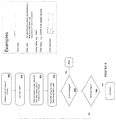
- FIG. 1 is a simulated sketch of a cellphone with multiple form screens surrounding it showing the inconvenience for users to input personal information every time.
- FIG. 2 is a flow chart of the setup of the application.
- FIG. 3 is a flow chart of the user setup of the tool.
- FIG. 4 is a flow chart for the operation of the tool for online shopping.
- FIG. 5 is an electrical diagram of an example personal computing device with a special purpose processor.
- FIG. 6 uses an example to demonstrate how a specific piece of user's personal data is transformed to a desired value into a form field.
- FIG. 7 uses a specific example to demonstrate how the form completion tool generates executable code using personal data independent of web pages and form handling code independent of personal data.
- FIG. 8 shows how the form completion tool places appropriate values into form fields of one specific form.
- FIG. 9 shows how the tool places appropriate values into multiple-page web forms and how it interacts with users.
- Multiple-page form completion is also achievable as a result of the 100% accurate and 100% coverage guarantee of our invention.
- Multiple-page form completion is not equivalent to a multiple of one-page form-filling.
- multiple of one-page form-filling needs one user's action/confirming for each page whereas our multiple-page form completion only needs user's initialization at the beginning.
- all validation of personal data needs to be done at the beginning, i.e. before user's initialization of the process.
- FIG. 1 shows a simulated sketch of the problem without assisted form completion.
- a user on a cell phone 101 tries to enter information into the multi-page form 102 - 105 .
- a first page 103 requests First and Last Names, Contact and Email Address.
- a second page 102 requests shipping address, and a third page 104 requests credit card information.
- a fourth page 105 requests phone information (the data in all of these forms could be considered personal data).
- This is a complex problem for an application on a smart phone 101 interpret and manage. No software exists in the art which we know of can complete the forms across multiple pages with 100% accuracy. The timing of the display of the screens, the coordination of information and context across multiple screens and forms is a challenging issue for software engineers.
- a solution for the completion of multiple form automatic data entry starts with the setup of the application itself.
- the application could be coded directly to handle various types of forms in one embodiment.
- a data structure is created that maps out how to process the forms for various known sources. For example, mapping personal data onto various forms.
- a computer analyzing algorithm is used to analyze the well-known forms and to populate the data structure.
- an online retailer's storefront is identified for inclusion in the application. The identification could come from a request from a user, or the retailer could ask to be included.
- the retailer's storefront is analyzed for technical compatibility, privacy policy, and safety considerations 201 .
- the storefront code is analyzed for errors and for unusual coding constructs that require special handling. The analysis could be done with a software compiler/preprocessor, possibly with the assistance of the manual coding to handle more difficult constructs.
- the storefront is also analyzed to assure that there is little risk of man-in-the-middle attacks or DNS rerouting issues.
- the code is analyzed to make sure that all information is going solely to the desired site, and that there are no off-site URLs.
- the pop-up ad policy on the page is reviewed to make sure an ad is not able to redirect information designated for the form.
- the retailer is invited to establish a business partnership 202 with the application operator so that form information can be shared.
- This allows online storefront errors to be communicated back to the retailer and allows the application operator to receive information on the timing of changes to the storefront. Without update information, the application could get out of sync with newer versions of the form, causing information to be delivered to the wrong place.
- a client-side form-handling code for populating forms on the retailer's website is created 203 .
- the code or tables are then incorporated into the client-side shopping assistant tool which runs on the user's personal computing devices 204 .
- a data structure or table regarding a form's structure could be created or updated, and the data structure/table pushed to each personal computing device.
- the shopping assistant tool could download the data structure and or tables for the specific form (or for all forms) on demand as the user is working on a form.
- One of skill in the art could also incorporate other methods of delivering specific form structure to the shopping assistant tool without deviating from the essence of this invention.
- the user first obtains the tool to run on their personal computing device 301 .
- This could be by downloading the tool from a web page, from the GOOGLE Play Store, from APPLE ITUNES, of similar repository of software.
- the download could include just code in one embodiment or could include code and tables/data structures identifying how to handle specific forms.
- the download could be a single download, or a series of downloads of various sets of code and data.
- the shopping assistant tool in installed on the device.
- the authentication could be a numeric code, an alphanumeric code, facial recognition, fingerprint recognition, voice recognition, keystroke pattern recognition, fob authentication into a port of the personal computing device, use of the camera to view an identification document (or image or physical item), or any other authentication methodology.
- the user inputs personal data once, using a predefined format.
- the data will be used later for the completion of all kinds of different forms 303 .
- This data may include such entities as passport number, name, address, citizenship if the forms related to visas and passports.
- the data may also include entities like contact information, credit card numbers, phone numbers, street name of an address, preferred shipping method, and other billing information for an online store.
- Each entity has a unique name and the input value of the entity (i.e. entity value) must conform to a predefined format. For example, when user inputs credit card information, they need to split the information into multiple entities with names such as “ccType”, “ccNumber”, “ccExpireYear”, and “ccExpireMonth”.
- the user In cases where there is possible ambiguity with an entity's value, the user must input in a predefined way. For example, a user must input a numeric number for a month, like “2”, instead of “Feb”, “February” if the entity is expiration month of a credit card. Strict input validation can help identify and correct user's input format. The user could enter this information using the keyboard or touch screen of a personal computing device or the user could transfer this information from another computing device where it has been entered. In the case of a smartwatch, the entry of information into the device directly may be tedious, and a user may prefer to enter the data on a personal computer and then transfer the information to the smartwatch.
- the personal data may include multiple entries for the same field, such as credit card information, where the user may want the option to use different cards for different types of purchases. This could be done by creating several different profiles that are selected on the initial form entry or there could be one (or more) master profiles and sub-profiles. For instance, John may have a master profile with contact information, shipping information, and billing information, but have sub-profiles for four different credit cards. Alternatively, Mary may have a work master profile that includes the work credit card, billing and shipping information and a separate personal profile that includes her personal credit card, home address, etc.
- All of the user's personal data could be encrypted with authentication data and then stored on the personal computing device 304 .
- the personal data is encrypted before transfer to the personal computing device.
- devices and methods to decrypt (de-encrypt) such information is often also needed.
- a possible implementation of the form completion tool consists of two parts in one embodiment.
- Part one is worker code which runs inside a web browser, hereinafter referred to as a worker.
- Part two is controller code which runs outside of a web browser, hereinafter referred to as a controller.
- a worker is typically a piece of JavaScript code which can manipulate the content of web page the same way as users can type data into the web forms. It is capable of filling a text area, picking an item in a dropdown list, checking a box button, clicking the submit button, et al.
- a piece of JavaScript code is strictly restricted by web browser in terms of accessing local memory outside of the browser. Therefore, by itself, a worker cannot achieve the goal of “input once, use everywhere” that is desired for a web form completion tool.
- the controller runs outside of a web browser and is usually configured to access (e.g. read or write) local memory. But it cannot directly manipulate web pages as a worker does (e.g. is not configured to manipulate web pages or web forms).
- the controller contains a worker code generator. Looking to FIG. 7 , the code generator takes as input user's personal data 701 which is independent of web pages, and a form-handling code specific to a web page 702 that is independent of user information for that specific user (e.g. may contain form fields for the user's name, but these fields start out being blank).
- the personal data is previously set by a user.
- the form-handling code is manually created by inspecting a specific web page or pages containing one or multiple forms.
- Code generation can be done with straightforward string replacement 703 , or using a template system like Mustache, or other more complicated approaches.
- the output is worker code 704 which is executable inside a browser and contains user's personal data.
- the controller can execute worker code in a web browser and communicate with the worker through a web browser's API (application programming interface).
- FIG. 6 shows how this challenge is solved.
- user is promoted to input their personal information into several entities.
- Each entity is a piece of information like first name, street name, credit card expiration month.
- Input for each entity is validated or auto-corrected to ensure consistency across users. For example, a user must pick or input the full name of a state like “California”, instead of “CA”, or “Cal”.
- the result is a list of entities with entity name and entity value 601 .
- the controller selects a piece of skeleton code from a repository according to the URL of the web page 607 . It then merges the entities with the skeleton code 605 and creates the worker code 604 .
- a worker consists of several functions.
- Each function performs a specific mapping or action using one or multiple entity values an input 606 .
- the mapping can be as simple as from a full name to its abbreviation; or it can be a translation from English to German 606 ; or it can be performing one or more actions on the web page like click one item, or copy and paste some text.
- These mapping functions are specific to the web page of the specific website 603 . This technique ensures the form completion tool can have 100% coverage of the form fields. We do not find in prior art where similar technique is described. Other form-filling methods we found in prior art are mostly based on textual similarity of form field names and descriptions whereas this technique does not depend on textual similarity at all.
- a worker places appropriate values into form fields of one specific form are described.
- a list of required form fields is created 801 .
- a worker iterates through the list 802 .
- For each field it calls a function to get an appropriate value for that field using one or more entity values 803 . It then puts the value into the form field using field's path, which is also predefined in the skeleton code 804 .
- Error detection and handling is necessary 805 because some form uses real time validation method for some specific fields like email address or credit card numbers.
- completion of multiple-page forms is done through synchronized operations between a controller 908 and a worker.
- the controller 908 Upon generating of worker code 703 , the controller 908 checks if all entities in skeleton code are replaced with personal data 907 . If not, the process stops 911 . Any remaining entity names in the generated worker code implies missing personal data and requires user's action. Note that in some embodiments, the entities names can be stored in the form handling code. Once all entities are replaced, the user is notified 909 and can then authorize the form completion process 910 . The controller 908 then tells the browser to run the worker code.
- the controller Because the controller is also independent of website, it always executes a fixed entry point function of the worker 901 and the worker itself decides where it should starts depending on the current page's URL 902 . The worker then completes the current form in current web page as described in above 903 . Any errors are reported to the controller 904 which could consequently notify the user 911 about the error. The worker itself decides whether the whole process involving one or multiple pages is done 905 . If not, it submits current form to the remote server which typically sends back the next page 906 . The controller 908 gets progress information while loading the new page. Upon page loading completion it can run the worker in the browser again.
- the controller 908 could report the information to the user and give back the control to the user.
- the user may review the forms, make any changes as desired, and submit or cancel the form submission.
- the worker may go ahead to submit the form in the last page as well, hence the user only needs one-time authorization at the beginning of the process. This alternative way is useful for low-value order forms like purchasing a song or downloading a game which costs only one dollar or two.
- the owner of the website may generate the skeleton code by themselves and submit the code for inclusion in the skeleton code repository 607 after review and verification by the operator of the form completion tool.
- the user could start the online shopping application using the operating system of the personal computing device.
- the user selects one or more products to purchase via the shopping application 401 .
- the shopping application may operate as a personal shopping assistant for the user, learning about the user's preferences, sizes, preferred colors, styles, and favorite items for purchase.
- the shopping application could also know to suggest outfits, with the shoes coming from one retailer, the skirt from another, the top from a third, and the accessories from still a fourth retailer.
- the order could then be coordinated into orders for each retailer.
- the shopping application then opens a retailer's website on a remote server and loads items to order onto the retailer's online shopping cart 402 .
- the remote server could be a single computer hosting web server software to represent the form and to collect the data from the form.
- the remote server is a plurality of computers distributed over a geographic area where the request goes to the computer geographically located closest to the personal computing device. Values collected in the form could go to the same computer that hosts the web page or to another computer designated to collect these values.
- the user opens the retailer's webpage directly and enters the quantity, size, color, and other specifications related to the product to be purchased 403 .
- that information is directly transferred from the shopping application to the online storefront (electronic storefront).
- the user When the user has selected all of the purchases that were intended, the user initiates the checkout process 404 . This can be done using a checkout form, or by other methods.
- the checkout process could be through a verbal command or through a keyboard or mouse/touchscreen command. In another embodiment, the checkout could be triggered by a change in focus on the window on the screen.
- the shopping application validates the user's identity using the authentication data previously stored on the personal computing device 405 .
- the authentication methodology could include numeric code entry, an alphanumeric code entry, facial recognition, fingerprint recognition, voice recognition, keystroke pattern recognition, fob authentication into a port of the personal computing device, use of the camera to view an identification document (or image or physical item), or any other authentication methodology.
- the shopping assistant tool decrypts the user's personal data that was previously stored on the personal computing device 406 . This personal data is then transformed into form values and then transferred over the network to the retailer's site.
- the user next reviews the form to see if the data is correct and modifies the data if necessary. If the data is modified, the user is given the option to update the personal data with the modifications 407 . If the user desires to modify the personal data, the personal data is updated 408 . This is done with code created in FIG. 2 , steps 203 , 204 .
- step 406 If the controller detects that one or more entities missing or incorrect in the personal data or in the form as it is being loaded that may result in errors during checkout 409 , then the process returns to step 406 .
- FIG. 5 shows the electrical functional diagram of an APPLE smartphone, called the IPHONE 6S, and show the data flow between the various functional blocks.
- the IPHONE is one embodiment of a personal computing device. Other smartphones, personal computers, tablets, embedded computers, wearable devices, smart watches, laptops, smart televisions, and similar personal computing devices are used in other embodiments.
- the center of the functional diagram is the APPLE A9 64-bit system on a chip 501 .
- the A9 501 features a 64-bit 1.85 GHz ARMv8-A dual-core CPU.
- the A9 501 in the IPHONE 6S has 2 GB of LPDDR4 RAM included in the package.
- the A9 501 has a per-core L1 cache of 64 KB for data and 64 KB for instructions, an L2 cache of 3 MB shared by both CPU cores, and a 4 MB L3 cache that services the entire System on a Chip and acts as a victim cache.
- the A9 501 includes an image processor with temporal and spatial noise reduction as well as local tone mapping.
- the A9 501 directly integrates an embedded M9 motion coprocessor.
- the M9 coprocessor can recognize SIRI voice commands. This M9 coprocessor can be used to authenticate users using voice recognition.
- the A9 501 is also connected to the SIM card 511 for retrieving subscriber identification information.
- the A9 501 interfaces to a two-chip subsystem that handles the cellular communications 502 , 503 .
- These chips 502 , 503 interface to LTE, WCDMA, and GSM chips that connect to the cellular antenna through power amps.
- These chips 502 , 503 provide the iPhone with voice and data connectivity through a cellular network.
- the A9 501 connects to flash memory 504 and DRAM 505 for additional storage of data.
- the power management module 506 Electrically connected, through the power supply lines and grounds, to the A9 501 and the rest of the chips 502 - 519 is the power management module 506 .
- This module 506 is also connected via a data channel to the A9 501 .
- the power management module 506 is connected to the battery 513 and the vibrator 514 .
- the Touch Screen interface controller 507 is connected to the A9 501 CPU.
- the Touch Screen controller also interfaces to the touch screen of the IPHONE.
- the Touch Screen can be used to authenticate the user either through fingerprint recognition, keystroke pattern recognition, or through passcode entry.
- the Audio codec 508 in the IPHONE is connected to the A9 501 and provides audio processing for the IPHONE.
- the Audio codec 508 is also connected to the speaker 515 , the headphone jack 516 , and the microphone 517 .
- the Audio codec 508 provides a high dynamic range, stereo DAC for audio playback and a mono high dynamic range ADC for audio capture.
- the Audio codec 508 may feature high performance up to 24-bit audio for ADC and DAC audio playback and capture functions and for the S/PDIF transmitter.
- the Audio codec 508 architecture may include bypassable SRCs and a bypassable, three-band, 32-bit parametric equalizer that allows processing of digital audio data.
- a digital mixer may be used to mix the ADC or serial ports to the DACs.
- Audio codec 508 features a mono equalizer, a sidetone mix, a MIPI SOUNDWIRE or I 2 S/TDM audio interface, audio sample rate converters, a S/PDIF transmitter, a fractional-N PLL, and integrated power management.
- digital signal processing and fast Fourier transformation functionality is available, either integrated into the sound processing or available to the CPU 501 for offloading processing from the CPU.
- the A9 501 chip also interfaces to a Camera integrated signal processor 510 chip, the Camera chip 510 connected to the camera 519 .
- the camera 519 can be used for authentication purposes, utilizing a facial recognition algorithm to authenticate the user.
- the camera 519 could also be used to recognize other images for authentication, for instance a passport or driver's license could be scanned for authentication.
- Display Controller 509 that provides the interface between the A9 501 chip and the LCD (or OLED) screen 518 on the iPhone.
- the screen 518 could be used in to display shopping options and checkout information for the user to review and approve.
- the wireless subsystem 520 provides connectivity to BLUETOOTH, WLAN, NFC and GPS modules. This handles all of the non-cellular communications to the Internet and to specific devices.
- the Bluetooth BLUETOOTH devices could include a variety of microphones, headsets, and speakers.
- the wireless subsystem 520 interfaces with the A9 501 chip.
Landscapes
- Engineering & Computer Science (AREA)
- Theoretical Computer Science (AREA)
- General Health & Medical Sciences (AREA)
- Health & Medical Sciences (AREA)
- Bioethics (AREA)
- General Physics & Mathematics (AREA)
- Computer Security & Cryptography (AREA)
- Physics & Mathematics (AREA)
- General Engineering & Computer Science (AREA)
- Computer Hardware Design (AREA)
- Software Systems (AREA)
- Computer Networks & Wireless Communication (AREA)
- Signal Processing (AREA)
- Medical Informatics (AREA)
- Databases & Information Systems (AREA)
- Artificial Intelligence (AREA)
- Audiology, Speech & Language Pathology (AREA)
- Computational Linguistics (AREA)
- Information Transfer Between Computers (AREA)
Abstract
Description
Claims (20)
Priority Applications (1)
| Application Number | Priority Date | Filing Date | Title |
|---|---|---|---|
| US16/009,679 US10867068B2 (en) | 2018-06-15 | 2018-06-15 | Personal computing devices with assisted form completion |
Applications Claiming Priority (1)
| Application Number | Priority Date | Filing Date | Title |
|---|---|---|---|
| US16/009,679 US10867068B2 (en) | 2018-06-15 | 2018-06-15 | Personal computing devices with assisted form completion |
Publications (2)
| Publication Number | Publication Date |
|---|---|
| US20180300500A1 US20180300500A1 (en) | 2018-10-18 |
| US10867068B2 true US10867068B2 (en) | 2020-12-15 |
Family
ID=63790140
Family Applications (1)
| Application Number | Title | Priority Date | Filing Date |
|---|---|---|---|
| US16/009,679 Active 2039-03-19 US10867068B2 (en) | 2018-06-15 | 2018-06-15 | Personal computing devices with assisted form completion |
Country Status (1)
| Country | Link |
|---|---|
| US (1) | US10867068B2 (en) |
Cited By (1)
| Publication number | Priority date | Publication date | Assignee | Title |
|---|---|---|---|---|
| US11509635B1 (en) * | 2020-12-10 | 2022-11-22 | Amazon Technologies, Inc. | Data incubator for secure data processing in service-provider networks |
Families Citing this family (2)
| Publication number | Priority date | Publication date | Assignee | Title |
|---|---|---|---|---|
| US11373034B2 (en) * | 2019-02-11 | 2022-06-28 | Verizon Patent And Licensing Inc. | Method and system for dynamic form generation infrastructure |
| WO2022185045A1 (en) * | 2021-03-01 | 2022-09-09 | Syntec Holdings Limited | Secure data capture systems and methods |
Citations (23)
| Publication number | Priority date | Publication date | Assignee | Title |
|---|---|---|---|---|
| US5960411A (en) * | 1997-09-12 | 1999-09-28 | Amazon.Com, Inc. | Method and system for placing a purchase order via a communications network |
| US6088700A (en) | 1999-08-06 | 2000-07-11 | Larsen; Kenneth N. | Automated forms completion for global information network applications |
| US6199079B1 (en) | 1998-03-09 | 2001-03-06 | Junglee Corporation | Method and system for automatically filling forms in an integrated network based transaction environment |
| US20020154162A1 (en) * | 2000-08-23 | 2002-10-24 | Rajesh Bhatia | Systems and methods for context personalized web browsing based on a browser companion agent and associated services |
| US20020178187A1 (en) * | 2000-12-20 | 2002-11-28 | Rasmussen Brett D. | Electronically signed HTML forms |
| US20040006745A1 (en) * | 2001-08-31 | 2004-01-08 | Van Helden Wico | Methods, apparatuses, system, and articles for associating metadata with datastream |
| US6981028B1 (en) | 2000-04-28 | 2005-12-27 | Obongo, Inc. | Method and system of implementing recorded data for automating internet interactions |
| US7334184B1 (en) | 1999-03-10 | 2008-02-19 | American Express Travel Related Services Company, Inc. | Method for online information sharing for completing electronic forms |
| US7343341B2 (en) | 2002-07-20 | 2008-03-11 | Chicago Climate Exchange, Inc. | Systems and methods for trading emission reductions |
| US20080172598A1 (en) * | 2007-01-16 | 2008-07-17 | Ebay Inc. | Electronic form automation |
| US20080307385A1 (en) * | 2007-06-11 | 2008-12-11 | Sap Ag | Enhanced Widget Composition Platform |
| US20080319899A1 (en) * | 1999-04-30 | 2008-12-25 | Paypal, Inc. | System and method for electronically exchanging value among distributed entities based on electronic mail addresses |
| US20100131837A1 (en) * | 2008-11-25 | 2010-05-27 | Yahoo! Inc. | Validation framework |
| US20100149684A1 (en) * | 2008-12-16 | 2010-06-17 | Akira Kojima | Data-storage device and analysis method for data-storage device |
| US20110162078A1 (en) | 2009-12-24 | 2011-06-30 | Ebay Inc. | Dynamic pattern insertion layer |
| US20130297504A1 (en) | 2012-05-04 | 2013-11-07 | Mastercard International Incorporated | Transaction data tokenization |
| US8811727B2 (en) | 2012-06-15 | 2014-08-19 | Moataz A. Rashad Mohamed | Methods for efficient classifier training for accurate object recognition in images and video |
| US20140372319A1 (en) | 2011-09-28 | 2014-12-18 | Lionel Wolovitz | Methods and apparatus for brokering a transaction |
| US20150199541A1 (en) | 2012-07-13 | 2015-07-16 | 1Form Online Pty Ltd | Method and system for secured communication of personal information |
| US20170249592A1 (en) | 2015-02-09 | 2017-08-31 | Thomas Ralph Rossi | System and method for automatically filling out forms |
| US20170278174A1 (en) * | 2016-03-22 | 2017-09-28 | Paypal, Inc. | Automatic population of data on an internet web page via a browser plugin |
| US20180212956A1 (en) * | 2017-01-24 | 2018-07-26 | Ca, Inc. | Anonymous token authentication |
| US20200084225A1 (en) * | 2017-12-01 | 2020-03-12 | Trusted Knight Corporation | In-stream malware protection |
-
2018
- 2018-06-15 US US16/009,679 patent/US10867068B2/en active Active
Patent Citations (23)
| Publication number | Priority date | Publication date | Assignee | Title |
|---|---|---|---|---|
| US5960411A (en) * | 1997-09-12 | 1999-09-28 | Amazon.Com, Inc. | Method and system for placing a purchase order via a communications network |
| US6199079B1 (en) | 1998-03-09 | 2001-03-06 | Junglee Corporation | Method and system for automatically filling forms in an integrated network based transaction environment |
| US7334184B1 (en) | 1999-03-10 | 2008-02-19 | American Express Travel Related Services Company, Inc. | Method for online information sharing for completing electronic forms |
| US20080319899A1 (en) * | 1999-04-30 | 2008-12-25 | Paypal, Inc. | System and method for electronically exchanging value among distributed entities based on electronic mail addresses |
| US6088700A (en) | 1999-08-06 | 2000-07-11 | Larsen; Kenneth N. | Automated forms completion for global information network applications |
| US6981028B1 (en) | 2000-04-28 | 2005-12-27 | Obongo, Inc. | Method and system of implementing recorded data for automating internet interactions |
| US20020154162A1 (en) * | 2000-08-23 | 2002-10-24 | Rajesh Bhatia | Systems and methods for context personalized web browsing based on a browser companion agent and associated services |
| US20020178187A1 (en) * | 2000-12-20 | 2002-11-28 | Rasmussen Brett D. | Electronically signed HTML forms |
| US20040006745A1 (en) * | 2001-08-31 | 2004-01-08 | Van Helden Wico | Methods, apparatuses, system, and articles for associating metadata with datastream |
| US7343341B2 (en) | 2002-07-20 | 2008-03-11 | Chicago Climate Exchange, Inc. | Systems and methods for trading emission reductions |
| US20080172598A1 (en) * | 2007-01-16 | 2008-07-17 | Ebay Inc. | Electronic form automation |
| US20080307385A1 (en) * | 2007-06-11 | 2008-12-11 | Sap Ag | Enhanced Widget Composition Platform |
| US20100131837A1 (en) * | 2008-11-25 | 2010-05-27 | Yahoo! Inc. | Validation framework |
| US20100149684A1 (en) * | 2008-12-16 | 2010-06-17 | Akira Kojima | Data-storage device and analysis method for data-storage device |
| US20110162078A1 (en) | 2009-12-24 | 2011-06-30 | Ebay Inc. | Dynamic pattern insertion layer |
| US20140372319A1 (en) | 2011-09-28 | 2014-12-18 | Lionel Wolovitz | Methods and apparatus for brokering a transaction |
| US20130297504A1 (en) | 2012-05-04 | 2013-11-07 | Mastercard International Incorporated | Transaction data tokenization |
| US8811727B2 (en) | 2012-06-15 | 2014-08-19 | Moataz A. Rashad Mohamed | Methods for efficient classifier training for accurate object recognition in images and video |
| US20150199541A1 (en) | 2012-07-13 | 2015-07-16 | 1Form Online Pty Ltd | Method and system for secured communication of personal information |
| US20170249592A1 (en) | 2015-02-09 | 2017-08-31 | Thomas Ralph Rossi | System and method for automatically filling out forms |
| US20170278174A1 (en) * | 2016-03-22 | 2017-09-28 | Paypal, Inc. | Automatic population of data on an internet web page via a browser plugin |
| US20180212956A1 (en) * | 2017-01-24 | 2018-07-26 | Ca, Inc. | Anonymous token authentication |
| US20200084225A1 (en) * | 2017-12-01 | 2020-03-12 | Trusted Knight Corporation | In-stream malware protection |
Non-Patent Citations (11)
| Title |
|---|
| "DOM-Living Standard", updated May 29, 2018, downloaded from https://dom.spec.whatwg.org/ on Jun. 4, 2018. |
| "Hello Mona", web page downloaded from "http://www.monahq.com/" on May 30, 2018. |
| "More people convert with Fillr", web page downloaded from https://www.fillr.com/ on May 29, 2018. |
| "Replace Traditional Search", web page downloaded from https://www.fluid.com/software/expertpersonalshopper on May 30, 2018. |
| "Stitch Fix Personal Stylist", web page downloaded from https://itunes.apple.com/us/app/stitch-fix-personal-stylist/id1022579925?mt=8 on May 30, 2018. |
| "DOM—Living Standard", updated May 29, 2018, downloaded from https://dom.spec.whatwg.org/ on Jun. 4, 2018. |
| Koch, Chris, "Fillr: Getting to frictionless digital commerce", web page downloaded from https://static1.squarespace.com/static/54cb10c3e4b0a44a770927e8/t/5989482c414fb53a1f9931f5/1502169139574/170801_Fillr_eBook.pdf on May 29, 2018. |
| Mackin, Al, "Form Autofill-Unpacking the Magic", Formisimo, web page downloaded from https://www.formisimo.com/blog/form-autofill-unpacking-the-magic/ on May 29, 2018. |
| Mackin, Al, "Form Autofill—Unpacking the Magic", Formisimo, web page downloaded from https://www.formisimo.com/blog/form-autofill-unpacking-the-magic/ on May 29, 2018. |
| NPL Search (Google Scholar) (Year: 2020). * |
| Oliynyk, Alyona, "How to Develop a Personal Shopper App Based on Artificial Intelligence", web page downloaded from https://masterofcode.com/blog/personal-shopper-app on May 30, 2018. |
Cited By (1)
| Publication number | Priority date | Publication date | Assignee | Title |
|---|---|---|---|---|
| US11509635B1 (en) * | 2020-12-10 | 2022-11-22 | Amazon Technologies, Inc. | Data incubator for secure data processing in service-provider networks |
Also Published As
| Publication number | Publication date |
|---|---|
| US20180300500A1 (en) | 2018-10-18 |
Similar Documents
| Publication | Publication Date | Title |
|---|---|---|
| US12148020B2 (en) | Automatic population of data for checkout interface | |
| US10861000B2 (en) | Method, system, and apparatus for application loading | |
| US9565179B2 (en) | Method and system for facilitating collaboration across multiple platforms | |
| CN109617933B (en) | Web-based single sign-on with form-filling proxy application | |
| US9639174B2 (en) | Mobile device display content based on shaking the device | |
| CN104737189B (en) | Environment and method for enabling electronic transactions | |
| US20210049579A1 (en) | Multi-factor identity authentication | |
| US9799029B2 (en) | Securely receiving data input at a computing device without storing the data locally | |
| US20190166071A1 (en) | Chatbot system and service method thereof | |
| US20230120160A1 (en) | Authentication aggregator | |
| US12014358B2 (en) | Automatic data pull requests using a secure communication link between online resources | |
| CN111652604B (en) | Order payment method, order payment device and order payment system | |
| US10460316B2 (en) | Two device authentication | |
| EP3061025B1 (en) | Method and system for authenticating service | |
| CN112039826A (en) | Login method and device applied to applet terminal | |
| US9825955B2 (en) | Method and system for exchanging information | |
| CN110795737A (en) | Method and terminal equipment for upgrading service application range of electronic identity card | |
| US11601507B2 (en) | Mobile device transaction authentication application redirection system | |
| US10867068B2 (en) | Personal computing devices with assisted form completion | |
| WO2020019291A1 (en) | Information processing method, electronic device, server, and information processing system | |
| CN107229661B (en) | Payment method and device | |
| CN108416582A (en) | Electronic system and webpage automatic login and safe transaction method utilizing near field communication | |
| WO2015060950A1 (en) | Method and system for authenticating service | |
| CN106203992A (en) | The method and device of on-line payment | |
| CN110134530A (en) | A kind of processing method and processing device of session content |
Legal Events
| Date | Code | Title | Description |
|---|---|---|---|
| FEPP | Fee payment procedure |
Free format text: ENTITY STATUS SET TO UNDISCOUNTED (ORIGINAL EVENT CODE: BIG.); ENTITY STATUS OF PATENT OWNER: SMALL ENTITY |
|
| FEPP | Fee payment procedure |
Free format text: ENTITY STATUS SET TO SMALL (ORIGINAL EVENT CODE: SMAL); ENTITY STATUS OF PATENT OWNER: SMALL ENTITY |
|
| STPP | Information on status: patent application and granting procedure in general |
Free format text: DOCKETED NEW CASE - READY FOR EXAMINATION |
|
| STPP | Information on status: patent application and granting procedure in general |
Free format text: NON FINAL ACTION MAILED |
|
| STPP | Information on status: patent application and granting procedure in general |
Free format text: RESPONSE TO NON-FINAL OFFICE ACTION ENTERED AND FORWARDED TO EXAMINER |
|
| STPP | Information on status: patent application and granting procedure in general |
Free format text: FINAL REJECTION MAILED |
|
| STPP | Information on status: patent application and granting procedure in general |
Free format text: ADVISORY ACTION MAILED |
|
| AS | Assignment |
Owner name: GOGOODY INC, CALIFORNIA Free format text: ASSIGNMENT OF ASSIGNORS INTEREST;ASSIGNOR:CHEN, ZHUORAN;REEL/FRAME:054342/0334 Effective date: 20201111 |
|
| STPP | Information on status: patent application and granting procedure in general |
Free format text: PUBLICATIONS -- ISSUE FEE PAYMENT VERIFIED |
|
| STCF | Information on status: patent grant |
Free format text: PATENTED CASE |
|
| MAFP | Maintenance fee payment |
Free format text: PAYMENT OF MAINTENANCE FEE, 4TH YR, SMALL ENTITY (ORIGINAL EVENT CODE: M2551); ENTITY STATUS OF PATENT OWNER: SMALL ENTITY Year of fee payment: 4 |