US10863555B2 - Access method, apparatus, device, and system - Google Patents
Access method, apparatus, device, and system Download PDFInfo
- Publication number
- US10863555B2 US10863555B2 US16/148,665 US201816148665A US10863555B2 US 10863555 B2 US10863555 B2 US 10863555B2 US 201816148665 A US201816148665 A US 201816148665A US 10863555 B2 US10863555 B2 US 10863555B2
- Authority
- US
- United States
- Prior art keywords
- node
- sfe
- usage type
- request
- request message
- Prior art date
- Legal status (The legal status is an assumption and is not a legal conclusion. Google has not performed a legal analysis and makes no representation as to the accuracy of the status listed.)
- Active
Links
Images



Classifications
-
- H—ELECTRICITY
- H04—ELECTRIC COMMUNICATION TECHNIQUE
- H04W—WIRELESS COMMUNICATION NETWORKS
- H04W48/00—Access restriction; Network selection; Access point selection
- H04W48/16—Discovering, processing access restriction or access information
-
- H—ELECTRICITY
- H04—ELECTRIC COMMUNICATION TECHNIQUE
- H04W—WIRELESS COMMUNICATION NETWORKS
- H04W76/00—Connection management
- H04W76/10—Connection setup
-
- H—ELECTRICITY
- H04—ELECTRIC COMMUNICATION TECHNIQUE
- H04W—WIRELESS COMMUNICATION NETWORKS
- H04W48/00—Access restriction; Network selection; Access point selection
- H04W48/18—Selecting a network or a communication service
-
- H—ELECTRICITY
- H04—ELECTRIC COMMUNICATION TECHNIQUE
- H04W—WIRELESS COMMUNICATION NETWORKS
- H04W8/00—Network data management
- H04W8/02—Processing of mobility data, e.g. registration information at HLR [Home Location Register] or VLR [Visitor Location Register]; Transfer of mobility data, e.g. between HLR, VLR or external networks
- H04W8/04—Registration at HLR or HSS [Home Subscriber Server]
-
- H—ELECTRICITY
- H04—ELECTRIC COMMUNICATION TECHNIQUE
- H04W—WIRELESS COMMUNICATION NETWORKS
- H04W60/00—Affiliation to network, e.g. registration; Terminating affiliation with the network, e.g. de-registration
- H04W60/04—Affiliation to network, e.g. registration; Terminating affiliation with the network, e.g. de-registration using triggered events
-
- H—ELECTRICITY
- H04—ELECTRIC COMMUNICATION TECHNIQUE
- H04W—WIRELESS COMMUNICATION NETWORKS
- H04W76/00—Connection management
- H04W76/10—Connection setup
- H04W76/11—Allocation or use of connection identifiers
-
- H—ELECTRICITY
- H04—ELECTRIC COMMUNICATION TECHNIQUE
- H04W—WIRELESS COMMUNICATION NETWORKS
- H04W8/00—Network data management
- H04W8/18—Processing of user or subscriber data, e.g. subscribed services, user preferences or user profiles; Transfer of user or subscriber data
- H04W8/20—Transfer of user or subscriber data
-
- H—ELECTRICITY
- H04—ELECTRIC COMMUNICATION TECHNIQUE
- H04W—WIRELESS COMMUNICATION NETWORKS
- H04W8/00—Network data management
- H04W8/22—Processing or transfer of terminal data, e.g. status or physical capabilities
-
- H—ELECTRICITY
- H04—ELECTRIC COMMUNICATION TECHNIQUE
- H04W—WIRELESS COMMUNICATION NETWORKS
- H04W8/00—Network data management
- H04W8/26—Network addressing or numbering for mobility support
Definitions
- the present application relates to the field of communications technologies, and in particular, to an access method, apparatus, device, and system.
- An operator may provide, on a same hardware platform, networks with different functions for different types of communication users.
- the operator may provide a mobile broadband (MBB) network for a mobile broadband user, and provide a machine type communication (MTC) network for a machine type communication user.
- MBB mobile broadband
- MTC machine type communication
- EPS evolved packet system
- EPC evolved packet core network
- EPS evolved packet system
- DECOR dedicated Core network
- a plurality of DECORs are deployed in the EPC network, and each DECOR serves a particular type of users.
- the network side When a plurality of DECORs are deployed on a network side, the network side adds a usage type attribute to user equipment (UE).
- the attribute is stored in a home subscriber server (HSS) as a part of subscriber data of the UE.
- HSS home subscriber server
- the UE When accessing a network, the UE first sends an attach (Attach) request or a tracking area update (TAU) request to an eNodeB (eNB). After receiving the attach request or the TAU request sent by the UE, the eNB forwards the attach request or the TAU request to a default DECOR MME stored on the eNB.
- the default DECOR MME After receiving the attach request or the TAU request, the default DECOR MME obtains a usage type of the UE from subscriber data stored on the HSS or a context of the UE stored on a source MME of the UE, and then determines, based on the usage type, a DECOR corresponding to the UE. When determining that the DECOR corresponding to the UE is not a DECOR in which the default DECOR MME is located, the default DECOR MME sends a redirection message to the eNB, to instruct the eNB to send the attach request or the TAU request to an MME in the DECOR corresponding to the UE. After receiving the attach request or the TAU request, the MME in the DECOR corresponding to the UE completes an access procedure of the UE.
- the default DECOR MME obtains, in the foregoing procedure, a user context from an MME in a source DECOR in which the UE is located. This destroys network isolation.
- this application provides an access method, apparatus, device, and system.
- an access method is provided, applied to a dedicated core network, where the method includes:
- a selection function entity SFE receiving, by a selection function entity SFE, an access request of user equipment UE sent by a radio access network node RAN node;
- the SFE selecting, by the SFE for the UE based on the usage type of the UE, a node that is in a dedicated core network and that can serve the UE, where the node that is in the dedicated core network and that can serve the UE corresponds to the usage type of the UE.
- the SFE determines the usage type of the UE based on the access request of the UE, and selects, for the UE, the node in the corresponding dedicated core network based on the usage type of the UE, so as to send the access request to the node, and complete a subsequent access procedure. Therefore, a node accessed by the UE is the node in the dedicated core network corresponding to the UE, and this ensures that the node can complete security verification of the UE.
- an attach procedure or a TAU procedure is performed only one time, so that signaling interaction can be reduced, and a processing delay and processing load of the node are reduced.
- a function of the node does not need to be redesigned.
- interaction between dedicated core networks is avoided, and this ensures mutual isolation between the dedicated core networks.
- the access request includes a non-access stratum NAS request message.
- the NAS request message is an attach request message or a tracking area update TAU request message.
- the determining a usage type of the UE based on the access request of the UE includes:
- the usage type of the UE may be directly obtained from the access request. This obtaining manner is relatively simple, so that processing load of the SFE can be reduced.
- the determining a usage type of the UE based on the access request of the UE includes:
- a home subscriber server HSS sending a subscriber data request to a home subscriber server HSS, where the subscriber data request includes the ID of the UE, and the subscriber data request is used to request subscriber data of the UE;
- the HSS may be searched for the subscriber data of the UE based on the ID of the UE, to obtain the usage type of the UE.
- the obtaining an ID of the UE includes:
- the obtaining an ID of the UE includes:
- the obtaining an ID of the UE includes:
- the context request includes the temporary ID of the UE, and the context request is used to request a context of the UE;
- the determining a usage type of the UE based on the access request of the UE includes:
- the context request includes the temporary ID of the UE, and the context request is used to request a context of the UE;
- the node in the source dedicated core network may be searched for the context of the UE based on the temporary ID of the UE, to obtain the usage type of the UE.
- the method further includes:
- the redirection message includes information about the node that is in the corresponding dedicated core network and that is selected by the SFE for the UE, so that the RAN node sends the access request to the node in the dedicated core network corresponding to the UE.
- the method further includes:
- the access request may be directly sent to the node, or may be sent to the node by sending the redirection message to the RAN node.
- the directly sending the access request to the node in the dedicated core network corresponding to the UE includes:
- the method further includes:
- the SFE forwarding, by the SFE as a forwarding node between the RAN node and the node in the dedicated core network corresponding to the UE, a message between the RAN node and the node in the dedicated core network corresponding to the UE.
- the forwarding a message between the RAN node and the node in the dedicated core network corresponding to the UE includes:
- an access method where the method includes:
- Radio access network node RAN node receiving, by a radio access network node RAN node, an access request sent by user equipment UE;
- the access request does not include an identifier of a node in a source dedicated core network of the UE, or when an identifier of a node in a source dedicated core network that is carried in the access request is not in a preconfigured node identifier table, determining, by the RAN node, that the node in the source dedicated core network is unreachable;
- the RAN node When receiving the access request sent by the UE, the RAN node determines, based on the access request and the preconfigured node identifier table, whether the node in the source dedicated core network is reachable, and when determining that the node in the source dedicated core network is unreachable, sends the access request to the selection function entity SFE, so that the SFE can determine a usage type of the UE based on the access request of the UE, and select, for the UE, a node in a corresponding dedicated core network based on the usage type of the UE.
- a node identifier is a globally unique mobility management entity identifier GUMMEI or a packet temporary mobile subscriber identity P-TMSI.
- the method further includes:
- the RAN node receiving, by the RAN node, a node that is in a dedicated core network corresponding to the UE and that is determined by the selection function entity SFE, where the node in the dedicated core network corresponding to the UE is a node that is selected by the SFE for the UE based on a usage type of the UE, that is in a dedicated core network, and that can serve the UE; and
- the RAN node When receiving the access request sent by the UE, the RAN node receives the node that is in the dedicated core network corresponding to the UE and that is determined by the selection function entity SFE, and sends the access request of the UE to the node in the dedicated core network corresponding to the UE, to complete a subsequent access procedure. Therefore, a node accessed by the UE is the node in the dedicated core network corresponding to the UE, and this ensures that the node can complete security verification of the UE.
- an attach procedure or a TAU procedure is performed only one time, so that signaling interaction can be reduced, and a processing delay and processing load of the node are reduced.
- a function of the node does not need to be redesigned, so that costs are reduced.
- interaction between dedicated core networks is avoided, and this ensures mutual isolation between the dedicated core networks.
- the node in the dedicated core network is a control plane device, and the control plane device may be an MME.
- the receiving a node that is in a dedicated core network corresponding to the UE and that is determined by the selection function entity SFE includes:
- the selection function entity SFE when the identifier of the node in the source dedicated core network of the UE can not be obtained or the node in the source dedicated core network of the UE is unreachable, receiving the node that is in the dedicated core network corresponding to the UE and that is determined by the selection function entity SFE.
- the receiving a node that is in a dedicated core network corresponding to the UE and that is determined by the selection function entity SFE includes:
- the redirection message includes information about the node in the dedicated core network corresponding to the UE.
- the sending the access request to an SFE includes:
- the sending the access request to an SFE includes:
- the identifier of the node in the source dedicated core network of the UE is a globally unique mobility management entity identifier GUMMEI or a packet temporary mobile subscriber identity P-TMSI.
- the access request includes a non-access stratum NAS request message.
- the NAS request message is an attach request message or a tracking area update TAU request message.
- the method further includes:
- the SFE as a forwarding node between the RAN node and the node in the dedicated core network corresponding to the UE, to send a message to the node in the dedicated core network corresponding to the UE, or receive a message sent by the node in the dedicated core network corresponding to the UE.
- the receiving, by a RAN node, an access request sent by UE includes:
- the method further includes:
- the access request carries the identifier of the node in the source dedicated core network of the UE, determining whether the node in the source dedicated core network of the UE is reachable.
- an access apparatus includes several units, such as a receiving unit and a processing unit.
- the several units are configured to implement the method provided in the first aspect.
- an access apparatus includes several units, such as a receiving unit, a processing unit, and a sending unit.
- the several units are configured to implement the method provided in the second aspect.
- an access device includes a processor, a memory, and a communications interface, the memory is configured to store a software program and a module, and the processor runs or executes the software program and/or the module stored in the memory, to implement the following operations:
- a node that is in a dedicated core network and that can serve the UE where the node that is in the dedicated core network and that can serve the UE corresponds to the usage type of the UE.
- an access device includes a processor, a memory, and a communications interface, the memory is configured to store a software program and a module, and the processor runs or executes the software program and/or the module stored in the memory, to implement the following operations:
- the access request does not include an identifier of a node in a source dedicated core network of the UE, or when an identifier of a node in a source dedicated core network that is carried in the access request is not in a preconfigured node identifier table, determining that the node in the source dedicated core network is unreachable;
- a computer readable storage medium configured to store program code executed by the foregoing processor during service transmission.
- the program code includes an instruction used for implementing the method provided in the first aspect.
- a computer readable storage medium configured to store program code executed by the foregoing processor during service transmission.
- the program code includes an instruction used for implementing the method provided in the second aspect.
- an access system where the system includes:
- an SFE configured to: receive an access request of user equipment UE sent by a radio access network node RAN node; determine a usage type of the UE based on the access request of the UE; and select, for the UE based on the usage type of the UE, a node that is in a dedicated core network and that can serve the UE, where the node that is in the dedicated core network and that can serve the UE corresponds to the usage type of the UE; and
- the RAN node configured to: receive the access request sent by the user equipment UE; when the access request does not include an identifier of a node in a source dedicated core network of the UE, or when an identifier of a node in a source dedicated core network that is carried in the access request is not in a preconfigured node identifier table, determine that the node in the source dedicated core network is unreachable; and send the access request to the selection function entity SFE.
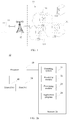
- FIG. 1 is a schematic diagram of an application scenario according to an embodiment of the present application
- FIG. 2 a is a schematic structural diagram of an SFE according to an embodiment of the present application.
- FIG. 2 b is a schematic structural diagram of a RAN node according to an embodiment of the present application.
- FIG. 3 is a flowchart of an access method according to an embodiment of the present application.
- FIG. 4 is a flowchart of another access method according to an embodiment of the present application.
- FIG. 5 is a flowchart of another access method according to an embodiment of the present application.
- FIG. 6 is a flowchart of another access method according to an embodiment of the present application.
- FIG. 7 is a flowchart of another access method according to an embodiment of the present application.
- FIG. 8 is a flowchart of another access method according to an embodiment of the present application.
- FIG. 9 is a schematic structural diagram of an access apparatus according to an embodiment of the present application.
- FIG. 10 is a schematic structural diagram of another access apparatus according to an embodiment of the present application.
- FIG. 11 is a schematic structural diagram of an access system according to an embodiment of the present application.
- FIG. 1 An application scenario of the present application is first described with reference to FIG. 1 .
- the scenario includes UE 11 , a radio access network node (RAN node) 12 , and a core network (CN) 13 .
- RAN node radio access network node
- CN core network
- the CN 13 includes a plurality of networks 131 .
- Each network 131 is configured to provide a service for one type of terminal.
- Each network 131 is provided with one node used for performing control plane management, for example, a control plane device 132 .
- a plurality of control plane devices 132 may be obtained by virtualizing one control plane network element.
- the CN 13 further includes an HSS 133 .
- the network 131 may be a dedicated core network, and may also be a network slice in a future network.
- the UE 11 in the present application may be a 4G terminal, and includes a handheld device, an in-vehicle device, a wearable device, or a computing device that has a wireless communication function, or another processing device connected to a wireless modem, and UE in various forms, such as a mobile station (MS), a terminal, and terminal equipment.
- the UE 11 may be a terminal supporting a 5G network, and includes but is not limited to a machine device, a sensor, a mobile terminal, or the like.
- the RAN node 12 is a node in a radio access network in a general sense, and is responsible for communication between the UE 11 and the core network.
- the control plane device 132 is, in a general sense, a control plane in the network 131 deployed in the core network, and is responsible for session management, identity authentication, access control, and the like of a terminal.
- Each network 131 is a DECOR
- the RAN node 12 is an eNB
- the control plane device 132 is an MME deployed in the DECOR.
- the embodiments of the present application provide a selection function entity (SFE).
- SFE is a new logical network element introduced in the present application, and a main function of the SFE is to select a corresponding network for a terminal based on a usage type of the terminal, to implement network access of the terminal.
- the logical network element may be deployed, on a core network side, as an independent network element independent of the dedicated core network, or may be embedded, as a function module, into the control plane in the network. This is not limited in the embodiments of the present application.
- FIG. 2 a is a possible schematic structural diagram of hardware of an SFE.
- the SFE includes a processor 10 , a memory 20 , and a communications interface 30 .
- the structure shown in FIG. 2 a imposes no limitation on the SFE, and the SFE may include more or fewer parts than those shown in the figure, or combine some parts, or have different part arrangements.
- the processor 10 is a control center of the SFE, is connected to each part of the entire SFE by using various interfaces and lines, and performs various functions of the SFE and data processing by running or executing a software program and/or a module stored in the memory 20 and invoking data stored in the memory 20 , to perform overall control on the SFE.
- the processor 10 may be implemented by a CPU, or may be implemented by a network processor (NP) that has a control plane function.
- the memory 20 may be configured to store a software program and a module.
- the processor 10 runs the software program and the module that are stored in the memory 20 , to perform various functional applications and data processing.
- the memory 20 may mainly include a program storage area and a data storage area.
- the program storage area may store an operating system 21 , a receiving module 22 , a processing module 23 , an application program 24 required by at least one function (for example, location area identifier list allocation), and the like.
- the data storage area may store data (for example, UE location information) created based on use of the SFE, and the like.
- the memory 20 may be implemented by any type of volatile or non-volatile storage device or by a combination thereof, for example, a static random access memory (SRAM), an electrically erasable programmable read-only memory (EEPROM), an erasable programmable read only memory (EPROM), a programmable read-only memory (PROM), a read-only memory (ROM), a magnetic memory, a flash memory, a magnetic disk, or an optical disc.
- the memory 20 may further include a memory controller, so that the processor 10 can access the memory 20 .
- the processor 10 performs the following function by running the receiving module 22 : receiving an access request of user equipment UE sent by a radio access network node RAN node.
- the processor 10 performs the following functions by running the processing module 23 : determining a usage type of the UE based on the access request of the UE; and selecting, for the UE based on the usage type of the UE, a node that is in a dedicated core network and that can serve the UE, where the node that is in the dedicated core network and that can serve the UE corresponds to the usage type of the UE.
- FIG. 2 b is a possible schematic structural diagram of hardware of the RAN node shown in FIG. 1 .
- the RAN node 12 includes a processor 10 , a memory 20 , a receiver 30 , and a transmitter 40 .
- the structure shown in FIG. 2 b imposes no limitation on the RAN node, and the RAN node may include more or fewer parts than those shown in the figure, or combine some parts, or have different part arrangements.
- the processor 10 is a control center of the RAN node, is connected to each part of the entire RAN node by using various interfaces and lines, and performs various functions of the RAN node and data processing by running or executing a software program and/or a module stored in the memory 20 and invoking data stored in the memory 20 , to perform overall control on the RAN node.
- the processor 10 may be implemented by a CPU, or may be implemented by a network processor (English: network processor, NP for short) that has a control plane function.
- the memory 20 may be configured to store a software program and a module.
- the processor 10 runs the software program and the module that are stored in the memory 20 , to perform various functional applications and data processing.
- the memory 20 may mainly include a program storage area and a data storage area.
- the program storage area may store an operating system 21 , a receiving module 22 , a processing module 23 , a sending module 24 , an application program 25 required by at least one function (for example, location area identifier list allocation), and the like.
- the data storage area may store data (for example, UE location information) created based on use of the RAN node, and the like.
- the memory 20 may be implemented by any type of volatile or non-volatile storage device or by a combination thereof, for example, a static random access memory (SRAM), an electrically erasable programmable read-only memory (EEPROM), an erasable programmable read only memory (EPROM), a programmable read-only memory (PROM), a read-only memory (ROM), a magnetic memory, a flash memory, a magnetic disk, or an optical disc.
- the memory 20 may further include a memory controller, so that the processor 10 can access the memory 20 .
- the processor 10 performs the following function by running the receiving module 22 : receiving an access request sent by user equipment UE.
- the processor 10 performs the following function by running the processing module 23 : when the access request does not include an identifier of a node in a source dedicated core network of the UE, or when an identifier of a node in a source dedicated core network that is carried in the access request is not in a preconfigured node identifier table, determining that the node in the source dedicated core network is unreachable.
- the processor 10 performs the following function by running the sending module 24 : sending the access request to a selection function entity SFE.
- FIG. 3 is a flowchart of an access method according to an embodiment of the present application. The method may be executed by the SFE in the foregoing application scenario. As shown in FIG. 3 , the method includes the following steps:
- Step 201 The SFE receives an access request of user equipment UE sent by a radio access network node RAN node.
- Step 202 Determine a usage type of the UE based on the access request of the UE.
- Step 203 Select, for the UE based on the usage type of the UE, a node that is in a dedicated core network and that can serve the UE, where the node that is in the dedicated core network and that can serve the UE corresponds to the usage type of the UE.
- the selecting, by the SFE, for the UE based on the usage type of the UE, a node that is in a dedicated core network and that can serve the UE may include:
- the node that is in the dedicated core network and that can serve the UE directly selecting, for the UE based on the usage type of the UE, the node that is in the dedicated core network and that can serve the UE; or
- the UE selecting, for the UE based on information other than the usage type of the UE in subscriber data of the UE and/or a local policy preconfigured on the SFE, and the usage type of the UE, the node that is in the dedicated core network and that can serve the UE.
- the information other than the usage type of the UE in the subscriber data includes but is not limited to a roaming protocol.
- the local policy preconfigured on the SFE includes but is not limited to a network congestion status, local network deployment, or the like.
- steps 202 and 203 include two implementations.
- a first implementation refer to FIG. 5 and FIG. 6 .
- a second implementation refer to FIG. 7 and FIG. 8 .
- the SFE when receiving the access request of the UE, determines the usage type of the UE based on the access request of the UE, and selects, for the UE, the node in the corresponding dedicated core network based on the usage type of the UE, so as to send the access request to the node, and complete a subsequent access procedure. Therefore, a node accessed by the UE is the node in the dedicated core network corresponding to the UE, and this ensures that the node can complete security verification of the UE.
- an attach procedure or a TAU procedure is performed only one time, so that signaling interaction can be reduced, and a processing delay and processing load of the node are reduced.
- a function of the node does not need to be redesigned.
- interaction between dedicated core networks is avoided, and this ensures mutual isolation between the dedicated core networks.
- FIG. 4 is a flowchart of an access method according to an embodiment of the present application. The method may be executed by the RAN node in the foregoing application scenario. As shown in FIG. 4 , the method includes the following steps:
- Step 301 The RAN node receives an access request sent by user equipment UE.
- Step 302 When the access request does not include an identifier of a node in a source dedicated core network of the UE, or when an identifier of a node in a source dedicated core network that is carried in the access request is not in a preconfigured node identifier table, determine that the node in the source dedicated core network is unreachable.
- Step 303 Send the access request to a selection function entity SFE.
- the RAN node determines, based on the access request and the preconfigured node identifier table, whether the node in the source dedicated core network is reachable, and when determining that the node in the source dedicated core network is unreachable, sends the access request to the selection function entity SFE, so that the SFE can determine a usage type of the UE based on the access request of the UE, and select, for the UE, a node in a corresponding dedicated core network based on the usage type of the UE.
- the RAN node determines, through the selection function entity SFE, the node in the dedicated core network corresponding to the UE, and sends the access request of the UE to the node in the dedicated core network corresponding to the UE, to complete a subsequent access procedure. Therefore, a node accessed by the UE is the node in the dedicated core network corresponding to the UE, and this ensures that the node can complete security verification of the UE.
- an attach procedure or a TAU procedure is performed only one time, so that signaling interaction can be reduced, and a processing delay and processing load of the node are reduced.
- a function of the node does not need to be redesigned, so that costs are reduced.
- interaction between dedicated core networks is avoided, and this ensures mutual isolation between the dedicated core networks.
- FIG. 5 is a flowchart of an access method according to an embodiment of the present application.
- a dedicated core network a network for short
- a node in the dedicated core network is a control plane device
- the method includes the following steps.
- Step 401 The UE sends an initial attach request to the RAN node, where the initial attach request is an attach request sent by the UE when the UE performs initial network accessing.
- the UE Because the UE performs initial accessing, the UE has not accessed the corresponding network, and no control plane device identifier (for example, a globally unique mobility management entity identifier (Globally Unique MME identifier, GUMMEI for short) or a packet temporary mobile subscriber identity (P-TMSI) has been allocated to the UE.
- a globally unique mobility management entity identifier Globally Unique MME identifier, GUMMEI for short
- P-TMSI packet temporary mobile subscriber identity
- that the UE sends an initial attach request to the RAN node includes:
- the UE sending, by the UE, the initial attach request to the RAN node by using an RRC message, where the RRC message is a message that is sent by the UE to the RAN node in a process in which the UE establishes an RRC connection to the RAN node.
- Step 402 The RAN node sends the initial attach request to the SFE, and the SFE receives the initial attach request of the UE sent by the RAN node.
- the SFE is a new logical network element in the present application, and the RAN node stores related information of the SFE, such as address information.
- That the RAN node sends the initial attach request to the SFE may include:
- an S1-Application Protocol Application Protocol, AP for short
- the method further includes:
- the RAN node determines, by the RAN node, whether the RRC message includes an identifier (such as a globally unique mobility management entity identifier GUMMEI or a packet temporary mobile subscriber identity P-TMSI) of a control plane device in a source network of the UE. Because the UE performs initial accessing, the RRC message does not include the identifier of the control plane device in the source network of the UE (namely, the RAN node does not obtain the identifier of the control plane device in the source network of the UE), and therefore the RAN node sends the initial attach request to the SFE.
- an identifier such as a globally unique mobility management entity identifier GUMMEI or a packet temporary mobile subscriber identity P-TMSI
- the SFE After receiving the initial attach request, the SFE performs step 403 a . If failing to perform step 403 a , the SFE performs step S 403 b to step 403 d . Certainly, the SFE may not perform step 403 a , but directly perform step 403 b to step 403 d . Step 403 a and step 403 b to step 403 d are used to determine a usage type of the UE.
- Step 403 a The SFE directly obtains a usage type of the UE from the initial attach request.
- the usage type may be used as an optional field of the initial attach request.
- Step 403 b The SFE obtains an ID of the UE from the initial attach request.
- the initial attach request includes the ID of the UE.
- Step 403 c The SFE sends a subscriber data request (Subscriber Data Request) to an HSS, where the subscriber data request includes the ID of the UE, and the subscriber data request is used to request subscriber data (Subscriber Data) of the UE.
- Step 403 d The SFE receives the subscriber data of the UE returned by the HSS, and obtains a usage type of the UE from the subscriber data of the UE, where the subscriber data of the UE includes the usage type of the UE.
- a subscriber data response (Subscriber Data Response) returned by the HSS is received, and the subscriber data response includes the subscriber data of the UE.
- Step 404 The SFE selects, for the UE, a control plane device based on the usage type of the UE.
- a correspondence between a usage type and a control plane device may be stored in the SFE in advance. After obtaining the usage type of the UE, the SFE selects a control plane device corresponding to the usage type of the UE based on the correspondence between a usage type and a control plane device and the usage type of the UE.
- a mobile broadband user corresponds to a control plane device in a mobile broadband network
- a machine type communication user corresponds to a control plane device in a machine type communication network
- an inter-vehicle communication user corresponds to a control plane device in an inter-vehicle communication network.
- the SFE selects, for the UE based on the usage type of the UE, a node that is in a dedicated core network and that can serve the UE may include:
- the node that is in the dedicated core network and that can serve the UE directly selecting, for the UE based on the usage type of the UE, the node that is in the dedicated core network and that can serve the UE; or
- the UE selecting, for the UE based on information other than the usage type of the UE in the subscriber data of the UE and/or a local policy preconfigured on the SFE, and the usage type of the UE, the node that is in the dedicated core network and that can serve the UE.
- the information other than the usage type of the UE in the subscriber data includes but is not limited to a roaming protocol.
- the local policy preconfigured on the SFE includes but is not limited to a network congestion status, local network deployment, or the like.
- the selecting, for the UE based on information other than the usage type of the UE in the subscriber data of the UE and/or a local policy preconfigured on the SFE, and the usage type of the UE, the node that is in the dedicated core network and that can serve the UE may include:
- the meeting a requirement of the information other than the usage type of the UE in the subscriber data of the UE and/or the local policy preconfigured on the SFE may include: matching the information (such as the roaming protocol) other than the usage type of the UE in the subscriber data of the UE, or meeting a policy (such as the network congestion status) in the local policy.
- the SFE may refer to the roaming protocol of the UE in the subscriber data. If a roaming service is not enabled for the UE, and the control plane device selected for the UE based on the usage type of the UE is at a roaming location, the control plane device cannot be used as the control plane device that can serve the UE.
- the SFE may refer to a local congestion status on the SFE. If congestion of a network in which the control plane device selected for the UE based on the usage type of the UE is located is greater than a preset value, the control plane device cannot be used as the control plane device that can serve the UE.
- Step 403 a , step 403 b to step 403 d , and step 404 are used to select the control plane device for the UE.
- Step 405 The SFE sends a redirection message to the RAN node, where the redirection message includes information about the control plane device corresponding to the usage type of the UE, and the RAN node receives the redirection message returned by the SFE.
- the information about the control plane device may include an identifier or an IP address of the control plane device.
- Step 406 The RAN node sends the initial attach request of the UE to the control plane device.
- That the RAN node sends the initial attach request of the UE to the control plane device may include:
- step 406 the UE, the RAN node, and the control plane device complete an attach procedure in a normal manner. In this way, network access of the UE can be implemented.
- the RAN node after receiving the initial attach request sent by the UE, the RAN node directly sends the initial attach request to the SFE, then receives the redirection message returned by the SFE, where the redirection message includes the information about the control plane device (such as an MME) selected by the SFE for the UE based on the usage type of the UE, and then sends the initial attach request of the UE to the control plane device, to complete a subsequent access procedure.
- the control plane device such as an MME
- the SFE selects, for the UE, the control plane device based on the usage type of the UE, and then the UE accesses a network in which the control plane device is located, namely, the control plane device accessed by the UE is a control plane device in a network corresponding to the UE, and this ensures that the control plane device can complete security verification of the UE.
- an attach procedure or a TAU procedure is performed only one time, so that signaling interaction can be reduced, and a processing delay and processing load of the control plane device are reduced.
- a function of the control plane device does not need to be redesigned.
- interaction between networks is avoided, and this ensures mutual isolation between the networks.
- FIG. 6 is a flowchart of an access method according to an embodiment of the present application.
- an example in which UE moves from a home location to a visited location is used, to describe in detail the access methods that are executed by the SFE and the RAN node and that are provided in FIG. 3 and FIG. 4 .
- the method includes the following steps.
- Step 501 The UE sends an attach request or a TAU request to the RAN node.
- the UE sends an attach request or a TAU request to the RAN node includes:
- the attach request or the TAU request to the RAN node by using an RRC message
- the RRC message is a message that is sent by the UE to the RAN node in a process in which the UE establishes an RRC connection to the RAN node.
- the UE has performed registration at the home location and obtained a temporary identifier allocated by a home network.
- the temporary identifier includes a control plane device identifier.
- the UE when initiating an attach request or a TAU request at the visited location, the UE adds the control plane device identifier to the RRC message and transmits the RRC message to the RAN node (at the visited location).
- Step 502 The RAN node sends the attach request or the TAU request to the SFE, and the SFE receives the attach request or the TAU request of the UE sent by the RAN node.
- the SFE is a new logical network element in the present application, and the RAN node stores related information of the SFE, such as address information.
- That the RAN node sends the attach request or the TAU request to the SFE may include:
- the method further includes:
- the RAN node determines, by the RAN node, whether the RRC message includes an identifier of a control plane device in a source network of the UE; and when the RRC message includes the identifier of the control plane device in the source network of the UE, determining whether the control plane device in the source network of the UE is reachable. Because the control plane device in the source network of the UE is a control plane device at the home location of the UE, the RAN node at the visited location determines that the control plane device is unreachable, and in this case, the RAN node sends the attach request or the TAU request to the SFE.
- the determining whether the control plane device in the source network of the UE is reachable includes:
- the SFE After receiving the attach request or the TAU request, the SFE performs step 503 a . If failing to perform step 503 a , the SFE performs step S 503 b to step 503 j . Certainly, the SFE may not perform step 503 a , but directly perform step 503 b to step 503 j . Step 503 a and step 503 b to step 503 j are used to determine a usage type of the UE.
- Step 503 a The SFE directly obtains a usage type of the UE from the attach request or the TAU request.
- the usage type may be used as an optional field of the attach request or the TAU request.
- Step 503 b The SFE obtains a temporary identifier of the UE from the attach request or the TAU request.
- the attach request or the TAU request includes the temporary identifier of the UE, and the temporary identifier of the UE includes the identifier of the control plane device in the source network of the UE.
- Step 503 c The SFE sends a context request to a control plane device (a control plane device at a home location) in a source network of the UE, where the context request includes the temporary identifier of the UE, and the context request is used to request a context of the UE.
- the SFE may learn of the control plane device in the source network of the UE based on the temporary identifier of the UE.
- the SFE performs step 503 d and step 503 e ; or when the SFE does not receive the context of the UE returned by the control plane device in the source network, performs step 503 g to step 503 j.
- the SFE receives a context response returned by the control plane device in the source network, and the context response may include the context of the UE.
- the SFE receives no context of the UE returned by the control plane device in the source network.
- Step 503 d Determine whether the context of the UE includes a usage type of the UE; and when the context of the UE includes the usage type of the UE, performs step 503 e ; or when the context of the UE includes the usage type of the UE, performs step 503 f.
- Step 503 e Obtain the usage type of the UE from the context of the UE, where the context of the UE includes the usage type of the UE.
- Step 503 f Obtain an ID of the UE from the context of the UE, where the context of the UE includes the ID of the UE, and then perform steps 503 i and 503 j.
- Step 503 g The SFE sends an ID request (Identity Request) to the UE.
- Step 503 h The SFE receives the ID of the UE returned by the UE.
- an ID response (Identity Response) returned by the UE is received, and the identity response includes the ID of the UE.
- Step 503 i The SFE sends a subscriber data request to an HSS, where the subscriber data request includes the ID of the UE, and the subscriber data request is used to request subscriber data of the UE.
- Step 503 j The SFE receives the subscriber data of the UE returned by the HSS, and obtains the usage type of the UE from the subscriber data of the UE, where the subscriber data of the UE includes the usage type of the UE.
- a subscriber data response returned by the HSS is received, and the subscriber data response includes the subscriber data of the UE.
- Step 504 The SFE selects, for the UE, a control plane device (a control plane device at a roaming location) based on the usage type of the UE.
- step 504 is the same as that of step 404 .
- Step 505 The SFE sends a redirection message to the RAN node, where the redirection message includes information about the control plane device corresponding to the usage type of the UE, and the RAN node receives the redirection message returned by the SFE.
- step 505 A specific process of step 505 is the same as that of step 405 .
- Step 506 The RAN node sends the attach request or the TAU request of the UE to the control plane device.
- step 506 A specific process of step 506 is the same as that of step 406 .
- the RAN node when the RAN node receives the access request sent by the UE, if the control plane device in the source network of the UE is unreachable, the RAN node directly sends the access request to the SFE, then receives the redirection message returned by the SFE, where the redirection message includes the information about the control plane device (such as an MME) selected by the SFE for the UE based on the usage type of the UE, and then sends the access request of the UE to the control plane device, to complete a subsequent access procedure.
- the control plane device such as an MME
- the SFE selects, for the UE, the control plane device based on the usage type of the UE, and then the UE accesses a network in which the control plane device is located, namely, the control plane device accessed by the UE is a control plane device in a network corresponding to the UE, and this ensures that the control plane device can complete security verification of the UE.
- an attach procedure or a TAU procedure is performed only one time, so that signaling interaction can be reduced, and a processing delay and processing load of the control plane device are reduced.
- a function of the control plane device does not need to be redesigned.
- interaction between networks is avoided, and this ensures mutual isolation between the networks.
- FIG. 7 is a flowchart of an access method according to an embodiment of the present application.
- UE performs initial network accessing
- FIG. 7 in the procedure shown in the figure, the UE interacts with an SFE.
- a procedure in which the SFE selects, for the UE, a control plane device is the same as that in FIG. 5 (namely, steps 601 to 604 are the same as steps 401 to 404 in FIG. 5 ).
- steps 601 to 604 are the same as steps 401 to 404 in FIG. 5 .
- steps 605 and 606 A difference between FIG. 7 and FIG. 5 mainly lies in a subsequent procedure (steps 605 and 606 ).
- the method includes the following steps.
- Step 601 The UE sends an initial attach request (Initial Attach Request) to a RAN node, where the initial attach request is an attach request sent by the UE when the UE performs initial network accessing.
- Initial Attach Request an attach request sent by the UE when the UE performs initial network accessing.
- Step 602 The RAN node sends the initial attach request to the SFE, and the SFE receives the initial attach request of the UE sent by the RAN node.
- the SFE After receiving the initial attach request, the SFE performs step 603 a . If failing to perform step 603 a , the SFE performs step S 603 b to step 603 d . Certainly, the SFE may not perform step 603 a , but directly perform step 603 b to step 603 d . Step 603 a and step 603 b to step 603 d are used to determine a usage type of the UE.
- Step 603 a The SFE directly obtains a usage type of the UE from the initial attach request.
- Step 603 b The SFE obtains an ID of the UE from the initial attach request.
- Step 603 c The SFE sends a subscriber data request to an HSS, where the subscriber data request includes the ID of the UE, and the subscriber data request is used to request subscriber data of the UE.
- Step 603 d The SFE receives the subscriber data of the UE returned by the HSS, and obtains a usage type of the UE from the subscriber data of the UE, where the subscriber data of the UE includes the usage type of the UE.
- Step 604 The SFE selects, for the UE, a control plane device based on the usage type of the UE.
- Step 603 a , step 603 b to step 603 d , and step 604 are used to select the control plane device for the UE.
- Step 605 The SFE sends the initial attach request of the UE to the control plane device.
- the SFE may find information about the control plane device, to send the initial attach request of the UE to the control plane device.
- the information about the control plane device may include an identifier or an IP address of the control plane device.
- Step 605 may include: establishing an S1 connection to the control plane device, and sending the initial attach request to the control plane device by using the S1 connection.
- Step 606 As a forwarding node between the control plane device and the RAN node, the SFE forwards a message between the control plane device and the RAN node, to complete the access process.
- a message sent by the control plane device or the RAN node is received, and the message sent by the control plane device or the RAN node is forwarded to the RAN node or the control plane device.
- a process in which the SFE forwards the message includes: caching the message, and forwarding the message to the RAN node or the control plane device after route modification of the message is completed.
- the message includes a security verification message, an accept message, or the like.
- the control plane device transmits, to the UE by using a message, a temporary identifier (GUTI) allocated to the UE.
- GUI temporary identifier
- the control plane device may add the temporary identifier (GUTI) allocated to the UE to a non-access stratum accept message (NAS Accept message), and transmit the non-access stratum accept message to the RAN node by using the SFE, and then the RAN node forwards the non-access stratum accept message to the UE.
- the temporary identifier includes the identifier of the control plane device.
- the UE adds the identifier of the control plane device to a subsequent service request message, and the RAN node may directly send the service request message of the UE to the control plane device based on the identifier of the control plane device.
- the UE, the RAN node, and the control plane device perform subsequent interaction in a normal manner, to be specific, after accessing is completed this time, the RAN node may directly interact with the control plane device based on the temporary identifier, to forward a message between the UE and the control plane device, without using the SFE.
- the RAN node after receiving the initial attach request sent by the UE, the RAN node directly sends the initial attach request to the SFE, and the SFE selects, for the UE, the control plane device (such as an MME) based on the usage type of the UE, and then sends the initial attach request of the UE to the control plane device, to complete a subsequent access procedure.
- the control plane device such as an MME
- the SFE selects, for the UE, the control plane device based on the usage type of the UE, and then the UE accesses a network in which the control plane device is located, namely, the control plane device accessed by the UE is a control plane device in a network corresponding to the UE, and this ensures that the control plane device can complete security verification of the UE.
- an attach procedure or a TAU procedure is performed only one time, so that signaling interaction can be reduced, and a processing delay and processing load of the control plane device are reduced.
- a function of the control plane device does not need to be redesigned.
- interaction between networks is avoided, and this ensures mutual isolation between the networks.
- FIG. 8 is a flowchart of an access method according to an embodiment of the present application.
- the UE interacts with an SFE.
- a procedure in which the SFE selects, for the UE, a control plane device is the same as that in FIG. 6 (namely, steps 701 to 704 are the same as steps 501 to 504 in FIG. 6 ).
- steps 701 to 704 are the same as steps 501 to 504 in FIG. 6 ).
- steps 705 and 706 mainly lies in a subsequent procedure.
- the method includes the following steps.
- Step 701 The UE sends an attach request or a TAU request to a RAN node.
- Step 702 The RAN node sends the attach request or the TAU request to the SFE, and the SFE receives the attach request or the TAU request of the UE sent by the RAN node.
- the SFE After receiving the attach request or the TAU request, the SFE performs step 703 a . If failing to perform step 703 a , the SFE performs step S 703 b to step 703 j . Certainly, the SFE may not perform step 703 a , but directly perform step 703 b to step 703 j . Step 703 a and step 703 b to step 703 j are used to determine a usage type of the UE.
- Step 703 a The SFE directly obtains a usage type of the UE from the attach request or the TAU request.
- Step 703 b The SFE obtains a temporary identifier of the UE from the attach request or the TAU request.
- Step 703 c The SFE sends a context request to a control plane device (a control plane device at the home location) in a source network of the UE, where the context request includes the temporary identifier of the UE, and the context request is used to request a context of the UE.
- the SFE performs step 703 d and step 703 e ; or otherwise, performs step 703 g to step 703 j.
- Step 703 d Determine whether the context of the UE includes a usage type of the UE; and when the context of the UE includes the usage type of the UE, performs step 703 e ; or otherwise, performs step 703 f.
- Step 703 e Obtain the usage type of the UE from the context of the UE, where the context of the UE includes the usage type of the UE.
- Step 703 f Obtain an ID of the UE from the context of the UE, where the context of the UE includes the ID of the UE, and then perform steps 703 i and 703 j.
- Step 703 g The SFE sends an ID request (Identity Request) to the UE.
- Step 703 h The SFE receives the ID of the UE returned by the UE.
- Step 703 i The SFE sends a subscriber data request to an HSS, where the subscriber data request includes the ID of the UE, and the subscriber data request is used to request subscriber data of the UE.
- Step 703 j The SFE receives the subscriber data of the UE returned by the HSS, and obtains the usage type of the UE from the subscriber data of the UE, where the subscriber data of the UE includes the usage type of the UE.
- Step 704 The SFE selects, for the UE, a control plane device (a control plane device at a roaming location) based on the usage type of the UE.
- Step 705 The SFE sends the initial attach request of the UE to the control plane device.
- step 705 A specific process of step 705 is the same as that of step 605 .
- Step 706 As a forwarding node between the control plane device and the RAN node, the SFE forwards a message between the control plane device and the RAN node, to complete the access process.
- step 706 A specific process of step 706 is the same as that of step 606 .
- the RAN node when the RAN node receives the access request sent by the UE, if the control plane device in the source network of the UE is unreachable, the RAN node directly sends the access request to the SFE, and the SFE selects, for the UE, the control plane device (such as an MME) based on the usage type of the UE, and then sends the access request of the UE to the control plane device, to complete a subsequent access procedure.
- the control plane device such as an MME
- the SFE selects, for the UE, the control plane device based on the usage type of the UE, and then the UE accesses a network in which the control plane device is located, namely, the control plane device accessed by the UE is a control plane device in a network corresponding to the UE, and this ensures that the control plane device can complete security verification of the UE.
- an attach procedure or a TAU procedure is performed only one time, so that signaling interaction can be reduced, and a processing delay and processing load of the control plane device are reduced.
- a function of the control plane device does not need to be redesigned.
- interaction between networks is avoided, and this ensures mutual isolation between the networks.
- FIG. 9 is a block diagram of an access apparatus according to an embodiment of the present application.
- the access apparatus may be implemented as all or a part of an SFE by using software, hardware, or a combination of software and hardware.
- the access apparatus may implement the steps performed by the SFE in the access method provided in any one of FIG. 3 or FIG. 5 to FIG. 8 .
- the access apparatus may include a receiving unit 801 and a processing unit 802 .
- the receiving unit 801 is configured to receive an access request of user equipment UE sent by a radio access network node RAN node.
- the processing unit 802 is configured to: determine a usage type of the UE based on the access request of the UE; and select, for the UE based on the usage type of the UE, a node that is in a dedicated core network and that can serve the UE, to send the access request to the node, where the node that is in the dedicated core network and that can serve the UE corresponds to the usage type of the UE.
- the SFE when receiving the access request of the UE, determines the usage type of the UE based on the access request of the UE, and selects, for the UE, the node in the corresponding dedicated core network based on the usage type of the UE, so as to send the access request to the node, and complete a subsequent access procedure. Therefore, a node accessed by the UE is the node in the dedicated core network corresponding to the UE, and this ensures that the node can complete security verification of the UE.
- an attach procedure or a TAU procedure is performed only one time, so that signaling interaction can be reduced, and a processing delay and processing load of the node are reduced.
- a function of the node does not need to be redesigned.
- interaction between dedicated core networks is avoided, and this ensures mutual isolation between the dedicated core networks.
- the access request includes a non-access stratum NAS request message.
- the NAS request message is an attach request message or a tracking area update TAU request message.
- the processing unit 802 is configured to:
- processing unit 802 is configured to:
- the subscriber data request includes the ID of the UE, and the subscriber data request is used to request subscriber data of the UE;
- processing unit 802 is configured to:
- the processing unit 802 is configured to:
- the processing unit 802 is configured to:
- the context request includes the temporary ID of the UE, and the context request is used to request a context of the UE;
- processing unit 802 is configured to:
- the context request includes the temporary ID of the UE, and the context request is used to request a context of the UE;
- the apparatus further includes: a sending unit 803 , configured to send a redirection message to the RAN node, where the redirection message includes information about the node that is in the corresponding dedicated core network and that is selected by the SFE for the UE, so that the RAN node sends the access request to the node in the dedicated core network corresponding to the UE.
- a sending unit 803 configured to send a redirection message to the RAN node, where the redirection message includes information about the node that is in the corresponding dedicated core network and that is selected by the SFE for the UE, so that the RAN node sends the access request to the node in the dedicated core network corresponding to the UE.
- the apparatus further includes: a sending unit 803 , configured to directly send the access request to the node in the dedicated core network corresponding to the UE.
- the sending unit 803 is configured to:
- the sending unit 803 is further configured to forward, as a forwarding node between the RAN node and the node in the dedicated core network corresponding to the UE, a message between the RAN node and the node in the dedicated core network corresponding to the UE.
- the receiving unit 801 is further configured to receive a message sent by the node in the dedicated core network corresponding to the UE;
- the sending unit 803 is configured to forward the message to the RAN node;
- the receiving unit 801 is further configured to receive a message sent by the RAN node.
- the sending unit 803 is configured to forward the message to the node in the dedicated core network corresponding to the UE.
- FIG. 10 is a block diagram of an access apparatus according to an embodiment of the present application.
- the access apparatus may be implemented as all or a part of a RAN node by using software, hardware, or a combination of software and hardware.
- the access apparatus may implement the steps performed by the RAN node in the access method provided in any one of FIG. 4 to FIG. 8 .
- the access apparatus may include: a receiving unit 901 , a processing unit 902 , and a sending unit 902 .
- the receiving unit 901 is configured to receive an access request sent by user equipment UE;
- the processing unit 902 is configured to: when the access request does not include an identifier of a node in a source dedicated core network of the UE, or when an identifier of a node in a source dedicated core network that is carried in the access request is not in a preconfigured node identifier table, determine that the node in the source dedicated core network is unreachable; and
- the sending unit 903 is configured to send the access request to a selection function entity SFE.
- the receiving unit 901 is further configured to receive a node that is in a dedicated core network corresponding to the UE and that is determined by the selection function entity SFE, where the node in the dedicated core network corresponding to the UE is a node that is selected by the SFE for the UE based on a usage type of the UE, that is in a dedicated core network, and that can serve the UE; and
- the sending unit 903 is further configured to send the access request of the UE to the node in the dedicated core network corresponding to the UE.
- the RAN node when receiving the access request sent by the UE, determines, by using the selection function entity SFE, the node in the dedicated core network corresponding to the UE, and sends the access request of the UE to the node in the dedicated core network corresponding to the UE, to complete a subsequent access procedure. Therefore, a node accessed by the UE is the node in the dedicated core network corresponding to the UE, and this ensures that the node can complete security verification of the UE.
- an attach procedure or a TAU procedure is performed only one time, so that signaling interaction can be reduced, and a processing delay and processing load of the node are reduced.
- a function of the node does not need to be redesigned, so that costs are reduced.
- interaction between dedicated core networks is avoided, and this ensures mutual isolation between the dedicated core networks.
- the receiving unit 901 is configured to:
- the identifier of the node in the source network of the UE can not be obtained or the node in the source network of the UE is unreachable, receive the node that is in the dedicated core network corresponding to the UE and that is determined by the selection function entity SFE.
- the receiving unit 901 is configured to receive a redirection message returned by the SFE, where the redirection message includes information about the node in the dedicated core network corresponding to the UE.
- the identifier of the node in the source network of the UE is a globally unique mobility management entity identifier GUMMEI or a packet temporary mobile subscriber identity P-TMSI.
- the access request includes a non-access stratum NAS request message.
- the NAS request message is an attach request message or a tracking area update TAU request message.
- the sending unit 903 is configured to:
- the sending unit 903 is configured to:
- the sending unit 903 is further configured to use the SFE as a forwarding node between the RAN node and the node in the dedicated core network corresponding to the UE, to send a message to the node in the dedicated core network corresponding to the UE; and
- the receiving unit 901 is further configured to use the SFE as a forwarding node between the RAN node and the node in the dedicated core network corresponding to the UE, to receive a message sent by the node in the dedicated core network corresponding to the UE.
- the receiving unit 901 is configured to:
- Radio Resource Control RRC message receives the access request sent by the UE by using a Radio Resource Control RRC message.
- the apparatus further includes:
- a determining unit 904 configured to: determine whether the RRC message carries the identifier of the node in the source network of the UE;
- the access request carries the identifier of the node in the source network of the UE, determine whether the node in the source network of the UE is reachable.
- FIG. 11 is a block diagram of an access system according to an embodiment of the present application.
- the system includes an SFE 1101 and a RAN node 1102 .
- the SFE 1101 is configured to: receive an access request of user equipment UE sent by a radio access network node RAN node; determine a usage type of the UE based on the access request of the UE; and select, for the UE based on the usage type of the UE, a node that is in a dedicated core network and that can serve the UE, where the node that is in the dedicated core network and that can serve the UE corresponds to the usage type of the UE.
- the RAN node 1102 is configured to: receive the access request sent by the user equipment UE; when the access request does not include an identifier of a node in a source dedicated core network of the UE, or when an identifier of a node in a source dedicated core network that is carried in the access request is not in a preconfigured node identifier table, determine that the node in the source dedicated core network is unreachable; and send the access request to the selection function entity SFE.
- the SFE 1101 may implement the steps performed by the SFE in the access method provided in any one of FIG. 3 or FIG. 5 to FIG. 8 .
- the RAN node 1102 may implement the steps performed by the RAN node in the access method provided in any one of FIG. 4 to FIG. 8 .
- the access apparatus provided in the foregoing embodiment performs UE accessing
- division of the foregoing function units is only an example.
- the foregoing functions can be allocated to different function units for implementation as required, namely, an inner structure of the device is divided into different function units to implement all or some of the functions described above.
- the access apparatus provided in the foregoing embodiment and the access method embodiments are based on a same concept. For a specific implementation process, refer to the method embodiments and no further details are provided herein.
- the program may be stored in a computer readable storage medium.
- the storage medium may include: a read-only memory, a magnetic disk, an optical disc, or the like.
Landscapes
- Engineering & Computer Science (AREA)
- Computer Networks & Wireless Communication (AREA)
- Signal Processing (AREA)
- Databases & Information Systems (AREA)
- Computer Security & Cryptography (AREA)
- Mobile Radio Communication Systems (AREA)
Abstract
Description
Claims (17)
Applications Claiming Priority (1)
| Application Number | Priority Date | Filing Date | Title |
|---|---|---|---|
| PCT/CN2016/078378 WO2017166314A1 (en) | 2016-04-01 | 2016-04-01 | Access method, apparatus, device and system |
Related Parent Applications (1)
| Application Number | Title | Priority Date | Filing Date |
|---|---|---|---|
| PCT/CN2016/078378 Continuation WO2017166314A1 (en) | 2016-04-01 | 2016-04-01 | Access method, apparatus, device and system |
Publications (2)
| Publication Number | Publication Date |
|---|---|
| US20190110323A1 US20190110323A1 (en) | 2019-04-11 |
| US10863555B2 true US10863555B2 (en) | 2020-12-08 |
Family
ID=59962428
Family Applications (1)
| Application Number | Title | Priority Date | Filing Date |
|---|---|---|---|
| US16/148,665 Active US10863555B2 (en) | 2016-04-01 | 2018-10-01 | Access method, apparatus, device, and system |
Country Status (6)
| Country | Link |
|---|---|
| US (1) | US10863555B2 (en) |
| EP (1) | EP3435727B1 (en) |
| JP (1) | JP6674041B2 (en) |
| KR (1) | KR102166741B1 (en) |
| CN (2) | CN109076444B (en) |
| WO (1) | WO2017166314A1 (en) |
Families Citing this family (5)
| Publication number | Priority date | Publication date | Assignee | Title |
|---|---|---|---|---|
| CN107770847B (en) * | 2016-08-22 | 2020-11-27 | 华为技术有限公司 | Network access method, access device and terminal device |
| WO2018102073A2 (en) * | 2016-11-03 | 2018-06-07 | Nokia Technologies Oy | Network selection with stateless network functions |
| WO2020140235A1 (en) * | 2019-01-03 | 2020-07-09 | Nokia Shanghai Bell Co., Ltd. | Method and apparatus for sharing control plane capacity |
| CN112351431B (en) * | 2019-08-09 | 2023-06-30 | 华为技术有限公司 | A method and device for determining a security protection mode |
| US20240284295A1 (en) * | 2023-02-17 | 2024-08-22 | Nokia Technologies Oy | Service routing for user equipment |
Citations (7)
| Publication number | Priority date | Publication date | Assignee | Title |
|---|---|---|---|---|
| CN102348255A (en) | 2010-07-30 | 2012-02-08 | 中兴通讯股份有限公司 | Relay node network access method and system thereof |
| WO2013013531A1 (en) | 2011-07-26 | 2013-01-31 | 中兴通讯股份有限公司 | Method and system for access barring, and network side network element |
| CN103517256A (en) | 2012-06-29 | 2014-01-15 | 中兴通讯股份有限公司 | Local IP access capacity information acquisition method of MME and base station |
| CN103533612A (en) | 2013-10-17 | 2014-01-22 | 中国联合网络通信集团有限公司 | Access network switching method, access network discovery support functions (ANDSF) entity and terminal |
| US20170041824A1 (en) * | 2014-04-04 | 2017-02-09 | Aalto-Korkeakoulusaatio | Enhanced mobility management |
| US20170272993A1 (en) * | 2014-08-14 | 2017-09-21 | Samsung Electronics Co., Ltd. | Method and apparatus for selecting dedicated core network |
| WO2017166252A1 (en) | 2016-03-31 | 2017-10-05 | 华为技术有限公司 | Service node selection and query method, apparatus and system |
Family Cites Families (3)
| Publication number | Priority date | Publication date | Assignee | Title |
|---|---|---|---|---|
| CN101610504B (en) * | 2008-06-18 | 2012-08-08 | 上海华为技术有限公司 | Method and device for accessing and acquiring user equipment context and user equipment identification |
| CN102316523B (en) * | 2010-06-29 | 2014-09-10 | 中国移动通信集团公司 | Load reallocation and migration methods and equipment, and system |
| CN106664627B (en) * | 2014-05-08 | 2020-04-03 | 交互数字专利控股公司 | Method for redirecting UE to dedicated core network node and mobility management entity MME |
-
2016
- 2016-04-01 WO PCT/CN2016/078378 patent/WO2017166314A1/en not_active Ceased
- 2016-04-01 EP EP16896093.8A patent/EP3435727B1/en active Active
- 2016-04-01 CN CN201680084354.6A patent/CN109076444B/en active Active
- 2016-04-01 KR KR1020187031699A patent/KR102166741B1/en active Active
- 2016-04-01 CN CN202310204424.9A patent/CN116233970B/en active Active
- 2016-04-01 JP JP2018551774A patent/JP6674041B2/en active Active
-
2018
- 2018-10-01 US US16/148,665 patent/US10863555B2/en active Active
Patent Citations (9)
| Publication number | Priority date | Publication date | Assignee | Title |
|---|---|---|---|---|
| CN102348255A (en) | 2010-07-30 | 2012-02-08 | 中兴通讯股份有限公司 | Relay node network access method and system thereof |
| US20130094435A1 (en) | 2010-07-30 | 2013-04-18 | Zte Corporation | Method and system for implementing network attach of relay node |
| WO2013013531A1 (en) | 2011-07-26 | 2013-01-31 | 中兴通讯股份有限公司 | Method and system for access barring, and network side network element |
| CN103517256A (en) | 2012-06-29 | 2014-01-15 | 中兴通讯股份有限公司 | Local IP access capacity information acquisition method of MME and base station |
| CN103533612A (en) | 2013-10-17 | 2014-01-22 | 中国联合网络通信集团有限公司 | Access network switching method, access network discovery support functions (ANDSF) entity and terminal |
| US20170041824A1 (en) * | 2014-04-04 | 2017-02-09 | Aalto-Korkeakoulusaatio | Enhanced mobility management |
| US20170272993A1 (en) * | 2014-08-14 | 2017-09-21 | Samsung Electronics Co., Ltd. | Method and apparatus for selecting dedicated core network |
| WO2017166252A1 (en) | 2016-03-31 | 2017-10-05 | 华为技术有限公司 | Service node selection and query method, apparatus and system |
| EP3432151A1 (en) | 2016-03-31 | 2019-01-23 | Huawei Technologies Co., Ltd. | Service node selection and query method, apparatus and system |
Non-Patent Citations (8)
| Title |
|---|
| "3rd Generation Partnership Project; Technical Specification Group Services and System Aspects; Enhancements of Dedicated Core Networks selection mechanism; (Release 14)", 3GPP STANDARD; 3GPP TR 23.711, 3RD GENERATION PARTNERSHIP PROJECT (3GPP), MOBILE COMPETENCE CENTRE ; 650, ROUTE DES LUCIOLES ; F-06921 SOPHIA-ANTIPOLIS CEDEX ; FRANCE, vol. SA WG2, no. V0.3.0, 3GPP TR 23.711, 8 February 2016 (2016-02-08), Mobile Competence Centre ; 650, route des Lucioles ; F-06921 Sophia-Antipolis Cedex ; France, pages 1 - 31, XP051087739 |
| "3rd Generation Partnership Project;Technical Specification Group Services and System Aspects; Enhancements of Dedicated Core Networks selection mechanism; (Release 14)," 3GPP TR 23.711 V0.3.0, XP051087739, 3rd Generation Partnership Project, Valbonne, France (Jan. 2016). |
| "Dedicated Core Network (DCN) selection based on UE's indication to RAN," SA WG2 Meeting #111, Chengdu, P. R. china, XP051035145, S2-153596, 3rd Generation Partnership Project, Valbonne, France (Oct. 19-23, 2015). |
| "Discussion on DCN selection based on Usage Type and DCN Type," 3GPP TSG SA WG2 Meeting #113, Frigate Bay Saint Kitts and Nevis, KN, XP051072185, S2-160308, 3rd Generation Partnership Project, Valbonne, France (Jan. 25-29, 2016). |
| "3rd Generation Partnership Project; Technical Specification Group Services and System Aspects; General Packet Radio Service (GPRS) enhancements for Evolved Universal Terrestrial Radio Access Network (E-UTRAN) access (Release 13)," 3GPP TS 23.401 V13.6.1, 3rd Generation Partnership Project, Valbonne, France (Mar. 2016). |
| "3rd Generation Partnership Project; Technical Specification Group Services and System Aspects; General Packet Radio Service (GPRS); Service description; Stage 2 (Release 13)," 3GPP TS 23.060 V13.6.0, 3rd Generation Partnership Project, Valbonne, France (Mar. 2016). |
| HUAWEI, HISILICON: "Discussion on DCN selection based on Usage Type and DCN Type", 3GPP DRAFT; S2-160308_DISCUSSION ON DCN SELECTION BASED ON USAGE TYPE AND DCN TYPE V1.6, 3RD GENERATION PARTNERSHIP PROJECT (3GPP), MOBILE COMPETENCE CENTRE ; 650, ROUTE DES LUCIOLES ; F-06921 SOPHIA-ANTIPOLIS CEDEX ; FRANCE, vol. SA WG2, no. Saint Kitts and Nevis, KN; 20160125 - 20160129, S2-160308_Discussion on DCN selection based on Usa, 19 January 2016 (2016-01-19), Mobile Competence Centre ; 650, route des Lucioles ; F-06921 Sophia-Antipolis Cedex ; France, XP051072185 |
| NEC: "Dedicated Core Network (DCN) selection based on UE’s indication to RAN", 3GPP DRAFT; S2-153596 DEDICATED CORE NETWORK (DCN) SELECTION BASED ON UE'S INDICATION TO RAN, 3RD GENERATION PARTNERSHIP PROJECT (3GPP), MOBILE COMPETENCE CENTRE ; 650, ROUTE DES LUCIOLES ; F-06921 SOPHIA-ANTIPOLIS CEDEX ; FRANCE, vol. SA WG2, no. Chengdu, P. R. China; 20151019 - 20151023, S2-153596 Dedicated Core Network (DCN) selection b, 22 October 2015 (2015-10-22), Mobile Competence Centre ; 650, route des Lucioles ; F-06921 Sophia-Antipolis Cedex ; France, XP051035145 |
Also Published As
| Publication number | Publication date |
|---|---|
| EP3435727A4 (en) | 2019-04-10 |
| EP3435727A1 (en) | 2019-01-30 |
| CN116233970B (en) | 2026-01-30 |
| JP6674041B2 (en) | 2020-04-01 |
| CN109076444A (en) | 2018-12-21 |
| WO2017166314A1 (en) | 2017-10-05 |
| EP3435727B1 (en) | 2021-12-01 |
| CN109076444B (en) | 2023-02-03 |
| US20190110323A1 (en) | 2019-04-11 |
| JP2019514273A (en) | 2019-05-30 |
| KR20180128051A (en) | 2018-11-30 |
| CN116233970A (en) | 2023-06-06 |
| BR112018070215A2 (en) | 2019-01-29 |
| KR102166741B1 (en) | 2020-10-16 |
Similar Documents
| Publication | Publication Date | Title |
|---|---|---|
| US10602438B2 (en) | Network slice selection method and apparatus | |
| US11641620B2 (en) | Access control in communications network comprising slices | |
| US20200053636A1 (en) | SMF Selection Based On Supported DNN | |
| US20230370992A1 (en) | Method, device, and system for core network device re-allocation in wireless network | |
| US10863555B2 (en) | Access method, apparatus, device, and system | |
| WO2021031065A1 (en) | A method of registration with access and mobility management function re-allocation | |
| US11375576B2 (en) | Selection of IP version | |
| KR20190010884A (en) | Wireless communication method and apparatus | |
| US20230300702A1 (en) | Method, device, and system for core network device re-allocation in wireless network | |
| US20240007983A1 (en) | Method, device, and system for core network device re-allocation in wireless network | |
| CN110324246A (en) | A kind of communication means and device | |
| EP3687259B1 (en) | Communication method and device | |
| US9713176B2 (en) | Telecommunication method and telecommunication system | |
| CN104427568B (en) | A method and device for realizing 3GPP network traffic offloading | |
| US20240292298A1 (en) | Method, device, and system for core network node re-allocation in wireless network | |
| EP3897013B1 (en) | Method for accessing local network, and related device | |
| EP4518486A1 (en) | Wireless communication method, user equipment, and network device |
Legal Events
| Date | Code | Title | Description |
|---|---|---|---|
| FEPP | Fee payment procedure |
Free format text: ENTITY STATUS SET TO UNDISCOUNTED (ORIGINAL EVENT CODE: BIG.); ENTITY STATUS OF PATENT OWNER: LARGE ENTITY |
|
| STPP | Information on status: patent application and granting procedure in general |
Free format text: DOCKETED NEW CASE - READY FOR EXAMINATION |
|
| STPP | Information on status: patent application and granting procedure in general |
Free format text: NON FINAL ACTION MAILED |
|
| STPP | Information on status: patent application and granting procedure in general |
Free format text: RESPONSE TO NON-FINAL OFFICE ACTION ENTERED AND FORWARDED TO EXAMINER |
|
| STPP | Information on status: patent application and granting procedure in general |
Free format text: NON FINAL ACTION MAILED |
|
| STPP | Information on status: patent application and granting procedure in general |
Free format text: RESPONSE TO NON-FINAL OFFICE ACTION ENTERED AND FORWARDED TO EXAMINER |
|
| AS | Assignment |
Owner name: HUAWEI TECHNOLOGIES CO., LTD., CHINA Free format text: ASSIGNMENT OF ASSIGNORS INTEREST;ASSIGNORS:WANG, YUAN;ZHU, FENQIN;MA, JINGWANG;REEL/FRAME:052127/0544 Effective date: 20190328 |
|
| STPP | Information on status: patent application and granting procedure in general |
Free format text: DOCKETED NEW CASE - READY FOR EXAMINATION |
|
| STCF | Information on status: patent grant |
Free format text: PATENTED CASE |
|
| CC | Certificate of correction | ||
| MAFP | Maintenance fee payment |
Free format text: PAYMENT OF MAINTENANCE FEE, 4TH YEAR, LARGE ENTITY (ORIGINAL EVENT CODE: M1551); ENTITY STATUS OF PATENT OWNER: LARGE ENTITY Year of fee payment: 4 |