US10861306B2 - Method and apparatus for video surveillance - Google Patents
Method and apparatus for video surveillance Download PDFInfo
- Publication number
- US10861306B2 US10861306B2 US15/455,347 US201715455347A US10861306B2 US 10861306 B2 US10861306 B2 US 10861306B2 US 201715455347 A US201715455347 A US 201715455347A US 10861306 B2 US10861306 B2 US 10861306B2
- Authority
- US
- United States
- Prior art keywords
- video
- mobile device
- surveillance system
- video data
- processing
- Prior art date
- Legal status (The legal status is an assumption and is not a legal conclusion. Google has not performed a legal analysis and makes no representation as to the accuracy of the status listed.)
- Active, expires
Links
Images




Classifications
-
- H—ELECTRICITY
- H04—ELECTRIC COMMUNICATION TECHNIQUE
- H04N—PICTORIAL COMMUNICATION, e.g. TELEVISION
- H04N7/00—Television systems
- H04N7/18—Closed-circuit television [CCTV] systems, i.e. systems in which the video signal is not broadcast
- H04N7/181—Closed-circuit television [CCTV] systems, i.e. systems in which the video signal is not broadcast for receiving images from a plurality of remote sources
-
- H—ELECTRICITY
- H04—ELECTRIC COMMUNICATION TECHNIQUE
- H04L—TRANSMISSION OF DIGITAL INFORMATION, e.g. TELEGRAPHIC COMMUNICATION
- H04L65/00—Network arrangements, protocols or services for supporting real-time applications in data packet communication
- H04L65/1066—Session management
- H04L65/1073—Registration or de-registration
-
- G—PHYSICS
- G08—SIGNALLING
- G08B—SIGNALLING SYSTEMS, e.g. PERSONAL CALLING SYSTEMS; ORDER TELEGRAPHS; ALARM SYSTEMS
- G08B13/00—Burglar, theft or intruder alarms
- G08B13/18—Actuation by interference with heat, light, or radiation of shorter wavelength; Actuation by intruding sources of heat, light, or radiation of shorter wavelength
- G08B13/189—Actuation by interference with heat, light, or radiation of shorter wavelength; Actuation by intruding sources of heat, light, or radiation of shorter wavelength using passive radiation detection systems
- G08B13/194—Actuation by interference with heat, light, or radiation of shorter wavelength; Actuation by intruding sources of heat, light, or radiation of shorter wavelength using passive radiation detection systems using image scanning and comparing systems
- G08B13/196—Actuation by interference with heat, light, or radiation of shorter wavelength; Actuation by intruding sources of heat, light, or radiation of shorter wavelength using passive radiation detection systems using image scanning and comparing systems using television cameras
- G08B13/19654—Details concerning communication with a camera
- G08B13/1966—Wireless systems, other than telephone systems, used to communicate with a camera
-
- G—PHYSICS
- G08—SIGNALLING
- G08B—SIGNALLING SYSTEMS, e.g. PERSONAL CALLING SYSTEMS; ORDER TELEGRAPHS; ALARM SYSTEMS
- G08B13/00—Burglar, theft or intruder alarms
- G08B13/18—Actuation by interference with heat, light, or radiation of shorter wavelength; Actuation by intruding sources of heat, light, or radiation of shorter wavelength
- G08B13/189—Actuation by interference with heat, light, or radiation of shorter wavelength; Actuation by intruding sources of heat, light, or radiation of shorter wavelength using passive radiation detection systems
- G08B13/194—Actuation by interference with heat, light, or radiation of shorter wavelength; Actuation by intruding sources of heat, light, or radiation of shorter wavelength using passive radiation detection systems using image scanning and comparing systems
- G08B13/196—Actuation by interference with heat, light, or radiation of shorter wavelength; Actuation by intruding sources of heat, light, or radiation of shorter wavelength using passive radiation detection systems using image scanning and comparing systems using television cameras
- G08B13/19665—Details related to the storage of video surveillance data
- G08B13/19671—Addition of non-video data, i.e. metadata, to video stream
-
- G—PHYSICS
- G08—SIGNALLING
- G08B—SIGNALLING SYSTEMS, e.g. PERSONAL CALLING SYSTEMS; ORDER TELEGRAPHS; ALARM SYSTEMS
- G08B13/00—Burglar, theft or intruder alarms
- G08B13/18—Actuation by interference with heat, light, or radiation of shorter wavelength; Actuation by intruding sources of heat, light, or radiation of shorter wavelength
- G08B13/189—Actuation by interference with heat, light, or radiation of shorter wavelength; Actuation by intruding sources of heat, light, or radiation of shorter wavelength using passive radiation detection systems
- G08B13/194—Actuation by interference with heat, light, or radiation of shorter wavelength; Actuation by intruding sources of heat, light, or radiation of shorter wavelength using passive radiation detection systems using image scanning and comparing systems
- G08B13/196—Actuation by interference with heat, light, or radiation of shorter wavelength; Actuation by intruding sources of heat, light, or radiation of shorter wavelength using passive radiation detection systems using image scanning and comparing systems using television cameras
- G08B13/19665—Details related to the storage of video surveillance data
- G08B13/19671—Addition of non-video data, i.e. metadata, to video stream
- G08B13/19673—Addition of time stamp, i.e. time metadata, to video stream
-
- G—PHYSICS
- G08—SIGNALLING
- G08B—SIGNALLING SYSTEMS, e.g. PERSONAL CALLING SYSTEMS; ORDER TELEGRAPHS; ALARM SYSTEMS
- G08B25/00—Alarm systems in which the location of the alarm condition is signalled to a central station, e.g. fire or police telegraphic systems
- G08B25/01—Alarm systems in which the location of the alarm condition is signalled to a central station, e.g. fire or police telegraphic systems characterised by the transmission medium
- G08B25/016—Personal emergency signalling and security systems
-
- H04L65/4084—
-
- H—ELECTRICITY
- H04—ELECTRIC COMMUNICATION TECHNIQUE
- H04L—TRANSMISSION OF DIGITAL INFORMATION, e.g. TELEGRAPHIC COMMUNICATION
- H04L65/00—Network arrangements, protocols or services for supporting real-time applications in data packet communication
- H04L65/60—Network streaming of media packets
- H04L65/61—Network streaming of media packets for supporting one-way streaming services, e.g. Internet radio
- H04L65/612—Network streaming of media packets for supporting one-way streaming services, e.g. Internet radio for unicast
-
- H04L67/2804—
-
- H04L67/42—
-
- H—ELECTRICITY
- H04—ELECTRIC COMMUNICATION TECHNIQUE
- H04L—TRANSMISSION OF DIGITAL INFORMATION, e.g. TELEGRAPHIC COMMUNICATION
- H04L67/00—Network arrangements or protocols for supporting network services or applications
- H04L67/50—Network services
- H04L67/56—Provisioning of proxy services
- H04L67/561—Adding application-functional data or data for application control, e.g. adding metadata
-
- H—ELECTRICITY
- H04—ELECTRIC COMMUNICATION TECHNIQUE
- H04N—PICTORIAL COMMUNICATION, e.g. TELEVISION
- H04N7/00—Television systems
- H04N7/18—Closed-circuit television [CCTV] systems, i.e. systems in which the video signal is not broadcast
- H04N7/183—Closed-circuit television [CCTV] systems, i.e. systems in which the video signal is not broadcast for receiving images from a single remote source
- H04N7/185—Closed-circuit television [CCTV] systems, i.e. systems in which the video signal is not broadcast for receiving images from a single remote source from a mobile camera, e.g. for remote control
Definitions
- Embodiments of the present disclosure relate to a video surveillance system, and more specifically relate to a method and apparatus for improving a video surveillance system using a mobile device.
- the existing city-wide central video surveillance systems usually can only monitor and ensure safety within a predefined region only using statically mounted surveillance devices (e.g., cameras). It is apparently impractical to mount surveillance cameras at each corner of the whole city, and therefore, there are always blind points in current video surveillance systems. In addition, even at positions covered by cameras, some accidents (e.g., traffic accidents or criminal events) possibly need a larger surveillance range than what can be currently provided, and/or need more details than what can be currently provided. On the other hand, it is uneconomical to mount fixed video surveillance devices at positions that rarely or occasionally need video surveillance and positions that are unpredictable, because utilization of such surveillance devices is very low, and the video streams as generated are useless in most time.
- statically mounted surveillance devices e.g., cameras
- Embodiments of the present disclosure provide a method and apparatus for a video surveillance system. Summary of various embodiments is provided below so as to provide basic understanding with respect to some aspects of various embodiments. The summary is not intended to identify gist of key elements or describe scope of various embodiments. The only purpose is to present some concepts in a simplified way, as s preamble for subsequent more detailed depiction.
- a first aspect of the present disclosure provides a method used in a video surveillance system.
- the method comprises: receiving a video data transmission request from a mobile device (e.g., via a wireless link); registering the mobile device as a temporary surveillance device of the video surveillance system in response to the video data transmission request; establishing a wireless connection with the mobile device, and receiving video data from the mobile device via the wireless connection; and processing and storing the video data.
- the video monitoring system may also comprise a fixed surveillance device that is included in the video monitoring system for a long term.
- the method may further comprise: prior to receiving the video data transmission request from the mobile device (e.g., via the wireless link), transmitting, to, the mobile device, an indication for joining in the video surveillance system.
- establishing a wireless connection with the mobile device may comprise: assigning a video server for processing the video transmission request; and establishing the wireless connection with the mobile device via the video server.
- the method may further comprise: monitoring usage of resources in the video surveillance system; and adjusting, based on the monitoring, resource amount allocated for the video surveillance system.
- the method may also comprise: saving a break point upon interruption of the wireless connection with the mobile device, so as to facilitate recovering the wireless connection from the break point.
- the method may further comprise: receiving, from the mobile device, a result of pre-processing of the video data via the wireless connection; and processing and storing the video data may comprise processing and storing the video data and the result of pre-processing.
- the result of pre-processing for the video data includes at least one of: a video frame; metadata; and at least one of a type, configuration, and model of the mobile device; capturing time and/or location of the video contained in the video data; and a content feature and/or an object of the video data.
- processing and storing the video data and the result of pre-processing comprises: processing and storing the video data and the result of pre-processing, respectively.
- processing and storing the video data and the result of pre-processing, respectively comprises: performing data staging for the video data, processing and storing the video data that are data staged, and processing and storing the result of pre-processing without data staging.
- the wireless connection is a bi-directional connection
- the method further comprises: providing an alarm via the mobile device to a user via the wireless connection in response to detecting abnormality when processing the video data.
- a second aspect of the present disclosure provides a method, used in a mobile device, for video surveillance.
- the method comprises: transmitting a video data transmission request to a video surveillance system (e.g., via a wireless link); establishing a wireless connection with the video monitoring system as a temporary surveillance device of the video monitoring system, and transmitting video data to the video surveillance system via the wireless connection.
- a fourth aspect of the present disclosure provides an apparatus, used in a mobile device, for video surveillance.
- the apparatus comprises: a first transmitting unit configured to transmit a video data transmission request to a video surveillance system (e.g., via a wireless link); a connection management unit configured to establish a wireless connection with the video monitoring system as a temporary surveillance device of the video monitoring system; and a second transmitting unit configured to transmit video data to the video surveillance system via the wireless connection.
- a fifth aspect of the present disclosure provides an apparatus.
- the apparatus comprises at least one processor, and at least one memory including computer program code, wherein the at least one memory and the computer program code is configured, with the at least one processor, to cause the apparatus to perform the method according to the first aspect of the present disclosure.
- a sixth aspect of the present disclosure provides an apparatus.
- the apparatus comprises at least one processor, and at least one memory including computer program code, wherein the at least one memory and the computer program code is configured, with the at least one processor, to cause the apparatus to perform the method according to the second aspect of the present disclosure.
- the methods or apparatuses of the present disclosure can cause a mobile device to join a video monitoring system temporarily as needed, so as to supplement and reinforce the existing video monitoring systems, e.g., enhancing the coverage and/or precision of the video surveillance systems.
- FIG. 1 illustrates an example of a video surveillance system according to the embodiments of the present disclosure
- FIG. 3 illustrates an example flowchart of a method, used in a mobile device, for video surveillance according to embodiments of the present disclosure
- FIG. 4 illustrates a schematic structural diagram of an apparatus used in a video surveillance system according to embodiments of the present disclosure
- FIGS. 5 a -5 c illustrate a schematic diagram of a structure and application of another apparatus used in a video surveillance system according to embodiments of the present disclosure
- FIG. 6 illustrates a structural diagram of an apparatus, used in a mobile device, for video surveillance.
- FIG. 7 illustrates a schematic block diagram of an apparatus that may be used to implement embodiments of the present disclosure.
- first the terms “first,” “second” and the like are only used to distinguish one element from another. In fact, the first element can also be referred to as the second element; and vice versa.
- first element can also be referred to as the second element; and vice versa.
- second element the terms “include” and “comprise” are only used to illustrate existence of the stated features, elements, functions or components, but do not exclude existence of one or more other features, elements, functions or components.
- an intelligent and mobile device e.g., smart phones, mobile phone cameras, and electronic data recorders (EDRs)
- EDRs electronic data recorders
- an intelligent video surveillance solution implemented by using a mobile device, which causes the mobile device, as a mobile video sensor, to be capable of joining the video surveillance network dynamically as needed, thereby realizing a more flexible and real-time video surveillance.
- solutions in some embodiments of the present disclosure only need a non-intrusive change to traditional video surveillance systems, and thus allow a non-destructive system migration and upgrade.
- additional data sources may exist in a video surveillance system according to embodiments of the present disclosure:
- FIG. 1 illustrates an example of a video surveillance system 100 according to the embodiments of the present disclosure.
- the video surveillance system 100 may receive and process data from one or more video surveillance units 101 which are fixedly deployed, and may also receive and process data from one or more mobile devices 102 - 103 which temporarily join in the system.
- the video surveillance system 100 may comprise an event access unit 110 , a control center 120 , and a data processing and storing unit 130 .
- the event access unit 110 , control center 120 , data processing and storing unit 130 , and one or more fixedly deployed video surveillance units 101 may form an existing video surveillance system.
- the mobile device 102 is allowed to join the video surveillance system as needed to expand and improve it.
- join-in of the mobile device may be enabled by adding a dynamic event aggregator unit 1101 into the event access unit 110 .
- a fixedly deployed video surveillance unit 101 may not exist in the video surveillance system, i.e., the video surveillance system in the embodiments of the present disclosure may be formed only by means of mobile devices.
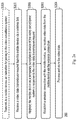
- FIGS. 2 a -2 b illustrate an example flowchart of a method 200 for a video surveillance system.
- the method may be implemented in the video surveillance system 100 as illustrated in FIG. 1 , but is not limited thereto.
- the method 200 comprises: at block S 201 , receiving a video data transmission, request from a mobile device (e.g., via a wireless link); at block S 202 , registering the mobile device as a temporary surveillance device of the video surveillance system in response to the video data transmission request; at block S 203 , establishing a wireless connection with the mobile device, and receiving video data from the mobile device via the wireless connection; and at block S 204 , processing and storing the video data.
- the video surveillance system may comprise a fixed surveillance device that joins the video surveillance system in long term.
- the fixed surveillance device which joins the video surveillance system in long term is, for example, a surveillance device fixedly deployed for a traditional video surveillance system.
- the fixed surveillance device is usually connected, via a wire, to components in the video surveillance system such as a video server, a controller, and a processor.
- the mobile device may join in the video surveillance system as needed to expand it.
- the video surveillance system may also be a brand-new video surveillance system, which may not comprise surveillance devices which join the video surveillance system in a long-term or surveillance devices which are fixedly deployed, but only realize the surveillance by collecting video data from a mobile device when needed.
- the mobile device may voluntarily join in the video surveillance system.
- the video data transmission request received at S 201 may be voluntarily transmitted by the mobile device.
- the mobile device may join in the video surveillance system upon requirement/invitation.
- the method 200 may further comprise a block S 205 , wherein prior to receiving, e.g., via the wireless link, the video data transmission request from the mobile device, transmitting an indication for joining in the video surveillance system to the mobile device.
- the indication for example, may be a requirement/invitation of joining in the video surveillance system.
- the indication may be broadcast to multiple mobile devices within a certain region or may be transmitted to a specific mobile device.
- the registering performed in block S 202 may, for example, be performed based on at least part of information in the video data transmission request.
- establishing a wireless connection to the mobile device at block S 203 may comprise: assigning a video server for processing the video transmission request; and establishing the wireless connection with the mobile device via the video server.
- the Connection establishment procedure may be performed according to any appropriate communication protocol and may be implemented through several signaling interactions. Embodiments of the present disclosure have no limitations thereto. For example, at the beginning of the establishing procedure, the video surveillance system may transmit, to the mobile device, a response to the video data transmission request, which may include information for establishing the connection.
- the method may save a break point so as to facilitate recovering the wireless connection from the break point, as illustrated in block S 207 in FIG. 2 .
- the result of pre-processing with respect to the video data may comprise at least one of the following: a video frame; metadata; type of the mobile device; configuration of the mobile device; model of the mobile device; capturing time of the video contained in the video data; capturing location of the video contained in the video data; content feature of the video data; and object of the video data.
- the video data and the result of pre-processing may be processed and stored, respectively.
- the video data and the result, of pre-processing may be individually encoded and modulated before being transmitted, such that in the video surveillance system, different corresponding processing may be applied to them at a receiving side.
- data staging e.g., relaying/buffering
- the video data are processed and stored after the data staging, while the result of pre-processing may be processed and stored directly without the staging. This is based on the consideration that the data amount of the result of pre-processing (e.g., feature and object of the video data) derived by the mobile device is usually not large. Therefore, such result of pre-processing may be directly transmitted to a data processing and storing component (e.g., Gemfire XD and Spark) for processing and analysis, skipping the staging procedure.
- a data processing and storing component e.g., Gemfire XD and Spark
- the method 200 may also comprise an operation of removing the mobile surveillance device from the video surveillance system upon completion of receiving the video data. In another embodiment, it is also allowed to only disconnect the connection with the mobile device while still save at least part of information of the device for future use.
- FIG. 3 illustrates an example flowchart of a method 300 used in the mobile device.
- the mobile device can join in the video surveillance system (e.g., system 100 in FIG. 1 ) according to the embodiments of the present invention for implementing method 200 .
- the video surveillance system e.g., system 100 in FIG. 1
- the method 300 comprises: block S 301 of transmitting a video data transmission request to a video surveillance system (e.g., via a wireless link); block S 302 of establishing, by the mobile device as a temporary surveillance device of the video monitoring system, a wireless connection with the video monitoring system, and block S 303 of transmitting video data to the video surveillance system via the wireless connection.
- the mobile device may pre-process the video data using its processing capability at block S 305 , and at block S 306 , a result of pre-processing with respect to the video data is transmitted to the video surveillance system via the wireless connection.
- the result of pre-processing includes at least one of the following: a video frame; metadata; type of the mobile device; configuration of the mobile device; model of the mobile device; capturing time of the video contained in the video data; capturing location of the video contained in the video data; content feature of the video data; and object of the video data.
- the wireless connection established at block S 302 may be a bi-directional connection
- the method 300 may further comprise block S 307 in which the mobile device receives an alarm from the video surveillance system via the wireless connection and broadcasts/displays the alarm to the user.
- the video surveillance system may be, but not limited to, the system illustrated in FIG. 1 .
- the apparatus 400 may perform the method 200 with reference to FIG. 2 , but is not limited to performing the method 200 .
- the method 200 may be performed by the apparatus 400 , but is not limited to being performed by the apparatus 400 .
- at least some operations of the method 200 may be performed by other apparatus.
- the apparatus 400 comprises: a first receiving unit 401 configured to receive a video data transmission request from a mobile device (e.g., via a wireless link); a registering unit 402 configured to register the mobile device as a temporary surveillance device of the video surveillance system in response to the video data transmission request; a connection management unit 403 configured to establish a wireless connection with the mobile device and receive video data from the mobile device via the wireless connection; and a processing and storing unit 404 configured to process and store the video data.
- a first receiving unit 401 configured to receive a video data transmission request from a mobile device (e.g., via a wireless link)
- a registering unit 402 configured to register the mobile device as a temporary surveillance device of the video surveillance system in response to the video data transmission request
- a connection management unit 403 configured to establish a wireless connection with the mobile device and receive video data from the mobile device via the wireless connection
- a processing and storing unit 404 configured to process and store the video data.
- the mobile device may join in the video surveillance system voluntarily or upon a request. Therefore, in one embodiment, the apparatus 400 may further comprise a first transmitting unit 405 configured to transmit an indication for joining in the video surveillance system to the mobile device, prior to receiving (e.g, via the wireless link) the video data transmission request from the mobile device.
- the indication may be, but not limited to, a request/invitation/command, etc.
- connection management unit 403 may be further configured to: save a break point upon interruption of the wireless connection with the mobile device, so as to facilitate recovering the wireless connection from the break point.
- the apparatus 400 may further comprise a resource management unit 406 configured to: monitor usage of resources in the video surveillance system; and adjust an amount of resource allocated to the video surveillance system based on the monitoring.
- a resource management unit 406 configured to: monitor usage of resources in the video surveillance system; and adjust an amount of resource allocated to the video surveillance system based on the monitoring.
- the apparatus 400 may further comprise a second receiving unit 407 configured to receive a result of pre-processing with respect to the video data from the mobile device via the wireless connection; and in this embodiment, the processing and storing unit 404 may be further configured to: process and store the video data and the result of pre-processing.
- the result of pre-processing with respect to the video data includes at least one of the following: video frame; metadata; type of the mobile device; configuration of the mobile device; model of the mobile device; capturing time of the video contained in the video data; location of the video contained in the video data; content features of the video data; and objects of the video data.
- the processing and storing unit 404 may be configured to process and store the video data and the result of pre-processing, respectively.
- the processing and storing unit 404 may perform data staging of the video data, and process and store the video data after the data staging, while the result of pre-processing is directly processed and stored without staging.
- the processing and storing unit 404 may be configured to perform a joint processing and storage for the video data and the result of pre-processing.
- the wireless connection established by the connection management unit 403 may be a bi-directional connection
- the apparatus 400 may further comprise a second transmitting unit 408 configured to send an alarm via the mobile device to a user over the wireless connection, when abnormality is detected in processing the video data.
- FIGS. 5 a -5 c illustrate a schematic diagram of a structure and application of another apparatus used in a video surveillance system according to embodiments of the present disclosure.
- FIG. 5 a illustrates a schematic structure of the apparatus 500 and its interaction with fixed devices and mobile devices.
- the apparatus may support two kinds of video data sources: traditional fixed surveillance devices represented by dotted-line circles 511 - 514 , and intelligent mobile devices represented by solid-line circles 515 - 516 .
- Video data from an edge device to a central system are first processed by an event access layer 501 , which layer includes two event aggregators (or referred to as event hubs), i.e., dynamic event aggregator 5011 and fixed event aggregator 5012 , to process the video data from the fixed device to the mobile device, respectively.
- event hubs two event aggregators (or referred to as event hubs), i.e., dynamic event aggregator 5011 and fixed event aggregator 5012 , to process the video data from the fixed device to the mobile device, respectively.
- Implementation of the fixed event aggregator 5012 for example may be identical to that of the traditional surveillance system.
- the control center 502 is a core control module in the apparatus 500 , and may be divided into 4 sub-modules as illustrated in FIG. 5 a , wherein the resource management module 5021 is responsible for managing at least part of resources in the management system. For example, it may manage resources except those required by the video server and the load balancer. In one embodiment, it may not be responsible for resource management of the data analysis and storing module. In on embodiment, when the current load balance resource or the server resource is insufficient to meet the needs, the resource management module 5021 will trigger idle resources to be used. Alternatively or additionally, in another embodiment, when detecting existence of a large number of idle resources, the resource management module 5021 may reclaim these resources.
- the resource management module 5021 may implement functions identical to those of the resource management unit 406 of the apparatus 400 .
- the device management module 5022 in FIG. 5 a manages and monitors all devices. To enable a device to loin in the surveillance network, the device should be first registered in the device management module.
- the event management module 5023 functions like a listener, which monitors events of all types, such as join-in of a new device, exit of a device, device interruption, and device recovery.
- the event management module 5023 works together with the device management module 5022 to process changes of various devices within the surveillance system. For example, when the event management module 5023 monitors join-in of a new mobile device, it may trigger the device management module 5022 to register the device. Or, when the event management module 5023 monitors exit of the mobile device, it may trigger the device management module 5022 to delete the device.
- a work flow management module 5024 in FIG. 5 a is responsible for connecting all modules, including modules involved in the procedure from data access to data analysis and then to data storage.
- the data analysis and storage module 503 of the apparatus 500 as illustrated in FIG. 5 a may be implemented in different way dependent on different requirements. In one embodiment, it may adopt currently mature technologies, such as Gemfire XD ( 5031 ) and Spark ( 5032 ) for data processing, and/or utilize a database ( 5033 ) or a distributed file system (HDFS, 5034 ) for data storage. In another embodiment, it may also adopt newly developed or novel technologies for data processing and/or storage. Embodiments of the present disclosure are not limited to any specific implementations.
- the load balancer 5011 - 1 is responsible for receiving a user's connection request and assigning an available video server instance to process the request. In one embodiment, it may perform at least part of operations of the first receiving unit 401 and the connection management unit 403 of the apparatus 400 described with reference to FIG. 4 .
- the load balancer 5011 - 1 when the number of requests for video data transmission increases quickly in a short time, the load balancer 5011 - 1 will apply for more resources from the control center 502 . After the peak value, the control center 502 may reclaim the resources. This flexible resource allocation is advantageous, because the number of mobile devices connected to the network varies dynamically.
- the load balancer and the control center together perform at least part of functions of the resource management unit 406 of the apparatus 400 .
- the video server in the video server cluster 5011 - 2 may be assigned to process a connection request from the device and keeps the connection being not interrupted. Because most of intelligent mobile devices work in a wireless condition, quality of its connection can hardly be guaranteed. Therefore, the video server may maintain each break point to facilitate future recovery of the connection. In this example, at least part of functions of the resource management unit 406 of the apparatus 400 may be implemented in the video server cluster 5011 - 2 .
- the video server cluster 5011 - 2 After obtaining the video data, the video server cluster 5011 - 2 has two options. One is to send the data to a backend storage, and the other is to store it into the data staging cluster 5011 - 3 (e.g. Kafka) for data relay so as to perform real-time video analysis.
- the data staging cluster 5011 - 3 e.g. Kafka
- the coordinating unit 5011 - 4 may be similar to Zookeeper, responsible for coordination between all modules. For example, it may be responsible for delivering, between respective modules, information required by corresponding operation, or synchronizing the information.
- a load balance (LB) in the dynamic event aggregator 5011 will first receive a request from the device, and then may response with an available video server instance. If there is no available video server instance, it may request a resource from the resource management module 5021 as illustrated from FIG. 5 a . In one example, if the request for resource fails, an error code may be returned.
- a bi-directional connection for video transmission is established through the video server 5011 - 2 with the mobile device.
- the apparatus 500 may receive video data through the connection.
- the video server may place the data in the Kafka server for the real-time analysis.
- the Kafka server is an example of the data staging cluster 5011 - 3 in FIG. 5 b .
- Gemfire XD and Spark for example, may be used to perform the real-time analysis of the video data and store the result in the storage system.
- the working flow management 5024 is responsible for interaction and scheduling between various modules.
- the apparatus 501 may also receive, through the bi-directional connection 505 , an analysis result (e.g., feature and object) derived by the mobile device.
- the analysis result can skip the data staging phase and is directly transmitted to the Gemfire XD and Spark for processing and analysis. This is because the analysis result generally is not large in size.
- FIG. 6 illustrates a structural schematic diagram of the application 600 used in a mobile device for video surveillance.
- the mobile device can temporarily join in the video surveillance system so as to expand it.
- the video surveillance system may also comprise a long-term joined fixed surveillance device.
- the apparatus 600 may perform the method 300 described with reference to FIG. 3 , but is not limited to performing the method 300 .
- the method 300 may be performed by the apparatus 300 , but is not limited to being performed by the apparatus 300 .
- at least some operations of the method 300 may be performed by other apparatus.
- the apparatus 600 comprises a first transmitting unit 601 configured to transmit a request for video data transmission to a video surveillance system (e.g., via a wireless link); a connection management unit 602 configured to establish a wireless connection with the video monitoring system as a temporary surveillance device of the video monitoring system; and a second transmitting unit 603 configured to transmit video data to the video surveillance system via the wireless connection.
- a first transmitting unit 601 configured to transmit a request for video data transmission to a video surveillance system (e.g., via a wireless link);
- a connection management unit 602 configured to establish a wireless connection with the video monitoring system as a temporary surveillance device of the video monitoring system; and a second transmitting unit 603 configured to transmit video data to the video surveillance system via the wireless connection.
- the mobile device applies for joining in the system based on a request from the video monitoring system.
- the apparatus 600 may further comprise a first receiving unit 604 configured to receive an indication for joining in the video surveillance system from the video surveillance system, prior to transmitting (e.g., via the wireless link) the request for video data transmission to the video surveillance system.
- the apparatus 600 may comprise a pre-processing unit 605 configured to pre-process the video data, and a third transmitting unit 606 configured to transmit the pre-processed result of the video data to the video surveillance system via the wireless connection.
- a smart mobile device usually has a large or even strong computation capacity. The embodiment of the present disclosure can exploit this capacity.
- a proxy may be installed in a smart mobile device to implement the function of the pre-processing unit 605 .
- the proxy may be responsible for processing or analyzing the video before the video data is transmitted.
- the proxy may be embodied as an application in a smart phone, and/or for other devices like EDR, it may be daemon or applet dependent on different application systems.
- the wireless connection established through the connection management unit 602 may be a bi-directional connection
- the apparatus 600 may further comprise a second receiving unit 607 configured to receive an alarm from the video surveillance system via the wireless connection; and an alarm unit 608 configured to broadcast/display the alarm to a user, e.g., emitting a ring tone, displaying a flash, or playing an audio, etc.
- a mobile device may be used to form a part of the video surveillance system for monitoring the camp.
- Video data of these mobile devices may be linked to the server side for further analysis; and the server may provide an alarm via the mobile device when detecting an abnormality, e.g., as described in conjunction with block S 209 of the method 200 and the alarming unit 608 of the apparatus 600 .
- the methods/apparatuses according to the embodiments of the present disclosure may also be applied to other scenarios.
- the methods 200 - 300 according to the embodiments of the present disclosure citizens may be called to use their mobile phones to transfer field videos to help the investigation of the police.
- the video surveillance devices are still not sufficient and powerful enough to cover road networks; in addition, the angles of cameras in a traffic TV program are not ideal. Therefore, it always occurs that accidents are not shot clearly. In this case, it will be helpful to use a mobile device like a smart phone and an EDR.
- the methods/apparatuses according to embodiments of the present disclosure can facilitate providing of more real-time information.
- real-time traffic information in a map application, a most effective routing to the destination can be located.
- the current real-time traffic information is not a truly “real-time,” but hysteretic. Fixed cameras are helpful, but their coverage is insufficient, especially on bypaths. Therefore, by virtue of the method according to embodiments of the present disclosure, video data of smart phones and EDRs can be added to the video surveillance system so as to obtain true “real-time” traffic information and a larger coverage.
- the apparatuses 400 - 600 may also comprise other units not shown in FIGS. 4-6 ; and/or in some embodiments, some units in FIGS. 4-6 may be omitted.
- some embodiments are also intended to cover a computer program including instructions which, when being executed in at least one processor, cause the at least one processor to perform any of method 200 or method 300 .
- some embodiments are also intended to cover a program storage system, e.g., a digital data storage medium, which is a machine or computer-readable, and encoding machine-executable or computer-executable instruction program, wherein the instruction performs some or all steps of the method 200 or 300 .
- the program storage system may be, e.g., a digital memory, a magnetic storage medium such as a magnetic disk and a magnetic tape, a hardware driver, or an optical readable digital data storage medium.
- the embodiment is also intended to cover a computer programmed to execute the steps of the methods above. Some embodiments are also intended to cover an apparatus that comprises at least one processor; and at least one memory including a computer program code, wherein the at least one memory and the computer program code are configured to: together with the at least one processor, cause the apparatus to perform any method of method 200 or 300 .
- FIG. 7 illustrates a schematic block diagram, of an apparatus 700 that may be used to implement the embodiments of the present disclosure.
- the apparatus 700 comprises a processing unit (for example, CPU, but not limited to) 701 which may perform various appropriate actions and processing according to the computer program instructions stored in a read-only memory (ROM) 702 or computer program instructions from a memory unit 708 (for example, the computer program instructions loaded in the random access memory (RAM) 703 from the memory unit 708 ).
- ROM read-only memory
- RAM random access memory
- Various programs and data needed by operations of the memory device 700 may also be stored in RAM 703 .
- the processing unit 701 , ROM 702 , and RAM 703 are connected with each other via a bus 704 .
- the input/output (I/O) interface 705 is also connected to the bus 704 .
- a plurality of components in the apparatus 700 are connected to the I/O interface 705 , comprising: an input unit 706 , for example a keyboard, a mouse, etc.; an output unit 707 , for example various types of displays and loudspeakers, etc.; a memory unit 708 , for example a magnetic disc, an optical disc etc.; and a communication unit 709 , for example a network card, a modem, and a radio communication transceiver etc.
- the communication unit 709 allows the apparatus 700 to exchange information/data with other devices via a computer network such as Internet and/or various telecommunication networks.
- the method 200 or 300 may be implemented as a computer software program that is tangibly embodied on the machine readable medium, e.g., the memory unit 708 .
- part or all of the computer program may be loaded and/or installed onto the apparatus 700 via ROM 702 and/or communication unit 709 .
- the computer program is loaded in the RAM 703 and executed by the processing unit 701 , one or more operations of the method 200 or 300 as described above may be executed.
- processor may include, but is not limited to, a digital signal processor (DSP) hardware, a network processor, an application-specific integrated circuit (ASIC), a field programmable gate array (FPGA), a read-only memory (ROM) for storing software, a random access memory (RAM) and a non-volatile storage device. It may also comprise other convention and/or customized hardware.
- DSP digital signal processor
- ASIC application-specific integrated circuit
- FPGA field programmable gate array
- ROM read-only memory
- RAM random access memory
- non-volatile storage device it may also comprise other convention and/or customized hardware.
Landscapes
- Engineering & Computer Science (AREA)
- Multimedia (AREA)
- Signal Processing (AREA)
- Physics & Mathematics (AREA)
- General Physics & Mathematics (AREA)
- Computer Networks & Wireless Communication (AREA)
- Library & Information Science (AREA)
- Business, Economics & Management (AREA)
- Emergency Management (AREA)
- Computer Security & Cryptography (AREA)
- General Business, Economics & Management (AREA)
- Closed-Circuit Television Systems (AREA)
- Alarm Systems (AREA)
Abstract
Description
-
- Intelligent Internet of Things (IoT) devices, such, as a mobile phone and a mobile phone camera. These devices will access the surveillance network as needed and transmit real-time video data to the video server.
- Alternatively, videos such as an accident scene may be recorded by a mobile device, and then uploaded in batch to the video surveillance network. In this case, the video data from the data source might not be real-time.
Claims (16)
Applications Claiming Priority (3)
| Application Number | Priority Date | Filing Date | Title |
|---|---|---|---|
| CN201610141383.3A CN107181929A (en) | 2016-03-11 | 2016-03-11 | Method and apparatus for video monitoring |
| CN201610141383.3 | 2016-03-11 | ||
| CN201610141383 | 2016-03-11 |
Publications (2)
| Publication Number | Publication Date |
|---|---|
| US20170263090A1 US20170263090A1 (en) | 2017-09-14 |
| US10861306B2 true US10861306B2 (en) | 2020-12-08 |
Family
ID=59788650
Family Applications (1)
| Application Number | Title | Priority Date | Filing Date |
|---|---|---|---|
| US15/455,347 Active 2037-07-10 US10861306B2 (en) | 2016-03-11 | 2017-03-10 | Method and apparatus for video surveillance |
Country Status (2)
| Country | Link |
|---|---|
| US (1) | US10861306B2 (en) |
| CN (1) | CN107181929A (en) |
Families Citing this family (3)
| Publication number | Priority date | Publication date | Assignee | Title |
|---|---|---|---|---|
| CN108055505A (en) * | 2017-12-11 | 2018-05-18 | 深圳市东微智能科技股份有限公司 | Monitoring device control method, device, system, storage medium and computer equipment |
| CN110290347A (en) * | 2019-05-28 | 2019-09-27 | 安徽安科智能有限公司 | A kind of intelligent security guard network video cooperative monitoring system and method |
| CN113450522B (en) * | 2021-05-28 | 2022-10-04 | 浙江大华技术股份有限公司 | Video cable mixing intrusion detection method, electronic device and storage medium |
Citations (11)
| Publication number | Priority date | Publication date | Assignee | Title |
|---|---|---|---|---|
| US20020044690A1 (en) | 2000-10-18 | 2002-04-18 | Burgess Ken L. | Method for matching geographic information with recorded images |
| US20020052719A1 (en) * | 2000-09-28 | 2002-05-02 | Bruce Alexander | Method and process for configuring a premises for monitoring |
| US20080018738A1 (en) | 2005-05-31 | 2008-01-24 | Objectvideo, Inc. | Video analytics for retail business process monitoring |
| US20080114633A1 (en) | 2006-11-10 | 2008-05-15 | Wayne Wolf | Method and Apparatus for Analyzing Activity in a Space |
| CN101583024A (en) | 2009-06-04 | 2009-11-18 | 中兴通讯股份有限公司 | Distributed network video monitoring system and registration control method thereof |
| US20100095065A1 (en) * | 2008-09-03 | 2010-04-15 | Gray Michael D | Field device communications |
| US20100279670A1 (en) * | 2009-01-12 | 2010-11-04 | Rajat Ghai | Transferring sessions in a communications network |
| US20110242317A1 (en) * | 2010-04-05 | 2011-10-06 | Alcatel-Lucent Usa Inc. | System and method for distributing digital video streams from remote video surveillance cameras to display devices |
| CN102291434A (en) | 2011-07-06 | 2011-12-21 | 深圳市纽泰克电子有限公司 | Automatic ambulance data uploading method and system |
| US20140254876A1 (en) | 2012-03-29 | 2014-09-11 | The Nielsen Company (Us), Llc | Methods and apparatus to count people in images |
| US20140375800A1 (en) * | 2013-06-24 | 2014-12-25 | Cellco Partnership D/B/A Verizon Wireless | Mobile surveillance system |
Family Cites Families (2)
| Publication number | Priority date | Publication date | Assignee | Title |
|---|---|---|---|---|
| JP2007219713A (en) * | 2006-02-15 | 2007-08-30 | Sony Corp | Inquiry system, imaging device, inquiry device, information processing method, program |
| CN101340556B (en) * | 2007-07-05 | 2013-02-20 | 株式会社Ntt都科摩 | Real world broadcasting system and method |
-
2016
- 2016-03-11 CN CN201610141383.3A patent/CN107181929A/en active Pending
-
2017
- 2017-03-10 US US15/455,347 patent/US10861306B2/en active Active
Patent Citations (11)
| Publication number | Priority date | Publication date | Assignee | Title |
|---|---|---|---|---|
| US20020052719A1 (en) * | 2000-09-28 | 2002-05-02 | Bruce Alexander | Method and process for configuring a premises for monitoring |
| US20020044690A1 (en) | 2000-10-18 | 2002-04-18 | Burgess Ken L. | Method for matching geographic information with recorded images |
| US20080018738A1 (en) | 2005-05-31 | 2008-01-24 | Objectvideo, Inc. | Video analytics for retail business process monitoring |
| US20080114633A1 (en) | 2006-11-10 | 2008-05-15 | Wayne Wolf | Method and Apparatus for Analyzing Activity in a Space |
| US20100095065A1 (en) * | 2008-09-03 | 2010-04-15 | Gray Michael D | Field device communications |
| US20100279670A1 (en) * | 2009-01-12 | 2010-11-04 | Rajat Ghai | Transferring sessions in a communications network |
| CN101583024A (en) | 2009-06-04 | 2009-11-18 | 中兴通讯股份有限公司 | Distributed network video monitoring system and registration control method thereof |
| US20110242317A1 (en) * | 2010-04-05 | 2011-10-06 | Alcatel-Lucent Usa Inc. | System and method for distributing digital video streams from remote video surveillance cameras to display devices |
| CN102291434A (en) | 2011-07-06 | 2011-12-21 | 深圳市纽泰克电子有限公司 | Automatic ambulance data uploading method and system |
| US20140254876A1 (en) | 2012-03-29 | 2014-09-11 | The Nielsen Company (Us), Llc | Methods and apparatus to count people in images |
| US20140375800A1 (en) * | 2013-06-24 | 2014-12-25 | Cellco Partnership D/B/A Verizon Wireless | Mobile surveillance system |
Also Published As
| Publication number | Publication date |
|---|---|
| CN107181929A (en) | 2017-09-19 |
| US20170263090A1 (en) | 2017-09-14 |
Similar Documents
| Publication | Publication Date | Title |
|---|---|---|
| CN103596160B (en) | Method and device for data transmission | |
| US20180352501A1 (en) | Method And Apparatus For Virtualized Network Service Provision | |
| CN112042167B (en) | Method and apparatus for processing subscriber service profile information in MEC network | |
| KR20200139748A (en) | Service subscription method and device | |
| US10667277B2 (en) | Systems and methods for integrated security access control for video and audio streaming | |
| US20200296181A1 (en) | Data transmission method, apparatus and system | |
| EP3468179B1 (en) | Moving image splitting device and monitoring method | |
| US20250080962A1 (en) | LTE Gateways For Home And Commercial Sensor Data | |
| CN112437259A (en) | Smart city video monitoring system and method based on 5G edge calculation | |
| WO2017031886A1 (en) | Method for obtaining picture by means of remote control, and server | |
| KR20140052355A (en) | System for providing video information using ip camera in cloud configuration method thereof | |
| US10861306B2 (en) | Method and apparatus for video surveillance | |
| CN112188227A (en) | Streaming media data distribution method and device | |
| CN107360404A (en) | Mobile video monitor system | |
| CN113364682A (en) | Data transmission method and device, storage medium and electronic device | |
| CN109982034B (en) | Access request processing method and device in video monitoring system | |
| CN104270603B (en) | Obtain the method and monitoring system of video flowing | |
| CN111988397B (en) | Earthquake-proof disaster-reduction disaster-relief method and system based on edge calculation | |
| US20200152048A1 (en) | Method and apparatus for controlling controllable device | |
| CN119790683A (en) | A communication method and device | |
| US10455186B2 (en) | Method and apparatus for allocating resources | |
| EP2999266A1 (en) | Method, device and system for obtaining mobile network data resources | |
| CN105578135A (en) | A video-on-demand method and device | |
| US11824914B1 (en) | System and method for streaming media to a public safety access point without incurring additional user costs | |
| WO2023036436A1 (en) | Apparatus, methods, and computer programs |
Legal Events
| Date | Code | Title | Description |
|---|---|---|---|
| AS | Assignment |
Owner name: CREDIT SUISSE AG, CAYMAN ISLANDS BRANCH, AS COLLATERAL AGENT, NORTH CAROLINA Free format text: PATENT SECURITY INTEREST (CREDIT);ASSIGNORS:DELL PRODUCTS L.P.;EMC CORPORATION;EMC IP HOLDING COMPANY LLC;AND OTHERS;REEL/FRAME:042768/0585 Effective date: 20170526 Owner name: THE BANK OF NEW YORK MELLON TRUST COMPANY, N.A., AS COLLATERAL AGENT, TEXAS Free format text: PATENT SECURITY INTEREST (NOTES);ASSIGNORS:DELL PRODUCTS L.P.;EMC CORPORATION;EMC IP HOLDING COMPANY LLC;AND OTHERS;REEL/FRAME:042769/0001 Effective date: 20170605 Owner name: THE BANK OF NEW YORK MELLON TRUST COMPANY, N.A., A Free format text: PATENT SECURITY INTEREST (NOTES);ASSIGNORS:DELL PRODUCTS L.P.;EMC CORPORATION;EMC IP HOLDING COMPANY LLC;AND OTHERS;REEL/FRAME:042769/0001 Effective date: 20170605 Owner name: CREDIT SUISSE AG, CAYMAN ISLANDS BRANCH, AS COLLAT Free format text: PATENT SECURITY INTEREST (CREDIT);ASSIGNORS:DELL PRODUCTS L.P.;EMC CORPORATION;EMC IP HOLDING COMPANY LLC;AND OTHERS;REEL/FRAME:042768/0585 Effective date: 20170526 |
|
| AS | Assignment |
Owner name: EMC IP HOLDING COMPANY LLC, MASSACHUSETTS Free format text: ASSIGNMENT OF ASSIGNORS INTEREST;ASSIGNORS:CAO, YU;LI, SANPING;TAO, JUN;SIGNING DATES FROM 20170822 TO 20170830;REEL/FRAME:044375/0543 Owner name: EMC CORPORATION, MASSACHUSETTS Free format text: KEY EMPLOYEE AGREEMENT;ASSIGNOR:GUO, XIAOYAN;REEL/FRAME:044849/0359 Effective date: 20110717 Owner name: EMC CORPORATION, MASSACHUSETTS Free format text: KEY EMPLOYEE AGREEMENT;ASSIGNOR:DONG, ZHE;REEL/FRAME:044849/0355 Effective date: 20161104 Owner name: EMC CORPORATION, MASSACHUSETTS Free format text: KEY EMPLOYEE AGREEMENT;ASSIGNOR:ZHAO, ACCELA YILONG;REEL/FRAME:044849/0393 Effective date: 20150326 |
|
| STPP | Information on status: patent application and granting procedure in general |
Free format text: RESPONSE TO NON-FINAL OFFICE ACTION ENTERED AND FORWARDED TO EXAMINER |
|
| AS | Assignment |
Owner name: THE BANK OF NEW YORK MELLON TRUST COMPANY, N.A., T Free format text: SECURITY AGREEMENT;ASSIGNORS:CREDANT TECHNOLOGIES, INC.;DELL INTERNATIONAL L.L.C.;DELL MARKETING L.P.;AND OTHERS;REEL/FRAME:049452/0223 Effective date: 20190320 Owner name: THE BANK OF NEW YORK MELLON TRUST COMPANY, N.A., TEXAS Free format text: SECURITY AGREEMENT;ASSIGNORS:CREDANT TECHNOLOGIES, INC.;DELL INTERNATIONAL L.L.C.;DELL MARKETING L.P.;AND OTHERS;REEL/FRAME:049452/0223 Effective date: 20190320 |
|
| STPP | Information on status: patent application and granting procedure in general |
Free format text: FINAL REJECTION MAILED |
|
| STPP | Information on status: patent application and granting procedure in general |
Free format text: RESPONSE AFTER FINAL ACTION FORWARDED TO EXAMINER |
|
| STPP | Information on status: patent application and granting procedure in general |
Free format text: ADVISORY ACTION MAILED |
|
| STPP | Information on status: patent application and granting procedure in general |
Free format text: DOCKETED NEW CASE - READY FOR EXAMINATION |
|
| STPP | Information on status: patent application and granting procedure in general |
Free format text: NON FINAL ACTION MAILED |
|
| STPP | Information on status: patent application and granting procedure in general |
Free format text: RESPONSE TO NON-FINAL OFFICE ACTION ENTERED AND FORWARDED TO EXAMINER |
|
| AS | Assignment |
Owner name: THE BANK OF NEW YORK MELLON TRUST COMPANY, N.A., TEXAS Free format text: SECURITY AGREEMENT;ASSIGNORS:CREDANT TECHNOLOGIES INC.;DELL INTERNATIONAL L.L.C.;DELL MARKETING L.P.;AND OTHERS;REEL/FRAME:053546/0001 Effective date: 20200409 |
|
| AS | Assignment |
Owner name: EMC IP HOLDING COMPANY LLC, MASSACHUSETTS Free format text: ASSIGNMENT OF ASSIGNORS INTEREST;ASSIGNOR:EMC CORPORATION;REEL/FRAME:054079/0637 Effective date: 20160906 |
|
| STCF | Information on status: patent grant |
Free format text: PATENTED CASE |
|
| AS | Assignment |
Owner name: WYSE TECHNOLOGY L.L.C., CALIFORNIA Free format text: RELEASE OF SECURITY INTEREST AT REEL 042768 FRAME 0585;ASSIGNOR:CREDIT SUISSE AG, CAYMAN ISLANDS BRANCH;REEL/FRAME:058297/0536 Effective date: 20211101 Owner name: MOZY, INC., WASHINGTON Free format text: RELEASE OF SECURITY INTEREST AT REEL 042768 FRAME 0585;ASSIGNOR:CREDIT SUISSE AG, CAYMAN ISLANDS BRANCH;REEL/FRAME:058297/0536 Effective date: 20211101 Owner name: EMC IP HOLDING COMPANY LLC, TEXAS Free format text: RELEASE OF SECURITY INTEREST AT REEL 042768 FRAME 0585;ASSIGNOR:CREDIT SUISSE AG, CAYMAN ISLANDS BRANCH;REEL/FRAME:058297/0536 Effective date: 20211101 Owner name: EMC CORPORATION, MASSACHUSETTS Free format text: RELEASE OF SECURITY INTEREST AT REEL 042768 FRAME 0585;ASSIGNOR:CREDIT SUISSE AG, CAYMAN ISLANDS BRANCH;REEL/FRAME:058297/0536 Effective date: 20211101 Owner name: DELL PRODUCTS L.P., TEXAS Free format text: RELEASE OF SECURITY INTEREST AT REEL 042768 FRAME 0585;ASSIGNOR:CREDIT SUISSE AG, CAYMAN ISLANDS BRANCH;REEL/FRAME:058297/0536 Effective date: 20211101 |
|
| AS | Assignment |
Owner name: DELL MARKETING CORPORATION (SUCCESSOR-IN-INTEREST TO WYSE TECHNOLOGY L.L.C.), TEXAS Free format text: RELEASE OF SECURITY INTEREST IN PATENTS PREVIOUSLY RECORDED AT REEL/FRAME (042769/0001);ASSIGNOR:THE BANK OF NEW YORK MELLON TRUST COMPANY, N.A., AS NOTES COLLATERAL AGENT;REEL/FRAME:059803/0802 Effective date: 20220329 Owner name: EMC IP HOLDING COMPANY LLC (ON BEHALF OF ITSELF AND AS SUCCESSOR-IN-INTEREST TO MOZY, INC.), TEXAS Free format text: RELEASE OF SECURITY INTEREST IN PATENTS PREVIOUSLY RECORDED AT REEL/FRAME (042769/0001);ASSIGNOR:THE BANK OF NEW YORK MELLON TRUST COMPANY, N.A., AS NOTES COLLATERAL AGENT;REEL/FRAME:059803/0802 Effective date: 20220329 Owner name: EMC CORPORATION, MASSACHUSETTS Free format text: RELEASE OF SECURITY INTEREST IN PATENTS PREVIOUSLY RECORDED AT REEL/FRAME (042769/0001);ASSIGNOR:THE BANK OF NEW YORK MELLON TRUST COMPANY, N.A., AS NOTES COLLATERAL AGENT;REEL/FRAME:059803/0802 Effective date: 20220329 Owner name: DELL PRODUCTS L.P., TEXAS Free format text: RELEASE OF SECURITY INTEREST IN PATENTS PREVIOUSLY RECORDED AT REEL/FRAME (042769/0001);ASSIGNOR:THE BANK OF NEW YORK MELLON TRUST COMPANY, N.A., AS NOTES COLLATERAL AGENT;REEL/FRAME:059803/0802 Effective date: 20220329 |
|
| AS | Assignment |
Owner name: DELL MARKETING L.P. (ON BEHALF OF ITSELF AND AS SUCCESSOR-IN-INTEREST TO CREDANT TECHNOLOGIES, INC.), TEXAS Free format text: RELEASE OF SECURITY INTEREST IN PATENTS PREVIOUSLY RECORDED AT REEL/FRAME (053546/0001);ASSIGNOR:THE BANK OF NEW YORK MELLON TRUST COMPANY, N.A., AS NOTES COLLATERAL AGENT;REEL/FRAME:071642/0001 Effective date: 20220329 Owner name: DELL INTERNATIONAL L.L.C., TEXAS Free format text: RELEASE OF SECURITY INTEREST IN PATENTS PREVIOUSLY RECORDED AT REEL/FRAME (053546/0001);ASSIGNOR:THE BANK OF NEW YORK MELLON TRUST COMPANY, N.A., AS NOTES COLLATERAL AGENT;REEL/FRAME:071642/0001 Effective date: 20220329 Owner name: DELL PRODUCTS L.P., TEXAS Free format text: RELEASE OF SECURITY INTEREST IN PATENTS PREVIOUSLY RECORDED AT REEL/FRAME (053546/0001);ASSIGNOR:THE BANK OF NEW YORK MELLON TRUST COMPANY, N.A., AS NOTES COLLATERAL AGENT;REEL/FRAME:071642/0001 Effective date: 20220329 Owner name: DELL USA L.P., TEXAS Free format text: RELEASE OF SECURITY INTEREST IN PATENTS PREVIOUSLY RECORDED AT REEL/FRAME (053546/0001);ASSIGNOR:THE BANK OF NEW YORK MELLON TRUST COMPANY, N.A., AS NOTES COLLATERAL AGENT;REEL/FRAME:071642/0001 Effective date: 20220329 Owner name: EMC CORPORATION, MASSACHUSETTS Free format text: RELEASE OF SECURITY INTEREST IN PATENTS PREVIOUSLY RECORDED AT REEL/FRAME (053546/0001);ASSIGNOR:THE BANK OF NEW YORK MELLON TRUST COMPANY, N.A., AS NOTES COLLATERAL AGENT;REEL/FRAME:071642/0001 Effective date: 20220329 Owner name: DELL MARKETING CORPORATION (SUCCESSOR-IN-INTEREST TO FORCE10 NETWORKS, INC. AND WYSE TECHNOLOGY L.L.C.), TEXAS Free format text: RELEASE OF SECURITY INTEREST IN PATENTS PREVIOUSLY RECORDED AT REEL/FRAME (053546/0001);ASSIGNOR:THE BANK OF NEW YORK MELLON TRUST COMPANY, N.A., AS NOTES COLLATERAL AGENT;REEL/FRAME:071642/0001 Effective date: 20220329 Owner name: EMC IP HOLDING COMPANY LLC, TEXAS Free format text: RELEASE OF SECURITY INTEREST IN PATENTS PREVIOUSLY RECORDED AT REEL/FRAME (053546/0001);ASSIGNOR:THE BANK OF NEW YORK MELLON TRUST COMPANY, N.A., AS NOTES COLLATERAL AGENT;REEL/FRAME:071642/0001 Effective date: 20220329 |
|
| MAFP | Maintenance fee payment |
Free format text: PAYMENT OF MAINTENANCE FEE, 4TH YEAR, LARGE ENTITY (ORIGINAL EVENT CODE: M1551); ENTITY STATUS OF PATENT OWNER: LARGE ENTITY Year of fee payment: 4 |