US10857375B2 - Treatment spinal cord injuries via laser therapy - Google Patents
Treatment spinal cord injuries via laser therapy Download PDFInfo
- Publication number
- US10857375B2 US10857375B2 US16/127,057 US201816127057A US10857375B2 US 10857375 B2 US10857375 B2 US 10857375B2 US 201816127057 A US201816127057 A US 201816127057A US 10857375 B2 US10857375 B2 US 10857375B2
- Authority
- US
- United States
- Prior art keywords
- laser
- spinal cord
- medical device
- deliberate
- device apparatus
- Prior art date
- Legal status (The legal status is an assumption and is not a legal conclusion. Google has not performed a legal analysis and makes no representation as to the accuracy of the status listed.)
- Active, expires
Links
- 208000020431 spinal cord injury Diseases 0.000 title claims abstract description 57
- 238000002647 laser therapy Methods 0.000 title abstract description 17
- 238000011282 treatment Methods 0.000 title description 2
- 230000000926 neurological effect Effects 0.000 claims abstract description 41
- 210000002569 neuron Anatomy 0.000 claims abstract description 33
- 230000003213 activating effect Effects 0.000 claims abstract description 6
- 230000000638 stimulation Effects 0.000 claims description 32
- 238000004891 communication Methods 0.000 claims description 20
- 238000013532 laser treatment Methods 0.000 claims description 17
- 230000004913 activation Effects 0.000 claims description 6
- 210000002161 motor neuron Anatomy 0.000 claims 3
- 210000001044 sensory neuron Anatomy 0.000 claims 3
- 238000000034 method Methods 0.000 abstract description 37
- 208000027418 Wounds and injury Diseases 0.000 description 23
- 230000006378 damage Effects 0.000 description 23
- 208000014674 injury Diseases 0.000 description 23
- 230000008569 process Effects 0.000 description 19
- 238000010586 diagram Methods 0.000 description 9
- 210000000278 spinal cord Anatomy 0.000 description 7
- 210000003050 axon Anatomy 0.000 description 6
- 230000006870 function Effects 0.000 description 6
- 238000012545 processing Methods 0.000 description 5
- 210000003169 central nervous system Anatomy 0.000 description 4
- 230000004936 stimulating effect Effects 0.000 description 4
- 230000003993 interaction Effects 0.000 description 3
- 102000004169 proteins and genes Human genes 0.000 description 3
- 108090000623 proteins and genes Proteins 0.000 description 3
- 230000008929 regeneration Effects 0.000 description 3
- 238000011069 regeneration method Methods 0.000 description 3
- 230000008901 benefit Effects 0.000 description 2
- 238000013461 design Methods 0.000 description 2
- 238000013507 mapping Methods 0.000 description 2
- 210000005036 nerve Anatomy 0.000 description 2
- 230000001537 neural effect Effects 0.000 description 2
- 230000001953 sensory effect Effects 0.000 description 2
- 102000006386 Myelin Proteins Human genes 0.000 description 1
- 108010083674 Myelin Proteins Proteins 0.000 description 1
- 238000007792 addition Methods 0.000 description 1
- 230000028600 axonogenesis Effects 0.000 description 1
- 230000005540 biological transmission Effects 0.000 description 1
- 230000006835 compression Effects 0.000 description 1
- 238000007906 compression Methods 0.000 description 1
- 230000008878 coupling Effects 0.000 description 1
- 238000010168 coupling process Methods 0.000 description 1
- 238000005859 coupling reaction Methods 0.000 description 1
- 230000007812 deficiency Effects 0.000 description 1
- 238000011161 development Methods 0.000 description 1
- 230000018109 developmental process Effects 0.000 description 1
- 230000035876 healing Effects 0.000 description 1
- 230000002401 inhibitory effect Effects 0.000 description 1
- 239000011810 insulating material Substances 0.000 description 1
- 238000012986 modification Methods 0.000 description 1
- 230000004048 modification Effects 0.000 description 1
- 210000005012 myelin Anatomy 0.000 description 1
- 210000000653 nervous system Anatomy 0.000 description 1
- 230000006855 networking Effects 0.000 description 1
- 230000037361 pathway Effects 0.000 description 1
- 230000002093 peripheral effect Effects 0.000 description 1
- 238000011084 recovery Methods 0.000 description 1
- 230000001172 regenerating effect Effects 0.000 description 1
- 230000008439 repair process Effects 0.000 description 1
- 238000011160 research Methods 0.000 description 1
- 238000012552 review Methods 0.000 description 1
- 239000000126 substance Substances 0.000 description 1
- 230000002459 sustained effect Effects 0.000 description 1
- 238000012360 testing method Methods 0.000 description 1
- 230000007704 transition Effects 0.000 description 1
Images




Classifications
-
- A—HUMAN NECESSITIES
- A61—MEDICAL OR VETERINARY SCIENCE; HYGIENE
- A61N—ELECTROTHERAPY; MAGNETOTHERAPY; RADIATION THERAPY; ULTRASOUND THERAPY
- A61N5/00—Radiation therapy
- A61N5/06—Radiation therapy using light
-
- A—HUMAN NECESSITIES
- A61—MEDICAL OR VETERINARY SCIENCE; HYGIENE
- A61N—ELECTROTHERAPY; MAGNETOTHERAPY; RADIATION THERAPY; ULTRASOUND THERAPY
- A61N5/00—Radiation therapy
- A61N5/06—Radiation therapy using light
- A61N5/0613—Apparatus adapted for a specific treatment
- A61N5/0622—Optical stimulation for exciting neural tissue
-
- A—HUMAN NECESSITIES
- A61—MEDICAL OR VETERINARY SCIENCE; HYGIENE
- A61H—PHYSICAL THERAPY APPARATUS, e.g. DEVICES FOR LOCATING OR STIMULATING REFLEX POINTS IN THE BODY; ARTIFICIAL RESPIRATION; MASSAGE; BATHING DEVICES FOR SPECIAL THERAPEUTIC OR HYGIENIC PURPOSES OR SPECIFIC PARTS OF THE BODY
- A61H1/00—Apparatus for passive exercising; Vibrating apparatus; Chiropractic devices, e.g. body impacting devices, external devices for briefly extending or aligning unbroken bones
-
- A—HUMAN NECESSITIES
- A61—MEDICAL OR VETERINARY SCIENCE; HYGIENE
- A61N—ELECTROTHERAPY; MAGNETOTHERAPY; RADIATION THERAPY; ULTRASOUND THERAPY
- A61N5/00—Radiation therapy
- A61N5/06—Radiation therapy using light
- A61N5/067—Radiation therapy using light using laser light
-
- A—HUMAN NECESSITIES
- A61—MEDICAL OR VETERINARY SCIENCE; HYGIENE
- A61B—DIAGNOSIS; SURGERY; IDENTIFICATION
- A61B18/00—Surgical instruments, devices or methods for transferring non-mechanical forms of energy to or from the body
- A61B2018/00315—Surgical instruments, devices or methods for transferring non-mechanical forms of energy to or from the body for treatment of particular body parts
- A61B2018/00339—Spine, e.g. intervertebral disc
-
- A—HUMAN NECESSITIES
- A61—MEDICAL OR VETERINARY SCIENCE; HYGIENE
- A61H—PHYSICAL THERAPY APPARATUS, e.g. DEVICES FOR LOCATING OR STIMULATING REFLEX POINTS IN THE BODY; ARTIFICIAL RESPIRATION; MASSAGE; BATHING DEVICES FOR SPECIAL THERAPEUTIC OR HYGIENIC PURPOSES OR SPECIFIC PARTS OF THE BODY
- A61H39/00—Devices for locating or stimulating specific reflex points of the body for physical therapy, e.g. acupuncture
- A61H2039/005—Devices for locating or stimulating specific reflex points of the body for physical therapy, e.g. acupuncture by means of electromagnetic waves, e.g. I.R., U.V. rays
-
- A—HUMAN NECESSITIES
- A61—MEDICAL OR VETERINARY SCIENCE; HYGIENE
- A61H—PHYSICAL THERAPY APPARATUS, e.g. DEVICES FOR LOCATING OR STIMULATING REFLEX POINTS IN THE BODY; ARTIFICIAL RESPIRATION; MASSAGE; BATHING DEVICES FOR SPECIAL THERAPEUTIC OR HYGIENIC PURPOSES OR SPECIFIC PARTS OF THE BODY
- A61H2201/00—Characteristics of apparatus not provided for in the preceding codes
- A61H2201/10—Characteristics of apparatus not provided for in the preceding codes with further special therapeutic means, e.g. electrotherapy, magneto therapy or radiation therapy, chromo therapy, infrared or ultraviolet therapy
-
- A—HUMAN NECESSITIES
- A61—MEDICAL OR VETERINARY SCIENCE; HYGIENE
- A61H—PHYSICAL THERAPY APPARATUS, e.g. DEVICES FOR LOCATING OR STIMULATING REFLEX POINTS IN THE BODY; ARTIFICIAL RESPIRATION; MASSAGE; BATHING DEVICES FOR SPECIAL THERAPEUTIC OR HYGIENIC PURPOSES OR SPECIFIC PARTS OF THE BODY
- A61H2201/00—Characteristics of apparatus not provided for in the preceding codes
- A61H2201/50—Control means thereof
- A61H2201/5007—Control means thereof computer controlled
-
- A—HUMAN NECESSITIES
- A61—MEDICAL OR VETERINARY SCIENCE; HYGIENE
- A61H—PHYSICAL THERAPY APPARATUS, e.g. DEVICES FOR LOCATING OR STIMULATING REFLEX POINTS IN THE BODY; ARTIFICIAL RESPIRATION; MASSAGE; BATHING DEVICES FOR SPECIAL THERAPEUTIC OR HYGIENIC PURPOSES OR SPECIFIC PARTS OF THE BODY
- A61H2201/00—Characteristics of apparatus not provided for in the preceding codes
- A61H2201/50—Control means thereof
- A61H2201/5007—Control means thereof computer controlled
- A61H2201/501—Control means thereof computer controlled connected to external computer devices or networks
- A61H2201/5012—Control means thereof computer controlled connected to external computer devices or networks using the internet
-
- A—HUMAN NECESSITIES
- A61—MEDICAL OR VETERINARY SCIENCE; HYGIENE
- A61H—PHYSICAL THERAPY APPARATUS, e.g. DEVICES FOR LOCATING OR STIMULATING REFLEX POINTS IN THE BODY; ARTIFICIAL RESPIRATION; MASSAGE; BATHING DEVICES FOR SPECIAL THERAPEUTIC OR HYGIENIC PURPOSES OR SPECIFIC PARTS OF THE BODY
- A61H2205/00—Devices for specific parts of the body
- A61H2205/08—Trunk
- A61H2205/081—Back
-
- A—HUMAN NECESSITIES
- A61—MEDICAL OR VETERINARY SCIENCE; HYGIENE
- A61H—PHYSICAL THERAPY APPARATUS, e.g. DEVICES FOR LOCATING OR STIMULATING REFLEX POINTS IN THE BODY; ARTIFICIAL RESPIRATION; MASSAGE; BATHING DEVICES FOR SPECIAL THERAPEUTIC OR HYGIENIC PURPOSES OR SPECIFIC PARTS OF THE BODY
- A61H23/00—Percussion or vibration massage, e.g. using supersonic vibration; Suction-vibration massage; Massage with moving diaphragms
-
- A61N2005/067—
Definitions
- the subject disclosure generally relates to a treatment for spinal cord injuries, and more specifically to treating spinal cord injuries via laser therapy.
- spinal cord injury patients often report an inability to feel their body as well as they had prior to their injury. Stimulating the regeneration of axons is often a goal of spinal cord repair since such regeneration increases the chances for recovering function. Namely, reconnecting any axon in the injured spinal cord increases the chances for recovery of function.
- a method that facilitates treating spinal cord injuries includes identifying a neurological level of a spinal cord injury, and activating neurons via laser therapy.
- a laser beam is applied to an area proximate to the neurological level.
- a computer-readable storage medium that facilitates treating spinal cord injuries.
- the computer-readable storage medium includes computer-readable instructions for causing at least one processor to perform various acts. Such acts comprise ascertaining a neurological level of a spinal cord injury, and receiving data corresponding to a severity of the spinal cord injury. The acts further comprise outputting a laser calibration according to the neurological level and the severity.
- a medical device apparatus that facilitates treating spinal cord injuries.
- the apparatus includes a processor configured to execute computer executable components stored in memory.
- the computer executable components include an assessment component, and a calibration component.
- the assessment component is configured to receive at least one parameter corresponding to a spinal cord injury, whereas the calibration component is configured to ascertain a laser calibration according to the at least one parameter.
- FIG. 1 illustrates an exemplary neurological level and corresponding dermatome according to an embodiment
- FIG. 2 illustrates an exemplary schematic demarcation of dermatomes in accordance with an aspect of the subject specification
- FIG. 3 illustrates another exemplary schematic demarcation of dermatomes in accordance with an aspect of the subject specification
- FIG. 4 illustrates a flow diagram of an exemplary methodology for treating spinal cord injuries in accordance with an aspect of the subject specification
- FIG. 5 illustrates a block diagram of an exemplary laser treatment unit that facilitates treating spinal cord injuries in accordance with an aspect of the subject specification
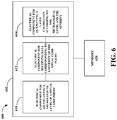
- FIG. 6 illustrates an exemplary coupling of electrical components that effectuate treating spinal cord injuries according to an embodiment
- FIG. 7 illustrates a flow diagram of an exemplary methodology for automating a laser treatment for spinal cord injuries in accordance with an aspect of the subject specification
- FIG. 8 is a block diagram representing exemplary non-limiting networked environments in which various embodiments described herein can be implemented.
- FIG. 9 is a block diagram representing an exemplary non-limiting computing system or operating environment in which one or more aspects of various embodiments described herein can be implemented.
- a laser therapy is disclosed which enables a body to discover previously under-utilized nervous system pathways and accentuate their procedural participation.
- a laser therapy is disclosed which facilitates a development of new neuronal connections.
- spinal cord injury patients are provided with a custom laser therapy that varies according to the severity and/or location of the injury.
- customizing various parameters of the laser therapy disclosed herein have been discovered to be particularly effective. For instance, rather than generically applying a laser to the entire spinal cord, it has been discovered that healing is substantially expedited when a laser is applied onto the specific neurological level of the injury, wherein the calibration and application angle of the laser varies according to the severity of the injury.
- particularly desirable results are attained when the aforementioned laser therapy is coupled with simultaneous tactile stimulation of a dermatome corresponding to the neurological level of the injury.
- FIG. 1 an exemplary neurological level and corresponding dermatome is provided according to an embodiment.
- a laser can be applied to the neurological level of an injury via any of a plurality of angles.
- neurological level 100 is a T1 neurological level, wherein it is contemplated that a laser be applied to neurological level 100 via any combination of posterior angle 110 , posterior angle 112 , posterior angle 114 , anterior angle 120 , anterior angle 122 , and/or anterior angle 124 .
- the application angle of the laser may depend on any of various factors including, but not limited to, the desired neuron type to be activated.
- motor-related neurons are particularly responsive when a laser is applied via an anterior angle, whereas sensory nerves are generally more responsive when applying a laser via a posterior angle.
- varying between perpendicular and non-perpendicular angles can expose a wider range of neurons to the laser therapy, and thus increase total neuron activation.
- a laser can be calibrated according to a particular injury's severity to provide a customized laser treatment.
- Exemplary calibrations may include, but are not limited to, a pulsed frequency calibration, a power calibration, and/or a wavelength calibration.
- the width of the laser can also be varied, although a width between 800-970 nanometers has been discovered to be particularly effective.
- some embodiments include simultaneously applying a laser onto the neurological level of the injury while stimulating a corresponding dermatome.
- dermatome 130 corresponds to neurological level 100 .
- a laser is applied onto neurological level 100 concurrently with the tactile stimulation of dermatome 130 .
- Exemplary tactile stimulations may include, but are not limited to, a pain stimulation, a vibration stimulation, a temperature stimulation, and/or a light touch stimulation.
- FIG. 2 illustrates a front view of an exemplary schematic demarcation of dermatomes
- FIG. 3 illustrates a back view of an exemplary schematic demarcation of dermatomes.
- FIGS. 2-3 are shown as distinct segments, it should be appreciated that some overlap between adjacent dermatomes may exist.
- process 400 includes a series of acts that may be performed by any of various entities (e.g., a medical professional, computing device, etc.) according to an aspect of the subject specification.
- aspects of process 400 may be implemented by employing a processor to execute computer executable instructions stored on a computer readable storage medium to implement the series of acts.
- a computer-readable storage medium comprising code for causing at least one computer to implement the acts of process 400 are contemplated.
- process 400 begins with an identification of the neurological level of a spinal cord injury at act 410 .
- a dermatome corresponding to the neurological level of the spinal cord injury is then determined at act 420 .
- identifying such dermatome may be facilitated by any of various dermatome mapping diagrams. Accordingly, it is contemplated that act 420 may be facilitated by a manual and/or automated use of such diagrams.
- process 400 continues to act 430 where a severity of the injury is ascertained.
- an assessment of such severity may include a dermatome assessment of the injury.
- any of a plurality of dermatome assessments may be performed including, for example, a pain assessment, a vibration assessment, a temperature assessment, and/or a light touch assessment.
- exemplary calibrations may include, but are not limited to, a pulsed frequency calibration, a power calibration, and/or a wavelength calibration
- exemplary angles may include any of a plurality of angles from which to apply a laser (e.g., via a perpendicular/non-perpendicular posterior angle, a perpendicular/non-perpendicular anterior angle, etc.).
- act 440 since determining the appropriate laser calibration/angle for treating a particular injury may vary according to the severity and/or neurological location of the injury, act 440 may be facilitated by referencing a lookup table.
- lookup table may be an electronic lookup table, wherein data regarding the severity and/or neurological location of an injury is provided as an input, and wherein an appropriate laser calibration/angle corresponding to the severity and/or neurological location of the injury is output.
- process 400 proceeds by simultaneously activating neurons via laser therapy at act 445 and stimulating a corresponding dermatome at act 450 .
- act 445 comprises applying a laser onto the neurological location of the injury according to the laser calibration/angle determined at act 440
- act 450 comprises stimulating a corresponding dermatome (e.g., via a pain stimulation, a vibration stimulation, a temperature stimulation, a light touch stimulation, etc.) concurrently with the application of the laser.
- Process 400 then concludes at act 460 where results corresponding to the patient's progress are logged manually and/or electronically.
- laser treatment unit 500 may include processor component 510 , memory component 520 , assessment component 530 , calibration component 540 , communication component 550 , and tracking component 560 .
- processor component 510 , memory component 520 , assessment component 530 , calibration component 540 , communication component 550 , and/or tracking component 560 can reside together in a single location or separated in different locations in various combinations.
- processor component 510 is configured to execute computer-readable instructions related to performing any of a plurality of functions.
- Processor component 510 can be a single processor or a plurality of processors which analyze and/or generate information utilized by memory component 520 , assessment component 530 , calibration component 540 , communication component 550 , and/or tracking component 560 . Additionally or alternatively, processor component 510 may be configured to control one or more components of laser treatment unit 500 .
- memory component 520 is coupled to processor component 510 and configured to store computer-readable instructions executed by processor component 510 .
- Memory component 520 may also be configured to store any of a plurality of other types of data including data generated by any of assessment component 530 , calibration component 540 , communication component 550 , and/or tracking component 560 .
- Memory component 520 can be configured in a number of different configurations, including as random access memory, battery-backed memory, hard disk, magnetic tape, etc.
- Various features can also be implemented upon memory component 520 , such as compression and automatic back up (e.g., use of a Redundant Array of Independent Drives configuration).
- laser treatment unit 500 may also include assessment component 530 , which is configured to receive any of a plurality of parameters corresponding to a spinal cord injury.
- at least one parameter corresponds to a neurological level of the spinal cord injury.
- at least one parameter corresponds to a severity of the spinal cord injury.
- the severity may include a dermatome assessment of the spinal cord injury, for example.
- laser treatment unit 500 also includes calibration component 540 .
- calibration component 540 is configured to ascertain a laser calibration according to the parameter(s) received via assessment component 530 .
- calibration component 540 can be configured to provide any of a plurality of laser calibrations including, for example, a pulsed frequency calibration, a power calibration, and/or a wavelength calibration.
- calibration component 540 may be configured to ascertain laser calibrations in any of a plurality of ways. For instance, calibration component 540 may be configured to retrieve laser calibrations from a look up table according to the parameter(s) received via assessment component 530 .
- laser treatment unit 500 may also include communication component 550 and tracking component 560 .
- communication component 550 is configured to interface laser treatment unit 500 with external entities
- tracking component 560 is configured to log a laser treatment history associated with laser treatment unit 500 .
- communication component 550 may be configured to receive and/or transmit any of various types of data according to any of a plurality of communication protocols
- tracking component 560 may be configured to log various types of data associated with a laser therapy (e.g., laser calibration history, patient progress, etc.).
- System 600 that facilitates treating spinal cord injuries according to an embodiment.
- System 600 and/or instructions for implementing system 600 can reside within a computing device, for example.
- system 600 includes functional blocks that can represent functions implemented by a processor using instructions and/or data from a computer readable storage medium.
- System 600 includes a logical grouping 602 of electrical components that can act in conjunction.
- logical grouping 602 can include an electrical component for ascertaining a neurological level of a spinal cord injury 610 .
- logical grouping 602 can include an electrical component for receiving data corresponding to a severity of the spinal cord injury 612 .
- Logical grouping 602 can also include an electrical component for outputting a laser calibration according to the neurological level and the severity 614 .
- system 600 can include a memory 620 configured to retain instructions for executing functions associated with electrical components 610 , 612 , and 614 . While shown as being external to memory 620 , it should be appreciated that electrical components 610 , 612 , and 614 can exist within memory 620 .
- process 700 includes a series of acts that may be performed by any of various entities (e.g., laser treatment unit 500 ) according to an aspect of the subject specification.
- aspects of process 700 may be implemented by employing a processor to execute computer executable instructions stored on a computer readable storage medium to implement the series of acts.
- a computer-readable storage medium comprising code for causing at least one computer to implement the acts of process 700 are contemplated.
- process 700 begins with a spinal cord injury input being received at act 710 .
- a spinal cord injury input may include and/or identify various aspects associated with the injury.
- such input may include and/or identify various assessments entered by a medical professional including, for example, an assessment of the injury's neurological level (e.g., T1, L2, S1, etc.), severity (e.g., as determined by testing a corresponding dermatome via a pain assessment, vibration assessment, temperature assessment, light touch assessment, etc.), neuron activation type (e.g., motor-related neurons, sensory nerves, etc.), etc.
- an assessment of the injury's neurological level e.g., T1, L2, S1, etc.
- severity e.g., as determined by testing a corresponding dermatome via a pain assessment, vibration assessment, temperature assessment, light touch assessment, etc.
- neuron activation type e.g., motor-related neurons, sensory nerves, etc.
- process 700 proceeds with a parsing of the input at act 720 to ascertain the various aspects associated with the injury.
- the input is parsed, wherein a neurological level is ascertained at act 722 , a severity is ascertained at act 724 , and a neuron activation type is ascertained at act 726 . From any combination of these parameters, it is then contemplated that a corresponding laser calibration/angle for optimally treating the injury.
- a laser characteristic lookup table is accessed at act 730 to ascertain an optimal laser calibration/angle for treating the injury, wherein such calibration/angle is determined according to any combination of the particular injury-related aspects ascertained at acts 722 , 724 , and/or 726 .
- Process 700 then concludes with the laser calibration/angle being output at act 740 .
- FIG. 8 provides a non-limiting schematic diagram of an exemplary networked or distributed computing environment.
- the distributed computing environment comprises computing objects or devices 810 , 812 , etc. and computing objects or devices 820 , 822 , 824 , 826 , 828 , etc., which may include programs, methods, data stores, programmable logic, etc., as represented by applications 830 , 832 , 834 , 836 , 838 .
- computing objects or devices 810 , 812 , etc. and computing objects or devices 820 , 822 , 824 , 826 , 828 , etc. may comprise different devices, such as PDAs (personal digital assistants), audio/video devices, mobile phones, MP3 players, laptops, etc.
- PDAs personal digital assistants
- Each computing object or device 810 , 812 , etc. and computing objects or devices 820 , 822 , 824 , 826 , 828 , etc. can communicate with one or more other computing objects or devices 810 , 812 , etc. and computing objects or devices 820 , 822 , 824 , 826 , 828 , etc. by way of the communications network 840 , either directly or indirectly.
- network 840 may comprise other computing objects and computing devices that provide services to the system of FIG. 8 , and/or may represent multiple interconnected networks, which are not shown.
- an application such as applications 830 , 832 , 834 , 836 , 838 , that might make use of an API (application programming interface), or other object, software, firmware and/or hardware, suitable for communication with or implementation of an infrastructure for information as a service from any platform as provided in accordance with various embodiments.
- API application programming interface
- computing systems can be connected together by wired or wireless systems, by local networks or widely distributed networks.
- networks are coupled to the Internet, which provides an infrastructure for widely distributed computing and encompasses many different networks, though any network infrastructure can be used for exemplary communications made incident to the techniques as described in various embodiments.
- a host of network topologies and network infrastructures can be utilized.
- a client/server architecture particularly a networked system
- a client is usually a computer that accesses shared network resources provided by another computer, e.g., a server.
- computing objects or devices 820 , 822 , 824 , 826 , 828 , etc. can be thought of as clients and computing objects or devices 810 , 812 , etc. can be thought of as servers where computing objects or devices 810 , 812 , etc.
- any computer can be considered a client, a server, or both, depending on the circumstances. Any of these computing devices may be processing data, or requesting services or tasks that may facilitate treating spinal cord injuries via laser therapy and related techniques as described herein for one or more embodiments.
- a server is typically a remote computer system accessible over a remote or local network, such as the Internet or wireless network infrastructures.
- the client process may be active in a first computer system, and the server process may be active in a second computer system, communicating with one another over a communications medium, thus providing distributed functionality and allowing multiple clients to take advantage of the information-gathering capabilities of the server.
- Any software objects utilized pursuant to the user profiling can be provided standalone, or distributed across multiple computing devices or objects.
- the computing objects or devices 810 , 812 , etc. can be Web servers with which the computing objects or devices 820 , 822 , 824 , 826 , 828 , etc. communicate via any of a number of known protocols, such as HTTP.
- computing objects or devices 810 , 812 , etc. may also serve as computing objects or devices 820 , 822 , 824 , 826 , 828 , etc., or vice versa, as may be characteristic of a distributed computing environment.
- any of the embodiments can partly be implemented via an operating system, for use by a developer of services for a device or object, and/or included within application software that operates in connection with the operable component(s).
- Software may be described in the general context of computer executable instructions, such as program modules, being executed by one or more computers, such as client workstations, servers or other devices.
- client workstations such as client workstations, servers or other devices.
- network interactions may be practiced with a variety of computer system configurations and protocols.
- FIG. 9 thus illustrates an example of a suitable computing system environment 900 in which one or more of the embodiments may be implemented, although as made clear above, the computing system environment 900 is only one example of a suitable computing environment and is not intended to suggest any limitation as to the scope of use or functionality of any of the embodiments.
- the computing environment 900 is not to be interpreted as having any dependency or requirement relating to any one or combination of components illustrated in the exemplary operating environment 900 .
- an exemplary remote device for implementing one or more embodiments herein can include a general purpose computing device in the form of a handheld computer 910 .
- Components of handheld computer 910 may include, but are not limited to, a processing unit 920 , a system memory 930 , and a system bus 921 that couples various system components including the system memory to the processing unit 920 .
- Computer 910 typically includes a variety of computer readable media and can be any available media that can be accessed by computer 910 .
- the system memory 930 may include computer storage media in the form of volatile and/or nonvolatile memory such as read only memory (ROM) and/or random access memory (RAM).
- ROM read only memory
- RAM random access memory
- memory 930 may also include an operating system, application programs, other program modules, and program data.
- a user may enter commands and information into the computer 910 through input devices 940
- a monitor or other type of display device is also connected to the system bus 921 via an interface, such as output interface 950 .
- computers may also include other peripheral output devices such as speakers and a printer, which may be connected through output interface 950 .
- the computer 910 may operate in a networked or distributed environment using logical connections to one or more other remote computers, such as remote computer 970 .
- the remote computer 970 may be a personal computer, a server, a router, a network PC, a peer device or other common network node, or any other remote media consumption or transmission device, and may include any or all of the elements described above relative to the computer 910 .
- the logical connections depicted in FIG. 9 include a network 971 , such local area network (LAN) or a wide area network (WAN), but may also include other networks/buses.
- LAN local area network
- WAN wide area network
- Such networking environments are commonplace in homes, offices, enterprise-wide computer networks, intranets and the Internet.
- an appropriate API, tool kit, driver code, operating system, control, standalone or downloadable software object, etc. which enables applications and services to facilitate treating spinal cord injuries via laser therapy.
- Embodiments may be contemplated from the standpoint of an API (or other software object), as well as from a software or hardware object that facilitates provision of an infrastructure for treating spinal cord injuries from any platform in accordance with one or more of the described embodiments.
- Various implementations and embodiments described herein may have aspects that are wholly in hardware, partly in hardware and partly in software, as well as in software.
- exemplary is used herein to mean serving as an example, instance, or illustration.
- the subject matter disclosed herein is not limited by such examples.
- any aspect or design described herein as “exemplary” is not necessarily to be construed as preferred or advantageous over other aspects or designs, nor is it meant to preclude equivalent exemplary structures and techniques known to those of ordinary skill in the art.
- the terms “includes,” “has,” “contains,” and other similar words are used in either the detailed description or the claims, for the avoidance of doubt, such terms are intended to be inclusive in a manner similar to the term “comprising” as an open transition word without precluding any additional or other elements.
- a component may be, but is not limited to being, a process running on a processor, a processor, an object, an executable, a thread of execution, a program, and/or a computer.
- a component may be, but is not limited to being, a process running on a processor, a processor, an object, an executable, a thread of execution, a program, and/or a computer.
- an application running on computer and the computer can be a component.
- One or more components may reside within a process and/or thread of execution and a component may be localized on one computer and/or distributed between two or more computers.
- a client side perspective is illustrated, it is to be understood for the avoidance of doubt that a corresponding server perspective exists, or vice versa.
- a corresponding device can be provided having storage and at least one processor configured to practice that method via one or more components.
Landscapes
- Health & Medical Sciences (AREA)
- Engineering & Computer Science (AREA)
- Biomedical Technology (AREA)
- Life Sciences & Earth Sciences (AREA)
- Public Health (AREA)
- Veterinary Medicine (AREA)
- Animal Behavior & Ethology (AREA)
- General Health & Medical Sciences (AREA)
- Pathology (AREA)
- Nuclear Medicine, Radiotherapy & Molecular Imaging (AREA)
- Radiology & Medical Imaging (AREA)
- Neurosurgery (AREA)
- Biophysics (AREA)
- Epidemiology (AREA)
- Pain & Pain Management (AREA)
- Physical Education & Sports Medicine (AREA)
- Rehabilitation Therapy (AREA)
- Physics & Mathematics (AREA)
- Optics & Photonics (AREA)
- Radiation-Therapy Devices (AREA)
Abstract
Description
Claims (20)
Priority Applications (2)
| Application Number | Priority Date | Filing Date | Title |
|---|---|---|---|
| US16/127,057 US10857375B2 (en) | 2012-02-06 | 2018-09-10 | Treatment spinal cord injuries via laser therapy |
| US17/114,288 US20210085992A1 (en) | 2012-02-06 | 2020-12-07 | Treating spinal cord injuries via laser therapy |
Applications Claiming Priority (3)
| Application Number | Priority Date | Filing Date | Title |
|---|---|---|---|
| US13/367,277 US8728135B2 (en) | 2012-02-06 | 2012-02-06 | Treating spinal cord injuries via laser therapy |
| US14/077,053 US10071260B2 (en) | 2012-02-06 | 2013-11-11 | Treating spinal cord injuries via laser therapy |
| US16/127,057 US10857375B2 (en) | 2012-02-06 | 2018-09-10 | Treatment spinal cord injuries via laser therapy |
Related Parent Applications (1)
| Application Number | Title | Priority Date | Filing Date |
|---|---|---|---|
| US14/077,053 Continuation US10071260B2 (en) | 2012-02-06 | 2013-11-11 | Treating spinal cord injuries via laser therapy |
Related Child Applications (1)
| Application Number | Title | Priority Date | Filing Date |
|---|---|---|---|
| US17/114,288 Continuation US20210085992A1 (en) | 2012-02-06 | 2020-12-07 | Treating spinal cord injuries via laser therapy |
Publications (2)
| Publication Number | Publication Date |
|---|---|
| US20190001147A1 US20190001147A1 (en) | 2019-01-03 |
| US10857375B2 true US10857375B2 (en) | 2020-12-08 |
Family
ID=48903571
Family Applications (4)
| Application Number | Title | Priority Date | Filing Date |
|---|---|---|---|
| US13/367,277 Active US8728135B2 (en) | 2012-02-06 | 2012-02-06 | Treating spinal cord injuries via laser therapy |
| US14/077,053 Active 2035-07-04 US10071260B2 (en) | 2012-02-06 | 2013-11-11 | Treating spinal cord injuries via laser therapy |
| US16/127,057 Active 2032-06-09 US10857375B2 (en) | 2012-02-06 | 2018-09-10 | Treatment spinal cord injuries via laser therapy |
| US17/114,288 Abandoned US20210085992A1 (en) | 2012-02-06 | 2020-12-07 | Treating spinal cord injuries via laser therapy |
Family Applications Before (2)
| Application Number | Title | Priority Date | Filing Date |
|---|---|---|---|
| US13/367,277 Active US8728135B2 (en) | 2012-02-06 | 2012-02-06 | Treating spinal cord injuries via laser therapy |
| US14/077,053 Active 2035-07-04 US10071260B2 (en) | 2012-02-06 | 2013-11-11 | Treating spinal cord injuries via laser therapy |
Family Applications After (1)
| Application Number | Title | Priority Date | Filing Date |
|---|---|---|---|
| US17/114,288 Abandoned US20210085992A1 (en) | 2012-02-06 | 2020-12-07 | Treating spinal cord injuries via laser therapy |
Country Status (1)
| Country | Link |
|---|---|
| US (4) | US8728135B2 (en) |
Families Citing this family (3)
| Publication number | Priority date | Publication date | Assignee | Title |
|---|---|---|---|---|
| US20150018730A1 (en) * | 2013-07-08 | 2015-01-15 | Jennifer Jinus Tinoosh | Method of Pain Management via Mechano-Receptor Treatment on Inverse Linked Neuro-Receptors of the Spinal Column |
| US20200121926A1 (en) * | 2013-07-08 | 2020-04-23 | Jennifer Jinus Tinoosh | System and method of mechanical stimulation for pain relief |
| US10130826B2 (en) * | 2013-10-07 | 2018-11-20 | Wetling Ip Lt Ltd | Device and a method for treating a pathology-affected site in a subject |
Citations (3)
| Publication number | Priority date | Publication date | Assignee | Title |
|---|---|---|---|---|
| US6063108A (en) | 1997-01-06 | 2000-05-16 | Salansky; Norman | Method and apparatus for localized low energy photon therapy (LEPT) |
| US6273905B1 (en) | 1999-03-23 | 2001-08-14 | Jackson Streeter | Method for treating spinal cord transection |
| US20070208289A1 (en) | 2006-03-03 | 2007-09-06 | Jay Walther | Systems and methods for providing light therapy traction |
-
2012
- 2012-02-06 US US13/367,277 patent/US8728135B2/en active Active
-
2013
- 2013-11-11 US US14/077,053 patent/US10071260B2/en active Active
-
2018
- 2018-09-10 US US16/127,057 patent/US10857375B2/en active Active
-
2020
- 2020-12-07 US US17/114,288 patent/US20210085992A1/en not_active Abandoned
Patent Citations (3)
| Publication number | Priority date | Publication date | Assignee | Title |
|---|---|---|---|---|
| US6063108A (en) | 1997-01-06 | 2000-05-16 | Salansky; Norman | Method and apparatus for localized low energy photon therapy (LEPT) |
| US6273905B1 (en) | 1999-03-23 | 2001-08-14 | Jackson Streeter | Method for treating spinal cord transection |
| US20070208289A1 (en) | 2006-03-03 | 2007-09-06 | Jay Walther | Systems and methods for providing light therapy traction |
Also Published As
| Publication number | Publication date |
|---|---|
| US8728135B2 (en) | 2014-05-20 |
| US10071260B2 (en) | 2018-09-11 |
| US20130204329A1 (en) | 2013-08-08 |
| US20190001147A1 (en) | 2019-01-03 |
| US20140066820A1 (en) | 2014-03-06 |
| US20210085992A1 (en) | 2021-03-25 |
Similar Documents
| Publication | Publication Date | Title |
|---|---|---|
| US20210085992A1 (en) | Treating spinal cord injuries via laser therapy | |
| Xiong et al. | Interaural level difference-dependent gain control and synaptic scaling underlying binaural computation | |
| Johnston et al. | Spatially localized distortions of event time | |
| Barbosa et al. | Build-up of serial dependence in color working memory | |
| Sumner et al. | Mammalian behavior and physiology converge to confirm sharper cochlear tuning in humans | |
| Kato et al. | Network-level control of frequency tuning in auditory cortex | |
| US10311744B2 (en) | Autodidactic cognitive training device and method thereof | |
| US11109790B2 (en) | Patch including an external floating high-pass filter and an electrocardiograph (ECG) patch including the same | |
| Schneider et al. | Cell-type-specific propagation of visual flicker | |
| Alexander et al. | Are implanted electronic devices hackable? | |
| Anzai et al. | Neural mechanisms underlying binocular fusion and stereopsis: position vs. phase | |
| Meddis et al. | A computer model of the auditory periphery and its application to the study of hearing | |
| Carlson et al. | Working toward consensus on sporadic vestibular schwannoma care: a modified Delphi study | |
| Kohn et al. | Flexible filtering by neural inputs supports motion computation across states and stimuli | |
| Goldwyn et al. | A point process framework for modeling electrical stimulation of the auditory nerve | |
| Karimi et al. | Computational analysis of non-invasive deep brain stimulation based on interfering electric fields | |
| US12533027B2 (en) | Medical device system | |
| Dekker et al. | The impact of internodal segmentation in biophysical nerve fiber models | |
| Voros et al. | Galvanic vestibular stimulation produces cross-modal improvements in visual thresholds | |
| Jarvis et al. | Variability in the timeliness of interventional radiology availability for angioembolization of hemodynamically unstable pelvic fractures: a prospective survey among US level I trauma centers | |
| CN109069832B (en) | Brain tissue stimulation method, device and computer program | |
| Persi et al. | Power-law input-output transfer functions explain the contrast-response and tuning properties of neurons in visual cortex | |
| Liu et al. | Reduced choice-related activity and correlated noise accompany perceptual deficits following unilateral vestibular lesion | |
| Zhuchkova et al. | Somatic versus dendritic resonance: differential filtering of inputs through non-uniform distributions of active conductances | |
| DeWeese et al. | Reliability and representational bandwidth in the auditory cortex |
Legal Events
| Date | Code | Title | Description |
|---|---|---|---|
| FEPP | Fee payment procedure |
Free format text: ENTITY STATUS SET TO UNDISCOUNTED (ORIGINAL EVENT CODE: BIG.); ENTITY STATUS OF PATENT OWNER: SMALL ENTITY |
|
| STPP | Information on status: patent application and granting procedure in general |
Free format text: DOCKETED NEW CASE - READY FOR EXAMINATION |
|
| STPP | Information on status: patent application and granting procedure in general |
Free format text: NON FINAL ACTION MAILED |
|
| STPP | Information on status: patent application and granting procedure in general |
Free format text: RESPONSE TO NON-FINAL OFFICE ACTION ENTERED AND FORWARDED TO EXAMINER |
|
| FEPP | Fee payment procedure |
Free format text: ENTITY STATUS SET TO SMALL (ORIGINAL EVENT CODE: SMAL); ENTITY STATUS OF PATENT OWNER: SMALL ENTITY |
|
| STPP | Information on status: patent application and granting procedure in general |
Free format text: NOTICE OF ALLOWANCE MAILED -- APPLICATION RECEIVED IN OFFICE OF PUBLICATIONS |
|
| STPP | Information on status: patent application and granting procedure in general |
Free format text: PUBLICATIONS -- ISSUE FEE PAYMENT VERIFIED |
|
| STCF | Information on status: patent grant |
Free format text: PATENTED CASE |
|
| FEPP | Fee payment procedure |
Free format text: MAINTENANCE FEE REMINDER MAILED (ORIGINAL EVENT CODE: REM.); ENTITY STATUS OF PATENT OWNER: SMALL ENTITY |
|
| FEPP | Fee payment procedure |
Free format text: SURCHARGE FOR LATE PAYMENT, SMALL ENTITY (ORIGINAL EVENT CODE: M2554); ENTITY STATUS OF PATENT OWNER: SMALL ENTITY |
|
| MAFP | Maintenance fee payment |
Free format text: PAYMENT OF MAINTENANCE FEE, 4TH YR, SMALL ENTITY (ORIGINAL EVENT CODE: M2551); ENTITY STATUS OF PATENT OWNER: SMALL ENTITY Year of fee payment: 4 |
|
| AS | Assignment |
Owner name: FIFTH THIRD BANK, NATIONAL ASSOCIATION, OHIO Free format text: SECURITY INTEREST;ASSIGNOR:LUBERSKI, INC.;REEL/FRAME:069740/0289 Effective date: 20250102 |