US10852805B2 - Data center total resource utilization efficiency (TRUE) system and method - Google Patents
Data center total resource utilization efficiency (TRUE) system and method Download PDFInfo
- Publication number
- US10852805B2 US10852805B2 US15/663,782 US201715663782A US10852805B2 US 10852805 B2 US10852805 B2 US 10852805B2 US 201715663782 A US201715663782 A US 201715663782A US 10852805 B2 US10852805 B2 US 10852805B2
- Authority
- US
- United States
- Prior art keywords
- data center
- compute
- intensity
- determining
- power
- Prior art date
- Legal status (The legal status is an assumption and is not a legal conclusion. Google has not performed a legal analysis and makes no representation as to the accuracy of the status listed.)
- Expired - Fee Related, expires
Links
Images



Classifications
-
- G—PHYSICS
- G06—COMPUTING OR CALCULATING; COUNTING
- G06F—ELECTRIC DIGITAL DATA PROCESSING
- G06F1/00—Details not covered by groups G06F3/00 - G06F13/00 and G06F21/00
- G06F1/26—Power supply means, e.g. regulation thereof
- G06F1/32—Means for saving power
- G06F1/3203—Power management, i.e. event-based initiation of a power-saving mode
- G06F1/3206—Monitoring of events, devices or parameters that trigger a change in power modality
- G06F1/3209—Monitoring remote activity, e.g. over telephone lines or network connections
-
- G—PHYSICS
- G06—COMPUTING OR CALCULATING; COUNTING
- G06F—ELECTRIC DIGITAL DATA PROCESSING
- G06F9/00—Arrangements for program control, e.g. control units
- G06F9/06—Arrangements for program control, e.g. control units using stored programs, i.e. using an internal store of processing equipment to receive or retain programs
- G06F9/46—Multiprogramming arrangements
- G06F9/50—Allocation of resources, e.g. of the central processing unit [CPU]
- G06F9/5094—Allocation of resources, e.g. of the central processing unit [CPU] where the allocation takes into account power or heat criteria
-
- G—PHYSICS
- G06—COMPUTING OR CALCULATING; COUNTING
- G06F—ELECTRIC DIGITAL DATA PROCESSING
- G06F11/00—Error detection; Error correction; Monitoring
- G06F11/30—Monitoring
- G06F11/3003—Monitoring arrangements specially adapted to the computing system or computing system component being monitored
- G06F11/3006—Monitoring arrangements specially adapted to the computing system or computing system component being monitored where the computing system is distributed, e.g. networked systems, clusters, multiprocessor systems
-
- G—PHYSICS
- G06—COMPUTING OR CALCULATING; COUNTING
- G06F—ELECTRIC DIGITAL DATA PROCESSING
- G06F11/00—Error detection; Error correction; Monitoring
- G06F11/30—Monitoring
- G06F11/3058—Monitoring arrangements for monitoring environmental properties or parameters of the computing system or of the computing system component, e.g. monitoring of power, currents, temperature, humidity, position, vibrations
- G06F11/3062—Monitoring arrangements for monitoring environmental properties or parameters of the computing system or of the computing system component, e.g. monitoring of power, currents, temperature, humidity, position, vibrations where the monitored property is the power consumption
-
- G—PHYSICS
- G06—COMPUTING OR CALCULATING; COUNTING
- G06F—ELECTRIC DIGITAL DATA PROCESSING
- G06F11/00—Error detection; Error correction; Monitoring
- G06F11/30—Monitoring
- G06F11/34—Recording or statistical evaluation of computer activity, e.g. of down time, of input/output operation ; Recording or statistical evaluation of user activity, e.g. usability assessment
- G06F11/3409—Recording or statistical evaluation of computer activity, e.g. of down time, of input/output operation ; Recording or statistical evaluation of user activity, e.g. usability assessment for performance assessment
-
- G—PHYSICS
- G06—COMPUTING OR CALCULATING; COUNTING
- G06F—ELECTRIC DIGITAL DATA PROCESSING
- G06F11/00—Error detection; Error correction; Monitoring
- G06F11/30—Monitoring
- G06F11/34—Recording or statistical evaluation of computer activity, e.g. of down time, of input/output operation ; Recording or statistical evaluation of user activity, e.g. usability assessment
- G06F11/3442—Recording or statistical evaluation of computer activity, e.g. of down time, of input/output operation ; Recording or statistical evaluation of user activity, e.g. usability assessment for planning or managing the needed capacity
-
- G—PHYSICS
- G06—COMPUTING OR CALCULATING; COUNTING
- G06F—ELECTRIC DIGITAL DATA PROCESSING
- G06F11/00—Error detection; Error correction; Monitoring
- G06F11/30—Monitoring
- G06F11/34—Recording or statistical evaluation of computer activity, e.g. of down time, of input/output operation ; Recording or statistical evaluation of user activity, e.g. usability assessment
- G06F11/3452—Performance evaluation by statistical analysis
-
- Y—GENERAL TAGGING OF NEW TECHNOLOGICAL DEVELOPMENTS; GENERAL TAGGING OF CROSS-SECTIONAL TECHNOLOGIES SPANNING OVER SEVERAL SECTIONS OF THE IPC; TECHNICAL SUBJECTS COVERED BY FORMER USPC CROSS-REFERENCE ART COLLECTIONS [XRACs] AND DIGESTS
- Y02—TECHNOLOGIES OR APPLICATIONS FOR MITIGATION OR ADAPTATION AGAINST CLIMATE CHANGE
- Y02D—CLIMATE CHANGE MITIGATION TECHNOLOGIES IN INFORMATION AND COMMUNICATION TECHNOLOGIES [ICT], I.E. INFORMATION AND COMMUNICATION TECHNOLOGIES AIMING AT THE REDUCTION OF THEIR OWN ENERGY USE
- Y02D10/00—Energy efficient computing, e.g. low power processors, power management or thermal management
Definitions
- the present invention generally relates to data centers, in particular to methods and systems to evaluate data center performance, assess data center efficiency, data center sustainability, data center availability, compute performance, storage performance and to provide data center customers with an overall data center performance rating.
- a data center is a facility used to house computer systems and associated components.
- MW megawatts
- Data centers consume a significant amount of water annually.
- Data center cooling system efficiency is critical to reduce the number of liters of water used per kilowatt hour (kWh) of energy consumed by the computer systems and associated components housed in the data center.
- Data centers are key components of business continuity, with businesses heavily reliant on data center high availability to support mission critical data driven applications and services. Data center outages adversely impact business revenue. A single minute of a data center outage along with the time for recovering mission critical applications and services can mean thousands or millions of dollars of lost revenue. As such data center availability or uptime is another important factor in evaluating data center performance.
- One general aspect includes a method and system of one or more computers configured to perform particular analysis of data center performance metrics and factors by virtue of having software, firmware, hardware, or combinations of them installed on the system that in operation causes or cause the system to perform the actions.
- One or more computer programs can be configured to perform particular operations or actions by virtue of including instructions that, when executed by data processing apparatus, cause the apparatus to perform the actions.
- One general aspect includes a computer automated system configured to adaptively, in real-time, assess multiple data center performance metrics and factors including but not limited to, data center efficiency, power usage effectiveness (PUE), water usage effectiveness (WUE), data center sustainability and environmental impact, greenhouse gas (GHG) intensity, carbon intensity, particulate matter intensity, water chemical intensity, compute performance, storage performance, data center location, climate zone, and data center availability.
- PUE power usage effectiveness
- WUE water usage effectiveness
- GHG greenhouse gas
- Power usage effectiveness is essentially a measure of how efficiently a data center uses energy; specifically, how much energy is used by the computing equipment in contrast to cooling and other overheads.
- PUE is the ratio of total amount of energy used by a computer data center facility to the energy delivered to computing equipment (compute system, storage system, networking system, etc.)
- Total Facility Energy equals everything beyond the Information Technology (IT) infrastructure (compute/storage/networking) equipment power usage.
- Water usage effectiveness is essentially a measure of how efficiently a data center uses water; specifically, how much water is used annually to cool the data center.
- Water usage effectiveness (WUE) is calculated using the annual data center water consumption and dividing it by the total annual energy consumption of the computer systems and associated components therein. The result of the calculation represents data center water consumption efficiency in the form of liters/kilowatt hour or L/kWh. Similar to Scope 1 and Scope 2 metrics for emissions, WUE takes into consideration both remote water usages at the power source generation and onsite water usage.
- GHG greenhouse gas
- carbon intensity carbon intensity
- particulate matter intensity The intensity of each is a measurement of the number of units produced per megawatt hour (MWh).
- Water chemical intensity is essentially a measure of how many units of chemicals are used annually at a data center for water treatment and is calculated using the number of units used for water treatment per megawatt hour (MWh)
- Compute and storage performance is determined using well known benchmarks to calculate the maximum compute performance and storage performance within the data center power and cooling specifications.
- Data center availability is essentially a measurement of the total annual downtime of a data center. This is a critical factor in determining risk assessment and evaluating overall data center performance.
- the system will calculate a date center performance rating. This will be known as the data center Total Resource Utilization Efficiency, or TRUE Score.
- inventions of this aspect include corresponding computer systems, apparatus, and computer programs recorded on one or more computer storage devices, each configured to perform the actions of the methods.
- FIG. 1 illustrates an embodiment of the Data Center Infrastructure Management, or DCIM system.
- FIG. 2 illustrates a block diagram depicting data collection and compute density efficiency (CDE) calculation in the DCIM system.
- CDE compute density efficiency
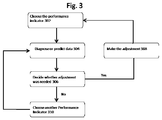
- FIG. 3 depicts a logical view of the DCIM system according to an embodiment.
- FIG. 4 depicts the system and method implementing complete computing resource consumption estimation over each node of a network of connected data centers.
- Embodiments disclosed include systems and methods that address these challenges effectively and efficiently.
- a computer automated system is configured to adaptively, in real-time, determine based on an operating condition of a compute system, a storage system, and a power management system housed in a facility, a maximum power unit efficiency or power usage effectiveness (PUE).
- the compute system and the storage system are comprised in a networked computer system comprising a plurality of processing units coupled to a corresponding plurality of memory elements having encoded thereon instructions implemented by the plurality of processing units.
- the computer automated system is configured to calibrate at least one of the compute system, the storage system, the power management system and the operating condition of the facility.
- determining the optimum power unit efficiency or power usage effectiveness comprises further determining a total power requirement of the facility.
- the computer automated system is further configured to determine a total power requirement of an input-output system also comprised in the facility, the compute system and the storage system comprised in the facility.
- the computer automated system is further configured to determine a total area occupied by the facility.
- the computer automated system can aggregate the total power requirement of the input-output system, the compute system and the storage system and is configured to determine and display a result. The result comprises the total power requirement divided by the aggregated total power requirement of the input-output system, the compute system and the storage system and further multiplied by the reciprocal of the determined total area occupied by the facility.
- Power usage effectiveness is essentially a measure of how efficiently a computer data center uses energy; specifically, how much energy is used by the computing equipment in contrast to cooling and other overheads.
- PUE is the ratio of total amount of energy used by a computer data center facility to the energy delivered to computing equipment (compute system, storage system, networking system, etc.)
- Total Facility Energy equals everything beyond the Information Technology (IT) infrastructure (compute/storage/networking) equipment power usage.
- PUE Total Facility Energy/IT Equipment Energy
- Preferred embodiments include systems and methods for Total Resource Utilization Efficiency (TRUE) estimation, and optimization.
- the PUE is one of the critical components. However, the PUE is determined by and contributes towards determining other critical components in Total Resource Utilization Efficiency estimation and optimization.
- other variables include (but are not limited to) operating expense of a data center, kilowatts (KW) per rack based power consumption monitoring and optimization, Server utilization estimation and optimization, Network utilization estimation and optimization, Storage utilization estimation and optimization, and Watts consumed per unit area, for example, per square foot.
- Preferred embodiments further include Water Usage Effectiveness (WUE), Carbon Unit Effectiveness (CUE) and Total Carbon footprint of the data center. Alternatives to the above order and variables are possible, and even probably, as would be apparent to a person having ordinary skill in the art.
- the computer automated system is configured to determine a real-time operating condition of the compute system. Based on the determined real-time operating condition of the computer system, the computer automated systems are further configured to calibrate the compute system to operate at a load that allows maximum energy efficiency. Preferably, the calibrating is based on a pre-defined data management policy comprising determining data to retain and a retention period required for the retained data, and accordingly determining data to migrate to another networked computer system in the facility or to another networked compute system in another networked facility.
- FIG. 1 illustrates an embodiment of the Data Center Infrastructure Management (DCIM) System.
- the illustrated embodiment includes a processing unit 100 coupled to a memory element 104 , and having instructions encoded thereon configured to: over a network 114 , collect compute systems data, power systems data, and facility systems data from data centers 116 A, 116 B, and 116 C.
- the disclosed embodiment is configured to trigger an action based on a diagnosed or predicted condition of the collected compute systems, power systems and facility systems.
- the configuration enables control of the compute systems, power systems and facility systems in each of the illustrated data centers via a corresponding centralized compute module 108 , power module 110 , and facilities module 112 .
- control via the compute, power, and facilities module comprises calibrating the compute, power, and facility systems based on an estimated compute requirement, and an associated power, cooling, and network data resource requirement.
- the estimated compute requirement comprises estimating compute density per real-time power wattage, and storage density per real-time power wattage.
- FIG. 2 illustrates a block diagram depicting data collection and compute density efficiency (CDE) calculation in the DCIM system.
- CDE compute density efficiency
- the system is further configured to, based on the collected data center compute systems, power systems, and facility systems data, estimate a future compute systems condition, a future power systems condition, and a future facility systems condition as one type of Export showed in FIG. 2 .
- FIG. 3 illustrates via a flow diagram, the method of accommodating different metrics to adjust considering Performance Indicator to optimize the operation of the system.
- Step 302 includes choosing the considering Performance Indicator.
- step 304 the related data is collected from the data center or predicted by the processor.
- step 306 a decision is made based on the data aggregated in the memory from implemented machine learning to decide whether an adjustment or calibration is needed.
- Step 308 is implemented wherein an adjustment is made to the system. If the in the step 306 the metric is optimal, then the system proceeds to find or input manually another Performance Indicator and repeat the step 304 until the data center operation is optimized.
- FIG. 4 depicts the system and method implementing complete computing resource consumption estimation over each node of a network of connected data centers.
- Preferred embodiments implement Total Resource Utilization Efficiency (TRUE) optimizing not just compute resource consumption, but total efficiency of all components in a facility.
- the system is configured to: determine, for each compute system resource 400 , a cost per predetermined time unit to deploy and operate the compute system resource, and to apply a cost conversion factor to each cost per predetermined time unit. Additionally, for each compute resource, the system generates an average number of resource units by averaging the number of resource units 402 over a plurality of network infrastructure nodes.
- the system For an application executing on at least one of the network infrastructure nodes 404 , the system generates a number of resource units used in a predetermined time period. Thus, the system can generate total resource consumption 406 by adding the number of units consumed by the application in the predetermined time period for each compute resource.
- the computer automated system is configured to determine an air intake requirement and a humidity requirement, and based on pre-defined criteria, to raise or lower the air intake and humidity according to the determined requirement. Preferably the determination is made based on the determined real-time operating condition of the compute system, the storage system, and the power management system housed in the facility.
- Embodiments disclosed include systems and methods to determine the real-time operating condition of the facility, and based on the determined real-time operating condition of the facility, the computer automated system is further configured to minimize the power requirement, wherein the minimization comprises automatic activation and deactivation of lighting equipment.
- the computer automated system is further configured to determine a heat generated via a plurality of temperature sensors or sensor elements, but preferably based on an operating load, and accordingly control a re-configurable cooling equipment in the facility.
- Preferred embodiments include machine learning and artificial intelligence capability enabling the computer automated system to predictively determine a heat generated based on current and anticipated loads, and accordingly anticipate state changes to optimize resource utilization.
- the reconfigurable cooling equipment is configured to automatically scale up or down according to the operating load.
- Embodiments disclosed include networked virtual reality interfaces enabling and facilitating remote inspection, calibration and control of the compute system, the storage system, the power system, and the facility.
- the computer automated system is further configured to, based on the determined real-time operating condition of the compute system, the storage system, and the power management system housed in the facility, and accordingly based on a determined power requirement, deploy a modular uninterrupted power source supply, configured to optimize efficiency at partial or complete loads.
- a computer implemented method comprising adaptively, in real-time, determining based on an operating condition of a compute system, a storage system, and a power management system housed in a facility, a maximum power unit efficiency or power usage effectiveness (PUE). Based on the determined maximum power unit efficiency or power usage effectiveness (PUE), the method comprises calibrating at least one of the compute system, the storage system, the power management system and the operating condition of the facility.
- PUE power unit efficiency or power usage effectiveness
- the computer implemented method further comprises determining an optimum power unit efficiency or power usage effectiveness (PUE). This further comprises determining a total power requirement of the facility.
- determining the total power requirement of the facility further comprises determining a total power requirement of the input-output system, the compute system and the storage system comprised in the facility, and determining a total area occupied by the facility.
- the method comprises aggregating the total power requirement of the input-output system, the compute system and the storage system and determining and displaying a result.
- the result comprises comprising the total power requirement divided by the aggregated total power requirement of the input-output system, the compute system and the storage system and further multiplied by the reciprocal of the determined total area occupied by the facility.
- the method comprises calibrating the compute system to operate at a load that allows maximum energy efficiency; and wherein the calibrating is based on a pre-defined data management policy comprising determining data to retain and a retention period required for the retained data, and accordingly determining data to migrate to another networked compute system within the facility or to another networked compute system in another networked facility.
- the computer implemented method further comprises determining an air intake requirement and a humidity requirement, and based on a pre-defined criteria, computer automated system is configured to trigger the raising or lowering of the air intake and humidity according to the determined requirement.
- Embodiments disclosed include methods for automatic activation and deactivation of lighting equipment, according to a determined real-time operating condition.
- the computer automated system is further configured to determine a heat generated via a plurality of temperature sensors or sensor elements, but preferably based on an operating load, and accordingly control a re-configurable cooling equipment in the facility.
- Preferred embodiments include machine learning and artificial intelligence capability enabling the computer automated system to predictively determine a heat generated based on current and anticipated loads, and accordingly anticipate state changes to optimize resource utilization.
- the reconfigurable cooling equipment is configured to automatically scale up or down according to the operating load.
- Embodiments disclosed include networked virtual reality interfaces enabling and facilitating remote inspection, calibration and control of the compute system, the storage system, the power system, and the facility.
- the computer automated system is further configured to based on a determined power requirement, deploy a modular uninterrupted power source supply, configured to operate at high efficiency modes at partial or complete loads.
- the system and method includes estimating the Total Resource Utilization Efficiency (TRUE) (registered trademark) of the data centre facility, and based on pre-configured criteria, rating the data centre facility according to the calculated Total Resource Utilization Efficiency.
- TRUE rating system references several categories in calculating a TRUE score.
- the categories comprise Efficiency, Availability, Environmental Impact, Compute, and Storage.
- Efficiency in turn comprises Power Unit Efficiency (PUE) also known as Energy Efficiency, and Water Unit Efficiency (WUE).
- Availability in turn, comprises UPTIME percentage (%) based on total annual incident time. For example, 99.999% uptime is equal to 5 minutes 15.6 seconds of total annual down time.
- the Environmental Impact is calculated by aggregating several environment impact variables comprising CHG intensity, Carbon Intensity, Particle Matter Intensity, SO 2 /NO x intensity, and Water treatment chemicals.
- GHG greenhouse gas
- CO2e carbon dioxide equivalent
- the system or method may also be used to calculate carbon offsets or carbon credits.
- Renewable energy sources for example can be selected as the power source or as a percentage of the required power source with this being used to calculate the total carbon offsets or carbon credits that can be quantified as an annual number.
- Water treatment chemical intensity is essentially a measure of how many units of different types of chemicals are used annually at a data center for water treatment and is calculated using the number of units used for water treatment per megawatt hour (MWh)
- the intensity of the environmental impact variables is calculated in metric tons per megawatt hour of energy consumed.
- Water treatment chemical intensity is calculated on an annual basis and is represented as litres per kWh or L/kWh.
- the carbon intensity is 0.5 metric tons per MWh
- 100,000 MWh*0.5 metric tons 50,000 metric tons of carbon produced annually operating the data centre.
- Power usage effectiveness is essentially a measure of how efficiently a data center uses energy; specifically, how much energy is used by the computing equipment in contrast to cooling and other overheads.
- PUE is the ratio of total amount of energy used by a computer data center facility to the energy delivered to computing equipment (compute system, storage system, networking system, etc.)
- Total Facility Energy equals everything beyond the Information Technology (IT) infrastructure (compute/storage/networking) equipment power usage.
- Water usage effectiveness is essentially a measure of how efficiently a data center uses water; specifically, how much water is used annually to cool the data center. Water usage effectiveness (WUE) is calculated using the number of liters of water consumed per kilowatt hour (kWh)
- Compute and storage performance is determined using well known benchmarks to calculate the maximum compute performance and storage performance within the data center power and cooling specifications.
- Location and climate zones are factors in determining environmental impact, PUE and WUE efficiency.
- Compute implies compute performance, which preferably is calculated estimated by compute performance index per watt or kilowatt (KW) or megawatt (MW), etc.
- compute performance index is based on a benchmark performance index multiplied by an average utilization per watts. The result is multiplied by 100.
- Compute performance index per watt (benchmark performance index*average utilization/watts)*100. This result represents a compute performance per watt value.
- benchmark performance index 150 and an average utilization of 0.70 and a total of 300 watts
- Storage implies a storage performance index per watt or per kilowatt (KW) or per megawatt (MW), etc.
- storage performance index is based on a benchmark performance index multiplied by an average utilization and divided by the total watts with the result multiplied by 100.
- Data center availability is essentially a measurement of the total annual downtime of a data center. This is a critical factor in determining risk assessment and evaluating overall data center performance.
- the availability index is an important factor to determine the data center operation efficiency since two data centers both built to the same Tier level can have very different operation efficiency ratings, with one data center never having outages and the other data center having multiple incidents causing data center outages.
- the system or method calculates a date center performance rating. This is known as the data center TRUE score.
- inventions of this aspect include corresponding computer systems, apparatus, and computer programs recorded on one or more computer storage devices, each configured to perform the actions of the methods.
- each of the TRUE categories and sub-categories is rated from 0 to 5. With 5 as the top rating and 0 as the lowest rating. Each category is assigned a rating from 0 to 5 with the rating based on the average of all the sub-categories within. With each category rated the average of the aggregated ratings of each category is calculated to derive the TRUE score for the data centre. Preferably, each category is rated based on the average of the sub-category ratings.
- each category and sub-category is assigned a weighted based on pre-defined criteria.
- Sub-category weighting entire parent category accounts for 100% of weighting value, with each sub-category assigned a percentage of the total and all sub-category weighting percentages totalling 100%.
- Category weighting All categories combined account for 100% of weighting value, with each category assigned percentage of the total.
- Category weighting entire parent category accounts for 100% of weighting value, with each sub-category assigned a percentage of the total and all sub-category weights totalling 100%
- data centre metrics can be added to the methods and systems as a category or sub-category used to calculate a data centre TRUE score.
- the methods and systems are understood to be flexible and expandable, in order to accommodate future data center efficiency, availability, sustainability or other yet unknown key metrics.
- Embodiments disclosed enable drastic reduction in power consumption through smart management of cooling power, and leveraging of environmental conditions to optimize cooling power consumption.
- Systems and methods disclosed enable huge savings in data center power consumption.
- Predictive analytics enable real-time computing power consumption estimation and thereby optimization of computing and cooling power consumption.
- Embodiments disclosed include systems and methods that leverage multi-metric views that provide real-time actionable intelligence on data center performance and cooling performance. These multi-metric views attempt to take into account aspects of performance by bringing together the Power Usage Effectives (PUE) ratio, IT Thermal Conformance and IT Thermal Resilience thereby enabling real-time optimization through correlation of computing, infrastructure and cooling performance. Embodiments disclosed further enable nuanced and multi-dimensional metric that addresses the most critical aspects of a data center's cooling performance. To establish a more complete view of facility cooling, the requirement to calculate cooling effectiveness and the data centre's future thermal state is also critical. Embodiments disclosed enable easily scalable multi-dimensional metrics that and that can accommodate additional new metrics in the future, as they are defined.
- PUE Power Usage Effectives
- routines executed to implement the embodiments of the invention may be part of an operating system or a specific application, component, program, module, object, or sequence of instructions.
- the computer program of the present invention typically is comprised of a multitude of instructions that will be translated by the native computer into a machine-accessible format and hence executable instructions.
- programs are comprised of variables and data structures that either reside locally to the program or are found in memory or on storage devices.
- various programs described hereinafter may be identified based upon the application for which they are implemented in a specific embodiment of the invention. However, it should be appreciated that any particular program nomenclature that follows is used merely for convenience, and thus the invention should not be limited to use solely in any specific application identified and/or implied by such nomenclature.
Landscapes
- Engineering & Computer Science (AREA)
- Theoretical Computer Science (AREA)
- General Engineering & Computer Science (AREA)
- Physics & Mathematics (AREA)
- General Physics & Mathematics (AREA)
- Quality & Reliability (AREA)
- Computing Systems (AREA)
- Computer Hardware Design (AREA)
- Software Systems (AREA)
- Mathematical Physics (AREA)
- Life Sciences & Earth Sciences (AREA)
- Bioinformatics & Cheminformatics (AREA)
- Bioinformatics & Computational Biology (AREA)
- Evolutionary Biology (AREA)
- Probability & Statistics with Applications (AREA)
- Management, Administration, Business Operations System, And Electronic Commerce (AREA)
Abstract
Description
PUE=Total Facility Energy/IT Equipment Energy
Green House Gas (GHG) intensity per MWh=metric tons/MWh
Carbon intensity per MWh=metric tons/MWh
Particle Matter intensity per MWh=metric tons/MWh
SO2/NOx intensity per MWh=metric tons/MWh
Claims (5)
Priority Applications (3)
| Application Number | Priority Date | Filing Date | Title |
|---|---|---|---|
| US15/663,782 US10852805B2 (en) | 2017-07-30 | 2017-07-30 | Data center total resource utilization efficiency (TRUE) system and method |
| US17/107,954 US20210081022A1 (en) | 2014-01-09 | 2020-12-01 | Data Center Total Resource Utilization Efficiency (TRUE) System And Method |
| US18/063,954 US11847007B2 (en) | 2014-01-09 | 2022-12-09 | Data center total resource utilization efficiency (TRUE) system and method |
Applications Claiming Priority (1)
| Application Number | Priority Date | Filing Date | Title |
|---|---|---|---|
| US15/663,782 US10852805B2 (en) | 2017-07-30 | 2017-07-30 | Data center total resource utilization efficiency (TRUE) system and method |
Related Parent Applications (2)
| Application Number | Title | Priority Date | Filing Date |
|---|---|---|---|
| US14/591,572 Continuation US20170219241A1 (en) | 2014-01-09 | 2015-01-07 | Data Center Infrastructure Management (DCIM) system comprising predictive analytics |
| US16/248,770 Continuation US11262089B2 (en) | 2014-01-09 | 2019-01-16 | Data center management systems and methods for compute density efficiency measurements |
Related Child Applications (2)
| Application Number | Title | Priority Date | Filing Date |
|---|---|---|---|
| US16/248,770 Continuation US11262089B2 (en) | 2014-01-09 | 2019-01-16 | Data center management systems and methods for compute density efficiency measurements |
| US17/107,954 Continuation US20210081022A1 (en) | 2014-01-09 | 2020-12-01 | Data Center Total Resource Utilization Efficiency (TRUE) System And Method |
Publications (2)
| Publication Number | Publication Date |
|---|---|
| US20190033945A1 US20190033945A1 (en) | 2019-01-31 |
| US10852805B2 true US10852805B2 (en) | 2020-12-01 |
Family
ID=65138232
Family Applications (2)
| Application Number | Title | Priority Date | Filing Date |
|---|---|---|---|
| US15/663,782 Expired - Fee Related US10852805B2 (en) | 2014-01-09 | 2017-07-30 | Data center total resource utilization efficiency (TRUE) system and method |
| US17/107,954 Abandoned US20210081022A1 (en) | 2014-01-09 | 2020-12-01 | Data Center Total Resource Utilization Efficiency (TRUE) System And Method |
Family Applications After (1)
| Application Number | Title | Priority Date | Filing Date |
|---|---|---|---|
| US17/107,954 Abandoned US20210081022A1 (en) | 2014-01-09 | 2020-12-01 | Data Center Total Resource Utilization Efficiency (TRUE) System And Method |
Country Status (1)
| Country | Link |
|---|---|
| US (2) | US10852805B2 (en) |
Cited By (8)
| Publication number | Priority date | Publication date | Assignee | Title |
|---|---|---|---|---|
| US20210406732A1 (en) * | 2020-06-25 | 2021-12-30 | Unisys Corporation | Method for building machine learning models for artificial intelligence based information technology operations |
| US11237760B2 (en) * | 2019-12-19 | 2022-02-01 | Western Digital Technologies, Inc. | Measuring performance metrics for data storage devices |
| US11749988B2 (en) | 2014-01-09 | 2023-09-05 | Nautilus True, Llc | System and method for intelligent data center power management and energy market disaster recovery |
| US11847007B2 (en) | 2014-01-09 | 2023-12-19 | Nautilus True, Llc | Data center total resource utilization efficiency (TRUE) system and method |
| US11946269B2 (en) | 2022-03-21 | 2024-04-02 | Nautilus True, Llc | Modular integrated system modules |
| US20240144292A1 (en) * | 2022-10-26 | 2024-05-02 | Dell Products, Lp | System and method for balancing processing load distribution for data centers based on server location to minimize greenhouse gas emissions |
| US20240396963A1 (en) * | 2023-05-25 | 2024-11-28 | Hitachi, Ltd. | Data center system, inter-base workload control method, and inter-base workload control system |
| US12355643B2 (en) | 2022-08-09 | 2025-07-08 | Honeywell International Inc. | Performance indicators useful for monitoring the overall performance of a data center |
Families Citing this family (8)
| Publication number | Priority date | Publication date | Assignee | Title |
|---|---|---|---|---|
| CN112148569B (en) * | 2019-06-26 | 2022-07-12 | 中国信息通信研究院 | Method and device for evaluating infrastructure resource utilization rate of data center |
| US20210342185A1 (en) * | 2020-04-30 | 2021-11-04 | Hewlett Packard Enterprise Development Lp | Relocation of workloads across data centers |
| US11640306B2 (en) | 2020-10-29 | 2023-05-02 | Hewlett Packard Enterprise Development Lp | Computational configuration and multi-layer cluster analysis |
| CN114003917A (en) * | 2021-10-18 | 2022-02-01 | 清华大学 | Block chain system privacy protection evaluation method and device |
| US12314695B2 (en) | 2022-01-20 | 2025-05-27 | Dell Products L.P. | System and method of using sustainability to establish compilation methods aligned with sustainability goals |
| CN114897299B (en) * | 2022-04-02 | 2024-08-20 | 国网电力科学研究院武汉能效测评有限公司 | Multi-level energy efficiency evaluation method based on waste heat utilization system in data center |
| US20230368107A1 (en) * | 2022-05-13 | 2023-11-16 | Dell Products L.P. | System and method of process placement recommendation based on inferred sustainability advantages for sustainable energy efficiency |
| CN115219828A (en) * | 2022-07-25 | 2022-10-21 | 中国标准化研究院 | Data center energy efficiency detection method |
Citations (8)
| Publication number | Priority date | Publication date | Assignee | Title |
|---|---|---|---|---|
| US20090112522A1 (en) * | 2007-10-29 | 2009-04-30 | American Power Conversion Corporation | Electrical efficiency measurement for data centers |
| US20100076607A1 (en) * | 2008-08-08 | 2010-03-25 | Osman Ahmed | Data center thermal performance optimization using distributed cooling systems |
| US20120232879A1 (en) * | 2011-03-10 | 2012-09-13 | International Business Machines Corporation | Data center efficiency analyses and optimization |
| US20120303174A1 (en) * | 2011-05-27 | 2012-11-29 | GCCA Inc. | Green Data Center and the Method for Achieving Power Usage Efficiency less than 1 |
| US20140074444A1 (en) * | 2012-09-12 | 2014-03-13 | International Business Machines Corporation | Techniques for Evaluating Optimum Data Center Operation |
| US20160013652A1 (en) * | 2013-02-22 | 2016-01-14 | University Of Florida Research Foundation, Incorporated | Method and apparatus for power management using distributed generation |
| US20180026906A1 (en) * | 2016-07-22 | 2018-01-25 | Susanne M. Balle | Technologies for Predictively Managing Heat Generation in a Datacenter |
| US20180204116A1 (en) * | 2017-01-19 | 2018-07-19 | Google Inc. | Optimizing data center controls using neural networks |
Family Cites Families (1)
| Publication number | Priority date | Publication date | Assignee | Title |
|---|---|---|---|---|
| CN102365119B (en) * | 2009-03-31 | 2014-11-05 | 日立金属株式会社 | Honeycomb ceramic structure and its manufacturing method |
-
2017
- 2017-07-30 US US15/663,782 patent/US10852805B2/en not_active Expired - Fee Related
-
2020
- 2020-12-01 US US17/107,954 patent/US20210081022A1/en not_active Abandoned
Patent Citations (8)
| Publication number | Priority date | Publication date | Assignee | Title |
|---|---|---|---|---|
| US20090112522A1 (en) * | 2007-10-29 | 2009-04-30 | American Power Conversion Corporation | Electrical efficiency measurement for data centers |
| US20100076607A1 (en) * | 2008-08-08 | 2010-03-25 | Osman Ahmed | Data center thermal performance optimization using distributed cooling systems |
| US20120232879A1 (en) * | 2011-03-10 | 2012-09-13 | International Business Machines Corporation | Data center efficiency analyses and optimization |
| US20120303174A1 (en) * | 2011-05-27 | 2012-11-29 | GCCA Inc. | Green Data Center and the Method for Achieving Power Usage Efficiency less than 1 |
| US20140074444A1 (en) * | 2012-09-12 | 2014-03-13 | International Business Machines Corporation | Techniques for Evaluating Optimum Data Center Operation |
| US20160013652A1 (en) * | 2013-02-22 | 2016-01-14 | University Of Florida Research Foundation, Incorporated | Method and apparatus for power management using distributed generation |
| US20180026906A1 (en) * | 2016-07-22 | 2018-01-25 | Susanne M. Balle | Technologies for Predictively Managing Heat Generation in a Datacenter |
| US20180204116A1 (en) * | 2017-01-19 | 2018-07-19 | Google Inc. | Optimizing data center controls using neural networks |
Cited By (10)
| Publication number | Priority date | Publication date | Assignee | Title |
|---|---|---|---|---|
| US11749988B2 (en) | 2014-01-09 | 2023-09-05 | Nautilus True, Llc | System and method for intelligent data center power management and energy market disaster recovery |
| US11847007B2 (en) | 2014-01-09 | 2023-12-19 | Nautilus True, Llc | Data center total resource utilization efficiency (TRUE) system and method |
| US11237760B2 (en) * | 2019-12-19 | 2022-02-01 | Western Digital Technologies, Inc. | Measuring performance metrics for data storage devices |
| US20210406732A1 (en) * | 2020-06-25 | 2021-12-30 | Unisys Corporation | Method for building machine learning models for artificial intelligence based information technology operations |
| US11946269B2 (en) | 2022-03-21 | 2024-04-02 | Nautilus True, Llc | Modular integrated system modules |
| US12355643B2 (en) | 2022-08-09 | 2025-07-08 | Honeywell International Inc. | Performance indicators useful for monitoring the overall performance of a data center |
| US20240144292A1 (en) * | 2022-10-26 | 2024-05-02 | Dell Products, Lp | System and method for balancing processing load distribution for data centers based on server location to minimize greenhouse gas emissions |
| US12346912B2 (en) * | 2022-10-26 | 2025-07-01 | Dell Products Lp | System and method for balancing processing load distribution for data centers based on server location to minimize greenhouse gas emissions |
| US20240396963A1 (en) * | 2023-05-25 | 2024-11-28 | Hitachi, Ltd. | Data center system, inter-base workload control method, and inter-base workload control system |
| US12413637B2 (en) * | 2023-05-25 | 2025-09-09 | Hitachi Vantara, Ltd. | Data center system, inter-base workload control method, and inter-base workload control system |
Also Published As
| Publication number | Publication date |
|---|---|
| US20210081022A1 (en) | 2021-03-18 |
| US20190033945A1 (en) | 2019-01-31 |
Similar Documents
| Publication | Publication Date | Title |
|---|---|---|
| US10852805B2 (en) | Data center total resource utilization efficiency (TRUE) system and method | |
| US11847007B2 (en) | Data center total resource utilization efficiency (TRUE) system and method | |
| US11906180B1 (en) | Data center management systems and methods for compute density efficiency measurements | |
| US9753477B2 (en) | Load forecasting for residential sector demand response | |
| JP7161268B2 (en) | Quantifying the combined impact of interdependent and uncertain resources within the power grid | |
| CN110675070B (en) | Criticality analysis method of intelligent microgrid equipment | |
| KR20180040154A (en) | Real-time data driven power metering and cost estimation system | |
| WO2013089782A2 (en) | Co-location electrical architecture | |
| CN116266247A (en) | Method and device for evaluating power generation performance of wind power generating set | |
| US20120174231A1 (en) | Assessing System Performance Impact of Security Attacks | |
| Levy et al. | A novel framework for data center metrics using a multidimensional approach | |
| US12341655B2 (en) | Network sustainability index | |
| CN117977695A (en) | A power grid analysis method, system and storage medium based on data collaborative computing | |
| Dou et al. | Minimizing electricity bills for geographically distributed data centers with renewable and cooling aware load balancing | |
| US10216606B1 (en) | Data center management systems and methods for compute density efficiency measurements | |
| KR100663216B1 (en) | Web-based Power Demand Management Evaluation System for Resource Evaluation | |
| US20140215053A1 (en) | Managing an entity using a state machine abstract | |
| AU2017248557A1 (en) | Operation plan creating apparatus, operation plan creating method, and program | |
| Naz et al. | Intelligent energy management in IoT-enabled smart homes: anomaly detection and consumption prediction for energy-efficient usage | |
| CN113812052A (en) | Apparatus and method for dynamic prediction, aggregation, and verification | |
| CN113574510A (en) | Data Center Management System and Method for Computational Density Efficiency Measurement | |
| Tan et al. | Economic analysis of lifetime-constrained battery storage under dynamic pricing | |
| CODES | International review of energy efficiency in data Centres for IEA EBC building energy Codes working group | |
| KR100739123B1 (en) | Web-based Power Demand Management Evaluation System for Resource Evaluation | |
| Nessa et al. | Decision support for matching flexibility measures to flexibility needs in power system planning |
Legal Events
| Date | Code | Title | Description |
|---|---|---|---|
| STPP | Information on status: patent application and granting procedure in general |
Free format text: NON FINAL ACTION MAILED |
|
| AS | Assignment |
Owner name: SCOTT LAKE TRUST, CANADA Free format text: SECURITY INTEREST;ASSIGNOR:NAUTILUS DATA TECHNOLOGIES, INC.;REEL/FRAME:049323/0928 Effective date: 20190528 |
|
| STPP | Information on status: patent application and granting procedure in general |
Free format text: RESPONSE TO NON-FINAL OFFICE ACTION ENTERED AND FORWARDED TO EXAMINER |
|
| STPP | Information on status: patent application and granting procedure in general |
Free format text: FINAL REJECTION MAILED |
|
| AS | Assignment |
Owner name: SCOTT LAKE HOLDINGS INC., AS COLLATERAL AGENT, CAN Free format text: SECURITY INTEREST;ASSIGNOR:NAUTILUS DATA TECHNOLOGIES, INC.;REEL/FRAME:051429/0341 Effective date: 20200102 Owner name: NAUTILUS DATA TECHNOLOGIES, INC., CALIFORNIA Free format text: RELEASE BY SECURED PARTY;ASSIGNOR:SCOTT LAKE TRUST;REEL/FRAME:051429/0021 Effective date: 20200102 Owner name: SCOTT LAKE HOLDINGS INC., AS COLLATERAL AGENT, CANADA Free format text: SECURITY INTEREST;ASSIGNOR:NAUTILUS DATA TECHNOLOGIES, INC.;REEL/FRAME:051429/0341 Effective date: 20200102 |
|
| STPP | Information on status: patent application and granting procedure in general |
Free format text: NON FINAL ACTION MAILED |
|
| AS | Assignment |
Owner name: NAUTILUS DATA TECHNOLOGIES, INC., CALIFORNIA Free format text: RELEASE BY SECURED PARTY;ASSIGNOR:SCOTT LAKE HOLDINGS INC., AS AGENT;REEL/FRAME:052738/0055 Effective date: 20200513 |
|
| STPP | Information on status: patent application and granting procedure in general |
Free format text: NOTICE OF ALLOWANCE MAILED -- APPLICATION RECEIVED IN OFFICE OF PUBLICATIONS |
|
| AS | Assignment |
Owner name: NAUTILUS TRUE, LLC, CALIFORNIA Free format text: ASSIGNMENT OF ASSIGNORS INTEREST;ASSIGNOR:NAUTILUS DATA TECHNOLOGIES, INC.;REEL/FRAME:054316/0570 Effective date: 20201109 |
|
| STCF | Information on status: patent grant |
Free format text: PATENTED CASE |
|
| FEPP | Fee payment procedure |
Free format text: MAINTENANCE FEE REMINDER MAILED (ORIGINAL EVENT CODE: REM.); ENTITY STATUS OF PATENT OWNER: SMALL ENTITY |
|
| LAPS | Lapse for failure to pay maintenance fees |
Free format text: PATENT EXPIRED FOR FAILURE TO PAY MAINTENANCE FEES (ORIGINAL EVENT CODE: EXP.); ENTITY STATUS OF PATENT OWNER: SMALL ENTITY |
|
| STCH | Information on status: patent discontinuation |
Free format text: PATENT EXPIRED DUE TO NONPAYMENT OF MAINTENANCE FEES UNDER 37 CFR 1.362 |
|
| FP | Lapsed due to failure to pay maintenance fee |
Effective date: 20241201 |