US10851337B2 - 3D polymeric insert to apply uniform electric field in circular cultureware - Google Patents
3D polymeric insert to apply uniform electric field in circular cultureware Download PDFInfo
- Publication number
- US10851337B2 US10851337B2 US15/759,734 US201615759734A US10851337B2 US 10851337 B2 US10851337 B2 US 10851337B2 US 201615759734 A US201615759734 A US 201615759734A US 10851337 B2 US10851337 B2 US 10851337B2
- Authority
- US
- United States
- Prior art keywords
- circular
- insert
- shaped
- npl
- side channel
- Prior art date
- Legal status (The legal status is an assumption and is not a legal conclusion. Google has not performed a legal analysis and makes no representation as to the accuracy of the status listed.)
- Active, expires
Links
- 230000005684 electric field Effects 0.000 title claims abstract description 143
- 239000012530 fluid Substances 0.000 claims abstract description 30
- 239000004793 Polystyrene Substances 0.000 claims description 6
- 229920002223 polystyrene Polymers 0.000 claims description 6
- 210000004027 cell Anatomy 0.000 description 97
- 230000000638 stimulation Effects 0.000 description 71
- 108091006146 Channels Proteins 0.000 description 54
- 239000007788 liquid Substances 0.000 description 28
- 230000005109 electrotaxis Effects 0.000 description 23
- 238000013461 design Methods 0.000 description 22
- 229920003229 poly(methyl methacrylate) Polymers 0.000 description 21
- 239000004926 polymethyl methacrylate Substances 0.000 description 21
- 238000004113 cell culture Methods 0.000 description 16
- 238000004519 manufacturing process Methods 0.000 description 16
- 238000000034 method Methods 0.000 description 16
- 230000012292 cell migration Effects 0.000 description 14
- 238000004088 simulation Methods 0.000 description 14
- 238000002474 experimental method Methods 0.000 description 10
- 210000001519 tissue Anatomy 0.000 description 10
- 235000021186 dishes Nutrition 0.000 description 9
- 210000002950 fibroblast Anatomy 0.000 description 8
- 238000000338 in vitro Methods 0.000 description 8
- 238000005259 measurement Methods 0.000 description 7
- 239000002953 phosphate buffered saline Substances 0.000 description 7
- 101001053896 Homo sapiens Embryonal Fyn-associated substrate Proteins 0.000 description 6
- 238000005516 engineering process Methods 0.000 description 6
- 238000012986 modification Methods 0.000 description 6
- 230000004048 modification Effects 0.000 description 6
- -1 Poly(methyl methacrylate) Polymers 0.000 description 5
- 229910021607 Silver chloride Inorganic materials 0.000 description 5
- 230000008901 benefit Effects 0.000 description 5
- 239000006143 cell culture medium Substances 0.000 description 5
- 230000008602 contraction Effects 0.000 description 5
- 210000000663 muscle cell Anatomy 0.000 description 5
- HKZLPVFGJNLROG-UHFFFAOYSA-M silver monochloride Chemical compound [Cl-].[Ag+] HKZLPVFGJNLROG-UHFFFAOYSA-M 0.000 description 5
- 239000006144 Dulbecco’s modified Eagle's medium Substances 0.000 description 4
- 230000004069 differentiation Effects 0.000 description 4
- 238000009826 distribution Methods 0.000 description 4
- 229940079593 drug Drugs 0.000 description 4
- 239000003814 drug Substances 0.000 description 4
- 230000000694 effects Effects 0.000 description 4
- 229920000642 polymer Polymers 0.000 description 4
- 238000011160 research Methods 0.000 description 4
- 238000010146 3D printing Methods 0.000 description 3
- 206010058467 Lung neoplasm malignant Diseases 0.000 description 3
- 238000012742 biochemical analysis Methods 0.000 description 3
- 230000035605 chemotaxis Effects 0.000 description 3
- 230000007423 decrease Effects 0.000 description 3
- 230000007646 directional migration Effects 0.000 description 3
- 238000011156 evaluation Methods 0.000 description 3
- 230000014509 gene expression Effects 0.000 description 3
- 210000005003 heart tissue Anatomy 0.000 description 3
- 238000001727 in vivo Methods 0.000 description 3
- 230000007774 longterm Effects 0.000 description 3
- 201000005202 lung cancer Diseases 0.000 description 3
- 208000020816 lung neoplasm Diseases 0.000 description 3
- 239000000463 material Substances 0.000 description 3
- 210000004379 membrane Anatomy 0.000 description 3
- 239000012528 membrane Substances 0.000 description 3
- 230000004899 motility Effects 0.000 description 3
- 238000002135 phase contrast microscopy Methods 0.000 description 3
- 239000000523 sample Substances 0.000 description 3
- 230000011664 signaling Effects 0.000 description 3
- 210000000130 stem cell Anatomy 0.000 description 3
- 239000000758 substrate Substances 0.000 description 3
- 230000029663 wound healing Effects 0.000 description 3
- 229920000936 Agarose Polymers 0.000 description 2
- IJGRMHOSHXDMSA-UHFFFAOYSA-N Atomic nitrogen Chemical compound N#N IJGRMHOSHXDMSA-UHFFFAOYSA-N 0.000 description 2
- OYPRJOBELJOOCE-UHFFFAOYSA-N Calcium Chemical compound [Ca] OYPRJOBELJOOCE-UHFFFAOYSA-N 0.000 description 2
- 108010009685 Cholinergic Receptors Proteins 0.000 description 2
- IAZDPXIOMUYVGZ-UHFFFAOYSA-N Dimethylsulphoxide Chemical compound CS(C)=O IAZDPXIOMUYVGZ-UHFFFAOYSA-N 0.000 description 2
- 241001306632 Hua calculus Species 0.000 description 2
- 241001529936 Murinae Species 0.000 description 2
- 206010028980 Neoplasm Diseases 0.000 description 2
- 102000034337 acetylcholine receptors Human genes 0.000 description 2
- 238000004458 analytical method Methods 0.000 description 2
- 229910052791 calcium Inorganic materials 0.000 description 2
- 239000011575 calcium Substances 0.000 description 2
- 238000004364 calculation method Methods 0.000 description 2
- 201000011510 cancer Diseases 0.000 description 2
- 210000004413 cardiac myocyte Anatomy 0.000 description 2
- 239000006285 cell suspension Substances 0.000 description 2
- 238000005094 computer simulation Methods 0.000 description 2
- 238000011960 computer-aided design Methods 0.000 description 2
- 230000003247 decreasing effect Effects 0.000 description 2
- 238000010586 diagram Methods 0.000 description 2
- 238000005868 electrolysis reaction Methods 0.000 description 2
- 230000013020 embryo development Effects 0.000 description 2
- 239000012091 fetal bovine serum Substances 0.000 description 2
- 239000001963 growth medium Substances 0.000 description 2
- 238000003384 imaging method Methods 0.000 description 2
- 210000002510 keratinocyte Anatomy 0.000 description 2
- 210000002901 mesenchymal stem cell Anatomy 0.000 description 2
- 238000000386 microscopy Methods 0.000 description 2
- 230000005012 migration Effects 0.000 description 2
- 238000013508 migration Methods 0.000 description 2
- 239000007758 minimum essential medium Substances 0.000 description 2
- 239000000203 mixture Substances 0.000 description 2
- 230000001537 neural effect Effects 0.000 description 2
- 230000001582 osteoblastic effect Effects 0.000 description 2
- BASFCYQUMIYNBI-UHFFFAOYSA-N platinum Chemical compound [Pt] BASFCYQUMIYNBI-UHFFFAOYSA-N 0.000 description 2
- 238000010149 post-hoc-test Methods 0.000 description 2
- 238000011027 product recovery Methods 0.000 description 2
- 108090000623 proteins and genes Proteins 0.000 description 2
- 102000004169 proteins and genes Human genes 0.000 description 2
- 239000003642 reactive oxygen metabolite Substances 0.000 description 2
- 230000008929 regeneration Effects 0.000 description 2
- 238000011069 regeneration method Methods 0.000 description 2
- 230000001105 regulatory effect Effects 0.000 description 2
- 230000008521 reorganization Effects 0.000 description 2
- 238000012827 research and development Methods 0.000 description 2
- 230000004044 response Effects 0.000 description 2
- 210000002966 serum Anatomy 0.000 description 2
- 239000000126 substance Substances 0.000 description 2
- 102000007469 Actins Human genes 0.000 description 1
- 108010085238 Actins Proteins 0.000 description 1
- 208000010507 Adenocarcinoma of Lung Diseases 0.000 description 1
- 101800001288 Atrial natriuretic factor Proteins 0.000 description 1
- 102400001282 Atrial natriuretic peptide Human genes 0.000 description 1
- 101800001890 Atrial natriuretic peptide Proteins 0.000 description 1
- 238000000846 Bartlett's test Methods 0.000 description 1
- 108091003079 Bovine Serum Albumin Proteins 0.000 description 1
- 101100149252 Caenorhabditis elegans sem-5 gene Proteins 0.000 description 1
- 229940127291 Calcium channel antagonist Drugs 0.000 description 1
- 108010078791 Carrier Proteins Proteins 0.000 description 1
- 102000014914 Carrier Proteins Human genes 0.000 description 1
- IVOMOUWHDPKRLL-KQYNXXCUSA-N Cyclic adenosine monophosphate Chemical compound C([C@H]1O2)OP(O)(=O)O[C@H]1[C@@H](O)[C@@H]2N1C(N=CN=C2N)=C2N=C1 IVOMOUWHDPKRLL-KQYNXXCUSA-N 0.000 description 1
- 102000001301 EGF receptor Human genes 0.000 description 1
- 108060006698 EGF receptor Proteins 0.000 description 1
- 201000008808 Fibrosarcoma Diseases 0.000 description 1
- 102000018899 Glutamate Receptors Human genes 0.000 description 1
- 108010027915 Glutamate Receptors Proteins 0.000 description 1
- 206010021143 Hypoxia Diseases 0.000 description 1
- 108090000862 Ion Channels Proteins 0.000 description 1
- 102000004310 Ion Channels Human genes 0.000 description 1
- 238000001282 Kruskal–Wallis one-way analysis of variance Methods 0.000 description 1
- 102000043136 MAP kinase family Human genes 0.000 description 1
- 108091054455 MAP kinase family Proteins 0.000 description 1
- 102000029749 Microtubule Human genes 0.000 description 1
- 108091022875 Microtubule Proteins 0.000 description 1
- 102100026925 Myosin regulatory light chain 2, ventricular/cardiac muscle isoform Human genes 0.000 description 1
- HOKKHZGPKSLGJE-GSVOUGTGSA-N N-Methyl-D-aspartic acid Chemical compound CN[C@@H](C(O)=O)CC(O)=O HOKKHZGPKSLGJE-GSVOUGTGSA-N 0.000 description 1
- 102000004722 NADPH Oxidases Human genes 0.000 description 1
- 108010002998 NADPH Oxidases Proteins 0.000 description 1
- 102000014160 PTEN Phosphohydrolase Human genes 0.000 description 1
- 108010011536 PTEN Phosphohydrolase Proteins 0.000 description 1
- 239000004820 Pressure-sensitive adhesive Substances 0.000 description 1
- 206010060862 Prostate cancer Diseases 0.000 description 1
- 208000000236 Prostatic Neoplasms Diseases 0.000 description 1
- 241000282806 Rhinoceros Species 0.000 description 1
- 208000000102 Squamous Cell Carcinoma of Head and Neck Diseases 0.000 description 1
- OUUQCZGPVNCOIJ-UHFFFAOYSA-M Superoxide Chemical compound [O-][O] OUUQCZGPVNCOIJ-UHFFFAOYSA-M 0.000 description 1
- IVOMOUWHDPKRLL-UHFFFAOYSA-N UNPD107823 Natural products O1C2COP(O)(=O)OC2C(O)C1N1C(N=CN=C2N)=C2N=C1 IVOMOUWHDPKRLL-UHFFFAOYSA-N 0.000 description 1
- 108091008605 VEGF receptors Proteins 0.000 description 1
- 102000009484 Vascular Endothelial Growth Factor Receptors Human genes 0.000 description 1
- 206010052428 Wound Diseases 0.000 description 1
- 208000027418 Wounds and injury Diseases 0.000 description 1
- 241000269370 Xenopus <genus> Species 0.000 description 1
- 230000004913 activation Effects 0.000 description 1
- 239000000654 additive Substances 0.000 description 1
- 230000000996 additive effect Effects 0.000 description 1
- 230000001464 adherent effect Effects 0.000 description 1
- 239000000853 adhesive Substances 0.000 description 1
- 230000001070 adhesive effect Effects 0.000 description 1
- 239000002390 adhesive tape Substances 0.000 description 1
- 230000019552 anatomical structure morphogenesis Effects 0.000 description 1
- 230000006427 angiogenic response Effects 0.000 description 1
- 239000000427 antigen Substances 0.000 description 1
- 102000036639 antigens Human genes 0.000 description 1
- 108091007433 antigens Proteins 0.000 description 1
- 230000006907 apoptotic process Effects 0.000 description 1
- 238000013459 approach Methods 0.000 description 1
- 230000015572 biosynthetic process Effects 0.000 description 1
- 210000004556 brain Anatomy 0.000 description 1
- 239000000872 buffer Substances 0.000 description 1
- 239000007853 buffer solution Substances 0.000 description 1
- 244000309464 bull Species 0.000 description 1
- 239000000480 calcium channel blocker Substances 0.000 description 1
- 230000000747 cardiac effect Effects 0.000 description 1
- NSQLIUXCMFBZME-MPVJKSABSA-N carperitide Chemical compound C([C@H]1C(=O)NCC(=O)NCC(=O)N[C@@H](CCCNC(N)=N)C(=O)N[C@@H](CCSC)C(=O)N[C@@H](CC(O)=O)C(=O)N[C@@H](CCCNC(N)=N)C(=O)N[C@H](C(NCC(=O)N[C@@H](C)C(=O)N[C@@H](CCC(N)=O)C(=O)N[C@@H](CO)C(=O)NCC(=O)N[C@@H](CC(C)C)C(=O)NCC(=O)N[C@@H](CSSC[C@@H](C(=O)N1)NC(=O)[C@H](CO)NC(=O)[C@H](CO)NC(=O)[C@H](CCCNC(N)=N)NC(=O)[C@H](CCCNC(N)=N)NC(=O)[C@H](CC(C)C)NC(=O)[C@@H](N)CO)C(=O)N[C@@H](CC(N)=O)C(=O)N[C@@H](CO)C(=O)N[C@@H](CC=1C=CC=CC=1)C(=O)N[C@@H](CCCNC(N)=N)C(=O)N[C@@H](CC=1C=CC(O)=CC=1)C(O)=O)=O)[C@@H](C)CC)C1=CC=CC=C1 NSQLIUXCMFBZME-MPVJKSABSA-N 0.000 description 1
- 230000021164 cell adhesion Effects 0.000 description 1
- 230000030833 cell death Effects 0.000 description 1
- 230000010261 cell growth Effects 0.000 description 1
- 230000009087 cell motility Effects 0.000 description 1
- 230000001413 cellular effect Effects 0.000 description 1
- 230000005754 cellular signaling Effects 0.000 description 1
- 230000008859 change Effects 0.000 description 1
- 230000003399 chemotactic effect Effects 0.000 description 1
- 238000004891 communication Methods 0.000 description 1
- 230000000052 comparative effect Effects 0.000 description 1
- 239000004020 conductor Substances 0.000 description 1
- 230000013228 contact guidance Effects 0.000 description 1
- 238000007796 conventional method Methods 0.000 description 1
- 229940095074 cyclic amp Drugs 0.000 description 1
- 210000004292 cytoskeleton Anatomy 0.000 description 1
- 230000001419 dependent effect Effects 0.000 description 1
- 238000009795 derivation Methods 0.000 description 1
- 238000011161 development Methods 0.000 description 1
- 230000018109 developmental process Effects 0.000 description 1
- 239000004205 dimethyl polysiloxane Substances 0.000 description 1
- 235000013870 dimethyl polysiloxane Nutrition 0.000 description 1
- LOKCTEFSRHRXRJ-UHFFFAOYSA-I dipotassium trisodium dihydrogen phosphate hydrogen phosphate dichloride Chemical compound P(=O)(O)(O)[O-].[K+].P(=O)(O)([O-])[O-].[Na+].[Na+].[Cl-].[K+].[Cl-].[Na+] LOKCTEFSRHRXRJ-UHFFFAOYSA-I 0.000 description 1
- 230000026058 directional locomotion Effects 0.000 description 1
- 230000005674 electromagnetic induction Effects 0.000 description 1
- 238000004520 electroporation Methods 0.000 description 1
- 210000001671 embryonic stem cell Anatomy 0.000 description 1
- 102000052116 epidermal growth factor receptor activity proteins Human genes 0.000 description 1
- 108700015053 epidermal growth factor receptor activity proteins Proteins 0.000 description 1
- 210000002919 epithelial cell Anatomy 0.000 description 1
- 230000010393 epithelial cell migration Effects 0.000 description 1
- 230000019305 fibroblast migration Effects 0.000 description 1
- 230000006870 function Effects 0.000 description 1
- 239000007789 gas Substances 0.000 description 1
- 239000011521 glass Substances 0.000 description 1
- 230000005484 gravity Effects 0.000 description 1
- 230000012010 growth Effects 0.000 description 1
- 238000010438 heat treatment Methods 0.000 description 1
- 230000001146 hypoxic effect Effects 0.000 description 1
- 238000011065 in-situ storage Methods 0.000 description 1
- AMGQUBHHOARCQH-UHFFFAOYSA-N indium;oxotin Chemical compound [In].[Sn]=O AMGQUBHHOARCQH-UHFFFAOYSA-N 0.000 description 1
- 230000006698 induction Effects 0.000 description 1
- 238000001746 injection moulding Methods 0.000 description 1
- 230000003993 interaction Effects 0.000 description 1
- 230000003834 intracellular effect Effects 0.000 description 1
- 230000031146 intracellular signal transduction Effects 0.000 description 1
- 238000011835 investigation Methods 0.000 description 1
- 230000037427 ion transport Effects 0.000 description 1
- 230000004807 localization Effects 0.000 description 1
- 230000033001 locomotion Effects 0.000 description 1
- 201000005249 lung adenocarcinoma Diseases 0.000 description 1
- 210000004698 lymphocyte Anatomy 0.000 description 1
- 238000012423 maintenance Methods 0.000 description 1
- 230000007246 mechanism Effects 0.000 description 1
- 230000001404 mediated effect Effects 0.000 description 1
- 239000002609 medium Substances 0.000 description 1
- 102000006240 membrane receptors Human genes 0.000 description 1
- 108020004084 membrane receptors Proteins 0.000 description 1
- 108020004999 messenger RNA Proteins 0.000 description 1
- 238000005459 micromachining Methods 0.000 description 1
- 210000004688 microtubule Anatomy 0.000 description 1
- 238000010232 migration assay Methods 0.000 description 1
- 230000001002 morphogenetic effect Effects 0.000 description 1
- 210000002200 mouth mucosa Anatomy 0.000 description 1
- 210000003205 muscle Anatomy 0.000 description 1
- 210000003098 myoblast Anatomy 0.000 description 1
- 210000004165 myocardium Anatomy 0.000 description 1
- 108010065781 myosin light chain 2 Proteins 0.000 description 1
- YOHYSYJDKVYCJI-UHFFFAOYSA-N n-[3-[[6-[3-(trifluoromethyl)anilino]pyrimidin-4-yl]amino]phenyl]cyclopropanecarboxamide Chemical compound FC(F)(F)C1=CC=CC(NC=2N=CN=C(NC=3C=C(NC(=O)C4CC4)C=CC=3)C=2)=C1 YOHYSYJDKVYCJI-UHFFFAOYSA-N 0.000 description 1
- 210000005036 nerve Anatomy 0.000 description 1
- 230000004766 neurogenesis Effects 0.000 description 1
- 229910052757 nitrogen Inorganic materials 0.000 description 1
- 238000005457 optimization Methods 0.000 description 1
- 201000002740 oral squamous cell carcinoma Diseases 0.000 description 1
- 210000000056 organ Anatomy 0.000 description 1
- 230000037361 pathway Effects 0.000 description 1
- 238000000059 patterning Methods 0.000 description 1
- NRNCYVBFPDDJNE-UHFFFAOYSA-N pemoline Chemical compound O1C(N)=NC(=O)C1C1=CC=CC=C1 NRNCYVBFPDDJNE-UHFFFAOYSA-N 0.000 description 1
- 229920005548 perfluoropolymer Polymers 0.000 description 1
- 230000010412 perfusion Effects 0.000 description 1
- 230000002085 persistent effect Effects 0.000 description 1
- RLZZZVKAURTHCP-UHFFFAOYSA-N phenanthrene-3,4-diol Chemical compound C1=CC=C2C3=C(O)C(O)=CC=C3C=CC2=C1 RLZZZVKAURTHCP-UHFFFAOYSA-N 0.000 description 1
- 230000035790 physiological processes and functions Effects 0.000 description 1
- 229910052697 platinum Inorganic materials 0.000 description 1
- 229920003223 poly(pyromellitimide-1,4-diphenyl ether) Polymers 0.000 description 1
- 238000006116 polymerization reaction Methods 0.000 description 1
- 239000002243 precursor Substances 0.000 description 1
- 238000002360 preparation method Methods 0.000 description 1
- 230000008569 process Effects 0.000 description 1
- 238000011002 quantification Methods 0.000 description 1
- 238000004445 quantitative analysis Methods 0.000 description 1
- 150000003254 radicals Chemical class 0.000 description 1
- 239000002994 raw material Substances 0.000 description 1
- 108091008598 receptor tyrosine kinases Proteins 0.000 description 1
- 102000027426 receptor tyrosine kinases Human genes 0.000 description 1
- 238000011084 recovery Methods 0.000 description 1
- 210000001567 regular cardiac muscle cell of ventricle Anatomy 0.000 description 1
- 230000003716 rejuvenation Effects 0.000 description 1
- 230000003938 response to stress Effects 0.000 description 1
- 238000013341 scale-up Methods 0.000 description 1
- 230000001953 sensory effect Effects 0.000 description 1
- 230000019491 signal transduction Effects 0.000 description 1
- 229920002379 silicone rubber Polymers 0.000 description 1
- 239000004945 silicone rubber Substances 0.000 description 1
- 210000003491 skin Anatomy 0.000 description 1
- 239000000243 solution Substances 0.000 description 1
- 238000003860 storage Methods 0.000 description 1
- 239000000725 suspension Substances 0.000 description 1
- 238000012360 testing method Methods 0.000 description 1
- 229920001169 thermoplastic Polymers 0.000 description 1
- 239000004416 thermosoftening plastic Substances 0.000 description 1
- 230000017423 tissue regeneration Effects 0.000 description 1
- 231100000331 toxic Toxicity 0.000 description 1
- 230000002588 toxic effect Effects 0.000 description 1
- 238000012546 transfer Methods 0.000 description 1
- 238000009966 trimming Methods 0.000 description 1
- 238000010200 validation analysis Methods 0.000 description 1
- 210000003556 vascular endothelial cell Anatomy 0.000 description 1
- 230000000007 visual effect Effects 0.000 description 1
Images




Classifications
-
- C—CHEMISTRY; METALLURGY
- C12—BIOCHEMISTRY; BEER; SPIRITS; WINE; VINEGAR; MICROBIOLOGY; ENZYMOLOGY; MUTATION OR GENETIC ENGINEERING
- C12M—APPARATUS FOR ENZYMOLOGY OR MICROBIOLOGY; APPARATUS FOR CULTURING MICROORGANISMS FOR PRODUCING BIOMASS, FOR GROWING CELLS OR FOR OBTAINING FERMENTATION OR METABOLIC PRODUCTS, i.e. BIOREACTORS OR FERMENTERS
- C12M35/00—Means for application of stress for stimulating the growth of microorganisms or the generation of fermentation or metabolic products; Means for electroporation or cell fusion
- C12M35/02—Electrical or electromagnetic means, e.g. for electroporation or for cell fusion
-
- C—CHEMISTRY; METALLURGY
- C12—BIOCHEMISTRY; BEER; SPIRITS; WINE; VINEGAR; MICROBIOLOGY; ENZYMOLOGY; MUTATION OR GENETIC ENGINEERING
- C12M—APPARATUS FOR ENZYMOLOGY OR MICROBIOLOGY; APPARATUS FOR CULTURING MICROORGANISMS FOR PRODUCING BIOMASS, FOR GROWING CELLS OR FOR OBTAINING FERMENTATION OR METABOLIC PRODUCTS, i.e. BIOREACTORS OR FERMENTERS
- C12M23/00—Constructional details, e.g. recesses, hinges
- C12M23/02—Form or structure of the vessel
-
- C—CHEMISTRY; METALLURGY
- C12—BIOCHEMISTRY; BEER; SPIRITS; WINE; VINEGAR; MICROBIOLOGY; ENZYMOLOGY; MUTATION OR GENETIC ENGINEERING
- C12M—APPARATUS FOR ENZYMOLOGY OR MICROBIOLOGY; APPARATUS FOR CULTURING MICROORGANISMS FOR PRODUCING BIOMASS, FOR GROWING CELLS OR FOR OBTAINING FERMENTATION OR METABOLIC PRODUCTS, i.e. BIOREACTORS OR FERMENTERS
- C12M23/00—Constructional details, e.g. recesses, hinges
- C12M23/02—Form or structure of the vessel
- C12M23/10—Petri dish
Definitions
- the present invention relates to circular culture plates for research and development in biological and similar fields.
- This application hereby incorporates by reference U.S. Provisional Application No. 62/220,841, filed Sep. 18, 2015, in its entirety.
- a weak direct-current electric field exists at the tissue level due to the transepithelial potential difference established by the tissue polarity (NPL No. 1).
- Cells demonstrate directional migration (electrotaxis) or orientation-change (electro-alignment) in response to a physiological dcEF in both in vitro and in vivo settings.
- the electrotaxis and dcEF stimulation have played pivotal roles in physiological processes such as embryonic development, neurogenesis, morphogenesis, and wound healing (NPL Nos. 1-5).
- microfluidic chips for electrical stimulation in recent studies, these microfluidic chips often require special fabrication procedures on cell culture dishes days prior to the actual experiment, thereby limiting the adaptivity with common laboratory settings.
- a simple rectangular shaped cell culture microchamber is usually placed on a circular shaped tissue-culture polystyrene (TCPS) petri dish to generate the uniform EF.
- TCPS tissue-culture polystyrene
- a large portion of the cell culture area on the dish is unused, leading to a low cell yield and poor cell product recovery.
- NPL Nos. 29 and 30 Even though larger cell yields have been recently achieved by scaling up the rectangular shaped microchamber with increased cell culture area (NPL Nos. 29 and 30), a large fraction of the circular shaped TCPS dish is still unutilized.
- a uniform EF cannot be intuitively created by two electric potentials due to different electrical resistances originated from the length difference between the diameter of the circle and the length of any parallel chord of the bottom circular chamber where cells are cultured.
- Marotta et al. electrically stimulated muscle cells to pace contraction by using a 6-well plate (NPL No. 31).
- a computer simulation indicates that the cells used in Marrotta et al. were subjected to non-uniform EF as well as electrolysis products.
- NPL No. 36 used a modified transwell assay to study cell electrotaxis by applying EF through the transwell insert coupled with platinum electrodes.
- Garcia-Sanchez et al. used patterned electrodes to stimulate cells in multi-well plates (NPL No. 37). Their systems require sophisticated microfabrication procedures, and small EF-null gaps between electrodes also decrease the EF homogeneity.
- Ahirwar et al. used electromagnetic induction method with a boyden chamber to demonstrate non-contact directing electrotaxis, but non-uniform EF persisted (NPL No. 38).
- CAD/CAM Computer aided design and computer aided manufacturing
- Mathematically depicted 3D structures for workpieces can be easily created by CAD/CAM software, and are conveniently adopted for numerical simulations. Thus, time, material, and manpower are greatly reduced for prototyping effort.
- additive manufacturing (3D printing) NPL No. 39
- NPL No. 39 takes the advantage of CAD/CAM to rapidly prototype workpieces through layer-by-layer stacking of raw materials, and this technology has been used to fabricate microfluidic chips (NPL Nos. 40-43).
- An object of the present invention is to provide an efficient and very effective way to establish a uniform electric field in circular culture plate/cultureware.
- the present invention provides an insert to be inserted into a circular-shaped petri dish for generating a substantially uniform electric field across the petri dish filled with a fluid establishing a salt bridge, comprising: a circular-shaped bottom plate configured to be fitted into the circular-shaped petri dish, the bottom plate defining a circular-shaped space of a substantially uniform thickness together with a circular-shaped bottom surface of the petri dish as a channel accepting said fluid when the insert is inserted into the petri dish; a side channel vertically erecting from a circular periphery of said bottom plate, the side channel communicating with said circular shaped space defined by the bottom plate so as to accept said fluid; and a pair of current rectifying chambers each having a generally planar shape connecting to and communicating with the side channel, the current rectifying chambers being diagonally disposed to face each other along a diameter of the circular shaped bottom plate and being line-symmetric with each other with
- the circular shaped petri dish may be a tissue-culture polystyrene (TCPS) petri dish.
- Said generally concave top profile of the side channel may outline a curve defined by an intersection of a paraboloid with a cylindrical column. Further, said generally concave top profile of the side channel may have a stair-like shape outlining said curve.
- the present invention provides a device for establishing a uniform electric field in a planar circular-shaped space filled with a fluid having a prescribed resistivity, comprising a unitary or multipart member that defines: the planar circular-shaped space of a substantially uniform thickness; a side channel vertically erecting from a circular periphery of said planar circular-shaped space; and a pair of planar chambers each connecting to and communicating with the side channel, the planar chambers being diagonally disposed to face each other along a diameter of the planar circular-shaped space and being line-symmetric with each other with respect to said diameter, each of the planar chambers extending inwardly from a respective portion of a top end of the side channel and having a port to accept the fluid and provide the fluid to said planar circular-shaped space through said side channel, each port being configured to be applied with a prescribed voltage when the planar circular-shaped space, the side channel and the planar chambers are filled with the fluid, wherein portions of the side channel other than the portions thereof respectively connecting
- said unitary or multipart member may comprise an insert and a circular-shaped petri dish to which the insert is inserted, together defining said planar circular-shaped space, said side channel, and said pair of planar chambers.
- a uniform electric field can be established in circular culture plates/cultureware, which can be used in various research and development efforts in the biological and similar academic and industrial fields.
- FIG. 1( a ) is a schematic diagram of electrical stimulation setup by using the 6-layered PMMA insert for uniform EF stimulation on cells according to an embodiment of the present invention.
- FIG. 1( b ) shows a schematic of the layered insert (not to scale) of FIG. 1( a ) .
- PMMA top assembly containing current rectifying chambers (CRC) and 3D CAD structures are affixed to the cell culture dish through a piece of double sided tape to form the assembled microfluidic chip.
- salt bridge is abbreviated as SB.
- FIG. 1( c ) shows a schematic of the simple rectangular channel chip (not to scale).
- the PMMA containing a world-to-chip interface was affixed to the cell culture dish through a piece of double sided tape containing two rectangular channels to form the assembled microfluidic chip.
- FIG. 2( a ) shows an overall three-dimensional structure of a fluid channel, i.e., a space in which a fluid is filled, defined by an insert of an embodiment of the present invention.
- This figures shows a 3D CAD principle according to an embodiment of the present invention.
- the structure of the top assembly is shown in dark grey, which is formed by intersecting the liquid column (LC) with two paraboloids (P1&P2, light grey).
- FIG. 2( b ) shows a three-dimensional structure of a fluid channel created by a plain polymeric insert that does not have the structure of the present invention.
- the liquid column is shown in the drawing.
- Salt bridges are abbreviated as SB.
- Current rectifying chambers are abbreviated as CRC.
- FIG. 2( c ) shows a three-dimensional structure of a fluid channel defined by a polymer insert according to an embodiment of the present invention, which is to be inserted in a 6-well plate. As shown in the figure, this insert is assumed to have a smooth sidewall profile, which is ideal.
- FIG. 1 shows a three-dimensional structure of a fluid channel created by a plain polymeric insert that does not have the structure of the present invention.
- the liquid column is shown in the drawing.
- Salt bridges are abbreviated as SB.
- Current rectifying chambers are abbreviated as CRC.
- FIG. 2( c ) shows a three-dimensional structure of a fluid channel defined by
- FIG. 2( d ) shows a three-dimensional structure of a fluid channel defined by a polymer insert according to an embodiment of the present invention, in which rather than ideal smooth sidewall profile, a more practical layered structure is adopted in constructing the insert (hence a layered sidewall shape) that approximates an ideal structure depicted in FIG. 2( c ) .
- FIG. 3 shows the workflow of the cell experiment by using the polymeric insert.
- the insert was affixed to the dish first.
- P BS, cell culture medium, and cell suspension were infused into the microfluidic chip sequentially.
- the insert can be affixed to the dish in PBS. Thereafter, the buffer is replaced by cell culture medium and cell suspension is then inoculated.
- FIG. 4 shows COMSOL simulation results.
- (a) shows the current density in a plain polymeric insert.
- (b) shows the current density in a smooth 3D CAD insert according to an embodiment of the present invention.
- (c) shows that the current density in a layered PMMA insert according to an embodiment of the present invention.
- (d) shows the EFS at the bottom of the chamber with the plain polymeric insert.
- (e) shows the EFS at the bottom of the chamber with the smooth 3D CAD insert.
- (f) shows the EFS at the bottom chamber with the layered PMMA insert.
- FIG. 5 shows tolerance of EF uniformity to the thickness of the chamber in a CAD insert, examined by numerical simulations.
- the resistance decreases and the mean EFS slightly increases (see dark circles).
- the simulated mean EFSs in the chamber with this thickness range are very close to the intended value of 100 mV/mm.
- the coefficient of variation (CV) describing the non-uniformity in the EFS is the lowest in the intended 0.26 mm-thick chamber. Nevertheless, the CVs in all thickness examined are below 3%, verifying the robustness of the CAD insert for creating a uniform EF (see light squares).
- FIG. 6 shows results of numerical simulations of scaled-up inserts for a 100 mm tissue culture polystyrene dishes according to embodiments of the present invention.
- (a) shows CAD model for the fluid channel created by the insert with paraboloid smooth surfaces.
- (b) shows the uniform EF created by the structure of (a).
- (c) shows a corresponding 6-layered PMMA insert, and (d) shows the uniform EF created in the structure of (c).
- the mean EFS and the CV of the EFS are 97.44 ⁇ 1.47 mV/mm and 1.51%.
- the mean EFS and the CV of the EFS in the layered insert (d) are 94.73 ⁇ 1.59 mV/mm and 1.67%.
- the layered inset of (c) is relatively less ideal than the smooth 3D CAD model of (a) due to its rough surfaces but it does not affect the uniformity of the EF stimulation, and is still acceptable.
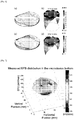
- FIG. 7 shows the measured EFS in the insert as a mesh plot in which the standard deviations are shown in black error bars. Note that the error in each position is low.
- FIG. 8 shows the phase contrast microscopy images of NIH/3T3 cells after 5 hours of cell migration and alignment experiment with the circular polymeric insert: (a) without EF stimulation; (b) with 300 mV/mm EF stimulation.
- FIG. 9( a ) shows the schematic representation of the angle to calculate directedness and orientation used in quantification of the cell migration and alignment measurements for the NIH/3T3 cells the images of which are shown in FIG. 8 .
- FIG. 9 ( b ) shows the resulting directedness of cell migration comparing cases of a rectangular channel and a circular insert of the embodiment of the present invention with and without EF stimulation in the cell migration and alignment measurements.
- FIG. 9( c ) shows the resulting orientation of the cell migration comparing cases of the rectangular channel and the circular insert of the embodiment of the present invention with and without EF stimulation in the cell migration and alignment measurements.
- Four asterisks indicate p ⁇ 0.0001 from Dunn's post-hoc test.
- FIG. 10 shows numerical simulation results of an insert for 15 mm well in 24-well plate according to another embodiment of the present invention.
- (a) shows a structure of the fluid channel of the embodiment for which EF evaluation was performed by simulation.
- (b) shows a simulation result of EF distribution.
- FIG. 11 shows the change in relative resistance between each arbitrary current line passing through each chord in the bottom chamber from the shortest chord to the diameter, by varying 0 from 0 degree to 90 degrees.
- EF uniform electric field
- a uniform EF with a coefficient of variation (CV) of 1.2% in the 6-well plate can be generated with an effective stimulation area percentage of 69.5%.
- NIH/3T3 mouse embryonic fibroblast cells are used to validate the performance of the 3D designed Poly(methyl methacrylate) (PMMA) inserts in a circular-shaped 6-well plate.
- the CAD based inserts can be easily scaled up (i.e., 100 mm dishes) to further increase effective stimulation area percentages, and also be implemented in commercially available cultureware for a wide variety of EF-related research such as EF-cell interaction and tissue regeneration studies.
- an optimized CAD structure is created to equalize the electrical resistance in the circular shaped bottom chamber to generate a uniform EF. As a result, a large area of contemporary cell culture dish can be stimulated with the uniform EF, and a higher cell yield can be obtained.
- FIG. 1( a ) The schematic diagram of an electrical stimulation setup using an assembled microfluidic chip according to an embodiment of the present invention is shown in FIG. 1( a ) .
- the entire microfluidic assembly in this embodiment consists of two main compartments.
- the bottom structure is a standard tissue culture polystyrene (TCPS) dish, which was mounted on an indium tin oxide (ITO) transparent heater on the microscope stage for temperature control required for cell culture operation (NPL No. 44).
- ITO indium tin oxide
- An insert part was affixed to the TCPS dish by a double sided tape adhered to the inner side of the dish (see FIG. 1( b ) ) (NPL No. 30).
- the polymeric insert was fabricated in layered Poly(methyl methacrylate) (PMMA) based on 3D computer-aided design to provide current rectifying chambers (CRC) and accommodate inlet, outlet, and salt bridges (SB) tubing interfaces.
- PMMA Poly(methyl methacrylate)
- CRC current rectifying chambers
- SB salt bridges
- FIG. 1( c ) Two identical rectangular channels (30 mm ⁇ 3 mm ⁇ 0.07 mm, L ⁇ W ⁇ H) were designed in a single chip. Similar channel dimensions have been used to study the electrotaxis of many cell lines (NPL No. 28).
- a uniform EF cannot be simply created in a circular area due to different electrical resistances originated from the length difference between the diameter of the circle and the length of any parallel chord. Creating a uniform EF in a circular shaped chamber with the largest possible surface area for cells is therefore challenging.
- cells occupy the bottom region of the bottom chamber (xy plane with diameter BC , with its centroid on the y-axis).
- the insert on top of the red region contains a thin liquid column (LC), residing on top of the bottom chamber.
- the assembled microdevice contains the bottom chamber, liquid column, and the current rectifying chambers (CRC, also termed as world-to-chip interface). See FIGS.
- FIG. 2( a ) is obtained from intersecting the liquid column (i.e., cylindrical sidewall LC) by two identical circular paraboloids (P 1 and P 2 ) whose apexes are located at the intersects of the midline of the AD
- the top profile of the sidewall is curved by the intersects.
- the remaining structure is an ideal microfluidic channel (i.e., a channel in which a fluid can be filled).
- the apex O of the paraboloid P1 coincides with the origin of the coordinate system.
- the paraboloid intersects with the liquid column at the curve
- FIG. 2( c ) an ideal structure depicted in FIG. 2( a ) is modified due to the need to have Salt bridge ports SB, and current rectifying chambers CRC which communicate with the remaining sidewall-shaped channel, and eventually communicate with the bottom part once the insert is inserted in a circular cultureware, for example.
- the top profile of the side channel in FIG. 2( c ) has a concave shape defined by the intersects.
- the model used the culture medium (Dulbecco's minimum essential medium, DMEM) as the ionic fluid that is filing in the created fluidic channel (having a shaped shown in the figures mentioned above), and the electric potential between the salt bridges SB was numerically simulated by solving steady-state Maxwell's equations using the alternating current/direct current (AC/DC) module in COMSOL for the structures of the fluidic channels shown in FIGS. 2( b ) and 2( c ) ( FIG. 2( b ) being a comparative example).
- AC/DC alternating current/direct current
- the conductivity of DMEM was measured to be 1.515 S/m (F74 with 3553-10D conductivity probe, Horiba, Japan), and this value was input in the COMSOL.
- a current density of 376.1 A/m2 aimed to create 100 mV/mm EF was set as the boundary condition at one salt bridge connection, and a ground potential was set at the other salt bridge.
- the electric field strength (EFS) at the bottom of the cell culture chamber were analyzed to assess the EF uniformity at a height of 10 ⁇ m.
- the EFS data points at positions where the liquid column resides were excluded.
- the numerical simulation results were exported and analyzed in Prism 6 software (Graphpad, USA).
- the 6-layered approximation model for both 6-well plates and 35 mm dishes was used for the fabrication of inserts. Patterns were designed in AutoCAD software (Autodesk, USA) and a 1 mm thick PMMA substrate (Comoglas, Kuraray, Japan) was cut based on the 3D design by using a CO2 laser cutter (VLS2.30, Universal Laser Systems, USA). The layers were aligned and joined by thermal bonding and polymeric tapes ( FIG. 1( b ) ). The same fabrication procedure as previously reported (NPL Nos. 47 and 48) was used. See these articles for details. Adapters for fitting connection were super-glued onto the inserts (406 Prism Instant Adhesive, Loctite, USA).
- the double sided tape for the insert was then affixed to the insert bottom (0.26 mm-thick, F9473PC, 3M, USA).
- the fabrication process of the simple rectangular channel chip shown in FIG. 1( c ) followed the same procedure as those for the circular insert.
- a Swiss murine embryonic fibroblast cell line with 3-day transfer protocol, NIH/3T3 (American Type Culture Collection, ATCC, USA) was used to demonstrate the electrical stimulation functionality with the polymeric circular insert and the rectangular microchannel described above.
- the cells were cultured on TCPS dishes in DMEM supplemented with 10% fetal bovine serum (FBS, Sigma-Aldrich, USA) at 37 degrees Celsius in a 95% relative humidity atmosphere supplemented with 5% CO 2 .
- the cells were sub-cultured twice a week by the recommended split ratio with trypsin-EDTA (Life Technologies, USA).
- trypsin-EDTA Life Technologies, USA.
- the cells supplemented with 10% dimethylsulfoxide were cryopreserved in liquid nitrogen.
- Each six-layered PMMA insert was disinfected and then affixed to individual wells in a 6-well TCPS plate or to a 100 mm TCPS dish (see FIG. 1( b ) ). Similar procedure was applied to the simple rectangular channel chip. To avoid entrapment of bubbles, which could disrupt EF uniformity and cause cell death, assembled microfluidic chips were primed by CO 2 gas, and filled with phosphate buffered saline (PBS, Life Technologies, USA) as shown in FIG. 3( a ) . Alternatively, the inserts can be affixed to the well bottom with the presence of PBS as shown in FIG. 3( b ) to further reduce bubble entrapment because the double sided tape has a limited adhesiveness in protein-free buffer solution.
- PBS phosphate buffered saline
- PBS pre-filled chamber was first replaced by serum-containing cell culture medium, and a suspension of 5 ⁇ 10 5 cells was subsequently loaded into the chamber through the salt bridge ports by gravity feeding. After overnight culture for cell adhesion and growth, fittings to supply culture medium and for salt bridges (containing 1.2% agarose (LE agarose, Lonza, USA) in PBS) were connected to the top of the inserts.
- a syringe pump (YSP-202, YMC, Japan) was used to exchange cell culture medium during the time lapse experiment at a flow rate of 100 ⁇ L/h for the circular insert and 20 ⁇ L/h for the rectangular channels to obtain similar shear stress acting on the cells.
- a DC voltage and the current was applied and measured by a high voltage source meter unit (2410, Keithley Instruments, USA) through Ag/AgCl electrodes in PBS.
- the required current for a 300 mV/mm EF in a chamber of 30 mm in diameter and 0.26 mm in thickness was 3.545 mA.
- the time lapse electrotaxis experiments were carried out on an automated microscope (Ti-E, Nikon, Japan).
- the phase contrast cell images were taken at different positions across the devices at an interval of 5 minutes.
- the morphology and centroid of cells were tracked manually for the duration of 5 hour time lapse using ImageJ analysis software package. All data are represented as the mean 95% confidence interval, which is 1.96 of standard error of mean, from triplicate experiments.
- Kruskal-Wallis one-way analysis of variance on ranks test with Dunn's multiple comparison post-hoc test were performed when non-Gaussian distribution of sample data was obtained from Bartlett's test.
- the confidence level to reject a null hypothesis between two data sets was set at 95%.
- a p-value (the probability for a true null hypothesis) less than 0.05 represents a statistical significance at 95% confidence.
- the current density at the bottom of the chamber was simulated for the plain polymeric insert illustrated in FIG. 2( b ) , the smooth polymeric insert with the 3D structure designed to intersect a liquid column by paraboloids according to an embodiment of the present invention, illustrated in FIG. 2( c ) , and the layered approximation for the PMMA insert according to an embodiment of the present invention, illustrated in FIG. 2( d ) .
- the liquid column height of 0.5 mm uniform EF can be obtained for a 0.26 mm thick chamber using a 6 mm thick insert.
- a 6 mm thick insert can also be designed for a 0.13 mm thick chamber by decreasing the liquid column thickness to 0.25 mm.
- FIG. 4 shows that without the 3D designed structure according to embodiments of the present invention, a large portion of the electrical current passes through the liquid column (side wall channel) instead of passing through the bottom chamber where the cells are located ( FIG. 4( a ) ) and creates a non-uniform EF ( FIG. 4( d ) ). With the 3D designed structure, the current lines are uniformly distributed in the bottom chamber, indicating that a uniform and directional EF was created ( FIG. 4( b ) ).
- FIG. 4( e ) shows the excellent uniformity of the EFS in the smooth 3D CAD insert. Further, a desired uniform decrease in the electric potential in the bottom chamber was confirmed.
- FIGS. 4( c ) and 4( f ) indicate that a uniform and directional EF being created by the approximated layered PMMA insert, the fluid channel structure of which is illustrated in FIG. 2( d ) .
- FIG. 5 shows the tolerance of mean EFS and CV in chamber thickness ranging from 0.2 mm to 0.3 mm. Although the chamber with a height of 0.26 mm has the smallest CV, all the simulation data of CV are smaller than 3%, demonstrating the versatility of the 3D CAD inserts presented herein.
- the 3D CAD approach can be easily adapted to further scale up the insert for larger petri dishes such as 100 mm TCPS dishes.
- Uniform EFs are established in both a theoretical smooth 3D insert and an approximated layered PMMA insert with a height of 10 mm for a 100 mm dish as shown in Table 1 above and FIG. 6 . This demonstrates the flexibility of the 3D CAD procedure and principle accordingly to the present invention for creating a uniform EF in a circular shaped device.
- FIG. 7 shows the experimentally measured EFS in the bottom chamber by the Ag/AgCl wire electrodes.
- the EFSs were measured between adjacent holes parallel to the electric current vector. The result shows that EFS of all measurement is 141.4 ⁇ 1.3 mV/mm with a CV of 0.92%, suggesting that a highly uniform EF is created in the bottom chamber.
- the 46 V electric potential created an expected 150 mV/mm EFS in the bottom chamber.
- the measured mean EFS is about 94.3% of the expected value, which coincides with the measurement errors reported in previous studies (NPL Nos. 29 and 30).
- the CV of the measured EFSs is comparable to the 1.30% value expected from numerical simulation (see Table 1 above).
- the effective stimulation area is defined as the area of the bottom chamber subtracting the area of where the liquid column resides.
- the effective stimulation area percentage is the ratio of the effective stimulation area over the total surface area of the TCPS dish.
- polymeric inserts according to embodiment of the present invention can provide uniform EF stimulation in more than 69% of the total area in a 6-well plate (or a 35 mm dish), and up to 90% in a 100 mm petri dish.
- the cell yields are higher when using polymeric inserts of the present invention for electrical stimulation. The higher cell yields will greatly benefit biochemical and molecular biology analysis.
- NIH/3T3 fibroblast cells were used to further verify the performance of the inserts according to embodiments of the present invention because they are known to align perpendicular to the EF vector after stimulation and they have shown cathodal electrotaxis (NPL Nos. 49-51).
- the phase contrast microscopy images of the cells under 300 mV/mm EF stimulation over 5 hours were taken and analyzed.
- FIG. 8 shows the phase contrast microscopy images of NIH/3T3 cells after 5 hours of experiment with the circular polymeric insert: (a) without EF stimulation; (b) with 300 mV/mm EF stimulation.
- the directedness of cell electrotaxis is defined as the average of
- ⁇ i is the angle between the Euclidean vector of each cell migration and the vector of applied EF (from anode to cathode), and n is the total number of analyzed cells (see FIG. 7( a ) ).
- a group of anodal moving cells holds a directedness of ⁇ 1; and a group of cathodal moving cells holds a directedness of +1. For a group of randomly migrating cells, the directedness is zero.
- the orientation is defined as the average of
- ⁇ i is the angle between the vector of applied EF and the long axis of a given cell
- n is the total number of cells analyzed.
- a group of cells aligned perpendicular to the EF holds an orientation of ⁇ 1; and a group of cells aligned in parallel to the applied EF holds an orientation of +1.
- the average orientation is zero.
- NIH/3T3 demonstrate strong cathodal electrotaxis under 300 mV/mm EF for 5 hours in both rectangular microfluidic chip and in the circular insert (p ⁇ 0.0001, in comparison to their respective controls without EF stimulation) ( FIG. 9( b ) ). While the directedness of NIH/3T3 cells in the polymer insert is slightly lower than that in the rectangular channels (0.78 ⁇ 0.02 v.s. 0.87 ⁇ 0.01), there was no statistical significance between the two (p>0.05). This deviation is possibly caused by un-optimized cell culture medium flow rate. While the shear stress in the polymer insert device and the rectangular channel is of the same order, the medium replenishment takes longer for the circular insert due to its bigger cross-sectional area.
- a removable polymeric insert can further aid cell recovery right after the EF stimulation, which can be accomplished by adding a perfluoropolymer-coated layer between the adhesive tape and the insert (NPL No. 30).
- the removable insert can be fabricated by using polydimethyl-siloxane as the insert material. The silicone rubber can reversibly bond to the TCPS dish with air-tight seal by the clip-on design, similar to those in a transwell insert.
- Inserts for 15 mm diameter well with a 24-well plate were fabricated as embodiments of the present invention and tested.
- the following paraboloids parameters, P 1 were used to modify a 2.3 mm-high cylinder with a shell thickness of 0.1 mm.
- the bottom chamber thickness was set to 0.05 mm.
- the very thin bottom chamber enables high electric field strength with low electric current input:
- this 3D structured insert in 15 mm diameter cultureware allows the use of two-photon polymerization technique in manufacturing the insert.
- a smooth structure instead of a layer-by-layer approximated multi-layered structure, can be fabricated, which is advantageous.
- the insert was designed to have minimized two interfaces, where salt bridges share the same interface with the inlet and outlet ports. This design also allows more space for easier and higher quality imaging.
- FIG. 10 shows the improved model with the new interface design.
- (b) shows the electric field distribution simulated at the bottom of the insert of the new design, performed by COMSOL Multiphysics.
- the electric field coefficient of variation (CV) in the numerical simulation of 15 mm model is 1.47%, which is excellent.
- the electrical resistance from one electrode to the other through any cross-section in the system must be the same.
- a three dimensionally (3D) designed structure is devised to equalize the electrical resistances through any arbitrary current line that passes through the bottom circular chamber.
- Such structure can be approximated as the liquid column (LC) intersected by two identical circular paraboloids (P1 and P2) at the intersection of midpoint between the two potentials and the diameter of the liquid column ( FIG. 2 ( b ) ).
- the resulting 3D CAD structure to equalize the electrical resistance can be created by trimming the liquid column (i.e., the cylindrical side channel) using the circular paraboloids. Boolean difference tool was used in the CAD software to carry out this step.
- the 3D CAD model can then be used to create a uniform EF in the assembled microfluidic chip. According to Ohm's law, electrical resistance R can be described as follows (NPL No. 60):
- ⁇ is the resistivity
- 1 is the length
- a cross-section is the cross-sectional area of the conductor.
- the arc length of the curves needs to be identified in this system to calculate the electrical resistance.
- the bottom chamber FIG. 2( a ) , the bottom circle
- the liquid column the cylindrical sidewall part
- the paraboloid P 1 its apex resides with the origin 0 in the liquid column and the yz plane.
- the projections of points A and D on xy plane are B and C.
- Equation 2 shows that a uniform EF distribution can be enabled when the ratio of the rectification of the curve M′ over the cross-sectional area of the liquid column equals to the ratio of AB + CD
- Equation 3 the shape of the circular paraboloid P 1 and P 2 can be determined as follows.
- the shape for the circular paraboloid P1 and P2 can be described as
- a 2 /b is the constant describing the level of curvature in xz and yz planes of the paraboloid, which defines the shape of the paraboloid.
- Equation 3 is difficult to solve explicitly due to elliptic integral of the second kind related to M′ along the paraboloid P 1 (Equation 7). But Equation 3 can be evaluated using Mathematica using the following code (Listing 1) by denoting a constant
- Listing 1 Example Code to Find the Descriptor for the Paraboloid P1: Plot[Evaluate[Integrate[Sqrt[225+ c ⁇ 2 ⁇ c ⁇ 2*Sin [ x] ⁇ 2, ⁇ x, 0, Pi ⁇ ]/ 0.5 ⁇ 2* c/ 0.5 ⁇ 30/0.26], ⁇ c, ⁇ 4.715, ⁇ 4.71 ⁇ ]
- the thickness of the liquid column denotes the thickness of the liquid column to be 0.5 mm, the diameter of the bottom chamber to be 30 mm, and the thickness of the bottom chamber to be 0.26 mm, the parameter
- the effective stimulation area percentage using the insert is at least 2 fold higher than that of existing EF stimulation devices.
- the yield of cells and its products can be increased for further biochemical analysis.
- the same CAD design principle can be easily scaled up or down to tailor design inserts for different sized TCPS dishes.
- Mass production of the polymeric insert can be achieved by CNC fabrication, injection molding, or other similar technology.
- the polymeric insert is useful for adapting electrical stimulation studies in a common laboratory due to the high effective stimulation area percentage and the ease of use.
- the polymeric insert is applicable for various studies.
- EF stimulation has been reported to induce synchronously contracting cardiac tissue (NPL Nos. 52 and 54-57).
- Osteoblastic differentiation from mesenchymal stem cells can be promoted under EF stimulation (NPL No. 58).
- Uniform EF stimulation to circular shaped area could also be useful to stimulate an entire brain slice or tissue slice.
Landscapes
- Health & Medical Sciences (AREA)
- Life Sciences & Earth Sciences (AREA)
- Engineering & Computer Science (AREA)
- Wood Science & Technology (AREA)
- Organic Chemistry (AREA)
- Chemical & Material Sciences (AREA)
- Bioinformatics & Cheminformatics (AREA)
- Zoology (AREA)
- Biotechnology (AREA)
- Genetics & Genomics (AREA)
- Microbiology (AREA)
- Sustainable Development (AREA)
- Biomedical Technology (AREA)
- Biochemistry (AREA)
- General Engineering & Computer Science (AREA)
- General Health & Medical Sciences (AREA)
- Clinical Laboratory Science (AREA)
- Physics & Mathematics (AREA)
- Cell Biology (AREA)
- Electromagnetism (AREA)
- Apparatus Associated With Microorganisms And Enzymes (AREA)
- Micro-Organisms Or Cultivation Processes Thereof (AREA)
Abstract
Description
- NPL 1: McCaig, C. D., Song, B. & Rajnicek, A. M. Electrical dimensions in cell science. J Cell Sci 122, 4267-4276 (2009).
- NPL 2: McCaig, C. D. Electric fields, contact guidance and the direction of nerve growth. J Embryol Exp Morphol 94, 245-255 (1986).
- NPL 3: Messerli, M. A. & Graham, D. M. Extracellular Electrical Fields Direct Wound Healing and Regeneration. Biol Bull 221, 79-92 (2011).
- NPL 4: Levin, M. Morphogenetic fields in embryogenesis, regeneration, and cancer: Non-local control of complex patterning. Biosystems 109, 243-261 (2012).
- NPL 5: Golberg, A. et al. Skin Rejuvenation with Non-Invasive Pulsed Electric Fields.
Scientific Reports 5, 10187 (2015). - NPL 6: Giugni, T. D., Braslau, D. L. & Haigler, H. T. Electric field-induced redistribution and postfield relaxation of epidermal growth factor receptors on A431 cells. J Cell Biol 104, 1291-1297 (1987).
- NPL 7: Rochlin, M. W. & Peng, H. B. Localization of intracellular proteins at acetylcholine receptor clusters induced by electric fields in Xenopus muscle cells. J Cell Sci 94, 73-83 (1989).
- NPL 8: McBain, V. A., Forrester, J. V. & McCaig, C. D. HGF, MAPK, and a Small Physiological Electric Field Interact during Corneal Epithelial Cell Migration. Investigative Opthalmology & Visual Science 44, 540 (2003).
- NPL 9: Zhao, M., Bai, H., Wang, E., Forrester, J. V. & McCaig, C. D. Electrical stimulation directly induces pre-angiogenic responses in vascular endothelial cells by signaling through VEGF receptors. J Cell Sci 117, 397-405 (2004).
- NPL 10: Zhang, H. L. & Peng, H. B. Mechanism of Acetylcholine Receptor Cluster Formation Induced by DC Electric Field. PLoS ONE 6, e26805 (2011).
- NPL 11: Djamgoz, M. B. A., Mycielska, M., Madeja, Z., Fraser, S. P. & Korohoda, W. Directional movement of rat prostate cancer cells in direct-current electric field involvement of voltage-gated Na+ channel activity. J Cell Sci 114, 2697-2705 (2001).
- NPL 12: Li, L. et al. Direct-Current Electrical Field Guides Neuronal Stem/Progenitor Cell Migration. STEM CELLS 26, 2193-2200 (2008).
- NPL 13: Ozkucur, N., Monsees, T. K., Perike, S., Do, H. Q. & Funk, R. H. W. Local Calcium Elevation and Cell Elongation Initiate Guided Motility in Electrically Stimulated Osteoblast-Like Cells. PLoS ONE 4, e6131 (2009).
- NPL 14: Ozkucur, N., Perike, S., Sharma, P. & Funk, R. H. Persistent directional cell migration requires ion transport proteins as direction sensors and membrane potential differences in order to maintain directedness. BMC Cell Biology 12, 4 (2011).
- NPL 15: Perike, S. et al. Phospho-NHE3 forms membrane patches and interacts with beta-actin to sense and maintain constant direction during cell migration. Experimental Cell Research 324, 13-29 (2014).
- NPL 16: McCaig, C. D. & Dover, P. J. Raised Cyclic-AMP and a Small Applied Electric Field Influence Differentiation, Shape, and Orientation of Single Myoblasts. Developmental Biology 158, 172-182 (1993).
- NPL 17: Trollinger, D. R., Rivkah Isseroff, R. & Nuccitelli, R. Calcium channel blockers inhibit galvanotaxis in human keratinocytes. J. Cell. Physiol. 193, 1-9 (2002).
- NPL 18: Zhao, M. et al. Electrical signals control wound healing through phosphatidylinositol-3-OH kinase-gamma and PTEN. Nature 442, 457-460 (2006).
- NPL 19: Wartenberg, M. et al. Direct current electrical fields induce apoptosis in oral mucosa cancer cells by NADPH oxidase-derived reactive oxygen species. Bioelectromagnetics 29, 47-54 (2008).
- NPL 20: Li, F. et al. Superoxide plays critical roles in electrotaxis of fibrosarcoma cells via activation of ERK and reorganization of the cytoskeleton. Free Radical Biology and Medicine 52, 1888-1896 (2012).
- NPL 21: Guo, X. et al. The Galvanotactic Migration of Keratinocytes is Enhanced by Hypoxic Preconditioning.
Scientific Reports 5, 10289 (2015). - NPL 22: Kao, Y.-C. et al. Modulating chemotaxis of lung cancer cells by using electric fields in a microfluidic device.
Biomicrofluidics 8, 024107 (2014). - NPL 23: Song, S., Han, H., Ko, U. H., Kim, J. & Shin, J. H. Collaborative effects of electric field and fluid shear stress on fibroblast migration.
Lab Chip 13, 1602-1611 (2013). - NPL 24: Boyden, S. The Chemotactic Effect of Mixtures of Antibody and Antigen on Polymorphonuclear Leucocytes. J Exp Med 115, 453-466 (1962).
- NPL 25: Erickson, C. A. & Nuccitelli, R. Embryonic fibroblast motility and orientation can be influenced by physiological electric fields. J Cell Biol 98, 296-307 (1984).
- NPL 26: Zhao, M., Agius-Fernandez, A., Forrester, J. V. & McCaig, C. D. Orientation and directed migration of cultured corneal epithelial cells in small electric fields are serum dependent. J Cell Sci 109, 1405-1414 (1996).
- NPL 27: Song, B. et al. Application of direct current electric fields to cells and tissues in vitro and modulation of wound electric field in vivo. Nat.
Protocols 2, 1479-1489 (2007). - NPL 28: Huang, C.-W., Cheng, J.-Y., Yen, M.-H. & Young, T.-H. Electrotaxis of lung cancer cells in a multiple-electric-field chip. Biosensors and Bioelectronics 24, 3510-3516 (2009).
- NPL 29: Huang, C.-W. et al. Gene Expression of Human Lung Cancer Cell Line CL1-5 in Response to a Direct Current Electric Field. PLoS ONE 6, e25928 (2011).
- NPL 30: Tsai, H.-F. et al. Evaluation of EGFR and RTK Signaling in the Electrotaxis of Lung Adenocarcinoma Cells under Direct-Current Electric Field Stimulation. PLoS ONE 8, e73418 (2013).
- NPL 31: Marotta, M., Bragos, R. & Gomez-Foix, A. M. Design and performance of an electrical stimulator for long-term contraction of cultured muscle cells. BioTechniques 36, 68-73 (2004).
- NPL 32: Genovese, J. A. et al. Electrostimulation induces cardiomyocyte predifferentiation of fibroblasts. Biochemical and Biophysical Research Communications 370, 450-455 (2008).
- NPL 33: Okutsu, S., Hatakeyama, H., Kanazaki, M., Tsubokawa, H. & Nagatomi, R. Electric Pulse Stimulation Induces NMDA Glutamate Receptor mRNA in NIH3t3 Mouse Fibroblasts. The Tohoku Journal of Experimental Medicine 215, 181-187 (2008).
- NPL 34: Yamasaki, K.-i. et al. Control of myotube contraction using electrical pulse stimulation for bio-actuator. Journal of Artificial Organs 12, 131-137 (2009).
- NPL 35: Burch, N. et al. Electric Pulse Stimulation of Cultured Murine Muscle Cells Reproduces Gene Expression Changes of Trained Mouse Muscle. PLoS ONE 5, e10970 (2010).
- NPL 36: Lin, F. et al. Lymphocyte Electrotaxis In Vitro and In Vivo. J Immunol 181, 2465-2471 (2008).
- NPL 37: Garcia-Sanchez, T. et al. Design and Implementation of a Microelectrode Assembly for Use on Noncontact In Situ Electroporation of Adherent Cells. J Membrane Biol 245, 617-624 (2012).
- NPL 38: Ahirwar, D. K. et al. Non-contact method for directing electrotaxis.
Scientific Reports 5, 11005 (2015). - NPL 39: Sachs, E., Cima, M., Williams, P., Brancazio, D. & Cornie, J. Three Dimensional Printing: Rapid Tooling and Prototypes Directly from a CAD Model. J. Eng. Ind 114, 481-488 (1992).
- NPL 40: Waldbaur, A., Rapp, H., La{umlaut over ( )}nge, K. & Rapp, B. E. Let there be chip-towards rapid prototyping of microfluidic devices: one-step manufacturing processes. Anal.
Methods 3, 2681-2716 (2011). - NPL 41: Waldbaur, A., Carneiro, B., Hettich, P., Wilhelm, E. & Rapp, B. E. Computer-aided microfluidics (CAMF): from digital 3d-CAD models to physical structures within a day.
Microfluid Nanofluid 15, 625-635 (2013). - NPL 42: Shallan, A. I., Smejkal, P., Corban, M., Guijt, R. M. & Breadmore, M. C. Cost-Effective Three-Dimensional Printing of Visibly Transparent Microchips within Minutes. Anal. Chem. 86, 3124-3130 (2014).
- NPL 43: Ho, C. M. B., Ng, S. H., Li, K. H. H. & Yoon, Y.-J. 3d printed microfluidics for biological applications.
Lab Chip 15, 3627-3637 (2015). - NPL 44: Tsai, H.-F., Peng, S.-W., Wu, C.-Y., Chang, H.-F. & Cheng, J.-Y. Electrotaxis of oral squamous cell carcinoma cells in a multiple-electric-field chip with uniform flow field. Biomicrofluidics 6, 34116 (2012).
- NPL 45: Hobbie, R. K. & Roth, B. J. Intermediate Physics for Medicine and Biology (Springer, 2015).
- NPL 46: Larson, R. & Edwards, B. H. Calculus Multivariable (Cengage Learning, 2009).
- NPL 47: Cheng, J.-Y., Wei, C.-W., Hsu, K.-H. & Young, T.-H. Direct-write laser micromachining and universal surface modification of PMMA for device development. Sensors and Actuators B: Chemical 99, 186-196 (2004).
- NPL 48: Cheng, J.-Y., Yen, M.-H., Kuo, C.-T. & Young, T.-H. A transparent cell-culture microchamber with a variably controlled concentration gradient generator and flow field rectifier.
Biomicrofluidics 2, 24105 (2008). - NPL 49: Brown, M. J. & Loew, L. M. Electric field-directed fibroblast locomotion involves cell surface molecular reorganization and is calcium independent. J Cell Biol 127, 117-128 (1994).
- NPL 50: Finkelstein, E. et al. Roles of microtubules, cell polarity and adhesion in electric-field-mediated motility of 3t3 fibroblasts. J Cell Sci 117, 1533-1545 (2004).
- NPL 51: Huang, Y.-J., Samorajski, J., Kreimer, R. & Searson, P. C. The Influence of Electric Field and Confinement on Cell Motility. PLoS ONE 8, e59447 (2013).
- NPL 52: Tandon, N. et al. Electrical stimulation systems for cardiac tissue engineering. Nat.
Protocols 4, 155-173 (2009). - NPL 53: Babona-Pilipos, R., Droujinine, I. A., Popovic, M. R. & Morshead, C. M. Adult subependymal neural precursors, but not differentiated cells, undergo rapid cathodal migration in the presence of direct current electric fields. PLoS ONE 6, e23808 (2011).
- NPL 54: McDonough, P. M. & Glembotski, C. C. Induction of atrial natriuretic factor and myosin light chain-2 gene expression in cultured ventricular myocytes by electrical stimulation of contraction. J. Biol. Chem. 267, 11665-11668 (1992).
- NPL 55: Radisic, M. et al. Functional assembly of engineered myocardium by electrical stimulation of cardiac myocytes cultured on scaffolds. Proc. Natl. Acad. Sci. U.S.A. 101, 18129-18134 (2004).
- NPL 56: Serena, E. et al. Electrical stimulation of human embryonic stem cells: Cardiac differentiation and the generation of reactive oxygen species. Experimental Cell Research 315, 3611-3619 (2009).
- NPL 57: Barash, Y. et al. Electric Field Stimulation Integrated into Perfusion Bioreactor for Cardiac Tissue Engineering. Tissue Engineering Part C:
Methods 16, 1417-1426 (2010). - NPL 58: Hronik-Tupaj, M., Rice, W. L., Cronin-Golomb, M., Kaplan, D. L. & Georgakoudi, I. Osteoblastic differentiation and stress response of human mesenchymal stem cells exposed to alternating current electric fields.
BioMedical Engineering OnLine 10, 9 (2011). - NPL 59: Marotta, M., Bragos, R. & Gomez-Foix, A. M. Design and performance of an electrical stimulator for long-term contraction of cultured muscle cells. BioTechniques 36, 68-73 (2004).
- NPL 60: Hobbie, R. K. & Roth, B. J. Intermediate Physics for Medicine and Biology (Springer, 2015).
- NPL 61: Larson, R. & Edwards, B. H. Calculus Multivariable (Cengage Learning, 2009).
with its centroid on the y-axis). The insert on top of the red region contains a thin liquid column (LC), residing on top of the bottom chamber. The assembled microdevice contains the bottom chamber, liquid column, and the current rectifying chambers (CRC, also termed as world-to-chip interface). See
the

| TABLE 1 |
| Simulated mean EFS and CV from polymeric inserts with |
| the bottom chamber at the height of 0.26 mm and 0.13 mm |
| 0.26 mm thick | 0.13 mm thick |
| EFS | EFS | ||||
| (mV/mm) | CV | (mV/mm) | CV | ||
| 6-well | Plain | 75.03 ± 5.94 | 7.91% | 74.0 ± 10.06 | 6.80% |
| 3D | 96.10 ± 1.18 | 1.22% | 96.47 ± 1.38 | 1.43% | |
| CAD | |||||
| Layered | 89.06 ± 1.63 | 1.30% | 88.92 ± 1.69 | 1.90% | |
| 100 | 3D | 97.44 ± 1.47 | 1.51% | 97.29 ± 2.61 | 2.68% |
| mm | CAD | ||||
| Layered | 94.73 ± 1.59 | 1.67% | 94.55 ± 2.72 | 2.88% | |
| TABLE 2 |
| Stimulation area and effective stimulation percentage of in vitro EF stimulation devices |
| Stimulation | Total | Effective | |||
| Thickness | area | area | stimulation area | ||
| Report | Substrate | (mm) | (cm2) | (cm2) | percentage |
| Song et al.[NPL No. 27] | 100 mm TCPS | 0.13-0.16 | 2.2 | 55 | 4.0% |
| Song et al. [NPL No. 27] | 100 mm TCPS | 0.13-0.16 | 22 | 55 | 36.0% |
| Tandon et al. [NPL No. 52] | 60 mm glass | 0.25 | 6.5 | 21 | 30.9% |
| Babona-Pilipos et al. | 60 mm TCPS | 0.17 | 2.2 | 21 | 10.5% |
| [NPL No. 53] | |||||
| Huang et al. [NPL No. 29] | 150 mm TCPS | 0.07 | 19.2 | 152 | 12.6% |
| Tsai et al. [NPL No. 30] | 150 mm TCPS | 0.6 | 69 | 152 | 45.4% |
| This disclosure | 6-well TCPS | 0.26 | 6.61 | 9.5 | 69.5% |
| 35 mm TCPS | |||||
| 6-well TCPS | 0.13 | 6.83 | 9.5 | 71.9% | |
| 35 mm TCPS | |||||
| 100 mm TCPS | 0.26 | 49 | 55 | 89.0% | |
| 100 mm TCPS | 0.13 | 49.6 | 55 | 90.3% | |
| TABLE 3 |
| Quantitative analysis of cells tracked |
| in time-lapse electrotaxis experiments |
| orien- | orien- | ||||||||
| tation | tation | ||||||||
| N | directednes | |
0 | SEM | 5 | SEM | |||
| 300 mV/mm | 106 | 0.8753 | 0.014 | −0.07 | 0.069 | −0.60 | 0.053 |
| rectangular | |||||||
| 300 mV/mm | 110 | 0.7758 | 0.021 | −0.04 | 0.062 | −0.49 | 0.056 |
| circular insert | |||||||
| Control | 118 | −0.03 | 0.059 | −0.05 | 0.067 | −0.07 | 0.062 |
| rectangular | |||||||
| channel | |||||||
| Control | 103 | 0.01 | 0.064 | −0.07 | 0.069 | −0.09 | 0.07 |
| circular insert | |||||||
| N: number of cells analyzed; SEM: standard error of mean. | |||||||
| TABLE 4 |
| Summary of completed and optimized designs for different sizes of cell cultureware |
| 6-well | 6-well | 24-well | |||
| Well size | (30 mm) | (30 mm) | (15 mm) | 100 |
100 mm |
| Height | 3.9 | mm | 4.5 | mm | 2.3 | |
8 | |
8 | mm |
| Cylinder thickness | 0.5 | mm | 0.25 | mm | 0.1 | mm | 0.5 | mm | 0.25 | mm |
| b/a2 | −0.01047 | −0.01047 | −0.02653 | −0.00393 | −0.00393 |
| Chamber thickness | 0.26 | mm | 0.13 | mm | 0.05 | mm | 0.26 | mm | 0.13 | mm |
| Number of |
4 | 4 | 2 | 4 | 4 |
| Cell culture area | 6.61 | cm2 | 6.83 | cm2 | 1.54 | cm2 | 49 | cm2 | 49.6 | cm2 |
| Effective stimulation | 69.5% | 71.9% | 81.1% | 89.0% | 90.3% |
| area percentage | |||||
| EPS CV (%) | 1.22% | 1.43% | 1.47% | 1.51% | 2.68% |
For paraboloid P1, its apex resides with the
M′=
(white dashed line,
(
equivalently,
R M′ =R
If we assume the resistivity is the same across the sample, then the following is satisfied.
and
x 2+(y−r)2 =r 2, (5)
where r is the radius of the column (also the radius of the circular bottom chamber). The coordinates of points O, A, and D can be presented in parametric form
Plot[Evaluate[Integrate[Sqrt[225+c^2−c^2*Sin [x]^2,{x,0,Pi}]/0.5−2*c/0.5−30/0.26],{c,−4.715,−4.71}]
Table[Evaluate[2*Integrate[Sqrt[225+4.713^2−4.713^2*Sin [x]^2],{x,0,y}/0.5+2*(−4.713)*(1−Sin [y])/0.5+2*15*Sin [Pi/2−y]/0.26],{y,0,Pi/2,Pi/180}]
θ∈(0°,90°)
corresponds to θ=0 and that of
Claims (5)
Priority Applications (1)
| Application Number | Priority Date | Filing Date | Title |
|---|---|---|---|
| US15/759,734 US10851337B2 (en) | 2015-09-18 | 2016-09-16 | 3D polymeric insert to apply uniform electric field in circular cultureware |
Applications Claiming Priority (3)
| Application Number | Priority Date | Filing Date | Title |
|---|---|---|---|
| US201562220841P | 2015-09-18 | 2015-09-18 | |
| PCT/JP2016/004255 WO2017047098A1 (en) | 2015-09-18 | 2016-09-16 | 3d polymeric insert to apply uniform electric field in circular cultureware |
| US15/759,734 US10851337B2 (en) | 2015-09-18 | 2016-09-16 | 3D polymeric insert to apply uniform electric field in circular cultureware |
Publications (2)
| Publication Number | Publication Date |
|---|---|
| US20180251717A1 US20180251717A1 (en) | 2018-09-06 |
| US10851337B2 true US10851337B2 (en) | 2020-12-01 |
Family
ID=58288530
Family Applications (1)
| Application Number | Title | Priority Date | Filing Date |
|---|---|---|---|
| US15/759,734 Active 2037-05-23 US10851337B2 (en) | 2015-09-18 | 2016-09-16 | 3D polymeric insert to apply uniform electric field in circular cultureware |
Country Status (4)
| Country | Link |
|---|---|
| US (1) | US10851337B2 (en) |
| EP (1) | EP3350310B1 (en) |
| JP (1) | JP2018526999A (en) |
| WO (1) | WO2017047098A1 (en) |
Citations (12)
| Publication number | Priority date | Publication date | Assignee | Title |
|---|---|---|---|---|
| US3661746A (en) | 1969-05-15 | 1972-05-09 | Petrolite Corp | Uniform electric field treatment |
| US4804450A (en) | 1985-12-11 | 1989-02-14 | Shimadzu Corporation | Apparatus for fusing cells |
| US4948089A (en) | 1986-08-27 | 1990-08-14 | Wayss & Freytag Aktiengesellschaft | Concrete mold with arrangement for mounting tubular components |
| US5011586A (en) | 1988-08-12 | 1991-04-30 | Mj Research, Inc. | Constrained uniform field gel electrophoresis |
| US5134070A (en) | 1990-06-04 | 1992-07-28 | Casnig Dael R | Method and device for cell cultivation on electrodes |
| US5717371A (en) | 1994-10-25 | 1998-02-10 | Sandia Corporation | Generating highly uniform electromagnetic field characteristics |
| US6686193B2 (en) | 2000-07-10 | 2004-02-03 | Vertex Pharmaceuticals, Inc. | High throughput method and system for screening candidate compounds for activity against target ion channels |
| WO2008088240A2 (en) | 2006-12-25 | 2008-07-24 | Alexey Vasilyevich Savinykh | Method for forming a uniform electric field in an electrically conductive medium and a device for carrying out said method |
| US7824901B2 (en) | 2003-12-01 | 2010-11-02 | Cyto Pulse Sciences, Inc. | Non-uniform electric field chamber for cell fusion |
| US20130260434A1 (en) | 2010-06-22 | 2013-10-03 | Lonza Cologne Gmbh | Method and electrode assembly for treating adherent cells |
| WO2013167185A1 (en) | 2012-05-09 | 2013-11-14 | Universitat Politècnica De Catalunya | Electrode assembly for generating electric field pulses to perform electroporation to a biological sample |
| US20140186941A1 (en) | 2011-06-10 | 2014-07-03 | Guangbin Zhou | Cell culture vessel, and culture device equipped with same |
-
2016
- 2016-09-16 US US15/759,734 patent/US10851337B2/en active Active
- 2016-09-16 EP EP16845972.5A patent/EP3350310B1/en active Active
- 2016-09-16 WO PCT/JP2016/004255 patent/WO2017047098A1/en not_active Ceased
- 2016-09-16 JP JP2018513563A patent/JP2018526999A/en not_active Ceased
Patent Citations (12)
| Publication number | Priority date | Publication date | Assignee | Title |
|---|---|---|---|---|
| US3661746A (en) | 1969-05-15 | 1972-05-09 | Petrolite Corp | Uniform electric field treatment |
| US4804450A (en) | 1985-12-11 | 1989-02-14 | Shimadzu Corporation | Apparatus for fusing cells |
| US4948089A (en) | 1986-08-27 | 1990-08-14 | Wayss & Freytag Aktiengesellschaft | Concrete mold with arrangement for mounting tubular components |
| US5011586A (en) | 1988-08-12 | 1991-04-30 | Mj Research, Inc. | Constrained uniform field gel electrophoresis |
| US5134070A (en) | 1990-06-04 | 1992-07-28 | Casnig Dael R | Method and device for cell cultivation on electrodes |
| US5717371A (en) | 1994-10-25 | 1998-02-10 | Sandia Corporation | Generating highly uniform electromagnetic field characteristics |
| US6686193B2 (en) | 2000-07-10 | 2004-02-03 | Vertex Pharmaceuticals, Inc. | High throughput method and system for screening candidate compounds for activity against target ion channels |
| US7824901B2 (en) | 2003-12-01 | 2010-11-02 | Cyto Pulse Sciences, Inc. | Non-uniform electric field chamber for cell fusion |
| WO2008088240A2 (en) | 2006-12-25 | 2008-07-24 | Alexey Vasilyevich Savinykh | Method for forming a uniform electric field in an electrically conductive medium and a device for carrying out said method |
| US20130260434A1 (en) | 2010-06-22 | 2013-10-03 | Lonza Cologne Gmbh | Method and electrode assembly for treating adherent cells |
| US20140186941A1 (en) | 2011-06-10 | 2014-07-03 | Guangbin Zhou | Cell culture vessel, and culture device equipped with same |
| WO2013167185A1 (en) | 2012-05-09 | 2013-11-14 | Universitat Politècnica De Catalunya | Electrode assembly for generating electric field pulses to perform electroporation to a biological sample |
Non-Patent Citations (72)
| Title |
|---|
| Ahirwar, D. K. et al. Non-contact method for directing electrotaxis. Scientific Reports 5, 11005 (2015). (Mentioned in paragraph Nos. 6 and 8 of the as-filed specification.). |
| Babona-Pilipos, R., Droujinine, I. A., Popovic, M. R. & Morshead, C. M. Adult subependymal neural precursors, but not differentiated cells, undergo rapid cathodal migration in the presence of direct current electric fields. PLoS ONE 6, e23808 (2011). (Mentioned in paragraph Nos. 8 and 67 of the as-filed specification.). |
| Barash, Y. et al. Electric Field Stimulation Integrated into Perfusion Bioreactor for Cardiac Tissue Engineering. Tissue Engineering Part C: Methods 16, 1417-1426 (2010). (Mentioned in paragraph Nos. 8 and 67 of the as-filed specification.). |
| Boyden, S. The Chemotactic Effect of Mixtures of Antibody and Antigen on Polymorphonuclear Leucocytes. J Exp Med 115, 453-466 (1962). (Mentioned in paragraph Nos. 4 and 8 of the as-filed specification.). |
| Brown, M. J. & Loew, L M. Electric field-directed fibroblast locomotion involves cell surface molecular reorganization and is calcium independent. J Cell Biol 127, 117-128 (1994). (Mentioned in paragraph Nos. 8 and 40 of the as-filed specification.). |
| Burch, N. et al. Electric Pulse Stimulation of Cultured Murine Muscle Cells Reproduces Gene Expression Changes of Trained Mouse Muscle. PLoS ONE 5, e10970 (2010). (Mentioned in paragraph Nos. 6 and 8 of the as-filed specification.). |
| Cheng, J.-Y., Wei, C.-W., Hsu, K-H. & Young, T.-H. Direct-write laser micromachining and universal surface modification of PMMA for device development. Sensors and Actuators B: Chemical 99, 186-196 (2004). (Mentioned in paragraph Nos. 8 and 24 of the as-filed specification.). |
| Cheng, J.-Y., Yen, M.-H., Kuo, C.-T. & Young, T.-H. A transparent cell-culture microchamber with a variably controlled concentration gradient generator and flow field rectifier. Biomicrofluidics 2, 24105 (2008). (Mentioned in paragraph Nos. 8 and 24 of the as-filed specification.). |
| Djamgoz, M. B. A., Mycielska, M., Madeja, Z., Fraser, S. P. & Korohoda, W. Directional movement of rat prostate cancer cells in direct-current electric field involvement of voltage-gated Na+ channel activity. J Cell Sci 114, 2697-2705 (2001). (Mentioned in paragraph Nos. 3 and 8 of the as-filed specification.). |
| Erickson, C. A. & Nuccitelli, R. Embryonic fibroblast motility and orientation can be influenced by physiological electric fields. J Cell Biol 98, 296-307 (1984). (Mentioned in paragraph Nos. 5, 8, and 25 of the as-filed specification.). |
| Extended (supplementary) European Search Report dated Sep. 6, 2018, issued in counterpart European Application No. 16845972.5. (5 pages). |
| Finkelstein, E. et al. Roles of microtubules, cell polarity and adhesion in electric-field-mediated motility of 3t3 fibroblasts. J Cell Sci 117, 1533-1545 (2004). (Mentioned in paragraph Nos. 8 and 40 of the as-filed specification.). |
| Garcia-Sanchez, T. et al. Design and Implementation of a Microelectrode Assembly for Use on Noncontact In Situ Electroporation of Adherent Cells. J Membrane Biol 245, 617-624 (2012). (Mentioned in paragraph Nos. 6 and 8 of the as-filed specification.). |
| Garcia-Sanchez, Tomas et al., "Design and Implementation of a Microelectrode Assembly for Use on Noncontact In Situ Electroporation of Adherent Cells", J. Membrane Biol., 2012, vol. 245, No. 10, p. 617-624, ISSN 1432-1424 (Cited in the ISR.). |
| Genovese, J. A. et al. Electrostimulation induces cardiomyocyte predifferentiation of fibroblasts. Biochemical and Biophysical Research Communications 370, 450-455 (2008). (Mentioned in paragraph Nos. 6 and 8 of the as-filed specification.). |
| Giugni, T. D., Braslau, D. L. & Haigler, H. T. Electric field-induced redistribution and postfield relaxation of epidermal growth factor receptors on A431 cells. J Cell Biol 104, 1291-1297 (1987). (Mentioned in paragraph Nos. 3 and 8 of the as-filed specification.). |
| Golberg, A. et al. Skin Rejuvenation with Non-Invasive Pulsed Electric Fields. Scientific Reports 5, 10187 (2015). (Mentioned in paragraph Nos. 2 and 8 of the as-filed specification.). |
| Gross et al., "Optical imaging of cell membrane potential changes induced by applied electric fields", Biophysical Journal, vol. 50, Aug. 1986, pp. 339-348. |
| Guo, X. et al. The Galvanotactic Migration of Keratinocytes is Enhanced by Hypoxic Preconditioning. Scientific Reports 5, 10289 (2015). (Mentioned in paragraph Nos. 3 and 8 of the as-filed specification.). |
| Ho, C. M. B., Ng, S. H., Li, K. H. H. & Yoon, Y.-J. 3d printed microfluidics for biological applications. Lab Chip 15, 3627-3637 (2015). (Mentioned in paragraph Nos. 7-8 of the as-filed specification.). |
| Hobbie, R. K. & Roth, B. J. Intermediate Physics for Medicine and Biology (Springer, 2015). (Mentioned in paragraph Nos. 8 and 19 of the as-filed specification. Mentioned in paragraph 56, described as NPL No. 60 of the as-filed specification.). |
| Hronik-Tupaj, M., Rice, W. L., Cronin-Golomb, M., Kaplan, D. L. & Georgakoudi, I. Osteoblastic differentiation and stress response of human mesenchymal stem cells exposed to alternating current electric fields. BioMedical Engineering OnLine 10, 9 (2011). (Mentioned in paragraph Nos. 8 and 67 of the as-filed specification.). |
| Huang, C.-W. et al. Gene Expression of Human Lung Cancer Cell Line CL1-5 in Response to a Direct Current Electric Field. PLoS ONE 6, e25928 (2011). (Mentioned in paragraph Nos. 5-6, 8, and 36 of the as-filed specification.). |
| Huang, C.-W., Cheng, J.-Y., Yen, M.-H. & Young, T.-H. Electrotaxis of lung cancer cells in a multiple-electric-field chip. Biosensors and Bioelectronics 24, 3510-3516 (2009). (Mentioned in paragraph Nos. 5, 8, 17, and 25 of the as-filed specification.). |
| Huang, Ching-Wen et al., "Gene Expression of Human Lung Cancer Cell Line CL1-5in Response to a Direct Current Electric Field", PLoS ONE, 2011, vol. 6, No. 10, e25928, p. 1-13, ISSN 1932-6203 (Cited in the ISR.). |
| Huang, Y.-J., Samorajski, J., Kreimer, R. & Searson, P. C. The Influence of Electric Field and Confinement on Cell Motility. PLoS ONE 8, e59447 (2013). (Mentioned in paragraph No. 8 of the as-filed specification.). |
| International Search Report (ISR) issued in PCT/JP2016/004255 dated Dec. 2016. |
| Jen et al., "A handheld pre-concentrator for the rapid collection of cancerous cells using di-electrophoresis generated by circular microelectrodes in stepping electric fields", Biomicrofluidics 5, 034101 (2011). |
| Kao, Y.-C. et al. Modulating chemotaxis of lung cancer cells by using electric fields in a microfluidic device. Biomicrofluidics 8, 024107 (2014). (Mentioned in paragraph Nos. 4 and 8 of the as-filed specification.). |
| Larson, R. & Edwards, B. H. Calculus Multivariable (Cengage Learning, 2009). (Mentioned in paragraph Nos. 8 and 20 of the as-filed specification. Mentioned in paragraph 60, described as NPL No. 61 of the as-filed specification.). |
| Levin, M. Morphogenetic fields in embryogenesis, regeneration, and cancer: Non-local control of complex patterning. Biosystems 109, 243-261 (2012). (Mentioned in paragraph Nos. 2 and 8 of the as-filed specification.). |
| Li, F. et al. Superoxide plays critical roles in electrotaxis of fibrosarcoma cells via activation of ERK and reorganization of the cytoskeleton. Free Radical Biology and Medicine 52, 1888-1896 (2012). (Mentioned in paragraph Nos. 3 and 8 of the as-filed specification.). |
| Li, L. et al. Direct-Current Electrical Field Guides Neuronal Stem/Progenitor Cell Migration. Stem Cells 26, 2193-2200 (2008). (Mentioned in paragraph Nos. 3 and 8 of the as-filed specification.). |
| Lin, F. et al. Lymphocyte Electrotaxis In Vitro and In Vivo. J Immunol 181, 2465-2471 (2008). (Mentioned in paragraph Nos. 6 and 8 of the as-filed specification.). |
| Marotta, M., Bragos, R. & Gomez-Foix, A. M. Design and performance of an electrical stimulator for long-term contraction of cultured muscle cells. BioTechniques 36, 68-73 (2004). (Mentioned in paragraph No. 8 of the as-filed specification.). |
| Marotta, M., Bragos, R. & Gomez-Foix, A. M. Design and performance of an electrical stimulator for long-term contraction of cultured muscle cells. BioTechniques 36, 68-73 (2004). (Mentioned in paragraph Nos. 6 and 8 of the as-filed specification.). |
| McBain, V. A., Forrester, J. V. & McCaig, C. D. HGF, MAPK, and a Small Physiological Electric Field Interact during Corneal Epithelial Cell Migration. Investigative Opthalmology & Visual Science 44, 540 (2003). (Mentioned in paragraph Nos. 3 and 8 of the as-filed specification.). |
| McCaig, C. D. & Dover, P. J. Raised Cyclic-AMP and a Small Applied Electric Field Influence Differentiation, Shape, and Orientation of Single Myoblasts. Developmental Biology 158, 172-182 (1993). (Mentioned in paragraph Nos. 3 and 8 of the as-filed specification.). |
| McCaig, C. D. Electric fields, contact guidance and the direction of nerve growth. J Embryol Exp Morphol 94, 245-255 (1986). (Mentioned in paragraph Nos. 2 and 8 of the as-filed specification.). |
| McCaig, C. D., Song, B. & Rajnicek, A. M. Electrical dimensions in cell science. J Cell Sci 122, 4267-4276 (2009). (Mentioned in paragraph Nos. 2 and 8 of the as-filed specification.). |
| McDonough, P. M. & Glembotski, C. C. Induction of atrial natriuretic factor and myosin light chain-2 gene expression in cultured ventricular myocytes by electrical stimulation of contraction. J. Biol. Chem. 267, 11665-11668 (1992). (Mentioned in paragraph Nos. 8 and 67 of the as-filed specification.). |
| Messerli, M. A. & Graham, D. M. Extracellular Electrical Fields Direct Wound Healing and Regeneration. Biol Bull 221, 79-92 (2011). (Mentioned in paragraph Nos. 2 and 8 of the as-filed specification.). |
| Okutsu, S., Hatakeyama, H., Kanazaki, M., Tsubokawa, H. & Nagatomi, R. Electric Pulse Stimulation Induces NMDA Glutamate Receptor mRNA in NIH3t3 Mouse Fibroblasts. The Tohoku Journal of Experimental Medicine 215, 181-187 (2008). (Mentioned in paragraph Nos. 6 and 8 of the as-filed specification.). |
| Ozkucur, N., Monsees, T. K., Perike, S., Do, H. Q. & Funk, R. H. W. Local Calcium Elevation and Cell Elongation Initiate Guided Motility in Electrically Stimulated Osteoblast-Like Cells. PLoS ONE 4, e6131 (2009). (Mentioned in paragraph Nos. 3 and 8 of the as-filed specification.). |
| Ozkucur, N., Perike, S., Sharma, P. & Funk, R. H. Persistent directional cell migration requires ion transport proteins as direction sensors and membrane potential differences in order to maintain directedness. BMC Cell Biology 12, 4 (2011). (Mentioned in paragraph Nos. 3 and 8 of the as-filed specification.). |
| Perike, S. et al. Phospho-NHE3 forms membrane patches and interacts with beta-actin to sense and maintain constant direction during cell migration. Experimental Cell Research 324, 13-29 (2014). (Mentioned in paragraph Nos. 3 and 8 of the as-filed specification.). |
| Radisic, M. et al. Functional assembly of engineered myocardium by electrical stimulation of cardiac myocytes cultured on scaffolds. Proc. Natl. Acad. Sci. U.S.A. 101, 18129-18134 (2004). (Mentioned in paragraph Nos. 8 and 67 of the as-filed specification.). |
| Rochlin, M. W. & Peng, H. B. Localization of intracellular proteins at acetylcholine receptor clusters induced by electric fields in Xenopus muscle cells. J Cell Sci 94, 73-83 (1989). (Mentioned in paragraph Nos. 3 and 8 of the as-filed specification.). |
| Sachs, E., Cima, M., Williams, P., Brancazio, D. & Cornie, J. Three Dimensional Printing: Rapid Tooling and Prototypes Directly from a CAD Model. J. Eng. Ind 114, 481-488 (1992). (Mentioned in paragraph Nos. 7-8 of the as-filed specification.). |
| Serena, E. et al. Electrical stimulation of human embryonic stem cells: Cardiac differentiation and the generation of reactive oxygen species. Experimental Cell Research 315, 3611-3619 (2009). (Mentioned in paragraph Nos. 8 and 67 of the as-filed specification.). |
| Shallan, A. I., Smejkal, P., Corban, M., Guijt, R. M. & Breadmore, M. C. Cost-Effective Three-Dimensional Printing of Visibly Transparent Microchips within Minutes. Anal. Chem. 86, 3124-3130 (2014). (Mentioned in paragraph Nos. 7-8 of the as-filed specification.). |
| Shen, A., "Getting the most from microfluidic platforms for biomedical applications (Conference Presentation)", Progress in Biomedical Optics and Imaging, SPIE-International Society For Optical Engineering, Mar. 24, 2016, vol. 9705; pp. 970510-970510; cited in Extended (supplementary) European Search Report dated Sep. 6, 2018. |
| Shen, A., "Getting the most from microfluidic platforms for biomedical applications (Conference Presentation)", SPIE Digital Library, Apr. 26, 2016, pp. 1-1; cited in Extended (supplementary) European Search Report dated Sep. 6, 2018. |
| Shen, A., "Getting the most from microfluidic platforms for biomedical applications (Conference Presentation)", Progress in Biomedical Optics and Imaging, SPIE—International Society For Optical Engineering, Mar. 24, 2016, vol. 9705; pp. 970510-970510; cited in Extended (supplementary) European Search Report dated Sep. 6, 2018. |
| Shilpee et al., "Vertical electric field stimulated neural cell functionality on porous amorphous carbon electrodes", Biomaterials 34 (2013) 9252-9263. |
| Song, B. et al. Application of direct current electric fields to cells and tissues in vitro and modulation of wound electric field in vivo. Nat. Protocols 2, 1479-1489 (2007). (Mentioned in paragraph Nos. 5 and 8 of the as-filed specification.). |
| Song, S., Han, H., Ko, U. H., Kim, J. & Shin, J. H. Collaborative effects of electric field and fluid shear stress on fibroblast migration. Lab Chip 13, 1602-1611 (2013). (Mentioned in paragraph Nos. 4 and 8 of the as-filed specification.). |
| Tandon, N. et al. Electrical stimulation systems for cardiac tissue engineering. Nat. Protocols 4, 155-173 (2009). (Mentioned in paragraph Nos. 8 and 67 of the as-filed specification.). |
| Trollinger, D. R., Rivkah Isseroff, R. & Nuccitelli, R. Calcium Channel Blockers Inhibit Galvanotaxis in Human Keratinocytes. J. Cell. Physiol. 193, 1-9 (2002). (Mentioned in paragraph Nos. 3 and 8 of the as-filed specification.). |
| Tsai, H.-F. et al. Evaluation of EGFR and RTK Signaling in the Electrotaxis of Lung Adenocarcinoma Cells under Direct-Current Electric Field Stimulation. PLoS ONE 8, e73418 (2013). (Mentioned in paragraph Nos. 5-6, 8, 17, 25, 36, and 48 of the as-filed specification.). |
| Tsai, H.-F., Peng, S.-W., Wu, C.-Y., Chang, H.-F. & Cheng, J.-Y. Electrotaxis of oral squamous cell carcinoma cells in a multiple-electric-field chip with uniform flow field. Biomicrofluidics 6, 34116 (2012). (Mentioned in paragraph Nos. 8, 17, and 25 of the as-filed specification.). |
| Tsai, Hsieh-Fu et al., "Evaluation of EGFR and RTK Signaling in the Electrotaxis of Lung Adenocarcinoma Cell sunder Direct-Current Electric Field Stimulation", Plos ONE, Aug. 2013, vol. 8, No. 8, e73418, p. 1-20, ISSN 1932-6203 (Cited in the ISR.). |
| Tsai, Hsieh-Fu et al., "Uniform electric field generation in circular multi-well culture plates using polymeric inserts", Sci. Rep., May 2016, vol. 6, 26222, p. 1-11, ISSN 2045-2322 (Cited in the ISR.). |
| Waldbaur, A., Cameiro, B., Hettich, P., Wilhelm, E. & Rapp, B. E. Computer-aided microfluidics (CAMF): from digital 3d-CAD models to physical structures within a day. Microfluid Nanofluid 15, 625-635 (2013). (Mentioned in paragraph Nos. 7-8 of the as-filed specification.). |
| Waldbaur, A., Rapp, H., La{umlaut over ( )}nge, K & Rapp, B. E. Let there be chip-towards rapid prototyping of microfluidic devices: one-step manufacturing processes. Anal. Methods 3, 2681-2716 (2011). (Mentioned in paragraph Nos. 7-8 of the as-filed specification.). |
| Wartenberg, M. et al. Direct Current Electrical Fields Induce Apoptosis in Oral Mucosa Cancer Cells by NADPH Oxidase-Derived Reactive Oxygen Species. Bioelectromagnetics 29, 47-54 (2008). (Mentioned in paragraph Nos. 3 and 8 of the as-filed specification.). |
| Written Opinion (PCT/ISA/237) issued in PCT/JP2016/004255 dated Dec. 2016. |
| Yamasaki, K.-i. et al. Control of myotube contraction using electrical pulse stimulation for bio-actuator. Journal of Artiticial Organs 12, 131-137 (2009). (Mentioned in paragraph Nos. 6 and 8 of the as-filed specification.). |
| Zhang, H. L. & Peng, H. B. Mechanism of Acetylcholine Receptor Cluster Formation Induced by DC Electric Field. PLoS ONE 6, e26805 (2011). (Mentioned in paragraph Nos. 3 and 8 of the as-filed specification.). |
| Zhao, M. et al. Electrical signals control wound healing through phosphatidylinositol-3-OH kinase-gamma and PTEN. Nature 442, 457-460 (2006). (Mentioned in paragraph Nos. 3 and 8 of the as-filed specification.). |
| Zhao, M., Agius-Fernandez, A., Forrester, J. V. & McCaig, C. D. Orientation and directed migration of cultured corneal epithelial cells in small electric fields are serum dependent. J Cell Sci 109, 1405-1414 (1996). (Mentioned in paragraph Nos. 5 and 8 of the as-filed specification.). |
| Zhao, M., Bai, H., Wang, E., Forrester, J. V. & McCaig, C. D. Electrical stimulation directly induces pre-angiogenic responses in vascular endothelial cells by signaling through VEGF receptors. J Cell Sci 117, 397-405 (2004). (Mentioned in paragraph Nos. 3 and 8 of the as-filed specification.). |
Also Published As
| Publication number | Publication date |
|---|---|
| WO2017047098A1 (en) | 2017-03-23 |
| JP2018526999A (en) | 2018-09-20 |
| EP3350310A4 (en) | 2018-10-10 |
| US20180251717A1 (en) | 2018-09-06 |
| EP3350310B1 (en) | 2019-05-22 |
| EP3350310A1 (en) | 2018-07-25 |
Similar Documents
| Publication | Publication Date | Title |
|---|---|---|
| Cortese et al. | Influence of electrotaxis on cell behaviour | |
| Tsai et al. | Uniform electric field generation in circular multi-well culture plates using polymeric inserts | |
| Kim et al. | Biological applications of microfluidic gradient devices | |
| Shim et al. | Overriding native cell coordination enhances external programming of collective cell migration | |
| Pucihar et al. | A time-dependent numerical model of transmembrane voltage inducement and electroporation of irregularly shaped cells | |
| Talele et al. | Modelling single cell electroporation with bipolar pulse parameters and dynamic pore radii | |
| Smith et al. | The spatially distributed dynamic transmembrane voltage of cells and organelles due to 10 ns pulses: meshed transport networks | |
| Li et al. | Cell migration microfluidics for electrotaxis-based heterogeneity study of lung cancer cells | |
| Song et al. | Collaborative effects of electric field and fluid shear stress on fibroblast migration | |
| Honegger et al. | Microfluidic neurite guidance to study structure-function relationships in topologically-complex population-based neural networks | |
| US20230093728A1 (en) | Cell immortalization via vortex electroporation gene delivery | |
| Liu et al. | Bulk electroporation for intracellular delivery directly driven by mechanical stimulus | |
| Baranes et al. | Comparing transcriptome profiles of neurons interfacing adjacent cells and nanopatterned substrates reveals fundamental neuronal interactions | |
| EP3350310B1 (en) | 3d polymeric insert to apply uniform electric field in circular cultureware | |
| Lo et al. | A microfluidic device for studying the production of reactive oxygen species and the migration in lung cancer cells under single or coexisting chemical/electrical stimulation | |
| KR102523910B1 (en) | Method and apparatus for applying electrical stimulation to microfluidic cells | |
| Kotnik et al. | The cell in the electric field | |
| Sharma et al. | A mathematical model to expedite electroporation based vaccine development for COVID-19 | |
| Zhao et al. | Guiding Cell Migration with Electric Fields: Mechanisms and Applications of Galvanotaxis | |
| Dou et al. | Cell migration with microfluidic chips | |
| Sarkar et al. | Osteo Intraorganelle Nanoporation under Electrical Stimuli | |
| Caramazza et al. | Galvanotactic phenomenon induced by non-contact electrostatic field: investigation in a scratch assay | |
| Breinyn | Collective Behaviors in Exogenously Controlled Epithelia | |
| Sarkar et al. | A Theoretical Study of Bi-Layer Osteoblast Cell Electroporation in a Micro Channel at Radio Frequency | |
| Joshi | Simulations of Membrane Effects of Cells After Exposure to Ultrashort Pulses |
Legal Events
| Date | Code | Title | Description |
|---|---|---|---|
| AS | Assignment |
Owner name: OKINAWA INSTITUTE OF SCIENCE AND TECHNOLOGY SCHOOL CORPORATION, JAPAN Free format text: ASSIGNMENT OF ASSIGNORS INTEREST;ASSIGNORS:TSAI, HSIEH-FU;FRIED, AMY SHEN;CHENG, JI-YEN;SIGNING DATES FROM 20180206 TO 20180214;REEL/FRAME:045193/0342 Owner name: OKINAWA INSTITUTE OF SCIENCE AND TECHNOLOGY SCHOOL Free format text: ASSIGNMENT OF ASSIGNORS INTEREST;ASSIGNORS:TSAI, HSIEH-FU;FRIED, AMY SHEN;CHENG, JI-YEN;SIGNING DATES FROM 20180206 TO 20180214;REEL/FRAME:045193/0342 |
|
| FEPP | Fee payment procedure |
Free format text: ENTITY STATUS SET TO UNDISCOUNTED (ORIGINAL EVENT CODE: BIG.); ENTITY STATUS OF PATENT OWNER: SMALL ENTITY |
|
| FEPP | Fee payment procedure |
Free format text: ENTITY STATUS SET TO SMALL (ORIGINAL EVENT CODE: SMAL); ENTITY STATUS OF PATENT OWNER: SMALL ENTITY |
|
| STPP | Information on status: patent application and granting procedure in general |
Free format text: DOCKETED NEW CASE - READY FOR EXAMINATION |
|
| STPP | Information on status: patent application and granting procedure in general |
Free format text: NON FINAL ACTION MAILED |
|
| STPP | Information on status: patent application and granting procedure in general |
Free format text: RESPONSE TO NON-FINAL OFFICE ACTION ENTERED AND FORWARDED TO EXAMINER |
|
| STPP | Information on status: patent application and granting procedure in general |
Free format text: NON FINAL ACTION MAILED |
|
| STPP | Information on status: patent application and granting procedure in general |
Free format text: NOTICE OF ALLOWANCE MAILED -- APPLICATION RECEIVED IN OFFICE OF PUBLICATIONS |
|
| STPP | Information on status: patent application and granting procedure in general |
Free format text: PUBLICATIONS -- ISSUE FEE PAYMENT RECEIVED |
|
| STPP | Information on status: patent application and granting procedure in general |
Free format text: PUBLICATIONS -- ISSUE FEE PAYMENT VERIFIED |
|
| STCF | Information on status: patent grant |
Free format text: PATENTED CASE |
|
| MAFP | Maintenance fee payment |
Free format text: PAYMENT OF MAINTENANCE FEE, 4TH YR, SMALL ENTITY (ORIGINAL EVENT CODE: M2551); ENTITY STATUS OF PATENT OWNER: SMALL ENTITY Year of fee payment: 4 |