US10849077B2 - Interference management for new radio-spectrum sharing (NR-SS) - Google Patents
Interference management for new radio-spectrum sharing (NR-SS) Download PDFInfo
- Publication number
- US10849077B2 US10849077B2 US15/878,771 US201815878771A US10849077B2 US 10849077 B2 US10849077 B2 US 10849077B2 US 201815878771 A US201815878771 A US 201815878771A US 10849077 B2 US10849077 B2 US 10849077B2
- Authority
- US
- United States
- Prior art keywords
- network operating
- transmission power
- power level
- txop
- wireless communication
- Prior art date
- Legal status (The legal status is an assumption and is not a legal conclusion. Google has not performed a legal analysis and makes no representation as to the accuracy of the status listed.)
- Active, expires
Links
- 238000001228 spectrum Methods 0.000 title claims abstract description 61
- 230000005540 biological transmission Effects 0.000 claims abstract description 335
- 238000004891 communication Methods 0.000 claims abstract description 153
- 238000000034 method Methods 0.000 claims abstract description 58
- 238000001514 detection method Methods 0.000 claims description 79
- 238000012544 monitoring process Methods 0.000 claims description 10
- 238000007726 management method Methods 0.000 description 18
- 230000006870 function Effects 0.000 description 13
- 230000007246 mechanism Effects 0.000 description 10
- 238000010586 diagram Methods 0.000 description 9
- 238000005516 engineering process Methods 0.000 description 7
- 238000012545 processing Methods 0.000 description 5
- 230000011664 signaling Effects 0.000 description 5
- 238000013459 approach Methods 0.000 description 4
- 238000006243 chemical reaction Methods 0.000 description 4
- 101150096310 SIB1 gene Proteins 0.000 description 2
- 101150039363 SIB2 gene Proteins 0.000 description 2
- 230000008901 benefit Effects 0.000 description 2
- 230000007774 longterm Effects 0.000 description 2
- 230000008520 organization Effects 0.000 description 2
- 239000002245 particle Substances 0.000 description 2
- 230000008569 process Effects 0.000 description 2
- 230000004044 response Effects 0.000 description 2
- 239000007787 solid Substances 0.000 description 2
- 238000000638 solvent extraction Methods 0.000 description 2
- 238000007792 addition Methods 0.000 description 1
- 230000002411 adverse Effects 0.000 description 1
- 238000003491 array Methods 0.000 description 1
- 238000013475 authorization Methods 0.000 description 1
- 230000001413 cellular effect Effects 0.000 description 1
- 125000004122 cyclic group Chemical group 0.000 description 1
- 230000003247 decreasing effect Effects 0.000 description 1
- 230000001419 dependent effect Effects 0.000 description 1
- 238000012886 linear function Methods 0.000 description 1
- 239000000463 material Substances 0.000 description 1
- 238000010295 mobile communication Methods 0.000 description 1
- 238000012986 modification Methods 0.000 description 1
- 230000004048 modification Effects 0.000 description 1
- 230000003287 optical effect Effects 0.000 description 1
- 238000005192 partition Methods 0.000 description 1
- 238000001945 resonance Rayleigh scattering spectroscopy Methods 0.000 description 1
- 230000008054 signal transmission Effects 0.000 description 1
- 230000007727 signaling mechanism Effects 0.000 description 1
- 238000006467 substitution reaction Methods 0.000 description 1
- 230000001360 synchronised effect Effects 0.000 description 1
Images






Classifications
-
- H—ELECTRICITY
- H04—ELECTRIC COMMUNICATION TECHNIQUE
- H04W—WIRELESS COMMUNICATION NETWORKS
- H04W52/00—Power management, e.g. Transmission Power Control [TPC] or power classes
- H04W52/04—Transmission power control [TPC]
- H04W52/18—TPC being performed according to specific parameters
- H04W52/24—TPC being performed according to specific parameters using SIR [Signal to Interference Ratio] or other wireless path parameters
- H04W52/243—TPC being performed according to specific parameters using SIR [Signal to Interference Ratio] or other wireless path parameters taking into account interferences
-
- H—ELECTRICITY
- H04—ELECTRIC COMMUNICATION TECHNIQUE
- H04W—WIRELESS COMMUNICATION NETWORKS
- H04W52/00—Power management, e.g. Transmission Power Control [TPC] or power classes
- H04W52/04—Transmission power control [TPC]
- H04W52/18—TPC being performed according to specific parameters
- H04W52/24—TPC being performed according to specific parameters using SIR [Signal to Interference Ratio] or other wireless path parameters
- H04W52/243—TPC being performed according to specific parameters using SIR [Signal to Interference Ratio] or other wireless path parameters taking into account interferences
- H04W52/244—Interferences in heterogeneous networks, e.g. among macro and femto or pico cells or other sector / system interference [OSI]
-
- H—ELECTRICITY
- H04—ELECTRIC COMMUNICATION TECHNIQUE
- H04W—WIRELESS COMMUNICATION NETWORKS
- H04W16/00—Network planning, e.g. coverage or traffic planning tools; Network deployment, e.g. resource partitioning or cells structures
- H04W16/14—Spectrum sharing arrangements between different networks
-
- H—ELECTRICITY
- H04—ELECTRIC COMMUNICATION TECHNIQUE
- H04W—WIRELESS COMMUNICATION NETWORKS
- H04W52/00—Power management, e.g. Transmission Power Control [TPC] or power classes
- H04W52/04—Transmission power control [TPC]
- H04W52/30—Transmission power control [TPC] using constraints in the total amount of available transmission power
- H04W52/34—TPC management, i.e. sharing limited amount of power among users or channels or data types, e.g. cell loading
- H04W52/346—TPC management, i.e. sharing limited amount of power among users or channels or data types, e.g. cell loading distributing total power among users or channels
-
- H—ELECTRICITY
- H04—ELECTRIC COMMUNICATION TECHNIQUE
- H04W—WIRELESS COMMUNICATION NETWORKS
- H04W52/00—Power management, e.g. Transmission Power Control [TPC] or power classes
- H04W52/04—Transmission power control [TPC]
- H04W52/30—Transmission power control [TPC] using constraints in the total amount of available transmission power
- H04W52/36—Transmission power control [TPC] using constraints in the total amount of available transmission power with a discrete range or set of values, e.g. step size, ramping or offsets
-
- H—ELECTRICITY
- H04—ELECTRIC COMMUNICATION TECHNIQUE
- H04W—WIRELESS COMMUNICATION NETWORKS
- H04W52/00—Power management, e.g. Transmission Power Control [TPC] or power classes
- H04W52/04—Transmission power control [TPC]
- H04W52/38—TPC being performed in particular situations
-
- H—ELECTRICITY
- H04—ELECTRIC COMMUNICATION TECHNIQUE
- H04W—WIRELESS COMMUNICATION NETWORKS
- H04W72/00—Local resource management
- H04W72/04—Wireless resource allocation
- H04W72/044—Wireless resource allocation based on the type of the allocated resource
- H04W72/0473—Wireless resource allocation based on the type of the allocated resource the resource being transmission power
-
- H04W72/082—
-
- H—ELECTRICITY
- H04—ELECTRIC COMMUNICATION TECHNIQUE
- H04W—WIRELESS COMMUNICATION NETWORKS
- H04W72/00—Local resource management
- H04W72/50—Allocation or scheduling criteria for wireless resources
- H04W72/54—Allocation or scheduling criteria for wireless resources based on quality criteria
- H04W72/541—Allocation or scheduling criteria for wireless resources based on quality criteria using the level of interference
-
- H—ELECTRICITY
- H04—ELECTRIC COMMUNICATION TECHNIQUE
- H04W—WIRELESS COMMUNICATION NETWORKS
- H04W74/00—Wireless channel access
- H04W74/08—Non-scheduled access, e.g. ALOHA
- H04W74/0808—Non-scheduled access, e.g. ALOHA using carrier sensing, e.g. carrier sense multiple access [CSMA]
-
- H—ELECTRICITY
- H04—ELECTRIC COMMUNICATION TECHNIQUE
- H04W—WIRELESS COMMUNICATION NETWORKS
- H04W52/00—Power management, e.g. Transmission Power Control [TPC] or power classes
- H04W52/04—Transmission power control [TPC]
- H04W52/38—TPC being performed in particular situations
- H04W52/383—TPC being performed in particular situations power control in peer-to-peer links
Definitions
- This application relates to wireless communication systems, and more particularly to managing interference among communications of network operating entities of different power classes over a frequency spectrum.
- Wireless communications systems are widely deployed to provide various types of communication content such as voice, video, packet data, messaging, broadcast, and so on. These systems may be capable of supporting communication with multiple users by sharing the available system resources (e.g., time, frequency, and power).
- Examples of such multiple-access systems include code division multiple access (CDMA) systems, time division multiple access (TDMA) systems, frequency division multiple access (FDMA) systems, and orthogonal frequency division multiple access (OFDMA) systems, (e.g., a Long Term Evolution (LTE) system).
- CDMA code division multiple access
- TDMA time division multiple access
- FDMA frequency division multiple access
- OFDMA orthogonal frequency division multiple access
- a wireless multiple-access communications system may include a number of base stations (BSs), each simultaneously supporting communication for multiple communication devices, which may be otherwise known as user equipment (UE).
- BSs base stations
- UE user equipment
- a wireless communications system may operate over a shared spectrum, meaning that the wireless communications system includes one or more frequency bands that may be shared by multiple network operating entities.
- the shared spectrum may include unlicensed spectrum and/or licensed spectrum.
- multiple network operating entities may share their licensed spectrum with each other to better utilize the spectrum.
- multiple network operating entities may obtain a licensed spectrum together.
- Use of the available band spectrum may then be subject to a contention procedure that may involve the use of a medium-sensing procedure.
- a medium-sensing procedure For example, to avoid interference between different devices or between devices operated by different network operating entities, the wireless communications system may employ medium-sensing procedures, such as listen-before-talk (LBT), to ensure a particular channel is clear before transmitting a message.
- LBT listen-before-talk
- Medium-sensing procedures may utilize substantial signaling overhead and may result in increased latency, thus adversely affecting the use of shared spectrum by multiple network operating entities.
- a priority-based coordinated access scheme for spectrum sharing.
- a shared spectrum is partitioned into multiple time periods. Each time period is designated for a particular type of access. For example, a time period can be allocated to a particular network operator for exclusive access of the shared spectrum, where no reservation from the particular network operator is required.
- a time period can be shared among multiple network operators on a priority basis with reservations. For example, a high priority network operator may have priority or guaranteed access of the shared spectrum in a time period, but requires a prior reservation of the time period. When the high priority network operator does not reserve the time period, a low priority network operator can opportunistically access the shared spectrum in the time period.
- Interference can occur when network operators of different power classes shared the same spectrum.
- a high power class node may transmit at a substantially higher transmission power level than a low power class node.
- the reservation signal may not be detected by a high power class node due to the disparity between the transmission power levels of the high power class node and the low power class node.
- the missed detection can cause the high power class node to proceed to reserve the channel and transmit in the same time period as the low power class node. Since the high power class node transmits at a higher transmission power level than the low power class node, the transmission of the high power class node can cause noticeable interference to the transmission of the low power class node. Accordingly, improved procedures for managing interference among communications of network operators of different power classes are desirable.
- a method of wireless communication includes identifying, by a first wireless communication device associated with a first network operating entity of a plurality of network operating entities, a transmission opportunity (TXOP) in a spectrum shared by the plurality of network operating entities; determining, by the first wireless communication device, a first transmission power level; and communicating, by the first wireless communication device with a second wireless communication device associated with the first network operating entity based on the first transmission power level, data during the TXOP.
- TXOP transmission opportunity
- an apparatus in an additional aspect of the disclosure, includes a processor configured to identify, a transmission opportunity (TXOP) in a spectrum shared by a plurality of network operating entities, wherein the apparatus is associated with a first network operating entity of the plurality of network operating entities; and determine a first transmission power level; and a transceiver configured to communicate, with a second wireless communication device associated with the first network operating entity based on the first transmission power level, data during the TXOP.
- TXOP transmission opportunity
- a computer-readable medium having program code recorded thereon includes code for causing a first wireless communication device to identify a transmission opportunity (TXOP) in a spectrum shared by a plurality of network operating entities, wherein the first wireless communication device is associated with a first network operating entity of the plurality of network operating entities; code for causing the first wireless communication device to determine a first transmission power level; and code for causing the first wireless communication device to communicate, with a second wireless communication device associated with the first network operating entity based on the first transmission power level, data during the TXOP.
- TXOP transmission opportunity
- an apparatus includes means for identifying a transmission opportunity (TXOP) in a spectrum shared by a plurality of network operating entities, wherein the apparatus is associated with a first network operating entity of the plurality of network operating entities; means for determining a first transmission power level; and means for communicating, with a second wireless communication device associated with the first network operating entity based on the first transmission power level, data during the TXOP.
- TXOP transmission opportunity
- FIG. 1 illustrates a wireless communication network according to embodiments of the present disclosure.
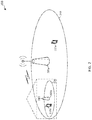
- FIG. 2 illustrates an example of a wireless communications network including a macro cell and a pico cell accessing a spectrum according to embodiments of the present disclosure.
- FIG. 3 illustrates an interference scenario between a high-power macro cell and a lower-power pico cell according to embodiments of the present disclosure.
- FIG. 4 illustrates an interference scenario between a high-power macro cell and a lower-power pico cell according to embodiments of the present disclosure.
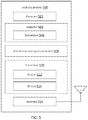
- FIG. 5 is a block diagram of an exemplary user equipment (UE) according to embodiments of the present disclosure.
- FIG. 6 is a block diagram of an exemplary base station (BS) according to embodiments of the present disclosure.
- FIG. 7 illustrates a reservation signal detection threshold configuration scheme for interference management according to embodiments of the present disclosure.
- FIG. 8 illustrates a transmission power level configuration scheme for interference management according to embodiments of the present disclosure.
- FIG. 9 illustrates a transmission power level configuration scheme for interference management according to embodiments of the present disclosure.
- FIG. 10 illustrates a signaling diagram of an interference management method according to embodiments of the present disclosure.
- FIG. 11 illustrates a reservation signal detection threshold configuration scheme for interference management according to embodiments of the present disclosure.
- FIG. 12 is a flow diagram of a method of managing interference among communications of multiple network operating entities over a spectrum according to embodiments of the present disclosure.
- CDMA code-division multiple access
- TDMA time-division multiple access
- FDMA frequency-division multiple access
- OFDMA orthogonal frequency-division multiple access
- SC-FDMA single-carrier FDMA
- a CDMA network may implement a radio technology such as Universal Terrestrial Radio Access (UTRA), cdma2000, etc.
- UTRA includes Wideband CDMA (WCDMA) and other variants of CDMA.
- cdma2000 covers IS-2000, IS-95 and IS-856 standards.
- a TDMA network may implement a radio technology such as Global System for Mobile Communications (GSM).
- GSM Global System for Mobile Communications
- An OFDMA network may implement a radio technology such as Evolved UTRA (E-UTRA), Ultra Mobile Broadband (UMB), IEEE 802.11 (Wi-Fi), IEEE 802.16 (WiMAX), IEEE 802.20, Flash-OFDMA, etc.
- E-UTRA and E-UTRA are part of Universal Mobile Telecommunication System (UMTS).
- 3GPP Long Term Evolution (LTE) and LTE-Advanced (LTE-A) are new releases of UMTS that use E-UTRA.
- UTRA, E-UTRA, UMTS, LTE, LTE-A and GSM are described in documents from an organization named “3rd Generation Partnership Project” (3GPP).
- CDMA2000 and UMB are described in documents from an organization named “3rd Generation Partnership Project 2” (3GPP2).
- the techniques described herein may be used for the wireless networks and radio technologies mentioned above as well as other wireless networks and radio technologies, such as a next generation (e.g., 5 th Generation (5G) operating in mm
- a low-power node may increase a total transmission energy by increasing the transmission power, reducing a transmission bandwidth, and/or reducing a number of active tones.
- Another approach is to increase the time span of reservation signals from low-power nodes, and thus increasing the total transmission energy.
- Such approaches may be effective when there is no significant power difference between low-power pico nodes and high-power macro nodes.
- the power difference between low-power pico nodes and high-power macro nodes can be large. For example, it may be difficult to account for a 20 decibels (dB) power difference by increasing the transmission power and/or duration of the reservation signals at the low-power pico nodes as it may significantly increase the system overhead of the low-power pico nodes.
- dB decibels
- the present disclosure describes interference management mechanisms in a spectrum shared by multiple network operating entities of different power classes.
- a spectrum is time-partitioned into transmission opportunities (TXOPs).
- TXOPs transmission opportunities
- Each TXOP is designated for prioritized use by a prioritized or high priority network operating entity and opportunistic use by low priority network operating entities based on reservations.
- the disclosed embodiments minimize interference from high-power macro nodes to low-power pico nodes by adjusting reservation signal detection thresholds and/or transmission power levels.
- a low priority node can determine a threshold for detecting reservation signals from high priority nodes based on operating transmission power levels of the high priority nodes.
- the operating transmission power level refers to the nominal transmission power level during normal operation.
- a low priority node can determine a threshold for detecting reservation signals from high priority nodes based on an operating transmission power level of the low priority node.
- a low priority node can adjust the transmission power level to a level comparable to an operating transmission power level of a high priority node.
- a central authority e.g., a spectrum access system (SAS)
- SAS spectrum access system
- the adjustments of the reservation signal detection thresholds at the high-power nodes can improve the detectability of low-power nodes' reservation signals.
- the adjustments of transmission power levels of opportunistic transmissions at the high-power nodes can reduce interference from high-power nodes to low-power nodes.
- the disclosed embodiments can reduce interference and improve resource utilization efficiency.
- the disclosed embodiments are suitable for use in coverage areas including macro cells (e.g., with high-power nodes) and small cells or pico cells (e.g., with low-power nodes).
- the disclosed embodiments are compatible with any wireless communication protocol.
- FIG. 1 illustrates a wireless communication network 100 according to embodiments of the present disclosure.
- the network 100 includes BSs 105 , UEs 115 , and a core network 130 .
- the network 100 operates over a shared spectrum.
- the shared spectrum may be unlicensed or partially licensed to one or more network operators. Access to the spectrum may be limited and may be controlled by a separate coordination entity.
- the network 100 may be a LTE or LTE-A network.
- the network 100 may be a millimeter wave (mmW) network, a new radio (NR) network, a 5G network, or any other successor network to LTE.
- the network 100 may be operated by more than one network operator. Wireless resources may be partitioned and arbitrated among the different network operators for coordinated communication between the network operators over the network 100 .
- the BSs 105 may wirelessly communicate with the UEs 115 via one or more BS antennas. Each BS 105 may provide communication coverage for a respective geographic coverage area 110 .
- the term “cell” can refer to this particular geographic coverage area of a BS and/or a BS subsystem serving the coverage area, depending on the context in which the term is used.
- a BS 105 may provide communication coverage for a macro cell, a pico cell, a femto cell, and/or other types of cell.
- a macro cell generally covers a relatively large geographic area (e.g., several kilometers in radius) and may allow unrestricted access by UEs with service subscriptions with the network provider.
- a pico cell may generally cover a relatively smaller geographic area and may allow unrestricted access by UEs with service subscriptions with the network provider.
- a femto cell may also generally cover a relatively small geographic area (e.g., a home) and, in addition to unrestricted access, may also provide restricted access by UEs having an association with the femto cell (e.g., UEs in a closed subscriber group (CSG), UEs for users in the home, and the like).
- a BS for a macro cell may be referred to as a macro BS.
- a BS for a pico cell may be referred to as a pico BS.
- a BS for a femto cell may be referred to as a femto BS or a home BS.
- the BSs 105 a , 105 b and 105 c are examples of macro BSs for the coverage areas 110 a , 110 b and 110 c , respectively.
- the BSs 105 d is an example of a pico BS or a femto BS for the coverage area 110 d .
- a BS 105 may support one or multiple (e.g., two, three, four, and the like) cells.
- Communication links 125 shown in the network 100 may include uplink (UL) transmissions from a UE 115 to a BS 105 , or downlink (DL) transmissions, from a BS 105 to a UE 115 .
- the UEs 115 may be dispersed throughout the network 100 , and each UE 115 may be stationary or mobile.
- a UE 115 may also be referred to as a mobile station, a subscriber station, a mobile unit, a subscriber unit, a wireless unit, a remote unit, a mobile device, a wireless device, a wireless communications device, a remote device, a mobile subscriber station, an access terminal, a mobile terminal, a wireless terminal, a remote terminal, a handset, a user agent, a mobile client, a client, or some other suitable terminology.
- a UE 115 may also be a cellular phone, a personal digital assistant (PDA), a wireless modem, a wireless communication device, a handheld device, a tablet computer, a laptop computer, a cordless phone, a personal electronic device, a handheld device, a personal computer, a wireless local loop (WLL) station, an Internet of things (IoT) device, an Internet of Everything (IoE) device, a machine type communication (MTC) device, an appliance, an automobile, or the like.
- PDA personal digital assistant
- WLL wireless local loop
- IoT Internet of things
- IoE Internet of Everything
- MTC machine type communication
- the BSs 105 may communicate with the core network 130 and with one another.
- the core network 130 may provide user authentication, access authorization, tracking, Internet Protocol (IP) connectivity, and other access, routing, or mobility functions.
- IP Internet Protocol
- At least some of the BSs 105 e.g., which may be an example of an evolved NodeB (eNB) or an access node controller (ANC)
- eNB evolved NodeB
- ANC access node controller
- the BSs 105 may communicate, either directly or indirectly (e.g., through core network 130 ), with each other over backhaul links 134 (e.g., X1, X2, etc.), which may be wired or wireless communication links.
- backhaul links 134 e.g., X1, X2, etc.
- Each BS 105 may also communicate with a number of UEs 115 through a number of other BSs 105 , where the BS 105 may be an example of a smart radio head.
- various functions of each BS 105 may be distributed across various BSs 105 (e.g., radio heads and access network controllers) or consolidated into a single BS 105 .
- the network 100 utilizes orthogonal frequency division multiplexing (OFDM) on the downlink and single-carrier frequency division multiplexing (SC-FDM) on the UL.
- OFDM and SC-FDM partition the system bandwidth into multiple (K) orthogonal subcarriers, which are also commonly referred to as tones, bins, or the like.
- K orthogonal subcarriers
- Each subcarrier may be modulated with data.
- modulation symbols are sent in the frequency domain with OFDM and in the time domain with SC-FDM.
- the spacing between adjacent subcarriers may be fixed, and the total number of subcarriers (K) may be dependent on the system bandwidth.
- the system bandwidth may also be partitioned into sub-bands.
- the BSs 105 can assign or schedule transmission resources (e.g., in the form of time-frequency resource blocks) for DL and UL transmissions in the network 100 .
- the communication can be in the form of radio frames.
- a radio frame may be divided into a plurality of subframes, for example, about 10.
- Each subframe can be divided into slots, for example, about 2.
- FDD frequency-division duplexing
- simultaneous UL and DL transmissions may occur in different frequency bands.
- each subframe includes an UL subframe in an UL frequency band and a DL subframe in a DL frequency band.
- TDD time-division duplexing
- UL and DL transmissions occur at different time periods using the same frequency band.
- a subset of the subframes (e.g., DL subframes) in a radio frame may be used for DL transmissions and another subset of the subframes (e.g., UL subframes) in the radio frame may be used for UL transmissions.
- each DL or UL subframe may have pre-defined regions for transmissions of reference signals, control information, and data.
- Reference signals are pre-determined signals that facilitate the communications between the BSs 105 and the UEs 115 .
- a reference signal can have a particular pilot pattern or structure, where pilot tones may span across an operational bandwidth or frequency band, each positioned at a pre-defined time and a pre-defined frequency.
- a BS 105 may transmit cell-specific reference signals (CRSs) and/or channel state information-reference signals (CSI-RSs) to enable a UE 115 to estimate a DL channel.
- CRSs cell-specific reference signals
- CSI-RSs channel state information-reference signals
- a UE 115 may transmit sounding reference signals (SRSs) to enable a BS 105 to estimate an UL channel.
- Control information may include resource assignments and protocol controls.
- Data may include protocol data and/or operational data.
- the BSs 105 and the UEs 115 may communicate using self-contained subframes.
- a self-contained subframe may include a portion for DL communication and a portion for UL communication.
- a self-contained subframe can be DL-centric or UL-centric.
- a DL-centric subframe may include a longer duration for DL communication than UL communication.
- AN UL-centric subframe may include a longer duration for UL communication than UL communication.
- a UE 115 attempting to access the network 100 may perform an initial cell search by detecting a primary synchronization signal (PSS) from a BS 105 .
- PSS primary synchronization signal
- the UE 115 may then receive a secondary synchronization signal (SSS).
- SSS may enable radio frame synchronization, and may provide a cell identity value, which may be combined with the physical layer identity value to identify the cell.
- the SSS may also enable detection of a duplexing mode and a cyclic prefix length.
- Some systems, such as TDD systems may transmit an SSS but not a PSS. Both the PSS and the SSS may be located in a central portion of a carrier, respectively.
- the UE 115 may receive a master information block (MIB), which may be transmitted in the physical broadcast channel (PBCH).
- the MIB may contain system bandwidth information, a system frame number (SFN), and a Physical Hybrid-automatic request Indicator Channel (PHICH) configuration.
- SIBs system information blocks
- SIB1 may contain cell access parameters and scheduling information for other SIBs. Decoding SIB1 may enable the UE 115 to receive SIB2.
- SIB2 may contain radio resource configuration (RRC) configuration information related to random access channel (RACH) procedures, paging, physical uplink control channel (PUCCH), physical uplink shared channel (PUSCH), power control, SRS, and cell barring.
- RRC radio resource configuration
- the UE 115 can perform random access procedures to establish a connection with the BS 105 .
- the UE 115 and the BS 105 can enter a normal operation stage, where operational data may be exchanged.
- the UEs 115 and the BSs 105 may be operated by multiple network operators or network operating entities and may operate in a shared radio frequency spectrum, which may include licensed or unlicensed frequency bands.
- the shared spectrum may be time-partitioned for sharing among the multiple network operating entities to facilitate coordinated communication.
- the BS 105 a and the UE 115 a may be associated with one network operating entity, while the BS 105 b and the UE 115 b may be associated with another network operating entity.
- the communications between the BS 105 a and the UE 115 a and the communications between the BS 105 b and the UE 115 b may each occur during respective time periods and may avail themselves of an entirety of a designated shared spectrum.
- a BS 105 or an entity of the core network 130 may act as a central arbitrator to manage access and coordinate the partitioning of resources among different network operating entities operating within the network 100 .
- the central arbitrator may include an SAS.
- the transmissions from the multiple network operating entities can be time synchronized to facilitate the coordination.
- FIG. 2 illustrates an example of a wireless communications network 200 that supports priority-based spectrum sharing according to embodiments of the present disclosure.
- the network 200 may be similar to the network 100 .
- FIG. 2 illustrates two BSs 205 and two UEs 215 for purposes of simplicity of discussion, though it will be recognized that embodiments of the present disclosure may scale to many more UEs 215 and/or BSs 205 .
- the BSs 205 and the UEs 215 may be similar to the BSs 105 and the UEs 115 , respectively.
- the BS 205 a serves the UE 215 a in a macro cell 240 .
- the BS 205 b serves the UEs 215 b in a pico cell 245 within a coverage area of the macro cell 240 .
- the BSs 205 and the UEs 215 may communicate over the same spectrum.
- different power-class nodes may be treated as different network operating entities and assigned with different priorities for sharing the spectrum to minimize interference.
- the BS 205 a and the UE 215 a may be treated as one network operating entity (e.g., Operator A)
- the BS 205 b and the UE 215 b may be treated as another network operating entity (e.g., Operator B).
- the terms network operating entity and operator may be used interchangeably and may be associated with a particular priority and/or a particular power class.
- the spectrum may be partitioned by classifying time resources into periods and assigning the periods to different network operating entities.
- certain time periods may be allocated for exclusive use by a particular network operating entity.
- Other time periods may be allocated for prioritized use or guaranteed use by a particular network operating entity, but may also be for opportunistic use by the other network operating entities.
- certain time periods may be designated for opportunistic use by all network operating entities, for example, to enable additions of network operating entities into the network 200 in a non-centralized manner.
- the claiming of the time periods for prioritized use or opportunistic use may be based on reservations.
- the BSs 205 and the UEs 215 may adjust transmission power levels and/or reservation detection thresholds to account for the different transmission power levels used by the different power classes, as described in greater detail herein.
- FIG. 3 illustrates an interference scenario 300 between the high-power macro cell 240 and the lower-power pico cell 245 according to embodiments of the present disclosure.
- the x-axes represent time in some constant units.
- the y-axes represent frequency in some constant units.
- a spectrum is time-partitioned into a plurality of TXOP 302 as shown in the frame structure 305 .
- the patterned boxes represent transmit signals and the empty boxes represent receive signals.
- the dashed boxes are included as references to the structure of the TXOP frame structure 305 without signal transmission or reception.
- Each TXOP 302 includes a plurality of channel clear assessment (CCA) periods 304 followed by a transmission period 306 .
- Each CCA period 304 is assigned to a particular network operating entity (e.g., the pico cell 245 or the macro cell 240 ) for transmitting reservation signals to reserve the following transmission period 306 for communications.
- Each CCA period 304 is divided into two portions 308 and 309 , for example, for transmitting a reservation request (RRQ) signal and a reservation response (RRS) signal, respectively.
- the CCA periods 304 can be arranged in a decreasing order of priorities. Thus, a low priority operator node may yield channel (e.g., spectrum) access to a higher priority operator node.
- a low priority operator node can listen to the channel during CCA periods 304 of higher priorities. Upon detection of an RRQ signal or an RRS signal from a higher priority operator node, the low priority operator node may refrain from transmitting in the following transmission period 306 .
- the transmission period 306 can be used for UL and/or DL transmissions.
- the transmission period 306 includes two portions 310 and 312 .
- the portion 310 can have a longer duration than the portion 312 .
- the portion 310 can be assigned for DL transmissions and the portion 312 can be assigned for UL transmissions.
- both the portions 310 and 312 can be assigned for UL transmissions.
- the high priority CCA period 304 b is assigned to the pico cell 245 and the low priority CCA period 304 a is assigned to the macro cell 240 .
- the BS 205 b transmits an RRQ signal 320 in the portion 308 of the CCA period 304 b to reserve the following transmission period 306 , for example, for a DL-centric transmission.
- the UE 215 b transmits an RRS signal 322 in the portion 309 of the CCA period 304 b .
- the RRQ signal 320 can be pre-determined preambles or request-to-send (RTS) signals.
- the RRS signal 322 can be pre-determined preambles or clear-to-send (CTS) signals.
- the RRQ signal 320 can be a DL transmission trigger (e.g., a DL control signal carrying DL scheduling information) and the RRS signal 322 can be a SRS for channel sounding.
- the BS 205 b communicates with the UE 215 b in the transmission period 306 .
- the transmission period 306 may begin after the CCA period 304 b (e.g., occupying the low-priority CCA period 304 a ).
- the BS 205 b transmits a DL data signal 324 in the portion 310 , for example, based on the DL scheduling information.
- the DL signal 324 may carry DL data for the UE 215 b .
- the UE 215 b transmits an UL control signal 326 in the portion 310 .
- the UL control signal 326 may carry a scheduling request (SR) and/or hybrid automatic repeat request (HARQ) information.
- SR scheduling request
- HARQ hybrid automatic repeat request
- the BS 205 a and the UE 215 a may monitor the channel during the CCA period 304 b .
- the macro BS 205 a may be a high-power node and the pico BS 205 b may be a low-power node.
- the RRQ signal 320 and/or the RRS signal 322 may be too weak (e.g. low signal strengths) to be detected by the BS 205 a .
- the BS 205 a may incorrectly determine that the transmission period 306 is available and transmit an RRQ signal 330 in the portion 308 of the CCA period 304 a to reserve the transmission period 306 .
- the RRQ signal 320 and/or the RRS signal 322 may be too weak to be detected by the UE 215 a .
- the UE 215 a may respond to the RRQ signal 330 by transmitting an RRS signal 332 in the portion 309 of the CCA period 304 a .
- the BS 205 a may detect the RRQ signal 320 and/or the RRS signal 322 with a signal strength sufficiently low (e.g., far away) and determine that a transmission from the BS 205 a cannot cause significant interference. Thus, the BS 205 a may also reserve the transmission period 306 . Subsequently, the BS 205 a may transmit a DL data signal 334 and the UE 215 a may transmit an UL control signal 336 in the transmission period 306 .
- the transmissions of the RRQ signal 330 , the RRS signal 332 , and the DL data signal 334 of the macro cell 240 overlap in time with the transmissions of the DL signal 324 in the pico cell 245 , and thus may cause significant interference to the DL signal 324 .
- the transmission of the UL control signal 336 overlaps in time with the UL control signal 326 , and thus may cause significant interference to the UL control signal 326 .
- FIG. 4 illustrates an interference scenario 400 between the high-power macro cell 240 and the lower-power pico cell 245 according to embodiments of the present disclosure.
- the scenario 400 is substantially similar to the scenario 300 , but illustrates interference to an UL-centric transmission instead of a DL-centric transmission.
- the pico BS 205 b transmits an RRQ signal 420 in the portion 308 and an RRS signal 422 in the portion 309 to indicate a reservation for the following transmission period 306 .
- the RRQ signal 420 can be an UL transmission trigger, for example, a DL control signal carrying UL scheduling information.
- the RRS signal 422 can be a CSI-RS.
- the UE 215 b transmits an UL signal 424 in the portion 310 of the transmission period 306 , for example, based on the UL scheduling information and an UL control signal 426 in the portion 312 of the transmission period 306 .
- the BS 205 a and the UE 215 a may not detect the RRQ signal 420 and/or the RRS signal 422 due to weak signal strengths and proceed to reserve and communicate in the transmission period 306 , causing significant interference to the transmissions of the BS 205 b and the UE 215 b.
- FIG. 5 is a block diagram of an exemplary UE 500 according to embodiments of the present disclosure.
- the UE 500 may be a UE 115 or 215 as discussed above.
- the UE 500 may include a processor 502 , a memory 504 , an interference management module 508 , a transceiver 510 including a modem subsystem 512 and a radio frequency (RF) unit 514 , and an antenna 516 .
- RF radio frequency
- the processor 502 may include a central processing unit (CPU), a digital signal processor (DSP), an application-specific integrated circuit (ASIC), a controller, a field programmable gate array (FPGA) device, another hardware device, a firmware device, or any combination thereof configured to perform the operations described herein.
- the processor 502 may also be implemented as a combination of computing devices, e.g., a combination of a DSP and a microprocessor, a plurality of microprocessors, one or more microprocessors in conjunction with a DSP core, or any other such configuration.
- the memory 504 may include a cache memory (e.g., a cache memory of the processor 502 ), random access memory (RAM), magnetoresistive RAM (MRAM), read-only memory (ROM), programmable read-only memory (PROM), erasable programmable read only memory (EPROM), electrically erasable programmable read only memory (EEPROM), flash memory, solid state memory device, hard disk drives, other forms of volatile and non-volatile memory, or a combination of different types of memory.
- the memory 504 includes a non-transitory computer-readable medium.
- the memory 504 may store instructions 506 .
- the instructions 506 may include instructions that, when executed by the processor 502 , cause the processor 502 to perform the operations described herein with reference to the UEs 215 in connection with embodiments of the present disclosure. Instructions 506 may also be referred to as code.
- the terms “instructions” and “code” should be interpreted broadly to include any type of computer-readable statement(s). For example, the terms “instructions” and “code” may refer to one or more programs, routines, sub-routines, functions, procedures, etc. “Instructions” and “code” may include a single computer-readable statement or many computer-readable statements.
- the interference management module 508 may be used for various aspects of the present disclosure.
- the interference management module 508 is configured to identify TXOPs (e.g., the TXOPs 302 ) in a spectrum, perform network listening, reserve time intervals in a spectrum, and/or determine transmission power levels and/or reservation signal detection thresholds based on priorities and power classes to facilitate priority-based spectrum access by network operating entities of different power classes, as described in greater detail herein.
- TXOPs e.g., the TXOPs 302
- the interference management module 508 is configured to identify TXOPs (e.g., the TXOPs 302 ) in a spectrum, perform network listening, reserve time intervals in a spectrum, and/or determine transmission power levels and/or reservation signal detection thresholds based on priorities and power classes to facilitate priority-based spectrum access by network operating entities of different power classes, as described in greater detail herein.
- the transceiver 510 may include the modem subsystem 512 and the RF unit 514 .
- the transceiver 510 can be configured to communicate bi-directionally with other devices, such as the BSs 105 and 205 .
- the modem subsystem 512 may be configured to modulate and/or encode the data from the memory 504 and/or the interference management module 508 according to a modulation and coding scheme (MCS), e.g., a low-density parity check (LDPC) coding scheme, a turbo coding scheme, a convolutional coding scheme, a digital beamforming scheme, etc.
- MCS modulation and coding scheme
- LDPC low-density parity check
- the RF unit 514 may be configured to process (e.g., perform analog to digital conversion or digital to analog conversion, etc.) modulated/encoded data from the modem subsystem 512 (on outbound transmissions) or of transmissions originating from another source such as a UE 215 or a BS 205 .
- the RF unit 514 may be further configured to perform analog beamforming in conjunction with the digital beamforming.
- the modem subsystem 512 and the RF unit 514 may be separate devices that are coupled together at the UE 215 to enable the UE 215 to communicate with other devices.
- the RF unit 514 may provide the modulated and/or processed data, e.g. data packets (or, more generally, data messages that may contain one or more data packets and other information), to the antenna 516 for transmission to one or more other devices. This may include, for example, transmission of clear-to-send (CTS) signals according to embodiments of the present disclosure.
- CTS clear-to-send
- the antenna 516 may further receive data messages transmitted from other devices. This may include, for example, reception of request-to-send (RTS) and/or CTS signals according to embodiments of the present disclosure.
- the antenna 516 may provide the received data messages for processing and/or demodulation at the transceiver 510 .
- FIG. 5 illustrates antenna 516 as a single antenna, antenna 516 may include multiple antennas of similar or different designs in order to sustain multiple transmission links.
- the RF unit 514 may configure the antenna 516 .
- FIG. 6 is a block diagram of an exemplary BS 600 according to embodiments of the present disclosure.
- the BS 600 may be a BS 105 or 205 as discussed above.
- the BS 600 may include a processor 602 , a memory 604 , an interference management module 608 , a transceiver 610 including a modem subsystem 612 and a RF unit 614 , and an antenna 616 . These elements may be in direct or indirect communication with each other, for example via one or more buses.
- the processor 602 may have various features as a specific-type processor. For example, these may include a CPU, a DSP, an ASIC, a controller, a FPGA device, another hardware device, a firmware device, or any combination thereof configured to perform the operations described herein.
- the processor 602 may also be implemented as a combination of computing devices, e.g., a combination of a DSP and a microprocessor, a plurality of microprocessors, one or more microprocessors in conjunction with a DSP core, or any other such configuration.
- the memory 604 may include a cache memory (e.g., a cache memory of the processor 602 ), RAM, MRAM, ROM, PROM, EPROM, EEPROM, flash memory, a solid state memory device, one or more hard disk drives, memristor-based arrays, other forms of volatile and non-volatile memory, or a combination of different types of memory.
- the memory 604 may include a non-transitory computer-readable medium.
- the memory 604 may store instructions 606 .
- the instructions 606 may include instructions that, when executed by the processor 602 , cause the processor 602 to perform operations described herein. Instructions 606 may also be referred to as code, which may be interpreted broadly to include any type of computer-readable statement(s) as discussed above with respect to FIG. 6 .
- the interference management module 608 may be used for various aspects of the present disclosure.
- the interference management module 608 is configured to identify TXOPs (e.g., the TXOPs 302 ) in a spectrum, perform network listening, reserve time intervals in a spectrum, and/or determine transmission power levels and/or reservation signal detection thresholds based on priorities and power classes to facilitate priority-based spectrum access by network operating entities of different power classes, as described in greater detail herein.
- TXOPs e.g., the TXOPs 302
- the interference management module 608 is configured to identify TXOPs (e.g., the TXOPs 302 ) in a spectrum, perform network listening, reserve time intervals in a spectrum, and/or determine transmission power levels and/or reservation signal detection thresholds based on priorities and power classes to facilitate priority-based spectrum access by network operating entities of different power classes, as described in greater detail herein.
- the transceiver 610 may include the modem subsystem 612 and the RF unit 614 .
- the transceiver 610 can be configured to communicate bi-directionally with other devices, such as the UEs 115 and 215 and/or another core network element.
- the modem subsystem 612 may be configured to modulate and/or encode data according to a MCS, e.g., a LDPC coding scheme, a turbo coding scheme, a convolutional coding scheme, a digital beamforming scheme, etc.
- the RF unit 614 may be configured to process (e.g., perform analog to digital conversion or digital to analog conversion, etc.) modulated/encoded data from the modem subsystem 612 (on outbound transmissions) or of transmissions originating from another source such as a UE 215 .
- the RF unit 614 may be further configured to perform analog beamforming in conjunction with the digital beamforming.
- the modem subsystem 612 and the RF unit 614 may be separate devices that are coupled together at the BS 205 to enable the BS 205 to communicate with other devices.
- the RF unit 614 may provide the modulated and/or processed data, e.g. data packets (or, more generally, data messages that may contain one or more data packets and other information), to the antenna 616 for transmission to one or more other devices. This may include, for example, transmission of information to complete attachment to a network and communication with a camped UE 215 according to embodiments of the present disclosure.
- the antenna 616 may further receive data messages transmitted from other devices and provide the received data messages for processing and/or demodulation at the transceiver 610 .
- FIG. 6 illustrates antenna 616 as a single antenna, antenna 616 may include multiple antennas of similar or different designs in order to sustain multiple transmission links.
- FIG. 7 illustrates a reservation signal detection threshold configuration scheme 700 for interference management according to embodiments of the present disclosure.
- the x-axis represents operating transmission power levels of high priority operator nodes in some constant units, and the y-axis represents reservation signal detection thresholds in some constant units.
- the scheme 700 may be employed by the BSs 105 , 205 , and 600 and the UEs 115 , 215 , and 500 .
- the scheme 700 is based on the frame structure 305 shown in FIG. 3 .
- the BSs and the UEs may employ similar mechanisms to reserve and communicate in a TXOP 302 as in the scenario 300 .
- a low priority node may determine the presence of reservation signals (e.g., the RRQ signals 320 , 330 , and 420 and the RRS signals 322 , 332 , and 422 ) from high priority nodes by selecting a reservation signal detection threshold based on the operating transmission power level of the high priority nodes, for example, as shown by the line 705 . While the line 705 illustrates the relation between the reservation signal detection thresholds and the high priority node transmission power levels as a linear function, the relation can be of any suitable function.
- macro nodes e.g., the BS 205 a and UE 215 a
- macro nodes transmit at a higher power level than pico nodes (e.g., the BS 205 b and UE 215 b ).
- macro nodes transmit at an operating transmission power level 720
- pico nodes transmit at a lower operating transmission power level 710 .
- the low priority node may set the reservation signal detection threshold to a high threshold value 722 according to the line 705 .
- the low priority node when the low priority node monitors for reservation signals from high priority pico nodes, the low priority node may set the reservation signal detection threshold to a lower threshold value 712 according to the line 705 .
- the scheme 700 can reduce interference from macro cells (e.g., the macro cell 240 ) to pico cells (e.g., the pico cell 245 ) shown in the scenarios 300 and 400 .
- the signaling of information associated with the operating transmission power levels is described in greater detail herein.
- FIGS. 8 and 9 illustrate transmission power level adjustment mechanisms that may be employed by the BSs 105 , 205 , and 600 and the UEs 115 , 215 , and 500 to reduce interference from macro cells to pico cells.
- the x-axes represent time in some constant units
- the y-axes represent transmission power level in some constant units.
- FIGS. 8 and 9 illustrate two operators (e.g., macro Operator A and pico Operator B), similar mechanisms can be applied to any suitable number of operators and/or any combinations of high power class operators and low power class operators.
- FIG. 8 illustrates a transmission power level configuration scheme 800 for interference management according to embodiments of the present disclosure.
- the scheme 800 is based on the frame structure 305 shown in FIG. 3 .
- the BSs and the UEs may employ similar mechanisms to reserve and communicate in a TXOP 302 as in the scenario 300 .
- the scheme 800 when a low priority node opportunistically accesses a TXOP 302 , the low priority node transmits at a transmission power level that is comparable to the operating transmission power level of the high priority nodes.
- the scheme 800 shows two TXOPs 302 b and 302 a , where Operator B (e.g., the pico BS 205 b and the UE 215 b ) has priority in the TXOP 302 b and Operator A (e.g., the macro BS 205 a and the UE 215 a ) has priority in the TXOP 302 a .
- Operator B e.g., the pico BS 205 b and the UE 215 b
- Operator A e.g., the macro BS 205 a and the UE 215 a
- the operating transmission power levels of the BS 205 a , the BS 205 b , the UE 215 a , and the UE 215 b are at levels 810 , 812 , 820 , and 822 , respectively.
- the BS 205 a and the UE 215 a may monitor for reservation signals (e.g., the RRQ signals 320 and 420 and the RRS signals 322 and 422 ) from Operator B in the high priority CCA period 304 b of the TXOP 302 b .
- the BS 205 a and the UE 215 a did not detect any reservation signal from Operator B.
- the BS 205 a may transmit an RRQ signal 330 P2 in the assigned CCA period 304 a for DL communication with the UE 215 a .
- the UE 215 a may respond with an RRS signal 332 P2 in the assigned CCA period 304 a . As shown, the BS 205 a transmits the RRQ signal 330 P2 at the operating transmission power level 810 , and the UE 215 a transmits the RRS signal 332 P2 at the operating transmission power level 820 .
- the BS 205 a may determine a transmission power level for communicating in the transmission period 306 b based on the operating transmission power level of the high priority Operator B. As shown, the BS 205 a transmits a DL data signal 334 P2 at a reduced transmission power level 812 , which may be comparable to the operating transmission power level of the high priority pico Operator B. Similarly, the UE 215 a may determine a transmission power level for communicating in the transmission period 306 b based on the operating transmission power level of the high priority Operator B.
- the UE 215 a transmits an UL control signal 336 P2 at a reduced transmission power level 822 , which may be comparable to the operating transmission power level of the high priority pico Operator B.
- a reduced transmission power level 822 which may be comparable to the operating transmission power level of the high priority pico Operator B.
- typically UEs transmit at a relatively lower power compared to BSs.
- low priority nodes can determine a corresponding transmission power level or RRS detection threshold as a function of a high priority BS transmission power level, a high priority UE transmission power level, or both.
- a low priority node can determine a transmission power level for an opportunistic transmission by selecting a minimum power level of operating transmission power levels of all higher priority operators and the low priority node.
- the BS 205 a and the UE 215 a may communicate without adjusting or reducing transmission power levels from corresponding operating transmission power levels 810 and 820 , respectively.
- the BS 205 a transmits an RRQ signal 330 P1 at the transmission power level 810 and the UE 215 a responds with an RRS signal 332 P1 at the transmission power level 820 .
- the BS 205 a transmits a DL data signal 334 P1 at the operating transmission power level 810 and the UE 215 a may transmit an UL control signal 336 P1 at the transmission power level 820 .
- the scheme 800 is described in the context of DL-centric communication, the scheme 800 can be applied for UL-centric communication.
- FIG. 9 illustrates a transmission power level configuration scheme 900 for interference management according to embodiments of the present disclosure.
- the scheme 900 is based on the frame structure 305 shown in FIG. 3 .
- the BSs and the UEs may employ similar mechanisms to reserve and communicate in a TXOP 302 as in the scenario 300 .
- the scheme 900 is similar to the scheme 800 , but illustrates transmission power level configuration at pico nodes (e.g., the BS 205 b and the UE 215 b ).
- the BS 205 b and the UE 215 b may employ similar mechanisms as the BS 205 a and the UE 215 a to determine a transmission power level for prioritized access or opportunistic access.
- the BS 205 b may transmit an RRQ signal 320 P2 and the UE 215 b may respond with an RRS signal 322 P2 during the assigned CCA period 304 a . Since the BS 205 b and the UE 215 b are of a lower power class than the high priority Operator A, the BS 205 b may transmit a DL data signal 324 P2 at the operating transmission power level 812 of the BS 205 b and the UE 215 b may transmit an UL control signal 326 P2 at the operating transmission power level 822 of the UE 215 b during the transmission period 306 b.
- the BS 205 b may transmit an RRQ signal 320 P1 and the UE 215 b may respond with an RRS signal 322 P1 during the assigned CCA period 304 b .
- the BS 205 b may transmit a DL data signal 324 P1 at the operating transmission power level 812 of the BS 205 b and the UE 215 b may transmit an UL control signal 326 P1 at the operating transmission power level 822 of the UE 215 b during the transmission period 306 b .
- the scheme 900 is described in the context of DL-centric communication, the scheme 900 can be applied to UL-centric communication.
- FIG. 10 illustrates a signaling diagram of an interference management method 1000 according to embodiments of the present disclosure.
- Steps of the method 1000 can be executed by a computing device (e.g., a processor, processing circuit, and/or other suitable component) of a wireless communication device, such as the BSs 105 , 205 , and 600 and the UEs 115 , 215 , and 500 .
- the method 1000 may employ similar mechanisms as in the schemes 700 , 800 , and 900 described with respect to FIGS. 7, 8, and 9 .
- the method 1000 includes a number of enumerated steps, but embodiments of the method 1000 may include additional steps before, after, and in between the enumerated steps. In some embodiments, one or more of the enumerated steps may be omitted or performed in a different order.
- low priority nodes may determine reservation signal detection thresholds and/or transmission power levels based on power classes and/or operating transmission power levels of higher priority operators.
- the schemes 700 , 800 , and 900 require an operator node to have the knowledge of the priorities of other operators (e.g., CCA periods 304 assignment) in a TXOP 302 and operating transmission power levels of the operators.
- the method 1000 illustrates transmission power information signaling mechanisms that may be used in conjunction with the schemes 700 , 800 , and/or 900 .
- Operator B (e.g., the pico cell 245 ) has priority over Operator A (e.g., the macro cell 240 ) in a particular TXOP 302 , where Operator B is assigned with a high priority CCA period 304 b and Operator A is assigned with a low priority CCA period 304 a in the TXOP 302 .
- the BS 205 a may obtain transmission power information associated with operators (e.g., Operator B) sharing the same spectrum.
- the BS 205 a may receive the transmission power information from a central authority (e.g., a SAS) of the network via a backhaul link (e.g., the backhaul link 132 ).
- a central authority e.g., a SAS
- the transmission power information may indicate power classes (e.g., a macro power class and/or a pico power class) of the operators and/or associated operating transmission power levels (e.g., the operating transmission power levels 710 , 720 , 810 , 812 , 820 , and 822 ).
- power classes e.g., a macro power class and/or a pico power class
- operating transmission power levels e.g., the operating transmission power levels 710 , 720 , 810 , 812 , 820 , and 822 .
- the BS 205 a may transmit the transmission power information to the UE 205 a .
- the BS 205 a may distribute the transmission power information to all UEs served by the BS 205 a.
- the BS 205 a may determine a reservation signal detection threshold (e.g., the reservation signal detection threshold 712 ) based on the transmission power information, for example, by employing the scheme 700 .
- the BS 205 a may monitor for reservation signals (e.g., the RRQ signals 320 , 330 , and 420 and/or the RRS signals 322 , 332 , and/or 422 ) from Operator B in the CCA period 304 b based on the determined reservation detection threshold.
- the UE 215 a may determine a reservation detection threshold based on the received transmission power information.
- the UE 215 a may monitor for reservation signals from Operator B in the CCA period 304 b based on the determined reservation detection threshold.
- the BS 205 a may transmit an RRQ signal (e.g., the RRQ signal 330 ) to reserve the TXOP 302 .
- the RRQ signal may indicate a DL transmission trigger.
- the UE 215 a may transmit an RRS signal (e.g., the RRQ signal 332 ).
- the BS 205 a may determine a DL transmission power level based on the transmission power information, for example, by employing the scheme 800 .
- the UE 215 a may determine an UL transmission power level based on the transmission power information, for example, by employing the scheme 800 or 900 .
- the BS 205 a may transmit a DL data signal (e.g., the DL data signal 324 ) at the determined DL transmission power level during a transmission period 306 of the TXOP 302 .
- the UE may transmit an UL control signal (e.g., the UL control signal 326 ) at the determined UL transmission power level during the transmission period 306 . While the method 1000 illustrates the employment of both schemes 700 and 800 , the method 1000 can employ any suitable combination of the schemes 700 , 800 , and 900 .
- FIG. 11 illustrates a reservation signal detection threshold configuration scheme 1100 for interference management according to embodiments of the present disclosure.
- the x-axis represents operating transmission power levels of detecting nodes in some constant units, and the y-axis represents reservation signal detection thresholds in some constant units.
- the scheme 1100 may be employed by the BSs 105 , 205 , and 600 and the UEs 115 , 215 , and 500 .
- the scheme 1100 is based on the frame structure 305 shown in FIG. 3 .
- the BSs and the UEs may employ similar mechanisms to reserve and communicate in a TXOP 302 as in the scenario 300 .
- a low priority node may determine the presence of reservation signals (e.g., the RRQ signals 320 , 330 , and 420 and the RRS signals 322 , 332 , and 422 ) from high priority nodes by selecting a reservation signal detection threshold based on the operating transmission power level of the low priority node, for example, as shown by the line 1105 .
- the relation between the reservation signal detection thresholds and the low priority node (e.g., the detecting node) transmission power levels is an inverse function as shown in FIG. 11 . In other embodiments, the relation can be of any suitable function.
- the scheme 1110 does not require knowledge of power classes and/or operating transmission power levels of high priority operators.
- macro nodes e.g., the BS 205 a and the UE 215 a
- the low priority macro node may set the reservation signal detection threshold to a low threshold value 1122 (e.g., inversely proportional to the macro operating transmission power level) according to the line 1105 .
- the low priority pico node may set the reservation signal detection threshold to a high threshold value 1112 (e.g., inversely proportional to the pico operating transmission power level) according to the line 1105 .
- a high threshold value 1112 e.g., inversely proportional to the pico operating transmission power level
- a low priority node may determine a maximum allowable transmission power level based on reception powers of reservations signals (e.g., the RRQ signals 320 , 330 , and 420 and the RRS signals 322 , 332 , and 422 ) at the low priority nodes.
- a macro node may use an increased reservation signal detection threshold, but may transmit at a reduced transmission power level.
- FIG. 12 is a flow diagram of a method 1200 of managing interference among communications of multiple network operating entities over a spectrum according to embodiments of the present disclosure. Steps of the method 1200 can be executed by a computing device (e.g., a processor, processing circuit, and/or other suitable component) of a wireless communication device, such as the BSs 105 , 205 , and 600 and the UEs 115 , 215 , and 500 .
- the method 1200 may employ similar mechanisms as in the schemes 700 , 800 , 900 , and 1100 and the method 1000 described with respect to FIGS. 7, 8, 9, 11, and 10 , respectively.
- the method 1200 includes a number of enumerated steps, but embodiments of the method 1200 may include additional steps before, after, and in between the enumerated steps. In some embodiments, one or more of the enumerated steps may be omitted or performed in a different order.
- the method 1200 includes identifying, a TXOP (e.g., the TXOPs 302 ) in a spectrum shared by a plurality of network operating entities (e.g., macro Operator A and pico Operator B).
- a TXOP e.g., the TXOPs 302
- the wireless communication device is associated with a first network operating of the plurality of network operating entities.
- the method 1200 includes determining a first transmission power level (e.g., the transmission power levels 810 , 812 , 820 , and 822 ), for example, by employing the schemes 800 or 900 .
- a first transmission power level e.g., the transmission power levels 810 , 812 , 820 , and 822
- the method 1200 includes communicating data with a second wireless communication device associated with the first network operating entity during the TXOP based on the first transmission power level.
- Information and signals may be represented using any of a variety of different technologies and techniques.
- data, instructions, commands, information, signals, bits, symbols, and chips that may be referenced throughout the above description may be represented by voltages, currents, electromagnetic waves, magnetic fields or particles, optical fields or particles, or any combination thereof.
- a general-purpose processor may be a microprocessor, but in the alternative, the processor may be any conventional processor, controller, microcontroller, or state machine.
- a processor may also be implemented as a combination of computing devices (e.g., a combination of a DSP and a microprocessor, multiple microprocessors, one or more microprocessors in conjunction with a DSP core, or any other such configuration).
- the functions described herein may be implemented in hardware, software executed by a processor, firmware, or any combination thereof. If implemented in software executed by a processor, the functions may be stored on or transmitted over as one or more instructions or code on a computer-readable medium. Other examples and implementations are within the scope of the disclosure and appended claims. For example, due to the nature of software, functions described above can be implemented using software executed by a processor, hardware, firmware, hardwiring, or combinations of any of these. Features implementing functions may also be physically located at various positions, including being distributed such that portions of functions are implemented at different physical locations.
- “or” as used in a list of items indicates an inclusive list such that, for example, a list of [at least one of A, B, or C] means A or B or C or AB or AC or BC or ABC (i.e., A and B and C).
- TXOP transmission opportunity
- the method further includes wherein the first transmission power level is determined based on at least power classes of one or more of the plurality of network operating entities.
- the method further includes wherein each of the power classes is associated with an operating transmission power level.
- the method further includes receiving, by the first wireless communication device, transmission power information associated with at least one of the plurality of network operating entities.
- the method further includes transmitting, by the first wireless communication device to the second wireless communication device, the transmission power information associated with at least one of the plurality of network operating entities.
- the method further includes wherein the transmission power information indicates an operating transmission power level of a second network operating entity of the plurality of network operating entities.
- the method further includes wherein the second network operating entity has priority over the first network operating entity in the TXOP, and wherein the first transmission power level is determined further based on an operating transmission power level of the first network operating entity and the operating transmission power level of the second network operating entity.
- the method further includes wherein the first transmission power level is determined further based on a minimum power level of the operating transmission power level of the first network operating entity and the operating transmission power level of the second network operating entity.
- the method further includes determining, by the first wireless communication device, a reservation signal detection threshold based on the operating transmission power level of the second network operating entity; and monitoring, by the first wireless communication device in a channel sensing period of the TXOP, for a reservation signal for the TXOP from the second network operating entity based on the reservation signal detection threshold.
- the method further includes wherein the determining the reservation signal detection threshold includes: assigning a first value to the reservation signal detection threshold when the second network operating entity is of a first power class; and assigning a second value to the reservation signal detection threshold when the second network operating entity is of a second power class, wherein the second power class is a lower power class than the first power class, and wherein the second value is less than the first value.
- the method further includes determining, by the first wireless communication device, a reservation signal detection threshold based on an operating transmission power level of the first network operating entity; and monitoring, by the first wireless communication device in a channel sensing period of the TXOP, for a reservation signal for the TXOP from a second network operating entity of the plurality of network operating entities based on the reservation signal detection threshold.
- the method further includes wherein the reservation signal detection threshold is determined further based on an inverse of the operating transmission power level of the first network operating entity.
- the method further includes monitoring, by the first wireless communication device in a channel sensing period of the TXOP, for a reservation signal from a second network operating entity of the plurality of network operating entities, wherein the first transmission power level is determined further based on a reception power of the reservation signal.
- the method further includes wherein the first network operating entity has priority among the plurality of network operating entities during the TXOP, and wherein the first transmission power level is determined further based on an operating transmission power level of the first network operating entity.
- FIG. 1 For embodiments of the present disclosure, include an apparatus comprising a processor configured to identify, a transmission opportunity (TXOP) in a spectrum shared by a plurality of network operating entities, wherein the apparatus is associated with a first network operating entity of the plurality of network operating entities; and determine a first transmission power level; and a transceiver configured to communicate, with a second wireless communication device associated with the first network operating entity based on the first transmission power level, data during the TXOP.
- TXOP transmission opportunity
- the apparatus further includes where the first transmission power level is determined based on at least power classes of one or more of the plurality of network operating entities.
- the apparatus further includes wherein each of the power classes is associated with an operating transmission power level.
- the transceiver is further configured to receive transmission power information associated with at least one of the plurality of network operating entities.
- the apparatus further includes wherein the transceiver is further configured to transmit, to the second wireless communication device, the transmission power information associated with at least one of the plurality of network operating entities.
- the apparatus further includes wherein the transmission power information indicates an operating transmission power level of a second network operating entity of the plurality of network operating entities.
- the apparatus further includes wherein the second network operating entity has priority over the first network operating entity in the TXOP, and wherein the first transmission power level is determined further based on an operating transmission power level of the first network operating entity and the operating transmission power level of the second network operating entity.
- the apparatus further includes wherein the first transmission power level is determined further based on a minimum power level of the operating transmission power level of the first network operating entity and the operating transmission power level of the second network operating entity.
- the processor is further configured to determine a reservation signal detection threshold based on the operating transmission power level of the second network operating entity; and monitor, in a channel sensing period of the TXOP, for a reservation signal for the TXOP from the second network operating entity based on the reservation signal detection threshold.
- the apparatus further includes wherein the processor is further configured to determine the reservation signal detection threshold by assigning a first value to the reservation signal detection threshold when the second network operating entity is of a first power class; and assigning a second value to the reservation signal detection threshold when the second network operating entity is of a second power class, wherein the second power class is a lower power class than the first power class, and wherein the second value is less than the first value.
- the apparatus further includes wherein the processor is further configured to determine a reservation signal detection threshold based on an operating transmission power level of the first network operating entity; and monitor, in a channel sensing period of the TXOP, for a reservation signal for the TXOP from a second network operating entity of the plurality of network operating entities based on the reservation signal detection threshold.
- the apparatus further includes wherein the reservation signal detection threshold is determined further based on an inverse of the operating transmission power level of the first network operating entity.
- the apparatus further includes wherein the processor is further configured to monitor, in a channel sensing period of the TXOP, for a reservation signal from a second network operating entity of the plurality of network operating entities, and wherein the first transmission power level is determined further based on a reception power of the reservation signal.
- the apparatus further includes wherein the first network operating entity has priority among the plurality of network operating entities during the TXOP, and wherein the first transmission power level is determined further based on an operating transmission power level of the first network operating entity.
- FIG. 1 For embodiments of the present disclosure, include a computer-readable medium having program code recorded thereon, the program code comprising code for causing a first wireless communication device to identify a transmission opportunity (TXOP) in a spectrum shared by a plurality of network operating entities, wherein the first wireless communication device is associated with a first network operating entity of the plurality of network operating entities; code for causing the first wireless communication device to determine a first transmission power level; and code for causing the first wireless communication device to communicate, with a second wireless communication device associated with the first network operating entity based on the first transmission power level, data during the TXOP.
- TXOP transmission opportunity
- the computer-readable medium further includes where the first transmission power level is determined based on at least power classes of one or more of the plurality of network operating entities.
- the computer-readable medium further includes wherein each of the power classes is associated with an operating transmission power level.
- the computer-readable medium further includes code for causing the first wireless communication device to receive transmission power information associated with at least one of the plurality of network operating entities.
- the computer-readable medium further includes code for causing the first wireless communication device to transmit, to the second wireless communication device, the transmission power information associated with at least one of the plurality of network operating entities.
- the computer-readable medium further includes wherein the transmission power information indicates an operating transmission power level of a second network operating entity of the plurality of network operating entities.
- the computer-readable medium further includes wherein the second network operating entity has priority over the first network operating entity in the TXOP, and wherein the first transmission power level is determined further based on an operating transmission power level of the first network operating entity and the operating transmission power level of the second network operating entity.
- the computer-readable medium further includes wherein the first transmission power level is determined further based on a minimum power level of the operating transmission power level of the first network operating entity and the operating transmission power level of the second network operating entity.
- the computer-readable medium further includes code for causing the first wireless communication device to determine a reservation signal detection threshold based on the operating transmission power level of the second network operating entity; and code for causing the first wireless communication device to monitor, in a channel sensing period of the TXOP, for a reservation signal for the TXOP from the second network operating entity based on the reservation signal detection threshold.
- the computer-readable medium further includes wherein the code for determining the reservation signal detection threshold is further configured to assign a first value to the reservation signal detection threshold when the second network operating entity is of a first power class; and assign a second value to the reservation signal detection threshold when the second network operating entity is of a second power class, wherein the second power class is a lower power class than the first power class, and wherein the second value is less than the first value.
- the computer-readable medium further includes code for causing the first wireless communication device to determine a reservation signal detection threshold based on an operating transmission power level of the first network operating entity; and code for causing the first wireless communication device to monitor, in a channel sensing period of the TXOP, for a reservation signal for the TXOP from a second network operating entity of the plurality of network operating entities based on the reservation signal detection threshold.
- the computer-readable medium further includes wherein the reservation signal detection threshold is determined further based on an inverse of the operating transmission power level of the first network operating entity.
- the computer-readable medium further includes code for causing the first wireless communication device to monitor, in a channel sensing period of the TXOP, for a reservation signal from a second network operating entity of the plurality of network operating entities, wherein the first transmission power level is determined further based on a reception power of the reservation signal.
- the computer-readable medium further includes wherein the first network operating entity has priority among the plurality of network operating entities during the TXOP, and wherein the first transmission power level is determined further based on an operating transmission power level of the first network operating entity.
- FIG. 1 For embodiments of the present disclosure, include an apparatus comprising means for identifying a transmission opportunity (TXOP) in a spectrum shared by a plurality of network operating entities, wherein the apparatus is associated with a first network operating entity of the plurality of network operating entities; means for determining a first transmission power level; and means for communicating, with a second wireless communication device associated with the first network operating entity based on the first transmission power level, data during the TXOP.
- TXOP transmission opportunity
- the apparatus further includes wherein the first transmission power level is determined based on at least power classes of one or more of the plurality of network operating entities.
- the apparatus further includes wherein each of the power classes is associated with an operating transmission power level.
- the apparatus further includes means for receiving transmission power information associated with at least one of the plurality of network operating entities.
- the apparatus further includes means for transmitting, to the second wireless communication device, the transmission power information associated with at least one of the plurality of network operating entities.
- the apparatus further includes wherein the transmission power information indicates an operating transmission power level of a second network operating entity of the plurality of network operating entities.
- the apparatus further includes wherein the second network operating entity has priority over the first network operating entity in the TXOP, and wherein the first transmission power level is determined further based on an operating transmission power level of the first network operating entity and the operating transmission power level of the second network operating entity.
- the apparatus further includes wherein the first transmission power level is determined further based on a minimum power level of the operating transmission power level of the first network operating entity and the operating transmission power level of the second network operating entity.
- the apparatus further includes means for determining a reservation signal detection threshold based on the operating transmission power level of the second network operating entity; and means for monitoring, in a channel sensing period of the TXOP, for a reservation signal for the TXOP from the second network operating entity based on the reservation signal detection threshold.
- the apparatus further includes wherein the means for determining the reservation signal detection threshold is further configured to assign a first value to the reservation signal detection threshold when the second network operating entity is of a first power class; and assign a second value to the reservation signal detection threshold when the second network operating entity is of a second power class, wherein the second power class is a lower power class than the first power class, and wherein the second value is less than the first value.
- the apparatus further includes means for determining a reservation signal detection threshold based on an operating transmission power level of the first network operating entity; and means for monitoring, in a channel sensing period of the TXOP, for a reservation signal for the TXOP from a second network operating entity of the plurality of network operating entities based on the reservation signal detection threshold.
- the apparatus further includes wherein the reservation signal detection threshold is determined further based on an inverse of the operating transmission power level of the first network operating entity.
- the apparatus further includes means for monitoring, in a channel sensing period of the TXOP, for a reservation signal from a second network operating entity of the plurality of network operating entities, wherein the first transmission power level is determined further based on a reception power of the reservation signal.
- the apparatus further includes wherein the first network operating entity has priority among the plurality of network operating entities during the TXOP, and wherein the first transmission power level is determined further based on an operating transmission power level of the first network operating entity.
Landscapes
- Engineering & Computer Science (AREA)
- Computer Networks & Wireless Communication (AREA)
- Signal Processing (AREA)
- Quality & Reliability (AREA)
- Mobile Radio Communication Systems (AREA)
Abstract
Description
Claims (28)
Priority Applications (4)
| Application Number | Priority Date | Filing Date | Title |
|---|---|---|---|
| US15/878,771 US10849077B2 (en) | 2017-01-27 | 2018-01-24 | Interference management for new radio-spectrum sharing (NR-SS) |
| CN201880008588.1A CN110226348B (en) | 2017-01-27 | 2018-01-25 | Interference management for new radio-spectrum sharing (NR-SS) |
| EP18705208.9A EP3574692A1 (en) | 2017-01-27 | 2018-01-25 | Interference management for new radio-spectrum sharing (nr-ss) |
| PCT/US2018/015156 WO2018140558A1 (en) | 2017-01-27 | 2018-01-25 | Interference management for new radio-spectrum sharing (nr-ss) |
Applications Claiming Priority (2)
| Application Number | Priority Date | Filing Date | Title |
|---|---|---|---|
| US201762451214P | 2017-01-27 | 2017-01-27 | |
| US15/878,771 US10849077B2 (en) | 2017-01-27 | 2018-01-24 | Interference management for new radio-spectrum sharing (NR-SS) |
Publications (2)
| Publication Number | Publication Date |
|---|---|
| US20180220379A1 US20180220379A1 (en) | 2018-08-02 |
| US10849077B2 true US10849077B2 (en) | 2020-11-24 |
Family
ID=61224511
Family Applications (1)
| Application Number | Title | Priority Date | Filing Date |
|---|---|---|---|
| US15/878,771 Active 2038-03-19 US10849077B2 (en) | 2017-01-27 | 2018-01-24 | Interference management for new radio-spectrum sharing (NR-SS) |
Country Status (4)
| Country | Link |
|---|---|
| US (1) | US10849077B2 (en) |
| EP (1) | EP3574692A1 (en) |
| CN (1) | CN110226348B (en) |
| WO (1) | WO2018140558A1 (en) |
Families Citing this family (8)
| Publication number | Priority date | Publication date | Assignee | Title |
|---|---|---|---|---|
| US11026097B2 (en) | 2018-08-03 | 2021-06-01 | Qualcomm Incorporated | Coexistence between spectrum sharing systems and asynchronous channel access systems |
| US10721628B2 (en) * | 2018-08-09 | 2020-07-21 | Qualcomm Incorporated | Low-latency communication in shared spectrum |
| CN111294852B (en) * | 2019-03-22 | 2021-08-06 | 展讯通信(上海)有限公司 | Downlink multi-user data transmission method and device, storage medium and terminal |
| US12207200B2 (en) * | 2019-06-28 | 2025-01-21 | Ntt Docomo, Inc. | Terminal and radio communication method |
| WO2021098062A1 (en) * | 2020-02-14 | 2021-05-27 | Zte Corporation | Method for multiplexing of services with different priority levels |
| US11425608B2 (en) * | 2020-03-23 | 2022-08-23 | At&T Intellectual Property I, L.P. | Facilitating an interference leakage dependent resource reservation protocol in advanced networks |
| US11617108B2 (en) * | 2020-06-22 | 2023-03-28 | At&T Intellectual Property I, L.P. | Facilitating a transmission power dependent resource reservation protocol in advanced networks |
| US11671189B2 (en) * | 2020-09-23 | 2023-06-06 | Meta Platforms Technologies, Llc | Systems and methods for managing energy detection thresholds |
Citations (25)
| Publication number | Priority date | Publication date | Assignee | Title |
|---|---|---|---|---|
| US20100284380A1 (en) * | 2006-12-21 | 2010-11-11 | Nxp, B.V. | Quality of service for wlan and bluetooth combinations |
| WO2011053974A1 (en) | 2009-11-02 | 2011-05-05 | Qualcomm Incorporated | Spectrum interpretation in a heterogenous network |
| US20120224484A1 (en) * | 2011-03-02 | 2012-09-06 | 3Inova Networks Inc. | Traffic management in distributed wireless networks |
| US20120243519A1 (en) * | 2011-03-22 | 2012-09-27 | Renesas Mobile Corporation | Solving a hidden node problem due to transmission power imbalance |
| US20130203429A1 (en) * | 2010-10-13 | 2013-08-08 | Nokia Corporation | Method and apparatus for enabling scheduled transmission |
| US20130235823A1 (en) * | 2010-08-18 | 2013-09-12 | Nokia Corporation | Method and apparatus for wireless networks |
| US20130295948A1 (en) | 2012-05-04 | 2013-11-07 | Interdigital Patent Holdings, Inc. | Coexistence management service for spectrum sharing |
| US20140328270A1 (en) * | 2013-05-03 | 2014-11-06 | Qualcomm Incorporated | Transmit opportunity (txop) based channel reuse |
| US20160081114A1 (en) * | 2014-09-12 | 2016-03-17 | Samsung Electronics Co., Ltd. | Method and apparatus for operating resource in wireless communication system |
| US20160105897A1 (en) * | 2014-10-13 | 2016-04-14 | Futurewei Technologies, Inc. | Device, Network, and Method for Communications with Carrier Sensing and Coexistence |
| US9326157B1 (en) * | 2014-11-06 | 2016-04-26 | Intel IP Corporation | Subframe aligned listen-before-talk for cellular in unlicensed band |
| US20160119239A1 (en) * | 2013-12-19 | 2016-04-28 | Huawei Technologies Co., Ltd. | Method and Apparatus for Providing an Efficient Multi-Client Access |
| US20160234706A1 (en) * | 2014-09-26 | 2016-08-11 | Futurewei Technologies, Inc. | Device, Network, and Method for Communications with Variable-duration Reference Signals |
| US20160302076A1 (en) * | 2015-04-13 | 2016-10-13 | Industrial Technology Research Institute | Method and device for uplink transmission by using unlicensed spectrum |
| US20170117997A1 (en) * | 2015-10-21 | 2017-04-27 | Lg Electronics Inc. | Method of reporting csi in wireless communication system supporting unlicensed band and apparatus supporting the same |
| US20170231001A1 (en) * | 2014-09-25 | 2017-08-10 | Zte Corporation | Method and Device for Processing Carrier Resource of Unlicensed Carrier and Transmission Node |
| US20170230986A1 (en) * | 2015-01-29 | 2017-08-10 | Samsung Electronics Co., Ltd. | Method and apparatus for communication in wireless communication system using unlicensed band |
| US9854607B1 (en) * | 2014-02-10 | 2017-12-26 | Marvell International Ltd. | Method and apparatus for performing dynamic clear channel assessent (CCA), and distinguishing wireless communications among different basic service sets |
| US20180007714A1 (en) * | 2015-01-06 | 2018-01-04 | Sharp Kabushiki Kaisha | Terminal apparatus and base station apparatus |
| US20180020447A1 (en) * | 2016-07-12 | 2018-01-18 | Cisco Technology, Inc. | Timeslot shifting for lower-priority packet in a time slotted network |
| US20180139781A1 (en) * | 2015-05-22 | 2018-05-17 | Lg Electronics Inc. | Channel sensing in wireless communication system, transmission method based on same, and device therefor |
| US20180242264A1 (en) * | 2015-08-26 | 2018-08-23 | Idac Holdings, Inc. | Systems and methods for power control in wireless systems |
| US20180288805A1 (en) * | 2015-10-26 | 2018-10-04 | Intel IP Corporation | Configuring downlink listen-before-talk priority class for uplink grant transmission in licensed assisted access |
| US20190014594A1 (en) * | 2016-01-29 | 2019-01-10 | Lg Electronics Inc. | Method for transmitting/receiving uplink signal and device supporting same in wireless communication system supporting unlicensed band |
| US20200045556A1 (en) * | 2018-08-03 | 2020-02-06 | Qualcomm Incorporated | Coexistence between spectrum sharing systems and asynchronous channel access systems |
Family Cites Families (6)
| Publication number | Priority date | Publication date | Assignee | Title |
|---|---|---|---|---|
| US9232462B2 (en) * | 2009-10-15 | 2016-01-05 | Qualcomm Incorporated | Methods and apparatus for cross-cell coordination and signaling |
| US8730861B2 (en) * | 2010-06-21 | 2014-05-20 | Qualcomm Incorporated | Rate matching for data and control channels in wireless communication systems |
| WO2015070905A1 (en) * | 2013-11-14 | 2015-05-21 | Huawei Technologies Co., Ltd. | Methods and nodes in a wireless communication network |
| US9585103B2 (en) * | 2014-01-30 | 2017-02-28 | Qualcomm Incorporated | Techniques for controlling transmission power in shared radio frequency spectrum |
| US20160095040A1 (en) * | 2014-09-26 | 2016-03-31 | Qualcomm Incorporated | Transmission power reduction for co-existence on a shared communication medium |
| US20160345276A1 (en) * | 2015-05-18 | 2016-11-24 | Mediatek Inc. | Methods and electronic devices for controlling transmission power |
-
2018
- 2018-01-24 US US15/878,771 patent/US10849077B2/en active Active
- 2018-01-25 WO PCT/US2018/015156 patent/WO2018140558A1/en not_active Ceased
- 2018-01-25 EP EP18705208.9A patent/EP3574692A1/en not_active Withdrawn
- 2018-01-25 CN CN201880008588.1A patent/CN110226348B/en active Active
Patent Citations (25)
| Publication number | Priority date | Publication date | Assignee | Title |
|---|---|---|---|---|
| US20100284380A1 (en) * | 2006-12-21 | 2010-11-11 | Nxp, B.V. | Quality of service for wlan and bluetooth combinations |
| WO2011053974A1 (en) | 2009-11-02 | 2011-05-05 | Qualcomm Incorporated | Spectrum interpretation in a heterogenous network |
| US20130235823A1 (en) * | 2010-08-18 | 2013-09-12 | Nokia Corporation | Method and apparatus for wireless networks |
| US20130203429A1 (en) * | 2010-10-13 | 2013-08-08 | Nokia Corporation | Method and apparatus for enabling scheduled transmission |
| US20120224484A1 (en) * | 2011-03-02 | 2012-09-06 | 3Inova Networks Inc. | Traffic management in distributed wireless networks |
| US20120243519A1 (en) * | 2011-03-22 | 2012-09-27 | Renesas Mobile Corporation | Solving a hidden node problem due to transmission power imbalance |
| US20130295948A1 (en) | 2012-05-04 | 2013-11-07 | Interdigital Patent Holdings, Inc. | Coexistence management service for spectrum sharing |
| US20140328270A1 (en) * | 2013-05-03 | 2014-11-06 | Qualcomm Incorporated | Transmit opportunity (txop) based channel reuse |
| US20160119239A1 (en) * | 2013-12-19 | 2016-04-28 | Huawei Technologies Co., Ltd. | Method and Apparatus for Providing an Efficient Multi-Client Access |
| US9854607B1 (en) * | 2014-02-10 | 2017-12-26 | Marvell International Ltd. | Method and apparatus for performing dynamic clear channel assessent (CCA), and distinguishing wireless communications among different basic service sets |
| US20160081114A1 (en) * | 2014-09-12 | 2016-03-17 | Samsung Electronics Co., Ltd. | Method and apparatus for operating resource in wireless communication system |
| US20170231001A1 (en) * | 2014-09-25 | 2017-08-10 | Zte Corporation | Method and Device for Processing Carrier Resource of Unlicensed Carrier and Transmission Node |
| US20160234706A1 (en) * | 2014-09-26 | 2016-08-11 | Futurewei Technologies, Inc. | Device, Network, and Method for Communications with Variable-duration Reference Signals |
| US20160105897A1 (en) * | 2014-10-13 | 2016-04-14 | Futurewei Technologies, Inc. | Device, Network, and Method for Communications with Carrier Sensing and Coexistence |
| US9326157B1 (en) * | 2014-11-06 | 2016-04-26 | Intel IP Corporation | Subframe aligned listen-before-talk for cellular in unlicensed band |
| US20180007714A1 (en) * | 2015-01-06 | 2018-01-04 | Sharp Kabushiki Kaisha | Terminal apparatus and base station apparatus |
| US20170230986A1 (en) * | 2015-01-29 | 2017-08-10 | Samsung Electronics Co., Ltd. | Method and apparatus for communication in wireless communication system using unlicensed band |
| US20160302076A1 (en) * | 2015-04-13 | 2016-10-13 | Industrial Technology Research Institute | Method and device for uplink transmission by using unlicensed spectrum |
| US20180139781A1 (en) * | 2015-05-22 | 2018-05-17 | Lg Electronics Inc. | Channel sensing in wireless communication system, transmission method based on same, and device therefor |
| US20180242264A1 (en) * | 2015-08-26 | 2018-08-23 | Idac Holdings, Inc. | Systems and methods for power control in wireless systems |
| US20170117997A1 (en) * | 2015-10-21 | 2017-04-27 | Lg Electronics Inc. | Method of reporting csi in wireless communication system supporting unlicensed band and apparatus supporting the same |
| US20180288805A1 (en) * | 2015-10-26 | 2018-10-04 | Intel IP Corporation | Configuring downlink listen-before-talk priority class for uplink grant transmission in licensed assisted access |
| US20190014594A1 (en) * | 2016-01-29 | 2019-01-10 | Lg Electronics Inc. | Method for transmitting/receiving uplink signal and device supporting same in wireless communication system supporting unlicensed band |
| US20180020447A1 (en) * | 2016-07-12 | 2018-01-18 | Cisco Technology, Inc. | Timeslot shifting for lower-priority packet in a time slotted network |
| US20200045556A1 (en) * | 2018-08-03 | 2020-02-06 | Qualcomm Incorporated | Coexistence between spectrum sharing systems and asynchronous channel access systems |
Non-Patent Citations (2)
| Title |
|---|
| International Search Report and Written Opinion-PCT/US2018/015156-ISA/EPO-dated May 8, 2018. |
| International Search Report and Written Opinion—PCT/US2018/015156—ISA/EPO—dated May 8, 2018. |
Also Published As
| Publication number | Publication date |
|---|---|
| US20180220379A1 (en) | 2018-08-02 |
| CN110226348A (en) | 2019-09-10 |
| WO2018140558A1 (en) | 2018-08-02 |
| CN110226348B (en) | 2022-02-18 |
| EP3574692A1 (en) | 2019-12-04 |
Similar Documents
| Publication | Publication Date | Title |
|---|---|---|
| US10477437B2 (en) | Node-specific medium reservation for spectrum sharing | |
| EP3580875B1 (en) | Feedback interference management in sidelink | |
| US10834603B2 (en) | Reservation signal for transmission opportunity design for spectrum sharing | |
| US10425826B2 (en) | Autonomous uplink (UL)/downlink (DL) transmission in new radio-spectrum sharing (NR-SS) | |
| US10616771B2 (en) | Opportunistic reclaiming of resources in new radio-spectrum sharing (NR-SS) | |
| US10231131B2 (en) | Autonomous uplink (UL) transmission in new radio-spectrum sharing (NR-SS) | |
| US10715301B2 (en) | Radio-spectrum sharing (NR-SS) in frequency-division duplexing (FDD) spectrum | |
| US10123358B2 (en) | Priority management for new radio-spectrum sharing (NR-SS) | |
| US10849077B2 (en) | Interference management for new radio-spectrum sharing (NR-SS) | |
| US10470048B2 (en) | Dynamic time-division duplexing (TDD) in new radio-spectrum sharing (NR-SS) and self-contained subframe structure | |
| EP3560270B1 (en) | Dynamic medium sharing | |
| US11470621B2 (en) | Hearability improvements for interference management signals | |
| US11622381B2 (en) | Control information update for dynamic time-division duplexing (TDD) | |
| US10904801B2 (en) | Multicarrier access for spectrum pooling |
Legal Events
| Date | Code | Title | Description |
|---|---|---|---|
| FEPP | Fee payment procedure |
Free format text: ENTITY STATUS SET TO UNDISCOUNTED (ORIGINAL EVENT CODE: BIG.); ENTITY STATUS OF PATENT OWNER: LARGE ENTITY |
|
| STPP | Information on status: patent application and granting procedure in general |
Free format text: DOCKETED NEW CASE - READY FOR EXAMINATION |
|
| AS | Assignment |
Owner name: QUALCOMM INCORPORATED, CALIFORNIA Free format text: ASSIGNMENT OF ASSIGNORS INTEREST;ASSIGNORS:ZHANG, XIAOXIA;YOO, TAESANG;SIGNING DATES FROM 20180319 TO 20180322;REEL/FRAME:045397/0480 |
|
| STPP | Information on status: patent application and granting procedure in general |
Free format text: NON FINAL ACTION MAILED |
|
| STPP | Information on status: patent application and granting procedure in general |
Free format text: RESPONSE TO NON-FINAL OFFICE ACTION ENTERED AND FORWARDED TO EXAMINER |
|
| STPP | Information on status: patent application and granting procedure in general |
Free format text: FINAL REJECTION MAILED |
|
| STPP | Information on status: patent application and granting procedure in general |
Free format text: NON FINAL ACTION MAILED |
|
| STPP | Information on status: patent application and granting procedure in general |
Free format text: RESPONSE TO NON-FINAL OFFICE ACTION ENTERED AND FORWARDED TO EXAMINER |
|
| STPP | Information on status: patent application and granting procedure in general |
Free format text: PUBLICATIONS -- ISSUE FEE PAYMENT VERIFIED |
|
| STCF | Information on status: patent grant |
Free format text: PATENTED CASE |
|
| MAFP | Maintenance fee payment |
Free format text: PAYMENT OF MAINTENANCE FEE, 4TH YEAR, LARGE ENTITY (ORIGINAL EVENT CODE: M1551); ENTITY STATUS OF PATENT OWNER: LARGE ENTITY Year of fee payment: 4 |