US10833877B2 - Method of authenticating authentication-target apparatus by authentication apparatus, authentication apparatus, authentication- target apparatus, and image forming apparatus - Google Patents
Method of authenticating authentication-target apparatus by authentication apparatus, authentication apparatus, authentication- target apparatus, and image forming apparatus Download PDFInfo
- Publication number
- US10833877B2 US10833877B2 US16/155,958 US201816155958A US10833877B2 US 10833877 B2 US10833877 B2 US 10833877B2 US 201816155958 A US201816155958 A US 201816155958A US 10833877 B2 US10833877 B2 US 10833877B2
- Authority
- US
- United States
- Prior art keywords
- authentication
- key
- data
- value
- generated
- Prior art date
- Legal status (The legal status is an assumption and is not a legal conclusion. Google has not performed a legal analysis and makes no representation as to the accuracy of the status listed.)
- Active
Links
Images






Classifications
-
- H—ELECTRICITY
- H04—ELECTRIC COMMUNICATION TECHNIQUE
- H04L—TRANSMISSION OF DIGITAL INFORMATION, e.g. TELEGRAPHIC COMMUNICATION
- H04L9/00—Cryptographic mechanisms or cryptographic arrangements for secret or secure communications; Network security protocols
- H04L9/32—Cryptographic mechanisms or cryptographic arrangements for secret or secure communications; Network security protocols including means for verifying the identity or authority of a user of the system or for message authentication, e.g. authorization, entity authentication, data integrity or data verification, non-repudiation, key authentication or verification of credentials
- H04L9/3271—Cryptographic mechanisms or cryptographic arrangements for secret or secure communications; Network security protocols including means for verifying the identity or authority of a user of the system or for message authentication, e.g. authorization, entity authentication, data integrity or data verification, non-repudiation, key authentication or verification of credentials using challenge-response
-
- B—PERFORMING OPERATIONS; TRANSPORTING
- B41—PRINTING; LINING MACHINES; TYPEWRITERS; STAMPS
- B41J—TYPEWRITERS; SELECTIVE PRINTING MECHANISMS, i.e. MECHANISMS PRINTING OTHERWISE THAN FROM A FORME; CORRECTION OF TYPOGRAPHICAL ERRORS
- B41J2/00—Typewriters or selective printing mechanisms characterised by the printing or marking process for which they are designed
- B41J2/005—Typewriters or selective printing mechanisms characterised by the printing or marking process for which they are designed characterised by bringing liquid or particles selectively into contact with a printing material
- B41J2/01—Ink jet
- B41J2/17—Ink jet characterised by ink handling
- B41J2/175—Ink supply systems ; Circuit parts therefor
- B41J2/17503—Ink cartridges
- B41J2/17543—Cartridge presence detection or type identification
- B41J2/17546—Cartridge presence detection or type identification electronically
-
- H—ELECTRICITY
- H04—ELECTRIC COMMUNICATION TECHNIQUE
- H04L—TRANSMISSION OF DIGITAL INFORMATION, e.g. TELEGRAPHIC COMMUNICATION
- H04L9/00—Cryptographic mechanisms or cryptographic arrangements for secret or secure communications; Network security protocols
- H04L9/06—Cryptographic mechanisms or cryptographic arrangements for secret or secure communications; Network security protocols the encryption apparatus using shift registers or memories for block-wise or stream coding, e.g. DES systems or RC4; Hash functions; Pseudorandom sequence generators
- H04L9/0643—Hash functions, e.g. MD5, SHA, HMAC or f9 MAC
-
- H—ELECTRICITY
- H04—ELECTRIC COMMUNICATION TECHNIQUE
- H04L—TRANSMISSION OF DIGITAL INFORMATION, e.g. TELEGRAPHIC COMMUNICATION
- H04L9/00—Cryptographic mechanisms or cryptographic arrangements for secret or secure communications; Network security protocols
- H04L9/08—Key distribution or management, e.g. generation, sharing or updating, of cryptographic keys or passwords
- H04L9/0861—Generation of secret information including derivation or calculation of cryptographic keys or passwords
-
- H—ELECTRICITY
- H04—ELECTRIC COMMUNICATION TECHNIQUE
- H04L—TRANSMISSION OF DIGITAL INFORMATION, e.g. TELEGRAPHIC COMMUNICATION
- H04L9/00—Cryptographic mechanisms or cryptographic arrangements for secret or secure communications; Network security protocols
- H04L9/14—Cryptographic mechanisms or cryptographic arrangements for secret or secure communications; Network security protocols using a plurality of keys or algorithms
-
- G—PHYSICS
- G06—COMPUTING OR CALCULATING; COUNTING
- G06F—ELECTRIC DIGITAL DATA PROCESSING
- G06F3/00—Input arrangements for transferring data to be processed into a form capable of being handled by the computer; Output arrangements for transferring data from processing unit to output unit, e.g. interface arrangements
- G06F3/12—Digital output to print unit, e.g. line printer, chain printer
- G06F3/1201—Dedicated interfaces to print systems
- G06F3/1202—Dedicated interfaces to print systems specifically adapted to achieve a particular effect
- G06F3/1222—Increasing security of the print job
-
- G—PHYSICS
- G06—COMPUTING OR CALCULATING; COUNTING
- G06F—ELECTRIC DIGITAL DATA PROCESSING
- G06F3/00—Input arrangements for transferring data to be processed into a form capable of being handled by the computer; Output arrangements for transferring data from processing unit to output unit, e.g. interface arrangements
- G06F3/12—Digital output to print unit, e.g. line printer, chain printer
- G06F3/1201—Dedicated interfaces to print systems
- G06F3/1223—Dedicated interfaces to print systems specifically adapted to use a particular technique
- G06F3/1237—Print job management
- G06F3/1238—Secure printing, e.g. user identification, user rights for device usage, unallowed content, blanking portions or fields of a page, releasing held jobs
Definitions
- the present invention relates to a technique for authenticating an authentication-target apparatus by an authentication apparatus, and an image forming apparatus.
- An image forming apparatus has a replaceable unit.
- a fixing unit that causes a toner image formed on a print material to be fixed to the print material is used in a high temperature environment, and thus its lifespan is short in comparison to that of a main body of the image forming apparatus. Accordingly, the fixing unit is normally designed as a replaceable unit.
- an expansion unit that can be attached to the image forming apparatus is prepared as an option in accordance with a selection by a user.
- a feeder or a sheet discharge unit may be prepared as an expansion unit.
- imitation goods of these replaceable units or expansion units, which are designed to be able to be detached from the main body of the image forming apparatus are circulating in the market.
- NIST_FIPS_PUB 180-4 discloses the AES algorithm which is shared key encryption.
- NIST_FIPS_PUB 197 discloses the SHA-256 algorithm, which is a cryptographic hash function. As described by Japanese Patent Laid-Open No. 2003-162986, challenge-response authentication, which uses shared key encryption or a cryptographic hash function, is typically used for authentication. Japanese Patent Laid-Open No.
- 2003-162986 discloses a configuration in which authentication is performed by an authentication-target apparatus encrypting random number data (the challenge) received from an authentication apparatus and sending back encryption data (the response), and the authentication apparatus determining whether the encryption data is correct.
- NIST SP 800-38B discloses a method for calculating a message authentication code (a response) based on shared key encryption.
- NIST_FIPS_PUB 198-1 discloses a method for calculating a message authentication code (a response) based on a cryptographic hash function.
- Challenge-response authentication assumes that an authentication apparatus and an authentication-target apparatus have the same cryptographic key. Accordingly, it is important to conceal the cryptographic key. Accordingly, storage and authentication processing of the cryptographic key is performed using a tamper-resistant chip having high security, such as a secure LSI.
- a method of authenticating an authentication-target apparatus by an authentication apparatus that holds a first original key out of a plurality of original keys, and an identifier of the first original key is presented.
- the authentication-target apparatus holds a first value, and a plurality of derived keys generated by taking each of the plurality of original keys and the first value as inputs to a one-way function.
- the method includes: the authentication-target apparatus selecting a selected key from the plurality of derived keys based on the identifier of the first original key which was notified from the authentication apparatus; the authentication-target apparatus generating authentication data based on challenge data which was notified from the authentication apparatus, and a first generated key based on the selected key; the authentication apparatus generating an authentication key by taking the first original key and the first value which was notified from the authentication-target apparatus as inputs to the one-way function; the authentication apparatus generating comparison data based on the challenge data and a second generated key based on the authentication key; and the authentication apparatus authenticating the authentication-target apparatus by comparing the comparison data and the authentication data which was notified from the authentication-target apparatus.
- FIG. 1 is a configuration view of an authentication system according to an embodiment.
- FIG. 2 is a configuration view of an authentication-target chip and a controller according to an embodiment.
- FIG. 3 is a view for describing a relationship between original keys, unique values, and derived keys according to an embodiment.
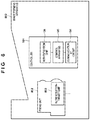
- FIG. 4A is a view illustrating information that is stored in the authentication chip according to an embodiment.
- FIG. 4B is a view illustrating information that is stored in the authentication-target chip according to an embodiment.
- FIG. 5 is a sequence diagram of an authentication method according to an embodiment.
- FIG. 6 is a configuration view of an authentication system according to an embodiment.
- FIG. 7 is a configuration view of an authentication-target chip and a controller according to an embodiment.
- FIG. 8 is a view illustrating information that is stored in the authentication-target chip according to an embodiment.
- FIG. 9 is a sequence diagram of an authentication method according to an embodiment.
- FIG. 10 is a view illustrating information that is stored in the authentication-target chip according to an embodiment.
- FIG. 11 is a sequence diagram of an authentication method according to an embodiment.
- FIG. 12 is a view illustrating information that is stored in the authentication-target chip according to an embodiment.
- FIG. 13 is a sequence diagram of an authentication method according to an embodiment.
- FIG. 14 is a view illustrating information that is stored in the authentication-target chip according to an embodiment.
- FIG. 15 is a sequence diagram of an authentication method according to an embodiment.
- FIG. 1 is a configuration view of an image forming apparatus 100 to which an authentication system according to the present embodiment is applied.
- the image forming apparatus 100 has a controller 101 which is an authentication apparatus.
- the controller 101 controls operation of the image forming apparatus 100 as a whole, in addition to authentication processing.
- a process cartridge 102 is an authentication-target apparatus, and forms an image on a sheet under the control of the controller 101 .
- the process cartridge 102 is a unit that can be detached from the image forming apparatus 100 .
- the controller 101 authenticates the authenticity of the attached process cartridge 102 to determine whether the process cartridge 102 is a genuine product. For this reason, an authentication-target chip 103 for authentication is provided in the process cartridge 102 .
- the authentication-target chip 103 is a tamper-resistant chip.
- a communication I/F circuit 104 for communicating with the authentication-target chip 103
- a control apparatus 105 for controlling authentication processing
- an authentication chip 106 for authenticating the process cartridge 102 .
- the authentication chip 106 is a tamper-resistant chip.
- the image forming apparatus 100 is configured so that, in a state where the process cartridge 102 is installed in the image forming apparatus 100 , the communication I/F circuit 104 is electrically connected to the authentication-target chip 103 . Accordingly, in a state where the process cartridge 102 is installed in the image forming apparatus 100 , the control apparatus 105 can communicate with the authentication-target chip 103 via the communication I/F circuit 104 .
- FIG. 2 illustrates in more detail internal configurations and a connection configuration for the controller 101 and the authentication-target chip 103 .
- the authentication chip 106 Upon receiving a command from the control apparatus 105 , the authentication chip 106 returns a response to the control apparatus 105 as a reply to the command.
- An input/output unit 201 of the authentication chip 106 transmits and receives responses and commands to and from the control apparatus 105 .
- a microcontroller 202 executes internal processing in accordance with a command from the control apparatus 105 . Note that, in such a case, the microcontroller 202 stores temporary data in a volatile memory 203 .
- An encryptor 204 executes an encryption calculation in the authentication processing, in accordance with an instruction from the microcontroller 202 .
- a non-volatile memory 205 holds a key used in the encryption calculation, and data necessary for authentication processing.
- the authentication-target chip 103 receives a command from the control apparatus 105 via the communication I/F circuit 104 , and, as a reply, transmits a response to the control apparatus 105 via the communication I/F circuit 104 .
- An input/output unit 301 of the authentication-target chip 103 transmits and receives responses/commands to and from the communication I/F circuit 104 .
- a microcontroller 302 executes internal processing in accordance with a command from the control apparatus 105 . Note that, in such a case, the microcontroller 302 stores temporary data in a volatile memory 303 .
- An encryptor 304 executes an encryption calculation in the authentication processing, in accordance with an instruction from the microcontroller 302 .
- the encryptor 204 and the encryptor 304 perform calculations for encryption in accordance with the same algorithm.
- a non-volatile memory 305 holds a key used in the encryption calculation, and data necessary for authentication processing.
- a starting point of the authentication processing is the control apparatus 105 .
- the control apparatus 105 transmits a command to the authentication chip 106 and the authentication-target chip 103 , and the authentication chip 106 and the authentication-target chip 103 perform processing in accordance with the command and transmit responses to the control apparatus 105 .
- FIG. 3 is a view for describing a configuration of keys used in authentication.
- MK original keys
- An identifier original key ID
- FIG. 3 illustrates n original keys, and the identifiers are respectively 1 to n.
- MK_i an original key whose identifier is i
- MK_i an original key whose identifier is i
- MK_i respective values thereof are selected so that it is not possible to estimate another original key from one original key.
- One original key out of this plurality of original keys and the identifier (an original key ID) for this one original key are saved in the non-volatile memory 205 of the authentication chip 106 .
- 4A illustrates a state in which the value i as the original key ID and the original key MK_i are stored in the non-volatile memory 205 .
- the original key stored in the non-volatile memory 205 in advance is randomly selected from then original keys generated in advance, when the controller 101 is manufactured.
- a derived key is stored in the non-volatile memory 305 of the authentication-target chip 103 .
- One derived key is derived in accordance with a one-way function, from one original key and one unique value.
- a derived key that is derived from a unique value j and an original key MK_i is denoted as a derived key DK_ij.
- F( ) is a one-way function, and can be a function used in a cryptographic hash function, or a shared key encryption calculation. As illustrated by FIG. 3 , from n original keys and m unique values, a total of n ⁇ m derived keys are generated.
- the non-volatile memory 305 of the authentication-target chip 103 stores one unique value and n derived keys that are respectively generated from the unique value and n original keys.
- FIG. 4B illustrates a state in which a unique value j and derived keys DK_1j to DK_nj are stored in the non-volatile memory 305 .
- the one-way function F( ) it is possible to use a cryptographic hash function or a shared key encryption function, as described above.
- a cryptographic hash function it is possible to use SHA-256 which is disclosed in NIST_FIPS_PUB 180-4.
- the derived key DK_ij is obtained by taking data resulting from concatenating an original key MK_i and a unique value j as an input to a cryptographic hash function in accordance with SHA-256.
- AES which is standardized in NIST_FIPS_PUB 197.
- the derived key DK_ij can be obtained by taking the unique value j as a message, and encrypting the message with the original key MK_i, by a method in accordance with AES.
- the unique value stored in the non-volatile memory 305 is decided so as to be different for each process cartridge 102 , when the process cartridge 102 is manufactured. Note that, instead of a configuration where differing unique values are stored in all process cartridges 102 , there may be a configuration where one unique value selected from a plurality of unique values is assigned to a process cartridge 102 . In a manufacturing step, the unique value assigned to the process cartridge 102 and n derived keys respectively generated from the unique value and n original keys are stored in the non-volatile memory 305 of this process cartridge 102 .
- FIG. 5 is a sequence diagram for authentication processing. Note that, in FIG. 5 , a signal starting with the letter C indicates a command, and a signal starting with the letter R indicates a response. In addition, the letters OP indicates processing performed by a corresponding apparatus or chip.
- the control apparatus 105 asks the authentication-target chip 103 for the unique value.
- the authentication-target chip 103 reads the unique value j from the non-volatile memory 305 , and, at R 01 , notifies the unique value j to the control apparatus 105 .
- the control apparatus 105 issues a command to the authentication chip 106 for instructing authentication key generation. This command includes the unique value j.
- the authentication chip 106 generates the authentication key DK_ij based on the original key MK_i stored in the non-volatile memory 205 and the received unique value j. Note that a method of generating the authentication key is the same as the method of generating a derived key.
- the authentication chip 106 at R 02 , notifies the control apparatus 105 that generation of the authentication key is complete.
- the control apparatus 105 asks the authentication chip 106 for an original key ID.
- the authentication chip 106 reads out the original key ID stored in the non-volatile memory 205 , and, at R 03 , notifies the original key ID to the control apparatus 105 .
- the original key ID stored in the non-volatile memory 205 is i.
- the control apparatus 105 transmits the original key ID to the authentication-target chip 103 .
- the authentication-target chip 103 selects the derived key corresponding to the original key ID as a selected key. Accordingly, when the authentication-target chip 103 is legitimate, the selected key selected by the authentication-target chip 103 is the same as the authentication key DK_ij generated by the authentication chip 106 at OP 01 .
- the authentication-target chip 103 at R 04 , notifies the control apparatus 105 that selection of the selected key is complete.
- the control apparatus 105 generates random number data as challenge data.
- the control apparatus 105 transmits a command to generate authentication data to the authentication-target chip 103 . This command includes the random number data (challenge data).
- the authentication-target chip 103 uses the encryptor 304 to generate authentication data, which is response data, from the selected key DK_ij and the random number data.
- the authentication-target chip 103 notifies the authentication data (response data) to the control apparatus 105 .
- the control apparatus 105 issues a command to the authentication chip 106 to generate comparison data. This command includes the random number data and the authentication data.
- the authentication chip 106 uses the encryptor 204 to generate the comparison data from the authentication key DK_ij and the random number data, and compares the comparison data with the authentication data.
- the control apparatus 105 determines authentication OK upon receiving a notification that the comparison data and the authentication data match, and determines authentication NG (no good) when there is no match.
- the control apparatus 105 determines that the process cartridge 102 is a genuine article upon determining authentication OK, and determines that the process cartridge 102 is not a genuine article upon determining authentication NG. Upon determining that the process cartridge 102 is not a genuine article, the control apparatus 105 displays to a user that the process cartridge 102 is not a genuine article, for example. Alternatively, upon determining that the process cartridge 102 is not a genuine article, for example, the control apparatus 105 suspends image forming processing, and performs a display, on a display unit (not shown) of the image forming apparatus, for entrusting a user with a decision of whether to permit image formation.
- the order of the sequence of FIG. 5 is an example, and the present invention is not limited to order of the sequence illustrated in FIG. 5 .
- CMAC which is based on a shared key encryption technology and described in NIST SP 800-38B
- the random number data is taken as a message
- encryption of the message is performed with the selected key DK_ij
- the encrypted data for the message is taken as the authentication data.
- HMAC which is based on a cryptographic hash function and described in NIST_FIPS_PUB 198-1, for example.
- the random number data is taken as a text, and an encrypted hash value of a message is obtained with the selected key DK_ij. It is similar for the calculation of the comparison data.
- the same algorithm is used for the calculation of the authentication data and the comparison data.
- the attacker could generate the derived key that is generated by using the obtained original key MK_i, but they could not generate the derived keys that correspond to other original keys.
- the attacker could manufacture a unit that could authenticate as legitimate with an image forming apparatus 100 storing the original key MK_i in the authentication chip 106 , but this unit would not have success in authenticating with an image forming apparatus 100 storing other original keys in the authentication chip 106 .
- the selected key is selected in accordance with the original key ID held by the authentication chip 106 , from the plurality of derived keys held by the authentication-target chip 103 . Accordingly, as long as all of the derived keys do not leak from the authentication-target chip 103 , it is not possible to manufacture a unit that can successfully authenticate with all image forming apparatuses 100 .
- FIG. 6 illustrates an example of applying an authentication system according to the present embodiment to an image forming apparatus 800 .
- the controller 101 performs authentication of a fixing unit 802 which is a unit that can be detached from the image forming apparatus 800 .
- the fixing unit 802 has an authentication-target chip 803 which is a tamper-resistant chip.
- FIG. 7 illustrates in more detail internal configurations and a connection configuration for the controller 101 and the authentication-target chip 803 .
- the configuration of the controller 101 of the present embodiment is similar to that in the first embodiment, and the non-volatile memory 205 stores the information illustrated in FIG. 4A .
- a non-volatile memory 905 of the authentication-target chip 803 stores the unique value j, the derived keys DK_1j to DK_nj, and a unit identifier UID.
- the unit identifier UID is assigned to a unit that can be installed in the image forming apparatus 800 , and is data for identifying the unit. Note that a method of generating the derived keys DK_1j to DK_nj is the same as that in the first embodiment.
- FIG. 9 is a sequence diagram of authentication processing according to the present embodiment. Processing up until C 05 is the same as that in the first embodiment, and description thereof is omitted.
- the authentication-target chip 803 Upon receiving the random number data, the authentication-target chip 803 , at OP 24 , uses the encryptor 304 to generate authentication data.
- the encryptor 304 generates the authentication data in accordance with the selected key DK_ij, and concatenated data resulting from concatenating the random number data and the unit identifier stored in the non-volatile memory 905 .
- the authentication-target chip 803 notifies the authentication data and the unit identifier to the control apparatus 105 .
- the control apparatus 105 issues a command to the authentication chip 106 to generate comparison data.
- the command includes the random number data, the authentication data, and the unit identifier.
- the authentication chip 106 uses the encryptor 204 to generate the comparison data, in accordance with the authentication key DK_ij, and concatenated data resulting from concatenating the random number data and the unit identifier. Because the encryptor 204 and the encryptor 304 perform the same encryption calculation, authentication data and the comparison data match when the authentication-target chip 803 is legitimate.
- the authentication chip 106 notifies a comparison result to the control apparatus 105 , in other words, whether the comparison data and the authentication data match.
- the control apparatus 105 determines authentication OK upon receiving a notification that the comparison data and the authentication data match, and determines authentication NG when there is no match.
- CMAC which is based on a shared key encryption technology and described in NIST SP 800-38B, for example.
- the concatenated data resulting from concatenating the random number data and the unit identifier is taken as a message, and encryption of the message is performed with the selected key DK_ij.
- HMAC which is based on a cryptographic hash function and described in NIST_FIPS_PUB 198-1 for example.
- the concatenated data resulting from concatenating the random number data and the unit identifier is taken as a text, and an encrypted hash value of the text is obtained with the selected key DK_ij. It is similar for the calculation of the comparison data. Of course, the same algorithm is used for the calculation of the authentication data and the comparison data.
- the unit identifier is used in generation of the authentication data and the comparison data. Accordingly, in addition to a similar effect as in the first embodiment, it is possible to verify whether the unit identifier is a value used in a genuine product. In other words, although illustration is not made in FIG. 9 , it is possible to make a determination of authentication NG when the unit identifier is not used by the fixing unit 802 , even if the authentication data and the comparison data match, for example.
- An authentication system has the same configuration as in FIG. 1 and FIG. 2 , and the information illustrated in FIG. 4A is stored in the non-volatile memory 205 of the authentication chip 106 .
- the non-volatile memory 305 of the authentication-target chip 103 stores the unique value j and the derived keys DK_1j to DK_nj, similarly to in the first embodiment.
- registers Rg_1j to Rg_nj are provided in the non-volatile memory 305 of the authentication-target chip 103 .
- a register Rg_ij (i is an integer from 1 to n) corresponds to the derived key DK_ij, and an original key ID whose value is i.
- a register value corresponding to the derived key DK_ij is stored in the register Rg_ij, and the register value of the derived key DK_ij is updated each time the derived key DK_ij is used in authentication processing.
- the register value of the register Rg_ij is caused to increase by 1. Note that an initial value of the register Rg_ij is randomly determined, for example.
- FIG. 11 is a sequence diagram of authentication processing according to the present embodiment.
- the control apparatus 105 asks the authentication-target chip 103 for the unique value.
- the authentication-target chip 103 reads the unique value j from the non-volatile memory 305 , and, at R 31 , notifies the unique value j to the control apparatus 105 .
- the control apparatus 105 asks the authentication chip 106 for an original key ID.
- the authentication chip 106 reads out the original key ID stored in the non-volatile memory 205 , and, at R 32 , notifies the original key ID to the control apparatus 105 .
- the original key ID stored in the non-volatile memory 205 is i.
- the control apparatus 105 transmits the original key ID to the authentication-target chip 103 , and asks the authentication-target chip 103 for the register value corresponding to the transmitted original key ID.
- the original key ID is i
- this corresponds to asking for the register value stored in the register Rg_ij.
- a relationship between the original key ID and the address in the non-volatile memory 305 of the register Rg_ij that corresponds to the original key ID is stored in the control apparatus 105 in advance.
- the authentication-target chip 103 reads out the register value of the register Rg_ij from the non-volatile memory 305 , and, at R 33 , notifies the register value of the register Rg_ij to the control apparatus 105 .
- the control apparatus 105 issues a command to the authentication chip 106 for instructing authentication key generation.
- This command includes the unique value j.
- the authentication chip 106 generates the authentication key DK_ij based on the original key MK_i stored in the non-volatile memory 205 and the received unique value j. Note that a method of generating the authentication key is the same as the method of generating a derived key.
- the authentication chip 106 at R 34 , notifies the control apparatus 105 that generation of the authentication key is complete.
- the control apparatus 105 issues a command to the authentication-target chip 103 for instructing generated key generation.
- the authentication-target chip 103 selects the derived key corresponding to the original key ID as a selected key. Note that the original key ID is notified at C 33 .
- the selected key selected by the authentication-target chip 103 is the same as the authentication key DK_ij generated by the authentication chip 106 at OP 32 .
- the authentication-target chip 103 performs an update to increase by 1 the register value stored in the register Rg_ij corresponding to the selected key.
- a generated key is generated by taking the updated register value and the selected key as inputs for a one-way function.
- the authentication-target chip 103 at R 35 , notifies the control apparatus 105 that generation of the generated key is complete.
- the control apparatus 105 issues a command to the authentication chip 106 for instructing generated key generation.
- This command includes the register value. Note that it is possible to have a configuration in which the register value is notified to the authentication chip 106 in advance at the timing of C 34 , and in this case only the instruction of the command is made at C 36 .
- the authentication chip 106 generates a generated key based on the authentication key DK_ij generated at OP 32 , and a value resulting from causing the notified register value to increase by 1. Note that an algorithm for generating the generated key is the same as the algorithm for generating the generated key in the authentication-target chip 103 at OP 33 .
- the authentication chip 106 notified the control apparatus 105 of the completion of the generation of the generated key.
- the control apparatus 105 generates a predetermined fixed value as challenge data.
- the control apparatus 105 transmits to the authentication-target chip 103 a command for generating authentication data.
- This command includes the fixed value (challenge data).
- the authentication-target chip 103 uses the encryptor 304 to generate the authentication data which is response data, from the generated key and the fixed value.
- the authentication-target chip 103 notifies the authentication data (response data) to the control apparatus 105 .
- the control apparatus 105 transmits to the authentication chip 106 a command for generating comparison data.
- This command includes the fixed value (challenge data) generated at OP 35 .
- the authentication chip 106 uses the encryptor 204 to generate the comparison data from the generated key and the fixed value.
- the authentication chip 106 notifies the comparison data (response data) to the control apparatus 105 .
- the control apparatus 105 compares authentication data received from the authentication-target chip 103 , and the comparison data received from the authentication chip 106 . Because the encryptor 204 and the encryptor 304 perform the same encryption calculation, authentication data and the comparison data match when the authentication-target chip 103 is legitimate. The control apparatus 105 determines authentication OK if they match, and determines authentication NG if they do not match.
- the control apparatus 105 determines that the process cartridge 102 is a genuine article upon determining authentication OK, and determines that the process cartridge 102 is not a genuine article upon determining authentication NG. Upon determining that the process cartridge 102 is not a genuine article, for example, the control apparatus 105 suspends image forming processing, and performs a display, on a display unit (not shown) of the image forming apparatus, for entrusting a user with a decision of whether to permit image formation.
- the order of the sequence of FIG. 11 is an example, and the present invention is not limited to the order of the sequence illustrated in FIG. 11 .
- the order of the sequence is arbitrary as long as the data necessary for the calculations by the authentication chip 106 and the authentication-target chip 103 is notified by the control apparatus 105 to the authentication chip 106 and the authentication-target chip 103 before the calculations are performed.
- a calculation for causing the register value to increase by 1 is performed, and the generated key is generated based on the register value after the calculation.
- the method for calculating (method of updating) the register value is not limited to increasing the register value by 1, and any calculation method can be used.
- methods of calculating the authentication data and the comparison data are the same except that a selected key and an authentication key were generated keys in the first embodiment.
- generated keys are generated from a selected key and an authentication key in the present embodiment, the first embodiment and the second embodiment use the selected key and the authentication key as generated keys.
- One method for cracking a key for encryption is a method in which inputs and outputs to and from an encryptor are observed while the encryptor is caused to repeatedly operate.
- the authentication key and the selected key used in authentication are always the same, there is the possibility that the authentication key or the selected key will leak due to this method.
- generated keys that are derived from the authentication key and the selected key are used to generate authentication data and comparison data. Because register values that change in value each time of authentication are used for generation of the generated keys, the generated keys change every time for authentication.
- the generated keys are generated based on values resulting from performing a predetermined operation on register values, and not based on register values that are transmitted and received between the control apparatus 105 and the authentication chip 106 or the authentication-target chip 103 . Accordingly, as long as the details of the predetermined calculation do not leak, an updated register value used in generation of a generated key is unclear even if it is possible to obtain register values that are transmitted and received, and it is possible to reduce the danger of the authentication key or the selected key leaking.
- the challenge data is given as fixed predetermined data, it is possible to have the challenge data be random data, similarly to in the first embodiment.
- comparison of authentication data and the comparison data is performed in the control apparatus 105 , but configuration may be taken such that the comparison is performed by the authentication chip 106 , similarly to in the first embodiment.
- An authentication system has the same configuration as in FIG. 1 and FIG. 2 , and the information illustrated in FIG. 4A is stored in the non-volatile memory 205 of the authentication chip 106 .
- the non-volatile memory 305 of the authentication-target chip 103 stores a unit identifier UID in addition to the same information as in the third embodiment.
- the unit identifier UID is assigned to a unit that can be installed in the image forming apparatus 100 , and is data for identifying the unit.
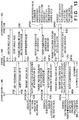
- FIG. 13 is a sequence diagram of authentication processing according to the present embodiment. Processing up until C 37 is the same as that in the third embodiment, and description thereof is omitted.
- the authentication-target chip 103 Upon receiving the challenge data, the authentication-target chip 103 , at OP 51 , uses the encryptor 304 to generate authentication data.
- the encryptor 304 generates the authentication data in accordance with the generated key, and concatenated data resulting from concatenating the challenge data and the unit identifier stored in the non-volatile memory 305 .
- the authentication-target chip 103 notifies the authentication data and the unit identifier to the control apparatus 105 .
- the control apparatus 105 transmits to the authentication chip 106 a command for generating comparison data.
- This command includes the challenge data and the unit identifier.
- the authentication chip 106 uses the encryptor 204 to generate comparison data in accordance with the generated key and concatenated data resulting from concatenating the received challenge data and the unit identifier.
- the authentication chip 106 notifies the comparison data (response data) to the control apparatus 105 . Subsequent processing is the same as in the third embodiment.
- the unit identifier is used in generation of the authentication data and the comparison data. Accordingly, in addition to a similar effect as in the third embodiment, it is possible to verify whether the unit identifier is a value used in a genuine product. In other words, although illustration is not made in FIG. 13 , it is possible to make a determination of authentication NG when the unit identifier is not used, even if the authentication data and the comparison data match, for example.
- An authentication system has the same configuration as in FIG. 1 and FIG. 2 , and the information illustrated in FIG. 4A is stored in the non-volatile memory 205 of the authentication chip 106 .
- one Register Rg is provided in the non-volatile memory 305 of the authentication-target chip 103 , instead of the registers Rg_1j to Rg_nj of the third embodiment.
- FIG. 15 is a sequence diagram of authentication processing according to the present embodiment.
- the processing from C 41 to R 42 is the same as that of C 31 to R 32 of the third embodiment, and description thereof is omitted.
- the control apparatus 105 asks the authentication-target chip 103 for a register value. Firstly, at OP 41 , the authentication-target chip 103 internally generates a random number, and stores the generated random number in the Register Rg. In addition, the authentication-target chip 103 notifies the register value stored in the Register Rg to the control apparatus 105 , at R 43 . Subsequent processing for C 44 and R 44 is similar to C 34 and R 34 of the third embodiment.
- the control apparatus 105 transmits the original key ID to the authentication-target chip 103 , and issues a command to the authentication-target chip 103 , instructing it to generate the generated key.
- the authentication-target chip 103 selects the derived key corresponding to the original key ID as a selected key. Accordingly, when the authentication-target chip 103 is legitimate, the selected key selected by the authentication-target chip 103 is the same as the authentication key DK_ij generated by the authentication chip 106 at OP 42 .
- the authentication-target chip 103 generates the generated key based on the selected key and the register value. Note that the method of generating the generated key is similar to that in the third embodiment, excepting that the register value is used unchanged.
- the authentication-target chip 103 When the generated key is generated, the authentication-target chip 103 , at R 45 , notifies the control apparatus 105 that generation of the generated key is complete.
- the processing from C 46 to R 46 is the same as the processing of C 36 to R 36 of the third embodiment. Note that, at OP 44 , the authentication chip 106 generates the generated key by using the notified register value unchanged.
- the control apparatus 105 generates random number data as challenge data.
- the control apparatus 105 transmits to the authentication-target chip 103 a command for generating authentication data.
- This command includes the random number data (challenge data).
- the authentication-target chip 103 uses the encryptor 304 to generate the authentication data which is response data, from the generated key and the random number data.
- the authentication-target chip 103 notifies the authentication data (response data) to the control apparatus 105 .
- the control apparatus 105 transmits to the authentication chip 106 a command for generating comparison data.
- This command includes the random number data (challenge data) generated at OP 45 , and the authentication data.
- the authentication chip 106 uses the encryptor 204 to generate the comparison data from the generated key and the random number data, and compares the comparison data with the received authentication data. Because the encryptor 204 and the encryptor 304 perform the same encryption calculation, authentication data and the comparison data match when the authentication-target chip 103 is legitimate.
- the authentication chip 106 notifies a comparison result to the control apparatus 105 , in other words, whether the comparison data and the authentication data match.
- the control apparatus 105 determines authentication OK upon receiving a notification that the comparison data and the authentication data match, and determines authentication NG when there is no match.
- a comparison between authentication data and the comparison data is performed by the authentication chip 106 similarly to in the first embodiment, but it may be performed by the control apparatus 105 , similarly to in the third embodiment.
- the generated key is randomly changed each time of authentication, similarly to in the third embodiment, it is possible to use a fixed value for the challenge data instead of a random number.
- the register value is randomly generated for each authentication in the present embodiment, it is possible to have a configuration in which it is updated by performing a predetermined calculation for each authentication, similarly to in the third embodiment.
- registers corresponding to respective derived keys are provided, but it is also possible to have a configuration in which one common register is provided for all derived keys. Furthermore, in the second embodiment, it is possible to generate authentication data and comparison data by also using a unit identifier UID, similarly to in the second embodiment or the fourth embodiment.
- the process cartridge 102 or the fixing unit 802 of an image forming apparatus was authenticated as a replaceable unit, but any replaceable unit (expansion unit) of the image forming apparatus can be authenticated as an authentication-target apparatus.
- the present invention can be applied, not only to an image forming apparatus, but also in the case where any apparatus is set as an authentication apparatus, and any unit that can be detached from the main body of this apparatus is set as an authentication-target apparatus.
- Embodiments of the present invention can also be realized by a computer of a system or apparatus that reads out and executes computer executable instructions (e.g., one or more programs) recorded on a storage medium (which may also be referred to more fully as ‘non-transitory computer-readable storage medium’) to perform the functions of one or more of the above-described embodiments and/or that includes one or more circuits (e.g., application specific integrated circuit (ASIC)) for performing the functions of one or more of the above-described embodiments, and by a method performed by the computer of the system or apparatus by, for example, reading out and executing the computer executable instructions from the storage medium to perform the functions of one or more of the above-described embodiments and/or controlling the one or more circuits to perform the functions of one or more of the above-described embodiments.
- computer executable instructions e.g., one or more programs
- a storage medium which may also be referred to more fully as ‘non-transitory computer-readable storage medium’
- the computer may comprise one or more processors (e.g., central processing unit (CPU), micro processing unit (MPU)) and may include a network of separate computers or separate processors to read out and execute the computer executable instructions.
- the computer executable instructions may be provided to the computer, for example, from a network or the storage medium.
- the storage medium may include, for example, one or more of a hard disk, a random-access memory (RAM), a read only memory (ROM), a storage of distributed computing systems, an optical disk (such as a compact disc (CD), digital versatile disc (DVD), or Blu-ray Disc (BD)TM), a flash memory device, a memory card, and the like.
Landscapes
- Engineering & Computer Science (AREA)
- Computer Security & Cryptography (AREA)
- Computer Networks & Wireless Communication (AREA)
- Signal Processing (AREA)
- Power Engineering (AREA)
- Theoretical Computer Science (AREA)
- Human Computer Interaction (AREA)
- Physics & Mathematics (AREA)
- General Engineering & Computer Science (AREA)
- General Physics & Mathematics (AREA)
- Accessory Devices And Overall Control Thereof (AREA)
Abstract
Description
Claims (27)
Applications Claiming Priority (4)
| Application Number | Priority Date | Filing Date | Title |
|---|---|---|---|
| JP2017-198753 | 2017-10-12 | ||
| JP2017198753 | 2017-10-12 | ||
| JP2018140710A JP7090496B2 (en) | 2017-10-12 | 2018-07-26 | Authentication method, authentication device, authenticated device and image forming device |
| JP2018-140710 | 2018-07-26 |
Publications (2)
| Publication Number | Publication Date |
|---|---|
| US20190116049A1 US20190116049A1 (en) | 2019-04-18 |
| US10833877B2 true US10833877B2 (en) | 2020-11-10 |
Family
ID=66096203
Family Applications (1)
| Application Number | Title | Priority Date | Filing Date |
|---|---|---|---|
| US16/155,958 Active US10833877B2 (en) | 2017-10-12 | 2018-10-10 | Method of authenticating authentication-target apparatus by authentication apparatus, authentication apparatus, authentication- target apparatus, and image forming apparatus |
Country Status (1)
| Country | Link |
|---|---|
| US (1) | US10833877B2 (en) |
Cited By (2)
| Publication number | Priority date | Publication date | Assignee | Title |
|---|---|---|---|---|
| US11777920B2 (en) | 2020-03-05 | 2023-10-03 | Canon Kabushiki Kaisha | Authentication system for preventing replication of authentication target apparatus authenticated by authentication apparatus |
| US12547697B2 (en) | 2022-11-29 | 2026-02-10 | Canon Kabushiki Kaisha | Authentication target apparatus and authentication system |
Families Citing this family (10)
| Publication number | Priority date | Publication date | Assignee | Title |
|---|---|---|---|---|
| JP6333871B2 (en) * | 2016-02-25 | 2018-05-30 | ファナック株式会社 | Image processing apparatus for displaying an object detected from an input image |
| JP2020072348A (en) | 2018-10-30 | 2020-05-07 | キヤノン株式会社 | Authentication method, authentication device, authenticated device, and image formation device |
| JP2020167509A (en) * | 2019-03-29 | 2020-10-08 | コベルコ建機株式会社 | Information processing systems, information processing methods, and programs |
| SG11201908938PA (en) * | 2019-03-29 | 2019-10-30 | Alibaba Group Holding Ltd | Cryptography chip with identity verification |
| SG11201908931TA (en) | 2019-03-29 | 2019-10-30 | Alibaba Group Holding Ltd | Cryptographic key management based on identity information |
| WO2019120322A2 (en) | 2019-03-29 | 2019-06-27 | Alibaba Group Holding Limited | Managing cryptographic keys based on identity information |
| SG11201908942VA (en) | 2019-03-29 | 2019-10-30 | Alibaba Group Holding Ltd | Securely performing cryptographic operations |
| CN110920261B (en) * | 2019-12-11 | 2021-05-04 | 珠海艾派克微电子有限公司 | Authentication method of consumable chips and printing consumables |
| US11989737B2 (en) * | 2021-07-09 | 2024-05-21 | Lexmark International, Inc. | Methods and systems for determining the authenticity of a component |
| JP2024085166A (en) * | 2022-12-14 | 2024-06-26 | キヤノン株式会社 | Authentication device, authenticated device, image forming device, replacement unit, and authentication method |
Citations (5)
| Publication number | Priority date | Publication date | Assignee | Title |
|---|---|---|---|---|
| US20030101378A1 (en) | 2001-11-27 | 2003-05-29 | Kenichi Ohkubo | ID generation device and Id verification device |
| US20070143623A1 (en) * | 2000-02-15 | 2007-06-21 | Silverbrook Research Pty Ltd | Method of validating consumable authentication chip |
| US20110109938A1 (en) * | 2008-05-29 | 2011-05-12 | Jacob Grundtvig Refstrup | Authenticating a Replaceable Printer Component |
| US20120069991A1 (en) * | 2009-05-13 | 2012-03-22 | Nagravision S. A. | Method for authenticating access to a secured chip by test device |
| US9374221B1 (en) * | 2013-12-20 | 2016-06-21 | Emc Corporation | Distributed protection of credential stores utilizing multiple keys derived from a master key |
-
2018
- 2018-10-10 US US16/155,958 patent/US10833877B2/en active Active
Patent Citations (6)
| Publication number | Priority date | Publication date | Assignee | Title |
|---|---|---|---|---|
| US20070143623A1 (en) * | 2000-02-15 | 2007-06-21 | Silverbrook Research Pty Ltd | Method of validating consumable authentication chip |
| US20030101378A1 (en) | 2001-11-27 | 2003-05-29 | Kenichi Ohkubo | ID generation device and Id verification device |
| JP2003162986A (en) | 2001-11-27 | 2003-06-06 | Sanyo Electric Co Ltd | ID generation device and ID confirmation device |
| US20110109938A1 (en) * | 2008-05-29 | 2011-05-12 | Jacob Grundtvig Refstrup | Authenticating a Replaceable Printer Component |
| US20120069991A1 (en) * | 2009-05-13 | 2012-03-22 | Nagravision S. A. | Method for authenticating access to a secured chip by test device |
| US9374221B1 (en) * | 2013-12-20 | 2016-06-21 | Emc Corporation | Distributed protection of credential stores utilizing multiple keys derived from a master key |
Non-Patent Citations (4)
| Title |
|---|
| National Institute of Standards and Technology Federal Information Processing Standards Publication 180-4, released Mar. 2012. |
| National Institute of Standards and Technology Federal Information Processing Standards Publication 197 released Nov. 26, 2001. |
| National Institute of Standards and Technology Federal Information Processing Standards Publication 198-1, released Jul. 2008. |
| National Institute of Standards and Technology Special Publication 800-38B, released May 2005. |
Cited By (2)
| Publication number | Priority date | Publication date | Assignee | Title |
|---|---|---|---|---|
| US11777920B2 (en) | 2020-03-05 | 2023-10-03 | Canon Kabushiki Kaisha | Authentication system for preventing replication of authentication target apparatus authenticated by authentication apparatus |
| US12547697B2 (en) | 2022-11-29 | 2026-02-10 | Canon Kabushiki Kaisha | Authentication target apparatus and authentication system |
Also Published As
| Publication number | Publication date |
|---|---|
| US20190116049A1 (en) | 2019-04-18 |
Similar Documents
| Publication | Publication Date | Title |
|---|---|---|
| US20190116049A1 (en) | Method of authenticating authentication-target apparatus by authentication apparatus, authentication apparatus, authentication-target apparatus, and image forming apparatus | |
| KR102168502B1 (en) | Applying circuit delay-based physically unclonable functions (pufs) for masking operation of memory-based pufs to resist invasive and clone attacks | |
| CN111264044B (en) | Chip, method for generating private key and method for trustable certification | |
| CN110519260B (en) | Information processing method and information processing device | |
| EP3458999B1 (en) | Self-contained cryptographic boot policy validation | |
| US12267416B2 (en) | Onboarding software on secure devices to generate device identities for authentication with remote servers | |
| EP3637297A1 (en) | Securing firmware | |
| US10277407B2 (en) | Key-attestation-contingent certificate issuance | |
| US9521125B2 (en) | Pseudonymous remote attestation utilizing a chain-of-trust | |
| JP6371919B2 (en) | Secure software authentication and verification | |
| KR20210131444A (en) | Identity creation for computing devices using physical copy protection | |
| US10853472B2 (en) | System, apparatus and method for independently recovering a credential | |
| CN107077574A (en) | Trust service for client devices | |
| US11296896B2 (en) | Method of authenticating authentication-target apparatus using challenge and response | |
| KR102364649B1 (en) | APPARATUS AND METHOD FOR AUTHENTICATING IoT DEVICE BASED ON PUF | |
| US20200344075A1 (en) | Secure provisioning of keys | |
| US10965451B2 (en) | Authentication method, authentication device, authentication target device and image forming apparatus | |
| US20200195447A1 (en) | Communication method of client device, issuing device and server | |
| US20200034554A1 (en) | Authentication system, authentication device, authentication target device and image forming apparatus | |
| JP7090496B2 (en) | Authentication method, authentication device, authenticated device and image forming device | |
| CN114189862A (en) | Wireless terminal and interface access authentication method of wireless terminal in Uboot mode | |
| US10897363B2 (en) | Authenticating a secondary device based on encrypted tables | |
| JP2018093372A (en) | Authentication method, authenticated device and authentication device | |
| CN115168813A (en) | Firmware signature and processor boot method and apparatus | |
| CN118378240B (en) | A firmware secure boot method and system |
Legal Events
| Date | Code | Title | Description |
|---|---|---|---|
| FEPP | Fee payment procedure |
Free format text: ENTITY STATUS SET TO UNDISCOUNTED (ORIGINAL EVENT CODE: BIG.); ENTITY STATUS OF PATENT OWNER: LARGE ENTITY |
|
| STPP | Information on status: patent application and granting procedure in general |
Free format text: DOCKETED NEW CASE - READY FOR EXAMINATION |
|
| AS | Assignment |
Owner name: CANON KABUSHIKI KAISHA, JAPAN Free format text: ASSIGNMENT OF ASSIGNORS INTEREST;ASSIGNORS:ITTOGI, HIROTAKA;HORI, KENJIRO;ISHIDA, TSUTOMU;REEL/FRAME:047989/0005 Effective date: 20181002 |
|
| STPP | Information on status: patent application and granting procedure in general |
Free format text: NON FINAL ACTION MAILED |
|
| STPP | Information on status: patent application and granting procedure in general |
Free format text: RESPONSE TO NON-FINAL OFFICE ACTION ENTERED AND FORWARDED TO EXAMINER |
|
| STPP | Information on status: patent application and granting procedure in general |
Free format text: FINAL REJECTION MAILED |
|
| STPP | Information on status: patent application and granting procedure in general |
Free format text: RESPONSE AFTER FINAL ACTION FORWARDED TO EXAMINER |
|
| STPP | Information on status: patent application and granting procedure in general |
Free format text: PUBLICATIONS -- ISSUE FEE PAYMENT RECEIVED |
|
| STCF | Information on status: patent grant |
Free format text: PATENTED CASE |
|
| MAFP | Maintenance fee payment |
Free format text: PAYMENT OF MAINTENANCE FEE, 4TH YEAR, LARGE ENTITY (ORIGINAL EVENT CODE: M1551); ENTITY STATUS OF PATENT OWNER: LARGE ENTITY Year of fee payment: 4 |