US10830758B2 - Systems and methods enabling patch-clamp re-use - Google Patents
Systems and methods enabling patch-clamp re-use Download PDFInfo
- Publication number
- US10830758B2 US10830758B2 US15/232,770 US201615232770A US10830758B2 US 10830758 B2 US10830758 B2 US 10830758B2 US 201615232770 A US201615232770 A US 201615232770A US 10830758 B2 US10830758 B2 US 10830758B2
- Authority
- US
- United States
- Prior art keywords
- pipette
- cleaning
- aperture
- apertured surface
- rinsing
- Prior art date
- Legal status (The legal status is an assumption and is not a legal conclusion. Google has not performed a legal analysis and makes no representation as to the accuracy of the status listed.)
- Active, expires
Links
Images




Classifications
-
- G—PHYSICS
- G01—MEASURING; TESTING
- G01N—INVESTIGATING OR ANALYSING MATERIALS BY DETERMINING THEIR CHEMICAL OR PHYSICAL PROPERTIES
- G01N33/00—Investigating or analysing materials by specific methods not covered by groups G01N1/00 - G01N31/00
- G01N33/48—Biological material, e.g. blood, urine; Haemocytometers
- G01N33/483—Physical analysis of biological material
- G01N33/487—Physical analysis of biological material of liquid biological material
- G01N33/48707—Physical analysis of biological material of liquid biological material by electrical means
- G01N33/48728—Investigating individual cells, e.g. by patch clamp, voltage clamp
-
- B—PERFORMING OPERATIONS; TRANSPORTING
- B01—PHYSICAL OR CHEMICAL PROCESSES OR APPARATUS IN GENERAL
- B01L—CHEMICAL OR PHYSICAL LABORATORY APPARATUS FOR GENERAL USE
- B01L13/00—Cleaning or rinsing apparatus
-
- B—PERFORMING OPERATIONS; TRANSPORTING
- B01—PHYSICAL OR CHEMICAL PROCESSES OR APPARATUS IN GENERAL
- B01L—CHEMICAL OR PHYSICAL LABORATORY APPARATUS FOR GENERAL USE
- B01L3/00—Containers or dishes for laboratory use, e.g. laboratory glassware; Droppers
- B01L3/02—Burettes; Pipettes
- B01L3/021—Pipettes, i.e. with only one conduit for withdrawing and redistributing liquids
- B01L3/0217—Pipettes, i.e. with only one conduit for withdrawing and redistributing liquids of the plunger pump type
- B01L3/022—Capillary pipettes, i.e. having very small bore
-
- B—PERFORMING OPERATIONS; TRANSPORTING
- B01—PHYSICAL OR CHEMICAL PROCESSES OR APPARATUS IN GENERAL
- B01L—CHEMICAL OR PHYSICAL LABORATORY APPARATUS FOR GENERAL USE
- B01L2300/00—Additional constructional details
- B01L2300/08—Geometry, shape and general structure
- B01L2300/0896—Nanoscaled
Definitions
- the present invention relates to pipette cleaning systems and methods, and more particularly to systems and methods of cleaning patch-clamp electrodes.
- Patch-clamp recording is a gold-standard single-cell electrophysiology technique that has been widely used to discover foundational biophysical properties of excitable cells.
- the superior sensitivity and resolution of patch-clamp recording has made it an indispensable tool for discovering the tenants of ion channel activity, synaptic integration, plasticity and network connectivity in a variety of experimental preparations from cultured cells to living tissue.
- Patch clamp recording is the highest resolution tool available to measure the responses of these channels to drug treatments. Patch-clamp recording provides an unprecedented ability to measure extremely small (on the order of 10 ⁇ 12 Amperes) electrical currents arising as a result of single or multiple ion channels trafficking charged ions across the cell membrane.
- Patch-clamp is well-suited for such studies because it can sample electrical, morphological and genetic properties of single cells and even sub-cellular compartments; however, the technique is not readily scalable.
- Patch-clamp recording involves pressing a glass micropipette (namely the aperture) against a cell membrane to achieve a high-resistance (>1 G ⁇ ) seal, or “gigaseal”, with the cell membrane.
- a glass micropipette namely the aperture
- gigaseal a high-resistance seal
- These gigaseals only form when using clean micropipettes, necessitating an operator to replace the contaminated pipette with a fresh one between every contact with a cell membrane. This is a major barrier to facilitating high-throughput drug screening.
- a glass patch-clamp electrode (a hollow glass capillary pulled to a fine ⁇ 1 ⁇ m diameter aperture at the distal end) is gently pressed against the membrane of a cell, typically under microscope guidance.
- a brief application of suction to the pipette forces the cell membrane to fully occlude the aperture at the distal end of the electrode.
- This results in the formation of an intimate physical connection between the cell membrane and the pipette aperture termed a “gigaseal” because the resistance between the membrane-occluded pipette aperture and an extracellular ground electrode is equal to or greater than 1 gigaohm.
- the present invention presents systems and in-situ methods for effectively removing biological debris from patch-clamp electrodes, including conventional glass pipettes and planar patch chips, to enable them to repeatedly re-used.
- effectively removing biological debris is accomplished via cleaning the area where the biological debris is located. This can be done with a cleaning step, a cleaning step and a rinsing step, and with other methods of effectively removing biological debris from proximity of the aperture that forms the seal so the same sealing assembly can be re-used to make another seal with a different cell.
- the present invention refers to systems and methods enabling patch-clamp re-use, and particularly pipettes and planar patch chips, it will be understood by those of skill in the art that the present invention can apply to other environments where, for example, apertured surfaces that are in proximity to or in contact with with biological material, like cell membranes, can benefit from an inventive way of effectively removing biological debris so the same apertured surface can be used once again.
- the present invention refers to systems and methods enabling re-use of an apertured surface that is exposed to biological material(s).
- the apertured surface is the aperture of a pipette used in patch-clamp systems and methods.
- the problem of continuingly exchanging a patch-clamp electrode for a fresh one can be circumvented by removing cellular debris from a previously-used electrode aperture, thus enabling the same electrode to be used again.
- the present invention can utilize an electrode cleaning step that enables the re-use of a single electrode in multiple sequential patch-clamp trials, and commoditizes the use of custom-geometry electrodes. The present invention thus reduces a user's expenses associated with electrodes and intra-electrode electrolytic solution.
- the apertured surface is one or more of the many apertures of planar patch chips.
- the present invention effectively removes biological debris from the apertured surface so it can be re-used to achieve gigaseals.
- the seal of resistance can be ⁇ 1 G ⁇ , for example 20-250 M ⁇ . The present invention is effective in such systems to enable re-use of the apertured surfaces of this kind of planar patch-clamp systems.
- the present invention provides a technique for re-using planar patch-clamp chips where the cleaning step does not require the planar chip to be manually extracted from the patch-clamp device to be chemically treated and dried.
- the present invention provides a re-use technique applicable to the delicate electrode tip of a patch-clamp pipette.
- the aperture of patch-clamp electrodes are generally from 0.5-10 ⁇ m, much smaller than that of capillaries used for electrophoresis (20-200 ⁇ m), making the presently inventive methods distinct from the art of cleaning capillaries used for electrophoresis.
- the present invention comprises a method of detecting one or more characteristics of cells comprising forming a resistance seal with a membrane of a cell with an apertured surface, forming a resistance seal with a membrane of a different cell with the apertured surface, and preparing the apertured surface, wherein preparing the apertured surface enables re-use of at least portions of the same apertured surface with the different cells.
- pipettes and planar patch chips are re-used (apertured surfaces are re-used) via cleaning.
- apertured surfaces can be treated with a gas, heated, etched with an ion beam, melted and reformed, sputter coated, or otherwise treated to enable re-use of the same apertured surface with a number of different cells.
- planar patch-clamp systems only achieve a loose-seal recording that amounts to a seal of resistance ⁇ 1 G ⁇ , for example 20-250 M ⁇ . While this does not enable high-resolution whole-cell recording, is still useful for studying ion channels.
- the present invention remains useful in such planar patch-clamp embodiments to enable re-use of one or more of the apertured surface(s) with different cells, even if the seal of resistance ⁇ 1 G ⁇ .
- the resistance of each resistance seal can be ⁇ 1 G ⁇ .
- At least portions of the same apertured surface can form a resistance seal with a membrane of at least five different cells, and wherein the resistance of each resistance seal is ⁇ 1 G ⁇ .
- At least portions of the same apertured surface can form a resistance seal with a membrane of at least seven different cells, and wherein the resistance of each resistance seal is ⁇ 1 G ⁇ .
- Preparing the apertured surface can occur in-between each step of forming a resistance seal with a membrane of a cell.
- Preparing the apertured surface can comprise subjecting the apertured surface to a cleaning solution.
- Preparing the apertured surface can comprise subjecting the apertured surface to a cleaning solution and a rinse solution.
- the apertured surface can comprise the aperture of a pipette.
- the apertured surface can comprise the aperture in a planar electrode.
- the aperture of the pipette or planar electrode can have a diameter between 0.5-10 ⁇ m.
- the present invention comprises a method of repeatedly electronically isolating currents measured across a membrane of a cell comprising forming a resistance seal with a membrane of a cell with an apertured surface, repeating the step of forming a resistance seal with a membrane of a cell with at least seven different cells with the same apertured surface, and preparing the apertured surface at least once in-between two consecutive steps of forming a resistance seal with a membrane of a cell, wherein preparing the apertured surface enables re-use of the same apertured surface with the different cells, and wherein each resistance seal is ⁇ 1 G ⁇ .
- the present invention comprises system for detecting one or more characteristics of cells comprising an apertured surface used for forming a resistance seal with a membrane of a cell, and a re-use assembly, wherein the re-use assembly prepares at least portions of the apertured surface so it can be re-used to form a resistance seal with a membrane of at least two different cells.
- the system can further comprise a suction assembly in communication with the apertured surface and providing a resistance for each resistance seal of ⁇ 1 G ⁇ .
- the re-use assembly can comprise a cleaning solution.
- the re-use assembly can comprise a rinse solution.
- the present invention is a method of removing biological debris from a patch-clamp electrode comprising one or more chemical treatments applied sequentially to wash the inner and outer surfaces of at least a portion of the electrode by the agency of pneumatic pressures applied to the electrode lumen.
- the patch-clamp electrode can be a micropipette formed of a hollow glass capillary pulled to a fine tip with an aperture diameter between 0.5-10 ⁇ m at its distal end.
- the patch-clamp electrode can be a planar patch chip.
- One of the chemical treatments can comprise a composition comprising sodium bicarbonate, sodium (C10-C16) linear alkylbenzene sulfonate (LAS), sodium tripolyphosphate, tetrasodium pyrophosphate, sodium carbonate, and sodium alcohol sulfate dissolved in deionized water.
- LAS linear alkylbenzene sulfonate
- sodium tripolyphosphate sodium tripolyphosphate
- tetrasodium pyrophosphate sodium carbonate
- sodium alcohol sulfate dissolved in deionized water.
- a final chemical treatment can be non-cytotoxic.
- the final chemical treatment can be buffered solution where the pH is within the range 7.2 to 7.5 and the osmolarity is within the range 290-320.
- the agency of pneumatic pressures can comprise alternating positive and negative pressures (up to ⁇ 1,500 mbar) relative to atmosphere to bring the cleaning solution in contact with the electrode interior surface for a specified time interval.
- the application of pneumatic pressures can be controlled by a computer or microcontroller.
- the electrode can be moved between chambers containing chemical treatments using a three-axis micromanipulator.
- a first aCSF (artificial cerebrospinal fluid) wash is performed ( ⁇ 200 mbar-10 seconds, 200 mbar-30 seconds), a cleaning agent is cycled preferably six times ( ⁇ 200 mbar-10 seconds, 200 mbar-30 seconds), and a second aCSF wash is performed ( ⁇ 200 mbar-10 seconds, 200 mbar-30 seconds).
- the present invention comprises systems and methods for cleaning patch-clamp glass pipette electrodes that enable their re-use.
- a detergent followed by rinsing, pipettes were re-usable at least ten times with little to no degradation in signal fidelity, in experimental preparations ranging from human embryonic kidney cells to neurons in culture, slices, and in vivo.
- pipette tips are immersed into Alconox (Alconox Inc), a commercially-available detergent, at 2% w/v (20 mg/ml), for 60 seconds, which permits multiple re-uses in cell cultures, tissue slices, and in vivo.
- Alconox Alconox Inc
- a commercially-available detergent at 2% w/v (20 mg/ml)
- the present pipette cleaning method for the first time enables dramatically improved automation of patch-clamp, as demonstrate with unattended, sequential patch-clamp recordings in cell culture and in vivo.
- FIG. 1A is a schematic of a conventional patch-clamp, modified to enable the present process according to an exemplary embodiment.
- FIG. 1B is a schematic of a planar patch-clamp embodiment, modified to enable the present process according to an exemplary embodiment.
- FIG. 2A shows a Scanning Electron Microscopy (SEM) image of a fresh pipette.
- FIG. 2B shows an SEM image of a pipette following a traditional patch-clamp trial.
- FIG. 2C shows an SEM image of a pipette following a traditional patch-clamp trial and a subsequent application of the cleaning method according to an exemplary embodiment of the present invention.
- SEM Scanning Electron Microscopy
- FIG. 3 is a graph of the gigaseal resistances of ten sequential patch-clamp trials using one pipette that was cleaned according to an exemplary embodiment of the present invention.
- FIGS. 4 illustrate that during a whole-cell patch-clamp recording, cell membrane bonds to the inner walls of the pipette ( FIG. 4A ).
- FIG. 4B A schematic of the present process according to an exemplary embodiment ( FIG. 4B ).
- Representative gigaseal formation traces FIG. 4C ).
- Representative resistances FIG. 4D ).
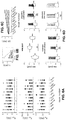
- FIG. 5 presents three representative gigaseals obtained with fresh pipettes that were pre-cleaned in Alconox. Pre-cleaning did not hinder the formation of stable gigaseals.
- FIGS. 6 illustrate recording quality parameters R GS , T GS and R a (whole-cell access resistance) ( FIG. 6A ).
- Pipette resistance before and after cleaning with Alconox FIG. 6B .
- Change in pipette resistance from first to tenth re-use FIG. 6C ).
- Representative whole-cell responses to step current injections in different experimental preparations FIG. 6D ).
- FIG. 7 is a graph of gigaseal resistances of thirty re-use attempts with a single pipette over time.
- FIG. 8 illustrates graphs for five pipettes wherein successful attempts resulting in whole-cell recordings are shown.
- FIGS. 9 illustrate that LAS is the prevalent cytotoxic ingredient in Alconox.
- FIG. 9A illustrates the chemical formula for sodium (C10-C16) linear alkylbenzene sulfonate (LAS). How the contents of cleaned pipettes were collected in vials ( FIG. 9B ). ESI-MS spectrum ( FIG. 9C ).
- FIG. 10 is a schematic ESI-MS spectrum characterization of pipettes containing 67 ⁇ g/ml Alconox dissolved in DI water.
- the main cytotoxic components of Alconox, C10-C12 LAS compounds were identified in the solution (C10: expected m/z: 297.1, found: 297.1; C11: expected m/z: 311.2, found: 311.1; C12: expected m/z: 325.2, found: 325.2).
- FIGS. 11 illustrate pipette cleaning in conjunction with GABA A R pharmacology.
- Representative current traces recorded by whole-cell patch-clamp recording of HEK293T cells transfected with ⁇ 2 ⁇ 2s GABA A Rs FIG. 11A ).
- Representative normalized peak current responses to different GABA concentrations FIG. 11B .
- Dose response characteristics of cells patched with fresh and re-used pipettes FIG. 11C ). That a low dose of Alconox (67 ⁇ g/mL, or equivalently, 385 ⁇ the detection limit of remaining Alconox in the pipette after cleaning) in the internal solution does not affect dose response characteristics ( FIG. 11D ).
- FIGS. 12 show a pipette containing a high dose (10 mg/mL) of Alconox damages the target cell during a patch attempt.
- FIG. 12A A gigaseal fails to form after >3 min, suggesting that Alconox is destroying cell membrane.
- FIG. 12B Cell apoptosis during the gigaseal process is evident. Arrow indicates blebs forming on the cell. Scale bar: 10 ⁇ m.
- Ranges may be expressed herein as from “about” or “approximately” or “substantially” one particular value and/or to “about” or “approximately” or “substantially” another particular value. When such a range is expressed, other exemplary embodiments include from the one particular value and/or to the other particular value.
- substantially free of something can include both being “at least substantially free” of something, or “at least substantially pure”, and being “completely free” of something, or “completely pure”.
- the distal end (an apertured surface) of a glass pipette 1 is attached to a single cell 2 in a preparation area 3 .
- the pipette 1 is attached at the proximal end to a pipette holder 4 .
- a cleaning solution chamber 7 containing a cleaning solution and a rinse solution chamber 8 containing rinse solution are situated near the biological preparation area 3 .
- Pressure is applied via a pressure controller 5 to the pipette 1 through the pipette holder 4 .
- a three-axis micromanipulator 6 moves the pipette 1 and the pipette holder 4 in three dimensions.
- a cell 9 in an extracellular fluid medium 14 is sealed to (at an apertured surface of) a planar glass electrode 10 at the opening to the intracellular fluid space 11 .
- Pressure is applied via one channel on a pressure controller 12 .
- Cleaning fluid from cleaning fluid chamber 13 is dispensed into the intracellular fluid space 11 via another channel on the pressure controller 12 .
- the micromanipulator 6 is used to bring the glass pipette 1 to the preparation area 3 to approach the single cell 2 .
- Negative pressure is applied via the pressure controller 5 and the membrane of the cell 2 adheres to the distal end of the pipette 1 .
- the micromanipulator 6 withdraws the pipette 1 from the cell 2 and expels large, adherent cellular debris from the pipette 1 with high positive pressure from the pressure controller 5 .
- the micromanipulator 6 then moves the pipette 1 , under high positive pressure via the pressure controller 5 , from the preparation area 3 and into the chamber 7 containing cleaning solution.
- Pressure is then cycled a number of times between positive pressure and negative pressure with the pressure controller 5 to bring the cleaning solution within the chamber 7 into contact with the interior and exterior surfaces of the pipette 1 and to cyclically apply shear forces to the interior surface of the pipette 1 .
- the micromanipulator 6 then moves the pipette 1 , under high positive pressure from the pressure controller 5 , from the chamber 7 containing cleaning solution into the chamber 8 containing rinse solution. Pressure is then cycled a number of times between positive pressure and negative pressure with the pressure controller 5 to bring the rinse solution within the chamber 8 into contact with the interior and exterior surfaces of the pipette 1 and to remove any residual cleaning solution from the interior and exterior surfaces of the pipette 1 .
- the micromanipulator 6 then moves the pipette 1 , under high positive pressure from the pressure controller 5 , from the chamber containing rinse solution 8 and back to the preparation area 3 . Subsequent electrophysiological trials can be performed by repeating the steps described above.
- the suspension containing one or more cells 9 in the extracellular fluid medium 14 is passed over an aperture in the planar glass electrode 10 leading to the channel 11 containing intracellular fluid. Suction is applied to the intracellular fluid space 11 via pressure controller 12 to draw the suspended cell 9 to the aperture and form a gigaseal.
- FIGS. 2 are SEM images of pipette tips.
- FIG. 2A is an SEM image of a fresh pipette.
- FIG. 2B shows an SEM image of a pipette tip cleaned with aCSF and being visibly contaminated with cell membrane residue, illustrating the necessity of throwing out the conventional pipette after each use (it cannot be re-used without a viable cleaning and rinsing regime heretofore unknown).
- FIG. 2C is an SEM image of a pipette following the present inventive cleaning and rinsing regime (namely using Alconox), illustrating the capability of pipette re-use. The Alconox-cleaned pipette tip resembles that of the fresh pipette. Pipette filament denoted with *. Scale bar: 1 ⁇ m.
- FIG. 3 illustrates the resulting gigaseal resistances of ten sequential patch-clamp trials using one pipette that was cleaned with the present method. In 8/10 trials, a gigaseal was successfully established.
- FIGS. 4 illustrate cleaning patch-clamp pipettes.
- FIGS. 4 illustrate cleaning patch-clamp pipettes.
- FIG. 4A cell membrane bonds to the inner walls of the pipette ( FIG. 4A ).
- FIG. 4B to clean, (i) the pipette is moved from the experimental preparation to a wash bath where a cleaning agent is cycled within the tip, (ii) then to a rinse bath where the remaining cleaning agent is expelled into aCSF, (iii) and returned back to the experimental preparation.
- FIG. 4C Representative gigaseal formation traces.
- FIG. 4A As discussed above, during a whole-cell patch-clamp recording ( FIG. 4A ), cell membrane bonds to the inner walls of the pipette. After the recording is terminated, membrane residue remains, preventing the pipette from being used for subsequent recordings.
- pipette cleaning is accomplished in three steps ( FIG. 4B ). First, the pipette is moved to a bath containing a cleaning agent. Using an electronic pressure regulator, a series of alternating negative and positive pressures is applied to the pipette to cycle the cleaning agent within the tip.
- the pipette is moved to a bath containing aCSF. Using another series of pressure pulses, any remaining cleaning agent in the pipette is expelled. Based on the calculated fluid flow rates from pipettes ( ⁇ 3 nL/s, based on pipette inner diameter of 1 ⁇ m), this pressure series is sufficient to intake the cleaning agent at least 200 ⁇ m into the lumen of the pipette. This exceeds the height of a typical lipid ‘bleb’ that forms in the pipette tip during a gigaseal (30-60 ⁇ m).
- Alconox was one cleaning agent that enabled pipettes to be re-used in quantities sought.
- Whole-cell patch-clamp recordings on human embryonic kidney (HEK293T) cells were performed using fresh (previously unused) pipettes, cleaned them with one of six different commonly available glassware cleaning agents as shown in TABLE 1, as well as a control solution (aCSF), and attempted to patch another cell with the same pipette.
- aCSF control solution
- pipettes cleaned with Alconox, but not with any other cleaning agent produced gigaseal resistances (R GS ) that were not significantly different from those produced by fresh pipettes ( FIGS. 4(C) (D)).
- Gigaseals were held for 1-2 minutes to ensure stability. No gigaseals were spontaneously lost during this time in either fresh or Alconox-cleaned pipettes. When using Alconox-cleaned pipettes, an outside-out patch reliably formed after withdrawing the pipette from the cell, as would be expected if using fresh pipettes. Further, pre-cleaning fresh pipettes in Alconox had no effect on gigaseal formation.
- FIG. 5 presents three representative gigaseals obtained with fresh pipettes that were pre-cleaned in Alconox. Pre-cleaning did not hinder the formation of stable gigaseals.
- FIGS. 6 illustrate that pipettes can be successfully re-used ten times.
- FIG. 6C Change in pipette resistance from first to tenth re-use.
- FIG. 6D Representative whole-cell responses to step current injections in different experimental preparations. Recordings from HEK293T cells were obtained from the representative experiment (black circles) in ( FIG. 6A ). In each set, a single pipette is used for all three whole-cell recordings. In all preparations pipettes were re-used up to ten times.
- pipettes could be re-used ten times consecutively with little to no degradation in recording quality if they were cleaned between each patch-clamp attempt ( FIG. 6A ).
- FIG. 7 illustrates the gigaseal resistances of thirty re-use attempts with a single pipette.
- the pipette was successfully re-used twenty-six times (green circles: R>1 G ⁇ ).
- the pipette did not reach a gigaseal on the fifth re-use, and consecutively on twenty-seventh through thirtieth re-use (circles: R ⁇ 1 G ⁇ ).
- Gigaseal attempts are coded from light to dark according to the number of times the pipette was used. After approximately fourteen re-uses, the time to form a gigaseal increases.
- Alconox comprises 33-43% sodium bicarbonate, 10-20% sodium (C10-C16) LAS, 5-15% sodium tripolyphosphate, 5-15% tetrasodium pyrophosphate, 1-10% sodium carbonate, and 1-5% sodium alcohol sulfate.
- LAS was chosen, a commonly-used surfactant, as a proxy for measuring Alconox concentration remaining after rinsing.
- FIGS. 9 illustrate detection of LAS in cleaned pipettes using electrospray ionization mass spectrometry (ESI-MS).
- ESI-MS electrospray ionization mass spectrometry
- Alconox is composed of LAS with carbon chains lengths 10-12 (C10-C12).
- FIG. 9B The contents of cleaned pipettes were collected in vials. Known amounts of Alconox were analyzed to find the detection limit.
- FIG. 9C ESI-MS spectrum.
- C10-C12 LAS is not detectable in cleaned pipettes (top) but is detected in a defined Alconox solution (174 ng/mL Alconox in DI water, bottom), indicating that less than 174 ng/mL of Alconox remains in the pipettes after cleaning.
- GABA A R ⁇ -aminobutyric acid type A Receptor
- FIGS. 11 illustrate pipette cleaning in conjunction with GABA A R pharmacology.
- FIG. 11A Representative current traces recorded by whole-cell patch-clamp recording of HEK293T cells transfected with ⁇ 1 ⁇ 2 ⁇ 2s GABA A Rs. Black bar denotes GABA application
- FIG. 11B Representative normalized peak current responses to different GABA concentrations.
- FIG. 11C Dose response characteristics of cells patched with fresh and re-used pipettes. i pk : peak evoked current; h: Hill coefficient; EC 50 : half-maximal response concentration. No change in the three characteristics is observed over four re-uses.
- FIG. 11D A low dose of Alconox (67 ⁇ g/mL, or equivalently, 385 ⁇ the detection limit of remaining Alconox in the pipette after cleaning) in the internal solution does not affect dose response characteristics.
- HEK293T cells expressing GABA A R were used as a model system to verify that cleaned pipettes are pharmacologically inert. Patch-clamping using fresh and cleaned pipettes was performed, and fit the measured whole-cell current responses to increasing concentrations of GABA ( FIG. 11A ) to the Hill equation.
- the patcherBot After the user selected candidate cells for patch-clamp recording, the patcherBot obtained successful gigaseals in 9/10 attempts, and successful whole-cell recordings in 6/10 attempts over the span of 33 minutes of unattended operation using a single pipette. The patcherBot was also deployed to perform blind, in vivo patch-clamp recordings in the mouse barrel cortex. Using four pipettes, the robot obtained successful gigaseals in 13/34 attempts, and successful whole-cell recordings in 10/34 attempts over a total span of 171 minutes in vivo ( FIG. 6D ).
- the present simple, fast, and automated procedure comprises dipping pipettes into a commercially-available detergent, Alconox, followed by rinsing in aCSF. It is herein demonstrated the effectiveness of this cleaning method by re-using pipettes ten times, with no decrease in whole-cell recording quality in cultured cells, acute brain slices, and in vivo. After cleaning, the residual Alconox mass concentration in the pipettes was quantified to be less than 174 ng/mL, and shown to have no pharmacological effect on GABA A Rs. Since pipette cleaning is automatic, it was integrated into the Autopatcher to perform unattended, sequential patch-clamp recordings on HEK293T cells in vitro and neurons in vivo.
- Alconox is composed of a surfactant, emulsifier and water softener, and in solution, it interacts with cell membranes bound to the glass pipette tip. These three ingredients solubilize adhered lipids, stabilize the lipid micelles in solution, and enhance surfactant effectiveness, respectively. After testing various cleaning agents, it was not evident why only Alconox sufficiently cleaned pipettes to enable their re-use. Interestingly, prior studies used bleach to successfully clean planar borosilicate patch-clamp chips up to five times for whole-cell recording; yet in the present experiments using conventional pipettes, bleach did not work, suggesting that the geometry of the experimental preparation may influence cleaning effectiveness.
- pipette internal solution contains ingredients that degrade over time if not refrigerated (e.g. Adenosine 5′-triphosphate magnesium salt, Guanosine 5′-triphosphate sodium salt hydrate, phosphocreatine); thus, it is expected that pipettes after multiple cleanings will have reduced concentrations of these ingredients. It is hypothesized that maintaining a chilled (i.e., 4° C.) environment for pipette and internal solution, or devising a method for replacing internal solution after every trial could mitigate this deleterious effect.
- a chilled (i.e., 4° C.) environment for pipette and internal solution or devising a method for replacing internal solution after every trial could mitigate this deleterious effect.
- the cleaning process is typically faster than manually swapping pipettes (i.e., one minute versus approximately two minutes) and does not depend on operator experience, dexterity, or fatigue level. It requires no complex hardware additions to existing electrophysiology setups and no expensive or caustic reagents. Therefore, it can be readily integrated into different experimental preparations and coupled with existing techniques that complement patch-clamp such as extracellular stimulation, two-photon microscopy, and optogenetics.
- Pipette cleaning also facilitates experiments requiring specialized pipette tips.
- Various tip polishing techniques using heat, pressure, or focused ion beam) and coatings can improve the ability to obtain recordings and their quality; however, these techniques are typically too time-consuming to be routine.
- the ability to re-use these custom-shaped pipettes could make these involved techniques more practical and scalable, reducing the need for automated pipette fabrication and inspection.
Landscapes
- Health & Medical Sciences (AREA)
- Engineering & Computer Science (AREA)
- Life Sciences & Earth Sciences (AREA)
- Chemical & Material Sciences (AREA)
- Biomedical Technology (AREA)
- Physics & Mathematics (AREA)
- Clinical Laboratory Science (AREA)
- Chemical Kinetics & Catalysis (AREA)
- Molecular Biology (AREA)
- Biochemistry (AREA)
- Biophysics (AREA)
- Urology & Nephrology (AREA)
- Food Science & Technology (AREA)
- Medicinal Chemistry (AREA)
- Analytical Chemistry (AREA)
- Hematology (AREA)
- General Health & Medical Sciences (AREA)
- General Physics & Mathematics (AREA)
- Immunology (AREA)
- Pathology (AREA)
- Measuring Or Testing Involving Enzymes Or Micro-Organisms (AREA)
- Apparatus Associated With Microorganisms And Enzymes (AREA)
- Investigating Or Analysing Biological Materials (AREA)
Abstract
Description
| TABLE 1 | |||
| Cleaning solution | Source | ||
| Bleach (8.25% Sodium | The Clorox Company | ||
| hypochlorite) | |||
| Triton X-100 | X100-5 mL (Sigma-Aldrich) | ||
| Acetone | BDH1101 (VWR) | ||
| Phosopolipase A2 (PLA, | P7778 (Sigma-Aldrich) | ||
| 0.0001% w/v in 10 mM | |||
| HEPES buffer) | |||
| Sodium | TCD0990 (VWR) | ||
| Dodecylbenzenesulfonate | |||
| (SDS, 1% w/v) | |||
| Alconox (2% w/v) | Alconox Inc. | ||
Claims (26)
Priority Applications (5)
| Application Number | Priority Date | Filing Date | Title |
|---|---|---|---|
| US15/232,770 US10830758B2 (en) | 2015-08-09 | 2016-08-09 | Systems and methods enabling patch-clamp re-use |
| PCT/US2016/049460 WO2017027888A1 (en) | 2015-08-09 | 2016-08-30 | Systems and methods enabling patch-clamp re-use |
| EP16836035.2A EP3394283B1 (en) | 2016-08-09 | 2016-08-30 | Systems and methods enabling patch-clamp re-use |
| EP21000183.0A EP3967404A3 (en) | 2016-08-09 | 2016-08-30 | Systems and methods enabling patch-clamp re-use |
| US17/093,593 US20210072223A1 (en) | 2015-08-09 | 2020-11-09 | Sample Testing Systems And Methods |
Applications Claiming Priority (2)
| Application Number | Priority Date | Filing Date | Title |
|---|---|---|---|
| US201562202858P | 2015-08-09 | 2015-08-09 | |
| US15/232,770 US10830758B2 (en) | 2015-08-09 | 2016-08-09 | Systems and methods enabling patch-clamp re-use |
Related Child Applications (1)
| Application Number | Title | Priority Date | Filing Date |
|---|---|---|---|
| US17/093,593 Continuation US20210072223A1 (en) | 2015-08-09 | 2020-11-09 | Sample Testing Systems And Methods |
Publications (2)
| Publication Number | Publication Date |
|---|---|
| US20170038364A1 US20170038364A1 (en) | 2017-02-09 |
| US10830758B2 true US10830758B2 (en) | 2020-11-10 |
Family
ID=57983789
Family Applications (2)
| Application Number | Title | Priority Date | Filing Date |
|---|---|---|---|
| US15/232,770 Active 2038-02-09 US10830758B2 (en) | 2015-08-09 | 2016-08-09 | Systems and methods enabling patch-clamp re-use |
| US17/093,593 Abandoned US20210072223A1 (en) | 2015-08-09 | 2020-11-09 | Sample Testing Systems And Methods |
Family Applications After (1)
| Application Number | Title | Priority Date | Filing Date |
|---|---|---|---|
| US17/093,593 Abandoned US20210072223A1 (en) | 2015-08-09 | 2020-11-09 | Sample Testing Systems And Methods |
Country Status (2)
| Country | Link |
|---|---|
| US (2) | US10830758B2 (en) |
| WO (1) | WO2017027888A1 (en) |
Families Citing this family (1)
| Publication number | Priority date | Publication date | Assignee | Title |
|---|---|---|---|---|
| EP4231011B1 (en) * | 2022-02-16 | 2025-07-09 | Luigs & Neumann Feinmechanik und Elektrotechnik GmbH | Devices and methods for patch clamp measurement techniques |
Citations (10)
| Publication number | Priority date | Publication date | Assignee | Title |
|---|---|---|---|---|
| US20030022268A1 (en) | 2000-07-31 | 2003-01-30 | Albrecht Lepple-Wienhues | Method and apparatus for patch-clamp measurements on cells |
| US20040058423A1 (en) * | 2002-05-03 | 2004-03-25 | Nancy Albritton | Fast electrical lysis of cells and rapid collection of the contents thereof using capillary electrophoresis |
| US20040146849A1 (en) * | 2002-01-24 | 2004-07-29 | Mingxian Huang | Biochips including ion transport detecting structures and methods of use |
| US6776896B1 (en) * | 2000-10-11 | 2004-08-17 | Axon Instruments, Inc. | Method of positioning cells for electrophysiological testing |
| US20060251544A1 (en) * | 2003-02-21 | 2006-11-09 | Sophion Bioscience A/S | Capillary stop |
| US20110251102A1 (en) * | 2010-04-09 | 2011-10-13 | Molecular Devices, Inc. | High throughput screening of ion channels |
| US20120252877A1 (en) * | 2009-08-14 | 2012-10-04 | Theramind Research, Llc | Methods and compositions for treatment of tuberous sclerosis complex |
| US20140228857A1 (en) * | 2011-11-11 | 2014-08-14 | Georgia Tech Research Corporation | Automated Cell Patch Clamping Method and Apparatus |
| JPWO2013145289A1 (en) * | 2012-03-30 | 2015-08-03 | 国立大学法人福島大学 | Cleaning agent containing lysophospholipid for washing blood stain and method for producing the same |
| US20160045918A1 (en) * | 2014-08-15 | 2016-02-18 | Counsyl, Inc. | High-throughput sample processing systems and methods of use |
Family Cites Families (1)
| Publication number | Priority date | Publication date | Assignee | Title |
|---|---|---|---|---|
| WO2013145289A1 (en) * | 2012-03-30 | 2013-10-03 | 国立大学法人福島大学 | Lysophospholipid-containing cleaning agent |
-
2016
- 2016-08-09 US US15/232,770 patent/US10830758B2/en active Active
- 2016-08-30 WO PCT/US2016/049460 patent/WO2017027888A1/en not_active Ceased
-
2020
- 2020-11-09 US US17/093,593 patent/US20210072223A1/en not_active Abandoned
Patent Citations (10)
| Publication number | Priority date | Publication date | Assignee | Title |
|---|---|---|---|---|
| US20030022268A1 (en) | 2000-07-31 | 2003-01-30 | Albrecht Lepple-Wienhues | Method and apparatus for patch-clamp measurements on cells |
| US6776896B1 (en) * | 2000-10-11 | 2004-08-17 | Axon Instruments, Inc. | Method of positioning cells for electrophysiological testing |
| US20040146849A1 (en) * | 2002-01-24 | 2004-07-29 | Mingxian Huang | Biochips including ion transport detecting structures and methods of use |
| US20040058423A1 (en) * | 2002-05-03 | 2004-03-25 | Nancy Albritton | Fast electrical lysis of cells and rapid collection of the contents thereof using capillary electrophoresis |
| US20060251544A1 (en) * | 2003-02-21 | 2006-11-09 | Sophion Bioscience A/S | Capillary stop |
| US20120252877A1 (en) * | 2009-08-14 | 2012-10-04 | Theramind Research, Llc | Methods and compositions for treatment of tuberous sclerosis complex |
| US20110251102A1 (en) * | 2010-04-09 | 2011-10-13 | Molecular Devices, Inc. | High throughput screening of ion channels |
| US20140228857A1 (en) * | 2011-11-11 | 2014-08-14 | Georgia Tech Research Corporation | Automated Cell Patch Clamping Method and Apparatus |
| JPWO2013145289A1 (en) * | 2012-03-30 | 2015-08-03 | 国立大学法人福島大学 | Cleaning agent containing lysophospholipid for washing blood stain and method for producing the same |
| US20160045918A1 (en) * | 2014-08-15 | 2016-02-18 | Counsyl, Inc. | High-throughput sample processing systems and methods of use |
Non-Patent Citations (7)
| Title |
|---|
| Bruggemann, et al., "Microchip Technology for Automated and Parallel Patch-Clamp Recording," Small. vol. 2(7) (2006) pp. 840-846. |
| EP Search Report for application No. EP 16836035 dated Mar. 11, 2019. |
| Kao, et al., "A New Technique for Multiple Re-use of Planar Patch Clamp Chips" J Neurosci Methods, Jul. 15, 2012. |
| Kolb, et al., "Cleaning Patch Clamp Pipettes Enables Their Reuse," Biophysical Journal vol. 110, No. 3., p. 149A Feb. 16, 2016. |
| Malboubi, et al., "Gigaseal Formation in Patch Clamping," Chapter 2, "Development of Patch Clamping" SpringerBriefs in Applied Sciences and Technology (2014). |
| Milligan, et al., "Robotic Multiwell Planar Patch-Clamp for Native and Primary Mammalian Cells," Nature Protocols, vol. 4, No. 2, pp. 144-255 Feb. 5, 2009. |
| Search Report and Written Opinion from related PCT Application No. PCT/US16/49460 dated Dec. 8, 2016 (10 pages). |
Also Published As
| Publication number | Publication date |
|---|---|
| US20210072223A1 (en) | 2021-03-11 |
| WO2017027888A1 (en) | 2017-02-16 |
| US20170038364A1 (en) | 2017-02-09 |
Similar Documents
| Publication | Publication Date | Title |
|---|---|---|
| JP4842512B2 (en) | Combined parallel drug delivery and electroporation of cellular structures and uses thereof | |
| Read et al. | Imaging and measurement of cytosolic free calcium in plant and fungal cells | |
| DE102012011647B4 (en) | Analysis of microbes from microcolonies using MALDI mass spectrometry | |
| EP3548895B1 (en) | Preparing live microbial samples and microorganisms for subsequent mass-specrometric measurement and evaluation | |
| DE10112505C1 (en) | Sensor arrangement and device for amperometric and / or potentiometric, pharmacological site and / or drug testing and method for amperometric and / or potentiometric, pharmacological site and / or drug testing | |
| US8835176B2 (en) | Analysis of microbes from microcolonies by maldi mass spectrometry | |
| WO2010064700A1 (en) | Device for examining myocardial toxicity, chip for examining myocardial toxicity and method for examining myocardial toxicity | |
| JP6317353B2 (en) | Method for multiple analytical measurements in single cells of solid tissue | |
| US20210072223A1 (en) | Sample Testing Systems And Methods | |
| EP3394283B1 (en) | Systems and methods enabling patch-clamp re-use | |
| US9068280B2 (en) | Droplet bilayer formation using throughput liquid handling techniques | |
| Braeken et al. | Open-cell recording of action potentials using active electrode arrays | |
| DE102017130518B4 (en) | Measuring device, measuring method, high-throughput test device and measuring kit for electrophysiological measurements, especially on cell aggregates | |
| EP3404417B1 (en) | Preparation of biological cells on mass spectrometric sample supports for a desorbing ionization | |
| DE102011120394B4 (en) | Method and microstructure device for electrical contacting of biological cells | |
| JP2012100652A (en) | Apparatus for destruction of cell membrane | |
| JP2016080531A (en) | Device and method for preparing micro biological tissue piece, and screening method for chemical compound | |
| EP1807696B1 (en) | Device and method for measuring cell properties | |
| EP4231011B1 (en) | Devices and methods for patch clamp measurement techniques | |
| Krishnamurthi | Response of Escherichia coli Bacteria to Antimicrobial Agents at Micro and Nanoscale | |
| Weber | The challenge of ATP biosensing-application, investigation and further development of ATP microbiosensors | |
| Jun et al. | Vibrodissociation of Neurons from Rodent Brain Slices to Study Synaptic Transmission and Image Presynaptic | |
| PACCAGNAN | Chemo-mechanical triggering of membrane potential at single cell level | |
| Wang | SINGLE-CELL ELECTROPORATION USING ELECTROLYTE-FILLED CAPILLARIES-EXPERIMENTAL AND MODELING INVESTIGATIONS | |
| Chughtai | Multimodal Imaging of Hypoxia in Breast Cancer |
Legal Events
| Date | Code | Title | Description |
|---|---|---|---|
| AS | Assignment |
Owner name: GEORGIA TECH RESEARCH CORPORATION, GEORGIA Free format text: ASSIGNMENT OF ASSIGNORS INTEREST;ASSIGNORS:KOLB, ILYA;STOY, WILLIAM;ROUSSEAU, ERIN;AND OTHERS;SIGNING DATES FROM 20160808 TO 20160809;REEL/FRAME:040059/0613 |
|
| AS | Assignment |
Owner name: NATIONAL INSTITUTES OF HEALTH (NIH), U.S. DEPT. OF HEALTH AND HUMAN SERVICES (DHHS), U.S. GOVERNMENT, MARYLAND Free format text: CONFIRMATORY LICENSE;ASSIGNOR:GEORGIA INSTITUTE OF TECHNOLOGY;REEL/FRAME:045488/0572 Effective date: 20180226 Owner name: NATIONAL INSTITUTES OF HEALTH (NIH), U.S. DEPT. OF Free format text: CONFIRMATORY LICENSE;ASSIGNOR:GEORGIA INSTITUTE OF TECHNOLOGY;REEL/FRAME:045488/0572 Effective date: 20180226 |
|
| STPP | Information on status: patent application and granting procedure in general |
Free format text: NON FINAL ACTION MAILED |
|
| STPP | Information on status: patent application and granting procedure in general |
Free format text: RESPONSE TO NON-FINAL OFFICE ACTION ENTERED AND FORWARDED TO EXAMINER |
|
| STPP | Information on status: patent application and granting procedure in general |
Free format text: FINAL REJECTION MAILED |
|
| STPP | Information on status: patent application and granting procedure in general |
Free format text: RESPONSE AFTER FINAL ACTION FORWARDED TO EXAMINER |
|
| STPP | Information on status: patent application and granting procedure in general |
Free format text: ADVISORY ACTION MAILED |
|
| STPP | Information on status: patent application and granting procedure in general |
Free format text: DOCKETED NEW CASE - READY FOR EXAMINATION |
|
| STPP | Information on status: patent application and granting procedure in general |
Free format text: NON FINAL ACTION MAILED |
|
| STPP | Information on status: patent application and granting procedure in general |
Free format text: RESPONSE AFTER FINAL ACTION FORWARDED TO EXAMINER |
|
| STPP | Information on status: patent application and granting procedure in general |
Free format text: ADVISORY ACTION MAILED |
|
| STPP | Information on status: patent application and granting procedure in general |
Free format text: PUBLICATIONS -- ISSUE FEE PAYMENT VERIFIED |
|
| STCF | Information on status: patent grant |
Free format text: PATENTED CASE |
|
| MAFP | Maintenance fee payment |
Free format text: PAYMENT OF MAINTENANCE FEE, 4TH YR, SMALL ENTITY (ORIGINAL EVENT CODE: M2551); ENTITY STATUS OF PATENT OWNER: SMALL ENTITY Year of fee payment: 4 |