US10822312B2 - Substituted quinazoline compounds and methods of use - Google Patents
Substituted quinazoline compounds and methods of use Download PDFInfo
- Publication number
- US10822312B2 US10822312B2 US16/089,000 US201716089000A US10822312B2 US 10822312 B2 US10822312 B2 US 10822312B2 US 201716089000 A US201716089000 A US 201716089000A US 10822312 B2 US10822312 B2 US 10822312B2
- Authority
- US
- United States
- Prior art keywords
- alkyl
- halogen
- optionally substituted
- compound
- carbocycle
- Prior art date
- Legal status (The legal status is an assumption and is not a legal conclusion. Google has not performed a legal analysis and makes no representation as to the accuracy of the status listed.)
- Active
Links
- 0 *C1=C([1*])C(*)=C2N=C(C)N=C(CC)C2=C1*.C.CCC Chemical compound *C1=C([1*])C(*)=C2N=C(C)N=C(CC)C2=C1*.C.CCC 0.000 description 48
- RDFFFMFSXXELJR-UHFFFAOYSA-N CC(C)(C)C1=C(O)C=CC2=C1C=CC=C2.CC(C)(C)C1=C(O)C=CC=C1F.CC(C)(C)C1=CC(O)=CC2=C1C=CC=C2.CC1=CC=C2/C=N\NC2=C1C(C)(C)C.CC1=CC=C2N/N=C\C2=C1C(C)(C)C Chemical compound CC(C)(C)C1=C(O)C=CC2=C1C=CC=C2.CC(C)(C)C1=C(O)C=CC=C1F.CC(C)(C)C1=CC(O)=CC2=C1C=CC=C2.CC1=CC=C2/C=N\NC2=C1C(C)(C)C.CC1=CC=C2N/N=C\C2=C1C(C)(C)C RDFFFMFSXXELJR-UHFFFAOYSA-N 0.000 description 5
- DMQNADZXCPNILJ-UHFFFAOYSA-N CC(=O)N1CCN(C2=C3C=C(Cl)C(C4=C(O)C=CC=C4F)=C(F)C3=NC(OCCC3=NC=CC=N3)=N2)CC1 Chemical compound CC(=O)N1CCN(C2=C3C=C(Cl)C(C4=C(O)C=CC=C4F)=C(F)C3=NC(OCCC3=NC=CC=N3)=N2)CC1 DMQNADZXCPNILJ-UHFFFAOYSA-N 0.000 description 4
- MZOSAXRZTWPDRO-UHFFFAOYSA-N CC(=O)N1CCN(C2=C3C=C(Cl)C(C4=C5C=CC=CC5=CC(O)=C4)=C(F)C3=NC(N3CC(N(C)C)C3)=N2)CC1 Chemical compound CC(=O)N1CCN(C2=C3C=C(Cl)C(C4=C5C=CC=CC5=CC(O)=C4)=C(F)C3=NC(N3CC(N(C)C)C3)=N2)CC1 MZOSAXRZTWPDRO-UHFFFAOYSA-N 0.000 description 4
- LHJFGOIDIMOGDO-UHFFFAOYSA-N CC(=O)N1CCN(C2=C3C=C(Cl)C(C4=CC(O)=CC5=C4C=CC=C5)=C(F)C3=NC(OCCCN(C)C)=N2)CC1 Chemical compound CC(=O)N1CCN(C2=C3C=C(Cl)C(C4=CC(O)=CC5=C4C=CC=C5)=C(F)C3=NC(OCCCN(C)C)=N2)CC1 LHJFGOIDIMOGDO-UHFFFAOYSA-N 0.000 description 4
- FZSNDATYUDRBBR-MSOLQXFVSA-N CC(=O)N1C[C@H](C)N(C2=C3C=C(Cl)C(C4=C5/C=N\NC5=CC=C4C)=C(F)C3=NC(OCCCN(C)C)=N2)C[C@H]1C Chemical compound CC(=O)N1C[C@H](C)N(C2=C3C=C(Cl)C(C4=C5/C=N\NC5=CC=C4C)=C(F)C3=NC(OCCCN(C)C)=N2)C[C@H]1C FZSNDATYUDRBBR-MSOLQXFVSA-N 0.000 description 4
- NPNTYKUULAHRMJ-MSOLQXFVSA-N CC(=O)N1C[C@H](C)N(C2=C3C=C(Cl)C(C4=C5C=CC=CC5=CC(O)=C4)=C(F)C3=NC(N3CC(N(C)C)C3)=N2)C[C@H]1C Chemical compound CC(=O)N1C[C@H](C)N(C2=C3C=C(Cl)C(C4=C5C=CC=CC5=CC(O)=C4)=C(F)C3=NC(N3CC(N(C)C)C3)=N2)C[C@H]1C NPNTYKUULAHRMJ-MSOLQXFVSA-N 0.000 description 4
- IJVUMIAMJUDRFP-SJLPKXTDSA-N CC1=CC=C2/C=N\NC2=C1C1=C(F)C2=NC(OCCC3=NC=CC=N3)=NC(N3C[C@H](C)CC[C@H]3C)=C2C=C1Cl Chemical compound CC1=CC=C2/C=N\NC2=C1C1=C(F)C2=NC(OCCC3=NC=CC=N3)=NC(N3C[C@H](C)CC[C@H]3C)=C2C=C1Cl IJVUMIAMJUDRFP-SJLPKXTDSA-N 0.000 description 4
- OKQOZGQLSDUAKE-MSOLQXFVSA-N CCC(=O)N1C[C@H](C)N(C2=C3C=C(Cl)C(C4=C5C=NNC5=CC=C4C)=C(F)C3=NC(N3CC(N(C)C)C3)=N2)C[C@H]1C Chemical compound CCC(=O)N1C[C@H](C)N(C2=C3C=C(Cl)C(C4=C5C=NNC5=CC=C4C)=C(F)C3=NC(N3CC(N(C)C)C3)=N2)C[C@H]1C OKQOZGQLSDUAKE-MSOLQXFVSA-N 0.000 description 4
- FAIXDGTUDNPLAK-UHFFFAOYSA-N CN(C)COC(C)(C)C Chemical compound CN(C)COC(C)(C)C FAIXDGTUDNPLAK-UHFFFAOYSA-N 0.000 description 4
- VHJBWCZJDQBWES-INIZCTEOSA-N C[C@H]1CCCN(C2=C3C=C(Cl)C(C4=C(O)C=CC=C4F)=C(F)C3=NC(CN(C)CC3=NC=CC=N3)=N2)C1 Chemical compound C[C@H]1CCCN(C2=C3C=C(Cl)C(C4=C(O)C=CC=C4F)=C(F)C3=NC(CN(C)CC3=NC=CC=N3)=N2)C1 VHJBWCZJDQBWES-INIZCTEOSA-N 0.000 description 4
- QEFPUUYPULAEBE-HOTGVXAUSA-N C[C@H]1CC[C@H](C)N(C2=C3C=C(Cl)C(C4=C(F)C=CC=C4O)=C(F)C3=NC(OCCC3=NC=CC=N3)=N2)C1 Chemical compound C[C@H]1CC[C@H](C)N(C2=C3C=C(Cl)C(C4=C(F)C=CC=C4O)=C(F)C3=NC(OCCC3=NC=CC=N3)=N2)C1 QEFPUUYPULAEBE-HOTGVXAUSA-N 0.000 description 4
- KJOVLYVGWYGELI-UHFFFAOYSA-N CC(=O)N1CCN(C2=C3C=C(C)C(C4=C5C=CC=CC5=CC(O)=C4)=C(F)C3=NC(OCCCN(C)C)=N2)CC1 Chemical compound CC(=O)N1CCN(C2=C3C=C(C)C(C4=C5C=CC=CC5=CC(O)=C4)=C(F)C3=NC(OCCCN(C)C)=N2)CC1 KJOVLYVGWYGELI-UHFFFAOYSA-N 0.000 description 3
- QXELJANFCIWSGC-UHFFFAOYSA-N CC(=O)N1CCN(C2=C3C=C(Cl)C(C4=C(F)C=CC=C4O)=C(F)C3=NC(OCCCN(C)C)=N2)CC1 Chemical compound CC(=O)N1CCN(C2=C3C=C(Cl)C(C4=C(F)C=CC=C4O)=C(F)C3=NC(OCCCN(C)C)=N2)CC1 QXELJANFCIWSGC-UHFFFAOYSA-N 0.000 description 3
- UIWSOOOQMVIMFV-UHFFFAOYSA-N CC(=O)N1CCN(C2=C3C=C(Cl)C(C4=CC(O)=CC5=C4C=CC=C5)=C(F)C3=NC(OCCCN(C)C)=N2)CC1.CCC(=O)N1CCN(C2=C3C=C(Cl)C(C4=C(O)C=CC=C4F)=C(F)C3=NC(OCCN3CCCCC3)=N2)CC1.CCC(=O)N1CCN(C2=C3C=C(Cl)C(C4=CC(O)=CC5=C4C=CC=C5)=C(F)C3=NC(OCCCN(C)C)=N2)CC1.[H]C(=O)N1CCN(C2=C3C=C(Cl)C(C4=CC(O)=CC5=C4C=CC=C5)=C(F)C3=NC(OCCCN(C)C)=N2)CC1 Chemical compound CC(=O)N1CCN(C2=C3C=C(Cl)C(C4=CC(O)=CC5=C4C=CC=C5)=C(F)C3=NC(OCCCN(C)C)=N2)CC1.CCC(=O)N1CCN(C2=C3C=C(Cl)C(C4=C(O)C=CC=C4F)=C(F)C3=NC(OCCN3CCCCC3)=N2)CC1.CCC(=O)N1CCN(C2=C3C=C(Cl)C(C4=CC(O)=CC5=C4C=CC=C5)=C(F)C3=NC(OCCCN(C)C)=N2)CC1.[H]C(=O)N1CCN(C2=C3C=C(Cl)C(C4=CC(O)=CC5=C4C=CC=C5)=C(F)C3=NC(OCCCN(C)C)=N2)CC1 UIWSOOOQMVIMFV-UHFFFAOYSA-N 0.000 description 3
- LDDAMJGNJAVSPO-UHFFFAOYSA-N CC(=O)N1CCN(C2=C3C=C(Cl)C(C4=CC(O)=CC5=C4C=CC=C5)=C(F)C3=NC(OCCN3CC(F)(F)C3)=N2)CC1 Chemical compound CC(=O)N1CCN(C2=C3C=C(Cl)C(C4=CC(O)=CC5=C4C=CC=C5)=C(F)C3=NC(OCCN3CC(F)(F)C3)=N2)CC1 LDDAMJGNJAVSPO-UHFFFAOYSA-N 0.000 description 3
- HNCKPNUGLIBYIQ-JKSUJKDBSA-N CC(=O)N1C[C@@H](C)N(C2=C3C=C(Cl)C(C4=C(O)C=CC=C4F)=C(F)C3=NC(OCCC3=NC=CC=N3)=N2)C[C@@H]1C Chemical compound CC(=O)N1C[C@@H](C)N(C2=C3C=C(Cl)C(C4=C(O)C=CC=C4F)=C(F)C3=NC(OCCC3=NC=CC=N3)=N2)C[C@@H]1C HNCKPNUGLIBYIQ-JKSUJKDBSA-N 0.000 description 3
- IDDULUXWGMLZAG-SJORKVTESA-N CC(=O)N1C[C@H](C)N(C2=C3C=C(Cl)C(C4=C(F)C=CC=C4O)=C(F)C3=NC(OCCCN3CCC(F)(F)C3)=N2)C[C@H]1C Chemical compound CC(=O)N1C[C@H](C)N(C2=C3C=C(Cl)C(C4=C(F)C=CC=C4O)=C(F)C3=NC(OCCCN3CCC(F)(F)C3)=N2)C[C@H]1C IDDULUXWGMLZAG-SJORKVTESA-N 0.000 description 3
- YHPSJBLFNQWLRU-CVEARBPZSA-N CC(=O)N1C[C@H](C)N(C2=C3C=C(Cl)C(C4=C(O)C=CC=C4F)=C(F)C3=NC(OCCCN(C)C)=N2)C[C@H]1C Chemical compound CC(=O)N1C[C@H](C)N(C2=C3C=C(Cl)C(C4=C(O)C=CC=C4F)=C(F)C3=NC(OCCCN(C)C)=N2)C[C@H]1C YHPSJBLFNQWLRU-CVEARBPZSA-N 0.000 description 3
- PGMNKQNLTXKKQE-MOPGFXCFSA-N CC(=O)N1C[C@H](C)N(C2=C3C=C(Cl)C(C4=C5/C=N\NC5=CC=C4C)=C(F)C3=NC(OCCCN3CCC(F)(F)C3)=N2)C[C@H]1C Chemical compound CC(=O)N1C[C@H](C)N(C2=C3C=C(Cl)C(C4=C5/C=N\NC5=CC=C4C)=C(F)C3=NC(OCCCN3CCC(F)(F)C3)=N2)C[C@H]1C PGMNKQNLTXKKQE-MOPGFXCFSA-N 0.000 description 3
- JJZKDWUOZUOAQO-MOPGFXCFSA-N CC(=O)N1C[C@H](C)N(C2=C3C=C(Cl)C(C4=CC(O)=CC5=C4C=CC=C5)=C(F)C3=NC(OCCCN(C)C)=N2)C[C@H]1C Chemical compound CC(=O)N1C[C@H](C)N(C2=C3C=C(Cl)C(C4=CC(O)=CC5=C4C=CC=C5)=C(F)C3=NC(OCCCN(C)C)=N2)C[C@H]1C JJZKDWUOZUOAQO-MOPGFXCFSA-N 0.000 description 3
- KZFVXXFWAXYWFA-UXHICEINSA-N CC(=O)N1C[C@H](C)N(C2=C3C=C(Cl)C(C4=CC(O)=CC5=C4C=CC=C5)=C(F)C3=NC(OCCCN3CCC(F)(F)C3)=N2)C[C@H]1C Chemical compound CC(=O)N1C[C@H](C)N(C2=C3C=C(Cl)C(C4=CC(O)=CC5=C4C=CC=C5)=C(F)C3=NC(OCCCN3CCC(F)(F)C3)=N2)C[C@H]1C KZFVXXFWAXYWFA-UXHICEINSA-N 0.000 description 3
- NHAGVAUBUTYREF-UHFFFAOYSA-N CC(C)(C)C1=C(F)C=CC=C1O.CC(C)(C)C1=C(O)C=CC2=C1C=CC=C2.CC(C)(C)C1=C(O)C=CC=C1F.CC(C)(C)C1=C2C=CC=CC2=CC(O)=C1.CC(C)(C)C1=C2C=CC=CC2=CC=C1O.CC(C)(C)C1=CC(O)=CC2=C1C=CC=C2.CC1=C(C(C)(C)C)C2=C(C=C1)/C=N\N2.CC1=C(C(C)(C)C)C2=C(C=C1)N/N=C\2.CC1=CC=C2/C=N\NC2=C1C(C)(C)C.CC1=CC=C2N/N=C\C2=C1C(C)(C)C Chemical compound CC(C)(C)C1=C(F)C=CC=C1O.CC(C)(C)C1=C(O)C=CC2=C1C=CC=C2.CC(C)(C)C1=C(O)C=CC=C1F.CC(C)(C)C1=C2C=CC=CC2=CC(O)=C1.CC(C)(C)C1=C2C=CC=CC2=CC=C1O.CC(C)(C)C1=CC(O)=CC2=C1C=CC=C2.CC1=C(C(C)(C)C)C2=C(C=C1)/C=N\N2.CC1=C(C(C)(C)C)C2=C(C=C1)N/N=C\2.CC1=CC=C2/C=N\NC2=C1C(C)(C)C.CC1=CC=C2N/N=C\C2=C1C(C)(C)C NHAGVAUBUTYREF-UHFFFAOYSA-N 0.000 description 3
- XPJRVPHZTUDBRT-UHFFFAOYSA-N CC(C)(C)C1=C(F)C=CC=C1O.CC(C)(C)C1=C2C=CC=CC2=CC(O)=C1.CC(C)(C)C1=C2C=CC=CC2=CC=C1O.CC1=C(C(C)(C)C)C2=C(C=C1)N/N=C\2 Chemical compound CC(C)(C)C1=C(F)C=CC=C1O.CC(C)(C)C1=C2C=CC=CC2=CC(O)=C1.CC(C)(C)C1=C2C=CC=CC2=CC=C1O.CC1=C(C(C)(C)C)C2=C(C=C1)N/N=C\2 XPJRVPHZTUDBRT-UHFFFAOYSA-N 0.000 description 3
- BQBGTRIOPZRLJD-UHFFFAOYSA-N CC(C)(C)C1=CC(O)=CC2=C1C=CC=C2 Chemical compound CC(C)(C)C1=CC(O)=CC2=C1C=CC=C2 BQBGTRIOPZRLJD-UHFFFAOYSA-N 0.000 description 3
- BDCVUJJDJOJKOZ-UHFFFAOYSA-N CC(C)(C)CCCC1=NC=CC=N1.CC(C)(C)CN(CC1=NC=CC=N1)C1CCC1.CC(C)N(CC1=NC=CC=N1)CC(C)(C)C.CCN(CC1=NC=CC=N1)CC(C)(C)C.CCN(CC1=NC=CC=N1)CC(C)(C)C.CCN(CC1=NC=CC=N1)CC(C)(C)C.CN(CC1=NC=CC=N1)CC(C)(C)C.[C-]#[N+]CN(CC1=NC=CC=N1)CC(C)(C)C Chemical compound CC(C)(C)CCCC1=NC=CC=N1.CC(C)(C)CN(CC1=NC=CC=N1)C1CCC1.CC(C)N(CC1=NC=CC=N1)CC(C)(C)C.CCN(CC1=NC=CC=N1)CC(C)(C)C.CCN(CC1=NC=CC=N1)CC(C)(C)C.CCN(CC1=NC=CC=N1)CC(C)(C)C.CN(CC1=NC=CC=N1)CC(C)(C)C.[C-]#[N+]CN(CC1=NC=CC=N1)CC(C)(C)C BDCVUJJDJOJKOZ-UHFFFAOYSA-N 0.000 description 3
- IPZVMYOZADEMSR-UHFFFAOYSA-N CC1=CC2=C(N3CCCCC3)N=C(OCCCN(C)C)N=C2C(F)=C1C1=C2C=CC=CC2=CC(O)=C1 Chemical compound CC1=CC2=C(N3CCCCC3)N=C(OCCCN(C)C)N=C2C(F)=C1C1=C2C=CC=CC2=CC(O)=C1 IPZVMYOZADEMSR-UHFFFAOYSA-N 0.000 description 3
- SQMUSXFOGMSUPW-UHFFFAOYSA-N CC1=CC2=C(N3CCOCC3)N=C(OCCCN(C)C)N=C2C(F)=C1C1=CC(O)=CC2=C1C=CC=C2 Chemical compound CC1=CC2=C(N3CCOCC3)N=C(OCCCN(C)C)N=C2C(F)=C1C1=CC(O)=CC2=C1C=CC=C2 SQMUSXFOGMSUPW-UHFFFAOYSA-N 0.000 description 3
- IJVUMIAMJUDRFP-WMZOPIPTSA-N CC1=CC=C2/C=N\NC2=C1C1=C(F)C2=NC(OCCC3=NC=CC=N3)=NC(N3C[C@@H](C)CC[C@@H]3C)=C2C=C1Cl Chemical compound CC1=CC=C2/C=N\NC2=C1C1=C(F)C2=NC(OCCC3=NC=CC=N3)=NC(N3C[C@@H](C)CC[C@@H]3C)=C2C=C1Cl IJVUMIAMJUDRFP-WMZOPIPTSA-N 0.000 description 3
- OVVAHVDFDDVPCW-WMZOPIPTSA-N CC1=CC=C2/C=N\NC2=C1C1=C(F)C2=NC(OCCCN(C)C)=NC(N3C[C@@H](C)CC[C@@H]3C)=C2C=C1Cl Chemical compound CC1=CC=C2/C=N\NC2=C1C1=C(F)C2=NC(OCCCN(C)C)=NC(N3C[C@@H](C)CC[C@@H]3C)=C2C=C1Cl OVVAHVDFDDVPCW-WMZOPIPTSA-N 0.000 description 3
- IQKLIWUJZMEYCB-UHFFFAOYSA-N CC1=CC=C2N/N=C\C2=C1C1=C(F)C2=NC(OCCCN(C)C)=NC(N3CCCCC3)=C2C=C1Cl Chemical compound CC1=CC=C2N/N=C\C2=C1C1=C(F)C2=NC(OCCCN(C)C)=NC(N3CCCCC3)=C2C=C1Cl IQKLIWUJZMEYCB-UHFFFAOYSA-N 0.000 description 3
- FFDWCOMYSHMZIO-UHFFFAOYSA-N CC1=CC=C2N/N=C\C2=C1C1=C(F)C2=NC(OCCCN(C)C)=NC(N3CCN(C=O)CC3)=C2C=C1Cl Chemical compound CC1=CC=C2N/N=C\C2=C1C1=C(F)C2=NC(OCCCN(C)C)=NC(N3CCN(C=O)CC3)=C2C=C1Cl FFDWCOMYSHMZIO-UHFFFAOYSA-N 0.000 description 3
- FGJLBRJWDBKLPF-WMZOPIPTSA-N CC1=CC=C2N/N=C\C2=C1C1=C(F)C2=NC(OCCCN(C)C)=NC(N3C[C@@H](C)CC[C@@H]3C)=C2C=C1Cl Chemical compound CC1=CC=C2N/N=C\C2=C1C1=C(F)C2=NC(OCCCN(C)C)=NC(N3C[C@@H](C)CC[C@@H]3C)=C2C=C1Cl FGJLBRJWDBKLPF-WMZOPIPTSA-N 0.000 description 3
- IQYQDPGEGHHFBL-HKUYNNGSSA-N CC1=CC=C2N/N=C\C2=C1C1=C(F)C2=NC(OCCCN3CCC(F)(F)C3)=NC(N3C[C@@H](C)CC[C@@H]3C)=C2C=C1Cl Chemical compound CC1=CC=C2N/N=C\C2=C1C1=C(F)C2=NC(OCCCN3CCC(F)(F)C3)=NC(N3C[C@@H](C)CC[C@@H]3C)=C2C=C1Cl IQYQDPGEGHHFBL-HKUYNNGSSA-N 0.000 description 3
- UGFFJJVNCXVWSS-MSOLQXFVSA-N CCC(=O)N1C[C@H](C)N(C2=C3C=C(Cl)C(C4=C5NN=CC5=CC=C4C)=C(F)C3=NC(N3CC(N(C)C)C3)=N2)C[C@H]1C Chemical compound CCC(=O)N1C[C@H](C)N(C2=C3C=C(Cl)C(C4=C5NN=CC5=CC=C4C)=C(F)C3=NC(N3CC(N(C)C)C3)=N2)C[C@H]1C UGFFJJVNCXVWSS-MSOLQXFVSA-N 0.000 description 3
- LRSQNKZCYGGZFL-UHFFFAOYSA-N CN(C)C1CN(C2=NC(N3CCCCC3)=C3C=C(Cl)C(C4=C5C=CC=CC5=CC(O)=C4)=C(F)C3=N2)C1 Chemical compound CN(C)C1CN(C2=NC(N3CCCCC3)=C3C=C(Cl)C(C4=C5C=CC=CC5=CC(O)=C4)=C(F)C3=N2)C1 LRSQNKZCYGGZFL-UHFFFAOYSA-N 0.000 description 3
- YXQLFPUZEDDSFQ-UHFFFAOYSA-N CN(C)C1CN(C2=NC(N3CCN(C=O)CC3)=C3C=C(Cl)C(C4=C5C=CC=CC5=CC(O)=C4)=C(F)C3=N2)C1 Chemical compound CN(C)C1CN(C2=NC(N3CCN(C=O)CC3)=C3C=C(Cl)C(C4=C5C=CC=CC5=CC(O)=C4)=C(F)C3=N2)C1 YXQLFPUZEDDSFQ-UHFFFAOYSA-N 0.000 description 3
- QNVJUBCNTSZRRL-UHFFFAOYSA-N CN(C)CCCOC(C)(C)C Chemical compound CN(C)CCCOC(C)(C)C QNVJUBCNTSZRRL-UHFFFAOYSA-N 0.000 description 3
- YWSDVEWWMVEUIX-UHFFFAOYSA-N CN(C)CCCOC1=NC(N2CCCCC2)=C2C=C(Cl)C(C3=CC(O)=CC4=C3C=CC=C4)=C(F)C2=N1 Chemical compound CN(C)CCCOC1=NC(N2CCCCC2)=C2C=C(Cl)C(C3=CC(O)=CC4=C3C=CC=C4)=C(F)C2=N1 YWSDVEWWMVEUIX-UHFFFAOYSA-N 0.000 description 3
- WUMMWEINLBKNAR-UHFFFAOYSA-N CN(C)CCCOC1=NC(N2CCOCC2)=C2C=C(Cl)C(C3=C4C=CC=CC4=CC(O)=C3)=C(F)C2=N1 Chemical compound CN(C)CCCOC1=NC(N2CCOCC2)=C2C=C(Cl)C(C3=C4C=CC=CC4=CC(O)=C3)=C(F)C2=N1 WUMMWEINLBKNAR-UHFFFAOYSA-N 0.000 description 3
- QABOBJVNDDXGPS-SEMBFJEJSA-N C[C@H]1CCCCN1C1=C2C=C(Cl)C(C3=C(O)C=CC=C3F)=C(F)C2=NC(OCCC2=NC=CC=N2)=N1.C[C@H]1CCC[C@@H](C)N1C1=C2C=C(Cl)C(C3=C(O)C=CC=C3F)=C(F)C2=NC(OCCC2=NC=CC=N2)=N1 Chemical compound C[C@H]1CCCCN1C1=C2C=C(Cl)C(C3=C(O)C=CC=C3F)=C(F)C2=NC(OCCC2=NC=CC=N2)=N1.C[C@H]1CCC[C@@H](C)N1C1=C2C=C(Cl)C(C3=C(O)C=CC=C3F)=C(F)C2=NC(OCCC2=NC=CC=N2)=N1 QABOBJVNDDXGPS-SEMBFJEJSA-N 0.000 description 3
- XNGISYLKIJVTRU-ROUUACIJSA-N C[C@H]1CC[C@H](C)N(C2=C3C=C(Cl)C(C4=C5C=CC=CC5=CC(O)=C4)=C(F)C3=NC(N3CC(N(C)C)C3)=N2)C1 Chemical compound C[C@H]1CC[C@H](C)N(C2=C3C=C(Cl)C(C4=C5C=CC=CC5=CC(O)=C4)=C(F)C3=NC(N3CC(N(C)C)C3)=N2)C1 XNGISYLKIJVTRU-ROUUACIJSA-N 0.000 description 3
- WFMWCMOMDULSNK-OALUTQOASA-N C[C@H]1CC[C@H](C)N(C2=C3C=C(Cl)C(C4=CC(O)=CC5=C4C=CC=C5)=C(F)C3=NC(OCCCN(C)C)=N2)C1 Chemical compound C[C@H]1CC[C@H](C)N(C2=C3C=C(Cl)C(C4=CC(O)=CC5=C4C=CC=C5)=C(F)C3=NC(OCCCN(C)C)=N2)C1 WFMWCMOMDULSNK-OALUTQOASA-N 0.000 description 3
- XEGRQPSVUSNRDF-PMACEKPBSA-N C[C@H]1CC[C@H](C)N(C2=C3C=C(Cl)C(C4=CC(O)=CC5=C4C=CC=C5)=C(F)C3=NC(OCCCN3CCC(F)(F)C3)=N2)C1 Chemical compound C[C@H]1CC[C@H](C)N(C2=C3C=C(Cl)C(C4=CC(O)=CC5=C4C=CC=C5)=C(F)C3=NC(OCCCN3CCC(F)(F)C3)=N2)C1 XEGRQPSVUSNRDF-PMACEKPBSA-N 0.000 description 3
- SVPHDACICVDYGV-CVEARBPZSA-N C[C@H]1CN(C=O)[C@H](C)CN1C1=C2C=C(Cl)C(C3=C(O)C=CC=C3F)=C(F)C2=NC(OCCCN(C)C)=N1 Chemical compound C[C@H]1CN(C=O)[C@H](C)CN1C1=C2C=C(Cl)C(C3=C(O)C=CC=C3F)=C(F)C2=NC(OCCCN(C)C)=N1 SVPHDACICVDYGV-CVEARBPZSA-N 0.000 description 3
- LWBUVKZKXHPVNR-MSOLQXFVSA-N C[C@H]1CN(C=O)[C@H](C)CN1C1=C2C=C(Cl)C(C3=C4C=CC=CC4=CC(O)=C3)=C(F)C2=NC(N2CC(N(C)C)C2)=N1 Chemical compound C[C@H]1CN(C=O)[C@H](C)CN1C1=C2C=C(Cl)C(C3=C4C=CC=CC4=CC(O)=C3)=C(F)C2=NC(N2CC(N(C)C)C2)=N1 LWBUVKZKXHPVNR-MSOLQXFVSA-N 0.000 description 3
- CZYJZOXCOAJISC-MOPGFXCFSA-N C[C@H]1CN(C=O)[C@H](C)CN1C1=C2C=C(Cl)C(C3=CC(O)=CC4=C3C=CC=C4)=C(F)C2=NC(OCCCN(C)C)=N1 Chemical compound C[C@H]1CN(C=O)[C@H](C)CN1C1=C2C=C(Cl)C(C3=CC(O)=CC4=C3C=CC=C4)=C(F)C2=NC(OCCCN(C)C)=N1 CZYJZOXCOAJISC-MOPGFXCFSA-N 0.000 description 3
- ACLYNAALEKICCF-UHFFFAOYSA-N OC1=CC2=C(C=CC=C2)C(C2=C(F)C3=NC(OCCN4CC(F)(F)C4)=NC(N4CCCCC4)=C3C=C2Cl)=C1 Chemical compound OC1=CC2=C(C=CC=C2)C(C2=C(F)C3=NC(OCCN4CC(F)(F)C4)=NC(N4CCCCC4)=C3C=C2Cl)=C1 ACLYNAALEKICCF-UHFFFAOYSA-N 0.000 description 3
- BRIAPXGMTWXREZ-UHFFFAOYSA-N [H]C(=O)N1CCN(C2=C3C=C(Cl)C(C4=C(F)C=CC=C4O)=C(F)C3=NC(OCCC3=NC=CC=N3)=N2)CC1 Chemical compound [H]C(=O)N1CCN(C2=C3C=C(Cl)C(C4=C(F)C=CC=C4O)=C(F)C3=NC(OCCC3=NC=CC=N3)=N2)CC1 BRIAPXGMTWXREZ-UHFFFAOYSA-N 0.000 description 3
- YAMDBYAPUPYCRZ-CABCVRRESA-N CC(=O)N1C[C@H](C)N(C2=C3C=C(Cl)C(C4=C(F)C=CC=C4O)=C(F)C3=NC(N3CC(N(C)C)C3)=N2)C[C@H]1C Chemical compound CC(=O)N1C[C@H](C)N(C2=C3C=C(Cl)C(C4=C(F)C=CC=C4O)=C(F)C3=NC(N3CC(N(C)C)C3)=N2)C[C@H]1C YAMDBYAPUPYCRZ-CABCVRRESA-N 0.000 description 2
- GNLCGKIWTVCYSB-MOPGFXCFSA-N CC(=O)N1C[C@H](C)N(C2=C3C=C(Cl)C(C4=C(O)C=CC5=C4C=CC=C5)=C(F)C3=NC(OCCCN(C)C)=N2)C[C@H]1C Chemical compound CC(=O)N1C[C@H](C)N(C2=C3C=C(Cl)C(C4=C(O)C=CC5=C4C=CC=C5)=C(F)C3=NC(OCCCN(C)C)=N2)C[C@H]1C GNLCGKIWTVCYSB-MOPGFXCFSA-N 0.000 description 2
- HNCKPNUGLIBYIQ-CVEARBPZSA-N CC(=O)N1C[C@H](C)N(C2=C3C=C(Cl)C(C4=C(O)C=CC=C4F)=C(F)C3=NC(OCCC3=NC=CC=N3)=N2)C[C@H]1C Chemical compound CC(=O)N1C[C@H](C)N(C2=C3C=C(Cl)C(C4=C(O)C=CC=C4F)=C(F)C3=NC(OCCC3=NC=CC=N3)=N2)C[C@H]1C HNCKPNUGLIBYIQ-CVEARBPZSA-N 0.000 description 2
- SLAJVWIJZNNDKN-SJORKVTESA-N CC(=O)N1C[C@H](C)N(C2=C3C=C(Cl)C(C4=CC(O)=CC5=C4C=CC=C5)=C(F)C3=NC(OC3=CN(C)N=C3)=N2)C[C@H]1C Chemical compound CC(=O)N1C[C@H](C)N(C2=C3C=C(Cl)C(C4=CC(O)=CC5=C4C=CC=C5)=C(F)C3=NC(OC3=CN(C)N=C3)=N2)C[C@H]1C SLAJVWIJZNNDKN-SJORKVTESA-N 0.000 description 2
- WDOMJARLNKWBTL-SJORKVTESA-N CC(=O)N1C[C@H](C)N(C2=C3C=C(Cl)C(C4=CC=CC=C4F)=C(F)C3=NC(OCCCN(C)C)=N2)C[C@H]1C Chemical compound CC(=O)N1C[C@H](C)N(C2=C3C=C(Cl)C(C4=CC=CC=C4F)=C(F)C3=NC(OCCCN(C)C)=N2)C[C@H]1C WDOMJARLNKWBTL-SJORKVTESA-N 0.000 description 2
- XMCJYZODZQMPIN-UHFFFAOYSA-N CC(C)(C)C1=C(Cl)C=CC(O)=C1.CC(C)(C)C1=C(F)C=CC=C1O.CC(C)(C)C1=C(O)C=CC2=C1C=CC=C2.CC(C)(C)C1=C(O)C=CC=C1F.CC(C)(C)C1=C2C=CC=CC2=CC(O)=C1.CC(C)(C)C1=C2C=CC=CC2=CC=C1O.CC(C)(C)C1=CC(O)=CC2=C1C=CC=C2.CC(C)(C)C1=CC(O)=CC=C1Cl.CC1=C(C(C)(C)C)C2=C(C=C1)N/N=C\2.CC1=C(C(C)(C)C)C2=C(C=C1)N/N=C\2CO.CC1=C(C(C)(C)C)C2=C(C=C1)N/N=C\2N.CC1=CC=C2N/N=C(/CO)C2=C1C(C)(C)C.CC1=CC=C2N/N=C(/N)C2=C1C(C)(C)C.CC1=CC=C2N/N=C\C2=C1C(C)(C)C Chemical compound CC(C)(C)C1=C(Cl)C=CC(O)=C1.CC(C)(C)C1=C(F)C=CC=C1O.CC(C)(C)C1=C(O)C=CC2=C1C=CC=C2.CC(C)(C)C1=C(O)C=CC=C1F.CC(C)(C)C1=C2C=CC=CC2=CC(O)=C1.CC(C)(C)C1=C2C=CC=CC2=CC=C1O.CC(C)(C)C1=CC(O)=CC2=C1C=CC=C2.CC(C)(C)C1=CC(O)=CC=C1Cl.CC1=C(C(C)(C)C)C2=C(C=C1)N/N=C\2.CC1=C(C(C)(C)C)C2=C(C=C1)N/N=C\2CO.CC1=C(C(C)(C)C)C2=C(C=C1)N/N=C\2N.CC1=CC=C2N/N=C(/CO)C2=C1C(C)(C)C.CC1=CC=C2N/N=C(/N)C2=C1C(C)(C)C.CC1=CC=C2N/N=C\C2=C1C(C)(C)C XMCJYZODZQMPIN-UHFFFAOYSA-N 0.000 description 2
- RILJGJXOELNIIQ-UHFFFAOYSA-N CC(C)(C)C1=C(O)C=CC2=C1C=CC=C2.CC(C)(C)C1=C(O)C=CC=C1F.CC(C)(C)C1=C2/C=N\NC2=CC=C1Cl.CC(C)(C)C1=C2N/N=C\C2=CC=C1F.CC(C)(C)C1=CC(O)=CC2=C1C=CC=C2.CC(C)(C)C1=CC(O)=CC=C1Cl.CC1=CC=C2/C=N\NC2=C1C(C)(C)C.CC1=CC=C2N/N=C(/CO)C2=C1C(C)(C)C.CC1=CC=C2N/N=C(/N)C2=C1C(C)(C)C.CC1=CC=C2N/N=C\C2=C1C(C)(C)C Chemical compound CC(C)(C)C1=C(O)C=CC2=C1C=CC=C2.CC(C)(C)C1=C(O)C=CC=C1F.CC(C)(C)C1=C2/C=N\NC2=CC=C1Cl.CC(C)(C)C1=C2N/N=C\C2=CC=C1F.CC(C)(C)C1=CC(O)=CC2=C1C=CC=C2.CC(C)(C)C1=CC(O)=CC=C1Cl.CC1=CC=C2/C=N\NC2=C1C(C)(C)C.CC1=CC=C2N/N=C(/CO)C2=C1C(C)(C)C.CC1=CC=C2N/N=C(/N)C2=C1C(C)(C)C.CC1=CC=C2N/N=C\C2=C1C(C)(C)C RILJGJXOELNIIQ-UHFFFAOYSA-N 0.000 description 2
- KMHBNXNEFXXUON-UHFFFAOYSA-N CC(C)(C)C1=C(O)C=CC2=C1C=CC=C2.CC(C)(C)C1=C(O)C=CC=C1F.CC(C)(C)C1=C2/C=N\NC2=CC=C1Cl.CC(C)(C)C1=C2N/N=C\C2=CC=C1F.CC(C)(C)C1=CC(O)=CC2=C1C=CC=C2.CC1=CC=C2/C=N\NC2=C1C(C)(C)C.CC1=CC=C2N/N=C\C2=C1C(C)(C)C Chemical compound CC(C)(C)C1=C(O)C=CC2=C1C=CC=C2.CC(C)(C)C1=C(O)C=CC=C1F.CC(C)(C)C1=C2/C=N\NC2=CC=C1Cl.CC(C)(C)C1=C2N/N=C\C2=CC=C1F.CC(C)(C)C1=CC(O)=CC2=C1C=CC=C2.CC1=CC=C2/C=N\NC2=C1C(C)(C)C.CC1=CC=C2N/N=C\C2=C1C(C)(C)C KMHBNXNEFXXUON-UHFFFAOYSA-N 0.000 description 2
- JUHKXVPBTFAAGL-UHFFFAOYSA-N CC(C)(C)COCC1=CC=CC=N1.CC(C)(C)COCC1=NC=CC=N1.CC(C)(C)OCCC1=NC=CC=N1.CC(C)(C)OCCCC1=NC=CC=N1.CC1(F)CCN(CCCOC(C)(C)C)C1.CC1(F)CN(CCCOC(C)(C)C)C1.CC1(F)CN(CCOC(C)(C)C)C1.CCN(CC)CC(O)COC(C)(C)C.CCN(CC)CCCOC(C)(C)C.CCN(CC)CCOC(C)(C)C.CN(C)CC(O)COC(C)(C)C.CN(C)CCCOC(C)(C)C.CN(C)CCOC(C)(C)C Chemical compound CC(C)(C)COCC1=CC=CC=N1.CC(C)(C)COCC1=NC=CC=N1.CC(C)(C)OCCC1=NC=CC=N1.CC(C)(C)OCCCC1=NC=CC=N1.CC1(F)CCN(CCCOC(C)(C)C)C1.CC1(F)CN(CCCOC(C)(C)C)C1.CC1(F)CN(CCOC(C)(C)C)C1.CCN(CC)CC(O)COC(C)(C)C.CCN(CC)CCCOC(C)(C)C.CCN(CC)CCOC(C)(C)C.CN(C)CC(O)COC(C)(C)C.CN(C)CCCOC(C)(C)C.CN(C)CCOC(C)(C)C JUHKXVPBTFAAGL-UHFFFAOYSA-N 0.000 description 2
- XIGJHRJHOHQRHD-MSOLQXFVSA-N CC1=CC=C2N/N=C\C2=C1C1=C(F)C2=NC(OCCCN(C)C)=NC(N3C[C@@H](C)N(C=O)C[C@@H]3C)=C2C=C1Cl Chemical compound CC1=CC=C2N/N=C\C2=C1C1=C(F)C2=NC(OCCCN(C)C)=NC(N3C[C@@H](C)N(C=O)C[C@@H]3C)=C2C=C1Cl XIGJHRJHOHQRHD-MSOLQXFVSA-N 0.000 description 2
- YDSYSOOFIRPMCY-CVEARBPZSA-N CCC(=O)N1C[C@H](C)N(C2=C3C=C(Cl)C(C4=C(F)C=CC=C4O)=C(F)C3=NC(N3CC(N(C)C)C3)=N2)C[C@H]1C Chemical compound CCC(=O)N1C[C@H](C)N(C2=C3C=C(Cl)C(C4=C(F)C=CC=C4O)=C(F)C3=NC(N3CC(N(C)C)C3)=N2)C[C@H]1C YDSYSOOFIRPMCY-CVEARBPZSA-N 0.000 description 2
- UVQWILAJIBKHKZ-UHFFFAOYSA-N CN(C(=O)CO)C1CN(C2=NC(N3CCOCC3)=C3C=C(Cl)C(C4=C5C=CC=CC5=CC(O)=C4)=C(F)C3=N2)C1 Chemical compound CN(C(=O)CO)C1CN(C2=NC(N3CCOCC3)=C3C=C(Cl)C(C4=C5C=CC=CC5=CC(O)=C4)=C(F)C3=N2)C1 UVQWILAJIBKHKZ-UHFFFAOYSA-N 0.000 description 2
- MIDVXLBPIYJTHS-UHFFFAOYSA-N CN(C)CCCOC1=NC(N2CCN(CC#N)CC2)=C2C=C(Cl)C(C3=C4\C=CC=C\C4=C/C(O)=C\3)=C(F)C2=N1 Chemical compound CN(C)CCCOC1=NC(N2CCN(CC#N)CC2)=C2C=C(Cl)C(C3=C4\C=CC=C\C4=C/C(O)=C\3)=C(F)C2=N1 MIDVXLBPIYJTHS-UHFFFAOYSA-N 0.000 description 2
- MZFIKFYATWGVKM-YTOFMNGWSA-N CN1CCN(C(C)(C)C)CC1.C[C@@H]1CN(C)CCN1C(C)(C)C.C[C@H]1CN(C(C)(C)C)[C@H](C)CN1C.C[C@H]1CN(C)CCN1C(C)(C)C.C[C@H]1CN(C)[C@H](C)CN1C(C)(C)C.[3H]N1CCN(C(C)(C)C)C[C@@H]1C.[3H]N1CCN(C(C)(C)C)C[C@H]1C.[3H]N1[C@@H](C)CN(C(C)(C)C)C[C@H]1C Chemical compound CN1CCN(C(C)(C)C)CC1.C[C@@H]1CN(C)CCN1C(C)(C)C.C[C@H]1CN(C(C)(C)C)[C@H](C)CN1C.C[C@H]1CN(C)CCN1C(C)(C)C.C[C@H]1CN(C)[C@H](C)CN1C(C)(C)C.[3H]N1CCN(C(C)(C)C)C[C@@H]1C.[3H]N1CCN(C(C)(C)C)C[C@H]1C.[3H]N1[C@@H](C)CN(C(C)(C)C)C[C@H]1C MZFIKFYATWGVKM-YTOFMNGWSA-N 0.000 description 2
- JQNGQSNHZYQOFK-HNNXBMFYSA-N C[C@H]1CCCCN1C1=C2C=C(Cl)C(C3=C(O)C=CC=C3F)=C(F)C2=NC(OCCC2=NC=CC=N2)=N1 Chemical compound C[C@H]1CCCCN1C1=C2C=C(Cl)C(C3=C(O)C=CC=C3F)=C(F)C2=NC(OCCC2=NC=CC=N2)=N1 JQNGQSNHZYQOFK-HNNXBMFYSA-N 0.000 description 2
- JBQVCDDIDDHSBC-GJZGRUSLSA-N C[C@H]1CC[C@H](C)N(C2=C3C=C(Cl)C(C4=C(O)C=CC=C4F)=C(F)C3=NC(N3CC(N(C)C)C3)=N2)C1 Chemical compound C[C@H]1CC[C@H](C)N(C2=C3C=C(Cl)C(C4=C(O)C=CC=C4F)=C(F)C3=NC(N3CC(N(C)C)C3)=N2)C1 JBQVCDDIDDHSBC-GJZGRUSLSA-N 0.000 description 2
- CZPAPTGFWWUHGZ-CABCVRRESA-N C[C@H]1CN(C=O)[C@H](C)CN1C1=C2C=C(Cl)C(C3=C(F)C=CC=C3O)=C(F)C2=NC(N2CC(N(C)C)C2)=N1 Chemical compound C[C@H]1CN(C=O)[C@H](C)CN1C1=C2C=C(Cl)C(C3=C(F)C=CC=C3O)=C(F)C2=NC(N2CC(N(C)C)C2)=N1 CZPAPTGFWWUHGZ-CABCVRRESA-N 0.000 description 2
- KNMNZAJIODYPBC-WPZBSOKMSA-N C#CC(=O)C(C)(C)C.C#CC(=O)NC(C)(C)C.C=CC(=O)C(C)(C)C.C=CC(=O)N(CCO)C(C)(C)C.C=CC(=O)NC(C)(C)C.C=CS(=O)(=O)C(C)(C)C.C=CS(=O)(=O)NC(C)(C)C.CC(C)(C)C(=O)/C(C#N)=C/C1=CN=CS1.CC(C)(C)C(=O)/C=C/C(=O)O.CC(C)(C)C(=O)/C=C/CCO.CC(C)(C)C(=O)C#CCO.CC(C)(C)C(=O)C1=CCCC1.CC(C)(C)C(=O)C1=CCCCC1.CC(C)(C)C1=CC=NC(Cl)=N1.CC(C)/C=C(\C#N)C(=O)C(C)(C)C.CCOC(=O)/C=C/C(=O)C(C)(C)C.CN(C)C/C=C/C(=O)C(C)(C)C Chemical compound C#CC(=O)C(C)(C)C.C#CC(=O)NC(C)(C)C.C=CC(=O)C(C)(C)C.C=CC(=O)N(CCO)C(C)(C)C.C=CC(=O)NC(C)(C)C.C=CS(=O)(=O)C(C)(C)C.C=CS(=O)(=O)NC(C)(C)C.CC(C)(C)C(=O)/C(C#N)=C/C1=CN=CS1.CC(C)(C)C(=O)/C=C/C(=O)O.CC(C)(C)C(=O)/C=C/CCO.CC(C)(C)C(=O)C#CCO.CC(C)(C)C(=O)C1=CCCC1.CC(C)(C)C(=O)C1=CCCCC1.CC(C)(C)C1=CC=NC(Cl)=N1.CC(C)/C=C(\C#N)C(=O)C(C)(C)C.CCOC(=O)/C=C/C(=O)C(C)(C)C.CN(C)C/C=C/C(=O)C(C)(C)C KNMNZAJIODYPBC-WPZBSOKMSA-N 0.000 description 1
- MKIXGZFABOWREL-UHFFFAOYSA-N C#CC1=CC=CC=C1C(C)(C)C.CC(C)(C)C1=C(C#N)C=CC=C1F.CC(C)(C)C1=C(F)C=CC(F)=C1O.CC(C)(C)C1=C(O)C=CC(F)=C1F.CC(C)(C)C1=C(O)C=CC=C1C(F)(F)F.CC(C)(C)C1=CC(F)=CC=C1O.CC(C)(C)C1=CC(O)=C(F)C=C1F.CC(C)(C)C1=CC(O)=CC=C1F.CC(C)(C)C1=CC=CC(C2(C)CC2)=C1.CC(C)(C)C1=CC=CC=C1C(F)(F)F.CC(C)(C)C1=CC=CC=C1CO.CC(C)(C)C1=CC=CC=C1S(N)(=O)=O.CC(C)C1=CC=CC=C1C(C)(C)C.CCC1=CC(C(C)(C)C)=CC=C1.CCC1=CC=CC=C1C(C)(C)C.CNC1=CC=C(C)C(C(C)(C)C)=C1.COC1=C(C(C)(C)C)C(F)=C(F)C=C1.COC1=C(C(C)(C)C)C(F)=CC=C1.COCC1=CC=CC=C1C(C)(C)C Chemical compound C#CC1=CC=CC=C1C(C)(C)C.CC(C)(C)C1=C(C#N)C=CC=C1F.CC(C)(C)C1=C(F)C=CC(F)=C1O.CC(C)(C)C1=C(O)C=CC(F)=C1F.CC(C)(C)C1=C(O)C=CC=C1C(F)(F)F.CC(C)(C)C1=CC(F)=CC=C1O.CC(C)(C)C1=CC(O)=C(F)C=C1F.CC(C)(C)C1=CC(O)=CC=C1F.CC(C)(C)C1=CC=CC(C2(C)CC2)=C1.CC(C)(C)C1=CC=CC=C1C(F)(F)F.CC(C)(C)C1=CC=CC=C1CO.CC(C)(C)C1=CC=CC=C1S(N)(=O)=O.CC(C)C1=CC=CC=C1C(C)(C)C.CCC1=CC(C(C)(C)C)=CC=C1.CCC1=CC=CC=C1C(C)(C)C.CNC1=CC=C(C)C(C(C)(C)C)=C1.COC1=C(C(C)(C)C)C(F)=C(F)C=C1.COC1=C(C(C)(C)C)C(F)=CC=C1.COCC1=CC=CC=C1C(C)(C)C MKIXGZFABOWREL-UHFFFAOYSA-N 0.000 description 1
- GBHHTGYNUXXBFJ-VLNOENLCSA-N C.C#CC(=O)C(C)(C)C.C#CC(=O)NC(C)(C)C.C=CC(=O)C(C)(C)C.C=CC(=O)N(CCO)C(C)(C)C.C=CC(=O)NC(C)(C)C.C=CS(=O)(=O)C(C)(C)C.C=CS(=O)(=O)NC(C)(C)C.CC(C)(C)C(=O)C1=CCCC1.CC(C)(C)C(=O)C1=CCCCC1.CC(C)(C)C1=CC=NC(Cl)=N1.CCC/C=C/C(=O)C(C)(C)C Chemical compound C.C#CC(=O)C(C)(C)C.C#CC(=O)NC(C)(C)C.C=CC(=O)C(C)(C)C.C=CC(=O)N(CCO)C(C)(C)C.C=CC(=O)NC(C)(C)C.C=CS(=O)(=O)C(C)(C)C.C=CS(=O)(=O)NC(C)(C)C.CC(C)(C)C(=O)C1=CCCC1.CC(C)(C)C(=O)C1=CCCCC1.CC(C)(C)C1=CC=NC(Cl)=N1.CCC/C=C/C(=O)C(C)(C)C GBHHTGYNUXXBFJ-VLNOENLCSA-N 0.000 description 1
- ORZNYJUAPXVFGX-UHFFFAOYSA-N C.CC(C)(C)C(=N)CO.CC(C)(C)C(=O)C1CCCO1.CC(C)(C)C(=O)C1CNC1.CC(C)(C)C(=O)C1COC1.CC(C)(C)C(=O)CC(=O)CO.CC(C)(C)C1CC(C(=O)CO)C1.CC(C)C(=O)C1=CC=CN=C1.CC(C)C(=O)C1=CN=CN=C1.CC(C)C(=O)C1=NC=CC=C1.CC(C)S(=O)(=O)C1=CC=CN=C1.CC(C)S(=O)(=O)C1=CN(C)N=C1.CC(C)S(=O)(=O)C1=CN=CN=C1.CC(C)S(=O)(=O)C1=CNN=C1.CC(C)S(=O)(=O)C1=NC=NC=C1.CC(C)S(C)(=O)=O.CCS(=O)(=O)C(C)C Chemical compound C.CC(C)(C)C(=N)CO.CC(C)(C)C(=O)C1CCCO1.CC(C)(C)C(=O)C1CNC1.CC(C)(C)C(=O)C1COC1.CC(C)(C)C(=O)CC(=O)CO.CC(C)(C)C1CC(C(=O)CO)C1.CC(C)C(=O)C1=CC=CN=C1.CC(C)C(=O)C1=CN=CN=C1.CC(C)C(=O)C1=NC=CC=C1.CC(C)S(=O)(=O)C1=CC=CN=C1.CC(C)S(=O)(=O)C1=CN(C)N=C1.CC(C)S(=O)(=O)C1=CN=CN=C1.CC(C)S(=O)(=O)C1=CNN=C1.CC(C)S(=O)(=O)C1=NC=NC=C1.CC(C)S(C)(=O)=O.CCS(=O)(=O)C(C)C ORZNYJUAPXVFGX-UHFFFAOYSA-N 0.000 description 1
- BFHWBXGHRQAMDE-UHFFFAOYSA-N C.CC(C)(C)CCCC1=NC=CC=N1.CC(C)(C)CN(CC1=NC=CC=N1)C1CCC1.CC(C)N(CC1=NC=CC=N1)CC(C)(C)C.CCN(C)C1CN(C(C)(C)C)C1.CCN(CC1=NC=CC=N1)CC(C)(C)C.CCN(CC1=NC=CC=N1)CC(C)(C)C.CCN(CC1=NC=CC=N1)CC(C)(C)C.CN(C)C1CN(C(C)(C)C)C1.CN(C1CCC1)C1CN(C(C)(C)C)C1.CN(CC1=NC=CC=N1)CC(C)(C)C.[C-]#[N+]CN(CC1=NC=CC=N1)CC(C)(C)C Chemical compound C.CC(C)(C)CCCC1=NC=CC=N1.CC(C)(C)CN(CC1=NC=CC=N1)C1CCC1.CC(C)N(CC1=NC=CC=N1)CC(C)(C)C.CCN(C)C1CN(C(C)(C)C)C1.CCN(CC1=NC=CC=N1)CC(C)(C)C.CCN(CC1=NC=CC=N1)CC(C)(C)C.CCN(CC1=NC=CC=N1)CC(C)(C)C.CN(C)C1CN(C(C)(C)C)C1.CN(C1CCC1)C1CN(C(C)(C)C)C1.CN(CC1=NC=CC=N1)CC(C)(C)C.[C-]#[N+]CN(CC1=NC=CC=N1)CC(C)(C)C BFHWBXGHRQAMDE-UHFFFAOYSA-N 0.000 description 1
- OCRQTLXSCZICIY-UHFFFAOYSA-N C.CC(C)(C)COCC1=C(F)C=CC=N1.CC(C)(C)OC1=CC=NN1.CC(C)(C)OC1=CNN=C1.CN1C=C(OC(C)(C)C)C=N1.CN1N=CC=C1OC(C)(C)C Chemical compound C.CC(C)(C)COCC1=C(F)C=CC=N1.CC(C)(C)OC1=CC=NN1.CC(C)(C)OC1=CNN=C1.CN1C=C(OC(C)(C)C)C=N1.CN1N=CC=C1OC(C)(C)C OCRQTLXSCZICIY-UHFFFAOYSA-N 0.000 description 1
- QHWJEMQMJZWLFX-ZCYWHREESA-N C.CC(C)(C)COCC1=C(F)C=CC=N1.CC(C)(C)OC1=CC=NN1.CC(C)(C)OC1=CNN=C1.CN1C=C(OC(C)(C)C)C=N1.CN1[Na]=CC=C1OC(C)(C)C Chemical compound C.CC(C)(C)COCC1=C(F)C=CC=N1.CC(C)(C)OC1=CC=NN1.CC(C)(C)OC1=CNN=C1.CN1C=C(OC(C)(C)C)C=N1.CN1[Na]=CC=C1OC(C)(C)C QHWJEMQMJZWLFX-ZCYWHREESA-N 0.000 description 1
- WTHBYXGIEVOENR-UHFFFAOYSA-N C.CCN(C)C1CN(C(C)(C)C)C1.CN(C)C1CN(C(C)(C)C)C1.CN(C1CCC1)C1CN(C(C)(C)C)C1 Chemical compound C.CCN(C)C1CN(C(C)(C)C)C1.CN(C)C1CN(C(C)(C)C)C1.CN(C1CCC1)C1CN(C(C)(C)C)C1 WTHBYXGIEVOENR-UHFFFAOYSA-N 0.000 description 1
- PYIDOCKFZFVTOX-UHFFFAOYSA-N C1COCCN1.CC(C)C Chemical compound C1COCCN1.CC(C)C PYIDOCKFZFVTOX-UHFFFAOYSA-N 0.000 description 1
- MUOKXXOKLLKNIE-UHFFFAOYSA-N C=CC(=O)C(C)(C)C Chemical compound C=CC(=O)C(C)(C)C MUOKXXOKLLKNIE-UHFFFAOYSA-N 0.000 description 1
- XFHJDMUEHUHAJW-UHFFFAOYSA-N C=CC(=O)NC(C)(C)C Chemical compound C=CC(=O)NC(C)(C)C XFHJDMUEHUHAJW-UHFFFAOYSA-N 0.000 description 1
- KAJKKHLJKWSCNO-UHFFFAOYSA-N C=CCC(=O)NC1=NC=C(C)C(C(C)(C)C)=N1.CC(C)(C)C1=C2C=CC=CC2=NC=C1.CC(C)(C)C1=C2C=CC=NC2=CC=C1.CC(C)(C)C1=C2C=CN=CC2=CC=C1.CC(C)(C)C1=C2N=CN=CC2=CC=C1.CC(C)(C)C1=C2OC=NC2=CC=C1.CC(C)(C)C1=CC=C(Cl)S1.CC(C)(C)C1=CC=CCC1=O.CC(C)(C)C1=CC=CS1.CC(C)(C)C1=CC=NC=C1.CC(C)(C)C1=CN=CC=C1.CC(C)(C)C1=CN=CS1.CC(C)(C)C1=CNN=C1.CC(C)(C)C1=NC=CS1.CC(C)(C)N1C=C(Cl)C=CC1=O.CC1=CC=C(C(C)(C)C)S1.CC1=CC=C2NN=CC2=C1C(C)(C)C.CC1=CN=C(N)N=C1C(C)(C)C.CC1=NC(N)=NC=C1C(C)(C)C Chemical compound C=CCC(=O)NC1=NC=C(C)C(C(C)(C)C)=N1.CC(C)(C)C1=C2C=CC=CC2=NC=C1.CC(C)(C)C1=C2C=CC=NC2=CC=C1.CC(C)(C)C1=C2C=CN=CC2=CC=C1.CC(C)(C)C1=C2N=CN=CC2=CC=C1.CC(C)(C)C1=C2OC=NC2=CC=C1.CC(C)(C)C1=CC=C(Cl)S1.CC(C)(C)C1=CC=CCC1=O.CC(C)(C)C1=CC=CS1.CC(C)(C)C1=CC=NC=C1.CC(C)(C)C1=CN=CC=C1.CC(C)(C)C1=CN=CS1.CC(C)(C)C1=CNN=C1.CC(C)(C)C1=NC=CS1.CC(C)(C)N1C=C(Cl)C=CC1=O.CC1=CC=C(C(C)(C)C)S1.CC1=CC=C2NN=CC2=C1C(C)(C)C.CC1=CN=C(N)N=C1C(C)(C)C.CC1=NC(N)=NC=C1C(C)(C)C KAJKKHLJKWSCNO-UHFFFAOYSA-N 0.000 description 1
- NLUKZLDJYHTUFK-UHFFFAOYSA-N C=CS(=O)(=O)NC(C)(C)C Chemical compound C=CS(=O)(=O)NC(C)(C)C NLUKZLDJYHTUFK-UHFFFAOYSA-N 0.000 description 1
- UKRNELJBTQEBML-IJTKHVCZSA-N CC(=O)C(C)(C)C.CC(C)(C)/C(CCO)=N/O.CC(C)(C)C(=O)C(O)CN.CC(C)(C)C(=O)C(O)CO.CC(C)(C)C(=O)C1=CC(N)=NN1.CC(C)(C)C(=O)C1=CC(N)=NO1.CC(C)(C)C(=O)C1=CN=C(N)N1.CC(C)(C)C(=O)C1=CN=C(N)O1.CC(C)(C)C(=O)C1=CN=CN1.CC(C)(C)C(=O)C1=CNN=C1.CC(C)(C)C(=O)C1CCCN1.CC(C)(C)C(=O)CCCO.CC(C)(C)C(=O)CCN.CC(C)(C)C(=O)CCO.CC(C)(C)C(=O)CN.CC(C)(C)C(=O)CO.CC(C)(C)C(N)=O.CC(C)(C)C=O.CCC(=O)C(C)(C)C.CN1C=C(C(=O)C(C)(C)C)C=N1 Chemical compound CC(=O)C(C)(C)C.CC(C)(C)/C(CCO)=N/O.CC(C)(C)C(=O)C(O)CN.CC(C)(C)C(=O)C(O)CO.CC(C)(C)C(=O)C1=CC(N)=NN1.CC(C)(C)C(=O)C1=CC(N)=NO1.CC(C)(C)C(=O)C1=CN=C(N)N1.CC(C)(C)C(=O)C1=CN=C(N)O1.CC(C)(C)C(=O)C1=CN=CN1.CC(C)(C)C(=O)C1=CNN=C1.CC(C)(C)C(=O)C1CCCN1.CC(C)(C)C(=O)CCCO.CC(C)(C)C(=O)CCN.CC(C)(C)C(=O)CCO.CC(C)(C)C(=O)CN.CC(C)(C)C(=O)CO.CC(C)(C)C(N)=O.CC(C)(C)C=O.CCC(=O)C(C)(C)C.CN1C=C(C(=O)C(C)(C)C)C=N1 UKRNELJBTQEBML-IJTKHVCZSA-N 0.000 description 1
- KNGFFZRXTNLXQS-KWIFTDGLSA-N CC(=O)C(C)(C)C.CC(C)(C)/C(CCO)=N/O.CC(C)(C)C(=O)C1=CC(N)=NN1.CC(C)(C)C(=O)C1=CNC=C1.CC(C)(C)C(=O)C1CCCN1.CC(C)(C)C(=O)C1CCCO1.CC(C)(C)C(=O)C1CNC1.CC(C)(C)C(=O)C1COC1.CC(C)(C)C(=O)CCN.CC(C)(C)C(=O)CN.CC(C)(C)C(N)=O.CC(C)(C)C=O.CC(C)S(=O)(=O)C1=CC=CN=C1.CC(C)S(=O)(=O)C1=CN=CN=C1.CC(C)S(C)(=O)=O.CC1=NC=C(C(=O)C(C)(C)C)O1.CC1=NOC(C(=O)C(C)(C)C)=C1.CCC(=O)C(C)(C)C.CCC(=O)C(C)(C)C.CCC(O)C(=O)C(C)(C)C.CCC(O)C(=O)C(C)(C)C.CCCC(=O)C(C)(C)C.CCCCC(=O)C(C)(C)C.CCS(=O)(=O)C(C)C.CN1C=C(C(=O)C(C)(C)C)C=N1 Chemical compound CC(=O)C(C)(C)C.CC(C)(C)/C(CCO)=N/O.CC(C)(C)C(=O)C1=CC(N)=NN1.CC(C)(C)C(=O)C1=CNC=C1.CC(C)(C)C(=O)C1CCCN1.CC(C)(C)C(=O)C1CCCO1.CC(C)(C)C(=O)C1CNC1.CC(C)(C)C(=O)C1COC1.CC(C)(C)C(=O)CCN.CC(C)(C)C(=O)CN.CC(C)(C)C(N)=O.CC(C)(C)C=O.CC(C)S(=O)(=O)C1=CC=CN=C1.CC(C)S(=O)(=O)C1=CN=CN=C1.CC(C)S(C)(=O)=O.CC1=NC=C(C(=O)C(C)(C)C)O1.CC1=NOC(C(=O)C(C)(C)C)=C1.CCC(=O)C(C)(C)C.CCC(=O)C(C)(C)C.CCC(O)C(=O)C(C)(C)C.CCC(O)C(=O)C(C)(C)C.CCCC(=O)C(C)(C)C.CCCCC(=O)C(C)(C)C.CCS(=O)(=O)C(C)C.CN1C=C(C(=O)C(C)(C)C)C=N1 KNGFFZRXTNLXQS-KWIFTDGLSA-N 0.000 description 1
- WMRNJQCDSBRESQ-UHFFFAOYSA-N CC(=O)Cl.CC(C)(C)OC(=O)N1CCN(C2=NC(Cl)=NC3=C(F)C(Br)=C(Cl)C=C23)CC1.CN(C)C1CCC1.CN(C)C1CN(C2=NC3=C(C=C(Cl)C(Br)=C3F)C(N3CCN(C(=O)OC(C)(C)C)CC3)=N2)C1.CN(C)C1CN(C2=NC3=C(C=C(Cl)C(C4=CC(O)=CC5=C4C=CC=C5)=C3F)C(N3CCCCC3)=N2)C1.CN(C)C1CN(C2=NC3=C(C=C(Cl)C(C4=CC(O)=CC5=C4C=CC=C5)=C3F)C(N3CCN(C(=O)OC(C)(C)C)CC3)=N2)C1.OB(O)C1=CC(O)=CC2=C1C=CC=C2 Chemical compound CC(=O)Cl.CC(C)(C)OC(=O)N1CCN(C2=NC(Cl)=NC3=C(F)C(Br)=C(Cl)C=C23)CC1.CN(C)C1CCC1.CN(C)C1CN(C2=NC3=C(C=C(Cl)C(Br)=C3F)C(N3CCN(C(=O)OC(C)(C)C)CC3)=N2)C1.CN(C)C1CN(C2=NC3=C(C=C(Cl)C(C4=CC(O)=CC5=C4C=CC=C5)=C3F)C(N3CCCCC3)=N2)C1.CN(C)C1CN(C2=NC3=C(C=C(Cl)C(C4=CC(O)=CC5=C4C=CC=C5)=C3F)C(N3CCN(C(=O)OC(C)(C)C)CC3)=N2)C1.OB(O)C1=CC(O)=CC2=C1C=CC=C2 WMRNJQCDSBRESQ-UHFFFAOYSA-N 0.000 description 1
- MPQOUFAMVMWHPG-UHFFFAOYSA-N CC(=O)Cl.CC(C)(C)OC(=O)N1CCN(C2=NC(Cl)=NC3=C(F)C(Br)=C(Cl)C=C23)CC1.CN(C)CCCO.CN(C)CCCOC1=NC2=C(F)C(Br)=C(Cl)C=C2C(N2CCN(C(=O)OC(C)(C)C)CC2)=N1.CN(C)CCCOC1=NC2=C(F)C(C3=CC(O)=CC4=C3C=CC=C4)=C(Cl)C=C2C(N2CCCCC2)=N1.CN(C)CCCOC1=NC2=C(F)C(C3=CC(O)=CC4=C3C=CC=C4)=C(Cl)C=C2C(N2CCN(C(=O)OC(C)(C)C)CC2)=N1.OB(O)/C1=C/C(O)=C\C2=C1C=CC=C2 Chemical compound CC(=O)Cl.CC(C)(C)OC(=O)N1CCN(C2=NC(Cl)=NC3=C(F)C(Br)=C(Cl)C=C23)CC1.CN(C)CCCO.CN(C)CCCOC1=NC2=C(F)C(Br)=C(Cl)C=C2C(N2CCN(C(=O)OC(C)(C)C)CC2)=N1.CN(C)CCCOC1=NC2=C(F)C(C3=CC(O)=CC4=C3C=CC=C4)=C(Cl)C=C2C(N2CCCCC2)=N1.CN(C)CCCOC1=NC2=C(F)C(C3=CC(O)=CC4=C3C=CC=C4)=C(Cl)C=C2C(N2CCN(C(=O)OC(C)(C)C)CC2)=N1.OB(O)/C1=C/C(O)=C\C2=C1C=CC=C2 MPQOUFAMVMWHPG-UHFFFAOYSA-N 0.000 description 1
- UOQKHTUVZFOCLP-WGLOWRSCSA-N CC(=O)N1CCN(C2=C3/C=C(C)\C(C4=C5C=CC=CC5=CC(O)=C4)=C(\F)C3=NC(OCCCN(C)C)=N2)CC1.CC(=O)N1CCN(C2=C3/C=C(C)\C(C4=CC(O)=CC5=C4C=CC=C5)=C(\F)C3=NC(OCCCN(C)C)=N2)CC1.CC1=C/C2=C(N3CCCCC3)N=C(OCCCN(C)C)N=C2/C(F)=C\1C1=CC(O)=CC2=C1C=CC=C2.CN(C)CCCOC1=NC(N2CCC[C@@H](C(N)=O)C2)=C2/C=C(Cl)\C(C3=C4C=CC=CC4=CC(O)=C3)=C(\F)C2=N1 Chemical compound CC(=O)N1CCN(C2=C3/C=C(C)\C(C4=C5C=CC=CC5=CC(O)=C4)=C(\F)C3=NC(OCCCN(C)C)=N2)CC1.CC(=O)N1CCN(C2=C3/C=C(C)\C(C4=CC(O)=CC5=C4C=CC=C5)=C(\F)C3=NC(OCCCN(C)C)=N2)CC1.CC1=C/C2=C(N3CCCCC3)N=C(OCCCN(C)C)N=C2/C(F)=C\1C1=CC(O)=CC2=C1C=CC=C2.CN(C)CCCOC1=NC(N2CCC[C@@H](C(N)=O)C2)=C2/C=C(Cl)\C(C3=C4C=CC=CC4=CC(O)=C3)=C(\F)C2=N1 UOQKHTUVZFOCLP-WGLOWRSCSA-N 0.000 description 1
- KIRQFSCXHZYOOZ-UHFFFAOYSA-N CC(=O)N1CCN(C2=C3/C=C(C)\C(C4=C5C=CC=CC5=CC(O)=C4)=C(\F)C3=NC(OCCCN(C)C)=N2)CC1.CC1=C/C2=C(N3CCCCC3)N=C(OCCCN(C)C)N=C2/C(F)=C\1C1=C2C=CC=CC2=CC(O)=C1.CN(C)CCCOC1=NC(N2CCN(C)CC2)=C2/C=C(Cl)\C(C3=C4C=CC=CC4=CC(O)=C3)=C(\F)C2=N1.CN(C)CCCOC1=NC(N2CCN(C=O)CC2)=C2/C=C(Cl)\C(C3=C(F)C=CC=C3O)=C(\F)C2=N1 Chemical compound CC(=O)N1CCN(C2=C3/C=C(C)\C(C4=C5C=CC=CC5=CC(O)=C4)=C(\F)C3=NC(OCCCN(C)C)=N2)CC1.CC1=C/C2=C(N3CCCCC3)N=C(OCCCN(C)C)N=C2/C(F)=C\1C1=C2C=CC=CC2=CC(O)=C1.CN(C)CCCOC1=NC(N2CCN(C)CC2)=C2/C=C(Cl)\C(C3=C4C=CC=CC4=CC(O)=C3)=C(\F)C2=N1.CN(C)CCCOC1=NC(N2CCN(C=O)CC2)=C2/C=C(Cl)\C(C3=C(F)C=CC=C3O)=C(\F)C2=N1 KIRQFSCXHZYOOZ-UHFFFAOYSA-N 0.000 description 1
- JEHLFDQJKONVPQ-KOXOPHHBSA-N CC(=O)N1CCN(C2=C3/C=C(Cl)\C(C4=C(F)C=CC=C4O)=C(\F)C3=NC(OCCC3=NC=CC=N3)=N2)CC1.CC(=O)N1CCN(C2=C3/C=C(Cl)\C(C4=C(O)C=CC=C4F)=C(\F)C3=NC(OCCC3=NC=CC=N3)=N2)CC1.CC(=O)N1CCN(C2=C3/C=C(Cl)\C(C4=C(O)C=CC=C4F)=C(\F)C3=NC(OCCC3=NC=CC=N3)=N2)CC1.C[C@@H]1CCCCN1C1=C2/C=C(Cl)\C(C3=C(O)C=CC=C3F)=C(\F)C2=NC(OCCC2=NC=CC=N2)=N1.C[C@H]1C[C@@H](C)CN(C2=C3/C=C(Cl)\C(C4=C(F)C=CC=C4O)=C(\F)C3=NC(OCCC3=NC=CC=N3)=N2)C1 Chemical compound CC(=O)N1CCN(C2=C3/C=C(Cl)\C(C4=C(F)C=CC=C4O)=C(\F)C3=NC(OCCC3=NC=CC=N3)=N2)CC1.CC(=O)N1CCN(C2=C3/C=C(Cl)\C(C4=C(O)C=CC=C4F)=C(\F)C3=NC(OCCC3=NC=CC=N3)=N2)CC1.CC(=O)N1CCN(C2=C3/C=C(Cl)\C(C4=C(O)C=CC=C4F)=C(\F)C3=NC(OCCC3=NC=CC=N3)=N2)CC1.C[C@@H]1CCCCN1C1=C2/C=C(Cl)\C(C3=C(O)C=CC=C3F)=C(\F)C2=NC(OCCC2=NC=CC=N2)=N1.C[C@H]1C[C@@H](C)CN(C2=C3/C=C(Cl)\C(C4=C(F)C=CC=C4O)=C(\F)C3=NC(OCCC3=NC=CC=N3)=N2)C1 JEHLFDQJKONVPQ-KOXOPHHBSA-N 0.000 description 1
- MMGBCQBVHIJXJI-HTXNZZROSA-N CC(=O)N1CCN(C2=C3/C=C(Cl)\C(C4=C(F)C=CC=C4O)=C(\F)C3=NC(OCCCN(C)C)=N2)CC1.CC(=O)N1CCN(C2=C3/C=C(Cl)\C(C4=C(O)C=CC=C4F)=C(\F)C3=NC(OCCCN(C)C)=N2)CC1.CC(=O)N1C[C@H](C)N(C2=C3/C=C(Cl)\C(C4=C(C)C=CC5=C4/C=N\N5)=C(\F)C3=NC(OCCCN(C)C)=N2)C[C@H]1C.CC(=O)N1C[C@H](C)N(C2=C3/C=C(Cl)\C(C4=C5/C=N\NC5=CC=C4C)=C(\F)C3=NC(OCCCN(C)C)=N2)C[C@H]1C Chemical compound CC(=O)N1CCN(C2=C3/C=C(Cl)\C(C4=C(F)C=CC=C4O)=C(\F)C3=NC(OCCCN(C)C)=N2)CC1.CC(=O)N1CCN(C2=C3/C=C(Cl)\C(C4=C(O)C=CC=C4F)=C(\F)C3=NC(OCCCN(C)C)=N2)CC1.CC(=O)N1C[C@H](C)N(C2=C3/C=C(Cl)\C(C4=C(C)C=CC5=C4/C=N\N5)=C(\F)C3=NC(OCCCN(C)C)=N2)C[C@H]1C.CC(=O)N1C[C@H](C)N(C2=C3/C=C(Cl)\C(C4=C5/C=N\NC5=CC=C4C)=C(\F)C3=NC(OCCCN(C)C)=N2)C[C@H]1C MMGBCQBVHIJXJI-HTXNZZROSA-N 0.000 description 1
- IJRRSKRGIQRZHM-VFPKHSFRSA-N CC(=O)N1CCN(C2=C3/C=C(Cl)\C(C4=C(F)C=CC=C4O)=C(\F)C3=NC(OCCCN(C)C)=N2)CC1.CC(=O)N1C[C@H](C)N(C2=C3/C=C(Cl)\C(C4=C(F)C=CC=C4O)=C(\F)C3=NC(OCCCN(C)C)=N2)C[C@H]1C.CN(C)CCCOC1=NC(N2CCCCC2)=C2/C=C(Cl)\C(C3=C(F)C=CC=C3O)=C(\F)C2=N1.C[C@H]1CN(C=O)[C@H](C)CN1C1=C2/C=C(Cl)\C(C3=C(F)C=CC=C3O)=C(\F)C2=NC(OCCCN(C)C)=N1.C[C@H]1CN(C=O)[C@H](C)CN1C1=C2/C=C(Cl)\C(C3=C(O)C=CC=C3F)=C(\F)C2=NC(OCCCN(C)C)=N1 Chemical compound CC(=O)N1CCN(C2=C3/C=C(Cl)\C(C4=C(F)C=CC=C4O)=C(\F)C3=NC(OCCCN(C)C)=N2)CC1.CC(=O)N1C[C@H](C)N(C2=C3/C=C(Cl)\C(C4=C(F)C=CC=C4O)=C(\F)C3=NC(OCCCN(C)C)=N2)C[C@H]1C.CN(C)CCCOC1=NC(N2CCCCC2)=C2/C=C(Cl)\C(C3=C(F)C=CC=C3O)=C(\F)C2=N1.C[C@H]1CN(C=O)[C@H](C)CN1C1=C2/C=C(Cl)\C(C3=C(F)C=CC=C3O)=C(\F)C2=NC(OCCCN(C)C)=N1.C[C@H]1CN(C=O)[C@H](C)CN1C1=C2/C=C(Cl)\C(C3=C(O)C=CC=C3F)=C(\F)C2=NC(OCCCN(C)C)=N1 IJRRSKRGIQRZHM-VFPKHSFRSA-N 0.000 description 1
- XXMVSYDUFSBTPY-OKSQWEHYSA-N CC(=O)N1CCN(C2=C3/C=C(Cl)\C(C4=C5/C=N\NC5=CC=C4C)=C(\F)C3=NC(OCCCN(C)C)=N2)CC1.CC1=C(C2=C(\F)C3=NC(OCCCN(C)C)=NC(N4C[C@@H](C)CC[C@@H]4C)=C3/C=C\2Cl)C2=C(C=C1)/C=N\N2.CC1=CC=C2/C=N\NC2=C1C1=C(\F)C2=NC(OCCCN(C)C)=NC(N3C[C@@H](C)CC[C@@H]3C)=C2/C=C\1Cl.CC1=CC=C2N/N=C\C2=C1C1=C(\F)C2=NC(OCCCN(C)C)=NC(N3CCN(C=O)CC3)=C2/C=C\1Cl.CN(C)CC(O)COC1=NC(N2CCCCC2)=C2/C=C(Cl)\C(C3=C4C=CC=CC4=CC(O)=C3)=C(\F)C2=N1 Chemical compound CC(=O)N1CCN(C2=C3/C=C(Cl)\C(C4=C5/C=N\NC5=CC=C4C)=C(\F)C3=NC(OCCCN(C)C)=N2)CC1.CC1=C(C2=C(\F)C3=NC(OCCCN(C)C)=NC(N4C[C@@H](C)CC[C@@H]4C)=C3/C=C\2Cl)C2=C(C=C1)/C=N\N2.CC1=CC=C2/C=N\NC2=C1C1=C(\F)C2=NC(OCCCN(C)C)=NC(N3C[C@@H](C)CC[C@@H]3C)=C2/C=C\1Cl.CC1=CC=C2N/N=C\C2=C1C1=C(\F)C2=NC(OCCCN(C)C)=NC(N3CCN(C=O)CC3)=C2/C=C\1Cl.CN(C)CC(O)COC1=NC(N2CCCCC2)=C2/C=C(Cl)\C(C3=C4C=CC=CC4=CC(O)=C3)=C(\F)C2=N1 XXMVSYDUFSBTPY-OKSQWEHYSA-N 0.000 description 1
- GPADPYSOGOZFMZ-XTHTXCODSA-N CC(=O)N1CCN(C2=C3/C=C(Cl)\C(C4=C5C=CC=CC5=CC(O)=C4)=C(\F)C3=NC(OCCN3CC(C)(F)C3)=N2)CC1.CC(=O)N1CCN(C2=C3/C=C(Cl)\C(C4=CC(O)=CC5=C4C=CC=C5)=C(\F)C3=NC(OCCN3CC(C)(F)C3)=N2)CC1.CC(=O)N1C[C@@H](C)N(C2=C3/C=C(Cl)\C(C4=C(F)C=CC=C4O)=C(\F)C3=NC(OCCC3=NC=CC=N3)=N2)C[C@@H]1C.CC(=O)N1C[C@@H](C)N(C2=C3/C=C(Cl)\C(C4=C(O)C=CC=C4F)=C(\F)C3=NC(OCCC3=NC=CC=N3)=N2)C[C@@H]1C Chemical compound CC(=O)N1CCN(C2=C3/C=C(Cl)\C(C4=C5C=CC=CC5=CC(O)=C4)=C(\F)C3=NC(OCCN3CC(C)(F)C3)=N2)CC1.CC(=O)N1CCN(C2=C3/C=C(Cl)\C(C4=CC(O)=CC5=C4C=CC=C5)=C(\F)C3=NC(OCCN3CC(C)(F)C3)=N2)CC1.CC(=O)N1C[C@@H](C)N(C2=C3/C=C(Cl)\C(C4=C(F)C=CC=C4O)=C(\F)C3=NC(OCCC3=NC=CC=N3)=N2)C[C@@H]1C.CC(=O)N1C[C@@H](C)N(C2=C3/C=C(Cl)\C(C4=C(O)C=CC=C4F)=C(\F)C3=NC(OCCC3=NC=CC=N3)=N2)C[C@@H]1C GPADPYSOGOZFMZ-XTHTXCODSA-N 0.000 description 1
- TXXJYZPIXRJZEZ-GLURILLZSA-N CC(=O)N1CCN(C2=C3/C=C(Cl)\C(C4=CC(O)=CC5=C4C=CC=C5)=C(\F)C3=NC(OCCN3CC(C)(F)C3)=N2)CC1.CC(=O)N1C[C@H](C)N(C2=C3/C=C(Cl)\C(C4=C(O)C=CC=C4F)=C(\F)C3=NC(OCCCN(C)C)=N2)C[C@H]1C.C[C@H]1CC[C@H](C)N(C2=C3/C=C(Cl)\C(C4=CC(O)=CC5=C4C=CC=C5)=C(\F)C3=NC(OCCCN(C)C)=N2)C1.C[C@H]1CN(C=O)[C@H](C)CN1C1=C2/C=C(Cl)\C(C3=C(O)C=CC=C3F)=C(\F)C2=NC(OCCCN(C)C)=N1 Chemical compound CC(=O)N1CCN(C2=C3/C=C(Cl)\C(C4=CC(O)=CC5=C4C=CC=C5)=C(\F)C3=NC(OCCN3CC(C)(F)C3)=N2)CC1.CC(=O)N1C[C@H](C)N(C2=C3/C=C(Cl)\C(C4=C(O)C=CC=C4F)=C(\F)C3=NC(OCCCN(C)C)=N2)C[C@H]1C.C[C@H]1CC[C@H](C)N(C2=C3/C=C(Cl)\C(C4=CC(O)=CC5=C4C=CC=C5)=C(\F)C3=NC(OCCCN(C)C)=N2)C1.C[C@H]1CN(C=O)[C@H](C)CN1C1=C2/C=C(Cl)\C(C3=C(O)C=CC=C3F)=C(\F)C2=NC(OCCCN(C)C)=N1 TXXJYZPIXRJZEZ-GLURILLZSA-N 0.000 description 1
- OHJTZODJAHJVJZ-UHFFFAOYSA-N CC(=O)N1CCN(C2=C3C=C(Cl)C(C4=C(C)C=CC5=C4/C=N\N5)=C(F)C3=NC(COCC3=NC=CC=C3F)=N2)CC1 Chemical compound CC(=O)N1CCN(C2=C3C=C(Cl)C(C4=C(C)C=CC5=C4/C=N\N5)=C(F)C3=NC(COCC3=NC=CC=C3F)=N2)CC1 OHJTZODJAHJVJZ-UHFFFAOYSA-N 0.000 description 1
- LIZWUVKMXZTTNR-UHFFFAOYSA-N CC(=O)N1CCN(C2=C3C=C(Cl)C(C4=C(F)C=CC=C4O)=C(F)C3=NC(COCC3=NC=CC=C3F)=N2)CC1 Chemical compound CC(=O)N1CCN(C2=C3C=C(Cl)C(C4=C(F)C=CC=C4O)=C(F)C3=NC(COCC3=NC=CC=C3F)=N2)CC1 LIZWUVKMXZTTNR-UHFFFAOYSA-N 0.000 description 1
- SOJVFNCGUFACAJ-UHFFFAOYSA-N CC(=O)N1CCN(C2=C3C=C(Cl)C(C4=C(F)C=CC=C4O)=C(F)C3=NC(OCCC3=NC=CC=N3)=N2)CC1.CC(=O)N1CCN(C2=C3C=C(Cl)C(C4=C(O)C=CC=C4F)=C(F)C3=NC(OCCC3=NC=CC=N3)=N2)CC1.CC(=O)N1CCN(C2=C3C=C(Cl)C(C4=CC(O)=CC5=C4C=CC=C5)=C(F)C3=NC(OCCCN(C)C)=N2)CC1.CC1(F)CN(CCOC2=NC(N3CCCCC3)=C3C=C(Cl)C(C4=CC(O)=CC5=C4C=CC=C5)=C(F)C3=N2)C1 Chemical compound CC(=O)N1CCN(C2=C3C=C(Cl)C(C4=C(F)C=CC=C4O)=C(F)C3=NC(OCCC3=NC=CC=N3)=N2)CC1.CC(=O)N1CCN(C2=C3C=C(Cl)C(C4=C(O)C=CC=C4F)=C(F)C3=NC(OCCC3=NC=CC=N3)=N2)CC1.CC(=O)N1CCN(C2=C3C=C(Cl)C(C4=CC(O)=CC5=C4C=CC=C5)=C(F)C3=NC(OCCCN(C)C)=N2)CC1.CC1(F)CN(CCOC2=NC(N3CCCCC3)=C3C=C(Cl)C(C4=CC(O)=CC5=C4C=CC=C5)=C(F)C3=N2)C1 SOJVFNCGUFACAJ-UHFFFAOYSA-N 0.000 description 1
- XECBMUKZVVIBHB-MRXNPFEDSA-N CC(=O)N1CCN(C2=C3C=C(Cl)C(C4=C(O)C=CC=C4F)=C(F)C3=NC(CN(C)CC3=NC=CC=N3)=N2)C[C@H]1C Chemical compound CC(=O)N1CCN(C2=C3C=C(Cl)C(C4=C(O)C=CC=C4F)=C(F)C3=NC(CN(C)CC3=NC=CC=N3)=N2)C[C@H]1C XECBMUKZVVIBHB-MRXNPFEDSA-N 0.000 description 1
- RUAQWIFMCBWSTN-UHFFFAOYSA-N CC(=O)N1CCN(C2=C3C=C(Cl)C(C4=C5/C=N\NC5=CC=C4C)=C(F)C3=NC(OCCCN(C)C)=N2)CC1 Chemical compound CC(=O)N1CCN(C2=C3C=C(Cl)C(C4=C5/C=N\NC5=CC=C4C)=C(F)C3=NC(OCCCN(C)C)=N2)CC1 RUAQWIFMCBWSTN-UHFFFAOYSA-N 0.000 description 1
- GQDONDDIZLCUCP-UHFFFAOYSA-N CC(=O)N1CCN(C2=C3C=C(Cl)C(C4=C5C=CC=CC5=CC(O)=C4)=C(F)C3=NC(OCCCN(C)C)=N2)CC1.CN(C)CCCOC1=NC(N2CCCCC2)=C2C=C(Cl)C(C3=C4C=CC=CC4=CC(O)=C3)=C(F)C2=N1.CN(C)CCCOC1=NC(N2CCCCC2)=C2C=C(Cl)C(C3=CC(O)=CC4=C3C=CC=C4)=C(F)C2=N1 Chemical compound CC(=O)N1CCN(C2=C3C=C(Cl)C(C4=C5C=CC=CC5=CC(O)=C4)=C(F)C3=NC(OCCCN(C)C)=N2)CC1.CN(C)CCCOC1=NC(N2CCCCC2)=C2C=C(Cl)C(C3=C4C=CC=CC4=CC(O)=C3)=C(F)C2=N1.CN(C)CCCOC1=NC(N2CCCCC2)=C2C=C(Cl)C(C3=CC(O)=CC4=C3C=CC=C4)=C(F)C2=N1 GQDONDDIZLCUCP-UHFFFAOYSA-N 0.000 description 1
- XCDCQHOVHBNJBB-ACIDUECHSA-N CC(=O)N1CCN(C2=C3C=C(Cl)C(C4=CC(O)=CC5=C4C=CC=C5)=C(F)C3=NC(OCCCN(C)C)=N2)CC1.CCC(=O)N1CCN(C2=C3C=C(Cl)C(C4=C(O)C=CC=C4F)=C(F)C3=NC(OCCN3CCCCC3)=N2)CC1.CCC(=O)N1CCN(C2=C3C=C(Cl)C(C4=CC(O)=CC5=C4C=CC=C5)=C(F)C3=NC(OCCCN(C)C)=N2)CC1.C[C@H]1CCCCN1C1=C2C=C(Cl)C(C3=C(O)C=CC=C3F)=C(F)C2=NC(OCCC2=NC=CC=N2)=N1.C[C@H]1CCC[C@@H](C)N1C1=C2C=C(Cl)C(C3=C(O)C=CC=C3F)=C(F)C2=NC(OCCC2=NC=CC=N2)=N1.[H]C(=O)N1CCN(C2=C3C=C(Cl)C(C4=CC(O)=CC5=C4C=CC=C5)=C(F)C3=NC(OCCCN(C)C)=N2)CC1 Chemical compound CC(=O)N1CCN(C2=C3C=C(Cl)C(C4=CC(O)=CC5=C4C=CC=C5)=C(F)C3=NC(OCCCN(C)C)=N2)CC1.CCC(=O)N1CCN(C2=C3C=C(Cl)C(C4=C(O)C=CC=C4F)=C(F)C3=NC(OCCN3CCCCC3)=N2)CC1.CCC(=O)N1CCN(C2=C3C=C(Cl)C(C4=CC(O)=CC5=C4C=CC=C5)=C(F)C3=NC(OCCCN(C)C)=N2)CC1.C[C@H]1CCCCN1C1=C2C=C(Cl)C(C3=C(O)C=CC=C3F)=C(F)C2=NC(OCCC2=NC=CC=N2)=N1.C[C@H]1CCC[C@@H](C)N1C1=C2C=C(Cl)C(C3=C(O)C=CC=C3F)=C(F)C2=NC(OCCC2=NC=CC=N2)=N1.[H]C(=O)N1CCN(C2=C3C=C(Cl)C(C4=CC(O)=CC5=C4C=CC=C5)=C(F)C3=NC(OCCCN(C)C)=N2)CC1 XCDCQHOVHBNJBB-ACIDUECHSA-N 0.000 description 1
- BSKZOEMXLBXUKO-STHPQUFDSA-N CC(=O)N1C[C@@H](C)N(C2=C3/C=C(Cl)\C(C4=C(O)C=CC=C4F)=C(\F)C3=NC(OCCC3=NC=CC=N3)=N2)C[C@@H]1C.CC1=CC=C2/C=N\NC2=C1C1=C(\F)C2=NC(OCCC3=NC=CC=N3)=NC(N3C[C@H](C)CC[C@H]3C)=C2/C=C\1Cl.CC1=CC=C2/C=N\NC2=C1C1=C(\F)C2=NC(OCCCN(C)C)=NC(N3C[C@@H](C)CC[C@@H]3C)=C2/C=C\1Cl.C[C@@H]1CC[C@@H](C)N(C2=C3/C=C(Cl)\C(C4=C(O)C=CC=C4F)=C(\F)C3=NC(OCCC3=NC=CC=N3)=N2)C1.C[C@H]1CN(C2=C3/C=C(Cl)\C(C4=C(O)C=CC=C4F)=C(\F)C3=NC(OCCC3=NC=CC=N3)=N2)[C@H](C)CN1C=O Chemical compound CC(=O)N1C[C@@H](C)N(C2=C3/C=C(Cl)\C(C4=C(O)C=CC=C4F)=C(\F)C3=NC(OCCC3=NC=CC=N3)=N2)C[C@@H]1C.CC1=CC=C2/C=N\NC2=C1C1=C(\F)C2=NC(OCCC3=NC=CC=N3)=NC(N3C[C@H](C)CC[C@H]3C)=C2/C=C\1Cl.CC1=CC=C2/C=N\NC2=C1C1=C(\F)C2=NC(OCCCN(C)C)=NC(N3C[C@@H](C)CC[C@@H]3C)=C2/C=C\1Cl.C[C@@H]1CC[C@@H](C)N(C2=C3/C=C(Cl)\C(C4=C(O)C=CC=C4F)=C(\F)C3=NC(OCCC3=NC=CC=N3)=N2)C1.C[C@H]1CN(C2=C3/C=C(Cl)\C(C4=C(O)C=CC=C4F)=C(\F)C3=NC(OCCC3=NC=CC=N3)=N2)[C@H](C)CN1C=O BSKZOEMXLBXUKO-STHPQUFDSA-N 0.000 description 1
- CUODMCDALNJIGM-IQJHOLFVSA-N CC(=O)N1C[C@H](C)N(C2=C3/C=C(Cl)\C(C4=C(C)C=CC5=C4/C=N\N5)=C(\F)C3=NC(OCCCN3CCC(C)(F)C3)=N2)C[C@H]1C.CC(=O)N1C[C@H](C)N(C2=C3/C=C(Cl)\C(C4=C5/C=N\NC5=CC=C4C)=C(\F)C3=NC(OCCCN3CCC(C)(F)C3)=N2)C[C@H]1C.CC(=O)N1C[C@H](C)N(C2=C3/C=C(Cl)\C(C4=C5C=CC=CC5=CC(O)=C4)=C(\F)C3=NC(OCCCN3CCC(C)(F)C3)=N2)C[C@H]1C.CC1=C(C2=C(\F)C3=NC(OCCCN4CCC(C)(F)C4)=NC(N4C[C@@H](C)CC[C@@H]4C)=C3/C=C\2Cl)C2=C(C=C1)N/N=C\2.CC1=CC=C2N/N=C\C2=C1C1=C(\F)C2=NC(OCCCN3CCC(C)(F)C3)=NC(N3C[C@@H](C)CC[C@@H]3C)=C2/C=C\1Cl Chemical compound CC(=O)N1C[C@H](C)N(C2=C3/C=C(Cl)\C(C4=C(C)C=CC5=C4/C=N\N5)=C(\F)C3=NC(OCCCN3CCC(C)(F)C3)=N2)C[C@H]1C.CC(=O)N1C[C@H](C)N(C2=C3/C=C(Cl)\C(C4=C5/C=N\NC5=CC=C4C)=C(\F)C3=NC(OCCCN3CCC(C)(F)C3)=N2)C[C@H]1C.CC(=O)N1C[C@H](C)N(C2=C3/C=C(Cl)\C(C4=C5C=CC=CC5=CC(O)=C4)=C(\F)C3=NC(OCCCN3CCC(C)(F)C3)=N2)C[C@H]1C.CC1=C(C2=C(\F)C3=NC(OCCCN4CCC(C)(F)C4)=NC(N4C[C@@H](C)CC[C@@H]4C)=C3/C=C\2Cl)C2=C(C=C1)N/N=C\2.CC1=CC=C2N/N=C\C2=C1C1=C(\F)C2=NC(OCCCN3CCC(C)(F)C3)=NC(N3C[C@@H](C)CC[C@@H]3C)=C2/C=C\1Cl CUODMCDALNJIGM-IQJHOLFVSA-N 0.000 description 1
- MLWJOUBGTCNNPA-RZFCREKNSA-N CC(=O)N1C[C@H](C)N(C2=C3/C=C(Cl)\C(C4=C(F)C=CC=C4O)=C(\F)C3=NC(OCCCN3CCC(C)(F)C3)=N2)C[C@H]1C.CC(=O)N1C[C@H](C)N(C2=C3/C=C(Cl)\C(C4=C(O)C=CC=C4F)=C(\F)C3=NC(OCCCN3CCC(C)(F)C3)=N2)C[C@H]1C.CC(=O)N1C[C@H](C)N(C2=C3/C=C(Cl)\C(C4=CC(O)=CC5=C4C=CC=C5)=C(\F)C3=NC(OCCCN3CCC(C)(F)C3)=N2)C[C@H]1C.C[C@H]1CC[C@H](C)N(C2=C3/C=C(Cl)\C(C4=C5C=CC=CC5=CC(O)=C4)=C(\F)C3=NC(OCCCN3CCC(C)(F)C3)=N2)C1.C[C@H]1CC[C@H](C)N(C2=C3/C=C(Cl)\C(C4=CC(O)=CC5=C4C=CC=C5)=C(\F)C3=NC(OCCCN3CCC(C)(F)C3)=N2)C1 Chemical compound CC(=O)N1C[C@H](C)N(C2=C3/C=C(Cl)\C(C4=C(F)C=CC=C4O)=C(\F)C3=NC(OCCCN3CCC(C)(F)C3)=N2)C[C@H]1C.CC(=O)N1C[C@H](C)N(C2=C3/C=C(Cl)\C(C4=C(O)C=CC=C4F)=C(\F)C3=NC(OCCCN3CCC(C)(F)C3)=N2)C[C@H]1C.CC(=O)N1C[C@H](C)N(C2=C3/C=C(Cl)\C(C4=CC(O)=CC5=C4C=CC=C5)=C(\F)C3=NC(OCCCN3CCC(C)(F)C3)=N2)C[C@H]1C.C[C@H]1CC[C@H](C)N(C2=C3/C=C(Cl)\C(C4=C5C=CC=CC5=CC(O)=C4)=C(\F)C3=NC(OCCCN3CCC(C)(F)C3)=N2)C1.C[C@H]1CC[C@H](C)N(C2=C3/C=C(Cl)\C(C4=CC(O)=CC5=C4C=CC=C5)=C(\F)C3=NC(OCCCN3CCC(C)(F)C3)=N2)C1 MLWJOUBGTCNNPA-RZFCREKNSA-N 0.000 description 1
- QHHHPGLGRRFKFT-VMILKSOWSA-N CC(=O)N1C[C@H](C)N(C2=C3/C=C(Cl)\C(C4=C(F)C=CC=C4O)=C(\F)C3=NC(OCCCN3CCC(C)(F)C3)=N2)C[C@H]1C.CC1=C(C2=C(\F)C3=NC(OCCCN(C)C)=NC(N4CCCCC4)=C3/C=C\2Cl)C2=C(C=C1)N/N=C\2.CC1=CC=C2N/N=C\C2=C1C1=C(\F)C2=NC(OCCCN(C)C)=NC(N3CCCCC3)=C2/C=C\1Cl.CC1=CC=C2N/N=C\C2=C1C1=C(\F)C2=NC(OCCCN(C)C)=NC(N3C[C@@H](C)CC[C@@H]3C)=C2/C=C\1Cl.C[C@H]1CC[C@H](C)N(C2=C3/C=C(Cl)\C(C4=C(F)C=CC=C4O)=C(\F)C3=NC(OCCCN3CCC(C)(F)C3)=N2)C1 Chemical compound CC(=O)N1C[C@H](C)N(C2=C3/C=C(Cl)\C(C4=C(F)C=CC=C4O)=C(\F)C3=NC(OCCCN3CCC(C)(F)C3)=N2)C[C@H]1C.CC1=C(C2=C(\F)C3=NC(OCCCN(C)C)=NC(N4CCCCC4)=C3/C=C\2Cl)C2=C(C=C1)N/N=C\2.CC1=CC=C2N/N=C\C2=C1C1=C(\F)C2=NC(OCCCN(C)C)=NC(N3CCCCC3)=C2/C=C\1Cl.CC1=CC=C2N/N=C\C2=C1C1=C(\F)C2=NC(OCCCN(C)C)=NC(N3C[C@@H](C)CC[C@@H]3C)=C2/C=C\1Cl.C[C@H]1CC[C@H](C)N(C2=C3/C=C(Cl)\C(C4=C(F)C=CC=C4O)=C(\F)C3=NC(OCCCN3CCC(C)(F)C3)=N2)C1 QHHHPGLGRRFKFT-VMILKSOWSA-N 0.000 description 1
- LGLGHEAMCBRRAW-RZENCOSNSA-N CC(=O)N1C[C@H](C)N(C2=C3/C=C(Cl)\C(C4=C(O)C=CC5=C4C=CC=C5)=C(\F)C3=NC(OCCCN(C)C)=N2)C[C@H]1C.C[C@H]1CC[C@H](C)N(C2=C3/C=C(Cl)\C(C4=C(O)C=CC5=C4C=CC=C5)=C(\F)C3=NC(OCCCN(C)C)=N2)C1.C[C@H]1CC[C@H](C)N(C2=C3/C=C(Cl)\C(C4=CC(O)=CC5=C4C=CC=C5)=C(\F)C3=NC(OCCCN3CC(C)(F)C3)=N2)C1.C[C@H]1CN(C=O)[C@H](C)CN1C1=C2/C=C(Cl)\C(C3=C(O)C=CC4=C3C=CC=C4)=C(\F)C2=NC(OCCCN(C)C)=N1 Chemical compound CC(=O)N1C[C@H](C)N(C2=C3/C=C(Cl)\C(C4=C(O)C=CC5=C4C=CC=C5)=C(\F)C3=NC(OCCCN(C)C)=N2)C[C@H]1C.C[C@H]1CC[C@H](C)N(C2=C3/C=C(Cl)\C(C4=C(O)C=CC5=C4C=CC=C5)=C(\F)C3=NC(OCCCN(C)C)=N2)C1.C[C@H]1CC[C@H](C)N(C2=C3/C=C(Cl)\C(C4=CC(O)=CC5=C4C=CC=C5)=C(\F)C3=NC(OCCCN3CC(C)(F)C3)=N2)C1.C[C@H]1CN(C=O)[C@H](C)CN1C1=C2/C=C(Cl)\C(C3=C(O)C=CC4=C3C=CC=C4)=C(\F)C2=NC(OCCCN(C)C)=N1 LGLGHEAMCBRRAW-RZENCOSNSA-N 0.000 description 1
- VIMDCYXRDZNRHN-ICPNVFETSA-N CC(=O)N1C[C@H](C)N(C2=C3/C=C(Cl)\C(C4=C(O)C=CC=C4F)=C(\F)C3=NC(OCCC3=NC=CC=N3)=N2)C[C@H]1C.CC(=O)N1C[C@H](C)N(C2=C3/C=C(Cl)\C(C4=C5C=CC=CC5=CC(O)=C4)=C(\F)C3=NC(OCCCN(C)C)=N2)C[C@H]1C.CC(=O)N1C[C@H](C)N(C2=C3/C=C(Cl)\C(C4=CC(O)=CC5=C4C=CC=C5)=C(\F)C3=NC(OCCCN(C)C)=N2)C[C@H]1C.C[C@H]1CC[C@H](C)N(C2=C3/C=C(Cl)\C(C4=C(F)C=CC=C4O)=C(\F)C3=NC(OCCC3=NC=CC=N3)=N2)C1 Chemical compound CC(=O)N1C[C@H](C)N(C2=C3/C=C(Cl)\C(C4=C(O)C=CC=C4F)=C(\F)C3=NC(OCCC3=NC=CC=N3)=N2)C[C@H]1C.CC(=O)N1C[C@H](C)N(C2=C3/C=C(Cl)\C(C4=C5C=CC=CC5=CC(O)=C4)=C(\F)C3=NC(OCCCN(C)C)=N2)C[C@H]1C.CC(=O)N1C[C@H](C)N(C2=C3/C=C(Cl)\C(C4=CC(O)=CC5=C4C=CC=C5)=C(\F)C3=NC(OCCCN(C)C)=N2)C[C@H]1C.C[C@H]1CC[C@H](C)N(C2=C3/C=C(Cl)\C(C4=C(F)C=CC=C4O)=C(\F)C3=NC(OCCC3=NC=CC=N3)=N2)C1 VIMDCYXRDZNRHN-ICPNVFETSA-N 0.000 description 1
- YNJGXWDRHPUEQA-YMEUIKQISA-N CC(=O)N1C[C@H](C)N(C2=C3/C=C(Cl)\C(C4=C(O)C=CC=C4F)=C(\F)C3=NC(OCCCN(C)C)=N2)C[C@H]1C.CC(=O)N1C[C@H](C)N(C2=C3/C=C(Cl)\C(C4=C5/C=N\NC5=CC=C4C)=C(\F)C3=NC(OCCCN(C)C)=N2)C[C@H]1C.CC1=CC=C2N/N=C\C2=C1C1=C(\F)C2=NC(OCCCN(C)C)=NC(N3CCCCC3)=C2/C=C\1Cl.CC1=CC=C2N/N=C\C2=C1C1=C(\F)C2=NC(OCCCN(C)C)=NC(N3C[C@@H](C)CC[C@@H]3C)=C2/C=C\1Cl.CC1=CC=C2N/N=C\C2=C1C1=C(\F)C2=NC(OCCCN(C)C)=NC(N3C[C@@H](C)N(C=O)C[C@@H]3C)=C2/C=C\1Cl Chemical compound CC(=O)N1C[C@H](C)N(C2=C3/C=C(Cl)\C(C4=C(O)C=CC=C4F)=C(\F)C3=NC(OCCCN(C)C)=N2)C[C@H]1C.CC(=O)N1C[C@H](C)N(C2=C3/C=C(Cl)\C(C4=C5/C=N\NC5=CC=C4C)=C(\F)C3=NC(OCCCN(C)C)=N2)C[C@H]1C.CC1=CC=C2N/N=C\C2=C1C1=C(\F)C2=NC(OCCCN(C)C)=NC(N3CCCCC3)=C2/C=C\1Cl.CC1=CC=C2N/N=C\C2=C1C1=C(\F)C2=NC(OCCCN(C)C)=NC(N3C[C@@H](C)CC[C@@H]3C)=C2/C=C\1Cl.CC1=CC=C2N/N=C\C2=C1C1=C(\F)C2=NC(OCCCN(C)C)=NC(N3C[C@@H](C)N(C=O)C[C@@H]3C)=C2/C=C\1Cl YNJGXWDRHPUEQA-YMEUIKQISA-N 0.000 description 1
- LXQPDXFNSAMCNR-DWAPFXJQSA-N CC(=O)N1C[C@H](C)N(C2=C3/C=C(Cl)\C(C4=C5/C=N\NC5=CC=C4C)=C(\F)C3=NC(OCCCN3CCC(C)(F)C3)=N2)C[C@H]1C.CC1=C(C2=C(\F)C3=NC(OCCCN(C)C)=NC(N4CCN(C=O)CC4)=C3/C=C\2Cl)C2=C(C=C1)N/N=C\2.CC1=C(C2=C(\F)C3=NC(OCCCN(C)C)=NC(N4C[C@@H](C)CC[C@@H]4C)=C3/C=C\2Cl)C2=C(C=C1)N/N=C\2.CC1=CC=C2N/N=C\C2=C1C1=C(\F)C2=NC(OCCCN(C)C)=NC(N3CCN(C=O)CC3)=C2/C=C\1Cl.CC1=CC=C2N/N=C\C2=C1C1=C(\F)C2=NC(OCCCN3CCC(C)(F)C3)=NC(N3C[C@@H](C)CC[C@@H]3C)=C2/C=C\1Cl Chemical compound CC(=O)N1C[C@H](C)N(C2=C3/C=C(Cl)\C(C4=C5/C=N\NC5=CC=C4C)=C(\F)C3=NC(OCCCN3CCC(C)(F)C3)=N2)C[C@H]1C.CC1=C(C2=C(\F)C3=NC(OCCCN(C)C)=NC(N4CCN(C=O)CC4)=C3/C=C\2Cl)C2=C(C=C1)N/N=C\2.CC1=C(C2=C(\F)C3=NC(OCCCN(C)C)=NC(N4C[C@@H](C)CC[C@@H]4C)=C3/C=C\2Cl)C2=C(C=C1)N/N=C\2.CC1=CC=C2N/N=C\C2=C1C1=C(\F)C2=NC(OCCCN(C)C)=NC(N3CCN(C=O)CC3)=C2/C=C\1Cl.CC1=CC=C2N/N=C\C2=C1C1=C(\F)C2=NC(OCCCN3CCC(C)(F)C3)=NC(N3C[C@@H](C)CC[C@@H]3C)=C2/C=C\1Cl LXQPDXFNSAMCNR-DWAPFXJQSA-N 0.000 description 1
- OMHPLMJCQNTITD-MDSCEJBISA-N CC(=O)N1C[C@H](C)N(C2=C3/C=C(Cl)\C(C4=CC(O)=CC5=C4C=CC=C5)=C(\F)C3=NC(OC3=CC=NN3C)=N2)C[C@H]1C.CC(=O)N1C[C@H](C)N(C2=C3/C=C(Cl)\C(C4=CC(O)=CC5=C4C=CC=C5)=C(\F)C3=NC(OC3=CN(C)N=C3)=N2)C[C@H]1C.CC(=O)N1C[C@H](C)N(C2=C3/C=C(Cl)\C(C4=CC(O)=CC5=C4C=CC=C5)=C(\F)C3=NC(OC3=CNC=C3)=N2)C[C@H]1C.C[C@H]1CC[C@H](C)N(C2=C3/C=C(Cl)\C(C4=CC(O)=CC5=C4C=CC=C5)=C(\F)C3=NC(OCCCN(C)C)=N2)C1 Chemical compound CC(=O)N1C[C@H](C)N(C2=C3/C=C(Cl)\C(C4=CC(O)=CC5=C4C=CC=C5)=C(\F)C3=NC(OC3=CC=NN3C)=N2)C[C@H]1C.CC(=O)N1C[C@H](C)N(C2=C3/C=C(Cl)\C(C4=CC(O)=CC5=C4C=CC=C5)=C(\F)C3=NC(OC3=CN(C)N=C3)=N2)C[C@H]1C.CC(=O)N1C[C@H](C)N(C2=C3/C=C(Cl)\C(C4=CC(O)=CC5=C4C=CC=C5)=C(\F)C3=NC(OC3=CNC=C3)=N2)C[C@H]1C.C[C@H]1CC[C@H](C)N(C2=C3/C=C(Cl)\C(C4=CC(O)=CC5=C4C=CC=C5)=C(\F)C3=NC(OCCCN(C)C)=N2)C1 OMHPLMJCQNTITD-MDSCEJBISA-N 0.000 description 1
- UJUSSIPEFGZNNJ-KZJPALHLSA-N CC(=O)N1C[C@H](C)N(C2=C3/C=C(Cl)\C(C4=CC(O)=CC5=C4C=CC=C5)=C(\F)C3=NC(OCCCN(C)C)=N2)C[C@H]1C.CC1=CC=C2/C=N\NC2=C1C1=C(\F)C2=NC(OCCC3=NC=CC=N3)=NC(N3C[C@@H](C)CC[C@@H]3C)=C2/C=C\1Cl.C[C@H]1CC[C@H](C)N(C2=C3/C=C(Cl)\C(C4=C(O)C=CC=C4F)=C(\F)C3=NC(OCCC3=NC=CC=N3)=N2)C1.C[C@H]1CC[C@H](C)N(C2=C3/C=C(Cl)\C(C4=C(O)C=CC=C4F)=C(\F)C3=NC(OCCCN(C)C)=N2)C1.C[C@H]1CN(C=O)[C@H](C)CN1C1=C2/C=C(Cl)\C(C3=CC(O)=CC4=C3C=CC=C4)=C(\F)C2=NC(OCCCN(C)C)=N1 Chemical compound CC(=O)N1C[C@H](C)N(C2=C3/C=C(Cl)\C(C4=CC(O)=CC5=C4C=CC=C5)=C(\F)C3=NC(OCCCN(C)C)=N2)C[C@H]1C.CC1=CC=C2/C=N\NC2=C1C1=C(\F)C2=NC(OCCC3=NC=CC=N3)=NC(N3C[C@@H](C)CC[C@@H]3C)=C2/C=C\1Cl.C[C@H]1CC[C@H](C)N(C2=C3/C=C(Cl)\C(C4=C(O)C=CC=C4F)=C(\F)C3=NC(OCCC3=NC=CC=N3)=N2)C1.C[C@H]1CC[C@H](C)N(C2=C3/C=C(Cl)\C(C4=C(O)C=CC=C4F)=C(\F)C3=NC(OCCCN(C)C)=N2)C1.C[C@H]1CN(C=O)[C@H](C)CN1C1=C2/C=C(Cl)\C(C3=CC(O)=CC4=C3C=CC=C4)=C(\F)C2=NC(OCCCN(C)C)=N1 UJUSSIPEFGZNNJ-KZJPALHLSA-N 0.000 description 1
- GLGVHBRHWCUQOJ-UFSBPVFSSA-N CC(=O)N1C[C@H](C)N(C2=C3/C=C(Cl)\C(C4=CC(O)=CC5=C4C=CC=C5)=C(\F)C3=NC(OCCCN3CC(C)(F)C3)=N2)C[C@H]1C.C[C@H]1CC[C@H](C)N(C2=C3/C=C(Cl)\C(C4=CC(O)=CC5=C4C=CC=C5)=C(\F)C3=NC(OCCCN3CCC(C)(F)C3)=N2)C1.C[C@H]1CN(C=O)[C@H](C)CN1C1=C2/C=C(Cl)\C(C3=CC(O)=CC4=C3C=CC=C4)=C(\F)C2=NC(OCCCN2CC(C)(F)C2)=N1.C[C@H]1CN(C=O)[C@H](C)CN1C1=C2/C=C(Cl)\C(C3=CC(O)=CC4=C3C=CC=C4)=C(\F)C2=NC(OCCCN2CCC(C)(F)C2)=N1 Chemical compound CC(=O)N1C[C@H](C)N(C2=C3/C=C(Cl)\C(C4=CC(O)=CC5=C4C=CC=C5)=C(\F)C3=NC(OCCCN3CC(C)(F)C3)=N2)C[C@H]1C.C[C@H]1CC[C@H](C)N(C2=C3/C=C(Cl)\C(C4=CC(O)=CC5=C4C=CC=C5)=C(\F)C3=NC(OCCCN3CCC(C)(F)C3)=N2)C1.C[C@H]1CN(C=O)[C@H](C)CN1C1=C2/C=C(Cl)\C(C3=CC(O)=CC4=C3C=CC=C4)=C(\F)C2=NC(OCCCN2CC(C)(F)C2)=N1.C[C@H]1CN(C=O)[C@H](C)CN1C1=C2/C=C(Cl)\C(C3=CC(O)=CC4=C3C=CC=C4)=C(\F)C2=NC(OCCCN2CCC(C)(F)C2)=N1 GLGVHBRHWCUQOJ-UFSBPVFSSA-N 0.000 description 1
- XVWBMJSQVFLSSC-OUADSGPOSA-N CC(=O)N1C[C@H](C)N(C2=C3/C=C(Cl)\C(C4=CC(O)=CC5=C4C=CC=C5)=C(\F)C3=NC(OCCCN3CCC(C)(F)C3)=N2)C[C@H]1C.CC1=C/C2=C(N=C(OCCCN(C)C)N=C2N2C[C@@H](C)CC[C@@H]2C)/C(F)=C\1C1=C(O)C=CC2=C1C=CC=C2.CC1=C/C2=C(N=C(OCCCN(C)C)N=C2N2C[C@@H](C)CC[C@@H]2C)/C(F)=C\1C1=C(O)C=CC=C1F.CC1=C/C2=C(N=C(OCCCN(C)C)N=C2N2C[C@@H](C)CC[C@@H]2C)/C(F)=C\1C1=CC(O)=CC2=C1C=CC=C2 Chemical compound CC(=O)N1C[C@H](C)N(C2=C3/C=C(Cl)\C(C4=CC(O)=CC5=C4C=CC=C5)=C(\F)C3=NC(OCCCN3CCC(C)(F)C3)=N2)C[C@H]1C.CC1=C/C2=C(N=C(OCCCN(C)C)N=C2N2C[C@@H](C)CC[C@@H]2C)/C(F)=C\1C1=C(O)C=CC2=C1C=CC=C2.CC1=C/C2=C(N=C(OCCCN(C)C)N=C2N2C[C@@H](C)CC[C@@H]2C)/C(F)=C\1C1=C(O)C=CC=C1F.CC1=C/C2=C(N=C(OCCCN(C)C)N=C2N2C[C@@H](C)CC[C@@H]2C)/C(F)=C\1C1=CC(O)=CC2=C1C=CC=C2 XVWBMJSQVFLSSC-OUADSGPOSA-N 0.000 description 1
- RFHSIQGUVOYTJE-UXHICEINSA-N CC(=O)N1C[C@H](C)N(C2=C3C=C(C)C(C4=C5C=CC=CC5=CC=C4O)=C(F)C3=NC(N3CC(N(C)C)C3)=N2)C[C@H]1C Chemical compound CC(=O)N1C[C@H](C)N(C2=C3C=C(C)C(C4=C5C=CC=CC5=CC=C4O)=C(F)C3=NC(N3CC(N(C)C)C3)=N2)C[C@H]1C RFHSIQGUVOYTJE-UXHICEINSA-N 0.000 description 1
- CDOWCTHXVKKAIX-SJORKVTESA-N CC(=O)N1C[C@H](C)N(C2=C3C=C(Cl)C(C4=CC(O)=CC5=C4C=CC=C5)=C(F)C3=NC(OC3=CC=NN3C)=N2)C[C@H]1C Chemical compound CC(=O)N1C[C@H](C)N(C2=C3C=C(Cl)C(C4=CC(O)=CC5=C4C=CC=C5)=C(F)C3=NC(OC3=CC=NN3C)=N2)C[C@H]1C CDOWCTHXVKKAIX-SJORKVTESA-N 0.000 description 1
- IYPPOZMELQJQQN-CVEARBPZSA-N CC(=O)N1C[C@H](C)N(C2=C3C=C(Cl)C(C4=CC(O)=CC5=C4C=CC=C5)=C(F)C3=NC(OC3=CNN=C3)=N2)C[C@H]1C Chemical compound CC(=O)N1C[C@H](C)N(C2=C3C=C(Cl)C(C4=CC(O)=CC5=C4C=CC=C5)=C(F)C3=NC(OC3=CNN=C3)=N2)C[C@H]1C IYPPOZMELQJQQN-CVEARBPZSA-N 0.000 description 1
- UIBOZSQDJUPKLR-MOPGFXCFSA-N CC(=O)N1C[C@H](C)N(C2=C3C=C(Cl)C(C4=CC(O)=CC5=C4C=CC=C5)=C(F)C3=NC(OCCCN3CC(F)(F)C3)=N2)C[C@H]1C Chemical compound CC(=O)N1C[C@H](C)N(C2=C3C=C(Cl)C(C4=CC(O)=CC5=C4C=CC=C5)=C(F)C3=NC(OCCCN3CC(F)(F)C3)=N2)C[C@H]1C UIBOZSQDJUPKLR-MOPGFXCFSA-N 0.000 description 1
- GAFSLWGVWJUZDW-JUGAMYQDSA-N CC(=O)N1C[C@H](C)N(C2=NC(OCCCN(C)C)=NC3=C2/C=C(C)\C(C2=C(O)C=CC4=C2C=CC=C4)=C/3F)C[C@H]1C.CC(=O)N1C[C@H](C)N(C2=NC(OCCCN(C)C)=NC3=C2/C=C(C)\C(C2=C(O)C=CC=C2F)=C/3F)C[C@H]1C.CC(=O)N1C[C@H](C)N(C2=NC(OCCCN(C)C)=NC3=C2/C=C(C)\C(C2=CC(O)=CC4=C2C=CC=C4)=C/3F)C[C@H]1C.CC1=CC=C2N/N=C\C2=C1C1=C(\F)C2=C(\C=C/1C)C(N1C[C@@H](C)N(C=O)C[C@@H]1C)=NC(OCCCN(C)C)=N2 Chemical compound CC(=O)N1C[C@H](C)N(C2=NC(OCCCN(C)C)=NC3=C2/C=C(C)\C(C2=C(O)C=CC4=C2C=CC=C4)=C/3F)C[C@H]1C.CC(=O)N1C[C@H](C)N(C2=NC(OCCCN(C)C)=NC3=C2/C=C(C)\C(C2=C(O)C=CC=C2F)=C/3F)C[C@H]1C.CC(=O)N1C[C@H](C)N(C2=NC(OCCCN(C)C)=NC3=C2/C=C(C)\C(C2=CC(O)=CC4=C2C=CC=C4)=C/3F)C[C@H]1C.CC1=CC=C2N/N=C\C2=C1C1=C(\F)C2=C(\C=C/1C)C(N1C[C@@H](C)N(C=O)C[C@@H]1C)=NC(OCCCN(C)C)=N2 GAFSLWGVWJUZDW-JUGAMYQDSA-N 0.000 description 1
- XGBRMSYKFAQLLX-XZMMWCTQSA-N CC(=O)N1C[C@H](C)N(C2=NC(OCCCN(C)C)=NC3=C2/C=C(C)\C(C2=C4/C=N\NC4=CC=C2C)=C/3F)C[C@H]1C.C[C@H]1CC[C@H](C)N(C2=C3/C=C(Cl)\C(C4=CC(O)=CC5=C4C=CC=C5)=C(\F)C3=NC(OC3=CC=NN3C)=N2)C1.C[C@H]1CC[C@H](C)N(C2=C3/C=C(Cl)\C(C4=CC(O)=CC5=C4C=CC=C5)=C(\F)C3=NC(OC3=CN(C)N=C3)=N2)C1.C[C@H]1CC[C@H](C)N(C2=C3/C=C(Cl)\C(C4=CC(O)=CC5=C4C=CC=C5)=C(\F)C3=NC(OC3=CNC=C3)=N2)C1 Chemical compound CC(=O)N1C[C@H](C)N(C2=NC(OCCCN(C)C)=NC3=C2/C=C(C)\C(C2=C4/C=N\NC4=CC=C2C)=C/3F)C[C@H]1C.C[C@H]1CC[C@H](C)N(C2=C3/C=C(Cl)\C(C4=CC(O)=CC5=C4C=CC=C5)=C(\F)C3=NC(OC3=CC=NN3C)=N2)C1.C[C@H]1CC[C@H](C)N(C2=C3/C=C(Cl)\C(C4=CC(O)=CC5=C4C=CC=C5)=C(\F)C3=NC(OC3=CN(C)N=C3)=N2)C1.C[C@H]1CC[C@H](C)N(C2=C3/C=C(Cl)\C(C4=CC(O)=CC5=C4C=CC=C5)=C(\F)C3=NC(OC3=CNC=C3)=N2)C1 XGBRMSYKFAQLLX-XZMMWCTQSA-N 0.000 description 1
- VWASCBDUINFIGO-RTWAWAEBSA-N CC(=O)N1C[C@H](C)N(C2=NC(OCCCN(C)C)=NC3=C2C=C(C)C(C2=C(O)C=CC4=C2C=CC=C4)=C3F)C[C@H]1C Chemical compound CC(=O)N1C[C@H](C)N(C2=NC(OCCCN(C)C)=NC3=C2C=C(C)C(C2=C(O)C=CC4=C2C=CC=C4)=C3F)C[C@H]1C VWASCBDUINFIGO-RTWAWAEBSA-N 0.000 description 1
- YJJOVGMNRFYRJH-MSOLQXFVSA-N CC(=O)N1C[C@H](C)N(C2=NC(OCCCN(C)C)=NC3=C2C=C(C)C(C2=C(O)C=CC=C2F)=C3F)C[C@H]1C Chemical compound CC(=O)N1C[C@H](C)N(C2=NC(OCCCN(C)C)=NC3=C2C=C(C)C(C2=C(O)C=CC=C2F)=C3F)C[C@H]1C YJJOVGMNRFYRJH-MSOLQXFVSA-N 0.000 description 1
- LUSLWVCHLNCWPE-UXHICEINSA-N CC(=O)N1C[C@H](C)N(C2=NC(OCCCN(C)C)=NC3=C2C=C(C)C(C2=C4/C=N\NC4=CC=C2C)=C3F)C[C@H]1C Chemical compound CC(=O)N1C[C@H](C)N(C2=NC(OCCCN(C)C)=NC3=C2C=C(C)C(C2=C4/C=N\NC4=CC=C2C)=C3F)C[C@H]1C LUSLWVCHLNCWPE-UXHICEINSA-N 0.000 description 1
- LVVLQDKHPXFZTR-RTWAWAEBSA-N CC(=O)N1C[C@H](C)N(C2=NC(OCCCN(C)C)=NC3=C2C=C(C)C(C2=CC(O)=CC4=C2C=CC=C4)=C3F)C[C@H]1C Chemical compound CC(=O)N1C[C@H](C)N(C2=NC(OCCCN(C)C)=NC3=C2C=C(C)C(C2=CC(O)=CC4=C2C=CC=C4)=C3F)C[C@H]1C LVVLQDKHPXFZTR-RTWAWAEBSA-N 0.000 description 1
- CQYCBCAAWQRPHX-UHFFFAOYSA-N CC(=O)NC1=CC=C(F)C(C(C)(C)C)=C1.CC(C)(C)C1=C(F)C=CC=C1C(N)=O.CC(C)(C)C1=CC(C(=O)NC2CC2)=CC=C1.CC(C)(C)C1=CC(C(N)=O)=CC=C1F.CC(C)(C)C1=CC(C2=CNN=C2)=CC=C1F.CC(C)(C)C1=CC(C2CC2)=CC=C1F.CC(C)(C)C1=CC(F)=CC=C1C(N)=O.CC(C)(C)C1=CC=C(C2CC2)C=C1.CC(C)(C)C1=CC=CC=C1C1(C(N)=O)CC1.CC(C)(C)C1=CC=CC=C1C1=CNN=C1.CC(C)(C)C1=CC=CC=C1C1=NC=CS1.CC(C)(C)C1=CC=CC=C1C1CC1.CC(C)(C)C1=CC=CC=C1CC(N)=O.CC(C)(C)C1=CC=CC=C1CC1CC1.CN(C)C(=O)C1=CC=C(F)C(C(C)(C)C)=C1.[C-]#[N+]C1(C2=CC=C(F)C(C(C)(C)C)=C2)CC1.[C-]#[N+]C1(C2=CC=CC=C2C(C)(C)C)CC1 Chemical compound CC(=O)NC1=CC=C(F)C(C(C)(C)C)=C1.CC(C)(C)C1=C(F)C=CC=C1C(N)=O.CC(C)(C)C1=CC(C(=O)NC2CC2)=CC=C1.CC(C)(C)C1=CC(C(N)=O)=CC=C1F.CC(C)(C)C1=CC(C2=CNN=C2)=CC=C1F.CC(C)(C)C1=CC(C2CC2)=CC=C1F.CC(C)(C)C1=CC(F)=CC=C1C(N)=O.CC(C)(C)C1=CC=C(C2CC2)C=C1.CC(C)(C)C1=CC=CC=C1C1(C(N)=O)CC1.CC(C)(C)C1=CC=CC=C1C1=CNN=C1.CC(C)(C)C1=CC=CC=C1C1=NC=CS1.CC(C)(C)C1=CC=CC=C1C1CC1.CC(C)(C)C1=CC=CC=C1CC(N)=O.CC(C)(C)C1=CC=CC=C1CC1CC1.CN(C)C(=O)C1=CC=C(F)C(C(C)(C)C)=C1.[C-]#[N+]C1(C2=CC=C(F)C(C(C)(C)C)=C2)CC1.[C-]#[N+]C1(C2=CC=CC=C2C(C)(C)C)CC1 CQYCBCAAWQRPHX-UHFFFAOYSA-N 0.000 description 1
- HIGGVPBNSHHYPR-UHFFFAOYSA-N CC(=O)NCCCCCN(C)CCCOC1=NC(N2CCCCC2)=C2C=C(Cl)C(C3=C4\C=CC=C\C4=C/C(O)=C\3)=C(F)C2=N1 Chemical compound CC(=O)NCCCCCN(C)CCCOC1=NC(N2CCCCC2)=C2C=C(Cl)C(C3=C4\C=CC=C\C4=C/C(O)=C\3)=C(F)C2=N1 HIGGVPBNSHHYPR-UHFFFAOYSA-N 0.000 description 1
- PQVSXWQCAWUKJQ-UHFFFAOYSA-N CC(=O)NCCCCCN(C)CCCOC1=NC(N2CCOCC2)=C2C=C(Cl)C(C3=C4\C=CC=C\C4=C/C(O)=C\3)=C(F)C2=N1 Chemical compound CC(=O)NCCCCCN(C)CCCOC1=NC(N2CCOCC2)=C2C=C(Cl)C(C3=C4\C=CC=C\C4=C/C(O)=C\3)=C(F)C2=N1 PQVSXWQCAWUKJQ-UHFFFAOYSA-N 0.000 description 1
- ONCUVFTZQTZNDT-UHFFFAOYSA-N CC(C)(C)C(=O)C1=CC=CC=C1.CC(C)(C)C(=O)C1=CC=CC=N1.CC(C)(C)C(=O)C1=CC=CN=C1.CC(C)(C)C(=O)NO.CC(C)(C)CC(=O)NO.CC(C)(C)CC(N)=O.CC(C)(C)CC1CC(=O)N(O)C1.CC(C)(C)CC1CCN(O)C(=O)C1.CC(C)(C)CCNC(=O)NO.CC(C)(C)CNC(=O)NO.CC(C)(C)S(=O)(=O)NO.CC(C)CC1CCC(=O)N(O)C1.CC(C)CC1CCCN(O)C1=O.CC(C)CC1CCN(O)C1=O.CC(C)S(=O)(=O)C1=CC=CC=C1.CC(C)S(=O)(=O)C1=CC=CC=N1.CC(C)S(=O)(=O)C1=CC=CN=C1.CNO.CNO.CNO.CNO.CNO.CNO Chemical compound CC(C)(C)C(=O)C1=CC=CC=C1.CC(C)(C)C(=O)C1=CC=CC=N1.CC(C)(C)C(=O)C1=CC=CN=C1.CC(C)(C)C(=O)NO.CC(C)(C)CC(=O)NO.CC(C)(C)CC(N)=O.CC(C)(C)CC1CC(=O)N(O)C1.CC(C)(C)CC1CCN(O)C(=O)C1.CC(C)(C)CCNC(=O)NO.CC(C)(C)CNC(=O)NO.CC(C)(C)S(=O)(=O)NO.CC(C)CC1CCC(=O)N(O)C1.CC(C)CC1CCCN(O)C1=O.CC(C)CC1CCN(O)C1=O.CC(C)S(=O)(=O)C1=CC=CC=C1.CC(C)S(=O)(=O)C1=CC=CC=N1.CC(C)S(=O)(=O)C1=CC=CN=C1.CNO.CNO.CNO.CNO.CNO.CNO ONCUVFTZQTZNDT-UHFFFAOYSA-N 0.000 description 1
- KTHZYAHCNGFSDS-UHFFFAOYSA-N CC(C)(C)C1=C(C(F)(F)F)C=C(F)C=C1.CC(C)(C)C1=C(C(F)(F)F)C=C(O)C=C1.CC(C)(C)C1=C(F)C=CC=C1F.CC(C)(C)C1=C(O)C=C(F)C=C1.CC(C)(C)C1=C(O)C=CC=C1F.CC(C)(C)C1=CC(Cl)=CC=C1F.CC(C)(C)C1=CC(F)=CC=C1Cl.CC(C)(C)C1=CC(F)=CC=C1F.CC(C)(C)C1=CC=C(Br)C=C1.CC(C)(C)C1=CC=C(Cl)C=C1F.CC(C)(C)C1=CC=C(F)C=C1.CC(C)(C)C1=CC=C(F)C=C1F.CC(C)(C)C1=CC=CC(F)=C1.CC(C)(C)C1=CC=CC(O)=C1.CC(C)(C)C1=CC=CC=C1C(N)=O.CC(C)(C)C1=CC=CC=C1F.CC(C)(C)C1=CC=CC=C1O.CC1=CC=C(F)C(C(C)(C)C)=C1 Chemical compound CC(C)(C)C1=C(C(F)(F)F)C=C(F)C=C1.CC(C)(C)C1=C(C(F)(F)F)C=C(O)C=C1.CC(C)(C)C1=C(F)C=CC=C1F.CC(C)(C)C1=C(O)C=C(F)C=C1.CC(C)(C)C1=C(O)C=CC=C1F.CC(C)(C)C1=CC(Cl)=CC=C1F.CC(C)(C)C1=CC(F)=CC=C1Cl.CC(C)(C)C1=CC(F)=CC=C1F.CC(C)(C)C1=CC=C(Br)C=C1.CC(C)(C)C1=CC=C(Cl)C=C1F.CC(C)(C)C1=CC=C(F)C=C1.CC(C)(C)C1=CC=C(F)C=C1F.CC(C)(C)C1=CC=CC(F)=C1.CC(C)(C)C1=CC=CC(O)=C1.CC(C)(C)C1=CC=CC=C1C(N)=O.CC(C)(C)C1=CC=CC=C1F.CC(C)(C)C1=CC=CC=C1O.CC1=CC=C(F)C(C(C)(C)C)=C1 KTHZYAHCNGFSDS-UHFFFAOYSA-N 0.000 description 1
- JOKKNKTWWYMIMO-UHFFFAOYSA-N CC(C)(C)C1=C(F)C=CC=C1O.CC(C)(C)C1=C(O)C=CC2=C1C=CC=C2.CC(C)(C)C1=C(O)C=CC=C1F.CC(C)(C)C1=C2C=CC=CC2=CC(O)=C1.CC(C)(C)C1=C2C=CC=CC2=CC=C1O.CC(C)(C)C1=CC(O)=CC2=C1C=CC=C2.CC(C)(C)C1=CC(O)=CC=C1Cl.CC1=C(C(C)(C)C)C2=C(C=C1)N/N=C\2.CC1=C(C(C)(C)C)C2=C(C=C1)N/N=C\2CO.CC1=C(C(C)(C)C)C2=C(C=C1)N/N=C\2N.CC1=C(C(C)(C)C)C=C(O)C=C1.CC1=CC=C2N/N=C(/CO)C2=C1C(C)(C)C.CC1=CC=C2N/N=C(/N)C2=C1C(C)(C)C.CC1=CC=C2N/N=C\C2=C1C(C)(C)C Chemical compound CC(C)(C)C1=C(F)C=CC=C1O.CC(C)(C)C1=C(O)C=CC2=C1C=CC=C2.CC(C)(C)C1=C(O)C=CC=C1F.CC(C)(C)C1=C2C=CC=CC2=CC(O)=C1.CC(C)(C)C1=C2C=CC=CC2=CC=C1O.CC(C)(C)C1=CC(O)=CC2=C1C=CC=C2.CC(C)(C)C1=CC(O)=CC=C1Cl.CC1=C(C(C)(C)C)C2=C(C=C1)N/N=C\2.CC1=C(C(C)(C)C)C2=C(C=C1)N/N=C\2CO.CC1=C(C(C)(C)C)C2=C(C=C1)N/N=C\2N.CC1=C(C(C)(C)C)C=C(O)C=C1.CC1=CC=C2N/N=C(/CO)C2=C1C(C)(C)C.CC1=CC=C2N/N=C(/N)C2=C1C(C)(C)C.CC1=CC=C2N/N=C\C2=C1C(C)(C)C JOKKNKTWWYMIMO-UHFFFAOYSA-N 0.000 description 1
- GCYFMCVUQHITPM-UHFFFAOYSA-N CC(C)(C)C1=C(F)C=CC=C1O.CC(C)(C)C1=C(O)C=CC2=C1C=CC=C2.CC(C)(C)C1=C(O)C=CC=C1F.CC(C)(C)C1=C2C=CC=CC2=CC(O)=C1.CC(C)(C)C1=C2C=CC=CC2=CC=C1O.CC(C)(C)C1=CC(O)=CC2=C1C=CC=C2.CC1=C(C(C)(C)C)C2=C(C=C1)N/N=C\2.CC1=CC=C2N/N=C\C2=C1C(C)(C)C Chemical compound CC(C)(C)C1=C(F)C=CC=C1O.CC(C)(C)C1=C(O)C=CC2=C1C=CC=C2.CC(C)(C)C1=C(O)C=CC=C1F.CC(C)(C)C1=C2C=CC=CC2=CC(O)=C1.CC(C)(C)C1=C2C=CC=CC2=CC=C1O.CC(C)(C)C1=CC(O)=CC2=C1C=CC=C2.CC1=C(C(C)(C)C)C2=C(C=C1)N/N=C\2.CC1=CC=C2N/N=C\C2=C1C(C)(C)C GCYFMCVUQHITPM-UHFFFAOYSA-N 0.000 description 1
- MDRSGADVVHTNNX-UHFFFAOYSA-N CC(C)(C)C1=C(O)C=CC2=C1C=CC=C2.CC(C)(C)C1=C(O)C=CC2=C1CCCC2.CC(C)(C)C1=CC(O)=CC2=C1C=CC=C2.CC(C)(C)C1=CC(O)=CC2=C1CCCC2.CC(C)(C)C1=CC=CC2=C1C=CC=C2.CC(C)(C)C1=CC=CC2=C1CCCC2.CC(C)(C)C1=CC=CC=C1C1=CN=CS1.COC1=C(C(C)(C)C)C2=C(C=CC=C2)C=C1 Chemical compound CC(C)(C)C1=C(O)C=CC2=C1C=CC=C2.CC(C)(C)C1=C(O)C=CC2=C1CCCC2.CC(C)(C)C1=CC(O)=CC2=C1C=CC=C2.CC(C)(C)C1=CC(O)=CC2=C1CCCC2.CC(C)(C)C1=CC=CC2=C1C=CC=C2.CC(C)(C)C1=CC=CC2=C1CCCC2.CC(C)(C)C1=CC=CC=C1C1=CN=CS1.COC1=C(C(C)(C)C)C2=C(C=CC=C2)C=C1 MDRSGADVVHTNNX-UHFFFAOYSA-N 0.000 description 1
- RBTFFDQDCBLCLY-UHFFFAOYSA-N CC(C)(C)C1=C(O)C=CC2=C1C=CC=C2.CC(C)(C)C1=C(O)C=CC=C1F.CC(C)(C)C1=C2/C=N\NC2=CC=C1Cl.CC(C)(C)C1=C2N/N=C\C2=CC=C1F.CC(C)(C)C1=CC(O)=CC2=C1C=CC=C2.CC(C)(C)C1=CC(O)=CC=C1Cl.CC1=CC=C2/C=N\NC2=C1C(C)(C)C.CC1=CC=C2N/N=C(/N)C2=C1C(C)(C)C.CC1=CC=C2N/N=C\C2=C1C(C)(C)C Chemical compound CC(C)(C)C1=C(O)C=CC2=C1C=CC=C2.CC(C)(C)C1=C(O)C=CC=C1F.CC(C)(C)C1=C2/C=N\NC2=CC=C1Cl.CC(C)(C)C1=C2N/N=C\C2=CC=C1F.CC(C)(C)C1=CC(O)=CC2=C1C=CC=C2.CC(C)(C)C1=CC(O)=CC=C1Cl.CC1=CC=C2/C=N\NC2=C1C(C)(C)C.CC1=CC=C2N/N=C(/N)C2=C1C(C)(C)C.CC1=CC=C2N/N=C\C2=C1C(C)(C)C RBTFFDQDCBLCLY-UHFFFAOYSA-N 0.000 description 1
- NKMPFPIUZICMDA-UHFFFAOYSA-N CC(C)(C)C1=C2C(=CC=C1)ON=C2N.CC(C)(C)C1=C2CC(=O)NC2=CC=C1.CC(C)(C)C1=C2CCC(=O)NC2=CC=C1.CC(C)(C)C1=C2CCCNC2=CC=C1.CC(C)(C)C1=C2CCCNC2=CC=C1.CC(C)(C)C1=C2N=CNC2=CC=C1.CC(C)(C)C1=C2NC(=O)C=CC2=CC=C1.CC(C)(C)C1=C2NN=CC2=CC=C1.CC(C)(C)C1=C2NN=CC2=CC=C1Cl.CC(C)(C)C1=C2NN=CC2=CC=C1F.CC(C)(C)C1=C2OC(F)(F)OC2=CC=C1.CC(C)(C)C1=C2OCCOC2=CC=C1.CC(C)(C)C1=CC=C2C=NNC2=C1.CC(C)(C)C1=CC=C2NN=CC2=C1.CC(C)(C)C1=CC=C2OC(N)=NC2=C1.CC(C)(C)C1=CSC2=C1/C=C\C=C/2.CC1=CC=C2C=NNC2=C1C(C)(C)C.CN1N=C(C(C)(C)C)C2=C1/C=C\C=C/2.CN1N=C(C(C)(C)C)C2=C1/C=C\C=C/2.COC1=CC=C2NN=CC2=C1C(C)(C)C Chemical compound CC(C)(C)C1=C2C(=CC=C1)ON=C2N.CC(C)(C)C1=C2CC(=O)NC2=CC=C1.CC(C)(C)C1=C2CCC(=O)NC2=CC=C1.CC(C)(C)C1=C2CCCNC2=CC=C1.CC(C)(C)C1=C2CCCNC2=CC=C1.CC(C)(C)C1=C2N=CNC2=CC=C1.CC(C)(C)C1=C2NC(=O)C=CC2=CC=C1.CC(C)(C)C1=C2NN=CC2=CC=C1.CC(C)(C)C1=C2NN=CC2=CC=C1Cl.CC(C)(C)C1=C2NN=CC2=CC=C1F.CC(C)(C)C1=C2OC(F)(F)OC2=CC=C1.CC(C)(C)C1=C2OCCOC2=CC=C1.CC(C)(C)C1=CC=C2C=NNC2=C1.CC(C)(C)C1=CC=C2NN=CC2=C1.CC(C)(C)C1=CC=C2OC(N)=NC2=C1.CC(C)(C)C1=CSC2=C1/C=C\C=C/2.CC1=CC=C2C=NNC2=C1C(C)(C)C.CN1N=C(C(C)(C)C)C2=C1/C=C\C=C/2.CN1N=C(C(C)(C)C)C2=C1/C=C\C=C/2.COC1=CC=C2NN=CC2=C1C(C)(C)C NKMPFPIUZICMDA-UHFFFAOYSA-N 0.000 description 1
- WLMCBUUYDUBNRU-UHFFFAOYSA-N CC(C)(C)C1=CC(Cl)=CC=C1Cl.CC(C)(C)C1=CC(Cl)=CC=C1O.CC(C)(C)C1=CC(O)=CC=C1Cl.CC(C)(C)C1=CC=C(Cl)C(Cl)=C1.CC(C)(C)C1=CC=C(Cl)C=C1.CC(C)(C)C1=CC=C(Cl)C=C1Cl.CC(C)(C)C1=CC=C(Cl)C=C1O.CC(C)(C)C1=CC=C(O)C=C1.CC(C)(C)C1=CC=CC(C#N)=C1.CC(C)(C)C1=CC=CC(Cl)=C1.CC(C)(C)C1=CC=CC=C1.CC(C)(C)C1=CC=CC=C1C#N.CC(C)(C)C1=CC=CC=C1CC#N.CC(C)(C)C1=CC=CC=C1Cl.COC1=CC(Cl)=CC=C1C(C)(C)C.COC1=CC=CC=C1C(C)(C)C.[C-]#[N+]C1=CC=C(C(C)(C)C)C=C1 Chemical compound CC(C)(C)C1=CC(Cl)=CC=C1Cl.CC(C)(C)C1=CC(Cl)=CC=C1O.CC(C)(C)C1=CC(O)=CC=C1Cl.CC(C)(C)C1=CC=C(Cl)C(Cl)=C1.CC(C)(C)C1=CC=C(Cl)C=C1.CC(C)(C)C1=CC=C(Cl)C=C1Cl.CC(C)(C)C1=CC=C(Cl)C=C1O.CC(C)(C)C1=CC=C(O)C=C1.CC(C)(C)C1=CC=CC(C#N)=C1.CC(C)(C)C1=CC=CC(Cl)=C1.CC(C)(C)C1=CC=CC=C1.CC(C)(C)C1=CC=CC=C1C#N.CC(C)(C)C1=CC=CC=C1CC#N.CC(C)(C)C1=CC=CC=C1Cl.COC1=CC(Cl)=CC=C1C(C)(C)C.COC1=CC=CC=C1C(C)(C)C.[C-]#[N+]C1=CC=C(C(C)(C)C)C=C1 WLMCBUUYDUBNRU-UHFFFAOYSA-N 0.000 description 1
- XVWWHDJVSZSYQZ-UHFFFAOYSA-N CC(C)(C)COCC1=C(F)C=CC=N1.CC(C)(C)COCC1=CC=CC=N1.CC(C)(C)COCC1=NC=CC=N1.CC(C)(C)OC1=CC=NN1.CC(C)(C)OC1=CNN=C1.CN1C=C(OC(C)(C)C)C=N1.CN1N=CC=C1OC(C)(C)C Chemical compound CC(C)(C)COCC1=C(F)C=CC=N1.CC(C)(C)COCC1=CC=CC=N1.CC(C)(C)COCC1=NC=CC=N1.CC(C)(C)OC1=CC=NN1.CC(C)(C)OC1=CNN=C1.CN1C=C(OC(C)(C)C)C=N1.CN1N=CC=C1OC(C)(C)C XVWWHDJVSZSYQZ-UHFFFAOYSA-N 0.000 description 1
- RSVIUCBJPRWLIZ-UHFFFAOYSA-N CC(C)(C)N1CCCCC1 Chemical compound CC(C)(C)N1CCCCC1 RSVIUCBJPRWLIZ-UHFFFAOYSA-N 0.000 description 1
- RDKIUIWVMRVEFE-UHFFFAOYSA-N CC(C)(C)N1CCCCC1.CCC1CCN(C(C)(C)C)CC1.CCN1CCC(C(C)(C)C)CC1.CCN1CCN(C(C)(C)C)CC1 Chemical compound CC(C)(C)N1CCCCC1.CCC1CCN(C(C)(C)C)CC1.CCN1CCC(C(C)(C)C)CC1.CCN1CCN(C(C)(C)C)CC1 RDKIUIWVMRVEFE-UHFFFAOYSA-N 0.000 description 1
- ZKLBLONKYLICBP-LVPLAUPGSA-N CC(C)(C)N1CCCCC1.C[C@@H]1CCCCN1C(C)(C)C.C[C@@H]1CC[C@@H](C)N(C(C)(C)C)C1.C[C@@H]1CN(C(C)(C)C)CCN1.C[C@H]1CCCCN1C(C)(C)C.C[C@H]1CC[C@H](C)N(C(C)(C)C)C1.C[C@H]1CN(C(C)(C)C)CCN1.C[C@H]1CN(C(C)(C)C)C[C@@H](C)N1 Chemical compound CC(C)(C)N1CCCCC1.C[C@@H]1CCCCN1C(C)(C)C.C[C@@H]1CC[C@@H](C)N(C(C)(C)C)C1.C[C@@H]1CN(C(C)(C)C)CCN1.C[C@H]1CCCCN1C(C)(C)C.C[C@H]1CC[C@H](C)N(C(C)(C)C)C1.C[C@H]1CN(C(C)(C)C)CCN1.C[C@H]1CN(C(C)(C)C)C[C@@H](C)N1 ZKLBLONKYLICBP-LVPLAUPGSA-N 0.000 description 1
- LXGYDFSNIAMAAM-DBKPQDGCSA-N CC(C)(C)OC(=O)N1CCNCC1.CNCC1=NC=CC=N1.COC(=O)C1=CC(Cl)=C(C2=C(F)C=CC=C2OC)C(F)=C1N.COC1=CC=CC(F)=C1C1=C(Cl)C=C(C(=O)O)C(N)=C1F.COC1=CC=CC(F)=C1C1=C(Cl)C=C2C(Cl)=NC(CCl)=NC2=C1F.COC1=CC=CC(F)=C1C1=C(Cl)C=C2C(N3CCN(C(=O)OC(C)(C)C)CC3)=NC(CCl)=NC2=C1F.COC1=CC=CC(F)=C1C1=C(Cl)C=C2C(O)=NC(CCl)=NC2=C1F.Cl.N#CCCl.O=P(Cl)(Cl)Cl.[2H]CF Chemical compound CC(C)(C)OC(=O)N1CCNCC1.CNCC1=NC=CC=N1.COC(=O)C1=CC(Cl)=C(C2=C(F)C=CC=C2OC)C(F)=C1N.COC1=CC=CC(F)=C1C1=C(Cl)C=C(C(=O)O)C(N)=C1F.COC1=CC=CC(F)=C1C1=C(Cl)C=C2C(Cl)=NC(CCl)=NC2=C1F.COC1=CC=CC(F)=C1C1=C(Cl)C=C2C(N3CCN(C(=O)OC(C)(C)C)CC3)=NC(CCl)=NC2=C1F.COC1=CC=CC(F)=C1C1=C(Cl)C=C2C(O)=NC(CCl)=NC2=C1F.Cl.N#CCCl.O=P(Cl)(Cl)Cl.[2H]CF LXGYDFSNIAMAAM-DBKPQDGCSA-N 0.000 description 1
- DVLSITPJEBRHSJ-UHFFFAOYSA-N CC(C)(C)OC1=CC=NN1.CC(C)(C)OC1=CNN=C1.CC(C)(C)OCCC1=NC=CC=N1.CC(C)(C)OCCCC1=NC=CC=N1.CC1(F)CCN(CCCOC(C)(C)C)C1.CC1(F)CN(CCCOC(C)(C)C)C1.CC1(F)CN(CCOC(C)(C)C)C1.CCN(C)CC(O)COC(C)(C)C.CCN(C)CCCOC(C)(C)C.CCN(C)CCOC(C)(C)C.CN(C)CC(O)COC(C)(C)C.CN(C)CCCOC(C)(C)C.CN(C)CCOC(C)(C)C.CN1C=C(OC(C)(C)C)C=N1.CN1N=CC=C1OC(C)(C)C Chemical compound CC(C)(C)OC1=CC=NN1.CC(C)(C)OC1=CNN=C1.CC(C)(C)OCCC1=NC=CC=N1.CC(C)(C)OCCCC1=NC=CC=N1.CC1(F)CCN(CCCOC(C)(C)C)C1.CC1(F)CN(CCCOC(C)(C)C)C1.CC1(F)CN(CCOC(C)(C)C)C1.CCN(C)CC(O)COC(C)(C)C.CCN(C)CCCOC(C)(C)C.CCN(C)CCOC(C)(C)C.CN(C)CC(O)COC(C)(C)C.CN(C)CCCOC(C)(C)C.CN(C)CCOC(C)(C)C.CN1C=C(OC(C)(C)C)C=N1.CN1N=CC=C1OC(C)(C)C DVLSITPJEBRHSJ-UHFFFAOYSA-N 0.000 description 1
- JDRGVRVTCWYUQR-UHFFFAOYSA-N CC(C)(C)OCCC1=NC=CC=N1.CC(C)(C)OCCCC1=NC=CC=N1.CC1(F)CCN(CCCOC(C)(C)C)C1.CC1(F)CN(CCCOC(C)(C)C)C1.CC1(F)CN(CCOC(C)(C)C)C1.CCN(C)CC(O)COC(C)(C)C.CCN(C)CCCOC(C)(C)C.CCN(C)CCOC(C)(C)C.CN(C)CC(O)COC(C)(C)C.CN(C)CCCOC(C)(C)C.CN(C)CCOC(C)(C)C.CN(C)COC(C)(C)C Chemical compound CC(C)(C)OCCC1=NC=CC=N1.CC(C)(C)OCCCC1=NC=CC=N1.CC1(F)CCN(CCCOC(C)(C)C)C1.CC1(F)CN(CCCOC(C)(C)C)C1.CC1(F)CN(CCOC(C)(C)C)C1.CCN(C)CC(O)COC(C)(C)C.CCN(C)CCCOC(C)(C)C.CCN(C)CCOC(C)(C)C.CN(C)CC(O)COC(C)(C)C.CN(C)CCCOC(C)(C)C.CN(C)CCOC(C)(C)C.CN(C)COC(C)(C)C JDRGVRVTCWYUQR-UHFFFAOYSA-N 0.000 description 1
- RMRNVESPQOKHAJ-UHFFFAOYSA-N CC(C)(C)OCCC1=NC=CC=N1.CC(C)(C)OCCN1CCOCC1.CN(C)CCCOC(C)(C)C Chemical compound CC(C)(C)OCCC1=NC=CC=N1.CC(C)(C)OCCN1CCOCC1.CN(C)CCCOC(C)(C)C RMRNVESPQOKHAJ-UHFFFAOYSA-N 0.000 description 1
- LRTHFHAKMFPOBN-UHFFFAOYSA-N CC(C)C(=O)C1=CC=CN=C1.CC(C)C(=O)C1=CN=CN=C1.CC(C)C(=O)C1=NC=NC=C1.CC(C)S(=O)(=O)C1=CN(C)N=C1.CC(C)S(=O)(=O)C1=CNC=C1.CC(C)S(=O)(=O)C1=NC=CC=C1 Chemical compound CC(C)C(=O)C1=CC=CN=C1.CC(C)C(=O)C1=CN=CN=C1.CC(C)C(=O)C1=NC=NC=C1.CC(C)S(=O)(=O)C1=CN(C)N=C1.CC(C)S(=O)(=O)C1=CNC=C1.CC(C)S(=O)(=O)C1=NC=CC=C1 LRTHFHAKMFPOBN-UHFFFAOYSA-N 0.000 description 1
- CNFITUGWNSEQEF-OALUTQOASA-N CC(C)N(CC1=NC=CC=N1)CC1=NC(N2C[C@@H](C)CC[C@@H]2C)=C2C=C(Cl)C(C3=C(O)C=CC=C3F)=C(F)C2=N1 Chemical compound CC(C)N(CC1=NC=CC=N1)CC1=NC(N2C[C@@H](C)CC[C@@H]2C)=C2C=C(Cl)C(C3=C(O)C=CC=C3F)=C(F)C2=N1 CNFITUGWNSEQEF-OALUTQOASA-N 0.000 description 1
- TVSTWYNJQBXQLP-UHFFFAOYSA-N CC(N(CC1)CCN1c1c(cc(C(F)(F)F)c(-c2c(cccc3)c3cc(O)c2)c2F)c2nc(OCCCN(C)C)n1)=O Chemical compound CC(N(CC1)CCN1c1c(cc(C(F)(F)F)c(-c2c(cccc3)c3cc(O)c2)c2F)c2nc(OCCCN(C)C)n1)=O TVSTWYNJQBXQLP-UHFFFAOYSA-N 0.000 description 1
- KLKRPADHLJLNTB-UHFFFAOYSA-N CC1(F)CN(CCOC2=NC(N3CCCCC3)=C3/C=C(Cl)\C(C4=C5C=CC=CC5=CC(O)=C4)=C(\F)C3=N2)C1.CC1(F)CN(CCOC2=NC(N3CCCCC3)=C3/C=C(Cl)\C(C4=CC(O)=CC5=C4C=CC=C5)=C(\F)C3=N2)C1.CC1(F)CN(CCOC2=NC(N3CCCCC3)=C3/C=C(Cl)\C(C4=CC(O)=CC5=C4C=CC=C5)=C(\F)C3=N2)C1.CN(C)CCCOC1=NC(N2CCCCC2)=C2/C=C(Cl)\C(C3=CC(O)=CC4=C3C=CC=C4)=C(\F)C2=N1 Chemical compound CC1(F)CN(CCOC2=NC(N3CCCCC3)=C3/C=C(Cl)\C(C4=C5C=CC=CC5=CC(O)=C4)=C(\F)C3=N2)C1.CC1(F)CN(CCOC2=NC(N3CCCCC3)=C3/C=C(Cl)\C(C4=CC(O)=CC5=C4C=CC=C5)=C(\F)C3=N2)C1.CC1(F)CN(CCOC2=NC(N3CCCCC3)=C3/C=C(Cl)\C(C4=CC(O)=CC5=C4C=CC=C5)=C(\F)C3=N2)C1.CN(C)CCCOC1=NC(N2CCCCC2)=C2/C=C(Cl)\C(C3=CC(O)=CC4=C3C=CC=C4)=C(\F)C2=N1 KLKRPADHLJLNTB-UHFFFAOYSA-N 0.000 description 1
- YXFKZWSZSGQNIH-DTWGJAIJSA-N CC1(F)CN(CCOC2=NC(N3CCN(C=O)CC3)=C3/C=C(Cl)\C(C4=CC(O)=CC5=C4C=CC=C5)=C(\F)C3=N2)C1.CC1=C(C2=C(\F)C3=NC(OCCC4=NC=CC=N4)=NC(N4C[C@@H](C)CC[C@@H]4C)=C3/C=C\2Cl)C2=C(C=C1)/C=N\N2.CC1=CC=C2/C=N\NC2=C1C1=C(\F)C2=NC(OCCC3=NC=CC=N3)=NC(N3C[C@@H](C)CC[C@@H]3C)=C2/C=C\1Cl.O=CN1CCN(C2=C3/C=C(Cl)\C(C4=C(F)C=CC=C4O)=C(\F)C3=NC(OCCC3=NC=CC=N3)=N2)CC1.O=CN1CCN(C2=C3/C=C(Cl)\C(C4=C(O)C=CC=C4F)=C(\F)C3=NC(OCCC3=NC=CC=N3)=N2)CC1 Chemical compound CC1(F)CN(CCOC2=NC(N3CCN(C=O)CC3)=C3/C=C(Cl)\C(C4=CC(O)=CC5=C4C=CC=C5)=C(\F)C3=N2)C1.CC1=C(C2=C(\F)C3=NC(OCCC4=NC=CC=N4)=NC(N4C[C@@H](C)CC[C@@H]4C)=C3/C=C\2Cl)C2=C(C=C1)/C=N\N2.CC1=CC=C2/C=N\NC2=C1C1=C(\F)C2=NC(OCCC3=NC=CC=N3)=NC(N3C[C@@H](C)CC[C@@H]3C)=C2/C=C\1Cl.O=CN1CCN(C2=C3/C=C(Cl)\C(C4=C(F)C=CC=C4O)=C(\F)C3=NC(OCCC3=NC=CC=N3)=N2)CC1.O=CN1CCN(C2=C3/C=C(Cl)\C(C4=C(O)C=CC=C4F)=C(\F)C3=NC(OCCC3=NC=CC=N3)=N2)CC1 YXFKZWSZSGQNIH-DTWGJAIJSA-N 0.000 description 1
- RFCHEOSHTFEXKE-XNGUZGCQSA-N CC1=C(C2=C(F)C3=NC(OCCC4=NC=CC=N4)=NC(N4C[C@H](C)CC[C@H]4C)=C3C=C2Cl)C2=C(C=C1)C=NN2.CC1=CC=C2C=NNC2=C1C1=C(F)C2=NC(OCCC3=NC=CC=N3)=NC(N3C[C@H](C)CC[C@H]3C)=C2C=C1Cl.C[C@H]1CCCCN1C1=C2C=C(Cl)C(C3=C(F)C=CC=C3O)=C(F)C2=NC(OCCC2=NC=CC=N2)=N1.C[C@H]1CCCCN1C1=C2C=C(Cl)C(C3=C(O)C=CC=C3F)=C(F)C2=NC(OCCC2=NC=CC=N2)=N1.C[C@H]1CCCN(C2=C3C=C(Cl)C(C4=C(F)C=CC=C4O)=C(F)C3=NC(CN(C)CC3=NC=CC=N3)=N2)C1 Chemical compound CC1=C(C2=C(F)C3=NC(OCCC4=NC=CC=N4)=NC(N4C[C@H](C)CC[C@H]4C)=C3C=C2Cl)C2=C(C=C1)C=NN2.CC1=CC=C2C=NNC2=C1C1=C(F)C2=NC(OCCC3=NC=CC=N3)=NC(N3C[C@H](C)CC[C@H]3C)=C2C=C1Cl.C[C@H]1CCCCN1C1=C2C=C(Cl)C(C3=C(F)C=CC=C3O)=C(F)C2=NC(OCCC2=NC=CC=N2)=N1.C[C@H]1CCCCN1C1=C2C=C(Cl)C(C3=C(O)C=CC=C3F)=C(F)C2=NC(OCCC2=NC=CC=N2)=N1.C[C@H]1CCCN(C2=C3C=C(Cl)C(C4=C(F)C=CC=C4O)=C(F)C3=NC(CN(C)CC3=NC=CC=N3)=N2)C1 RFCHEOSHTFEXKE-XNGUZGCQSA-N 0.000 description 1
- PHTOOASQNYCWET-HGNCRCOUSA-N CC1=C(C2=C(\F)C3=NC(OCCC4=NC=CC=N4)=NC(N4C[C@H](C)CC[C@H]4C)=C3/C=C\2Cl)C2=C(C=C1)/C=N\N2.CC1=CC=C2/C=N\NC2=C1C1=C(\F)C2=NC(OCCC3=NC=CC=N3)=NC(N3C[C@H](C)CC[C@H]3C)=C2/C=C\1Cl.CC1=CC=C2/C=N\NC2=C1C1=C(\F)C2=NC(OCCC3=NC=CC=N3)=NC(N3C[C@H](C)CC[C@H]3C)=C2/C=C\1Cl.CN(C)CCCOC1=NC(N2CCCCC2)=C2/C=C(Cl)\C(C3=C4C=CC=CC4=CC(O)=C3)=C(\F)C2=N1.CN(C)CCCOC1=NC(N2CCCCC2)=C2/C=C(Cl)\C(C3=CC(O)=CC4=C3C=CC=C4)=C(\F)C2=N1 Chemical compound CC1=C(C2=C(\F)C3=NC(OCCC4=NC=CC=N4)=NC(N4C[C@H](C)CC[C@H]4C)=C3/C=C\2Cl)C2=C(C=C1)/C=N\N2.CC1=CC=C2/C=N\NC2=C1C1=C(\F)C2=NC(OCCC3=NC=CC=N3)=NC(N3C[C@H](C)CC[C@H]3C)=C2/C=C\1Cl.CC1=CC=C2/C=N\NC2=C1C1=C(\F)C2=NC(OCCC3=NC=CC=N3)=NC(N3C[C@H](C)CC[C@H]3C)=C2/C=C\1Cl.CN(C)CCCOC1=NC(N2CCCCC2)=C2/C=C(Cl)\C(C3=C4C=CC=CC4=CC(O)=C3)=C(\F)C2=N1.CN(C)CCCOC1=NC(N2CCCCC2)=C2/C=C(Cl)\C(C3=CC(O)=CC4=C3C=CC=C4)=C(\F)C2=N1 PHTOOASQNYCWET-HGNCRCOUSA-N 0.000 description 1
- VIRWJSUJZBNWRH-WGLOWRSCSA-N CC1=C/C2=C(N3CCCCC3)N=C(OCCCN(C)C)N=C2/C(F)=C\1C1=C2C=CC=CC2=CC(O)=C1.CCN(CC)CCCOC1=NC(N2CCCCC2)=C2/C=C(Cl)\C(C3=C4C=CC=CC4=CC(O)=C3)=C(\F)C2=N1.CCN(CC)CCCOC1=NC(N2CCN(C(C)=O)CC2)=C2/C=C(Cl)\C(C3=C4C=CC=CC4=CC(O)=C3)=C(\F)C2=N1.CN(C)CCCOC1=NC(N2CCC[C@@H](CO)C2)=C2/C=C(Cl)\C(C3=C4C=CC=CC4=CC(O)=C3)=C(\F)C2=N1 Chemical compound CC1=C/C2=C(N3CCCCC3)N=C(OCCCN(C)C)N=C2/C(F)=C\1C1=C2C=CC=CC2=CC(O)=C1.CCN(CC)CCCOC1=NC(N2CCCCC2)=C2/C=C(Cl)\C(C3=C4C=CC=CC4=CC(O)=C3)=C(\F)C2=N1.CCN(CC)CCCOC1=NC(N2CCN(C(C)=O)CC2)=C2/C=C(Cl)\C(C3=C4C=CC=CC4=CC(O)=C3)=C(\F)C2=N1.CN(C)CCCOC1=NC(N2CCC[C@@H](CO)C2)=C2/C=C(Cl)\C(C3=C4C=CC=CC4=CC(O)=C3)=C(\F)C2=N1 VIRWJSUJZBNWRH-WGLOWRSCSA-N 0.000 description 1
- ZUVRQYIKOQTURU-VVNRSEPMSA-N CC1=C/C2=C(N=C(OCCCN(C)C)N=C2N2C[C@@H](C)N(C=O)C[C@@H]2C)/C(F)=C\1C1=C(O)C=CC2=C1C=CC=C2.CC1=C/C2=C(N=C(OCCCN(C)C)N=C2N2C[C@@H](C)N(C=O)C[C@@H]2C)/C(F)=C\1C1=C(O)C=CC=C1F.CC1=C/C2=C(N=C(OCCCN(C)C)N=C2N2C[C@@H](C)N(C=O)C[C@@H]2C)/C(F)=C\1C1=CC(O)=CC2=C1C=CC=C2.CC1=CC=C2N/N=C\C2=C1C1=C(\F)C2=C(\C=C/1C)C(N1C[C@@H](C)CC[C@@H]1C)=NC(OCCCN(C)C)=N2 Chemical compound CC1=C/C2=C(N=C(OCCCN(C)C)N=C2N2C[C@@H](C)N(C=O)C[C@@H]2C)/C(F)=C\1C1=C(O)C=CC2=C1C=CC=C2.CC1=C/C2=C(N=C(OCCCN(C)C)N=C2N2C[C@@H](C)N(C=O)C[C@@H]2C)/C(F)=C\1C1=C(O)C=CC=C1F.CC1=C/C2=C(N=C(OCCCN(C)C)N=C2N2C[C@@H](C)N(C=O)C[C@@H]2C)/C(F)=C\1C1=CC(O)=CC2=C1C=CC=C2.CC1=CC=C2N/N=C\C2=C1C1=C(\F)C2=C(\C=C/1C)C(N1C[C@@H](C)CC[C@@H]1C)=NC(OCCCN(C)C)=N2 ZUVRQYIKOQTURU-VVNRSEPMSA-N 0.000 description 1
- ULMCDWUCGHYQBS-UHFFFAOYSA-N CC1=CC(N)=C2N/N=C\C2=C1C1=C(F)C2=NC(OCCCN(C)C)=NC(N3CCCCC3)=C2C=C1Cl Chemical compound CC1=CC(N)=C2N/N=C\C2=C1C1=C(F)C2=NC(OCCCN(C)C)=NC(N3CCCCC3)=C2C=C1Cl ULMCDWUCGHYQBS-UHFFFAOYSA-N 0.000 description 1
- VLFBYOHVSUVNLM-UHFFFAOYSA-N CC1=CC(N)=C2N/N=C\C2=C1C1=C(F)C2=NC(OCCCN(C)C)=NC(N3CCOCC3)=C2C=C1Cl Chemical compound CC1=CC(N)=C2N/N=C\C2=C1C1=C(F)C2=NC(OCCCN(C)C)=NC(N3CCOCC3)=C2C=C1Cl VLFBYOHVSUVNLM-UHFFFAOYSA-N 0.000 description 1
- HAWXOBDUQSTWEN-URIYZQFDSA-N CC1=CC(N)=C2N/N=C\C2=C1C1=C(\F)C2=NC(OCCCN(C)C)=NC(N3CCCCC3)=C2/C=C\1Cl.CN(C)CCCOC1=NC(N2CCCC(CC(N)=O)C2)=C2/C=C(Cl)\C(C3=C4C=CC=CC4=CC(O)=C3)=C(\F)C2=N1.[C-]#[N+]CC1CCCN(C2=C3/C=C(Cl)\C(C4=C5C=CC=CC5=CC(O)=C4)=C(\F)C3=NC(OCCCN(C)C)=N2)C1.[C-]#[N+][C@@H]1CCCN(C2=C3/C=C(Cl)\C(C4=C5C=CC=CC5=CC(O)=C4)=C(\F)C3=NC(OCCCN(C)C)=N2)C1 Chemical compound CC1=CC(N)=C2N/N=C\C2=C1C1=C(\F)C2=NC(OCCCN(C)C)=NC(N3CCCCC3)=C2/C=C\1Cl.CN(C)CCCOC1=NC(N2CCCC(CC(N)=O)C2)=C2/C=C(Cl)\C(C3=C4C=CC=CC4=CC(O)=C3)=C(\F)C2=N1.[C-]#[N+]CC1CCCN(C2=C3/C=C(Cl)\C(C4=C5C=CC=CC5=CC(O)=C4)=C(\F)C3=NC(OCCCN(C)C)=N2)C1.[C-]#[N+][C@@H]1CCCN(C2=C3/C=C(Cl)\C(C4=C5C=CC=CC5=CC(O)=C4)=C(\F)C3=NC(OCCCN(C)C)=N2)C1 HAWXOBDUQSTWEN-URIYZQFDSA-N 0.000 description 1
- VNGFKPCREODSQF-ICSRJNTNSA-N CC1=CC2=C(N3C[C@@H](C)CC[C@@H]3C)N=C(N3CC(N(C)C)C3)N=C2C(F)=C1C1=C2C=CC=CC2=CC=C1O Chemical compound CC1=CC2=C(N3C[C@@H](C)CC[C@@H]3C)N=C(N3CC(N(C)C)C3)N=C2C(F)=C1C1=C2C=CC=CC2=CC=C1O VNGFKPCREODSQF-ICSRJNTNSA-N 0.000 description 1
- JBZFDAKSMHHRNQ-UXHICEINSA-N CC1=CC2=C(N3C[C@@H](C)N(C=O)C[C@@H]3C)N=C(N3CC(N(C)C)C3)N=C2C(F)=C1C1=C2C=CC=CC2=CC=C1O Chemical compound CC1=CC2=C(N3C[C@@H](C)N(C=O)C[C@@H]3C)N=C(N3CC(N(C)C)C3)N=C2C(F)=C1C1=C2C=CC=CC2=CC=C1O JBZFDAKSMHHRNQ-UXHICEINSA-N 0.000 description 1
- AEFLPZJOGXQSCF-FPOVZHCZSA-N CC1=CC2=C(N=C(OCCCN(C)C)N=C2N2C[C@@H](C)CC[C@@H]2C)C(F)=C1C1=C(O)C=CC2=C1C=CC=C2 Chemical compound CC1=CC2=C(N=C(OCCCN(C)C)N=C2N2C[C@@H](C)CC[C@@H]2C)C(F)=C1C1=C(O)C=CC2=C1C=CC=C2 AEFLPZJOGXQSCF-FPOVZHCZSA-N 0.000 description 1
- QYXBZJUBGCHBRF-WMZOPIPTSA-N CC1=CC2=C(N=C(OCCCN(C)C)N=C2N2C[C@@H](C)CC[C@@H]2C)C(F)=C1C1=C(O)C=CC=C1F Chemical compound CC1=CC2=C(N=C(OCCCN(C)C)N=C2N2C[C@@H](C)CC[C@@H]2C)C(F)=C1C1=C(O)C=CC=C1F QYXBZJUBGCHBRF-WMZOPIPTSA-N 0.000 description 1
- KEYPIMNZFWCYAC-PXNSSMCTSA-N CC1=CC2=C(N=C(OCCCN(C)C)N=C2N2C[C@@H](C)CC[C@@H]2C)C(F)=C1C1=C2/C=N\NC2=CC=C1C Chemical compound CC1=CC2=C(N=C(OCCCN(C)C)N=C2N2C[C@@H](C)CC[C@@H]2C)C(F)=C1C1=C2/C=N\NC2=CC=C1C KEYPIMNZFWCYAC-PXNSSMCTSA-N 0.000 description 1
- KVJPOWYCQADKIU-FPOVZHCZSA-N CC1=CC2=C(N=C(OCCCN(C)C)N=C2N2C[C@@H](C)CC[C@@H]2C)C(F)=C1C1=CC(O)=CC2=C1C=CC=C2 Chemical compound CC1=CC2=C(N=C(OCCCN(C)C)N=C2N2C[C@@H](C)CC[C@@H]2C)C(F)=C1C1=CC(O)=CC2=C1C=CC=C2 KVJPOWYCQADKIU-FPOVZHCZSA-N 0.000 description 1
- QZEGOXODFZYXDR-RTWAWAEBSA-N CC1=CC2=C(N=C(OCCCN(C)C)N=C2N2C[C@@H](C)N(C=O)C[C@@H]2C)C(F)=C1C1=C(O)C=CC2=C1C=CC=C2 Chemical compound CC1=CC2=C(N=C(OCCCN(C)C)N=C2N2C[C@@H](C)N(C=O)C[C@@H]2C)C(F)=C1C1=C(O)C=CC2=C1C=CC=C2 QZEGOXODFZYXDR-RTWAWAEBSA-N 0.000 description 1
- KDUUGRXGOUDTMY-MSOLQXFVSA-N CC1=CC2=C(N=C(OCCCN(C)C)N=C2N2C[C@@H](C)N(C=O)C[C@@H]2C)C(F)=C1C1=C(O)C=CC=C1F Chemical compound CC1=CC2=C(N=C(OCCCN(C)C)N=C2N2C[C@@H](C)N(C=O)C[C@@H]2C)C(F)=C1C1=C(O)C=CC=C1F KDUUGRXGOUDTMY-MSOLQXFVSA-N 0.000 description 1
- CQARSUGVNDOQSG-UXHICEINSA-N CC1=CC2=C(N=C(OCCCN(C)C)N=C2N2C[C@@H](C)N(C=O)C[C@@H]2C)C(F)=C1C1=C2/C=N\NC2=CC=C1C Chemical compound CC1=CC2=C(N=C(OCCCN(C)C)N=C2N2C[C@@H](C)N(C=O)C[C@@H]2C)C(F)=C1C1=C2/C=N\NC2=CC=C1C CQARSUGVNDOQSG-UXHICEINSA-N 0.000 description 1
- CMFLRXKEEQVBPX-RTWAWAEBSA-N CC1=CC2=C(N=C(OCCCN(C)C)N=C2N2C[C@@H](C)N(C=O)C[C@@H]2C)C(F)=C1C1=CC(O)=CC2=C1C=CC=C2 Chemical compound CC1=CC2=C(N=C(OCCCN(C)C)N=C2N2C[C@@H](C)N(C=O)C[C@@H]2C)C(F)=C1C1=CC(O)=CC2=C1C=CC=C2 CMFLRXKEEQVBPX-RTWAWAEBSA-N 0.000 description 1
- QQAMYNYLLFYFOX-KRWDZBQOSA-N CC1=CC=C2/C=N\NC2=C1C1=C(F)C2=NC(OCCC3=NC=CC=N3)=NC(N3CCCC[C@@H]3C)=C2C=C1Cl Chemical compound CC1=CC=C2/C=N\NC2=C1C1=C(F)C2=NC(OCCC3=NC=CC=N3)=NC(N3CCCC[C@@H]3C)=C2C=C1Cl QQAMYNYLLFYFOX-KRWDZBQOSA-N 0.000 description 1
- ZDLXGKLCSWDGIE-KGUFCEBMSA-N CC1=CC=C2/C=N\NC2=C1C1=C(\F)C2=NC(OCCC3=NC=CC=N3)=NC(N3CCCC[C@@H]3C)=C2/C=C\1Cl.C[C@@H]1CCCN(C2=C3/C=C(Cl)\C(C4=C(F)C=CC=C4O)=C(\F)C3=NC(OCCC3=NC=CC=N3)=N2)C1.C[C@H]1CCCN(C2=C3/C=C(Cl)\C(C4=C(F)C=CC=C4O)=C(\F)C3=NC(OCCC3=NC=CC=N3)=N2)C1.C[C@H]1CC[C@H](C)N(C2=C3/C=C(Cl)\C(C4=C(F)C=CC=C4O)=C(\F)C3=NC(OCCC3=NC=CC=N3)=N2)C1.OC1=CC=CC(F)=C1C1=C(\F)C2=NC(OCCC3=NC=CC=N3)=NC(N3CCCCC3)=C2/C=C\1Cl Chemical compound CC1=CC=C2/C=N\NC2=C1C1=C(\F)C2=NC(OCCC3=NC=CC=N3)=NC(N3CCCC[C@@H]3C)=C2/C=C\1Cl.C[C@@H]1CCCN(C2=C3/C=C(Cl)\C(C4=C(F)C=CC=C4O)=C(\F)C3=NC(OCCC3=NC=CC=N3)=N2)C1.C[C@H]1CCCN(C2=C3/C=C(Cl)\C(C4=C(F)C=CC=C4O)=C(\F)C3=NC(OCCC3=NC=CC=N3)=N2)C1.C[C@H]1CC[C@H](C)N(C2=C3/C=C(Cl)\C(C4=C(F)C=CC=C4O)=C(\F)C3=NC(OCCC3=NC=CC=N3)=N2)C1.OC1=CC=CC(F)=C1C1=C(\F)C2=NC(OCCC3=NC=CC=N3)=NC(N3CCCCC3)=C2/C=C\1Cl ZDLXGKLCSWDGIE-KGUFCEBMSA-N 0.000 description 1
- IOLCFNJIOQSURQ-KRWDZBQOSA-N CC1=CC=C2C=NNC2=C1C1=C(F)C2=NC(CN(C)CC3=NC=CC=N3)=NC(N3CCC[C@H](C)C3)=C2C=C1Cl Chemical compound CC1=CC=C2C=NNC2=C1C1=C(F)C2=NC(CN(C)CC3=NC=CC=N3)=NC(N3CCC[C@H](C)C3)=C2C=C1Cl IOLCFNJIOQSURQ-KRWDZBQOSA-N 0.000 description 1
- CSENSSKHSXIDDM-HKUYNNGSSA-N CC1=CC=C2C=NNC2=C1C1=C(F)C2=NC(N3CC(N(C)C4CCC4)C3)=NC(N3C[C@@H](C)CC[C@@H]3C)=C2C=C1Cl Chemical compound CC1=CC=C2C=NNC2=C1C1=C(F)C2=NC(N3CC(N(C)C4CCC4)C3)=NC(N3C[C@@H](C)CC[C@@H]3C)=C2C=C1Cl CSENSSKHSXIDDM-HKUYNNGSSA-N 0.000 description 1
- JDFQWWJEYQDBJQ-RDJZCZTQSA-N CC1=CC=C2NN=CC2=C1C1=C(F)C2=NC(N3CC(N(C)C)C3)=NC(N3C[C@@H](C)CC[C@@H]3C)=C2C=C1Cl Chemical compound CC1=CC=C2NN=CC2=C1C1=C(F)C2=NC(N3CC(N(C)C)C3)=NC(N3C[C@@H](C)CC[C@@H]3C)=C2C=C1Cl JDFQWWJEYQDBJQ-RDJZCZTQSA-N 0.000 description 1
- SOTRVOXRAMBOQO-UHFFFAOYSA-N CC1=NC=C(C(=O)C(C)(C)C)N1 Chemical compound CC1=NC=C(C(=O)C(C)(C)C)N1 SOTRVOXRAMBOQO-UHFFFAOYSA-N 0.000 description 1
- SVXVHEWVSFHQPQ-UHFFFAOYSA-N CC1C(=O)CCCN1C1=C2C=C(Cl)C(C3=C(O)C=CC=C3F)=C(F)C2=NC(N2CC(N(C)C)C2)=N1 Chemical compound CC1C(=O)CCCN1C1=C2C=C(Cl)C(C3=C(O)C=CC=C3F)=C(F)C2=NC(N2CC(N(C)C)C2)=N1 SVXVHEWVSFHQPQ-UHFFFAOYSA-N 0.000 description 1
- RTYHULVBTMUVQQ-UHFFFAOYSA-N CCC(=O)N(CC)CC.CCC(=O)N(CC)CC.CCN(CC)C(C)=O.CN(C)CCCOC1=NC(N)=C2C=C(Cl)C(/C3=C/C(O)=C\C4=C3C=CC=C4)=C(F)C2=N1.CN(C)CCCOC1=NC(N)=C2C=C(Cl)C(/C3=C/C(O)=C\C4=C3C=CC=C4)=C(F)C2=N1.CN(C)CCCOC1=NC(N)=C2C=C(Cl)C(C3=CC(O)=CC4=C3C=CC=C4)=C(F)C2=N1.NC1=C2C=C(Cl)C(C3=C(O)C=CC=C3F)=C(F)C2=NC(OCCN2CCOCC2)=N1.[H]C(=O)N(CC)CC Chemical compound CCC(=O)N(CC)CC.CCC(=O)N(CC)CC.CCN(CC)C(C)=O.CN(C)CCCOC1=NC(N)=C2C=C(Cl)C(/C3=C/C(O)=C\C4=C3C=CC=C4)=C(F)C2=N1.CN(C)CCCOC1=NC(N)=C2C=C(Cl)C(/C3=C/C(O)=C\C4=C3C=CC=C4)=C(F)C2=N1.CN(C)CCCOC1=NC(N)=C2C=C(Cl)C(C3=CC(O)=CC4=C3C=CC=C4)=C(F)C2=N1.NC1=C2C=C(Cl)C(C3=C(O)C=CC=C3F)=C(F)C2=NC(OCCN2CCOCC2)=N1.[H]C(=O)N(CC)CC RTYHULVBTMUVQQ-UHFFFAOYSA-N 0.000 description 1
- NJPFLLZKBPGZLM-UHFFFAOYSA-N CCC1CCN(C(C)(C)C)CC1.CCN1CCC(C(C)(C)C)CC1.CCN1CCN(C(C)(C)C)CC1 Chemical compound CCC1CCN(C(C)(C)C)CC1.CCN1CCC(C(C)(C)C)CC1.CCN1CCN(C(C)(C)C)CC1 NJPFLLZKBPGZLM-UHFFFAOYSA-N 0.000 description 1
- VZQIHKQYXGBYRV-IROMVIPASA-N CCC1CCN(C(C)(C)C)CC1.[3H]CN1CCC(C(C)(C)C)CC1.[3H]CN1CCN(C(C)(C)C)CC1 Chemical compound CCC1CCN(C(C)(C)C)CC1.[3H]CN1CCC(C(C)(C)C)CC1.[3H]CN1CCN(C(C)(C)C)CC1 VZQIHKQYXGBYRV-IROMVIPASA-N 0.000 description 1
- KQBRQOISUGFHJV-UHFFFAOYSA-N CCCCCC.CCCCCCC.NC1=C2C=C(Cl)C(C3=C(O)C=CC=C3F)=C(F)C2=NC(OCCC2=NC=CC=N2)=N1.NC1=C2C=C(Cl)C(C3=C(O)C=CC=C3F)=C(F)C2=NC(OCCC2=NC=CC=N2)=N1 Chemical compound CCCCCC.CCCCCCC.NC1=C2C=C(Cl)C(C3=C(O)C=CC=C3F)=C(F)C2=NC(OCCC2=NC=CC=N2)=N1.NC1=C2C=C(Cl)C(C3=C(O)C=CC=C3F)=C(F)C2=NC(OCCC2=NC=CC=N2)=N1 KQBRQOISUGFHJV-UHFFFAOYSA-N 0.000 description 1
- IHCHBLXIPJIYME-UHFFFAOYSA-N CCN(C)C1CN(C(C)(C)C)C1.CN(C)C1CN(C(C)(C)C)C1.CN(C1CCC1)C1CN(C(C)(C)C)C1 Chemical compound CCN(C)C1CN(C(C)(C)C)C1.CN(C)C1CN(C(C)(C)C)C1.CN(C1CCC1)C1CN(C(C)(C)C)C1 IHCHBLXIPJIYME-UHFFFAOYSA-N 0.000 description 1
- IWVROCJNZNTQJA-HKUYNNGSSA-N CCN(CC)C1CN(C2=NC(N3C[C@@H](C)CC[C@@H]3C)=C3C=C(Cl)C(C4=C5C=NNC5=CC=C4C)=C(F)C3=N2)C1 Chemical compound CCN(CC)C1CN(C2=NC(N3C[C@@H](C)CC[C@@H]3C)=C3C=C(Cl)C(C4=C5C=NNC5=CC=C4C)=C(F)C3=N2)C1 IWVROCJNZNTQJA-HKUYNNGSSA-N 0.000 description 1
- ARYHUIXOKZNGOE-UHFFFAOYSA-N CCN(CC)CCCOC1=NC(N2CCCCC2)=C2C=C(Cl)C(C3=C4C=CC=CC4=CC(O)=C3)=C(F)C2=N1 Chemical compound CCN(CC)CCCOC1=NC(N2CCCCC2)=C2C=C(Cl)C(C3=C4C=CC=CC4=CC(O)=C3)=C(F)C2=N1 ARYHUIXOKZNGOE-UHFFFAOYSA-N 0.000 description 1
- QTZRQLVLWCNNJN-UHFFFAOYSA-N CCN(CC)CCCOC1=NC(N2CCN(C(C)=O)CC2)=C2C=C(Cl)C(C3=C4C=CC=CC4=CC(O)=C3)=C(F)C2=N1 Chemical compound CCN(CC)CCCOC1=NC(N2CCN(C(C)=O)CC2)=C2C=C(Cl)C(C3=C4C=CC=CC4=CC(O)=C3)=C(F)C2=N1 QTZRQLVLWCNNJN-UHFFFAOYSA-N 0.000 description 1
- HFPQKLLYJQGNMI-IXEJWIHFSA-N CCN(CC)CCCOC1=NC(N2C[C@@H](C)CC[C@@H]2C)=C2/C=C(Cl)\C(C3=CC(O)=CC4=C3C=CC=C4)=C(\F)C2=N1.CCN(CC)CCCOC1=NC(N2C[C@@H](C)N(C(C)=O)C[C@@H]2C)=C2/C=C(Cl)\C(C3=CC(O)=CC4=C3C=CC=C4)=C(\F)C2=N1.CCN(CC)CCCOC1=NC(N2C[C@@H](C)N(C=O)C[C@@H]2C)=C2/C=C(Cl)\C(C3=CC(O)=CC4=C3C=CC=C4)=C(\F)C2=N1.[H]C(=O)N1CCN(C2=C3/C=C(Cl)\C(C4=C(F)C=CC=C4O)=C(\F)C3=NC(OCCC3=NC=CC=N3)=N2)CC1 Chemical compound CCN(CC)CCCOC1=NC(N2C[C@@H](C)CC[C@@H]2C)=C2/C=C(Cl)\C(C3=CC(O)=CC4=C3C=CC=C4)=C(\F)C2=N1.CCN(CC)CCCOC1=NC(N2C[C@@H](C)N(C(C)=O)C[C@@H]2C)=C2/C=C(Cl)\C(C3=CC(O)=CC4=C3C=CC=C4)=C(\F)C2=N1.CCN(CC)CCCOC1=NC(N2C[C@@H](C)N(C=O)C[C@@H]2C)=C2/C=C(Cl)\C(C3=CC(O)=CC4=C3C=CC=C4)=C(\F)C2=N1.[H]C(=O)N1CCN(C2=C3/C=C(Cl)\C(C4=C(F)C=CC=C4O)=C(\F)C3=NC(OCCC3=NC=CC=N3)=N2)CC1 HFPQKLLYJQGNMI-IXEJWIHFSA-N 0.000 description 1
- REWCGQCMYQVUBJ-SFTDATJTSA-N CCN(CC)CCCOC1=NC(N2C[C@@H](C)CC[C@@H]2C)=C2C=C(Cl)C(C3=CC(O)=CC4=C3C=CC=C4)=C(F)C2=N1 Chemical compound CCN(CC)CCCOC1=NC(N2C[C@@H](C)CC[C@@H]2C)=C2C=C(Cl)C(C3=CC(O)=CC4=C3C=CC=C4)=C(F)C2=N1 REWCGQCMYQVUBJ-SFTDATJTSA-N 0.000 description 1
- AJXGQHOHHJCZDJ-RTWAWAEBSA-N CCN(CC)CCCOC1=NC(N2C[C@@H](C)N(C(C)=O)C[C@@H]2C)=C2C=C(Cl)C(C3=CC(O)=CC4=C3C=CC=C4)=C(F)C2=N1 Chemical compound CCN(CC)CCCOC1=NC(N2C[C@@H](C)N(C(C)=O)C[C@@H]2C)=C2C=C(Cl)C(C3=CC(O)=CC4=C3C=CC=C4)=C(F)C2=N1 AJXGQHOHHJCZDJ-RTWAWAEBSA-N 0.000 description 1
- ZKGXTQMWOHNKFS-RTWAWAEBSA-N CCN(CC)CCCOC1=NC(N2C[C@@H](C)N(C=O)C[C@@H]2C)=C2C=C(Cl)C(C3=CC(O)=CC4=C3C=CC=C4)=C(F)C2=N1 Chemical compound CCN(CC)CCCOC1=NC(N2C[C@@H](C)N(C=O)C[C@@H]2C)=C2C=C(Cl)C(C3=CC(O)=CC4=C3C=CC=C4)=C(F)C2=N1 ZKGXTQMWOHNKFS-RTWAWAEBSA-N 0.000 description 1
- QXTMXFQJUKJRIV-ROUUACIJSA-N CCN(CC1=NC=CC=N1)CC1=NC(N2C[C@@H](C)CC[C@@H]2C)=C2C=C(Cl)C(C3=C(O)C=CC=C3F)=C(F)C2=N1 Chemical compound CCN(CC1=NC=CC=N1)CC1=NC(N2C[C@@H](C)CC[C@@H]2C)=C2C=C(Cl)C(C3=C(O)C=CC=C3F)=C(F)C2=N1 QXTMXFQJUKJRIV-ROUUACIJSA-N 0.000 description 1
- PCDQOMLULFEPIT-UHFFFAOYSA-N CN(C(=O)CCl)C1CN(C2=NC(N3CCCCC3)=C3C=C(Cl)C(C4=C5C=CC=CC5=CC(O)=C4)=C(F)C3=N2)C1 Chemical compound CN(C(=O)CCl)C1CN(C2=NC(N3CCCCC3)=C3C=C(Cl)C(C4=C5C=CC=CC5=CC(O)=C4)=C(F)C3=N2)C1 PCDQOMLULFEPIT-UHFFFAOYSA-N 0.000 description 1
- HSJLUZOCMRGUIA-UHFFFAOYSA-N CN(C(=O)CCl)C1CN(C2=NC(N3CCOCC3)=C3C=C(Cl)C(C4=C5C=CC=CC5=CC(O)=C4)=C(F)C3=N2)C1 Chemical compound CN(C(=O)CCl)C1CN(C2=NC(N3CCOCC3)=C3C=C(Cl)C(C4=C5C=CC=CC5=CC(O)=C4)=C(F)C3=N2)C1 HSJLUZOCMRGUIA-UHFFFAOYSA-N 0.000 description 1
- KNVDRLNFMZDULZ-UHFFFAOYSA-N CN(C(=O)CN)C1CN(C2=NC(N3CCCCC3)=C3C=C(Cl)C(C4=C5C=CC=CC5=CC(O)=C4)=C(F)C3=N2)C1 Chemical compound CN(C(=O)CN)C1CN(C2=NC(N3CCCCC3)=C3C=C(Cl)C(C4=C5C=CC=CC5=CC(O)=C4)=C(F)C3=N2)C1 KNVDRLNFMZDULZ-UHFFFAOYSA-N 0.000 description 1
- WSWTUEAYNRFYOD-UHFFFAOYSA-N CN(C(=O)CN)C1CN(C2=NC(N3CCOCC3)=C3C=C(Cl)C(C4=C5C=CC=CC5=CC(O)=C4)=C(F)C3=N2)C1 Chemical compound CN(C(=O)CN)C1CN(C2=NC(N3CCOCC3)=C3C=C(Cl)C(C4=C5C=CC=CC5=CC(O)=C4)=C(F)C3=N2)C1 WSWTUEAYNRFYOD-UHFFFAOYSA-N 0.000 description 1
- SGRMHKDWYDRIFG-UHFFFAOYSA-N CN(C(=O)CO)C1CN(C2=NC(N3CCCCC3)=C3C=C(Cl)C(C4=C5C=CC=CC5=CC(O)=C4)=C(F)C3=N2)C1 Chemical compound CN(C(=O)CO)C1CN(C2=NC(N3CCCCC3)=C3C=C(Cl)C(C4=C5C=CC=CC5=CC(O)=C4)=C(F)C3=N2)C1 SGRMHKDWYDRIFG-UHFFFAOYSA-N 0.000 description 1
- LXLXODLDRNNIFV-UHFFFAOYSA-N CN(C)C1CN(C2=NC(N3CC(N)C3)=C3C=C(Cl)C(C4=C(O)C=CC=C4F)=C(F)C3=N2)C1 Chemical compound CN(C)C1CN(C2=NC(N3CC(N)C3)=C3C=C(Cl)C(C4=C(O)C=CC=C4F)=C(F)C3=N2)C1 LXLXODLDRNNIFV-UHFFFAOYSA-N 0.000 description 1
- DXNJGIZQQRYPAO-UHFFFAOYSA-N CN(C)C1CN(C2=NC(N3CCC(N)C3)=C3C=C(Cl)C(C4=C(O)C=CC=C4F)=C(F)C3=N2)C1 Chemical compound CN(C)C1CN(C2=NC(N3CCC(N)C3)=C3C=C(Cl)C(C4=C(O)C=CC=C4F)=C(F)C3=N2)C1 DXNJGIZQQRYPAO-UHFFFAOYSA-N 0.000 description 1
- DYZGYJZVGXFXFK-UHFFFAOYSA-N CN(C)C1CN(C2=NC(N3CCCC(=O)C3)=C3C=C(Cl)C(C4=C(O)C=CC=C4F)=C(F)C3=N2)C1 Chemical compound CN(C)C1CN(C2=NC(N3CCCC(=O)C3)=C3C=C(Cl)C(C4=C(O)C=CC=C4F)=C(F)C3=N2)C1 DYZGYJZVGXFXFK-UHFFFAOYSA-N 0.000 description 1
- LFINRCWHFGVURG-UHFFFAOYSA-N CN(C)C1CN(C2=NC(N3CCCC(N)C3)=C3C=C(Cl)C(C4=C(O)C=CC=C4F)=C(F)C3=N2)C1 Chemical compound CN(C)C1CN(C2=NC(N3CCCC(N)C3)=C3C=C(Cl)C(C4=C(O)C=CC=C4F)=C(F)C3=N2)C1 LFINRCWHFGVURG-UHFFFAOYSA-N 0.000 description 1
- WDFTWPFIEAYPCE-UHFFFAOYSA-N CN(C)C1CN(C2=NC(N3CCCC(O)C3)=C3C=C(Cl)C(C4=C(O)C=CC=C4F)=C(F)C3=N2)C1 Chemical compound CN(C)C1CN(C2=NC(N3CCCC(O)C3)=C3C=C(Cl)C(C4=C(O)C=CC=C4F)=C(F)C3=N2)C1 WDFTWPFIEAYPCE-UHFFFAOYSA-N 0.000 description 1
- YBWSTZFSCSOIEF-UHFFFAOYSA-N CN(C)CC(COc1nc(N2CCNCC2)c(cc(c(-c2c(cccc3)c3cc(O)c2)c2F)Cl)c2n1)O Chemical compound CN(C)CC(COc1nc(N2CCNCC2)c(cc(c(-c2c(cccc3)c3cc(O)c2)c2F)Cl)c2n1)O YBWSTZFSCSOIEF-UHFFFAOYSA-N 0.000 description 1
- UQOJPFBTEHSKAU-UHFFFAOYSA-N CN(C)CC(O)COC1=NC(N2CCCCC2)=C2C=C(Cl)C(C3=C4C=CC=CC4=CC(O)=C3)=C(F)C2=N1 Chemical compound CN(C)CC(O)COC1=NC(N2CCCCC2)=C2C=C(Cl)C(C3=C4C=CC=CC4=CC(O)=C3)=C(F)C2=N1 UQOJPFBTEHSKAU-UHFFFAOYSA-N 0.000 description 1
- BZJXOKBTSSQVEV-UHFFFAOYSA-N CN(C)CCCOC1=NC(N2CCC(C#N)CC2)=C2C=C(Cl)C(C3=C4\C=CC=C\C4=C/C(O)=C\3)=C(F)C2=N1 Chemical compound CN(C)CCCOC1=NC(N2CCC(C#N)CC2)=C2C=C(Cl)C(C3=C4\C=CC=C\C4=C/C(O)=C\3)=C(F)C2=N1 BZJXOKBTSSQVEV-UHFFFAOYSA-N 0.000 description 1
- DDEPNQRYFQEZON-UHFFFAOYSA-N CN(C)CCCOC1=NC(N2CCC(F)(F)CC2)=C2C=C(Cl)C(C3=C4C=CC=CC4=CC(O)=C3)=C(F)C2=N1 Chemical compound CN(C)CCCOC1=NC(N2CCC(F)(F)CC2)=C2C=C(Cl)C(C3=C4C=CC=CC4=CC(O)=C3)=C(F)C2=N1 DDEPNQRYFQEZON-UHFFFAOYSA-N 0.000 description 1
- ACMXSHPTQIHUDN-UHFFFAOYSA-N CN(C)CCCOC1=NC(N2CCCC(CC(N)=O)C2)=C2C=C(Cl)C(C3=C4\C=CC=C\C4=C/C(O)=C\3)=C(F)C2=N1 Chemical compound CN(C)CCCOC1=NC(N2CCCC(CC(N)=O)C2)=C2C=C(Cl)C(C3=C4\C=CC=C\C4=C/C(O)=C\3)=C(F)C2=N1 ACMXSHPTQIHUDN-UHFFFAOYSA-N 0.000 description 1
- CKAYKCSRBXKPJP-UHFFFAOYSA-N CN(C)CCCOC1=NC(N2CCCCC2)=C2C=C(Cl)C(C3=C(F)C=CC=C3O)=C(F)C2=N1 Chemical compound CN(C)CCCOC1=NC(N2CCCCC2)=C2C=C(Cl)C(C3=C(F)C=CC=C3O)=C(F)C2=N1 CKAYKCSRBXKPJP-UHFFFAOYSA-N 0.000 description 1
- NTQDRQXQDICQNN-GOSISDBHSA-N CN(C)CCCOC1=NC(N2CCC[C@@H](C(N)=O)C2)=C2C=C(Cl)C(C3=C4\C=CC=C\C4=C/C(O)=C\3)=C(F)C2=N1 Chemical compound CN(C)CCCOC1=NC(N2CCC[C@@H](C(N)=O)C2)=C2C=C(Cl)C(C3=C4\C=CC=C\C4=C/C(O)=C\3)=C(F)C2=N1 NTQDRQXQDICQNN-GOSISDBHSA-N 0.000 description 1
- RQDSKWNTRBVNIL-GOSISDBHSA-N CN(C)CCCOC1=NC(N2CCC[C@@H](CO)C2)=C2C=C(Cl)C(C3=C4C=CC=CC4=CC(O)=C3)=C(F)C2=N1 Chemical compound CN(C)CCCOC1=NC(N2CCC[C@@H](CO)C2)=C2C=C(Cl)C(C3=C4C=CC=CC4=CC(O)=C3)=C(F)C2=N1 RQDSKWNTRBVNIL-GOSISDBHSA-N 0.000 description 1
- XMABQDGZFMFKEE-UHFFFAOYSA-N CN(C)CCCOC1=NC(N2CCN(C)CC2)=C2C=C(Cl)C(C3=C4C=CC=CC4=CC(O)=C3)=C(F)C2=N1 Chemical compound CN(C)CCCOC1=NC(N2CCN(C)CC2)=C2C=C(Cl)C(C3=C4C=CC=CC4=CC(O)=C3)=C(F)C2=N1 XMABQDGZFMFKEE-UHFFFAOYSA-N 0.000 description 1
- XMWKULMXJHKXNQ-UHFFFAOYSA-N CN(C)CCCOC1=NC(N2CCN(C=O)CC2)=C2C=C(Cl)C(C3=C(F)C=CC=C3O)=C(F)C2=N1 Chemical compound CN(C)CCCOC1=NC(N2CCN(C=O)CC2)=C2C=C(Cl)C(C3=C(F)C=CC=C3O)=C(F)C2=N1 XMWKULMXJHKXNQ-UHFFFAOYSA-N 0.000 description 1
- SUVOMQRARNFWNY-UHFFFAOYSA-N CN(C)CCCOC1=NC2=C(F)C(C3=C(F)C=CC4=C3C=NN4)=C(Cl)C=C2C(N2CCCCC2)=N1.CN(C)CCCOC1=NC2=C(F)C(C3=C(F)C=CC4=C3C=NN4)=C(Cl)C=C2C(N2CCN(C(=O)OC(C)(C)C)CC2)=N1.[H]C(=O)N1CCN(C2=NC(OCCCN(C)C)=NC3=C(F)C(C4=C(F)C=CC5=C4C=NN5)=C(Cl)C=C23)CC1 Chemical compound CN(C)CCCOC1=NC2=C(F)C(C3=C(F)C=CC4=C3C=NN4)=C(Cl)C=C2C(N2CCCCC2)=N1.CN(C)CCCOC1=NC2=C(F)C(C3=C(F)C=CC4=C3C=NN4)=C(Cl)C=C2C(N2CCN(C(=O)OC(C)(C)C)CC2)=N1.[H]C(=O)N1CCN(C2=NC(OCCCN(C)C)=NC3=C(F)C(C4=C(F)C=CC5=C4C=NN5)=C(Cl)C=C23)CC1 SUVOMQRARNFWNY-UHFFFAOYSA-N 0.000 description 1
- AANQTSIHKAFUAE-UHFFFAOYSA-N CN(C)CCCOc1nc(N2CCNCC2)c(cc(C(F)(F)F)c(-c2c(cccc3)c3cc(O)c2)c2F)c2n1 Chemical compound CN(C)CCCOc1nc(N2CCNCC2)c(cc(C(F)(F)F)c(-c2c(cccc3)c3cc(O)c2)c2F)c2n1 AANQTSIHKAFUAE-UHFFFAOYSA-N 0.000 description 1
- LPKBVMOAIAVHFB-UHFFFAOYSA-N CN(C)CCCOc1nc(N2CCNCC2)c(cc(c(-c2cc(O)cc3ccccc23)c2F)Cl)c2n1 Chemical compound CN(C)CCCOc1nc(N2CCNCC2)c(cc(c(-c2cc(O)cc3ccccc23)c2F)Cl)c2n1 LPKBVMOAIAVHFB-UHFFFAOYSA-N 0.000 description 1
- ZKZKJOMPZYXWKB-UHFFFAOYSA-N CN(CC1=NC=CC=N1)CC1=NC(N2CCCCC2)=C2C=C(Cl)C(C3=C(O)C=CC=C3F)=C(F)C2=N1 Chemical compound CN(CC1=NC=CC=N1)CC1=NC(N2CCCCC2)=C2C=C(Cl)C(C3=C(O)C=CC=C3F)=C(F)C2=N1 ZKZKJOMPZYXWKB-UHFFFAOYSA-N 0.000 description 1
- CEDNSZPOWRGWNX-UHFFFAOYSA-N CN(CC1=NC=CC=N1)CC1=NC2=C(F)C(C3=C(F)C=CC=C3O)=C(Cl)C=C2C(N2CCCCC2)=N1.COC1=CC=CC(F)=C1C1=C(Cl)C=C2C(N3CCN(C(=O)OC(C)(C)C)CC3)=NC(CN(C)CC3=NC=CC=N3)=NC2=C1F Chemical compound CN(CC1=NC=CC=N1)CC1=NC2=C(F)C(C3=C(F)C=CC=C3O)=C(Cl)C=C2C(N2CCCCC2)=N1.COC1=CC=CC(F)=C1C1=C(Cl)C=C2C(N3CCN(C(=O)OC(C)(C)C)CC3)=NC(CN(C)CC3=NC=CC=N3)=NC2=C1F CEDNSZPOWRGWNX-UHFFFAOYSA-N 0.000 description 1
- PIKHPZGKIZEEMO-UHFFFAOYSA-N CN(CCCCCN=[N+]=[N-])CCCOC1=NC(N2CCCCC2)=C2C=C(Cl)C(C3=C4\C=CC=C\C4=C/C(O)=C\3)=C(F)C2=N1 Chemical compound CN(CCCCCN=[N+]=[N-])CCCOC1=NC(N2CCCCC2)=C2C=C(Cl)C(C3=C4\C=CC=C\C4=C/C(O)=C\3)=C(F)C2=N1 PIKHPZGKIZEEMO-UHFFFAOYSA-N 0.000 description 1
- NXVLBYWSPPYSGP-UHFFFAOYSA-N CN(CCCCCN=[N+]=[N-])CCCOC1=NC(N2CCOCC2)=C2C=C(Cl)C(C3=C4\C=CC=C\C4=C/C(O)=C\3)=C(F)C2=N1 Chemical compound CN(CCCCCN=[N+]=[N-])CCCOC1=NC(N2CCOCC2)=C2C=C(Cl)C(C3=C4\C=CC=C\C4=C/C(O)=C\3)=C(F)C2=N1 NXVLBYWSPPYSGP-UHFFFAOYSA-N 0.000 description 1
- DSQXSSRWLVOJCS-UHFFFAOYSA-N CN(CCOC1=NC(N2CCOCC2)=C2C=C(Cl)C(C3=C4\C=CC=C\C4=C/C(O)=C\3)=C(F)C2=N1)C(=O)CCl Chemical compound CN(CCOC1=NC(N2CCOCC2)=C2C=C(Cl)C(C3=C4\C=CC=C\C4=C/C(O)=C\3)=C(F)C2=N1)C(=O)CCl DSQXSSRWLVOJCS-UHFFFAOYSA-N 0.000 description 1
- ZLCUMVYRBCWAOR-UHFFFAOYSA-N CN(Cc1ncccn1)Cc1nc(N2CCNCC2)c(cc(c(-c(c(F)ccc2)c2O)c2F)Cl)c2n1 Chemical compound CN(Cc1ncccn1)Cc1nc(N2CCNCC2)c(cc(c(-c(c(F)ccc2)c2O)c2F)Cl)c2n1 ZLCUMVYRBCWAOR-UHFFFAOYSA-N 0.000 description 1
- WAKNQQVWPGKEKU-UHFFFAOYSA-N CN1CCN(C(C)(C)C)CC1 Chemical compound CN1CCN(C(C)(C)C)CC1 WAKNQQVWPGKEKU-UHFFFAOYSA-N 0.000 description 1
- YSIOAZHAZUDRBO-UHFFFAOYSA-N CN[IH][IH]C1(CCC(C[IH][IH]C)CCCCC1)N Chemical compound CN[IH][IH]C1(CCC(C[IH][IH]C)CCCCC1)N YSIOAZHAZUDRBO-UHFFFAOYSA-N 0.000 description 1
- AAMYVOSAKIMHGL-LSDHHAIUSA-N C[C@@H](C1)NC[C@@H](C)N1c1c(cc(c(-c(c(F)ccc2)c2O)c2F)Cl)c2nc(OCCc2ncccn2)n1 Chemical compound C[C@@H](C1)NC[C@@H](C)N1c1c(cc(c(-c(c(F)ccc2)c2O)c2F)Cl)c2nc(OCCc2ncccn2)n1 AAMYVOSAKIMHGL-LSDHHAIUSA-N 0.000 description 1
- RUUQUOOMDYDYTD-DLBZAZTESA-N C[C@@H](C1)NC[C@@H](C)N1c1c(cc(c(-c2c3[nH]ncc3ccc2C)c2F)Cl)c2nc(OCCc2ncccn2)n1 Chemical compound C[C@@H](C1)NC[C@@H](C)N1c1c(cc(c(-c2c3[nH]ncc3ccc2C)c2F)Cl)c2nc(OCCc2ncccn2)n1 RUUQUOOMDYDYTD-DLBZAZTESA-N 0.000 description 1
- JQNGQSNHZYQOFK-OAHLLOKOSA-N C[C@@H]1CCCCN1C1=C2C=C(Cl)C(C3=C(O)C=CC=C3F)=C(F)C2=NC(OCCC2=NC=CC=N2)=N1 Chemical compound C[C@@H]1CCCCN1C1=C2C=C(Cl)C(C3=C(O)C=CC=C3F)=C(F)C2=NC(OCCC2=NC=CC=N2)=N1 JQNGQSNHZYQOFK-OAHLLOKOSA-N 0.000 description 1
- YAWNQBANILKWJF-OAHLLOKOSA-N C[C@@H]1CCCN(C2=C3C=C(Cl)C(C4=C(F)C=CC=C4O)=C(F)C3=NC(OCCC3=NC=CC=N3)=N2)C1 Chemical compound C[C@@H]1CCCN(C2=C3C=C(Cl)C(C4=C(F)C=CC=C4O)=C(F)C3=NC(OCCC3=NC=CC=N3)=N2)C1 YAWNQBANILKWJF-OAHLLOKOSA-N 0.000 description 1
- VHJBWCZJDQBWES-MRXNPFEDSA-N C[C@@H]1CCCN(C2=C3C=C(Cl)C(C4=C(O)C=CC=C4F)=C(F)C3=NC(CN(C)CC3=NC=CC=N3)=N2)C1 Chemical compound C[C@@H]1CCCN(C2=C3C=C(Cl)C(C4=C(O)C=CC=C4F)=C(F)C3=NC(CN(C)CC3=NC=CC=N3)=N2)C1 VHJBWCZJDQBWES-MRXNPFEDSA-N 0.000 description 1
- QEFPUUYPULAEBE-HZPDHXFCSA-N C[C@@H]1CC[C@@H](C)N(C2=C3C=C(Cl)C(C4=C(O)C=CC=C4F)=C(F)C3=NC(OCCC3=NC=CC=N3)=N2)C1 Chemical compound C[C@@H]1CC[C@@H](C)N(C2=C3C=C(Cl)C(C4=C(O)C=CC=C4F)=C(F)C3=NC(OCCC3=NC=CC=N3)=N2)C1 QEFPUUYPULAEBE-HZPDHXFCSA-N 0.000 description 1
- HKSYHGVBNGEACK-MSOLQXFVSA-N C[C@H](C1)NC[C@H](C)N1c(c1cc(Cl)c2-c3c4[nH]ncc4ccc3C)nc(N(C3)CC3N(C)C3CCC3)nc1c2F Chemical compound C[C@H](C1)NC[C@H](C)N1c(c1cc(Cl)c2-c3c4[nH]ncc4ccc3C)nc(N(C3)CC3N(C)C3CCC3)nc1c2F HKSYHGVBNGEACK-MSOLQXFVSA-N 0.000 description 1
- WDHMTSILBCUZNO-MSOLQXFVSA-N C[C@H](CN([C@@H](C)C1)c2c(cc(C(F)(F)F)c(-c3c(C)ccc4c3cn[nH]4)c3F)c3nc(OCCCN(C)C)n2)N1C(C)=O Chemical compound C[C@H](CN([C@@H](C)C1)c2c(cc(C(F)(F)F)c(-c3c(C)ccc4c3cn[nH]4)c3F)c3nc(OCCCN(C)C)n2)N1C(C)=O WDHMTSILBCUZNO-MSOLQXFVSA-N 0.000 description 1
- NOFNNZFHRFUSHP-MOPGFXCFSA-N C[C@H](CN([C@@H](C)C1)c2c(cc(C(F)(F)F)c(-c3c(cccc4)c4cc(O)c3)c3F)c3nc(OCCCN(C)C)n2)N1C(C)=O Chemical compound C[C@H](CN([C@@H](C)C1)c2c(cc(C(F)(F)F)c(-c3c(cccc4)c4cc(O)c3)c3F)c3nc(OCCCN(C)C)n2)N1C(C)=O NOFNNZFHRFUSHP-MOPGFXCFSA-N 0.000 description 1
- OOSWJJIFGNZRCZ-MSOLQXFVSA-N C[C@H](CN([C@@H](C)C1)c2c(cc(C(F)(F)F)c(-c3c(cccc4)c4ccc3O)c3F)c3nc(N(C3)CC3N(C)C)n2)N1C=O Chemical compound C[C@H](CN([C@@H](C)C1)c2c(cc(C(F)(F)F)c(-c3c(cccc4)c4ccc3O)c3F)c3nc(N(C3)CC3N(C)C)n2)N1C=O OOSWJJIFGNZRCZ-MSOLQXFVSA-N 0.000 description 1
- YAWNQBANILKWJF-HNNXBMFYSA-N C[C@H]1CCCN(C2=C3C=C(Cl)C(C4=C(F)C=CC=C4O)=C(F)C3=NC(OCCC3=NC=CC=N3)=N2)C1 Chemical compound C[C@H]1CCCN(C2=C3C=C(Cl)C(C4=C(F)C=CC=C4O)=C(F)C3=NC(OCCC3=NC=CC=N3)=N2)C1 YAWNQBANILKWJF-HNNXBMFYSA-N 0.000 description 1
- VKWPBJHKRHFHQZ-INIZCTEOSA-N C[C@H]1CCCN(C2=C3C=C(Cl)C(C4=C(O)C=CC=C4F)=C(F)C3=NC(CCCC3=NC=CC=N3)=N2)C1 Chemical compound C[C@H]1CCCN(C2=C3C=C(Cl)C(C4=C(O)C=CC=C4F)=C(F)C3=NC(CCCC3=NC=CC=N3)=N2)C1 VKWPBJHKRHFHQZ-INIZCTEOSA-N 0.000 description 1
- WDJDJYNLERJTRE-GASCZTMLSA-N C[C@H]1CCC[C@@H](C)N1C1=C2C=C(Cl)C(C3=C(O)C=CC=C3F)=C(F)C2=NC(N2CC(N(C)C)C2)=N1 Chemical compound C[C@H]1CCC[C@@H](C)N1C1=C2C=C(Cl)C(C3=C(O)C=CC=C3F)=C(F)C2=NC(N2CC(N(C)C)C2)=N1 WDJDJYNLERJTRE-GASCZTMLSA-N 0.000 description 1
- LAELVTXWKAKDGG-AXCNSTENSA-N C[C@H]1CC[C@H](C)N(C2=C3/C=C(Cl)\C(C4=C(O)C=CC=C4F)=C(\F)C3=NC(OCCC3=NC=CC=N3)=N2)C1.C[C@H]1CC[C@H](C)N(C2=C3/C=C(Cl)\C(C4=C5C=CC=CC5=CC(O)=C4)=C(\F)C3=NC(OCCCN(C)C)=N2)C1.C[C@H]1CN(C=O)[C@H](C)CN1C1=C2/C=C(Cl)\C(C3=C4C=CC=CC4=CC(O)=C3)=C(\F)C2=NC(OCCCN(C)C)=N1.C[C@H]1CN(C=O)[C@H](C)CN1C1=C2/C=C(Cl)\C(C3=CC(O)=CC4=C3C=CC=C4)=C(\F)C2=NC(OCCCN(C)C)=N1 Chemical compound C[C@H]1CC[C@H](C)N(C2=C3/C=C(Cl)\C(C4=C(O)C=CC=C4F)=C(\F)C3=NC(OCCC3=NC=CC=N3)=N2)C1.C[C@H]1CC[C@H](C)N(C2=C3/C=C(Cl)\C(C4=C5C=CC=CC5=CC(O)=C4)=C(\F)C3=NC(OCCCN(C)C)=N2)C1.C[C@H]1CN(C=O)[C@H](C)CN1C1=C2/C=C(Cl)\C(C3=C4C=CC=CC4=CC(O)=C3)=C(\F)C2=NC(OCCCN(C)C)=N1.C[C@H]1CN(C=O)[C@H](C)CN1C1=C2/C=C(Cl)\C(C3=CC(O)=CC4=C3C=CC=C4)=C(\F)C2=NC(OCCCN(C)C)=N1 LAELVTXWKAKDGG-AXCNSTENSA-N 0.000 description 1
- YVOSVTRSXPNCOS-IRXDYDNUSA-N C[C@H]1CC[C@H](C)N(C2=C3C=C(Cl)C(C4=C(F)C=CC=C4O)=C(F)C3=NC(OCCCN3CCC(F)(F)C3)=N2)C1 Chemical compound C[C@H]1CC[C@H](C)N(C2=C3C=C(Cl)C(C4=C(F)C=CC=C4O)=C(F)C3=NC(OCCCN3CCC(F)(F)C3)=N2)C1 YVOSVTRSXPNCOS-IRXDYDNUSA-N 0.000 description 1
- OLYGPUYEQYYQJP-OALUTQOASA-N C[C@H]1CC[C@H](C)N(C2=C3C=C(Cl)C(C4=C(O)C=CC5=C4C=CC=C5)=C(F)C3=NC(OCCCN(C)C)=N2)C1 Chemical compound C[C@H]1CC[C@H](C)N(C2=C3C=C(Cl)C(C4=C(O)C=CC5=C4C=CC=C5)=C(F)C3=NC(OCCCN(C)C)=N2)C1 OLYGPUYEQYYQJP-OALUTQOASA-N 0.000 description 1
- CJGZJHQHBRYRKJ-IRXDYDNUSA-N C[C@H]1CC[C@H](C)N(C2=C3C=C(Cl)C(C4=C(O)C=CC=C4F)=C(F)C3=NC(CN(C)CC3=NC=CC=N3)=N2)C1 Chemical compound C[C@H]1CC[C@H](C)N(C2=C3C=C(Cl)C(C4=C(O)C=CC=C4F)=C(F)C3=NC(CN(C)CC3=NC=CC=N3)=N2)C1 CJGZJHQHBRYRKJ-IRXDYDNUSA-N 0.000 description 1
- JNVMSSKZNMBUDA-ROUUACIJSA-N C[C@H]1CC[C@H](C)N(C2=C3C=C(Cl)C(C4=C(O)C=CC=C4F)=C(F)C3=NC(CN(CC#N)CC3=NC=CC=N3)=N2)C1 Chemical compound C[C@H]1CC[C@H](C)N(C2=C3C=C(Cl)C(C4=C(O)C=CC=C4F)=C(F)C3=NC(CN(CC#N)CC3=NC=CC=N3)=N2)C1 JNVMSSKZNMBUDA-ROUUACIJSA-N 0.000 description 1
- GEGYTCKHONRROQ-OALUTQOASA-N C[C@H]1CC[C@H](C)N(C2=C3C=C(Cl)C(C4=C(O)C=CC=C4F)=C(F)C3=NC(CN(CC3=NC=CC=N3)C3CCC3)=N2)C1 Chemical compound C[C@H]1CC[C@H](C)N(C2=C3C=C(Cl)C(C4=C(O)C=CC=C4F)=C(F)C3=NC(CN(CC3=NC=CC=N3)C3CCC3)=N2)C1 GEGYTCKHONRROQ-OALUTQOASA-N 0.000 description 1
- PJZXFQKAGKVZPT-IRXDYDNUSA-N C[C@H]1CC[C@H](C)N(C2=C3C=C(Cl)C(C4=C(O)C=CC=C4F)=C(F)C3=NC(CN(CC3=NC=CC=N3)CC(F)(F)F)=N2)C1 Chemical compound C[C@H]1CC[C@H](C)N(C2=C3C=C(Cl)C(C4=C(O)C=CC=C4F)=C(F)C3=NC(CN(CC3=NC=CC=N3)CC(F)(F)F)=N2)C1 PJZXFQKAGKVZPT-IRXDYDNUSA-N 0.000 description 1
- KLENSMADFQWWRY-IRXDYDNUSA-N C[C@H]1CC[C@H](C)N(C2=C3C=C(Cl)C(C4=C(O)C=CC=C4F)=C(F)C3=NC(CN(CC3=NC=CC=N3)CC(F)F)=N2)C1 Chemical compound C[C@H]1CC[C@H](C)N(C2=C3C=C(Cl)C(C4=C(O)C=CC=C4F)=C(F)C3=NC(CN(CC3=NC=CC=N3)CC(F)F)=N2)C1 KLENSMADFQWWRY-IRXDYDNUSA-N 0.000 description 1
- AVZPQOIANIFEOJ-IRXDYDNUSA-N C[C@H]1CC[C@H](C)N(C2=C3C=C(Cl)C(C4=C(O)C=CC=C4F)=C(F)C3=NC(N3CC(N(C)C4CCC4)C3)=N2)C1 Chemical compound C[C@H]1CC[C@H](C)N(C2=C3C=C(Cl)C(C4=C(O)C=CC=C4F)=C(F)C3=NC(N3CC(N(C)C4CCC4)C3)=N2)C1 AVZPQOIANIFEOJ-IRXDYDNUSA-N 0.000 description 1
- DSAQBUSPOPJUNC-HOTGVXAUSA-N C[C@H]1CC[C@H](C)N(C2=C3C=C(Cl)C(C4=C(O)C=CC=C4F)=C(F)C3=NC(OCCCN(C)C)=N2)C1 Chemical compound C[C@H]1CC[C@H](C)N(C2=C3C=C(Cl)C(C4=C(O)C=CC=C4F)=C(F)C3=NC(OCCCN(C)C)=N2)C1 DSAQBUSPOPJUNC-HOTGVXAUSA-N 0.000 description 1
- JWFDXIYCTILXQV-IRXDYDNUSA-N C[C@H]1CC[C@H](C)N(C2=C3C=C(Cl)C(C4=CC(O)=CC5=C4C=CC=C5)=C(F)C3=NC(OC3=CC=NN3C)=N2)C1 Chemical compound C[C@H]1CC[C@H](C)N(C2=C3C=C(Cl)C(C4=CC(O)=CC5=C4C=CC=C5)=C(F)C3=NC(OC3=CC=NN3C)=N2)C1 JWFDXIYCTILXQV-IRXDYDNUSA-N 0.000 description 1
- QYKBUKGPIVTDIF-IRXDYDNUSA-N C[C@H]1CC[C@H](C)N(C2=C3C=C(Cl)C(C4=CC(O)=CC5=C4C=CC=C5)=C(F)C3=NC(OC3=CN(C)N=C3)=N2)C1 Chemical compound C[C@H]1CC[C@H](C)N(C2=C3C=C(Cl)C(C4=CC(O)=CC5=C4C=CC=C5)=C(F)C3=NC(OC3=CN(C)N=C3)=N2)C1 QYKBUKGPIVTDIF-IRXDYDNUSA-N 0.000 description 1
- ZNDZVMWUVHIYEF-HOTGVXAUSA-N C[C@H]1CC[C@H](C)N(C2=C3C=C(Cl)C(C4=CC(O)=CC5=C4C=CC=C5)=C(F)C3=NC(OC3=CNN=C3)=N2)C1 Chemical compound C[C@H]1CC[C@H](C)N(C2=C3C=C(Cl)C(C4=CC(O)=CC5=C4C=CC=C5)=C(F)C3=NC(OC3=CNN=C3)=N2)C1 ZNDZVMWUVHIYEF-HOTGVXAUSA-N 0.000 description 1
- YRBAKDWBJLCGDA-OALUTQOASA-N C[C@H]1CC[C@H](C)N(C2=C3C=C(Cl)C(C4=CC(O)=CC5=C4C=CC=C5)=C(F)C3=NC(OCCCN3CC(F)(F)C3)=N2)C1 Chemical compound C[C@H]1CC[C@H](C)N(C2=C3C=C(Cl)C(C4=CC(O)=CC5=C4C=CC=C5)=C(F)C3=NC(OCCCN3CC(F)(F)C3)=N2)C1 YRBAKDWBJLCGDA-OALUTQOASA-N 0.000 description 1
- HLYGVTRILCLAQZ-JKSUJKDBSA-N C[C@H]1CN(C2=C3C=C(Cl)C(C4=C(O)C=CC=C4F)=C(F)C3=NC(OCCC3=NC=CC=N3)=N2)[C@H](C)CN1C=O Chemical compound C[C@H]1CN(C2=C3C=C(Cl)C(C4=C(O)C=CC=C4F)=C(F)C3=NC(OCCC3=NC=CC=N3)=N2)[C@H](C)CN1C=O HLYGVTRILCLAQZ-JKSUJKDBSA-N 0.000 description 1
- RVKRXZVZYRGPRN-MOPGFXCFSA-N C[C@H]1CN(C=O)[C@H](C)CN1C1=C2C=C(Cl)C(C3=C(O)C=CC4=C3C=CC=C4)=C(F)C2=NC(OCCCN(C)C)=N1 Chemical compound C[C@H]1CN(C=O)[C@H](C)CN1C1=C2C=C(Cl)C(C3=C(O)C=CC4=C3C=CC=C4)=C(F)C2=NC(OCCCN(C)C)=N1 RVKRXZVZYRGPRN-MOPGFXCFSA-N 0.000 description 1
- YNQKEOXUSQXHTM-MOPGFXCFSA-N C[C@H]1CN(C=O)[C@H](C)CN1C1=C2C=C(Cl)C(C3=CC(O)=CC4=C3C=CC=C4)=C(F)C2=NC(OCCCN2CC(F)(F)C2)=N1 Chemical compound C[C@H]1CN(C=O)[C@H](C)CN1C1=C2C=C(Cl)C(C3=CC(O)=CC4=C3C=CC=C4)=C(F)C2=NC(OCCCN2CC(F)(F)C2)=N1 YNQKEOXUSQXHTM-MOPGFXCFSA-N 0.000 description 1
- GGCLWNVRGDVTTL-UXHICEINSA-N C[C@H]1CN(C=O)[C@H](C)CN1C1=C2C=C(Cl)C(C3=CC(O)=CC4=C3C=CC=C4)=C(F)C2=NC(OCCCN2CCC(F)(F)C2)=N1 Chemical compound C[C@H]1CN(C=O)[C@H](C)CN1C1=C2C=C(Cl)C(C3=CC(O)=CC4=C3C=CC=C4)=C(F)C2=NC(OCCCN2CCC(F)(F)C2)=N1 GGCLWNVRGDVTTL-UXHICEINSA-N 0.000 description 1
- ZTMCSWYTMGEJJQ-IYBDPMFKSA-N C[C@H]1C[C@@H](C)CN(C2=C3C=C(Cl)C(C4=C(F)C=CC=C4O)=C(F)C3=NC(OCCC3=NC=CC=N3)=N2)C1 Chemical compound C[C@H]1C[C@@H](C)CN(C2=C3C=C(Cl)C(C4=C(F)C=CC=C4O)=C(F)C3=NC(OCCC3=NC=CC=N3)=N2)C1 ZTMCSWYTMGEJJQ-IYBDPMFKSA-N 0.000 description 1
- CSEHNHMGWJKQDH-CALCHBBNSA-N C[C@H]1C[C@@H](C)CN(C2=C3C=C(Cl)C(C4=C(O)C=CC=C4F)=C(F)C3=NC(CN(C)CC3=NC=CC=N3)=N2)C1 Chemical compound C[C@H]1C[C@@H](C)CN(C2=C3C=C(Cl)C(C4=C(O)C=CC=C4F)=C(F)C3=NC(CN(C)CC3=NC=CC=N3)=N2)C1 CSEHNHMGWJKQDH-CALCHBBNSA-N 0.000 description 1
- GBWPXGVHXNWHNK-UHFFFAOYSA-N Cc1cccc(C)c1-c1c(C)cccc1C.Cc1cccc(C)c1-c1c(C)cccc1C Chemical compound Cc1cccc(C)c1-c1c(C)cccc1C.Cc1cccc(C)c1-c1c(C)cccc1C GBWPXGVHXNWHNK-UHFFFAOYSA-N 0.000 description 1
- KLRPQXYULIHUAZ-UHFFFAOYSA-N O=CN1CCN(C2=C3C=C(Cl)C(C4=CC(O)=CC5=C4C=CC=C5)=C(F)C3=NC(OCCN3CC(F)(F)C3)=N2)CC1 Chemical compound O=CN1CCN(C2=C3C=C(Cl)C(C4=CC(O)=CC5=C4C=CC=C5)=C(F)C3=NC(OCCN3CC(F)(F)C3)=N2)CC1 KLRPQXYULIHUAZ-UHFFFAOYSA-N 0.000 description 1
- JBXLRIZNKLXUPI-UHFFFAOYSA-N O=S(=O)(F)CCOC1=NC(N2CCOCC2)=C2C=C(Cl)C(C3=C4\C=CC=C\C4=C/C(O)=C\3)=C(F)C2=N1 Chemical compound O=S(=O)(F)CCOC1=NC(N2CCOCC2)=C2C=C(Cl)C(C3=C4\C=CC=C\C4=C/C(O)=C\3)=C(F)C2=N1 JBXLRIZNKLXUPI-UHFFFAOYSA-N 0.000 description 1
- IXJWYHMEFHBSLY-UHFFFAOYSA-N OC1=CC=CC(F)=C1C1=C(F)C2=NC(OCCC3=NC=CC=N3)=NC(N3CCCCC3)=C2C=C1Cl Chemical compound OC1=CC=CC(F)=C1C1=C(F)C2=NC(OCCC3=NC=CC=N3)=NC(N3CCCCC3)=C2C=C1Cl IXJWYHMEFHBSLY-UHFFFAOYSA-N 0.000 description 1
- RCQYGPJYRKEHJC-UHFFFAOYSA-N [C-]#[N+]CC1CCCN(C2=C3C=C(Cl)C(C4=C5\C=CC=C\C5=C/C(O)=C\4)=C(F)C3=NC(OCCCN(C)C)=N2)C1 Chemical compound [C-]#[N+]CC1CCCN(C2=C3C=C(Cl)C(C4=C5\C=CC=C\C5=C/C(O)=C\4)=C(F)C3=NC(OCCCN(C)C)=N2)C1 RCQYGPJYRKEHJC-UHFFFAOYSA-N 0.000 description 1
- PBHDHXPBATXIEF-LJQANCHMSA-N [C-]#[N+][C@@H]1CCCN(C2=C3C=C(Cl)C(C4=C5\C=CC=C\C5=C/C(O)=C\4)=C(F)C3=NC(OCCCN(C)C)=N2)C1 Chemical compound [C-]#[N+][C@@H]1CCCN(C2=C3C=C(Cl)C(C4=C5\C=CC=C\C5=C/C(O)=C\4)=C(F)C3=NC(OCCCN(C)C)=N2)C1 PBHDHXPBATXIEF-LJQANCHMSA-N 0.000 description 1
- UMZOPBNQZWAPEC-MRXNPFEDSA-N [H]C(=O)N1CCN(C2=C3C=C(Cl)C(C4=C(O)C=CC=C4F)=C(F)C3=NC(CN(C)CC3=NC=CC=N3)=N2)C[C@H]1C Chemical compound [H]C(=O)N1CCN(C2=C3C=C(Cl)C(C4=C(O)C=CC=C4F)=C(F)C3=NC(CN(C)CC3=NC=CC=N3)=N2)C[C@H]1C UMZOPBNQZWAPEC-MRXNPFEDSA-N 0.000 description 1
Images


Classifications
-
- C—CHEMISTRY; METALLURGY
- C07—ORGANIC CHEMISTRY
- C07D—HETEROCYCLIC COMPOUNDS
- C07D239/00—Heterocyclic compounds containing 1,3-diazine or hydrogenated 1,3-diazine rings
- C07D239/70—Heterocyclic compounds containing 1,3-diazine or hydrogenated 1,3-diazine rings condensed with carbocyclic rings or ring systems
- C07D239/72—Quinazolines; Hydrogenated quinazolines
- C07D239/95—Quinazolines; Hydrogenated quinazolines with hetero atoms directly attached in positions 2 and 4
-
- A—HUMAN NECESSITIES
- A61—MEDICAL OR VETERINARY SCIENCE; HYGIENE
- A61K—PREPARATIONS FOR MEDICAL, DENTAL OR TOILETRY PURPOSES
- A61K2300/00—Mixtures or combinations of active ingredients, wherein at least one active ingredient is fully defined in groups A61K31/00 - A61K41/00
-
- A—HUMAN NECESSITIES
- A61—MEDICAL OR VETERINARY SCIENCE; HYGIENE
- A61K—PREPARATIONS FOR MEDICAL, DENTAL OR TOILETRY PURPOSES
- A61K31/00—Medicinal preparations containing organic active ingredients
- A61K31/33—Heterocyclic compounds
- A61K31/395—Heterocyclic compounds having nitrogen as a ring hetero atom, e.g. guanethidine or rifamycins
- A61K31/495—Heterocyclic compounds having nitrogen as a ring hetero atom, e.g. guanethidine or rifamycins having six-membered rings with two or more nitrogen atoms as the only ring heteroatoms, e.g. piperazine or tetrazines
- A61K31/505—Pyrimidines; Hydrogenated pyrimidines, e.g. trimethoprim
- A61K31/517—Pyrimidines; Hydrogenated pyrimidines, e.g. trimethoprim ortho- or peri-condensed with carbocyclic ring systems, e.g. quinazoline, perimidine
-
- A—HUMAN NECESSITIES
- A61—MEDICAL OR VETERINARY SCIENCE; HYGIENE
- A61K—PREPARATIONS FOR MEDICAL, DENTAL OR TOILETRY PURPOSES
- A61K45/00—Medicinal preparations containing active ingredients not provided for in groups A61K31/00 - A61K41/00
- A61K45/06—Mixtures of active ingredients without chemical characterisation, e.g. antiphlogistics and cardiaca
-
- A—HUMAN NECESSITIES
- A61—MEDICAL OR VETERINARY SCIENCE; HYGIENE
- A61P—SPECIFIC THERAPEUTIC ACTIVITY OF CHEMICAL COMPOUNDS OR MEDICINAL PREPARATIONS
- A61P35/00—Antineoplastic agents
-
- C—CHEMISTRY; METALLURGY
- C07—ORGANIC CHEMISTRY
- C07D—HETEROCYCLIC COMPOUNDS
- C07D401/00—Heterocyclic compounds containing two or more hetero rings, having nitrogen atoms as the only ring hetero atoms, at least one ring being a six-membered ring with only one nitrogen atom
- C07D401/14—Heterocyclic compounds containing two or more hetero rings, having nitrogen atoms as the only ring hetero atoms, at least one ring being a six-membered ring with only one nitrogen atom containing three or more hetero rings
-
- C—CHEMISTRY; METALLURGY
- C07—ORGANIC CHEMISTRY
- C07D—HETEROCYCLIC COMPOUNDS
- C07D403/00—Heterocyclic compounds containing two or more hetero rings, having nitrogen atoms as the only ring hetero atoms, not provided for by group C07D401/00
- C07D403/02—Heterocyclic compounds containing two or more hetero rings, having nitrogen atoms as the only ring hetero atoms, not provided for by group C07D401/00 containing two hetero rings
- C07D403/04—Heterocyclic compounds containing two or more hetero rings, having nitrogen atoms as the only ring hetero atoms, not provided for by group C07D401/00 containing two hetero rings directly linked by a ring-member-to-ring-member bond
-
- C—CHEMISTRY; METALLURGY
- C07—ORGANIC CHEMISTRY
- C07D—HETEROCYCLIC COMPOUNDS
- C07D403/00—Heterocyclic compounds containing two or more hetero rings, having nitrogen atoms as the only ring hetero atoms, not provided for by group C07D401/00
- C07D403/02—Heterocyclic compounds containing two or more hetero rings, having nitrogen atoms as the only ring hetero atoms, not provided for by group C07D401/00 containing two hetero rings
- C07D403/12—Heterocyclic compounds containing two or more hetero rings, having nitrogen atoms as the only ring hetero atoms, not provided for by group C07D401/00 containing two hetero rings linked by a chain containing hetero atoms as chain links
-
- C—CHEMISTRY; METALLURGY
- C07—ORGANIC CHEMISTRY
- C07D—HETEROCYCLIC COMPOUNDS
- C07D403/00—Heterocyclic compounds containing two or more hetero rings, having nitrogen atoms as the only ring hetero atoms, not provided for by group C07D401/00
- C07D403/14—Heterocyclic compounds containing two or more hetero rings, having nitrogen atoms as the only ring hetero atoms, not provided for by group C07D401/00 containing three or more hetero rings
-
- C—CHEMISTRY; METALLURGY
- C11—ANIMAL OR VEGETABLE OILS, FATS, FATTY SUBSTANCES OR WAXES; FATTY ACIDS THEREFROM; DETERGENTS; CANDLES
- C11D—DETERGENT COMPOSITIONS; USE OF SINGLE SUBSTANCES AS DETERGENTS; SOAP OR SOAP-MAKING; RESIN SOAPS; RECOVERY OF GLYCEROL
- C11D3/00—Other compounding ingredients of detergent compositions covered in group C11D1/00
- C11D3/50—Perfumes
Definitions
- Ras represents a group of closely related monomeric globular proteins of 189 amino acids (21 kDa molecular mass) which are associated with the plasma membrane and which bind either GDP or GTP. Ras acts as a molecular switch. When Ras contains bound GDP it is in the resting or off position and is “inactive”. In response to exposure of the cell to certain growth promoting stimuli, Ras is induced to exchange its bound GDP for a GTP. With GTP bound, Ras is “switched on” and is able to interact with and activate other proteins (its “downstream targets”). The Ras protein itself has a very low intrinsic ability to hydrolyze GTP back to GDP, thus turning itself into the off state.
- GTPase-activating proteins GTPase-activating proteins
- Any mutation in Ras which affects its ability to interact with GAP or to convert GTP back to GDP will result in a prolonged activation of the protein and consequently a prolonged signal to the cell telling it to continue to grow and divide. Because these signals result in cell growth and division, overactive Ras signaling may ultimately lead to cancer.
- Ras proteins contain a G domain which is responsible for the enzymatic activity of Ras (e.g., guanine nucleotide binding and hydrolysis (GTPase reaction)). It also contains a C-terminal extension, known as the CAAX box, which may be post-translationally modified and is responsible for targeting the protein to the membrane.
- the G domain is approximately 21-25 kDa in size and contains a phosphate binding loop (P-loop).
- the P-loop represents the pocket where the nucleotides are bound in the protein; this is the rigid part of the domain with conserved amino acid residues which are essential for nucleotide binding and hydrolysis (Glycine 12, Threonine 26 and Lysine 16).
- the G domain also contains the so called Switch I (residues 30-40) and Switch II (residues 60-76) regions, both of which are the dynamic parts of the protein which are often represented as the “spring-loaded” mechanism because of their ability to switch between the resting and loaded state.
- Threonine-35 and glycine-60 form key hydrogen bonds with the ⁇ -phosphate of GTP, which maintain Switch I and Switch II regions, respectively, in their active conformation. After hydrolysis of GTP and release of phosphate, the regions relax into the inactive GDP conformation.
- the most notable members of the Ras subfamily are HRAS, KRAS and NRAS, mainly for being implicated in many types of cancer.
- H-Ras, N-Ras, or K-Ras are among the most common events in human tumorigenesis. About 30% of all human tumors are found to carry some mutation in Ras genes. Remarkably, K-Ras mutations are detected in 25-30% of tumors. By comparison, the rates of oncogenic mutation occurring in the N-Ras and H-Ras family members are much lower (8% and 3%, respectively). The most common K-Ras mutations are found at residue G12 and G13 in the P-loop and at residue Q61.
- G12C is a frequent mutation of K-Ras gene (glycine-12 to cysteine). This mutation has been found in about 13% of cancer occurrences, including about 43% of lung cancer occurrences and almost 100% of MYH-associates polyposis (familial colon cancer syndrome). However targeting this gene with small molecules is a challenge.
- the present disclosure provides a compound of Formula (I):
- R 1 , R 2a , R 2b and R 2c are each independently selected from hydrogen and R 50 ;
- W and X are each independently selected from N, NR 5 and CR 6 ;
- Z is selected from bond, N, and CR 6 ;
- Y 1 is selected from —OR 55 ; and alkyl, alkenyl, alkynyl, C 3-12 carbocycle and 3- to 12-membered heterocycle, each of which is substituted with —OR 55 and optionally futher substituted with one or more R 50 ;
- L 1 is selected from bond, —O—, —S—, —N(R 51 )—, —N(R 51 )CH 2 —, —C(O)—, —C(O)O—, —OC(O)—, —OC(O)O—, —C(O)N(R 51 )—, —C(O)N(R 51 )C(O)—, —C(O)N(R 51 )C(O)N(R 51 )—, —N(R 51 )C(O)—, —N(R 51 )C(O)N(R 51 )—, —N(R 51 )C(O)O—, —OC(O)N(R 51 )—, —C(NR 51 )—, —N(R 51 )C(NR 51 )—, —C(NR 51 )N(R 51 )—, —N(R 51 )C(NR 51 )N(R 51
- L 2 is selected from bond and alkylene
- C is selected from 3- to 12-membered heterocycle, optionally substituted with one or more R 57 ;
- T is hydrogen or a polar group capable of forming a complex with a Ras protein via an interaction other than one resulting in a covalent bond with the cysteine residue at position 12 of a K-Ras, H-Ras or N-Ras G12C mutant protein;
- R 5 is independently selected at each occurrence from R 51 ;
- R 6 is independently selected at each occurrence from hydrogen, R 50 , and a bond to L 1 ;
- R 50 is independently selected at each occurrence from:
- R 51 is independently selected at each occurrence from:
- R 52 is independently selected at each occurrence from hydrogen; and C 1-20 alkyl, C 2-20 alkenyl, C 2-20 alkynyl, 2- to 6-membered heteroalkyl, C 3-12 carbocycle, and 3- to 12-membered heterocycle, each of which is optionally substituted by halogen, —CN, —NO 2 , —NH 2 , —NHCH 3 , —NHCH 2 CH 3 , ⁇ O, —OH, —OCH 3 , —OCH 2 CH 3 , C 3-12 carbocycle, or 3- to 6-membered heterocycle;
- R 53 and R 54 are taken together with the nitrogen atom to which they are attached to form a heterocycle, optionally substituted with one or more R 50 ;
- R 55 is selected from:
- R 57 is independently selected at each occurrence from:
- W, X and Z is CR 6 where R 6 is a bond to L 1 ;
- a compound of Formula (I) is represented by Formula (I-A):
- the present disclosure provides a stereoisomer of a compound of Formula (I-A):
- R 1 is selected from C 3-12 carbocycle and 3- to 12-membered heterocycle, each of which is substituted with one or more substituents independently selected from halogen, —OH, —OR 52 , —NH 2 , —NHMe, —NMe 2 , C 1-3 alkyl, C 1-3 haloalkyl, C 3-12 carbocycle and 3- to 12-membered heterocycle;
- R 2a and R 2b are each independently selected from hydrogen, halogen, —OH, —OR 52 , C 1-4 alkyl, and C 1-4 haloalkyl, wherein at least one of R 2a and R 2b is not hydrogen;
- R 2c is selected from hydrogen, halogen, —OH, —OR 52 , C 1-4 alkyl, and C 1-4 haloalkyl;
- Y 1 is selected from —OR 55 ; and C 1-10 alkyl, C 2-10 alkenyl and C 2-10 alkynyl, each of which is substituted with —OR 55 and optionally futher substituted with one or more R 50 ;
- L 1 is selected from bond, —O—, —S—, —N(R 51 )—, —N(R 51 )CH 2 —, —C(O)—, —C(O)O—, —OC(O)—, —OC(O)O—, —C(O)N(R 51 )—, —C(O)N(R 51 )C(O)—, —C(O)N(R 51 )C(O)N(R 51 )—, —N(R 51 )C(O)—, —N(R 51 )C(O)N(R 51 )—, —N(R 51 )C(O)O—, —OC(O)N(R 51 )—, —C(NR 51 )—, —N(R 51 )C(NR 51 )—, —C(NR 51 )N(R 51 )—, —N(R 51 )C(NR 51 )N(R 51
- L 2 is selected from bond and alkylene
- C is selected from 3- to 12-membered heterocycle, optionally substituted with one or more R 57 ;
- T is hydrogen or a polar group capable of forming a complex with a Ras protein via an interaction other than one resulting in a covalent bond with the cysteine residue at position 12 of a K-Ras, H-Ras or N-Ras G12C mutant protein;
- R 50 is independently selected at each occurrence from:
- R 51 is independently selected at each occurrence from:
- R 52 is independently selected at each occurrence from hydrogen; and C 1-20 alkyl, C 2-20 alkenyl, C 2-20 alkynyl, 2- to 6-membered heteroalkyl, C 3-12 carbocycle, and 3- to 12-membered heterocycle, each of which is optionally substituted by halogen, —CN, —NO 2 , —NH 2 , —NHCH 3 , —NHCH 2 CH 3 , ⁇ O, —OH, —OCH 3 , —OCH 2 CH 3 , C 3-12 carbocycle, or 3- to 6-membered heterocycle;
- R 53 and R 54 are taken together with the nitrogen atom to which they are attached to form a heterocycle, optionally substituted with one or more R 50 ;
- R 55 is selected from:
- R 57 is independently selected at each occurrence from:
- a compound of Formula (I) is represented by Formula (I-B):
- G 1 and G 2 are each independently N or CH;
- R 3a and R 3b are independently selected at each occurrence from H, —OH, —NH 2 , —CO 2 H, halo, cyano, C 1-6 alkyl, C 2-6 alkynyl, hydroxylalkyl, aminoalkyl, alkylaminoalkyl, cyanoalkyl, carboxyalkyl, aminocarbonylalkyl and aminocarbonyl; or R 3a and R 3b join to form oxo or a carbocyclic or heterocyclic ring; or R 3a is independently selected at each occurrence from H, —OH, —NH 2 , —CO 2 H, halo, cyano, C 1-6 alkyl, C 2-6 alkynyl, hydroxylalkyl, aminoalkyl, alkylaminoalkyl, cyanoalkyl, carboxyalkyl, aminocarbonylalkyl and aminocarbonyl, and R 3b joins with R 4b to form a carbocyclic or hetero
- R 4a and R 4b are independently selected at each occurrence from H, —OH, —NH 2 , —CO 2 H, halo, cyano, C 1-6 alkyl, C 2-6 alkynyl, hydroxylalkyl, aminoalkyl, alkylaminoalkyl, cyanoalkyl, carboxyalkyl, aminocarbonylalkyl and aminocarbonyl; or R 4a and R 4b join to form oxo or a carbocyclic or heterocyclic ring; or R 4a is independently selected at each occurrence from H, —OH, —NH 2 , —CO 2 H, halo, cyano, C 1-6 alkyl, C 2-6 alkynyl, hydroxylalkyl, aminoalkyl, alkylaminoalkyl, cyanoalkyl, carboxyalkyl, aminocarbonylalkyl and aminocarbonyl, and R 4b joins with R 3b to form a carbocyclic or hetero
- n 1 and m 2 are each independently 1, 2 or 3.
- Y 1 may be —OR 55 .
- R 55 is selected from: alkyl, alkenyl, and alkynyl, each of which is independently optionally substituted at each occurrence with one or more substituents selected from halogen, —OR 52 , —SR 52 , —N(R 52 ) 2 , —NR 53 R 54 , and 3- to 12-membered heterocycle; and C 3-12 carbocycle and 3- to 12-membered heterocycle, wherein each C 3-12 carbocycle and 3- to 12-membered heterocycle is independently optionally substituted with one or more substituents selected from halogen, ⁇ O, C 1-6 alkyl, and C 1-6 haloalkyl.
- R 55 is selected from C 1-4 alkyl substituted with —N(R 52 ) 2 , —NR 53 R 54 , or 3- to 12-membered heterocycle; and 3- to 12-membered heterocycle, wherein each 3- to 12-membered heterocycle is optionally substituted with one or more substituents selected from halogen, ⁇ O, C 1-6 alkyl, and C 1-6 haloalkyl.
- Y 1 is
- Y 1 is selected from:
- the present disclosure provides a compound of Formula (II):
- R 1 , R 2a , R 2b and R 2c are each independently selected from hydrogen and R 50 ;
- W and X are each independently selected from N, NR 5 and CR 6 ;
- Z is selected from bond, N, and CR 6 ;
- Y 2 is selected from —N(R 56 ) 2 ; and alkyl, alkenyl, alkynyl, C 3-12 carbocycle and 3- to 12-membered heterocycle, each of which is substituted with —N(R 56 ) 2 and optionally futher substituted with one or more R 50 ;
- L 1 is selected from bond, —O—, —S—, —N(R 51 )—, —N(R 51 )CH 2 —, —C(O)—, —C(O)O—, —OC(O)—, —OC(O)O—, —C(O)N(R 51 )—, —C(O)N(R 51 )C(O)—, —C(O)N(R 51 )C(O)N(R 51 )—, —N(R 51 )C(O)—, —N(R 51 )C(O)N(R 51 )—, —N(R 51 )C(O)O—, —OC(O)N(R 51 )—, —C(NR 51 )—, —N(R 51 )C(NR 51 )—, —C(NR 51 )N(R 51 )—, —N(R 51 )C(NR 51 )N(R 51
- L 2 is selected from bond and alkylene
- C is selected from 3- to 12-membered heterocycle, optionally substituted with one or more R 57 ;
- T is hydrogen or a polar group capable of forming a complex with a Ras protein via an interaction other than one resulting in a covalent bond with the cysteine residue at position 12 of a K-Ras, H-Ras or N-Ras G12C mutant protein;
- R 5 is independently selected at each occurrence from R 51 ;
- R 6 is independently selected at each occurrence from hydrogen, R 50 , and a bond to L 1 ;
- R 50 is independently selected at each occurrence from:
- R 51 is independently selected at each occurrence from:
- R 52 is independently selected at each occurrence from hydrogen; and C 1-20 alkyl, C 2-20 alkenyl, C 2-20 alkynyl, 2- to 6-membered heteroalkyl, C 3-12 carbocycle, and 3- to 12-membered heterocycle, each of which is optionally substituted by halogen, —CN, —NO 2 , —NH 2 , —NHCH 3 , —NHCH 2 CH 3 , ⁇ O, —OH, —OCH 3 , —OCH 2 CH 3 , C 3-12 carbocycle, or 3- to 6-membered heterocycle;
- R 53 and R 54 are taken together with the nitrogen atom to which they are attached to form a heterocycle, optionally substituted with one or more R 50 ;
- R 56 is independently selected at each occurrence from:
- R 57 is independently selected at each occurrence from:
- W, X and Z is CR 6 where R 6 is a bond to L 1 .
- a compound of Formula (II) is represented by Formula (II-A):
- the present disclosure provides a stereoisomer of a compound of Formula (II-A):
- R 1 is selected from C 3-12 carbocycle and 3- to 12-membered heterocycle, each of which is substituted with one or more substituents independently selected from halogen, —OH, —OR 52 , —NH 2 , —NHMe, —NMe 2 , C 1-3 alkyl, C 1-3 haloalkyl, C 3-12 carbocycle and 3- to 12-membered heterocycle;
- R 2a and R 2b are each independently selected from hydrogen, halogen, —OH, —OR 52 , C 1-4 alkyl, and C 1-4 haloalkyl, wherein at least one of R 2a and R 2b is not hydrogen;
- R 2c is selected from hydrogen, halogen, —OH, —OR 52 , C 1-4 alkyl, and C 1-4 haloalkyl;
- Y 2 is selected from —N(R 56 ) 2 ; and C 1-10 alkyl, C 2-10 alkenyl and C 2-10 alkynyl, each of which is substituted with —N(R 56 ) 2 and optionally futher substituted with one or more R 50 ;
- L 1 is selected from bond, —O—, —S—, —N(R 51 )—, —N(R 51 )CH 2 —, —C(O)—, —C(O)O—, —OC(O)—, —OC(O)O—, —C(O)N(R 51 )—, —C(O)N(R 51 )C(O)—, —C(O)N(R 51 )C(O)N(R 51 )—, —N(R 51 )C(O)—, —N(R 51 )C(O)N(R 51 )—, —N(R 51 )C(O)O—, —OC(O)N(R 51 )—, —C(NR 51 )—, —N(R 51 )C(NR 51 )—, —C(NR 51 )N(R 51 )—, —N(R 51 )C(NR 51 )N(R 51
- L 2 is selected from bond and alkylene
- C is selected from 3- to 12-membered heterocycle, optionally substituted with one or more R 57 ;
- T is hydrogen or a polar group capable of forming a complex with a Ras protein via an interaction other than one resulting in a covalent bond with the cysteine residue at position 12 of a K-Ras, H-Ras or N-Ras G12C mutant protein;
- R 50 is independently selected at each occurrence from:
- R 51 is independently selected at each occurrence from:
- R 52 is independently selected at each occurrence from hydrogen; and C 1-20 alkyl, C 2-20 alkenyl, C 2-20 alkynyl, 2- to 6-membered heteroalkyl, C 3-12 carbocycle, and 3- to 12-membered heterocycle, each of which is optionally substituted by halogen, —CN, —NO 2 , —NH 2 , —NHCH 3 , —NHCH 2 CH 3 , ⁇ O, —OH, —OCH 3 , —OCH 2 CH 3 , C 3-12 carbocycle, or 3- to 6-membered heterocycle;
- R 53 and R 54 are taken together with the nitrogen atom to which they are attached to form a heterocycle, optionally substituted with one or more R 50 ;
- R 56 is independently selected at each occurrence from:
- R 57 is independently selected at each occurrence from:
- a compound of Formula (II) is represented by Formula (II-B):
- G 1 and G 2 are each independently N or CH;
- R 3a and R 3b are independently selected at each occurrence from H, —OH, —NH 2 , —CO 2 H, halo, cyano, C 1-6 alkyl, C 2-6 alkynyl, hydroxylalkyl, aminoalkyl, alkylaminoalkyl, cyanoalkyl, carboxyalkyl, aminocarbonylalkyl and aminocarbonyl; or R 3a and R 3b join to form oxo or a carbocyclic or heterocyclic ring; or R 3a is independently selected at each occurrence from H, —OH, —NH 2 , —CO 2 H, halo, cyano, C 1-6 alkyl, C 2-6 alkynyl, hydroxylalkyl, aminoalkyl, alkylaminoalkyl, cyanoalkyl, carboxyalkyl, aminocarbonylalkyl and aminocarbonyl, and R 3b joins with R 4b to form a carbocyclic or hetero
- R 4a and R 4b are independently selected at each occurrence from H, —OH, —NH 2 , —CO 2 H, halo, cyano, C 1-6 alkyl, C 2-6 alkynyl, hydroxylalkyl, aminoalkyl, alkylaminoalkyl, cyanoalkyl, carboxyalkyl, aminocarbonylalkyl and aminocarbonyl; or R 4a and R 4b join to form oxo or a carbocyclic or heterocyclic ring; or R 4a is independently selected at each occurrence from H, —OH, —NH 2 , —CO 2 H, halo, cyano, C 1-6 alkyl, C 2-6 alkynyl, hydroxylalkyl, aminoalkyl, alkylaminoalkyl, cyanoalkyl, carboxyalkyl, aminocarbonylalkyl and aminocarbonyl, and R 4b joins with R 3b to form a carbocyclic or hetero
- n 1 and m 2 are each independently 1, 2 or 3.
- Y 2 may be C 1-4 alkyl substituted with —N(R 56 ) 2 , wherein at least one R 56 is not hydrogen.
- R 56 is independently selected at each occurrence from: hydrogen; C 1-10 alkyl, C 2-10 alkenyl, and C 2-10 alkynyl, each of which is independently optionally substituted at each occurrence with one or more substituents selected from halogen, —CN, —OR 52 , —SR 52 , —N(R 52 ) 2 , —NR 53 R 54 , C 3-12 carbocycle, and 3- to 12-membered heterocycle; and C 3-12 carbocycle and 3- to 12-membered heterocycle, wherein each C 3-12 carbocycle and 3- to 12-membered heterocycle is independently optionally substituted with one or more substituents selected from halogen, ⁇ O, C 1-6 alkyl, and C 1-6 haloalkyl
- R 56 is independently selected at each occurrence from hydrogen, C 1-4 alkyl, and C 1-4 alkyl substituted with one or more substituents selected from halogen, —CN, —N(R 52 ) 2 , —NR 53 R 54 , C 3-12 carbocycle, and 3- to 12-membered heterocycle, wherein each C 3-12 carbocycle and 3- to 12-membered heterocycle is optionally substituted with one or more substituents selected from halogen, ⁇ O, C 1-6 alkyl, and C 1-6 haloalkyl.
- Y 2 is selected from:
- Y 2 is —N(R 56 ) 2 and the two R 56 groups are taken together with the nitrogen atom to which they are attached to form a heterocycle, wherein the heterocycle is optionally substituted with one or more R 50 .
- Y 2 is —N(R 56 ) 2 and the two R 56 groups are taken together with the nitrogen atom to which they are attached to form a 3- to 6-membered heterocycle, wherein the heterocycle is substituted with —N(R 52 ) 2 or —NR 53 R 54 .
- Y 2 is azetidinyl, optionally substituted with one or more R 50 .
- Y 2 is selected from
- R 1 may be selected from C 3-12 carbocycle and 3- to 12-membered heterocycle, each of which is optionally substituted with one or more substituents selected from halogen, —NO 2 , —CN, —OR 52 , —SR 52 , —N(R 52 ) 2 , —NR 53 R 54 , —S( ⁇ O)R 52 , —S( ⁇ O) 2 R 52 , —S( ⁇ O) 2 N(R 52 ) 2 , —S( ⁇ O) 2 NR 53 R 54 , —NR 52 S( ⁇ O) 2 R 52 , —NR 52 S( ⁇ O) 2 N(R 52 ) 2 , —NR 52 S( ⁇ O) 2 NR 53 R 54 , —C(O)R 52 , —C(O)OR 52 , —OC(O)R 52 ,
- R 1 is selected from monocyclic aryl, bicyclic aryl, monocyclic heteroaryl, and bicyclic heteroaryl. In some embodiments, R 1 is selected from phenyl, naphthyl, indazolyl, and quinolinyl. In some embodiments, R 1 is substituted with one or more substituents selected from halogen, —OH, —OCH 3 , C 1-4 alkyl, and C 1-4 haloalkyl. In some embodiments, R 1 is selected from:
- R 1 is selected from:
- R 2a , R 2b and R 2c may each be independently selected from hydrogen, halogen, —OH, —OCH 3 , C 1-4 alkyl, and C 1-4 haloalkyl.
- R 2a and R 2b are each independently selected from halogen.
- R 2a is fluorine.
- R 2b is chlorine.
- R 2c is hydrogen.
- C may be 5- to 8-membered heterocycle, optionally substituted with one or more R 57 .
- C is 6-membered monocyclic heterocycle, optionally substituted with one or more R 57 .
- the heterocycle comprises at least one nitrogen atom.
- C is selected from piperidinylene and piperazinylene, optionally substituted with one or more R 57 .
- C is selected from morpholinyl, piperidinylene and piperazinylene, optionally substituted with one or more R 57 .
- C is selected from
- C is selected from
- R 57 is independently selected at each occurrence from C 1-6 alkyl, such as CH 3 .
- T may be capable of forming a complex with a metal ion that is complexed with the Ras protein.
- T is capable of forming an interaction with a mutation residue, such as G12D, in the Ras protein.
- the mutation residue is selected from G12A, G12C, G12D, G12S and G12V.
- T is selected from: —H, —NH 2 , —OH, —NH(C 1-6 alkyl),
- T is selected from R 57 .
- T is selected from hydrogen; and C 1-6 alkyl, optionally substituted with ⁇ O.
- T is selected from hydrogen, —CH 3 , —C(O)H, —C(O)CH 3 , and —C(O)CH 2 CH 3 .
- T is selected from hydrogen, C 1-10 alkyl, C 1-10 alkyl substituted with one or more R 52 , —C(O)R 52 , —C(O)N(R 52 ) 2 , —C(O)NR 53 R 54 , —NR 52 C(O)R 52 , —C(S)N(R 52 ) 2 , —C(S)NR 53 R 54 , —NR 52 C(S)R 52 , —S(O) 2 N(R 52 ) 2 , —S(O) 2 NR 53 R 54 , —NR 52 S(O) 2 R 52 , —C(NR 52 )N(R 52 ) 2 , —C(NR 52 )NR 53 R 54 , and —NR 52 C(NR 52 )R 52 ; and R 52 is independently selected at each occurrence from: hydrogen; and C 1-20 alkyl, 2- to 6-membered heteroalkyl, C 3-12 carbocycle, and 3- to 12-
- L 1 may be selected from bond and —N(R 51 )—, such as L 1 is a bond.
- L 2 is a bond.
- R 1 may be selected from phenyl, naphthyl, indazolyl, and quinolinyl, optionally substituted with one or more substituents selected from halogen, —OH, and —CH 3 ;
- R 2a and R 2b may each be independently selected from halogen;
- R 2c may be hydrogen;
- C may be
- R 1 is
- R 57 is —CH 3 .
- T is hydrogen.
- R 1 may be selected from phenyl, naphthyl, indazolyl, and quinolinyl, optionally substituted with one or more substituents selected from halogen, —OH, and —CH 3 ;
- R 2a and R 2b may each be independently selected from halogen;
- R 2c may be hydrogen;
- C may be
- L 1 may be a bond.
- the present disclosure provides a stereoisomer of a compound of Formula (III-A):
- R 1 is selected from C 3-12 carbocycle and 3- to 12-membered heterocycle, each of which is substituted with one or more substituents independently selected from halogen, —OH, —OR 52 , —NH 2 , —NHMe, —NMe 2 , C 1-3 alkyl, C 1-3 haloalkyl, C 3-12 carbocycle and 3- to 12-membered heterocycle;
- R 2a and R 2b are each independently selected from hydrogen, halogen, —OH, —OR 52 , C 1-4 alkyl, and C 1-4 haloalkyl, wherein at least one of R 2a and R 2b is not hydrogen;
- R 2c is selected from hydrogen, halogen, —OH, —OR 52 , C 1-4 alkyl, and C 1-4 haloalkyl;
- Y 3 is selected from —OR 55 , —N(R 56 ) 2 ; and C 1-10 alkyl, C 2-10 alkenyl and C 2-10 alkynyl, each of which is substituted with —OR 55 or —N(R 56 ) 2 and optionally futher substituted with one or more R 50 ;
- L 1 is selected from bond, —O—, —S—, —N(R 51 )—, —N(R 51 )CH 2 —, —C(O)—, —C(O)O—, —OC(O)—, —OC(O)O—, —C(O)N(R 51 )—, —C(O)N(R 51 )C(O)—, —C(O)N(R 51 )C(O)N(R 51 )—, —N(R 51 )C(O)—, —N(R 51 )C(O)N(R 51 )—, —N(R 51 )C(O)O—, —OC(O)N(R 51 )—, —C(NR 51 )—, —N(R 51 )C(NR 51 )—, —C(NR 51 )N(R 51 )—, —N(R 51 )C(NR 51 )N(R 51
- L 2 is selected from bond and alkylene
- C is selected from 3- to 12-membered heterocycle, optionally substituted with one or more R 57 ;
- T is hydrogen or a polar group capable of forming a complex with a Ras protein via an interaction other than one resulting in a covalent bond with the cysteine residue at position 12 of a K-Ras, H-Ras or N-Ras G12C mutant protein;
- R 50 is independently selected at each occurrence from:
- R 51 is independently selected at each occurrence from:
- R 52 is independently selected at each occurrence from hydrogen; and C 1-20 alkyl, C 2-20 alkenyl, C 2-20 alkynyl, 2- to 6-membered heteroalkyl, C 3-12 carbocycle, and 3- to 12-membered heterocycle, each of which is optionally substituted by halogen, —CN, —NO 2 , —NH 2 , —NHCH 3 , —NHCH 2 CH 3 , ⁇ O, —OH, —OCH 3 , —OCH 2 CH 3 , C 3-12 carbocycle, or 3- to 6-membered heterocycle;
- R 53 and R 54 are taken together with the nitrogen atom to which they are attached to form a heterocycle, optionally substituted with one or more R 50 ;
- R 55 is selected from:
- R 56 is independently selected at each occurrence from:
- R 57 is independently selected at each occurrence from:
- the compound may be provided as a substantially pure atropisomer.
- the present disclosure provides a stereoisomer, such as an atropisomer, of a compound of Formula (I), (I-A), (I-B), (II), (II-A), (II-B) or (III-A).
- the stereoisomer is provided in at least 90% enantiomeric excess. In some embodiments, the stereoisomer is provided in at least 90% diastereomeric excess.
- R 1 is selected from:
- the present disclosure provides a compound selected from Table 1, Table 2 or Table 3.
- the present disclosure provides a pharmaceutical composition
- a pharmaceutical composition comprising a compound or salt of Formula (I), (I-A), (I-B), (II), (II-A), (II-B) or (III-A), and a pharmaceutically acceptable carrier.
- the pharmaceutical composition is formulated for oral administration.
- the pharmaceutical composition is formulated for injection.
- the present disclosure provides a method for treatment of cancer, the method comprising administering an effective amount of the pharmaceutical composition comprising a compound or salt of Formula (I), (I-A), (I-B), (II), (II-A), (II-B) or (III-A) to a subject in need thereof.
- the cancer is mediated by a K-Ras, H-Ras, or N-Ras mutant protein.
- the cancer is a hematological cancer, pancreatic cancer, MYH associated polyposis, colorectal cancer or lung cancer.
- the present disclosure provides a method for regulating activity of a K-Ras, H-Ras or N-Ras mutant protein, the method comprising contacting the Ras mutant protein with a compound or salt of Formula (I), (I-A), (I-B), (II), (II-A), (II-B) or (III-A).
- the present disclosure provides a method for inhibiting proliferation of a cell population, the method comprising contacting the cell population with a compound or salt of Formula (I), (I-A), (I-B), (II), (II-A), (II-B) or (III-A).
- inhibition of proliferation is measured as a decrease in cell viability of the cell population.
- the present disclosure provides a method for treating a disorder mediated by a K-Ras, H-Ras or N-Ras mutant protein in a subject in need thereof, the method comprising: determining if the subject has a K-Ras, H-Ras or N-Ras mutation; and if the subject is determined to have the K-Ras, H-Ras or N-Ras mutation, then administering to the subject a therapeutically effective amount of a pharmaceutical composition comprising a compound or salt of Formula (I), (I-A), (I-B), (II), (II-A), (II-B) or (III-A).
- a pharmaceutical composition comprising a compound or salt of Formula (I), (I-A), (I-B), (II), (II-A), (II-B) or (III-A).
- the disorder is a cancer, such as a hematological cancer, pancreatic cancer, MYH associated polyposis, colorectal cancer or lung cancer.
- the present disclosure provides a method for inhibiting tumor metastasis, the method comprising administering an effective amount of a pharmaceutical composition comprising a compound or salt of Formula (I), (I-A), (I-B), (II), (II-A), (II-B) or (III-A) to a subject in need thereof.
- the method further comprises administering a second anti-cancer agent.
- FIG. 1 illustrates the enzymatic activity of Ras.
- FIG. 2 depicts a signal transduction pathway for Ras.
- FIG. 3 shows some common oncogenes, their respective tumor type and cumulative mutation frequencies (all tumors).
- C x-y or “C x -C y ” when used in conjunction with a chemical moiety, such as alkyl, alkenyl, or alkynyl is meant to include groups that contain from x to y carbons in the chain.
- C 3 , alkyl refers to substituted or unsubstituted saturated hydrocarbon groups, including straight-chain alkyl and branched-chain alkyl groups that contain from x to y carbons in the chain.
- Alkyl refers to substituted or unsubstituted saturated hydrocarbon groups, including straight-chain alkyl and branched-chain alkyl groups.
- An alkyl group may contain from one to twelve carbon atoms (e.g., C 1-12 alkyl), such as one to eight carbon atoms (C 1-8 alkyl) or one to six carbon atoms (C 1-6 alkyl).
- alkyl groups include methyl, ethyl, n-propyl, isopropyl, n-butyl, isobutyl, sec-butyl, tert-butyl, pentyl, isopentyl, neopentyl, hexyl, septyl, octyl, nonyl, and decyl.
- An alkyl group is attached to the rest of the molecule by a single bond. Unless stated otherwise specifically in the specification, an alkyl group is optionally substituted by one or more substituents such as those substituents described herein.
- Haloalkyl refers to an alkyl group that is substituted by one or more halogens.
- exemplary haloalkyl groups include trifluoromethyl, difluoromethyl, trichloromethyl, 2,2,2-trifluoroethyl, 1,2-difluoroethyl, 3-bromo-2-fluoropropyl, and 1,2-dibromoethyl.
- Alkenyl refers to substituted or unsubstituted hydrocarbon groups, including straight-chain or branched-chain alkenyl groups containing at least one double bond.
- An alkenyl group may contain from two to twelve carbon atoms (e.g., C 2-12 alkenyl).
- Exemplary alkenyl groups include ethenyl (i.e., vinyl), prop-1-enyl, but-1-enyl, pent-1-enyl, penta-1,4-dienyl, and the like.
- an alkenyl group is optionally substituted by one or more substituents such as those substituents described herein.
- Alkynyl refers to substituted or unsubstituted hydrocarbon groups, including straight-chain or branched-chain alkynyl groups containing at least one triple bond.
- An alkynyl group may contain from two to twelve carbon atoms (e.g., C 2-12 alkynyl).
- Exemplary alkynyl groups include ethynyl, propynyl, butynyl, pentynyl, hexynyl, and the like. Unless stated otherwise specifically in the specification, an alkynyl group is optionally substituted by one or more substituents such as those substituents described herein.
- Alkylene or “alkylene chain” refers to substituted or unsubstituted divalent saturated hydrocarbon groups, including straight-chain alkylene and branched-chain alkylene groups that contain from one to twelve carbon atoms. Exemplary alkylene groups include methylene, ethylene, propylene, and n-butylene. Similarly, “alkenylene” and “alkynylene” refer to alkylene groups, as defined above, which comprise one or more carbon-carbon double or triple bonds, respectively. The points of attachment of the alkylene, alkenylene or alkynylene chain to the rest of the molecule can be through one carbon or any two carbons within the chain. Unless stated otherwise specifically in the specification, an alkylene, alkenylene, or alkynylene group is optionally substituted by one or more substituents such as those substituents described herein.
- Heteroalkyl refers to substituted or unsubstituted alkyl, alkenyl and alkynyl groups which respectively have one or more skeletal chain atoms selected from an atom other than carbon, e.g., 0, N, P, Si, S or combinations thereof, and wherein the nitrogen, phosphorus, and sulfur atoms may optionally be oxidized and the nitrogen heteroatom may optionally be quaternized. If given, a numerical range refers to the chain length in total. For example, a 3- to 8-membered heteroalkyl has a chain length of 3 to 8 atoms.
- Connection to the rest of the molecule may be through either a heteroatom or a carbon in the heteroalkyl, heteroalkenyl or heteroalkynyl chain.
- a heteroalkyl, heteroalkenyl, or heteroalkynyl group is optionally substituted by one or more substituents such as those substituents described herein.
- Heteroalkylene refers to substituted or unsubstituted alkylene, alkenylene and alkynylene groups which respectively have one or more skeletal chain atoms selected from an atom other than carbon, e.g., 0, N, P, Si, S or combinations thereof, and wherein the nitrogen, phosphorus, and sulfur atoms may optionally be oxidized and the nitrogen heteroatom may optionally be quaternized.
- the points of attachment of the heteroalkylene, heteroalkenylene or heteroalkynylene chain to the rest of the molecule can be through either one heteroatom or one carbon, or any two heteroatoms, any two carbons, or any one heteroatom and any one carbon in the heteroalkyl, heteroalkenyl or heteroalkynyl chain.
- a heteroalkylene, heteroalkenylene, or heteroalkynylene group is optionally substituted by one or more substituents such as those substituents described herein.
- Carbocycle refers to a saturated, unsaturated or aromatic ring in which each atom of the ring is a carbon atom.
- Carbocycle may include 3- to 10-membered monocyclic rings, 6- to 12-membered bicyclic rings, and 6- to 12-membered bridged rings. Each ring of a bicyclic carbocycle may be selected from saturated, unsaturated, and aromatic rings.
- the carbocycle is an aryl.
- the carbocycle is a cycloalkyl.
- the carbocycle is a cycloalkenyl.
- an aromatic ring e.g., phenyl
- a saturated or unsaturated ring e.g., cyclohexane, cyclopentane, or cyclohexene.
- Exemplary carbocycles include cyclopentyl, cyclohexyl, cyclohexenyl, adamantyl, phenyl, indanyl, and naphthyl. Unless stated otherwise specifically in the specification, a carbocycle is optionally substituted by one or more substituents such as those substituents described herein.
- Heterocycle refers to a saturated, unsaturated or aromatic ring comprising one or more heteroatoms.
- exemplary heteroatoms include N, O, Si, P, B, and S atoms.
- Heterocycles include 3- to 10-membered monocyclic rings, 6- to 12-membered bicyclic rings, and 6- to 12-membered bridged rings. Each ring of a bicyclic heterocycle may be selected from saturated, unsaturated, and aromatic rings.
- the heterocycle may be attached to the rest of the molecule through any atom of the heterocycle, valence permitting, such as a carbon or nitrogen atom of the heterocycle.
- the heterocycle is a heteroaryl.
- the heterocycle is a heterocycloalkyl.
- a heterocycle e.g., pyridyl
- a saturated or unsaturated ring e.g., cyclohexane, cyclopentane, or cyclohexene.
- exemplary heterocycles include pyrrolidinyl, pyrrolyl, imidazolyl, pyrazolyl, triazolyl, piperidinyl, pyridinyl, pyrimidinyl, pyridazinyl, pyrazinyl, thiophenyl, oxazolyl, thiazolyl, morpholinyl, indazolyl, indolyl, and quinolinyl.
- a heterocycle is optionally substituted by one or more substituents such as those substituents described herein.
- Heteroaryl refers to a 3- to 12-membered aromatic ring that comprises at least one heteroatom wherein each heteroatom may be independently selected from N, O, and S.
- the heteroaryl ring may be selected from monocyclic or bicyclic and fused or bridged ring systems wherein at least one of the rings in the ring system is aromatic, i.e., it contains a cyclic, delocalized (4n+2) nelectron system in accordance with the Hückel theory.
- the heteroatom(s) in the heteroaryl may be optionally oxidized.
- One or more nitrogen atoms, if present, are optionally quaternized.
- heteroaryl may be attached to the rest of the molecule through any atom of the heteroaryl, valence permitting, such as a carbon or nitrogen atom of the heteroaryl.
- heteroaryls include, but are not limited to, azepinyl, acridinyl, benzimidazolyl, benzindolyl, 1,3-benzodioxolyl, benzofuranyl, benzooxazolyl, benzo[d]thiazolyl, benzothiadiazolyl, benzo[b][1,4]dioxepinyl, benzo[b][1,4]oxazinyl, 1,4-benzodioxanyl, benzonaphthofuranyl, benzoxazolyl, benzodioxolyl, benzodioxinyl, benzopyranyl, benzopyranonyl, benzofuranyl, benzofuranonyl, benzothienyl (benzothi
- substituted refers to moieties having substituents replacing a hydrogen on one or more carbons or heteroatoms of the structure. It will be understood that “substitution” or “substituted with” includes the implicit proviso that such substitution is in accordance with permitted valence of the substituted atom and the substituent, and that the substitution results in a stable compound, e.g., which does not spontaneously undergo transformation such as by rearrangement, cyclization, elimination, etc. As used herein, the term “substituted” is contemplated to include all permissible substituents of organic compounds.
- the permissible substituents include acyclic and cyclic, branched and unbranched, carbocyclic and heterocyclic, aromatic and non-aromatic substituents of organic compounds.
- the permissible substituents can be one or more and the same or different for appropriate organic compounds.
- the heteroatoms such as nitrogen may have hydrogen substituents and/or any permissible substituents of organic compounds described herein which satisfy the valences of the heteroatoms.
- Substituents can include any substituents described herein, for example, a halogen, a hydroxyl, a carbonyl (such as a carboxyl, an alkoxycarbonyl, a formyl, or an acyl), a thiocarbonyl (such as a thioester, a thioacetate, or a thioformate), an alkoxyl, a phosphoryl, a phosphate, a phosphonate, a phosphinate, an amino, an amido, an amidine, an imine, a cyano, a nitro, an azido, a sulfhydryl, an alkylthio, a sulfate, a sulfonate, a sulfamoyl, a sulfonamido, a sulfonyl, a heterocyclyl, an aralkyl, a carbocycle, a hetero
- substituents may include any substituents described herein, for example: halogen, hydroxy, oxo ( ⁇ O), thioxo ( ⁇ S), cyano (—CN), nitro (—NO 2 ), imino ( ⁇ N—H), oximo ( ⁇ N—OH), hydrazino ( ⁇ N—NH 2 ), —R b —OR a , —R b —OC(O)—R a , —R b —OC(O)—OR a , —R b —OC(O)—N(R a ) 2 , —R b —N(R a ) 2 , —R b —C(O)R a , —R b —C(O)OR a , —R b —C(O)N(R a ) 2 , —R b —O—R c —C(O)N(R a )
- substituent groups are specified by their conventional chemical formulae, written from left to right, they equally encompass the chemically identical substituents that would result from writing the structure from right to left, e.g., —CH 2 O— is equivalent to —OCH 2 —.
- Optional or “optionally” means that the subsequently described event of circumstances may or may not occur, and that the description includes instances where the event or circumstance occurs and instances in which it does not.
- optionally substituted aryl means that the aryl group may or may not be substituted and that the description includes both substituted aryl groups and aryl groups having no substitution.
- Electrophile or “electrophilic moiety” is any moiety capable of reacting with a nucleophile (e.g., a moiety having a lone pair of electrons, a negative charge, a partial negative charge and/or an excess of electrons, for example an —SH group). Electrophiles typically are electron poor or comprise atoms which are electron poor. In certain embodiments, an electrophile contains a positive charge or partial positive charge, has a resonance structure which contains a positive charge or partial positive charge, or is a moiety in which delocalization or polarization of electrons results in one or more atoms which contains a positive charge or partial positive charge. In some embodiments, an electrophile comprises a conjugated double bond, for example an ⁇ , ⁇ -unsaturated carbonyl or ⁇ , ⁇ -unsaturated thiocarbonyl compound.
- a “polar group” refers to a moiety with one or more dipoles as a result of opposing charges from one or more polar bonds arranged asymmetrically.
- a polar bond is any covalent bond between atoms of non-identical electronegativity.
- a polar group can be a group that is more hydrophilic than an alkyl group.
- a polar group is a metal chelator or a metal chelator moiety.
- a polar gorup comprises at least one heteroatom selected from S, O, and N.
- a polar group can be an alkyl group that is substituted with one or more functional groups comprising a heteroatom.
- a polar group can be an alkyl group substituted with one or more alcohol, ether, amine, hydroxyamine, aldehyde, ketone, ester, carboxylic acid, thiol, thioether, thiocarbonyl, sulfonate, sulfunite, phosphonate ester, amide, heterocycle and/or oxime.
- metal chelator or “metal chelator moiety” is any moiety capable of forming two or more separate coordinate bonds between the metal chelator group and a single central metal atom or metal ion.
- Metal chelators typically have at least one pair of unbonded electrons which can bind to a metal atom or metal ion.
- a metal chelator moiety comprises at least two heteroatoms selected from S, O, and N.
- the metal chelator moiety is a bidentate or tridenate functional group.
- a metal chelator moiety comprises a bidentate functional group selected from the group consisting of hydroxyamine, hydroxyamide, sulfonamide, urea, amide and oxime.
- a metal chelator moiety comprises two or more monodentate functional groups selected from the group consisting of hydroxy, amino, ether, aldehyde, ketone, amide, thiol, thioether, heterocycle (e.g. imidazole) or oxime.
- Compounds of the present disclosure also include crystalline and amorphous forms of those compounds, pharmaceutically acceptable salts, and active metabolites of these compounds having the same type of activity, including, for example, polymorphs, pseudopolymorphs, solvates, hydrates, unsolvated polymorphs (including anhydrates), conformational polymorphs, and amorphous forms of the compounds, as well as mixtures thereof.
- the compounds described herein may exhibit their natural isotopic abundance, or one or more of the atoms may be artificially enriched in a particular isotope having the same atomic number, but an atomic mass or mass number different from the atomic mass or mass number predominantly found in nature. All isotopic variations of the compounds of the present disclosure, whether radioactive or not, are encompassed within the scope of the present disclosure.
- hydrogen has three naturally occurring isotopes, denoted 1 H (protium), 2 H (deuterium), and 3 H (tritium). Protium is the most abundant isotope of hydrogen in nature.
- Enriching for deuterium may afford certain therapeutic advantages, such as increased in vivo half-life and/or exposure, or may provide a compound useful for investigating in vivo routes of drug elimination and metabolism.
- Isotopically-enriched compounds may be prepared by conventional techniques well known to those skilled in the art.
- “Isomers” are different compounds that have the same molecular formula. “Stereoisomers” are isomers that differ only in the way the atoms are arranged in space. “Enantiomers” are a pair of stereoisomers that are non superimposable mirror images of each other. A 1:1 mixture of a pair of enantiomers is a “racemic” mixture. The term “( ⁇ )” is used to designate a racemic mixture where appropriate. “Diastereoisomers” or “diastereomers” are stereoisomers that have at least two asymmetric atoms but are not mirror images of each other. The absolute stereochemistry is specified according to the Cahn-Ingold-Prelog R-S system.
- stereochemistry at each chiral carbon can be specified by either R or S.
- Resolved compounds whose absolute configuration is unknown can be designated (+) or ( ⁇ ) depending on the direction (dextro- or levorotatory) in which they rotate plane polarized light at the wavelength of the sodium D line.
- Certain compounds described herein contain one or more asymmetric centers and can thus give rise to enantiomers, diastereomers, and other stereoisomeric forms, the asymmetric centers of which can be defined, in terms of absolute stereochemistry, as (R)- or (S)-.
- Optically active (R)- and (S)-isomers can be prepared using chiral synthons or chiral reagents, or resolved using conventional techniques.
- the optical activity of a compound can be analyzed via any suitable method, including but not limited to chiral chromatography and polarimetry, and the degree of predominance of one stereoisomer over the other isomer can be determined.
- Chemical entities having carbon-carbon double bonds or carbon-nitrogen double bonds may exist in Z- or E-form (or cis- or trans-form). Furthermore, some chemical entities may exist in various tautomeric forms. Unless otherwise specified, chemical entities described herein are intended to include all Z-, E- and tautomeric forms as well.
- salt or “pharmaceutically acceptable salt” refers to salts derived from a variety of organic and inorganic counter ions well known in the art.
- Pharmaceutically acceptable acid addition salts can be formed with inorganic acids and organic acids.
- Inorganic acids from which salts can be derived include, for example, hydrochloric acid, hydrobromic acid, sulfuric acid, nitric acid, phosphoric acid, and the like.
- Organic acids from which salts can be derived include, for example, acetic acid, propionic acid, glycolic acid, pyruvic acid, oxalic acid, maleic acid, malonic acid, succinic acid, fumaric acid, tartaric acid, citric acid, benzoic acid, cinnamic acid, mandelic acid, methanesulfonic acid, ethanesulfonic acid, p-toluenesulfonic acid, salicylic acid, and the like.
- Pharmaceutically acceptable base addition salts can be formed with inorganic and organic bases.
- Inorganic bases from which salts can be derived include, for example, sodium, potassium, lithium, ammonium, calcium, magnesium, iron, zinc, copper, manganese, aluminum, and the like.
- Organic bases from which salts can be derived include, for example, primary, secondary, and tertiary amines, substituted amines including naturally occurring substituted amines, cyclic amines, basic ion exchange resins, and the like, specifically such as isopropylamine, trimethylamine, diethylamine, triethylamine, tripropylamine, and ethanolamine.
- the pharmaceutically acceptable base addition salt is chosen from ammonium, potassium, sodium, calcium, and magnesium salts.
- “Pharmaceutically acceptable carrier, diluent or excipient” includes without limitation any adjuvant, carrier, excipient, glidant, sweetening agent, diluent, preservative, dye, colorant, flavor enhancer, surfactant, wetting agent, dispersing agent, suspending agent, stabilizer, isotonic agent, solvent, or emulsifier which has been approved by the United States Food and Drug Administration as being acceptable for use in humans or domestic animals.
- the term “effective amount” or “therapeutically effective amount” refers to that amount of a compound described herein that is sufficient to affect the intended application, including but not limited to disease treatment, as defined below.
- the therapeutically effective amount may vary depending upon the intended treatment application (in vivo), or the subject and disease condition being treated, e.g., the weight and age of the subject, the severity of the disease condition, the manner of administration and the like, which can readily be determined by one of ordinary skill in the art.
- the term also applies to a dose that will induce a particular response in target cells, e.g., reduction of platelet adhesion and/or cell migration.
- the specific dose will vary depending on the particular compounds chosen, the dosing regimen to be followed, whether it is administered in combination with other compounds, timing of administration, the tissue to which it is administered, and the physical delivery system in which it is carried.
- treatment refers to an approach for obtaining beneficial or desired results with respect to a disease, disorder, or medical condition including but not limited to a therapeutic benefit and/or a prophylactic benefit.
- therapeutic benefit is meant eradication or amelioration of the underlying disorder being treated.
- a therapeutic benefit is achieved with the eradication or amelioration of one or more of the physiological symptoms associated with the underlying disorder such that an improvement is observed in the subject, notwithstanding that the subject may still be afflicted with the underlying disorder.
- the compositions are administered to a subject at risk of developing a particular disease, or to a subject reporting one or more of the physiological symptoms of a disease, even though a diagnosis of this disease may not have been made.
- a prophylactic effect includes delaying or eliminating the appearance of a disease or condition, delaying or eliminating the onset of symptoms of a disease or condition, slowing, halting, or reversing the progression of a disease or condition, or any combination thereof.
- co-administration encompass administration of two or more agents to an animal, including humans, so that both agents and/or their metabolites are present in the subject at the same time.
- Co-administration includes simultaneous administration in separate compositions, administration at different times in separate compositions, or administration in a composition in which both agents are present.
- antagonists are used interchangeably, and they refer to a compound having the ability to inhibit a biological function (e.g., activity, expression, binding, protein-protein interaction) of a target protein (e.g., K-Ras, H-Ras or N-Ras G12C). Accordingly, the terms “antagonist” and “inhibitor” are defined in the context of the biological role of the target protein. While preferred antagonists herein specifically interact with (e.g., bind to) the target, compounds that inhibit a biological activity of the target protein by interacting with other members of the signal transduction pathway of which the target protein is a member are also specifically included within this definition. A preferred biological activity inhibited by an antagonist is associated with the development, growth, or spread of a tumor.
- agonist refers to a compound having the ability to initiate or enhance a biological function of a target protein, whether by inhibiting the activity or expression of the target protein. Accordingly, the term “agonist” is defined in the context of the biological role of the target polypeptide. While preferred agonists herein specifically interact with (e.g., bind to) the target, compounds that initiate or enhance a biological activity of the target polypeptide by interacting with other members of the signal transduction pathway of which the target polypeptide is a member are also specifically included within this definition.
- Signal transduction is a process during which stimulatory or inhibitory signals are transmitted into and within a cell to elicit an intracellular response.
- a modulator of a signal transduction pathway refers to a compound which modulates the activity of one or more cellular proteins mapped to the same specific signal transduction pathway.
- a modulator may augment (agonist) or suppress (antagonist) the activity of a signaling molecule.
- an “anti-cancer agent”, “anti-tumor agent” or “chemotherapeutic agent” refers to any agent useful in the treatment of a neoplastic condition.
- One class of anti-cancer agents comprises chemotherapeutic agents.
- “Chemotherapy” means the administration of one or more chemotherapeutic drugs and/or other agents to a cancer patient by various methods, including intravenous, oral, intramuscular, intraperitoneal, intravesical, subcutaneous, transdermal, buccal, or inhalation or in the form of a suppository.
- cell proliferation refers to a phenomenon by which the cell number has changed as a result of division. This term also encompasses cell growth by which the cell morphology has changed (e.g., increased in size) consistent with a proliferative signal.
- selective inhibition refers to a biologically active agent refers to the agent's ability to preferentially reduce the target signaling activity as compared to off-target signaling activity, via direct or indirect interaction with the target.
- Subject refers to an animal, such as a mammal, for example a human.
- the methods described herein can be useful in both human therapeutics and veterinary applications.
- the subject is a mammal, and in some embodiments, the subject is human.
- “Mammal” includes humans and both domestic animals such as laboratory animals and household pets (e.g., cats, dogs, swine, cattle, sheep, goats, horses, rabbits), and non-domestic animals such as wildlife and the like.
- Prodrug is meant to indicate a compound that may be converted under physiological conditions or by solvolysis to a biologically active compound described herein (e.g., compound of Formula (I), (I-A), (I-B), (I-C), (II), (II-A), (II-B), or (II-C)).
- a prodrug refers to a precursor of a biologically active compound that is pharmaceutically acceptable.
- a prodrug is inactive when administered to a subject but is converted in vivo to an active compound, for example, by hydrolysis.
- the prodrug compound often offers advantages of solubility, tissue compatibility or delayed release in a mammalian organism (see, e.g., Bundgard, H., Design of Prodrugs (1985), pp. 7-9, 21-24 (Elsevier, Amsterdam); Higuchi, T., et al., “Pro-drugs as Novel Delivery Systems,” (1987) A.C.S. Symposium Series, Vol. 14; and Bioreversible Carriers in Drug Design, ed. Edward B. Roche, American Pharmaceutical Association and Pergamon Press) each of which is incorporated in full by reference herein.
- prodrug is also meant to include any covalently bonded carriers, which release the active compound in vivo when such prodrug is administered to a mammalian subject.
- Prodrugs of an active compound, as described herein are typically prepared by modifying functional groups present in the active compound in such a way that the modifications are cleaved, either in routine manipulation or in vivo, to the parent active compound.
- Prodrugs include compounds wherein a hydroxy, amino or mercapto group is bonded to any group that, when the prodrug of the active compound is administered to a mammalian subject, cleaves to form a free hydroxy, free amino or free mercapto group, respectively.
- Examples of prodrugs include, but are not limited to, acetate, formate and benzoate derivatives of a hydroxy functional group, or acetamide, formamide and benzamide derivatives of an amine functional group in the active compound and the like.
- in vivo refers to an event that takes place in a subject's body.
- in vitro refers to an event that takes places outside of a subject's body.
- an in vitro assay encompasses any assay run outside of a subject.
- in vitro assays encompass cell-based assays in which cells alive or dead are employed.
- In vitro assays also encompass a cell-free assay in which no intact cells are employed.
- the disclosure is also meant to encompass the in vivo metabolic products of the disclosed compounds. Such products may result from, for example, the oxidation, reduction, hydrolysis, amidation, esterification, and the like of the administered compound, primarily due to enzymatic processes. Accordingly, the disclosure includes compounds produced by a process comprising administering a compound of this disclosure to a mammal for a period of time sufficient to yield a metabolic product thereof. Such products are typically identified by administering a radiolabelled compound of the disclosure in a detectable dose to an animal, such as rat, mouse, guinea pig, monkey, or to human, allowing sufficient time for metabolism to occur, and isolating its conversion products from the urine, blood or other biological samples.
- an animal such as rat, mouse, guinea pig, monkey, or to human
- the chemical naming protocol and structure diagrams used herein are a modified form of the I.U.P.A.C. nomenclature system, using the ACD/Name Version 9.07 software program and/or ChemDraw Ultra Version 11.0.1 software naming program (CambridgeSoft).
- a substituent group is typically named before the group to which it attaches.
- cyclopropylethyl comprises an ethyl backbone with a cyclopropyl substituent.
- all bonds are identified in the chemical structure diagrams herein, except for all bonds on some carbon atoms, which are assumed to be bonded to sufficient hydrogen atoms to complete the valency.
- the present disclosure provides compounds that are capable of selectively binding to and/or modulating a Ras protein.
- the Ras protien includes but is not limited to a mutant K-Ras, H-Ras or N-Ras protein.
- the compounds modulate the Ras protein by binding to or interacting with one or more amino acids and/or one or more metal ions. Some subject compounds may also perturb the switch I conformation. The binding of these compounds may disrupt Ras (non-limiting examples include, K-Ras, H-Ras or N-Ras) downstream signaling.
- the present disclosure provides a compound of Formula (I):
- R 1 , R 2a , R 2b and R 2c are each independently selected from hydrogen and R 50 ;
- W and X are each independently selected from N, NR 5 and CR 6 ;
- Z is selected from bond, N, and CR 6 ;
- Y 1 is selected from —OR 55 ; and alkyl, alkenyl, alkynyl, C 3-12 carbocycle and 3- to 12-membered heterocycle, each of which is substituted with —OR 55 and optionally futher substituted with one or more R 50 ;
- L 1 is selected from bond, —O—, —S—, —N(R 51 )—, —N(R 51 )CH 2 —, —C(O)—, —C(O)O—, —OC(O)—, —OC(O)O—, —C(O)N(R 51 )—, —C(O)N(R 51 )C(O)—, —C(O)N(R 51 )C(O)N(R 51 )—, —N(R 51 )C(O)—, —N(R 51 )C(O)N(R 51 )—, —N(R 51 )C(O)O—, —OC(O)N(R 51 )—, —C(NR 51 )—, —N(R 51 )C(NR 51 )—, —C(NR 51 )N(R 51 )—, —N(R 51 )C(NR 51 )N(R 51
- L 2 is selected from bond and alkylene
- C is selected from 3- to 12-membered heterocycle, optionally substituted with one or more R 57 ;
- T is hydrogen or a polar group capable of forming a complex with a Ras protein via an interaction other than one resulting in a covalent bond with the cysteine residue at position 12 of a K-Ras, H-Ras or N-Ras G12C mutant protein;
- R 5 is independently selected at each occurrence from R 51 ;
- R 6 is independently selected at each occurrence from hydrogen, R 50 , and a bond to L 1 ;
- R 50 is independently selected at each occurrence from:
- R 51 is independently selected at each occurrence from:
- R 52 is independently selected at each occurrence from hydrogen; and C 1-20 alkyl, C 2-20 alkenyl, C 2-20 alkynyl, 2- to 6-membered heteroalkyl, C 3-12 carbocycle, and 3- to 12-membered heterocycle, each of which is optionally substituted by halogen, —CN, —NO 2 , —NH 2 , —NHCH 3 , —NHCH 2 CH 3 , ⁇ O, —OH, —OCH 3 , —OCH 2 CH 3 , C 3-12 carbocycle, or 3- to 6-membered heterocycle;
- R 53 and R 54 are taken together with the nitrogen atom to which they are attached to form a heterocycle, optionally substituted with one or more R 50 ;
- R 55 is selected from:
- R 57 is independently selected at each occurrence from:
- W, X and Z is CR 6 where R 6 is a bond to L 1 ;
- R 1 , R 2a , R 2b and R 2c are all independently selected from hydrogen and halo, then X and Z are both N and Ring C is substituted by at least one R 57 .
- at least one of R 2a , R 2b or R 2c is not H when R 1 is pyridyl.
- a compound of Formula (I) is represented by Formula (I-A):
- a compound of Formula (I) is represented by Formula (I-B):
- G 1 and G 2 are each independently N or CH;
- R 1a and R 3b are independently selected at each occurrence from H, —OH, —NH 2 , —CO 2 H, halo, cyano, C 1-6 alkyl, C 2-6 alkynyl, hydroxylalkyl, aminoalkyl, alkylaminoalkyl, cyanoalkyl, carboxyalkyl, aminocarbonylalkyl and aminocarbonyl; or R 3a and R 3b join to form oxo or a carbocyclic or heterocyclic ring; or R 3a is independently selected at each occurrence from H, —OH, —NH 2 , —CO 2 H, halo, cyano, C 1-6 alkyl, C 2-6 alkynyl, hydroxylalkyl, aminoalkyl, alkylaminoalkyl, cyanoalkyl, carboxyalkyl, aminocarbonylalkyl and aminocarbonyl, and R 3b joins with R 4b to form a carbocyclic or hetero
- R 4a and R 4b are independently selected at each occurrence from H, —OH, —NH 2 , —CO 2 H, halo, cyano, C 1-6 alkyl, C 2-6 alkynyl, hydroxylalkyl, aminoalkyl, alkylaminoalkyl, cyanoalkyl, carboxyalkyl, aminocarbonylalkyl and aminocarbonyl; or R 4a and R 4b join to form oxo or a carbocyclic or heterocyclic ring; or R 4a is independently selected at each occurrence from H, —OH, —NH 2 , —CO 2 H, halo, cyano, C 1-6 alkyl, C 2-6 alkynyl, hydroxylalkyl, aminoalkyl, alkylaminoalkyl, cyanoalkyl, carboxyalkyl, aminocarbonylalkyl and aminocarbonyl, and R 4b joins with R 3b to form a carbocyclic or hetero
- n 1 and m 2 are each independently 1, 2 or 3.
- m 1 is 1. In some embodiments, m 1 is 2. In some embodiments, m 2 is 1. In some embodiments, m 2 is 2. In some embodiments, m 1 and m 2 are each 1. In some embodiments, m 1 and m 2 are each 2. In some embodiments, for a compound of Formula (I-B), at least one of G 1 or G 2 is N. In some embodiments, each of G 1 and G 2 is N. In some embodiments, each of G 1 and G 2 is N and m 1 and m 2 are each 2. In some embodiments, at least one of G 1 or G 2 is CH. In other embodiments, each of G 1 and G 2 is CH.
- R 3a , R 3b , R 4a and R 4b are independently selected at each occurrence from H, —OH, —NH 2 , —CO 2 H, halo, cyano, C 1-6 alkyl, hydroxylalkyl, aminoalkyl, cyanoalkyl, carboxyalkyl and aminocarbonyl.
- R 3a , R 3b , R 4a and R 4b are independently selected at each occurrence from hydrogen and C 1-6 alkyl, such as hydrogen and —CH 3 .
- R 3b and R 4b are each H and R 3a and R 4a are independently selected at each occurrence from H, —OH, C 1-6 alkyl, hydroxylalkyl, cyano, and aminocarbonyl.
- R 3a and R 4a are each H and R 3b and R 4b are independently selected at each occurrence from H, —OH, —NH 2 , —CO 2 H, halo, cyano, C 1-6 alkyl, hydroxylalkyl, aminoalkyl, cyanoalkyl, carboxyalkyl and aminocarbonyl.
- at least one of R 3a , R 3b , R 4a or R 4b is H.
- each of R 3a , R 3b , R 4a and R 4b is H. In some embodiments, at least one R 3a , R 3b , R 4a or R 4b is —CH 3 . In some embodiments, one or two R 3a , R 3b , R 4a or R 4b is —CH 3 .
- R 3a and R 4a are independently selected at each occurrence from H, —OH, —NH 2 , —CO 2 H, halo, C 1-6 alkyl, cyano, hydroxylalkyl, aminoalkyl, cyanoalkyl, carboxyalkyl and aminocarbonyl, and one R 3b joins with one R 4b to form a carbocyclic or heterocyclic ring.
- one R 3a and one R 3b join to form a carbocyclic or heterocyclic ring.
- one R 4a and one R 4b join to form a carbocyclic or heterocyclic ring.
- R 3a and R 3b join to form oxo.
- R 4a and R 4b join to form oxo.
- a compound of Formula (I-B) is represented by a structure selected from:
- the present disclosure provides a compound of Formula (I-C):
- R 1 is H, cyano, halo, C 1-6 alkyl, C 1-6 alkylamino, C 3-8 cycloalkyl, C 2-6 alkenyl, C 3-8 cycloalkenyl, heterocyclyl, heteroaryl, aryloxy or aryl;
- R 2a , R 2b and R 2c are each independently H, halo, hydroxyl, C 1-6 alkyl, C 1-6 haloalkyl, C 3-8 cycloalkyl or aryl;
- W and X are each independently N, NR 5 or CR 6 ;
- Z is a bond, Nor CR 6 ;
- Y 1 is alkoxy, alkoxyalkyl, aminylalkoxy, arylalkoxy, heteroarylalkoxy, aryloxy or heteroaryloxy;
- L 1 is a bond or NR 7 ;
- L 2 is a bond or alkylene
- C is selected from 3- to 12-membered heterocycle, optionally substituted with one or more R 3a or R 3b ;
- R 3a and R 3b are, at each occurrence, independently —H, —OH, —NH 2 , —CO 2 H, halo, cyano, C 1-6 alkyl, C 2-6 alkynyl, hydroxylalkyl, aminoalkyl, alkylamino alkyl, cyanoalkyl, carboxyalkyl, aminocarbonylalkyl or aminocarbonyl; or R 3a and R 3b attached to the same carbon atom join to form oxo; or R 3a and R 3b attached to the same carbon atom or different carbon atoms form a carbocyclic or heterocyclic ring;
- R 5 and R 7 are each independently H or C 1-6 alkyl
- R 6 is, at each occurrence, independently H, oxo, cyano, cyanoalkyl, amino, aminylalkyl, aminylalkylaminyl, aminocarbonyl, alkylaminyl, haloalkylamino, hydroxylalkyamino, amindinylalkyl, amidinylalkoxy, amindinylalkylaminyl, guanidinylalkyl, guanidinylalkoxy, guanidinylalkylaminyl, C 1-6 alkoxy, aminylalkoxy, alkylcarbonylaminylalkoxy, C 1-6 alkyl, heterocyclyl, heterocyclyloxy, heterocyclylalkyloxy, heterocyclylamino, heterocyclylalkylamino, heteroaryl, heteroaryloxy, heteroarylalkyloxy, heteroarylamino, heteroarylalkylamino, aryl, aryloxy,
- T is H or a polar group capable of forming a complex with a Ras protein via an interaction other than one resulting in a covalent bond with the cysteine residue at position 12 of a K-Ras, H-Ras or N-Ras G12C mutant protein;
- W, X or Z is CR 6 where R 6 is a bond to L 1 , and
- R 1 , R 2a , R 2b and R 2c are all independently selected from H and halo, then X and Z are both N and at least one of R 3a and R 3b is not H, and provided that at least one of R 2a , R 2b or R 2c is not H when R 1 is pyridyl.
- a compound of Formula (I), (I-A), (I-B) or (I-C) is not:
- Y 1 is not
- T is —C(O)H, —C(O)CH 3 , or —C(O)CH 2 CH 3 , and C is unsubstituted by R 57 , then Y 1 is not
- R 1 is 3-hydroxynaphthalenyl
- T is hydrogen
- Y 1 is
- Y 1 is selected from —OR 55 and —CH 2 OR 55 . In some embodiments, Y 1 is OR 55 . In some embodiments, Y 1 is
- n 3 is an integer from 1 to 6, such as m 3 is 2 or 3.
- Y 1 is selected from
- Y 1 is selected from —OR 55 ; and C 1-10 alkyl, C 2-10 alkenyl and C 2-10 alkynyl, each of which is substituted with —OR 55 and optionally futher substituted with one or more R 50 . In some embodiments, Y 1 is
- R 55 is selected from:
- R 55 is selected from C 1-4 alkyl substituted with —N(R 52 ) 2 , —NR 53 R 54 , or 3- to 12-membered heterocycle; and 3- to 12-membered heterocycle, wherein each 3- to 12-membered heterocycle is optionally substituted with one or more substituents selected from halogen, ⁇ O, C 1-6 alkyl, and C 1-6 haloalkyl.
- the present disclosure provides a compound of Formula (I):
- R 1 , R 2a , R 2b and R 2c are each independently selected from hydrogen and R 50 ;
- W and X are each independently selected from N, NR 5 and CR 6 ;
- Z is selected from bond, N, and CR 6 ;
- Y 1 is selected from —OR 55 , —SR 55 and SO 2 R 55 ; and alkyl, alkenyl, alkynyl, C 3-12 carbocycle and 3- to 12-membered heterocycle, each of which is substituted with —OR 55 , —SR 55 or SO 2 R 55 and optionally futher substituted with one or more R 50 ;
- L 1 is selected from bond, —O—, —S—, —N(R 51 )—, —N(R 51 )CH 2 —, —C(O)—, —C(O)O—, —OC(O)—, —OC(O)O—, —C(O)N(R 51 )—, —C(O)N(R 51 )C(O)—, —C(O)N(R 51 )C(O)N(R 51 )—, —N(R 51 )C(O)—, —N(R 51 )C(O)N(R 51 )—, —N(R 51 )C(O)O—, —OC(O)N(R 51 )—, —C(NR 51 )—, —N(R 51 )C(NR 51 )—, —C(NR 51 )N(R 51 )—, —N(R 51 )C(NR 51 )N(R 51
- L 2 is selected from bond and alkylene
- C is selected from 3- to 12-membered heterocycle, optionally substituted with one or more R 57 ;
- T is hydrogen or a polar group capable of forming a complex with a Ras protein via an interaction other than one resulting in a covalent bond with the cysteine residue at position 12 of a K-Ras, H-Ras or N-Ras G12C mutant protein;
- R 5 is independently selected at each occurrence from R 51 ;
- R 6 is independently selected at each occurrence from hydrogen, R 50 , and a bond to L 1 ;
- R 50 is independently selected at each occurrence from:
- R 51 is independently selected at each occurrence from:
- R 52 is independently selected at each occurrence from hydrogen; and C 1-20 alkyl, C 2-20 alkenyl, C 2-20 alkynyl, 2- to 6-membered heteroalkyl, C 3-12 carbocycle, and 3- to 12-membered heterocycle, each of which is optionally substituted by halogen, —CN, —NO 2 , —NH 2 , —NHCH 3 , —NHCH 2 CH 3 , ⁇ O, —OH, —OCH 3 , —OCH 2 CH 3 , C 3-12 carbocycle, or 3- to 6-membered heterocycle;
- R 53 and R 54 are taken together with the nitrogen atom to which they are attached to form a heterocycle, optionally substituted with one or more R 50 ;
- R 55 is selected from:
- R 57 is independently selected at each occurrence from:
- W, X and Z is CR 6 where R 6 is a bond to L 1 ;
- the present disclosure provides a compound of Formula (II):
- R 1 , R 2a , R 2b and R 2c are each independently selected from hydrogen and R 50 ;
- W and X are each independently selected from N, NR 5 and CR 6 ;
- Z is selected from bond, N, and CR 6 ;
- Y 2 is selected from —N(R 56 ) 2 ; and alkyl, alkenyl, alkynyl, C 3-12 carbocycle and 3- to 12-membered heterocycle, each of which is substituted with —N(R 56 ) 2 and optionally futher substituted with one or more R 50 ;
- L 1 is selected from bond, —O—, —S—, —N(R 51 )—, —N(R 51 )CH 2 —, —C(O)—, —C(O)O—, —OC(O)—, —OC(O)O—, —C(O)N(R 51 )—, —C(O)N(R 51 )C(O)—, —C(O)N(R 51 )C(O)N(R 51 )—, —N(R 51 )C(O)—, —N(R 51 )C(O)N(R 51 )—, —N(R 51 )C(O)O—, —OC(O)N(R 51 )—, —C(NR 51 )—, —N(R 51 )C(NR 51 )—, —C(NR 51 )N(R 51 )—, —N(R 51 )C(NR 51 )N(R 51
- L 2 is selected from bond and alkylene
- C is selected from 3- to 12-membered heterocycle, optionally substituted with one or more R 57 ;
- T is hydrogen or a polar group capable of forming a complex with a Ras protein via an interaction other than one resulting in a covalent bond with the cysteine residue at position 12 of a K-Ras, H-Ras or N-Ras G12C mutant protein;
- R 5 is independently selected at each occurrence from R 51 ;
- R 6 is independently selected at each occurrence from hydrogen, R 50 , and a bond to L 1 ;
- R 50 is independently selected at each occurrence from:
- R 51 is independently selected at each occurrence from:
- R 52 is independently selected at each occurrence from hydrogen; and C 1-20 alkyl, C 2-20 alkenyl, C 2-20 alkynyl, 2- to 6-membered heteroalkyl, C 3-12 carbocycle, and 3- to 12-membered heterocycle, each of which is optionally substituted by halogen, —CN, —NO 2 , —NH 2 , —NHCH 3 , —NHCH 2 CH 3 , ⁇ O, —OH, —OCH 3 , —OCH 2 CH 3 , C 3-12 carbocycle, or 3- to 6-membered heterocycle;
- R 53 and R 54 are taken together with the nitrogen atom to which they are attached to form a heterocycle, optionally substituted with one or more R 50 ;
- R 56 is independently selected at each occurrence from:
- R 57 is independently selected at each occurrence from:
- W, X and Z is CR 6 where R 6 is a bond to L 1 .
- R 1 , R 2a , R 2b and R 2c are all independently selected from hydrogen and halo, then X and Z are both N and Ring C is substituted by at least one R 57 .
- at least one of R 2a , R 2b or R 2c is not H when R 1 is pyridyl.
- a compound of Formula (II) is represented by Formula (II-A):
- a compound of Formula (II) is represented by Formula (II-B):
- G 1 and G 2 are each independently N or CH;
- R 3a and R 3b are independently selected at each occurrence from H, —OH, —NH 2 , —CO 2 H, halo, cyano, C 1-6 alkyl, C 2-6 alkynyl, hydroxylalkyl, aminoalkyl, alkylaminoalkyl, cyanoalkyl, carboxyalkyl, aminocarbonylalkyl and aminocarbonyl; or R 3a and R 3b join to form oxo or a carbocyclic or heterocyclic ring; or R 3a is independently selected at each occurrence from H, —OH, —NH 2 , —CO 2 H, halo, cyano, C 1-6 alkyl, C 2-6 alkynyl, hydroxylalkyl, aminoalkyl, alkylaminoalkyl, cyanoalkyl, carboxyalkyl, aminocarbonylalkyl and aminocarbonyl, and R 3b joins with R 4b to form a carbocyclic or hetero
- R 4a and R 4b are independently selected at each occurrence from H, —OH, —NH 2 , —CO 2 H, halo, cyano, C 1-6 alkyl, C 2-6 alkynyl, hydroxylalkyl, aminoalkyl, alkylaminoalkyl, cyanoalkyl, carboxyalkyl, aminocarbonylalkyl and aminocarbonyl; or R 4a and R 4b join to form oxo or a carbocyclic or heterocyclic ring; or R 4a is independently selected at each occurrence from H, —OH, —NH 2 , —CO 2 H, halo, cyano, C 1-6 alkyl, C 2-6 alkynyl, hydroxylalkyl, aminoalkyl, alkylaminoalkyl, cyanoalkyl, carboxyalkyl, aminocarbonylalkyl and aminocarbonyl, and R 4b joins with R 3b to form a carbocyclic or hetero
- n 1 and m 2 are each independently 1, 2 or 3.
- m 1 is 1. In some embodiments, m 1 is 2. In some embodiments, m 2 is 1. In some embodiments, m 2 is 2. In some embodiments, m 1 and m 2 are each 1. In some embodiments, m 1 and m 2 are each 2. In some embodiments, for a compound of Formula (II-B), at least one of G 1 or G 2 is N. In some embodiments, each of G 1 and G 2 is N. In some embodiments, each of G 1 and G 2 is N and m 1 and m 2 are each 2. In some embodiments, at least one of G 1 or G 2 is CH. In other embodiments, each of G 1 and G 2 is CH.
- R 3a , R 3b , R 4a and R 4b are independently selected at each occurrence from H, —OH, —NH 2 , —CO 2 H, halo, cyano, C 1-6 alkyl, hydroxylalkyl, aminoalkyl, cyanoalkyl, carboxyalkyl and aminocarbonyl.
- R 3a , R 3b , R 4a and R 4b are independently selected at each occurrence from hydrogen and C 1-6 alkyl, such as hydrogen and —CH 3 .
- R 3b and R 4b are each H and R 3a and R 4a are independently selected at each occurrence from H, —OH, C 1-6 alkyl, hydroxylalkyl, cyano, and aminocarbonyl.
- R 3a and R 4a are each H and R 3b and R 4b are independently selected at each occurrence from H, —OH, —NH 2 , —CO 2 H, halo, cyano, C 1-6 alkyl, hydroxylalkyl, aminoalkyl, cyanoalkyl, carboxyalkyl and aminocarbonyl.
- at least one of R 3a , R 3b , R 4a or R 4b is H.
- each of R 3a , R 3b , R 4a and R 4b is H. In some embodiments, at least one R 3a , R 3b , R 4a or R 4b is —CH 3 . In some embodiments, one or two R 3a , R 3b , R 4a or R 4b is —CH 3 .
- R 3a and R 4a are independently selected at each occurrence from H, —OH, —NH 2 , —CO 2 H, halo, C 1-6 alkyl, cyano, hydroxylalkyl, aminoalkyl, cyanoalkyl, carboxyalkyl and aminocarbonyl, and one R 3b joins with one R 4b to form a carbocyclic or heterocyclic ring.
- one R 3a and one R 3b join to form a carbocyclic or heterocyclic ring.
- one R 4a and one R 4b join to form a carbocyclic or heterocyclic ring.
- R 3a and R 3b join to form oxo.
- R 4a and R 4b join to form oxo.
- a compound of Formula (II-B) is represented by a structure selected from:
- the present disclosure provides a compound of Formula (II-C):
- R 1 is H, cyano, halo, C 1-6 alkyl, C 1-6 alkylamino, C 3-8 cycloalkyl, C 2-6 alkenyl, C 3-8 cycloalkenyl, heterocyclyl, heteroaryl, aryloxy or aryl;
- R 2a , R 2b and R 2c are each independently H, halo, hydroxyl, C 1-6 alkyl, C 1-6 haloalkyl, C 3-8 cycloalkyl or aryl;
- W and X are each independently N, NR 5 or CR 6 ;
- Z is a bond, Nor CR 6 ;
- Y 2 is alkylamino, alkylaminoalkyl, arylalkylamino, arylalkylaminoalkyl, heteroarylalkylamino or heteroarylalkylaminoalkyl;
- L 1 is a bond or NR 7 ;
- L 2 is a bond or alkylene
- C is selected from 3- to 12-membered heterocycle, optionally substituted with one or more R 3a or R 3b ;
- R 3a and R 3b are, at each occurrence, independently —H, —OH, —NH 2 , —CO 2 H, halo, cyano, C 1-6 alkyl, C 2-6 alkynyl, hydroxylalkyl, aminoalkyl, alkylamino alkyl, cyanoalkyl, carboxyalkyl, aminocarbonylalkyl or aminocarbonyl; or R 3a and R 3b attached to the same carbon atom join to form oxo; or R 3a and R 3b attached to the same carbon atom or different carbon atoms form a carbocyclic or heterocyclic ring;
- R 5 and R 7 are each independently H or C 1-6 alkyl
- R 6 is, at each occurrence, independently H, oxo, cyano, cyanoalkyl, amino, aminylalkyl, aminylalkylaminyl, aminocarbonyl, alkylaminyl, haloalkylamino, hydroxylalkyamino, amindinylalkyl, amidinylalkoxy, amindinylalkylaminyl, guanidinylalkyl, guanidinylalkoxy, guanidinylalkylaminyl, C 1-6 alkoxy, aminylalkoxy, alkylcarbonylaminylalkoxy, C 1-6 alkyl, heterocyclyl, heterocyclyloxy, heterocyclylalkyloxy, heterocyclylamino, heterocyclylalkylamino, heteroaryl, heteroaryloxy, heteroarylalkyloxy, heteroarylamino, heteroarylalkylamino, aryl, aryloxy,
- T is H or a polar group capable of forming a complex with a Ras protein via an interaction other than one resulting in a covalent bond with the cysteine residue at position 12 of a K-Ras, H-Ras or N-Ras G12C mutant protein;
- W, X or Z is CR 6 where R 6 is a bond to L 1 , and
- R 1 , R 2a , R 2b and R 2c are all independently selected from H and halo, then X and Z are both N and at least one of R 3a and R 3b is not H, and provided that at least one of R 2a , R 2b or R 2c is not H when R 1 is pyridyl.
- Y 2 is selected from —N(R 56 ) 2 and C 1-4 alkyl substituted with —N(R 56 ) 2 , wherein at least one R 56 is not hydrogen. In some embodiments, Y 2 is C 1-4 alkyl substituted with —N(R 56 ) 2 , wherein at least one R 56 is not hydrogen, such as —CH 2 N(R 56 ) 2 . In some embodiments, Y 2 is selected from
- Y 2 is —CH 2 N(R 52 )CH 2 R 52 . In some embodiments, Y 2 is —CH 2 N(R 58 )CH 2 R 59 , wherein R 58 is selected from hydrogen, C 1-4 alkyl, C 1-4 haloalkyl, C 1-4 alkyl substituted with halogen or —CN, C 3-6 carbocycle, and 3- to 6-membered heterocycle; and R 59 is selected from 3- to 8-membered heterocycle, optionally substituted with one or more halogens.
- Y 2 is —CH 2 N(R 58 )CH 2 R 59 , wherein R 58 is selected from hydrogen, C 1-4 alkyl, C 1-4 haloalkyl; and R 59 is pyrimidinyl. In some embodiments, Y 2 is
- m 4 is an integer from 1 to 6. In some embodiments, m 4 is 1 or 2.
- Y 2 is selected from —N(R 56 ) 2 ; and C 1-10 alkyl, C 2-10 alkenyl and C 2-10 alkynyl, each of which is substituted with —N(R 56 ) 2 and optionally futher substituted with one or more R 50 .
- R 56 is independently selected at each occurrence from:
- R 56 is independently selected at each occurrence from hydrogen, C 1-4 alkyl, and C 1-4 alkyl substituted with one or more substituents selected from halogen, —CN, —N(R 52 ) 2 , —NR 53 R 54 , C 3-12 carbocycle, and 3- to 12-membered heterocycle, wherein each C 3-12 carbocycle and 3- to 12-membered heterocycle is optionally substituted with one or more substituents selected from halogen, ⁇ O, C 1-6 alkyl, and C 1-6 haloalkyl.
- Y 2 is —N(R 56 ) 2 and the two R 56 groups are taken together with the nitrogen atom to which they are attached to form a heterocycle, wherein the heterocycle is optionally substituted with one or more R 50 .
- Y 2 is —N(R 56 ) 2 and the two R 56 groups are taken together with the nitrogen atom to which they are attached to form a 3- to 6-membered heterocycle, wherein the heterocycle is substituted with —N(R 52 ) 2 or —NR 53 R 54 .
- Y 2 is azetidinyl, optionally substituted with one or more R 50 .
- Y 2 is selected from
- R 1 may contribute to the inhibitory activity of a compound of Formula (I), (I-A), (I-B), (I-C), (II), (II-A), (II-B) or (II-C) (e.g., against K-Ras, H-Ras or N-Ras G12C).
- R 1 is capable of forming a reversible interaction with a K-Ras, H-Ras or N-Ras G12C mutant protein.
- R 1 has a high affinity towards K-Ras, H-Ras or N-Ras and is highly specific towards G12C K-Ras, H-Ras or N-Ras. In some embodiments, R 1 is capable of forming a hydrophobic interaction with K-Ras, H-Ras or N-Ras G12C. In some embodiments, R 1 is capable of forming one or more hydrogen bonds to one or more residues of a G12C K-Ras, H-Ras or N-Ras protein.
- R 1 is selected from C 3-12 carbocycle and 3- to 12-membered heterocycle, each of which is optionally substituted with one or more substituents selected from halogen, —NO 2 , —CN, —OR 52 , —SR 52 , —N(R 52 ) 2 , —NR 53 R 54 , —S( ⁇ O)R 52 , —S( ⁇ O) 2 R 52 , —S( ⁇ O) 2 N(R 52 ) 2 , —S( ⁇ O) 2 NR 53 R 54 , —NR 52 S( ⁇ O) 2 R 52 , —NR 52 S( ⁇ O) 2 N(R 52 ) 2 , —NR 52 S( ⁇ O) 2 NR 53 R 54 , —C(O)R 52 , —C(O)R 52 , —C(O)R 52 , —C(O)R 52 , —C(O)R 52 , —C(O)R 52 , —C(O)
- R 1 is selected from monocyclic aryl, bicyclic aryl, monocyclic heteroaryl, and bicyclic heteroaryl. In some embodiments, R 1 is selected from phenyl, naphthyl, indazolyl, and quinolinyl. In some embodiments, R 1 is substituted with one or more substituents selected from halogen, —OH, —OCH 3 , C 1-4 alkyl, and C 1-4 haloalkyl. In some embodiments, R 1 is selected from:
- R 1 is N-(2-aminoethyl)-2-aminoethyl-N-(2-aminoethyl)-2-aminoethyl-N-(2-aminoethyl)-2-aminoethyl-N-(2-aminoethyl)-2-aminoethyl-N-(2-aminoethyl)-2-aminoethyl
- R 1 is selected from phenyl, naphthyl, indazolyl, and quinolinyl, substituted with one or more substituents selected from halogen, —OH, —OCH 3 , C 1-4 alkyl, and C 1-4 haloalkyl. In some embodiments, R 1 is selected from:
- R 1 is selected from phenyl, naphthyl, indazolyl, and quinolinyl, substituted with one or more substituents selected from —F, —OH, —OCH 3 , —NH 2 , —CH 2 OH, C 1-4 alkyl, and C 1-4 haloalkyl.
- R 1 is heterocyclyl, heteroaryl or aryl.
- R 1 is aryl, such as phenyl or napthyl.
- R 1 is unsubstituted aryl, such as unsubstituted phenyl or unsubstituted napthyl.
- R 1 is substituted with one or more substituents.
- the substituents are selected from halo, cyano, hydroxyl, C 1-6 alkyl, C 1-6 alkoxy and C 3-8 cycloalkyl. In some embodiments, the substituents are selected from fluoro, chloro, bromo, hydroxyl, methoxy and cyclopropyl. In some embodiments, the substituents are selected from —F, —OH, —OCH 3 , —NH 2 , —CH 2 OH, C 1-4 alkyl, and C 1-4 haloalkyl.
- R 1 is substituted with one or more substituents selected from halo, cyano, cyanoC 1-6 alkyl, cyanoC 3-8 cycloalkyl, hydroxyl, C 1-6 alkyl, C 1-6 alkylcycloalky, C 2-6 alkynyl, C 1-6 alkoxy, C 1-6 haloalkoxy, C 1-6 alkylaminyl, C 1-6 alkylcarbonylaminyl, C 1-6 hydroxylalkyl, C 1-6 haloalkyl, C 1-6 alkoxyalkyl, aminosulfone, aminocarbonyl, aminocarbonylC 1-6 alkyl, aminocarbonylC 3-8 cycloalkyl, C 1-6 alkylaminocarbonyl, C 3-8 cycloalkyla
- R 1 is substituted with one or more substituents selected from fluoro, chloro, bromo, cyano, hydroxyl, hydroxylmethyl, methoxy, methoxymethyl, ethyl, isopropyl, trifluoromethyl, aminocarbonyl and cyclopropyl.
- R 1 is selected from
- R 1 is heteroaryl.
- R 1 comprises at least one ring heteroatom selected from oxygen, sulfur, nitrogen and combinations thereof.
- R 1 comprises at least one ring heteroatom selected from sulfur and nitrogen.
- R 1 is thiophenyl, pyridinyl, pyridinonyl, pyrimidinyl, benzooxazolyl, benzoisoxazolyl, benzodioxazolyl, benzoimidazolyl, quinolinyl, quinolinonyl, dihydroquinolinonyl, tetrahydroquinolinyl, quinazolinyl, indazolyl, indolinonyl, benzothiophenyl or dihydrobenzodioxinyl.
- R 1 is substituted with one or more substituents.
- R 1 is substituted with one or more substituents selected from halo, C 1-6 alkyl, C 1-6 alkoxy, and C 2-6 alkenylcarbonylaminyl.
- R 1 is substituted with one or more substituents selected from halogen, hydroxy, and C 1-6 alkyl.
- R 1 is substituted with one or more substituents selected from —F, —Cl, —OH, and —CH 3 .
- R 1 is selected from
- R 1 is aliphatic heterocyclyl. In some embodiments, the aliphatic heterocyclyl comprises oxygen and/or nitrogen. In some embodiments, R 1 is morpholinyl, such as
- R 2a , R 2b and R 2c are each independently selected from hydrogen, halogen, —OH, C 1-4 alkyl, and C 1-4 haloalkyl.
- R 2a and R 2b are each independently selected from halogen.
- R 2a is fluorine.
- R 2b is chlorine.
- R 2c is hydrogen.
- R 2a is fluorine, R 2b is chlorine, and R 2c is hydrogen.
- R 2a and R 2b are each independently selected from halogen, and R 2c is hydrogen.
- R 2a and R 2b are each independently selected from halogen, —OH, —OCH 3 , C 1-4 alkyl, and C 1-4 haloalkyl, and R 2c is hydrogen.
- R 2a , R 2b and R 2c are each independently selected from hydrogen, halogen, and C 1-4 alkyl.
- R 2a is hydrogen.
- R 2a is halogen, such as chloro or fluoro.
- R 2a is C 1-6 alkyl.
- R 2a is C 3-8 cycloalkyl, such as cyclopropyl.
- R 2b and R 2c are each hydrogen.
- R 2b and R 2c are each independently selected from hydrogen and halogen.
- R 2b is halogen.
- R 2c is halogen.
- said halogen is selected from fluorine and chlorine.
- C is 5- to 8-membered heterocycle, optionally substituted with one or more R 57 .
- C is 6-membered monocyclic heterocycle, optionally substituted with one or more R 57 .
- said heterocycle comprises at least one ring nitrogen atom.
- C is selected from piperidinylene and piperazinylene, optionally substituted with one or more R 57 .
- C is piperazinylene, optionally substituted with one or more R 57 , such as piperazinylene substituted with 0, 1 or 2 R 57 substituents.
- C is selected from
- C is selected from
- R 57 is independently selected at each occurrence from C 1-6 alkyl, such as —CH 3 .
- C is selected from morpholinyl, piperidinylene and piperazinylene, optionally substituted with one or more R 57 . In some embodiments, C is selected from
- C is selected from:
- T is selected from hydrogen; and C 1-6 alkyl, optionally substituted with ⁇ O. In some embodiments, T is selected from hydrogen, —CH 3 , —C(O)H, —C(O)CH 3 , and —C(O)CH 2 CH 3 . In some embodiments, T is hydrogen. In some embodiments, C is selected from:
- T is selected from hydrogen, —CH 3 , —C(O)H, —C(O)CH 3 , and —C(O)CH 2 CH 3 .
- C is selected from:
- C is selected from:
- T is selected from hydrogen; and C 1-6 alkyl, optionally substituted with ⁇ O; and R 57 is independently selected at each occurrence from C 1-6 alkyl, such as —CH 3 .
- T is selected from hydrogen, C 1-10 alkyl, C 1-10 alkyl substituted with one or more R 52 , —C(O)R 52 , —C(O)N(R 52 ) 2 , —C(O)NR 53 R 54 , —NR 52 C(O)R 52 , —C(S)N(R 52 ) 2 , —C(S)NR 53 R 54 , —NR 52 C(S)R 52 , —S(O) 2 N(R 52 ) 2 , —S(O) 2 NR 53 R 54 , —NR 52 S(O) 2 R 52 , —C(NR 52 )N(R 52 ) 2 , —C(NR 52 )NR 53 R 54 , and —NR 52 C(NR 52 )R 52 ; wherein
- each R 52 in T is independently selected at each occurrence from:
- T is not E, wherein E is an electrophile capable of bonding with a K-Ras, H-Ras or N-Ras protein comprising a G12C mutation.
- E is capable of forming an irreversible covalent bond with a G12C mutant K-Ras, H-Ras or N-Ras protein.
- the electrophile E binds the cysteine residue at position 12 of a G12C mutant K-Ras, H-Ras or N-Ras protein.
- T is not E, wherein E is selected from
- T is not E, wherein E is selected from
- T is not E, wherein E is selected from
- R 8 is H or C 1-6 alkyl
- R 9 is H, cyano or C 1-6 alkyl, or R 9 joins with R 10 to form a carbocycle
- R 10 is H or C 1-6 alkyl, or R 10 joins with R 9 to form a carbocycle
- R 10a is H or C 1-6 alkyl.
- E is
- E is N-(2-aminoethyl)-2-aminoethyl-N-(2-aminoethyl)-2-aminoethyl-N-(2-aminoethyl)-2-aminoethyl-N-(2-aminoethyl)-2-aminoethyl-N-(2-aminoethyl)-2-aminoethyl-N-phenyl
- E is N-(2-aminoethyl)-2-aminoethyl-N-(2-aminoethyl)-2-aminoethyl-N-(2-aminoethyl)-2-aminoethyl-N-(2-aminoethyl)-2-aminoethyl-N-(2-aminoethyl)-2-aminoethyl-N-phenyl
- T is not E, and E has the following structure:
- Q is —C(O)—, —NR 8 C(O)—, —S( ⁇ O) 2 — or —NR 8 S( ⁇ O) 2 —;
- R 8 is H, C 1-6 alkyl or hydroxylalkyl
- R 9 and R 10 are each independently H, cyano, carboxyl, C 1-6 alkyl, alkoxycarbonyl, aminoalkyl, alkylaminoalkyl, or hydroxylalkyl, or R 9 and R 10 join to form a carbocyclic or heterocyclic ring; and
- R 9 when is a triple bond; then R 9 is absent and R 10 is H, C 1-6 alkyl, aminoalkyl, alkylaminoalkyl or hydroxylalkyl.
- R 9 and R 10 when is a double bond, then R 9 and R 10 are each independently H, cyano, C 1-6 alkyl, aminoalkyl, alkylaminoalkyl, or hydroxylalkyl, or R 9 and R 10 join to form a carbocyclic or heterocyclic ring.
- T is not E, and E has the following structure:
- Q is —C(O)—, —NR 8 C(O)—, —S( ⁇ O) 2 — or —NR 8 S( ⁇ O) 2 —;
- R 8 is H, C 1-6 alkyl or hydroxylalkyl
- R 9 and R 10 are each independently H, cyano, C 1-6 alkyl, aminoalkyl, alkylaminoalkyl, or hydroxylalkyl, or R 9 and R 10 join to form a carbocyclic or heterocyclic ring.
- T is not E, and E has the following structure:
- Q is —C(O)—, —NR 8 C(O)—, —S( ⁇ O) 2 — or —NR 8 S( ⁇ O) 2 —;
- R 8 is H, C 1-6 alkyl or hydroxylalkyl
- R 10 is H, C 1-6 alkyl, aminoalkyl, alkylaminoalkyl or hydroxylalkyl.
- T is hydrogen or a polar group capable of forming a complex with a Ras protein via an interaction other than one resulting in a covalent bond with the cysteine residue at position 12 of a K-Ras, H-Ras or N-Ras G12C mutant protein.
- T is hydrogen or a group capable of forming a complex with a Ras protein via an interaction other than one resulting in an irreversible covalent bond with the cysteine residue at position 12 of a K-Ras, H-Ras or N-Ras G12C mutant protein.
- T can form a direct or indirect (e.g., through one or more water molecules) complex with a Ras protein.
- T is a polar group capable of forming a bond with a metal ion, wherein the metal ion is complexed to a Ras protein.
- T is a metal chelating moiety.
- T is a polar group capable of directly or indirectly (e.g., through a water molecule) forming one or more interactions with a beta-phosphate of a nucleotide (GDP) or G12D residue of a Ras protein.
- the Ras protein is a K-Ras, H-Ras or N-Ras wild-type protein.
- the Ras protein is a K-Ras, H-Ras or N-Ras mutant protein.
- the Ras protein is a K-Ras, H-Ras or N-Ras G12C mutant protein.
- T is capable of forming an interaction with a mutation residue in the Ras protein.
- the mutation residue may be G12D.
- the mutation residue is G12A, G12C, G12D, G12S or G12V.
- T has a molecular weight less than 400, 350, 300, 250, 200, 190, 180, 170, 160, 150, 140, 130, 120, 110, 100, 90, 80, 70, 60, or 50 Daltons.
- T may have a molecular weight less than 200 daltons.
- T has a molecular weight of greater than 40, 50, 60, 70, 80, 90, 100, or 110 Daltons.
- T may have a molecular weight of greater than 50 Daltons.
- T has a molecular weight between about 50 and 300, 50 and 250, 50 and 200, 50 and 150, or 50 and 100 Daltons.
- T is an optionally substituted alkyl group comprising at least 1, 2, 3, 4, 5, 6, 7, 8, or 9 heteroatoms selected from N, O, and S.
- T is an optionally substituted alkyl group comprising at least 1, 2, 3, 4, or 5 nitrogen atoms.
- T is an optionally substituted alkyl group comprising at least 1, 2, 3, 4, or 5 oxygen atoms.
- T is an optionally substituted alkyl group comprising at least 1, 2, 3, 4, or 5 sulfur atoms.
- T is an optionally substituted alkyl group comprising at least 1, 2, 3, 4, 5, 6, 7, 8, or 9 heteroatoms selected from N, O, and S, wherein T has a molecular weight between 50 and 300 Daltons, and wherein T does not comprise an electrophilic group capable of forming a covalent bond with a cysteine.
- T does not comprise a Michael acceptor.
- T does not comprise an alpha-beta unsaturated carbonyl group.
- T is selected from —H, —NH 2 , —OH, —NH(C 1-6 alkyl),
- m when present, is 0, 1, 2, or 3. In some embodiments, m is 0. In some embodiments, m is 1. In some embodiments, m is 2. In some embodiments, m is 3. In some embodiments, m is 1, 2, or 3. In some embodiments, m is 1 or 2.
- T is selected from R 57 .
- T is selected from hydrogen; and C 1-6 alkyl, optionally substituted with ⁇ O.
- T is selected from hydrogen, —CH 3 , —C(O)H, —C(O)CH 3 , and —C(O)CH 2 CH 3 .
- T is hydrogen.
- L 1 is selected from bond and —N(R 51 )—. In some embodiments, L 1 is a bond.
- L 2 is selected to provide proper spacing and/or orientation for the T group to form a complex with a K-Ras, H-Ras or N-Ras protein.
- L 2 is a bond.
- L 2 is alkylene.
- the alkylene is substituted.
- the alkylene is unsubstituted.
- L 2 is CH 2 or CH 2 CH 2 .
- X is N.
- Z is N.
- X is N and Z is N.
- X is N, Z is N, and W is CR 6 , wherein R 6 is a bond to L 1 .
- Z is N, W is CR 6 , wherein R 6 is a bond to L 1 , and X is CR 6 , wherein R 6 is hydrogen, cyano, methoxy or amino.
- Z is N, X is CR 6 and R 6 is hydrogen or cyano, and W is CR 6 , wherein R 6 is a bond to L 1 .
- Z is N, W is CR 6 , wherein R 6 is a bond to L 1 , and X is CR 6 , wherein R 6 is hydrogen.
- Z is a bond.
- R 1 is selected from phenyl, naphthyl, indazolyl, and quinolinyl, optionally substituted with one or more substituents selected from halogen, —OH, —OCH 3 , C 1-4 alkyl, and C 1-4 haloalkyl; and
- R 2a , R 2b and R 2c are each independently selected from hydrogen, halogen, —OH, —OCH 3 , C 1-4 alkyl, and C 1-4 haloalkyl.
- R 1 is selected from phenyl, naphthyl, indazolyl, and quinolinyl, optionally substituted with one or more substituents selected from halogen, —OH, —OCH 3 , C 1-4 alkyl, and C 1-4 haloalkyl;
- R 2a , R 2b and R 2c are each independently selected from hydrogen, halogen, —OH, —OCH 3 , C 1-4 alkyl, and C 1-4 haloalkyl;
- T is selected from hydrogen; and C 1-6 alkyl, optionally substituted with ⁇ O.
- R 1 is selected from
- R 2a , R 2b and R 2c are each independently selected from hydrogen, halogen, C 1-4 alkyl, and C 1-4 halo alkyl.
- R 1 is selected from
- R 2a , R 2b and R 2c are each independently selected from hydrogen, halogen, C 1-4 alkyl, and C 1-4 haloalkyl;
- T is selected from hydrogen; and C 1-6 alkyl, optionally substituted with ⁇ O.
- R 1 is selected from C 3-12 carbocycle and 3- to 12-membered heterocycle, each of which is optionally substituted with one or more substituents selected from halogen, —NO 2 , —CN, —OR 52 , —SR 52 , —N(R 52 ) 2 , —NR 53 R 54 , —S( ⁇ O)R 52 , —S( ⁇ O) 2 R 52 , —S( ⁇ O) 2 N(R 52 ) 2 , —S( ⁇ O) 2 NR 53 R 54 , —NR 52 S( ⁇ O) 2 R 52 , —NR 52 S( ⁇ O) 2 N(R 52 ) 2 , —NR 52 S( ⁇ O) 2 NR 53 R 54 , —C(O)R 52 , —C(O)OR 52 , —OC(O)R 52 , —OC(O)OR 52 , —OC(O)N(R 52 ) 2 , —OC(O)NR 53 R 54
- R 2a , R 2b and R 2c are each independently selected from hydrogen, halogen, —OH, —OCH 3 , C 1-4 alkyl, and C 1-4 haloalkyl.
- R 1 is selected from C 3-12 carbocycle and 3- to 12-membered heterocycle, each of which is optionally substituted with one or more substituents selected from halogen, —NO 2 , —CN, —OR 52 , —SR 52 , —N(R 52 ) 2 , —NR 53 R 54 , —S( ⁇ O)R 52 , —S( ⁇ O) 2 R 52 , —S( ⁇ O) 2 N(R 52 ) 2 , —S( ⁇ O) 2 NR 53 R 54 , —NR 52 S( ⁇ O) 2 R 52 , —NR 52 S( ⁇ O) 2 N(R 52 ) 2 , —NR 52 S( ⁇ O) 2 NR 53 R 54 , —C(O)R 52 , —C(O)OR 52 , —OC(O)R 52 , —OC(O)OR 52 , —OC(O)N(R 52 ) 2 , —OC(O)NR 53 R 54
- R 2a and R 2b are each independently selected from halogen, —OH, —OCH 3 , C 1-4 alkyl, and C 1-4 haloalkyl;
- R 2a is hydrogen
- R 1 is selected from C 3-12 carbocycle and 3- to 12-membered heterocycle, each of which is optionally substituted with one or more substituents selected from halogen, —OH, —OCH 3 , C 1-4 alkyl, and C 1-4 haloalkyl;
- R 2a and R 2b are each independently selected from halogen, —OH, —OCH 3 , C 1-4 alkyl, and C 1-4 haloalkyl;
- R 2c is hydrogen
- C is selected from:
- R 1 is selected from C 3-12 carbocycle and 3- to 12-membered heterocycle, each of which is optionally substituted with one or more substituents selected from halogen, —OH, —OCH 3 , C 1-4 alkyl, and C 1-4 haloalkyl;
- R 2a and R 2b are each independently selected from halogen, —OH, —OCH 3 , C 1-4 alkyl, and C 1-4 haloalkyl;
- R 2c is hydrogen
- R 1 is selected from C 3-12 carbocycle and 3- to 12-membered heterocycle, each of which is optionally substituted with one or more substituents selected from halogen, —NO 2 , —CN, —OR 52 , —SR 52 , —N(R 52 ) 2 , —NR 53 R 54 , —S( ⁇ O)R 52 , —S( ⁇ O) 2 R 52 , —S( ⁇ O) 2 N(R 52 ) 2 , —S( ⁇ O) 2 NR 53 R 54 , —NR 52 S( ⁇ O) 2 R 52 , —NR 52 S( ⁇ O) 2 N(R 52 ) 2 , —NR 52 S( ⁇ O) 2 NR 53 R 54 , —C(O)R 52 , —C(O)OR 52 , —OC(O)R 52 , —OC(O)OR 52 , —OC(O)N(R 52 ) 2 , —OC(O)NR 53 R 54
- R 2a , R 2b and R 2c are each independently selected from hydrogen, halogen, —OH, —OCH 3 , C 1-4 alkyl, and C 1-4 haloalkyl;
- C is piperazinylene, optionally substituted with one or more R 57 .
- R 1 is selected from phenyl, naphthyl, indazolyl, and quinolinyl, optionally substituted with one or more substituents selected from halogen, —OH, —OCH 3 , C 1-4 alkyl, and C 1-4 haloalkyl;
- R 2a , R 2b and R 2c are each independently selected from hydrogen, halogen, —OH, —OCH 3 , C 1-4 alkyl, and C 1-4 haloalkyl;
- C is piperazinylene, optionally substituted with one or more R 57 .
- R 1 is selected from phenyl, naphthyl, indazolyl, and quinolinyl, optionally substituted with one or more substituents selected from halogen, —OH, —OCH 3 , C 1-4 alkyl, and C 1-4 haloalkyl;
- R 2a , R 2b and R 2c are each independently selected from hydrogen, halogen, —OH, —OCH 3 , C 1-4 alkyl, and C 1-4 haloalkyl;
- C is selected from:
- T is selected from hydrogen; and C 1-6 alkyl, optionally substituted with ⁇ O;
- R 57 is independently selected at each occurrence from C 1-6 alkyl, such as —CH 3 .
- R 1 is selected from
- R 2a and R 2b are each independently selected from halogen
- R 2c is hydrogen
- C is selected from:
- T is selected from hydrogen; and C 1-6 alkyl, optionally substituted with ⁇ O;
- R 57 is independently selected at each occurrence from C 1-6 alkyl, such as —CH 3 .
- R 2a , R 2b and R 2c are each independently selected from hydrogen and halogen;
- Y 1 is selected from —OR 55 and —CH 2 OR 55 ;
- C is selected from piperazinylene, optionally substituted with one or more R 57 ;
- T is selected from hydrogen; and C 1-6 alkyl, optionally substituted with ⁇ O.
- R 1 is selected from phenyl, naphthyl, indazolyl, and quinolinyl, optionally substituted with one or more substituents selected from halogen, —OH, —OCH 3 , C 1-4 alkyl, and C 1-4 haloalkyl;
- R 2a , R 2b and R 2c are each independently selected from hydrogen, halogen, C 1-4 alkyl, and
- Y 1 is selected from —OR 55 and —CH 2 OR 55 ;
- C is selected from piperidinylene and piperazinylene, optionally substituted with one or more R 57 ;
- T is selected from hydrogen; and C 1-6 alkyl, optionally substituted with ⁇ O.
- R 1 is selected from phenyl, naphthyl, indazolyl, and quinolinyl, optionally substituted with one or more substituents selected from halogen, —OH, —OCH 3 , C 1-4 alkyl, and C 1-4 haloalkyl;
- R 2a , R 2b and R 2c are each independently selected from hydrogen, halogen, C 1-4 alkyl, and C 1-4 haloalkyl;
- n 3 is an integer from 1 to 6;
- C is selected from piperidinylene and piperazinylene, optionally substituted with one or more R 57 ;
- T is selected from hydrogen; and C 1-6 alkyl, optionally substituted with ⁇ O.
- R 1 is selected from
- R 2a and R 2b are each independently selected from halogen
- R 2c is hydrogen
- Y 1 is selected from —OR 55 and —CH 2 OR 55 ;
- C is selected from:
- T is selected from hydrogen, —CH 3 , —C(O)H, —C(O)CH 3 , and —C(O)CH 2 CH 3 ;
- R 57 is independently selected at each occurrence from C 1-6 alkyl, such as —CH 3 .
- R 2a , R 2b and R 2c are each independently selected from hydrogen and halogen;
- Y 2 is selected from —N(R 56 ) 2 and —CH 2 N(R 56 ) 2 , wherein at least one R 56 is not hydrogen;
- C is selected from piperazinylene, optionally substituted with one or more R 57 ;
- T is selected from hydrogen; and C 1-6 alkyl, optionally substituted with ⁇ O.
- R 1 is selected from phenyl, naphthyl, indazolyl, and quinolinyl, optionally substituted with one or more substituents selected from halogen, —OH, —OCH 3 , C 1-4 alkyl, and C 1-4 haloalkyl;
- R 2a , R 2b and R 2c are each independently selected from hydrogen, halogen, C 1-4 alkyl, and C 1-4 haloalkyl;
- Y 2 is selected from —N(R 56 ) 2 and —CH 2 N(R 56 ) 2 , wherein at least one R 56 is not hydrogen;
- C is selected from piperidinylene and piperazinylene, optionally substituted with one or more R 57 ;
- T is selected from hydrogen; and C 1-6 alkyl, optionally substituted with ⁇ O.
- R 1 is selected from
- R 2a and R 2b are each independently selected from halogen
- R 2c is hydrogen
- Y 2 is selected from —N(R 56 ) 2 and —CH 2 N(R 56 ) 2 , wherein at least one R 56 is not hydrogen;
- C is selected from:
- T is selected from hydrogen, —CH 3 , —C(O)H, —C(O)CH 3 , and —C(O)CH 2 CH 3 ;
- R 57 is independently selected at each occurrence from C 1-6 alkyl, such as —CH 3 .
- the present disclosure provides a compound of Formula (I-A):
- R 1 is selected from C 5-12 carbocycle and 5- to 12-membered heterocycle
- R 2a and R 2b are each independently selected from halogen, —OH, —OCH 3 , C 1-4 alkyl, and C 1-4 haloalkyl;
- R 2c is selected from hydrogen, halogen, —OH, C 1-4 alkyl, and C 1-4 haloalkyl;
- Y 1 is selected from
- n 3 is an integer from 1 to 6;
- L 1 and L 2 are each independently selected from bond and C 1-3 alkylene;
- C is selected from 3- to 12-membered heterocycle, optionally substituted with one or more R 57 ;
- T is hydrogen or a polar group capable of forming a complex with a Ras protein via an interaction other than one resulting in a covalent bond with the cysteine residue at position 12 of a K-Ras, H-Ras or N-Ras G12C mutant protein;
- R 57 is independently selected at each occurrence from:
- the present disclosure provides a compound of Formula (II-A):
- R 1 is selected from C 5-12 carbocycle and 5- to 12-membered heterocycle
- R 2a and R 2b are each independently selected from halogen, —OH, —OCH 3 , C 1-4 alkyl, and C 1-4 haloalkyl;
- R 2c is selected from hydrogen, halogen, —OH, C 1-4 alkyl, and C 1-4 haloalkyl;
- Y 2 is selected from
- R 58 is selected from hydrogen, C 1-4 alkyl, C 1-4 haloalkyl, C 1-4 alkyl substituted with halogen or —CN, C 3-6 carbocycle, and 3- to 6-membered heterocycle; and R 59 is selected from 3- to 8-membered heterocycle, optionally substituted with one or more halogens;
- L 1 and L 2 are each independently selected from bond and C 1-3 alkylene;
- C is selected from 3- to 12-membered heterocycle, optionally substituted with one or more R 57 ;
- T is hydrogen or a polar group capable of forming a complex with a Ras protein via an interaction other than one resulting in a covalent bond with the cysteine residue at position 12 of a K-Ras, H-Ras or N-Ras G12C mutant protein;
- R 57 is independently selected at each occurrence from:
- the present disclosure provides a compound of Formula (II-A):
- R 1 is selected from C 5-12 carbocycle and 5- to 12-membered heterocycle
- R 2a and R 2b are each independently selected from halogen, —OH, —OCH 3 , C 1-4 alkyl, and C 1-4 haloalkyl;
- R 2c is selected from hydrogen, halogen, —OH, C 1-4 alkyl, and C 1-4 haloalkyl;
- Y 2 is selected from
- R 58 is selected from hydrogen, C 1-4 alkyl, C 1-4 haloalkyl, C 1-4 alkyl substituted with halogen or —CN, C 3-6 carbocycle, and 3- to 6-membered heterocycle; and R 59 is selected from 3- to 8-membered heterocycle, optionally substituted with one or more halogens;
- L 1 and L 2 are each independently selected from bond and C 1-3 alkylene;
- C is selected from 3- to 12-membered heterocycle, optionally substituted with one or more R 57 ;
- T is hydrogen or a polar group capable of forming a complex with a Ras protein via an interaction other than one resulting in a covalent bond with the cysteine residue at position 12 of a K-Ras, H-Ras or N-Ras G12C mutant protein;
- R 57 is independently selected at each occurrence from:
- the present disclosure provides a stereoisomer of a compound of Formula (I), (I-A), (I-B), (I-C), (II), (II-A), (II-B) or (II-C).
- the stereoisomer is in enantiomeric excess.
- the stereoisomer is provided in at least 20%, 30%, 40%, 50%, 55%, 60%, 65%, 70%, 75%, 80%, 85%, 88%, 90%, 91%, 92%, 93%, 94%, 95%, 96%, 97%, 98%, 99%, 99.5%, or 99.9%, enantiomeric excess.
- the stereoisomer is provided in greater than 20%, 30%, 40%, 50%, 55%, 60%, 65%, 70%, 75%, 80%, 85%, 88%, 90%, 91%, 92%, 93%, 94%, 95%, 96%, 97%, 98%, 99%, 99.5%, or 99.9%, enantiomeric excess. In some embodiments, the stereoisomer is in greater than 95% enantiomeric excess, such as greater than 99% enantiomeric excess.
- the present disclosure provides a stereoisomer of a compound of Formula (I), (I-A), (I-B), (I-C), (II), (II-A), (II-B) or (II-C).
- the stereoisomer is in diastereomeric excess.
- the stereoisomer is provided in at least 20%, 30%, 40%, 50%, 55%, 60%, 65%, 70%, 75%, 80%, 85%, 88%, 90%, 91%, 92%, 93%, 94%, 95%, 96%, 97%, 98%, 99%, 99.5%, or 99.9%, diastereomeric excess.
- the stereoisomer is provided in greater than 20%, 30%, 40%, 50%, 55%, 60%, 65%, 70%, 75%, 80%, 85%, 88%, 90%, 91%, 92%, 93%, 94%, 95%, 96%, 97%, 98%, 99%, 99.5%, or 99.9%, diastereomeric excess. In some embodiments, the stereoisomer is in greater than 95% diastereomeric excess, such as greater than 99% diastereomeric excess.
- the present disclosure provides an atropisomer of a compound of Formula (I), (I-A), (I-B), (I-C), (II), (II-A), (II-B) or (II-C).
- the atropisomer is in enantiomeric excess.
- the atropisomer is provided in at least 20%, 30%, 40%, 50%, 55%, 60%, 65%, 70%, 75%, 80%, 85%, 88%, 90%, 91%, 92%, 93%, 94%, 95%, 96%, 97%, 98%, 99%, 99.5%, or 99.9%, enantiomeric excess.
- the atropisomer is provided in greater than 20%, 30%, 40%, 50%, 55%, 60%, 65%, 70%, 75%, 80%, 85%, 88%, 90%, 91%, 92%, 93%, 94%, 95%, 96%, 97%, 98%, 99%, 99.5%, or 99.9%, enantiomeric excess. In some embodiments, the atropisomer is in greater than 95% enantiomeric excess, such as greater than 99% enantiomeric excess.
- the compound of Formula (I), (I-A), (I-B), (I-C), (II), (II-A), (II-B) or (II-C) is preferably used as a non-racemic mixture, wherein one atropisomer is present in excess of its corresponding enantiomer or epimer.
- such mixture will contain a mixture of the two isomers in a ratio of at least about 9:1, preferably at least 19:1.
- the atropisomer is provided in at least 96% enantiomeric excess, meaning the compound has less than 2% of the corresponding enantiomer.
- the atropisomer is provided in at least 96% diastereomeric excess, meaning the compound has less than 2% of the corresponding diastereomer.
- the compound of Formula (I), (I-A), (I-B), (I-C), (II), (II-A), (II-B) or (II-C) is preferably used as a non-racemic mixture wherein the (+)-isomer is the major component of the mixture.
- such mixture will contain no more than about 10% of the ( ⁇ )-isomer, meaning the ratio of (+)- to ( ⁇ )-isomers is at least about 9:1, and preferably less than 5% of the ( ⁇ )-isomer, meaning the ratio of (+)- to ( ⁇ )-isomers is at least about 19:1.
- the compound used has less than 2% of the ( ⁇ )-isomer, meaning it has an enantiomeric excess of at least about 96%. In some embodiments, the compound has an enantiomeric excess of at least 98%. In some embodiments, the compound has an enantiomeric excess of at least 99%.
- the compound of Formula (I), (I-A), (I-B), (I-C), (II), (II-A), (II-B) or (II-C) is preferably used as a non-racemic mixture wherein the ( ⁇ )-isomer is the major component of the mixture.
- such mixture will contain no more than about 10% of the (+)-isomer, meaning the ratio of ( ⁇ )- to (+)-isomers is at least about 9:1, and preferably less than 5% of the (+)-isomer, meaning the ratio of ( ⁇ )- to (+)-isomers is at least about 19:1.
- the compound used has less than 2% of the (+)-isomer, meaning it has an enantiomeric excess of at least about 96%. In some embodiments, the compound has an enantiomeric excess of at least 98%. In some embodiments, the compound has an enantiomeric excess of at least 99%.
- atropisomers refers to conformational stereoisomers which occur when rotation about a single bond in the molecule is prevented, or greatly slowed, as a result of steric interactions with other parts of the molecule and the substituents at both ends of the single bond are asymmetrical (i.e., optical activity arises without requiring an asymmetric carbon center or stereocenter). Where the rotational barrier about the single bond is high enough, and interconversion between conformations is slow enough, separation and isolation of the isomeric species may be permitted.
- Atropisomers are enantiomers (or epimers) without a single asymmetric atom.
- Atropisomerism is defined to exist where the isomers have a half-life (t 1/2 ) of at least 1000 seconds, which is a free energy barrier of 22.3 kcal mol ⁇ 1 (93.3 kJ mol ⁇ 1 ) at 300 K (Oki, M., “Recent Advances in Atropisomerism,” Topics in Stereochemistry (1983) 14:1).
- the atropisomers are considered stable if the barrier to interconversion is high enough to permit the atropisomers to undergo little or no interconversion at room temperature for at least a week, preferably at least a year.
- an atropisomeric compound of the disclosure does not undergo more than about 5% interconversion to its opposite atropisomer at room temperature during one week when the atropisomeric compound is in substantially pure form, which is generally a solid state. In some embodiments, an atropisomeric compound of the disclosure does not undergo more than about 5% interconversion to its opposite atropisomer at room temperature (approximately 25° C.) during one year. Preferably, the atropisomeric compounds of the disclosure are stable enough to undergo no more than about 5% interconversion in an aqueous pharmaceutical formulation held at 0° C. for at least one week.
- the present chemical entities, pharmaceutical compositions and methods are meant to include all such possible atropisomers, including racemic mixtures, diastereomeric mixtures, epimeric mixtures, optically pure forms of single atropisomers, and intermediate mixtures.
- the energy barrier to thermal racemization of atropisomers may be determined by the steric hindrance to free rotation of one or more bonds forming a chiral axis. Certain biaryl compounds exhibit atropisomerism where rotation around an interannular bond lacking C2 symmetry is restricted.
- the free energy barrier for isomerization (enantiomerization) is a measure of the stability of the interannular bond with respect to rotation. Optical and thermal excitation can promote racemization of such isomers, dependent on electronic and steric factors.
- biaryl compounds may exhibit this type of conformational, rotational isomerism.
- Such biaryls are enantiomeric, chiral atropisomers where the sp 2 -sp 2 carbon-carbon, interannular bond between the aryl rings has a sufficiently high energy barrier to prevent free rotation, and where substituents W 1 ⁇ W 2 and W 3 ⁇ W 4 render the molecule asymmetric.
- the present disclosure provides at least 90% epimeric excess of an atropisomer selected from:
- the present disclosure provides at least 90% enantiomeric excess of an atropisomer selected from:
- the present disclosure provides a stereoisomer of a compound of Formula (I-A):
- R 1 is selected from C 3-12 carbocycle and 3- to 12-membered heterocycle, each of which is substituted with one or more substituents independently selected from halogen, —OH, —OR 52 , —NH 2 , —NHMe, —NMe 2 , C 1-3 alkyl, C 1-3 haloalkyl, C 3-12 carbocycle and 3- to 12-membered heterocycle;
- R 2a and R 2b are each independently selected from hydrogen, halogen, —OH, —OR 52 , C 1-4 alkyl, and C 1-4 haloalkyl, wherein at least one of R 2a and R 2b is not hydrogen;
- R 2c is selected from hydrogen, halogen, —OH, —OR 52 , C 1-4 alkyl, and C 1-4 haloalkyl;
- Y 1 is selected from —OR 55 ; and C 1-10 alkyl, C 2-10 alkenyl and C 2-10 alkynyl, each of which is substituted with —OR 55 and optionally futher substituted with one or more R 50 ;
- L 1 is selected from bond, —O—, —S—, —N(R 51 )—, —N(R 51 )CH 2 —, —C(O)—, —C(O)O—, —OC(O)—, —OC(O)O—, —C(O)N(R 51 )—, —C(O)N(R 51 )C(O)—, —C(O)N(R 51 )C(O)N(R 51 )—, —N(R 51 )C(O)—, —N(R 51 )C(O)N(R 51 )—, —N(R 51 )C(O)O—, —OC(O)N(R 51 )—, —C(NR 51 )—, —N(R 51 )C(NR 51 )—, —C(NR 51 )N(R 51 )—, —N(R 51 )C(NR 51 )N(R 51
- L 2 is selected from bond and alkylene
- C is selected from 3- to 12-membered heterocycle, optionally substituted with one or more R 57 ;
- T is hydrogen or a polar group capable of forming a complex with a Ras protein via an interaction other than one resulting in a covalent bond with the cysteine residue at position 12 of a K-Ras, H-Ras or N-Ras G12C mutant protein;
- R 50 is independently selected at each occurrence from:
- R 51 is independently selected at each occurrence from:
- R 52 is independently selected at each occurrence from hydrogen; and C 1-20 alkyl, C 2-20 alkenyl, C 2-20 alkynyl, 2- to 6-membered heteroalkyl, C 3-12 carbocycle, and 3- to 12-membered heterocycle, each of which is optionally substituted by halogen, —CN, —NO 2 , —NH 2 , —NHCH 3 , —NHCH 2 CH 3 , ⁇ O, —OH, —OCH 3 , —OCH 2 CH 3 , C 3-12 carbocycle, or 3- to 6-membered heterocycle;
- R 53 and R 54 are taken together with the nitrogen atom to which they are attached to form a heterocycle, optionally substituted with one or more R 50 ;
- R 55 is selected from:
- R 57 is independently selected at each occurrence from:
- the stereoisomer of a compound of Formula (I-A) is provided in at least 20%, 30%, 40%, 50%, 55%, 60%, 65%, 70%, 75%, 80%, 85%, 88%, 90%, 91%, 92%, 93%, 94%, 95%, 96%, 97%, 98%, 99%, 99.5%, or 99.9%, enantiomeric excess.
- the stereoisomer is provided in greater than 20%, 30%, 40%, 50%, 55%, 60%, 65%, 70%, 75%, 80%, 85%, 88%, 90%, 91%, 92%, 93%, 94%, 95%, 96%, 97%, 98%, 99%, 99.5%, or 99.9%, enantiomeric excess.
- the stereoisomer is in greater than 95% enantiomeric excess, such as greater than 99% enantiomeric excess. In some embodiments, the stereoisomer of a compound of Formula (I-A) is an atropisomer.
- the stereoisomer of a compound of Formula (I-A) is provided in at least 20%, 30%, 40%, 50%, 55%, 60%, 65%, 70%, 75%, 80%, 85%, 88%, 90%, 91%, 92%, 93%, 94%, 95%, 96%, 97%, 98%, 99%, 99.5%, or 99.9%, diastereomeric excess.
- the stereoisomer is provided in greater than 20%, 30%, 40%, 50%, 55%, 60%, 65%, 70%, 75%, 80%, 85%, 88%, 90%, 91%, 92%, 93%, 94%, 95%, 96%, 97%, 98%, 99%, 99.5%, or 99.9%, diastereomeric excess.
- the stereoisomer is in greater than 95% diastereomeric excess, such as greater than 99% diastereomeric excess. In some embodiments, the stereoisomer of a compound of Formula (I-A) comprises an atropisomer.
- R 1 is selected from:
- R 1 is selected from:
- R 2a and R 2b are each independently selected from halogen. In some embodiments, R 1 , R 2a and R 2b are selected to produce an atropisomer.
- R 1 is selected from:
- the present disclosure provides a stereoisomer of a compound of Formula (II-A):
- R 1 is selected from C 3-12 carbocycle and 3- to 12-membered heterocycle, each of which is substituted with one or more substituents independently selected from halogen, —OH, —OR 52 , —NH 2 , —NHMe, —NMe 2 , C 1-3 haloalkyl, C 3-12 carbocycle and 3- to 12-membered heterocycle;
- R 2a and R 2b are each independently selected from hydrogen, halogen, —OH, —OR 52 , C 1-4 alkyl, and C 1-4 haloalkyl, wherein at least one of R 2a and R 2b is not hydrogen;
- R 2c is selected from hydrogen, halogen, —OH, —OR 52 , C 1-4 alkyl, and C 1-4 haloalkyl;
- Y 2 is selected from —N(R 56 ) 2 ; and C 1-10 alkyl, C 2-10 alkenyl and C 2-10 alkynyl, each of which is substituted with —N(R 56 ) 2 and optionally futher substituted with one or more R 50 ;
- L 1 is selected from bond, —O—, —S—, —N(R 51 )—, —N(R 51 )CH 2 —, —C(O)—, —C(O)O—, —OC(O)—, —OC(O)O—, —C(O)N(R 51 )—, —C(O)N(R 51 )C(O)—, —C(O)N(R 51 )C(O)N(R 51 )—, —N(R 51 )C(O)—, —N(R 51 )C(O)N(R 51 )—, —N(R 51 )C(O)O—, —OC(O)N(R 51 )—, —C(NR 51 )—, —N(R 51 )C(NR 51 )—, —C(NR 51 )N(R 51 )—, —N(R 51 )C(NR 51 )N(R 51
- L 2 is selected from bond and alkylene
- C is selected from 3- to 12-membered heterocycle, optionally substituted with one or more R 57 ;
- T is hydrogen or a polar group capable of forming a complex with a Ras protein via an interaction other than one resulting in a covalent bond with the cysteine residue at position 12 of a K-Ras, H-Ras or N-Ras G12C mutant protein;
- R 50 is independently selected at each occurrence from:
- R 51 is independently selected at each occurrence from:
- R 52 is independently selected at each occurrence from hydrogen; and C 1-20 alkyl, C 2-20 alkenyl, C 2-20 alkynyl, 2- to 6-membered heteroalkyl, C 3-12 carbocycle, and 3- to 12-membered heterocycle, each of which is optionally substituted by halogen, —CN, —NO 2 , —NH 2 , —NHCH 3 , —NHCH 2 CH 3 , ⁇ O, —OH, —OCH 3 , —OCH 2 CH 3 , C 3-12 carbocycle, or 3- to 6-membered heterocycle;
- R 53 and R 54 are taken together with the nitrogen atom to which they are attached to form a heterocycle, optionally substituted with one or more R 50 ;
- R 56 is independently selected at each occurrence from:
- R 57 is independently selected at each occurrence from:
- the stereoisomer of a compound of Formula (II-A) is provided in at least 20%, 30%, 40%, 50%, 55%, 60%, 65%, 70%, 75%, 80%, 85%, 88%, 90%, 91%, 92%, 93%, 94%, 95%, 96%, 97%, 98%, 99%, 99.5%, or 99.9%, enantiomeric excess.
- the stereoisomer is provided in greater than 20%, 30%, 40%, 50%, 55%, 60%, 65%, 70%, 75%, 80%, 85%, 88%, 90%, 91%, 92%, 93%, 94%, 95%, 96%, 97%, 98%, 99%, 99.5%, or 99.9%, enantiomeric excess.
- the stereoisomer is in greater than 95% enantiomeric excess, such as greater than 99% enantiomeric excess. In some embodiments, the stereoisomer of a compound of Formula (II-A) is an atropisomer.
- the stereoisomer of a compound of Formula (II-A) is provided in at least 20%, 30%, 40%, 50%, 55%, 60%, 65%, 70%, 75%, 80%, 85%, 88%, 90%, 91%, 92%, 93%, 94%, 95%, 96%, 97%, 98%, 99%, 99.5%, or 99.9%, diastereomeric excess.
- the stereoisomer is provided in greater than 20%, 30%, 40%, 50%, 55%, 60%, 65%, 70%, 75%, 80%, 85%, 88%, 90%, 91%, 92%, 93%, 94%, 95%, 96%, 97%, 98%, 99%, 99.5%, or 99.9%, diastereomeric excess.
- the stereoisomer is in greater than 95% diastereomeric excess, such as greater than 99% diastereomeric excess. In some embodiments, the stereoisomer of a compound of Formula (II-A) comprises an atropisomer.
- R 1 is selected from:
- R 1 is selected from:
- R 2a and R 2b are each independently selected from halogen. In some embodiments, R 1 , R 2a and R 2b are selected to produce an atropisomer.
- R 1 is selected from:
- the present disclosure provides a stereoisomer of a compound of Formula (III-A):
- R 1 is selected from C 3-12 carbocycle and 3- to 12-membered heterocycle, each of which is substituted with one or more substituents independently selected from halogen, —OH, —OR 52 , —NH 2 , —NHMe, —NMe 2 , C 1-3 alkyl, C 1-3 haloalkyl, C 3-12 carbocycle and 3- to 12-membered heterocycle;
- R 2a and R 2b are each independently selected from hydrogen, halogen, —OH, —OR 52 , C 1-4 alkyl, and C 1-4 haloalkyl, wherein at least one of R 2a and R 2b is not hydrogen;
- R 2c is selected from hydrogen, halogen, —OH, —OR 52 , C 1-4 alkyl, and C 1-4 haloalkyl;
- Y 3 is selected from —OR 55 , —N(R 56 ) 2 ; and C 1-10 alkyl, C 2-10 alkenyl and C 2-10 alkynyl, each of which is substituted with —OR 55 or —N(R 56 ) 2 and optionally futher substituted with one or more R 50 ;
- L 1 is selected from bond, —O—, —S—, —N(R 51 )—, —N(R 51 )CH 2 —, —C(O)—, —C(O)O—, —OC(O)—, —OC(O)O—, —C(O)N(R 51 )—, —C(O)N(R 51 )C(O)—, —C(O)N(R 51 )C(O)N(R 51 )—, —N(R 51 )C(O)—, —N(R 51 )C(O)N(R 51 )—, —N(R 51 )C(O)O—, —OC(O)N(R 51 )—, —C(NR 51 )—, —N(R 51 )C(NR 51 )—, —C(NR 51 )N(R 51 )—, —N(R 51 )C(NR 51 )N(R 51
- L 2 is selected from bond and alkylene
- C is selected from 3- to 12-membered heterocycle, optionally substituted with one or more R 57 ;
- T is hydrogen or a polar group capable of forming a complex with a Ras protein via an interaction other than one resulting in a covalent bond with the cysteine residue at position 12 of a K-Ras, H-Ras or N-Ras G12C mutant protein;
- R 50 is independently selected at each occurrence from:
- R 51 is independently selected at each occurrence from:
- R 52 is independently selected at each occurrence from hydrogen; and C 1-20 alkyl, C 2-20 alkenyl, C 2-20 alkynyl, 2- to 6-membered heteroalkyl, C 3-12 carbocycle, and 3- to 12-membered heterocycle, each of which is optionally substituted by halogen, —CN, —NO 2 , —NH 2 , —NHCH 3 , —NHCH 2 CH 3 , ⁇ O, —OH, —OCH 3 , —OCH 2 CH 3 , C 3-12 carbocycle, or 3- to 6-membered heterocycle;
- R 53 and R 54 are taken together with the nitrogen atom to which they are attached to form a heterocycle, optionally substituted with one or more R 50 ;
- R 55 is selected from:
- R 56 is independently selected at each occurrence from:
- R 57 is independently selected at each occurrence from:
- the stereoisomer of a compound of Formula (III-A) is provided in at least 20%, 30%, 40%, 50%, 55%, 60%, 65%, 70%, 75%, 80%, 85%, 88%, 90%, 91%, 92%, 93%, 94%, 95%, 96%, 97%, 98%, 99%, 99.5%, or 99.9%, enantiomeric excess.
- the stereoisomer is provided in greater than 20%, 30%, 40%, 50%, 55%, 60%, 65%, 70%, 75%, 80%, 85%, 88%, 90%, 91%, 92%, 93%, 94%, 95%, 96%, 97%, 98%, 99%, 99.5%, or 99.9%, enantiomeric excess.
- the stereoisomer is in greater than 95% enantiomeric excess, such as greater than 99% enantiomeric excess. In some embodiments, the stereoisomer of a compound of Formula (III-A) is an atropisomer.
- the stereoisomer of a compound of Formula (III-A) is provided in at least 20%, 30%, 40%, 50%, 55%, 60%, 65%, 70%, 75%, 80%, 85%, 88%, 90%, 91%, 92%, 93%, 94%, 95%, 96%, 97%, 98%, 99%, 99.5%, or 99.9%, diastereomeric excess.
- the stereoisomer is provided in greater than 20%, 30%, 40%, 50%, 55%, 60%, 65%, 70%, 75%, 80%, 85%, 88%, 90%, 91%, 92%, 93%, 94%, 95%, 96%, 97%, 98%, 99%, 99.5%, or 99.9%, diastereomeric excess.
- the stereoisomer is in greater than 95% diastereomeric excess, such as greater than 99% diastereomeric excess. In some embodiments, the stereoisomer of a compound of Formula (III-A) comprises an atropisomer.
- R 1 is selected from:
- R 1 is selected from:
- R 2a and R 2b are each independently selected from halogen. In some embodiments, R 1 , R 2a and R 2b are selected to produce an atropisomer.
- R 1 is selected from:
- the present disclosure provides a stereoisomer of a compound or salt of Formula (III-A), wherein:
- R 2a and R 2b are each independently selected from halogen; R 2c is hydrogen;
- Y 3 is selected from —OR 55 and
- L 1 is a bond
- L 2 is a bond
- T is selected from hydrogen; and C 1-6 alkyl, optionally substituted with ⁇ O;
- R 52 is independently selected at each occurrence from hydrogen and halogen; and C 1-20 alkyl, C 2-20 alkenyl, C 2-20 alkynyl, 2- to 6-membered heteroalkyl, C 3-12 carbocycle, and 3- to 12-membered heterocycle, each of which is optionally substituted by halogen, —CN, —NO 2 , —NH 2 , —NHCH 3 , —NHCH 2 CH 3 , ⁇ O, —OH, —OCH 3 , —OCH 2 CH 3 , C 3-12 carbocycle, or 3- to 6-membered heterocycle; and
- R 57 is independently selected at each occurrence from:
- the present disclosure provides a stereoisomer of a compound of Formula (III-A):
- R 1 is selected from C 3-12 carbocycle and 3- to 12-membered heterocycle, each of which is substituted with one or more substituents independently selected from halogen, —OH, —OR 52 , —NH 2 , —NHMe, —NMe 2 , C 1-3 alkyl, C 1-3 haloalkyl, C 3-12 carbocycle and 3- to 12-membered heterocycle;
- R 2a and R 2b are each independently selected from hydrogen, halogen, —OH, —OR 52 , C 1-4 alkyl, and C 1-4 haloalkyl, wherein at least one of R 2a and R 2b is not hydrogen;
- R 2c is selected from hydrogen, halogen, —OH, —OR 52 , C 1-4 alkyl, and C 1-4 haloalkyl;
- Y 3 is selected from —OR 55 , —N(R 56 ) 2 , —SR 55 and SO 2 R 55 ; and C 1-10 alkyl, C 2-10 alkenyl and C 2-10 alkynyl, each of which is substituted with —OR 55 , —N(R 56 ) 2 , —SR 55 or SO 2 R 55 and optionally futher substituted with one or more R 50 ;
- L 1 is selected from bond, —O—, —S—, —N(R 51 )—, —N(R 51 )CH 2 —, —C(O)—, —C(O)O—, —OC(O)—, —OC(O)O—, —C(O)N(R 51 )—, —C(O)N(R 51 )C(O)—, —C(O)N(R 51 )C(O)N(R 51 )—, —N(R 51 )C(O)—, —N(R 51 )C(O)N(R 51 )—, —N(R 51 )C(O)O—, —OC(O)N(R 51 )—, —C(NR 51 )—, —N(R 51 )C(NR 51 )—, —C(NR 51 )N(R 51 )—, —N(R 51 )C(NR 51 )N(R 51
- L 2 is selected from bond and alkylene
- C is selected from 3- to 12-membered heterocycle, optionally substituted with one or more R 57 ;
- T is hydrogen or a polar group capable of forming a complex with a Ras protein via an interaction other than one resulting in a covalent bond with the cysteine residue at position 12 of a K-Ras, H-Ras or N-Ras G12C mutant protein;
- R 50 is independently selected at each occurrence from:
- R 51 is independently selected at each occurrence from:
- R 52 is independently selected at each occurrence from hydrogen; and C 1-20 alkyl, C 2-20 alkenyl, C 2-20 alkynyl, 2- to 6-membered heteroalkyl, C 3-12 carbocycle, and 3- to 12-membered heterocycle, each of which is optionally substituted by halogen, —CN, —NO 2 , —NH 2 , —NHCH 3 , —NHCH 2 CH 3 , ⁇ O, —OH, —OCH 3 , —OCH 2 CH 3 , C 3-12 carbocycle, or 3- to 6-membered heterocycle;
- R 53 and R 54 are taken together with the nitrogen atom to which they are attached to form a heterocycle, optionally substituted with one or more R 50 ;
- R 55 is selected from:
- R 56 is independently selected at each occurrence from:
- R 57 is independently selected at each occurrence from:
- R 52 is further selected at each occurrence from halogen.
- Y 1 may be OR 55 , wherein R 55 is C 1-10 alkyl substituted with S( ⁇ O) 2 R 52 , wherein R 52 is halogen, such as fluorine.
- Y 1 is selected from —OR 55 , —SR 55 and SO 2 R 55 ; and alkyl, alkenyl, alkynyl, C 3-12 carbocycle and 3- to 12-membered heterocycle, each of which is substituted with —OR 55 , —SR 55 or SO 2 R 55 and optionally futher substituted with one or more R 50 .
- Y 3 is selected from —OR 55 , —N(R 56 ) 2 , —SR 55 and SO 2 R 55 ; and C 1-10 alkyl, C 2-10 alkenyl and C 2-10 alkynyl, each of which is substituted with —OR 55 , —N(R 56 ) 2 , —SR 55 or SO 2 R 55 and optionally futher substituted with one or more R 50 .
- reaction times and conditions are intended to be approximate, e.g., taking place at about atmospheric pressure within a temperature range of about ⁇ 10° C. to about 110° C. over a period of about 1 to about 24 hours; reactions left to run overnight average a period of about 16 hours.
- a compound of Formula A5 may be prepared according to Scheme 1.
- 2-chloroquinazoline A1 can be reacted with an appropriately substituted alcohol to provide ether A2.
- Installation of a desired R 1 substituent may proceed via a Suzuki reaction to give compound A3.
- Boc deprotection provides free amine A4, which can optionally be coupled to LG-L 2 -T, where LG is a leaving group, to provide a compound of Formula A5.
- T is an acyl group
- LG-L 2 -T is an acyl chloride group.
- a compound of Formula B8 may be prepared according to Scheme 2.
- carboxylic acid B1 can be converted to methyl ester B2 then cyclized to quinazoline B3.
- Chlorination of B3 provides B4, which can be coupled to Ring C, wherein Ring C comprises a free secondary amine.
- Addition of an appropriately substituted amine may form B6.
- the secondary amine can optionally be further functionalized with an additional R 56 group to form B7, for example, by a reductive amination reaction using formaldehyde or acetaldehyde.
- Deprotection of the Boc group affords a compound of Formula B8, which can optionally be further substituted with a T group as shown in Scheme 1.
- a compound of Formula C5 may be prepared according to Scheme 3.
- 2-chloroquinazoline A1 can be reacted with an appropriately substituted azetidine to provide C2.
- Installation of a desired R 1 substituent may proceed via a Suzuki reaction to give compound C3.
- Boc deprotection provides free amine C4, which can optionally be coupled to LG-L 2 -T, where LG is a leaving group, to provide a compound of Formula C5.
- T is an acyl group
- LG-L 2 -T is an acyl chloride group.
- a compound of the present disclosure for example, a compound of a formula given in Table 1, Table 2 or Table 3 is synthesized according to one of the general routes outlined in Schemes 1-3, Examples 1-4, or by methods generally known in the art.
- exemplary compounds may include, but are not limited to, a compound or salt therof selected from Table 1, Table 2, or Table 3.
- compositions comprising any one (or more) of the foregoing compounds and a pharmaceutically acceptable carrier.
- the pharmaceutical composition is formulated for oral administration.
- the pharmaceutical composition is formulated for injection.
- the pharmaceutical compositions comprise a compound as disclosed herein and an additional therapeutic agent (e.g., anticancer agent).
- additional therapeutic agent e.g., anticancer agent
- Suitable routes of administration include, but are not limited to, oral, intravenous, rectal, aerosol, parenteral, ophthalmic, pulmonary, transmucosal, transdermal, vaginal, otic, nasal, and topical administration.
- parenteral delivery includes intramuscular, subcutaneous, intravenous, intramedullary injections, as well as intrathecal, direct intraventricular, intraperitoneal, intralymphatic, and intranasal injections.
- a compound as described herein is administered in a local rather than systemic manner, for example, via injection of the compound directly into an organ, often in a depot preparation or sustained release formulation.
- long acting formulations are administered by implantation (for example subcutaneously or intramuscularly) or by intramuscular injection.
- the drug is delivered in a targeted drug delivery system, for example, in a liposome coated with organ-specific antibody.
- the liposomes are targeted to and taken up selectively by the organ.
- the compound as described herein is provided in the form of a rapid release formulation, in the form of an extended release formulation, or in the form of an intermediate release formulation.
- the compound described herein is administered topically.
- the compounds according to the disclosure are effective over a wide dosage range.
- dosages from 0.01 to 1000 mg, from 0.5 to 100 mg, from 1 to 50 mg per day, and from 5 to 40 mg per day are examples of dosages that are used in some embodiments.
- An exemplary dosage is 10 to 30 mg per day. The exact dosage will depend upon the route of administration, the form in which the compound is administered, the subject to be treated, the body weight of the subject to be treated, and the preference and experience of the attending physician.
- a compound of the disclosure is administered in a single dose.
- such administration will be by injection, e.g., intravenous injection, in order to introduce the agent quickly.
- other routes are used as appropriate.
- a single dose of a compound of the disclosure is used for treatment of an acute condition.
- a compound of the disclosure is administered in multiple doses. In some embodiments, dosing is about once, twice, three times, four times, five times, six times, or more than six times per day. In other embodiments, dosing is about once a month, once every two weeks, once a week, or once every other day. In another embodiment a compound of the disclosure and another agent are administered together about once per day to about 6 times per day. In another embodiment the administration of a compound of the disclosure and an agent continues for less than about 7 days. In yet another embodiment the administration continues for more than about 6, 10, 14, 28 days, two months, six months, or one year. In some cases, continuous dosing is achieved and maintained as long as necessary.
- a compound of the disclosure is administered for more than 1, 2, 3, 4, 5, 6, 7, 14, or 28 days. In some embodiments, a compound of the disclosure is administered for less than 28, 14, 7, 6, 5, 4, 3, 2, or 1 day. In some embodiments, a compound of the disclosure is administered chronically on an ongoing basis, e.g., for the treatment of chronic effects.
- the compounds of the disclosure are administered in dosages. It is known in the art that due to intersubject variability in compound pharmacokinetics, individualization of dosing regimen is necessary for optimal therapy. Dosing for a compound of the disclosure may be found by routine experimentation in light of the instant disclosure.
- the compounds described herein are formulated into pharmaceutical compositions.
- pharmaceutical compositions are formulated in a conventional manner using one or more physiologically acceptable carriers comprising excipients and auxiliaries which facilitate processing of the active compounds into preparations which can be used pharmaceutically. Proper formulation is dependent upon the route of administration chosen. Any pharmaceutically acceptable techniques, carriers, and excipients are used as suitable to formulate the pharmaceutical compositions described herein: Remington: The Science and Practice of Pharmacy, Nineteenth Ed (Easton, Pa.: Mack Publishing Company, 1995); Hoover, John E., Remington's Pharmaceutical Sciences, Mack Publishing Co., Easton, Pa. 1975; Liberman, H. A. and Lachman, L., Eds., Pharmaceutical Dosage Forms, Marcel Decker, New York, N.Y., 1980; and Pharmaceutical Dosage Forms and Drug Delivery Systems, Seventh Ed. (Lippincott Williams & Wilkins 1999).
- compositions comprising a compound of Formula (I), (I-A), (I-B), (I-C), (II), (II-A), (II-B) or (II-C) and a pharmaceutically acceptable diluent(s), excipient(s), or carrier(s).
- the compounds described are administered as pharmaceutical compositions in which compounds of Formula (I), (I-A), (I-B), (I-C), (II), (II-A), (II-B) or (II-C) are mixed with other active ingredients, as in combination therapy.
- the pharmaceutical compositions include one or more compounds of Formula (I), (I-A), (I-B), (I-C), (II), (II-A), (II-B) or (II-C).
- a pharmaceutical composition refers to a mixture of a compound of Formula (I), (I-A), (I-B), (I-C), (II), (II-A), (II-B) or (II-C) with other chemical components, such as carriers, stabilizers, diluents, dispersing agents, suspending agents, thickening agents, and/or excipients.
- the pharmaceutical composition facilitates administration of the compound to an organism.
- therapeutically effective amounts of compounds provided herein are administered in a pharmaceutical composition to a mammal having a disease, disorder or medical condition to be treated.
- the mammal is a human.
- therapeutically effective amounts vary depending on the severity of the disease, the age and relative health of the subject, the potency of the compound used and other factors.
- the compounds described herein are used singly or in combination with one or more therapeutic agents as components of mixtures.
- one or more compounds of Formula (I), (I-A), (I-B), (I-C), (II), (II-A), (II-B) or (II-C) is formulated in an aqueous solutions.
- the aqueous solution is selected from, by way of example only, a physiologically compatible buffer, such as Hank's solution, Ringer's solution, or physiological saline buffer.
- one or more compound described herein is/are formulated for transmucosal administration.
- transmucosal formulations include penetrants that are appropriate to the barrier to be permeated.
- appropriate formulations include aqueous or nonaqueous solutions.
- such solutions include physiologically compatible buffers and/or excipients.
- compounds described herein are formulated for oral administration.
- Compounds described herein are formulated by combining the active compounds with, e.g., pharmaceutically acceptable carriers or excipients.
- the compounds described herein are formulated in oral dosage forms that include, by way of example only, tablets, powders, pills, dragees, capsules, liquids, gels, syrups, elixirs, slurries, suspensions and the like.
- pharmaceutical preparations for oral use are obtained by mixing one or more solid excipient with one or more of the compounds described herein, optionally grinding the resulting mixture, and processing the mixture of granules, after adding suitable auxiliaries, if desired, to obtain tablets or dragee cores.
- Suitable excipients are, in particular, fillers such as sugars, including lactose, sucrose, mannitol, or sorbitol; cellulose preparations such as: for example, maize starch, wheat starch, rice starch, potato starch, gelatin, gum tragacanth, methylcellulo se, microcrystalline cellulose, hydroxypropylmethylcellulose, sodium carboxymethylcellulose; or others such as: polyvinylpyrrolidone (PVP or povidone) or calcium phosphate.
- disintegrating agents are optionally added. Disintegrating agents include, by way of example only, cross-linked croscarmellose sodium, polyvinylpyrrolidone, agar, or alginic acid or a salt thereof such as sodium alginate.
- dosage forms such as dragee cores and tablets, are provided with one or more suitable coating.
- concentrated sugar solutions are used for coating the dosage form.
- the sugar solutions optionally contain additional components, such as by way of example only, gum arabic, talc, polyvinylpyrrolidone, carbopol gel, polyethylene glycol, and/or titanium dioxide, lacquer solutions, and suitable organic solvents or solvent mixtures.
- Dyestuffs and/or pigments are also optionally added to the coatings for identification purposes. Additionally, the dyestuffs and/or pigments are optionally utilized to characterize different combinations of active compound doses.
- Oral dosage forms include push-fit capsules made of gelatin, as well as soft, sealed capsules made of gelatin and a plasticizer, such as glycerol or sorbitol.
- push-fit capsules contain the active ingredients in admixture with one or more filler.
- Fillers include, by way of example only, lactose, binders such as starches, and/or lubricants such as talc or magnesium stearate and, optionally, stabilizers.
- soft capsules contain one or more active compound that is dissolved or suspended in a suitable liquid. Suitable liquids include, by way of example only, one or more fatty oil, liquid paraffin, or liquid polyethylene glycol.
- stabilizers are optionally added.
- therapeutically effective amounts of at least one of the compounds described herein are formulated for buccal or sublingual administration.
- Formulations suitable for buccal or sublingual administration include, by way of example only, tablets, lozenges, or gels.
- the compounds described herein are formulated for parental injection, including formulations suitable for bolus injection or continuous infusion.
- formulations suitable for injection are presented in unit dosage form (e.g., in ampoules) or in multi-dose containers. Preservatives are, optionally, added to the injection formulations.
- the pharmaceutical compositions are formulated in a form suitable for parenteral injection as sterile suspensions, solutions or emulsions in oily or aqueous vehicles.
- Parenteral injection formulations optionally contain formulatory agents such as suspending, stabilizing and/or dispersing agents.
- pharmaceutical formulations for parenteral administration include aqueous solutions of the active compounds in water-soluble form.
- suspensions of the active compounds e.g., compounds of Formula (I), (I-A), (I-B), (I-C), (II), (II-A), (II-B) or (II-C) are prepared as appropriate oily injection suspensions.
- Suitable lipophilic solvents or vehicles for use in the pharmaceutical compositions described herein include, by way of example only, fatty oils such as sesame oil, or synthetic fatty acid esters, such as ethyl oleate or triglycerides, or liposomes.
- aqueous injection suspensions contain substances which increase the viscosity of the suspension, such as sodium carboxymethyl cellulose, sorbitol, or dextran.
- the suspension contains suitable stabilizers or agents which increase the solubility of the compounds to allow for the preparation of highly concentrated solutions.
- the active ingredient is in powder form for constitution with a suitable vehicle, e.g., sterile pyrogen-free water, before use.
- the compounds of Formula (I), (I-A), (I-B), (I-C), (II), (II-A), (II-B) or (II-C) are administered topically.
- the compounds described herein are formulated into a variety of topically administrable compositions, such as solutions, suspensions, lotions, gels, pastes, medicated sticks, balms, creams or ointments.
- Such pharmaceutical compositions optionally contain solubilizers, stabilizers, tonicity enhancing agents, buffers and preservatives.
- transdermal formulations employ transdermal delivery devices and transdermal delivery patches and can be lipophilic emulsions or buffered, aqueous solutions, dissolved and/or dispersed in a polymer or an adhesive.
- patches are constructed for continuous, pulsatile, or on demand delivery of pharmaceutical agents.
- the transdermal delivery of a compound described herein is accomplished by means of iontophoretic patches and the like.
- transdermal patches provide controlled delivery of a compound described herein.
- the rate of absorption is slowed by using rate-controlling membranes or by trapping the compound within a polymer matrix or gel.
- absorption enhancers are used to increase absorption.
- Absorption enhancers or carriers include absorbable pharmaceutically acceptable solvents that assist passage through the skin.
- transdermal devices are in the form of a bandage comprising a backing member, a reservoir containing the compound optionally with carriers, optionally a rate controlling barrier to deliver the compound to the skin of the host at a controlled and predetermined rate over a prolonged period of time, and means to secure the device to the skin.
- the compounds of Formula (I), (I-A), (I-B), (I-C), (II), (II-A), (II-B) or (II-C) are formulated for administration by inhalation.
- Various forms suitable for administration by inhalation include, but are not limited to, aerosols, mists or powders.
- Pharmaceutical compositions of any compound described herein are conveniently delivered in the form of an aerosol spray presentation from pressurized packs or a nebuliser, with the use of a suitable propellant (e.g., dichlorodifluoromethane, trichlorofluoromethane, dichlorotetrafluoroethane, carbon dioxide or other suitable gas).
- a suitable propellant e.g., dichlorodifluoromethane, trichlorofluoromethane, dichlorotetrafluoroethane, carbon dioxide or other suitable gas.
- the dosage unit of a pressurized aerosol is determined by providing a valve to deliver a metered amount.
- capsules and cartridges of, such as, by way of example only, gelatin for use in an inhaler or insufflator are formulated containing a powder mix of the compound and a suitable powder base such as lactose or starch.
- the compounds of Formula (I), (I-A), (I-B), (I-C), (II), (II-A), (II-B) or (II-C) are formulated in rectal compositions such as enemas, rectal gels, rectal foams, rectal aerosols, suppositories, jelly suppositories, or retention enemas, containing conventional suppository bases such as cocoa butter or other glycerides, as well as synthetic polymers such as polyvinylpyrrolidone, PEG, and the like.
- a low-melting wax such as, but not limited to, a mixture of fatty acid glycerides, optionally in combination with cocoa butter is first melted.
- compositions are formulated in any conventional manner using one or more physiologically acceptable carriers comprising excipients and auxiliaries which facilitate processing of the active compounds into preparations which can be used pharmaceutically. Proper formulation is dependent upon the route of administration chosen. Any pharmaceutically acceptable techniques, carriers, and excipients are optionally used as suitable.
- Pharmaceutical compositions comprising a compound described herein are manufactured in a conventional manner, such as, by way of example only, by means of conventional mixing, dissolving, granulating, dragee-making, levigating, emulsifying, encapsulating, entrapping or compression processes.
- compositions include at least one pharmaceutically acceptable carrier, diluent or excipient and at least one compound of Formula (I), (I-A), (I-B), (I-C), (II), (II-A), (II-B) or (II-C), described herein as an active ingredient.
- the active ingredient is in free-acid or free-base form, or in a pharmaceutically acceptable salt form.
- the methods and pharmaceutical compositions described herein include the use of N-oxides, crystalline forms (also known as polymorphs), as well as active metabolites of these compounds having the same type of activity. All tautomers of the compounds described herein are included within the scope of the compounds presented herein.
- the compounds described herein encompass unsolvated as well as solvated forms with pharmaceutically acceptable solvents such as water, ethanol, and the like.
- the solvated forms of the compounds presented herein are also considered to be disclosed herein.
- the pharmaceutical compositions optionally include other medicinal or pharmaceutical agents, carriers, adjuvants, such as preserving, stabilizing, wetting or emulsifying agents, solution promoters, salts for regulating the osmotic pressure, buffers, and/or other therapeutically valuable substances.
- compositions comprising the compounds described herein include formulating the compounds with one or more inert, pharmaceutically acceptable excipients or carriers to form a solid, semi-solid or liquid.
- Solid compositions include, but are not limited to, powders, tablets, dispersible granules, capsules, cachets, and suppositories.
- Liquid compositions include solutions in which a compound is dissolved, emulsions comprising a compound, or a solution containing liposomes, micelles, or nanoparticles comprising a compound as disclosed herein.
- Semi-solid compositions include, but are not limited to, gels, suspensions and creams.
- compositions described herein include liquid solutions or suspensions, solid forms suitable for solution or suspension in a liquid prior to use, or as emulsions. These compositions also optionally contain minor amounts of nontoxic, auxiliary substances, such as wetting or emulsifying agents, pH buffering agents, and so forth.
- composition comprising at least one compound of Formula (I), (I-A), (I-B), (I-C), (II), (II-A), (II-B) or (II-C) illustratively takes the form of a liquid where the agents are present in solution, in suspension or both.
- a liquid composition includes a gel formulation.
- the liquid composition is aqueous.
- useful aqueous suspensions contain one or more polymers as suspending agents.
- Useful polymers include water-soluble polymers such as cellulosic polymers, e.g., hydroxypropyl methylcellulose, and water-insoluble polymers such as cross-linked carboxyl-containing polymers.
- Certain pharmaceutical compositions described herein comprise a mucoadhesive polymer, selected for example from carboxymethylcellulose, carbomer (acrylic acid polymer), poly(methylmethacrylate), polyacrylamide, polycarbophil, acrylic acid/butyl acrylate copolymer, sodium alginate and dextran.
- Useful pharmaceutical compositions also, optionally, include solubilizing agents to aid in the solubility of a compound of Formula (I), (I-A), (I-B), (I-C), (II), (II-A), (II-B) or (II-C).
- solubilizing agent generally includes agents that result in formation of a micellar solution or a true solution of the agent.
- Certain acceptable nonionic surfactants for example polysorbate 80, are useful as solubilizing agents, as can ophthalmically acceptable glycols, polyglycols, e.g., polyethylene glycol 400, and glycol ethers.
- useful pharmaceutical compositions optionally include one or more pH adjusting agents or buffering agents, including acids such as acetic, boric, citric, lactic, phosphoric and hydrochloric acids; bases such as sodium hydroxide, sodium phosphate, sodium borate, sodium citrate, sodium acetate, sodium lactate and tris-hydroxymethylaminomethane; and buffers such as citrate/dextrose, sodium bicarbonate and ammonium chloride.
- acids such as acetic, boric, citric, lactic, phosphoric and hydrochloric acids
- bases such as sodium hydroxide, sodium phosphate, sodium borate, sodium citrate, sodium acetate, sodium lactate and tris-hydroxymethylaminomethane
- buffers such as citrate/dextrose, sodium bicarbonate and ammonium chloride.
- acids, bases and buffers are included in an amount required to maintain pH of the composition in an acceptable range.
- compositions also, optionally, include one or more salts in an amount required to bring osmolality of the composition into an acceptable range.
- salts include those having sodium, potassium or ammonium cations and chloride, citrate, ascorbate, borate, phosphate, bicarbonate, sulfate, thiosulfate or bisulfite anions; suitable salts include sodium chloride, potassium chloride, sodium thiosulfate, sodium bisulfite and ammonium sulfate.
- compositions optionally include one or more preservatives to inhibit microbial activity.
- Suitable preservatives include mercury-containing substances such as merfen and thiomersal; stabilized chlorine dioxide; and quaternary ammonium compounds such as benzalkonium chloride, cetyltrimethylammonium bromide and cetylpyridinium chloride.
- compositions include one or more surfactants to enhance physical stability or for other purposes.
- Suitable nonionic surfactants include polyoxyethylene fatty acid glycerides and vegetable oils, e.g., polyoxyethylene (60) hydrogenated castor oil; and polyoxyethylene alkylethers and alkylphenyl ethers, e.g., octoxynol 10, octoxynol 40.
- compositions include one or more antioxidants to enhance chemical stability where required.
- Suitable antioxidants include, by way of example only, ascorbic acid and sodium metabisulfite.
- aqueous suspension compositions are packaged in single-dose non-reclosable containers.
- multiple-dose reclosable containers are used, in which case it is typical to include a preservative in the composition.
- hydrophobic pharmaceutical compounds are employed. Liposomes and emulsions are examples of delivery vehicles or carriers useful herein. In certain embodiments, organic solvents such as N-methylpyrrolidone are also employed. In additional embodiments, the compounds described herein are delivered using a sustained-release system, such as semipermeable matrices of solid hydrophobic polymers containing the therapeutic agent. Various sustained-release materials are useful herein. In some embodiments, sustained-release capsules release the compounds for a few weeks up to over 100 days. Depending on the chemical nature and the biological stability of the therapeutic reagent, additional strategies for protein stabilization are employed.
- the formulations described herein comprise one or more antioxidants, metal chelating agents, thiol containing compounds and/or other general stabilizing agents.
- stabilizing agents include, but are not limited to: (a) about 0.5% to about 2% w/v glycerol, (b) about 0.1% to about 1% w/v methionine, (c) about 0.1% to about 2% w/v monothioglycerol, (d) about 1 mM to about 10 mM EDTA, (e) about 0.01% to about 2% w/v ascorbic acid, (f) 0.003% to about 0.02% w/v polysorbate 80, (g) 0.001% to about 0.05% w/v.
- polysorbate 20 (h) arginine, (i) heparin, (j) dextran sulfate, (k) cyclodextrins, (l) pentosan polysulfate and other heparinoids, (m) divalent cations such as magnesium and zinc; or (n) combinations thereof.
- the concentration of one or more compounds provided in the pharmaceutical compositions of the present disclosure is less than 100%, 90%, 80%, 70%, 60%, 50%, 40%, 30%, 20%, 19%, 18%, 17%, 16%, 15%, 14%, 13%, 12%, 11%, 10%, 9%, 8%, 7%, 6%, 5%, 4%, 3%, 2%, 1%, 0.5%, 0.4%, 0.3%, 0.2%, 0.1%, 0.09%, 0.08%, 0.07%, 0.06%, 0.05%, 0.04%, 0.03%, 0.02%, 0.01%, 0.009%, 0.008%, 0.007%, 0.006%, 0.005%, 0.004%, 0.003%, 0.002%, 0.001%, 0.0009%, 0.0008%, 0.0007%, 0.0006%, 0.0005%, 0.0004%, 0.0003%, 0.0002%, or 0.0001% w/w, w/v or v/v.
- the concentration of one or more compounds of the disclosure is greater than 90%, 80%, 70%, 60%, 50%, 40%, 30%, 20%, 19.75%, 19.50%, 19.25% 19%, 18.75%, 18.50%, 18.25% 18%, 17.75%, 17.50%, 17.25% 17%, 16.75%, 16.50%, 16.25% 16%, 15.75%, 15.50%, 15.25% 15%, 14.75%, 14.50%, 14.25% 14%, 13.75%, 13.50%, 13.25% 13%, 12.75%, 12.50%, 12.25% 12%, 11.75%, 11.50%, 11.25% 11%, 10.75%, 10.50%, 10.25% 10%, 9.75%, 9.50%, 9.25% 9%, 8.75%, 8.50%, 8.25% 8%, 7.75%, 7.50%, 7.25% 7%, 6.75%, 6.50%, 6.25% 6%, 5.75%, 5.50%, 5.25% 5%, 4.75%, 4.50%, 4.25%,
- the concentration of one or more compounds of the disclosure is in the range from approximately 0.0001% to approximately 50%, approximately 0.001% to approximately 40%, approximately 0.01% to approximately 30%, approximately 0.02% to approximately 29%, approximately 0.03% to approximately 28%, approximately 0.04% to approximately 27%, approximately 0.05% to approximately 26%, approximately 0.06% to approximately 25%, approximately 0.07% to approximately 24%, approximately 0.08% to approximately 23%, approximately 0.09% to approximately 22%, approximately 0.1% to approximately 21%, approximately 0.2% to approximately 20%, approximately 0.3% to approximately 19%, approximately 0.4% to approximately 18%, approximately 0.5% to approximately 17%, approximately 0.6% to approximately 16%, approximately 0.7% to approximately 15%, approximately 0.8% to approximately 14%, approximately 0.9% to approximately 12%, approximately 1% to approximately 10% w/w, w/v or v/v.
- the concentration of one or more compounds of the disclosure is in the range from approximately 0.001% to approximately 10%, approximately 0.01% to approximately 5%, approximately 0.02% to approximately 4.5%, approximately 0.03% to approximately 4%, approximately 0.04% to approximately 3.5%, approximately 0.05% to approximately 3%, approximately 0.06% to approximately 2.5%, approximately 0.07% to approximately 2%, approximately 0.08% to approximately 1.5%, approximately 0.09% to approximately 1%, approximately 0.1% to approximately 0.9% w/w, w/v or v/v.
- the amount of one or more compounds of the disclosure is equal to or less than 10 g, 9.5 g, 9.0 g, 8.5 g, 8.0 g, 7.5 g, 7.0 g, 6.5 g, 6.0 g, 5.5 g, 5.0 g, 4.5 g, 4.0 g, 3.5 g, 3.0 g, 2.5 g, 2.0 g, 1.5 g, 1.0 g, 0.95 g, 0.9 g, 0.85 g, 0.8 g, 0.75 g, 0.7 g, 0.65 g, 0.6 g, 0.55 g, 0.5 g, 0.45 g, 0.4 g, 0.35 g, 0.3 g, 0.25 g, 0.2 g, 0.15 g, 0.1 g, 0.09 g, 0.08 g, 0.07 g, 0.06 g, 0.05 g, 0.04 g, 0.03 g, 0.02 g, 0.01 g, 0.009 g, 0.00
- the amount of one or more compounds of the disclosure is more than 0.0001 g, 0.0002 g, 0.0003 g, 0.0004 g, 0.0005 g, 0.0006 g, 0.0007 g, 0.0008 g, 0.0009 g, 0.001 g, 0.0015 g, 0.002 g, 0.0025 g, 0.003 g, 0.0035 g, 0.004 g, 0.0045 g, 0.005 g, 0.0055 g, 0.006 g, 0.0065 g, 0.007 g, 0.0075 g, 0.008 g, 0.0085 g, 0.009 g, 0.0095 g, 0.01 g, 0.015 g, 0.02 g, 0.025 g, 0.03 g, 0.035 g, 0.04 g, 0.045 g, 0.05 g, 0.055 g, 0.06 g, 0.065 g, 0.07 g, 0.075
- the amount of one or more compounds of the disclosure is in the range of 0.0001-10 g, 0.0005-9 g, 0.001-8 g, 0.005-7 g, 0.01-6 g, 0.05-5 g, 0.1-4 g, 0.5-4 g, or 1-3 g.
- kits and articles of manufacture are also provided.
- such kits comprise a carrier, package, or container that is compartmentalized to receive one or more containers such as vials, tubes, and the like, each of the container(s) comprising one of the separate elements to be used in a method described herein.
- Suitable containers include, for example, bottles, vials, syringes, and test tubes.
- the containers are formed from a variety of materials such as glass or plastic.
- packaging materials for use in packaging pharmaceutical products include those found in, e.g., U.S. Pat. Nos. 5,323,907, 5,052,558 and 5,033,252.
- Examples of pharmaceutical packaging materials include, but are not limited to, blister packs, bottles, tubes, inhalers, pumps, bags, vials, containers, syringes, bottles, and any packaging material suitable for a selected formulation and intended mode of administration and treatment.
- the container(s) includes one or more compounds described herein, optionally in a composition or in combination with another agent as disclosed herein.
- the container(s) optionally have a sterile access port (for example the container is an intravenous solution bag or a vial having a stopper pierceable by a hypodermic injection needle).
- a sterile access port for example the container is an intravenous solution bag or a vial having a stopper pierceable by a hypodermic injection needle.
- kits optionally comprising a compound with an identifying description or label or instructions relating to its use in the methods described herein.
- a kit typically includes one or more additional containers, each with one or more of various materials (such as reagents, optionally in concentrated form, and/or devices) desirable from a commercial and user standpoint for use of a compound described herein.
- materials include, but not limited to, buffers, diluents, filters, needles, syringes; carrier, package, container, vial and/or tube labels listing contents and/or instructions for use, and package inserts with instructions for use.
- a set of instructions will also typically be included.
- a label is optionally on or associated with the container.
- a label is on a container when letters, numbers or other characters forming the label are attached, molded or etched into the container itself, a label is associated with a container when it is present within a receptacle or carrier that also holds the container, e.g., as a package insert.
- a label is used to indicate that the contents are to be used for a specific therapeutic application.
- the label indicates directions for use of the contents, such as in the methods described herein.
- the pharmaceutical compositions is presented in a pack or dispenser device which contains one or more unit dosage forms containing a compound provided herein.
- the pack for example contains metal or plastic foil, such as a blister pack.
- the pack or dispenser device is accompanied by instructions for administration.
- the pack or dispenser is accompanied with a notice associated with the container in form prescribed by a governmental agency regulating the manufacture, use, or sale of pharmaceuticals, which notice is reflective of approval by the agency of the form of the drug for human or veterinary administration.
- a notice associated with the container in form prescribed by a governmental agency regulating the manufacture, use, or sale of pharmaceuticals which notice is reflective of approval by the agency of the form of the drug for human or veterinary administration.
- Such notice for example, is the labeling approved by the U.S. Food and Drug Administration for prescription drugs, or the approved product insert.
- compositions containing a compound provided herein formulated in a compatible pharmaceutical carrier are prepared, placed in an appropriate container, and labeled for treatment of an indicated condition.
- the present disclosure provides a method of inhibiting Ras-mediated cell signaling comprising contacting a cell with an effective amount of one or more compounds disclosed herein.
- Inhibition of Ras-mediated signal transduction can be assessed and demonstrated by a wide variety of ways known in the art. Non-limiting examples include a showing of (a) a decrease in GTPase activity of Ras; (b) a decrease in GTP binding affinity or an increase in GDP binding affinity; (c) an increase in K off of GTP or a decrease in K off of GDP; (d) a decrease in the levels of signaling transduction molecules downstream in the Ras pathway, such as a decrease in pMEK level; and/or (e) a decrease in binding of Ras complex to downstream signaling molecules including but not limited to Raf. Kits and commercially available assays can be utilized for determining one or more of the above.
- the disclosure also provides methods of using the compounds or pharmaceutical compositions of the present disclosure to treat disease conditions, including but not limited to conditions implicated by K-Ras, H-Ras or N-Ras mutation, H-Ras mutation and/or N-Ras mutation (e.g., cancer).
- the disclosure also provides methods of using the compounds or pharmaceutical compositions of the present disclosure to treat disease conditions, including but not limited to conditions implicated by G12C G12D, G12S, G12V, and/or G13D mutations in K-Ras, H-Ras and/or N-Ras, (e.g., cancer).
- a method for treatment of cancer comprising administering an effective amount of any of the foregoing pharmaceutical compositions comprising a compound of Formula (I), (I-A), (I-B), (I-C), (II), (II-A), (II-B) or (II-C) to a subject in need thereof.
- the cancer is mediated by a K-Ras, H-Ras or N-Ras G12C mutation.
- the cancer is pancreatic cancer, colon cancer, MYH associated polyposis, colorectal cancer or lung cancer.
- the disclosure provides method of treating a disorder in a subject in need thereof, wherein the said method comprises determining if the subject has a K-Ras, H-Ras or N-Ras G12C mutation and if the subject is determined to have the K-Ras, H-Ras or N-Ras G12C mutation, then administering to the subject a therapeutically effective dose of at least one compound of Formula (I), (I-A), (I-B), (I-C), (II), (II-A), (II-B) or (II-C) or a pharmaceutically acceptable salt, ester, prodrug, tautomer, solvate, hydrate or derivative thereof.
- the disclosed compounds strongly inhibit anchorage-independent cell growth and therefore have the potential to inhibit tumor metastasis. Accordingly, in another embodiment the disclosure provides a method for inhibiting tumor metastasis, the method comprising administering an effective amount a pharmaceutical composition of comprising any of the compounds disclosed herein and a pharmaceutically acceptable carrier to a subject in need thereof.
- Ras mutations including but not limited to K-Ras, H-Ras or N-Ras mutations have also been identified in hematological malignancies (e.g., cancers that affect blood, bone marrow and/or lymph nodes). Accordingly, certain embodiments are directed to administration of a disclosed compounds (e.g., in the form of a pharmaceutical composition) to a patient in need of treatment of a hematological malignancy.
- malignancies include, but are not limited to leukemias and lymphomas.
- the presently disclosed compounds can be used for treatment of diseases such as Acute lymphoblastic leukemia (ALL), Acute myelogenous leukemia (AML), Chronic lymphocytic leukemia (CLL), small lymphocytic lymphoma (SLL), Chronic myelogenous leukemia (CML), Acute monocytic leukemia (AMoL) and/or other leukemias.
- ALL Acute lymphoblastic leukemia
- AML Acute myelogenous leukemia
- CLL Chronic lymphocytic leukemia
- SLL small lymphocytic lymphoma
- CML Chronic myelogenous leukemia
- Acute monocytic leukemia Acute monocytic leukemia
- the compounds are useful for treatment of lymphomas such as all subtypes of Hodgkins lymphoma or non-Hodgkins lymphoma.
- Determining whether a tumor or cancer comprises a Ras mutation including but not limited to a K-Ras, H-Ras or N-Ras mutation can be undertaken by assessing the nucleotide sequence encoding the Ras protein, by assessing the amino acid sequence of Ras protein, or by assessing the characteristics of a putative Ras mutant protein.
- the sequence of wild-type human Ras proteins including but not limited to K-Ras, H-Ras or N-Ras is known in the art, (e.g. Accession No. NP203524).
- PCR-RFLP polymerase chain reaction-restriction fragment length polymorphism
- PCR-SSCP polymerase chain reaction-single strand conformation polymorphism
- MASA mutant allele-specific PCR amplification
- samples are evaluated for Ras mutations including but not limited to K-Ras, H-Ras or N-Ras mutations by real-time PCR.
- fluorescent probes specific for the Ras mutation including but not limited to K-Ras, H-Ras or N-Ras mutation are used. When a mutation is present, the probe binds and fluorescence is detected.
- the Ras mutation including but not limited to a K-Ras, H-Ras or N-Ras mutation is identified using a direct sequencing method of specific regions (e.g., exon 2 and/or exon 3) in the Ras gene or corresponding K-Ras, H-Ras or N-Ras gene, for example. This technique will identify all possible mutations in the region sequenced.
- Methods for detecting a mutation in a Ras protein including but not limited to a K-Ras, H-Ras or N-Ras protein are known by those of skill in the art. These methods include, but are not limited to, detection of a K-Ras, H-Ras or N-Ras mutant using a binding agent (e.g., an antibody) specific for the mutant protein, protein electrophoresis and Western blotting, and direct peptide sequencing.
- a binding agent e.g., an antibody
- Methods for determining whether a tumor or cancer comprises a Ras mutation can use a variety of samples.
- the sample is taken from a subject having a tumor or cancer.
- the sample is taken from a subject having a cancer or tumor.
- the sample is a fresh tumor/cancer sample.
- the sample is a frozen tumor/cancer sample.
- the sample is a formalin-fixed paraffin-embedded sample.
- the sample is processed to a cell lysate.
- the sample is processed to DNA or RNA.
- the disclosure also relates to a method of treating a hyperproliferative disorder in a mammal that comprises administering to said mammal a therapeutically effective amount of a compound of the present disclosure, or a pharmaceutically acceptable salt, ester, prodrug, solvate, hydrate or derivative thereof.
- said method relates to the treatment of cancer such as acute myeloid leukemia, cancer in adolescents, adrenocortical carcinoma childhood, AIDS-related cancers (e.g.
- Lymphoma and Kaposi's Sarcoma anal cancer, appendix cancer, astrocytomas, atypical teratoid, basal cell carcinoma, bile duct cancer, bladder cancer, bone cancer, brain stem glioma, brain tumor, breast cancer, bronchial tumors, burkitt lymphoma, carcinoid tumor, atypical teratoid, embryonal tumors, germ cell tumor, primary lymphoma, cervical cancer, childhood cancers, chordoma, cardiac tumors, chronic lymphocytic leukemia (CLL), chronic myelogenous leukemia (CML), chronic myleoproliferative disorders, colon cancer, colorectal cancer, craniopharyngioma, cutaneous T-cell lymphoma, extrahepatic ductal carcinoma in situ (DCIS), embryonal tumors, CNS cancer, endometrial cancer, ependymoma, esophageal cancer, esthesioneuroblastoma,
- said method relates to the treatment of a non-cancerous hyperproliferative disorder such as benign hyperplasia of the skin (e.g., psoriasis), restenosis, or prostate (e.g., benign prostatic hypertrophy (BPH)).
- a non-cancerous hyperproliferative disorder such as benign hyperplasia of the skin (e.g., psoriasis), restenosis, or prostate (e.g., benign prostatic hypertrophy (BPH)).
- the disclosure relates to methods for treatment of lung cancers, the methods comprise administering an effective amount of any of the above described compound (or a pharmaceutical composition comprising the same) to a subject in need thereof.
- the lung cancer is a non-small cell lung carcinoma (NSCLC), for example adenocarcinoma, squamous-cell lung carcinoma or large-cell lung carcinoma.
- the lung cancer is a small cell lung carcinoma.
- Other lung cancers treatable with the disclosed compounds include, but are not limited to, glandular tumors, carcinoid tumors and undifferentiated carcinomas.
- Subjects that can be treated with compounds of the disclosure, or pharmaceutically acceptable salt, ester, prodrug, solvate, tautomer, hydrate or derivative of said compounds, according to the methods of this disclosure include, for example, subjects that have been diagnosed as having acute myeloid leukemia, acute myeloid leukemia, cancer in adolescents, adrenocortical carcinoma childhood, AIDS-related cancers (e.g.
- Lymphoma and Kaposi's Sarcoma anal cancer, appendix cancer, astrocytomas, atypical teratoid, basal cell carcinoma, bile duct cancer, bladder cancer, bone cancer, brain stem glioma, brain tumor, breast cancer, bronchial tumors, burkitt lymphoma, carcinoid tumor, atypical teratoid, embryonal tumors, germ cell tumor, primary lymphoma, cervical cancer, childhood cancers, chordoma, cardiac tumors, chronic lymphocytic leukemia (CLL), chronic myelogenous leukemia (CML), chronic myleoproliferative disorders, colon cancer, colorectal cancer, craniopharyngioma, cutaneous T-cell lymphoma, extrahepatic ductal carcinoma in situ (DCIS), embryonal tumors, CNS cancer, endometrial cancer, ependymoma, esophageal cancer, esthesioneuroblastoma,
- subjects that are treated with the compounds of the disclosure include subjects that have been diagnosed as having a non-cancerous hyperproliferative disorder such as benign hyperplasia of the skin (e.g., psoriasis), restenosis, or prostate (e.g., benign prostatic hypertrophy (BPH)).
- a non-cancerous hyperproliferative disorder such as benign hyperplasia of the skin (e.g., psoriasis), restenosis, or prostate (e.g., benign prostatic hypertrophy (BPH)).
- the disclosure further provides methods of modulating a mutant Ras including but not limited to a mutant K-Ras, H-Ras or N-Ras protein activity by contacting the protein with an effective amount of a compound of the disclosure. Modulation can be inhibiting or activating protein activity.
- the disclosure provides methods of inhibiting protein activity by contacting the mutant Ras protein (for example, a Mutant K-Ras, H-Ras or N-Ras protein) with an effective amount of a compound of the disclosure in solution.
- the disclosure provides methods of inhibiting the mutant Ras protein activity by contacting a cell, tissue, organ that express the protein of interest.
- the disclosure provides methods of inhibiting protein activity in a subject including but not limited to rodents and mammal (e.g., human) by administering into the subject an effective amount of a compound of the disclosure.
- the percentage modulation exceeds 25%, 30%, 40%, 50%, 60%, 70%, 80%, or 90%.
- the percentage of inhibiting exceeds 25%, 30%, 40%, 50%, 60%, 70%, 80%, or 90%.
- the disclosure provides methods of inhibiting Ras activity including but not limited to K-Ras, H-Ras or N-Ras mutant activity in a cell by contacting said cell with an amount of a compound of the disclosure sufficient to inhibit the activity of Ras or a K-Ras, H-Ras or N-Ras mutant in said cell.
- the disclosure provides methods of inhibiting Ras or mutant K-Ras, H-Ras or N-Ras activity in a tissue by contacting said tissue with an amount of a compound of the disclosure sufficient to inhibit the activity of mutant Ras or including but not limited to mutant K-Ras, H-Ras or N-Ras in said tissue.
- the disclosure provides methods of inhibiting Ras including but not limited to mutant K-Ras, H-Ras or N-Ras activity in an organism by contacting said organism with an amount of a compound of the disclosure sufficient to inhibit the activity of Ras including but not limited to mutant K-Ras, H-Ras or N-Ras in said organism. In some embodiments, the disclosure provides methods of inhibiting Ras including but not limited to mutant K-Ras, H-Ras or N-Ras activity in an animal by contacting said animal with an amount of a compound of the disclosure sufficient to inhibit the activity of Ras including but not limited to mutant K-Ras, H-Ras or N-Ras in said animal.
- the disclosure provides methods of inhibiting Ras including but not limited to mutant K-Ras, H-Ras or N-Ras activity in a mammal by contacting said mammal with an amount of a compound of the disclosure sufficient to inhibit the activity of Ras including but not limited to mutant K-Ras, H-Ras or N-Ras in said mammal.
- the disclosure provides methods of inhibiting Ras including but not limited to mutant K-Ras, H-Ras or N-Ras activity in a human by contacting said human with an amount of a compound of the disclosure sufficient to inhibit the activity of Ras including but not limited to mutant K-Ras, H-Ras or N-Ras in said human.
- the present disclosure provides methods of treating a disease mediated by Ras including but not limited to mutant K-Ras, H-Ras or N-Ras activity in a subject in need of such treatment.
- the present disclosure also provides methods for combination therapies in which an agent known to modulate other pathways, or other components of the same pathway, or even overlapping sets of target enzymes are used in combination with a compound of the present disclosure, or a pharmaceutically acceptable salt, ester, prodrug, solvate, tautomer, hydrate or derivative thereof.
- such therapy includes but is not limited to the combination of one or more compounds of the disclosure with chemotherapeutic agents, therapeutic antibodies, and radiation treatment, to provide a synergistic or additive therapeutic effect.
- chemotherapeutics are presently known in the art and can be used in combination with the compounds of the disclosure.
- the chemotherapeutic is selected from the group consisting of mitotic inhibitors, alkylating agents, anti-metabolites, intercalating antibiotics, growth factor inhibitors, cell cycle inhibitors, enzymes, topoisomerase inhibitors, biological response modifiers, anti-hormones, angiogenesis inhibitors, and anti-androgens.
- Non-limiting examples are chemotherapeutic agents, cytotoxic agents, and non-peptide small molecules such as Gleevec® (Imatinib Mesylate), Velcade® (bortezomib), Casodex (bicalutamide), Iressa® (gefitinib), and Adriamycin as well as a host of chemotherapeutic agents.
- Non-limiting examples of chemotherapeutic agents include alkylating agents such as thiotepa and cyclosphosphamide (CYTOXANTM); alkyl sulfonates such as busulfan, improsulfan and piposulfan; aziridines such as benzodopa, carboquone, meturedopa, and uredopa; ethylenimines and methylamelamines including altretamine, triethylenemelamine, trietylenephosphoramide, triethylenethiophosphaoramide and trimethylolomelamine; nitrogen mustards such as chlorambucil, chlornaphazine, cholophosphamide, estramustine, ifosfamide, mechlorethamine, mechlorethamine oxide hydrochloride, melphalan, novembichin, phenesterine, prednimustine, trofosfamide, uracil mustard; nitrosureas such as car
- paclitaxel TAXOLTM, Bristol-Myers Squibb Oncology, Princeton, N.J.
- docetaxel TAXOTERETM, Rhone-Poulenc Rorer, Antony, France
- retinoic acid esperamicins
- capecitabine ecitabine
- pharmaceutically acceptable salts, acids or derivatives of any of the above TAXOLTM, Bristol-Myers Squibb Oncology, Princeton, N.J.
- chemotherapeutic cell conditioners are anti-hormonal agents that act to regulate or inhibit hormone action on tumors such as anti-estrogens including for example tamoxifen, (NolvadexTM), raloxifene, aromatase inhibiting 4(5)-imidazoles, 4-hydroxytamoxifen, trioxifene, keoxifene, LY 117018, onapristone, and toremifene (Fareston); and anti-androgens such as flutamide, nilutamide, bicalutamide, leuprolide, and goserelin; chlorambucil; gemcitabine; 6-thioguanine; mercaptopurine; methotrexate; platinum analogs such as cisplatin and carboplatin; vinblastine; platinum; etoposide (VP-16); ifosfamide; mitomycin C; mitoxantrone; vincristine; vinorelbine; navelbine;
- the compounds or pharmaceutical composition of the present disclosure can be used in combination with commonly prescribed anti-cancer drugs such as Herceptin®, Avastin®, Erbitux®, Rituxan®, Taxol®, Arimidex®, Taxotere®, ABVD, AVICINE, Abagovomab, Acridine carboxamide, Adecatumumab, 17-N-Allylamino-17-demethoxygeldanamycin, Alpharadin, Alvocidib, 3-Aminopyridine-2-carboxaldehyde thiosemicarbazone, Amonafide, Anthracenedione, Anti-CD22 immunotoxins, Antineoplastic, Antitumorigenic herbs, Apaziquone, Atiprimod, Azathioprine, Belotecan, Bendamustine, BIBW 2992, Biricodar, Brostallicin, Bryostatin, Buthionine sulfoximine, CBV (chemotherapy), Calyculin
- This disclosure further relates to a method for using the compounds or pharmaceutical compositions provided herein, in combination with radiation therapy for inhibiting abnormal cell growth or treating the hyperproliferative disorder in the mammal.
- Techniques for administering radiation therapy are known in the art, and these techniques can be used in the combination therapy described herein.
- the administration of the compound of the disclosure in this combination therapy can be determined as described herein.
- Radiation therapy can be administered through one of several methods, or a combination of methods, including without limitation external-beam therapy, internal radiation therapy, implant radiation, stereotactic radiosurgery, systemic radiation therapy, radiotherapy and permanent or temporary interstitial brachytherapy.
- brachytherapy refers to radiation therapy delivered by a spatially confined radioactive material inserted into the body at or near a tumor or other proliferative tissue disease site.
- the term is intended without limitation to include exposure to radioactive isotopes (e.g. At-211, I-131, I-125, Y-90, Re-186, Re-188, Sm-153, Bi-212, P-32, and radioactive isotopes of Lu).
- Suitable radiation sources for use as a cell conditioner of the present disclosure include both solids and liquids.
- the radiation source can be a radionuclide, such as I-125, I-131, Yb-169, Ir-192 as a solid source, I-125 as a solid source, or other radionuclides that emit photons, beta particles, gamma radiation, or other therapeutic rays.
- the radioactive material can also be a fluid made from any solution of radionuclide(s), e.g., a solution of I-125 or I-131, or a radioactive fluid can be produced using a slurry of a suitable fluid containing small particles of solid radionuclides, such as Au-198, Y-90.
- the radionuclide(s) can be embodied in a gel or radioactive micro spheres.
- this disclosure further relates to a method for sensitizing abnormal cells in a mammal to treatment with radiation which comprises administering to the mammal an amount of a compound of the present disclosure or pharmaceutically acceptable salt, ester, prodrug, solvate, hydrate or derivative thereof, which amount is effective is sensitizing abnormal cells to treatment with radiation.
- the amount of the compound, salt, or solvate in this method can be determined according to the means for ascertaining effective amounts of such compounds described herein.
- the compounds or pharmaceutical compositions of the disclosure can be used in combination with an amount of one or more substances selected from anti-angiogenesis agents, signal transduction inhibitors, antiproliferative agents, glycolysis inhibitors, or autophagy inhibitors.
- Anti-angiogenesis agents such as MMP-2 (matrix-metalloproteinase 2) inhibitors, MMP-9 (matrix-metalloprotienase 9) inhibitors, and COX-11 (cyclooxygenase 11) inhibitors, can be used in conjunction with a compound of the disclosure and pharmaceutical compositions described herein.
- Anti-angiogenesis agents include, for example, rapamycin, temsirolimus (CCI-779), everolimus (RAD001), sorafenib, sunitinib, and bevacizumab.
- Examples of useful COX-II inhibitors include CELEBREXTM (alecoxib), valdecoxib, and rofecoxib.
- WO 96/33172 published Oct. 24, 1996), WO 96/27583 (published Mar. 7, 1996), European Patent Application No. 97304971.1 (filed Jul. 8, 1997), European Patent Application No. 99308617.2 (filed Oct. 29, 1999), WO 98/07697 (published Feb. 26, 1998), WO 98/03516 (published Jan. 29, 1998), WO 98/34918 (published Aug. 13, 1998), WO 98/34915 (published Aug. 13, 1998), WO 98/33768 (published Aug. 6, 1998), WO 98/30566 (published Jul. 16, 1998), European Patent Publication 606,046 (published Jul.
- MMP-2 and MMP-9 inhibitors are those that have little or no activity inhibiting MMP-1. More preferred, are those that selectively inhibit MMP-2 and/or AMP-9 relative to the other matrix-metalloproteinases (i.e., MAP-1, MMP-3, MMP-4, MMP-5, MMP-6, MMP-7, MMP-8, MMP-10, MMP-11, MMP-12, and MMP-13).
- MMP inhibitors useful in the disclosure are AG-3340, RO 32-3555, and RS 13-0830.
- Autophagy inhibitors include, but are not limited to chloroquine, 3-methyladenine, hydroxychloroquine (PlaquenilTM), bafilomycin A1, 5-amino-4-imidazole carboxamide riboside (AICAR), okadaic acid, autophagy-suppressive algal toxins which inhibit protein phosphatases of type 2A or type 1, analogues of cAMP, and drugs which elevate cAMP levels such as adenosine, LY204002, N6-mercaptopurine riboside, and vinblastine.
- antisense or siRNA that inhibits expression of proteins including but not limited to ATG5 (which are implicated in autophagy), may also be used.
- the disclosure also relates to a method of and to a pharmaceutical composition for treating a cardiovascular disease in a mammal which comprises an amount of a compound of the disclosure, or a pharmaceutically acceptable salt, ester, prodrug, solvate, tautomer, hydrate or derivative thereof, or an isotopically-labeled derivative thereof, and an amount of one or more therapeutic agents use for the treatment of cardiovascular diseases.
- agents for use in cardiovascular disease applications are anti-thrombotic agents, e.g., prostacyclin and salicylates, thrombolytic agents, e.g., streptokinase, urokinase, tissue plasminogen activator (TPA) and anisoylated plasminogen-streptokinase activator complex (APSAC), anti-platelets agents, e.g., acetyl-salicylic acid (ASA) and clopidrogel, vasodilating agents, e.g., nitrates, calcium channel blocking drugs, anti-proliferative agents, e.g., colchicine and alkylating agents, intercalating agents, growth modulating factors such as interleukins, transformation growth factor-beta and congeners of platelet derived growth factor, monoclonal antibodies directed against growth factors, anti-inflammatory agents, both steroidal and non-steroidal, and other agents that can modulate vessel tone, function, ar
- Antibiotics can also be included in combinations or coatings comprised by the disclosure. Moreover, a coating can be used to effect therapeutic delivery focally within the vessel wall. By incorporation of the active agent in a swellable polymer, the active agent will be released upon swelling of the polymer.
- the compounds described herein are formulated or administered in conjunction with liquid or solid tissue barriers also known as lubricants.
- tissue barriers include, but are not limited to, polysaccharides, polyglycans, seprafilm, interceed and hyaluronic acid.
- medicaments which are administered in conjunction with the compounds described herein include any suitable drugs usefully delivered by inhalation for example, analgesics, e.g. codeine, dihydromorphine, ergotamine, fentanyl or morphine; anginal preparations, e.g. diltiazem; antiallergics, e.g. cromoglycate, ketotifen or nedocromil; anti-infectives, e.g. cephalosporins, penicillins, streptomycin, sulphonamides, tetracyclines or pentamidine; antihistamines, e.g. methapyrilene; anti-inflammatories, e.g.
- analgesics e.g. codeine, dihydromorphine, ergotamine, fentanyl or morphine
- anginal preparations e.g. diltiazem
- antiallergics e.g. cro
- ephedrine adrenaline, fenoterol, formoterol, isoprenaline, metaproterenol, phenylephrine, phenylpropanolamine, pirbuterol, reproterol, rimiterol, salbutamol, salmeterol, terbutalin, isoetharine, tulobuterol, orciprenaline or ( ⁇ )-4-amino-3,5-dichloro- ⁇ -[[[6-[2-(2-pyridinyl)ethoxy]hexyl]-amino]methyl]benzenemethanol; diuretics, e.g. amiloride; anticholinergics e.g.
- the medicaments are used in the form of salts (e.g. as alkali metal or amine salts or as acid addition salts) or as esters (e.g. lower alkyl esters) or as solvates (e.g. hydrates) to optimize the activity and/or stability of the medicament.
- salts e.g. as alkali metal or amine salts or as acid addition salts
- esters e.g. lower alkyl esters
- solvates e.g. hydrates
- exemplary therapeutic agents useful for a combination therapy include but are not limited to agents as described above, radiation therapy, hormone antagonists, hormones and their releasing factors, thyroid and antithyroid drugs, estrogens and progestins, androgens, adrenocorticotropic hormone; adrenocortical steroids and their synthetic analogs; inhibitors of the synthesis and actions of adrenocortical hormones, insulin, oral hypoglycemic agents, and the pharmacology of the endocrine pancreas, agents affecting calcification and bone turnover: calcium, phosphate, parathyroid hormone, vitamin D, calcitonin, vitamins such as water-soluble vitamins, vitamin B complex, ascorbic acid, fat-soluble vitamins, vitamins A, K, and E, growth factors, cytokines, chemokines, muscarinic receptor agonists and antagonists; anticholinesterase agents; agents acting at the neuromuscular junction and/or autonomic ganglia; catecholamines, sympathomimetic drugs,
- Therapeutic agents can also include agents for pain and inflammation such as histamine and histamine antagonists, bradykinin and bradykinin antagonists, 5-hydroxytryptamine (serotonin), lipid substances that are generated by biotransformation of the products of the selective hydrolysis of membrane phospholipids, eicosanoids, prostaglandins, thromboxanes, leukotrienes, aspirin, nonsteroidal anti-inflammatory agents, analgesic-antipyretic agents, agents that inhibit the synthesis of prostaglandins and thromboxanes, selective inhibitors of the inducible cyclooxygenase, selective inhibitors of the inducible cyclooxygenase-2, autacoids, paracrine hormones, somatostatin, gastrin, cytokines that mediate interactions involved in humoral and cellular immune responses, lipid-derived autacoids, eicosanoids, ⁇ -adrenergic agonists, ipratropium,
- Additional therapeutic agents contemplated herein include diuretics, vasopressin, agents affecting the renal conservation of water, rennin, angiotensin, agents useful in the treatment of myocardial ischemia, anti-hypertensive agents, angiotensin converting enzyme inhibitors, ⁇ -adrenergic receptor antagonists, agents for the treatment of hypercholesterolemia, and agents for the treatment of dyslipidemia.
- therapeutic agents contemplated include drugs used for control of gastric acidity, agents for the treatment of peptic ulcers, agents for the treatment of gastroesophageal reflux disease, prokinetic agents, antiemetics, agents used in irritable bowel syndrome, agents used for diarrhea, agents used for constipation, agents used for inflammatory bowel disease, agents used for biliary disease, agents used for pancreatic disease.
- Therapeutic agents used to treat protozoan infections drugs used to treat Malaria, Amebiasis, Giardiasis, Trichomoniasis, Trypanosomiasis, and/or Leishmaniasis, and/or drugs used in the chemotherapy of helminthiasis.
- therapeutic agents include antimicrobial agents, sulfonamides, trimethoprim-sulfamethoxazole quinolones, and agents for urinary tract infections, penicillins, cephalosporins, and other, ⁇ -lactam antibiotics, an agent comprising an aminoglycoside, protein synthesis inhibitors, drugs used in the chemotherapy of tuberculosis, Mycobacterium avium complex disease, and leprosy, antifungal agents, antiviral agents including nonretroviral agents and antiretroviral agents.
- therapeutic antibodies that can be combined with a compound of the disclosure include but are not limited to anti-receptor tyrosine kinase antibodies (cetuximab, panitumumab, trastuzumab), anti CD20 antibodies (rituximab, tositumomab), and other antibodies such as alemtuzumab, bevacizumab, and gemtuzumab.
- anti-receptor tyrosine kinase antibodies cetuximab, panitumumab, trastuzumab
- anti CD20 antibodies rituximab, tositumomab
- other antibodies such as alemtuzumab, bevacizumab, and gemtuzumab.
- therapeutic agents used for immunomodulation such as immunomodulators, immunosuppressive agents, tolerogens, and immunostimulants are contemplated by the methods herein.
- therapeutic agents acting on the blood and the blood-forming organs hematopoietic agents, growth factors, minerals, and vitamins, anticoagulant, thrombolytic, and antiplatelet drugs.
- a compound of the present disclosure For treating renal carcinoma, one may combine a compound of the present disclosure with sorafenib and/or avastin.
- a compound of the present disclosure For treating an endometrial disorder, one may combine a compound of the present disclosure with doxorubincin, taxotere (taxol), and/or cisplatin (carboplatin).
- doxorubincin for treating an endometrial disorder, one may combine a compound of the present disclosure with doxorubincin, taxotere (taxol), and/or cisplatin (carboplatin).
- cisplatin carboxyribonitride
- doxorubincin taxotere
- doxorubincin taxotere
- doxorubincin taxotere
- doxorubincin topotecan
- tamoxifen for treating renal carcinoma, one may combine a compound of the present disclosure with sorafenib and/or
- taxotere for treating breast cancer, one may combine a compound of the present disclosure with taxotere (taxol), gemcitabine (capecitabine), tamoxifen, letrozole, tarceva, lapatinib, PD0325901, avastin, herceptin, OSI-906, and/or OSI-930.
- taxotere for treating breast cancer, one may combine a compound of the present disclosure with taxotere (taxol), gemcitabine, cisplatin, pemetrexed, Tarceva, PD0325901, and/or avastin.
- the compounds described herein can be used in combination with the agents disclosed herein or other suitable agents, depending on the condition being treated. Hence, in some embodiments the one or more compounds of the disclosure will be co-administered with other agents as described above.
- the compounds described herein are administered with the second agent simultaneously or separately.
- This administration in combination can include simultaneous administration of the two agents in the same dosage form, simultaneous administration in separate dosage forms, and separate administration. That is, a compound described herein and any of the agents described above can be formulated together in the same dosage form and administered simultaneously. Alternatively, a compound of the disclosure and any of the agents described above can be simultaneously administered, wherein both the agents are present in separate formulations.
- a compound of the present disclosure can be administered just followed by and any of the agents described above, or vice versa.
- a compound of the disclosure and any of the agents described above are administered a few minutes apart, or a few hours apart, or a few days apart.
- Step A Preparation of 2-Amino-4-bromo-5-chloro-3-fluorobenzoic acid.
- 2-amino-4-bromo-3-fluorobenzoic acid 17.5 mmol
- DMF 200 mL
- NCS 10.2 g, 76.2 mmol
- the resulting mixture was stirred at 70° C. for 16 h.
- the mixture was allowed to cool to room temperature and poured into cold brine.
- the precipitate was collected by filtration, rinsed with water and dried to afford the desired product as a white solid (14.6 g, 75% yield).
- Step B Preparation of 7-Bromo-6-chloro-8-fluoroquinazoline-2,4(1H,3H)-dione.
- a mixture of 2-amino-4-bromo-5-chloro-3-fluorobenzoic acid (23.3 g, 110 mmol) and urea (68 g, 1100 mmol) was stirred at 200° C. for 4 h. The mixture was allowed to cool to room temperature. The solid was rinsed with boiling water 3 times, collected by filtration and dried to afford the desired product (24 g, 74% yield) as a gray solid.
- Step C Preparation of 7-Bromo-2,4,6-trichloro-8-fluoroquinazoline.
- Step D Preparation of tert-Butyl 4-(7-bromo-2,6-dichloro-8-fluoroquinazolin-4-yl)piperazine-1-carboxylate (Compound 1-1).
- tert-butyl 4-(7-bromo-2,6-dichloro-8-fluoroquinazolin-4-yl)piperazine-1-carboxylate (Compound 1-1).
- tert-butyl 4-(7-bromo-2,6-dichloro-8-fluoroquinazolin-4-yl)piperazine-1-carboxylate (Compound 1-1).
- tert-butyl piperazine-1-carboxylate 5.07 g, 27.3 mmol
- Step E Preparation of tert-butyl 4-(7-bromo-6-chloro-2-(3-(dimethylamino)propoxy)-8-fluoroquinazolin-4-yl)piperazine-1-carboxylate (Compound 1-2).
- Step F Preparation of tert-butyl 4-(6-chloro-2-(3-(dimethylamino)propoxy)-8-fluoro-7-(3-hydroxynaphthalen-1-yl)quinazolin-4-yl)piperazine-1-carboxylate (Compound 1-3).
- Step G Preparation of 4-(6-chloro-2-(3-(dimethylamino)propoxy)-8-fluoro-4-(piperazin-1-yl)quinazolin-7-yl)naphthalen-2-ol (Compounds 22 and 23).
- a solution of tert-butyl 4-(6-chloro-2-(3-(dimethylamino)propoxy)-8-fluoro-7-(3-hydroxynaphthalen-1-yl)quinazolin-4-yl)piperazine-1-carboxylate (300 mg, 0.492 mmol) in HCl/CH 3 OH (15 mL) was stirred at RT for 1 h. The mixture was concentrated in vacuo.
- the two atropisomers were separated by chiral SFC separation using a CHIRALPAK AD-H column (50 ⁇ 250 mm, 5 ⁇ m) on preparative SFC-200 (Thar, Waters) instrument eluting with CO 2 /methanol (50:50) at a flow rate of 130 g/min to afford Compounds 22 and 23, respectively.
- Step H Preparation of 1-(4-(6-chloro-2-(3-(dimethylamino)propoxy)-8-fluoro-7-(3-hydroxynaphthalen-1-yl)quinazolin-4-yl)piperazin-1-yl)ethanone (Compounds 17 and 18).
- the two atropisomers were separated by chiral SFC separation using a CHIRALPAK AD-H column (50 ⁇ 250 mm, 5 ⁇ m) on preparative SFC-200 (Thar, Waters) instrument eluting with CO 2 /methanol (50:50) at a flow rate of 130 g/min to afford Compounds 17 and 18, respectively.
- Step A Preparation of 3-Amino-2,2′-difluoro-6′-methoxy-[1,1′-biphenyl]-4-carboxylic acid.
- 2-amino-4-bromo-3-fluorobenzoic acid 10 g, 43 mmol
- 2-fluoro-6-methoxyphenylboronic acid 36 g, 213 mmol
- tetrakis(triphenylphosphine)palladium 2.5 g, 2.15 mmol
- Na 2 CO 3 27 g, 258 mmol
- Step B Preparation of 3-Amino-6-chloro-2,2′-difluoro-6′-methoxy-[1,1′-biphenyl]-4-carboxylic acid (Compound 2-1).
- 3-amino-2,2′-difluoro-6′-methoxy-[1,1′-biphenyl]-4-carboxylic acid 11 g, 39.6 mmol
- N,N-dimethylformamide 100 mL
- N-chlorosuccinimide 5.27 g, 39.6 mmol
- Step C Preparation of Methyl 3-amino-6-chloro-2,2′-difluoro-6′-methoxy-[1,1′-biphenyl]-4-carboxylate (Compond 2-2). 3-Amino-6-chloro-2,2′-difluoro-6′-methoxy-[1,1′-biphenyl]-4-carboxylic acid (7.8 g, 29.2 mmol) and Cs 2 CO 3 (28.5 g, 9.62 mmol) were dissolved in DMF (80 mL), CH 3 I (4.15 g, 29.2 mmol) was added and the resulting mixture was stirred at RT overnight.
- Step D Preparation of 6-chloro-2-(chloromethyl)-8-fluoro-7-(2-fluoro-6-methoxyphenyl)quinazolin-4-ol (Compound 2-3).
- Methyl 3-amino-6-chloro-2,2′-difluoro-6′-methoxy-[1,1′-biphenyl]-4-carboxylate (5.87 g, 20.9 mmol) and 2-chloroacetonitrile (7.89 g, 104 mmol) were dissolved in 1,4-dioxane (100 mL), and HCl gas was vapored into the solution for 1 h. The resultant solution was stirred at rt for 16 h.
- Step E Preparation of 4,6-Dichloro-2-(chloromethyl)-8-fluoro-7-(2-fluoro-6-methoxyphenyl)quinazoline (Compound 2-4).
- 6-Chloro-2-(chloromethyl)-8-fluoro-7-(2-fluoro-6-methoxyphenyl)quinazolin-4-ol (7.34 g, 19.8 mmol) was dissolved in POCl 3 (50 mL), and DIPEA (5 mL) was added. The resulting solution was stirred at 110° C. for 16 h. The mixture was concentrated and diluted with ethyl acetate. The organic layer was concentrated in vacuo. The residue was purified by by flash column chromatography on silica gel to afford the desired product (6.4 g, 83% yield).
- Step F Preparation of tert-Butyl 4-(6-chloro-2-(chloromethyl)-8-fluoro-7-(2-fluoro-6-methoxyphenyl)quinazolin-4-yl)piperazine-1-carboxylate (Compound 2-5).
- a solution of 4,6-dichloro-2-(chloromethyl)-8-fluoro-7-(2-fluoro-6-methoxyphenyl)quinazoline (200 mg, 0.51 mmol) and tert-butyl piperazine-1-carboxylate (115 mg, 0.616 mmol) in DCM (15 mL) was stirred at RT overnight. The mixture was partitioned between water and DCM. The organic layer was washed with brine, dried over Na 2 SO 4 and concentrated in vacuo. The residue was purified by flash column chromatography on silica gel to afford the desired product (200 mg, 72.2% yield).
- Step G Preparation of tert-Butyl 4-(6-chloro-8-fluoro-7-(2-fluoro-6-methoxyphenyl)-2-((pyrimidin-2-ylmethylamino)methyl)quinazolin-4-yl) piperazinel-carboxylate (Compound 2-6).
- Step H Preparation of 2-(6-Chloro-8-fluoro-2-((methyl(pyrimidin-2-ylmethyl)amino)methyl)-4-(piperazin-1-yl)quinazolin-7-yl)-3-fluorophenol (Compound 75).
- Compound 3-1 was prepared following the procedure for the synthesis of Compound 1-3 in Example 1, except that (5-methyl-1H-indazol-4-yl)boronic acid was used instead of (3-hydroxynaphthalen-1-yl)boronic acid in the Suzuki coupling step.
- Step A Preparation of 3-(6-Chloro-8-fluoro-7-(5-methyl-1H-indazol-4-yl)-4-(piperazin-1-yl)quinazolin-2-yloxy)-N,N-dimethylpropan-1-amine (Compound 3-2).
- a mixture of tert-butyl 4-(6-chloro-2-(3-(dimethylamino)propoxy)-8-fluoro-7-(5-methyl-1H-indazol-4-yl)quinazolin-4-yl)piperazine-1-carboxylate (580 mg, 0.97 mmol) in HCl/CH 3 OH (15 mL) was stirred at RT for 2 h.
- Step B Preparation of 4-(6-Chloro-2-(3-(dimethylamino)propoxy)-8-fluoro-7-(5-methyl-1H-indazol-4-yl)quinazolin-4-yl)piperazine-1-carbaldehyde (Compounds 127 and 128).
- the two atropisomers were separated by chiral SFC separation using a CHIRALPAK AD-H column (50 ⁇ 250 mm, 5 ⁇ m) on preparative SFC-200 (Thar, Waters) instrument eluting with CO 2 /methanol (50:50) at a flow rate of 130 g/min to afford compounds 127 and 128 respectively.
- Step A Preparation of tert-Butyl 4-(7-bromo-6-chloro-2-(3-(dimethylamino)azetidin-1-yl)-8-fluoroquinazolin-4-yl)piperazine-1-carboxylate (Compound 4-1).
- Step B Preparation of tert-Butyl 4-(6-chloro-2-(3-(dimethylamino)azetidin-1-yl)-8-fluoro-7-(3-hydroxynaphthalen-1-yl)quinazolin-4-yl)piperazine-1-carboxylate (Compound 4-3).
- Step C Preparation of 4-(6-Chloro-2-(3-(dimethylamino)azetidin-1-yl)-8-fluoro-4-(piperazin-1-yl)quinazolin-7-yl)naphthalen-2-ol (Compound 334).
- Step D Preparation of 1-(4-(6-Chloro-2-(3-(dimethylamino)azetidin-1-yl)-8-fluoro-7-(3-hydroxynaphthalen-1-yl)quinazolin-4-yl)piperazin-1-yl)ethanone (Compound 335).
- Inhibition of Cell Growth The ability of a compound disclosed herein to inhibit Ras-mediated cell growth is assessed and demonstrated as follows. Cells expressing a wildtype or a mutant Ras are plated in white, clear bottom 96-well plates at a density of 5,000 cells per well. Cells are allowed to attach for about 2 hours after plating before a compound disclosed herein is added. After a certain time (e.g., 24 hours, 48 hours, or 72 hours of cell growth), cell proliferation is determined by measuring total ATP content using the Cell Titer Glo reagent (Promega) according to manufacturer's instructions. Proliferation EC50s are determined by analyzing 8 point compound dose responses at half-log intervals decreasing from 100 ⁇ M.
- Inhibition of Ras-mediated signaling transduction The ability of a compound disclosed herein to inhibit Ras-mediated signaling is assessed and demonstrated as follows. Cells expressing wild type or a mutant Ras (such as G12C, G12D, G12V, or G12A) are treated with or without (control cells) a subject compound. Inhibition of Ras signaling by one or more subject compounds is demonstrated by a decrease in the steady-state level of phosphorylated MEK, phosphorylated ERK, phosphorylated RSK, and/or Raf binding in cells treated with the one or more of the subject compounds as compared to the control cells.
- wild type or a mutant Ras such as G12C, G12D, G12V, or G12A
- Inhibition of Ras-mediated signaling transduction The ability of a compound disclosed herein to inhibit Ras-mediated signaling is assessed and demonstrated as follows. Cells expressing wild type or a mutant Ras (such as G12C, G12D, G12V, or G12A) are treated with or without (control cells) a subject compound. Inhibition of Ras signaling by one or more subject compounds is demonstrated by a decrease in binding of Ras complex to downstream signaling molecules (for example Raf) in cells treated with the one or more of the subject compounds as compared to the control cells.
- Ras Ras complex to downstream signaling molecules
- a compound of Table 1, Table 2 or Table 3 is tested according to the above procedures.
- the compound of Table 1, Table 2 or Table 3 is expected to inhibit Ras-mediated signaling transduction by one or more of the procedures described herein.
- NCI H441 human lung adenenocarcinoma cells comprising a G12V mutation
- MIA paca-2 human pancreatic carcinoma comprising a G12C mutation
- NCI H441 human lung adenenocarcinoma cells
- NCI 1568 lung adenenocarcinoma cells
- MIA paca-2 human pancreatic carcinoma
- Table 4 shows biological activities of selected compounds in an SOS-mediated nucleotide exchange assay.
- Compound numbers correspond to the numbers and structures provided in Tables 1, 2 and 3 and Examples 1-4.
Landscapes
- Chemical & Material Sciences (AREA)
- Organic Chemistry (AREA)
- Health & Medical Sciences (AREA)
- Life Sciences & Earth Sciences (AREA)
- Veterinary Medicine (AREA)
- Public Health (AREA)
- General Health & Medical Sciences (AREA)
- Animal Behavior & Ethology (AREA)
- Medicinal Chemistry (AREA)
- Pharmacology & Pharmacy (AREA)
- Epidemiology (AREA)
- Chemical Kinetics & Catalysis (AREA)
- General Chemical & Material Sciences (AREA)
- Nuclear Medicine, Radiotherapy & Molecular Imaging (AREA)
- Wood Science & Technology (AREA)
- Oil, Petroleum & Natural Gas (AREA)
- Engineering & Computer Science (AREA)
- Pharmaceuticals Containing Other Organic And Inorganic Compounds (AREA)
Abstract

Also disclosed are methods to modulate the activity of Ras protein and methods of treatment of disorders mediated by Ras protein with compounds of Formula (I-A).
Description

or a salt or prodrug thereof, wherein:

-
- halogen, —NO2, —CN, —OR52, —SR52, —N(R52)2, —NR53R54, —S(═O)R52, —S(═O)2R52, —S(═O)2N(R52)2, —S(═O)2NR53R54, —NR52S(═O)2R52, —NR52S(═O)2N(R52)2, —NR52S(═O)2NR53R54, —C(O)R52, —C(O)OR52, —OC(O)R52, —OC(O)OR52, —OC(O)N(R52)2, —OC(O)NR53R54, —NR52C(O)R52, —NR52C(O)OR52, —NR52C(O)N(R52)2, —NR52C(O)NR53R54, —C(O)N(R52)2, —C(O)NR53R54, —P(O)(OR52)2, —P(O)(R52)2, ═O, ═S, ═N(R52);
- C1-10 alkyl, C2-10 alkenyl, and C2-10 alkynyl, each of which is independently optionally substituted at each occurrence with one or more substituents selected from halogen, —NO2, —CN, —OR52, —SR52, —N(R52)2, —NR53R54, —S(═O)R52, —S(═O)2R52, —S(═O)2N(R52)2, —S(═O)2NR53R54, —NR52S(═O)2R52, —NR52S(═O)2N(R52)2, —NR52S(═O)2NR53R54, —C(O)R52, —C(O)OR52, —OC(O)R52, —OC(O)OR52, —OC(O)N(R52)2, —OC(O)NR53R54, —NR52C(O)R52, —NR52C(O)OR52, —NR52C(O)N(R52)2, —NR52C(O)NR53R54, —C(O)N(R52)2, —C(O)NR53R54, —P(O)(OR52)2, —P(O)(R52)2, ═O, ═S, ═N(R52), C3-12 carbocycle, and 3- to 12-membered heterocycle; and
- C3-12 carbocycle and 3- to 12-membered heterocycle,
- wherein each C3-12 carbocycle and 3- to 12-membered heterocycle in R50 is independently optionally substituted with one or more substituents selected from halogen, —NO2, —CN, —OR52, —SR52, —N(R52)2, —NR53R54, —S(═O)R52, —S(═O)2R52, —S(═O)2N(R52)2, —S(═O)2NR53R54, —NR52S(═O)2R52, —NR52S(═O)2N(R52)2, —NR52S(═O)2NR53R54, —C(O)R52, —C(O)OR52, —OC(O)R52, —OC(O)OR52, —OC(O)N(R52)2, —OC(O)NR53R54, —NR52C(O)R52, —NR52C(O)OR52, —NR52C(O)N(R52)2, —NR52C(O)NR53R54, —C(O)N(R52)2, —C(O)NR53R54, —P(O)(OR52)2, —P(O)(R52)2, ═O, ═S, ═N(R52), C1-6 alkyl, C1-6 haloalkyl, C2-6 alkenyl, and C2-6 alkynyl;
-
- hydrogen, —C(O)R52, —C(O)OR52, —C(O)N(R52)2, —C(O)NR53R54;
- C1-6 alkyl, C2-6 alkenyl, and C2-6 alkynyl, each of which is independently optionally substituted at each occurrence with one or more substituents selected from halogen, —NO2, —CN, —OR52, —SR52, —N(R52)2, —NR53R54, —S(═O)R52, —S(═O)2R52, —S(═O)2N(R52)2, —S(═O)2NR53R54, —NR52S(═O)2R52, —NR52S(═O)2N(R52)2, —NR52S(═O)2NR53R54, —C(O)R52, —C(O)OR52, —OC(O)R52, —OC(O)OR52, —OC(O)N(R52)2, —OC(O)NR53R54, —NR52C(O)R52, —NR52C(O)OR52, —NR52C(O)N(R52)2, —NR52C(O)NR53R54, —C(O)N(R52)2, —C(O)NR53R54, —P(O)(OR52)2, —P(O)(R52)2, ═O, ═S, ═N(R52), C3-12 carbocycle and 3- to 12-membered heterocycle; and
- C3-12 carbocycle and 3- to 12-membered heterocycle,
- wherein each C3-12 carbocycle and 3- to 12-membered heterocycle in R51 is independently optionally substituted with one or more substituents selected from halogen, —NO2, —CN, —OR52, —SR52, —N(R52)2, —NR53R54, —S(═O)R52, —S(═O)2R52, —S(═O)2N(R52)2, —S(═O)2NR53R54, —NR52S(═O)2R52, —NR52S(═O)2N(R52)2, —NR52S(═O)2NR53R54, —C(O)R52, —C(O)OR52, —OC(O)R52, —OC(O)OR52, —OC(O)N(R52)2, —OC(O)NR53R54, —NR52C(O)R52, —NR52C(O)OR52, —NR52C(O)N(R52)2, —NR52C(O)NR53R54, —C(O)N(R52)2, —C(O)NR53R54, —P(O)(OR52)2, —P(O)(R52)2, ═O, ═S, ═N(R52), C1-6 alkyl, C1-6 haloalkyl, C2-6 alkenyl, and C2-6 alkynyl;
-
- alkyl, alkenyl, and alkynyl, each of which is independently optionally substituted at each occurrence with one or more substituents selected from halogen, —NO2, —CN, —OR52, —SR52, —N(R52)2, —NR53R54, —S(═O)R52, —S(═O)2R52, —S(═O)2N(R52)2, —S(═O)2NR53R54, —NR52S(═O)2R52, —NR52S(═O)2N(R52)2, —NR52S(═O)2NR53R54, —C(O)R52, —C(O)OR52, —OC(O)R52, —OC(O)OR52, —OC(O)N(R52)2, —OC(O)NR53R54, —NR52C(O)R52, —NR52C(O)OR52, —NR52C(O)N(R52)2, —NR52C(O)NR53R54, —C(O)N(R52)2, —C(O)NR53R54, —P(O)(OR52)2, —P(O)(R52)2, ═O, ═S, ═N(R52), C3-12 carbocycle, and 3- to 12-membered heterocycle; and
- C3-12 carbocycle and 3- to 12-membered heterocycle,
- wherein each C3-12 carbocycle and 3- to 12-membered heterocycle in R55 is independently optionally substituted with one or more substituents selected from halogen, —NO2, —CN, —OR52, —SR52, —N(R52)2, —NR53R54, —S(═O)R52, —S(═O)2R52, —S(═O)2N(R52)2, —S(═O)2NR53R54, —NR52S(═O)2R52, —NR52S(═O)2N(R52)2, —NR52S(═O)2NR53R54, —C(O)R52, —C(O)OR52, —OC(O)R52, —OC(O)OR52, —OC(O)N(R52)2, —OC(O)NR53R54, —NR52C(O)R52, —NR52C(O)OR52, —NR52C(O)N(R52)2, —NR52C(O)NR53R54, —C(O)N(R52)2, —C(O)NR53R54, —P(O)(OR52)2, —P(O)(R52)2, ═O, ═S, ═N(R52), C1-6 alkyl, C1-6 haloalkyl, C2-6 alkenyl, and C2-6 alkynyl; and
-
- halogen, —CN, —OH, —OMe, —NH2, —NHC1-6 alkyl, —N(C1-6 alkyl)2, —C(O)OH, —C(O)H, —C(O)C1-6 alkyl, —NHC(O)C1-6 alkyl, —N(C1-6 alkyl)C(O)C1-6 alkyl, —C(O)NH2, —C(O)NH(C1-6 alkyl), —C(O)N(C1-6 alkyl)2, ═O, ═N(OH); and
- C1-10 alkyl, optionally substituted at each occurrence with one or more substituents selected from —CN, —OH, —NH2, —OMe, —NH2, —NHC1-6 alkyl, —N(C1-6 alkyl)2, —C(O)OH, —C(O)H, —C(O)C1-6 alkyl, —NHC(O)C1-6 alkyl, —N(C1-6 alkyl)C(O)C1-6 alkyl, —C(O)NH2, —C(O)NH(C1-6 alkyl), —C(O)N(C1-6 alkyl)2, ═O, and ═N(OH);


or a salt or prodrug thereof.

or a salt or prodrug thereof, wherein:
-
- halogen, —NO2, —CN, —OR52, —SR52, —N(R52)2, —NR53R54, —S(═O)R52, —S(═O)2R52, —S(═O)2N(R52)2, —S(═O)2NR53R54, —NR52S(═O)2R52, —NR52S(═O)2N(R52)2, —NR52S(═O)2NR53R54, —C(O)R52, —C(O)OR52, —OC(O)R52, —OC(O)OR52, —OC(O)N(R52)2, —OC(O)NR53R54, —NR52C(O)R52, —NR52C(O)OR52, —NR52C(O)N(R52)2, —NR52C(O)NR53R54, —C(O)N(R52)2, —C(O)NR53R54, —P(O)(OR52)2, —P(O)(R52)2, ═O, ═S, ═N(R52);
- C1-10 alkyl, C2-10 alkenyl, and C2-10 alkynyl, each of which is independently optionally substituted at each occurrence with one or more substituents selected from halogen, —NO2, —CN, —OR52, —SR52, —N(R52)2, —NR53R54, —S(═O)R52, —S(═O)2R52, —S(═O)2N(R52)2, —S(═O)2NR53R54, —NR52S(═O)2R52, —NR52S(═O)2N(R52)2, —NR52S(═O)2NR53R54, —C(O)R52, —C(O)OR52, —OC(O)R52, —OC(O)OR52, —OC(O)N(R52)2, —OC(O)NR53R54, —NR52C(O)R52, —NR52C(O)OR52, —NR52C(O)N(R52)2, —NR52C(O)NR53R54, —C(O)N(R52)2, —C(O)NR53R54, —P(O)(OR52)2, —P(O)(R52)2, ═O, ═S, ═N(R52), C3-12 carbocycle, and 3- to 12-membered heterocycle; and
- C3-12 carbocycle and 3- to 12-membered heterocycle,
- wherein each C3-12 carbocycle and 3- to 12-membered heterocycle in R50 is independently optionally substituted with one or more substituents selected from halogen, —NO2, —CN, —OR52, —SR52, —N(R52)2, —NR53R54, —S(═O)R52, —S(═O)2R52, —S(═O)2N(R52)2, —S(═O)2NR53R54, —NR52S(═O)2R52, —NR52S(═O)2N(R52)2, —NR52S(═O)2NR53R54, —C(O)R52, —C(O)OR52, —OC(O)R52, —OC(O)OR52, —OC(O)N(R52)2, —OC(O)NR53R54, —NR52C(O)R52, —NR52C(O)OR52, —NR52C(O)N(R52)2, —NR52C(O)NR53R54, —C(O)N(R52)2, —C(O)NR53R54, —P(O)(OR52)2, —P(O)(R52)2, ═O, ═S, ═N(R52), C1-6 alkyl, C1-6 haloalkyl, C2-6 alkenyl, and C2-6 alkynyl;
-
- hydrogen, —C(O)R52, —C(O)OR52, —C(O)N(R52)2, —C(O)NR53R54;
- C1-6 alkyl, C2-6 alkenyl, and C2-6 alkynyl, each of which is independently optionally substituted at each occurrence with one or more substituents selected from halogen, —NO2, —CN, —OR52, —SR52, —N(R52)2, —NR53R54, —S(═O)R52, —S(═O)2R52, —S(═O)2N(R52)2, —S(═O)2NR53R54, —NR52S(═O)2R52, —NR52S(═O)2N(R52)2, —NR52S(═O)2NR53R54, —C(O)R52, —C(O)OR52, —OC(O)R52, —OC(O)OR52, —OC(O)N(R52)2, —OC(O)NR53R54, —NR52C(O)R52, —NR52C(O)OR52, —NR52C(O)N(R52)2, —NR52C(O)NR53R54, —C(O)N(R52)2, —C(O)NR53R54, —P(O)(OR52)2, —P(O)(R52)2, ═O, ═S, ═N(R52), C3-12 carbocycle and 3- to 12-membered heterocycle; and
- C3-12 carbocycle and 3- to 12-membered heterocycle,
- wherein each C3-12 carbocycle and 3- to 12-membered heterocycle in R51 is independently optionally substituted with one or more substituents selected from halogen, —NO2, —CN, —OR52, —SR52, —N(R52)2, —NR53R54, —S(═O)R52, —S(═O)2R52, —S(═O)2N(R52)2, —S(═O)2NR53R54, —NR52S(═O)2R52, —NR52S(═O)2N(R52)2, —NR52S(═O)2NR53R54, —C(O)R52, —C(O)OR52, —OC(O)R52, —OC(O)OR52, —OC(O)N(R52)2, —OC(O)NR53R54, —NR52C(O)R52, —NR52C(O)OR52, —NR52C(O)N(R52)2, —NR52C(O)NR53R54, —C(O)N(R52)2, —C(O)NR53R54, —P(O)(OR52)2, —P(O)(R52)2, ═O, ═S, ═N(R52), C1-6 alkyl, C1-6 haloalkyl, C2-6 alkenyl, and C2-6 alkynyl;
-
- C1-10 alkyl, C2-10 alkenyl, and C2-10 alkynyl, each of which is independently optionally substituted at each occurrence with one or more substituents selected from halogen, —NO2, —CN, —OR52, —SR52, —N(R52)2, —NR53R54, —S(═O)R52, —S(═O)2R52, —S(═O)2N(R52)2, —S(═O)2NR53R54, —NR52S(═O)2R52, —NR52S(═O)2N(R52)2, —NR52S(═O)2NR53R54, —C(O)R52, —C(O)OR52, —OC(O)R52, —OC(O)OR52, —OC(O)N(R52)2, —OC(O)NR53R54, —NR52C(O)R52, —NR52C(O)OR52, —NR52C(O)N(R52)2, —NR52C(O)NR53R54, —C(O)N(R52)2, —C(O)NR53R54, —P(O)(OR52)2, —P(O)(R52)2, ═O, ═S, ═N(R52), C3-12 carbocycle, and 3- to 12-membered heterocycle; and
- C3-12 carbocycle and 3- to 12-membered heterocycle,
- wherein each C3-12 carbocycle and 3- to 12-membered heterocycle in R55 is independently optionally substituted with one or more substituents selected from halogen, —NO2, —CN, —OR52, —SR52, —N(R52)2, —NR53R54, —S(═O)R52, —S(═O)2R52, —S(═O)2N(R52)2, —S(═O)2NR53R54, —NR52S(═O)2R52, —NR52S(═O)2N(R52)2, —NR52S(═O)2NR53R54, —C(O)R52, —C(O)OR52, —OC(O)R52, —OC(O)OR52, —OC(O)N(R52)2, —OC(O)NR53R54, —NR52C(O)R52, —NR52C(O)OR52, —NR52C(O)N(R52)2, —NR52C(O)NR53R54, —C(O)N(R52)2, —C(O)NR53R54, —P(O)(OR52)2, —P(O)(R52)2, ═O, ═S, ═N(R52), C1-6 alkyl, C1-6 haloalkyl, C2-6 alkenyl, and C2-6 alkynyl; and
-
- halogen, —CN, —OH, —OMe, —NH2, —NHC1-6 alkyl, —N(C1-6 alkyl)2, —C(O)OH, —C(O)H, —C(O)C1-6 alkyl, —NHC(O)C1-6 alkyl, —N(C1-6 alkyl)C(O)C1-6 alkyl, —C(O)NH2, —C(O)NH(C1-6 alkyl), —C(O)N(C1-6 alkyl)2, ═O, ═N(OH); and
- C1-10 alkyl, optionally substituted at each occurrence with one or more substituents selected from —CN, —OH, —NH2, —OMe, —NH2, —NHC1-6 alkyl, —N(C1-6 alkyl)2, —C(O)OH, —C(O)H, —C(O)C1-6 alkyl, —NHC(O)C1-6 alkyl, —N(C1-6 alkyl)C(O)C1-6 alkyl, —C(O)NH2, —C(O)NH(C1-6 alkyl), —C(O)N(C1-6 alkyl)2, ═O, and ═N(OH).

or a salt thereof, wherein:

wherein m3 is an integer from 1 to 6, such as m3 is 2 or 3. In some embodiments, Y1 is selected from:


or a salt or prodrug thereof, wherein:
-
- halogen, —NO2, —CN, —OR52, —SR52, —N(R52)2, —NR53R54, —S(═O)R52, —S(═O)2R52, —S(═O)2N(R52)2, —S(═O)2NR53R54, —NR52S(═O)2R52, —NR52S(═O)2N(R52)2, —NR52S(═O)2NR53R54, —C(O)R52, —C(O)OR52, —OC(O)R52, —OC(O)OR52, —OC(O)N(R52)2, —OC(O)NR53R54, —NR52C(O)R52, —NR52C(O)OR52, —NR52C(O)N(R52)2, —NR52C(O)NR53R54, —C(O)N(R52)2, —C(O)NR53R54, —P(O)(OR52)2, —P(O)(R52)2, ═O, ═S, ═N(R52);
- C1-10 alkyl, C2-10 alkenyl, and C2-10 alkynyl, each of which is independently optionally substituted at each occurrence with one or more substituents selected from halogen, —NO2, —CN, —OR52, —SR52, —N(R52)2, —NR53R54, —S(═O)R52, —S(═O)2R52, —S(═O)2N(R52)2, —S(═O)2NR53R54, —NR52S(═O)2R52, —NR52S(═O)2N(R52)2, —NR52S(═O)2NR53R54, —C(O)R52, —C(O)OR52, —OC(O)R52, —OC(O)OR52, —OC(O)N(R52)2, —OC(O)NR53R54, —NR52C(O)R52, —NR52C(O)OR52, —NR52C(O)N(R52)2, —NR52C(O)NR53R54, —C(O)N(R52)2, —C(O)NR53R54, —P(O)(OR52)2, —P(O)(R52)2, ═O, ═S, ═N(R52), C3-12 carbocycle, and 3- to 12-membered heterocycle; and
- C3-12 carbocycle and 3- to 12-membered heterocycle,
- wherein each C3-12 carbocycle and 3- to 12-membered heterocycle in R50 is independently optionally substituted with one or more substituents selected from halogen, —NO2, —CN, —OR52, —SR52, —N(R52)2, —NR53R54, —S(═O)R52, —S(═O)2R52, —S(═O)2N(R52)2, —S(═O)2NR53R54, —NR52S(═O)2R52, —NR52S(═O)2N(R52)2, —NR52S(═O)2NR53R54, —C(O)R52, —C(O)OR52, —OC(O)R52, —OC(O)OR52, —OC(O)N(R52)2, —OC(O)NR53R54, —NR52C(O)R52, —NR52C(O)OR52, —NR52C(O)N(R52)2, —NR52C(O)NR53R54, —C(O)N(R52)2, —C(O)NR53R54, —P(O)(OR52)2, —P(O)(R52)2, ═O, ═S, ═N(R52), C1-6 alkyl, C1-6 haloalkyl, C2-6 alkenyl, and C2-6 alkynyl;
-
- hydrogen, —C(O)R52, —C(O)OR52, —C(O)N(R52)2, —C(O)NR53R54;
- C1-6 alkyl, C2-6 alkenyl, and C2-6 alkynyl, each of which is independently optionally substituted at each occurrence with one or more substituents selected from halogen, —NO2, —CN, —OR52, —SR52, —N(R52)2, —NR53R54, —S(═O)R52, —S(═O)2R52, —S(═O)2N(R52)2, —S(═O)2NR53R54, —NR52S(═O)2R52, —NR52S(═O)2N(R52)2, —NR52S(═O)2NR53R54, —C(O)R52, —C(O)OR52, —OC(O)R52, —OC(O)OR52, —OC(O)N(R52)2, —OC(O)NR53R54, —NR52C(O)R52, —NR52C(O)OR52, —NR52C(O)N(R52)2, —NR52C(O)NR53R54, —C(O)N(R52)2, —C(O)NR53R54, —P(O)(OR52)2, —P(O)(R52)2, ═O, ═S, ═N(R52), C3-12 carbocycle and 3- to 12-membered heterocycle; and
- C3-12 carbocycle and 3- to 12-membered heterocycle,
- wherein each C3-12 carbocycle and 3- to 12-membered heterocycle in R51 is independently optionally substituted with one or more substituents selected from halogen, —NO2, —CN, —OR52, —SR52, —N(R52)2, —NR53R54, —S(═O)R52, —S(═O)2R52, —S(═O)2N(R52)2, —S(═O)2NR53R54, —NR52S(═O)2R52, —NR52S(═O)2N(R52)2, —NR52S(═O)2NR53R54, —C(O)R52, —C(O)OR52, —OC(O)R52, —OC(O)OR52, —OC(O)N(R52)2, —OC(O)NR53R54, —NR52C(O)R52, —NR52C(O)OR52, —NR52C(O)N(R52)2, —NR52C(O)NR53R54, —C(O)N(R52)2, —C(O)NR53R54, —P(O)(OR52)2, —P(O)(R52)2, ═O, ═S, ═N(R52), C1-6 alkyl, C1-6 haloalkyl, C2-6 alkenyl, and C2-6 alkynyl;
-
- hydrogen;
- C1-10 alkyl, C2-10 alkenyl, and C2-10 alkynyl, each of which is independently optionally substituted at each occurrence with one or more substituents selected from halogen, —NO2, —CN, —OR52, —SR52, —N(R52)2, —NR53R54, —S(═O)R52, —S(═O)2R52, —S(═O)2N(R52)2, —S(═O)2NR53R54, —NR52S(═O)2R52, —NR52S(═O)2N(R52)2, —NR52S(═O)2NR53R54, —C(O)R52, —C(O)OR52, —OC(O)R52, —OC(O)OR52, —OC(O)N(R52)2, —OC(O)NR53R54, —NR52C(O)R52, —NR52C(O)OR52, —NR52C(O)N(R52)2, —NR52C(O)NR53R54, —C(O)N(R52)2, —C(O)NR53R54, —P(O)(OR52)2, —P(O)(R52)2, ═O, ═S, ═N(R52), C3-12 carbocycle, and 3- to 12-membered heterocycle; and
- C3-12 carbocycle and 3- to 12-membered heterocycle,
- wherein each C3-12 carbocycle and 3- to 12-membered heterocycle in R56 is independently optionally substituted with one or more substituents selected from halogen, —NO2, —CN, —OR52, —SR52, —N(R52)2, —NR53R54, —S(═O)R52, —S(═O)2R52, —S(═O)2N(R52)2, —S(═O)2NR53R54, —NR52S(═O)2R52, —NR52S(═O)2N(R52)2, —NR52S(═O)2NR53R54, —C(O)R52, —C(O)OR52, —OC(O)R52, —OC(O)OR52, —OC(O)N(R52)2, —OC(O)NR53R54, —NR52C(O)R52, —NR52C(O)OR52, —NR52C(O)N(R52)2, —NR52C(O)NR53R54, —C(O)N(R52)2, —C(O)NR53R54, —P(O)(OR52)2, —P(O)(R52)2, ═O, ═S, ═N(R52), C1-6 alkyl, C1-6 haloalkyl, C2-6 alkenyl, and C2-6 alkynyl,
- or two R56 groups are taken together with the nitrogen atom to which they are attached to form a heterocycle, optionally substituted with one or more R50; and
-
- halogen, —CN, —OH, —OMe, —NH2, —NHC1-6 alkyl, —N(C1-6 alkyl)2, —C(O)OH, —C(O)H, —C(O)C1-6 alkyl, —NHC(O)C1-6 alkyl, —N(C1-6 alkyl)C(O)C1-6 alkyl, —C(O)NH2, —C(O)NH(C1-6 alkyl), —C(O)N(C1-6 alkyl)2, ═O, ═N(OH); and
- C1-10 alkyl, optionally substituted at each occurrence with one or more substituents selected from —CN, —OH, —NH2, —OMe, —NH2, —NHC1-6 alkyl, —N(C1-6 alkyl)2, —C(O)OH, —C(O)H, —C(O)C1-6 alkyl, —NHC(O)C1-6 alkyl, —N(C1-6 alkyl)C(O)C1-6 alkyl, —C(O)NH2, —C(O)NH(C1-6 alkyl), —C(O)N(C1-6 alkyl)2, ═O, and ═N(OH);

or a salt or prodrug thereof.

or a salt or prodrug thereof, wherein:
-
- halogen, —NO2, —CN, —OR52, —SR52, —N(R52)2, —NR53R54, —S(═O)R52, —S(═O)2R52, —S(═O)2N(R52)2, —S(═O)2NR53R54, —NR52S(═O)2R52, —NR52S(═O)2N(R52)2, —NR52S(═O)2NR53R54, —C(O)R52, —C(O)OR52, —OC(O)R52, —OC(O)OR52, —OC(O)N(R52)2, —OC(O)NR53R54, —NR52C(O)R52, —NR52C(O)OR52, —NR52C(O)N(R52)2, —NR52C(O)NR53R54, —C(O)N(R52)2, —C(O)NR53R54, —P(O)(OR52)2, —P(O)(R52)2, ═O, ═S, ═N(R52);
- C1-10 alkyl, C2-10 alkenyl, and C2-10 alkynyl, each of which is independently optionally substituted at each occurrence with one or more substituents selected from halogen, —NO2, —CN, —OR52, —SR52, —N(R52)2, —NR53R54, —S(═O)R52, —S(═O)2R52, —S(═O)2N(R52)2, —S(═O)2NR53R54, —NR52S(═O)2R52, —NR52S(═O)2N(R52)2, —NR52S(═O)2NR53R54, —C(O)R52, —C(O)OR52, —OC(O)R52, —OC(O)OR52, —OC(O)N(R52)2, —OC(O)NR53R54, —NR52C(O)R52, —NR52C(O)OR52, —NR52C(O)N(R52)2, —NR52C(O)NR53R54, —C(O)N(R52)2, —C(O)NR53R54, —P(O)(OR52)2, —P(O)(R52)2, ═O, ═S, ═N(R52), C3-12 carbocycle, and 3- to 12-membered heterocycle; and
- C3-12 carbocycle and 3- to 12-membered heterocycle,
- wherein each C3-12 carbocycle and 3- to 12-membered heterocycle in R50 is independently optionally substituted with one or more substituents selected from halogen, —NO2, —CN, —OR52, —SR52, —N(R52)2, —NR53R54, —S(═O)R52, —S(═O)2R52, —S(═O)2N(R52)2, —S(═O)2NR53R54, —NR52S(═O)2R52, —NR52S(═O)2N(R52)2, —NR52S(═O)2NR53R54, —C(O)R52, —C(O)OR52, —OC(O)R52, —OC(O)OR52, —OC(O)N(R52)2, —OC(O)NR53R54, —NR52C(O)R52, —NR52C(O)OR52, —NR52C(O)N(R52)2, —NR52C(O)NR53R54, —C(O)N(R52)2, —C(O)NR53R54, —P(O)(OR52)2, —P(O)(R52)2, ═O, ═S, ═N(R52), C1-6 alkyl, C1-6 haloalkyl, C2-6 alkenyl, and C2-6 alkynyl;
-
- hydrogen, —C(O)R52, —C(O)OR52, —C(O)N(R52)2, —C(O)NR53R54;
- C1-6 alkyl, C2-6 alkenyl, and C2-6 alkynyl, each of which is independently optionally substituted at each occurrence with one or more substituents selected from halogen, —NO2, —CN, —OR52, —SR52, —N(R52)2, —NR53R54, —S(═O)R52, —S(═O)2R52, —S(═O)2N(R52)2, —S(═O)2NR53R54, —NR52S(═O)2R52, —NR52S(═O)2N(R52)2, —NR52S(═O)2NR53R54, —C(O)R52, —C(O)OR52, —OC(O)R52, —OC(O)OR52, —OC(O)N(R52)2, —OC(O)NR53R54, —NR52C(O)R52, —NR52C(O)OR52, —NR52C(O)N(R52)2, —NR52C(O)NR53R54, —C(O)N(R52)2, —C(O)NR53R54, —P(O)(OR52)2, —P(O)(R52)2, ═O, ═S, ═N(R52), C3-12 carbocycle and 3- to 12-membered heterocycle; and
- C3-12 carbocycle and 3- to 12-membered heterocycle,
- wherein each C3-12 carbocycle and 3- to 12-membered heterocycle in R51 is independently optionally substituted with one or more substituents selected from halogen, —NO2, —CN, —OR52, —SR52, —N(R52)2, —NR53R54, —S(═O)R52, —S(═O)2R52, —S(═O)2N(R52)2, —S(═O)2NR53R54, —NR52S(═O)2R52, —NR52S(═O)2N(R52)2, —NR52S(═O)2NR53R54, —C(O)R52, —C(O)OR52, —OC(O)R52, —OC(O)OR52, —OC(O)N(R52)2, —OC(O)NR53R54, —NR52C(O)R52, —NR52C(O)OR52, —NR52C(O)N(R52)2, —NR52C(O)NR53R54, —C(O)N(R52)2, —C(O)NR53R54, —P(O)(OR52)2, —P(O)(R52)2, ═O, ═S, ═N(R52), C1-6 alkyl, C1-6 haloalkyl, C2-6 alkenyl, and C2-6 alkynyl;
-
- hydrogen;
- C1-10 alkyl, C2-10 alkenyl, and C2-10 alkynyl, each of which is independently optionally substituted at each occurrence with one or more substituents selected from halogen, —NO2, —CN, —OR52, —SR52, —N(R52)2, —NR53R54, —S(═O)R52, —S(═O)2R52, —S(═O)2N(R52)2, —S(═O)2NR53R54, —NR52S(═O)2R52, —NR52S(═O)2N(R52)2, —NR52S(═O)2NR53R54, —C(O)R52, —C(O)OR52, —OC(O)R52, —OC(O)OR52, —OC(O)N(R52)2, —OC(O)NR53R54, —NR52C(O)R52, —NR52C(O)OR52, —NR52C(O)N(R52)2, —NR52C(O)NR53R54, —C(O)N(R52)2, —C(O)NR53R54, —P(O)(OR52)2, —P(O)(R52)2, ═O, ═S, ═N(R52), C3-12 carbocycle, and 3- to 12-membered heterocycle; and
- C3-12 carbocycle and 3- to 12-membered heterocycle,
- wherein each C3-12 carbocycle and 3- to 12-membered heterocycle in R56 is independently optionally substituted with one or more substituents selected from halogen, —NO2, —CN, —OR52, —SR52, —N(R52)2, —NR53R54, —S(═O)R52, —S(═O)2R52, —S(═O)2N(R52)2, —S(═O)2NR53R54, —NR52S(═O)2R52, —NR52S(═O)2N(R52)2, —NR52S(═O)2NR53R54, —C(O)R52, —C(O)OR52, —OC(O)R52, —OC(O)OR52, —OC(O)N(R52)2, —OC(O)NR53R54, —NR52C(O)R52, —NR52C(O)OR52, —NR52C(O)N(R52)2, —NR52C(O)NR53R54, —C(O)N(R52)2, —C(O)NR53R54, —P(O)(OR52)2, —P(O)(R52)2, ═O, ═S, ═N(R52), C1-6 alkyl, C1-6 haloalkyl, C2-6 alkenyl, and C2-6 alkynyl; and
-
- halogen, —CN, —OH, —OMe, —NH2, —NHC1-6 alkyl, —N(C1-6 alkyl)2, —C(O)OH, —C(O)H, —C(O)C1-6 alkyl, —NHC(O)C1-6 alkyl, —N(C1-6 alkyl)C(O)C1-6 alkyl, —C(O)NH2, —C(O)NH(C1-6 alkyl), —C(O)N(C1-6 alkyl)2, ═O, ═N(OH); and
- C1-10 alkyl, optionally substituted at each occurrence with one or more substituents selected from —CN, —OH, —NH2, —OMe, —NH2, —NHC1-6 alkyl, —N(C1-6 alkyl)2, —C(O)OH, —C(O)H, —C(O)C1-6 alkyl, —NHC(O)C1-6 alkyl, —N(C1-6 alkyl)C(O)C1-6 alkyl, —C(O)NH2, —C(O)NH(C1-6 alkyl), —C(O)N(C1-6 alkyl)2, ═O, and ═N(OH).

or a salt thereof, wherein:

In some embodiments, Y2 is —N(R56)2 and the two R56 groups are taken together with the nitrogen atom to which they are attached to form a heterocycle, wherein the heterocycle is optionally substituted with one or more R50. In some embodiments, Y2 is —N(R56)2 and the two R56 groups are taken together with the nitrogen atom to which they are attached to form a 3- to 6-membered heterocycle, wherein the heterocycle is substituted with —N(R52)2 or —NR53R54. In some embodiments, Y2 is azetidinyl, optionally substituted with one or more R50. In some embodiments, Y2 is selected from

For a compound of Formula (I), (I-A), (I-B), (II), (II-A) or (II-B), R1 may be selected from C3-12 carbocycle and 3- to 12-membered heterocycle, each of which is optionally substituted with one or more substituents selected from halogen, —NO2, —CN, —OR52, —SR52, —N(R52)2, —NR53R54, —S(═O)R52, —S(═O)2R52, —S(═O)2N(R52)2, —S(═O)2NR53R54, —NR52S(═O)2R52, —NR52S(═O)2N(R52)2, —NR52S(═O)2NR53R54, —C(O)R52, —C(O)OR52, —OC(O)R52, —OC(O)OR52, —OC(O)N(R52)2, —OC(O)NR53R54, —NR52C(O)R52, —NR52C(O)OR52, —NR52C(O)N(R52)2, —NR52C(O)NR53R54, —C(O)N(R52)2, —C(O)NR53R54, —P(O)(OR52)2, —P(O)(R52)2, ═O, ═S, ═N(R52), C1-6 alkyl, C1-6 haloalkyl, C2-6 alkenyl, and C2-6 alkynyl. In some embodiments, R1 is selected from monocyclic aryl, bicyclic aryl, monocyclic heteroaryl, and bicyclic heteroaryl. In some embodiments, R1 is selected from phenyl, naphthyl, indazolyl, and quinolinyl. In some embodiments, R1 is substituted with one or more substituents selected from halogen, —OH, —OCH3, C1-4 alkyl, and C1-4 haloalkyl. In some embodiments, R1 is selected from:

In some embodiments, R1 is selected from:


optionally substituted with one or more R57. In some embodiments, C is selected from

In some embodiments, R57 is independently selected at each occurrence from C1-6 alkyl, such as CH3.


and m, when present, is 0, 1, 2, or 3. In some embodiments, T is selected from R57. In some embodiments, T is selected from hydrogen; and C1-6 alkyl, optionally substituted with ═O. In some embodiments, T is selected from hydrogen, —CH3, —C(O)H, —C(O)CH3, and —C(O)CH2CH3. In some embodiments, T is selected from hydrogen, C1-10 alkyl, C1-10 alkyl substituted with one or more R52, —C(O)R52, —C(O)N(R52)2, —C(O)NR53R54, —NR52C(O)R52, —C(S)N(R52)2, —C(S)NR53R54, —NR52C(S)R52, —S(O)2N(R52)2, —S(O)2NR53R54, —NR52S(O)2R52, —C(NR52)N(R52)2, —C(NR52)NR53R54, and —NR52C(NR52)R52; and R52 is independently selected at each occurrence from: hydrogen; and C1-20 alkyl, 2- to 6-membered heteroalkyl, C3-12 carbocycle, and 3- to 12-membered heterocycle, each of which is optionally substituted by —CN, —NO2, —NH2, —NHCH3, —NHCH2CH3, ═O, —OH, —OCH3, —OCH2CH3, C3-12 carbocycle, or 3- to 6-membered heterocycle.

optionally substituted with one or more R57; T may be selected from hydrogen; and C1-6 alkyl, optionally substituted with ═O; and L1 and L2 may each be a bond. In some embodiments, R1 is

In some embodiments, R57 is —CH3. In some embodiments, T is hydrogen.

optionally substituted with one or more R57; and L1 may be a bond.

or a salt or prodrug thereof, wherein:
-
- halogen, —NO2, —CN, —OR52, —SR52, —N(R52)2, —NR53R54, —S(═O)R52, —S(═O)2R52, —S(═O)2N(R52)2, —S(═O)2NR53R54, —NR52S(═O)2R52, —NR52S(═O)2N(R52)2, —NR52S(═O)2NR53R54, —C(O)R52, —C(O)OR52, —OC(O)R52, —OC(O)OR52, —OC(O)N(R52)2, —OC(O)NR53R54, —NR52C(O)R52, —NR52C(O)OR52, —NR52C(O)N(R52)2, —NR52C(O)NR53R54, —C(O)N(R52)2, —C(O)NR53R54, —P(O)(OR52)2, —P(O)(R52)2, ═O, ═S, ═N(R52);
- C1-10 alkyl, C2-10 alkenyl, and C2-10 alkynyl, each of which is independently optionally substituted at each occurrence with one or more substituents selected from halogen, —NO2, —CN, —OR52, —SR52, —N(R52)2, —NR53R54, —S(═O)R52, —S(═O)2R52, —S(═O)2N(R52)2, —S(═O)2NR53R54, —NR52S(═O)2R52, —NR52S(═O)2N(R52)2, —NR52S(═O)2NR53R54, —C(O)R52, —C(O)OR52, —OC(O)R52, —OC(O)OR52, —OC(O)N(R52)2, —OC(O)NR53R54, —NR52C(O)R52, —NR52C(O)OR52, —NR52C(O)N(R52)2, —NR52C(O)NR53R54, —C(O)N(R52)2, —C(O)NR53R54, —P(O)(OR52)2, —P(O)(R52)2, ═O, ═S, ═N(R52), C3-12 carbocycle, and 3- to 12-membered heterocycle; and
- C3-12 carbocycle and 3- to 12-membered heterocycle,
- wherein each C3-12 carbocycle and 3- to 12-membered heterocycle in R50 is independently optionally substituted with one or more substituents selected from halogen, —NO2, —CN, —OR52, —SR52, —N(R52)2, —NR53R54, —S(═O)R52, —S(═O)2R52, —S(═O)2N(R52)2, —S(═O)2NR53R54, —NR52S(═O)2R52, —NR52S(═O)2N(R52)2, —NR52S(═O)2NR53R54, —C(O)R52, —C(O)OR52, —OC(O)R52, —OC(O)OR52, —OC(O)N(R52)2, —OC(O)NR53R54, —NR52C(O)R52, —NR52C(O)OR52, —NR52C(O)N(R52)2, —NR52C(O)NR53R54, —C(O)N(R52)2, —C(O)NR53R54, —P(O)(OR52)2, —P(O)(R52)2, ═O, ═S, ═N(R52), C1-6 alkyl, C1-6 haloalkyl, C2-6 alkenyl, and C2-6 alkynyl;
-
- hydrogen, —C(O)R52, —C(O)OR52, —C(O)N(R52)2, —C(O)NR53R54; C1-6 alkyl, C2-6 alkenyl, and C2-6 alkynyl, each of which is independently optionally substituted at each occurrence with one or more substituents selected from halogen, —NO2, —CN, —OR52, —SR52, —N(R52)2, —NR53R54, —S(═O)R52, —S(═O)2R52, —S(═O)2N(R52)2, —S(═O)2NR53R54, —NR52S(═O)2R52, —NR52S(═O)2N(R52)2, —NR52S(═O)2NR53R54, —C(O)R52, —C(O)OR52, —OC(O)R52, —OC(O)OR52, —OC(O)N(R52)2, —OC(O)NR53R54, —NR52C(O)R52, —NR52C(O)OR52, —NR52C(O)N(R52)2, —NR52C(O)NR53R54, —C(O)N(R52)2, —C(O)NR53R54, —P(O)(OR52)2, —P(O)(R52)2, ═O, ═S, ═N(R52), C3-12 carbocycle and 3- to 12-membered heterocycle; and
- C3-12 carbocycle and 3- to 12-membered heterocycle,
- wherein each C3-12 carbocycle and 3- to 12-membered heterocycle in R51 is independently optionally substituted with one or more substituents selected from halogen, —NO2, —CN, —OR52, —SR52, —N(R52)2, —NR53R54, —S(═O)R52, —S(═O)2R52, —S(═O)2N(R52)2, —S(═O)2NR53R54, —NR52S(═O)2R52, —NR52S(═O)2N(R52)2, —NR52S(═O)2NR53R54, —C(O)R52, —C(O)OR52, —OC(O)R52, —OC(O)OR52, —OC(O)N(R52)2, —OC(O)NR53R54, —NR52C(O)R52, —NR52C(O)OR52, —NR52C(O)N(R52)2, —NR52C(O)NR53R54, —C(O)N(R52)2, —C(O)NR53R54, —P(O)(OR52)2, —P(O)(R52)2, ═O, ═S, ═N(R52), C1-6 alkyl, C1-6 haloalkyl, C2-6 alkenyl, and C2-6 alkynyl;
-
- C1-10 alkyl, C2-10 alkenyl, and C2-10 alkynyl, each of which is independently optionally substituted at each occurrence with one or more, substituents selected from halogen, —NO2, —CN, —OR52, —SR52, —N(R52)2, —NR53R54, —S(═O)2N(R52)2, —S(═O)2R52, —S(═O)2(R52)2, —S(═O)2NR53R54, —NR52S(═O)2R52, —NR52S(═O)2N(R52)2, —NR52S(═O)2NR53R54, —C(O)R52, —C(O)OR52, —OC(O)R52, —OC(O)OR52, —OC(O)N(R52)2, —OC(O)NR53R54, —NR52C(O)R52, —NR52C(O)OR52, —NR52C(O)N(R52)2, —NR52C(O)NR53R54, —C(O)N(R52)2, —C(O)NR53R54, —P(O)(OR52)2, —P(O)(R52)2, ═O, ═S, ═N(R52), C3-12 carbocycle, and 3- to 12-membered heterocycle; and
- C3-12 carbocycle and 3- to 12-membered heterocycle,
- wherein each C3-12 carbocycle and 3- to 12-membered heterocycle in R55 is independently optionally substituted with one or more substituents selected from halogen, —NO2, —CN, —OR52, —SR52, —N(R52)2, —NR53R54, —S(═O)R52, —S(═O)2R52, —S(═O)2N(R52)2, —S(═O)2NR53R54, —NR52S(═O)2R52, —NR52S(═O)2N(R52)2, —NR52S(═O)2NR53R54, —C(O)R52, —C(O)OR52, —OC(O)R52, —OC(O)OR52, —OC(O)N(R52)2, —OC(O)NR53R54, —NR52C(O)R52, —NR52C(O)OR52, —NR52C(O)N(R52)2, —NR52C(O)NR53R54, —C(O)N(R52)2, —C(O)NR53R54, —P(O)(OR52)2, —P(O)(R52)2, ═O, ═S, ═N(R52), C1-6 alkyl, C1-6 haloalkyl, C2-6 alkenyl, and C2-6 alkynyl;
-
- hydrogen;
- C1-10 alkyl, C2-10 alkenyl, and C2-10 alkynyl, each of which is independently optionally substituted at each occurrence with one or more substituents selected from halogen, —NO2, —CN, —OR52, —SR52, —N(R52)2, —NR53R54, —S(═O)R52, —S(═O)2R52, —S(═O)2N(R52)2, —S(═O)2NR53R54, —NR52S(═O)2R52, —NR52S(═O)2N(R52)2, —NR52S(═O)2NR53R54, —C(O)R52, —C(O)OR52, —OC(O)R52, —OC(O)OR52, —OC(O)N(R52)2, —OC(O)NR53R54, —NR52C(O)R52, —NR52C(O)OR52, —NR52C(O)N(R52)2, —NR52C(O)NR53R54, —C(O)N(R52)2, —C(O)NR53R54, —P(O)(OR52)2, —P(O)(R52)2, ═O, ═S, ═N(R52), C3-12 carbocycle, and 3- to 12-membered heterocycle; and
- C3-12 carbocycle and 3- to 12-membered heterocycle,
- wherein each C3-12 carbocycle and 3- to 12-membered heterocycle in R56 is independently optionally substituted with one or more substituents selected from halogen, —NO2, —CN, —OR52, —SR52, —N(R52)2, —NR53R54, —S(═O)R52, —S(═O)2R52, —S(═O)2N(R52)2, —S(═O)2NR53R54, —NR52S(═O)2R52, —NR52S(═O)2N(R52)2, —NR52S(═O)2NR53R54, —C(O)R52, —C(O)OR52, —OC(O)R52, —OC(O)OR52, —OC(O)N(R52)2, —OC(O)NR53R54, —NR52C(O)R52, —NR52C(O)OR52, —NR52C(O)N(R52)2, —NR52C(O)NR53R54, —C(O)N(R52)2, —C(O)NR53R54, —P(O)(OR52)2, —P(O)(R52)2, ═O, ═S, ═N(R52), C1-6 alkyl, C1-6 haloalkyl, C2-6 alkenyl, and C2-6 alkynyl,
- or two R56 groups are taken together with the nitrogen atom to which they are attached to form a heterocycle, optionally substituted with one or more R50; and
-
- halogen, —CN, —OH, —OMe, —NH2, —NHC1-6 alkyl, —N(C1-6 alkyl)2, —C(O)OH, —C(O)H, —C(O)C1-6 alkyl, —NHC(O)C1-6 alkyl, —N(C1-6 alkyl)C(O)C1-6 alkyl, —C(O)NH2, —C(O)NH(C1-6 alkyl), —C(O)N(C1-6 alkyl)2, ═O, ═N(OH); and
- C1-10 alkyl, optionally substituted at each occurrence with one or more substituents selected from —CN, —OH, —NH2, —OMe, —NH2, —NHC1-6 alkyl, —N(C1-6 alkyl)2, —C(O)OH, —C(O)H, —C(O)C1-6 alkyl, —NHC(O)C1-6 alkyl, —N(C1-6 alkyl)C(O)C1-6 alkyl, —C(O)NH2, —C(O)NH(C1-6 alkyl), —C(O)N(C1-6 alkyl)2, ═O, and ═N(OH).


or a salt thereof, wherein:
-
- halogen, —NO2, —CN, —OR52, —SR52, —N(R52)2, —NR53R54, —S(═O)R52, —S(═O)2R52, —S(═O)2N(R52)2, —S(═O)2NR53R54, —NR52S(═O)2R52, —NR52S(═O)2N(R52)2, —NR52S(═O)2NR53R54, —C(O)R52, —C(O)OR52, —OC(O)R52, —OC(O)OR52, —OC(O)N(R52)2, —OC(O)NR53R54, —NR52C(O)R52, —NR52C(O)OR52, —NR52C(O)N(R52)2, —NR52C(O)NR53R54, —C(O)N(R52)2, —C(O)NR53R54, —P(O)(OR52)2, —P(O)(R52)2, ═O, ═S, ═N(R52);
- C1-10 alkyl, C2-10 alkenyl, and C2-10 alkynyl, each of which is independently optionally substituted at each occurrence with one or more substituents selected from halogen, —NO2, —CN, —OR52, —SR52, —N(R52)2, —NR53R54, —S(═O)R52, —S(═O)2R52, —S(═O)2N(R52)2, —S(═O)2NR53R54, —NR52S(═O)2R52, —NR52S(═O)2N(R52)2, —NR52S(═O)2NR53R54, —C(O)R52, —C(O)OR52, —OC(O)R52, —OC(O)OR52, —OC(O)N(R52)2, —OC(O)NR53R54, —NR52C(O)R52, —NR52C(O)OR52, —NR52C(O)N(R52)2, —NR52C(O)NR53R54, —C(O)N(R52)2, —C(O)NR53R54, —P(O)(OR52)2, —P(O)(R52)2, ═O, ═S, ═N(R52), C3-12 carbocycle, and 3- to 12-membered heterocycle; and
- C3-12 carbocycle and 3- to 12-membered heterocycle,
- wherein each C3-12 carbocycle and 3- to 12-membered heterocycle in R50 is independently optionally substituted with one or more substituents selected from halogen, —NO2, —CN, —OR52, —SR52, —N(R52)2, —NR53R54, —S(═O)R52, —S(═O)2R52, —S(═O)2N(R52)2, —S(═O)2NR53R54, —NR52S(═O)2R52, —NR52S(═O)2N(R52)2, —NR52S(═O)2NR53R54, —C(O)R52, —C(O)OR52, —OC(O)R52, —OC(O)OR52, —OC(O)N(R52)2, —OC(O)NR53R54, —NR52C(O)R52, —NR52C(O)OR52, —NR52C(O)N(R52)2, —NR52C(O)NR53R54, —C(O)N(R52)2, —C(O)NR53R54, —P(O)(OR52)2, —P(O)(R52)2, ═O, ═S, ═N(R52), C1-6 alkyl, C1-6 haloalkyl, C2-6 alkenyl, and C2-6 alkynyl;
-
- hydrogen, —C(O)R52, —C(O)OR52, —C(O)N(R52)2, —C(O)NR53R54;
- C1-6 alkyl, C2-6 alkenyl, and C2-6 alkynyl, each of which is independently optionally substituted at each occurrence with one or more substituents selected from halogen, —NO2, —CN, —OR52, —SR52, —N(R52)2, —NR53R54, —S(═O)R52, —S(═O)2R52, —S(═O)2N(R52)2, —S(═O)2NR53R54, —NR52S(═O)2R52, —NR52S(═O)2N(R52)2, —NR52S(═O)2NR53R54, —C(O)R52, —C(O)OR52, —OC(O)R52, —OC(O)OR52, —OC(O)N(R52)2, —OC(O)NR53R54, —NR52C(O)R52, —NR52C(O)OR52, —NR52C(O)N(R52)2, —NR52C(O)NR53R54, —C(O)N(R52)2, —C(O)NR53R54, —P(O)(OR52)2, —P(O)(R52)2, ═O, ═S, ═N(R52), C3-12 carbocycle and 3- to 12-membered heterocycle; and
- C3-12 carbocycle and 3- to 12-membered heterocycle,
- wherein each C3-12 carbocycle and 3- to 12-membered heterocycle in R51 is independently optionally substituted with one or more substituents selected from halogen, —NO2, —CN, —OR52, —SR52, —N(R52)2, —NR53R54, —S(═O)R52, —S(═O)2R52, —S(═O)2N(R52)2, —S(═O)2NR53R54, —NR52S(═O)2R52, —NR52S(═O)2N(R52)2, —NR52S(═O)2NR53R54, —C(O)R52, —C(O)OR52, —OC(O)R52, —OC(O)OR52, —OC(O)N(R52)2, —OC(O)NR53R54, —NR52C(O)R52, —NR52C(O)OR52, —NR52C(O)N(R52)2, —NR52C(O)NR53R54, —C(O)N(R52)2, —C(O)NR53R54, —P(O)(OR52)2, —P(O)(R52)2, ═O, ═S, ═N(R52), C1-6 alkyl, C1-6 haloalkyl, C2-6 alkenyl, and C2-6 alkynyl;
-
- C1-10 alkyl, C2-10 alkenyl, and C2-10 alkynyl, each of which is independently optionally substituted at each occurrence with one or more substituents selected from halogen, —NO2, —CN, —OR52, —SR52, —N(R52)2, —NR53R54, —S(═O)R52, —S(═O)2R52, —S(═O)2N(R52)2, —S(═O)2NR53R54, —NR52S(═O)2R52, —NR52S(═O)2N(R52)2, —NR52S(═O)2NR53R54, —C(O)R52, —C(O)OR52, —OC(O)R52, —OC(O)OR52, —OC(O)N(R52)2, —OC(O)NR53R54, —NR52C(O)R52, —NR52C(O)OR52, —NR52C(O)N(R52)2, —NR52C(O)NR53R54, —C(O)N(R52)2, —C(O)NR53R54, —P(O)(OR52)2, —P(O)(R52)2, ═O, ═S, ═N(R52), C3-12 carbocycle, and 3- to 12-membered heterocycle; and
- C3-12 carbocycle and 3- to 12-membered heterocycle,
- wherein each C3-12 carbocycle and 3- to 12-membered heterocycle in R55 is independently optionally substituted with one or more substituents selected from halogen, —NO2, —CN, —OR52, —SR52, —N(R52)2, —NR53R54, —S(═O)R52, —S(═O)2R52, —S(═O)2N(R52)2, —S(═O)2NR53R54, —NR52S(═O)2R52, —NR52S(═O)2N(R52)2, —NR52S(═O)2NR53R54, —C(O)R52, —C(O)OR52, —OC(O)R52, —OC(O)OR52, —OC(O)N(R52)2, —OC(O)NR53R54, —NR52C(O)R52, —NR52C(O)OR52, —NR52C(O)N(R52)2, —NR52C(O)NR53R54, —C(O)N(R52)2, —C(O)NR53R54, —P(O)(OR52)2, —P(O)(R52)2, ═O, ═S, ═N(R52), C1-6 alkyl, C1-6 haloalkyl, C2-6 alkenyl, and C2-6 alkynyl; and
-
- halogen, —CN, —OH, —OMe, —NH2, —NHC1-6 alkyl, —N(C1-6 alkyl)2, —C(O)OH, —C(O)H, —C(O)C1-6 alkyl, —NHC(O)C1-6 alkyl, —N(C1-6 alkyl)C(O)C1-6 alkyl, —C(O)NH2, —C(O)NH(C1-6 alkyl), —C(O)N(C1-6 alkyl)2, ═O, ═N(OH); and
- C1-10 alkyl, optionally substituted at each occurrence with one or more substituents selected from —CN, —OH, —NH2, —OMe, —NH2, —NHC1-6 alkyl, —N(C1-6 alkyl)2, —C(O)OH, —C(O)H, —C(O)C1-6 alkyl, —NHC(O)C1-6 alkyl, —N(C1-6 alkyl)C(O)C1-6 alkyl, —C(O)NH2, —C(O)NH(C1-6 alkyl), —C(O)N(C1-6 alkyl)2, ═O, and ═N(OH);


or a salt thereof.

or a salt thereof, wherein:


or a salt thereof, wherein:


In some embodiments, when R1 is 3-hydroxynaphthalenyl, T is —C(O)H, —C(O)CH3, or —C(O)CH2CH3, and C is unsubstituted by R57, then Y1 is not

In some embodiments, R1 is 3-hydroxynaphthalenyl, T is hydrogen, and Y1 is


wherein m3 is an integer from 1 to 6, such as m3 is 2 or 3. In some embodiments, Y1 is selected from


In some embodiments, Y1 is selected from —OR55; and C1-10 alkyl, C2-10 alkenyl and C2-10 alkynyl, each of which is substituted with —OR55 and optionally futher substituted with one or more R50. In some embodiments, Y1 is

-
- C1-10 alkyl, C2-10 alkenyl, and C2-10 alkynyl, each of which is independently optionally substituted at each occurrence with one or more substituents selected from halogen, —OR52, —SR52, —N(R52)2, —NR53R54, and 3- to 12-membered heterocycle; and
- C3-12 carbocycle and 3- to 12-membered heterocycle,
- wherein each C3-12 carbocycle and 3- to 12-membered heterocycle is independently optionally substituted with one or more substituents selected from halogen, ═O, C1-6 alkyl, and C1-6 haloalkyl.

or a salt thereof, wherein:
-
- halogen, —NO2, —CN, —OR52, —SR52, —N(R52)2, —NR53R54, —S(═O)R52, —S(═O)2R52, —S(═O)2N(R52)2, —S(═O)2NR53R54, —NR52S(═O)2R52, —NR52S(═O)2N(R52)2, —NR52S(═O)2NR53R54, —C(O)R52, —C(O)OR52, —OC(O)R52, —OC(O)OR52, —OC(O)N(R52)2, —OC(O)NR53R54, —NR52C(O)R52, —NR52C(O)OR52, —NR52C(O)N(R52)2, —NR52C(O)NR53R54, —C(O)N(R52)2, —C(O)NR53R54, —P(O)(OR52)2, —P(O)(R52)2, ═O, ═S, ═N(R52);
- C1-10 alkyl, C2-10 alkenyl, and C2-10 alkynyl, each of which is independently optionally substituted at each occurrence with one or more substituents selected from halogen, —NO2, —CN, —OR52, —SR52, —N(R52)2, —NR53R54, —S(═O)R52, —S(═O)2R52, —S(═O)2N(R52)2, —S(═O)2NR53R54, —NR52S(═O)2R52, —NR52S(═O)2N(R52)2, —NR52S(═O)2NR53R54, —C(O)R52, —C(O)OR52, —OC(O)R52, —OC(O)OR52, —OC(O)N(R52)2, —OC(O)NR53R54, —NR52C(O)R52, —NR52C(O)OR52, —NR52C(O)N(R52)2, —NR52C(O)NR53R54, —C(O)N(R52)2, —C(O)NR53R54, —P(O)(OR52)2, —P(O)(R52)2, ═O, ═S, ═N(R52), C3-12 carbocycle, and 3- to 12-membered heterocycle; and
- C3-12 carbocycle and 3- to 12-membered heterocycle,
- wherein each C3-12 carbocycle and 3- to 12-membered heterocycle in R50 is independently optionally substituted with one or more substituents selected from halogen, —NO2, —CN, —OR52, —SR52, —N(R52)2, —NR53R54, —S(═O)R52, —S(═O)2R52, —S(═O)2N(R52)2, —S(═O)2NR53R54, —NR52S(═O)2R52, —NR52S(═O)2N(R52)2, —NR52S(═O)2NR53R54, —C(O)R52, —C(O)OR52, —OC(O)R52, —OC(O)OR52, —OC(O)N(R52)2, —OC(O)NR53R54, —NR52C(O)R52, —NR52C(O)OR52, —NR52C(O)N(R52)2, —NR52C(O)NR53R54, —C(O)N(R52)2, —C(O)NR53R54, —P(O)(OR52)2, —P(O)(R52)2, ═O, ═S, ═N(R52), C1-6 alkyl, C1-6 haloalkyl, C2-6 alkenyl, and C2-6 alkynyl;
-
- hydrogen, —C(O)R52, —C(O)OR52, —C(O)N(R52)2, —C(O)NR53R54; C1-6 alkyl, C2-6 alkenyl, and C2-6 alkynyl, each of which is independently optionally substituted at each occurrence with one or more substituents selected from halogen, —NO2, —CN, —OR52, —SR52, —N(R52)2, —NR53R54, —S(═O)R52, —S(═O)2R52, —S(═O)2N(R52)2, —S(═O)2NR53R54, —NR52S(═O)2R52, —NR52S(═O)2N(R52)2, —NR52S(═O)2NR53R54, —C(O)R52, —C(O)OR52, —OC(O)R52, —OC(O)OR52, —OC(O)N(R52)2, —OC(O)NR53R54, —NR52C(O)R52, —NR52C(O)OR52, —NR52C(O)N(R52)2, —NR52C(O)NR53R54, —C(O)N(R52)2, —C(O)NR53R54, —P(O)(OR52)2, —P(O)(R52)2, ═O, ═S, ═N(R52), C3-12 carbocycle and 3- to 12-membered heterocycle; and
- C3-12 carbocycle and 3- to 12-membered heterocycle,
- wherein each C3-12 carbocycle and 3- to 12-membered heterocycle in R51 is independently optionally substituted with one or more substituents selected from halogen, —NO2, —CN, —OR52, —SR52, —N(R52)2, —NR53R54, —S(═O)R52, —S(═O)2R52, —S(═O)2N(R52)2, —S(═O)2NR53R54, —NR52S(═O)2R52, —NR52S(═O)2N(R52)2, —NR52S(═O)2NR53R54, —C(O)R52, —C(O)OR52, —OC(O)R52, —OC(O)OR52, —OC(O)N(R52)2, —OC(O)NR53R54, —NR52C(O)R52, —NR52C(O)OR52, —NR52C(O)N(R52)2, —NR52C(O)NR53R54, —C(O)N(R52)2, —C(O)NR53R54, —P(O)(OR52)2, —P(O)(R52)2, ═O, ═S, ═N(R52), C1-6 alkyl, C1-6 haloalkyl, C2-6 alkenyl, and C2-6 alkynyl;
-
- C1-10 alkyl, C2-10 alkenyl, and C2-10 alkynyl, each of which is independently optionally substituted at each occurrence with one or more substituents selected from halogen, —NO2, —CN, —OR52, —SR52, —N(R52)2, —NR53R54, —S(═O)R52, —S(═O)2R52, —S(═O)2N(R52)2, —S(═O)2NR53R54, —NR52S(═O)2R52, —NR52S(═O)2N(R52)2, —NR52S(═O)2NR53R54, —C(O)R52, —C(O)OR52, —OC(O)R52, —OC(O)OR52, —OC(O)N(R52)2, —OC(O)NR53R54, —NR52C(O)R52, —NR52C(O)OR52, —NR52C(O)N(R52)2, —NR52C(O)NR53R54, —C(O)N(R52)2, —C(O)NR53R54, —P(O)(OR52)2, —P(O)(R52)2, ═O, ═S, ═N(R52), C3-12 carbocycle, and 3- to 12-membered heterocycle; and
- C3-12 carbocycle and 3- to 12-membered heterocycle,
- wherein each C3-12 carbocycle and 3- to 12-membered heterocycle in R55 is independently optionally substituted with one or more substituents selected from halogen, —NO2, —CN, —OR52, —SR52, —N(R52)2, —NR53R54, —S(═O)R52, —S(═O)2R52, —S(═O)2N(R52)2, —S(═O)2NR53R54, —NR52S(═O)2R52, —NR52S(═O)2N(R52)2, —NR52S(═O)2NR53R54, —C(O)R52, —C(O)OR52, —OC(O)R52, —OC(O)OR52, —OC(O)N(R52)2, —OC(O)NR53R54, —NR52C(O)R52, —NR52C(O)OR52, —NR52C(O)N(R52)2, —NR52C(O)NR53R54, —C(O)N(R52)2, —C(O)NR53R54, —P(O)(OR52)2, —P(O)(R52)2, ═O, ═S, ═N(R52), C1-6 alkyl, C1-6 haloalkyl, C2-6 alkenyl, and C2-6 alkynyl; and
-
- halogen, —CN, —OH, —OMe, —NH2, —NHC1-6 alkyl, —N(C1-6 alkyl)2, —C(O)OH, —C(O)H, —C(O)C1-6 alkyl, —NHC(O)C1-6 alkyl, —N(C1-6 alkyl)C(O)C1-6 alkyl, —C(O)NH2, —C(O)NH(C1-6 alkyl), —C(O)N(C1-6 alkyl)2, ═O, ═N(OH); and
- C1-10 alkyl, optionally substituted at each occurrence with one or more substituents selected from —CN, —OH, —NH2, —OMe, —NH2, —NHC1-6 alkyl, —N(C1-6 alkyl)2, —C(O)OH, —C(O)H, —C(O)C1-6 alkyl, —NHC(O)C1-6 alkyl, —N(C1-6 alkyl)C(O)C1-6 alkyl, —C(O)NH2, —C(O)NH(C1-6 alkyl), —C(O)N(C1-6 alkyl)2, ═O, and ═N(OH);


or a salt thereof, wherein:
-
- halogen, —NO2, —CN, —OR52, —SR52, —N(R52)2, —NR53R54, —S(═O)R52, —S(═O)2R52, —S(═O)2N(R52)2, —S(═O)2NR53R54, —NR52S(═O)2R52, —NR52S(═O)2N(R52)2, —NR52S(═O)2NR53R54, —C(O)R52, —C(O)OR52, —OC(O)R52, —OC(O)OR52, —OC(O)N(R52)2, —OC(O)NR53R54, —NR52C(O)R52, —NR52C(O)OR52, —NR52C(O)N(R52)2, —NR52C(O)NR53R54, —C(O)N(R52)2, —C(O)NR53R54, —P(O)(OR52)2, —P(O)(R52)2, ═O, ═S, ═N(R52);
- C1-10 alkyl, C2-10 alkenyl, and C2-10 alkynyl, each of which is independently optionally substituted at each occurrence with one or more substituents selected from halogen, —NO2, —CN, —OR52, —SR52, —N(R52)2, —NR53R54, —S(═O)R52, —S(═O)2R52, —S(═O)2N(R52)2, —S(═O)2NR53R54, —NR52S(═O)2R52, —NR52S(═O)2N(R52)2, —NR52S(═O)2NR53R54, —C(O)R52, —C(O)OR52, —OC(O)R52, —OC(O)OR52, —OC(O)N(R52)2, —OC(O)NR53R54, —NR52C(O)R52, —NR52C(O)OR52, —NR52C(O)N(R52)2, —NR52C(O)NR53R54, —C(O)N(R52)2, —C(O)NR53R54, —P(O)(OR52)2, —P(O)(R52)2, ═O, ═S, ═N(R52); C3-12 carbocycle, and 3- to 12-membered heterocycle; and
- C3-12 carbocycle and 3- to 12-membered heterocycle,
- wherein each C3-12 carbocycle and 3- to 12-membered heterocycle in R50 is independently optionally substituted with one or more substituents selected from halogen, —NO2, —CN, —OR52, —SR5, —N(R52)2, —NR53R54, —S(═O)R52, —S(═O)2R52, —S(═O)2N(R52)2, —S(═O)2NR53R54, —NR52S(═O)2R52, —NR52S(═O)2N(R52)2, —NR52S(═O)2NR53R54, —C(O)R52, —C(O)OR52, —OC(O)R52, —OC(O)OR52, —OC(O)N(R52)2, —OC(O)NR53R54, —NR52C(O)R52, —NR52C(O)OR52, —NR52C(O)N(R52)2, —NR52C(O)NR53R54, —C(O)N(R52)2, —C(O)NR53R54, —P(O)(OR52)2, —P(O)(R52)2, ═O, ═S, ═N(R52), C1-6 alkyl, C1-6 haloalkyl, C2-6 alkenyl, and C2-6 alkynyl;
-
- hydrogen, —C(O)R52, —C(O)OR52, —C(O)N(R52)2, —C(O)NR53R54;
- C1-6 alkyl, C2-6 alkenyl, and C2-6 alkynyl, each of which is independently optionally substituted at each occurrence with one or more substituents selected from halogen, —NO2, —CN, —OR52, —SR52, —N(R52)2, —NR53R54, —S(═O)R52, —S(═O)2R52, —S(═O)2N(R52)2, —S(═O)2NR53R54, —NR52S(═O)2R52, —NR52S(═O)2N(R52)2, —NR52S(═O)2NR53R54, —C(O)R52, —C(O)OR52, —OC(O)R52, —OC(O)OR52, —OC(O)N(R52)2, —OC(O)NR53R54, —NR52C(O)R52, —NR52C(O)OR52, —NR52C(O)N(R52)2, —NR52C(O)NR53R54, —C(O)N(R52)2, —C(O)NR53R54, —P(O)(OR52)2, —P(O)(R52)2, ═O, ═S, ═N(R52), C3-12 carbocycle and 3- to 12-membered heterocycle; and
- C3-12 carbocycle and 3- to 12-membered heterocycle,
- wherein each C3-12 carbocycle and 3- to 12-membered heterocycle in R51 is independently optionally substituted with one or more substituents selected from halogen, —NO2, —CN, —OR52, —SR52, —N(R52)2, —NR53R54, —S(═O)R52, —S(═O)2R52, —S(═O)2N(R52)2, —S(═O)2NR53R54, —NR52S(═O)2R52, —NR52S(═O)2N(R52)2, —NR52S(═O)2NR53R54, —C(O)R52, —C(O)OR52, —OC(O)R52, —OC(O)OR52, —OC(O)N(R52)2, —OC(O)NR53R54, —NR52C(O)R52, —NR52C(O)OR52, —NR52C(O)N(R52)2, —NR52C(O)NR53R54, —C(O)N(R52)2, —C(O)NR53R54, —P(O)(OR52)2, —P(O)(R52)2, ═O, ═S, ═N(R52), C1-6 alkyl, C1-6 haloalkyl, C2-6 alkenyl, and C2-6 alkynyl;
-
- hydrogen;
- C1-10 alkyl, C2-10 alkenyl, and C2-10 alkynyl, each of which is independently optionally substituted at each occurrence with one or more substituents selected from halogen, —NO2, —CN, —OR52, —SR52, —N(R52)2, —NR53R54, —S(═O)R52, —S(═O)2R52, —S(═O)2N(R52)2, —S(═O)2NR53R54, —NR52S(═O)2R52, —NR52S(═O)2N(R52)2, —NR52S(═O)2NR53R54, —C(O)R52, —C(O)OR52, —OC(O)R52, —OC(O)OR52, —OC(O)N(R52)2, —OC(O)NR53R54, —NR52C(O)R52, —NR52C(O)OR52, —NR52C(O)N(R52)2, —NR52C(O)NR53R54, —C(O)N(R52)2, —C(O)NR53R54, —P(O)(OR52)2, —P(O)(R52)2, ═O, ═S, ═N(R52), C3-12 carbocycle, and 3- to 12-membered heterocycle; and
- C3-12 carbocycle and 3- to 12-membered heterocycle,
- wherein each C3-12 carbocycle and 3- to 12-membered heterocycle in R56 is independently optionally substituted with one or more substituents selected from halogen, —NO2, —CN, —OR52, —SR52, —N(R52)2, —NR53R54, —S(═O)R52, —S(═O)2R52, —S(═O)2N(R52)2, —S(═O)2NR53R54, —NR52S(═O)2R52, —NR52S(═O)2N(R52)2, —NR52S(═O)2NR53R54, —C(O)R52, —C(O)OR52, —OC(O)R52, —OC(O)OR52, —OC(O)N(R52)2, —OC(O)NR53R54, —NR52C(O)R52, —NR52C(O)OR52, —NR52C(O)N(R52)2, —NR52C(O)NR53R54, —C(O)N(R52)2, —C(O)NR53R54, —P(O)(OR52)2, —P(O)(R52)2, ═O, ═S, ═N(R52), C1-6 alkyl, C1-6 haloalkyl, C2-6 alkenyl, and C2-6 alkynyl,
- or two R56 groups are taken together with the nitrogen atom to which they are attached to form a heterocycle, optionally substituted with one or more R50; and
-
- halogen, —CN, —OH, —OMe, —NH2, —NHC1-6 alkyl, —N(C1-6 alkyl)2, —C(O)OH, —C(O)H, —C(O)C1-6 alkyl, —NHC(O)C1-6 alkyl, —N(C1-6 alkyl)C(O)C1-6 alkyl, —C(O)NH2, —C(O)NH(C1-6 alkyl), —C(O)N(C1-6 alkyl)2, ═O, ═N(OH); and
- C1-10 alkyl, optionally substituted at each occurrence with one or more substituents selected from —CN, —OH, —NH2, —OMe, —NH2, —NHC1-6 alkyl, —N(C1-6 alkyl)2, —C(O)OH, —C(O)H, —C(O)C1-6 alkyl, —NHC(O)C1-6 alkyl, —N(C1-6 alkyl)C(O)C1-6 alkyl, —C(O)NH2, —C(O)NH(C1-6 alkyl), —C(O)N(C1-6 alkyl)2, ═O, and ═N(OH);

or a salt thereof.

or a salt thereof, wherein:


or a salt thereof, wherein:

In some embodiments, Y2 is —CH2N(R52)CH2R52. In some embodiments, Y2 is —CH2N(R58)CH2R59, wherein R58 is selected from hydrogen, C1-4 alkyl, C1-4 haloalkyl, C1-4 alkyl substituted with halogen or —CN, C3-6 carbocycle, and 3- to 6-membered heterocycle; and R59 is selected from 3- to 8-membered heterocycle, optionally substituted with one or more halogens. In some embodiments, Y2 is —CH2N(R58)CH2R59, wherein R58 is selected from hydrogen, C1-4 alkyl, C1-4 haloalkyl; and R59 is pyrimidinyl. In some embodiments, Y2 is

wherein m4 is an integer from 1 to 6. In some embodiments, m4 is 1 or 2. In some embodiments, Y2 is selected from —N(R56)2; and C1-10 alkyl, C2-10 alkenyl and C2-10 alkynyl, each of which is substituted with —N(R56)2 and optionally futher substituted with one or more R50.
-
- hydrogen;
- C1-10 alkyl, C2-10 alkenyl, and C2-10 alkynyl, each of which is independently optionally substituted at each occurrence with one or more substituents selected from halogen, —CN, —OR52, —SR52, —N(R52)2, —NR53R54, C3-12 carbocycle, and 3- to 12-membered heterocycle; and
- C3-12 carbocycle and 3- to 12-membered heterocycle,
- wherein each C3-12 carbocycle and 3- to 12-membered heterocycle is independently optionally substituted with one or more substituents selected from halogen, ═O, C1-6 alkyl, and C1-6 haloalkyl.


In some embodiments, R1 is

In some embodiments, R1 is selected from phenyl, naphthyl, indazolyl, and quinolinyl, substituted with one or more substituents selected from halogen, —OH, —OCH3, C1-4 alkyl, and C1-4 haloalkyl. In some embodiments, R1 is selected from:

In some embodiments, R1 is selected from phenyl, naphthyl, indazolyl, and quinolinyl, substituted with one or more substituents selected from —F, —OH, —OCH3, —NH2, —CH2OH, C1-4 alkyl, and C1-4 haloalkyl.


In some embodiments, R1 is aliphatic heterocyclyl. In some embodiments, the aliphatic heterocyclyl comprises oxygen and/or nitrogen. In some embodiments, R1 is morpholinyl, such as


optionally substituted with one or more R57. In some embodiments, C is selected from

In some embodiments, R57 is independently selected at each occurrence from C1-6 alkyl, such as —CH3.

optionally substituted with one or more R57.

In some embodiments, T is selected from hydrogen; and C1-6 alkyl, optionally substituted with ═O. In some embodiments, T is selected from hydrogen, —CH3, —C(O)H, —C(O)CH3, and —C(O)CH2CH3. In some embodiments, T is hydrogen. In some embodiments, C is selected from:

wherein T is selected from hydrogen, —CH3, —C(O)H, —C(O)CH3, and —C(O)CH2CH3. In some embodiments, C is selected from:

In some embodiments, C is selected from:

wherein T is selected from hydrogen; and C1-6 alkyl, optionally substituted with ═O; and R57 is independently selected at each occurrence from C1-6 alkyl, such as —CH3.
-
- hydrogen; and
- C1-20 alkyl, 2- to 6-membered heteroalkyl, C3-12 carbocycle, and 3- to 12-membered heterocycle, each of which is optionally substituted by —CN, —NO2, —NH2, —NHCH3, —NHCH2CH3, ═O, —OH, —OCH3, —OCH2CH3, C3-12 carbocycle, or 3- to 6-membered heterocycle.

In some embodiments, T is not E, wherein E is selected from

In some embodiments, T is not E, wherein E is selected from

and wherein R8 is H or C1-6 alkyl; R9 is H, cyano or C1-6 alkyl, or R9 joins with R10 to form a carbocycle; R10 is H or C1-6 alkyl, or R10 joins with R9 to form a carbocycle; and R10a is H or C1-6 alkyl. In some embodiments, E is

In some embodiments, E is

In some embodiments, E is


wherein:


wherein:

wherein:


and m, when present, is 0, 1, 2, or 3. In some embodiments, m is 0. In some embodiments, m is 1. In some embodiments, m is 2. In some embodiments, m is 3. In some embodiments, m is 1, 2, or 3. In some embodiments, m is 1 or 2.

and


wherein m3 is an integer from 1 to 6;


and


and

or a salt thereof, wherein:


wherein m3 is an integer from 1 to 6;
-
- halogen, —CN, —OH, —OMe, —NH2, —NHC1-6 alkyl, —N(C1-6 alkyl)2, —C(O)OH, —C(O)H, —C(O)C1-6 alkyl, —NHC(O)C1-6 alkyl, —N(C1-6 alkyl)C(O)C1-6 alkyl, —C(O)NH2, —C(O)NH(C1-6 alkyl), —C(O)N(C1-6 alkyl)2, ═O, ═N(OH); and
- C1-10 alkyl, optionally substituted at each occurrence with one or more substituents selected from —CN, —OH, —NH2, —OMe, —NH2, —NHC1-6 alkyl, —N(C1-6 alkyl)2, —C(O)OH, —C(O)H, —C(O)C1-6 alkyl, —NHC(O)C1-6 alkyl, —N(C1-6 alkyl)C(O)C1-6 alkyl, —C(O)NH2, —C(O)NH(C1-6 alkyl), —C(O)N(C1-6 alkyl)2, ═O, and ═N(OH).

or a salt thereof, wherein:

and —CH2N(R58)CH2R59, wherein R58 is selected from hydrogen, C1-4 alkyl, C1-4 haloalkyl, C1-4 alkyl substituted with halogen or —CN, C3-6 carbocycle, and 3- to 6-membered heterocycle; and R59 is selected from 3- to 8-membered heterocycle, optionally substituted with one or more halogens;
-
- halogen, —CN, —OH, —OMe, —NH2, —NHC1-6 alkyl, —N(C1-6 alkyl)2, —C(O)OH, —C(O)H, —C(O)C1-6 alkyl, —NHC(O)C1-6 alkyl, —N(C1-6 alkyl)C(O)C1-6 alkyl, —C(O)NH2, —C(O)NH(C1-6 alkyl), —C(O)N(C1-6 alkyl)2, ═O, ═N(OH); and
- C1-10 alkyl, optionally substituted at each occurrence with one or more substituents selected from —CN, —OH, —NH2, —OMe, —NH2, —NHC1-6 alkyl, —N(C1-6 alkyl)2, —C(O)OH, —C(O)H, —C(O)C1-6 alkyl, —NHC(O)C1-6 alkyl, —N(C1-6 alkyl)C(O)C1-6 alkyl, —C(O)NH2, —C(O)NH(C1-6 alkyl), —C(O)N(C1-6 alkyl)2, ═O, and ═N(OH).

or a salt thereof, wherein:

and —CH2N(R58)CH2R59, wherein R58 is selected from hydrogen, C1-4 alkyl, C1-4 haloalkyl, C1-4 alkyl substituted with halogen or —CN, C3-6 carbocycle, and 3- to 6-membered heterocycle; and R59 is selected from 3- to 8-membered heterocycle, optionally substituted with one or more halogens;
-
- halogen, —CN, —OH, —OMe, —NH2, —NHC1-6 alkyl, —N(C1-6 alkyl)2, —C(O)OH, —C(O)H, —C(O)C1-6 alkyl, —NHC(O)C1-6 alkyl, —N(C1-6 alkyl)C(O)C1-6 alkyl, —C(O)NH2, —C(O)NH(C1-6 alkyl), —C(O)N(C1-6 alkyl)2, ═O, ═N(OH); and
- C1-10 alkyl, optionally substituted at each occurrence with one or more substituents selected from —CN, —OH, —NH2, —OMe, —NH2, —NHC1-6 alkyl, —N(C1-6 alkyl)2, —C(O)OH, —C(O)H, —C(O)C1-6 alkyl, —NHC(O)C1-6 alkyl, —N(C1-6 alkyl)C(O)C1-6 alkyl, —C(O)NH2, —C(O)NH(C1-6 alkyl), —C(O)N(C1-6 alkyl)2, ═O, and ═N(OH).


or a salt thereof, wherein:
-
- halogen, —NO2, —CN, —OR52, —SR52, —N(R52)2, —NR53R54, —S(═O)R52, —S(═O)2R52, —S(═O)2N(R52)2, —S(═O)2NR53R54, —NR52S(═O)2R52, —NR52S(═O)2N(R52)2, —NR52S(═O)2NR53R54, —C(O)R52, —C(O)OR52, —OC(O)R52, —OC(O)OR52, —OC(O)N(R52)2, —OC(O)NR53R54, —NR52C(O)R52, —NR52C(O)OR52, —NR52C(O)N(R52)2, —NR52C(O)NR53R54, —C(O)N(R52)2, —C(O)NR53R54, —P(O)(OR52)2, —P(O)(R52)2, ═O, ═S, ═N(R52);
- C1-10 alkyl, C2-10 alkenyl, and C2-10 alkynyl, each of which is independently optionally substituted at each occurrence with one or more substituents selected from halogen, —NO2, —CN, —OR52, —SR52, —N(R52)2, —NR53R54, —S(═O)R52, —S(═O)2R52, —S(═O)2N(R52)2, —S(═O)2NR53R54, —NR52S(═O)2R52, —NR52S(═O)2N(R52)2, —NR52S(═O)2NR53R54, —C(O)R52, —C(O)OR52, —OC(O)R52, —OC(O)OR52, —OC(O)N(R52)2, —OC(O)NR53R54, —NR52C(O)R52, —NR52C(O)OR52, —NR52C(O)N(R52)2, —NR52C(O)NR53R54, —C(O)N(R52)2, —C(O)NR53R54, —P(O)(OR52)2, —P(O)(R52)2, ═O, ═S, ═N(R52), C3-12 carbocycle, and 3- to 12-membered heterocycle; and
- C3-12 carbocycle and 3- to 12-membered heterocycle,
- wherein each C3-12 carbocycle and 3- to 12-membered heterocycle in R50 is independently optionally substituted with one or more substituents selected from halogen, —NO2, —CN, —OR52, —SR52, —N(R52)2, —NR53R54, —S(═O)R52, —S(═O)2R52, —S(═O)2N(R52)2, —S(═O)2NR53R54, —NR52S(═O)2R52, —NR52S(═O)2N(R52)2, —NR52S(═O)2NR53R54, —C(O)R52, —C(O)OR52, —OC(O)R52, —OC(O)OR52, —OC(O)N(R52)2, —OC(O)NR53R54, —NR52C(O)R52, —NR52C(O)OR52, —NR52C(O)N(R52)2, —NR52C(O)NR53R54, —C(O)N(R52)2, —C(O)NR53R54, —P(O)(OR52)2, —P(O)(R52)2, ═O, ═S, ═N(R52), C1-6 alkyl, C1-6 haloalkyl, C2-6 alkenyl, and C2-6 alkynyl;
-
- hydrogen, —C(O)R52, —C(O)OR52, —C(O)N(R52)2, —C(O)NR53R54;
- C1-6 alkyl, C2-6 alkenyl, and C2-6 alkynyl, each of which is independently optionally substituted at each occurrence with one or more substituents selected from halogen, —NO2, —CN, —OR52, —SR52, —N(R52)2, —NR53R54, —S(═O)R52, —S(═O)2R52, —S(═O)2N(R52)2, —S(═O)2NR53R54, —NR52S(═O)2R52, —NR52S(═O)2N(R52)2, —NR52S(═O)2NR53R54, —C(O)R52, —C(O)OR52, —OC(O)R52, —OC(O)OR52, —OC(O)N(R52)2, —OC(O)NR53R54, —NR52C(O)R52, —NR52C(O)OR52, —NR52C(O)N(R52)2, —NR52C(O)NR53R54, —C(O)N(R52)2, —C(O)NR53R54, —P(O)(OR52)2, —P(O)(R52)2, ═O, ═S, ═N(R52), C3-12 carbocycle and 3- to 12-membered heterocycle; and
- C3-12 carbocycle and 3- to 12-membered heterocycle,
- wherein each C3-12 carbocycle and 3- to 12-membered heterocycle in R51 is independently optionally substituted with one or more substituents selected from halogen, —NO2, —CN, —OR52, —SR52, —N(R52)2, —NR53R54, —S(═O)R52, —S(═O)2R52, —S(═O)2N(R52)2, —S(═O)2NR53R54, —NR52S(═O)2R52, —NR52S(═O)2N(R52)2, —NR52S(═O)2NR53R54, —C(O)R52, —C(O)OR52, —OC(O)R52, —OC(O)OR52, —OC(O)N(R52)2, —OC(O)NR53R54, —NR52C(O)R52, —NR52C(O)OR52, —NR52C(O)N(R52)2, —NR52C(O)NR53R54, —C(O)N(R52)2, —C(O)NR53R54, —P(O)(OR52)2, —P(O)(R52)2, ═O, ═S, ═N(R52), C1-6 alkyl, C1-6 haloalkyl, C2-6 alkenyl, and C2-6 alkynyl;
-
- C1-10 alkyl, C2-10 alkenyl, and C2-10 alkynyl, each of which is independently optionally substituted at each occurrence with one or more substituents selected from halogen, —NO2, —CN, —OR52, —SR52, —N(R52)2, —NR53R54, —S(═O)R52, —S(═O)2R52, —S(═O)2N(R52)2, —S(═O)2NR53R54, —NR52S(═O)2R52, —NR52S(═O)2N(R52)2, —NR52S(═O)2NR53R54, —C(O)R52, —C(O)OR52, —OC(O)R52, —OC(O)OR52, —OC(O)N(R52)2, —OC(O)NR53R54, —NR52C(O)R52, —NR52C(O)OR52, —NR52C(O)N(R52)2, —NR52C(O)NR53R54, —C(O)N(R52)2, —C(O)NR53R54, —P(O)(OR52)2, —P(O)(R52)2, ═O, ═S, ═N(R52), C3-12 carbocycle, and 3- to 12-membered heterocycle; and
- C3-12 carbocycle and 3- to 12-membered heterocycle,
- wherein each C3-12 carbocycle and 3- to 12-membered heterocycle in R55 is independently optionally substituted with one or more substituents selected from halogen, —NO2, —CN, —OR52, —SR52, —N(R52)2, —NR53R54, —S(═O)R52, —S(═O)2R52, —S(═O)2N(R52)2, —S(═O)2NR53R54, —NR52S(═O)2R52, —NR52S(═O)2N(R52)2, —NR52S(═O)2NR53R54, —C(O)R52, —C(O)OR52, —OC(O)R52, —OC(O)OR52, —OC(O)N(R52)2, —OC(O)NR53R54, —NR52C(O)R52, —NR52C(O)OR52, —NR52C(O)N(R52)2, —NR52C(O)NR53R54, —C(O)N(R52)2, —C(O)NR53R54, —P(O)(OR52)2, —P(O)(R52)2, ═O, ═S, ═N(R52), C1-6 alkyl, C1-6 haloalkyl, C2-6 alkenyl, and C2-6 alkynyl; and
-
- halogen, —CN, —OH, —OMe, —NH2, —NHC1-6 alkyl, —N(C1-6 alkyl)2, —C(O)OH, —C(O)H, —C(O)C1-6 alkyl, —NHC(O)C1-6 alkyl, —N(C1-6 alkyl)C(O)C1-6 alkyl, —C(O)NH2, —C(O)NH(C1-6 alkyl), —C(O)N(C1-6 alkyl)2, ═O, ═N(OH); and
- C1-10 alkyl, optionally substituted at each occurrence with one or more substituents selected from —CN, —OH, —NH2, —OMe, —NH2, —NHC1-6 alkyl, —N(C1-6 alkyl)2, —C(O)OH, —C(O)H, —C(O)C1-6 alkyl, —NHC(O)C1-6 alkyl, —N(C1-6 alkyl)C(O)C1-6 alkyl, —C(O)NH2, —C(O)NH(C1-6 alkyl), —C(O)N(C1-6 alkyl)2, ═O, and ═N(OH).

In some embodiments, R1 is selected from:

In some embodiments, R2a and R2b are each independently selected from halogen. In some embodiments, R1, R2a and R2b are selected to produce an atropisomer.


or a salt thereof, wherein:
-
- halogen, —NO2, —CN, —OR52, —SR52, —N(R52)2, —NR53R54, —S(═O)R52, —S(═O)2R52, —S(═O)2N(R52)2, —S(═O)2NR53R54, —NR52S(═O)2R52, —NR52S(═O)2N(R52)2, —NR52S(═O)2NR53R54, —C(O)R52, —C(O)OR52, —OC(O)R52, —OC(O)OR52, —OC(O)N(R52)2, —OC(O)NR53R54, —NR52C(O)R52, —NR52C(O)OR52, —NR52C(O)N(R52)2, —NR52C(O)NR53R54, —C(O)N(R52)2, —C(O)NR53R54, —P(O)(OR52)2, —P(O)(R52)2, ═O, ═S, ═N(R52);
- C1-10 alkyl, C2-10 alkenyl, and C2-10 alkynyl, each of which is independently optionally substituted at each occurrence with one or more substituents selected from halogen, —NO2, —CN, —SR52, —N(R52)2, —NR53R54, —S(═O)R52, —S(═O)2R52, —S(═O)2N(R52)2, —S(═O)2NR53R54, —NR52S(═O)2R52, —NR52S(═O)2N(R52)2, —NR52S(═O)2NR53R54, —C(O)R52, —C(O)OR52, —OC(O)R52, —OC(O)OR52, —OC(O)N(R52)2, —OC(O)NR53R54, —NR52C(O)R52, —NR52C(O)OR52, —NR52C(O)N(R52)2, —NR52C(O)NR53R54, —C(O)N(R52)2, —C(O)NR53R54, —P(O)(OR52)2, —P(O)(R52)2, ═O, ═S, ═N(R52), C3-12 carbocycle, and 3- to 12-membered heterocycle; and
- C3-12 carbocycle and 3- to 12-membered heterocycle,
- wherein each C3-12 carbocycle and 3- to 12-membered heterocycle in R50 is independently optionally substituted with one or more substituents selected from halogen, —NO2, —CN, —OR52, —SR52, —N(R52)2, —NR53R54, —S(═O)R52, —S(═O)2R52, —S(═O)2N(R52)2, —S(═O)2NR53R54, —NR52S(═O)2R52, —NR52S(═O)2N(R52)2, —NR52S(═O)2NR53R54, —C(O)R52, —C(O)OR52, —OC(O)R52, —OC(O)OR52, —OC(O)N(R52)2, —OC(O)NR53R54, —NR52C(O)R52, —NR52C(O)OR52, —NR52C(O)N(R52)2, —NR52C(O)NR53R54, —C(O)N(R52)2, —C(O)NR53R54, —P(O)(OR52)2, —P(O)(R52)2, ═O, ═S, ═N(R52), C1-6 alkyl, C1-6 haloalkyl, C2-6 alkenyl, and C2-6 alkynyl;
-
- hydrogen, —C(O)R52, —C(O)OR52, —C(O)N(R52)2, —C(O)NR53R54;
- C1-6 alkyl, C2-6 alkenyl, and C2-6 alkynyl, each of which is independently optionally substituted at each occurrence with one or more substituents selected from halogen, —NO2, —CN, —OR52, —SR52, —N(R52)2, —NR53R54, —S(═O)R52, —S(═O)2R52, —S(═O)2N(R52)2, —S(═O)2NR53R54, —NR52S(═O)2R52, —NR52S(═O)2N(R52)2, —NR52S(═O)2NR53R54, —C(O)R52, —C(O)OR52, —OC(O)R52, —OC(O)OR52, —OC(O)N(R52)2, —OC(O)NR53R54, —NR52C(O)R52, —NR52C(O)OR52, —NR52C(O)N(R52)2, —NR52C(O)NR53R54, —C(O)N(R52)2, —C(O)NR53R54, —P(O)(OR52)2, —P(O)(R52)2, ═O, ═S, ═N(R52), C3-12 carbocycle and 3- to 12-membered heterocycle; and
- C3-12 carbocycle and 3- to 12-membered heterocycle,
- wherein each C3-12 carbocycle and 3- to 12-membered heterocycle in R51 is independently optionally substituted with one or more substituents selected from halogen, —NO2, —CN, —OR52, —SR52, —N(R52)2, —NR53R54, —S(═O)R52, —S(═O)2R52, —S(═O)2N(R52)2, —S(═O)2NR53R54, —NR52S(═O)2R52, —NR52S(═O)2N(R52)2, —NR52S(═O)2NR53R54, —C(O)R52, —C(O)OR52, —OC(O)R52, —OC(O)OR52, —OC(O)N(R52)2, —OC(O)NR53R54, —NR52C(O)R52, —NR52C(O)OR52, —NR52C(O)N(R52)2, —NR52C(O)NR53R54, —C(O)N(R52)2, —C(O)NR53R54, —P(O)(OR52)2, —P(O)(R52)2, ═O, ═S, ═N(R52), C1-6 alkyl, C1-6 haloalkyl, C2-6 alkenyl, and C2-6 alkynyl;
-
- hydrogen;
- C1-10 alkyl, C2-10 alkenyl, and C2-10 alkynyl, each of which is independently optionally substituted at each occurrence with one or more substituents selected from halogen, —NO2, —CN, —OR52, —SR52, —N(R52)2, —NR53R54, —S(═O)R52, —S(═O)2R52, —S(═O)2N(R52)2, —S(═O)2NR53R54, —NR52S(═O)2R52, —NR52S(═O)2N(R52)2, —NR52S(═O)2NR53R54, —C(O)R52, —C(O)OR52, —OC(O)R52, —OC(O)OR52, —OC(O)N(R52)2, —OC(O)NR53R54, —NR52C(O)R52, —NR52C(O)OR52, —NR52C(O)N(R52)2, —NR52C(O)NR53R54, —C(O)N(R52)2, —C(O)NR53R54, —P(O)(OR52)2, —P(O)(R52)2, ═O, ═S, ═N(R52), C3-12 carbocycle, and 3- to 12-membered heterocycle; and
- C3-12 carbocycle and 3- to 12-membered heterocycle,
- wherein each C3-12 carbocycle and 3- to 12-membered heterocycle in R56 is independently optionally substituted with one or more substituents selected from halogen, —NO2, —CN, —OR52, —SR52, —N(R52)2, —NR53R54, —S(═O)R52, —S(═O)2R52, —S(═O)2N(R52)2, —S(═O)2NR53R54, —NR52S(═O)2R52, —NR52S(═O)2N(R52)2, —NR52S(═O)2NR53R54, —C(O)R52, —C(O)OR52, —OC(O)R52, —OC(O)OR52, —OC(O)N(R52)2, —OC(O)NR53R54, —NR52C(O)R52, —NR52C(O)OR52, —NR52C(O)N(R52)2, —NR52C(O)NR53R54, —C(O)N(R52)2, —C(O)NR53R54, —P(O)(OR52)2, —P(O)(R52)2, ═O, ═S, ═N(R52), C1-6 alkyl, C1-6 haloalkyl, C2-6 alkenyl, and C2-6 alkynyl; and
-
- halogen, —CN, —OH, —OMe, —NH2, —NHC1-6 alkyl, —N(C1-6 alkyl)2, —C(O)OH, —C(O)H, —C(O)C1-6 alkyl, —NHC(O)C1-6 alkyl, —N(C1-6 alkyl)C(O)C1-6 alkyl, —C(O)NH2, —C(O)NH(C1-6 alkyl), —C(O)N(C1-6 alkyl)2, ═O, ═N(OH); and
- C1-10 alkyl, optionally substituted at each occurrence with one or more substituents selected from —CN, —OH, —NH2, —OMe, —NH2, —NHC1-6 alkyl, —N(C1-6 alkyl)2, —C(O)OH, —C(O)H, —C(O)C1-6 alkyl, —NHC(O)C1-6 alkyl, —N(C1-6 alkyl)C(O)C1-6 alkyl, —C(O)NH2, —C(O)NH(C1-6 alkyl), —C(O)N(C1-6 alkyl)2, ═O, and ═N(OH).

In some embodiments, R1 is selected from:

In some embodiments, R2a and R2b are each independently selected from halogen. In some embodiments, R1, R2a and R2b are selected to produce an atropisomer.


or a salt or prodrug thereof, wherein:
-
- halogen, —NO2, —CN, —OR52, —SR52, —N(R52)2, —NR53R54, —S(═O)R52, —S(═O)2R52, —S(═O)2N(R52)2, —S(═O)2NR53R54, —NR52S(═O)2R52, —NR52S(═O)2N(R52)2, —NR52S(═O)2NR53R54, —C(O)R52, —C(O)OR52, —OC(O)R52, —OC(O)OR52, —OC(O)N(R52)2, —OC(O)NR53R54, —NR52C(O)R52, —NR52C(O)OR52, —NR52C(O)N(R52)2, —NR52C(O)NR53R54, —C(O)N(R52)2, —C(O)NR53R54, —P(O)(OR52)2, —P(O)(R52)2, ═O, ═S, ═N(R52);
- C1-10 alkyl, C2-10 alkenyl, and C2-10 alkynyl, each of which is independently optionally substituted at each occurrence with one or more substituents selected from halogen, —NO2, —CN, —OR52, —SR52, —N(R52)2, —NR53R54, —S(═O)R52, —S(═O)2R52, —S(═O)2N(R52)2, —S(═O)2NR53R54, —NR52S(═O)2R52, —NR52S(═O)2N(R52)2, —NR52S(═O)2NR53R54, —C(O)R52, —C(O)OR52, —OC(O)R52, —OC(O)OR52, —OC(O)N(R52)2, —OC(O)NR53R54, —NR52C(O)R52, —NR52C(O)OR52, —NR52C(O)N(R52)2, —NR52C(O)NR53R54, —C(O)N(R52)2, —C(O)NR53R54, —P(O)(OR52)2, —P(O)(R52)2, ═O, ═S, ═N(R52), C3-12 carbocycle, and 3- to 12-membered heterocycle; and
- C3-12 carbocycle and 3- to 12-membered heterocycle,
- wherein each C3-12 carbocycle and 3- to 12-membered heterocycle in R50 is independently optionally substituted with one or more substituents selected from halogen, —NO2, —CN, —OR52, —SR52, —N(R52)2, —NR53R54, —S(═O)R52, —S(═O)2R52, —S(═O)2N(R52)2, —S(═O)2NR53R54, —NR52S(═O)2R52, —NR52S(═O)2N(R52)2, —NR52S(═O)2NR53R54, —C(O)R52, —C(O)OR52, —OC(O)R52, —OC(O)OR52, —OC(O)N(R52)2, —OC(O)NR53R54, —NR52C(O)R52, —NR52C(O)OR52, —NR52C(O)N(R52)2, —NR52C(O)NR53R54, —C(O)N(R52)2, —C(O)NR53R54, —P(O)(OR52)2, —P(O)(R52)2, ═O, ═S, ═N(R52), C1-6 alkyl, C1-6 haloalkyl, C2-6 alkenyl, and C2-6 alkynyl;
-
- hydrogen, —C(O)R52, —C(O)OR52, —C(O)N(R52)2, —C(O)NR53R54;
- C1-6 alkyl, C2-6 alkenyl, and C2-6 alkynyl, each of which is independently optionally substituted at each occurrence with one or more substituents selected from halogen, —NO2, —CN, —OR52, —SR52, —N(R52)2, —NR53R54, —S(═O)R52, —S(═O)2R52, —S(═O)2N(R52)2, —S(═O)2NR53R54, —NR52S(═O)2R52, —NR52S(═O)2N(R52)2, —NR52S(═O)2NR53R54, —C(O)R52, —C(O)OR52, —OC(O)R52, —OC(O)OR52, —OC(O)N(R52)2, —OC(O)NR53R54, —NR52C(O)R52, —NR52C(O)OR52, —NR52C(O)N(R52)2, —NR52C(O)NR53R54, —C(O)N(R52)2, —C(O)NR53R54, —P(O)(OR52)2, —P(O)(R52)2, ═O, ═S, ═N(R52), C3-12 carbocycle and 3- to 12-membered heterocycle; and
- C3-12 carbocycle and 3- to 12-membered heterocycle,
- wherein each C3-12 carbocycle and 3- to 12-membered heterocycle in R51 is independently optionally substituted with one or more substituents selected from halogen, —NO2, —CN, —OR52, —SR52, —N(R52)2, —NR53R54, —S(═O)R52, —S(═O)2R52, —S(═O)2N(R52)2, —S(═O)2NR53R54, —NR52S(═O)2R52, —NR52S(═O)2N(R52)2, —NR52S(═O)2NR53R54, —C(O)R52, —C(O)OR52, —OC(O)R52, —OC(O)OR52, —OC(O)N(R52)2, —OC(O)NR53R54, —NR52C(O)R52, —NR52C(O)OR52, —NR52C(O)N(R52)2, —NR52C(O)NR53R54, —C(O)N(R52)2, —C(O)NR53R54, —P(O)(OR52)2, —P(O)(R52)2, ═O, ═S, ═N(R52), C1-6 alkyl, C1-6 haloalkyl, C2-6 alkenyl, and C2-6 alkynyl;
-
- C1-10 alkyl, C2-10 alkenyl, and C2-10 alkynyl, each of which is independently optionally substituted at each occurrence with one or more substituents selected from halogen, —NO2, —CN, —OR52, —SR52, —N(R52)2, —NR53R54, —S(═O)R52, —S(═O)2R52, —S(═O)2N(R52)2, —S(═O)2NR53R54, —NR52S(═O)2R52, —NR52S(═O)2N(R52)2, —NR52S(═O)2NR53R54, —C(O)R52, —C(O)OR52, —OC(O)R52, —OC(O)OR52, —OC(O)N(R52)2, —OC(O)NR53R54, —NR52C(O)R52, —NR52C(O)OR52, —NR52C(O)N(R52)2, —NR52C(O)NR53R54, —C(O)N(R52)2, —C(O)NR53R54, —P(O)(OR52)2, —P(O)(R52)2, ═O, ═S, ═N(R52), C3-12 carbocycle, and 3- to 12-membered heterocycle; and
- C3-12 carbocycle and 3- to 12-membered heterocycle,
- wherein each C3-12 carbocycle and 3- to 12-membered heterocycle in R55 is independently optionally substituted with one or more substituents selected from halogen, —NO2, —CN, —OR52, —SR52, —N(R52)2, —NR53R54, —S(═O)R52, —S(═O)2R52, —S(═O)2N(R52)2, —S(═O)2NR53R54, —NR52S(═O)2R52, —NR52S(═O)2N(R52)2, —NR52S(═O)2NR53R54, —C(O)R52, —C(O)OR52, —OC(O)R52, —OC(O)OR52, —OC(O)N(R52)2, —OC(O)NR53R54, —NR52C(O)R52, —NR52C(O)OR52, —NR52C(O)N(R52)2, —NR52C(O)NR53R54, —C(O)N(R52)2, —C(O)NR53R54, —P(O)(OR52)2, —P(O)(R52)2, ═O, ═S, ═N(R52), C1-6 alkyl, C1-6 haloalkyl, C2-6 alkenyl, and C2-6 alkynyl;
-
- hydrogen;
- C1-10 alkyl, C2-10 alkenyl, and C2-10 alkynyl, each of which is independently optionally substituted at each occurrence with one or more substituents selected from halogen, —NO2, —CN, —OR52, —SR52, —N(R52)2, —NR53R54, —S(═O)R52, —S(═O)2R52, —S(═O)2N(R52)2, —S(═O)2NR53R54, —NR52S(═O)2R52, —NR52S(═O)2N(R52)2, —NR52S(═O)2NR53R54, —C(O)R52, —C(O)OR52, —OC(O)R52, —OC(O)OR52, —OC(O)N(R52)2, —OC(O)NR53R54, —NR52C(O)R52, —NR52C(O)OR52, —NR52C(O)N(R52)2, —NR52C(O)NR53R54, —C(O)N(R52)2, —C(O)NR53R54, —P(O)(OR52)2, —P(O)(R52)2, ═O, ═S, ═N(R52), C3-12 carbocycle, and 3- to 12-membered heterocycle; and
- C3-12 carbocycle and 3- to 12-membered heterocycle,
- wherein each C3-12 carbocycle and 3- to 12-membered heterocycle in R56 is independently optionally substituted with one or more substituents selected from halogen, —NO2, —CN, —OR52, —SR52, —N(R52)2, —NR53R54, —S(═O)R52, —S(═O)2R52, —S(═O)2N(R52)2, —S(═O)2NR53R54, —NR52S(═O)2R52, —NR52S(═O)2N(R52)2, —NR52S(═O)2NR53R54, —C(O)R52, —C(O)OR52, —OC(O)R52, —OC(O)OR52, —OC(O)N(R52)2, —OC(O)NR53R54, —NR52C(O)R52, —NR52C(O)OR52, —NR52C(O)N(R52)2, —NR52C(O)NR53R54, —C(O)N(R52)2, —C(O)NR53R54, —P(O)(OR52)2, —P(O)(R52)2, ═O, ═S, ═N(R52), C1-6 alkyl, C1-6 haloalkyl, C2-6 alkenyl, and C2-6 alkynyl,
- or two R56 groups are taken together with the nitrogen atom to which they are attached to form a heterocycle, optionally substituted with one or more R50; and
-
- halogen, —CN, —OH, —OMe, —NH2, —NHC1-6 alkyl, —N(C1-6 alkyl)2, —C(O)OH, —C(O)H, —C(O)C1-6 alkyl, —NHC(O)C1-6 alkyl, —N(C1-6 alkyl)C(O)C1-6 alkyl, —C(O)NH2, —C(O)NH(C1-6 alkyl), —C(O)N(C1-6 alkyl)2, ═O, ═N(OH); and
- C1-10 alkyl, optionally substituted at each occurrence with one or more substituents selected from —CN, —OH, —NH2, —OMe, —NH2, —NHC1-6 alkyl, —N(C1-6 alkyl)2, —C(O)OH, —C(O)H, —C(O)C1-6 alkyl, —NHC(O)C1-6 alkyl, —N(C1-6 alkyl)C(O)C1-6 alkyl, —C(O)NH2, —C(O)NH(C1-6 alkyl), —C(O)N(C1-6 alkyl)2, ═O, and ═N(OH).

In some embodiments, R1 is selected from:

In some embodiments, R2a and R2b are each independently selected from halogen. In some embodiments, R1, R2a and R2b are selected to produce an atropisomer.


-
- halogen, —CN, —OH, —OMe, —NH2, —NHC1-6 alkyl, —N(C1-6 alkyl)2, —C(O)OH, —C(O)H, —C(O)C1-6 alkyl, —NHC(O)C1-6 alkyl, —N(C1-6 alkyl)C(O)C1-6 alkyl, —C(O)NH2, —C(O)NH(C1-6 alkyl), —C(O)N(C1-6 alkyl)2, ═O, ═N(OH); and
- C1-10 alkyl, optionally substituted at each occurrence with one or more substituents selected from —CN, —OH, —NH2, —OMe, —NH2, —NHC1-6 alkyl, —N(C1-6 alkyl)2, —C(O)OH, —C(O)H, —C(O)C1-6 alkyl, —NHC(O)C1-6 alkyl, —N(C1-6 alkyl)C(O)C1-6 alkyl, —C(O)NH2, —C(O)NH(C1-6 alkyl), —C(O)N(C1-6 alkyl)2, ═O, and ═N(OH).

or a salt or prodrug thereof, wherein:
-
- halogen, —NO2, —CN, —OR52, —SR52, —N(R52)2, —NR53R54, —S(═O)R52, —S(═O)2R52, —S(═O)2N(R52)2, —S(═O)2NR53R54, —NR52S(═O)2R52, —NR52S(═O)2N(R52)2, —NR52S(═O)2NR53R54, —C(O)R52, —C(O)OR52, —OC(O)R52, —OC(O)OR52, —OC(O)N(R52)2, —OC(O)NR53R54, —NR52C(O)R52, —NR52C(O)OR52, —NR52C(O)N(R52)2, —NR52C(O)NR53R54, —C(O)N(R52)2, —C(O)NR53R54, —P(O)(OR52)2, —P(O)(R52)2, ═O, ═S, ═N(R52);
- C1-10 alkyl, C2-10 alkenyl, and C2-10 alkynyl, each of which is independently optionally substituted at each occurrence with one or more substituents selected from halogen, —NO2, —CN, —OR52, —SR52, —N(R52)2, —NR53R54, —S(═O)R52, —S(═O)2R52, —S(═O)2N(R52)2, —S(═O)2NR53R54, —NR52S(═O)2R52, —NR52S(═O)2N(R52)2, —NR52S(═O)2NR53R54, —C(O)R52, —C(O)OR52, —OC(O)R52, —OC(O)OR52, —OC(O)N(R52)2, —OC(O)NR53R54, —NR52C(O)R52, —NR52C(O)OR52, —NR52C(O)N(R52)2, —NR52C(O)NR53R54, —C(O)N(R52)2, —C(O)NR53R54, —P(O)(OR52)2, —P(O)(R52)2, ═O, ═S, ═N(R52), C3-12 carbocycle, and 3- to 12-membered heterocycle; and
- C3-12 carbocycle and 3- to 12-membered heterocycle,
- wherein each C3-12 carbocycle and 3- to 12-membered heterocycle in R50 is independently optionally substituted with one or more substituents selected from halogen, —NO2, —CN, —OR52, —SR52, —N(R52)2, —NR53R54, —S(═O)R52, —S(═O)2R52, —S(═O)2N(R52)2, —S(═O)2NR53R54, —NR52S(═O)2R52, —NR52S(═O)2N(R52)2, —NR52S(═O)2NR53R54, —C(O)R52, —C(O)OR52, —OC(O)R52, —OC(O)OR52, —OC(O)N(R52)2, —OC(O)NR53R54, —NR52C(O)R52, —NR52C(O)OR52, —NR52C(O)N(R52)2, —NR52C(O)NR53R54, —C(O)N(R52)2, —C(O)NR53R54, —P(O)(OR52)2, —P(O)(R52)2, ═O, ═S, ═N(R52), C1-6 alkyl, C1-6 haloalkyl, C2-6 alkenyl, and C2-6 alkynyl;
-
- hydrogen, —C(O)R52, —C(O)OR52, —C(O)N(R52)2, —C(O)NR53R54;
- C1-6 alkyl, C2-6 alkenyl, and C2-6 alkynyl, each of which is independently optionally substituted at each occurrence with one or more substituents selected from halogen, —NO2, —CN, —OR52, —SR52, —N(R52)2, —NR53R54, —S(═O)R52, —S(═O)2R52, —S(═O)2N(R52)2, —S(═O)2NR53R54, —NR52S(═O)2R52, —NR52S(═O)2N(R52)2, —NR52S(═O)2NR53R54, —C(O)R52, —C(O)OR52, —OC(O)R52, —OC(O)OR52, —OC(O)N(R52)2, —OC(O)NR53R54, —NR52C(O)R52, —NR52C(O)OR52, —NR52C(O)N(R52)2, —NR52C(O)NR53R54, —C(O)N(R52)2, —C(O)NR53R54, —P(O)(OR52)2, —P(O)(R52)2, ═O, ═S, ═N(R52), C3-12 carbocycle and 3- to 12-membered heterocycle; and
- C3-12 carbocycle and 3- to 12-membered heterocycle,
- wherein each C3-12 carbocycle and 3- to 12-membered heterocycle in R51 is independently optionally substituted with one or more substituents selected from halogen, —NO2, —CN, —OR52, —SR52, —N(R52)2, —NR53R54, —S(═O)R52, —S(═O)2R52, —S(═O)2N(R52)2, —S(═O)2NR53R54, —NR52S(═O)2R52, —NR52S(═O)2N(R52)2, —NR52S(═O)2NR53R54, —C(O)R52, —C(O)OR52, —OC(O)R52, —OC(O)OR52, —OC(O)N(R52)2, —OC(O)NR53R54, —NR52C(O)R52, —NR52C(O)OR52, —NR52C(O)N(R52)2, —NR52C(O)NR53R54, —C(O)N(R52)2, —C(O)NR53R54, —P(O)(OR52)2, —P(O)(R52)2, ═O, ═S, ═N(R52), C1-6 alkyl, C1-6 haloalkyl, C2-6 alkenyl, and C2-6 alkynyl;
-
- C1-10 alkyl, C2-10 alkenyl, and C2-10 alkynyl, each of which is independently optionally substituted at each occurrence with one or more substituents selected from halogen, —NO2, —CN, —OR52, —SR52, —N(R52)2, —NR53R54, —S(═O)R52, —S(═O)2R52, —S(═O)2N(R52)2, —S(═O)2NR53R54, —NR52S(═O)2R52, —NR52S(═O)2N(R52)2, —NR52S(═O)2NR53R54, —C(O)R52, —C(O)OR52, —OC(O)R52, —OC(O)OR52, —OC(O)N(R52)2, —OC(O)NR53R54, —NR52C(O)R52, —NR52C(O)OR52, —NR52C(O)N(R52)2, —NR52C(O)NR53R54, —C(O)N(R52)2, —C(O)NR53R54, —P(O)(OR52)2, —P(O)(R52)2, ═O, ═S, ═N(R52), C3-12 carbocycle, and 3- to 12-membered heterocycle; and
- C3-12 carbocycle and 3- to 12-membered heterocycle,
- wherein each C3-12 carbocycle and 3- to 12-membered heterocycle in R55 is independently optionally substituted with one or more substituents selected from halogen, —NO2, —CN, —OR52, —SR52, —N(R52)2, —NR53R54, —S(═O)R52, —S(═O)2R52, —S(═O)2N(R52)2, —S(═O)2NR53R54, —NR52S(═O)2R52, —NR52S(═O)2N(R52)2, —NR52S(═O)2NR53R54, —C(O)R52, —C(O)OR52, —OC(O)R52, —OC(O)OR52, —OC(O)N(R52)2, —OC(O)NR53R54, —NR52C(O)R52, —NR52C(O)OR52, —NR52C(O)N(R52)2, —NR52C(O)NR53R54, —C(O)N(R52)2, —C(O)NR53R54, —P(O)(OR52)2, —P(O)(R52)2, ═O, ═S, ═N(R52), C1-6 alkyl, C1-6 haloalkyl, C2-6 alkenyl, and C2-6 alkynyl;
-
- hydrogen;
- C1-10 alkyl, C2-10 alkenyl, and C2-10 alkynyl, each of which is independently optionally substituted at each occurrence with one or more substituents selected from halogen, —NO2, —CN, —OR52, —SR52, —N(R52)2, —NR53R54, —S(═O)R52, —S(═O)2R52, —S(═O)2N(R52)2, —S(═O)2NR53R54, —NR52S(═O)2R52, —NR52S(═O)2N(R52)2, —NR52S(═O)2NR53R54, —C(O)R52, —C(O)OR52, —OC(O)R52, —OC(O)OR52, —OC(O)N(R52)2, —OC(O)NR53R54, —NR52C(O)R52, —NR52C(O)OR52, —NR52C(O)N(R52)2, —NR52C(O)NR53R54, —C(O)N(R52)2, —C(O)NR53R54, —P(O)(OR52)2, —P(O)(R52)2, ═O, ═S, ═N(R52), C3-12 carbocycle, and 3- to 12-membered heterocycle; and
- C3-12 carbocycle and 3- to 12-membered heterocycle,
- wherein each C3-12 carbocycle and 3- to 12-membered heterocycle in R56 is independently optionally substituted with one or more substituents selected from halogen, —NO2, —CN, —OR52, —SR52, —N(R52)2, —NR53R54, —S(═O)R52, —S(═O)2R52, —S(═O)2N(R52)2, —S(═O)2NR53R54, —NR52S(═O)2R52, —NR52S(═O)2N(R52)2, —NR52S(═O)2NR53R54, —C(O)R52, —C(O)OR52, —OC(O)R52, —OC(O)OR52, —OC(O)N(R52)2, —OC(O)NR53R54, —NR52C(O)R52, —NR52C(O)OR52, —NR52C(O)N(R52)2, —NR52C(O)NR53R54, —C(O)N(R52)2, —C(O)NR53R54, —P(O)(OR52)2, —P(O)(R52)2, ═O, ═S, ═N(R52), C1-6 alkyl, C1-6 haloalkyl, C2-6 alkenyl, and C2-6 alkynyl,
- or two R56 groups are taken together with the nitrogen atom to which they are attached to form a heterocycle, optionally substituted with one or more R50; and
-
- halogen, —CN, —OH, —OMe, —NH2, —NHC1-6 alkyl, —N(C1-6 alkyl)2, —C(O)OH, —C(O)H, —C(O)C1-6 alkyl, —NHC(O)C1-6 alkyl, —N(C1-6 alkyl)C(O)C1-6 alkyl, —C(O)NH2, —C(O)NH(C1-6 alkyl), —C(O)N(C1-6 alkyl)2, ═O, ═N(OH); and
- C1-10 alkyl, optionally substituted at each occurrence with one or more substituents selected from —CN, —OH, —NH2, —OMe, —NH2, —NHC1-6 alkyl, —N(C1-6 alkyl)2, —C(O)OH, —C(O)H, —C(O)C1-6 alkyl, —NHC(O)C1-6 alkyl, —N(C1-6 alkyl)C(O)C1-6 alkyl, —C(O)NH2, —C(O)NH(C1-6 alkyl), —C(O)N(C1-6 alkyl)2, ═O, and ═N(OH).


| TABLE 1 | ||
| No. | Structure | [M + H]+ |
| 1 |
 |
533.2 |
| 2 |
 |
527.2 |
| 3 |
 |
499.1 |
| 4 |
 |
513.2 |
| 5 |
 |
513.2 |
| 6 |
 |
513.2 |
| 7 |
 |
513.2 |
| 8 |
 |
527.2 |
| 9 |
 |
513.1 |
| 10 |
 |
541.2 |
| 11 |
 |
541.1 |
| 12 |
 |
541.1 |
| 13 |
 |
544.2 |
| 14 |
 |
510.2 |
| 15 |
 |
544.1 |
| 16 |
 |
544.2 |
| 17 |
 |
552.2 |
| 18 |
 |
552.2 |
| 19 |
 |
547.2 |
| 20 |
 |
547.2 |
| 21 |
 |
547.2 |
| 22 |
 |
510.2 |
| 23 |
 |
510.2 |
| 24 |
 |
558.2 |
| 25 |
 |
578.1 |
| 26 |
 |
527.1 |
| 27 |
 |
|
| 28 |
 |
|
| 29 |
 |
|
| 30 |
 |
538.3 |
| 31 |
 |
566.3 |
| 32 |
 |
580.4 |
| 33 |
 |
|
| 34 |
 |
|
| 35 |
 |
|
| 36 |
 |
600.4 |
| 37 |
 |
|
| 38 |
 |
642.4 |
| 39 |
 |
|
| 40 |
 |
|
| 41 |
 |
|
| 42 |
 |
|
| 43 |
 |
|
| 44 |
 |
|
| 45 |
 |
|
| 46 |
 |
|
| 47 |
 |
614.4 |
| 48 |
 |
|
| 49 |
 |
|
| 50 |
 |
|
| 51 |
 |
533.3 |
| 52 |
 |
533.3 |
| 53 |
 |
519.2 |
| 54 |
 |
575.4 |
| 55 |
 |
575.2 |
| 56 |
 |
561.3 |
| 57 |
 |
538.4 |
| 58 |
 |
566.4 |
| 59 |
 |
580.4 |
| 60 |
 |
|
| 61 |
 |
547.3 |
| 62 |
 |
506.3 |
| 63 |
 |
526.4 |
| 64 |
 |
|
| 65 |
 |
|
| 66 |
 |
|
| 67 |
 |
|
| 85 |
 |
527.2 |
| 86 |
 |
527.2 |
| 87 |
 |
572.2 |
| 88 |
 |
547.4 |
| 89 |
 |
547.4 |
| 90 |
 |
569.3 |
| 91 |
 |
580.4 |
| 92 |
 |
580.3 |
| 93 |
 |
527.3 |
| 94 |
 |
527.3 |
| 95 |
 |
566.3 |
| 96 |
 |
566.3 |
| 97 |
 |
538.4 |
| 98 |
 |
538.4 |
| 99 |
 |
586.3 |
| 100 |
 |
534.4 |
| 101 |
 |
548.4 |
| 102 |
 |
569.3 |
| 103 |
 |
569.3 |
| 104 |
 |
586.3 |
| 105 |
 |
586.3 |
| 106 |
 |
526.4 |
| 107 |
 |
554.4 |
| 108 |
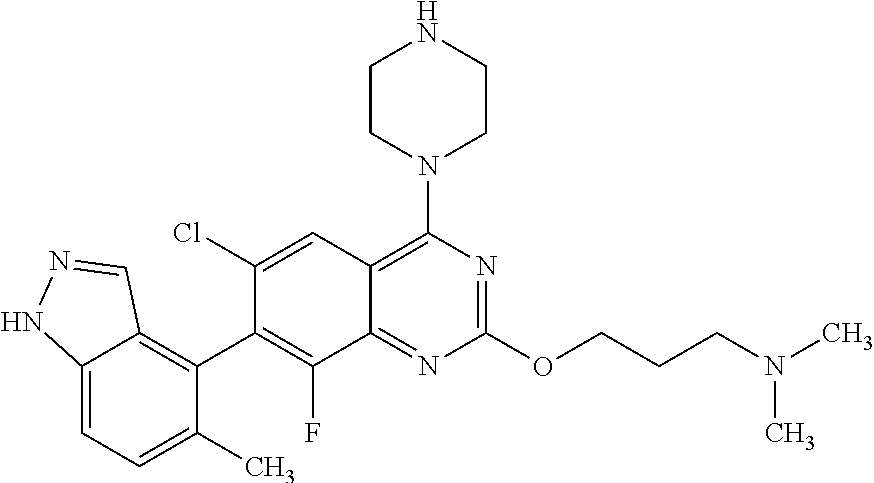 |
498.3 |
| 109 |
 |
568.4 |
| 110 |
 |
548.3 |
| 111 |
 |
548.3 |
| 112 |
 |
478.2 |
| 113 |
 |
534.3 |
| 114 |
 |
534.3 |
| 115 |
 |
520.2 |
| 116 |
 |
526.3 |
| 117 |
 |
526.3 |
| 118 |
 |
526.3 |
| 119 |
 |
540.4 |
| 120 |
 |
526.2 |
| 121 |
 |
568.3 |
| 122 |
 |
568.3 |
| 123 |
 |
520.3 |
| 124 |
 |
520.3 |
| 125 |
 |
588.4 |
| 126 |
 |
545.3 |
| 127 |
 |
526.3 |
| 128 |
 |
526.3 |
| 129 |
 |
630.4 |
| 130 |
 |
526.3 |
| 131 |
 |
526.3 |
| 132 |
 |
610.3 |
| 133 |
 |
511.3 |
| 134 |
 |
498.4 |
| 135 |
 |
498.4 |
| 136 |
 |
568.4 |
| 137 |
 |
588.4 |
| 138 |
 |
588.4 |
| 139 |
 |
630.4 |
| 140 |
 |
630.4 |
| 141 |
 |
642.3 |
| 142 |
 |
642.3 |
| 143 |
 |
610.4 |
| 144 |
 |
610.4 |
| 145 |
 |
600.4 |
| 146 |
 |
600.4 |
| 147 |
 |
544.3 |
| 148 |
 |
86.4 |
| 149 |
 |
524.3 |
| 150 |
 |
506.3 |
| 151 |
 |
511.3 |
| 152 |
 |
511.3 |
| 153 |
 |
538.3 |
| 154 |
 |
580.3 |
| 155 |
 |
542.3 |
| 156 |
 |
544.3 |
| 157 |
 |
544.3 |
| 158 |
 |
586.4 |
| 159 |
 |
586.4 |
| 160 |
 |
548.3 |
| 161 |
 |
545.3 |
| 162 |
 |
545.3 |
| 163 |
 |
545.3 |
| 164 |
 |
553.3 |
| 165 |
 |
534.4 |
| 166 |
 |
535.4 |
| 167 |
 |
608.4 |
| 168 |
 |
607.4 |
| 169 |
 |
567.4 |
| 170 |
 |
549.4 |
| 171 |
 |
624.3 |
| 172 |
 |
623.3 |
| 173 |
 |
513.3 |
| 174 |
 |
514.3 |
| 175 |
 |
559.2 |
| 176 |
 |
536.3 |
| TABLE 2 | ||
| No. | Structure | [M + H]+ |
| 68 |
 |
525.6 |
| 69 |
 |
512.2 |
| 70 |
 |
540.2 |
| 71 |
 |
554.2 |
| 72 |
 |
568.2 |
| 73 |
 |
608.2 |
| 74 |
 |
590.2 |
| 75 |
 |
512.2 |
| 76 |
 |
526.1 |
| 77 |
 |
565.1 |
| 78 |
 |
580.2 |
| 79 |
 |
539.7 |
| 80 |
 |
553.7 |
| 81 |
 |
567.7 |
| 82 |
 |
545.4 |
| 83 |
 |
525.7 |
| 84 |
 |
525.7 |
| TABLE 3 | ||
| No. | Structure | [M + H]+ |
| 300 |
 |
503.25 |
| 301 |
 |
475.30 |
| 302 |
 |
461.20 |
| 303 |
 |
489.30 |
| 304 |
 |
503.25 |
| 305 |
 |
489.20 |
| 306 |
 |
490.2 |
| 307 |
 |
503.25 |
| 308 |
 |
503.2 |
| 309 |
 |
531.2 |
| 310 |
 |
545.2 |
| 311 |
 |
559.2 |
| 312 |
 |
559.2 |
| 313 |
 |
545.2 |
| 314 |
 |
531.2 |
| 315 |
 |
542.7 |
| 316 |
 |
550.7 |
| 317 |
 |
522.8 |
| 318 |
 |
563.3 |
| 319 |
 |
578.2 |
| 320 |
 |
579.3 |
| 321 |
 |
579.4 |
| 322 |
 |
579.3 |
| 323 |
 |
579.4 |
| 324 |
 |
579.4 |
| 325 |
 |
535.4 |
| 326 |
 |
563.4 |
| 327 |
 |
577.4 |
| 328 |
 |
577.4 |
| 329 |
 |
577.4 |
| 330 |
 |
535.3 |
| 331 |
 |
535.3 |
| 332 |
 |
563.3 |
| 333 |
 |
563.3 |
| 334 |
 |
507.3 |
| 335 |
 |
549.4 |
| 336 |
 |
535.3 |
| 337 |
 |
549.3 |
| 338 |
 |
549.3 |
| 339 |
 |
507.3 |
| 340 |
 |
507.3 |
| 341 |
 |
535.3 |
| 342 |
 |
535.3 |
| 343 |
 |
551.3 |
| 344 |
 |
550.3 |
| 345 |
 |
552.4 |
| 346 |
 |
551.3 |
| 347 |
 |
|
| 348 |
 |
|
| 349 |
 |
|
| 350 |
 |
570.3 |
| 351 |
 |
569.3 |


| TABLE 4 | |||
| Less than | |||
| 15 μM (++) | Greater than 15 μM (+) | ||
| Kras WT IC50 | 18, 151, 158, | 22, 97, 108, 112, 120, 134, 147, |
| (μM) | 162, 170 | 155, 156, 164, 165, 166, 171, |
| 172, 173, 175, 176, 330, 339, | ||
| 344, 346, 350, 351 | ||
| Kras G12D IC50 | 22, 155, 156, 169, | 18, 97, 108, 112, 120, 134, 151, |
| (μM) | 172, 334, 339, 344 | 158, 162, 164, 165, 166, 167, |
| 168, 170, 171, 173, 174, 175, | ||
| 176, 330, 346, 350, 351 | ||
Claims (12)


Priority Applications (1)
| Application Number | Priority Date | Filing Date | Title |
|---|---|---|---|
| US16/089,000 US10822312B2 (en) | 2016-03-30 | 2017-03-29 | Substituted quinazoline compounds and methods of use |
Applications Claiming Priority (4)
| Application Number | Priority Date | Filing Date | Title |
|---|---|---|---|
| US201662315532P | 2016-03-30 | 2016-03-30 | |
| US201662404539P | 2016-10-05 | 2016-10-05 | |
| PCT/US2017/024839 WO2017172979A1 (en) | 2016-03-30 | 2017-03-29 | Substituted quinazoline compounds and methods of use |
| US16/089,000 US10822312B2 (en) | 2016-03-30 | 2017-03-29 | Substituted quinazoline compounds and methods of use |
Publications (2)
| Publication Number | Publication Date |
|---|---|
| US20190127336A1 US20190127336A1 (en) | 2019-05-02 |
| US10822312B2 true US10822312B2 (en) | 2020-11-03 |
Family
ID=59966459
Family Applications (1)
| Application Number | Title | Priority Date | Filing Date |
|---|---|---|---|
| US16/089,000 Active US10822312B2 (en) | 2016-03-30 | 2017-03-29 | Substituted quinazoline compounds and methods of use |
Country Status (2)
| Country | Link |
|---|---|
| US (1) | US10822312B2 (en) |
| WO (1) | WO2017172979A1 (en) |
Cited By (10)
| Publication number | Priority date | Publication date | Assignee | Title |
|---|---|---|---|---|
| US11274093B2 (en) | 2017-01-26 | 2022-03-15 | Araxes Pharma Llc | Fused bicyclic benzoheteroaromatic compounds and methods of use thereof |
| US11279689B2 (en) | 2017-01-26 | 2022-03-22 | Araxes Pharma Llc | 1-(3-(6-(3-hydroxynaphthalen-1-yl)benzofuran-2-yl)azetidin-1 yl)prop-2-en-1-one derivatives and similar compounds as KRAS G12C modulators for treating cancer |
| US11358959B2 (en) | 2017-01-26 | 2022-06-14 | Araxes Pharma Llc | Benzothiophene and benzothiazole compounds and methods of use thereof |
| US11377441B2 (en) | 2017-05-25 | 2022-07-05 | Araxes Pharma Llc | Covalent inhibitors of KRAS |
| US11639346B2 (en) | 2017-05-25 | 2023-05-02 | Araxes Pharma Llc | Quinazoline derivatives as modulators of mutant KRAS, HRAS or NRAS |
| US11912723B2 (en) | 2022-02-09 | 2024-02-27 | Quanta Therapeutics, Inc. | KRAS modulators and uses thereof |
| US12134620B2 (en) | 2018-08-01 | 2024-11-05 | Araxes Pharma Llc | Heterocyclic spiro compounds and methods of use thereof for the treatment of cancer |
| US12145947B2 (en) | 2022-05-25 | 2024-11-19 | Quanta Therapeutics, Inc. | Pyrimidine based modulators and uses thereof |
| US12331063B2 (en) | 2021-04-29 | 2025-06-17 | Incyte Corporation | Hetero-bicyclic inhibitors of KRAS |
| US12421254B2 (en) | 2023-03-15 | 2025-09-23 | Quanta Therapeutics, Inc. | KRAS modulators and uses thereof |
Families Citing this family (156)
| Publication number | Priority date | Publication date | Assignee | Title |
|---|---|---|---|---|
| UY35464A (en) | 2013-03-15 | 2014-10-31 | Araxes Pharma Llc | KRAS G12C COVALENT INHIBITORS. |
| TWI659021B (en) | 2013-10-10 | 2019-05-11 | 亞瑞克西斯製藥公司 | Inhibitors of kras g12c |
| JO3556B1 (en) | 2014-09-18 | 2020-07-05 | Araxes Pharma Llc | Combination therapies for treatment of cancer |
| US10011600B2 (en) | 2014-09-25 | 2018-07-03 | Araxes Pharma Llc | Methods and compositions for inhibition of Ras |
| JP2018513853A (en) | 2015-04-10 | 2018-05-31 | アラクセス ファーマ エルエルシー | Substituted quinazoline compounds and methods of use thereof |
| JP6789239B2 (en) | 2015-04-15 | 2020-11-25 | アラクセス ファーマ エルエルシー | Condensation tricyclic inhibitor of KRAS and method of its use |
| US10144724B2 (en) | 2015-07-22 | 2018-12-04 | Araxes Pharma Llc | Substituted quinazoline compounds and methods of use thereof |
| EP3356354A1 (en) | 2015-09-28 | 2018-08-08 | Araxes Pharma LLC | Inhibitors of kras g12c mutant proteins |
| WO2017058807A1 (en) | 2015-09-28 | 2017-04-06 | Araxes Pharma Llc | Inhibitors of kras g12c mutant proteins |
| WO2017058915A1 (en) | 2015-09-28 | 2017-04-06 | Araxes Pharma Llc | Inhibitors of kras g12c mutant proteins |
| WO2017058902A1 (en) | 2015-09-28 | 2017-04-06 | Araxes Pharma Llc | Inhibitors of kras g12c mutant proteins |
| US10882847B2 (en) | 2015-09-28 | 2021-01-05 | Araxes Pharma Llc | Inhibitors of KRAS G12C mutant proteins |
| US10647703B2 (en) | 2015-09-28 | 2020-05-12 | Araxes Pharma Llc | Inhibitors of KRAS G12C mutant proteins |
| EP3356353A1 (en) | 2015-09-28 | 2018-08-08 | Araxes Pharma LLC | Inhibitors of kras g12c mutant proteins |
| KR20180081596A (en) | 2015-11-16 | 2018-07-16 | 아락세스 파마 엘엘씨 | Substituted quinazoline compounds comprising substituted heterocyclic groups and methods for their use |
| WO2017172979A1 (en) | 2016-03-30 | 2017-10-05 | Araxes Pharma Llc | Substituted quinazoline compounds and methods of use |
| US10646488B2 (en) | 2016-07-13 | 2020-05-12 | Araxes Pharma Llc | Conjugates of cereblon binding compounds and G12C mutant KRAS, HRAS or NRAS protein modulating compounds and methods of use thereof |
| US10280172B2 (en) | 2016-09-29 | 2019-05-07 | Araxes Pharma Llc | Inhibitors of KRAS G12C mutant proteins |
| EP3523289A1 (en) | 2016-10-07 | 2019-08-14 | Araxes Pharma LLC | Heterocyclic compounds as inhibitors of ras and methods of use thereof |
| WO2018119183A2 (en) | 2016-12-22 | 2018-06-28 | Amgen Inc. | Kras g12c inhibitors and methods of using the same |
| CN110382482A (en) | 2017-01-26 | 2019-10-25 | 亚瑞克西斯制药公司 | Condensed miscellaneous-Heterobicyclic compounds and its application method |
| WO2018140514A1 (en) * | 2017-01-26 | 2018-08-02 | Araxes Pharma Llc | 1-(6-(3-hydroxynaphthalen-1-yl)quinazolin-2-yl)azetidin-1-yl)prop-2-en-1-one derivatives and similar compounds as kras g12c inhibitors for the treatment of cancer |
| EA201992781A1 (en) | 2017-05-22 | 2020-04-01 | Эмджен Инк. | G12C KRAS INHIBITORS AND WAYS OF THEIR APPLICATION |
| JP2020521741A (en) | 2017-05-25 | 2020-07-27 | アラクセス ファーマ エルエルシー | Compounds for the treatment of cancer and methods of their use |
| MA50077A (en) | 2017-09-08 | 2020-07-15 | Amgen Inc | KRAS G12C INHIBITORS AND THEIR PROCEDURES FOR USE |
| KR20210006356A (en) * | 2018-04-04 | 2021-01-18 | 아비나스 오퍼레이션스, 인코포레이티드 | Proteolysis modulators and related methods of use |
| ES2995514T3 (en) | 2018-05-04 | 2025-02-10 | Amgen Inc | Kras g12c inhibitors and methods of using the same |
| WO2019213516A1 (en) | 2018-05-04 | 2019-11-07 | Amgen Inc. | Kras g12c inhibitors and methods of using the same |
| EP3790886B1 (en) | 2018-05-10 | 2024-06-26 | Amgen Inc. | Kras g12c inhibitors for the treatment of cancer |
| ES2938987T3 (en) | 2018-06-01 | 2023-04-18 | Amgen Inc | KRAS G12c inhibitors and methods of use thereof |
| US20190375749A1 (en) | 2018-06-11 | 2019-12-12 | Amgen Inc. | Kras g12c inhibitors and methods of using the same |
| ES3060664T3 (en) | 2018-06-12 | 2026-03-27 | Amgen Inc | Kras g12c inhibitors encompassing a piperazine ring and use thereof in the treatment of cancer |
| JP7542538B2 (en) | 2018-09-18 | 2024-08-30 | ニカング セラピューティクス, インコーポレイテッド | Fused tricyclic ring derivatives as Src homology-2 phosphatase inhibitors - Patent Application 20070223333 |
| EP3628664A1 (en) * | 2018-09-25 | 2020-04-01 | Max-Planck-Gesellschaft zur Förderung der Wissenschaften e.V. | Irreversible inhibitors of kras g12c mutant |
| WO2020085504A1 (en) | 2018-10-26 | 2020-04-30 | 大鵬薬品工業株式会社 | Method for producing chloroazole carboxylate derivative using sandmeyer reaction with light irradiation |
| PT3735299T (en) | 2018-11-09 | 2024-11-25 | Hoffmann La Roche | Fused ring compounds |
| JP7516029B2 (en) | 2018-11-16 | 2024-07-16 | アムジエン・インコーポレーテツド | Improved synthesis of key intermediates for KRAS G12C inhibitor compounds |
| JP7377679B2 (en) | 2018-11-19 | 2023-11-10 | アムジエン・インコーポレーテツド | Combination therapy comprising a KRASG12C inhibitor and one or more additional pharmaceutically active agents for the treatment of cancer |
| US11053226B2 (en) | 2018-11-19 | 2021-07-06 | Amgen Inc. | KRAS G12C inhibitors and methods of using the same |
| EP3738593A1 (en) | 2019-05-14 | 2020-11-18 | Amgen, Inc | Dosing of kras inhibitor for treatment of cancers |
| WO2020234103A1 (en) | 2019-05-21 | 2020-11-26 | Bayer Aktiengesellschaft | Identification and use of kras inhibitors |
| NZ782284A (en) | 2019-05-21 | 2024-11-29 | Amgen Inc | Solid state forms |
| CN112300173B (en) * | 2019-07-30 | 2021-10-01 | 上海凌达生物医药有限公司 | Nitrogen-containing polycyclic compounds, preparation method and application |
| EP4031542B1 (en) * | 2019-09-18 | 2025-10-15 | Merck Sharp & Dohme LLC | Small molecule inhibitors of kras g12c mutant |
| US12122787B2 (en) | 2019-09-20 | 2024-10-22 | Shanghai Jemincare Pharmaceuticals Co., Ltd | Fused pyridone compound, and preparation method therefor and use thereof |
| WO2021063346A1 (en) * | 2019-09-30 | 2021-04-08 | 上海迪诺医药科技有限公司 | Kras g12c inhibitor and application thereof |
| CN114867726B (en) | 2019-10-28 | 2023-11-28 | 默沙东有限责任公司 | Small molecule inhibitors of KRAS G12C mutants |
| WO2021091956A1 (en) | 2019-11-04 | 2021-05-14 | Revolution Medicines, Inc. | Ras inhibitors |
| CN120699039A (en) | 2019-11-04 | 2025-09-26 | 锐新医药公司 | RAS inhibitors |
| MX2022005359A (en) | 2019-11-04 | 2022-06-02 | Revolution Medicines Inc | RAS INHIBITORS. |
| EP4065231A1 (en) | 2019-11-27 | 2022-10-05 | Revolution Medicines, Inc. | Covalent ras inhibitors and uses thereof |
| US12479834B2 (en) | 2019-11-29 | 2025-11-25 | Taiho Pharmaceutical Co., Ltd. | Phenol compound or salt thereof |
| TW202210633A (en) | 2020-06-05 | 2022-03-16 | 法商昂席歐公司 | A dbait molecule in combination with kras inhibitor for the treatment of cancer |
| IL299131A (en) | 2020-06-18 | 2023-02-01 | Revolution Medicines Inc | Methods for delaying, preventing, and treating acquired resistance to ras inhibitors |
| WO2022002102A1 (en) * | 2020-06-30 | 2022-01-06 | InventisBio Co., Ltd. | Quinazoline compounds, preparation methods and uses thereof |
| CN113912608B (en) * | 2020-07-10 | 2023-07-14 | 江苏恒瑞医药股份有限公司 | Pyrimidopyrimidinone derivatives, their preparation method and their application in medicine |
| CN116368130A (en) | 2020-08-28 | 2023-06-30 | 金橘生物科技公司 | Heterocyclic compounds and their uses |
| MX2023002248A (en) | 2020-09-03 | 2023-05-16 | Revolution Medicines Inc | Use of sos1 inhibitors to treat malignancies with shp2 mutations. |
| MX2023003060A (en) | 2020-09-15 | 2023-04-05 | Revolution Medicines Inc | Indole derivatives as ras inhibitors in the treatment of cancer. |
| US20230081426A1 (en) * | 2020-09-18 | 2023-03-16 | Plexxikon Inc. | Compounds and methods for kras modulation and indications therefor |
| AU2021347232A1 (en) | 2020-09-23 | 2023-04-27 | Erasca, Inc. | Tricyclic pyridones and pyrimidones |
| US20230365563A1 (en) * | 2020-09-30 | 2023-11-16 | Shanghai Pharmaceuticals Holding Co., Ltd. | Quinazoline compound and application thereof |
| US20240059710A1 (en) * | 2020-11-20 | 2024-02-22 | Jacobio Pharmaceuticals Co., Ltd. | KRAS G12D Inhibitors |
| CN116829151A (en) * | 2020-12-15 | 2023-09-29 | 米拉蒂治疗股份有限公司 | Azaquinazoline pan-KRas inhibitor |
| WO2022132200A1 (en) | 2020-12-15 | 2022-06-23 | Mirati Therapeutics, Inc. | Azaquinazoline pan-kras inhibitors |
| WO2022133345A1 (en) | 2020-12-18 | 2022-06-23 | Erasca, Inc. | Tricyclic pyridones and pyrimidones |
| WO2022140472A1 (en) | 2020-12-22 | 2022-06-30 | Nikang Therapeutics, Inc. | Compounds for degrading cyclin-dependent kinase 2 via ubiquitin proteosome pathway |
| US20240109893A1 (en) * | 2020-12-22 | 2024-04-04 | Shanghai Kechow Pharma, Inc. | Preparation and application method of heterocyclic compounds as kras inhibitor |
| WO2022148442A1 (en) * | 2021-01-07 | 2022-07-14 | 武汉人福创新药物研发中心有限公司 | 6-substituted phosphoryl quinazoline derivative, preparation method therefor and use thereof |
| US20240140957A1 (en) * | 2021-01-08 | 2024-05-02 | Beigene Switzerland Gmbh | Bridged compounds as kras g12d inhibitor and degrader and the use thereof |
| AU2022219651A1 (en) * | 2021-02-15 | 2023-09-07 | Astellas Pharma Inc. | 4-aminoquinazoline compound |
| KR20230145361A (en) * | 2021-02-15 | 2023-10-17 | 아스텔라스세이야쿠 가부시키가이샤 | Quinazoline compound to induce degradation of G12D mutant KRAS protein |
| CN117157290A (en) * | 2021-02-16 | 2023-12-01 | 瑟拉斯有限公司 | Compositions and methods for inhibiting KRAS |
| AU2022224511A1 (en) * | 2021-02-16 | 2023-08-10 | Lawrence Livermore National Security, Llc | Compositions and methods for inhibition of ras |
| IL305568A (en) * | 2021-03-12 | 2023-10-01 | Bristol Myers Squibb Co | Kras g12d inhibitors |
| CA3210383A1 (en) * | 2021-03-12 | 2022-09-15 | Bristol-Myers Squibb Company | Kras inhibitors |
| CN116964058A (en) * | 2021-03-15 | 2023-10-27 | 贝达药业股份有限公司 | KRAS G12D inhibitors and their applications in medicine |
| CN115141215B (en) * | 2021-03-30 | 2023-09-15 | 上海德琪医药科技有限公司 | KRAS G12D protein inhibitors and their uses |
| CN115181106B (en) * | 2021-04-07 | 2024-04-05 | 药雅科技(上海)有限公司 | Quinazoline KRAS G12D Preparation and application of mutant protein inhibitor |
| EP4320126A4 (en) * | 2021-04-09 | 2026-03-18 | Broad Inst Inc | BIFUNCTIONAL MOLECULES FOR SELECTIVE MODIFICATION OF TARGET SUBSTRATES |
| WO2022214102A1 (en) * | 2021-04-09 | 2022-10-13 | 杭州英创医药科技有限公司 | Heterocyclic compound acting as kras g12d inhibitor |
| JP2024517695A (en) * | 2021-04-29 | 2024-04-23 | アムジエン・インコーポレーテツド | Heterocyclic compounds and methods of use |
| CA3217393A1 (en) | 2021-05-05 | 2022-11-10 | Elena S. Koltun | Ras inhibitors |
| AU2022268962A1 (en) | 2021-05-05 | 2023-12-14 | Revolution Medicines, Inc. | Ras inhibitors for the treatment of cancer |
| WO2022247760A1 (en) * | 2021-05-22 | 2022-12-01 | 上海科州药物研发有限公司 | Heterocyclic compounds as kras inhibitor, and preparation therefor and use thereof in treatment |
| JP2024520000A (en) * | 2021-05-24 | 2024-05-21 | 上海瓔黎薬業有限公司 | Nitrogen-containing heterocyclic compounds, their production method and use |
| CN117500799A (en) * | 2021-06-09 | 2024-02-02 | 伊莱利利公司 | Substituted fused azines as KRAS G12D inhibitors |
| JP2024520791A (en) * | 2021-06-10 | 2024-05-24 | レデックス・ファーマ・パブリック・リミテッド・カンパニー | Compound |
| CN117255793A (en) | 2021-06-21 | 2023-12-19 | 江苏恒瑞医药股份有限公司 | Fused tetracyclic compound, preparation method thereof and application thereof in medicines |
| WO2023278600A1 (en) * | 2021-06-30 | 2023-01-05 | Dana-Farber Cancer Institute, Inc. | Small molecule inhibitors of kras g12d mutant |
| WO2023284730A1 (en) | 2021-07-14 | 2023-01-19 | Nikang Therapeutics, Inc. | Alkylidene derivatives as kras inhibitors |
| EP4373822A2 (en) | 2021-07-23 | 2024-05-29 | Theras Inc. | Compositions and methods for inhibition of ras |
| AR127308A1 (en) | 2021-10-08 | 2024-01-10 | Revolution Medicines Inc | RAS INHIBITORS |
| CN114031562A (en) * | 2021-10-31 | 2022-02-11 | 南京碳硅人工智能生物医药技术研究院有限公司 | Process optimization of pyridine derivative with anti-tumor effect |
| JP2024543879A (en) * | 2021-11-24 | 2024-11-26 | メルク・シャープ・アンド・ドーム・エルエルシー | Small molecule inhibitors of mutant KRAS proteins |
| CN117940436A (en) * | 2021-12-02 | 2024-04-26 | 上海和誉生物医药科技有限公司 | 7- (Naphthalene-1-yl) pyrido [4,3-d ] pyrimidine derivative and preparation and application thereof |
| TW202340214A (en) | 2021-12-17 | 2023-10-16 | 美商健臻公司 | Pyrazolopyrazine compounds as shp2 inhibitors |
| WO2023119677A1 (en) | 2021-12-24 | 2023-06-29 | Astellas Pharma Inc. | Pharmaceutical composition comprising a quinazoline compound |
| CN118510785B (en) * | 2021-12-28 | 2025-03-18 | 凌科药业(杭州)有限公司 | A nitrogen-containing heterocyclic compound and its application |
| WO2023141300A1 (en) * | 2022-01-20 | 2023-07-27 | Kumquat Biosciences Inc. | Heterocyclic compounds and uses thereof |
| MX2024008849A (en) * | 2022-01-21 | 2024-07-25 | Usynova Pharmaceuticals Ltd | Benzopyrimidine compounds and use thereof. |
| WO2023152255A1 (en) | 2022-02-10 | 2023-08-17 | Bayer Aktiengesellschaft | Fused pyrimidines as kras inhibitors |
| EP4227307A1 (en) | 2022-02-11 | 2023-08-16 | Genzyme Corporation | Pyrazolopyrazine compounds as shp2 inhibitors |
| EP4479398A1 (en) * | 2022-02-16 | 2024-12-25 | Amgen Inc. | Quinazoline compounds and use thereof as inhibtors of mutant kras proteins |
| AU2023222076A1 (en) * | 2022-02-16 | 2024-08-15 | Amgen Inc. | Quinazoline compounds and use thereof as inhibtors of mutant kras proteins |
| CN119136806A (en) | 2022-03-08 | 2024-12-13 | 锐新医药公司 | Methods for treating immune-refractory lung cancer |
| KR20240163107A (en) | 2022-03-11 | 2024-11-18 | 컴쿼트 바이오사이언시즈 인크. | Heterocyclic compounds and their uses |
| AU2023231912A1 (en) | 2022-03-11 | 2024-08-15 | Astellas Pharma Inc. | Heterocyclic compound for inducing degradation of g12d mutant kras protein |
| CN119053595A (en) | 2022-03-28 | 2024-11-29 | 尼坎治疗公司 | Sulfonylamino derivatives as cyclin dependent kinase 2 inhibitors |
| EP4536363A1 (en) | 2022-06-08 | 2025-04-16 | Nikang Therapeutics, Inc. | Sulfamide derivatives as cyclin-dependent kinase 2 inhibitors |
| WO2023240263A1 (en) | 2022-06-10 | 2023-12-14 | Revolution Medicines, Inc. | Macrocyclic ras inhibitors |
| TW202409002A (en) | 2022-07-21 | 2024-03-01 | 日商安斯泰來製藥股份有限公司 | Heterocyclic compound acting on g12d mutant kras protein |
| KR20250042155A (en) | 2022-07-27 | 2025-03-26 | 지앙수 헨그루이 파마슈티컬스 컴퍼니 리미티드 | Condensed ring compound, method for preparing the same and medical application thereof |
| CA3261681A1 (en) | 2022-08-05 | 2024-02-08 | Kumquat Biosciences Inc. | Heterocyclic compounds and uses thereof |
| CN119630656A (en) | 2022-08-05 | 2025-03-14 | 安斯泰来制药株式会社 | Heterocyclic compounds for inducing degradation of mutant KRAS proteins |
| WO2024030647A1 (en) * | 2022-08-05 | 2024-02-08 | Theras, Inc. | Compositions and methods for inhibition of ras |
| JP2025525938A (en) * | 2022-08-05 | 2025-08-07 | セラス, インコーポレイテッド | Compositions and methods for the inhibition of KRAS |
| TW202412790A (en) | 2022-08-09 | 2024-04-01 | 日商安斯泰來製藥股份有限公司 | Heterocyclic compounds used to inhibit and/or induce the breakdown of KRAS protein |
| WO2024034593A1 (en) | 2022-08-09 | 2024-02-15 | アステラス製薬株式会社 | Heterocyclic compound for inducing degradation of g12v mutant kras protein |
| JP7733274B1 (en) | 2022-08-12 | 2025-09-02 | アステラス製薬株式会社 | Anticancer drug combinations containing bifunctional compounds with G12D mutant KRAS inhibitory activity |
| AR130192A1 (en) * | 2022-08-12 | 2024-11-13 | Astellas Pharma Inc | ANTINEOPLASTIC COMBINATIONS INCLUDING CHEMOTHERAPY |
| WO2024034123A1 (en) * | 2022-08-12 | 2024-02-15 | アステラス製薬株式会社 | Pharmaceutical composition containing heterocyclic compound |
| JP2026504244A (en) | 2022-11-09 | 2026-02-04 | レヴォリューション・メディスンズ,インコーポレイテッド | Compounds, conjugates, and methods for preparing and using them |
| JP2025537123A (en) | 2022-11-11 | 2025-11-14 | ニカング セラピューティクス, インコーポレイテッド | Bifunctional compounds containing 2,5-substituted pyrimidine derivatives for degrading cyclin-dependent kinase 2 via the ubiquitin proteasome pathway |
| CN121419983A (en) | 2023-01-26 | 2026-01-27 | 阿尔维纳斯运营股份有限公司 | cerebellar protein-based KRAS degradation PROTAC and its related applications |
| EP4687905A1 (en) | 2023-03-30 | 2026-02-11 | Revolution Medicines, Inc. | Compositions for inducing ras gtp hydrolysis and uses thereof |
| KR20260005904A (en) | 2023-04-07 | 2026-01-12 | 레볼루션 메디슨즈, 인크. | macrocyclic RAS inhibitors |
| CN121263418A (en) | 2023-04-07 | 2026-01-02 | 锐新医药公司 | Macrocyclic RAS inhibitors |
| KR20250172857A (en) | 2023-04-14 | 2025-12-09 | 레볼루션 메디슨즈, 인크. | Crystalline form of RAS inhibitor |
| AU2024252105A1 (en) | 2023-04-14 | 2025-10-16 | Revolution Medicines, Inc. | Crystalline forms of ras inhibitors, compositions containing the same, and methods of use thereof |
| AU2024265078A1 (en) | 2023-05-04 | 2025-12-11 | Revolution Medicines, Inc. | Combination therapy for a ras related disease or disorder |
| CN121605110A (en) | 2023-06-06 | 2026-03-03 | 金橘生物科技公司 | Substituted heterocyclic compounds and uses thereof |
| AR133027A1 (en) | 2023-06-22 | 2025-08-20 | Astellas Pharma Inc | PHARMACEUTICAL COMPOSITION COMPRISING A QUINAZOLINE COMPOUND |
| AR133028A1 (en) | 2023-06-22 | 2025-08-20 | Astellas Pharma Inc | PHARMACEUTICAL COMPOSITION INCLUDING A DEGRADER OF ALL KRAS |
| WO2025011634A1 (en) | 2023-07-13 | 2025-01-16 | 上海森辉医药有限公司 | Preparation method for kras g12d intermediate |
| WO2025016899A1 (en) | 2023-07-19 | 2025-01-23 | Bayer Aktiengesellschaft | Spirocyclic compounds for the treatment of cancer |
| WO2025026903A1 (en) | 2023-07-31 | 2025-02-06 | Bayer Aktiengesellschaft | Imidazo pyrimidine compounds for the treatment of cancer |
| IL326136A (en) | 2023-08-07 | 2026-03-01 | Revolution Medicines Inc | Rmc-6291 for use in the treatment of ras protein-related disease or disorder |
| WO2025072462A1 (en) | 2023-09-27 | 2025-04-03 | Nikang Therapeutics, Inc. | Sulfonamide derivatives as cyclin-dependent kinase 2 inhibitors |
| US20250154171A1 (en) | 2023-10-12 | 2025-05-15 | Revolution Medicines, Inc. | Ras inhibitors |
| WO2025085748A1 (en) | 2023-10-20 | 2025-04-24 | Merck Sharp & Dohme Llc | Small molecule inhibitors of kras proteins |
| WO2025117616A1 (en) | 2023-11-27 | 2025-06-05 | Nikang Therapeutics, Inc. | Bifunctional compounds containing 2,5-substituted pyrimidine derivatives for degrading cyclin-dependent kinase 2 and cyclin-dependent kinase 4 via ubiquitin proteasome pathway |
| WO2025117981A1 (en) | 2023-12-02 | 2025-06-05 | Nikang Therapeutics, Inc. | Bifunctional compounds containing 2,5-substituted pyrimidine derivatives for degrading cyclin-dependent kinase 2 via ubiquitin proteasome pathway |
| WO2025171296A1 (en) | 2024-02-09 | 2025-08-14 | Revolution Medicines, Inc. | Ras inhibitors |
| WO2025212828A1 (en) | 2024-04-03 | 2025-10-09 | Nikang Therapeutics, Inc. | Bifunctional compounds containing 2,5-substituted pyrimidine derivatives for degrading cyclin-dependent kinase 2 and cyclin-dependent kinase 4 via ubiquitin proteasome pathway |
| WO2025240536A1 (en) | 2024-05-15 | 2025-11-20 | Nikang Therapeutics, Inc. | Bifunctional compounds containing 2,5-substituted pyrimidine derivatives for degrading cyclin-dependent kinase 2 and/or cyclin-dependent kinase 4 via ubiquitin proteasome pathway |
| WO2025240847A1 (en) | 2024-05-17 | 2025-11-20 | Revolution Medicines, Inc. | Ras inhibitors |
| US20250375445A1 (en) | 2024-06-07 | 2025-12-11 | Revolution Medicines, Inc. | Methods of treating a ras protein-related disease or disorder |
| WO2025265060A1 (en) | 2024-06-21 | 2025-12-26 | Revolution Medicines, Inc. | Therapeutic compositions and methods for managing treatment-related effects |
| WO2026006747A1 (en) | 2024-06-28 | 2026-01-02 | Revolution Medicines, Inc. | Ras inhibitors |
| WO2026015801A1 (en) | 2024-07-12 | 2026-01-15 | Revolution Medicines, Inc. | Methods of treating a ras related disease or disorder |
| WO2026015825A1 (en) | 2024-07-12 | 2026-01-15 | Revolution Medicines, Inc. | Use of ras inhibitor for treating pancreatic cancer |
| WO2026015790A1 (en) | 2024-07-12 | 2026-01-15 | Revolution Medicines, Inc. | Methods of treating a ras related disease or disorder |
| WO2026015796A1 (en) | 2024-07-12 | 2026-01-15 | Revolution Medicines, Inc. | Methods of treating a ras related disease or disorder |
| WO2026050446A1 (en) | 2024-08-29 | 2026-03-05 | Revolution Medicines, Inc. | Ras inhibitors |
| WO2026072904A2 (en) | 2024-09-26 | 2026-04-02 | Revolution Medicines, Inc. | Compositions and methods for treating lung cancer |
Citations (141)
| Publication number | Priority date | Publication date | Assignee | Title |
|---|---|---|---|---|
| GB939516A (en) | 1961-05-29 | 1963-10-16 | British Drug Houses Ltd | Sulphonyl ureas |
| US3702849A (en) | 1967-10-26 | 1972-11-14 | Pfizer | 4-(isoquinolin-1-yl) piperazine-1-carboxylic acid esters |
| US3752660A (en) | 1971-03-15 | 1973-08-14 | Allied Chem | Chlorophenoxyacetyloxazolidone herbicides and preparation thereof |
| EP0094498A2 (en) | 1982-05-06 | 1983-11-23 | American Cyanamid Company | Antiatherosclerotic 1-piperazine derivatives |
| JPS58203966A (en) | 1982-05-06 | 1983-11-28 | アメリカン・サイアナミド・カンパニ− | Novel piperazines, manufacture and use as drug |
| JPS59163372A (en) | 1983-03-09 | 1984-09-14 | Showa Denko Kk | Pyrazole derivative, its preparation and herbicide |
| US4649219A (en) | 1984-03-13 | 1987-03-10 | Mitsui Toatsu Chemicals, Incorporated | Unsaturated cyclic amido-substituted ether compounds and preparation process thereof |
| US4861760A (en) | 1985-10-03 | 1989-08-29 | Merck & Co., Inc. | Ophthalmological composition of the type which undergoes liquid-gel phase transition |
| US4911920A (en) | 1986-07-30 | 1990-03-27 | Alcon Laboratories, Inc. | Sustained release, comfort formulation for glaucoma therapy |
| WO1990005719A1 (en) | 1988-11-23 | 1990-05-31 | British Bio-Technology Limited | Hydroxamic acid based collagenase inhibitors |
| US5010175A (en) | 1988-05-02 | 1991-04-23 | The Regents Of The University Of California | General method for producing and selecting peptides with specific properties |
| US5033252A (en) | 1987-12-23 | 1991-07-23 | Entravision, Inc. | Method of packaging and sterilizing a pharmaceutical product |
| US5052558A (en) | 1987-12-23 | 1991-10-01 | Entravision, Inc. | Packaged pharmaceutical product |
| WO1991019735A1 (en) | 1990-06-14 | 1991-12-26 | Bartlett Paul A | Libraries of modified peptides with protease resistance |
| WO1992000091A1 (en) | 1990-07-02 | 1992-01-09 | Bioligand, Inc. | Random bio-oligomer library, a method of synthesis thereof, and a method of use thereof |
| US5212162A (en) | 1991-03-27 | 1993-05-18 | Alcon Laboratories, Inc. | Use of combinations gelling polysaccharides and finely divided drug carrier substrates in topical ophthalmic compositions |
| WO1993020242A1 (en) | 1992-03-30 | 1993-10-14 | The Scripps Research Institute | Encoded combinatorial chemical libraries |
| US5288514A (en) | 1992-09-14 | 1994-02-22 | The Regents Of The University Of California | Solid phase and combinatorial synthesis of benzodiazepine compounds on a solid support |
| US5323907A (en) | 1992-06-23 | 1994-06-28 | Multi-Comp, Inc. | Child resistant package assembly for dispensing pharmaceutical medications |
| EP0606046A1 (en) | 1993-01-06 | 1994-07-13 | Ciba-Geigy Ag | Arylsulfonamido-substituted hydroxamic acids |
| US5403841A (en) | 1991-01-15 | 1995-04-04 | Alcon Laboratories, Inc. | Use of carrageenans in topical ophthalmic compositions |
| WO1996005309A2 (en) | 1994-08-17 | 1996-02-22 | The Rockefeller University | Modulators of body weight, corresponding nucleic acids and proteins, and diagnostic and therapeutic uses thereof |
| US5539083A (en) | 1994-02-23 | 1996-07-23 | Isis Pharmaceuticals, Inc. | Peptide nucleic acid combinatorial libraries and improved methods of synthesis |
| US5538848A (en) | 1994-11-16 | 1996-07-23 | Applied Biosystems Division, Perkin-Elmer Corp. | Method for detecting nucleic acid amplification using self-quenching fluorescence probe |
| WO1996027583A1 (en) | 1995-03-08 | 1996-09-12 | Pfizer Inc. | Arylsulfonylamino hydroxamic acid derivatives |
| WO1996033172A1 (en) | 1995-04-20 | 1996-10-24 | Pfizer Inc. | Arylsulfonyl hydroxamic acid derivatives as mmp and tnf inhibitors |
| WO1997000271A1 (en) | 1995-06-14 | 1997-01-03 | The Regents Of The University Of California | Novel high affinity human antibodies to tumor antigens |
| US5593853A (en) | 1994-02-09 | 1997-01-14 | Martek Corporation | Generation and screening of synthetic drug libraries |
| US5605798A (en) | 1993-01-07 | 1997-02-25 | Sequenom, Inc. | DNA diagnostic based on mass spectrometry |
| EP0780386A1 (en) | 1995-12-20 | 1997-06-25 | F. Hoffmann-La Roche Ag | Matrix metalloprotease inhibitors |
| EP0818442A2 (en) | 1996-07-12 | 1998-01-14 | Pfizer Inc. | Cyclic sulphone derivatives as inhibitors of metalloproteinases and of the production of tumour necrosis factor |
| WO1998003516A1 (en) | 1996-07-18 | 1998-01-29 | Pfizer Inc. | Phosphinate based inhibitors of matrix metalloproteases |
| WO1998007697A1 (en) | 1996-08-23 | 1998-02-26 | Pfizer Inc. | Arylsulfonylamino hydroxamic acid derivatives |
| US5731352A (en) | 1995-05-31 | 1998-03-24 | Adir Et Compagnie | Aryl(alkyl)propylamides |
| US5777324A (en) | 1996-09-19 | 1998-07-07 | Sequenom, Inc. | Method and apparatus for maldi analysis |
| WO1998030566A1 (en) | 1997-01-06 | 1998-07-16 | Pfizer Inc. | Cyclic sulfone derivatives |
| WO1998033496A1 (en) | 1997-02-04 | 1998-08-06 | Eli Lilly And Company | Sulphonamide derivatives |
| WO1998033768A1 (en) | 1997-02-03 | 1998-08-06 | Pfizer Products Inc. | Arylsulfonylamino hydroxamic acid derivatives |
| WO1998034915A1 (en) | 1997-02-07 | 1998-08-13 | Pfizer Inc. | N-hydroxy-beta-sulfonyl-propionamide derivatives and their use as inhibitors of matrix metalloproteinases |
| WO1998034918A1 (en) | 1997-02-11 | 1998-08-13 | Pfizer Inc. | Arylsulfonyl hydroxamic acid derivatives |
| WO1998057948A1 (en) | 1997-06-17 | 1998-12-23 | Schering Corporation | Novel n-substituted urea inhibitors of farnesyl-protein transferase |
| US5858659A (en) | 1995-11-29 | 1999-01-12 | Affymetrix, Inc. | Polymorphism detection |
| WO1999007675A1 (en) | 1997-08-08 | 1999-02-18 | Pfizer Products Inc. | Aryloxyarylsulfonylamino hydroxamic acid derivatives |
| WO1999029667A1 (en) | 1997-12-05 | 1999-06-17 | Pfizer Limited | Hydroxamic acid derivatives as matrix metalloprotease (mmp) inhibitors |
| US5919626A (en) | 1997-06-06 | 1999-07-06 | Orchid Bio Computer, Inc. | Attachment of unmodified nucleic acids to silanized solid phase surfaces |
| US5925525A (en) | 1989-06-07 | 1999-07-20 | Affymetrix, Inc. | Method of identifying nucleotide differences |
| EP0931788A2 (en) | 1998-01-27 | 1999-07-28 | Pfizer Limited | Metalloprotease inhibitors |
| US5952174A (en) | 1994-02-07 | 1999-09-14 | Orchid Biocomputer, Inc. | Ligase/polymerase-mediated genetic bit analysis of single nucleotide polymorphisms and its use in genetic analysis |
| WO1999052889A1 (en) | 1998-04-10 | 1999-10-21 | Pfizer Products Inc. | (4-arylsulfonylamino)-tetrahydropyran-4-carboxylic acid hydroxamides |
| WO1999052910A1 (en) | 1998-04-10 | 1999-10-21 | Pfizer Products Inc. | Bicyclic hydroxamic acid derivatives |
| WO1999067641A2 (en) | 1998-06-24 | 1999-12-29 | Illumina, Inc. | Decoding of array sensors with microspheres |
| US6017696A (en) | 1993-11-01 | 2000-01-25 | Nanogen, Inc. | Methods for electronic stringency control for molecular biological analysis and diagnostics |
| US6045996A (en) | 1993-10-26 | 2000-04-04 | Affymetrix, Inc. | Hybridization assays on oligonucleotide arrays |
| US6051380A (en) | 1993-11-01 | 2000-04-18 | Nanogen, Inc. | Methods and procedures for molecular biological analysis and diagnostics |
| US6068818A (en) | 1993-11-01 | 2000-05-30 | Nanogen, Inc. | Multicomponent devices for molecular biological analysis and diagnostics |
| EP1004578A2 (en) | 1998-11-05 | 2000-05-31 | Pfizer Products Inc. | 5-oxo-pyrrolidine-2-carboxylic acid hydroxamide derivatives |
| WO2000039587A1 (en) | 1998-12-28 | 2000-07-06 | Illumina, Inc. | Composite arrays utilizing microspheres |
| US6251639B1 (en) | 1999-09-13 | 2001-06-26 | Nugen Technologies, Inc. | Methods and compositions for linear isothermal amplification of polynucleotide sequences, using a RNA-DNA composite primer |
| US20020169300A1 (en) | 2001-01-30 | 2002-11-14 | Waterman Marian L. | Method of detection and treatment of colon cancer by analysis of beta-catenin-sensitive isoforms of lymphoid enhancer factor-1 |
| WO2003004480A2 (en) | 2001-07-02 | 2003-01-16 | Novo Nordisk A/S | Substituted piperazine and diazepanes as histamine h3 receptor agonists |
| US20030022344A1 (en) | 2000-10-23 | 2003-01-30 | Roger Williams | Phosphoinositide 3-kinases |
| US20030166620A1 (en) | 2000-06-05 | 2003-09-04 | Jae-Gul Lee | Novel oxazolidinone derivatives and a process for the preparation thereof |
| US20030171400A1 (en) | 2000-03-21 | 2003-09-11 | Stanislaw Pikul | Heterocyclic side chain containing metalloprotease inhibitors |
| WO2003088908A2 (en) | 2002-04-19 | 2003-10-30 | Bristol-Myers Squibb Company | Heterocyclo inhibitors of potassium channel function |
| WO2004074283A1 (en) | 2003-02-21 | 2004-09-02 | Pfizer Inc. | N-heterocyclyl-substituted amino-thiazole derivatives as protein kinase inhibitors |
| US20050012070A1 (en) | 2002-10-15 | 2005-01-20 | Hiromichi Inoue | Liquid-crystalline vinyl ketone derivatives and their polymers |
| US6903118B1 (en) | 1997-12-17 | 2005-06-07 | Klinge Pharma Gmbh | Piperazinyl-substituted pyridylalkane, alkene and alkine carboxamides |
| WO2005070891A2 (en) | 2004-01-23 | 2005-08-04 | Amgen Inc | Compounds and methods of use |
| WO2005082892A2 (en) | 2004-02-17 | 2005-09-09 | Dr. Reddy's Laboratories Ltd. | Triazole compounds as antibacterial agents and pharmaceutical compositions containing them |
| US20050227997A1 (en) | 1999-08-12 | 2005-10-13 | Noe Mark C | Selective inhibition of aggrecanase in osteoarthritis treatment |
| WO2006066948A1 (en) | 2004-12-20 | 2006-06-29 | Schering Aktiengesellschaft | Piperidine derivatives as antagonists of the cc chemokine receptor ccr1 and their use as anti-inflammatory agents |
| EP1736465A1 (en) | 2004-03-31 | 2006-12-27 | Ajinomoto Co., Inc. | Aniline derivatives |
| WO2007144394A2 (en) | 2006-06-16 | 2007-12-21 | High Point Pharmaceuticals, Llc. | Pharmaceutical use of substituted piperidine carboxamides |
| US20080004348A1 (en) | 2006-06-30 | 2008-01-03 | Les Laboratoires Servier | Naphthalene compounds |
| WO2008009078A2 (en) | 2006-07-20 | 2008-01-24 | Gilead Sciences, Inc. | 4,6-dl- and 2,4,6-trisubstituted quinazoline derivatives useful for treating viral infections |
| US20080039450A1 (en) | 2006-06-22 | 2008-02-14 | Jensen Annika J | Compounds |
| WO2008112440A1 (en) | 2007-03-09 | 2008-09-18 | Astrazeneca Ab | Piperazine and piperidine mglur5 potentiators |
| US7465454B2 (en) | 2002-12-16 | 2008-12-16 | Globeimmune, Inc. | Yeast-based vaccines as immunotherapy |
| US20090054402A1 (en) | 2007-04-16 | 2009-02-26 | Abbott Laboratories | 7-substituted indole mcl-1 inhibitors |
| US20090124636A1 (en) | 2006-04-12 | 2009-05-14 | Pfizer Inc. | Chemical compounds |
| US7595397B2 (en) | 2005-12-15 | 2009-09-29 | Boehringer Ingelheim International Gmbh | Compounds which modulate the CB2 receptor |
| US20090298075A1 (en) | 2008-03-28 | 2009-12-03 | Pacific Biosciences Of California, Inc. | Compositions and methods for nucleic acid sequencing |
| WO2010087399A1 (en) | 2009-01-30 | 2010-08-05 | 第一三共株式会社 | Urotensin-ii receptor antagonists |
| WO2010121918A1 (en) | 2009-04-20 | 2010-10-28 | F. Hoffmann-La Roche Ag | Proline derivatives as cathepsin inhibitors |
| US20100331300A1 (en) | 2009-04-22 | 2010-12-30 | Haiyan Bian | Azetidinyl diamides as monoacylglycerol lipase inhibitors |
| WO2011002816A1 (en) | 2009-06-29 | 2011-01-06 | Agios Pharmaceuticals, Inc. | Therapeutic compositions and related methods of use |
| WO2011031896A2 (en) | 2009-09-09 | 2011-03-17 | Avila Therapeutics, Inc. | Pi3 kinase inhibitors and uses thereof |
| WO2011093524A1 (en) | 2010-01-29 | 2011-08-04 | Otsuka Pharmaceutical Co., Ltd. | Di - substituted pyridine derivatives as anticancers |
| US20110269244A1 (en) | 2009-12-30 | 2011-11-03 | Petter Russell C | Ligand-directed covalent modification of protein |
| US20110311447A1 (en) | 2010-06-21 | 2011-12-22 | Washington University | Compounds comprising 4-benzoylpiperidine as a Sigma-1-selective ligand |
| US20110319290A1 (en) | 2010-06-08 | 2011-12-29 | Nugen Technologies, Inc. | Methods and Compositions for Multiplex Sequencing |
| WO2012016082A1 (en) | 2010-07-30 | 2012-02-02 | Oncotherapy Science, Inc. | Quinoline derivatives and melk inhibitors containing the same |
| WO2012054716A1 (en) | 2010-10-22 | 2012-04-26 | Janssen Pharmaceutica Nv. | Piperidin-4-yl-azetidine diamides as monoacylglycerol lipase inhibitors |
| WO2012174489A2 (en) | 2011-06-15 | 2012-12-20 | The Ohio State University | Small molecule composite surfaces as inhibitors of protein-protein interactions |
| US20130012489A1 (en) | 2010-03-16 | 2013-01-10 | Merck Patent Gmbh | Morpholinylquinazolines |
| WO2013064068A1 (en) | 2011-11-03 | 2013-05-10 | 上海希迈医药科技有限公司 | Thienopyrimidine and furopyrimidine derivatives, preparation method thereof and medical use thereof |
| WO2013140148A1 (en) | 2012-03-19 | 2013-09-26 | Imperial Innovations Limited | Quinazoline compounds and their use in therapy |
| WO2013155223A1 (en) | 2012-04-10 | 2013-10-17 | The Regents Of The University Of California | Compositions and methods for treating cancer |
| US20130274252A1 (en) | 2000-08-18 | 2013-10-17 | Kyowa Hakko Kogyo Co., Ltd. | Quinazoline derivatives as kinase inhibitors |
| US20130302407A1 (en) | 2012-05-09 | 2013-11-14 | Gradalis, Inc. | Bi-Functional Short-Hairpin RNA (Bi-shRNA) Specific for Single-Nucleotide KRAS Mutations |
| US8759333B2 (en) | 2010-09-03 | 2014-06-24 | Janssen Pharmaceutica Nv | Di-azetidinyl diamide as monoacylglycerol lipase inhibitors |
| WO2014143659A1 (en) | 2013-03-15 | 2014-09-18 | Araxes Pharma Llc | Irreversible covalent inhibitors of the gtpase k-ras g12c |
| WO2014152588A1 (en) | 2013-03-15 | 2014-09-25 | Araxes Pharma Llc | Covalent inhibitors of kras g12c |
| US20140288045A1 (en) | 2013-03-15 | 2014-09-25 | Araxes Pharma Llc | Covalent inhibitors of kras g12c |
| WO2014159837A1 (en) | 2013-03-14 | 2014-10-02 | Convergene Llc | Methods and compositions for inhibition of bromodomain-containing proteins |
| WO2014201435A1 (en) | 2013-06-13 | 2014-12-18 | Biodesy, Inc. | Method of screening candidate biochemical entities targeting a target biochemical entity |
| WO2015054572A1 (en) | 2013-10-10 | 2015-04-16 | Araxes Pharma Llc | Inhibitors of kras g12c |
| US20150239900A1 (en) | 2013-10-10 | 2015-08-27 | Araxes Pharma Llc | Inhibitors of kras g12c |
| WO2015144001A1 (en) | 2014-03-24 | 2015-10-01 | 南京明德新药研发股份有限公司 | Quinoline derivatives as smo inhibitors |
| WO2015184349A2 (en) | 2014-05-30 | 2015-12-03 | The Trustees Of Columbia University In The City Of New York | Multivalent ras binding compounds |
| WO2016044772A1 (en) | 2014-09-18 | 2016-03-24 | Araxes Pharma Llc | Combination therapies for treatment of cancer |
| WO2016049568A1 (en) | 2014-09-25 | 2016-03-31 | Araxes Pharma Llc | Methods and compositions for inhibition of ras |
| WO2016049524A1 (en) | 2014-09-25 | 2016-03-31 | Araxes Pharma Llc | Inhibitors of kras g12c mutant proteins |
| WO2016049565A1 (en) | 2014-09-25 | 2016-03-31 | Araxes Pharma Llc | Compositions and methods for inhibition of ras |
| US9376559B2 (en) | 2013-11-22 | 2016-06-28 | Exxonmobil Chemical Patents Inc. | Reverse staged impact copolymers |
| US20160297774A1 (en) | 2015-04-10 | 2016-10-13 | Araxes Pharma Llc | Substituted quinazoline compounds and methods of use thereof |
| WO2016168540A1 (en) | 2015-04-15 | 2016-10-20 | Araxes Pharma Llc | Fused-tricyclic inhibitors of kras and methods of use thereof |
| WO2017015562A1 (en) | 2015-07-22 | 2017-01-26 | Araxes Pharma Llc | Substituted quinazoline compounds and their use as inhibitors of g12c mutant kras, hras and/or nras proteins |
| US20170022184A1 (en) | 2015-07-22 | 2017-01-26 | Araxes Pharma Llc | Substituted quinazoline compounds and methods of use thereof |
| WO2017058792A1 (en) | 2015-09-28 | 2017-04-06 | Araxes Pharma Llc | Inhibitors of kras g12c mutant proteins |
| WO2017058728A1 (en) | 2015-09-28 | 2017-04-06 | Araxes Pharma Llc | Inhibitors of kras g12c mutant proteins |
| WO2017058805A1 (en) | 2015-09-28 | 2017-04-06 | Araxes Pharma Llc | Inhibitors of kras g12c mutant proteins |
| WO2017058902A1 (en) | 2015-09-28 | 2017-04-06 | Araxes Pharma Llc | Inhibitors of kras g12c mutant proteins |
| WO2017058807A1 (en) | 2015-09-28 | 2017-04-06 | Araxes Pharma Llc | Inhibitors of kras g12c mutant proteins |
| WO2017058915A1 (en) | 2015-09-28 | 2017-04-06 | Araxes Pharma Llc | Inhibitors of kras g12c mutant proteins |
| WO2017058768A1 (en) | 2015-09-28 | 2017-04-06 | Araxes Pharma Llc | Inhibitors of kras g12c mutant proteins |
| WO2017070256A2 (en) | 2015-10-19 | 2017-04-27 | Araxes Pharma Llc | Method for screening inhibitors of ras |
| WO2017087528A1 (en) | 2015-11-16 | 2017-05-26 | Araxes Pharma Llc | 2-substituted quinazoline compounds comprising a substituted heterocyclic group and methods of use thereof |
| WO2017100546A1 (en) | 2015-12-09 | 2017-06-15 | Araxes Pharma Llc | Methods for preparation of quinazoline derivatives |
| WO2017172979A1 (en) | 2016-03-30 | 2017-10-05 | Araxes Pharma Llc | Substituted quinazoline compounds and methods of use |
| WO2018064510A1 (en) | 2016-09-29 | 2018-04-05 | Araxes Pharma Llc | Inhibitors of kras g12c mutant proteins |
| WO2018068017A1 (en) | 2016-10-07 | 2018-04-12 | Araxes Pharma Llc | Heterocyclic compounds as inhibitors of ras and methods of use thereof |
| WO2018140598A1 (en) | 2017-01-26 | 2018-08-02 | Araxes Pharma Llc | Fused n-heterocyclic compounds and methods of use thereof |
| WO2018140513A1 (en) | 2017-01-26 | 2018-08-02 | Araxes Pharma Llc | 1-(3-(6-(3-hydroxynaphthalen-1-yl)benzofuran-2-yl)azetidin-1yl)prop-2-en-1-one derivatives and similar compounds as kras g12c modulators for treating cancer |
| WO2018140599A1 (en) | 2017-01-26 | 2018-08-02 | Araxes Pharma Llc | Benzothiophene and benzothiazole compounds and methods of use thereof |
| WO2018140514A1 (en) | 2017-01-26 | 2018-08-02 | Araxes Pharma Llc | 1-(6-(3-hydroxynaphthalen-1-yl)quinazolin-2-yl)azetidin-1-yl)prop-2-en-1-one derivatives and similar compounds as kras g12c inhibitors for the treatment of cancer |
| WO2018140600A1 (en) | 2017-01-26 | 2018-08-02 | Araxes Pharma Llc | Fused hetero-hetero bicyclic compounds and methods of use thereof |
| WO2018140512A1 (en) | 2017-01-26 | 2018-08-02 | Araxes Pharma Llc | Fused bicyclic benzoheteroaromatic compounds and methods of use thereof |
| WO2018218070A2 (en) | 2017-05-25 | 2018-11-29 | Araxes Pharma Llc | Covalent inhibitors of kras |
| WO2018218069A1 (en) | 2017-05-25 | 2018-11-29 | Araxes Pharma Llc | Quinazoline derivatives as modulators of mutant kras, hras or nras |
| WO2018218071A1 (en) | 2017-05-25 | 2018-11-29 | Araxes Pharma Llc | Compounds and methods of use thereof for treatment of cancer |
-
2017
- 2017-03-29 WO PCT/US2017/024839 patent/WO2017172979A1/en not_active Ceased
- 2017-03-29 US US16/089,000 patent/US10822312B2/en active Active
Patent Citations (169)
| Publication number | Priority date | Publication date | Assignee | Title |
|---|---|---|---|---|
| GB939516A (en) | 1961-05-29 | 1963-10-16 | British Drug Houses Ltd | Sulphonyl ureas |
| US3702849A (en) | 1967-10-26 | 1972-11-14 | Pfizer | 4-(isoquinolin-1-yl) piperazine-1-carboxylic acid esters |
| US3752660A (en) | 1971-03-15 | 1973-08-14 | Allied Chem | Chlorophenoxyacetyloxazolidone herbicides and preparation thereof |
| EP0094498A2 (en) | 1982-05-06 | 1983-11-23 | American Cyanamid Company | Antiatherosclerotic 1-piperazine derivatives |
| JPS58203966A (en) | 1982-05-06 | 1983-11-28 | アメリカン・サイアナミド・カンパニ− | Novel piperazines, manufacture and use as drug |
| JPS59163372A (en) | 1983-03-09 | 1984-09-14 | Showa Denko Kk | Pyrazole derivative, its preparation and herbicide |
| US4649219A (en) | 1984-03-13 | 1987-03-10 | Mitsui Toatsu Chemicals, Incorporated | Unsaturated cyclic amido-substituted ether compounds and preparation process thereof |
| US4861760A (en) | 1985-10-03 | 1989-08-29 | Merck & Co., Inc. | Ophthalmological composition of the type which undergoes liquid-gel phase transition |
| US4911920A (en) | 1986-07-30 | 1990-03-27 | Alcon Laboratories, Inc. | Sustained release, comfort formulation for glaucoma therapy |
| US5033252A (en) | 1987-12-23 | 1991-07-23 | Entravision, Inc. | Method of packaging and sterilizing a pharmaceutical product |
| US5052558A (en) | 1987-12-23 | 1991-10-01 | Entravision, Inc. | Packaged pharmaceutical product |
| US5010175A (en) | 1988-05-02 | 1991-04-23 | The Regents Of The University Of California | General method for producing and selecting peptides with specific properties |
| WO1990005719A1 (en) | 1988-11-23 | 1990-05-31 | British Bio-Technology Limited | Hydroxamic acid based collagenase inhibitors |
| US5925525A (en) | 1989-06-07 | 1999-07-20 | Affymetrix, Inc. | Method of identifying nucleotide differences |
| WO1991019735A1 (en) | 1990-06-14 | 1991-12-26 | Bartlett Paul A | Libraries of modified peptides with protease resistance |
| WO1992000091A1 (en) | 1990-07-02 | 1992-01-09 | Bioligand, Inc. | Random bio-oligomer library, a method of synthesis thereof, and a method of use thereof |
| US5403841A (en) | 1991-01-15 | 1995-04-04 | Alcon Laboratories, Inc. | Use of carrageenans in topical ophthalmic compositions |
| US5212162A (en) | 1991-03-27 | 1993-05-18 | Alcon Laboratories, Inc. | Use of combinations gelling polysaccharides and finely divided drug carrier substrates in topical ophthalmic compositions |
| WO1993020242A1 (en) | 1992-03-30 | 1993-10-14 | The Scripps Research Institute | Encoded combinatorial chemical libraries |
| US5323907A (en) | 1992-06-23 | 1994-06-28 | Multi-Comp, Inc. | Child resistant package assembly for dispensing pharmaceutical medications |
| US5288514A (en) | 1992-09-14 | 1994-02-22 | The Regents Of The University Of California | Solid phase and combinatorial synthesis of benzodiazepine compounds on a solid support |
| EP0606046A1 (en) | 1993-01-06 | 1994-07-13 | Ciba-Geigy Ag | Arylsulfonamido-substituted hydroxamic acids |
| US5605798A (en) | 1993-01-07 | 1997-02-25 | Sequenom, Inc. | DNA diagnostic based on mass spectrometry |
| US6045996A (en) | 1993-10-26 | 2000-04-04 | Affymetrix, Inc. | Hybridization assays on oligonucleotide arrays |
| US6017696A (en) | 1993-11-01 | 2000-01-25 | Nanogen, Inc. | Methods for electronic stringency control for molecular biological analysis and diagnostics |
| US6051380A (en) | 1993-11-01 | 2000-04-18 | Nanogen, Inc. | Methods and procedures for molecular biological analysis and diagnostics |
| US6068818A (en) | 1993-11-01 | 2000-05-30 | Nanogen, Inc. | Multicomponent devices for molecular biological analysis and diagnostics |
| US5952174A (en) | 1994-02-07 | 1999-09-14 | Orchid Biocomputer, Inc. | Ligase/polymerase-mediated genetic bit analysis of single nucleotide polymorphisms and its use in genetic analysis |
| US5593853A (en) | 1994-02-09 | 1997-01-14 | Martek Corporation | Generation and screening of synthetic drug libraries |
| US5539083A (en) | 1994-02-23 | 1996-07-23 | Isis Pharmaceuticals, Inc. | Peptide nucleic acid combinatorial libraries and improved methods of synthesis |
| WO1996005309A2 (en) | 1994-08-17 | 1996-02-22 | The Rockefeller University | Modulators of body weight, corresponding nucleic acids and proteins, and diagnostic and therapeutic uses thereof |
| US5538848A (en) | 1994-11-16 | 1996-07-23 | Applied Biosystems Division, Perkin-Elmer Corp. | Method for detecting nucleic acid amplification using self-quenching fluorescence probe |
| WO1996027583A1 (en) | 1995-03-08 | 1996-09-12 | Pfizer Inc. | Arylsulfonylamino hydroxamic acid derivatives |
| US5863949A (en) | 1995-03-08 | 1999-01-26 | Pfizer Inc | Arylsulfonylamino hydroxamic acid derivatives |
| US6043031A (en) | 1995-03-17 | 2000-03-28 | Sequenom, Inc. | DNA diagnostics based on mass spectrometry |
| WO1996033172A1 (en) | 1995-04-20 | 1996-10-24 | Pfizer Inc. | Arylsulfonyl hydroxamic acid derivatives as mmp and tnf inhibitors |
| US5861510A (en) | 1995-04-20 | 1999-01-19 | Pfizer Inc | Arylsulfonyl hydroxamic acid derivatives as MMP and TNF inhibitors |
| US5731352A (en) | 1995-05-31 | 1998-03-24 | Adir Et Compagnie | Aryl(alkyl)propylamides |
| WO1997000271A1 (en) | 1995-06-14 | 1997-01-03 | The Regents Of The University Of California | Novel high affinity human antibodies to tumor antigens |
| US5858659A (en) | 1995-11-29 | 1999-01-12 | Affymetrix, Inc. | Polymorphism detection |
| EP0780386A1 (en) | 1995-12-20 | 1997-06-25 | F. Hoffmann-La Roche Ag | Matrix metalloprotease inhibitors |
| EP0818442A2 (en) | 1996-07-12 | 1998-01-14 | Pfizer Inc. | Cyclic sulphone derivatives as inhibitors of metalloproteinases and of the production of tumour necrosis factor |
| WO1998003516A1 (en) | 1996-07-18 | 1998-01-29 | Pfizer Inc. | Phosphinate based inhibitors of matrix metalloproteases |
| WO1998007697A1 (en) | 1996-08-23 | 1998-02-26 | Pfizer Inc. | Arylsulfonylamino hydroxamic acid derivatives |
| US5777324A (en) | 1996-09-19 | 1998-07-07 | Sequenom, Inc. | Method and apparatus for maldi analysis |
| WO1998030566A1 (en) | 1997-01-06 | 1998-07-16 | Pfizer Inc. | Cyclic sulfone derivatives |
| WO1998033768A1 (en) | 1997-02-03 | 1998-08-06 | Pfizer Products Inc. | Arylsulfonylamino hydroxamic acid derivatives |
| WO1998033496A1 (en) | 1997-02-04 | 1998-08-06 | Eli Lilly And Company | Sulphonamide derivatives |
| WO1998034915A1 (en) | 1997-02-07 | 1998-08-13 | Pfizer Inc. | N-hydroxy-beta-sulfonyl-propionamide derivatives and their use as inhibitors of matrix metalloproteinases |
| WO1998034918A1 (en) | 1997-02-11 | 1998-08-13 | Pfizer Inc. | Arylsulfonyl hydroxamic acid derivatives |
| US5919626A (en) | 1997-06-06 | 1999-07-06 | Orchid Bio Computer, Inc. | Attachment of unmodified nucleic acids to silanized solid phase surfaces |
| CN1267291A (en) | 1997-06-17 | 2000-09-20 | 先灵公司 | New N-substituted urea farnesyl protein transferase inhibitors |
| WO1998057948A1 (en) | 1997-06-17 | 1998-12-23 | Schering Corporation | Novel n-substituted urea inhibitors of farnesyl-protein transferase |
| WO1999007675A1 (en) | 1997-08-08 | 1999-02-18 | Pfizer Products Inc. | Aryloxyarylsulfonylamino hydroxamic acid derivatives |
| US6214872B1 (en) | 1997-08-08 | 2001-04-10 | Pfizer Inc. | Aryloxyarylsulfonylamino hydroxamic acid derivatives |
| WO1999029667A1 (en) | 1997-12-05 | 1999-06-17 | Pfizer Limited | Hydroxamic acid derivatives as matrix metalloprotease (mmp) inhibitors |
| US6903118B1 (en) | 1997-12-17 | 2005-06-07 | Klinge Pharma Gmbh | Piperazinyl-substituted pyridylalkane, alkene and alkine carboxamides |
| EP0931788A2 (en) | 1998-01-27 | 1999-07-28 | Pfizer Limited | Metalloprotease inhibitors |
| WO1999052889A1 (en) | 1998-04-10 | 1999-10-21 | Pfizer Products Inc. | (4-arylsulfonylamino)-tetrahydropyran-4-carboxylic acid hydroxamides |
| WO1999052910A1 (en) | 1998-04-10 | 1999-10-21 | Pfizer Products Inc. | Bicyclic hydroxamic acid derivatives |
| WO1999067641A2 (en) | 1998-06-24 | 1999-12-29 | Illumina, Inc. | Decoding of array sensors with microspheres |
| EP1004578A2 (en) | 1998-11-05 | 2000-05-31 | Pfizer Products Inc. | 5-oxo-pyrrolidine-2-carboxylic acid hydroxamide derivatives |
| WO2000039587A1 (en) | 1998-12-28 | 2000-07-06 | Illumina, Inc. | Composite arrays utilizing microspheres |
| US20050227997A1 (en) | 1999-08-12 | 2005-10-13 | Noe Mark C | Selective inhibition of aggrecanase in osteoarthritis treatment |
| US6251639B1 (en) | 1999-09-13 | 2001-06-26 | Nugen Technologies, Inc. | Methods and compositions for linear isothermal amplification of polynucleotide sequences, using a RNA-DNA composite primer |
| US20030171400A1 (en) | 2000-03-21 | 2003-09-11 | Stanislaw Pikul | Heterocyclic side chain containing metalloprotease inhibitors |
| US20030166620A1 (en) | 2000-06-05 | 2003-09-04 | Jae-Gul Lee | Novel oxazolidinone derivatives and a process for the preparation thereof |
| US20130274252A1 (en) | 2000-08-18 | 2013-10-17 | Kyowa Hakko Kogyo Co., Ltd. | Quinazoline derivatives as kinase inhibitors |
| US20030022344A1 (en) | 2000-10-23 | 2003-01-30 | Roger Williams | Phosphoinositide 3-kinases |
| US20020169300A1 (en) | 2001-01-30 | 2002-11-14 | Waterman Marian L. | Method of detection and treatment of colon cancer by analysis of beta-catenin-sensitive isoforms of lymphoid enhancer factor-1 |
| WO2003004480A2 (en) | 2001-07-02 | 2003-01-16 | Novo Nordisk A/S | Substituted piperazine and diazepanes as histamine h3 receptor agonists |
| JP2005502623A (en) | 2001-07-02 | 2005-01-27 | ノボ ノルディスク アクティーゼルスカブ | Substituted piperazines and diazepanes |
| WO2003088908A3 (en) | 2002-04-19 | 2004-05-27 | Bristol Myers Squibb Co | Heterocyclo inhibitors of potassium channel function |
| WO2003088908A2 (en) | 2002-04-19 | 2003-10-30 | Bristol-Myers Squibb Company | Heterocyclo inhibitors of potassium channel function |
| US20050012070A1 (en) | 2002-10-15 | 2005-01-20 | Hiromichi Inoue | Liquid-crystalline vinyl ketone derivatives and their polymers |
| US7465454B2 (en) | 2002-12-16 | 2008-12-16 | Globeimmune, Inc. | Yeast-based vaccines as immunotherapy |
| WO2004074283A1 (en) | 2003-02-21 | 2004-09-02 | Pfizer Inc. | N-heterocyclyl-substituted amino-thiazole derivatives as protein kinase inhibitors |
| WO2005070891A2 (en) | 2004-01-23 | 2005-08-04 | Amgen Inc | Compounds and methods of use |
| WO2005082892A2 (en) | 2004-02-17 | 2005-09-09 | Dr. Reddy's Laboratories Ltd. | Triazole compounds as antibacterial agents and pharmaceutical compositions containing them |
| EP1736465A1 (en) | 2004-03-31 | 2006-12-27 | Ajinomoto Co., Inc. | Aniline derivatives |
| JP4775259B2 (en) | 2004-03-31 | 2011-09-21 | 味の素株式会社 | Aniline derivative |
| JP2008524154A (en) | 2004-12-20 | 2008-07-10 | バイエル・シエーリング・ファーマ アクチエンゲゼルシャフト | Piperidine derivatives as antagonists of the CC chemokine receptor CCR1 and their use as anti-inflammatory agents |
| WO2006066948A1 (en) | 2004-12-20 | 2006-06-29 | Schering Aktiengesellschaft | Piperidine derivatives as antagonists of the cc chemokine receptor ccr1 and their use as anti-inflammatory agents |
| US7595397B2 (en) | 2005-12-15 | 2009-09-29 | Boehringer Ingelheim International Gmbh | Compounds which modulate the CB2 receptor |
| US20090124636A1 (en) | 2006-04-12 | 2009-05-14 | Pfizer Inc. | Chemical compounds |
| WO2007144394A2 (en) | 2006-06-16 | 2007-12-21 | High Point Pharmaceuticals, Llc. | Pharmaceutical use of substituted piperidine carboxamides |
| US20080039450A1 (en) | 2006-06-22 | 2008-02-14 | Jensen Annika J | Compounds |
| US20080004348A1 (en) | 2006-06-30 | 2008-01-03 | Les Laboratoires Servier | Naphthalene compounds |
| WO2008009078A2 (en) | 2006-07-20 | 2008-01-24 | Gilead Sciences, Inc. | 4,6-dl- and 2,4,6-trisubstituted quinazoline derivatives useful for treating viral infections |
| WO2008112440A1 (en) | 2007-03-09 | 2008-09-18 | Astrazeneca Ab | Piperazine and piperidine mglur5 potentiators |
| US20090054402A1 (en) | 2007-04-16 | 2009-02-26 | Abbott Laboratories | 7-substituted indole mcl-1 inhibitors |
| US20090298075A1 (en) | 2008-03-28 | 2009-12-03 | Pacific Biosciences Of California, Inc. | Compositions and methods for nucleic acid sequencing |
| WO2010087399A1 (en) | 2009-01-30 | 2010-08-05 | 第一三共株式会社 | Urotensin-ii receptor antagonists |
| WO2010121918A1 (en) | 2009-04-20 | 2010-10-28 | F. Hoffmann-La Roche Ag | Proline derivatives as cathepsin inhibitors |
| US20100331300A1 (en) | 2009-04-22 | 2010-12-30 | Haiyan Bian | Azetidinyl diamides as monoacylglycerol lipase inhibitors |
| US8741887B2 (en) | 2009-04-22 | 2014-06-03 | Janssen Pharmaceutica, Nv | Azetidinyl diamides as monoacylglycerol lipase inhibitors |
| US8697684B2 (en) | 2009-04-22 | 2014-04-15 | Janssen Pharmaceutica Nv | Azetidinyl diamides as monoacylglycerol lipase inhibitors |
| US8604017B2 (en) | 2009-04-22 | 2013-12-10 | Janssen Pharmaceutica Nv | Azetidinyl diamides as monoacylglycerol lipase inhibitors |
| US8399454B2 (en) | 2009-04-22 | 2013-03-19 | Janssen Pharmaceutica, Nv | Azetidinyl diamides as monoacylglycerol lipase inhibitors |
| US8426401B2 (en) | 2009-04-22 | 2013-04-23 | Janssen Pharmaceutica, Nv | Azetidinyl diamides as monoacylglycerol lipase inhibitors |
| WO2011002816A1 (en) | 2009-06-29 | 2011-01-06 | Agios Pharmaceuticals, Inc. | Therapeutic compositions and related methods of use |
| WO2011031896A2 (en) | 2009-09-09 | 2011-03-17 | Avila Therapeutics, Inc. | Pi3 kinase inhibitors and uses thereof |
| US20110230476A1 (en) | 2009-09-09 | 2011-09-22 | Avila Therapeutics, Inc. | Pi3 kinase inhibitors and uses thereof |
| US20110269244A1 (en) | 2009-12-30 | 2011-11-03 | Petter Russell C | Ligand-directed covalent modification of protein |
| WO2011093524A1 (en) | 2010-01-29 | 2011-08-04 | Otsuka Pharmaceutical Co., Ltd. | Di - substituted pyridine derivatives as anticancers |
| US20130012489A1 (en) | 2010-03-16 | 2013-01-10 | Merck Patent Gmbh | Morpholinylquinazolines |
| US20110319290A1 (en) | 2010-06-08 | 2011-12-29 | Nugen Technologies, Inc. | Methods and Compositions for Multiplex Sequencing |
| US20110311447A1 (en) | 2010-06-21 | 2011-12-22 | Washington University | Compounds comprising 4-benzoylpiperidine as a Sigma-1-selective ligand |
| WO2012016082A1 (en) | 2010-07-30 | 2012-02-02 | Oncotherapy Science, Inc. | Quinoline derivatives and melk inhibitors containing the same |
| US8759333B2 (en) | 2010-09-03 | 2014-06-24 | Janssen Pharmaceutica Nv | Di-azetidinyl diamide as monoacylglycerol lipase inhibitors |
| WO2012054716A1 (en) | 2010-10-22 | 2012-04-26 | Janssen Pharmaceutica Nv. | Piperidin-4-yl-azetidine diamides as monoacylglycerol lipase inhibitors |
| WO2012174489A2 (en) | 2011-06-15 | 2012-12-20 | The Ohio State University | Small molecule composite surfaces as inhibitors of protein-protein interactions |
| WO2013064068A1 (en) | 2011-11-03 | 2013-05-10 | 上海希迈医药科技有限公司 | Thienopyrimidine and furopyrimidine derivatives, preparation method thereof and medical use thereof |
| WO2013140148A1 (en) | 2012-03-19 | 2013-09-26 | Imperial Innovations Limited | Quinazoline compounds and their use in therapy |
| WO2013155223A1 (en) | 2012-04-10 | 2013-10-17 | The Regents Of The University Of California | Compositions and methods for treating cancer |
| US20150087628A1 (en) | 2012-04-10 | 2015-03-26 | The Regents Of The University Of California | Compositions and methods for treating cancer |
| US20160368930A1 (en) | 2012-04-10 | 2016-12-22 | The Regents Of The University Of California | Compositions and methods for treating cancer |
| US10023588B2 (en) | 2012-04-10 | 2018-07-17 | The Regents Of The University Of California | Compositions and methods for treating cancer |
| US20130302407A1 (en) | 2012-05-09 | 2013-11-14 | Gradalis, Inc. | Bi-Functional Short-Hairpin RNA (Bi-shRNA) Specific for Single-Nucleotide KRAS Mutations |
| WO2014159837A1 (en) | 2013-03-14 | 2014-10-02 | Convergene Llc | Methods and compositions for inhibition of bromodomain-containing proteins |
| WO2014143659A1 (en) | 2013-03-15 | 2014-09-18 | Araxes Pharma Llc | Irreversible covalent inhibitors of the gtpase k-ras g12c |
| US20160159738A1 (en) | 2013-03-15 | 2016-06-09 | Araxes Pharma Llc | Covalent inhibitors of kras g12c |
| US20140288045A1 (en) | 2013-03-15 | 2014-09-25 | Araxes Pharma Llc | Covalent inhibitors of kras g12c |
| US9227978B2 (en) | 2013-03-15 | 2016-01-05 | Araxes Pharma Llc | Covalent inhibitors of Kras G12C |
| US20160031898A1 (en) | 2013-03-15 | 2016-02-04 | Araxes Pharma Llc | Irreversible covalent inhibitors of the gtpase k-ras g12c |
| WO2014152588A1 (en) | 2013-03-15 | 2014-09-25 | Araxes Pharma Llc | Covalent inhibitors of kras g12c |
| WO2014201435A1 (en) | 2013-06-13 | 2014-12-18 | Biodesy, Inc. | Method of screening candidate biochemical entities targeting a target biochemical entity |
| WO2015054572A1 (en) | 2013-10-10 | 2015-04-16 | Araxes Pharma Llc | Inhibitors of kras g12c |
| US20150239900A1 (en) | 2013-10-10 | 2015-08-27 | Araxes Pharma Llc | Inhibitors of kras g12c |
| US9376559B2 (en) | 2013-11-22 | 2016-06-28 | Exxonmobil Chemical Patents Inc. | Reverse staged impact copolymers |
| WO2015144001A1 (en) | 2014-03-24 | 2015-10-01 | 南京明德新药研发股份有限公司 | Quinoline derivatives as smo inhibitors |
| WO2015184349A2 (en) | 2014-05-30 | 2015-12-03 | The Trustees Of Columbia University In The City Of New York | Multivalent ras binding compounds |
| US20160166571A1 (en) | 2014-09-18 | 2016-06-16 | Araxes Pharma Llc | Combination therapies for treatment of cancer |
| WO2016044772A1 (en) | 2014-09-18 | 2016-03-24 | Araxes Pharma Llc | Combination therapies for treatment of cancer |
| US10011600B2 (en) * | 2014-09-25 | 2018-07-03 | Araxes Pharma Llc | Methods and compositions for inhibition of Ras |
| US20160108019A1 (en) | 2014-09-25 | 2016-04-21 | Araxes Pharma Llc | Inhibitors of kras g12c mutant proteins |
| WO2016049524A1 (en) | 2014-09-25 | 2016-03-31 | Araxes Pharma Llc | Inhibitors of kras g12c mutant proteins |
| WO2016049568A1 (en) | 2014-09-25 | 2016-03-31 | Araxes Pharma Llc | Methods and compositions for inhibition of ras |
| WO2016049565A1 (en) | 2014-09-25 | 2016-03-31 | Araxes Pharma Llc | Compositions and methods for inhibition of ras |
| US20160297774A1 (en) | 2015-04-10 | 2016-10-13 | Araxes Pharma Llc | Substituted quinazoline compounds and methods of use thereof |
| WO2016164675A1 (en) | 2015-04-10 | 2016-10-13 | Araxes Pharma Llc | Substituted quinazoline compounds and methods of use thereof |
| WO2016168540A1 (en) | 2015-04-15 | 2016-10-20 | Araxes Pharma Llc | Fused-tricyclic inhibitors of kras and methods of use thereof |
| WO2017015562A1 (en) | 2015-07-22 | 2017-01-26 | Araxes Pharma Llc | Substituted quinazoline compounds and their use as inhibitors of g12c mutant kras, hras and/or nras proteins |
| US20170022184A1 (en) | 2015-07-22 | 2017-01-26 | Araxes Pharma Llc | Substituted quinazoline compounds and methods of use thereof |
| WO2017058728A1 (en) | 2015-09-28 | 2017-04-06 | Araxes Pharma Llc | Inhibitors of kras g12c mutant proteins |
| WO2017058805A1 (en) | 2015-09-28 | 2017-04-06 | Araxes Pharma Llc | Inhibitors of kras g12c mutant proteins |
| WO2017058902A1 (en) | 2015-09-28 | 2017-04-06 | Araxes Pharma Llc | Inhibitors of kras g12c mutant proteins |
| WO2017058807A1 (en) | 2015-09-28 | 2017-04-06 | Araxes Pharma Llc | Inhibitors of kras g12c mutant proteins |
| WO2017058915A1 (en) | 2015-09-28 | 2017-04-06 | Araxes Pharma Llc | Inhibitors of kras g12c mutant proteins |
| WO2017058768A1 (en) | 2015-09-28 | 2017-04-06 | Araxes Pharma Llc | Inhibitors of kras g12c mutant proteins |
| WO2017058792A1 (en) | 2015-09-28 | 2017-04-06 | Araxes Pharma Llc | Inhibitors of kras g12c mutant proteins |
| WO2017070256A2 (en) | 2015-10-19 | 2017-04-27 | Araxes Pharma Llc | Method for screening inhibitors of ras |
| US9810690B2 (en) | 2015-10-19 | 2017-11-07 | Araxes Pharma Llc | Method for screening inhibitors of Ras |
| US20180246102A1 (en) | 2015-10-19 | 2018-08-30 | Araxes Pharma Llc | Method for screening inhibitors of ras |
| WO2017070256A3 (en) | 2015-10-19 | 2017-05-18 | Araxes Pharma Llc | Method for screening inhibitors of ras |
| WO2017087528A1 (en) | 2015-11-16 | 2017-05-26 | Araxes Pharma Llc | 2-substituted quinazoline compounds comprising a substituted heterocyclic group and methods of use thereof |
| WO2017100546A1 (en) | 2015-12-09 | 2017-06-15 | Araxes Pharma Llc | Methods for preparation of quinazoline derivatives |
| WO2017172979A1 (en) | 2016-03-30 | 2017-10-05 | Araxes Pharma Llc | Substituted quinazoline compounds and methods of use |
| WO2018064510A1 (en) | 2016-09-29 | 2018-04-05 | Araxes Pharma Llc | Inhibitors of kras g12c mutant proteins |
| WO2018068017A1 (en) | 2016-10-07 | 2018-04-12 | Araxes Pharma Llc | Heterocyclic compounds as inhibitors of ras and methods of use thereof |
| WO2018140598A1 (en) | 2017-01-26 | 2018-08-02 | Araxes Pharma Llc | Fused n-heterocyclic compounds and methods of use thereof |
| WO2018140513A1 (en) | 2017-01-26 | 2018-08-02 | Araxes Pharma Llc | 1-(3-(6-(3-hydroxynaphthalen-1-yl)benzofuran-2-yl)azetidin-1yl)prop-2-en-1-one derivatives and similar compounds as kras g12c modulators for treating cancer |
| WO2018140599A1 (en) | 2017-01-26 | 2018-08-02 | Araxes Pharma Llc | Benzothiophene and benzothiazole compounds and methods of use thereof |
| WO2018140514A1 (en) | 2017-01-26 | 2018-08-02 | Araxes Pharma Llc | 1-(6-(3-hydroxynaphthalen-1-yl)quinazolin-2-yl)azetidin-1-yl)prop-2-en-1-one derivatives and similar compounds as kras g12c inhibitors for the treatment of cancer |
| WO2018140600A1 (en) | 2017-01-26 | 2018-08-02 | Araxes Pharma Llc | Fused hetero-hetero bicyclic compounds and methods of use thereof |
| WO2018140512A1 (en) | 2017-01-26 | 2018-08-02 | Araxes Pharma Llc | Fused bicyclic benzoheteroaromatic compounds and methods of use thereof |
| WO2018218070A2 (en) | 2017-05-25 | 2018-11-29 | Araxes Pharma Llc | Covalent inhibitors of kras |
| WO2018218069A1 (en) | 2017-05-25 | 2018-11-29 | Araxes Pharma Llc | Quinazoline derivatives as modulators of mutant kras, hras or nras |
| WO2018218071A1 (en) | 2017-05-25 | 2018-11-29 | Araxes Pharma Llc | Compounds and methods of use thereof for treatment of cancer |
Non-Patent Citations (161)
Cited By (10)
| Publication number | Priority date | Publication date | Assignee | Title |
|---|---|---|---|---|
| US11274093B2 (en) | 2017-01-26 | 2022-03-15 | Araxes Pharma Llc | Fused bicyclic benzoheteroaromatic compounds and methods of use thereof |
| US11279689B2 (en) | 2017-01-26 | 2022-03-22 | Araxes Pharma Llc | 1-(3-(6-(3-hydroxynaphthalen-1-yl)benzofuran-2-yl)azetidin-1 yl)prop-2-en-1-one derivatives and similar compounds as KRAS G12C modulators for treating cancer |
| US11358959B2 (en) | 2017-01-26 | 2022-06-14 | Araxes Pharma Llc | Benzothiophene and benzothiazole compounds and methods of use thereof |
| US11377441B2 (en) | 2017-05-25 | 2022-07-05 | Araxes Pharma Llc | Covalent inhibitors of KRAS |
| US11639346B2 (en) | 2017-05-25 | 2023-05-02 | Araxes Pharma Llc | Quinazoline derivatives as modulators of mutant KRAS, HRAS or NRAS |
| US12134620B2 (en) | 2018-08-01 | 2024-11-05 | Araxes Pharma Llc | Heterocyclic spiro compounds and methods of use thereof for the treatment of cancer |
| US12331063B2 (en) | 2021-04-29 | 2025-06-17 | Incyte Corporation | Hetero-bicyclic inhibitors of KRAS |
| US11912723B2 (en) | 2022-02-09 | 2024-02-27 | Quanta Therapeutics, Inc. | KRAS modulators and uses thereof |
| US12145947B2 (en) | 2022-05-25 | 2024-11-19 | Quanta Therapeutics, Inc. | Pyrimidine based modulators and uses thereof |
| US12421254B2 (en) | 2023-03-15 | 2025-09-23 | Quanta Therapeutics, Inc. | KRAS modulators and uses thereof |
Also Published As
| Publication number | Publication date |
|---|---|
| US20190127336A1 (en) | 2019-05-02 |
| WO2017172979A1 (en) | 2017-10-05 |
Similar Documents
| Publication | Publication Date | Title |
|---|---|---|
| US10822312B2 (en) | Substituted quinazoline compounds and methods of use | |
| US20250340566A1 (en) | Bridged bicyclic inhibitors of menin-mll and methods of use | |
| US10723738B2 (en) | Inhibitors of KRAS G12C mutant proteins | |
| US11673898B2 (en) | Substituted inhibitors of menin-MLL and methods of use | |
| US10736897B2 (en) | Compounds and methods of use thereof for treatment of cancer | |
| US11639346B2 (en) | Quinazoline derivatives as modulators of mutant KRAS, HRAS or NRAS | |
| US10351550B2 (en) | Substituted quinazoline compounds and methods of use thereof | |
| US11279689B2 (en) | 1-(3-(6-(3-hydroxynaphthalen-1-yl)benzofuran-2-yl)azetidin-1 yl)prop-2-en-1-one derivatives and similar compounds as KRAS G12C modulators for treating cancer | |
| US9862701B2 (en) | Inhibitors of KRAS G12C mutant proteins | |
| US11059819B2 (en) | Fused hetero-hetero bicyclic compounds and methods of use thereof | |
| US10745385B2 (en) | Covalent inhibitors of KRAS | |
| US11136308B2 (en) | Substituted quinazoline and quinazolinone compounds and methods of use thereof | |
| US10428064B2 (en) | Fused-tricyclic inhibitors of KRAS and methods of use thereof | |
| US10689356B2 (en) | Inhibitors of KRAS G12C mutant proteins | |
| US10011600B2 (en) | Methods and compositions for inhibition of Ras | |
| US10730867B2 (en) | Inhibitors of KRAS G12C mutant proteins | |
| US20230147053A1 (en) | Fused n-heterocyclic compounds and methods of use thereof |
Legal Events
| Date | Code | Title | Description |
|---|---|---|---|
| FEPP | Fee payment procedure |
Free format text: ENTITY STATUS SET TO UNDISCOUNTED (ORIGINAL EVENT CODE: BIG.); ENTITY STATUS OF PATENT OWNER: LARGE ENTITY |
|
| AS | Assignment |
Owner name: ARAXES PHARMA, LLC, CALIFORNIA Free format text: ASSIGNMENT OF ASSIGNORS INTEREST;ASSIGNORS:LI, LIANSHENG;FENG, JUN;REN, PINGDA;AND OTHERS;SIGNING DATES FROM 20181206 TO 20181212;REEL/FRAME:047922/0674 |
|
| STPP | Information on status: patent application and granting procedure in general |
Free format text: DOCKETED NEW CASE - READY FOR EXAMINATION |
|
| STPP | Information on status: patent application and granting procedure in general |
Free format text: NON FINAL ACTION MAILED |
|
| STPP | Information on status: patent application and granting procedure in general |
Free format text: RESPONSE TO NON-FINAL OFFICE ACTION ENTERED AND FORWARDED TO EXAMINER |
|
| STPP | Information on status: patent application and granting procedure in general |
Free format text: NON FINAL ACTION MAILED |
|
| STPP | Information on status: patent application and granting procedure in general |
Free format text: RESPONSE TO NON-FINAL OFFICE ACTION ENTERED AND FORWARDED TO EXAMINER |
|
| STPP | Information on status: patent application and granting procedure in general |
Free format text: FINAL REJECTION MAILED |
|
| STPP | Information on status: patent application and granting procedure in general |
Free format text: RESPONSE AFTER FINAL ACTION FORWARDED TO EXAMINER |
|
| STPP | Information on status: patent application and granting procedure in general |
Free format text: NOTICE OF ALLOWANCE MAILED -- APPLICATION RECEIVED IN OFFICE OF PUBLICATIONS |
|
| STPP | Information on status: patent application and granting procedure in general |
Free format text: PUBLICATIONS -- ISSUE FEE PAYMENT RECEIVED |
|
| STCF | Information on status: patent grant |
Free format text: PATENTED CASE |
|
| MAFP | Maintenance fee payment |
Free format text: PAYMENT OF MAINTENANCE FEE, 4TH YEAR, LARGE ENTITY (ORIGINAL EVENT CODE: M1551); ENTITY STATUS OF PATENT OWNER: LARGE ENTITY Year of fee payment: 4 |