US10798762B2 - Method for establishing tunnel between local gateways, and gateway - Google Patents

Method for establishing tunnel between local gateways, and gateway Download PDF

Info

Publication number
US10798762B2
US10798762B2 US16/240,286 US201916240286A US10798762B2 US 10798762 B2 US10798762 B2 US 10798762B2 US 201916240286 A US201916240286 A US 201916240286A US 10798762 B2 US10798762 B2 US 10798762B2
Authority
US
United States
Prior art keywords
lgw
tunnel
local service
rgw
local
Prior art date
Legal status (The legal status is an assumption and is not a legal conclusion. Google has not performed a legal analysis and makes no representation as to the accuracy of the status listed.)
Active, expires
Application number
US16/240,286
Other versions
US20190141763A1 (en
Inventor
Yixu XU
Han Zhou
Jin Zhang
Zhongping Chen
Current Assignee (The listed assignees may be inaccurate. Google has not performed a legal analysis and makes no representation or warranty as to the accuracy of the list.)
Huawei Technologies Co Ltd
Original Assignee
Huawei Technologies Co Ltd
Priority date (The priority date is an assumption and is not a legal conclusion. Google has not performed a legal analysis and makes no representation as to the accuracy of the date listed.)
Filing date
Publication date
Application filed by Huawei Technologies Co Ltd filed Critical Huawei Technologies Co Ltd
Publication of US20190141763A1 publication Critical patent/US20190141763A1/en
Assigned to HUAWEI TECHNOLOGIES CO., LTD. reassignment HUAWEI TECHNOLOGIES CO., LTD. ASSIGNMENT OF ASSIGNORS INTEREST (SEE DOCUMENT FOR DETAILS). Assignors: ZHANG, JIN, CHEN, ZHONGPING, XU, Yixu, ZHOU, Han
Priority to US17/027,977 priority Critical patent/US11438942B2/en
Application granted granted Critical
Publication of US10798762B2 publication Critical patent/US10798762B2/en
Active legal-status Critical Current
Adjusted expiration legal-status Critical

Links

Images

Classifications

    • HELECTRICITY
    • H04ELECTRIC COMMUNICATION TECHNIQUE
    • H04WWIRELESS COMMUNICATION NETWORKS
    • H04W36/00Hand-off or reselection arrangements
    • H04W36/12Reselecting a serving backbone network switching or routing node
    • HELECTRICITY
    • H04ELECTRIC COMMUNICATION TECHNIQUE
    • H04WWIRELESS COMMUNICATION NETWORKS
    • H04W36/00Hand-off or reselection arrangements
    • H04W36/0005Control or signalling for completing the hand-off
    • H04W36/0011Control or signalling for completing the hand-off for data sessions of end-to-end connection
    • HELECTRICITY
    • H04ELECTRIC COMMUNICATION TECHNIQUE
    • H04WWIRELESS COMMUNICATION NETWORKS
    • H04W36/00Hand-off or reselection arrangements
    • H04W36/0005Control or signalling for completing the hand-off
    • H04W36/0055Transmission or use of information for re-establishing the radio link
    • H04W36/0069Transmission or use of information for re-establishing the radio link in case of dual connectivity, e.g. decoupled uplink/downlink
    • H04W36/00695Transmission or use of information for re-establishing the radio link in case of dual connectivity, e.g. decoupled uplink/downlink using split of the control plane or user plane
    • HELECTRICITY
    • H04ELECTRIC COMMUNICATION TECHNIQUE
    • H04WWIRELESS COMMUNICATION NETWORKS
    • H04W36/00Hand-off or reselection arrangements
    • H04W36/08Reselecting an access point
    • HELECTRICITY
    • H04ELECTRIC COMMUNICATION TECHNIQUE
    • H04WWIRELESS COMMUNICATION NETWORKS
    • H04W36/00Hand-off or reselection arrangements
    • H04W36/08Reselecting an access point
    • H04W36/087Reselecting an access point between radio units of access points
    • HELECTRICITY
    • H04ELECTRIC COMMUNICATION TECHNIQUE
    • H04WWIRELESS COMMUNICATION NETWORKS
    • H04W36/00Hand-off or reselection arrangements
    • H04W36/10Reselecting an access point controller
    • HELECTRICITY
    • H04ELECTRIC COMMUNICATION TECHNIQUE
    • H04WWIRELESS COMMUNICATION NETWORKS
    • H04W76/00Connection management
    • H04W76/10Connection setup
    • H04W76/11Allocation or use of connection identifiers
    • HELECTRICITY
    • H04ELECTRIC COMMUNICATION TECHNIQUE
    • H04WWIRELESS COMMUNICATION NETWORKS
    • H04W76/00Connection management
    • H04W76/10Connection setup
    • H04W76/12Setup of transport tunnels
    • HELECTRICITY
    • H04ELECTRIC COMMUNICATION TECHNIQUE
    • H04WWIRELESS COMMUNICATION NETWORKS
    • H04W8/00Network data management
    • H04W8/02Processing of mobility data, e.g. registration information at HLR [Home Location Register] or VLR [Visitor Location Register]; Transfer of mobility data, e.g. between HLR, VLR or external networks
    • H04W8/08Mobility data transfer
    • HELECTRICITY
    • H04ELECTRIC COMMUNICATION TECHNIQUE
    • H04WWIRELESS COMMUNICATION NETWORKS
    • H04W8/00Network data management
    • H04W8/18Processing of user or subscriber data, e.g. subscribed services, user preferences or user profiles; Transfer of user or subscriber data
    • H04W8/20Transfer of user or subscriber data
    • HELECTRICITY
    • H04ELECTRIC COMMUNICATION TECHNIQUE
    • H04WWIRELESS COMMUNICATION NETWORKS
    • H04W88/00Devices specially adapted for wireless communication networks, e.g. terminals, base stations or access point devices
    • H04W88/16Gateway arrangements
    • HELECTRICITY
    • H04ELECTRIC COMMUNICATION TECHNIQUE
    • H04WWIRELESS COMMUNICATION NETWORKS
    • H04W92/00Interfaces specially adapted for wireless communication networks
    • H04W92/16Interfaces between hierarchically similar devices
    • H04W92/24Interfaces between hierarchically similar devices between backbone network devices

Definitions

  • a remote gateway parses a packet of the local service to obtain a packet processing policy of the local service. If the packet processing policy indicates that a local offload policy needs to be executed for the local service, the RGW sends a local offload policy to the LGW, or if a preset rule of the LGW indicates that a local offload policy needs to be executed for the local service, the LGW subsequently forwards the packet of the local service between the UE and an application server of the local service based on the local offload policy.
  • the LGW serving the UE before the UE moves is referred to as a source-local gateway (S-LGW) and a new LGW serving the UE after the UE moves is referred to as a target-local gateway (T-LGW) below.
  • S-LGW source-local gateway
  • T-LGW target-local gateway
  • an uplink packet of a same local service accessed by the UE before and after the UE is handed over is used as an example, as shown in FIG. 1 .
  • the uplink packet needs to be sent to an application server by using the S-LGW, after the UE is handed over and sends the uplink packet to the RGW by using the T-LGW, if there is no tunnel between the RGW and the S-LGW, the uplink packet cannot be sent to the application server, and a transmission path of the uplink packet is interrupted, causing an interrupt of the local service accessed by the UE. Even if there is a tunnel between the RGW and the S-LGW, when the RGW sends the uplink packet to the application server through S-LGW forwarding, a problem of a roundabout path of the uplink packet also occurs. Similarly, a same problem as the uplink packet also occurs on a downlink packet of a local service being accessed by the UE before and after handover.
  • a method for establishing a tunnel between local gateways includes:
  • a remote gateway RGW determining, by a remote gateway RGW, that user equipment UE is handed over from a source-local gateway S-LGW to a target-local gateway T-LGW, where before the UE is handed over, a packet of a local service of the UE is forwarded by the S-LGW between the UE and an application server of the local service, and the local service includes a same service that is deployed on the S-LGW and that is accessed by the UE before and after the UE is handed over;
  • the RGW sends, to the S-LGW and the T-LGW respectively, the first request message and the second request message to request to establish a tunnel, so that after the S-LGW receives the first request message and the T-LGW receives the second request message, the S-LGW and the T-LGW establish the tunnel between them, where the tunnel is used to transmit, between the S-LGW and the T-LGW, a packet of a same local service accessed by the UE before and after the UE is handed over.
  • the T-LGW can send, to the S-LGW by using the tunnel, the uplink packet sent by the UE, and then the S-LGW sends the uplink packet to the application server of the local service.
  • the S-LGW can send, to the T-LGW by using the tunnel, the downlink packet sent by the application server of the local service, and then the T-LGW sends the downlink packet to the UE.
  • the first request message includes a user plane identifier of the T-LGW and an identifier of the tunnel
  • the second request message includes a user plane identifier of the S-LGW and the identifier of the tunnel.
  • the S-LGW can establish the tunnel to the T-LGW based on the user plane identifier of the T-LGW and the identifier of the tunnel.
  • the T-LGW can establish the tunnel to the S-LGW based on the user plane identifier of the S-LGW and the identifier of the tunnel.
  • the method before the determining, by an RGW, that UE is handed over from an S-LGW to a T-LGW, the method further includes:
  • the first request message and the second request message further include the flow information of the local service
  • the first request message is further used to instruct the S-LGW to transmit the packet of the local service on the tunnel based on the flow information of the local service
  • the second request message is further used to instruct the T-LGW to transmit the packet of the local service on the tunnel based on the flow information of the local service.
  • the S-LGW and the T-LGW can transmit the packet of the local service of the UE on the established tunnel based on the flow information of the local service.
  • the tunnel is used to transmit only the packet of the local service between the S-LGW and the T-LGW and is not used to transmit a packet of a service other than the local service.
  • the tunnel can be established between the S-LGW and the T-LGW based on a stream granularity.
  • the tunnel established between the S-LGW and the T-LGW is used to transmit only a packet of one of the plurality of local services between the S-LGW and the T-LGW, and is not used to transmit a packet of a service other than the local service.
  • the first request message and the second request message may indicate that the tunnel established between the S-LGW and the T-LGW is used to transmit only a packet of which local service.
  • the tunnel established between the S-LGW and the T-LGW may also be used to transmit, between the S-LGW and the T-LGW, packets of some of the plurality of local services accessed by the UE before and after the UE is handed over.
  • the method before the sending, by the RGW to the S-LGW and the T-LGW respectively, a first request message and a second request message to request to establish a tunnel, the method further includes:
  • the RGW obtains, by the RGW, mobility subscription information of the UE, where the mobility subscription information of the UE is used to indicate that the UE has a service continuity function.
  • a solution of a customized service continuity function is performed based on a mobility requirement of the UE, so that network resources can be properly used, and a new mobile broadband service value-added point can also be provided for an operator.
  • the method before the sending, by the RGW to the S-LGW and the T-LGW respectively, a first request message and a second request message to request to establish a tunnel, the method further includes:
  • the RGW obtains, by the RGW, mobility subscription information of the local service, where the mobility subscription information of the local service is used to indicate that the local service has a service continuity function.
  • a solution of a customized service continuity function is performed based on a mobility requirement of a service, so that network resources can be properly used, and a new mobile broadband service value-added point can also be provided for an operator.
  • a method for establishing a tunnel between local gateways includes:
  • a source-local gateway S-LGW forwarding, by a source-local gateway S-LGW, a packet of a local service of user equipment UE between the UE and an application server of the local service;
  • the S-LGW after the UE is handed over from the S-LGW to a target-local gateway T-LGW, receiving, by the S-LGW, a first request message that is used to request to establish a tunnel and that is sent by a remote gateway RGW, where the tunnel is used to transmit the packet of the local service between the S-LGW and the T-LGW, and the local service includes a same service that is deployed on the S-LGW and that is accessed by the UE before and after the UE is handed over; and
  • the S-LGW after receiving the first request message, the S-LGW establishes the tunnel to the T-LGW, where the tunnel is used to transmit, between the S-LGW and the T-LGW, a packet of a same local service accessed by the UE before and after the UE is handed over.
  • the tunnel is used to transmit, between the S-LGW and the T-LGW, a packet of a same local service accessed by the UE before and after the UE is handed over.
  • continuity of the same local service accessed by the UE before and after the UE is handed over is ensured after the UE is handed over, thereby avoiding a prior-art problem that the same local service accessed by the UE before and after the UE is handed over is interrupted, or a roundabout packet path of the same local service accessed by the UE before and after handover occurs.
  • the first request message includes a user plane identifier of the T-LGW and an identifier of the tunnel;
  • the establishing, by the S-LGW, the tunnel to the T-LGW includes:
  • the S-LGW establishing, by the S-LGW, the tunnel to the T-LGW based on the user plane identifier of the T-LGW and the identifier of the tunnel.
  • the S-LGW can transmit the packet of the local service of the UE by using the established tunnel.
  • the method before the UE is handed over from the S-LGW to the T-LGW, the method further includes:
  • the first request message includes the flow information of the local service, and the first request message is further used to instruct the S-LGW to transmit the packet of the local service on the tunnel based on the flow information of the local service.
  • the first request message includes the flow information of the local service, so that the S-LGW can transmit the packet of the local service on the established tunnel based on the flow information of the local service.
  • the tunnel is used to transmit only the packet of the local service between the S-LGW and the T-LGW and is not used to transmit a packet of a service other than the local service.
  • the tunnel can be established between the S-LGW and the T-LGW based on a stream granularity.
  • the tunnel established between the S-LGW and the T-LGW is used to transmit only a packet of one of the plurality of local services between the S-LGW and the T-LGW, and is not used to transmit a packet of a service other than the local service.
  • a method for establishing a tunnel between local gateways includes:
  • the tunnel is used to transmit a packet of a local service of the UE between the S-LGW and the T-LGW, the local service includes a same service that is deployed on the S-LGW and that is accessed by the UE before and after the UE is handed over, and before the UE is handed over, the packet of the local service of the UE is forwarded by the S-LGW between the UE and an application server of the local service;
  • the T-LGW establishes the tunnel to the S-LGW, where the tunnel is used to transmit, between the S-LGW and the T-LGW, a packet of a same local service accessed by the UE before and after the UE is handed over.
  • the tunnel is used to transmit, between the S-LGW and the T-LGW, a packet of a same local service accessed by the UE before and after the UE is handed over.
  • the second request message includes a user plane identifier of the S-LGW and an identifier of the tunnel;
  • the establishing, by the T-LGW, the tunnel to the S-LGW includes:
  • the tunnel to the S-LGW based on the user plane identifier of the S-LGW and the identifier of the tunnel.
  • the T-LGW can transmit the packet of the local service of the UE by using the established tunnel.
  • the second request message further includes flow information of the local service
  • the second request message is further used to instruct the T-LGW to transmit the packet of the local service on the tunnel based on the flow information of the local service.
  • the second request message includes the flow information of the local service, so that the T-LGW can transmit the packet of the local service on the established tunnel based on the flow information of the local service.
  • the tunnel is used to transmit only the packet of the local service between the S-LGW and the T-LGW and is not used to transmit a packet of a service other than the local service.
  • the tunnel can be established between the S-LGW and the T-LGW based on a stream granularity.
  • the tunnel established between the S-LGW and the T-LGW is used to transmit only a packet of one of the plurality of local services between the S-LGW and the T-LGW, and is not used to transmit a packet of a service other than the local service.
  • a remote gateway RGW provided in an embodiment of the present disclosure includes:
  • a processing module configured to determine that user equipment UE is handed over from a source-local gateway S-LGW to a target-local gateway T-LGW, where before the UE is handed over, a packet of a local service of the UE is forwarded by the S-LGW between the UE and an application server of the local service, and the local service includes a same service that is deployed on the S-LGW and that is accessed by the UE before and after the UE is handed over;
  • a transceiver module configured to: after the processing module determines that the UE is handed over from the S-LGW to the T-LGW, send, to the S-LGW and the T-LGW respectively, a first request message and a second request message to request to establish a tunnel, where the tunnel is used to transmit the packet of the local service between the S-LGW and the T-LGW.
  • the transceiver module sends, to the S-LGW and the T-LGW respectively, the first request message and the second request message to request to establish a tunnel, so that after the S-LGW receives the first request message and the T-LGW receives the second request message, the S-LGW and the T-LGW establish the tunnel between them, where the tunnel is used to transmit, between the S-LGW and the T-LGW, a packet of a same local service accessed by the UE before and after the UE is handed over.
  • the T-LGW can send, to the S-LGW by using the tunnel, the uplink packet sent by the UE, and then the S-LGW sends the uplink packet to the application server of the local service.
  • the S-LGW can send, to the T-LGW by using the tunnel, the downlink packet sent by the application server of the local service, and then the T-LGW sends the downlink packet to the UE.
  • the first request message includes a user plane identifier of the T-LGW and an identifier of the tunnel
  • the second request message includes a user plane identifier of the S-LGW and the identifier of the tunnel.
  • the transceiver module is further configured to:
  • the processing module determines that the UE is handed over from the S-LGW to the T-LGW, receive flow information that is of the local service and that is sent by the S-LGW, where
  • the first request message and the second request message further include the flow information of the local service
  • the first request message is further used to instruct the S-LGW to transmit the packet of the local service on the tunnel based on the flow information of the local service
  • the second request message is further used to instruct the T-LGW to transmit the packet of the local service on the tunnel based on the flow information of the local service.
  • the tunnel is used to transmit only the packet of the local service between the S-LGW and the T-LGW and is not used to transmit a packet of a service other than the local service.
  • the transceiver module is further configured to:
  • the S-LGW and the T-LGW before sending, to the S-LGW and the T-LGW respectively, the first request message and the second request message to request to establish a tunnel, obtain mobility subscription information of the UE, where the mobility subscription information of the UE is used to indicate that the UE has a service continuity function.
  • the transceiver module is further configured to:
  • the S-LGW and the T-LGW before sending, to the S-LGW and the T-LGW respectively, the first request message and the second request message to request to establish a tunnel, obtain mobility subscription information of the local service, where the mobility subscription information of the local service is used to indicate that the local service has a service continuity function.
  • a source-local gateway S-LGW provided in an embodiment of the present disclosure includes:
  • a transceiver module configured to: before user equipment UE is handed over from the S-LGW to a target-local gateway T-LGW, forward a packet of a local service of the UE between the UE and an application server of the local service, where
  • the transceiver module is further configured to: after the UE is handed over from the S-LGW to the T-LGW, receive a first request message that is used to request to establish a tunnel and that is sent by a remote gateway RGW, where the tunnel is used to transmit the packet of the local service between the S-LGW and the T-LGW, and the local service includes a same service that is deployed on the S-LGW and that is accessed by the UE before and after the UE is handed over; and
  • a processing module configured to establish the tunnel to the T-LGW after the transceiver module receives the first request message.
  • the transceiver module forwards the packet of the local service of the UE between the UE and the application server of the local service, and after the UE is handed over, receives the first request message that is used to request to establish a tunnel and that is sent by the remote gateway RGW.
  • the processing module establishes the tunnel to the T-LGW after the transceiver module receives the first request message.
  • the tunnel is used to transmit, between the S-LGW and the T-LGW, a packet of a same local service accessed by the UE before and after the UE is handed over.
  • the first request message received by the transceiver module includes a user plane identifier of the T-LGW and an identifier of the tunnel;
  • the processing module is specifically configured to:
  • the transceiver module is further configured to:
  • the first request message received by the transceiver module includes the flow information of the local service, and the first request message is further used to instruct the S-LGW to transmit the packet of the local service on the tunnel based on the flow information of the local service.
  • the tunnel is used to transmit only the packet of the local service between the S-LGW and the T-LGW and is not used to transmit a packet of a service other than the local service.
  • a target-local gateway T-LGW provided in an embodiment of the present disclosure includes:
  • a transceiver module configured to: after user equipment UE is handed over from a source-local gateway S-LGW to the T-LGW, receive a second request message that is used to request to establish a tunnel and that is sent by a remote gateway RGW, where the tunnel is used to transmit a packet of a local service of the UE between the S-LGW and the T-LGW, the local service includes a same service that is deployed on the S-LGW and that is accessed by the UE before and after the UE is handed over, and before the UE is handed over, the packet of the local service of the UE is forwarded by the S-LGW between the UE and an application server of the local service; and
  • a processing module configured to establish the tunnel to the S-LGW after the transceiver module receives the second request message.
  • the transceiver module receives the second request message that is used to request to establish a tunnel and that is sent by the RGW, and the processing module establishes the tunnel to the S-LGW after the transceiver module receives the second request message.
  • the tunnel is used to transmit, between the S-LGW and the T-LGW, a packet of a same local service accessed by the UE before and after the UE is handed over.
  • the second request message received by the transceiver module includes a user plane identifier of the S-LGW and an identifier of the tunnel;
  • the processing module is specifically configured to:
  • the second request message further includes flow information of the local service
  • the second request message is further used to instruct the T-LGW to transmit the packet of the local service on the tunnel based on the flow information of the local service.
  • the tunnel is used to transmit only the packet of the local service between the S-LGW and the T-LGW and is not used to transmit a packet of a service other than the local service.
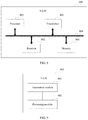
  • FIG. 1 is a schematic diagram of a transmission path of a packet of a local service accessed by UE in the prior art
  • FIG. 2 is a schematic diagram of a transmission path of a packet of a local service accessed by UE in a technical solution according to an embodiment of the present disclosure
  • FIG. 3A is a schematic diagram of a gateway architecture in which distributed gateway control and forwarding are separated according to an embodiment of the present disclosure
  • FIG. 3B is a schematic diagram of a gateway architecture in which distributed gateway control and forwarding are not separated according to an embodiment of the present disclosure
  • FIG. 4 is a schematic flowchart of a method for establishing a tunnel between local gateways according to an embodiment of the present disclosure
  • FIG. 5 is a schematic structural diagram of a remote gateway RGW according to an embodiment of the present disclosure.
  • FIG. 6 is a schematic structural diagram of another remote gateway RGW according to an embodiment of the present disclosure.
  • FIG. 7 is a schematic structural diagram of a source-local gateway S-LGW according to an embodiment of the present disclosure.
  • FIG. 8 is a schematic structural diagram of another source-local gateway S-GW according to an embodiment of the present disclosure.
  • FIG. 9 is a schematic structural diagram of a target-local gateway T-LGW according to an embodiment of the present disclosure.
  • FIG. 10 is a schematic structural diagram of another target-local gateway T-LGW according to an embodiment of the present disclosure.
  • the UE is handed over from a source-local gateway S-LGW to a target-local gateway T-LGW.
  • the S-LGW and the T-LGW belong to one PDN. If the UE accesses, before and after the UE is handed over, a same local service deployed on the S-LGW, the S-LGW forwards a packet of the local service between the UE and an application server of the local service based on a local offload policy before a local gateway serving the UE is handed over.
  • the UE is handed over to the T-LGW, and if there is no tunnel between an RGW and the S-LGW, the same local service accessed by the UE before and after the UE is handed over is interrupted. Even if there is a tunnel between the RGW and the S-LGW, a problem of a roundabout packet path of the same local service accessed by the UE before and after the UE is handed over also occurs.
  • the embodiments of the present disclosure provide a method for establishing a tunnel between local gateways, and a gateway, to resolve a prior-art problem that after UE is handed over from an S-LGW to a T-LGW, a same local service accessed by the UE before and after the UE is handed over is interrupted, or a roundabout packet path of a same local service accessed by the UE before and after handover occurs.
  • an RGW instructs the S-LGW and the T-LGW to establish a tunnel therebetween.
  • the tunnel is used to transmit, between the S-LGW and the T-LGW, a packet of a same local service accessed by the UE before and after the UE is handed over.
  • the T-LGW can send, to the S-LGW by using the tunnel, an uplink packet sent by the UE, and then the S-LGW sends the uplink packet to an application server of the local service.
  • the S-LGW can send, to the T-LGW by using the tunnel, a downlink packet sent by the application server of the local service, and then the T-LGW sends the downlink packet to the UE.
  • continuity of the same local service accessed by the UE before and after the UE is handed over can be ensured, thereby avoiding a prior-art problem that the same local service accessed by the UE before and after the UE is handed over is interrupted, or a roundabout packet path of the same local service accessed by the UE before and after handover occurs.
  • Gateways in the technical solutions provided in the embodiment of the present disclosure include an RGW, an S-LGW, and a T-LGW. Based on deployment locations of forwarding planes, a gateway forwarding plane close to a UE side is referred to as a local gateway LGW, and a gateway forwarding plane at a PDN gateway location is referred to as a remote gateway RGW.
  • a gateway forwarding plane close to a UE side is referred to as a local gateway LGW
  • a gateway forwarding plane at a PDN gateway location is referred to as a remote gateway RGW.
  • FIG. 3A a schematic diagram of a gateway architecture in which distributed gateway control and forwarding are separated may be used.
  • a function of the RGW may be implemented by a gateway-control (GW-C) entity and a gateway-user (GW-U) entity in FIG. 3A .
  • the GW-C entity is configured to implement a control plane function of the RGW.
  • the GW-U entity is configured to implement a user plane function of the RGW.
  • FIG. 3B a schematic diagram of a gateway architecture in which distributed gateway control and forwarding are not separated may also be used.
  • the RGW can implement a control plane function and a user plane function.
  • An LGW in FIG. 3A and FIG. 3B may be the S-LGW or the T-LGW.
  • the embodiments of the present disclosure further relate to UE.
  • the UE may be a device that provides voice and/or data connectivity for a user, a handheld device with a wireless connection function, or another processing device connected to a wireless modem.
  • the wireless terminal device may communicate with one or more core networks through a radio access network (RAN).
  • RAN radio access network
  • the wireless terminal device may be a mobile terminal device, such as a mobile phone (also referred to as a “cellular” phone) and a computer with a mobile terminal device, for example, may be a portable, pocket-sized, handheld, computer built-in, or in-vehicle mobile apparatus, which exchanges voice and/or data with the radio access network.
  • the wireless terminal device may be a device such as a personal communication service (PCS) phone, a cordless telephone set, a Session Initiation Protocol (SIP) phone, a wireless local loop (WLL) station, or a personal digital assistant (PDA).
  • PCS personal communication service
  • SIP Session Initiation Protocol
  • WLL wireless local loop
  • PDA personal digital assistant
  • the wireless terminal device may also be referred to as a system, a subscriber unit, a subscriber station, a mobile station, a mobile console, a remote station, an access point, a remote terminal device, an access terminal device, a user terminal device, a user agent, a user device, or user equipment.
  • the embodiments of the present disclosure provide a method for establishing a tunnel between local gateways, and a gateway.
  • the gateways include an RGW, an S-LGW, and a T-LGW.
  • the method and the gateways are based on a same inventive concept. Because the method and the gateways use similar principles to resolve problems, mutual reference can be made to implementations of the gateways and the methods. No repetition is provided.
  • this embodiment of the present disclosure provides a method for establishing a tunnel between local gateways.
  • the method includes the following steps.
  • An RGW determines that UE is handed over from an S-LGW to a T-LGW.
  • the UE Because the UE moves, the UE is handed over from the S-LGW to the T-LGW.
  • the S-LGW and the T-LGW belong to a same PDN.
  • the UE accesses, before and after the UE is handed over, a same local service deployed on the S-LGW.
  • the RGW parses a packet of the local service to obtain a packet processing policy of the local service. If the packet processing policy indicates that a local offload policy needs to be executed for the local service, the RGW sends the local offload policy to the S-LGW, or if a preset rule of the S-LGW indicates that a local offload policy needs to be executed for the local service, the S-LGW subsequently forwards the packet of the local service between the UE and an application server of the local service based on the local offload policy.
  • the following steps are performed.
  • the RGW sends a first request message to the S-LGW, and the RGW sends a second request message to the T-LGW.
  • the first request message is used to request the S-LGW to establish a tunnel to the T-LGW.
  • the first request message includes a user plane identifier of the T-LGW and an identifier of the tunnel.
  • the second request message is used to request the T-LGW to establish a tunnel to the S-LGW.
  • the second request message includes a user plane identifier of the S-LGW and the identifier of the tunnel.
  • the identifier of the tunnel is configured by the RGW, the tunnel that is requested to be established between the S-LGW and the T-LGW is used to transmit the packet of the local service between the S-LGW and the T-LGW.
  • the local service includes the same local service accessed by the UE before and after the UE is handed over.
  • the S-LGW Before the RGW determines that the UE is handed over from the S-LGW to the T-LGW, the S-LGW sends flow information of the local service to the RGW by using an interface between the S-LGW and the RGW.
  • the flow information of the local service may include a source Internet Protocol (IP) address of the packet, a destination IP address of the packet, and a quintet of the packet.
  • IP Internet Protocol
  • the first request message may further include the flow information of the local service.
  • the first request message is used to instruct the S-LGW to transmit the packet of the local service on the established tunnel based on the flow information of the local service.
  • the second request message may further include the flow information of the local service.
  • the second request message is used to instruct the T-LGW to transmit the packet of the local service on the established tunnel based on the flow information of the local service.
  • the S-LGW and the T-LGW separately establish the tunnel between the S-LGW and the T-LGW based on the user plane identifiers of the peer ends.
  • the identifier of the established tunnel is the identifier that is of the tunnel and that is allocated by the RGW in the first request message and the second request message.
  • the tunnel established between the S-LGW and the T-LGW is used to transmit the packet of the local service of the UE between the S-LGW and the T-LGW.
  • the T-LGW After the tunnel is established between the S-LGW and the T-LGW, as shown in FIG. 2 , for the same local service accessed by the UE before and after the UE is handed over, the T-LGW sends, to the S-LGW by using the established tunnel, an uplink packet that is of the local service and that is sent by the UE, and then the S-LGW sends the uplink packet of the local service to the application server of the local service; or the S-LGW sends, to the T-LGW by using the established tunnel, a downlink packet that is of the local service and that is sent by the application server of the local service, and then the T-LGW sends the downlink packet of the local service to the UE.
  • the method for establishing a tunnel between local gateways further includes:
  • the S-LGW sends a first response message to the RGW, and the T-LGW sends a second response message to the RGW.
  • the first response message is used to indicate that the S-LGW successfully establishes the tunnel to the T-LGW.
  • the first response message includes the user plane identifier of the S-LGW, the user plane identifier of the T-LGW, and the identifier of the tunnel.
  • the second response message is used to indicate that the T-LGW successfully establishes the tunnel to the S-LGW.
  • the second response message includes the user plane identifier of the S-LGW, the user plane identifier of the T-LGW, and the identifier of the tunnel.
  • the S-LGW forwards packets of the plurality of local services between the UE and the application server of the local service before the UE is handed over.
  • the first request message and the second request message may further include flow information of the plurality of local services.
  • the first request message is further used to instruct the S-LGW to transmit the packets of the corresponding local services on the established tunnel based on the flow information of the plurality of local services.
  • the second request message is further used to instruct the T-LGW to transmit the packets of the corresponding local services on the established tunnel based on the flow information of the plurality of local services.
  • the tunnel can be established between the S-LGW and the T-LGW based on a stream granularity.
  • the tunnel established between the S-LGW and the T-LGW is used to transmit only a packet of one of the plurality of local services between the S-LGW and the T-LGW, and is not used to transmit a packet of a service other than the local service.
  • the first request message and the second request message may indicate that the tunnel established between the S-LGW and the T-LGW is used to transmit only a packet of which local service.
  • the tunnel established between the S-LGW and the T-LGW may also be used to transmit, between the S-LGW and the T-LGW, packets of some of the plurality of local services accessed by the UE before and after the UE is handed over.
  • This embodiment further provides a solution that a customized service continuity function is performed based on a mobility requirement of the UE, so that network resources can be properly used, and a new mobile broadband service value-added point can also be provided for an operator.
  • the solution is as follows:
  • the RGW Before sending the first request message to the S-LGW and sending the second request message to the T-LGW, the RGW obtains mobility subscription information of the UE.
  • the mobility subscription information of the UE indicates whether the UE has a service continuity function. If the mobility subscription information of the UE indicates that the UE has the service continuity function, it indicates that after the local gateway serving the UE is handed over, service continuity of the UE needs to be ensured. In this case, the RGW sends the first request message to the S-LGW, and sends the second request message to the T-LGW, to request to establish the tunnel between the S-LGW and the T-LGW.
  • the tunnel is used to transmit, between the S-LGW and the T-LGW, a packet of a local service being accessed by the UE before and after the UE is handed over. If the mobility subscription information of the UE indicates that the UE does not have the service continuity function, it indicates that after the local gateway serving the UE is handed over, service continuity of the UE does not need to be ensured, and the method for establishing a tunnel between local gateways provided in this embodiment does not need to be performed.
  • the RGW may obtain the mobility subscription information of the UE from a policy and charging rules function (PCRF) entity.
  • PCRF policy and charging rules function
  • the RGW may send a request message to the PCRF by using an interface between the RGW and the PCRF.
  • the request message is used to request to query the mobility subscription information of the UE.
  • the PCRF queries a subscription database to obtain the mobility subscription information of the UE, encapsulates the mobility subscription information of the UE in a response message, and sends the response message to the RGW.
  • the RGW may learn, by parsing the mobility subscription information of the UE in the received response message, whether the UE has the service continuity function.
  • This embodiment further provides a solution that a customized service continuity function is performed based on a mobility requirement of a service, so that network resources can be properly used, and a new mobile broadband service value-added point can also be provided for an operator.
  • the solution is as follows:
  • the RGW Before sending the first request message to the S-LGW and sending the second request message to the T-LGW, the RGW obtains mobility subscription information of the local service.
  • the mobility subscription information of the local service indicates whether the local service has a service continuity function. If the mobility subscription information of the local service indicates that the local service has the service continuity function, it indicates that after the local gateway serving the UE is handed over, service continuity of the local service needs to be ensured.
  • the RGW sends the first request message to the S-LGW, and sends the second request message to the T-LGW, to request to establish the tunnel between the S-LGW and the T-LGW.
  • the tunnel is used to transmit, between the S-LGW and the T-LGW, the packet of the local service accessed by the UE before and after the UE is handed over. If the mobility subscription information of the local service indicates that the local service does not have the service continuity function, it indicates that after the local gateway serving the UE is handed over, service continuity of the local service does not need to be ensured, and the method for establishing a tunnel between local gateways provided in this embodiment does not need to be performed.
  • the RGW may obtain the mobility subscription information of the local service from a PCRF entity.
  • the RGW after determining that the UE is handed over from the S-LGW to the T-LGW, the RGW sends a request message to the PCRF by using an interface between the RGW and the PCRF.
  • the request message is used to request to query mobility subscription information of a local service being accessed by the UE before and after the UE is handed over.
  • the PCRF queries a subscription database to obtain the mobility subscription information of the local service, encapsulates the mobility subscription information of the local service in a response message, and sends the response message to the RGW.
  • the RGW may learn, by parsing the mobility subscription information of the local service in the received response message, whether the local service has the service continuity function.
  • the RGW may obtain the mobility subscription information of the local service from the S-LGW.
  • the S-LGW stores the mobility subscription information of the local service deployed on the S-LGW.
  • the S-LGW sends the mobility subscription information of the local service to the RGW.
  • an identifier may be set to enable the mobility subscription information of the local service to indicate whether the local service has service continuity.
  • the local service transmitted on the tunnel established between the S-LGW and the T-LGW is the same local service that is deployed on the S-LGW and that is accessed by the UE after and before the local gateway serving the UE is handed over. After the local gateway serving the UE is handed over, the UE accesses a new local service deployed on the T-LGW.
  • the T-LGW may forward a packet of the new local service between the UE and an application server of the new local service.
  • This embodiment of the present disclosure provides the method for establishing a tunnel between local gateways, and a gateway, to resolve a prior-art problem that after the UE is handed over from the S-LGW to the T-LGW, the same local service accessed by the UE before and after the UE is handed over is interrupted, or a roundabout packet path of the same local service accessed by the UE before and after handover occurs.
  • the RGW instructs the S-LGW and the T-LGW to establish the tunnel between them, where the tunnel is used to transmit, between the S-LGW and the T-LGW, the packet of the same local service accessed by the UE before and after the UE is handed over.
  • the T-LGW can send, to the S-LGW by using the tunnel, the uplink packet sent by the UE, and then the S-LGW sends the uplink packet to the application server of the local service.
  • the S-LGW can send, to the T-LGW by using the tunnel, the downlink packet sent by the application server of the local service, and then the T-LGW sends the downlink packet to the UE. Therefore, in the technical solutions provided in this embodiment of the present disclosure, continuity of the same local service accessed by the UE before and after the local gateway serving the UE is handed over can be ensured, thereby avoiding a prior-art problem that the same local service accessed by the UE before and after the UE is handed over is interrupted, or the roundabout packet path of the same local service accessed by the UE before and after the UE is handed over occurs.
  • This embodiment of the present disclosure further provides a remote gateway RGW.
  • the RGW may perform the method corresponding to the RGW in FIG. 4 of Embodiment 1.
  • the RGW 500 includes a processing module 501 and a transceiver module 502 .
  • the processing module 501 is configured to determine that user equipment UE is handed over from a source-local gateway S-LGW to a target-local gateway T-LGW, where before the UE is handed over, a packet of a local service of the UE is forwarded by the S-LGW between the UE and an application server of the local service, and the local service includes a same service that is deployed on the S-LGW and that is accessed by the UE before and after the UE is handed over.
  • the transceiver module 502 is configured to: after the processing module 501 determines that the UE is handed over from the S-LGW to the T-LGW, send, to the S-LGW and the T-LGW respectively, a first request message and a second request message to request to establish a tunnel, where the tunnel is used to transmit the packet of the local service between the S-LGW and the T-LGW.
  • the first request message includes a user plane identifier of the T-LGW and an identifier of the tunnel
  • the second request message includes a user plane identifier of the S-LGW and the identifier of the tunnel.
  • the transceiver module 502 is further configured to:
  • the processing module 501 determines that the UE is handed over from the S-LGW to the T-LGW, receive flow information that is of the local service and that is sent by the S-LGW, where
  • the first request message and the second request message further include the flow information of the local service
  • the first request message is further used to instruct the S-LGW to transmit the packet of the local service on the tunnel based on the flow information of the local service
  • the second request message is further used to instruct the T-LGW to transmit the packet of the local service on the tunnel based on the flow information of the local service.
  • the tunnel is used to transmit only the packet of the local service between the S-LGW and the T-LGW and is not used to transmit a packet of a service other than the local service.
  • the tunnel can be established between the S-LGW and the T-LGW based on a stream granularity.
  • the tunnel established between the S-LGW and the T-LGW is used to transmit only a packet of one of the plurality of local services between the S-LGW and the T-LGW, and is not used to transmit a packet of a service other than the local service.
  • the first request message and the second request message may indicate that the tunnel established between the S-LGW and the T-LGW is used to transmit only a packet of which local service.
  • the tunnel established between the S-LGW and the T-LGW may also be used to transmit, between the S-LGW and the T-LGW, packets of some of the plurality of local services accessed by the UE before and after the UE is handed over.
  • the transceiver module 502 is further configured to:
  • the S-LGW and the T-LGW before sending, to the S-LGW and the T-LGW respectively, the first request message and the second request message to request to establish a tunnel, obtain mobility subscription information of the UE, where the mobility subscription information of the UE is used to indicate that the UE has a service continuity function.
  • a solution of a customized service continuity function is performed based on a mobility requirement of the UE, so that network resources can be properly used, and a new mobile broadband service value-added point can also be provided for an operator.
  • the mobility subscription information of the UE indicates whether the UE has the service continuity function. If the mobility subscription information of the UE indicates that the UE has the service continuity function, it indicates that after the local gateway serving the UE is handed over, service continuity of the UE needs to be ensured. In this case, the transceiver module 502 sends the first request message to the S-LGW, and sends the second request message to the T-LGW, to request to establish the tunnel between the S-LGW and the T-LGW.
  • the tunnel is used to transmit, between the S-LGW and the T-LGW, a packet of a local service being accessed by the UE before and after the UE is handed over. If the mobility subscription information of the UE indicates that the UE does not have the service continuity function, it indicates that after the local gateway serving the UE is handed over, service continuity of the UE does not need to be ensured, and after the UE is handed over, the transceiver module 502 does not need to request to establish the tunnel between the S-LGW and the T-LGW.
  • the transceiver module 502 when obtaining the mobility subscription information of the UE, is specifically configured to:
  • the PCRF after receiving the request message sent by the RGW, the PCRF queries a subscription database to obtain the mobility subscription information of the UE, and encapsulates the mobility subscription information of the UE in a response message;
  • the PCRF receives the response message sent by the PCRF, where the response message includes the mobility subscription information of the UE.
  • the transceiver module 502 is further configured to:
  • the S-LGW and the T-LGW before sending, to the S-LGW and the T-LGW respectively, the first request message and the second request message to request to establish a tunnel, obtain mobility subscription information of the local service, where the mobility subscription information of the local service is used to indicate that the local service has a service continuity function.
  • a solution of a customized service continuity function is performed based on a mobility requirement of a service, so that network resources can be properly used, and a new mobile broadband service value-added point can also be provided for an operator.
  • the mobility subscription information of the local service indicates whether the local service has the service continuity function. If the mobility subscription information of the local service indicates that the local service has the service continuity function, it indicates that after the local gateway serving the UE is handed over, service continuity of the local service needs to be ensured. In this case, the transceiver module 502 sends the first request message to the S-LGW, and sends the second request message to the T-LGW, to request to establish the tunnel between the S-LGW and the T-LGW.
  • the tunnel is used to transmit, between the S-LGW and the T-LGW, the packet of the local service accessed by the UE before and after the UE is handed over. If the mobility subscription information of the local service indicates that the local service does not have the service continuity function, it indicates that after the local gateway serving the UE is handed over, service continuity of the local service does not need to be ensured, and after the UE is handed over, the transceiver module 502 does not need to request to establish the tunnel between the S-LGW and the T-LGW.
  • the transceiver module 502 is specifically configured to:
  • the request message is used to request to query mobility subscription information of a local service being accessed by the UE before and after the UE is handed over, where
  • the PCRF after receiving the request message sent by the RGW, the PCRF queries a subscription database to obtain the mobility subscription information of the local service, and encapsulates the mobility subscription information of the local service in a response message;
  • the S-LGW stores the mobility subscription information of the local service deployed on the S-LGW.
  • modules in the embodiments of the present disclosure is schematic and is merely a logical function division. In an actual implementation, there may be another division manner.
  • functional modules in the embodiments of this application may be integrated into one processing unit, or each of the modules may exist alone physically, or two or more modules are integrated into one unit.
  • the integrated unit may be implemented in a form of hardware, or may be implemented in a form of a software functional unit.
  • the integrated unit When the integrated unit is implemented in the form of a software functional unit and sold or used as an independent product, the integrated unit may be stored in a computer-readable storage medium.
  • the computer software product is stored in a storage medium and includes several instructions for instructing a computer device (which may be a personal computer, a server, or a network device) or a processor to perform all or some of the steps of the methods in the embodiments of this application.
  • the foregoing storage medium includes any medium that can store program code, such as a USB flash drive, a removable hard disk, a read-only memory (ROM), a random access memory (RAM), a magnetic disk, or an optical disc.
  • this embodiment of the present disclosure further provides a remote gateway RGW.
  • the RGW may perform the method corresponding to the RGW in FIG. 4 of Embodiment 1, and may be a same device as the RGW shown in FIG. 5 .
  • the RGW 600 includes a processor 601 , a transmitter 602 , a receiver 603 , a bus 604 , and a memory 605 .
  • the processor 601 , the transmitter 602 , the receiver 603 , and the memory 605 are connected to each other by using the bus 604 .
  • the bus 604 may be a peripheral component interconnect (PCI) bus, an extended industry standard architecture (EISA) bus, or the like.
  • PCI peripheral component interconnect
  • EISA extended industry standard architecture
  • the bus may be classified into an address bus, a data bus, a control bus, and the like. For ease of representation, only one thick line is used to represent the bus in FIG. 6 , but this does not mean that there is only one bus or only one type of bus.
  • the processor 601 in FIG. 6 corresponds to the processing module 501 in FIG. 5
  • the transmitter 602 and the receiver 603 in FIG. 6 correspond to the transceiver module 502 in FIG. 5
  • the transmitter 602 may be configured to implement a data sending function of the transceiver module 502
  • the receiver 603 is configured to implement a data receiving function of the transceiver module 502
  • the RGW 600 further includes the memory 605 , configured to store a program and the like.
  • the program may include program code, and the program code includes a computer operation instruction.
  • the memory 605 may include a random access memory (RAM), or may further include a non-volatile memory, for example, at least one magnetic disk memory.
  • the processor 601 executes an application program stored in the memory 605 , to implement the foregoing method for establishing a tunnel between local gateways.
  • This embodiment of the present disclosure further provides a source-local gateway S-LGW.
  • the S-LGW may perform the method corresponding to the S-LGW in FIG. 4 of Embodiment 1.
  • the S-LGW 700 includes a transceiver module 701 and a processing module 702 .
  • the transceiver module 701 is configured to: before user equipment UE is handed over from the S-LGW to a target-local gateway T-LGW, forward a packet of a local service of the UE between the UE and an application server of the local service.
  • the transceiver module 701 is further configured to: after the UE is handed over from the S-LGW to the T-LGW, receive a first request message that is used to request to establish a tunnel and that is sent by a remote gateway RGW, where the tunnel is used to transmit the packet of the local service between the S-LGW and the T-LGW, and the local service includes a same service that is deployed on the S-LGW and that is accessed by the UE before and after the UE is handed over.
  • the processing module 702 is configured to establish the tunnel to the T-LGW after the transceiver module 701 receives the first request message.
  • the first request message received by the transceiver module 701 includes a user plane identifier of the T-LGW and an identifier of the tunnel.
  • the processing module 702 is specifically configured to:
  • the transceiver module 701 establish the tunnel to the T-LGW based on the user plane identifier of the T-LGW and the identifier of the tunnel that are received by the transceiver module 701 .
  • the transceiver module 701 is further configured to:
  • the first request message received by the transceiver module 701 includes the flow information of the local service, and the first request message is further used to instruct the S-LGW to transmit the packet of the local service on the tunnel based on the flow information of the local service.
  • the tunnel is used to transmit only the packet of the local service between the S-LGW and the T-LGW and is not used to transmit a packet of a service other than the local service.
  • this embodiment of the present disclosure further provides a source-local gateway S-LGW.
  • the S-LGW may perform the method corresponding to the S-LGW in FIG. 4 of Embodiment 1, and may be a same device as the S-LGW shown in FIG. 7 .
  • the S-LGW 800 includes a transmitter 801 , a receiver 802 , a processor 803 , a bus 804 , and a memory 805 .
  • the transmitter 801 , the receiver 802 , the processor 803 , and the memory 805 are connected to each other by using the bus 804 .
  • the bus 804 may be a PCI bus, an EISA bus, or the like.
  • the bus may be classified into an address bus, a data bus, a control bus, and the like. For ease of representation, only one thick line is used to represent the bus in FIG. 8 , but this does not mean that there is only one bus or only one type of bus.
  • the transmitter 801 and the receiver 802 in FIG. 8 correspond to the transceiver module 701 in FIG. 7 .
  • the transmitter 801 may be configured to implement a data sending function of the transceiver module 701 .
  • the receiver 802 is configured to implement a data receiving function of the transceiver module 701 .
  • the processor 803 in FIG. 8 corresponds to the processing module 702 in FIG. 7 .
  • the S-LGW 800 further includes the memory 805 , configured to store a program and the like. Specifically, the program may include program code, and the program code includes a computer operation instruction.
  • the memory 805 may include a RAM, or may further include a non-volatile memory, for example, at least one magnetic disk memory.
  • the processor 803 executes an application program stored in the memory 805 , to implement the foregoing method for establishing a tunnel between local gateways.
  • This embodiment of the present disclosure provides a target-local gateway T-LGW.
  • the T-LGW may perform the method corresponding to the T-LGW in FIG. 4 of Embodiment 1.
  • the T-LGW 900 includes a transceiver module 901 and a processing module 902 .
  • the transceiver module 901 is configured to: after user equipment UE is handed over from a source-local gateway S-LGW to the T-LGW, receive a second request message that is used to request to establish a tunnel and that is sent by a remote gateway RGW, where the tunnel is used to transmit a packet of a local service of the UE between the S-LGW and the T-LGW, the local service includes a same service that is deployed on the S-LGW and that is accessed by the UE before and after the UE is handed over, and before the UE is handed over, the packet of the local service of the UE is forwarded by the S-LGW between the UE and an application server of the local service.
  • the processing module 902 is configured to establish the tunnel to the S-LGW after the transceiver module 901 receives the second request message.
  • the second request message received by the transceiver module 901 includes a user plane identifier of the S-LGW and an identifier of the tunnel.
  • the processing module 902 is specifically configured to:
  • the second request message further includes flow information of the local service
  • the second request message is further used to instruct the T-LGW to transmit the packet of the local service on the tunnel based on the flow information of the local service.
  • the tunnel is used to transmit only the packet of the local service between the S-LGW and the T-LGW and is not used to transmit a packet of a service other than the local service.
  • this embodiment of the present disclosure further provides a target-local gateway T-LGW.
  • the T-LGW may perform the method corresponding to the T-LGW in FIG. 4 of Embodiment 1, and may be a same device as the T-LGW shown in FIG. 9 .
  • the T-LGW 1000 includes a transmitter 1001 , a receiver 1002 , a processor 1003 , a bus 1004 , and a memory 1005 .
  • the transmitter 1001 , the receiver 1002 , the processor 1003 , and the memory 1005 are connected to each other by using the bus 1004 .
  • the bus 1004 may be a PCI bus, an EISA bus, or the like.
  • the bus may be classified into an address bus, a data bus, a control bus, and the like. For ease of representation, only one thick line is used to represent the bus in FIG. 10 , but this does not mean that there is only one bus or only one type of bus.
  • the transmitter 1001 and the receiver 1002 in FIG. 10 correspond to the transceiver module 901 in FIG. 9 .
  • the transmitter 1001 may be configured to implement a data sending function of the transceiver module 901 .
  • the receiver 1002 is configured to implement a data receiving function of the transceiver module 901 .
  • the processor 1003 in FIG. 10 corresponds to the processing module 902 in FIG. 9 .
  • the T-LGW 1000 further includes the memory 1005 , configured to store a program and the like.
  • the program may include program code, and the program code includes a computer operation instruction.
  • the memory 1005 may include a RAM, or may further include a non-volatile memory, for example, at least one magnetic disk memory.
  • the processor 1003 executes an application program stored in the memory 1005 , to implement the foregoing method for establishing a tunnel between local gateways.
  • the embodiments of the present disclosure may be provided as a method, a system, or a computer program product. Therefore, the present disclosure may use a form of hardware only embodiments, software only embodiments, or embodiments with a combination of software and hardware. Moreover, the present disclosure may use a form of a computer program product that is implemented on one or more computer-usable storage media (including but not limited to a disk memory, a CD-ROM, an optical memory, and the like) that include computer-usable program code.
  • computer-usable storage media including but not limited to a disk memory, a CD-ROM, an optical memory, and the like
  • These computer program instructions may be provided for a general-purpose computer, a dedicated computer, an embedded processor, or a processor of any other programmable data processing device to generate a machine, so that the instructions executed by a computer or a processor of any other programmable data processing device generate an apparatus for implementing a specific function in one or more processes in the flowcharts and/or in one or more blocks in the block diagrams.
  • These computer program instructions may be stored in a computer readable memory that can instruct the computer or any other programmable data processing device to work in a specific manner, so that the instructions stored in the computer readable memory generate an artifact that includes an instruction apparatus.
  • the instruction apparatus implements a specific function in one or more processes in the flowcharts and/or in one or more blocks in the block diagrams.
  • These computer program instructions may be loaded onto a computer or another programmable data processing device, so that a series of operations and steps are performed on the computer or the another programmable device, thereby generating computer-implemented processing. Therefore, the instructions executed on the computer or the another programmable device provide steps for implementing a specific function in one or more processes in the flowcharts and/or in one or more blocks in the block diagrams.

Landscapes

  • Engineering & Computer Science (AREA)
  • Computer Networks & Wireless Communication (AREA)
  • Signal Processing (AREA)
  • Databases & Information Systems (AREA)
  • Mobile Radio Communication Systems (AREA)
  • Data Exchanges In Wide-Area Networks (AREA)

Abstract

A method for establishing a tunnel between local gateways, and a gateway are disclosed. The method includes: determining, by an RGW, that UE is handed over from an S-LGW to a T-LGW, where before the UE is handed over, a packet of a local service of the UE is forwarded by the S-LGW between the UE and an application server of the local service, and the local service includes a same service that is deployed on the S-LGW and that is accessed by the UE before and after the UE is handed over; sending, by the RGW to the S-LGW and the T-LGW respectively, a first request message and a second request message to request to establish a tunnel, where the tunnel is used to transmit the packet of the local service between the S-LGW and the T-LGW; and establishing the tunnel between the S-LGW and the T-LGW.

Description

CROSS-REFERENCE TO RELATED APPLICATIONS
This application is a continuation of International Application No. PCT/CN2016/089182, filed on Jul. 7, 2016, the disclosure of which is hereby incorporated by reference in its entirety.
TECHNICAL FIELD
The present disclosure relates to the field of wireless communications, and in particular, to a method for establishing a tunnel between local gateways, and a gateway.
BACKGROUND
In a packet data network (PDN), when user equipment (UE) accesses a local service deployed on a local gateway (LGW), a remote gateway (RGW) parses a packet of the local service to obtain a packet processing policy of the local service. If the packet processing policy indicates that a local offload policy needs to be executed for the local service, the RGW sends a local offload policy to the LGW, or if a preset rule of the LGW indicates that a local offload policy needs to be executed for the local service, the LGW subsequently forwards the packet of the local service between the UE and an application server of the local service based on the local offload policy.
Because the UE moves, the UE is handed over from an original LGW to a new LGW. The LGW serving the UE before the UE moves is referred to as a source-local gateway (S-LGW) and a new LGW serving the UE after the UE moves is referred to as a target-local gateway (T-LGW) below. In the prior art, an uplink packet of a same local service accessed by the UE before and after the UE is handed over is used as an example, as shown in FIG. 1. Because the uplink packet needs to be sent to an application server by using the S-LGW, after the UE is handed over and sends the uplink packet to the RGW by using the T-LGW, if there is no tunnel between the RGW and the S-LGW, the uplink packet cannot be sent to the application server, and a transmission path of the uplink packet is interrupted, causing an interrupt of the local service accessed by the UE. Even if there is a tunnel between the RGW and the S-LGW, when the RGW sends the uplink packet to the application server through S-LGW forwarding, a problem of a roundabout path of the uplink packet also occurs. Similarly, a same problem as the uplink packet also occurs on a downlink packet of a local service being accessed by the UE before and after handover.
In conclusion, in a PDN, after the UE moves and the UE is handed over from the S-LGW to the T-LGW, the following prior-art problem is caused: A same local service accessed by the UE before and after handover is interrupted, or a roundabout packet path of a same local service accessed by the UE before and after handover occurs.
SUMMARY
Embodiments of the present disclosure provide a method for establishing a tunnel between local gateways, and a gateway, to resolve a prior-art problem that after UE is handed over from an S-LGW to a T-LGW, a same local service accessed by the UE before and after the UE is handed over is interrupted, or a roundabout packet path of a same local service accessed by the UE before and after handover occurs.
According to a first aspect, a method for establishing a tunnel between local gateways provided in an embodiment of the present disclosure includes:
determining, by a remote gateway RGW, that user equipment UE is handed over from a source-local gateway S-LGW to a target-local gateway T-LGW, where before the UE is handed over, a packet of a local service of the UE is forwarded by the S-LGW between the UE and an application server of the local service, and the local service includes a same service that is deployed on the S-LGW and that is accessed by the UE before and after the UE is handed over; and
sending, by the RGW to the S-LGW and the T-LGW respectively, a first request message and a second request message to request to establish a tunnel, where the tunnel is used to transmit the packet of the local service between the S-LGW and the T-LGW.
In this way, the RGW sends, to the S-LGW and the T-LGW respectively, the first request message and the second request message to request to establish a tunnel, so that after the S-LGW receives the first request message and the T-LGW receives the second request message, the S-LGW and the T-LGW establish the tunnel between them, where the tunnel is used to transmit, between the S-LGW and the T-LGW, a packet of a same local service accessed by the UE before and after the UE is handed over. Therefore, for an uplink packet of the local service, the T-LGW can send, to the S-LGW by using the tunnel, the uplink packet sent by the UE, and then the S-LGW sends the uplink packet to the application server of the local service. For a downlink packet of the local service, the S-LGW can send, to the T-LGW by using the tunnel, the downlink packet sent by the application server of the local service, and then the T-LGW sends the downlink packet to the UE. In this way, continuity of the same local service accessed by the UE before and after the UE is handed over is ensured after the UE is handed over, thereby avoiding a prior-art problem that the same local service accessed by the UE before and after the UE is handed over is interrupted, or a roundabout packet path of the same local service accessed by the UE before and after handover occurs.
In a possible implementation, the first request message includes a user plane identifier of the T-LGW and an identifier of the tunnel, and the second request message includes a user plane identifier of the S-LGW and the identifier of the tunnel.
In this way, after receiving the first request message, the S-LGW can establish the tunnel to the T-LGW based on the user plane identifier of the T-LGW and the identifier of the tunnel. After receiving the second request message, the T-LGW can establish the tunnel to the S-LGW based on the user plane identifier of the S-LGW and the identifier of the tunnel.
In a possible implementation, before the determining, by an RGW, that UE is handed over from an S-LGW to a T-LGW, the method further includes:
receiving, by the RGW, flow information that is of the local service and that is sent by the S-LGW; and
the first request message and the second request message further include the flow information of the local service, the first request message is further used to instruct the S-LGW to transmit the packet of the local service on the tunnel based on the flow information of the local service, and the second request message is further used to instruct the T-LGW to transmit the packet of the local service on the tunnel based on the flow information of the local service.
In this way, the S-LGW and the T-LGW can transmit the packet of the local service of the UE on the established tunnel based on the flow information of the local service.
In a possible implementation, the tunnel is used to transmit only the packet of the local service between the S-LGW and the T-LGW and is not used to transmit a packet of a service other than the local service.
If there are a plurality of same local services that are deployed on the S-LGW and that are accessed by the UE before and after the UE is handed over, the tunnel can be established between the S-LGW and the T-LGW based on a stream granularity. To be specific, the tunnel established between the S-LGW and the T-LGW is used to transmit only a packet of one of the plurality of local services between the S-LGW and the T-LGW, and is not used to transmit a packet of a service other than the local service. The first request message and the second request message may indicate that the tunnel established between the S-LGW and the T-LGW is used to transmit only a packet of which local service. Certainly, the tunnel established between the S-LGW and the T-LGW may also be used to transmit, between the S-LGW and the T-LGW, packets of some of the plurality of local services accessed by the UE before and after the UE is handed over.
In a possible implementation, before the sending, by the RGW to the S-LGW and the T-LGW respectively, a first request message and a second request message to request to establish a tunnel, the method further includes:
obtaining, by the RGW, mobility subscription information of the UE, where the mobility subscription information of the UE is used to indicate that the UE has a service continuity function.
In this way, a solution of a customized service continuity function is performed based on a mobility requirement of the UE, so that network resources can be properly used, and a new mobile broadband service value-added point can also be provided for an operator.
In a possible implementation, before the sending, by the RGW to the S-LGW and the T-LGW respectively, a first request message and a second request message to request to establish a tunnel, the method further includes:
obtaining, by the RGW, mobility subscription information of the local service, where the mobility subscription information of the local service is used to indicate that the local service has a service continuity function.
In this way, a solution of a customized service continuity function is performed based on a mobility requirement of a service, so that network resources can be properly used, and a new mobile broadband service value-added point can also be provided for an operator.
According to a second aspect, a method for establishing a tunnel between local gateways provided in an embodiment of the present disclosure includes:
forwarding, by a source-local gateway S-LGW, a packet of a local service of user equipment UE between the UE and an application server of the local service;
after the UE is handed over from the S-LGW to a target-local gateway T-LGW, receiving, by the S-LGW, a first request message that is used to request to establish a tunnel and that is sent by a remote gateway RGW, where the tunnel is used to transmit the packet of the local service between the S-LGW and the T-LGW, and the local service includes a same service that is deployed on the S-LGW and that is accessed by the UE before and after the UE is handed over; and
establishing, by the S-LGW, the tunnel to the T-LGW after receiving the first request message.
In this way, after receiving the first request message, the S-LGW establishes the tunnel to the T-LGW, where the tunnel is used to transmit, between the S-LGW and the T-LGW, a packet of a same local service accessed by the UE before and after the UE is handed over. In this way, continuity of the same local service accessed by the UE before and after the UE is handed over is ensured after the UE is handed over, thereby avoiding a prior-art problem that the same local service accessed by the UE before and after the UE is handed over is interrupted, or a roundabout packet path of the same local service accessed by the UE before and after handover occurs.
In a possible implementation, the first request message includes a user plane identifier of the T-LGW and an identifier of the tunnel; and
the establishing, by the S-LGW, the tunnel to the T-LGW includes:
establishing, by the S-LGW, the tunnel to the T-LGW based on the user plane identifier of the T-LGW and the identifier of the tunnel.
In this way, after establishing the tunnel to the T-LGW, the S-LGW can transmit the packet of the local service of the UE by using the established tunnel.
In a possible implementation, before the UE is handed over from the S-LGW to the T-LGW, the method further includes:
sending, by the S-LGW, flow information of the local service to the RGW, where
the first request message includes the flow information of the local service, and the first request message is further used to instruct the S-LGW to transmit the packet of the local service on the tunnel based on the flow information of the local service.
In this way, the first request message includes the flow information of the local service, so that the S-LGW can transmit the packet of the local service on the established tunnel based on the flow information of the local service.
In a possible implementation, the tunnel is used to transmit only the packet of the local service between the S-LGW and the T-LGW and is not used to transmit a packet of a service other than the local service.
If there are a plurality of same local services that are deployed on the S-LGW and that are accessed by the UE before and after the UE is handed over, the tunnel can be established between the S-LGW and the T-LGW based on a stream granularity. To be specific, the tunnel established between the S-LGW and the T-LGW is used to transmit only a packet of one of the plurality of local services between the S-LGW and the T-LGW, and is not used to transmit a packet of a service other than the local service.
According to a third aspect, a method for establishing a tunnel between local gateways provided in an embodiment of the present disclosure includes:
after user equipment UE is handed over from a source-local gateway S-LGW to a target-local gateway T-LGW, receiving, by the T-LGW, a second request message that is used to request to establish a tunnel and that is sent by a remote gateway RGW, where the tunnel is used to transmit a packet of a local service of the UE between the S-LGW and the T-LGW, the local service includes a same service that is deployed on the S-LGW and that is accessed by the UE before and after the UE is handed over, and before the UE is handed over, the packet of the local service of the UE is forwarded by the S-LGW between the UE and an application server of the local service; and
establishing, by the T-LGW, the tunnel to the S-LGW after receiving the second request message.
In this way, after receiving the second request message, the T-LGW establishes the tunnel to the S-LGW, where the tunnel is used to transmit, between the S-LGW and the T-LGW, a packet of a same local service accessed by the UE before and after the UE is handed over. In this way, continuity of the same local service accessed by the UE before and after the UE is handed over is ensured after the UE is handed over, thereby avoiding a prior-art problem that the same local service accessed by the UE before and after the UE is handed over is interrupted, or a roundabout packet path of the same local service accessed by the UE before and after handover occurs.
In a possible implementation, the second request message includes a user plane identifier of the S-LGW and an identifier of the tunnel; and
the establishing, by the T-LGW, the tunnel to the S-LGW includes:
establishing, by the T-LGW, the tunnel to the S-LGW based on the user plane identifier of the S-LGW and the identifier of the tunnel.
In this way, after establishing the tunnel to the S-LGW, the T-LGW can transmit the packet of the local service of the UE by using the established tunnel.
In a possible implementation, the second request message further includes flow information of the local service, and the second request message is further used to instruct the T-LGW to transmit the packet of the local service on the tunnel based on the flow information of the local service.
In this way, the second request message includes the flow information of the local service, so that the T-LGW can transmit the packet of the local service on the established tunnel based on the flow information of the local service.
In a possible implementation, the tunnel is used to transmit only the packet of the local service between the S-LGW and the T-LGW and is not used to transmit a packet of a service other than the local service.
If there are a plurality of same local services that are deployed on the S-LGW and that are accessed by the UE before and after the UE is handed over, the tunnel can be established between the S-LGW and the T-LGW based on a stream granularity. To be specific, the tunnel established between the S-LGW and the T-LGW is used to transmit only a packet of one of the plurality of local services between the S-LGW and the T-LGW, and is not used to transmit a packet of a service other than the local service.
According to a fourth aspect, a remote gateway RGW provided in an embodiment of the present disclosure includes:
a processing module, configured to determine that user equipment UE is handed over from a source-local gateway S-LGW to a target-local gateway T-LGW, where before the UE is handed over, a packet of a local service of the UE is forwarded by the S-LGW between the UE and an application server of the local service, and the local service includes a same service that is deployed on the S-LGW and that is accessed by the UE before and after the UE is handed over; and
a transceiver module, configured to: after the processing module determines that the UE is handed over from the S-LGW to the T-LGW, send, to the S-LGW and the T-LGW respectively, a first request message and a second request message to request to establish a tunnel, where the tunnel is used to transmit the packet of the local service between the S-LGW and the T-LGW.
In this way, after the processing module determines that the UE is handed over from the S-LGW to the T-LGW, the transceiver module sends, to the S-LGW and the T-LGW respectively, the first request message and the second request message to request to establish a tunnel, so that after the S-LGW receives the first request message and the T-LGW receives the second request message, the S-LGW and the T-LGW establish the tunnel between them, where the tunnel is used to transmit, between the S-LGW and the T-LGW, a packet of a same local service accessed by the UE before and after the UE is handed over. Therefore, for an uplink packet of the local service, the T-LGW can send, to the S-LGW by using the tunnel, the uplink packet sent by the UE, and then the S-LGW sends the uplink packet to the application server of the local service. For a downlink packet of the local service, the S-LGW can send, to the T-LGW by using the tunnel, the downlink packet sent by the application server of the local service, and then the T-LGW sends the downlink packet to the UE. In this way, continuity of the same local service accessed by the UE before and after the UE is handed over is ensured after the UE is handed over, thereby avoiding a prior-art problem that the same local service accessed by the UE before and after the UE is handed over is interrupted, or a roundabout packet path of the same local service accessed by the UE before and after handover occurs.
In a possible implementation, the first request message includes a user plane identifier of the T-LGW and an identifier of the tunnel, and the second request message includes a user plane identifier of the S-LGW and the identifier of the tunnel.
In a possible implementation, the transceiver module is further configured to:
before the processing module determines that the UE is handed over from the S-LGW to the T-LGW, receive flow information that is of the local service and that is sent by the S-LGW, where
the first request message and the second request message further include the flow information of the local service, the first request message is further used to instruct the S-LGW to transmit the packet of the local service on the tunnel based on the flow information of the local service, and the second request message is further used to instruct the T-LGW to transmit the packet of the local service on the tunnel based on the flow information of the local service.
In a possible implementation, the tunnel is used to transmit only the packet of the local service between the S-LGW and the T-LGW and is not used to transmit a packet of a service other than the local service.
In a possible implementation, the transceiver module is further configured to:
before sending, to the S-LGW and the T-LGW respectively, the first request message and the second request message to request to establish a tunnel, obtain mobility subscription information of the UE, where the mobility subscription information of the UE is used to indicate that the UE has a service continuity function.
In a possible implementation, the transceiver module is further configured to:
before sending, to the S-LGW and the T-LGW respectively, the first request message and the second request message to request to establish a tunnel, obtain mobility subscription information of the local service, where the mobility subscription information of the local service is used to indicate that the local service has a service continuity function.
According to a fifth aspect, a source-local gateway S-LGW provided in an embodiment of the present disclosure includes:
a transceiver module, configured to: before user equipment UE is handed over from the S-LGW to a target-local gateway T-LGW, forward a packet of a local service of the UE between the UE and an application server of the local service, where
the transceiver module is further configured to: after the UE is handed over from the S-LGW to the T-LGW, receive a first request message that is used to request to establish a tunnel and that is sent by a remote gateway RGW, where the tunnel is used to transmit the packet of the local service between the S-LGW and the T-LGW, and the local service includes a same service that is deployed on the S-LGW and that is accessed by the UE before and after the UE is handed over; and
a processing module, configured to establish the tunnel to the T-LGW after the transceiver module receives the first request message.
In this way, before the UE is handed over, the transceiver module forwards the packet of the local service of the UE between the UE and the application server of the local service, and after the UE is handed over, receives the first request message that is used to request to establish a tunnel and that is sent by the remote gateway RGW. The processing module establishes the tunnel to the T-LGW after the transceiver module receives the first request message. The tunnel is used to transmit, between the S-LGW and the T-LGW, a packet of a same local service accessed by the UE before and after the UE is handed over. In this way, continuity of the same local service accessed by the UE before and after the UE is handed over is ensured after the UE is handed over, thereby avoiding a prior-art problem that the same local service accessed by the UE before and after the UE is handed over is interrupted, or a roundabout packet path of the same local service accessed by the UE before and after handover occurs.
In a possible implementation, the first request message received by the transceiver module includes a user plane identifier of the T-LGW and an identifier of the tunnel; and
the processing module is specifically configured to:
establish the tunnel to the T-LGW based on the user plane identifier of the T-LGW and the identifier of the tunnel that are received by the transceiver module.
In a possible implementation, the transceiver module is further configured to:
send flow information of the local service to the RGW before the UE is handed over from the S-LGW to the T-LGW, where
the first request message received by the transceiver module includes the flow information of the local service, and the first request message is further used to instruct the S-LGW to transmit the packet of the local service on the tunnel based on the flow information of the local service.
In a possible implementation, the tunnel is used to transmit only the packet of the local service between the S-LGW and the T-LGW and is not used to transmit a packet of a service other than the local service.
According to a sixth aspect, a target-local gateway T-LGW provided in an embodiment of the present disclosure includes:
a transceiver module, configured to: after user equipment UE is handed over from a source-local gateway S-LGW to the T-LGW, receive a second request message that is used to request to establish a tunnel and that is sent by a remote gateway RGW, where the tunnel is used to transmit a packet of a local service of the UE between the S-LGW and the T-LGW, the local service includes a same service that is deployed on the S-LGW and that is accessed by the UE before and after the UE is handed over, and before the UE is handed over, the packet of the local service of the UE is forwarded by the S-LGW between the UE and an application server of the local service; and
a processing module, configured to establish the tunnel to the S-LGW after the transceiver module receives the second request message.
In this way, after the UE is handed over, the transceiver module receives the second request message that is used to request to establish a tunnel and that is sent by the RGW, and the processing module establishes the tunnel to the S-LGW after the transceiver module receives the second request message. The tunnel is used to transmit, between the S-LGW and the T-LGW, a packet of a same local service accessed by the UE before and after the UE is handed over. In this way, continuity of the same local service accessed by the UE before and after the UE is handed over is ensured after the UE is handed over, thereby avoiding a prior-art problem that the same local service accessed by the UE before and after the UE is handed over is interrupted, or a roundabout packet path of the same local service accessed by the UE before and after handover occurs.
In a possible implementation, the second request message received by the transceiver module includes a user plane identifier of the S-LGW and an identifier of the tunnel; and
the processing module is specifically configured to:
establish the tunnel to the S-LGW based on the user plane identifier of the S-LGW and the identifier of the tunnel that are received by the transceiver module.
In a possible implementation, the second request message further includes flow information of the local service, and the second request message is further used to instruct the T-LGW to transmit the packet of the local service on the tunnel based on the flow information of the local service.
In a possible implementation, the tunnel is used to transmit only the packet of the local service between the S-LGW and the T-LGW and is not used to transmit a packet of a service other than the local service.
BRIEF DESCRIPTION OF DRAWINGS
FIG. 1 is a schematic diagram of a transmission path of a packet of a local service accessed by UE in the prior art;
FIG. 2 is a schematic diagram of a transmission path of a packet of a local service accessed by UE in a technical solution according to an embodiment of the present disclosure;
FIG. 3A is a schematic diagram of a gateway architecture in which distributed gateway control and forwarding are separated according to an embodiment of the present disclosure;
FIG. 3B is a schematic diagram of a gateway architecture in which distributed gateway control and forwarding are not separated according to an embodiment of the present disclosure;
FIG. 4 is a schematic flowchart of a method for establishing a tunnel between local gateways according to an embodiment of the present disclosure;
FIG. 5 is a schematic structural diagram of a remote gateway RGW according to an embodiment of the present disclosure;
FIG. 6 is a schematic structural diagram of another remote gateway RGW according to an embodiment of the present disclosure;
FIG. 7 is a schematic structural diagram of a source-local gateway S-LGW according to an embodiment of the present disclosure;
FIG. 8 is a schematic structural diagram of another source-local gateway S-GW according to an embodiment of the present disclosure;
FIG. 9 is a schematic structural diagram of a target-local gateway T-LGW according to an embodiment of the present disclosure; and
FIG. 10 is a schematic structural diagram of another target-local gateway T-LGW according to an embodiment of the present disclosure.
DESCRIPTION OF EMBODIMENTS
The following clearly describes the technical solutions in the embodiments of the present disclosure with reference to the accompanying drawings in the embodiments of the present disclosure. Apparently, the described embodiments are merely some but not all of the embodiments of the present disclosure. All other embodiments obtained by a person of ordinary skill in the art based on the embodiments of the present disclosure without creative efforts shall fall within the protection scope of the present disclosure.
Because UE moves, the UE is handed over from a source-local gateway S-LGW to a target-local gateway T-LGW. The S-LGW and the T-LGW belong to one PDN. If the UE accesses, before and after the UE is handed over, a same local service deployed on the S-LGW, the S-LGW forwards a packet of the local service between the UE and an application server of the local service based on a local offload policy before a local gateway serving the UE is handed over. In the prior art, as shown in FIG. 1, the UE is handed over to the T-LGW, and if there is no tunnel between an RGW and the S-LGW, the same local service accessed by the UE before and after the UE is handed over is interrupted. Even if there is a tunnel between the RGW and the S-LGW, a problem of a roundabout packet path of the same local service accessed by the UE before and after the UE is handed over also occurs.
The embodiments of the present disclosure provide a method for establishing a tunnel between local gateways, and a gateway, to resolve a prior-art problem that after UE is handed over from an S-LGW to a T-LGW, a same local service accessed by the UE before and after the UE is handed over is interrupted, or a roundabout packet path of a same local service accessed by the UE before and after handover occurs. In the technical solutions provided in the embodiments of the present disclosure, as shown in FIG. 2, when UE is handed over from an S-LGW to a T-LGW, an RGW instructs the S-LGW and the T-LGW to establish a tunnel therebetween. The tunnel is used to transmit, between the S-LGW and the T-LGW, a packet of a same local service accessed by the UE before and after the UE is handed over. After the S-LGW and the T-LGW establish the tunnel according to the instruction, the T-LGW can send, to the S-LGW by using the tunnel, an uplink packet sent by the UE, and then the S-LGW sends the uplink packet to an application server of the local service. Further, the S-LGW can send, to the T-LGW by using the tunnel, a downlink packet sent by the application server of the local service, and then the T-LGW sends the downlink packet to the UE. Therefore, in the technical solutions provided in the embodiments of the present disclosure, continuity of the same local service accessed by the UE before and after the UE is handed over can be ensured, thereby avoiding a prior-art problem that the same local service accessed by the UE before and after the UE is handed over is interrupted, or a roundabout packet path of the same local service accessed by the UE before and after handover occurs.
Gateways in the technical solutions provided in the embodiment of the present disclosure include an RGW, an S-LGW, and a T-LGW. Based on deployment locations of forwarding planes, a gateway forwarding plane close to a UE side is referred to as a local gateway LGW, and a gateway forwarding plane at a PDN gateway location is referred to as a remote gateway RGW. In the embodiments of the present disclosure, as shown in FIG. 3A, a schematic diagram of a gateway architecture in which distributed gateway control and forwarding are separated may be used. A function of the RGW may be implemented by a gateway-control (GW-C) entity and a gateway-user (GW-U) entity in FIG. 3A. The GW-C entity is configured to implement a control plane function of the RGW. The GW-U entity is configured to implement a user plane function of the RGW. In the embodiments of the present disclosure, as shown in FIG. 3B, a schematic diagram of a gateway architecture in which distributed gateway control and forwarding are not separated may also be used. The RGW can implement a control plane function and a user plane function. An LGW in FIG. 3A and FIG. 3B may be the S-LGW or the T-LGW.
The embodiments of the present disclosure further relate to UE. The UE may be a device that provides voice and/or data connectivity for a user, a handheld device with a wireless connection function, or another processing device connected to a wireless modem. The wireless terminal device may communicate with one or more core networks through a radio access network (RAN). The wireless terminal device may be a mobile terminal device, such as a mobile phone (also referred to as a “cellular” phone) and a computer with a mobile terminal device, for example, may be a portable, pocket-sized, handheld, computer built-in, or in-vehicle mobile apparatus, which exchanges voice and/or data with the radio access network. For example, the wireless terminal device may be a device such as a personal communication service (PCS) phone, a cordless telephone set, a Session Initiation Protocol (SIP) phone, a wireless local loop (WLL) station, or a personal digital assistant (PDA). The wireless terminal device may also be referred to as a system, a subscriber unit, a subscriber station, a mobile station, a mobile console, a remote station, an access point, a remote terminal device, an access terminal device, a user terminal device, a user agent, a user device, or user equipment.
The embodiments of the present disclosure provide a method for establishing a tunnel between local gateways, and a gateway. The gateways include an RGW, an S-LGW, and a T-LGW. The method and the gateways are based on a same inventive concept. Because the method and the gateways use similar principles to resolve problems, mutual reference can be made to implementations of the gateways and the methods. No repetition is provided.
The technical solutions provided in the embodiments of the present disclosure are described in detail by using specific embodiments. It should be noted that, an order of presenting the embodiments represents only a sequence of the embodiments, and does not represent advantages or disadvantages of the technical solutions provided in the embodiments.
Embodiment 1
As shown in FIG. 4, this embodiment of the present disclosure provides a method for establishing a tunnel between local gateways. The method includes the following steps.
S401. An RGW determines that UE is handed over from an S-LGW to a T-LGW.
Because the UE moves, the UE is handed over from the S-LGW to the T-LGW. The S-LGW and the T-LGW belong to a same PDN. The UE accesses, before and after the UE is handed over, a same local service deployed on the S-LGW.
Before the UE is handed over, the RGW parses a packet of the local service to obtain a packet processing policy of the local service. If the packet processing policy indicates that a local offload policy needs to be executed for the local service, the RGW sends the local offload policy to the S-LGW, or if a preset rule of the S-LGW indicates that a local offload policy needs to be executed for the local service, the S-LGW subsequently forwards the packet of the local service between the UE and an application server of the local service based on the local offload policy. After the UE is handed over, to ensure continuity of the same local service accessed by the UE before and after the UE is handed over, the following steps are performed.
S402. The RGW sends a first request message to the S-LGW, and the RGW sends a second request message to the T-LGW.
The first request message is used to request the S-LGW to establish a tunnel to the T-LGW. The first request message includes a user plane identifier of the T-LGW and an identifier of the tunnel. The second request message is used to request the T-LGW to establish a tunnel to the S-LGW. The second request message includes a user plane identifier of the S-LGW and the identifier of the tunnel. The identifier of the tunnel is configured by the RGW, the tunnel that is requested to be established between the S-LGW and the T-LGW is used to transmit the packet of the local service between the S-LGW and the T-LGW. The local service includes the same local service accessed by the UE before and after the UE is handed over.
Before the RGW determines that the UE is handed over from the S-LGW to the T-LGW, the S-LGW sends flow information of the local service to the RGW by using an interface between the S-LGW and the RGW. For example, the flow information of the local service may include a source Internet Protocol (IP) address of the packet, a destination IP address of the packet, and a quintet of the packet.
In this case, the first request message may further include the flow information of the local service. The first request message is used to instruct the S-LGW to transmit the packet of the local service on the established tunnel based on the flow information of the local service. The second request message may further include the flow information of the local service. The second request message is used to instruct the T-LGW to transmit the packet of the local service on the established tunnel based on the flow information of the local service.
S403. Establish a tunnel between the S-LGW and the T-LGW.
The S-LGW and the T-LGW separately establish the tunnel between the S-LGW and the T-LGW based on the user plane identifiers of the peer ends. The identifier of the established tunnel is the identifier that is of the tunnel and that is allocated by the RGW in the first request message and the second request message. The tunnel established between the S-LGW and the T-LGW is used to transmit the packet of the local service of the UE between the S-LGW and the T-LGW.
After the tunnel is established between the S-LGW and the T-LGW, as shown in FIG. 2, for the same local service accessed by the UE before and after the UE is handed over, the T-LGW sends, to the S-LGW by using the established tunnel, an uplink packet that is of the local service and that is sent by the UE, and then the S-LGW sends the uplink packet of the local service to the application server of the local service; or the S-LGW sends, to the T-LGW by using the established tunnel, a downlink packet that is of the local service and that is sent by the application server of the local service, and then the T-LGW sends the downlink packet of the local service to the UE.
Optionally, the method for establishing a tunnel between local gateways provided in this embodiment of the present disclosure further includes:
S404. The S-LGW sends a first response message to the RGW, and the T-LGW sends a second response message to the RGW.
The first response message is used to indicate that the S-LGW successfully establishes the tunnel to the T-LGW. The first response message includes the user plane identifier of the S-LGW, the user plane identifier of the T-LGW, and the identifier of the tunnel. The second response message is used to indicate that the T-LGW successfully establishes the tunnel to the S-LGW. The second response message includes the user plane identifier of the S-LGW, the user plane identifier of the T-LGW, and the identifier of the tunnel.
It should be noted that if there are a plurality of same local services that are deployed on the S-LGW and that are accessed by the UE before and after the UE is handed over, the S-LGW forwards packets of the plurality of local services between the UE and the application server of the local service before the UE is handed over. To ensure continuity of the plurality of local services accessed by the UE after handover, in S402, the first request message and the second request message may further include flow information of the plurality of local services. The first request message is further used to instruct the S-LGW to transmit the packets of the corresponding local services on the established tunnel based on the flow information of the plurality of local services. The second request message is further used to instruct the T-LGW to transmit the packets of the corresponding local services on the established tunnel based on the flow information of the plurality of local services.
Optionally, if there are a plurality of same local services that are deployed on the S-LGW and that are accessed by the UE before and after the UE is handed over, the tunnel can be established between the S-LGW and the T-LGW based on a stream granularity. To be specific, the tunnel established between the S-LGW and the T-LGW is used to transmit only a packet of one of the plurality of local services between the S-LGW and the T-LGW, and is not used to transmit a packet of a service other than the local service. The first request message and the second request message may indicate that the tunnel established between the S-LGW and the T-LGW is used to transmit only a packet of which local service. Certainly, the tunnel established between the S-LGW and the T-LGW may also be used to transmit, between the S-LGW and the T-LGW, packets of some of the plurality of local services accessed by the UE before and after the UE is handed over.
This embodiment further provides a solution that a customized service continuity function is performed based on a mobility requirement of the UE, so that network resources can be properly used, and a new mobile broadband service value-added point can also be provided for an operator. The solution is as follows:
Before sending the first request message to the S-LGW and sending the second request message to the T-LGW, the RGW obtains mobility subscription information of the UE. The mobility subscription information of the UE indicates whether the UE has a service continuity function. If the mobility subscription information of the UE indicates that the UE has the service continuity function, it indicates that after the local gateway serving the UE is handed over, service continuity of the UE needs to be ensured. In this case, the RGW sends the first request message to the S-LGW, and sends the second request message to the T-LGW, to request to establish the tunnel between the S-LGW and the T-LGW. The tunnel is used to transmit, between the S-LGW and the T-LGW, a packet of a local service being accessed by the UE before and after the UE is handed over. If the mobility subscription information of the UE indicates that the UE does not have the service continuity function, it indicates that after the local gateway serving the UE is handed over, service continuity of the UE does not need to be ensured, and the method for establishing a tunnel between local gateways provided in this embodiment does not need to be performed.
Optionally, the RGW may obtain the mobility subscription information of the UE from a policy and charging rules function (PCRF) entity. To be specific, after determining that the UE is handed over from the S-LGW to the T-LGW, the RGW may send a request message to the PCRF by using an interface between the RGW and the PCRF. The request message is used to request to query the mobility subscription information of the UE. After receiving the request message sent by the RGW, the PCRF queries a subscription database to obtain the mobility subscription information of the UE, encapsulates the mobility subscription information of the UE in a response message, and sends the response message to the RGW. The RGW may learn, by parsing the mobility subscription information of the UE in the received response message, whether the UE has the service continuity function.
This embodiment further provides a solution that a customized service continuity function is performed based on a mobility requirement of a service, so that network resources can be properly used, and a new mobile broadband service value-added point can also be provided for an operator. The solution is as follows:
Before sending the first request message to the S-LGW and sending the second request message to the T-LGW, the RGW obtains mobility subscription information of the local service. The mobility subscription information of the local service indicates whether the local service has a service continuity function. If the mobility subscription information of the local service indicates that the local service has the service continuity function, it indicates that after the local gateway serving the UE is handed over, service continuity of the local service needs to be ensured. In this case, the RGW sends the first request message to the S-LGW, and sends the second request message to the T-LGW, to request to establish the tunnel between the S-LGW and the T-LGW. The tunnel is used to transmit, between the S-LGW and the T-LGW, the packet of the local service accessed by the UE before and after the UE is handed over. If the mobility subscription information of the local service indicates that the local service does not have the service continuity function, it indicates that after the local gateway serving the UE is handed over, service continuity of the local service does not need to be ensured, and the method for establishing a tunnel between local gateways provided in this embodiment does not need to be performed.
Optionally, the RGW may obtain the mobility subscription information of the local service from a PCRF entity. To be specific, after determining that the UE is handed over from the S-LGW to the T-LGW, the RGW sends a request message to the PCRF by using an interface between the RGW and the PCRF. The request message is used to request to query mobility subscription information of a local service being accessed by the UE before and after the UE is handed over. After receiving the request message sent by the RGW, the PCRF queries a subscription database to obtain the mobility subscription information of the local service, encapsulates the mobility subscription information of the local service in a response message, and sends the response message to the RGW. The RGW may learn, by parsing the mobility subscription information of the local service in the received response message, whether the local service has the service continuity function.
Alternatively, the RGW may obtain the mobility subscription information of the local service from the S-LGW. The S-LGW stores the mobility subscription information of the local service deployed on the S-LGW. Before the local gateway serving the UE is handed over and when the UE accesses the local service, the S-LGW sends the mobility subscription information of the local service to the RGW. In this embodiment, an identifier may be set to enable the mobility subscription information of the local service to indicate whether the local service has service continuity.
It should be particularly noted that in this embodiment, the local service transmitted on the tunnel established between the S-LGW and the T-LGW is the same local service that is deployed on the S-LGW and that is accessed by the UE after and before the local gateway serving the UE is handed over. After the local gateway serving the UE is handed over, the UE accesses a new local service deployed on the T-LGW. The T-LGW may forward a packet of the new local service between the UE and an application server of the new local service.
This embodiment of the present disclosure provides the method for establishing a tunnel between local gateways, and a gateway, to resolve a prior-art problem that after the UE is handed over from the S-LGW to the T-LGW, the same local service accessed by the UE before and after the UE is handed over is interrupted, or a roundabout packet path of the same local service accessed by the UE before and after handover occurs. In the technical solutions provided in this embodiment of the present disclosure, after the UE is handed over from the S-LGW to the T-LGW, the RGW instructs the S-LGW and the T-LGW to establish the tunnel between them, where the tunnel is used to transmit, between the S-LGW and the T-LGW, the packet of the same local service accessed by the UE before and after the UE is handed over. After the S-LGW and the T-LGW establish the tunnel according to the instruction, the T-LGW can send, to the S-LGW by using the tunnel, the uplink packet sent by the UE, and then the S-LGW sends the uplink packet to the application server of the local service. Further, the S-LGW can send, to the T-LGW by using the tunnel, the downlink packet sent by the application server of the local service, and then the T-LGW sends the downlink packet to the UE. Therefore, in the technical solutions provided in this embodiment of the present disclosure, continuity of the same local service accessed by the UE before and after the local gateway serving the UE is handed over can be ensured, thereby avoiding a prior-art problem that the same local service accessed by the UE before and after the UE is handed over is interrupted, or the roundabout packet path of the same local service accessed by the UE before and after the UE is handed over occurs.
Embodiment 2
This embodiment of the present disclosure further provides a remote gateway RGW. The RGW may perform the method corresponding to the RGW in FIG. 4 of Embodiment 1. As shown in FIG. 5, the RGW 500 includes a processing module 501 and a transceiver module 502.
The processing module 501 is configured to determine that user equipment UE is handed over from a source-local gateway S-LGW to a target-local gateway T-LGW, where before the UE is handed over, a packet of a local service of the UE is forwarded by the S-LGW between the UE and an application server of the local service, and the local service includes a same service that is deployed on the S-LGW and that is accessed by the UE before and after the UE is handed over.
The transceiver module 502 is configured to: after the processing module 501 determines that the UE is handed over from the S-LGW to the T-LGW, send, to the S-LGW and the T-LGW respectively, a first request message and a second request message to request to establish a tunnel, where the tunnel is used to transmit the packet of the local service between the S-LGW and the T-LGW.
Optionally, the first request message includes a user plane identifier of the T-LGW and an identifier of the tunnel, and the second request message includes a user plane identifier of the S-LGW and the identifier of the tunnel.
Optionally, the transceiver module 502 is further configured to:
before the processing module 501 determines that the UE is handed over from the S-LGW to the T-LGW, receive flow information that is of the local service and that is sent by the S-LGW, where
the first request message and the second request message further include the flow information of the local service, the first request message is further used to instruct the S-LGW to transmit the packet of the local service on the tunnel based on the flow information of the local service, and the second request message is further used to instruct the T-LGW to transmit the packet of the local service on the tunnel based on the flow information of the local service.
Optionally, the tunnel is used to transmit only the packet of the local service between the S-LGW and the T-LGW and is not used to transmit a packet of a service other than the local service.
If there are a plurality of same local services that are deployed on the S-LGW and that are accessed by the UE before and after the UE is handed over, the tunnel can be established between the S-LGW and the T-LGW based on a stream granularity. To be specific, the tunnel established between the S-LGW and the T-LGW is used to transmit only a packet of one of the plurality of local services between the S-LGW and the T-LGW, and is not used to transmit a packet of a service other than the local service. The first request message and the second request message may indicate that the tunnel established between the S-LGW and the T-LGW is used to transmit only a packet of which local service. Certainly, the tunnel established between the S-LGW and the T-LGW may also be used to transmit, between the S-LGW and the T-LGW, packets of some of the plurality of local services accessed by the UE before and after the UE is handed over.
Optionally, the transceiver module 502 is further configured to:
before sending, to the S-LGW and the T-LGW respectively, the first request message and the second request message to request to establish a tunnel, obtain mobility subscription information of the UE, where the mobility subscription information of the UE is used to indicate that the UE has a service continuity function.
A solution of a customized service continuity function is performed based on a mobility requirement of the UE, so that network resources can be properly used, and a new mobile broadband service value-added point can also be provided for an operator. The mobility subscription information of the UE indicates whether the UE has the service continuity function. If the mobility subscription information of the UE indicates that the UE has the service continuity function, it indicates that after the local gateway serving the UE is handed over, service continuity of the UE needs to be ensured. In this case, the transceiver module 502 sends the first request message to the S-LGW, and sends the second request message to the T-LGW, to request to establish the tunnel between the S-LGW and the T-LGW. The tunnel is used to transmit, between the S-LGW and the T-LGW, a packet of a local service being accessed by the UE before and after the UE is handed over. If the mobility subscription information of the UE indicates that the UE does not have the service continuity function, it indicates that after the local gateway serving the UE is handed over, service continuity of the UE does not need to be ensured, and after the UE is handed over, the transceiver module 502 does not need to request to establish the tunnel between the S-LGW and the T-LGW.
Optionally, when obtaining the mobility subscription information of the UE, the transceiver module 502 is specifically configured to:
send a request message to a PCRF, where the request message is used to request to query the mobility subscription information of the UE, where
after receiving the request message sent by the RGW, the PCRF queries a subscription database to obtain the mobility subscription information of the UE, and encapsulates the mobility subscription information of the UE in a response message; and
receive the response message sent by the PCRF, where the response message includes the mobility subscription information of the UE.
Optionally, the transceiver module 502 is further configured to:
before sending, to the S-LGW and the T-LGW respectively, the first request message and the second request message to request to establish a tunnel, obtain mobility subscription information of the local service, where the mobility subscription information of the local service is used to indicate that the local service has a service continuity function.
A solution of a customized service continuity function is performed based on a mobility requirement of a service, so that network resources can be properly used, and a new mobile broadband service value-added point can also be provided for an operator. The mobility subscription information of the local service indicates whether the local service has the service continuity function. If the mobility subscription information of the local service indicates that the local service has the service continuity function, it indicates that after the local gateway serving the UE is handed over, service continuity of the local service needs to be ensured. In this case, the transceiver module 502 sends the first request message to the S-LGW, and sends the second request message to the T-LGW, to request to establish the tunnel between the S-LGW and the T-LGW. The tunnel is used to transmit, between the S-LGW and the T-LGW, the packet of the local service accessed by the UE before and after the UE is handed over. If the mobility subscription information of the local service indicates that the local service does not have the service continuity function, it indicates that after the local gateway serving the UE is handed over, service continuity of the local service does not need to be ensured, and after the UE is handed over, the transceiver module 502 does not need to request to establish the tunnel between the S-LGW and the T-LGW.
When obtaining the mobility subscription information of the local service, the transceiver module 502 is specifically configured to:
send a request message to a PCRF, where the request message is used to request to query mobility subscription information of a local service being accessed by the UE before and after the UE is handed over, where
after receiving the request message sent by the RGW, the PCRF queries a subscription database to obtain the mobility subscription information of the local service, and encapsulates the mobility subscription information of the local service in a response message; and
receive the response message sent by the PCRF, where the response message includes the mobility subscription information of the local service; or
send a request message to the S-LGW, where the request message is used to request the mobility subscription information of the local service, where
the S-LGW stores the mobility subscription information of the local service deployed on the S-LGW; and
receive a response message sent by the S-LGW, where the response message includes the mobility subscription information of the local service.
It should be noted that the division of the modules in the embodiments of the present disclosure is schematic and is merely a logical function division. In an actual implementation, there may be another division manner. In addition, functional modules in the embodiments of this application may be integrated into one processing unit, or each of the modules may exist alone physically, or two or more modules are integrated into one unit. The integrated unit may be implemented in a form of hardware, or may be implemented in a form of a software functional unit.
When the integrated unit is implemented in the form of a software functional unit and sold or used as an independent product, the integrated unit may be stored in a computer-readable storage medium. Based on such an understanding, the technical solutions of this application essentially, or the part contributing to the prior art, or all or some of the technical solutions may be implemented in the form of a software product. The computer software product is stored in a storage medium and includes several instructions for instructing a computer device (which may be a personal computer, a server, or a network device) or a processor to perform all or some of the steps of the methods in the embodiments of this application. The foregoing storage medium includes any medium that can store program code, such as a USB flash drive, a removable hard disk, a read-only memory (ROM), a random access memory (RAM), a magnetic disk, or an optical disc.
Based on the foregoing embodiment, this embodiment of the present disclosure further provides a remote gateway RGW. The RGW may perform the method corresponding to the RGW in FIG. 4 of Embodiment 1, and may be a same device as the RGW shown in FIG. 5. Referring to FIG. 6, the RGW 600 includes a processor 601, a transmitter 602, a receiver 603, a bus 604, and a memory 605.
The processor 601, the transmitter 602, the receiver 603, and the memory 605 are connected to each other by using the bus 604. The bus 604 may be a peripheral component interconnect (PCI) bus, an extended industry standard architecture (EISA) bus, or the like. The bus may be classified into an address bus, a data bus, a control bus, and the like. For ease of representation, only one thick line is used to represent the bus in FIG. 6, but this does not mean that there is only one bus or only one type of bus.
The processor 601 in FIG. 6 corresponds to the processing module 501 in FIG. 5, the transmitter 602 and the receiver 603 in FIG. 6 correspond to the transceiver module 502 in FIG. 5. The transmitter 602 may be configured to implement a data sending function of the transceiver module 502. The receiver 603 is configured to implement a data receiving function of the transceiver module 502. The RGW 600 further includes the memory 605, configured to store a program and the like. Specifically, the program may include program code, and the program code includes a computer operation instruction. The memory 605 may include a random access memory (RAM), or may further include a non-volatile memory, for example, at least one magnetic disk memory. The processor 601 executes an application program stored in the memory 605, to implement the foregoing method for establishing a tunnel between local gateways.
Embodiment 3
This embodiment of the present disclosure further provides a source-local gateway S-LGW. The S-LGW may perform the method corresponding to the S-LGW in FIG. 4 of Embodiment 1. As shown in FIG. 7, the S-LGW 700 includes a transceiver module 701 and a processing module 702.
The transceiver module 701 is configured to: before user equipment UE is handed over from the S-LGW to a target-local gateway T-LGW, forward a packet of a local service of the UE between the UE and an application server of the local service.
The transceiver module 701 is further configured to: after the UE is handed over from the S-LGW to the T-LGW, receive a first request message that is used to request to establish a tunnel and that is sent by a remote gateway RGW, where the tunnel is used to transmit the packet of the local service between the S-LGW and the T-LGW, and the local service includes a same service that is deployed on the S-LGW and that is accessed by the UE before and after the UE is handed over.
The processing module 702 is configured to establish the tunnel to the T-LGW after the transceiver module 701 receives the first request message.
Optionally, the first request message received by the transceiver module 701 includes a user plane identifier of the T-LGW and an identifier of the tunnel.
The processing module 702 is specifically configured to:
establish the tunnel to the T-LGW based on the user plane identifier of the T-LGW and the identifier of the tunnel that are received by the transceiver module 701.
Optionally, the transceiver module 701 is further configured to:
send flow information of the local service to the RGW before the UE is handed over from the S-LGW to the T-LGW.
The first request message received by the transceiver module 701 includes the flow information of the local service, and the first request message is further used to instruct the S-LGW to transmit the packet of the local service on the tunnel based on the flow information of the local service.
Optionally, the tunnel is used to transmit only the packet of the local service between the S-LGW and the T-LGW and is not used to transmit a packet of a service other than the local service.
Based on the foregoing embodiment, this embodiment of the present disclosure further provides a source-local gateway S-LGW. The S-LGW may perform the method corresponding to the S-LGW in FIG. 4 of Embodiment 1, and may be a same device as the S-LGW shown in FIG. 7. Referring to FIG. 8, the S-LGW 800 includes a transmitter 801, a receiver 802, a processor 803, a bus 804, and a memory 805.
The transmitter 801, the receiver 802, the processor 803, and the memory 805 are connected to each other by using the bus 804. The bus 804 may be a PCI bus, an EISA bus, or the like. The bus may be classified into an address bus, a data bus, a control bus, and the like. For ease of representation, only one thick line is used to represent the bus in FIG. 8, but this does not mean that there is only one bus or only one type of bus.
The transmitter 801 and the receiver 802 in FIG. 8 correspond to the transceiver module 701 in FIG. 7. The transmitter 801 may be configured to implement a data sending function of the transceiver module 701. The receiver 802 is configured to implement a data receiving function of the transceiver module 701. The processor 803 in FIG. 8 corresponds to the processing module 702 in FIG. 7. The S-LGW 800 further includes the memory 805, configured to store a program and the like. Specifically, the program may include program code, and the program code includes a computer operation instruction. The memory 805 may include a RAM, or may further include a non-volatile memory, for example, at least one magnetic disk memory. The processor 803 executes an application program stored in the memory 805, to implement the foregoing method for establishing a tunnel between local gateways.
Embodiment 4
This embodiment of the present disclosure provides a target-local gateway T-LGW. The T-LGW may perform the method corresponding to the T-LGW in FIG. 4 of Embodiment 1. As shown in FIG. 9, the T-LGW 900 includes a transceiver module 901 and a processing module 902.
The transceiver module 901 is configured to: after user equipment UE is handed over from a source-local gateway S-LGW to the T-LGW, receive a second request message that is used to request to establish a tunnel and that is sent by a remote gateway RGW, where the tunnel is used to transmit a packet of a local service of the UE between the S-LGW and the T-LGW, the local service includes a same service that is deployed on the S-LGW and that is accessed by the UE before and after the UE is handed over, and before the UE is handed over, the packet of the local service of the UE is forwarded by the S-LGW between the UE and an application server of the local service.
The processing module 902 is configured to establish the tunnel to the S-LGW after the transceiver module 901 receives the second request message.
Optionally, the second request message received by the transceiver module 901 includes a user plane identifier of the S-LGW and an identifier of the tunnel.
The processing module 902 is specifically configured to:
establish the tunnel to the S-LGW based on the user plane identifier of the S-LGW and the identifier of the tunnel that are received by the transceiver module 901.
Optionally, the second request message further includes flow information of the local service, and the second request message is further used to instruct the T-LGW to transmit the packet of the local service on the tunnel based on the flow information of the local service.
Optionally, the tunnel is used to transmit only the packet of the local service between the S-LGW and the T-LGW and is not used to transmit a packet of a service other than the local service.
Based on the foregoing embodiment, this embodiment of the present disclosure further provides a target-local gateway T-LGW. The T-LGW may perform the method corresponding to the T-LGW in FIG. 4 of Embodiment 1, and may be a same device as the T-LGW shown in FIG. 9. Referring to FIG. 10, the T-LGW 1000 includes a transmitter 1001, a receiver 1002, a processor 1003, a bus 1004, and a memory 1005.
The transmitter 1001, the receiver 1002, the processor 1003, and the memory 1005 are connected to each other by using the bus 1004. The bus 1004 may be a PCI bus, an EISA bus, or the like. The bus may be classified into an address bus, a data bus, a control bus, and the like. For ease of representation, only one thick line is used to represent the bus in FIG. 10, but this does not mean that there is only one bus or only one type of bus.
The transmitter 1001 and the receiver 1002 in FIG. 10 correspond to the transceiver module 901 in FIG. 9. The transmitter 1001 may be configured to implement a data sending function of the transceiver module 901. The receiver 1002 is configured to implement a data receiving function of the transceiver module 901. The processor 1003 in FIG. 10 corresponds to the processing module 902 in FIG. 9. The T-LGW 1000 further includes the memory 1005, configured to store a program and the like. Specifically, the program may include program code, and the program code includes a computer operation instruction. The memory 1005 may include a RAM, or may further include a non-volatile memory, for example, at least one magnetic disk memory. The processor 1003 executes an application program stored in the memory 1005, to implement the foregoing method for establishing a tunnel between local gateways.
A person skilled in the art should understand that the embodiments of the present disclosure may be provided as a method, a system, or a computer program product. Therefore, the present disclosure may use a form of hardware only embodiments, software only embodiments, or embodiments with a combination of software and hardware. Moreover, the present disclosure may use a form of a computer program product that is implemented on one or more computer-usable storage media (including but not limited to a disk memory, a CD-ROM, an optical memory, and the like) that include computer-usable program code.
The present disclosure is described with reference to the flowcharts and/or block diagrams of the method, the device (system), and the computer program product according to the embodiments of the present disclosure. It should be understood that computer program instructions may be used to implement each process and/or each block in the flowcharts and/or the block diagrams and a combination of a process and/or a block in the flowcharts and/or the block diagrams. These computer program instructions may be provided for a general-purpose computer, a dedicated computer, an embedded processor, or a processor of any other programmable data processing device to generate a machine, so that the instructions executed by a computer or a processor of any other programmable data processing device generate an apparatus for implementing a specific function in one or more processes in the flowcharts and/or in one or more blocks in the block diagrams.
These computer program instructions may be stored in a computer readable memory that can instruct the computer or any other programmable data processing device to work in a specific manner, so that the instructions stored in the computer readable memory generate an artifact that includes an instruction apparatus. The instruction apparatus implements a specific function in one or more processes in the flowcharts and/or in one or more blocks in the block diagrams.
These computer program instructions may be loaded onto a computer or another programmable data processing device, so that a series of operations and steps are performed on the computer or the another programmable device, thereby generating computer-implemented processing. Therefore, the instructions executed on the computer or the another programmable device provide steps for implementing a specific function in one or more processes in the flowcharts and/or in one or more blocks in the block diagrams.
Although some embodiments of the present disclosure have been described, a person skilled in the art can make changes and modifications to these embodiments once they learn the basic inventive concept. Therefore, the following claims are intended to be construed as to cover the preferred embodiments and all changes and modifications falling within the scope of the present disclosure.
Obviously, a person skilled in the art can make various modifications and variations to the embodiments of the present disclosure without departing from the spirit and scope of the embodiments of the present disclosure. The present disclosure is intended to cover these modifications and variations provided that they fall within the scope of protection defined by the following claims and their equivalent technologies.

Claims (20)

What is claimed is:
1. A method, comprising:
determining, by a remote gateway (RGW), that a user equipment (UE) is handed over from a source-local gateway (S-LGW) to a target-local gateway (T-LGW), the S-LGW having forwarded first packets of a first local service between the UE and an application server providing the first local service to the UE via the S-LGW;
sending, by the RGW to the S-LGW, a first request message, the first request message:
comprising a user plane identifier of the T-LGW and an identifier of a tunnel;
requesting establishment of the tunnel between the S-LGW and the T-LGW; and
instructing the S-LGW to forward second packets of the first local service to the T-LGW using the tunnel; and
sending, by the RGW to the T-LGW, a second request message, the second request message:
comprising a user plane identifier of the S-LGW and the identifier of the tunnel;
requesting establishment of the tunnel between the S-LGW and the T-LGW; and
instructing the T-LGW to forward third packets of the first local service to the S-LGW using the tunnel.
2. The method according to claim 1, further comprising:
receiving, by the RGW from the S-LGW, flow information of the first local service, wherein the first request message and the second request message further comprise the flow information of the first local service.
3. The method according to claim 1, further comprising:
instructing, by the RGW, the S-LGW and the T-LGW to exclude packet transmissions of a second local service using the tunnel between the S-LGW and the T-LGW, the second local service being deployed on the S-LGW and accessed by the UE.
4. The method according to claim 1, further comprising:
obtaining, by the RGW, mobility subscription information of the UE, wherein the mobility subscription information of the UE indicates that the UE has a service continuity function; and
determining, by the RGW, based on the mobility subscription information of the UE, whether to send the first request message to the S-LGW and whether to send the second request message to the T-LGW.
5. The method according to claim 1, further comprising:
obtaining, by the RGW, mobility subscription information of the first local service, wherein the mobility subscription information of the first local service indicates that the first local service has a service continuity function; and
determining, by the RGW, based on the mobility subscription information of the first local service, whether to send the first request message to the S-LGW and whether to send the second request message to the T-LGW.
6. The method according to claim 1, further comprising:
obtaining, by the RGW, a packet processing policy of the first local service by parsing a packet of the first local service, the packet processing policy indicating whether a local offload policy is to be executed for the first local service; and
sending, by the RGW to the S-LGW, based on the packet processing policy indicating that the local offload policy is to be executed for the first local service, the local offload policy.
7. The method according to claim 1, further comprising:
receiving, by the RGW from the S-LGW, a first response message indicating that the S-LGW established the tunnel to the T-LGW, the first response message comprising the user plane identifier of the S-LGW, the user plane identifier of the T-LGW, and the identifier of the tunnel; and
receiving, by the RGW from the T-LGW, a second response message indicating that the T-LGW established the tunnel to the S-LGW, the second response message comprising the user plane identifier of the S-LGW, the user plane identifier of the T-LGW, and the identifier of the tunnel.
8. The method according to claim 1, further comprising:
instructing, by the RGW, the S-LGW and the T-LGW to include packet transmissions of a second local service using the tunnel between the S-LGW and the T-LGW, the second local service being deployed on the S-LGW and accessed by the UE.
9. A remote gateway (RGW), comprising:
an interface;
a processor; and
a non-transitory computer-readable storage medium storing a program that, when executed by the processor, causes the RGW to:
determine that user equipment (UE) is handed over from a source-local gateway (S-LGW) to a target-local gateway (T-LGW); and
in response to the determination that the UE is handed over from the S-LGW to the T-LGW, send, using the interface, a first message to the S-LGW and a second message to the T-LGW, the first message and the second message requesting establishment of a tunnel between the S-LGW and the T-LGW, and instructing the S-LGW and the T-LGW, respectively, to forward packets of a first local service between the UE and an application server using the tunnel between the S-LGW and the T-LGW, the first message comprising a user plane identifier of the T-LGW and an identifier of the tunnel, and the second message comprising a user plane identifier of the S-LGW and the identifier of the tunnel.
10. The RGW according to claim 9, wherein the program, when executed by the processor, further causes the RGW to:
receive, using the interface from the S-LGW, before the determination that the UE is handed over from the S-LGW to the T-LGW, flow information of the first local service, wherein the first message and the second message further comprise the flow information of the first local service.
11. The RGW according to claim 9, wherein the program, when executed by the processor, further causes the RGW to:
instruct the S-LGW and the T-LGW to exclude packet transmissions of a second local service using the tunnel between the S-LGW and the T-LGW, the second local service being deployed on the S-LGW and accessed by the UE.
12. The RGW according to claim 9, wherein the program, when executed by the processor, further causes the RGW to:
obtain, using the interface, mobility subscription information of the UE, wherein the mobility subscription information of the UE indicates that the UE has a service continuity function; and
determine, based on the mobility subscription information of the UE, whether to send the first message to the S-LGW and the second message to the T-LGW.
13. The RGW according to claim 9, wherein the program, when executed by the processor, further causes the RGW to:
obtain, using the interface, mobility subscription information of the first local service, wherein the mobility subscription information of the first local service indicates that the first local service has a service continuity function; and
determining, based on the mobility subscription information of the first local service, whether to send the first message to the S-LGW and the second message to the T-LGW.
14. A system, comprising:
a source-local gateway (S-LGW) configured to transmit first packets between a user equipment (UE) and an application server providing a first local service to the UE;
a remote gateway (RGW) configured to:
determine that the UE is handed over from the S-LGW to a target-local gateway (T-LGW);
send, to the S-LGW, a first request message, comprising a user plane identifier of the T-LGW and an identifier of a tunnel; and
send, to the T-LGW, a second request message comprising a user plane identifier of the S-LGW and the identifier of the tunnel; and
wherein the S-LGW and the T-LGW are configured to:
receive the first request message and the second request message, respectively,
establish the tunnel between the S-LGW and the T-LGW, and
transmit second packets between the UE and the application server providing the first local service to the UE via the tunnel.
15. The system according to claim 14, wherein the S-LGW is further configured to establish the tunnel to the T-LGW based on the user plane identifier of the T-LGW and the identifier of the tunnel.
16. The system according to claim 14, wherein the T-LGW is further configured to establish the tunnel to the S-LGW based on the user plane identifier of the S-LGW and the identifier of the tunnel.
17. The system according to claim 14, wherein:
the S-LGW is further configured to send flow information of the first local service to the RGW; and
the first request message and the second request message further comprise the flow information of the first local service.
18. The system according to claim 14, wherein:
the S-LGW is further configured to deploy a second local service accessed by the UE; and
the RGW is further configured to instruct the S-LGW and the T-LGW to exclude packet transmissions of the second local service using the tunnel between the S-LGW and the T-LGW.
19. The system according to claim 14, wherein:
the S-LGW is further configured to send, to the RGW, a first response message indicating that the S-LGW established the tunnel to the T-LGW, the first response message comprising the user plane identifier of the S-LGW, the user plane identifier of the T-LGW, and the identifier of the tunnel; and
the T-LGW is further configured to send, to the RGW, a second response message indicating that the T-LGW established the tunnel to the S-LGW, the second response message comprising the user plane identifier of the S-LGW, the user plane identifier of the T-LGW, and the identifier of the tunnel.
20. The system according to claim 14, wherein the S-LGW and the T-LGW belong to one packet data network (PDN).
US16/240,286 2016-07-07 2019-01-04 Method for establishing tunnel between local gateways, and gateway Active 2036-08-06 US10798762B2 (en)

Priority Applications (1)

Application Number Priority Date Filing Date Title
US17/027,977 US11438942B2 (en) 2016-07-07 2020-09-22 Method for establishing tunnel between local gateways, and gateway

Applications Claiming Priority (1)

Application Number Priority Date Filing Date Title
PCT/CN2016/089182 WO2018006359A1 (en) 2016-07-07 2016-07-07 Method for establishing tunnel between local gateways, and gateway

Related Parent Applications (1)

Application Number Title Priority Date Filing Date
PCT/CN2016/089182 Continuation WO2018006359A1 (en) 2016-07-07 2016-07-07 Method for establishing tunnel between local gateways, and gateway

Related Child Applications (1)

Application Number Title Priority Date Filing Date
US17/027,977 Continuation US11438942B2 (en) 2016-07-07 2020-09-22 Method for establishing tunnel between local gateways, and gateway

Publications (2)

Publication Number Publication Date
US20190141763A1 US20190141763A1 (en) 2019-05-09
US10798762B2 true US10798762B2 (en) 2020-10-06

Family

ID=60901591

Family Applications (2)

Application Number Title Priority Date Filing Date
US16/240,286 Active 2036-08-06 US10798762B2 (en) 2016-07-07 2019-01-04 Method for establishing tunnel between local gateways, and gateway
US17/027,977 Active US11438942B2 (en) 2016-07-07 2020-09-22 Method for establishing tunnel between local gateways, and gateway

Family Applications After (1)

Application Number Title Priority Date Filing Date
US17/027,977 Active US11438942B2 (en) 2016-07-07 2020-09-22 Method for establishing tunnel between local gateways, and gateway

Country Status (5)

Country Link
US (2) US10798762B2 (en)
EP (1) EP3468252B1 (en)
CN (2) CN109314903B (en)
ES (1) ES2928582T3 (en)
WO (1) WO2018006359A1 (en)

Cited By (1)

* Cited by examiner, † Cited by third party
Publication number Priority date Publication date Assignee Title
US20200329403A1 (en) * 2017-12-27 2020-10-15 Huawei Technologies Co., Ltd. Application server switching method, session management network element, and terminal device

Families Citing this family (4)

* Cited by examiner, † Cited by third party
Publication number Priority date Publication date Assignee Title
US11606719B2 (en) * 2020-09-24 2023-03-14 Juniper Networks, Inc. Application identification and path selection at a wireless access point for local network traffic breakout
US11950139B2 (en) 2020-08-07 2024-04-02 Juniper Networks, Inc. Application identification and path selection at a wireless access point for local network traffic breakout
WO2023155145A1 (en) 2022-02-18 2023-08-24 Zte Corporation Method for edge computing
CN118433759B (en) * 2024-06-24 2024-08-30 新华三技术有限公司 A data transmission method, device, equipment and medium

Citations (10)

* Cited by examiner, † Cited by third party
Publication number Priority date Publication date Assignee Title
US20070091862A1 (en) 2004-01-31 2007-04-26 Efstathios Ioannidis Wireless mobility gateway
CN101730170A (en) 2008-11-03 2010-06-09 中兴通讯股份有限公司 Switching method and system
CN101754305A (en) 2008-12-04 2010-06-23 华为技术有限公司 Method, device and system for realizing the switching of data gateway
CN101772105A (en) 2008-12-29 2010-07-07 中兴通讯股份有限公司 Handover method and access gateway
CN102196402A (en) 2010-03-08 2011-09-21 中兴通讯股份有限公司 Method and system for switching terminal in wireless communication system
WO2012127288A1 (en) 2011-03-22 2012-09-27 Telefonaktiebolaget L M Ericsson (Publ) Network node and method to control routing or bypassing of deployed traffic detection function nodes
US20120302240A1 (en) * 2011-05-23 2012-11-29 Interdigital Patent Holdings, Inc. Apparatus and methods for group wireless transmit/receive unit (wtru) handover
US20150208291A1 (en) * 2014-01-20 2015-07-23 Samsung Electronics Co., Ltd. Mme, local server, mme-local server interface, and data transmission method for optimized data path in lte network
US20170289898A1 (en) * 2016-03-29 2017-10-05 Lg Electronics Inc. Wireless power transmitter and receiver
US20180227807A1 (en) * 2015-08-17 2018-08-09 Lg Electronics Inc. Method for rearranging gateway and method for generating dedicated bearer

Family Cites Families (1)

* Cited by examiner, † Cited by third party
Publication number Priority date Publication date Assignee Title
KR20130079564A (en) * 2010-09-28 2013-07-10 리서치 인 모션 리미티드 Method and apparatus for releasing connection with local gw when ue moves out of the residential/enterprise network coverage

Patent Citations (13)

* Cited by examiner, † Cited by third party
Publication number Priority date Publication date Assignee Title
US20070091862A1 (en) 2004-01-31 2007-04-26 Efstathios Ioannidis Wireless mobility gateway
CN101730170A (en) 2008-11-03 2010-06-09 中兴通讯股份有限公司 Switching method and system
CN101754305A (en) 2008-12-04 2010-06-23 华为技术有限公司 Method, device and system for realizing the switching of data gateway
CN101772105A (en) 2008-12-29 2010-07-07 中兴通讯股份有限公司 Handover method and access gateway
CN102196402A (en) 2010-03-08 2011-09-21 中兴通讯股份有限公司 Method and system for switching terminal in wireless communication system
US20120320876A1 (en) * 2010-03-08 2012-12-20 Zte Corporation Method and system for terminal handover in wireless communication system
US20120246325A1 (en) * 2011-03-22 2012-09-27 Maria Belen Pancorbo Marcos Network node and method to control routing or bypassing of deployed traffic detection function nodes
WO2012127288A1 (en) 2011-03-22 2012-09-27 Telefonaktiebolaget L M Ericsson (Publ) Network node and method to control routing or bypassing of deployed traffic detection function nodes
US9686317B2 (en) 2011-03-22 2017-06-20 Telefonaktiebolaget Lm Ericsson (Publ) Network node and method to control routing or bypassing of deployed traffic detection function nodes
US20120302240A1 (en) * 2011-05-23 2012-11-29 Interdigital Patent Holdings, Inc. Apparatus and methods for group wireless transmit/receive unit (wtru) handover
US20150208291A1 (en) * 2014-01-20 2015-07-23 Samsung Electronics Co., Ltd. Mme, local server, mme-local server interface, and data transmission method for optimized data path in lte network
US20180227807A1 (en) * 2015-08-17 2018-08-09 Lg Electronics Inc. Method for rearranging gateway and method for generating dedicated bearer
US20170289898A1 (en) * 2016-03-29 2017-10-05 Lg Electronics Inc. Wireless power transmitter and receiver

Non-Patent Citations (5)

* Cited by examiner, † Cited by third party
Title
3rd Generation Partnership Project;Technical Specification Group Services and System Aspects; Study on control and user plane separation of EPC nodes (Release 14), 3GPP TR 23.714 V14.0.0 (Jun. 2016), 88 pages.
Cisco Systems, Inc., "Evaluation and conclusion for 'relocation of user plane function due to UE mobility' (clause 6.4)," SA WG2 Meeting #115, S2-162336, May 23-27, 2016, Nanjing, P.R. China, 4 pages.
Cisco Systems, Inc., "Evaluation and conclusion for ‘relocation of user plane function due to UE mobility’ (clause 6.4)," SA WG2 Meeting #115, S2-162336, May 23-27, 2016, Nanjing, P.R. China, 4 pages.
Huawei et al.,"Solution to Key Issue 4," SA WG2 Meeting #113, S2-160778, Jan. 25-29, 2016, Saint Kitts, KN, 4 pages.
Huawei, et al., "Solution to Key Issue 1-Single gateway controller," SA WG2 Meeting #112,S2-154089, Nov. 16-20, 2015, Anaheim, USA, 8 pages.

Cited By (2)

* Cited by examiner, † Cited by third party
Publication number Priority date Publication date Assignee Title
US20200329403A1 (en) * 2017-12-27 2020-10-15 Huawei Technologies Co., Ltd. Application server switching method, session management network element, and terminal device
US11503509B2 (en) * 2017-12-27 2022-11-15 Huawei Technologies Co., Ltd. Application server switching method, session management network element, and terminal device

Also Published As

Publication number Publication date
US20190141763A1 (en) 2019-05-09
CN109314903B (en) 2021-01-29
US20210007161A1 (en) 2021-01-07
US11438942B2 (en) 2022-09-06
CN112911661A (en) 2021-06-04
EP3468252B1 (en) 2022-09-21
WO2018006359A1 (en) 2018-01-11
EP3468252A1 (en) 2019-04-10
EP3468252A4 (en) 2019-06-12
CN109314903A (en) 2019-02-05
ES2928582T3 (en) 2022-11-21

Similar Documents

Publication Publication Date Title
US11438942B2 (en) Method for establishing tunnel between local gateways, and gateway
US10582565B2 (en) Registration method, session establishment method, terminal, and AMF entity
CN108684073B (en) A registration and session establishment method, terminal and AMF entity
US12185354B2 (en) Network connection configuration method and apparatus
CN110121897B (en) Method and equipment for establishing session
CN111698755B (en) URSP rule-based application data routing method and user equipment
EP4024956A1 (en) Communication method, apparatus, and system
US11206580B2 (en) Communication method and communications apparatus
CN110365727B (en) Communication method and related device
CN112738855B (en) Multilink-based transmission method and device applied to QUIC
CN107079372B (en) Method and device for communication of network terminal equipment
CN109729549B (en) Communication method and device
US10536457B2 (en) User data processing apparatus and method, and system
WO2019201322A1 (en) Communication method and related device
TWI474674B (en) Manage a package service call in a mobile communication user device
CN116419429A (en) Communication method and device
US10193794B2 (en) Multiparty call method and apparatus
WO2020103086A1 (en) Wireless communication method, network node and terminal device
WO2015013883A1 (en) Data transmission method and device
CN112887106A (en) Communication method and device and communication equipment
EP3404958A1 (en) Apparatus control method and device
WO2017193356A1 (en) Data transmission method, base station, terminal, and mobility management entity

Legal Events

Date Code Title Description
FEPP Fee payment procedure

Free format text: ENTITY STATUS SET TO UNDISCOUNTED (ORIGINAL EVENT CODE: BIG.); ENTITY STATUS OF PATENT OWNER: LARGE ENTITY

STPP Information on status: patent application and granting procedure in general

Free format text: DOCKETED NEW CASE - READY FOR EXAMINATION

AS Assignment

Owner name: HUAWEI TECHNOLOGIES CO., LTD., CHINA

Free format text: ASSIGNMENT OF ASSIGNORS INTEREST;ASSIGNORS:XU, YIXU;ZHOU, HAN;ZHANG, JIN;AND OTHERS;SIGNING DATES FROM 20191121 TO 20191122;REEL/FRAME:051394/0535

STPP Information on status: patent application and granting procedure in general

Free format text: NON FINAL ACTION MAILED

STPP Information on status: patent application and granting procedure in general

Free format text: RESPONSE TO NON-FINAL OFFICE ACTION ENTERED AND FORWARDED TO EXAMINER

STPP Information on status: patent application and granting procedure in general

Free format text: NOTICE OF ALLOWANCE MAILED -- APPLICATION RECEIVED IN OFFICE OF PUBLICATIONS

STPP Information on status: patent application and granting procedure in general

Free format text: PUBLICATIONS -- ISSUE FEE PAYMENT VERIFIED

STCF Information on status: patent grant

Free format text: PATENTED CASE

MAFP Maintenance fee payment

Free format text: PAYMENT OF MAINTENANCE FEE, 4TH YEAR, LARGE ENTITY (ORIGINAL EVENT CODE: M1551); ENTITY STATUS OF PATENT OWNER: LARGE ENTITY

Year of fee payment: 4