US10795338B2 - Abnormality detection system, support device, and model generation method - Google Patents
Abnormality detection system, support device, and model generation method Download PDFInfo
- Publication number
- US10795338B2 US10795338B2 US16/248,793 US201916248793A US10795338B2 US 10795338 B2 US10795338 B2 US 10795338B2 US 201916248793 A US201916248793 A US 201916248793A US 10795338 B2 US10795338 B2 US 10795338B2
- Authority
- US
- United States
- Prior art keywords
- abnormality detection
- feature values
- values
- state
- importance levels
- Prior art date
- Legal status (The legal status is an assumption and is not a legal conclusion. Google has not performed a legal analysis and makes no representation as to the accuracy of the status listed.)
- Active, expires
Links
Images




Classifications
-
- G—PHYSICS
- G05—CONTROLLING; REGULATING
- G05B—CONTROL OR REGULATING SYSTEMS IN GENERAL; FUNCTIONAL ELEMENTS OF SUCH SYSTEMS; MONITORING OR TESTING ARRANGEMENTS FOR SUCH SYSTEMS OR ELEMENTS
- G05B19/00—Program-control systems
- G05B19/02—Program-control systems electric
- G05B19/18—Numerical control [NC], i.e. automatically operating machines, in particular machine tools, e.g. in a manufacturing environment, so as to execute positioning, movement or co-ordinated operations by means of program data in numerical form
- G05B19/406—Numerical control [NC], i.e. automatically operating machines, in particular machine tools, e.g. in a manufacturing environment, so as to execute positioning, movement or co-ordinated operations by means of program data in numerical form characterised by monitoring or safety
-
- G—PHYSICS
- G05—CONTROLLING; REGULATING
- G05B—CONTROL OR REGULATING SYSTEMS IN GENERAL; FUNCTIONAL ELEMENTS OF SUCH SYSTEMS; MONITORING OR TESTING ARRANGEMENTS FOR SUCH SYSTEMS OR ELEMENTS
- G05B23/00—Testing or monitoring of control systems or parts thereof
- G05B23/02—Electric testing or monitoring
- G05B23/0205—Electric testing or monitoring by means of a monitoring system capable of detecting and responding to faults
- G05B23/0218—Electric testing or monitoring by means of a monitoring system capable of detecting and responding to faults characterised by the fault detection method dealing with either existing or incipient faults
- G05B23/0243—Electric testing or monitoring by means of a monitoring system capable of detecting and responding to faults characterised by the fault detection method dealing with either existing or incipient faults model based detection method, e.g. first-principles knowledge model
-
- G—PHYSICS
- G05—CONTROLLING; REGULATING
- G05B—CONTROL OR REGULATING SYSTEMS IN GENERAL; FUNCTIONAL ELEMENTS OF SUCH SYSTEMS; MONITORING OR TESTING ARRANGEMENTS FOR SUCH SYSTEMS OR ELEMENTS
- G05B23/00—Testing or monitoring of control systems or parts thereof
- G05B23/02—Electric testing or monitoring
- G05B23/0205—Electric testing or monitoring by means of a monitoring system capable of detecting and responding to faults
- G05B23/0218—Electric testing or monitoring by means of a monitoring system capable of detecting and responding to faults characterised by the fault detection method dealing with either existing or incipient faults
- G05B23/0243—Electric testing or monitoring by means of a monitoring system capable of detecting and responding to faults characterised by the fault detection method dealing with either existing or incipient faults model based detection method, e.g. first-principles knowledge model
- G05B23/0254—Electric testing or monitoring by means of a monitoring system capable of detecting and responding to faults characterised by the fault detection method dealing with either existing or incipient faults model based detection method, e.g. first-principles knowledge model based on a quantitative model, e.g. mathematical relationships between inputs and outputs; functions: observer, Kalman filter, residual calculation, Neural Networks
-
- G—PHYSICS
- G06—COMPUTING OR CALCULATING; COUNTING
- G06N—COMPUTING ARRANGEMENTS BASED ON SPECIFIC COMPUTATIONAL MODELS
- G06N20/00—Machine learning
-
- G—PHYSICS
- G05—CONTROLLING; REGULATING
- G05B—CONTROL OR REGULATING SYSTEMS IN GENERAL; FUNCTIONAL ELEMENTS OF SUCH SYSTEMS; MONITORING OR TESTING ARRANGEMENTS FOR SUCH SYSTEMS OR ELEMENTS
- G05B2219/00—Program-control systems
- G05B2219/20—Pc systems
- G05B2219/24—Pc safety
- G05B2219/24065—Real time diagnostics
-
- G—PHYSICS
- G05—CONTROLLING; REGULATING
- G05B—CONTROL OR REGULATING SYSTEMS IN GENERAL; FUNCTIONAL ELEMENTS OF SUCH SYSTEMS; MONITORING OR TESTING ARRANGEMENTS FOR SUCH SYSTEMS OR ELEMENTS
- G05B2219/00—Program-control systems
- G05B2219/30—Nc systems
- G05B2219/34—Director, elements to supervisory
- G05B2219/34475—Detect abnormality of control system without inverted model, using input command
Definitions
- the present technology relates to an abnormality detection system for detecting an abnormality that may occur in a monitoring target, a support device that is connected to the abnormality detection system, and a model generation method of the abnormality detection system.
- Predictive maintenance is a manner of maintenance in which any abnormality that has occurred in machines or equipment is detected and then maintenance work such as fixing or replacement is performed before the facility should be stopped.
- Patent Document 1 Japanese Patent Application Laid-Open No. 2010-1915566 discloses an abnormality detection method and an abnormality detection system that can reduce burdens of users and detect abnormalities with high sensitivity in an earlier stage by using a learning data generation method of sorting out learning data of normal cases for detection of abnormalities of observation data and increasing accuracy.
- the present technology provides a technology of making it possible to generate an abnormality detection model with higher accuracy before an actual operation.
- An abnormality detection system includes a control operation part that executes a control computation for controlling a control target; an abnormality detection part that detects an abnormality that can occur in a monitoring target by giving a state value related to the monitoring target among state values collected by the control operation part to a model that is defined by an abnormality detection parameter and a learning data set, wherein the model indicates the monitoring target; a state value storage part that stores at least a state value related to the monitoring target among the state values collected by the control computation part, and a model generation part that determines the abnormality detection parameter and the learning data set.
- the model generation part includes a section for generating a plurality of feature values from the state values provided from the state value storage part; a section for calculating importance levels respectively for the plurality of generated feature values based on a plurality of methods, wherein the importance levels indicating a degree that are effective for abnormality detection; and a section for integrating a plurality of the importance levels calculated based on the plurality of methods for each of the plurality of the generated feature values and determining rankings of the importance levels of the plurality of the generated feature values.
- a support device that is connected to a control device for controlling a control target.
- the control device includes an abnormality detection part that detects an abnormality that can occur in a monitoring target by giving a state value related to the monitoring target among collected state values to a model that is defined by an abnormality detection parameter and a learning data set, wherein the model indicates the monitoring target; and a state value storage part that stores at least a state value related to the monitoring target among the collected state values.
- the support device includes a model generation part that determines the abnormality detection parameter and the learning data set.
- the model generation part includes a section for generating a plurality of feature values from the state values provided from the state value storage part; a section for calculating importance levels respectively for the plurality of generated feature values based on a plurality of methods, wherein the importance levels indicates a degree that is effective for abnormality detection; and a section for integrating a plurality of the importance levels calculated based on the plurality of methods for each of the plurality of the generated feature values and determining rankings of the importance levels of the plurality of the generated feature values.
- the abnormality detection system includes a control computation part that executes a control computation for controlling a control target, an abnormality detection part that detects an abnormality that can occur in a monitoring target by giving a state value related to the monitoring target among state values collected by the control operation part to a model that is defined by an abnormality detection parameter and a learning data set, wherein the model indicates the monitoring target; a state value storage part that stores at least a state value related to the monitoring target among the state values collected by the control computation part; and a model generation part that determines the abnormality detection parameter and the learning data set.
- the model generation method includes a step of generating a plurality of feature values from the state values provided by the state value storage part; a step of calculating importance levels respectively for the plurality of generated feature values based on a plurality of methods, wherein the importance levels indicate a degree that is effective for abnormality detection; and a step of integrating a plurality of the importance levels calculated based on the plurality of methods for each of the plurality of the generated feature values and determining rankings of the importance levels of the plurality of the generated feature values.
- FIG. 1 is a schematic diagram illustrating an example of a functional configuration of an abnormality detection system according to an embodiment.
- FIG. 2 is a schematic diagram illustrating an example of an overall configuration of the abnormality detection system according to the embodiment.
- FIG. 3 is a schematic diagram illustrating an overview of the process procedure for operating the abnormality detection system according to the embodiment.
- FIG. 4 is a block diagram illustrating an example of a hardware configuration of a control device constituting the abnormality detection system according to the embodiment.
- FIG. 5 is a block diagram illustrating an example of a hardware configuration of a support device constituting the abnormality detection system according to the embodiment.
- FIG. 6 is a block diagram illustrating an example of a software configuration of the abnormality detection system according to the embodiment.
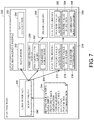
- FIG. 7 is a block diagram illustrating an overview of function modules included in the analysis tool illustrated in FIG. 6 .
- FIG. 8 is a schematic diagram for describing the basic concept of an abnormality detection process of the abnormality detection system according to the embodiment.
- FIG. 9 is a schematic diagram outlining the process procedure of the abnormality detection process of the abnormality detection system according to the embodiment.
- FIG. 10 is a schematic diagram illustrating details of the analysis process (ST 2 ) included in the process procedure illustrated in FIG. 3 .
- FIG. 11 is a schematic diagram visually illustrating an overview of the processes (a) to (e) illustrated in FIG. 10 .
- FIG. 12 is a flowchart showing an example of the procedure of a setting operation by a user in a model generation process according to the embodiment.
- FIG. 13 is a schematic diagram illustrating an example of a user interface screen provided to a user in Step S 10 of FIG. 12 .
- FIG. 14 is a schematic diagram illustrating an example of a user interface screen provided to a user in Step S 12 of FIG. 12 .
- FIG. 15 is a flowchart showing the procedure of processes executed by the analysis tool of the support device according to the embodiment.
- FIG. 16 is a table for describing a process of evaluating the importance level of a feature value executed by the analysis tool of the support device according to the embodiment.
- FIGS. 17A and 17B illustrate schematic diagrams for describing a process of adding virtual data to a learning data set by the analysis tool of the support device according to the embodiment.
- FIG. 18 is a table showing an example of virtual data generated by the analysis tool of the support device according to the embodiment.
- control system An example of a functional configuration of a control system having an abnormality detection function according to an embodiment will be described.
- the control system will be described mainly focusing on the abnormality detection function of the system, and thus the entire control system will also be referred to as an “abnormality detection system.”
- FIG. 1 is a schematic diagram illustrating an example of a functional configuration of an abnormality detection system 1 according to an embodiment.
- the abnormality detection system 1 includes a control computation part 10 , an abnormality detection part 12 , and a state value storage part 14 . These constituent elements are basically mounted in a control device such as a programmable logic controller (PLC).
- PLC programmable logic controller
- the control computation part 10 executes a control computation for controlling a control target.
- the abnormality detection part 12 detects an abnormality that may occur in a monitoring target by giving a state value relating to the monitoring target among state values collected by the control computation part 10 to a model defined by an abnormality detection parameter and a learning data set to indicate the monitoring target.
- state value is a term including values that can be observed in an arbitrary control target (including a monitoring target) and can include, for example, a physical value that can be measured by an arbitrary sensor, an ON/OFF state of a relay, a switch, or the like, a command value of a position, a speed, a torque or the like given by a PLC to a servo driver, a variable value used by a PLC for an arithmetic operation, and the like.
- abnormality detection parameter and “learning data set” are for defining a model for detecting an abnormality that may occur in a monitoring target, and will be described in detail below.
- the state value storage part 14 stores at least a state value 16 related to the monitoring target among state values collected by the control computation part 10 .
- the state value storage part 14 basically stores time series data collected at a predetermined sampling period. That is, the state value storage part 14 stores a data series of the state values 16 .
- the abnormality detection system 1 further includes a model generation part 20 .
- the model generation part 20 is basically mounted in a support device connected to a control device.
- the model generation part 20 determines an abnormality detection parameter and a learning data set.
- the model generation part 20 includes a feature value generation function 22 of generating a plurality of feature values from the state values 16 provided from the state value storage part 14 , importance level calculation functions 24 - 1 to 24 - n of calculating each importance level indicating the degree to which each of the plurality of generated feature values is effective for abnormality detection using a plurality of methods, and an integration/ranking function 26 of integrating the plurality of importance levels calculated for each of the plurality of generated feature values using the plurality of methods and determining the rankings of the importance levels of the plurality of generated feature values.
- the integration/ranking function 26 integrates the importance levels calculated using the plurality of methods and grants rankings to the feature values, a model with high generalization performance can be constructed before operations.
- FIG. 2 is a schematic diagram illustrating the example of the overall configuration of the abnormality detection system according to the present embodiment.
- the abnormality detection system 1 includes a control device 100 that controls control targets and a support device 200 that is connected to the control device 100 as main constituent elements.
- a control device 100 that controls control targets
- a support device 200 that is connected to the control device 100 as main constituent elements.
- FIG. 2 an example of a configuration in which the abnormality detection system 1 has a packaging machine 600 as a target of abnormality detection (which will also be referred to as a “monitoring target” below) is illustrated.
- the control device 100 may be embodied as a kind of computer such as a PLC.
- the control device 100 is connected to one or more field devices arranged in the control target via a field network 2 and is connected to one or more operation display devices 400 via another field network 4 .
- the control device 100 may be further connected to a database server 300 via a higher-level network 6 .
- the control device 100 exchanges data with the connected devices via each of the network.
- the database server 300 and the operation display device 400 are optional elements and are not essential elements for the abnormality detection system 1 .
- An industrial network may be employed for the field network 2 and the field network 4 .
- EtherCAT registered trademark
- EtherNet/IP registered trademark
- DeviceNet registered trademark
- CompoNet registered trademark
- the control device 100 has a processing part (which will also be referred to as an “abnormality detection engine 150 ” below) that monitors the presence of abnormality in an arbitrary monitoring target in addition to a control computation part (which will also be referred to as a “PLC engine 130 ” below) that executes control computations for controlling a control target.
- a processing part which will also be referred to as an “abnormality detection engine 150 ” below
- PLC engine 130 a control computation part that executes control computations for controlling a control target.
- the control device 100 executes (1) a process of collecting state values from a monitoring target, (2) a process of generating one or more feature values from the collected state values, and (3) a process of detecting an abnormality based on the generated feature values.
- a monitoring target is detected to be abnormal when collected state values are determined to indicate characteristics different from those in normal using a statistical method.
- items to be prepared are: (1) an abnormality detection parameter including a feature value to be used in abnormality detection and a threshold value for determining whether a state is abnormal; and (2) a learning data set including one or more state values and/or feature values that appear when a monitoring target is normal.
- any device can prepare the abnormality detection parameter and the learning data set, but in the configuration illustrated in FIG. 2 , the state values (collected data) collected by the control device 100 are given to the support device 200 , and the support device 200 executes an analysis process which will be described below so that the abnormality detection parameter and the learning data set are determined. Then, the support device 200 gives the abnormality detection parameter and the learning data set to the control device 100 . That is, the support device 200 sets the determined abnormality detection parameter and learning data set to the abnormality detection engine 150 of the control device 100 .
- control device 100 and the support device 200 are integrated may be employed, and in that case, the abnormality detection process and the determination of the abnormality detection parameter and the learning data set and may be executed in a single device.
- FIG. 3 is a schematic diagram illustrating an overview of the process procedure for operating the abnormality detection system 1 according to the present embodiment.
- the control device 100 executes a process of collecting raw data (ST 1 ).
- raw data means time series data of state values collected from the monitoring target.
- raw data includes state values as they are when collected from the monitoring target, and does not include a feature value or the like generated from the state values. Collection of the raw data is realized by sequentially writing the state values in a time series database (which will also be referred to as a “TSDB” below) installed in the control device 100 .
- TSDB time series database
- the collected raw data is given to the support device 200 and is subject to an analysis process (ST 2 ).
- the abnormality detection parameter and the learning data set are generated.
- the process of generating the abnormality detection parameter and the learning data set in accordance with a monitoring target will also be referred to as a “model generation process.”
- the generated abnormality detection parameter and the learning data set are given to the control device 100 .
- the control device 100 starts an operation of abnormality detection based on the abnormality detection parameter and the learning data set from the support device 200 (ST 3 ).
- the control device 100 (the abnormality detection engine 150 ) generates feature values based on the state values collected from the monitoring target in accordance with the given abnormality detection parameter and executes abnormality detection based on the generated feature values.
- the abnormality detection engine 150 is equivalent to the abnormality detection part that detects an abnormality that can occur in the monitoring target by giving a state value related to the monitoring target among state values collected by the PLC engine 130 to a model that indicates the monitoring target defined by the abnormality detection parameter and the learning data set. More detailed processes, functions, and the like related to the above-described abnormality detection will be described below.
- the packaging machine 600 that is the monitoring target in the configuration illustrated in FIG. 2 executes a sealing process and/or a cutting process on a package 604 conveyed in a predetermined conveyance direction.
- the packaging machine 600 has a pair of rotors 610 and 620 that rotate in synchronization with each other. Each of the rotors 610 , 620 is disposed such that a tangential direction of the outer circumference thereof at the position in contact with the package 604 coincides with the conveyance direction, and the package 604 is sealed and/or cut by the surfaces of the rotors being in contact with the package 604 .
- the rotors 610 and 620 of the packaging machine 600 are each rotationally driven by the servo motors 618 and 628 around rotation axes 612 and 622 in synchronization.
- Processing mechanisms 614 and 624 are each provided on the surfaces of the rotors 610 and 620 , and the processing mechanism 614 includes heaters 615 and 616 that are disposed back and forth in the circumferential direction (direction of rotation) and a cutter 617 disposed between the heaters 615 and 616 .
- the processing mechanism 624 includes heaters 625 and 626 that are disposed back and forth in the circumferential direction and a cutter 627 disposed between the heaters 625 and 626 .
- the rotors 610 and 620 include the cutters 617 and 627 , which are disposed on the outer circumferential surfaces of the rotors to cut the package 604 .
- the heater 615 and the heater 625 seal (bond) the opposing surfaces (the upper surface and the lower surface) at the right side of the package 604 in the drawing to each other, and the heater 616 and the heater 626 seal (bond) the opposing surfaces (the upper surface and the lower surface) at the left side of the package 604 in the drawing to each other.
- the cutter 617 and the cutter 627 cut the package 604 .
- Rotation speeds, torque, and the like of the servo motors 618 and 628 that rotationally drive the rotors 610 and 620 are controlled by servo drivers 619 and 629 that are an example of a driver (drive device).
- the control device 100 can collect state values of the packaging machine 600 from the servo drivers 619 and 629 and an I/O unit 16 .
- the state values of the packaging machine 600 include (1) rotation positions (phases and rotation angles) of the rotors 610 and 620 , (2) speeds of the rotors 610 and 620 , (3) accelerations of the rotors 610 and 620 , (4) torque values of the servo motors 618 and 628 , (5) current values of the servo drivers 619 and 629 , (6) voltage values of the servo drivers 619 and 629 , and the like.
- the control device 100 detects an abnormality of the packaging machine 600 based on state values of the packaging machine 600 .
- abnormality detection is to be executed, a plurality of state values needs to be collectable from the packaging machine 600 and a state value to be used needs to be determined in advance.
- each of the collected state values time series data
- any feature value may be extracted from time series data of the state values and used.
- FIG. 4 is a block diagram illustrating an example of a hardware configuration of the control device 100 constituting the abnormality detection system 1 according to the present embodiment.
- the control device 100 includes a processor 102 such as a central processing unit (CPU) or a micro-processing unit (MPU), a chipset 104 , a main memory device 106 , a secondary memory device 108 , a higher-level network controller 110 , a Universal Serial Bus (USB) controller 112 , a memory card interface 114 , an internal bus controller 122 , a field bus controllers 118 and 120 , I/O units 124 - 1 , 124 - 2 , and the like.
- a processor 102 such as a central processing unit (CPU) or a micro-processing unit (MPU), a chipset 104 , a main memory device 106 , a secondary memory device 108 , a higher-level network controller 110 , a Universal Serial Bus (USB) controller 112 ,
- the processor 102 reads various programs stored in the secondary memory device 108 and expands and executes the programs at the main memory device 106 , and thereby realizes the PLC engine 130 and the abnormality detection engine 150 .
- the chipset 104 controls data transmission between the processor 102 and each of components, and the like.
- the secondary memory device 108 stores a user program to be executed by the PLC engine 130 , in addition to a system program for realizing the PLC engine 130 . Furthermore, the secondary memory device 108 also stores a program for realizing the abnormality detection engine 150 .
- the higher-level network controller 110 controls data exchange with another device via the higher-level network 6 .
- the USB controller 112 controls data exchange with the support device 200 via USB connection.
- the memory card interface 114 allows a memory card 116 to be detachable therefrom, and makes it possible to write data into the memory card 116 and to read various kinds of data (user program, trace data, and the like) from the memory card 116 .
- the internal bus controller 122 is an interface on which data is exchanged with the I/O units 124 - 1 , 124 - 2 , and the like mounted in the control device 100 .
- the field bus controller 118 controls data exchange with another device via the field network 2 .
- the field bus controller 120 controls data exchange with another device via the field network 4 .
- FIG. 4 Although an example of a configuration in which functions necessary for the processor 102 to execute programs are provided is illustrated in FIG. 4 , some or all of the provided functions may be implemented using a dedicated hardware circuit (e.g., an application specific integrated circuit (ASIC), a field-programmable gate array (FPGA), etc.).
- ASIC application specific integrated circuit
- FPGA field-programmable gate array
- the main parts of the control device 100 may be realized using hardware based on general architecture (e.g., an industrial personal computer based on a general personal computer). In this case, a plurality of operating systems (OS) for different applications may be executed in parallel and necessary applications may be executed in each OS using a virtualization technology.
- OS operating systems
- the support device 200 is realized by executing a program using hardware based on general architecture (e.g., a general personal computer) as an example.
- general architecture e.g., a general personal computer
- FIG. 5 is a block diagram illustrating an example of a hardware configuration of the support device 200 constituting the abnormality detection system 1 according to the present embodiment.
- the support device 200 includes a processor 202 such as a CPU or an MPU, an optical drive 204 , a main memory device 206 , a secondary memory device 208 , a USB controller 212 , a higher-level network controller 214 , an input part 216 , and a display part 218 . These components are connected to each other via a bus 220 .
- the processor 202 reads various programs stored in the secondary memory device 208 , expands and executes the programs at the main memory device 206 , and thereby realizes various processes including the model generation process which will be described below.
- the secondary memory device 208 includes, for example, a hard disk drive (HDD), a flash solid state drive, (SSD), or the like.
- the secondary memory device 208 typically stores a development program 222 for creating a user program to be executed in the support device 200 , debugging the created user program, defining a system configuration, setting various parameters, and the like, a PLC interface program 224 for exchanging data regarding the abnormality detection function with the control device 100 , an analysis program 226 for realizing the model generation process according to the present embodiment, and an OS 228 .
- the secondary memory device 208 may store necessary programs other than the programs illustrated in FIG. 5 .
- the support device 200 has the optical drive 204 , and reads a program stored in a recording medium 205 that stores computer readable programs in a non-transitory manner (e.g., an optical recording medium such as a digital versatile disc (DVD)) therefrom and installs the program in the secondary memory device 208 or the like.
- a recording medium 205 that stores computer readable programs in a non-transitory manner (e.g., an optical recording medium such as a digital versatile disc (DVD)) therefrom and installs the program in the secondary memory device 208 or the like.
- DVD digital versatile disc
- the support device 200 may be installed via the computer readable recording medium, the programs may be installed in the way of downloading them from a server device or the like on a network.
- the functions provided by the support device 200 according to the present embodiment may be realized in the form of using some modules provided by the OS.
- the USB controller 212 controls data exchange with the control device 100 via USB connection.
- the higher-level network controller 214 controls data exchange with another device via an arbitrary network.
- the input part 216 includes a keyboard, a mouse, and the like, and receives a user operation.
- the display part 218 includes a display, various indicators, a printer, and the like, and outputs a process result from the processor 202 , and the like.
- FIG. 5 Although an example of a configuration in which functions necessary for the processor 202 to execute programs are provided is illustrated in FIG. 5 , some or all of the provided functions may be implemented using a dedicated hardware circuit (e.g., an ASIC, an FPGA, etc.).
- a dedicated hardware circuit e.g., an ASIC, an FPGA, etc.
- FIG. 6 is a block diagram illustrating an example of a software configuration of the abnormality detection system 1 according to the present embodiment.
- the control device 100 includes the PLC engine 130 , a time series database (TSDB) 140 , and the abnormality detection engine 150 as main functional configurations.
- TSDB time series database
- the PLC engine 130 successively interprets a user program 132 and executes a designated control computation.
- the PLC engine 130 manages state values collected from a field in the form of variable 138 and the variable 138 is updated at predetermined periods.
- the PLC engine 130 may be realized when the processor 102 of the control device 100 executes a system program.
- the user program 132 includes a feature value generation command 134 and a write command 136 .
- the feature value generation command 134 includes a command to generate a feature value (e.g., an average, a maximum value, a minimum value, or the like in a predetermined period of time) of a predetermined state value in accordance with a predetermined process.
- the generated feature value is used in an abnormality detection process by the abnormality detection engine 150 .
- the write command 136 includes a command to write collected state values (variable 138 ) into the time series database 140 .
- the state values sequentially written into the time series database 140 are outputted as raw data 142 .
- part of the raw data 142 stored in the time series database 140 is also used in the model generation process of the support device 200 .
- the time series database 140 corresponds to the state value storage part that stores at least a state value related to the monitoring target among the state values collected by the PLC engine 130 .
- the abnormality detection engine 150 monitors the presence of an abnormality in the monitoring target in accordance with an abnormality detection parameter 162 using a pre-given learning data set 160 as a model indicating the monitoring target. When the abnormality detection engine 150 determines that any abnormality has occurred in the monitoring target, the abnormality detection engine reports the occurrence of the abnormality to the PLC engine 130 or updates the predetermined variable 138 with a value indicating the abnormality.
- the support device 200 includes an analysis tool 230 , a PLC interface 232 , a visualization module 234 , and an event management module 236 as main functional configurations.
- the analysis tool 230 analyzes the raw data 142 including the state values collected by the control device 100 and determines the learning data set 160 and the abnormality detection parameter 162 .
- the analysis tool 230 is typically realized when the processor 202 of the support device 200 executes the analysis program 226 .
- the PLC interface 232 is in charge of a process of acquiring the raw data 142 from the control device 100 , a process of transmitting the determined learning data set 160 and abnormality detection parameter 162 to the control device 100 , and the like.
- the PLC interface 232 is typically realized by the processor 202 of the support device 200 executing the analysis program 226 .
- the visualization module 234 visualizes information provided by the analysis tool 230 as a screen user interface and receives an operation from a user.
- the event management module 236 causes each module to execute various processes in accordance with an event that occurs inside or outside the support device 200 .
- the visualization module 234 and the event management module 236 are typically provided as functions included in an OS.
- FIG. 7 is a block diagram illustrating an overview of function modules included in the analysis tool 230 illustrated in FIG. 6 .
- the analysis tool 230 of the support device 200 includes a user interface 240 , a file management module 250 , a screen generation module 260 , an analysis module 270 , and an analysis library 280 as main functional configurations.
- the user interface 240 receives a setting from a user and executes integrated processes for providing various kinds of information to the user.
- the user interface 240 has a script engine 242 , and thus reads a setting file 244 including a script in which a necessary process is described and executes the set process.
- the file management module 250 includes a data input function 252 that reads data from a designated file or the like and a data generation function 254 that generates a file including generated data or the like.
- the screen generation module 260 includes a line graph generation function 262 that generates a polygonal line graph based on the input data or the like and a parameter adjustment function 264 that receives a user operation and changes various parameters.
- the line graph generation function 262 also updates a polygonal line in accordance with a change in the parameters.
- the line graph generation function 262 and the parameter adjustment function 264 execute necessary processes with reference to a graph library 266 .
- the analysis module 270 is a module that realizes main processes of the analysis tool 230 , and has a feature value generation function 272 , a feature value selection function 274 , and a parameter determination function 276 .
- the feature value generation function 272 generates a feature value from time series data of arbitrary state values included in the raw data 142 .
- the feature value selection function 274 executes a process of selecting a feature value to be used in the abnormality detection process and a process of receiving the selection of the feature value.
- the parameter determination function 276 executes a process of determining a parameter necessary for the abnormality detection process.
- the analysis library 280 includes libraries for each of the functions included in the analysis module 270 to execute processes. More specifically, the analysis library 280 includes a feature value generation library 282 to be used by the feature value generation function 272 , a feature value selection library 284 to be used by the feature value selection function 274 , and an abnormality detection engine 286 to be used by the parameter determination function 276 .
- the process executed by the feature value generation function 272 included in the analysis module 270 is substantially the same as the process executed in accordance with the feature value generation command 134 (see FIG. 6 ) described in the user program 132 of the control device 100 .
- the abnormality detection engine 286 included in the analysis library 280 is substantially the same as the process executed by the abnormality detection engine 150 (see FIG. 6 ) of the control device 100 .
- the abnormality detection engine 286 of the support device 200 corresponds to an abnormality detection part, which executes substantially the same detection process as that of the abnormality detection engine 150 of the control device 100 using state values (the raw data 142 ) provided from the time series database 140 of the control device 100 .
- the abnormality detection system 1 an environment in which both the control device 100 and the support device 200 can realize the same abnormality detection process is provided.
- the abnormality detection process of the control device 100 can be reproduced in the support device 200 , and as a result, the abnormality detection process that should be executed by the control device 100 can be determined by the support device 200 in advance.
- the analysis module 270 of the support device 200 corresponds to the model generation part and determines the abnormality detection parameter 162 and the learning data set 160 based on a detection result made by the abnormality detection engine 286 included in the analysis library 280 .
- FIG. 8 is a schematic diagram for describing the basic concept of the abnormality detection process of the abnormality detection system 1 according to the present embodiment.
- feature values 1, 2, 3, . . . , and n are generated from one or more state values collected from the monitoring target (the monitoring target is assumed to have been labeled “normal”) and positions corresponding to the state values in a hyperspace in which the generated feature values respectively set as dimensions are sequentially plotted.
- a coordinate value group corresponding to the state values of the monitoring target labeled “normal” is defined as a normal value group in advance.
- the corresponding feature values 1, 2, 3, . . . , and n are generated from one or more of the state values collected from the monitoring target at an arbitrary sampling timing, and coordinates respectively corresponding to the generated feature values (which corresponds to an “input value” of FIG. 8 ) are set.
- the normal value group of FIG. 8 corresponds to a “model” indicating the monitoring target.
- a method for abnormality detection based on the deviation degree a method of detecting an abnormality based on a shortest distance from each point to a normal value group (a K-nearest neighbor method), a local outlier factor (LoF) method of evaluating a distance including a cluster including a normal value group, isolation forest (iForest) that uses an abnormality score calculated from a path length, and the like are known.
- a K-nearest neighbor method a local outlier factor (LoF) method of evaluating a distance including a cluster including a normal value group
- isolation forest iForest
- FIG. 9 is a schematic diagram outlining the process procedure of the abnormality detection process of the abnormality detection system 1 according to the present embodiment.
- FIG. 9 it is assumed that a set of state values has been collected from the monitoring target at an arbitrary sampling timing. The presence of an abnormality in the monitoring target at the sampling timing is determined.
- feature values 1, 2, 3, . . . , and n are generated using predetermined state values 1, 2, 3, . . . , and n.
- the abnormality score is a value indicating a possibility that one or a set of plural feature values of an evaluation target is an outlier or an abnormal value.
- the calculated abnormality score is compared to a predetermined threshold value, and thereby whether an abnormality has occurred in the monitoring target is determined.
- the model generation process includes a process of selecting a feature value to be used in the calculation of an abnormality score and a process of determining a threshold value of the abnormality score calculated from the selection.
- FIG. 10 is a schematic diagram illustrating details of the analysis process (ST 2 ) included in the process procedure illustrated in FIG. 3 .
- FIG. 11 is a schematic diagram visually illustrating an overview of the processes (a) to (e) illustrated in FIG. 10 .
- the analysis process (ST 2 ) corresponding to the model generation process according to the present embodiment mainly includes five processes, which are (a) a data input process, (b) a feature value generation process, (c) a visualization/labeling process, (d) a feature value selection process, and (e) a threshold value determination process.
- the raw data 142 that is time series data of state values collected by the control device 100 is given to the support device 200 ((a) a data input process).
- the raw data 142 includes one or more state values at each sampling timing.
- the raw data 142 includes a cycle count indicating the number of processes in the packaging machine 600 , and includes an axis-1 torque, an axis-1 velocity, and a cylinder-1 ON/OFF state as examples of state values.
- the support device 200 generates one or more feature values using the input raw data 142 ((b) a feature value generation process).
- feature values related to the axis-1 torque include average, standard deviation, maximum and minimum of the axis-1 torque
- feature values related to the axis-1 velocity include averages, standard deviation, maximum, and minimum.
- the generated feature values include an operation time of the cylinder-1.
- the support device 200 executes visualization of the feature values and labeling of a set of feature values of each sampling timing ((c) a visualization/labeling process).
- the visualization of the feature values is basically executed by the support device 200 , and the entire or part of the labeling may be executed by a user.
- a user sets whether a state of the monitoring target is “normal” or “abnormal” at each sampling timing with reference to the feature values visualized in the form of a graph or the like. Note that it is thought that a real monitoring target is unlikely to come into an abnormal state, and thus in most cases, it is labeled “normal.”
- one or more feature values to be used in abnormality detection are selected among the plurality of feature values generated from the collected state values ((d) a feature value selection process).
- the four items including the average of the axis-1 torque, the average of the axis 1 velocity, the maximum of the axis-1 velocity, and the operation time of the cylinder-1 have been selected.
- An abnormality score is calculated based on the selected one or more feature values as described above and a threshold value for determining an abnormality is determined with reference to the calculated abnormality score ((e) a threshold value determination process).
- the learning data set 160 and the abnormality detection parameter 162 are generated through the above-described procedure.
- the generated learning data set 160 and abnormality detection parameter 162 are given from the support device 200 to the control device 100 , and the control device 100 executes the abnormality detection process in accordance with a setting of the support device 200 .
- FIG. 12 is a flowchart showing an example of the procedure of the setting operation by a user in the model generation process according to the present embodiment.
- a user activates the analysis tool 230 on the support device 200 (Step S 2 ), and causes the analysis tool 230 being executed on the support device 200 to read the raw data 142 (Step S 4 ).
- Data cleansing is a process of deleting data included in the raw data 142 that is unnecessary for the generation of a model. For example, a state value having zero variance (i.e., a state value showing no change) is deleted from the time series data included in the raw data 142 .
- the data cleansing process may be automatically executed by the analysis tool 230 , or the analysis tool 230 may present candidates for state values to be deleted and the user may explicitly select a target to be deleted.
- the user may manually delete a state value that has been determined to be unnecessary or corrupt data with reference to visualized state values or the like. That is, the support device 200 may receive selection of a state value to be excluded from the generation of a feature value among state values (the raw data 142 ) provided from the time series database 140 of the control device 100 .
- the analysis tool 230 generates one or more feature values based on the state values included in the raw data 142 that have undergone data cleansing (Step S 8 ). More specifically, the feature value generation function 272 of the analysis tool 230 generates a plurality of feature values from the state values (the raw data 142 ) provided from the time series database 140 of the control device 100 . In Step S 8 , it is possible to set as many kinds of feature values to be generated as possible (which corresponds to (b) a feature value generation process of FIG. 11 ).
- the analysis tool 230 visualizes a change of the feature values in accordance with a selection operation of the user, and the user sets a normality range and/or an abnormality range with respect to the visualized change of the feature values (Step S 10 ) (which corresponds to (c) a visualization/labeling process of FIG. 11 ).
- FIG. 13 is a schematic diagram illustrating an example of a user interface screen 500 provided to the user in Step S 10 of FIG. 12 .
- the user interface screen 500 visualizes the change of the feature values generated in Step S 8 .
- a temporal change of the feature values is made into a graph on the user interface screen 500 , and the user evaluates predominance of each feature value with reference to this graph.
- the user sets an abnormality range and a normality range for the change of the feature values displayed on the user interface screen 500 .
- the abnormality range and the normality range set by the user may be set based on information indicating whether the monitoring target is actually abnormal or is normally operating, or a change of a feature value that the user wants to set as abnormal may be arbitrary set. That is, the abnormality range and the normality range set on the user interface screen 500 define an “abnormal” or a “normal” state that is the output of the abnormality detection process according to the present embodiment, and do not necessarily match whether the monitoring target is actually abnormal or normal.
- the user interface screen 500 includes a selection reception area 502 with respect to the feature values, a graph display area 506 , and a histogram display area 512 .
- a list indicating the details of the feature values generated in advance is displayed, and a user selects an arbitrary feature value on the list displayed in the selection reception area 502 .
- a graph 508 showing changes of the feature values selected by the user in the selection reception area 502 is displayed.
- the graph 508 may be segmented by time series data of each sampling, a unit of processing (e.g., a unit of processing work) of the monitoring target, or the like.
- the histogram display area 512 a histogram showing the distribution of the changes of the feature values selected by the user in the selection reception area 502 is displayed. It is possible to ascertain the main range of the selected feature values or the like when the histogram displayed in the histogram display area 512 is checked.
- the user can set a normality range and/or abnormality range of the data for the changes of the feature values (the graph 508 ) displayed in the graph display area 506 .
- the user interface screen 500 includes a labeling tool 514 .
- the labeling tool 514 includes a normality label setting button 516 , an abnormality label setting button 517 , and a label setting range specification button 518 .
- the user selects the normality label setting button 516 or the abnormality label setting button 517 in accordance with whether the label to be given is normality or abnormality, then selects the label setting range specification button 518 , and then performs an operation of specifying an area that will be subject to the graph display area 506 (e.g., a drag operation). Accordingly, the set label is given to the specified area.
- an abnormality range 510 has been set is illustrated.
- Feature values of the sampling timings included in the abnormality range 510 are labeled “abnormal,” and other feature values are labeled “normal.”
- the analysis tool 230 may have the function of giving at least one label of “normal” and “abnormal” to a specific range of a data series of a plurality of generated feature values in accordance with a user operation.
- a normality range and/or an abnormality range of data can be likewise set with respect to a histogram displayed in the histogram display area 512 .
- Step S 12 the analysis tool 230 executes a determination process of an abnormality detection parameter in accordance with a user operation (Step S 12 ).
- the process of Step S 12 corresponds to (d) a feature value selection process and (e) a threshold value determination process shown in FIG. 11 .
- Step S 12 default parameters (a feature value to be used and a threshold value) have been set in advance by the feature value selection function 274 (see FIG. 7 ) of the analysis tool 230 .
- the user adjusts necessary parameters while checking a displayed detection rate or the like.
- FIG. 14 is a schematic diagram illustrating an example of a user interface screen 520 provided to the user in Step S 12 of FIG. 12 .
- the user interface screen 520 mainly receives selection of one or more feature values to be used in the abnormality detection process and receives selection of a threshold value to be used in the abnormality detection process.
- the user interface screen 520 includes a selection reception area 522 with respect to feature values, and a graph display area 526 .
- the selection reception area 522 of the user interface screen 520 corresponds to a user interface that receives selection of one or more feature values to be used in determination of an abnormality detection parameter and a learning data set among the plurality of generated feature values. More specifically, in the selection reception area 522 , a list indicating details of the feature values generated in advance is displayed, and a user determines an arbitrary feature value to be used in calculation of an abnormality score by checking a checkbox 524 associated with the feature value on the displayed list.
- Feature values displayed in the selection reception area 522 may be listed such that values that are presumed to have higher importance levels are at higher positions based on a result analyzed by the feature value selection function 274 (see FIG. 7 ) of the analysis tool 230 in advance. That is, in the selection reception area 522 , the display order of the plurality of generated feature values may be determined in accordance with their rankings determined in the procedure which will be described below.
- feature values selected in advance by the feature value selection function 274 (see FIG. 7 ) of the analysis tool 230 may be selected as default values in the selection reception area 522 . That is, in the selection reception area 522 , a predetermined number of feature values may be displayed in accordance with the determined rankings in a state in which the feature values are selected among the plurality of generated feature values.
- FIG. 14 illustrates a state in which two feature values to be used in the calculation of an abnormality score have been selected.
- a graph 528 showing changes of the abnormality score calculated based on the one or more feature values selected by checking the checkbox 524 of the selection reception area 522 is displayed.
- a data series of the abnormality score calculated based on the data series of the selected one or more feature values is displayed in the graph display area 526 .
- the threshold value setting slider 534 is arranged in association with the graph display area 526 .
- a set threshold value is updated in conjunction with a user operation on the threshold value setting slider 534 , and the position of a threshold value display bar 535 displayed in the graph display area 526 is changed.
- the threshold value setting slider 534 receives a setting of the threshold value of the abnormality score displayed in the graph display area 526 .
- a threshold value calculated in advance by the feature value selection function 274 and the parameter determination function 276 (see FIG. 7 ) of the analysis tool 230 may be set as an initial value (a default value).
- a numeric display 530 indicating a detection rate and another numeric display 532 indicating a set threshold value are arranged.
- a value of the numeric display 532 is also updated in conjunction with a user operation on the threshold value setting slider 534 .
- a detection rate indicated by numeric display 530 indicates a value indicating to what degree accurate detection is possible based on the currently selected one or more feature values and the currently set threshold value. More specifically, a detection rate indicates to what degree a feature value included in a normality range set by the user (i.e., a feature value labeled “normal”) can be accurately distinguished from a feature value included in an abnormality range set by the user (i.e., a feature value labeled “abnormal”) according to the current setting.
- the user appropriately executes selection of a feature value to be used in abnormality detection and/or a setting of a threshold value thereof while checking the shape of the graph 528 displayed in the graph display area 526 and the value of a detection rate indicated by the numeric display 530 .
- the user interface screen 520 includes a slider 540 for adjusting a distribution range of virtual data to be added to a learning data set as will be described below and a slider 542 for adjusting the number of pieces of virtual data.
- the user can adjust virtual data to be added to a learning data set while checking the shape of the graph 528 displayed in the graph display area 526 and the value of the detection rate indicated by the numeric display 530 , in addition to the selection and setting of the feature value and the threshold value.
- a reset button 536 on the user interface screen 520 When a reset button 536 on the user interface screen 520 is selected, a reset is made in a state in which the feature value selected in advance by the feature value selection function 274 of the analysis tool 230 is selected (default state).
- a learning data generation button 583 of the user interface screen 520 When a learning data generation button 583 of the user interface screen 520 is selected, a learning data set 160 and an abnormality detection parameter 162 are generated in accordance with the content set at the time point.
- the analysis tool 230 when the user selects the learning data generation button 583 of the user interface screen 520 by appropriately operating the user interface screen 500 illustrated in FIG. 13 and the user interface screen 520 illustrated in FIG. 14 (YES in Step S 14 ), the analysis tool 230 generates a model (the learning data set 160 and the abnormality detection parameter 162 ) indicating the monitoring target (Step S 16 ). That is, the analysis tool 230 generates a model of the monitoring target based on parameters adjusted by the user.
- the support device 200 transmits the model generated in Step S 16 (the learning data set 160 and the abnormality detection parameter 162 ) to the control device 100 (Step S 18 ), and then an actual operation is started (Step S 20 ).
- a model may be generated again using the state values collected by the control device 100 .
- FIG. 15 is a flowchart showing the procedure of the processes executed by the analysis tool 230 of the support device 200 according to the present embodiment.
- the processes included in the flowchart of FIG. 15 are executed through the feature value generation function 272 , the feature value selection function 274 , and the parameter determination function 276 (see FIG. 7 ) of the analysis tool 230 .
- FIG. 15 shows steps for which the functions are responsible.
- the support device 200 generates feature values based on the input raw data 142 (Step S 100 ).
- the generation of feature values is realized by using the feature value generation function 272 of the analysis tool 230 .
- a plurality of types of feature values are generated.
- the support device 200 executes the processes of Steps S 102 to S 106 , S 124 , and S 126 . These processes are realized by using the feature value selection function 274 of the analysis tool 230 .
- the processes of Steps S 102 to S 106 , S 124 , and S 126 of FIG. 15 correspond to a function of estimating a variable importance level by the feature value selection function 274 .
- the support device 200 determines whether only feature values labeled “normal” have been generated (Step S 102 ).
- Step S 102 When only feature values labeled “normal” have been generated (YES in Step S 102 ), the processes of Steps S 124 and S 126 are executed. On the other hand, when the generated feature values include those labeled “normal” and “abnormal” (NO in Step S 102 ), the processes of Steps S 102 to S 106 are executed.
- Step S 102 the support device 200 calculates the importance levels of the feature values generated in Step S 100 using each of a plurality of methods (Step S 104 ). Then, the support device 200 integrates the importance levels of the feature values calculated using the methods and ranks the feature values (Step S 106 ).
- Step S 124 the support device 200 calculates the importance levels of the feature values generated in Step S 100 using each of a plurality of methods (Step S 124 ). Then, the support device 200 integrates the importance levels of the feature values calculated using the methods and ranks the feature values (Step S 126 ).
- Step S 126 in which there is no feature value labeled “abnormal,” there is a limit on the importance levels that can be calculated. For this reason, the importance level of each of the generated feature values may be calculated using only one method in that situation in Steps S 106 and S 126 .
- the plurality of feature values generated in Step S 100 are ranked in descending order of importance levels through the above-described processes.
- the feature value selection function 274 of the analysis tool 230 is in charge of the above-described processes of Steps S 102 to S 106 , S 124 , and S 126 . More specifically, in Steps S 104 and S 124 , the feature value selection function 274 of the analysis tool 230 calculates the importance levels each indicating the effective degree for abnormality detection using the plurality of methods for each of the plurality of generated feature values. Then, in Step S 106 , the feature value selection function 274 of the analysis tool 230 integrates the plurality of importance levels of the plurality of generated feature values calculated using the plurality of methods and determines rankings of the importance levels for the plurality of generated feature values. Details of this operation will be described below.
- the support device 200 executes the processes of Steps S 108 to S 118 or Steps S 128 and S 130 . These processes are realized by the parameter determination function 276 of the analysis tool 230 .
- the processes of Steps S 108 to S 118 (excluding Step S 110 ) or the processes of Steps S 128 and S 130 of FIG. 5 correspond to an abnormality detection application (abnormality score calculation) function by the feature value selection function 274
- the process of Step S 110 of FIG. 15 corresponds to a virtual data generation function by the feature value selection function 274 .
- Step S 108 the support device 200 adds the feature values to calculation targets of an abnormality score in descending order of the rankings. That is, feature values with higher importance levels may be preferentially selected.
- the support device 200 adds virtual data to the learning data set (Step S 110 ).
- the process of adding the virtual data to the learning data set in Step S 110 will be descried below in detail.
- the support device 200 calculates an abnormality score based on the one or more feature values including the feature values added in Step S 108 using the learning data set to which the virtual data has been added (Step S 112 ). Then, the support device 200 calculates abnormality detection accuracy based on the calculated abnormality score (Step S 114 ). The support device 200 determines whether the abnormality detection accuracy calculated in Step S 114 has been improved further than the previously calculated abnormality detection accuracy (Step S 116 ). When the accuracy is determined to have been improved further than the previously calculated abnormality detection accuracy (YES in Step S 116 ), the feature values added in this process are registered as feature values to be used in abnormality detection (Step S 118 ). On the other hand, when the accuracy is determined not to have been improved further than the previously calculated abnormality detection accuracy (NO in Step S 116 ), the feature values added in this process are not registered as feature values to be used in abnormality detection.
- Steps S 110 to S 118 are repeated until the number of feature values registered as feature values to be used in abnormality detection reaches a predetermined number.
- Step S 126 the support device 200 registers a predetermined number of feature values as feature values to be used in abnormality detection in descending order of the rankings (Step S 128 ). Then, the support device 200 calculates an abnormality score based on the predetermined number of feature values registered in Step S 128 (Step S 130 ).
- the support device 200 determines a threshold value based on the calculated abnormality score in both operations (Step S 140 ). Thereby, the process ends.
- Steps S 108 and S 128 described above the parameter determination function 276 of the analysis tool 230 selects a combination of one or plural feature values among the plurality of generated feature values.
- Step S 110 the feature value selection function 274 (virtual data generation function) of the analysis tool 230 generates an extra learning data set constituted by at least part of a data series of the feature values of the selected combination and a data series of statistically generated virtual feature values.
- the feature value selection function 274 (virtual data generation function) of the analysis tool 230 may generate an extra evaluation data set by adding the data series of statistically generated virtual feature values to an evaluation data set.
- the “evaluation data set” means a data series to be used in evaluation of an abnormality detection capability of a model generated using a learning data set, detection accuracy, an identification capability, and the like.
- the “evaluation data set” it is preferable for the “evaluation data set” to be a labeled data series in advance.
- Steps S 112 and S 114 the parameter determination function 276 of the analysis tool 230 evaluates detection accuracy of the model corresponding to the feature values of the selected combination using the extra learning data set generated in Step S 110 . Then, in Steps S 116 and S 118 , the parameter determination function 276 of the analysis tool 230 additionally selects an arbitrary feature value and registers the arbitrary feature value as a model when detection accuracy is improved.
- Step S 104 the processes of FIG. 15 for which the feature value selection function 274 of the analysis tool 230 is responsible (Steps S 104 , S 106 , S 124 , and S 126 ) will be described below.
- FIG. 16 is a table for describing the process of evaluating the importance level of a feature value executed by the analysis tool 230 of the support device 200 according to the present embodiment.
- the feature value selection function 274 of the analysis tool 230 calculates the importance levels of the feature values using a plurality of methods.
- cases in which evaluation is performed in each of three methods of kurtosis, logistic regression, and decision tree are illustrated as examples.
- Kurtosis stored in an evaluation value column 702 represents a value obtained by evaluating the sharpness of frequency distribution of a data series of the target feature values 700 .
- the standard deviation of the frequency distribution of the data series of the target feature values may be used as an evaluation value. In this case, it is possible to determine that, as the standard deviation becomes greater, the feature values are more likely to change and the abnormality detection capability becomes higher (i.e., more important).
- Logistic regression stored in an evaluation value column 704 is to apply an arbitrary logistic function to the data series of the target feature values and to search for a parameter that defines a logistic function that maximizes likelihood.
- Likelihood corresponding to finally searched parameter is regarded as an importance level. That is, it can be regarded that the importance level becomes higher with respect to a feature value which enables estimation with higher accuracy in an arbitrary logistic function.
- logistic regression enables a search for a parameter and calculation of likelihood for each feature value.
- a decision tree stored in an evaluation value column 706 is to apply a classification tree to the data series of the target feature values and to use the classification capability as an importance level.
- algorithms of the decision tree CART, C4.5, ID3, and the like are known, and any of these algorithms can be used.
- the importance levels at least include those importance levels calculated in accordance with algorithms of kurtosis for the data series of the feature values, likelihood obtained from execution of logistic regression on the data series of the feature values, and a decision tree.
- values indicating importance levels of the feature values are calculated using the plurality of methods and the result obtained by integrating the calculation results is stored in an evaluation value column 708 .
- Each of the feature values is ranked based on the evaluation values stored in the evaluation value column 708 (a rank column 710 ).
- Steps S 106 and S 126 of FIG. 15 ranking is performed with respect to the feature values based on the evaluation values stored in the evaluation value column 708 of FIG. 16 .
- Step S 104 of FIG. 15 Since state values labeled “normal” and “abnormal” are obtained in Step S 104 of FIG. 15 , each method of the kurtosis, logistic regression, and decision tree shown in FIG. 16 can be applied. On the other hand, since only state values labeled “normal” are present in Step S 124 of FIG. 15 , it is hard to apply the logistic regression and decision tree shown in FIG. 16 , and the methods of kurtosis and standard deviation are applied.
- Step S 108 and/or processes from Step S 128 shown in FIG. 15 are executed based on the rankings of the feature values determined in the above-described process procedure.
- the importance levels of the feature values are respectively calculated using the plurality of methods, then the feature values obtained by the plurality of methods are integrated, and the feature values are ranked in terms of importance levels.
- Step S 110 the process for which the parameter determination function 276 of the analysis tool 230 illustrated in FIG. 15 is responsible will be described in detail.
- FIGS. 17A and 17B illustrate schematic diagrams for describing a process of adding virtual data to a learning data set by the analysis tool 230 of the support device 200 according to the present embodiment.
- FIG. 17A illustrates an example of an original learning data set
- FIG. 17B illustrates an example of the learning data set to which virtual data has been added.
- abnormality scores 804 calculated by applying an evaluation data set 802 to a model generated using original learning data 800 are shown.
- the evaluation data set 802 may be created by employing a part of a data set of labeled feature values as the learning data 800 and the rest as the evaluation data set 802 . That is, a part of a data series of feature values of a combination selected at the time of model generation may be used as the learning data set, and the rest of the data series may be used as the evaluation data set 802 .
- the distribution of the learning data 800 is skewed as the fluctuation of the abnormality scores 804 is shown in FIG. 17A , it is difficult to improve accuracy of abnormality detection.
- the values of the abnormality scores 804 show no change in abnormality areas 806 and 808 as illustrated in FIG. 17A , and thus no resolution is obtained.
- abnormality scores 814 calculated by applying an evaluation data set 812 to a model generated using a learning data set in which noise 811 has been added to original learning data 810 as virtual data are shown.
- abnormality scores 814 shown in FIG. 17B It can be ascertained according to the abnormality scores 814 shown in FIG. 17B that points indicate higher abnormality scores as they are farther from normality points (i.e., the learning data), and abnormalities can be detected with satisfactory accuracy even when the distribution of data included in the learning data set is skewed (or biased).
- the values of the abnormality scores 814 show significant fluctuation in abnormality areas 816 and 818 and thus resolution has increased, in comparison to FIG. 17A .
- the abnormality scores 804 correspond to probabilities of an error detection when the evaluation data set 812 is applied to the model obtained using the extra learning data set obtained by adding the virtual data to the original learning data set.
- abnormality scores 804 are calculated using an extra evaluation data set obtained by adding virtual data to the evaluation data set 812 .
- virtual data it is preferable to use noise generated from a uniform distribution in a certain range or the like.
- the procedure of generating such virtual data is as follows.
- a distribution range of virtual data to be added is determined (e.g., with respect to a range from a minimum to a maximum of a data set of generated feature values, a range from a lower limit obtained by subtracting an arbitrary offset from the minimum to an upper limit obtained by adding an arbitrary offset to the maximum, or the like can be set).
- a pitch L of the virtual data to be added is calculated (the width corresponds to the value obtained by dividing the distribution range of the virtual data determined in (1) by the pieces of data M).
- Virtual data including elements of all M dimensions is generated using permutations and combinations of the virtual data of each dimension (N pieces per dimension).
- FIG. 18 is a table showing an example of virtual data generated by the analysis tool 230 of the support device 200 according to the present embodiment.
- FIG. 18 an example in which two-dimensional virtual data is generated is shown.
- the virtual data can be added to both or either of a learning data set and an evaluation data set by adding the virtual data generated as described above to a data set of feature values generated from raw data.
- the distribution range of the virtual data to be added can be adjusted, and by adjusting the slider 542 included in the user interface screen 520 illustrated in FIG. 14 , the number of pieces of virtual data to be added can be appropriately changed.
- the sliders 540 and 542 included in the user interface screen 520 of FIG. 14 correspond to the function of receiving a setting of statistical characteristics of a data series of virtual feature values to be added.
- the virtual data is generated through the above-described process procedure.
- Steps S 112 , S 114 , and S 130 for which the parameter determination function 276 of the analysis tool 230 shown in FIG. 15 is in charged will be described in detail.
- abnormality detection is performed using, for example, the iForest method.
- a learning data set is divided with partitions set randomly and a tree structure having each partition as a node is built in a model generation stage.
- abnormality detection it is determined whether input data is abnormal based on a depth to a root node (a path length or the number of partitions on a path) of a model created in advance.
- the abnormality score calculated in Steps S 112 and S 130 can be calculated based on a path length acquired by dividing the learning data set by partitions. Furthermore, the method of calculating abnormality detection accuracy in Step S 114 can be realized by calculating the area under the curve (AUC) based on a receiver operating characteristic (ROC) curve defined by a true positive axis and a false positive axis.
- AUC area under the curve
- ROC receiver operating characteristic
- a probability of an error detection (determining data labeled “normal” to be “abnormal” or determining data labeled “abnormal” to be “normal”) is evaluated using data labeled “normal” and data labeled “abnormal” included in the learning data set.
- abnormality detection accuracy can be calculated each time with each combination of the data series of feature values used as the learning data set.
- control device 100 and the support device 200 are provided as independent configurations in the abnormality detection system 1 illustrated in FIG. 2 , the entire or a part of the functions of the support device 200 may be incorporated into the control device 100 .
- the analysis tool 230 which is implemented in the support device 200 , in the control device 100 , transmission of raw data and repetitive execution of the model generation process can be realized more easily.
- FIGS. 6 and 7 are merely examples, and any form of configuration may be employed as long as it can provide the above-described functions.
- the function modules illustrated in FIGS. 6 and 7 may be implemented as a set of a plurality of function modules, and the plurality of function modules illustrated in FIGS. 6 and 7 may be implemented as a single module due to a restriction on hardware, a restriction on programming, or the like.
- An abnormality detection system includes:
- control computation part 10 , 130 ) that executes a control computation for controlling a control target
- an abnormality detection part ( 12 , 150 ) that detects an abnormality that can occur in a monitoring target by giving a state value ( 16 , 142 ) related to the monitoring target among state values collected by the control operation part to a model that is defined by an abnormality detection parameter ( 162 ) and a learning data set ( 160 ), wherein the model indicates the monitoring target;
- a state value storage part ( 14 , 140 ) that stores at least a state value related to the monitoring target among the state values collected by the control computation part;
- a model generation part ( 20 , 270 ) that determines the abnormality detection parameter and the learning data set, and the model generation part includes:
- a section ( 24 - 1 to 24 - n , 274 ) for calculating importance levels respectively for the plurality of generated feature values based on a plurality of methods, wherein the importance levels indicate a degree that is effective for abnormality detection;
- a section ( 26 , 274 ) for integrating a plurality of the importance levels calculated based on the plurality of the methods for each of the plurality of the generated feature values and determining rankings of the importance levels of the plurality of the generated feature values.
- An abnormality detection system described in Configuration 1 further includes:
- a screen generation part ( 260 ) that provides a user interface that receives a selection of one or more feature values to be used in determination of the abnormality detection parameter and the learning data set among the plurality of generated feature values, and the screen generation part determines a display order of the plurality of the generated feature values in accordance with the determined rankings.
- model generation part further includes a section ( 510 ) for labeling a specific range of the data series of the plurality of the generated feature values as at least one of “normal” and “abnormal.”
- model generation part further includes a section ( 524 ) for receiving selection of a state value to be excluded from the generation of the feature values among the state values provided from the state value storage part.
- the support device includes:
- a model generation part ( 20 , 270 ) that determines the abnormality detection parameter and the learning data set, and the model generation part includes:
- a section ( 24 - 1 to 24 - n , 274 ) for calculating importance levels respectively for the plurality of generated feature values based on a plurality of methods, wherein the importance levels indicate a degree that is effective for abnormality detection;
- a section ( 26 , 274 ) for integrating a plurality of the importance levels calculated for each of the plurality of the generated feature values and determining rankings of the importance levels of the plurality of the generated feature values.
- a model generation method of an abnormality detection system includes: a control computation part ( 10 , 130 ) that executes a control computation for controlling a control target;
- an abnormality detection part ( 12 , 150 ) that detects an abnormality that can occur in a monitoring target by giving a state value ( 16 , 142 ) related to the monitoring target among state values collected by the control operation part to a model that is defined by an abnormality detection parameter ( 162 ) and a learning data set ( 160 ), wherein the model indicates the monitoring target;
- a state value storage part ( 14 , 140 ) that stores at least a state value related to the monitoring target among the state values collected by the control computation part;
- model generation part ( 20 , 270 ) that determines the abnormality detection parameter and the learning data set
- the model generation method includes:
- An abnormality detection system includes a control operation part that executes a control computation for controlling a control target; an abnormality detection part that detects an abnormality that can occur in a monitoring target by giving a state value related to the monitoring target among state values collected by the control operation part to a model that is defined by an abnormality detection parameter and a learning data set, wherein the model indicates the monitoring target; a state value storage part that stores at least a state value related to the monitoring target among the state values collected by the control computation part, and a model generation part that determines the abnormality detection parameter and the learning data set.
- the model generation part includes a section for generating a plurality of feature values from the state values provided from the state value storage part; a section for calculating importance levels respectively for the plurality of generated feature values based on a plurality of methods, wherein the importance levels indicating a degree that are effective for abnormality detection; and a section for integrating a plurality of the importance levels calculated based on the plurality of methods for each of the plurality of the generated feature values and determining rankings of the importance levels of the plurality of the generated feature values.
- the importance levels calculated using each of the plurality of methods are integrated and the rankings of the importance levels of the plurality of the generated feature values are determined, and thus rankings can be determined in light of higher generalization performance, rather than rankings with a biased specific importance level.
- the abnormality detection system may further include a screen generation part that provides a user interface that receives selection of one or more feature values to be used in determination of the abnormality detection parameter and the learning data set among the plurality of the generated feature values.
- the screen generation part determines a display order of the plurality of the generated feature values in accordance with the determined rankings.
- a user can select an arbitrary feature value to be used in a model for abnormality detection, and at this time, a feature value that is more likely to be capable of realizing a highly accurate model is preferentially displayed, and therefore, even a user with little knowledge can realize abnormality detection with respect to an arbitrary monitoring target.
- the screen generation part may display in a state that a predetermined number of feature values is selected among the plurality of the generated feature values in accordance with the determined rankings.
- a model including the predetermined number of feature values can be provided to a user as a type of default, and thus even a user with little knowledge can realize abnormality detection with respect to an arbitrary monitoring target.
- the screen generation part may display a data series of an abnormality score calculated based on a data series of the one or more selected feature values.
- a user can visually ascertain performance of the model based on the selected feature values.
- the screen generation part may receive a setting of a threshold value of the displayed abnormality score.
- a user can set detection performance of the generated model and the threshold value suitable for the detection performance while checking them.
- the importance levels include at least importance levels calculated using algorithms of kurtosis for the data series of the feature values, likelihood obtained from execution of logistic regression on the data series of the feature values, and a decision tree.
- the model generation part may further include a section for labeling a specific range of the data series of the plurality of the generated feature values as at least one of “normal” and “abnormal.”
- supervised learning can be realized by labeling the data series of the feature values, and thus a model that achieves more highly accurate detection can be configured.
- the model generation part may further include a section for receiving selection of a state value to be excluded from the generation of feature values among the state values provided from the state value storage part.
- a support device that is connected to a control device for controlling a control target.
- the control device includes an abnormality detection part that detects an abnormality that can occur in a monitoring target by giving a state value related to the monitoring target among collected state values to a model that is defined by an abnormality detection parameter and a learning data set, wherein the model indicates the monitoring target; and a state value storage part that stores at least a state value related to the monitoring target among the collected state values.
- the support device includes a model generation part that determines the abnormality detection parameter and the learning data set.
- the model generation part includes a section for generating a plurality of feature values from the state values provided from the state value storage part; a section for calculating importance levels respectively for the plurality of generated feature values based on a plurality of methods, wherein the importance levels indicates a degree that is effective for abnormality detection; and a section for integrating a plurality of the importance levels calculated based on the plurality of methods for each of the plurality of the generated feature values and determining rankings of the importance levels of the plurality of the generated feature values.
- the importance levels calculated using each of the plurality of methods are integrated and the rankings of the importance levels of the plurality of generated feature values are determined, and thus rankings can be determined in light of higher generalization performance, rather than rankings with a biased specific importance level.
- the abnormality detection system includes a control computation part that executes a control computation for controlling a control target, an abnormality detection part that detects an abnormality that can occur in a monitoring target by giving a state value related to the monitoring target among state values collected by the control operation part to a model that is defined by an abnormality detection parameter and a learning data set, wherein the model indicates the monitoring target; a state value storage part that stores at least a state value related to the monitoring target among the state values collected by the control computation part; and a model generation part that determines the abnormality detection parameter and the learning data set.
- the model generation method includes a step of generating a plurality of feature values from the state values provided by the state value storage part; a step of calculating importance levels respectively for the plurality of generated feature values based on a plurality of methods, wherein the importance levels indicate a degree that is effective for abnormality detection; and a step of integrating a plurality of the importance levels calculated based on the plurality of methods for each of the plurality of the generated feature values and determining rankings of the importance levels of the plurality of the generated feature values.
- the importance levels calculated using each of the plurality of methods are integrated and the rankings of the importance levels of the plurality of generated feature values are determined, and thus rankings can be determined in light of higher generalization performance, rather than rankings with a biased specific importance level. According to the present technology, it is possible to generate an abnormality detection model with higher accuracy before an actual operation.
- the importance levels of respective feature values are calculated using a plurality of methods (algorithms), then the importance levels calculated using the plurality methods are integrated, and then feature values to be used in generation of a model can be selected. With the selection of the feature values, a model with higher generalization performance can be generated.
Landscapes
- Engineering & Computer Science (AREA)
- Physics & Mathematics (AREA)
- General Physics & Mathematics (AREA)
- Automation & Control Theory (AREA)
- Evolutionary Computation (AREA)
- Mathematical Physics (AREA)
- Artificial Intelligence (AREA)
- Theoretical Computer Science (AREA)
- Software Systems (AREA)
- Data Mining & Analysis (AREA)
- Medical Informatics (AREA)
- Computer Vision & Pattern Recognition (AREA)
- Computing Systems (AREA)
- General Engineering & Computer Science (AREA)
- Manufacturing & Machinery (AREA)
- Human Computer Interaction (AREA)
- Testing And Monitoring For Control Systems (AREA)
Abstract
Description
Claims (20)
Applications Claiming Priority (2)
| Application Number | Priority Date | Filing Date | Title |
|---|---|---|---|
| JP2018-046674 | 2018-03-14 | ||
| JP2018046674A JP7063022B2 (en) | 2018-03-14 | 2018-03-14 | Anomaly detection system, support device and model generation method |
Publications (2)
| Publication Number | Publication Date |
|---|---|
| US20190286096A1 US20190286096A1 (en) | 2019-09-19 |
| US10795338B2 true US10795338B2 (en) | 2020-10-06 |
Family
ID=65033382
Family Applications (1)
| Application Number | Title | Priority Date | Filing Date |
|---|---|---|---|
| US16/248,793 Active 2039-02-28 US10795338B2 (en) | 2018-03-14 | 2019-01-16 | Abnormality detection system, support device, and model generation method |
Country Status (4)
| Country | Link |
|---|---|
| US (1) | US10795338B2 (en) |
| EP (1) | EP3540545A1 (en) |
| JP (1) | JP7063022B2 (en) |
| CN (1) | CN110275505B (en) |
Families Citing this family (21)
| Publication number | Priority date | Publication date | Assignee | Title |
|---|---|---|---|---|
| JP7036697B2 (en) * | 2018-09-27 | 2022-03-15 | 株式会社日立製作所 | Monitoring system and monitoring method |
| EP3805884A1 (en) * | 2019-10-11 | 2021-04-14 | Siemens Aktiengesellschaft | Method for determining and / or classifying a sheet state of a sheet-like material, computer program product, device for the production and industrial installation |
| JP7446771B2 (en) * | 2019-10-30 | 2024-03-11 | 株式会社東芝 | Visualization data generation device, visualization data generation system, and visualization data generation method |
| US11810013B2 (en) | 2019-11-14 | 2023-11-07 | International Business Machines Corporation | Systems and methods for alerting to model degradation based on survival analysis |
| US11768917B2 (en) * | 2019-11-14 | 2023-09-26 | International Business Machines Corporation | Systems and methods for alerting to model degradation based on distribution analysis |
| CN111159001A (en) * | 2019-12-31 | 2020-05-15 | 青岛海尔科技有限公司 | Detection method and device for operating system and server |
| US11982987B2 (en) * | 2020-01-31 | 2024-05-14 | Keyence Corporation | Programmable logic controller and analyzer |
| JP2021131599A (en) * | 2020-02-18 | 2021-09-09 | 株式会社日立製作所 | Abnormal condition monitoring system for mobile objects |
| JP7534118B2 (en) * | 2020-04-13 | 2024-08-14 | カヤバ株式会社 | Failure prediction system |
| CN111857092B (en) * | 2020-06-22 | 2024-04-30 | 杭州群核信息技术有限公司 | Real-time error detection system and method for household parameterized model |
| US12141173B2 (en) * | 2020-09-17 | 2024-11-12 | Hitachi High-Tech Corporation | Error factor estimation device and error factor estimation method |
| CN112859646B (en) * | 2021-02-08 | 2022-11-22 | 广西玉柴机器股份有限公司 | Double-planet-wheel hybrid power hardware-in-loop simulation system |
| KR102294800B1 (en) * | 2021-02-26 | 2021-08-30 | (주)알티엠 | Method and apparatus for extracting feature value of time series data |
| CN113030726B (en) * | 2021-03-24 | 2024-11-15 | 河南中烟工业有限责任公司 | Motor state monitoring method and system based on data drive |
| CN112947262A (en) * | 2021-04-16 | 2021-06-11 | 西南科技大学 | FPGA development board |
| CN113515671A (en) * | 2021-07-01 | 2021-10-19 | 河北工业大学 | Relay time parameter abnormal value identification method, server and storage medium |
| JP7789541B2 (en) * | 2021-12-16 | 2025-12-22 | 株式会社日立製作所 | Abnormal condition monitoring system and abnormal condition monitoring method |
| CN114580580B (en) * | 2022-05-07 | 2022-08-16 | 深圳索信达数据技术有限公司 | Intelligent operation and maintenance abnormity detection method and device |
| JP2024023032A (en) * | 2022-08-08 | 2024-02-21 | 株式会社日立プラントサービス | Water treatment equipment operation support devices, methods, and programs |
| CN116208375B (en) * | 2022-12-30 | 2025-10-24 | 湖北天融信网络安全技术有限公司 | Abnormal flow detection method, device and electronic equipment |
| CN121504977A (en) * | 2025-10-27 | 2026-02-10 | 安徽明生恒卓科技有限公司 | A method and apparatus for external key point matching and tracking trajectory calculation based on VGGT. |
Citations (9)
| Publication number | Priority date | Publication date | Assignee | Title |
|---|---|---|---|---|
| JP2010191556A (en) | 2009-02-17 | 2010-09-02 | Hitachi Ltd | Abnormality detecting method and abnormality detecting system |
| US20110276828A1 (en) | 2009-01-14 | 2011-11-10 | Kenji Tamaki | Apparatus anomaly monitoring method and system |
| SG188751A1 (en) | 2011-09-14 | 2013-04-30 | Toshiba Kk | Process monitoring/diagnostic/support apparatus |
| US8966392B2 (en) | 2011-08-29 | 2015-02-24 | Novell, Inc. | Event management apparatus, systems, and methods |
| WO2017051562A1 (en) | 2015-09-25 | 2017-03-30 | 三菱重工業株式会社 | Abnormality diagnosis system |
| US20180203439A1 (en) * | 2017-01-19 | 2018-07-19 | Omron Corporation | Prediction model creation apparatus, production facility monitoring system, and production facility monitoring method |
| US20190163163A1 (en) * | 2017-11-28 | 2019-05-30 | Fanuc Corporation | Numerical controller |
| US20190266039A1 (en) * | 2016-09-14 | 2019-08-29 | Nec Corporation | System analysis support device, system analysis support method, and program |
| US20200089207A1 (en) * | 2017-08-30 | 2020-03-19 | Hitachi, Ltd. | Failure diagnosis system |
Family Cites Families (3)
| Publication number | Priority date | Publication date | Assignee | Title |
|---|---|---|---|---|
| JP2002188411A (en) * | 2000-12-22 | 2002-07-05 | Mitsubishi Heavy Ind Ltd | Abnormality diagnosing apparatus |
| JP4032045B2 (en) * | 2004-08-13 | 2008-01-16 | 新キャタピラー三菱株式会社 | DATA PROCESSING METHOD, DATA PROCESSING DEVICE, DIAGNOSIS METHOD, AND DIAGNOSIS DEVICE |
| JP6605357B2 (en) | 2016-02-29 | 2019-11-13 | 株式会社日立製作所 | Anomaly detection apparatus, anomaly detection system and method |
-
2018
- 2018-03-14 JP JP2018046674A patent/JP7063022B2/en active Active
-
2019
- 2019-01-14 CN CN201910031690.XA patent/CN110275505B/en active Active
- 2019-01-15 EP EP19151763.0A patent/EP3540545A1/en not_active Withdrawn
- 2019-01-16 US US16/248,793 patent/US10795338B2/en active Active
Patent Citations (9)
| Publication number | Priority date | Publication date | Assignee | Title |
|---|---|---|---|---|
| US20110276828A1 (en) | 2009-01-14 | 2011-11-10 | Kenji Tamaki | Apparatus anomaly monitoring method and system |
| JP2010191556A (en) | 2009-02-17 | 2010-09-02 | Hitachi Ltd | Abnormality detecting method and abnormality detecting system |
| US8966392B2 (en) | 2011-08-29 | 2015-02-24 | Novell, Inc. | Event management apparatus, systems, and methods |
| SG188751A1 (en) | 2011-09-14 | 2013-04-30 | Toshiba Kk | Process monitoring/diagnostic/support apparatus |
| WO2017051562A1 (en) | 2015-09-25 | 2017-03-30 | 三菱重工業株式会社 | Abnormality diagnosis system |
| US20190266039A1 (en) * | 2016-09-14 | 2019-08-29 | Nec Corporation | System analysis support device, system analysis support method, and program |
| US20180203439A1 (en) * | 2017-01-19 | 2018-07-19 | Omron Corporation | Prediction model creation apparatus, production facility monitoring system, and production facility monitoring method |
| US20200089207A1 (en) * | 2017-08-30 | 2020-03-19 | Hitachi, Ltd. | Failure diagnosis system |
| US20190163163A1 (en) * | 2017-11-28 | 2019-05-30 | Fanuc Corporation | Numerical controller |
Non-Patent Citations (1)
| Title |
|---|
| Search Report of Europe Counterpart Application, dated Jul. 24, 2019, pp. 1-12. |
Also Published As
| Publication number | Publication date |
|---|---|
| CN110275505B (en) | 2022-04-22 |
| US20190286096A1 (en) | 2019-09-19 |
| JP7063022B2 (en) | 2022-05-09 |
| EP3540545A1 (en) | 2019-09-18 |
| JP2019159903A (en) | 2019-09-19 |
| CN110275505A (en) | 2019-09-24 |
Similar Documents
| Publication | Publication Date | Title |
|---|---|---|
| US11163277B2 (en) | Abnormality detection system, support device, and model generation method | |
| US20190286096A1 (en) | Abnormality detection system, support device, and model generation method | |
| US20190301979A1 (en) | Abnormality detection system, support device, and abnormality detection method | |
| US10503146B2 (en) | Control system, control device, and control method | |
| JP6636214B1 (en) | Diagnostic device, diagnostic method and program | |
| US10901398B2 (en) | Controller, control program, control system, and control method | |
| US20180259947A1 (en) | Management device and non-transitory computer-readable medium | |
| US20220004177A1 (en) | Control device and non-transitory computer-readable recording medium recording program | |
| JP2021015573A (en) | Abnormality determination device and abnormality determination system | |
| WO2022030041A1 (en) | Prediction system, information processing device, and information processing program | |
| TWI861824B (en) | Abnormal diagnosis method, abnormal diagnosis device, and abnormal diagnosis program | |
| EP3872593B1 (en) | Control device and control program | |
| CN118914844A (en) | Motor running state monitoring method based on multi-sensor fusion | |
| JP2018028845A (en) | Abnormal sign detection system and abnormality sign detection method | |
| JP7728801B2 (en) | Method for predictive maintenance of automated machines for manufacturing or packaging consumer products | |
| JP2020047016A (en) | Control device and control system | |
| WO2025199194A1 (en) | Integrated production automation for real-time multi-frequency data processing and visualization in internet of things (iot) systems | |
| US20240386293A1 (en) | Prediction system, information processing device, and non-transitory information recording medium with computer-readable information processing program recorded thereon | |
| JP7676986B2 (en) | Information processing device, model generation program, and model generation method | |
| JP7524784B2 (en) | Information processing device, control system, and report output method | |
| JP7613168B2 (en) | Control device, control system, method and program | |
| JP2017204107A (en) | Data analytic method, and system and device therefor |
Legal Events
| Date | Code | Title | Description |
|---|---|---|---|
| FEPP | Fee payment procedure |
Free format text: ENTITY STATUS SET TO UNDISCOUNTED (ORIGINAL EVENT CODE: BIG.); ENTITY STATUS OF PATENT OWNER: LARGE ENTITY |
|
| AS | Assignment |
Owner name: OMRON CORPORATION, JAPAN Free format text: ASSIGNMENT OF ASSIGNORS INTEREST;ASSIGNORS:KAWANOUE, SHINSUKE;MIYAMOTO, KOTA;REEL/FRAME:048655/0021 Effective date: 20190204 |
|
| STPP | Information on status: patent application and granting procedure in general |
Free format text: APPLICATION DISPATCHED FROM PREEXAM, NOT YET DOCKETED |
|
| STPP | Information on status: patent application and granting procedure in general |
Free format text: DOCKETED NEW CASE - READY FOR EXAMINATION |
|
| STPP | Information on status: patent application and granting procedure in general |
Free format text: NON FINAL ACTION MAILED |
|
| STPP | Information on status: patent application and granting procedure in general |
Free format text: RESPONSE TO NON-FINAL OFFICE ACTION ENTERED AND FORWARDED TO EXAMINER |
|
| STPP | Information on status: patent application and granting procedure in general |
Free format text: NOTICE OF ALLOWANCE MAILED -- APPLICATION RECEIVED IN OFFICE OF PUBLICATIONS |
|
| STPP | Information on status: patent application and granting procedure in general |
Free format text: PUBLICATIONS -- ISSUE FEE PAYMENT VERIFIED |
|
| STCF | Information on status: patent grant |
Free format text: PATENTED CASE |
|
| MAFP | Maintenance fee payment |
Free format text: PAYMENT OF MAINTENANCE FEE, 4TH YEAR, LARGE ENTITY (ORIGINAL EVENT CODE: M1551); ENTITY STATUS OF PATENT OWNER: LARGE ENTITY Year of fee payment: 4 |