US10793279B2 - Cabin blower system - Google Patents

Cabin blower system Download PDF

Info

Publication number
US10793279B2
US10793279B2 US16/238,841 US201916238841A US10793279B2 US 10793279 B2 US10793279 B2 US 10793279B2 US 201916238841 A US201916238841 A US 201916238841A US 10793279 B2 US10793279 B2 US 10793279B2
Authority
US
United States
Prior art keywords
gas turbine
turbine engine
electrical machine
transmission
power
Prior art date
Legal status (The legal status is an assumption and is not a legal conclusion. Google has not performed a legal analysis and makes no representation as to the accuracy of the status listed.)
Active, expires
Application number
US16/238,841
Other versions
US20190233124A1 (en
Inventor
Richard Sharpe
Glenn A Knight
Current Assignee (The listed assignees may be inaccurate. Google has not performed a legal analysis and makes no representation or warranty as to the accuracy of the list.)
Rolls Royce PLC
Original Assignee
Rolls Royce PLC
Priority date (The priority date is an assumption and is not a legal conclusion. Google has not performed a legal analysis and makes no representation as to the accuracy of the date listed.)
Filing date
Publication date
Application filed by Rolls Royce PLC filed Critical Rolls Royce PLC
Assigned to ROLLS-ROYCE PLC reassignment ROLLS-ROYCE PLC ASSIGNMENT OF ASSIGNORS INTEREST (SEE DOCUMENT FOR DETAILS). Assignors: SHARPE, RICHARD, KNIGHT, GLENN A
Publication of US20190233124A1 publication Critical patent/US20190233124A1/en
Application granted granted Critical
Publication of US10793279B2 publication Critical patent/US10793279B2/en
Active legal-status Critical Current
Adjusted expiration legal-status Critical

Links

Images

Classifications

    • BPERFORMING OPERATIONS; TRANSPORTING
    • B64AIRCRAFT; AVIATION; COSMONAUTICS
    • B64DEQUIPMENT FOR FITTING IN OR TO AIRCRAFT; FLIGHT SUITS; PARACHUTES; ARRANGEMENT OR MOUNTING OF POWER PLANTS OR PROPULSION TRANSMISSIONS IN AIRCRAFT
    • B64D13/00Arrangements or adaptations of air-treatment apparatus for aircraft crew or passengers, or freight space
    • B64D13/02Arrangements or adaptations of air-treatment apparatus for aircraft crew or passengers, or freight space the air being pressurised
    • BPERFORMING OPERATIONS; TRANSPORTING
    • B64AIRCRAFT; AVIATION; COSMONAUTICS
    • B64DEQUIPMENT FOR FITTING IN OR TO AIRCRAFT; FLIGHT SUITS; PARACHUTES; ARRANGEMENT OR MOUNTING OF POWER PLANTS OR PROPULSION TRANSMISSIONS IN AIRCRAFT
    • B64D41/00Power installations for auxiliary purposes
    • FMECHANICAL ENGINEERING; LIGHTING; HEATING; WEAPONS; BLASTING
    • F01MACHINES OR ENGINES IN GENERAL; ENGINE PLANTS IN GENERAL; STEAM ENGINES
    • F01DNON-POSITIVE DISPLACEMENT MACHINES OR ENGINES, e.g. STEAM TURBINES
    • F01D15/00Adaptations of machines or engines for special use; Combinations of engines with devices driven thereby
    • F01D15/10Adaptations for driving, or combinations with, electric generators
    • FMECHANICAL ENGINEERING; LIGHTING; HEATING; WEAPONS; BLASTING
    • F02COMBUSTION ENGINES; HOT-GAS OR COMBUSTION-PRODUCT ENGINE PLANTS
    • F02CGAS-TURBINE PLANTS; AIR INTAKES FOR JET-PROPULSION PLANTS; CONTROLLING FUEL SUPPLY IN AIR-BREATHING JET-PROPULSION PLANTS
    • F02C7/00Features, components parts, details or accessories, not provided for in, or of interest apart form groups F02C1/00 - F02C6/00; Air intakes for jet-propulsion plants
    • F02C7/26Starting; Ignition
    • F02C7/268Starting drives for the rotor, acting directly on the rotor of the gas turbine to be started
    • F02C7/275Mechanical drives
    • FMECHANICAL ENGINEERING; LIGHTING; HEATING; WEAPONS; BLASTING
    • F02COMBUSTION ENGINES; HOT-GAS OR COMBUSTION-PRODUCT ENGINE PLANTS
    • F02CGAS-TURBINE PLANTS; AIR INTAKES FOR JET-PROPULSION PLANTS; CONTROLLING FUEL SUPPLY IN AIR-BREATHING JET-PROPULSION PLANTS
    • F02C7/00Features, components parts, details or accessories, not provided for in, or of interest apart form groups F02C1/00 - F02C6/00; Air intakes for jet-propulsion plants
    • F02C7/32Arrangement, mounting, or driving, of auxiliaries
    • FMECHANICAL ENGINEERING; LIGHTING; HEATING; WEAPONS; BLASTING
    • F02COMBUSTION ENGINES; HOT-GAS OR COMBUSTION-PRODUCT ENGINE PLANTS
    • F02CGAS-TURBINE PLANTS; AIR INTAKES FOR JET-PROPULSION PLANTS; CONTROLLING FUEL SUPPLY IN AIR-BREATHING JET-PROPULSION PLANTS
    • F02C7/00Features, components parts, details or accessories, not provided for in, or of interest apart form groups F02C1/00 - F02C6/00; Air intakes for jet-propulsion plants
    • F02C7/36Power transmission arrangements between the different shafts of the gas turbine plant, or between the gas-turbine plant and the power user
    • FMECHANICAL ENGINEERING; LIGHTING; HEATING; WEAPONS; BLASTING
    • F04POSITIVE - DISPLACEMENT MACHINES FOR LIQUIDS; PUMPS FOR LIQUIDS OR ELASTIC FLUIDS
    • F04DNON-POSITIVE-DISPLACEMENT PUMPS
    • F04D13/00Pumping installations or systems
    • F04D13/02Units comprising pumps and their driving means
    • F04D13/021Units comprising pumps and their driving means containing a coupling
    • FMECHANICAL ENGINEERING; LIGHTING; HEATING; WEAPONS; BLASTING
    • F04POSITIVE - DISPLACEMENT MACHINES FOR LIQUIDS; PUMPS FOR LIQUIDS OR ELASTIC FLUIDS
    • F04DNON-POSITIVE-DISPLACEMENT PUMPS
    • F04D27/00Control, e.g. regulation, of pumps, pumping installations or pumping systems specially adapted for elastic fluids
    • F04D27/004Control, e.g. regulation, of pumps, pumping installations or pumping systems specially adapted for elastic fluids by varying driving speed
    • FMECHANICAL ENGINEERING; LIGHTING; HEATING; WEAPONS; BLASTING
    • F04POSITIVE - DISPLACEMENT MACHINES FOR LIQUIDS; PUMPS FOR LIQUIDS OR ELASTIC FLUIDS
    • F04DNON-POSITIVE-DISPLACEMENT PUMPS
    • F04D29/00Details, component parts, or accessories
    • F04D29/05Shafts or bearings, or assemblies thereof, specially adapted for elastic fluid pumps
    • FMECHANICAL ENGINEERING; LIGHTING; HEATING; WEAPONS; BLASTING
    • F05INDEXING SCHEMES RELATING TO ENGINES OR PUMPS IN VARIOUS SUBCLASSES OF CLASSES F01-F04
    • F05DINDEXING SCHEME FOR ASPECTS RELATING TO NON-POSITIVE-DISPLACEMENT MACHINES OR ENGINES, GAS-TURBINES OR JET-PROPULSION PLANTS
    • F05D2220/00Application
    • F05D2220/30Application in turbines
    • F05D2220/32Application in turbines in gas turbines
    • F05D2220/323Application in turbines in gas turbines for aircraft propulsion, e.g. jet engines
    • FMECHANICAL ENGINEERING; LIGHTING; HEATING; WEAPONS; BLASTING
    • F05INDEXING SCHEMES RELATING TO ENGINES OR PUMPS IN VARIOUS SUBCLASSES OF CLASSES F01-F04
    • F05DINDEXING SCHEME FOR ASPECTS RELATING TO NON-POSITIVE-DISPLACEMENT MACHINES OR ENGINES, GAS-TURBINES OR JET-PROPULSION PLANTS
    • F05D2220/00Application
    • F05D2220/70Application in combination with
    • F05D2220/76Application in combination with an electrical generator
    • FMECHANICAL ENGINEERING; LIGHTING; HEATING; WEAPONS; BLASTING
    • F05INDEXING SCHEMES RELATING TO ENGINES OR PUMPS IN VARIOUS SUBCLASSES OF CLASSES F01-F04
    • F05DINDEXING SCHEME FOR ASPECTS RELATING TO NON-POSITIVE-DISPLACEMENT MACHINES OR ENGINES, GAS-TURBINES OR JET-PROPULSION PLANTS
    • F05D2240/00Components
    • F05D2240/40Use of a multiplicity of similar components
    • YGENERAL TAGGING OF NEW TECHNOLOGICAL DEVELOPMENTS; GENERAL TAGGING OF CROSS-SECTIONAL TECHNOLOGIES SPANNING OVER SEVERAL SECTIONS OF THE IPC; TECHNICAL SUBJECTS COVERED BY FORMER USPC CROSS-REFERENCE ART COLLECTIONS [XRACs] AND DIGESTS
    • Y02TECHNOLOGIES OR APPLICATIONS FOR MITIGATION OR ADAPTATION AGAINST CLIMATE CHANGE
    • Y02TCLIMATE CHANGE MITIGATION TECHNOLOGIES RELATED TO TRANSPORTATION
    • Y02T50/00Aeronautics or air transport
    • Y02T50/50On board measures aiming to increase energy efficiency

Definitions

  • the present disclosure concerns cabin blower systems. More specifically the disclosure concerns cabin blower systems with drive from two parts of a gas turbine engine. The disclosure also concerns aircraft having cabin blower systems and methods of operating cabin blower systems.
  • Cabin blower systems are used to pressurise the cabins of aircraft.
  • Cabin blowers are typically driven by one or more associated gas turbine engines of the aircraft.
  • the gas turbine engine may be used to drive a cabin blower compressor in a number of ways (e.g. using electrical power generated by the engine or mechanically). Where mechanical driving of the compressor is employed, drive is typically taken from a shaft of the gas turbine engine via an accessory gearbox.
  • a means of varying the speed of the drive delivered to the compressor is also required; it is not desirable for the cabin air flow and pressure to be determined by the particular operating point of the gas turbine at any particular moment. Therefore a gearing mechanism such as a continuously variable transmission is also provided in the drive path between the accessory gearbox and compressor. This system ensures that regardless of engine operating point and ambient air pressure the cabin flow and pressure can be maintained within acceptable limits.
  • Known compressors of cabin blower systems may be operated from a single initial power source, such as an auxiliary power unit or a shaft of the gas turbine engine.
  • a single initial power source such as an auxiliary power unit or a shaft of the gas turbine engine.
  • such an arrangement can limit the flexibility of operations using the cabin blower system. As such, a more flexible arrangement is sought.
  • an aircraft cabin blower system comprising: a first transmission configured to receive mechanical power from a first part of a gas turbine engine in the form of a first transmission input; and an electrical circuit comprising a first electrical machine, a second electrical machine, and a power management system, wherein an output of the first transmission is configured to drive a cabin blower compressor when operating in a blower mode, the first electrical machine being configured to receive mechanical power from a second part of the gas turbine engine and act as a generator to provide electrical power to the power management system, and the second electrical machine being configured to act as a motor providing mechanical power to the first transmission in the form of a second transmission input, the second electrical machine being driven by electrical power from the power management system.
  • the first part of the gas turbine engine provides a first source of power to the transmission whilst the second part of the gas turbine engine provides a second source of power to the first electrical machine.
  • Power extraction from different parts of the gas turbine engine can result in the parts of the aircraft cabin blower system being driven at different speeds which may be beneficial to their operation, for example through enhanced efficiency.
  • the first part of the gas turbine engine may be a shaft associated with a first fan, e.g. a propulsive fan, or compressor.
  • the second part of the gas turbine engine may be a shaft associated with a second fan, e.g. a propulsive fan, or compressor.
  • the first fan or compressor may be at a different pressure stage from the second fan or compressor.
  • the first part of the gas turbine engine may be a shaft associated with an intermediate-pressure compressor and/or the second part of the gas turbine engine may be a shaft associated with a high-pressure compressor.
  • the system may comprise a second transmission which may be configured to provide any one of a plurality of discrete gear ratios of the second transmission, the second transmission being arranged to transmit mechanical power from the first part of the gas turbine engine to the first transmission input in the blower mode.
  • the first part of the gas turbine engine may be a shaft associated with a high-pressure compressor and/or the second part of the gas turbine engine may be a shaft associated with an intermediate-pressure compressor.
  • the majority of the power may be taken from the intermediate-pressure shaft.
  • Power extraction from the intermediate-pressure shaft may be beneficial to operability. For example, extracting power from the intermediate-pressure shaft allows the high-pressure shaft to run at its optimum speed without constraint by the requirement to run an accessory gearbox.
  • the gas turbine engine may be able to be started through use of the high-pressure shaft.
  • the use of electric machines may limit gear speed and therefore moving the generator out of the main transmission may allow the generator to run faster, so the generator can be smaller and lighter.
  • the high-pressure shaft may have a speed ratio (max:min) of around 1.7:1 compared to the intermediate-pressure shaft having a speed ratio of around 6:1, the intermediate-pressure shaft therefore being less attractive for accessory drive.
  • the speed of the output of the first transmission may be determined by a relative difference of the mechanical power provided from the gas turbine engine and the second electrical machine to the first transmission.
  • the aircraft cabin blower system may be further operable in a starter mode, wherein, when operating in the starter mode, the first electrical machine is configured to act as a motor to provide mechanical power to the gas turbine engine to facilitate starting of the gas turbine engine, the first electrical machine being driven by electrical power from the power management system.
  • the aircraft cabin blower system may further be operable in a starter mode, wherein, when operating in the starter mode, the second electrical machine is configured to act as a motor to provide mechanical power to the gas turbine engine to facilitate starting of the gas turbine engine, the second electrical machine being driven by electrical power from the power management system.
  • the system may comprise first and second accessory gearboxes arranged to transmit mechanical power from the first and second parts of the gas turbine engine respectively to the first transmission input (or to the second transmission where present) and to the first electrical machine respectively.
  • first and second dedicated radial drives may substitute the first and second accessory gearboxes respectively.
  • an aircraft comprising an aircraft cabin blower system according to the first aspect.
  • a method of operating an aircraft cabin blower system comprising a first transmission configured to receive power from a gas turbine engine, and an electrical circuit comprising a first electrical machine, a second electrical machine, and a power management system
  • the method comprising the steps of: when operating in a blower mode, providing mechanical power from a first part of the gas turbine engine to the first transmission in the form of a first transmission input; providing mechanical power from a second part of the gas turbine engine to the first electrical machine such that it operates as a generator, the first electrical machine providing electrical power to the power management system; providing electrical power from the power management system to the second electrical machine such that it operates as a motor, the second electrical machine providing mechanical power to the first transmission in the form of a second transmission input; driving a cabin blower compressor using the output of the first transmission.
  • the first part of the gas turbine engine may be a shaft associated with a first fan, e.g. a propulsive fan, or compressor.
  • the second part of the gas turbine engine may be a shaft associated with a second fan, e.g. a propulsive fan, or compressor.
  • the first fan or compressor may be at a different pressure stage from the second fan or compressor.
  • the first part of the gas turbine engine may be a shaft in communication with an intermediate-pressure compressor and the second part of the gas turbine engine may be a shaft in communication with a high-pressure compressor.
  • mechanical power may be transmitted from the first part of the gas turbine engine to the first transmission via a second transmission in the blower mode, wherein the second transmission may be configured to provide any one of a plurality of discrete gear ratios thereof.
  • the first part of the gas turbine engine may be a shaft in communication with a high-pressure compressor and the second part of the gas turbine engine may be a shaft in communication with an intermediate-pressure compressor.
  • the method may further comprise the step of: when operating in a starter mode, providing electrical power from the power management system to the first electrical machine such that it operates as a motor, the first electrical machine providing mechanical power to the gas turbine engine to facilitate starting of the gas turbine engine.
  • the method may further comprise the step of: when operating in the starter mode, operating the cabin blower compressor as an expander to drive the first transmission, the first transmission providing mechanical power to the gas turbine engine.
  • FIG. 1 is a sectional side view of a gas turbine engine
  • FIG. 2 is a schematic depiction of an aircraft cabin blower system in accordance with an embodiment of the disclosure
  • FIG. 3 is a schematic depiction of another aircraft cabin blower system in accordance with an embodiment of the disclosure.
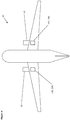
  • FIG. 4 is a plan view of an aircraft including a cabin blower system in accordance with the present disclosure.
  • FIG. 5 is a schematic depiction of another aircraft cabin blower system in accordance with another embodiment of the disclosure.
  • a gas turbine engine is generally indicated at 10 , having a principal and rotational axis 11 .
  • the engine 10 comprises, in axial flow series, an air intake 12 , a propulsive fan 13 , an intermediate-pressure compressor 14 , a high-pressure compressor 15 , combustion equipment 16 , a high-pressure turbine 17 , an intermediate-pressure turbine 18 , a low-pressure turbine 19 and an exhaust nozzle 20 .
  • a nacelle 21 generally surrounds the engine 10 and defines both the intake 12 and the exhaust nozzle 20 .
  • the gas turbine engine 10 works in the conventional manner so that air entering the intake 12 is accelerated by the fan 13 to produce two air flows: a first air flow into the intermediate-pressure compressor 14 and a second air flow which passes through a bypass duct 22 to provide propulsive thrust.
  • the intermediate-pressure compressor 14 compresses the air flow directed into it before delivering that air to the high-pressure compressor 15 where further compression takes place.
  • the compressed air exhausted from the high-pressure compressor 15 is directed into the combustion equipment 16 where it is mixed with fuel and the mixture combusted.
  • the resultant hot combustion products then expand through, and thereby drive the high-, intermediate- and low-pressure turbines 17 , 18 , 19 before being exhausted through the nozzle 20 to provide additional propulsive thrust.
  • the high- 17 , intermediate- 18 and low- 19 pressure turbines drive respectively the high-pressure compressor 15 , intermediate-pressure compressor 14 and fan 13 , each by suitable interconnecting shaft.
  • gas turbine engines to which the present disclosure may be applied may have alternative configurations.
  • such engines may have an alternative number of interconnecting shafts (e.g. two) and/or an alternative number of compressors and/or turbines.
  • the engine may comprise a gearbox provided in the drive train from a turbine to a compressor and/or fan.
  • the cabin blower system 100 includes a cabin blower compressor 102 and power sources in the form of an intermediate-pressure shaft 104 of an intermediate-pressure compressor 114 and a high-pressure shaft 106 of a high-pressure compressor 115 of a gas turbine engine.
  • the intermediate-pressure shaft 104 powers a first accessory gearbox 108 of the gas turbine engine, which, in turn, provides power to a transmission 110 of the cabin blower system 100 .
  • the transmission 110 comprises a summing epicyclic gearbox 112 with two inputs. A first input 119 of the epicyclic gearbox 112 is provided mechanically from the first accessory gearbox 108 to the epicyclic gearbox 112 .
  • the high-pressure shaft 106 powers a second accessory gearbox 116 of the gas turbine engine, which, in turn, provides power to a first electrical machine 118 .
  • the first electrical machine 118 operates as a generator to convert the mechanical power received from the second accessory gearbox 116 to electrical power.
  • a second input 120 of the epicyclic gearbox 112 is provided from a second electrical machine 122 which, in the blower mode of the cabin blower system 100 , operates as a motor to convert electrical power to mechanical power, which is provided to the epicyclic gearbox 112 .
  • a power management system 124 interconnects the first electrical machine 118 and second electrical machine 122 .
  • the power management system 124 in the present case, includes two AC/DC converters 126 , one associated with each electrical machine 118 , 122 , the AC/DC converters 126 being interconnected.
  • the power management system 124 receives electrical power from the first electrical machine 118 and sends said power to the second electrical machine 122 .
  • the second electrical machine 122 can be driven as a motor at a different speed from the speed of the first electrical machine 118 acting as a generator at that time.
  • the power management system 124 can provide a continuously-variable difference between the power received from the first electrical machine 118 and the power output to the second electrical machine 122 .
  • the first electrical machine 118 and the second electrical machine 122 may be 100 kW motor-generators.
  • the power management system 124 can include electrical storage, in the form of batteries or similar, that enables the power management system 124 to output more power than is being received by the power management system 124 at any moment. Such a system is shown in relation to the embodiment of FIG. 3 , but could be introduced onto the embodiment of FIG. 2 .
  • the epicyclic gearbox 112 is a summing epicyclic gearbox configured to have an output that is a function of the relative difference between the speeds of the first input 119 and the second input 120 .
  • the first input 119 is always positive, resulting in operation of the compressor 102 .
  • the second input 120 which can be rotated either positively or negatively by the second electrical machine 122 , acts to provide either a positive or negative input to the epicyclic gearbox 112 .
  • the output of the epicyclic gearbox 112 that feeds to the compressor 102 can be adjusted continuously by the operation of the second electrical machine 122 such that the output is greater or less than that which would be provided were the only input to the epicyclic gearbox 112 to be the first input 119 .
  • the function of the epicyclic gearbox 112 may result in the output being the actual difference of the first and second inputs 119 , 120 or may otherwise be related to the difference by way of a ratio provided by the epicyclic gearbox 112 , for example.
  • summing epicyclic gearbox The operation of a summing epicyclic gearbox will be known to the person skilled in the art and therefore alternative implementations will be apparent. Moreover, other forms of summing gearbox may also be used, in addition to or as a replacement for the epicyclic gearbox depicted.
  • the present embodiment can be operated to enable the output of the cabin blower compressor 102 to be at a speed required by an aircraft, to create the desired temperature, pressure, or air flow-rate. This can be managed without any power loss associated with bleed valves or other such features, although these could also be included for emergency operation, if required.
  • the cabin blower system 100 can also be operated in a starter mode in order to provide mechanical input to the gas turbine engine to facilitate a start operation of the gas turbine engine.
  • the cabin blower compressor 102 can operate in reverse as an expander to provide drive to the epicyclic gearbox 112 from a supply of compressed air.
  • the second electrical machine 122 can then be held still such that the transmission 110 transmits the mechanical power from the compressor 102 to the first accessory gearbox 108 .
  • the first accessory gearbox 108 will in turn cause the intermediate-pressure compressor 114 to rotate, which facilitates starting of the gas turbine engine.
  • the remaining steps required for the successful ignition of a gas turbine engine will be known to the person skilled in the art and are therefore not discussed in the present application.
  • the first electrical machine 118 which operated in the blower mode as a generator, can be powered by the power management system 124 in order that it acts as a motor when in the starter mode.
  • the mechanical power generated by the first electrical machine 118 can therefore be applied to the high-pressure compressor 115 to assist with engine start.
  • the present embodiment can provide drive to either or both of the intermediate-pressure compressor 114 and the high-pressure compressor 115 .
  • a second embodiment of a cabin blower system 200 is depicted in simplified schematic form in FIG. 3 .
  • the second embodiment operates in much the same way as the first embodiment, differing in only some features. Therefore, for brevity, only the differences between the second embodiment and the first embodiment will be discussed in detail. Similar or identical reference numerals are used for similar or identical features.
  • a high-pressure shaft 206 drives a first accessory gearbox 208 to provide power to a transmission 210 .
  • An intermediate-pressure shaft 204 drives a second accessory gearbox 216 and thus a first electrical machine 218 .
  • the operation is reversed in that the power going to each of the first and second accessory gearboxes 208 , 216 comes from the other shaft 204 , 206 when compared with the first embodiment.
  • a high-pressure compressor 215 is driven from the transmission 210 whilst an intermediate-pressure shaft 214 is driven from a second electrical machine 222 via the second accessory gearbox 216 .
  • the embodiment operates in the same way as the first embodiment.
  • electrical starting can be carried out by one of the electrical machines 118 , 122 , 218 , 222 acting on one of the intermediate-pressure 114 , 214 and high-pressure compressors 115 , 215 , without the use of the cabin blower compressor 102 , 202 .
  • Electrical starting can also be enabled by use of both electrical machines 118 , 122 , 218 , 222 , either directly through one of the accessory gearboxes 108 , 116 , 208 , 216 or also through the transmission 110 , 210 , depending on the embodiment.
  • starting can be carried out by use of only the cabin blower compressor 102 , 202 without the use of either electrical machine 118 , 122 , 218 , 222 .
  • a power management system 224 of the second embodiment includes a power management circuit 228 that coordinates power receipt and transmission from the AC/DC converters 226 associated with each of the first electrical machine 218 and second electrical machine 222 .
  • a battery 230 is also provided that enables power to be stored. This power can therefore be used during blower mode operation to allow the second electrical machine 222 to work as a motor with a greater power output than that being generated by the first electrical machine 218 at that moment.
  • the power management system 224 of the second embodiment allows starter mode operation using electrical power alone.
  • FIG. 4 Depicted in FIG. 4 is an aircraft 23 including two gas turbine engines 10 and two associated cabin blower systems 100 , 200 .
  • FIG. 5 schematically depicts a third embodiment of an aircraft cabin blower system, indicated generally by 300 .
  • the system 300 is similar to the system 100 of FIG. 2 ; parts of the system 300 are labelled using reference numerals which differ by 300 from those labelling corresponding parts of the system 100 of FIG. 2 .
  • the system 300 comprises a transmission 340 arranged to transmit mechanical power from a first accessory gearbox 308 to a first input 319 of epicyclic gearbox 312 in a blower mode of the system 300 , and from the first input 319 to the first accessory gearbox 308 in a starter mode of the system 300 .
  • the transmission 340 comprises a plurality of gears configured to be selectively engagable to provide any one of a plurality of fixed gear ratios of the transmission 340 .
  • First and second electrical machines 318 , 322 , converters 326 and power management system 324 collectively constitute a variator 350 .
  • the input speed to the first transmission input 319 of the epicyclic gearbox 312 may be varied in discrete steps by means of the transmission 340 .
  • the output speed of the transmission 340 is “trimmed” (adjusted) by the output speed of the variator 350 because the output speed of the epicyclic gearbox 312 (and hence the speed of the compressor 302 ) is the sum or difference of these two speeds.
  • the size and weight of the variator 350 may be reduced compared to those of equivalent parts of the system 100 of FIG. 2 because the maximum speed variation it is required to provide is smaller.
  • the variation in the speed of the second transmission input 120 of the system 100 of FIG. 2 may need to be relatively large in order to provide sufficient variability in the speed of the compressor 102 ; the first and second electrical machines 118 , 122 , converters 126 and power management system 124 may therefore be relatively heavy and bulky compared to the variator 350 .
  • the inclusion of the transmission 340 also allows the system 300 to better adapt to the range of speeds of the intermediate-pressure shaft 304 compared to the ability of the system 100 to adapt to the range of speeds of the intermediate-pressure shaft 104 .
  • the ratio of the maximum speed of an intermediate-pressure shaft 104 , 304 to its minimum speed may be 5:1 for example.
  • Increasing the number of discrete gears ratios of the transmission 340 allows the size and weight of the variator 350 to be reduced further since the range of output speeds which the variator 350 is required to generate is further reduced. In addition this allows relatively less power to be taken from the high-pressure shaft 306 and relatively more power to be taken from the intermediate-pressure shaft 104 improving engine fuel consumption.
  • the intermediate-pressure shaft 304 is able to support higher power extraction than the high-pressure shaft 306 ; larger loads are therefore preferably taken from the intermediate-pressure shaft 304 with a smaller amount of mechanical power extraction from the high-pressure shaft 306 which runs faster than the intermediate-pressure shaft 304 .
  • the overall mechanical power transmission efficiency between the accessory gearboxes 308 , 316 and the epicyclic gearbox 312 is increased compared to the mechanical power transmission efficiency between the accessory gearboxes 108 , 116 and epicyclic gearbox 112 in the system 100 of FIG. 2 .
  • one or more of the accessory gearboxes 108 , 116 is each replaced by a respective dedicated radial drive arranged to transmit mechanical power from the relevant engine shaft to either the first transmission input or the first electrical machine, as the case may be.
  • one or more of the accessory gearboxes 208 , 218 is each replaced by a respective dedicated radial drive arranged to transmit mechanical power from the relevant engine shaft to either the first transmission input or the first electrical machine, as the case may be.
  • one or more of the accessory gearboxes 308 , 318 is each replaced by a respective dedicated radial drive arranged to transmit mechanical power from the relevant engine shaft to either the input of the second transmission or the first electrical machine, as the case may be.
  • the variant systems may be useful in cases where an accessory gearbox is unavailable for use.

Landscapes

  • Engineering & Computer Science (AREA)
  • Chemical & Material Sciences (AREA)
  • Combustion & Propulsion (AREA)
  • Mechanical Engineering (AREA)
  • General Engineering & Computer Science (AREA)
  • Aviation & Aerospace Engineering (AREA)
  • Health & Medical Sciences (AREA)
  • General Health & Medical Sciences (AREA)
  • Pulmonology (AREA)
  • Structures Of Non-Positive Displacement Pumps (AREA)
  • Connection Of Motors, Electrical Generators, Mechanical Devices, And The Like (AREA)

Abstract

An aircraft cabin blower system includes: a transmission configured to receive mechanical power from a first part of a gas turbine engine in the form of a first transmission input; and an electrical circuit including a first electrical machine, a second electrical machine, and a power management system, wherein an output of the transmission is configured to drive a cabin blower compressor when operating in a blower mode, the first electrical machine being configured to receive mechanical power from a second part of the gas turbine engine and act as a generator to provide electrical power to the power management system, and the second electrical machine being configured to act as a motor providing mechanical power to the transmission in the form of a second transmission input, the second electrical machine being driven by electrical power from the power management system.

Description

The present disclosure concerns cabin blower systems. More specifically the disclosure concerns cabin blower systems with drive from two parts of a gas turbine engine. The disclosure also concerns aircraft having cabin blower systems and methods of operating cabin blower systems.
Cabin blower systems are used to pressurise the cabins of aircraft. Cabin blowers are typically driven by one or more associated gas turbine engines of the aircraft. The gas turbine engine may be used to drive a cabin blower compressor in a number of ways (e.g. using electrical power generated by the engine or mechanically). Where mechanical driving of the compressor is employed, drive is typically taken from a shaft of the gas turbine engine via an accessory gearbox. A means of varying the speed of the drive delivered to the compressor is also required; it is not desirable for the cabin air flow and pressure to be determined by the particular operating point of the gas turbine at any particular moment. Therefore a gearing mechanism such as a continuously variable transmission is also provided in the drive path between the accessory gearbox and compressor. This system ensures that regardless of engine operating point and ambient air pressure the cabin flow and pressure can be maintained within acceptable limits.
Known compressors of cabin blower systems may be operated from a single initial power source, such as an auxiliary power unit or a shaft of the gas turbine engine. However, such an arrangement can limit the flexibility of operations using the cabin blower system. As such, a more flexible arrangement is sought.
According to a first aspect, there is provided an aircraft cabin blower system comprising: a first transmission configured to receive mechanical power from a first part of a gas turbine engine in the form of a first transmission input; and an electrical circuit comprising a first electrical machine, a second electrical machine, and a power management system, wherein an output of the first transmission is configured to drive a cabin blower compressor when operating in a blower mode, the first electrical machine being configured to receive mechanical power from a second part of the gas turbine engine and act as a generator to provide electrical power to the power management system, and the second electrical machine being configured to act as a motor providing mechanical power to the first transmission in the form of a second transmission input, the second electrical machine being driven by electrical power from the power management system.
The first part of the gas turbine engine provides a first source of power to the transmission whilst the second part of the gas turbine engine provides a second source of power to the first electrical machine. Power extraction from different parts of the gas turbine engine can result in the parts of the aircraft cabin blower system being driven at different speeds which may be beneficial to their operation, for example through enhanced efficiency.
The first part of the gas turbine engine may be a shaft associated with a first fan, e.g. a propulsive fan, or compressor. The second part of the gas turbine engine may be a shaft associated with a second fan, e.g. a propulsive fan, or compressor. The first fan or compressor may be at a different pressure stage from the second fan or compressor.
The first part of the gas turbine engine may be a shaft associated with an intermediate-pressure compressor and/or the second part of the gas turbine engine may be a shaft associated with a high-pressure compressor. In this case, the system may comprise a second transmission which may be configured to provide any one of a plurality of discrete gear ratios of the second transmission, the second transmission being arranged to transmit mechanical power from the first part of the gas turbine engine to the first transmission input in the blower mode.
Alternatively, the first part of the gas turbine engine may be a shaft associated with a high-pressure compressor and/or the second part of the gas turbine engine may be a shaft associated with an intermediate-pressure compressor.
For example, the majority of the power may be taken from the intermediate-pressure shaft. Power extraction from the intermediate-pressure shaft may be beneficial to operability. For example, extracting power from the intermediate-pressure shaft allows the high-pressure shaft to run at its optimum speed without constraint by the requirement to run an accessory gearbox.
In embodiments that extract power from the high-pressure shaft, the gas turbine engine may be able to be started through use of the high-pressure shaft.
The use of electric machines may limit gear speed and therefore moving the generator out of the main transmission may allow the generator to run faster, so the generator can be smaller and lighter.
Having the generator running from the high-pressure shaft may be beneficial to operability and thus the generator speed ratio may be lower and the electronics accordingly less complex. The lower speed ratio may reduce the necessary size of the electronics and generator. Where generator shaft speed results in a frequency dissimilar to that required by the aircraft electrical system, power electronics are required to electrically correct the generator frequency. The greater the speed variance, the more power electronics—capacitors and inductors are generally large and heavy—are required for correction. The high-pressure shaft may have a speed ratio (max:min) of around 1.7:1 compared to the intermediate-pressure shaft having a speed ratio of around 6:1, the intermediate-pressure shaft therefore being less attractive for accessory drive.
When operating in the blower mode, the speed of the output of the first transmission may be determined by a relative difference of the mechanical power provided from the gas turbine engine and the second electrical machine to the first transmission.
The aircraft cabin blower system may be further operable in a starter mode, wherein, when operating in the starter mode, the first electrical machine is configured to act as a motor to provide mechanical power to the gas turbine engine to facilitate starting of the gas turbine engine, the first electrical machine being driven by electrical power from the power management system.
The aircraft cabin blower system may further be operable in a starter mode, wherein, when operating in the starter mode, the second electrical machine is configured to act as a motor to provide mechanical power to the gas turbine engine to facilitate starting of the gas turbine engine, the second electrical machine being driven by electrical power from the power management system.
The system may comprise first and second accessory gearboxes arranged to transmit mechanical power from the first and second parts of the gas turbine engine respectively to the first transmission input (or to the second transmission where present) and to the first electrical machine respectively. Alternatively, first and second dedicated radial drives may substitute the first and second accessory gearboxes respectively.
According to a second aspect, there is provided an aircraft comprising an aircraft cabin blower system according to the first aspect.
According to a third aspect, there is provided a method of operating an aircraft cabin blower system comprising a first transmission configured to receive power from a gas turbine engine, and an electrical circuit comprising a first electrical machine, a second electrical machine, and a power management system, the method comprising the steps of: when operating in a blower mode, providing mechanical power from a first part of the gas turbine engine to the first transmission in the form of a first transmission input; providing mechanical power from a second part of the gas turbine engine to the first electrical machine such that it operates as a generator, the first electrical machine providing electrical power to the power management system; providing electrical power from the power management system to the second electrical machine such that it operates as a motor, the second electrical machine providing mechanical power to the first transmission in the form of a second transmission input; driving a cabin blower compressor using the output of the first transmission.
The first part of the gas turbine engine may be a shaft associated with a first fan, e.g. a propulsive fan, or compressor. The second part of the gas turbine engine may be a shaft associated with a second fan, e.g. a propulsive fan, or compressor. The first fan or compressor may be at a different pressure stage from the second fan or compressor.
The first part of the gas turbine engine may be a shaft in communication with an intermediate-pressure compressor and the second part of the gas turbine engine may be a shaft in communication with a high-pressure compressor. In this case, mechanical power may be transmitted from the first part of the gas turbine engine to the first transmission via a second transmission in the blower mode, wherein the second transmission may be configured to provide any one of a plurality of discrete gear ratios thereof.
Alternatively, the first part of the gas turbine engine may be a shaft in communication with a high-pressure compressor and the second part of the gas turbine engine may be a shaft in communication with an intermediate-pressure compressor.
The method may further comprise the step of: when operating in a starter mode, providing electrical power from the power management system to the first electrical machine such that it operates as a motor, the first electrical machine providing mechanical power to the gas turbine engine to facilitate starting of the gas turbine engine.
The method may further comprise the step of: when operating in the starter mode, operating the cabin blower compressor as an expander to drive the first transmission, the first transmission providing mechanical power to the gas turbine engine.
The skilled person will appreciate that except where mutually exclusive, a feature described in relation to any one of the above aspects may be applied mutatis mutandis to any other aspect. Furthermore except where mutually exclusive any feature described herein may be applied to any aspect and/or combined with any other feature described herein.
Embodiments will now be described by way of example only, with reference to the Figures, in which:
FIG. 1 is a sectional side view of a gas turbine engine; and
FIG. 2 is a schematic depiction of an aircraft cabin blower system in accordance with an embodiment of the disclosure;
FIG. 3 is a schematic depiction of another aircraft cabin blower system in accordance with an embodiment of the disclosure;
FIG. 4 is a plan view of an aircraft including a cabin blower system in accordance with the present disclosure; and
FIG. 5 is a schematic depiction of another aircraft cabin blower system in accordance with another embodiment of the disclosure.
With reference to FIG. 1, a gas turbine engine is generally indicated at 10, having a principal and rotational axis 11. The engine 10 comprises, in axial flow series, an air intake 12, a propulsive fan 13, an intermediate-pressure compressor 14, a high-pressure compressor 15, combustion equipment 16, a high-pressure turbine 17, an intermediate-pressure turbine 18, a low-pressure turbine 19 and an exhaust nozzle 20. A nacelle 21 generally surrounds the engine 10 and defines both the intake 12 and the exhaust nozzle 20.
The gas turbine engine 10 works in the conventional manner so that air entering the intake 12 is accelerated by the fan 13 to produce two air flows: a first air flow into the intermediate-pressure compressor 14 and a second air flow which passes through a bypass duct 22 to provide propulsive thrust. The intermediate-pressure compressor 14 compresses the air flow directed into it before delivering that air to the high-pressure compressor 15 where further compression takes place.
The compressed air exhausted from the high-pressure compressor 15 is directed into the combustion equipment 16 where it is mixed with fuel and the mixture combusted. The resultant hot combustion products then expand through, and thereby drive the high-, intermediate- and low- pressure turbines 17, 18, 19 before being exhausted through the nozzle 20 to provide additional propulsive thrust. The high- 17, intermediate- 18 and low- 19 pressure turbines drive respectively the high-pressure compressor 15, intermediate-pressure compressor 14 and fan 13, each by suitable interconnecting shaft.
Other gas turbine engines to which the present disclosure may be applied may have alternative configurations. By way of example such engines may have an alternative number of interconnecting shafts (e.g. two) and/or an alternative number of compressors and/or turbines. Further the engine may comprise a gearbox provided in the drive train from a turbine to a compressor and/or fan.
Referring now to FIG. 2, a first embodiment of an aircraft cabin blower system 100 is depicted in schematic form. The cabin blower system 100 includes a cabin blower compressor 102 and power sources in the form of an intermediate-pressure shaft 104 of an intermediate-pressure compressor 114 and a high-pressure shaft 106 of a high-pressure compressor 115 of a gas turbine engine. The intermediate-pressure shaft 104 powers a first accessory gearbox 108 of the gas turbine engine, which, in turn, provides power to a transmission 110 of the cabin blower system 100. The transmission 110 comprises a summing epicyclic gearbox 112 with two inputs. A first input 119 of the epicyclic gearbox 112 is provided mechanically from the first accessory gearbox 108 to the epicyclic gearbox 112.
The high-pressure shaft 106 powers a second accessory gearbox 116 of the gas turbine engine, which, in turn, provides power to a first electrical machine 118. In a blower mode of the cabin blower system 100, the first electrical machine 118 operates as a generator to convert the mechanical power received from the second accessory gearbox 116 to electrical power.
A second input 120 of the epicyclic gearbox 112 is provided from a second electrical machine 122 which, in the blower mode of the cabin blower system 100, operates as a motor to convert electrical power to mechanical power, which is provided to the epicyclic gearbox 112.
A power management system 124 interconnects the first electrical machine 118 and second electrical machine 122. The power management system 124, in the present case, includes two AC/DC converters 126, one associated with each electrical machine 118, 122, the AC/DC converters 126 being interconnected. In the blower mode being described here, the power management system 124 receives electrical power from the first electrical machine 118 and sends said power to the second electrical machine 122. Thus, despite in this embodiment both the first electrical machine 118 and second electrical machine 122 being similar-sized motor-generators, the second electrical machine 122 can be driven as a motor at a different speed from the speed of the first electrical machine 118 acting as a generator at that time. Moreover, the power management system 124 can provide a continuously-variable difference between the power received from the first electrical machine 118 and the power output to the second electrical machine 122. For example, the first electrical machine 118 and the second electrical machine 122 may be 100 kW motor-generators.
It will be clear that the power management system 124 can include electrical storage, in the form of batteries or similar, that enables the power management system 124 to output more power than is being received by the power management system 124 at any moment. Such a system is shown in relation to the embodiment of FIG. 3, but could be introduced onto the embodiment of FIG. 2.
The epicyclic gearbox 112, as previously mentioned, is a summing epicyclic gearbox configured to have an output that is a function of the relative difference between the speeds of the first input 119 and the second input 120. In the present embodiment, the first input 119 is always positive, resulting in operation of the compressor 102. The second input 120, which can be rotated either positively or negatively by the second electrical machine 122, acts to provide either a positive or negative input to the epicyclic gearbox 112. Thus the output of the epicyclic gearbox 112 that feeds to the compressor 102 can be adjusted continuously by the operation of the second electrical machine 122 such that the output is greater or less than that which would be provided were the only input to the epicyclic gearbox 112 to be the first input 119. The function of the epicyclic gearbox 112 may result in the output being the actual difference of the first and second inputs 119, 120 or may otherwise be related to the difference by way of a ratio provided by the epicyclic gearbox 112, for example.
The operation of a summing epicyclic gearbox will be known to the person skilled in the art and therefore alternative implementations will be apparent. Moreover, other forms of summing gearbox may also be used, in addition to or as a replacement for the epicyclic gearbox depicted.
As the speed of the first and second accessory gearboxes 108, 116 may vary with operation of the gas turbine engine, the present embodiment can be operated to enable the output of the cabin blower compressor 102 to be at a speed required by an aircraft, to create the desired temperature, pressure, or air flow-rate. This can be managed without any power loss associated with bleed valves or other such features, although these could also be included for emergency operation, if required.
In addition to operation in the blower mode, the cabin blower system 100 can also be operated in a starter mode in order to provide mechanical input to the gas turbine engine to facilitate a start operation of the gas turbine engine. The cabin blower compressor 102 can operate in reverse as an expander to provide drive to the epicyclic gearbox 112 from a supply of compressed air.
The second electrical machine 122 can then be held still such that the transmission 110 transmits the mechanical power from the compressor 102 to the first accessory gearbox 108. The first accessory gearbox 108 will in turn cause the intermediate-pressure compressor 114 to rotate, which facilitates starting of the gas turbine engine. The remaining steps required for the successful ignition of a gas turbine engine will be known to the person skilled in the art and are therefore not discussed in the present application.
In addition to the input from the compressor 102, the first electrical machine 118, which operated in the blower mode as a generator, can be powered by the power management system 124 in order that it acts as a motor when in the starter mode. The mechanical power generated by the first electrical machine 118 can therefore be applied to the high-pressure compressor 115 to assist with engine start. As such, the present embodiment can provide drive to either or both of the intermediate-pressure compressor 114 and the high-pressure compressor 115.
A second embodiment of a cabin blower system 200 is depicted in simplified schematic form in FIG. 3. The second embodiment operates in much the same way as the first embodiment, differing in only some features. Therefore, for brevity, only the differences between the second embodiment and the first embodiment will be discussed in detail. Similar or identical reference numerals are used for similar or identical features.
In the second embodiment of the cabin blower system 200, when operating in the blower mode, a high-pressure shaft 206 drives a first accessory gearbox 208 to provide power to a transmission 210. An intermediate-pressure shaft 204 drives a second accessory gearbox 216 and thus a first electrical machine 218. Thus, the operation is reversed in that the power going to each of the first and second accessory gearboxes 208, 216 comes from the other shaft 204, 206 when compared with the first embodiment. In the starter mode, it will be apparent that a high-pressure compressor 215 is driven from the transmission 210 whilst an intermediate-pressure shaft 214 is driven from a second electrical machine 222 via the second accessory gearbox 216. In all other respects, the embodiment operates in the same way as the first embodiment.
In both embodiments, electrical starting can be carried out by one of the electrical machines 118, 122, 218, 222 acting on one of the intermediate- pressure 114, 214 and high- pressure compressors 115, 215, without the use of the cabin blower compressor 102, 202. Electrical starting can also be enabled by use of both electrical machines 118, 122, 218, 222, either directly through one of the accessory gearboxes 108, 116, 208, 216 or also through the transmission 110, 210, depending on the embodiment.
Alternatively, starting can be carried out by use of only the cabin blower compressor 102, 202 without the use of either electrical machine 118, 122, 218, 222.
As mentioned briefly above, a power management system 224 of the second embodiment includes a power management circuit 228 that coordinates power receipt and transmission from the AC/DC converters 226 associated with each of the first electrical machine 218 and second electrical machine 222. A battery 230 is also provided that enables power to be stored. This power can therefore be used during blower mode operation to allow the second electrical machine 222 to work as a motor with a greater power output than that being generated by the first electrical machine 218 at that moment. Additionally, the power management system 224 of the second embodiment allows starter mode operation using electrical power alone.
Depicted in FIG. 4 is an aircraft 23 including two gas turbine engines 10 and two associated cabin blower systems 100, 200.
FIG. 5 schematically depicts a third embodiment of an aircraft cabin blower system, indicated generally by 300. The system 300 is similar to the system 100 of FIG. 2; parts of the system 300 are labelled using reference numerals which differ by 300 from those labelling corresponding parts of the system 100 of FIG. 2. The system 300 comprises a transmission 340 arranged to transmit mechanical power from a first accessory gearbox 308 to a first input 319 of epicyclic gearbox 312 in a blower mode of the system 300, and from the first input 319 to the first accessory gearbox 308 in a starter mode of the system 300. The transmission 340 comprises a plurality of gears configured to be selectively engagable to provide any one of a plurality of fixed gear ratios of the transmission 340. First and second electrical machines 318, 322, converters 326 and power management system 324 collectively constitute a variator 350. In a blower mode of the system 300 of FIG. 5, the input speed to the first transmission input 319 of the epicyclic gearbox 312 may be varied in discrete steps by means of the transmission 340. The output speed of the transmission 340 is “trimmed” (adjusted) by the output speed of the variator 350 because the output speed of the epicyclic gearbox 312 (and hence the speed of the compressor 302) is the sum or difference of these two speeds.
By employing the transmission 340 together with the variator 350, the size and weight of the variator 350 may be reduced compared to those of equivalent parts of the system 100 of FIG. 2 because the maximum speed variation it is required to provide is smaller. The variation in the speed of the second transmission input 120 of the system 100 of FIG. 2 may need to be relatively large in order to provide sufficient variability in the speed of the compressor 102; the first and second electrical machines 118, 122, converters 126 and power management system 124 may therefore be relatively heavy and bulky compared to the variator 350. The inclusion of the transmission 340 also allows the system 300 to better adapt to the range of speeds of the intermediate-pressure shaft 304 compared to the ability of the system 100 to adapt to the range of speeds of the intermediate-pressure shaft 104. The ratio of the maximum speed of an intermediate- pressure shaft 104, 304 to its minimum speed may be 5:1 for example.
Increasing the number of discrete gears ratios of the transmission 340 allows the size and weight of the variator 350 to be reduced further since the range of output speeds which the variator 350 is required to generate is further reduced. In addition this allows relatively less power to be taken from the high-pressure shaft 306 and relatively more power to be taken from the intermediate-pressure shaft 104 improving engine fuel consumption.
Since the variator 350 is driven by high-pressure shaft 306, its speed increases with that of the high-pressure shaft 306 and electrical power is generated for the second electrical machine 322 as soon as, or before, it is required because the high-pressure shaft 306 always accelerates before the intermediate-pressure shaft 304. The intermediate-pressure shaft 304 is able to support higher power extraction than the high-pressure shaft 306; larger loads are therefore preferably taken from the intermediate-pressure shaft 304 with a smaller amount of mechanical power extraction from the high-pressure shaft 306 which runs faster than the intermediate-pressure shaft 304.
The overall mechanical power transmission efficiency between the accessory gearboxes 308, 316 and the epicyclic gearbox 312 is increased compared to the mechanical power transmission efficiency between the accessory gearboxes 108, 116 and epicyclic gearbox 112 in the system 100 of FIG. 2. This is because the transmission efficiency of the transmission 340 is close to 100%, so that the transmission efficiency from the first accessory gearbox 308 to the first transmission input 319 is also close to 100%, but the variator 350 (which may have a transmission efficiency of approximately 90%) carries a proportion of the total power extracted from the shafts 304, 306 which is smaller than the proportion of the total power extracted from shafts 104, 106 and carried by equivalent parts of the system 100 of FIG. 2.
In variants of the system 100 of FIG. 2, one or more of the accessory gearboxes 108, 116 is each replaced by a respective dedicated radial drive arranged to transmit mechanical power from the relevant engine shaft to either the first transmission input or the first electrical machine, as the case may be. Similarly, in variants of the system 200 of FIG. 3, one or more of the accessory gearboxes 208, 218 is each replaced by a respective dedicated radial drive arranged to transmit mechanical power from the relevant engine shaft to either the first transmission input or the first electrical machine, as the case may be. In variants of the system 300 of FIG. 5, one or more of the accessory gearboxes 308, 318 is each replaced by a respective dedicated radial drive arranged to transmit mechanical power from the relevant engine shaft to either the input of the second transmission or the first electrical machine, as the case may be. The variant systems may be useful in cases where an accessory gearbox is unavailable for use.
It will be understood that the invention is not limited to the embodiments above-described and various modifications and improvements can be made without departing from the concepts herein. Except where mutually exclusive, any of the features may be employed separately or in combination with any other features and the disclosure extends to and includes all combinations and sub-combinations of one or more features described herein.

Claims (19)

The invention claimed is:
1. An aircraft cabin blower system comprising:
a first transmission configured to receive mechanical power from a first part of a gas turbine engine in the form of a first transmission input; and
an electrical circuit comprising a first electrical machine, a second electrical machine, and a power management system,
wherein an output of the first transmission is configured to drive a cabin blower compressor when operating in a blower mode, the first electrical machine being configured to receive mechanical power from a second part of the gas turbine engine and act as a generator to provide electrical power to the power management system, and the second electrical machine being configured to act as a motor providing mechanical power to the first transmission in the form of a second transmission input, the second electrical machine being driven by electrical power from the power management system.
2. An aircraft cabin blower system according to claim 1, wherein the first part of the gas turbine engine is a shaft associated with a first fan or compressor and/or the second part of the gas turbine engine is a shaft associated with a second fan or compressor.
3. An aircraft cabin blower system according to claim 1, wherein the first part of the gas turbine engine is a shaft associated with an intermediate-pressure compressor and the second part of the gas turbine engine is a shaft associated with a high-pressure compressor.
4. An aircraft cabin blower system according to claim 3 comprising a second transmission which may be configured to provide any one of a plurality of discrete gear ratios of the second transmission, the second transmission being arranged to transmit mechanical power from the first part of the gas turbine engine to the first transmission input in the blower mode.
5. An aircraft cabin blower system according to claim 1, wherein the first part of the gas turbine engine is a shaft associated with a high-pressure compressor and the second part of the gas turbine engine is a shaft associated with an intermediate-pressure compressor.
6. An aircraft cabin blower system according to claim 1, wherein, when operating in the blower mode, the speed of the output of the first transmission is determined by a relative difference of the mechanical power provided from the gas turbine engine and the second electrical machine to the first transmission.
7. An aircraft cabin blower system according to claim 1, further operable in a starter mode, wherein, when operating in the starter mode, the first electrical machine is configured to act as a motor to provide mechanical power to the gas turbine engine to facilitate starting of the gas turbine engine, the first electrical machine being driven by electrical power from the power management system.
8. An aircraft cabin blower system according to claim 1, further operable in a starter mode, wherein, when operating in the starter mode, the second electrical machine is configured to act as a motor to provide mechanical power to the gas turbine engine to facilitate starting of the gas turbine engine, the second electrical machine being driven by electrical power from the power management system.
9. An aircraft cabin blower system according to claim 1, the system comprising first and second accessory gearboxes arranged to transmit mechanical power from the first and second parts of the gas turbine engine respectively to the first transmission input and to the first electrical machine respectively in a blower mode of the system.
10. An aircraft cabin blower system according to claim 1, the system comprising first and second dedicated radial drives arranged to transmit mechanical power from the first and second parts of the gas turbine engine respectively to the first transmission input and to the first electrical machine respectively in a blower mode of the system.
11. An aircraft comprising an aircraft cabin blower system according to claim 1.
12. A method of operating an aircraft cabin blower system comprising a first transmission configured to receive power from a gas turbine engine, and an electrical circuit comprising a first electrical machine, a second electrical machine, and a power management system, the method comprising the steps of:
when operating in a blower mode,
providing mechanical power from a first part of the gas turbine engine to the first transmission in the form of a first transmission input;
providing mechanical power from a second part of the gas turbine engine to the first electrical machine such that it operates as a generator, the first electrical machine providing electrical power to the power management system;
providing electrical power from the power management system to the second electrical machine such that it operates as a motor, the second electrical machine providing mechanical power to the first transmission in the form of a second transmission input;
driving a cabin blower compressor using the output of the first transmission.
13. A method according to claim 12, wherein the first part of the gas turbine engine is a shaft associated with a first fan or compressor and/or the second part of the gas turbine engine is a shaft associated with a second fan or compressor.
14. A method according to claim 12, wherein the first part of the gas turbine engine is a shaft in communication with an intermediate-pressure compressor and the second part of the gas turbine engine is a shaft in communication with a high-pressure compressor.
15. A method according to claim 14 wherein mechanical power is transmitted from the first part of the gas turbine engine to the first transmission via a second transmission in the blower mode, and wherein the second transmission may be configured to provide any one of a plurality of discrete gear ratios thereof.
16. A method according to claim 12, wherein the first part of the gas turbine engine is a shaft in communication with a high-pressure compressor and the second part of the gas turbine engine is a shaft in communication with an intermediate-pressure compressor.
17. A method according to claim 12, further comprising the step of:
when operating in a starter mode, providing electrical power from the power management system to the first electrical machine such that it operates as a motor, the first electrical machine providing mechanical power to the gas turbine engine to facilitate starting of the gas turbine engine.
18. A method according to claim 17, further comprising the step of:
when operating in the starter mode, operating the cabin blower compressor as an expander to drive the first transmission, the first transmission providing mechanical power to the gas turbine engine.
19. A method according to claim 12, further comprising the step of:
when operating in a starter mode, providing electrical power from the power management system to the second electrical machine such that it operates as a motor, the second electrical machine providing mechanical power to the gas turbine engine to facilitate starting of the gas turbine engine.
US16/238,841 2018-01-26 2019-01-03 Cabin blower system Active 2039-04-21 US10793279B2 (en)

Applications Claiming Priority (2)

Application Number Priority Date Filing Date Title
GB1801301.1A GB2570478A (en) 2018-01-26 2018-01-26 Cabin blower system
GB1801301.1 2018-01-26

Publications (2)

Publication Number Publication Date
US20190233124A1 US20190233124A1 (en) 2019-08-01
US10793279B2 true US10793279B2 (en) 2020-10-06

Family

ID=61558352

Family Applications (1)

Application Number Title Priority Date Filing Date
US16/238,841 Active 2039-04-21 US10793279B2 (en) 2018-01-26 2019-01-03 Cabin blower system

Country Status (3)

Country Link
US (1) US10793279B2 (en)
EP (1) EP3517438B1 (en)
GB (1) GB2570478A (en)

Cited By (1)

* Cited by examiner, † Cited by third party
Publication number Priority date Publication date Assignee Title
US20220135234A1 (en) * 2020-11-03 2022-05-05 Rolls-Royce Plc Gas turbine engine with cabin blower system

Families Citing this family (21)

* Cited by examiner, † Cited by third party
Publication number Priority date Publication date Assignee Title
GB2570475B (en) * 2018-01-26 2020-04-08 Rolls Royce Plc Cabin blower system
GB202007576D0 (en) 2020-05-21 2020-07-08 Rolls Royce Plc Aircraft cabin blower system
GB2598362A (en) 2020-08-28 2022-03-02 Rolls Royce Plc Modular cabin blower system for aircraft
GB202018377D0 (en) 2020-11-23 2021-01-06 Rolls Royce Plc Cabin blower system
EP4086175B1 (en) 2021-05-05 2024-07-03 Rolls-Royce plc Cabin blower system
GB202118069D0 (en) 2021-12-14 2022-01-26 Rolls Royce Plc Blower assembly
EP4215731B1 (en) 2022-01-19 2025-06-04 Rolls-Royce plc Blower system
EP4223995B1 (en) 2022-02-04 2025-12-03 Rolls-Royce plc Air pressurisation system
GB202203103D0 (en) 2022-03-07 2022-04-20 Rolls Royce Plc Blower system
GB202204073D0 (en) 2022-03-23 2022-05-04 Rolls Royce Plc Fuel system
GB2617377A (en) 2022-04-07 2023-10-11 Rolls Royce Plc Gas turbine engine
GB202213999D0 (en) 2022-09-26 2022-11-09 Rolls Royce Plc Dynamic sealing assembly
GB2624170B (en) 2022-11-08 2024-11-20 Rolls Royce Plc Rotary assembly
GB2635089B (en) 2023-03-01 2025-11-26 Rolls Royce Plc Air pressurisation system
EP4435265A1 (en) 2023-03-21 2024-09-25 Rolls-Royce plc Air pressurisation system
EP4435264A1 (en) 2023-03-21 2024-09-25 Rolls-Royce plc Air pressurisation system
GB202305823D0 (en) 2023-04-20 2023-06-07 Rolls Royce Plc Air pressurisation system
GB202312722D0 (en) 2023-08-21 2023-10-04 Rolls Royce Plc Air pressurisation system
GB2633042A (en) 2023-08-30 2025-03-05 Rolls Royce Plc A power electronics cooling assembly
GB2635149A (en) 2023-10-31 2025-05-07 Rolls Royce Plc A rotary assembly
GB202402555D0 (en) 2024-02-23 2024-04-10 Rolls Royce Plc A blower system

Citations (19)

* Cited by examiner, † Cited by third party
Publication number Priority date Publication date Assignee Title
GB621123A (en) 1946-01-07 1949-04-05 Allan Gilbert Earl Improvements in air conditioning and cabin pressurising plant for aircraft
GB686547A (en) 1949-11-01 1953-01-28 Bristol Aeroplane Co Ltd Improvements in or relating to control systems for compressors more particularly for cabin-pressurising plant
US5125806A (en) 1990-06-18 1992-06-30 Sundstrand Corporation Integrated variable speed compressor drive system
US20040161340A1 (en) 2003-02-15 2004-08-19 Manfred Rimkus Drive arrangement for a conveying device
EP1477705A1 (en) 2002-02-21 2004-11-17 Ebara Corporation Differential planetary gear device, and differential planetary gear device starting device and starting method
US20060034693A1 (en) 2003-12-09 2006-02-16 Snecma Moteurs Twin-spool turbojet with means for driving ancillary machines
US20120153076A1 (en) 2010-11-16 2012-06-21 Donald Burns Aircraft, propulsion system, and system for taxiing an aircraft
EP2584172A2 (en) 2011-10-21 2013-04-24 United Technologies Corporation Constant speed transmission for gas turbine engine
US20150275769A1 (en) 2014-04-01 2015-10-01 The Boeing Company Bleed air systems for use with aircraft and related methods
US20160032841A1 (en) 2013-08-21 2016-02-04 Hamilton Sundstrand Corporation Environmental control generator system and apparatus
EP3023625A1 (en) 2014-11-20 2016-05-25 Hamilton Sundstrand Corporation Engine driven-shaft driven compressor utilizing infinitely variable transmission
US20160167789A1 (en) 2014-12-11 2016-06-16 Rolls-Royce Plc Cabin blower system
US20160355270A1 (en) 2015-06-08 2016-12-08 Hamilton Sundstrand Corporation No primary heat exchanger and bleed air (cabin discharge air) assist
US20170113808A1 (en) 2015-10-23 2017-04-27 Rolls-Royce Plc Aircraft pneumatic system
US20170284408A1 (en) 2016-03-14 2017-10-05 Safran Aircraft Engines Supply of air to an air-conditioning circuit of an aircraft cabin
WO2017168074A1 (en) 2016-03-29 2017-10-05 Safran Power Units Pressurised-air supply unit for aircraft
US20170370242A1 (en) 2016-06-27 2017-12-28 Rolls-Royce Plc Tip clearance control system
US20180009536A1 (en) 2016-07-11 2018-01-11 General Electric Company Bleed flow extraction system for a gas turbine engine
US10208675B2 (en) 2017-03-15 2019-02-19 The Boeing Company Hybrid drive system for transferring power from a gas turbine engine of an aircraft

Patent Citations (23)

* Cited by examiner, † Cited by third party
Publication number Priority date Publication date Assignee Title
GB621123A (en) 1946-01-07 1949-04-05 Allan Gilbert Earl Improvements in air conditioning and cabin pressurising plant for aircraft
GB686547A (en) 1949-11-01 1953-01-28 Bristol Aeroplane Co Ltd Improvements in or relating to control systems for compressors more particularly for cabin-pressurising plant
US5125806A (en) 1990-06-18 1992-06-30 Sundstrand Corporation Integrated variable speed compressor drive system
EP1477705A1 (en) 2002-02-21 2004-11-17 Ebara Corporation Differential planetary gear device, and differential planetary gear device starting device and starting method
US20040161340A1 (en) 2003-02-15 2004-08-19 Manfred Rimkus Drive arrangement for a conveying device
US20060034693A1 (en) 2003-12-09 2006-02-16 Snecma Moteurs Twin-spool turbojet with means for driving ancillary machines
US20120153076A1 (en) 2010-11-16 2012-06-21 Donald Burns Aircraft, propulsion system, and system for taxiing an aircraft
EP2584172A2 (en) 2011-10-21 2013-04-24 United Technologies Corporation Constant speed transmission for gas turbine engine
US20160032841A1 (en) 2013-08-21 2016-02-04 Hamilton Sundstrand Corporation Environmental control generator system and apparatus
US20150275769A1 (en) 2014-04-01 2015-10-01 The Boeing Company Bleed air systems for use with aircraft and related methods
EP3023625A1 (en) 2014-11-20 2016-05-25 Hamilton Sundstrand Corporation Engine driven-shaft driven compressor utilizing infinitely variable transmission
US20160167790A1 (en) 2014-11-20 2016-06-16 Hamilton Sundstrand Corporation Engine driven-shaft driven compressor utilizing infinitely variable transmission
US20160167789A1 (en) 2014-12-11 2016-06-16 Rolls-Royce Plc Cabin blower system
EP3034405A1 (en) 2014-12-11 2016-06-22 Rolls-Royce plc Cabin blower system
US20160355270A1 (en) 2015-06-08 2016-12-08 Hamilton Sundstrand Corporation No primary heat exchanger and bleed air (cabin discharge air) assist
US20170113808A1 (en) 2015-10-23 2017-04-27 Rolls-Royce Plc Aircraft pneumatic system
US20170284408A1 (en) 2016-03-14 2017-10-05 Safran Aircraft Engines Supply of air to an air-conditioning circuit of an aircraft cabin
GB2549597A (en) 2016-03-14 2017-10-25 Safran Aircraft Engines Supply of air to an air-conditioning circuit of an aircraft cabin
WO2017168074A1 (en) 2016-03-29 2017-10-05 Safran Power Units Pressurised-air supply unit for aircraft
US20190077514A1 (en) 2016-03-29 2019-03-14 Safran Power Units Pressurised-air supply unit for aircraft
US20170370242A1 (en) 2016-06-27 2017-12-28 Rolls-Royce Plc Tip clearance control system
US20180009536A1 (en) 2016-07-11 2018-01-11 General Electric Company Bleed flow extraction system for a gas turbine engine
US10208675B2 (en) 2017-03-15 2019-02-19 The Boeing Company Hybrid drive system for transferring power from a gas turbine engine of an aircraft

Non-Patent Citations (9)

* Cited by examiner, † Cited by third party
Title
Apr. 25, 2019 Search Report issued in European Patent Application No. 18214432.
Jul. 10, 2020 Office Action Issued in U.S. Appl. No. 16/238,700.
Jul. 19, 2018 Search Report issued in British Patent Application No. 1801300.3.
Jul. 20, 2018 Search Report issued in British Patent Application No. 1801298.9.
Jul. 20, 2018 Search Report issued in British Patent Application No. 1801301.1.
May 17, 2019 Search Report issued in European Patent Application No. 18214429.5.
May 24, 2019 Extended Search Report issued in European Patent Application No. 18214437.8.
U.S. Appl. No. 16/238,700, filed Jan. 3, 2019 in the name of Sharpe et al.
U.S. Appl. No. 16/239,338, filed Jan. 3, 2019 in the name of Knight et al.

Cited By (1)

* Cited by examiner, † Cited by third party
Publication number Priority date Publication date Assignee Title
US20220135234A1 (en) * 2020-11-03 2022-05-05 Rolls-Royce Plc Gas turbine engine with cabin blower system

Also Published As

Publication number Publication date
EP3517438A1 (en) 2019-07-31
GB201801301D0 (en) 2018-03-14
US20190233124A1 (en) 2019-08-01
GB2570478A (en) 2019-07-31
EP3517438B1 (en) 2020-06-17

Similar Documents

Publication Publication Date Title
US10793279B2 (en) Cabin blower system
US11084591B2 (en) Aircraft cabin blower system having a transmission receiving mechanical power from a first and seccond input wherein the first input is configured to receive mechanical power from a turbine engine and a first electrical machine to configured to receive mechanical power from the turbine engine independent of the transmission
EP3517437B1 (en) Cabin blower system
US10408133B2 (en) Accessory drive system for a gas turbine engine
EP3736423A1 (en) Hybrid electric aircraft propulsion system
US7418821B2 (en) Aircraft gas turbine engines
US12098646B2 (en) Integrated electro-aero-thermal turbine engine
US11932405B2 (en) Cabin blower system
US11193425B2 (en) Gearbox for boost spool turbine engine
US20200400036A1 (en) Gas turbine engine system
GB2613789A (en) Restarting a gas turbine engine
US12228077B2 (en) Fuel system including driving turbine
US12116899B2 (en) Variable speed pumping system with electric pump motor generator
US20250066024A1 (en) Air pressurisation system
US20250270952A1 (en) Blower system

Legal Events

Date Code Title Description
AS Assignment

Owner name: ROLLS-ROYCE PLC, GREAT BRITAIN

Free format text: ASSIGNMENT OF ASSIGNORS INTEREST;ASSIGNORS:SHARPE, RICHARD;KNIGHT, GLENN A;SIGNING DATES FROM 20180126 TO 20180129;REEL/FRAME:047891/0378

FEPP Fee payment procedure

Free format text: ENTITY STATUS SET TO UNDISCOUNTED (ORIGINAL EVENT CODE: BIG.); ENTITY STATUS OF PATENT OWNER: LARGE ENTITY

STPP Information on status: patent application and granting procedure in general

Free format text: NOTICE OF ALLOWANCE MAILED -- APPLICATION RECEIVED IN OFFICE OF PUBLICATIONS

STPP Information on status: patent application and granting procedure in general

Free format text: NOTICE OF ALLOWANCE MAILED -- APPLICATION RECEIVED IN OFFICE OF PUBLICATIONS

STCF Information on status: patent grant

Free format text: PATENTED CASE

MAFP Maintenance fee payment

Free format text: PAYMENT OF MAINTENANCE FEE, 4TH YEAR, LARGE ENTITY (ORIGINAL EVENT CODE: M1551); ENTITY STATUS OF PATENT OWNER: LARGE ENTITY

Year of fee payment: 4