US10787480B2 - Cytotoxic peptides and conjugates thereof - Google Patents
Cytotoxic peptides and conjugates thereof Download PDFInfo
- Publication number
- US10787480B2 US10787480B2 US16/439,204 US201916439204A US10787480B2 US 10787480 B2 US10787480 B2 US 10787480B2 US 201916439204 A US201916439204 A US 201916439204A US 10787480 B2 US10787480 B2 US 10787480B2
- Authority
- US
- United States
- Prior art keywords
- mmol
- methyl
- methoxy
- amino
- alkyl
- Prior art date
- Legal status (The legal status is an assumption and is not a legal conclusion. Google has not performed a legal analysis and makes no representation as to the accuracy of the status listed.)
- Active
Links
- 0 [1*]C(=O)CC([2*])C(=O)N(C)C(C(C)CC)C(CC(=O)N1CCCC1C(OC)C(C)C(=O)C[3*])OC Chemical compound [1*]C(=O)CC([2*])C(=O)N(C)C(C(C)CC)C(CC(=O)N1CCCC1C(OC)C(C)C(=O)C[3*])OC 0.000 description 247
- FMTSMNOUKSPCMV-UHFFFAOYSA-N CC(C)(C)CC1CCC(C(=O)C(C)(C)C)CC1 Chemical compound CC(C)(C)CC1CCC(C(=O)C(C)(C)C)CC1 FMTSMNOUKSPCMV-UHFFFAOYSA-N 0.000 description 26
- UIQGEWJEWJMQSL-UHFFFAOYSA-N CC(C)(C)C(=O)C(C)(C)C Chemical compound CC(C)(C)C(=O)C(C)(C)C UIQGEWJEWJMQSL-UHFFFAOYSA-N 0.000 description 16
- RKTCSVQZRRWEBI-UHFFFAOYSA-N CC(C)(C)C1=CN(C(C)(C)C)N=N1.CC(C)(C)C1=CN(C(C)(C)C)N=N1 Chemical compound CC(C)(C)C1=CN(C(C)(C)C)N=N1.CC(C)(C)C1=CN(C(C)(C)C)N=N1 RKTCSVQZRRWEBI-UHFFFAOYSA-N 0.000 description 11
- PEBJJNKTMXNGSU-UHFFFAOYSA-N CC(C)(C)C1=NN(C(C)(C)C)N=N1.CC(C)(C)C1=NN=NN1C(C)(C)C Chemical compound CC(C)(C)C1=NN(C(C)(C)C)N=N1.CC(C)(C)C1=NN=NN1C(C)(C)C PEBJJNKTMXNGSU-UHFFFAOYSA-N 0.000 description 11
- PPWNCLVNXGCGAF-UHFFFAOYSA-N C#CC(C)(C)C Chemical compound C#CC(C)(C)C PPWNCLVNXGCGAF-UHFFFAOYSA-N 0.000 description 8
- WOLMGJUJRZIKKA-UHFFFAOYSA-N CC(C)(C)CC1=CC=C(NC(C)(C)C)C=C1.CC(C)(C)NC1=C(OC2OC(C(=O)O)C(O)C(O)C2O)C=CC(COC(C)(C)C)=C1.CC(C)(C)NC1=C(OC2OC(CO)C(O)C(O)C2O)C=CC(COC(C)(C)C)=C1.CC(C)(C)NC1=CC=C(COC(C)(C)C)C=C1 Chemical compound CC(C)(C)CC1=CC=C(NC(C)(C)C)C=C1.CC(C)(C)NC1=C(OC2OC(C(=O)O)C(O)C(O)C2O)C=CC(COC(C)(C)C)=C1.CC(C)(C)NC1=C(OC2OC(CO)C(O)C(O)C2O)C=CC(COC(C)(C)C)=C1.CC(C)(C)NC1=CC=C(COC(C)(C)C)C=C1 WOLMGJUJRZIKKA-UHFFFAOYSA-N 0.000 description 7
- BDUUCKIEKCWRPN-UHFFFAOYSA-N C.CC(C)(C)CC1CCC(C(=O)C(C)(C)C)CC1 Chemical compound C.CC(C)(C)CC1CCC(C(=O)C(C)(C)C)CC1 BDUUCKIEKCWRPN-UHFFFAOYSA-N 0.000 description 6
- BFBOYYQKVBQHFN-UHFFFAOYSA-N CC(=O)NCCCC(CC(=O)C(N)C(C)C)C(=O)C(C)(C)C.CC(C)(C)C(=O)C(CCCCN)CC(=O)C(N)CC1=CC=CC=C1.CC(C)C.CC(C)C.CC(C)C.CC(CC(=O)C(N)C(C)C)C(=O)C(C)(C)C Chemical compound CC(=O)NCCCC(CC(=O)C(N)C(C)C)C(=O)C(C)(C)C.CC(C)(C)C(=O)C(CCCCN)CC(=O)C(N)CC1=CC=CC=C1.CC(C)C.CC(C)C.CC(C)C.CC(CC(=O)C(N)C(C)C)C(=O)C(C)(C)C BFBOYYQKVBQHFN-UHFFFAOYSA-N 0.000 description 6
- ZSWGOLJWXNXCAD-UHFFFAOYSA-N CC(C)(C)C1=CC=C(C(C)(C)C)C=C1.CC(C)(C)C1=CC=C(C(C)(C)C)N=C1.CC(C)(C)CC(=O)CC(=O)CC1=CC=C(C(C)(C)C)C=N1.CC(C)(C)CC1=CC=C(C(C)(C)C)C=C1.CC(C)(C)CC1=CC=C(C(C)(C)C)N=C1.CC(C)(C)NC(=O)CC(=O)NC1=CC=C(C(C)(C)C)N=C1.CC(C)(C)NCC1=CC=C(C(C)(C)C)C=C1.CC(C)(C)NCC1=CN=C(C(C)(C)C)C=C1 Chemical compound CC(C)(C)C1=CC=C(C(C)(C)C)C=C1.CC(C)(C)C1=CC=C(C(C)(C)C)N=C1.CC(C)(C)CC(=O)CC(=O)CC1=CC=C(C(C)(C)C)C=N1.CC(C)(C)CC1=CC=C(C(C)(C)C)C=C1.CC(C)(C)CC1=CC=C(C(C)(C)C)N=C1.CC(C)(C)NC(=O)CC(=O)NC1=CC=C(C(C)(C)C)N=C1.CC(C)(C)NCC1=CC=C(C(C)(C)C)C=C1.CC(C)(C)NCC1=CN=C(C(C)(C)C)C=C1 ZSWGOLJWXNXCAD-UHFFFAOYSA-N 0.000 description 6
- KCWSNTCITOMWOX-UHFFFAOYSA-N CC(C)(C)OP(=O)(O)C(C)(C)C.CC(C)(C)P(=O)(O)C(C)(C)C Chemical compound CC(C)(C)OP(=O)(O)C(C)(C)C.CC(C)(C)P(=O)(O)C(C)(C)C KCWSNTCITOMWOX-UHFFFAOYSA-N 0.000 description 5
- NUUQWFZAYIFWMC-UHFFFAOYSA-N CC(C)(C)SCC(=O)CSC(C)(C)C Chemical compound CC(C)(C)SCC(=O)CSC(C)(C)C NUUQWFZAYIFWMC-UHFFFAOYSA-N 0.000 description 5
- YEKDUBMGZZTUDY-UHFFFAOYSA-N CC(C)(C)N(C(C=C1)=O)C1=O Chemical compound CC(C)(C)N(C(C=C1)=O)C1=O YEKDUBMGZZTUDY-UHFFFAOYSA-N 0.000 description 4
- DHUFFAFMKFNDJP-UHFFFAOYSA-N CC(C)(C)OC(=O)N1C2CCC(C2)C1C(=O)O.CC(C)(C)OC(=O)N1CC2CC2C1C(=O)O Chemical compound CC(C)(C)OC(=O)N1C2CCC(C2)C1C(=O)O.CC(C)(C)OC(=O)N1CC2CC2C1C(=O)O DHUFFAFMKFNDJP-UHFFFAOYSA-N 0.000 description 4
- BXLDFEPVVKGFCF-UHFFFAOYSA-N CC1=C2N=CN(C3OC(COP(=O)(O)OP(=O)(O)OCC(C)(C)C(O)C(=O)CCCC(=O)CCCSC(C)(C)C)C(OP(=O)(O)O)C3O)C2=NC=N1 Chemical compound CC1=C2N=CN(C3OC(COP(=O)(O)OP(=O)(O)OCC(C)(C)C(O)C(=O)CCCC(=O)CCCSC(C)(C)C)C(OP(=O)(O)O)C3O)C2=NC=N1 BXLDFEPVVKGFCF-UHFFFAOYSA-N 0.000 description 4
- CBMLDOIXMHXRCQ-UHFFFAOYSA-N C.CC(C)(C)C1=CN(C(C)(C)C)N=N1.CC(C)(C)C1=CN(C(C)(C)C)N=N1.CC(C)(C)C1=NN(C(C)(C)C)N=N1.CC(C)(C)C1=NN=NN1C(C)(C)C Chemical compound C.CC(C)(C)C1=CN(C(C)(C)C)N=N1.CC(C)(C)C1=CN(C(C)(C)C)N=N1.CC(C)(C)C1=NN(C(C)(C)C)N=N1.CC(C)(C)C1=NN=NN1C(C)(C)C CBMLDOIXMHXRCQ-UHFFFAOYSA-N 0.000 description 3
- FPDZLCQWKUTEHP-UHFFFAOYSA-N CC(=O)C1=C(N)C=C(OC(C)(C)C)C=C1.CC(C)(C)C(=O)OC1=C(F)C(F)=C(F)C(F)=C1F.CC(C)(C)C(=O)ON1C(=O)CCC1=O.CC(C)(C)CC(=O)ON1C(=O)CCC1=O.CC(C)(C)OC1=CC(N)=C(C(=O)C2=CC=CC=C2)C=C1.CC(C)(C)OC1=CC(N)=C(C=O)C=C1.CC1=C2N=CN(C3OC(COP(=O)(O)OP(=O)(O)OCC(C)(C)C(O)C(=O)CCCC(=O)CCCSC(C)(C)C)C(OP(=O)(O)O)C3O)C2=NC=N1 Chemical compound CC(=O)C1=C(N)C=C(OC(C)(C)C)C=C1.CC(C)(C)C(=O)OC1=C(F)C(F)=C(F)C(F)=C1F.CC(C)(C)C(=O)ON1C(=O)CCC1=O.CC(C)(C)CC(=O)ON1C(=O)CCC1=O.CC(C)(C)OC1=CC(N)=C(C(=O)C2=CC=CC=C2)C=C1.CC(C)(C)OC1=CC(N)=C(C=O)C=C1.CC1=C2N=CN(C3OC(COP(=O)(O)OP(=O)(O)OCC(C)(C)C(O)C(=O)CCCC(=O)CCCSC(C)(C)C)C(OP(=O)(O)O)C3O)C2=NC=N1 FPDZLCQWKUTEHP-UHFFFAOYSA-N 0.000 description 3
- MAUKWGPDTIZESV-UHFFFAOYSA-N CC(C)(C)C1=CN(C(C)(C)C)N=N1.CC(C)(C)C1=CN(C(C)(C)C)N=N1.CC(C)(C)C1=NN(C(C)(C)C)N=N1.CC(C)(C)C1=NN=NN1C(C)(C)C Chemical compound CC(C)(C)C1=CN(C(C)(C)C)N=N1.CC(C)(C)C1=CN(C(C)(C)C)N=N1.CC(C)(C)C1=NN(C(C)(C)C)N=N1.CC(C)(C)C1=NN=NN1C(C)(C)C MAUKWGPDTIZESV-UHFFFAOYSA-N 0.000 description 3
- FUZVNPYVGIGXMF-UHFFFAOYSA-N CC(C)(C)CC1=C(OC2OC(C(=O)O)C(O)C(O)C2O)C=CC(COC(C)(C)C)=C1.CC(C)(C)CC1=C(OC2OC(CO)C(O)C(O)C2O)C=CC(COC(C)(C)C)=C1.CC(C)(C)CC1=CC=C(NC(C)(C)C)C=C1.CC(C)(C)NC1=CC=C(COC(C)(C)C)C=C1 Chemical compound CC(C)(C)CC1=C(OC2OC(C(=O)O)C(O)C(O)C2O)C=CC(COC(C)(C)C)=C1.CC(C)(C)CC1=C(OC2OC(CO)C(O)C(O)C2O)C=CC(COC(C)(C)C)=C1.CC(C)(C)CC1=CC=C(NC(C)(C)C)C=C1.CC(C)(C)NC1=CC=C(COC(C)(C)C)C=C1 FUZVNPYVGIGXMF-UHFFFAOYSA-N 0.000 description 3
- YNFCGOUSLYJKKE-UHFFFAOYSA-N CC(C)(C)CCC(=O)CCCC(=O)C(O)C(C)(C)COP(=O)(O)OC(C)(C)C.CC(C)(C)CCC(=O)CCCC(=O)C(O)C(C)(C)COP(=O)(O)OCC(C)(C)C.CC(C)(C)CCCC(=O)C(O)C(C)(C)COP(=O)(O)OC(C)(C)C.CC(C)(C)CCCC(=O)C(O)C(C)(C)COP(=O)(O)OCC(C)(C)C.CC(C)(C)CCCC(=O)CCCC(=O)C(O)C(C)(C)COP(=O)(O)OC(C)(C)C.CC(C)(C)CCCC(=O)CCCC(=O)C(O)C(C)(C)COP(=O)(O)OCC(C)(C)C.CC(C)(C)CCSCCCC(=O)CCCC(=O)C(O)C(C)(C)COP(=O)(O)OC(C)(C)C.CC(C)(C)CCSCCCC(=O)CCCC(=O)C(O)C(C)(C)COP(=O)(O)OCC(C)(C)C.CC(C)(C)COP(=O)(O)OCC(C)(C)C(O)C(=O)CCCC(=O)CCCSC(C)(C)C.CC(C)(C)OP(=O)(O)OCC(C)(C)C(O)C(=O)CCCC(=O)CCCSC(C)(C)C Chemical compound CC(C)(C)CCC(=O)CCCC(=O)C(O)C(C)(C)COP(=O)(O)OC(C)(C)C.CC(C)(C)CCC(=O)CCCC(=O)C(O)C(C)(C)COP(=O)(O)OCC(C)(C)C.CC(C)(C)CCCC(=O)C(O)C(C)(C)COP(=O)(O)OC(C)(C)C.CC(C)(C)CCCC(=O)C(O)C(C)(C)COP(=O)(O)OCC(C)(C)C.CC(C)(C)CCCC(=O)CCCC(=O)C(O)C(C)(C)COP(=O)(O)OC(C)(C)C.CC(C)(C)CCCC(=O)CCCC(=O)C(O)C(C)(C)COP(=O)(O)OCC(C)(C)C.CC(C)(C)CCSCCCC(=O)CCCC(=O)C(O)C(C)(C)COP(=O)(O)OC(C)(C)C.CC(C)(C)CCSCCCC(=O)CCCC(=O)C(O)C(C)(C)COP(=O)(O)OCC(C)(C)C.CC(C)(C)COP(=O)(O)OCC(C)(C)C(O)C(=O)CCCC(=O)CCCSC(C)(C)C.CC(C)(C)OP(=O)(O)OCC(C)(C)C(O)C(=O)CCCC(=O)CCCSC(C)(C)C YNFCGOUSLYJKKE-UHFFFAOYSA-N 0.000 description 3
- RBBOSWHWGKXGGD-UHFFFAOYSA-N CC(C)(C)ON=C(CSC(C)(C)C)CSC(C)(C)C Chemical compound CC(C)(C)ON=C(CSC(C)(C)C)CSC(C)(C)C RBBOSWHWGKXGGD-UHFFFAOYSA-N 0.000 description 3
- OGKWZZSACUUISE-UHFFFAOYSA-N CC(C)(C)c1c[n](C(C)(C)C)nn1 Chemical compound CC(C)(C)c1c[n](C(C)(C)C)nn1 OGKWZZSACUUISE-UHFFFAOYSA-N 0.000 description 3
- WQWJEDIXPWRZFK-QIIDTADFSA-N CN1C(C(C)(C)C)[C@H]2CC[C@@H]1C2 Chemical compound CN1C(C(C)(C)C)[C@H]2CC[C@@H]1C2 WQWJEDIXPWRZFK-QIIDTADFSA-N 0.000 description 3
- DTYXXWKQISCGJL-UHFFFAOYSA-N CC(=O)NCCCC(CC(=O)C(N)C(C)C)C(=O)C(C)(C)C.CC(C)(C)C(=O)C(CCCCCN)CC(=O)C(N)CC1=CC=CC=C1.CC(C)C.CC(C)C.CC(C)C.CC(CC(=O)C(N)C(C)C)C(=O)C(C)(C)C Chemical compound CC(=O)NCCCC(CC(=O)C(N)C(C)C)C(=O)C(C)(C)C.CC(C)(C)C(=O)C(CCCCCN)CC(=O)C(N)CC1=CC=CC=C1.CC(C)C.CC(C)C.CC(C)C.CC(CC(=O)C(N)C(C)C)C(=O)C(C)(C)C DTYXXWKQISCGJL-UHFFFAOYSA-N 0.000 description 2
- AUZZSVBBKHOMQA-UHFFFAOYSA-N CC(=O)NCCCC(CC(=O)C(N)C(C)C)C(=O)C(C)(C)C.CC(C)(C)C(=O)C(CCCNC(N)=O)CC(=O)C(N)CC1=CC=CC=C1.CC(C)C.CC(C)C.CC(C)C.CC(CC(=O)C(N)C(C)C)C(=O)C(C)(C)C Chemical compound CC(=O)NCCCC(CC(=O)C(N)C(C)C)C(=O)C(C)(C)C.CC(C)(C)C(=O)C(CCCNC(N)=O)CC(=O)C(N)CC1=CC=CC=C1.CC(C)C.CC(C)C.CC(C)C.CC(CC(=O)C(N)C(C)C)C(=O)C(C)(C)C AUZZSVBBKHOMQA-UHFFFAOYSA-N 0.000 description 2
- YCIQWGOJQSJOOV-UHFFFAOYSA-N CC(C(c1ccccc1)O)C(C)(C)C Chemical compound CC(C(c1ccccc1)O)C(C)(C)C YCIQWGOJQSJOOV-UHFFFAOYSA-N 0.000 description 2
- XYLBQEURGVWBPN-UHFFFAOYSA-N CC(C)(C)C1=CN(C(C)(C)C)N=N1.CC(C)(C)C1=CN=NN1C(C)(C)C Chemical compound CC(C)(C)C1=CN(C(C)(C)C)N=N1.CC(C)(C)C1=CN=NN1C(C)(C)C XYLBQEURGVWBPN-UHFFFAOYSA-N 0.000 description 2
- GQVSVWCFYNWKQQ-UHFFFAOYSA-N CC(C)(C)C1CC(=O)N(C(C)(C)C)C1=O.CC(C)(C)C1CC(=O)N(C(C)(C)C)C1=O.CC(C)(C)C1CCC(C(C)(C)C)CC1.CC(C)(C)CC(=O)C(C)(C)C.CC(C)(C)CC1CCC(C(=O)C(C)(C)C)CC1.CC(C)(C)CC1CCC(C(=O)C(C)(C)C)CC1.CC(C)(C)CN1C(=O)CC(C(C)(C)C)C1=O.CC(C)(C)CN1C(=O)CC(C(C)(C)C)C1=O.CC(C)(C)CNC(=O)C1CCC(CC(C)(C)C)CC1.CC(C)(C)CNC(=O)C1CCC(CC(C)(C)C)CC1.CC(C)(C)SC1CC(=O)N(C(C)(C)C)C1=O.CC(C)(C)SC1CC(=O)N(C(C)(C)C)C1=O Chemical compound CC(C)(C)C1CC(=O)N(C(C)(C)C)C1=O.CC(C)(C)C1CC(=O)N(C(C)(C)C)C1=O.CC(C)(C)C1CCC(C(C)(C)C)CC1.CC(C)(C)CC(=O)C(C)(C)C.CC(C)(C)CC1CCC(C(=O)C(C)(C)C)CC1.CC(C)(C)CC1CCC(C(=O)C(C)(C)C)CC1.CC(C)(C)CN1C(=O)CC(C(C)(C)C)C1=O.CC(C)(C)CN1C(=O)CC(C(C)(C)C)C1=O.CC(C)(C)CNC(=O)C1CCC(CC(C)(C)C)CC1.CC(C)(C)CNC(=O)C1CCC(CC(C)(C)C)CC1.CC(C)(C)SC1CC(=O)N(C(C)(C)C)C1=O.CC(C)(C)SC1CC(=O)N(C(C)(C)C)C1=O GQVSVWCFYNWKQQ-UHFFFAOYSA-N 0.000 description 2
- CWOSXTIWEYJSAW-PCUVOZSLSA-N CC(C)(C)C1N[C@@H]2CC[C@H]1C2.CC(C)C Chemical compound CC(C)(C)C1N[C@@H]2CC[C@H]1C2.CC(C)C CWOSXTIWEYJSAW-PCUVOZSLSA-N 0.000 description 2
- NSTRXNLVTHWSBY-UHFFFAOYSA-N CC(C)(C)CC(CC(C)(C)C)=NOC(C)(C)C Chemical compound CC(C)(C)CC(CC(C)(C)C)=NOC(C)(C)C NSTRXNLVTHWSBY-UHFFFAOYSA-N 0.000 description 2
- ZIRNVCNMRUWYGU-UHFFFAOYSA-N CC(C)(C)CCC(=O)CCCC(=O)C(O)C(C)(C)COP(=O)(O)OP(=O)(O)OCC1OC(N2/C=N\C3=C(N)N=CN=C32)C(O)C1OP(=O)(O)O.CC1=C2/N=C\N(C3OC(COP(=O)(O)OP(=O)(O)OCC(C)(C)C(O)C(=O)CCCC(=O)CCCC(C)(C)C)C(OP(=O)(O)O)C3O)C2=NC=N1.CC1=C2/N=C\N(C3OC(COP(=O)(O)OP(=O)(O)OCC(C)(C)C(O)C(=O)CCCC(=O)CCCSC(C)(C)C)C(OP(=O)(O)O)C3O)C2=NC=N1.CC1=C2/N=C\N(C3OC(COP(=O)(O)OP(=O)(O)OCC(C)(C)C(O)C(=O)CCCC(=O)CCCSCCC(C)(C)C)C(OP(=O)(O)O)C3O)C2=NC=N1.CC1=C2/N=C\N(C3OC(COP(=O)(O)OP(=O)(O)OCC(C)(C)C(O)C(=O)CCCC(C)(C)C)C(OP(=O)(O)O)C3O)C2=NC=N1 Chemical compound CC(C)(C)CCC(=O)CCCC(=O)C(O)C(C)(C)COP(=O)(O)OP(=O)(O)OCC1OC(N2/C=N\C3=C(N)N=CN=C32)C(O)C1OP(=O)(O)O.CC1=C2/N=C\N(C3OC(COP(=O)(O)OP(=O)(O)OCC(C)(C)C(O)C(=O)CCCC(=O)CCCC(C)(C)C)C(OP(=O)(O)O)C3O)C2=NC=N1.CC1=C2/N=C\N(C3OC(COP(=O)(O)OP(=O)(O)OCC(C)(C)C(O)C(=O)CCCC(=O)CCCSC(C)(C)C)C(OP(=O)(O)O)C3O)C2=NC=N1.CC1=C2/N=C\N(C3OC(COP(=O)(O)OP(=O)(O)OCC(C)(C)C(O)C(=O)CCCC(=O)CCCSCCC(C)(C)C)C(OP(=O)(O)O)C3O)C2=NC=N1.CC1=C2/N=C\N(C3OC(COP(=O)(O)OP(=O)(O)OCC(C)(C)C(O)C(=O)CCCC(C)(C)C)C(OP(=O)(O)O)C3O)C2=NC=N1 ZIRNVCNMRUWYGU-UHFFFAOYSA-N 0.000 description 2
- PNWHMCQACUPZDQ-UHFFFAOYSA-N CC(C)(C)CCCCSC(C)(C)C.CC(C)(C)CCCSC(C)(C)C Chemical compound CC(C)(C)CCCCSC(C)(C)C.CC(C)(C)CCCSC(C)(C)C PNWHMCQACUPZDQ-UHFFFAOYSA-N 0.000 description 2
- KUAUPXVGWDIEGF-UHFFFAOYSA-N CC(C)(C)NC(=O)C1=CC=C(C(C)(C)C)C=C1P(=O)(C1=CC=CC=C1)C1=CC=CC=C1 Chemical compound CC(C)(C)NC(=O)C1=CC=C(C(C)(C)C)C=C1P(=O)(C1=CC=CC=C1)C1=CC=CC=C1 KUAUPXVGWDIEGF-UHFFFAOYSA-N 0.000 description 2
- YQAJYXNDCLRIBH-UHFFFAOYSA-N CC(C)(C)NC(=O)CSC(C)(C)C Chemical compound CC(C)(C)NC(=O)CSC(C)(C)C YQAJYXNDCLRIBH-UHFFFAOYSA-N 0.000 description 2
- XYDUISFXDQLUFV-UHFFFAOYSA-N CC(C)(C)OC1CC2=C(C=CC=C2)C2=C(C3=C1C=CC=C3)N(C(C)(C)C)N=N2 Chemical compound CC(C)(C)OC1CC2=C(C=CC=C2)C2=C(C3=C1C=CC=C3)N(C(C)(C)C)N=N2 XYDUISFXDQLUFV-UHFFFAOYSA-N 0.000 description 2
- HEELSVXCCFMEHA-UHFFFAOYSA-N CC(C)(C)SC1CC(=O)N(C(C)(C)C)C1=O Chemical compound CC(C)(C)SC1CC(=O)N(C(C)(C)C)C1=O HEELSVXCCFMEHA-UHFFFAOYSA-N 0.000 description 2
- FIBIVBQOSAAUPW-UHFFFAOYSA-N CC(C)(C)SCCS(=O)(=O)C(C)(C)C Chemical compound CC(C)(C)SCCS(=O)(=O)C(C)(C)C FIBIVBQOSAAUPW-UHFFFAOYSA-N 0.000 description 2
- GBUIKFHRJBFQJC-UHFFFAOYSA-N CC.CC(C)(C)C.CC(C)(C)N1N=NC2=C1CCCCCC2 Chemical compound CC.CC(C)(C)C.CC(C)(C)N1N=NC2=C1CCCCCC2 GBUIKFHRJBFQJC-UHFFFAOYSA-N 0.000 description 2
- NANBLMPHXKCLDA-UHFFFAOYSA-N CC.CC(C)(C)OCC1C2CCC3=C(CCC21)N(C(C)(C)C)N=N3 Chemical compound CC.CC(C)(C)OCC1C2CCC3=C(CCC21)N(C(C)(C)C)N=N3 NANBLMPHXKCLDA-UHFFFAOYSA-N 0.000 description 2
- PCPCUGQGKPLPQC-YFHOEESVSA-N [H]/C(=N/OC(C)(C)C)C(C)(C)C Chemical compound [H]/C(=N/OC(C)(C)C)C(C)(C)C PCPCUGQGKPLPQC-YFHOEESVSA-N 0.000 description 2
- VKDRPJMQZXJGKO-ACVLEWLOSA-N B.CC[C@H](C)[C@@H]([C@@H](CC(=O)N1CCC[C@H]1[C@H](OC)[C@@H](C)C(=O)C[C@@H](CC1=CC=CC=C1)[PH](=O)O)OC)N(C)C(=O)[C@@H](CC(=O)[C@@H]1[C@H]2CC[C@H](C2)N1C)C(C)C.CC[C@H](C)[C@@H]([C@@H](CC(=O)N1CCC[C@H]1[C@H](OC)[C@@H](C)C(=O)C[C@@H](CC1=CC=CC=C1)[PH](=O)O)OC)N(C)C(=O)[C@@H](CC(=O)[C@H]1N[C@@H]2CC[C@H]1C2)C(C)C.N#C[Na] Chemical compound B.CC[C@H](C)[C@@H]([C@@H](CC(=O)N1CCC[C@H]1[C@H](OC)[C@@H](C)C(=O)C[C@@H](CC1=CC=CC=C1)[PH](=O)O)OC)N(C)C(=O)[C@@H](CC(=O)[C@@H]1[C@H]2CC[C@H](C2)N1C)C(C)C.CC[C@H](C)[C@@H]([C@@H](CC(=O)N1CCC[C@H]1[C@H](OC)[C@@H](C)C(=O)C[C@@H](CC1=CC=CC=C1)[PH](=O)O)OC)N(C)C(=O)[C@@H](CC(=O)[C@H]1N[C@@H]2CC[C@H]1C2)C(C)C.N#C[Na] VKDRPJMQZXJGKO-ACVLEWLOSA-N 0.000 description 1
- WJAVDRMJIVAJQE-MVISELKVSA-M C#CCCCC(=O)N1[C@H](C(=O)C[C@H](C(=O)N(C)[C@@H]([C@@H](C)CC)[C@@H](CC(=O)N2CCC[C@H]2[C@H](OC)[C@@H](C)C(=O)C[C@@H](CC2=CC=CC=C2)C(=O)O)OC)C(C)C)[C@H]2CC[C@@H]1C2.C#CCCCC(=O)O.CC[C@H](C)[C@@H]([C@@H](CC(=O)N1CCC[C@H]1[C@H](OC)[C@@H](C)C(=O)C[C@@H](CC1=CC=CC=C1)C(=O)O)OC)N(C)C(=O)[C@@H](CC(=O)[C@@H]1[C@H]2CC[C@H](C2)N1C(=O)CCC/C(=C/NCCOCCOCCOCCOC1=CC=C(C2=NN=C(S(C)(=O)=O)O2)C=C1)N=N)C(C)C.CC[C@H](C)[C@@H]([C@@H](CC(=O)N1CCC[C@H]1[C@H](OC)[C@@H](C)C(=O)C[C@@H](CC1=CC=CC=C1)C(=O)O)OC)N(C)C(=O)[C@@H](CC(=O)[C@H]1N[C@@H]2CC[C@H]1C2)C(C)C.CC[C@H](C)[C@@H]([C@@H](CC(=O)N1CCC[C@H]1[C@H](OC)[C@@H](C)C(=O)C[C@@H](CC1=CC=CC=C1)C(=O)OC)OC)N(C)C(=O)[C@@H](CC(=O)[C@H]1N[C@@H]2CC[C@H]1C2)C(C)C.CS(=O)(=O)C1=NN=C(C2=CC=C(OCCOCCOCCOCCN=[N+]=[N-])C=C2)O1.O[Na] Chemical compound C#CCCCC(=O)N1[C@H](C(=O)C[C@H](C(=O)N(C)[C@@H]([C@@H](C)CC)[C@@H](CC(=O)N2CCC[C@H]2[C@H](OC)[C@@H](C)C(=O)C[C@@H](CC2=CC=CC=C2)C(=O)O)OC)C(C)C)[C@H]2CC[C@@H]1C2.C#CCCCC(=O)O.CC[C@H](C)[C@@H]([C@@H](CC(=O)N1CCC[C@H]1[C@H](OC)[C@@H](C)C(=O)C[C@@H](CC1=CC=CC=C1)C(=O)O)OC)N(C)C(=O)[C@@H](CC(=O)[C@@H]1[C@H]2CC[C@H](C2)N1C(=O)CCC/C(=C/NCCOCCOCCOCCOC1=CC=C(C2=NN=C(S(C)(=O)=O)O2)C=C1)N=N)C(C)C.CC[C@H](C)[C@@H]([C@@H](CC(=O)N1CCC[C@H]1[C@H](OC)[C@@H](C)C(=O)C[C@@H](CC1=CC=CC=C1)C(=O)O)OC)N(C)C(=O)[C@@H](CC(=O)[C@H]1N[C@@H]2CC[C@H]1C2)C(C)C.CC[C@H](C)[C@@H]([C@@H](CC(=O)N1CCC[C@H]1[C@H](OC)[C@@H](C)C(=O)C[C@@H](CC1=CC=CC=C1)C(=O)OC)OC)N(C)C(=O)[C@@H](CC(=O)[C@H]1N[C@@H]2CC[C@H]1C2)C(C)C.CS(=O)(=O)C1=NN=C(C2=CC=C(OCCOCCOCCOCCN=[N+]=[N-])C=C2)O1.O[Na] WJAVDRMJIVAJQE-MVISELKVSA-M 0.000 description 1
- IBANSBJDNBHXKV-XNABRKHFSA-L C#CCN1C(=O)C=CC1=O.CCOC(=O)CCCBr.CCOC(=O)CCCN=[N+]=[N-].O=C(O)CCCN1C=C(CN2C(=O)C=CC2=O)N=N1.O=C1O[C@H]([C@@H](O)CO)C([O-])=C1O.[H][C@]12CC[C@]([H])(C1)N(C(=O)CCCN1C=C(CN3C(=O)C=CC3=O)N=N1)[C@@H]2C(=O)C[C@H](C(=O)N(C)[C@@H]([C@@H](C)CC)[C@@H](CC(=O)N1CCC[C@H]1[C@H](OC)[C@@H](C)C(=O)C[C@@H](CC1=CC=CC=C1)C(=O)O)OC)C(C)C.[H][C@]12CC[C@]([H])(C1)N[C@@H]2C(=O)C[C@H](C(=O)N(C)[C@@H]([C@@H](C)CC)[C@@H](CC(=O)N1CCC[C@H]1[C@H](OC)[C@@H](C)C(=O)C[C@@H](CC1=CC=CC=C1)C(=O)O)OC)C(C)C.[Li]O.[N-]=[N+]=NCCCC(=O)O.[N-]=[N+]=N[Na] Chemical compound C#CCN1C(=O)C=CC1=O.CCOC(=O)CCCBr.CCOC(=O)CCCN=[N+]=[N-].O=C(O)CCCN1C=C(CN2C(=O)C=CC2=O)N=N1.O=C1O[C@H]([C@@H](O)CO)C([O-])=C1O.[H][C@]12CC[C@]([H])(C1)N(C(=O)CCCN1C=C(CN3C(=O)C=CC3=O)N=N1)[C@@H]2C(=O)C[C@H](C(=O)N(C)[C@@H]([C@@H](C)CC)[C@@H](CC(=O)N1CCC[C@H]1[C@H](OC)[C@@H](C)C(=O)C[C@@H](CC1=CC=CC=C1)C(=O)O)OC)C(C)C.[H][C@]12CC[C@]([H])(C1)N[C@@H]2C(=O)C[C@H](C(=O)N(C)[C@@H]([C@@H](C)CC)[C@@H](CC(=O)N1CCC[C@H]1[C@H](OC)[C@@H](C)C(=O)C[C@@H](CC1=CC=CC=C1)C(=O)O)OC)C(C)C.[Li]O.[N-]=[N+]=NCCCC(=O)O.[N-]=[N+]=N[Na] IBANSBJDNBHXKV-XNABRKHFSA-L 0.000 description 1
- LYASQNNYCGIZLI-UHFFFAOYSA-N C.C.CC(C)(C)C1CC(=O)N(C(C)(C)C)C1=O.CC(C)(C)CN1C(=O)CC(C(C)(C)C)C1=O Chemical compound C.C.CC(C)(C)C1CC(=O)N(C(C)(C)C)C1=O.CC(C)(C)CN1C(=O)CC(C(C)(C)C)C1=O LYASQNNYCGIZLI-UHFFFAOYSA-N 0.000 description 1
- SDGHECQBDATULN-YQRJHSTMSA-N C.CC(=O)OCC1=CC=C(NC(=O)[C@H](CCCNC(N)=O)CC(=O)[C@@H](NC(=O)CC(CN2C(=O)CC(C)C2=O)S(=O)(=O)O)C(C)C)C=C1.CCC(=O)NCCOCCC(=O)N[C@H](C(=O)C[C@@H](CCCNC(N)=O)C(=O)NC1=CC=C(COC(C)=O)C=C1)C(C)C Chemical compound C.CC(=O)OCC1=CC=C(NC(=O)[C@H](CCCNC(N)=O)CC(=O)[C@@H](NC(=O)CC(CN2C(=O)CC(C)C2=O)S(=O)(=O)O)C(C)C)C=C1.CCC(=O)NCCOCCC(=O)N[C@H](C(=O)C[C@@H](CCCNC(N)=O)C(=O)NC1=CC=C(COC(C)=O)C=C1)C(C)C SDGHECQBDATULN-YQRJHSTMSA-N 0.000 description 1
- ROAFJKKZXZXOOR-UHFFFAOYSA-N C.CC(C)(C)CCC(=O)CCCC(=O)C(O)C(C)(C)COP(=O)(O)OP(=O)(O)OCC1OC(N2C=NC3=C(N)N=CN=C32)C(O)C1OP(=O)(O)O.CC1=C2N=CN(C3OC(COP(=O)(O)OP(=O)(O)OCC(C)(C)C(O)C(=O)CCCC(=O)CCCC(C)(C)C)C(OP(=O)(O)O)C3O)C2=NC=N1.CC1=C2N=CN(C3OC(COP(=O)(O)OP(=O)(O)OCC(C)(C)C(O)C(=O)CCCC(=O)CCCSC(C)(C)C)C(OP(=O)(O)O)C3O)C2=NC=N1.CC1=C2N=CN(C3OC(COP(=O)(O)OP(=O)(O)OCC(C)(C)C(O)C(=O)CCCC(=O)CCCSCCC(C)(C)C)C(OP(=O)(O)O)C3O)C2=NC=N1.CC1=C2N=CN(C3OC(COP(=O)(O)OP(=O)(O)OCC(C)(C)C(O)C(=O)CCCC(C)(C)C)C(OP(=O)(O)O)C3O)C2=NC=N1 Chemical compound C.CC(C)(C)CCC(=O)CCCC(=O)C(O)C(C)(C)COP(=O)(O)OP(=O)(O)OCC1OC(N2C=NC3=C(N)N=CN=C32)C(O)C1OP(=O)(O)O.CC1=C2N=CN(C3OC(COP(=O)(O)OP(=O)(O)OCC(C)(C)C(O)C(=O)CCCC(=O)CCCC(C)(C)C)C(OP(=O)(O)O)C3O)C2=NC=N1.CC1=C2N=CN(C3OC(COP(=O)(O)OP(=O)(O)OCC(C)(C)C(O)C(=O)CCCC(=O)CCCSC(C)(C)C)C(OP(=O)(O)O)C3O)C2=NC=N1.CC1=C2N=CN(C3OC(COP(=O)(O)OP(=O)(O)OCC(C)(C)C(O)C(=O)CCCC(=O)CCCSCCC(C)(C)C)C(OP(=O)(O)O)C3O)C2=NC=N1.CC1=C2N=CN(C3OC(COP(=O)(O)OP(=O)(O)OCC(C)(C)C(O)C(=O)CCCC(C)(C)C)C(OP(=O)(O)O)C3O)C2=NC=N1 ROAFJKKZXZXOOR-UHFFFAOYSA-N 0.000 description 1
- REUJDMLGTOXWDJ-BOIWOBMJSA-N C.CC(C)(C)OC(=O)C[C@@H](CC1=CC=CC=C1)C(=O)O.CC[C@H](C)[C@@H]([C@@H](CC(=O)N1CCC[C@H]1[C@H](OC)[C@@H](C)C(=O)C[C@@H](CC1=CC=CC=C1)C(=O)N(C)C1=CC=C(CNC(=O)CCCCCN2C(=O)C=CC2=O)C=C1)OC)N(C)C(=O)[C@@H](N)C(C)C.CC[C@H](C)[C@@H]([C@@H](CC(=O)N1CCC[C@H]1[C@H](OC)[C@@H](C)C(=O)O)OC)N(C)C(=O)[C@@H](CC(=O)OC(C)(C)C)C(C)C.CN(C(=O)OC(C)(C)C)C1=CC=C(CN)C=C1.CN(C(=O)[C@@H](N)CC1=CC=CC=C1)C1=CC=C(CNC(=O)CCCCCN2C(=O)C=CC2=O)C=C1.CNC1=CC=C(CNC(=O)CCCCCN2C(=O)C=CC2=O)C=C1.CO.O=C(O)CCCCCN1C(=O)C=CC1=O.[H][C@]12CC[C@]([H])(C1)N(C)[C@@H]2C(=O)C[C@H](C(=O)N(C)[C@@H]([C@@H](C)CC)[C@@H](CC(=O)N1CCC[C@H]1[C@H](OC)[C@@H](C)C(=O)C[C@@H](CC1=CC=CC=C1)C(=O)N(C)C1=CC=C(CNC(=O)CCCCCN2C(=O)C=CC2=O)C=C1)OC)C(C)C.[H][C@]12CC[C@]([H])(C1)N[C@@H]2C(=O)C[C@H](C(=O)N(C)[C@@H]([C@@H](C)CC)[C@@H](CC(=O)N1CCC[C@H]1[C@H](OC)[C@@H](C)C(=O)C[C@@H](CC1=CC=CC=C1)C(=O)N(C)C1=CC=C(CNC(=O)CCCCCN2C(=O)C=CC2=O)C=C1)OC)C(C)C.[H][C@]12CC[C@]([H])(C1)N[C@@H]2C(=O)O Chemical compound C.CC(C)(C)OC(=O)C[C@@H](CC1=CC=CC=C1)C(=O)O.CC[C@H](C)[C@@H]([C@@H](CC(=O)N1CCC[C@H]1[C@H](OC)[C@@H](C)C(=O)C[C@@H](CC1=CC=CC=C1)C(=O)N(C)C1=CC=C(CNC(=O)CCCCCN2C(=O)C=CC2=O)C=C1)OC)N(C)C(=O)[C@@H](N)C(C)C.CC[C@H](C)[C@@H]([C@@H](CC(=O)N1CCC[C@H]1[C@H](OC)[C@@H](C)C(=O)O)OC)N(C)C(=O)[C@@H](CC(=O)OC(C)(C)C)C(C)C.CN(C(=O)OC(C)(C)C)C1=CC=C(CN)C=C1.CN(C(=O)[C@@H](N)CC1=CC=CC=C1)C1=CC=C(CNC(=O)CCCCCN2C(=O)C=CC2=O)C=C1.CNC1=CC=C(CNC(=O)CCCCCN2C(=O)C=CC2=O)C=C1.CO.O=C(O)CCCCCN1C(=O)C=CC1=O.[H][C@]12CC[C@]([H])(C1)N(C)[C@@H]2C(=O)C[C@H](C(=O)N(C)[C@@H]([C@@H](C)CC)[C@@H](CC(=O)N1CCC[C@H]1[C@H](OC)[C@@H](C)C(=O)C[C@@H](CC1=CC=CC=C1)C(=O)N(C)C1=CC=C(CNC(=O)CCCCCN2C(=O)C=CC2=O)C=C1)OC)C(C)C.[H][C@]12CC[C@]([H])(C1)N[C@@H]2C(=O)C[C@H](C(=O)N(C)[C@@H]([C@@H](C)CC)[C@@H](CC(=O)N1CCC[C@H]1[C@H](OC)[C@@H](C)C(=O)C[C@@H](CC1=CC=CC=C1)C(=O)N(C)C1=CC=C(CNC(=O)CCCCCN2C(=O)C=CC2=O)C=C1)OC)C(C)C.[H][C@]12CC[C@]([H])(C1)N[C@@H]2C(=O)O REUJDMLGTOXWDJ-BOIWOBMJSA-N 0.000 description 1
- XEUTWVGAQAZDQT-UKTHLTGXSA-N C/C(=N\CC(=O)C(C)(C)C)C(C)(C)C Chemical compound C/C(=N\CC(=O)C(C)(C)C)C(C)(C)C XEUTWVGAQAZDQT-UKTHLTGXSA-N 0.000 description 1
- YOKQBXPKTCNTGI-DHZHZOJOSA-N C/C(=N\OC(C)(C)C)C(C)(C)C Chemical compound C/C(=N\OC(C)(C)C)C(C)(C)C YOKQBXPKTCNTGI-DHZHZOJOSA-N 0.000 description 1
- YGHRDDULOHHYMU-OFPPYWQISA-N C1SS1.CC[C@H](C)[C@@H]([C@@H](CC(=O)N1CCC[C@H]1[C@H](C)[C@@H](C)C(=O)C[C@@H](CC1=CC=CC=C1)C(=O)O)OC)N(C)C(=O)[C@@H](CC(=O)[C@@H]1[C@H]2CC[C@H](C2)N1C(=O)CCCCCON=C1CSCSC1)C(C)C.O=C(CCl)CCl.O=C1CSCSC1 Chemical compound C1SS1.CC[C@H](C)[C@@H]([C@@H](CC(=O)N1CCC[C@H]1[C@H](C)[C@@H](C)C(=O)C[C@@H](CC1=CC=CC=C1)C(=O)O)OC)N(C)C(=O)[C@@H](CC(=O)[C@@H]1[C@H]2CC[C@H](C2)N1C(=O)CCCCCON=C1CSCSC1)C(C)C.O=C(CCl)CCl.O=C1CSCSC1 YGHRDDULOHHYMU-OFPPYWQISA-N 0.000 description 1
- LDUSTJVQTJMRLO-HYPWYPJRSA-N C=C(CCCCCN1C(=O)C=CC1=O)NCC1=CC=C(NC(=O)[C@@H](CC(=O)[C@H](C)[C@@H](OC)[C@@H]2CCCN2C(=O)C[C@@H](OC)[C@H]([C@@H](C)CC)N(C)C(=O)[C@@H](NC(=O)[C@@H]2[C@H]3CC[C@@H](C3)N2C(=O)CCOCCOCCOCCOCCOCCOCCOCCOC)C(C)C)CC2=CC=CC=C2)C=C1.C=C1C=CC(=O)N1CCCCCC(=O)NCC1=CC=C(NC(=O)[C@@H](CC(=O)[C@H](C)[C@@H](OC)[C@@H]2CCCN2C(=O)C[C@@H](OC)[C@H]([C@@H](C)CC)N(C)C(=O)[C@@H](CC(=O)[C@@H]2C3CC3CN2C)C(C)C)CC2=CC=CC=C2)C=C1.C=C1C=CC(=O)N1CCCCCC(=O)NCC1=CC=C(NC(=O)[C@@H](CC(=O)[C@H](C)[C@@H](OC)[C@@H]2CCCN2C(=O)C[C@@H](OC)[C@H]([C@@H](C)CC)N(C)C(=O)[C@@H](NC(=O)[C@@H]2[C@H]3CC[C@@H](C3)N2C(=O)CCOCCOCCOCCOCCO)C(C)C)CC2=CC=CC=C2)C=C1.CCCCOCCOCCOCCOCCOCCOCCOCCOCCOCCOCCOCCC(=O)N1[C@H]2CC[C@@H](C2)[C@H]1C(=O)N[C@H](C(=O)N(C)[C@@H]([C@@H](C)CC)[C@@H](CC(=O)N1CCC[C@H]1[C@H](OC)[C@@H](C)C(=O)C[C@@H](CC1=CC=CC=C1)C(=O)NC1=CC=C(CNC(=O)CCCCCN2C(=O)C=CC2=O)C=C1)OC)C(C)C Chemical compound C=C(CCCCCN1C(=O)C=CC1=O)NCC1=CC=C(NC(=O)[C@@H](CC(=O)[C@H](C)[C@@H](OC)[C@@H]2CCCN2C(=O)C[C@@H](OC)[C@H]([C@@H](C)CC)N(C)C(=O)[C@@H](NC(=O)[C@@H]2[C@H]3CC[C@@H](C3)N2C(=O)CCOCCOCCOCCOCCOCCOCCOCCOC)C(C)C)CC2=CC=CC=C2)C=C1.C=C1C=CC(=O)N1CCCCCC(=O)NCC1=CC=C(NC(=O)[C@@H](CC(=O)[C@H](C)[C@@H](OC)[C@@H]2CCCN2C(=O)C[C@@H](OC)[C@H]([C@@H](C)CC)N(C)C(=O)[C@@H](CC(=O)[C@@H]2C3CC3CN2C)C(C)C)CC2=CC=CC=C2)C=C1.C=C1C=CC(=O)N1CCCCCC(=O)NCC1=CC=C(NC(=O)[C@@H](CC(=O)[C@H](C)[C@@H](OC)[C@@H]2CCCN2C(=O)C[C@@H](OC)[C@H]([C@@H](C)CC)N(C)C(=O)[C@@H](NC(=O)[C@@H]2[C@H]3CC[C@@H](C3)N2C(=O)CCOCCOCCOCCOCCO)C(C)C)CC2=CC=CC=C2)C=C1.CCCCOCCOCCOCCOCCOCCOCCOCCOCCOCCOCCOCCC(=O)N1[C@H]2CC[C@@H](C2)[C@H]1C(=O)N[C@H](C(=O)N(C)[C@@H]([C@@H](C)CC)[C@@H](CC(=O)N1CCC[C@H]1[C@H](OC)[C@@H](C)C(=O)C[C@@H](CC1=CC=CC=C1)C(=O)NC1=CC=C(CNC(=O)CCCCCN2C(=O)C=CC2=O)C=C1)OC)C(C)C LDUSTJVQTJMRLO-HYPWYPJRSA-N 0.000 description 1
- OSTOSDAXSHFSLY-DMGWCQCWSA-N C=C1C=CC(=O)N1CC1=CN(CCOCCOCCOCCNC(=O)[C@@H](CC(=O)[C@H](C)[C@@H](OC)[C@@H]2CCCN2C(=O)C[C@@H](OC)[C@H]([C@@H](C)CC)N(C)C(=O)[C@@H](CC(=O)[C@@H]2[C@H]3CC[C@H](C3)N2C)C(C)C)CC2=CC=CC=C2)N=N1.CC[C@H](C)[C@@H]([C@@H](CC(=O)N1CCC[C@H]1[C@H](OC)[C@@H](C)C(=O)C[C@@H](CC1=CC=CC=C1)C(=O)NCCOCCN1C(=O)C=CC1=O)OC)N(C)C(=O)[C@@H](CC(=O)[C@@H]1[C@H]2CC[C@H](C2)N1C)C(C)C.CC[C@H](C)[C@@H]([C@@H](CC(=O)N1CCC[C@H]1[C@H](OC)[C@@H](C)C(=O)C[C@@H](CC1=CC=CC=C1)C(=O)NCCOCCOCCN1C(=O)C=CC1=O)OC)N(C)C(=O)[C@@H](CC(=O)C1[C@H]2CC[C@H](C2)N1C)C(C)C.CC[C@H](C)[C@@H]([C@@H](CC(=O)N1CCC[C@H]1[C@H](OC)[C@@H](C)C(=O)C[C@H](CO)CC1=CC(NC(=O)CCCCCN2C(=O)C=CC2=O)=CC=C1)OC)N(C)C(=O)[C@@H](CC(=O)[C@@H]1[C@H]2CC[C@H](C2)N1C)C(C)C.CC[C@H](C)[C@@H]([C@@H](CC(=O)N1CCC[C@H]1[C@H](OC)[C@@H](C)C(=O)C[C@H](CO)CC1=CC(NC(=O)OCC2=CC=C(NC(=O)[C@H](CCCNC(N)=O)CC(=O)[C@@H](NC(=O)CCCCCN3C(=O)C=CC3=O)C(C)C)C=C2)=CC=C1)OC)N(C)C(=O)[C@@H](CC(=O)[C@@H]1[C@H]2CC[C@H](C2)N1C)C(C)C.[H][C@]12CC[C@]([H])(C1)N(C)[C@@H]2C(=O)C[C@H](C(=O)N(C)[C@@H]([C@@H](C)CC)[C@@H](CC(=O)N1CCC[C@H]1[C@H](OC)[C@@H](C)C(=O)C[C@@H](CC1=CC=CC=C1)CS(=O)(=O)CC(=O)CCCCCN1C(=O)C=CC1=O)OC)C(C)C Chemical compound C=C1C=CC(=O)N1CC1=CN(CCOCCOCCOCCNC(=O)[C@@H](CC(=O)[C@H](C)[C@@H](OC)[C@@H]2CCCN2C(=O)C[C@@H](OC)[C@H]([C@@H](C)CC)N(C)C(=O)[C@@H](CC(=O)[C@@H]2[C@H]3CC[C@H](C3)N2C)C(C)C)CC2=CC=CC=C2)N=N1.CC[C@H](C)[C@@H]([C@@H](CC(=O)N1CCC[C@H]1[C@H](OC)[C@@H](C)C(=O)C[C@@H](CC1=CC=CC=C1)C(=O)NCCOCCN1C(=O)C=CC1=O)OC)N(C)C(=O)[C@@H](CC(=O)[C@@H]1[C@H]2CC[C@H](C2)N1C)C(C)C.CC[C@H](C)[C@@H]([C@@H](CC(=O)N1CCC[C@H]1[C@H](OC)[C@@H](C)C(=O)C[C@@H](CC1=CC=CC=C1)C(=O)NCCOCCOCCN1C(=O)C=CC1=O)OC)N(C)C(=O)[C@@H](CC(=O)C1[C@H]2CC[C@H](C2)N1C)C(C)C.CC[C@H](C)[C@@H]([C@@H](CC(=O)N1CCC[C@H]1[C@H](OC)[C@@H](C)C(=O)C[C@H](CO)CC1=CC(NC(=O)CCCCCN2C(=O)C=CC2=O)=CC=C1)OC)N(C)C(=O)[C@@H](CC(=O)[C@@H]1[C@H]2CC[C@H](C2)N1C)C(C)C.CC[C@H](C)[C@@H]([C@@H](CC(=O)N1CCC[C@H]1[C@H](OC)[C@@H](C)C(=O)C[C@H](CO)CC1=CC(NC(=O)OCC2=CC=C(NC(=O)[C@H](CCCNC(N)=O)CC(=O)[C@@H](NC(=O)CCCCCN3C(=O)C=CC3=O)C(C)C)C=C2)=CC=C1)OC)N(C)C(=O)[C@@H](CC(=O)[C@@H]1[C@H]2CC[C@H](C2)N1C)C(C)C.[H][C@]12CC[C@]([H])(C1)N(C)[C@@H]2C(=O)C[C@H](C(=O)N(C)[C@@H]([C@@H](C)CC)[C@@H](CC(=O)N1CCC[C@H]1[C@H](OC)[C@@H](C)C(=O)C[C@@H](CC1=CC=CC=C1)CS(=O)(=O)CC(=O)CCCCCN1C(=O)C=CC1=O)OC)C(C)C OSTOSDAXSHFSLY-DMGWCQCWSA-N 0.000 description 1
- HNUUQXUSNUUPSC-MVMUHTAYSA-N C=C1C=CC(=O)N1CCCCCC(=O)NCC1=CC=C(NC(=O)[C@@H](CC(=O)[C@H](C)[C@@H](OC)[C@@H]2CCCN2C(=O)C[C@@H](OC)[C@H]([C@@H](C)CC)N(C)C(=O)[C@@H](CC(=O)[C@H]2NCC3CC32)C(C)C)CC2=CC=CC=C2)C=C1.C=C1C=CC(=O)N1CCCCCC(=O)NCC1=CC=C(NC(=O)[C@@H](CC(=O)[C@H](C)[C@@H](OC)[C@@H]2CCCN2C(=O)C[C@@H](OC)[C@H]([C@@H](C)CC)N(C)C(=O)[C@@H](NC(=O)[C@@H]2[C@H]3CC[C@@H](C3)N2C(=O)CCCCCO)C(C)C)CC2=CC=CC=C2)C=C1.C=C1C=CC(=O)N1CCCCCC(=O)NCC1=CC=C(NC(=O)[C@@H](CC(=O)[C@H](C)[C@@H](OC)[C@@H]2CCCN2C(=O)C[C@@H](OC)[C@H]([C@@H](C)CC)N(C)C(=O)[C@@H](NC(=O)[C@@H]2[C@H]3CC[C@@H](C3)N2C(C)=O)C(C)C)CC2=CC=CC=C2)C=C1.C=C1C=CC(=O)N1CCCCCC(=O)NCC1=CC=C(NC(=O)[C@@H](CC(=O)[C@H](C)[C@@H](OC)[C@@H]2CCCN2C(=O)C[C@@H](OC)[C@H]([C@@H](C)CC)N(C)C(=O)[C@@H](NC(=O)[C@@H]2[C@H]3CC[C@@H](C3)N2C)C(C)C)CC2=CC=CC=C2)C=C1.C=C1C=CC(=O)N1CCCCCC(=O)NCC1=CC=C(NC(=O)[C@@H](CC(=O)[C@H](C)[C@@H](OC)[C@@H]2CCCN2C(=O)C[C@@H](OC)[C@H]([C@@H](C)CC)N(C)C(=O)[C@@H](NC(=O)[C@@H]2[C@H]3CC[C@@H](C3)N2CCCCCCO)C(C)C)CC2=CC=CC=C2)C=C1 Chemical compound C=C1C=CC(=O)N1CCCCCC(=O)NCC1=CC=C(NC(=O)[C@@H](CC(=O)[C@H](C)[C@@H](OC)[C@@H]2CCCN2C(=O)C[C@@H](OC)[C@H]([C@@H](C)CC)N(C)C(=O)[C@@H](CC(=O)[C@H]2NCC3CC32)C(C)C)CC2=CC=CC=C2)C=C1.C=C1C=CC(=O)N1CCCCCC(=O)NCC1=CC=C(NC(=O)[C@@H](CC(=O)[C@H](C)[C@@H](OC)[C@@H]2CCCN2C(=O)C[C@@H](OC)[C@H]([C@@H](C)CC)N(C)C(=O)[C@@H](NC(=O)[C@@H]2[C@H]3CC[C@@H](C3)N2C(=O)CCCCCO)C(C)C)CC2=CC=CC=C2)C=C1.C=C1C=CC(=O)N1CCCCCC(=O)NCC1=CC=C(NC(=O)[C@@H](CC(=O)[C@H](C)[C@@H](OC)[C@@H]2CCCN2C(=O)C[C@@H](OC)[C@H]([C@@H](C)CC)N(C)C(=O)[C@@H](NC(=O)[C@@H]2[C@H]3CC[C@@H](C3)N2C(C)=O)C(C)C)CC2=CC=CC=C2)C=C1.C=C1C=CC(=O)N1CCCCCC(=O)NCC1=CC=C(NC(=O)[C@@H](CC(=O)[C@H](C)[C@@H](OC)[C@@H]2CCCN2C(=O)C[C@@H](OC)[C@H]([C@@H](C)CC)N(C)C(=O)[C@@H](NC(=O)[C@@H]2[C@H]3CC[C@@H](C3)N2C)C(C)C)CC2=CC=CC=C2)C=C1.C=C1C=CC(=O)N1CCCCCC(=O)NCC1=CC=C(NC(=O)[C@@H](CC(=O)[C@H](C)[C@@H](OC)[C@@H]2CCCN2C(=O)C[C@@H](OC)[C@H]([C@@H](C)CC)N(C)C(=O)[C@@H](NC(=O)[C@@H]2[C@H]3CC[C@@H](C3)N2CCCCCCO)C(C)C)CC2=CC=CC=C2)C=C1 HNUUQXUSNUUPSC-MVMUHTAYSA-N 0.000 description 1
- VHURJLJBLSVNAC-YNHJHLDVSA-N C=C1C=CC(=O)N1CCCCCC(=O)NCC1=CC=C(NC(=O)[C@@H](CC(=O)[C@H](C)[C@@H](OC)[C@@H]2CCCN2C(=O)C[C@@H](OC)[C@H]([C@@H](C)CC)N(C)C(=O)[C@@H](NC(=O)[C@H]2N[C@H]3CC[C@H]2C3)C(C)C)CC2=CC=CC=C2)C=C1.CCCCOP(=O)(O)[C@@H](CC(=O)[C@H](C)[C@@H](OC)[C@@H]1CCCN1C(=O)C[C@@H](OC)[C@H]([C@@H](C)CC)N(C)C(=O)[C@@H](CC(=O)[C@@H]1[C@H]2CC[C@H](C2)N1C(=O)CCCCCN1C(=O)C=CC1=O)C(C)C)CC1=CC=CC=C1.CC[C@H](C)[C@@H]([C@@H](CC(=O)N1CCC[C@H]1[C@H](OC)[C@@H](C)C(=O)C[C@@H](CC1=CC=CC=C1)P(=O)(O)O)OC)N(C)C(=O)[C@@H](CC(=O)[C@@H]1[C@H]2CC[C@H](C2)N1C(=O)CCCCCN1C(=O)C=CC1=O)C(C)C.CC[C@H](C)[C@@H]([C@@H](CC(=O)N1CCC[C@H]1[C@H](OC)[C@@H](C)C(=O)C[C@@H](CC1=CC=CC=C1)[PH](=O)O)OC)N(C)C(=O)[C@@H](CC(=O)[C@@H]1[C@H]2CC[C@H](C2)N1C(=O)CCCCCN1C(=O)C=CC1=O)C(C)C Chemical compound C=C1C=CC(=O)N1CCCCCC(=O)NCC1=CC=C(NC(=O)[C@@H](CC(=O)[C@H](C)[C@@H](OC)[C@@H]2CCCN2C(=O)C[C@@H](OC)[C@H]([C@@H](C)CC)N(C)C(=O)[C@@H](NC(=O)[C@H]2N[C@H]3CC[C@H]2C3)C(C)C)CC2=CC=CC=C2)C=C1.CCCCOP(=O)(O)[C@@H](CC(=O)[C@H](C)[C@@H](OC)[C@@H]1CCCN1C(=O)C[C@@H](OC)[C@H]([C@@H](C)CC)N(C)C(=O)[C@@H](CC(=O)[C@@H]1[C@H]2CC[C@H](C2)N1C(=O)CCCCCN1C(=O)C=CC1=O)C(C)C)CC1=CC=CC=C1.CC[C@H](C)[C@@H]([C@@H](CC(=O)N1CCC[C@H]1[C@H](OC)[C@@H](C)C(=O)C[C@@H](CC1=CC=CC=C1)P(=O)(O)O)OC)N(C)C(=O)[C@@H](CC(=O)[C@@H]1[C@H]2CC[C@H](C2)N1C(=O)CCCCCN1C(=O)C=CC1=O)C(C)C.CC[C@H](C)[C@@H]([C@@H](CC(=O)N1CCC[C@H]1[C@H](OC)[C@@H](C)C(=O)C[C@@H](CC1=CC=CC=C1)[PH](=O)O)OC)N(C)C(=O)[C@@H](CC(=O)[C@@H]1[C@H]2CC[C@H](C2)N1C(=O)CCCCCN1C(=O)C=CC1=O)C(C)C VHURJLJBLSVNAC-YNHJHLDVSA-N 0.000 description 1
- FYNHZEHDXQKECR-BJANEABQSA-N C=CC(C)=O.CC(=O)CCSCCCC(=O)CCCC(=O)[C@H](O)C(C)(C)COP(=O)(O)OP(=O)(O)OC[C@H]1O[C@H](N2C=NC3=C2N=CN=C3N)[C@H](O)[C@@H]1OP(=O)(O)O.CC(C)(COP(=O)(O)OP(=O)(O)OC[C@H]1O[C@H](N2C=NC3=C2N=CN=C3N)[C@H](O)[C@@H]1OP(=O)(O)O)[C@@H](O)C(=O)CCCC(=O)CCCS Chemical compound C=CC(C)=O.CC(=O)CCSCCCC(=O)CCCC(=O)[C@H](O)C(C)(C)COP(=O)(O)OP(=O)(O)OC[C@H]1O[C@H](N2C=NC3=C2N=CN=C3N)[C@H](O)[C@@H]1OP(=O)(O)O.CC(C)(COP(=O)(O)OP(=O)(O)OC[C@H]1O[C@H](N2C=NC3=C2N=CN=C3N)[C@H](O)[C@@H]1OP(=O)(O)O)[C@@H](O)C(=O)CCCC(=O)CCCS FYNHZEHDXQKECR-BJANEABQSA-N 0.000 description 1
- JCMIWONNNKSMQR-GCDYDXLQSA-N C=CS(=O)(=O)C=C.C=CS(=O)(=O)CCN(C)CCC(=O)N1[C@H]2CC[C@@H](C2)[C@H]1C(=O)N[C@H](C(=O)N(C)[C@@H]([C@@H](C)CC)[C@@H](CC(=O)N1CCC[C@H]1[C@H](OC)[C@@H](C)C(=O)C[C@@H](CC1=CC=CC=C1)C(=O)O)OC)C(C)C.CC[C@H](C)[C@@H]([C@@H](CC(=O)N1CCC[C@H]1[C@H](OC)[C@@H](C)C(=O)C[C@@H](CC1=CC=CC=C1)C(=O)O)OC)N(C)C(=O)[C@@H](NC(=O)[C@@H]1[C@H]2CC[C@@H](C2)N1C(=O)CCN(C)C(=O)OC(C)(C)C)C(C)C.CC[C@H](C)[C@@H]([C@@H](CC(=O)N1CCC[C@H]1[C@H](OC)[C@@H](C)C(=O)C[C@@H](CC1=CC=CC=C1)C(=O)O)OC)N(C)C(=O)[C@@H](NC(=O)[C@@H]1[C@H]2CC[C@@H](C2)N1C(=O)CCNC)C(C)C.CC[C@H](C)[C@@H]([C@@H](CC(=O)N1CCC[C@H]1[C@H](OC)[C@@H](C)C(=O)C[C@@H](CC1=CC=CC=C1)C(=O)O)OC)N(C)C(=O)[C@@H](NC(=O)[C@H]1N[C@H]2CC[C@H]1C2)C(C)C.CN(CCC(=O)O)C(=O)OC(C)(C)C Chemical compound C=CS(=O)(=O)C=C.C=CS(=O)(=O)CCN(C)CCC(=O)N1[C@H]2CC[C@@H](C2)[C@H]1C(=O)N[C@H](C(=O)N(C)[C@@H]([C@@H](C)CC)[C@@H](CC(=O)N1CCC[C@H]1[C@H](OC)[C@@H](C)C(=O)C[C@@H](CC1=CC=CC=C1)C(=O)O)OC)C(C)C.CC[C@H](C)[C@@H]([C@@H](CC(=O)N1CCC[C@H]1[C@H](OC)[C@@H](C)C(=O)C[C@@H](CC1=CC=CC=C1)C(=O)O)OC)N(C)C(=O)[C@@H](NC(=O)[C@@H]1[C@H]2CC[C@@H](C2)N1C(=O)CCN(C)C(=O)OC(C)(C)C)C(C)C.CC[C@H](C)[C@@H]([C@@H](CC(=O)N1CCC[C@H]1[C@H](OC)[C@@H](C)C(=O)C[C@@H](CC1=CC=CC=C1)C(=O)O)OC)N(C)C(=O)[C@@H](NC(=O)[C@@H]1[C@H]2CC[C@@H](C2)N1C(=O)CCNC)C(C)C.CC[C@H](C)[C@@H]([C@@H](CC(=O)N1CCC[C@H]1[C@H](OC)[C@@H](C)C(=O)C[C@@H](CC1=CC=CC=C1)C(=O)O)OC)N(C)C(=O)[C@@H](NC(=O)[C@H]1N[C@H]2CC[C@H]1C2)C(C)C.CN(CCC(=O)O)C(=O)OC(C)(C)C JCMIWONNNKSMQR-GCDYDXLQSA-N 0.000 description 1
- CSFIOFRMIUTUHF-BIIJVGSSSA-N C=CS(=O)(=O)C=C.C=CS(=O)(=O)CCOCCOCCS(=O)(=O)C=C.C=CS(=O)(=O)CCOCCOCCS(=O)(=O)C=C.C=CS(=O)(=O)CCOCCOCCS(=O)(=O)CCN1[C@H]2CC[C@@H](C2)[C@H]1C(=O)N[C@H](C(=O)N(C)[C@@H]([C@@H](C)CC)[C@@H](CC(=O)N1CCC[C@H]1[C@H](OC)[C@@H](C)C(=O)C[C@@H](CC1=CC=CC=C1)C(=O)O)OC)C(C)C.CC(C)(C)O[K].CCN(C(C)C)C(C)C.CC[C@H](C)[C@@H]([C@@H](CC(=O)N1CCC[C@H]1[C@H](OC)[C@@H](C)C(=O)C[C@@H](CC1=CC=CC=C1)C(=O)O)OC)N(C)C(=O)[C@@H](NC(=O)[C@H]1N[C@H]2CC[C@H]1C2)C(C)C.OCCO Chemical compound C=CS(=O)(=O)C=C.C=CS(=O)(=O)CCOCCOCCS(=O)(=O)C=C.C=CS(=O)(=O)CCOCCOCCS(=O)(=O)C=C.C=CS(=O)(=O)CCOCCOCCS(=O)(=O)CCN1[C@H]2CC[C@@H](C2)[C@H]1C(=O)N[C@H](C(=O)N(C)[C@@H]([C@@H](C)CC)[C@@H](CC(=O)N1CCC[C@H]1[C@H](OC)[C@@H](C)C(=O)C[C@@H](CC1=CC=CC=C1)C(=O)O)OC)C(C)C.CC(C)(C)O[K].CCN(C(C)C)C(C)C.CC[C@H](C)[C@@H]([C@@H](CC(=O)N1CCC[C@H]1[C@H](OC)[C@@H](C)C(=O)C[C@@H](CC1=CC=CC=C1)C(=O)O)OC)N(C)C(=O)[C@@H](NC(=O)[C@H]1N[C@H]2CC[C@H]1C2)C(C)C.OCCO CSFIOFRMIUTUHF-BIIJVGSSSA-N 0.000 description 1
- HWVAAUCFEPUTLW-UKNDWJDWSA-N C=CS(=O)(=O)CCN(C)CCC(=O)N1[C@H]2CC[C@@H](C2)[C@H]1C(=O)N[C@H](C(=O)N(C)[C@@H]([C@@H](C)CC)[C@@H](CC(=O)N1CCC[C@H]1[C@H](OC)[C@@H](C)C(=O)C[C@H](C)CC1=CC=CC=C1)OC)C(C)C.C=CS(=O)(=O)CCOCCOCCS(=O)(=O)CCN1[C@H]2CC[C@@H](C2)[C@H]1C(=O)N[C@H](C(=O)N(C)[C@@H]([C@@H](C)CC)[C@@H](CC(=O)N1CCC[C@H]1[C@H](OC)[C@@H](C)C(=O)C[C@H](C)CC1=CC=CC=C1)OC)C(C)C.CC[C@H](C)[C@@H]([C@@H](CC(=O)N1CCC[C@H]1[C@H](OC)[C@@H](C)C(=O)C[C@H](C)CC1=CC=CC=C1)OC)N(C)C(=O)[C@@H](NC(=O)[C@@H]1[C@H]2CC[C@@H](C2)N1C(=O)CCOCCOCCN1C=C(CN2C(=O)C=CC2=O)N=N1)C(C)C.CC[C@H](C)[C@@H]([C@@H](CC(=O)N1CCC[C@H]1[C@H](OC)[C@@H](C)C(=O)C[C@H](C)[C@@H](O)C1=CC=CC=C1)OC)N(C)C(=O)[C@@H](NC(=O)[C@@H]1[C@H]2CC[C@@H](C2)N1C(=O)CCCCCN1C(=O)C=CC1=O)C(C)C.[H][C@]12CC[C@]([H])(C1)N(C(=O)CCOCCOCCN=[N+]=[N-])[C@@H]2C(=O)C[C@H](C(=O)N(C)[C@@H]([C@@H](C)CC)[C@@H](CC(=O)N1CCC[C@H]1[C@H](OC)[C@@H](C)C(=O)C[C@@H](CC1=CC=CC=C1)C(C)=O)OC)C(C)C Chemical compound C=CS(=O)(=O)CCN(C)CCC(=O)N1[C@H]2CC[C@@H](C2)[C@H]1C(=O)N[C@H](C(=O)N(C)[C@@H]([C@@H](C)CC)[C@@H](CC(=O)N1CCC[C@H]1[C@H](OC)[C@@H](C)C(=O)C[C@H](C)CC1=CC=CC=C1)OC)C(C)C.C=CS(=O)(=O)CCOCCOCCS(=O)(=O)CCN1[C@H]2CC[C@@H](C2)[C@H]1C(=O)N[C@H](C(=O)N(C)[C@@H]([C@@H](C)CC)[C@@H](CC(=O)N1CCC[C@H]1[C@H](OC)[C@@H](C)C(=O)C[C@H](C)CC1=CC=CC=C1)OC)C(C)C.CC[C@H](C)[C@@H]([C@@H](CC(=O)N1CCC[C@H]1[C@H](OC)[C@@H](C)C(=O)C[C@H](C)CC1=CC=CC=C1)OC)N(C)C(=O)[C@@H](NC(=O)[C@@H]1[C@H]2CC[C@@H](C2)N1C(=O)CCOCCOCCN1C=C(CN2C(=O)C=CC2=O)N=N1)C(C)C.CC[C@H](C)[C@@H]([C@@H](CC(=O)N1CCC[C@H]1[C@H](OC)[C@@H](C)C(=O)C[C@H](C)[C@@H](O)C1=CC=CC=C1)OC)N(C)C(=O)[C@@H](NC(=O)[C@@H]1[C@H]2CC[C@@H](C2)N1C(=O)CCCCCN1C(=O)C=CC1=O)C(C)C.[H][C@]12CC[C@]([H])(C1)N(C(=O)CCOCCOCCN=[N+]=[N-])[C@@H]2C(=O)C[C@H](C(=O)N(C)[C@@H]([C@@H](C)CC)[C@@H](CC(=O)N1CCC[C@H]1[C@H](OC)[C@@H](C)C(=O)C[C@@H](CC1=CC=CC=C1)C(C)=O)OC)C(C)C HWVAAUCFEPUTLW-UKNDWJDWSA-N 0.000 description 1
- CMFUMZVRENPWCS-UHFFFAOYSA-N CC(=O)C1=C(N)C=C(OC(C)(C)C)C=C1.CC(C)(C)C(=O)OC1=C(F)C(F)=C(F)C(F)=C1F.CC(C)(C)C(=O)ON1C(=O)CCC1=O.CC(C)(C)C1=CC=C(C2=NN=C(S(C)(=O)=O)O2)C=C1.CC(C)(C)C1C2CCC#CCCC21.CC(C)(C)CC(=O)ON1C(=O)CCC1=O.CC(C)(C)OC1=CC(N)=C(C(=O)C2=CC=CC=C2)C=C1.CC(C)(C)OC1=CC(N)=C(C=O)C=C1.CC1=C2N=CN(C3OC(COP(=O)(O)OP(=O)(O)OCC(C)(C)C(O)C(=O)CCCC(=O)CCC(C)(C)C)C(OP(=O)(O)O)C3O)C2=NC=N1.CC1=C2N=CN(C3OC(COP(=O)(O)OP(=O)(O)OCC(C)(C)C(O)C(=O)CCCC(=O)CCCC(C)(C)C)C(OP(=O)(O)O)C3O)C2=NC=N1.CC1=C2N=CN(C3OC(COP(=O)(O)OP(=O)(O)OCC(C)(C)C(O)C(=O)CCCC(=O)CCCSC(C)(C)C)C(OP(=O)(O)O)C3O)C2=NC=N1.CC1=C2N=CN(C3OC(COP(=O)(O)OP(=O)(O)OCC(C)(C)C(O)C(=O)CCCC(=O)CCCSCCC(C)(C)C)C(OP(=O)(O)O)C3O)C2=NC=N1.CC1=C2N=CN(C3OC(COP(=O)(O)OP(=O)(O)OCC(C)(C)C(O)C(=O)CCCC(C)(C)C)C(OP(=O)(O)O)C3O)C2=NC=N1 Chemical compound CC(=O)C1=C(N)C=C(OC(C)(C)C)C=C1.CC(C)(C)C(=O)OC1=C(F)C(F)=C(F)C(F)=C1F.CC(C)(C)C(=O)ON1C(=O)CCC1=O.CC(C)(C)C1=CC=C(C2=NN=C(S(C)(=O)=O)O2)C=C1.CC(C)(C)C1C2CCC#CCCC21.CC(C)(C)CC(=O)ON1C(=O)CCC1=O.CC(C)(C)OC1=CC(N)=C(C(=O)C2=CC=CC=C2)C=C1.CC(C)(C)OC1=CC(N)=C(C=O)C=C1.CC1=C2N=CN(C3OC(COP(=O)(O)OP(=O)(O)OCC(C)(C)C(O)C(=O)CCCC(=O)CCC(C)(C)C)C(OP(=O)(O)O)C3O)C2=NC=N1.CC1=C2N=CN(C3OC(COP(=O)(O)OP(=O)(O)OCC(C)(C)C(O)C(=O)CCCC(=O)CCCC(C)(C)C)C(OP(=O)(O)O)C3O)C2=NC=N1.CC1=C2N=CN(C3OC(COP(=O)(O)OP(=O)(O)OCC(C)(C)C(O)C(=O)CCCC(=O)CCCSC(C)(C)C)C(OP(=O)(O)O)C3O)C2=NC=N1.CC1=C2N=CN(C3OC(COP(=O)(O)OP(=O)(O)OCC(C)(C)C(O)C(=O)CCCC(=O)CCCSCCC(C)(C)C)C(OP(=O)(O)O)C3O)C2=NC=N1.CC1=C2N=CN(C3OC(COP(=O)(O)OP(=O)(O)OCC(C)(C)C(O)C(=O)CCCC(C)(C)C)C(OP(=O)(O)O)C3O)C2=NC=N1 CMFUMZVRENPWCS-UHFFFAOYSA-N 0.000 description 1
- LJEOGVJCMXYTLU-UHFFFAOYSA-N CC(=O)C1=C(N)C=C(OC(C)(C)C)C=C1.CC(C)(C)C(=O)ON1C(=O)CCC1=O.CC(C)(C)C1=CC=C(C2=NN=C(S(C)(=O)=O)O2)C=C1.CC(C)(C)CC(=O)ON1C(=O)CCC1=O.CC(C)(C)OC1=CC(N)=C(C=O)C=C1.CC1=C(F)C(F)=C(F)C(OC(=O)C(C)(C)C)=C1F.CC1=C2N=CN(C3OC(COP(=O)(O)OP(=O)(O)OCC(C)(C)C(O)C(=O)CCCC(=O)CCC(C)(C)C)C(OP(=O)(O)O)C3O)C2=NC=N1.CC1=C2N=CN(C3OC(COP(=O)(O)OP(=O)(O)OCC(C)(C)C(O)C(=O)CCCC(=O)CCCC(C)(C)C)C(OP(=O)(O)O)C3O)C2=NC=N1.CC1=C2N=CN(C3OC(COP(=O)(O)OP(=O)(O)OCC(C)(C)C(O)C(=O)CCCC(=O)CCCSC(C)(C)C)C(OP(=O)(O)O)C3O)C2=NC=N1.CC1=C2N=CN(C3OC(COP(=O)(O)OP(=O)(O)OCC(C)(C)C(O)C(=O)CCCC(=O)CCCSCCC(C)(C)C)C(OP(=O)(O)O)C3O)C2=NC=N1.CC1=C2N=CN(C3OC(COP(=O)(O)OP(=O)(O)OCC(C)(C)C(O)C(=O)CCCC(C)(C)C)C(OP(=O)(O)O)C3O)C2=NC=N1 Chemical compound CC(=O)C1=C(N)C=C(OC(C)(C)C)C=C1.CC(C)(C)C(=O)ON1C(=O)CCC1=O.CC(C)(C)C1=CC=C(C2=NN=C(S(C)(=O)=O)O2)C=C1.CC(C)(C)CC(=O)ON1C(=O)CCC1=O.CC(C)(C)OC1=CC(N)=C(C=O)C=C1.CC1=C(F)C(F)=C(F)C(OC(=O)C(C)(C)C)=C1F.CC1=C2N=CN(C3OC(COP(=O)(O)OP(=O)(O)OCC(C)(C)C(O)C(=O)CCCC(=O)CCC(C)(C)C)C(OP(=O)(O)O)C3O)C2=NC=N1.CC1=C2N=CN(C3OC(COP(=O)(O)OP(=O)(O)OCC(C)(C)C(O)C(=O)CCCC(=O)CCCC(C)(C)C)C(OP(=O)(O)O)C3O)C2=NC=N1.CC1=C2N=CN(C3OC(COP(=O)(O)OP(=O)(O)OCC(C)(C)C(O)C(=O)CCCC(=O)CCCSC(C)(C)C)C(OP(=O)(O)O)C3O)C2=NC=N1.CC1=C2N=CN(C3OC(COP(=O)(O)OP(=O)(O)OCC(C)(C)C(O)C(=O)CCCC(=O)CCCSCCC(C)(C)C)C(OP(=O)(O)O)C3O)C2=NC=N1.CC1=C2N=CN(C3OC(COP(=O)(O)OP(=O)(O)OCC(C)(C)C(O)C(=O)CCCC(C)(C)C)C(OP(=O)(O)O)C3O)C2=NC=N1 LJEOGVJCMXYTLU-UHFFFAOYSA-N 0.000 description 1
- NJKDRUUSTCOXSH-UHFFFAOYSA-N CC(=O)C1=C(N)C=C(OC(C)(C)C)C=C1.CC(C)(C)C(=O)ON1C(=O)CCC1=O.CC(C)(C)C1C2CCC#CCCC21.CC(C)(C)CC(=O)ON1C(=O)CCC1=O.CC(C)(C)OC1=CC(N)=C(C(=O)C2=CC=CC=C2)C=C1.CC(C)(C)OC1=CC(N)=C(C=O)C=C1.CC1=C(F)C(F)=C(F)C(OC(=O)C(C)(C)C)=C1F Chemical compound CC(=O)C1=C(N)C=C(OC(C)(C)C)C=C1.CC(C)(C)C(=O)ON1C(=O)CCC1=O.CC(C)(C)C1C2CCC#CCCC21.CC(C)(C)CC(=O)ON1C(=O)CCC1=O.CC(C)(C)OC1=CC(N)=C(C(=O)C2=CC=CC=C2)C=C1.CC(C)(C)OC1=CC(N)=C(C=O)C=C1.CC1=C(F)C(F)=C(F)C(OC(=O)C(C)(C)C)=C1F NJKDRUUSTCOXSH-UHFFFAOYSA-N 0.000 description 1
- ZOEHYYLBDNDLEM-UHFFFAOYSA-N CC(=O)C1=C(N)C=C(OC(C)(C)C)C=C1.CC(C)(C)C(=O)ON1C(=O)CCC1=O.CC(C)(C)CC(=O)ON1C(=O)CCC1=O.CC(C)(C)OC1=CC(N)=C(C(=O)C2=CC=CC=C2)C=C1.CC(C)(C)OC1=CC(N)=C(C=O)C=C1.CC1=C(F)C(F)=C(F)C(OC(=O)C(C)(C)C)=C1F.CC1=C2N=CN(C3OC(COP(=O)(O)OP(=O)(O)OCC(C)(C)C(O)C(=O)CCCC(=O)CCCSC(C)(C)C)C(OP(=O)(O)O)C3O)C2=NC=N1 Chemical compound CC(=O)C1=C(N)C=C(OC(C)(C)C)C=C1.CC(C)(C)C(=O)ON1C(=O)CCC1=O.CC(C)(C)CC(=O)ON1C(=O)CCC1=O.CC(C)(C)OC1=CC(N)=C(C(=O)C2=CC=CC=C2)C=C1.CC(C)(C)OC1=CC(N)=C(C=O)C=C1.CC1=C(F)C(F)=C(F)C(OC(=O)C(C)(C)C)=C1F.CC1=C2N=CN(C3OC(COP(=O)(O)OP(=O)(O)OCC(C)(C)C(O)C(=O)CCCC(=O)CCCSC(C)(C)C)C(OP(=O)(O)O)C3O)C2=NC=N1 ZOEHYYLBDNDLEM-UHFFFAOYSA-N 0.000 description 1
- GOQARHKPXVSDJO-UHFFFAOYSA-N CC(=O)C1=C(N)C=C(OC(C)(C)C)C=C1.CC(C)(C)C(=O)ON1C(=O)CCC1=O.CC(C)(C)CC(=O)ON1C(=O)CCC1=O.CC(C)(C)OC1=CC(N)=C(C(=O)C2=CC=CC=C2)C=C1.CC(C)(C)OC1=CC(N)=C(C=O)C=C1.CC1=C(F)C(F)=C(OC(=O)C(C)(C)C)C(F)=C1F.CC1=C2N=CN(C3OC(COP(=O)(O)OP(=O)(O)OCC(C)(C)C(O)C(=O)CCCC(=O)CCCSC(C)(C)C)C(OP(=O)(O)O)C3O)C2=NC=N1 Chemical compound CC(=O)C1=C(N)C=C(OC(C)(C)C)C=C1.CC(C)(C)C(=O)ON1C(=O)CCC1=O.CC(C)(C)CC(=O)ON1C(=O)CCC1=O.CC(C)(C)OC1=CC(N)=C(C(=O)C2=CC=CC=C2)C=C1.CC(C)(C)OC1=CC(N)=C(C=O)C=C1.CC1=C(F)C(F)=C(OC(=O)C(C)(C)C)C(F)=C1F.CC1=C2N=CN(C3OC(COP(=O)(O)OP(=O)(O)OCC(C)(C)C(O)C(=O)CCCC(=O)CCCSC(C)(C)C)C(OP(=O)(O)O)C3O)C2=NC=N1 GOQARHKPXVSDJO-UHFFFAOYSA-N 0.000 description 1
- GURDCVBLIGIXQM-UHFFFAOYSA-N CC(=O)CCC(=O)CCCC(=O)C(O)C(C)(C)COP(=O)(O)OP(=O)(O)OCC1OC(N2C=NC3=C2N=CN=C3N)C(O)C1OP(=O)(O)O Chemical compound CC(=O)CCC(=O)CCCC(=O)C(O)C(C)(C)COP(=O)(O)OP(=O)(O)OCC1OC(N2C=NC3=C2N=CN=C3N)C(O)C1OP(=O)(O)O GURDCVBLIGIXQM-UHFFFAOYSA-N 0.000 description 1
- SKDRDUPFEZZKDK-ZDUSSCGKSA-N CC(=O)CCC(=O)CCCC(=O)[C@H](O)C(C)(C)CO Chemical compound CC(=O)CCC(=O)CCCC(=O)[C@H](O)C(C)(C)CO SKDRDUPFEZZKDK-ZDUSSCGKSA-N 0.000 description 1
- LHKUKUHIUISLIR-UHFFFAOYSA-N CC(=O)CCCC(=O)C(O)C(C)(C)CO Chemical compound CC(=O)CCCC(=O)C(O)C(C)(C)CO LHKUKUHIUISLIR-UHFFFAOYSA-N 0.000 description 1
- WJXXYSWBNIWMAY-AWEZNQCLSA-N CC(=O)CCCC(=O)CCCC(=O)[C@H](O)C(C)(C)CO Chemical compound CC(=O)CCCC(=O)CCCC(=O)[C@H](O)C(C)(C)CO WJXXYSWBNIWMAY-AWEZNQCLSA-N 0.000 description 1
- XENOKKAYRQHRMG-KIAAOYCASA-N CC(=O)CCN1C(=O)CC(C)C1=O.CC(=O)CCOCCN1C(=O)CC(C)C1=O.CC(=O)CN1C(=O)CC(C)C1=O.CC(=O)COCCNC(=O)CN1C(=O)CC(C)C1=O.CC(=O)N(C)CCNC(=O)[C@H](CCCNC(N)=O)CC(=O)[C@@H](NC(=O)CN1C(=O)CC(C)C1=O)C(C)C.CC(=O)OCC1=CC(NC(=O)CNC(=O)CN2C(=O)CC(C)C2=O)=C(O[C@@H]2O[C@H](OC=O)[C@@H](O)[C@H](O)[C@H]2O)C=C1.CC(=O)OCC1=CC=C(NC(=O)[C@H](CCCNC(N)=O)CC(=O)[C@@H](NC(=O)CN2C(=O)CC(C)C2=O)C(C)C)C=C1.CC(=O)OCCN1C(=O)CC(C)C1=O.CC1CC(=O)N(CC2=CN(C)N=N2)C1=O.CCC(=O)NCCOCCCC(C)=O.CCC(=O)NCNC(C)=O.CCC1=CC=C(C(C)=O)C=C1 Chemical compound CC(=O)CCN1C(=O)CC(C)C1=O.CC(=O)CCOCCN1C(=O)CC(C)C1=O.CC(=O)CN1C(=O)CC(C)C1=O.CC(=O)COCCNC(=O)CN1C(=O)CC(C)C1=O.CC(=O)N(C)CCNC(=O)[C@H](CCCNC(N)=O)CC(=O)[C@@H](NC(=O)CN1C(=O)CC(C)C1=O)C(C)C.CC(=O)OCC1=CC(NC(=O)CNC(=O)CN2C(=O)CC(C)C2=O)=C(O[C@@H]2O[C@H](OC=O)[C@@H](O)[C@H](O)[C@H]2O)C=C1.CC(=O)OCC1=CC=C(NC(=O)[C@H](CCCNC(N)=O)CC(=O)[C@@H](NC(=O)CN2C(=O)CC(C)C2=O)C(C)C)C=C1.CC(=O)OCCN1C(=O)CC(C)C1=O.CC1CC(=O)N(CC2=CN(C)N=N2)C1=O.CCC(=O)NCCOCCCC(C)=O.CCC(=O)NCNC(C)=O.CCC1=CC=C(C(C)=O)C=C1 XENOKKAYRQHRMG-KIAAOYCASA-N 0.000 description 1
- NWHVEDBFFYIMPW-UHFFFAOYSA-N CC(=O)CCNC(=O)C(O)C(C)(C)COP(=O)(O)OP(=O)(O)OCC1OC(N2C=NC3=C2N=CN=C3N)C(O)C1OP(=O)(O)O Chemical compound CC(=O)CCNC(=O)C(O)C(C)(C)COP(=O)(O)OP(=O)(O)OCC1OC(N2C=NC3=C2N=CN=C3N)C(O)C1OP(=O)(O)O NWHVEDBFFYIMPW-UHFFFAOYSA-N 0.000 description 1
- DQWYXULLSLDRBN-UHFFFAOYSA-N CC(=O)CCNC(=O)CCNC(=O)C(O)C(C)(C)COP(=O)(O)OP(=O)(O)OCC1OC(N2C=NC3=C2N=CN=C3N)C(O)C1OP(=O)(O)O Chemical compound CC(=O)CCNC(=O)CCNC(=O)C(O)C(C)(C)COP(=O)(O)OP(=O)(O)OCC1OC(N2C=NC3=C2N=CN=C3N)C(O)C1OP(=O)(O)O DQWYXULLSLDRBN-UHFFFAOYSA-N 0.000 description 1
- PIWYASXCVRGSAT-VGWNARQESA-N CC(=O)N1C(=O)C=CC1=O.[H][C@]12CC[C@]([H])(C1)N(C)[C@@H]2C(=O)C[C@H](C(=O)N(C)[C@@H]([C@@H](C)CC)[C@@H](CC(=O)N1CCC[C@H]1[C@H](OC)[C@@H](C)C(=O)C[C@@H](CC1=CC=CC=C1)C(=O)NC1=CC=C(CN)C=C1)OC)C(C)C.[H][C@]12CC[C@]([H])(C1)N(C)[C@@H]2C(=O)C[C@H](C(=O)N(C)[C@@H]([C@@H](C)CC)[C@@H](CC(=O)N1CCC[C@H]1[C@H](OC)[C@@H](C)C(=O)C[C@@H](CC1=CC=CC=C1)C(=O)NC1=CC=C(CN2C(=O)C=CC2=O)C=C1)OC)C(C)C Chemical compound CC(=O)N1C(=O)C=CC1=O.[H][C@]12CC[C@]([H])(C1)N(C)[C@@H]2C(=O)C[C@H](C(=O)N(C)[C@@H]([C@@H](C)CC)[C@@H](CC(=O)N1CCC[C@H]1[C@H](OC)[C@@H](C)C(=O)C[C@@H](CC1=CC=CC=C1)C(=O)NC1=CC=C(CN)C=C1)OC)C(C)C.[H][C@]12CC[C@]([H])(C1)N(C)[C@@H]2C(=O)C[C@H](C(=O)N(C)[C@@H]([C@@H](C)CC)[C@@H](CC(=O)N1CCC[C@H]1[C@H](OC)[C@@H](C)C(=O)C[C@@H](CC1=CC=CC=C1)C(=O)NC1=CC=C(CN2C(=O)C=CC2=O)C=C1)OC)C(C)C PIWYASXCVRGSAT-VGWNARQESA-N 0.000 description 1
- MWRKBMXFIFURAR-RUHSXCAWSA-N CC(=O)OCC1=CC=C(NC(=O)[C@H](CCCNC(N)=O)CC(=O)[C@@H](NC(=O)C(C)(C)N2C(=O)CC(C)C2=O)C(C)C)C=C1 Chemical compound CC(=O)OCC1=CC=C(NC(=O)[C@H](CCCNC(N)=O)CC(=O)[C@@H](NC(=O)C(C)(C)N2C(=O)CC(C)C2=O)C(C)C)C=C1 MWRKBMXFIFURAR-RUHSXCAWSA-N 0.000 description 1
- MTGYBZRUYJXZMX-HVHROSBMSA-M CC(=O)OI1(OC(C)=O)(OC(C)=O)OC(=O)C2=C1C=CC=C2.CC[C@H](C)[C@@H]([C@@H](CC(=O)N1CCC[C@H]1[C@H](OC)[C@@H](C)C(=O)C[C@@H](CC1=CC=CC=C1)C(=O)O)OC)N(C)C(=O)[C@@H](NC(=O)[C@@H]1[C@H]2CC[C@@H](C2)N1CCCCCCOC1=CC(N)=C(C=O)C=C1)C(C)C.CC[C@H](C)[C@@H]([C@@H](CC(=O)N1CCC[C@H]1[C@H](OC)[C@@H](C)C(=O)C[C@@H](CC1=CC=CC=C1)C(=O)OC)OC)N(C)C(=O)[C@@H](NC(=O)[C@@H]1[C@H]2CC[C@@H](C2)N1CCCCCCOC1=CC(N)=C(C=O)C=C1)C(C)C.CC[C@H](C)[C@@H]([C@@H](CC(=O)N1CCC[C@H]1[C@H](OC)[C@@H](C)C(=O)C[C@@H](CC1=CC=CC=C1)C(=O)OC)OC)N(C)C(=O)[C@@H](NC(=O)[C@@H]1[C@H]2CC[C@@H](C2)N1CCCCCCOC1=CC([N+](=O)[O-])=C(C=O)C=C1)C(C)C.CC[C@H](C)[C@@H]([C@@H](CC(=O)N1CCC[C@H]1[C@H](OC)[C@@H](C)C(=O)C[C@@H](CC1=CC=CC=C1)C(=O)OC)OC)N(C)C(=O)[C@@H](NC(=O)[C@@H]1[C@H]2CC[C@@H](C2)N1CCCCCCOC1=CC([N+](=O)[O-])=C(C=O)C=C1)C(C)C.CC[C@H](C)[C@@H]([C@@H](CC(=O)N1CCC[C@H]1[C@H](OC)[C@@H](C)C(=O)C[C@@H](CC1=CC=CC=C1)C(=O)OC)OC)N(C)C(=O)[C@@H](NC(=O)[C@@H]1[C@H]2CC[C@@H](C2)N1CCCCCCOC1=CC([N+](=O)[O-])=C(CO)C=C1)C(C)C.CC[C@H](C)[C@@H]([C@@H](CC(=O)N1CCC[C@H]1[C@H](OC)[C@@H](C)C(=O)C[C@@H](CC1=CC=CC=C1)C(=O)OC)OC)N(C)C(=O)[C@@H](NC(=O)[C@H]1N[C@H]2CC[C@H]1C2)C(C)C.[H]C(=O)CCCCCOC1=CC([N+](=O)[O-])=C(OC)C=C1.[Li]O Chemical compound CC(=O)OI1(OC(C)=O)(OC(C)=O)OC(=O)C2=C1C=CC=C2.CC[C@H](C)[C@@H]([C@@H](CC(=O)N1CCC[C@H]1[C@H](OC)[C@@H](C)C(=O)C[C@@H](CC1=CC=CC=C1)C(=O)O)OC)N(C)C(=O)[C@@H](NC(=O)[C@@H]1[C@H]2CC[C@@H](C2)N1CCCCCCOC1=CC(N)=C(C=O)C=C1)C(C)C.CC[C@H](C)[C@@H]([C@@H](CC(=O)N1CCC[C@H]1[C@H](OC)[C@@H](C)C(=O)C[C@@H](CC1=CC=CC=C1)C(=O)OC)OC)N(C)C(=O)[C@@H](NC(=O)[C@@H]1[C@H]2CC[C@@H](C2)N1CCCCCCOC1=CC(N)=C(C=O)C=C1)C(C)C.CC[C@H](C)[C@@H]([C@@H](CC(=O)N1CCC[C@H]1[C@H](OC)[C@@H](C)C(=O)C[C@@H](CC1=CC=CC=C1)C(=O)OC)OC)N(C)C(=O)[C@@H](NC(=O)[C@@H]1[C@H]2CC[C@@H](C2)N1CCCCCCOC1=CC([N+](=O)[O-])=C(C=O)C=C1)C(C)C.CC[C@H](C)[C@@H]([C@@H](CC(=O)N1CCC[C@H]1[C@H](OC)[C@@H](C)C(=O)C[C@@H](CC1=CC=CC=C1)C(=O)OC)OC)N(C)C(=O)[C@@H](NC(=O)[C@@H]1[C@H]2CC[C@@H](C2)N1CCCCCCOC1=CC([N+](=O)[O-])=C(C=O)C=C1)C(C)C.CC[C@H](C)[C@@H]([C@@H](CC(=O)N1CCC[C@H]1[C@H](OC)[C@@H](C)C(=O)C[C@@H](CC1=CC=CC=C1)C(=O)OC)OC)N(C)C(=O)[C@@H](NC(=O)[C@@H]1[C@H]2CC[C@@H](C2)N1CCCCCCOC1=CC([N+](=O)[O-])=C(CO)C=C1)C(C)C.CC[C@H](C)[C@@H]([C@@H](CC(=O)N1CCC[C@H]1[C@H](OC)[C@@H](C)C(=O)C[C@@H](CC1=CC=CC=C1)C(=O)OC)OC)N(C)C(=O)[C@@H](NC(=O)[C@H]1N[C@H]2CC[C@H]1C2)C(C)C.[H]C(=O)CCCCCOC1=CC([N+](=O)[O-])=C(OC)C=C1.[Li]O MTGYBZRUYJXZMX-HVHROSBMSA-M 0.000 description 1
- FDBBNJPAGFQQNK-UHFFFAOYSA-N CC(C)(C)C(=O)CCCC(=O)C(O)C(C)(C)COP(=O)(O)OP(=O)(O)OCC1OC(N2C=NC3=C(N)N=CN=C32)C(O)C1OP(=O)(O)O.CC1=C2N=CN(C3OC(COP(=O)(O)OP(=O)(O)OCC(C)(C)C(O)C(=O)CCCC(=O)CCCSC(C)(C)C)C(OP(=O)(O)O)C3O)C2=NC=N1 Chemical compound CC(C)(C)C(=O)CCCC(=O)C(O)C(C)(C)COP(=O)(O)OP(=O)(O)OCC1OC(N2C=NC3=C(N)N=CN=C32)C(O)C1OP(=O)(O)O.CC1=C2N=CN(C3OC(COP(=O)(O)OP(=O)(O)OCC(C)(C)C(O)C(=O)CCCC(=O)CCCSC(C)(C)C)C(OP(=O)(O)O)C3O)C2=NC=N1 FDBBNJPAGFQQNK-UHFFFAOYSA-N 0.000 description 1
- HUMZIMURHDPEFW-UNQGXSIWSA-N CC(C)(C)C(=O)Cl.CC(C)(C)OC(=O)N1[C@H](C(=O)O)[C@H]2CC[C@@H]1C2.CCCCO.CCCCOP(=O)(O)[C@@H](CC(=O)OCC1=CC=CC=C1)CC1=CC=CC=C1.CCCCOP(=O)(O)[C@@H](CC(=O)[C@H](C)[C@@H](OC)[C@@H]1CCCN1C(=O)C[C@@H](OC)[C@H]([C@@H](C)CC)N(C)C(=O)[C@@H](CC(=O)OC(C)(C)C)C(C)C)CC1=CC=CC=C1.CCCCOP(=O)(O)[C@@H](CC(=O)[C@H](C)[C@@H](OC)[C@@H]1CCCN1C(=O)C[C@@H](OC)[C@H]([C@@H](C)CC)N(C)C(=O)[C@@H](CC(=O)[C@@H]1[C@H]2CC[C@H](C2)N1C(=O)OC(C)(C)C)C(C)C)CC1=CC=CC=C1.CCCCOP(=O)(O)[C@@H](CC(=O)[C@H](C)[C@@H](OC)[C@@H]1CCCN1C(=O)C[C@@H](OC)[C@H]([C@@H](C)CC)N(C)C(=O)[C@@H](N)C(C)C)CC1=CC=CC=C1.CCCCOP(=O)(O)[C@@H](N)CC1=CC=CC=C1.CC[C@H](C)[C@@H]([C@@H](CC(=O)N1CCC[C@H]1[C@H](OC)[C@@H](C)C(=O)C[C@@H](CC1=CC=CC=C1)P(=O)(O)O)OC)N(C)C(=O)[C@@H](CC(=O)[C@@H]1[C@H]2CC[C@H](C2)N1C(=O)OC(C)(C)C)C(C)C.CC[C@H](C)[C@@H]([C@@H](CC(=O)N1CCC[C@H]1[C@H](OC)[C@@H](C)C(=O)C[C@@H](CC1=CC=CC=C1)P(=O)(O)O)OC)N(C)C(=O)[C@@H](N)C(C)C.CC[C@H](C)[C@@H]([C@@H](CC(=O)N1CCC[C@H]1[C@H](OC)[C@@H](C)C(=O)O)OC)N(C)C(=O)[C@@H](CC(=O)OC(C)(C)C)C(C)C.O=C(C[C@@H](CC1=CC=CC=C1)[PH](=O)O)OCC1=CC=CC=C1.O=CC(F)(F)F.[HH] Chemical compound CC(C)(C)C(=O)Cl.CC(C)(C)OC(=O)N1[C@H](C(=O)O)[C@H]2CC[C@@H]1C2.CCCCO.CCCCOP(=O)(O)[C@@H](CC(=O)OCC1=CC=CC=C1)CC1=CC=CC=C1.CCCCOP(=O)(O)[C@@H](CC(=O)[C@H](C)[C@@H](OC)[C@@H]1CCCN1C(=O)C[C@@H](OC)[C@H]([C@@H](C)CC)N(C)C(=O)[C@@H](CC(=O)OC(C)(C)C)C(C)C)CC1=CC=CC=C1.CCCCOP(=O)(O)[C@@H](CC(=O)[C@H](C)[C@@H](OC)[C@@H]1CCCN1C(=O)C[C@@H](OC)[C@H]([C@@H](C)CC)N(C)C(=O)[C@@H](CC(=O)[C@@H]1[C@H]2CC[C@H](C2)N1C(=O)OC(C)(C)C)C(C)C)CC1=CC=CC=C1.CCCCOP(=O)(O)[C@@H](CC(=O)[C@H](C)[C@@H](OC)[C@@H]1CCCN1C(=O)C[C@@H](OC)[C@H]([C@@H](C)CC)N(C)C(=O)[C@@H](N)C(C)C)CC1=CC=CC=C1.CCCCOP(=O)(O)[C@@H](N)CC1=CC=CC=C1.CC[C@H](C)[C@@H]([C@@H](CC(=O)N1CCC[C@H]1[C@H](OC)[C@@H](C)C(=O)C[C@@H](CC1=CC=CC=C1)P(=O)(O)O)OC)N(C)C(=O)[C@@H](CC(=O)[C@@H]1[C@H]2CC[C@H](C2)N1C(=O)OC(C)(C)C)C(C)C.CC[C@H](C)[C@@H]([C@@H](CC(=O)N1CCC[C@H]1[C@H](OC)[C@@H](C)C(=O)C[C@@H](CC1=CC=CC=C1)P(=O)(O)O)OC)N(C)C(=O)[C@@H](N)C(C)C.CC[C@H](C)[C@@H]([C@@H](CC(=O)N1CCC[C@H]1[C@H](OC)[C@@H](C)C(=O)O)OC)N(C)C(=O)[C@@H](CC(=O)OC(C)(C)C)C(C)C.O=C(C[C@@H](CC1=CC=CC=C1)[PH](=O)O)OCC1=CC=CC=C1.O=CC(F)(F)F.[HH] HUMZIMURHDPEFW-UNQGXSIWSA-N 0.000 description 1
- OXDZIVXAPKJEMV-PHSNSGMLSA-N CC(C)(C)C(=O)Cl.CCCCO.CCCCOP(=O)(O)[C@@H](CC(=O)[C@H](C)[C@@H](OC)[C@@H]1CCCN1C(=O)C[C@@H](OC)[C@H]([C@@H](C)CC)N(C)C(=O)[C@@H](CC(=O)[C@@H]1[C@H]2CC[C@H](C2)N1C(=O)CCCCCN1C(=O)C=CC1=O)C(C)C)CC1=CC=CC=C1.CC[C@H](C)[C@@H]([C@@H](CC(=O)N1CCC[C@H]1[C@H](OC)[C@@H](C)C(=O)C[C@@H](CC1=CC=CC=C1)[PH](=O)O)OC)N(C)C(=O)[C@@H](CC(=O)[C@@H]1[C@H]2CC[C@H](C2)N1C(=O)CCCCCN1C(=O)C=CC1=O)C(C)C.CC[C@H](C)[C@@H]([C@@H](CC(=O)N1CCC[C@H]1[C@H](OC)[C@@H](C)C(=O)C[C@@H](CC1=CC=CC=C1)[PH](=O)O)OC)N(C)C(=O)[C@@H](CC(=O)[C@H]1N[C@@H]2CC[C@H]1C2)C(C)C.O=C(O)CCCCCN1C(=O)C=CC1=O Chemical compound CC(C)(C)C(=O)Cl.CCCCO.CCCCOP(=O)(O)[C@@H](CC(=O)[C@H](C)[C@@H](OC)[C@@H]1CCCN1C(=O)C[C@@H](OC)[C@H]([C@@H](C)CC)N(C)C(=O)[C@@H](CC(=O)[C@@H]1[C@H]2CC[C@H](C2)N1C(=O)CCCCCN1C(=O)C=CC1=O)C(C)C)CC1=CC=CC=C1.CC[C@H](C)[C@@H]([C@@H](CC(=O)N1CCC[C@H]1[C@H](OC)[C@@H](C)C(=O)C[C@@H](CC1=CC=CC=C1)[PH](=O)O)OC)N(C)C(=O)[C@@H](CC(=O)[C@@H]1[C@H]2CC[C@H](C2)N1C(=O)CCCCCN1C(=O)C=CC1=O)C(C)C.CC[C@H](C)[C@@H]([C@@H](CC(=O)N1CCC[C@H]1[C@H](OC)[C@@H](C)C(=O)C[C@@H](CC1=CC=CC=C1)[PH](=O)O)OC)N(C)C(=O)[C@@H](CC(=O)[C@H]1N[C@@H]2CC[C@H]1C2)C(C)C.O=C(O)CCCCCN1C(=O)C=CC1=O OXDZIVXAPKJEMV-PHSNSGMLSA-N 0.000 description 1
- MWNSHGWEDCDYTK-XGGCTIJFSA-N CC(C)(C)C(=O)Cl.CC[C@H](C)[C@@H]([C@@H](CC(=O)N1CCC[C@H]1[C@H](OC)[C@@H](C)C(=O)C[C@@H](CC1=CC=CC=C1)P(=O)(O)OCCCCCCN1C(=O)C=CC1=O)OC)N(C)C(=O)[C@@H](CC(=O)[C@@H]1[C@H]2CC[C@H](C2)N1C)C(C)C.CC[C@H](C)[C@@H]([C@@H](CC(=O)N1CCC[C@H]1[C@H](OC)[C@@H](C)C(=O)C[C@@H](CC1=CC=CC=C1)[PH](=O)O)OC)N(C)C(=O)[C@@H](CC(=O)[C@@H]1[C@H]2CC[C@H](C2)N1C)C(C)C.O=C1C=CC(=O)N1CCCCCCO Chemical compound CC(C)(C)C(=O)Cl.CC[C@H](C)[C@@H]([C@@H](CC(=O)N1CCC[C@H]1[C@H](OC)[C@@H](C)C(=O)C[C@@H](CC1=CC=CC=C1)P(=O)(O)OCCCCCCN1C(=O)C=CC1=O)OC)N(C)C(=O)[C@@H](CC(=O)[C@@H]1[C@H]2CC[C@H](C2)N1C)C(C)C.CC[C@H](C)[C@@H]([C@@H](CC(=O)N1CCC[C@H]1[C@H](OC)[C@@H](C)C(=O)C[C@@H](CC1=CC=CC=C1)[PH](=O)O)OC)N(C)C(=O)[C@@H](CC(=O)[C@@H]1[C@H]2CC[C@H](C2)N1C)C(C)C.O=C1C=CC(=O)N1CCCCCCO MWNSHGWEDCDYTK-XGGCTIJFSA-N 0.000 description 1
- NUHHDJUEPKRUSI-UHFFFAOYSA-N CC(C)(C)C(C1NCCC1[Re])=O Chemical compound CC(C)(C)C(C1NCCC1[Re])=O NUHHDJUEPKRUSI-UHFFFAOYSA-N 0.000 description 1
- RHBGRYNKRGWYBC-UHFFFAOYSA-N CC(C)(C)C1=CC=C(C2=NN=C(S(C)(=O)=O)O2)C=C1.CC1=C2N=CN(C3OC(COP(=O)(O)OP(=O)(O)OCC(C)(C)C(O)C(=O)CCCC(=O)CCC(C)(C)C)C(OP(=O)(O)O)C3O)C2=NC=N1.CC1=C2N=CN(C3OC(COP(=O)(O)OP(=O)(O)OCC(C)(C)C(O)C(=O)CCCC(=O)CCCC(C)(C)C)C(OP(=O)(O)O)C3O)C2=NC=N1.CC1=C2N=CN(C3OC(COP(=O)(O)OP(=O)(O)OCC(C)(C)C(O)C(=O)CCCC(=O)CCCSC(C)(C)C)C(OP(=O)(O)O)C3O)C2=NC=N1.CC1=C2N=CN(C3OC(COP(=O)(O)OP(=O)(O)OCC(C)(C)C(O)C(=O)CCCC(=O)CCCSCCC(C)(C)C)C(OP(=O)(O)O)C3O)C2=NC=N1.CC1=C2N=CN(C3OC(COP(=O)(O)OP(=O)(O)OCC(C)(C)C(O)C(=O)CCCC(C)(C)C)C(OP(=O)(O)O)C3O)C2=NC=N1 Chemical compound CC(C)(C)C1=CC=C(C2=NN=C(S(C)(=O)=O)O2)C=C1.CC1=C2N=CN(C3OC(COP(=O)(O)OP(=O)(O)OCC(C)(C)C(O)C(=O)CCCC(=O)CCC(C)(C)C)C(OP(=O)(O)O)C3O)C2=NC=N1.CC1=C2N=CN(C3OC(COP(=O)(O)OP(=O)(O)OCC(C)(C)C(O)C(=O)CCCC(=O)CCCC(C)(C)C)C(OP(=O)(O)O)C3O)C2=NC=N1.CC1=C2N=CN(C3OC(COP(=O)(O)OP(=O)(O)OCC(C)(C)C(O)C(=O)CCCC(=O)CCCSC(C)(C)C)C(OP(=O)(O)O)C3O)C2=NC=N1.CC1=C2N=CN(C3OC(COP(=O)(O)OP(=O)(O)OCC(C)(C)C(O)C(=O)CCCC(=O)CCCSCCC(C)(C)C)C(OP(=O)(O)O)C3O)C2=NC=N1.CC1=C2N=CN(C3OC(COP(=O)(O)OP(=O)(O)OCC(C)(C)C(O)C(=O)CCCC(C)(C)C)C(OP(=O)(O)O)C3O)C2=NC=N1 RHBGRYNKRGWYBC-UHFFFAOYSA-N 0.000 description 1
- GHAITDFFRAJPBX-UHFFFAOYSA-N CC(C)(C)C1C2CCC#CCCC21.CC(C)(C)CC(=O)C1CC1.CC(C)(C)OC1=CC(N)=C(C=O)C=C1 Chemical compound CC(C)(C)C1C2CCC#CCCC21.CC(C)(C)CC(=O)C1CC1.CC(C)(C)OC1=CC(N)=C(C=O)C=C1 GHAITDFFRAJPBX-UHFFFAOYSA-N 0.000 description 1
- WIPRNVXVUXTSBI-UHFFFAOYSA-N CC(C)(C)C1C2CCC(C2)N1C(C)(C)C Chemical compound CC(C)(C)C1C2CCC(C2)N1C(C)(C)C WIPRNVXVUXTSBI-UHFFFAOYSA-N 0.000 description 1
- FHUJQBFAXHILSC-UHFFFAOYSA-N CC(C)(C)C1CC(=O)N(C(C)(C)C)C1=O.CC(C)(C)C1CC(=O)N(C(C)(C)C)C1=O.CC(C)(C)C1CCC(C(C)(C)C)CC1.CC(C)(C)CC(=O)C(C)(C)C.CC(C)(C)CC1CCC(C(=O)C(C)(C)C)CC1.CC(C)(C)CC1CCC(C(=O)C(C)(C)C)CC1.CC(C)(C)CN1C(=O)CC(C(C)(C)C)C1=O.CC(C)(C)CN1C(=O)CC(C(C)(C)C)C1=O Chemical compound CC(C)(C)C1CC(=O)N(C(C)(C)C)C1=O.CC(C)(C)C1CC(=O)N(C(C)(C)C)C1=O.CC(C)(C)C1CCC(C(C)(C)C)CC1.CC(C)(C)CC(=O)C(C)(C)C.CC(C)(C)CC1CCC(C(=O)C(C)(C)C)CC1.CC(C)(C)CC1CCC(C(=O)C(C)(C)C)CC1.CC(C)(C)CN1C(=O)CC(C(C)(C)C)C1=O.CC(C)(C)CN1C(=O)CC(C(C)(C)C)C1=O FHUJQBFAXHILSC-UHFFFAOYSA-N 0.000 description 1
- RKNXDUPFWYQGQS-UHFFFAOYSA-N CC(C)(C)C1CC(=O)N(C(C)(C)C)C1=O.CC(C)(C)C1CC(=O)N(C(C)(C)C)C1=O.CC(C)(C)C1CCC(C(C)(C)C)CC1.CC(C)(C)CC(=O)C(C)(C)C.CC(C)(C)CC1CCC(C(=O)C(C)(C)C)CC1.CC(C)(C)CC1CCC(C(=O)C(C)(C)C)CC1.CC(C)(C)CN1C(=O)CC(C(C)(C)C)C1=O.CC(C)(C)CN1C(=O)CC(C(C)(C)C)C1=O.CC(C)(C)CNC(=O)C1CCC(CC(C)(C)C)CC1.CC(C)(C)CNC(=O)C1CCC(CC(C)(C)C)CC1 Chemical compound CC(C)(C)C1CC(=O)N(C(C)(C)C)C1=O.CC(C)(C)C1CC(=O)N(C(C)(C)C)C1=O.CC(C)(C)C1CCC(C(C)(C)C)CC1.CC(C)(C)CC(=O)C(C)(C)C.CC(C)(C)CC1CCC(C(=O)C(C)(C)C)CC1.CC(C)(C)CC1CCC(C(=O)C(C)(C)C)CC1.CC(C)(C)CN1C(=O)CC(C(C)(C)C)C1=O.CC(C)(C)CN1C(=O)CC(C(C)(C)C)C1=O.CC(C)(C)CNC(=O)C1CCC(CC(C)(C)C)CC1.CC(C)(C)CNC(=O)C1CCC(CC(C)(C)C)CC1 RKNXDUPFWYQGQS-UHFFFAOYSA-N 0.000 description 1
- SFKSNYANDNPUQQ-UHFFFAOYSA-N CC(C)(C)C1CC(=O)N(C(C)(C)C)C1=O.CC(C)(C)C1CC(=O)N(C(C)(C)C)C1=O.CC(C)(C)C1CCC(C(C)(C)C)CC1.CC(C)(C)CC(=O)C(C)(C)C.CC(C)(C)CC1CCC(C(=O)C(C)(C)C)CC1.CC(C)(C)CC1CCC(C(=O)C(C)(C)C)CC1.CC(C)(C)CN1C(=O)CC(C(C)(C)C)C1=O.CC(C)(C)CN1C(=O)CC(C(C)(C)C)C1=O.CC(C)(C)CNC(=O)C1CCC(CC(C)(C)C)CC1.CC(C)(C)CNC(=O)C1CCC(CC(C)(C)C)CC1.CC(C)(C)SC1CC(=O)N(C(C)(C)C)C1=O Chemical compound CC(C)(C)C1CC(=O)N(C(C)(C)C)C1=O.CC(C)(C)C1CC(=O)N(C(C)(C)C)C1=O.CC(C)(C)C1CCC(C(C)(C)C)CC1.CC(C)(C)CC(=O)C(C)(C)C.CC(C)(C)CC1CCC(C(=O)C(C)(C)C)CC1.CC(C)(C)CC1CCC(C(=O)C(C)(C)C)CC1.CC(C)(C)CN1C(=O)CC(C(C)(C)C)C1=O.CC(C)(C)CN1C(=O)CC(C(C)(C)C)C1=O.CC(C)(C)CNC(=O)C1CCC(CC(C)(C)C)CC1.CC(C)(C)CNC(=O)C1CCC(CC(C)(C)C)CC1.CC(C)(C)SC1CC(=O)N(C(C)(C)C)C1=O SFKSNYANDNPUQQ-UHFFFAOYSA-N 0.000 description 1
- OPIWPWDHSXGRBA-UHFFFAOYSA-N CC(C)(C)C1CC(=O)N(C(C)(C)C)C1=O.CC(C)(C)C1CC(=O)N(C(C)(C)C)C1=O.CC(C)(C)C1CCC(C(C)(C)C)CC1.CC(C)(C)CC(=O)C(C)(C)C.CC(C)(C)CC1CCC(C(=O)C(C)(C)C)CC1.CC(C)(C)CC1CCC(C(=O)C(C)(C)C)CC1.CC(C)(C)CN1C(=O)CC(C(C)(C)C)C1=O.CC(C)(C)CNC(=O)C1CCC(CC(C)(C)C)CC1.CC(C)(C)CNC(=O)C1CCC(CC(C)(C)C)CC1.CC(N1C(=O)CC(C(C)(C)C)C1=O)C(C)(C)C Chemical compound CC(C)(C)C1CC(=O)N(C(C)(C)C)C1=O.CC(C)(C)C1CC(=O)N(C(C)(C)C)C1=O.CC(C)(C)C1CCC(C(C)(C)C)CC1.CC(C)(C)CC(=O)C(C)(C)C.CC(C)(C)CC1CCC(C(=O)C(C)(C)C)CC1.CC(C)(C)CC1CCC(C(=O)C(C)(C)C)CC1.CC(C)(C)CN1C(=O)CC(C(C)(C)C)C1=O.CC(C)(C)CNC(=O)C1CCC(CC(C)(C)C)CC1.CC(C)(C)CNC(=O)C1CCC(CC(C)(C)C)CC1.CC(N1C(=O)CC(C(C)(C)C)C1=O)C(C)(C)C OPIWPWDHSXGRBA-UHFFFAOYSA-N 0.000 description 1
- FDFLQFYJVUKAOE-UHFFFAOYSA-N CC(C)(C)C1CC(=O)N(C(C)(C)C)C1=O.CC(C)(C)C1CC(=O)N(C(C)(C)C)C1=O.CC(C)(C)C1CCC(C(C)(C)C)CC1.CC(C)(C)CC1CCC(C(=O)C(C)(C)C)CC1.CC(C)(C)CC1CCC(C(=O)C(C)(C)C)CC1.CC(C)(C)CN1C(=O)CC(C(C)(C)C)C1=O.CC(C)(C)CN1C(=O)CC(C(C)(C)C)C1=O.CC(C)(C)CNC(=O)C1CCC(CC(C)(C)C)CC1.CC(C)(C)CNC(=O)C1CCC(CC(C)(C)C)CC1.CC(C)(C)SC1CC(=O)N(C(C)(C)C)C1=O.CC(C)(C)SC1CC(=O)N(C(C)(C)C)C1=O.CC(C)CC(=O)C(C)(C)C Chemical compound CC(C)(C)C1CC(=O)N(C(C)(C)C)C1=O.CC(C)(C)C1CC(=O)N(C(C)(C)C)C1=O.CC(C)(C)C1CCC(C(C)(C)C)CC1.CC(C)(C)CC1CCC(C(=O)C(C)(C)C)CC1.CC(C)(C)CC1CCC(C(=O)C(C)(C)C)CC1.CC(C)(C)CN1C(=O)CC(C(C)(C)C)C1=O.CC(C)(C)CN1C(=O)CC(C(C)(C)C)C1=O.CC(C)(C)CNC(=O)C1CCC(CC(C)(C)C)CC1.CC(C)(C)CNC(=O)C1CCC(CC(C)(C)C)CC1.CC(C)(C)SC1CC(=O)N(C(C)(C)C)C1=O.CC(C)(C)SC1CC(=O)N(C(C)(C)C)C1=O.CC(C)CC(=O)C(C)(C)C FDFLQFYJVUKAOE-UHFFFAOYSA-N 0.000 description 1
- LMBCPPWBQZRNLF-UHFFFAOYSA-N CC(C)(C)C1CC(=O)N(C(C)(C)C)C1=O.CC(C)(C)SC1CC(=O)N(C(C)(C)C)C1=O Chemical compound CC(C)(C)C1CC(=O)N(C(C)(C)C)C1=O.CC(C)(C)SC1CC(=O)N(C(C)(C)C)C1=O LMBCPPWBQZRNLF-UHFFFAOYSA-N 0.000 description 1
- WIPRNVXVUXTSBI-WIKAKEFZSA-N CC(C)(C)C1[C@H]2CC[C@H](C2)N1C(C)(C)C Chemical compound CC(C)(C)C1[C@H]2CC[C@H](C2)N1C(C)(C)C WIPRNVXVUXTSBI-WIKAKEFZSA-N 0.000 description 1
- DLHKFZPOWIWXED-UHFFFAOYSA-N CC(C)(C)CC(=O)C1CC1.CC(C)(C)OC1=CC(N)=C(C=O)C=C1 Chemical compound CC(C)(C)CC(=O)C1CC1.CC(C)(C)OC1=CC(N)=C(C=O)C=C1 DLHKFZPOWIWXED-UHFFFAOYSA-N 0.000 description 1
- CCFSAYLWVYVICO-UHFFFAOYSA-N CC(C)(C)CCC(=O)CCCC(=O)C(O)C(C)(C)COP(=O)(O)OC(C)(C)C.CC(C)(C)CCC(=O)CCCC(=O)C(O)C(C)(C)COP(=O)(O)OCC(C)(C)C.CC(C)(C)CCCC(=O)CCCC(=O)C(O)C(C)(C)COP(=O)(O)OC(C)(C)C.CC(C)(C)CCCC(=O)CCCC(=O)C(O)C(C)(C)COP(=O)(O)OCC(C)(C)C.CC(C)(C)CCSCCCC(=O)CCCC(=O)C(O)C(C)(C)COP(=O)(O)OC(C)(C)C.CC(C)(C)CCSCCCC(=O)CCCC(=O)C(O)C(C)(C)COP(=O)(O)OCC(C)(C)C.CC(C)(C)COP(=O)(O)OCC(C)(C)C(O)C(=O)CCCC(=O)CCCSC(C)(C)C.CC(C)(C)OP(=O)(O)OCC(C)(C)C(O)C(=O)CCCC(=O)CCCSC(C)(C)C Chemical compound CC(C)(C)CCC(=O)CCCC(=O)C(O)C(C)(C)COP(=O)(O)OC(C)(C)C.CC(C)(C)CCC(=O)CCCC(=O)C(O)C(C)(C)COP(=O)(O)OCC(C)(C)C.CC(C)(C)CCCC(=O)CCCC(=O)C(O)C(C)(C)COP(=O)(O)OC(C)(C)C.CC(C)(C)CCCC(=O)CCCC(=O)C(O)C(C)(C)COP(=O)(O)OCC(C)(C)C.CC(C)(C)CCSCCCC(=O)CCCC(=O)C(O)C(C)(C)COP(=O)(O)OC(C)(C)C.CC(C)(C)CCSCCCC(=O)CCCC(=O)C(O)C(C)(C)COP(=O)(O)OCC(C)(C)C.CC(C)(C)COP(=O)(O)OCC(C)(C)C(O)C(=O)CCCC(=O)CCCSC(C)(C)C.CC(C)(C)OP(=O)(O)OCC(C)(C)C(O)C(=O)CCCC(=O)CCCSC(C)(C)C CCFSAYLWVYVICO-UHFFFAOYSA-N 0.000 description 1
- JPSHLWMWYVWMDV-UHFFFAOYSA-N CC(C)(C)CCC(=O)CCCC(=O)C(O)C(C)(C)COP(=O)(O)OC(C)(C)C.CC(C)(C)CCCC(=O)C(O)C(C)(C)COP(=O)(O)OC(C)(C)C.CC(C)(C)CCCC(=O)CCCC(=O)C(O)C(C)(C)COP(=O)(O)OC(C)(C)C.CC(C)(C)CCSCCCC(=O)CCCC(=O)C(O)C(C)(C)COP(=O)(O)OC(C)(C)C.CC(C)(C)OP(=O)(O)OCC(C)(C)C(O)C(=O)CCCC(=O)CCCSC(C)(C)C Chemical compound CC(C)(C)CCC(=O)CCCC(=O)C(O)C(C)(C)COP(=O)(O)OC(C)(C)C.CC(C)(C)CCCC(=O)C(O)C(C)(C)COP(=O)(O)OC(C)(C)C.CC(C)(C)CCCC(=O)CCCC(=O)C(O)C(C)(C)COP(=O)(O)OC(C)(C)C.CC(C)(C)CCSCCCC(=O)CCCC(=O)C(O)C(C)(C)COP(=O)(O)OC(C)(C)C.CC(C)(C)OP(=O)(O)OCC(C)(C)C(O)C(=O)CCCC(=O)CCCSC(C)(C)C JPSHLWMWYVWMDV-UHFFFAOYSA-N 0.000 description 1
- JUEQDQPZNLEPMJ-UHFFFAOYSA-N CC(C)(C)CCCC(=O)C(O)C(C)(C)COP(=O)(O)OC(C)(C)C.CC(C)(C)CCCC(=O)C(O)C(C)(C)COP(=O)(O)OCC(C)(C)C Chemical compound CC(C)(C)CCCC(=O)C(O)C(C)(C)COP(=O)(O)OC(C)(C)C.CC(C)(C)CCCC(=O)C(O)C(C)(C)COP(=O)(O)OCC(C)(C)C JUEQDQPZNLEPMJ-UHFFFAOYSA-N 0.000 description 1
- JSEHNGLKCPQYPE-UHFFFAOYSA-N CC(C)(C)COP(=O)(O)OCC(C)(C)C(O)C(=O)CCCC(=O)C(C)(C)C.CC(C)(C)COP(=O)(O)OCC(C)(C)C(O)C(=O)CCCC(=O)CCCSC(C)(C)C.CC(C)(C)OP(=O)(O)OCC(C)(C)C(O)C(=O)CCCC(=O)C(C)(C)C.CC(C)(C)OP(=O)(O)OCC(C)(C)C(O)C(=O)CCCC(=O)CCCSC(C)(C)C Chemical compound CC(C)(C)COP(=O)(O)OCC(C)(C)C(O)C(=O)CCCC(=O)C(C)(C)C.CC(C)(C)COP(=O)(O)OCC(C)(C)C(O)C(=O)CCCC(=O)CCCSC(C)(C)C.CC(C)(C)OP(=O)(O)OCC(C)(C)C(O)C(=O)CCCC(=O)C(C)(C)C.CC(C)(C)OP(=O)(O)OCC(C)(C)C(O)C(=O)CCCC(=O)CCCSC(C)(C)C JSEHNGLKCPQYPE-UHFFFAOYSA-N 0.000 description 1
- SWTUODQUMZMCBL-UHFFFAOYSA-N CC(C)(C)COP(=O)(O)OCC(C)(C)C(O)C(=O)CCCC(=O)CCCSC(C)(C)C.CC(C)(C)OP(=O)(O)OCC(C)(C)C(O)C(=O)CCCC(=O)CCCSC(C)(C)C Chemical compound CC(C)(C)COP(=O)(O)OCC(C)(C)C(O)C(=O)CCCC(=O)CCCSC(C)(C)C.CC(C)(C)OP(=O)(O)OCC(C)(C)C(O)C(=O)CCCC(=O)CCCSC(C)(C)C SWTUODQUMZMCBL-UHFFFAOYSA-N 0.000 description 1
- VYKNXSPFWWBSCI-ZDUSSCGKSA-N CC(C)(C)OC(=O)CC1=CC=CC(C[C@H](N)CO)=C1 Chemical compound CC(C)(C)OC(=O)CC1=CC=CC(C[C@H](N)CO)=C1 VYKNXSPFWWBSCI-ZDUSSCGKSA-N 0.000 description 1
- SSMWOQANDRVSHS-DNIAYENDSA-N CC(C)(C)OC(=O)C[C@@H](CC1=CC=CC=C1)C(=O)O.CC(C)(C)OC(=O)N1[C@H](C(=O)O)[C@H]2CC[C@@H]1C2.CC[C@H](C)[C@@H]([C@@H](CC(=O)N1CCC[C@H]1[C@H](OC)[C@@H](C)C(=O)C[C@@H](CC1=CC=CC=C1)C(=O)NC1=CC=C(CNC(=O)OCC2=CC=CC=C2)C=C1)OC)N(C)C(=O)[C@@H](N)C(C)C.CC[C@H](C)[C@@H]([C@@H](CC(=O)N1CCC[C@H]1[C@H](OC)[C@@H](C)C(=O)O)OC)N(C)C(=O)[C@@H](CC(=O)OC(C)(C)C)C(C)C.CO.NC1=CC=C(CNC(=O)OCC2=CC=CC=C2)C=C1.N[C@@H](CC1=CC=CC=C1)C(=O)NC1=CC=C(CNC(=O)OCC2=CC=CC=C2)C=C1.O=C(ON1C(=O)CCC1=O)C1CCC(CN2C(=O)C=CC2=O)CC1.[H][C@]12CC[C@]([H])(C1)N(C)[C@@H]2C(=O)C[C@H](C(=O)N(C)[C@@H]([C@@H](C)CC)[C@@H](CC(=O)N1CCC[C@H]1[C@H](OC)[C@@H](C)C(=O)C[C@@H](CC1=CC=CC=C1)C(=O)NC1=CC=C(CN)C=C1)OC)C(C)C.[H][C@]12CC[C@]([H])(C1)N(C)[C@@H]2C(=O)C[C@H](C(=O)N(C)[C@@H]([C@@H](C)CC)[C@@H](CC(=O)N1CCC[C@H]1[C@H](OC)[C@@H](C)C(=O)C[C@@H](CC1=CC=CC=C1)C(=O)NC1=CC=C(CNC(=O)C2CCC(CN3C(=O)C=CC3=O)CC2)C=C1)OC)C(C)C.[H][C@]12CC[C@]([H])(C1)N(C)[C@@H]2C(=O)C[C@H](C(=O)N(C)[C@@H]([C@@H](C)CC)[C@@H](CC(=O)N1CCC[C@H]1[C@H](OC)[C@@H](C)C(=O)C[C@@H](CC1=CC=CC=C1)C(=O)NC1=CC=C(CNC(=O)OCC2=CC=CC=C2)C=C1)OC)C(C)C.[H][C@]12CC[C@]([H])(C1)N[C@@H]2C(=O)C[C@H](C(=O)N(C)[C@@H]([C@@H](C)CC)[C@@H](CC(=O)N1CCC[C@H]1[C@H](OC)[C@@H](C)C(=O)C[C@@H](CC1=CC=CC=C1)C(=O)NC1=CC=C(CNC(=O)OCC2=CC=CC=C2)C=C1)OC)C(C)C Chemical compound CC(C)(C)OC(=O)C[C@@H](CC1=CC=CC=C1)C(=O)O.CC(C)(C)OC(=O)N1[C@H](C(=O)O)[C@H]2CC[C@@H]1C2.CC[C@H](C)[C@@H]([C@@H](CC(=O)N1CCC[C@H]1[C@H](OC)[C@@H](C)C(=O)C[C@@H](CC1=CC=CC=C1)C(=O)NC1=CC=C(CNC(=O)OCC2=CC=CC=C2)C=C1)OC)N(C)C(=O)[C@@H](N)C(C)C.CC[C@H](C)[C@@H]([C@@H](CC(=O)N1CCC[C@H]1[C@H](OC)[C@@H](C)C(=O)O)OC)N(C)C(=O)[C@@H](CC(=O)OC(C)(C)C)C(C)C.CO.NC1=CC=C(CNC(=O)OCC2=CC=CC=C2)C=C1.N[C@@H](CC1=CC=CC=C1)C(=O)NC1=CC=C(CNC(=O)OCC2=CC=CC=C2)C=C1.O=C(ON1C(=O)CCC1=O)C1CCC(CN2C(=O)C=CC2=O)CC1.[H][C@]12CC[C@]([H])(C1)N(C)[C@@H]2C(=O)C[C@H](C(=O)N(C)[C@@H]([C@@H](C)CC)[C@@H](CC(=O)N1CCC[C@H]1[C@H](OC)[C@@H](C)C(=O)C[C@@H](CC1=CC=CC=C1)C(=O)NC1=CC=C(CN)C=C1)OC)C(C)C.[H][C@]12CC[C@]([H])(C1)N(C)[C@@H]2C(=O)C[C@H](C(=O)N(C)[C@@H]([C@@H](C)CC)[C@@H](CC(=O)N1CCC[C@H]1[C@H](OC)[C@@H](C)C(=O)C[C@@H](CC1=CC=CC=C1)C(=O)NC1=CC=C(CNC(=O)C2CCC(CN3C(=O)C=CC3=O)CC2)C=C1)OC)C(C)C.[H][C@]12CC[C@]([H])(C1)N(C)[C@@H]2C(=O)C[C@H](C(=O)N(C)[C@@H]([C@@H](C)CC)[C@@H](CC(=O)N1CCC[C@H]1[C@H](OC)[C@@H](C)C(=O)C[C@@H](CC1=CC=CC=C1)C(=O)NC1=CC=C(CNC(=O)OCC2=CC=CC=C2)C=C1)OC)C(C)C.[H][C@]12CC[C@]([H])(C1)N[C@@H]2C(=O)C[C@H](C(=O)N(C)[C@@H]([C@@H](C)CC)[C@@H](CC(=O)N1CCC[C@H]1[C@H](OC)[C@@H](C)C(=O)C[C@@H](CC1=CC=CC=C1)C(=O)NC1=CC=C(CNC(=O)OCC2=CC=CC=C2)C=C1)OC)C(C)C SSMWOQANDRVSHS-DNIAYENDSA-N 0.000 description 1
- PYGUTJTYCFCNLZ-PXNUVFMESA-N CC(C)(C)OC(=O)C[C@@H](CC1=CC=CC=C1)C(=O)O.CC[C@H](C)[C@@H]([C@@H](CC(=O)N1CCC[C@H]1[C@H](OC)[C@@H](C)C(=O)C[C@@H](CC1=CC=CC=C1)C(=O)NS(=O)(=O)CCCN=[N+]=[N-])OC)N(C)C(=O)[C@@H](N)C(C)C.ClP(Cl)(Cl)(Cl)Cl.N.O.O=S1(=O)CCCO1.[H]N1[C@H](C(=O)C[C@H](C(=O)N(C)[C@@H]([C@@H](C)CC)[C@@H](CC(=O)N2CCC[C@H]2[C@H](OC)[C@@H](C)C(=O)C[C@@H](CC2=CC=CC=C2)C(=O)NS(=O)(=O)CCCN=[N+]=[N-])OC)C(C)C)[C@@]2([H])CC[C@]1([H])C2.[H][C@]12CC[C@]([H])(C1)N(C(=O)OC(C)(C)C)[C@@H]2C(=O)O.[N-]=[N+]=NCCCS(=O)(=O)Cl.[N-]=[N+]=NCCCS(=O)(=O)NC(=O)[C@@H](N)CC1=CC=CC=C1.[N-]=[N+]=NCCCS(=O)(=O)O.[N-]=[N+]=NCCCS(N)(=O)=O.[N-]=[N+]=N[Na] Chemical compound CC(C)(C)OC(=O)C[C@@H](CC1=CC=CC=C1)C(=O)O.CC[C@H](C)[C@@H]([C@@H](CC(=O)N1CCC[C@H]1[C@H](OC)[C@@H](C)C(=O)C[C@@H](CC1=CC=CC=C1)C(=O)NS(=O)(=O)CCCN=[N+]=[N-])OC)N(C)C(=O)[C@@H](N)C(C)C.ClP(Cl)(Cl)(Cl)Cl.N.O.O=S1(=O)CCCO1.[H]N1[C@H](C(=O)C[C@H](C(=O)N(C)[C@@H]([C@@H](C)CC)[C@@H](CC(=O)N2CCC[C@H]2[C@H](OC)[C@@H](C)C(=O)C[C@@H](CC2=CC=CC=C2)C(=O)NS(=O)(=O)CCCN=[N+]=[N-])OC)C(C)C)[C@@]2([H])CC[C@]1([H])C2.[H][C@]12CC[C@]([H])(C1)N(C(=O)OC(C)(C)C)[C@@H]2C(=O)O.[N-]=[N+]=NCCCS(=O)(=O)Cl.[N-]=[N+]=NCCCS(=O)(=O)NC(=O)[C@@H](N)CC1=CC=CC=C1.[N-]=[N+]=NCCCS(=O)(=O)O.[N-]=[N+]=NCCCS(N)(=O)=O.[N-]=[N+]=N[Na] PYGUTJTYCFCNLZ-PXNUVFMESA-N 0.000 description 1
- IZKCPSCJXUBHJG-VZHGAVITSA-N CC(C)(C)OC(=O)C[C@@H](CC1=CC=CC=C1)C(=O)O.CC[C@H](C)[C@@H]([C@@H](CC(=O)N1CCC[C@H]1[C@H](OC)[C@@H](C)C(=O)C[C@@H](CC1=CC=CC=C1)C(=O)NS(C)(=O)=O)OC)N(C)C(=O)[C@@H](N)C(C)C.CC[C@H](C)[C@@H]([C@@H](CC(=O)N1CCC[C@H]1[C@H](OC)[C@@H](C)C(=O)O)OC)N(C)C(=O)[C@@H](CC(=O)OC(C)(C)C)C(C)C.CS(=O)(=O)NC(=O)[C@@H](N)CC1=CC=CC=C1.CS(N)(=O)=O.[H][C@]12CC[C@]([H])(C1)N(C(=O)OC(C)(C)C)[C@@H]2C(=O)O.[H][C@]12CC[C@]([H])(C1)N[C@@H]2C(=O)C[C@H](C(=O)N(C)[C@@H]([C@@H](C)CC)[C@@H](CC(=O)N1CCC[C@H]1[C@H](OC)[C@@H](C)C(=O)C[C@@H](CC1=CC=CC=C1)C(=O)NS(C)(=O)=O)OC)C(C)C Chemical compound CC(C)(C)OC(=O)C[C@@H](CC1=CC=CC=C1)C(=O)O.CC[C@H](C)[C@@H]([C@@H](CC(=O)N1CCC[C@H]1[C@H](OC)[C@@H](C)C(=O)C[C@@H](CC1=CC=CC=C1)C(=O)NS(C)(=O)=O)OC)N(C)C(=O)[C@@H](N)C(C)C.CC[C@H](C)[C@@H]([C@@H](CC(=O)N1CCC[C@H]1[C@H](OC)[C@@H](C)C(=O)O)OC)N(C)C(=O)[C@@H](CC(=O)OC(C)(C)C)C(C)C.CS(=O)(=O)NC(=O)[C@@H](N)CC1=CC=CC=C1.CS(N)(=O)=O.[H][C@]12CC[C@]([H])(C1)N(C(=O)OC(C)(C)C)[C@@H]2C(=O)O.[H][C@]12CC[C@]([H])(C1)N[C@@H]2C(=O)C[C@H](C(=O)N(C)[C@@H]([C@@H](C)CC)[C@@H](CC(=O)N1CCC[C@H]1[C@H](OC)[C@@H](C)C(=O)C[C@@H](CC1=CC=CC=C1)C(=O)NS(C)(=O)=O)OC)C(C)C IZKCPSCJXUBHJG-VZHGAVITSA-N 0.000 description 1
- CYBSWUPNHJPQGE-IQGOHVGLSA-N CC(C)(C)OC(=O)N1[C@H](C(=O)O)[C@H]2CC[C@@H]1C2.CC[C@H](C)[C@@H]([C@@H](CC(=O)N1CCC[C@H]1[C@H](C)[C@@H](C)C(=O)C[C@@H](CC1=CC=CC=C1)C1=NN=NN1)OC)N(C)C(=O)[C@@H](C)C(C)C.CC[C@H](C)[C@@H]([C@@H](CC(=O)N1CCC[C@H]1[C@H](C)[C@@H](C)C(=O)C[C@@H](CC1=CC=CC=C1)C1=NN=NN1)OC)N(C)C(=O)[C@@H](CC(=O)[C@@H]1[C@H]2CC[C@H](C2)N1C(=O)OC(C)(C)C)C(C)C.CC[C@H](C)[C@@H]([C@@H](CC(=O)N1CCC[C@H]1[C@H](C)[C@@H](C)C(=O)C[C@@H](CC1=CC=CC=C1)C1=NN=NN1)OC)N(C)C(=O)[C@@H](CC(=O)[C@H]1N[C@@H]2CC[C@H]1C2)C(C)C.CC[C@H](C)[C@@H]([C@@H](CC(=O)N1CCC[C@H]1[C@H](C)[C@@H](C)C(=O)C[C@@H](CC1=CC=CC=C1)C1=NN=NN1)OC)N(C)C(=O)[C@@H](N)C(C)C.CC[C@H](C)[C@@H]([C@@H](CC(=O)N1CCC[C@H]1[C@H](C)[C@@H](C)C(=O)O)OC)N(C)C(=O)[C@@H](C)C(C)C.C[C@@H](CC1=CC=CC=C1)C1=NCN=N1.C[C@H](C#N)CC1=CC=CC=C1.N[C@@H](CC1=CC=CC=C1)C1=NCN=N1.O=CC(F)(F)F.O=CC(F)(F)F.O=CC(F)(F)F.[N-]=[N+]=N[Na] Chemical compound CC(C)(C)OC(=O)N1[C@H](C(=O)O)[C@H]2CC[C@@H]1C2.CC[C@H](C)[C@@H]([C@@H](CC(=O)N1CCC[C@H]1[C@H](C)[C@@H](C)C(=O)C[C@@H](CC1=CC=CC=C1)C1=NN=NN1)OC)N(C)C(=O)[C@@H](C)C(C)C.CC[C@H](C)[C@@H]([C@@H](CC(=O)N1CCC[C@H]1[C@H](C)[C@@H](C)C(=O)C[C@@H](CC1=CC=CC=C1)C1=NN=NN1)OC)N(C)C(=O)[C@@H](CC(=O)[C@@H]1[C@H]2CC[C@H](C2)N1C(=O)OC(C)(C)C)C(C)C.CC[C@H](C)[C@@H]([C@@H](CC(=O)N1CCC[C@H]1[C@H](C)[C@@H](C)C(=O)C[C@@H](CC1=CC=CC=C1)C1=NN=NN1)OC)N(C)C(=O)[C@@H](CC(=O)[C@H]1N[C@@H]2CC[C@H]1C2)C(C)C.CC[C@H](C)[C@@H]([C@@H](CC(=O)N1CCC[C@H]1[C@H](C)[C@@H](C)C(=O)C[C@@H](CC1=CC=CC=C1)C1=NN=NN1)OC)N(C)C(=O)[C@@H](N)C(C)C.CC[C@H](C)[C@@H]([C@@H](CC(=O)N1CCC[C@H]1[C@H](C)[C@@H](C)C(=O)O)OC)N(C)C(=O)[C@@H](C)C(C)C.C[C@@H](CC1=CC=CC=C1)C1=NCN=N1.C[C@H](C#N)CC1=CC=CC=C1.N[C@@H](CC1=CC=CC=C1)C1=NCN=N1.O=CC(F)(F)F.O=CC(F)(F)F.O=CC(F)(F)F.[N-]=[N+]=N[Na] CYBSWUPNHJPQGE-IQGOHVGLSA-N 0.000 description 1
- AURFSCZBKMBBDM-KYKZUODQSA-M CC(C)(C)OC(=O)N1[C@H](C(=O)O)[C@H]2CC[C@@H]1C2.CC[C@H](C)[C@@H]([C@@H](CC(=O)N1CCC[C@H]1[C@H](C)[C@@H](C)C(=O)C[C@H](C)[C@@H](O)C1=CC=CC=C1)OC)N(C)C(=O)[C@@H](C)C(C)C.CC[C@H](C)[C@@H]([C@@H](CC(=O)N1CCC[C@H]1[C@H](C)[C@@H](C)C(=O)C[C@H](C)[C@@H](O)C1=CC=CC=C1)OC)N(C)C(=O)[C@@H](CC(=O)[C@@H]1[C@H]2CC[C@H](C2)N1C(=O)OC(C)(C)C)C(C)C.CC[C@H](C)[C@@H]([C@@H](CC(=O)N1CCC[C@H]1[C@H](C)[C@@H](C)C(=O)C[C@H](C)[C@@H](O)C1=CC=CC=C1)OC)N(C)C(=O)[C@@H](CC(=O)[C@H]1N[C@@H]2CC[C@H]1C2)C(C)C.CC[C@H](C)[C@@H]([C@@H](CC(=O)N1CCC[C@H]1[C@H](C)[C@@H](C)C(=O)C[C@H](C)[C@@H](O)C1=CC=CC=C1)OC)N(C)C(=O)[C@@H](CC(=O)[C@H]1N[C@@H]2CC[C@H]1C2)C(C)C.CC[C@H](C)[C@@H]([C@@H](CC(=O)N1CCC[C@H]1[C@H](C)[C@@H](C)C(=O)C[C@H](C)[C@@H](O)C1=CC=CC=C1)OC)N(C)C(=O)[C@@H](N)C(C)C.CC[C@H](C)[C@@H]([C@@H](CC(=O)N1CCC[C@H]1[C@H](C)[C@@H](C)C(=O)O)OC)N(C)C(=O)[C@@H](C)C(C)C.C[C@@H](N)[C@@H](O)C1=CC=CC=C1.[CH2+][C@@H](CC(=O)[C@H](C)[C@@H](C)[C@@H]1CCCN1C(=O)C[C@@H](OC)[C@H]([C@@H](C)CC)N(C)C(=O)[C@@H](CC(=O)[C@H]1N[C@@H]2CC[C@H]1C2)C(C)C)[C@@H](OC(=O)C(F)(F)F)C1=CC=CC=C1.[Li]O Chemical compound CC(C)(C)OC(=O)N1[C@H](C(=O)O)[C@H]2CC[C@@H]1C2.CC[C@H](C)[C@@H]([C@@H](CC(=O)N1CCC[C@H]1[C@H](C)[C@@H](C)C(=O)C[C@H](C)[C@@H](O)C1=CC=CC=C1)OC)N(C)C(=O)[C@@H](C)C(C)C.CC[C@H](C)[C@@H]([C@@H](CC(=O)N1CCC[C@H]1[C@H](C)[C@@H](C)C(=O)C[C@H](C)[C@@H](O)C1=CC=CC=C1)OC)N(C)C(=O)[C@@H](CC(=O)[C@@H]1[C@H]2CC[C@H](C2)N1C(=O)OC(C)(C)C)C(C)C.CC[C@H](C)[C@@H]([C@@H](CC(=O)N1CCC[C@H]1[C@H](C)[C@@H](C)C(=O)C[C@H](C)[C@@H](O)C1=CC=CC=C1)OC)N(C)C(=O)[C@@H](CC(=O)[C@H]1N[C@@H]2CC[C@H]1C2)C(C)C.CC[C@H](C)[C@@H]([C@@H](CC(=O)N1CCC[C@H]1[C@H](C)[C@@H](C)C(=O)C[C@H](C)[C@@H](O)C1=CC=CC=C1)OC)N(C)C(=O)[C@@H](CC(=O)[C@H]1N[C@@H]2CC[C@H]1C2)C(C)C.CC[C@H](C)[C@@H]([C@@H](CC(=O)N1CCC[C@H]1[C@H](C)[C@@H](C)C(=O)C[C@H](C)[C@@H](O)C1=CC=CC=C1)OC)N(C)C(=O)[C@@H](N)C(C)C.CC[C@H](C)[C@@H]([C@@H](CC(=O)N1CCC[C@H]1[C@H](C)[C@@H](C)C(=O)O)OC)N(C)C(=O)[C@@H](C)C(C)C.C[C@@H](N)[C@@H](O)C1=CC=CC=C1.[CH2+][C@@H](CC(=O)[C@H](C)[C@@H](C)[C@@H]1CCCN1C(=O)C[C@@H](OC)[C@H]([C@@H](C)CC)N(C)C(=O)[C@@H](CC(=O)[C@H]1N[C@@H]2CC[C@H]1C2)C(C)C)[C@@H](OC(=O)C(F)(F)F)C1=CC=CC=C1.[Li]O AURFSCZBKMBBDM-KYKZUODQSA-M 0.000 description 1
- OVYCEBVDWCOLAU-KDAYSZAKSA-N CC(C)(C)OC(=O)N1[C@H](C(=O)O)[C@H]2CC[C@@H]1C2.CC[C@H](C)[C@@H]([C@@H](CC(=O)N1CCC[C@H]1[C@H](OC)[C@@H](C)C(=O)C[C@@H](CC1=CC=CC=C1)C(=O)NC1=CC=C(CNC(=O)CCCCCN2C(=O)C=CC2=O)C=C1)OC)N(C)C(=O)[C@@H](CC(=O)[C@@H]1[C@H]2CC[C@H](C2)N1C(=O)OC(C)(C)C)C(C)C.CC[C@H](C)[C@@H]([C@@H](CC(=O)N1CCC[C@H]1[C@H](OC)[C@@H](C)C(=O)C[C@@H](CC1=CC=CC=C1)C(=O)NC1=CC=C(CNC(=O)CCCCCN2C(=O)C=CC2=O)C=C1)OC)N(C)C(=O)[C@@H](CC(=O)[C@H]1N[C@@H]2CC[C@H]1C2)C(C)C.CC[C@H](C)[C@@H]([C@@H](CC(=O)N1CCC[C@H]1[C@H](OC)[C@@H](C)C(=O)C[C@@H](CC1=CC=CC=C1)C(=O)NC1=CC=C(CNC(=O)CCCCCN2C(=O)C=CC2=O)C=C1)OC)N(C)C(=O)[C@@H](N)C(C)C Chemical compound CC(C)(C)OC(=O)N1[C@H](C(=O)O)[C@H]2CC[C@@H]1C2.CC[C@H](C)[C@@H]([C@@H](CC(=O)N1CCC[C@H]1[C@H](OC)[C@@H](C)C(=O)C[C@@H](CC1=CC=CC=C1)C(=O)NC1=CC=C(CNC(=O)CCCCCN2C(=O)C=CC2=O)C=C1)OC)N(C)C(=O)[C@@H](CC(=O)[C@@H]1[C@H]2CC[C@H](C2)N1C(=O)OC(C)(C)C)C(C)C.CC[C@H](C)[C@@H]([C@@H](CC(=O)N1CCC[C@H]1[C@H](OC)[C@@H](C)C(=O)C[C@@H](CC1=CC=CC=C1)C(=O)NC1=CC=C(CNC(=O)CCCCCN2C(=O)C=CC2=O)C=C1)OC)N(C)C(=O)[C@@H](CC(=O)[C@H]1N[C@@H]2CC[C@H]1C2)C(C)C.CC[C@H](C)[C@@H]([C@@H](CC(=O)N1CCC[C@H]1[C@H](OC)[C@@H](C)C(=O)C[C@@H](CC1=CC=CC=C1)C(=O)NC1=CC=C(CNC(=O)CCCCCN2C(=O)C=CC2=O)C=C1)OC)N(C)C(=O)[C@@H](N)C(C)C OVYCEBVDWCOLAU-KDAYSZAKSA-N 0.000 description 1
- MHMIIHQRTHBNPH-LCFXXSLXSA-N CC(C)(C)OC(=O)N1[C@H](C(=O)O)[C@H]2CC[C@@H]1C2.CC[C@H](C)[C@@H]([C@@H](CC(=O)N1CCC[C@H]1[C@H](OC)[C@@H](C)C(=O)C[C@@H](CC1=CC=CC=C1)[PH](=O)O)OC)N(C)C(=O)[C@@H](CC(=O)OC(C)(C)C)C(C)C.CC[C@H](C)[C@@H]([C@@H](CC(=O)N1CCC[C@H]1[C@H](OC)[C@@H](C)C(=O)C[C@@H](CC1=CC=CC=C1)[PH](=O)O)OC)N(C)C(=O)[C@@H](CC(=O)[C@@H]1[C@H]2CC[C@H](C2)N1C(=O)OC(C)(C)C)C(C)C.CC[C@H](C)[C@@H]([C@@H](CC(=O)N1CCC[C@H]1[C@H](OC)[C@@H](C)C(=O)C[C@@H](CC1=CC=CC=C1)[PH](=O)O)OC)N(C)C(=O)[C@@H](CC(=O)[C@H]1N[C@@H]2CC[C@H]1C2)C(C)C.CC[C@H](C)[C@@H]([C@@H](CC(=O)N1CCC[C@H]1[C@H](OC)[C@@H](C)C(=O)C[C@@H](CC1=CC=CC=C1)[PH](=O)O)OC)N(C)C(=O)[C@@H](N)C(C)C.CC[C@H](C)[C@@H]([C@@H](CC(=O)N1CCC[C@H]1[C@H](OC)[C@@H](C)C(=O)O)OC)N(C)C(=O)[C@@H](CC(=O)OC(C)(C)C)C(C)C.N[C@@H](CC1=CC=CC=C1)[PH](=O)O Chemical compound CC(C)(C)OC(=O)N1[C@H](C(=O)O)[C@H]2CC[C@@H]1C2.CC[C@H](C)[C@@H]([C@@H](CC(=O)N1CCC[C@H]1[C@H](OC)[C@@H](C)C(=O)C[C@@H](CC1=CC=CC=C1)[PH](=O)O)OC)N(C)C(=O)[C@@H](CC(=O)OC(C)(C)C)C(C)C.CC[C@H](C)[C@@H]([C@@H](CC(=O)N1CCC[C@H]1[C@H](OC)[C@@H](C)C(=O)C[C@@H](CC1=CC=CC=C1)[PH](=O)O)OC)N(C)C(=O)[C@@H](CC(=O)[C@@H]1[C@H]2CC[C@H](C2)N1C(=O)OC(C)(C)C)C(C)C.CC[C@H](C)[C@@H]([C@@H](CC(=O)N1CCC[C@H]1[C@H](OC)[C@@H](C)C(=O)C[C@@H](CC1=CC=CC=C1)[PH](=O)O)OC)N(C)C(=O)[C@@H](CC(=O)[C@H]1N[C@@H]2CC[C@H]1C2)C(C)C.CC[C@H](C)[C@@H]([C@@H](CC(=O)N1CCC[C@H]1[C@H](OC)[C@@H](C)C(=O)C[C@@H](CC1=CC=CC=C1)[PH](=O)O)OC)N(C)C(=O)[C@@H](N)C(C)C.CC[C@H](C)[C@@H]([C@@H](CC(=O)N1CCC[C@H]1[C@H](OC)[C@@H](C)C(=O)O)OC)N(C)C(=O)[C@@H](CC(=O)OC(C)(C)C)C(C)C.N[C@@H](CC1=CC=CC=C1)[PH](=O)O MHMIIHQRTHBNPH-LCFXXSLXSA-N 0.000 description 1
- YFZNLWMEBSKFIV-OITUWCSKSA-N CC(C)(C)OC(=O)N1[C@H](C(=O)O)[C@H]2CC[C@@H]1C2.CC[C@H](C)[C@@H]([C@@H](CC(=O)O)OC)N(C)C(=O)C(CC(=O)[C@@H]1[C@H]2CC[C@H](C2)N1C)C(C)C.CC[C@H](C)[C@@H]([C@@H](CC(=O)O)OC)N(C)C(=O)C(CC(=O)[C@H]1N[C@@H]2CC[C@H]1C2)C(C)C.CC[C@H](C)[C@@H]([C@@H](CC(=O)OC(C)(C)C)OC)N(C)C(=O)C(CC(=O)[C@@H]1[C@H]2CC[C@H](C2)N1C(=O)OC(C)(C)C)C(C)C.CC[C@H](C)[C@@H]([C@@H](CC(=O)OC(C)(C)C)OC)N(C)C(=O)C(N)C(C)C Chemical compound CC(C)(C)OC(=O)N1[C@H](C(=O)O)[C@H]2CC[C@@H]1C2.CC[C@H](C)[C@@H]([C@@H](CC(=O)O)OC)N(C)C(=O)C(CC(=O)[C@@H]1[C@H]2CC[C@H](C2)N1C)C(C)C.CC[C@H](C)[C@@H]([C@@H](CC(=O)O)OC)N(C)C(=O)C(CC(=O)[C@H]1N[C@@H]2CC[C@H]1C2)C(C)C.CC[C@H](C)[C@@H]([C@@H](CC(=O)OC(C)(C)C)OC)N(C)C(=O)C(CC(=O)[C@@H]1[C@H]2CC[C@H](C2)N1C(=O)OC(C)(C)C)C(C)C.CC[C@H](C)[C@@H]([C@@H](CC(=O)OC(C)(C)C)OC)N(C)C(=O)C(N)C(C)C YFZNLWMEBSKFIV-OITUWCSKSA-N 0.000 description 1
- VQFBHUASUSAZQC-YLZCVWIASA-N CC(C)(C)OC(=O)N1[C@H]2CC[C@@H](C2)[C@H]1C(=O)O.CC[C@H](C)[C@@H]([C@@H](CC(=O)N1CCC[C@H]1[C@H](OC)[C@@H](C)C(=O)C[C@@H](CC1=CC=CC=C1)C(=O)OC)OC)N(C)C(=O)[C@@H](CC(=O)OC(C)(C)C)C(C)C.CC[C@H](C)[C@@H]([C@@H](CC(=O)N1CCC[C@H]1[C@H](OC)[C@@H](C)C(=O)C[C@@H](CC1=CC=CC=C1)C(=O)OC)OC)N(C)C(=O)[C@@H](N)C(C)C.CC[C@H](C)[C@@H]([C@@H](CC(=O)N1CCC[C@H]1[C@H](OC)[C@@H](C)C(=O)C[C@@H](CC1=CC=CC=C1)C(=O)OC)OC)N(C)C(=O)[C@@H](NC(=O)[C@@H]1[C@H]2CC[C@@H](C2)N1C(=O)OC(C)(C)C)C(C)C.CC[C@H](C)[C@@H]([C@@H](CC(=O)N1CCC[C@H]1[C@H](OC)[C@@H](C)C(=O)C[C@@H](CC1=CC=CC=C1)C(=O)OC)OC)N(C)C(=O)[C@@H](NC(=O)[C@H]1N[C@H]2CC[C@H]1C2)C(C)C.CC[C@H](C)[C@@H]([C@@H](CC(=O)N1CCC[C@H]1[C@H](OC)[C@@H](C)C(=O)O)OC)N(C)C(=O)[C@@H](CC(=O)OC(C)(C)C)C(C)C.COC(=O)[C@@H](N)CC1=CC=CC=C1.Cl.O=CC(F)(F)F Chemical compound CC(C)(C)OC(=O)N1[C@H]2CC[C@@H](C2)[C@H]1C(=O)O.CC[C@H](C)[C@@H]([C@@H](CC(=O)N1CCC[C@H]1[C@H](OC)[C@@H](C)C(=O)C[C@@H](CC1=CC=CC=C1)C(=O)OC)OC)N(C)C(=O)[C@@H](CC(=O)OC(C)(C)C)C(C)C.CC[C@H](C)[C@@H]([C@@H](CC(=O)N1CCC[C@H]1[C@H](OC)[C@@H](C)C(=O)C[C@@H](CC1=CC=CC=C1)C(=O)OC)OC)N(C)C(=O)[C@@H](N)C(C)C.CC[C@H](C)[C@@H]([C@@H](CC(=O)N1CCC[C@H]1[C@H](OC)[C@@H](C)C(=O)C[C@@H](CC1=CC=CC=C1)C(=O)OC)OC)N(C)C(=O)[C@@H](NC(=O)[C@@H]1[C@H]2CC[C@@H](C2)N1C(=O)OC(C)(C)C)C(C)C.CC[C@H](C)[C@@H]([C@@H](CC(=O)N1CCC[C@H]1[C@H](OC)[C@@H](C)C(=O)C[C@@H](CC1=CC=CC=C1)C(=O)OC)OC)N(C)C(=O)[C@@H](NC(=O)[C@H]1N[C@H]2CC[C@H]1C2)C(C)C.CC[C@H](C)[C@@H]([C@@H](CC(=O)N1CCC[C@H]1[C@H](OC)[C@@H](C)C(=O)O)OC)N(C)C(=O)[C@@H](CC(=O)OC(C)(C)C)C(C)C.COC(=O)[C@@H](N)CC1=CC=CC=C1.Cl.O=CC(F)(F)F VQFBHUASUSAZQC-YLZCVWIASA-N 0.000 description 1
- HJQHMEVADUFFMF-NSHDSACASA-N CC(C)(C)OC(=O)NC1=CC=C(C[C@H](N)CO)C=C1 Chemical compound CC(C)(C)OC(=O)NC1=CC=C(C[C@H](N)CO)C=C1 HJQHMEVADUFFMF-NSHDSACASA-N 0.000 description 1
- VAMYAWVETHNVKB-SWEDPEPZSA-N CC(C)(C)OC(=O)NCCCCCC(=O)O.CC[C@H](C)[C@@H]([C@@H](CC(=O)N1CCC[C@H]1[C@H](OC)[C@@H](C)C(=O)C[C@@H](CC1=CC=CC=C1)C(=O)O)OC)N(C)C(=O)[C@@H](NC(=O)[C@@H]1[C@H]2CC[C@@H](C2)N1C(=O)CCCCCCC(=O)OC(C)(C)C)C(C)C.CC[C@H](C)[C@@H]([C@@H](CC(=O)N1CCC[C@H]1[C@H](OC)[C@@H](C)C(=O)C[C@@H](CC1=CC=CC=C1)C(=O)O)OC)N(C)C(=O)[C@@H](NC(=O)[C@@H]1[C@H]2CC[C@@H](C2)N1C(=O)CCCCCN)C(C)C.CC[C@H](C)[C@@H]([C@@H](CC(=O)N1CCC[C@H]1[C@H](OC)[C@@H](C)C(=O)C[C@@H](CC1=CC=CC=C1)C(=O)O)OC)N(C)C(=O)[C@@H](NC(=O)[C@@H]1[C@H]2CC[C@@H](C2)N1C(=O)CCCCCNC(=O)CBr)C(C)C.CC[C@H](C)[C@@H]([C@@H](CC(=O)N1CCC[C@H]1[C@H](OC)[C@@H](C)C(=O)C[C@@H](CC1=CC=CC=C1)C(=O)O)OC)N(C)C(=O)[C@@H](NC(=O)[C@H]1N[C@H]2CC[C@H]1C2)C(C)C.O=C(Br)CBr Chemical compound CC(C)(C)OC(=O)NCCCCCC(=O)O.CC[C@H](C)[C@@H]([C@@H](CC(=O)N1CCC[C@H]1[C@H](OC)[C@@H](C)C(=O)C[C@@H](CC1=CC=CC=C1)C(=O)O)OC)N(C)C(=O)[C@@H](NC(=O)[C@@H]1[C@H]2CC[C@@H](C2)N1C(=O)CCCCCCC(=O)OC(C)(C)C)C(C)C.CC[C@H](C)[C@@H]([C@@H](CC(=O)N1CCC[C@H]1[C@H](OC)[C@@H](C)C(=O)C[C@@H](CC1=CC=CC=C1)C(=O)O)OC)N(C)C(=O)[C@@H](NC(=O)[C@@H]1[C@H]2CC[C@@H](C2)N1C(=O)CCCCCN)C(C)C.CC[C@H](C)[C@@H]([C@@H](CC(=O)N1CCC[C@H]1[C@H](OC)[C@@H](C)C(=O)C[C@@H](CC1=CC=CC=C1)C(=O)O)OC)N(C)C(=O)[C@@H](NC(=O)[C@@H]1[C@H]2CC[C@@H](C2)N1C(=O)CCCCCNC(=O)CBr)C(C)C.CC[C@H](C)[C@@H]([C@@H](CC(=O)N1CCC[C@H]1[C@H](OC)[C@@H](C)C(=O)C[C@@H](CC1=CC=CC=C1)C(=O)O)OC)N(C)C(=O)[C@@H](NC(=O)[C@H]1N[C@H]2CC[C@H]1C2)C(C)C.O=C(Br)CBr VAMYAWVETHNVKB-SWEDPEPZSA-N 0.000 description 1
- NVZHNVGVLFBRDG-WFBRFVPNSA-M CC(C)(C)OC(=O)NCCCCCC(=O)O.O=C(O)[C@@H]1CN1C(C1=CC=CC=C1)(C1=CC=CC=C1)C1=CC=CC=C1.[H][C@]12CC[C@]([H])(C1)N(C(=O)CCCCCCC(=O)[C@H]1CN1)[C@@H]2C(=O)C[C@H](C(=O)N(C)[C@@H]([C@@H](C)CC)[C@@H](CC(=O)N1CCC[C@H]1[C@H](OC)[C@@H](C)C(=O)C[C@@H](CC1=CC=CC=C1)C(=O)O)OC)C(C)C.[H][C@]12CC[C@]([H])(C1)N(C(=O)CCCCCCC(=O)[C@H]1CN1C(C1=CC=CC=C1)(C1=CC=CC=C1)C1=CC=CC=C1)[C@@H]2C(=O)C[C@H](C(=O)N(C)[C@@H]([C@@H](C)CC)[C@@H](CC(=O)N1CCC[C@H]1[C@H](OC)[C@@H](C)C(=O)C[C@@H](CC1=CC=CC=C1)C(=O)O)OC)C(C)C.[H][C@]12CC[C@]([H])(C1)N(C(=O)CCCCCN)[C@@H]2C(=O)C[C@H](C(=O)N(C)[C@@H]([C@@H](C)CC)[C@@H](CC(=O)N1CCC[C@H]1[C@H](OC)[C@@H](C)C(=O)C[C@@H](CC1=CC=CC=C1)C(=O)O)OC)C(C)C.[H][C@]12CC[C@]([H])(C1)N(C(=O)CCCCCN)[C@@H]2C(=O)C[C@H](C(=O)N(C)[C@@H]([C@@H](C)CC)[C@@H](CC(=O)N1CCC[C@H]1[C@H](OC)[C@@H](C)C(=O)C[C@@H](CC1=CC=CC=C1)C(=O)OC)OC)C(C)C.[H][C@]12CC[C@]([H])(C1)N[C@@H]2C(=O)C[C@H](C(=O)N(C)[C@@H]([C@@H](C)CC)[C@@H](CC(=O)N1CCC[C@H]1[C@H](OC)[C@@H](C)C(=O)C[C@@H](CC1=CC=CC=C1)C(=O)OC)OC)C(C)C.[Li]O Chemical compound CC(C)(C)OC(=O)NCCCCCC(=O)O.O=C(O)[C@@H]1CN1C(C1=CC=CC=C1)(C1=CC=CC=C1)C1=CC=CC=C1.[H][C@]12CC[C@]([H])(C1)N(C(=O)CCCCCCC(=O)[C@H]1CN1)[C@@H]2C(=O)C[C@H](C(=O)N(C)[C@@H]([C@@H](C)CC)[C@@H](CC(=O)N1CCC[C@H]1[C@H](OC)[C@@H](C)C(=O)C[C@@H](CC1=CC=CC=C1)C(=O)O)OC)C(C)C.[H][C@]12CC[C@]([H])(C1)N(C(=O)CCCCCCC(=O)[C@H]1CN1C(C1=CC=CC=C1)(C1=CC=CC=C1)C1=CC=CC=C1)[C@@H]2C(=O)C[C@H](C(=O)N(C)[C@@H]([C@@H](C)CC)[C@@H](CC(=O)N1CCC[C@H]1[C@H](OC)[C@@H](C)C(=O)C[C@@H](CC1=CC=CC=C1)C(=O)O)OC)C(C)C.[H][C@]12CC[C@]([H])(C1)N(C(=O)CCCCCN)[C@@H]2C(=O)C[C@H](C(=O)N(C)[C@@H]([C@@H](C)CC)[C@@H](CC(=O)N1CCC[C@H]1[C@H](OC)[C@@H](C)C(=O)C[C@@H](CC1=CC=CC=C1)C(=O)O)OC)C(C)C.[H][C@]12CC[C@]([H])(C1)N(C(=O)CCCCCN)[C@@H]2C(=O)C[C@H](C(=O)N(C)[C@@H]([C@@H](C)CC)[C@@H](CC(=O)N1CCC[C@H]1[C@H](OC)[C@@H](C)C(=O)C[C@@H](CC1=CC=CC=C1)C(=O)OC)OC)C(C)C.[H][C@]12CC[C@]([H])(C1)N[C@@H]2C(=O)C[C@H](C(=O)N(C)[C@@H]([C@@H](C)CC)[C@@H](CC(=O)N1CCC[C@H]1[C@H](OC)[C@@H](C)C(=O)C[C@@H](CC1=CC=CC=C1)C(=O)OC)OC)C(C)C.[Li]O NVZHNVGVLFBRDG-WFBRFVPNSA-M 0.000 description 1
- SXHDXZXYRVAWPF-UHFFFAOYSA-N CC(C)(C)OC1=CC(N)=C(C(=O)C2=CC=CC=C2)C=C1 Chemical compound CC(C)(C)OC1=CC(N)=C(C(=O)C2=CC=CC=C2)C=C1 SXHDXZXYRVAWPF-UHFFFAOYSA-N 0.000 description 1
- NWBCBKRECJZYFO-UHFFFAOYSA-N CC(C)(C)Oc1ccc(C=O)c(N)c1 Chemical compound CC(C)(C)Oc1ccc(C=O)c(N)c1 NWBCBKRECJZYFO-UHFFFAOYSA-N 0.000 description 1
- BRSVWTGJPJLVNS-LBPRGKRZSA-N CC(C)(CO)[C@@H](O)C(=O)CCCC(=O)CCCN=[N+]=[N-] Chemical compound CC(C)(CO)[C@@H](O)C(=O)CCCC(=O)CCCN=[N+]=[N-] BRSVWTGJPJLVNS-LBPRGKRZSA-N 0.000 description 1
- OKQQUVSZTZLJAK-UHFFFAOYSA-N CC(C)(COP(=O)(O)OP(=O)(O)OCC1OC(N2C=NC3=C2N=CN=C3N)C(O)C1OP(=O)(O)O)C(O)C(=O)CCCC(=O)CCCN=[N+]=[N-] Chemical compound CC(C)(COP(=O)(O)OP(=O)(O)OCC1OC(N2C=NC3=C2N=CN=C3N)C(O)C1OP(=O)(O)O)C(O)C(=O)CCCC(=O)CCCN=[N+]=[N-] OKQQUVSZTZLJAK-UHFFFAOYSA-N 0.000 description 1
- NMIFMKRLGFKGIZ-UHFFFAOYSA-N CC(C)([Y])SC1CC(=O)N(C(C)(C)C)C1=O Chemical compound CC(C)([Y])SC1CC(=O)N(C(C)(C)C)C1=O NMIFMKRLGFKGIZ-UHFFFAOYSA-N 0.000 description 1
- JRCARRTZEMGBDG-QTQAQUBXSA-N CC(C)[C@H](NC(=O)CCCCCN1C(=O)C=CC1=O)C(=O)C[C@@H](CCCNC(N)=O)C(=O)NC1=CC=C(COC(=O)OC2=CC=C([N+](=O)[O-])C=C2)C=C1.CC[C@H](C)[C@@H]([C@@H](CC(=O)N1CCC[C@H]1[C@H](OC)[C@@H](C)C(=O)C[C@@H](CC1=CC=CC=C1)C(=O)O)OC)N(C)C(=O)[C@@H](NC(=O)[C@@H]1[C@H]2CC[C@@H](C2)N1C(=O)OCC1=CC=C(NC(=O)[C@H](CCCNC(N)=O)CC(=O)[C@@H](NC(=O)CCCCCN2C(=O)C=CC2=O)C(C)C)C=C1)C(C)C.CC[C@H](C)[C@@H]([C@@H](CC(=O)N1CCC[C@H]1[C@H](OC)[C@@H](C)C(=O)C[C@@H](CC1=CC=CC=C1)C(=O)O)OC)N(C)C(=O)[C@@H](NC(=O)[C@H]1N[C@H]2CC[C@H]1C2)C(C)C Chemical compound CC(C)[C@H](NC(=O)CCCCCN1C(=O)C=CC1=O)C(=O)C[C@@H](CCCNC(N)=O)C(=O)NC1=CC=C(COC(=O)OC2=CC=C([N+](=O)[O-])C=C2)C=C1.CC[C@H](C)[C@@H]([C@@H](CC(=O)N1CCC[C@H]1[C@H](OC)[C@@H](C)C(=O)C[C@@H](CC1=CC=CC=C1)C(=O)O)OC)N(C)C(=O)[C@@H](NC(=O)[C@@H]1[C@H]2CC[C@@H](C2)N1C(=O)OCC1=CC=C(NC(=O)[C@H](CCCNC(N)=O)CC(=O)[C@@H](NC(=O)CCCCCN2C(=O)C=CC2=O)C(C)C)C=C1)C(C)C.CC[C@H](C)[C@@H]([C@@H](CC(=O)N1CCC[C@H]1[C@H](OC)[C@@H](C)C(=O)C[C@@H](CC1=CC=CC=C1)C(=O)O)OC)N(C)C(=O)[C@@H](NC(=O)[C@H]1N[C@H]2CC[C@H]1C2)C(C)C JRCARRTZEMGBDG-QTQAQUBXSA-N 0.000 description 1
- LNOUNERNQGFDDM-UHFFFAOYSA-N CC(C)c1nnn[n]1C(C)(C)C Chemical compound CC(C)c1nnn[n]1C(C)(C)C LNOUNERNQGFDDM-UHFFFAOYSA-N 0.000 description 1
- YPRMOZJWFQXNLM-JFSGSZRTSA-N CC.C[C@@H]1C2CC2CN1C Chemical compound CC.C[C@@H]1C2CC2CN1C YPRMOZJWFQXNLM-JFSGSZRTSA-N 0.000 description 1
- RUXRWECDHDGWSM-FLIBITNWSA-N CC/C(/N(C(C)C)NCC)=N/N Chemical compound CC/C(/N(C(C)C)NCC)=N/N RUXRWECDHDGWSM-FLIBITNWSA-N 0.000 description 1
- BYMABDMGASUGKZ-UHFFFAOYSA-N CCNC(C1NC1)=O Chemical compound CCNC(C1NC1)=O BYMABDMGASUGKZ-UHFFFAOYSA-N 0.000 description 1
- ZCEJWJIAKRYOOR-NKONPESOSA-N CC[C@H](C)[C@@H]([C@@H](CC(=O)N1CCC[C@H]1[C@H](C)[C@@H](C)C(=O)C[C@@H](CC1=CC=CC=C1)C(=O)CC1=NC=NN1)OC)N(C)C(=O)[C@@H](CC(=O)[C@H]1N[C@@H]2CC[C@H]1C2)C(C)C.CC[C@H](C)[C@@H]([C@@H](CC(=O)N1CCC[C@H]1[C@H](OC)[C@@H](C)C(=O)C[C@@H](CC1=CC=CC=C1)P(C)(=O)O)OC)N(C)C(=O)[C@@H](CC(=O)[C@H]1N[C@@H]2CC[C@H]1C2)C(C)C.CC[C@H](C)[C@@H]([C@@H](CC(=O)N1CCC[C@H]1[C@H](OC)[C@@H](C)C(=O)C[C@H](C)CC1=CC=CC=C1)OC)N(C)C(=O)[C@@H](NC(=O)[C@H]1N[C@H]2CC[C@H]1C2)C(C)C.CC[C@H](C)[C@@H]([C@@H](CC(=O)N1CCC[C@H]1[C@H](OC)[C@@H](C)C(=O)C[C@H](C)CC1=CC=CC=C1)OC)N(C)C(=O)[C@@H](NC(=O)[C@H]1N[C@H]2CC[C@H]1C2)C(C)C.CC[C@H](C)[C@@H]([C@@H](CC(=O)N1CCC[C@H]1[C@H](OC)[C@@H](C)C(=O)C[C@H](C)[C@@H](O)C1=CC=CC=C1)OC)N(C)C(=O)[C@@H](NC(=O)[C@H]1N[C@H]2CC[C@H]1C2)C(C)C.[H][C@]12CC[C@]([H])(C1)N(C)[C@@H]2C(=O)C[C@H](C(=O)N(C)[C@@H]([C@@H](C)CC)[C@@H](CC(=O)N1CCC[C@H]1[C@H](OC)[C@@H](C)C(=O)C[C@@H](CC1=CC=CC=C1)C(=O)NS(C)(=O)=O)OC)C(C)C.[H][C@]12CC[C@]([H])(C1)N[C@@H]2C(=O)C[C@H](C(=O)N(C)[C@@H]([C@@H](C)CC)[C@@H](CC(=O)N1CCC[C@H]1[C@H](OC)[C@@H](C)C(=O)C[C@@H](CC1=CC=CC=C1)C(=O)NS(C)(=O)=O)OC)C(C)C Chemical compound CC[C@H](C)[C@@H]([C@@H](CC(=O)N1CCC[C@H]1[C@H](C)[C@@H](C)C(=O)C[C@@H](CC1=CC=CC=C1)C(=O)CC1=NC=NN1)OC)N(C)C(=O)[C@@H](CC(=O)[C@H]1N[C@@H]2CC[C@H]1C2)C(C)C.CC[C@H](C)[C@@H]([C@@H](CC(=O)N1CCC[C@H]1[C@H](OC)[C@@H](C)C(=O)C[C@@H](CC1=CC=CC=C1)P(C)(=O)O)OC)N(C)C(=O)[C@@H](CC(=O)[C@H]1N[C@@H]2CC[C@H]1C2)C(C)C.CC[C@H](C)[C@@H]([C@@H](CC(=O)N1CCC[C@H]1[C@H](OC)[C@@H](C)C(=O)C[C@H](C)CC1=CC=CC=C1)OC)N(C)C(=O)[C@@H](NC(=O)[C@H]1N[C@H]2CC[C@H]1C2)C(C)C.CC[C@H](C)[C@@H]([C@@H](CC(=O)N1CCC[C@H]1[C@H](OC)[C@@H](C)C(=O)C[C@H](C)CC1=CC=CC=C1)OC)N(C)C(=O)[C@@H](NC(=O)[C@H]1N[C@H]2CC[C@H]1C2)C(C)C.CC[C@H](C)[C@@H]([C@@H](CC(=O)N1CCC[C@H]1[C@H](OC)[C@@H](C)C(=O)C[C@H](C)[C@@H](O)C1=CC=CC=C1)OC)N(C)C(=O)[C@@H](NC(=O)[C@H]1N[C@H]2CC[C@H]1C2)C(C)C.[H][C@]12CC[C@]([H])(C1)N(C)[C@@H]2C(=O)C[C@H](C(=O)N(C)[C@@H]([C@@H](C)CC)[C@@H](CC(=O)N1CCC[C@H]1[C@H](OC)[C@@H](C)C(=O)C[C@@H](CC1=CC=CC=C1)C(=O)NS(C)(=O)=O)OC)C(C)C.[H][C@]12CC[C@]([H])(C1)N[C@@H]2C(=O)C[C@H](C(=O)N(C)[C@@H]([C@@H](C)CC)[C@@H](CC(=O)N1CCC[C@H]1[C@H](OC)[C@@H](C)C(=O)C[C@@H](CC1=CC=CC=C1)C(=O)NS(C)(=O)=O)OC)C(C)C ZCEJWJIAKRYOOR-NKONPESOSA-N 0.000 description 1
- INHCEJMYBIGXIC-KFSWOZMUSA-N CC[C@H](C)[C@@H]([C@@H](CC(=O)N1CCC[C@H]1[C@H](C)[C@@H](C)C(=O)C[C@@H](CC1=CC=CC=C1)C(=O)O)OC)N(C)C(=O)[C@@H](CC(=O)[C@@H]1[C@H]2CC[C@H](C2)N1C(=O)CCCCCON)C(C)C.CC[C@H](C)[C@@H]([C@@H](CC(=O)N1CCC[C@H]1[C@H](C)[C@@H](C)C(=O)C[C@@H](CC1=CC=CC=C1)C1=NC=NN1)OC)N(C)C(=O)[C@@H](CC(=O)[C@@H]1[C@H]2CC[C@H](C2)N1C(=O)CCCCCN1C(=O)C=CC1=O)C(C)C.[H][C@]12CC[C@]([H])(C1)N(C(=O)CCCCCCC(=O)[C@@H]1CN1)[C@@H]2C(=O)C[C@H](C(=O)N(C)[C@@H]([C@@H](C)CC)[C@@H](CC(=O)N1CCC[C@H]1[C@H](OC)[C@@H](C)C(=O)C[C@@H](CC1=CC=CC=C1)C(C)=O)OC)C(C)C.[H][C@]12CC[C@]([H])(C1)N(C(=O)CCCCCN1C(=O)C=CC1=O)[C@@H]2C(=O)C[C@H](C(=O)N(C)[C@@H]([C@@H](C)CC)[C@@H](CC(=O)N1CCC[C@H]1[C@H](OC)[C@@H](C)C(=O)C[C@@H](CC1=CC=CC=C1)C(=O)NS(C)(=O)=O)OC)C(C)C.[H][C@]12CC[C@]([H])(C1)N(C(=O)CCCN1C=C(CN3C(=O)C=CC3=O)N=N1)[C@@H]2C(=O)C[C@H](C(=O)N(C)[C@@H]([C@@H](C)CC)[C@@H](CC(=O)N1CCC[C@H]1[C@H](OC)[C@@H](C)C(=O)C[C@@H](CC1=CC=CC=C1)C(C)=O)OC)C(C)C Chemical compound CC[C@H](C)[C@@H]([C@@H](CC(=O)N1CCC[C@H]1[C@H](C)[C@@H](C)C(=O)C[C@@H](CC1=CC=CC=C1)C(=O)O)OC)N(C)C(=O)[C@@H](CC(=O)[C@@H]1[C@H]2CC[C@H](C2)N1C(=O)CCCCCON)C(C)C.CC[C@H](C)[C@@H]([C@@H](CC(=O)N1CCC[C@H]1[C@H](C)[C@@H](C)C(=O)C[C@@H](CC1=CC=CC=C1)C1=NC=NN1)OC)N(C)C(=O)[C@@H](CC(=O)[C@@H]1[C@H]2CC[C@H](C2)N1C(=O)CCCCCN1C(=O)C=CC1=O)C(C)C.[H][C@]12CC[C@]([H])(C1)N(C(=O)CCCCCCC(=O)[C@@H]1CN1)[C@@H]2C(=O)C[C@H](C(=O)N(C)[C@@H]([C@@H](C)CC)[C@@H](CC(=O)N1CCC[C@H]1[C@H](OC)[C@@H](C)C(=O)C[C@@H](CC1=CC=CC=C1)C(C)=O)OC)C(C)C.[H][C@]12CC[C@]([H])(C1)N(C(=O)CCCCCN1C(=O)C=CC1=O)[C@@H]2C(=O)C[C@H](C(=O)N(C)[C@@H]([C@@H](C)CC)[C@@H](CC(=O)N1CCC[C@H]1[C@H](OC)[C@@H](C)C(=O)C[C@@H](CC1=CC=CC=C1)C(=O)NS(C)(=O)=O)OC)C(C)C.[H][C@]12CC[C@]([H])(C1)N(C(=O)CCCN1C=C(CN3C(=O)C=CC3=O)N=N1)[C@@H]2C(=O)C[C@H](C(=O)N(C)[C@@H]([C@@H](C)CC)[C@@H](CC(=O)N1CCC[C@H]1[C@H](OC)[C@@H](C)C(=O)C[C@@H](CC1=CC=CC=C1)C(C)=O)OC)C(C)C INHCEJMYBIGXIC-KFSWOZMUSA-N 0.000 description 1
- UOHZCOHLAYPKIZ-MXQHJHCGSA-N CC[C@H](C)[C@@H]([C@@H](CC(=O)N1CCC[C@H]1[C@H](C)[C@@H](C)C(=O)C[C@@H](CC1=CC=CC=C1)C1=NN=NN1)OC)N(C)C(=O)[C@@H](CC(=O)[C@@H]1[C@H]2CC[C@H](C2)N1C(=O)CCCCCN1C(=O)C=CC1=O)C(C)C.CC[C@H](C)[C@@H]([C@@H](CC(=O)N1CCC[C@H]1[C@H](C)[C@@H](C)C(=O)C[C@@H](CC1=CC=CC=C1)C1=NN=NN1)OC)N(C)C(=O)[C@@H](CC(=O)[C@H]1N[C@@H]2CC[C@H]1C2)C(C)C.O=C(O)CCCCCN1C(=O)C=CC1=O Chemical compound CC[C@H](C)[C@@H]([C@@H](CC(=O)N1CCC[C@H]1[C@H](C)[C@@H](C)C(=O)C[C@@H](CC1=CC=CC=C1)C1=NN=NN1)OC)N(C)C(=O)[C@@H](CC(=O)[C@@H]1[C@H]2CC[C@H](C2)N1C(=O)CCCCCN1C(=O)C=CC1=O)C(C)C.CC[C@H](C)[C@@H]([C@@H](CC(=O)N1CCC[C@H]1[C@H](C)[C@@H](C)C(=O)C[C@@H](CC1=CC=CC=C1)C1=NN=NN1)OC)N(C)C(=O)[C@@H](CC(=O)[C@H]1N[C@@H]2CC[C@H]1C2)C(C)C.O=C(O)CCCCCN1C(=O)C=CC1=O UOHZCOHLAYPKIZ-MXQHJHCGSA-N 0.000 description 1
- JYULNDBDNYWAMY-MMYPNGMBSA-N CC[C@H](C)[C@@H]([C@@H](CC(=O)N1CCC[C@H]1[C@H](OC)[C@@H](C)C(=O)C[C@@H](CC1=CC=CC=C1)C(=O)NC1=CC=C(CNC(=O)C2CCC(CN3C(=O)C=CC3=O)CC2)C=C1)OC)N(C)C(=O)[C@@H](NC(=O)[C@@H]1[C@H]2CC[C@@H](C2)N1C)C(C)C.CC[C@H](C)[C@@H]([C@@H](CC(=O)N1CCC[C@H]1[C@H](OC)[C@@H](C)C(=O)C[C@@H](CC1=CC=CC=C1)C(=O)NC1=CC=C(CNC(=O)CCOCCOCCN2C(=O)C=CC2=O)C=C1)OC)N(C)C(=O)[C@@H](NC(=O)[C@@H]1[C@H]2CC[C@@H](C2)N1C)C(C)C.[H][C@]12CC[C@]([H])(C1)N(C)[C@@H]2C(=O)C[C@H](C(=O)N(C)[C@@H]([C@@H](C)CC)[C@@H](CC(=O)N1CCC[C@H]1[C@H](OC)[C@@H](C)C(=O)C[C@@H](CC1=CC=CC=C1)C(=O)N(C)C1=CC=C(CNC(=O)CCCCCN2C(=C)C=CC2=O)C=C1)OC)C(C)C.[H][C@]12CC[C@]([H])(C1)N(C)[C@@H]2C(=O)C[C@H](C(=O)N(C)[C@@H]([C@@H](C)CC)[C@@H](CC(=O)N1CCC[C@H]1[C@H](OC)[C@@H](C)C(=O)C[C@@H](CC1=CC=CC=C1)C(=O)NC1=CC=C(CN2C(=O)C=CC2=O)C=C1)OC)C(C)C.[H][C@]12CC[C@]([H])(C1)N(C)[C@@H]2C(=O)C[C@H](C(=O)N(C)[C@@H]([C@@H](C)CC)[C@@H](CC(=O)N1CCC[C@H]1[C@H](OC)[C@@H](C)C(=O)C[C@@H](CC1=CC=CC=C1)C(=O)NC1=CC=C(CNC(=O)NCCCCCCN2C(=C)C=CC2=O)C=C1)OC)C(C)C Chemical compound CC[C@H](C)[C@@H]([C@@H](CC(=O)N1CCC[C@H]1[C@H](OC)[C@@H](C)C(=O)C[C@@H](CC1=CC=CC=C1)C(=O)NC1=CC=C(CNC(=O)C2CCC(CN3C(=O)C=CC3=O)CC2)C=C1)OC)N(C)C(=O)[C@@H](NC(=O)[C@@H]1[C@H]2CC[C@@H](C2)N1C)C(C)C.CC[C@H](C)[C@@H]([C@@H](CC(=O)N1CCC[C@H]1[C@H](OC)[C@@H](C)C(=O)C[C@@H](CC1=CC=CC=C1)C(=O)NC1=CC=C(CNC(=O)CCOCCOCCN2C(=O)C=CC2=O)C=C1)OC)N(C)C(=O)[C@@H](NC(=O)[C@@H]1[C@H]2CC[C@@H](C2)N1C)C(C)C.[H][C@]12CC[C@]([H])(C1)N(C)[C@@H]2C(=O)C[C@H](C(=O)N(C)[C@@H]([C@@H](C)CC)[C@@H](CC(=O)N1CCC[C@H]1[C@H](OC)[C@@H](C)C(=O)C[C@@H](CC1=CC=CC=C1)C(=O)N(C)C1=CC=C(CNC(=O)CCCCCN2C(=C)C=CC2=O)C=C1)OC)C(C)C.[H][C@]12CC[C@]([H])(C1)N(C)[C@@H]2C(=O)C[C@H](C(=O)N(C)[C@@H]([C@@H](C)CC)[C@@H](CC(=O)N1CCC[C@H]1[C@H](OC)[C@@H](C)C(=O)C[C@@H](CC1=CC=CC=C1)C(=O)NC1=CC=C(CN2C(=O)C=CC2=O)C=C1)OC)C(C)C.[H][C@]12CC[C@]([H])(C1)N(C)[C@@H]2C(=O)C[C@H](C(=O)N(C)[C@@H]([C@@H](C)CC)[C@@H](CC(=O)N1CCC[C@H]1[C@H](OC)[C@@H](C)C(=O)C[C@@H](CC1=CC=CC=C1)C(=O)NC1=CC=C(CNC(=O)NCCCCCCN2C(=C)C=CC2=O)C=C1)OC)C(C)C JYULNDBDNYWAMY-MMYPNGMBSA-N 0.000 description 1
- XYLRDTJDVVVNCE-UTMRFFNTSA-N CC[C@H](C)[C@@H]([C@@H](CC(=O)N1CCC[C@H]1[C@H](OC)[C@@H](C)C(=O)C[C@@H](CC1=CC=CC=C1)C(=O)NC1=CC=C(CNC(=O)CCCCCN2C(=O)C=CC2=O)C=C1)OC)N(C)C(=O)[C@@H](CC(=O)[C@@H]1C2CC2CN1C)C(C)C Chemical compound CC[C@H](C)[C@@H]([C@@H](CC(=O)N1CCC[C@H]1[C@H](OC)[C@@H](C)C(=O)C[C@@H](CC1=CC=CC=C1)C(=O)NC1=CC=C(CNC(=O)CCCCCN2C(=O)C=CC2=O)C=C1)OC)N(C)C(=O)[C@@H](CC(=O)[C@@H]1C2CC2CN1C)C(C)C XYLRDTJDVVVNCE-UTMRFFNTSA-N 0.000 description 1
- LDBXYUDWSZZRJU-OXEYFEDSSA-N CC[C@H](C)[C@@H]([C@@H](CC(=O)N1CCC[C@H]1[C@H](OC)[C@@H](C)C(=O)C[C@@H](CC1=CC=CC=C1)C(=O)NC1=CC=C(CNC(=O)CCCCCN2C(=O)C=CC2=O)C=C1)OC)N(C)C(=O)[C@@H](CC(=O)[C@@H]1[C@H]2CC[C@H](C2)N1C(C)=O)C(C)C Chemical compound CC[C@H](C)[C@@H]([C@@H](CC(=O)N1CCC[C@H]1[C@H](OC)[C@@H](C)C(=O)C[C@@H](CC1=CC=CC=C1)C(=O)NC1=CC=C(CNC(=O)CCCCCN2C(=O)C=CC2=O)C=C1)OC)N(C)C(=O)[C@@H](CC(=O)[C@@H]1[C@H]2CC[C@H](C2)N1C(C)=O)C(C)C LDBXYUDWSZZRJU-OXEYFEDSSA-N 0.000 description 1
- JTKWGUXHFWNEPB-AVKRJQQISA-N CC[C@H](C)[C@@H]([C@@H](CC(=O)N1CCC[C@H]1[C@H](OC)[C@@H](C)C(=O)C[C@@H](CC1=CC=CC=C1)C(=O)NC1=CC=C(CNC(=O)CCCCCN2C(=O)C=CC2=O)C=C1)OC)N(C)C(=O)[C@@H](CC(=O)[C@H]1NCC2CC21)C(C)C Chemical compound CC[C@H](C)[C@@H]([C@@H](CC(=O)N1CCC[C@H]1[C@H](OC)[C@@H](C)C(=O)C[C@@H](CC1=CC=CC=C1)C(=O)NC1=CC=C(CNC(=O)CCCCCN2C(=O)C=CC2=O)C=C1)OC)N(C)C(=O)[C@@H](CC(=O)[C@H]1NCC2CC21)C(C)C JTKWGUXHFWNEPB-AVKRJQQISA-N 0.000 description 1
- RNNSZNBQPGGNKG-DOUBXRFZSA-N CC[C@H](C)[C@@H]([C@@H](CC(=O)N1CCC[C@H]1[C@H](OC)[C@@H](C)C(=O)C[C@@H](CC1=CC=CC=C1)C(=O)NC1=CC=C(CNC(=O)CCCCCN2C(=O)C=CC2=O)C=C1)OC)N(C)C(=O)[C@@H](NC(=O)[C@@H]1[C@H]2CC[C@@H](C2)N1C(=O)CCCCCO)C(C)C.CC[C@H](C)[C@@H]([C@@H](CC(=O)N1CCC[C@H]1[C@H](OC)[C@@H](C)C(=O)C[C@@H](CC1=CC=CC=C1)C(=O)NC1=CC=C(CNC(=O)CCCCCN2C(=O)C=CC2=O)C=C1)OC)N(C)C(=O)[C@@H](NC(=O)[C@H]1N[C@H]2CC[C@H]1C2)C(C)C.O=C(O)CCCCCO Chemical compound CC[C@H](C)[C@@H]([C@@H](CC(=O)N1CCC[C@H]1[C@H](OC)[C@@H](C)C(=O)C[C@@H](CC1=CC=CC=C1)C(=O)NC1=CC=C(CNC(=O)CCCCCN2C(=O)C=CC2=O)C=C1)OC)N(C)C(=O)[C@@H](NC(=O)[C@@H]1[C@H]2CC[C@@H](C2)N1C(=O)CCCCCO)C(C)C.CC[C@H](C)[C@@H]([C@@H](CC(=O)N1CCC[C@H]1[C@H](OC)[C@@H](C)C(=O)C[C@@H](CC1=CC=CC=C1)C(=O)NC1=CC=C(CNC(=O)CCCCCN2C(=O)C=CC2=O)C=C1)OC)N(C)C(=O)[C@@H](NC(=O)[C@H]1N[C@H]2CC[C@H]1C2)C(C)C.O=C(O)CCCCCO RNNSZNBQPGGNKG-DOUBXRFZSA-N 0.000 description 1
- GHPBEKRVRGCMEX-RSENHSRSSA-N CC[C@H](C)[C@@H]([C@@H](CC(=O)N1CCC[C@H]1[C@H](OC)[C@@H](C)C(=O)C[C@@H](CC1=CC=CC=C1)C(=O)NC1=CC=C(CNC(=O)CCCCCN2C(=O)C=CC2=O)C=C1)OC)N(C)C(=O)[C@@H](NC(=O)[C@@H]1[C@H]2CC[C@@H](C2)N1C(=O)CCOCCOCCOCCOCCO)C(C)C Chemical compound CC[C@H](C)[C@@H]([C@@H](CC(=O)N1CCC[C@H]1[C@H](OC)[C@@H](C)C(=O)C[C@@H](CC1=CC=CC=C1)C(=O)NC1=CC=C(CNC(=O)CCCCCN2C(=O)C=CC2=O)C=C1)OC)N(C)C(=O)[C@@H](NC(=O)[C@@H]1[C@H]2CC[C@@H](C2)N1C(=O)CCOCCOCCOCCOCCO)C(C)C GHPBEKRVRGCMEX-RSENHSRSSA-N 0.000 description 1
- QSDGVVGFCSPXDV-NZZZTQIMSA-N CC[C@H](C)[C@@H]([C@@H](CC(=O)N1CCC[C@H]1[C@H](OC)[C@@H](C)C(=O)C[C@@H](CC1=CC=CC=C1)C(=O)NC1=CC=C(CNC(=O)CCCCCN2C(=O)C=CC2=O)C=C1)OC)N(C)C(=O)[C@@H](NC(=O)[C@@H]1[C@H]2CC[C@@H](C2)N1C(=O)CCOCCOCCOCCOCCOCCOCCOCCOC)C(C)C Chemical compound CC[C@H](C)[C@@H]([C@@H](CC(=O)N1CCC[C@H]1[C@H](OC)[C@@H](C)C(=O)C[C@@H](CC1=CC=CC=C1)C(=O)NC1=CC=C(CNC(=O)CCCCCN2C(=O)C=CC2=O)C=C1)OC)N(C)C(=O)[C@@H](NC(=O)[C@@H]1[C@H]2CC[C@@H](C2)N1C(=O)CCOCCOCCOCCOCCOCCOCCOCCOC)C(C)C QSDGVVGFCSPXDV-NZZZTQIMSA-N 0.000 description 1
- KCHAQNLATXXDPV-SYPMKOCGSA-N CC[C@H](C)[C@@H]([C@@H](CC(=O)N1CCC[C@H]1[C@H](OC)[C@@H](C)C(=O)C[C@@H](CC1=CC=CC=C1)C(=O)NC1=CC=C(CNC(=O)CCCCCN2C(=O)C=CC2=O)C=C1)OC)N(C)C(=O)[C@@H](NC(=O)[C@@H]1[C@H]2CC[C@@H](C2)N1C(=O)CCOCCOCCOCCOCCOCCOCCOCCOCCOCCOCCOCCOC)C(C)C.CC[C@H](C)[C@@H]([C@@H](CC(=O)N1CCC[C@H]1[C@H](OC)[C@@H](C)C(=O)C[C@@H](CC1=CC=CC=C1)C(=O)NC1=CC=C(CNC(=O)CCCCCN2C(=O)C=CC2=O)C=C1)OC)N(C)C(=O)[C@@H](NC(=O)[C@H]1N[C@H]2CC[C@H]1C2)C(C)C.COCCOCCOCCOCCOCCOCCOCCOCCOCCOCCOCCOCCC(=O)O Chemical compound CC[C@H](C)[C@@H]([C@@H](CC(=O)N1CCC[C@H]1[C@H](OC)[C@@H](C)C(=O)C[C@@H](CC1=CC=CC=C1)C(=O)NC1=CC=C(CNC(=O)CCCCCN2C(=O)C=CC2=O)C=C1)OC)N(C)C(=O)[C@@H](NC(=O)[C@@H]1[C@H]2CC[C@@H](C2)N1C(=O)CCOCCOCCOCCOCCOCCOCCOCCOCCOCCOCCOCCOC)C(C)C.CC[C@H](C)[C@@H]([C@@H](CC(=O)N1CCC[C@H]1[C@H](OC)[C@@H](C)C(=O)C[C@@H](CC1=CC=CC=C1)C(=O)NC1=CC=C(CNC(=O)CCCCCN2C(=O)C=CC2=O)C=C1)OC)N(C)C(=O)[C@@H](NC(=O)[C@H]1N[C@H]2CC[C@H]1C2)C(C)C.COCCOCCOCCOCCOCCOCCOCCOCCOCCOCCOCCOCCC(=O)O KCHAQNLATXXDPV-SYPMKOCGSA-N 0.000 description 1
- NXPOAECGIAQXBU-QVNMJGOHSA-N CC[C@H](C)[C@@H]([C@@H](CC(=O)N1CCC[C@H]1[C@H](OC)[C@@H](C)C(=O)C[C@@H](CC1=CC=CC=C1)C(=O)NC1=CC=C(CNC(=O)CCCCCN2C(=O)C=CC2=O)C=C1)OC)N(C)C(=O)[C@@H](NC(=O)[C@@H]1[C@H]2CC[C@@H](C2)N1CCCCCCO)C(C)C.CC[C@H](C)[C@@H]([C@@H](CC(=O)N1CCC[C@H]1[C@H](OC)[C@@H](C)C(=O)C[C@@H](CC1=CC=CC=C1)C(=O)NC1=CC=C(CNC(=O)CCCCCN2C(=O)C=CC2=O)C=C1)OC)N(C)C(=O)[C@@H](NC(=O)[C@H]1N[C@H]2CC[C@H]1C2)C(C)C.[H]C(=O)CCCCCO Chemical compound CC[C@H](C)[C@@H]([C@@H](CC(=O)N1CCC[C@H]1[C@H](OC)[C@@H](C)C(=O)C[C@@H](CC1=CC=CC=C1)C(=O)NC1=CC=C(CNC(=O)CCCCCN2C(=O)C=CC2=O)C=C1)OC)N(C)C(=O)[C@@H](NC(=O)[C@@H]1[C@H]2CC[C@@H](C2)N1CCCCCCO)C(C)C.CC[C@H](C)[C@@H]([C@@H](CC(=O)N1CCC[C@H]1[C@H](OC)[C@@H](C)C(=O)C[C@@H](CC1=CC=CC=C1)C(=O)NC1=CC=C(CNC(=O)CCCCCN2C(=O)C=CC2=O)C=C1)OC)N(C)C(=O)[C@@H](NC(=O)[C@H]1N[C@H]2CC[C@H]1C2)C(C)C.[H]C(=O)CCCCCO NXPOAECGIAQXBU-QVNMJGOHSA-N 0.000 description 1
- JDIPQWNPKGOUJL-XGAOFJGWSA-N CC[C@H](C)[C@@H]([C@@H](CC(=O)N1CCC[C@H]1[C@H](OC)[C@@H](C)C(=O)C[C@@H](CC1=CC=CC=C1)C(=O)NCCOCCOCCN1C(=O)C=CC1=O)OC)N(C)C(=O)[C@@H](CC(=O)C1[C@H]2CC[C@H](C2)N1C)C(C)C Chemical compound CC[C@H](C)[C@@H]([C@@H](CC(=O)N1CCC[C@H]1[C@H](OC)[C@@H](C)C(=O)C[C@@H](CC1=CC=CC=C1)C(=O)NCCOCCOCCN1C(=O)C=CC1=O)OC)N(C)C(=O)[C@@H](CC(=O)C1[C@H]2CC[C@H](C2)N1C)C(C)C JDIPQWNPKGOUJL-XGAOFJGWSA-N 0.000 description 1
- JDIPQWNPKGOUJL-OQTAEKGYSA-N CC[C@H](C)[C@@H]([C@@H](CC(=O)N1CCC[C@H]1[C@H](OC)[C@@H](C)C(=O)C[C@@H](CC1=CC=CC=C1)C(=O)NCCOCCOCCN1C(=O)C=CC1=O)OC)N(C)C(=O)[C@@H](CC(=O)[C@@H]1[C@H]2CC[C@H](C2)N1C)C(C)C Chemical compound CC[C@H](C)[C@@H]([C@@H](CC(=O)N1CCC[C@H]1[C@H](OC)[C@@H](C)C(=O)C[C@@H](CC1=CC=CC=C1)C(=O)NCCOCCOCCN1C(=O)C=CC1=O)OC)N(C)C(=O)[C@@H](CC(=O)[C@@H]1[C@H]2CC[C@H](C2)N1C)C(C)C JDIPQWNPKGOUJL-OQTAEKGYSA-N 0.000 description 1
- YWHPVATWEAYBJA-YXHSSRSISA-N CC[C@H](C)[C@@H]([C@@H](CC(=O)N1CCC[C@H]1[C@H](OC)[C@@H](C)C(=O)C[C@@H](CC1=CC=CC=C1)C(=O)NCCOCCOCCOCCN1C=C(CN2C(=O)C=CC2=O)N=N1)OC)N(C)C(=O)[C@@H](CC(=O)C1[C@H]2CC[C@H](C2)N1C)C(C)C Chemical compound CC[C@H](C)[C@@H]([C@@H](CC(=O)N1CCC[C@H]1[C@H](OC)[C@@H](C)C(=O)C[C@@H](CC1=CC=CC=C1)C(=O)NCCOCCOCCOCCN1C=C(CN2C(=O)C=CC2=O)N=N1)OC)N(C)C(=O)[C@@H](CC(=O)C1[C@H]2CC[C@H](C2)N1C)C(C)C YWHPVATWEAYBJA-YXHSSRSISA-N 0.000 description 1
- NUWLTYHBYFBLHE-CCWUCXCGSA-N CC[C@H](C)[C@@H]([C@@H](CC(=O)N1CCC[C@H]1[C@H](OC)[C@@H](C)C(=O)C[C@@H](CC1=CC=CC=C1)C(=O)O)OC)N(C)C(=O)[C@@H](CC(=O)[C@@H]1[C@H]2CC[C@H](C2)N1C(=O)CCCCCN)C(C)C.[H][C@@]12CCC#CCC[C@]1([H])[C@@H]2COC(=O)CCCCCCC(=O)N1[C@H](C(=O)C[C@H](C(=O)N(C)[C@@H]([C@@H](C)CC)[C@@H](CC(=O)N2CCC[C@H]2[C@H](OC)[C@@H](C)C(=O)C[C@@H](CC2=CC=CC=C2)C(=O)O)OC)C(C)C)[C@H]2CC[C@@H]1C2.[H][C@@]12CCC#CCC[C@]1([H])[C@@H]2COC(=O)ON1C(=O)CCC1=O Chemical compound CC[C@H](C)[C@@H]([C@@H](CC(=O)N1CCC[C@H]1[C@H](OC)[C@@H](C)C(=O)C[C@@H](CC1=CC=CC=C1)C(=O)O)OC)N(C)C(=O)[C@@H](CC(=O)[C@@H]1[C@H]2CC[C@H](C2)N1C(=O)CCCCCN)C(C)C.[H][C@@]12CCC#CCC[C@]1([H])[C@@H]2COC(=O)CCCCCCC(=O)N1[C@H](C(=O)C[C@H](C(=O)N(C)[C@@H]([C@@H](C)CC)[C@@H](CC(=O)N2CCC[C@H]2[C@H](OC)[C@@H](C)C(=O)C[C@@H](CC2=CC=CC=C2)C(=O)O)OC)C(C)C)[C@H]2CC[C@@H]1C2.[H][C@@]12CCC#CCC[C@]1([H])[C@@H]2COC(=O)ON1C(=O)CCC1=O NUWLTYHBYFBLHE-CCWUCXCGSA-N 0.000 description 1
- XHLFSYDRJIQWMY-KNFBLQBXSA-N CC[C@H](C)[C@@H]([C@@H](CC(=O)N1CCC[C@H]1[C@H](OC)[C@@H](C)C(=O)C[C@@H](CC1=CC=CC=C1)C(=O)O)OC)N(C)C(=O)[C@@H](CC(=O)[C@@H]1[C@H]2CC[C@H](C2)N1C(=O)CCOCCOCCN1C(=O)C=CC1=O)C(C)C.CC[C@H](C)[C@@H]([C@@H](CC(=O)N1CCC[C@H]1[C@H](OC)[C@@H](C)C(=O)C[C@@H](CC1=CC=CC=C1)C(=O)O)OC)N(C)C(=O)[C@@H](CC(=O)[C@@H]1[C@H]2CC[C@H](C2)N1C(=O)CCOCCOCCOCCN1C(=O)C=CC1=O)C(C)C.CC[C@H](C)[C@@H]([C@@H](CC(=O)N1CCC[C@H]1[C@H](OC)[C@@H](C)C(=O)C[C@@H](CC1=CC=CC=C1)C(=O)O)OC)N(C)C(=O)[C@@H](CC(=O)[C@@H]1[C@H]2CC[C@H](C2)N1C(=O)CCOCCOCCOCCOCCN1C(=O)C=CC1=O)C(C)C.CC[C@H](C)[C@@H]([C@@H](CC(=O)N1CCC[C@H]1[C@H](OC)[C@@H](C)C(=O)C[C@@H](CC1=CC=CC=C1)C(C)=O)OC)N(C)C(=O)[C@@H](CC(=O)[C@@H]1[C@H]2CC[C@H](C2)N1C(=O)CCCC1=CN(CCOCCOCCOCCOC2=CC=C(C3=NN=C(S(C)(=O)=O)O3)C=C2)N=N1)C(C)C.CC[C@H](C)[C@@H]([C@@H](CC(=O)N1CCC[C@H]1[C@H](OC)[C@@H](C)C(=O)C[C@@H](CC1=CC=CC=C1)CS(C)(=O)=O)OC)N(C)C(=O)[C@@H](CC(=O)C1[C@H]2CC[C@H](C2)N1C(=O)OCC1=CC=C(CC(=O)[C@H](CCCNC(N)=O)NC(=O)[C@@H](CC(=O)CCCCCN2C(=O)C=CC2=O)C(C)C)C=C1)C(C)C.[H][C@]12CC[C@]([H])(C1)N(C(=O)CCCCCCC(=O)CCCC(=O)ON1C(=O)CCC1=O)[C@@H]2C(=O)C[C@H](C(=O)N(C)[C@@H]([C@@H](C)CC)[C@@H](CC(=O)N1CCC[C@H]1[C@H](OC)[C@@H](C)C(=O)C[C@@H](CC1=CC=CC=C1)C(C)=O)OC)C(C)C Chemical compound CC[C@H](C)[C@@H]([C@@H](CC(=O)N1CCC[C@H]1[C@H](OC)[C@@H](C)C(=O)C[C@@H](CC1=CC=CC=C1)C(=O)O)OC)N(C)C(=O)[C@@H](CC(=O)[C@@H]1[C@H]2CC[C@H](C2)N1C(=O)CCOCCOCCN1C(=O)C=CC1=O)C(C)C.CC[C@H](C)[C@@H]([C@@H](CC(=O)N1CCC[C@H]1[C@H](OC)[C@@H](C)C(=O)C[C@@H](CC1=CC=CC=C1)C(=O)O)OC)N(C)C(=O)[C@@H](CC(=O)[C@@H]1[C@H]2CC[C@H](C2)N1C(=O)CCOCCOCCOCCN1C(=O)C=CC1=O)C(C)C.CC[C@H](C)[C@@H]([C@@H](CC(=O)N1CCC[C@H]1[C@H](OC)[C@@H](C)C(=O)C[C@@H](CC1=CC=CC=C1)C(=O)O)OC)N(C)C(=O)[C@@H](CC(=O)[C@@H]1[C@H]2CC[C@H](C2)N1C(=O)CCOCCOCCOCCOCCN1C(=O)C=CC1=O)C(C)C.CC[C@H](C)[C@@H]([C@@H](CC(=O)N1CCC[C@H]1[C@H](OC)[C@@H](C)C(=O)C[C@@H](CC1=CC=CC=C1)C(C)=O)OC)N(C)C(=O)[C@@H](CC(=O)[C@@H]1[C@H]2CC[C@H](C2)N1C(=O)CCCC1=CN(CCOCCOCCOCCOC2=CC=C(C3=NN=C(S(C)(=O)=O)O3)C=C2)N=N1)C(C)C.CC[C@H](C)[C@@H]([C@@H](CC(=O)N1CCC[C@H]1[C@H](OC)[C@@H](C)C(=O)C[C@@H](CC1=CC=CC=C1)CS(C)(=O)=O)OC)N(C)C(=O)[C@@H](CC(=O)C1[C@H]2CC[C@H](C2)N1C(=O)OCC1=CC=C(CC(=O)[C@H](CCCNC(N)=O)NC(=O)[C@@H](CC(=O)CCCCCN2C(=O)C=CC2=O)C(C)C)C=C1)C(C)C.[H][C@]12CC[C@]([H])(C1)N(C(=O)CCCCCCC(=O)CCCC(=O)ON1C(=O)CCC1=O)[C@@H]2C(=O)C[C@H](C(=O)N(C)[C@@H]([C@@H](C)CC)[C@@H](CC(=O)N1CCC[C@H]1[C@H](OC)[C@@H](C)C(=O)C[C@@H](CC1=CC=CC=C1)C(C)=O)OC)C(C)C XHLFSYDRJIQWMY-KNFBLQBXSA-N 0.000 description 1
- AXNHGXNKRKCXDL-CDKXDXTQSA-N CC[C@H](C)[C@@H]([C@@H](CC(=O)N1CCC[C@H]1[C@H](OC)[C@@H](C)C(=O)C[C@@H](CC1=CC=CC=C1)C(=O)O)OC)N(C)C(=O)[C@@H](CC(=O)[C@@H]1[C@H]2CC[C@H](C2)N1C)C(C)C Chemical compound CC[C@H](C)[C@@H]([C@@H](CC(=O)N1CCC[C@H]1[C@H](OC)[C@@H](C)C(=O)C[C@@H](CC1=CC=CC=C1)C(=O)O)OC)N(C)C(=O)[C@@H](CC(=O)[C@@H]1[C@H]2CC[C@H](C2)N1C)C(C)C AXNHGXNKRKCXDL-CDKXDXTQSA-N 0.000 description 1
- GXCRYDKZMWWSPY-VZGZLNIJSA-N CC[C@H](C)[C@@H]([C@@H](CC(=O)N1CCC[C@H]1[C@H](OC)[C@@H](C)C(=O)C[C@@H](CC1=CC=CC=C1)C(=O)O)OC)N(C)C(=O)[C@@H](CC(=O)[C@@H]1[C@H]2CC[C@H](C2)N1C)C(C)C.CC[C@H](C)[C@@H]([C@@H](CC(=O)N1CCC[C@H]1[C@H](OC)[C@@H](C)C(=O)C[C@@H](CC1=CC=CC=C1)C(=O)OC)OC)N(C)C(=O)[C@@H](CC(=O)[C@@H]1[C@H]2CC[C@H](C2)N1C)C(C)C.CC[C@H](C)[C@@H]([C@@H](CC(=O)N1CCC[C@H]1[C@H](OC)[C@@H](C)C(=O)C[C@@H](CC1=CC=CC=C1)C1=NC(C)=CN1)OC)N(C)C(=O)[C@@H](CC(=O)[C@H]1N[C@@H]2CC[C@H]1C2)C(C)C.CC[C@H](C)[C@@H]([C@@H](CC(=O)N1CCC[C@H]1[C@H](OC)[C@@H](C)C(=O)C[C@H](CO)CC1=CC(N)=CC=C1)OC)N(C)C(=O)[C@@H](CC(=O)[C@@H]1[C@H]2CC[C@H](C2)N1C)C(C)C.[H][C@]12CC[C@]([H])(C1)N(C)[C@@H]2C(=O)C[C@H](C(=O)N(C)[C@@H]([C@@H](C)CC)[C@@H](CC(=O)N1CCC[C@H]1[C@H](OC)[C@@H](C)C(=O)C[C@@H](CC1=CC=CC=C1)CS(C)(=O)=O)OC)C(C)C.[H][C@]12CC[C@]([H])(C1)N[C@@H]2C(=O)C[C@H](C(=O)N(C)[C@@H]([C@@H](C)CC)[C@@H](CC(=O)N1CCC[C@H]1[C@H](OC)[C@@H](C)C(=O)C[C@@H](CC1=CC=CC=C1)CS(C)(=O)=O)OC)C(C)C Chemical compound CC[C@H](C)[C@@H]([C@@H](CC(=O)N1CCC[C@H]1[C@H](OC)[C@@H](C)C(=O)C[C@@H](CC1=CC=CC=C1)C(=O)O)OC)N(C)C(=O)[C@@H](CC(=O)[C@@H]1[C@H]2CC[C@H](C2)N1C)C(C)C.CC[C@H](C)[C@@H]([C@@H](CC(=O)N1CCC[C@H]1[C@H](OC)[C@@H](C)C(=O)C[C@@H](CC1=CC=CC=C1)C(=O)OC)OC)N(C)C(=O)[C@@H](CC(=O)[C@@H]1[C@H]2CC[C@H](C2)N1C)C(C)C.CC[C@H](C)[C@@H]([C@@H](CC(=O)N1CCC[C@H]1[C@H](OC)[C@@H](C)C(=O)C[C@@H](CC1=CC=CC=C1)C1=NC(C)=CN1)OC)N(C)C(=O)[C@@H](CC(=O)[C@H]1N[C@@H]2CC[C@H]1C2)C(C)C.CC[C@H](C)[C@@H]([C@@H](CC(=O)N1CCC[C@H]1[C@H](OC)[C@@H](C)C(=O)C[C@H](CO)CC1=CC(N)=CC=C1)OC)N(C)C(=O)[C@@H](CC(=O)[C@@H]1[C@H]2CC[C@H](C2)N1C)C(C)C.[H][C@]12CC[C@]([H])(C1)N(C)[C@@H]2C(=O)C[C@H](C(=O)N(C)[C@@H]([C@@H](C)CC)[C@@H](CC(=O)N1CCC[C@H]1[C@H](OC)[C@@H](C)C(=O)C[C@@H](CC1=CC=CC=C1)CS(C)(=O)=O)OC)C(C)C.[H][C@]12CC[C@]([H])(C1)N[C@@H]2C(=O)C[C@H](C(=O)N(C)[C@@H]([C@@H](C)CC)[C@@H](CC(=O)N1CCC[C@H]1[C@H](OC)[C@@H](C)C(=O)C[C@@H](CC1=CC=CC=C1)CS(C)(=O)=O)OC)C(C)C GXCRYDKZMWWSPY-VZGZLNIJSA-N 0.000 description 1
- OKMRUVBXBVEKFT-QSOVDKIYSA-N CC[C@H](C)[C@@H]([C@@H](CC(=O)N1CCC[C@H]1[C@H](OC)[C@@H](C)C(=O)C[C@@H](CC1=CC=CC=C1)C(=O)O)OC)N(C)C(=O)[C@@H](NC(=O)[C@@H]1[C@H]2CC[C@@H](C2)N1C(=O)CCCCCN1C(=O)C=CC1=O)C(C)C Chemical compound CC[C@H](C)[C@@H]([C@@H](CC(=O)N1CCC[C@H]1[C@H](OC)[C@@H](C)C(=O)C[C@@H](CC1=CC=CC=C1)C(=O)O)OC)N(C)C(=O)[C@@H](NC(=O)[C@@H]1[C@H]2CC[C@@H](C2)N1C(=O)CCCCCN1C(=O)C=CC1=O)C(C)C OKMRUVBXBVEKFT-QSOVDKIYSA-N 0.000 description 1
- XNSDMYYRCHKLQZ-ZIABGWBTSA-N CC[C@H](C)[C@@H]([C@@H](CC(=O)N1CCC[C@H]1[C@H](OC)[C@@H](C)C(=O)C[C@@H](CC1=CC=CC=C1)C(=O)O)OC)N(C)C(=O)[C@@H](NC(=O)[C@@H]1[C@H]2CC[C@@H](C2)N1C(=O)CCCCCN1C(=O)CC(SCCCC(=O)CCCC(=O)[C@H](O)C(C)(C)COP(=O)(O)OP(=O)(O)OC[C@H]2O[C@@H](N3C=NC4=C(N)N=CN=C43)[C@@H](O)[C@H]2OP(=O)(O)O)C1=O)C(C)C Chemical compound CC[C@H](C)[C@@H]([C@@H](CC(=O)N1CCC[C@H]1[C@H](OC)[C@@H](C)C(=O)C[C@@H](CC1=CC=CC=C1)C(=O)O)OC)N(C)C(=O)[C@@H](NC(=O)[C@@H]1[C@H]2CC[C@@H](C2)N1C(=O)CCCCCN1C(=O)CC(SCCCC(=O)CCCC(=O)[C@H](O)C(C)(C)COP(=O)(O)OP(=O)(O)OC[C@H]2O[C@@H](N3C=NC4=C(N)N=CN=C43)[C@@H](O)[C@H]2OP(=O)(O)O)C1=O)C(C)C XNSDMYYRCHKLQZ-ZIABGWBTSA-N 0.000 description 1
- OXXHOUTWZWVYCI-TVDGFHQESA-L CC[C@H](C)[C@@H]([C@@H](CC(=O)N1CCC[C@H]1[C@H](OC)[C@@H](C)C(=O)C[C@@H](CC1=CC=CC=C1)C(=O)O)OC)N(C)C(=O)[C@@H](NC(=O)[C@@H]1[C@H]2CC[C@@H](C2)N1C(=O)CCCCCON)C(C)C.CC[C@H](C)[C@@H]([C@@H](CC(=O)N1CCC[C@H]1[C@H](OC)[C@@H](C)C(=O)C[C@@H](CC1=CC=CC=C1)C(=O)OC)OC)N(C)C(=O)[C@@H](NC(=O)[C@@H]1[C@H]2CC[C@@H](C2)N1C(=O)CCCCCON)C(C)C.CC[C@H](C)[C@@H]([C@@H](CC(=O)N1CCC[C@H]1[C@H](OC)[C@@H](C)C(=O)C[C@@H](CC1=CC=CC=C1)C(=O)OC)OC)N(C)C(=O)[C@@H](NC(=O)[C@H]1N[C@H]2CC[C@H]1C2)C(C)C.[Li]O.[Li]OC(=O)CCCCCO/N=C(\C)OCC Chemical compound CC[C@H](C)[C@@H]([C@@H](CC(=O)N1CCC[C@H]1[C@H](OC)[C@@H](C)C(=O)C[C@@H](CC1=CC=CC=C1)C(=O)O)OC)N(C)C(=O)[C@@H](NC(=O)[C@@H]1[C@H]2CC[C@@H](C2)N1C(=O)CCCCCON)C(C)C.CC[C@H](C)[C@@H]([C@@H](CC(=O)N1CCC[C@H]1[C@H](OC)[C@@H](C)C(=O)C[C@@H](CC1=CC=CC=C1)C(=O)OC)OC)N(C)C(=O)[C@@H](NC(=O)[C@@H]1[C@H]2CC[C@@H](C2)N1C(=O)CCCCCON)C(C)C.CC[C@H](C)[C@@H]([C@@H](CC(=O)N1CCC[C@H]1[C@H](OC)[C@@H](C)C(=O)C[C@@H](CC1=CC=CC=C1)C(=O)OC)OC)N(C)C(=O)[C@@H](NC(=O)[C@H]1N[C@H]2CC[C@H]1C2)C(C)C.[Li]O.[Li]OC(=O)CCCCCO/N=C(\C)OCC OXXHOUTWZWVYCI-TVDGFHQESA-L 0.000 description 1
- RRKHNFUUWVBDLZ-ROLUJXPRSA-N CC[C@H](C)[C@@H]([C@@H](CC(=O)N1CCC[C@H]1[C@H](OC)[C@@H](C)C(=O)C[C@@H](CC1=CC=CC=C1)C(=O)O)OC)N(C)C(=O)[C@@H](NC(=O)[C@@H]1[C@H]2CC[C@@H](C2)N1CCCCCCN1C(=O)C=CC1=O)C(C)C.CC[C@H](C)[C@@H]([C@@H](CC(=O)N1CCC[C@H]1[C@H](OC)[C@@H](C)C(=O)C[C@@H](CC1=CC=CC=C1)C(=O)O)OC)N(C)C(=O)[C@@H](NC(=O)[C@H]1N[C@H]2CC[C@H]1C2)C(C)C.COC(=O)N1C(=O)C=CC1=O.NCCCCCCO.O=C1C=CC(=O)N1CCCCCCO.[H]C(=O)CCCCCN1C(=O)C=CC1=O Chemical compound CC[C@H](C)[C@@H]([C@@H](CC(=O)N1CCC[C@H]1[C@H](OC)[C@@H](C)C(=O)C[C@@H](CC1=CC=CC=C1)C(=O)O)OC)N(C)C(=O)[C@@H](NC(=O)[C@@H]1[C@H]2CC[C@@H](C2)N1CCCCCCN1C(=O)C=CC1=O)C(C)C.CC[C@H](C)[C@@H]([C@@H](CC(=O)N1CCC[C@H]1[C@H](OC)[C@@H](C)C(=O)C[C@@H](CC1=CC=CC=C1)C(=O)O)OC)N(C)C(=O)[C@@H](NC(=O)[C@H]1N[C@H]2CC[C@H]1C2)C(C)C.COC(=O)N1C(=O)C=CC1=O.NCCCCCCO.O=C1C=CC(=O)N1CCCCCCO.[H]C(=O)CCCCCN1C(=O)C=CC1=O RRKHNFUUWVBDLZ-ROLUJXPRSA-N 0.000 description 1
- DAAQFKWZHHBBFO-LCVRGTAOSA-M CC[C@H](C)[C@@H]([C@@H](CC(=O)N1CCC[C@H]1[C@H](OC)[C@@H](C)C(=O)C[C@@H](CC1=CC=CC=C1)C(=O)O)OC)N(C)C(=O)[C@@H](NC(=O)[C@@H]1[C@H]2CC[C@@H](C2)N1CCCCCCS)C(C)C.CC[C@H](C)[C@@H]([C@@H](CC(=O)N1CCC[C@H]1[C@H](OC)[C@@H](C)C(=O)C[C@@H](CC1=CC=CC=C1)C(=O)O)OC)N(C)C(=O)[C@@H](NC(=O)[C@@H]1[C@H]2CC[C@@H](C2)N1CCCCCCSC(C)=O)C(C)C.CC[C@H](C)[C@@H]([C@@H](CC(=O)N1CCC[C@H]1[C@H](OC)[C@@H](C)C(=O)C[C@@H](CC1=CC=CC=C1)C(=O)O)OC)N(C)C(=O)[C@@H](NC(=O)[C@H]1N[C@H]2CC[C@H]1C2)C(C)C.[H]C(=O)CCCCCSC(C)=O.[Li]O Chemical compound CC[C@H](C)[C@@H]([C@@H](CC(=O)N1CCC[C@H]1[C@H](OC)[C@@H](C)C(=O)C[C@@H](CC1=CC=CC=C1)C(=O)O)OC)N(C)C(=O)[C@@H](NC(=O)[C@@H]1[C@H]2CC[C@@H](C2)N1CCCCCCS)C(C)C.CC[C@H](C)[C@@H]([C@@H](CC(=O)N1CCC[C@H]1[C@H](OC)[C@@H](C)C(=O)C[C@@H](CC1=CC=CC=C1)C(=O)O)OC)N(C)C(=O)[C@@H](NC(=O)[C@@H]1[C@H]2CC[C@@H](C2)N1CCCCCCSC(C)=O)C(C)C.CC[C@H](C)[C@@H]([C@@H](CC(=O)N1CCC[C@H]1[C@H](OC)[C@@H](C)C(=O)C[C@@H](CC1=CC=CC=C1)C(=O)O)OC)N(C)C(=O)[C@@H](NC(=O)[C@H]1N[C@H]2CC[C@H]1C2)C(C)C.[H]C(=O)CCCCCSC(C)=O.[Li]O DAAQFKWZHHBBFO-LCVRGTAOSA-M 0.000 description 1
- DNNJVUXLIIJLOZ-QTOQVGERSA-N CC[C@H](C)[C@@H]([C@@H](CC(=O)N1CCC[C@H]1[C@H](OC)[C@@H](C)C(=O)C[C@@H](CC1=CC=CC=C1)C(=O)O)OC)N(C)C(=O)[C@@H](NC(=O)[C@H]1N[C@H]2CC[C@H]1C2)C(C)C Chemical compound CC[C@H](C)[C@@H]([C@@H](CC(=O)N1CCC[C@H]1[C@H](OC)[C@@H](C)C(=O)C[C@@H](CC1=CC=CC=C1)C(=O)O)OC)N(C)C(=O)[C@@H](NC(=O)[C@H]1N[C@H]2CC[C@H]1C2)C(C)C DNNJVUXLIIJLOZ-QTOQVGERSA-N 0.000 description 1
- PULIEMBPJOHKPX-DGBVMRDYSA-N CC[C@H](C)[C@@H]([C@@H](CC(=O)N1CCC[C@H]1[C@H](OC)[C@@H](C)C(=O)C[C@@H](CC1=CC=CC=C1)C(=O)OC)OC)N(C)C(=O)[C@@H](CC(=O)[C@@H]1[C@H]2CC[C@H](C2)N1C)C(C)C Chemical compound CC[C@H](C)[C@@H]([C@@H](CC(=O)N1CCC[C@H]1[C@H](OC)[C@@H](C)C(=O)C[C@@H](CC1=CC=CC=C1)C(=O)OC)OC)N(C)C(=O)[C@@H](CC(=O)[C@@H]1[C@H]2CC[C@H](C2)N1C)C(C)C PULIEMBPJOHKPX-DGBVMRDYSA-N 0.000 description 1
- FDYKPNGEUKDSJO-MRZRXQNWSA-N CC[C@H](C)[C@@H]([C@@H](CC(=O)N1CCC[C@H]1[C@H](OC)[C@@H](C)C(=O)C[C@@H](CC1=CC=CC=C1)C1=NC(C)=CN1)OC)N(C)C(=O)[C@@H](CC(=O)C1[C@H]2CC[C@H](C2)N1C(=O)OCC1=CC=C(CC(=O)[C@H](CCCNC(N)=O)NC(=O)[C@@H](CC(=O)CCCCCN2C(=O)C=CC2=O)C(C)C)C=C1)C(C)C.CC[C@H](C)[C@@H]([C@@H](CC(=O)N1CCC[C@H]1[C@H](OC)[C@@H](C)C(=O)C[C@@H](CC1=CC=CC=C1)C1=NC=CC=N1)OC)N(C)C(=O)[C@@H](CC(=O)C1[C@H]2CC[C@H](C2)N1C(=O)OCC1=CC=C(CC(=O)[C@H](CCCNC(N)=O)NC(=O)[C@@H](CC(=O)CCCCCN2C(=O)C=CC2=O)C(C)C)C=C1)C(C)C.CC[C@H](C)[C@@H]([C@@H](CC(=O)N1CCC[C@H]1[C@H](OC)[C@@H](C)C(=O)C[C@@H](CC1=CC=CC=C1)C1=NCC=C1)OC)N(C)C(=O)[C@@H](CC(=O)C1[C@H]2CC[C@H](C2)N1C(=O)OCC1=CC=C(CC(=O)[C@H](CCCNC(N)=O)NC(=O)[C@@H](CC(=O)CCCCCN2C(=O)C=CC2=O)C(C)C)C=C1)C(C)C.CC[C@H](C)[C@@H]([C@@H](CC(=O)N1CCC[C@H]1[C@H](OC)[C@@H](C)C(=O)C[C@@H](CC1=CC=CC=C1)C1=NN=C(C)O1)OC)N(C)C(=O)[C@@H](CC(=O)C1[C@H]2CC[C@H](C2)N1C(=O)OCC1=CC=C(CC(=O)[C@H](CCCNC(N)=O)NC(=O)[C@@H](CC(=O)CCCCCN2C(=O)C=CC2=O)C(C)C)C=C1)C(C)C.CC[C@H](C)[C@@H]([C@@H](CC(=O)N1CCC[C@H]1[C@H](OC)[C@@H](C)C(=O)C[C@H](CC)CC1=CC=CC=C1)OC)N(C)C(=O)[C@@H](CC(=O)C1[C@H]2CC[C@H](C2)N1C(=O)OCC1=CC=C(CC(=O)[C@H](CCCNC(N)=O)NC(=O)[C@@H](CC(=O)CCCCCN2C(=O)C=CC2=O)C(C)C)C=C1)C(C)C.CC[C@H](C)[C@@H]([C@@H](CC(=O)N1CCC[C@H]1[C@H](OC)[C@@H](C)C(=O)C[C@H](CC1=CC=CC=C1)C1=NC=CC=N1)OC)N(C)C(=O)[C@@H](CC(=O)C1[C@H]2CC[C@H](C2)N1C(=O)OCC1=CC=C(CC(=O)[C@H](CCCNC(N)=O)NC(=O)[C@@H](CC(=O)CCCCCN2C(=O)C=CC2=O)C(C)C)C=C1)C(C)C Chemical compound CC[C@H](C)[C@@H]([C@@H](CC(=O)N1CCC[C@H]1[C@H](OC)[C@@H](C)C(=O)C[C@@H](CC1=CC=CC=C1)C1=NC(C)=CN1)OC)N(C)C(=O)[C@@H](CC(=O)C1[C@H]2CC[C@H](C2)N1C(=O)OCC1=CC=C(CC(=O)[C@H](CCCNC(N)=O)NC(=O)[C@@H](CC(=O)CCCCCN2C(=O)C=CC2=O)C(C)C)C=C1)C(C)C.CC[C@H](C)[C@@H]([C@@H](CC(=O)N1CCC[C@H]1[C@H](OC)[C@@H](C)C(=O)C[C@@H](CC1=CC=CC=C1)C1=NC=CC=N1)OC)N(C)C(=O)[C@@H](CC(=O)C1[C@H]2CC[C@H](C2)N1C(=O)OCC1=CC=C(CC(=O)[C@H](CCCNC(N)=O)NC(=O)[C@@H](CC(=O)CCCCCN2C(=O)C=CC2=O)C(C)C)C=C1)C(C)C.CC[C@H](C)[C@@H]([C@@H](CC(=O)N1CCC[C@H]1[C@H](OC)[C@@H](C)C(=O)C[C@@H](CC1=CC=CC=C1)C1=NCC=C1)OC)N(C)C(=O)[C@@H](CC(=O)C1[C@H]2CC[C@H](C2)N1C(=O)OCC1=CC=C(CC(=O)[C@H](CCCNC(N)=O)NC(=O)[C@@H](CC(=O)CCCCCN2C(=O)C=CC2=O)C(C)C)C=C1)C(C)C.CC[C@H](C)[C@@H]([C@@H](CC(=O)N1CCC[C@H]1[C@H](OC)[C@@H](C)C(=O)C[C@@H](CC1=CC=CC=C1)C1=NN=C(C)O1)OC)N(C)C(=O)[C@@H](CC(=O)C1[C@H]2CC[C@H](C2)N1C(=O)OCC1=CC=C(CC(=O)[C@H](CCCNC(N)=O)NC(=O)[C@@H](CC(=O)CCCCCN2C(=O)C=CC2=O)C(C)C)C=C1)C(C)C.CC[C@H](C)[C@@H]([C@@H](CC(=O)N1CCC[C@H]1[C@H](OC)[C@@H](C)C(=O)C[C@H](CC)CC1=CC=CC=C1)OC)N(C)C(=O)[C@@H](CC(=O)C1[C@H]2CC[C@H](C2)N1C(=O)OCC1=CC=C(CC(=O)[C@H](CCCNC(N)=O)NC(=O)[C@@H](CC(=O)CCCCCN2C(=O)C=CC2=O)C(C)C)C=C1)C(C)C.CC[C@H](C)[C@@H]([C@@H](CC(=O)N1CCC[C@H]1[C@H](OC)[C@@H](C)C(=O)C[C@H](CC1=CC=CC=C1)C1=NC=CC=N1)OC)N(C)C(=O)[C@@H](CC(=O)C1[C@H]2CC[C@H](C2)N1C(=O)OCC1=CC=C(CC(=O)[C@H](CCCNC(N)=O)NC(=O)[C@@H](CC(=O)CCCCCN2C(=O)C=CC2=O)C(C)C)C=C1)C(C)C FDYKPNGEUKDSJO-MRZRXQNWSA-N 0.000 description 1
- BDWNHOZZKLVLNF-KQGZVKSTSA-N CC[C@H](C)[C@@H]([C@@H](CC(=O)N1CCC[C@H]1[C@H](OC)[C@@H](C)C(=O)C[C@@H](CC1=CC=CC=C1)C1=NC(C)=CN1)OC)N(C)C(=O)[C@@H](CC(=O)[C@@H]1[C@H]2CC[C@H](C2)N1C)C(C)C.CC[C@H](C)[C@@H]([C@@H](CC(=O)N1CCC[C@H]1[C@H](OC)[C@@H](C)C(=O)C[C@@H](CC1=CC=CC=C1)C1=NC=CC=N1)OC)N(C)C(=O)[C@@H](CC(=O)[C@@H]1[C@H]2CC[C@H](C2)N1C)C(C)C.CC[C@H](C)[C@@H]([C@@H](CC(=O)N1CCC[C@H]1[C@H](OC)[C@@H](C)C(=O)C[C@@H](CC1=CC=CC=C1)C1=NCC=C1)OC)N(C)C(=O)[C@@H](CC(=O)[C@@H]1[C@H]2CC[C@H](C2)N1C)C(C)C.CC[C@H](C)[C@@H]([C@@H](CC(=O)N1CCC[C@H]1[C@H](OC)[C@@H](C)C(=O)C[C@@H](CC1=CC=CC=C1)C1=NN=C(C2=CC=CC=C2)O1)OC)N(C)C(=O)[C@@H](CC(=O)[C@@H]1[C@H]2CC[C@H](C2)N1C)C(C)C.CC[C@H](C)[C@@H]([C@@H](CC(=O)N1CCC[C@H]1[C@H](OC)[C@@H](C)C(=O)C[C@H](CC)CC1=CC=CC=C1)OC)N(C)C(=O)[C@@H](CC(=O)[C@@H]1[C@H]2CC[C@H](C2)N1C)C(C)C.CC[C@H](C)[C@@H]([C@@H](CC(=O)N1CCC[C@H]1[C@H](OC)[C@@H](C)C(=O)C[C@H](CC1=CC=CC=C1)C1=NC=CC=N1)OC)N(C)C(=O)[C@@H](CC(=O)[C@@H]1[C@H]2CC[C@H](C2)N1C)C(C)C.CC[C@H](C)[C@@H]([C@@H](CC(=O)N1CCC[C@H]1[C@H](OC)[C@@H](C)C(=O)C[C@H](COC)CC1=CC=CC(C)=C1)OC)N(C)C(=O)[C@@H](CC(=O)[C@@H]1[C@H]2CC[C@H](C2)N1C)C(C)C Chemical compound CC[C@H](C)[C@@H]([C@@H](CC(=O)N1CCC[C@H]1[C@H](OC)[C@@H](C)C(=O)C[C@@H](CC1=CC=CC=C1)C1=NC(C)=CN1)OC)N(C)C(=O)[C@@H](CC(=O)[C@@H]1[C@H]2CC[C@H](C2)N1C)C(C)C.CC[C@H](C)[C@@H]([C@@H](CC(=O)N1CCC[C@H]1[C@H](OC)[C@@H](C)C(=O)C[C@@H](CC1=CC=CC=C1)C1=NC=CC=N1)OC)N(C)C(=O)[C@@H](CC(=O)[C@@H]1[C@H]2CC[C@H](C2)N1C)C(C)C.CC[C@H](C)[C@@H]([C@@H](CC(=O)N1CCC[C@H]1[C@H](OC)[C@@H](C)C(=O)C[C@@H](CC1=CC=CC=C1)C1=NCC=C1)OC)N(C)C(=O)[C@@H](CC(=O)[C@@H]1[C@H]2CC[C@H](C2)N1C)C(C)C.CC[C@H](C)[C@@H]([C@@H](CC(=O)N1CCC[C@H]1[C@H](OC)[C@@H](C)C(=O)C[C@@H](CC1=CC=CC=C1)C1=NN=C(C2=CC=CC=C2)O1)OC)N(C)C(=O)[C@@H](CC(=O)[C@@H]1[C@H]2CC[C@H](C2)N1C)C(C)C.CC[C@H](C)[C@@H]([C@@H](CC(=O)N1CCC[C@H]1[C@H](OC)[C@@H](C)C(=O)C[C@H](CC)CC1=CC=CC=C1)OC)N(C)C(=O)[C@@H](CC(=O)[C@@H]1[C@H]2CC[C@H](C2)N1C)C(C)C.CC[C@H](C)[C@@H]([C@@H](CC(=O)N1CCC[C@H]1[C@H](OC)[C@@H](C)C(=O)C[C@H](CC1=CC=CC=C1)C1=NC=CC=N1)OC)N(C)C(=O)[C@@H](CC(=O)[C@@H]1[C@H]2CC[C@H](C2)N1C)C(C)C.CC[C@H](C)[C@@H]([C@@H](CC(=O)N1CCC[C@H]1[C@H](OC)[C@@H](C)C(=O)C[C@H](COC)CC1=CC=CC(C)=C1)OC)N(C)C(=O)[C@@H](CC(=O)[C@@H]1[C@H]2CC[C@H](C2)N1C)C(C)C BDWNHOZZKLVLNF-KQGZVKSTSA-N 0.000 description 1
- JPOMRNMVPORMMZ-VLXXXNAPSA-N CC[C@H](C)[C@@H]([C@@H](CC(=O)N1CCC[C@H]1[C@H](OC)[C@@H](C)C(=O)C[C@@H](CC1=CC=CC=C1)C1=NC(C2=CC=CC=C2)=CN1)OC)N(C)C(=O)[C@@H](CC(=O)[C@@H]1[C@H]2CC[C@H](C2)N1C(=O)OCC1=CC=C(CC(=O)[C@H](CCCNC(N)=O)NC(=O)[C@@H](CC(=O)CCCCCN2C(=O)C=CC2=O)C(C)C)C=C1)C(C)C Chemical compound CC[C@H](C)[C@@H]([C@@H](CC(=O)N1CCC[C@H]1[C@H](OC)[C@@H](C)C(=O)C[C@@H](CC1=CC=CC=C1)C1=NC(C2=CC=CC=C2)=CN1)OC)N(C)C(=O)[C@@H](CC(=O)[C@@H]1[C@H]2CC[C@H](C2)N1C(=O)OCC1=CC=C(CC(=O)[C@H](CCCNC(N)=O)NC(=O)[C@@H](CC(=O)CCCCCN2C(=O)C=CC2=O)C(C)C)C=C1)C(C)C JPOMRNMVPORMMZ-VLXXXNAPSA-N 0.000 description 1
- NFXSYMPKOGXOOK-WTLSCXJVSA-N CC[C@H](C)[C@@H]([C@@H](CC(=O)N1CCC[C@H]1[C@H](OC)[C@@H](C)C(=O)C[C@@H](CC1=CC=CC=C1)C1=NC(C2=CC=CC=C2)=CN1)OC)N(C)C(=O)[C@@H](CC(=O)[C@@H]1[C@H]2CC[C@H](C2)N1C)C(C)C Chemical compound CC[C@H](C)[C@@H]([C@@H](CC(=O)N1CCC[C@H]1[C@H](OC)[C@@H](C)C(=O)C[C@@H](CC1=CC=CC=C1)C1=NC(C2=CC=CC=C2)=CN1)OC)N(C)C(=O)[C@@H](CC(=O)[C@@H]1[C@H]2CC[C@H](C2)N1C)C(C)C NFXSYMPKOGXOOK-WTLSCXJVSA-N 0.000 description 1
- CTUPSUXOJKOIKE-VIWPSKLASA-N CC[C@H](C)[C@@H]([C@@H](CC(=O)N1CCC[C@H]1[C@H](OC)[C@@H](C)C(=O)C[C@@H](CC1=CC=CC=C1)C1=NC(C2=CC=CC=C2)=CN1)OC)N(C)C(=O)[C@@H](CC(=O)[C@H]1N[C@@H]2CC[C@H]1C2)C(C)C Chemical compound CC[C@H](C)[C@@H]([C@@H](CC(=O)N1CCC[C@H]1[C@H](OC)[C@@H](C)C(=O)C[C@@H](CC1=CC=CC=C1)C1=NC(C2=CC=CC=C2)=CN1)OC)N(C)C(=O)[C@@H](CC(=O)[C@H]1N[C@@H]2CC[C@H]1C2)C(C)C CTUPSUXOJKOIKE-VIWPSKLASA-N 0.000 description 1
- QXTRPQZQGDKADV-NXXQWCSJSA-N CC[C@H](C)[C@@H]([C@@H](CC(=O)N1CCC[C@H]1[C@H](OC)[C@@H](C)C(=O)C[C@@H](CC1=CC=CC=C1)C1=NC=CC=N1)OC)N(C)C(=O)[C@@H](CC(=O)[C@@H]1[C@H]2CC[C@H](C2)N1C(=O)OCC1=CC=C(CC(=O)[C@H](CCCNC(N)=O)NC(=O)[C@@H](CC(=O)CCCCCN2C(=O)C=CC2=O)C(C)C)C=C1)C(C)C Chemical compound CC[C@H](C)[C@@H]([C@@H](CC(=O)N1CCC[C@H]1[C@H](OC)[C@@H](C)C(=O)C[C@@H](CC1=CC=CC=C1)C1=NC=CC=N1)OC)N(C)C(=O)[C@@H](CC(=O)[C@@H]1[C@H]2CC[C@H](C2)N1C(=O)OCC1=CC=C(CC(=O)[C@H](CCCNC(N)=O)NC(=O)[C@@H](CC(=O)CCCCCN2C(=O)C=CC2=O)C(C)C)C=C1)C(C)C QXTRPQZQGDKADV-NXXQWCSJSA-N 0.000 description 1
- VKKQYZBMPZIKIV-VRMWLEEOSA-N CC[C@H](C)[C@@H]([C@@H](CC(=O)N1CCC[C@H]1[C@H](OC)[C@@H](C)C(=O)C[C@@H](CC1=CC=CC=C1)C1=NC=CC=N1)OC)N(C)C(=O)[C@@H](CC(=O)[C@@H]1[C@H]2CC[C@H](C2)N1C)C(C)C.CC[C@H](C)[C@@H]([C@@H](CC(=O)N1CCC[C@H]1[C@H](OC)[C@@H](C)C(=O)C[C@H](CC1=CC=CC=C1)C1=NC=CC=N1)OC)N(C)C(=O)[C@@H](CC(=O)[C@@H]1[C@H]2CC[C@H](C2)N1C)C(C)C Chemical compound CC[C@H](C)[C@@H]([C@@H](CC(=O)N1CCC[C@H]1[C@H](OC)[C@@H](C)C(=O)C[C@@H](CC1=CC=CC=C1)C1=NC=CC=N1)OC)N(C)C(=O)[C@@H](CC(=O)[C@@H]1[C@H]2CC[C@H](C2)N1C)C(C)C.CC[C@H](C)[C@@H]([C@@H](CC(=O)N1CCC[C@H]1[C@H](OC)[C@@H](C)C(=O)C[C@H](CC1=CC=CC=C1)C1=NC=CC=N1)OC)N(C)C(=O)[C@@H](CC(=O)[C@@H]1[C@H]2CC[C@H](C2)N1C)C(C)C VKKQYZBMPZIKIV-VRMWLEEOSA-N 0.000 description 1
- DFAHRHKNBZVKKD-BXYIBGHISA-N CC[C@H](C)[C@@H]([C@@H](CC(=O)N1CCC[C@H]1[C@H](OC)[C@@H](C)C(=O)C[C@@H](CC1=CC=CC=C1)C1=NC=CC=N1)OC)N(C)C(=O)[C@@H](CC(=O)[C@H]1N[C@@H]2CC[C@H]1C2)C(C)C.CC[C@H](C)[C@@H]([C@@H](CC(=O)N1CCC[C@H]1[C@H](OC)[C@@H](C)C(=O)C[C@@H](CC1=CC=CC=C1)C1=NCC=C1)OC)N(C)C(=O)[C@@H](CC(=O)[C@H]1N[C@@H]2CC[C@H]1C2)C(C)C.CC[C@H](C)[C@@H]([C@@H](CC(=O)N1CCC[C@H]1[C@H](OC)[C@@H](C)C(=O)C[C@H](CC)CC1=CC=CC=C1)OC)N(C)C(=O)[C@@H](CC(=O)[C@H]1N[C@@H]2CC[C@H]1C2)C(C)C.CC[C@H](C)[C@@H]([C@@H](CC(=O)N1CCC[C@H]1[C@H](OC)[C@@H](C)C(=O)C[C@H](CC1=CC=CC=C1)C1=NC=CC=N1)OC)N(C)C(=O)[C@@H](CC(=O)[C@H]1N[C@@H]2CC[C@H]1C2)C(C)C.CC[C@H](C)[C@@H]([C@@H](CC(=O)N1CCC[C@H]1[C@H](OC)[C@@H](C)C(=O)C[C@H](CO)CC1=CC=CC=C1)OC)N(C)C(=O)[C@@H](CC(=O)[C@@H]1[C@H]2CC[C@H](C2)N1CC#N)C(C)C.CC[C@H](C)[C@@H]([C@@H](CC(=O)N1CCC[C@H]1[C@H](OC)[C@@H](C)C(=O)C[C@H](CO)CC1=CC=CC=C1)OC)N(C)C(=O)[C@@H](CC(=O)[C@@H]1[C@H]2CC[C@H](C2)N1CC(N)=O)C(C)C.CC[C@H](C)[C@@H]([C@@H](CC(=O)N1CCC[C@H]1[C@H](OC)[C@@H](C)C(=O)C[C@H](CO)CC1=CC=CC=C1)OC)N(C)C(=O)[C@@H](NC(=O)[C@@H]1[C@H]2CC[C@H](C2)N1C(C)=O)C(C)C Chemical compound CC[C@H](C)[C@@H]([C@@H](CC(=O)N1CCC[C@H]1[C@H](OC)[C@@H](C)C(=O)C[C@@H](CC1=CC=CC=C1)C1=NC=CC=N1)OC)N(C)C(=O)[C@@H](CC(=O)[C@H]1N[C@@H]2CC[C@H]1C2)C(C)C.CC[C@H](C)[C@@H]([C@@H](CC(=O)N1CCC[C@H]1[C@H](OC)[C@@H](C)C(=O)C[C@@H](CC1=CC=CC=C1)C1=NCC=C1)OC)N(C)C(=O)[C@@H](CC(=O)[C@H]1N[C@@H]2CC[C@H]1C2)C(C)C.CC[C@H](C)[C@@H]([C@@H](CC(=O)N1CCC[C@H]1[C@H](OC)[C@@H](C)C(=O)C[C@H](CC)CC1=CC=CC=C1)OC)N(C)C(=O)[C@@H](CC(=O)[C@H]1N[C@@H]2CC[C@H]1C2)C(C)C.CC[C@H](C)[C@@H]([C@@H](CC(=O)N1CCC[C@H]1[C@H](OC)[C@@H](C)C(=O)C[C@H](CC1=CC=CC=C1)C1=NC=CC=N1)OC)N(C)C(=O)[C@@H](CC(=O)[C@H]1N[C@@H]2CC[C@H]1C2)C(C)C.CC[C@H](C)[C@@H]([C@@H](CC(=O)N1CCC[C@H]1[C@H](OC)[C@@H](C)C(=O)C[C@H](CO)CC1=CC=CC=C1)OC)N(C)C(=O)[C@@H](CC(=O)[C@@H]1[C@H]2CC[C@H](C2)N1CC#N)C(C)C.CC[C@H](C)[C@@H]([C@@H](CC(=O)N1CCC[C@H]1[C@H](OC)[C@@H](C)C(=O)C[C@H](CO)CC1=CC=CC=C1)OC)N(C)C(=O)[C@@H](CC(=O)[C@@H]1[C@H]2CC[C@H](C2)N1CC(N)=O)C(C)C.CC[C@H](C)[C@@H]([C@@H](CC(=O)N1CCC[C@H]1[C@H](OC)[C@@H](C)C(=O)C[C@H](CO)CC1=CC=CC=C1)OC)N(C)C(=O)[C@@H](NC(=O)[C@@H]1[C@H]2CC[C@H](C2)N1C(C)=O)C(C)C DFAHRHKNBZVKKD-BXYIBGHISA-N 0.000 description 1
- GEMWKSGIBIIGQN-SPOPTCBMSA-N CC[C@H](C)[C@@H]([C@@H](CC(=O)N1CCC[C@H]1[C@H](OC)[C@@H](C)C(=O)C[C@@H](CC1=CC=CC=C1)C1=NC=CC=N1)OC)N(C)C(=O)[C@@H](CC(=O)[C@H]1N[C@@H]2CC[C@H]1C2)C(C)C.CC[C@H](C)[C@@H]([C@@H](CC(=O)N1CCC[C@H]1[C@H](OC)[C@@H](C)C(=O)C[C@H](CC1=CC=CC=C1)C1=NC=CC=N1)OC)N(C)C(=O)[C@@H](CC(=O)[C@H]1N[C@@H]2CC[C@H]1C2)C(C)C Chemical compound CC[C@H](C)[C@@H]([C@@H](CC(=O)N1CCC[C@H]1[C@H](OC)[C@@H](C)C(=O)C[C@@H](CC1=CC=CC=C1)C1=NC=CC=N1)OC)N(C)C(=O)[C@@H](CC(=O)[C@H]1N[C@@H]2CC[C@H]1C2)C(C)C.CC[C@H](C)[C@@H]([C@@H](CC(=O)N1CCC[C@H]1[C@H](OC)[C@@H](C)C(=O)C[C@H](CC1=CC=CC=C1)C1=NC=CC=N1)OC)N(C)C(=O)[C@@H](CC(=O)[C@H]1N[C@@H]2CC[C@H]1C2)C(C)C GEMWKSGIBIIGQN-SPOPTCBMSA-N 0.000 description 1
- RAWGUZRNEWEJGT-MSYPGVLCSA-N CC[C@H](C)[C@@H]([C@@H](CC(=O)N1CCC[C@H]1[C@H](OC)[C@@H](C)C(=O)C[C@@H](CC1=CC=CC=C1)C1=NN=C(C)O1)OC)N(C)C(=O)[C@@H](CC(=O)[C@H]1N[C@@H]2CC[C@H]1C2)C(C)C.CC[C@H](C)[C@@H]([C@@H](CC(=O)N1CCC[C@H]1[C@H](OC)[C@@H](C)C(=O)C[C@H](C)[C@@H](O)C1=CC=CC=C1)OC)N(C)C(=O)[C@@H](CC(=O)[C@@H]1[C@H]2CC[C@H](C2)N1C)C(C)C.CC[C@H](C)[C@@H]([C@@H](CC(=O)N1CCC[C@H]1[C@H](OC)[C@@H](C)C(=O)C[C@H](CO)CC1=CC=C(C)C=C1)OC)N(C)C(=O)[C@@H](CC(=O)[C@@H]1[C@H]2CC[C@H](C2)N1C)C(C)C.CC[C@H](C)[C@@H]([C@@H](CC(=O)N1CCC[C@H]1[C@H](OC)[C@@H](C)C(=O)C[C@H](CO)CC1=CC=CC=C1)OC)N(C)C(=O)[C@@H](CC(=O)[C@@H]1[C@H]2CC[C@H](C2)N1C(=O)CCOCCN1C(=O)C=CC1=O)C(C)C.CC[C@H](C)[C@@H]([C@@H](CC(=O)N1CCC[C@H]1[C@H](OC)[C@@H](C)C(=O)C[C@H](CO)CC1=CC=CC=C1)OC)N(C)C(=O)[C@@H](NC(=O)[C@@H]1[C@H]2CC[C@H](C2)N1C(=O)OCC1=CC=C(CC(=O)[C@H](CCCNC(N)=O)NC(=O)[C@@H](CC(=O)CCCCCN2C(=O)C=CC2=O)C(C)C)C=C1)C(C)C.[H][C@@]12CCC#CCC[C@]1([H])[C@@H]2COC(=O)CCCCCCC(=O)N1[C@H](C(=O)C[C@H](C(=O)N(C)[C@@H]([C@@H](C)CC)[C@@H](CC(=O)N2CCC[C@H]2[C@H](OC)[C@@H](C)C(=O)C[C@@H](CC2=CC=CC=C2)C(=O)O)OC)C(C)C)[C@H]2CC[C@@H]1C2 Chemical compound CC[C@H](C)[C@@H]([C@@H](CC(=O)N1CCC[C@H]1[C@H](OC)[C@@H](C)C(=O)C[C@@H](CC1=CC=CC=C1)C1=NN=C(C)O1)OC)N(C)C(=O)[C@@H](CC(=O)[C@H]1N[C@@H]2CC[C@H]1C2)C(C)C.CC[C@H](C)[C@@H]([C@@H](CC(=O)N1CCC[C@H]1[C@H](OC)[C@@H](C)C(=O)C[C@H](C)[C@@H](O)C1=CC=CC=C1)OC)N(C)C(=O)[C@@H](CC(=O)[C@@H]1[C@H]2CC[C@H](C2)N1C)C(C)C.CC[C@H](C)[C@@H]([C@@H](CC(=O)N1CCC[C@H]1[C@H](OC)[C@@H](C)C(=O)C[C@H](CO)CC1=CC=C(C)C=C1)OC)N(C)C(=O)[C@@H](CC(=O)[C@@H]1[C@H]2CC[C@H](C2)N1C)C(C)C.CC[C@H](C)[C@@H]([C@@H](CC(=O)N1CCC[C@H]1[C@H](OC)[C@@H](C)C(=O)C[C@H](CO)CC1=CC=CC=C1)OC)N(C)C(=O)[C@@H](CC(=O)[C@@H]1[C@H]2CC[C@H](C2)N1C(=O)CCOCCN1C(=O)C=CC1=O)C(C)C.CC[C@H](C)[C@@H]([C@@H](CC(=O)N1CCC[C@H]1[C@H](OC)[C@@H](C)C(=O)C[C@H](CO)CC1=CC=CC=C1)OC)N(C)C(=O)[C@@H](NC(=O)[C@@H]1[C@H]2CC[C@H](C2)N1C(=O)OCC1=CC=C(CC(=O)[C@H](CCCNC(N)=O)NC(=O)[C@@H](CC(=O)CCCCCN2C(=O)C=CC2=O)C(C)C)C=C1)C(C)C.[H][C@@]12CCC#CCC[C@]1([H])[C@@H]2COC(=O)CCCCCCC(=O)N1[C@H](C(=O)C[C@H](C(=O)N(C)[C@@H]([C@@H](C)CC)[C@@H](CC(=O)N2CCC[C@H]2[C@H](OC)[C@@H](C)C(=O)C[C@@H](CC2=CC=CC=C2)C(=O)O)OC)C(C)C)[C@H]2CC[C@@H]1C2 RAWGUZRNEWEJGT-MSYPGVLCSA-N 0.000 description 1
- QAPJYUYEKWUTIY-CCXOWUSGSA-N CC[C@H](C)[C@@H]([C@@H](CC(=O)N1CCC[C@H]1[C@H](OC)[C@@H](C)C(=O)C[C@@H](CC1=CC=CC=C1)C1=NN=C(C2=CC=CC=C2)O1)OC)N(C)C(=O)[C@@H](CC(=O)[C@@H]1[C@H]2CC[C@H](C2)N1C(=O)OCC1=CC=C(CC(=O)[C@H](CCCNC(N)=O)NC(=O)[C@@H](CC(=O)CCCCCN2C(=O)C=CC2=O)C(C)C)C=C1)C(C)C Chemical compound CC[C@H](C)[C@@H]([C@@H](CC(=O)N1CCC[C@H]1[C@H](OC)[C@@H](C)C(=O)C[C@@H](CC1=CC=CC=C1)C1=NN=C(C2=CC=CC=C2)O1)OC)N(C)C(=O)[C@@H](CC(=O)[C@@H]1[C@H]2CC[C@H](C2)N1C(=O)OCC1=CC=C(CC(=O)[C@H](CCCNC(N)=O)NC(=O)[C@@H](CC(=O)CCCCCN2C(=O)C=CC2=O)C(C)C)C=C1)C(C)C QAPJYUYEKWUTIY-CCXOWUSGSA-N 0.000 description 1
- QBFJQZXOVYPEBY-ONJHEFMASA-N CC[C@H](C)[C@@H]([C@@H](CC(=O)N1CCC[C@H]1[C@H](OC)[C@@H](C)C(=O)C[C@@H](CC1=CC=CC=C1)C1=NN=C(C2=CC=CC=C2)O1)OC)N(C)C(=O)[C@@H](CC(=O)[C@@H]1[C@H]2CC[C@H](C2)N1C)C(C)C Chemical compound CC[C@H](C)[C@@H]([C@@H](CC(=O)N1CCC[C@H]1[C@H](OC)[C@@H](C)C(=O)C[C@@H](CC1=CC=CC=C1)C1=NN=C(C2=CC=CC=C2)O1)OC)N(C)C(=O)[C@@H](CC(=O)[C@@H]1[C@H]2CC[C@H](C2)N1C)C(C)C QBFJQZXOVYPEBY-ONJHEFMASA-N 0.000 description 1
- RUZSPFPFXNJNOO-VCBMUXGPSA-N CC[C@H](C)[C@@H]([C@@H](CC(=O)N1CCC[C@H]1[C@H](OC)[C@@H](C)C(=O)C[C@@H](CC1=CC=CC=C1)C1=NN=C(C2=CC=CC=C2)O1)OC)N(C)C(=O)[C@@H](CC(=O)[C@H]1N[C@@H]2CC[C@H]1C2)C(C)C Chemical compound CC[C@H](C)[C@@H]([C@@H](CC(=O)N1CCC[C@H]1[C@H](OC)[C@@H](C)C(=O)C[C@@H](CC1=CC=CC=C1)C1=NN=C(C2=CC=CC=C2)O1)OC)N(C)C(=O)[C@@H](CC(=O)[C@H]1N[C@@H]2CC[C@H]1C2)C(C)C RUZSPFPFXNJNOO-VCBMUXGPSA-N 0.000 description 1
- TVUULTVDPWYLKO-MPTNDIMISA-N CC[C@H](C)[C@@H]([C@@H](CC(=O)N1CCC[C@H]1[C@H](OC)[C@@H](C)C(=O)C[C@@H](CC1=CC=CC=C1)C1=NNC=C1)OC)N(C)C(=O)[C@@H](CC(=O)[C@@H]1[C@H]2CC[C@H](C2)N1C(=O)OCC1=CC=C(CC(=O)[C@H](CCCNC(N)=O)NC(=O)[C@@H](CC(=O)CCCCCN2C(=O)C=CC2=O)C(C)C)C=C1)C(C)C Chemical compound CC[C@H](C)[C@@H]([C@@H](CC(=O)N1CCC[C@H]1[C@H](OC)[C@@H](C)C(=O)C[C@@H](CC1=CC=CC=C1)C1=NNC=C1)OC)N(C)C(=O)[C@@H](CC(=O)[C@@H]1[C@H]2CC[C@H](C2)N1C(=O)OCC1=CC=C(CC(=O)[C@H](CCCNC(N)=O)NC(=O)[C@@H](CC(=O)CCCCCN2C(=O)C=CC2=O)C(C)C)C=C1)C(C)C TVUULTVDPWYLKO-MPTNDIMISA-N 0.000 description 1
- XYTVRLINXBZOAD-KTFRKDOISA-N CC[C@H](C)[C@@H]([C@@H](CC(=O)N1CCC[C@H]1[C@H](OC)[C@@H](C)C(=O)C[C@@H](CC1=CC=CC=C1)C1=NNC=C1)OC)N(C)C(=O)[C@@H](CC(=O)[C@@H]1[C@H]2CC[C@H](C2)N1C)C(C)C Chemical compound CC[C@H](C)[C@@H]([C@@H](CC(=O)N1CCC[C@H]1[C@H](OC)[C@@H](C)C(=O)C[C@@H](CC1=CC=CC=C1)C1=NNC=C1)OC)N(C)C(=O)[C@@H](CC(=O)[C@@H]1[C@H]2CC[C@H](C2)N1C)C(C)C XYTVRLINXBZOAD-KTFRKDOISA-N 0.000 description 1
- CNQKRQMMOFQYDS-KWFHDKRXSA-N CC[C@H](C)[C@@H]([C@@H](CC(=O)N1CCC[C@H]1[C@H](OC)[C@@H](C)C(=O)C[C@@H](CC1=CC=CC=C1)C1=NNC=C1)OC)N(C)C(=O)[C@@H](CC(=O)[C@H]1N[C@@H]2CC[C@H]1C2)C(C)C Chemical compound CC[C@H](C)[C@@H]([C@@H](CC(=O)N1CCC[C@H]1[C@H](OC)[C@@H](C)C(=O)C[C@@H](CC1=CC=CC=C1)C1=NNC=C1)OC)N(C)C(=O)[C@@H](CC(=O)[C@H]1N[C@@H]2CC[C@H]1C2)C(C)C CNQKRQMMOFQYDS-KWFHDKRXSA-N 0.000 description 1
- QRQAFYHCCCFMNF-SZJAKUKDSA-N CC[C@H](C)[C@@H]([C@@H](CC(=O)N1CCC[C@H]1[C@H](OC)[C@@H](C)C(=O)C[C@@H](CC1=CC=CC=C1)CS(N)(=O)=O)OC)N(C)C(=O)[C@@H](CC(=O)[C@@H]1[C@H]2CC[C@H](C2)N1C(=O)OCC1=CC=C(CC(=O)[C@H](CCCNC(N)=O)NC(=O)[C@@H](CC(=O)CCCCCN2C(=O)C=CC2=O)C(C)C)C=C1)C(C)C Chemical compound CC[C@H](C)[C@@H]([C@@H](CC(=O)N1CCC[C@H]1[C@H](OC)[C@@H](C)C(=O)C[C@@H](CC1=CC=CC=C1)CS(N)(=O)=O)OC)N(C)C(=O)[C@@H](CC(=O)[C@@H]1[C@H]2CC[C@H](C2)N1C(=O)OCC1=CC=C(CC(=O)[C@H](CCCNC(N)=O)NC(=O)[C@@H](CC(=O)CCCCCN2C(=O)C=CC2=O)C(C)C)C=C1)C(C)C QRQAFYHCCCFMNF-SZJAKUKDSA-N 0.000 description 1
- GKSSNJQFUBVSNH-LXVOQFQYSA-N CC[C@H](C)[C@@H]([C@@H](CC(=O)N1CCC[C@H]1[C@H](OC)[C@@H](C)C(=O)C[C@@H](CC1=CC=CC=C1)P(=O)(O)O)OC)N(C)C(=O)[C@@H](CC(=O)[C@@H]1[C@H]2CC[C@H](C2)N1C(=O)CCCCCN1C(=O)C=CC1=O)C(C)C.CC[C@H](C)[C@@H]([C@@H](CC(=O)N1CCC[C@H]1[C@H](OC)[C@@H](C)C(=O)C[C@@H](CC1=CC=CC=C1)P(=O)(O)O)OC)N(C)C(=O)[C@@H](CC(=O)[C@H]1N[C@@H]2CC[C@H]1C2)C(C)C Chemical compound CC[C@H](C)[C@@H]([C@@H](CC(=O)N1CCC[C@H]1[C@H](OC)[C@@H](C)C(=O)C[C@@H](CC1=CC=CC=C1)P(=O)(O)O)OC)N(C)C(=O)[C@@H](CC(=O)[C@@H]1[C@H]2CC[C@H](C2)N1C(=O)CCCCCN1C(=O)C=CC1=O)C(C)C.CC[C@H](C)[C@@H]([C@@H](CC(=O)N1CCC[C@H]1[C@H](OC)[C@@H](C)C(=O)C[C@@H](CC1=CC=CC=C1)P(=O)(O)O)OC)N(C)C(=O)[C@@H](CC(=O)[C@H]1N[C@@H]2CC[C@H]1C2)C(C)C GKSSNJQFUBVSNH-LXVOQFQYSA-N 0.000 description 1
- WGIYEZNMJUWDSJ-GOHUXSRISA-N CC[C@H](C)[C@@H]([C@@H](CC(=O)N1CCC[C@H]1[C@H](OC)[C@@H](C)C(=O)C[C@@H](CC1=CC=CC=C1)P(=O)(O)O)OC)N(C)C(=O)[C@@H](CC(=O)[C@@H]1[C@H]2CC[C@H](C2)N1C(=O)OC(C)(C)C)C(C)C.CC[C@H](C)[C@@H]([C@@H](CC(=O)N1CCC[C@H]1[C@H](OC)[C@@H](C)C(=O)C[C@@H](CC1=CC=CC=C1)P(=O)(O)O)OC)N(C)C(=O)[C@@H](CC(=O)[C@H]1N[C@@H]2CC[C@H]1C2)C(C)C Chemical compound CC[C@H](C)[C@@H]([C@@H](CC(=O)N1CCC[C@H]1[C@H](OC)[C@@H](C)C(=O)C[C@@H](CC1=CC=CC=C1)P(=O)(O)O)OC)N(C)C(=O)[C@@H](CC(=O)[C@@H]1[C@H]2CC[C@H](C2)N1C(=O)OC(C)(C)C)C(C)C.CC[C@H](C)[C@@H]([C@@H](CC(=O)N1CCC[C@H]1[C@H](OC)[C@@H](C)C(=O)C[C@@H](CC1=CC=CC=C1)P(=O)(O)O)OC)N(C)C(=O)[C@@H](CC(=O)[C@H]1N[C@@H]2CC[C@H]1C2)C(C)C WGIYEZNMJUWDSJ-GOHUXSRISA-N 0.000 description 1
- IVFHSSJPRUYDII-DNPFKLOKSA-N CC[C@H](C)[C@@H]([C@@H](CC(=O)N1CCC[C@H]1[C@H](OC)[C@@H](C)C(=O)C[C@@H](CC1=CC=CC=C1)P(=O)(O)OCCCCCCN1C(=O)C=CC1=O)OC)N(C)C(=O)[C@@H](CC(=O)[C@@H]1[C@H]2CC[C@H](C2)N1C)C(C)C.CC[C@H](C)[C@@H]([C@@H](CC(=O)N1CCC[C@H]1[C@H](OC)[C@@H](C)C(=O)C[C@H](CO)CC1=CC=CC=C1)OC)N(C)C(=O)[C@@H](CC(=O)[C@@H]1[C@H]2CC[C@H](C2)N1C)C(C)C.CC[C@H](C)[C@@H]([C@@H](CC(=O)N1CCC[C@H]1[C@H](OC)[C@@H](C)C(=O)C[C@H](CO)CC1=CC=CC=C1)OC)N(C)C(=O)[C@@H](CC(=O)[C@H]1N[C@@H]2CC[C@H]1C2)C(C)C.[H]N1[C@H](C(=O)C[C@H](C(=O)N(C)[C@@H]([C@@H](C)CC)[C@@H](CC(=O)N2CCC[C@H]2[C@H](OC)[C@@H](C)C(=O)C[C@@H](CC2=CC=CC=C2)C(=O)NS(=O)(=O)CCCC)OC)C(C)C)[C@@]2([H])CC[C@]1([H])C2.[H][C@]12CC[C@]([H])(C1)N(C)[C@@H]2C(=O)C[C@H](C(=O)N(C)[C@@H]([C@@H](C)CC)[C@@H](CC(=O)N1CCC[C@H]1[C@H](OC)[C@@H](C)C(=O)C[C@@H](CC1=CC=CC=C1)C(=O)NS(=O)(=O)CCCC)OC)C(C)C.[H][C@]12CC[C@]([H])(C1)N(C)[C@@H]2C(=O)C[C@H](C(=O)N(C)[C@@H]([C@@H](C)CC)[C@@H](CC(=O)N1CCC[C@H]1[C@H](OC)[C@@H](C)C(=O)C[C@@H](CC1=CC=CC=C1)C(=O)NS(=O)(=O)CCCN1C=C(CN2C(=O)C=CC2=O)N=N1)OC)C(C)C Chemical compound CC[C@H](C)[C@@H]([C@@H](CC(=O)N1CCC[C@H]1[C@H](OC)[C@@H](C)C(=O)C[C@@H](CC1=CC=CC=C1)P(=O)(O)OCCCCCCN1C(=O)C=CC1=O)OC)N(C)C(=O)[C@@H](CC(=O)[C@@H]1[C@H]2CC[C@H](C2)N1C)C(C)C.CC[C@H](C)[C@@H]([C@@H](CC(=O)N1CCC[C@H]1[C@H](OC)[C@@H](C)C(=O)C[C@H](CO)CC1=CC=CC=C1)OC)N(C)C(=O)[C@@H](CC(=O)[C@@H]1[C@H]2CC[C@H](C2)N1C)C(C)C.CC[C@H](C)[C@@H]([C@@H](CC(=O)N1CCC[C@H]1[C@H](OC)[C@@H](C)C(=O)C[C@H](CO)CC1=CC=CC=C1)OC)N(C)C(=O)[C@@H](CC(=O)[C@H]1N[C@@H]2CC[C@H]1C2)C(C)C.[H]N1[C@H](C(=O)C[C@H](C(=O)N(C)[C@@H]([C@@H](C)CC)[C@@H](CC(=O)N2CCC[C@H]2[C@H](OC)[C@@H](C)C(=O)C[C@@H](CC2=CC=CC=C2)C(=O)NS(=O)(=O)CCCC)OC)C(C)C)[C@@]2([H])CC[C@]1([H])C2.[H][C@]12CC[C@]([H])(C1)N(C)[C@@H]2C(=O)C[C@H](C(=O)N(C)[C@@H]([C@@H](C)CC)[C@@H](CC(=O)N1CCC[C@H]1[C@H](OC)[C@@H](C)C(=O)C[C@@H](CC1=CC=CC=C1)C(=O)NS(=O)(=O)CCCC)OC)C(C)C.[H][C@]12CC[C@]([H])(C1)N(C)[C@@H]2C(=O)C[C@H](C(=O)N(C)[C@@H]([C@@H](C)CC)[C@@H](CC(=O)N1CCC[C@H]1[C@H](OC)[C@@H](C)C(=O)C[C@@H](CC1=CC=CC=C1)C(=O)NS(=O)(=O)CCCN1C=C(CN2C(=O)C=CC2=O)N=N1)OC)C(C)C IVFHSSJPRUYDII-DNPFKLOKSA-N 0.000 description 1
- HKMNLAKMTYHIAY-NBMHTFQSSA-N CC[C@H](C)[C@@H]([C@@H](CC(=O)N1CCC[C@H]1[C@H](OC)[C@@H](C)C(=O)C[C@@H](CC1=CC=CC=C1)[PH](=O)O)OC)N(C)C(=O)[C@@H](CC(=O)[C@@H]1[C@H]2CC[C@H](C2)N1C(=O)CCCCCN1C(=O)C=CC1=O)C(C)C.CC[C@H](C)[C@@H]([C@@H](CC(=O)N1CCC[C@H]1[C@H](OC)[C@@H](C)C(=O)C[C@@H](CC1=CC=CC=C1)[PH](=O)O)OC)N(C)C(=O)[C@@H](CC(=O)[C@H]1N[C@@H]2CC[C@H]1C2)C(C)C.O=C(O)CCCCCN1C(=O)C=CC1=O Chemical compound CC[C@H](C)[C@@H]([C@@H](CC(=O)N1CCC[C@H]1[C@H](OC)[C@@H](C)C(=O)C[C@@H](CC1=CC=CC=C1)[PH](=O)O)OC)N(C)C(=O)[C@@H](CC(=O)[C@@H]1[C@H]2CC[C@H](C2)N1C(=O)CCCCCN1C(=O)C=CC1=O)C(C)C.CC[C@H](C)[C@@H]([C@@H](CC(=O)N1CCC[C@H]1[C@H](OC)[C@@H](C)C(=O)C[C@@H](CC1=CC=CC=C1)[PH](=O)O)OC)N(C)C(=O)[C@@H](CC(=O)[C@H]1N[C@@H]2CC[C@H]1C2)C(C)C.O=C(O)CCCCCN1C(=O)C=CC1=O HKMNLAKMTYHIAY-NBMHTFQSSA-N 0.000 description 1
- FSWGTWXCVMUKQS-IQYGFRFOSA-N CC[C@H](C)[C@@H]([C@@H](CC(=O)N1CCC[C@H]1[C@H](OC)[C@@H](C)C(=O)C[C@@H](CC1=CC=CC=C1)[PH](=O)O)OC)N(C)C(=O)[C@@H](CC(=O)[C@@H]1[C@H]2CC[C@H](C2)N1C)C(C)C.CC[C@H](C)[C@@H]([C@@H](CC(=O)N1CCC[C@H]1[C@H](OC)[C@@H](C)C(=O)C[C@@H](CC1=CC=CC=C1)[PH](=O)O)OC)N(C)C(=O)[C@@H](CC(=O)[C@H]1N[C@@H]2CC[C@H]1C2)C(C)C.CC[C@H](C)[C@@H]([C@@H](CC(=O)N1CCC[C@H]1[C@H](OC)[C@@H](C)C(=O)C[C@H](C)CC1=CC=CC=C1)OC)N(C)C(=O)[C@@H](NC(=O)[C@@H]1[C@H]2CC[C@@H](C2)N1C(=O)CCCCCN1C(=O)C=CC1=O)C(C)C.CC[C@H](C)[C@@H]([C@@H](CC(=O)N1CCC[C@H]1[C@H](OC)[C@@H](C)C(=O)C[C@H](C)CC1=CC=CC=C1)OC)N(C)C(=O)[C@@H](NC(=O)[C@@H]1[C@H]2CC[C@@H](C2)N1C(=O)OCC1=CC=C(NC(=O)[C@H](CCCNC(N)=O)NC(=O)[C@H](NC(=O)CCCCCN2C(=O)C=CC2=O)C(C)C)C=C1)C(C)C.CC[C@H](C)[C@@H]([C@@H](CC(=O)N1CCC[C@H]1[C@H](OC)[C@@H](C)C(=O)C[C@H](C)CC1=CC=CC=C1)OC)N(C)C(=O)[C@@H](NC(=O)[C@@H]1[C@H]2CC[C@@H](C2)N1CCCCCCN1C(=O)C=CC1=O)C(C)C Chemical compound CC[C@H](C)[C@@H]([C@@H](CC(=O)N1CCC[C@H]1[C@H](OC)[C@@H](C)C(=O)C[C@@H](CC1=CC=CC=C1)[PH](=O)O)OC)N(C)C(=O)[C@@H](CC(=O)[C@@H]1[C@H]2CC[C@H](C2)N1C)C(C)C.CC[C@H](C)[C@@H]([C@@H](CC(=O)N1CCC[C@H]1[C@H](OC)[C@@H](C)C(=O)C[C@@H](CC1=CC=CC=C1)[PH](=O)O)OC)N(C)C(=O)[C@@H](CC(=O)[C@H]1N[C@@H]2CC[C@H]1C2)C(C)C.CC[C@H](C)[C@@H]([C@@H](CC(=O)N1CCC[C@H]1[C@H](OC)[C@@H](C)C(=O)C[C@H](C)CC1=CC=CC=C1)OC)N(C)C(=O)[C@@H](NC(=O)[C@@H]1[C@H]2CC[C@@H](C2)N1C(=O)CCCCCN1C(=O)C=CC1=O)C(C)C.CC[C@H](C)[C@@H]([C@@H](CC(=O)N1CCC[C@H]1[C@H](OC)[C@@H](C)C(=O)C[C@H](C)CC1=CC=CC=C1)OC)N(C)C(=O)[C@@H](NC(=O)[C@@H]1[C@H]2CC[C@@H](C2)N1C(=O)OCC1=CC=C(NC(=O)[C@H](CCCNC(N)=O)NC(=O)[C@H](NC(=O)CCCCCN2C(=O)C=CC2=O)C(C)C)C=C1)C(C)C.CC[C@H](C)[C@@H]([C@@H](CC(=O)N1CCC[C@H]1[C@H](OC)[C@@H](C)C(=O)C[C@H](C)CC1=CC=CC=C1)OC)N(C)C(=O)[C@@H](NC(=O)[C@@H]1[C@H]2CC[C@@H](C2)N1CCCCCCN1C(=O)C=CC1=O)C(C)C FSWGTWXCVMUKQS-IQYGFRFOSA-N 0.000 description 1
- ATQAOJAKLMLFBR-GYEBBPIGSA-N CC[C@H](C)[C@@H]([C@@H](CC(=O)N1CCC[C@H]1[C@H](OC)[C@@H](C)C(=O)C[C@H](C)CC1=CC=CC=C1)OC)N(C)C(=O)[C@@H](NC(=O)[C@@H]1[C@H]2CC[C@@H](C2)N1C(=O)CCCCCCC(=O)CBr)C(C)C.CC[C@H](C)[C@@H]([C@@H](CC(=O)N1CCC[C@H]1[C@H](OC)[C@@H](C)C(=O)C[C@H](C)CC1=CC=CC=C1)OC)N(C)C(=O)[C@@H](NC(=O)[C@@H]1[C@H]2CC[C@@H](C2)N1C(=O)CCCCCN1C(=O)CC(SCCNC(=O)CCNC(=O)[C@H](O)C(C)(C)COP(=O)(O)OP(=O)(O)OC[C@H]2O[C@@H](N3/C=N\C4=C(N)N=CN=C43)[C@@H](O)[C@H]2OP(=O)(O)O)C1=O)C(C)C.CC[C@H](C)[C@@H]([C@@H](CC(=O)N1CCC[C@H]1[C@H](OC)[C@@H](C)C(=O)C[C@H](C)CC1=CC=CC=C1)OC)N(C)C(=O)[C@@H](NC(=O)[C@@H]1[C@H]2CC[C@@H](C2)N1CCCCCCOC1=CC(N)=C(C=O)C=C1)C(C)C.CC[C@H](C)[C@@H]([C@@H](CC(=O)N1CCC[C@H]1[C@H](OC)[C@@H](C)C(=O)C[C@H](C)CC1=CC=CC=C1)OC)N(C)C(=O)[C@@H](NC(=O)[C@@H]1[C@H]2CC[C@@H](C2)N1CCCCCCS)C(C)C Chemical compound CC[C@H](C)[C@@H]([C@@H](CC(=O)N1CCC[C@H]1[C@H](OC)[C@@H](C)C(=O)C[C@H](C)CC1=CC=CC=C1)OC)N(C)C(=O)[C@@H](NC(=O)[C@@H]1[C@H]2CC[C@@H](C2)N1C(=O)CCCCCCC(=O)CBr)C(C)C.CC[C@H](C)[C@@H]([C@@H](CC(=O)N1CCC[C@H]1[C@H](OC)[C@@H](C)C(=O)C[C@H](C)CC1=CC=CC=C1)OC)N(C)C(=O)[C@@H](NC(=O)[C@@H]1[C@H]2CC[C@@H](C2)N1C(=O)CCCCCN1C(=O)CC(SCCNC(=O)CCNC(=O)[C@H](O)C(C)(C)COP(=O)(O)OP(=O)(O)OC[C@H]2O[C@@H](N3/C=N\C4=C(N)N=CN=C43)[C@@H](O)[C@H]2OP(=O)(O)O)C1=O)C(C)C.CC[C@H](C)[C@@H]([C@@H](CC(=O)N1CCC[C@H]1[C@H](OC)[C@@H](C)C(=O)C[C@H](C)CC1=CC=CC=C1)OC)N(C)C(=O)[C@@H](NC(=O)[C@@H]1[C@H]2CC[C@@H](C2)N1CCCCCCOC1=CC(N)=C(C=O)C=C1)C(C)C.CC[C@H](C)[C@@H]([C@@H](CC(=O)N1CCC[C@H]1[C@H](OC)[C@@H](C)C(=O)C[C@H](C)CC1=CC=CC=C1)OC)N(C)C(=O)[C@@H](NC(=O)[C@@H]1[C@H]2CC[C@@H](C2)N1CCCCCCS)C(C)C ATQAOJAKLMLFBR-GYEBBPIGSA-N 0.000 description 1
- RCCHWLGFEHKRIN-CXUZAIDPSA-N CC[C@H](C)[C@@H]([C@@H](CC(=O)N1CCC[C@H]1[C@H](OC)[C@@H](C)C(=O)C[C@H](C)[C@@H](O)C1=CC=CC=C1)OC)N(C)C(=O)[C@@H](CC(=O)[C@@H]1[C@H]2CC[C@H](C2)N1C)C(C)C Chemical compound CC[C@H](C)[C@@H]([C@@H](CC(=O)N1CCC[C@H]1[C@H](OC)[C@@H](C)C(=O)C[C@H](C)[C@@H](O)C1=CC=CC=C1)OC)N(C)C(=O)[C@@H](CC(=O)[C@@H]1[C@H]2CC[C@H](C2)N1C)C(C)C RCCHWLGFEHKRIN-CXUZAIDPSA-N 0.000 description 1
- INKNCRQDCWRBPM-NFVVNPKZSA-N CC[C@H](C)[C@@H]([C@@H](CC(=O)N1CCC[C@H]1[C@H](OC)[C@@H](C)C(=O)C[C@H](C)[C@@H](O)C1=CC=CC=C1)OC)N(C)C(=O)[C@@H](NC(=O)[C@@H]1[C@H]2CC[C@@H](C2)N1C(=O)CCCCCN1C(=O)C=CC1=O)C(C)C Chemical compound CC[C@H](C)[C@@H]([C@@H](CC(=O)N1CCC[C@H]1[C@H](OC)[C@@H](C)C(=O)C[C@H](C)[C@@H](O)C1=CC=CC=C1)OC)N(C)C(=O)[C@@H](NC(=O)[C@@H]1[C@H]2CC[C@@H](C2)N1C(=O)CCCCCN1C(=O)C=CC1=O)C(C)C INKNCRQDCWRBPM-NFVVNPKZSA-N 0.000 description 1
- QXTRPQZQGDKADV-GFLJUUFGSA-N CC[C@H](C)[C@@H]([C@@H](CC(=O)N1CCC[C@H]1[C@H](OC)[C@@H](C)C(=O)C[C@H](CC1=CC=CC=C1)C1=NC=CC=N1)OC)N(C)C(=O)[C@@H](CC(=O)[C@@H]1[C@H]2CC[C@H](C2)N1C(=O)OCC1=CC=C(CC(=O)[C@H](CCCNC(N)=O)NC(=O)[C@@H](CC(=O)CCCCCN2C(=O)C=CC2=O)C(C)C)C=C1)C(C)C Chemical compound CC[C@H](C)[C@@H]([C@@H](CC(=O)N1CCC[C@H]1[C@H](OC)[C@@H](C)C(=O)C[C@H](CC1=CC=CC=C1)C1=NC=CC=N1)OC)N(C)C(=O)[C@@H](CC(=O)[C@@H]1[C@H]2CC[C@H](C2)N1C(=O)OCC1=CC=C(CC(=O)[C@H](CCCNC(N)=O)NC(=O)[C@@H](CC(=O)CCCCCN2C(=O)C=CC2=O)C(C)C)C=C1)C(C)C QXTRPQZQGDKADV-GFLJUUFGSA-N 0.000 description 1
- XIHIVVXXWPUYLZ-WLWWGBBQSA-N CC[C@H](C)[C@@H]([C@@H](CC(=O)N1CCC[C@H]1[C@H](OC)[C@@H](C)C(=O)C[C@H](CO)CC1=CC(CC(=O)CCCCCN2C(=O)C=CC2=O)=CC=C1)OC)N(C)C(=O)[C@@H](CC(=O)[C@@H]1[C@H]2CC[C@H](C2)N1C)C(C)C Chemical compound CC[C@H](C)[C@@H]([C@@H](CC(=O)N1CCC[C@H]1[C@H](OC)[C@@H](C)C(=O)C[C@H](CO)CC1=CC(CC(=O)CCCCCN2C(=O)C=CC2=O)=CC=C1)OC)N(C)C(=O)[C@@H](CC(=O)[C@@H]1[C@H]2CC[C@H](C2)N1C)C(C)C XIHIVVXXWPUYLZ-WLWWGBBQSA-N 0.000 description 1
- GSIFYDBBLUBURG-WYUQREBYSA-N CC[C@H](C)[C@@H]([C@@H](CC(=O)N1CCC[C@H]1[C@H](OC)[C@@H](C)C(=O)C[C@H](CO)CC1=CC(N)=CC=C1)OC)N(C)C(=O)[C@@H](CC(=O)[C@@H]1[C@H]2CC[C@H](C2)N1C)C(C)C Chemical compound CC[C@H](C)[C@@H]([C@@H](CC(=O)N1CCC[C@H]1[C@H](OC)[C@@H](C)C(=O)C[C@H](CO)CC1=CC(N)=CC=C1)OC)N(C)C(=O)[C@@H](CC(=O)[C@@H]1[C@H]2CC[C@H](C2)N1C)C(C)C GSIFYDBBLUBURG-WYUQREBYSA-N 0.000 description 1
- YOUAATUYOWOHQS-SOEHEKDGSA-N CC[C@H](C)[C@@H]([C@@H](CC(=O)N1CCC[C@H]1[C@H](OC)[C@@H](C)C(=O)C[C@H](CO)CC1=CC(NC(=O)OCC2=CC=C(NC(=O)[C@H](CCCNC(N)=O)CC(=O)[C@@H](NC(=O)CCCCCN3C(=O)C=CC3=O)C(C)C)C=C2)=CC=C1)OC)N(C)C(=O)[C@@H](CC(=O)[C@@H]1[C@H]2CC[C@H](C2)N1C)C(C)C Chemical compound CC[C@H](C)[C@@H]([C@@H](CC(=O)N1CCC[C@H]1[C@H](OC)[C@@H](C)C(=O)C[C@H](CO)CC1=CC(NC(=O)OCC2=CC=C(NC(=O)[C@H](CCCNC(N)=O)CC(=O)[C@@H](NC(=O)CCCCCN3C(=O)C=CC3=O)C(C)C)C=C2)=CC=C1)OC)N(C)C(=O)[C@@H](CC(=O)[C@@H]1[C@H]2CC[C@H](C2)N1C)C(C)C YOUAATUYOWOHQS-SOEHEKDGSA-N 0.000 description 1
- AKVMGAQMPZEDIA-WYUQREBYSA-N CC[C@H](C)[C@@H]([C@@H](CC(=O)N1CCC[C@H]1[C@H](OC)[C@@H](C)C(=O)C[C@H](CO)CC1=CC=C(N)C=C1)OC)N(C)C(=O)[C@@H](CC(=O)[C@@H]1[C@H]2CC[C@H](C2)N1C)C(C)C Chemical compound CC[C@H](C)[C@@H]([C@@H](CC(=O)N1CCC[C@H]1[C@H](OC)[C@@H](C)C(=O)C[C@H](CO)CC1=CC=C(N)C=C1)OC)N(C)C(=O)[C@@H](CC(=O)[C@@H]1[C@H]2CC[C@H](C2)N1C)C(C)C AKVMGAQMPZEDIA-WYUQREBYSA-N 0.000 description 1
- ALJCNJJTFPWFRH-BBYSHGCQSA-N CC[C@H](C)[C@@H]([C@@H](CC(=O)N1CCC[C@H]1[C@H](OC)[C@@H](C)C(=O)C[C@H](CO)CC1=CC=CC=C1)OC)N(C)C(=O)[C@@H](CC(=O)[C@@H]1[C@H]2CC[C@H](C2)N1C(=O)CCOCCN1C(=O)C=CC1=O)C(C)C Chemical compound CC[C@H](C)[C@@H]([C@@H](CC(=O)N1CCC[C@H]1[C@H](OC)[C@@H](C)C(=O)C[C@H](CO)CC1=CC=CC=C1)OC)N(C)C(=O)[C@@H](CC(=O)[C@@H]1[C@H]2CC[C@H](C2)N1C(=O)CCOCCN1C(=O)C=CC1=O)C(C)C ALJCNJJTFPWFRH-BBYSHGCQSA-N 0.000 description 1
- PJYRPTVTHGXTBL-NUVPDECISA-N CC[C@H](C)[C@@H]([C@@H](CC(=O)N1CCC[C@H]1[C@H](OC)[C@@H](C)C(=O)C[C@H](CO)CC1=CC=CC=C1)OC)N(C)C(=O)[C@@H](CC(=O)[C@@H]1[C@H]2CC[C@H](C2)N1C(=O)CCOCCOCCN1C(=O)C=CC1=O)C(C)C Chemical compound CC[C@H](C)[C@@H]([C@@H](CC(=O)N1CCC[C@H]1[C@H](OC)[C@@H](C)C(=O)C[C@H](CO)CC1=CC=CC=C1)OC)N(C)C(=O)[C@@H](CC(=O)[C@@H]1[C@H]2CC[C@H](C2)N1C(=O)CCOCCOCCN1C(=O)C=CC1=O)C(C)C PJYRPTVTHGXTBL-NUVPDECISA-N 0.000 description 1
- LDOUTIJRYZKELB-GRERAAMISA-N CC[C@H](C)[C@@H]([C@@H](CC(=O)N1CCC[C@H]1[C@H](OC)[C@@H](C)C(=O)C[C@H](CO)CC1=CC=CC=C1)OC)N(C)C(=O)[C@@H](CC(=O)[C@@H]1[C@H]2CC[C@H](C2)N1C(=O)CCOCCOCCOCCN1C(=O)C=CC1=O)C(C)C Chemical compound CC[C@H](C)[C@@H]([C@@H](CC(=O)N1CCC[C@H]1[C@H](OC)[C@@H](C)C(=O)C[C@H](CO)CC1=CC=CC=C1)OC)N(C)C(=O)[C@@H](CC(=O)[C@@H]1[C@H]2CC[C@H](C2)N1C(=O)CCOCCOCCOCCN1C(=O)C=CC1=O)C(C)C LDOUTIJRYZKELB-GRERAAMISA-N 0.000 description 1
- YJUPEEMSTLRMSG-CXCMVEIYSA-N CC[C@H](C)[C@@H]([C@@H](CC(=O)N1CCC[C@H]1[C@H](OC)[C@@H](C)C(=O)C[C@H](CO)CC1=CC=CC=C1)OC)N(C)C(=O)[C@@H](CC(=O)[C@@H]1[C@H]2CC[C@H](C2)N1C(=O)CCOCCOCCOCCOCCN1C(=O)C=CC1=O)C(C)C Chemical compound CC[C@H](C)[C@@H]([C@@H](CC(=O)N1CCC[C@H]1[C@H](OC)[C@@H](C)C(=O)C[C@H](CO)CC1=CC=CC=C1)OC)N(C)C(=O)[C@@H](CC(=O)[C@@H]1[C@H]2CC[C@H](C2)N1C(=O)CCOCCOCCOCCOCCN1C(=O)C=CC1=O)C(C)C YJUPEEMSTLRMSG-CXCMVEIYSA-N 0.000 description 1
- APQMNRWGOQZEBW-SZJAKUKDSA-N CC[C@H](C)[C@@H]([C@@H](CC(=O)N1CCC[C@H]1[C@H](OC)[C@@H](C)C(=O)C[C@H](CO)CC1=CC=CC=C1)OC)N(C)C(=O)[C@@H](CC(=O)[C@@H]1[C@H]2CC[C@H](C2)N1C(=O)OCC1=CC=C(CC(=O)[C@H](CCCNC(N)=O)NC(=O)[C@@H](CC(=O)CCCCCN2C(=O)C=CC2=O)C(C)C)C=C1)C(C)C Chemical compound CC[C@H](C)[C@@H]([C@@H](CC(=O)N1CCC[C@H]1[C@H](OC)[C@@H](C)C(=O)C[C@H](CO)CC1=CC=CC=C1)OC)N(C)C(=O)[C@@H](CC(=O)[C@@H]1[C@H]2CC[C@H](C2)N1C(=O)OCC1=CC=C(CC(=O)[C@H](CCCNC(N)=O)NC(=O)[C@@H](CC(=O)CCCCCN2C(=O)C=CC2=O)C(C)C)C=C1)C(C)C APQMNRWGOQZEBW-SZJAKUKDSA-N 0.000 description 1
- HBLYAMVHWHFNDA-WHRZBXCQSA-N CC[C@H](C)[C@@H]([C@@H](CC(=O)N1CCC[C@H]1[C@H](OC)[C@@H](C)C(=O)C[C@H](CO)CC1=CC=CC=C1)OC)N(C)C(=O)[C@@H](CC(=O)[C@@H]1[C@H]2CC[C@H](C2)N1C(C)=O)C(C)C Chemical compound CC[C@H](C)[C@@H]([C@@H](CC(=O)N1CCC[C@H]1[C@H](OC)[C@@H](C)C(=O)C[C@H](CO)CC1=CC=CC=C1)OC)N(C)C(=O)[C@@H](CC(=O)[C@@H]1[C@H]2CC[C@H](C2)N1C(C)=O)C(C)C HBLYAMVHWHFNDA-WHRZBXCQSA-N 0.000 description 1
- AZLGOQAPKDTOJY-HNAYBCSUSA-N CC[C@H](C)[C@@H]([C@@H](CC(=O)N1CCC[C@H]1[C@H](OC)[C@@H](C)C(=O)C[C@H](CO)CC1=CC=CC=C1)OC)N(C)C(=O)[C@@H](CC(=O)[C@@H]1[C@H]2CC[C@H](C2)N1C)C(C)C Chemical compound CC[C@H](C)[C@@H]([C@@H](CC(=O)N1CCC[C@H]1[C@H](OC)[C@@H](C)C(=O)C[C@H](CO)CC1=CC=CC=C1)OC)N(C)C(=O)[C@@H](CC(=O)[C@@H]1[C@H]2CC[C@H](C2)N1C)C(C)C AZLGOQAPKDTOJY-HNAYBCSUSA-N 0.000 description 1
- APXPUHMZHDNUMH-GCKGNHSWSA-N CC[C@H](C)[C@@H]([C@@H](CC(=O)N1CCC[C@H]1[C@H](OC)[C@@H](C)C(=O)C[C@H](CO)CC1=CC=CC=C1)OC)N(C)C(=O)[C@@H](CC(=O)[C@@H]1[C@H]2CC[C@H](C2)N1CNC=O)C(C)C Chemical compound CC[C@H](C)[C@@H]([C@@H](CC(=O)N1CCC[C@H]1[C@H](OC)[C@@H](C)C(=O)C[C@H](CO)CC1=CC=CC=C1)OC)N(C)C(=O)[C@@H](CC(=O)[C@@H]1[C@H]2CC[C@H](C2)N1CNC=O)C(C)C APXPUHMZHDNUMH-GCKGNHSWSA-N 0.000 description 1
- HMACTCHIASWOPF-CAUOKYQUSA-N CC[C@H](C)[C@@H]([C@@H](CC(=O)N1CCC[C@H]1[C@H](OC)[C@@H](C)C(=O)C[C@H](CO)CC1=CC=CC=C1)OC)N(C)C(=O)[C@@H](CC(=O)[C@H]1N[C@@H]2CC[C@H]1C2)C(C)C Chemical compound CC[C@H](C)[C@@H]([C@@H](CC(=O)N1CCC[C@H]1[C@H](OC)[C@@H](C)C(=O)C[C@H](CO)CC1=CC=CC=C1)OC)N(C)C(=O)[C@@H](CC(=O)[C@H]1N[C@@H]2CC[C@H]1C2)C(C)C HMACTCHIASWOPF-CAUOKYQUSA-N 0.000 description 1
- AVGRNYJBAMGCBW-BDFDPMPKSA-N CC[C@H](C)[C@@H]([C@@H](CC(=O)N1CCC[C@H]1[C@H](OC)[C@@H](C)C(=O)C[C@H](COC)CC1=CC=CC(N)=C1)OC)N(C)C(=O)[C@@H](CC(=O)[C@@H]1[C@H]2CC[C@H](C2)N1C)C(C)C Chemical compound CC[C@H](C)[C@@H]([C@@H](CC(=O)N1CCC[C@H]1[C@H](OC)[C@@H](C)C(=O)C[C@H](COC)CC1=CC=CC(N)=C1)OC)N(C)C(=O)[C@@H](CC(=O)[C@@H]1[C@H]2CC[C@H](C2)N1C)C(C)C AVGRNYJBAMGCBW-BDFDPMPKSA-N 0.000 description 1
- HFVUIMPCMWPHNE-OVGIYSHLSA-N CC[C@H](C)[C@@H]([C@@H](CC(=O)N1CCC[C@H]1[C@H](OC)[C@@H](C)C(=O)C[C@H](COC)CC1=CC=CC=C1)OC)N(C)C(=O)[C@@H](CC(=O)[C@@H]1[C@H]2CC[C@H](C2)N1C(=O)OCC1=CC=C(CC(=O)[C@H](CCCNC(N)=O)NC(=O)[C@@H](CC(=O)CCCCCN2C(=O)C=CC2=O)C(C)C)C=C1)C(C)C Chemical compound CC[C@H](C)[C@@H]([C@@H](CC(=O)N1CCC[C@H]1[C@H](OC)[C@@H](C)C(=O)C[C@H](COC)CC1=CC=CC=C1)OC)N(C)C(=O)[C@@H](CC(=O)[C@@H]1[C@H]2CC[C@H](C2)N1C(=O)OCC1=CC=C(CC(=O)[C@H](CCCNC(N)=O)NC(=O)[C@@H](CC(=O)CCCCCN2C(=O)C=CC2=O)C(C)C)C=C1)C(C)C HFVUIMPCMWPHNE-OVGIYSHLSA-N 0.000 description 1
- YKILKTGXYDRLIX-GCKGNHSWSA-N CC[C@H](C)[C@@H]([C@@H](CC(=O)N1CCC[C@H]1[C@H](OC)[C@@H](C)C(=O)C[C@H](COC)CC1=CC=CC=C1)OC)N(C)C(=O)[C@@H](CC(=O)[C@@H]1[C@H]2CC[C@H](C2)N1C)C(C)C Chemical compound CC[C@H](C)[C@@H]([C@@H](CC(=O)N1CCC[C@H]1[C@H](OC)[C@@H](C)C(=O)C[C@H](COC)CC1=CC=CC=C1)OC)N(C)C(=O)[C@@H](CC(=O)[C@@H]1[C@H]2CC[C@H](C2)N1C)C(C)C YKILKTGXYDRLIX-GCKGNHSWSA-N 0.000 description 1
- XOPUIMKRTDTTRP-HNAYBCSUSA-N CC[C@H](C)[C@@H]([C@@H](CC(=O)N1CCC[C@H]1[C@H](OC)[C@@H](C)C(=O)C[C@H](COC)CC1=CC=CC=C1)OC)N(C)C(=O)[C@@H](CC(=O)[C@H]1N[C@@H]2CC[C@H]1C2)C(C)C Chemical compound CC[C@H](C)[C@@H]([C@@H](CC(=O)N1CCC[C@H]1[C@H](OC)[C@@H](C)C(=O)C[C@H](COC)CC1=CC=CC=C1)OC)N(C)C(=O)[C@@H](CC(=O)[C@H]1N[C@@H]2CC[C@H]1C2)C(C)C XOPUIMKRTDTTRP-HNAYBCSUSA-N 0.000 description 1
- REKFNNMAXSIXAS-BCXAYFPASA-N CC[C@H](C)[C@@H]([C@@H](CC(N(CCC1)[C@@H]1[C@@H](CCCC(N[C@@H](Cc1ccccc1)C(Nc1ccc(CNC(CCCCCN(C(C=C2)=O)C2=O)=O)cc1)=O)=O)OC)=O)OC)N(C)C([C@H](C(C)C)NC([C@H]1NC2(C3)CCC13C2)=O)=O Chemical compound CC[C@H](C)[C@@H]([C@@H](CC(N(CCC1)[C@@H]1[C@@H](CCCC(N[C@@H](Cc1ccccc1)C(Nc1ccc(CNC(CCCCCN(C(C=C2)=O)C2=O)=O)cc1)=O)=O)OC)=O)OC)N(C)C([C@H](C(C)C)NC([C@H]1NC2(C3)CCC13C2)=O)=O REKFNNMAXSIXAS-BCXAYFPASA-N 0.000 description 1
- YMVKPONQRHBWSM-KJXWUCALSA-N CC[C@H](C)[C@@H]([C@@H](CC(N(CCC1)[C@@H]1[C@@H]([C@@H](C)C(N[C@@H](Cc1ccccc1)C(Nc1ccc(CNC(CCCCCN(C(C=C2)=O)C2=O)=O)cc1)=O)=O)OC)=O)OC)N(C)C([C@H](C(C)C)NC([C@H](C1(C2)CCC22C1)N2C(CCCCCO)=O)=O)=O Chemical compound CC[C@H](C)[C@@H]([C@@H](CC(N(CCC1)[C@@H]1[C@@H]([C@@H](C)C(N[C@@H](Cc1ccccc1)C(Nc1ccc(CNC(CCCCCN(C(C=C2)=O)C2=O)=O)cc1)=O)=O)OC)=O)OC)N(C)C([C@H](C(C)C)NC([C@H](C1(C2)CCC22C1)N2C(CCCCCO)=O)=O)=O YMVKPONQRHBWSM-KJXWUCALSA-N 0.000 description 1
- UBJFBIIEDIHLRJ-LZOWHKKUSA-N CC[C@H](C)[C@@H]([C@@H](CC(N(CCC1)[C@@H]1[C@@H]([C@@H](C)C(N[C@@H](Cc1ccccc1)c1nc(-c2ccccc2)c[nH]1)=O)OC)=O)OC)N(C)C([C@H](C(C)C)NC([C@H]1N(C)[C@H]2C[C@@H]1CC2)=O)=O Chemical compound CC[C@H](C)[C@@H]([C@@H](CC(N(CCC1)[C@@H]1[C@@H]([C@@H](C)C(N[C@@H](Cc1ccccc1)c1nc(-c2ccccc2)c[nH]1)=O)OC)=O)OC)N(C)C([C@H](C(C)C)NC([C@H]1N(C)[C@H]2C[C@@H]1CC2)=O)=O UBJFBIIEDIHLRJ-LZOWHKKUSA-N 0.000 description 1
- OWCGAJJDUSIGAC-UHFFFAOYSA-N CCc(nn1)n[n]1[Sc] Chemical compound CCc(nn1)n[n]1[Sc] OWCGAJJDUSIGAC-UHFFFAOYSA-N 0.000 description 1
- MZZALFNRLKVFOX-PQJHDKTKSA-N CI.COC(=O)[C@H](C)[C@@H](OC)[C@@H]1CCCN1C(=O)OC(C)(C)C.CO[C@@H]([C@@H]1CCCN1C(=O)OC(C)(C)C)[C@@H](C)C(=O)O Chemical compound CI.COC(=O)[C@H](C)[C@@H](OC)[C@@H]1CCCN1C(=O)OC(C)(C)C.CO[C@@H]([C@@H]1CCCN1C(=O)OC(C)(C)C)[C@@H](C)C(=O)O MZZALFNRLKVFOX-PQJHDKTKSA-N 0.000 description 1
- CVBOKZMQZXTRLY-UHFFFAOYSA-N CN1C2CCC(C2)C1C(=O)O.CN1CC2CC2C1C(=O)O Chemical compound CN1C2CCC(C2)C1C(=O)O.CN1CC2CC2C1C(=O)O CVBOKZMQZXTRLY-UHFFFAOYSA-N 0.000 description 1
- WQWJEDIXPWRZFK-UHFFFAOYSA-N CN1C2CCC(C2)C1C(C)(C)C Chemical compound CN1C2CCC(C2)C1C(C)(C)C WQWJEDIXPWRZFK-UHFFFAOYSA-N 0.000 description 1
- AJHWDRLYBNYOLN-UHFFFAOYSA-N CN1CC2CC2C1C(C)(C)C Chemical compound CN1CC2CC2C1C(C)(C)C AJHWDRLYBNYOLN-UHFFFAOYSA-N 0.000 description 1
- CXHWHEGHRJIQCT-KMNJGFKZSA-N CO.NCCCCCCN1C(=O)C=CC1=O.O=C(Cl)OC1=CC=C([N+](=O)[O-])C=C1.[H][C@]12CC[C@]([H])(C1)N(C(=O)OC(C)(C)C)[C@@H]2C(=O)C[C@H](C(=O)N(C)[C@@H]([C@@H](C)CC)[C@@H](CC(=O)N1CCC[C@H]1[C@H](OC)[C@@H](C)C(=O)C[C@@H](CC1=CC=CC=C1)C(=O)NC1=CC=C(CN)C=C1)OC)C(C)C.[H][C@]12CC[C@]([H])(C1)N(C(=O)OC(C)(C)C)[C@@H]2C(=O)C[C@H](C(=O)N(C)[C@@H]([C@@H](C)CC)[C@@H](CC(=O)N1CCC[C@H]1[C@H](OC)[C@@H](C)C(=O)C[C@@H](CC1=CC=CC=C1)C(=O)NC1=CC=C(CNC(=O)OC2=CC=C([N+](=O)[O-])C=C2)C=C1)OC)C(C)C.[H][C@]12CC[C@]([H])(C1)N(C(=O)OC(C)(C)C)[C@@H]2C(=O)C[C@H](C(=O)N(C)[C@@H]([C@@H](C)CC)[C@@H](CC(=O)N1CCC[C@H]1[C@H](OC)[C@@H](C)C(=O)C[C@@H](CC1=CC=CC=C1)C(=O)NC1=CC=C(CNC(=O)OCC2=CC=CC=C2)C=C1)OC)C(C)C.[H][C@]12CC[C@]([H])(C1)N(C)[C@@H]2C(=O)C[C@H](C(=O)N(C)[C@@H]([C@@H](C)CC)[C@@H](CC(=O)N1CCC[C@H]1[C@H](OC)[C@@H](C)C(=O)C[C@@H](CC1=CC=CC=C1)C(=O)NC1=CC=C(CNC(=O)NCCCCCCN2C(=O)C=CC2=O)C=C1)OC)C(C)C.[H][C@]12CC[C@]([H])(C1)N[C@@H]2C(=O)C[C@H](C(=O)N(C)[C@@H]([C@@H](C)CC)[C@@H](CC(=O)N1CCC[C@H]1[C@H](OC)[C@@H](C)C(=O)C[C@@H](CC1=CC=CC=C1)C(=O)NC1=CC=C(CNC(=O)NCCCCCCN2C(=O)C=CC2=O)C=C1)OC)C(C)C Chemical compound CO.NCCCCCCN1C(=O)C=CC1=O.O=C(Cl)OC1=CC=C([N+](=O)[O-])C=C1.[H][C@]12CC[C@]([H])(C1)N(C(=O)OC(C)(C)C)[C@@H]2C(=O)C[C@H](C(=O)N(C)[C@@H]([C@@H](C)CC)[C@@H](CC(=O)N1CCC[C@H]1[C@H](OC)[C@@H](C)C(=O)C[C@@H](CC1=CC=CC=C1)C(=O)NC1=CC=C(CN)C=C1)OC)C(C)C.[H][C@]12CC[C@]([H])(C1)N(C(=O)OC(C)(C)C)[C@@H]2C(=O)C[C@H](C(=O)N(C)[C@@H]([C@@H](C)CC)[C@@H](CC(=O)N1CCC[C@H]1[C@H](OC)[C@@H](C)C(=O)C[C@@H](CC1=CC=CC=C1)C(=O)NC1=CC=C(CNC(=O)OC2=CC=C([N+](=O)[O-])C=C2)C=C1)OC)C(C)C.[H][C@]12CC[C@]([H])(C1)N(C(=O)OC(C)(C)C)[C@@H]2C(=O)C[C@H](C(=O)N(C)[C@@H]([C@@H](C)CC)[C@@H](CC(=O)N1CCC[C@H]1[C@H](OC)[C@@H](C)C(=O)C[C@@H](CC1=CC=CC=C1)C(=O)NC1=CC=C(CNC(=O)OCC2=CC=CC=C2)C=C1)OC)C(C)C.[H][C@]12CC[C@]([H])(C1)N(C)[C@@H]2C(=O)C[C@H](C(=O)N(C)[C@@H]([C@@H](C)CC)[C@@H](CC(=O)N1CCC[C@H]1[C@H](OC)[C@@H](C)C(=O)C[C@@H](CC1=CC=CC=C1)C(=O)NC1=CC=C(CNC(=O)NCCCCCCN2C(=O)C=CC2=O)C=C1)OC)C(C)C.[H][C@]12CC[C@]([H])(C1)N[C@@H]2C(=O)C[C@H](C(=O)N(C)[C@@H]([C@@H](C)CC)[C@@H](CC(=O)N1CCC[C@H]1[C@H](OC)[C@@H](C)C(=O)C[C@@H](CC1=CC=CC=C1)C(=O)NC1=CC=C(CNC(=O)NCCCCCCN2C(=O)C=CC2=O)C=C1)OC)C(C)C CXHWHEGHRJIQCT-KMNJGFKZSA-N 0.000 description 1
- WANMBTKNXAISFU-QCIDQHABSA-N COC(=O)[C@H](C)[C@@H](OC)[C@@H]1CCCN1.COC(=O)[C@H](C)[C@@H](OC)[C@@H]1CCCN1C(=O)OC(C)(C)C.Cl Chemical compound COC(=O)[C@H](C)[C@@H](OC)[C@@H]1CCCN1.COC(=O)[C@H](C)[C@@H](OC)[C@@H]1CCCN1C(=O)OC(C)(C)C.Cl WANMBTKNXAISFU-QCIDQHABSA-N 0.000 description 1
- FNODGURCAABTIZ-AWEZNQCLSA-N COC[C@@H](N)CC1=CC(CC(=O)OC(C)(C)C)=CC=C1 Chemical compound COC[C@@H](N)CC1=CC(CC(=O)OC(C)(C)C)=CC=C1 FNODGURCAABTIZ-AWEZNQCLSA-N 0.000 description 1
- OVJXUELLYTXSHZ-AWEZNQCLSA-N N[C@@H](CC1=CC=CC=C1)C1=NN=C(C2=CC=CC=C2)O1 Chemical compound N[C@@H](CC1=CC=CC=C1)C1=NN=C(C2=CC=CC=C2)O1 OVJXUELLYTXSHZ-AWEZNQCLSA-N 0.000 description 1
- AKLOSWXBWKPISE-JTQLQIEISA-N N[C@@H](CC1=CC=CC=C1)C1=NNC=C1 Chemical compound N[C@@H](CC1=CC=CC=C1)C1=NNC=C1 AKLOSWXBWKPISE-JTQLQIEISA-N 0.000 description 1
- QOAGFCWGQXFSED-PWNWSKGLSA-N O=C(O)CCOCCOCCN1C(=O)C=CC1=O.[H][C@]12CC[C@]([H])(C1)N(C)[C@@H]2C(=O)C[C@H](C(=O)N(C)[C@@H]([C@@H](C)CC)[C@@H](CC(=O)N1CCC[C@H]1[C@H](OC)[C@@H](C)C(=O)C[C@@H](CC1=CC=CC=C1)C(=O)NC1=CC=C(CN)C=C1)OC)C(C)C.[H][C@]12CC[C@]([H])(C1)N(C)[C@@H]2C(=O)C[C@H](C(=O)N(C)[C@@H]([C@@H](C)CC)[C@@H](CC(=O)N1CCC[C@H]1[C@H](OC)[C@@H](C)C(=O)C[C@@H](CC1=CC=CC=C1)C(=O)NC1=CC=C(CNC(=O)CCOCCOCCN2C(=O)C=CC2=O)C=C1)OC)C(C)C Chemical compound O=C(O)CCOCCOCCN1C(=O)C=CC1=O.[H][C@]12CC[C@]([H])(C1)N(C)[C@@H]2C(=O)C[C@H](C(=O)N(C)[C@@H]([C@@H](C)CC)[C@@H](CC(=O)N1CCC[C@H]1[C@H](OC)[C@@H](C)C(=O)C[C@@H](CC1=CC=CC=C1)C(=O)NC1=CC=C(CN)C=C1)OC)C(C)C.[H][C@]12CC[C@]([H])(C1)N(C)[C@@H]2C(=O)C[C@H](C(=O)N(C)[C@@H]([C@@H](C)CC)[C@@H](CC(=O)N1CCC[C@H]1[C@H](OC)[C@@H](C)C(=O)C[C@@H](CC1=CC=CC=C1)C(=O)NC1=CC=C(CNC(=O)CCOCCOCCN2C(=O)C=CC2=O)C=C1)OC)C(C)C QOAGFCWGQXFSED-PWNWSKGLSA-N 0.000 description 1
- KQHYLKLCNDLWPS-GCEOZYSMSA-M O[Na].[H][C@]12CC[C@]([H])(C1)N(C(=O)CCOCCOCCN=[N+]=[N-])[C@@H]2C(=O)C[C@H](C(=O)N(C)[C@@H]([C@@H](C)CC)[C@@H](CC(=O)N1CCC[C@H]1[C@H](OC)[C@@H](C)C(=O)C[C@@H](CC1=CC=CC=C1)C(=O)O)OC)C(C)C.[H][C@]12CC[C@]([H])(C1)N(C(=O)CCOCCOCCN=[N+]=[N-])[C@@H]2C(=O)C[C@H](C(=O)N(C)[C@@H]([C@@H](C)CC)[C@@H](CC(=O)N1CCC[C@H]1[C@H](OC)[C@@H](C)C(=O)C[C@@H](CC1=CC=CC=C1)C(=O)OC)OC)C(C)C.[H][C@]12CC[C@]([H])(C1)N[C@@H]2C(=O)C[C@H](C(=O)N(C)[C@@H]([C@@H](C)CC)[C@@H](CC(=O)N1CCC[C@H]1[C@H](OC)[C@@H](C)C(=O)C[C@@H](CC1=CC=CC=C1)C(=O)OC)OC)C(C)C.[N-]=[N+]=NCCOCCOCCC(=O)O Chemical compound O[Na].[H][C@]12CC[C@]([H])(C1)N(C(=O)CCOCCOCCN=[N+]=[N-])[C@@H]2C(=O)C[C@H](C(=O)N(C)[C@@H]([C@@H](C)CC)[C@@H](CC(=O)N1CCC[C@H]1[C@H](OC)[C@@H](C)C(=O)C[C@@H](CC1=CC=CC=C1)C(=O)O)OC)C(C)C.[H][C@]12CC[C@]([H])(C1)N(C(=O)CCOCCOCCN=[N+]=[N-])[C@@H]2C(=O)C[C@H](C(=O)N(C)[C@@H]([C@@H](C)CC)[C@@H](CC(=O)N1CCC[C@H]1[C@H](OC)[C@@H](C)C(=O)C[C@@H](CC1=CC=CC=C1)C(=O)OC)OC)C(C)C.[H][C@]12CC[C@]([H])(C1)N[C@@H]2C(=O)C[C@H](C(=O)N(C)[C@@H]([C@@H](C)CC)[C@@H](CC(=O)N1CCC[C@H]1[C@H](OC)[C@@H](C)C(=O)C[C@@H](CC1=CC=CC=C1)C(=O)OC)OC)C(C)C.[N-]=[N+]=NCCOCCOCCC(=O)O KQHYLKLCNDLWPS-GCEOZYSMSA-M 0.000 description 1
- GSBMDTTXAIKFJB-GCKGNHSWSA-N [C-]#[N+]CN1[C@H](C(=O)C[C@H](C(=O)N(C)[C@@H]([C@@H](C)CC)[C@@H](CC(=O)N2CCC[C@H]2[C@H](OC)[C@@H](C)C(=O)C[C@H](CO)CC2=CC=CC=C2)OC)C(C)C)[C@H]2CC[C@@H]1C2 Chemical compound [C-]#[N+]CN1[C@H](C(=O)C[C@H](C(=O)N(C)[C@@H]([C@@H](C)CC)[C@@H](CC(=O)N2CCC[C@H]2[C@H](OC)[C@@H](C)C(=O)C[C@H](CO)CC2=CC=CC=C2)OC)C(C)C)[C@H]2CC[C@@H]1C2 GSBMDTTXAIKFJB-GCKGNHSWSA-N 0.000 description 1
- CGXDNXAYMLHFOC-XFFZJAGNSA-N [H]/C(=N/NC(=O)C(C)(C)C)C(C)(C)C Chemical compound [H]/C(=N/NC(=O)C(C)(C)C)C(C)(C)C CGXDNXAYMLHFOC-XFFZJAGNSA-N 0.000 description 1
- KWXSBXYRGDKIEB-YFHOEESVSA-N [H]/C(=N/NC(C)(C)C)C(C)(C)C Chemical compound [H]/C(=N/NC(C)(C)C)C(C)(C)C KWXSBXYRGDKIEB-YFHOEESVSA-N 0.000 description 1
- YUBGLZBQJUUXQD-XYOKQWHBSA-N [H]/C(=N\CC(=O)C(C)(C)C)C(C)(C)C Chemical compound [H]/C(=N\CC(=O)C(C)(C)C)C(C)(C)C YUBGLZBQJUUXQD-XYOKQWHBSA-N 0.000 description 1
- MBXSLDLQHINWRD-JPGFMMBSSA-N [H][C@]12CC[C@]([H])(C1)N(C(=O)CCCCCCC(=O)CCCC(=O)ON1C(=O)CCC1=O)[C@@H]2C(=O)C[C@H](C(=O)N(C)[C@@H]([C@@H](C)CC)[C@@H](CC(=O)N1CCC[C@H]1[C@H](OC)[C@@H](C)C(=O)C[C@@H](CC1=CC=CC=C1)C(=O)O)OC)C(C)C Chemical compound [H][C@]12CC[C@]([H])(C1)N(C(=O)CCCCCCC(=O)CCCC(=O)ON1C(=O)CCC1=O)[C@@H]2C(=O)C[C@H](C(=O)N(C)[C@@H]([C@@H](C)CC)[C@@H](CC(=O)N1CCC[C@H]1[C@H](OC)[C@@H](C)C(=O)C[C@@H](CC1=CC=CC=C1)C(=O)O)OC)C(C)C MBXSLDLQHINWRD-JPGFMMBSSA-N 0.000 description 1
- YZFKJLFQJPXJNE-VKFSMANKSA-N [H][C@]12CC[C@]([H])(C1)N(C(=O)CCCCCN1C(=O)C=CC1=O)[C@@H]2C(=O)C[C@H](C(=O)N(C)[C@@H]([C@@H](C)CC)[C@@H](CC(=O)N1CCC[C@H]1[C@H](OC)[C@@H](C)C(=O)C[C@@H](CC1=CC=CC=C1)C(=O)NS(C)(=O)=O)OC)C(C)C.[H][C@]12CC[C@]([H])(C1)N[C@@H]2C(=O)C[C@H](C(=O)N(C)[C@@H]([C@@H](C)CC)[C@@H](CC(=O)N1CCC[C@H]1[C@H](OC)[C@@H](C)C(=O)C[C@@H](CC1=CC=CC=C1)C(=O)NS(C)(=O)=O)OC)C(C)C Chemical compound [H][C@]12CC[C@]([H])(C1)N(C(=O)CCCCCN1C(=O)C=CC1=O)[C@@H]2C(=O)C[C@H](C(=O)N(C)[C@@H]([C@@H](C)CC)[C@@H](CC(=O)N1CCC[C@H]1[C@H](OC)[C@@H](C)C(=O)C[C@@H](CC1=CC=CC=C1)C(=O)NS(C)(=O)=O)OC)C(C)C.[H][C@]12CC[C@]([H])(C1)N[C@@H]2C(=O)C[C@H](C(=O)N(C)[C@@H]([C@@H](C)CC)[C@@H](CC(=O)N1CCC[C@H]1[C@H](OC)[C@@H](C)C(=O)C[C@@H](CC1=CC=CC=C1)C(=O)NS(C)(=O)=O)OC)C(C)C YZFKJLFQJPXJNE-VKFSMANKSA-N 0.000 description 1
- WOICPVSKKYUUKU-PMUSRLPISA-N [H][C@]12CC[C@]([H])(C1)N(C(=O)CCOCCOCCN1C=C(CN3C(=O)C=CC3=O)N=N1)[C@@H]2C(=O)C[C@H](C(=O)N(C)[C@@H]([C@@H](C)CC)[C@@H](CC(=O)N1CCC[C@H]1[C@H](OC)[C@@H](C)C(=O)C[C@@H](CC1=CC=CC=C1)C(=O)O)OC)C(C)C Chemical compound [H][C@]12CC[C@]([H])(C1)N(C(=O)CCOCCOCCN1C=C(CN3C(=O)C=CC3=O)N=N1)[C@@H]2C(=O)C[C@H](C(=O)N(C)[C@@H]([C@@H](C)CC)[C@@H](CC(=O)N1CCC[C@H]1[C@H](OC)[C@@H](C)C(=O)C[C@@H](CC1=CC=CC=C1)C(=O)O)OC)C(C)C WOICPVSKKYUUKU-PMUSRLPISA-N 0.000 description 1
- BYTRFXQJQOEMSX-WKXMFYBXSA-N [H][C@]12CC[C@]([H])(C1)N(C)[C@@H]2C(=O)C[C@H](C(=O)N(C)[C@@H]([C@@H](C)CC)[C@@H](CC(=O)N1CCC[C@H]1[C@H](OC)[C@@H](C)C(=O)C[C@@H](CC1=CC=CC=C1)C(=O)NC1=CC=C(CNC(=O)CCCCCN2C(=O)C=CC2=O)C=C1)OC)C(C)C Chemical compound [H][C@]12CC[C@]([H])(C1)N(C)[C@@H]2C(=O)C[C@H](C(=O)N(C)[C@@H]([C@@H](C)CC)[C@@H](CC(=O)N1CCC[C@H]1[C@H](OC)[C@@H](C)C(=O)C[C@@H](CC1=CC=CC=C1)C(=O)NC1=CC=C(CNC(=O)CCCCCN2C(=O)C=CC2=O)C=C1)OC)C(C)C BYTRFXQJQOEMSX-WKXMFYBXSA-N 0.000 description 1
- CSXFWWGWVLZEDS-UHNWZVNGSA-N [H][C@]12CC[C@]([H])(C1)N(C)[C@@H]2C(=O)C[C@H](C(=O)N(C)[C@@H]([C@@H](C)CC)[C@@H](CC(=O)N1CCC[C@H]1[C@H](OC)[C@@H](C)C(=O)C[C@@H](CC1=CC=CC=C1)C(=O)NS(=O)(=O)CCCN1C=C(CN2C(=O)C=CC2=O)N=N1)OC)C(C)C Chemical compound [H][C@]12CC[C@]([H])(C1)N(C)[C@@H]2C(=O)C[C@H](C(=O)N(C)[C@@H]([C@@H](C)CC)[C@@H](CC(=O)N1CCC[C@H]1[C@H](OC)[C@@H](C)C(=O)C[C@@H](CC1=CC=CC=C1)C(=O)NS(=O)(=O)CCCN1C=C(CN2C(=O)C=CC2=O)N=N1)OC)C(C)C CSXFWWGWVLZEDS-UHNWZVNGSA-N 0.000 description 1
- ZVQPUSVOHCNIKG-PEHOOIPTSA-N [H][C@]12CC[C@]([H])(C1)N(C)[C@@H]2C(=O)C[C@H](C(=O)N(C)[C@@H]([C@@H](C)CC)[C@@H](CC(=O)N1CCC[C@H]1[C@H](OC)[C@@H](C)C(=O)C[C@@H](CC1=CC=CC=C1)C(=O)NS(=O)(=O)CCCN=[N+]=[N-])OC)C(C)C Chemical compound [H][C@]12CC[C@]([H])(C1)N(C)[C@@H]2C(=O)C[C@H](C(=O)N(C)[C@@H]([C@@H](C)CC)[C@@H](CC(=O)N1CCC[C@H]1[C@H](OC)[C@@H](C)C(=O)C[C@@H](CC1=CC=CC=C1)C(=O)NS(=O)(=O)CCCN=[N+]=[N-])OC)C(C)C ZVQPUSVOHCNIKG-PEHOOIPTSA-N 0.000 description 1
- HWPYBCXTINOKCG-FAIHNEQSSA-N [H][C@]12CC[C@]([H])(C1)N(C)[C@@H]2C(=O)C[C@H](C(=O)N(C)[C@@H]([C@@H](C)CC)[C@@H](CC(=O)N1CCC[C@H]1[C@H](OC)[C@@H](C)C(=O)C[C@@H](CC1=CC=CC=C1)C(=O)NS(C)(=O)=O)OC)C(C)C.[H][C@]12CC[C@]([H])(C1)N[C@@H]2C(=O)C[C@H](C(=O)N(C)[C@@H]([C@@H](C)CC)[C@@H](CC(=O)N1CCC[C@H]1[C@H](OC)[C@@H](C)C(=O)C[C@@H](CC1=CC=CC=C1)C(=O)NS(C)(=O)=O)OC)C(C)C Chemical compound [H][C@]12CC[C@]([H])(C1)N(C)[C@@H]2C(=O)C[C@H](C(=O)N(C)[C@@H]([C@@H](C)CC)[C@@H](CC(=O)N1CCC[C@H]1[C@H](OC)[C@@H](C)C(=O)C[C@@H](CC1=CC=CC=C1)C(=O)NS(C)(=O)=O)OC)C(C)C.[H][C@]12CC[C@]([H])(C1)N[C@@H]2C(=O)C[C@H](C(=O)N(C)[C@@H]([C@@H](C)CC)[C@@H](CC(=O)N1CCC[C@H]1[C@H](OC)[C@@H](C)C(=O)C[C@@H](CC1=CC=CC=C1)C(=O)NS(C)(=O)=O)OC)C(C)C HWPYBCXTINOKCG-FAIHNEQSSA-N 0.000 description 1
- RBANKIQCMKVNTQ-MVFPMHBLSA-N [H][C@]12CC[C@]([H])(C1)N(C)[C@@H]2C(=O)C[C@H](C(=O)N(C)[C@@H]([C@@H](C)CC)[C@@H](CC(=O)N1CCC[C@H]1[C@H](OC)[C@@H](C)C(=O)C[C@@H](CC1=CC=CC=C1)CS(=O)(=O)CC(=O)CCCCCN1C(=O)C=CC1=O)OC)C(C)C Chemical compound [H][C@]12CC[C@]([H])(C1)N(C)[C@@H]2C(=O)C[C@H](C(=O)N(C)[C@@H]([C@@H](C)CC)[C@@H](CC(=O)N1CCC[C@H]1[C@H](OC)[C@@H](C)C(=O)C[C@@H](CC1=CC=CC=C1)CS(=O)(=O)CC(=O)CCCCCN1C(=O)C=CC1=O)OC)C(C)C RBANKIQCMKVNTQ-MVFPMHBLSA-N 0.000 description 1
- HOXPAEYCCDQJKU-HNAYBCSUSA-N [H][C@]12CC[C@]([H])(C1)N(C)[C@@H]2C(=O)C[C@H](C(=O)N(C)[C@@H]([C@@H](C)CC)[C@@H](CC(=O)N1CCC[C@H]1[C@H](OC)[C@@H](C)C(=O)C[C@@H](CC1=CC=CC=C1)CS(N)(=O)=O)OC)C(C)C Chemical compound [H][C@]12CC[C@]([H])(C1)N(C)[C@@H]2C(=O)C[C@H](C(=O)N(C)[C@@H]([C@@H](C)CC)[C@@H](CC(=O)N1CCC[C@H]1[C@H](OC)[C@@H](C)C(=O)C[C@@H](CC1=CC=CC=C1)CS(N)(=O)=O)OC)C(C)C HOXPAEYCCDQJKU-HNAYBCSUSA-N 0.000 description 1
- VBCAVNKPEMMAIK-CAUOKYQUSA-N [H][C@]12CC[C@]([H])(C1)N[C@@H]2C(=O)C[C@H](C(=O)N(C)[C@@H]([C@@H](C)CC)[C@@H](CC(=O)N1CCC[C@H]1[C@H](OC)[C@@H](C)C(=O)C[C@@H](CC1=CC=CC=C1)CS(N)(=O)=O)OC)C(C)C Chemical compound [H][C@]12CC[C@]([H])(C1)N[C@@H]2C(=O)C[C@H](C(=O)N(C)[C@@H]([C@@H](C)CC)[C@@H](CC(=O)N1CCC[C@H]1[C@H](OC)[C@@H](C)C(=O)C[C@@H](CC1=CC=CC=C1)CS(N)(=O)=O)OC)C(C)C VBCAVNKPEMMAIK-CAUOKYQUSA-N 0.000 description 1
Images


Classifications
-
- C—CHEMISTRY; METALLURGY
- C07—ORGANIC CHEMISTRY
- C07K—PEPTIDES
- C07K5/00—Peptides containing up to four amino acids in a fully defined sequence; Derivatives thereof
- C07K5/02—Peptides containing up to four amino acids in a fully defined sequence; Derivatives thereof containing at least one abnormal peptide link
- C07K5/0205—Peptides containing up to four amino acids in a fully defined sequence; Derivatives thereof containing at least one abnormal peptide link containing the structure -NH-(X)3-C(=0)-, e.g. statine or derivatives thereof
-
- A—HUMAN NECESSITIES
- A61—MEDICAL OR VETERINARY SCIENCE; HYGIENE
- A61K—PREPARATIONS FOR MEDICAL, DENTAL OR TOILETRY PURPOSES
- A61K47/00—Medicinal preparations characterised by the non-active ingredients used, e.g. carriers or inert additives; Targeting or modifying agents chemically bound to the active ingredient
- A61K47/50—Medicinal preparations characterised by the non-active ingredients used, e.g. carriers or inert additives; Targeting or modifying agents chemically bound to the active ingredient the non-active ingredient being chemically bound to the active ingredient, e.g. polymer-drug conjugates
- A61K47/51—Medicinal preparations characterised by the non-active ingredients used, e.g. carriers or inert additives; Targeting or modifying agents chemically bound to the active ingredient the non-active ingredient being chemically bound to the active ingredient, e.g. polymer-drug conjugates the non-active ingredient being a modifying agent
- A61K47/68—Medicinal preparations characterised by the non-active ingredients used, e.g. carriers or inert additives; Targeting or modifying agents chemically bound to the active ingredient the non-active ingredient being chemically bound to the active ingredient, e.g. polymer-drug conjugates the non-active ingredient being a modifying agent the modifying agent being an antibody, an immunoglobulin or a fragment thereof, e.g. an Fc-fragment
- A61K47/6801—Drug-antibody or immunoglobulin conjugates defined by the pharmacologically or therapeutically active agent
- A61K47/6803—Drugs conjugated to an antibody or immunoglobulin, e.g. cisplatin-antibody conjugates
- A61K47/6811—Drugs conjugated to an antibody or immunoglobulin, e.g. cisplatin-antibody conjugates the drug being a protein or peptide, e.g. transferrin or bleomycin
- A61K47/6817—Toxins
-
- A—HUMAN NECESSITIES
- A61—MEDICAL OR VETERINARY SCIENCE; HYGIENE
- A61K—PREPARATIONS FOR MEDICAL, DENTAL OR TOILETRY PURPOSES
- A61K47/00—Medicinal preparations characterised by the non-active ingredients used, e.g. carriers or inert additives; Targeting or modifying agents chemically bound to the active ingredient
- A61K47/50—Medicinal preparations characterised by the non-active ingredients used, e.g. carriers or inert additives; Targeting or modifying agents chemically bound to the active ingredient the non-active ingredient being chemically bound to the active ingredient, e.g. polymer-drug conjugates
- A61K47/51—Medicinal preparations characterised by the non-active ingredients used, e.g. carriers or inert additives; Targeting or modifying agents chemically bound to the active ingredient the non-active ingredient being chemically bound to the active ingredient, e.g. polymer-drug conjugates the non-active ingredient being a modifying agent
- A61K47/68—Medicinal preparations characterised by the non-active ingredients used, e.g. carriers or inert additives; Targeting or modifying agents chemically bound to the active ingredient the non-active ingredient being chemically bound to the active ingredient, e.g. polymer-drug conjugates the non-active ingredient being a modifying agent the modifying agent being an antibody, an immunoglobulin or a fragment thereof, e.g. an Fc-fragment
- A61K47/6835—Medicinal preparations characterised by the non-active ingredients used, e.g. carriers or inert additives; Targeting or modifying agents chemically bound to the active ingredient the non-active ingredient being chemically bound to the active ingredient, e.g. polymer-drug conjugates the non-active ingredient being a modifying agent the modifying agent being an antibody, an immunoglobulin or a fragment thereof, e.g. an Fc-fragment the modifying agent being an antibody or an immunoglobulin bearing at least one antigen-binding site
- A61K47/6851—Medicinal preparations characterised by the non-active ingredients used, e.g. carriers or inert additives; Targeting or modifying agents chemically bound to the active ingredient the non-active ingredient being chemically bound to the active ingredient, e.g. polymer-drug conjugates the non-active ingredient being a modifying agent the modifying agent being an antibody, an immunoglobulin or a fragment thereof, e.g. an Fc-fragment the modifying agent being an antibody or an immunoglobulin bearing at least one antigen-binding site the antibody targeting a determinant of a tumour cell
-
- A—HUMAN NECESSITIES
- A61—MEDICAL OR VETERINARY SCIENCE; HYGIENE
- A61P—SPECIFIC THERAPEUTIC ACTIVITY OF CHEMICAL COMPOUNDS OR MEDICINAL PREPARATIONS
- A61P35/00—Antineoplastic agents
-
- A—HUMAN NECESSITIES
- A61—MEDICAL OR VETERINARY SCIENCE; HYGIENE
- A61P—SPECIFIC THERAPEUTIC ACTIVITY OF CHEMICAL COMPOUNDS OR MEDICINAL PREPARATIONS
- A61P43/00—Drugs for specific purposes, not provided for in groups A61P1/00-A61P41/00
-
- C—CHEMISTRY; METALLURGY
- C07—ORGANIC CHEMISTRY
- C07K—PEPTIDES
- C07K16/00—Immunoglobulins [IG], e.g. monoclonal or polyclonal antibodies
- C07K16/18—Immunoglobulins [IG], e.g. monoclonal or polyclonal antibodies against material from animals or humans
- C07K16/32—Immunoglobulins [IG], e.g. monoclonal or polyclonal antibodies against material from animals or humans against translation products of oncogenes
-
- C—CHEMISTRY; METALLURGY
- C07—ORGANIC CHEMISTRY
- C07K—PEPTIDES
- C07K19/00—Hybrid peptides, i.e. peptides covalently bound to nucleic acids, or non-covalently bound protein-protein complexes
-
- C—CHEMISTRY; METALLURGY
- C07—ORGANIC CHEMISTRY
- C07K—PEPTIDES
- C07K7/00—Peptides having 5 to 20 amino acids in a fully defined sequence; Derivatives thereof
- C07K7/02—Linear peptides containing at least one abnormal peptide link
-
- A—HUMAN NECESSITIES
- A61—MEDICAL OR VETERINARY SCIENCE; HYGIENE
- A61K—PREPARATIONS FOR MEDICAL, DENTAL OR TOILETRY PURPOSES
- A61K38/00—Medicinal preparations containing peptides
Definitions
- the invention provides compounds that are anti-mitotic cytotoxic peptides, and are useful to treat cellular proliferative disorders.
- the invention also includes conjugates that comprise such cytotoxic peptides linked to an antigen-binding moiety, and pharmaceutical compositions containing these conjugates. Also included are methods of using these compounds and conjugates to treat cell proliferation disorders, including cancers.
- ADCs antibody-drug conjugates
- ADCs include an antibody selected for its ability to bind to a cell targeted for therapeutic intervention, linked to a drug selected for its cytostatic or cytotoxic activity. Binding of the antibody to the targeted cell thereby delivers the drug to the site where its therapeutic effect is needed.
- the invention provided herein includes cytotoxic peptides and methods of using such cytotoxic peptides as the drug component of an antibody-drug conjugate (ADC).
- ADC antibody-drug conjugate
- the present invention includes novel cytotoxic peptides and the use of such novel cytotoxic peptides as payloads for ADCs.
- the invention further includes methods and intermediates useful for incorporating such novel cytotoxic peptides into ADCs, and methods to use the novel compounds and conjugates to treat cell proliferation disorders.
- Such cytotoxic peptides are anti-mitotic agents that inhibit cell division by blocking the polymerization of tubulin and thereby blocking nuclear migration and nuclear and cellular division.
- cytotoxic peptides or stereoisomer thereof, and pharmaceutically acceptable salts thereof, having the structure of Formula (I)
- cytotoxic peptides having the structure of Formula (I) are cytotoxic peptides having the structure of Formula (Ia):
- cytotoxic peptides having the structure of Formula (I) or Formula (Ia) are cytotoxic peptides having the structure of Formula (Ib):
- cytotoxic peptides having the structure of Formula (I) are cytotoxic peptides having the structure of Formula (Ic):
- cytotoxic peptides having the structure of Formula (I) or Formula (Ic) are cytotoxic peptides having the structure of Formula (Id):
- cytotoxic peptides having the structure of Formula (I) are cytotoxic peptides having the structure of Formula (Ie):
- cytotoxic peptides having the structure of Formula (I) or Formula (Ie) are cytotoxic peptides having the structure of Formula (If):
- the present invention provides immunoconjugates, also referred to herein as ADCs, containing cytotoxic peptides linked to an antigen binding moiety, such as an antibody or antibody fragment.
- ADCs immunoconjugates
- conjugates comprising cytotoxic peptides are useful to treat cell proliferation disorders, particularly when the cytotoxic peptides is linked to an antibody that recognizes cancer cells and thus promotes delivery of the cytotoxic peptides to a cell targeted for attack.
- the immunoconjugates are especially useful for treating certain cancers as further detailed herein. Data provided herein demonstrate that these immunoconjugates are effective inhibitors of cell proliferation; without being bound by theory, it is believed their activity is due to inhibition of the polymerization of tubulin in cells.
- immunoconjugates of the invention include immunoconjugates of Formula (II):
- immunoconjugates of the invention include immunoconjugates of Formula (II):
- immunoconjugates of the invention are immunoconjugates having the structure of Formula (III):
- immunoconjugates of the invention are immunoconjugates having the structure of Formula (III):
- the invention provides methods for making such ADCs using cytotoxic peptides of Formula (I) as the payload (drug) to be delivered.
- cytotoxic peptides the cytotoxic peptide N-terminus or C-teminus has been modified to have a reactive functional group, and optionally one or more linker components, to facilitate connecting the cytotoxic peptide either directly or indirectly to the antibody or antigen binding fragment, for instance the above described second and third aspects of the cytotoxic peptides of Formula (I).
- the invention provides methods to use these ADCs to treat cell proliferation disorders.
- the invention provides pharmaceutical compositions comprising an immunoconjugate of Formula (II) or Formula (III), or subformulae thereof, admixed with at least one pharmaceutically acceptable carrier or excipient, optionally admixed with two or more pharmaceutically acceptable carriers or excipients, and methods to use these compositions to treat cell proliferation disorders.
- the invention provides a method to treat a condition characterized by excessive or undesired cell proliferation, which comprises administering to a subject in need of such treatment an effective amount of an immunoconjugate of Formula (II) or Formula (III).
- the subject for treatment can be a mammal, and is preferably a human.
- Conditions treatable by the immunoconjugates and methods described herein include various forms of cancer, such as gastric, myeloid, colon, nasopharyngeal, esophageal, and prostate tumors, glioma, neuroblastoma, breast cancer, lung cancer, ovarian cancer, colorectal cancer, thyroid cancer, leukemia (e.g., myelogenous leukemia, lymphocytic leukemia, acute myelogenous leukemia (AML), chronic myeloid leukemia (CML), acute lymphoblastic leukemia (ALL), T-lineage acute lymphoblastic leukemia or T-ALL chronic lymphocytic leukemia (CLL), myelodysplastic syndrome (MDS), hairy cell leukemia), lymphoma (Hodgkin's lymphoma (HL), non-Hodgkin's lymphoma (NHL)), multiple myeloma, bladder, renal, gastric (e.g., gastrointestinal strom
- the invention includes compositions of Formulas (I)-(III) and the subformulae thereof as described herein, and all stereoisomers (including diastereoisomers and enantiomers), tautomers, and isotopically enriched versions thereof (including deuterium substitutions) as well as pharmaceutically acceptable salts of these compounds.
- the present invention also comprises polymorphs of Formula (I) (or sub-formulas thereof) and salts, particularly pharmaceutically acceptable salts, thereof.
- FIG. 1 In vitro cell proliferation assays of various ADC's in various cell lines:
- FIG. 1A anti-Her2 Cys ADC in MDA-MB-231 clone 40 cell line
- FIG. 1B anti-Her2 mutant ADC with A1/ybbR tag in MDA-MB-231 clone 40 cell line
- FIG. 1C anti-Her2 Cys ADCs in MDA-MB-231 clone 16 cell line
- FIG. 1D anti-Her2 mutant ADCs with A1/ybbR tag in MDA-MB-231 clone 16 cell line
- FIG. 1E anti-Her2 Cys ADCs in HCC1954 cell line
- FIG. 1F anti-Her2 mutant ADCs with A1/ybbR tag in HCC1954 cell line
- FIG. 1G anti-Her2 Cys ADCs in HCC1954 cell line
- FIG. 1H anti-Her2 mutant ADCs with A1/ybbR tag in JimT-1 cell line
- FIG. 2 In vitro cell proliferation assays of various ADC's in Jurkat and NCI-H526 cell lines:
- FIG. 2A antibody 20507-HC-E152C-10
- FIG. 2B antibody 20507-HC-S375C-47
- FIG. 2C antibody 20507-HC-ins388-A1-20
- FIG. 2D antibody 20507-HC-ins388-A1-49-22
- FIG. 3 Pharmacokinetic studies of various ADC's in na ⁇ ve mice:
- FIG. 3A anti-Her2-LC-S159C-10
- FIG. 3B anti-Her2-LC-S159C-47
- FIG. 3C anti-Her2-LC-S159C-77
- FIG. 3D anti-Her2-LC-S159C-80
- FIG. 3E anti-Her2-LC-S159C-79
- FIG. 3F anti-Her2-LC-S159C-78
- FIG. 3G anti-Her2-LC-S159C-14
- FIG. 3H anti-Her2-HC-E152C-S375C-10
- FIG. 3I anti-Her2-10
- FIG. 4 Pharmacokinetic studies of various ADC's
- FIG. 4A antibody 20507-HC-E152C-10 in na ⁇ ve mice at a dose of 1 mg/kg
- FIG. 4B antibody 20507-LC-K107C-47 in na ⁇ ve mice at a dose of 1 mg/kg
- FIG. 4C antibody 20507-HC-ins388-A1-20 in na ⁇ ve mice at a dose of 1 mg/kg
- FIG. 4D antibody 20507-HC-E152C-S375C-10 in na ⁇ ve mice at a dose of 1 mg/kg
- FIG. 4E antibody 20507-10 in na ⁇ ve mice at a dose of 1 mg/kg
- FIG. 4F antibody 20507-HC-ins388-A1-20 (F) in tumor-bearing mice at a dose of 10 mg/kg
- FIG. 4G anti-Her2-HC-ins388-ybbR-20 in na ⁇ ve mice at a dose of 1 mg/kg
- FIG. 4H antibody 20507-HC-ins388-A1-49-22 in na ⁇ ve mice at a dose of 1 mg/kg
- FIG. 4I anti-Her2-HC-ins388-A1-49-22 in na ⁇ ve mice at a dose of 1 mg/kg
- FIG. 4J and anti-Her2-HC-ins388-ybbR-(i-11)-75 in na ⁇ ve mice at a dose of 1 mg/kg
- FIG. 5 In vitro stability studies of ADCs.
- FIG. 5A Time course of payload retention of anti-Her2-LC-S159C-10 incubated in buffers with different pH at 37° C.
- FIG. 5B Time course of succinimide ring hydrolysis of anti-Her2-LC-S159C-10 incubated in buffers with different pH at 37° C.
- FIG. 5C Time course of payload retention of anti-Her2-LC-S159C-47 incubated in buffers with different pH at 37° C.
- FIG. 5D Time course of succinimide ring hydrolysis of anti-Her2-LC-S159C-47 incubated in buffers with different pH at 37° C.
- FIG. 5E Payload retention rate of anti-Her2-LC-S159C-10, anti-Her2-LC-S159C-77, anti-Her2-LC-S159C-80, anti-Her2-LC-S159C-79, anti-Her2-LC-S159C-78 and anti-Her2-LC-S159C-14 incubated in pH8.5 buffers at 37° C. for 24 hours
- FIG. 5F Extent of succinimide ring hydrolysis of anti-Her2-LC-S159C-10, anti-Her2-LC-S159C-77, anti-Her2-LC-S159C-80, anti-Her2-LC-S159C-79, anti-Her2-LC-S159C-78 and anti-Her2-LC-S159C-14 incubated in pH8.5 buffers at 37° C. for 24 hours
- FIG. 6 In vivo efficacy study of antibody 20507 ADCs in H526 tumor model.
- FIG. 6A Antibody 20507-HC-E152C-10 and antibody 20507-HC-E152C-MMAF ADCs
- FIG. 6B Antibody 20507-HC-E152C-10, antibody 20507-HC-ins388-A1-20 and antibody 20507-LC-S159C-MMAF ADCs
- FIG. 6C Antibody 20507-HC-E152C-S375C-10 and antibody 20507-10
- FIG. 6D Antibody 20507-HC-E152C-10, antibody 20507-HC-ins388-A1-49-22, and anti-Her2-HC-ins388-A1-49-22 ADCs.
- amino acid refers to canonical, synthetic, and unnatural amino acids, as well as amino acid analogs and amino acid mimetics that function in a manner similar to the canonical amino acids.
- Canonical amino acids are proteinogenous amino acids encoded by the genetic code and include alanine, arginine, asparagine, aspartic acid, cysteine, glutamine, glutamic acid, glycine, histidine, isoleucine, leucine, lysine, methionine, phenylalanine, proline, serine, threonine, tryptophan, tyrosine, valine, as well as selenocysteine, pyrrolysine and pyrroline-carboxy-lysine.
- Amino acid analogs refer to compounds that have the same basic chemical structure as a canonical amino acid, i.e., an ⁇ -carbon that is bound to a hydrogen, a carboxyl group, an amino group, and an R group, e.g., homoserine, norleucine, methionine sulfoxide, methionine methyl sulfonium.
- Such analogs have modified R groups (e.g., norleucine) or modified peptide backbones, but retain the same basic chemical structure as a canonical amino acid.
- antigen binding moiety refers to a moiety capable of binding specifically to an antigen, and includes but is not limited to antibodies and antibody fragments.
- antibody refers to a polypeptide of the immunoglobulin family that is capable of binding a corresponding antigen non-covalently, reversibly, and in a specific manner.
- a naturally occurring IgG antibody is a tetramer comprising at least two heavy (H) chains and two light (L) chains inter-connected by disulfide bonds.
- Each heavy chain is comprised of a heavy chain variable region (abbreviated herein as V H ) and a heavy chain constant region.
- the heavy chain constant region is comprised of three domains, CH1, CH2 and CH3.
- Each light chain is comprised of a light chain variable region (abbreviated herein as V L ) and a light chain constant region.
- the light chain constant region is comprised of one domain, C L .
- the V H and V L regions can be further subdivided into regions of hyper variability, termed complementarity determining regions (CDR), interspersed with regions that are more conserved, termed framework regions (FR).
- CDR complementarity determining regions
- FR framework regions
- Each V H and V L is composed of three CDRs and four FRs arranged from amino-terminus to carboxy-terminus in the following order: FR1, CDR1, FR2, CDR2, FR3, CDR3, and FR4.
- the variable regions of the heavy and light chains contain a binding domain that interacts with an antigen.
- the constant regions of the antibodies may mediate the binding of the immunoglobulin to host tissues or factors, including various cells of the immune system (e.g., effector cells) and the first component (Clq) of the classical complement system.
- antibody includes, but is not limited to, monoclonal antibodies, human antibodies, humanized antibodies, camelid antibodies, chimeric antibodies, and anti-idiotypic (anti-Id) antibodies (including, e.g., anti-Id antibodies to antibodies of the invention).
- the antibodies can be of any isotype/class (e.g., IgG, IgE, IgM, IgD, IgA and IgY), or subclass (e.g., IgG1, IgG2, IgG3, IgG4, IgA1 and IgA2).
- variable domains of both the light (V L ) and heavy (V H ) chain portions determine antigen recognition and specificity.
- the constant domains of the light chain (C L ) and the heavy chain (CH1, CH2 or CH3) confer important biological properties such as secretion, transplacental mobility, Fc receptor binding, complement binding, and the like.
- the numbering of the constant region domains increases as they become more distal from the antigen binding site or amino-terminus of the antibody.
- the N-terminus is a variable region and at the C-terminus is a constant region; the CH3 and C L domains actually comprise the carboxy-terminal domains of the heavy and light chain, respectively.
- antigen binding fragment refers to one or more portions of an antibody that retain the ability to specifically interact with (e.g., by binding, steric hindrance, stabilizing/destabilizing, spatial distribution) an epitope of an antigen.
- binding fragments include, but are not limited to, single-chain Fvs (scFv), disulfide-linked Fvs (sdFv), Fab fragments, F(ab′) fragments, a monovalent fragment consisting of the VL, VH, CL and CH1 domains; a F(ab) 2 fragment, a bivalent fragment comprising two Fab fragments linked by a disulfide bridge at the hinge region; a Fd fragment consisting of the VH and CH1 domains; a Fv fragment consisting of the VL and VH domains of a single arm of an antibody; a dAb fragment (Ward et al., Nature 341:544-546, 1989), which consists of a VH domain; and an isolated complementarity determining region (CDR), or other epitope-binding fragments of an antibody.
- scFv single-chain Fvs
- sdFv disulfide-linked Fvs
- Fab fragments F(ab′
- the two domains of the Fv fragment, VL and VH are coded for by separate genes, they can be joined, using recombinant methods, by a synthetic linker that enables them to be made as a single protein chain in which the VL and VH regions pair to form monovalent molecules (known as single chain Fv (“scFv”); see, e.g., Bird et al., Science 242:423-426, 1988; and Huston et al., Proc. Natl. Acad. Sci. 85:5879-5883, 1988).
- single chain Fv single chain Fv
- Such single chain antibodies are also intended to be encompassed within the term “antigen binding fragment.”
- antigen binding fragments are obtained using conventional techniques known to those of skill in the art, and the fragments are screened for utility in the same manner as are intact antibodies.
- Antigen binding fragments can also be incorporated into single domain antibodies, maxibodies, minibodies, nanobodies, intrabodies, diabodies, triabodies, tetrabodies, v-NAR and bis-scFv (see, e.g., Hollinger and Hudson, Nature Biotechnology 23:1126-1136, 2005).
- Antigen binding fragments can be grafted into scaffolds based on polypeptides such as fibronectin type III (Fn3) (see U.S. Pat. No. 6,703,199, which describes fibronectin polypeptide monobodies).
- Fn3 fibronectin type III
- Antigen binding fragments can be incorporated into single chain molecules comprising a pair of tandem Fv segments (VH-CH1-VH-CH1) which, together with complementary light chain polypeptides, form a pair of antigen binding regions (Zapata et al., Protein Eng. 8:1057-1062, 1995; and U.S. Pat. No. 5,641,870).
- monoclonal antibody or “monoclonal antibody composition” as used herein refers to polypeptides, including antibodies and antigen binding fragments that have substantially identical amino acid sequence or are derived from the same genetic source.
- This term also includes preparations of antibody molecules of single molecular composition.
- a monoclonal antibody composition displays a single binding specificity and affinity for a particular epitope.
- human antibody includes antibodies having variable regions in which both the framework and CDR regions are derived from sequences of human origin. Furthermore, if the antibody contains a constant region, the constant region also is derived from such human sequences, e.g., human germline sequences, or mutated versions of human germline sequences or antibody containing consensus framework sequences derived from human framework sequences analysis, for example, as described in Knappik et al., J. Mol. Biol. 296:57-86, 2000).
- the human antibodies of the invention may include amino acid residues not encoded by human sequences (e.g., mutations introduced by random or site-specific mutagenesis in vitro or by somatic mutation in vivo, or a substitution to promote stability or manufacturing).
- humanized antibody refers to an antibody that retains the reactivity of a non-human antibody while being less immunogenic in humans. This can be achieved, for instance, by retaining the non-human CDR regions and replacing the remaining parts of the antibody with their human counterparts. See, e.g., Morrison et al., Proc. Natl. Acad. Sci. USA, 81:6851-6855 (1984); Morrison and Oi, Adv. Immunol., 44:65-92 (1988); Verhoeyen et al., Science, 239:1534-1536 (1988); Padlan, Molec. Immun., 28:489-498 (1991); Padlan, Molec. Immun., 31(3):169-217 (1994).
- an antigen e.g., a protein or a glycan
- an antibody, antibody fragment, or antibody-derived binding agent refers to a binding reaction that is determinative of the presence of the antigen in a heterogeneous population of proteins and other biologics, e.g., in a biological sample, e.g., a blood, serum, plasma or tissue sample.
- a biological sample e.g., a blood, serum, plasma or tissue sample.
- the antibody or binding agents with a particular binding specificity bind to a particular antigen at least ten (10) times the background and do not substantially bind in a significant amount to other antigens present in the sample.
- Specific binding to an antibody or binding agent under such conditions may require the antibody or agent to have been selected for its specificity for a particular protein. As desired or appropriate, this selection may be achieved by subtracting out antibodies that cross-react with molecules from other species (e.g., mouse or rat) or other subtypes. Alternatively, in some embodiments, antibodies or antibody fragments are selected that cross-react with certain desired molecules.
- immunoassay formats may be used to select antibodies specifically immunoreactive with a particular protein.
- solid-phase ELISA immunoassays are routinely used to select antibodies specifically immunoreactive with a protein (see, e.g., Harlow & Lane, Using Antibodies, A Laboratory Manual (1998), for a description of immunoassay formats and conditions that can be used to determine specific immunoreactivity).
- a specific or selective binding reaction will produce a signal at least twice over the background signal and more typically at least than 10 to 100 times over the background.
- affinity refers to the strength of interaction between antibody and antigen at single antigenic sites. Within each antigenic site, the variable region of the antibody “arm” interacts through weak non-covalent forces with antigen at numerous sites; the more interactions, the stronger the affinity.
- isolated antibody refers to an antibody that is substantially free of other antibodies having different antigenic specificities.
- An isolated antibody that specifically binds to one antigen may, however, have cross-reactivity to other antigens.
- an isolated antibody may be substantially free of other cellular material and/or chemicals.
- polypeptide and “protein” are used interchangeably herein to refer to a polymer of amino acid residues. The terms apply to canonical amino acid polymers as well as to non-canonical amino acid polymers. Unless otherwise indicated, a particular polypeptide sequence also implicitly encompasses modified variants thereof.
- immunoconjugate or “antibody-drug-conjugate” as used herein refers to the linkage of an antigen binding moiety such as an antibody or an antigen binding fragment thereof with an cytotoxic peptide of Formula (I).
- the linkage can be covalent bonds, or non-covalent interactions, and can include chelation.
- Various linkers known in the art, can be employed in order to form the immunoconjugate.
- cytotoxin refers to any agent that is detrimental to the growth and proliferation of cells and may act to reduce, inhibit, or destroy a cell or malignancy.
- anti-cancer agent refers to any agent that can be used to treat a cell proliferative disorder such as cancer, including but not limited to, cytotoxic agents, chemotherapeutic agents, radiotherapy and radiotherapeutic agents, targeted anti-cancer agents, and immunotherapeutic agents.
- drug moiety refers to a chemical moiety that is or can be conjugated to an antibody or antigen binding fragment to form an immunoconjugate, and can include any moiety that is useful to attach to the antibody or antigen binding fragment.
- drug moiety or “payload” includes, but is not limited to, the cytotoxic peptides described herein.
- the immunoconjugates of the invention comprise one or more cytotoxic peptides described herein as a payload, but may also include one or more other payloads.
- payloads include, for example, a drug moiety or payload can be an anti-cancer agent, an anti-inflammatory agent, an antifungal agent, an antibacterial agent, an anti-parasitic agent, an anti-viral agent, or an anesthetic agent.
- a drug moiety is selected from an Eg5 inhibitor, a HSP90 inhibitor, an IAP inhibitor, an mTor inhibitor, a microtubule stabilizer, a microtubule destabilizer, an auristatin, a dolastatin, a maytansinoid, a MetAP (methionine aminopeptidase), an inhibitor of nuclear export of proteins CRM1, a DPPIV inhibitor, an inhibitor of phosphoryl transfer reactions in mitochondria, a protein synthesis inhibitor, a kinase inhibitor, a CDK2 inhibitor, a CDK9 inhibitor, a proteasome inhibitor, a kinesin inhibitor, an HDAC inhibitor, a DNA damaging agent, a DNA alkylating agent, a DNA intercalator, a DNA minor groove binder and a DHFR inhibitor.
- Suitable examples include calicheamycins such as gamma-calicheamycin; and maytansinoids such as DM1, DM3 and DM4.
- calicheamycins such as gamma-calicheamycin
- maytansinoids such as DM1, DM3 and DM4.
- Tumor refers to neoplastic cell growth and proliferation, whether malignant or benign, and all pre-cancerous and cancerous cells and tissues.
- anti-tumor activity means a reduction in the rate of tumor cell proliferation, viability, or metastatic activity.
- a possible way of showing anti-tumor activity is to show a decline in growth rate of abnormal cells that arises during therapy or tumor size stability or reduction.
- Such activity can be assessed using accepted in vitro or in vivo tumor models, including but not limited to xenograft models, allograft models, MMTV models, and other known models known in the art to investigate anti-tumor activity.
- malignancy refers to a non-benign tumor or a cancer.
- cancer includes a malignancy characterized by deregulated or uncontrolled cell growth.
- Exemplary cancers include: carcinomas, sarcomas, leukemias, and lymphomas.
- cancer includes primary malignant tumors (e.g., those whose cells have not migrated to sites in the subject's body other than the site of the original tumor) and secondary malignant tumors (e.g., those arising from metastasis, the migration of tumor cells to secondary sites that are different from the site of the original tumor).
- primary malignant tumors e.g., those whose cells have not migrated to sites in the subject's body other than the site of the original tumor
- secondary malignant tumors e.g., those arising from metastasis, the migration of tumor cells to secondary sites that are different from the site of the original tumor.
- the term “pharmaceutically acceptable carrier” includes any and all solvents, dispersion media, coatings, surfactants, antioxidants, preservatives (e.g., antibacterial agents, antifungal agents), isotonic agents, absorption delaying agents, salts, preservatives, drug stabilizers, binders, excipients, disintegration agents, lubricants, sweetening agents, flavoring agents, dyes, and the like and combinations thereof, as would be known to those skilled in the art (see, for example, Remington's Pharmaceutical Sciences, 18th Ed. Mack Printing Company, 1990, pp. 1289-1329). Except insofar as any conventional carrier is incompatible with the active ingredient, its use in the therapeutic or pharmaceutical compositions is contemplated.
- a therapeutically effective amount of a compound of the present invention refers to an amount of the compound of the present invention that will elicit the biological or medical response of a subject, for example, reduction or inhibition of an enzyme or a protein activity, or ameliorate symptoms, alleviate conditions, slow or delay disease progression, or prevent a disease, etc.
- the term “a therapeutically effective amount” refers to the amount of the compound of the present invention that, when administered to a subject, is effective to at least partially alleviate, inhibit, prevent and/or ameliorate a condition, or a disorder or a disease.
- the term “subject” refers to an animal. Typically the animal is a mammal. A subject also refers to for example, primates (e.g., humans, male or female), cows, sheep, goats, horses, dogs, cats, rabbits, rats, mice, fish, birds and the like. In certain embodiments, the subject is a primate. In specific embodiments, the subject is a human.
- primates e.g., humans, male or female
- the subject is a primate.
- the subject is a human.
- the term “inhibit”, “inhibition” or “inhibiting” refers to the reduction or suppression of a given condition, symptom, or disorder, or disease, or a significant decrease in the baseline activity of a biological activity or process.
- the term “treat”, “treating” or “treatment” of any disease or disorder refers in one embodiment, to ameliorating the disease or disorder (i.e., slowing or arresting or reducing the development of the disease or at least one of the clinical symptoms thereof).
- “treat”, “treating” or “treatment” refers to alleviating or ameliorating at least one physical parameter including those which may not be discernible by the patient.
- “treat”, “treating” or “treatment” refers to modulating the disease or disorder, either physically, (e.g., stabilization of a discernible symptom), physiologically, (e.g., stabilization of a physical parameter), or both.
- “treat”, “treating” or “treatment” refers to preventing or delaying progression of the disease or disorder.
- a subject is “in need of” a treatment if such subject would benefit biologically, medically or in quality of life from such treatment.
- the modified immunoconjugates of the invention are described according to an “cytotoxic peptide-to-antibody” ratio of, e.g., 1, 2, 3, 4, 5, 6, 7, or 8, or 12 or 16; this ratio corresponds to “y” in Formula (II) and Formula (III). While this ratio has an integer value for a specific conjugate molecule, it is understood that an average value is typically used to describe a sample containing many molecules, due to some degree of inhomogeneity within a sample of an immunoconjugate.
- the average loading for a sample of an immunoconjugate is referred to herein as the “drug to antibody ratio,” or DAR.
- the DAR is between about 1 and about 16, and typically is about 1, 2, 3, 4, 5, 6, 7, or 8.
- at least 50% of a sample by weight is compound having the average DAR plus or minus 2, and preferably at least 50% of the sample is a product that contains the average DAR plus or minus 1.5.
- Preferred embodiments include immunoconjugates wherein the DAR is about 2 to about 8, e.g., about 2, about 3, about 4, about 5, about 6, about 7, or about 8.
- a DAR of “about q” means the measured value for DAR is within ⁇ 20% of q, or preferably within ⁇ 10% of q.
- an optical isomer or “a stereoisomer” refers to any of the various stereo isomeric configurations which may exist for a given compound of the present invention and includes geometric isomers. It is understood that a substituent may be attached at a chiral center of a carbon atom.
- the term “chiral” refers to molecules which have the property of non-superimposability on their mirror image partner, while the term “achiral” refers to molecules which are superimposable on their mirror image partner.
- the invention includes enantiomers, diastereomers or racemates of the compound.
- Enantiomers are a pair of stereoisomers that are non-superimposable mirror images of each other. A 1:1 mixture of a pair of enantiomers is a “racemic” mixture.
- Diastereoisomers are stereoisomers that have at least two asymmetric atoms, but which are not mirror-images of each other.
- the absolute stereochemistry is specified according to the Cahn-Ingold-Prelog R-S system. When a compound is a pure enantiomer the stereochemistry at each chiral carbon may be specified by either R or S.
- Resolved compounds whose absolute configuration is unknown can be designated (+) or ( ⁇ ) depending on the direction (dextro- or levorotatory) which they rotate plane polarized light at the wavelength of the sodium D line.
- Certain compounds described herein contain one or more asymmetric centers or axes and may thus give rise to enantiomers, diastereomers, and other stereoisomeric forms that may be defined, in terms of absolute stereochemistry, as (R)- or (S)-.
- the compounds can be present in the form of one of the possible isomers or as mixtures thereof, for example as pure optical isomers, or as isomer mixtures, such as racemates and diastereoisomer mixtures, depending on the number of asymmetric carbon atoms.
- the present invention is meant to include all such possible isomers, including racemic mixtures, diasteriomeric mixtures and optically pure forms, unless otherwise stated, e.g., where a specific isomer is identified.
- Optically active (R)- and (S)-isomers may be prepared using chiral synthons or chiral reagents, or resolved using conventional techniques.
- the substituent may be E or Z configuration. If the compound contains a di-substituted cycloalkyl, the cycloalkyl substituent may have a cis- or trans-configuration. All tautomeric forms are also intended to be included.
- salt refers to an acid addition or base addition salt of a compound of the invention.
- Salts include in particular “pharmaceutical acceptable salts”.
- pharmaceutically acceptable salts refers to salts that retain the biological effectiveness and properties of the compounds of this invention and, which typically are not biologically or otherwise undesirable.
- the compounds of the present invention are capable of forming acid and/or base salts by virtue of the presence of amino and/or carboxyl groups or groups similar thereto.
- Pharmaceutically acceptable acid addition salts can be formed with inorganic acids and organic acids, e.g., acetate, aspartate, benzoate, besylate, bromide/hydrobromide, bicarbonate/carbonate, bisulfate/sulfate, camphorsulfonate, chloride/hydrochloride, chlorotheophyllinate, citrate, ethandisulfonate, fumarate, gluceptate, gluconate, glucuronate, hippurate, hydroiodide/iodide, isethionate, lactate, lactobionate, laurylsulfate, malate, maleate, malonate, mandelate, mesylate, methylsulphate, naphthoate, napsylate, nicotinate, nitrate, octadecanoate, oleate, oxalate, palmitate, pamoate, phosphate/hydrogen phosphate/dihydrogen
- Inorganic acids from which salts can be derived include, for example, hydrochloric acid, hydrobromic acid, sulfuric acid, nitric acid, phosphoric acid, and the like.
- Organic acids from which salts can be derived include, for example, acetic acid, propionic acid, glycolic acid, oxalic acid, maleic acid, malonic acid, succinic acid, fumaric acid, tartaric acid, citric acid, benzoic acid, mandelic acid, methanesulfonic acid, ethanesulfonic acid, toluenesulfonic acid, sulfosalicylic acid, and the like.
- Pharmaceutically acceptable base addition salts can be formed with inorganic and organic bases.
- Inorganic bases from which salts can be derived include, for example, ammonium salts and metals from columns I to XII of the periodic table.
- the salts are derived from sodium, potassium, ammonium, calcium, magnesium, iron, silver, zinc, and copper; particularly suitable salts include ammonium, potassium, sodium, calcium and magnesium salts.
- Organic bases from which salts can be derived include, for example, primary, secondary, and tertiary amines, substituted amines including naturally occurring substituted amines, cyclic amines, basic ion exchange resins, and the like.
- Certain organic amines include isopropylamine, benzathine, cholinate, diethanolamine, diethylamine, lysine, meglumine, piperazine and tromethamine.
- the pharmaceutically acceptable salts of the present invention can be synthesized from a basic or acidic moiety, by conventional chemical methods.
- such salts can be prepared by reacting free acid forms of these compounds with a stoichiometric amount of the appropriate base (such as Na, Ca, Mg, or K hydroxide, carbonate, bicarbonate or the like), or by reacting free base forms of these compounds with a stoichiometric amount of the appropriate acid.
- a stoichiometric amount of the appropriate base such as Na, Ca, Mg, or K hydroxide, carbonate, bicarbonate or the like
- Such reactions are typically carried out in water or in an organic solvent, or in a mixture of the two.
- use of non-aqueous media like ether, ethyl acetate, ethanol, isopropanol, or acetonitrile is desirable, where practicable.
- any formula given herein is also intended to represent unlabeled forms as well as isotopically labeled forms of the compounds.
- Isotopically labeled compounds have structures depicted by the formulas given herein except that one or more atoms are replaced by an atom having a selected atomic mass or mass number.
- isotopes that can be incorporated into compounds of the invention include isotopes of hydrogen, carbon, nitrogen, oxygen, phosphorous, fluorine, and chlorine, such as 2 H, 3 H, 11 C, 13 C, 14 C, 15 N, 18 F 31 P, 32 P, 35 S, 36 Cl, 125 I respectively.
- the invention includes various isotopically labeled compounds as defined herein, for example those into which radioactive isotopes, such as 3 H and 14 C, or those into which non-radioactive isotopes, such as 2 H and 13 C are present.
- isotopically labeled compounds are useful in metabolic studies (with 14 C), reaction kinetic studies (with, for example 2 H or 3 H), detection or imaging techniques, such as positron emission tomography (PET) or single-photon emission computed tomography (SPECT) including drug or substrate tissue distribution assays, or in radioactive treatment of patients.
- PET positron emission tomography
- SPECT single-photon emission computed tomography
- an 18 F or labeled compound may be particularly desirable for PET or SPECT studies.
- Isotopically-labeled compounds of formula (I) can generally be prepared by conventional techniques known to those skilled in the art or by processes analogous to those described in the accompanying Examples and Preparations using an appropriate isotopically-labeled reagents in place of the non-labeled reagent previously employed.
- substitution with heavier isotopes, particularly deuterium may afford certain therapeutic advantages resulting from greater metabolic stability, for example increased in vivo half-life or reduced dosage requirements or an improvement in therapeutic index.
- concentration of such a heavier isotope, specifically deuterium may be defined by the isotopic enrichment factor.
- isotopic enrichment factor as used herein means the ratio between the isotopic abundance and the natural abundance of a specified isotope.
- a substituent in a compound of this invention is denoted deuterium, such compound has an isotopic enrichment factor for each designated deuterium atom of at least 3500 (52.5% deuterium incorporation at each designated deuterium atom), at least 4000 (60% deuterium incorporation), at least 4500 (67.5% deuterium incorporation), at least 5000 (75% deuterium incorporation), at least 5500 (82.5% deuterium incorporation), at least 6000 (90% deuterium incorporation), at least 6333.3 (95% deuterium incorporation), at least 6466.7 (97% deuterium incorporation), at least 6600 (99% deuterium incorporation), or at least 6633.3 (99.5% deuterium incorporation).
- solvates in accordance with the invention include those wherein the solvent of crystallization may be isotopically substituted, e.g. D 2 O, d 6 -acetone, d 6 -DMSO, as well as solvates with non-enriched solvents.
- Compounds of the invention i.e. compounds of formula (I) that contain groups capable of acting as donors and/or acceptors for hydrogen bonds may be capable of forming co-crystals with suitable co-crystal formers.
- These co-crystals may be prepared from compounds of formula (I) by known co-crystal forming procedures. Such procedures include grinding, heating, co-subliming, co-melting, or contacting in solution compounds of formula (I) with the co-crystal former under crystallization conditions and isolating co-crystals thereby formed.
- Suitable co-crystal formers include those described in WO 2004/078163.
- the invention further provides co-crystals comprising a compound of formula (I).
- Any asymmetric atom (e.g., carbon or the like) of the compound(s) of the present invention can be present in racemic or enantiomerically enriched, for example the (R)-, (S)- or (R,S)-configuration.
- each asymmetric atom has at least 50% enantiomeric excess, at least 60% enantiomeric excess, at least 70% enantiomeric excess, at least 80% enantiomeric excess, at least 90% enantiomeric excess, at least 95% enantiomeric excess, or at least 99% enantiomeric excess of either the (R)- or (S)-configuration; i.e., for optically active compounds, it is often preferred to use one enantiomer to the substantial exclusion of the other enantiomer. Substituents at atoms with unsaturated double bonds may, if possible, be present in cis-(Z)- or trans-(E)-form.
- a compound of the present invention can be in the form of one of the possible isomers, rotamers, atropisomers, tautomers or mixtures thereof, for example, as substantially pure geometric (cis or trans) isomers, diastereomers, optical isomers (antipodes), racemates or mixtures thereof.
- substantially pure or substantially free of other isomers as used herein means the product contains less than 5%, and preferably less than 2%, of other isomers relative to the amount of the preferred isomer, by weight.
- Any resulting mixtures of isomers can be separated on the basis of the physicochemical differences of the constituents, into the pure or substantially pure geometric or optical isomers, diastereomers, racemates, for example, by chromatography and/or fractional crystallization.
- any resulting racemates of final products or intermediates can be resolved into the optical antipodes by known methods, e.g., by separation of the diastereomeric salts thereof, obtained with an optically active acid or base, and liberating the optically active acidic or basic compound.
- a basic moiety may thus be employed to resolve the compounds of the present invention into their optical antipodes, e.g., by fractional crystallization of a salt formed with an optically active acid, e.g., tartaric acid, dibenzoyl tartaric acid, diacetyl tartaric acid, di-O,O′-p-toluoyl tartaric acid, mandelic acid, malic acid or camphor-10-sulfonic acid.
- Racemic products can also be resolved by chiral chromatography, e.g., high pressure liquid chromatography (HPLC) using a chiral adsorbent.
- HPLC high pressure liquid chromatography
- the compounds of the present invention can also be obtained in the form of their hydrates, or include other solvents used for their crystallization.
- the compounds of the present invention may inherently or by design form solvates with pharmaceutically acceptable solvents (including water); therefore, it is intended that the invention embrace both solvated and unsolvated forms.
- solvate refers to a molecular complex of a compound of the present invention (including pharmaceutically acceptable salts thereof) with one or more solvent molecules.
- solvent molecules are those commonly used in the pharmaceutical art, which are known to be innocuous to the recipient, e.g., water, ethanol, and the like.
- hydrate refers to the complex where the solvent molecule is water.
- the compounds of Formula (I) of the present invention may inherently or by design form polymorphs.
- thiol-maleimide refers to a group formed by reaction of a thiol with maleimide, having this general formula
- Y and Z are groups to be connected via the thiol-maleimide linkage and can comprise linker components, antibodies or payloads.
- “Cleavable” as used herein refers to a linker or linker component that connects two moieties by covalent connections, but breaks down to sever the covalent connection between the moieties under physiologically relevant conditions, typically a cleavable linker is severed in vivo more rapidly in an intracellular environment than when outside a cell, causing release of the payload to preferentially occur inside a targeted cell. Cleavage may be enzymatic or non-enzymatic, but generally releases a payload from an antibody without degrading the antibody. Cleavage may leave some portion of a linker or linker component attached to the payload, or it may release the payload without any residual part or component of the linker.
- Pcl refers to pyrroline carboxy lysine, e.g.,
- R 20 is H, which has the following formula when incorporated into a peptide:
- Non-cleavable refers to a linker or linker component that is not especially susceptible to breaking down under physiological conditions, e.g., it is at least as stable as the antibody or antigen binding fragment portion of the immunoconjugate.
- linkers are sometimes referred to as “stable”, meaning they are sufficiently resistant to degradation to keep the payload connected to the antigen binding moiety Ab until Ab is itself at least partially degraded, i.e., the degradation of Ab precedes cleavage of the linker in vivo.
- Degradation of the antibody portion of an ADC having a stable or non-cleavable linker may leave some or all of the linker, and one or more amino acid groups from an antibody, attached to the payload or drug moiety that is delivered in vivo.
- C 1 -C 3 alkyl refers to a fully saturated branched or straight chain hydrocarbon containing 1-3 carbon atoms, 2-3 carbon atoms, 1-4 carbon atoms, 1-5 carbon atoms, 1-6 carbon atoms or 2-6 carbon atoms, respectively.
- Non-limiting examples of “C1-C 3 alkyl” groups include methyl, ethyl, n-propyl and isopropyl.
- Non-limiting examples of “C 2 -C 3 alkyl” groups include ethyl, n-propyl and isopropyl.
- Non-limiting examples of “C 1 -C 4 alkyl” groups include methyl, ethyl, n-propyl, isopropyl, n-butyl, isobutyl, sec-butyl and tert-butyl.
- Non-limiting examples of “C1-C 5 alkyl” groups include methyl, ethyl, n-propyl, isopropyl, n-butyl, isobutyl, sec-butyl, tert-butyl, n-pentyl and isopentyl.
- Non-limiting examples of “C 1 -C 6 alkyl” groups include methyl, ethyl, n-propyl, isopropyl, n-butyl, isobutyl, sec-butyl, tert-butyl, n-pentyl, isopentyl and hexyl.
- Non-limiting examples of “C 2 -C 6 alkyl” groups include ethyl, n-propyl, isopropyl, n-butyl, isobutyl, sec-butyl, tert-butyl, n-pentyl, isopentyl and hexyl.
- alkylene refers to a divalent alkyl group having 1 to 10 carbon atoms, and two open valences to attach to other features. Unless otherwise provided, alkylene refers to moieties having 1 to 10 carbon atoms, 1 to 6 carbon atoms, or 1 to 4 carbon atoms.
- alkylene examples include, but are not limited to, methylene, ethylene, n-propylene, iso-propylene, n-butylene, sec-butylene, iso-butylene, tert-butylene, n-pentylene, isopentylene, neopentylene, n-hexylene, 3-methylhexylene, 2,2-dimethylpentylene, 2,3-dimethylpentylene, n-heptylene, n-octylene, n-nonylene, n-decylene and the like.
- C 1 -C 3 alkoxy refers to the groups —O—C 1 -C 3 alkyl, —O—C 2 -C 3 alkyl, —O—C 1 -C 4 alkyl, —O—C 1 -C 5 alkyl, —O—C 1 -C 6 alkyl and —O—C 2 -C 6 alkyl, respectively, wherein the groups “C1-C3alkyl”, “C2-C3alkyl”, “C1-C4alkyl”, “C1-C5alkyl”, “C1-C6alkyl” and “C 2 -C 6 alkyl” are as defined herein.
- Non-limiting examples of “C 1 -C 3 alkoxy” groups include methoxy, ethoxy, n-propoxy and isopropoxy.
- Non-limiting examples of “C 2 -C 3 alkoxy” groups include ethoxy, n-propoxy and isopropoxy.
- Non-limiting examples of “C 1 -C 4 alkoxy” groups include methoxy, ethoxy, n-propoxy, isopropoxy, n-butoxy, isobutoxy, sec-butoxy and tert-butoxy.
- Non-limiting examples of “C 1 -C 5 alkoxy” groups include methoxy, ethoxy, n-propoxy, isopropoxy, n-butoxy, isobutoxy, sec-butoxy, tert-butoxy, n-pentyloxy and isopentyloxy.
- Non-limiting examples of “C 1 -C 6 alkoxy” groups include methoxy, ethoxy, n-propoxy, isopropoxy, n-butoxy, isobutoxy, sec-butoxy, tert-butoxy, n-pentyloxy, isopentyloxy and hexyloxy.
- Non-limiting examples of “C 2 -C 6 alkoxy” groups include ethoxy, n-propoxy, isopropoxy, n-butoxy, isobutoxy, sec-butoxy, tert-butoxy, n-pentyloxy, isopentyloxy and hexyloxy.
- halogen refers to fluorine, bromine, chlorine or iodine, in particular fluorine or chlorine.
- Halogen-substituted groups and moieties, such as alkyl substituted by halogen (haloalkyl) can be mono-, poly- or per-halogenated.
- heteroatoms refers to nitrogen (N), oxygen (O) or sulfur (S) atoms, in particular nitrogen or oxygen, unless otherwise provided.
- 4-8 membered heterocycloalkyl refers to a saturated 4-8 membered monocyclic hydrocarbon ring structure wherein one to two of the ring carbons of the hydrocarbon ring structure are replaced by one to two NR groups, wherein R is hydrogen, a bond, an R 5 group as defined herein or an R 7 group as defined herein.
- Non-limiting examples of 4-8 membered heterocycloalkyl groups include azetadinyl, azetadin-1-yl, azetadin-2-yl, azetadin-3-yl, pyrrolidinyl, pyrrolidin-1-yl, pyrrolidin-2-yl, pyrrolidin-3-yl, pyrrolidin-4-yl, pyrrolidin-5-yl, piperidinyl, piperidin-1-yl, piperidin-2-yl, piperidin-3-yl, piperidin-4-yl, piperidin-5-yl, piperidin-6-yl, piperazinyl, piperazin-1-yl, piperazin-2-yl, piperazin-3-yl, piperazin-4-yl, piperazin-5-yl, piperazin-6-yl, azepanyl, azepan-1-yl, azepan-2-yl, aze
- 6 membered heterocycloalkyl refers to a saturated 6 membered monocyclic hydrocarbon ring structure wherein one to two of the ring carbons of the hydrocarbon ring structure are replaced by one to two NR groups, wherein R is hydrogen, a bond, an R 5 group as defined herein or an R 7 group as defined herein.
- Non-limiting examples of 6 membered heterocycloalkyl groups include piperidinyl, piperidin-1-yl, piperidin-2-yl, piperidin-3-yl, piperidin-4-yl, piperidin-5-yl, piperidin-6-yl, piperazinyl, piperazin-1-yl, piperazin-2-yl, piperazin-3-yl, piperazin-4-yl, piperazin-5-yl and piperazin-6-yl.
- 5-8 membered fused bicyclic heterocycloalkyl refers to a saturated 5-8 membered fused bicyclic hydrocarbon ring structure, wherein one to two of the ring carbons of the hydrocarbon ring structure are replaced by one to two NR groups, R is hydrogen, a bond, an R 5 group as defined herein or an R 7 group as defined herein.
- Non-limiting examples of 5-8 membered fused bicyclic heterocycloalkyl groups include 3-azabicyclo[3.1.0]hexanyl and 3-azabicyclo[4.1.0]heptanyl.
- the immunoconjugate naming convention used herein is antibody-Compound Number, where Compound Number refers to the compound of Formula (I) used for conjugation to the particular antibody.
- the cytotoxic peptides provided herein for use as ADC payloads can be attached to a linker, L, or directly to an antigen binding moiety.
- Suitable linkers for use in such ADCs are well known in the art, and can be used in the conjugates of the invention.
- the linker, L can be attached to the antigen binding moiety at any suitable available position on the antigen binding moiety: typically, L is attached to an available amino nitrogen atom (i.e., a primary or secondary amine, rather than an amide) or a hydroxylic oxygen atom, or to an available sulfhydryl, such as on a cysteine.
- linker, L to the cytotoxic peptides provided herein can be at the N-terminus of the cytotoxic peptide or at the C-terminus of the cytotoxic peptide.
- linkers for use in ADCs are known (see, e.g., Lash, Antibody - Drug Conjugates: the Next Generation of Moving Parts, Start - Up , December 2011, 1-6), and can be used in conjugates within the scope of the invention.
- the linker, L, in Formula (I), Formula (II) and Formula (III) is a linking moiety comprising one or more linker components L 1 , L 2 , L 3 , L 4 , L 5 , L 6 , etc.
- a linker component can represent a bond connecting the groups flanking it together.
- L is -*L 1 L 2 L 3 L 4 L 5 L 6 -, where the * denotes the site of attachment to the cytotoxic peptide of the invention.
- a linker component can represent a bond connecting the groups flanking it together.
- L is -*L 1 L 2 L 3 L 4 L 5 -, where the * denotes the site of attachment to the cytotoxic peptide of the invention.
- a linker component can represent a bond connecting the groups flanking it together.
- L is -*L 1 L 2 L 3 L 4 -, where the * denotes the site of attachment to the cytotoxic peptide of the invention.
- a linker component can represent a bond connecting the groups flanking it together.
- L is -*L 1 L 2 L 3 -, where the * denotes the site of attachment to the cytotoxic peptide of the invention.
- L is -*L 1 L 2 -, where the * denotes the site of attachment to the cytotoxic peptide of the invention.
- L is -L 1 -.
- the linker, L, in Formula (I), Formula (II) and Formula (III) may be divalent, meaning it can used to link only one payload per linker to an antigen binding moiety, or it can be trivalent an is able to link two payloads per linker to an antigen binding moiety, or it can be polyvalent.
- Trivalent, tetravalent, and polyvalent linkers can be used to increase the loading of a payload (drug) on an antigen binding moiety (e.g. an antibody), thereby increasing the drug to antibody ratio (DAR) without requiring additional sites on the antibody for attaching multiple linkers. Examples of such linkers given in Bioconjugate Chem., 1999 March-April; 10(2):279-88; U.S. Pat. No. 6,638,499; Clin Cancer Res Oct. 15, 2004 10; 7063; and WO2012/113847A1.
- a linker, L, for use in the compounds of Formula (I) and the immunoconjugates of Formula (II) and Formula (III) can be cleavable or non-cleavable.
- Cleavable linkers such as those containing a hydrazone, a disulfide, the dipeptide Val-Cit, and ones containing a glucuronidase-cleavable p-aminobenzyloxycarbonyl moiety, are well known in the art, and can be used. See, e.g., Ducry, et al., Bioconiuqate Chem ., vol. 21, 5-13 (2010).
- the linker is substantially stable in vivo until the immunoconjugate binds to or enters a cell, at which point either intracellular enzymes or intracellular chemical conditions (pH, reduction capacity) cleave the linker to free the cytotoxic peptide.
- non-cleavable linkers can be used in compounds of Formula (I) and the immunoconjugates of Formula (II) and Formula (III).
- Non-cleavable linkers lack structural components designed to degrade in cells, and thus their structures can vary substantially. See, e.g., Ducry, et al., Bioconiuqate Chem ., vol. 21, 5-13 (2010). These immunoconjugates are believed to enter a targeted cell and undergo proteolytic degradation of the antibody rather than linker decomposition; thus at least a portion, or all, of the linker and even some of the antibody or antibody fragment may remain attached to the payload.
- linker, L in the compounds of Formula (I) and the immunoconjugates of Formula (II) and Formula (III) typically commonly contain two or more linker components, which may be selected for convenience in assembly of the conjugate, or they may be selected to impact properties of the conjugate.
- Suitable linker components for forming linker, L are known in the art, as are methods for constructing the linker L.
- Linker components can include the groups commonly used to attach a group to an amino acid, spacers such as alkylene groups and ethylene oxide oligomers, amino acids and short peptides up to about 4 amino acids in length; a bond; and carbonyl, carbamate, carbonate, urea, ester and amide linkages, and the like.
- Linker components can comprise thiol-maleimide groups, thioethers, amides, and esters; groups that are easily cleaved in vivo under conditions found in, on or around targeted cells, such as disulfides, hydrazones, dipeptides like Val-Cit, substituted benzyloxycarbonyl groups, and the like; spacers to orient the payload in a suitable position relative to the antigen binding moiety, such as phenyl, heteroaryl, cycloalkyl or heterocyclyl rings, and alkylene chains; and/or pharmacokinetic property-enhancing groups, such as alkylene substituted with one or more polar groups (carboxy, sulfonate, hydroxyl, amine, amino acid, saccharide), and alkylene chains containing one or more —NH— or —O— in place of methylene group(s), such as glycol ethers (—CH 2 CH 2 O—) p where p is 1-10, which may enhance
- linker components can comprise chemical moieties that are readily formed by reaction between two reactive groups.
- Non-limiting examples of such chemical moieties are given in Table 1.
- Reactive Group 1 Reactive Group 2 Chemical Moiety a thiol a thiol —S—S— a thiol a maleimide a thiol a haloacetamide an azide an alkyne an azide a triaryl phosphine an azide a cyclooctene an azide an oxanobornadiene a triaryl phosphine an azide an oxanobornadiene an azide an alkyne an azide a cyclooctene azide a cyclooctene a diaryl tetrazine a diaryl tetrazine a cyclooctene a monoaryl tetrazine a norbornene a norbornene a monoaryl tetrazine an aldehyde a hydroxylamine an aldehyde a hydrazine an aldehyde NH 2
- a linker component of linker, L, of immunoconjugates of Formula (II) ans Formula (III) is a group formed upon reaction of a reactive functional group with one of the amino acid side chains commonly used for conjugation, e.g., the thiol of cysteine, or the free —NH 2 of lysine, or a Pcl or Pyl group engineered into an antibody. See e.g., Ou, et al., PNAS 108(26), 10437-42 (2011).
- Linker components formed by reaction with a cysteine residue of the antigen binding moiety include, but are not limited to,
- Linker components formed by reaction with the —NH 2 of a lysine residue of the antigen binding moiety, where each p is 1-10, and each R is independently H or C 1-4 alkyl (preferably methyl) include, but are not limited to,
- Linker components formed by reaction with a Pcl or Pyl group include, but are not limited to,
- a linker component of linker, L, of immunoconjugates of Formula (II) ans Formula (III) include, for example, alkylene groups —(CH 2 ) n — (where n is typically 1-10 or 1-6), ethylene glycol units (—CH 2 CH 2 O—) n (where n is 1-20, typically 1-10 or 1-6), —O—, —S—, carbonyl (—C( ⁇ O)—), amides —C( ⁇ O)—NH— or —NH—C( ⁇ O)—, esters —C( ⁇ O)—O— or —O—C( ⁇ O)—, ring systems having two available points of attachment such as a divalent ring selected from phenyl (including 1,2-1,3- and 1,4-di-substituted phenyls), C 5-6 heteroaryl, C 3-8 cycloalkyl including 1,1-disubstituted cyclopropyl, cyclobuty
- Linker, L, of compounds of Formula (I) and immunoconjugates of Formula (II) and Formula (III) is -*L 1 L 2 L 3 L 4 L 5 L 6 -, where the * denotes the site of attachment to the cytotoxic peptide of the invention.
- Linker, L, of compounds of Formula (I) and immunoconjugates of Formula (II) and Formula (III) is -*L 1 L 2 L 3 L 4 L 5 -, where the * denotes the site of attachment to the cytotoxic peptide of the invention.
- Linker, L, of compounds of Formula (I) and immunoconjugates of Formula (II) and Formula (III) is -*L 1 L 2 L 3 L 4 -, where the * denotes the site of attachment to the cytotoxic peptide of the invention.
- Linker, L, of compounds of Formula (I) and immunoconjugates of Formula (II) and Formula (III) is -*L 1 L 2 L 3 -, where the * denotes the site of attachment to the cytotoxic peptide of the invention.
- Linker, L, of compounds of Formula (I) and immunoconjugates of Formula (II) and Formula (III) is -*L 1 L 2 -, where the * denotes the site of attachment to the cytotoxic peptide of the invention.
- Linker, L, of compounds of Formula (I) is -L 1 -.
- Linker component L 1 of compounds of Formula (I) and immunoconjugates of Formula (II) and Formula (III) is selected from —(CH 2 ) m —, —C( ⁇ O)(CH 2 ) m —, —C( ⁇ O)X 1 X 2 C( ⁇ O)(CH 2 ) m —, —C( ⁇ O)X 1 X 2 C( ⁇ O) (CH 2 ) m —, —C( ⁇ O)X 1 X 2 C( ⁇ O) (CH 2 ) m X 3 (CH 2 ) m —, —C( ⁇ O)X 1 X 2 C( ⁇ O) ((CH 2 ) m O) n (CH 2 ) m —, —C( ⁇ O)X 1 X 2 C( ⁇ O)((CH 2 ) m O) n (CH 2 ) m —, —C( ⁇ O)X 1 X 2 C( ⁇ O)((CH 2 )
- Linker components L 2 , L 3 , L 4 , L 5 , and L 6 of compounds of Formula (I) and immunoconjugates of Formula (II) and Formula (III) are each independently selected from a bond, —(CH 2 ) m —, —C( ⁇ O)(CH 2 ) m —, —C( ⁇ O)X 1 X 2 C( ⁇ O)(CH 2 ) m —, —C( ⁇ O)X 1 X 2 C( ⁇ O) (CH 2 ) m NR 12 C( ⁇ O) (CH 2 ) m —, —C( ⁇ O)X 1 X 2 C( ⁇ O) (CH 2 ) m X 3 (CH 2 ) m —, —C( ⁇ O)X 1 X 2 C( ⁇ O)((CH 2 ) m O) n (CH 2 ) m —, —C( ⁇ O)X 1 X 2 C( ⁇ O)((CH 2 ) m
- cytotoxic peptides of the invention are compounds having the structure of Formula (I)
- cytotoxic peptides or stereoisomer thereof, and pharmaceutically acceptable salts thereof, having the structure of Formula (I)
- All starting materials, building blocks, reagents, acids, bases, dehydrating agents, solvents, and catalysts utilized to synthesize the compounds of the present invention are either commercially available or can be produced by organic synthesis methods known to one of ordinary skill in the art (see e.g., Houben-Weyl 4th Ed. 1952 , Methods of Organic Synthesis , Thieme, Volume 21). Further, the compounds of the present invention can be produced by organic synthesis methods known to one of ordinary skill in the art in view of the following examples.
- R 1 is a C-linked 6 membered heterocycloalkyl containing 1-2 N heteroatoms and a C 1 -C 2 alkylene bridge or R 1 is a C-linked 5-8 membered fused bicyclic heterocycloalkyl containing 1-2 N heteroatoms, wherein each is unsubstituted or each is substituted with 1 to 3 substituents independently selected from R 5 and R 6 are shown below in Schemes 1 to 3.
- R 3 is coupled to a short peptide via amide bond formation followed by a deprotection step with subsequent coupling of R 1 via amide bond formation.
- Scheme 1 by way of example,
- Scheme 2 illustrates one exemplary synthetic approach to compounds of Formula (I), and sub formulae thereof, wherein R 3 is
- R 3 is coupled to a short peptide via amide bond formation followed by a deprotection step with subsequent coupling of R 1 via amide bond formation.
- Scheme 2 by way of example,
- Scheme 3 illustrates one exemplary synthetic approach to compounds of Formula (I), and sub formulae thereof, wherein R 3 is
- R 3 is coupled to a short peptide via amide bond formation followed by a deprotection step with subsequent coupling of R 1 via amide bond formation.
- Scheme 3 by way of example,
- R 3 is coupled to a short peptide via amide bond formation followed by a deprotection step with subsequent coupling of R 1 via amide bond formation.
- Scheme 3 by way of example,
- R 1 is initially a C-linked 6 membered heterocycloalkyl containing 1-2 N
- R 1 is a C-linked 5-8 membered fused bicyclic heterocycloalkyl containing 1-2 N heteroatoms, wherein each is unsubstituted or each is substituted with 1 to 3 substituents independently selected from R 5 and R 6 (see Schemes 1 to 3) and then R 7 is subsequently attached to obtain a C-linked 6 membered heterocycloalkyl containing 1-2 N heteroatoms and a C 1 -C 2 alkylene bridge or R 1 is a C-linked 5-8 membered fused bicyclic heterocycloalkyl containing 1-2 N heteroatoms, wherein each is substituted with an R 7 and 0 to 3 substituents independently selected from R 5 and R 6 .
- Illustrative examples are shown in the scheme below:
- RG 1 and RG 2 are reactive groups, such as those given in Table 1, and L′ is one or more linker components.
- R 1 is a C-linked 6 membered heterocycloalkyl containing 1-2 N heteroatoms and a C 1 -C 2 alkylene bridge or R 1 is a C-linked 5-8 membered fused bicyclic heterocycloalkyl containing 1-2 N heteroatoms, wherein each is substituted with an R 7 and 0 to 3 substituents independently selected from R 5 and R 6 is shown below in Scheme 7.
- R 5 can be attached, after deprotection of the unsubstituted C-linked 6 membered heterocycloalkyl containing 1-2 N heteroatoms and a C 1 -C 2 alkylene bridge or the unsubstituted R 1 is a C-linked 5-8 membered fused bicyclic heterocycloalkyl containing 1-2 N heteroatoms, by subsequent reaction with either
- the invention further includes any variant of the present processes, in which an intermediate product obtainable at any stage thereof is used as starting material and the remaining steps are carried out, or in which the starting materials are formed in situ under the reaction conditions, or in which the reaction components are used in the form of their salts or optically pure material.
- Preparative HPLC was performed on Waters Autopurification system using the following conditions: Column Sunfire C18 30 ⁇ 100 mm, 5 ⁇ m, gradient elution with CH 3 CN in water+0.05% TFA-CH 3 CN at 30 ml/min.
- UV Diode Array at 190 nm-400 nm
- step 1 To the compound obtained in step 1, (548 mg, 1.5 mmol) in DCM (5 ml) was added TFA (1.5 ml). The resulting solution was stirred at room temperature for 18 h and then concentrated to obtain (S)-2-phenyl-1-(5-phenyl-1,3,4-oxadiazol-2-yl)ethanamine (i-1) TFA salt. It was used without further purification. MS m/z 266 (M+H). Retention time 0.858 min.
- step 2 The product obtained in step 2 (430 mg, 0.93 mmol), 37% formaldehyde solution (0.38 ml, 4.7 mmol), acetic acid (0.27 ml, 4.65 mmol), NaBH3CN (585 mg, 9.31 mmol) and MeOH (10 ml) were combined and stirred at rt for 30 min and then concentrated.
- Boc-Dap-OH (Small Molecules Inc., 3.11 g, 10.8 mmol), K2CO3 (2.99 g, 21.6 mmol), iodomethane (2.95 g) and acetone (55 mL) were combined.
- the reaction was stirred at 20° C. for 2 h.
- An additional methyliodide (2.28 g) was added to the reaction and the reaction was stirred at 40° C. for 3 h.
- the reaction mixture was concentrated. The residue was partitioned between 200 mL EtOAc and 100 mL H2O.
- Boc-Dap-OMe (3.107 g, 10.3 mmol) was combined with HCl in diethyl ether (2 M, 10 mL) and concentrated. This operation was repeated. The reaction was complete after the 7 th treatment. HCl salt of Dap-OMe (i-9) was obtained as a white solid after being concentrated. MS (ESI+) m/z calc 202.1, found 202.2 (M+1). Retention time 0.486 min.
- Panthotheic acid 50 mg, 0.23 mmol was dissolved in DMF (5 mL) and diphenylphosphoryl azide (98 ⁇ L, 0.46 mmol) and 2-(2-methyl-1,3-dioxolan-2-yl)ethanamine (40 mg, 0.34 mmol) were added. The reaction mixture was cooled to 0° C. and triethylamine (79 ⁇ L, 0.57 mmol) was added. The reaction mixture was stirred at 0° C. for 10 min, and then stirred at rt for 24 h.
- reaction mixture was purified by ISCO RP-C18 and lyophilized to give (R)-2,4-dihydroxy-3,3-dimethyl-N-(3-oxo-3-((2-oxopropyl)amino)propyl)butanamide (i-10).
- Panthotheic acid 50 mg, 0.23 mmol was dissolved in DMF (5 mL) and diphenylphosphoryl azide (98 ⁇ L, 0.46 mmol) and 2-azidoethanamine (30 mg, 0.34 mmol) were added. The reaction mixture was cooled to 0° C. and triethylamine (79 ⁇ L, 0.57 mmol) was added. The reaction mixture was stirred at 0° C. for 10 min, and then stirred at rt for 24 h. EtOAc (50 mL) was added and washed with 0.1N HCl solution (20 mL), 0.1N NaOH solution (20 mL), brine (20 mL), dried over Na 2 SO 4 and filtered.
- Panthotheic acid hemicalcium salt (100 mg, 0.390 mmol) was dissolved in CH 3 CN (10 mL) and exchanged to panthotheic acid using sulfuric acid resin.
- Panthotheic acid (10 mg, 0.046 mmol) was dissolved in DMF (2 mL) and diphenylphosphoryl azide (20 ⁇ L, 0.091 mmol) and 2-(2-methyl-1,3-dioxolan-2-yl)ethanamine (7 mg, 0.005 mmol) were added.
- the reaction mixture was cooled to 0° C. and triethylamine (16 ⁇ L, 0.114 mmol) was added.
- the reaction mixture was stirred at 0° C.
- reaction mixture was purified by ISCO RP-C18 and lyophilized to give (R)-2,4-dihydroxy-3,3-dimethyl-N-(3-oxo-3-((3-0xobutyl)amino)propyl) butanamide (i-12).
- Lithium aluminum hydride (583 mg, 15 mmol) was dissolved in THF (100 mL) and cooled to 0° C. A solution of ( ⁇ )-pantolactone (1 g, 8 mmol) in THF (50 mL) was added at 0° C. and stirred at rt for 4h. To the reaction mixture was added anhydrous sodium sulfate slowly, followed by EtOAc (50 mL). The reaction mixture was filtered over a short celite pad and the filtrate was concentrated. The residue was purified by ISCO (5% to 20% of MeOH in CH 2 Cl 2 ) to give 3,3-dimethylbutane-1,2,4-triol.
- ISCO 5% to 20% of MeOH in CH 2 Cl 2
- the reaction mixture was allowed to warm up to rt and stirred for 1 h.
- the reaction mixture was partitioned between water (50 mL) and CH 2 Cl 2 (100 mL), and the organic layer was washed with sat. NaHCO 3 (50 mL) and brine (50 mL), dried over Na 2 SO 4 , filtered and concentrated.
- the residue was purified by ISCO (20% to 50% of EtOAc in n-Hexane) to give 2-(4-methoxyphenyl)-5,5-dimethyl-1,3-dioxane-4-carbaldehyde.
- Example 1 (S)-Methyl 2-((2R,3R)-3-((S)-1-((3R,4S,5S)-4-((S)-2-((1R,3S,4S)-2-azabicyclo[2.2.1]heptane-3-carboxamido)-N,3-dimethylbutanamido)-3-methoxy-5-methylheptanoyl)pyrrolidin-2-yl)-3-methoxy-2-methylpropanamido)-3-phenylpropanoate (1)
- N,N-dimethylformamide DMF, 20.0 mL
- DIEA N,N-diisopropyl ethylamine
- HATU 1-[bis(dimethylamino)methylene]-1H-1,2,3-triazolo[4,5-b]pyridinium 3-oxid hexafluorophosphate
- step 3 The product obtained in step 3 was dissolved in dichloromethane (DCM) (2.0 mL) and treated with TFA (0.5 mL). The reaction mixture was stirred at room temperature for 1 hour. LCMS analysis showed the reaction was complete. The reaction mixture was concentrated by rotary evaporator to give compound 1 as a TFA salt: MS m/z 756.6 (M+1); retention time 1.22 minutes.
- DCM dichloromethane
- Boc-Val-Dil-Dap (65.5 mg, 0.115 mmol) was dissolved in DMF (2 mL). DIEA (59.2 mg, 80 uL) and HATU (27.7 mg, 0.099 mmol) were added. After 10 minutes, (S)-2-amino-N-(methylsulfonyl)-3-phenylpropanamide (18.5 mg, 0.076 mmol) was added and The reaction mixture was stirred for 1 hour at room temperature. LC/MS analysis indicated the completion of the reaction. The product was purified by Prep-HPLC, C18 column, eluted with 10-90% acetonitrile-H 2 O containing 0.05% TFA.
- N-Boc-amino nitrile 0.5 g, 2.03 mmol
- sodium azide 0.264 g, 4.06 mmol
- zinc bromide 0.229 g, 1.02 mmol
- the reaction mixture was stirred at reflux for 16 hours.
- 5 ml of 10% citric acid and 30 ml ethyl acetate were added and stirring was continued until no solid remained.
- the aqueous layer was extracted twice with ethyl acetate.
- the combined organic layer was washed with water and dried over anhydrous Na 2 SO 4 .
- Boc-Val-Dil-Dap-OH 60.3 mg, 0.104 mmol
- DIEA 0.072 ml, 0.415 mmol
- HATU 43.4 mg, 0.114 mmol
- the solution was stirred at room temperature for 72 hours.
- Example 7 ((R)-1-((2R,3R)-3-((S)-1-((3R,4S,5S)-4-((S)-2-((1R,3S,4S)-2-Azabicyclo[2.2.1]heptane-3-carboxamido)-N,3-dimethylbutanamido)-3-methoxy-5-methylheptanoyl)pyrrolidin-2-yl)-3-methoxy-2-methylpropanamido)-2-phenylethyl)phosphonic Acid. (7)
- Boc-Val-Dip-Dap-OH 80 mg, 0.140 mmol
- DIEA 62.9 mg, 0.487 mmol
- HATU 53 mg, 0.139 mmol
- butyl hydrogen ((R)-1-amino-2-phenylethyl)phosphonate (41.9 mg, 0.163 mmol) was added.
- the solution was stirred at room temperature for 18 hours.
- the crude was purified by reverse phase HPLC, C18 column, eluted with 40-60% acetonitrile-H 2 O, containing 0.05% TFA.
- Example 8 ((R)-1-((2R,3R)-3-((S)-1-((3R,4S,5S)-4-((S)-2-((1R,3S,4S)-2-Azabicyclo[2.2.1]heptane-3-carboxamido)-N,3-dimethylbutanamido)-3-methoxy-5-methylheptanoyl)pyrrolidin-2-yl)-3-methoxy-2-methylpropanamido)-2-phenylethyl)phosphinic Acid (8)
- Boc-Val-Dip-Dap-OH 50 mg, 0.087 mmol
- DIEA 33.9 mg, 0.262 mmol
- HATU 33.3 mg, 0.087 mmol
- the solution was stirred at room temperature for 18 hours.
- LCMS indicated the formation of the desired product.
- reaction mixture was stirred at 50° C. for 1 hour and then at room temperature for 2 days. LCMS indicated that the reaction was complete.
- the reaction mixture was filtered through Celite to remove the insoluble residue and the crude was purified by reverse phase HPLC, C18 column, eluted with 10-50% acetonitrile-H 2 O, containing 0.05% TFA.
- step 1 To the product obtained in step 1 (5.9 mg, 0.008 mmol) in DMF (1 ml) were added DIEA (1.1 mg, 0.008 mmol) and HATU (3.8 mg, 0.010 mmol). After the reaction was stirred for 5 min, (S)-2-(S)-2-amino-3-phenylpropan-1-ol (1.9 mg, 0.013 mmol) in DMF was added. The reaction was stirred at rt for 1 h.
- DIEA 1.1 mg, 0.008 mmol
- HATU 3.8 mg, 0.010 mmol
- step 2 The product obtained in step 2 (4 mg, 0.005 mmol) in DCM (3 ml) was treated with TFA (1 ml) at rt for 1 h and then concentrated to give compound (50) as TFA salt. MS m/z 728.5 (M+H). Retention time 1.008 min.
- step 2 To the product obtained in step 2 (45.7 mg, 0.063 mmol) in DMF (1 ml) were added DIEA (0.055 ml, 0.32 mmol) and HATU (24.0 mg, 0.063 mmol). The reaction mixture was stirred at rt for 10 min and then added to (S)-t-butyl (3-(2-amino-3-hydroxypropyl)phenyl)carbamate TFA salt (i-4) (24.1 mg, 0.063 mmol) in DMF (1 ml). The reaction mixture was stirred at rt for 1 h and then concentrated.
- step 3 A solution of the product obtained in step 3 (61.4 mg, 0.063 mmol) in acetonitrile-water (1:1, 4 ml) with 5% HCl was stirred at rt for 24 h. The reaction mixture was then concentrated and purified by preparative HPLC (10-30% acetonitrile-H 2 O containing 0.05% TFA) to give compound (52) as TFA salt. MS m/z 757.5 (M+H). Retention time 0.744 min.
- Example 13 (S)-Methyl 2-((2R,3R)-3-((S)-1-((3R,4S,5S)-4-((S)—N,3-dimethyl-2-((1R,3S,4S)-2-methyl-2-azabicyclo[2.2.1]heptane-3-carboxamido)butanamido)-3-methoxy-5-methylheptanoyl)pyrrolidin-2-yl)-3-methoxy-2-methylpropanamido)-3-phenylpropanoate (53)
- step 5 The product obtained in step 5 (13.2 mg, 0.015 mmol) was dissolved in methanolic HCl (3 M, 3 ml). The solvent was slowly removed under N 2 Stream followed by under reduced pressure overnight to afford (1R,3S,4S)—N—((S)-1-(((3R,4S,5S)-3-methoxy-1-((S)-2-((1R,2R)-1-methoxy-2-methyl-3-oxo-3-(((S)-1-phenyl-3-sulfamoylpropan-2-yl)amino)propyl)pyrrolidin-1-yl)-5-methyl-1-oxoheptan-4-yl)(methyl)amino)-3-methyl-1-oxobutan-2-yl)-2-azabicyclo[2.2.1]heptane-3-carboxamide (56) as HCl salt. MS m/z 791.5 (M+1). Retention time 0.923 min.
- Example 17 (1R,3S,4S)—N—((S)-1-(((3R,4S,5S)-3-Methoxy-1-((S)-2-((1R,2R)-1-methoxy-2-methyl-3-oxo-3-(((S)-2-phenyl-1-(5-phenyl-1H-imidazol-2-yl)ethyl)amino)propyl)pyrrolidin-1-yl)-5-methyl-1-oxoheptan-4-yl)(methyl)amino)-3-methyl-1-oxobutan-2-yl)-2-azabicyclo[2.2.1]heptane-3-carboxamide (57)
- step 1 The product obtained in step 1 (190 mg, 0.27 mmol) in DCM (10 ml) was treated with TFA (2 ml) at rt for 3 h, and then concentrated to give (2R,3R)-methyl 3-((S)-1-((3R,4S,5S)-4-((S)-2-((1R,3S,4S)-2-azabicyclo[2.2.1]heptane-3-carboxamido)-N,3-dimethylbutanamido)-3-methoxy-5-methylheptanoyl)pyrrolidin-2-yl)-3-methoxy-2-methylpropanoate as TFA salt.
- step 2 To the product obtained in step 2 (193 mg, 0.27 mmol) in MeOH (10 ml) were added acetic acid (0.015 ml, 0.27 mmol), paraformaldehyde (40 mg, 1.3 mmol) and sodium cyanoborohydride (84 mg, 1.4 mmol). The reaction was stirred at 50° C. for 16 h. LCMS indicated that approximately 90% was converted to the cyanomethylated compound and about 10% was converted to the methylated compound. The reaction mixture was filtered and purified by preparative HPLC (20-60% acetonitrile-H 2 O containing 0.05% TFA).
- step 2 To a solution of the product obtained in step 2, (5 mg, 0.008 mmol) in DMF (1 ml) were added DIEA (2.7 mg, 0.021 mmol) and HATU (3.9 mg, 0.010 mmol). The reaction was stirred at rt for 5 min and then (S)-2-amino-3-phenylpropan-1-ol (1.6 mg, 0.010 mmol) was added. The reaction was stirred at rt for 1 h and then the crude was purified by preparative HPLC (10-60% acetonitrile-H 2 O containing 0.05% TFA) to obtain compound (65). MS m/z 770.5 (M+H). Retention time 1.121 min.
- Compound (71) was obtained by the method described for compound (66) using (S)-2-phenyl-1-(5-phenyl-1,3,4-oxadiazol-2-yl)ethanamine in place of (S)-2-phenyl-1-(5-phenyl-1H-imidazol-2-yl)ethanamine. MS m/z 856.5 (M+1). Retention time 1.120 min.
- Compound (73) was prepared by the method described for compound (72) using (S)-t-butyl (4-(2-amino-3-hydroxypropyl)phenyl)carbamate TFA salt in place of (S)-t-butyl (3-(2-amino-3-methoxypropyl)phenyl)carbamate TFA salt. MS m/z 757.5 (M+H). Retention time 0.787 min.
- DIEA (0.006 ml, 0.035 mmol) and HATU (4.0 mg, 0.010 mmol) were added to (2R,3R)-3-((S)-1-((3R,4S,5S)-4-((S)—N,3-dimethyl-2-((1R,3S,4S)-2-methyl-2-azabicyclo[2.2.1]heptane-3-carboxamido)butanamido)-3-methoxy-5-methylheptanoyl)pyrrolidin-2-yl)-3-methoxy-2-methylpropanoic acid (5 mg, 0.007 mmol) in DMF (1 ml).
- the ester product from step 1 was dissolved in acetonitrile (0.3 mL) and H 2 O (0.2 mL). Aqueous NaOH (1.0N, 0.15 mL) was added. The reaction mixture was stirred for 30 minutes. The crude was purified by reverse phase HPLC using C18 column, eluted with 10-90% acetonitrile-H 2 O containing 0.05% TFA.
- reaction mixture was heated to 80° C. for 18 hours at which time LCMS analysis indicated the reaction was 70-80% complete.
- the reaction mixture was concentrated, and the residue was purified by reverse phase HPLC, C18 column, eluted with 10-50% acetonitrile-H 2 O, containing 0.05% TFA.
- the fractions containing the desired product were pooled and concentrated to obtain compound 15 as a TFA salt, MS m/z 1040.4 (M+1). Retention time 1.03 minutes.
- step 2 To a solution of the product TFA salt obtained in step 2 (6.5 mg, 0.0069 mmol) in i-PrOH (2.0 mL) were added divinyl sulfone (20.0 mg, 0.169 mmol) and DIEA (0.010 mL, 0.057 mmol). The reaction mixture was stirred at 80° C. for 1 hour, at which time the reaction was complete as judged by LCMS analysis and the reaction mixture was concentrated. The residue was purified by reverse phase HPLC, C18 column, eluted with 10-60% acetonitrile-H 2 O, containing 0.05% TFA. The fractions containing the desired product were pooled and concentrated to obtain compound 16, MS m/z 945.4 (M+1). Retention time 0.99 minutes.
- step 1 The product obtained in step 1 was dissolved in MeOH—H 2 O (2:1, 3.0 mL). To the solution was added lithium hydroxide (5.0 mg, 0.21 mmol). The reaction mixture was stirred at room temperature for 0.5 hour and then concentrated to approximately 1.5 mL. The crude was purified by reverse phase HPLC, C18 column, eluted with 20-60% acetonitrile-H 2 O, containing 0.05% TFA. The fractions containing desired product were pooled and concentrated to obtain compound 18, MS m/z 858.5 (M+1). Retention time 1.16 minutes.
- the reaction mixture was heated at 50° C. for 2 hours and the crude was purified by reverse phase HPLC, C18 column, eluted with 20-70% acetonitrile-H 2 O, containing 0.05% TFA.
- the fractions containing the desired aldehyde (MS m/z 1005.5 (M+1), retention time 1.27 minutes) and the desired alcohol (MS m/z 1007.5 (M+1), retention time 1.21 minutes) intermediates were combined and concentrated and used in the next step.
- step 1 The mixture obtained from step 1 containing the aldehyde and the alcohol was dissolved in DCM (2.0 mL) and Dess-Martin periodinane (4.0 mg, 0.0095 mmol) was added. The reaction mixture was stirred at room temperature for 2 hours. The reaction mixture mixture was then washed with Na 2 S 2 O 3 aqueous solution and extracted with DCM. The DCM layer was dried over anhydrous MgSO 4 , filtered and concentrated. The crude was purified by reverse phase HPLC, C18 column, eluted with 20-70% acetonitrile-H 2 O, containing 0.05% TFA.
- step 2 To a solution of the product obtained in step 2 (16.9 mg, 0.015 mmol) in 70% EtOH in water were added iron powder (0.8 mg, 0.02 mmol) and HCl (0.1N, 0.15 mL, 0.015 mmol). The reaction mixture was stirred vigorously at room temperature for 18 hours. Brown precipitate formed. The mixture was filtered through a Celite plug and the filtrate was concentrated. The crude was purified by ISCO, C18 column, eluted with 30-100% acetonitrile-H 2 O.
- step 3 To a solution of the product obtained in step 3 (4.6 mg, 0.0047 mmol) in MeOH—H 2 O (1.5:1, 2.5 mL) was added lithium hydroxide (10.0 mg, 0.435 mmol). The reaction mixture was stirred at room temperature for 4 hours. The reaction mixture was concentrated to about 50% volume and acidified with 1N HCl to pH 5. The crude was purified by ISCO, C18 column, eluted with 30-75% acetonitrile-H 2 O. The fractions containing the desired product were pooled, neutralized with 0.3 mg of LiOH, and lyophilized to obtain compound 19, MS m/z 961.5 (M+1). Retention time 1.15 minutes.
- Example 43 Coenzyme A adduct of (S)-2-((2R,3R)-3-((S)-1-((3R,4S,5S)-4-((S)-2-((1R,3S,4S)-2-(6-(2,5-dioxo-2,5-dihydro-1H-pyrrol-1-yl)hexanoyl)-2-azabicyclo[2.2.1]heptane-3-carboxamido)-N,3-dimethylbutanamido)-3-methoxy-5-methylheptanoyl)pyrrolidin-2-yl)-3-methoxy-2-methylpropanamido)-3-phenylpropanoic Acid (20)
- the reaction mixture was let stand at room temperature for 1 hour, at which time the reaction was complete as judged by LCMS analysis.
- the sample was purified by reverse phase HPLC, C18 column, eluted with 20-60% acetonitrile-H 2 O, containing 0.05% TFA.
- the fractions containing the desired product were pooled and concentrated to obtain the CoA adduct 20, MS m/z 852 (M/2+1)). Retention time 0.98 minutes.
- reaction mixture was cooled to 00° C. To the reaction mixture was then added a solution of 2-bromoacetyl bromide (9.0 mg, 0.045 mmol) in DCM (0.2 mL) with stirring. The reaction mixture was stirred at 0° C. for 10 min and LCMS analysis showed that the amine starting material was consumed. Saturated aqueous NaHCO 3 was added to quench the reaction. The reaction mixture mixture was extracted with DCM (5 mL ⁇ 3). The organic layers were combined and concentrated. The crude was purified by reverse phase HPLC, C18 column, eluted with 30-45% acetonitrile-H 2 O, containing 0.05% TFA. The fractions were pooled and concentrated to obtain compound 21, MS m/z 975.3 (M+1). Retention time 1.19 minutes.
- reaction mixture was purified by reverse phase HPLC, C18 column, eluted with 40-80% acetonitrile-H 2 O, containing 0.05% TFA. The fractions containing the desired product were pooled and concentrated.
- 6-((tert-butoxycarbonyl)amino)hexanoic acid (16 mg, 0.069 mmol) was dissolved in anhydrous DMF (2 mL).
- DIEA 0.036 mL, 0.21 mmol
- HATU 24 mg, 0.062 mmol
- the product was purified by Prep-HPLC, C18 column, eluted with 20-70% acetonitrile-H 2 O containing 0.05% TFA. The fractions containing the desired product 24 were pooled and lyophilized to obtain a white solid. MS m/z 988.5.1 (M+1). Retention time 1.074 minutes.
- Example 54 4-((S)-2-((S)-2-(6-(2,5-Dioxo-2,5-dihydro-1H-pyrrol-1-yl)hexanamido)-3-methylbutanamido)-5-ureidopentanamido)benzyl (1R,3S,4S)-3-(((S)-1-(((3R,4S,5S)-1-((S)-2-((1R,2R)-3-(((S)-1-Hydroxy-3-phenylpropan-2-yl)amino)-1-methoxy-2-methyl-3-oxopropyl)pyrrolidin-1-yl)-3-methoxy-5-methyl-1-oxoheptan-4-yl)(methyl)amino)-3-methyl-1-oxobutan-2-yl)carbamoyl)-2-azabicyclo[2.2.1]heptane-2-carboxylate (76)
- Example 58 (S)-2-((2R,3R)-3-((S)-1-((3R,4S,5S)-4-((S)-2-((1R,3S,4S)-2-(1-(2,5-Dioxo-2,5-dihydro-1H-pyrrol-1-yl)-3,6,9,12-tetraoxapentadecan-15-oyl)-2-azabicyclo[2.2.1]heptane-3-carboxamido)-N,3-dimethylbutanamido)-3-methoxy-5-methylheptanoyl)pyrrolidin-2-yl)-3-methoxy-2-methylpropanamido)-3-phenylpropanoic Acid (80)
- Compound (80) was prepared by the method described for compound (77) using 1-(maleimido)-3,6,9,12-tetraoxapentadecan-15-oic acid (3.6 mg, 0.010 mmol) in place of 3-(2-(maleimido)ethoxy)propanoic acid. MS m/z 1069.5 (M+H). Retention time 1.144 min.
- Example 60 4-((S)-2-((S)-2-(6-(2,5-Dioxo-2,5-dihydro-1H-pyrrol-1-yl)hexanamido)-3-methylbutanamido)-5-ureidopentanamido)benzyl (1R,3S,4S)-3-(((S)-1-(((3R,4S,5S)-3-methoxy-1-((S)-2-((1R,2R)-1-methoxy-2-methyl-3-oxo-3-(((S)-1-phenyl-3-sulfamoylpropan-2-yl)amino)propyl)pyrrolidin-1-yl)-5-methyl-1-oxoheptan-4-yl)(methyl)amino)-3-methyl-1-oxobutan-2-yl)carbamoyl)-2-azabicyclo[2.2.1]heptane-2-carboxylate (82)
- Example 61 4-((S)-2-((S)-2-(6-(2,5-Dioxo-2,5-dihydro-1H-pyrrol-1-yl)hexanamido)-3-methylbutanamido)-5-ureidopentanamido)benzyl (1R,3S,4S)-3-(((S)-1-(((3R,4S,5S)-3-methoxy-1-((S)-2-((1R,2R)-1-methoxy-2-methyl-3-oxo-3-(((S)-2-phenyl-1-(4-phenyl-1H-imidazol-2-yl)ethyl)amino)propyl)pyrrolidin-1-yl)-5-methyl-1-oxoheptan-4-yl)(methyl)amino)-3-methyl-1-oxobutan-2-yl)carbamoyl)-2-azabicyclo[2.2.1]heptane
- Compound (83) was prepared by the method described for compound (82) using (1R,3S,4S)—N—((S)-1-(((3R,4S,5S)-3-methoxy-1-((S)-2-((1R,2R)-1-methoxy-2-methyl-3-oxo-3-(((S)-2-phenyl-1-(5-phenyl-1H-imidazol-2-yl)ethyl)amino)propyl)pyrrolidin-1-yl)-5-methyl-1-oxoheptan-4-yl)(methyl)amino)-3-methyl-1-oxobutan-2-yl)-2-azabicyclo[2.2.1]heptane-3-carboxamide (57), in place of compound (56). MS m/z 720.0 (M/2+1). Retention time 1.169 min.
- Example 62 4-((S)-2-((S)-2-(6-(2,5-Dioxo-2,5-dihydro-1H-pyrrol-1-yl)hexanamido)-3-methylbutanamido)-5-ureidopentanamido)benzyl (1R,3S,4S)-3-(((S)-1-(((3R,4S,5S)-3-methoxy-1-((S)-2-((1R,2R)-1-methoxy-3-(((S)-1-methoxy-3-phenylpropan-2-yl)amino)-2-methyl-3-oxopropyl)pyrrolidin-1-yl)-5-methyl-1-oxoheptan-4-yl)(methyl)amino)-3-methyl-1-oxobutan-2-yl)carbamoyl)-2-azabicyclo[2.2.1]heptane-2-carboxylate (84)
- Compound (84) was prepared by the method described for compound (82) using (1R,3S,4S)—N—((S)-1-(((3R,4S,5S)-3-methoxy-1-((S)-2-((1R,2R)-1-methoxy-3-(((S)-1-methoxy-3-phenylpropan-2-yl)amino)-2-methyl-3-oxopropyl)pyrrolidin-1-yl)-5-methyl-1-oxoheptan-4-yl)(methyl)amino)-3-methyl-1-oxobutan-2-yl)-2-azabicyclo[2.2.1]heptane-3-carboxamide (58) in place of compound (56). MS m/z 671.0 (M/2+1). Retention time 1.236 min.
- Example 63 4-((S)-2-((S)-2-(6-(2,5-Dioxo-2,5-dihydro-1H-pyrrol-1-yl)hexanamido)-3-methylbutanamido)-5-ureidopentanamido)benzyl (1R,3S,4S)-3-(((S)-1-(((3R,4S,5S)-3-methoxy-1-((S)-2-((1R,2R)-1-methoxy-2-methyl-3-oxo-3-(((S)-2-phenyl-1-(1H-pyrazol-3-yl)ethyl)amino)propyl)pyrrolidin-1-yl)-5-methyl-1-oxoheptan-4-yl)(methyl)amino)-3-methyl-1-oxobutan-2-yl)carbamoyl)-2-azabicyclo[2.2.1]heptane-2-carboxylate
- Compound (85) was prepared by the method described for compound (82) using (1R,3S,4S)—N—((S)-1-(((3R,4S,5S)-3-methoxy-1-((S)-2-((1R,2R)-1-methoxy-2-methyl-3-oxo-3-(((S)-2-phenyl-1-(1H-pyrazol-3-yl)ethyl)amino)propyl)pyrrolidin-1-yl)-5-methyl-1-oxoheptan-4-yl)(methyl)amino)-3-methyl-1-oxobutan-2-yl)-2-azabicyclo[2.2.1]heptane-3-carboxamide (59) in place of compound (56). MS m/z 682.1 (M/2+1). Retention time 1.172 min.
- Example 64 4-((S)-2-((S)-2-(6-(2,5-Dioxo-2,5-dihydro-1H-pyrrol-1-yl)hexanamido)-3-methylbutanamido)-5-ureidopentanamido)benzyl (1R,3S,4S)-3-(((S)-1-(((3R,4S,5S)-3-methoxy-1-((S)-2-((1R,2R)-1-methoxy-2-methyl-3-oxo-3-(((S)-2-phenyl-1-(5-phenyl-1,3,4-oxadiazol-2-yl)ethyl)amino)propyl)pyrrolidin-1-yl)-5-methyl-1-oxoheptan-4-yl)(methyl)amino)-3-methyl-1-oxobutan-2-yl)carbamoyl)-2-azabicyclo[2.2.1]heptan
- Example 65 4-((S)-2-((S)-2-(6-(2,5-Dioxo-2,5-dihydro-1H-pyrrol-1-yl)hexanamido)-3-methylbutanamido)-5-ureidopentanamido)benzyl (1R,3S,4S)-3-(((S)-1-(((3R,4S,5S)-3-methoxy-1-((S)-2-((1R,2R)-1-methoxy-2-methyl-3-oxo-3-(((S)-2-phenyl-1-(pyrimidin-2-yl)ethyl)amino)propyl)pyrrolidin-1-yl)-5-methyl-1-oxoheptan-4-yl)(methyl)amino)-3-methyl-1-oxobutan-2-yl)carbamoyl)-2-azabicyclo[2.2.1]heptane-2-carboxylate (87)
- Compound (87) was prepared by the method described for compound (82) using (1R,3S,4S)—N—((S)-1-(((3R,4S,5S)-3-methoxy-1-((S)-2-((1R,2R)-1-methoxy-2-methyl-3-oxo-3-(((S)-2-phenyl-1-(pyrimidin-2-yl)ethyl)amino)propyl)pyrrolidin-1-yl)-5-methyl-1-oxoheptan-4-yl)(methyl)amino)-3-methyl-1-oxobutan-2-yl)-2-azabicyclo[2.2.1]heptane-3-carboxamide (60) in place of compound (56). Retention time 1.204 min.
- Example 66 4-((S)-2-((S)-2-(6-(2,5-Dioxo-2,5-dihydro-1H-pyrrol-1-yl)hexanamido)-3-methylbutanamido)-5-ureidopentanamido)benzyl (1R,3S,4S)-3-(((S)-1-(((3R,4S,5S)-3-methoxy-1-((S)-2-((1R,2R)-1-methoxy-2-methyl-3-oxo-3-(((R)-2-phenyl-1-(pyrimidin-2-yl)ethyl)amino)propyl)pyrrolidin-1-yl)-5-methyl-1-oxoheptan-4-yl)(methyl)amino)-3-methyl-1-oxobutan-2-yl)carbamoyl)-2-azabicyclo[2.2.1]heptane-2-carboxylate (88)
- Compound (88) was prepared by the method described for compound (82) using (1R,3S,4S)—N—((S)-1-(((3R,4S,5S)-3-methoxy-1-((S)-2-((1R,2R)-1-methoxy-2-methyl-3-oxo-3-(((R)-2-phenyl-1-(pyrimidin-2-yl)ethyl)amino)propyl)pyrrolidin-1-yl)-5-methyl-1-oxoheptan-4-yl)(methyl)amino)-3-methyl-1-oxobutan-2-yl)-2-azabicyclo[2.2.1]heptane-3-carboxamide (61) in place of compound (56). MS m/z 688.0 (M/2+1). Retention time 1.221 min.
- Example 68 (1R,3S,4S)—N—((S)-1-(((3R,4S,5S)-1-((S)-2-((1R,2R)-3-(((S)-1-((4-((6-(2,5-Dioxo-2,5-dihydro-1H-pyrrol-1-yl)hexanamido)methyl)phenyl)amino)-1-oxo-3-phenylpropan-2-yl)amino)-1-methoxy-2-methyl-3-oxopropyl)pyrrolidin-1-yl)-3-methoxy-5-methyl-1-oxoheptan-4-yl)(methyl)amino)-3-methyl-1-oxobutan-2-yl)-2-azabicyclo[2.2.1]heptane-3-carboxamide (30)
- step 1 In a 15 mL round bottom flask were added the product obtained in step 1 (42.6 mg, 0.037 mmol), TFA (2.0 mL) and DCM (4.0 mL), resulting in a clear solution. The reaction mixture was stirred at room temperature for 1 hour at which time LCMS a analysis showed Boc was completely removed. The reaction mixture mixture was concentrated to obtain compound 30 as TFA salt, MS m/z 1039.6 (M+1). Retention time 1.06 minutes.
- Example 70 (1R,3S,4S)-2-Acetyl-N—((S)-1-(((3R,4S,5S)-1-((S)-2-((1R,2R)-3-(((S)-1-((4-((6-(2,5-Dioxo-2,5-dihydro-1H-pyrrol-1-yl)hexanamido)methyl)phenyl)amino)-1-oxo-3-phenylpropan-2-yl)amino)-1-methoxy-2-methyl-3-oxopropyl)pyrrolidin-1-yl)-3-methoxy-5-methyl-1-oxoheptan-4-yl)(methyl)amino)-3-methyl-1-oxobutan-2-yl)-2-azabicyclo[2.2.1]heptane-3-carboxamide (32)
- Example 72 (1R,3S,4S)—N—((S)-1-(((3R,4S,5S)-1-((S)-2-((1R,2R)-3-(((S)-1-((4-((6-(2,5-Dioxo-2,5-dihydro-1H-pyrrol-1-yl)hexanamido)methyl)phenyl)amino)-1-oxo-3-phenylpropan-2-yl)amino)-1-methoxy-2-methyl-3-oxopropyl)pyrrolidin-1-yl)-3-methoxy-5-methyl-1-oxoheptan-4-yl)(methyl)amino)-3-methyl-1-oxobutan-2-yl)-2-(6-hydroxyhexanoyl)-2-azabicyclo[2.2.1]heptane-3-carboxamide (34)
- reaction mixture was stirred at 50° C. for 2 hours.
- the crude was purified by reverse phase HPLC, C18 column, eluted with 20-50% acetonitrile-H 2 O, containing 0.05% TFA.
- the fractions containing the desired product were pooled and concentrated to obtain compound 36 as TFA salt, MS m/z 1039.5 (M+1). Retention time 1.07 minutes.
- Example 75 (1R,3S,4S)—N—((S)-1-(((3R,4S,5S)-1-((S)-2-((1R,2R)-3-(((S)-1-((4-((6-(2,5-Dioxo-2,5-dihydro-1H-pyrrol-1-yl)hexanamido)methyl)phenyl)amino)-1-oxo-3-phenylpropan-2-yl)amino)-1-methoxy-2-methyl-3-oxopropyl)pyrrolidin-1-yl)-3-methoxy-5-methyl-1-oxoheptan-4-yl)(methyl)amino)-3-methyl-1-oxobutan-2-yl)-2-(2,5,8,11,14,17,20,23,26,29,32,35-dodecaoxaoctatriacontan-38-oyl)-2-azabicyclo[2.
- Example 76 (1R,3S,4S)—N—((S)-1-(((3R,4S,5S)-1-((S)-2-((1R,2R)-3-(((S)-1-((4-((6-(2,5-Dioxo-2,5-dihydro-1H-pyrrol-1-yl)hexanamido)methyl)phenyl)amino)-1-oxo-3-phenylpropan-2-yl)amino)-1-methoxy-2-methyl-3-oxopropyl)pyrrolidin-1-yl)-3-methoxy-5-methyl-1-oxoheptan-4-yl)(methyl)amino)-3-methyl-1-oxobutan-2-yl)-2-(2,5,8,11,14,17,20,23-octaoxahexacosan-26-oyl)-2-azabicyclo[2.2.1]heptane-3-carbox
- Compound 38 was synthesized by the same method as described for compound 37 using compound 30 (10 mg, 0.0096 mmol) and 2,5,8,11,14,17,20,23-octaoxahexacosan-26-oic acid (11.91 mg, 0.029 mmol), MS m/z 717.5 ((M+2)/2). Retention time 1.25 minutes.
- Example 77 (1R,3S,4S)—N—((S)-1-(((3R,4S,5S)-1-((S)-2-((1R,2R)-3-(((S)-1-((4-((6-(2,5-Dioxo-2,5-dihydro-1H-pyrrol-1-yl)hexanamido)methyl)phenyl)amino)-1-oxo-3-phenylpropan-2-yl)amino)-1-methoxy-2-methyl-3-oxopropyl)pyrrolidin-1-yl)-3-methoxy-5-methyl-1-oxoheptan-4-yl)(methyl)amino)-3-methyl-1-oxobutan-2-yl)-2-(1-hydroxy-3,6,9,12-tetraoxapentadecan-15-oyl)-2-azabicyclo[2.2.1]heptane-3-carboxamide (39)
- Compound 39 was synthesized by the same method as described for compound 37 using using 30 (10 mg, 0.0096 mmol), 1-hydroxy-3,6,9,12-tetraoxapentadecan-15-oic acid (7.7 mg, 0.029 mmol), DIEA (7.46 mg, 0.058 mmol) and HBTU (9.12 mg, 0.024 mmol) in DMF (1.5 mL), MS m/z 1287.6 (M+1)). Retention time 1.18 minutes.
- Example 78 (1R,3S,4S)—N—((S)-1-(((3R,4S,5S)-1-((S)-2-((1R,2R)-3-(((S)-1-((4-((4-((4-((2,5-Dioxo-2,5-dihydro-1H-pyrrol-1-yl)methyl)cyclohexanecarboxamido)methyl)phenyl)amino)-1-oxo-3-phenylpropan-2-yl)amino)-1-methoxy-2-methyl-3-oxopropyl)pyrrolidin-1-yl)-3-methoxy-5-methyl-1-oxoheptan-4-yl)(methyl)amino)-3-methyl-1-oxobutan-2-yl)-2-methyl-2-azabicyclo[2.2.1]heptane-3-carboxamide (40)
- Example 80 (1R,3S,4S)—N—((S)-1-(((3R,4S,5S)-1-((S)-2-((1R,2R)-3-(((S)-1-((4-((2,5-Dioxo-2,5-dihydro-1H-pyrrol-1-yl)methyl)phenyl)amino)-1-oxo-3-phenylpropan-2-yl)amino)-1-methoxy-2-methyl-3-oxopropyl)pyrrolidin-1-yl)-3-methoxy-5-methyl-1-oxoheptan-4-yl)(methyl)amino)-3-methyl-1-oxobutan-2-yl)-2-methyl-2-azabicyclo[2.2.1]heptane-3-carboxamide (42)
- Example 81 (1R,3S,4S)—N—((S)-1-(((3R,4S,5S)-1-((S)-2-((1R,2R)-3-(((S)-1-((4-((3-(6-(2,5-Dioxo-2,5-dihydro-1H-pyrrol-1-yl)hexyl)ureido)methyl)phenyl)amino)-1-oxo-3-phenylpropan-2-yl)amino)-1-methoxy-2-methyl-3-oxopropyl)pyrrolidin-1-yl)-3-methoxy-5-methyl-1-oxoheptan-4-yl)(methyl)amino)-3-methyl-1-oxobutan-2-yl)-2-methyl-2-azabicyclo[2.2.1]heptane-3-carboxamide (43)
- Example 82 (1R,3S,4S)—N—((S)-1-(((3R,4S,5S)-1-((S)-2-((1R,2R)-3-(((S)-1-((4-((6-(2,5-Dioxo-2,5-dihydro-1H-pyrrol-1-yl)hexanamido)methyl)phenyl)(methyl)amino)-1-oxo-3-phenylpropan-2-yl)amino)-1-methoxy-2-methyl-3-oxopropyl)pyrrolidin-1-yl)-3-methoxy-5-methyl-1-oxoheptan-4-yl)(methyl)amino)-3-methyl-1-oxobutan-2-yl)-2-methyl-2-azabicyclo[2.2.1]heptane-3-carboxamide (44)
Landscapes
- Health & Medical Sciences (AREA)
- Chemical & Material Sciences (AREA)
- Life Sciences & Earth Sciences (AREA)
- Organic Chemistry (AREA)
- Medicinal Chemistry (AREA)
- General Health & Medical Sciences (AREA)
- Engineering & Computer Science (AREA)
- Bioinformatics & Cheminformatics (AREA)
- Molecular Biology (AREA)
- Biochemistry (AREA)
- Genetics & Genomics (AREA)
- Proteomics, Peptides & Aminoacids (AREA)
- Biophysics (AREA)
- Veterinary Medicine (AREA)
- Public Health (AREA)
- Animal Behavior & Ethology (AREA)
- Pharmacology & Pharmacy (AREA)
- Immunology (AREA)
- Epidemiology (AREA)
- Crystallography & Structural Chemistry (AREA)
- Cell Biology (AREA)
- Toxicology (AREA)
- Chemical Kinetics & Catalysis (AREA)
- General Chemical & Material Sciences (AREA)
- Nuclear Medicine, Radiotherapy & Molecular Imaging (AREA)
- Oncology (AREA)
- Pharmaceuticals Containing Other Organic And Inorganic Compounds (AREA)
- Peptides Or Proteins (AREA)
- Medicines That Contain Protein Lipid Enzymes And Other Medicines (AREA)
- Medicinal Preparation (AREA)
- Medicines Containing Antibodies Or Antigens For Use As Internal Diagnostic Agents (AREA)
Abstract

and the use of such peptides in making immunoconjugates (i.e Antibody Drug Conjugates) Also described herein are immunoconjugates (i.e Antibody Drug Conjugates) comprising such novel cytotoxic peptide linked to an antigen binding moiety, such as an antibody; where such immunoconjugates are useful for treating cell proliferative disorders. The invention further provides pharmaceutical compositions comprising these immunoconjugates, compositions comprising the immunoconjugates with a therapeutic co-agent, and methods to use these immunoconjugates and compositions for treating cell proliferation disorders.
Description

- wherein:
- R1 is a C-linked 6 membered heterocycloalkyl containing 1-2 N heteroatoms and a C1-C2alkylene bridge or R1 is a C-linked 5-8 membered fused bicyclic heterocycloalkyl containing 1-2 N heteroatoms, wherein each is unsubstituted, or each is substituted with an R7 and 0 to 3 substituents independently selected from R5 and R6, or each is substituted with 1 to 3 substituents independently selected from R5 and R6;
- R2 is —C1-C6alkyl;
- R3 is

- R4 is —OH, C1-C6alkoxy, —N(R14)2, —R16, —NR12(CH2)mN(R14)2, —NR12(CH2)mR16, -LR9, —NHS(O)2R11, —NHS(O)2(CH2)mN3, —NHS(═O)2LR9,

- R5 is C1-C6alkyl, —C(═O)R11, —(CH2)mOH, —C(═O)(CH2)mOH, —C(═O)((CH2)mO)nR12, —((CH2)mO)nR12, or C1-C6alkyl which is optionally substituted with —CN, —C(═O)NH2 or 1 to 5 hydroxyl;
- R6 is halo, oxo, OH, C1-C6alkyl, —N(R14)2, —R16 and —NR12C(═O)R11;
- R7 is LR9;
- R8 is H or LR9;
- each L is independently selected from -L1L2L3L4L5L6-, -L6L5L4L3L2L1-, -L1L2L3L4L5-, -L5L4L3L2L1-, -L1L2L3L4-, -L4L3L2L1-, -L1L2L3-, -L3L2L1-, -L1L2-, -L2L1- and -L1, wherein -L1, L2, L3, L4, L5, and L6 are as defined herein;
- R9 is

—NR12C(═O)CH═CH2, —N3,

SH, —SSR15, —S(═O)2(CH═CH2), —(CH2)2S(═O)2(CH═CH2), —NR12S(═O)2(CH═CH2), —NR12C(═O)CH2R10, —NR12C(═O)CH2Br, —NR12C(═O)CH2I, —NHC(═O)CH2Br, —NHC(═O)CH2I, —ONH2, —C(O)NHNH2,

—CO2H, —NH2, —NCO, —NCS,


- R10 is

- each R11 is independently selected from C1-C6alkyl and C1-C6alkyl which is optionally substituted with 1 to 5 hydroxyl;
- each R12 is independently selected from H and C1-C6alkyl;
- R13 is tetrazolyl, imidazolyl substituted with phenyl, oxadiazolyl substituted with phenyl, pyrazolyl, pyrimidinyl,

- each R14 is independently selected from H and C1-C6alkyl;
- R15 is 2-pyridyl or 4-pyridyl;
- R16 is an N-linked 4-8 membered heterocycloalkyl containing 1-2 heteroatoms independently selected from N and O, which is unsubstitituted or substituted with -LR9;
- each R19 is H or C1-C6alkyl;
- X3 is

- each m is independently selected from 1, 2, 3, 4, 5, 6, 7, 8, 9 and 10; and
- each n is independently selected from 1, 2, 3, 4, 5, 6, 7, 8, 9, 10, 11, 12, 13, 14, 15, 16, 17 and 18.
- R1 is a C-linked 6 membered heterocycloalkyl containing 1-2 N heteroatoms and a C1-C2alkylene bridge or R1 is a C-linked 5-8 membered fused bicyclic heterocycloalkyl containing 1-2 N heteroatoms, wherein each is unsubstituted, or each is substituted with an R7 and 0 to 3 substituents independently selected from R5 and R6, or each is substituted with 1 to 3 substituents independently selected from R5 and R6;
- R2 is —C1-C6alkyl;
- R3 is

- R4 is —OH, C1-C6alkoxy, —N(R14)2, —R16, —NR12(CH2)mN(R14)2, —NR12(CH2)mR16, -LR9, —NHS(O)2R11, —NHS(O)2(CH2)mN3, —NHS(═O)2LR9,

- R5 is C1-C6alkyl, C1-C6alkyl which is optionally substituted with 1 to 5 hydroxyl, —C(═O)R11, —(CH2)mOH, —C(═O)(CH2)mOH, —C(═O)((CH2)mO)nR12, or —((CH2)mO)nR12;
- R6 is halo, oxo, OH, C1-C6alkyl, —N(R14)2, —R16 and —NR12C(═O)R11;
- R7 is LR9;
- R8 is H or LR9;
- each L is independently selected from -L1L2L3L4L5L6-, -L6L5L4L3L2L1-, -L1L2L3L4L5-, -L5L4L3L2L1-, -L1L2L3L4-, -L4L3L2L1-, -L1L2L3-, -L3L2L1-, -L1L2-, -L2L1- and -L1, wherein -L1, L2, L3, L4, L5, and L6 are as defined herein;
- R9 is

—NR12C(═O)CH═CH2, —N3,

SH, —SSR15, —S(═O)2(CH═CH2), —(CH2)2S(═O)2(CH═CH2), —NR12S(═O)2(CH═CH2), —NR12C(═O)CH2R10, —NR12C(═O)CH2Br, —NR12C(═O)CH2I, —NHC(═O)CH2Br, —NHC(═O)CH2I, —ONH2, —C(O)NHNH2,

—CO2H, —NH2, —NCO, —NCS,

- R10 is

- each R11 is independently selected from C1-C6alkyl and C1-C6alkyl which is optionally substituted with 1 to 5 hydroxyl;
- each R12 is independently selected from H and C1-C6alkyl;
- R13 is tetrazolyl,

- each R14 is independently selected from H and C1-C6alkyl;
- R15 is 2-pyridyl or 4-pyridyl;
- R16 is an N-linked 4-8 membered heterocycloalkyl containing 1-2 heteroatoms independently selected from N and O, which is unsubstitituted or substituted with -LR9;
- X3 is

- each m is independently selected from 1, 2, 3, 4, 5, 6, 7, 8, 9 and 10; and
- each n is independently selected from 1, 2, 3, 4, 5, 6, 7, 8, 9, 10, 11, 12, 13, 14, 15, 16, 17 and 18.
- R1 is a C-linked 6 membered heterocycloalkyl containing 1-2 N heteroatoms and a C1-C2alkylene bridge, or R1 is a C-linked 5-8 membered fused bicyclic heterocycloalkyl containing 1-2 N heteroatoms, wherein each is unsubstituted or each is substituted with 1 to 3 substituents independently selected from R5 and R6;
- R2 is —C1-C6alkyl;
- R3 is

- R4 is —OH, C1-C6alkoxy, —N(R14)2, —R16, —NR12(CH2)mN(R14)2, —NR12(CH2)mR16, —NHS(O)2R11,

- R5 is C1-C6alkyl, C1-C6alkyl which is optionally substituted with 1 to 5 hydroxyl, —C(═O)R11, —(CH2)mOH, —C(═O)(CH2)mOH, —C(═O)((CH2)mO)nR12, or —((CH2)mO)nR12;
- R6 is halo, oxo, OH, C1-C6alkyl, —N(R14)2, —R16 and —NR12C(═O)R11; R8 is H;
- each R11 is independently selected from C1-C6alkyl and C1-C6alkyl which is optionally substituted with 1 to 5 hydroxyl;
- each R12 is independently selected from H and C1-C6alkyl;
- R13 is tetrazolyl,

- each R14 is independently selected from H and C1-C6alkyl;
- R15 is 2-pyridyl or 4-pyridyl;
- R16 is an unsubstitituted N-linked 4-8 membered heterocycloalkyl containing 1-2 heteroatoms independently selected from N and 0;
- each m is independently selected from 1, 2, 3, 4, 5, 6, 7, 8, 9 and 10, and
- each n is independently selected from 1, 2, 3, 4, 5, 6, 7, 8, 9, 10, 11, 12, 13, 14, 15, 16, 17 and 18.


- wherein:
- Ab represents an antigen binding moiety;
- L is selected from -L1L2L3L4L5L6-, -L6L5L4L3L2L1-, -L1L2L3L4L5-, -L5L4L3L2L1-, -L1L2L3L4-, -L4L3L2L1-, -L1L2L3-, -L3L2L1-, -L1L2-, -L2L1- and -L1, wherein -L1, L2, L3, L4, L5, and L6 are as defined herein;
- y is an integer from 1 to 16;
- R101 is a 6 membered heterocycloalkyl divalent radical containing 1-2 N heteroatoms and a C1-C2alkylene bridge, wherein the 6 membered heterocycloalkyl divalent radical is C-linked to the

group and is N-linked to L1 or is C-linked to L1, and the 6 membered heterocycloalkyl divalent radical is unsubstituted or substituted with 1 to 3 substituents independently selected from R5 and R6;
- or R101 is a 5-8 membered fused bicyclic heterocycloalkyl divalent radical containing 1-2 N heteroatoms, wherein the 5-8 membered fused bicyclic heterocycloalkyl divalent radical is C-linked to the

group and is N-linked to L1 or is C-linked to L1, and the 5-8 membered fused bicyclic heterocycloalkyl divalent radical is unsubstituted or substituted with 1 to 3 substituents independently selected from R5 and R6;
- R2 is —C1-C6alkyl;
- R3 is

- R4 is —OH, C1-C6alkoxy, —N(R14)2, —R16, —NR12(CH2)mN(R14)2, or —NR12(CH2)mR16, —NHS(O)2R11 or

- R5 is C1-C6alkyl, —C(═O)R11, —(CH2)mOH, —C(═O)(CH2)mOH, —C(═O)((CH2)mO)nR12, —((CH2)mO)nR12, or C1-C6alkyl which is optionally substituted with —CN, —C(═O)NH2 or 1 to 5 hydroxyl,
- R6 is halo, oxo, OH, C1-C6alkyl, —N(R14)2, —R16 and —NR12C(═O)R11;
- R11 is C1-C6alkyl or C1-C6alkyl which is optionally substituted with 1 to 5 hydroxyl;
- each R12 is independently selected from H and C1-C6alkyl;
- R13 is tetrazolyl, imidazolyl substituted with phenyl, oxadiazolyl substituted with phenyl, pyrazolyl, pyrimidinyl,

- each R14 is independently selected from H and C1-C6alkyl;
- R16 is an N-linked 4-8 membered heterocycloalkyl containing 1-2 heteroatoms independently selected from N and O;
- R19 is H or C1-C6alkyl;
- each m is independently selected from 1, 2, 3, 4, 5, 6, 7, 8, 9 and 10,
- and
- each n is independently selected from 1, 2, 3, 4, 5, 6, 7, 8, 9, 10, 11, 12, 13, 14, 15, 16, 17 and 18.

- wherein:
- Ab represents an antigen binding moiety;
- L is selected from -L1L2L3L4L5L6-, -L6L5L4L3L2L1-, -L1L2L3L4L5-, -L5L4L3L2L1-, -L1L2L3L4-, -L4L3L2L1-, -L1L2L3-, -L3L2L1-, -L1L2-, -L2L1- and -L1, wherein -L1, L2, L3, L4, L5, and L6 are as defined herein;
- y is an integer from 1 to 16;
- R101 is a 6 membered heterocycloalkyl divalent radical containing 1-2 N heteroatoms and a C1-C2alkylene bridge, wherein the 6 membered heterocycloalkyl divalent radical is C-linked to the

group and is N-linked to L1 or is C-linked to L1, and the 6 membered heterocycloalkyl divalent radical is unsubstituted or substituted with 1 to 3 substituents independently selected from R5 and R6;
- or R101 is a 5-8 membered fused bicyclic heterocycloalkyl divalent radical containing 1-2 N heteroatoms, wherein the 5-8 membered fused bicyclic heterocycloalkyl divalent radical is C-linked to the

group and is N-linked to L1 or is C-linked to L1, and the 5-8 membered fused bicyclic heterocycloalkyl divalent radical is unsubstituted or substituted with 1 to 3 substituents independently selected from R5 and R6;
- R2 is —C1-C6alkyl;
- R3 is

- R4 is —OH, C1-C6alkoxy, —N(R14)2, —R16, —NR12(CH2)mN(R14)2, or —NR12(CH2)mR16, —NHS(O)2R11 or

- R5 is C1-C6alkyl, C1-C6alkyl which is optionally substituted with 1 to 5 hydroxyl, —C(═O)R11, —(CH2)mOH, —C(═O)(CH2)mOH, —C(═O)((CH2)mO)nR12, or —((CH2)mO)nR12;
- R6 is halo, oxo, OH, C1-C6alkyl, —N(R14)2, —R16 and —NR12C(═O)R11;
- R11 is C1-C6alkyl or C1-C6alkyl which is optionally substituted with 1 to 5 hydroxyl;
- each R12 is independently selected from H and C1-C6alkyl;
- R13 is tetrazolyl,

- each R14 is independently selected from H and C1-C6alkyl;
- R16 is an N-linked 4-8 membered heterocycloalkyl containing 1-2 heteroatoms independently selected from N and 0;
- each m is independently selected from 1, 2, 3, 4, 5, 6, 7, 8, 9 and 10, and
- each n is independently selected from 1, 2, 3, 4, 5, 6, 7, 8, 9, 10, 11, 12, 13, 14, 15, 16, 17 and 18.

- wherein:
- Ab represents an antigen binding moiety;
- L is selected from -L1L2L3L4L5L6-, -L6L5L4L3L2L1-, -L1L2L3L4L5-, -L5L4L3L2L1-, -L1L2L3L4-, -L4L3L2L1-, -L1L2L3-, -L3L2L1-, -L1L2-, -L2L1- and -L1, wherein -L1, L2, L3, L4, L5, and L6 are as defined herein;
- y is an integer from 1 to 16;
- R1 is a 6 membered heterocycloalkyl containing 1-2 N heteroatoms and a C1-C2alkylene bridge, wherein the 6 membered heterocycloalkyl is unsubstituted or substituted with 1 to 3 substituents independently selected from R5 and R6;
- or R1 is a 5-8 membered fused bicyclic heterocycloalkyl containing 1-2 N heteroatoms, wherein the 5-8 membered fused bicyclic heterocycloalkyl is unsubstituted or substituted with 1 to 3 substituents independently selected from R5 and R6;
- R2 is —C1-C6alkyl;
- R3 is

- R5 is C1-C6alkyl, C1-C6alkyl which is optionally substituted with 1 to 5 hydroxyl, —C(═O)R11, —(CH2)mOH, —C(═O)(CH2)mOH, —C(═O)((CH2)mO)nR12, or —((CH2)mO)nR12;
- R6 is halo, oxo, OH, C1-C6alkyl, —N(R14)2, —R16 and —NR12C(═O)R11;
- R11 is C1-C6alkyl or C1-C6alkyl which is optionally substituted with 1 to 5 hydroxyl;
- each R12 is independently selected from H and C1-C6alkyl;
- each R14 is independently selected from H and C1-C6alkyl; R16 is an N-linked 4-8 membered heterocycloalkyl containing 1-2 heteroatoms independently selected from N and O;
- R17 is a bond, —NH—, —NHS(═O)2—,

- R18 is a bond,

or —CH2S(═O)2NH—;
- R19 is H or C1-C6alkyl;
- each m is independently selected from 1, 2, 3, 4, 5, 6, 7, 8, 9 and 10,
- and
- each n is independently selected from 1, 2, 3, 4, 5, 6, 7, 8, 9, 10, 11, 12, 13, 14, 15, 16, 17 and 18.

- wherein:
- Ab represents an antigen binding moiety;
- L is selected from -L1L2L3L4L5L6-, -L6L5L4L3L2L1-, -L1L2L3L4L5-, -L5L4L3L2L1-, -L1L2L3L4-, -L4L3L2L1-, -L1L2L3-, -L3L2L1-, -L1L2-, -L2L1- and -L1, wherein -L1, L2, L3, L4, L5, and L6 are as defined herein;
- y is an integer from 1 to 16;
- R1 is a 6 membered heterocycloalkyl containing 1-2 N heteroatoms and a C1-C2alkylene bridge, wherein the 6 membered heterocycloalkyl is unsubstituted or substituted with 1 to 3 substituents independently selected from R5 and R6;
- or R1 is a 5-8 membered fused bicyclic heterocycloalkyl containing 1-2 N heteroatoms, wherein the 5-8 membered fused bicyclic heterocycloalkyl is unsubstituted or substituted with 1 to 3 substituents independently selected from R5 and R6;
- R2 is —C1-C6alkyl;
- R3 is

- R5 is C1-C6alkyl, C1-C6alkyl which is optionally substituted with 1 to 5 hydroxyl, —C(═O)R11, —(CH2)mOH, —C(═O)(CH2)mOH, —C(═O)((CH2)mO)nR12, or —((CH2)mO)nR12;
- R6 is halo, oxo, OH, C1-C6alkyl, —N(R14)2, —R16 and —NR12C(═O)R11;
- R11 is C1-C6alkyl or C1-C6alkyl which is optionally substituted with 1 to 5 hydroxyl;
- each R12 is independently selected from H and C1-C6alkyl;
- each R14 is independently selected from H and C1-C6alkyl;
- R16 is an N-linked 4-8 membered heterocycloalkyl containing 1-2 heteroatoms independently selected from N and O;
- R17 is a bond, —NH—, —NHS(═O)2—,

- R18 is a bond,

- each m is independently selected from 1, 2, 3, 4, 5, 6, 7, 8, 9 and 10, and
- each n is independently selected from 1, 2, 3, 4, 5, 6, 7, 8, 9, 10, 11, 12, 13, 14, 15, 16, 17 and 18.

where Y and Z are groups to be connected via the thiol-maleimide linkage and can comprise linker components, antibodies or payloads.

where R20 is H, which has the following formula when incorporated into a peptide:

| TABLE 1 | ||
| |
|
Chemical Moiety |
| a thiol | a thiol | —S—S— |
| a thiol | a maleimide |
 |
| a thiol | a haloacetamide |
 |
| an azide | an alkyne |
 |
| an azide | a triaryl phosphine |
 |
| an azide | a cyclooctene |
 |
 |
||
 |
||
| an azide | an oxanobornadiene |
 |
| a triaryl phosphine | an azide |
 |
| an oxanobornadiene | an azide |
 |
| an alkyne | an azide |
 |
| a cyclooctene | azide |
 |
 |
||
 |
||
| a cyclooctene | a diaryl tetrazine |
 |
 |
||
| a diaryl tetrazine | a cyclooctene |
 |
 |
||
| a monoaryl tetrazine | a norbornene |
 |
| a norbornene | a monoaryl tetrazine |
 |
| an aldehyde | a hydroxylamine |
 |
| an aldehyde | a hydrazine |
 |
| an aldehyde | NH2—NH—C(═O)— |
 |
| a ketone | a hydroxylamine |
 |
| a ketone | a hydrazine |
 |
| a ketone | NH2—NH—C(═O)— |
 |
| a hydroxylamine | an aldehyde |
 |
| a hydroxylamine | a ketone |
 |
| a hydrazine | an aldehyde |
 |
| a hydrazine | a ketone |
 |
| NH2—NH—C(═O)— | an aldehyde |
 |
| NH2—NH—C(═O)— | a ketone |
 |
| a haloacetamide | a thiol |
 |
| a maleimide | a thiol |
 |
| a vinyl sulfone | a thiol |
 |
| a thiol | a vinyl sulfone |
 |
| an aziridine | a thiol |
 |
| a thiol | an aziridine |
 |
 |
hydroxylamine |
 |
 |
hydroxylamine |
 |
 |
 |
 |
 |
 |
 |
- where: R32 in Table 1 is H, C1-4 alkyl, phenyl, pyrimidine or pyridine; R35 in Table 1 is H, C1-6alkyl, phenyl or C1-4alkyl substituted with 1 to 3 —OH groups; each R36 in Table 1 is independently selected from H, C1-6alkyl, fluoro, benzyloxy substituted with —C(═O)OH, benzyl substituted with —C(═O)OH, C1-4alkoxy substituted with —C(═O)OH and C1-4alkyl substituted with —C(═O)OH; R37 in Table 1 is independently selected from H, phenyl and pyridine, each R5 in Table 1 is independently selected from H or C1-6alkyl; R12 in Table 1 is H, —CH3 or phenyl; R50 in Table 1 is H or nitro.

Linker components formed by reaction with the —NH2 of a lysine residue of the antigen binding moiety, where each p is 1-10, and each R is independently H or C1-4 alkyl (preferably methyl) include, but are not limited to,

Linker components formed by reaction with a Pcl or Pyl group include, but are not limited to,

- wherein R20 is H or Me, and R30 is H, Me or Phenyl, for linking, where the acyl group shown attaches to the lysine portion of a Pcl or Pyl in an engineered antibody. A linker component formed upon reaction of an Ab disulfide bridge

and a compound of Formula (I) which contains an hydroxylamine is

A linker component formed upon reaction of an Ab disulfide bridge

and a compound of Formula (I) which contains an hydroxylamine is


—(CH2)mC(═O)NR12(CH2)mNR12C(O)(CH2)m—, —(CH2)mC(═O)—, —(CH2)mC(═O)X2X1C(═O)—, —(CH2)mX3(CH2)mC(═O)X2X1C(═O)—, —(CH2)mC(O)NR12(CH2)m—, —(CH2)mX3(CH2)mC(O)NR12(CH2)m—, —(CH2)mNR12C(═O)(CH2)mX3(CH2)m—, —(CH2)m(O(CH2)m)nC(O)—, —(CH2)m(O(CH2)m)n—(O)2(CH2)m—, —(CH2)mNR12(CH2)mC(═O)—, —(CH2)mNR12C(O)—, —(CH2)mC(O)X2X1C(═O)NR12(CH2)m—HC(O)—, —(CH2)mC(═O)NR12(CH2)mNR12C(═O)X1—, —(CH2)mC(═O)NR12(CH2)mNR12C(═O)—,

—((CH2)mO)n(CH2)m—, —(CH2)m(O(CH2)m)n—, —(CH2)m(O(CH2)m)nX3(CH2)m—, —(CH2)mX3((CH2)mO)n(CH2)m—, —(CH2)mX3(CH2)mC(═O)—, —C(═O)(CH2)mX3(CH2)m—, —(CH2)mX3(CH2)m(O(CH2)m)nC(O)—, —C(═O)((CH2)mO)n(CH2)mX3(CH2)m—, —(CH2)mC(═O)NR12(CH2)mC(═O)—, —C(═O)(CH2)mNR12C(O)(CH2)m—, —(CH2)mC(═O)NR12(CH2)m(O(CH2)m)nC(O)—, —C(═O)((CH2)mO)n(CH2)mNR12C(═O)(CH2)m—, —(CH2)mC(═O)NR12(CH2)mC(═O)NR12(CH2)m—, —(CH2)mNR12C(═O)(CH2)mNR12C(═O)(CH2)m—, —C(═O)NR12(CH2)mNR12C(O)—, —(CH2)mS(CH2)m—, —NR12C(═O)(CH2)m—, —NR12C(═O)(CH2)mX3(CH2)m—, —(CH2)mX3(CH2)mC(═O)NR12—, —(CH2)mC(═O)NR12—, —(CH2)mNR12(CH2)m—, —(CH2)mX3(CH2)m—, —((CH2)mO)n(CH2)mX3(CH2)m—, —(CH2)mX3(CH2)m(O(CH2)m)n—, —NR12(CH2)m—, —NR12C(R12)2(CH2)m—, —(CH2)mC(R12)2NR12—, —(CH2)mC(═O)NR12(CH2)mNR12, —NR12(CH2)mNR12C(═O)(CH2)m—, —NR12C(R12)2(CH2)mNR12C(O)(CH2)m—, —(CH2)mC(═O)NR12(CH2)mC(R12)2NR12—, —NR12(CH2)mX3(CH2)m—, —NR12C(R12)2(CH2)mX3(CH2)m—, —(CH2)mX3(CH2)mC(R12)2NR12—, —NR12C(R12)2(CH2)mOC(═O)NR12(CH2)m—, —(CH2)mNR12C(═O)O(CH2)mC(R12)2NR12—, —NR12C(R12)2(CH2)mOC(═O)NR12(CH2)mX3(CH2)m—, —(CH2)mX3(CH2)mNR12C(O)O(CH2)mC(R12)2NR12—, —NR12C(R12)2(CH2)mOC(═O)NR12((CH2)mO)n(CH2)m—, —(CH2)m(O(CH2)m)nNR12C(═O)O(CH2)mC(R12)2NR12—, —NR12C(R12)2(CH2)mOC(═O)NR12((CH2)mO)n(CH2)mX3(CH2)m—, —(CH2)mX3(CH2)m(O(CH2)m)nNR12C(═O)O(CH2)mC(R12)2NR12—, —(CH2)mX3(CH2)mNR12—, —NR12((CH2)mO)n(CH2)mX3(CH2)m—, —(CH2)mX3(CH2)m(O(CH2)m)nNR12—, —(CH2)mNR12—, —NR12((CH2)mO)n(CH2)m—, —NR12((CH2)mO)n(CH2)mNR12C(O)(CH2)m—, —(CH2)mC(═O)NR12(CH2)m(O(CH2)m)nNR12—, —(CH2)m(O(CH2)m)nNR12—, —(C(R12)2)m—, —(CH2CH2O)n—, —(OCH2CH2)n—, —(CH2)mO(CH2)m—, —S(═O)2(CH2)m—, —(CH2)mS(═O)2—, —S(═O)2(CH2)mNR12C(═O)(CH2)m—, —(CH2)mC(═O)NR12(CH2)mS(═O)2—, —S(═O)2(CH2)mX3(CH2)m—, —(CH2)mX3(CH2)mS(O)2—, —(CH2)mX2X1C(═O)—, —C(═O)X1X2(CH2)m—, (CH2)m(O(CH2)m)nC(═O)X2X1C(═O)—, —C(═O)X1X2C(═O)((CH2)mO)n(CH2)m—, —(CH2)m(O(CH2)m)nX2X1C(═O)—, —(CH2)mX3(CH2)mX2X1C(═O)—, —C(═O)X1X2(CH2)mX3(CH2)m—, —(CH2)mX3(CH2)m(O(CH2)m)nX2X1C(═O)—, —(CH2)mX3(CH2)mC(═O)NR12(CH2)mNR12C(═O)—, —(CH2)mX3(CH2)mC(═O)NR12(CH2)mC(═O)—, —C(═O)(CH2)mNR12C(═O(CH2)mX3(CH2)m—, —(CH2)mX3(CH2)mC(O)NR12(CH2)m(O(CH2)m)nC(O)—, —C(═O)((CH2)mO)n(CH2)mNR12C(═O)(CH2)mX3(CH2)m—, —(CH2)mNR12C(═O)X1X2C(═O)(CH2)m—, —(CH2)mC(═O)X2X1C(═O)NR12(CH2)m—, —X4X1X2C(═O)(CH2)m—, —(CH2)mC(═O)X2X1X4—, —X1C(═O)(CH2)mNHC(═O)(CH2)m—, —(CH2)mC(O)NH(CH2)mC(═O)X1—, —C(═O)CHRaaNR12—, —CHRaaC(═O)—, —C(═O)NR12—, —C(═O)O—, —S—, —SCH2(C═O)NR12—, —NR12C(═O)CH2S—, —S(═O)2CH2CH2S—, —SCH2CH2S(═O)2—, —(CH2)2S(═O)2CH2CH2S—, —SCH2CH2S(═O)2CH2CH2—, —NR12C(S), —(CH2)mX3(O(CH2)m)nC(═O)—, —C(═O)((CH2)mO)nX3(CH2)m—, —(CH2)mNR12C(═O)((CH2)mO)n(CH2)m—, —(CH2)m(O(CH2)m)nC(═O)NR12(CH2)m—, —(CH2)mNHC(═O)NR12(CH2)m—, —(CH2)mX3(CH2)mNR12C(═O), —C(═O)NR12(CH2)mX3(CH2)m—, —NR12S(═O)2(CH2)mX3(CH2)m—, —(CH2)mX3(CH2)mS(═O)2NR12—,


- wherein:
- R20 is H or Me, and R30 is H, —CH3 or phenyl;
- R21 is

-
- each R25 is independently selected from H or C1-4 alkyl;
- Raa is a side chain of an amino acid selected from glycine, alanine, tryptophan, tyrosine, phenylalanine, leucine, isoleucine, valine, asparagine, glutamic acid, glutamine, aspatic acid, histidine, arginine, lysine, cysteine, methionine, serine, threonine, phenylglycine and t-butylglycine;
- R32 is independently selected from H, C1-4 alkyl, phenyl, pyrimidine and pyridine;
- R33 is independently selected from

and
-
- R34 is independently selected from H, C1-4 alkyl, and C1-6 haloalkyl;
- X1 is self immolative spacer selected from

- X2 is dipeptide selected from

- X3 is

- each m is independently selected from 1, 2, 3, 4, 5, 6, 7, 8, 9 and 10, and
- each n is independently selected from 1, 2, 3, 4, 5, 6, 7, 8, 9, 10, 11, 12, 13, 14, 15, 16, 17 and 18.

—(CH2)mC(═O)NR12(CH2)NR12C(═O)(CH2)m—, —(CH2)mC(═O)—, —(CH2)mC(═O)X2X1C(═O)—, —(CH2)mX3(CH2)mC(═O)X2X1C(═O)—, —(CH2)mC(═O)NR12(CH2)m—, —(CH2)mX3(CH2)C(O)NR12(CH2)m—, —(CH2)mNR12C(═O)(CH2)mX3(CH2)m—, —(CH2)m(O(CH2)m)nC(O)—, —(CH2)m(O(CH2)m)n—(O)2(CH2)m—, —(CH2)mNR12(CH2)mC(═O)—, —(CH2)mNR12C(O)—, —(CH2)mC(O)X2X1C(═O)NR12(CH2)mNHC(O)—, —(CH2)mC(═O)NR12(CH2)mNR12C(═O)X1—, —(CH2)mC(═O)NR12(CH2)mNR12C(═O)—,

—((CH2)mO)n(CH2)m—, —(CH2)m(O(CH2)m)n—, —(CH2)m(O(CH2)m)nX3(CH2)m—, —(CH2)mX3((CH2)mO)n(CH2)m—, —(CH2)mX3(CH2)mC(═O)—, —C(═O)(CH2)mX3(CH2)m—, —(CH2)mX3(CH2)m(O(CH2)m)C(O)—, —C(═O)((CH2)mO)n(CH2)mX3(CH2)m—, —(CH2)mC(O)NR12(CH2)mC(O)—, —C(═O)(CH2)mNR12C(═O)(CH2)m—, —(CH2)mC(═O)NR12(CH2)m(O(CH2)m)C(O)—, —C(═O)((CH2)mO)n(CH2)mNR12C(═O)(CH2)m—, —(CH2)mC(═O)NR12(CH2)mC(═O)NR12(CH2)m—, —(CH2)mNR12C(═O)(CH2)mNR12C(═O)(CH2)m—, —C(═O)NR12(CH2)mNR12C(O), —(CH2)mS(CH2)m—, —NR12C(═O)(CH2)m—, —NR12C(═O)(CH2)mX3(CH2)m—, —(CH2)mX3(CH2)mC(═O)NR12—, —(CH2)mC(═O)NR12—, —(CH2)mNR12(CH2)m—, —(CH2)mX3(CH2)m—, —((CH2)mO)n(CH2)mX3(CH2)m—, —(CH2)mX3(CH2)m(O(CH2)m)—, —NR12(CH2)m—, —NR12C(R12)2(CH2)m—, —(CH2)mC(R12)2NR12—, —(CH2)mC(═O)NR12(CH2)mNR12, —NR12(CH2)mNR12C(═O)(CH2)m—, —NR12C(R12)2(CH2)mNR12C(O)(CH2)m—, —(CH2)mC(═O)NR12(CH2)mC(R12)2NR12—, —NR12(CH2)mX3(CH2)m—, —NR12C(R12)2(CH2)mX3(CH2)m—, —(CH2)mX3(CH2)mC(R12)2NR12—, —NR12C(R12)2(CH2)mOC(═O)NR12(CH2)m—, —(CH2)mNR12C(═O)O(CH2)mC(R12)2NR12—, —NR12C(R12)2(CH2)mOC(═O)NR12(CH2)mX3(CH2)m—, —(CH2)mX3(CH2)mNR12C(O)O(CH2)mC(R12)2NR12—, —NR12C(R12)2(CH2)mOC(═O)NR12((CH2)mO)n(CH2)m—, —(CH2)m(O(CH2)m)nNR12C(═O)O(CH2)mC(R12)2NR12—, —NR12C(R12)2(CH2)mOC(═O)NR12((CH2)mO)(CH2)mX3(CH2)m—, —(CH2)mX3(CH2)m(O(CH2)m)NR12C(O)O(CH2)mC(R12)2NR12—, —(CH2)mX3(CH2)mNR12—, —NR12((CH2)mO)n(CH2)mX3(CH2)m—, —(CH2)mX3(CH2)m(O(CH2)m)NR12—, —(CH2)mNR12—, —NR12((CH2)mO)n(CH2)m—, —NR12((CH2)mO)(CH2)mNR12C(O)(CH2)m—, —(CH2)mC(═O)NR12(CH2)m(O(CH2)m)nNR12—, —(CH2)m(O(CH2)m)NR12—, —(C(R12)2)m—, —(CH2CH2O)—, —(OCH2CH2)—, —(CH2)mO(CH2)m—, —S(═O)2(CH2)m—, —(CH2)mS(═O)2—, —S(═O)2(CH2)mNR12C(═O)(CH2)m—, —(CH2)mC(═O)NR12(CH2)mS(═O)2—, —S(═O)2(CH2)mX3(CH2)m—, —(CH2)mX3(CH2)mS(═O)2—, —(CH2)mX2X1C(═O)—, —C(═O)X1X2(CH2)m—, —(CH2)m(O(CH2)m)nC(═O)X2X1C(═O)—, —C(═O)X1X2C(═O)((CH2)mO)n(CH2)m—, —(CH2)m(O(CH2)m)nX2X1C(═O)—, —(CH2)mX3(CH2)mX2X1C(═O)—, —C(═O)X1X2(CH2)mX3(CH2)m—, —(CH2)mX3(CH2)m(O(CH2)m)nX2X1C(═O)—, —(CH2)mX3(CH2)mC(═O)NR12(CH2)mNR12C(═O)—, —(CH2)mX3(CH2)mC(═O)NR12(CH2)mC(═O)—, —C(═O)(CH2)mNR12C(═O(CH2)mX3(CH2)m—, —(CH2)mX3(CH2)mC(O)NR12(CH2)m(O(CH2)m)nC(O)—, —C(═O)((CH2)mO)n(CH2)mNR12C(═O)(CH2)mX3(CH2)m—, —(CH2)mNR12C(═O)X1X2C(═O)(CH2)m—, —(CH2)mC(═O)X2X1C(═O)NR12(CH2)m—, —X4X1X2C(═O)(CH2)m—, —(CH2)mC(═O)X2X1X4—, —X1C(═O)(CH2)mNHC(═O)(CH2)m—, —(CH2)mC(O)NH(CH2)mC(═O)X1—, —C(═O)CHRaaNR2—, —CHRaaC(═O)—, —C(═O)NR12—, —C(═O)O—, —S—, —SCH2(C═O)NR12—, —NR12C(═O)CH2S—, —S(═O)2CH2CH2S—, —SCH2CH2S(═O)2—, —(CH2)2S(═O)2CH2CH2S—, —SCH2CH2S(═O)2CH2CH2—, —NR12C(S), —(CH2)mX3(O(CH2)m)nC(═O)—, —C(═O)((CH2)mO)nX3(CH2)m—, —(CH2)mNR12C(═O)((CH2)mO)n(CH2)m—, —(CH2)m(O(CH2)m)nC(═O)NR12(CH2)m—, —(CH2)mNR12C(═O)NR12(CH2)m—, —(CH2)mX3(CH2)mNR12C(═O), —C(═O)NR12(CH2)mX3(CH2)m—, —NR12S(═O)2(CH2)mX3(CH2)m—, —(CH2)mX3(CH2)mS(O)2NR12—,


- wherein:
- R20 is H or Me, and R30 is H, —H3 or phenyl;
- R21 is

- each R25 is independently selected from H or C1-4 alkyl;
- Raa is a side chain of an amino acid selected from glycine, alanine, tryptophan, tyrosine, phenylalanine, leucine, isoleucine, valine, asparagine, glutamic acid, glutamine, aspatic acid, histidine, arginine, lysine, cysteine, methionine, serine, threonine, phenylglycine and t-butylglycine;
- R32 is independently selected from H, C1-4 alkyl, phenyl, pyrimidine and pyridine;
- R33 is independently selected from

and
- R34 is independently selected from H, C1-4 alkyl, and C1-6 haloalkyl;
- X1 is self immolative spacer selected from

- X2 is dipeptide selected from

- X3 is

- each m is independently selected from 1, 2, 3, 4, 5, 6, 7, 8, 9 and 10, and
- each n is independently selected from 1, 2, 3, 4, 5, 6, 7, 8, 9, 10, 11, 12, 13, 14, 15, 16, 17 and 18.

- wherein:
- R1 is a C-linked 6 membered heterocycloalkyl containing 1-2 N heteroatoms and a C1-C2alkylene bridge or R1 is a C-linked 5-8 membered fused bicyclic heterocycloalkyl containing 1-2 N heteroatoms, wherein each is unsubstituted, or each is substituted with an R7 and 0 to 3 substituents independently selected from R5 and R6, or each is substituted with 1 to 3 substituents independently selected from R5 and R6;
- R2 is —C1-C6alkyl;
- R3 is

- R4 is —OH, C1-C6alkoxy, —N(R14)2, —R16, —NR12(CH2)mN(R14)2, —NR12(CH2)mR16, -LR9, —NHS(O)2R11, —NHS(O)2(CH2)mN3, —NHS(═O)2LR9,

- R5 is C1-C6alkyl, —C(═O)R11, —(CH2)mOH, —C(═O)(CH2)mOH, —C(═O)((CH2)mO)nR12, —((CH2)mO)nR12, or C1-C6alkyl which is optionally substituted with —CN, —C(═O)NH2 or 1 to 5 hydroxyl;
- R6 is halo, oxo, OH, C1-C6alkyl, —N(R14)2, —R16 and —NR12C(═O)R11;
- R7 is LR9;
- R8 is H or LR9;
- each L is independently selected from -L1L2L3L4L5L6-, -L6L5L4L3L2L1-, -L1L2L3L4L5-, -L5L4L3L2L1-, -L1L2L3L4-, -L4L3L2L1-, -L1L2L3-, -L3L2L1-, -L1L2-, -L2L1- and -L1, wherein -L1, L2, L3, L4, L5, and L6 are as defined herein;
- R9 is

—NR12C(═O)CH═CH2, —N3,

SH, —SSR15, —S(═O)2(CH═CH2), —(CH2)2S(═O)2(CH═CH2), —NR12S(═O)2(CH═CH2), —NR12C(═O)CH2R10, —NR12C(═O)CH2Br, —NR12C(═O)CH2I, —NHC(═O)CH2Br, —NHC(═O)CH2I, —ONH2, —C(O)NHNH2,

—CO2H, —NH2, —NCO, —NCS,

- R10 is

- each R11 is independently selected from C1-C6alkyl and C1-C6alkyl which is optionally substituted with 1 to 5 hydroxyl;
- each R12 is independently selected from H and C1-C6alkyl;
- R13 is tetrazolyl, imidazolyl substituted with phenyl, oxadiazolyl substituted with phenyl, pyrazolyl, pyrimidinyl,

-
- —CH2S(═O)2NH2, —CH2S(═O)2NHLR9, -LR9 or —X4LR9;
- each R14 is independently selected from H and C1-C6alkyl;
- R15 is 2-pyridyl or 4-pyridyl;
- R16 is an N-linked 4-8 membered heterocycloalkyl containing 1-2 heteroatoms independently selected from N and O, which is unsubstitituted or substituted with -LR9;
- each R19 is H or C1-C6alkyl;
- X3 is

- each m is independently selected from 1, 2, 3, 4, 5, 6, 7, 8, 9 and 10; and
- each n is independently selected from 1, 2, 3, 4, 5, 6, 7, 8, 9, 10, 11, 12, 13, 14, 15, 16, 17 and 18.
- wherein:

- R1 is a C-linked 6 membered heterocycloalkyl containing 1-2 N heteroatoms and a C1-C2alkylene bridge or R1 is a C-linked 5-8 membered fused bicyclic heterocycloalkyl containing 1-2 N heteroatoms, wherein each is unsubstituted, or each is substituted with an R7 and 0 to 3 substituents independently selected from R5 and R6, or each is substituted with 1 to 3 substituents independently selected from R5 and R6;
- R2 is —C1-C6alkyl;
- R3 is

- R4 is —OH, C1-C6alkoxy, —N(R14)2, —R16, —NR12(CH2)mN(R14)2, —NR12(CH2)mR16, -LR9, —NHS(O)2R11, —NHS(O)2(CH2)mN3, —NHS(═O)2LR9,

- R5 is C1-C6alkyl, C1-C6alkyl which is optionally substituted with 1 to 5 hydroxyl, —C(═O)R11, —(CH2)mOH, —C(═O)(CH2)mOH, —C(═O)((CH2)mO)nR12, or —((CH2)mO)nR12;
- R6 is halo, oxo, OH, C1-C6alkyl, —N(R14)2, —R16 and —NR12C(═O)R11;
- R7 is LR9;
- R8 is H or LR9;
- each L is a linker independently selected from -L1L2L3L4L5L6-, -L6L5L4L3L2L1-, -L1L2L3L4L5-, -L5L4L3L2L1-, -L1L2L3L4-, -L4L3L2L1-, -L1L2L3-, -L3L2L1-, -L1L2-, -L2L1- and -L1, wherein -L1, L2, L3, L4, L5, and L6 are as defined herein;
- R9 is

—NR12C(═O)CH═CH2, —N3,

SH, —SSR15, —S(═O)2(CH═CH2), —(CH2)2S(═O)2(CH═CH2), —NR12S(═O)2(CH═CH2), —NR12C(═O)CH2R10, —NR12C(═O)CH2Br, —NR12C(═O)CH2I, —NHC(═O)CH2Br, —NHC(═O)CH2I, —ONH2, —C(O)NHNH2,

—CO2H, —NH2, —NCO, —NCS,

-
- R10 is

- each R11 is independently selected from C1-C6alkyl and C1-C6alkyl which is optionally substituted with 1 to 5 hydroxyl;
- each R12 is independently selected from H and C1-C6alkyl;
- R13 is tetrazolyl,

- each R14 is independently selected from H and C1-C6alkyl;
- R15 is 2-pyridyl or 4-pyridyl;
- R16 is an N-linked 4-8 membered heterocycloalkyl containing 1-2 heteroatoms independently selected from N and O, which is unsubstitituted or substituted with -LR9;
- X3 is

- each m is independently selected from 1, 2, 3, 4, 5, 6, 7, 8, 9 and 10; each n is independently selected from 1, 2, 3, 4, 5, 6, 7, 8, 9, 10, 11, 12, 13, 14, 15, 16, 17 and 18.


can be

which are subsequently deprotected after coupling. In Scheme 1, by way of example,

can also be


and R4 is —OH or —OCH3. In Scheme 2, R3 is coupled to a short peptide via amide bond formation followed by a deprotection step with subsequent coupling of R1 via amide bond formation. In Scheme 2, by way of example,

can be

which are subsequently deprotected after coupling. In Scheme 1, by way of example,

can also be


In Scheme 3, R3 is coupled to a short peptide via amide bond formation followed by a deprotection step with subsequent coupling of R1 via amide bond formation. In Scheme 3, by way of example,

can be

which are subsequently deprotected after coupling. In Scheme 1, by way of example,

can also be


can be


where RG1 and RG2 are reactive groups, such as those given in Table 1, and L′ is one or more linker components.


can be

which are subsequently deprotected after coupling. In Scheme 1, by way of example,

can also be

Alternatively, in

| Time | A % | B % | Flow (mL/min) | ||
| 0 | 90 | 10 | 0.9 | ||
| 1.35 | 0 | 100 | 0.9 | ||
| 1.36 | 0 | 100 | 0.9 | ||
| 1.95 | 0 | 100 | 0.9 | ||
| 1.96 | 90 | 10 | 0.9 | ||
| 2.0 | 90 | 10 | 0.9 | ||
| Polarity | | ||
| Drying Gas |
| 12 | ||
| Nebulizer Pressure | 50 | |
| Drying Gas Temperature | 350 | |
| Capillary Voltage | 3000 | |


| TABLE 2a |
| In vitro cell killing (IC50 (nM)) of certain cytotoxic peptides of Formula (I) |
| Cell Line |
| Cmpd | HCC1 | MDA-MB-231 | MDA-MB-231 | ||||||
| No. | CMK-11-5 | 954 | JimT1 | | KU812 | clone | 16 | |
NCI- |
| 1 | 1.23 | 0.131 | 0.675 | 0.151 | 0.281 | 1.24 | 2.49 | 1.08 |
| 2 | 182 | 46.2 | 202 | 162 | 279 | 735 | 442 | 218 |
| 3 | 14.7 | 10.8 | 42.1 | 3.01 | 6.78 | 12.7 | 23.9 | 22 |
| 5 | 74.8 | 47 | 44.7 | 49.9 | 106 | 83.5 | 139 | 204 |
| 46 | 10.4 | 2.3 | 14.2 | 6.1 | 8.4 | 8.1 | 11.7 | 29.5 |
| TABLE 2b |
| In vitro cell killing (IC50 (nM)) of certain |
| cytotoxic peptides of Formula (I) |
| Com- | |
| pound | Cell line |
| No. | A375 | HCC1954 | SKBR3 | JimT1 | NCI-N87 | NCI-H526 |
| 50 | 5.16 | n.d. | 5.66 | 57.6 | 10.2 | 52.4 |
| 51 | 0.154 | 0.028 | 0.035 | 0.081 | 0.053 | 0.184 |
| 52 | 0.923 | 0.019 | 0.046 | 0.184 | 0.068 | 0.184 |
| 53 | 0.0121 | 0.009 | 0.008 | 0.011 | n.d. | 0.121 |
| 54 | 27.4 | 7.18 | n.d. | 17.1 | 7.59 | 54.8 |
| 55 | 2.75 | 0.124 | 0.210 | 0.751 | 0.643 | 0.364 |
| 57 | 0.049 | n.d. | 0.034 | 0.307 | 0.019 | 1.11 |
| 58 | 0.304 | n.d. | 0.307 | 2.15 | 0.310 | 4.08 |
| 59 | 3.55 | n.d. | 3.12 | 37.5 | 4.78 | 19.5 |
| 60 | 0.450 | n.d. | 0.591 | 4.82 | 0.801 | 8.35 |
| 61 | 5.43 | n.d. | 6.10 | 66.0 | 13.5 | 60.6 |
| 63 | 14.3 | 1.64 | n.d. | 5.08 | 2.09 | 6.49 |
| 64 | 25.6 | 1.09 | n.d. | 4.15 | 1.21 | 5.74 |
| 65 | 31.3 | 0.93 | n.d. | 6.88 | 3.67 | 3.82 |
| 66 | 0.050 | 0.023 | 0.031 | 0.052 | n.d. | 0.126 |
| 67 | 0.244 | 0.239 | n.d. | 0.369 | 0.614 | |
| 68 | 0.596 | 0.127 | n.d. | 0.251 | 0.200 | 0.428 |
| 69 | 0.092 | 0.065 | n.d. | 0.091 | 0.142 | 0.189 |
| 70 | 2.16 | 1.38 | n.d. | 2.36 | 3.81 | 4.73 |
| 71 | 0.119 | 0.075 | n.d. | 0.124 | 0.091 | 0.352 |
| 72 | 0.189 | 0.079 | 0.085 | 0.224 | n.d. | 0.287 |
| 73 | 11.3 | 1.59 | 1.44 | 5.11 | n.d. | 3.66 |
| 74 | 0.571 | 0.270 | 0.351 | 0.587 | n.d. | 0.962 |
| n.d., not determined | ||||||
Antigen-Binding Moieties
| TABLE 3 |
| Amino acid sequences of example antibodies |
| (anti-Her2 heavy chain wild type) |
| SEQ ID NO: 1 |
| EVQLVESGGGLVQPGGSLRLSCAASGFNIKDTYIHWVRQAPGKGLEWVARIYPTNG |
| YTRYADSVKGRFTISADTSKNTAYLQMNSLRAEDTAVYYCSRWGGDGFYAMDYWGQ |
| GTLVTVSSASTKGPSVFPLAPSSKSTSGGTAALGCLVKDYFPEPVTVSWNSGALTS |
| GVHTFPAVLQSSGLYSLSSVVTVPSSSLGTQTYICNVNHKPSNTKVDKKVEPKSCD |
| KTHTCPPCPAPELLGGPSVFLFPPKPKDTLMISRTPEVTCVVVDVSHEDPEVKFNW |
| YVDGVEVHNAKTKPREEQYNSTYRVVSVLTVLHQDWLNGKEYKCKVSNKALPAPIE |
| KTISKAKGQPREPQVYTLPPSREEMTKNQVSLTCLVKGFYPSDIAVEWESNGQPEN |
| NYKTTPPVLDSDGSFFLYSKLTVDKSRWQQGNVFSCSVMHEALHNHYTQKSLSLSP |
| GK |
| (anti-Her2 light chain wild type) |
| SEQ ID NO: 2 |
| DIQMTQSPSSLSASVGDRVTITCRASQDVNTAVAWYQQKPGKAPKLLIYSASFLYS |
| GVPSRFSGSRSGTDFTLTISSLQPEDFATYYCQQHYTTPPTFGQGTKVEIKRTVAA |
| PSVFIFPPSDEQLKSGTASVVCLLNNFYPREAKVQWKVDNALQSGNSQESVTEQDS |
| KDSTYSLSSTLTLSKADYEKHKVYACEVTHQGLSSPVTKSFNRGEC |
| (constant region of the mutant light chain |
| of anti-Her2 LC-S159C and antibody 20507 LC-S159C) |
| SEQ ID NO: 3 |
| KRTVAAPSVFIFPPSDEQLKSGTASVVCLLNNFYPREAKVQWKVDNALQSGN C QES |
| VTEQDSKDSTYSLSSTLTLSKADYEKHKVYACEVTHQGLSSPVTKSFNRGEC |
| (constant region of the mutant heavy chain |
| of antibody 20507 HC-E152C) |
| SEQ ID NO: 4 |
| SASTKGPSVFPLAPSSKSTSGGTAALGCLVKDYFP C PVTVSWNSGALTSGVHTFPA |
| VLQSSGLYSLSSVVTVPSSSLGTQTYICNVNHKPSNTKVDKKVEPKSCDKTHTCPP |
| CPAPELLGGPSVFLFPPKPKDTLMISRTPEVTCVVVDVSHEDPEVKFNWYVDGVEV |
| HNAKTKPREEQYNSTYRVVSVLTVLHQDWLNGKEYKCKVSNKALPAPIEKTISKAK |
| GQPREPQVYTLPPSREEMTKNQVSLTCLVKGFYPSDIAVEWESNGQPENNYKTTPP |
| VLDSDGSFFLYSKLTVDKSRWQQGNVFSCSVMHEALHNHYTQKSLSLSPGK |
| (constant region of the mutant heavy chain |
| of antibody 20507 HC-S375C) |
| SEQ ID NO: 5 |
| SASTKGPSVFPLAPSSKSTSGGTAALGCLVKDYFPEPVTVSWNSGALTSGVHTFPA |
| VLQSSGLYSLSSVVTVPSSSLGTQTYICNVNHKPSNTKVDKKVEPKSCDKTHTCPP |
| CPAPELLGGPSVFLFPPKPKDTLMISRTPEVTCVVVDVSHEDPEVKFNWYVDGVEV |
| HNAKTKPREEQYNSTYRVVSVLTVLHQDWLNGKEYKCKVSNKALPAPIEKTISKAK |
| GQPREPQVYTLPPSREEMTKNQVSLTCLVKGFYP C DIAVEWESNGQPENNYKTTPP |
| VLDSDGSFFLYSKLTVDKSRWQQGNVFSCSVMHEALHNHYTQKSLSLSPGK |
| (constant region of the mutant light chain |
| of anti-Her2-HC-E152C-S375C and antibody 20507-HC-E152C- |
| S375C) |
| SEQ ID NO: 6 |
| SASTKGPSVFPLAPSSKSTSGGTAALGCLVKDYFPCPVTVSWNSGALTSGVHTFPA |
| VLQSSGLYSLSSVVTVPSSSLGTQTYICNVNHKPSNTKVDKKVEPKSCDKTHTCPP |
| CPAPELLGGPSVFLFPPKPKDTLMISRTPEVTCVVVDVSHEDPEVKFNWYVDGVEV |
| HNAKTKPREEQYNSTYRVVSVLTVLHQDWLNGKEYKCKVSNKALPAPIEKTISKAK |
| GQPREPQVYTLPPSREEMTKNQVSLTCLVKGFYP C DIAVEWESNGQPENNYKTTPP |
| VLDSDGSFFLYSKLTVDKSRWQQGNVFSCSVMHEALHNHYTQKSLSLSPGK |
| (constant region of the mutant light chain |
| of antibody 20507 LC-K107C) |
| SEQ ID NO: 7 |
| C RTVAAPSVFIFPPSDEQLKSGTASVVCLLNNFYPREAKVQWKVDNALQSGNSQES |
| VTEQDSKDSTYSLSSTLTLSKADYEKHKVYACEVTHQGLSSPVTKSFNRGEC |
| (constant region of the heavy chain of |
| anti-Her2 HC-ins388-ybbR) |
| SEQ ID NO: 8 |
| SASTKGPSVFPLAPSSKSTSGGTAALGCLVKDYFPEPVTVSWNSGALTSGVHTFPA |
| VLQSSGLYSLSSVVTVPSSSLGTQTYICNVNHKPSNTKVDKKVEPKSCDKTHTCPP |
| CPAPELLGGPSVFLFPPKPKDTLMISRTPEVTCVVVDVSHEDPEVKFNWYVDGVEV |
| HNAKTKPREEQYNSTYRVVSVLTVLHQDWLNGKEYKCKVSNKALPAPIEKTISKAK |
| GQPREPQVYTLPPSREEMTKNQVSLTCLVKGFYPSDIAVEWESNGQPE DSLEFIAS |
| KLA NNYKTTPPVLDSDGSFFLYSKLTVDKSRWQQGNVFSCSVMHEALHNHYTQKSL |
| SLSPGK |
| (constant region of the mutant heavy chain |
| HC-ins388-A1 in anti-Her2 and antibody 20507) |
| SEQ ID NO: 9 |
| SASTKGPSVFPLAPSSKSTSGGTAALGCLVKDYFPEPVTVSWNSGALTSGVHTFPA |
| VLQSSGLYSLSSVVTVPSSSLGTQTYICNVNHKPSNTKVDKKVEPKSCDKTHTCPP |
| CPAPELLGGPSVFLFPPKPKDTLMISRTPEVTCVVVDVSHEDPEVKFNWYVDGVEV |
| HNAKTKPREEQYNSTYRVVSVLTVLHQDWLNGKEYKCKVSNKALPAPIEKTISKAK |
| GQPREPQVYTLPPSREEMTKNQVSLTCLVKGFYPSDIAVEWESNGQPE GDSLDMLE |
| WSLM NNYKTTPPVLDSDGSFFLYSKLTVDKSRWQQGNVFSCSVMHEALHNHYTQKS |
| LSLSPGK |
| (constant region of the heavy chain wild |
| type of antibody 20507) |
| SEQ ID NO: 10 |
| SASTKGPSVFPLAPSSKSTSGGTAALGCLVKDYFPEPVTVSWNSGALTSGVHTFPA |
| VLQSSGLYSLSSVVTVPSSSLGTQTYICNVNHKPSNTKVDKKVEPKSCDKTHTCPP |
| CPAPELLGGPSVFLFPPKPKDTLMISRTPEVTCVVVDVSHEDPEVKFNWYVDGVEV |
| HNAKTKPREEQYNSTYRVVSVLTVLHQDWLNGKEYKCKVSNKALPAPIEKTISKAK |
| GQPREPQVYTLPPSREEMTKNQVSLTCLVKGFYPSDIAVEWESNGQPENNYKTTPP |
| VLDSDGSFFLYSKLTVDKSRWQQGNVFSCSVMHEALHNHYTQKSLSLSPGK |
| (constant region of the light chain wild |
| type of antibody 20507) |
| SEQ ID NO: 11 |
| KRTVAAPSVFIFPPSDEQLKSGTASVVCLLNNFYPREAKVQWKVDNALQSGNSQES |
| VTEQDSKDSTYSLSSTLTLSKADYEKHKVYACEVTHQGLSSPVTKSFNRGEC |
| TABLE 4 |
| DNA sequences of mutation |
| primers used to clone mutant antibodies |
| LC- | Sense | AGCGGCAACTGTCAGGAGAGC | SEQ ID | |
| S159C | GTCACCGAGCAGGACAGCAA | NO: 13 | ||
| Anti- | CTCTCCTGACAGTTGCCGCTCT | SEQ ID | ||
| sense | GCAGGGCGTTGTCCACCT | NO: 14 | ||
| HC- | Sense | TACTTCCCCTGTCCCGTGACCG | SEQ ID | |
| E152C | TGTCCTGGAACAGCGGA | NO: 15 | ||
| Anti- | GGTCACGGGACAGGGGAAGTA | SEQ ID | ||
| sense | GTCCTTCACCAGGCAGC | NO: 16 | ||
| HC- | Sense | TTCTACCCCTGCGACATCGCC | SEQ ID | |
| S375C | GTGGAGTGGGAGAGCAACG | NO: 17 | ||
| Anti- | GGCGATGTCGCAGGGGTAGAA | SEQ ID | ||
| sense | GCCCTTCACCAGACAGGTCA | NO: 18 | ||
| LC- | Sense | GTGGAGATCTGTCGAACGGTG | SEQ ID | |
| K107C | GCCGCTCCCAGCGTGTTCA | NO: 19 | ||
| Anti- | ACCGTTCGACAGATCTCCACCT | SEQ ID | ||
| sense | TGGTACCCTGTCCGAAC | NO: 20 | ||
| HC- | Sense | CTGGAGTTCATCGCCAGCAAG | SEQ ID | |
| ins388- | CTGGCCAACAACTACAAGACCA | NO: 21 | ||
| ybbR | CACCTCCAG | |||
| Anti- | CTTGCTGGCGATGAACTCCAG | SEQ ID | ||
| sense | GCTGTCCTCGGGCTGGCCGTT | NO: 22 | ||
| GCTC | ||||
| HC- | Sense | CTGGACATGCTGGAGTGGAGC | SEQ ID | |
| ins388- | CTGATGAACAACTACAAGACCA | NO: 23 | ||
| A1 | CACCTCCAG | |||
| Anti- | CCACTCCAGCATGTCCAGGCT | SEQ ID | ||
| sense | GTCGCCCTCGGGCTGGCCGTT | NO: 24 | ||
| GCTC | ||||

- L is a linker selected from -L1L2L3L4L5L6-, -L6L5L4L3L2L1-, -L1L2L3L4L5-, -L5L4L3L2L1-, -L1L2L3L4-, -L4L3L2L1-, -L1L2L3-, -L3L2L1-, -L1L2-, -L2L1- and -L1, wherein -L1, L2, L3, L4, L5, and L6 are as defined herein;
- y is an integer from 1 to 16;
- R101 is a 6 membered heterocycloalkyl divalent radical containing 1-2 N heteroatoms and a C1-C2alkylene bridge, wherein the 6 membered heterocycloalkyl divalent radical is C-linked to the

group and is N-linked to L1 or is C-linked to L1, and the 6 membered heterocycloalkyl divalent radical is unsubstituted or substituted with 1 to 3 substituents independently selected from R5 and R6;
- or R101 is a 5-8 membered fused bicyclic heterocycloalkyl divalent radical containing 1-2 N heteroatoms, wherein the 5-8 membered fused bicyclic heterocycloalkyl divalent radical is C-linked to the

group and is N-linked to L1 or is C-linked to L1, and the 5-8 membered fused bicyclic heterocycloalkyl divalent radical is unsubstituted or substituted with 1 to 3 substituents independently selected from R5 and R6; R2 is —C1-C6alkyl;
- R3 is

- R4 is —OH, C1-C6alkoxy, —N(R14)2, —R16, —NR12(CH2)mN(R14)2, or —NR12(CH2)mR16, —NHS(O)2R11 or

- R5 is C1-C6alkyl, C1-C6alkyl which is optionally substituted with 1 to 5 hydroxyl, —C(═O)R11, —(CH2)mOH, —C(═O)(CH2)mOH, —C(═O)((CH2)mO)nR12, or —((CH2)mO)nR12;
- R6 is halo, oxo, OH, C1-C6alkyl, —N(R14)2, —R16 and —NR12C(═O)R11;
- R11 is C1-C6alkyl or C1-C6alkyl which is optionally substituted with 1 to 5 hydroxyl;
- each R12 is independently selected from H and C1-C6alkyl;
- R13 is tetrazolyl,

- each R14 is independently selected from H and C1-C6alkyl;
- R16 is an N-linked 4-8 membered heterocycloalkyl containing 1-2 heteroatoms independently selected from N and 0;
- each m is independently selected from 1, 2, 3, 4, 5, 6, 7, 8, 9 and 10, and
- each n is independently selected from 1, 2, 3, 4, 5, 6, 7, 8, 9, 10, 11, 12, 13, 14, 15, 16, 17 and 18.

- L is selected from -L1L2L3L4L5L6-, -L6L5L4L3L2L1-, -L1L2L3L4L5-, -L5L4L3L2L1-, -L1L2L3L4-, -L4L3L2L1-, -L1L2L3-, -L3L2L1-, -L1L2-, -L2L1- and -L1, wherein -L1, L2, L3, L4, L5, and L6 are as defined herein;
- y is an integer from 1 to 16;
- R1 is a 6 membered heterocycloalkyl containing 1-2 N heteroatoms and a C1-C2alkylene bridge, wherein the 6 membered heterocycloalkyl is unsubstituted or substituted with 1 to 3 substituents independently selected from R5 and R6;
- or R1 is a 5-8 membered fused bicyclic heterocycloalkyl containing 1-2 N heteroatoms, wherein the 5-8 membered fused bicyclic heterocycloalkyl is unsubstituted or substituted with 1 to 3 substituents independently selected from R5 and R6;
- R2 is —C1-C6alkyl;
- R3 is

- R5 is C1-C6alkyl, C1-C6alkyl which is optionally substituted with 1 to 5 hydroxyl, —C(═O)R11, —(CH2)mOH, —C(═O)(CH2)mOH, —C(═O)((CH2)mO)nR12, or —((CH2)mO)nR12;
- R6 is halo, oxo, OH, C1-C6alkyl, —N(R14)2, —R16 and —NR12C(═O)R11;
- R11 is C1-C6alkyl or C1-C6alkyl which is optionally substituted with 1 to 5 hydroxyl;
- each R12 is independently selected from H and C1-C6alkyl;
- each R14 is independently selected from H and C1-C6alkyl;
- R16 is an N-linked 4-8 membered heterocycloalkyl containing 1-2 heteroatoms independently selected from N and O;
- R17 is a bond, —NH—, —NHS(═O)2—,

- R18 is a bond,

- each m is independently selected from 1, 2, 3, 4, 5, 6, 7, 8, 9 and 10, and
- each n is independently selected from 1, 2, 3, 4, 5, 6, 7, 8, 9, 10, 11, 12, 13, 14, 15, 16, 17 and 18.
- Other immunoconjugates of Formula (II) and Formula (III) of the invention are provided in the enumerated embodiments below.


moiety h is formed upon reaction of

and a compound of Formula (I) which contains a hydroxylamine.


- wherein R20 is H or Me, and R30 is H, Me or Phenyl, for linking, where the acyl group shown attaches to the lysine portion of a Pcl or Pyl in an engineered antibody.


| TABLE 5 |
| Properties of various anti-Her2 Cys mutant ADCs |
| Immuno- | Conjugation | Aggre- | ||
| conjugate | efficiencyb | gationd | ||
| Name of ADCa | Formula | (%) | DARc | (%) |
| anti-Her2-LC-S159C-17 | II | 95 | 1.9 | 2.6 |
| anti-Her2-LC-S159C-41 | III | 100 | 2.0 | 2.3 |
| anti-Her2-LC-S159C-34 | III | 95 | 1.9 | 1.7 |
| anti-Her2-LC-S159C-33 | III | 95 | 1.9 | 1.2 |
| anti-Her2-LC-S159C-36 | III | 83 | 1.7 | 2.9 |
| anti-Her2-LC-S159C-35 | III | 95 | 1.9 | 2.0 |
| anti-Her2-LC-S159C-47 | III | 80 | 1.6 | Below |
| detection | ||||
| limit | ||||
| anti-Her2-LC-S159C-43 | III | 90 | 1.8 | 1.7 |
| anti-Her2-LC-S159C-10 | II | 90 | 1.8 | 0 |
| anti-Her2-LC-S159C-11 | II | 95 | 1.9 | 5.0 |
| anti-Her2-LC-S159C-44 | III | 100 | 2.0 | 1.8 |
| anti-Her2-LC-S159C-42 | III | 35 | 0.7 | 2.0 |
| anti-Her2-LC-S159C-12 | II | 95 | 1.9 | 5.0 |
| anti-Her2-LC-S159C-32 | III | 95 | 1.9 | 2.2 |
| anti-Her2-LC-S159C-14 | II | 95 | 1.9 | 2.3 |
| anti-Her2-LC-S159C-38 | III | 95 | 1.9 | 2.4 |
| anti-Her2-LC-S159C-40 | III | 94 | 1.9 | 2.9 |
| anti-Her2-LC-S159C-31 | III | 100 | 2.0 | 2.0 |
| anti-Her2-LC-S159C-37 | III | 83 | 1.7 | 2.9 |
| anti-Her2-LC-S159C-30 | III | 95 | 1.9 | 5.0 |
| anti-Her2-LC-S159C-39 | III | 90 | 1.8 | 2.4 |
| anti-Her2-HC-E152C- | II | 95 | 3.8 | 0.3 |
| S375C-10 | ||||
| Anti-Her2-10 | II | Not | 4.1 | 2.3 |
| determined | ||||
| aName consists of a description of the mutated antibody and the last number which corresponds to the compound used in the chemical conjugation step. | ||||
| bConjugation efficiency was measured by reverse-phase HPLC and describes the percentage of antibody converted to ADC. | ||||
| cDrug-to-antibody ratio according to reverse-phase HPLC. | ||||
| dAggregation was measured analytical size exclusion chromatography and includes dimeric and oligomeric species. | ||||
| TABLE 6 |
| Properties of |
| Immuno- | Conjugation | |||
| conjugate | efficiencyb | Aggregationd | ||
| Name of ADCa | Formula | (%) | DARc | (%) |
| antibody 20507-HC- | |
100 | 2 | 0.8 |
| E152C-31 | ||||
| antibody 20507-HC- | II | 95 | 1.9 | 0.8 |
| E152-10 | ||||
| antibody 20507-HC- | III | 95 | 1.9 | 0.5 |
| S376C-47 | ||||
| antibody 20507-LC- | III | 95 | 1.9 | 0.1 |
| 4K107C-7 | ||||
| antibody 20507-LC- | |
80 | 1.6 | 1.8 |
| 4S159C-3 | ||||
| antibody 20507-LC- | |
100 | 2 | 0.1 |
| S159C-44 | ||||
| antibody 20507-LC- | III | 35 | 0.7 | 2.4 |
| S159C-40 | ||||
| antibody 20507-LC- | Not | 95 | 1.9 | 0.2 |
| S159C-MMAF | applicable | |||
| antibody 20507-HC- | II | 98 | 3.9 | 0.6 |
| E152C-S375C-10 | ||||
| antibody 20507-10 | II | Not determined | 4.6 | 2.9 |
| aName consists of a description of the mutated antibody and the last number which corresponds to the compound used in the chemical conjugation step. | ||||
| bConjugation efficiency was measured by reverse-phase HPLC and describes the percentage of antibody converted to ADC. | ||||
| cDrug-to-antibody ratio according to reverse-phase HPLC. | ||||
| dAggregation was measured analytical size exclusion chromatography and includes dimeric and oligomeric species. | ||||

| TABLE 7 |
| Properties of anti-Her2 and |
| Immuno- | Conjugation | |||
| conjugate | efficiencyb | Aggregationd | ||
| Name of ADCa | Formula | (%) | DARc | % |
| anti-Her2-HC-ins388- | II | 96 | 1.9 | Below |
| ybbR-20 | detection | |||
| limit | ||||
| antibody 20507-HC- | II | 96 | 1.9 | Below |
| ins388-A1-20 | detection | |||
| limit | ||||
| aHC-ins388 refers to the insertion of the A1 or ybbR peptide tag after residue Glu388 in the heavy chain. The last number corresponds to the compound used in the chemical conjugation step. | ||||
| bConjugation efficiency was measured by reverse-phase HPLC and describes the percentage of antibody converted to ADC. | ||||
| cDrug-to-antibody ratio according to reverse-phase HPLC. | ||||
| dAggregation was measured analytical size exclusion chromatography and includes dimeric and oligomeric species. | ||||
| TABLE 8 |
| Properties of anti-Her2 and |
| Expected | Expected | |||
| mass | mass | |||
| Immuno- | conjugate | unmodified | ||
| conjugate | Observed | heavy chain | heavy chain | |
| Name of ADCa | Formula | mass (Da)b | (Da)c | (Da)d |
| anti-Her2-HC- | II | 51605.02 | 51607.3 | 50331.8 |
| ins388-ybbR-20 | ||||
| antibody 20507- | II | 51286.32 | 51289.9 | 50014.4 |
| HC-ins388-A1-20 | ||||
| aHC-ins388 refers to the insertion of the A1 or ybbR peptide tag after residue Glu388 in the heavy chain. The last number corresponds to the compound used in the chemical conjugation step. | ||||
| bMass in Dalton as detected on an Agilent 6520 Q-TOF instrument (Agilent Technologies). | ||||
| cMass in Dalton as predicted for the conjugated heavy chain. | ||||
| dMass in Dalton as predicted for the uncoupled heavy chain. | ||||
| TABLE 9 |
| Properties of A1- and ybbR-tagged antibodies/ADCs labeled through two-step |
| conjugation process |
| Immuno- | ||||
| conjugate | Conjugation | Aggregationf | ||
| Name of Conjugatea | Formula | efficiency (%) | DAR | (%) |
| anti-Her2-HC-ins388-A1- | not applicable | not | not | not |
| 49 | determined | applicable | determined | |
| antibody 20507-HC- | not | not | not | not |
| ins388-A1-49 | applicable | determined | applicable | determined |
| anti-Her2-HC-ins388-A1- | II | 91b | 1.8d | 3 |
| 49-22 | ||||
| antibody 20507-HC- | II | 93b | 1.9d | <1 |
| ins388-A1-49-22 | ||||
| anti-Her2-HC-ins388- | not | not | not | not |
| ybbR-(i-10) | applicable | determined | applicable | determined |
| anti-Her2-HC-ins388- | not | not | not | not |
| ybbR-(i-11) | applicable | determined | applicable | determined |
| anti-Her2-HC-ins388- | II | 65b | 1.3d | <1 |
| ybbR-(i-10)-22 | ||||
| anti-Her2-HC-ins388- | |
100c | 2.0e | 5 |
| ybbR-(i-11)-75 | ||||
| aHC-ins388 refers to the insertion of the A1 or ybbR peptide tag after residue Glu388 in the heavy chain. The last number corresponds to the compound used in the conjugation step. For example, anti-Her2-HC-ins388-A1-49-22 and antibody 20507-HC-ins388-A1-49-22 were first enzymatically conjugated with compound 49 followed by chemical conjugation with |
||||
| bConjugation efficiency was measured by reverse-phase HPLC and describes the percentage of antibody converted to ADC. | ||||
| cConjugation efficiency was determined by mass spectrometry and describes the percentage of antibody converted to ADC. | ||||
| dDrug-to-antibody ratio according to reverse-phase HPLC. | ||||
| eDrug-to-antibody ratio according to mass spectrometry. | ||||
| fAggregation was measured by analytical size exclusion chromatography and includes dimeric and oligomeric species. | ||||
| TABLE 10 |
| Properties of A1- and ybbR-tagged antibodies/ADCs labeled through |
| two-step conjugation process |
| Expected | ||||
| mass | Expected | |||
| conjugate | mass | |||
| Immuno- | Observed | heavy | unmodified | |
| conjugate | mass | chain | chain | |
| Name of Conjugatea | Formula | (Da)b | (Da)c | (Da)d |
| anti-Her2-HC-ins388- | not | 50940.08 | 50945.4 | 50535.0 |
| A1-49 | applicable | 50880.99e | ||
| antibody 20507-HC- | not | 50422.23 | 50424.8 | 50014.4 |
| ins388-A1-49 | applicable | |||
| anti-Her2-HC-ins388- | II | 51793.38 | 51798.5 | 50535.0 |
| A1-49-22 | 50945.4f | |||
| antibody 20507-HC- | II | 51274.91 | 51277.9 | 50014.4 |
| ins388-A1-49-22 | 50424.8f | |||
| anti-Her2-HC-ins388- | not | 50665.06 | 50668.1 | 50331.8 |
| ybbR-(i-10) | applicable | 50607.66e | ||
| anti-Her2-HC-ins388- | not | 50679.05 | 50682.1 | 50331.8 |
| ybbR-(i-12) | applicable | |||
| anti-Her2-HC-ins388- | not | 50604.80 | 50611.0 | 50331.8 |
| ybbR-(i-13) | applicable | |||
| anti-Her2-HC-ins388- | not | 50679.55 | 50681.1 | 50331.8 |
| ybbR-(i-11) | applicable | |||
| anti-Her2-HC-ins388- | II | 51523.04 | 51521.2 | 50331.8 |
| ybbR-(i-10)-22 | 50668.67 | 50668.1f | ||
| anti-Her2-HC-ins388- | II | 51529.21 | 51535.2 | 50331.8 |
| ybbR-(i-12)-22 | 50682.1f | |||
| anti-Her2-HC-ins388- | II | 51713.37 | 51712.4 | 50331.8 |
| ybbR-(i-11)-75 | 50681.1f | |||
| aHC-ins388 refers to the insertion of the A1 or ybbR peptide tag after residue Glu388 in the heavy chain. The last number corresponds to the compound used in the conjugation step. For example, anti-Her2-HC-ins388-A1-49-22 and antibody 20507-HC-ins388-A1-49-22 were first enzymatically conjugated with compound 49 followed by chemical conjugation with |
||||
| bMass in Dalton as detected on an Agilent 6520 Q-TOF instrument (Agilent Technologies). | ||||
| cMass in Dalton as predicted for the conjugated heavy chain. | ||||
| dMass in Dalton as predicted for the uncoupled heavy chain. | ||||
| eMinor peak of unknown identity. | ||||
| fUnmodified heavy chain refers to both non-phosphopantetheinylated and ketone/azide-functionalized species. | ||||
| TABLE 11 |
| ADC potency in in vitro cell killing assay: |
| IC50 of anti-Her2 ADCs in MDA- |
| clone |
| 16, HCC1954 and JimT-1 cell proliferation assays. |
| IC50 (μM)b |
| MDA- | MDA- | |||
| MB-231 | MB-231 | |||
| Name of ADCa | clone 40 | HCC1954 | JimT1 | clone 16 |
| anti-Her2-LC-S159C-17 | 5.28E−02 | 2.19E−04 | 5.28E−02 | 7.43E−05 |
| anti-Her2-LC-S159C-41 | 6.67E−02 | 5.78E−05 | 1.12E−04 | 2.81E−05 |
| anti-Her2-LC-S159C-34 | 6.67E−02 | 9.25E−05 | 4.26E−04 | 4.79E−05 |
| anti-Her2-LC-S159C-33 | 6.67E−02 | 1.89E−04 | 6.67E−02 | 7.97E−05 |
| anti-Her2-LC-S159C-36 | 6.67E−02 | 5.16E−05 | 1.07E−04 | 2.83E−05 |
| anti-Her2-LC-S159C-35 | 6.67E−02 | 6.71E−05 | 3.71E−04 | 4.65E−05 |
| anti-Her2-LC-S159C-47 | 6.67E−02 | 5.51E−05 | 7.74E−05 | 5.47E−05 |
| anti-Her2-LC-S159C-43 | 6.67E−02 | 7.32E−05 | 1.65E−04 | 4.55E−05 |
| anti-Her2-LC-S159C-10 | 6.67E−02 | 6.17E−05 | 1.17E−04 | 5.38E−05 |
| anti-Her2-LC-S159C-11 | 2.33E−02 | 4.85E−04 | 2.33E−02 | 7.40E−04 |
| anti-Her2-LC-S159C-44 | 6.67E−02 | 6.67E−02 | 6.67E−02 | 6.67E−02 |
| anti-Her2-LC-S159C-42 | 6.67E−02 | 7.27E−05 | 1.38E−03 | 6.67E−05 |
| anti-Her2-LCS159C-12 | 2.33E−02 | 5.09E−04 | 2.33E−02 | 3.70E−04 |
| anti-Her2-LC-S159C-32 | 6.67E−02 | 5.45E−05 | 9.83E−05 | 5.32E−05 |
| anti-Her2-LC-S159C-14 | 6.67E−02 | 7.51E−05 | 6.67E−02 | 6.74E−05 |
| anti-Her2-LC-S159C-38 | 6.67E−02 | 2.94E−04 | 6.67E−02 | 7.90E−05 |
| anti-Her2-LC-S159C-40 | 6.67E−02 | 7.33E−05 | 1.78E−04 | 3.44E−05 |
| anti-Her2-LC-S159C-31 | 4.70E−02 | 3.04E−05 | 4.82E−05 | 1.84E−05 |
| anti-Her2-LC-S159C-37 | 6.67E−02 | 1.56E−04 | 1.14E−04 | 1.58E−04 |
| anti-Her2-LC-S159C-30 | 1.87E−02 | 4.05E−04 | 1.87E−02 | 3.56E−04 |
| anti-Her2-LC-S159C-39 | 6.67E−02 | 6.00E−05 | 2.11E−04 | 3.75E−05 |
| anti-Her2-HC-E152C- | 6.67E−02 | 1.56E−04 | 1.70E−04 | 1.84E−04 |
| S375C-10 | ||||
| anti-Her2-10 | 6.67E−02 | 2.18E−04 | 1.29E−03 | 2.25E−04 |
| anti-Her2-HC-ins388- | 6.02E−02c | 7.98E−05 | 2.47E−04 | 5.08E−05 |
| ybbR-20 | ||||
| anti-Her2-HC-ins388- | 5.73E−02c | 1.37E−04 | 1.53E−04 | 1.31E−04 |
| A1-49-22 | ||||
| anti-Her2-HC-ins388- | 6.53E−02c | 4.14E−05 | 1.01E−03 | 5.98E−04 |
| ybbR-(i-10)-22 | ||||
| anti-Her2-HC-ins388- | 6.00E−02c | 9.88E−05 | 6.53E−04 | 1.59E−04 |
| ybbR-(i-11)-75 | ||||
| Anti-Her2-22 | 6.67E−02 | 6.52E−05 | 2.01E−04 | 2.96E−05 |
| aName consists of a description of the mutated antibody and the last number which corresponds to the compound used in the chemical conjugation step. HC-ins388 refers to the insertion of the A1 or ybbR peptide tag after residue Glu388 in the heavy chain. | ||||
| bThe highest concentration used in the assay was 6.67E−02 μM. IC50 values of 6.67E−02 μM therefore refer to inactivity of the ADC in the assay. | ||||
| cThe value is equal to the highest concentration used in the assay, therefore indicating inactivity of the ADC. | ||||
| TABLE 12 |
| ADC potency in in vitro cell killing assay: IC50 of |
| in Jurkat, H526, KU812 and CMK11-5 cell proliferation assays. |
| IC50 (μM)b |
| Name of ADCa | JURKAT | H526 | KU812 | CMK11-5 |
| antibody 20507-HC- | 6.67E−02 | 1.28E−04 | 7.82E−05 | 1.60E−04 |
| E152C-10 | ||||
| antibody 20507-LC- | 6.67E−02 | 5.40E−05 | 6.54E−05 | 6.24E−05 |
| K107C-47 | ||||
| antibody 20507-HC- | 6.67E−02 | 5.05E−05 | 5.35E−05 | 5.45E−05 |
| S375C-47 | ||||
| antibody 20507-LC- | 6.67E−02 | 7.30E−05 | 2.17E−04 | 5.77E−05 |
| S159C-42 | ||||
| antibody 20507-LC- | 6.67E−02 | 5.11E−05 | 5.01E−05 | 4.89E−05 |
| S159C-43 | ||||
| antibody 20507-LC- | 6.67E−02 | 6.67E−02 | 6.67E−02 | 6.67E−02 |
| S159C-44 | ||||
| antibody 20507-HC- | 6.67E−02 | 1.77E−05 | 2.07E−05 | 1.93E−05 |
| E152C-S375C-10 | ||||
| antibody 20507-10 | 6.67E−02 | 2.47E−05 | 2.09E−05 | 7.34E−06 |
| antibody 20507-HC- | 4.50E−02 | 2.62E−04 | 1.86E−04 | 3.35E−04 |
| ins388-A1-20 | ||||
| antibody 20507-HC- | 6.67E−02 | 1.67E−04 | 2.37E−03 | 9.68E−04 |
| ins388-A1-49-22 | ||||
| aName consists of a description of the mutated antibody and the last number which corresponds to the compound used in the chemical conjugation step. HC-ins388 refers to the insertion of the A1 peptide tag after residue Glu388 in the heavy chain. | ||||
| bThe highest concentration used in the assay was 6.67E−02 μM. IC50 values of 6.67E−02 μM therefore refer to inactivity of the ADC in the assay. | ||||
| TABLE 13 |
| ADC potency in in vitro cell killing assay: IC50 of anti-Her2 ADCs in |
| A375, HCC1954, JimT-1 NCI-N87 and SKBR3 cell proliferation assays. |
| Name | IC50 (μM)b |
| of ADCs | A375 | HCC1954 | JimT1 | NCI-N87 | SKBR3 |
| anti-Her2- | 6.67E−02 | 1.73E−04 | 3.58E−04 | 2.12E−04 | 1.61E−04 |
| LC-S159C- | |||||
| 77 | |||||
| anti-Her2- | 6.67E−02 | 1.72E−04 | 4.94E−04 | 1.79E−04 | 1.60E−04 |
| LC-S159C- | |||||
| 80 | |||||
| anti-Her2- | 6.67E−02 | 1.87E−04 | 6.34E−04 | 2.03E−04 | 1.61E−04 |
| LC-S159C- | |||||
| 79 | |||||
| anti-Her2- | 6.67E−02 | 1.08E−04 | 3.27E−04 | 1.08E−04 | 1.67E−04 |
| LC-S159C- | |||||
| 78 | |||||
| anti-Her2- | 6.67E−02 | 2.21E−05 | 6.67E−02 | 4.23E−05 | 6.12E−05 |
| LC-S159C- | |||||
| 91 | |||||
| anti-Her2- | 6.67E−02 | 1.07E−04 | 6.67E−02 | 4.27E−04 | 3.38E−04 |
| LC-S159C- | |||||
| 76 | |||||
| anti-Her2- | 6.67E−02 | 6.67E−02 | 6.67E−02 | 9.80E−04 | N.D.c |
| LC-S159C- | |||||
| 82 | |||||
| anti-Her2- | 6.67E−02 | 2.16E−04 | 6.67E−02 | 2.20E−04 | N.D.c |
| LC-S159C- | |||||
| 89 | |||||
| anti-Her2- | 6.67E−02 | N.D.c | 7.70E−04 | 1.64E−04 | 1.55E−04 |
| LC-S159C- | |||||
| 90 | |||||
| anti-Her2- | 6.67E−02 | 6.67E−02 | 6.67E−02 | N.D.c | N.D.c |
| LC-S159C- | |||||
| 83 | |||||
| anti-Her2- | 6.67E−02 | 6.67E−02 | 6.67E−02 | N.D.c | N.D.c |
| LC-S159C- | |||||
| 84 | |||||
| anti-Her2- | 6.67E−02 | 6.67E−02 | 6.67E−02 | 6.67E−02 | N.D.c |
| LC-S159C- | |||||
| 85 | |||||
| anti-Her2- | 6.67E−02 | 6.67E−02 | 6.67E−02 | 6.67E−02 | N.D.c |
| LC-S159C- | |||||
| 86 | |||||
| anti-Her2- | 6.67E−02 | 6.67E−02 | 6.67E−02 | N.D.c | N.D.c |
| LC-S159C- | |||||
| 87 | |||||
| anti-Her2- | 6.67E−02 | 6.67E−02 | 6.67E−02 | N.D.c | N.D.c |
| LC-S159C- | |||||
| 88 | |||||
| anti-Her2- | 6.67E−02 | 1.38E−04 | 2.12E−04 | N.D.c | N.D.c |
| LC-S159C- | |||||
| 93 | |||||
| anti-Her2- | 6.67E−02 | 1.67E−04 | 2.41E−04 | N.D.c | N.D.c |
| LC-S159C- | |||||
| 94 | |||||
| anti-Her2- | 6.67E−02 | 1.91E−04 | 3.02E−04 | N.D.c | N.D.c |
| SLC-159C- | |||||
| 92 | |||||
| aName consists of a description of the mutated antibody and the last number which corresponds to the compound used in the chemical conjugation step. | |||||
| bThe highest concentration used in the assay was 6.67E−02 μM. IC50 values of 6.67E−02 μM therefore refer to inactivity of the ADC in the assay. | |||||
| cN.D.: not determined | |||||
| TABLE 14 |
| Payload retention of selected ADCs after 3 weeks |
| in naïve mice as determined by IP-MS |
| ADC | Payload retention rate (%) |
| anti-Her2-LC-S159C-MMAF | 76% |
| anti-Her2-LC-S159C-10 | 69% |
| anti-Her2-LC-S159C-47 | 93% |
| anti-Her2-LC-S159C-14 | 88% |
| anti-Her2-LC-S159C-77 | 88% |
| anti-Her2-LC-S159C-80 | 96% |
| anti-Her2-LC-S159C-79 | 88% |
| anti-Her2-LC-S159C-78 | 92% |
| anti-Her2-HC-E152C-S375C-10 | 50% |
| antibody 20507-HC-E152C-S375C-10 | 56% |
| antibody 20507-LC-K107C-47 | 85% |
| antibody 20507-HC-E152C-10 | 68% |
| anti-Her2- |
30% |
| anti-Her2-10 | 18% |
| antibody 20507-10 | 20% |
| antibody 20507-HC-ins388-A1-20 | 69% |
| anti-Her2-HC-ins388-A1-49-22 | 75% |
| antibody 20507-HC-ins388-A1-49-22 | 54% |
| anti-Her2-HC-ins388-ybbR-(i-11)-75 | 5% |
| TABLE 15 |
| Primers used for cloning and |
| Sfp protein sequence |
| Sequence name | Sequence | SEQ ID NO | |
| B. subtilis | GAAGGAGATATACA | SEQ ID NO: 25 | |
| Sfp pET22b | TATGAAAATTTATG | ||
| GGATTTACATGGAT | |||
| CGC | |||
| GTGGTGGTGGTGGT | SEQ ID NO: 26 | ||
| GGTGCAGCAATTCT | |||
| TCATAGGAGACCAT | |||
| CG | |||
| pET22b | CACCACCACCACCA | SEQ ID NO: 27 | |
| CCACTGAG | |||
| CATATGTATATCTC | SEQ ID NO: 28 | ||
| CTTCTTAAAGTTAA | |||
| ACAAAATTATTTC | |||
| TEV into | GAGAACCTGTACTT | SEQ ID NO: 29 | |
| B. subtilis | CCAAGGCCACCACC | ||
| Sfp pET22b | ACCACCACCACTGA | ||
| G | |||
| GCCTTGGAAGTACA | SEQ ID NO: 30 | ||
| GGTTCTCCAGCAAT | |||
| TCTTCATAGGAGAC | |||
| CATCG | |||
| Bacillus | MKIYGIYMDRPLSQ | SEQ ID NO: 31 | |
| subtilis | EENERFMSFISPEK | ||
| Sfp PPTase | REKCRRFYHKEDAH | ||
| with | RTLLGDVLVRSVIS | ||
| C-terminal | RQYQLDKSDIRFST | ||
| TEV cleavage | QEYGKPCIPDLPDA | ||
| site and | HFNISHSGRWVICA | ||
| His6 tag | FDSQPIGIDIEKTK | ||
| PISLEIAKRFFSKT | |||
| EYSDLLAKDKDEQT | |||
| DYFYHLWSMKESFI | |||
| KQEGKGLSLPLDSF | |||
| SVRLHQDGQVSIEL | |||
| PDSHSPCYIKTYEV | |||
| DPGYKMAVCAAHPD | |||
| FPEDITMVSYEELL | |||
| ENLYFQG HHHHHH | |||

- R1 is a C-linked 6 membered heterocycloalkyl containing 1-2 N heteroatoms and a C1-C2alkylene bridge, or R1 is a C-linked 5-8 membered fused bicyclic heterocycloalkyl containing 1-2 N heteroatoms, wherein each is unsubstituted, or each is substituted with 1 to 3 substituents independently selected from R5 and R6;
- R2 is —C1-C6alkyl;
- R3 is

- R4 is —OH, C1-C6alkoxy, —N(R14)2, —R16, —NR12(CH2)mN(R14)2, —NR12(CH2)mR16, —NHS(O)2R11,

- R5 is C1-C6alkyl, C1-C6alkyl which is optionally substituted with 1 to 5 hydroxyl, —C(═O)R11, —(CH2)mOH, —C(═O)(CH2)mOH, —C(═O)((CH2)mO)nR12, or —((CH2)mO)nR12;
- R6 is halo, oxo, OH, C1-C6alkyl, —N(R14)2, —R16 and —NR12C(═O)R11;
- R8 is H;
- each R11 is independently selected from C1-C6alkyl and C1-C6alkyl which is optionally substituted with 1 to 5 hydroxyl;
- each R12 is independently selected from H and C1-C6alkyl;
- R13 is tetrazolyl,

- each R14 is independently selected from H and C1-C6alkyl;
- R15 is 2-pyridyl or 4-pyridyl;
- R16 is an unsubstitituted N-linked 4-8 membered heterocycloalkyl containing 1-2 heteroatoms independently selected from N and 0;
- each m is independently selected from 1, 2, 3, 4, 5, 6, 7, 8, 9 and 10, and
- each n is independently selected from 1, 2, 3, 4, 5, 6, 7, 8, 9, 10, 11, 12, 13, 14, 15, 16, 17 and 18.
- R1 is a C-linked 6 membered heterocycloalkyl containing 1-2 N heteroatoms and a C1-C2alkylene bridge, wherein the C-linked 6 membered heterocycloalkyl is unsubstituted or is substituted with 1 to 3 substituents independently selected from R5 and R6.

- wherein:
- R1 is a C-linked 6 membered heterocycloalkyl containing 1-2 N heteroatoms and a C1-C2alkylene bridge or R1 is a C-linked 5-8 membered fused bicyclic heterocycloalkyl containing 1-2 N heteroatoms, wherein each is unsubstituted, or each is substituted with an R7 and 0 to 3 substituents independently selected from R5 and R6, or each is substituted with 1 to 3 substituents independently selected from R5 and R6;
- R2 is —C1-C6alkyl;
- R3 is

- R4 is —OH, C1-C6alkoxy, —N(R14)2, —R16, —NR12(CH2)mN(R14)2, —NR12(CH2)mR16, -LR9, —NHS(O)2R11, —NHS(O)2(CH2)mN3, —NHS(═O)2LR9,

- R5 is C1-C6alkyl, —C(═O)R11, —(CH2)mOH, —C(═O)(CH2)mOH, —C(═O)((CH2)mO)nR12, —((CH2)mO)nR12, or C1-C6alkyl which is optionally substituted with —CN, —C(═O)NH2 or 1 to 5 hydroxyl;
- R6 is halo, oxo, OH, C1-C6alkyl, —N(R14)2, —R16 and —NR12C(═O)R11;
- R7 is LR9;
- R8 is H or LR9;
- each L is independently selected from -L1L2L3L4L5L6-, -L6L5L4L3L2L1-, -L1L2L3L4L5-, -L5L4L3L2L1-, -L1L2L3L4-, -L4L3L2L1-, -L1L2L3-, -L3L2L1-, -L1L2-, -L2L1- and -L1, wherein -L1, L2, L3, L4, L5, and L6 are as defined herein;
- R9 is

—NR12C(═O)CH═CH2, —N3,

SH, —SSR15, —S(═O)2(CH═CH2), —(CH2)2S(═O)2(CH═CH2), —NR12S(═O)2(CH═CH2), —NR12C(═O)CH2R10, —NR12C(═O)CH2Br, —NR12C(═O)CH2I, —NHC(═O)CH2Br, —NHC(═O)CH2I, —ONH2, —C(O)NHNH2,

—CO2H, —NH2, —NCO, —NCS,


- R10 is

- each R11 is independently selected from C1-C6alkyl and C1-C6alkyl which is optionally substituted with 1 to 5 hydroxyl;
- each R12 is independently selected from H and C1-C6alkyl;
- R13 is tetrazolyl, imidazolyl substituted with phenyl, oxadiazolyl substituted with phenyl, pyrazolyl, pyrimidinyl,

CH2S(═O)2NH2, —CH2S(═O)2NHLR9, -LR9 or —X4LR9;
- each R14 is independently selected from H and C1-C6alkyl;
- R15 is 2-pyridyl or 4-pyridyl;
- R16 is an N-linked 4-8 membered heterocycloalkyl containing 1-2 heteroatoms independently selected from N and O, which is unsubstitituted or substituted with -LR9;
- X3 is

- X4 is

- each m is independently selected from 1, 2, 3, 4, 5, 4, 7, 8, 9 and 10;
- each n is independently selected from 1, 2, 3, 4, 5, 6, 7, 8, 9, 10, 11, 12, 13, 14, 15, 16, 17 and 18,
- or a pharmaceutically acceptable salt thereof.

- wherein:
- R1 is a C-linked 6 membered heterocycloalkyl containing 1-2 N heteroatoms and a C1-C2alkylene bridge or R1 is a C-linked 5-8 membered fused bicyclic heterocycloalkyl containing 1-2 N heteroatoms, wherein each is unsubstituted, or each is substituted with an R7 and 0 to 3 substituents independently selected from R5 and R6, or each is substituted with 1 to 3 substituents independently selected from R5 and R6;
- R2 is —C1-C6alkyl;
- R4 is

- R4 is —OH, C1-C6alkoxy, —N(R14)2, —R16, —NR12(CH2)mN(R14)2, —NR12(CH2)mR16, -LR9, —NHS(O)2R11, —NHS(O)2(CH2)mN3, —NHS(═O)2LR9,

- R5 is C1-C6alkyl, C1-C6alkyl which is optionally substituted with 1 to 5 hydroxyl, —C(═O)R11, —(CH2)mOH, —C(═O)(CH2)mOH, —C(═O)((CH2)mO)nR12, or —((CH2)mO)nR12;
- R6 is halo, oxo, OH, C1-C6alkyl, —N(R14)2, —R16 and —NR12C(═O)R11;
- R7 is LR9;
- R8 is H or LR9;
- each L is independently selected from -L1L2L3L4L5L6-, -L6L5L4L3L2L1-, -L1L2L3L4L5-, -L5L4L3L2L1-, -L1L2L3L4-, -L4L3L2L1-, -L1L2L3-, -L3L2L1-, -L1L2-, -L2L1- and -L1, wherein -L1, L2, L3, L4, L5, and L6 are as defined herein;
- R9 is

—NR12C(═O)CH═CH2, —N3,

SH, —SSR15, —S(═O)2(CH═CH2), —(CH2)2S(═O)2(CH═CH2), —NR12S(═O)2(CH═CH2), —NR12C(═O)CH2R10, —NR12C(═O)CH2Br, —NR12C(═O)CH2I, —NHC(═O)CH2Br, —NHC(═O)CH2I, —ONH2, —C(O)NHNH2,

—CO2H, —NH2, —NCO, —NCS,

- R10 is

- each R11 is independently selected from C1-C6alkyl and C1-C6alkyl which is optionally substituted with 1 to 5 hydroxyl;
- each R12 is independently selected from H and C1-C6alkyl;
- R13 is tetrazolyl,

-
- LR9 or —X4LR9;
- each R14 is independently selected from H and C1-C6alkyl;
- R15 is 2-pyridyl or 4-pyridyl;
- R16 is an N-linked 4-8 membered heterocycloalkyl containing 1-2 heteroatoms independently selected from N and O, which is unsubstitituted or substituted with -LR9;
- X3 is

- X4 is

- each m is independently selected from 1, 2, 3, 4, 5, 6, 7, 8, 9 and 10;
- each n is independently selected from 1, 2, 3, 4, 5, 6, 7, 8, 9, 10, 11, 12, 13, 14, 15, 16, 17 and 18,
- or a pharmaceutically acceptable salt thereof.


- R1 is a C-linked 6 membered heterocycloalkyl containing 1-2 N heteroatoms and a C1-C2alkylene bridge, or R1 is a C-linked 5-8 membered fused bicyclic heterocycloalkyl containing 1-2 N heteroatoms, wherein each is substituted with an R7 and 0 to 3 substituents independently selected from R5 and R6.
- R1 is a C-linked 6 membered heterocycloalkyl containing 1-2 N heteroatoms and a C1-C2alkylene bridge, wherein the C-linked 6 membered heterocycloalkyl is substituted with an R7 and 0 to 3 substituents independently selected from R5 and R6.
- and R4 is —OH, C1-C6alkoxy, —N(R14)2, —R16, —NR12(CH2)mN(R14)2, —NHS(O)2(CH2)mN3, —NR12(CH2)mR16, —NHS(O)2R11,

- and R4 is —OH, C1-C6alkoxy, —N(R14)2, —R16, —NR12(CH2)mN(R14)2, —NHS(O)2(CH2)mN3, —NR12(CH2)mR16, —NHS(O)2R11,

- R2 is —C1-C6alkyl;
- R5 is C1-C6alkyl, C1-C6alkyl which is optionally substituted with 1 to 5 hydroxyl, —C(═O)R11, —(CH2)mOH, —C(═O)(CH2)mOH, —C(═O)((CH2)mO)nR12, or —((CH2)mO)nR12;
- R6 is halo, oxo, OH, C1-C6alkyl, —N(R14)2, —R16 and —NR12C(═O)R11;
- R7 is L1R9;
- R8 is H;
- R9 is

—NR12C(═O)CH═CH2, —N3,

SH, —SSR15, —S(═O)2(CH═CH2), —(CH2)2S(═O)2(CH═CH2), —NR12S(═O)2(CH═CH2), —NR12C(═O)CH2Br, —NR12C(═O)CH2I, —NHC(═O)CH2Br, —NHC(═O)CH2I, —ONH2, —C(O)NHNH2,

—CO2H, —NH2, —NCO, —NCS,

- R10 is

- each R11 is independently selected from C1-C6alkyl or C1-C6alkyl which is optionally substituted with 1 to 5 hydroxyl;
- each R12 is independently selected from H and C1-C6alkyl;
- R13 is tetrazolyl,

- each R14 is independently selected from H and C1-C6alkyl;
- R15 is 2-pyridyl or 4-pyridyl,
- and
- R16 is an unsubstituted N-linked 4-8 membered heterocycloalkyl containing 1-2 heteroatoms independently selected from N and 0.
- R1 is a C-linked 6 membered heterocycloalkyl containing 1-2 N heteroatoms and a C1-C2alkylene bridge, or R1 is a C-linked 5-8 membered fused bicyclic heterocycloalkyl containing 1-2 N heteroatoms, wherein each is unsubstituted or each is substituted with 1 to 3 substituents independently selected from R5 and R6.
- R1 is a C-linked 6 membered heterocycloalkyl containing 1-2 N heteroatoms and a C1-C2alkylene bridge, wherein the C-linked 6 membered heterocycloalkyl is unsubstituted or is substituted with 1 to 3 substituents independently selected from R5 and R6.
- R1 is a C-linked 6 membered heterocycloalkyl containing 1-2 N heteroatoms and a C1-C2alkylene bridge, or R1 is a C-linked 5-8 membered fused bicyclic heterocycloalkyl containing 1-2 N heteroatoms, wherein each is unsubstituted or each is substituted with 1 to 3 substituents independently selected from R5 and R6;

- and
- R4 is -L1R9, —NHS(═O)2L1R9,

- R1 is a C-linked 6 membered heterocycloalkyl containing 1-2 N heteroatoms and a C1-C2alkylene bridge, wherein the C-linked 6 membered heterocycloalkyl is unsubstituted or is substituted with 1 to 3 substituents independently selected from R5 and R6;
- R3 is

- and
- R4 is -L1R9,

- R2 is —C1-C6alkyl;
- R5 is C1-C6alkyl, C1-C6alkyl which is optionally substituted with 1 to 5 hydroxyl, —C(═O)R11, —(CH2)mOH, —C(═O)(CH2)mOH, —C(═O)((CH2)mO)nR12, or —((CH2)mO)nR12;
- R6 is halo, oxo, OH, C1-C6alkyl, —N(R14)2 and —NR12C(═O)R11;
- R8 is L1R9;
- R9 is

—NR12C(═O)CH═CH2, —N3,

SH, —S(═O)2(CH═CH2), —(CH2)2S(═O)2(CH═CH2), —NR12S(═O)2(CH═CH2), —NR12C(═O)CH2R10, —NR12C(═O)CH2Br, —NR12C(═O)CH2I, —NHC(═O)CH2Br, —NHC(═O)CH2I, —ONH2, —C(O)NHNH2,

—CO2H, —NH2, —NCO, —NCS,

- R10 is

- each R1 is independently selected from C1-C6alkyl and C1-C6alkyl which is optionally substituted with 1 to 5 hydroxyl;
- each R12 is independently selected from H and C1-C6alkyl;
- R13 is

-LR9 or —X4LR9;
- each R14 is independently selected from H and C1-C6alkyl;
- R16 is an N-linked 4-8 membered heterocycloalkyl containing 1-2 heteroatoms independently selected from N and O, which is substituted with -LR9;
- X3 is

- X4 is

- each m is independently selected from 1, 2, 3, 4, 5, 6, 7, 8, 9 and 10, and
- each n is independently selected from 1, 2, 3, 4, 5, 6, 7, 8, 9, 10, 11, 12, 13, 14, 15, 16, 17 and 18.


-LR9 or —X4LR9.


—S(═O)2(CH═CH2), —NHC(═O)CH2Br, —NHC(═O)CH2I, —ONH2, N3,


—S(═O)2(CH═CH2), —NHC(═O)CH2Br, —NHC(═O)CH2I, —ONH2, N3,


- wherein:
- Ab represents an antigen binding moiety;
- L is selected from -L1L2L3L4L5L6-, -L6L5L4L3L2L1-, -L1L2L3L4L5-, -L5L4L3L2L1-, -L1L2L3L4-, -L4L3L2L1-, -L1L2L3-, -L3L2L1-, -L1L2-, -L2L1- and -L1, wherein -L1, L2, L3, L4, L5, and L6 are as defined herein;
- y is an integer from 1 to 16;
- R101 is a 6 membered heterocycloalkyl divalent radical containing 1-2 N heteroatoms and a C1-C2alkylene bridge, wherein the 6 membered heterocycloalkyl divalent radical is C-linked to the

group and is N-linked to L1 or is C-linked to L1, and the 6 membered heterocycloalkyl divalent radical is unsubstituted or substituted with 1 to 3 substituents independently selected from R5 and R6;
- or R101 is a 5-8 membered fused bicyclic heterocycloalkyl divalent radical containing 1-2 N heteroatoms, wherein the 5-8 membered fused bicyclic heterocycloalkyl divalent radical is C-linked to the

group and is N-linked to L1 or is C-linked to L1, and the 5-8 membered fused bicyclic heterocycloalkyl divalent radical is unsubstituted or substituted with 1 to 3 substituents independently selected from R5 and R6;
- R2 is —C1-C6alkyl;
- R3 is
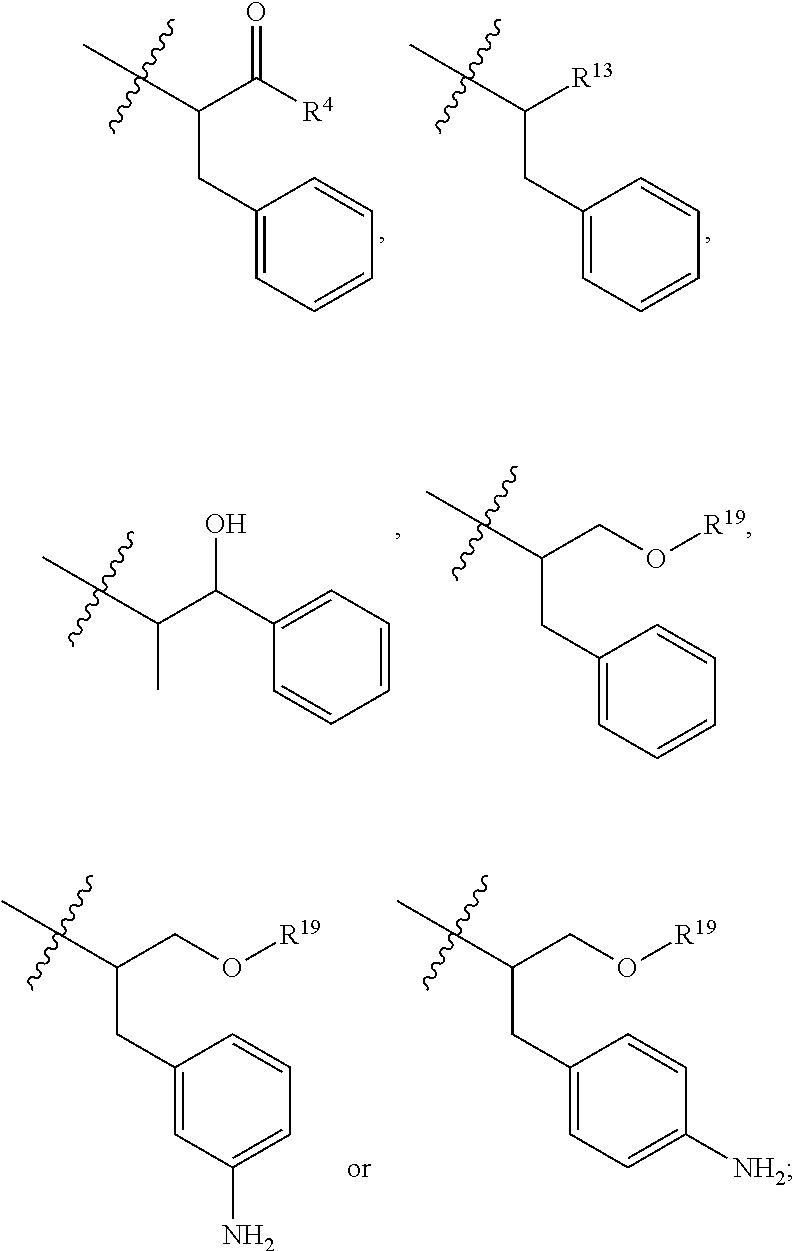
- R4 is —OH, C1-C6alkoxy, —N(R14)2, —R16, —NR12(CH2)mN(R14)2, or —NR12(CH2)mR16, —NHS(O)2R11 or

- R5 is C1-C6alkyl, —C(═O)R11, —(CH2)mOH, —C(═O)(CH2)mOH, —C(═O)((CH2)mO)nR12, —((CH2)mO)nR12, or C1-C6alkyl which is optionally substituted with —CN, —C(═O)NH2 or 1 to 5 hydroxyl,
- R6 is halo, oxo, OH, C1-C6alkyl, —N(R14)2, —R16 and —NR12C(═O)R11;
- R11 is C1-C6alkyl or C1-C6alkyl which is optionally substituted with 1 to 5 hydroxyl; each R12 is independently selected from H and C1-C6alkyl;
- R13 is tetrazolyl, imidazolyl substituted with phenyl, oxadiazolyl substituted with phenyl, pyrazolyl, pyrimidinyl,

or —CH2S(═O)2NH2;
- each R14 is independently selected from H and C1-C6alkyl;
- R16 is an N-linked 4-8 membered heterocycloalkyl containing 1-2 heteroatoms independently selected from N and O;
- R19 is H or C1-C6alkyl;
- each m is independently selected from 1, 2, 3, 4, 5, 6, 7, 8, 9 and 10,
- and
- each n is independently selected from 1, 2, 3, 4, 5, 6, 7, 8, 9, 10, 11, 12, 13, 14, 15, 16, 17 and 18.

- wherein:
- Ab represents an antigen binding moiety;
- L is selected from -L1L2L3L4L5L6-, -L6L5L4L3L2L1-, -L1L2L3L4L5-, -L5L4L3L2L1-, -L1L2L3L4-, -L4L3L2L1-, -L1L2L3-, -L3L2L1-, -L1L2-, -L2L1- and -L1, wherein -L1, L2, L3, L4, L5, and L6 are as defined herein;
- y is an integer from 1 to 16;
- R101 is a 6 membered heterocycloalkyl divalent radical containing 1-2 N heteroatoms and a C1-C2alkylene bridge, wherein the 6 membered heterocycloalkyl divalent radical is C-linked to the

group and is N-linked to L1 or is C-linked to L1, and the 6 membered heterocycloalkyl divalent radical is unsubstituted or substituted with 1 to 3 substituents independently selected from R5 and R6;
- or R101 is a 5-8 membered fused bicyclic heterocycloalkyl divalent radical containing 1-2 N heteroatoms, wherein the 5-8 membered fused bicyclic heterocycloalkyl divalent radical is C-linked to the

group and is N-linked to L1 or is C-linked to L1, and the 5-8 membered fused bicyclic heterocycloalkyl divalent radical is unsubstituted or substituted with 1 to 3 substituents independently selected from R5 and R6;
-
- R2 is —C1-C6alkyl;
- R3 is

- R4 is —OH, C1-C6alkoxy, —N(R14)2, —R16, —NR12(CH2)mN(R14)2, or —NR12(CH2)mR16, —
- NHS(O)2R11 or

- R5 is C1-C6alkyl, C1-C6alkyl which is optionally substituted with 1 to 5 hydroxyl, —C(═O)R11, —(CH2)mOH, —C(═O)(CH2)mOH, —C(═O)((CH2)mO)nR12, or —((CH2)mO)nR12;
- R6 is halo, oxo, OH, C1-C6alkyl, —N(R14)2, —R16 and —NR12C(═O)R11;
- R11 is C1-C6alkyl or C1-C6alkyl which is optionally substituted with 1 to 5 hydroxyl;
- each R12 is independently selected from H and C1-C6alkyl;
- R13 is tetrazolyl,

- each R14 is independently selected from H and C1-C6alkyl;
- R16 is an N-linked 4-8 membered heterocycloalkyl containing 1-2 heteroatoms independently selected from N and 0;
- each m is independently selected from 1, 2, 3, 4, 5, 6, 7, 8, 9 and 10,
- and
- each n is independently selected from 1, 2, 3, 4, 5, 6, 7, 8, 9, 10, 11, 12, 13, 14, 15, 16, 17 and 18.


- R101 is a 6 membered heterocycloalkyl divalent radical containing 1-2 N heteroatoms and a C1-C2alkylene bridge, wherein the 6 membered heterocycloalkyl divalent radical is C-linked to the

group and is N-linked to L1, and the 6 membered heterocycloalkyl divalent radical is unsubstituted or substituted with 1 to 3 substituents independently selected from R5 and R6;
- or
- R101 is a 5-8 membered fused bicyclic heterocycloalkyl divalent radical containing 1-2 N heteroatoms, wherein the 5-8 membered fused bicyclic heterocycloalkyl divalent radical is C-linked to the

group and is N-linked to L1, and the 5-8 membered fused bicyclic heterocycloalkyl divalent radical is unsubstituted or substituted with 1 to 3 substituents independently selected from R5 and R6.
- R101 is a 6 membered heterocycloalkyl divalent radical containing 1-2 N heteroatoms and a C1-C2alkylene bridge, wherein the 6 membered heterocycloalkyl divalent radical is C-linked to the

group and is N-linked to L1, and the 6 membered heterocycloalkyl divalent radical is unsubstituted or substituted with 1 to 3 substituents independently selected from R5 and R6.
- R101 is a 6 membered heterocycloalkyl divalent radical containing 1-2 N heteroatoms and a C1-C2alkylene bridge, wherein the 6 membered heterocycloalkyl divalent radical is C-linked to the

group and is N-linked to L1 and the 6 membered heterocycloalkyl divalent radical is unsubstituted.


and R19 is H.
- R4 is —OH, C1-C6alkoxy, —N(R14)2, —R16, —NR12(CH2)mN(R14)2, —NHS(O)2R11, or —NR12(CH2)mR16;
- and
- R13 is tetrazolyl,

- R4 is —OH, C1-C6alkoxy, —N(R14)2, —R16, —NR12(CH2)mN(R14)2, or —NR12(CH2)mR16.
- R13 is tetrazolyl,


- wherein:
- Ab represents an antigen binding moiety;
- L is selected from -L1L2L3L4L5L6-, -L6L5L4L3L2L1-, -L1L2L3L4L5-, -L5L4L3L2L1-, -L1L2L3L4-, -L4L3L2L1-, -L1L2L3-, -L3L2L1-, -L1L2-, -L2L1- and -L1, wherein -L1, L2, L3, L4, L5, and L6 are as defined herein;
- y is an integer from 1 to 16;
- R1 is a 6 membered heterocycloalkyl containing 1-2 N heteroatoms and a C1-C2alkylene bridge, wherein the 6 membered heterocycloalkyl is unsubstituted or substituted with 1 to 3 substituents independently selected from R5 and R6;
- or R1 is a 5-8 membered fused bicyclic heterocycloalkyl containing 1-2 N heteroatoms, wherein the 5-8 membered fused bicyclic heterocycloalkyl is unsubstituted or substituted with 1 to 3 substituents independently selected from R5 and R6;
- R2 is —C1-C6alkyl;
- R3 is

- R5 is C1-C6alkyl, C1-C6alkyl which is optionally substituted with 1 to 5 hydroxyl, —C(═O)R11, —(CH2)mOH, —C(═O)(CH2)mOH, —C(═O)((CH2)mO)nR12, or —((CH2)mO)nR12;
- R6 is halo, oxo, OH, C1-C6alkyl, —N(R14)2, —R16 and —NR12C(═O)R11;
- R11 is C1-C6alkyl or C1-C6alkyl which is optionally substituted with 1 to 5 hydroxyl;
- each R12 is independently selected from H and C1-C6alkyl;
- each R14 is independently selected from H and C1-C6alkyl;
- R16 is an N-linked 4-8 membered heterocycloalkyl containing 1-2 heteroatoms independently selected from N and O;
- R17 is a bond, —NH—, —NHS(═O)2—,

- R18 is a bond,

or —CH2S(═O)2NH—;
- R19 is H or C1-C6alkyl;
- each m is independently selected from 1, 2, 3, 4, 5, 6, 7, 8, 9 and 10,
- and
- each n is independently selected from 1, 2, 3, 4, 5, 6, 7, 8, 9, 10, 11, 12, 13, 14, 15, 16, 17 and 18.

- wherein:
- Ab represents an antigen binding moiety;
- L is selected from -L1L2L3L4L5L6-, -L6L5L4L3L2L1-, -L1L2L3L4L5-, -L5L4L3L2L1-, -L1L2L3L4-, -L4L3L2L1-, -L1L2L3-, -L3L2L1-, -L1L2-, -L2L1- and -L1, wherein -L1, L2, L3, L4, L5, and L6 are as defined herein;
- y is an integer from 1 to 16;
- R1 is a 6 membered heterocycloalkyl containing 1-2 N heteroatoms and a C1-C2alkylene bridge, wherein the 6 membered heterocycloalkyl is unsubstituted or substituted with 1 to 3 substituents independently selected from R5 and R6;
- or R1 is a 5-8 membered fused bicyclic heterocycloalkyl containing 1-2 N heteroatoms, wherein the 5-8 membered fused bicyclic heterocycloalkyl is unsubstituted or substituted with 1 to 3 substituents independently selected from R5 and R6;
- R2 is —C1-C6alkyl;
- R3 is

- R5 is C1-C6alkyl, C1-C6alkyl which is optionally substituted with 1 to 5 hydroxyl, —C(═O)R11, —(CH2)mOH, —C(═O)(CH2)mOH, —C(═O)((CH2)mO)nR12, or —((CH2)mO)nR12;
- R6 is halo, oxo, OH, C1-C6alkyl, —N(R14)2, —R16 and —NR12C(═O)R11;
- R11 is C1-C6alkyl or C1-C6alkyl which is optionally substituted with 1 to 5 hydroxyl;
- each R12 is independently selected from H and C1-C6alkyl;
- each R14 is independently selected from H and C1-C6alkyl;
- R16 is an N-linked 4-8 membered heterocycloalkyl containing 1-2 heteroatoms independently selected from N and O;
- R17 is a bond, —NH—, —NHS(═O)2—,

- R18 is a bond,

- each m is independently selected from 1, 2, 3, 4, 5, 6, 7, 8, 9 and 10,
- and
- each n is independently selected from 1, 2, 3, 4, 5, 6, 7, 8, 9, 10, 11, 12, 13, 14, 15, 16, 17 and 18.


- R1 is a 6 membered heterocycloalkyl containing 1-2 N heteroatoms and a C1-C2alkylene bridge, wherein the 6 membered heterocycloalkyl is unsubstituted or substituted with 1 to 3 substituents independently selected from R5 and R6.
- R1 is a 6 membered heterocycloalkyl containing 1-2 N heteroatoms and a C1-C2alkylene bridge, wherein the 6 membered heterocycloalkyl is unsubstituted or substituted with 1 to 3 substituents independently selected from R5.


- L1 is selected from —(CH2)m—, —C(═O)(CH2)m—, —C(═O)X1X2C(═O)(CH2)m—, —C(═O)X1X2C(═O)(CH2)mNR12C(═O)(CH2)m—, —C(═O)X1X2C(═O) (CH2)mX3(CH2)m—, —C(═O)X1X2C(═O)((CH2)mO)n(CH2)m—, —C(═O)X1X2C(═O)((CH2)mO)n(CH2)mNR12C(O)(CH2)m—, —C(═O)X1X2C(═O)((CH2)mO)n(CH2)mNR12C(═O)(CH2)mX3(CH2)m—, —C(═O)X1X2C(═O)((CH2)mO)n(CH2)mX3(CH2)m—, —C(═O)X1X2C(═O)(CH2)mNR12C(═O)((CH2)mO)n(CH2)m—, —C(═O)X1X2C(═O)(CH2)mNR12C(═O)((CH2)mO)n(CH2)mX3(CH2)m—, —C(═O)X1X2(CH2)mX3(CH2)m—, —C(═O)X1X2((CH2)mO)n(CH2)m—, —C(═O)X1X2((CH2)mO)n(CH2)mNR12C(═O)(CH2)m—, —C(═O)X1X2((CH2)mO)n(CH2)mNR12C(═O)(CH2)mX3(CH2)m—, —C(═O)X1X2((CH2)mO)n(CH2)mX3(CH2)m—, —C(═O)X1X2(CH2)mNR12((CH2)mO)n(CH2)m—, —C(═O)X1X2C(═O)(CH2)mNR12((CH2)mO)n(CH2)mX3(CH2)m—, —(CH2)mNR12C(═O)(CH2)m—, —C(═O)((CH2)mO)n(CH2)m—, —(CH2)mS(═O)2((CH2)mO)n(CH2)m—, —C(═O)(CH2)mNR12(CH2)m—, —C(═O)NR12(CH2)m—, —C(═O)NR12(CH2)mX3(CH2)m—, —C(═O)NH(CH2)mNR12C(O)X1X2C(═O)(CH2)m—, —C(═O)(CH2)mX3((CH2)mO)n—, —C(═O)X1C(═O)NR12(CH2)mNR12C(═O)(CH2)m—, —C(═O)X1C(═O)NR2(CH2)mX3(CH2)m—, —C(═O)NR12(CH2)mNR12C(═O)(CH2)m—, —C(═O)NR12(CH2)mNR12C(═O)(CH2)mX3(CH2)m—,

—(CH2)mC(═O)NR12(CH2)mNR12C(═O)(CH2)m—, —(CH2)mC(═O)—, —(CH2)mC(═O)X2X1C(═O)—, —(CH2)mX3(CH2)mC(═O)X2X1C(═O)—, —(CH2)mC(═O)NR12(CH2)m—, —(CH2)mX3(CH2)mC(═O)NR12(CH2)m—, —(CH2)mNR12C(═O)(CH2)mX3(CH2)m—, —(CH2)m(O(CH2)m)nC(═O)—, —(CH2)m(O(CH2)m)nS(O)2(CH2)m—, —(CH2)mNR12(CH2)mC(═O)—, —(CH2)mNR12C(═O)—, —(CH2)mC(O)X2X1C(═O)NR12(CH2)mNHC(O)—, —(CH2)mC(═O)NR12(CH2)mNR12C(O)X—, —(CH2)mC(═O)NR12(CH2)mNR2C(O)—,

—((CH2)mO)n(CH2)m—, —(CH2)m(O(CH2)m)n—, —(CH2)m(O(CH2)m)nX3(CH2)m—, —(CH2)mX3((CH2)mO)n(CH2)m—, —(CH2)mX3(CH2)mC(═O)—, —C(═O)(CH2)mX3(CH2)m—, —(CH2)mX3(CH2)m(O(H2)m)nC(O)—, —C(═O)((H2)mO)n(H2)mX3(CH2)m—, —(CH2)mC(═O)NR12(CH2)mC(═O)—, —C(═O)(H2)mNR12C(═O)(CH2)m—, —C(═O)(H2)mNR12C(═O)O(CH2)m—, —(CH2)mOC(O)NR12(CH2)mC(O)—, —S(═O)2(CH2)mNR12C(═O)O(CH2)m—, —(CH2)mOC(═O)NR12(CH2)mS(═O)2—, —(CH2)mC(═O)NR12(CH2)m(O(CH2)m)nC(═O)—, —C(═O)((H2)mO)n(CH2)mNR12C(═O)(CH2)m—, —(CH2)mC(═O)NR12(CH2)mC(═O)NR12(CH2)m—, —(CH2)mNR12C(═O)(CH2)mNR12C(═O)(CH2)m—, —C(═O)NR12(CH2)mNR12C(═O)—, —(CH2)mS(CH2)m—, —NR12C(═O)(CH2)m—, —NR12C(═O)(CH2)mX3(CH2)m—, —(CH2)mX3(CH2)mC(═O)NR12—, —(CH2)mC(═O)NR12—, —(CH2)mNR12(CH2)m—, —(CH2)mX3(CH2)m—, —((CH2)mO)n(CH2)mX3(CH2)m—, —(CH2)mX3(CH2)m(O(CH2)m)n—, —NR12(CH2)m—, —NR12C(R12)2(CH2)m—, —(CH2)mC(R12)2NR12—, —(CH2)mC(═O)NR12(CH2)mNR12, —NR12(CH2)mNR12C(═O)(CH2)m—, —NR12C(R12)2(CH2)mNR12C(═O)(CH2)m—, —(CH2)mC(═O)NR12(CH2)mC(R12)2NR12—, —NR12(CH2)mX3(CH2)m—, —NR12C(R12)2(CH2)mX3(CH2)m—, —(CH2)mX3(CH2)mC(R12)2NR12—, —NR12C(R12)2(CH2)mOC(═O)NR12(CH2)m—, —(CH2)mNR12C(═O)O(CH2)mC(R12)2NR12—, —NR12C(R12)2(CH2)mOC(═O)NR12(CH2)mX3(CH2)m—, —NR12(CH2)mO)n(CH2)mX3(CH2)m—, —(CH2)mX3(CH2)m(O(CH2)m)nNR12—, —NR12(CH2)mO)n(CH2)m—, —(CH2)m(O(CH2)m)nNR12—, —(CH2)mX3 (CH2)mNR12C(═O)O(CH2)mC(R12)2NR12—, —NR12C(R12)2(CH2)mOC(═O)NR12((CH2)mO)n(CH2)m—, —(CH2)m(O(CH2)m)nNR12C(═O)O(CH2)mC(R12)2NR12—, —NR12C(R12)2(CH2)mOC(═O)NR12((CH2)mO)n(CH2)mX3(CH2)m—, —(CH2)mX3(CH2)m(O(CH2)m)nNR12C(═O)O(CH2)mC(R12)2NR12—, —(CH2)mX3(CH2)mNR12—, —NR12((CH2)mO)n(CH2)mX3(CH2)m—, —(CH2)mX3(CH2)m(O(CH2)m)nNR12—, —(CH2)mNR12—, —NR12((CH2)mO)n(CH2)m—, —NR12((CH2)mO)n(CH2)mNR12C(═O)(CH2)m—, —(CH2)mC(═O)NR12(CH2)m(O(CH2)m)nNR12—, —(CH2)m(O(CH2)m)nNR12—, —(C(R12)2)m—, —(CH2CH2O)n—, —(OCH2CH2)n—, —(CH2)mO(CH2)m—, —S(═O)2(CH2)m—, —(CH2)mS(═O)2—, —S(═O)2(CH2)mNR12C(O)(CH2)m—, —(CH2)mC(═O)NR12(CH2)mS(═O)2—, —S(═O)2(CH2)mX3(CH2)m—, —(CH2)mX3(CH2)mS(═O)2—, —(CH2)mX2X1C(═O)—, —C(═O)X1X2(CH2)m—, —(CH2)m(O(CH2)m)nC(O)X2X1C(O)—, —C(═O)X1X2C(═O)((CH2)mO)n(CH2)m—, —(CH2)m(O(CH2)m)nX2X1C(O)—, —(CH2)mX3(CH2)mX2X1C(═O)—, —C(═O)X1X2(CH2)mX3(CH2)m—, —(CH2)mX3(CH2)m(O(CH2)m)nX2X1C(═O)—, —(CH2)mX3(CH2)mC(═O)NR12(CH2)mNR12C(O)—, —(CH2)mX3(CH2)mC(═O)NR12(CH2)mC(═O)—, —C(═O)(CH2)mNR12C(═O(CH2)mX3(CH2)m—, —(CH2)mX3(CH2)mC(═O)NR12(CH2)m(O(CH2)m)nC(═O)—, —C(═O)((CH2)mO)n(CH2)mNR12C(═O)(CH2)mX3(CH2)m—, —(CH2)mNR12C(═O)X1X2C(═O)(CH2)m—, —(CH2)mC(═O)X2X1C(═O)NR12(CH2)m—, —X4X1X2C(O)(CH2)m—, —(CH2)mC(═O)X2X1X4—, —X1C(═O)(CH2)mNHC(═O) (CH2)m—, —(CH2)mC(═O)NH(CH2)mC(═O)X—, —C(═O)CHRaaNR12—, —CHRaaC(═O)—, —C(═O)NR12—, —C(═O)O—, —S—, —SCH2(C═O)NR12—, —NR12C(═O)CH2S—, —S(═O)2CH2CH2S—, —SCH2CH2S(═O)2—, —(CH2)2S(═O)2CH2CH2S—, —SCH2CH2S(═O)2CH2CH2—, —NR12C(═S)—, (CH2)mX3(O(CH2)m)nC(═O)—, —C(═O)((CH2)mO)nX3(CH2)m—, —(CH2)mNR12C(═O)((CH2)mO)n(CH2)m—, —(CH2)m(O(CH2)m)nC(═O)NR12(CH2)m—, —(CH2)mNR12C(═O)NR12(CH2)m—, —(CH2)mX3(CH2)mNR12C(O)—, —C(═O)NR12(CH2)mX3(CH2)m—, —NR12S(═O)2(CH2)mX3(CH2)m—, —(CH2)mX3(CH2)mS(O)2NR12—,


- L2, L3, L4, L5, and L6 are each independently selected from a bond, —(CH2)m—, —C(═O)(CH2)m—, —C(═O)X1X2C(═O)(CH2)m—, —C(═O)X1X2C(═O)(CH2)mNR12C(═O)(CH2)m—, —C(═O)X1X2C(═O)(CH2)mX3(CH2)m—, —C(═O)X1X2C(═O)((CH2)mO)n(CH2)m—, —C(═O)X1X2C(═O)((CH2)mO)(CH2)mNR12C(O)(CH2)m—, —C(═O)X1X2C(═O)((CH2)mO)n(CH2)mNR12C(═O)(CH2)mX3(CH2)m—, —C(═O)X1X2C(═O)((CH2)mO)n(CH2)mX3(CH2)m—, —C(═O)X1X2C(═O)(CH2)mNR12C(═O)((CH2)mO)n(CH2)m—, —C(═O)X1X2C(═O)(CH2)mNR12C(═O)((CH2)mO)n(CH2)mX3(CH2)m—, —C(═O)X1X2(CH2)mX3(CH2)m—, —C(═O)X1X2((CH2)mO)n(CH2)m—, —C(═O)X1X2((CH2)mO)n(CH2)mNR12C(═O)(CH2)m—, —C(═O)X1X2((CH2)mO)n(CH2)mNR12C(═O)(CH2)mX3(CH2)m—, —C(═O)X1X2((CH2)mO)n(CH2)mX3(CH2)m—, —C(═O)X1X2(CH2)mNR12((CH2)mO)n(CH2)m—, —C(═O)X1X2C(O)(CH2)mNR12((CH2)mO)n(CH2)mX3(CH2)m(CH2)mNR12C(═O)(CH2)m—, —C(═O)((CH2)mO)n(CH2)m—, —(CH2)mS(═O)2((CH2)mO)n(CH2)m—, —C(═O)(CH2)mNR12(CH2)m—, —C(═O)NR12(CH2)m—, —C(═O)NR12(CH2)mX3(CH2)m—, —C(═O)NH(CH2)mNR12C(═O)X1X2C(═O)(CH2)m—, —C(═O)(CH2)mX3((CH2)mO)n—, —C(═O)X1C(═O)NR12(CH2)mNR12C(═O)(CH2)m—, —C(═O)X1C(═O)NR2(CH2)mX3(CH2)m—, —C(═O)NR12(CH2)mNR12C(═O)(CH2)m—, —C(═O)NR12(CH)mNR12C(═O)(CH2)mX3(CH2)m—,

—(CH2)mC(═O)NR12(CH2)mNR12C(═O)(CH2)m—, —(CH2)mC(═O)—, —(CH2)mC(═O)X2X1C(═O)—, —(CH2)mX3(CH2)mC(═O)X2X1C(═O)—, —(CH2)mC(═O)NR12(CH2)m—, —(CH2)mX3(CH2)mC(═O)NR12(CH2)m—, —(CH2)mNR12C(═O)(CH2)mX3(CH2)m—, —(CH2)m(O(CH2)m)nC(═O)—, —(CH2)m(O(CH2)m)nS(O)2(CH2)m—, —(CH2)mNR12(CH2)mC(═O)—, —(CH2)mNR12C(═O)—, —(CH2)mC(O)X2X1C(═O)NR12(CH2)mNHC(O)—, —(CH2)mC(═O)NR2(CH2)mNR2C(═O)X—, —(CH2)mC(═O)NR12(CH2)mNR12C(O)—,

—((CH2)mO)n(CH2)m—, —(CH2)m(O(CH2)m)n—, —(CH2)m(O(CH2)m)nX3(CH2)m—, —(CH2)mX3((CH2)mO)n(CH2)m—, —(CH2)mX3(CH2)mC(═O)—, —C(═O)(CH2)mX3(CH2)m—, —(CH2)mX3(CH2)m(O(H2)m)nC(O)—, —C(═O)((H2)mO)n(H2)mX3(CH2)m—, —(CH2)mC(═O)NR12(CH2)mC(═O)—, —C(═O)(H2)mNR12C(═O)(CH2)m—, —C(═O)(H2)mNR12C(═O)O(CH2)m—, —(CH2)mOC(O)NR12(CH2)mC(O)—, —S(═O)2(CH2)mNR12C(═O)O(CH2)m—, —(CH2)mOC(═O)NR12(CH2)mS(═O))—, —(CH2)mC(═O)NR12(CH2)m(O(CH2)m)nC(═O)—, —C(═O)((H2)mO)n(CH2)mNR12C(═O)(CH2)m—, —(CH2)mC(═O)NR12(CH2)mC(═O)NR12(CH2)m—, —(CH2)mNR12C(═O)(CH2)mNR12C(═O)(CH2)m—, —C(═O)NR12(CH2)mNR12C(═O), (CH2)mS(CH2)m—, —NR12C(═O)(CH2)m—, —NR12C(═O)(CH2)mX3(CH2)m—, —(CH2)mX3(CH2)mC(═O)NR12—, —(CH2)mC(═O)NR12—, —(CH2)mNR12(CH2)m—, —(CH2)mX3(CH2)m—, —((CH2)mO)n(CH2)mX3(CH2)m—, —(CH2)mX3(CH2)m(O(CH2)m)n—, —NR12(CH2)m—, —NR12C(R12)2(CH2)m—, —(CH2)mC(R12)2NR12—, —(CH2)mC(═O)NR12(CH2)mNR12—, —NR12(CH2)mNR12C(═O)(CH2)m—, —NR12C(R12)2(CH2)mNR12C(═O)(CH2)m—, —(CH2)mC(═O)NR12(CH2)mC(R12)2NR12—, —NR12(CH2)mX3(CH2)m—, —NR12C(R12)2(CH2)mX3(CH2)m—, —(CH2)mX3(CH2)mC(R12)2NR12—, —NR12C(R12)2(CH2)mOC(═O)NR12(CH2)m—, —(CH2)mNR12C(═O)O(CH2)mC(R12)2NR12—, —NR12C(R12)2(CH2)mOC(═O)NR12(CH2)mX3(CH2)m—, —NR12(CH2)mO)n(CH2)mX3(CH2)m—, —(CH2)mX3(CH2)m(O(CH2)m)nNR12—, —NR12(CH2)mO)n(CH2)m—, —(CH2)m(O(CH2)m)nNR12—, —(CH2)mX3 (CH2)mNR12C(═O)O(CH2)mC(R12)2NR12—, —NR12C(R12)2(CH2)mOC(═O)NR12((CH2)mO)n(CH2)m—, —(CH2)m(O(CH2)m)nNR12C(═O)O(CH2)mC(R12)2NR12—, —NR12C(R12)2(CH2)mOC(═O)NR12((CH2)mO)n(CH2)mX3(CH2)m—, —(CH2)mX3(CH2)m(O(CH2)m)nNR12C(═O)O(CH2)mC(R12)2NR12—, —(CH2)mX3(CH2)mNR12—, —NR12((CH2)mO)n(CH2)mX3(CH2)m—, —(CH2)mX3(CH2)m(O(CH2)m)nNR12—, —(CH2)mNR12—, —NR12((CH2)mO)n(CH2)m—, —NR12((CH2)mO)n(CH2)mNR12C(═O)(CH2)m—, —(CH2)mC(═O)NR12(CH2)m(O(CH2)m)nNR12—, —(CH2)m(O(CH2)m)nNR12—, —(C(R12)2)m—, —(CH2CH2O)n—, —(OCH2CH2)n—, —(CH2)mO(CH2)m—, —S(═O)2(CH2)m—, —(CH2)mS(═O)2—, —S(═O)2(CH2)mNR12C(O)(CH2)m—, —(CH2)mC(═O)NR12(CH2)mS(═O)2—, —S(═O)2(CH2)mX3(CH2)m—, —(CH2)mX3(CH2)mS(═O)2—, —(CH2)mX2X1C(═O)—, —C(═O)X1X2(CH2)m—, —(CH2)m(O(CH2)m)nC(O)X2X1C(O)—, —C(═O)X1X2C(═O)((CH2)mO)n(CH2)m—, —(CH2)m(O(CH2)m)nX2X1C(═O)—, —(CH2)mX3(CH2)mX2X1C(═O)—, —C(═O)X1X2(CH2)mX3(CH2)m—, —(CH2)mX3(CH2)m(O(CH2)m)nX2X1C(═O)—, —(CH2)mX3(CH2)mC(═O)NR12(CH2)mNR12C(O)—, —(CH2)mX3(CH2)mC(═O)NR12(CH2)mC(═O)—, —C(═O)(CH2)mNR12C(═O(CH2)mX3(CH2)m—, —(CH2)mX3(CH2)mC(═O)NR12(CH2)m(O(CH2)m)nC(═O)—, —C(═O)((CH2)mO)n(CH2)mNR12C(═O)(CH2)mX3(CH2)m—, —(CH2)mNR12C(O)X1X2C(═O)(CH2)m—, —(CH2)mC(O)X2X1C(═O)NR12(CH2)m—, —X4X1X2C(═O)(CH2)m—, —(CH2)mC(═O)X2X1X4—, —X1C(═O)(CH2)mNHC(═O)(CH2)m—, —(CH2)mC(═O)NH(CH2)mC(═O)X—, —C(═O)CHRaaNR12—, —CHRaaC(═O)—, —C(═O)NR12—, —C(═O)O—, —S—, —SCH2(C═O)NR12—, —NR12C(═O)CH2S—, —S(═O)2CH2CH2S—, —SCH2CH2S(═O)2—, —(CH2)2S(═O)2CH2CH2S—, —SCH2CH2S(═O)2CH2CH2—, —NR12C(═S)—, (CH2)mX3(O(CH2)m)nC(═O)—, —C(═O)((CH2)mO)nX3(CH2)m—, —(CH2)mNR12C(═O)((CH2)mO)n(CH2)m—, —(CH2)m(O(CH2)m)nC(═O)NR12(CH2)m—, —(CH2)mNR12C(═O)NR12(CH2)m—, —(CH2)mX3(CH2)mNR12(O), —C(═O)NR12(CH2)mX3(CH2)m—, —NR12S(═O)2(CH2)mX3(CH2)m—, —(CH2)mX3(CH2)mS(═O)2NR12—,


-
- wherein:
- R20 is H or Me, and R30 is H, —CH3 or phenyl;
- R21 is


-
- each R25 is independently selected from H or C1-4 alkyl;
- Raa is a side chain of an amino acid selected from glycine, alanine, tryptophan, tyrosine, phenylalanine, leucine, isoleucine, valine, asparagine, glutamic acid, glutamine, aspatic acid, histidine, arginine, lysine, cysteine, methionine, serine, threonine, phenylglycine and t-butylglycine;
- R32 is independently selected from H, C1-4 alkyl, phenyl, pyrimidine and pyridine;
- R33 is independently selected from

-
- and
- R34 is independently selected from H, C1-4 alkyl, and C1-6 haloalkyl;
- X1 is self immolative spacer selected from

- X2 is dipeptide selected from

- X3 is

and X4 is

- L1 is selected from —(CH2)m—, —C(═O)(CH2)m—, —C(═O)X1X2C(═O)(CH2)m—, —C(═O)X1X2C(═O)(CH2)mNR12C(═O)(CH2)m—, —C(═O)X1X2C(═O) (CH2)mX3(CH2)m—, —C(═O)X1X2C(═O)((CH2)mO)n(CH2)m—, —C(═O)X1X2C(═O)((CH2)mO)n(CH2)mNR12C(═O)(CH2)m—, —C(═O)X1X2C(═O)((CH2)mO)n(CH2)mNR12C(═O)(CH2)mX3(CH2)m—, —C(═O)X1X2C(═O)((CH2)mO)n(CH2)mX3(CH2)m—, —C(═O)X1X2C(═O)(CH2)mNR12C(═O)((CH2)mO)n(CH2)m—, —C(═O)X1X2C(═O)(CH2)mNR12C(═O)((CH2)mO)n(CH2)mX3(CH2)m—, —C(═O)X1X2(CH2)mX3(CH2)m—, —C(═O)X1X2((CH2)mO)n(CH2)m—, —C(═O)X1X2((CH2)mO)n(CH2)mNR12C(═O)(CH2)m—, —C(═O)X1X2((CH2)mO)n(CH2)mNR12C(═O)(CH2)mX3(CH2)m—, —C(═O)X1X2((CH2)mO)n(CH2)mX3(CH2)m—, —C(═O)X1X2(CH2)mNR12((CH2)mO)n(CH2)m—, —C(═O)X1X2C(═O)(CH2)mNR12((CH2)mO)n(CH2)mX3(CH2)m—, —(CH2)mNR12C(═O)(CH2)m—, —C(═O)((CH2)mO)n(CH2)m—, —(CH2)mS(═O)2((CH2)mO)n(CH2)m—, —C(═O)(CH2)mNR12(CH2)m—, —C(═O)NR12(CH2)m—, —C(═O)NR12(CH2)mX3(CH2)m—, —C(═O)NH(CH2)mNR12C(═O)X1X2C(═O)(CH2)m—, —C(═O)X1C(═O)NR12(CH2)mNR12C(═O)(CH2)m—, —C(═O)X1C(═O)NR12(CH2)mX3(CH2)m—, —C(═O)NR12(CH2)mNR12C(═O)(CH2)m—, —C(═O)NR12(CH2)mNR12C(═O)(CH2)mX3(CH2)m—,

—(CH2)mC(═O)NR12(CH2)mNR12C(═O)(CH2)m—, —(CH2)mC(═O)—, —(CH2)mC(═O)X2X1C(═O)—, —(CH2)mX3(CH2)mC(═O)X2X1C(═O)—, —(CH2)mC(═O)NR12(CH2)m—, —(CH2)mX3(CH2)mC(═O)NR12(CH2)m—, —(CH2)mNR12C(═O)(H2)mX3(CH2)m—, —(CH2)m(O(CH2)m)nC(═O)—, —(CH2)m(O(CH2)m)nS(O)2(CH2)m—, —(CH2)mNR12(CH2)mC(═O)—, —(CH2)mNR12(O), —(CH2)mC(O)X2X1C(═O)NR12(CH2)mNHC(O)—, —(CH2)mC(═O)NR2(CH2)mNR2C(═O)X—, —(CH2)mC(═O)NR12(H2)mNR12C(O)—,

—((CH2)mO)n(CH2)m—, —(CH2)m(O(CH2)m)n—, —(CH2)m(O(CH2)m)nX3(CH2)m—, —(CH2)mX3((CH2)mO)n(CH2)m—, —(CH2)mX3(CH2)mC(═O)—, —C(═O)(CH2)mX3(CH2)m—, —(CH2)mX3(CH2)m(O(CH2)m)nC(O)—, —C(═O)((H2)mO)n(H2)mX3(CH2)m—, —(CH2)mC(═O)NR12(CH2)mC(═O)—, —C(═O)(CH2)mNR12C(O)(CH2)m—, —(CH2)mC(═O)NR12(CH2)m(O(CH2)m)nC(═O)—, —C(═O)((H2)mO)n(CH2)mNR12C(═O)(CH2)m—, —(CH2)mC(═O)NR12(CH2)mC(═O)NR12(CH2)m—, —(CH2)mNR12C(═O)(CH2)mNR12C(═O)(CH2)m—, —C(═O)NR12(CH2)mNR12C(═O), (CH2)mS(CH2)m—, —NR12C(═O)(CH2)m—, —NR12C(═O)(CH2)mX3(CH2)m—, —(CH2)mX3(CH2)mC(═O)NR12—, —(CH2)mC(═O)NR12—, —(CH2)mNR12(CH2)m—, —(CH2)mX3(CH2)m—, —((CH2)mO)n(CH2)mX3(CH2)m—, —(CH2)mX3(CH2)m(O(CH2)m)n—, —NR12(CH2)m—, —NR12C(R12)2(CH2)m—, —(CH2)mC(R12)2NR12—, —(CH2)mC(═O)NR12(CH2)mNR12, —NR12(CH2)mNR12C(═O)(CH2)m—, —NR12C(R12)2(CH2)mNR12C(═O)(CH2)m—, —(CH2)mC(═O)NR12(H2)mC(R12)2NR12—, —NR12(CH2)mX3(CH2)m—, —NR12C(R12)2(CH2)mX3(CH2)m—, —(CH2)mX3(CH2)mC(R12)2NR12—, —NR12C(R12)2(CH2)mOC(═O)NR12(CH2)m—, —(CH2)mNR12C(═O)O(H2)mC(R12)2NR12—, —NR12C(R12)2(CH2)mOC(═O)NR12(CH2)mX3(CH2)m—, —(CH2)mX3 (CH2)mNR12C(═O)O(H2)mC(R12)2NR12—, —NR12C(R12)2(CH2)mOC(═O)NR12((CH2)mO)n(CH2)m—, —(CH2)m(O(CH2)m)nNR12C(═O)O(H2)mC(R12)2NR12—, —NR12C(R12)2(CH2)mOC(═O)NR12((CH2)mO)n(CH2)mX3(CH2)m—, —(CH2)mX3(CH2)m(O(CH2)m)nNR12C(═O)O(H2)mC(R12)2NR12—, —(CH2)mX3(CH2)mNR12—, —NR12((CH2)mO)n(CH2)mX3(CH2)m—, —(CH2)mX3(CH2)m(O(CH2)m)nNR12—, —(CH2)mNR12—, —NR12((CH2)mO)n(CH2)m—, —NR12((CH2)mO)n(CH2)mNR12C(═O)(CH2)m—, —(CH2)mC(═O)NR12(CH2)m(O(CH2)m)nNR12—, —(CH2)m(O(CH2)m)nNR12—, —(C(R12)2)m—, —(CH2CH2O)n—, —(OCH2CH2)n—, —(CH2)mO(CH2)m—, —S(═O)2(CH2)m—, —(CH2)mS(═O)2—, —S(═O)2(CH2)mNR12C(O)(CH2)m—, —(CH2)mC(═O)NR12(CH2)mS(═O)2—, —S(═O)2(CH2)mX3(CH2)m—, —(CH2)mX3(CH2)mS(═O)2—, —(CH2)mX2X1C(═O)—, —C(═O)X1X2(CH2)m—, —(CH2)m(O(CH2)m)nC(═O)X2X1C(═O)—, —C(═O)X1X2C(═O)((CH2)mO)n(CH2)m—, —(CH2)m(O(CH2)m)nX2X1C(O)—, —(CH2)mX3(CH2)mX2X1C(═O)—, —C(═O)X1X2(CH2)mX3(CH2)m—, —(CH2)mX3(CH2)m(O(CH2)m)nX2X1C(═O)—, —(CH2)mX3(CH2)mC(═O)NR12(CH2)mNR12C(O)—, —(CH2)mX3(CH2)mC(═O)NR12(CH2)mC(═O)—, —C(═O)(CH2)mNR12C(═O(CH2)mX3(CH2)m—, —(CH2)mX3(CH2)mC(═O)NR12(CH2)m(O(CH2)m)nC(═O)—, —C(═O)((CH2)mO)n(CH2)mNR12C(═O)(CH2)mX3(CH2)m—, —(CH2)mNR12C(═O)X1X2C(═O)(CH2)m—, —(CH2)mC(═O)X2X1C(═O)NR12(CH2)m—, —X4X1X2C(═O)(CH2)m—, —(CH2)mC(═O)X2X1X4—, —X1C(═O)(CH2)mNHC(═O)(CH2)m—, —(CH2)mC(═O)NH(CH2)mC(═O)X1—, —C(═O)CHRaaNR2—, —CHRaaC(═O)—, —C(═O)NR12—, —C(═O)O—, —S—, —SCH2(C═O)NR12—, —NR12C(═O)CH2S—, —S(═O)2CH2CH2S—, —SCH2CH2S(═O)2—, —(CH2)2S(═O)2CH2CH2S—, —SCH2CH2S(═O)2CH2CH2—, —NR12C(═S)—, (CH2)mX3(O(CH2)m)nC(═O)—, —C(═O)((CH2)mO)nX3(CH2)m—, —(CH2)mNR12C(═O)((CH2)mO)n(CH2)m—, —(CH2)m(O(CH2)m)nC(═O)NR12(CH2)m—, —(CH2)mNR12C(═O)NR12(CH2)m—, —(CH2)mX3(CH2)mNR12C(═O)—, —C(═O)NR12(CH2)mX3(CH2)m—, —NR12S(═O)2(CH2)mX3(CH2)m—, —(CH2)mX3(CH2)mS(═O)2NR12—,


- L2, L3, L4, L5, and L6 are each independently selected from a bond, —(CH2)m—, —C(═O)(CH2)m—, —C(═O)X1X2C(═O)(CH2)m—, —C(═O)X1X2C(═O)(CH2)mNR12C(═O)(CH2)m—, —C(═O)X1X2C(═O)(CH2)mX3(CH2)m—, —C(═O)X1X2C(═O)((CH2)mO)n(CH2)m—, —C(═O)X1X2C(═O)((CH2)mO)n(CH2)mNR12C(O)(CH2)m—, —C(═O)X1X2C(═O)((CH2)mO)n(CH2)mNR12C(═O)(CH2)mX3(CH2)m—, —C(═O)X1X2C(═O)((CH2)mO)n(CH2)mX3(CH2)m—, —C(═O)X1X2C(═O)(CH2)mNR12C(═O)((CH2)mO)n(CH2)m—, —C(═O)X1X2C(═O)(CH2)mNR12C(═O)((CH2)mO)n(CH2)mX3(CH2)m—, —C(═O)X1X2(CH2)mX3(CH2)m—, —C(═O)X1X2((CH2)mO)n(CH2)m—, —C(═O)X1X2((CH2)mO)n(CH2)mNR12C(═O)(CH2)m—, —C(═O)X1X2((CH2)mO)n(CH2)mNR12C(═O)(CH2)mX3(CH2)m—, —C(═O)X1X2((CH2)mO)n(CH2)mX3(CH2)m—, —C(═O)X1X2(CH2)mNR12((CH2)mO)n(CH2)m—, —C(═O)X1X2C(O)(CH2)mNR12((CH2)mO)n(CH2)mX3(CH2)m—, (CH2)mNR12C(═O)(CH2)m—, —C(═O)((CH2)mO)n(CH2)m—, —(CH2)mS(═O)2((CH2)mO)n(CH2)m—, —C(═O)(CH2)mNR12(CH2)m—, —C(═O)NR12(CH2)m—, —C(═O)NR12(CH2)mX3(CH2)m—, —C(═O)NH(CH2)mNR12C(═O)X1X2C(═O)(CH2)m—, —C(═O)X1C(═O)NR12(CH2)mNR12C(═O)(CH2)m—, —C(═O)X1C(═O)NR12(CH2)mX3(CH2)m—, —C(═O)NR12(CH2)mNR12C(═O)(CH2)m—, —C(═O)NR12(CH2)mNR12C(═O)(CH2)mX3(CH2)m—,

—(CH2)mC(═O)NR12(CH2)mNR12C(═O)(CH2)m—, —(CH2)mC(═O)—, —(CH2)mC(═O)X2X1C(═O)—, —(CH2)mX3(CH2)mC(═O)X2X1C(═O)—, —(CH2)mC(═O)NR12(CH2)m—, —(CH2)mX3(CH2)mC(═O)NR12(CH2)m—, —(CH2)mNR12C(═O)(CH2)mX3(CH2)m—, —(CH2)m(O(CH2)m)nC(═O)—, —(CH2)m(O(CH2)m)nS(O)2(CH2)m—, —(CH2)mNR12(CH2)mC(═O)—, —(CH2)mNR12C(═O)—, —(CH2)mC(O)X2X1C(═O)NR12(CH2)mNHC(O)—, —(CH2)mC(═O)NR2(CH2)mNR2C(═O)X—, —(CH2)mC(═O)NR12(CH2)mNR12C(O)—,

—((CH2)mO)n(CH2)m—, —(CH2)m(O(CH2)m)n—, —(CH2)m(O(CH2)m)nX3(CH2)m—, —(CH2)mX3((CH2)mO)n(CH2)m—, —(CH2)mX3(CH2)mC(═O)—, —C(═O)(CH2)mX3(CH2)m—, —(CH2)mX3(CH2)m(O(CH2)m)nC(O)—, —C(═O)((H2)mO)n(H2)mX3(CH2)m—, —(CH2)mC(═O)NR12(CH2)mC(═O)—, —C(═O)(CH2)mNR12C(O)(CH2)m—, —(CH2)mC(═O)NR12(CH2)m(O(CH2)m)nC(═O)—, —C(═O)((H2)mO)n(CH2)mNR12C(═O)(CH2)m—, —(CH2)mC(═O)NR12(CH2)mC(═O)NR12(CH2)m—, —(CH2)mNR12C(═O)(CH2)mNR12C(═O)(CH2)m—, —C(═O)NR12(CH2)mNR12C(═O), (CH2)mS(CH2)m—, —NR12C(═O)(CH2)m—, —NR12C(═O)(CH2)mX3(CH2)m—, —(CH2)mX3(CH2)mC(═O)NR12—, —(CH2)mC(═O)NR12—, —(CH2)mNR12(CH2)m—, —(CH2)mX3(CH2)m—, —((CH2)mO)n(CH2)mX3(CH2)m—, —(CH2)mX3(CH2)m(O(CH2)m)n—, —NR12(CH2)m—, —NR12C(R12)2(CH2)m—, —(CH2)mC(R12)2NR12—, —(CH2)mC(═O)NR12(CH2)mNR12—, —NR12(CH2)mNR12C(O)(CH2)m—, —NR12C(R12)2(CH2)mNR12C(═O)(CH2)m—, —(CH2)mC(═O)NR12(CH2)mC(R12)2NR12—, —NR12(CH2)mX3(CH2)m—, —NR12C(R12)2(CH2)mX3(CH2)m—, —(CH2)mX3(CH2)mC(R12)2NR12—, —NR12C(R12)2(CH2)mOC(═O)NR12(CH2)m—, —(CH2)mNR12C(═O)O(H2)mC(R12)2NR12, —NR12C(R12)2(CH2)mOC(═O)NR12(CH2)mX3(CH2)m—, —(CH2)mX3 (CH2)mNR12C(═O)O(H2)mC(R12)2NR12—, —NR12C(R12)2(CH2)mOC(═O)NR12((CH2)mO)n(CH2)m—, —(CH2)m(O(CH2)m)nNR12C(═O)O(H2)mC(R12)2NR12—, —NR12C(R12)2(CH2)mOC(═O)NR12((CH2)mO)n(CH2)mX3(CH2)m—, —(CH2)mX3(CH2)m(O(CH2)m)nNR12C(═O)O(H2)mC(R12)2NR12—, —(CH2)mX3(CH2)mNR12—, —NR12((CH2)mO)n(CH2)mX3(CH2)m—, —(CH2)mX3(CH2)m(O(CH2)m)nNR12—, —(CH2)mNR12—, —NR12((CH2)mO)n(CH2)m—, —NR12((CH2)mO)n(CH2)mNR12C(═O)(CH2)m—, —(CH2)mC(═O)NR12(H2)m(O(H2)m)nNR12—, —(CH2)m(O(CH2)m)nNR12—, —(C(R12)2)m—, —(CH2CH2O)n—, —(OCH2CH2)n—, —(CH2)mO(CH2)m—, —S(═O)2(CH2)m—, —(CH2)mS(O)2—, —S(═O)2(CH2)mNR12C(O)(CH2)m—, —(CH2)mC(═O)NR12(CH2)mS(═O)2—, —S(═O)2(CH2)mX3(CH2)m—, —(CH2)mX3(CH2)mS(═O)2—, —(CH2)mX2X1C(O)—, —C(═O)X1X2(CH2)m—, —(CH2)m(O(CH2)m)nC(O)X2X1C(O)—, —C(═O)X1X2C(═O)((CH2)mO)n(CH2)m—, —(CH2)m(O(CH2)m)nX2X1C(O)—, —(CH2)mX3(CH2)mX2X1C(═O)—, —C(═O)X1X2(CH2)mX3(CH2)m—, —(CH2)mX3(CH2)m(O(CH2)m)nX2X1C(═O)—, —(CH2)mX3(CH2)mC(═O)NR12(H2)mNR12C(O)—, —(CH2)mX3(CH2)mC(═O)NR12(CH2)mC(═O)—, —C(═O)(CH2)mNR12C(═O(CH2)mX3(CH2)m—, —(CH2)mX3(CH2)mC(═O)NR12(CH2)m(O(CH2)m)nC(═O)—, —C(═O)((H2)mO)n(CH2)mNR12C(═O)(H2)mX3(CH2)m—, —(CH2)mNR12C(═O)X1X2C(═O)(CH2)m—, —(CH2)mC(═O)X2X1C(═O)NR12(CH2)m—, —X4X1X2C(O)(CH2)m—, —(CH2)mC(═O)X2X1X4—, —X1C(═O)(CH2)mNHC(═O)(CH2)m—, —(CH2)mC(═O)NH(CH2)mC(═O)X—, —C(═O)CHRaaNR12—, —CHRaaC(═O)—, —C(═O)NR12—, —C(═O)O—, —S—, —SCH2(C═O)NR12—, —NR12C(═O)CH2S—, —S(═O)2CH2CH2S—, —SCH2CH2S(═O)2—, —(CH2)2S(═O)2CH2CH2S—, —SCH2CH2S(═O)2CH2CH2—, —NR12C(═S)—, (CH2)mX3(O(CH2)m)nC(═O)—, —C(═O)((CH2)mO)nX3(CH2)m—, —(CH2)mNR12C(═O)((CH2)mO)n(CH2)m—, —(CH2)m(O(CH2)m)nC(═O)NR12(CH2)m—, —(CH2)mNR12C(═O)NR12(CH2)m—, —(CH2)mX3(CH2)mNR12C(O)—, —C(═O)NR12(CH2)mX3(CH2)m—, —NR12S(═O)2(CH2)mX3(CH2)m—, —(CH2)mX3(CH2)mS(═O)2NR12—,


-
- wherein:
- R20 is H or Me, and R30 is H, —CH3 or phenyl;
- R21 is

-
- each R25 is independently selected from H or C1-4 alkyl;
- Raa is a side chain of an amino acid selected from glycine, alanine, tryptophan, tyrosine, phenylalanine, leucine, isoleucine, valine, asparagine, glutamic acid, glutamine, aspatic acid, histidine, arginine, lysine, cysteine, methionine, serine, threonine, phenylglycine and t-butylglycine;
- R32 is independently selected from H, C1-4 alkyl, phenyl, pyrimidine and pyridine;
- R33 is independently selected from

-
- and
- R34 is independently selected from H, C1-4 alkyl, and C1-6 haloalkyl
- X1 is self immolative spacer selected from

- X2 is dipeptide selected from

- X3 is

and X4 is

- L, is selected from —(CH2)m—, —C(═O)(CH2)m—, —C(═O)X1X2C(═O)(CH2)m—, —C(═O)X1X2C(═O)(CH2)mNHC(═O)(CH2)m—, —C(═O)X1X2C(═O)(CH2)mX3(CH2)m—, —C(═O)X1X2C(═O)((CH2)mO)n(CH2)m—, —C(═O)X1X2C(═O)((CH2)mO)n(CH2)mNHC(═O)(CH2)m—, —C(═O)X1X2C(═O)((CH2)mO)n(CH2)mNHC(═O)(CH2)mX3(CH2)m—, —C(═O)X1X2C(═O) ((CH2)mO)n(CH2)mX3(CH2)m—, —C(═O)X1X2C(═O)(CH2)mNHC(═O)((CH2)mO)n(CH2)m—, —C(═O)X1X2C(═O)(CH2)mNHC(═O)((CH2)mO)n(CH2)mX3(CH2)m—, —C(═O)X1X2(CH2)mX3(CH2)m—, —C(═O)X1X2((CH2)mO)n(CH2)m—, —C(═O)X1X2((CH2)mO)n(CH2)mNHC(═O)(CH2)m—, —C(═O)X1X2((CH2)mO)n(CH2)mNHC(═O)(CH2)mX3(CH2)m—, —C(═O)X1X2((CH2)mO)n(CH2)mX3(CH2)m—, —C(═O)X1X2(CH2)mNH((CH2)mO)n(CH2)m—, —C(═O)X1X2C(═O)(CH2)mNH((CH2)mO)n(CH2)mX3(CH2)m—, —(CH2)mNHC(═O)(CH2)m—, —C(═O)((CH2)mO)n(CH2)m—, —(CH2)mS(═O)2((CH2)mO)n(CH2)m—, —C(═O)(CH2)mNH(CH2)m—, —C(═O)NH(CH2)m—, —C(═O)NH(CH2)mX3(CH2)m—, —C(═O)NH(CH2)mNHC(═O)X1X2C(═O)(CH2)m—, —C(═O)X1C(═O)NH(CH2)mNHC(═O)(CH2)m—, —C(═O)X1C(═O)NH(CH2)mX3(CH2)m—, —C(═O)NH(CH2)mNHC(═O)(CH2)m—, —C(═O)NH(CH2)mNHC(═O)(CH2)mX3(CH2)m—,

—(CH2)mC(O)NH(CH2)mNHC(═O)(CH2)m—, —(CH2)mC(O)—, —(CH2)mC(═O)X2X1C(═O)—, —(CH2)mX3(CH2)mC(═O)X2X1C(═O)—, —(CH2)mC(O)N H(CH2)m—, —(CH2)mX3(CH2)mC(═O)NH(CH2)m—, —(CH2)mNHC(═O)(CH2)mX3(CH2)m—, —(CH2)m(O(CH2)m)nC(O)—, —(CH2)m(O(CH2)m)nS(O)2(CH2)m—, —(CH2)mNH(CH2)mC(═O)—, —(CH2)mNHC(O)—, —(CH2)mC(O)X2X1C(═O)NH(CH2)mNHC(O)—, —(CH2)mC(═O)NH(CH2)mNHC(═O)X1—, —(CH2)mC(═O)NH(CH2)mNHC(═O)—,

—((CH2)mO)n(CH2)m—, —(CH2)m(O(CH2)m)n—, —(CH2)m(O(CH2)m)nX3(CH2)m—, —(CH2)mX3((CH2)mO)n(CH2)m—, —(CH2)mX3(CH2)mC(═O)—, —C(═O)(CH2)mX3(CH2)m—, —(CH2)mX3(CH2)m(O(CH2)m)nC(O)—, —C(═O)((CH2)mO)n(CH2)mX3(CH2)m—, —(CH2)mC(O)NH(CH2)mC(O)—, —C(═O)(CH2)mNHC(═O)(CH2)m—, —(CH2)mC(═O)NH(CH2)m(O(CH2)m)nC(═O)—, —C(═O)((CH2)mO)n(CH2)mNHC(═O)(CH2)m—, —(CH2)mC(O)NH(CH2)mC(═O)NH(CH2)m—, —(CH2)mNHC(O)(CH2)mNHC(═O)(CH2)m—, —C(═O)NH(CH2)mNHC(═O)—, —(CH2)mS(CH2)m—, —NHC(═O)(CH2)m—, —NHC(═O)(CH2)mX3(CH2)m_, —(CH2)mX3(CH2)mC(O)NH—, —(CH2)mC(O)NH—, —(CH2)m N H(CH2)m—, —(CH2)mX3(CH2)m—, —((CH2)mO)n(CH2)mX3(CH2)m—, —(CH2)mX3(CH2)m(O(CH2)m)n—, —NH(CH2)m—, —NHC(R12)2(CH2)m—, —(CH2)mC(R12)2NH—, —(CH2)mC(═O)NH(CH2)mNH—, —NH(CH2)mNHC(═O)(CH2)m—, —NHC(R12)2(CH2)mNHC(O)(CH2)m—, —(CH2)mC(═O)NH(CH2)mC(R12)2NH—, —NH(CH2)mX3(CH2)m—, —NHC(R12)2(CH2)mX3(CH2)m—, —(CH2)mX3(CH2)mC(R12)2NH—, —NHC(R12)2(CH2)mOC(O)NH(CH2)m—, —(CH2)mNHC(═O)O(CH2)mC(R12)2NH—, —NHC(R12)2(CH2)mOC(═O)NH(CH2)mX3(CH2)m—, —(CH2)mX3(CH2)mNHC(═O)O(CH2)mC(R12)2NH—, —NHC(R12)2(CH2)mOC(═O)NH((CH2)mO)n(CH2)m—, —(CH2)m(O(CH2)m)nNHC(═O)O(CH2)mC(R12)2NH—, —NHC(R12)2(CH2)mOC(═O)NH((CH2)mO)n(CH2)mX3(CH2)m—, —(CH2)mX3(CH2)m(O(CH2)m)nNHC(═O)O(CH2)mC(R12)2NH—, —(CH2)mX3(CH2)mNH—, —NH((CH2)mO)n(CH2)mX3(CH2)m—, —(CH2)mX3(CH2)m(O(CH2)m)nNH—, —(CH2)mNH—, —NH((CH2)mO)n(CH2)m—, —NH((CH2)mO)n(CH2)mNHC(═O)(CH2)m—, —(CH2)mC(═O)NH(CH2)m(O(CH2)m)nNH—, —(CH2)m(O(CH2)m)nNH—, —(CH2CH2O)n—, —(OCH2CH2)n—, —(CH2)mO(CH2)m—, —S(═O)2(CH2)m—, —(CH2)mS(═O)2—, —S(═O)2(CH2)mNHC(═O)(CH2)m—, —(CH2)mC(O)NH(CH2)mS(O)2—, —S(═O)2(CH2)mX3(CH2)m—, —(CH2)mX3(CH2)mS(═O)2—, —(CH2)mX2X1C(═O)—, —C(═O)X1X2(CH2)m—, —(CH2)m(O(CH2)m)nC(O)X2X1C(O)—, —C(═O)X1X2C(═O)((CH2)mO)n(CH2)m—, —(CH2)m(O(CH2)m)nX2X1C(O)—, —(CH2)mX3(CH2)mX2X1C(═O)—, —C(═O)X1X2(CH2)mX3(CH2)m—, —(CH2)mX3(CH2)m(O(CH2)m)nX2X1C(O)—, —(CH2)mX3(CH2)mC(O)NH(CH2)mNHC(O)—, —(CH2)mX3(CH2)mC(O)NH(CH2)mC(O)—, —C(═O)(CH2)mNHC(═O(CH2)mX3(CH2)m—, —(CH2)mX3(CH2)mC(═O)NH(CH2)m(O(CH2)m)nC(═O)—, —C(═O)((CH2)mO)n(CH2)mNHC(═O)(CH2)mX3(CH2)m—, —(CH2)mNHC(O)X1X2C(═O)(CH2)m—, (CH2)mC(═O)X2X1C(═O)NH(CH2)m—, —X4X1X2C(═O)(CH2)m—, —(CH2)mC(═O)X2X1X4—, —X1C(═O)(CH2)mNHC(═O)(CH2)m—, —(CH2)mC(═O)NH(CH2)mC(═O)X1—, —C(═O)CHRaaNH—, —CHRaaC(═O)—, —C(═O)NH—, —C(═O)O—, —S—, —SCH2(C═O)NH—, —NHC(═O)CH2S—, —S(═O)2CH2CH2S—, —SCH2CH2S(═O)2—, —(CH2)2S(═O)2CH2CH2S—, —SCH2CH2S(═O)2CH2CH2—, —NHC(S)—, —(CH2)mX3(O(CH2)m)nC(═O)—, —C(═O)((CH2)mO)nX3(CH2)m—, —(CH2)mNHC(═O)((CH2)mO)n(CH2)m—, —(CH2)m(O(CH2)m)nC(O)NH(CH2)m—, —(CH2)mNHC(═O)NH(CH2)m—, —(CH2)mX3(CH2)mNHC(O)—, —C(═O)NH(CH2)mX3(CH2)m—, —NHS(═O)2(CH2)mX3(CH2)m—, —(CH2)mX3(CH2)mS(O)2NH—,


- L2, L3, L4, L5, and L6 are each independently selected from a bond, —(CH2)m—, —C(═O)(CH2)m—, —C(═O)X1X2C(═O)(CH2)m—, —C(═O)X1X2C(═O)(CH2)mNHC(═O)(CH2)m—, —C(═O)X1X2C(═O)(CH2)mX3(CH2)m—, —C(═O)X1X2C(═O)((CH2)mO)n(CH2)m—, —C(═O)X1X2C(═O)((CH2)mO)(CH2)mNHC(═O)(CH2)m—, —C(═O)X1X2C(═O)((CH2)mO)n(CH2)mNHC(═O)(CH2)mX3(CH2)m—, —C(═O)X1X2C(═O) ((CH2)mO)n(CH2)mX3(CH2)m—, —C(═O)X1X2C(═O)(CH2)mNHC(═O)((CH2)mO)n(CH2)m—, —C(═O)X1X2C(═O)(CH2)mNHC(═O)((CH2)mO)(CH2)mX3(CH2)m—, —C(═O)X1X2(CH2)mX3(CH2)m—, —C(═O)X1X2((CH2)mO)n(CH2)m—, —C(═O)X1X2((CH2)mO)n(CH2)mNHC(═O)(CH2)m—, —C(═O)X1X2((CH2)mO)n(CH2)mNHC(═O)(CH2)mX3(CH2)m—, —C(═O)X1X2((CH2)mO)n(CH2)mX3(CH2)m—, —C(═O)X1X2(CH2)mNH((CH2)mO)n(CH2)m—, —C(═O)X1X2C(O)(CH2)mNH((CH2)mO)n(CH2)mX3(CH2)m(CH2)mNHC(═O)(CH2)m—, —C(═O)((CH2)mO)n(CH2)m—, —(CH2)mS(═O)2((CH2)mO)n(CH2)m—, —C(═O)(CH2)mNH(CH2)m—, —C(═O)NH(CH2)m—, —C(═O)NH(CH2)mX3(CH2)m—, —C(═O)NH(CH2)mNHC(═O)X1X2C(═O)(CH2)m—, —C(═O)X1C(═O)NH(CH2)mNHC(═O)(CH2)m—, —C(═O)X1C(═O)NH(CH2)mX3(CH2)m—, —C(═O)NH(CH2)mNHC(═O)(CH2)m—, —C(═O)NH(CH2)mNHC(═O)(CH2)mX3(CH2)m—,

—(CH2)mC(═O)NH(CH2)mNHC(═O)(CH2)m—, —(CH2)mC(O)—, —(CH2)mC(═O)X2X1C(═O)—, —(CH2)mX3(CH2)mC(═O)X2X1C(═O)—, —(CH2)mC(O)N H(CH2)m—, —(CH2)mX3(CH2)mC(═O)NH(CH2)m—, —(CH2)mNHC(═O)(CH2)mX3(CH2)m—, —(CH2)m(O(CH2)m)nC(O)—, —(CH2)m(O(CH2)m)nS(O)2(CH2)m—, —(CH2)mNH(CH2)mC(═O)—, —(CH2)mNHC(═O)—, —(CH2)mC(═O)X2X1C(═O)NH(CH2)mNHC(═O)—, —

(CH2)mC(═O)NH(CH2)mNHC(═O)X—, —(CH2)mC(═O)NH(CH2)mNHC(═O)—, ((CH2)mO)n(CH2)m—, —(CH2)m(O(CH2)m)n—, —(CH2)m(O(CH2)m)nX3(CH2)m—, —(CH2)mX3((CH2)mO)n(CH2)m—, —(CH2)mX3(CH2)mC(═O)—, —C(═O)(CH2)mX3(CH2)m—, —(CH2)mX3(CH2)m(O(CH2)m)nC(O)—, —C(═O)((CH2)mO)n(CH2)mX3(CH2)m—, —(CH2)mC(O)NH(CH2)mC(O)—, —C(═O)(CH2)mNHC(═O)(CH2)m—, —(CH2)mC(═O)NH(CH2)m(O(CH2)m)nC(═O)—, —C(═O)((CH2)mO)n(CH2)mNHC(═O)(CH2)m—, —(CH2)mC(O)NH(CH2)mC(═O)NH(CH2)m—, —(CH2)mNHC(O)(CH2)mNHC(═O)(CH2)m—, —C(═O)NH(CH2)mNHC(═O)—, —(CH2)mS(CH2)m—, —NHC(═O)(CH2)m—, —NHC(═O)(CH2)mX3(CH2)m—, —(CH2)mX3(CH2)mC(O)NH—, —(CH2)mC(O)NH—, —(CH2)mNH(CH2)m—, —(CH2)mX3(CH2)m—, —((CH2)mO)n(CH2)mX3(CH2)m—, —(CH2)mX3(CH2)m(O(CH2)m)n—, —NH(CH2)m—, —NHC(R12)2(CH2)m—, —(CH2)mC(R12)2NH—, —(CH2)mC(═O)NH(CH2)mNH—, —NH(CH2)mNHC(═O)(CH2)m—, —NHC(R12)2(CH2)mNHC(O)(CH2)m—, —(CH2)mC(═O)NH(CH2)mC(R12)2NH—, —NH(CH2)mX3(CH2)m—, —NHC(R12)2(CH2)mX3(CH2)m—, —(CH2)mX3(CH2)mC(R12)2NH—, —NHC(R12)2(CH2)mOC(O)NH(CH2)m—, —(CH2)mNHC(═O)O(CH2)mC(R12)2NH—, —NHC(R12)2(CH2)mOC(═O)NH(CH2)mX3(CH2)m—, —(CH2)mX3(CH2)mNHC(O)O(CH2)mC(R12)2NH—, —NHC(R12)2(CH2)mOC(═O)NH((CH2)mO)n(CH2)m—, —(CH2)m(O(CH2)m)nNHC(═O)O(CH2)mC(R12)2NH—, —NHC(R12)2(CH2)mOC(═O)NH((CH2)mO)n(CH2)mX3(CH2)m—, —(CH2)mX3(CH2)m(O(CH2)m)nNHC(═O)O(CH2)mC(R12)2NH—, —(CH2)mX3(CH2)mNH—, —NH((CH2)mO)n(CH2)mX3(CH2)m—, —(CH2)mX3(CH2)m(O(CH2)m)nNH—, —(CH2)mNH—, —NH((CH2)mO)n(CH2)m—, —NH((CH2)mO)n(CH2)mNHC(═O)(CH2)m—, —(CH2)mC(═O)NH(CH2)m(O(CH2)m)nNH—, —(CH2)m(O(CH2)m)nNH—, —(CH2CH2O)n—, —(OCH2CH2)n—, —(CH2)mO(CH2)m—, —S(═O)2(CH2)m—, —(CH2)mS(═O)2—, —S(═O)2(CH2)mNHC(═O)(CH2)m—, —(CH2)mC(O)NH(CH2)mS(O)2—, —S(═O)2(CH2)mX3(CH2)m—, —(CH2)mX3(CH2)mS(═O)2—, —(CH2)mX2X1C(═O)—, —C(═O)X1X2(CH2)m—, —(CH2)m(O(CH2)m)nC(O)X2X1C(O)—, —C(═O)X1X2C(═O)((CH2)mO)n(CH2)m—, —(CH2)m(O(CH2)m)nX2X1C(O)—, —(CH2)mX3(CH2)mX2X1C(═O)—, —C(═O)X1X2(CH2)mX3(CH2)m—, —(CH2)mX3(CH2)m(O(CH2)m)nX2X1C(O)—, —(CH2)mX3(CH2)mC(O)NH(CH2)mNHC(O)—, —(CH2)mX3(CH2)mC(O)NH(CH2)mC(O)—, —C(═O)(CH2)mNHC(═O(CH2)mX3(CH2)m—, —(CH2)mNHC(O)X1X2C(═O)(CH2)m—, —(CH2)mC(O)X2X1C(═O)NH(CH2)m—, —X4X1X2C(═O)(CH2)m—, —(CH2)mC(═O)X2X1X4—, —X1C(═O)(CH2)mN HC(═O)(CH2)m—, —(CH2)mC(═O)NH(CH2)mC(═O)X1—, —C(═O)CHRaaNH—, —CHRaaC(═O)—, —C(═O)NH—, —C(═O)O—, —S—, —SCH2(C═O)NH—, —NHC(═O)CH2S—, —S(═O)2CH2CH2S—, —SCH2CH2S(═O)2—, —(CH2)2S(═O)2CH2CH2S—, —SCH2CH2S(═O)2CH2CH2—, —NHC(═S)—, —(CH2)mX3(O(CH2)m)nC(═O)—, —C(═O)((CH2)mO)nX3(CH2)m—, —(CH2)mNHC(═O)((CH2)mO)n(CH2)m—, —(CH2)m(O(CH2)m)nC(O)NH(CH2)m—, —(CH2)mNHC(═O)NH(CH2)m—, —(CH2)mX3(CH2)mNHC(O)—, —C(═O)NH(CH2)mX3(CH2)m—, —NHS(═O)2(CH2)mX3(CH2)m—, —(CH2)mX3(CH2)mS(═O)2NH—,


-
- wherein:
- R20 is H or Me, and R30 is H, —CH3 or phenyl;
- R21 is

-
- each R25 is independently selected from H or C1-4 alkyl;
- Raa is a side chain of an amino acid selected from glycine, alanine, tryptophan, tyrosine, phenylalanine, leucine, isoleucine, valine, asparagine, glutamic acid, glutamine, aspatic acid, histidine, arginine, lysine, cysteine, methionine, serine, threonine, phenylglycine and t-butylglycine;
- R32 is independently selected from H, C1-4 alkyl, phenyl, pyrimidine and pyridine;
- R33 is independently selected from

-
- and
- R34 is independently selected from H, C1-4 alkyl, and C1-6 haloalkyl;
- X1 is self immolative spacer selected from

- X2 is dipeptide selected from

- X3 is

and X4 is

-
- L2, L3, L4, L5 and L6 are a bond, and
- L, is selected from —(CH2)m—, —C(═O)(CH2)m—, —C(═O)X1X2C(═O)(CH2)m—, —C(═O)X1X2C(═O)(CH2)mNR12C(═O)(CH2)m—, —C(═O)X1X2C(═O)(CH2)mX3(CH2)m—, —C(═O)X1X2C(═O)((CH2)mO)n(CH2)m—, —C(═O)X1X2C(═O)((CH2)mO)n(CH2)mNR12C(O)(CH2)m—, —C(═O)X1X2C(═O)((CH2)mO)n(CH2)mNR12C(O)(CH2)mX3(CH2)m—, —C(═O)X1X2C(═O)((CH2)mO)n(CH2)mX3(CH2)m—, —C(═O)X1X2C(═O)(CH2)mNR12C(═O)((CH2)mO)n(CH2)m—, —C(═O)X1X2C(═O)(CH2)mNR12C(═O)((CH2)mO)n(CH2)mX3(CH2)m—, —C(═O)X1X2(CH2)mX3(CH2)m—, —C(═O)X1X2((CH2)mO)n(CH2)m—, —C(═O)X1X2((CH2)mO)n(CH2)mNR12C(═O)(CH2)m—, —C(═O)X1X2((CH2)mO)n(CH2)mNR12C(═O)(CH2)mX3(CH2)m—, —C(═O)X1X2((CH2)mO)n(CH2)mX3(CH2)m—, —C(═O)X1X2(CH2)mNR12((CH2)mO)n(CH2)m—, —C(═O)X1X2C(═O)(CH2)mNR12((CH2)mO)n(CH2)mX3(CH2)m—, —(CH2)mNR12C(═O)(CH2)m—, —C(═O)((CH2)mO)n(CH2)m—, —(CH2)mS(═O)2((CH2)mO)n(CH2)m—, —C(═O)(CH2)mNR12(CH2)m—, —C(═O)NR12(CH2)m—, —C(═O)NR12(CH2)mX3(CH2)m—, —C(═O)NH(CH2)mNR12C(O)X1X2C(═O)(CH2)m—, —C(═O)X1C(═O)NR12(CH2)mNR12C(═O)(CH2)m—, —C(═O)X1C(═O)NR12(CH2)mX3(CH2)m—, —C(═O)NR12(CH2)mNR12C(═O)(CH2)m—, —C(═O)NR12CH2)mNR12C═O(CH2)mX3(CH2)m—,

-
- —(CH2)mC(═O)NR12(CH2)mNR12C(═O)(CH2)m—, —(CH2)mC(═O)—, —(CH2)mC(═O)X2X1C(═O)—, —(CH2)mX3(CH2)mC(O)X2X1C(═O)—, —(CH2)mC(═O)NR12(CH2)m—, —(CH2)mX3(CH2)mC(O)NR12(CH2)m—, —(CH2)mNR12C(═O)(CH2)mX3(CH2)m—, —(CH2)m(O(CH2)m)nC(═O)—, —(CH2)m(O(CH2)m)nS(O)2(CH2)m—, —(CH2)mNR12(CH2)mC(═O)—, —(CH2)mNR12C(═O)—, —(CH2)mC(O)X2X1C(═O)NR12(CH2)mNHC(O)—, —(CH2)mC(═O)NR12(CH2)mNR12C(O)X—, —(CH2)mC(═O)NR12(CH2)mNR12C(O)—,

—((CH2)mO)n(CH2)m—, —(CH2)m(O(CH2)m)n—, —(CH2)m(O(CH2)m)nX3(CH2)m—, —(CH2)mX3((CH2)mO)n(CH2)m—, —(CH2)mX3(CH2)mC(═O)—, —C(═O)(CH2)mX3(CH2)m—, —(CH2)mX3(CH2)m(O(CH2)m)nC(O)—, —C(═O)((CH2)mO)n(CH2)mX3(CH2)m—, —(CH2)mC(═O)NR12(CH2)mC(═O)—, —C(═O)(CH2)mNR12C(═O)(CH2)m—, —(CH2)mC(═O)NR12(CH2)m(O(CH2)m)nC(═O)—, —C(═O)((CH2)mO)n(CH2)mNR12C(═O)(CH2)m—, —(CH2)mC(═O)NR12(CH2)mC(═O)NR12(CH2)m—, —(CH2)mNR12C(═O)(CH2)mNR12C(═O)(CH2)m—, —C(═O)NR12(CH2)mNR12C(O), (CH2)mS(CH2)m—, —NR12C(═O)(CH2)m—, —NR12C(═O)(CH2)mX3(CH2)m—, —(CH2)mX3(CH2)mC(═O)NR12—, —(CH2)mC(═O)NR12—, —(CH2)mNR12(CH2)m—, —(CH2)mX3(CH2)m—, —((CH2)mO)n(CH2)mX3(CH2)m—, —(CH2)mX3(CH2)m(O(CH2)m)n—, —NR12(CH2)m—, —NR12C(R12)2(CH2)m—, —(CH2)mC(R12)2NR12—, —(CH2)mC(═O)NR12(CH2)mNR12, —NR12(CH2)mNR12C(O)(CH2)m—, —NR12C(R12)2(CH2)mNR12C(O)(CH2)m—, —(CH2)mC(═O)NR12(CH2)mC(R12)2NR12—, —NR12(CH2)mX3(CH2)m—, —NR12C(R12)2(CH2)mX3(CH2)m—, —(CH2)mX3(CH2)mC(R12)2NR12—, NR12C(R12)2(CH2)mOC(O)NR12(CH2)m—, —(CH2)mNR12C(═O)O(CH2)mC(R12)2NR12—, —NR12C(R12)2(CH2)mOC(═O)NR12(CH2)mX3(CH2)m—, —(CH2)mX3(CH2)mNR12C(O)O(CH2)mC(R12)2NR12—, —NR12C(R12)2(CH2)mOC(═O)NR12((CH2)mO)n(CH2)m—, —(CH2)m(O(CH2)m)nNR12C(═O)O(CH2)mC(R12)2NR12—, —NR12C(R12)2(CH2)mOC(═O)NR12((CH2)mO)n(CH2)mX3(CH2)m—, —(CH2)mX3(CH2)m(O(CH2)m)nNR12C(O)O(CH2)mC(R12)2NR12—, —(CH2)mX3(CH2)mNR12—, —NR12((CH2)mO)n(CH2)mX3(CH2)m—, —(CH2)mX3(CH2)m(O(CH2)m)nNR12—, —(CH2)mNR12—, —NR12((CH2)mO)n(CH2)m—, —NR12((CH2)mO)n(CH2)mNR12C(O)(CH2)m—, —(CH2)mC(═O)NR12(CH2)m(O(CH2)m)nNR12—, —(CH2)m(O(CH2)m)nNR12—, —(C(R12)2)m—, —(CH2CH2O)n—, —(OCH2CH2)n—, —(CH2)mO(CH2)m—, —S(═O)2(CH2)m—, —(CH2)mS(═O)2—, —S(═O)2(CH2)mNR12C(═O)(CH2)m—, —(CH2)mC(═O)NR12(CH2)mS(═O)2—, —S(═O)2(CH2)mX3(CH2)m—, —(CH2)mX3(CH2)mS(═O)2—, —(CH2)mX2X1C(═O)—, —C(═O)X1X2(CH2)m—, —(CH2)m(O(CH2)m)nC(O)X2X1C(O)—, —C(═O)X1X2C(═O)((CH2)mO)n(CH2)m—, —(CH2)m(O(CH2)m)nX2X1C(O)—, —(CH2)mX3(CH2)mX2X1C(═O)—, —C(═O)X1X2(CH2)mX3(CH2)m—, —(CH2)mX3(CH2)m(O(CH2)m)nX2X1C(═O)—, —(CH2)mX3(CH2)mC(═O)NR12(CH2)mNR12C(O)—, —(CH2)mX3(CH2)mC(O)NR12(CH2)mC(O)—, —C(═O)(CH2)mNR12C(═O(CH2)mX3(CH2)m—, (CH2)mX3(CH2)mC(═O)NR12(CH2)m(O(CH2)m)nC(═O)—, —C(═O)((CH2)mO)n(CH2)mNR12C(═O)(CH2)mX3(CH2)m—, —(CH2)mNR12C(O)X1X2C(═O)(CH2)m—, —(CH2)mC(O)X2X1C(═O)NR12(CH2)m—, —X4X1X2C(═O)(CH2)m—, —(CH2)mC(═O)X2X1X4—, —X1C(═O)(CH2)mNHC(═O)(CH2)m—, —(CH2)mC(═O)NH(CH2)mC(═O)X1—, —C(═O)CHRaaNR12-, —CHRaaC(═O)—, —C(═O)NR12—, —C(═O)O—, —S—, —SCH2(C═O)NR12—, —NR12C(═O)CH2S—, —S(═O)2CH2CH2S—, —SCH2CH2S(═O)2—, —(CH2)2S(═O)2CH2CH2S—, —SCH2CH2S(═O)2CH2CH2—, —(CH2)mX3(O(CH2)m)nC(═O)—, —C(═O)((CH2)mO)nX3(CH2)m—, —(CH2)mNHC(═O)((CH2)mO)n(CH2)m—, —(CH2)m(O(CH2)m)nC(═O)NH(CH2)m—, —(CH2)mNHC(═O)NH(CH2)m—, —(CH2)mX3(CH2)mNHC(═O)—, —C(═O)NH(CH2)mX3(CH2)m—, —NR12S(═O)2(CH2)mX3(CH2)m—, and —(CH2)mX3(CH2)mS(═O)2NR12—;
-
- X1 is self immolative spacer selected from

-
- X2 is dipeptide selected from

-
- X3 is

and X4 is

-
- L2, L3, L4, L5 and L6 are a bond, and
- L1 is selected from —(CH2)m—, —C(═O)(CH2)m—, —C(═O)X1X2C(═O)(CH2)m—, —C(═O)X1X2C(═O)(CH2)mNHC(═O)(CH2)m—, —C(═O)X1X2C(═O)(CH2)mX3(CH2)m—, —C(═O)X1X2C(═O)((CH2)mO)n(CH2)m—, —C(═O)X1X2C(═O)((CH2)mO)n(CH2)mNHC(═O)(CH2)m—, —C(═O)X1X2C(═O)((CH2)mO)n(CH2)mNHC(═O)(CH2)mX3(CH2)m—, —C(═O)X1X2C(═O)((CH2)mO)n(CH2)mX3(CH2)m—, —C(═O)X1X2C(═O)(CH2)mNHC(═O)((CH2)mO)n(CH2)m—, —C(═O)X1X2C(═O)(CH2)mNHC(═O)((CH2)mO)n(CH2)mX3(CH2)m—, —C(═O)X1X2(CH2)mX3(CH2)m—, —C(═O)X1X2((CH2)mO)n(CH2)m—, —C(═O)X1X2((CH2)mO)n(CH2)mNHC(═O)(CH2)m—, —C(═O)X1X2((CH2)mO)n(CH2)mNHC(═O)(CH2)mX3(CH2)m—, —C(═O)X1X2((CH2)mO)n(CH2)mX3(CH2)m—, —C(═O)X1X2(CH2)mNH((CH2)mO)n(CH2)m—, —C(═O)X1X2C(═O)(CH2)mNH((CH2)mO)n(CH2)mX3(CH2)m—, —(CH2)mNHC(═O)(CH2)m—, —C(═O)((CH2)mO)n(CH2)m—, —(CH2)mS(═O)2((CH2)mO)n(CH2)m—, —C(═O)(CH2)mNH(CH2)m—, —C(═O)NH(CH2)m—, —C(═O)NH(CH2)mX3(CH2)m—, —C(═O)NH(CH2)mNHC(═O)X1X2C(═O)(CH2)m—, —C(═O)X1C(═O)NH(CH2)mNHC(═O)(CH2)m—, —C(═O)X1C(═O)NH(CH2)mX3(CH2)m—, —C(═O)NH(CH2)mNHC(═O)(CH2)m—, —C(═O)NH(CH2)mNHC(═O)(CH2)mX3(CH2)m—,

—(CH2)mC(═O)NH(CH2)mNHC(═O)(CH2)m—, —(CH2)mC(O)—, —(CH2)mC(═O)X2X1C(═O)—, —(CH2)mX3(CH2)mC(O)X2X1C(═O)—, —(CH2)mC(═O)NH(CH2)m—, —(CH2)mX3(CH2)mC(O)NH(CH2)m—, —(CH2)mNHC(═O)(CH2)mX3(CH2)m—, —(CH2)m(O(CH2)m)nC(═O)—, —(CH2)m(O(CH2)m)nS(O)2(CH2)m—, —(CH2)mNH(CH2)mC(═O)—, —(CH2)mNHC(═O)—, —(CH2)mC(═O)X2X1C(═O)NH(CH2)mNHC(═O)—, —(CH2)mC(═O)NH(CH2)mNHC(═O)X1—, —(CH2)mC(═O)NH(CH2)mNHC(═O),

—((CH2)mO)n(CH2)m—, —(CH2)m(O(CH2)m)n—, —(CH2)m(O(CH2)m)nX3(CH2)m—, —(CH2)mX3(CH2)mC(═O)—, —C(═O)(CH2)mX3(CH2)m—, —(CH2)mX3(CH2)m(O(CH2)m)nC(O)—, —C(═O)((CH2)mO)n(CH2)mX3(CH2)m—, —(CH2)mC(═O)NH(CH2)mC(═O)—, —C(═O)(CH2)mNHC(═O)(CH2)m—, —(CH2)mC(═O)NH(CH2)m(O(CH2)m)nC(O)—, —C(═O)((CH2)mO)n(CH2)mNHC(═O)(CH2)m—, —(CH2)mC(═O)NH(CH2)mC(═O)NH(CH2)m—, (CH2)mNHC(═O)(CH2)mNHC(═O)(CH2)m—, —C(═O)NH(CH2)mNHC(═O)—, (CH2)mS(CH2)m—, —NHC(═O)(CH2)m—, —NHC(═O)(CH2)mX3(CH2)m—, —, —(CH2)mX3(CH2)mC(═O)NH—, —(CH2)mC(═O)NH—, —(CH2)mNH(CH2)m—, —(CH2)mX3(CH2)m—, ((CH2)mO)n(CH2)mX3(CH2)m—, —(CH2)mX3(CH2)m(O(CH2)m)n—, —NH(CH2)m—, —NHC(R12)2(CH2)m—, —(CH2)mC(R12)2NH—, —(CH2)mC(═O)NH(CH2)mNH—, —NH(CH2)mNHC(═O)(CH2)m—, —NHC(R12)2(CH2)mNHC(═O)(CH2)m—, —(CH2)mC(═O)NH(CH2)mC(R12)2NH—, —NH(CH2)mX3(CH2)m—, —NHC(R12)2(CH2)mX3(CH2)m—, —(CH2)mX3(CH2)mC(R12)2NH—, —NHC(R12)2(CH2)mOC(O)NH(CH2)m—, —(CH2)mNHC(═O)O(CH2)mC(R12)2NH—, —NHC(R12)2(CH2)mOC(═O)NH(CH2)mX3(CH2)m—, —(CH2)mX3(CH2)mNHC(O)O(CH2)mC(R12)2NH—, —NHC(R12)2(CH2)mOC(═O)NH((CH2)mO)n(CH2)m—, —(CH2)m(O(CH2)m)nNHC(═O)O(CH2)mC(R12)2NH—, —NHC(R12)2(CH2)mOC(═O)NH((CH2)mO)n(CH2)mX3(CH2)m—, —(CH2)mX3(CH2)m(O(CH2)m)nNHC(═O)O(CH2)mC(R12)2NH—, —(CH2)mX3(CH2)mNH—, —NH((CH2)mO)n(CH2)mX3(CH2)m—, —(CH2)mX3(CH2)m(O(CH2)m)nNH—, —(CH2)mNH—, —NH((CH2)mO)n(CH2)m—, —NH((CH2)mO)n(CH2)mNHC(═O)(CH2)m—, —(CH2)mC(═O)NH(CH2)m(O(CH2)m)nNH—, —(CH2)m(O(CH2)m)nNH—, —(CH2CH2O)n—, —(OCH2CH2)n—, —(CH2)mO(CH2)m—, —S(═O)2(CH2)m—, —(CH2)mS(═O)2—, —S(═O)2(CH2)mNHC(═O)(CH2)m—, —(CH2)mC(O)NH(CH2)mS(O)2—, —S(═O)2(CH2)mX3(CH2)m—, —(CH2)mX3(CH2)mS(═O)2—, —(CH2)mX2X1C(═O)—, —C(═O)X1X2(CH2)m—, —(CH2)m(O(CH2)m)nC(═O)X2X1C(═O)—, —C(═O)X1X2C(═O)((CH2)mO)n(CH2)m—, —(CH2)m(O(CH2)m)nX2X1C(O)—, —(CH2)mX3(CH2)mX2X1C(═O)—, —C(═O)X1X2(CH2)mX3(CH2)m—, —(CH2)mX3(CH2)m(O(CH2)m)nX2X1C(O)—, —(CH2)mX3(CH2)mC(O)NH(CH2)mNHC(O)—, (CH2)mX3(CH2)mC(O)NH(CH2)mC(O)—, —C(═O)(CH2)mNHC(═O(CH2)mX3(CH2)m—, —(CH2)mX3(CH2)mC(═O)NH(CH2)m(O(CH2)m)nC(═O)—, —C(═O)((CH2)mO)n(CH2)mNHC(═O)(CH2)mX3(CH2)m—, —(CH2)mN HC(═O)X1X2C(═O)(CH2)m—, —(CH2)mC(═O)X2X1C(═O) NH(CH2)m—, —X4X1X2C(═O)(CH2)m—, —(CH2)mC(═O)X2X1X4—, —X1C(═O)(CH2)mNHC(═O)(CH2)m—, —(CH2)mC(═O)NH(CH2)mC(═O)X1—, —C(═O)CHRaaNH—, —CHRaaC(═O)—, —C(═O)NH—, —C(═O)O—, —S—, —SCH2(C═O)NH—, —NHC(═O)CH2S—, —S(═O)2CH2CH2S—, —SCH2CH2S(═O)2—, —(CH2)2S(═O)2CH2CH2S— and —SCH2CH2S(═O)2CH2CH2—, —(CH2)mX3(O(CH2)m)nC(═O)—, —C(═O)((CH2)mO)nX3(CH2)m—, —(CH2)mNHC(═O)((CH2)mO)n(CH2)m—, —(CH2)m(O(CH2)m)nC(O)NH(CH2)m—, —(CH2)mNHC(═O)NH(CH2)m—, —(CH2)mX3(CH2)mNHC(═O)—, —C(═O)NH(CH2)mX3(CH2)m—NHS(═O)2(CH2)mX3(CH2)m—, and —(CH2)mX3(CH2)mS(═O)2NH—;
-
- X1 is self immolative spacer selected from

-
- X2 is dipeptide selected from

-
- X3 is

and X4 is

-
- L2, L3, L4, L5 and L6 are a bond, and
- L1 is selected from —(CH2)m—, —(CH2)mX3(CH2)m—, —C(═O)(CH2)m—, —C(═O)(CH2)mX3(CH2)m—, —C(═O)X1X2C(═O)(CH2)m—, —C(═O)X1X2C(═O)(CH2)mX3(CH2)m—, —(CH2)mNHC(═O)(CH2)m—, —(CH2)mNHC(═O)(CH2)mX3(CH2)m—, —C(═O)((CH2)mO)n(CH2)m—, —C(═O)((CH2)mO)n(CH2)mX3(CH2)m—, —(CH2)mS(═O)2((CH2)mO)n(CH2)m—, —C(═O)(CH2)mNH(CH2)m—, —C(═O)NH(CH2)m—, —C(═O)NH(CH2)mX3(CH2)m—, —C(═O)NH(CH2)mNHC(═O)X1X2C(═O)(CH2)m—, —C(═O)NH(CH2)mNHC(═O)(CH2)m—, —C(═O)X1X2((CH2)mO)n(CH2)m—,

—(CH2)mC(═O)NH(CH2)mNHC(═O)(CH2)m—, —(CH2)mC(═O)—, —(CH2)mX3(CH2)mC(═O)—, —(CH2)mC(═O)X2X1C(═O)—, —(CH2)mX3(CH2)mC(═O)X2X1C(═O)—, —(CH2)mC(═O)NH(CH2)m—, —(CH2)mX3(CH2)mC(═O)NH(CH2)m—, —(CH2)m(O(CH2)m)nC(═O)—, —(CH2)X3(CH2)m(O(CH2)m)nC(═O)—, —NHC(R12)2(CH2)m—, —NH(CH2)mX3(CH2)m—, —NHCH2(CH2)mOC(═O)NH((CH2)mO)n(CH2)m—, —(CH2)m(O(CH2)m)n—, —(CH2)m(O(CH2)m)nX3(CH2)m—, —(CH2)m(O(CH2)m)nS(═O)2(CH2)m—, —(CH2)mNH(CH2)mC(═O)—, —(CH2)mNHC(═O)—, —(CH2)mC(═O)X2X1C(═O)NH(CH2)mNHC(═O)—, —(CH2)mC(═O)NH(CH2)mNHC(═O)X1—, —(CH2)mC(═O)NH(CH2)mNHC(═O)—,

—(CH2)mX2X1C(═O)—, —C(═O)X1X2(CH2)m—, —(CH2)m(O(CH2)m)nX2X1C(═O)—, —(CH2)m(O(CH2)m)nC(═O)X2X1C(═O)—, —(CH2)mX3(CH2)mX2X1C(═O)—, —C(═O)X1X2(CH2)mX3(CH2)m—, —(CH2)mX3(CH2)m(O(CH2)m)nX2X1C(═O)—, —C(═O)X1X2((CH2)mO)n(CH2)mX3(CH2)m—, —S(═O)2(CH2)mX3(CH2)m—, —(CH2)mX3(O(CH2)m)nC(═O)—, —C(═O)((CH2)mO)nX3(CH2)m—, —(CH2)mNHC(═O)((CH2)mO)n(CH2)m—, —(CH2)m(O(CH2)m)nC(═O)NH(CH2)m—, —(CH2)mNHC(═O)NH(CH2)m—, —(CH2)mX3(CH2)mNHC(═O)—, —C(═O)NH(CH2)mX3(CH2)m—, —NHS(═O)2(CH2)mX3(CH2)m— and —(CH2)mX3(CH2)mS(═O)2NH—;
-
- X1 is self immolative spacer selected from

-
- X2 is dipeptide selected from

-
- X3 is

and X4 is

-
- L2, L3, L4, L5 and L6 are a bond, and
- L1 is selected from —(CH2)m—, —(CH2)mX3(CH2)m—, —C(═O)(CH2)m—, —C(═O)(CH2)mX3(CH2)m—, —C(═O)X1X2C(═O)(CH2)m—, —C(═O)X1X2C(═O)(CH2)mX3(CH2)m—, —(CH2)mNHC(═O)(CH2)m—, —(CH2)mNHC(═O)(CH2)mX3(CH2)m—, —C(═O)((CH2)mO)n(CH2)m—, —C(═O)((CH2)mO)n(CH2)mX3(CH2)m—, —S(═O)2(CH2)mX3(CH2)m—, —(CH2)mC(═O)—, —(CH2)mX3(CH2)mC(═O)—, —(CH2)mC(═O)X2X1C(═O)—, —(CH2)mX3(CH2)mC(═O)X2X1C(═O)—, —(CH2)mC(═O)NH(CH2)m—, —(CH2)mX3(CH2)mC(═O)NH(CH2)m—, —(CH2)m(O(CH2)m)nC(═O)—, —(CH2)mX3(CH2)m(O(CH2)m)nC(═O)—, —NHC(R12)2(CH2)m—, —NH(CH2)mX3(CH2)m—, —NHCH2(CH2)mOC(═O)NH((CH2)mO)n(CH2)mO)n—(CH2)mX2X1C(═O)—, —C(═O)X1X2(CH2)m—, —(CH2)m(O(CH2)m)n—, —(CH2)m(O(CH2)m)nC(═O)X2X1C(═O)—, —C(═O)X1X2((CH2)mO)n(CH2)m—, —(CH2)m(O(CH2)m)nX2X1C(═O)—, —(CH2)mX3(CH2)mX2X1C(═O)—, —(CH2)mX3(CH2)m(O(CH2)m)nX2X1C(═O)—, —(CH2)m(O(CH2)m)nX3(CH2)m— and —(CH2)mX3(O(CH2)m)nC(═O)—, —C(═O)((CH2)mO)nX3(CH2)m—, —(CH2)mNHC(═O)((CH2)mO)n(CH2)m—, —(CH2)m(O(CH2)m)nC(═O)NH(CH2)m—, —(CH2)mNHC(═O)NH(CH2)m—, —(CH2)mX3(CH2)mNHC(═O)—, —C(═O)NH(CH2)mX3(CH2)m—, —NHS(═O)2(CH2)mX3(CH2)m— and —(CH2)mX3(CH2)mS(═O)2NH—;
- X1 is self immolative spacer selected from

-
- X2 is dipeptide selected from

-
- X3 is

and X4 is

-
- L1 is —(CH2)mNHC(═O)(CH2)mX3(CH2)m*—, —*C(═O)(CH2)mX3((CH2)mO)n—, —(CH2)mC(═O)*—, —(CH2)m—, —(CH2)mC(═O)X2X1C(═O)*—, —(CH2)mX2X1C(═O)*—, —(CH2)m(O(CH2)m)nC(═O)*—, —(CH2)m(O(CH2)m)nC(═O)X2X1C(═O)*—, —(CH2)m(O(CH2)m)nX2X1C(═O)*—, —(CH2)m(O(CH2)m)nS(═O)2(CH2)m*—, —(CH2)mNH(CH2)mC(═O)*—, —(CH2)mNR12(CH2)mC(═O)*—, —((CH2)mO)n(CH2)m*—, —(CH2)mX3(CH2)mC(═O)*—, —(CH2)mX3(CH2)m—, —(CH2)mX3(CH2)mC(═O)X2X1C(═O)*—, —(CH2)mX3(CH2)mX2X1C(═O)*—, —(CH2)mX3(CH2)m(O(CH2)m)nX2X1C(═O)*—, —(CH2)mNHC(═O)*—, —(CH2)mX3(CH2)m(O(CH2)m)nC(═O)*—, —(CH2)mX3((CH2)mO)n(CH2)m*—, —(CH2)mC(═O)NH(CH2)m*—, —(CH2)mX3(CH2)mC(═O)NH(CH2)m*—, —(CH2)mC(═O)NH(CH2)mNHC(═O)*—, —(CH2)mX3(CH2)mNHC(═O)*—, —(CH2)mC(═O)NH(CH2)mC(═O)*—, —(CH2)mX3(CH2)mC(═O)NH(CH2)mNHC(═O)*—, —(CH2)mX3(CH2)mC(═O)NH(CH2)mC(═O)*—, —(CH2)mC(═O)NH(CH2)m(O(CH2)m)nC(═O)*—, —(CH2)mX3(CH2)mC(═O)NH(CH2)m(O(CH2)m)nC(═O)*—, —(CH2)mC(═O)NH(CH2)mNHC(═O)(CH2)m*—, —(CH2)mC(═O)NH(CH2)mC(═O)NH(CH2)m*—, —(CH2)mX3(CH2)mC(═O)NH(CH2)m*—, —(CH2)mS(═O)2*—, —(CH2)mX3(CH2)mS(═O)2*—,—(CH2)mOC(═O)NH(CH2)mC(═O)*—, and —(CH2)mOC(═O)NH(CH2)mS(═O)2*—, wherein in the immunoconjugate embodiments the * indicates the point of attachment to R101 whereas in the compound embodiments the * indicates the point of attachment to R1;
- L2 is a bond,


—S—, —SCH2(C═O)NH—, —NHC(═O)CH2S—, —SCH2CH2C(═O)NH—, —NHC(═O)CH2CH2S—, —SCH2CH2S(═O)2—, —S(═O)2CH2CH2S—, —SCH2CH2S(═O)2NH— or —NHS(═O)2CH2CH2S—, wherein the * indicates the point of attachment to L1;
-
- and L3, L4, L5 and L6 are a bond.
-
- L1 is —(CH2)mNHC(═O)(CH2)mX3(CH2)m*—, —(CH2)mC(═O)*—, —(CH2)m—, —(CH2)mC(═O)X2X1C(═O)*—, —(CH2)mX2X1C(═O)*—, —(CH2)m(O(CH2)m)nC(═O)*—, —(CH2)m(O(CH2)m)nC(═O)X2X1C(═O)*—, —(CH2)m(O(CH2)m)nX2X1C(═O)*—, —(CH2)m(O(CH2)m)nS(═O)2(CH2)m*—, —(CH2)mNH(CH2)mC(═O)*—, —(CH2)mNR12(CH2)mC(═O)*—, —((CH2)mO)n(CH2)m*—, —(CH2)mX3(CH2)mC(═O)*—, —(CH2)mX3(CH2)m—, —(CH2)mX3(CH2)mC(═O)X2X1C(═O)*—, —(CH2)mX3(CH2)mX2X1C(═O)*—, —(CH2)mX3(CH2)m(O(CH2)m)nX2X1C(═O)*—, —(CH2)mNHC(═O)*—, —(CH2)mX3CH2)m(OCH2)m(O(CH2)m)nC(═O)*—, —(CH2)mX3((CH2)mO)n(CH2)m*—, —(CH2)mC(═O)NH(CH2)m*—, —(CH2)mX3(CH2)mC(═O)NH(CH2)m*—, —(CH2)mC(═O)NH(CH2)mNHC(═O)*—, —(CH2)mX3(CH2)mNHC(═O)*—, —(CH2)mC(═O)NH(CH2)mC(═O)*—, —(CH2)mX3(CH2)mC(═O)NH(CH2)mNHC(═O)*—, —(CH2)mX3(CH2)mC(═O)NH(CH2)mC(═O)*—, —(CH2)mC(═O)NH(CH2)m(O(CH2)m)nC(═O)*—, —(CH2)mX3(CH2)mC(═O)NH(CH2)m(O(CH2)m)nC(═O)*—, —(CH2)mC(═O)NH(CH2)mNHC(═O)(CH2)m*—, —(CH2)mC(═O)NH(CH2)mC(═O)NH(CH2)m*—, —(CH2)mX3(CH2)mC(═O)NH(CH2)m*—, —(CH2)mS(═O)2*— and —(CH2)mX3(CH2)mS(═O)2*—, wherein in the immunoconjugate embodiments the * indicates the point of attachment to R101 whereas in the compound embodiments the * indicates the point of attachment to R1;
- L2 is a bond,

—S—, —SCH2(C═O)NH—, —NHC(═O)CH2S—, —SCH2CH2C(═O)NH—, —NHC(═O)CH2CH2S—, —SCH2CH2S(═O)2—, —S(═O)2CH2CH2S—, —SCH2CH2S(═O)2NH— or —NHS(═O)2CH2CH2S—, wherein the * indicates the point of attachment to L1;
-
- and L3, L4, L5 and L6 are a bond.
-
- L1 is selected from —(CH2)mC(═O)*—, —(CH2)mX3(CH2)mC(═O)*—, —(CH2)m—, —(CH2)mX3(CH2)m—, —(CH2)mC(═O)X2X1C(═O)*—, —(CH2)mX3(CH2)mC(═O)X2X1C(═O)*—, —(CH2)m(O(CH2)m)nC(═O)*—, —(CH2)mX3 (CH2)m(O(CH2)m)nC(═O)*—, —(CH2)m(O(CH2)m)nS(═O)2(CH2)m*— and —(CH2)mNR12(CH2)mC(═O)*—, wherein in the immunoconjugate embodiments the * indicates the point of attachment to R101 whereas in the compound embodiments the * indicates the point of attachment to R1;
- L2 is


—S—, —SCH2(C═O)NH—, —NHC(═O)CH2S—, —SCH2CH2C(═O)NH—, —NHC(═O)CH CH2S—, —SCH2CH2S(═O)2—, —S(═O)2CH2CH2S—, —SCH2CH2S(═O)2NH— or —NHS(═O)2CH2CH2S—, wherein the * indicates the point of attachment to L1,
-
- and L3, L4, L5 and L6 are a bond.
-
- L1 is selected from —(CH2)mC(═O)*—, —(CH2)m—, —(CH2)mC(═O)X2X1C(═O)*—, —(CH2)mX3(CH2)mC(═O)*—, —(CH2)mX3(CH2)m—, —(CH2)mX3(CH2)mC(═O)X2X1C(═O)*—, —(CH2)m(O(CH2)m)nC(═O)*—, —(CH2)mX3 (CH2)m(O(CH2)m)nC(═O)*—, —(CH2)m(O(CH2)m)nS(═O)2(CH2)m*— and —(CH2)mNR12(CH2)mC(═O)*—, wherein in the immunoconjugate embodiments the * indicates the point of attachment to R101 whereas in the compound embodiments the * indicates the point of attachment to R1;

—S—, —SCH2(C═O)NH—, —NHC(═O)CH2S—, —NH(═O)CH2CH2S—, —SCH2CH2C(═O)NH—, —S(═O)2CH2CH2S—, —SCH2CH2S(═O)2—, —(CH2)2S(═O)2CH2CH2S— or —SCH2CH2S(═O)2CH2CH2—, wherein the * indicates the point of attachment to L1,
-
- and L3, L4, L5 and L6 are a bond.
-
- L1 is selected from —(CH2)mC(═O)*—, —(CH2)m—, —(CH2)mX3(CH2)mC(═O)*—, —(CH2)mC(═O)X2X1C(═O)*—, —(CH2)mX3(CH2)m—, —(CH2)mX3(CH2)mC(═O)X2X1C(═O)*—, —(CH2)m(O(CH2)m)nC(═O)*—, —(CH2)mX3 (CH2)m(O(CH2)m)nC(═O)*—, —(CH2)m(O(CH2)m)nS(═O)2(CH2)m*— and —(CH2)mNR12(CH2)mC(═O)*—, wherein in the immunoconjugate embodiments the * indicates the point of attachment to R101 whereas in the compound embodiments the * indicates the point of attachment to R1;
- L2 is

- wherein the * indicates the point of attachment to L1,
- and L3, L4, L5 and L6 are a bond.
-
- L1 is selected from —(CH2)mC(═O)*—, —(CH2)m—, —(CH2)mC(═O)X2X1C(═O)*—, —(CH2)m(O(CH2)m)nC(═O)*—, —(CH2)m(O(CH2m)nS(═O)2(CH2)m*— and —(CH2)mNR12(CH2)mC(═O)*—, wherein in the immunoconjugate embodiments the * indicates the point of attachment to R101 whereas in the compound embodiments the * indicates the point of attachment to R1;
- L2 is

- wherein the * indicates the point of attachment to L1,
- and L3, L4, L5 and L6 are a bond.
-
- L1 is selected from —(CH2)mC(═O)*—, —(CH2)m—, —(CH2)mC(═O)X2X1C(═O)*—, —(CH2)m(O(CH2)m)nC(═O)*—, —(CH2)m(O(CH2m)nS(═O)2(CH2)m*— and —(CH2)mNR12(CH2)mC(═O)*—, wherein in the immunoconjugate embodiments the * indicates the point of attachment to R101 whereas in the compound embodiments the * indicates the point of attachment to R1;
- L2 is

- wherein the * indicates the point of attachment to L1, and L3, L4, L5 and L6 are a bond.
-
- L1 is selected from —*C(═O)(CH2)m—, —(CH2)m—, —*(CH2)mNHC(═O)X1X2C(═O)(CH2)m—, —*X4X1X2C(═O)(CH2)m—, —*X1C(═O)(CH2)mNHC(═O)(CH2)m—, —*(CH2)mC(═O)NH(CH2)mNHC(═O)(CH2)m—, —*S(═O)2(CH2)mX3(CH2)m—,
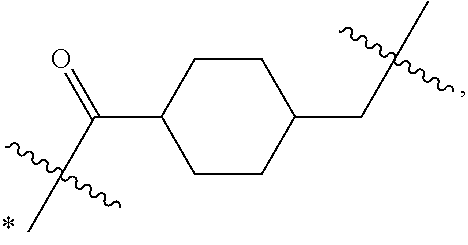
—*C(═O)((CH2)mO)n(CH2)m)—, —*C(═O)NH(CH2)m)—, —*C(═O)X1X2C(═O)(CH2)m—, —*C(═O)((CH2)mO)n(CH2)m—, —*((CH2)mO)n(CH2)m—, —*(CH2)mS(═O)2((CH2)mO)n(CH2)m—, —*C(═O)(CH2)mNR12(CH2)m—, —*C(═O)(CH2)mNH(CH2)m—, —*(CH2)m(O(CH2)m)n—, —*C(═O)(CH2)mX3(CH2)m—, —*C(═O)NH(CH2)m—, —*C(═O)((CH2)mO)n(CH2)mX3(CH2)m—, —*(CH2)mNHC(═O)(CH2)m—, —*C(═O)NH(CH2)mNHC(═O)(CH2)m—, —*C(═O)(CH2)mNHC(═O)(CH2)m—, —*C(═O)((CH2)mO)n(CH2)mNHC(═O)(CH2)m—, —*((CH2)mO)n(CH2)mX3(CH2)m—, —(CH2)mC(═O)NH(CH2)mNHC(═O)(CH2)m—, —*NH2S(═O)2(CH2)mX3(CH2)m—, —*(CH2)mNHC(═O)(CH2)mNHC(═O)(CH2)m— and —C(═O)NH(CH2)mNHC(═O)—, wherein the * indicates the point of attachment to R3;
-
- L2 is a bond,

—S—, —SCH2(C═O)NH—, —NHC(═O)CH2S—,

—S(═O)2CH2CH2S—, —SCH2CH2S(═O)2—, —(CH2)2S(═O)2CH2CH2S— or —SCH2CH2S(═O)2CH2CH2—, wherein the * indicates the point of attachment to L1,
-
- and L3, L4, L5 and L6 are a bond.
-
- L1 is selected from —*C(═O)(CH2)m—, —(CH2)m—, —*(CH2)mNHC(═O)X1X2C(═O)(CH2)m—, —*X4X1X2C(═O)(CH2)m—, —*X1C(═O)(CH2)mNHC(═O)(CH2)m—, —*(CH2)mC(═O)NH(CH2)mNHC(═O)(CH2)m—, —*S(═O)2(CH2)mX3(CH2)m—,

—*C(═O)((CH2)mO)n(CH2)m)—, —*C(═O)NH(CH2)m), —*C(═O)X1X2C(═O)(CH2)m—, —*C(═O)((CH2)mO)n(CH2)m—, —*(CH2)mS(═O)2((CH2)mO)n(CH2)m—, —*C(═O)(CH2)mNR12(CH2)m—, —*C(═O)(CH2)mNH(CH2)m—, —*(CH2)m(O(CH2)m)n—, —*C(═O)(CH2)mX3(CH2)m—, —*C(═O)NH(CH2)m—, —*C(═O)((CH2)mO)n(CH2)mX3(CH2)m—, —*(CH2)mNHC(═O)(CH2)m—, —*C(═O)NH(CH2)mNHC(═O)(CH2)m—, —*C(═O)(CH2)mNHC(═O)(CH2)m—, —*C(═O)((CH2)mO)n(CH2)mNHC(═O)(CH2)m—, —(CH2)mC(═O)NH(CH2)mNHC(═O)(CH2)m—, —*NH2S(═O)2(CH2)mX3(CH2)m—, —*(CH2)mNHC(═O)(CH2)mNHC(═O)(CH2)m— and —C(═O)NH(CH2)mNHC(═O)—, wherein the * indicates the point of attachment to R3;
-
- L2 is a bond,

—S—, —SCH2(C═O)NH—, —NHC(═O)CH2S—,

—S(═O)2CH2CH2S—, —SCH2CH2S(═O)2—, —(CH2)2S(═O)2CH2CH2S— or —SCH2CH2S(═O)2CH2CH2—, wherein the * indicates the point of attachment to L1,
-
- and L3, L4, L5 and L6 are a bond.
-
- L1 is selected from —*C(═O)(CH2)m—, —(CH2)m—, —*(CH2)mNHC(═O)X1X2C(═O)(CH2)m—, —*X4X1X2C(═O)(CH2)m—, —*X1C(═O)(CH2)mNHC(═O)(CH2)m—, —*(CH2)mC(═O)NH(CH2)mNHC(═O)(CH2)m—, —*S(═O)2(CH2)mX3(CH2)m—,

—*NH2S(═O)2(CH2)mX3(CH2)m—, —*C(═O)((CH2)mO)n(CH2)m)— and —*C(═O)NH(CH2)m)—, wherein the * indicates the point of attachment to R3;
-
- L2 is

—S—, —SCH2(C═O)NH—, —NHC(═O)CH2S—,

—S(═O)2CH2CH2S—, —SCH2CH2S(═O)2—, —(CH2)2S(═O)2CH2CH2S— or —SCH2CH2S(═O)2CH2CH2—, wherein the * indicates the point of attachment to L1,
-
- and L3, L4, L5 and L6 are a bond.
-
- L1 is selected from —*C(═O)(CH2)m—, —(CH2)m—, —*(CH2)mNHC(═O)X1X2C(═O)(CH2)m—, —*X4X1X2C(═O)(CH2)m—, —*X1C(═O)(CH2)mNHC(═O)(CH2)m—, —*(CH2)mC(═O)NH(CH2)mNHC(═O)(CH2)m—, —*S(═O)2(CH2)mX3(CH2)m—,

—*NH2S(═O)2(CH2)mX3(CH2)m—, —*C(═O)((CH2)mO)n(CH2)m)— and —*C(═O)NH(CH2)m)—, wherein the * indicates the point of attachment to R3;
-
- L2 is

—S—, —SCH2(C═O)NH—, —NHC(═O)CH2S—,

—S(═O)2CH2CH2S—, —SCH2CH2S(═O)2—, —(CH2)2S(═O)2CH2CH2S— or —SCH2CH2S(═O)2CH2CH2—, wherein the * indicates the point of attachment to L1,
-
- and L3, L4, L5 and L6 are a bond.
-
- L1 is selected from —*C(═O)(CH2)m—, —(CH2)m—, —*(CH2)mNHC(═O)X1X2C(═O)(CH2)m—, —*X4X1X2C(═O)(CH2)m—, —*X1C(═O)(CH2)mNHC(═O)(CH2)m—, —*(CH2)mC(═O)NH(CH2)mNHC(═O)(CH2)m—, —*S(═O)2(CH2)mX3(CH2)m—,

—*NH2S(═O)2(CH2)mX3(CH2)m—, —*C(═O)((CH2)mO)n(CH2)m)— and —*C(═O)NH(CH2)m)—, wherein the * indicates the point of attachment to R3;
-
- L2 is

- wherein the * indicates the point of attachment to L1,
- and L3, L4, L5 and L6 are a bond.

—*NH2S(═O)2(CH2)mX3(CH2)m—, —*C(═O)((CH2)mO)n(CH2)m)— and —*C(═O)NH(CH2)m)—, wherein the * indicates the point of attachment to R3;
-
- L2 is

—S—, —SCH2(C═O)NH—, —NHC(═O)CH2S—,

—S(═O)2CH2CH2S—, —SCH2CH2S(═O)2—, —(CH2)2S(═O)2CH2CH2S— or —SCH2CH2S(═O)2CH2CH2—, wherein the * indicates the point of attachment to L1,
-
- and L3, L4, L5 and L6 are a bond.
-
- L1 is selected from —*C(═O)(CH2)m—, —(CH2)m—, —*(CH2)mNHC(═O)X1X2C(═O)(CH2)m—, —*X4X1X2C(═O)(CH2)m—, —*X1C(═O)(CH2)mNHC(═O)(CH2)m—, —*(CH2)mC(═O)NH(CH2)mNHC(═O)(CH2)m—, —*S(═O)2(CH2)mX3(CH2)m—,

—*NH2S(═O)2(CH2)mX3(CH2)m—, —*C(═O)((CH2)mO)n(CH2)m)— and —*C(═O)NH(CH2)m)—, wherein the * indicates the point of attachment to R3;
-
- L2 is

- wherein the * indicates the point of attachment to L1,
- and L3, L4, L5 and L6 are a bond.
-
- L1 is selected from —*C(═O)(CH2)m—, —(CH2)m—, —*(CH2)mNHC(═O)X1X2C(═O)(CH2)m—, —*X4X1X2C(═O)(CH2)m—, —*X1C(═O)(CH2)mNHC(═O)(CH2)m—, —*(CH2)mC(═O)NH(CH2)mNHC(═O)(CH2)m—, —*S(═O)2(CH2)mX3(CH2)m—,

—*NH2S(═O)2(CH2)mX3(CH2)m—, —*C(═O)((CH2)mO)n(CH2)m)— and —*C(═O)NH(CH2)m)—, wherein the * indicates the point of attachment to R3;

- wherein the * indicates the point of attachment to L1, and L3, L4, L5 and L6 are a bond.


-
- wherein R101, R2 and R3 are as defined in
embodiments 46, 47, 54 to 59, and 80.
- wherein R101, R2 and R3 are as defined in


and R19 is H.
-
- R1 is

R2 is methyl, ethyl, isopropyl or sec-butyl; R3 is

-
- R4 is —OH; R9 is

-
- L is L1, wherein L1 is selected from —(CH2)mC(═O)—, —C(═O)(CH2)m—, —(CH2)m(O(CH2)m)nC(═O)—, and —C(═O)((CH2)mO)n(CH2)m—;
- each m is independently selected from 1, 2, 3, 4, 5, 6, 7, 8, 9 and 10, and
- each n is independently selected from 1, 2, 3, 4, 5, 6, 7, 8, 9, 10, 11, 12, 13, 14, 15, 16, 17 and 18.
-
- R1 is

R2 is methyl, ethyl, isopropyl or sec-butyl;
-
- L is L1, wherein L1 is selected from —(CH2)mC(═O)—, —C(═O)(CH2)m—, —(CH2)m(O(CH2)m)nC(═O)—, —C(═O)((CH2)mO)n(CH2)m—, —(CH2)mX3(CH2)m(O(CH2)m)nC(═O)— and —C(═O)((CH2)mO)n(CH2)mX3(CH2)m—;
- R3 is

R4 is —OH; R9 is

X3 is

-
- each m is independently selected from 1, 2, 3, 4, 5, 6, 7, 8, 9 and 10, and
- each n is independently selected from 1, 2, 3, 4, 5, 6, 7, 8, 9, 10, 11, 12, 13, 14, 15, 16, 17 and 18.
Claims (11)


Priority Applications (1)
| Application Number | Priority Date | Filing Date | Title |
|---|---|---|---|
| US16/439,204 US10787480B2 (en) | 2013-12-17 | 2019-06-12 | Cytotoxic peptides and conjugates thereof |
Applications Claiming Priority (5)
| Application Number | Priority Date | Filing Date | Title |
|---|---|---|---|
| US201361917293P | 2013-12-17 | 2013-12-17 | |
| PCT/US2014/070800 WO2015095301A2 (en) | 2013-12-17 | 2014-12-17 | Cytotoxic peptides and conjugates thereof |
| US201615104727A | 2016-06-15 | 2016-06-15 | |
| US15/961,531 US10392421B2 (en) | 2013-12-17 | 2018-04-24 | Cytotoxic peptides and conjugates thereof |
| US16/439,204 US10787480B2 (en) | 2013-12-17 | 2019-06-12 | Cytotoxic peptides and conjugates thereof |
Related Parent Applications (1)
| Application Number | Title | Priority Date | Filing Date |
|---|---|---|---|
| US15/961,531 Continuation US10392421B2 (en) | 2013-12-17 | 2018-04-24 | Cytotoxic peptides and conjugates thereof |
Publications (2)
| Publication Number | Publication Date |
|---|---|
| US20190382441A1 US20190382441A1 (en) | 2019-12-19 |
| US10787480B2 true US10787480B2 (en) | 2020-09-29 |
Family
ID=52463118
Family Applications (3)
| Application Number | Title | Priority Date | Filing Date |
|---|---|---|---|
| US15/104,727 Active US9988420B2 (en) | 2013-12-17 | 2014-12-17 | Cytotoxic peptides and conjugates thereof |
| US15/961,531 Active US10392421B2 (en) | 2013-12-17 | 2018-04-24 | Cytotoxic peptides and conjugates thereof |
| US16/439,204 Active US10787480B2 (en) | 2013-12-17 | 2019-06-12 | Cytotoxic peptides and conjugates thereof |
Family Applications Before (2)
| Application Number | Title | Priority Date | Filing Date |
|---|---|---|---|
| US15/104,727 Active US9988420B2 (en) | 2013-12-17 | 2014-12-17 | Cytotoxic peptides and conjugates thereof |
| US15/961,531 Active US10392421B2 (en) | 2013-12-17 | 2018-04-24 | Cytotoxic peptides and conjugates thereof |
Country Status (16)
| Country | Link |
|---|---|
| US (3) | US9988420B2 (en) |
| EP (2) | EP3753578A1 (en) |
| JP (2) | JP6636925B2 (en) |
| KR (1) | KR20160098257A (en) |
| CN (1) | CN105899526A (en) |
| AU (1) | AU2014364812B2 (en) |
| BR (1) | BR112016012538A2 (en) |
| CA (1) | CA2930614A1 (en) |
| EA (1) | EA201691251A1 (en) |
| ES (1) | ES2758506T3 (en) |
| IL (1) | IL245558B (en) |
| MX (1) | MX2016007865A (en) |
| PL (1) | PL3082877T3 (en) |
| PT (1) | PT3082877T (en) |
| SG (1) | SG11201604877UA (en) |
| WO (1) | WO2015095301A2 (en) |
Cited By (1)
| Publication number | Priority date | Publication date | Assignee | Title |
|---|---|---|---|---|
| US11596695B2 (en) * | 2013-02-08 | 2023-03-07 | Novartis Ag | Specific sites for modifying antibodies to make immunoconjugates |
Families Citing this family (27)
| Publication number | Priority date | Publication date | Assignee | Title |
|---|---|---|---|---|
| HK1220626A1 (en) | 2013-03-15 | 2017-05-12 | The Centre For Drug Research And Development | Cytotoxic and anti-mitotic compounds, and methods of using the same |
| BR112016015105A8 (en) | 2013-12-27 | 2018-04-24 | Var2 Pharmaceuticals Aps | var2csa-drug conjugates |
| WO2015095953A1 (en) | 2013-12-27 | 2015-07-02 | The Centre For Drug Research And Development | Sulfonamide-containing linkage systems for drug conjugates |
| JP2017509337A (en) * | 2014-03-12 | 2017-04-06 | ノバルティス アーゲー | Specific sites for modifying antibodies that make immunoconjugates |
| CA2951368A1 (en) * | 2014-06-13 | 2015-12-17 | Novartis Ag | Auristatin derivatives and conjugates thereof |
| ES2905569T3 (en) | 2014-09-17 | 2022-04-11 | Zymeworks Inc | Cytotoxic and antimitotic compounds and methods of using them |
| US11566082B2 (en) | 2014-11-17 | 2023-01-31 | Cytiva Bioprocess R&D Ab | Mutated immunoglobulin-binding polypeptides |
| WO2017194593A1 (en) | 2016-05-11 | 2017-11-16 | Ge Healthcare Bioprocess R&D Ab | Method of cleaning and/or sanitizing a separation matrix |
| US10730908B2 (en) | 2016-05-11 | 2020-08-04 | Ge Healthcare Bioprocess R&D Ab | Separation method |
| WO2017194592A1 (en) | 2016-05-11 | 2017-11-16 | Ge Healthcare Bioprocess R&D Ab | Method of storing a separation matrix |
| US10889615B2 (en) | 2016-05-11 | 2021-01-12 | Cytiva Bioprocess R&D Ab | Mutated immunoglobulin-binding polypeptides |
| JP7031934B2 (en) | 2016-05-11 | 2022-03-08 | サイティバ・バイオプロセス・アールアンドディ・アクチボラグ | Separation matrix |
| US10703774B2 (en) | 2016-09-30 | 2020-07-07 | Ge Healthcare Bioprocess R&D Ab | Separation method |
| US10654887B2 (en) | 2016-05-11 | 2020-05-19 | Ge Healthcare Bio-Process R&D Ab | Separation matrix |
| US10513537B2 (en) | 2016-05-11 | 2019-12-24 | Ge Healthcare Bioprocess R&D Ab | Separation matrix |
| US12448411B2 (en) | 2016-09-30 | 2025-10-21 | Cytiva Bioprocess R&D Ab | Separation method |
| US10517958B2 (en) | 2016-10-04 | 2019-12-31 | Zymeworks Inc. | Compositions and methods for the treatment of platinum-drug resistant cancer |
| JOP20190187A1 (en) | 2017-02-03 | 2019-08-01 | Novartis Ag | Anti-ccr7 antibody drug conjugates |
| UY38265A (en) * | 2018-06-20 | 2020-01-31 | Novartis Ag | DRUG ANTIBODY CONJUGATES FOR ABLATION OF HEMATOPOIETIC STEM CELLS |
| US20220017462A1 (en) * | 2018-11-23 | 2022-01-20 | WuXi Biologics Ireland Limited | Ortho-phthalaldehyde containing linkers and use for preparation of antibody-drug conjugate |
| KR20220151166A (en) * | 2020-03-09 | 2022-11-14 | 시그마-알드리치 컴퍼니., 엘엘씨 | Efficient Preparation of Dolastatin and Auristatin Analogs via Common Intermediates |
| US20230181756A1 (en) | 2020-04-30 | 2023-06-15 | Novartis Ag | Ccr7 antibody drug conjugates for treating cancer |
| JP7670072B2 (en) * | 2021-01-18 | 2025-04-30 | 味の素株式会社 | Compound or its salt, and antibody obtained therefrom |
| WO2023061405A1 (en) * | 2021-10-12 | 2023-04-20 | 成都科岭源医药技术有限公司 | Highly-stable targeted linker-drug conjugate |
| TW202412762A (en) * | 2022-07-27 | 2024-04-01 | 香港商祐方有限公司 | Auristatin derivatives and conjugates thereof |
| WO2024152000A1 (en) * | 2023-01-13 | 2024-07-18 | The Trustees Of The University Of Pennsylvania | Disruptable linker compositions, switchable bispecific t cell nanoengager (switch-bite) compositions comprising the same, and methods of use thereof |
| KR20250169306A (en) | 2023-04-18 | 2025-12-02 | 아스트라제네카 아베 | Conjugate comprising a cleavable linker |
Citations (24)
| Publication number | Priority date | Publication date | Assignee | Title |
|---|---|---|---|---|
| US5595756A (en) | 1993-12-22 | 1997-01-21 | Inex Pharmaceuticals Corporation | Liposomal compositions for enhanced retention of bioactive agents |
| US5654399A (en) | 1991-08-09 | 1997-08-05 | Teikoku Hormone Mfg. Co., Ltd. | Tetrapeptide derivative having antitumor activity |
| US5767237A (en) | 1993-10-01 | 1998-06-16 | Teikoku Hormone Mfg. Co., Ltd. | Peptide derivatives |
| US5840699A (en) | 1995-04-21 | 1998-11-24 | Teikoku Hormone Mfg. Co. Ltd. | Peptide derivatives |
| WO2006132670A2 (en) * | 2004-11-12 | 2006-12-14 | Seattle Genetics, Inc. | Auristatins having an aminobenzoic acid unit at the n terminus |
| US20070160617A1 (en) | 2005-06-20 | 2007-07-12 | Psma Development Company, Llc | PSMA antibody-drug conjugates |
| WO2007103288A2 (en) | 2006-03-02 | 2007-09-13 | Seattle Genetics, Inc. | Engineered antibody drug conjugates |
| US20080305044A1 (en) | 2004-11-29 | 2008-12-11 | Seattle Genetics, Inc. | Engineered Antibodies and Immunoconjugates |
| US7498298B2 (en) | 2003-11-06 | 2009-03-03 | Seattle Genetics, Inc. | Monomethylvaline compounds capable of conjugation to ligands |
| US20090068178A1 (en) | 2002-05-08 | 2009-03-12 | Genentech, Inc. | Compositions and Methods for the Treatment of Tumor of Hematopoietic Origin |
| US7750116B1 (en) | 2006-02-18 | 2010-07-06 | Seattle Genetics, Inc. | Antibody drug conjugate metabolites |
| US7749504B2 (en) | 2001-06-20 | 2010-07-06 | Genentech, Inc. | Anti-TAT188 antibodies |
| US7968687B2 (en) | 2007-10-19 | 2011-06-28 | Seattle Genetics, Inc. | CD19 binding agents and uses thereof |
| WO2013093809A1 (en) | 2011-12-23 | 2013-06-27 | Pfizer Inc. | Engineered antibody constant regions for site-specific conjugation and methods and uses therefor |
| WO2013184514A1 (en) | 2012-06-04 | 2013-12-12 | Irm Llc | Site-specific labeling methods and molecules produced thereby |
| US8609105B2 (en) | 2008-03-18 | 2013-12-17 | Seattle Genetics, Inc. | Auristatin drug linker conjugates |
| WO2014124316A2 (en) | 2013-02-08 | 2014-08-14 | Irm Llc | Specific sites for modifying antibodies to make immunoconjugates |
| US8828401B2 (en) | 2011-11-17 | 2014-09-09 | Pfizer Inc. | Cytotoxic peptides and antibody drug conjugates thereof |
| US8987209B2 (en) | 2010-09-29 | 2015-03-24 | Seattle Genetics, Inc. | N-carboxyalkyl-auristatin and the use thereof |
| US8992932B2 (en) | 2011-04-21 | 2015-03-31 | Seattle Genetics, Inc. | Binder-drug conjugates (ADCs) and use thereof |
| US9029406B2 (en) | 2011-03-16 | 2015-05-12 | Seattle Genetics, Inc | N-carboxyalkylauristatins and use thereof |
| US9109035B2 (en) | 2006-03-17 | 2015-08-18 | Genentech, Inc. | Anti-TAT226 antibodies and immunoconjugates |
| US20160052966A1 (en) | 2011-05-27 | 2016-02-25 | Ambrx, Inc. | Compositions Containing, Methods Involving, and Uses of Non-Natural Amino Acid Linked Dolastatin Derivatives |
| US9272052B2 (en) | 2010-10-22 | 2016-03-01 | Seattle Genetics, Inc. | Synergistic effects between auristatin-based antibody drug conjugates and inhibitors of the PI3K-AKT mTOR pathway |
Family Cites Families (6)
| Publication number | Priority date | Publication date | Assignee | Title |
|---|---|---|---|---|
| US4458066A (en) | 1980-02-29 | 1984-07-03 | University Patents, Inc. | Process for preparing polynucleotides |
| US5641870A (en) | 1995-04-20 | 1997-06-24 | Genentech, Inc. | Low pH hydrophobic interaction chromatography for antibody purification |
| EP1958962A3 (en) | 1997-06-12 | 2013-05-01 | Novartis International Pharmaceutical Ltd. | Artificial antibody polypeptides |
| US6153655A (en) | 1998-04-17 | 2000-11-28 | Enzon, Inc. | Terminally-branched polymeric linkers and polymeric conjugates containing the same |
| JP2007524596A (en) | 2003-02-28 | 2007-08-30 | トランスフォーム・ファーマシューティカルズ・インコーポレイテッド | Co-crystal pharmaceutical composition |
| WO2012113847A1 (en) | 2011-02-25 | 2012-08-30 | Lonza Ltd | Branched linker for protein drug conjugates |
-
2014
- 2014-12-17 JP JP2016540522A patent/JP6636925B2/en not_active Expired - Fee Related
- 2014-12-17 EA EA201691251A patent/EA201691251A1/en unknown
- 2014-12-17 MX MX2016007865A patent/MX2016007865A/en active IP Right Grant
- 2014-12-17 ES ES14835606T patent/ES2758506T3/en active Active
- 2014-12-17 EP EP19193628.5A patent/EP3753578A1/en not_active Withdrawn
- 2014-12-17 US US15/104,727 patent/US9988420B2/en active Active
- 2014-12-17 WO PCT/US2014/070800 patent/WO2015095301A2/en not_active Ceased
- 2014-12-17 KR KR1020167015935A patent/KR20160098257A/en not_active Ceased
- 2014-12-17 SG SG11201604877UA patent/SG11201604877UA/en unknown
- 2014-12-17 CA CA2930614A patent/CA2930614A1/en not_active Abandoned
- 2014-12-17 BR BR112016012538A patent/BR112016012538A2/en not_active Application Discontinuation
- 2014-12-17 EP EP14835606.6A patent/EP3082877B1/en not_active Not-in-force
- 2014-12-17 AU AU2014364812A patent/AU2014364812B2/en not_active Ceased
- 2014-12-17 PL PL14835606T patent/PL3082877T3/en unknown
- 2014-12-17 PT PT148356066T patent/PT3082877T/en unknown
- 2014-12-17 CN CN201480068696.XA patent/CN105899526A/en active Pending
-
2016
- 2016-05-09 IL IL245558A patent/IL245558B/en not_active IP Right Cessation
-
2018
- 2018-04-24 US US15/961,531 patent/US10392421B2/en active Active
-
2019
- 2019-06-12 US US16/439,204 patent/US10787480B2/en active Active
- 2019-09-27 JP JP2019176561A patent/JP2020023514A/en active Pending
Patent Citations (41)
| Publication number | Priority date | Publication date | Assignee | Title |
|---|---|---|---|---|
| US5654399A (en) | 1991-08-09 | 1997-08-05 | Teikoku Hormone Mfg. Co., Ltd. | Tetrapeptide derivative having antitumor activity |
| US6004934A (en) | 1991-08-09 | 1999-12-21 | Teikoku Hormone Mfg. Co., Ltd. | Tetrapeptide derivative |
| US5767237A (en) | 1993-10-01 | 1998-06-16 | Teikoku Hormone Mfg. Co., Ltd. | Peptide derivatives |
| US6124431A (en) | 1993-10-01 | 2000-09-26 | Teikoku Hormone Mfg. Co., Ltd. | Peptide derivatives |
| US5595756A (en) | 1993-12-22 | 1997-01-21 | Inex Pharmaceuticals Corporation | Liposomal compositions for enhanced retention of bioactive agents |
| US5840699A (en) | 1995-04-21 | 1998-11-24 | Teikoku Hormone Mfg. Co. Ltd. | Peptide derivatives |
| US7803915B2 (en) | 2001-06-20 | 2010-09-28 | Genentech, Inc. | Antibody compositions for the diagnosis and treatment of tumor |
| US7749504B2 (en) | 2001-06-20 | 2010-07-06 | Genentech, Inc. | Anti-TAT188 antibodies |
| US20090068178A1 (en) | 2002-05-08 | 2009-03-12 | Genentech, Inc. | Compositions and Methods for the Treatment of Tumor of Hematopoietic Origin |
| US20110070243A1 (en) | 2002-05-08 | 2011-03-24 | Craig Crowley | Compositions and methods for the treatment of tumor of hematopoietic |
| US7994135B2 (en) | 2003-11-06 | 2011-08-09 | Seattle Genetics, Inc. | Monomethylvaline compounds capable of conjugation to ligands |
| US8557780B2 (en) | 2003-11-06 | 2013-10-15 | Seattle Genetics, Inc. | Monomethylvaline compounds capable of conjugation to ligands |
| US7745394B2 (en) | 2003-11-06 | 2010-06-29 | Seattle Genetics, Inc. | Monomethylvaline compounds capable of conjugation to ligands |
| US8703714B2 (en) | 2003-11-06 | 2014-04-22 | Seattle Genetics, Inc. | Monomethylvaline compounds capable of conjugation to ligands |
| US7498298B2 (en) | 2003-11-06 | 2009-03-03 | Seattle Genetics, Inc. | Monomethylvaline compounds capable of conjugation to ligands |
| US7964567B2 (en) | 2003-11-06 | 2011-06-21 | Seattle Genetics, Inc. | Monomethylvaline compounds capable of conjugation to ligands |
| US7964566B2 (en) | 2003-11-06 | 2011-06-21 | Seattle Genetics, Inc. | Monomethylvaline compounds capable of conjugation to ligands |
| WO2006132670A2 (en) * | 2004-11-12 | 2006-12-14 | Seattle Genetics, Inc. | Auristatins having an aminobenzoic acid unit at the n terminus |
| US8288352B2 (en) | 2004-11-12 | 2012-10-16 | Seattle Genetics, Inc. | Auristatins having an aminobenzoic acid unit at the N terminus |
| US20080305044A1 (en) | 2004-11-29 | 2008-12-11 | Seattle Genetics, Inc. | Engineered Antibodies and Immunoconjugates |
| US20070160617A1 (en) | 2005-06-20 | 2007-07-12 | Psma Development Company, Llc | PSMA antibody-drug conjugates |
| US7750116B1 (en) | 2006-02-18 | 2010-07-06 | Seattle Genetics, Inc. | Antibody drug conjugate metabolites |
| US8512707B2 (en) | 2006-02-18 | 2013-08-20 | Seattle Genetics, Inc. | Methods of treating drug-resistant cancers |
| WO2007103288A2 (en) | 2006-03-02 | 2007-09-13 | Seattle Genetics, Inc. | Engineered antibody drug conjugates |
| US9109035B2 (en) | 2006-03-17 | 2015-08-18 | Genentech, Inc. | Anti-TAT226 antibodies and immunoconjugates |
| US7968687B2 (en) | 2007-10-19 | 2011-06-28 | Seattle Genetics, Inc. | CD19 binding agents and uses thereof |
| US8242252B2 (en) | 2007-10-19 | 2012-08-14 | Seattle Genetics, Inc. | CD19 binding agents and uses thereof |
| US9073993B2 (en) | 2007-10-19 | 2015-07-07 | Seattle Genetics, Inc. | CD19 binding agents and uses thereof |
| US8609105B2 (en) | 2008-03-18 | 2013-12-17 | Seattle Genetics, Inc. | Auristatin drug linker conjugates |
| US9463252B2 (en) | 2008-03-18 | 2016-10-11 | Seattle Genetics, Inc. | Auristatin drug linker conjugates |
| US8987209B2 (en) | 2010-09-29 | 2015-03-24 | Seattle Genetics, Inc. | N-carboxyalkyl-auristatin and the use thereof |
| US9272052B2 (en) | 2010-10-22 | 2016-03-01 | Seattle Genetics, Inc. | Synergistic effects between auristatin-based antibody drug conjugates and inhibitors of the PI3K-AKT mTOR pathway |
| US9029406B2 (en) | 2011-03-16 | 2015-05-12 | Seattle Genetics, Inc | N-carboxyalkylauristatins and use thereof |
| US8992932B2 (en) | 2011-04-21 | 2015-03-31 | Seattle Genetics, Inc. | Binder-drug conjugates (ADCs) and use thereof |
| US20160052966A1 (en) | 2011-05-27 | 2016-02-25 | Ambrx, Inc. | Compositions Containing, Methods Involving, and Uses of Non-Natural Amino Acid Linked Dolastatin Derivatives |
| US8828401B2 (en) | 2011-11-17 | 2014-09-09 | Pfizer Inc. | Cytotoxic peptides and antibody drug conjugates thereof |
| US9138486B2 (en) | 2011-11-17 | 2015-09-22 | Pfizer Inc. | Cytotoxic peptides and antibody drug conjugates thereof |
| US9249186B2 (en) | 2011-11-17 | 2016-02-02 | Pfizer Inc. | Cytotoxic peptides and antibody drug conjugates thereof |
| WO2013093809A1 (en) | 2011-12-23 | 2013-06-27 | Pfizer Inc. | Engineered antibody constant regions for site-specific conjugation and methods and uses therefor |
| WO2013184514A1 (en) | 2012-06-04 | 2013-12-12 | Irm Llc | Site-specific labeling methods and molecules produced thereby |
| WO2014124316A2 (en) | 2013-02-08 | 2014-08-14 | Irm Llc | Specific sites for modifying antibodies to make immunoconjugates |
Non-Patent Citations (12)
| Title |
|---|
| "Cellular and Molecular Basis of Cancer", Merck Manual, Nov. 7, 2012, pp. 1-5. |
| <http:/www.uspto.gov/web/offices/pac/dapp/1pecba.htm#7>Enablement Decision Tree, Example F, situation 1. |
| Axup, et al., "Synthesis of site-specific antibody-drug conjugates using unnatural amino acids", Proceedings of the National Academy of Sciences, Oct. 2, 2012, pp. 16101-16106, vol. 109, No. 40. |
| Gravanis, et al., "The changing world of cancer drug development: the regulatory bodies' perspective", Chinese Clinical Oncology, 2014, pp. 1-5, vol. 3, No. 2, Chinese Clinical Oncology. |
| Hait, "Anticancer drug development: the grand challenges", Nature Reviews, Apr. 2010, pp. 253-254, vol. 9, Macmillan Publishers Limited. |
| Junutula, et al., "Site-specific conjugation of a cytotoxic drug to an antibody improves the therapeutic index", Nature Biotechnology, Aug. 2008, pp. 925-932, vol. 26, No. 8, Nature Publishing Group, US. |
| Junutula, et al., "Supplementary Materials for Site-specific conjugation of a cytotoxic drug to an antibody improves the therapeutic index", Nature Biotechnology, Aug. 2008, pp. 925-932, vol. 26, No. 8, Nature Publishing Group, US. |
| Neidle, "Failure MOdes in Anticancer Drug Discovery and Development", Cancer Drug Design and Discovery, 2008, pp. 427-431, Elsevier/Academic Press. |
| Pubchem, SID104326166, Feb. 18, 2011, available online at https://pubchem.ncbi.nlm.nih.gov/substance/104326166. |
| Sporn, et al., "Chemoprevention of cancer", Carcinogenesis, 2000, pp. 525-530, vol. 21, No. 3, Oxford University Press. |
| Strop, et al., "Location Mailers: Site of Conjugation Modulates Stability and Pharmacokinetics of Antibody Drug Conjugates", Chemistry & Biology, Feb. 1, 2013, pp. 161-167, vol. 20, No. 2, Elsevier Ltd. |
| Trail, "Antibody Drug conjugates as Cancer Therapeutics", Antibodies, Feb. 27, 2013, pp. 113-129, vol. 2. |
Cited By (2)
| Publication number | Priority date | Publication date | Assignee | Title |
|---|---|---|---|---|
| US11596695B2 (en) * | 2013-02-08 | 2023-03-07 | Novartis Ag | Specific sites for modifying antibodies to make immunoconjugates |
| US20230270876A1 (en) * | 2013-02-08 | 2023-08-31 | Novartis Ag | Specific sites for modifying antibodies to make immunoconjugates |
Also Published As
| Publication number | Publication date |
|---|---|
| EA201691251A1 (en) | 2016-11-30 |
| JP2020023514A (en) | 2020-02-13 |
| MX2016007865A (en) | 2017-01-11 |
| KR20160098257A (en) | 2016-08-18 |
| BR112016012538A2 (en) | 2017-09-26 |
| SG11201604877UA (en) | 2016-07-28 |
| US20180244717A1 (en) | 2018-08-30 |
| EP3082877B1 (en) | 2019-08-28 |
| WO2015095301A3 (en) | 2015-09-03 |
| JP6636925B2 (en) | 2020-01-29 |
| IL245558B (en) | 2020-01-30 |
| EP3082877A2 (en) | 2016-10-26 |
| CN105899526A (en) | 2016-08-24 |
| IL245558A0 (en) | 2016-06-30 |
| EP3753578A1 (en) | 2020-12-23 |
| US9988420B2 (en) | 2018-06-05 |
| ES2758506T3 (en) | 2020-05-05 |
| CA2930614A1 (en) | 2015-06-25 |
| JP2017503777A (en) | 2017-02-02 |
| US20190382441A1 (en) | 2019-12-19 |
| AU2014364812A1 (en) | 2016-07-07 |
| US10392421B2 (en) | 2019-08-27 |
| PT3082877T (en) | 2019-12-03 |
| AU2014364812B2 (en) | 2017-05-25 |
| PL3082877T3 (en) | 2020-02-28 |
| US20160311853A1 (en) | 2016-10-27 |
| WO2015095301A2 (en) | 2015-06-25 |
Similar Documents
| Publication | Publication Date | Title |
|---|---|---|
| US10787480B2 (en) | Cytotoxic peptides and conjugates thereof | |
| US10280139B2 (en) | Cytotoxic peptides and conjugates thereof | |
| US9938323B2 (en) | Amatoxin derivatives and conjugates thereof as inhibitors of RNA polymerase | |
| US10604547B2 (en) | Amatoxin derivatives and conjugates thereof as inhibitors of RNA polymerase | |
| US9498540B2 (en) | Cell proliferation inhibitors and conjugates thereof | |
| KR20170102981A (en) | Heteroarylene-crosslinked benzodiazepine dimer, conjugates thereof, and methods of making and using | |
| JP2026504840A (en) | Linkers, drug linkers, and conjugates thereof, and methods of using same - Patent Application 20070122997 | |
| JP2026503087A (en) | Linkers, drug linkers, and conjugates thereof, and methods of using same - Patent Application 20070122997 |
Legal Events
| Date | Code | Title | Description |
|---|---|---|---|
| FEPP | Fee payment procedure |
Free format text: ENTITY STATUS SET TO UNDISCOUNTED (ORIGINAL EVENT CODE: BIG.); ENTITY STATUS OF PATENT OWNER: LARGE ENTITY |
|
| AS | Assignment |
Owner name: NOVARTIS INSTITUTE FOR FUNCTIONAL GENOMICS, INC. D Free format text: ASSIGNMENT OF ASSIGNORS INTEREST;ASSIGNORS:GEIERSTANGER, BERNHARD HUBERT;GRUNEWALD, JAN;OU, WEIJIA;AND OTHERS;SIGNING DATES FROM 20141205 TO 20141208;REEL/FRAME:050203/0650 Owner name: NOVARTIS INSTITUTE FOR FUNCTIONAL GENOMICS, INC. DBA THE GENOMICS INSTITUTE OF THE NOVARTIS RESEARCH FOUNDATION, CALIFORNIA Free format text: ASSIGNMENT OF ASSIGNORS INTEREST;ASSIGNORS:GEIERSTANGER, BERNHARD HUBERT;GRUNEWALD, JAN;OU, WEIJIA;AND OTHERS;SIGNING DATES FROM 20141205 TO 20141208;REEL/FRAME:050203/0650 |
|
| AS | Assignment |
Owner name: NOVARTIS INTERNATIONAL PHARMACEUTICAL LTD., BERMUD Free format text: MERGER;ASSIGNOR:IRM, LLC;REEL/FRAME:050208/0198 Effective date: 20150105 Owner name: IRM LLC, BERMUDA Free format text: ASSIGNMENT OF ASSIGNORS INTEREST;ASSIGNOR:NOVARTIS INSTITUTE FOR FUNCTIONAL GENOMICS, INC. DBA THE GENOMICS INSTITUTE OF THE NOVARTIS RESEARCH FOUNDATION;REEL/FRAME:050208/0125 Effective date: 20141212 Owner name: NOVARTIS AG, SWITZERLAND Free format text: ASSIGNMENT OF ASSIGNORS INTEREST;ASSIGNOR:NOVARTIS INTERNATIONAL PHARMACEUTICAL AG;REEL/FRAME:050209/0961 Effective date: 20170412 Owner name: NOVARTIS INTERNATIONAL PHARMACEUTICAL AG, SWITZERL Free format text: ASSIGNMENT OF ASSIGNORS INTEREST;ASSIGNOR:NOVARTIS INTERNATIONAL PHARMACEUTICAL LTD.;REEL/FRAME:050209/0935 Effective date: 20161103 Owner name: NOVARTIS INTERNATIONAL PHARMACEUTICAL AG, SWITZERLAND Free format text: ASSIGNMENT OF ASSIGNORS INTEREST;ASSIGNOR:NOVARTIS INTERNATIONAL PHARMACEUTICAL LTD.;REEL/FRAME:050209/0935 Effective date: 20161103 Owner name: NOVARTIS INTERNATIONAL PHARMACEUTICAL LTD., BERMUDA Free format text: MERGER;ASSIGNOR:IRM, LLC;REEL/FRAME:050208/0198 Effective date: 20150105 |
|
| STPP | Information on status: patent application and granting procedure in general |
Free format text: RESPONSE TO NON-FINAL OFFICE ACTION ENTERED AND FORWARDED TO EXAMINER |
|
| STPP | Information on status: patent application and granting procedure in general |
Free format text: NOTICE OF ALLOWANCE MAILED -- APPLICATION RECEIVED IN OFFICE OF PUBLICATIONS |
|
| STPP | Information on status: patent application and granting procedure in general |
Free format text: PUBLICATIONS -- ISSUE FEE PAYMENT RECEIVED |
|
| STPP | Information on status: patent application and granting procedure in general |
Free format text: PUBLICATIONS -- ISSUE FEE PAYMENT VERIFIED |
|
| STCF | Information on status: patent grant |
Free format text: PATENTED CASE |
|
| MAFP | Maintenance fee payment |
Free format text: PAYMENT OF MAINTENANCE FEE, 4TH YEAR, LARGE ENTITY (ORIGINAL EVENT CODE: M1551); ENTITY STATUS OF PATENT OWNER: LARGE ENTITY Year of fee payment: 4 |