US10783020B2 - Method for invoking component, and terminal - Google Patents
Method for invoking component, and terminal Download PDFInfo
- Publication number
- US10783020B2 US10783020B2 US16/719,487 US201916719487A US10783020B2 US 10783020 B2 US10783020 B2 US 10783020B2 US 201916719487 A US201916719487 A US 201916719487A US 10783020 B2 US10783020 B2 US 10783020B2
- Authority
- US
- United States
- Prior art keywords
- component
- coefficient
- running time
- preset threshold
- terminal
- Prior art date
- Legal status (The legal status is an assumption and is not a legal conclusion. Google has not performed a legal analysis and makes no representation as to the accuracy of the status listed.)
- Expired - Fee Related
Links
Images




Classifications
-
- G—PHYSICS
- G06—COMPUTING OR CALCULATING; COUNTING
- G06F—ELECTRIC DIGITAL DATA PROCESSING
- G06F11/00—Error detection; Error correction; Monitoring
- G06F11/30—Monitoring
- G06F11/34—Recording or statistical evaluation of computer activity, e.g. of down time, of input/output operation ; Recording or statistical evaluation of user activity, e.g. usability assessment
- G06F11/3409—Recording or statistical evaluation of computer activity, e.g. of down time, of input/output operation ; Recording or statistical evaluation of user activity, e.g. usability assessment for performance assessment
- G06F11/3419—Recording or statistical evaluation of computer activity, e.g. of down time, of input/output operation ; Recording or statistical evaluation of user activity, e.g. usability assessment for performance assessment by assessing time
-
- G—PHYSICS
- G06—COMPUTING OR CALCULATING; COUNTING
- G06F—ELECTRIC DIGITAL DATA PROCESSING
- G06F9/00—Arrangements for program control, e.g. control units
- G06F9/06—Arrangements for program control, e.g. control units using stored programs, i.e. using an internal store of processing equipment to receive or retain programs
- G06F9/46—Multiprogramming arrangements
- G06F9/54—Interprogram communication
- G06F9/547—Remote procedure calls [RPC]; Web services
- G06F9/548—Object oriented; Remote method invocation [RMI]
-
- G—PHYSICS
- G06—COMPUTING OR CALCULATING; COUNTING
- G06F—ELECTRIC DIGITAL DATA PROCESSING
- G06F11/00—Error detection; Error correction; Monitoring
- G06F11/30—Monitoring
- G06F11/3003—Monitoring arrangements specially adapted to the computing system or computing system component being monitored
- G06F11/3006—Monitoring arrangements specially adapted to the computing system or computing system component being monitored where the computing system is distributed, e.g. networked systems, clusters, multiprocessor systems
-
- G—PHYSICS
- G06—COMPUTING OR CALCULATING; COUNTING
- G06F—ELECTRIC DIGITAL DATA PROCESSING
- G06F11/00—Error detection; Error correction; Monitoring
- G06F11/30—Monitoring
- G06F11/3003—Monitoring arrangements specially adapted to the computing system or computing system component being monitored
- G06F11/302—Monitoring arrangements specially adapted to the computing system or computing system component being monitored where the computing system component is a software system
-
- G—PHYSICS
- G06—COMPUTING OR CALCULATING; COUNTING
- G06F—ELECTRIC DIGITAL DATA PROCESSING
- G06F11/00—Error detection; Error correction; Monitoring
- G06F11/30—Monitoring
- G06F11/34—Recording or statistical evaluation of computer activity, e.g. of down time, of input/output operation ; Recording or statistical evaluation of user activity, e.g. usability assessment
- G06F11/3452—Performance evaluation by statistical analysis
-
- G—PHYSICS
- G06—COMPUTING OR CALCULATING; COUNTING
- G06F—ELECTRIC DIGITAL DATA PROCESSING
- G06F11/00—Error detection; Error correction; Monitoring
- G06F11/30—Monitoring
- G06F11/34—Recording or statistical evaluation of computer activity, e.g. of down time, of input/output operation ; Recording or statistical evaluation of user activity, e.g. usability assessment
- G06F11/3466—Performance evaluation by tracing or monitoring
-
- G—PHYSICS
- G06—COMPUTING OR CALCULATING; COUNTING
- G06F—ELECTRIC DIGITAL DATA PROCESSING
- G06F11/00—Error detection; Error correction; Monitoring
- G06F11/36—Prevention of errors by analysis, debugging or testing of software
- G06F11/362—Debugging of software
- G06F11/3636—Debugging of software by tracing the execution of the program
-
- G—PHYSICS
- G06—COMPUTING OR CALCULATING; COUNTING
- G06F—ELECTRIC DIGITAL DATA PROCESSING
- G06F17/00—Digital computing or data processing equipment or methods, specially adapted for specific functions
- G06F17/10—Complex mathematical operations
- G06F17/11—Complex mathematical operations for solving equations, e.g. nonlinear equations, general mathematical optimization problems
-
- G—PHYSICS
- G06—COMPUTING OR CALCULATING; COUNTING
- G06F—ELECTRIC DIGITAL DATA PROCESSING
- G06F2201/00—Indexing scheme relating to error detection, to error correction, and to monitoring
- G06F2201/81—Threshold
-
- G—PHYSICS
- G06—COMPUTING OR CALCULATING; COUNTING
- G06F—ELECTRIC DIGITAL DATA PROCESSING
- G06F2201/00—Indexing scheme relating to error detection, to error correction, and to monitoring
- G06F2201/865—Monitoring of software
-
- G—PHYSICS
- G06—COMPUTING OR CALCULATING; COUNTING
- G06F—ELECTRIC DIGITAL DATA PROCESSING
- G06F2201/00—Indexing scheme relating to error detection, to error correction, and to monitoring
- G06F2201/88—Monitoring involving counting
-
- G—PHYSICS
- G06—COMPUTING OR CALCULATING; COUNTING
- G06F—ELECTRIC DIGITAL DATA PROCESSING
- G06F2209/00—Indexing scheme relating to G06F9/00
- G06F2209/54—Indexing scheme relating to G06F9/54
- G06F2209/541—Client-server
-
- G—PHYSICS
- G06—COMPUTING OR CALCULATING; COUNTING
- G06N—COMPUTING ARRANGEMENTS BASED ON SPECIFIC COMPUTATIONAL MODELS
- G06N20/00—Machine learning
Definitions
- the present disclosure relates to communication technologies, and particularly to a method for invoking a component, and a terminal.
- the present disclosure provides a method for calculating a coefficient, a method for invoking a component, a device, a storage medium, a server and a terminal, it can improve the operation efficiency of a terminal.
- the embodiment of the present disclosure provides a method for calculating a coefficient, which is applied to a server.
- the method includes:
- the embodiment of the disclosure also provides a method for invoking a component, the method includes:
- a server acquiring, from a terminal, a first number of times that a first component has been invoked and a historical running time of an application to which the first component belongs;
- the server acquiring, from the terminal a second number of times that the first component has been invoked by a second component and a third number of times that all components have been invoked by the second component, wherein the second component and the first component belong to different applications;
- the terminal prohibiting a request that the second component request to invoke the first component, in response to the coefficient is less than a preset threshold.
- the embodiment of the disclosure also provides a method for invoking a component, which is applied to a terminal, the method includes:
- the embodiment of the disclosure also provides a coefficient calculating device, which is applied to a server, the device includes:
- a first acquiring module configured to acquire a first number of times that a first component has been invoked and a historical running time of an application to which the first component belongs;
- a first calculating module configured to calculate a component weight of the first component according to the first number of times and the historical running time
- a second acquiring module configured to acquire a second number of times that the first component has been invoked by a second component and a third number of times that all components have been invoked by the second component, wherein the second component and the first component belong to different applications;
- a second calculating module configured to calculate a coefficient of the second component invoking the first component according to the component weight, the second number of times and the third number of times.
- the embodiment of the disclosure also provides the following technical solution.
- a component invoking device which is applied to a terminal, includes:
- a third acquiring module configured to acquire a fourth number of times that a first component has been invoked and a first running time of an application to which the first component belongs;
- a fourth acquiring module configured to acquire a second number of times that the first component has been invoked by a second component and a third number of times that all components have been invoked by the second component, wherein the second component and the first component belong to different applications;
- a sending module configured to send the fourth number of times, the first running time, the second number of times and the third number of times to a server, respectively;
- a fifth acquiring module configured to acquire a coefficient of the second component invoking the first component from the server
- a prohibiting module configured to prohibit the second component from invoking the first component when the coefficient is less than the preset threshold.
- the embodiment of the disclosure also provides the following technical solution.
- a storage medium with instructions stored therein.
- the instruction When the instruction is executed by a processor, the method for calculating a coefficient described in the embodiment of the disclosure is performed.
- the embodiment of the disclosure also provides the following technical solution.
- a storage medium with instructions stored therein.
- the instruction When the instruction is executed by a processor, the method for invoking a component described in the embodiment of the disclosure is performed.
- the embodiment of the disclosure also provides the following technical solution.
- a server includes a processor and a memory, the processor is connected to the memory, the memory is configured to store instructions, when the instructions stored in the memory are invoked, the processor is configured to execute the steps of:
- the embodiment of the disclosure also provides the following technical solution.
- a terminal includes a processor and a memory, the processor is connected to the memory, the memory is configured to store instructions, when the instructions stored in the memory are invoked, the processor is configured to execute the steps of:
- FIG. 1 is a schematic view showing components of applications in a terminal being invoked each other according to an embodiment of the present disclosure.
- FIG. 2 is a schematic view showing the communication between a terminal and a server according to an embodiment of the present disclosure.
- FIG. 3 is a flowchart of a method for calculating a coefficient according to an embodiment of the present disclosure.
- FIG. 4 is another flowchart of a method for calculating a coefficient according to an embodiment of the present disclosure.
- FIG. 5 is still another flowchart of a method for calculating a coefficient according to an embodiment of the present disclosure.
- FIG. 6 is still another flowchart of a method for calculating a coefficient according to an embodiment of the present disclosure.
- FIG. 7 is another flowchart of the step S 170 according to an embodiment of the present disclosure.
- FIG. 8 is a schematic flowchart of a method for invoking a component according to an embodiment of the present disclosure.
- FIG. 9 is a schematic flowchart of another method for invoking a component according to an embodiment of the present disclosure.
- FIG. 10 is a schematic flowchart of still another method for invoking a component according to an embodiment of the present disclosure.
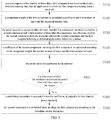
- FIG. 11 is another flowchart of the step S 260 according to an embodiment of the present disclosure.
- FIG. 12 is a schematic flowchart showing the interaction between a terminal and a server according to an embodiment of the present disclosure.
- FIG. 13 is a schematic structural view of a coefficient calculating device according to an embodiment of the present disclosure.
- FIG. 14 is a schematic structural view of another coefficient calculating device according to an embodiment of the present disclosure.
- FIG. 15 is a schematic structural view of still another coefficient calculating device according to an embodiment of the present disclosure.
- FIG. 16 is a schematic structural view of a component invoking device according to an embodiment of the present disclosure.
- FIG. 17 is a schematic structural view of another component invoking device according to an embodiment of the present disclosure.
- FIG. 18 is a schematic structural view of a server according to an embodiment of the present disclosure.
- FIG. 19 is a schematic structural view of a terminal according to an embodiment of the present disclosure.
- FIG. 20 is a schematic structural view of another terminal according to an embodiment of the present disclosure.
- the processing device of the radio frequency interference is described.
- the processing device of the radio frequency interference may be integrated into an electronic device, such as a mobile phone, a tablet computer, a personal digital assistant (PDA), or the like.
- PDA personal digital assistant
- FIG. 1 is a schematic view showing components of several applications in a terminal are invoked each other according to an embodiment of the present disclosure.
- the terminal has an application A, an application B, and an application C installed therein.
- the application A can be Taobao application
- the application B can be Alipay application
- the application C can be Tmall application.
- the application A, the application B, and the application C each can include a number of components.
- the components can be classified into four categories: Activities, Services, Receivers, and Providers.
- the Activity is a component for a user interface
- the Service, the Receiver and the Provider are components that run in the background of the terminal.
- the application A, the application B, and the application C each include three components, i.e., a component 1, a component 2, and a component 3.
- the component 1 in the application A can invoke the component 1 in the application B.
- the component 2 in the application B can invoke the component 3 in the application C.
- the component 3 in the application C can invoke the component 3 in the application A. It is understood that, a first component in one application is invoked by a second component in another application, that means, the second component is also invoked by the first component.
- FIG. 2 is a schematic view showing the communication between a terminal and a server according to an embodiment of the present disclosure.
- the terminal can communicate with the server through wireless communication network.
- the server can communicate with multiple terminals simultaneously.
- An embodiment of the present disclosure provides a method for invoking a component. As illustrated in FIG. 3 , the method includes the following steps.
- a server acquires a first number of times Cj that a first component j has been invoked and a historical running time Tk that the application k to which the first component j belongs are acquired, from a terminal.
- the first component j is a component in the application.
- the first component can be any kind of components of Activities, Services, Receivers, and Providers.
- the server acquires the first number of times Cj that the first component j has been invoked by other components.
- the first number of times includes the times that the first component j has been invoked by the components of other applications. In one embodiment, the first number of times further includes the times that the first component j has been invoked by the other components of the application k itself.
- the server can also acquire the historical running time Tk of the application k to which the first component j belongs.
- the historical running time is the sum of every running time since the application was installed, but not limited to the running time in which the application was invoked.
- a component weight Wj of the first component j is calculated according to the first number of times Cj and the historical running time Tk.
- the component weight Wj is a parameter determined by the number of times that the first component j has been invoked and the historical running time of the application k to which the first component j belongs.
- the component weight is a parameter of the first component itself, and used to represent the relationship between the number of times of the first component has been invoked and the historical running time of the application to which the first component belongs.
- the component weight of different components in an application can be different. After the server acquires the first number of times and the historical running time, the component weight is calculated according to the first number of times and the historical running time.
- a step S 130 the server acquires a second number of times Nj that the first component j has been invoked by a second component i and a third number of times N that all components (referred to as a collection M) have been invoked by the second component, from the terminal, wherein the second component i and the first component j belong to different applications within the terminal.
- the server can acquire the second number of times Nj that the first component j has been invoked by the second component i.
- the second component and the first component belong to different applications.
- the server can acquire the third number of times N that all components have been invoked by the second component i.
- the third number of times N is the sum of all the times that the second component invokes every component.
- the server can acquire the number of times that each component has been invoked by the second component, and then determine the sum of the number of times invoking each component as the third number of times.
- a coefficient ⁇ ij of the second component i invoking the first component j is calculated according to the component weight Wj, the second number of times Nj and the third number of times N.
- the coefficient ⁇ ij of the second component i invoking the first component j is calculated according to the component weight Wj, the second number of times Nj and the third number of times N.
- a step S 150 the server sends the coefficient to the terminal.
- a step S 160 the terminal prohibits a request that the second component request to invoke the first component, in response to the coefficient is less than a preset threshold.
- the terminal can control the invoking between components according to the coefficient, so as to reduce the resource waste in the terminal system and improve the efficiency of the terminal.
- the operation of acquiring the first number of times that the first component has been invoked and a historical running time of the application to which the first component belongs comprises the following steps:
- a fourth number of times that the first component has been invoked from each of a plurality of terminals is acquired.
- a step S 112 a first running time of the application to which the first component belongs from each of the plurality of terminals is acquired.
- a step S 113 the average of the fourth number of times acquired from the plurality of terminals is determined as the first number of times.
- a step S 114 the average of the first historical running time acquired from the plurality of terminals is determined as the historical running time.
- the server can communicate with the plurality of terminals, the application k including the first component j is installed on the plurality of terminals.
- the server can acquire the fourth number of times C that the first component j has been invoked from each of the plurality of terminals.
- the fourth number of times C includes the number of times that the first component j has been invoked by all the components in the other applications.
- the server can also acquire the first running time of the application to which the first component belongs from each of the plurality of terminals.
- the first running time is the sum of every running time since the application was installed, but not limited to the running time in which the component was invoked.
- the server determines the average of the fourth number of times acquired from the plurality of terminals as the first number of times, and the average of the first historical running time acquired from the plurality of terminals as the historical running time.
- the operation of calculating the component weight of the first component according to the first number of times and the historical running time comprises the following steps:
- a normalized first number of times is obtained by normalizing the first numbers of times.
- a normalized historical running time is obtained by normalizing the historical running times.
- a step S 123 the ratio of the normalized first number of times to the normalized historical running time is determined as the component weight.
- normalization is a way to simplify the calculation, that is, the dimensionless expression is transformed into a dimensionless expression into a scaler. After the first number of times Cj and the historical running time Tk are acquired, the normalized first number of times and the normalized historical running time are obtained by normalizing the first numbers of times and the historical running times. Then, the ratio of the normalized first number of times to the normalized historical running time is determined as the component weight.
- the server normalizes the first numbers of times Cj to obtaining the normalized first number of times C1 according to the following formula:
- C 1 is the normalized first number of times
- C j is the first number of times
- min(C) is the minimum of the fourth numbers of times
- max(C) is the maximum of the fourth numbers of times.
- the server determines the minimum of the fourth numbers of times as min(C), determines the maximum of the fourth numbers of times as max(C), and determines the average of the fourth numbers of times as the Cj after acquires a plurality of the fourth numbers of times. Then, the server calculates the normalized first number of times C1. It is understood that, the above formula is obtained by a machine learning algorithm.
- the server normalizes the historical running time to obtaining the normalized historical running time according to the following formula
- T 1 T k - min ⁇ ( T ) max ⁇ ( T ) - min ⁇ ( T ) ,
- T 1 is the normalized historical running time
- T k is the historical running time
- min(T) is the minimum of the first running times
- max(T) is the maximum of the first running times.
- the server determines the minimum of the historical running times as min(T), determines the maximum of the historical running times as max(T), and determines the average of the historical running times as the Tk after acquires a plurality of the historical running times. Then, the server calculates the normalized historical running time T1. It is understood that, the above formula is obtained by a machine learning algorithm.
- the server calculates the coefficient ⁇ ij of the second component i invoking the first component j according to the component weight Wj, the second number of times Nj and the third number of times N according to the following formula:
- ⁇ ij is the coefficient
- W j is the component weight
- N j is the second number of times
- N is the third number of times.
- the server calculates the coefficient ⁇ ij according to the above formula after acquires the second number of times Nj and the third number of times N and calculates the coefficient Wj. It is understood that, the above formula is obtained by a machine learning algorithm.
- the operation of the terminal prohibiting a request that the second component request to invoke the first component, in response to the coefficient is less than a preset threshold comprises the following steps:
- a step S 161 it is determined whether the coefficient is less than the preset threshold when receiving the request.
- a prohibiting instruction is generated when the coefficient is judged to be less than the preset threshold.
- a step S 163 the second component is prohibited from invoking the first component according to the forbidden invoke instruction.
- the method further includes the following steps.
- a step S 170 the terminal approves the request about the second component invokes the first component, in response to the coefficient is larger than or equal to the preset threshold.
- the operation of the terminal approving the request about the second component invokes the first component, in response to the coefficient is larger than or equal to the preset threshold comprises the following steps:
- a step S 171 it is determined whether the coefficient is larger than or equal to the preset threshold when receiving the request.
- a permitting instruction is generated when determining that the coefficient is larger than or equal to the preset threshold.
- a step S 173 the second component is permitted to invoke the first component according to the permitting instruction.
- the second number of times Nj is the sum of the first component j has been invoked by the second component i each of the plurality of terminals.
- the third number of times N is the sum of numbers of times that all components have been invoked by each of the second component in the plurality of terminals.
- the embodiment of the disclosure also provides a method for invoking a component, applied to a terminal.
- the terminal can be a smart phone, tablet computer and other devices. As illustrated in FIG. 8 , The method includes the following steps:
- a fourth number of times C that a first component j has been invoked and a first running time T of an application k to which the first component j belongs is acquired.
- the first component j is a component in the application.
- the first component can be any kind of components of Activities, Services, Receivers, and Providers.
- the application including the first component is installed in the terminal.
- the terminal acquires the first number of times that the first component has been invoked by all the components.
- the terminal can also acquire the historical running time Tk of the application k to which the first component j belongs.
- the historical running time is the sum of every running time since the application was installed, but not limited to the running time in which the application was invoked.
- the log file is used to record the historical running status of each application.
- the historical running status can include the runtime and runtime of each component in the application, the runtime and runtime of each component being invoked by other components, and the name of the component that invoked the component and the application to which the component that invoked the component belongs.
- the terminal can acquire the fourth number of times that the first component has been invoked and the first running time of the application to which the first component belongs by the log files.
- a second number of times that the first component has been invoked by a second component and a third number of times that all components have been invoked by the second component is acquired, wherein the second component and the first component belong to different applications.
- the application comprising the second component is installed in the terminal.
- the second component and the first component belong to different applications.
- the terminal can acquires the second number of times that the first component has been invoked by the second component and the third number of times that all components have been invoked by the second component.
- the third number of times is the sum of the number of times that all components have been invoked by the second component.
- a step S 230 the fourth number of times, the first running time, the second number of times and the third number of times are sent to a server, respectively.
- the terminal can communicate with the server through wireless communication network, and the terminal can send the fourth number of times, the first running time, the second number of times and the third number of times to the server, respectively.
- a step S 240 the coefficient of the second component invoking the first component is acquired from the server.
- the terminal acquires the coefficient of the second component invoking the first component from the server after sent the fourth number of times, the first running time, the second number of times and the third number of times to the server.
- a request that the second component request to invoke the first component is received, the request is prohibited in response to that the coefficient is less than a preset threshold.
- the preset threshold can be a value stored in the terminal.
- the preset threshold could be 0.5, the terminal prohibits the second component from invoking the first component when the coefficient is less than the preset threshold.
- the operation of receiving a request that the second component request to invoke the first component, prohibiting the request in response to that the coefficient is less than a preset threshold comprises the following steps:
- a step S 251 it is determined whether the coefficient ⁇ ij is less than the preset threshold.
- a prohibiting instruction is generated when the coefficient ⁇ ij is judged to be less than the preset threshold.
- a step S 253 the second component i is prohibited from invoking the first component j according to the forbidden invoke instruction.
- the terminal acquires the coefficient ⁇ ij from the server
- the coefficient ⁇ ij is compared with the preset threshold to determines whether the coefficient ⁇ ij is less than the preset threshold.
- the prohibiting instruction is generated when the coefficient ⁇ ij is judged to be less than the preset threshold. Then, the second component is prohibited from invoking the first component according to the prohibiting instruction.
- the terminal can determine whether the second component and the first component are components of a preset type or not, when the coefficient is judged to be less than the preset threshold.
- the components of the preset type can be the Activity component.
- the method further comprises the following steps:
- a step S 260 the request is approved in response to that the coefficient is larger than or equal to the preset threshold.
- the operation of approving the request in response to that the coefficient is larger than or equal to the preset threshold comprises the following steps:
- a step S 261 it is determined whether the coefficient is larger than or equal to the preset threshold when receiving the request.
- a permitting instruction is generated when determining that the coefficient is larger than or equal to the preset threshold.
- a step S 263 the second component is permitted to invoke the first component according to the permitting instruction.
- the terminal can prohibit the second component from invoking the first component when both the second component and the first component are not components of the preset type.
- the terminal can allow the second component to invoke the first component when at least one of the second component and the first component is components of the preset type.
- FIG. 12 is schematic flowchart showing the interaction flow between the terminal and the server according to an embodiment of the present disclosure.
- the terminal is configured to execute the steps of: in a step A, the fourth number of times that the first component has been invoked and the first running time of the application to which the first component belongs is acquired. In a step B, the fourth number of times and the first running time are sent to the server.
- the server is configured to execute the following steps.
- a step C it is determined the average of all of the fourth numbers of times as the first number of times.
- a step D it is determined the average of all of the first running times as the historical running time.
- the normalized first number of times is obtained by normalizing the first number of times.
- the normalized historical running time is obtained by normalizing the historical running time.
- the ratio of the normalized first number of times to the normalized historical running time is determined as the component weight.
- the terminal is configured to execute the following steps.
- a step H the second number of times that the first component has been invoked by the second component and the third number of times that all components have been invoked by the second component is acquired.
- a step I the second number of times and the third number of times are sent to the server.
- the server is configured to execute the following step.
- the coefficient of the second component invoking the first component is calculated according to the component weight, the second number of times and the third number of times.
- the terminal is configured to execute the following steps.
- a step K the coefficient of the second component invoking the first component is acquired from the server.
- a step L it is determined whether the coefficient is less than the preset threshold.
- the prohibiting instruction is generated when the coefficient is judged to be less than the preset threshold.
- a step N the second component is prohibited from invoking the first component according to the prohibiting instruction.
- the disclosure is not limited by the order of execution of the various steps described. In the case where no conflict occurs, some steps may be performed in other orders or may be performed simultaneously.
- the method including the steps of acquiring the fourth number of times that the first component has been invoked and the first running time of the application to which the first component belongs; acquiring the second number of times that the first component has been invoked by a second component and a third number of times that all components have been invoked by the second component, the second component and the first component belong to different applications; sending the fourth number of times, the first running time, the second number of times and the third number of times to the server, respectively; acquiring the coefficient of the second component invoking the first component from the server; and prohibiting the second component from invoking the first component when the coefficient is less than a preset threshold.
- the server calculates the component weight first, then calculates the coefficient of the second component invoking the first component according to the component weight, then the terminal prohibits the second component from invoking the first component when the coefficient is less than a preset threshold.
- the terminal can prohibit the non-necessary component invokes, which can save the terminal system resources, and improve the operating efficiency of the terminal.
- the present disclosure also provides a coefficient calculating device, the device can be integrated into a server.
- the device 300 includes a first acquiring module 301 , a first calculating module 302 , a second acquiring module 303 and a second calculating module 304 .
- the first acquiring module 301 is configured to acquire a first number of times Cj that a first component j has been invoked and a historical running time Tk of an application k to which the first component j belongs.
- the first component is a component in the application.
- the first component can be any kind of components of Activities, Services, Receivers, and Providers.
- the first acquiring module 301 acquires the first number of times that the first component has been invoked by other components.
- the first number of times includes times that the first component has been invoked by the components of other applications. In one embodiment, the first number of times further includes the times that the first component has been invoked by the other components of the application itself.
- the first acquiring module 301 also acquire the historical running time of the application to which the first component belongs.
- the historical running time is the sum of every running time since the application was installed, but not limited to the running time of the process in which the application was invoked.
- the first calculating module 302 is configured to calculate a component weight Wj of the first component according to the first number of times Cj and the historical running time Tk.
- the component weight Wj is a parameter determined by the number of times that the first component j has been invoked and the historical running time of the application to which the first component belongs.
- the component weight is a parameter of the first component itself, and used to represent the relationship between the number of times of the first component has been invoked and the historical running time of the application to which the first component belongs.
- the component weight of different components in one application can be different. After the first acquiring module 301 acquires the first number of times and the historical running time, the component weight is calculated by the first calculating module 302 according to the first number of times and the historical running time.
- the second acquiring module 303 is configured to acquire the second number of times Nj that the first component j has been invoked by the second component and the third number of times that all components have been invoked by the second component, wherein the second component and the first component belong to different applications.
- the second acquiring module 303 can acquires the second number of times that the first component has been invoked by the second component i.
- the second component and the first component belong to different applications.
- the second acquiring module 303 can acquires the third number of times that all components have been invoked by the second component.
- the third number of times is the sum of all the times that the second component invokes the every component.
- the second acquiring module 303 can acquires the number of times that each component has been invoked by the second component, and then determine the sum of the number of times invoking each component as the third number of times.
- the second calculating module 304 is configured to calculate a coefficient ⁇ ij of the second component i invoking the first component j according to the component weight Wj, the second number of times Nj and the third number of times N.
- the coefficient of the second component invoking the first component is calculated by the second calculating module 304 according to the component weight, the second number of times and the third number of times.
- the terminal can control the invoking between components according to the coefficient, so as to reduce the resource waste in the terminal system and improve the efficiency of the terminal.
- the first acquiring module 301 includes a first acquiring submodule 3011 , a second acquiring submodule 3012 , a first determining submodule 3013 and a second determining submodule 3014 .
- the first acquiring submodule 3011 is configured to acquire a fourth number of times C that the first component has been invoked from each terminal of a plurality of terminal.
- the second acquiring submodule 3012 is configured to acquire a first running time T of the application k which the first component j belongs from each terminal of the plurality of terminals.
- the first determining submodule 3013 is configured to determine the average of the fourth number of times C acquired from each terminal as the first number of times Cj.
- the second determining submodule 3014 is configured to determining the average of the first historical running time T of the plurality of terminals as the historical running time Tk.
- the server can communicate with the plurality of terminals, the application k including the first component j is installed on the plurality of terminals.
- the first acquiring submodule 3011 can acquires the fourth number of times C of the first component j has been invoked from each of the plurality of terminals.
- the fourth number of times C includes the number of times that the first component j has been invoked by all the component all the other application.
- the second acquiring submodule 3012 can also acquire the first running time of the application to which the first component belongs from each of the plurality of terminals.
- the first running time is the sum of every running time since the application was installed, but not limited to the running time of the process in which the component was invoked.
- the first determining submodule 3013 determines the average of the fourth number of times acquired from the plurality of terminals as the first number of times
- the second determining submodule 3014 determines the average of the first historical running time acquired from the plurality of terminals as the historical running time.
- the first calculating module 302 includes a first processing submodule 3021 , a second processing submodule 3022 and a calculating submodule 3023 .
- the first processing submodule 3021 is configured to obtain a normalized first number of times C1 by normalizing the first number of times Cj.
- the second processing submodule 3022 is configured to obtain a normalized historical running time T1 by normalizing the historical running time Tk.
- the calculating submodule 3023 is configured to determine the ratio of the normalized first number of times C1 to the normalized historical running time T1 as the component weight Wj.
- Normalization is a way to simplify the calculation, that is, the dimensionless expression is transformed into a dimensionless expression into a scaler.
- the first processing submodule 3021 obtains the normalized first number of times by normalizes the first number of times
- the second processing submodule 3022 obtains the normalized historical running time by normalizing the historical running time.
- the calculating submodule 3023 determines the ratio of the normalized first number of times to the normalized historical running time as the component weight.
- the first processing submodule 3021 normalizes the first number of times Cj to obtaining the normalized first number of times C1 according to the following formula:
- C 1 is the normalized first number of times
- C j is the first number of times
- min(C) is the minimum of the fourth numbers of times
- max(C) is the maximum of the fourth numbers of times.
- the first processing submodule 3021 determine the minimum of the fourth numbers of times as min(C), determine the maximum of the fourth numbers of times as max(C), and determine the average of a plurality of fourth numbers of times as the Cj after the first acquiring module 301 acquires the plurality of the fourth numbers of times. Then, the first processing submodule 3021 calculates the normalized first number of times C1. It is understood that, the above formula is obtained by a machine learning algorithm.
- the second processing submodule 3022 normalizes the historical running time to obtaining the normalized historical running time according to the following formula.
- T 1 T k - min ⁇ ( T ) max ⁇ ( T ) - min ⁇ ( T ) ,
- T 1 is the normalized historical running time
- T k is the historical running time
- min(T) is the minimum of all of the first running times
- max(T) is the maximum of all of the first running times.
- the second processing submodule 3022 determines the minimum of the historical running times as min(T), determine the maximum of the historical running times as max(T), and determine the average of a plurality of historical running times as the Tk after the first acquiring module 301 acquires the plurality of the historical running times. Then, the server calculates the normalized historical running time T1. It is understood that, the above formula is obtained by a machine learning algorithm.
- the second calculating module 304 calculates the coefficient ⁇ ij of the second component i invoking the first component j according to the component weight Wj, the second number of times Nj and the third number of times N according to the following formula:
- ⁇ ij is the coefficient
- W j is the component weight
- N j is the second number of times
- N is the third number of times.
- the second calculating module 304 calculates the coefficient ⁇ ij according to the above formula after acquires the second number of times Nj and the third number of times N and the first calculating module 302 calculates the coefficient Wj. It is understood that, the above formula is obtained by a machine learning algorithm.
- the second number of times Nj is the sum of the first component j has been invoked by the second component i each of the plurality of terminals.
- the third number of times N is the sum of numbers of times that all components have been invoked by each of the second component in the plurality of terminals.
- the embodiment of the disclosure also provides a component invoking device 400 , the device 400 can be integrated into a terminal.
- the terminal can be a smart phone, tablet computer and other devices.
- the component invoking device 400 includes a third acquiring module 401 , a fourth acquiring module 402 , a sending module 403 , a fifth acquiring module 404 and a prohibiting module 405 .
- the third acquiring module 401 is configured to acquire a fourth number of times that a first component has been invoked and a first running time of an application to which the first component belongs.
- the first component is a component in the application.
- the first component can be any kind of components of Activities, Services, Receivers, and Providers.
- the application comprising the first component is installed in the terminal.
- the third acquiring module 401 acquires the first number of times that the first component has been invoked by all the other components.
- the third acquiring module 401 can also acquires the historical running time of the application to which the first component belongs.
- the historical running time is the sum of every running time since the application was installed, but not limited to the running time of the process in which the application was invoked.
- the log file is used to record the historical running status of each application.
- the historical running status can include the runtime and runtime of each component in the application, the runtime and runtime of each component being invoked by other components, and the name of the component that invoked the component and the application to which the component that invoked the component belongs.
- the third acquiring module 401 can acquires the fourth number of times that the first component has been invoked and the first running time of the application to which the first component belongs by the log files.
- the fourth acquiring module 402 is configured to acquire a second number of times that the first component has been invoked by a second component and a third number of times that all components have been invoked by the second component, wherein the second component and the first component belong to different applications.
- the application comprising the second component is installed in the terminal.
- the second component and the first component belong to different applications.
- the fourth acquiring module 402 can acquires the second number of times of the first component has been invoked by the second component and the third number of times that all components have been invoked by the second component. Wherein, the third number of times is the sum of the number of times that all components have been invoked by the second component.
- the sending module 403 is configured to send the fourth number of times, the first running time, the second number of times and the third number of times to a server, respectively.
- the terminal can communicate with the server through wireless communication network, and the sending module 403 can sends the fourth number of times, the first running time, the second number of times and the third number of times to the server, respectively.
- the fifth acquiring module 404 is configured to acquire a coefficient of the second component invoking the first component from the server.
- the fifth acquiring module 404 acquires the coefficient of the second component invoking the first component from the server after the sending module 403 sent the fourth number of times, the first running time, the second number of times and the third number of times to the server.
- the prohibiting module 405 is configured to prohibit the second component from invoking the first component when the coefficient is less than the preset threshold.
- the preset threshold can be a value stored in the terminal.
- the preset threshold could be 0.5
- the prohibiting module 405 prohibits the second component from invoking the first component when the coefficient which the fifth acquiring module 404 acquired is less than the preset threshold.
- the prohibiting module 405 includes a determining submodule 4051 , a generating submodule 4052 and a prohibiting submodule 4053 .
- the determining submodule 4051 is configured to determine whether the coefficient is less than the preset threshold.
- the generating submodule 4052 is configured to generate a prohibiting instruction when determining that the coefficient is less than the preset threshold.
- the prohibiting submodule 4053 is configured to prohibit the second component from invoking the first component according to the prohibiting instruction.
- the fifth acquiring module 404 acquires the coefficient from the server, the coefficient is compared with the preset threshold to determine whether the coefficient is less than the preset threshold by the determining submodule 4051 .
- the generating submodule 4052 generates the prohibiting instruction when the coefficient is judged to be less than the preset threshold. Then, the prohibiting submodule 4053 prohibits the second component from invoking the first component according to the prohibiting instruction.
- the prohibiting module 405 can determines whether the second component and the first component are components of the preset type when the coefficient is judged to be less than the preset threshold.
- the components of the preset type can be Activity component.
- the prohibiting module 405 can prohibits the second component from invoking the first component when both the second component and the first component are not components of the preset type.
- the prohibiting module 405 can allows the second component to invoke the first component when at least one of the second component and the first component is components of the preset type.
- the above modules can be implemented as independent entities, or any combination, as one or several entities.
- the device including the modules of the third acquiring module 401 configured to acquire the fourth number of times that the first component has been invoked and the first running time of the application to which the first component belongs; the fourth acquiring module 402 configured to acquire the second number of times of the first component has been invoked by the second component and a third number of times that all components have been invoked by the second component, wherein the second component and the first component belong to different applications; the sending module 403 configured to send the fourth number of times, the first running time, the second number of times and the third number of times to the server, respectively; the fifth acquiring module 404 configured to acquire the coefficient of the second component invoking the first component from the server and the prohibiting module 405 configured to prohibit the second component from invoking the first component when the coefficient is less than the preset threshold.
- the server calculates the component weight first, then calculates the coefficient of the second component invoking the first component according to the component weight, then the terminal prohibits the second component from invoking the first component when the coefficient is less than a preset threshold.
- the terminal can prohibit the non-necessary component invokes, which can save the terminal system resources, and improve the operating efficiency of the terminal.
- the present disclosure also provides a server, as illustrated in FIG. 18 , the server 500 includes a processor 501 and a memory 502 , the processor 501 is connected to the memory 502 .
- the processor 501 is a control center of the server 500 , which connects various parts of the entire server 500 by various interfaces and lines.
- the processor 501 performs overall monitoring of the server 500 by running or loading an application stored in the memory 502 , and invoking data stored in the memory 502 , performing various functions of the server and processing data.
- the memory 502 is configured to store instructions, when the instructions stored in the memory 502 are invoked, the processor 501 is configured to execute the steps of:
- the processor 501 when the operation of acquiring the first number of times that the first component has been invoked and the historical running time of the application to which the first component belongs is performed, the processor 501 is configured to execute the steps of: acquiring a fourth number of times that the first component has been invoked from each of the plurality of terminals; acquiring a first running time of the application to which the first component belongs from each of the plurality of terminals; determining the average of the fourth number of times acquired from each of the plurality of terminals as the first number of times; and determining the average of the first historical running time acquired from the plurality of terminals as the historical running time.
- the processor 501 when the operation of calculating the component weight that the first component according to the first number of times and the historical running time is performed, the processor 501 is configured to execute the steps of: obtaining the normalized first number of times by normalizing the first number of times; obtaining the normalized historical running time by normalizing the historical running time; and determining the ratio of the normalized first number of times to the normalized historical running time as the component weight.
- the processor 501 is configured to execute the steps of obtaining the normalized first number of times by normalizing the first number of times according to the following formula.
- C 1 is the normalized first number of times
- C j is the first number of times
- min(C) is the minimum of the fourth numbers of times
- max(C) is the maximum of the fourth numbers of times.
- the processor 501 is configured to execute the steps of obtaining the normalized historical running time by normalizing the historical running time according to the following formula.
- T 1 T k - min ⁇ ( T ) max ⁇ ( T ) - min ⁇ ( T ) ,
- T 1 is the normalized historical running time
- T k is the historical running time
- min(T) is the minimum of the first running times
- max(T) is the maximum of the first running times.
- the processor 501 is configured to execute the steps of calculating a coefficient of the second component invoking the first component according to the component weight, the second number of times and the third number of times according to the following formula:
- ⁇ ij is the coefficient
- W j is the component weight
- N j is the second number of times
- N is the third number of times.
- the memory 502 is configured to store applications and data, the memory 502 stores applications that contain instructions that can be executed in the processor 501 .
- Applications can be composed of various functional modules.
- the processor 501 performs various functional applications and data processing by running applications stored in the memory 502 .
- the terminal can control the invoking between components according to the coefficient, so as to reduce the resource waste in the terminal system and improve the efficiency of the terminal.
- the present disclosure also provides a terminal, the terminal can be a smart phone, tablet computer and other devices.
- the terminal 600 includes a processor 601 and a memory 602 , the processor 601 is connected to the memory 602 .
- the processor 601 is a control center of the terminal 600 , which connects various parts of the entire terminal 600 by various interfaces and lines.
- the processor 601 performs overall monitoring of the terminal 600 by running or loading an application stored in the memory 602 , and invoking data stored in the memory 602 , performing various functions of the terminal 600 and processing data.
- the memory 602 is configured to store instructions, when the instructions stored in the memory 602 are invoked, the processor 601 is configured to execute the steps of:
- the processor 601 when the operation of prohibiting the second component from invoking the first component when the coefficient is less than the preset threshold is performed, the processor 601 is configured to execute the steps of: determining whether the coefficient is less than the preset threshold; generating a prohibiting instruction when determining that the coefficient is less than the preset threshold; and prohibiting the second component from invoking the first component according to the prohibiting instruction.
- the memory 602 is configured to store applications and data, the memory 602 stores applications that contain instructions that can be executed in the processor 601 . Applications can be composed of various functional modules.
- the processor 601 performs various functional applications and data processing by running applications stored in the memory 602 .
- the terminal 600 further includes a radio frequency circuit 603 , a display 604 , a control circuit 605 , a input unit 606 , an audio circuit 607 , a sensor 608 and a power supply 609 .
- the processor 601 is connected to the radio frequency circuit 603 , the display 604 , the control circuit 605 , the input unit 606 , the audio circuit 607 , the sensor 608 and the power supply 609 .
- the radio frequency circuit 603 is configured to send and receive radio frequency signals to communicate with the server or other electronic devices through wireless communication networks.
- the display screen 604 can be used to display information entered by the user or information provided to the user as well as various graphical user interfaces of the terminal, which can be composed of images, text, icons, video, and any combination thereof.
- the control circuit 605 is connected to the display 604 to control the display 604 to display information.
- the input unit 606 is configured to receive input numbers, character information, or user characteristic information (e.g., fingerprints), and to generate signal input of keyboard, mouse, joystick, optical, or trackball related to user settings and function controls.
- user characteristic information e.g., fingerprints
- the audio circuit 607 can provide audio interface between user and terminal through loudspeaker and microphone.
- the sensor 608 is used to collect information about the external environment.
- the sensor 608 may include one or more of the ambient brightness sensors, acceleration sensors, gyroscopes and other sensors.
- the power supply 609 is used to power the components of the terminal 600 .
- power supply 609 may be connected to the processor 601 logic through a power management system, thereby achieving functions such as managing charge, discharge, and power management through the power management system.
- the terminal 600 can also include cameras, bluetooth modules, and so on.
- the terminal is configured to execute the steps of: acquiring the fourth number of times that the first component has been invoked and the first running time of the application to which the first component belongs; acquiring the second number of times that the first component has been invoked by the second component and the third number of times that all components have been invoked by the second component, wherein the second component and the first component belong to different applications; sending the fourth number of times, the first running time, the second number of times and the third number of times to the server, respectively; acquiring a coefficient of the second component invoking the first component from the server; and receiving a request that the second component request to invoke the first component, prohibiting the request in response to that the coefficient is less than a preset threshold.
- the terminal can control the invoking between components according to the coefficient, so as to reduce the resource waste in the terminal system and improve the efficiency of the terminal.
- the operation of receiving a request that the second component request to invoke the first component, prohibiting the request in response to that the coefficient is less than a preset threshold comprises: determining whether the coefficient is less than the preset threshold, generating a prohibiting instruction when determining that the coefficient is less than the preset threshold, and prohibiting the second component from invoking the first component according to the prohibiting instruction.
- the terminal is configured to execute the further steps of: approving the request in response to that the coefficient is larger than or equal to the preset threshold.
- the operation of approving the request in response to that the coefficient is larger than or equal to the preset threshold comprises: determining whether the coefficient is large than or equal to the preset threshold, generating a permitting instruction when determining that the coefficient is large than or equal to the preset threshold, and permitting the second component to invoke the first component according to the permitting instruction.
- the present disclosure also provides a storage medium with instructions stored therein, when the instruction is executed by a processor, the method for calculating a coefficient described in the above embodiment is performed.
- the present disclosure also provides a storage medium with instructions stored therein, when the instruction is executed by a processor, the method for invoking a component described in the above embodiment is performed.
Landscapes
- Engineering & Computer Science (AREA)
- Theoretical Computer Science (AREA)
- Physics & Mathematics (AREA)
- General Engineering & Computer Science (AREA)
- General Physics & Mathematics (AREA)
- Quality & Reliability (AREA)
- Computing Systems (AREA)
- Computer Hardware Design (AREA)
- Software Systems (AREA)
- Mathematical Physics (AREA)
- Bioinformatics & Computational Biology (AREA)
- Evolutionary Biology (AREA)
- Probability & Statistics with Applications (AREA)
- Bioinformatics & Cheminformatics (AREA)
- Life Sciences & Earth Sciences (AREA)
- Debugging And Monitoring (AREA)
- Telephonic Communication Services (AREA)
- Computer And Data Communications (AREA)
- Information Transfer Between Computers (AREA)
Abstract
Description
Claims (20)
Applications Claiming Priority (1)
| Application Number | Priority Date | Filing Date | Title |
|---|---|---|---|
| PCT/CN2017/091385 WO2019000473A1 (en) | 2017-06-30 | 2017-06-30 | Coefficient calculation method, component calling method, device, medium, server, and terminal |
Related Parent Applications (1)
| Application Number | Title | Priority Date | Filing Date |
|---|---|---|---|
| PCT/CN2017/091385 Continuation WO2019000473A1 (en) | 2017-06-30 | 2017-06-30 | Coefficient calculation method, component calling method, device, medium, server, and terminal |
Publications (2)
| Publication Number | Publication Date |
|---|---|
| US20200125431A1 US20200125431A1 (en) | 2020-04-23 |
| US10783020B2 true US10783020B2 (en) | 2020-09-22 |
Family
ID=64740930
Family Applications (1)
| Application Number | Title | Priority Date | Filing Date |
|---|---|---|---|
| US16/719,487 Expired - Fee Related US10783020B2 (en) | 2017-06-30 | 2019-12-18 | Method for invoking component, and terminal |
Country Status (4)
| Country | Link |
|---|---|
| US (1) | US10783020B2 (en) |
| EP (1) | EP3640821B1 (en) |
| CN (1) | CN110832463A (en) |
| WO (1) | WO2019000473A1 (en) |
Families Citing this family (2)
| Publication number | Priority date | Publication date | Assignee | Title |
|---|---|---|---|---|
| CN116107765A (en) * | 2023-04-14 | 2023-05-12 | 中国科学院长春光学精密机械与物理研究所 | Range Data Processing System |
| CN120560593B (en) * | 2025-07-31 | 2025-10-03 | 莱芜职业技术学院 | Multi-dimensional data rapid storage method based on big data |
Citations (10)
| Publication number | Priority date | Publication date | Assignee | Title |
|---|---|---|---|---|
| US20030056199A1 (en) | 2001-09-19 | 2003-03-20 | Jun Li | Hyperbolic tree space display of computer system monitoring and analysis data |
| US20080148242A1 (en) * | 2006-12-18 | 2008-06-19 | Computer Associates Think, Inc. | Optimizing an interaction model for an application |
| US20080154776A1 (en) | 2006-12-22 | 2008-06-26 | International Business Machines Corporation | System and method of automatically maintaining and recycling software components |
| CN101916321A (en) | 2010-09-07 | 2010-12-15 | 中国科学院软件研究所 | A fine-grained performance modeling method and system for web applications |
| US20140089736A1 (en) | 2012-09-24 | 2014-03-27 | Nec Corporation | Distributed system, server computer, distributed management server, and failure prevention method |
| CN105765560A (en) | 2013-11-13 | 2016-07-13 | 微软技术许可有限责任公司 | Software component recommendation based on multiple trace runs |
| CN105843686A (en) | 2016-03-29 | 2016-08-10 | 乐视控股(北京)有限公司 | Resource release method and apparatus for singleton component |
| CN106203068A (en) | 2016-06-22 | 2016-12-07 | 广东欧珀移动通信有限公司 | The control method of a kind of terminal applies and device |
| US20180373510A1 (en) * | 2017-06-26 | 2018-12-27 | Postech Academy-Industry Foundation | Method of compiling a program |
| US20200145421A1 (en) * | 2018-11-05 | 2020-05-07 | Wistron Corporation | Method for authentication and authorization and authentication server using the same |
Family Cites Families (2)
| Publication number | Priority date | Publication date | Assignee | Title |
|---|---|---|---|---|
| US9542248B2 (en) * | 2015-03-24 | 2017-01-10 | International Business Machines Corporation | Dispatching function calls across accelerator devices |
| CN106682516A (en) * | 2016-12-23 | 2017-05-17 | 宇龙计算机通信科技(深圳)有限公司 | Detection method, detection device and server of application programs |
-
2017
- 2017-06-30 EP EP17915968.6A patent/EP3640821B1/en not_active Not-in-force
- 2017-06-30 WO PCT/CN2017/091385 patent/WO2019000473A1/en not_active Ceased
- 2017-06-30 CN CN201780092926.XA patent/CN110832463A/en active Pending
-
2019
- 2019-12-18 US US16/719,487 patent/US10783020B2/en not_active Expired - Fee Related
Patent Citations (10)
| Publication number | Priority date | Publication date | Assignee | Title |
|---|---|---|---|---|
| US20030056199A1 (en) | 2001-09-19 | 2003-03-20 | Jun Li | Hyperbolic tree space display of computer system monitoring and analysis data |
| US20080148242A1 (en) * | 2006-12-18 | 2008-06-19 | Computer Associates Think, Inc. | Optimizing an interaction model for an application |
| US20080154776A1 (en) | 2006-12-22 | 2008-06-26 | International Business Machines Corporation | System and method of automatically maintaining and recycling software components |
| CN101916321A (en) | 2010-09-07 | 2010-12-15 | 中国科学院软件研究所 | A fine-grained performance modeling method and system for web applications |
| US20140089736A1 (en) | 2012-09-24 | 2014-03-27 | Nec Corporation | Distributed system, server computer, distributed management server, and failure prevention method |
| CN105765560A (en) | 2013-11-13 | 2016-07-13 | 微软技术许可有限责任公司 | Software component recommendation based on multiple trace runs |
| CN105843686A (en) | 2016-03-29 | 2016-08-10 | 乐视控股(北京)有限公司 | Resource release method and apparatus for singleton component |
| CN106203068A (en) | 2016-06-22 | 2016-12-07 | 广东欧珀移动通信有限公司 | The control method of a kind of terminal applies and device |
| US20180373510A1 (en) * | 2017-06-26 | 2018-12-27 | Postech Academy-Industry Foundation | Method of compiling a program |
| US20200145421A1 (en) * | 2018-11-05 | 2020-05-07 | Wistron Corporation | Method for authentication and authorization and authentication server using the same |
Non-Patent Citations (3)
| Title |
|---|
| EPO, Office Action for EP Application No. 17915968.6, dated May 27, 2020. |
| WIPO, ISR for PCT/CN2017/091385, dated Mar. 28, 2018. |
| Yandong Mao, Software fault isolation with API integrity and multi-principal modules. (Year: 2011). * |
Also Published As
| Publication number | Publication date |
|---|---|
| EP3640821A1 (en) | 2020-04-22 |
| CN110832463A (en) | 2020-02-21 |
| US20200125431A1 (en) | 2020-04-23 |
| EP3640821A4 (en) | 2020-06-24 |
| WO2019000473A1 (en) | 2019-01-03 |
| EP3640821B1 (en) | 2022-04-20 |
Similar Documents
| Publication | Publication Date | Title |
|---|---|---|
| CN110704131B (en) | Method and device for calling native application by HTML5 application | |
| GB2547536A (en) | Application containers with dynamic sub-package loading | |
| US10811016B2 (en) | Method of controlling terminal using context awareness and terminal thereof | |
| CN112231144A (en) | Data processing method and device and electronic equipment | |
| WO2008103581A2 (en) | Contextural management of multiple device capabilities in a communication device | |
| WO2018214871A1 (en) | Radio frequency interference processing method and electronic device | |
| US10783020B2 (en) | Method for invoking component, and terminal | |
| CN117389655A (en) | Task execution methods, devices, equipment and storage media in cloud native environment | |
| CN110765085A (en) | Log information writing method, system, storage medium and mobile terminal | |
| CN110489158A (en) | Method, apparatus, medium and the electronic equipment that code hosted platform is optimized | |
| CN112351441A (en) | Data processing method and device and electronic equipment | |
| EP1422958A1 (en) | Permission token management system, permission token management method, program and recording medium | |
| CN112749074A (en) | Test case recommendation method and device | |
| CN111641954B (en) | Frequency point configuration method, device, equipment and storage medium | |
| CN111435318A (en) | Dex optimization method of application program and terminal | |
| CN117216758B (en) | Application security detection system and method | |
| CN112463266A (en) | Execution policy generation method and device, electronic equipment and storage medium | |
| CN116088955B (en) | Process processing method and terminal equipment | |
| CN110716908A (en) | Log information writing method, system, storage medium and mobile terminal | |
| CN112765022B (en) | Webshell static detection method based on data stream and electronic equipment | |
| CN117520698A (en) | Form processing method and device, storage medium and electronic equipment | |
| CN111182153B (en) | System language setting method and device, storage medium and mobile terminal | |
| CN109656659B (en) | Behavior event processing method and device, electronic equipment and readable storage medium | |
| CN115766060A (en) | Remote monitoring method and device for Linux server, electronic equipment and storage medium | |
| CN115600213B (en) | Application-based vulnerability management methods, devices, media, and equipment |
Legal Events
| Date | Code | Title | Description |
|---|---|---|---|
| AS | Assignment |
Owner name: GUANGDONG OPPO MOBILE TELECOMMUNICATIONS CORP., LTD., CHINA Free format text: ASSIGNMENT OF ASSIGNORS INTEREST;ASSIGNOR:ZENG, YUANQING;REEL/FRAME:051324/0630 Effective date: 20191114 |
|
| FEPP | Fee payment procedure |
Free format text: ENTITY STATUS SET TO UNDISCOUNTED (ORIGINAL EVENT CODE: BIG.); ENTITY STATUS OF PATENT OWNER: LARGE ENTITY |
|
| STPP | Information on status: patent application and granting procedure in general |
Free format text: NOTICE OF ALLOWANCE MAILED -- APPLICATION RECEIVED IN OFFICE OF PUBLICATIONS |
|
| STPP | Information on status: patent application and granting procedure in general |
Free format text: NOTICE OF ALLOWANCE MAILED -- APPLICATION RECEIVED IN OFFICE OF PUBLICATIONS |
|
| STPP | Information on status: patent application and granting procedure in general |
Free format text: PUBLICATIONS -- ISSUE FEE PAYMENT VERIFIED |
|
| STCF | Information on status: patent grant |
Free format text: PATENTED CASE |
|
| FEPP | Fee payment procedure |
Free format text: MAINTENANCE FEE REMINDER MAILED (ORIGINAL EVENT CODE: REM.); ENTITY STATUS OF PATENT OWNER: LARGE ENTITY |
|
| LAPS | Lapse for failure to pay maintenance fees |
Free format text: PATENT EXPIRED FOR FAILURE TO PAY MAINTENANCE FEES (ORIGINAL EVENT CODE: EXP.); ENTITY STATUS OF PATENT OWNER: LARGE ENTITY |
|
| STCH | Information on status: patent discontinuation |
Free format text: PATENT EXPIRED DUE TO NONPAYMENT OF MAINTENANCE FEES UNDER 37 CFR 1.362 |
|
| STCH | Information on status: patent discontinuation |
Free format text: PATENT EXPIRED DUE TO NONPAYMENT OF MAINTENANCE FEES UNDER 37 CFR 1.362 |
|
| FP | Lapsed due to failure to pay maintenance fee |
Effective date: 20240922 |