US10766832B1 - Nano-enhanced explosive material - Google Patents
Nano-enhanced explosive material Download PDFInfo
- Publication number
- US10766832B1 US10766832B1 US16/004,098 US201816004098A US10766832B1 US 10766832 B1 US10766832 B1 US 10766832B1 US 201816004098 A US201816004098 A US 201816004098A US 10766832 B1 US10766832 B1 US 10766832B1
- Authority
- US
- United States
- Prior art keywords
- nmx
- explosive
- alcohol
- nano
- nanoparticles
- Prior art date
- Legal status (The legal status is an assumption and is not a legal conclusion. Google has not performed a legal analysis and makes no representation as to the accuracy of the status listed.)
- Active, expires
Links
Images




Classifications
-
- C—CHEMISTRY; METALLURGY
- C06—EXPLOSIVES; MATCHES
- C06B—EXPLOSIVES OR THERMIC COMPOSITIONS; MANUFACTURE THEREOF; USE OF SINGLE SUBSTANCES AS EXPLOSIVES
- C06B45/00—Compositions or products which are defined by structure or arrangement of component of product
- C06B45/18—Compositions or products which are defined by structure or arrangement of component of product comprising a coated component
- C06B45/30—Compositions or products which are defined by structure or arrangement of component of product comprising a coated component the component base containing an inorganic explosive or an inorganic thermic component
- C06B45/32—Compositions or products which are defined by structure or arrangement of component of product comprising a coated component the component base containing an inorganic explosive or an inorganic thermic component the coating containing an organic compound
-
- C—CHEMISTRY; METALLURGY
- C06—EXPLOSIVES; MATCHES
- C06B—EXPLOSIVES OR THERMIC COMPOSITIONS; MANUFACTURE THEREOF; USE OF SINGLE SUBSTANCES AS EXPLOSIVES
- C06B45/00—Compositions or products which are defined by structure or arrangement of component of product
- C06B45/02—Compositions or products which are defined by structure or arrangement of component of product comprising particles of diverse size or shape
-
- C—CHEMISTRY; METALLURGY
- C01—INORGANIC CHEMISTRY
- C01B—NON-METALLIC ELEMENTS; COMPOUNDS THEREOF; METALLOIDS OR COMPOUNDS THEREOF NOT COVERED BY SUBCLASS C01C
- C01B3/00—Hydrogen; Gaseous mixtures containing hydrogen; Separation of hydrogen from mixtures containing it; Purification of hydrogen; Reversible storage of hydrogen
- C01B3/0005—Reversible storage of hydrogen, e.g. by hydrogen getters or electrodes
- C01B3/001—Reversible storage of hydrogen, e.g. by hydrogen getters or electrodes characterised by the uptaking media; Treatment thereof
- C01B3/0078—Composite solid storage media, e.g. mixtures of polymers and metal hydrides, coated solid compounds or structurally heterogeneous solid compounds
-
- C—CHEMISTRY; METALLURGY
- C06—EXPLOSIVES; MATCHES
- C06B—EXPLOSIVES OR THERMIC COMPOSITIONS; MANUFACTURE THEREOF; USE OF SINGLE SUBSTANCES AS EXPLOSIVES
- C06B27/00—Compositions containing a metal, boron, silicon, selenium or tellurium or mixtures, intercompounds or hydrides thereof, and hydrocarbons or halogenated hydrocarbons
-
- Y—GENERAL TAGGING OF NEW TECHNOLOGICAL DEVELOPMENTS; GENERAL TAGGING OF CROSS-SECTIONAL TECHNOLOGIES SPANNING OVER SEVERAL SECTIONS OF THE IPC; TECHNICAL SUBJECTS COVERED BY FORMER USPC CROSS-REFERENCE ART COLLECTIONS [XRACs] AND DIGESTS
- Y02—TECHNOLOGIES OR APPLICATIONS FOR MITIGATION OR ADAPTATION AGAINST CLIMATE CHANGE
- Y02E—REDUCTION OF GREENHOUSE GAS [GHG] EMISSIONS, RELATED TO ENERGY GENERATION, TRANSMISSION OR DISTRIBUTION
- Y02E60/00—Enabling technologies; Technologies with a potential or indirect contribution to GHG emissions mitigation
- Y02E60/30—Hydrogen technology
- Y02E60/32—Hydrogen storage
Definitions
- the present invention generally concerns a nano-enhanced explosive that is integrated at many points across an explosive train. More specifically, a nano-enhanced explosive is formed when a nanocomposite we call nMx is combined with a secondary high explosive. nMx is made of Li 3 AlH 6 nanoparticles, elemental Al nanoparticles, an amount of Ti metal, and a nanoscale organic layer having unique burning profiles that lend energy to the explosive process including increased shockwave propagation through a chemical explosive and increased temperatures and gaseous pressure build up and release in and about the same.
- Our nano-enhanced explosive can be integrated at various points across an explosive train, e.g.
- a detonation cord fuse
- a detonation charge initiator
- the main charge where the use of the nano-enhanced explosive can be characterized by the energy lent to projectiles from munitions, bubble formation by underwater munitions, or blast profiles.
- Combustion represents the earliest chemical reactions used to perform work, where the process includes the burning of a fuel in the presence of an oxidizer to produce heat, potential flames, smoke, and reaction byproducts (gases). If combustion happens fast and violent in a confined area, then the rapid formation of pressure and heat results in an explosion. However, to efficiently use the energy from a secondary high explosive, one must have a controlled, safe, and predictable detonation process.
- FIG. 1 and FIG. 2 depict a three and a four-step explosive train respectively. These trains are known within the arts of commercial and military explosives.
- a confined shell a.) houses in-line elements being a fuse b.); an initiator c.); and a main charge d.) and h.), where FIG. 2 includes an additional booster material g.) that sends and amplifies shockwaves through the main charge h.).
- the fuse b.) can be a detonation cord made of a hollow flexible tube packed with a small amount of gun powder or a secondary high explosive that is ignited by a spark that sets off shockwaves within the initiator c.), where the initiator is a primary or secondary high explosive, which then kickstarts a shockwave within the booster g.) or directly affecting the main charge d.) or h.), also being a secondary high explosive.
- This series of events cause combustion within the confined shell a.) rendering an explosion due to the rapid buildup of heat and gaseous pressure in a confined area.
- Explosive trains are configured for pyrotechnics, commercial demolition, the mining industry, and for military applications, e.g. incendiary devices, artillery munitions, general purpose bombs, different types of hand grenades, water reactive mines, and the like. It's inserting that each in-line-element within an explosive train can be substituted with various primary or secondary high explosives or some other ignitable material, leaving open the possibility of using a nano-enhanced explosive as all combustible elements within an explosive train.
- the present invention is the first use of nMx as an explosive enhancer.
- nMx combusts to release self-sustained heat energy that increases the propagation speed of a shockwave through a chemical explosive and raises the temperature and pressure of newly formed hot gases within the same, thereby affecting the efficiency of in-line elements of an explosive train.
- the military and commercial industries are constantly seeking new materials, or advanced fuels, that produce a great amount of heat at a reasonable cost to enhance explosives.
- the present invention meets this need by providing a nano-enhanced secondary explosive that takes advantage of the interchangeability of explosive materials all along an explosive train.
- the enhancer is nMx, a novel nanocomposite being Li 3 AlH 6 nanoparticles, elemental Al metal nanoparticles, an amount of Ti metal, and a nanoscale organic layer.
- nMx 10 -nMx 20 a range of nanocomposites, nMx 10 -nMx 20 , based on the capping agents used to passivate the core metal surfaces.
- nMx air stable and protects and preserves the high energy densities of the core nanoparticles while displaying unique burning characteristics to affect the physical properties of a chemical explosive. Due to its air-stability and tune-able combustion properties, nMx falls within many classifications for an energetic material.
- nMx gives a higher heat of combustion, ⁇ H°, over historical ⁇ H° values for burning materials typically used as advanced fuels. Higher energy densities indicate that a material can do more work while having a lighter mass or smaller volume, which is of particularly importance as it impacts the ability to launch payloads into space, lightens the weight of aircrafts to fly faster, and gives greater flexibility when making munitions.
- nMx may act as both fuel and oxidizer or readily reacts with an external oxidizer, it adds its energy density in the form of additional heat to alter the propagation speed of a shockwave through a chemical explosive and raises the temperature and pressure of newly formed hot gases by the same, thereby creating an altered explosion.
- the unique combustion characteristics of nMx can enhance energetic output for fuses, initiators, boosters, or base charges when admixed with a designated amount of a secondary high explosive.
- Al metal particles make them viable additives to explosives.
- Small aluminum particles are commonly used as an additive to propellants to increase energy output of a material or base fuel, a non-limiting example being nanoscale aluminum increasing the ignition probability of diesel fuels [1].
- Al micro-particles are used in kiloton amounts for solid rocket boosters and other solid rocket propellants. While there are many applications for nanoscale aluminum materials, there are challenges with producing air stable aluminum nanoparticles having diameters smaller than 100 nm for industrial or commercial use.
- the oxide layer that forms on aluminum's surfaces greatly reduce the metal's combustion properties.
- the oxide blocks the core metal. This blocking slows the combustion process, and it prevents systems needing a high-energy output and a high burn rate from taking full advantage of the metal's ability to combust.
- Aluminum is a good example of a highly reactive metal having a large combustion enthalpy but is balanced by a weakened energy output.
- the pure metal reacts at the diffusion limit with H 2 O. While there are forces that work against pure Al and H 2 O reactions, the process occurs at a relatively high efficiency, where fast reactivity with an oxidizer is an important characteristic for a metal fuel as an explosive enhancer.
- metal particles are used with high explosives, where heat energy from reacting metal powders can be imparted to shockwaves via an energy release, these effects are limited and complete energy release into the propagating shockwave is typically not observed.
- aluminum's oxide layer can account for more than 70% of the nanoparticle's mass.
- the combustion inefficiency of aluminum metal increases for nanoparticles with diameters less than 20 nm.
- the oxide coating significantly lowers the nanoparticle's energy density, slows the nanoparticle combustion rate, may prevent complete aluminum nanoparticle consumption, and can reduce hydrogen absorption for storage applications.
- Aluminum is very inefficient as a fuel or fuel additive.
- a non-limiting example being solid fuels using ammonium perchlorate, NH 4 ClO 4 , as an oxidizer for reducing aluminum metal beads bound to solid rubber.
- NH 4 ClO 4 ammonium perchlorate
- the oxidizer reacts exothermically with the fuel, thereby forming O 2 ⁇ and Al 3+ and producing an energy release.
- Oxygen diffuses into the outer layer of the metal to form aluminum oxide, Al 2 O 3 .
- the oxygen from the oxidizer can only diffuse by about 20 microns into the surface of a pre-coated aluminum bead. Every single aluminum bead has a coating of Al 2 O 3 that is approximately 100 nm thick.
- a fair amount of the aluminum metal does not participate in combustion due to the protective oxidized layer on each bead.
- Iron or aluminum can be milled, or synthesized, and turned into solid fuel grains for lifting payloads into space or creating thermite hot enough to cut through steel.
- Some metal powders burn like hydrocarbon fuels. The energy and power of a metal-burning engine are comparable to traditional combustion engines. Metal powders often have shorter ignition delays, they burn faster, and have a higher volumetric energy density (energy per unit volume of fuel) than do fossil fuels and other organic materials. An increased volumetric energy density reduces the size of the launch vehicle and improves efficiency through better aerodynamics.
- nMx as a nanocomposite that overcomes such hurdles and produces novel burning profiles by harnessing the combustion properties of a homogeneous mixture of Li 3 AlH 6 nanoparticles, elemental Al nanoparticles, an amount of Ti metal, and a nanoscale organic layer.
- the energetic nanoparticles are safe to handle in air for use as an enhancer for secondary high explosives and other energetic applications.
- Al nanoparticles are pyrophoric and must be passivated to hinder the high reactivity with ambient oxygen that significantly covers the core metal.
- This oxide layer acts as a kinetic barrier to further oxidation of the underlying metal.
- This oxide layer robs energy density from the material and provides a significant kinetic barrier to further oxidation that is needed for increasing the energy output of a chemical explosive.
- an oxidation layer about the surfaces of Al nanoparticles prevents increased performance relative to micron particles. This is a disadvantage when creating a fast energy release to enhance secondary high explosives.
- U.S. Pat. No. 4,747,892 to Spencer discloses a melt-castable explosive having RDX [cyclotrimethylenetrinitramine], Al powder, potassium powder, nitroguanidine, oxidizers, and various fillers.
- U.S. Pat. No. 4,705,582 to Aubert discloses the preparation of a desensitized TNT based explosive composition having Al powder as an additive.
- U.S. Pat. No. 5,468,313 to Wallace et al. discloses a plastisol explosive being a high explosive with a plastisol nitrocellulose (PNC) binder; an energetic plasticizer; a high explosive, and a reactive metal powder (Al powder).
- PNC plastisol nitrocellulose
- Al powder reactive metal powder
- Wilson et al. combines loose powders of nano-sized Al powder, nano-sized Zirconia, a metal oxide thermite pair, and additional filler materials within a cavity of a ballistic a projectile being small arms ammunition. When the ballistic bullet strikes a target, the powders react with the thermetic materials to provide an additional explosive type of event upon impact.
- Wilson et al.'s disclosure is not used in combination with a secondary high explosive.
- U.S. Pat. No. 9,903,695 to Goodman et al. discloses a device that can switch an explosive train from an out-of-line to an in-line configuration to avoid unwanted ignitions of a primary explosive and the resulting detonation of the base explosive within the train.
- U.S. Pat. No. 8,168,016 to Nicolich et al. discloses a high-blast explosive using aluminum particles as an additive. Nicolich et al. reports that the aluminum metal fully reacts during the reaction time of the explosive to fully lend its energy to enhance the metal pushing properties of the base charge.
- Their explosive composition includes an explosive, a binder, an energetic plasticizer, a lacquer, and micron sized metal being aluminum, boron, or magnesium.
- complex metal hydrides has a somewhat convoluted purpose, where some seek reducing agents, others seek a hydrogen storage material, and still others seek ways of exploiting the material as an advanced fuel or additive.
- the purpose often dictates the method of making these materials, e.g. ball milling, using varied starting materials for solvent based synthesis, and the like, thereby producing dispersions and a range of sizes within a bulk metal.
- Li 3 AlH 6 Although lithium aluminum hexahydride, Li 3 AlH 6 , sparks the imagination as an energy source, it is a difficult material to work with. There are many drawbacks to Li 3 AlH 6 being a viable energy source. Li 3 AlH 6 is wildly expensive, where the pricing for 1 kg of Li 3 AlH 6 can run as high as $20,000 USD. Li 3 AlH 6 is unstable and reacts with water and ambient gases to produce spontaneous burning. In their “natural” form most metal hydrides are not safe to handle in air.
- LiAlH 4 has become commonly used in industrial processes as a reducing agent to convert esters, carboxylic acids, acyl chlorides, aldehydes, and keytones into their corresponding alcohols, as drying agents, and as materials for hydrogen gas storage [3-5].
- LiAlH 4 and Li 3 AlH 6 are highly reactive with water and ambient gases. These chemicals are pyrophoric and must be carefully handled and stored.
- LiAlH 4 is heated, Dilts and Ashby found that the thermal decomposition of LiAlH 4 occurs in three steps as follows: 3LiAlH 4 ⁇ Li 3 AlH 6 +2Al+3H 2 (150° C.-170° C.), (R1) 2Li 3 AlH 6 ⁇ 6LiH+2Al+3H 2 (185° C.-200° C.), (R2) LiH+Al ⁇ LiAl+1 ⁇ 2H 2 (above 400° C.). (R3)
- LiAlH 4 is metastable at room temperature and partially decomposes into Li 3 AlH 6 over very long periods of time.
- reaction steps R2 and R3 will occur at temperatures above 150° C. Meaning, to make nMx, it is vital to hold the reaction vessel below 150° C. to keep the decomposition of LiAlH 4 to R1, where we further alter the surfaces of Li 3 AlH 6 nanoparticles and elemental Al nanoparticles as needed [6].
- Chen et al. uses a vibrating mill technique to make nanocrystallites of LiAlH 4 and Li 3 AlH 6 , where two different experiments are performed to measure H 2 gas desorption and resorption [7].
- Chen et al. vibrate mills LiAlH 4 along with titanium chloride anhydrous aluminum reduced (TiCl 3 .1 ⁇ 3AlCl 3 ) for up to one hour.
- alkoxide catalysts such as titanium-n-butoxide (Ti(OBu) 4 ), are highly problematic for their reversible hydrogen experiments.
- LiAlH 4 into a micro scaled ( ⁇ m) powder that contains a range of particle sizes, including dispersed LiAlH 4 nanocrystals below 20 nm.
- Chen et al. could not convert LiAlH 4 into both Li 3 AlH 6 nanoparticles and elemental Al nanoparticles [7].
- Chen et al. vibrate mills 2LiH+LiAlH 4 along with titanium chloride anhydrous aluminum reduced (TiCl 3 .1 ⁇ 3AlCl 3 ) for up to one hour to create Li 3 AlH 6 .
- TiCl 3 .1 ⁇ 3AlCl 3 titanium chloride anhydrous aluminum reduced
- the result is TiCl 3 doped Li 3 AlH 6 nanocrystals that are granular shaped at about 20 nm.
- Chen et al. believe the Li 3 AlH 6 nanocrystals are due to many factors including the presence of a separate Ti phase and a nanocrystalline Al and Ti x Al y phase associated with the milled powder [7].
- Chen et al. does not create a true nanoparticle system by stopping the decomposition of LiAlH 4 at the first reaction step.
- Chen et al. examines the catalytic effect of a Ti 0 /Ti 2+ /Ti 3+ defect on H 2 formation and resorption of Li 3 AlH 6 .
- Chen et al. continues the reaction through Li 3 AlH 6 decomposition, 2Li 3 AlH 6 ⁇ 6LiH+2Al+3H 2 . They create large bundles of multiple nanocrystals that have been fused together by cold welding, where the creation and extraction of single crystal nanoparticles is impossible.
- Chen et al.'s nanocrystalline domains are randomly dispersed within a system that is primarily bulk material that range from about 1 ⁇ m to about 10 ⁇ m in size [7].
- U.S. Pat. Pub. No. 2003/0026757 as filed by Percharsky et al. discloses the release of hydrogen gas from mechanical processing of a metal hydride at room temperature.
- the starting material may be LiAlH 4 .
- the reaction takes place in the absence of any solvents to forcefully collect hydrogen gas from the storage material.
- the process does not use any nanostructures [9].
- Choi et al. disclose the use of a Li 3 AlH 6 /LiBH 4 mixture as a reversible storage medium for making hydrogen gas via ball milling Choi et al.'s ball milling conditions are adjusted to account for unexpected reactions or changes in the original phases [10].
- the process of ball milling results in aggregated nanocrystallites that morph into larger mesoscale structures that are not nanoparticles. All materials were unstable in air and were handled in a glove box under an inert atmosphere.
- Varin et al. disclose the effects of ball milling on nm sized (300 nm to 90 nm ⁇ 30 nm) LiAlH 4 . Through DSC data, they report a thermal decomposition of LiAlH 4 to micron sized Li 3 AlH 6 between 190° C.-300° C. [26]. Varin et al. does not create a true nanoparticle system by stopping the decomposition of LiAlH 4 at the first reaction step. Varin et al. continues the reaction past Li 3 AlH 6 decomposition to form LiH and Al molecules, 2Li 3 AlH 6 ⁇ 6LiH+2Al+3H 2 [26].
- the present invention is the first to harness the energetic properties of nano-scaled products created from the thermal decomposition of LiAlH 4 for combustion processes. None of the references disclose a homogenous material composed of nanoparticles of both Li 3 AlH 6 and elemental Al metal that are carefully sized and passivated by a nanoscale organic layer at the first reaction step of LiAlH 4 decomposition for use as a nano-enhancer for a secondary high explosive to place within in-line elements of an explosive train. Therefore, there is a need for the present formulation and its uses.
- nano-enhanced explosive being a formulation of about 0.5% to about 75% by weight of a nanocomposite, wherein the nanocomposite is air stable and includes Li 3 AlH 6 nanoparticles, elemental Al nanoparticles, amount of Ti metal, and a nanoscale organic layer in combination with about 25% to about 99.5% by weight of a secondary high explosive.
- nanoscale organic layer acts as a binder for the nano-enhanced explosive.
- the nanoscale organic layer may act as a binder for the nano-enhanced explosive and includes, without limitation: a fatty acid, a fatty alcohol, an alkadiene, or 1,7-octadiene, 1,9-decadiene, myrcene, or 1,13-tetradecadiene, 1,3-butadiene, isoprene, 2-methyl-1,3-pentadiene, 2,3-dimethyl-1,3-butadiene, 1,3-pentadiene, 2-methyl-3-ethyl-1,3-butadiene, 2-methyl-3-ethyl-1,3-pentadiene, 1,3-hexadiene, 2-methyl-1,3-hexadiene, 1,3-heptadiene, 3-methyl-1,3-heptadiene, 1,3-octadiene, 3-butyl-1,3-octadiene, 3,4-dimethyl-1,3-hex
- the nanoscale organic layer may act as a binder for the nano-enhanced explosive and includes, without limitations: glycols, of various molecular weights, being PEG, PEO, tetraethylene glycol, triethylene glycol, or any combination thereof in mixture with a fatty acid, a fatty alcohol, or an alkadiene.
- glycols of various molecular weights, being PEG, PEO, tetraethylene glycol, triethylene glycol, or any combination thereof in mixture with a fatty acid, a fatty alcohol, or an alkadiene.
- the formulation for the nano-enhanced explosive may be mixed with additives including, without limitation: processing aids, binders, surfactants, thickeners, de-foaming agents, energetic polymers, inert polymers, fluoropolymers, thermal stabilizers, plasticizers, or any combination thereof.
- additives including, without limitation: processing aids, binders, surfactants, thickeners, de-foaming agents, energetic polymers, inert polymers, fluoropolymers, thermal stabilizers, plasticizers, or any combination thereof.
- the formulation of the nano-enhanced explosive to include a binder from about 0.5% to about 20% by total weight and includes, without limitation: waxes; PVP; polyethylene glycol [PEG]; hydroxypropylmethyl cellulose; ESTANE; HYTEMP; methylcellulose; cellulose acetate; cellulose ethers; CAB (cellulose acetate butyrate); ethylene vinyl acetate; ethylene vinyl alcohol; polystyrene plastic; silicone rubber; polyether; epoxides; nitrocellulose; polyurethane rubber; carboxy or hydroxyl-terminated polybutadiene [HTPB—rubber]; polyfluorocarbons; Viton fluoropolymer elastomeror; bis 2,2-dinitropropyl acetate [BDNPA]; bis 2,2-dinitropropyl formal [BDNPA/f]; polyesters; polyfluorocarbons; polyvinyl alcohol; polyvinyl alcohol/polyvinyl este
- the formulation of the nano-enhanced explosive to include a plasticizer from about 0.5% to about 5.0% by total weight and includes, without limitation: DOA (dioctyladipate or (2-ethylhexyl)adipate); IDP (isodecylperlargonate); DOP (dioctylphthalate); DOM (dioctylmaleate); DBP (dibutylphthalate); oleyl nitrile; bis-dinitropropyl acetyl and bis-dinitropropyl formal (BDNPA/F); dioctyl sebecate (DOS); glycidyl azide polymer (GAP); or any combination thereof.
- DOA dioctyladipate or (2-ethylhexyl)adipate
- IDP isodecylperlargonate
- DOP dioctylphthalate
- DOM dioctylmaleate
- an oxidizer is added to the formulation of the nano-enhanced explosive from about 1.0% to about 50% by total weight and includes, without limitation: ammonium perchlorate; ammonium nitrate; lithium nitrate; barium chlorate; barium nitrate; cesium nitrate; calcium nitrate; copper nitrate; hexanitroethane; potassium chlorate; potassium nitrate; sodium nitrate; rubidium nitrate; sulfur; chromium trichloride; molybdenum disulfide; iron trifluoride; potassium perchlorate; ammonium dinitramide (ADN); sodium nitrate (SN); potassium nitrate; ammonium nitrate; 2,4,6-trinitro-1,3,5-benzenetriamine (TATB); dinitrotoluene (DNT); DNAN; or any combination thereof.
- ADN ammonium dinitramide
- SN sodium nitrate
- TATB 2,4,6
- nanocomposite lends energy to an explosive process with measured energy densities from about ⁇ 24 kJ/g to about ⁇ 38 kJ/g.
- the secondary high explosive may include, without limitation: 5-nitro triazol-3-one (NTO); 2,4,6-trinitrotoluene (TNT); tetranitro-dibenzo-1,3a,4,4a-tetraazapentalene (TACOT); cyclotetramethylene-tetranitramine; tetrahexamine tetranitramine; 1,3,5,7-tetranitro-1,3,5,7-tetrazocane (HMX); 2,2′,4,4′,6,6′-hexanitrostilbene (HNS); 1,3-diamino-2,4,6-trinitrobenzene (DATB); 1,3,5-triamino-2,4,6-trinitrobenzene (TATB); 1,3,5-trinitrobenzene (TNB); 3,5-dinitro-2,6-bis-picrylamino pyridine (PYX); 2,4-dinitrotoluene; 2,6-d
- the secondary high explosive may also include without limitation a plastic or putty explosive, which is hand malleable, such as composition 4, or C4, which includes approximately 91% 1,3,5-trinitroperhydro-1,3,5-triazine; 6% plasticizer, (diethylhexyl or dioctyl sebacate) and 2% plastic binder by weight, a polymer bonded explosive such as LX-14 (96% 1,3,5,7-tetranitro-1,3,5,7-tetrazocane and 4% polymer binders; or any combination thereof.
- a plastic or putty explosive which is hand malleable, such as composition 4, or C4, which includes approximately 91% 1,3,5-trinitroperhydro-1,3,5-triazine; 6% plasticizer, (diethylhexyl or dioctyl sebacate) and 2% plastic binder by weight
- a polymer bonded explosive such as LX-14 (96% 1,3,5,7-tetranitro-1,3,5,7-te
- the nanocomposite prefferably has Li 3 AlH 6 nanoparticles with a diameter from about 15 nm to about 100 nm and the elemental Al nanoparticles to have a diameter from 7 nm to 100 nm.
- nanoscale organic layer about the surfaces of both core metal nanoparticles to be fractionally tuned from 5% to 75% by weight to modify the burn rate characteristics of the nanocomposite.
- the nano-enhanced explosive formulation is used as in-line elements of an explosive train being a fuse, an initiator, a booster, or a main charge for munitions consisting of hand grenades; landmines; water reactive munitions; artillery shells, depth charges; an anti-tank warhead; anti-aircraft missile warhead; or shaped charges.
- nanoscale organic layer for both Li 3 AlH 6 nanoparticles and elemental Al nanoparticles to impart air stability to the nanocomposite for safe handling in ambient conditions and wherein the nanoscale layer contains an oxygen atom mass from 5% to 34%.
- any one of nMx 12 -nMx 20 may be used to enhance a secondary high explosive, and then is associated with UV curable photopolymers being acrylates; monomers; oligomers; bismaleimides; thermosetting epoxies; urethanes; polyesters; silicones; and their combinations and blends or thermoplastic polyurethane, styrene block-copolymers, thermoplastic silicone elastomer, aliphatic or semi-aromatic polyamides, thermoplastic vulcanisate, acrylonitile butadiene styrene, polylactic acid, polyvinyl alcohol, polycarbonate, polylactic acid, acrylonitrile-butadiene-styrene (ABS), polylactic acid, polymethylmethacrylate, polyethylene, polypropylene, polystyrene, nylon, polycarbonate, polyvinyl chloride, Teflon, or any combination thereof for 3D printing in-
- FIG. 1 depicts a three-step explosive train known within the arts.
- a confined shell a. houses an explosive train that includes three in-line elements being a fuse b.); an initiator c.); and a main charge d.).
- each in-line element is an ignitable material or a primary or secondary high explosive that can be interchanged with different explosive materials.
- the fuse can be gun powder that is ignited by a spark that sets off shockwaves within the initiator, usually being a primary or secondary high explosive, which then kickstarts a shockwave within the main charge causing rapid combustion within the confined shell a.) rendering an explosion due to the buildup of heat, and gaseous pressure.
- FIG. 2 depicts a four-step explosive train known within the arts.
- a confined shell a. houses an explosive train that includes four in-line elements being a fuse e.); an initiator f.); a booster material g.) and a main charge h.).
- each in-line element is an ignitable material or a primary or secondary high explosive that can be interchanged with different explosive materials.
- the fuse can be gun powder that is ignited by a spark that sets off shock waves within the initiator, usually being a primary or secondary high explosive, which then kickstarts a shockwave within a booster material that sends amplified shockwaves into the main charge causing an increase in rapid combustion within the confined shell a.) rendering an increased explosion due to the buildup of heat, and gaseous pressure.
- FIG. 3 is a cross section view of a detonation cord i or fuse that includes our nano-enhanced explosive j as the explosive material that is packed into a flexible sheath of cord i, where the cord i is hollow and has a distal terminal end that is directly connected to an initiator (not shown) within an explosive train.
- FIG. 4 depicts an electrical blasting cap within a three-step explosive train.
- the fuse is replaced by electrical leads k that receive a signal that sends an impulse to our nano-enhanced explosive that acts as an initiator 1 for the main charge m, which is also a nano-enhanced explosive.
- FIG. 5 a depicts the nano-enhanced explosive p, q within an explosive train for a warhead r of an underwater munition, a classic torpedo with a guiding system.
- FIG. 5 b depicts what happens upon detonation of the main charge p when the warhead r is near a submerged targeted surface s.
- FIG. 6 depicts a bottom up synthesis for the nMx nanocomposite 9 .
- Ti alkoxides 2 react to decompose LiAlH 4 1 at 100° C.
- the alkoxide 2 acts as a nanoparticle initiator, where the decomposition of LiAlH 4 1 creates molecular seeds of Li 3 AlH 6 3a and elemental Al 3 b metals by which the nanoparticles grow.
- a passivation agent 4 is added to the reaction.
- a monolayer passivation scheme 7 is detailed using hydrophobic capping agents 4 with a reactive head group.
- the reaction is stopped when the passivated nanoparticles 5 , 6 are roughly from about 8.5 nm to 100 nm in diameter, where Ti 8 remnants associate with both the Li 3 AlH 6 nanoparticles and the elemental Al nanoparticles in the final nMx nanocomposite 9 .
- FIG. 7 depicts a bottom up synthesis for the nMx nanocomposite 14 .
- Ti alkoxides 2 react to decompose LiAlH 4 1 at 100° C.
- the alkoxide 2 acts as a nanoparticle initiator, where the decomposition of LiAlH 4 1 creates molecular seeds of Li 3 AlH 6 3 a and elemental Al 3 b metals by which the nanoparticles grow.
- a passivation agent 10 is added to the reaction.
- passivation occurs through polymerization of the passivation agent 10 about the surfaces of the Li 3 AlH 6 nanoparticles 3 a and elemental Al nanoparticles 3 b using hydrophobic capping agents 10 with a polymerizable head group.
- the reaction is stopped when the passivated nanoparticles 12 , 13 are roughly from about 8.5 nm to 100 nm in diameter, where Ti 8 remnants associate with both the Li 3 AlH 6 nanoparticles and the elemental Al nanoparticles in the final nMx nanocomposite 14 .
- FIG. 8 depicts, in chart form, variations in the oxygen atom mass percentages for the nanoscale organic layer used between nMx 10 and nMx 20 .
- the nMx nanocomposites between nMx 10 and nMx 20 has oxygen atom (O) mass percentages between 0% and 42% respectively.
- the x-axis of FIG. 8 shows the variation in passivation agents.
- the y-axis of FIG. 8 represents the total mass fraction of organic in the nanocomposite.
- nMx 10 has a polymerized organic hydrocarbon cap, where the O atom mass percentage is 0%, and, at the other end, nMx 20 , having polyethylene oxide capping structure, has an O atom mass percentage of ⁇ 42%.
- FIG. 9 depicts a PXRD diffraction pattern for nMx 11 , having peaks about the x-axis rendered in degrees relative to 20.
- the y-axis is labeled as Relative Intensity from 0% to 100%.
- the highest peak (100%) is attributed to elemental Al NPs at 38.4° and Li 3 AlH 6 gives double peaks throughout the diffraction pattern.
- All PXRD diffractograms give nearly identical information for the core crystalline nanoparticles.
- FIG. 10 depicts a PXRD diffraction pattern for nMx 12 , having peaks about the x-axis rendered in degrees relative to 20.
- the y-axis is labeled as Relative Intensity from 0% to 100%.
- the highest peak (100%) is attributed to elemental Al NPs at 38.4° and Li 3 AlH 6 gives double peaks throughout the diffraction pattern.
- FIG. 11 depicts a PXRD diffraction pattern for nMx 13 , having peaks about the x-axis rendered in degrees relative to 2 ⁇ .
- the y-axis is labeled as Relative Intensity from 0% to 100%.
- the highest peak (100%) is attributed to elemental Al NPs at 38.4° and Li 3 AlH 6 gives double peaks throughout the diffraction pattern.
- FIG. 12 depicts a PXRD diffraction pattern for nMx 16 , having peaks about the x-axis rendered in degrees relative to 2 ⁇ .
- the y-axis is labeled as Relative Intensity from 0% to 100%.
- the highest peak (100%) is attributed to elemental Al NPs at 38.4° and Li 3 AlH 6 gives double peaks throughout the diffraction pattern.
- FIG. 13 depicts a PXRD diffraction pattern for nMx 19 , having peaks about the x-axis rendered in degrees relative to 2 ⁇ .
- the y-axis is labeled as Relative Intensity from 0% to 100%.
- the highest peak (100%) is attributed to elemental Al NPs at 38.4° and Li 3 AlH 6 gives double peaks throughout the diffraction pattern.
- FIG. 14 depicts a PXRD diffraction pattern for nMx 20 , having peaks about the x-axis rendered in degrees relative to 2 ⁇ .
- the y-axis is labeled as Relative Intensity from 0% to 100%.
- the highest peak (100%) is attributed to elemental Al NPs at 38.4° and Li 3 AlH 6 gives double peaks throughout the diffraction pattern.
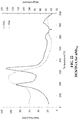
- FIG. 15 depicts FTIR stretching frequencies of the nanoscale organic layer for nMx 20 .
- the nanoscale organic layer is a glycol and shows a band at 1080 cm ⁇ 1 (C—O stretching in the glycol) and at 2850-2970 cm ⁇ 1 (C—H stretching in the glycol). This indicates that the there is an association with the glycol nanoscale organic layer and the two distinct core nanoparticles.
- FIG. 16 depicts Raman scattering for nMx 12 , where octadecanol is the nanoscale organic layer.
- the Raman scan is performed from 500 cm ⁇ 1 to 3500 cm ⁇ 1 .
- Octadecanol gave Raman frequencies for nMx 12 at about 1092 cm ⁇ 1 (C—O stretch) and at about 2850-2920 cm ⁇ 1 (C—H stretch).
- FIG. 17 depicts Raman scattering for nMx 13 , where octadecanoic acid is the nanoscale organic layer.
- the Raman scan is performed from 500 cm ⁇ 1 to 3500 cm ⁇ 1 .
- Octadecanoic acid gave Raman frequencies for nMx 13 at about 1294 cm ⁇ 1 (C—O stretch), at about 1645 cm ⁇ 1 (C ⁇ O stretch), and at about 2841-3024 cm ⁇ 1 (C—H stretch).
- FIG. 18 depicts Raman scattering for nMx 16 , where a mixture of octadecanol and TEG is the nanoscale organic layer.
- the Raman scan is performed from 500 cm ⁇ 1 to 3500 cm ⁇ 1 .
- the mixture of octadecanol and TEG gave Raman frequencies for nMx 16 from about 2839 cm ⁇ 1 to about 2915 cm ⁇ 1 (C—H stretch). Note that the C—O stretch is too weak and not observable.
- FIG. 19 depicts Raman scattering for nMx 19 , where PEG is the nanoscale organic layer.
- the Raman scan is performed from 500 cm ⁇ 1 to 3500 cm ⁇ 1 .
- PEG gave Raman frequencies for nMx 19 at about 1086 cm ⁇ 1 (C—O stretch) and at about 2868-2950 cm ⁇ 1 (C—H stretch).
- FIG. 20 displays DSC-TGA curves for nMx 10 and commercial Li 3 AlH 6 under ambient air flow.
- the nanoscale organic layer is 1, 7-octadiene.
- FIG. 21 displays DSC-TGA curves for nMx 11 under ambient air flow with a mixture of epoxydecene and alkadiene as the nanoscale organic layer, where the starting materials are mixed at a ratio of 10:1:2 of LiAlH 4 :epoxydecene:octadiene respectively.
- FIG. 22 displays DSC-TGA curves for nMx 12 under ambient air flow with 50% steryl-alcohol as the nanoscale organic layer.
- FIG. 23 displays DSC-TGA curves for nMx 13 under ambient air flow with 44% oleic acid as the nanoscale organic layer.
- FIG. 24 displays DSC-TGA curves for nMx 16 under ambient air flow with a mixture of octadecanol/TEG as the nanoscale organic layer.
- FIG. 25 displays DSC-TGA curves for nMx 19 under ambient air flow with PEG 600 as the nanoscale organic layer.
- FIG. 26 depicts two separate TEM images of nMx 10 , where core metal nanosurfaces are passivated by octa-diene as the nanoscale organic layer.
- FIG. 27 depicts TEM imaging of nMx 12 , where core metal surfaces are passivated by 50% steryl alcohol as the nanoscale organic layer.
- FIG. 28 depicts TEM imaging of nMx 13 , where the surfaces of the core nanoparticles are passivated by 44% oleic acid as the nanoscale organic layer.
- FIG. 29 depicts TEM imaging nMx 16 , where core metal nanosurfaces are passivated by a mixture of octadecanol/TEG as the nanoscale organic layer.
- FIG. 30 depicts TEM imaging for nMx 19 , where core metal nanosurfaces are passivated by PEG 600 as the nanoscale organic layer.
- FIG. 31 depicts TEM imaging for nMx 20 , where core metal nanosurfaces are passivated by TEG as the nanoscale organic layer.
- FIG. 32 a and FIG. 32 b display a relative comparison of shockwave velocities of secondary high explosive PETN with and without nMx 20 .
- FIG. 33 depicts blasting data for the present invention, wherein the y-axis presents log of enhancement of blast as a function of the amount of metal added to HMX.
- FIG. 34 is a schematic of our set up to measure the log blast of nano-enhanced HMX.
- our invention includes a singular material having two distinct nanoparticles, an amount of Ti metal, and an organic nanoscale layer, i.e., lithium aluminum hexahydride (Li 3 AlH 6 ) and elemental aluminum nanoparticles with an amount of Ti metal having passivated surfaces that display unique burning characteristics that lend energy to explosions when admixed with a secondary high explosive.
- the nanocomposite is air stable for safe handling in air when mixing with a secondary high explosive.
- nanoparticle generally refer to very small particles having all three dimensions from about 1 nm and to about 100 nm. Nanoparticles have a greater number of surface atoms relative to the same chemical species in bulk or microscale ( ⁇ m) form. In contrast, for bulk materials larger than one micrometer, the percentage of atoms at the surface is minuscule relative to the total number of atoms within the material, which is why bulk materials generally have uniform physical properties throughout regardless of its size. Because the percentage of atoms at the surface of a nanomaterial are significantly higher than that of the bulk form, nanomaterials demonstrate chemical and physical properties that are not found in the bulk, even when that bulk material includes a dispersion of nanocrystalline domains [12, 13].
- Nanoparticles are so small that their physical properties are not constant as a function of their size because the percentage of atoms at the surface of a material becomes significant, where these unique size dependent properties can be described using quantum physics.
- size-dependent properties are observed, such as surface plasmon resonance in some metal particles, or increased magnetism for a metal that is significantly diminished as the metal moves into its bulk form.
- Our invention examines and provides for air stable nanoparticles that exhibit unique burning characteristics synthesized via a controlled bottom up reaction. Due to the larger number of atoms at our nanoparticle surfaces, fundamentally new combustion and hydrogen evolution behaviors are observed when our material is kept at the nanoscale, while being air stable, i.e. the present invention stabilizes Li 3 AlH 6 nanoparticles and elemental Al metal nanoparticles, which are more combustible than their bulk metal counterparts.
- nMx generally refers to a singular material, being a nanocomposite of lithium aluminum hexahydride nanoparticles, Li 3 AlH 6 , elemental Al metal nanoparticles, an amount of Ti metal, and a nanoscale organic layer. nMx exists in various iterations according to the nanoscale organic layer used to passivate the surfaces of the core metals. Passivation makes nMx air-stable and protects and preserves the combustion properties of the singular material isolated from the decomposition of LiAlH 4 .
- single material generally refers to the nanocomposite nature of nMx being a homogeneous mixture of two distinct nanoparticles, Li 3 AlH 6 nanoparticles, elemental Al metal nanoparticles, and an amount of Ti metal. All aspects of both core metals are subjected to nanoscale organic passivation.
- passivation generally refers to a process of covering or modifying the outer surfaces of a core material, being nanoparticles, to kinetically stabilize otherwise reactive molecules, where the stabilization substantially slows the ability of the underlying core material to react with oxidative or solvolytic agents.
- nanoscale organic layer generally refers to organic ligands or monomeric materials capable of polymerization or polymeric materials that cover the outer surfaces of two distinct core metals, being nanoparticles, to kinetically stabilize otherwise reactive nanoparticles, where the stabilization substantially slows the ability of the underlying core material to react with oxidative or solvolytic agents.
- explosive(s),” “secondary high explosive(s),” or “explosive material(s)” generally refer(s) to chemical compounds that rapidly and violently decompose when subjected to heat, striking, or a detonation, to release a large amount of energy in the forms of additional heat, potential flames, shockwaves, and an increased pressure (volume) of hot gases.
- the rapid and large release of heat and gases kickstart a propagating shockwave through the reactive material at, about, or above the speed of sound creating a destructive force and a loud sound.
- nMx nanocomposite is admixed with chemical composition being at least one secondary high explosive including but not limited to: 5-nitro triazol-3-one (NTO); 2,4,6-trinitrotoluene (TNT); tetranitro-dibenzo-1,3a,4,4a-tetraazapentalene (TACOT); cyclotetramethylene-tetranitramine; tetrahexamine tetranitramine; 1,3,5,7-tetranitro-1,3,5,7-tetrazocane (HMX); 2,2′,4,4′,6,6′-hexanitrostilbene (HNS); 1,3-diamino-2,4,6-trinitrobenzene (DATB); 1,3,5-triamino-2,4,6-trinitrobenzene (TATB); 1,3,5-trinitrobenzene (TNB); 3,5-dinitro-2,6-bis-
- NTO 5-nitro triazol-3-one
- TNT 2,4,
- the secondary high explosive may also include without limitation a plastic or putty explosive, which is hand malleable, such as composition 4, or C4, which includes approximately 91% 1,3,5-trinitroperhydro-1,3,5-triazine; 6% plasticizer (e.g. diethylhexyl or dioctyl sebacate) and 2% plastic binder (e.g. polyisobutylene) by weight, or in contrast a polymer bonded explosive such as LX-14 (96% 1,3,5,7-tetranitro-1,3,5,7-tetrazocane and 4% polymer binders (e.g. estane & 5702-F1)).
- a plastic or putty explosive which is hand malleable, such as composition 4, or C4, which includes approximately 91% 1,3,5-trinitroperhydro-1,3,5-triazine; 6% plasticizer (e.g. diethylhexyl or dioctyl sebacate) and 2% plastic binder (e.g
- detonation generally refers to the swift combustion of a fuel into energetic gases that expand where energy is released by heat, shock and a noise.
- explosive train generally refers to a triggering sequence of in-line elements being a fuse, an initiator, an optional booster, and a main charge, where the fuse sends energy to the initiator to create shockwaves that enter and propagate through a main charge to initiate a rapid decomposition of a chemical compound resulting in an explosion.
- shockwave velocity generally refers to the speed at which a shockwave propagates through an explosive material.
- Gurney Energy generally refers to the kinetics imparted to metal, or other materials, that surround(s) an explosive when detonated. The speed at which metal fragments explode outward are a function of the explosive's shockwave velocity and energy imparted to the metal by explosive gases.
- blast generally refers to multiple phenomena, but blast is usually used to refer to a quantification of the energy delivered by, and effectiveness of, an explosive based on pressure differentials, an explosion. Blast could also be defined as the detonation pressure, or peak dynamic pressure, in the shock front of an explosive.
- munition generally refer to “[a]mmunition and components produced for or used by armed forces for nation security defense. It includes ammunition products under the control of the Department of Defense, the U.S. Coast Guard, the Department of Energy, and the National Guard.
- the term also includes confined gases, liquid, and solid propellants; explosives; pyrotechnics; chemical and riot control agents; smokes and incendiaries; bulk explosives; chemical agents; chemical munitions, rockets; guided and ballistic missiles; bombs, warheads; mortar rounds; artillery munitions; small arms ammunition; hand and rifle grenades; land and underwater mines; torpedoes; depth charges; cluster munitions and dispensers; demolition charges; exploding bolts; claymores; or thermobaric devices” [14].
- binder generally refers to the property of nMx's nanoscale organic layer or an additional chemical agent used to bond, and/or desensitize, or affect the overall mechanical properties of our formulation being a secondary high explosive admixed with our nanoparticles.
- thermoite generally refers to a combustible material that intramolecularly coexists with its oxidant and does not require an external oxygen supply to sustain the ensuing redox reaction, e.g. the material exhibits self-sustaining combustion in an inert environment.
- nanoparticle generally refers to a thermite material composed of nanoparticles.
- organic ether generally refers to an oxygen-containing hydrocarbon comprised of connecting ether C—O—C bonds, i.e. an oxygen atom connected to alkyl or aryl groups.
- amu generally refers to atomic mass unit, a unit of molecular mass measurement relative to a carbon-12 standard.
- polymerization generally refers to a chemical process of bonding together multiple repeating units of a monomer, or differing molecules, to form a larger chain-like matrix, or network type structure.
- the monomer molecules may be alike, or they may represent two, three, or more different compounds.
- Combined monomers make a product that has certain unique physical properties such as elasticity, high tensile strength, or the ability to form fibers that differentiate polymers from substances composed of smaller and simpler molecules; often, many thousands of monomer units are incorporated in a single molecule of a polymer.
- the formation of stable covalent chemical bonds between the monomers sets polymerization apart from other processes, such as crystallization, in which large numbers of molecules aggregate under the influence of weak intermolecular forces.
- copolymerization generally refers to the process of two or more different monomers bonding together to polymerize.
- organic matrix generally refers to a three-dimensional interwoven net of polymer molecules that encompass a core nanoparticle material, or the ability of non-polymeric materials being monolayers about the surfaces of the nanoparticles to self-assemble.
- isolated nanoparticles generally refers to metal containing cores that are not in direct contact such that they do not form micron scale metal aggregates.
- initiiator generally refers to a chemical that speeds up a reaction and is consumed in the reaction.
- Ti alkoxide initiates the decomposition of LiAlH 4 , is consumed, and becomes part of the final nanocomposite.
- the term also refers to an in-line element of an explosive train used to denotate a secondary high explosive.
- pyrophoric generally refers to the ability of true nanoparticles to spontaneously burn in air.
- air stable or “air stability” generally refers to our observation that the metal nanoparticles of nMx 12 -nMx 20 neither spontaneously ignite nor rapidly react within seconds with ambient oxygen in air, primarily from H 2 O and O 2 .
- nMx 12 through nMx 20 are all air stable when using proper preparation methods as disclosed herein.
- nMx 10 is unstable in air, where larger amounts have pyrophoric hot spots that spontaneously ignite.
- nMx 11 is not as pyrophoric as nMx 10 , but larger quantities have pyrophoric hot spots, also making the material slightly air unstable.
- air sensitive or “air sensitivity” generally refers to a similar but different property than air stability of reactive materials. Air sensitivity is the tendency for an energetic material to slowly react in air (primarily with water and molecular oxygen) to lose energy density. This loss of energy density may take place over the timescale of fractions of an hour, days, weeks, or longer periods of time.
- the air sensitivity of nMx is at a minimum for nMx 12 and nMx 13 .
- terminal O—H cleavage generally refers to the severing of an oxygen-hydrogen bond in an alcohol or carboxylic acid with a hydroxyl functionality at the end of a hydrocarbon chain.
- the term “dispersed” generally refers to a nonuniform distribution of nanoparticles or nanocrystalline deposits within a micron sized bulk material.
- energy energy
- enthalpy heat
- energy density energy density
- E energy density
- the terms “energy,” “enthalpy,” “heat” or “energy density” are generally used interchangeably herein, where the important quantitative measurement of heat is via enthalpies.
- the amount of combustible energy, or heat, generated via a reaction is dictated by the chemical and energetic properties of the source material.
- enthalpy is typically called “heat” and the “enthalpy of combustion” is called “heat of combustion,” where the heat of combustion, ⁇ H°, indicates the amount of heat energy created per mol of a burning source material [kJ/mol].
- thermoplastic generally refers to thermoplastic polyurethane, styrene block-copolymers, thermoplastic silicone elastomer, aliphatic or semi-aromatic polyamides, thermoplastic vulcanisate, acrylonitrile butadiene styrene (ABS), polylactic acid, polyvinyl alcohol, polycarbonate, polymethylmethacrylate, polyethylene, polypropylene, polystyrene, nylon, polycarbonate, polyvinyl chloride, Teflon, or any combination thereof.
- ABS acrylonitrile butadiene styrene
- base material generally refers to a feed stock for a 3D printer being a mixture of a thermoplastic polymer suitable for 3D printing, an amount of an admixture being at least one nMx nanocomposite and a secondary high explosive, and other optional fuels, additives, binders, stabilizers, and the like.
- Ti generally refers to the chemical element titanium. It is a transition metal with atomic no. 22. In the current invention, it is associated with the nanoparticles of Li 3 AlH 6 and elemental Al and is generated from a titanium(IV) compound, a titanium(IV) tetraalkoxylate, titanium(IV) isopropoxide (Ti(O i Pr 4 ), or a titanium(IV) tetraaryloxylate.
- the present invention harnesses the high energy densities of Li 3 AlH 6 nanoparticles and elemental Al nanoparticles for enhancing secondary high explosives by exploiting the thermal catalytic decomposition of LiAlH 4 .
- a bottom up reaction gives a final composite that has a greater number of surface atoms resulting in increased energy densities for each nanoparticle.
- the precise reaction method uses a catalyst to ensure that a significant number of both nanoparticles are generated and the nanoscale organic layer successfully air stabilizes and preserves the much-desired energetic potential of the final nMx nanocomposite.
- the passivation agent is added 10 minutes after the addition of the titanium isopropoxide solution is completed. It is an embodiment of the present invention wherein the full reaction time is about 40 minutes to about 2 hours. The reaction starts when the nanoscale organic layer is added to the reaction mixture, and the reaction ends when the reaction mixture is put under vacuum boil.
- the molar ratio (moles of elemental Al nanoparticles and Li 3 AlH 6 nanoparticles divided by the moles of nanoscale organic layer) differs between nMx iterations.
- the nMx cores are composed of 2 moles of elemental Al nanoparticles for 1 mole of Li 3 AlH 6 nanoparticles.
- the molar ratio of nMx (Al NPs and Li 3 AlH 6 NPs) to stearyl alcohol is 7.9:1. Therefore, the molar ratio of elemental Al nanoparticles to Li 3 AlH 6 nanoparticles to stearyl alcohol is 5.2:2.6:1.
- nMx 13 the molar ratio of nMx to oleic acid is also 7.9:1.
- nMx 16 the molar ratio of nMx to capping agents is 6.3:1.
- nMx 19 the molar ratio of nMx to capping agent is 49:1. This molar ratio is very high due to the molecular weight of the PEG molecules.
- nMx 20 the molar ratio of nMx to capping agent is 4.4:1.
- nMx 11 the nanoscale organic layer is not a self-assembled monolayer but nMx 11 cores initiate a PIERMEN (polymerization initiation by electron rich metal nanoparticles) capping mechanism. So, the molar ratio of nMx 11 to epoxydecene (monomer) to octadiene (monomer) is 10:1:2.
- Cold welding reduces the surface area of the final ball milled material, thereby reducing the observed energy output of the same.
- Cold welding is an unavoidable side effect of ball milling
- Cold welding not only creates a distribution of unwanted chemical species in the reaction vessel, but also contributes to a large distribution size of the final products, where one can observe nanoparticles, microparticles, and species that are essentially bulk metals [15].
- Ball milling removes our ability to properly isolate true Li 3 AlH 6 nanoparticles and elemental Al metal nanoparticles without impurities during the decomposition of LiAlH 4 .
- Ball milling would also remove our ability to control the particle size of our composite. Strikes from the balls would inevitably crack and damage our nanoscale organic layer used to protect and preserve the composite. This would result in a pyrophoric material that is unsafe for handling. It could also affect the combustion properties of the composite material and if an oxide layer forms about the core metal surfaces, this could result in a noticeable reduction in the unique burning properties of our invention. Therefore, it is a preferred embodiment of the present invention for the decomposition of LiAlH 4 to be carried out via the bottom up reactions as detailed below.
- the alkoxide or Ti catalyst for the present invention may include, without limitation, a titanium(IV) compound, a titanium(IV) tetraalkoxylate, such as titanium(IV) isopropoxide, or a titanium(IV) tetraaryloxylate, or any combination thereof.
- the alkoxide catalyst is titanium isopropoxide (Ti(O i Pr 4 , 97%).
- LiAlH 4 decomposition is difficult to achieve.
- the preferred catalyst for LiAlH 4 decomposition via ball milling is a Ti halide.
- an alkoxide is used as a catalyst for this decomposition, impurities are observed [7].
- the present invention cannot use Ti halide catalysts such as TiCl 4 due to the formation of chloride impurities during the reaction.
- Catalytic decomposition of LiAlH 4 via ball milling shows that short grind times are necessary to ensure that newly formed Li 3 AlH 6 does not further decompose into the second and third decomposition reactions and that Ti alkoxide catalysts are detrimental to ball milling LiAlH 4 , and, as such, Ti halides are the preferred catalysts for the ball milling experiments [16].
- the decomposition of LiAlH 4 is a relatively slow reaction [16].
- the method of making the present invention is a delicate push and pull between reaction temperature, reaction time, and catalyst amount used to create a system that holds the decomposition of LiAlH 4 to its first reaction step, where we create nanoparticles of both Li 3 AlH 6 and elemental Al metal.
- the reaction is performed below 100° C. to stop Li 3 AlH 6 from further decomposition.
- Ti alkoxides are more like nanoparticle initiators, where the alkoxide reacts with LiAlH 4 to form molecular seeds by which the nanoparticles grow and where there are Ti remnants associated with the metals surfaces of both Li 3 AlH 6 and elemental Al nanoparticles.
- the present invention discloses a singular material that is a nanocomposite made of elemental aluminum nanoparticles, lithium aluminum hexahydride nanoparticles, an amount of Ti metal, and a nanoscale organic layer.
- this composite material nMx which is air stable and protects and preserves the combustion properties of the composite isolated from the first reaction step of LiAlH 4 decomposition.
- nMx 10 -nMx 20 based on the capping agents used to passivate their surfaces.
- Passivation of our nanoparticle surfaces serves multiple purposes. It controls particle size and distribution, prevents aggregation to keep the core metals as isolated nanoparticles, passivation blocks impurities that may form on particle surfaces, controls morphology and shape of the nanoparticles, and gives air stability, thereby getting rid of unwanted burning in ambient conditions. It is an embodiment of the present invention where the shape of the nanoparticles are a function of the passivation agent used and the nanometer scale. The shapes range from equant to 1 dimensional structures and may be spheroidal to rod shaped as well.
- Elemental Al and Li 3 AlH 6 nanoparticles are very sensitive and dangerous to work with. In their unpassivated states, these particles are highly reactive and will spontaneously ignite and burn in ambient conditions. Because of the danger related to the core metals' high reactivity, our nanoparticle surfaces are altered to ensure air stability and removes the possibility of flammability and pyrophoricity in air over a period of time. This makes nMx safe to handle in air and to transport for use in applications.
- FIG. 8 depicts a chart showing a relationship between the oxygen atom content of the nanoscale organic layer and air stability for nMx 10 -nMx 20 , where the increasing nMx subscripts correspond to increased oxygen content in the nanoscale organic layer about the core metals.
- the x-axis of FIG. 8 shows the variation in passivation agents.
- the y-axis of FIG. 8 represents the total mass fraction of organic in the nanocomposite.
- nMx 10 has a polymerized organic hydrocarbon cap.
- the O atom mass percentage is 0%, and, at the other end, nMx 20 , has a polyethylene oxide capping structure, with an O atom mass percentage of ⁇ 42%.
- nMx 10 and nMx 20 have intermediate O atom mass percentages between 0% and 42%.
- the maximum oxygen atom content we observe for a stable composite is for nMx 20 , with 42% by mass oxygen content in the passivating agent.
- the oxygen atom content for nMx 12 and nMx 13 (approximately 6% and 12%, respectively) leads to the formation of surface aluminum oxygen bonds throughout the composite that renders the material fully air stable.
- the nanoscale organic layer is located about the surfaces of the composite, with a mass percentage from about 5.0% to about 75% of the total mass.
- One mass fraction of organic can vary down to 5.0% for air stability of the nanocomposite. Hot spots are not observed with nMx 12 that would lead to spontaneous burning and the energy density of the material is at a maximum ( ⁇ 38 kJ/g for nMx 12 ).
- nMx 12 through nMx 20 neither spontaneously ignite nor rapidly react with ambient oxygen in air, primarily from H 2 O and O 2 .
- nMx 12 through nMx 20 are all air stable when using the methods of making disclosed herein.
- nMx 10 to nMx 20 vary in both air stability and air sensitivity.
- nMx 10 is unstable in air, where large quantities of nMx 10 have pyrophoric hot spots that spontaneously ignite.
- nMx 11 is not as reactive as nMx 10 , but, in large quantities, nMx 11 displays pyrophoric behavior, making large quantities of the material air unstable. nMx 10 and nMx 11 are generally unsafe to handle in any humid environment. In summary, nMx nanocomposites below nMx 12 are not air stable. The reactivity of nMx with air is very high with nMx 10 , decreases to a minimum at nMx 12 and nMx 13 , and slowly increases as one moves left from nMx 13 across FIG. 8 to nMx 19 and nMx 20 .
- Air sensitivity is a similar but different property than air stability.
- Air sensitivity is the tendency for an energetic material to slowly react in air (primarily with water and molecular oxygen) to lose energy density. This loss of energy density may take place over the timescale of fractions of an hour, days, weeks, or longer periods of time.
- nMx 12 and nMx 13 The air sensitivity of nMx is at a minimum for nMx 12 and nMx 13 . These materials are air stable and have low air sensitivity, losing energy density over longer periods of time, depending on air humidity.
- the air sensitivity increases moving from nMx 12 and nMx 13 to nMx 19 and nMx 20 .
- the nanoscale organic layer for both nMx 19 and nMx 20 for example PEG capping groups, are more hydrophilic. This hydrophilicity results in more atmospheric water accessing the metal cores of nMx 19 and nMx 20 , thus reducing the energy density more rapidly in air and indicating that they are more air sensitive.
- the combination of the elemental Al nanoparticles and the Li 3 AlH 6 nanoparticles are in an approximately equal amount by mass to the entire nanocomposite.
- the air stability of the nMx continue to evolve. Due to increased air sensitivity, the air stability of nMx 19 and nMx 20 decrease.
- the increase in O-atom content of the organic cap increases the accessibility of atmospheric water to the Al-containing nanoparticles. This accessibility limits the long-term air stability.
- nMx combustion enthalpy which proceeds by way of the following combustion reaction: 2Al(NPs)+Li 3 AlH 6 (NPs)+NSOL+O 2 (g) ⁇ 3/2Li 2 O(s)+ 3/2Al 2 O 3 (s)+12CO 2 (g)+15H 2 O(g), where the NSOL may include, without limitation, a poly(alkadiene), a poly(epoxyalkene-co-alkadiene), a fatty alcohol, a fatty acid, a polyethylene glycol (either with or without substitution and having a molecular weight from about 200 g/mol to about 6000 g/mol).
- Air stability is measured for both nMx 12 and nMx 20 .
- Each sample is a powder form and left exposed to the ambient air in a pan, where the humidity was greater than or equal to 55% relative humidity.
- Table 2 shows air stability for nMx 12 and nMx 20 . After exposure to ambient air, energy densities are measured against time, where all bomb calorimetry data is acquired with a Parr1341 Plain Jacket calorimeter.
- All nMx samples are ignited under 20 atm of oxygen gas within the Parr 1108 Oxygen Bomb.
- the sample is placed into a stainless steel capsule (Parr 43AS), and the sample is ignited with a ⁇ 10 cm nickel alloy fuse wire (Parr 45C10).
- the electric current used to ignite the sample is provided by a Parr 2901EB Ignition Unit.
- the temperature is monitored with a digital thermometer (Parr 6775).
- the assembled bomb calorimeter containing the sample is brought to thermal equilibrium with the aid of mechanical stirring. Once the calorimeter reaches thermal equilibrium, the sample is ignited to raise the temperature, and the calorimeter is left to stir until thermal equilibrium is established.
- the heat of combustion is acquired from the rise in temperature, the weight of the sample, and the premeasured calorimeter constant value.
- the sample is placed on a 102 mm diameter Al dish and rests in the air for ⁇ 20-30 minutes with a relative humidity of ⁇ 55%. It is an embodiment of the present invention where the nanocomposite air stability is measured by an 10% decrease in measured energy density for a period of 8 hours when the nanocomposite is exposed to ambient air and remains non-pyrophoric.
- Both nanothermites may combust via the following reactions.
- We list the primary thermite reaction in the absence of O 2 for nMx 20 (and nMx 19 ) as: 2Al(NPs)+Li 3 AlH 6 (NPs)+6(C 2 H 4 O) n ⁇ 3/2Li 2 O(s)+ 3/2Al 2 O 3 (s)+12C(s)+15H 2 (g), where ⁇ H° reaction ⁇ 8.03 kJ/g for nMx 20 .
- nMx 12 -nMx 20 Table 4 lists the % oxygen by mass for various nMx iterations nMx 12 -nMx 20 and their corresponding combustion enthalpies as measured by bomb calorimetry. For simplicity nMx 14 , nMx 15 , nMx 17 , and nMx 18 are not listed. As the extent of oxidation of the organic capping layer increases, the enthalpy of combustion of the system decreases, as expected. However, as not to be bound by theory, nMx 20 includes pure PEG (no carbon side chains) and derives its large energy density from the nanoparticle cores.
- the range of physical parameters that provide nanothermite behavior for nMx 20 includes, but are not limited to, the elemental Al nanoparticles having particle diameters in the range of about 7 nm to about 100 nm, the Li 3 AlH 6 nanoparticles having particle diameters in the range of about 15 nm to about 100 nm, the PEG capping agent having a molecular weight range from about 150 amu to about 10,000 amu, the composite to PEG mass ratio being from about 1:10 to about 4:1, and the elemental aluminum nanoparticles and the Li 3 AlH 6 nanoparticles having a mass ratio from about 10:1 to about 1:3. It is a preferred embodiment of the invention wherein the PEG capping agent has a molecular weight of about 194 amu for the passivation of nMx 20 .
- nMx 12 - nMx 20 where the % oxygen by mass is given for various nMx iterations according to the capping agent along with the corresponding combustion enthalpies, ⁇ ° combustion , as measured by bomb calorimetry.
- Reaction No. 6 represents the first aluminum-based nanothermite with an organic ether as the oxidizing agent.
- Organic explosives typically ring strained organic compounds with covalently bonded nitro groups
- Aluminum nanoparticles containing nanothermites that are known in the literature typically contain a metal oxide (such as copper (I) oxide or molybdenum (VI) oxide) that serves as the oxygen source.
- nMx 20 uses an organic ether as the thermite oxidant.
- Ethers are generally considered to be relatively unreactive and they are not considered to be oxidizing agents under normal chemical conditions. This is one reason organic ethers have not been investigated as nanothermite oxidizers.
- nMx iterations with capping agents having lower oxygen atom content are better suited to applications as a propellant due to their increased air stability, better compatibility with binders, and higher overall energy density.
- Our composite has shown unique burning characteristics and energy outputs that could lead to improved specific impulses for engines needing a high-energy output with a higher velocity of released gases and improved mass flow.
- each nMx composite depends on the percentage of oxygen available in the organic nanoscale layer used when passivating our nanoparticles. More specifically, the combustion properties of the material track to the oxygen atom content in the organic matrix. As the oxygen atom content increases in the capping agent, nMx's air stability changes.
- the capping agents are selected from alkadienes (nMx 10 ) or a mixture of an epoxyalkene and an alkadiene (nMx 11 ), including but not limited to 1,7-octadiene, 1,9-decadiene, myrcene, or 1,13-tetradecadiene, epoxyhexene, epoxyheptene, epoxyoctene, epoxynonene, epoxydecene, epoxyundecene, epoxydodecene, 1,3-butadiene, isoprene, 2-methyl-1,3-pentadiene, 2,3-dimethyl-1,3-butadiene, 1,3-pentadiene, 2-methyl-3-ethyl-1,3-butadiene, 2-methyl-3-ethyl-1,3-pentadiene, 1,3-hexadiene, 2-methyl-1,3
- passivation of nMx 10 and nMx 11 occurs via polymerization or co-polymerization of the alkadienes or a mixture of an epoxyalkene and an alkadiene to form a matrix about the Al nanoparticles and Li 3 AlH 6 nanoparticles. It is believed that the reductive nature of the elemental aluminum nanoparticles causes the carbon-carbon double bonds of the alkadiene or the epoxyalkene to cleave, which promotes polymerization or copolymerization about our composite core material. In some embodiments, the polyolefin polymerization is thermally promoted. In addition, we believe that surface hydrides are not able to initiate polymerization of certain capping agents, leaving those areas on the surface unpassivated. Because of the low oxygen content and lack of substantial aluminum oxygen bonding at the surfaces of our composite, this polymerization scheme leaves portions of the Li 3 AlH 6 nanoparticles exposed to ambient reactions, which can induce unwanted burning across the entire mixture.
- these organic polymers form a hydrophobic layer around the nanomaterial such that the polymer hinders the reactivity of the same.
- capping the nanoparticles with an organic polymer hinders the formation of aluminum oxide leading to a more reactive nanomaterial.
- the hydrophobic polymer may delay reactive molecules such as water and oxygen from reaching the surface of the nanomaterial.
- the nanoparticles are capped with alkyl-substituted epoxides.
- these polymers are formed from the polymerization of the alkadienes.
- capping is achieved using transition metal ions or the use of perfluoroalkylcarboxylic acids as shown by Foley, et al., 2005 and Jouet, et al., 2005, both of which are incorporated herein by reference [18, 19].
- the use of polymers to act as a capping agent is also considered.
- Other capping agents include without limitation fatty acids, fatty alcohols, poly(alka-dienes), poly(epoxyalkene-co-alkadiene), polyethylene glycol (PEG), or any combinations thereof.
- capping agents for passivation may include, but are not limited to, fatty alcohols being tert-butyl alcohol, tert-amyl alcohol, 3-methyl-3-pentanol, ethchlorvynol, 1-octanol (capryl alcohol), (1-nonanol), 1-decanol (decyl alcohol, capric alcohol), undecyl alcohol (1-undecanol, undecanol, hendecanol), HTPB, lauryl alcohol (dodecanol, 1-dodecanol), tridecyl alcohol (1-tridecanol, tridecanol, isotridecanol), myristyl alcohol (1-tetradecanol), pentadecyl alcohol (1-pentadecanol, pentadecanol), cetyl alcohol (1-hexadecanol), palmitoleyl alcohol (cis-9-hexadecen-1-
- capping agents for passivation may include, but are not limited to, carboxylic (fatty) acids being butyric acid [CH 3 (CH 2 ) 2 COOH], valeric acid [CH 3 (CH 2 ) 3 COOH], caproic acid [CH 3 (CH 2 ) 4 COOH], enanthic acid [CH 3 (CH 2 ) 5 COOH], caprylic acid [CH 3 (CH 2 ) 6 COOH], pelargonic acid [CH 3 (CH 2 ) 7 COOH], capric acid [CH 3 (CH 2 ) 8 COOH], undecylic acid [CH 3 (CH 2 ) 9 COOH], lauric acid [CH 3 (CH 2 ) 10 COOH], tridecylic acid [CH 3 (CH 2 ) 11 COOH], myristic acid [CH 3 (CH 2 ) 12 COOH], pentadecylic acid [CH 3 (CH 2 ) 13 COOH], palmitic acid [CH 3 (CH 2 ) 14 COOH], margaric acid [CH
- capping agents for passivation include, but are not limited to, a mixture of a fatty acid, fatty alcohol, polyethylene alcohol (PEG), and an alkadiene.
- Fatty acids include the list of acids used to passivate nMx 13 or any combinations thereof.
- the fatty alcohols include the list of alcohols used to passivate nMx 12 or any combinations thereof.
- the alkadienes include the list of alkadienes used to passivate nMx 10 and nMx 11 or any combinations thereof.
- capping agents for passivation include, but are not limited to, PEG, PEO, tetraethylene glycol, or triethylene glycol all having various molecular weights.
- Lithium aluminum hydride LiAlH 4 , powder, reagent grade, 95%), titanium (IV) isopropoxide (99.999% trace metals basis), 1,7-octadiene (98%), 1,9-decadiene (98%), 1,13-tetradecadiene (90%), toluene (anhydrous, 99.8%), tetrahydrofuran (THF, anhydrous, 99.9%, inhibitor-free), polyethylene glycol (PEG), tetrethylene glycol, triethylene glycol, stearyl alcohol, and stearic acid were all purchased from Sigma Aldrich.
- Anhydrous diethyl ether was purchased from J. T. Baker. Toluene and THF were distilled over sodium metal and potassium metal, respectively, to remove any trace oxygen and water. Diethyl ether and methanol were distilled over 4 ⁇ molecular sieves. All alkenes were subjected to numerous freeze-pump-thaw cycles to remove any oxygen present. Generally, titanium (IV) alkoxide was dissolved in toluene to create a dilute (millimolar range) solution. Both LiAlH 4 and the titanium catalyst were stored under argon atmosphere to prevent oxygen/water exposure.
- Reaction No. 1 begins by adding LiAlH 4 (0.246 g, 6.48 mmol) to a round-bottom Schlenk flask and dissolving the ternary metal hydride in either THF or diethyl ether to create a 1.0 M solution. Following the addition of 20 mL toluene, the reaction mixture is heated to 85° C. using a J-KEM Model Apollo dual channel temperature controller. Upon reaching 85° C., 16 ⁇ L Ti(O i Pr) 4 is added followed by the immediate addition of the capping agent (octadiene, decadiene, or tetradecadiene; 10:1 Al:capping agent molar ratio). The reaction mixture can stir under reflux for 30 minutes, and all solvents are then removed in vacuo.
- the capping agent octadiene, decadiene, or tetradecadiene; 10:1 Al:capping agent molar ratio
- the nanocomposite is formed from the decomposition of LiAlH 4 in the presence of Ti(O i Pr) 4 at 85° C. in either THF or diethyl ether.
- the reaction temperature can be from about 75° C. to about 150° C.
- the temperature is selected to stop the decomposition of LiAlH 4 at the first reaction step to produce Al NPs, Li 3 AlH 6 NPs, and H 2 gas.
- the composite material is co-formed ( ⁇ 50 weight % aluminum:lithium alanate NPs) in the LiAlH 4 decomposition reaction.
- the method further comprises heating the solution for a time of about 1 minute to about 3 hours. In some embodiments, the time is about 30 minutes.
- Dienes such as 1,7-octadiene, 1,9-decadiene, and 1,13-tetradecadiene, were used as passivating agents since the uncapped particles were pyrophoric in air. All reactions were performed on a Schlenk line under argon atmosphere.
- the composite has a ratio of Al nanoparticles to Li 3 AlH 6 nanoparticles from about 5:1 to about 1:5, and in some cases, the ratio is about 1:1.
- the composite material being a mixture of Al nanoparticles and Li 3 AlH 6 nanoparticles, comprise a core diameter from about 15 nm to about 60 nm.
- the optimal diameter for all formed nanospheres should have a core diameter from about 35 nm to about 55 nm.
- the method includes adding 0.1 equivalents of capping agent per equivalent of aluminum.
- the capping agents for the above reaction may include without limitation an alkene(C ⁇ 30), substituted alkene(C ⁇ 30), an alkene(C ⁇ 18), an alkene(C ⁇ 14), an epoxide(C ⁇ 30), or a substituted epoxide(C ⁇ 30), where the capping agent may undergo polymerization to form a matrix like coating across all nanoparticle surfaces.
- the alkene contains two or more carbon carbon double bonds.
- the capping agent is 1,7-octadiene, 1,9-decadiene, myrcene, or 1,13-tetradecadiene.
- the solvent is heated to reflux.
- the titanium compound is added after the solution has reached the temperature from about 70° C. to about 100° C.
- the method is performed under an inert atmosphere.
- the inert atmosphere is nitrogen gas or a noble gas.
- the inert atmosphere is argon.
- the method further comprises adding a capping agent to the reaction.
- the solvent is an organic solvent, non-limiting examples being ether(C ⁇ 12), tetrahydrofuran or diethyl ether, arene(C ⁇ 12), toluene, a mixture of toluene and tetrahydrofuran, a mixture of toluene and diethyl ether, or any combinations thereof.
- the catalyst may be, without limitation, a titanium(IV) compound, a titanium(IV) tetraalkoxylate, such as titanium(IV) isopropoxide, or a titanium(IV) tetraaryloxylate or any combinations thereof.
- atoms making up aluminum nanoparticles, the Li 3 AlH 6 nanocomposites, and aluminum nanocomposite materials are intended to include all isotopic forms of such atoms.
- Isotopes include those atoms having the same atomic number but different mass numbers.
- isotopes of hydrogen include tritium and deuterium
- isotopes of carbon include 13 C and 14 C.
- isotopes of lithium and aluminum are also contemplated in the compounds so long as the isotopes are stable.
- nMx 10 although passivated, displays unwanted burning in ambient conditions. Those in the art that wish to practice nMx 10 please take precautions against unpredictable burning events, as the cores are not as air stable as the subsequent iterations nMx 11 -nMx 20 . Not to be bound by theory, but the instability of nMx 10 in ambient conditions may be due to the type of capping agents used in passivation.
- nMx 10 has organic capping agents, including but not limited to, an alkadiene such as myrcene or other alkadienes from C 6 to any higher alkadiene, which results in polymerization and only partial stabilization of the core metal nanoparticles.
- organic capping agents including but not limited to, an alkadiene such as myrcene or other alkadienes from C 6 to any higher alkadiene, which results in polymerization and only partial stabilization of the core metal nanoparticles.
- nMx 10 capping agents may include without limitation: dienes, such as 1,7-octadiene, 1,9-decadiene, and 1,13-tetradecadiene, myrcene, any alkene containing at least two carbon-carbon double bonds greater than 4 carbons and less than 30 carbons, an alkene(C ⁇ 30), substituted alkene(C ⁇ 30), an alkene(C ⁇ 18), an alkene(C ⁇ 14), an epoxide(C ⁇ 30), or a substituted epoxide(C ⁇ 30), where the capping agent may undergo polymerization to form a matrix like coating across all nanoparticle surfaces.
- dienes such as 1,7-octadiene, 1,9-decadiene, and 1,13-tetradecadiene, myrcene, any alkene containing at least two carbon-carbon double bonds greater than 4 carbons and less than 30 carbons, an alkene(C ⁇ 30), substituted alkene(C ⁇ 30), an al
- PXRD Powder X-ray diffraction
- NP core sizes and d-spacings from PXRD analysis are presented in Table 5.
- the crystalline Al NP cores were ⁇ 29 nm in diameter as determined from Scherrer analysis of the (111), (200), (220), and (331) diffraction peaks.
- the Li 3 AlH 6 nanoparticles also appear to be nanocrystalline with NP core diameters between ⁇ 23-36 nm.
- the estimated d-spacings are also in agreement with those reported for Li 3 AlH 6 by Bastide et al., which is incorporated herein by reference [25].
- Elemental analysis of the nanocomposite using PDXL software provided by Rigaku indicates 51% by mass of the crystalline nanocomposite material is comprised of Al whereas the remaining 49% is comprised of Li 3 AlH 6 . These mass percentages are expected based on the stoichiometry presented in Reaction 1. These mass percentage values do not account for the presence of organic cap at the NP surface however.
- We can vary the particle diameters by (a) allowing the reaction to proceed for a longer time prior to addition of capping agent and (b) addition of polymers to the solution during reaction to increase viscosity.
- Our Al nanoparticle sizes can be varied from 10 nm to around 75 nm by adjusting these parameters.
- LiH lithium hydride
- LiAlH 4 lithium hydride
- FIG. 22 depicts TEM images for nMx 10 as acquired using a Philips EM430ST operated at 300 kV. Samples are cast on Formvar grids. Image J software is used to estimate d-spacing values from the electron diffraction pattern.
- the TEM images indicate the nanoparticles are ⁇ 50 nm in diameter. The nanoparticles also appear to be enveloped within a polymer matrix, which is a result of the capping monomer, 1,7-octadiene.
- the cross-linked polymer layer well protects the crystalline NP cores, with no visible evidence of an amorphous Al oxide layer.
- the TEM images also reveal a homogenous mixture of Al NPs and Li 3 AlH 6 NPs. The less dense spherical particles observed in the TEM are most likely Li 3 AlH 6 NPs.
- FTIR Spectroscopic data
- Ring d-spacing (nm) Material (Lattice Plane) 1 0.362 Li 3 AlH 6 (012) 2 0.254 Al (111) 3 0.218 Al (200) 4 0.155 Al (220) 5 0.132 Al (331)
- Reaction No. 2 and its corresponding data relates to our process for making and identifying nMx 11 . It is an aspect of the present invention wherein nMx 11 is produced by a bottom up synthesis that creates nanoparticles of both Li 3 AlH 6 and elemental Al metal that are carefully sized and passivated at the controlled first reaction step of LiAlH 4 decomposition, where the capping agent is a mixture of epoxydecene and an alkadiene.
- nMx 11 The following chemicals for making nMx 11 are purchased from Sigma-Aldrich and are as follows: Lithium aluminum hydride (LiAlH 4 (95%)), titanium isopropoxide (Ti(O i Pr 4 , 97%), toluene (anhydrous grade, 99.8%), tetrahydrofuran (THF, anhydrous grade, ⁇ 99.9%, inhibitor-free), epoxydecene, and 1,7-octadiene.
- Lithium aluminum hydride LiAlH 4 (95%)
- titanium isopropoxide Ti(O i Pr 4 , 97%)
- toluene anhydrous grade, 99.8%
- THF tetrahydrofuran
- epoxydecene 1,7-octadiene
- the solvents toluene and THF are not distilled and are kept in a glovebox, since they are anhydrous.
- both the toluene and the THF are deoxygenated by simply pumping their containers for 3 cycles on a Schlenk line.
- the Ti(O i Pr) 4 is placed in an air-free storage flask and then freeze-pumped-thawed. All liquid reagents are transferred to separate pre-heat dried, air-free flask inside the glovebox.
- the capping agents epoxydecene and 1,7-octadiene are degassed using either freeze-pump-thaw cycles or by purging with an inert gas such as Ar or N 2 .
- Reaction No. 2 The entirety of Reaction No. 2 is performed on a Schlenk line under argon atmosphere.
- the co-solvent system of toluene and THF can heat for at time at 85° C.
- the co-solvents are then added to a round bottom air free flask having LiAlH 4 , where the metal hydride is dissolved in the stirring toluene and tetrahydrofuran mixture.
- Other ethers beside tetrahydrofuran can be used such as diethyl ether or 1,4-dioxane.
- a thermocouple is inserted into the reaction mixture to monitor the temperature of the reaction.
- the reaction temperature is increased from about 100° C. to about 110° C., or the reaction mixture can remain at about 85° C. with a heating mantle while stirring with a stir bar.
- the titanium isopropoxide is dissolved in toluene to create a solution with a concentration of ⁇ 10% v/v.
- the titanium isopropoxide solution is added to catalyze the decomposition of LiAlH 4 .
- the decomposition reaction is left heating and stirring for ⁇ 10 minutes until the epoxydecene and 1,7-ocatdiene are added.
- Typical ratios of the capping molecules are from 1:1 to about 2:1 for the alkadiene:epoxyalkene.
- the reaction mixture can react for a duration from about 0.5 hours to about 2 or more hours. After about a 2-hour reaction time, the solvent is removed by boiling in vacuo or can be removed by filtration or other methods.
- the organic content of the final nMx 11 is about 50 w/w. A theoretical yield of 6 g of nMx 11 is produced.
- Reaction No. 3 and its corresponding data relates to our process for making and identifying nMx 12 . It is an aspect of the present invention wherein nMx 12 is produced by a bottom up synthesis that creates nanoparticles of both Li 3 AlH 6 and elemental Al metal that are carefully sized and passivated at the controlled first reaction step of LiAlH 4 decomposition, where the passivation agent is a fatty alcohol.
- the capping agent is stearyl alcohol and passivation is by way of aluminum oxygen bonding between the oxygen atoms available on the passivation agent and the surfaces of the aluminum nanoparticles and can be stated simply as: Core NPs+stearyl alcohol ⁇ nMx-stearyl alkoxy+H 2 (g), wherein the organic layer binds to the composite through aluminum oxygen bonds thereby forming stearyl alkoxy at the composite's aluminum surfaces.
- nMx 12 The following chemicals for making nMx 12 are purchased from Sigma-Aldrich and are as follows: Lithium aluminum hydride (LiAlH 4 (95%)), titanium isopropoxide (Ti(O i Pr) 4 , 97%), toluene (anhydrous grade, 99.8%), tetrahydrofuran (THF, anhydrous grade, ⁇ 99.9%, inhibitor-free), and stearyl alcohol.
- the solvents toluene and THF are not distilled and are kept in a glovebox, since they are anhydrous.
- both the toluene and the THF are deoxygenated by simply pumping their containers for 3 cycles on a Schlenk line.
- the Ti(O i Pr) 4 is placed in an air-free storage flask and then freeze-pumped-thawed. All liquid reagents are transferred to separate pre-heat dried, air-free flasks inside the glovebox. Stearyl alcohol is used as supplied without further purification.
- Reaction No. 3 The entirety of Reaction No. 3 is performed on a Schlenk line under argon atmosphere.
- the co-solvent system of toluene and THF can heat for at time at 85° C.
- the co-solvents are then added to a round bottom air free flask having LiAlH 4 , where the metal hydride is dissolved in the stirring toluene and tetrahydrofuran mixture.
- Other ethers beside tetrahydrofuran can be used such as diethyl ether or 1,4-dioxane.
- a thermocouple is inserted into the reaction mixture to monitor the temperature of the reaction.
- the reaction temperature is increased from about 100° C. to about 110° C., or the reaction mixture can remain at about 85° C. with a heating mantle while stirring with a stir bar.
- the titanium isopropoxide is dissolved in toluene to create a solution with a concentration of ⁇ 10% v/v.
- the titanium isopropoxide solution is added to catalyze the decomposition of LiAlH 4 .
- the decomposition reaction is left heating and stirring for ⁇ 10 minutes until the stearyl alcohol is added.
- the stearyl alcohol is used directly as supplied and dissolved in THF prior to addition to the reaction mixture.
- the concentration of the stearyl alcohol is on the 0.5-2 M range.
- the reaction mixture can react for a duration from about 0.5 hours to about 2 or more hours. After about a 2-hour reaction time, the solvent is removed by boiling in vacuo or can be removed by filtration or other methods. A theoretical yield of 6 g of nMx 12 is produced.
- Reaction No. 4 and its corresponding data relates to our process for making and identifying nMx 13 . It is an aspect of the present invention wherein nMx 13 is produced by a bottom up synthesis that creates nanoparticles of both Li 3 AlH 6 and elemental Al metal that are carefully sized and passivated at the controlled first reaction step of LiAlH 4 decomposition, where the capping agent is a long chain carboxylic (fatty) acid.
- the capping agent is stearic acid
- passivation is by way of aluminum oxygen bonding between the oxygen atoms available on the capping agent and the surfaces of the aluminum nanoparticle and can be stated simply as: Core NPs+stearic acid ⁇ nMx-stearyl carboxylate+H 2 (g), wherein the organic layer binds to the composite through aluminum oxygen bonds thereby forming stearyl carboxylate at the composite's aluminum surfaces.
- nMx 13 The following chemicals for making nMx 13 are purchased from Sigma-Aldrich and are as follows: Lithium aluminum hydride (LiAlH 4 (95%)), titanium isopropoxide (Ti(O i Pr) 4 , 97%), toluene (anhydrous grade, 99.8%), tetrahydrofuran (THF, anhydrous grade, >99.9%, inhibitor-free), and stearic acid.
- the solvents toluene and THF are not distilled and are kept in a glovebox, since they are anhydrous.
- both the toluene and the THF are deoxygenated by simply pumping their containers for 3 cycles on a Schlenk line.
- the Ti(O i Pr) 4 is placed in an air-free storage flask and then freeze-pumped-thawed. All liquid reagents are transferred to separate pre-heat dried, air-free flasks inside the glovebox.
- the stearic acid is placed in an air-free flask and heated with a heat gun under vacuum with a Schlenk line. The stearic acid is melted and some degassing is observed. The stearic acid can return to room temperature, in which the stearic acid solidified.
- the stearic acid is purged with argon gas. This cycle is done twice to further reduce the water content.
- Reaction No. 4 The entirety of Reaction No. 4 is performed on a Schlenk line under argon atmosphere.
- the co-solvent system of toluene and THF can heat for at time at 85° C.
- LiAlH 4 is then added to a round bottom, air-free flask and dissolved in the stirring toluene and tetrahydrofuran mixture.
- Other ethers beside tetrahydrofuran can be used such as diethyl ether or 1,4-dioxane.
- a thermocouple is inserted into the reaction mixture to monitor the temperature of the reaction.
- the reaction temperature is increased from about 100° C. to about 110° C., or the reaction mixture can remain at about 85° C. with a heating mantle while stirring with a stir bar.
- the titanium isopropoxide is dissolved in toluene to create a solution with a concentration of ⁇ 10% v/v.
- the titanium isopropoxide solution is added to catalyze the decomposition of LiAlH 4 .
- the decomposition reaction is left heating and stirring for ⁇ 10 minutes until the stearic acid is added.
- the stearic acid is used directly as supplied and dissolved in THF prior to addition to the reaction mixture.
- the concentration of the stearic acid is in the 0.5-2 M range.
- the reaction mixture can react for a duration from about 0.5 hours to about 2 or more hours. After about a 2 hour reaction time, the solvent is removed by boiling in vacuo or can be removed by filtration or other methods.
- the organic content of the final nMx 13 is about 50% w/w. A theoretical yield of 6 g of nMx 13 is produced.
- Reaction No. 5 is exemplary for each of nMx 14 -nMx 18 and its corresponding data relates to our process for making the same. It is an aspect of the present invention wherein these iterations of nMx are produced individually via a bottom up synthesis that creates nanoparticles of both Li 3 AlH 6 and elemental Al metal that are carefully sized and passivated at the controlled first reaction step of LiAlH 4 decomposition.
- the capping agent is a combination of a fatty acid, a fatty alcohol, PEG with an alkadiene, tetraethylene glycol or triethylene glycol (an oligomer of ethyelene glycol), or any combinations thereof. The combinations and ratios for each of these organics are given in Table 7.
- nMx 14 -nMx 18 TABLE 7 nMx 14 -nMx 18 and the ratios for capping agent combinations. octadecanol tetraethylene glycol nMx Iteration % w/cap % w/cap nMx 14 70.1% 29.9% nMx 15 58.4% 41.6% nMx 16 44.3% 55.7% nMx 17 35.0% 65.0% nMx 18 23.4% 76.6%
- the combination of capping agents facilitates passivation of the composite by way of aluminum oxygen bonding between the oxygen atoms available for each capping agent and the surfaces of the aluminum nanoparticle and can be stated simply as: Core NPs+fatty acid/alcohol or PEG+alkadiene 4 organic-O-nMx+H 2 (g), wherein the organic layer binds to the composite through aluminum oxygen bonds thereby forming a complex organic oxygen interface at the composite's aluminum surfaces.
- the reaction will release H 2(g) and, in cases where the fatty alcohol or acid is unsaturated, may result in copolymerization of the complex organic layer bound via the aluminum oxygen bonding.
- nMx 14 -nMx 18 The following chemicals for making nMx 14 -nMx 18 are purchased from Sigma-Aldrich and are as follows: Lithium aluminum hydride (LiAlH 4 (95%)), titanium isopropoxide (Ti(O i Pr) 4 , 97%), toluene (anhydrous grade, 99.8%), tetrahydrofuran (THF, anhydrous grade, ⁇ 99.9%, inhibitor-free), stearic acid, stearyl alcohol, 1, 7- octadiene, and Polyethylene glycol (PEG) (average molecular weight (M n ) of 6000 amu and having water content of ⁇ 1% w/w).
- Lithium aluminum hydride LiAlH 4 (95%)
- titanium isopropoxide Ti(O i Pr) 4 , 97%)
- toluene anhydrous grade, 99.8%
- THF tetrahydrofuran
- nMx 16 For simplicity, the following details the method for making nMx 16 , where the co-capping agents tetraethylene glycol (an oligomer of ethyelene glycol) and stearyl alcohol are used to passivate the core nanoparticles.
- the solvents toluene and THF are not distilled and are kept in a glovebox, since they are anhydrous.
- both the toluene and the THF are deoxygenated by simply pumping their containers for 3 cycles on a Schlenk line.
- the Ti(O i Pr) 4 is placed in an air-free storage flask and then freeze-pumped-thawed. All liquid reagents are transferred to separate pre-heat dried, air-free flasks inside the glovebox.
- the PEG is placed in an air-free flask and heated with a heat gun in vacuo on a Schlenk line. The PEG is melted and some degassing is observed. The PEG is allowed to return to room temperature and re-solidify. The PEG is purged with argon gas. This cycle is done twice to further reduce the water content.
- Reaction No. 5 The entirety of Reaction No. 5 is performed on a Schlenk line under argon atmosphere.
- the co-solvent system of toluene and THF can heat for at time at 85° C.
- LiAlH 4 is then added to a round bottom, air-free flask and dissolved in the stirring toluene and tetrahydrofuran mixture.
- Other ethers beside tetrahydrofuran can be used such as diethyl ether or 1,4-dioxane.
- a thermocouple is inserted into the reaction mixture to monitor the temperature of the reaction.
- the reaction temperature is increased from about 100° C. to about 110° C., or the reaction mixture can remain at about 85° C. with a heating mantle while stirring with a stir bar.
- the titanium isopropoxide is dissolved in toluene to create a solution with a concentration of ⁇ 10% v/v.
- the titanium isopropoxide solution is added to catalyze the decomposition of LiAlH 4 .
- the decomposition reaction is left heating and stirring for ⁇ 10 minutes until the combination of capping agents is added. Note that adding the combination of capping agents according to Table 4 will form the desired iteration of nMx 14 -nMx 18 .
- the PEG is prepared by dissolving it in ⁇ 85 mL of toluene in a separate air-free flask, and some heat is applied to the solution to aid in dissolving the capping agent.
- the reaction uses 3 g of PEG to produce a 50 w/w of organic content of a 6 g yield of nMx 16 .
- the PEG may consist of one number average molecular weight (M n ) or a mixture of M n .
- the reaction mixture can react for a duration from about 0.5 hours to about 2 or more hours. After about a 2-hour reaction time, the solvent is removed by boiling in vacuo or can be removed by filtration or other methods.
- Reaction No. 6 and its corresponding data relates to our process for making and identifying nMx 19 and nMx 20 . It is an aspect of the present invention wherein both nMx 19 and nMx 20 are produced by a bottom up synthesis that creates nanoparticles of both Li 3 AlH 6 and elemental Al metal that are carefully sized and passivated at the controlled first reaction step of LiAlH 4 decomposition, where the capping agents various PEGs, PEO, or TEG of varying molecular weights.
- nMx 19 larger molecular weight PEG systems (from about 500 amu to about 6000 amu) are used as the capping agent, where the percent oxygen by mass of the PEG cap varies from about 36.4% to about 39%.
- nMx 20 triethylene glycol (PEG with 3 monomer units) and/or tetraethylene glycol are used as capping agents, with 42.6% and 41.2% by mass oxygen mass of the capping agent, respectively.
- nMx 19 or nMx 20 passivation of either nMx 19 or nMx 20 is by way of aluminum oxygen bonding between the oxygen atoms available on the capping agent and the surfaces of the aluminum nanoparticle and can be stated simply as: Core NPs+PEG ⁇ nMx-PEG+H 2 (g), wherein the organic layer binds to the composite through aluminum oxygen bonds thereby forming an nMx-PEG complex.
- nMx 19 and nMx 20 The following chemicals for making nMx 19 and nMx 20 are purchased from Sigma-Aldrich and are as follows: Lithium aluminum hydride (LiAlH 4 (95%)), titanium (IV) isopropoxide (Ti(OiPr) 4 , 97%), toluene (anhydrous grade, 99.8%), tetrahydrofuran (THF, anhydrous grade, ⁇ 99.9%, inhibitor-free), PEO, Polyethylene glycol (PEG) (average molecular weight (Mn) of 6000 amu and having water content of ⁇ 1% w/w) [nMx 19 ], triethylene glycol (PEG with 3 monomer units), and tetraethylene glycol (TEG) [nMx 20 ].
- Lithium aluminum hydride LiAlH 4 (95%)
- the solvents toluene and THF are distilled and kept in a glovebox. Before reaction, both the toluene and the THF are deoxygenated by simply pumping their containers for 3 cycles on a Schlenk line.
- the Ti(OiPr) 4 is placed in an air-free storage flask and then freeze-pumped-thawed. All liquid reagents are transferred to separate pre-heat dried, air-free flasks inside the glovebox.
- the PEG is placed in an air-free flask and heated with a heat gun in vacuo on a Schlenk line. The PEG is melted and some degassing is observed. The PEG can return to room temperature and resolidify. The PEG is purged with argon gas. This cycle is done twice to further reduce the water content.
- the entirety of the reaction is performed on a Schlenk line under argon atmosphere.
- LiAlH 4 is introduced into a round bottom, air-free flask within a glovebox.
- the co-solvent system of toluene and THF are added to the flask containing LiAlH 4 .
- the reaction mixture can heat for a time at 85° C.
- Other ethers beside tetrahydrofuran can be used such as diethyl ether or 1,4-dioxane.
- a thermocouple is inserted into the reaction mixture to monitor the temperature of the reaction.
- the reaction temperature is increased from about 100° C. to about 110° C., or the reaction mixture can remain at about 85° C. with a heating mantle while stirring with a stir bar.
- the titanium (IV) isopropoxide is dissolved in toluene to create a solution with a concentration of ⁇ 10% v/v.
- the titanium (IV) isopropoxide solution is added to catalyze the decomposition of LiAlH 4 .
- the decomposition reaction is left heating and stirring for ⁇ 10 minutes until the PEG is added.
- the PEG is prepared by dissolving in ⁇ 85 mL of toluene or THF in a separate air-free flask, and some heat is applied to the solution to aid in dissolving the capping agent.
- the reaction uses 3 g of PEG to produce a 50% w/w of organic content of a 6 g yield of nMx 20 .
- the PEG may consist of one number average molecular weight (M n ) or a mixture of M n .
- the reaction mixture can react for a duration from about 0.5 hours to about 2 or more hours. After about a 2-hour reaction time, the solvent is removed by boiling in vacuo or can be removed by filtration or other methods.
- the organic content of the final nMx 20 is about 50% w/w to about 55% w/w.
- a theoretical yield of 6 g of nMx 20 is produced.
- nMx can be incorporated with a secondary high explosive by any traditional means, including slurry casting (with an appropriate solvent such as an ether or a hydrocarbon) of nMx and a secondary high explosive, or by directly pressing a pellet of nMx with the secondary high explosive, or by using an epoxide binder (or other appropriate binder) to combine the nMx and the secondary high explosive into a formable composite.
- nMx can be included into a secondary high explosive composite in concentrations ranging from about 0.1% w/w up to about 50% w/w.
- the mixture can settle, and the solvent is again poured into the Erlenmeyer flask until no more can be decanted.
- 50 mL of THF is added, heated, and poured off several times. Then, the 50 mL is added to the reaction and the mixture is heated and poured into a 200 mL filtration flask under an argon environment. The funnel is heated to ensure a boiling solvent. The liquid is pulled with vacuum through the frit to a three (3) neck collection flask. Any remaining material in the reaction flask is rinsed with THF, heated, and poured into the filtration flask. The stopcock at the bottom of the filtration flask is closed, and the material is placed under vacuum overnight to remove any remaining solvent.
- the washing and filtration steps may still leave excess unbound organic material, evidenced by a hard or crunchy end product instead of a free-flowing powder.
- the material is transferred from the filtration flask back to a three-neck flask.
- THF is added at a ratio ranging from 3:1 to 4:1. Heat and stirring is applied until the THF is boiling and a visible phase change is observed ( ⁇ 66° C.), and the temperature is held for ten minutes. The material can settle, and excess organic is poured off into an Erlenmeyer flask, similarly to the decanting step described previously.
- 50 mL of THF is added and heated, and the solvent is decanted once more.
- 50 mL THF is added, and the mixture is heated to boiling and added to the filtration flask. The material is heated, and the solvent is pulled through the fit using vacuum. The middle stopcock is closed, and vacuum is pulled through the top of the flask overnight.
- Powder X-Ray Diffraction is an analytical technique known in the art to categorize samples having crystalline phases.
- PXRD X-rays wavelengths relative to a diffraction angle can give insight into the lattice spacing of a nanocomposite's crystalline structure.
- nMx is finely ground into a powder and irradiated with X-rays to extract characteristic peaks from scattered waves. Only Li 3 AlH 6 and elemental Al are in detectable amounts in crystal form and thus render PXRD peaks, indicating the lack of byproducts in our nanocomposite.
- the PXRD scans for nMx samples are performed on a Rigaku XRD MiniFlex 600 diffractometer that has a Cu source operated at 40 kV/15 mA and a scintillation counter detector. Conversion of the diffraction peaks to d-spacings allows for further identification of nMx's core metals, as given for nMx 10 . In addition, a Scherrer analysis is performed to discern the particle sizes from the peak widths of the diffractogram. The analysis uses an equation that relates the size of nanoparticles in a solid to the broadening of a peak in the diffractogram.
- ⁇ K ⁇ /ß cos ⁇
- K is a dimensionless shape factor
- ⁇ is the wavelength of the X-ray
- ß is line broadening in radians
- ⁇ is the Bragg angle.
- FIGS. 9-14 depict PXRD diffractograms for nMx 11 , nMx 12 , nMx 13 , nMx 16 , nMx 19 , and nMx 20 respectively.
- Each iteration of nMx gives, on the average, very similar peaks at 2 ⁇ , where the average peak positions for FIGS. 9-14 that characterize the two distinct nanoparticles are given in Table 8 along with their corresponding Miller indices and Scherrer nanoparticle sizes.
- the diffractograms depicted in FIGS. 9-14 show the y-axis labeled as Relative Intensity from 0% to 100%. The x-axis is rendered in degrees relative to 2 ⁇ .
- the Al (111) plane located at about 38.4° has the highest peak intensity. All other peak intensities corresponding to crystalline Al and Li 3 AlH 6 are measured relative to the intensity of the Al (111) peak.
- the average relative intensities for the other peaks corresponding to crystalline Al nanoparticles, across the as mentioned nMx sample selection, are as follows: the Al (200) peak at 44.7° has a relative intensity of 49%; the Al (220) peak at 65.1° has a relative intensity of 32%; the Al (311) peak at 78.2° has a relative intensity of 30%; and the Al (222) peak at 82.4° has a relative intensity of 12%.
- the crystalline Al nanoparticles peaks are larger in intensity and more pronounced than the peaks belonging to Li 3 AlH 6 nanoparticles.
- Li 3 AlH 6 nanoparticles have a lower scattering cross section for the X-rays due to 90% of the atoms in Li 3 AlH 6 having a low atomic weight (Li and H), which renders peak intensities that are lower in magnitude relative to the heavier Al atomic core.
- Li 3 AlH 6 nanoparticles render PXRD double, or unresolved peaks, at 2 ⁇ .
- the average relative intensities for the peaks corresponding to crystalline Li 3 AlH 6 nanoparticles, across the as mentioned nMx sample selection, are as follows: Li 3 AlH 6 (110) peak at 21.9° has a relative intensity of 29%; Li 3 AlH 6 (012) peak at 22.5° has a relative intensity of 30%; Li 3 AlH 6 (202) peak at 31.7° has a relative intensity of 16%.
- the average Scherrer width of the Al (111) peak at 38.4° relative to 20 for the various types of nMx is 18 nm.
- the average Scherrer width of the Li 3 AlH 6 (202) peak at 37.1° relative to 2 ⁇ for the various types of nMx is 23 nm.
- PXRD scans confirm that our method produces elemental Al nanoparticles and Li 3 AlH 6 nanoparticles that are below 50 nm. Therefore, it is an aspect of the present invention wherein the lower limit of nMx's nanoparticle size distribution for elemental Al core metals is about 18 nm and the lower limit for nanoparticle size distribution for Li 3 AlH 6 core metals is about 23 nm.
- nMx's nanoscale organic layer is analyszed via traditional FTIR and Raman spectroscopy, which are well known in the art.
- Raman spectroscopy measures scattered laser light based on the fundamental stretching frequencies of the nanoscale organic layer to observe vibrational, rotational, and other low-frequency modes in organics, giving a finger print for each passivation agent about the core nanoparticles.
- FIG. 15 depicts FTIR stretching frequencies of the nanoscale organic layer for nMx 20 .
- the nanoscale organic layer is a glycol and shows a band at 1080 cm ⁇ 1 (C—O stretching in the glycol) and at 2850-2970 cm ⁇ 1 (C—H stretching in the glycol). This indicates that the there is an association with the glycol nanoscale organic layer and the two distinct core nanoparticles.
- FIG. 16 - FIG. 19 are Raman spectra for nMx 12 , nMx 13 , nMx 16 , and nMx 19 respectively.
- FIG. 16 depicts Raman scattering for nMx 12 , where the scan is performed from 500 cm ⁇ 1 to 3500 cm ⁇ 1 for octadecanol as the nanoscale organic layer.
- Octadecanol gave Raman frequencies for nMx 12 at about 1092 cm ⁇ 1 (C—O stretch) and at about 2850-2920 cm ⁇ 1 (C—H stretch).
- FIG. 17 depicts Raman scattering for nMx 13 , where the scan is performed from 500 cm ⁇ 1 to 3500 cm ⁇ 1 for octadecanoic acid as the nanoscale organic layer.
- Octadecanoic acid gave Raman frequencies for nMx 13 at about 1294 cm ⁇ 1 (C—O stretch), at about 1645 cm ⁇ 1 (C ⁇ O stretch), and at about 2841-3024 cm ⁇ 1 (C—H stretch).
- FIG. 18 depicts Raman scattering for nMx 16 , where the scan is performed from 500 cm ⁇ 1 to 3500 cm ⁇ 1 for a mixture of octadecanol and TEG as the nanoscale organic layer.
- the mixture of octadecanol and TEG gave Raman frequencies for nMx 16 from about 2839 cm ⁇ 1 to about 2915 cm ⁇ 1 (C—H stretch). Note that the C—O stretch is too weak and not observable.
- FIG. 19 depicts Raman scattering for nMx 19 , where the scan is performed from 500 cm ⁇ 1 to 3500 cm ⁇ 1 for PEG as the nanoscale organic layer.
- PEG gave Raman frequencies for nMx 19 at about 1086 cm ⁇ 1 (C—O stretch) and at about 2868-2950 cm ⁇ 1 (C—H stretch).
- nMx 11 through nMx 20 may be identified as a nanometallic organic hybrid that is best described by the combination of PXRD peaks for both core nanoparticles and the Raman fundamental strecthing frequencies of the agents used for the nanoscale organic layer as follows: L i3 AlH 6 nanoparticles giving PXRD double peaks at 2 ⁇ at about 21.9°, at about 22.5°, and at about 31.7°, elemental Al nanoparticles giving PXRD peaks at 2 ⁇ at about 38.4° [highest peak], about 44.7°, at about 65.1°, at about 78.2°, and about 82.4°, and the nanoscale organic layer giving C—O stretching frequencies from about 1086 cm ⁇ 1 to about 1294 cm ⁇ 1 , C ⁇ O stretching frequencies of about 1645 cm ⁇ 1 , C—H stretching frequencies from about 2841 cm ⁇ 1 to about 3024 cm ⁇ 1 .
- DSC/TGA data examines the thermal behavior of the present invention.
- Differential Scanning calorimetry/Thermo Gravimetric Analysis are combined thermal analysis techniques that find combustion events of a sample relative to time and increased heat (DSC) and mass change of a substance relative to the same (TGA).
- the DSC-TGA analysis is done on TA Instruments DSC/TGA SDT Q600.
- the exotherms for various nMx iterations give ignition and combustion events for the Li3AlH6 nanoparticles, the elemental Al nanoparticles, and the nanoscale organic layer in air.
- the DSC scanning rate for all nMx scans are either 5° C. per minute (nMx 12 ), 10° C. per minute (nMx 10, 11, 16, 19, and 20 ), or ⁇ 20° C. per minute (nMx 13 ).
- FIG. 20 depicts DSC-TGA curves for nMx 10 and commercial Li 3 AlH 6 under ambient air flow.
- the nanoscale organic layer is octadiene for nMx 10 .
- the DSC-TGA scan of nMx 10 is compared with the DSC-TGA scan of commercial Li 3 AlH 6 .
- the DSC onset temperature of the exotherm on nMx 10 is at 252° C., which is like the onset of the exotherm (218° C.) located on the commercial Li 3 AlH 6 .
- the slight bump at 600° C. is attributed to the ignition and combustion of elemental Al nanoparticles.
- the TGA shows mass gains for these exotherms on the nMx 10 and commercial Li 3 AlH 6 are due to the combustion with oxygen gas to produce the solid combustion products of Li 2 O and Al 2 O 3 .
- FIG. 21 displays DSC-TGA curves for nMx 11 under ambient air flow with epoxydecene and an alkadiene as the nanoscale organic layer.
- the starting materials for nMx 11 are mixed at ratios of 10:1:2 of LiAlH 4 :epoxydecene:octadiene respectively, and where the nanoscale organic layer is a mixture of epoxydecene and octadiene.
- the DSC exotherm for nMx 11 being the solid black line, exhibits an Li 3 AlH 6 exotherm with an onset of 160° C.
- nMx 11 also exhibits an exotherm related to elemental Al nanoparticle combustion, in which the onset is at 586° C.
- FIG. 22 displays DSC-TGA curves for nMx 12 under ambient air flow with 50% steryl-alcohol as the nanoscale organic layer.
- nMx 12 two exothermic peaks correspond to the combustion of Li 3 AlH 6 .
- the first exothermic peak is accompanied with a mass gain and its onset is at 110° C., in which the mass gain is due to the association with molecular oxygen during the combustion of Li 3 AlH 6 .
- the second exothermic peak is accompanied with a mass loss and its onset is at 265° C. This mass loss is due to the combustion of the organic cap into gaseous combustion products, which is offset with the mass gain of the oxidation of Li 3 AlH 6 .
- FIG. 23 displays DSC-TGA curves for nMx 13 under ambient air flow with 44% oleic acid as the nanoscale organic layer.
- nMx 13 has a similar DSC-TGA profile as nMx 12 . It also exhibits two exotherms related to the combustion of Li 3 AlH 6 at 90° C. and 270° C., in which the first exotherm experiences a mass gain and the second exotherm experiences a mass loss. The intense peak at about 325° C. is attributed to the ignition and combustion of the nanoscale organic layer. It also has two exotherms related to the combustion of Al and the appearance of LiAlO 2 at the respective onset temperatures of 570° C. and 700° C.
- FIG. 24 displays DSC-TGA curves for nMx 16 under ambient air flow with a mixture of octadecanol/TEG as the nanoscale organic layer.
- nMx 16 has a similar DSC-TGA profile with nMx 12/13 .
- the exotherm onsets of Li 3 AlH 6 are at 125° C. and 270° C.
- the onsets of exotherms of elemental Al nanoparticle combustion and LiAlO 2 association are located respectively at 560° C. and 670° C.
- FIG. 25 displays DSC-TGA curves for nMx 19 under ambient air flow with PEG 600 as the nanoscale organic layer.
- nMx 19 gives three exotherms with a mass loss that are related to the combustion of Li 3 AlH 6 , in which the onsets are located at 110° C., 250° C., and 430° C.
- Three exothermic peaks due to the combustion of Li 3 AlH 6 rather than two peaks like the nMx12/13/16 may occur since there is a trimodal size distribution of Li 3 AlH 6 nanoparticles in nMx 19 .
- the exothermic onset for elemental Al nanoparticle combustion is at 550° C., and the exothermic onset of LiAlO 2 association is located at 675° C.
- the relative amount of exothermic heat (integral of peak) relating to production of LiAlO 2 is much larger than the same peak in the formulations of nMx 10-16 possibly because the diol of a PEG molecule covalently links an Al and Li 3 AlH 6 nanoparticle, which reduces their interfacial distance.
- nMx 20 Although DSC-TGA scans for nMx 20 are not shown, the scans disclose five exothermic peaks related to the Li 3 AlH 6 nanoparticles located with an onset of 90° C., 200° C., 280° C., 340° C., 470° C.
- the modes of size distribution have increased with nMx 20 over the nMx 19 perhaps due to the smaller size of the tetraethylene glycol over the PEG molecules, in which smaller molecules may provide a greater number of size distributions.
- the exothermic peak for elemental Al nanoparticle combustion has an onset of 525° C. Like nMx 19 , a relatively large amount of exothermic heat is produced from the association of LiAlO 2 , in which the onset is at 665° C.
- the DSC data shows that a few exotherms are located at about 200° C.-400° C., which are due to the combustion of Li 3 AlH 6 nanoparticles with oxygen to produce Li 2 O and Al 2 O 3 and the unexpected combustion event of the nanoscale organic layer immediately after the same.
- Another important exotherm is located at about 600° C., which is due to the combustion of elemental Al nanoparticles to produce Al 2 O 3 .
- an exotherm at about 700° C. is due to the reaction between the Li 2 O and Al 2 O 3 to produce lithium aluminate, LiAlO 2 .
- the TGA data infers that the exotherms are accompanied by either a mass gain due to the oxidation of the metals or a mass loss due to the capping agent oxidation to produce combustion gases.
- DSC data indicates that nMx, on average, can render at least three combustion events. Two combustion events can be attributed to the core nanoparticles and another to the combustion of the nanoscale organic layer. nMx and certain oxidizers used in combustion processes ignite within the same temperature ranges. If the oxidizer, a nonlimiting example being ammonium perchlorate, and the nMx nanocomposite ignite within the same temperature range, then the multiple combustion behavior could lead to improved advanced fuels or additives that give a unique burning behavior for many combustion applications.
- TEM Transmission Electron Microscopy
- TEM Transmission Electron Microscopy
- All images were taken using a JEOL 1200ex TEM operated at 60 kV. Samples were cast on formvar TEM grids.
- An image analysis software suite non-limiting examples being MacTempas image simulation software, Cerius2, EMAN, IMAGIC, CCP4, CRISP, MRC, or FEI Amira, was used to properly analyze nanoparticle size distributions for nMx samples.
- FIG. 26 depicts two separate TEM images of nMx 10 , where core metal nanosurfaces are passivated by octadiene as the nanoscale organic layer.
- FIG. 26 shows the heavier mass of the core metals appearing as dark spots, being elemental Al and Li 3 AlH 6 nanoparticles, surrounded by the lower density of the nanoscale organic layer, as shown by the lower contrast.
- the average nanoparticle size is 50 nm.
- FIG. 27 depicts TEM imaging of nMx 12 , where core metal surfaces are passivated by 50% steryl alcohol as the nanoscale organic layer.
- FIG. 27 shows the core metals as dark rods having a 1-dimensional (nanowire) shape for both elemental Al and Li 3 AlH 6 nanoparticles.
- the lower density of the nanoscale organic layer surrounds the rods as a passivating agent, as shown by the lower contrast.
- the average nanoparticle size is 100 nm.
- FIG. 28 depicts TEM imaging of nMx 13 , where the surfaces of the core nanoparticles are passivated by 44% oleic acid as the nanoscale organic layer.
- FIG. 28 shows the heavier mass of the core metals appearing as dark spots, being elemental Al and Li 3 AlH 6 nanoparticles, surrounded by the lower density of the nanoscale organic layer, as shown by the lower contrast.
- the average nanoparticle size is 50 nm.
- FIG. 29 depicts TEM imaging nMx 16 , where core metal nanosurfaces are passivated by a mixture of octadecanol/TEG as the nanoscale organic layer.
- FIG. 29 shows the core metals as dark rods having a 1-dimensional (nanowire) shape for both elemental Al and Li 3 AlH 6 nanoparticles.
- the lower density of the (lower contrast) nanoscale organic layer surrounds the rods as a passivating agent, as shown by the lower contrast.
- the average nanoparticle size is 100 nm.
- FIG. 30 depicts TEM imaging for nMx 19 , where core metal nanosurfaces are passivated by PEG 600 as the nanoscale organic layer.
- FIG. 30 shows the heavier mass of the core metals appearing as dark spots, being elemental Al and Li 3 AlH 6 nanoparticles, surrounded by the lower density of the nanoscale organic layer, as shown by the lower contrast.
- the average nanoparticle size is 100 nm.
- FIG. 31 depicts TEM imaging for nMx 20 , where core metal nanosurfaces are passivated by TEG as the nanoscale organic layer.
- FIG. 31 shows the heavier mass of the core metals appearing as dark spots, being elemental Al and Li 3 AlH 6 nanoparticles, surrounded by the lower density of the nanoscale organic layer, as shown by the lower contrast.
- the average nanoparticle size is 100 nm.
- nMx and its various uses as an explosive enhancer within an explosive train are further discussed below.
- the present invention is the first use of nMx as an explosive enhancer. It is an embodiment of the present invention to integrate the nano-enhanced explosive, being an admixture of any iteration of nMx 12 -nMx 20 and a secondary high explosive, within in-line elements along a munition's explosive train.
- nMx acts as both fuel and oxidizer, or may react with an external oxidizer, rendering a release of self-sustained heat energy and hydrogen gas [H 2 (g)] that fully participates in the detonation and explosion process of explosive materials.
- nMx is a highly energetic nanocomposite. It's ability to act as an explosive enhancer is based on the ability of the nanocomposite to lend energy to an explosive's detonation and explosion process. From Table 9, nMx composites have very high combustion enthalpies (in the range of ⁇ 24 kJ/g to ⁇ 38 kJ/g), significantly exceeding that of other aluminum-containing nanomaterials which typically have maximum theoretical combustion enthalpies of ⁇ 30.9 kJ/g. All nMx materials have very high burn rates in oxygen. The gravimetric heat of combustion for nMx materials varies from ⁇ 28 kJ/g (nMx 20 ) to ⁇ 39 kJ/g (nMx 12 ). Metallized combustibles are typically in the range of from about ⁇ 25 kJ/g to about ⁇ 31 kJ/g.
- nMx Measured Theoretical Iteration ⁇ H° ⁇ H° Nanoscale Organic Layer
- nMx 11 ⁇ 24 kJ/g ⁇ 40 kJ/g epoxydecene + alkadiene
- nMx 12 ⁇ 38 kJ/g ⁇ 39 kJ/g octadecanol
- nMx 13 ⁇ 35 kJ/g ⁇ 37 kJ/g oleic acid
- nMx 16 ⁇ 29 kJ/g ⁇ 34 kJ/g
- nMx 19 ⁇ 31 kJ/g ⁇ 31 kJ/g
- nMx 20 30 kJ/g ⁇ 30 kJ/g Tetraethylene glycol
- Table 10 reports calculated densities for nMx 12 , nMx 19 , and nMx 20 . These densities consider both Li 3 AlH 6 and elemental Al nanoparticles and some measure of the organic passivation layer. However, these densities will change based on the faction of organic layer used to passivate both core metals
- nMx 12 -nMx 20 are in powder form for mixing with a secondary high explosive by traditional means, a non-limiting example being a slurry cast for any one of nMx 12 -nMx 20 with a secondary high explosive in an appropriate solvent.
- Other similar methods to slurry casting may include without limitation: spray drying, emulsions, and extrusions.
- Other pressing methods may include without limitation: unidirectional pressing, double action pressing, or incremental pressing.
- Melt casting is also another method known within the art for formulating a nano-enhanced explosive.
- a secondary high explosive is slowly heated to its melting point and powders of nMx are then slowly added thereto and carefully mixed by an appropriate machine.
- the resulting melt is optionally loaded and transferred into a detonation mold for use within an explosive train.
- Other melt methods may include without limitation: cast/cure, normal casting, vibration/sedimentation casting, squeeze or pressure casting.
- nMx 12 -nMx 20 as a nano-enhancer being admixed with a secondary high explosive in concentrations ranges from about 0.5% up to about 50% by total weight of the formulation and the secondary high explosive being from about 25% to 99.5% by total weight of the formulation.
- any of nMx 12 -nMx 20 is admixed with at least one secondary high explosive including but not limited to: 5-nitro triazol-3-one (NTO); 2,4,6-trinitrotoluene (TNT); tetranitro-dibenzo-1,3a,4,4a-tetraazapentalene (TACOT); cyclotetramethylene-tetranitramine; tetrahexamine tetranitramine; 1,3,5,7-tetranitro-1,3,5,7-tetrazocane (HMX); 2,2′,4,4′,6,6′-hexanitrostilbene (HNS); 1,3-diamino-2,4,6-trinitrobenzene (DATB); 1,3,5-triamino-2,4,6-trinitrobenzene (TATB); 1,3,5-trinitrobenzene (TNB); 3,5-dinitro-2,6-bis-picrylamino
- NTO 5-nitro triazol-3-
- the secondary high explosive may also include without limitation a plastic or putty explosive, which is hand malleable, such as composition 4, or C4, which includes approximately 91% 1,3,5-trinitroperhydro-1,3,5-triazine; 6% plasticizer (e.g. diethylhexyl or dioctyl sebacate) and 2% plastic binder (e.g. polyisobutylene) by weight, or in contrast a polymer bonded explosive such as LX-14 (96% 1,3,5,7-tetranitro-1,3,5,7-tetrazocane and 4% polymer binders (e.g. estane & 5702-F1).
- a plastic or putty explosive which is hand malleable, such as composition 4, or C4, which includes approximately 91% 1,3,5-trinitroperhydro-1,3,5-triazine; 6% plasticizer (e.g. diethylhexyl or dioctyl sebacate) and 2% plastic binder (e.g.
- Non-limiting additives may include: processing aids, binders, surfactants, thickeners, defoaming agents, energetic polymers, inert polymers, fluoropolymers, thermal stabilizers, plasticizers, and the like.
- nanocomposite's nanoscale organic layer acts as an initial binder for the nano-enhanced explosive
- an optional binder may be added to the formulation from about 0.5% to about 20% by total weight of the same.
- the optional binder may include without limitation: waxes; PVP; polyethylene glycol [PEG]; hydroxypropylmethyl cellulose; ESTANE; HYTEMP; methylcellulose; cellulose acetate; cellulose ethers; CAB (cellulose acetate butyrate); ethylene vinyl acetate; ethylene vinyl alcohol; polystyrene plastic; silicone rubber; polyether; epoxides; nitrocellulose; polyurethane rubber; carboxy or hydroxyl-terminated polybutadiene [HTPB—rubber]; polyfluorocarbons; Viton fluoropolymer elastomeror; bis 2,2-dinitropropyl acetate [BDNPA]; bis 2,2-dinitropropyl formal [BDNPA/f]; polyesters; polyfluorocarbons; polyvinyl alcohol; polyvinyl alcohol/polyvinyl ester copolymers; polyacrylates; casein; polyvinyl alcohol/polyvinyl pyrrolidone copo
- an optional oxidizer maybe added to the nano-enhanced explosive from about 1.0% to about 50% by total weight of the formulation.
- the optional oxidizer may include without limitation: ammonium perchlorate; ammonium nitrate; lithium nitrate; barium chlorate; barium nitrate; cesium nitrate; calcium nitrate; copper nitrate; hexanitroethane; potassium chlorate; potassium nitrate; sodium nitrate; rubidium nitrate; sulfur; chromium trichloride; molybdenum disulfide; iron trifluoride; potassium perchlorate; ammonium dinitramide (ADN); sodium nitrate (SN); potassium nitrate; ammonium nitrate; 2,4,6-trinitro-1,3,5-benzenetriamine (TATB); dinitrotoluene (DNT); DNAN; or any combination thereof.
- ADN ammonium dinitramide
- SN sodium nitrate
- an optional plasticizer may be added to the nano-enhanced explosive from about 0.5% to about 5.0% by total weight of the formulation.
- the optional plasticizer may include without limitation: DOA (dioctyladipate or (2-ethylhexyl)adipate); IDP (isodecylperlargonate); DOP (dioctylphthalate); DOM (dioctylmaleate); DBP (dibutylphthalate); oleyl nitrile; bis-dinitropropyl acetyl and bis-dinitropropyl formal (BDNPA/F); dioctyl sebecate (DOS); glycidyl azide polymer (GAP); or any combination thereof.
- DOA dioctyladipate or (2-ethylhexyl)adipate
- IDP isodecylperlargonate
- DOP dioctylphthalate
- DOM dioc
- the non-limiting example For pellet pressing, the non-limiting example follows. An 8:1 ratio of a mixture of a dry secondary explosive is admixed with either nMx 12 -nMx 20 in a container. However, the concentration of either enhancer with the secondary high explosive can be from about 0.5%/wt to about 99.5%/wt of the total dry mixture. Gently agitate the two ingredients until there is a uniformed distribution of all ingredients in the mixture.
- a binder may be added to the uniformed mixture. It is a preferred embodiment of the present invention wherein the binder is Polyethylene glycol (PEG) and is added to the mixture in an amount that makes up roughly 0.5%/wt to 20%/wt of the total mixture of the two ingredients.
- PEG Polyethylene glycol
- the binder may include without limitation waxes, PVP, polyethylene glycol [PEG], hydroxypropylmethyl cellulose, methylcellulose, cellulose acetate, cellulose ethers, ethylene vinyl acetate, polystyrene plastic, silicone rubber, polyether, epoxides, nitrocellulose, polyurethane rubber, carboxy or hydroxyl-terminated polybutadiene [rubber], polyfluorocarbons, Viton fluoropolymer elastomeror, bis 2,2-dinitropropyl acetate [BDNPA], bis 2,2-dinitropropyl formal [BDNPA/f], or any combinations, copolymers, or varying molecular weights thereof.
- PVP polyethylene glycol
- PEG polyethylene glycol
- PEG polyethylene glycol
- hydroxypropylmethyl cellulose methylcellulose
- cellulose acetate cellulose ethers
- ethylene vinyl acetate polystyrene plastic
- silicone rubber polyether
- the total blend is placed in a mold having a desired shape for the resulting enhanced explosive.
- the blend is compressed in the mold to cure the mixture, where dwell times are very short, being from about a few seconds up to about 5 minutes.
- Pellet presses are machines that are readily known and used within the arts and are capable of compression forces that range of from about 2,000 to about 40,000 pounds per square inch gauge to cure and shape explosive mixtures, pharmaceuticals, or any differing dry materials that need to be blended and shaped into a uniformed composite.
- Use of the enhanced explosive meaning further processing or detonation, is not dependent on curing time.
- the dry admixture being the enhancer, secondary high explosive, and the optional binder, may be subjected to an extruder, where the dry mixture is mixed using an auger or Archimedes screw, placed in a hopper, and subjected to pressure for pellet pressing.
- nMx composites may also be admixed with pyrotechnics.
- a pyrotechnic is a combustible material that produces a special effect when burned, e.g. fireworks. This class of advanced fuel produces heat, light, smoke and sound.
- the fuels are typically metals including aluminum, chromium, magnesium, manganese, and the like.
- Oxidizers include chlorates, chromates, nitrates, oxides and perchlorates. Binders may include waxes, manmade vinyls, a variety of polymers, and the like. The addition of nMx to pyrotechnics enhances the physical properties of the same.
- the enhanced secondary high explosive can also be made via slurry casting.
- a dispersion is created by placing any of nMx 12 -nMx 20 , a secondary high explosive, and a binder into a solvent bath.
- the solvent of the present invention may include, without limitation, ethyl ether, trichloroethane, trichlorofloromethane, benzene, toluene, xylene, naphthalene, THF, or any combinations thereof.
- the dispersion is gently mixed for a time and solvent evaporated, where the resulting dry composite has all ingredients from the original dispersion.
- the dried composite may optionally be subjected to the same molding or casting process as described above for pellet pressing the same or used as is for explosive applications.
- the nano-enhanced explosive can be made via traditional melt casting.
- a secondary high explosive is slowly heated to its melting point and powders of nMx is then slowly added and admixed thereto and carefully mixed by an appropriate mixer. The combination can cool until solid.
- a binder may be added to the uniformed mixture.
- the binder is polyethylene glycol (PEG) and is added to the mixture in an amount that makes up roughly 0.5%/wt to 20%/wt of the total mixture of the two ingredients.
- binders including, without limitation: waxes; PVP; polyethylene glycol [PEG]; hydroxypropylmethyl cellulose; methylcellulose; cellulose acetate butyrate [CAB]; cellulose ethers; ethylene vinyl acetate; polystyrene plastic; silicone rubber; polyether; epoxides; nitrocellulose; polyurethane rubber; carboxy or hydroxyl-terminated polybutadiene [rubber]; polyfluorocarbons; Viton fluoropolymer elastomeror; bis 2,2-dinitropropyl acetate [BDNPA]; bis 2,2-dinitropropyl formal [BDNPA/f]; polybutadienes; both carboxy- and hydroxy-terminated; polyethylene glycol; polyethers; polyesters; polyfluorocarbons; epoxides; silicone rubbers; polyvinyl alcohol; polyvinyl alcohol/polyvinyl ester copolymers; polyacrylates
- 3D Printing is an application used to make custom structures within industries including: architecture, industrial design, automotive industry, aerospace industry, the military, civil engineering, medical industries, biotech, and many other fields.
- Selective Laser Sintering (SLS®), Fused Deposition Modeling (FDM)TM, the various forms of Stereolithography, and Continuous Liquid Interface Production are all forms of 3D Printing that include a computer associated with a 3D printer that scans a file format exported from a 3D modeling program that contains spatial points for creating unique shapes for in-line elements that can be integrated into an explosive train.
- any one of nMx 12 -nMx 20 may be used to enhance a secondary high explosive, and then is associated with UV curable photopolymers, such as, without limitation, acrylates; monomers; oligomers; bismaleimides; thermosetting epoxies; urethanes; polyesters; silicones; and their combinations and blends for 3D printing in-line elements for an explosive train requiring custom shapes that are embedded with our nano-enhanced explosive.
- UV curable photopolymers such as, without limitation, acrylates; monomers; oligomers; bismaleimides; thermosetting epoxies; urethanes; polyesters; silicones; and their combinations and blends for 3D printing in-line elements for an explosive train requiring custom shapes that are embedded with our nano-enhanced explosive.
- the nano-enhanced explosive is embedded in a bulk thermoplastic matrix, being a base material or feed stock for 3D printing in-line elements of an explosive train.
- the base material is compatible for 3D Printing, extrusion moulding, and injection moulding, where any of these processes shape, layer, or print the base material into a final construct that is endowed with nMx's unique burn characteristics and a secondary high explosive.
- thermoplastics used may include without limitation thermoplastic polyurethane, styrene block-copolymers, thermoplastic silicone elastomer, aliphatic or semi-aromatic polyamides, thermoplastic vulcanisate, acrylonitile butadiene styrene, polylactic acid, polyvinyl alcohol, polycarbonate, polylactic acid, acrylonitrile-butadiene-styrene (ABS), polylactic acid, polymethylmethacrylate, polyethylene, polypropylene, polystyrene, nylon, polycarbonate, polyvinyl chloride, Teflon, or any combination thereof.
- thermoplastic polyurethane styrene block-copolymers
- thermoplastic silicone elastomer aliphatic or semi-aromatic polyamides
- thermoplastic vulcanisate acrylonitile butadiene styrene
- polylactic acid polyvinyl alcohol
- polycarbonate polylactic acid
- ABS acrylonit
- the base material imbedded with the nano-enhanced explosive is compatible with a 3D printer capable of fuse deposition modeling (FDM) to make custom in-line elements for an explosive train.
- FDM fuse deposition modeling
- the nano-explosive enhanced base material should be compatible with 3D printers that employ Selective Laser Sintering (SLS®), Stereolithography, Continuous Liquid Interface Production, powder bed printing, and/or Inkjet Head printing.
- SLS® Selective Laser Sintering
- Our explosive in a base material may be layered via other methods known within the arts, including but not limited to, extrusion deposition, binding of granular materials, lamination, or photo polymerixation.
- the digital instructions for making in-line elements for an explosive train can be stored in memory or the processor of a computer, and the computer program for digitally rendering these custom explosive parts are of the type typically used for rapid prototyping or manufacturing instructions, including but not limited to: 3DMLW (3D Markup Language for Web), Dassault Systemes graphic representation, Virtual Architecture CAD, Ashlar-Vellum Argon—3D Modeling, ArtCAM model, BRL-CAD Geometry, Solidedge Assembly, Pro/ENGINEER Assembly, Data Design System DDS-CAD, CopyCAD Curves, CopyCAD Model, CopyCAD Session, CadStd, CATIA V5 Drawing document, CATIA V5 Part document, CATIA V5 Assembly document, CATIA V5 Manufacturing document, AutoCAD and Open Design Alliance applications, Solidedge Draft, MicroStation design file, Delcam Geometry, Delcam Machining Triangles, ASCII Drawing Interchange file format—AutoCAD, VariCAD drawing file, Wilcom—Wilcom ES Designer Embroidery, Agtek format, EXCELLON
- the computer of the present invention includes one or more devices having one or more processors capable of communicating with the other components of the system.
- the computer typically receives many inputs and outputs for communicating information externally to a 3D printing system.
- inputs and outputs may include: a keyboard, a mouse, a trackball, a joystick, a touchpad, and/or a microphone, a CRT monitor, and/or an LCD display panel.
- Communication may either be a wireless frequency signal or a direct wired communication signal that sends instructions to a 3D printer for printing an nMx fuel grain.
- the processor can execute computer programs, e g. 3D modeling programs, with instructions for printing an nMx fuel grain stored in a computer-readable medium or memory such as a random-access memory (“RAM”), read only memory (“ROM”), and/or a removable storage device.
- the computer should have a basic operating system, such as MS Windows, Linux, Mac OS, or the like.
- the fuel grain instructions may comprise code from any computer-programming language, including, C, C++, C#, Visual Basic, Java, Python, Perl, and JavaScript.
- Suitable processors may comprise a microprocessor, an ASIC, and state machine.
- Example processors can be those provided by Intel Corporation, AMD Corporation, and Motorola Corporation.
- Such processors comprise, or may be in communication with media, for example computer-readable media, which stores instructions that, when executed by the processor, cause the processor to perform the elements described herein.
- points and line segments in a Cartesian plane are used as predetermined spatial instructions or can be drawn free hand to create virtually solid models of in-line elements of an explosive train.
- the construct will have weight, density, and a center of gravity in either case.
- the custom shaped explosive part imbedded with the present invention in its final form will be tangible and can be readily used in an explosive train as either a fuse, initiator, booster, or as the main charge.
- FDM Fused Deposition Modeling
- Any generic program should be capable of sweeping, extruding, revolving, lofting, slicing, sculpting of a surface, or converting connected points forming 2D parametric contours and straight lines into any imaginable 3D shape.
- Fused Deposition Modeling (FDM)TM includes a computer associated with a 3D printer that slices a file format exported from a 3D modeling program. The sliced program creates a tool path for heated nozzles. The data is then sent to another part of the printer, which then manufactures the solid fuel grain layer by layer on a build platform.
- the nano-enhanced explosive may either be introduced into a thermoplastic polymer either in a solvent based reaction or during the hot melt delivery of the thermoplastic to a printing platform during the layering process as executed by a 3D printer. Either process creates a base material that has explosive properties suitable for creating custom shapes for in-line elements of an explosive train.
- nMx's compatibility with an ABS polymer has been produced.
- the formulation consists of 20% m/m nMx in 80% m/m ABS.
- a non-limiting example of the reaction is as follows. Once the nMx particles are synthesized and acquired as above, a Schlenk line connected to a vacuum and an Argon gas line is used to produce an Acrylonitrile-Butadiene-Styrene (ABS) polymer embedded with nMx powder.
- ABS Acrylonitrile-Butadiene-Styrene
- the use of this polymer is non-limiting and may be replaced by any suitable polymer to form an nMx based matrices.
- the nMx powder is a defined as a nanocomposite being Li 3 AlH 6 nanoparticles, elemental Al nanoparticles, an amount of Ti metal, and a nanoscale organic layer.
- a vacuum trap is connected to the Schlenk line to trap any solvent removed from the reaction mixture dispersion.
- the Schlenk line is connected to two bubblers on either side to indicate Argon gas flow in and out of the Schlenk line.
- a needle valve is used to control the flow of Argon gas within the apparatus, and the Ar gas is provided by a compressed tank installed with a regulator.
- Vacuum hoses connected to all the ports on the Schlenk line and the connections within the general setup.
- air-free glass flasks are used. These flasks contain a stopcock valve to expose its contents to either vacuum or Argon gas. Luer lock syringes are used to transfer and mix any dispersions.
- the ABS solution is drawn and injected into the organic polymer capped nMx dispersion while stirring.
- the combined dispersion of ABS and organic polymer capped nMx powder is left to stir for ⁇ 30 minutes. Then, it was vacuumed at room temperature to remove the THF solvent. Stirring is still present while vacuuming to agitate and improve the efficiency of the removal.
- a plastic sheet or film of ABS with embedded organic polymer capped nMx is produced. It is a dark black or gray sheet that sticks to the glass. It can be removed with a spatula.
- the nMx powder is uniformly distributed in the thermoplastic, where ratios for the resulting composition of matter [Li 3 AlH 6 :Al:Ti:NSOL]:ABS exist from about 3:1 to about 1:100.
- the resulting mixture of the nanocomposite and the ABS thermoplastic polymer as a base material suitable for 3D printing opens the path to incorporating secondary high explosives into these thermoplastics to create custom in-line elements for an explosive train.
- the base material may be layered when melted beads of the thermoplastic polymer meet nano-enhanced explosive in a dual heated nozzle configuration for Fused Deposition ModelingTM.
- the base material maybe formed as a bead containing nMx, the thermoplastic polymer, the secondary high explosive, and other additives and then used as base polymer or feed stock for a 3D printer for printing in-line elements of an explosive train.
- Additive manufacturing of the nano-enhanced secondary high explosive may include, without limitation, the nano-enhanced explosive being added to a liquid photopolymer resin and agitated from about 0.5 hours to about 24 hours at room temperature with a magnetic stirrer to ensure uniform distribution of the enhanced explosive throughout the photopolymer's volume.
- the mixture may then be loaded into an SLA 3D printer. Under UV light, the photopolymer may solidify through a photopolymerization reaction to form the desired 3D object defined by computer instructions creating a construct that has a structure and weight having the nMx enhanced explosive within the UV cured matrix.
- a typical method for making a UV curable nano-enhanced secondary explosive includes admixing the nanocomposite and the explosive, as detailed above in either the pellet pressing or the slurry casting methods, with a photopolymer resin in its near liquid or fluid state for use in stereolithography (SLA) or Digital Light Processing (DLP) technology.
- SLA uses a laser to trace out the cross-sections of the model, being 3D print instructions for a construct. Each layer is deposited in a continuous stream of a base UV curable resin. The laser essentially “draws” the layer to be cured at UV frequencies.
- DLP Digital Light Processing
- a UV projector sits beneath a photopolymer reservoir and selects image layer for which to cure, which is ideal for 2D imaging.
- the UV cured materials having the nano-enhanced explosive, are suited for making parts integral to bomb casings.
- Bomb casings are frequently made of metal or metal-alloy complexes, plastics (thermoplastic or thermoset), UV-curable materials, and adhesive resins (single or multi-ingredient). These casings react as they are projected away from the reaction epicenter, releasing their energy at a certain radius or stimuli away from the epicenter.
- One such method would involve mixing nano-enhanced explosive within a workable material (plastic or resin) prior to allowing the material to set or cure. The material casing would then harden with energy-laden explosive encased within. A detonation, shock wave, or combustion front would then release the energy in application from the bomb casing.
- nMx may act as both fuel and oxidizer, or react with and external oxidizer, a release of self-sustained heat energy and H 2 (g) fully participates in the detonation and explosion process of an explosive material.
- H 2 (g) fully participates in the detonation and explosion process of an explosive material.
- FIG. 32 a and FIG. 32 b display a relative comparison of shockwave velocities of secondary high explosive PETN with and without nMx 20 [standard] respectively.
- Schlieren photography is a well-known technique in the art to capture images that show the flow of fluids via changes in the air.
- the shockwave images are generated from roughly 3 g pellets for each of the nano-enhanced and standard explosive.
- the Schlieren imaging equipment was set at 80K Frames/sec for each of FIGS. 32 a and 32 b .
- Each pellet is initiated with RP-2 detonators in a Tunnel for High-speed Optical Research (THOR).
- Pressure gauges in THOR record time-resolved pressure and provide a secondary measurement of shock wave speed.
- FIG. 32 a [right] displays shockwave propagation through an enhanced admixture of nMx 20 and the explosive PETN.
- FIG. 32 b [left] displays a shockwave propagating only through explosive PETN.
- the enhanced explosive of FIG. 32 a gives an increased shock velocity relative to the PETN of FIG. 32 b.
- Shadow interfereometry results show the difference in arrival times of shockwaves at the detection window between the initial blast of the nano-enhanced explosive and the standard PETN. When extrapolated, the data give a 20% increase in PETN detonation velocity. Based on this data, nMx added to PETN formulations increase the performance of PETN based explosives for various explosive applications.
- U.S. Pat. No. 3,590,739 to Per-Anders discloses the use of a PETN detonation cord.
- Per-Anders' cord includes a tube with an outer flexible material. At either ends of the tube are detonation caps, one electrical and the other ignitable.
- the inner walls of the tube include an explosive material, PETN, and the center of the tube has a hollow or shaped passage way for detonation wave propagation.
- There are inserts for the hollow tube that can take may shapes and be coated with an explosive material.
- the nano-enhanced explosive can be integrated at various points within the explosive train, specifically as a fuse for detonating a main charge.
- U.S. Pat. No. 3,590,739 to Per-Anders is herein incorporated by reference for the use of the nano-enhanced explosive with a detonation cord or fuse.
- FIG. 3 depicts a detonation cord i having a fuse that includes a packed nano-enhanced explosive, nMx+PETN j, as the ignitable material.
- the linear burn rates for nMx in Table 11 indicate that any heat energy added to the PETN blasts within the fuse happen after the initial small-scale explosions of the PETN, which has a detonation velocity of 8,400 msec.
- Table 11 presents linear burn rates taken at atmospheric pressure for pure nMx powders and Novacentrix 80 nm commercial grade aluminum powder in mm/sec. This data indicates that nMx displays an extremely high linear burn rate as compared to the state of the art, being Novacentrix 80 nm aluminum powder.
- nMx 12 HC and nMx 20 HC [High Core] designate a balance between the nanoscale organic layer and the core metal nanoparticles of 1 ⁇ 3 and 2 ⁇ 3 by weight respectively. Reducing a portion of the nanoscale organic layer allows the combustion reaction to access the cores quicker for faster burn rates. This ambient burn shows that the nMx HC powders display significantly better burn rates against the standard aluminum powders.
- the compared shockwave velocity data shown in FIGS. 32 a & 32 b is evidence that nMx participates in the detonation process for PETN, a common secondary high explosive for detonation cords, and, as such, is easily integrated into fuses for explosive trains.
- FIG. 33 depicts a graph of experimental blast energies for both a nano-enhanced explosive ( ⁇ ) and an H5-Al enhanced explosive ( ⁇ ).
- HMX is used as the secondary high explosive for all data points on FIG. 33 .
- nMx 16 was used as the nano-enhancer.
- the x-axis denotes the fraction of core metal for either H5-A1 or nMx 16 pellet pressed with an amount of HMX.
- blast enhancement blast of metal enhanced explosive ⁇ blast of pure HMX.
- Zero on the y-axis represents a pure HMX blast, i.e. neither enhancer is mixed with the secondary high explosive.
- the log blast data of FIG. 33 was generated by measuring blasts from five nano-enhanced explosive pellets (nMx+HMX), where the pellets were made by the above pellet pressing method. From FIG. 34 , five nano-enhanced pressed pellets 40 are stacked one on the other and taped together by masking tape, or one can easily use Cyanoacrylate glue to stack the pellets 40 .
- the nano-enhanced pellets 40 are placed on a polymer stand 41 , a non-limiting example being LDPE, that can accommodate an RP-81 detonator 42 having a small (e.g. 0.03) countersink to better center the explosives 40 .
- the RP-81 detonator 42 is well known within the art and is initiated by an electrical pulse 43 .
- FIG. 34 shows two pencil probes 44 , which are also well known within the art, are angled from chamber corners.
- the probes 44 are designed to measure explosive shockwaves in air.
- Each probe 44 as sold by PCB Pizeotronics, typically contains quartzing sensing materials and micro-electronics to capture energy profiles of sonic level sound waves.
- the nominal distance is about 24′′ from the nano-enhanced explosives 40 to the tip of each probe's sensor 44 .
- Each pellet 40 is cylindrical in shape, having a diameter of about 1 cm and being about 2 cm long.
- Each pressed pellet 40 contain mixtures ranging from HMX[90%]:PEG[10%]:nMx 12 [0%], HMX[85%]:PEG[10%]:nMx 12 [5%], HMX[83%]:PEG[10%]:nMx 12 [7%], HMX[77%]:PEG[10%]:nMx 12 [13%], wherein each percentage reflects their portion of the total weight of the pressed pellet 40 .
- Each ( ⁇ ) data point [nMx 12 enhanced] and ( ⁇ ) data point [H5-Al enhanced] along the x-axis reflects the listed formulations and how much of the nanocomposite or H5-Al metal is added to HMX.
- the results of FIG. 33 show that ( ⁇ ) data points go up faster, meaning one gets more blast from the amount of nMx added to HMX. Once we get to about 10% of nano-enhanced HMX, the nMx metal produces enhanced blasts that start to exceed the H5-Al ( ⁇ ) data points.
- munitions including but not limited to, rockets; guided and ballistic missiles; bombs, warheads; mortar rounds; artillery munitions; small arms ammunition; grenades; mines; torpedoes; depth charges; cluster munitions and dispensers; or demolition charges; may integrate the nano-enhanced explosive anywhere along their respective explosive trains.
- FIG. 1 and FIG. 2 depict a three and a four-step explosive train respectively. These trains are known within the arts of commercial and military explosives.
- a confined shell a.) houses in-line elements being a fuse b.); an initiator c.); and a main charge d.) and h.), where FIG. 2 includes an additional booster material g.) that sends and amplify shockwaves through the main charge d.) and h.).
- FIG. 3 depicts a fuse, or detonation cord, made of a hollow flexible tube packed with a small amount of a mixture of nMx and a secondary high explosive, which can be ignited by a spark to set off shock waves within an initiator charge and eventually to a main charge as denoted by the above shockwave propagation images of FIGS. 32 a and 32 b.
- FIG. 4 depicts an explosive train having electrical leads, where each lead k.) receives a remote signal from a transmitter [not shown] that triggers impulses into an initiator l.), being a mixture of nMx and PETN, which kickstarts a shockwave within the main charge m.), where the main charge is a mixture of nMx and [HMX/RDX/TNT] in various weight percentages.
- nano-enhanced explosive can be used along many in-line elements of an explosive train, we incorporate by reference classic munitions that include explosive trains that are well suited and compatible with the present invention. However, these specific uses are not a limitation on the various modifications one can make to machines, devices, or methods that can take advantage of the nano-enhanced explosive, but any such are within the scope of this disclosure.
- U.S. Pat. No. 1,178,092 to Mills discloses one of the first modern hand grenades for creating lethal fragments. It issued in 1916. Mills' explosive train within the grenade includes a pin, spring, and hammer, a cap made from an ignitable material, a timed fuse, venting means about the cap and fuse, and a detonation material, typically a mixture of TNT/Baratol and other fillers. It is an embodiment of the present invention wherein, the nano-enhanced explosive can be integrated at various points within the explosive train of a hand grenade, and, as such, U.S. Pat. No. 1,178,092 to Mills is herein incorporated by reference for the use of the nano-enhanced explosive within a hand grenade.
- U.S. Pat. No. 2,007,026 to Robertson discloses a conical shaped artillery shell, a warhead. It issued in 1933.
- There is an explosive train within the shell that includes a plunger having a head connected to a shank followed by a conical firing pin.
- the firing pin is just above a tube that carries a cap of ignitable material that, when struck, ignites a fuse.
- a secondary high explosive fills the interior of the shell and is connected to the fuse.
- the warhead is loaded into a cartridge and exploded, which drives the shell from the gun. The force engages the plunger and ignites the cap to light the fuse. The heat and flames from the fuse work down to the explosive and sets it off.
- nano-enhanced explosive can be integrated at various points within the explosive train of an artillery shell, and, as such, U.S. Pat. No. 2,007,026 to Robertson is herein incorporated by reference for use of the nano-enhanced explosive within the same.
- U.S. Pat. No. 2,466,752 to Uhl and Skinner disclose a classic rocket projectile that issued in 1949. This type of ordance was used with a recoilless rocket for anti-tank weaponry, e.g. an M1 apelooka and its progeny.
- Uhl and Skinner's rocket includes a conical head containing an explosive charge, a tubular body, and a nozzle. A tube containing a propellant charge, being a bundle of powder sticks, is connected to the rear of the head at a shank portion with a rear facing annular nozzle. An electrical firing squib (trigger) ignites the firing sticks. The hot gases and blast from the firing sticks propels the rocket forward.
- the explosive train of warhead includes at least a fuse, booster, the main charge, and a voided space. It is an embodiment of the present invention wherein the nano-enhanced explosive can be integrated at various points within the explosive train of an anti-tank warhead, and, as such, U.S. Pat. No. 2,466,752 to Uhl and Skinner is herein incorporated by reference for use of the nano-enhanced explosive within the same.
- U.S. Pat. No. 3,176,613 to Godfrey, C. M., et al. discloses a shaped charge explosive.
- the shaped charge can be used for breaking rock, piercing armor, and the like.
- This explosive takes advantage of the Munroe effect by using a hemispherical liner made of metal.
- a high explosive is next to the curved surface of the explosive and is encased in curved shell.
- a detonator is in contact with the explosive material. At detonation, the curved metal liner is accelerated by the shockwave and folds in at a focal point to better direct the jet of the shockwave.
- nano-enhanced explosive can be integrated at various points within a shaped charge's explosive train, and, as such, U.S. Pat. No. 3,176,613 to Godfrey et al. is herein incorporated by reference for use within the same.
- U.S. Pat. No. 3,216,354 to Bearce discloses a landmine and issued in 1952. The ordnance is camouflaged and covered by earth.
- the landmine has a two sequenced train using high explosives and is designed for armor piercing via a shaped charge. The first explosive sequence removes a good portion of the earth covering the landmine.
- a firing pin strikes a primer charge that sets off an explosive to remove earth.
- the second explosive sequence is triggered by the initial clearing charge and delivers a concussive push to another striking pin, which sets off a delay train, followed by a booster charge, and finally the detonation of the main secondary high explosive, which now has a clear path to deliver the shaped charge to a vehicle rolling over it.
- the nano-enhanced explosive can be integrated at various points within both explosive trains of a landmine, and, as such, U.S. Pat. No. 3,216,354 to Bearce is herein incorporated by reference for use within the same.
- U.S. Pat. No. 3,877,376 to Kupelian discloses a warhead attached to an anti-aircraft missile. It issued in 1975.
- Kupelian's missile includes a warhead with an explosive train that includes an electric initiator that lights a fuse connected to a detonator to set off a main explosive charge, which is associated with small groupings of explosives about the outer wall of the warhead casing.
- Each small grouping of explosives is connected to a quadrant selector system via cables.
- the quadrant selector is a system that determines which groups of explosives are detonated based on radial positioning of a moving target via a proximity/target sensing device well known within the arts, e.g. radar or infra-red sensing devices.
- the detonation of the smaller groupings of explosives about the walls of the warhead weakens the casing prior to detonation of the main charge, exposing the fast-moving target to a distorted blast effect and more of the concussive force from the main explosive.
- the nano-enhanced explosive can be integrated at various points within both explosive trains of a warhead attached to an anti-aircraft missile, and, as such, U.S. Pat. No. 3,877,376 to Kupelian is herein incorporated by reference for use within the same.
- Munitions can also take advantage of nMx's water reactivity and subsequent H 2 (g) production.
- the passivation layer air stabilizes nMx 12 -nMx 20
- the nano-scale organic layer has some amount of porous behavior that allows water to contact and react with the core Li 3 AlH 6 nanoparticles and elemental Al nanoparticles for a violent and rapid release of heat and H 2 (g).
- the nMx/water reaction is stoichiometrically defined as follows: 2Al(NPs)+Li 3 AlH 6 (NPs)+12(H 2 O) ⁇ 3LiOH+3Al(OH) 3 +9H 2 (g), where the Al nanoparticles get oxidized to Al hydroxide and the Li 3 AlH 6 nanoparticles are converted to Li hydroxide.
- the total reaction generates a fair amount of H 2 (g) for use within many applications.
- the nano-scaled reactions go to completion as the surface energetics of the nanoparticles guarantee a larger number of reactive atoms at the surface of each metal as compared to micron or bulk metal sizes of Al or Li 3 AlH 6 .
- nMx H 2 (g) evolution is measured as follows.
- a custom chemist's retort is made with two arms, fashioned like a Y shape, having one arm with nMx powder and the other arm having a small amount of distilled water, the common end of the retort is attached to gas bruet with a tube.
- the top end of the buret is attached to a leveling bulb.
- the buret contained a NaCl solution to indicated gas displacement and to ensure that H 2 (g) doesn't get absorbed by water.
- the gas displacement results indicate that approximately 1.0 g of nMx, when reacted with water produces heat, flames, and approximately 1.5 L of H 2 gas.
- nMx's violent reaction with water transfers additional heat and creates very hot H 2 (g) bubbles.
- H 2 (g) bubbles are carried to a target surface by the explosive's shock front for additional concussive forces against the target surface when a concussive bubble collapse.
- Gaseous concussive bubbles are a byproduct of underwater explosions.
- hot gases are released into the much colder and heavier water that, due to the temperature difference between the hot gases and the water and the hydostatic pressure of the water, creates bubbles that are additional carriers of shockwave energy from the explosive to the surfaces of a submerged target.
- One of the end results of an explosive bubble is an additional force, or punch, against the target surface in addition to the main effect of the propagating shockwave.
- Prior references disclose ways of increasing the gas pressure of these bubbles through the addition of water reactive metals in or about the explosive train of an underwater munition. These references disclose warheads with explosive trains designed to deliver multiple concussive blasts to a target through this bubble phenomenon, where the base charge, being a secondary high explosive, releases traditional byproduct gases into the water along with gases formed by the chemical reaction of water reactive metals that promote highly pressurized bubble formation.
- U.S. Pat. No. 4,188,884 to White et al. discloses the importance of an admixture of a secondary high explosive with a water reactive enhancer for a torpedo warhead.
- White et al. discloses an electrical fuse that imparts firing impulses to detonate a booster charge and a detonator charge, which are coupled to secondary high explosives.
- the secondary high explosives are surrounded by water reactive materials that, upon explosion, create large bubbles that have a huge punch-like affect upon a target surface.
- U.S. Pat. No. 3,109,373 to Saffer discloses a torpedo that contains a warhead capable of delivering sequenced explosions to a hull of a targeted surface or submarine vessel.
- Saffer's torpedo uses a sensing device that detonates a primary charge when the nose of the torpedo is close to the target. When the nose casing is fragmented, hot gases form a glob like bubble between the damaged nose and the target surface. As the torpedo moves forward, the shaped charge is then detonated and travels through the expanding bubble giving an additional concussive blow to the targeted surface.
- FIG. 5 a depicts the nano-enhanced explosive p, q within an explosive train for a warhead r of an underwater munition, a classic torpedo with a guiding system.
- the nano-enhanced explosive is the main charge p while other amounts of the nano-enhanced explosive q rest just above and below the same p.
- This use of the formulation takes advantage of nMx's ability to liberate large amounts of H 2 (g) when in contact with water.
- an electrical fuse n sends an impulse to an initiator o that is in contact with the main charge p, being a formulation of nMx/TNT/RDX.
- FIG. 5 b depicts what happens upon detonation of the main charge p when the warhead r is guided near a submerged targeted surface s.
- the explosion t ruptures the shell of the warhead r exposing unexploded amounts of the formulation to incoming water u with the bonus of forming hydrogen filled bubbles v that ride the shock front from the main charge's p explosion t to render additional concussive impacts from the H 2 filled bubbles v upon the targeted surface s.
- nanocomposite having two distinct nanoparticles that render unique burning characterizes to enhance a secondary high explosive.
- a bottom up synthesis creates nanoparticles that are carefully sized and passivated at the controlled first reaction step of LiAlH 4 decomposition.
- the nanocomposite is air stable being Li 3 AlH 6 nanoparticles, elemental Al nanoparticles, an amount of Ti metal, and a nanoscale organic layer, which protects and preserves the high energy densities of the nanoparticles isolated from the precisely controlled reaction. All nano-enhanced explosives, methods for making the same, and/or uses of the present invention disclosed and claimed herein can be made and executed without undue experimentation.
Landscapes
- Chemical & Material Sciences (AREA)
- Organic Chemistry (AREA)
- Inorganic Chemistry (AREA)
- Crystallography & Structural Chemistry (AREA)
- Chemical Kinetics & Catalysis (AREA)
- Engineering & Computer Science (AREA)
- Combustion & Propulsion (AREA)
- Powder Metallurgy (AREA)
Abstract
Description
| TABLE 1 |
| Secondary High Explosive enhanced by Al, giving |
| formulations, densities and detonation velocities [2]. |
| Detonation | |||||
| Density | Velocity | ||||
| Name | Formulation % | (g/cm3) | (m/s) | ||
| Tritonal | TNT/Al | 1.72 | 6700 | ||
| (80/20) | |||||
| Minol I | AN/TNT/Al | 1.75 | 5080 | ||
| (48/42/10) | |||||
| Minol II | AN/TNT/Al | 1.82 | 5900 | ||
| (40/40/20) | |||||
| |
RDX/TNT/Al | 1.78 | 7440 | ||
| (45/37/18) | |||||
| |
RDX/TNT/Al | 1.85 | 7360 | ||
| (42/40/18) | |||||
| Tor Pex 2B | RDX/TNT/Al | 1.77 | 7360 | ||
| (42/40/18) | |||||
| |
RDX/TNT/Al | 1.78 | 6990 | ||
| (30/50/20) | |||||
| RDX/Wax/Al | RDX/Wax/Al | 1.78 | 7750 | ||
| (70/20/10) | |||||
| Dentex | RDX/TNT/Al/Wax | 1.75 | 7780 | ||
| (48.5/33.5/18/0.5) | |||||
| HTA-3 | HMX/TNT/Al | 1.81 | 7600 | ||
| (49/29/22) | |||||
| Max Blast | RDX/TNT/Al/Wax | 1.80 | 7700 | ||
| (40/30/25/1) | |||||
| EDC-I | HMX/RDX/TNT/Wax | 1.84 | 8330 | ||
| (70/4/25/1) | |||||
3LiAlH4→Li3AlH6+2Al+3H2 (150° C.-170° C.), (R1)
2Li3AlH6→6LiH+2Al+3H2 (185° C.-200° C.), (R2)
LiH+Al→LiAl+½H2 (above 400° C.). (R3)
V÷√2E=(M/C+⅗)−1/2.;
where V is the velocity of the fragmented metal, √2E is the Gurney constant, M is the mass of the fragmented metal, C is the mass of the explosive, and M is the mass of the fragmented metal.
E=q+w,
where (E) is the sum of heat (q) plus work (w). Heat and work are typically path functions. Heat is the energy flow associated with changes in temperature of the source material. Work may take many forms, but it is typically associated with the ability of the heat energy to bring about mechanical or physical changes to its surroundings.
w=−PΔV,
where P=pressure against the system it is working upon, and ΔV is the system volume change.
H=E+PV.
Energy and enthalpy are state functions that give enthalpy as equal to heat at constant pressure (qp):
H=q p.
ΔH° reaction =ΔH° f(products)−ΔH°f(reactants),
ΔH° reaction of a chemical reaction is the net difference for the amount of heat gained or lost between the products and reactants under constant pressure in relation to the amount of work being done by the reaction, given as ΔH°f(products)−ΔH°f(reactants). More importantly, enthalpy is the heat per unit amount of substance. It is most often expressed as kJ/mol (molar heat), kJ/g (gravimetric energy density), or kJ/cm3 (volumetric energy density).
2Al(NPs)+Li3AlH6(NPs)+NSOL+O2(g)→ 3/2Li2O(s)+ 3/2Al2O3(s)+12CO2(g)+15H2O(g),
where the NSOL may include, without limitation, a poly(alkadiene), a poly(epoxyalkene-co-alkadiene), a fatty alcohol, a fatty acid, a polyethylene glycol (either with or without substitution and having a molecular weight from about 200 g/mol to about 6000 g/mol).
| TABLE 2 |
| The change in energy density against time as a measure of |
| air stability for nMx12 and nMx20 over a duration of 8 hours. |
| nMx12 | nMx20 | |||
| Energy Density | Energy Density | Time | ||
| (kJ/g) | (kJ/g) | (Hours) | ||
| −38 | −28 | 0 | ||
| −37 | −26 | 0.5 | ||
| −35 | −25 | 2 | ||
| −35 | −24 | 4 | ||
| −34 | −21 | 8 | ||
2Al(NPs)+Li3AlH6(NPs)+6(C2H4O)n→ 3/2Li2O(s)+ 3/2Al2O3(s)+12C(s)+15H2(g),
where ΔH°reaction=−8.03 kJ/g for nMx20. Further energy release can occur when the released hydrogen gas oxidizes, which we have observed during oxidation of these systems in air:
H2(g)+½O2(g)→H2O(l),
where ΔH°reaction=−143 kJ/g H2.
2Al(NPs)+Li3AlH6(NPs)+6(C2H4O)n→3LiAlO2(s)+12C(s)+15H2(g),
where ΔH°reaction=−642.5 kJ/mol=−1.73 kJ/g for nMx20.
| TABLE 3 |
| Thermodynamic data relevant to the nMx20 nanothermite reaction. |
| Enthalpy of formation | |
| Component | (ΔH°f kJ/mol) |
| Li3AlH6 | −332.2 |
| Li2O | −131.7 |
| Al2O3 | −1669.8 |
| PEG (per monomer unit {C2H4O}) | 103 |
| Elemental Al, C,& |
0 |
| TABLE 4 |
| lists iterations nMx12 - nMx20, where the % oxygen by mass is |
| given for various nMx iterations according to the capping agent |
| along with the corresponding combustion enthalpies, Δ°combustion, |
| as measured by bomb calorimetry. |
| Formulation | nMx12 | nMx13 | nMx16 | nMx19 | nMx20 |
| % O cap by |
8% | 12% | 25% | 37% | 41% |
| ΔH°combustion | −38 kJ/g | −35 kJ/g | −32 kJ/g | −27 kJ/g | −28 kJ/g |
| TABLE 5 |
| PXRD data for nMx10, where estimated crystalline |
| core sizes and d-spacing values for various lattice |
| planes of fcc Al nanoparticles and monoclinic |
| Li3AlH6 nanoparticles are presented. |
| Material | Crystalline | ||
| 2θ(°) | (Lattice Plane) | Size (nm) | d-spacing |
| 21.9 | Li3AlH6 (110) | 36 | 0.406 |
| 22.5 | Li3AlH6 (012) | 35 | 0.395 |
| 31.7 | Li3AlH6 (202) | 32 | 0.282 |
| 38.4 | Al (111) | 20 | 0.234 |
| 39.8 | Li3AlH6 (104) | 33 | 0.226 |
| 44.7 | Al (200) | 28 | 0.202 |
| 50.6 | Li3AlH6 (13-2) | 28 | 0.180 |
| 51.5 | Li3AlH6 (12-4) | 28 | 0.177 |
| 60.5 | Li3AlH6 (21-5) | 23 | 0.153 |
| 61.4 | Li3AlH6 (32-2) | 36 | 0.151 |
| 62.6 | Li3AlH6 (11-6) | 28 | 0.148 |
| 65.1 | Al (220) | 28 | 0.143 |
| 66.1 | Li3AlH6 (404) | 34 | 0.141 |
| 78.2 | Al (311) | 32 | 0.122 |
| 82.4 | Al (222) | 35 | 0.117 |
| TABLE 6 |
| nMx10 estimated d-spacing values for the |
| rings resulting from fcc Al nanoparticles. |
| Ring | d-spacing (nm) | Material (Lattice Plane) | ||
| 1 | 0.362 | Li3AlH6 (012) | ||
| 2 | 0.254 | Al (111) | ||
| 3 | 0.218 | Al (200) | ||
| 4 | 0.155 | Al (220) | ||
| 5 | 0.132 | Al (331) | ||
Core NPs+epoxydecene+alkadiene→nMx-poly(epoxydecene-co-alkadiene)+H2(g)
where the mixture of capping agents copolymerize to form a slightly hydrophobic nanolayer about both core nanoparticles.
Core NPs+stearyl alcohol→nMx-stearyl alkoxy+H2(g),
wherein the organic layer binds to the composite through aluminum oxygen bonds thereby forming stearyl alkoxy at the composite's aluminum surfaces.
Core NPs+stearic acid→nMx-stearyl carboxylate+H2(g),
wherein the organic layer binds to the composite through aluminum oxygen bonds thereby forming stearyl carboxylate at the composite's aluminum surfaces.
| TABLE 7 |
| nMx14-nMx18 and the ratios for capping |
| agent combinations. |
| octadecanol | tetraethylene glycol | |||
| nMx Iteration | % w/cap | % w/cap | ||
| nMx14 | 70.1% | 29.9% | ||
| nMx15 | 58.4% | 41.6% | ||
| nMx16 | 44.3% | 55.7% | ||
| nMx17 | 35.0% | 65.0% | ||
| nMx18 | 23.4% | 76.6% | ||
Core NPs+fatty acid/alcohol or
wherein the organic layer binds to the composite through aluminum oxygen bonds thereby forming a complex organic oxygen interface at the composite's aluminum surfaces. In addition, the reaction will release H2(g) and, in cases where the fatty alcohol or acid is unsaturated, may result in copolymerization of the complex organic layer bound via the aluminum oxygen bonding.
Core NPs+PEG→nMx-PEG+H2(g),
wherein the organic layer binds to the composite through aluminum oxygen bonds thereby forming an nMx-PEG complex.
τ=Kλ/ß cos Θ,
where τ is the mean size of the ordered (crystalline) domains, K is a dimensionless shape factor, λ is the wavelength of the X-ray, ß is line broadening in radians, and Θ is the Bragg angle. Because the nanoscale organic layer is not a crystalline material, the nanocomposite's passivation layer cannot be examined by constructive interference of diffracted X-rays as defined by Bragg's Law (nλ=2d sin θ), meaning the fundamental stretching frequencies of the nanoscale organic layer will be qualified via Raman and FTIR spectroscopy.
| TABLE 8 |
| PXRD data for various nMx iterations at 2θ, Relative |
| Intensity, Lattice spacing, and Scherrer size. |
| Core Metal NPs | Li3ALH6 NPs | Elemental Al NPs |
| 2θ Diffraction | 21.9° | 22.5° | 31.7° | 38.4° | 44.7° | 65.1° | 78.2° | 82.4° |
| Relative | 29% | 30% | 16% | 100% | 49% | 32% | 30% | 12% |
| Intensity | ||||||||
| Lattice spacing | (110) | (012) | (202) | (111) | (200) | (220) | (311) | (222) |
| NPs Scherrer | 23 nm | 18 nm |
| Size | ||||||||
| TABLE 9 |
| Measured & Theoretical ΔH° values |
| for the family of nMx nanocomposites. |
| nMx | Measured | Theoretical | |
| Iteration | ΔH° | ΔH° | Nanoscale Organic Layer |
| nMx11 | −24 kJ/g | −40 kJ/g | epoxydecene + alkadiene |
| nMx12 | −38 kJ/g | −39 kJ/g | octadecanol |
| nMx13 | −35 kJ/g | −37 kJ/g | oleic acid |
| nMx16 | −29 kJ/g | −34 kJ/g | Octadecanol/tetraethylene |
| glycol | |||
| nMx19 | −31 kJ/g | −31 kJ/g | PEG (Mn = 6000 (55% by |
| weight of PEG mixture) | |||
| and 600 (20% by weight of | |||
| PEG mixture) | |||
| nMx20 | −30 kJ/g | −30 kJ/g | Tetraethylene glycol |
| TABLE 10 |
| The calculated densities for nMx12, nMx19, and nMx20. |
| nMx Iteration | Calculated Density (g/cm3) | ||
| nMx12 | 1.76 g/cm3 | ||
| nMx19 | 1.76 g/cm3 | ||
| nMx20 | 1.50 g/cm3 | ||
| TABLE 11 |
| Linear burn rates in atmospheric |
| pressure for pure nMx powders and |
| commercial comparison powders. |
| Burn Rate | |||
| Burning Material | (mm/sec) | ||
| Novacentrix 80 |
5 | ||
| | |||
| nMx | |||
| 12 | 4 | ||
| |
6 | ||
| |
110 | ||
| nMx12 HC | 14 | ||
| nMx20 HC | 100 | ||
2Al(NPs)+Li3AlH6(NPs)+12(H2O)→3LiOH+3Al(OH)3+9H2(g),
where the Al nanoparticles get oxidized to Al hydroxide and the Li3AlH6 nanoparticles are converted to Li hydroxide. The total reaction generates a fair amount of H2(g) for use within many applications. The nano-scaled reactions go to completion as the surface energetics of the nanoparticles guarantee a larger number of reactive atoms at the surface of each metal as compared to micron or bulk metal sizes of Al or Li3AlH6.
- [1] T. Himanshu, et al. (2008) Increased Hot-Plate Ignition Probability for Nanoparticle-Laden Diesel Fuel. Nano Lett, 8(5), pp 1410-1416.
- [2] Agrawal, Jai P., High Energy Materials: Propellants, Explosives, and Pyrotechnics. Weinheim:Wiley VCH Verlag GmbH & Co. KgaA. 2010.
- [3] Ehrlich, et al. (1966) The Chemistry of Alane. XI. A New Complex Lithium Aluminum Hydride, Li3AlH6 . Journal of the American Chemical Society, 88:4, pp. 858-860.
- [4] Dvorak, J. J., et al. Process for Preparing Alkali Metal Aluminum Hexahydrides. U.S. Pat. No. 3,357,806. Issued Dec. 12, 1967.
- [5] Dilts, et al. (1971) A Study of the Decomposition of Complex Metal Hydrides. Inorganic Chemistry, vol. 11 no. 6, pp. 11230-1236.
- [6] Fasolino, L. G. Department of Navy—Office of Naval Research. (1963) Heat of Formation of Li 3AlH6. Washington, D.C.
- [7] Chen, et al. (2001) Reversible Hydrogen Storage via Titanium-Catalyzed LiAlH4 and Li3AlH6 . J. Phys. Chem. B, vol. 105, pp. 11214-11220.
- [8] Mahendiran, C. et al. (2009) Sonoelectrochemical Synthesis of Metallic Aluminum Nanoparticles. Eur. J. Inorg. Chem. 2050-2053.
- [9] Pecharsky, V.; Balema, V.; “Method of production of pure hydrogen near room temperature from aluminum-based hydride materials,” U.S. Pat. Pub. No. 2003/0026757.
- [10] Choi, J. Y. et al. (2011) Reaction Mechanisms in the Li3AlH6/LiBH4 and Al/LiBH4 Systems for Reversible Hydrogen Storage. Part 1: H Capacity and Role of Al. The Journal of Physical Chemistry C, 115, pp. 6040-6047.
- [11] Yang, J. et al., Method of Enhancing Thermal Conductivity in Hydrogen Storage Systems,” U.S. Pat. App. No. 20110165061.
- [12] Buzea, C., Pacheco-Blandino, I. I., et al. (2007) Nanomaterials and nanoparticles: Sources and toxicity. Biointerphases, vol. 2(issue 4), pp. MR17-MR172.
- [13] Roduner, E. (2006) Size Matters: Why Nanomaterials are Different. Chem. Soc. Rev., 35 583-592).
- [14] Bureau of Land Management Protection and Response Group. 2005. Military Munitions and Explosives of Concern: A Handbook for Federal Land Managers, with Emphasis on Unexploded Ordnance, BLM Handbook H-1703-2. Washington, D.C. *. 96 pages. *Release number 1-1697.
- [15] Anderson, S. L.; et al. “Production of Nanoparticles Using Homogenous Milling and Associated Products.” U.S. Pat. Appl. Pub. (2015) US 2015/0086416.
- [16] Balema et al. (2000) Rapid solid-state transformation of tetrhedral [AlH4]—into octahedral [AlH6]—in lithium aluminhydride. Chemical Communications—The Royal Society of Chemistry, pp. 1665-1666.
- [17] Balema et al. (2001) Titanium catalyzed solid-state transformation in LiAlH4 during high-energy ball milling Journal of Alloys and Compounds, vol. 329, pp. 108-114.
- [18] Jouet, et al., Chem. Mater. 17:2987-2996, 2005.
- [19] Foley, et al., Chem. Mater. 17:4086-4091, 2005.
- [20] Jelliss, P. A.; Buckner, S. W.; Chung, S. W.; Thomas, B. J.; “Passivated metal nanoparticles having an epoxide-based oligomer coating”, U.S. patent application Ser. No. 13/178,398.
- [21] Thomas et al., “Synthesis of aluminum nanoparticles capped with copolymerizable epoxides,” J. Nanopart. Res., 15:1729, 2013.
- [22] U.S. Pat. No. 6,251,349 “Method of Fabrication of Complex Alkali Metal Hydrides” Zaluska, A., et al. Jun. 26, 2006 citing J Mayet, S. Kovacevic, and J. Tranchant, Bull. SOC. Chim. Fr., vol. 2 pg. 504, (1973).
- [23] Jelliss, P. A.; Buckner, S. W.; Thomas, B. J.; “Novel Hydrogen-Evolving Polymer-Capped Aluminum Nanoparticles, Composites, and Methods of Synthesis Using Lithium Aluminum Hydride”, U.S. application Ser. No. 14/259,859.
- [24] Pyrz W. D., et al., (2008) Particle Size Determination Using TEM: A Discussion of Image Acquisition and Analysis for the Novice Microscopist, Langmuir, 24, pp. 11350-11360.
- [25] Bastide, et al., Stud. Inorg. Chem., 3:785-788, 1983.
- [26] Varin, et al. (2010) Decomposition behavior of unmilled and ball milled lithium alanate (LiAlH4) including long-term storage and moisture effects Journal of Alloys and Compounds 504 89-101.
Claims (15)
Priority Applications (1)
| Application Number | Priority Date | Filing Date | Title |
|---|---|---|---|
| US16/004,098 US10766832B1 (en) | 2014-04-23 | 2018-06-08 | Nano-enhanced explosive material |
Applications Claiming Priority (12)
| Application Number | Priority Date | Filing Date | Title |
|---|---|---|---|
| US14/259,859 US20150307962A1 (en) | 2014-04-23 | 2014-04-23 | Novel Hydrogen-Evolving Polymer-Capped Aluminum Nanoparticles, Composites, and Methods of Synthesis Using Lithium Aluminum Hydride |
| US201562205448P | 2015-08-14 | 2015-08-14 | |
| PCT/US2016/046760 WO2017030955A1 (en) | 2015-08-14 | 2016-08-12 | Passivated and stabilized nanoparticles and methods of preparing passivated nanoparticles by nanoparticle catalyzed polymerization |
| US201662377562P | 2016-08-20 | 2016-08-20 | |
| US201662380367P | 2016-08-27 | 2016-08-27 | |
| US201762517194P | 2017-06-09 | 2017-06-09 | |
| US15/659,557 US10173945B1 (en) | 2014-04-23 | 2017-07-25 | Nanocomposite for combustion applications |
| US15/675,815 US10494315B1 (en) | 2014-04-23 | 2017-08-14 | Method for making a novel nanocomposite for combustion applications |
| US15/681,349 US10501385B1 (en) | 2014-04-23 | 2017-08-19 | Nanocomposite enhanced fuel grains |
| US15/932,062 US10519076B1 (en) | 2014-04-23 | 2017-12-27 | Nanocomposite for combustion application |
| US16/004,098 US10766832B1 (en) | 2014-04-23 | 2018-06-08 | Nano-enhanced explosive material |
| US202016004098A | 2020-05-11 | 2020-05-11 |
Publications (1)
| Publication Number | Publication Date |
|---|---|
| US10766832B1 true US10766832B1 (en) | 2020-09-08 |
Family
ID=72289817
Family Applications (1)
| Application Number | Title | Priority Date | Filing Date |
|---|---|---|---|
| US16/004,098 Active 2035-01-28 US10766832B1 (en) | 2014-04-23 | 2018-06-08 | Nano-enhanced explosive material |
Country Status (1)
| Country | Link |
|---|---|
| US (1) | US10766832B1 (en) |
Cited By (9)
| Publication number | Priority date | Publication date | Assignee | Title |
|---|---|---|---|---|
| CN112229279A (en) * | 2020-09-18 | 2021-01-15 | 西安近代化学研究所 | Liquid-phase charging warhead shell without using counterweight block, without changing charging amount and capable of adjusting mass center of mass |
| US20210276931A1 (en) * | 2018-11-27 | 2021-09-09 | Lynntech, Inc. | Energetic Feedstock for Additive Manufacturing |
| CN114229047A (en) * | 2021-12-23 | 2022-03-25 | 中国科学院力学研究所 | A star-rocket separation device based on rapid gasification of liquid CO2 |
| CN114988972A (en) * | 2022-07-13 | 2022-09-02 | 西南科技大学 | A method for reducing the mechanical and electrostatic sensitivity of explosives by coating with nano-carbon materials |
| CN115677435A (en) * | 2021-07-28 | 2023-02-03 | 北京理工大学 | A micro-nano spherical high-energy insensitive CL-20/RDX eutectic explosive and its preparation method |
| CN115745717A (en) * | 2021-08-20 | 2023-03-07 | 北京理工大学 | Preparation method of high-molecular fluorine-rich oxidant-based high-detonation-velocity industrial explosive |
| CN116283452A (en) * | 2023-03-03 | 2023-06-23 | 西南科技大学 | Preparation method of explosive/HNS core-shell structure spherical composite based on pickering emulsion method |
| CN116947579A (en) * | 2023-07-31 | 2023-10-27 | 西安交通大学 | Method for improving curing depth of ultraviolet curing propellant by modifying aluminum powder surface |
| CN119330307A (en) * | 2024-12-20 | 2025-01-21 | 浏阳市化工厂有限公司 | Spherical potassium perchlorate and preparation method and application thereof |
Citations (11)
| Publication number | Priority date | Publication date | Assignee | Title |
|---|---|---|---|---|
| US3216842A (en) * | 1962-11-02 | 1965-11-09 | Gillespie Rogers Pyatt Co Inc | Shellac-hydroxamic acid compositions |
| US3506752A (en) * | 1967-11-13 | 1970-04-14 | Concrete Dev Corp | Method of making reinforced polyester pipe |
| US5927621A (en) * | 1997-07-10 | 1999-07-27 | Xerox Corporation | Particle size reduction process |
| US6984274B2 (en) | 2002-02-06 | 2006-01-10 | Trw Airbag Systems Gmbh | Explosive composition and its use |
| US7338711B1 (en) | 2002-08-12 | 2008-03-04 | Quantum Logic Devices, Inc. | Enhanced nanocomposite combustion accelerant and methods for making the same |
| US20100135937A1 (en) * | 2007-03-26 | 2010-06-03 | The Trustees Of Columbia University In The City Of New York | Metal oxide nanocrystals: preparation and uses |
| US8250986B1 (en) | 2008-01-03 | 2012-08-28 | Lockheed Martin Corporation | Thermal enhanced blast warhead |
| US8857342B2 (en) | 2005-01-10 | 2014-10-14 | Ncc Nano, Llc | NANO-enhanced kinetic energy particles |
| US20150307962A1 (en) * | 2014-04-23 | 2015-10-29 | Saint Louis University | Novel Hydrogen-Evolving Polymer-Capped Aluminum Nanoparticles, Composites, and Methods of Synthesis Using Lithium Aluminum Hydride |
| US20160362594A1 (en) * | 2015-06-11 | 2016-12-15 | Ecolab Usa Inc. | Drilling fluids and methods of use |
| US10173945B1 (en) * | 2014-04-23 | 2019-01-08 | nanoMetallix LLC | Nanocomposite for combustion applications |
-
2018
- 2018-06-08 US US16/004,098 patent/US10766832B1/en active Active
Patent Citations (11)
| Publication number | Priority date | Publication date | Assignee | Title |
|---|---|---|---|---|
| US3216842A (en) * | 1962-11-02 | 1965-11-09 | Gillespie Rogers Pyatt Co Inc | Shellac-hydroxamic acid compositions |
| US3506752A (en) * | 1967-11-13 | 1970-04-14 | Concrete Dev Corp | Method of making reinforced polyester pipe |
| US5927621A (en) * | 1997-07-10 | 1999-07-27 | Xerox Corporation | Particle size reduction process |
| US6984274B2 (en) | 2002-02-06 | 2006-01-10 | Trw Airbag Systems Gmbh | Explosive composition and its use |
| US7338711B1 (en) | 2002-08-12 | 2008-03-04 | Quantum Logic Devices, Inc. | Enhanced nanocomposite combustion accelerant and methods for making the same |
| US8857342B2 (en) | 2005-01-10 | 2014-10-14 | Ncc Nano, Llc | NANO-enhanced kinetic energy particles |
| US20100135937A1 (en) * | 2007-03-26 | 2010-06-03 | The Trustees Of Columbia University In The City Of New York | Metal oxide nanocrystals: preparation and uses |
| US8250986B1 (en) | 2008-01-03 | 2012-08-28 | Lockheed Martin Corporation | Thermal enhanced blast warhead |
| US20150307962A1 (en) * | 2014-04-23 | 2015-10-29 | Saint Louis University | Novel Hydrogen-Evolving Polymer-Capped Aluminum Nanoparticles, Composites, and Methods of Synthesis Using Lithium Aluminum Hydride |
| US10173945B1 (en) * | 2014-04-23 | 2019-01-08 | nanoMetallix LLC | Nanocomposite for combustion applications |
| US20160362594A1 (en) * | 2015-06-11 | 2016-12-15 | Ecolab Usa Inc. | Drilling fluids and methods of use |
Cited By (14)
| Publication number | Priority date | Publication date | Assignee | Title |
|---|---|---|---|---|
| US20210276931A1 (en) * | 2018-11-27 | 2021-09-09 | Lynntech, Inc. | Energetic Feedstock for Additive Manufacturing |
| US11834383B2 (en) * | 2018-11-27 | 2023-12-05 | Lynntech, Inc. | Energetic feedstock for additive manufacturing |
| CN112229279A (en) * | 2020-09-18 | 2021-01-15 | 西安近代化学研究所 | Liquid-phase charging warhead shell without using counterweight block, without changing charging amount and capable of adjusting mass center of mass |
| CN112229279B (en) * | 2020-09-18 | 2022-08-19 | 西安近代化学研究所 | Liquid-phase powder-charging warhead shell device without using balancing weight, without changing charging amount and capable of adjusting mass and mass center |
| CN115677435B (en) * | 2021-07-28 | 2023-11-28 | 北京理工大学 | Micro-nano spherical high-energy insensitive CL-20/RDX eutectic explosive and preparation method thereof |
| CN115677435A (en) * | 2021-07-28 | 2023-02-03 | 北京理工大学 | A micro-nano spherical high-energy insensitive CL-20/RDX eutectic explosive and its preparation method |
| CN115745717A (en) * | 2021-08-20 | 2023-03-07 | 北京理工大学 | Preparation method of high-molecular fluorine-rich oxidant-based high-detonation-velocity industrial explosive |
| CN114229047A (en) * | 2021-12-23 | 2022-03-25 | 中国科学院力学研究所 | A star-rocket separation device based on rapid gasification of liquid CO2 |
| CN114229047B (en) * | 2021-12-23 | 2024-06-04 | 中国科学院力学研究所 | Liquid CO-based2Satellite and rocket separating device capable of being quickly gasified and pushed |
| CN114988972B (en) * | 2022-07-13 | 2023-09-29 | 西南科技大学 | Method for reducing mechanical and electrostatic sensitivity of explosive by coating nano carbon material |
| CN114988972A (en) * | 2022-07-13 | 2022-09-02 | 西南科技大学 | A method for reducing the mechanical and electrostatic sensitivity of explosives by coating with nano-carbon materials |
| CN116283452A (en) * | 2023-03-03 | 2023-06-23 | 西南科技大学 | Preparation method of explosive/HNS core-shell structure spherical composite based on pickering emulsion method |
| CN116947579A (en) * | 2023-07-31 | 2023-10-27 | 西安交通大学 | Method for improving curing depth of ultraviolet curing propellant by modifying aluminum powder surface |
| CN119330307A (en) * | 2024-12-20 | 2025-01-21 | 浏阳市化工厂有限公司 | Spherical potassium perchlorate and preparation method and application thereof |
Similar Documents
| Publication | Publication Date | Title |
|---|---|---|
| US10766832B1 (en) | Nano-enhanced explosive material | |
| US10501385B1 (en) | Nanocomposite enhanced fuel grains | |
| Yen et al. | Reactive metals in explosives | |
| Akhavan | The chemistry of explosives 4E | |
| Pang | Boron-based fuel-rich propellant: properties, combustion, and technology aspects | |
| Türker | Thermobaric and enhanced blast explosives (TBX and EBX) | |
| Ahmad et al. | Laser ignition of energetic materials | |
| US10858296B1 (en) | Energetics, compositions, manufacture and applications | |
| Walley et al. | Crystal sensitivities of energetic materials | |
| US8361258B2 (en) | Reactive compositions including metal | |
| Dolgoborodov | Mechanically activated oxidizer-fuel energetic composites | |
| US10519075B2 (en) | Solid-rocket propellants | |
| Khasainov et al. | Comparison of Performance of Fast‐Reacting Nanothermites and Primary Explosives | |
| US10519076B1 (en) | Nanocomposite for combustion application | |
| De Luca et al. | Characterization and combustion of aluminum nanopowders in energetic systems | |
| Pang et al. | Nano and micro-scale energetic materials: propellants and explosives | |
| Kasztankiewicz et al. | Application and properties of aluminum in rocket propellants and pyrotechnics | |
| Yao et al. | Effects of MgH2/Mg (BH4) 2 powders on the mechanical sensitivity of conventional explosive compounds | |
| Zhang et al. | Enhanced combustion characteristics of fuel‐rich propellant based on Al− Mg via GAP‐IPDI energetic thermoplastic polymer | |
| Comet et al. | New detonating compositions from ammonium dinitramide | |
| Xue et al. | Thermal interactions between hybrid HMX/ANPyO cocrystals and commonly used propellant ingredients | |
| Voitenko et al. | New functional materials in mechanical engineering and geology | |
| Kumar et al. | Nanotechnology-driven explosives and propellants | |
| US10494315B1 (en) | Method for making a novel nanocomposite for combustion applications | |
| Joshi et al. | Nano-aluminium as catalyst in thermal decomposition of energetic materials |
Legal Events
| Date | Code | Title | Description |
|---|---|---|---|
| FEPP | Fee payment procedure |
Free format text: ENTITY STATUS SET TO UNDISCOUNTED (ORIGINAL EVENT CODE: BIG.); ENTITY STATUS OF PATENT OWNER: SMALL ENTITY |
|
| FEPP | Fee payment procedure |
Free format text: ENTITY STATUS SET TO SMALL (ORIGINAL EVENT CODE: SMAL); ENTITY STATUS OF PATENT OWNER: SMALL ENTITY |
|
| STCF | Information on status: patent grant |
Free format text: PATENTED CASE |
|
| FEPP | Fee payment procedure |
Free format text: MAINTENANCE FEE REMINDER MAILED (ORIGINAL EVENT CODE: REM.); ENTITY STATUS OF PATENT OWNER: SMALL ENTITY |
|
| FEPP | Fee payment procedure |
Free format text: SURCHARGE FOR LATE PAYMENT, SMALL ENTITY (ORIGINAL EVENT CODE: M2554); ENTITY STATUS OF PATENT OWNER: SMALL ENTITY |
|
| MAFP | Maintenance fee payment |
Free format text: PAYMENT OF MAINTENANCE FEE, 4TH YR, SMALL ENTITY (ORIGINAL EVENT CODE: M2551); ENTITY STATUS OF PATENT OWNER: SMALL ENTITY Year of fee payment: 4 |