US10754859B2 - Encoding edges in graph databases - Google Patents
Encoding edges in graph databases Download PDFInfo
- Publication number
- US10754859B2 US10754859B2 US15/337,716 US201615337716A US10754859B2 US 10754859 B2 US10754859 B2 US 10754859B2 US 201615337716 A US201615337716 A US 201615337716A US 10754859 B2 US10754859 B2 US 10754859B2
- Authority
- US
- United States
- Prior art keywords
- value
- integer
- delta encoding
- integer value
- group
- Prior art date
- Legal status (The legal status is an assumption and is not a legal conclusion. Google has not performed a legal analysis and makes no representation as to the accuracy of the status listed.)
- Active, expires
Links
Images



Classifications
-
- G—PHYSICS
- G06—COMPUTING OR CALCULATING; COUNTING
- G06F—ELECTRIC DIGITAL DATA PROCESSING
- G06F16/00—Information retrieval; Database structures therefor; File system structures therefor
- G06F16/20—Information retrieval; Database structures therefor; File system structures therefor of structured data, e.g. relational data
- G06F16/24—Querying
- G06F16/245—Query processing
- G06F16/2455—Query execution
-
- G—PHYSICS
- G06—COMPUTING OR CALCULATING; COUNTING
- G06F—ELECTRIC DIGITAL DATA PROCESSING
- G06F16/00—Information retrieval; Database structures therefor; File system structures therefor
- G06F16/90—Details of database functions independent of the retrieved data types
- G06F16/901—Indexing; Data structures therefor; Storage structures
- G06F16/9024—Graphs; Linked lists
-
- G—PHYSICS
- G06—COMPUTING OR CALCULATING; COUNTING
- G06F—ELECTRIC DIGITAL DATA PROCESSING
- G06F16/00—Information retrieval; Database structures therefor; File system structures therefor
- G06F16/20—Information retrieval; Database structures therefor; File system structures therefor of structured data, e.g. relational data
- G06F16/22—Indexing; Data structures therefor; Storage structures
-
- G—PHYSICS
- G06—COMPUTING OR CALCULATING; COUNTING
- G06F—ELECTRIC DIGITAL DATA PROCESSING
- G06F16/00—Information retrieval; Database structures therefor; File system structures therefor
- G06F16/20—Information retrieval; Database structures therefor; File system structures therefor of structured data, e.g. relational data
- G06F16/24—Querying
- G06F16/245—Query processing
- G06F16/2457—Query processing with adaptation to user needs
- G06F16/24578—Query processing with adaptation to user needs using ranking
Definitions
- the disclosed embodiments relate to graph databases. More specifically, the disclosed embodiments relate to techniques for encoding edges in graph databases.
- Relational database Data associated with applications is often organized and stored in databases. For example, in a relational database data is organized based on a relational model into one or more tables of rows and columns, in which the rows represent instances of types of data entities and the columns represent associated values. Information can be extracted from a relational database using queries expressed in a Structured Query Language (SQL).
- SQL Structured Query Language
- a key-value store (such as a NoSQL database) may be used instead of a relational database.
- a key-value store may include a collection of objects or records and associated fields with values of the records. Data in a key-value store may be stored or retrieved using a key that uniquely identifies a record.
- a key-value store may allow applications to access data as objects in memory with associated pointers (i.e., in a manner consistent with the application's perspective).
- pointers i.e., in a manner consistent with the application's perspective.
- the absence of a relational model means that it can be difficult to optimize a key-value store. Consequently, it can also be difficult to extract complicated relationships from a key-value store (e.g., it may require multiple queries), which can also degrade performance and the user experience when using applications.
- FIG. 1 shows a schematic of a system in accordance with the disclosed embodiments.
- FIG. 2 shows a graph in a graph database in accordance with the disclosed embodiments.
- FIG. 3 shows a system for improving the memory footprint of a graph database in accordance with the disclosed embodiments.
- FIG. 4 shows an exemplary encoding of a group of integer values in accordance with the disclosed embodiments.
- FIG. 5 shows a flowchart illustrating the processing of data in accordance with the disclosed embodiments.
- FIG. 6 shows a computer system in accordance with the disclosed embodiments.
- the data structures and code described in this detailed description are typically stored on a computer-readable storage medium, which may be any device or medium that can store code and/or data for use by a computer system.
- the computer-readable storage medium includes, but is not limited to, volatile memory, non-volatile memory, magnetic and optical storage devices such as disk drives, magnetic tape, CDs (compact discs), DVDs (digital versatile discs or digital video discs), or other media capable of storing code and/or data now known or later developed.
- the methods and processes described in the detailed description section can be embodied as code and/or data, which can be stored in a computer-readable storage medium as described above.
- a computer system reads and executes the code and/or data stored on the computer-readable storage medium, the computer system performs the methods and processes embodied as data structures and code and stored within the computer-readable storage medium.
- modules or apparatus may include, but are not limited to, an application-specific integrated circuit (ASIC) chip, a field-programmable gate array (FPGA), a dedicated or shared processor that executes a particular software module or a piece of code at a particular time, and/or other programmable-logic devices now known or later developed.
- ASIC application-specific integrated circuit
- FPGA field-programmable gate array
- the hardware modules or apparatus When activated, they perform the methods and processes included within them.
- the disclosed embodiments provide a method, apparatus and system for encoding edges in a graph database.
- a system 100 for performing a graph-storage technique is shown in FIG. 1 .
- users of electronic devices 110 may use a service that is, at least in part, provided using one or more software products or applications executing in system 100 .
- the applications may be executed by engines in system 100 .
- the service may, at least in part, be provided using instances of a software application that is resident on and that executes on electronic devices 110 .
- the users may interact with a web page that is provided by communication server 114 via network 112 , and which is rendered by web browsers on electronic devices 110 .
- the software application executing on electronic devices 110 may be an application tool that is embedded in the web page, and that executes in a virtual environment of the web browsers.
- the application tool may be provided to the users via a client-server architecture.
- the software application operated by the users may be a standalone application or a portion of another application that is resident on and that executes on electronic devices 110 (such as a software application that is provided by communication server 114 or that is installed on and that executes on electronic devices 110 ).
- a wide variety of services may be provided using system 100 .
- a social network (and, more generally, a network of users), such as an online professional network, which facilitates interactions among the users, is used as an illustrative example.
- electronic devices 110 such as electronic device 110 - 1
- a user of an electronic device may use the software application and one or more of the applications executed by engines in system 100 to interact with other users in the social network.
- administrator engine 118 may handle user accounts and user profiles
- activity engine 120 may track and aggregate user behaviors over time in the social network
- content engine 122 may receive user-provided content (audio, video, text, graphics, multimedia content, verbal, written, and/or recorded information) and may provide documents (such as presentations, spreadsheets, word-processing documents, web pages, etc.) to users
- storage system 124 may maintain data structures in a computer-readable memory that may encompass multiple devices (e.g., a large-scale distributed storage system).
- each of the users of the social network may have an associated user profile that includes personal and professional characteristics and experiences, which are sometimes collectively referred to as ‘attributes’ or ‘characteristics.’
- a user profile may include demographic information (such as age and gender), geographic location, work industry for a current employer, an employment start date, an optional employment end date, a functional area (e.g., engineering, sales, consulting), seniority in an organization, employer size, education (such as schools attended and degrees earned), employment history (such as previous employers and the current employer), professional development, interest segments, groups that the user is affiliated with or that the user tracks or follows, a job title, additional professional attributes (such as skills), and/or inferred attributes (which may include or be based on user behaviors).
- user behaviors may include log-in frequencies, search frequencies, search topics, browsing certain web pages, locations (such as IP addresses) associated with the users, advertising or recommendations presented to the users, user responses to the advertising or recommendations, likes or shares exchanged by the users, interest segments for the likes or shares, and/or a history of user activities when using the social network.
- the interactions among the users may help define a social graph in which nodes correspond to the users and edges between the nodes correspond to the users' interactions, interrelationships, and/or connections.
- the nodes in the graph stored in the graph database may correspond to additional or different information than the members of the social network (such as users, companies, etc.).
- the nodes may correspond to attributes, properties or characteristics of the users.
- the applications may not have access to the relational model associated with a particular relational database (which is sometimes referred to as an ‘object-relational impedance mismatch’).
- the applications treat a relational database or key-value store as a hierarchy of objects in memory with associated pointers, queries executed against the existing databases may not be performed in an optimal manner. For example, when an application requests data associated with a complicated relationship (which may involve two or more edges, and which is sometimes referred to as a ‘compound relationship’), a set of queries may be performed and then the results may be linked or joined.
- rendering a web page for a blog may involve a first query for the three-most-recent blog posts, a second query for any associated comments, and a third query for information regarding the authors of the comments. Because the set of queries may be suboptimal, obtaining the results may be time-consuming. This degraded performance may, in turn, degrade the user experience when using the applications and/or the social network.
- storage system 124 may include a graph database that stores a graph (e.g., as part of an information-storage-and-retrieval system or engine). Note that the graph may allow an arbitrarily accurate data model to be obtained for data that involves fast joining (such as for a complicated relationship with skew or large ‘fan-out’ in storage system 124 ), which approximates the speed of a pointer to a memory location (and thus may be well suited to the approach used by applications).
- a graph database that stores a graph (e.g., as part of an information-storage-and-retrieval system or engine). Note that the graph may allow an arbitrarily accurate data model to be obtained for data that involves fast joining (such as for a complicated relationship with skew or large ‘fan-out’ in storage system 124 ), which approximates the speed of a pointer to a memory location (and thus may be well suited to the approach used by applications).
- FIG. 2 presents a block diagram illustrating a graph 210 stored in a graph database 200 in system 100 ( FIG. 1 ).
- Graph 210 includes nodes 212 , edges 214 between nodes 212 , and predicates 216 (which are primary keys that specify or label edges 214 ) to represent and store the data with index-free adjacency, so that each node 212 in graph 210 includes a direct edge to its adjacent nodes without using an index lookup.
- graph database 200 may be an implementation of a relational model with constant-time navigation (i.e., independent of the size N), as opposed to varying as log(N). Moreover, all the relationships in graph database 200 may be first class (i.e., equal). In contrast, in a relational database, rows in a table may be first class, but a relationship that involves joining tables may be second class. Furthermore, a schema change in graph database 200 (such as the equivalent to adding or deleting a column in a relational database) may be performed with constant time (in a relational database, changing the schema can be problematic because it is often embedded in associated applications). Additionally, for graph database 200 , the result of a query may be a subset of graph 210 that maintains the structure (i.e., nodes, edges) of the subset of graph 210 .
- the graph-storage technique may include embodiments of methods that allow the data associated with the applications and/or the social network to be efficiently stored and retrieved from graph database 200 .
- Such methods are described in a co-pending non-provisional application by inventors Srinath Shankar, Rob Stephenson, Andrew Carter, Maverick Lee and Scott Meyer, entitled “Graph-Based Queries,” having Ser. No. 14/858,178, and filing date Sep. 18, 2015, which is incorporated herein by reference.
- the graph-storage techniques described herein may allow system 100 to efficiently and quickly (e.g., optimally) store and retrieve data associated with the applications and the social network without requiring the applications to have knowledge of a relational model implemented in graph database 200 . Consequently, the graph-storage techniques may improve the availability and the performance or functioning of the applications, the social network and system 100 , which may reduce user frustration and which may improve the user experience. Therefore, the graph-storage techniques may increase engagement with or use of the social network, and thus may increase the revenue of a provider of the social network.
- information in system 100 may be stored at one or more locations (i.e., locally and/or remotely). Moreover, because this data may be sensitive in nature, it may be encrypted. For example, stored data and/or data communicated via networks 112 and/or 116 may be encrypted.
- the memory footprint of graph database 200 is reduced by encoding edges and/or other integer values in the graph database.
- graph 210 and one or more schemas 306 associated with the graph may be obtained from a source of truth 334 for graph database 200 .
- the graph and schemas may be retrieved from a relational database, distributed filesystem, and/or other storage mechanism providing the source of truth.
- graph 210 may include a set of nodes 316 , a set of edges 318 between pairs of nodes, and a set of predicates 320 describing the nodes and/or edges.
- Each edge in the graph may be specified in a (subject, predicate, object) triple.
- an edge denoting a connection between two members named “Alice” and “Bob” may be specified using the following statement:
- edges and/or more complex structures in graph 210 may be defined using schemas 306 .
- a schema for employment of a member at a position within a company may be defined using the following:
- M2C(positionId, memberId, companyId, start, end) ⁇ Edge(positionId, “Position/member”, memberId), Edge(positionId, “Position/company”, companyId), Edge(positionId, “Position/start”, start), Edge(positionId, “Position/end_date”, end)
- the predicates include a first predicate representing the position at the company (e.g., “Position/company”), a second predicate representing the position of the member (e.g., “Position/member”), a third predicate representing a start date at the position (e.g., “Position/start”), and a fourth predicate representing an end date at the position (e.g., “Position/end_date”).
- a first predicate representing the position at the company (e.g., “Position/company”)
- a second predicate representing the position of the member
- a third predicate representing a start date at the position e.g., “Position/start”
- a fourth predicate representing an end date at the position
- the first edge uses the second predicate to specify a position represented by “positionId” held by a member represented by “memberId,” and the second edge uses the first predicate to link the position to a company represented by “companyId.”
- the third edge of the rule uses the third predicate to specify a “start” date of the member at the position, and the fourth edge of the rule uses the fourth predicate to specify an “end” date of the member at the position.
- Graph 210 and schemas 306 may additionally be used to populate a graph database 200 for processing queries 308 against the graph. More specifically, a representation of nodes 316 , edges 318 , and predicates 320 may be obtained from source of truth 334 and stored in a log 312 in the graph database. Lock-free access to the graph database may be implemented by appending changes to graph 210 to the end of the log instead of requiring modification of existing records in the source of truth. In turn, the graph database may provide an in-memory cache of the log and an index 314 for efficient and/or flexible querying of the graph.
- nodes 316 , edges 318 , and predicates 320 may be stored as offsets in a log 312 that is read into memory in graph database 200 .
- the exemplary edge statement for creating a connection between two members named “Alice” and “Bob” may be stored in a binary log using the following format:
- each entry in the log is prefaced by a numeric (e.g., integer) offset representing the number of bytes separating the entry from the beginning of the log.
- the first entry of “Alice” has an offset of 256
- the second entry of “Bob” has an offset of 261
- the third entry of “ConnectedTo” has an offset of 264.
- the fourth entry has an offset of 275 and stores the connection between “Alice” and “Bob” as the offsets of the previous three entries in the order in which the corresponding fields are specified in the statement used to create the connection (i.e., Edge(“Alice”, “ConnectedTo”, “Bob”)).
- offsets in the log may be used as representations of virtual time in the graph. More specifically, each offset may represent a different virtual time in the graph, and changes in the log up to the offset may be used to establish a state of the graph at the virtual time. For example, the sequence of changes from the beginning of the log up to a given offset that is greater than 0 may be applied, in the order in which the changes were written, to construct a representation of the graph at the virtual time represented by the offset.
- the graph database may also include an in-memory index 314 that enables efficient lookup of edges 318 by subject, predicate, object, and/or other keys or parameters 310 .
- Index structures for graph databases are described in a co-pending non-provisional application by inventors SungJu Cho, Jiahong Zhu, Yinyi Wang, Roman Averbukh, Scott Meyer, Shyam Shankar, Qingpeng Niu and Karan Parikh, entitled “Index Structures for Graph Databases,” having Ser. No. 15/058,028 and filing date 1 Mar. 2016, which is incorporated herein by reference.
- the system of FIG. 3 includes functionality to reduce the memory footprint of graph database 200 by encoding integer values related to the offsets of nodes 316 , edges 318 , predicates 320 , and/or other components of graph 210 .
- an encoding apparatus 302 may obtain various integer groups 328 from source of truth 334 , graph database 200 , and/or another source providing graph 210 .
- Each integer group may specify a number of integer values, memory addresses, and/or offsets related to edges and/or other data structures in log 312 and/or index 314 .
- the integer group may include up to four integer values representing a subject, predicate, object, and/or offset for an edge in the graph.
- the integer group may consume up to 32 bytes of space on a platform that utilizes 64-bit integer data types.
- encoding apparatus 302 may apply a group varint encoding to the integer groups to generate encoded values 332 from integer values in the integer groups. More specifically, the encoding apparatus may perform byte-aligned encoding of integer values in each integer group and specify, in a set of tags 330 for the integer group, the respective lengths of the resulting encoded values 332 . For example, the encoding apparatus may set a length tag to represent the number of bytes occupied by a corresponding encoded integer value in an integer group.
- a group of up to four integers representing a subject, predicate, object, and/or offset for an edge in graph 210 may store integer memory addresses that range from 257 (e.g., the end of a 256-byte header in a graph database 200 file) to 2 ⁇ circumflex over ( ) ⁇ 40 (e.g., a file size limit for files in the graph database). Because the memory addresses are limited to the second through fifth bytes of a 64-bit integer value, each length tag may include two bits that indicate how many of the second through fifth bytes are stored in the corresponding group varint value.
- encoding apparatus 302 may selectively apply delta encoding to the integer values. For example, the encoding apparatus may calculate deltas among the integer values in a way that minimizes the overall size of encoded values 332 .
- the encoding apparatus may also include, in tags 330 , delta encoding tags that represent the delta encoding states of the corresponding integer values. For example, each delta encoding tag may include two bits that indicate if delta encoding is applied to the corresponding integer value and/or how a delta is calculated for the integer value.
- encoding apparatus 302 may replace the integer group in graph database 200 with an encoded version that includes the tags and encoded values. For example, the encoding apparatus may substitute integer groups in keys, edges, records, and/or other data structures in log 312 and/or index 314 with the corresponding encoded versions to reduce the amount of memory and/or space required to store the integer groups. Encoding of integer groups in graph databases is described in further detail below with respect to FIG. 4 .
- a decoding apparatus 304 may use encoding states 322 represented by tags 330 stored with encoded values 332 to generate decoded values 324 for the corresponding integer groups 302 in graph database 200 .
- Such decoding may be performed during processing of queries 308 of the graph database and/or analysis (e.g., testing, verification, etc.) of records in the graph database.
- the decoding apparatus may first use length information from the length tags to identify bytes containing the corresponding encoded integer values in an integer group.
- the decoding apparatus may perform a group varint decoding of the encoded integer values to obtain decoded integer values, which may include delta-encoded values.
- the decoding apparatus may then use the decoded integer values and delta encoding states in the corresponding delta encoding tags to recover the original integer values from any delta-encoded values.
- the encoding and decoding apparatuses may reduce the memory footprint of graph database 200 without incurring excessive decoding overhead during processing of queries 308 .
- encoding apparatus 302 , decoding apparatus 304 , graph database 200 , and/or source of truth 334 may be provided by a single physical machine, multiple computer systems, one or more virtual machines, a grid, one or more databases, one or more filesystems, and/or a cloud computing system.
- the encoding apparatus, decoding apparatus, and graph database may additionally be implemented together and/or separately by one or more hardware and/or software components and/or layers.
- the encoding and/or decoding apparatuses may be included in query-processing components of the graph database, or the encoding and/or decoding apparatuses may execute separately from the query-processing components and/or the graph database.
- encoding and decoding of integer groups 328 in graph database 200 may be performed at various times.
- encoding apparatus 302 may generate tags 330 and encoded values 332 for the integer groups as the integer groups are written to graph database 200 , upon batch loading of the integer groups into the graph database (e.g., from source of truth 334 ), and/or during batch conversion of the integer groups to encoded versions of the integer groups within the graph database.
- decoding apparatus 302 may generate decoded values 324 during matching of parameters 310 (e.g., subjects, predicates, objects, offsets, keys, etc.) of queries 308 to records in log 312 and/or index 314 and inclusion of the records in query results 326 that are returned in response to the queries.
- parameters 310 e.g., subjects, predicates, objects, offsets, keys, etc.
- FIG. 4 shows an exemplary encoding of a group of integer values 402 - 408 in accordance with the disclosed embodiments.
- integer value 402 may be set to 65537
- integer value 404 may be set to 65538
- integer value 406 may be set to 65540
- integer value 408 may be set to 65544.
- Integer values 402 - 408 may represent memory addresses in a graph database, such as graph database 200 of FIG. 2 .
- the integer values may represent numeric memory addresses of a subject, predicate, object, and offset of an edge in the graph database.
- the integer values may be maintained in a subject-predicate-object index for the graph database, such as index 314 of FIG. 3 .
- the layout of database files in the graph database may be used to restrict the range of possible memory addresses stored in the integer values.
- each database file may have a 256-byte header and a maximum file size of 2 ⁇ circumflex over ( ) ⁇ 40 (i.e., 1 TB), thereby limiting the memory addresses stored in the index to the second to the fifth bytes of a 64-bit (i.e., eight-byte) integer value and enabling a group varint encoding of each memory address to be stored in four bytes or less.
- a set of delta encoding states 410 is determined for integer values 402 - 408 and used to generate a set of deltas 412 from the integer values.
- the delta encoding states may indicate if and/or how the deltas are to be calculated from the integer values.
- the delta encoding state of integer value 402 may be set to no delta encoding (e.g., “None”)
- the delta encoding state of integer value 404 may specify calculating a delta from integer value 402 (e.g., “Delta from 402 ”)
- the delta encoding state of integer value 406 may specify calculating a delta from integer value 404 (e.g., “Delta from 404 ”)
- the delta encoding state of integer value 408 may specify calculating a delta from integer value 406 (e.g., “Delta from 406 ”).
- delta encoding states 410 may be used to produce deltas of 65537, 1, 2, and 4 for the respective integer values 402 - 408 .
- the delta encoding states may additionally be encoded in a set of delta encoding tags 422 for the integer values.
- the delta encoding tags may occupy one byte of space, and each delta encoding tag may include two bits for specifying the delta encoding state of the corresponding integer value.
- four consecutive binary values of “00,” “01,” “10,” and “11” in the delta encoding tags may indicate no delta encoding for integer value 402 , delta encoding of integer value 404 from a “first” integer value 402 , delta encoding of integer value 406 from a “second” integer value 404 , and delta encoding of integer value 508 from a “third” integer value 406 .
- Delta encoding states 410 may also be selected to minimize the size of encoded values 414 generated from deltas 412 .
- the delta encoding states may specify the calculation of deltas between pairs of integer values 402 - 408 in a way that reduces the number of bytes occupied by the encoded values.
- the delta encoding states may be selected to produce the smallest deltas between pairs of integer values 402 - 408 in the group.
- delta encoding of the integer values may be omitted if no deltas between the integer values reduce the number of bytes occupied by the encoded values.
- Encoded values 414 may then be calculated from deltas 412 .
- a group varint encoding may be used to produce an encoded binary value of “00000001 00000000 00000001” for integer value 402 , an encoded binary value of “00000001” for the delta associated with integer value 404 , an encoded binary value of “00000010” for the delta associated with integer value 406 , and an encoded binary value of “00000100” for the delta associated with integer value 408 .
- Lengths 416 of encoded values 414 may be used to produce a set of length tags 424 for the integer group.
- the length tags may occupy one byte of space, and each length tag may include two bits for specifying the length of the corresponding encoded value.
- four consecutive binary values of “10,” “00,” “00,” and “00” in the length tags may indicate a length of three bytes for integer value 402 and one byte for each of the remaining integer values 404 - 408 .
- encoded values generated from deltas 412 for integer values 404 - 408 may provide a space savings of two bytes over encoded values generated from the original integer values.
- Length tags 424 may also be used to represent different lengths based on the presence or absence of delta encoding in the corresponding encoded values 416 .
- a length tag of “00” may represent a length of two bytes for an encoded value that is not a delta and one byte for an encoded value that is a delta.
- a length tag of “01” may represent a length of three bytes for an encoded value that is not a delta and two bytes for an encoded value that is a delta.
- a length tag of “10” may represent a length of four bytes for an encoded value that is not a delta and three bytes for an encoded value that is a delta.
- a length tag of “11” may represent a length of five bytes for an encoded value that is not a delta and four bytes for an encoded value that is a delta. Differences in the number of bytes represented by the length tags for delta-encoded values and non-delta-encoded values may reflect a minimum space savings of one byte provided by delta encoding of a given integer value. When a delta encoding of the integer value does not provide at least one byte of space savings, the original integer value may be encoded to avoid unnecessary decoding overhead associated with recovering the integer value from a delta-encoded value.
- Encoded values 414 , delta encoding tags 422 , and length tags 424 may be stored in an encoded version of the integer group that replaces the original, uncompressed integer values 402 - 408 in the graph database.
- the encoded version may represent a savings of 24 bytes over storing uncompressed versions of the integers in the graph database.
- a delta encoding state that is a self-reference to the same integer value may indicate encoding of the integer value from a previous integer group in the graph database.
- a delta encoding tag of “01” for integer value 402 may represent a delta encoding state that indicates calculation of a delta from the same integer value.
- calculation and/or storage of an encoded value for the integer value may be omitted, and the self-reference may be used to obtain the integer value from a preceding record in the same database file (e.g., in ordered edges from a compressed edge store and/or set of edge updates in a graph database index).
- a preceding record in the same database file e.g., in ordered edges from a compressed edge store and/or set of edge updates in a graph database index.
- an encoded edge with the same subject and predicate as the preceding edge in the database file may have self-references to the subject and predicate in the corresponding delta encoding tags and lack encoded values for the subject and predicate.
- the self-references may be used to obtain integer values for the subject and predicate from the preceding edge.
- the database file may continue to be scanned in reverse order until a non-self-referencing delta encoding state and the corresponding encoded value are found.
- space savings in consecutive edges that are ordered and/or grouped under a given attribute (e.g., subject, predicate, object, etc.) in an index file may be implemented by storing the integer value and/or associated tags for the attribute in a header for the group instead of the edges.
- each edge stored in the graph database may include a group of integer values that specify a subject, predicate, and object defining the edge and be positioned at a given offset in a graph database file.
- the edge may additionally include a two-byte header that includes the delta encoding tags and length tags, a flag indicating if the edge is to be added to or deleted from the graph database, and another flag indicating if delta encodings among the integer values are to be calculated in ascending order (i.e., calculating deltas from the smallest value in the group) or descending order (i.e., calculating deltas from the largest value in the group).
- an edge may be defined by and/or associated with the following integer values:
- deltas calculated using an ascending order of the integer values may include “z ⁇ y” for the subject, “y ⁇ x” for the predicate, and “x” for the object.
- Deltas calculated using a descending order of the integer values may include “n ⁇ z” for the subject, “z ⁇ y” for the predicate, and “y ⁇ x” for the object. Because both orderings include “y ⁇ x” and “z ⁇ y,” an ascending order for calculating the deltas may be selected if “x” is smaller than “n ⁇ z,” and a descending order may be selected otherwise.
- delta encoding of the integer values may additionally be omitted if the encoded values of the deltas do not consume less space than the encoded values of the original integers.
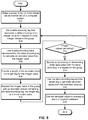
- FIG. 5 shows a flowchart illustrating the processing of data in accordance with the disclosed embodiments.
- one or more of the steps may be omitted, repeated, and/or performed in a different order. Accordingly, the specific arrangement of steps shown in FIG. 5 should not be construed as limiting the scope of the technique.
- a group of two or more integer values maintained on a computer system is obtained (operation 502 ).
- the group may include two or more memory addresses associated with a subject, predicate, object, and/or offset of an edge in a graph database.
- nonzero values in each memory address may be restricted to the second to fifth bytes of the memory address.
- a delta encoding tag that represents a delta encoding of an integer value with respect to other integer values in the group is set (operation 504 ), and a delta encoding state represented by the delta encoding tag is used to calculate an encoded value from the integer value (operation 506 ).
- the delta encoding tag may include two bits that reference one of the integer values in the group to specify delta encoding using the referenced value, or the delta encoding tag may lack a reference to any of the integer values to indicate a lack of delta encoding of the integer value.
- the delta encoding tag may contain a self-reference to the integer value when a preceding group of integer values in the graph database and/or computer system stores the same integer value in the same position.
- the self-reference may cause calculation of the encoded value to be omitted.
- the encoded value may be calculated using a group varint and/or other variable-length integer encoding technique.
- a delta encoding tag that references another integer value in the group may indicate that the encoded value is to be calculated from a difference between the two integer values.
- a length of the encoded value is encoded in a length tag for the integer value (operation 508 ).
- the length tag may specify the number of bytes occupied by the encoded value.
- the integer value in the group is then replaced with an encoded version containing the delta encoding tag, the length tag, and the encoded value (operation 510 ).
- Operations 504 - 510 may be repeated for remaining integer values (operation 512 ) in the group.
- the delta encoding tag, encoded value, and length tag may be generated for each unencoded integer value in the group and used as a replacement for the unencoded integer value to reduce the memory required to store the group.
- an ascending or descending order associated with the delta encoding of the integer values is specified in a header for the group (operation 514 ).
- the ascending or descending order may be selected to reduce the size of the deltas calculated among the integer values and/or the resulting encoded values.
- the ascending or descending order may be selected before, during, and/or after operations 504 - 510 to improve the memory savings associated with delta encoding of integer values in the group.
- the delta encoding tag and length tag are used to generate decoded values from the encoded versions (operation 516 ), and the decoded values are used to process a query of a graph database (operation 518 ).
- the length tag may be used to identify the bytes containing the corresponding encoded value in the encoded group, and a group varint and/or other variable-length integer decoding may be used to obtain a decoded integer value from the encoded value.
- the decoded integer value and delta encoding state in the corresponding delta encoding tag may then be used to recover the original integer value when the delta encoding state indicates delta encoding of the original integer value.
- the decoded integer value may be included in a response to the query. For example, decoded integer values from the group may be used to resolve one or more edges stored in the graph database.
- FIG. 6 shows a computer system 600 in accordance with an embodiment.
- Computer system 600 includes a processor 602 , memory 604 , storage 606 , and/or other components found in electronic computing devices.
- Processor 602 may support parallel processing and/or multi-threaded operation with other processors in computer system 600 .
- Computer system 600 may also include input/output (I/O) devices such as a keyboard 608 , a mouse 610 , and a display 612 .
- I/O input/output
- Computer system 600 may include functionality to execute various components of the present embodiments.
- computer system 600 may include an operating system (not shown) that coordinates the use of hardware and software resources on computer system 600 , as well as one or more applications that perform specialized tasks for the user.
- applications may obtain the use of hardware resources on computer system 600 from the operating system, as well as interact with the user through a hardware and/or software framework provided by the operating system.
- computer system 600 provides a system for improving the memory footprint of a graph database.
- the system includes an encoding apparatus that obtains a group of two or more integer values to be stored in the graph database.
- the encoding apparatus may set, for each integer value in the two or more integer values, a delta encoding tag that represents a delta encoding of the integer value with respect to other integer values in the group.
- the encoding apparatus may also use a delta encoding state represented by the delta encoding tag to calculate an encoded value from the integer value and encode a length of the encoded value in a length tag for the integer value.
- the encoding apparatus may then replace the integer value in the group with an encoded version containing the delta encoding tag, the length tag, and the encoded value.
- the system may also include a decoding apparatus that uses the delta encoding tag and the length tag to generate a decoded value from the encoded value.
- the decoding apparatus may also use the decoded value to process a query of the graph database.
- one or more components of computer system 600 may be remotely located and connected to the other components over a network.
- Portions of the present embodiments e.g., encoding apparatus, decoding apparatus, graph database, etc.
- the present embodiments may also be located on different nodes of a distributed system that implements the embodiments.
- the present embodiments may be implemented using a cloud computing system that encodes and decodes edges in a remote graph database.
Landscapes
- Engineering & Computer Science (AREA)
- Theoretical Computer Science (AREA)
- Databases & Information Systems (AREA)
- Data Mining & Analysis (AREA)
- Physics & Mathematics (AREA)
- General Engineering & Computer Science (AREA)
- General Physics & Mathematics (AREA)
- Computational Linguistics (AREA)
- Software Systems (AREA)
- Information Retrieval, Db Structures And Fs Structures Therefor (AREA)
Abstract
Description
| DefPred(“Position/company”, “1”, “node”, “0”, “node”). | ||
| DefPred(“Position/member”, “1”, “ node”, “0”, “node”). | ||
| DefPred(“Position/start”, “1”, “node”, “0”, “date”). | ||
| DefPred(“Position/end_date”, “1”, “node”, “0”, | ||
| “date”). |
| M2C(positionId, memberId, companyId, start, end) :− |
| Edge(positionId, “Position/member”, memberId), | ||
| Edge(positionId, “Position/company”, companyId), | ||
| Edge(positionId, “Position/start”, start), | ||
| Edge(positionId, “Position/end_date”, end) | ||
| 256 | Alice |
| 261 | Bob |
| 264 | ConnectedTo |
| 275 | (256, 264, 261) |
In the above format, each entry in the log is prefaced by a numeric (e.g., integer) offset representing the number of bytes separating the entry from the beginning of the log. The first entry of “Alice” has an offset of 256, the second entry of “Bob” has an offset of 261, and the third entry of “ConnectedTo” has an offset of 264. The fourth entry has an offset of 275 and stores the connection between “Alice” and “Bob” as the offsets of the previous three entries in the order in which the corresponding fields are specified in the statement used to create the connection (i.e., Edge(“Alice”, “ConnectedTo”, “Bob”)).
Claims (19)
Priority Applications (2)
| Application Number | Priority Date | Filing Date | Title |
|---|---|---|---|
| US15/337,716 US10754859B2 (en) | 2016-10-28 | 2016-10-28 | Encoding edges in graph databases |
| PCT/US2016/067461 WO2018080560A1 (en) | 2016-10-28 | 2016-12-19 | Encoding edges in graph databases |
Applications Claiming Priority (1)
| Application Number | Priority Date | Filing Date | Title |
|---|---|---|---|
| US15/337,716 US10754859B2 (en) | 2016-10-28 | 2016-10-28 | Encoding edges in graph databases |
Publications (2)
| Publication Number | Publication Date |
|---|---|
| US20180121512A1 US20180121512A1 (en) | 2018-05-03 |
| US10754859B2 true US10754859B2 (en) | 2020-08-25 |
Family
ID=57708878
Family Applications (1)
| Application Number | Title | Priority Date | Filing Date |
|---|---|---|---|
| US15/337,716 Active 2038-03-01 US10754859B2 (en) | 2016-10-28 | 2016-10-28 | Encoding edges in graph databases |
Country Status (2)
| Country | Link |
|---|---|
| US (1) | US10754859B2 (en) |
| WO (1) | WO2018080560A1 (en) |
Families Citing this family (4)
| Publication number | Priority date | Publication date | Assignee | Title |
|---|---|---|---|---|
| US11354348B2 (en) * | 2017-06-29 | 2022-06-07 | Microsoft Technology Licensing, Llc | Optimized record placement in graph database |
| US11032252B2 (en) * | 2018-01-03 | 2021-06-08 | Syccure, Inc. | Distributed authentication between network nodes |
| EP3929761B1 (en) * | 2020-06-24 | 2024-04-03 | Nokia Solutions and Networks Oy | A graph database management system |
| US20250301161A1 (en) * | 2024-03-22 | 2025-09-25 | Microsoft Technology Licensing, Llc | Encoding a binary image |
Citations (77)
| Publication number | Priority date | Publication date | Assignee | Title |
|---|---|---|---|---|
| US3524926A (en) * | 1966-06-15 | 1970-08-18 | Xerox Corp | System for delta encoding at selected intervals |
| US5494028A (en) * | 1986-11-04 | 1996-02-27 | Bird Products Corporation | Medical ventilator |
| US6081665A (en) | 1997-12-19 | 2000-06-27 | Newmonics Inc. | Method for efficient soft real-time execution of portable byte code computer programs |
| US20030084043A1 (en) | 1998-05-20 | 2003-05-01 | Swarup Acharya | Join synopsis-based approximate query answering |
| US20050071335A1 (en) | 2003-09-29 | 2005-03-31 | Microsoft Corporation | Method and apparatus for lock-free, non -blocking hash table |
| US20060036564A1 (en) | 2004-04-30 | 2006-02-16 | International Business Machines Corporation | System and method for graph indexing |
| US20070192306A1 (en) | 2004-08-27 | 2007-08-16 | Yannis Papakonstantinou | Searching digital information and databases |
| US20070239694A1 (en) | 2006-02-27 | 2007-10-11 | Singh Ambuj K | Graph querying, graph motif mining and the discovery of clusters |
| US7376639B2 (en) | 2005-07-28 | 2008-05-20 | International Business Machines Corporation | Selectivity estimation for conjunctive predicates in the presence of partial knowledge about multivariate data distributions |
| US20080116449A1 (en) | 2006-11-02 | 2008-05-22 | Macready William G | Processing relational database problems using analog processors |
| US20080306910A1 (en) | 2007-06-08 | 2008-12-11 | Hardeep Singh | Method and process for end users to query hierarchical data |
| US20090132503A1 (en) | 2007-11-15 | 2009-05-21 | International Business Machines Organization | Using different groups of query graph transform modules to generate execution plans for queries for different database types |
| US20090240682A1 (en) | 2008-03-22 | 2009-09-24 | International Business Machines Corporation | Graph search system and method for querying loosely integrated data |
| US20090240649A1 (en) | 2008-03-19 | 2009-09-24 | Semmle Limited | Approximating relation sizes using field dependencies |
| US20110122003A1 (en) * | 2008-05-21 | 2011-05-26 | Ipo Paulus Willem Marinus Maria Van Den Boom | Method and device for encoding and decoding of data in unique number values |
| US20110270861A1 (en) | 2010-05-03 | 2011-11-03 | Vadim Arshavsky | Graph query adaptation |
| US20110276781A1 (en) | 2010-05-05 | 2011-11-10 | Microsoft Corporation | Fast and Low-RAM-Footprint Indexing for Data Deduplication |
| US20120005224A1 (en) | 2010-07-01 | 2012-01-05 | Spencer Greg Ahrens | Facilitating Interaction Among Users of a Social Network |
| US20120047114A1 (en) | 2010-08-17 | 2012-02-23 | International Business Machines Corporation | Enforcing query policies over resource description framework data |
| US20120054129A1 (en) | 2010-08-30 | 2012-03-01 | International Business Machines Corporation | Method for classification of objects in a graph data stream |
| US20120096043A1 (en) | 2010-10-19 | 2012-04-19 | 7 Degrees, Inc. | Data graph cloud system and method |
| US8185558B1 (en) | 2010-04-19 | 2012-05-22 | Facebook, Inc. | Automatically generating nodes and edges in an integrated social graph |
| US20120136884A1 (en) | 2010-11-25 | 2012-05-31 | Toshiba Solutions Corporation | Query expression conversion apparatus, query expression conversion method, and computer program product |
| US20120179644A1 (en) | 2010-07-09 | 2012-07-12 | Daniel Paul Miranker | Automatic Synthesis and Presentation of OLAP Cubes from Semantically Enriched Data Sources |
| US20120271813A1 (en) * | 2011-03-24 | 2012-10-25 | Hui Shen | Multi-layer search-engine index |
| US20120284255A1 (en) | 2011-05-02 | 2012-11-08 | Ian Schechter | Managing data queries |
| US20120310959A1 (en) | 2011-06-03 | 2012-12-06 | Huhn Derrick S | System and method for managing a partitioned database of user relationship data |
| US20120311036A1 (en) | 2011-06-03 | 2012-12-06 | Huhn Derrick S | Friend recommendation system and method |
| US20130091122A1 (en) | 2011-09-29 | 2013-04-11 | Cirro, Inc. | Federated query engine for federation of data queries across structure and unstructured data |
| US20130097180A1 (en) | 2011-10-18 | 2013-04-18 | Erick Tseng | Ranking Objects by Social Relevance |
| US8527497B2 (en) | 2010-12-30 | 2013-09-03 | Facebook, Inc. | Composite term index for graph data |
| US8533182B1 (en) | 2012-05-31 | 2013-09-10 | David P. Charboneau | Apparatuses, systems, and methods for efficient graph pattern matching and querying |
| US8736612B1 (en) | 2011-07-12 | 2014-05-27 | Relationship Science LLC | Altering weights of edges in a social graph |
| US20140156632A1 (en) | 2012-11-30 | 2014-06-05 | Amazon Technologies, Inc. | System-wide query optimization |
| US20140172914A1 (en) | 2012-12-14 | 2014-06-19 | Microsoft Corporation | Graph query processing using plurality of engines |
| US20140195564A1 (en) | 2010-12-13 | 2014-07-10 | Fusion-Io, Inc. | Persistent data structures |
| US20140201234A1 (en) | 2013-01-15 | 2014-07-17 | Fujitsu Limited | Data storage system, and program and method for execution in a data storage system |
| US20140280044A1 (en) | 2013-03-13 | 2014-09-18 | Google Inc. | Generating insightful connections between graph entities |
| US20140310302A1 (en) | 2013-04-12 | 2014-10-16 | Oracle International Corporation | Storing and querying graph data in a key-value store |
| US20140330867A1 (en) | 2013-05-01 | 2014-11-06 | Silicon Graphics International Corp. | Software design pattern for adapting a graph database visualization software |
| US20140337373A1 (en) | 2013-05-07 | 2014-11-13 | Magnet Systems, Inc. | System for managing graph queries on relationships among entities using graph index |
| US20140355627A1 (en) * | 2011-12-02 | 2014-12-04 | Canon Kabushiki Kaisha | Methods and devices for encoding and decoding messages |
| US20150012523A1 (en) | 2013-07-03 | 2015-01-08 | International Business Machines Corporation | Method for synthetic data generation for query workloads |
| US20150026158A1 (en) | 2012-01-31 | 2015-01-22 | Kent State University | Systems, methods, and software for unified analytics environments |
| US20150052134A1 (en) | 2013-08-14 | 2015-02-19 | International Business Machines Corporation | Method and Apparatus for Storing Sparse Graph Data as Multi-Dimensional Cluster |
| US20150120775A1 (en) | 2013-10-24 | 2015-04-30 | Microsoft Corporation | Answering relational database queries using graph exploration |
| US20150120717A1 (en) | 2013-10-25 | 2015-04-30 | Marketwire L.P. | Systems and methods for determining influencers in a social data network and ranking data objects based on influencers |
| US20150127677A1 (en) | 2013-11-04 | 2015-05-07 | Microsoft Corporation | Enterprise graph search based on object and actor relationships |
| US20150134637A1 (en) | 2013-11-12 | 2015-05-14 | Inmobi Pte. Ltd. | System and Method for Sharding a Graph Database |
| US20150149435A1 (en) | 2013-11-27 | 2015-05-28 | Paraccel Llc | Limiting Plan Choices For Database Queries Using Plan Constraints |
| US20150169686A1 (en) | 2013-12-13 | 2015-06-18 | Red Hat, Inc. | System and method for querying hybrid multi data sources |
| US20150234888A1 (en) | 2014-02-18 | 2015-08-20 | Oracle International Corporation | Selecting From OR-Expansion States Of A Query |
| US20150302300A1 (en) | 2014-04-18 | 2015-10-22 | Voalte, Inc. | Efficient graph-based rule engine for complex, dynamic, unstructured data |
| EP2937797A1 (en) | 2014-04-21 | 2015-10-28 | LinkedIn Corporation | System and method for searching a distributed node-sharded graph |
| US9189520B2 (en) | 2013-06-24 | 2015-11-17 | Sap Se | Methods and systems for one dimensional heterogeneous histograms |
| US20150339977A1 (en) | 2004-12-15 | 2015-11-26 | Ignis Innovation Inc. | Method and system for programming, calibrating and/or compensating, and driving an led display |
| US20160071233A1 (en) | 2014-09-10 | 2016-03-10 | Oracle International Corporation | Graph Processing Using a Mutable Multilevel Graph Representation |
| US9292570B2 (en) | 2009-11-19 | 2016-03-22 | Northrop Grumman Systems Corporation | System and method for optimizing pattern query searches on a graph database |
| US20160110434A1 (en) | 2014-10-17 | 2016-04-21 | Vmware, Inc. | Method and system that determine whether or not two graph-like representations of two systems describe equivalent systems |
| US9330138B1 (en) | 2015-09-18 | 2016-05-03 | Linkedin Corporation | Translating queries into graph queries using primitives |
| US20160132613A1 (en) | 2014-11-07 | 2016-05-12 | Open Text S.A. | System, method and architecture for a document as a node on a social graph |
| US20160171540A1 (en) | 2014-12-12 | 2016-06-16 | Suryanarayana MANGIPUDI | Dynamic Omnichannel Relevant Content And Services Targeting In Real Time |
| US9378303B1 (en) | 2015-09-18 | 2016-06-28 | Linkedin Corporation | Representing compound relationships in a graph database |
| US20160188594A1 (en) | 2014-12-31 | 2016-06-30 | Cloudera, Inc. | Resource management in a distributed computing environment |
| US20160246842A1 (en) | 2015-02-25 | 2016-08-25 | Futurewei Technologies, Inc. | Query optimization adaptive to system memory load for parallel database systems |
| US20160260011A1 (en) | 2015-03-05 | 2016-09-08 | International Business Machines Corporation | Cardinality estimation using artificial neural networks |
| US20160275177A1 (en) | 2014-03-18 | 2016-09-22 | Ntt Docomo Inc. | Knowledge engine for managing massive complex structured data |
| US20160314220A1 (en) | 2015-04-27 | 2016-10-27 | Linkedin Corporation | Fast querying of social network data |
| US9495427B2 (en) | 2010-06-04 | 2016-11-15 | Yale University | Processing of data using a database system in communication with a data processing framework |
| US20170010968A1 (en) | 2015-07-08 | 2017-01-12 | Futurewei Technologies, Inc. | System and method for data caching in processing nodes of a massively parallel processing (mpp) database system |
| US20170192949A1 (en) * | 2016-01-05 | 2017-07-06 | Adobe Systems Incorporated | Proactive form guidance for interacting with electronic forms |
| US20170255708A1 (en) | 2016-03-01 | 2017-09-07 | Linkedin Corporation | Index structures for graph databases |
| US20180039710A1 (en) | 2016-08-05 | 2018-02-08 | International Business Machines Corporation | Distributed graph databases that facilitate streaming data insertion and queries by efficient throughput edge addition |
| US20180081937A1 (en) | 2015-11-05 | 2018-03-22 | Datastax, Inc. | Virtual edge of a graph database |
| US20180144060A1 (en) | 2016-11-23 | 2018-05-24 | Linkedin Corporation | Processing deleted edges in graph databases |
| US20180144061A1 (en) | 2016-11-23 | 2018-05-24 | Linkedin Corporation | Edge store designs for graph databases |
| US20180349443A1 (en) * | 2017-05-31 | 2018-12-06 | Linkedin Corporation | Edge store compression in graph databases |
-
2016
- 2016-10-28 US US15/337,716 patent/US10754859B2/en active Active
- 2016-12-19 WO PCT/US2016/067461 patent/WO2018080560A1/en not_active Ceased
Patent Citations (78)
| Publication number | Priority date | Publication date | Assignee | Title |
|---|---|---|---|---|
| US3524926A (en) * | 1966-06-15 | 1970-08-18 | Xerox Corp | System for delta encoding at selected intervals |
| US5494028A (en) * | 1986-11-04 | 1996-02-27 | Bird Products Corporation | Medical ventilator |
| US6081665A (en) | 1997-12-19 | 2000-06-27 | Newmonics Inc. | Method for efficient soft real-time execution of portable byte code computer programs |
| US20030084043A1 (en) | 1998-05-20 | 2003-05-01 | Swarup Acharya | Join synopsis-based approximate query answering |
| US20050071335A1 (en) | 2003-09-29 | 2005-03-31 | Microsoft Corporation | Method and apparatus for lock-free, non -blocking hash table |
| US20060036564A1 (en) | 2004-04-30 | 2006-02-16 | International Business Machines Corporation | System and method for graph indexing |
| US20070192306A1 (en) | 2004-08-27 | 2007-08-16 | Yannis Papakonstantinou | Searching digital information and databases |
| US20150339977A1 (en) | 2004-12-15 | 2015-11-26 | Ignis Innovation Inc. | Method and system for programming, calibrating and/or compensating, and driving an led display |
| US7376639B2 (en) | 2005-07-28 | 2008-05-20 | International Business Machines Corporation | Selectivity estimation for conjunctive predicates in the presence of partial knowledge about multivariate data distributions |
| US20070239694A1 (en) | 2006-02-27 | 2007-10-11 | Singh Ambuj K | Graph querying, graph motif mining and the discovery of clusters |
| US20080116449A1 (en) | 2006-11-02 | 2008-05-22 | Macready William G | Processing relational database problems using analog processors |
| US20080306910A1 (en) | 2007-06-08 | 2008-12-11 | Hardeep Singh | Method and process for end users to query hierarchical data |
| US20090132503A1 (en) | 2007-11-15 | 2009-05-21 | International Business Machines Organization | Using different groups of query graph transform modules to generate execution plans for queries for different database types |
| US20090240649A1 (en) | 2008-03-19 | 2009-09-24 | Semmle Limited | Approximating relation sizes using field dependencies |
| US20090240682A1 (en) | 2008-03-22 | 2009-09-24 | International Business Machines Corporation | Graph search system and method for querying loosely integrated data |
| US20110122003A1 (en) * | 2008-05-21 | 2011-05-26 | Ipo Paulus Willem Marinus Maria Van Den Boom | Method and device for encoding and decoding of data in unique number values |
| US9292570B2 (en) | 2009-11-19 | 2016-03-22 | Northrop Grumman Systems Corporation | System and method for optimizing pattern query searches on a graph database |
| US8185558B1 (en) | 2010-04-19 | 2012-05-22 | Facebook, Inc. | Automatically generating nodes and edges in an integrated social graph |
| US20110270861A1 (en) | 2010-05-03 | 2011-11-03 | Vadim Arshavsky | Graph query adaptation |
| US20110276781A1 (en) | 2010-05-05 | 2011-11-10 | Microsoft Corporation | Fast and Low-RAM-Footprint Indexing for Data Deduplication |
| US9495427B2 (en) | 2010-06-04 | 2016-11-15 | Yale University | Processing of data using a database system in communication with a data processing framework |
| US20120005224A1 (en) | 2010-07-01 | 2012-01-05 | Spencer Greg Ahrens | Facilitating Interaction Among Users of a Social Network |
| US20120179644A1 (en) | 2010-07-09 | 2012-07-12 | Daniel Paul Miranker | Automatic Synthesis and Presentation of OLAP Cubes from Semantically Enriched Data Sources |
| US20120047114A1 (en) | 2010-08-17 | 2012-02-23 | International Business Machines Corporation | Enforcing query policies over resource description framework data |
| US20120054129A1 (en) | 2010-08-30 | 2012-03-01 | International Business Machines Corporation | Method for classification of objects in a graph data stream |
| US20120096043A1 (en) | 2010-10-19 | 2012-04-19 | 7 Degrees, Inc. | Data graph cloud system and method |
| US20120136884A1 (en) | 2010-11-25 | 2012-05-31 | Toshiba Solutions Corporation | Query expression conversion apparatus, query expression conversion method, and computer program product |
| US20140195564A1 (en) | 2010-12-13 | 2014-07-10 | Fusion-Io, Inc. | Persistent data structures |
| US8527497B2 (en) | 2010-12-30 | 2013-09-03 | Facebook, Inc. | Composite term index for graph data |
| US20120271813A1 (en) * | 2011-03-24 | 2012-10-25 | Hui Shen | Multi-layer search-engine index |
| US20120284255A1 (en) | 2011-05-02 | 2012-11-08 | Ian Schechter | Managing data queries |
| US20120310959A1 (en) | 2011-06-03 | 2012-12-06 | Huhn Derrick S | System and method for managing a partitioned database of user relationship data |
| US20120311036A1 (en) | 2011-06-03 | 2012-12-06 | Huhn Derrick S | Friend recommendation system and method |
| US8736612B1 (en) | 2011-07-12 | 2014-05-27 | Relationship Science LLC | Altering weights of edges in a social graph |
| US20130091122A1 (en) | 2011-09-29 | 2013-04-11 | Cirro, Inc. | Federated query engine for federation of data queries across structure and unstructured data |
| US20130097180A1 (en) | 2011-10-18 | 2013-04-18 | Erick Tseng | Ranking Objects by Social Relevance |
| US20140355627A1 (en) * | 2011-12-02 | 2014-12-04 | Canon Kabushiki Kaisha | Methods and devices for encoding and decoding messages |
| US20150026158A1 (en) | 2012-01-31 | 2015-01-22 | Kent State University | Systems, methods, and software for unified analytics environments |
| US8533182B1 (en) | 2012-05-31 | 2013-09-10 | David P. Charboneau | Apparatuses, systems, and methods for efficient graph pattern matching and querying |
| US20140156632A1 (en) | 2012-11-30 | 2014-06-05 | Amazon Technologies, Inc. | System-wide query optimization |
| US20140172914A1 (en) | 2012-12-14 | 2014-06-19 | Microsoft Corporation | Graph query processing using plurality of engines |
| US20140201234A1 (en) | 2013-01-15 | 2014-07-17 | Fujitsu Limited | Data storage system, and program and method for execution in a data storage system |
| US20140280044A1 (en) | 2013-03-13 | 2014-09-18 | Google Inc. | Generating insightful connections between graph entities |
| US20140310302A1 (en) | 2013-04-12 | 2014-10-16 | Oracle International Corporation | Storing and querying graph data in a key-value store |
| US20140330867A1 (en) | 2013-05-01 | 2014-11-06 | Silicon Graphics International Corp. | Software design pattern for adapting a graph database visualization software |
| US20140337373A1 (en) | 2013-05-07 | 2014-11-13 | Magnet Systems, Inc. | System for managing graph queries on relationships among entities using graph index |
| US9189520B2 (en) | 2013-06-24 | 2015-11-17 | Sap Se | Methods and systems for one dimensional heterogeneous histograms |
| US20150012523A1 (en) | 2013-07-03 | 2015-01-08 | International Business Machines Corporation | Method for synthetic data generation for query workloads |
| US20150052134A1 (en) | 2013-08-14 | 2015-02-19 | International Business Machines Corporation | Method and Apparatus for Storing Sparse Graph Data as Multi-Dimensional Cluster |
| US20150120775A1 (en) | 2013-10-24 | 2015-04-30 | Microsoft Corporation | Answering relational database queries using graph exploration |
| US20150120717A1 (en) | 2013-10-25 | 2015-04-30 | Marketwire L.P. | Systems and methods for determining influencers in a social data network and ranking data objects based on influencers |
| US20150127677A1 (en) | 2013-11-04 | 2015-05-07 | Microsoft Corporation | Enterprise graph search based on object and actor relationships |
| US20150134637A1 (en) | 2013-11-12 | 2015-05-14 | Inmobi Pte. Ltd. | System and Method for Sharding a Graph Database |
| US20150149435A1 (en) | 2013-11-27 | 2015-05-28 | Paraccel Llc | Limiting Plan Choices For Database Queries Using Plan Constraints |
| US20150169686A1 (en) | 2013-12-13 | 2015-06-18 | Red Hat, Inc. | System and method for querying hybrid multi data sources |
| US9372891B2 (en) | 2013-12-13 | 2016-06-21 | Red Hat, Inc. | System and method for querying hybrid multi data sources |
| US20150234888A1 (en) | 2014-02-18 | 2015-08-20 | Oracle International Corporation | Selecting From OR-Expansion States Of A Query |
| US20160275177A1 (en) | 2014-03-18 | 2016-09-22 | Ntt Docomo Inc. | Knowledge engine for managing massive complex structured data |
| US20150302300A1 (en) | 2014-04-18 | 2015-10-22 | Voalte, Inc. | Efficient graph-based rule engine for complex, dynamic, unstructured data |
| EP2937797A1 (en) | 2014-04-21 | 2015-10-28 | LinkedIn Corporation | System and method for searching a distributed node-sharded graph |
| US20160071233A1 (en) | 2014-09-10 | 2016-03-10 | Oracle International Corporation | Graph Processing Using a Mutable Multilevel Graph Representation |
| US20160110434A1 (en) | 2014-10-17 | 2016-04-21 | Vmware, Inc. | Method and system that determine whether or not two graph-like representations of two systems describe equivalent systems |
| US20160132613A1 (en) | 2014-11-07 | 2016-05-12 | Open Text S.A. | System, method and architecture for a document as a node on a social graph |
| US20160171540A1 (en) | 2014-12-12 | 2016-06-16 | Suryanarayana MANGIPUDI | Dynamic Omnichannel Relevant Content And Services Targeting In Real Time |
| US20160188594A1 (en) | 2014-12-31 | 2016-06-30 | Cloudera, Inc. | Resource management in a distributed computing environment |
| US20160246842A1 (en) | 2015-02-25 | 2016-08-25 | Futurewei Technologies, Inc. | Query optimization adaptive to system memory load for parallel database systems |
| US20160260011A1 (en) | 2015-03-05 | 2016-09-08 | International Business Machines Corporation | Cardinality estimation using artificial neural networks |
| US20160314220A1 (en) | 2015-04-27 | 2016-10-27 | Linkedin Corporation | Fast querying of social network data |
| US20170010968A1 (en) | 2015-07-08 | 2017-01-12 | Futurewei Technologies, Inc. | System and method for data caching in processing nodes of a massively parallel processing (mpp) database system |
| US9330138B1 (en) | 2015-09-18 | 2016-05-03 | Linkedin Corporation | Translating queries into graph queries using primitives |
| US9378303B1 (en) | 2015-09-18 | 2016-06-28 | Linkedin Corporation | Representing compound relationships in a graph database |
| US20180081937A1 (en) | 2015-11-05 | 2018-03-22 | Datastax, Inc. | Virtual edge of a graph database |
| US20170192949A1 (en) * | 2016-01-05 | 2017-07-06 | Adobe Systems Incorporated | Proactive form guidance for interacting with electronic forms |
| US20170255708A1 (en) | 2016-03-01 | 2017-09-07 | Linkedin Corporation | Index structures for graph databases |
| US20180039710A1 (en) | 2016-08-05 | 2018-02-08 | International Business Machines Corporation | Distributed graph databases that facilitate streaming data insertion and queries by efficient throughput edge addition |
| US20180144060A1 (en) | 2016-11-23 | 2018-05-24 | Linkedin Corporation | Processing deleted edges in graph databases |
| US20180144061A1 (en) | 2016-11-23 | 2018-05-24 | Linkedin Corporation | Edge store designs for graph databases |
| US20180349443A1 (en) * | 2017-05-31 | 2018-12-06 | Linkedin Corporation | Edge store compression in graph databases |
Non-Patent Citations (18)
| Title |
|---|
| "Final Office Action issued in U.S. Appl. No. 15/058,028", dated Jul. 27, 2018, 10 Pages. |
| "Final Office Action Issued in U.S. Appl. No. 15/609,250", dated May 19, 2020, 17 Pages. |
| "International Search Report and Written Opinion Issued in PCT Application No. PCT/US2016/067461", dated May 2, 2017, 12 Pages. |
| "International Search Report and Written Opinion Issued in PCT Application No. PCT/US2016/068119", dated Aug. 18, 2017, 11 Pages. |
| "Non Final Office Action issued in U.S. Appl. No. 15/058,028", dated Jan. 26, 2018, 20 Pages. |
| "Non Final Office Action Issued in U.S. Appl. No. 15/360,605", dated Oct. 17, 2018, 19 Pages. |
| "Non-Final Office Action Issued in U.S. Appl. No. 15/360,318", dated Sep. 18, 2019, 15 Pages. |
| "Non-Final Office Action Issued in U.S. Appl. No. 15/609,250", dated Apr. 24, 2020, 18 Pages. |
| D. Lemire et al., "Decoding billions of integers per second through vectorization", Software Practice & Experience, vol. 45, No. 1, Jan. 1, 2015, XP055363887, pp. 1-29. |
| D. LEMIRE, L. BOYTSOV: "Decoding billions of integers per second through vectorization", SOFTWARE PRACTICE & EXPERIENCE., WILEY & SONS, BOGNOR REGIS., GB, vol. 45, no. 1, 1 January 2015 (2015-01-01), GB, pages 1 - 29, XP055363887, ISSN: 0038-0644, DOI: 10.1002/spe.2203 |
| Daniel K Blandford et al: "An Experimental Analysis of a Compact Graph Representation", Workshop on Algorithms Engineering and Experiments (ALENEX), Jan. 1, 2004, XP055177526. |
| DANIEL K BLANDFORD, BLELLOCH GUY E, KASH IAN A: "An Experimental Analysis of a Compact Graph Representation", WORKSHOP ON ALGORITHMS ENGINEERING AND EXPERIMENTS (ALENEX), CARNEGIE MELLON UNIVERSITY, 1 January 2004 (2004-01-01), XP055177526 |
| Dean; "Challenges in building large-scale information retrieval systems", Keynote of the 2nd ACM International Conference on Web Search and Data Mining (WSDM). 2009 http://videolectures.net/wsdm09_dean_cblirs/. |
| Drew Koszewnik; "The Netflix Tech Blog: NettlixGraph Metadata Library: An Optimization Case Study", Jan. 18, 2013, XP055362100, retrieved from the internet: URL: http://techblog.netflix.com/2013/01/netflixgraph-metadata-library_18.html. |
| Ousterhout, et al., "The RAMCloud Storage System", In Journal of ACM Transactions on Computer Systems, vol. 33, Issue 3, Aug. 2015, 55 Pages. |
| Shao, et al., "Trinity: a distributed graph engine on a memory cloud", In Proceedings of the ACM SIGMOD International Conference on Management of Data, Jun. 22, 2013, pp. 505-516. |
| Stepanov A. A. et al., "SIMD-Based Decoding of Posting Lists", Proceedings of the 20th ACM Conference on Information and Knowledge Management, XP002759898, retrieved from the internet: URL: http://www.stepanovpapers.com/CIKM_2011.pdf, Oct. 24-28, 2011. |
| Wikipedia: "Delta Encoding", The Free Encyclopedia. Accessed at https://en.wikipedia.org/wiki/Delta_encoding Apr. 10, 2017. |
Also Published As
| Publication number | Publication date |
|---|---|
| US20180121512A1 (en) | 2018-05-03 |
| WO2018080560A1 (en) | 2018-05-03 |
Similar Documents
| Publication | Publication Date | Title |
|---|---|---|
| US10180992B2 (en) | Atomic updating of graph database index structures | |
| US10445321B2 (en) | Multi-tenant distribution of graph database caches | |
| US10671671B2 (en) | Supporting tuples in log-based representations of graph databases | |
| US10789295B2 (en) | Pattern-based searching of log-based representations of graph databases | |
| US10628492B2 (en) | Distributed graph database writes | |
| EP3144826B1 (en) | A method and apparatus for representing compound relationships in a graph database | |
| US9535963B1 (en) | Graph-based queries | |
| US11256852B2 (en) | Converting portions of documents between structured and unstructured data formats to improve computing efficiency and schema flexibility | |
| US20180089252A1 (en) | Verifying correctness in graph databases | |
| US20170255708A1 (en) | Index structures for graph databases | |
| US20180144061A1 (en) | Edge store designs for graph databases | |
| US20170212945A1 (en) | Branchable graph databases | |
| US11567995B2 (en) | Branch threading in graph databases | |
| US20200097615A1 (en) | Difference-based comparisons in log-structured graph databases | |
| US20170212930A1 (en) | Hybrid architecture for processing graph-based queries | |
| US20180349443A1 (en) | Edge store compression in graph databases | |
| US10754859B2 (en) | Encoding edges in graph databases | |
| US20180357328A1 (en) | Functional equivalence of tuples and edges in graph databases | |
| US10445370B2 (en) | Compound indexes for graph databases | |
| US20180357278A1 (en) | Processing aggregate queries in a graph database | |
| CN115344674A (en) | Question answering method and device and electronic equipment | |
| US11720543B2 (en) | Enforcing path consistency in graph database path query evaluation | |
| US10146881B2 (en) | Scalable processing of heterogeneous user-generated content | |
| US10417230B2 (en) | Transforming and evaluating missing values in graph databases | |
| US10983997B2 (en) | Path query evaluation in graph databases |
Legal Events
| Date | Code | Title | Description |
|---|---|---|---|
| AS | Assignment |
Owner name: LINKEDIN CORPORATION, CALIFORNIA Free format text: ASSIGNMENT OF ASSIGNORS INTEREST;ASSIGNORS:CHO, SUNGJU;WANG, YINYI;NIU, QINGPENG;AND OTHERS;SIGNING DATES FROM 20161021 TO 20161024;REEL/FRAME:040273/0051 |
|
| AS | Assignment |
Owner name: MICROSOFT TECHNOLOGY LICENSING, LLC, WASHINGTON Free format text: ASSIGNMENT OF ASSIGNORS INTEREST;ASSIGNOR:LINKEDIN CORPORATION;REEL/FRAME:044746/0001 Effective date: 20171018 |
|
| STPP | Information on status: patent application and granting procedure in general |
Free format text: NON FINAL ACTION MAILED |
|
| STPP | Information on status: patent application and granting procedure in general |
Free format text: RESPONSE TO NON-FINAL OFFICE ACTION ENTERED AND FORWARDED TO EXAMINER |
|
| STPP | Information on status: patent application and granting procedure in general |
Free format text: FINAL REJECTION MAILED |
|
| STPP | Information on status: patent application and granting procedure in general |
Free format text: DOCKETED NEW CASE - READY FOR EXAMINATION |
|
| STPP | Information on status: patent application and granting procedure in general |
Free format text: NON FINAL ACTION MAILED |
|
| STPP | Information on status: patent application and granting procedure in general |
Free format text: NOTICE OF ALLOWANCE MAILED -- APPLICATION RECEIVED IN OFFICE OF PUBLICATIONS |
|
| STPP | Information on status: patent application and granting procedure in general |
Free format text: AWAITING TC RESP., ISSUE FEE NOT PAID |
|
| STPP | Information on status: patent application and granting procedure in general |
Free format text: NOTICE OF ALLOWANCE MAILED -- APPLICATION RECEIVED IN OFFICE OF PUBLICATIONS |
|
| STPP | Information on status: patent application and granting procedure in general |
Free format text: PUBLICATIONS -- ISSUE FEE PAYMENT VERIFIED |
|
| STCF | Information on status: patent grant |
Free format text: PATENTED CASE |
|
| MAFP | Maintenance fee payment |
Free format text: PAYMENT OF MAINTENANCE FEE, 4TH YEAR, LARGE ENTITY (ORIGINAL EVENT CODE: M1551); ENTITY STATUS OF PATENT OWNER: LARGE ENTITY Year of fee payment: 4 |