US10753900B2 - Real-time in situ sensing of water-related parameters using micro-electrode array - Google Patents
Real-time in situ sensing of water-related parameters using micro-electrode array Download PDFInfo
- Publication number
- US10753900B2 US10753900B2 US15/639,852 US201715639852A US10753900B2 US 10753900 B2 US10753900 B2 US 10753900B2 US 201715639852 A US201715639852 A US 201715639852A US 10753900 B2 US10753900 B2 US 10753900B2
- Authority
- US
- United States
- Prior art keywords
- micro
- electrodes
- mea
- parameters
- temperature
- Prior art date
- Legal status (The legal status is an assumption and is not a legal conclusion. Google has not performed a legal analysis and makes no representation as to the accuracy of the status listed.)
- Active, expires
Links
- XLYOFNOQVPJJNP-UHFFFAOYSA-N water Substances O XLYOFNOQVPJJNP-UHFFFAOYSA-N 0.000 title claims description 69
- 238000011065 in-situ storage Methods 0.000 title abstract description 13
- 238000000034 method Methods 0.000 claims abstract description 57
- 239000002985 plastic film Substances 0.000 claims abstract description 17
- 239000000758 substrate Substances 0.000 claims description 37
- PCHJSUWPFVWCPO-UHFFFAOYSA-N gold Chemical compound [Au] PCHJSUWPFVWCPO-UHFFFAOYSA-N 0.000 claims description 29
- 229910052737 gold Inorganic materials 0.000 claims description 29
- 239000010931 gold Substances 0.000 claims description 29
- QVGXLLKOCUKJST-UHFFFAOYSA-N atomic oxygen Chemical compound [O] QVGXLLKOCUKJST-UHFFFAOYSA-N 0.000 claims description 21
- 239000001301 oxygen Substances 0.000 claims description 21
- 229910052760 oxygen Inorganic materials 0.000 claims description 21
- 239000010802 sludge Substances 0.000 claims description 19
- 229910052709 silver Inorganic materials 0.000 claims description 17
- 239000004332 silver Substances 0.000 claims description 17
- 239000000126 substance Substances 0.000 claims description 15
- 238000005259 measurement Methods 0.000 claims description 14
- 238000007641 inkjet printing Methods 0.000 claims description 7
- 150000003839 salts Chemical class 0.000 claims description 7
- 238000005273 aeration Methods 0.000 claims description 6
- 235000015097 nutrients Nutrition 0.000 claims description 6
- QGZKDVFQNNGYKY-UHFFFAOYSA-O Ammonium Chemical compound [NH4+] QGZKDVFQNNGYKY-UHFFFAOYSA-O 0.000 claims description 5
- 238000005660 chlorination reaction Methods 0.000 claims description 5
- 238000000151 deposition Methods 0.000 claims description 5
- 229920002457 flexible plastic Polymers 0.000 claims description 5
- 239000000575 pesticide Substances 0.000 claims description 5
- 239000011248 coating agent Substances 0.000 claims description 4
- 238000000576 coating method Methods 0.000 claims description 4
- 239000011159 matrix material Substances 0.000 claims description 4
- 229910021645 metal ion Inorganic materials 0.000 claims description 4
- 239000013049 sediment Substances 0.000 claims description 4
- 238000004062 sedimentation Methods 0.000 claims description 4
- 238000003860 storage Methods 0.000 claims description 4
- 238000000429 assembly Methods 0.000 abstract description 38
- 230000000712 assembly Effects 0.000 abstract description 38
- 238000004065 wastewater treatment Methods 0.000 abstract description 32
- 239000002351 wastewater Substances 0.000 abstract description 30
- 238000005516 engineering process Methods 0.000 abstract description 27
- 238000012544 monitoring process Methods 0.000 abstract description 23
- 230000004044 response Effects 0.000 abstract description 23
- 229920006255 plastic film Polymers 0.000 abstract description 12
- 238000000059 patterning Methods 0.000 abstract description 9
- 230000002708 enhancing effect Effects 0.000 abstract description 5
- 238000013517 stratification Methods 0.000 abstract description 3
- 230000035939 shock Effects 0.000 description 70
- 239000000243 solution Substances 0.000 description 63
- 102100025532 Male-enhanced antigen 1 Human genes 0.000 description 56
- 239000000523 sample Substances 0.000 description 38
- FAPWRFPIFSIZLT-UHFFFAOYSA-M Sodium chloride Chemical compound [Na+].[Cl-] FAPWRFPIFSIZLT-UHFFFAOYSA-M 0.000 description 29
- 239000002699 waste material Substances 0.000 description 29
- 239000000976 ink Substances 0.000 description 27
- 238000012360 testing method Methods 0.000 description 22
- 235000002639 sodium chloride Nutrition 0.000 description 21
- 238000004519 manufacturing process Methods 0.000 description 20
- BQCADISMDOOEFD-UHFFFAOYSA-N Silver Chemical compound [Ag] BQCADISMDOOEFD-UHFFFAOYSA-N 0.000 description 16
- 230000008569 process Effects 0.000 description 16
- 239000011780 sodium chloride Substances 0.000 description 15
- 230000035945 sensitivity Effects 0.000 description 14
- 238000007639 printing Methods 0.000 description 13
- 230000001965 increasing effect Effects 0.000 description 10
- 230000008901 benefit Effects 0.000 description 9
- 230000007774 longterm Effects 0.000 description 9
- 238000011088 calibration curve Methods 0.000 description 8
- 230000009471 action Effects 0.000 description 7
- 230000008859 change Effects 0.000 description 7
- 239000011521 glass Substances 0.000 description 7
- 239000000463 material Substances 0.000 description 7
- 229920003223 poly(pyromellitimide-1,4-diphenyl ether) Polymers 0.000 description 7
- 230000001052 transient effect Effects 0.000 description 7
- VEXZGXHMUGYJMC-UHFFFAOYSA-N Hydrochloric acid Chemical compound Cl VEXZGXHMUGYJMC-UHFFFAOYSA-N 0.000 description 6
- HEMHJVSKTPXQMS-UHFFFAOYSA-M Sodium hydroxide Chemical compound [OH-].[Na+] HEMHJVSKTPXQMS-UHFFFAOYSA-M 0.000 description 6
- 229910052751 metal Inorganic materials 0.000 description 6
- 239000002184 metal Substances 0.000 description 6
- 239000002105 nanoparticle Substances 0.000 description 6
- BASFCYQUMIYNBI-UHFFFAOYSA-N platinum Chemical compound [Pt] BASFCYQUMIYNBI-UHFFFAOYSA-N 0.000 description 6
- 238000005070 sampling Methods 0.000 description 6
- GEHJYWRUCIMESM-UHFFFAOYSA-L sodium sulfite Chemical compound [Na+].[Na+].[O-]S([O-])=O GEHJYWRUCIMESM-UHFFFAOYSA-L 0.000 description 6
- QGZKDVFQNNGYKY-UHFFFAOYSA-N Ammonia Chemical compound N QGZKDVFQNNGYKY-UHFFFAOYSA-N 0.000 description 5
- 238000002484 cyclic voltammetry Methods 0.000 description 5
- 230000003247 decreasing effect Effects 0.000 description 5
- 238000009792 diffusion process Methods 0.000 description 5
- 238000009434 installation Methods 0.000 description 5
- 230000007257 malfunction Effects 0.000 description 5
- 239000011259 mixed solution Substances 0.000 description 5
- 229920005575 poly(amic acid) Polymers 0.000 description 5
- VEXZGXHMUGYJMC-UHFFFAOYSA-M Chloride anion Chemical compound [Cl-] VEXZGXHMUGYJMC-UHFFFAOYSA-M 0.000 description 4
- SECXISVLQFMRJM-UHFFFAOYSA-N N-Methylpyrrolidone Chemical compound CN1CCCC1=O SECXISVLQFMRJM-UHFFFAOYSA-N 0.000 description 4
- 238000012937 correction Methods 0.000 description 4
- 230000029087 digestion Effects 0.000 description 4
- SNRUBQQJIBEYMU-UHFFFAOYSA-N dodecane Chemical compound CCCCCCCCCCCC SNRUBQQJIBEYMU-UHFFFAOYSA-N 0.000 description 4
- 230000007613 environmental effect Effects 0.000 description 4
- 239000007789 gas Substances 0.000 description 4
- 238000010438 heat treatment Methods 0.000 description 4
- 230000004048 modification Effects 0.000 description 4
- 238000012986 modification Methods 0.000 description 4
- OKTJSMMVPCPJKN-UHFFFAOYSA-N Carbon Chemical compound [C] OKTJSMMVPCPJKN-UHFFFAOYSA-N 0.000 description 3
- 229910019142 PO4 Inorganic materials 0.000 description 3
- QAOWNCQODCNURD-UHFFFAOYSA-N Sulfuric acid Chemical compound OS(O)(=O)=O QAOWNCQODCNURD-UHFFFAOYSA-N 0.000 description 3
- 230000033228 biological regulation Effects 0.000 description 3
- 229910052799 carbon Inorganic materials 0.000 description 3
- 230000003750 conditioning effect Effects 0.000 description 3
- 235000013365 dairy product Nutrition 0.000 description 3
- 238000013461 design Methods 0.000 description 3
- 238000001514 detection method Methods 0.000 description 3
- HTXDPTMKBJXEOW-UHFFFAOYSA-N dioxoiridium Chemical compound O=[Ir]=O HTXDPTMKBJXEOW-UHFFFAOYSA-N 0.000 description 3
- LOKCTEFSRHRXRJ-UHFFFAOYSA-I dipotassium trisodium dihydrogen phosphate hydrogen phosphate dichloride Chemical compound P(=O)(O)(O)[O-].[K+].P(=O)(O)([O-])[O-].[Na+].[Na+].[Cl-].[K+].[Cl-].[Na+] LOKCTEFSRHRXRJ-UHFFFAOYSA-I 0.000 description 3
- 239000010954 inorganic particle Substances 0.000 description 3
- 229910000457 iridium oxide Inorganic materials 0.000 description 3
- 239000007791 liquid phase Substances 0.000 description 3
- 239000000203 mixture Substances 0.000 description 3
- 239000011146 organic particle Substances 0.000 description 3
- 239000002953 phosphate buffered saline Substances 0.000 description 3
- 229910052697 platinum Inorganic materials 0.000 description 3
- 238000002360 preparation method Methods 0.000 description 3
- 230000002829 reductive effect Effects 0.000 description 3
- 239000000565 sealant Substances 0.000 description 3
- 239000007790 solid phase Substances 0.000 description 3
- 230000002123 temporal effect Effects 0.000 description 3
- IJGRMHOSHXDMSA-UHFFFAOYSA-N Atomic nitrogen Chemical compound N#N IJGRMHOSHXDMSA-UHFFFAOYSA-N 0.000 description 2
- LFQSCWFLJHTTHZ-UHFFFAOYSA-N Ethanol Chemical compound CCO LFQSCWFLJHTTHZ-UHFFFAOYSA-N 0.000 description 2
- MHAJPDPJQMAIIY-UHFFFAOYSA-N Hydrogen peroxide Chemical compound OO MHAJPDPJQMAIIY-UHFFFAOYSA-N 0.000 description 2
- WCUXLLCKKVVCTQ-UHFFFAOYSA-M Potassium chloride Chemical compound [Cl-].[K+] WCUXLLCKKVVCTQ-UHFFFAOYSA-M 0.000 description 2
- XUIMIQQOPSSXEZ-UHFFFAOYSA-N Silicon Chemical compound [Si] XUIMIQQOPSSXEZ-UHFFFAOYSA-N 0.000 description 2
- FOIXSVOLVBLSDH-UHFFFAOYSA-N Silver ion Chemical compound [Ag+] FOIXSVOLVBLSDH-UHFFFAOYSA-N 0.000 description 2
- 230000003373 anti-fouling effect Effects 0.000 description 2
- 238000003491 array Methods 0.000 description 2
- 239000003990 capacitor Substances 0.000 description 2
- 238000011217 control strategy Methods 0.000 description 2
- 230000008021 deposition Effects 0.000 description 2
- WNAHIZMDSQCWRP-UHFFFAOYSA-N dodecane-1-thiol Chemical compound CCCCCCCCCCCCS WNAHIZMDSQCWRP-UHFFFAOYSA-N 0.000 description 2
- 230000000694 effects Effects 0.000 description 2
- 230000006870 function Effects 0.000 description 2
- 238000007654 immersion Methods 0.000 description 2
- 238000012625 in-situ measurement Methods 0.000 description 2
- 238000002347 injection Methods 0.000 description 2
- 239000007924 injection Substances 0.000 description 2
- 230000000670 limiting effect Effects 0.000 description 2
- 239000007788 liquid Substances 0.000 description 2
- BDAGIHXWWSANSR-UHFFFAOYSA-N methanoic acid Natural products OC=O BDAGIHXWWSANSR-UHFFFAOYSA-N 0.000 description 2
- 238000002156 mixing Methods 0.000 description 2
- 239000010841 municipal wastewater Substances 0.000 description 2
- LCCNCVORNKJIRZ-UHFFFAOYSA-N parathion Chemical compound CCOP(=S)(OCC)OC1=CC=C([N+]([O-])=O)C=C1 LCCNCVORNKJIRZ-UHFFFAOYSA-N 0.000 description 2
- 230000035515 penetration Effects 0.000 description 2
- NBIIXXVUZAFLBC-UHFFFAOYSA-K phosphate Chemical compound [O-]P([O-])([O-])=O NBIIXXVUZAFLBC-UHFFFAOYSA-K 0.000 description 2
- 229920001721 polyimide Polymers 0.000 description 2
- 229920001296 polysiloxane Polymers 0.000 description 2
- 230000009467 reduction Effects 0.000 description 2
- 229910052710 silicon Inorganic materials 0.000 description 2
- 239000010703 silicon Substances 0.000 description 2
- HKZLPVFGJNLROG-UHFFFAOYSA-M silver monochloride Chemical compound [Cl-].[Ag+] HKZLPVFGJNLROG-UHFFFAOYSA-M 0.000 description 2
- 235000010265 sodium sulphite Nutrition 0.000 description 2
- 239000007787 solid Substances 0.000 description 2
- CALMYRPSSNRCFD-UHFFFAOYSA-J tetrachloroiridium Chemical compound Cl[Ir](Cl)(Cl)Cl CALMYRPSSNRCFD-UHFFFAOYSA-J 0.000 description 2
- 231100000331 toxic Toxicity 0.000 description 2
- 230000002588 toxic effect Effects 0.000 description 2
- 238000012546 transfer Methods 0.000 description 2
- GVJXGCIPWAVXJP-UHFFFAOYSA-N 2,5-dioxo-1-oxoniopyrrolidine-3-sulfonate Chemical compound ON1C(=O)CC(S(O)(=O)=O)C1=O GVJXGCIPWAVXJP-UHFFFAOYSA-N 0.000 description 1
- OSWFIVFLDKOXQC-UHFFFAOYSA-N 4-(3-methoxyphenyl)aniline Chemical compound COC1=CC=CC(C=2C=CC(N)=CC=2)=C1 OSWFIVFLDKOXQC-UHFFFAOYSA-N 0.000 description 1
- 241000894006 Bacteria Species 0.000 description 1
- 239000002028 Biomass Substances 0.000 description 1
- RYGMFSIKBFXOCR-UHFFFAOYSA-N Copper Chemical compound [Cu] RYGMFSIKBFXOCR-UHFFFAOYSA-N 0.000 description 1
- XFXPMWWXUTWYJX-UHFFFAOYSA-N Cyanide Chemical compound N#[C-] XFXPMWWXUTWYJX-UHFFFAOYSA-N 0.000 description 1
- RWSOTUBLDIXVET-UHFFFAOYSA-N Dihydrogen sulfide Chemical compound S RWSOTUBLDIXVET-UHFFFAOYSA-N 0.000 description 1
- MYMOFIZGZYHOMD-UHFFFAOYSA-N Dioxygen Chemical compound O=O MYMOFIZGZYHOMD-UHFFFAOYSA-N 0.000 description 1
- 239000004593 Epoxy Substances 0.000 description 1
- 229910021639 Iridium tetrachloride Inorganic materials 0.000 description 1
- 229920000106 Liquid crystal polymer Polymers 0.000 description 1
- 239000004977 Liquid-crystal polymers (LCPs) Substances 0.000 description 1
- 239000004472 Lysine Substances 0.000 description 1
- 239000005949 Malathion Substances 0.000 description 1
- NHNBFGGVMKEFGY-UHFFFAOYSA-N Nitrate Chemical compound [O-][N+]([O-])=O NHNBFGGVMKEFGY-UHFFFAOYSA-N 0.000 description 1
- IOVCWXUNBOPUCH-UHFFFAOYSA-M Nitrite anion Chemical compound [O-]N=O IOVCWXUNBOPUCH-UHFFFAOYSA-M 0.000 description 1
- 229940123973 Oxygen scavenger Drugs 0.000 description 1
- VYPSYNLAJGMNEJ-UHFFFAOYSA-N Silicium dioxide Chemical compound O=[Si]=O VYPSYNLAJGMNEJ-UHFFFAOYSA-N 0.000 description 1
- 229910021607 Silver chloride Inorganic materials 0.000 description 1
- 239000007983 Tris buffer Substances 0.000 description 1
- 238000009825 accumulation Methods 0.000 description 1
- 239000002253 acid Substances 0.000 description 1
- 230000002411 adverse Effects 0.000 description 1
- 239000000956 alloy Substances 0.000 description 1
- 229910045601 alloy Inorganic materials 0.000 description 1
- CJJOSEISRRTUQB-UHFFFAOYSA-N azinphos-methyl Chemical compound C1=CC=C2C(=O)N(CSP(=S)(OC)OC)N=NC2=C1 CJJOSEISRRTUQB-UHFFFAOYSA-N 0.000 description 1
- 238000011021 bench scale process Methods 0.000 description 1
- 239000012472 biological sample Substances 0.000 description 1
- 230000015572 biosynthetic process Effects 0.000 description 1
- 239000007853 buffer solution Substances 0.000 description 1
- 230000015556 catabolic process Effects 0.000 description 1
- 239000003054 catalyst Substances 0.000 description 1
- 239000007795 chemical reaction product Substances 0.000 description 1
- 238000005229 chemical vapour deposition Methods 0.000 description 1
- 238000004140 cleaning Methods 0.000 description 1
- 230000015271 coagulation Effects 0.000 description 1
- 238000005345 coagulation Methods 0.000 description 1
- 229910017052 cobalt Inorganic materials 0.000 description 1
- 239000010941 cobalt Substances 0.000 description 1
- -1 cobalt tetrasulphonated phthalocyanine Chemical class 0.000 description 1
- 239000004020 conductor Substances 0.000 description 1
- 238000010276 construction Methods 0.000 description 1
- 230000002596 correlated effect Effects 0.000 description 1
- 239000007857 degradation product Substances 0.000 description 1
- 238000006731 degradation reaction Methods 0.000 description 1
- 239000008367 deionised water Substances 0.000 description 1
- 229910021641 deionized water Inorganic materials 0.000 description 1
- 230000006866 deterioration Effects 0.000 description 1
- 238000011161 development Methods 0.000 description 1
- 238000010586 diagram Methods 0.000 description 1
- FHIVAFMUCKRCQO-UHFFFAOYSA-N diazinon Chemical compound CCOP(=S)(OCC)OC1=CC(C)=NC(C(C)C)=N1 FHIVAFMUCKRCQO-UHFFFAOYSA-N 0.000 description 1
- 235000014113 dietary fatty acids Nutrition 0.000 description 1
- FAXIJTUDSBIMHY-UHFFFAOYSA-N diethoxy-(2-ethylsulfanylethoxy)-sulfanylidene-$l^{5}-phosphane;1-diethoxyphosphorylsulfanyl-2-ethylsulfanylethane Chemical compound CCOP(=O)(OCC)SCCSCC.CCOP(=S)(OCC)OCCSCC FAXIJTUDSBIMHY-UHFFFAOYSA-N 0.000 description 1
- JXSJBGJIGXNWCI-UHFFFAOYSA-N diethyl 2-[(dimethoxyphosphorothioyl)thio]succinate Chemical compound CCOC(=O)CC(SP(=S)(OC)OC)C(=O)OCC JXSJBGJIGXNWCI-UHFFFAOYSA-N 0.000 description 1
- 238000007865 diluting Methods 0.000 description 1
- 229910001882 dioxygen Inorganic materials 0.000 description 1
- IRXRGVFLQOSHOH-UHFFFAOYSA-L dipotassium;oxalate Chemical compound [K+].[K+].[O-]C(=O)C([O-])=O IRXRGVFLQOSHOH-UHFFFAOYSA-L 0.000 description 1
- BNIILDVGGAEEIG-UHFFFAOYSA-L disodium hydrogen phosphate Chemical compound [Na+].[Na+].OP([O-])([O-])=O BNIILDVGGAEEIG-UHFFFAOYSA-L 0.000 description 1
- 229910000397 disodium phosphate Inorganic materials 0.000 description 1
- 235000019800 disodium phosphate Nutrition 0.000 description 1
- DOFZAZXDOSGAJZ-UHFFFAOYSA-N disulfoton Chemical compound CCOP(=S)(OCC)SCCSCC DOFZAZXDOSGAJZ-UHFFFAOYSA-N 0.000 description 1
- 239000006181 electrochemical material Substances 0.000 description 1
- 238000002848 electrochemical method Methods 0.000 description 1
- 238000004070 electrodeposition Methods 0.000 description 1
- 238000003912 environmental pollution Methods 0.000 description 1
- 238000005530 etching Methods 0.000 description 1
- RIZMRRKBZQXFOY-UHFFFAOYSA-N ethion Chemical compound CCOP(=S)(OCC)SCSP(=S)(OCC)OCC RIZMRRKBZQXFOY-UHFFFAOYSA-N 0.000 description 1
- 238000011066 ex-situ storage Methods 0.000 description 1
- 239000000194 fatty acid Substances 0.000 description 1
- 229930195729 fatty acid Natural products 0.000 description 1
- 150000004665 fatty acids Chemical class 0.000 description 1
- 238000011049 filling Methods 0.000 description 1
- 238000005189 flocculation Methods 0.000 description 1
- 230000016615 flocculation Effects 0.000 description 1
- 230000009969 flowable effect Effects 0.000 description 1
- 239000012530 fluid Substances 0.000 description 1
- 235000013305 food Nutrition 0.000 description 1
- 239000010794 food waste Substances 0.000 description 1
- 235000019253 formic acid Nutrition 0.000 description 1
- 239000000446 fuel Substances 0.000 description 1
- 229910021397 glassy carbon Inorganic materials 0.000 description 1
- ZFGJFDFUALJZFF-UHFFFAOYSA-K gold(3+);trichloride;trihydrate Chemical compound O.O.O.Cl[Au](Cl)Cl ZFGJFDFUALJZFF-UHFFFAOYSA-K 0.000 description 1
- BHEPBYXIRTUNPN-UHFFFAOYSA-N hydridophosphorus(.) (triplet) Chemical compound [PH] BHEPBYXIRTUNPN-UHFFFAOYSA-N 0.000 description 1
- 229910000037 hydrogen sulfide Inorganic materials 0.000 description 1
- DCPMPXBYPZGNDC-UHFFFAOYSA-N hydron;methanediimine;chloride Chemical compound Cl.N=C=N DCPMPXBYPZGNDC-UHFFFAOYSA-N 0.000 description 1
- 235000015243 ice cream Nutrition 0.000 description 1
- 238000005286 illumination Methods 0.000 description 1
- 230000001771 impaired effect Effects 0.000 description 1
- 230000006872 improvement Effects 0.000 description 1
- 238000003780 insertion Methods 0.000 description 1
- 230000037431 insertion Effects 0.000 description 1
- 230000010354 integration Effects 0.000 description 1
- 150000002500 ions Chemical class 0.000 description 1
- 238000009533 lab test Methods 0.000 description 1
- 230000002045 lasting effect Effects 0.000 description 1
- 229960000453 malathion Drugs 0.000 description 1
- 230000007246 mechanism Effects 0.000 description 1
- 238000002844 melting Methods 0.000 description 1
- 230000008018 melting Effects 0.000 description 1
- 238000001465 metallisation Methods 0.000 description 1
- 150000002739 metals Chemical class 0.000 description 1
- 235000013336 milk Nutrition 0.000 description 1
- 239000008267 milk Substances 0.000 description 1
- 210000004080 milk Anatomy 0.000 description 1
- 238000012806 monitoring device Methods 0.000 description 1
- 229910000402 monopotassium phosphate Inorganic materials 0.000 description 1
- 235000019796 monopotassium phosphate Nutrition 0.000 description 1
- 229910052757 nitrogen Inorganic materials 0.000 description 1
- 238000001139 pH measurement Methods 0.000 description 1
- 238000012856 packing Methods 0.000 description 1
- 229960004623 paraoxon Drugs 0.000 description 1
- WYMSBXTXOHUIGT-UHFFFAOYSA-N paraoxon Chemical compound CCOP(=O)(OCC)OC1=CC=C([N+]([O-])=O)C=C1 WYMSBXTXOHUIGT-UHFFFAOYSA-N 0.000 description 1
- RLBIQVVOMOPOHC-UHFFFAOYSA-N parathion-methyl Chemical compound COP(=S)(OC)OC1=CC=C([N+]([O-])=O)C=C1 RLBIQVVOMOPOHC-UHFFFAOYSA-N 0.000 description 1
- 230000036961 partial effect Effects 0.000 description 1
- 239000002245 particle Substances 0.000 description 1
- 239000012071 phase Substances 0.000 description 1
- 239000010452 phosphate Substances 0.000 description 1
- 239000008363 phosphate buffer Substances 0.000 description 1
- PJNZPQUBCPKICU-UHFFFAOYSA-N phosphoric acid;potassium Chemical compound [K].OP(O)(O)=O PJNZPQUBCPKICU-UHFFFAOYSA-N 0.000 description 1
- 238000000206 photolithography Methods 0.000 description 1
- 229920002120 photoresistant polymer Polymers 0.000 description 1
- 230000035479 physiological effects, processes and functions Effects 0.000 description 1
- 239000004033 plastic Substances 0.000 description 1
- 229920003023 plastic Polymers 0.000 description 1
- 230000010287 polarization Effects 0.000 description 1
- 229920000767 polyaniline Polymers 0.000 description 1
- 239000001103 potassium chloride Substances 0.000 description 1
- 235000011164 potassium chloride Nutrition 0.000 description 1
- IWZKICVEHNUQTL-UHFFFAOYSA-M potassium hydrogen phthalate Chemical compound [K+].OC(=O)C1=CC=CC=C1C([O-])=O IWZKICVEHNUQTL-UHFFFAOYSA-M 0.000 description 1
- 102000004169 proteins and genes Human genes 0.000 description 1
- 108090000623 proteins and genes Proteins 0.000 description 1
- 230000005180 public health Effects 0.000 description 1
- 238000011084 recovery Methods 0.000 description 1
- 230000027756 respiratory electron transport chain Effects 0.000 description 1
- 239000012488 sample solution Substances 0.000 description 1
- 229920006395 saturated elastomer Polymers 0.000 description 1
- 229910052814 silicon oxide Inorganic materials 0.000 description 1
- 239000012279 sodium borohydride Substances 0.000 description 1
- 229910000033 sodium borohydride Inorganic materials 0.000 description 1
- 239000002689 soil Substances 0.000 description 1
- 239000012265 solid product Substances 0.000 description 1
- 241000894007 species Species 0.000 description 1
- 238000013112 stability test Methods 0.000 description 1
- 230000000087 stabilizing effect Effects 0.000 description 1
- 238000004659 sterilization and disinfection Methods 0.000 description 1
- 238000006467 substitution reaction Methods 0.000 description 1
- 230000008685 targeting Effects 0.000 description 1
- QBVXKDJEZKEASM-UHFFFAOYSA-M tetraoctylammonium bromide Chemical compound [Br-].CCCCCCCC[N+](CCCCCCCC)(CCCCCCCC)CCCCCCCC QBVXKDJEZKEASM-UHFFFAOYSA-M 0.000 description 1
- LENZDBCJOHFCAS-UHFFFAOYSA-N tris Chemical compound OCC(N)(CO)CO LENZDBCJOHFCAS-UHFFFAOYSA-N 0.000 description 1
- 239000000107 tumor biomarker Substances 0.000 description 1
- 230000003442 weekly effect Effects 0.000 description 1
Images




Classifications
-
- G—PHYSICS
- G01—MEASURING; TESTING
- G01N—INVESTIGATING OR ANALYSING MATERIALS BY DETERMINING THEIR CHEMICAL OR PHYSICAL PROPERTIES
- G01N27/00—Investigating or analysing materials by the use of electric, electrochemical, or magnetic means
- G01N27/26—Investigating or analysing materials by the use of electric, electrochemical, or magnetic means by investigating electrochemical variables; by using electrolysis or electrophoresis
- G01N27/403—Cells and electrode assemblies
-
- G—PHYSICS
- G01—MEASURING; TESTING
- G01N—INVESTIGATING OR ANALYSING MATERIALS BY DETERMINING THEIR CHEMICAL OR PHYSICAL PROPERTIES
- G01N33/00—Investigating or analysing materials by specific methods not covered by groups G01N1/00 - G01N31/00
- G01N33/18—Water
- G01N33/1886—Water using probes, e.g. submersible probes, buoys
-
- G—PHYSICS
- G01—MEASURING; TESTING
- G01N—INVESTIGATING OR ANALYSING MATERIALS BY DETERMINING THEIR CHEMICAL OR PHYSICAL PROPERTIES
- G01N27/00—Investigating or analysing materials by the use of electric, electrochemical, or magnetic means
- G01N27/02—Investigating or analysing materials by the use of electric, electrochemical, or magnetic means by investigating impedance
- G01N27/04—Investigating or analysing materials by the use of electric, electrochemical, or magnetic means by investigating impedance by investigating resistance
- G01N27/06—Investigating or analysing materials by the use of electric, electrochemical, or magnetic means by investigating impedance by investigating resistance of a liquid
-
- G—PHYSICS
- G01—MEASURING; TESTING
- G01N—INVESTIGATING OR ANALYSING MATERIALS BY DETERMINING THEIR CHEMICAL OR PHYSICAL PROPERTIES
- G01N27/00—Investigating or analysing materials by the use of electric, electrochemical, or magnetic means
- G01N27/02—Investigating or analysing materials by the use of electric, electrochemical, or magnetic means by investigating impedance
- G01N27/04—Investigating or analysing materials by the use of electric, electrochemical, or magnetic means by investigating impedance by investigating resistance
- G01N27/12—Investigating or analysing materials by the use of electric, electrochemical, or magnetic means by investigating impedance by investigating resistance of a solid body in dependence upon absorption of a fluid; of a solid body in dependence upon reaction with a fluid, for detecting components in the fluid
- G01N27/128—Microapparatus
-
- C—CHEMISTRY; METALLURGY
- C02—TREATMENT OF WATER, WASTE WATER, SEWAGE, OR SLUDGE
- C02F—TREATMENT OF WATER, WASTE WATER, SEWAGE, OR SLUDGE
- C02F2209/00—Controlling or monitoring parameters in water treatment
- C02F2209/02—Temperature
-
- C—CHEMISTRY; METALLURGY
- C02—TREATMENT OF WATER, WASTE WATER, SEWAGE, OR SLUDGE
- C02F—TREATMENT OF WATER, WASTE WATER, SEWAGE, OR SLUDGE
- C02F2209/00—Controlling or monitoring parameters in water treatment
- C02F2209/05—Conductivity or salinity
-
- C—CHEMISTRY; METALLURGY
- C02—TREATMENT OF WATER, WASTE WATER, SEWAGE, OR SLUDGE
- C02F—TREATMENT OF WATER, WASTE WATER, SEWAGE, OR SLUDGE
- C02F2209/00—Controlling or monitoring parameters in water treatment
- C02F2209/06—Controlling or monitoring parameters in water treatment pH
-
- C—CHEMISTRY; METALLURGY
- C02—TREATMENT OF WATER, WASTE WATER, SEWAGE, OR SLUDGE
- C02F—TREATMENT OF WATER, WASTE WATER, SEWAGE, OR SLUDGE
- C02F2209/00—Controlling or monitoring parameters in water treatment
- C02F2209/22—O2
-
- G—PHYSICS
- G01—MEASURING; TESTING
- G01N—INVESTIGATING OR ANALYSING MATERIALS BY DETERMINING THEIR CHEMICAL OR PHYSICAL PROPERTIES
- G01N27/00—Investigating or analysing materials by the use of electric, electrochemical, or magnetic means
- G01N27/02—Investigating or analysing materials by the use of electric, electrochemical, or magnetic means by investigating impedance
- G01N27/04—Investigating or analysing materials by the use of electric, electrochemical, or magnetic means by investigating impedance by investigating resistance
- G01N27/06—Investigating or analysing materials by the use of electric, electrochemical, or magnetic means by investigating impedance by investigating resistance of a liquid
- G01N27/07—Construction of measuring vessels; Electrodes therefor
-
- G—PHYSICS
- G01—MEASURING; TESTING
- G01N—INVESTIGATING OR ANALYSING MATERIALS BY DETERMINING THEIR CHEMICAL OR PHYSICAL PROPERTIES
- G01N27/00—Investigating or analysing materials by the use of electric, electrochemical, or magnetic means
- G01N27/26—Investigating or analysing materials by the use of electric, electrochemical, or magnetic means by investigating electrochemical variables; by using electrolysis or electrophoresis
- G01N27/27—Association of two or more measuring systems or cells, each measuring a different parameter, where the measurement results may be either used independently, the systems or cells being physically associated, or combined to produce a value for a further parameter
Definitions
- the present disclosure relates to sensor assemblies and, more particularly, to microelectrode array (“MEA”) real-time in situ assemblies for sensing multiple water/fluid parameters, including assemblies that enhance efficiency and stability of wastewater treatment systems.
- MEA microelectrode array
- the disclosed MEA assemblies may be fabricated using inkjet-printing technology.
- This type of sensing generally can only obtain local information at a single point of wastewater treatment systems, which inhibits swift and efficient action under various upcoming events (e.g., wastewater quality/quantity, shocks) and can lead to low efficiency and malfunction of systems.
- conventional probes/electrodes can only measure a single parameter at a single point, so that a broad spectrum of probes have to be installed in a waste facility (e.g., anaerobic digestor or “AD” system) to determine operational status, which can be extremely costly.
- a waste facility e.g., anaerobic digestor or “AD” system
- multi-meters e.g., YSI® multi-meters
- multi-parameter meters e.g., multiple probes packed into a single rigid cartridge
- multi-parameter meters have improved monitoring
- the single point limitations associated with the meters make it impossible to monitor dynamic waste streams in a heterogeneous system.
- multi-parameter meters are costly and generally have large space requirements. For example, a conventional cartridge hosting three (3) probes (e.g.
- Micro-scale glass pipette electrodes have been developed to measure the chemical profiles inside biofilms and activated sludge flocs. These needle-shaped micro-electrodes are generally fabricated by either shielding a tapered metal wire with a glass micropipette or filling a glass micropipette with a low melting point alloy (e.g., platinum).
- a low melting point alloy e.g., platinum
- the fragile glass pipette structure, time-consuming fabrication, and need for bulky micromanipulator to position micro-electrodes poses severe problems for field applications.
- glass pipette micro-electrodes have only been used in well-controlled lab-scale systems.
- PCVD photolithography with chemical vapor deposition
- IPT inkjet printing technology
- the IPT process only involves two steps: substrate material preparation and inkjet printer setup, which is much easier than PCVD process needing over 10 steps.
- the IPT process can be easily conducted at room temperature and pressure, and thus greatly broadens the selection of sensor substrate materials (e.g., flexible thin polyimide film) that can be easily deployed in water/wastewater systems.
- the cost of a sensor fabricated using the IPT process is only $0.20 (mainly the ink cost), about 1/150 of the cost using PCVD, which makes mass fabrication of miniature sensors feasible.
- IPT has been used to fabricate sensors for detecting hydrogen sulfide and humidity in the air and identifying cancer biomarker protein. However, there has been no report regarding IPT-fabricated sensors for water quality monitoring.
- the present disclosure provides advantageous micro-electrode array (MEA) sensors using ink-jet printing technology (IPT). Accordingly to exemplary embodiments of the present disclosure, multiple mm-sized electrodes are printed on a flexible film for simultaneous monitoring of multiple parameters at high temporal and spatial resolution. Indeed, calibration of four types of MEA sensors (temperature, conductivity, dissolved oxygen (DO) and pH) in water solution according to the present disclosure show high coefficient of determination (R 2 >0.99) between the MEA readings and the parameter targeted. Exemplary shock tests have demonstrated high accuracy of MEA sensors and rapid response with a reading frequency of 0.1 second, which captured the shock impacts in more details than commercial probes.
- IPT ink-jet printing technology
- the systems and methods of the present disclosure provide numerous advantages over existing “single-point” probes, e.g., compact sensor configuration, multiple-parameter monitoring in a single measurement, easy fabrication and ultra-low cost (e.g., $0.20/sensor), which will decode the system “black box”, provide a complete dataset for switch control strategy, and enhance treatment performance at low capital and operational cost.
- the present disclosure provides improved sensor assemblies. More particularly, the present disclosure provides microelectrode array (“MEA”) real-time in situ global sensing assemblies for enhancing efficiency and stability of wastewater treatment systems.
- MEA microelectrode array
- the present disclosure provides for a novel global sensing technology utilizing a microelectrode array (“MEA”) to solve various problems of monitoring wastewater treatment systems.
- MEA microelectrode array
- the present disclosure provides for improved systems/methods for monitoring wastewater treatment systems, with the improved systems/methods obtaining a substantially complete global profile of multiple parameters simultaneously. More particularly, the present disclosure provides that by patterning multiple electrodes (e.g., mm-sized electrodes) on a film (e.g., thin plastic film), a MEA can monitor multiple parameters simultaneously in 2-dimension (2-D) of a given system so that global dynamic stratification inside such systems can be real-time visualized for swift response under various wastewater conditions.
- multiple electrodes e.g., mm-sized electrodes
- a film e.g., thin plastic film
- the present disclosure provides for an array of printed microelectrodes to test wastewater.
- Printed electrodes have not been used in environmental engineering, much less an array of electrodes. Waste tanks, anaerobic or aerobic, are delicately balanced and can take months to be completely processed. If bacteria die or get sour, it can be time-consuming and costly to fix. Typical single electrodes can only test at one localized spot, which may not catch a problem until too late.
- An exemplary array of microelectrodes can catch the full depth and with better understanding what is happening in the tank, and the printed technology on film (e.g., plastic) is much more durable and cheaper.
- An array is also able to test multiple parameters (e.g., pH, temperature, oxygen, conductivity, etc.).
- a viable market for exemplary embodiments/assemblies of the present disclosure is the anaerobic tanks, but can be broadened to aerobic tanks, sludge tanks, chlorination tanks, etc.
- the end-products of the process can also be sold (e.g., as fuel, heating systems, etc.), so it is in the best interest of the companies to be diligent about the monitoring.
- Electrodes can only test one variable, so such users need multiple electrodes.
- conventional electrodes are fragile (e.g., made of glass micro-pipettes) and break easily, especially in thicker sludge. They are also expensive and take a long time to make (e.g., $25,000 for four probes.)
- the exemplary assemblies of the present disclosure are cheaper, more durable, more efficient, and give better/improved data.
- the present disclosure can utilizes anaerobic digestion (“AD”) as a first test site for exemplary MEAs.
- AD anaerobic digestion
- the MEAs are not only for AD systems, they can be applied to a broad ranges of diverse water/wastewater treatment systems or the like.
- each mm-sized electrode works independently, with its own working and reference electrodes, all tightly and precisely printed together on the film.
- oxygen electrode it measures current.
- pH electrode it measures potential.
- conductivity electrode it measures the capacitors.
- temperature electrode it measures resistance.
- Wastewater has historically been treated as waste when in fact it is rich in water, nutrients, and energy.
- the future of waste industry lies in its ability to derive value from natural resources embedded in wastewater.
- AD technology offers a waste management and energy solution to municipalities across the U.S. by converting waste streams into valuable energy which creates financial value.
- There are about 2000 AD systems in the U.S. with a goal of building 11,000 AD systems in the next two decades.
- stringent environmental regulations require high performance of waste treatment systems, and exert enormous demands for real-time monitoring devices.
- the waste industry yields a huge market value over 1 trillion dollars.
- WWTPs municipal wastewater treatment plants
- These retrofit and new systems offer a vast market potential for cutting-edge monitoring technology, and MEA has the edge as the front runner in this new wave.
- MEAs have a broad customer pool in the waste treatment market.
- the present disclosure can use anaerobic digestion (AD) as a first test site for MEA technology, since the heterogeneous gas/liquid/solid phases provide a nice scenario to use global profiles.
- AD technology has drawn a global interest for the treatment of waste streams originating from service industries (e.g. restaurant, supermarkets), dairy farms (e.g., milk, ice-cream manufacturing), and municipalities. Due to the extensive usages of biogas/liquid/bio-solid products from AD systems, their efficient and stable operation yields tremendous economic, environmental, and energy significance.
- the present disclosure provides for a sensor assembly including a substrate, the substrate having a length and a width; a plurality of micro-electrodes deposited on the substrate, the substrate configured to be at least partially disposed within and along the depth of a water treatment system; wherein the plurality of micro-electrodes is configured and adapted to facilitate the simultaneous detection of multiple parameters along the depth of the water treatment system.
- the present disclosure also provides for a sensor assembly wherein the substrate is a flexible plastic film.
- the present disclosure also provides for a sensor assembly wherein each micro-electrode of the plurality of micro-electrodes is a mm-sized electrode.
- the present disclosure also provides for a sensor assembly wherein each micro-electrode of the plurality of micro-electrodes includes gold or silver.
- the present disclosure also provides for a sensor assembly wherein the water treatment system is selected from the group consisting of aeration tanks, anaerobic digestors, anoxic tanks, storage tanks, pipelines, sedimentation tanks, sludge tanks, chlorination tanks, watershed sites and sediment restoration sites.
- the water treatment system is selected from the group consisting of aeration tanks, anaerobic digestors, anoxic tanks, storage tanks, pipelines, sedimentation tanks, sludge tanks, chlorination tanks, watershed sites and sediment restoration sites.
- the present disclosure also provides for a sensor assembly wherein the plurality of micro-electrodes includes from about 48 to about 500 micro-electrodes deposited on the substrate.
- the present disclosure also provides for a sensor assembly wherein the multiple parameters are selected from the group consisting of oxygen parameters, pH parameters, temperature parameters, conductivity parameters, redox potential parameters, ammonium parameters, metal ion parameters, pesticide parameters, salt parameters and nutrient parameters.
- pesticide parameters include organophosphates and their degradation products, e.g., methyl-azinphos; demeton; diazinon; disulfoton, ethion, malathion, parathion, ethyl-parathion, methyl-parathion, and paraoxon
- organophosphates and their degradation products e.g., methyl-azinphos; demeton; diazinon; disulfoton, ethion, malathion, parathion, ethyl-parathion, methyl-parathion, and paraoxon
- nutrient parameters include ammonium (NH 4 + ), nitrate (NO 3 ⁇ ), nitrite (NO 2 ⁇ ) and phosphate (PO 4 3 ⁇ ).
- each micro-electrode of the plurality of micro-electrodes has a length of about 5 mm and a width of about 5 mm on the substrate.
- the present disclosure also provides for a sensor assembly wherein the plurality of micro-electrodes includes printed micro-electrodes.
- the present disclosure also provides for a sensor assembly wherein the substrate includes multiple different parameter detecting micro-electrodes aligned in multiple horizontal and vertical rows along the length and width of the substrate.
- the present disclosure also provides for a method for utilizing a sensor assembly including providing a substrate, the substrate having a length and a width; depositing a plurality of micro-electrodes on the substrate; disposing the substrate at least partially within and along the depth of a water treatment system; and operating the plurality of micro-electrodes to simultaneously detect multiple parameters along the depth of the water treatment system.
- the present disclosure also provides for a method for utilizing a sensor assembly wherein the substrate is a flexible plastic film.
- the present disclosure also provides for a method for utilizing a sensor assembly wherein each micro-electrode of the plurality of micro-electrodes is a mm-sized electrode.
- the present disclosure also provides for a method for utilizing a sensor assembly wherein each micro-electrode of the plurality of micro-electrodes includes gold or silver.
- the present disclosure also provides for a method for utilizing a sensor assembly wherein the water treatment system is selected from the group consisting of aeration tanks, anaerobic digestors, anoxic tanks, storage tanks, pipelines, sedimentation tanks, sludge tanks, chlorination tanks, watershed sites and sediment restoration sites.
- the water treatment system is selected from the group consisting of aeration tanks, anaerobic digestors, anoxic tanks, storage tanks, pipelines, sedimentation tanks, sludge tanks, chlorination tanks, watershed sites and sediment restoration sites.
- the present disclosure also provides for a method for utilizing a sensor assembly wherein the plurality of micro-electrodes includes from about 48 to about 500 micro-electrodes deposited on the substrate.
- the present disclosure also provides for a method for utilizing a sensor assembly wherein the multiple parameters are selected from the group consisting of oxygen parameters, pH parameters, temperature parameters, conductivity parameters, redox potential parameters, ammonium parameters, metal ion parameters, pesticide parameters, salt parameters and nutrient parameters.
- the present disclosure also provides for a method for utilizing a sensor assembly wherein each micro-electrode of the plurality of micro-electrodes has a length of about 5 mm and a width of about 5 mm on the substrate.
- the present disclosure also provides for a method for utilizing a sensor assembly wherein depositing the plurality of micro-electrodes on the substrate includes printing the plurality of micro-electrodes on the substrate.
- the present disclosure also provides for a method for utilizing a sensor assembly wherein the substrate includes multiple different parameter detecting micro-electrodes aligned in multiple horizontal and vertical rows along the length and width of the substrate.
- FIGS. 1A and 1B show a comparison of a conventional single point probe and an exemplary global profiling MEA in an anaerobic digestion (AD) system in FIG. 1A , and the illumination along the system depth in FIG. 1B ;
- AD anaerobic digestion
- FIGS. 2A and 2B show the experimental setup of a needle-shape microelectrode (ME) measurement of activated sludge floes;
- FIG. 2A shows the whole ME system setup; and
- FIG. 2B shows penetration of a ME into an activated sludge floc;
- ME needle-shape microelectrode
- FIGS. 3A-3B show a MEA inkjet-printed on a film for real time in situ profiling of multiple parameters
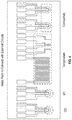
- FIG. 4 shows details of each exemplary type mm-sized electrodes (dissolved oxygen (“DO”), pH, temperature and conductivity) printed on a plastic film;
- DO dissolved oxygen
- FIG. 5 shows a MEA calibration curve of pH
- FIG. 6A shows calibration curve of dissolved oxygen (DO) MEA sensor, including plots for Region 1 and Region 2;
- FIG. 6B shows calibration curve of chloride (CY) MEA sensor
- FIG. 7 shows the insertion of a MEA plate into a system as an exemplary setup demonstration
- FIG. 8 shows an exemplary milli-electrode array (MEA) that includes five types of mm-sized electrodes
- FIG. 9A shows a schematic of exemplary 6-type MEA sensors that are ink-jet-printed/integrated on a film for real time in situ profiling of multiple parameters
- FIG. 9B shows an exemplary lab-test demonstration of the exemplary MEA sensors of FIG. 9A ;
- FIG. 10 shows an exemplary MEA setup with an external circuit and a data logging system
- FIG. 11A shows an MEA response to the changes of conductivity and temperature in water solution
- FIG. 11B shows MEA response to shocks
- FIG. 11C shows MEA response to salt (NaCl) shocks, and compared with commercial conductivity sensors, showing high sensitivity and fast response time;
- FIGS. 12A and 12B are schematic diagrams of exemplary DO, pH, temperature and conductivity MEA sensors and layers for MEA of the present disclosure
- FIG. 13A is an MEA calibration curve using the linearity model of the temperature MEA resistance ( ⁇ ) vs. temperature (° C.);
- FIG. 13B is an MEA calibration curve using the linearity model of the conductivity MEA resistance ( ⁇ ) vs. calibration conductivity ( ⁇ s/cm);
- FIG. 14A shows chemical MEA calibration based on the average value from four-time duplication tests using the linearity model of the DO MEA current ( ⁇ A) vs. DO (mg/L);
- FIG. 14B shows pH MEA potential (V) vs. pH
- FIG. 15A shows the response of exemplary MEA sensors and commercial probes to the shock of temperature
- FIG. 15B shows the response of exemplary MEA sensors and commercial probes to the shock of conductivity
- FIG. 15C shows the response of exemplary MEA sensors and commercial probes to the shock of DO
- FIG. 15D shows the response of exemplary MEA sensors and commercial probes to the shock of pH.
- Exemplary embodiments disclosed herein are illustrative of advantageous sensor assemblies, and systems of the present disclosure and methods/techniques thereof. It should be understood, however, that the disclosed embodiments are merely exemplary of the present disclosure, which may be embodied in various forms. Therefore, details disclosed herein with reference to exemplary systems/assemblies and associated processes/techniques of assembly and use are not to be interpreted as limiting, but merely as the basis for teaching one skilled in the art how to make and use the advantageous assemblies, systems and methods of the present disclosure.
- the present disclosure provides advantageous sensor assemblies. More particularly, the present disclosure provides microelectrode array (“MEA”) real-time in situ global sensing assemblies for enhancing efficiency and stability of wastewater treatment systems. The present disclosure further provides for a novel global sensing technology utilizing a microelectrode array (MEA) to solve various problems of monitoring wastewater treatment systems.
- MEA microelectrode array
- the present disclosure provides for improved systems/methods for monitoring wastewater treatment systems, with the improved systems/methods obtaining a substantially complete global profile of multiple parameters simultaneously. More particularly, the present disclosure provides that by patterning multiple electrodes (e.g., mm-sized electrodes) on a film (e.g., thin plastic film), a MEA can monitor multiple parameters simultaneously in 2-dimension (2-D) of a given system so that global dynamic stratification inside such systems can be real-time visualized for swift response under various wastewater conditions, thereby providing significant operating and commercial advantages as a result.
- multiple electrodes e.g., mm-sized electrodes
- a film e.g., thin plastic film
- the end users of the disclosed MEA technology are quite broad, ranging from diverse operational systems (e.g., aeration tanks, sedimentation tanks, sludge tanks, chlorination tanks) in municipal wastewater treatment plants, food waste anaerobic digestors (“AD”), water/wastewater pipeline networks to watershed and sediment restoration sites.
- AD food waste anaerobic digestors
- these waste/wastewater treatment facilities generally use single point probe technology, and many parameters have to be measured off line and ex situ, leading to severe lag-time action after shocks.
- wastewater treatment systems suffer from malfunction, it can take at least a couple of days or even months to recover back to normal operational status, which causes severe environmental pollution and public health concerns.
- the MEAs of the present disclosure can provide real-time in situ global profiles of multiple critical parameters for water/wastewater treatment systems.
- Existing sensing technologies cannot achieve such function.
- the U.S. EPA has a stringent regulation (e.g., total nitrogen (“TN”) less than 10 mg/L and total phosphorous (“TP”) less than 0.5 mg/L) for effluent discharge, meaning that more than 70% of existing wastewater treatment systems need to retrofit in next two decades.
- TN total nitrogen
- TP total phosphorous
- MEAs have a broad customer pool in the waste treatment market.
- the present disclosure can start with anaerobic digestor (AD) as the testbed for MEA, since the heterogeneous gas/liquid/solid phases in AD systems provide a nice scenario to use global profiles.
- AD technology has drawn a global interest for the treatment of waste streams originating from service industries, dairy farms, and municipalities.
- the connection between biogas/liquid/solid phases can be unclear, mainly due to infrequent localized information obtained from single point probes.
- 2-D profiles of multiple critical parameters e.g., pH, temperature, conductivity, oxygen
- MEs Micro-electrodes
- Many existing MEs are micro-pipette needle-shaped ( FIG. 2 ).
- the needle-shaped MEs have at least three major problems hindering the real-time measurement in waste treatment systems.
- the number of species detected can depend on the ME characteristics and may be limited.
- MEs may only measure a single parameter and only obtain one data point during each penetration into a sample, which makes it substantially not possible for real-time measuring/profiling the effects of shocks.
- Second, these MEs can require tedious fabrication procedures.
- MEs are fragile and may not be reusable for multiple measurements. So far, MEs are mainly used in bench-scale lab measurements without any real-world application in waste systems. Third, the whole ME setup can be complicated. The movement of MEs can be controlled by a bulky micro-manipulator (more than 100 lbs and 3 feet high) ( FIG. 2 ), making it substantially not possible for the in situ measurement at wastewater treatment plants or watershed sites.
- AD anaerobic digestion
- conventional single point can only measure a single type parameter (e.g., oxygen or pH or temperature) at a single point inside the AD system ( FIGS. 1A-1B ), through which only local information can be obtained.
- a MEA assembly can easily host 300 to 500 mm-sized electrodes on a piece of plastic film (e.g., size of an A4 paper), and obtain a 2-D global profile of multiple parameters (e.g., oxygen, pH, and temperature) along the depth of the AD system/tank ( FIG. 1B ).
- the heterogeneous phases in AD systems including biogas/liquid/biomass solid can be real-time in situ visualized.
- This exemplary global sensing technology of water systems can provide a substantially complete data set of AD system operational status, first-hand information for global changes of the AD system, early degradation warning, and thus enhancing AD system stability under transient shocks ( FIG. 1B ).
- the MEAs By patterning multiple pieces of mm sized multi-type electrodes (e.g., 0.50 cm ⁇ 0.50 cm) on a plastic film, the MEAs exponentially reduce the space with an A4 paper size film (e.g., film size can be 30 cm ⁇ 20 cm) hosting at least 300 electrodes, and thus greatly easing the deployment and reducing the cost (around $1.0 for a mm-sized electrode).
- the micro-watt ( ⁇ W) requirement of MEAs substantially reduces power input. All of these advantages offer MEA assemblies a substantially unbeatable global monitoring/profiling technology of water systems or the like.
- these actions are lag-time performed based on wastewater quality parameters monitored by electrodes installed in the systems.
- the present disclosure provides for MEA assemblies having patterned multiple mm-sized electrodes by precise printing designs and that achieve global sensing of multiple parameters simultaneously in 2-D of water systems ( FIGS. 1 and 3 ). As such, a substantially complete picture of systems can be obtained and swift action can be taken under dynamic conditions.
- the exemplary MEA assemblies have several distinct advantages over traditional single-point probes and MEs.
- They provide for a simple fabrication procedure.
- the present disclosure provides for inkjet-printing technology to print the precisely-designed mm-sized electrodes on a plastic film.
- the whole printing process only takes less than 2 hours for one sheet of plastic film hosting 100 to 200 electrodes, which makes the mass fabrication of MEAs possible.
- Traditional MEs take at least 5 to 6 hours (even overnight) to fabricate a single ME.
- the exemplary MEA assemblies provide a sturdy configuration for reuse.
- MEA assemblies fabricated by inkjet-printing are mechanically strong and durable for long-term monitoring. Lab-scale tests have shown stable performance over a 2-month operational period.
- MEs made by glass pipette can only last for a couple days and are easily broken when touching a hard surface.
- the exemplary MEA assemblies provide for compact measurement devices/assemblies for field work. By precisely patterning and aligning on the film ( FIG. 3 ), the position of each electrode on the MEA is known without the need of a bulky micro-manipulator.
- the exemplary MEA assemblies provide for the in situ global profiling of multiple parameters of the systems. This is an unique advantage of the exemplary MEA assemblies compared with the existing electrodes/multi-meters/MEs that can only measure parameters at a single point.
- the present disclosure provides that with multiple types of electrodes (e.g., oxygen, pH, temperature and conductivity) aligned at multiple rows on the assemblies, global profiling of systems is possible.
- a MEA on a plastic film is very easy to mount inside waste treatment systems.
- the exemplary MEA assemblies provide for low power consumption. Unlike existing multi-meters (consisting of multiple macro-sized electrodes) that can require 1 to 10 W, exemplary MEAs can only require micro-watt power requirements.
- the exemplary MEA assemblies possess several commercial attractions that existing probes do not offer.
- the exemplary MEA assemblies provide a simple compact structure with a thin plastic film hosting hundreds of mm-sized multiple-type electrodes in multiple rows.
- the exemplary MEA assemblies provide the capability of global profiling multiple parameters in a given system.
- the real-time in situ profiles promptly indicate the system operational status, which facilitate swift and efficient action under dynamic incoming waste events and unexpected shocks, and ultimately maintain the system global stability.
- the exemplary MEA assemblies provide long-term durability.
- Exemplary inkjet-printed MEAs and plastic films are mechanically strong and durable even under harsh conditions (e.g., soil, waste solution).
- the exemplary MEA assemblies have good sensitivity that has been well proven in lab-scale tests.
- Exemplary MEA assemblies have been successfully fabricated.
- the gold and carbon ink prepared for each type of mm-sized electrode e.g., oxygen, pH
- Different types of electrodes are laid out in a row.
- Multiple rows vertically compose a MEA matrix capable of simultaneously measuring multiple parameters along the depth (e.g., 4 cm (width) ⁇ 30 cm (depth) hosting 40 electrodes) of the system/tank.
- the exemplary MEA possesses distinct advantages of multiple-parameter monitoring, global profiling, high accuracy, easy fabrication, and high sensitivity.
- a core technology of an exemplary MEA is the precisely-designed inkjet printed mm-sized electrode (as shown in FIGS. 3A and 3B ). Details for each exemplary type of mm-sized electrode are presented in FIG. 4 .
- Inkjet-printing has been developed for making chemical catalysts and electrochemical materials, and has not been applied for fabricating mm-sized electrodes. In fact, printing mm-sized electrode is not just shrinking macro-sized electrodes into small sizes. Sensor materials had to be developed to be smoothly printed through ink-jet printers.
- An exemplary MEA developed provided by the present disclosure can be mainly fabricated by gold/silver ink and carbon ink. Aligning multiple mm-sized electrodes can be designed using a CAD program.
- FIGS. 6A and 6B provide exemplary calibration curves for MEA sensors. Specifically, FIG. 6A provides a calibration curve of dissolved oxygen (DO) MEA sensor, including plots for Region 1 and Region 2, and FIG. 6B provides a calibration curve of chloride (CY) MEA sensor.
- FIG. 7 shows an exemplary setup demonstration of deploying a MEA plate into a system (e.g., using a beaker to clearly show the inside details).
- the present disclosure advantageously provides for an electrode array equipped with multiple mm-sized electrodes at multiple rows that can measure multiple parameters in 2-dimension (2-D) simultaneously.
- the exemplary MEA assemblies have great potential for renovating wastewater treatment system real-time sensing and improving system stability and efficiency.
- the present disclosure also provides for market expansion in the waste treatment industry.
- the present disclosure provides for the development of a durable, inexpensive milli-electrode array (MEA) technology/assembly by employing multiple mm-sized electrodes on a flexible plastic film that can be easily installed inside waste treatment systems to rapidly profile multiple parameters with high temporal and spatial resolution.
- MEA milli-electrode array
- gold and carbon ink prepared for each type of mm-sized electrode can be precisely printed on a flexible Kapton film using an ink-jet printer ( FIG. 8 ). Different types of electrodes are laid out in a row. Multiple rows of mm-sized electrodes vertically compose a MEA matrix capable of simultaneously measuring multiple parameters along system depth, and thus elucidating the heterogeneous status inside systems.
- the horizontal distance between each type of electrodes can be 0.30 cm, which is far enough apart to prevent the interference between different types of electrodes during measurement.
- Each electrode has a bond pad on the top of the chip for wire bonding, allowing the easy connection to an external circuit.
- An epoxy glob top is applied to protect the bond wires from mechanical damage and wet working environments.
- the surface of the MEA sensors can be fully coated with a waterproof layer (e.g., poly(amic acid) ink) to protect the electrodes in wastewater.
- a waterproof layer e.g., poly(amic acid) ink
- the flexible film with the printed MEAs can be bonded on a round stick and easily inserted into the system through an installation port.
- exemplary MEA sensors e.g., redox potential (ORP), pH, temperature, conductivity, and ammonium NH 4 + ) specifically for wastewater anaerobic treatment have been developed by precisely patterning multiple mm-sized electrodes using an inkjet printer ( FIG. 9A ).
- Multiple rows vertically compose a MEA matrix capable of simultaneously measuring multiple parameters along system depth (e.g., 4 cm (width) ⁇ 30 cm (depth) hosting 60 electrodes) ( FIG. 9B ).
- Each type electrode can be modified for a specific parameter using the reported procedures, with a bond pad on the top of the film for wire bonding, allowing for an easy connection to an external circuit ( FIG. 10 ).
- pH and NH 4 + sensors include the same pattern gold-based working and counter electrodes, and silver-based reference electrodes ( FIG. 10 ). Then, the working electrode of the pH sensor can be modified through the deposition of Ir 2 O 3 , and the working electrode of the NH 4 + sensor can be modified with a coating of polyaniline.
- the temperature sensor can be made by a zip-shape gold-based resistance and conductivity sensor that includes four gold-based electrodes as a capacitor ( FIG. 10 ).
- the uniquely designed MEAs are more accurate and sensitive, since the electrochemical signals can be immediately and fully collected by the adjacent counter electrode ( FIG. 10 ). This is very different from the existing electrodes which need a separated reference/counter electrode.
- the ink-jet printed MEA sensors are low cost (e.g., $0.2 per sensor, mainly gold/silver ink cost) and are easy to mass fabricate.
- the precise alignment of each electrode on the film makes the MEA individually addressable, which substantially eases the in situ measurement in the field.
- the electrochemical signals of the MEAs can be recorded using a multiple-channel data-logging system. For example, the NH 4 + concentration can be measured using current; the pH and the ORP can be measured using potential; the conductivity can be measured using capacitance; and the temperature can be measured using resistance.
- Each exemplary type of sensor of the MEA assembly can be calibrated to establish an accurate correlation between electrochemical signals and the targeted parameters.
- the calibration has been conducted in water solutions that well represent typical wastewater, with ORP of ⁇ 350-+300 mV, pH of 2 to 10, temperature of 10 to 50° C., conductivity (indicating dissolved solid content) of 1500 to 3000 ⁇ S/cm, and NH 4 + 20 to 100 mg/L.
- Each type of sensor showed high accuracy between electrochemical signals and the targeted parameters with R 2 values higher than 99% ( FIG. 5 ).
- a shock test was conducted by rapidly changing water temperature and conductivity to simulate water system malfunction (e.g., temperature fluctuation and fatty acid accumulation in AD systems).
- the MEA sensors showed the real-time signal change with the shock ( FIG.
- FIG. 11A shows MEA response to Cl ⁇ shock and FIG. 11C shows MEA response to salt (NaCl) shocks, and compared with commercial conductivity sensors, showing high sensitivity and fast response time.
- mm-sized electrodes on the MEA are not limited to these five parameters. Each electrode can be easily modified using surface coating and electrochemical deposition to monitor a wide range of other parameters (e.g., toxic metal ions, pesticide, salt, and nutrients, etc.).
- MEA sensors targeting critical water-quality parameters two physical parameters: temperature and conductivity; two chemical parameters: DO and pH
- IPT technology two physical parameters: temperature and conductivity; two chemical parameters: DO and pH
- Precise patterning of multiple mm-sized electrodes on a flexible plastic film was achieved.
- the electrodes are adapted for easy installation inside treatment systems to rapidly profile multiple parameters, and thus elucidate the heterogeneous status of systems for decoding the “black box” and executing proactive control strategies.
- Kapton FPC film (thickness: 127 ⁇ m, American Durafilm) was washed with deionized water (DI water) and ethanol prior to the usage as the sensor substrate. Compared with a rigid silicon wafer, the flexible Kapton film had the distinct advantages of easy deployment/replacement, durable structure and high robustness.
- Gold (III) chloride trihydrate, 1-dodecanethiol, tetraoctylammonium bromide, sodium borohydride, N-hydroxysulfosuccinimide, 1-ethyl-3-[3-dimethylaminopropyl], and carbodiimide hydrochloride (Sigma-Aldrich Co.) were used to synthesize the gold ink (Dodecane thiol-protected gold nanoparticles) for MEA working electrodes.
- Silver nanoparticles ink (SunTronic® Silver, Sigma-Aldrich Co.) was used as the silver ink for MEA reference electrodes.
- Poly (amic acid, Sigma-Aldrich Co.) ink was used as the waterproof layer printed on the top layer of MEAs and was prepared by diluting 10% (m/m) poly (amic acid) solution in highly pure N-methyl-2-pyrrolidone (NMP) to 1% (m/m).
- NMP N-methyl-2-pyrrolidone
- Iridium (IV) chloride, hydrogen peroxide and potassium oxalate were prepared for iridium tetrachloride solution for pH working electrode.
- Phosphate-buffered saline (PBS) solution was prepared by mixing sodium hydrogen phosphate, sodium chloride, potassium chloride and potassium dihydrogen phosphate (Fisher Scientific Co.) in the DI water, and was used for the stabilizing solution for the pH working electrodes.
- a Dimatix Materials Printer (ModelDMP-2800, FUJIFILM Dimatix, Inc. Santa Clara, Calif.) was used for printing MEA sensors.
- the liquid crystal polymer printer cartridges (Model DMCLCP-11610, Dimatix 10 pL) were used for all the inks (gold, silver and poly amic acid inks).
- the printing pattern was designed using the AutoCAD program and transferred by the LinkCAD program.
- Each pattern of a MEA was printed with a 15 ⁇ m space between the ink drops by using a customized printing waveform, with each pattern being printed using two jets for facile detection of any potential clog.
- a typical MEA pattern consisted of DO sensor, pH sensor, temperature sensor and conductivity sensor (from left to right).
- Each MEA sensor had three layers: the substrate layer (Kapton film), the electrode layer and the water-proof layer.
- Each electrode layer was printed using specific type of metal inks (e.g., gold ink for the working and counter electrodes, and silver ink for the reference electrodes).
- the pH and DO sensors possessed the three-electrode configuration, including one working electrode (gold ink), one counting electrode (gold ink) and one reference electrode (silver ink).
- the working electrode was modified using iridium oxide that was widely used for pH detection after the gold the silver layers were printed on the film.
- the temperature sensor printed solely using the gold ink was a resistance thermometer in which the change of resistance was directly associated with temperature.
- the conductivity sensor printed solely using the gold ink was a four-electrode sensor to measure the resistivity of water solution, which directly reflected the total amount of dissolved salts in a water solution.
- a clean Kapton polyimide film (FPC, size: 22 ⁇ 28 cm) was placed in the Dimatix printer, heated to 35° C. and secured using a platen vacuum.
- the gold electrode layer, the silver electrode layer and the waterproof layer were printed sequentially on the Kapton substrate films following the same process.
- the gold nanoparticle ink cartridge in the Dimatix printer was visually checked using a high-speed drop camera to ensure the consistent ink droplet formation.
- the printer was aligned with the Kapton film, and the patterning program was set to allow for printing multiple sensor arrays simultaneously, with a space of 3-5 cm between each sensor array. Specifically, the gold nanoparticle ink was first printed onto the film, followed by heating to 200° C.
- the film was then rinsed with the DI water and aligned before printing the silver layer, and then the film was heated to 150° C. for 10 min or until the color of the silver layer lightened. Finally, the poly (amic acid) layer was printed on the top of the silver layer and the film was heated to 200° C. for 30 min for imidization of the poly (amic acid) solution.
- the MEAs were placed in 0.18 M sulfuric acid (H 2 SO 4 , Fisher Scientific CO, connected to a potentiostat, and cycled from ⁇ 0.2 V to +1.5 V vs. SCE to clean the electrodes.
- H 2 SO 4 H 2 SO 4
- Fisher Scientific CO Fisher Scientific CO
- pH sensors were modified by electrochemically coating an iridium oxide (IrO x ) layer on the working electrode using cyclic voltammetry (CV, Gamry Reference 600) at a scanning potential from ⁇ 2.0V to +0.8V, and the scan rate of 100 mV/s for 12 cycles.
- CV cyclic voltammetry
- Each type of MEAs was calibrated at room temperature (20° C.) with four-time duplication.
- the working electrode and counter/reference electrodes were individually connected with a potentiostat (Gamry Reference 600).
- the MEA was immersed into the DI water in a beaker on the heater (Thermolyne 1000 hotplate).
- a commercial temperature sensor (Thermo Scientific Orion 3 star conductivity meter) was put into the beaker near the MEA as the control measurement.
- the temperature MEAs were applied with the current-time program at a setting potential 0.2V, and the MEA readings were recorded each 100 seconds for 2300 seconds.
- the conductivity MEA For the conductivity MEA, two outer electrodes were connected with a direct current (DC) power supply (GWinstek SFG 1013) that provided the stable current, while the two inner electrodes were connected with the working electrode and counter/reference electrodes of the potentiostat.
- the conductivity (from 197 ⁇ s/cm to 152 ms/cm) of nineteen sample solutions made by dissolving different amounts of sodium chloride (NaCl, Fisher Scientific Co.) into the DI water was measured by the commercial conductivity meter (Thermo Scientific Orion 3 star conductivity meter).
- the conductivity MEAs were applied with a 60-second open potential program for each sample during calibration. The data used for the conductivity calibration was the average of the 60-second data.
- DO MEA For the DO MEA, three electrodes were individually connected with the working electrode, the counter electrode and the reference electrode of the potentiostat. Six solutions with different DO concentrations (0.2 to 8.91 mg/L) were made by dissolving different amounts of sodium sulfite (Na 2 SO 3 , Fisher Scientific Co.) into the fully aerated solution. The DO MEAs were applied using cyclic voltammetry (CV) at a scanning potential from ⁇ 0.9V to 0V, and the scan rate of 200 mV/s for 12 cycles, and were validated with a commercial DO meter (Thermo Scientific Orion 3 star DO meter).
- CV cyclic voltammetry
- pH MEA For the pH MEA, three electrodes were individually connected with the working electrode, the counter electrode and the reference electrode of the potentiostat.
- Six pH solutions (pH: 2, 3, 5, 6, 8 and 9) were prepared using hydrochloric acid (HCl), sodium hydroxide (NaOH), Sodium chloride (NaCl), potassium hydrogen phthalate, phosphate, and Tris buffer solution (Fisher Science, Co.).
- the pH MEAs were applied using a 100-second potential-time measurement for each sample, and validated using a commercial pH sensor (Thermo Scientific Orion 3 star pH meter).
- MEA lab shock tests were conducted to examine the accuracy and the response time of MEAs during the transient shock period. Each MEA shock test was duplicated for four times.
- the MEAs and the commercial sensor were put into a beaker with the original solution (500 mL).
- the connection between the electrodes of the MEAs (temperature, conductivity, DO and pH) and the potentiostat was the same as the calibration process.
- the shock solution (50 mL) was injected into the original solution 60 seconds after the potentiostat electrochemical program started.
- the shock solution hot DI water
- the temperature observed by the commercial temperature sensor was recorded each 30 seconds after the I-t program of the potentiostat started.
- shock solution 1000 mg/L NaCl
- original solution 2 mg/L NaCl
- DO shock oxygen gas was first pumped into the original solution to reach the saturated DO (about 8.91 mg/L).
- the shock solution was the DI water dissolved with sodium sulfite (Na 2 SO 3 , Fisher Science, Co.) as the oxygen scavenger for one hour to reduce the DO to 0.2 mg/L, which was verified by the commercial DO sensor.
- the DO shock solution was rapidly injected into the fully aerated solution, during which the DO was recorded using the DO MEA and compared with the commercial probe.
- the shock solution (0.01 M HCl solution at pH of 2.09) was rapidly injected into the original solution (20° C. DI water at pH of 7.08).
- the pH measured using the pH MEAs was recorded each 30 seconds after the potential-time program of the potentiostat started, and compared with the commercial pH sensor.
- MEA stability was examined within 4-week operational period. Multiple pieces of MEAs were immersed into wastewater (chemical oxygen demand (COD): 250-350 mg L ⁇ 1 and biological oxygen demand (BOD): 100-300 mg L ⁇ 1 ) and waste sludge individually that were collected from University of Connecticut Wastewater Treatment Plant (WWTP). Every week, a MEA sample was taken from the wastewater and sludge, respectively, and gently rinsed by DI water for 5 seconds before the surface observation using a digital microscope (Nikon Labophot).
- COD chemical oxygen demand
- BOD biological oxygen demand
- the resistance of MEAs can directly demonstrate the electrode fouling status
- the resistance of each MEA sensors was used as an indicator of the whole MEA and measured at ambient temperature (25° C.) using a digital multimeter weekly for 4 weeks to elucidate the electrode fouling influence.
- the accuracy of the temperature, conductivity, DO and pH MEAs was validated within 4-week operational period.
- ⁇ R is the difference between the actual resistance and the reference resistance ( ⁇ ).
- ⁇ is the temperature coefficient of resistance (TCR) (( ⁇ / ⁇ )/° C.), which is also regarded as the sensitivity of a temperature sensor.
- R r the reference resistance, is the resistance of the temperature MEA at 20° C. ( ⁇ ).
- ⁇ T is the difference between the actual temperature and the reference temperature (20° C.) (° C.).
- the sensitivity ( ⁇ ) of the temperature MEA was 0.002 ( FIG. 13A ), indicating that the resistance hardly changed with the variations in temperature.
- TCR ⁇ in this model, 0.002
- the pure gold 0.003715 at 20° C.
- the gold ink used in this study was AuNPs and decreased the TCR in the model.
- the temperature MEAs showed similar sensitivity (0.0025-0.0048).
- the conductivity MEAs indicated the capacity of a water solution to conduct an electric current between two electrodes, which was highly related with the ionic strength. By increasing NaCl concentration, the ionic strength of the water solution increased and led to higher conductivity ( FIG. 13B ).
- R is the resistance between two electrodes ( ⁇ );
- C is the conductivity of a solution (S/cm);
- K the cell constant
- the R 2 value (0.9982) indicated a high degree of linearity between the resistance of the conductivity MEAs and the solution conductivity ( FIG. 13B ).
- the conductivity MEA has a better response time (less to 0.1 second) over the commercial conductivity sensors (about 10-30 seconds), with similar R square value (>0.95), since the four-electrode structure efficiently reduced the effects of polarization and increased the accuracy compared with the two-electrode conductivity structure.
- the miniature size ( ⁇ 1 mm) of the MEA sensors minimized the impact of the sensor to the solution compared with traditional conductivity sensors (>100 mm). Due to the close association between conductivity and temperature, the integration of conductivity sensors and temperature sensors on the same film can achieve auto-correction at different temperatures.
- i i 0 ( 1 - i i 1 , c ) ⁇ e - ⁇ ⁇ ⁇ nf ⁇ ⁇ ⁇ - ( 1 - i i 1 , a ) ⁇ e ( 1 - ⁇ ) ⁇ nf ⁇ ⁇ ⁇ ( 3 )
- ⁇ is the transfer coefficient
- n is the number of electrons
- f is the ratio of Faraday's constant to that of the ideal gas constant and temperature
- ⁇ is the over-potential
- i 1,c and i 1,a are the diffusion limited cathodic and anodic currents, respectively.
- the current was proportional to the DO concentration in the Region 2 ( FIG. 14A ), and the current value used for the model was set as the current at the potential (0.75 V) in Region 2.
- the high R 2 value (0.9955) reflected an excellent linearity between the current and the DO concentration ( FIG. 14A ).
- E (T) is the potential of the pH temperature
- E ⁇ (T) is the constant standard potential (mV) at temperature T (Kelvin);
- R is the molar gas constant (8.3144 J mol-1 K-1);
- F is the Faraday constant (96485 C mol ⁇ 1 );
- the pH sensor should be real-time corrected with temperature to obtain a high accuracy of pH measurement.
- the slope (2.303RT/nF) indicated that temperature significantly influenced the sensor open potential and the pH value.
- the influence factor of the temperature was set as 0.06 pH1° C., meaning that pH readings would change when the temperature of the water solution became different from the reference temperature (20° C.). Integrating pH sensor and temperature sensor in a MEA would effectively eliminate the potential temperature error by real-time auto adjusting the slope.
- the sensitivity and accuracy of MEAs were examined in a water solution under the shocks of each parameter.
- the temperature of the solution was stable at 20° C. before the shock tests ( FIG. 15A ).
- the shock input 50 mL solution of 50° C.
- the temperature increased rapidly within next 5-10 seconds and reached 22° C. on 80 th second.
- the reading of the temperature MEA stabilized at 22.4° C. ( FIG. 15A ), which was almost the same as the theoretic temperature of the final mixture solution (22.73° C.).
- the accuracy of the temperature MEA was validated using a commercial temperature sensor.
- the ratio of the estimated temperature (based on the temperature MEA) to the actual temperature (based on the commercial temperature sensor) ranged between 98.75% and 101.25%, demonstrating that the superb accuracy of the temperature MEA (>100 ⁇ 1.25%).
- the I-t program recorded the current every 0.1 seconds and caught the current change simultaneously under the shock.
- the rapid response time of the temperature MEA was much shorter than that of commercial temperature sensors (about 5-20 seconds), and enabled the capture of the transient shock (lasting less than 5-10 seconds) ( FIG. 15A ).
- the temperature shock pattern consisted of three stages: the stable stage (before the shock), the fast increase stage (during the shock) and the slow increase stage (after the shock) ( FIG. 15A ).
- the temperature increase was linearly related (R 2 >0.98), and the temperature increase rate of the fast increase stage (0.2927° C./second) was about 70 times as that of the slow increase stage (0.0042° C./second) ( FIG. 15A ).
- the fast increase stage was caused by the direct heat transfer from the high temperature shock solution to the low temperature original solution, while the slow increase stage was caused by the partial heat diffusion in the mixture solution the addition of the shock solution.
- the original solution (2 mg/L NaCl solution, 500 mL) had the conductivity of 4.4 ⁇ S/cm to simulate the clean water sources (conductivity lower than 200 ⁇ S/cm).
- the shock input 1000 mg/L NaCl solution, 50 mL had the conductivity of 1980 ⁇ S/cm to simulate the saline wastewater, which was verified by the commercial conductivity sensor.
- the final mixture solution with the NaCl concentration of 92.73 mg/L had the calculated conductivity of 195 ⁇ S/cm, which was close to the measurement results of the conductivity MEA (191 ⁇ S/cm, FIG. 15B ).
- the ratio of the estimated conductivity (based on the conductivity MEA model and temperature correction) to the actual conductivity (based on the conductivity commercial sensor) ranged between 98.50% and 101.50%, demonstrating that the superb accuracy of the conductivity MEA (>100 ⁇ 1.50%).
- the potential-time program was recorded every 0.1 seconds or less ( FIG. 15B ), and thus capturing the current change simultaneously under the shock.
- the shock pattern measured by the conductivity MEA exhibited three stages: stable stage (before the shock), increase stage (during the shock) and decrease stage (after the shock) ( FIG. 15B ).
- the original solution had the DO concentration of 8.91 mg/L, and the shock solution had the DO of 0.2 mg/L.
- the DO concentration of the final mixed solution was about 8.13 ⁇ 0.26 mg/L and verified by the commercial DO sensor. Because the DO MEA monitored the DO concentration by acquiring different reduction currents in cyclic voltammetry (CV) programs, it took a long duration period (around 2 minutes) and could not capture the transient shock details as commercial DO probes. Previous study found that modifying the DO working electrode with platinum nanoparticles could allow the usage of the reduction current-time program for obtaining datasets, which was expected to shorten the data acquisition time and enable recording more details of DO shock.
- the ratio of the estimated DO (based on the DO MEA model) to the actual DO concentrations (based on the reading of the commercial DO probe) ranged between 98.50% and 101.50%, demonstrating that the superb accuracy of the DO MEA (>100 ⁇ 1.50%).
- the original solution DI water at 20° C.
- the shock solution had the pH of 2.09.
- the final mixed solution had the pH of 3.04, which was verified by the commercial pH probe (pH reading: 3.06).
- the ratio of the estimated pH (based on the pH MEA model) to the actual pH (based on the pH commercial probe) ranged between 98.50% and 101.50%, demonstrating the superb accuracy of the pH MEA sensor (>100 ⁇ 1.50%).
- the pH shock profile of the pH MEA showed that pH instantaneously dropped after the pH shock injection, and the bottom point (pH: 1.24) of the pH profile was even lower than the final pH value due to the rapid diffusion of the shock solution into the original solution. Then the pH value of the mixed solution gradually increased and stabilized to the final pH (pH: 3.06), which fit the theoretical value of the mixing final pH (pH: 3.05). These transient changes of the pH shock were not captured by the commercial pH probe that could only record the steady decrease of pH to the final value. Because the pH MEA recorded the open potential every 0.1 second and the mm-sized pH MEA was much smaller than the commercial pH sensor ( ⁇ 8-10 mm), the pH MEA sensors exhibited high accuracy and fast response time.
- the stability of MEA sensor is critical for long-term wastewater monitoring.
- Electrode fouling caused by the attachment of inorganic/organic particles has been well known to cause the deterioration of sensor accuracy and stability.
- the MEA surfaces did not have obvious change based on macroscopic and microscopic observation during 4-week immersion in wastewater and waste sludge.
- the resistance of the temperature MEA slightly increased with the time, since the trace biofilms reduced the surface area of the MEA.
- the low slope (1.226) of the regression indicated that the resistance of the temperature MEA only decreased less than 0.1% in one week, demonstrating the high stability of the MEA.
- the accuracy of the MEAs (temperature, conductivity, DO and pH) had no obvious change within the 4-week operational period, with the reading accuracy of 100% ⁇ 1.25% (max. ⁇ 2.0%) compared with commercial probes.
- Water quality monitoring is critical to reveal the operational status and provide high quality dataset for system control and adjustment in water and wastewater treatment processes.
- Existing expensive yet inefficient “single-point” probes and “multi-parameter” meters can only monitor parameters at single point without obtaining the complete picture of system status.
- This study aimed at renovating water quality monitoring technology by patterning multiple types of mm-sized electrodes on a single flexible film using IPT.
- MEA sensors achieved real-time in situ multiple-parameter monitoring in a single measurement, and provided a complete dataset of system physic-chemical and biochemical status.
- MEA sensors exhibited high accuracy, excellent signal stability, rapid response time and long-term robustness, which pose a great potential to detect the fluctuant water quality in treatment processes.
- the IPT fabrication possesses three major breakthroughs over traditional PCVD: facile fabrication condition, flexible MEA film structure and low fabrication cost, which makes the installation of multiple MEAs possible to ensure high resolution sensing of complex infrastructure, and execute swift and proactive decision-making strategy.
- the batch tests in real wastewater and waste sludge clearly showed the high stability of MEA sensors. Future study will be conducted in continuous flow wastewater systems to validate the anti-fouling capability of MEA sensors.
- MEA micro-electrode arrays
- IPT interleukin-proliferative micro-electrode arrays
- the MEA fabricated using IPT according to the present disclosure may be effectively employed in water quality sensing applications.
- the MEA possessed distinct advantages over traditional “single-point” probes: small sensor size, compact structure, multiple-parameter measurement in a sampling, easy fabrication and deployment, long-term stability, and ultralow low cost.
- Four types of MEA sensors (temperature, conductivity, DO and pH) showed high accuracy in the calibration tests, and fast response time and excellent sensitivity in the shock tests.
- MEA sensors revealed more transient details than commercial probes, and achieved the auto-correction.
Landscapes
- Chemical & Material Sciences (AREA)
- Life Sciences & Earth Sciences (AREA)
- Health & Medical Sciences (AREA)
- Pathology (AREA)
- General Physics & Mathematics (AREA)
- Immunology (AREA)
- Physics & Mathematics (AREA)
- Analytical Chemistry (AREA)
- Biochemistry (AREA)
- General Health & Medical Sciences (AREA)
- Chemical Kinetics & Catalysis (AREA)
- Electrochemistry (AREA)
- Engineering & Computer Science (AREA)
- Food Science & Technology (AREA)
- Medicinal Chemistry (AREA)
- Molecular Biology (AREA)
- Investigating Or Analyzing Materials By The Use Of Electric Means (AREA)
- Water Treatment By Electricity Or Magnetism (AREA)
Abstract
Description
ΔR=αR r ΔT (1)
where
C=K(1/R) (2)
where
where
where
Claims (9)
Priority Applications (1)
| Application Number | Priority Date | Filing Date | Title |
|---|---|---|---|
| US15/639,852 US10753900B2 (en) | 2016-06-30 | 2017-06-30 | Real-time in situ sensing of water-related parameters using micro-electrode array |
Applications Claiming Priority (2)
| Application Number | Priority Date | Filing Date | Title |
|---|---|---|---|
| US201662356932P | 2016-06-30 | 2016-06-30 | |
| US15/639,852 US10753900B2 (en) | 2016-06-30 | 2017-06-30 | Real-time in situ sensing of water-related parameters using micro-electrode array |
Publications (2)
| Publication Number | Publication Date |
|---|---|
| US20180003668A1 US20180003668A1 (en) | 2018-01-04 |
| US10753900B2 true US10753900B2 (en) | 2020-08-25 |
Family
ID=60807325
Family Applications (1)
| Application Number | Title | Priority Date | Filing Date |
|---|---|---|---|
| US15/639,852 Active 2037-09-22 US10753900B2 (en) | 2016-06-30 | 2017-06-30 | Real-time in situ sensing of water-related parameters using micro-electrode array |
Country Status (1)
| Country | Link |
|---|---|
| US (1) | US10753900B2 (en) |
Families Citing this family (5)
| Publication number | Priority date | Publication date | Assignee | Title |
|---|---|---|---|---|
| US11536660B2 (en) | 2017-07-28 | 2022-12-27 | Cornell University | In situ sensing of water potential |
| US10772210B2 (en) * | 2018-10-07 | 2020-09-08 | National Sun Yat-Sen University | Solution property sensor |
| US11581547B2 (en) * | 2019-05-29 | 2023-02-14 | Uchicago Argonne, Llc | Electrode ink deposition system for high-throughput polymer electrolyte fuel cell |
| CN115096769B (en) * | 2022-08-26 | 2023-01-17 | 北京博汇特环保科技股份有限公司 | Device and method for measuring sludge settling performance based on current |
| CN116718653A (en) * | 2023-04-20 | 2023-09-08 | 广科知微(广东)传感科技有限公司 | A water quality detection device, data processing method and detection system |
Citations (12)
| Publication number | Priority date | Publication date | Assignee | Title |
|---|---|---|---|---|
| US3710237A (en) * | 1970-09-08 | 1973-01-09 | Nalco Chemical Co | Probe for a conductivity testing device |
| US4816131A (en) | 1987-09-29 | 1989-03-28 | The Board Of Regents Of The University Of Washington | pH/PCO2 PO2 electrode |
| US5676820A (en) | 1995-02-03 | 1997-10-14 | New Mexico State University Technology Transfer Corp. | Remote electrochemical sensor |
| US20040163954A1 (en) | 2000-03-07 | 2004-08-26 | Bonnie Gurry | Microsensor to measure or regulate the amount of chlorine and bromine in water |
| US20100204695A1 (en) * | 2009-02-06 | 2010-08-12 | Primaeva Medical, Inc. | Methods for applying energy to tissue using a graphical interface |
| US8182663B2 (en) | 2004-09-02 | 2012-05-22 | Abbott Point Of Care Inc. | Blood urea nitrogen (BUN) sensor |
| US8202408B2 (en) | 2008-03-07 | 2012-06-19 | The Curators Of The University Of Missouri | Sensor electrode and method for the electrochemical detection of nucleotides |
| US8414750B2 (en) | 1991-03-04 | 2013-04-09 | Abbott Diabetes Care Inc. | Subcutaneous glucose electrode |
| US20130087456A1 (en) * | 2011-10-11 | 2013-04-11 | Life Safety Distribution Ag | Auxiliary micro-electrodes for diagnostics of electrochemical gas sensors |
| US8901913B2 (en) | 2008-06-27 | 2014-12-02 | Capitalbio Corporation | Microelectrode arrays |
| US8940142B2 (en) | 2008-05-05 | 2015-01-27 | The Regents Of The University Of California | Functionalized nanopipette biosensor |
| US8965478B2 (en) | 2012-10-12 | 2015-02-24 | Google Inc. | Microelectrodes in an ophthalmic electrochemical sensor |
-
2017
- 2017-06-30 US US15/639,852 patent/US10753900B2/en active Active
Patent Citations (12)
| Publication number | Priority date | Publication date | Assignee | Title |
|---|---|---|---|---|
| US3710237A (en) * | 1970-09-08 | 1973-01-09 | Nalco Chemical Co | Probe for a conductivity testing device |
| US4816131A (en) | 1987-09-29 | 1989-03-28 | The Board Of Regents Of The University Of Washington | pH/PCO2 PO2 electrode |
| US8414750B2 (en) | 1991-03-04 | 2013-04-09 | Abbott Diabetes Care Inc. | Subcutaneous glucose electrode |
| US5676820A (en) | 1995-02-03 | 1997-10-14 | New Mexico State University Technology Transfer Corp. | Remote electrochemical sensor |
| US20040163954A1 (en) | 2000-03-07 | 2004-08-26 | Bonnie Gurry | Microsensor to measure or regulate the amount of chlorine and bromine in water |
| US8182663B2 (en) | 2004-09-02 | 2012-05-22 | Abbott Point Of Care Inc. | Blood urea nitrogen (BUN) sensor |
| US8202408B2 (en) | 2008-03-07 | 2012-06-19 | The Curators Of The University Of Missouri | Sensor electrode and method for the electrochemical detection of nucleotides |
| US8940142B2 (en) | 2008-05-05 | 2015-01-27 | The Regents Of The University Of California | Functionalized nanopipette biosensor |
| US8901913B2 (en) | 2008-06-27 | 2014-12-02 | Capitalbio Corporation | Microelectrode arrays |
| US20100204695A1 (en) * | 2009-02-06 | 2010-08-12 | Primaeva Medical, Inc. | Methods for applying energy to tissue using a graphical interface |
| US20130087456A1 (en) * | 2011-10-11 | 2013-04-11 | Life Safety Distribution Ag | Auxiliary micro-electrodes for diagnostics of electrochemical gas sensors |
| US8965478B2 (en) | 2012-10-12 | 2015-02-24 | Google Inc. | Microelectrodes in an ophthalmic electrochemical sensor |
Non-Patent Citations (1)
| Title |
|---|
| U.S. Appl. No. 62/356,032, filed Jun. 30, 2016. |
Also Published As
| Publication number | Publication date |
|---|---|
| US20180003668A1 (en) | 2018-01-04 |
Similar Documents
| Publication | Publication Date | Title |
|---|---|---|
| Xu et al. | Real-time in situ sensing of multiple water quality related parameters using micro-electrode array (MEA) fabricated by inkjet-printing technology (IPT) | |
| US10753900B2 (en) | Real-time in situ sensing of water-related parameters using micro-electrode array | |
| Huang et al. | Real-time in situ monitoring of nitrogen dynamics in wastewater treatment processes using wireless, solid-state, and ion-selective membrane sensors | |
| Jin et al. | Recent advances in electrochemical detection of toxic Cr (VI) | |
| Belmont-Hébert et al. | Gel-integrated microelectrode arrays for direct voltammetric measurements of heavy metals in natural waters and other complex media | |
| Avolio et al. | Review of pH sensing materials from macro-to nano-scale: Recent developments and examples of seawater applications | |
| Li et al. | Phosphate sensor using molybdenum | |
| Liao et al. | A miniature photoelectrochemical sensor based on organic electrochemical transistor for sensitive determination of chemical oxygen demand in wastewaters | |
| Zeitoun et al. | Potentiometric determination of phosphate using cobalt: A review | |
| Fan et al. | Long-term continuous and real-time in situ monitoring of Pb (II) toxic contaminants in wastewater using solid-state ion selective membrane (S-ISM) Pb and pH auto-correction assembly | |
| US9816962B2 (en) | Apparatus with a self-cleaning electrode for sensing at least one parameter in water | |
| EP3224607B1 (en) | Electrochemical sensor comprising boron doped diamond electrode | |
| US6730201B1 (en) | Electronic tongue | |
| Wang et al. | L-Aspartic acid/L-cysteine/gold nanoparticle modified microelectrode for simultaneous detection of copper and lead | |
| US20230072883A1 (en) | Apparatus and methods for measuring phosphate in water | |
| Song et al. | A disposable cobalt-based phosphate sensor based on screen printing technology | |
| CN104330456A (en) | Device and method for synchronously monitoring concentration of dissolved oxygen (DO) of water at different depth in real time | |
| Jamal et al. | nanostructured materials for sensing pH: Evolution, fabrication and challenges | |
| Patel et al. | Enhancing the sensitivity of cobalt based solid-state phosphate sensor using electrical pretreatment | |
| Gardner et al. | Development of a microelectrode array sensing platform for combination electrochemical and spectrochemical aqueous ion testing | |
| Shylendra et al. | Advancements in solid-state metal pH sensors: A comprehensive review of metal oxides and nitrides for enhanced chemical sensing: A review | |
| Manjakkal et al. | Sensing Technologies for Real Time Monitoring of Water Quality | |
| Lowinsohn et al. | Design and fabrication of a microelectrode array for iodate quantification in small sample volumes | |
| Lin et al. | Electrochemical determination of chemical oxygen demand (COD) in surface water using a microfabricated boron-doped diamond (BDD) electrode by chronoamperometry | |
| US8025789B2 (en) | Anionically-charged polymer detection method |
Legal Events
| Date | Code | Title | Description |
|---|---|---|---|
| AS | Assignment |
Owner name: NATIONAL SCIENCE FOUNDATION, VIRGINIA Free format text: CONFIRMATORY LICENSE;ASSIGNOR:UNIVERSITY OF CONNECTICUT;REEL/FRAME:043419/0549 Effective date: 20170801 |
|
| AS | Assignment |
Owner name: UNIVERSITY OF CONNECTICUT, CONNECTICUT Free format text: ASSIGNMENT OF ASSIGNORS INTEREST;ASSIGNORS:LI, BAIKUN;LEI, YU;XU, ZHIHENG;REEL/FRAME:043206/0811 Effective date: 20170804 |
|
| STPP | Information on status: patent application and granting procedure in general |
Free format text: DOCKETED NEW CASE - READY FOR EXAMINATION |
|
| STPP | Information on status: patent application and granting procedure in general |
Free format text: NON FINAL ACTION MAILED |
|
| STPP | Information on status: patent application and granting procedure in general |
Free format text: RESPONSE TO NON-FINAL OFFICE ACTION ENTERED AND FORWARDED TO EXAMINER |
|
| STPP | Information on status: patent application and granting procedure in general |
Free format text: FINAL REJECTION MAILED |
|
| STPP | Information on status: patent application and granting procedure in general |
Free format text: NOTICE OF ALLOWANCE MAILED -- APPLICATION RECEIVED IN OFFICE OF PUBLICATIONS |
|
| STPP | Information on status: patent application and granting procedure in general |
Free format text: PUBLICATIONS -- ISSUE FEE PAYMENT VERIFIED |
|
| STCF | Information on status: patent grant |
Free format text: PATENTED CASE |
|
| FEPP | Fee payment procedure |
Free format text: ENTITY STATUS SET TO UNDISCOUNTED (ORIGINAL EVENT CODE: BIG.); ENTITY STATUS OF PATENT OWNER: LARGE ENTITY |
|
| FEPP | Fee payment procedure |
Free format text: ENTITY STATUS SET TO SMALL (ORIGINAL EVENT CODE: SMAL); ENTITY STATUS OF PATENT OWNER: LARGE ENTITY Free format text: ENTITY STATUS SET TO UNDISCOUNTED (ORIGINAL EVENT CODE: BIG.); ENTITY STATUS OF PATENT OWNER: LARGE ENTITY |
|
| FEPP | Fee payment procedure |
Free format text: ENTITY STATUS SET TO SMALL (ORIGINAL EVENT CODE: SMAL); ENTITY STATUS OF PATENT OWNER: SMALL ENTITY |
|
| MAFP | Maintenance fee payment |
Free format text: PAYMENT OF MAINTENANCE FEE, 4TH YR, SMALL ENTITY (ORIGINAL EVENT CODE: M2551); ENTITY STATUS OF PATENT OWNER: SMALL ENTITY Year of fee payment: 4 |